EP4010669B1 - Procédé et système d'adaptation et de réglage de la pigmentation d'un revêtement d'échantillon par rapport à un revêtement cible - Google Patents
Procédé et système d'adaptation et de réglage de la pigmentation d'un revêtement d'échantillon par rapport à un revêtement cible Download PDFInfo
- Publication number
- EP4010669B1 EP4010669B1 EP20746678.0A EP20746678A EP4010669B1 EP 4010669 B1 EP4010669 B1 EP 4010669B1 EP 20746678 A EP20746678 A EP 20746678A EP 4010669 B1 EP4010669 B1 EP 4010669B1
- Authority
- EP
- European Patent Office
- Prior art keywords
- preliminary matching
- matching formula
- match metric
- adjusted
- smp
- Prior art date
- Legal status (The legal status is an assumption and is not a legal conclusion. Google has not performed a legal analysis and makes no representation as to the accuracy of the status listed.)
- Active
Links
Images

Classifications
-
- G—PHYSICS
- G01—MEASURING; TESTING
- G01N—INVESTIGATING OR ANALYSING MATERIALS BY DETERMINING THEIR CHEMICAL OR PHYSICAL PROPERTIES
- G01N21/00—Investigating or analysing materials by the use of optical means, i.e. using sub-millimetre waves, infrared, visible or ultraviolet light
- G01N21/17—Systems in which incident light is modified in accordance with the properties of the material investigated
- G01N21/25—Colour; Spectral properties, i.e. comparison of effect of material on the light at two or more different wavelengths or wavelength bands
- G01N21/251—Colorimeters; Construction thereof
-
- G—PHYSICS
- G01—MEASURING; TESTING
- G01J—MEASUREMENT OF INTENSITY, VELOCITY, SPECTRAL CONTENT, POLARISATION, PHASE OR PULSE CHARACTERISTICS OF INFRARED, VISIBLE OR ULTRAVIOLET LIGHT; COLORIMETRY; RADIATION PYROMETRY
- G01J3/00—Spectrometry; Spectrophotometry; Monochromators; Measuring colours
- G01J3/46—Measurement of colour; Colour measuring devices, e.g. colorimeters
- G01J3/463—Colour matching
-
- G—PHYSICS
- G01—MEASURING; TESTING
- G01N—INVESTIGATING OR ANALYSING MATERIALS BY DETERMINING THEIR CHEMICAL OR PHYSICAL PROPERTIES
- G01N21/00—Investigating or analysing materials by the use of optical means, i.e. using sub-millimetre waves, infrared, visible or ultraviolet light
- G01N21/17—Systems in which incident light is modified in accordance with the properties of the material investigated
- G01N21/25—Colour; Spectral properties, i.e. comparison of effect of material on the light at two or more different wavelengths or wavelength bands
- G01N21/31—Investigating relative effect of material at wavelengths characteristic of specific elements or molecules, e.g. atomic absorption spectrometry
-
- G—PHYSICS
- G06—COMPUTING OR CALCULATING; COUNTING
- G06F—ELECTRIC DIGITAL DATA PROCESSING
- G06F16/00—Information retrieval; Database structures therefor; File system structures therefor
- G06F16/20—Information retrieval; Database structures therefor; File system structures therefor of structured data, e.g. relational data
- G06F16/24—Querying
- G06F16/242—Query formulation
-
- H—ELECTRICITY
- H04—ELECTRIC COMMUNICATION TECHNIQUE
- H04N—PICTORIAL COMMUNICATION, e.g. TELEVISION
- H04N1/00—Scanning, transmission or reproduction of documents or the like, e.g. facsimile transmission; Details thereof
- H04N1/46—Colour picture communication systems
- H04N1/56—Processing of colour picture signals
- H04N1/60—Colour correction or control
Definitions
- the present disclosure refers to a method and a system for matching and adjusting pigmentation of a sample coating to a target coating.
- tinting If color standards have to be matched and tinting is to be done, the number of required tinting steps is a decisive measure for an economic efficiency of the matching process.
- a color matching process is often initiated by a search in a formulation database of already existing color measurements and their respective formulas.
- the formula whose measurement is close in terms of color and/or pigmentation is then chosen as a starting formula. If the pigmentation of a starting formula is not conform with the one to be matched, i. e. with that one of the target coating, the matching process usually takes longer. It also results in a solution whose quality is limited, e. g. there is still a residual color difference and/or metamerism, and the solution is eventually less reproducible.
- Metamerism is a phenomenon of two colors matching under one light source like daylight (CIE standard illuminant D65 with a color temperature of 6500K), but not matching under another light source, such as light from an incandescent light bulb (CIE standard illuminant A with a color temperature of 2800K).
- US 5 841 421 A refers to a method and system for selecting a previously used color match from a plurality of previously used color matches that best matches a color standard wherein each of the plurality of previously used matches are identified with a spectral reflectance and a color formula.
- the processed plurality of previously used color matches are searched for a set of previous color matches that have a high probability of being adapted to attain the color spectrum and spectral reflectance of the color standard.
- a color match that provides the best match with the color of the standard is determined from the set of previous color matches.
- the formula of the best match is used to reproduce the color of the standard.
- the color formula of the best match is adapted until there is an acceptable match with the color of the standard.
- US 5 668 633 discloses another method and system for formulating a color match, also including details of further adapting a previous best match until an acceptable match is found.
- the further adaptation includes at least one of manual adjusting color loadings of the color formula, synthesizing a match with the color standard and searching through the set of previously used color formulations.
- Each included pigment in a formulation changes the color of reflected light as a result of wavelength-dependent absorption and scattering and it leads to characteristic features in a spectral remission curve of its measurement.
- unexperienced colorists do often not have the necessary expertise to tell which pigments are needed in a formulation in order to match a specific color. This is because multiple pigments are combined and their characteristic features overlap.
- a color matching and adjustment process is based on digital color measurements taken with a multi-angle spectrometer, e. g. a Byk-Mac ® I or a spectrometer of the XRite MA ® -T-family.
- Reflectance of a color coating is measured from several geometries (illumination and observation directions/angles).
- Typical measurement geometries are a fixed illumination angle at 45° measured relative to the surface normal of the coating and viewing angles of -15°, 15°, 25°, 45°, 75°, 110°, each measured relative to the specular angle, i. e. the specular direction, the specular direction being defined as the outgoing direction that makes the same angle with the normal of the color coating surface as the incoming direction of the respective light ray. It is also possible to keep the viewing angle constant and to vary the illumination angle.
- the color measurements e. g. remission curves and/or colorimetric data which can be derived therefrom, and their respective formulas are stored in a formulation database.
- a color matching process i. e. matching and adjusting color of a target coating is often initiated by a search in such a database of already existing color measurements and their respective formulas.
- the formula whose measurement is close in terms of color, spectral curve and optionally texture is then chosen as preliminary matching formula.
- a method is needed to determine if the pigmentation of the preliminary matching formula is sufficient to match the target color adequately. If the pigmentation is insufficient then a method is needed to determine the best complementary pigment in order to improve the match result for the target color.
- tinting base and “pigment” are used synonymously.
- a tinting base is a pigment in dispersion.
- the present disclosure proposes a computer-implemented method for matching and adjusting pigmentation of a target coating, the method comprising at least the steps of:
- the match metric may be, for example, a weighted sum of dE* (color difference metric) and dShape or dShape* (spectral similarity metric) (as described in the following).
- dE* color difference metric
- dShape spectral similarity metric
- it is intended to adjust the preliminary matching formula in the way that the color difference dE*, optionally also the texture difference, the sparkle difference dS and the graininess difference dG, and the spectral similarity metric dShape are minimal when all metrics are considered separately, i.e. on its own.
- a further correction/adjustment of the preliminary matching formula is performed using a cost function which combines all those considered metrics, e. g.
- a color adjustment algorithm is used in a first step (step d) which bases on a radiative transfer model, e. g. a physical model like the Kubelka-Munk model (or a statistical model like a neural network).
- the color adjustment algorithm determines the concentrations for the included tinting bases (or pigments) in the preliminary matching formula which lead to an optimal (minimal) match metric. It is also allowed that concentrations of tinting bases will be set to zero. In this case one tinting base is redundant or not needed.
- An adjusted preliminary matching formula is to be understood as the preliminary matching formula which was adjusted regarding the match metric; a modified preliminary matching formula is to be understood as a preliminary matching formula where a tinting base was added and an adjusted modified preliminary matching formula is a modified preliminary matching formula which was further adjusted regarding the match metric.
- the remission curve of the modified preliminary matching formula in step h) is predicted by a radiative transfer model (physical model like e. g. « Kubelka-Munk »-model or statistical model like e. g. neural network).
- This radiative transfer model is also used, as mentioned before, within the color adjustment algorithm.
- step f) comprises: f1) comparing the match metric value for the adjusted preliminary matching formula with a first threshold value, wherein the adjusted preliminary matching formula is decided to be acceptable and not further improvable with respect to pigmentation in the case that the match metric value is smaller or equal to the first threshold value, otherwise the matching and adjusting procedure is continued with step g).
- Threshold values are part of the configuration of the algorithm implemented on the one or more processors.
- the first threshold value is typically in the region of 0.5 ... 1.0.
- the proposed method further comprises the step of: I) sorting, by using the one or more processors, the list with respect to a magnitude of the match metric values and, optionally, with respect to the number of redundant (and removed) pigments, respectively.
- step k) further comprises:
- the proposed method successively tests, based on a non-optimal starting formula, i. e. a non-optimal preliminary matching formula with respect to color and pigmentation, additional tinting bases containing different types of pigments, with respect to a reduction of a match metric that describes a difference of color and of spectral similarity between the remission curve of the target coating (target measurement) and the one of the adjusted preliminary matching formula which bases on the pigmentation of the starting formula which has been retrieved from the formulation database.
- a non-optimal starting formula i. e. a non-optimal preliminary matching formula with respect to color and pigmentation
- additional tinting bases containing different types of pigments with respect to a reduction of a match metric that describes a difference of color and of spectral similarity between the remission curve of the target coating (target measurement) and the one of the adjusted preliminary matching formula which bases on the pigmentation of the starting formula which has been retrieved from the formulation database.
- the adjusted modified preliminary matching formula which is associated with said at least one additional tinting base with the smallest assigned match metric value is selected as starting formula with an optimal pigmentation for further processing.
- the normal color adjustment process After the determination of a missing pigment and after adding this pigment to the formulation the normal color adjustment process will be started which optimizes the match metric consisting at least of color difference (e. g. dE*) and shape difference (dShape, dShape*). But with the additional pigment the adjustment is better converging and the result is more roboust and has a better quality.
- match metric consisting at least of color difference (e. g. dE*) and shape difference (dShape, dShape*).
- the method further comprises the step of: m) issuing at least one tinting base encompassed by the adjusted preliminary matching formula that, particularly due to said at least one additional tinting base, is redundant and, thus, to be reduced in amount or completely excluded.
- the adjusted preliminary matching formula comprises a plurality of different tinting bases, each tinting base being used as base for generating a specific light reflection / absorption characteristic in color.
- An example is a green color which can be created by a tinting base containing a specific green pigment or alternatively by a tinting base containing a yellow pigment mixed with a second tinting base containing a blue pigment.
- a plurality of tinting bases which come in consideration when generating a respective coating. Therefore, when searching a formula whose appearance when being applied to a surface as coating, should match a target coating, there is a huge number of tinting bases which are to be considered.
- the parameter k 1 and the parameters k 2 , k 2 ⁇ are freely selectable so as to define together (see formulas described above) the scale for the match metric value dShape, dShape*, respectively.
- the match metric dShape, dShape* yields values in a scale, i.e. a scale space that is comparable to the scale space of the CIELab* color space and of color distance metrics which are defined in the CIELab* color space like e. g. the lightness difference metric dL* and the color difference metric dE*.
- a scale space i.e. a scale space that is comparable to the scale space of the CIELab* color space and of color distance metrics which are defined in the CIELab* color space like e. g. the lightness difference metric dL* and the color difference metric dE*.
- the non-linear scaling function f ref,smp is referring to the luminance (L*) algorithm for the conversion of colors from the XYZ color space into the CIELab* color space.
- the L* metric is intended to mimic the logarithmic response for lightness of the human eye.
- the scaling function attempts to linearize the perceptibility of lightness. Due to the scaling function the gained values of the match metric can be interpreted regardless of the absolute color coordinates of the target coating, in particular regardless of its lightness L*.
- a formula whose color difference dE*, whose spectral similarity metric dShape and optionally also whose texture difference, whose sparkle difference dS and whose graininess difference dG are minimal when all metrics are considered separately, i.e. on its own.
- An alternative or supplementary correction / modification of the best matching formula may be performed using a cost function which combines all those considered metrics, e. g. by adding all considered metrics together: dE* (or dL* + da* + db*) + dShape (+ dS + dG + .7) and minimizing such cost function accordingly.
- the present disclosure also refers to a system for providing a match metric for matching and adjusting pigmentation of a target coating, the system comprising:
- the system further comprises:
- the color measuring device is a spectrometer, particularly a multi-angle spectrometer, such as a Byk-Mac ® I or a spectrometer of the XRite-MA ® -T-family.
- step B6) comprises: B6-1) comparing the match metric value for the adjusted preliminary
- the computing process further comprises the step of: B12) sorting the list with respect to a magnitude of the match metric values and (optionally) with respect to the number of redundant (and removed) pigments, respectively.
- step B11) further comprises:
- the color measuring device, the computing device and the formulation database are networked among each other via respective communicative connections.
- Each of the communicative connections between the different components of the system may be a direct connection or an indirect connection, respectively.
- Each communicative connection may be a wired or a wireless connection.
- Each suitable communication technology may be used.
- the formulation database, the color measuring device, the computing device each may include one or more communications interfaces for communicating with each other. Such communication may be executed using a wired data transmission protocol, such as fiber distributed data interface (FDDI), digital subscriber line (DSL), Ethernet, asynchronous transfer mode (ATM), or any other wired transmission protocol.
- FDDI fiber distributed data interface
- DSL digital subscriber line
- ATM asynchronous transfer mode
- the communication may be wirelessly via wireless communication networks using any of a variety of protocols, such as General Packet Radio Service (GPRS), Universal Mobile Telecommunications System (UMTS), Code Division Multiple Access (CDMA), Long Term Evolution (LTE), wireless Universal Serial Bus (USB), and/or any other wireless protocol.
- GPRS General Packet Radio Service
- UMTS Universal Mobile Telecommunications System
- CDMA Code Division Multiple Access
- LTE Long Term Evolution
- USB wireless Universal Serial Bus
- the respective communication may be a combination of a wireless and a wired communication.
- the computing device may include or may be in communication with one or more input units, such as a touch screen, an audio input, a movement input, a mouse, a keypad input and/or the like. Further the computing device may include or may be in communication with one or more output units, such as an audio output, a video output, screen/display output, and/or the like.
- input units such as a touch screen, an audio input, a movement input, a mouse, a keypad input and/or the like.
- output units such as an audio output, a video output, screen/display output, and/or the like.
- Embodiments of the invention may be used with or incorporated in a computer system that may be a standalone unit or include one or more remote terminals or devices in communication with a central computer, located, for example, in a cloud, via a network such as, for example, the Internet or an intranet.
- a central computer located, for example, in a cloud
- a network such as, for example, the Internet or an intranet.
- the computing device described herein and related components may be a portion of a local computer system or a remote computer or an online system or a combination thereof.
- the formulation database and software described herein may be stored in computer internal memory or in a non-transitory computer readable medium.
- the database may be part of a data storage unit or may represent the data storage unit itself.
- database and “data storage unit” are used synonymously.
- the proposed method and system allow a better converging of a color matching and adjustment process. It is possible to sufficiently match colors although the starting formula has a non-optimal pigmentation, yet. Further, an effort needed in a respective laboratory can be reduced for color development and for customer service matching. The color matching process as a whole is more reliable and faster.
- the present disclosure also refers to a computer readable storage medium functionally coupled to a computing device storing a computer program product which comprises computer executable codes and causes the computing device to perform a computing process when in operation, the computing process comprises at least the steps of:
- the computing process further comprises the step of: B12) sorting the list with respect to a magnitude of the match metric values and (optionally) with respect to the number of redundant (and removed) pigments, respectively.
- Figure 1a shows a diagram with a horizontal axis 110 along which a wavelength value is plotted and with a vertical axis 120 along which a reflectance value/intensity is plotted. Different remission curves are shown.
- the remission curves 101 and 111 are measured for a target coating at two different viewing angles (measurement geometries).
- the remission curves 102 and 112 are determined for a preliminary matching formula for the same two different viewing angles.
- the preliminary matching formula has a non-optimal pigmentation with respect to the target coating as there is, for each considered viewing angle (measurement geometry), an inacceptable visible difference in shape between the remission curves 101, 111 of the target coating and the remission curves 102, 112 of the preliminary matching formula, respectively.
- Figure 1b additionally shows, for the same viewing angles (measurement geometries) as in Figure 1a , remission curves 103, 113 of a modified preliminary matching formula.
- Those remission curves 103, 113 show a better similarity in shape with the target coating than the remission curves 102, 112 of the prelimary matching formula.
- Such similarity can be calculated by means of a match metric as defined, for example, by formulas (1) or (2) as described before.
- one additional pigment which is to be added in order to improve the matching by systematically and successively checking the spectral similarity and also the color difference of all available and suitable tinting bases, added to the preliminary matching formula, thus resulting in respective modified preliminary matching formulas, with the target coating based on a magnitude of the match metric values which are to be calculated for each of such modified preliminary matching formulas.
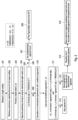
- FIG. 2 shows a flow diagram of one embodiment of the proposed method.
- a target coating is given, e.g. measured, which is to be matched by a color formula which has to be determined by a color matching process.
- a starting formula i. e. a preliminary matching formula is retrieved from a formulation database which comprises formulas for coating compositions with different pigmentations.
- a formulation database which comprises formulas for coating compositions with different pigmentations.
- each coating composition i. e. each formula for such coating composition is based on one or more tinting bases so that the respective coating gets a specific appearance in color, texture, etc.
- tinting bases are used, as for each primary color a plurality of tinting bases exists.
- a remission curve associated with the starting formula can also be retrieved from the database or be predicted by a radiative transfer model.
- the remission curve of the starting formula can be measured by a measuring device, when a sample coating is provided based on the starting formula.
- a remission curve of the target coating is given, e. g. measured by a measuring device.
- a match metric f_m is provided on the basis of which it is to be evaluated how good the starting formula already matches the target coating.
- the starting formula is first optimized/adjusted by any formula correction methodology currently used in color tools so as to minimize the match metric f_m.
- Such correction methodology i. e. standard shading method, can operate, for example, in color space and gear to improve the starting formula with respect to the concentrations of all tinting bases (colorants) used.
- a color adjustment algorithm is used which bases on a radiative transfer model, e. g. a physical model like the Kubelka-Munk model (or a statistical model like a neural network).
- the color adjustment algorithm determines the concentrations for the included tinting bases (or pigments) in the preliminary matching formula which lead to an optimal (minimal) match metric.
- an adjusted starting formula results.
- the match metric value f_m is evaluated according to the following inequation (condition): f_m Formula adj . ⁇ THRESHOLD1 with the f_m(Formula adj.) being the match metric value of the adjusted starting formula.
- THRESHOLD1 being a pre-given parameter, also called first threshold value aforesaid.
- the f_m(Formula adj.) is greater or equal to the first threshold value THRESHOLD1, as indicated by arrow 209, it is an object to get still closer to the pigmentation of the target coating by successively adding available tinting bases, i. e. pigments to the adjusted starting formula (i.e. the adjusted preliminary matching formula).
- step 210 a calculation of combinatorial adjustments with n additional pigments is performed, with n being a natural number. That means that successively one additional tinting base after the other, i. e. one additional pigment #X after the other is selected from a group of n available tinting bases, and added to the adjusted starting formula, which results in a modified preliminary matching formula, respectively.
- the group of available tinting bases comprise n different tinting bases based on n different pigments, each pigment being designated as #X.
- Each such modified preliminary matching formula has also been optimized/adjusted by any correction methodology as described with respect to step 204, resulting in an adjusted modified preliminary matching formula ( Formula + pigm. #X adj.).
- the match metric value for each adjusted modified preliminary matching formula which is calculated based on the remission curve measured for the target coating and a remission curve determined for the respective adjusted modified preliminary matching formula, is evaluated in step 211 according to the following inequations (condition): f _ m Formula + pigm . # X adj . ⁇ c ⁇ f _ m Formula adj . and f _ m Formula a d j . ⁇ f _ m Formula + pigm . # X adj . > THRESHOLD 2 .
- step 212 it is stated in step 212 that the selected additional tinting base, i. e. the additional pigment X does not improve the matching with the target coating, and, thus, said additional tinting base, i. e. said additional pigment is skipped and has not to be added to the adjusted starting formula in order to improve the matching with the target coating.
- Such statement is output for a user, e. g. displayed on a display unit and/or output via an audio output device.
- the respective pigment #X is saved into a list together with information about any change in magnitude of the corresponding match metric value and about the number of pigments which are used in the respective adjusted modified preliminary matching formulation.
- Each adjusted modified preliminary matching formulation "Formula + pigment #X adj.” has been adjusted using a color adjustment algorithm, as mentioned before, which determines the concentrations for all included tinting bases (or pigments) in the respective modified preliminary matching formula which leads to an optional (minimal) match metric. Thereby, it is possible that concentrations of tinting bases will be set to zero. In this case one tinting base is redundant, e.g. replaced by the newly added pigment #X, or not needed.
- step 214 a resulting list of additional potential complementary pigments is obtained and issued via an output device.
- step 215 the list of potential additional pigments, i. e. of additional tinting bases is sorted with respect to a magnitude of the match metric values, i. e. by the minimum and (optionally) with respect to the number of redundant (and removed) pigments.
- the tinting base whose associated adjusted modified preliminary matching formula has the smallest match metric value, e. g. the lowest shape difference value and the lowest color distance dE*, is chosen/selected as said tinting base which is to be added to the adjusted starting formula in order to improve the matching with the target coating.
- Said selected tinting base is proposed to a user via a respective output unit, such as a dispay and/or an audio output.
- tinting bases i.e. pigments which are listed.
Landscapes
- Physics & Mathematics (AREA)
- Spectroscopy & Molecular Physics (AREA)
- General Physics & Mathematics (AREA)
- Engineering & Computer Science (AREA)
- Pathology (AREA)
- Analytical Chemistry (AREA)
- Biochemistry (AREA)
- General Health & Medical Sciences (AREA)
- Chemical & Material Sciences (AREA)
- Immunology (AREA)
- Life Sciences & Earth Sciences (AREA)
- Health & Medical Sciences (AREA)
- Theoretical Computer Science (AREA)
- Signal Processing (AREA)
- Mathematical Physics (AREA)
- Computational Linguistics (AREA)
- Data Mining & Analysis (AREA)
- Databases & Information Systems (AREA)
- General Engineering & Computer Science (AREA)
- Multimedia (AREA)
- Spectrometry And Color Measurement (AREA)
- Application Of Or Painting With Fluid Materials (AREA)
Claims (13)
- Procédé mis en œuvre par ordinateur pour faire concorder et ajuster la pigmentation d'un revêtement cible, le procédé comprenant au moins les étapes de :a) récupération (202), à partir d'une base de données de formulation qui comprend des formules pour des compositions de revêtement avec différentes pigmentations, d'une formule concordante préliminaire ;b) obtention (203) d'une métrique de concordance qui décrit une différence de couleur et une similitude spectrale entre une courbe de rémission donnée pour le revêtement cible et une courbe de rémission déterminée pour la formule concordante préliminaire ; etau moyen d'un ou plusieurs processeurs :c) calcul (203) d'une valeur de métrique de concordance pour la formule concordante préliminaire sur la base de la courbe de rémission donnée pour le revêtement cible et de la courbe de rémission déterminée pour la formule concordante préliminaire ;d) ajustement (204) de la formule concordante préliminaire par rapport à des concentrations de pigments inclus de manière à ce que la métrique de concordance soit minimale ;e) évaluation (205) de la valeur de métrique de concordance de la formule concordante préliminaire ajustée ;f) comparaison (205) de la valeur de métrique de concordance pour la formule concordante préliminaire ajustée avec une première valeur seuil, dans lequelil est décidé que la formule concordante préliminaire ajustée est acceptable dans le cas où la valeur de métrique de concordance est inférieure ou égale à la première valeur seuil, sinon :g) ajout successif de pigments disponibles à la formule concordante préliminaire ajustée pour un ajustement supplémentaire de la formule concordante préliminaire ajustée au revêtement cible, chaque pigment supplémentaire étant associé à une formule concordante préliminaire modifiée respective composée de la pigmentation ajustée de la formule concordante préliminaire ajustée et du pigment supplémentaire respectif ;h) calcul, pour le pigment ou chacun des pigments supplémentaires, d'une valeur de métrique de concordance pour la formule concordante préliminaire modifiée respective ;i) ajustement de la formule concordante préliminaire modifiée par rapport aux concentrations des pigments inclus de manière à ce que la métrique de concordance soit minimale ;j) affectation du pigment ou de chacun des pigments supplémentaires à la valeur de métrique de concordance respective qui a été calculée pour la formule concordante préliminaire modifiée ajustée respective, respectivement ;k) délivrance (214), par le biais d'un dispositif de sortie, d'une liste au moins des pigments supplémentaires parmi l'au moins un pigment supplémentaire dont la formule concordante préliminaire modifiée ajustée associée a une courbe de rémission qui présente une plus forte similitude avec la courbe de rémission du revêtement cible que la courbe de rémission de la formule concordante préliminaire ajustée par rapport à la métrique de concordance, respectivement.
- Procédé selon la revendication 1, comprenant en outre l'étape de :
l) tri (215) de la liste par rapport à une amplitude des valeurs de métrique de concordance, respectivement. - Procédé selon l'une quelconque des revendications précédentes, dans lequel l'étape k) comprend en outre :k1) la comparaison (211), pour chaque formule concordante préliminaire modifiée ajustée, d'une différence entre la valeur de métrique de concordance respective et la valeur de métrique de concordance de la formule concordante préliminaire ajustée ; etk2) le listage (213) des seuls pigments supplémentaires dont la différence entre les deux valeurs de métrique de concordance est inférieure à une deuxième valeur seuil et dont les valeurs de métrique de concordance attribuées sont inférieures ou égales à une proportion définie de la valeur de métrique de concordance de la formule concordante préliminaire ajustée.
- Procédé selon la revendication 2 ou 3, dans lequel la formule concordante préliminaire modifiée ajustée qui est associée audit au moins un pigment supplémentaire avec la plus petite valeur de métrique de concordance attribuée est sélectionnée comme formule de départ avec une pigmentation optimale pour un traitement supplémentaire.
- Procédé selon l'une quelconque des revendications précédentes, comprenant en outre l'étape de :
m) délivrance d'au moins un pigment englobé par la formule concordante préliminaire ajustée qui, en particulier en raison dudit au moins un pigment supplémentaire selon la revendication 4, est redondant, et ainsi dont la quantité doit être réduite ou doit être complètement exclu. - Procédé selon l'une quelconque des revendications précédentes, dans lequel la métrique de concordance est choisie comme suit :


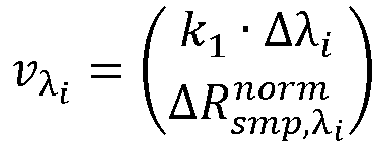



- Procédé selon l'une quelconque des revendications précédentes dans lequel la métrique de concordance est choisie comme suit :


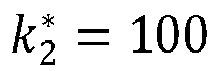


- Procédé selon la revendication 6 ou 7 dans lequel les valeurs de réflectance sont normalisées par une fonction d'échelle qui est choisie comme facteur d'échelle non linéaire f, en particulier comme suit :


- Système destiné à fournir une métrique de concordance pour faire concorder et ajuster la pigmentation d'un revêtement cible et d'au moins un échantillon de revêtement, le système comprenant :A) un dispositif informatique ;B) un produit-programme informatique, le produit-programme informatique comprenant des codes exécutables par ordinateur stockés sur un support de stockage lisible par ordinateur fonctionnellement couplé au dispositif informatique et conduisant le dispositif informatique à effectuer un processus informatique lorsqu'il est en fonctionnement, le processus informatique comprenant les étapes de :au moyen d'un ou plusieurs processeurs :B1) récupération (202), à partir d'une base de données de formulation qui comprend des formules pour des compositions de revêtement avec différentes pigmentations, d'une formule concordante préliminaire ;B2) obtention (203) d'une métrique de concordance qui décrit une différence de couleur et une similitude spectrale entre une courbe de rémission donnée pour le revêtement cible et une courbe de rémission déterminée pour la formule concordante préliminaire ; etB3) calcul (203) d'une valeur de métrique de concordance pour la formule concordante préliminaire sur la base de la courbe de rémission donnée pour le revêtement cible et de la courbe de rémission déterminée pour la formule concordante préliminaire ;B4) ajustement (204) de la formule concordante préliminaire par rapport à des concentrations de pigments inclus de manière à ce que la métrique de concordance soit minimale ;B5) évaluation (205) de la valeur de métrique de concordance de la formule préliminaire ajustée ;B6) comparaison (205) de la valeur de métrique de concordance pour la formule concordante préliminaire ajustée avec une première valeur seuil, dans lequelil est décidé que la formule concordante préliminaire ajustée est acceptable dans le cas où la valeur de métrique de concordance est inférieure ou égale à la première valeur seuil, sinon :B7) ajout successif de pigments disponibles à la formule concordante préliminaire ajustée pour un ajustement supplémentaire de la formule concordante préliminaire ajustée au revêtement cible, chaque pigment supplémentaire étant associé à une formule concordante préliminaire modifiée respective composée de la pigmentation ajustée de la formule préliminaire ajustée et du pigment respectif ;B8) calcul, pour le pigment ou chacun des pigments supplémentaires, d'une valeur de métrique de concordance pour la formule concordante préliminaire modifiée respective ;B9) ajustement de la formule concordante préliminaire modifiée par rapport aux concentrations des pigments inclus de manière à ce que la métrique de concordance soit minimale ;B10) affectation du pigment ou de chacun des pigments supplémentaires à la valeur de métrique de concordance respective qui a été calculée pour la formule concordante préliminaire modifiée ajustée respective ;B11) délivrance (214), par le biais d'un dispositif de sortie, d'une liste au moins des pigments supplémentaires parmi l'au moins un pigment supplémentaire dont la formule concordante préliminaire modifiée ajustée associée a une courbe de rémission qui présente une plus forte similitude avec la courbe de rémission du revêtement cible que la courbe de rémission de la formule concordante préliminaire ajustée par rapport à la métrique de concordance, respectivement.
- Système selon la revendication 9, comprenant en outre :C) un dispositif de mesure de couleur ;D) la base de données de formulation ;dans lequel le dispositif informatique est fonctionnellement couplé au dispositif de mesure de couleur et à la base de données de formulation.
- Système selon l'une quelconque des revendications 9 et 10, dans lequel le processus informatique comprend en outre l'étape de :
B12) tri (215) de la liste par rapport à une amplitude des valeurs de métrique de concordance, respectivement. - Support de stockage lisible par ordinateur stockant un produit-programme informatique qui comprend des codes exécutables par ordinateur qui, lorsqu'ils sont exécutés sur un dispositif informatique, conduisent le dispositif informatique à effectuer un processus informatique, le processus informatique comprenant les étapes de :B1) récupération (202), à partir d'une base de données de formulation qui comprend des formules pour des compositions de revêtement avec différentes pigmentations, d'une formule concordante préliminaire ;B2) obtention (203) d'une métrique de concordance qui décrit une différence de couleur et une similitude spectrale entre une courbe de réémission donnée pour le revêtement cible et une courbe de réémission déterminée pour la formule concordante préliminaire ;B3) calcul (203) d'une valeur de métrique de concordance pour la formule concordante préliminaire sur la base de la courbe de rémission donnée pour le revêtement cible et de la courbe de rémission déterminée pour la formule concordante préliminaire ;B4) ajustement (204) de la formule concordante préliminaire par rapport à des concentrations de pigments inclus de manière à ce que la métrique de concordance soit minimale ;B5) évaluation (205) de la valeur de métrique de concordance de la formule préliminaire ajustée ;B6) comparaison (205) de la valeur de métrique de concordance pour la formule concordante préliminaire ajustée avec une première valeur seuil, dans lequelil est décidé que la formule concordante préliminaire ajustée est acceptable dans le cas où la valeur de métrique de concordance est inférieure ou égale à la première valeur seuil, sinon :B7) ajout successif de pigments disponibles à la formule concordante préliminaire ajustée pour un ajustement supplémentaire de la formule concordante préliminaire ajustée au revêtement cible, chaque pigment supplémentaire étant associé à une formule concordante préliminaire modifiée respective composée de la pigmentation ajustée de la formule préliminaire ajustée et du pigment respectif ;B8) calcul, pour le pigment ou chacun des pigments supplémentaires, d'une valeur de métrique de concordance pour la formule concordante préliminaire modifiée respective ;B9) ajustement de la formule concordante préliminaire modifiée par rapport aux concentrations des pigments inclus de manière à ce que la métrique de concordance soit minimale ;B10) affectation du pigment ou de chacun des pigments supplémentaires à la valeur de métrique de concordance respective qui a été calculée pour la formule concordante préliminaire modifiée ajustée respective ;B11) délivrance (214), par le biais d'un dispositif de sortie, d'une liste au moins des pigments supplémentaires parmi l'au moins un pigment supplémentaire dont la formule concordante préliminaire modifiée ajustée associée a une courbe de rémission qui présente une plus forte similitude avec la courbe de rémission du revêtement cible que la courbe de rémission de la formule concordante préliminaire ajustée par rapport à la métrique de concordance, respectivement.
- Support de stockage lisible par ordinateur selon la revendication 12, dans lequel le processus informatique comprend en outre l'étape de :
B12) tri (215) de la liste par rapport à l'amplitude des valeurs de métrique de concordance, respectivement.
Applications Claiming Priority (2)
| Application Number | Priority Date | Filing Date | Title |
|---|---|---|---|
| EP19190395 | 2019-08-06 | ||
| PCT/EP2020/071751 WO2021023685A1 (fr) | 2019-08-06 | 2020-08-01 | Procédé et système de mise en correspondance et d'ajustement de la pigmentation d'un revêtement d'échantillon sur un revêtement cible |
Publications (3)
| Publication Number | Publication Date |
|---|---|
| EP4010669A1 EP4010669A1 (fr) | 2022-06-15 |
| EP4010669B1 true EP4010669B1 (fr) | 2024-05-29 |
| EP4010669C0 EP4010669C0 (fr) | 2024-05-29 |
Family
ID=67551219
Family Applications (1)
| Application Number | Title | Priority Date | Filing Date |
|---|---|---|---|
| EP20746678.0A Active EP4010669B1 (fr) | 2019-08-06 | 2020-08-01 | Procédé et système d'adaptation et de réglage de la pigmentation d'un revêtement d'échantillon par rapport à un revêtement cible |
Country Status (8)
| Country | Link |
|---|---|
| US (1) | US12411078B2 (fr) |
| EP (1) | EP4010669B1 (fr) |
| JP (1) | JP7408770B2 (fr) |
| CN (1) | CN114174785B (fr) |
| AU (1) | AU2020326154B2 (fr) |
| CA (1) | CA3143802A1 (fr) |
| MX (1) | MX2022001500A (fr) |
| WO (1) | WO2021023685A1 (fr) |
Families Citing this family (2)
| Publication number | Priority date | Publication date | Assignee | Title |
|---|---|---|---|---|
| JP7855074B2 (ja) * | 2022-01-11 | 2026-05-07 | ビーエーエスエフ コーティングス ゲゼルシャフト ミット ベシュレンクテル ハフツング | 色調整の方法及びシステム |
| WO2023192804A1 (fr) * | 2022-03-29 | 2023-10-05 | Ppg Industries Ohio, Inc. | Techniques de mise en correspondance de couleurs |
Family Cites Families (10)
| Publication number | Priority date | Publication date | Assignee | Title |
|---|---|---|---|---|
| US5668633A (en) * | 1995-10-03 | 1997-09-16 | General Electric Company | Method and system for formulating a color match |
| US5720017A (en) * | 1995-10-30 | 1998-02-17 | General Electric Company | System and method for formulating a color match using color keys |
| US5841421A (en) * | 1995-12-18 | 1998-11-24 | General Electric Company | Method and system for selecting a previous color match from a set of previous color matches that best matches a color standard |
| JPH09229773A (ja) * | 1996-02-22 | 1997-09-05 | Toto Ltd | コンピュータカラーマッチング方法 |
| DE19636774C2 (de) * | 1996-09-10 | 1999-04-22 | Herberts Gmbh | Verfahren zur Anpassung einer Farbrezeptur |
| US7184170B2 (en) * | 2002-03-28 | 2007-02-27 | Clariant Finance (Bvi) Limited | Method and apparatus for color management |
| US8108169B2 (en) * | 2008-03-28 | 2012-01-31 | Datacolor Holding Ag | Method and apparatus for matching translucent coatings of absorbent substrates |
| NZ593594A (en) * | 2009-01-19 | 2013-08-30 | Abbvie Inc | Apoptosis-inducing agents for the treatment of cancer and immune and autoimmune diseases |
| US8743364B2 (en) * | 2009-12-02 | 2014-06-03 | Axalta Coating Systems Ip Co., Llc | Method and system for matching color and coarseness appearance of coatings |
| US8692991B2 (en) * | 2012-02-03 | 2014-04-08 | Ppg Industries Ohio, Inc. | Optimal tint identifier/selector |
-
2020
- 2020-08-01 MX MX2022001500A patent/MX2022001500A/es unknown
- 2020-08-01 US US17/632,591 patent/US12411078B2/en active Active
- 2020-08-01 AU AU2020326154A patent/AU2020326154B2/en active Active
- 2020-08-01 CA CA3143802A patent/CA3143802A1/fr active Pending
- 2020-08-01 JP JP2022507628A patent/JP7408770B2/ja active Active
- 2020-08-01 EP EP20746678.0A patent/EP4010669B1/fr active Active
- 2020-08-01 WO PCT/EP2020/071751 patent/WO2021023685A1/fr not_active Ceased
- 2020-08-01 CN CN202080054771.2A patent/CN114174785B/zh active Active
Also Published As
| Publication number | Publication date |
|---|---|
| EP4010669C0 (fr) | 2024-05-29 |
| CN114174785A (zh) | 2022-03-11 |
| JP2022543303A (ja) | 2022-10-11 |
| WO2021023685A1 (fr) | 2021-02-11 |
| AU2020326154A1 (en) | 2022-02-24 |
| US12411078B2 (en) | 2025-09-09 |
| CA3143802A1 (fr) | 2021-02-11 |
| EP4010669A1 (fr) | 2022-06-15 |
| CN114174785B (zh) | 2025-09-12 |
| AU2020326154B2 (en) | 2026-04-23 |
| MX2022001500A (es) | 2022-03-17 |
| US20220276152A1 (en) | 2022-09-01 |
| JP7408770B2 (ja) | 2024-01-05 |
Similar Documents
| Publication | Publication Date | Title |
|---|---|---|
| US20050237553A1 (en) | Color evaluation apparatus and method | |
| JPH09508768A (ja) | カラー・スキャナ信号を測色値に変換する方法および装置 | |
| JPH09202034A (ja) | 色合せを調合するための方法及び装置 | |
| US12411078B2 (en) | Method and system for matching and adjusting pigmentation of a sample coating to a target coating | |
| EP4010671B1 (fr) | Procédé et système permettant de quantifier une similarité spectrale entre une couleur échantillon et une couleur cible | |
| US20220366581A1 (en) | Generation of a Formulation for a Coating Which Matches the Optical Properties of a Target Coating Comprising Effect Pigments | |
| EP4111416B1 (fr) | Procédé et dispositif permettant de déployer et d'utiliser une mesure de similarité d'image à l'aide d'apprentissage profond | |
| JP2022543303A5 (fr) | ||
| EP3994662B1 (fr) | Visualisation de coloration du bois | |
| EP4010670B1 (fr) | Procédé et système d'adaptation et d'ajustement robustes de couleurs d'effets de couleurs | |
| Laamanen et al. | Conversion between the reflectance spectra and the Munsell notations | |
| CA3146286C (fr) | Procede et systeme pour un processus robuste de mise en correspondance et de reglage de couleurs de couleurs a effet | |
| Smith et al. | Visual Display Calibration: An Analysis of Efficacy in Color Management |
Legal Events
| Date | Code | Title | Description |
|---|---|---|---|
| STAA | Information on the status of an ep patent application or granted ep patent |
Free format text: STATUS: UNKNOWN |
|
| STAA | Information on the status of an ep patent application or granted ep patent |
Free format text: STATUS: THE INTERNATIONAL PUBLICATION HAS BEEN MADE |
|
| PUAI | Public reference made under article 153(3) epc to a published international application that has entered the european phase |
Free format text: ORIGINAL CODE: 0009012 |
|
| STAA | Information on the status of an ep patent application or granted ep patent |
Free format text: STATUS: REQUEST FOR EXAMINATION WAS MADE |
|
| 17P | Request for examination filed |
Effective date: 20220307 |
|
| AK | Designated contracting states |
Kind code of ref document: A1 Designated state(s): AL AT BE BG CH CY CZ DE DK EE ES FI FR GB GR HR HU IE IS IT LI LT LU LV MC MK MT NL NO PL PT RO RS SE SI SK SM TR |
|
| DAV | Request for validation of the european patent (deleted) | ||
| DAX | Request for extension of the european patent (deleted) | ||
| GRAP | Despatch of communication of intention to grant a patent |
Free format text: ORIGINAL CODE: EPIDOSNIGR1 |
|
| STAA | Information on the status of an ep patent application or granted ep patent |
Free format text: STATUS: GRANT OF PATENT IS INTENDED |
|
| INTG | Intention to grant announced |
Effective date: 20240105 |
|
| GRAS | Grant fee paid |
Free format text: ORIGINAL CODE: EPIDOSNIGR3 |
|
| GRAA | (expected) grant |
Free format text: ORIGINAL CODE: 0009210 |
|
| STAA | Information on the status of an ep patent application or granted ep patent |
Free format text: STATUS: THE PATENT HAS BEEN GRANTED |
|
| AK | Designated contracting states |
Kind code of ref document: B1 Designated state(s): AL AT BE BG CH CY CZ DE DK EE ES FI FR GB GR HR HU IE IS IT LI LT LU LV MC MK MT NL NO PL PT RO RS SE SI SK SM TR |
|
| REG | Reference to a national code |
Ref country code: CH Ref legal event code: EP |
|
| REG | Reference to a national code |
Ref country code: IE Ref legal event code: FG4D |
|
| REG | Reference to a national code |
Ref country code: DE Ref legal event code: R096 Ref document number: 602020031663 Country of ref document: DE |
|
| U01 | Request for unitary effect filed |
Effective date: 20240617 |
|
| U07 | Unitary effect registered |
Designated state(s): AT BE BG DE DK EE FI FR IT LT LU LV MT NL PT SE SI Effective date: 20240627 |
|
| PG25 | Lapsed in a contracting state [announced via postgrant information from national office to epo] |
Ref country code: IS Free format text: LAPSE BECAUSE OF FAILURE TO SUBMIT A TRANSLATION OF THE DESCRIPTION OR TO PAY THE FEE WITHIN THE PRESCRIBED TIME-LIMIT Effective date: 20240929 |
|
| PG25 | Lapsed in a contracting state [announced via postgrant information from national office to epo] |
Ref country code: HR Free format text: LAPSE BECAUSE OF FAILURE TO SUBMIT A TRANSLATION OF THE DESCRIPTION OR TO PAY THE FEE WITHIN THE PRESCRIBED TIME-LIMIT Effective date: 20240529 |
|
| PG25 | Lapsed in a contracting state [announced via postgrant information from national office to epo] |
Ref country code: GR Free format text: LAPSE BECAUSE OF FAILURE TO SUBMIT A TRANSLATION OF THE DESCRIPTION OR TO PAY THE FEE WITHIN THE PRESCRIBED TIME-LIMIT Effective date: 20240830 |
|
| PG25 | Lapsed in a contracting state [announced via postgrant information from national office to epo] |
Ref country code: ES Free format text: LAPSE BECAUSE OF FAILURE TO SUBMIT A TRANSLATION OF THE DESCRIPTION OR TO PAY THE FEE WITHIN THE PRESCRIBED TIME-LIMIT Effective date: 20240529 |
|
| PG25 | Lapsed in a contracting state [announced via postgrant information from national office to epo] |
Ref country code: PL Free format text: LAPSE BECAUSE OF FAILURE TO SUBMIT A TRANSLATION OF THE DESCRIPTION OR TO PAY THE FEE WITHIN THE PRESCRIBED TIME-LIMIT Effective date: 20240529 |
|
| PG25 | Lapsed in a contracting state [announced via postgrant information from national office to epo] |
Ref country code: PL Free format text: LAPSE BECAUSE OF FAILURE TO SUBMIT A TRANSLATION OF THE DESCRIPTION OR TO PAY THE FEE WITHIN THE PRESCRIBED TIME-LIMIT Effective date: 20240529 Ref country code: NO Free format text: LAPSE BECAUSE OF FAILURE TO SUBMIT A TRANSLATION OF THE DESCRIPTION OR TO PAY THE FEE WITHIN THE PRESCRIBED TIME-LIMIT Effective date: 20240829 Ref country code: IS Free format text: LAPSE BECAUSE OF FAILURE TO SUBMIT A TRANSLATION OF THE DESCRIPTION OR TO PAY THE FEE WITHIN THE PRESCRIBED TIME-LIMIT Effective date: 20240929 Ref country code: HR Free format text: LAPSE BECAUSE OF FAILURE TO SUBMIT A TRANSLATION OF THE DESCRIPTION OR TO PAY THE FEE WITHIN THE PRESCRIBED TIME-LIMIT Effective date: 20240529 Ref country code: GR Free format text: LAPSE BECAUSE OF FAILURE TO SUBMIT A TRANSLATION OF THE DESCRIPTION OR TO PAY THE FEE WITHIN THE PRESCRIBED TIME-LIMIT Effective date: 20240830 Ref country code: ES Free format text: LAPSE BECAUSE OF FAILURE TO SUBMIT A TRANSLATION OF THE DESCRIPTION OR TO PAY THE FEE WITHIN THE PRESCRIBED TIME-LIMIT Effective date: 20240529 Ref country code: RS Free format text: LAPSE BECAUSE OF FAILURE TO SUBMIT A TRANSLATION OF THE DESCRIPTION OR TO PAY THE FEE WITHIN THE PRESCRIBED TIME-LIMIT Effective date: 20240829 |
|
| U20 | Renewal fee for the european patent with unitary effect paid |
Year of fee payment: 5 Effective date: 20240927 |
|
| U1N | Appointed representative for the unitary patent procedure changed after the registration of the unitary effect |
Representative=s name: BASF IP ASSOCIATION; DE |
|
| PG25 | Lapsed in a contracting state [announced via postgrant information from national office to epo] |
Ref country code: CZ Free format text: LAPSE BECAUSE OF FAILURE TO SUBMIT A TRANSLATION OF THE DESCRIPTION OR TO PAY THE FEE WITHIN THE PRESCRIBED TIME-LIMIT Effective date: 20240529 |
|
| PG25 | Lapsed in a contracting state [announced via postgrant information from national office to epo] |
Ref country code: SK Free format text: LAPSE BECAUSE OF FAILURE TO SUBMIT A TRANSLATION OF THE DESCRIPTION OR TO PAY THE FEE WITHIN THE PRESCRIBED TIME-LIMIT Effective date: 20240529 Ref country code: RO Free format text: LAPSE BECAUSE OF FAILURE TO SUBMIT A TRANSLATION OF THE DESCRIPTION OR TO PAY THE FEE WITHIN THE PRESCRIBED TIME-LIMIT Effective date: 20240529 |
|
| PG25 | Lapsed in a contracting state [announced via postgrant information from national office to epo] |
Ref country code: SM Free format text: LAPSE BECAUSE OF FAILURE TO SUBMIT A TRANSLATION OF THE DESCRIPTION OR TO PAY THE FEE WITHIN THE PRESCRIBED TIME-LIMIT Effective date: 20240529 |
|
| PG25 | Lapsed in a contracting state [announced via postgrant information from national office to epo] |
Ref country code: SM Free format text: LAPSE BECAUSE OF FAILURE TO SUBMIT A TRANSLATION OF THE DESCRIPTION OR TO PAY THE FEE WITHIN THE PRESCRIBED TIME-LIMIT Effective date: 20240529 Ref country code: SK Free format text: LAPSE BECAUSE OF FAILURE TO SUBMIT A TRANSLATION OF THE DESCRIPTION OR TO PAY THE FEE WITHIN THE PRESCRIBED TIME-LIMIT Effective date: 20240529 Ref country code: RO Free format text: LAPSE BECAUSE OF FAILURE TO SUBMIT A TRANSLATION OF THE DESCRIPTION OR TO PAY THE FEE WITHIN THE PRESCRIBED TIME-LIMIT Effective date: 20240529 Ref country code: CZ Free format text: LAPSE BECAUSE OF FAILURE TO SUBMIT A TRANSLATION OF THE DESCRIPTION OR TO PAY THE FEE WITHIN THE PRESCRIBED TIME-LIMIT Effective date: 20240529 |
|
| REG | Reference to a national code |
Ref country code: CH Ref legal event code: PL |
|
| PLBE | No opposition filed within time limit |
Free format text: ORIGINAL CODE: 0009261 |
|
| STAA | Information on the status of an ep patent application or granted ep patent |
Free format text: STATUS: NO OPPOSITION FILED WITHIN TIME LIMIT |
|
| PG25 | Lapsed in a contracting state [announced via postgrant information from national office to epo] |
Ref country code: MC Free format text: LAPSE BECAUSE OF FAILURE TO SUBMIT A TRANSLATION OF THE DESCRIPTION OR TO PAY THE FEE WITHIN THE PRESCRIBED TIME-LIMIT Effective date: 20240529 Ref country code: CH Free format text: LAPSE BECAUSE OF NON-PAYMENT OF DUE FEES Effective date: 20240831 |
|
| 26N | No opposition filed |
Effective date: 20250303 |
|
| PG25 | Lapsed in a contracting state [announced via postgrant information from national office to epo] |
Ref country code: IE Free format text: LAPSE BECAUSE OF NON-PAYMENT OF DUE FEES Effective date: 20240801 |
|
| U20 | Renewal fee for the european patent with unitary effect paid |
Year of fee payment: 6 Effective date: 20250901 |
|
| PGFP | Annual fee paid to national office [announced via postgrant information from national office to epo] |
Ref country code: GB Payment date: 20250826 Year of fee payment: 6 |
|
| PG25 | Lapsed in a contracting state [announced via postgrant information from national office to epo] |
Ref country code: CY Free format text: LAPSE BECAUSE OF FAILURE TO SUBMIT A TRANSLATION OF THE DESCRIPTION OR TO PAY THE FEE WITHIN THE PRESCRIBED TIME-LIMIT; INVALID AB INITIO Effective date: 20200801 |
|
| U1N | Appointed representative for the unitary patent procedure changed after the registration of the unitary effect |
Representative=s name: COATINGS IP ASSOCIATION; DE |
|
| PG25 | Lapsed in a contracting state [announced via postgrant information from national office to epo] |
Ref country code: HU Free format text: LAPSE BECAUSE OF FAILURE TO SUBMIT A TRANSLATION OF THE DESCRIPTION OR TO PAY THE FEE WITHIN THE PRESCRIBED TIME-LIMIT; INVALID AB INITIO Effective date: 20200801 |