EP4011110B1 - Kanalzustandsinformationsreferenzsignal (csi-rs)-ressourcen und portbelegung für feinere granularität einer vorcodierungsmatrixanzeige (pmi) - Google Patents
Kanalzustandsinformationsreferenzsignal (csi-rs)-ressourcen und portbelegung für feinere granularität einer vorcodierungsmatrixanzeige (pmi) Download PDFInfo
- Publication number
- EP4011110B1 EP4011110B1 EP19940705.7A EP19940705A EP4011110B1 EP 4011110 B1 EP4011110 B1 EP 4011110B1 EP 19940705 A EP19940705 A EP 19940705A EP 4011110 B1 EP4011110 B1 EP 4011110B1
- Authority
- EP
- European Patent Office
- Prior art keywords
- csi
- occupation
- ports
- amount
- feedback
- Prior art date
- Legal status (The legal status is an assumption and is not a legal conclusion. Google has not performed a legal analysis and makes no representation as to the accuracy of the status listed.)
- Active
Links
Images





Classifications
-
- H—ELECTRICITY
- H04—ELECTRIC COMMUNICATION TECHNIQUE
- H04B—TRANSMISSION
- H04B7/00—Radio transmission systems, i.e. using radiation field
- H04B7/02—Diversity systems; Multi-antenna system, i.e. transmission or reception using multiple antennas
- H04B7/04—Diversity systems; Multi-antenna system, i.e. transmission or reception using multiple antennas using two or more spaced independent antennas
- H04B7/0413—MIMO systems
- H04B7/0456—Selection of precoding matrices or codebooks, e.g. using matrices antenna weighting
-
- H—ELECTRICITY
- H04—ELECTRIC COMMUNICATION TECHNIQUE
- H04B—TRANSMISSION
- H04B7/00—Radio transmission systems, i.e. using radiation field
- H04B7/02—Diversity systems; Multi-antenna system, i.e. transmission or reception using multiple antennas
- H04B7/04—Diversity systems; Multi-antenna system, i.e. transmission or reception using multiple antennas using two or more spaced independent antennas
- H04B7/06—Diversity systems; Multi-antenna system, i.e. transmission or reception using multiple antennas using two or more spaced independent antennas at the transmitting station
- H04B7/0613—Diversity systems; Multi-antenna system, i.e. transmission or reception using multiple antennas using two or more spaced independent antennas at the transmitting station using simultaneous transmission
- H04B7/0615—Diversity systems; Multi-antenna system, i.e. transmission or reception using multiple antennas using two or more spaced independent antennas at the transmitting station using simultaneous transmission of weighted versions of same signal
- H04B7/0619—Diversity systems; Multi-antenna system, i.e. transmission or reception using multiple antennas using two or more spaced independent antennas at the transmitting station using simultaneous transmission of weighted versions of same signal using feedback from receiving side
- H04B7/0621—Feedback content
- H04B7/0626—Channel coefficients, e.g. channel state information [CSI]
-
- H—ELECTRICITY
- H04—ELECTRIC COMMUNICATION TECHNIQUE
- H04B—TRANSMISSION
- H04B7/00—Radio transmission systems, i.e. using radiation field
- H04B7/02—Diversity systems; Multi-antenna system, i.e. transmission or reception using multiple antennas
- H04B7/04—Diversity systems; Multi-antenna system, i.e. transmission or reception using multiple antennas using two or more spaced independent antennas
- H04B7/06—Diversity systems; Multi-antenna system, i.e. transmission or reception using multiple antennas using two or more spaced independent antennas at the transmitting station
- H04B7/0613—Diversity systems; Multi-antenna system, i.e. transmission or reception using multiple antennas using two or more spaced independent antennas at the transmitting station using simultaneous transmission
- H04B7/0615—Diversity systems; Multi-antenna system, i.e. transmission or reception using multiple antennas using two or more spaced independent antennas at the transmitting station using simultaneous transmission of weighted versions of same signal
- H04B7/0619—Diversity systems; Multi-antenna system, i.e. transmission or reception using multiple antennas using two or more spaced independent antennas at the transmitting station using simultaneous transmission of weighted versions of same signal using feedback from receiving side
- H04B7/0636—Feedback format
-
- H—ELECTRICITY
- H04—ELECTRIC COMMUNICATION TECHNIQUE
- H04B—TRANSMISSION
- H04B7/00—Radio transmission systems, i.e. using radiation field
- H04B7/02—Diversity systems; Multi-antenna system, i.e. transmission or reception using multiple antennas
- H04B7/04—Diversity systems; Multi-antenna system, i.e. transmission or reception using multiple antennas using two or more spaced independent antennas
- H04B7/06—Diversity systems; Multi-antenna system, i.e. transmission or reception using multiple antennas using two or more spaced independent antennas at the transmitting station
- H04B7/0613—Diversity systems; Multi-antenna system, i.e. transmission or reception using multiple antennas using two or more spaced independent antennas at the transmitting station using simultaneous transmission
- H04B7/0615—Diversity systems; Multi-antenna system, i.e. transmission or reception using multiple antennas using two or more spaced independent antennas at the transmitting station using simultaneous transmission of weighted versions of same signal
- H04B7/0619—Diversity systems; Multi-antenna system, i.e. transmission or reception using multiple antennas using two or more spaced independent antennas at the transmitting station using simultaneous transmission of weighted versions of same signal using feedback from receiving side
- H04B7/0636—Feedback format
- H04B7/0639—Using selective indices, e.g. of a codebook, e.g. pre-distortion matrix index [PMI] or for beam selection
-
- H—ELECTRICITY
- H04—ELECTRIC COMMUNICATION TECHNIQUE
- H04B—TRANSMISSION
- H04B7/00—Radio transmission systems, i.e. using radiation field
- H04B7/02—Diversity systems; Multi-antenna system, i.e. transmission or reception using multiple antennas
- H04B7/04—Diversity systems; Multi-antenna system, i.e. transmission or reception using multiple antennas using two or more spaced independent antennas
- H04B7/06—Diversity systems; Multi-antenna system, i.e. transmission or reception using multiple antennas using two or more spaced independent antennas at the transmitting station
- H04B7/0613—Diversity systems; Multi-antenna system, i.e. transmission or reception using multiple antennas using two or more spaced independent antennas at the transmitting station using simultaneous transmission
- H04B7/0615—Diversity systems; Multi-antenna system, i.e. transmission or reception using multiple antennas using two or more spaced independent antennas at the transmitting station using simultaneous transmission of weighted versions of same signal
- H04B7/0619—Diversity systems; Multi-antenna system, i.e. transmission or reception using multiple antennas using two or more spaced independent antennas at the transmitting station using simultaneous transmission of weighted versions of same signal using feedback from receiving side
- H04B7/0658—Feedback reduction
- H04B7/0663—Feedback reduction using vector or matrix manipulations
-
- H—ELECTRICITY
- H04—ELECTRIC COMMUNICATION TECHNIQUE
- H04L—TRANSMISSION OF DIGITAL INFORMATION, e.g. TELEGRAPHIC COMMUNICATION
- H04L5/00—Arrangements affording multiple use of the transmission path
- H04L5/003—Arrangements for allocating sub-channels of the transmission path
- H04L5/0053—Allocation of signalling, i.e. of overhead other than pilot signals
-
- H—ELECTRICITY
- H04—ELECTRIC COMMUNICATION TECHNIQUE
- H04W—WIRELESS COMMUNICATION NETWORKS
- H04W24/00—Supervisory, monitoring or testing arrangements
- H04W24/10—Scheduling measurement reports ; Arrangements for measurement reports
Definitions
- aspects of the present disclosure relate to wireless communications, and more particularly, to techniques for determining a channel state information (CSI) reporting configuration based on user equipment (UE) capabilities.
- CSI channel state information
- Wireless communication systems are widely deployed to provide various telecommunication services such as telephony, video, data, messaging, broadcasts, etc. These wireless communication systems may employ multiple-access technologies capable of supporting communication with multiple users by sharing available system resources (e.g., bandwidth, transmit power, etc.). Examples of such multiple-access systems include 3rd Generation Partnership Project (3GPP) Long Term Evolution (LTE) systems, LTE Advanced (LTE-A) systems, code division multiple access (CDMA) systems, time division multiple access (TDMA) systems, frequency division multiple access (FDMA) systems, orthogonal frequency division multiple access (OFDMA) systems, single-carrier frequency division multiple access (SC-FDMA) systems, and time division synchronous code division multiple access (TD-SCDMA) systems, to name a few.
- 3GPP 3rd Generation Partnership Project
- LTE Long Term Evolution
- LTE-A LTE Advanced
- CDMA code division multiple access
- TDMA time division multiple access
- FDMA frequency division multiple access
- OFDMA orthogonal frequency division
- New radio e.g., 5G NR
- 5G NR is an example of an emerging telecommunication standard.
- NR is a set of enhancements to the LTE mobile standard promulgated by 3GPP.
- NR is designed to better support mobile broadband Internet access by improving spectral efficiency, lowering costs, improving services, making use of new spectrum, and better integrating with other open standards using OFDMA with a cyclic prefix (CP) on the downlink (DL) and on the uplink (UL).
- CP cyclic prefix
- NR supports beamforming, multiple-input multiple-output (MIMO) antenna technology, and carrier aggregation.
- MIMO multiple-input multiple-output
- WO 2019/103580 A1 relates to a method for transmitting, by a user equipment (UE), a CSI (Channel State Information) report in a wireless communication system. More specifically, the method includes: receiving, from a base station, downlink control information (DCI) including information for triggering the CSI report; computing CSI based on the number of symbols related to a time for computing the CSI; and transmitting the CSI report to the base station, in which the number of symbols related to the time for computing the CSI is defined based on information for the number of antenna ports, information for a CSI-RS resource, information for a bandwidth granularity, and information for a CSI codebook type.
- DCI downlink control information
- the number of symbols related to the time for computing the CSI is defined based on information for the number of antenna ports, information for a CSI-RS resource, information for a bandwidth granularity, and information for a CSI codebook type.
- WO 2018/230967 A1 relates to a CSI reporting method by a terminal in a wireless communication system which can comprise the steps of: receiving, from a base station, CSI configuration information for CSI reporting; and reporting, to the base station, CSI generated on the basis of the CSI configuration information.
- the CSI comprises CQI and defined is a CQI table in which different CQI indexes are allocated by different MCS levels for the CQI reporting
- the CSI configuration information comprises a CQI index range reportable by the terminal in the CQI table and/or CQI configuration information relating to the interval between the CQI indexes reportable by the terminal in the CQI index range.
- the method generally includes receiving a channel state information (CSI) reporting configuration comprising one or more CSI reporting settings.
- CSI channel state information
- Each CSI reporting setting is associated with one or more subbands for CSI.
- Each subband for CSI includes a frequency domain (FD) unit for channel quality information (CQI) feedback and one or more FD units for precoding matrix indicator (PMI) feedback.
- FD frequency domain
- CQI channel quality information
- PMI precoding matrix indicator
- the method also includes determining, for each of the CSI reporting settings, at least one of an amount of CSI reference signal (CSI-RS) resources occupation or an amount of CSI-RS ports occupation, based at least in part on (i) a number of the FD units for PMI feedback within a single FD unit for CQI feedback or (ii) a number of FD units for PMI feedback within all of the subbands for CSI.
- CSI-RS CSI reference signal
- Certain aspects provide a method for wireless communication that may be performed by a network entity, such as a base station.
- the method generally includes determining one or more channel state information (CSI) reporting settings for a user equipment (UE).
- CSI channel state information
- Each CSI reporting setting is associated with one or more subbands for CSI.
- Each subband for CSI includes a frequency domain (FD) unit for channel quality information (CQI) feedback and one or more FD units for precoding matrix indicator (PMI) feedback.
- FD frequency domain
- CQI channel quality information
- PMI precoding matrix indicator
- the method also includes determining, for each of the CSI reporting settings, at least one of an amount of CSI reference signal (CSI-RS) resources occupation or an amount of CSI-RS ports occupation, based at least in part on (i) a number of the FD units for PMI feedback within a single FD unit for CQI feedback or (ii) a number of FD units for PMI feedback within all of the subbands for CSI.
- CSI-RS CSI reference signal
- aspects of the present disclosure provide means for, apparatus, processors, and computer-readable mediums for performing the methods described herein.
- aspects of the present disclosure provide means for, apparatus, processors, and computer-readable mediums for performing techniques and methods that may be complementary to the operations by the UE described herein, for example, by a BS.
- the one or more aspects comprise the features hereinafter fully described and particularly pointed out in the claims.
- the following description and the appended drawings set forth in detail certain illustrative features of the one or more aspects. These features are indicative, however, of but a few of the various ways in which the principles of various aspects may be employed.
- aspects of the present disclosure provide apparatus, methods, processing systems, and computer readable mediums for determining a CSI reporting configuration based on UE reported capabilities of the maximum amount of supported CSI reference signal (CSI-RS) resources and/or maximum amount of supported CSI-RS ports.
- CSI-RS CSI reference signal
- wireless communications with a large number of antennas can be enabled with information obtained via CSI acquisition.
- One technique for acquiring CSI at the gNB in the downlink direction is via the UE calculating and reporting PMI for DL channel(s) based on CSI-RS transmitted by the gNB.
- PMI for DL channel(s) based on CSI-RS transmitted by the gNB.
- some communication systems e.g., Rel-15 communication system
- these communication systems may allow for UE capability signaling of the maximum number of resources and/or ports supported by the UE, so that the gNB can trigger CSI report(s) subject to the reported capability of the UE.
- later communication systems may use a new Type II codebook that supports a finer PMI granularity (e.g., relative to Rel-15 and earlier releases).
- This finer PMI granularity can cause the CSI computation to at least double in complexity. Accordingly, it may be desirable to provide improved techniques that enable the UE and/or gNB to determine the resource and ports occupation of each CSI report, such that the CSI reporting configuration is subject to the UE capabilities.
- aspects provide improved techniques for determining CSI-RS resources and CSI-RS ports occupation for finer PMI granularity.
- aspects provide a new rule for determining the CSI-RS resources and ports occupation when a particular type of codebook (e.g., Rel-16 Type II codebook) is used for CSI reporting.
- a particular type of codebook e.g., Rel-16 Type II codebook
- a UE may receive a CSI reporting configuration that includes one or more CSI reporting settings.
- Each CSI reporting setting may be associated with one or more subbands for CSI.
- Each subband for CSI may include a frequency domain (FD) unit for channel quality information (CQI) feedback and one or more FD units for precoding matrix indicator (PMI) feedback.
- FD frequency domain
- CQI channel quality information
- PMI precoding matrix indicator
- the UE may determine, for each of the CSI reporting settings, at least one of an amount of CSI reference signal (CSI-RS) resources occupation or an amount of CSI-RS ports occupation, based at least in part on (i) a number of the FD units for PMI feedback within a single FD unit for CQI feedback or (ii) a number of FD units for PMI feedback within all of the subbands for CSI.
- CSI-RS CSI reference signal
- the UE may send (and the gNB may receive) an indication of a CSI processing capability of the UE.
- the CSI processing capability may include an indication of at least one of a number of CSI-RS resources supported by the UE or a number of CSI-RS ports supported by the UE.
- the UE and/or gNB may determine at least one of a total amount of CSI-RS resource occupation or a total amount of CSI-RS ports occupation based at least in part on the determined amount of CSI-RS resource occupation of each CSI reporting setting or the determined amount of CSI-RS ports occupation of each CSI reporting setting.
- the UE may perform CSI calculation and reporting of the one or more CSI reporting settings if at least one of the total amount of CSI-RS resource occupation is smaller than the indicated number of CSI-RS resources supported by the UE or the total amount of CSI-RS ports occupation is smaller than the indicated number of CSI-RS ports supported by the UE.
- Doing so allows the UE and gNB to more efficiently determine CSI-RS resources/ports occupation (for certain types of codebooks), which in turn enables the BS to provide (and the UE to receive) CSI reporting configurations that are more efficiently tailored to the UE capabilities, relative to conventional techniques.
- any number of wireless networks may be deployed in a given geographic area.
- Each wireless network may support a particular radio access technology (RAT) and may operate on one or more frequencies.
- a RAT may also be referred to as a radio technology, an air interface, etc.
- a frequency may also be referred to as a carrier, a subcarrier, a frequency channel, a tone, a subband, etc.
- Each frequency may support a single RAT in a given geographic area in order to avoid interference between wireless networks of different RATs.
- a 5G NR RAT network may be deployed.
- FIG. 1 illustrates an example wireless communication network 100 in which aspects of the present disclosure may be performed.
- the wireless communication network 100 may be an NR system (e.g., a 5G NR network).
- the wireless communication network 100 may include a number of base stations (BSs) 1 10a-z (each also individually referred to herein as BS 110 or collectively as BSs 110) and other network entities.
- a BS 110 may provide communication coverage for a particular geographic area, sometimes referred to as a "cell", which may be stationary or may move according to the location of a mobile BS 110.
- the BSs 110 may be interconnected to one another and/or to one or more other BSs or network nodes (not shown) in wireless communication network 100 through various types of backhaul interfaces (e.g., a direct physical connection, a wireless connection, a virtual network, or the like) using any suitable transport network.
- backhaul interfaces e.g., a direct physical connection, a wireless connection, a virtual network, or the like
- the BSs 110a, 110b and 110c may be macro BSs for the macro cells 102a, 102b and 102c, respectively.
- the BS 110x may be a pico BS for a pico cell 102x.
- the BSs 110y and 110z may be femto BSs for the femto cells 102y and 102z, respectively.
- a BS may support one or multiple cells.
- the BSs 110 communicate with user equipment (UEs) 120a-y (each also individually referred to herein as UE 120 or collectively as UEs 120) in the wireless communication network 100.
- the UEs 120 (e.g., 120x, 120y, etc.) may be dispersed throughout the wireless communication network 100, and each UE 120 may be stationary or mobile.
- UE 120a includes a CSI reporting component 160, which is configured to implement one or more techniques described herein for determining CSI-RS resources/ports occupation for CSI reporting.
- the UE 120a may receive a CSI reporting configuration that includes one or more CSI reporting settings.
- Each CSI reporting setting may be associated with one or more subbands for CSI.
- Each subband for CSI may include a FD unit for CQI feedback and one or more FD units for PMI feedback.
- the UE 120a may determine, for each of the CSI reporting settings, at least one of an amount of CSI-RS resources occupation or an amount of CSI-RS ports occupation, based at least in part on (i) a number of the FD units for PMI feedback within a single FD unit for CQI feedback or (ii) a number of FD units for PMI feedback within all of the subbands for CSI.
- the UE 120a may send to a gNB (e.g., BS 110a) an indication of a CSI processing capability of the UE.
- the CSI processing capability may include an indication of at least one of a number of CSI-RS resources supported by the UE or a number of CSI-RS ports supported by the UE.
- the UE 120a may determine (e.g., using the CSI reporting component 160) at least one of a total amount of CSI-RS resource occupation or a total amount of CSI-RS ports occupation based at least in part on the determined amount of CSI-RS resource occupation of each CSI reporting setting or the determined amount of CSI-RS ports occupation of each CSI reporting setting.
- the UE 120a may perform (e.g., using the CSI reporting component 160) CSI calculation and reporting of the one or more CSI reporting settings if at least one of the total amount of CSI-RS resource occupation is smaller than the indicated number of CSI-RS resources supported by the UE or the total amount of CSI-RS ports occupation is smaller than the indicated number of CSI-RS ports supported by the UE.
- BS 110a (e.g., network entity or network node, such as a gNB) includes a CSI reporting component 170, which is configured to implement one or more techniques described herein for determining CSI-RS resources/ports occupation in order to determine a CSI reporting configuration.
- the BS 110a may determine one or more CSI reporting settings for a UE (e.g., UE 120a).
- Each CSI reporting setting may be associated with one or more subbands for CSI.
- Each subband for CSI may include a FD unit for CQI feedback and one or more FD units for PMI feedback.
- the BS 110a may determine (e.g., via the CSI reporting component 170), for each of the CSI reporting settings, at least one of an amount of CSI-RS resources occupation or an amount of CSI-RS ports occupation, based at least in part on (i) a number of the FD units for PMI feedback within a single FD unit for CQI feedback or (ii) a number of FD units for PMI feedback within all of the subbands for CSI.
- the BS 110a may receive an indication of a CSI processing capability of the UE.
- the CSI processing capability may include an indication of at least one of a number of CSI-RS resources supported by the UE or a number of CSI-RS ports supported by the UE.
- the BS 110a may determine (e.g., with the CSI reporting component 170) at least one of a total amount of CSI-RS resource occupation or a total amount of CSI-RS ports occupation based at least in part on the determined amount of CSI-RS resource occupation of each CSI reporting setting or the determined amount of CSI-RS ports occupation of each CSI reporting setting.
- the BS 110a may signal (e.g., via the CSI reporting component 170) a CSI reporting configuration that includes the one or more CSI reporting settings to the UE if at least one of the total amount of CSI-RS resources occupation is smaller than the indicated number of CSI-RS resources supported by the UE or the total amount of CSI-RS ports occupation is smaller than the indicated number of CSI-RS ports supported by the UE.
- Wireless communication network 100 may also include relay stations (e.g., relay station 110r), also referred to as relays or the like, that receive a transmission of data and/or other information from an upstream station (e.g., a BS 110a or a UE 120r) and sends a transmission of the data and/or other information to a downstream station (e.g., a UE 120 or a BS 110), or that relays transmissions between UEs 120, to facilitate communication between devices.
- relay stations e.g., relay station 110r
- relays or the like that receive a transmission of data and/or other information from an upstream station (e.g., a BS 110a or a UE 120r) and sends a transmission of the data and/or other information to a downstream station (e.g., a UE 120 or a BS 110), or that relays transmissions between UEs 120, to facilitate communication between devices.
- a network controller 130 may couple to a set of BSs 110 and provide coordination and control for these BSs 110.
- the network controller 130 may communicate with the BSs 110 via a backhaul.
- the BSs 110 may also communicate with one another (e.g., directly or indirectly) via wireless or wireline backhaul.
- wireless communications may be enabled with CSI.
- CSI may refer to channel properties of a communication link.
- the CSI may represent the combined effects of, for example, scattering, fading, and power decay with distance between a transmitter and receiver.
- Channel estimation using pilots, such as CSI-RSs, may be performed to determine these effects on the channel.
- CSI may be used to adapt transmissions based on the current channel conditions, which is useful for achieving reliable communication, in particular, with high data rates in multi-antenna systems.
- CSI is typically estimated at the receiver, quantized, and fed back to the transmitter.
- CSI may consist of CQI, PMI, CSI-RS resource indicator (CRI), SS/PBCH Block Resource indicator (SSBRI), layer indicator (LI), rank indicator (RI) and/or L1-RSRP.
- CQI CQI
- PMI CSI-RS resource indicator
- SSBRI SS/PBCH Block Resource indicator
- LI layer indicator
- RI rank indicator
- L1-RSRP L1-RSRP
- the network may configure UEs for CSI reporting.
- the gNB configures the UE with a CSI report configuration (also referred to as a CSI reporting configuration) or with multiple CSI report configurations.
- the CSI report configuration may be provided to the UE via higher layer signaling, such as radio resource control (RRC) signaling (e.g., CSI-ReportConfig ).
- RRC radio resource control
- the CSI report configuration may be associated with CSI-RS resources for channel measurement (CM), interference measurement (IM), or both.
- CM channel measurement
- IM interference measurement
- the CSI report configuration configures CSI-RS resources for measurement (e.g., CSI-ResourceConfig ).
- the CSI-RS resources provide the UE with the configuration of CSI-RS ports, or CSI-RS port groups, mapped to time and frequency resources (e.g., resource elements (REs)).
- CSI-RS resources can be zero power (ZP) or non-zero power (NZP) resources. At least one NZP CSI-RS resource may be configured for CM.
- the CSI report configuration also configures the CSI parameters (sometimes referred to as quantities) to be reported.
- Three codebooks include Type I single panel, Type I multi-panel, and Type II single panel. Regardless which codebook is used, the CSI report may include the CQI, PMI, CRI, and/or RI. The structure of the PMI may vary based on the codebook. The CRI, RI, and CQI may be in a first part (Part I) and the PMI may be in a second part (Part II) of the CSI report.
- the PMI may consist of a W1 matrix (e.g., subest of beams) and a W2 matrix (e.g., phase for cross polarization combination and beam selection).
- the PMI further comprises a phase for cross panel combination.
- the PMI is a linear combination of beams; it has a subset of orthogonal beams to be used for linear combination and has per layer, per polarization, amplitude and phase for each beam.
- WB wideband
- SB subband
- the CSI report configuration may configure the UE for aperiodic, periodic, or semi-persistent CSI reporting.
- periodic CSI the UE may be configured with periodic CSI-RS resources.
- Periodic CSI and semi-persistent CSI report on physical uplink control channel (PUCCH) may be triggered via RRC or a medium access control (MAC) control element (CE).
- RRC radio resource control
- CE medium access control
- the BS may signal the UE a CSI report trigger indicating for the UE to send a CSI report for one or more CSI-RS resources, or configuring the CSI-RS report trigger state (e.g., CSI-AperiodicTriggerStateList and CSI-SemiPersistentOnPUSCH-TriggerStateList ).
- the CSI report trigger for aperiodic CSI and semi-persistent CSI on PUSCH may be provided via downlink control information (DCI).
- DCI downlink control information
- the CSI-RS trigger may be signaling indicating to the UE that CSI-RS will be transmitted for the CSI-RS resource.
- the UE may report the CSI feedback based on the CSI report configuration and the CSI report trigger. For example, the UE may measure the channel associated with CSI for the triggered CSI-RS resources. Based on the measurements, the UE may select a preferred CSI-RS resource. The UE reports the CSI feedback for the selected CSI-RS resource.
- LI may be calculated conditioned on the reported CQI, PMI, RI and CRI; CQI may be calculated conditioned on the reported PMI, RI and CRI; PMI may be calculated conditioned on the reported RI and CRI; and RI may be calculated conditioned on the reported CRI.
- a UE may be configured for CSI reporting, for example, by receiving a CSI configuration.
- FD frequency domain
- the UE may use a precoder for a certain layer l on N 3 subbands is expressed as a size- P ⁇ N 3 matrix W l :
- SD spatial domain
- the oversampling factor are denoted by O 1 and O 2 .
- f m 3 m with m 0,1
- ⁇ M is a N 3 ⁇ 1 FD basis (i.e., f m 3 m H is a 1 ⁇ N 3 row vector) which is also known as the transferred domain basis.
- M l is the number of FD bases selected for layer l and it is derived based on RRC configuration.
- Linear combination coefficient comprises three parts, i.e., p i , l , m 1 , p i , l , m 2 , ⁇ i,l,m .
- the parameter p i , l , m 1 represents an amplitude reference for the first polarization, while p i + L , l , m 1 represents the amplitude reference for the second polarization.
- the parameter p i , l , m 2 represents a (differential) amplitude the coefficient associated with SD basis with index m 1 i and m 2 2 , and associated with the FD basis with index m 3 m in the first polarization
- p i + L , m 2 represents a (differential) amplitude the coefficient associated with SD basis with index m 1 i and m 2 2 , and associated with the FD basis with index m 3 m in the second polarization.
- the parameter ⁇ i,m represents a (differential) amplitude the coefficient associated with SD basis with index m 1 i and m 2 2 , and associated with the FD basis with index m 3 m in the first polarization
- ⁇ i + L,m represents a (differential) amplitude the coefficient associated with SD basis with index m 1 i and m 2 2 , and associated with the FD basis with index m 3 m in the second polarization.
- the UE is configured to report a subset of total 2 LM 1,2 or total 2 LM 3,4 coefficients, the unreported coefficients are set to zero.
- Each CSI report configuration may be associated with a single downlink bandwidth part (BWP).
- the CSI report setting configuration may define a CSI reporting band as a subset of subbands of the BWP.
- the associated DL BWP may indicated by a higher layer parameter (e.g., bwp-Id ) in the CSI report configuration for channel measurement and contains parameter(s) for one CSI reporting band, such as codebook configuration, time-domain behavior, frequency granularity for CSI, measurement restriction configurations, and the CSI-related quantities to be reported by the UE.
- Each CSI resource setting may be located in the DL BWP identified by the higher layer parameter, and all CSI resource settings may be linked to a CSI report setting have the same DL BWP.
- the UE may be configured to report CSI using a three stage codebook with FD compression.
- FIG. 2 shows one reference example of a three-stage codebook with FD compression, in accordance with certain aspects of the present disclosure.
- N 3 # CQI SB ⁇ R.
- N 3 may be the smallest integer equal to (2 a ⁇ 3 b ⁇ 5 c ) that is greater than the # CQI SB ⁇ R.
- the PMI subbands are divided into two segments, each segment has size equal to 2 a ⁇ 3 b ⁇ 5 c , and N 3 may be taken as that value.
- N 3 may be predefined to be equal to # CQI SB ⁇ R.
- the non-zero coefficients may also be layer-specific.
- the maximum NNZC across all layers may be 2 K 0 .
- the UE may further receive an indication of the subbands for which the CSI feedback is requested.
- FIG. 3 shows example subbands configured for CSI reporting, in accordance with certain aspects of the present disclosure.
- 13 of the 19 total subbands are requested for CSI reporting.
- a subband mask is configured for the requested subbands for CSI reporting.
- the UE computes precoders for each requested subband and finds the PMI that matches the computed precoder on each of the subbands.
- the UE can be configured via higher layer signaling (e.g., in the CSI report configuration) with one out of two possible subband sizes (e.g., reportFreqConfiguration contained in a CSI-ReportConfig ) which indicates a frequency granularity of the CSI report, where a subband may be defined as N PRB SB contiguous physical resource blocks (PRBs) and depends on the total number of PRBs in the bandwidth part, for example, as shown in the Table 400 illustrated in FIG. 4 . As shown in FIG. 4 , in such systems, the maximum number of subbands may be 19 subbands.
- PRB SB physical resource blocks
- a finer granularity can be used for CSI.
- a subband size for PMI may smaller than the subband sizes shown in FIG. 4 .
- the finer CSI granularity may lead to much larger CSI computation complexity than larger CSI granularity.
- the UE may be configured to report subband PMI.
- the CSI configuration may be associated with a BWP, and the BWP may be associated with a bandwidth size and subband size.
- the CSI granularity (e.g., the PMI) spans X RBs.
- the frequency division (FD) unit size for PMI may be a finer granularity.
- the subband size for PMI may be smaller than the subband sizes shown in FIG. 3 .
- granularity may be as small as 1 RB or ⁇ 2,4 ⁇ configured by higher-layers.
- the PMI subband size may be equal to the CQI subband size.
- the PMI granularity may be smaller than a CQI granularity.
- the number of FD units e.g., the number of subbands
- R the total number of configured subbands * R (e.g., 19R).
- FIG. 5 shows a particular example where R is equal to 2, such that the number of PMI FD units may be up to 38.
- whether the secondary configuration is activated and/or supported may be based on one or more parameters, including but not limited to, at least one of a UE capability, a number of FD compression units, CPU occupation, latency constraint, bandwidth constraint, number of simultaneous resources and ports occupation, etc.
- some systems allow for CSI reporting configurations to be subject to UE capability.
- the UE can signal the maximum number of resources and/or the maximum number of ports per codebook, per band, per carrier aggregation (CA) band combination, etc.
- CA carrier aggregation
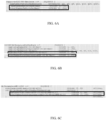
- the UE can use the RRC information element "CodebookParameters" to signal the capabilities per codebook per band. For example, as shown in FIG. 6A , the UE can signal the "maxNumberResourcesPerBand” and “totalNumberTxPortsPerBand” for each type of Type I single panel, type I multi-panel, Rel-15 Type II, Rel-15 Type II port selection, etc.
- the UE can use the RRC information element "MIMO-ParametersPerBand" to signal the capabilities per band (e.g., regardless of the codebook type). For example, as shown in FIG. 6B , the UE can signal the "maxNumberSimultaneousNZP-CSI-RS-PerCC" and “totalNumberPortsSimultaneous NZP-CSI-RS-PerCC" per band.
- the UE can use the RRC information element "CA-ParametersNR" to signal the capabilities per band-band combination (e.g., for CA scenarios). For example, as shown in FIG. 6C , the UE can signal the "maxNumberSimultaneousNZP-CSI-RS-ActBWP-AllCC" and the "totalNumberPorts SimultaneousNZP-CSI-RS-ActBWP-AllCC" for each band-band combination.
- the number of resources and the number of ports configured by the gNB should be subject to the capability reported by the UE. For example, if the gNB configures N CSI reports, each with M CSI-RS resources, then the configuration should satisfy MN ⁇ UE capability (of any of the three aspects described above).
- Rel-16 may support a Type II codebook, where the PMI granularity (e.g., PMI FD unit (subband) size) is finer than the CQI granularity (e.g., CQI FD unit (subband) size).
- the finer CSI granularity may lead to a much larger CSI computational complexity that is larger than the UE supported processing capability. Accordingly, it may be desirable to provide a new rule for determining the CSI-RS resources/ports occupation that can be used for determining the CSI reporting setting(s) subject to the UE capabilities.
- the new rule may apply in situations where a particular codebook (e.g., Rel-16 Type II codebook) is employed.
- a particular codebook e.g., Rel-16 Type II codebook
- the gNB may use the new rule to determine the CSI-RS resources/ports occupation of each CSI report, and may generate (or determine) a CSI reporting configuration having one or more CSI reports, where the CSI-RS resources/ports occupation in each CSI report is subject to the UE reported capability.
- the UE may report its capabilities (of maximum supported CSI-RS resources/ports) in order to impact the gNB scheduling (e.g., restrict the size of the CSI reporting configuration).
- the UE may also determine the CSI-RS resources/ports occupation using the new rule in order to determine whether the received CSI reporting configuration is within the UE capabilities. If, for example, the gNB (accidently or mistakenly) schedules one or more CSI reports beyond the UE's capabilities, the UE can treat the extra CSI reports as errors (e.g., by dropping and/or ignoring the additional CSI report(s)), or treat all CSI reports as errors (e.g., by dropping and/or ignoring all CSI reports).
- a CSI-RS resource being referred by N CSI reporting settings may correspond to (1) N configured CSI reporting settings (where all N may not be active, e.g., K out of the N configured CSI reporting settings may be configured and active, and N-K CSI reporting settings may be configured and inactive) or (2) N simultaneously active CSI reporting settings.
- a CSI-RS resource and the ports within it being counted N times may correspond to (1) counting as N simultaneous CSI-RS resources/N times P simultaneous ports (where P is the # ports within the CSI-RS resource) or (2) counting as N configured CSI-RS resources/ N times P configured ports (where P is # ports within the CSI-RS resource).
- FIG. 7 is a flow diagram illustrating example operations 700 for wireless communication, in accordance with certain aspects of the present disclosure.
- the operations 700 may be performed, for example, by UE (e.g., such as a UE 120a in the wireless communication network 100).
- the operations 700 may be complimentary operations by the UE to the operations 800 performed by the BS.
- Operations 700 may be implemented as software components that are executed and run on one or more processors (e.g., controller/processor 1180 of FIG. 11 ).
- the transmission and reception of signals by the UE in operations 700 may be enabled, for example, by one or more antennas (e.g., antennas 1152 of FIG. 11 ).
- the transmission and/or reception of signals by the UE may be implemented via a bus interface of one or more processors (e.g., controller/processor 1180) obtaining and/or outputting signals.
- the operations 700 may begin, at 702, where the UE receives a CSI reporting configuration that includes one or more CSI reporting settings.
- Each CSI reporting setting is associated with one or more subbands for CSI.
- Each subband for CSI includes a FD unit for CQI feedback and one or more FD units for PMI feedback.
- the CSI reporting configuration may include a CSI request that triggers one or more of the CSI reporting settings.
- the CSI request may trigger a CSI reporting state, which activates one or more preconfigured CSI reporting settings.
- the preconfiguration of the CSI reporting settings may be via RRC signaling.
- Each CSI reporting setting may include one or more CSI-RS resources, and each CSI-RS resource may include one or more CSI-RS ports.
- the UE determines, for each of the CSI reporting settings, at least one of an amount of CSI-RS resources occupation or an amount of CSI-RS ports occupation, based at least in part on (i) a number of FD units for PMI feedback within a single FD unit for CQI feedback or (ii) a number of FD units for PMI feedback within all of the subbands for CSI.
- the determination of the amount of CSI-RS resources occupation and/or the amount of CSI-RS ports occupation is further based on a type of codebook associated with the CSI reporting setting. For example, the UE may determine the resources/ports occupation based on (i) or (ii) if the codebook is Rel-16 Type II with FD compression.
- the amount of CSI-RS resources occupation and/or the amount of the CSI-RS ports occupation can be based on two types: (1) configured resources (including active and inactive) and (2) active resources.
- the amount of CSI-RS resources occupation (e.g., in 704) may include an amount of simultaneous active CSI-RS resources occupation and the amount of CSI-RS ports occupation (e.g., in 704) may include an amount of simultaneous active CSI-RS ports occupation.
- the operations 700 may further include the UE sending an indication of a CSI processing capability of the UE.
- the CSI processing capability may include an indication of at least one of a number of CSI-RS resources supported by the UE or a number of CSI-RS ports supported by the UE.
- the UE may determine at least one of a total amount of CSI-RS resources occupation or a total amount of CSI-RS ports occupation based at least in part on the determined amount of CSI-RS resources occupation of each CSI reporting setting or the determined amount of CSI-RS ports occupation of each CSI reporting setting.
- the UE may perform CSI calculation and reporting of the one or more CSI reporting settings if at least one of the total amount of CSI-RS resource occupation is smaller than the indicated number of CSI-RS resources supported by the UE or the total amount of CSI-RS ports occupation is smaller than the indicated number of CSI-RS ports supported by the UE.
- FIG. 8 is a flow diagram illustrating example operations 800 for wireless communication, in accordance with certain aspects of the present disclosure.
- the operations 800 may be performed, for example, by a gNB (e.g., such as the BS 110a in the wireless communication network 100).
- the operations 800 may be complimentary operations by the BS to the operations 700 performed by the UE.
- Operations 800 may be implemented as software components that are executed and run on one or more processors (e.g., controller/processor 1140 of FIG. 11 ).
- the transmission and reception of signals by the BS in operations 800 may be enabled, for example, by one or more antennas (e.g., antennas 1134 of FIG. 11 ).
- the transmission and/or reception of signals by the BS may be implemented via a bus interface of one or more processors (e.g., controller/processor 1140) obtaining and/or outputting signals.
- the gNB determines, for each of the CSI reporting settings, at least one of an amount of CSI-RS resources occupation or an amount of CSI-RS ports occupation, based at least in part on (i) a number of FD units for PMI feedback within a single FD unit for CQI feedback or (ii) a number of FD units for PMI feedback within all of the subbands for CSI.
- the determination of the amount of CSI-RS resources occupation and/or the amount of CSI-RS ports occupation is further based on a type of codebook associated with the CSI reporting setting. For example, the gNB may determine the resources/ports occupation based on (i) or (ii) if the codebook is Rel-16 Type II with FD compression.
- the amount of CSI-RS resources occupation and/or the amount of the CSI-RS ports occupation can be based on two types: (1) configured resources (including active and inactive) and (2) active resources.
- the amount of CSI-RS resources occupation (e.g., in 804) may include an amount of simultaneous active CSI-RS resources occupation and the amount of CSI-RS ports occupation (e.g., in 804) may include an amount of simultaneous active CSI-RS ports occupation.
- the gNB may signal a CSI reporting configuration including the one or more CSI reporting settings to the UE if at least one of the total amount of CSI-RS resources occupation is smaller than the indicated number of CSI-RS resources supported by the UE or the total amount of CSI-RS ports occupation is smaller than the indicated number of CSI-RS ports supported by the UE.
- the CSI reporting configuration may include a CSI request that triggers one or more of the CSI reporting settings.
- the CSI request may trigger a CSI reporting state, which activates one or more preconfigured CSI reporting settings.
- the preconfiguration of the CSI reporting settings may be via RRC signaling.
- Each CSI reporting setting may include one or more CSI-RS resources, and each CSI-RS resource may include one or more CSI-RS ports.
- the UE e.g., as part of operations 700
- the gNB e.g., as part of operations 800
- the threshold number may be configured by the gNB via RRC signaling, media access control (MAC) control element (CE) (MACCE) signaling, or downlink control information (DCI) signaling.
- the threshold number can be predetermined in a standard specification (e.g., 3GPP Rel-16 specification). In some cases, the threshold number can be predetermined following a rule based on one or parameters.
- a CSI-RS resource is referred by a CSI reporting setting associated with Rel-16 Type II
- the CSI-RS resource and the CSI-RS ports within the CSI-RS resource may be counted X ⁇ 1 times, where X may be dependent on R, which is configured by the gNB (e.g., as noted, R is the number of PMI FD units within one CQI subband).
- R is the number of PMI FD units within one CQI subband.
- R R.
- R 2
- a CSI-RS resource referred by a CSI reporting setting associated with Rel-16 Type II
- the CSI-RS ports within the CSI-RS resource would be counted (at least) twice.
- N 1 CSI reporting settings out of the N CSI reporting settings
- N 2 CSI reporting settings out of the N CSI reporting settings
- N - N 1 - N 2 CSI reporting settings are associated with other types of CSI codebooks.
- the CSI-RS resource and the CSI-RS ports within the CSI-RS resource would be counted N + N 2 times.
- the UE e.g., as part of operations 700
- the gNB e.g., as part of operations 800
- the number of the FD units for PMI feedback may be equal to a number of FD units used for reporting CSI with FD compression (e.g., also referred to as N 3 ). In one aspect, the number of the FD units for PMI feedback may be equal to the number of the FD units for CQI feedback times the number of FD units for PMI feedback within each FD unit for CQI feedback (e.g., also referred to as # CQI SB ⁇ R).
- the threshold number of FD units for PMI feedback may be configured by the gNB via RRC signaling, media access control (MAC) control element (CE) (MACCE) signaling, or downlink control information (DCI) signaling.
- the threshold number of FD units for PMI feedback can be predetermined in a standard specification (e.g., 3GPP Rel-16 specification).
- the threshold number of FD units for PMI feedback can be predetermined following a rule based on one or parameters.
- the threshold may be equal to 19 (e.g., same as the maximum number of subbands in Rel-15). In this aspect, assuming the # PMI units > 19, then a CSI-RS resource (referred by a CSI reporting setting associated with Rel-16 Type II) and the CSI-RS ports within the CSI-RS resource would be counted (at least) twice.
- the above aspect may be stated as the following rule: if a CSI-RS resource is referred by N CSI reporting settings associated with Rel-16 Type II and the # PMI units > threshold, then the CSI-RS resource and the CSI-RS ports within the CSI-RS resource can be counted X*N times, where X ⁇ 2.
- N CSI reporting settings For example, assume that a CSI-RS resource is referred by N CSI reporting settings, where N 1 CSI reporting settings (out of the N CSI reporting settings) are associated with Rel-16 Type II with # PMI units ⁇ threshold, N 2 CSI reporting settings (out of the N CSI reporting settings) are associated with Rel-16 Type II with # PMI units > threshold, and N - N 1 - N 2 CSI reporting settings are associated with other types of CSI codebooks.
- X 2
- FIG. 9 illustrates a communications device 900 that may include various components (e.g., corresponding to means-plus-function components) configured to perform operations for the techniques disclosed herein, such as the operations illustrated in FIG. 7 .
- the communications device 900 includes a processing system 914 coupled to a transceiver 912.
- the transceiver 912 is configured to transmit and receive signals for the communications device 900 via an antenna 920, such as the various signals described herein.
- the processing system 914 may be configured to perform processing functions for the communications device 900, including processing signals received and/or to be transmitted by the communications device 900.
- the processing system 914 includes a processor 908 coupled to a computer-readable medium/memory 910 via a bus 924.
- the computer-readable medium/memory 910 is configured to store instructions that when executed by processor 908, cause the processor 908 to perform the operations illustrated in FIG. 7 and/or other operations for performing the various techniques discussed herein.
- the processing system 914 further includes a communicating component 902 for performing the operations illustrated at 702 in FIG. 7 and/or other communication operations described herein. Additionally, the processing system 914 includes a CSI reporting component 160 for performing the operations illustrated at 704 in FIG. 7 and/or operations described herein.
- the communicating component 902 and CSI reporting component 160 may be coupled to the processor 908 via bus 924. In certain aspects, the communicating component 902 and CSI reporting component 160 may be hardware circuits. In certain aspects, the communicating component 902 and CSI reporting component 160 may be software components that are executed and run on processor 908.
- FIG. 10 illustrates a communications device 1000 that may include various components (e.g., corresponding to means-plus-function components) configured to perform operations for the techniques disclosed herein, such as the operations illustrated in FIG. 8 .
- the communications device 1000 includes a processing system 1014 coupled to a transceiver 1012.
- the transceiver 1012 is configured to transmit and receive signals for the communications device 1000 via an antenna 1020, such as the various signals described herein.
- the processing system 1014 may be configured to perform processing functions for the communications device 1000, including processing signals received and/or to be transmitted by the communications device 1000.
- the processing system 1014 includes a processor 1008 coupled to a computer-readable medium/memory 1010 via a bus 1024.
- the computer-readable medium/memory 1010 is configured to store instructions that when executed by processor 1008, cause the processor 1008 to perform the operations illustrated in FIG. 8 and/or other operations for performing the various techniques discussed herein.
- the processing system 1014 further includes a communicating component 1002 for performing the communication operations described herein. Additionally, the processing system 1014 includes a CSI reporting component 170 for performing the operations illustrated at 802 and 804 in FIG. 8 and/or operations described herein.
- the communicating component 1002 and CSI reporting component 170 may be coupled to the processor 1008 via bus 1024.
- the communicating component 1002 and CSI reporting component 170 may be hardware circuits.
- the communicating component 1002 and CSI reporting component 170 may be software components that are executed and run on processor 1008.
- NR e.g., 5G NR
- LTE Long Term Evolution
- LTE-A LTE-Advanced
- CDMA code division multiple access
- TDMA time division multiple access
- FDMA frequency division multiple access
- OFDMA orthogonal frequency division multiple access
- SC-FDMA single-carrier frequency division multiple access
- TD-SCDMA time division synchronous code division multiple access
- a CDMA network may implement a radio technology such as Universal Terrestrial Radio Access (UTRA), cdma2000, etc.
- UTRA includes Wideband CDMA (WCDMA) and other variants of CDMA.
- cdma2000 covers IS-2000, IS-95 and IS-856 standards.
- a TDMA network may implement a radio technology such as Global System for Mobile Communications (GSM).
- GSM Global System for Mobile Communications
- An OFDMA network may implement a radio technology such as NR (e.g. 5G RA), Evolved UTRA (E-UTRA), Ultra Mobile Broadband (UMB), IEEE 802.11 (Wi-Fi), IEEE 802.16 (WiMAX), IEEE 802.20, Flash-OFDMA, etc.
- E-UTRA Evolved UTRA
- UMB Ultra Mobile Broadband
- Wi-Fi Wi-Fi
- WiMAX IEEE 802.16
- IEEE 802.20 Flash-OFDMA
- UTRA and E-UTRA are part of Universal Mobile Telecommunication System (UMTS).
- LTE and LTE-A are releases of UMTS that use E-UTRA.
- UTRA, E-UTRA, UMTS, LTE, LTE-A and GSM are described in documents from an organization named "3rd Generation Partnership Project” (3GPP).
- cdma2000 and UMB are described in documents from an organization named “3rd Generation Partnership Project 2" (3GPP2).
- NR is an emerging wireless communications technology under development.
- the term “cell” can refer to a coverage area of a Node B (NB) and/or a NB subsystem serving this coverage area, depending on the context in which the term is used.
- NB Node B
- BS next generation NodeB
- AP access point
- DU distributed unit
- TRP transmission reception point
- a BS may provide communication coverage for a macro cell, a pico cell, a femto cell, and/or other types of cells.
- a macro cell may cover a relatively large geographic area (e.g., several kilometers in radius) and may allow unrestricted access by UEs with service subscription.
- a pico cell may cover a relatively small geographic area and may allow unrestricted access by UEs with service subscription.
- a femto cell may cover a relatively small geographic area (e.g., a home) and may allow restricted access by UEs having an association with the femto cell (e.g., UEs in a Closed Subscriber Group (CSG), UEs for users in the home, etc.).
- a BS for a macro cell may be referred to as a macro BS.
- a BS for a pico cell may be referred to as a pico BS.
- a BS for a femto cell may be referred to as a femto BS or a home BS.
- a UE may also be referred to as a mobile station, a terminal, an access terminal, a subscriber unit, a station, a Customer Premises Equipment (CPE), a cellular phone, a smart phone, a personal digital assistant (PDA), a wireless modem, a wireless communication device, a handheld device, a laptop computer, a cordless phone, a wireless local loop (WLL) station, a tablet computer, a camera, a gaming device, a netbook, a smartbook, an ultrabook, an appliance, a medical device or medical equipment, a biometric sensor/device, a wearable device such as a smart watch, smart clothing, smart glasses, a smart wrist band, smart jewelry (e.g., a smart ring, a smart bracelet, etc.), an entertainment device (e.g., a music device, a video device, a satellite radio, etc.), a vehicular component or sensor, a smart meter/sensor, industrial manufacturing equipment, a global positioning system device, or any other
- Some UEs may be considered machine-type communication (MTC) devices or evolved MTC (eMTC) devices.
- MTC and eMTC UEs include, for example, robots, drones, remote devices, sensors, meters, monitors, location tags, etc., that may communicate with a BS, another device (e.g., remote device), or some other entity.
- a wireless node may provide, for example, connectivity for or to a network (e.g., a wide area network such as Internet or a cellular network) via a wired or wireless communication link.
- Some UEs may be considered Internet-of-Things (IoT) devices, which may be narrowband IoT (NB-IoT) devices.
- IoT Internet-of-Things
- NB-IoT narrowband IoT
- FIG. 11 illustrates example components of BS 110a and UE 120a (e.g., in the wireless communication network 100 of FIG. 1 ), which may be used to implement aspects of the present disclosure.
- a transmit processor 1120 may receive data from a data source 1112 and control information from a controller/processor 1140.
- the control information may be for the physical broadcast channel (PBCH), physical control format indicator channel (PCFICH), physical hybrid ARQ indicator channel (PHICH), PDCCH, group common PDCCH (GC PDCCH), etc.
- the data may be for the PDSCH, etc.
- the processor 1120 may process (e.g., encode and symbol map) the data and control information to obtain data symbols and control symbols, respectively.
- the transmit processor 1120 may also generate reference symbols, such as for the primary synchronization signal (PSS), secondary synchronization signal (SSS), and cell-specific reference signal (CRS).
- PSS primary synchronization signal
- SSS secondary synchronization signal
- CRS cell-specific reference signal
- a transmit (TX) multiple-input multiple-output (MIMO) processor 1130 may perform spatial processing (e.g., precoding) on the data symbols, the control symbols, and/or the reference symbols, if applicable, and may provide output symbol streams to the modulators (MODs) 1132a- 1132t.
- Each modulator 1132 may process a respective output symbol stream (e.g., for OFDM, etc.) to obtain an output sample stream.
- Each modulator may further process (e.g., convert to analog, amplify, filter, and upconvert) the output sample stream to obtain a downlink signal.
- Downlink signals from modulators 1132a- 1132t may be transmitted via the antennas 1134a-1134t, respectively.
- the antennas 1152a- 1152r may receive the downlink signals from the BS 110a and may provide received signals to the demodulators (DEMODs) in transceivers 1154a- 1154r, respectively.
- Each demodulator 1154 may condition (e.g., filter, amplify, downconvert, and digitize) a respective received signal to obtain input samples.
- Each demodulator may further process the input samples (e.g., for OFDM, etc.) to obtain received symbols.
- a MIMO detector 1156 may obtain received symbols from all the demodulators 1154a- 1154r, perform MIMO detection on the received symbols if applicable, and provide detected symbols.
- a receive processor 1158 may process (e.g., demodulate, deinterleave, and decode) the detected symbols, provide decoded data for the UE 120a to a data sink 1160, and provide decoded control information to a controller/processor 1180.
- a transmit processor 1164 may receive and process data (e.g., for the physical uplink shared channel (PUSCH)) from a data source 1162 and control information (e.g., for the physical uplink control channel (PUCCH) from the controller/processor 1180.
- the transmit processor 1164 may also generate reference symbols for a reference signal (e.g., for the sounding reference signal (SRS)).
- the symbols from the transmit processor 1164 may be precoded by a TX MIMO processor 1166 if applicable, further processed by the demodulators in transceivers 1154a- 1154r (e.g., for SC-FDM, etc.), and transmitted to the BS 110a.
- the uplink signals from the UE 120a may be received by the antennas 1134, processed by the modulators 1132, detected by a MIMO detector 1136 if applicable, and further processed by a receive processor 1138 to obtain decoded data and control information sent by the UE 120a.
- the receive processor 1138 may provide the decoded data to a data sink 1139 and the decoded control information to the controller/processor 1140.
- the memories 1142 and 1182 may store data and program codes for BS 110a and UE 120a, respectively.
- a scheduler 1144 may schedule UEs for data transmission on the downlink and/or uplink.
- the controller/processor 1180 and/or other processors and modules at the UE 120a may perform or direct the execution of processes for the techniques described herein.
- the controller/processor 1180 of the UE 120a has a CSI reporting component 160, which is configured to implement one or more techniques described herein for determining CSI-RS resources/ports occupation, according to aspects described herein.
- controller/processor 1140 and/or other processors and modules at the BS 110a may perform or direct the execution of processes for the techniques described herein. For example, as shown in FIG.
- the controller/processor 1140 of the BS 110a has a CSI reporting component 170, which is configured to implement one or more techniques described herein for determining CSI-RS resources/ports occupation, according to aspects described herein. Although shown at the Controller/Processor, other components of the UE 120a and BS 110a may be used performing the operations described herein.
- Certain wireless networks utilize orthogonal frequency division multiplexing (OFDM) on the downlink and single-carrier frequency division multiplexing (SC-FDM) on the uplink.
- OFDM and SC-FDM partition the system bandwidth into multiple (K) orthogonal subcarriers, which are also commonly referred to as tones, bins, etc.
- K orthogonal subcarriers
- Each subcarrier may be modulated with data.
- modulation symbols are sent in the frequency domain with OFDM and in the time domain with SC-FDM.
- the spacing between adjacent subcarriers may be fixed, and the total number of subcarriers (K) may be dependent on the system bandwidth.
- the spacing of the subcarriers may be 15 kHz and the minimum resource allocation (called a "resource block” (RB)) may be 12 subcarriers (or 180 kHz). Consequently, the nominal Fast Fourier Transfer (FFT) size may be equal to 128, 256, 512, 1024 or 2048 for system bandwidth of 1.25, 2.5, 5, 10, or 20 megahertz (MHz), respectively.
- the system bandwidth may also be partitioned into subbands. For example, a subband may cover 1.08 MHz (e.g., 6 RBs), and there may be 1, 2, 4, 8, or 16 subbands for system bandwidth of 1.25, 2.5, 5, 10 or 20 MHz, respectively.
- the basic transmission time interval (TTI) or packet duration is the 1 ms subframe.
- the CP length also depends on the subcarrier spacing. Beamforming may be supported and beam direction may be dynamically configured. MIMO transmissions with precoding may also be supported. In some examples, MIMO configurations in the DL may support up to 8 transmit antennas with multi-layer DL transmissions up to 8 streams and up to 2 streams per UE. In some examples, multi-layer transmissions with up to 2 streams per UE may be supported. Aggregation of multiple cells may be supported with up to 8 serving cells.
- a scheduling entity (e.g., a BS) allocates resources for communication among some or all devices and equipment within its service area or cell.
- the scheduling entity may be responsible for scheduling, assigning, reconfiguring, and releasing resources for one or more subordinate entities. That is, for scheduled communication, subordinate entities utilize resources allocated by the scheduling entity.
- Base stations are not the only entities that may function as a scheduling entity.
- a UE may function as a scheduling entity and may schedule resources for one or more subordinate entities (e.g., one or more other UEs), and the other UEs may utilize the resources scheduled by the UE for wireless communication.
- two or more subordinate entities may communicate with each other using sidelink signals.
- Real-world applications of such sidelink communications may include public safety, proximity services, UE-to-network relaying, vehicle-to-vehicle (V2V) communications, Internet of Everything (IoE) communications, IoT communications, mission-critical mesh, and/or various other suitable applications.
- a sidelink signal may refer to a signal communicated from one subordinate entity (e.g., UE1) to another subordinate entity (e.g., UE2) without relaying that communication through the scheduling entity (e.g., UE or BS), even though the scheduling entity may be utilized for scheduling and/or control purposes.
- the sidelink signals may be communicated using a licensed spectrum (unlike wireless local area networks, which typically use an unlicensed spectrum).
- the methods disclosed herein comprise one or more steps or actions for achieving the methods.
- the method steps and/or actions may be interchanged with one another without departing from the scope of the claims.
- the order and/or use of specific steps and/or actions may be modified without departing from the scope of the claims.
- a phrase referring to "at least one of" a list of items refers to any combination of those items, including single members.
- "at least one of: a, b, or c” is intended to cover a, b, c, a-b, a-c, b-c, and a-b-c, as well as any combination with multiples of the same element (e.g., a-a, a-a-a, a-a-b, a-a-c, a-b-b, a-c-c, b-b, b-b-b, b-b-c, c-c, and c-c-c or any other ordering of a, b, and c).
- determining encompasses a wide variety of actions. For example, “determining” may include calculating, computing, processing, deriving, investigating, looking up (e.g., looking up in a table, a database or another data structure), ascertaining and the like. Also, “determining” may include receiving (e.g., receiving information), accessing (e.g., accessing data in a memory) and the like. Also, “determining” may include resolving, selecting, choosing, establishing and the like.
- the various operations of methods described above may be performed by any suitable means capable of performing the corresponding functions.
- the means may include various hardware and/or software component(s) and/or module(s), including, but not limited to a circuit, an application specific integrated circuit (ASIC), or processor.
- ASIC application specific integrated circuit
- DSP digital signal processor
- ASIC application specific integrated circuit
- FPGA field programmable gate array
- PLD programmable logic device
- a general-purpose processor may be a microprocessor, but in the alternative, the processor may be any commercially available processor, controller, microcontroller, or state machine.
- a processor may also be implemented as a combination of computing devices, e.g., a combination of a DSP and a microprocessor, a plurality of microprocessors, one or more microprocessors in conjunction with a DSP core, or any other such configuration.
- machine-readable storage media may include, by way of example, RAM (Random Access Memory), flash memory, ROM (Read Only Memory), PROM (Programmable Read-Only Memory), EPROM (Erasable Programmable Read-Only Memory), EEPROM (Electrically Erasable Programmable Read-Only Memory), registers, magnetic disks, optical disks, hard drives, or any other suitable storage medium, or any combination thereof.
- RAM Random Access Memory
- ROM Read Only Memory
- PROM PROM
- EPROM Erasable Programmable Read-Only Memory
- EEPROM Electrical Erasable Programmable Read-Only Memory
- registers magnetic disks, optical disks, hard drives, or any other suitable storage medium, or any combination thereof.
- the machine-readable media may be embodied in a computer-program product.
- computer-readable media may comprise non-transitory computer-readable media (e.g., tangible media).
- computer-readable media may comprise transitory computer-readable media (e.g., a signal). Combinations of the above should also be included within the scope of computer-readable media.
- certain aspects may comprise a computer program product for performing the operations presented herein.
- a computer program product may comprise a computer-readable medium having instructions stored (and/or encoded) thereon, the instructions being executable by one or more processors to perform the operations described herein, for example, instructions for performing the operations described herein and illustrated in FIG. 7 and/or FIG. 8 .
- modules and/or other appropriate means for performing the methods and techniques described herein can be downloaded and/or otherwise obtained by a user terminal and/or base station as applicable.
- a user terminal and/or base station can be coupled to a server to facilitate the transfer of means for performing the methods described herein.
- various methods described herein can be provided via storage means (e.g., RAM, ROM, a physical storage medium such as a compact disc (CD) or floppy disk, etc.), such that a user terminal and/or base station can obtain the various methods upon coupling or providing the storage means to the device.
- storage means e.g., RAM, ROM, a physical storage medium such as a compact disc (CD) or floppy disk, etc.
- CD compact disc
- floppy disk etc.
- any other suitable technique for providing the methods and techniques described herein to a device can be utilized.
Landscapes
- Engineering & Computer Science (AREA)
- Signal Processing (AREA)
- Computer Networks & Wireless Communication (AREA)
- Physics & Mathematics (AREA)
- Mathematical Physics (AREA)
- Mobile Radio Communication Systems (AREA)
Claims (15)
- Verfahren zur drahtlosen Kommunikation durch ein Benutzergerät, UE, umfassend:Empfangen (702) einer Kanalzustandsinformations-, CSI-, Berichtskonfiguration, die eine oder mehrere CSI-Berichtseinstellungen umfasst, wobei jede CSI-Berichtseinstellung mit einem oder mehreren Teilbändern für CSI assoziiert ist und jedes Teilband für CSI eine Frequenzbereichs-, FD-, Einheit für Kanalqualitätsinformations-, CQI-, Rückmeldung und eine oder mehrere FD-Einheiten für Vorcodierungsmatrixindikator-, PMI-, Rückmeldung umfasst; undBestimmen (704), für jede der CSI-Berichtseinstellungen, zumindest eines aus einer Menge von CSI-Referenzsignal-, CSI-RS-, Ressourcenbelegung oder einer Menge von CSI-RS-Portbelegung, basierend zumindest teilweise auf (i) einer Anzahl der FD-Einheiten für PMI-Rückmeldung innerhalb einer einzelnen FD-Einheit für CQI-Rückmeldung oder (ii) einer Anzahl von FD-Einheiten für PMI-Rückmeldung innerhalb aller der Teilbänder für CSI,wobei das Bestimmen zumindest eines aus der Menge von CSI-RS-Ressourcenbelegung oder der Menge von CSI-RS-Portbelegung weiterhin auf einem Typ eines Codebuchs basiert, der mit der CSI-Berichtseinstellung assoziiert ist; undweiterhin umfassend:
Senden einer Angabe einer CSI-Verarbeitungsfähigkeit des UE, wobei die CSI-Verarbeitungsfähigkeit eine Angabe zumindest eines aus einer Anzahl von CSI-RS-Ressourcen, die durch das UE unterstützt werden, oder einer Anzahl von CSI-RS-Ports, die durch das UE unterstützt werden, umfasst. - Verfahren gemäß Anspruch 1, weiterhin umfassend:Bestimmen zumindest eines aus einer Gesamtmenge von CSI-RS-Ressourcenbelegung oder einer Gesamtmenge von CSI-RS-Portbelegung basierend zumindest teilweise auf der bestimmten Menge von CSI-RS-Ressourcenbelegung jeder CSI-Berichtseinstellung oder der bestimmten Menge von CSI-RS-Portbelegung jeder CSI-Berichtseinstellung; undAusführen von CSI-Berechnung und Berichten der einen oder mehreren CSI-Berichtseinstellungen, wenn zumindest eines aus der Gesamtmenge von CSI-RS-Ressourcenbelegung kleiner als die angegebene Anzahl von CSI-RS-Ressourcen ist, die durch das UE unterstützt werden, oder die Gesamtmenge von CSI-RS-Portbelegung kleiner als die angegebene Anzahl von CSI-RS-Ports ist, die durch das UE unterstützt werden.
- Verfahren gemäß Anspruch 1, wobei das Bestimmen zumindest eines aus der Menge von CSI-RS-Ressourcenbelegung oder der Menge von CSI-RS-Portbelegung auf der Anzahl der FD-Einheiten für PMI-Rückmeldung innerhalb einer einzelnen FD-Einheit für CQI-Rückmeldung basiert.
- Verfahren gemäß Anspruch 1, wobei das Bestimmen zumindest eines aus der Menge von CSI-RS-Ressourcenbelegung oder der Menge von CSI-RS-Portbelegung auf der Anzahl der FD-Einheiten für PMI-Rückmeldung innerhalb aller der Teilbänder für CSI basiert.
- Verfahren gemäß Anspruch 4, wobei das Bestimmen zumindest eines aus der Menge von CSI-RS-Ressourcenbelegung oder der Menge von CSI-RS-Portbelegung weiterhin umfasst:Zählen jeder CSI-RS-Ressource und jedes CSI-RS-Ports in der CSI-RS-Ressource basierend auf einer ersten Anzahl, wenn die Anzahl der FD-Einheiten für PMI-Rückmeldung innerhalb aller der Teilbänder für CSI-Rückmeldung kleiner oder gleich einer Schwellenanzahl von FD-Einheiten für PMI-Rückmeldung ist; undZählen jeder CSI-RS-Ressource und jedes CSI-RS-Ports in der CSI-RS-Ressource basierend auf einer zweiten Anzahl, wenn die Anzahl der FD-Einheiten für PMI-Rückmeldung innerhalb aller der Teilbänder für CSI-Rückmeldung größer als die Schwellenanzahl von FD-Einheiten für PMI-Rückmeldung ist, wobei die zweite Anzahl größer als eins ist.
- Verfahren zur drahtlosen Kommunikation durch eine Netzwerkeinheit, umfassend:Bestimmen (802) einer oder mehrerer Kanalzustandsinformations-, CSI-, Berichtseinstellungen für ein Benutzergerät, UE, wobei jede CSI-Berichtseinstellung mit einem oder mehreren Teilbändern für CSI assoziiert ist und jedes Teilband für CSI eine Frequenzbereichs-, FD-, Einheit für Kanalqualitätsinformations-, CQI-, Rückmeldung und eine oder mehrere FD-Einheiten für Vorcodierungsmatrixindikator-, PMI-, Rückmeldung umfasst; undBestimmen (804), für jede der CSI-Berichtseinstellungen, zumindest eines aus einer Menge von CSI-Referenzsignal-, CSI-RS-, Ressourcenbelegung oder einer Menge von CSI-RS-Portbelegung, basierend zumindest teilweise auf (i) einer Anzahl der FD-Einheiten für PMI-Rückmeldung innerhalb einer einzelnen FD-Einheit für CQI-Rückmeldung oder (ii) einer Anzahl von FD-Einheiten für PMI-Rückmeldung innerhalb aller der Teilbänder für CSI,wobei das Bestimmen zumindest eines aus der Menge von CSI-RS-Ressourcenbelegung oder der Menge von CSI-RS-Portbelegung weiterhin auf einem Typ eines Codebuchs basiert, der mit der CSI-Berichtseinstellung assoziiert ist; undweiterhin umfassend:
Empfangen einer Angabe einer CSI-Verarbeitungsfähigkeit des UE, wobei die CSI-Verarbeitungsfähigkeit eine Angabe zumindest eines aus einer Anzahl von CSI-RS-Ressourcen, die durch das UE unterstützt werden, oder einer Anzahl von CSI-RS-Ports, die durch das UE unterstützt werden, umfasst. - Verfahren gemäß Anspruch 6, weiterhin umfassend:Bestimmen zumindest eines aus einer Gesamtmenge von CSI-RS-Ressourcenbelegung oder einer Gesamtmenge von CSI-RS-Portbelegung basierend zumindest teilweise auf der bestimmten Menge von CSI-RS-Ressourcenbelegung jeder CSI-Berichtseinstellung oder der bestimmten Menge von CSI-RS-Portbelegung jeder CSI-Berichtseinstellung; undSignalisieren einer CSI-Berichtskonfiguration, die die eine oder mehreren CSI-Berichtseinstellungen umfasst, an das UE, wenn zumindest eines aus der Gesamtmenge von CSI-RS-Ressourcenbelegung kleiner als die angegebene Anzahl von CSI-RS-Ressourcen ist, die durch das UE unterstützt werden, oder die Gesamtmenge von CSI-RS-Portbelegung kleiner als die angegebene Anzahl von CSI-RS-Ports ist, die durch das UE unterstützt werden.
- Verfahren gemäß Anspruch 6, wobei das Bestimmen zumindest eines aus der Menge von CSI-RS-Ressourcenbelegung oder der Menge von CSI-RS-Portbelegung auf der Anzahl der FD-Einheiten für PMI-Rückmeldung innerhalb einer einzelnen FD-Einheit für CQI-Rückmeldung basiert.
- Verfahren gemäß Anspruch 6, wobei das Bestimmen zumindest eines aus der Menge von CSI-RS-Ressourcenbelegung oder der Menge von CSI-RS-Portbelegung auf der Anzahl der FD-Einheiten für PMI-Rückmeldung innerhalb aller der Teilbänder für CSI basiert.
- Verfahren gemäß Anspruch 9, wobei das Bestimmen zumindest eines aus der Menge von CSI-RS-Ressourcenbelegung oder der Menge von CSI-RS-Portbelegung weiterhin umfasst:Zählen jeder CSI-RS-Ressource und jedes CSI-RS-Ports in der CSI-RS-Ressource basierend auf einer ersten Anzahl, wenn die Anzahl der FD-Einheiten für PMI-Rückmeldung innerhalb aller der Teilbänder für CSI-Rückmeldung kleiner oder gleich einer Schwellenanzahl von FD-Einheiten für PMI-Rückmeldung ist; undZählen jeder CSI-RS-Ressource und jedes CSI-RS-Ports in der CSI-RS-Ressource basierend auf einer zweiten Anzahl, wenn die Anzahl der FD-Einheiten für PMI-Rückmeldung innerhalb aller der Teilbänder für CSI-Rückmeldung größer als die Schwellenanzahl von FD-Einheiten für PMI-Rückmeldung ist, wobei die zweite Anzahl größer als eins ist.
- Computerprogramm, umfassend Anweisungen, die, wenn sie durch einen Prozessor eines Benutzergeräts ausgeführt werden, das Benutzergerät veranlassen, das Verfahren gemäß einem der Ansprüche 1 bis 5 auszuführen, oder die, wenn sie durch einen Prozessor einer Basisstation ausgeführt werden, die Basisstation veranlassen, das Verfahren gemäß einem der Ansprüche 6 bis 10 auszuführen.
- Vorrichtung zur drahtlosen Kommunikation an einem Benutzergerät, UE, wobei die Vorrichtung umfasst:Mittel zum Empfangen einer Kanalzustandsinformations-, CSI-, Berichtskonfiguration, die eine oder mehrere CSI-Berichtseinstellungen umfasst, wobei jede CSI-Berichtseinstellung mit einem oder mehreren Teilbändern für CSI assoziiert ist und jedes Teilband für CSI eine Frequenzbereichs-, FD-, Einheit für Kanalqualitätsinformations-, CQI-, Rückmeldung und eine oder mehrere FD-Einheiten für Vorcodierungsmatrixindikator-, PMI-, Rückmeldung umfasst; undMittel zum Bestimmen, für jede der CSI-Berichtseinstellungen, zumindest eines aus einer Menge von CSI-Referenzsignal-, CSI-RS-, Ressourcenbelegung oder einer Menge von CSI-RS-Portbelegung, basierend zumindest teilweise auf (i) einer Anzahl der FD-Einheiten für PMI-Rückmeldung innerhalb einer einzelnen FD-Einheit für CQI-Rückmeldung oder (ii) einer Anzahl von FD-Einheiten für PMI-Rückmeldung innerhalb aller der Teilbänder für CSI,wobei das Mittel zum Bestimmen zumindest eines aus der Menge von CSI-RS-Ressourcenbelegung oder der Menge von CSI-RS-Portbelegung weiterhin auf einem Typ eines Codebuchs basiert, der mit der CSI-Berichtseinstellung assoziiert ist; undweiterhin umfassend:
Mittel zum Senden einer Angabe einer CSI-Verarbeitungsfähigkeit des UE, wobei die CSI-Verarbeitungsfähigkeit eine Angabe zumindest eines aus einer Anzahl von CSI-RS-Ressourcen, die durch das UE unterstützt werden, oder einer Anzahl von CSI-RS-Ports, die durch das UE unterstützt werden, umfasst. - Vorrichtung zur drahtlosen Kommunikation gemäß Anspruch 12, weiterhin umfassend Mittel zum Ausführen des Verfahrens gemäß einem der Ansprüche 2 bis 5.
- Vorrichtung zur drahtlosen Kommunikation an einer Basisstation, BS, wobei die Vorrichtung umfasst:Mittel zum Bestimmen einer oder mehrerer Kanalzustandsinformations-, CSI-, Berichtseinstellungen für ein Benutzergerät, UE, wobei jede CSI-Berichtseinstellung mit einem oder mehreren Teilbändern für CSI assoziiert ist und jedes Teilband für CSI eine Frequenzbereichs-, FD-, Einheit für Kanalqualitätsinformations-, CQI-, Rückmeldung und eine oder mehrere FD-Einheiten für Vorcodierungsmatrixindikator-, PMI-, Rückmeldung umfasst; undMittel zum Bestimmen, für jede der CSI-Berichtseinstellungen, zumindest eines aus einer Menge von CSI-Referenzsignal-, CSI-RS-, Ressourcenbelegung oder einer Menge von CSI-RS-Portbelegung, basierend zumindest teilweise auf (i) einer Anzahl der FD-Einheiten für PMI-Rückmeldung innerhalb einer einzelnen FD-Einheit für CQI-Rückmeldung oder (ii) einer Anzahl von FD-Einheiten für PMI-Rückmeldung innerhalb aller der Teilbänder für CSI,wobei das Bestimmen zumindest eines aus der Menge von CSI-RS-Ressourcenbelegung oder der Menge von CSI-RS-Portbelegung weiterhin auf einem Typ eines Codebuchs basiert, der mit der CSI-Berichtseinstellung assoziiert ist; undweiterhin umfassend:
Mittel zum Empfangen einer Angabe einer CSI-Verarbeitungsfähigkeit des UE, wobei die CSI-Verarbeitungsfähigkeit eine Angabe zumindest eines aus einer Anzahl von CSI-RS-Ressourcen, die durch das UE unterstützt werden, oder einer Anzahl von CSI-RS-Ports, die durch das UE unterstützt werden, umfasst. - Vorrichtung zur drahtlosen Kommunikation gemäß Anspruch 14, weiterhin umfassend Mittel zum Ausführen des Verfahrens gemäß einem der Ansprüche 7 bis 10.
Applications Claiming Priority (1)
| Application Number | Priority Date | Filing Date | Title |
|---|---|---|---|
| PCT/CN2019/099349 WO2021022464A1 (en) | 2019-08-06 | 2019-08-06 | Channel state information reference signal (csi-rs) resources and ports occupation for finer precoding matrix indication (pmi) granularity |
Publications (3)
| Publication Number | Publication Date |
|---|---|
| EP4011110A1 EP4011110A1 (de) | 2022-06-15 |
| EP4011110A4 EP4011110A4 (de) | 2023-03-15 |
| EP4011110B1 true EP4011110B1 (de) | 2024-09-18 |
Family
ID=74502529
Family Applications (1)
| Application Number | Title | Priority Date | Filing Date |
|---|---|---|---|
| EP19940705.7A Active EP4011110B1 (de) | 2019-08-06 | 2019-08-06 | Kanalzustandsinformationsreferenzsignal (csi-rs)-ressourcen und portbelegung für feinere granularität einer vorcodierungsmatrixanzeige (pmi) |
Country Status (4)
| Country | Link |
|---|---|
| US (1) | US20220271814A1 (de) |
| EP (1) | EP4011110B1 (de) |
| CN (1) | CN114175519B (de) |
| WO (1) | WO2021022464A1 (de) |
Families Citing this family (18)
| Publication number | Priority date | Publication date | Assignee | Title |
|---|---|---|---|---|
| WO2020150940A1 (en) * | 2019-01-23 | 2020-07-30 | Qualcomm Incorporated | Cqi reporting with pmi frequency domain units |
| US20220183022A1 (en) * | 2019-08-12 | 2022-06-09 | Ntt Docomo, Inc. | Method of physical uplink control channel (pucch) resource determination for rel. 16 type ii channel state information (csi) |
| CN110535509B (zh) * | 2019-08-16 | 2024-09-27 | 中兴通讯股份有限公司 | 一种信息反馈和接收方法、装置和存储介质 |
| US20220394460A1 (en) * | 2019-11-15 | 2022-12-08 | Ntt Docomo, Inc. | Terminal and communication method |
| JP7421343B2 (ja) * | 2020-01-09 | 2024-01-24 | キヤノン株式会社 | 通信装置、通信装置の制御方法、およびプログラム |
| CN115039431B (zh) * | 2020-02-03 | 2024-08-13 | 高通股份有限公司 | 用于多trp csi的cpu、资源和端口占用 |
| WO2021159324A1 (en) * | 2020-02-12 | 2021-08-19 | Apple Inc. | Channel state information reporting |
| US11750258B2 (en) * | 2020-03-12 | 2023-09-05 | Samsung Electronics Co., Ltd. | Method and apparatus for CSI reporting |
| US11516800B2 (en) * | 2020-04-02 | 2022-11-29 | Qualcomm Incorporated | Bandwidth part (BWP) configuration for full duplex |
| US20230163823A1 (en) * | 2020-04-07 | 2023-05-25 | Ntt Docomo, Inc. | Terminal, radio communication method, and base station |
| US12500639B2 (en) * | 2021-01-15 | 2025-12-16 | Apple Inc. | CSI-RS enhancement for port selection codebook with channel reciprocity |
| WO2022238942A1 (en) * | 2021-05-11 | 2022-11-17 | Telefonaktiebolaget Lm Ericsson (Publ) | Configuring channel state information (csi) feedback |
| US12348983B1 (en) * | 2022-04-28 | 2025-07-01 | Nvidia Corporation | Beam management in wireless networks |
| US12362883B2 (en) * | 2022-06-30 | 2025-07-15 | Qualcomm Incorporated | Channel state information processing parameters for dynamic network entity power adaptation |
| US20250055634A1 (en) * | 2023-07-27 | 2025-02-13 | Samsung Electronics Co., Ltd. | Port-to-resource mapping |
| CN120358006A (zh) * | 2024-01-18 | 2025-07-22 | 大唐移动通信设备有限公司 | 信道状态信息csi上报方法、设备及装置 |
| EP4601211A1 (de) * | 2024-02-09 | 2025-08-13 | Nokia Technologies Oy | Verfahren, vorrichtung und computerprogramm im zusammenhang mit kanalstatusinformationsberichtskonfigurationen für funkübertragungen |
| WO2025171556A1 (en) * | 2024-02-15 | 2025-08-21 | Qualcomm Incorporated | Cpu, active resources, and csi preparation time for multiple port csi |
Family Cites Families (15)
| Publication number | Priority date | Publication date | Assignee | Title |
|---|---|---|---|---|
| WO2014062195A1 (en) * | 2012-10-19 | 2014-04-24 | Nokia Siemens Networks Oy | Csi feedback with elevation beamforming |
| US9680678B2 (en) * | 2014-06-23 | 2017-06-13 | Intel IP Corporation | Communication systems and methods |
| CN105610542A (zh) * | 2014-11-14 | 2016-05-25 | 北京三星通信技术研究有限公司 | 信道状态信息报告的方法及装置 |
| WO2016183737A1 (en) * | 2015-05-15 | 2016-11-24 | Qualcomm Incorporated | Enhanced csi procedures for fd-mimo |
| US10523285B2 (en) * | 2015-11-05 | 2019-12-31 | Intel Corporation | Full dimension multiple input multiple output communication systems and methods |
| EP3400740A4 (de) * | 2016-01-07 | 2019-11-06 | Qualcomm Incorporated | Verbesserte csi-rückkopplung für fd-mimo |
| CN109076397B (zh) * | 2016-05-13 | 2021-07-09 | 华为技术有限公司 | 一种资源分配方法及相关设备 |
| JP6877296B2 (ja) * | 2016-08-12 | 2021-05-26 | 華碩電腦股▲ふん▼有限公司 | 無線通信システムにおける測定のためのヌメロロジ帯域幅を決定する方法及び装置 |
| CN112702099B (zh) * | 2016-09-30 | 2023-01-06 | 华为技术有限公司 | 一种速率匹配方法、装置、网络设备及存储介质 |
| WO2018059478A1 (zh) * | 2016-09-30 | 2018-04-05 | 华为技术有限公司 | Csi测量方法及装置 |
| US11336354B2 (en) * | 2017-06-15 | 2022-05-17 | Lg Electronics Inc. | Channel state information reporting method in wireless communication system and device therefor |
| KR102436802B1 (ko) * | 2017-08-11 | 2022-08-26 | 삼성전자주식회사 | 무선 통신 시스템에서의 비주기적 채널 상태 보고 시점 지시 방법 및 장치 |
| WO2019103580A1 (ko) * | 2017-11-27 | 2019-05-31 | 엘지전자 주식회사 | 무선 통신 시스템에서 csi 보고를 수행하기 위한 방법 및 이를 위한 장치 |
| EP3586469B1 (de) * | 2018-01-09 | 2020-12-02 | Ofinno, LLC | Physical- und mac-schicht-verfahren in einer drahtlosen vorrichtung |
| CN111106857B (zh) * | 2018-10-27 | 2022-05-24 | 华为技术有限公司 | 指示和确定预编码向量的方法以及通信装置 |
-
2019
- 2019-08-06 EP EP19940705.7A patent/EP4011110B1/de active Active
- 2019-08-06 CN CN201980098861.9A patent/CN114175519B/zh active Active
- 2019-08-06 US US17/629,227 patent/US20220271814A1/en active Pending
- 2019-08-06 WO PCT/CN2019/099349 patent/WO2021022464A1/en not_active Ceased
Also Published As
| Publication number | Publication date |
|---|---|
| WO2021022464A1 (en) | 2021-02-11 |
| EP4011110A4 (de) | 2023-03-15 |
| EP4011110A1 (de) | 2022-06-15 |
| CN114175519B (zh) | 2024-03-15 |
| US20220271814A1 (en) | 2022-08-25 |
| CN114175519A (zh) | 2022-03-11 |
Similar Documents
| Publication | Publication Date | Title |
|---|---|---|
| EP4011110B1 (de) | Kanalzustandsinformationsreferenzsignal (csi-rs)-ressourcen und portbelegung für feinere granularität einer vorcodierungsmatrixanzeige (pmi) | |
| US11665722B2 (en) | QCL assumption for A-CSI-RS configured with multi-TRP | |
| US12255713B2 (en) | CSI mapping and omission with TD compression | |
| US11658706B2 (en) | CSI processing for fine CSI granularity | |
| WO2021068149A1 (en) | Port selection for channel state feedback with analog feedforward | |
| WO2020051896A1 (en) | Csi report configuration with a codebook list | |
| WO2020237561A1 (en) | Channel state information feedback in full-duplex | |
| WO2021034691A1 (en) | Sidelink-based channel state information | |
| EP4014628A1 (de) | Auf sidelink basierende kanalzustandsinformationen | |
| WO2021212280A1 (en) | Methods for csi report transmitted on multi-slot pusch | |
| WO2021027920A1 (en) | User-equipment (ue) capability signaling | |
| WO2021087844A1 (en) | Compressed csi feedback without full csi-rs presence | |
| EP3915296B1 (de) | Cqi-meldung mit pmi-frequenzdomäneneinheiten | |
| US11601242B2 (en) | Fast adaptation of transmission properties of SRS resource sets | |
| WO2020143737A1 (en) | Channel state information (csi) omission for type-ii csi report | |
| US11418278B2 (en) | Configured dependency between modulation and coding scheme (MCS) and power control | |
| WO2021026798A1 (en) | User-equipment (ue) capability signaling for codebook combinations | |
| US12549318B2 (en) | A-CSI transmission with slot aggregation | |
| WO2020221371A1 (en) | Coefficient determination for type-ii compressed csi reporting with reduced overhead | |
| WO2021087948A1 (en) | User-equipment (ue) capability signaling |
Legal Events
| Date | Code | Title | Description |
|---|---|---|---|
| STAA | Information on the status of an ep patent application or granted ep patent |
Free format text: STATUS: THE INTERNATIONAL PUBLICATION HAS BEEN MADE |
|
| PUAI | Public reference made under article 153(3) epc to a published international application that has entered the european phase |
Free format text: ORIGINAL CODE: 0009012 |
|
| STAA | Information on the status of an ep patent application or granted ep patent |
Free format text: STATUS: REQUEST FOR EXAMINATION WAS MADE |
|
| 17P | Request for examination filed |
Effective date: 20220113 |
|
| AK | Designated contracting states |
Kind code of ref document: A1 Designated state(s): AL AT BE BG CH CY CZ DE DK EE ES FI FR GB GR HR HU IE IS IT LI LT LU LV MC MK MT NL NO PL PT RO RS SE SI SK SM TR |
|
| DAV | Request for validation of the european patent (deleted) | ||
| DAX | Request for extension of the european patent (deleted) | ||
| A4 | Supplementary search report drawn up and despatched |
Effective date: 20230210 |
|
| RIC1 | Information provided on ipc code assigned before grant |
Ipc: H04B 7/06 20060101ALI20230206BHEP Ipc: H04B 7/04 20060101ALI20230206BHEP Ipc: H04W 24/00 20090101AFI20230206BHEP |
|
| GRAP | Despatch of communication of intention to grant a patent |
Free format text: ORIGINAL CODE: EPIDOSNIGR1 |
|
| STAA | Information on the status of an ep patent application or granted ep patent |
Free format text: STATUS: GRANT OF PATENT IS INTENDED |
|
| INTG | Intention to grant announced |
Effective date: 20240430 |
|
| GRAS | Grant fee paid |
Free format text: ORIGINAL CODE: EPIDOSNIGR3 |
|
| GRAA | (expected) grant |
Free format text: ORIGINAL CODE: 0009210 |
|
| STAA | Information on the status of an ep patent application or granted ep patent |
Free format text: STATUS: THE PATENT HAS BEEN GRANTED |
|
| AK | Designated contracting states |
Kind code of ref document: B1 Designated state(s): AL AT BE BG CH CY CZ DE DK EE ES FI FR GB GR HR HU IE IS IT LI LT LU LV MC MK MT NL NO PL PT RO RS SE SI SK SM TR |
|
| REG | Reference to a national code |
Ref country code: GB Ref legal event code: FG4D |
|
| REG | Reference to a national code |
Ref country code: CH Ref legal event code: EP |
|
| REG | Reference to a national code |
Ref country code: DE Ref legal event code: R096 Ref document number: 602019059314 Country of ref document: DE |
|
| REG | Reference to a national code |
Ref country code: IE Ref legal event code: FG4D |
|
| REG | Reference to a national code |
Ref country code: LT Ref legal event code: MG9D |
|
| PG25 | Lapsed in a contracting state [announced via postgrant information from national office to epo] |
Ref country code: NO Free format text: LAPSE BECAUSE OF FAILURE TO SUBMIT A TRANSLATION OF THE DESCRIPTION OR TO PAY THE FEE WITHIN THE PRESCRIBED TIME-LIMIT Effective date: 20241218 |
|
| PG25 | Lapsed in a contracting state [announced via postgrant information from national office to epo] |
Ref country code: GR Free format text: LAPSE BECAUSE OF FAILURE TO SUBMIT A TRANSLATION OF THE DESCRIPTION OR TO PAY THE FEE WITHIN THE PRESCRIBED TIME-LIMIT Effective date: 20241219 Ref country code: FI Free format text: LAPSE BECAUSE OF FAILURE TO SUBMIT A TRANSLATION OF THE DESCRIPTION OR TO PAY THE FEE WITHIN THE PRESCRIBED TIME-LIMIT Effective date: 20240918 |
|
| PG25 | Lapsed in a contracting state [announced via postgrant information from national office to epo] |
Ref country code: BG Free format text: LAPSE BECAUSE OF FAILURE TO SUBMIT A TRANSLATION OF THE DESCRIPTION OR TO PAY THE FEE WITHIN THE PRESCRIBED TIME-LIMIT Effective date: 20240918 |
|
| PG25 | Lapsed in a contracting state [announced via postgrant information from national office to epo] |
Ref country code: LV Free format text: LAPSE BECAUSE OF FAILURE TO SUBMIT A TRANSLATION OF THE DESCRIPTION OR TO PAY THE FEE WITHIN THE PRESCRIBED TIME-LIMIT Effective date: 20240918 |
|
| PG25 | Lapsed in a contracting state [announced via postgrant information from national office to epo] |
Ref country code: HR Free format text: LAPSE BECAUSE OF FAILURE TO SUBMIT A TRANSLATION OF THE DESCRIPTION OR TO PAY THE FEE WITHIN THE PRESCRIBED TIME-LIMIT Effective date: 20240918 |
|
| REG | Reference to a national code |
Ref country code: NL Ref legal event code: MP Effective date: 20240918 |
|
| PG25 | Lapsed in a contracting state [announced via postgrant information from national office to epo] |
Ref country code: RS Free format text: LAPSE BECAUSE OF FAILURE TO SUBMIT A TRANSLATION OF THE DESCRIPTION OR TO PAY THE FEE WITHIN THE PRESCRIBED TIME-LIMIT Effective date: 20241218 |
|
| PG25 | Lapsed in a contracting state [announced via postgrant information from national office to epo] |
Ref country code: RS Free format text: LAPSE BECAUSE OF FAILURE TO SUBMIT A TRANSLATION OF THE DESCRIPTION OR TO PAY THE FEE WITHIN THE PRESCRIBED TIME-LIMIT Effective date: 20241218 Ref country code: NO Free format text: LAPSE BECAUSE OF FAILURE TO SUBMIT A TRANSLATION OF THE DESCRIPTION OR TO PAY THE FEE WITHIN THE PRESCRIBED TIME-LIMIT Effective date: 20241218 Ref country code: LV Free format text: LAPSE BECAUSE OF FAILURE TO SUBMIT A TRANSLATION OF THE DESCRIPTION OR TO PAY THE FEE WITHIN THE PRESCRIBED TIME-LIMIT Effective date: 20240918 Ref country code: HR Free format text: LAPSE BECAUSE OF FAILURE TO SUBMIT A TRANSLATION OF THE DESCRIPTION OR TO PAY THE FEE WITHIN THE PRESCRIBED TIME-LIMIT Effective date: 20240918 Ref country code: GR Free format text: LAPSE BECAUSE OF FAILURE TO SUBMIT A TRANSLATION OF THE DESCRIPTION OR TO PAY THE FEE WITHIN THE PRESCRIBED TIME-LIMIT Effective date: 20241219 Ref country code: FI Free format text: LAPSE BECAUSE OF FAILURE TO SUBMIT A TRANSLATION OF THE DESCRIPTION OR TO PAY THE FEE WITHIN THE PRESCRIBED TIME-LIMIT Effective date: 20240918 Ref country code: BG Free format text: LAPSE BECAUSE OF FAILURE TO SUBMIT A TRANSLATION OF THE DESCRIPTION OR TO PAY THE FEE WITHIN THE PRESCRIBED TIME-LIMIT Effective date: 20240918 |
|
| REG | Reference to a national code |
Ref country code: AT Ref legal event code: MK05 Ref document number: 1725732 Country of ref document: AT Kind code of ref document: T Effective date: 20240918 |
|
| PG25 | Lapsed in a contracting state [announced via postgrant information from national office to epo] |
Ref country code: NL Free format text: LAPSE BECAUSE OF FAILURE TO SUBMIT A TRANSLATION OF THE DESCRIPTION OR TO PAY THE FEE WITHIN THE PRESCRIBED TIME-LIMIT Effective date: 20240918 |
|
| PG25 | Lapsed in a contracting state [announced via postgrant information from national office to epo] |
Ref country code: IS Free format text: LAPSE BECAUSE OF FAILURE TO SUBMIT A TRANSLATION OF THE DESCRIPTION OR TO PAY THE FEE WITHIN THE PRESCRIBED TIME-LIMIT Effective date: 20250118 Ref country code: PT Free format text: LAPSE BECAUSE OF FAILURE TO SUBMIT A TRANSLATION OF THE DESCRIPTION OR TO PAY THE FEE WITHIN THE PRESCRIBED TIME-LIMIT Effective date: 20250120 |
|
| PG25 | Lapsed in a contracting state [announced via postgrant information from national office to epo] |
Ref country code: RO Free format text: LAPSE BECAUSE OF FAILURE TO SUBMIT A TRANSLATION OF THE DESCRIPTION OR TO PAY THE FEE WITHIN THE PRESCRIBED TIME-LIMIT Effective date: 20240918 Ref country code: SM Free format text: LAPSE BECAUSE OF FAILURE TO SUBMIT A TRANSLATION OF THE DESCRIPTION OR TO PAY THE FEE WITHIN THE PRESCRIBED TIME-LIMIT Effective date: 20240918 |
|
| PG25 | Lapsed in a contracting state [announced via postgrant information from national office to epo] |
Ref country code: ES Free format text: LAPSE BECAUSE OF FAILURE TO SUBMIT A TRANSLATION OF THE DESCRIPTION OR TO PAY THE FEE WITHIN THE PRESCRIBED TIME-LIMIT Effective date: 20240918 |
|
| PG25 | Lapsed in a contracting state [announced via postgrant information from national office to epo] |
Ref country code: EE Free format text: LAPSE BECAUSE OF FAILURE TO SUBMIT A TRANSLATION OF THE DESCRIPTION OR TO PAY THE FEE WITHIN THE PRESCRIBED TIME-LIMIT Effective date: 20240918 Ref country code: AT Free format text: LAPSE BECAUSE OF FAILURE TO SUBMIT A TRANSLATION OF THE DESCRIPTION OR TO PAY THE FEE WITHIN THE PRESCRIBED TIME-LIMIT Effective date: 20240918 |
|
| PG25 | Lapsed in a contracting state [announced via postgrant information from national office to epo] |
Ref country code: PL Free format text: LAPSE BECAUSE OF FAILURE TO SUBMIT A TRANSLATION OF THE DESCRIPTION OR TO PAY THE FEE WITHIN THE PRESCRIBED TIME-LIMIT Effective date: 20240918 Ref country code: CZ Free format text: LAPSE BECAUSE OF FAILURE TO SUBMIT A TRANSLATION OF THE DESCRIPTION OR TO PAY THE FEE WITHIN THE PRESCRIBED TIME-LIMIT Effective date: 20240918 |
|
| PG25 | Lapsed in a contracting state [announced via postgrant information from national office to epo] |
Ref country code: SK Free format text: LAPSE BECAUSE OF FAILURE TO SUBMIT A TRANSLATION OF THE DESCRIPTION OR TO PAY THE FEE WITHIN THE PRESCRIBED TIME-LIMIT Effective date: 20240918 Ref country code: IT Free format text: LAPSE BECAUSE OF FAILURE TO SUBMIT A TRANSLATION OF THE DESCRIPTION OR TO PAY THE FEE WITHIN THE PRESCRIBED TIME-LIMIT Effective date: 20240918 |
|
| REG | Reference to a national code |
Ref country code: DE Ref legal event code: R097 Ref document number: 602019059314 Country of ref document: DE |
|
| PG25 | Lapsed in a contracting state [announced via postgrant information from national office to epo] |
Ref country code: DK Free format text: LAPSE BECAUSE OF FAILURE TO SUBMIT A TRANSLATION OF THE DESCRIPTION OR TO PAY THE FEE WITHIN THE PRESCRIBED TIME-LIMIT Effective date: 20240918 |
|
| PLBE | No opposition filed within time limit |
Free format text: ORIGINAL CODE: 0009261 |
|
| STAA | Information on the status of an ep patent application or granted ep patent |
Free format text: STATUS: NO OPPOSITION FILED WITHIN TIME LIMIT |
|
| 26N | No opposition filed |
Effective date: 20250619 |
|
| PG25 | Lapsed in a contracting state [announced via postgrant information from national office to epo] |
Ref country code: SE Free format text: LAPSE BECAUSE OF FAILURE TO SUBMIT A TRANSLATION OF THE DESCRIPTION OR TO PAY THE FEE WITHIN THE PRESCRIBED TIME-LIMIT Effective date: 20240918 |
|
| PGFP | Annual fee paid to national office [announced via postgrant information from national office to epo] |
Ref country code: DE Payment date: 20250709 Year of fee payment: 7 |
|
| PGFP | Annual fee paid to national office [announced via postgrant information from national office to epo] |
Ref country code: GB Payment date: 20250710 Year of fee payment: 7 |
|
| PGFP | Annual fee paid to national office [announced via postgrant information from national office to epo] |
Ref country code: FR Payment date: 20250709 Year of fee payment: 7 |
|
| REG | Reference to a national code |
Ref country code: CH Ref legal event code: H13 Free format text: ST27 STATUS EVENT CODE: U-0-0-H10-H13 (AS PROVIDED BY THE NATIONAL OFFICE) Effective date: 20260324 |
|
| PG25 | Lapsed in a contracting state [announced via postgrant information from national office to epo] |
Ref country code: MC Free format text: LAPSE BECAUSE OF FAILURE TO SUBMIT A TRANSLATION OF THE DESCRIPTION OR TO PAY THE FEE WITHIN THE PRESCRIBED TIME-LIMIT Effective date: 20240918 |
|
| PG25 | Lapsed in a contracting state [announced via postgrant information from national office to epo] |
Ref country code: LU Free format text: LAPSE BECAUSE OF NON-PAYMENT OF DUE FEES Effective date: 20250806 |
|
| PG25 | Lapsed in a contracting state [announced via postgrant information from national office to epo] |
Ref country code: CH Free format text: LAPSE BECAUSE OF NON-PAYMENT OF DUE FEES Effective date: 20250831 |