EP4011376B1 - Combinaison d'un inhibiteur alk et d'un inhibiteur egfr pour le traitement du cancer - Google Patents
Combinaison d'un inhibiteur alk et d'un inhibiteur egfr pour le traitement du cancer Download PDFInfo
- Publication number
- EP4011376B1 EP4011376B1 EP22154006.5A EP22154006A EP4011376B1 EP 4011376 B1 EP4011376 B1 EP 4011376B1 EP 22154006 A EP22154006 A EP 22154006A EP 4011376 B1 EP4011376 B1 EP 4011376B1
- Authority
- EP
- European Patent Office
- Prior art keywords
- days
- inhibitor
- egfr inhibitor
- cancer
- egfr
- Prior art date
- Legal status (The legal status is an assumption and is not a legal conclusion. Google has not performed a legal analysis and makes no representation as to the accuracy of the status listed.)
- Active
Links
Images



Classifications
-
- A—HUMAN NECESSITIES
- A61—MEDICAL OR VETERINARY SCIENCE; HYGIENE
- A61K—PREPARATIONS FOR MEDICAL, DENTAL OR TOILETRY PURPOSES
- A61K31/00—Medicinal preparations containing organic active ingredients
- A61K31/33—Heterocyclic compounds
- A61K31/395—Heterocyclic compounds having nitrogen as a ring hetero atom, e.g. guanethidine or rifamycins
- A61K31/495—Heterocyclic compounds having nitrogen as a ring hetero atom, e.g. guanethidine or rifamycins having six-membered rings with two or more nitrogen atoms as the only ring heteroatoms, e.g. piperazine or tetrazines
- A61K31/505—Pyrimidines; Hydrogenated pyrimidines, e.g. trimethoprim
- A61K31/506—Pyrimidines; Hydrogenated pyrimidines, e.g. trimethoprim not condensed and containing further heterocyclic rings
-
- A—HUMAN NECESSITIES
- A61—MEDICAL OR VETERINARY SCIENCE; HYGIENE
- A61K—PREPARATIONS FOR MEDICAL, DENTAL OR TOILETRY PURPOSES
- A61K31/00—Medicinal preparations containing organic active ingredients
- A61K31/33—Heterocyclic compounds
- A61K31/395—Heterocyclic compounds having nitrogen as a ring hetero atom, e.g. guanethidine or rifamycins
- A61K31/495—Heterocyclic compounds having nitrogen as a ring hetero atom, e.g. guanethidine or rifamycins having six-membered rings with two or more nitrogen atoms as the only ring heteroatoms, e.g. piperazine or tetrazines
- A61K31/50—Pyridazines; Hydrogenated pyridazines
- A61K31/501—Pyridazines; Hydrogenated pyridazines not condensed and containing further heterocyclic rings
-
- A—HUMAN NECESSITIES
- A61—MEDICAL OR VETERINARY SCIENCE; HYGIENE
- A61K—PREPARATIONS FOR MEDICAL, DENTAL OR TOILETRY PURPOSES
- A61K31/00—Medicinal preparations containing organic active ingredients
- A61K31/33—Heterocyclic compounds
- A61K31/395—Heterocyclic compounds having nitrogen as a ring hetero atom, e.g. guanethidine or rifamycins
- A61K31/495—Heterocyclic compounds having nitrogen as a ring hetero atom, e.g. guanethidine or rifamycins having six-membered rings with two or more nitrogen atoms as the only ring heteroatoms, e.g. piperazine or tetrazines
- A61K31/505—Pyrimidines; Hydrogenated pyrimidines, e.g. trimethoprim
- A61K31/517—Pyrimidines; Hydrogenated pyrimidines, e.g. trimethoprim ortho- or peri-condensed with carbocyclic ring systems, e.g. quinazoline, perimidine
-
- A—HUMAN NECESSITIES
- A61—MEDICAL OR VETERINARY SCIENCE; HYGIENE
- A61K—PREPARATIONS FOR MEDICAL, DENTAL OR TOILETRY PURPOSES
- A61K31/00—Medicinal preparations containing organic active ingredients
- A61K31/33—Heterocyclic compounds
- A61K31/395—Heterocyclic compounds having nitrogen as a ring hetero atom, e.g. guanethidine or rifamycins
- A61K31/495—Heterocyclic compounds having nitrogen as a ring hetero atom, e.g. guanethidine or rifamycins having six-membered rings with two or more nitrogen atoms as the only ring heteroatoms, e.g. piperazine or tetrazines
- A61K31/505—Pyrimidines; Hydrogenated pyrimidines, e.g. trimethoprim
- A61K31/519—Pyrimidines; Hydrogenated pyrimidines, e.g. trimethoprim ortho- or peri-condensed with heterocyclic rings
-
- A—HUMAN NECESSITIES
- A61—MEDICAL OR VETERINARY SCIENCE; HYGIENE
- A61K—PREPARATIONS FOR MEDICAL, DENTAL OR TOILETRY PURPOSES
- A61K45/00—Medicinal preparations containing active ingredients not provided for in groups A61K31/00 - A61K41/00
- A61K45/06—Mixtures of active ingredients without chemical characterisation, e.g. antiphlogistics and cardiaca
-
- A—HUMAN NECESSITIES
- A61—MEDICAL OR VETERINARY SCIENCE; HYGIENE
- A61P—SPECIFIC THERAPEUTIC ACTIVITY OF CHEMICAL COMPOUNDS OR MEDICINAL PREPARATIONS
- A61P35/00—Antineoplastic agents
-
- C—CHEMISTRY; METALLURGY
- C07—ORGANIC CHEMISTRY
- C07D—HETEROCYCLIC COMPOUNDS
- C07D401/00—Heterocyclic compounds containing two or more hetero rings, having nitrogen atoms as the only ring hetero atoms, at least one ring being a six-membered ring with only one nitrogen atom
- C07D401/02—Heterocyclic compounds containing two or more hetero rings, having nitrogen atoms as the only ring hetero atoms, at least one ring being a six-membered ring with only one nitrogen atom containing two hetero rings
- C07D401/12—Heterocyclic compounds containing two or more hetero rings, having nitrogen atoms as the only ring hetero atoms, at least one ring being a six-membered ring with only one nitrogen atom containing two hetero rings linked by a chain containing hetero atoms as chain links
-
- C—CHEMISTRY; METALLURGY
- C07—ORGANIC CHEMISTRY
- C07D—HETEROCYCLIC COMPOUNDS
- C07D405/00—Heterocyclic compounds containing both one or more hetero rings having oxygen atoms as the only ring hetero atoms, and one or more rings having nitrogen as the only ring hetero atom
- C07D405/14—Heterocyclic compounds containing both one or more hetero rings having oxygen atoms as the only ring hetero atoms, and one or more rings having nitrogen as the only ring hetero atom containing three or more hetero rings
Definitions
- the present invention pertains to the biomedical field, and particularly relates to an EGFR inhibitor for use in a method for treating or suppressing a cancer, reducing its severity, lowering its risk or inhibiting its metastasis in an individual.
- the method comprises administering to the individual a therapeutically effective amount of an ALK inhibitor, and a therapeutically effective amount of an EGFR inhibitor.
- the invention also relates to a pharmaceutical composition or kit comprising an ALK inhibitor and an EGFR inhibitor.
- the invention is defined in the claims.
- Lung cancer is one of the most common malignant tumors in the world, and it is the cancer with the highest incidence and mortality in China. In the past thirty years, the growth rate of lung cancer in China has reached as high as 465%, and the mortality rate is close to the incidence rate, accounting for about 40% of the global total.
- Non-small cell lung cancer (NSCLC) accounts for about 80%-85% of lung cancers. Compared with small cell lung cancer, non-small cell lung cancer has a lower degree of deterioration and a relatively late metastasis, but most patients ( ⁇ 75%) have been already in the middle and advanced stage when confirmed, the recurrence rate was high, and the 5-year survival rate was less than 54%.
- EGFR mutations, ALK rearrangements, and ROS1 mutations are the most common driver genes in NSCLC.
- the mutation probabilities of ALK and ROS1 are approximately 5-7%.
- the EGFR mutations are associated with 30% of NSCLC, and as high as 60% in Asians.
- a variety of molecularly targeted drugs for the mutations have been used clinically.
- the targeted drugs currently marketed for EGFR mutations include: icotinib, gefitinib and erlotinib of first generation for 19, 21 exon mutations; afatinib of second generation for 8, 20 exon mutations; and osimertinib (also referred as AZD9291 herein) of third generation for T790M mutation.
- the targeted drugs for ALK mutations include: crizotinib as first-generation of targeted drug, ceritinib, alectinib and brigatinib as second-generation of targeted drugs, lorlatinib as third-generation of targeted drug, and the like.
- the targeted drugs usually exhibit resistance about 1 year after administration.
- overcoming the drug resistance of the targeted drugs or delaying the drug resistance is one of the main objectives in drug research and development.
- the invention provides an EGFR inhibitor for use in a method for treating or suppressing a cancer, reducing its severity, lowering its risk or inhibiting its metastasis in an individual, said method comprising administering to the individual a therapeutically effective amount of an ALK inhibitor , and a therapeutically effective amount of an EGFR inhibitor, as defined in the appended claims.
- the invention provides a pharmaceutical composition as defined in the appended claims, comprising an ALK inhibitor and an EGFR inhibitor, as well as a pharmaceutically acceptable carrier.
- the invention provides a kit as defined in the appended claims, comprising:
- FAK focal adhesion kinase
- FAK inhibitor refers to an agent having an inhibitory effect on FAK.
- the FAK inhibitor also has an inhibitory effect on one or more other targets (e.g., ALK and/or ROS1).
- ALK refers to anaplasticlymphoma kinase
- ALK inhibitor refers to an agent having an inhibitory effect on ALK.
- the ALK inhibitor also has an inhibitory effect on one or more other targets (e.g., FAK and/or ROS1).
- ROS1 is a tyrosine protein kinase encoded by ROS1 proto-oncogene in human
- ROS1 inhibitor refers to an agent having an inhibitory effect on ROS1.
- the ROS1 inhibitor also has an inhibitory effect on one or more other targets (e.g., FAK and/or ALK).
- EGFR inhibitor refers to an agent that selectively and efficiently inhibits an epidermal growth factor receptor (EGFR) that carries a certain mutation form.
- alkyl refers to an unsubstituted straight or branched aliphatic hydrocarbon containing from 1 to 12 carbon atoms (ie, C 1-12 alkyl) or an indicated number of carbon atoms, for example, C 1 alkyl such as methyl, C 2 alkyl such as ethyl, C 3 alkyl such as n-propyl or isopropyl, C 1-3 alkyl such as methyl, ethyl, n-propyl or isopropyl, or the like. In one embodiment, the alkyl is C 1-4 alkyl.
- Non-limiting examples of C 1-12 alkyl include methyl, ethyl, n-propyl, isopropyl, n-butyl, sec-butyl, tert-butyl, isobutyl, 3-pentyl, hexyl, heptyl, octyl, nonyl and decyl.
- Examples of C 1-4 alkyl include methyl, ethyl, n-propyl, isopropyl, n-butyl, sec-butyl, tert-butyl, and isobutyl.
- cycloalkyl refers to a saturated or partially unsaturated (containing one or two double bonds) cyclic aliphatic hydrocarbon, which comprises 1 or 2 rings having 3 to 12 carbon atoms or an indicated number of carbon atoms (i.e., C 3-12 cycloalkyl).
- the cycloalkyl has two rings.
- the cycloalkyl has one ring.
- the cycloalkyl group is selected from the group consisting of C 3-8 cycloalkyl groups.
- the cycloalkyl group is selected from the group consisting of C 3-6 cycloalkyl groups.
- Non-limiting examples of cycloalkyl include cyclopropyl, cyclobutyl, cyclopentyl, cyclohexyl, cycloheptyl, cyclooctyl, norbornyl, decahydronaphthyl, adamantyl, cyclohexenyl, and cyclopentenyl.
- heterocycle or “heterocyclyl” as used herein, alone or as part of another group, refers to a saturated or partially unsaturated (e.g., comprising one or two double bonds) cyclic group, which comprises 1, 2 or 3 rings having 3 to 14 ring members (i.e., 3- to 14-membered heterocyclyl), wherein at least one carbon atom of one of the rings is replaced by a heteroatom.
- Each heteroatom is independently selected from the group consisting of atoms of oxygen, sulfur (including sulfoxide and sulfone) and/or nitrogen (which may be oxidized or quaternized).
- the heterocyclyl is a 3- to 8-membered cyclic group comprising 1 ring and 1 or 2 oxygen and/or nitrogen atoms.
- the heterocyclyl is a 4-, 5- or 6-membered cyclic group comprising 1 ring and 1 or 2 oxygen and/or nitrogen atoms.
- the heterocyclyl is a 4- or 6-membered cyclic group comprising 1 ring and 1 or 2 oxygen and/or nitrogen atoms.
- the heterocyclyl can be attached to the remainder of molecule via any available carbon or nitrogen atom.
- Non-limiting examples of the heterocyclyl include dioxanyl, tetrahydropyranyl, 2-oxopyrrolidin-3-yl, piperazin-2-one, piperazin-2,6-dione, 2-imidazolidinone, piperidinyl, morpholinyl, piperazinyl, pyrrolidinyl and dihydroindolyl.
- the term "enantiomeric excess” or “ee” refers to a measure of how much one enantiomer is present relative to another enantiomer.
- the enantiomeric excess in form of percentage is defined as
- *100, wherein R and S respectively represents mole or weight parts thereof in the mixture, and R + S 1.
- the enantiomeric excess in form of percentage is defined as ([ ⁇ ] obs /[ ⁇ ] max )* 100, wherein [ ⁇ ] obs represents the optical rotation of the mixture of enantiomers, [ ⁇ ] max represents the optical rotation of pure enantiomer.
- Enantiomeric excess can be determined using a variety of analytical techniques, including NMR spectroscopy, chiral column chromatography, or optical rotation.
- the compound of the present invention may have an ee of about 70% or more, such as about 80% or more, 90% or more, 91% or more, 92% or more, 93% or more, 94% or more, 95% or more, 96% or more, 97% or more, 98% or more, or 99% or more.
- pharmaceutically acceptable salt includes both acid addition salts and base addition salts of a compound.
- Suitable acid addition salts are formed from acids which form non-toxic salts. Examples include acetate, adipate, aspartate, benzoate, besylate, bicarbonate/carbonate, bisulfate/sulfate, borate, camphorsulfonate, citrate, cyclohexylaminosulfonate, ethanedisulfonate, ethanesulfonate, formate, fumarate, glucoheptonate, gluconate, glucuronate, hexafluorophosphate, hibenzate, hydrochloride/chloride, hydrobromide/bromide, hydroiodide/iodide, isethionate, lactate, malate, maleate, malonate, methanesulfonate, methylsulfate, naphthylate, 2-naphthalenesulfonate, nicotinate, nitrate, orotate, oxalate, palmitate, pa
- Suitable base addition salts are formed from bases which form non-toxic salts. Examples include aluminum salts, arginine salts, benzathine benzylpenicillin salts, calcium salts, choline salts, diethylamine salts, diethanolamine salts, glycine salts, lysine salts, magnesium salts, meglumine salts, ethanolamine salts, potassium salts, sodium salts, tromethamine salts and zinc salts.
- solvate is a substance formed by combination, physical binding and/or solvation of a compound of the invention with a solvent molecule, such as a disolvate, a monosolvate or a hemisolvate, wherein the ratio of the solvent molecule to the compound of the invention is about 2:1, about 1:1 or about 1:2, respectively.
- This kind of physical bonding involves ionization and covalent bonding (including hydrogen bonding) in different degrees.
- the solvate can be isolated.
- the solvate comprises both solution phase and isolatable solvates.
- the compounds of the invention may be in solvated forms with pharmaceutically acceptable solvents (such as water, methanol and ethanol), and the present application is intended to encompass both solvated and unsolvated forms of the compounds of the invention.
- solvate is a hydrate.
- "Hydrate” relates to a specific subset of solvates wherein the solvent molecule is water.
- Solvates generally function in the form of pharmacological equivalents.
- the preparation of solvates is known in the art, see for example, M. Caira et al, J. Pharmaceut. Sci., 93(3): 601-611 (2004 ), which describes the preparation of a solvate of fluconazole with ethyl acetate and water. Similar methods for the preparation of solvates, hemisolvates, hydrates and the like are described by van Tonder et al, AAPS Pharm. Sci. Tech., 5(1): Article 12 (2004 ) and A.L.
- a representative and non-limiting method for the preparation of solvate involves dissolving a compound of the invention in a desired solvent (organic solvent, water or a mixture thereof) at a temperature above 20 °C to about 25 °C, and then the solution is cooled at a rate sufficient to form a crystal, and the crystal is separated by a known method such as filtration. Analytical techniques such as infrared spectroscopy can be used to confirm the presence of the solvent in the crystal of the solvate.
- “Pharmaceutically acceptable carrier” in the context of the present invention refers to a diluent, adjuvant, excipient or vehicle together with which the therapeutic agent is administered, and which is suitable for contacting a tissue of human and/or other animals within the scope of reasonable medical judgment, and without excessive toxicity, irritation, allergic reactions, or other problems or complications corresponding to a reasonable benefit/risk ratio.
- the pharmaceutically acceptable carriers that can be used in the pharmaceutical compositions or kits of the invention include, but are not limited to, sterile liquids such as water and oils, including those oils derived from petroleum, animals, vegetables or synthetic origins, for example, peanut oil, soybean oil, mineral oil, sesame oil, etc. Water is an exemplary carrier when the pharmaceutical composition is administered intravenously. It is also possible to use physiological saline and an aqueous solution of glucose and glycerin as a liquid carrier, particularly for injection.
- Suitable pharmaceutical excipients include starch, glucose, lactose, sucrose, gelatin, maltose, chalk, silica gel, sodium stearate, glyceryl monostearate, talc, sodium chloride, skimmed milk powder, glycerin, propylene glycol, water, ethanol and the like.
- the pharmaceutical composition may further contain a small amount of a wetting agent, an emulsifier or a pH buffering agent as needed.
- Oral formulations may contain standard carriers such as pharmaceutical grades of mannitol, lactose, starch, magnesium stearate, sodium saccharin, cellulose, magnesium carbonate, and the like. Examples of suitable pharmaceutically acceptable carriers are as described in Remington's Pharmaceutical Sciences (1990 ).
- compositions and the components of the kit of the invention may act systemically and/or locally.
- they may be administered via a suitable route, for example by injection (e.g., intravenous, intraarterial, subcutaneous, intraperitoneal, intramuscular administration, including instillation) or transdermal administration; or by oral, buccal, nasal, transmucosal, topical administration, in form of ophthalmic preparation or by inhalation.
- compositions and the components of the kit of the invention may be administered in a suitable dosage form.
- the dosage forms include, but are not limited to, tablets, capsules, troches, hard candy, pulvis, sprays, creams, ointments, suppositories, gels, pastes, lotions, ointments, aqueous suspensions, injectable solutions, elixirs, syrups.
- container refers to a container for holding a pharmaceutical component.
- This container can be used for preparation, storage, transportation and/or stand-alone/bulk sale, which is intended to include bottles, cans, vials, flasks, syringes, tubes (e.g., those used in cream products), or any other containers for preparation, containment, storage or distribution of a drug product.
- the term "specification/instruction” as used herein refers to an insert, a tag, a label, etc., which records information about a pharmaceutical component located in the container.
- the information as recorded is typically determined by the regulatory agency (e.g., the United States Food and Drug Administration) that governs the area in which the product is to be sold.
- the package leaflet specifically lists an indication for which the use of the pharmaceutical component is approved.
- the package leaflet can be made of any material from which information contained therein or thereon can be read.
- the package leaflet is a printable material (e.g., paper, plastic, cardboard, foil, adhesive paper or plastic, etc.) on which the desired information can be formed (e.g., printed or applied).
- an effective amount refers to an amount of active ingredient that, after administration, will relieve to some extent one or more symptoms of the condition being treated.
- “individual” includes a human or a non-human animal.
- exemplary human individual includes a human individual (referred to as a patient) suffering from a disease (such as the disease described herein) or a normal individual.
- Non-human animal in the present invention includes all vertebrates, such as non-mammals (e.g., birds, amphibians, reptiles) and mammals, such as non-human primates, domestic animals, and/or domesticated animals (e.g., sheep, dogs, cats, cows, pigs, etc.).
- cancer metastasis refers to a cancer that spreads (metastasizes) from its original site to another area of the body. Almost all cancers have the potential to metastasize. Whether metastasis will occur depends on complex interactions between multiple tumor cell factors (including type of cancer, degree of maturation (differentiation) of tumor cells, location and age of cancer, and other factors that are not fully understood). There are three ways of metastasis: local expansion from a tumor to a surrounding tissue, arrival through bloodstream to a distant site, or arrival through lymphatic system to an adjacent or distant lymph node. Each cancer can have a representative diffusion route. Tumors are named according to their primary sites (for example, breast cancer that has metastasized to the brain is called metastatic breast cancer that metastasizes to the brain).
- resistance refers to that a cancer cell is resistant to chemotherapy. Cancer cells may acquire resistance to chemotherapy through a range of mechanisms, including mutation or overexpression of drug targets, inactivation of drugs, or elimination of drugs from cells.
- the invention provides an EGFR inhibitor for use in a method for treating or suppressing a cancer, reducing its severity, lowering its risk or inhibiting its metastasis in an individual, said method comprising administering to the individual a therapeutically effective amount of an ALK inhibitor, and a therapeutically effective amount of an EGFR inhibitor.
- the invention provides a use of an ALK inhibitor in manufacture of a medicament in combination with an EGFR inhibitor for treating or suppressing a cancer, reducing its severity, lowering its risk or inhibiting its metastasis in an individual.
- the invention provides a use of an EGFR inhibitor in manufacture of a medicament in combination with an ALK inhibitor for treating or suppressing a cancer, reducing its severity, lowering its risk or inhibiting its metastasis in an individual.
- the invention provides a use of an ALK inhibitor in manufacture of a medicament for treating or suppressing a cancer, reducing its severity, lowering its risk or inhibiting its metastasis in an individual which is being treated with a cancer therapy containing an EGFR inhibitor.
- the invention provides an ALK inhibitor which is used in combination with an EGFR inhibitor for treating or suppressing a cancer, reducing its severity, lowering its risk or inhibiting its metastasis in an individual.
- the invention provides an EGFR inhibitor which is used in combination with an ALK inhibitor for treating or suppressing a cancer, reducing its severity, lowering its risk or inhibiting its metastasis in an individual.
- the invention provides one an ALK inhibitor which is used for treating or suppressing a cancer, reducing its severity, lowering its risk or inhibiting its metastasis in an individual which is being treated with a cancer therapy containing an EGFR inhibitor.
- the ALK inhibitor is a compound of Formula I or II, or a pharmaceutically acceptable salt or solvate thereof: wherein:
- the ALK inhibitor is a compound of Formula III or a pharmaceutically acceptable salt or solvate thereof: wherein:
- the ALK inhibitor is a compound of Formula IV or a pharmaceutically acceptable salt or solvate thereof: wherein:
- the ALK inhibitor is a compound of Formula V or a pharmaceutically acceptable salt or solvate thereof: wherein:
- the ALK inhibitor is a compound of Formula VI or a pharmaceutically acceptable salt or solvate thereof: wherein:
- the ALK inhibitor is: No. Structure Name 1 5-chloro- N 2 -(2-isopropoxy-5-methyl-4-(1,2,2,6,6-pentamethyl-1,2,3,6-tetrahydropyridin-4-yl)phenyl)- N 4 -(2-(isopropylsulfonyl)phenyl)pyrimidine-2,4-diamine; 2 5-chloro- N 2 -(2-isopropoxy-5-methyl-4-(2,2,6,6-tetramethyl-1,2,3,6-tetrahydropyridin-4-yl)phenyl)- N 4 -(2-(isopropylsulfonyl)phenyl)pyrimidine-2,4-diamine; 3 5-chloro- N 2 -(4-((cis)-2,6-diethyl-1,2,3,6-tetrahydropyridin-4-yl)-2-isopropoxy-5-methylphenyl)- N
- the ALK inhibitor is 5-chloro- N 2 -(2-isopropoxy-5-methyl-4-(1-(tetrahydro-2 H -pyran-4-yl)-1,2,3,6-tetrahydropyridin-4-yl)phenyl)- N 4 -(2-(isopropylsulfonyl)phenyl)pyrimidine-2,4-diamine, or a pharmaceutically acceptable salt or hydrate thereof.
- the EGFR inhibitor is selected from the group consisting of icotinib, osimertinib (AZD9291), afatinib, Avitinib, gefitinib, erlotinib, lapatinibxylenesulphonate, neratinib, cetuximab, pamumab, vannameib, nexizumab, AG-490, tyrosine phosphorylation inhibitor AG 1478, CL-387 , CL-785, oncogene inhibitor analog, PD 168393, PKC-412, PD 174265, tyrosine phosphorylation inhibitor 51, butein, valanib dihydrochloride, tyrosine phosphorylation inhibitor 47, AG 494, tyrosine phosphorylation inhibitor AG 112, AZD8931, CUDC-101, XL647, AG 43, (+)shy-Aeroplysinin-1, PD
- the EGFR inhibitor is afatinib, Avitinib or osimertinib (AZD9291).
- the cancer is selected from the group consisting of bladder cancer, breast cancer, cervical cancer, colon cancer (including colorectal cancer), esophageal cancer, esophageal squamous cell carcinoma, head and neck cancer, liver cancer, lung cancer (including small cell lung cancer and non-small cell lung cancer), melanoma, myeloma, rhabdomyosarcoma, inflammatory myofibroblastic tumor, neuroturbo chargeoma, pancreatic cancer, prostate cancer, kidney cancer, renal cell carcinoma, sarcoma (including osteosarcoma), skin cancer (including squamous cell carcinoma), gastric cancer, testicular cancer, thyroid cancer, uterine cancer, mesothelioma, cholangiocarcinoma, leiomyosarcoma, liposarcoma, nasopharyngeal carcinoma, neuroendocrine carcinoma, ovarian cancer, salivary gland cancer, metastasis caused by spindle cell carcinoma, ana
- the cancer is a tumor carrying an EGFR T790M mutation, wherein the tumor is non-small cell lung cancer.
- the ALK inhibitor is administrated in an amount of from 0.005 mg/day to 5000 mg/day, such as an amount of 0.005, 0.05, 0.5, 5, 10, 20, 30, 40, 50, 100, 150, 200, 250, 300, 350, 400, 450, 500, 550, 600, 650, 700, 750, 800, 850, 900, 950, 1000, 1500, 2000, 2500, 3000, 3500, 4000, 4500 or 5000 mg/day.
- the EGFR inhibitor is administrated in an amount of from 0.005 mg/day to 5000 mg/day, for example, 0.005, 0.05, 0.5, 5, 10, 20, 30, 40, 50, 100, 150, 200, 250, 300, 350, 400, 450, 500, 550, 600, 650, 700, 750, 800, 850, 900, 950, 1000, 1500, 2000, 2500, 3000, 3500, 4000, 4500 or 5000 mg/day.
- the EGFR inhibitor is administrated in an amount of from 1 ng/kg to 200 mg/kg, from 1 ⁇ g/kg to 100 mg/kg, or from 1 mg/kg to 50 mg/kg per unit dose, for example, administrated in an amount of 1 ⁇ g/kg, 10 ⁇ g/kg, 25 ⁇ g/kg, 50 ⁇ g/kg, 75 ⁇ g/kg, 100 ⁇ g/kg, 125 ⁇ g/kg, 150 ⁇ g/kg, 175 ⁇ g/kg, 200 ⁇ g/kg, 225 ⁇ g/kg, 250 ⁇ g/kg, 275 ⁇ g/kg, 300 ⁇ g/kg, 325 ⁇ g/kg, 350 ⁇ g/kg, 375 ⁇ g/kg, 400 ⁇ g/kg, 425 ⁇ g/kg, 450 ⁇ g/kg, 475 ⁇ g/kg, 500 ⁇ g/kg,525 ⁇ g/kg, 550 ⁇ g/kg, 575 ⁇ g/kg,
- the ALK and the EGFR inhibitor are administered together, simultaneously, sequentially or alternately.
- the ALK inhibitor and/or the EGFR inhibitor are administered continuously for at least 3 days, at least 4 days, at least 5 days, at least 6 days, at least 7 days, at least 8 days, at least 9 days, at least 10 days, at least 11 days, at least 12 days, at least 13 days, at least 14 days, at least 15 days, at least 16 days, at least 17 days, at least 18 days, at least 19 days, at least 20 days, at least 21 days, at least 22 days, at least 23 days, at least 24 days, at least 25 days, at least 30 days, at least 35 days, at least 40 days, at least 45 days, or at least 50 days.
- the ALK inhibitor and/or the EGFR inhibitor are administered for one or more (e.g., 1, 2, 3, 4, 5, 6, 7, 8, 9 or 10) courses of treatment, in which each of the courses lasts at least 3 days, at least 4 days, at least 5 days, at least 6 days, at least 7 days, at least 8 days, at least 9 days, at least 10 days, at least 11 days, at least 12 days, at least 13 days, at least 14 days, at least 15 days, at least 16 days, at least 17 days, at least 18 days, at least 19 days, at least 20 days, at least 21 days, at least 22 days, at least 23 days, at least 24 days, at least 25 days, at least 30 days, at least 35 days, at least 40 days, at least 45 days, or at least 50 days; and there is an interval of 0, 1, 2, 3, 4, 5, 6, 7, 8, 9, 10 days, two weeks, three weeks or four weeks between every two courses of treatment.
- each of the courses lasts at least 3 days, at least 4 days, at least 5 days, at least 6 days, at least 7
- the amount of the ALK inhibitor and/or EGFR inhibitor administered in each course of treatment is same or different.
- the amount of the ALK inhibitor and/or EGFR inhibitor administered during the previous course of treatment is 1-10 times, preferably 1-5 times, such as 1.5, 2, 2.5, 3, 3.5, 4, 4.5 or 5 times, the amount administered during the subsequent course of treatment.
- the ALK inhibitor as well as the EGFR inhibitor are administrated via the same (e.g., oral) or different routes (e.g., oral and parenteral (e.g., injection), respectively).
- the EGFR inhibitor is administrated in a lower dose in comparison with the dose of EGFR inhibitor that is administered alone or when the ALK inhibitor is not administered.
- the ALK inhibitor enhances the therapeutic efficacy of EGFR inhibitor in treatment of a cancer and/or reduces a side-effect of EGFR inhibitor in treatment of a cancer.
- the disclosure provides a use of an ALK inhibitor in manufacture of a medicament for enhancing the efficacy of an EGFR inhibitor in treatment of a cancer and/or reducing a side-effect of an EGFR inhibitor in treatment of a cancer.
- the individual suffers from an advanced cancer.
- the individual suffers from a refractory cancer, a recurrent cancer or a drug-resistant cancer, in particular a cancer that is resistant to a cancer therapy comprising an EGFR inhibitor.
- the invention provides a use of an ALK inhibitor in manufacture of a medicament in combination with an EGFR inhibitor for treating an individual with a drug-resistant cancer, particularly a cancer resistant to a cancer therapy containing the EGFR inhibitor.
- the invention provides a pharmaceutical composition comprising an ALK inhibitor as defined above and an EGFR inhibitor defined above and a pharmaceutically acceptable carrier.
- the invention provides a kit comprising:
- Example 1 Preparation of 5-chloro- N 2 -(2-isopropoxy-5-methyl-4-(1-(tetrahydro-2H-pyran-4-yl)-1,2,3,6-tetrahydropyridin-4-yl)phenyl)- N 4 -(2-( iso propylsulfonyl)phenyl)pyrimidine-2,4-diamine
- Step A Synthesis of tert -butyl 4-(5-fluoro-2-methyl-4-nitrophenyl)-3,6-dihydropyridine-1(2H)-carboxylate.
- Step B Synthesis of tert- butyl 4-(5- iso propoxy-2-methyl-4-nitrophenyl)-3,6-dihydropyridine-1(2H)-carboxylate.
- Step C Synthesis of 4-(5- iso propoxy-2-methyl-4-nitrophenyl)-1-(tetrahydro-2H-pyran-4-yl)-1,2,3,6-tetrahydropyridine.
- Step D Synthesis of 2-isopropoxy-5-methyl-4-(1-(tetrahydro-2H-pyran-4-yl)-1,2,3,6-tetrahydropyridin-4-yl)aniline.
- Step E Synthesis of 5-chloro- N 2 -(2- iso propoxy-5-methyl-4-(1-(tetrahydro-2H-pyran-4-yl)-1,2,3,6-tetrahydropyridin-4-yl)phenyl)- N 4 -(2-(isopropylsulfonyl)phenyl) pyrimidine-2,4-diamine.
- the obtained compound was prepared as a methanesulfonate (Compound 5) for use in the following examples.
- Cell plating Anti-proliferative effects were detected by a CCK-8 (Cell Counting Kit-8) assay based on water soluble tetrazolium salt (WST). The cells were seeded in 96-well plates, and only 95 ⁇ L of complete medium was added to each negative control group. 95 ⁇ L of complete medium cell suspension was added to each well to be tested, and the cell density was (5-10) ⁇ 10 ⁇ 4/ hole.
- Dosing protection from light: In 96-well culture plates, according to the sensitivity of different cells to different drugs, the highest concentration was selected as 10 ⁇ M, and 9 concentrations were obtained by serial dilution in a ratio of 1:3. 5 ⁇ L of compound was added to each well and 2-3 replicate wells were made for per concentration. After the compound was added, 96-well plates were incubated in a 5% CO 2 incubator at 37 °C. After 72 hours of action by using 9 different concentrations of the drug with 3 fixed doses of Compound 5, the combination effect of Compound 5 and the drug was tested.
- the OD values were measured using a microplate reader (SpectraMax Plus 384, Molecular Devices, LLC., US) under A450 nm. Using the average OD value of 3 replicate wells, the percentage of cell viability was calculated by the following formula: (O.D. of test well - O.D. of blank control well) / (O.D. of cell control well - O.D. of blank control well) ⁇ 100%.
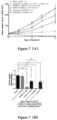
- IC 50 values were calculated using Graphpad Prism 6.0 software for nonlinear regression data analysis method. The results are shown in Figure 1 and Table 1.
- Combination of Compound 5 and EGFR inhibitor enhances inhibition effect on NCI-H1975 tumor cell proliferation
- Compound A Compound B (EGFR inhibitor)
- Compound A Compound B (EGFR inhibitor)
- Compound A Compound B
- IC 50 Compound B
- Compound 5 AZD9291 3.549 ⁇ 1.114 0.41 0.082/0.058/0.002 5/7/205 afatinib 0.337 0.119/0.135/0.136 2.8/2.49/2.48 Notation:
- Each IC 50 value of the combinations corresponds to one concentration of Compound 5 ( ⁇ M).
- a subcutaneous xenograft tumor model of human tumor immunodeficient mice was established by cell inoculation: tumor cells in logarithmic growth phase were collected, counted, resuspended in 1 ⁇ PBS, and the cell suspension concentration was adjusted to 2.5-5 ⁇ 10 7 /mL.
- the tumor cells were inoculated subcutaneously in the right side of immunodeficient mice with a 1 mL syringe (4 gauge needle), 5-10 ⁇ 10 6 /0.2 mL/mouse. All animal experiments were strictly in accordance with the specifications for the use and management of experimental animals in Gima Gene Co., Ltd. and Suzhou Ascentage Pharma Co., Ltd.
- the calculation of relevant parameters refers to the Chinese NMPA "Guidelines for Non-Clinical Research Techniques of Cytotoxic Anti-tumor Drugs".
- mice body weight and tumor size were measured twice weekly during the experiment. The state of the animal and the presence or absence of death were observed every day. The growth of tumor and the effects of treatment on normal behavior of animals were monitored routinely, specifically involving experimental animal activity, feeding and drinking, weight gain or loss, eyes, clothing hair and other abnormalities. The deaths and clinical symptoms observed during the experiment were recorded in the raw data. All operations for administration and measurement of mouse body weight and tumor volume were performed in a clean bench. According to the requirements of the experimental protocol, after the end of the last administration, plasma and tumor tissues were collected, weighed and photographed. The plasma and tumor samples were frozen at -80 °C for ready-to-use.
- Tumor regression rate (%) is calculated as: the number of tumor-bearing mice which exhibit SD (stable disease), PR (partial regression) and CR (complete regression) after treatment / the total number of the mice in this group ⁇ 100%.
- Change of body weight (%) (measured body weight - body weight at the start of grouping) / body weight at the start of grouping ⁇ 100%.
- NSCLC H1975 cells carrying EGFR T790M mutation was very sensitive to a combination of Compound 5 and an EGFR inhibitor ( Figure 1 ).
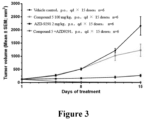
- a H1975 cell-derived mouse xenograft tumor model was established to evaluate the anti-tumor effects of Compound 5 in combination with EGFR inhibitor AZD9291 (osimertinib) or afatinib.
- the dosage regimens are as follows:
- the T/C values of single AZD9291 and its combination with Compound 5 were 6% and 0.5%, respectively; the T/C values of single afatinib and its combination with Compound 5 were 74% and 30%, respectively.
- the regression rate of a combination of AZD9291 and Compound 5 was 100%, in which the complete regression (CR) rate was about 33.3%, and the partial regression (PR) rate was 66.7%.
- the tumor rebound was gradually observed in the single AZD9291 group, and no tumor was observed in the combination group of AZD9291 and Compound 5.
- NSCLC H1975 cells carrying EGFR T790M mutation was very sensitive to a combination of Compound 5 and an EGFR inhibitor AZD9291 (osimertinib) ( Figure 1 ).
- human NSCLC H1975 derived xenograft mode was established to evaluate the anti-tumor effect of Compound 5 in combination with the EGFR inhibitor AZD9291 (osimertinib).
- the dosing regimen was as follows:
- the T/C values of single AZD9291 and its combination with Compound 5 were 12.0% and 1.0%, respectively.
- the regression rate of a combination of AZD9291 and compound 5 was 100%, wherein the complete regression (CR) rate was 0%, and the partial regression (PR) rate was 100%.
- mice with weight loss were less than about 5%, and thus it was considered that no severe toxicity occurred at all doses of the administration groups.
- Table 3 Treatment RTV on Day 15 after administration (mean ⁇ standard error) T/C on Day 15 after administration (%) Tumor status on Day 15 after administration (regression rate, %) Synergistic factor on Day 15 after administration vehicle control 17.0 ⁇ 3.3 0/6 CR, 0/6 PR, 0/6 SD (0%) Compound 5 9.6 ⁇ 1.9 57.0 0/6CR, 0/6 PR, 0/6 SD (0%) AZD9291 2.1 ⁇ 0.3 12.0 0/6 CR , 1/6 PR (17%) Compound 5 + AZD9291 0.1 ⁇ 0.0* 1.0 0/6 CR, 6/6 PR (100%) 10.39
- NSCLC H1975 cells carrying EGFR T790M mutation was very sensitive to some 3 rd generation of EGFR inhibitors ( Figure 1 ). Therefore, in this experiment, a human H1975 cell-derived xenograft tumor model was established to evaluate the anti-tumor effect of Compound 5 in combination with EGFR inhibitor AZD9291 (osimertinib), and the anti-tumor effect of FAK selective inhibitor Defactinib in combination with AZD9291 (osimertinib).
- the dosing regimen was as follows:
- the T/C values of single AZD9291 and its combination with Compound 5 were 19.8% and 1.4%, respectively.
- the T/C values of single AZD9291 and its combination with Defactinib were 19.8% and 19.8%, respectively.
- the Compound 5 + AZD9291 group had a synergistic factor of 12.25 and the Defactinib + AZD9291 group had a synergistic factor of 0.63. Accordingly, it was considered that the anti-tumor effect of the FAK selective inhibitor, Defactinib, was lower than that of Compound 5 when combined with AZD9291.
- NSCLC H1975 cells carrying EGFR T790M mutation was very sensitive to some 3 rd generation of EGFR inhibitors ( Figure 1 ). Therefore, in this experiment, a human H1975 cell-derived mouse xenograft tumor model was established to evaluate the anti-tumor effect of Compound 5 in combination with EGFR inhibitor AZD9291 (osimertinib), and the anti-tumor effect of ALK selective inhibitors Ensartinib in combination with AZD9291 (osimertinib).
- the dosage regimen was as follows:
- the T/C values of single AZD9291 and its combination with Compound 5 were 24.4% and 0%, respectively.
- the T/C values of single AZD9291, its combination with Ensartinib, and its combination with Compound 5 were 24.4%, 42.2% and 0, respectively.
- the regression rate of of AZD9291 in combination with Compound 5 was 100%, wherein the complete regression rate (CR) was 80%, and the partial regression rate (PR) was 20%.
- the compound 5 + AZD9291 group had a synergistic factor of 44.6
- the Ensartinib + AZD9291 group had synergistic factor of 0.43. Accordingly, it was considered that when combined with AZD9291, the anti-tumor effect of the ALK selective inhibitor Ensartinib is lower than that of Compound 5.
- NSCLC H1975 cells carrying EGFR T790M mutation was very sensitive to some 3 rd generation of EGFR inhibitors ( Figure 1 ). Therefore, in this experiment, a human H1975 cell-derived mouse xenograft tumor model was established to evaluate the anti-tumor effect of Compound 5 in combination with EGFR inhibitor Avitinib, and the anti-tumor effect of ALK selective inhibitors Ensartinib in combination with EGFR inhibitor Avitinib.
- the dosage regimen was as follows:
- the T/C values of Avitinib and its combination with Compound 5 were 83.1% and 56.9%, respectively.
- the T/C values of single Avitinib and its combination with Ensartinib were 83.1% and 94.2%, respectively.
- the Compound 5 + Avitinib group had a synergistic factor of 1.17; and the Ensartinib + Avitinib group had a synergistic factor of 0.54. Accordingly, it was considered that, when combined with Avitinib, the anti-tumor effect of the ALK selective inhibitor Ensartinib was lower than that of Compound 5.
- NSCLC H1975 cells carrying EGFR T790M mutation was very sensitive to some 3 rd generation of EGFR inhibitors ( Figure 1 ). Therefore, in this experiment, a human H1975 cell-derived mouse xenograft tumor model was established to evaluate the anti-tumor effect of Compound 5 in combination with AZD9291 (osimertinib), and the anti-tumor effect of Compound 5 in combination with EGFR inhibitor Avitinib.
- the dosage regimen was as follows:
- the T/C values of single Compound 5 and its combination with AZD9291 were 95.6% and 1.2%, respectively.
- the T/C values of single Compound 5 and its combination with Avitinib were 95.6% and 51.7%, respectively.
- the Compound 5 + AZD9291 group had a synergistic factor of 13.66; and the Compound 5 + Avitinib group had a synergistic factor of 1.34.
- a method for treating or suppressing a cancer, reducing its severity, lowering its risk or inhibiting its metastasis in an individual comprising administering to the individual a therapeutically effective amount of one or more of a FAK inhibitor, an ALK inhibitor and a ROS1 inhibitor, and a therapeutically effective amount of an EGFR inhibitor.
- the ALK inhibitor is a compound of Formula I or a pharmaceutically acceptable salt or solvate thereof: wherein:
Landscapes
- Health & Medical Sciences (AREA)
- Chemical & Material Sciences (AREA)
- Veterinary Medicine (AREA)
- Medicinal Chemistry (AREA)
- Pharmacology & Pharmacy (AREA)
- Life Sciences & Earth Sciences (AREA)
- Animal Behavior & Ethology (AREA)
- General Health & Medical Sciences (AREA)
- Public Health (AREA)
- Epidemiology (AREA)
- Organic Chemistry (AREA)
- Chemical Kinetics & Catalysis (AREA)
- General Chemical & Material Sciences (AREA)
- Nuclear Medicine, Radiotherapy & Molecular Imaging (AREA)
- Pharmaceuticals Containing Other Organic And Inorganic Compounds (AREA)
- Medicines That Contain Protein Lipid Enzymes And Other Medicines (AREA)
Claims (13)
- Inhibiteur d'EGFR pour une utilisation dans un procédé de traitement ou de suppression d'un cancer, de réduction de sa sévérité, de diminution de son risque ou d'inhibition de ses métastases chez un individu, comprenant l'administration à l'individu d'une quantité thérapeutiquement efficace d'un inhibiteur d'ALK de formule I ou II, ou d'un sel ou solvate pharmaceutiquement acceptable de celui-ci :
 R1a et R1b sont sélectionnés indépendamment dans le groupe constitué d'un hydrogène, d'un alkyle en C1-6 et d'un cycloalkyle en C3-8 ;R2a et R2b sont sélectionnés indépendamment dans le groupe constitué d'un hydrogène, d'un alkyle en C1-6 et d'un cycloalkyle en C3-8 ;R3 est sélectionné dans le groupe constitué d'un hydrogène, d'un alkyle en C1-6, d'un cycloalkyle en C3-6 et d'un hétérocyclyle à 4 à 8 chaînons,R4 est sélectionné dans le groupe constitué d'un alkyle en C1-4 et d'un cycloalkyle en C3-6 ;R5 est un halo ;R6 est sélectionné dans le groupe constitué d'un alkyle en C1-4 et d'un cycloalkyle en C3-6 ; etR7 est sélectionné dans le groupe constitué d'un hydrogène, d'un alkyle en C1-4 et d'un cycloalkyle en C3-6, à condition que lorsque R1a, R1b, R2a, et R2b sont chacun un hydrogène, alors R3 soit sélectionné dans le groupe constitué d'un cycloalkyle en C3-6 et d'un hétérocyclyle à 4 à 8 chaînons ;
 dans lequelR1a et R1b sont sélectionnés indépendamment dans le groupe constitué d'un hydrogène, d'un alkyle en C1-4 et d'un cycloalkyle en C3-6 ;R2a et R2b sont sélectionnés indépendamment dans le groupe constitué d'un hydrogène, d'un alkyle en C1-4 et d'un cycloalkyle en C3-6 ; etR3 est sélectionné dans le groupe constitué d'un hydrogène, d'un alkyle en C1-4, d'un cycloalkyle en C3-6 et d'un hétérocyclyle à 4 à 8 chaînons ;et d'une quantité thérapeutiquement efficace de l'inhibiteur d'EGFR ;dans lequel l'inhibiteur d'EGFR est l'afatinib, l'osimertinib (AZD9291) ou l'avitinib ; etdans lequel le cancer est un cancer du poumon non à petites cellules portant une mutation EGFRT790M.
 - Inhibiteur d'EGFR pour une utilisation selon la revendication 1, dans lequel l'inhibiteur d'ALK est un composé du tableau suivant ou un sel ou solvate pharmaceutiquement acceptable de celui-ci :
No. Structure Nom 5 
5-chloro-N2 -(2-isopropoxy-5-méthyl-4-(1-(tétrahydro-2H- pyran-4-yl)-1,2,3,6-tétrahydropyridin-4-yl)phényl)-N4 -(2-(isopropylsulfonyl)phényl)pyrimidine -2,4-diamine ; 6 
5-chloro-N2 -(2-isopropoxy-5-méthyl-4-(1-(oxétan-3-yl)-1,2,3,6-tétrahydropyridin-4-yl)phényl)-N4 -(2-(isopropylsulfonyl)phényl)pyrimidine -2,4-diamine ; - Inhibiteur d'EGFR pour une utilisation selon la revendication 1 ou 2, dans lequel l'inhibiteur d'ALK est la 5-chloro-N2 -(2-isopropoxy-5-méthyl-4-(1-(tétrahydro-2H-pyran-4-yl)-1,2,3,6-tétrahydropyridin-4-yl)phényl)-N4 -(2-(isopropylsulfonyl)phényl)pyrimidine-2,4-diamine, ou un sel ou hydrate pharmaceutiquement acceptable de celle-ci.
- Inhibiteur d'EGFR pour une utilisation selon l'une quelconque des revendications 1 à 3, dans lequel l'inhibiteur d'ALK, de préférence un ou plusieurs parmi l'inhibiteur d'ALK et l'inhibiteur d'EGFR, est administré en une quantité de 0,005 mg/jour à 5000 mg/jour.
- Inhibiteur d'EGFR pour une utilisation selon l'une quelconque des revendications 1 à 4, dans lequel l'inhibiteur d'ALK, de préférence un ou plusieurs parmi l'inhibiteur d'ALK et l'inhibiteur d'EGFR, est administré en une quantité de 1 ng/kg à 200 mg/kg, 1 µg/kg à 100 mg/kg, ou 1 mg/kg à 50 mg/kg par dose unitaire, et administré avec une ou plusieurs, de préférence 1, 2, 3, 4, 5, 6, 7, 8, 9 ou 10, doses unitaires par jour.
- Inhibiteur d'EGFR pour une utilisation selon l'une quelconque des revendications 1 à 5, dans lequel l'inhibiteur d'ALK et l'inhibiteur d'EGFR sont administrés ensemble, simultanément, séquentiellement ou alternativement, de préférence l'inhibiteur d'ALK et/ou l'inhibiteur d'EGFR sont administrés en continu pendant au moins 3 jours, au moins 4 jours, au moins 5 jours, au moins 6 jours, au moins 7 jours, au moins 8 jours, au moins 9 jours, au moins 10 jours, au moins 11 jours, au moins 12 jours, au moins 13 jours, au moins 14 jours, au moins 15 jours, au moins 16 jours, au moins 17 jours, au moins 18 jours, au moins 19 jours, au moins 20 jours, au moins 21 jours, au moins 22 jours, au moins 23 jours, au moins 24 jours, au moins 25 jours, au moins 30 jours, au moins 35 jours, au moins 40 jours, au moins 45 jours ou au moins 50 jours.
- Inhibiteur d'EGFR pour une utilisation selon l'une quelconque des revendications 1 à 6, dans lequel l'inhibiteur d'ALK et/ou l'inhibiteur d'EGFR sont administrés pendant un ou plusieurs, de préférence 1, 2, 3, 4, 5, 6, 7, 8, 9 ou 10, cycles de traitement, dans lequel chacun des cycles dure au moins 3 jours, au moins 4 jours, au moins 5 jours, au moins 6 jours, au moins 7 jours, au moins 8 jours, au moins 9 jours, au moins 10 jours, au moins 11 jours, au moins 12 jours, au moins 13 jours, au moins 14 jours, au moins 15 jours, au moins 16 jours, au moins 17 jours, au moins 18 jours, au moins 19 jours, au moins 20 jours, au moins 21 jours, au moins 22 jours, au moins 23 jours, au moins 24 jours, au moins 25 jours, au moins 30 jours, au moins 35 jours, au moins 40 jours, au moins 45 jours, ou au moins 50 jours ; et il y a un intervalle de 0, 1, 2, 3, 4, 5, 6, 7, 8, 9, 10 jours, de deux semaines, de trois semaines ou de quatre semaines entre deux cycles de traitement.
- Inhibiteur d'EGFR pour une utilisation selon l'une quelconque des revendications 1 à 7, dans lequel l'inhibiteur d'ALK ainsi que l'inhibiteur d'EGFR sont administrés par la même voie, de préférence orale, ou par des voies différentes, de préférence orale et parentérale, en particulier par injection, respectivement.
- Inhibiteur d'EGFR pour une utilisation selon l'une quelconque des revendications 1 à 8, dans lequel l'inhibiteur d'EGFR est administré à une dose inférieure par rapport à la dose de l'inhibiteur d'EGFR qui est administré seul ou lorsque l'inhibiteur d'ALK n'est pas administré.
- Inhibiteur d'EGFR pour une utilisation selon l'une quelconque des revendications 1 à 9, dans lequel l'inhibiteur d'ALK améliore l'efficacité thérapeutique de l'inhibiteur d'EGFR lors du traitement d'un cancer et/ou réduit un effet secondaire de l'inhibiteur d'EGFR lors du traitement d'un cancer.
- Inhibiteur d'EGFR pour une utilisation selon l'une quelconque des revendications 1 à 10, dans lequel l'individu souffre d'un cancer avancé, de préférence l'individu souffre d'un cancer réfractaire, d'un cancer récurrent ou d'un cancer résistant aux médicaments, en particulier un cancer résistant à un traitement anticancéreux comprenant l'inhibiteur d'EGFR.
- Composition pharmaceutique, comprenant un inhibiteur d'ALK tel que défini dans l'une quelconque des revendications 1 à 3 et un inhibiteur d'EGFR tel que défini dans la revendication 1, ainsi qu'un support pharmaceutiquement acceptable.
- Kit, comprenant :(a) un premier composant dans un premier contenant, le premier composant comprenant un inhibiteur d'ALK tel que défini dans l'une quelconque des revendications 1 à 3, et facultativement un support pharmaceutiquement acceptable ;(b) un second composant dans un second récipient, le second composant comprenant un inhibiteur d'EGFR tel que défini dans la revendication 1, et facultativement un support pharmaceutiquement acceptable ; etc) une spécification facultative.
Applications Claiming Priority (3)
| Application Number | Priority Date | Filing Date | Title |
|---|---|---|---|
| CN201810859424 | 2018-07-31 | ||
| PCT/CN2019/097019 WO2020024825A1 (fr) | 2018-07-31 | 2019-07-22 | Méthode de traitement du cancer à l'aide d'une combinaison d'inhibiteur de fak/alk/ros1 et d'inhibiteur d'egfr |
| EP19843937.4A EP3758705A4 (fr) | 2018-07-31 | 2019-07-22 | Méthode de traitement du cancer à l'aide d'une combinaison d'inhibiteur de fak/alk/ros1 et d'inhibiteur d'egfr |
Related Parent Applications (1)
| Application Number | Title | Priority Date | Filing Date |
|---|---|---|---|
| EP19843937.4A Division EP3758705A4 (fr) | 2018-07-31 | 2019-07-22 | Méthode de traitement du cancer à l'aide d'une combinaison d'inhibiteur de fak/alk/ros1 et d'inhibiteur d'egfr |
Publications (3)
| Publication Number | Publication Date |
|---|---|
| EP4011376A2 EP4011376A2 (fr) | 2022-06-15 |
| EP4011376A3 EP4011376A3 (fr) | 2022-09-14 |
| EP4011376B1 true EP4011376B1 (fr) | 2025-04-30 |
Family
ID=69230970
Family Applications (2)
| Application Number | Title | Priority Date | Filing Date |
|---|---|---|---|
| EP22154006.5A Active EP4011376B1 (fr) | 2018-07-31 | 2019-07-22 | Combinaison d'un inhibiteur alk et d'un inhibiteur egfr pour le traitement du cancer |
| EP19843937.4A Withdrawn EP3758705A4 (fr) | 2018-07-31 | 2019-07-22 | Méthode de traitement du cancer à l'aide d'une combinaison d'inhibiteur de fak/alk/ros1 et d'inhibiteur d'egfr |
Family Applications After (1)
| Application Number | Title | Priority Date | Filing Date |
|---|---|---|---|
| EP19843937.4A Withdrawn EP3758705A4 (fr) | 2018-07-31 | 2019-07-22 | Méthode de traitement du cancer à l'aide d'une combinaison d'inhibiteur de fak/alk/ros1 et d'inhibiteur d'egfr |
Country Status (6)
| Country | Link |
|---|---|
| US (1) | US11478477B2 (fr) |
| EP (2) | EP4011376B1 (fr) |
| CN (1) | CN110772638B (fr) |
| AU (1) | AU2019314625B2 (fr) |
| TW (1) | TWI726363B (fr) |
| WO (1) | WO2020024825A1 (fr) |
Families Citing this family (25)
| Publication number | Priority date | Publication date | Assignee | Title |
|---|---|---|---|---|
| US20230381176A1 (en) * | 2020-09-25 | 2023-11-30 | Ascentage Pharma (Suzhou) Co., Ltd. | A pharmaceutical composition and use thereof for treatment of cancer |
| WO2022208454A1 (fr) | 2021-04-02 | 2022-10-06 | Bridge Biotherapeutics, Inc. | Composés de n2-phénylpyrimidine-2,4-diamine et procédés de préparation et procédés d'utilisation correspondants |
| CN115212311B (zh) * | 2021-04-19 | 2024-08-09 | 苏州亚盛药业有限公司 | 一种药物组合及其用途 |
| CA3238851A1 (fr) * | 2021-12-21 | 2023-06-29 | Yuli Xie | Compose utilise comme inhibiteur de fak et son utilisation |
| WO2023138576A1 (fr) * | 2022-01-18 | 2023-07-27 | 齐鲁制药有限公司 | Combinaison pharmaceutique d'oxyde d'arylphosphore spirocyclique et d'anticorps anti-egfr |
| CN116332919B (zh) * | 2022-03-30 | 2025-08-26 | 苏州亚盛药业有限公司 | 一种alk抑制剂化合物及其中间体的制备方法 |
| CN115845124B (zh) * | 2022-11-30 | 2024-01-23 | 四川大学 | 一种水凝胶敷料及其制备方法与应用 |
| CN120513241A (zh) * | 2023-01-20 | 2025-08-19 | 苏州亚盛药业有限公司 | Alk抑制剂或其盐、溶剂合物的结晶形式及其制备方法和应用 |
| AU2024241633A1 (en) | 2023-03-30 | 2025-11-06 | Revolution Medicines, Inc. | Compositions for inducing ras gtp hydrolysis and uses thereof |
| TW202508595A (zh) | 2023-05-04 | 2025-03-01 | 美商銳新醫藥公司 | 用於ras相關疾病或病症之組合療法 |
| US20250049810A1 (en) | 2023-08-07 | 2025-02-13 | Revolution Medicines, Inc. | Methods of treating a ras protein-related disease or disorder |
| AU2024360465A1 (en) | 2023-10-12 | 2026-04-09 | Revolution Medicines, Inc. | Macrocyclic ras inhibitors |
| WO2025171296A1 (fr) | 2024-02-09 | 2025-08-14 | Revolution Medicines, Inc. | Inhibiteurs de ras |
| WO2025232723A1 (fr) * | 2024-05-06 | 2025-11-13 | Ascentage Pharma (Suzhou) Co., Ltd. | Méthode de traitement avec un inhibiteur de kinase d'adhérence focale |
| TW202547461A (zh) | 2024-05-17 | 2025-12-16 | 美商銳新醫藥公司 | Ras抑制劑 |
| WO2025255438A1 (fr) | 2024-06-07 | 2025-12-11 | Revolution Medicines, Inc. | Procédés de traitement d'une maladie ou d'un trouble lié à la protéine ras |
| WO2025265060A1 (fr) | 2024-06-21 | 2025-12-26 | Revolution Medicines, Inc. | Compositions thérapeutiques et procédés de gestion d'effets liés au traitement |
| WO2026006747A1 (fr) | 2024-06-28 | 2026-01-02 | Revolution Medicines, Inc. | Inhibiteurs de ras |
| WO2026015801A1 (fr) | 2024-07-12 | 2026-01-15 | Revolution Medicines, Inc. | Méthodes de traitement d'une maladie ou d'un trouble liés à ras |
| WO2026015790A1 (fr) | 2024-07-12 | 2026-01-15 | Revolution Medicines, Inc. | Méthodes de traitement d'une maladie ou d'un trouble lié à ras |
| WO2026015796A1 (fr) | 2024-07-12 | 2026-01-15 | Revolution Medicines, Inc. | Méthodes de traitement d'une maladie ou d'un trouble lié à ras |
| WO2026015825A1 (fr) | 2024-07-12 | 2026-01-15 | Revolution Medicines, Inc. | Utilisation d'un inhibiteur de ras pour traiter le cancer du pancréas |
| WO2026050446A1 (fr) | 2024-08-29 | 2026-03-05 | Revolution Medicines, Inc. | Inhibiteurs de ras |
| WO2026072904A2 (fr) | 2024-09-26 | 2026-04-02 | Revolution Medicines, Inc. | Compositions et méthodes de traitement du cancer du poumon |
| CN120919328B (zh) * | 2025-10-13 | 2026-01-23 | 中国人民解放军陆军军医大学第一附属医院 | Egfr抑制剂在制备逆转急性髓细胞白血病维奈克拉耐药的药物中的应用 |
Family Cites Families (5)
| Publication number | Priority date | Publication date | Assignee | Title |
|---|---|---|---|---|
| CN104672214B (zh) * | 2013-12-03 | 2019-04-12 | 上海翰森生物医药科技有限公司 | 具有alk抑制活性的化合物及其制备与用途 |
| KR101656382B1 (ko) * | 2014-02-28 | 2016-09-09 | 한국화학연구원 | 피리미딘-2,4-디아민 유도체 및 이를 유효성분으로 함유하는 항암용 약학적 조성물 |
| US20170252335A1 (en) * | 2014-10-17 | 2017-09-07 | Novartis Ag | Combination of Ceritinib with an EGFR Inhibitor |
| IL245861A0 (en) * | 2016-05-25 | 2016-09-04 | Yeda Res & Dev | Use of substances to treat drug-resistant tumors |
| CN115043821B (zh) * | 2016-08-29 | 2024-08-06 | 密歇根大学董事会 | 作为alk抑制剂的氨基嘧啶 |
-
2019
- 2019-07-22 AU AU2019314625A patent/AU2019314625B2/en active Active
- 2019-07-22 US US16/627,046 patent/US11478477B2/en active Active
- 2019-07-22 TW TW108125814A patent/TWI726363B/zh active
- 2019-07-22 WO PCT/CN2019/097019 patent/WO2020024825A1/fr not_active Ceased
- 2019-07-22 EP EP22154006.5A patent/EP4011376B1/fr active Active
- 2019-07-22 EP EP19843937.4A patent/EP3758705A4/fr not_active Withdrawn
- 2019-07-22 CN CN201910659457.6A patent/CN110772638B/zh active Active
Also Published As
| Publication number | Publication date |
|---|---|
| TWI726363B (zh) | 2021-05-01 |
| EP4011376A2 (fr) | 2022-06-15 |
| EP3758705A4 (fr) | 2021-08-04 |
| AU2019314625B2 (en) | 2022-05-12 |
| CN110772638A (zh) | 2020-02-11 |
| CN110772638B (zh) | 2021-02-23 |
| US11478477B2 (en) | 2022-10-25 |
| EP3758705A1 (fr) | 2021-01-06 |
| US20210330669A1 (en) | 2021-10-28 |
| TW202007397A (zh) | 2020-02-16 |
| WO2020024825A1 (fr) | 2020-02-06 |
| AU2019314625A1 (en) | 2021-02-25 |
| EP4011376A3 (fr) | 2022-09-14 |
Similar Documents
| Publication | Publication Date | Title |
|---|---|---|
| EP4011376B1 (fr) | Combinaison d'un inhibiteur alk et d'un inhibiteur egfr pour le traitement du cancer | |
| CA3054455C (fr) | Inhibiteur de fgfr et son application | |
| US20240400567A1 (en) | Aurora kinase inhibitors for inhibiting mitotic progression | |
| US20230174526A1 (en) | Benzothiazolyl biaryl compound, and preparation method and use | |
| US20190144427A1 (en) | Heterocyclic compounds used as fgfr inhibitors | |
| CA3050188C (fr) | Compose imidazopyrazine, son procede de preparation et son utilisation | |
| EP4048270A1 (fr) | Combinaison pharmaceutique d'inhibiteurs de prmt5 | |
| WO2016145935A1 (fr) | Polythérapie optimisée et son utilisation pour le traitement du cancer et de maladies auto-immunes | |
| TW201702232A (zh) | 經取代之喹唑啉化合物及其使用方法 | |
| US12297194B2 (en) | N2-phenylpyrimidine-2,4-diamine compounds, and preparation methods and methods of use thereof | |
| KR20150074186A (ko) | 헤테로아릴기 알킨 화합물 및 그 응용 | |
| TW201516048A (zh) | Bcr-abl激酶抑制劑及其應用 | |
| KR20210066839A (ko) | Fgfr4 저해제 및 그것의 용도 | |
| CN116261455B (zh) | 一种药物组合物及其在治疗癌症中的用途 | |
| CN105884695A (zh) | 杂环衍生物类酪氨酸激酶抑制剂 | |
| AU2024312823A1 (en) | Combination therapy involving macrocyclic indazole compounds | |
| CN117529321A (zh) | Erk抑制剂和kras抑制剂的组合及其用途 | |
| US12558428B2 (en) | Heterobifunctional compounds and their use in treating disease | |
| HK40021582B (en) | Use of alk inhibitor and egfr inhibitor in preparation of a medicine for treating cancer | |
| HK40021582A (en) | Use of alk inhibitor and egfr inhibitor in preparation of a medicine for treating cancer | |
| CN113527311A (zh) | Fgfr4抑制剂、组合物及其在药物制备中的用途 | |
| HK40095032A (zh) | 一种药物组合物及其在治疗癌症中的用途 | |
| HK40095032B (zh) | 一种药物组合物及其在治疗癌症中的用途 | |
| WO2025242880A1 (fr) | Composés thérapeutiques et leur utilisation | |
| WO2014193696A2 (fr) | Dérivés d'acide benzimidazole-carboxylique, compositions et procédés d'utilisation en tant qu'inhibiteurs de kinase aurora |
Legal Events
| Date | Code | Title | Description |
|---|---|---|---|
| PUAI | Public reference made under article 153(3) epc to a published international application that has entered the european phase |
Free format text: ORIGINAL CODE: 0009012 |
|
| STAA | Information on the status of an ep patent application or granted ep patent |
Free format text: STATUS: THE APPLICATION HAS BEEN PUBLISHED |
|
| AC | Divisional application: reference to earlier application |
Ref document number: 3758705 Country of ref document: EP Kind code of ref document: P |
|
| AK | Designated contracting states |
Kind code of ref document: A2 Designated state(s): AL AT BE BG CH CY CZ DE DK EE ES FI FR GB GR HR HU IE IS IT LI LT LU LV MC MK MT NL NO PL PT RO RS SE SI SK SM TR |
|
| PUAL | Search report despatched |
Free format text: ORIGINAL CODE: 0009013 |
|
| AK | Designated contracting states |
Kind code of ref document: A3 Designated state(s): AL AT BE BG CH CY CZ DE DK EE ES FI FR GB GR HR HU IE IS IT LI LT LU LV MC MK MT NL NO PL PT RO RS SE SI SK SM TR |
|
| RIC1 | Information provided on ipc code assigned before grant |
Ipc: A61K 45/06 20060101ALI20220805BHEP Ipc: A61K 31/517 20060101ALI20220805BHEP Ipc: A61K 31/501 20060101ALI20220805BHEP Ipc: A61P 35/00 20060101ALI20220805BHEP Ipc: C07D 405/14 20060101ALI20220805BHEP Ipc: C07D 401/12 20060101ALI20220805BHEP Ipc: A61K 31/506 20060101AFI20220805BHEP |
|
| STAA | Information on the status of an ep patent application or granted ep patent |
Free format text: STATUS: REQUEST FOR EXAMINATION WAS MADE |
|
| 17P | Request for examination filed |
Effective date: 20230314 |
|
| RBV | Designated contracting states (corrected) |
Designated state(s): AL AT BE BG CH CY CZ DE DK EE ES FI FR GB GR HR HU IE IS IT LI LT LU LV MC MK MT NL NO PL PT RO RS SE SI SK SM TR |
|
| P01 | Opt-out of the competence of the unified patent court (upc) registered |
Effective date: 20230726 |
|
| RAP3 | Party data changed (applicant data changed or rights of an application transferred) |
Owner name: ASCENTAGE PHARMA (SUZHOU) CO., LTD. |
|
| STAA | Information on the status of an ep patent application or granted ep patent |
Free format text: STATUS: EXAMINATION IS IN PROGRESS |
|
| 17Q | First examination report despatched |
Effective date: 20241126 |
|
| GRAP | Despatch of communication of intention to grant a patent |
Free format text: ORIGINAL CODE: EPIDOSNIGR1 |
|
| STAA | Information on the status of an ep patent application or granted ep patent |
Free format text: STATUS: GRANT OF PATENT IS INTENDED |
|
| INTG | Intention to grant announced |
Effective date: 20250214 |
|
| GRAS | Grant fee paid |
Free format text: ORIGINAL CODE: EPIDOSNIGR3 |
|
| GRAA | (expected) grant |
Free format text: ORIGINAL CODE: 0009210 |
|
| STAA | Information on the status of an ep patent application or granted ep patent |
Free format text: STATUS: THE PATENT HAS BEEN GRANTED |
|
| AC | Divisional application: reference to earlier application |
Ref document number: 3758705 Country of ref document: EP Kind code of ref document: P |
|
| AK | Designated contracting states |
Kind code of ref document: B1 Designated state(s): AL AT BE BG CH CY CZ DE DK EE ES FI FR GB GR HR HU IE IS IT LI LT LU LV MC MK MT NL NO PL PT RO RS SE SI SK SM TR |
|
| REG | Reference to a national code |
Ref country code: CH Ref legal event code: EP Ref country code: GB Ref legal event code: FG4D |
|
| REG | Reference to a national code |
Ref country code: IE Ref legal event code: FG4D |
|
| REG | Reference to a national code |
Ref country code: DE Ref legal event code: R096 Ref document number: 602019069517 Country of ref document: DE |
|
| REG | Reference to a national code |
Ref country code: NL Ref legal event code: MP Effective date: 20250430 |
|
| REG | Reference to a national code |
Ref country code: AT Ref legal event code: MK05 Ref document number: 1789417 Country of ref document: AT Kind code of ref document: T Effective date: 20250430 |
|
| PG25 | Lapsed in a contracting state [announced via postgrant information from national office to epo] |
Ref country code: FI Free format text: LAPSE BECAUSE OF FAILURE TO SUBMIT A TRANSLATION OF THE DESCRIPTION OR TO PAY THE FEE WITHIN THE PRESCRIBED TIME-LIMIT Effective date: 20250430 Ref country code: ES Free format text: LAPSE BECAUSE OF FAILURE TO SUBMIT A TRANSLATION OF THE DESCRIPTION OR TO PAY THE FEE WITHIN THE PRESCRIBED TIME-LIMIT Effective date: 20250430 Ref country code: PT Free format text: LAPSE BECAUSE OF FAILURE TO SUBMIT A TRANSLATION OF THE DESCRIPTION OR TO PAY THE FEE WITHIN THE PRESCRIBED TIME-LIMIT Effective date: 20250901 |
|
| PGFP | Annual fee paid to national office [announced via postgrant information from national office to epo] |
Ref country code: DE Payment date: 20250722 Year of fee payment: 7 |
|
| REG | Reference to a national code |
Ref country code: LT Ref legal event code: MG9D |
|
| PG25 | Lapsed in a contracting state [announced via postgrant information from national office to epo] |
Ref country code: NO Free format text: LAPSE BECAUSE OF FAILURE TO SUBMIT A TRANSLATION OF THE DESCRIPTION OR TO PAY THE FEE WITHIN THE PRESCRIBED TIME-LIMIT Effective date: 20250730 Ref country code: GR Free format text: LAPSE BECAUSE OF FAILURE TO SUBMIT A TRANSLATION OF THE DESCRIPTION OR TO PAY THE FEE WITHIN THE PRESCRIBED TIME-LIMIT Effective date: 20250731 |
|
| PG25 | Lapsed in a contracting state [announced via postgrant information from national office to epo] |
Ref country code: NL Free format text: LAPSE BECAUSE OF FAILURE TO SUBMIT A TRANSLATION OF THE DESCRIPTION OR TO PAY THE FEE WITHIN THE PRESCRIBED TIME-LIMIT Effective date: 20250430 Ref country code: PL Free format text: LAPSE BECAUSE OF FAILURE TO SUBMIT A TRANSLATION OF THE DESCRIPTION OR TO PAY THE FEE WITHIN THE PRESCRIBED TIME-LIMIT Effective date: 20250430 |
|
| PG25 | Lapsed in a contracting state [announced via postgrant information from national office to epo] |
Ref country code: BG Free format text: LAPSE BECAUSE OF FAILURE TO SUBMIT A TRANSLATION OF THE DESCRIPTION OR TO PAY THE FEE WITHIN THE PRESCRIBED TIME-LIMIT Effective date: 20250430 |
|
| PGFP | Annual fee paid to national office [announced via postgrant information from national office to epo] |
Ref country code: GB Payment date: 20250722 Year of fee payment: 7 |
|
| PG25 | Lapsed in a contracting state [announced via postgrant information from national office to epo] |
Ref country code: HR Free format text: LAPSE BECAUSE OF FAILURE TO SUBMIT A TRANSLATION OF THE DESCRIPTION OR TO PAY THE FEE WITHIN THE PRESCRIBED TIME-LIMIT Effective date: 20250430 |
|
| PG25 | Lapsed in a contracting state [announced via postgrant information from national office to epo] |
Ref country code: AT Free format text: LAPSE BECAUSE OF FAILURE TO SUBMIT A TRANSLATION OF THE DESCRIPTION OR TO PAY THE FEE WITHIN THE PRESCRIBED TIME-LIMIT Effective date: 20250430 |
|
| PGFP | Annual fee paid to national office [announced via postgrant information from national office to epo] |
Ref country code: FR Payment date: 20250725 Year of fee payment: 7 |
|
| PG25 | Lapsed in a contracting state [announced via postgrant information from national office to epo] |
Ref country code: RS Free format text: LAPSE BECAUSE OF FAILURE TO SUBMIT A TRANSLATION OF THE DESCRIPTION OR TO PAY THE FEE WITHIN THE PRESCRIBED TIME-LIMIT Effective date: 20250731 |
|
| PG25 | Lapsed in a contracting state [announced via postgrant information from national office to epo] |
Ref country code: IS Free format text: LAPSE BECAUSE OF FAILURE TO SUBMIT A TRANSLATION OF THE DESCRIPTION OR TO PAY THE FEE WITHIN THE PRESCRIBED TIME-LIMIT Effective date: 20250830 |
|
| PG25 | Lapsed in a contracting state [announced via postgrant information from national office to epo] |
Ref country code: LV Free format text: LAPSE BECAUSE OF FAILURE TO SUBMIT A TRANSLATION OF THE DESCRIPTION OR TO PAY THE FEE WITHIN THE PRESCRIBED TIME-LIMIT Effective date: 20250430 |
|
| PG25 | Lapsed in a contracting state [announced via postgrant information from national office to epo] |
Ref country code: SM Free format text: LAPSE BECAUSE OF FAILURE TO SUBMIT A TRANSLATION OF THE DESCRIPTION OR TO PAY THE FEE WITHIN THE PRESCRIBED TIME-LIMIT Effective date: 20250430 Ref country code: DK Free format text: LAPSE BECAUSE OF FAILURE TO SUBMIT A TRANSLATION OF THE DESCRIPTION OR TO PAY THE FEE WITHIN THE PRESCRIBED TIME-LIMIT Effective date: 20250430 |
|
| PG25 | Lapsed in a contracting state [announced via postgrant information from national office to epo] |
Ref country code: CZ Free format text: LAPSE BECAUSE OF FAILURE TO SUBMIT A TRANSLATION OF THE DESCRIPTION OR TO PAY THE FEE WITHIN THE PRESCRIBED TIME-LIMIT Effective date: 20250430 |
|
| PG25 | Lapsed in a contracting state [announced via postgrant information from national office to epo] |
Ref country code: EE Free format text: LAPSE BECAUSE OF FAILURE TO SUBMIT A TRANSLATION OF THE DESCRIPTION OR TO PAY THE FEE WITHIN THE PRESCRIBED TIME-LIMIT Effective date: 20250430 |
|
| PG25 | Lapsed in a contracting state [announced via postgrant information from national office to epo] |
Ref country code: SK Free format text: LAPSE BECAUSE OF FAILURE TO SUBMIT A TRANSLATION OF THE DESCRIPTION OR TO PAY THE FEE WITHIN THE PRESCRIBED TIME-LIMIT Effective date: 20250430 Ref country code: RO Free format text: LAPSE BECAUSE OF FAILURE TO SUBMIT A TRANSLATION OF THE DESCRIPTION OR TO PAY THE FEE WITHIN THE PRESCRIBED TIME-LIMIT Effective date: 20250430 |
|
| PG25 | Lapsed in a contracting state [announced via postgrant information from national office to epo] |
Ref country code: IT Free format text: LAPSE BECAUSE OF FAILURE TO SUBMIT A TRANSLATION OF THE DESCRIPTION OR TO PAY THE FEE WITHIN THE PRESCRIBED TIME-LIMIT Effective date: 20250430 |
|
| REG | Reference to a national code |
Ref country code: DE Ref legal event code: R097 Ref document number: 602019069517 Country of ref document: DE |
|
| REG | Reference to a national code |
Ref country code: CH Ref legal event code: H13 Free format text: ST27 STATUS EVENT CODE: U-0-0-H10-H13 (AS PROVIDED BY THE NATIONAL OFFICE) Effective date: 20260224 |
|
| PLBE | No opposition filed within time limit |
Free format text: ORIGINAL CODE: 0009261 |
|
| STAA | Information on the status of an ep patent application or granted ep patent |
Free format text: STATUS: NO OPPOSITION FILED WITHIN TIME LIMIT |
|
| REG | Reference to a national code |
Ref country code: CH Ref legal event code: L10 Free format text: ST27 STATUS EVENT CODE: U-0-0-L10-L00 (AS PROVIDED BY THE NATIONAL OFFICE) Effective date: 20260311 |
|
| PG25 | Lapsed in a contracting state [announced via postgrant information from national office to epo] |
Ref country code: LU Free format text: LAPSE BECAUSE OF NON-PAYMENT OF DUE FEES Effective date: 20250722 |
|
| REG | Reference to a national code |
Ref country code: BE Ref legal event code: MM Effective date: 20250731 |
|
| 26N | No opposition filed |
Effective date: 20260202 |
|
| PG25 | Lapsed in a contracting state [announced via postgrant information from national office to epo] |
Ref country code: BE Free format text: LAPSE BECAUSE OF NON-PAYMENT OF DUE FEES Effective date: 20250731 |
|
| PG25 | Lapsed in a contracting state [announced via postgrant information from national office to epo] |
Ref country code: CH Free format text: LAPSE BECAUSE OF NON-PAYMENT OF DUE FEES Effective date: 20250731 |