EP4011739B1 - System und verfahren zur einbindung eines fahrers während des autonomen fahrmodus - Google Patents
System und verfahren zur einbindung eines fahrers während des autonomen fahrmodus Download PDFInfo
- Publication number
- EP4011739B1 EP4011739B1 EP22153841.6A EP22153841A EP4011739B1 EP 4011739 B1 EP4011739 B1 EP 4011739B1 EP 22153841 A EP22153841 A EP 22153841A EP 4011739 B1 EP4011739 B1 EP 4011739B1
- Authority
- EP
- European Patent Office
- Prior art keywords
- driver
- vehicle
- module
- training program
- alertness
- Prior art date
- Legal status (The legal status is an assumption and is not a legal conclusion. Google has not performed a legal analysis and makes no representation as to the accuracy of the status listed.)
- Active
Links
Images




Classifications
-
- B—PERFORMING OPERATIONS; TRANSPORTING
- B60—VEHICLES IN GENERAL
- B60W—CONJOINT CONTROL OF VEHICLE SUB-UNITS OF DIFFERENT TYPE OR DIFFERENT FUNCTION; CONTROL SYSTEMS SPECIALLY ADAPTED FOR HYBRID VEHICLES; ROAD VEHICLE DRIVE CONTROL SYSTEMS FOR PURPOSES NOT RELATED TO THE CONTROL OF A PARTICULAR SUB-UNIT
- B60W60/00—Drive control systems specially adapted for autonomous road vehicles
- B60W60/005—Handover processes
- B60W60/0059—Estimation of the risk associated with autonomous or manual driving, e.g. situation too complex, sensor failure or driver incapacity
-
- B—PERFORMING OPERATIONS; TRANSPORTING
- B60—VEHICLES IN GENERAL
- B60K—ARRANGEMENT OR MOUNTING OF PROPULSION UNITS OR OF TRANSMISSIONS IN VEHICLES; ARRANGEMENT OR MOUNTING OF PLURAL DIVERSE PRIME-MOVERS IN VEHICLES; AUXILIARY DRIVES FOR VEHICLES; INSTRUMENTATION OR DASHBOARDS FOR VEHICLES; ARRANGEMENTS IN CONNECTION WITH COOLING, AIR INTAKE, GAS EXHAUST OR FUEL SUPPLY OF PROPULSION UNITS IN VEHICLES
- B60K35/00—Instruments specially adapted for vehicles; Arrangement of instruments in or on vehicles
- B60K35/10—Input arrangements, i.e. from user to vehicle, associated with vehicle functions or specially adapted therefor
-
- B—PERFORMING OPERATIONS; TRANSPORTING
- B60—VEHICLES IN GENERAL
- B60K—ARRANGEMENT OR MOUNTING OF PROPULSION UNITS OR OF TRANSMISSIONS IN VEHICLES; ARRANGEMENT OR MOUNTING OF PLURAL DIVERSE PRIME-MOVERS IN VEHICLES; AUXILIARY DRIVES FOR VEHICLES; INSTRUMENTATION OR DASHBOARDS FOR VEHICLES; ARRANGEMENTS IN CONNECTION WITH COOLING, AIR INTAKE, GAS EXHAUST OR FUEL SUPPLY OF PROPULSION UNITS IN VEHICLES
- B60K35/00—Instruments specially adapted for vehicles; Arrangement of instruments in or on vehicles
- B60K35/85—Arrangements for transferring vehicle- or driver-related data
-
- B—PERFORMING OPERATIONS; TRANSPORTING
- B60—VEHICLES IN GENERAL
- B60W—CONJOINT CONTROL OF VEHICLE SUB-UNITS OF DIFFERENT TYPE OR DIFFERENT FUNCTION; CONTROL SYSTEMS SPECIALLY ADAPTED FOR HYBRID VEHICLES; ROAD VEHICLE DRIVE CONTROL SYSTEMS FOR PURPOSES NOT RELATED TO THE CONTROL OF A PARTICULAR SUB-UNIT
- B60W40/00—Estimation or calculation of non-directly measurable driving parameters for road vehicle drive control systems not related to the control of a particular sub unit, e.g. by using mathematical models
- B60W40/08—Estimation or calculation of non-directly measurable driving parameters for road vehicle drive control systems not related to the control of a particular sub unit, e.g. by using mathematical models related to drivers or passengers
- B60W40/09—Driving style or behaviour
-
- B—PERFORMING OPERATIONS; TRANSPORTING
- B60—VEHICLES IN GENERAL
- B60W—CONJOINT CONTROL OF VEHICLE SUB-UNITS OF DIFFERENT TYPE OR DIFFERENT FUNCTION; CONTROL SYSTEMS SPECIALLY ADAPTED FOR HYBRID VEHICLES; ROAD VEHICLE DRIVE CONTROL SYSTEMS FOR PURPOSES NOT RELATED TO THE CONTROL OF A PARTICULAR SUB-UNIT
- B60W50/00—Details of control systems for road vehicle drive control not related to the control of a particular sub-unit, e.g. process diagnostic or vehicle driver interfaces
- B60W50/08—Interaction between the driver and the control system
- B60W50/082—Selecting or switching between different modes of propelling
-
- B—PERFORMING OPERATIONS; TRANSPORTING
- B60—VEHICLES IN GENERAL
- B60W—CONJOINT CONTROL OF VEHICLE SUB-UNITS OF DIFFERENT TYPE OR DIFFERENT FUNCTION; CONTROL SYSTEMS SPECIALLY ADAPTED FOR HYBRID VEHICLES; ROAD VEHICLE DRIVE CONTROL SYSTEMS FOR PURPOSES NOT RELATED TO THE CONTROL OF A PARTICULAR SUB-UNIT
- B60W50/00—Details of control systems for road vehicle drive control not related to the control of a particular sub-unit, e.g. process diagnostic or vehicle driver interfaces
- B60W50/08—Interaction between the driver and the control system
- B60W50/14—Means for informing the driver, warning the driver or prompting a driver intervention
-
- B—PERFORMING OPERATIONS; TRANSPORTING
- B60—VEHICLES IN GENERAL
- B60W—CONJOINT CONTROL OF VEHICLE SUB-UNITS OF DIFFERENT TYPE OR DIFFERENT FUNCTION; CONTROL SYSTEMS SPECIALLY ADAPTED FOR HYBRID VEHICLES; ROAD VEHICLE DRIVE CONTROL SYSTEMS FOR PURPOSES NOT RELATED TO THE CONTROL OF A PARTICULAR SUB-UNIT
- B60W60/00—Drive control systems specially adapted for autonomous road vehicles
- B60W60/005—Handover processes
- B60W60/0053—Handover processes from vehicle to occupant
-
- G—PHYSICS
- G05—CONTROLLING; REGULATING
- G05D—SYSTEMS FOR CONTROLLING OR REGULATING NON-ELECTRIC VARIABLES
- G05D1/00—Control of position, course, altitude or attitude of land, water, air or space vehicles, e.g. using automatic pilots
- G05D1/0055—Control of position, course, altitude or attitude of land, water, air or space vehicles, e.g. using automatic pilots with safety arrangements
- G05D1/0061—Control of position, course, altitude or attitude of land, water, air or space vehicles, e.g. using automatic pilots with safety arrangements for transition from automatic pilot to manual pilot and vice versa
-
- G—PHYSICS
- G05—CONTROLLING; REGULATING
- G05D—SYSTEMS FOR CONTROLLING OR REGULATING NON-ELECTRIC VARIABLES
- G05D1/00—Control of position, course, altitude or attitude of land, water, air or space vehicles, e.g. using automatic pilots
- G05D1/0088—Control of position, course, altitude or attitude of land, water, air or space vehicles, e.g. using automatic pilots characterized by the autonomous decision making process, e.g. artificial intelligence, predefined behaviours
-
- B—PERFORMING OPERATIONS; TRANSPORTING
- B60—VEHICLES IN GENERAL
- B60K—ARRANGEMENT OR MOUNTING OF PROPULSION UNITS OR OF TRANSMISSIONS IN VEHICLES; ARRANGEMENT OR MOUNTING OF PLURAL DIVERSE PRIME-MOVERS IN VEHICLES; AUXILIARY DRIVES FOR VEHICLES; INSTRUMENTATION OR DASHBOARDS FOR VEHICLES; ARRANGEMENTS IN CONNECTION WITH COOLING, AIR INTAKE, GAS EXHAUST OR FUEL SUPPLY OF PROPULSION UNITS IN VEHICLES
- B60K2360/00—Indexing scheme associated with groups B60K35/00 or B60K37/00 relating to details of instruments or dashboards
- B60K2360/16—Type of output information
- B60K2360/161—Explanation of functions, e.g. instructions
-
- B—PERFORMING OPERATIONS; TRANSPORTING
- B60—VEHICLES IN GENERAL
- B60K—ARRANGEMENT OR MOUNTING OF PROPULSION UNITS OR OF TRANSMISSIONS IN VEHICLES; ARRANGEMENT OR MOUNTING OF PLURAL DIVERSE PRIME-MOVERS IN VEHICLES; AUXILIARY DRIVES FOR VEHICLES; INSTRUMENTATION OR DASHBOARDS FOR VEHICLES; ARRANGEMENTS IN CONNECTION WITH COOLING, AIR INTAKE, GAS EXHAUST OR FUEL SUPPLY OF PROPULSION UNITS IN VEHICLES
- B60K2360/00—Indexing scheme associated with groups B60K35/00 or B60K37/00 relating to details of instruments or dashboards
- B60K2360/16—Type of output information
- B60K2360/175—Autonomous driving
-
- B—PERFORMING OPERATIONS; TRANSPORTING
- B60—VEHICLES IN GENERAL
- B60K—ARRANGEMENT OR MOUNTING OF PROPULSION UNITS OR OF TRANSMISSIONS IN VEHICLES; ARRANGEMENT OR MOUNTING OF PLURAL DIVERSE PRIME-MOVERS IN VEHICLES; AUXILIARY DRIVES FOR VEHICLES; INSTRUMENTATION OR DASHBOARDS FOR VEHICLES; ARRANGEMENTS IN CONNECTION WITH COOLING, AIR INTAKE, GAS EXHAUST OR FUEL SUPPLY OF PROPULSION UNITS IN VEHICLES
- B60K35/00—Instruments specially adapted for vehicles; Arrangement of instruments in or on vehicles
- B60K35/20—Output arrangements, i.e. from vehicle to user, associated with vehicle functions or specially adapted therefor
- B60K35/21—Output arrangements, i.e. from vehicle to user, associated with vehicle functions or specially adapted therefor using visual output, e.g. blinking lights or matrix displays
- B60K35/23—Head-up displays [HUD]
-
- B—PERFORMING OPERATIONS; TRANSPORTING
- B60—VEHICLES IN GENERAL
- B60K—ARRANGEMENT OR MOUNTING OF PROPULSION UNITS OR OF TRANSMISSIONS IN VEHICLES; ARRANGEMENT OR MOUNTING OF PLURAL DIVERSE PRIME-MOVERS IN VEHICLES; AUXILIARY DRIVES FOR VEHICLES; INSTRUMENTATION OR DASHBOARDS FOR VEHICLES; ARRANGEMENTS IN CONNECTION WITH COOLING, AIR INTAKE, GAS EXHAUST OR FUEL SUPPLY OF PROPULSION UNITS IN VEHICLES
- B60K35/00—Instruments specially adapted for vehicles; Arrangement of instruments in or on vehicles
- B60K35/20—Output arrangements, i.e. from vehicle to user, associated with vehicle functions or specially adapted therefor
- B60K35/28—Output arrangements, i.e. from vehicle to user, associated with vehicle functions or specially adapted therefor characterised by the type of the output information, e.g. video entertainment or vehicle dynamics information; characterised by the purpose of the output information, e.g. for attracting the attention of the driver
-
- B—PERFORMING OPERATIONS; TRANSPORTING
- B60—VEHICLES IN GENERAL
- B60W—CONJOINT CONTROL OF VEHICLE SUB-UNITS OF DIFFERENT TYPE OR DIFFERENT FUNCTION; CONTROL SYSTEMS SPECIALLY ADAPTED FOR HYBRID VEHICLES; ROAD VEHICLE DRIVE CONTROL SYSTEMS FOR PURPOSES NOT RELATED TO THE CONTROL OF A PARTICULAR SUB-UNIT
- B60W40/00—Estimation or calculation of non-directly measurable driving parameters for road vehicle drive control systems not related to the control of a particular sub unit, e.g. by using mathematical models
- B60W40/08—Estimation or calculation of non-directly measurable driving parameters for road vehicle drive control systems not related to the control of a particular sub unit, e.g. by using mathematical models related to drivers or passengers
- B60W2040/0818—Inactivity or incapacity of driver
-
- B—PERFORMING OPERATIONS; TRANSPORTING
- B60—VEHICLES IN GENERAL
- B60W—CONJOINT CONTROL OF VEHICLE SUB-UNITS OF DIFFERENT TYPE OR DIFFERENT FUNCTION; CONTROL SYSTEMS SPECIALLY ADAPTED FOR HYBRID VEHICLES; ROAD VEHICLE DRIVE CONTROL SYSTEMS FOR PURPOSES NOT RELATED TO THE CONTROL OF A PARTICULAR SUB-UNIT
- B60W2540/00—Input parameters relating to occupants
- B60W2540/229—Attention level, e.g. attentive to driving, reading or sleeping
-
- B—PERFORMING OPERATIONS; TRANSPORTING
- B60—VEHICLES IN GENERAL
- B60W—CONJOINT CONTROL OF VEHICLE SUB-UNITS OF DIFFERENT TYPE OR DIFFERENT FUNCTION; CONTROL SYSTEMS SPECIALLY ADAPTED FOR HYBRID VEHICLES; ROAD VEHICLE DRIVE CONTROL SYSTEMS FOR PURPOSES NOT RELATED TO THE CONTROL OF A PARTICULAR SUB-UNIT
- B60W2552/00—Input parameters relating to infrastructure
-
- B—PERFORMING OPERATIONS; TRANSPORTING
- B60—VEHICLES IN GENERAL
- B60W—CONJOINT CONTROL OF VEHICLE SUB-UNITS OF DIFFERENT TYPE OR DIFFERENT FUNCTION; CONTROL SYSTEMS SPECIALLY ADAPTED FOR HYBRID VEHICLES; ROAD VEHICLE DRIVE CONTROL SYSTEMS FOR PURPOSES NOT RELATED TO THE CONTROL OF A PARTICULAR SUB-UNIT
- B60W2554/00—Input parameters relating to objects
- B60W2554/40—Dynamic objects, e.g. animals, windblown objects
- B60W2554/406—Traffic density
-
- B—PERFORMING OPERATIONS; TRANSPORTING
- B60—VEHICLES IN GENERAL
- B60W—CONJOINT CONTROL OF VEHICLE SUB-UNITS OF DIFFERENT TYPE OR DIFFERENT FUNCTION; CONTROL SYSTEMS SPECIALLY ADAPTED FOR HYBRID VEHICLES; ROAD VEHICLE DRIVE CONTROL SYSTEMS FOR PURPOSES NOT RELATED TO THE CONTROL OF A PARTICULAR SUB-UNIT
- B60W2555/00—Input parameters relating to exterior conditions, not covered by groups B60W2552/00, B60W2554/00
- B60W2555/20—Ambient conditions, e.g. wind or rain
-
- B—PERFORMING OPERATIONS; TRANSPORTING
- B60—VEHICLES IN GENERAL
- B60W—CONJOINT CONTROL OF VEHICLE SUB-UNITS OF DIFFERENT TYPE OR DIFFERENT FUNCTION; CONTROL SYSTEMS SPECIALLY ADAPTED FOR HYBRID VEHICLES; ROAD VEHICLE DRIVE CONTROL SYSTEMS FOR PURPOSES NOT RELATED TO THE CONTROL OF A PARTICULAR SUB-UNIT
- B60W2556/00—Input parameters relating to data
- B60W2556/10—Historical data
Definitions
- the present invention relates to autonomous driving vehicles and more particularly related to maintaining driver alertness while driving mode of a vehicle is changed from manual to autonomous driving mode, wherein the driver alertness is maintained by providing an interactive training program.
- Autonomous vehicles are defining a new era in modern day transportation. Autonomous vehicles either require minimum or no intervention from its driver. There are some autonomous vehicles that may only require an initial input from the driver, whereas some other designs of the autonomous vehicles are continuously under control of the driver. There are some autonomous vehicles that can be remotely controlled. For example, automatic parking in vehicles is an example of the autonomous vehicle in operation. According to the Society of Automotive Engineers (SAE) cars and vehicles in general are classified into 5 different classifications:
- autonomous vehicles face dynamic environment that is the environment keeps changing every time.
- the autonomous vehicles need to keep a track of lane markings, road edges, track road curves, varying surfaces that may be include flat surfaces, winding roads, hilly roads etc.
- the autonomous vehicles also need to keep a check on objects that are both stationary or mobile like a tree or a human or an animal. While such autonomous vehicles relieve the driver of routine tasks, the vehicle driver may perceive his driving activity to be monotonous due to this relief, and may possibly be no longer attentive to the degree that is required for safe control of the motor vehicle in certain situations.
- US 2015/375757 A1 discloses an autonomous driving system for a vehicle.
- EP 2 314 207 A1 discloses a method for enhancing driving performance by monitoring a driver's distraction from driving tasks due to the driver's attention to secondary tasks.
- US 2014/300479 A1 discloses a method and a control system for maintaining attentiveness of a driver of a vehicle during an autonomous control mode. Therefore, there is a need of an efficient system for maintaining driver attentiveness even while the driver is not participating in the controlling of the vehicle.
- FIG. 1 shows a block diagram of an autonomous vehicle 100 (termed as vehicle 100 interchangeably within the description) and its various subsystems, in accordance with an embodiment of the invention.
- the autonomous vehicle 100 may be a fully or a semi-autonomous vehicle.
- the autonomous vehicle 100 includes multiple sub systems to control various important processes and functions.
- the autonomous vehicle 100 may include Engine control module 102, Steering control module 104, Brake control module 106, Alerts control module 108, Lights control module110, Handoff control module 112, Processing module 114, Sensor control module 116, Navigation control module 118, Lane control module 120, Driver monitoring module 122, and Drive mode monitoring module 124.
- Engine control module 102 controls various functions and processes of an engine of the vehicle 100. Functions and processes to be controlled may be speed of rotation, engine condition, servicing requirements, load on engine, power of engine, etc.
- Steering control module 104 may help in movement of the vehicle 100.
- the steering control module 104 helps vehicle 100 to be driven and controlled in transverse and longitudinal direction.
- Steering module 104 may include actuators that may control the steering module 104 in autonomous mode.
- Brake control module 106 of the autonomous vehicle 100 may help in braking function of the vehicle 100.
- Brake control module 106 may control brakes of all four wheels using disc or horse-shoe brake parts.
- the brake control module 106 may also include actuators connected to brake parts in order to control braking while in autonomous drive mode.
- Alerts control module 108 may control various alerts to be provided during various situations.
- the alerts may include ranging from servicing requirement of the vehicle 100 to lane change assist alerts during manual and autonomous mode.
- Lights control module 110 may control various lighting functions of the vehicle 100.
- the lighting functions may be for example, switching on lights while ambient light is below a threshold or changing low beam to high beam while road is empty and high beam is required due to night lighting conditions on road.
- Handoff control module 112 takes care of drive handling control of the vehicle 100.
- the handoff control module 112 may be responsible for switching control of the vehicle 100 to autonomous from manual or vice versa.
- the handoff control module takes over full control function of the vehicle 100 while switching to autonomous mode.
- Processing module 114 provides computing power to the vehicle 100.
- the processing module 114 helps the vehicle 100 in all the calculations required for autonomous, or semi-autonomous driving modes as well. It may also be useful in manual driving mode as well wherein the processing module 114 may process route calculations, fuel requirements, etc.
- the processing module 114 may take in data from various sensors and use the sensor data for efficient drive control during autonomous drive mode.
- Sensor control module 116 collects data from the physical sensors provided all over the vehicle 100.
- the sensors may be RADAR sensors, ultrasonic sensors, LiDAR sensor, proximity sensors, weather sensors, heat sensors, tire pressure sensors, etc.
- the sensor control module 116 in association with the processing module 114 may also calibrate the sensors regularly due to dynamic environment around the vehicle 100.
- Navigation control module 118 helps the autonomous vehicle 100 during active autonomous drive mode in navigation.
- the navigation control module 118 may include route calculation, maps, road sign identification etc. for efficient navigation of the vehicle 100.
- Lane control module 120 may help the vehicle 100 to control lane changing and drive within a lane as marked on the road.
- Lane control module 100 may be take input data from image and RADAR sensors to identify lanes and help the vehicle to change lanes during an active autonomous drive mode.
- Driver monitoring module 122 collects data about driver during an active autonomous drive mode, semiautonomous mode and manual mode. It collects data about driver like face expressions, eye gaze, emotions, facial identity etc. Data about driver may be collected using various cameras facing into a cabin of the vehicle 100.
- Drive monitoring module 124 collects data about drive of the vehicle 100.
- the drive may be autonomous drive or manual drive. Data collected may be like drive behavior in various situations, various conditions, confidence level, stress induced mistakes etc.
- Drive monitoring module 124 may help in ascertaining drive behavior during the drive that may be kept for records and utilized for improving future drive interactions, and mistakes while driving the vehicle 100.
- vehicle 100 may further include some more modules that may help in functioning of the vehicle 100 and some modules as mentioned above may be combined together to perform similar functions.
- FIG. 2A is a line diagram of a dashboard 200 of a vehicle, in accordance with an embodiment of the invention.
- the dashboard 200 includes an instrument cluster 202, an infotainment system 204, Air conditioning vents 206, steering space 208, and a central console 210.
- the instrument cluster 202 may include indicators (not shown in figure) for speed, distance, rotations per minute, fuel indications, heating indications, etc.
- the infotainment system 204 provides various entertainment features like music system, navigation, various alerts, etc. to the driver of the vehicle.
- Air conditioning vents 206 may be provided in order to control climate of a cabin of the vehicle. As depicted, there may be multiple air conditioning vents provided within the dashboard 200.
- the dashboard 200 may also include a steering space 208 wherein steering wheel of the vehicle is accommodated. Further, there may also be provided a central console 210 for driver's use like storage, bottle holders, etc.
- FIG. 2B is a line diagram of the dashboard 200 of the vehicle including a projection module 252 placed near roof of the vehicle 200 in accordance with an embodiment of the invention.
- the projection module 252 may be configured to display an interactive heads up display on the windscreen 254.
- the projection module 252 is connected to a training module 312 (to be described later) and a user device (not shown in the figure) through wireless connection like PAN etc.
- the projection module 252 may display the interactive training program on the windscreen 254 fully or partially. Some portion of the windscreen may be configured to provide certain notifications to the driver for example, milestone of distance achieved, economy of the car for last 1 hour of drive, fuel level, etc.
- the projected visual is interactive and may be interacted by simply touching the air space of the visual.
- the projection module 252 determines the various hand and finger gestures to determine input gestures of the driver.
- the user device connected with the projection module 252 may be utilized as a remote control to provide inputs of the driver.
- the projection may also be provided on a side of the windscreen so as not to obstruct driver's field view.
- the projection may be configured in a holographic manner and in a see-through fashion that does not hinder the view of the surrounding around the vehicle for the driver.
- the projection may be in a small 7-inch display on the left bottom of the windscreen. Such a size will enable the driver to interact as well as keep an eye on the road for emergency situations.
- the projections may be HD or non-HD projections to take care of non-obstruction of the surrounding view.
- the projection module 252 may be configured to report an upcoming event to which the driver must pay special attention to or be ready to intervene in. For example, crowded place notification etc.
- the projection module 252 may also be configured to remove the heads up display in a situation wherein intervention of the driver may be required at appropriate time. or, the heads up display may be reduced to a smaller part of the windscreen with small notifications to the driver.
- the projection module 252 may be a standalone device capable of gathering information about the exterior of the vehicle, the interior of the vehicle, projection of information on the windscreen 254 etc.
- FIG. 3A is a block diagram of a system 300 for engaging a driver during an active autonomous mode, in accordance with an embodiment of the invention.
- the system 300 may include multiple modules like a drive mode monitoring module 302; a driver monitoring module 304; an environment condition module 306; a vehicle information module 308; an interactive module 314 which includes, a processing module 310, a training module 312; a memory 316, and a display 318.
- the system may also be a device with all modules, as mentioned above in the system.
- some of the modules such as the drive mode monitoring module 302, the driver monitoring module 304, the environment condition module 306, the vehicle information module 308, the processing module 310, the training module 312 may include routines, programs, objects, components, data structure and the like, which perform particular tasks or implement particular abstract data types.
- the modules may further include modules that supplement applications on the processing module 310, for example, modules of an operating system. Further, the modules may be implemented in hardware, instructions executed by a processing unit, or by a combination thereof.
- the modules may be machine-readable instructions which, when executed by a processor/processing module, perform any of the described functionalities.
- the machine-readable instructions may be stored on an electronic memory device, hard disk, optical disk or other machine-readable storage medium or non-transitory medium.
- the machine-readable instructions may also be downloaded to the storage medium via a network connection.
- Memory 316 may be without limitation, memory drives, removable disc drives, etc., employing connection protocols such as serial advanced technology attachment (SATA), integrated drive electronics (IDE), IEEE-1394, universal serial bus (USB), fiber channel, small computer systems interface (SCSI), etc.
- the memory drives may further include a drum, magnetic disc drive, magneto-optical drive, optical drive, redundant array of independent discs (RAID), solid-state memory devices, solid-state drives, etc.
- Drive mode monitoring module 302 determines, the active driving mode. Driving mode may be manual, semi-autonomous or autonomous. The drive mode monitoring module 302 may accept input from user to activate any of the three drive modes. The drive mode monitoring module 302 may be a touch button or a physical button or the like. A driver may provide input to the drive mode monitoring module 302 to initiation of the driving mode as required by the driver.
- Driver monitoring module 304 is positioned to face the driver of a vehicle and monitors presence of the driver.
- the driver monitoring module 304 may be a combination of image sensors, occupancy sensors, thermal sensors etc. In operation, the driver monitoring module 304 may sense presence or absence of the driver. The driver's presence may be determined using techniques like motion detection, occupancy sensing, thermal vision etc.
- the driver monitoring module 304 extracts attributes of the driver, once it is established that the driver is present, within the vehicle to identify the driver. Extracted attributes may include, but not limited to a facial scan, a retinal scan, thermal signatures, a fingerprint scan etc.
- the user's picture may be taken by the driver monitoring module 304.
- the driver's driving behavior may be used as an attribute.
- the environment condition module 306 acquires information from nearby surroundings of the vehicle.
- Various sensors like RADAR, LiDAR, image sensors, ultrasonic sensors, infrared sensors, rain sensors, may be employed within the environment condition module 306.
- Information like traffic, lane markings, pavement, road signs, position of the vehicle with respect to surroundings, other objects around the vehicle, upcoming bad road conditions, vehicle to server communication, vehicle to vehicle communication etc. may be collected by the environment condition module 306.
- the vehicle information module 308 acquires information regarding speed of the vehicle, or position of the vehicle, etc. Position of the vehicle may be sensed using a Global Positioning system (GPS) whereas speed may be ascertained by utilizing speed sensors affixed on the vehicle.
- GPS Global Positioning system
- the interactive module 314 includes processing module 310 and training module 312.
- the interactive module 314 is configured to initiate an interactive training program for the driver which is connected to the monitoring modules that gets activated the training in case alertness level of the driver falls below a first threshold value.
- the processing module 310 gathers information from the drive mode monitoring module 302, the driver monitoring module 304, the environment condition module 306 and the vehicle information module 308 and processes the information for further usage.
- the processing module 310 processes information and determines whether to activate the training module 312 or not. The activation is determined on the information received from the driver monitoring module 304 and the drive mode monitoring module 302. If the drive mode is autonomous drive mode, and the driver's attentive level is below a first threshold level the processing module 310 activates the training module 312.
- the first threshold level may be preset or may be varied by the processing module 310 based on the environment information, and the vehicle information received from the environment condition module 306, and the vehicle information module 308 respectively.
- the threshold level for attentiveness may be lowered however, in a situation wherein there is traffic, speed of the vehicle is over average speed of surrounding cars, road conditions not good, or weather conditions not favorable for driving the threshold level may then be lowered dynamically in anticipation of avoiding a mishap.
- the processing module 310 may send deactivation instructions to the training program.
- the processing module 310 may further define driving behavior of the driver by using the driver monitoring module 304, the environment condition module 306, and the vehicle information module 308.
- the processing module 310 may utilize the driver emotions while driver captured by the driver monitoring module 304 corresponding to an event within the surrounding like sudden braking by a car in-front captured by the environment condition module 306, or speed of the vehicle gathered by the vehicle information module 308.
- the processing module 310 may also continuously monitor and compares the driving behavior of the driver with average or good driving behavior classified of drivers of other vehicles connected and stored in a central server accessible to the processing module 310 when the system 300 is connected to the central server (described later in detail).
- the processing module 310 after comparison, may identify shortcomings of the driver and may prepare a training program for the driver.
- the processing module 310 may further define driving behavior of the driver by using the driver monitoring module 304, the environment condition module 306, and the vehicle information module 308.
- the processing module 310 may utilize the driver emotions while driver captured by the driver monitoring module 304 corresponding to an event within the surrounding like sudden braking by a car in-front captured by the environment condition module 306, or speed of the vehicle gathered by the vehicle information module 308.
- the processing module 310 may also continuously monitor and determine the driving behavior with respect to following of traffic rules that is also stored in a central server accessible to the processing module 310 when the system 300 is connected to the central server (described later in detail).
- the processing module 310 after determination, may identify traffic rules violated by the driver and may prepare a training program for the driver for the identified violated traffic rules and other related traffic rules as well.
- the processing module 310 may further define driving behavior of the driver by using the driver monitoring module 304, the environment condition module 306, and the vehicle information module 308.
- the processing module 310 may utilize the driver emotions while driver captured by the driver monitoring module 304 corresponding to an event within the surrounding like sudden braking by a car in-front captured by the environment condition module 306, or speed of the vehicle gathered by the vehicle information module 308.
- the processing module 310 may also continuously monitor and determine the driving behavior with respect to following of traffic rules that is also stored in a central server accessible to the processing module 310 when the system 300 is connected to the central server (described later in detail).
- the processing module 310 may identify various vehicle operation errors faced by the driver and may prepare a training program for the driver to enhance knowledge of the driver about various operational errors and issues that may have been faced by the driver in the past. Further, the interactive training may include small video tutorials to overcome various operational issues indicated by various signs to the driver.
- the training module 312 receives activation or deactivation instructions from the processing module 310.
- the training module 312, on activation may connect to the memory 316 for fetching an interactive training program designed specifically for the driver of the vehicle.
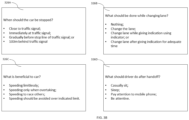
- the training program may specifically have a list of questions, with multiple choice answers, for the driver.
- the training may be in graphical form or video tutorials.
- the list of questions may be based upon shortcomings of the driver as identified by the processing module 310.
- the training program may be displayed to the driver through the display 318 that may be a screen of an infotainment system of the vehicle.
- the display 318 may be configured to receive inputs of the driver.
- the inputs may be through a touch, physical button, a remote control, voice input, or gesture recognition.
- the display 318 may include a circuitry (not shown in figure) like a printed circuit board (PCB) or an integrated circuit containing appropriate components for receiving and recognizing the driver inputs.
- PCB printed circuit board
- the processing module 310 continuously gather the data of driver monitoring modules to monitor the attentiveness level of the driver. In case the attentiveness level of the driver is still continuously below the first threshold level, as defined by the processing module 310, the vehicle is brought to a halt. However, in case the attentive level is above the second threshold level that is predefined only, the training program may be terminated, or some entertainment program may be displayed.
- the driver may receive points for the inputs made in the training program that may be further used to provide incentives in insurance etc. the driver may also be ranked in a leaderboard based on his score. If the driver is provided with a training program and he still does not provide any input a warning may be provided to halt the vehicle. In case, the driver still does not provide any input for a predetermined time, the vehicle may be brought to a halt.
- FIG. 3B-3D displays multiple displays displaying various kinds of questions that may be provided to the driver.
- FIG. 4 is a flow chart of a method 400 for engaging the driver during an active autonomous drive mode of the vehicle.
- the order in which the method is described is not intended to be construed as a limitation, and any number of the described method blocks can be combined in any order to implement the method or alternate methods. Additionally, individual blocks may be deleted from the method without departing from the scope of the invention described herein.
- the method can be implemented in any suitable hardware, software, firmware, or combination thereof. However, for ease of explanation, in the embodiments described below, the method may be considered to be implemented in the above described system and/or the apparatus and/or any electronic device (not shown).
- a drive mode transition is detected.
- the drive mode may be changed to autonomous from manual driving mode.
- the transition may be driver initiated or initiated by the processing module 310 itself.
- the automatic transition may be based on the traffic predictions, road condition predictions that the processing module 310 may request from and receive from the central server.
- driver monitoring is initiated.
- the driver monitoring may utilize cameras to take continuous footage of the driver and capture information from eyes of the driver.
- it is determined, whether the alertness of the driver is below a first threshold or not. If the alertness of the driver is not below the first threshold, then the method 400, moves back to step 404.
- a training module 312 is activated that provides an interactive training program to the driver. Details of the training program have been described earlier.
- the alertness level of the driver is checked by comparing it to a second threshold. If the alertness level is still below the second threshold level, then the method 400 goes back to step 408. However, if the alertness level of the driver is equal or greater than the second threshold level, then at step 412 the training module 312 is deactivated.
- the methods illustrated throughout the specification may be implemented in a computer program product that may be executed on a computer.
- the computer program product may comprise a non-transitory computer-readable recording medium on which a control program is recorded, such as a disk, hard drive, or the like.
- a non-transitory computer-readable recording medium such as a disk, hard drive, or the like.
- Common forms of non-transitory computer-readable media include, for example, floppy disks, flexible disks, hard disks, magnetic tape, or any other magnetic storage medium, CD-ROM, DVD, or any other optical medium, a RAM, a PROM, an EPROM, a FLASH-EPROM, or other memory chip or cartridge, or any other tangible medium from which a computer can read and use.
- the method may be implemented in transitory media, such as a transmittable carrier wave in which the control program is embodied as a data signal using transmission media, such as acoustic or light waves, such as those generated during radio wave and infrared data communications, and the like.
- transitory media such as a transmittable carrier wave
- the control program is embodied as a data signal using transmission media, such as acoustic or light waves, such as those generated during radio wave and infrared data communications, and the like.
Landscapes
- Engineering & Computer Science (AREA)
- Automation & Control Theory (AREA)
- Transportation (AREA)
- Mechanical Engineering (AREA)
- Human Computer Interaction (AREA)
- Physics & Mathematics (AREA)
- Chemical & Material Sciences (AREA)
- Combustion & Propulsion (AREA)
- Aviation & Aerospace Engineering (AREA)
- Radar, Positioning & Navigation (AREA)
- Remote Sensing (AREA)
- General Physics & Mathematics (AREA)
- Mathematical Physics (AREA)
- Business, Economics & Management (AREA)
- Health & Medical Sciences (AREA)
- Artificial Intelligence (AREA)
- Evolutionary Computation (AREA)
- Game Theory and Decision Science (AREA)
- Medical Informatics (AREA)
- Traffic Control Systems (AREA)
- Control Of Driving Devices And Active Controlling Of Vehicle (AREA)
Claims (10)
- Eine Vorrichtung zum Einschalten eines Fahrers während eines autonomen Modus (300), die Folgendes umfasst:ein Fahrmodus-Überwachungsmodul (302), das so konfiguriert ist, dass es einen Übergang von einem manuellen Fahrmodus zu einem autonomen Fahrmodus erkenntein Fahrerüberwachungsmodul (304) zur Überwachung der Fahreraufmerksamkeit während des autonomen Fahrmodus; undein Trainingsmodul (312), das so konfiguriert ist, dass es Aktivierungs- oder Deaktivierungsanweisungen von dem Verarbeitungsmodul (310) empfängt, dadurch gekennzeichnet, dass das interaktive Trainingsprogramm das Wissen des Fahrers über Fahrzeugbetriebsfehlerregeln verbessert, ferner dadurch gekennzeichnet, dass das Wissen des Fahrers über Fahrzeugbetriebsfehlerregeln auf der Grundlage von Fahrzeugbetriebsproblemen, mit denen der Fahrer in der Vergangenheit konfrontiert war, oder von anderen Fahrzeugfahrern im Allgemeinen bestimmt wird.
ein interaktives Modul (314), das ferner Folgendes umfasst
ein Verarbeitungsmodul (310), das so konfiguriert ist, dass es ein interaktives Trainingsprogramm aktiviert, wenn die Wachsamkeit des Fahrers unter einen ersten Schwellenwert fällt, wobei der erste Schwellenwert für die Wachsamkeit auf der Grundlage einer Vielzahl von Attributen bestimmt wird; - Die Vorrichtung (300) nach Anspruch 1, dadurch gekennzeichnet, dass das interaktive Trainingsprogramm deaktiviert wird, wenn die Wachsamkeit des Fahrers gleich oder größer als ein zweiter Schwellenwert ist.
- Die Vorrichtung (300) nach Anspruch 1, dadurch gekennzeichnet, dass die Mehrzahl der Attribute Straßenzustand, Verkehrsbedingungen, atmosphärische Bedingungen ist.
- Die Vorrichtung (300) nach Anspruch 1, dadurch gekennzeichnet, dass das interaktive Trainingsprogramm von dem Verarbeitungsmodul (310) identifizierte Fahrmängel des Fahrers verbessert, ferner dadurch gekennzeichnet, dass die Mängel des Fahrers auf der Grundlage eines Vergleichs zwischen dem kontinuierlich überwachten Fahrverhalten des Fahrers und einem optimalen Fahrverhalten entsprechend anderer Fahrer, die in einer Datenbank gespeichert sind, ermittelt werden.
- Die Vorrichtung (300) nach Anspruch 1, dadurch gekennzeichnet, dass das interaktive Trainingsprogramm die Verkehrsregelkenntnis des Fahrers verbessert, ferner dadurch gekennzeichnet, dass die Verkehrsregelkenntnis des Fahrers auf der Grundlage einer vom Verarbeitungsmodul (310) ermittelten Verletzung von Verkehrsregeln ermittelt wird.
- Ein Verfahren zum Einschalten eines Fahrers während eines autonomen Fahrmodus, das Folgendes umfasst:Erkennen eines Übergangs von einem manuellen Fahrmodus zu einem autonomen Fahrmodus;Überwachung der Aufmerksamkeit des Fahrers während des autonomen Fahrmodus;Aktivieren eines interaktiven Trainingsprogramms für den Fall, dass die Wachsamkeit des Fahrers unter einen ersten Schwellenwert fällt, wobei der erste Schwellenwert für die Wachsamkeit auf der Grundlage mehrerer Attribute bestimmt wird; dadurch gekennzeichnet, dass das interaktive Trainingsprogramm das Wissen des Fahrers über Fahrzeugbetriebsfehlerregeln verbessert, ferner dadurch gekennzeichnet, dass das Wissen des Fahrers über Fahrzeugbetriebsfehlerregeln auf der Grundlage von Fahrzeugbetriebsproblemen bestimmt wird, mit denen der Fahrer in der Vergangenheit oder andere Fahrzeugfahrer im Allgemeinen konfrontiert waren.
- Das Verfahren nach Anspruch 6, dadurch gekennzeichnet, dass das interaktive Trainingsprogramm deaktiviert wird, wenn die Wachsamkeit des Fahrers gleich oder größer als ein zweiter Schwellenwert ist.
- Das Verfahren nach Anspruch 6, dadurch gekennzeichnet, dass die Mehrzahl der Attribute Straßenzustand, Verkehrsbedingungen, atmosphärische Bedingungen ist.
- Das Verfahren nach Anspruch 6, dadurch gekennzeichnet, dass das interaktive Trainingsprogramm die vom Verarbeitungsmodul (310) identifizierten Fahrfehler des Fahrers verbessert, ferner dadurch gekennzeichnet, dass die Fehler des Fahrers auf der Grundlage eines Vergleichs zwischen dem kontinuierlich überwachten Fahrverhalten des Fahrers und dem optimalen Fahrverhalten anderer Fahrer, die in einer Datenbank gespeichert sind, ermittelt werden.
- Das Verfahren nach Anspruch 6, dadurch gekennzeichnet, dass das interaktive Trainingsprogramm die Verkehrsregelkenntnis des Fahrers verbessert, ferner dadurch gekennzeichnet, dass die Verkehrsregelkenntnis des Fahrers auf der Grundlage einer vom Verarbeitungsmodul (310) ermittelten Verletzung von Verkehrsregeln ermittelt wird.
Applications Claiming Priority (2)
| Application Number | Priority Date | Filing Date | Title |
|---|---|---|---|
| IN201811049551 | 2018-12-28 | ||
| EP19219683.0A EP3680141B1 (de) | 2018-12-28 | 2019-12-24 | System und verfahren zur einbindung eines fahrers während des autonomen fahrmodus |
Related Parent Applications (2)
| Application Number | Title | Priority Date | Filing Date |
|---|---|---|---|
| EP19219683.0A Division EP3680141B1 (de) | 2018-12-28 | 2019-12-24 | System und verfahren zur einbindung eines fahrers während des autonomen fahrmodus |
| EP19219683.0A Division-Into EP3680141B1 (de) | 2018-12-28 | 2019-12-24 | System und verfahren zur einbindung eines fahrers während des autonomen fahrmodus |
Publications (2)
| Publication Number | Publication Date |
|---|---|
| EP4011739A1 EP4011739A1 (de) | 2022-06-15 |
| EP4011739B1 true EP4011739B1 (de) | 2025-03-05 |
Family
ID=69147436
Family Applications (3)
| Application Number | Title | Priority Date | Filing Date |
|---|---|---|---|
| EP22153841.6A Active EP4011739B1 (de) | 2018-12-28 | 2019-12-24 | System und verfahren zur einbindung eines fahrers während des autonomen fahrmodus |
| EP22153811.9A Active EP4011738B1 (de) | 2018-12-28 | 2019-12-24 | System und verfahren zur einbindung eines fahrers während des autonomen fahrmodus |
| EP19219683.0A Active EP3680141B1 (de) | 2018-12-28 | 2019-12-24 | System und verfahren zur einbindung eines fahrers während des autonomen fahrmodus |
Family Applications After (2)
| Application Number | Title | Priority Date | Filing Date |
|---|---|---|---|
| EP22153811.9A Active EP4011738B1 (de) | 2018-12-28 | 2019-12-24 | System und verfahren zur einbindung eines fahrers während des autonomen fahrmodus |
| EP19219683.0A Active EP3680141B1 (de) | 2018-12-28 | 2019-12-24 | System und verfahren zur einbindung eines fahrers während des autonomen fahrmodus |
Country Status (2)
| Country | Link |
|---|---|
| US (1) | US11052921B2 (de) |
| EP (3) | EP4011739B1 (de) |
Families Citing this family (10)
| Publication number | Priority date | Publication date | Assignee | Title |
|---|---|---|---|---|
| JP7304184B2 (ja) * | 2019-03-27 | 2023-07-06 | 株式会社Subaru | 車両の非接触操作装置、および車両 |
| US11144053B2 (en) * | 2019-04-04 | 2021-10-12 | Toyota Research Institute, Inc. | Controlling driving condition components of an autonomous vehicle based on a current driving mode and current conditions |
| US11912307B2 (en) * | 2020-03-18 | 2024-02-27 | Waymo Llc | Monitoring head movements of drivers tasked with monitoring a vehicle operating in an autonomous driving mode |
| CN112298208B (zh) * | 2020-10-21 | 2022-05-17 | 长城汽车股份有限公司 | 自动驾驶横向辅助控制方法及横向辅助系统 |
| US12128921B2 (en) * | 2022-03-14 | 2024-10-29 | Gm Cruise Holdings Llc | Autonomous vehicle interactive experience platform |
| CN115366896A (zh) * | 2022-07-29 | 2022-11-22 | 重庆长安汽车股份有限公司 | 车辆的自动驾驶辅助方法、装置、车辆及存储介质 |
| JP2024154703A (ja) * | 2023-04-19 | 2024-10-31 | トヨタ自動車株式会社 | 表示装置、表示方法、及び表示プログラム |
| US20240395080A1 (en) * | 2023-05-22 | 2024-11-28 | Allstate Insurance Company | Systems and methods of displaying driving data using telematics data |
| JP2025116688A (ja) * | 2024-01-29 | 2025-08-08 | トヨタ自動車株式会社 | 情報処理装置、情報処理方法、及び情報処理プログラム |
| CN120482078A (zh) * | 2025-05-26 | 2025-08-15 | 肇庆学院 | 一种基于多环境感知的驾驶员危险预警及自动化驾驶辅助系统 |
Family Cites Families (12)
| Publication number | Priority date | Publication date | Assignee | Title |
|---|---|---|---|---|
| EP2314207A1 (de) * | 2002-02-19 | 2011-04-27 | Volvo Technology Corporation | Verfahren zum Überwachen und Verwalten von Fahreraufmerksamkeitsbelastungen |
| US7982620B2 (en) * | 2007-05-23 | 2011-07-19 | Toyota Motor Engineering & Manufacturing North America, Inc. | System and method for reducing boredom while driving |
| DE102012215397B4 (de) * | 2012-08-30 | 2025-10-23 | Robert Bosch Gmbh | Interaktive Aufmerksamkeitssteigerung |
| US9092986B2 (en) * | 2013-02-04 | 2015-07-28 | Magna Electronics Inc. | Vehicular vision system |
| DE102013206212A1 (de) * | 2013-04-09 | 2014-10-09 | Ford Global Technologies, Llc | Verfahren zur Steuerung eines Fahrzeugs mit temporär autonomer Fahrzeugführung sowie Steuerungseinrichtung |
| JP6265146B2 (ja) * | 2014-05-27 | 2018-01-24 | 株式会社デンソー | 注意喚起装置 |
| DE102014212596A1 (de) * | 2014-06-30 | 2015-12-31 | Robert Bosch Gmbh | Autonomes Fahrsystem für ein Fahrzeug bzw. Verfahren zur Durchführung des Betriebs |
| DE102014214777A1 (de) * | 2014-07-28 | 2016-01-28 | Continental Automotive Gmbh | Verfahren zur Interaktion eines Fahrassistenzsystems mit einem Fahrer eines Fahrzeugs |
| US10144408B2 (en) * | 2016-01-29 | 2018-12-04 | Faraday & Future Inc. | System and method for assisting navigation of vehicle through traffic |
| JP6508095B2 (ja) * | 2016-03-11 | 2019-05-08 | トヨタ自動車株式会社 | 車両の自動運転制御システム |
| US11462301B2 (en) * | 2016-06-07 | 2022-10-04 | BlyncSync Technologies, LLC | System and method for fleet driver biometric tracking |
| JP2021530069A (ja) * | 2018-06-26 | 2021-11-04 | カッツ,イテイ | 状況的ドライバ監視システム |
-
2019
- 2019-12-24 EP EP22153841.6A patent/EP4011739B1/de active Active
- 2019-12-24 EP EP22153811.9A patent/EP4011738B1/de active Active
- 2019-12-24 EP EP19219683.0A patent/EP3680141B1/de active Active
- 2019-12-27 US US16/729,294 patent/US11052921B2/en active Active
Also Published As
| Publication number | Publication date |
|---|---|
| EP4011738B1 (de) | 2025-03-05 |
| EP4011738A1 (de) | 2022-06-15 |
| EP4011739A1 (de) | 2022-06-15 |
| US20200207366A1 (en) | 2020-07-02 |
| EP3680141B1 (de) | 2023-05-10 |
| EP3680141A1 (de) | 2020-07-15 |
| US11052921B2 (en) | 2021-07-06 |
Similar Documents
| Publication | Publication Date | Title |
|---|---|---|
| EP4011739B1 (de) | System und verfahren zur einbindung eines fahrers während des autonomen fahrmodus | |
| US12172652B2 (en) | Driver and vehicle monitoring feedback system for an autonomous vehicle | |
| US12130622B2 (en) | Manual control re-engagement in an autonomous vehicle | |
| US11491994B2 (en) | Systems and methods for detecting and dynamically mitigating driver fatigue | |
| CN111373335B (zh) | 用于混合驾驶中基于自身觉知性能参数的驾驶模式切换的方法和系统 | |
| US10377303B2 (en) | Management of driver and vehicle modes for semi-autonomous driving systems | |
| EP3674979A1 (de) | System und verfahren zur einstellung der reaktionszeit eines fahrers | |
| EP3564086B1 (de) | Verwaltung der fahrmodi eines fahrzeugs | |
| WO2020100539A1 (ja) | 情報処理装置、移動装置、および方法、並びにプログラム | |
| US20190184897A1 (en) | Method and system for adapting augmented switching warning | |
| CN110473310A (zh) | 汽车行驶数据记录方法、系统、设备及存储介质 | |
| EP3674977A1 (de) | System und verfahren zur überwachung der fahreraufmerksamkeit unter verwendung von physiologischen faktoren | |
| CN109849919B (zh) | 自动驾驶接管的安全警示系统及其方法 | |
| JP2025137590A (ja) | 走行支援装置 | |
| JP7750701B2 (ja) | 運転支援装置及びコンピュータプログラム | |
| EP3729399B1 (de) | Verfahren und system zur anpassung einer verstärkten schaltwarnung | |
| JP2023048359A (ja) | 運転支援装置及びコンピュータプログラム | |
| EP3674978A1 (de) | System und verfahren zur erkennung der reaktionszeit eines fahrers | |
| JP7613438B2 (ja) | 車両用装置及び車両用推定方法 | |
| HK40036530A (en) | Method and system for adapting augmented switching warning | |
| HK40036543A (en) | Method and system for driving mode switching based on driver’s state in hybrid driving | |
| HK40033054A (en) | Method and system for augmented alerting based on driver’s state in hybrid driving | |
| HK40029213A (en) | Method and system for risk based driving mode switching in hybrid driving | |
| HK40033055A (zh) | 用於切换驾驶模式中的风险控制的方法和系统 |
Legal Events
| Date | Code | Title | Description |
|---|---|---|---|
| PUAI | Public reference made under article 153(3) epc to a published international application that has entered the european phase |
Free format text: ORIGINAL CODE: 0009012 |
|
| STAA | Information on the status of an ep patent application or granted ep patent |
Free format text: STATUS: THE APPLICATION HAS BEEN PUBLISHED |
|
| AC | Divisional application: reference to earlier application |
Ref document number: 3680141 Country of ref document: EP Kind code of ref document: P |
|
| AK | Designated contracting states |
Kind code of ref document: A1 Designated state(s): AL AT BE BG CH CY CZ DE DK EE ES FI FR GB GR HR HU IE IS IT LI LT LU LV MC MK MT NL NO PL PT RO RS SE SI SK SM TR |
|
| STAA | Information on the status of an ep patent application or granted ep patent |
Free format text: STATUS: REQUEST FOR EXAMINATION WAS MADE |
|
| 17P | Request for examination filed |
Effective date: 20221212 |
|
| RBV | Designated contracting states (corrected) |
Designated state(s): AL AT BE BG CH CY CZ DE DK EE ES FI FR GB GR HR HU IE IS IT LI LT LU LV MC MK MT NL NO PL PT RO RS SE SI SK SM TR |
|
| RAP1 | Party data changed (applicant data changed or rights of an application transferred) |
Owner name: NOVUS HI-TECH ROBOTIC SYSTEMZ PRIVATE LTD. |
|
| RIC1 | Information provided on ipc code assigned before grant |
Ipc: B60W 40/09 20120101ALI20240717BHEP Ipc: B60K 35/00 20060101ALI20240717BHEP Ipc: B60W 50/14 20200101ALI20240717BHEP Ipc: B60W 60/00 20200101AFI20240717BHEP |
|
| GRAP | Despatch of communication of intention to grant a patent |
Free format text: ORIGINAL CODE: EPIDOSNIGR1 |
|
| STAA | Information on the status of an ep patent application or granted ep patent |
Free format text: STATUS: GRANT OF PATENT IS INTENDED |
|
| INTG | Intention to grant announced |
Effective date: 20241004 |
|
| GRAS | Grant fee paid |
Free format text: ORIGINAL CODE: EPIDOSNIGR3 |
|
| GRAA | (expected) grant |
Free format text: ORIGINAL CODE: 0009210 |
|
| STAA | Information on the status of an ep patent application or granted ep patent |
Free format text: STATUS: THE PATENT HAS BEEN GRANTED |
|
| AC | Divisional application: reference to earlier application |
Ref document number: 3680141 Country of ref document: EP Kind code of ref document: P |
|
| AK | Designated contracting states |
Kind code of ref document: B1 Designated state(s): AL AT BE BG CH CY CZ DE DK EE ES FI FR GB GR HR HU IE IS IT LI LT LU LV MC MK MT NL NO PL PT RO RS SE SI SK SM TR |
|
| REG | Reference to a national code |
Ref country code: GB Ref legal event code: FG4D |
|
| REG | Reference to a national code |
Ref country code: CH Ref legal event code: EP |
|
| REG | Reference to a national code |
Ref country code: IE Ref legal event code: FG4D |
|
| REG | Reference to a national code |
Ref country code: DE Ref legal event code: R096 Ref document number: 602019067083 Country of ref document: DE |
|
| PG25 | Lapsed in a contracting state [announced via postgrant information from national office to epo] |
Ref country code: RS Free format text: LAPSE BECAUSE OF FAILURE TO SUBMIT A TRANSLATION OF THE DESCRIPTION OR TO PAY THE FEE WITHIN THE PRESCRIBED TIME-LIMIT Effective date: 20250605 |
|
| PG25 | Lapsed in a contracting state [announced via postgrant information from national office to epo] |
Ref country code: FI Free format text: LAPSE BECAUSE OF FAILURE TO SUBMIT A TRANSLATION OF THE DESCRIPTION OR TO PAY THE FEE WITHIN THE PRESCRIBED TIME-LIMIT Effective date: 20250305 |
|
| REG | Reference to a national code |
Ref country code: NL Ref legal event code: MP Effective date: 20250305 |
|
| PG25 | Lapsed in a contracting state [announced via postgrant information from national office to epo] |
Ref country code: ES Free format text: LAPSE BECAUSE OF FAILURE TO SUBMIT A TRANSLATION OF THE DESCRIPTION OR TO PAY THE FEE WITHIN THE PRESCRIBED TIME-LIMIT Effective date: 20250305 |
|
| REG | Reference to a national code |
Ref country code: LT Ref legal event code: MG9D |
|
| PG25 | Lapsed in a contracting state [announced via postgrant information from national office to epo] |
Ref country code: NO Free format text: LAPSE BECAUSE OF FAILURE TO SUBMIT A TRANSLATION OF THE DESCRIPTION OR TO PAY THE FEE WITHIN THE PRESCRIBED TIME-LIMIT Effective date: 20250605 |
|
| PG25 | Lapsed in a contracting state [announced via postgrant information from national office to epo] |
Ref country code: HR Free format text: LAPSE BECAUSE OF FAILURE TO SUBMIT A TRANSLATION OF THE DESCRIPTION OR TO PAY THE FEE WITHIN THE PRESCRIBED TIME-LIMIT Effective date: 20250305 |
|
| PG25 | Lapsed in a contracting state [announced via postgrant information from national office to epo] |
Ref country code: LV Free format text: LAPSE BECAUSE OF FAILURE TO SUBMIT A TRANSLATION OF THE DESCRIPTION OR TO PAY THE FEE WITHIN THE PRESCRIBED TIME-LIMIT Effective date: 20250305 |
|
| PG25 | Lapsed in a contracting state [announced via postgrant information from national office to epo] |
Ref country code: BG Free format text: LAPSE BECAUSE OF FAILURE TO SUBMIT A TRANSLATION OF THE DESCRIPTION OR TO PAY THE FEE WITHIN THE PRESCRIBED TIME-LIMIT Effective date: 20250305 Ref country code: GR Free format text: LAPSE BECAUSE OF FAILURE TO SUBMIT A TRANSLATION OF THE DESCRIPTION OR TO PAY THE FEE WITHIN THE PRESCRIBED TIME-LIMIT Effective date: 20250606 |
|
| REG | Reference to a national code |
Ref country code: AT Ref legal event code: MK05 Ref document number: 1772708 Country of ref document: AT Kind code of ref document: T Effective date: 20250305 |
|
| PG25 | Lapsed in a contracting state [announced via postgrant information from national office to epo] |
Ref country code: NL Free format text: LAPSE BECAUSE OF FAILURE TO SUBMIT A TRANSLATION OF THE DESCRIPTION OR TO PAY THE FEE WITHIN THE PRESCRIBED TIME-LIMIT Effective date: 20250305 |
|
| PG25 | Lapsed in a contracting state [announced via postgrant information from national office to epo] |
Ref country code: SE Free format text: LAPSE BECAUSE OF FAILURE TO SUBMIT A TRANSLATION OF THE DESCRIPTION OR TO PAY THE FEE WITHIN THE PRESCRIBED TIME-LIMIT Effective date: 20250305 |
|
| PG25 | Lapsed in a contracting state [announced via postgrant information from national office to epo] |
Ref country code: SM Free format text: LAPSE BECAUSE OF FAILURE TO SUBMIT A TRANSLATION OF THE DESCRIPTION OR TO PAY THE FEE WITHIN THE PRESCRIBED TIME-LIMIT Effective date: 20250305 |
|
| PG25 | Lapsed in a contracting state [announced via postgrant information from national office to epo] |
Ref country code: PT Free format text: LAPSE BECAUSE OF FAILURE TO SUBMIT A TRANSLATION OF THE DESCRIPTION OR TO PAY THE FEE WITHIN THE PRESCRIBED TIME-LIMIT Effective date: 20250707 |
|
| PG25 | Lapsed in a contracting state [announced via postgrant information from national office to epo] |
Ref country code: PL Free format text: LAPSE BECAUSE OF FAILURE TO SUBMIT A TRANSLATION OF THE DESCRIPTION OR TO PAY THE FEE WITHIN THE PRESCRIBED TIME-LIMIT Effective date: 20250305 Ref country code: IT Free format text: LAPSE BECAUSE OF FAILURE TO SUBMIT A TRANSLATION OF THE DESCRIPTION OR TO PAY THE FEE WITHIN THE PRESCRIBED TIME-LIMIT Effective date: 20250305 |
|
| PG25 | Lapsed in a contracting state [announced via postgrant information from national office to epo] |
Ref country code: AT Free format text: LAPSE BECAUSE OF FAILURE TO SUBMIT A TRANSLATION OF THE DESCRIPTION OR TO PAY THE FEE WITHIN THE PRESCRIBED TIME-LIMIT Effective date: 20250305 |
|
| PG25 | Lapsed in a contracting state [announced via postgrant information from national office to epo] |
Ref country code: EE Free format text: LAPSE BECAUSE OF FAILURE TO SUBMIT A TRANSLATION OF THE DESCRIPTION OR TO PAY THE FEE WITHIN THE PRESCRIBED TIME-LIMIT Effective date: 20250305 Ref country code: CZ Free format text: LAPSE BECAUSE OF FAILURE TO SUBMIT A TRANSLATION OF THE DESCRIPTION OR TO PAY THE FEE WITHIN THE PRESCRIBED TIME-LIMIT Effective date: 20250305 |
|
| PG25 | Lapsed in a contracting state [announced via postgrant information from national office to epo] |
Ref country code: RO Free format text: LAPSE BECAUSE OF FAILURE TO SUBMIT A TRANSLATION OF THE DESCRIPTION OR TO PAY THE FEE WITHIN THE PRESCRIBED TIME-LIMIT Effective date: 20250305 |
|
| PG25 | Lapsed in a contracting state [announced via postgrant information from national office to epo] |
Ref country code: SK Free format text: LAPSE BECAUSE OF FAILURE TO SUBMIT A TRANSLATION OF THE DESCRIPTION OR TO PAY THE FEE WITHIN THE PRESCRIBED TIME-LIMIT Effective date: 20250305 |
|
| PG25 | Lapsed in a contracting state [announced via postgrant information from national office to epo] |
Ref country code: IS Free format text: LAPSE BECAUSE OF FAILURE TO SUBMIT A TRANSLATION OF THE DESCRIPTION OR TO PAY THE FEE WITHIN THE PRESCRIBED TIME-LIMIT Effective date: 20250705 |
|
| REG | Reference to a national code |
Ref country code: DE Ref legal event code: R097 Ref document number: 602019067083 Country of ref document: DE |
|
| PGFP | Annual fee paid to national office [announced via postgrant information from national office to epo] |
Ref country code: DE Payment date: 20251210 Year of fee payment: 7 |
|
| PGFP | Annual fee paid to national office [announced via postgrant information from national office to epo] |
Ref country code: GB Payment date: 20251117 Year of fee payment: 7 |
|
| PLBE | No opposition filed within time limit |
Free format text: ORIGINAL CODE: 0009261 |
|
| STAA | Information on the status of an ep patent application or granted ep patent |
Free format text: STATUS: NO OPPOSITION FILED WITHIN TIME LIMIT |
|
| PG25 | Lapsed in a contracting state [announced via postgrant information from national office to epo] |
Ref country code: DK Free format text: LAPSE BECAUSE OF FAILURE TO SUBMIT A TRANSLATION OF THE DESCRIPTION OR TO PAY THE FEE WITHIN THE PRESCRIBED TIME-LIMIT Effective date: 20250305 |
|
| REG | Reference to a national code |
Ref country code: CH Ref legal event code: L10 Free format text: ST27 STATUS EVENT CODE: U-0-0-L10-L00 (AS PROVIDED BY THE NATIONAL OFFICE) Effective date: 20260114 |
|
| 26N | No opposition filed |
Effective date: 20251208 |
|
| REG | Reference to a national code |
Ref country code: DE Ref legal event code: R082 Ref document number: 602019067083 Country of ref document: DE Representative=s name: HAFNER & KOHL PARTMBB, DE |