EP4012005A1 - Procédé de réduction des coûts de production lors de la fabrication de produits dans une installation de production - Google Patents
Procédé de réduction des coûts de production lors de la fabrication de produits dans une installation de production Download PDFInfo
- Publication number
- EP4012005A1 EP4012005A1 EP21211715.4A EP21211715A EP4012005A1 EP 4012005 A1 EP4012005 A1 EP 4012005A1 EP 21211715 A EP21211715 A EP 21211715A EP 4012005 A1 EP4012005 A1 EP 4012005A1
- Authority
- EP
- European Patent Office
- Prior art keywords
- production
- pyrolysis
- biochar
- plant
- production facility
- Prior art date
- Legal status (The legal status is an assumption and is not a legal conclusion. Google has not performed a legal analysis and makes no representation as to the accuracy of the status listed.)
- Withdrawn
Links
- 238000004519 manufacturing process Methods 0.000 title claims abstract description 118
- 238000000034 method Methods 0.000 title claims abstract description 49
- 238000000197 pyrolysis Methods 0.000 claims abstract description 75
- 238000010438 heat treatment Methods 0.000 claims abstract description 48
- 239000002023 wood Substances 0.000 claims abstract description 47
- 239000002918 waste heat Substances 0.000 claims abstract description 30
- 239000000463 material Substances 0.000 claims abstract description 27
- 239000000047 product Substances 0.000 claims abstract description 20
- 239000005022 packaging material Substances 0.000 claims abstract description 7
- 239000011265 semifinished product Substances 0.000 claims abstract description 6
- 239000012620 biological material Substances 0.000 claims description 15
- 238000001035 drying Methods 0.000 claims description 14
- 230000005611 electricity Effects 0.000 claims description 4
- 239000007858 starting material Substances 0.000 claims description 3
- 238000007599 discharging Methods 0.000 claims description 2
- 238000006243 chemical reaction Methods 0.000 claims 1
- 238000009434 installation Methods 0.000 claims 1
- 239000002699 waste material Substances 0.000 abstract description 8
- 241000196324 Embryophyta Species 0.000 description 21
- CURLTUGMZLYLDI-UHFFFAOYSA-N Carbon dioxide Chemical compound O=C=O CURLTUGMZLYLDI-UHFFFAOYSA-N 0.000 description 10
- 229910002092 carbon dioxide Inorganic materials 0.000 description 8
- OKTJSMMVPCPJKN-UHFFFAOYSA-N Carbon Chemical compound [C] OKTJSMMVPCPJKN-UHFFFAOYSA-N 0.000 description 5
- 229910052799 carbon Inorganic materials 0.000 description 5
- 238000004806 packaging method and process Methods 0.000 description 4
- 239000003337 fertilizer Substances 0.000 description 3
- 238000004064 recycling Methods 0.000 description 3
- 239000003610 charcoal Substances 0.000 description 2
- 238000011161 development Methods 0.000 description 2
- 230000018109 developmental process Effects 0.000 description 2
- 238000010248 power generation Methods 0.000 description 2
- XLYOFNOQVPJJNP-UHFFFAOYSA-N water Substances O XLYOFNOQVPJJNP-UHFFFAOYSA-N 0.000 description 2
- 206010013786 Dry skin Diseases 0.000 description 1
- 241000545593 Scolytinae Species 0.000 description 1
- 206010053615 Thermal burn Diseases 0.000 description 1
- 238000012271 agricultural production Methods 0.000 description 1
- 239000001569 carbon dioxide Substances 0.000 description 1
- 239000013064 chemical raw material Substances 0.000 description 1
- 239000007795 chemical reaction product Substances 0.000 description 1
- 238000002485 combustion reaction Methods 0.000 description 1
- 239000002361 compost Substances 0.000 description 1
- 239000000498 cooling water Substances 0.000 description 1
- 239000007789 gas Substances 0.000 description 1
- 239000005431 greenhouse gas Substances 0.000 description 1
- 238000007726 management method Methods 0.000 description 1
- 230000008092 positive effect Effects 0.000 description 1
- 238000004886 process control Methods 0.000 description 1
- 239000002994 raw material Substances 0.000 description 1
- 239000002689 soil Substances 0.000 description 1
- 238000003860 storage Methods 0.000 description 1
- 239000010902 straw Substances 0.000 description 1
Images

Classifications
-
- C—CHEMISTRY; METALLURGY
- C10—PETROLEUM, GAS OR COKE INDUSTRIES; TECHNICAL GASES CONTAINING CARBON MONOXIDE; FUELS; LUBRICANTS; PEAT
- C10B—DESTRUCTIVE DISTILLATION OF CARBONACEOUS MATERIALS FOR PRODUCTION OF GAS, COKE, TAR, OR SIMILAR MATERIALS
- C10B53/00—Destructive distillation, specially adapted for particular solid raw materials or solid raw materials in special form
- C10B53/02—Destructive distillation, specially adapted for particular solid raw materials or solid raw materials in special form of cellulose-containing material
-
- C—CHEMISTRY; METALLURGY
- C10—PETROLEUM, GAS OR COKE INDUSTRIES; TECHNICAL GASES CONTAINING CARBON MONOXIDE; FUELS; LUBRICANTS; PEAT
- C10B—DESTRUCTIVE DISTILLATION OF CARBONACEOUS MATERIALS FOR PRODUCTION OF GAS, COKE, TAR, OR SIMILAR MATERIALS
- C10B19/00—Heating of coke ovens by electrical means
-
- F—MECHANICAL ENGINEERING; LIGHTING; HEATING; WEAPONS; BLASTING
- F24—HEATING; RANGES; VENTILATING
- F24D—DOMESTIC- OR SPACE-HEATING SYSTEMS, e.g. CENTRAL HEATING SYSTEMS; DOMESTIC HOT-WATER SUPPLY SYSTEMS; ELEMENTS OR COMPONENTS THEREFOR
- F24D2200/00—Heat sources or energy sources
- F24D2200/16—Waste heat
-
- F—MECHANICAL ENGINEERING; LIGHTING; HEATING; WEAPONS; BLASTING
- F24—HEATING; RANGES; VENTILATING
- F24D—DOMESTIC- OR SPACE-HEATING SYSTEMS, e.g. CENTRAL HEATING SYSTEMS; DOMESTIC HOT-WATER SUPPLY SYSTEMS; ELEMENTS OR COMPONENTS THEREFOR
- F24D3/00—Hot-water central heating systems
-
- Y—GENERAL TAGGING OF NEW TECHNOLOGICAL DEVELOPMENTS; GENERAL TAGGING OF CROSS-SECTIONAL TECHNOLOGIES SPANNING OVER SEVERAL SECTIONS OF THE IPC; TECHNICAL SUBJECTS COVERED BY FORMER USPC CROSS-REFERENCE ART COLLECTIONS [XRACs] AND DIGESTS
- Y02—TECHNOLOGIES OR APPLICATIONS FOR MITIGATION OR ADAPTATION AGAINST CLIMATE CHANGE
- Y02E—REDUCTION OF GREENHOUSE GAS [GHG] EMISSIONS, RELATED TO ENERGY GENERATION, TRANSMISSION OR DISTRIBUTION
- Y02E50/00—Technologies for the production of fuel of non-fossil origin
- Y02E50/10—Biofuels, e.g. bio-diesel
-
- Y—GENERAL TAGGING OF NEW TECHNOLOGICAL DEVELOPMENTS; GENERAL TAGGING OF CROSS-SECTIONAL TECHNOLOGIES SPANNING OVER SEVERAL SECTIONS OF THE IPC; TECHNICAL SUBJECTS COVERED BY FORMER USPC CROSS-REFERENCE ART COLLECTIONS [XRACs] AND DIGESTS
- Y02—TECHNOLOGIES OR APPLICATIONS FOR MITIGATION OR ADAPTATION AGAINST CLIMATE CHANGE
- Y02P—CLIMATE CHANGE MITIGATION TECHNOLOGIES IN THE PRODUCTION OR PROCESSING OF GOODS
- Y02P20/00—Technologies relating to chemical industry
- Y02P20/10—Process efficiency
- Y02P20/129—Energy recovery, e.g. by cogeneration, H2recovery or pressure recovery turbines
Definitions
- the invention relates to a method for reducing the production costs in the manufacture of products in a production facility, in which waste wood from packaging material from semi-finished products, preliminary products, means of production or other materials supplied to the production facility accumulates.
- the object of the invention is to specify a method for reducing the production costs in the manufacture of products in a production facility, with which both the production costs can be reduced and the generation of climate-damaging CO2 can be significantly avoided.
- the object of the invention is also a Specify plant configuration of a production plant for the implementation of the method.
- the method according to the invention for reducing the production costs in the manufacture of products in a production plant is based on a production plant in which waste wood from packaging material from semi-finished products, preliminary products, means of production or other materials supplied to the production plant is produced.
- packaging material is intended to describe all materials used for packaging, transport security or other purposes within the scope of transport, delivery and use of the materials delivered to the production facility.
- biochar is produced by the pyrolysis process.
- This biochar is a resource that the operator of the production facility can sell to suitable buyers. Suitable buyers can be different types of biochar users, such as traders who resell biochar to agricultural production companies who use the biochar to improve the quality of their arable land.
- the biochar can also be used by the recycler as a basic fertilizer, i.e. as a basic material for the production of fertilizer.
- the carbon contained in the residual wood is bound in the biochar and, in particular, is not converted into CO 2 and fed into the earth's atmosphere.
- the carbon remains permanently bound in biochar introduced into the soil and does not enter the earth's atmosphere. In this way, the amount of CO 2 that is produced by burning the residual wood in the previous procedure is eliminated. This leads to a positive CO 2 balance and a reduction in emissions of climate-damaging CO 2 . In this way, CO 2 is actively removed from the material cycle.
- the production company can use the method according to the invention to generate CO 2 certificates, which it can sell on the market for trading in CO 2 certificates and thus generate additional income. This additional income also contributes to a reduction in the production costs of the products.
- Process step V5) "Use of the waste heat to heat a heating medium for heating buildings of the production plant and/or for Drying of the input material" can be implemented, for example, in such a way that cooling water, which is used to cool the pyrolysis system and is heated up in the process, is used directly to heat the buildings of the production company.
- the waste heat could also be used to heat the heating medium of a heating system heated in an additional heat exchanger.
- the invention thus makes a significant contribution to reducing CO 2 emissions into the atmosphere and to a climate-positive CO 2 balance.
- Residual wood from industry, agriculture and above all forestry is converted into charcoal according to the invention with the aid of pyrolysis (operation of the pyrolysis system with renewable energy).
- This charcoal only has about 1% of the volume of the original wood, but consists almost entirely of carbon. This is very stable and can be stored for decades (e.g. in mines, old open-pit mines, etc.). The CO 2 bound during the growth of the wood is thus stored for a long period of time and can be used as a chemical raw material by later generations.
- Hot water for example, can be used as the heating medium for heating the buildings of the production facility.
- additional biomaterial is obtained from outside the production facility, which is used together with the residual wood as input material for the pyrolysis plant.
- This additional biomaterial can also be wood, but another plant material can also be used as additional biomaterial.
- the external purchase of additional biomaterial is particularly important if the residual wood in the production facility is not available in sufficient quantity to operate the pyrolysis plant continuously.
- it is possible for the to demand a fee from the seller for the receipt of additional biomaterial similar to how a production company today hands over its residual wood to a disposal company and has to pay a fee to the disposal company if it cannot use the residual wood in-house. In this way, an additional cash income is realized, which in turn contributes to reducing the operating costs or production costs of the production company.
- the pyrolysis system is operated with electricity generated from renewable energy.
- the renewable energy can be obtained decentrally.
- the systems required for this can be set up decentrally.
- a wind turbine can be set up on the factory premises of the production facility, which generates the energy required to operate the pyrolysis system. In this way, the method according to the invention and the system concept according to the invention can be used flexibly for different manufacturing companies.
- the system according to the invention for reducing production costs in the manufacture of products in a production facility is intended for use in a production facility that has factory buildings that can be heated with a heating medium using a heating system.
- the system comprises a pyrolysis system for the production of biochar, the pyrolysis system comprising a pyrolysis unit, a device for preparing and feeding residual wood occurring in the production plant to the pyrolysis unit and a discharge device for discharging biochar from the pyrolysis unit, wherein a with the waste heat of the pyrolysis process operable heat exchanger device is provided, with which at least part of the heating medium used by the heating system can be heated.
- the biochar product produced as part of the pyrolysis process is removed from the pyrolysis unit via the discharge device, collected and then sold to suitable recycling companies or intermediaries.
- the system according to the invention can be integrated into any production facility in which there is a sufficient amount of residual wood from packaging material, which comes from the packaging of semi-finished products, preliminary products, means of production or other materials delivered to the production facility.
- biochar can be produced from the residual wood by pyrolysis, which can be sold at a profit to biochar recyclers.
- the inflow of money obtained in this way leads to a reduction in production costs in the production plant.
- the exothermic pyrolysis system supplies a sufficient amount of waste heat in order to heat the heating medium in a heat exchanger device, with which the heating system for the factory buildings of the production facility is operated. In this way, no or just a significantly lower amount of external energy is required to heat the heating medium to the required temperature for the operation of the heating system.
- the reduced energy costs of the production facility in this way contribute to reducing the production costs for the manufactured products.
- an energy generating device which can be operated with renewable energy and with which the electricity required for the operation of the pyrolysis system can be generated.
- energy generating devices can be, for example, wind turbines or photovoltaic systems.
- these energy generating devices can be set up decentrally in the immediate vicinity of the system according to the invention. This contributes to the plant according to the invention being able to be integrated into any existing production facility.
- the device for preparing and supplying residual wood from the production facility comprises a collection container in which at least the residual wood from the production facility prepared for processing in the pyrolysis unit can be collected.
- the waste wood required in particular for continuous operation of the pyrolysis unit is kept in the collection container.
- the collection container is so big dimensioned in such a way that it can hold as large a quantity of waste wood as is required for continuous operation of the pyrolysis plant.
- the collection container is dimensioned in such a way that, in addition to the residual wood occurring in the production facility, it can also hold a sufficient amount of additional biomaterial, which is obtained from external sources.
- a drying unit is provided in front of the collection container or between the collection container and the pyrolysis unit, with which the residual wood to be fed to the pyrolysis unit can be dried to a desired residual moisture content.
- the feedstock that is fed to the pyrolysis unit always has the same residual moisture content. This contributes to stable operational management and trouble-free, continuous operation of the pyrolysis system, because the residual moisture content of the input material is not subject to unacceptably large fluctuations.
- return means are provided with which at least part of the waste heat from the pyrolysis process can be fed to the drying unit in order to operate it.
- the waste heat can not only be used to heat the heating medium of the heating system.
- the proportion of the waste heat that is used for drying the input material for the pyrolysis unit can also vary, because the residual wood and/or the additional biomaterial can certainly have different moisture values. Fluctuations in the waste heat requirement for heating the heating medium can also be compensated for by increasing the amount of waste heat used for drying.
- a flexible operation of the system according to the invention is thus achieved by returning part of the amount of waste heat produced as part of the pyrolysis process to the drying unit.
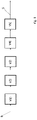
- step V1 the residual wood that accumulates in the production plant is processed into feedstock for a pyrolysis plant that is used to produce biochar.
- process step V2) the starting material is introduced into the pyrolysis unit of the pyrolysis plant.
- the feedstock is converted by pyrolysis into biochar with the generation of waste heat.
- the waste heat is used in method step V5) to heat a heating medium of a heating system with which the factory buildings of the production facility are heated and/or to dry the input material for the pyrolysis system.
- the production facility 2 shows a system according to the invention for reducing the production costs in the manufacture of products in a production facility, the production facility having factory buildings 1 which can be heated by a heating medium 3 using a heating system 2 .
- the factory buildings 1 can include both tool halls, production halls, administration buildings, storage buildings and all other types of buildings that can be present in a production facility.
- the heating system 2 is supplied with the heating medium 3 from the outside. It can be water, for example.
- the residual wood 8 is supplied in large quantities as packaging material from the outside into the production facility.
- additional biomaterial 16 is obtained from the outside, so that there is a sufficient amount of input material for continuous operation of the pyrolysis system 4 .
- the pyrolysis system 4 includes the collection container 13 in which the input material that is fed to the pyrolysis unit 6 is kept.
- the feedstock is dried in such a way that it has a certain predetermined residual moisture content. In this way it is achieved that the input material always has the same residual moisture content when it enters the pyrolysis unit 6 , which contributes to a stable process control and leads to a stable end product, biochar 5 , which is always the same.
- the feedstock is converted into biochar 5 in an exothermic process.
- the product biochar 5 occurring at the exit of the pyrolysis unit 6 is discharged and, for example, packed into containers (for example in sacks).
- the biochar 5 can be sold to third parties as a recyclable material by the operator of the production facility.
- the cash inflow achieved in this way leads to a reduction in production costs from an economic point of view.
- the current required for the operation of the pyrolysis unit 6 is 2 illustrated system configuration generated by an energy generating device 12.
- the power generation facility 12 is powered by renewable energy such as wind power or solar power.
- the energy generating device 12 is designed as a wind power plant.
- the energy generating device 12 can advantageously be set up in a decentralized manner in our vicinity to the pyrolysis system 4 .
- the system according to the invention can therefore be used in any production facility, with the energy for operating the pyrolysis system always being able to be generated in a CO 2 -neutral manner in the production facility itself.
- the waste heat 10 generated as part of the exothermic pyrolysis process is 2 illustrated system configuration used on the one hand to heat the heating medium 3 of the heating system 2 in the heat exchanger device 11 to the operating temperature required for the operation of the heating system 2.
- part of the waste heat 10 is fed back to the drying unit 14 via return means 15 in order to use this part of the waste heat 10 to dry the input material for the pyrolysis unit 6 to the desired residual moisture content.
- the combination of these two different types of use for the waste heat 10 means that the system according to the invention can be operated very flexibly.
- waste heat 10 If, for example, less waste heat 10 is required on hot summer days to heat the heating medium 3 warm up, then more waste heat 10 can be used to dry the input material to the desired residual moisture content and it can then, for example, also process very moist residual wood or very moist additional biomaterial.
- the heating medium 3 of the heating system 2 which has been heated in the heat exchanger device 11 by the waste heat 10, is then fed into factory buildings 1 in order to heat them. In this way, no external energy is required to heat the heating medium 3 to the required operating temperature. This saves operating costs and thus also contributes to lowering the production costs in the production plant.
Landscapes
- Chemical & Material Sciences (AREA)
- Engineering & Computer Science (AREA)
- Oil, Petroleum & Natural Gas (AREA)
- Materials Engineering (AREA)
- Organic Chemistry (AREA)
- Processing Of Solid Wastes (AREA)
Applications Claiming Priority (1)
| Application Number | Priority Date | Filing Date | Title |
|---|---|---|---|
| DE102020215688.3A DE102020215688A1 (de) | 2020-12-11 | 2020-12-11 | Verfahren zur Verringerung der Produktionskosten bei der Herstellung von Produkten in einem Produktionsbetrieb |
Publications (1)
| Publication Number | Publication Date |
|---|---|
| EP4012005A1 true EP4012005A1 (fr) | 2022-06-15 |
Family
ID=78820731
Family Applications (1)
| Application Number | Title | Priority Date | Filing Date |
|---|---|---|---|
| EP21211715.4A Withdrawn EP4012005A1 (fr) | 2020-12-11 | 2021-12-01 | Procédé de réduction des coûts de production lors de la fabrication de produits dans une installation de production |
Country Status (2)
| Country | Link |
|---|---|
| EP (1) | EP4012005A1 (fr) |
| DE (1) | DE102020215688A1 (fr) |
Citations (4)
| Publication number | Priority date | Publication date | Assignee | Title |
|---|---|---|---|---|
| DE247449C (fr) * | 1909-07-25 | 1912-05-29 | ||
| WO2003091359A1 (fr) * | 2002-04-26 | 2003-11-06 | Peggy Diana Berndt | Procede et installation pour la pyrolyse basse temperature de produits a base de caoutchouc et de composites acier-caoutchouc et utilisation des produits de pyrolyse |
| US20100154728A1 (en) * | 2006-02-17 | 2010-06-24 | Native Power Solutions Gmbh & Co. Kg | Process and Device for Generating Gas From Carbonaceous Material |
| US20160326440A1 (en) * | 2014-01-10 | 2016-11-10 | Manik Ventures Limited | Disposal of refuse |
Family Cites Families (3)
| Publication number | Priority date | Publication date | Assignee | Title |
|---|---|---|---|---|
| DE10021383A1 (de) | 2000-05-03 | 2001-11-08 | Wea Waste Energy Action Intern | Verfahren und Vorrichtung zur vollständigen und schadstoffreien Konversion von Reststoffgemengen |
| DE202014004445U1 (de) | 2014-06-02 | 2014-06-24 | Josef Peter Aigner | Vorrichtung zur Pflanzenkohleherstellung |
| AT520769A1 (de) | 2018-01-04 | 2019-07-15 | Guenter Hirr | Verfahren zum betreiben einer Anlage zur Energiegewinnung und Anlage hierfür |
-
2020
- 2020-12-11 DE DE102020215688.3A patent/DE102020215688A1/de not_active Ceased
-
2021
- 2021-12-01 EP EP21211715.4A patent/EP4012005A1/fr not_active Withdrawn
Patent Citations (4)
| Publication number | Priority date | Publication date | Assignee | Title |
|---|---|---|---|---|
| DE247449C (fr) * | 1909-07-25 | 1912-05-29 | ||
| WO2003091359A1 (fr) * | 2002-04-26 | 2003-11-06 | Peggy Diana Berndt | Procede et installation pour la pyrolyse basse temperature de produits a base de caoutchouc et de composites acier-caoutchouc et utilisation des produits de pyrolyse |
| US20100154728A1 (en) * | 2006-02-17 | 2010-06-24 | Native Power Solutions Gmbh & Co. Kg | Process and Device for Generating Gas From Carbonaceous Material |
| US20160326440A1 (en) * | 2014-01-10 | 2016-11-10 | Manik Ventures Limited | Disposal of refuse |
Non-Patent Citations (1)
| Title |
|---|
| TT GROUP: "Recycling of wood waste, pyrolysis of wood | TT GROUP ltd", 11 July 2020 (2020-07-11), XP055919085, Retrieved from the Internet <URL:https://web.archive.org/web/20200711150600/http://ttgroupworld.com/en/recycling/waste-biomass/> [retrieved on 20220509] * |
Also Published As
| Publication number | Publication date |
|---|---|
| DE102020215688A1 (de) | 2022-06-15 |
Similar Documents
| Publication | Publication Date | Title |
|---|---|---|
| WO2004067685A1 (fr) | Procede et dispositif pour produire des combustibles a partir de biomasse comprimee et utilisation de ceux-ci | |
| EP1794448A1 (fr) | Systeme energetique regeneratif | |
| EP3987229A1 (fr) | Procédé d'analyse du fonctionnement et d'optimisation du fonctionnement d'installations d'incinération d'ordures | |
| EP0543133B1 (fr) | Procédé et appareillage pour le traitement de la boue d'épuration épaissie | |
| EP0082815A2 (fr) | Procédé pour séparer au moins une fraction des ordures municipales et dispositif pour la mise en oeuvre du procédé | |
| DE3015250C2 (de) | Verfahren und Einrichtung zur Aufbereitung von Mineralfaserschrott unterschiedlicher Beschaffenheit, insbesondere hinsichtlich seiner organischen Bestandteile | |
| EP4012005A1 (fr) | Procédé de réduction des coûts de production lors de la fabrication de produits dans une installation de production | |
| DE102010000580A1 (de) | System und Verfahren zur Bereitstellung einer Mischung aus unterschiedlichen Biomassen für eine Anlage zur Gewinnung eines Reaktionsprodukts aus den unterschiedlichen Biomassen | |
| DE102010000578A1 (de) | Reaktor zur hydrothermalen Karbonisierung von Biomasse und Verfahren zum Betrieb des Reaktors | |
| DE4401624A1 (de) | Betriebsmanagementsystem für Koksöfen | |
| EP2157158B1 (fr) | Procédé de fabrication de pellets à partir de matière brutes fibreuses à gros grains | |
| DE3018039A1 (de) | Verfahren zur aufbereitung von koniferen, insbesondere holzarmer koniferen zur gewinnung von energietraegern und rostoffen | |
| DE2703571A1 (de) | Verfahren zum behandeln von abfallstoffen | |
| DE102010019321A1 (de) | Verfahren zur Herstellung brennbarer Pellets | |
| DE10153975A1 (de) | Verfahren zum Herstellen eines Biobrennstoffes | |
| DE102005059880A1 (de) | Verfahren und Vorrichtung zur Verwertung von Abfallprodukten in Biogasanlagen | |
| DE4336836A1 (de) | Verfahren zur Wärme- und CO¶2¶-Gewinnung aus einer Kompostieranlage | |
| DE19848354B4 (de) | Einrichtung zur Erzeugung von thermisch verwertbaren Hackschnitzeln | |
| DE102010000576B4 (de) | Anlage und Verfahren zur hydrothermalen Karbonisierung von Biomasse | |
| DE2428442C3 (de) | Vorrichtung zum Fördern und Entwässern des Rechengutes von Kläranlagen | |
| EP3129167B1 (fr) | Procédé d'épuration de friches environnementales contaminées | |
| DE10162792B4 (de) | Mülldeponie und Verfahren zur verbesserten Bewirtschaftung von Mülldeponien | |
| EP0186766B1 (fr) | Installation pour utiliser des déchets | |
| DE102010001330B4 (de) | Verfahren und Anlage zur thermischen Verwertung von Biomasse | |
| DE10030293C2 (de) | Verfahren zur Verwertung und Entsorgung von Grünschnitt |
Legal Events
| Date | Code | Title | Description |
|---|---|---|---|
| PUAI | Public reference made under article 153(3) epc to a published international application that has entered the european phase |
Free format text: ORIGINAL CODE: 0009012 |
|
| STAA | Information on the status of an ep patent application or granted ep patent |
Free format text: STATUS: THE APPLICATION HAS BEEN PUBLISHED |
|
| AK | Designated contracting states |
Kind code of ref document: A1 Designated state(s): AL AT BE BG CH CY CZ DE DK EE ES FI FR GB GR HR HU IE IS IT LI LT LU LV MC MK MT NL NO PL PT RO RS SE SI SK SM TR |
|
| STAA | Information on the status of an ep patent application or granted ep patent |
Free format text: STATUS: REQUEST FOR EXAMINATION WAS MADE |
|
| 17P | Request for examination filed |
Effective date: 20221215 |
|
| RBV | Designated contracting states (corrected) |
Designated state(s): AL AT BE BG CH CY CZ DE DK EE ES FI FR GB GR HR HU IE IS IT LI LT LU LV MC MK MT NL NO PL PT RO RS SE SI SK SM TR |
|
| STAA | Information on the status of an ep patent application or granted ep patent |
Free format text: STATUS: THE APPLICATION HAS BEEN WITHDRAWN |
|
| 18W | Application withdrawn |
Effective date: 20230719 |