EP4012064A1 - Stahlblech für heisspressgeformtes element mit hervorragender lackhaftung und nachlackierkorrosionsbeständigkeit und verfahren zur herstellung davon - Google Patents
Stahlblech für heisspressgeformtes element mit hervorragender lackhaftung und nachlackierkorrosionsbeständigkeit und verfahren zur herstellung davon Download PDFInfo
- Publication number
- EP4012064A1 EP4012064A1 EP22155560.0A EP22155560A EP4012064A1 EP 4012064 A1 EP4012064 A1 EP 4012064A1 EP 22155560 A EP22155560 A EP 22155560A EP 4012064 A1 EP4012064 A1 EP 4012064A1
- Authority
- EP
- European Patent Office
- Prior art keywords
- steel sheet
- less
- aluminum
- hot press
- temperature
- Prior art date
- Legal status (The legal status is an assumption and is not a legal conclusion. Google has not performed a legal analysis and makes no representation as to the accuracy of the status listed.)
- Granted
Links
Images



Classifications
-
- B—PERFORMING OPERATIONS; TRANSPORTING
- B32—LAYERED PRODUCTS
- B32B—LAYERED PRODUCTS, i.e. PRODUCTS BUILT-UP OF STRATA OF FLAT OR NON-FLAT, e.g. CELLULAR OR HONEYCOMB, FORM
- B32B15/00—Layered products comprising a layer of metal
- B32B15/01—Layered products comprising a layer of metal all layers being exclusively metallic
- B32B15/012—Layered products comprising a layer of metal all layers being exclusively metallic one layer being formed of an iron alloy or steel, another layer being formed of aluminium or an aluminium alloy
-
- B—PERFORMING OPERATIONS; TRANSPORTING
- B21—MECHANICAL METAL-WORKING WITHOUT ESSENTIALLY REMOVING MATERIAL; PUNCHING METAL
- B21D—WORKING OR PROCESSING OF SHEET METAL OR METAL TUBES, RODS OR PROFILES WITHOUT ESSENTIALLY REMOVING MATERIAL; PUNCHING METAL
- B21D22/00—Shaping without cutting, by stamping, spinning, or deep-drawing
- B21D22/02—Stamping using rigid devices or tools
-
- B—PERFORMING OPERATIONS; TRANSPORTING
- B21—MECHANICAL METAL-WORKING WITHOUT ESSENTIALLY REMOVING MATERIAL; PUNCHING METAL
- B21D—WORKING OR PROCESSING OF SHEET METAL OR METAL TUBES, RODS OR PROFILES WITHOUT ESSENTIALLY REMOVING MATERIAL; PUNCHING METAL
- B21D22/00—Shaping without cutting, by stamping, spinning, or deep-drawing
- B21D22/02—Stamping using rigid devices or tools
- B21D22/022—Stamping using rigid devices or tools by heating the blank or stamping associated with heat treatment
-
- B—PERFORMING OPERATIONS; TRANSPORTING
- B21—MECHANICAL METAL-WORKING WITHOUT ESSENTIALLY REMOVING MATERIAL; PUNCHING METAL
- B21D—WORKING OR PROCESSING OF SHEET METAL OR METAL TUBES, RODS OR PROFILES WITHOUT ESSENTIALLY REMOVING MATERIAL; PUNCHING METAL
- B21D35/00—Combined processes according to or processes combined with methods covered by groups B21D1/00 - B21D31/00
-
- B—PERFORMING OPERATIONS; TRANSPORTING
- B21—MECHANICAL METAL-WORKING WITHOUT ESSENTIALLY REMOVING MATERIAL; PUNCHING METAL
- B21D—WORKING OR PROCESSING OF SHEET METAL OR METAL TUBES, RODS OR PROFILES WITHOUT ESSENTIALLY REMOVING MATERIAL; PUNCHING METAL
- B21D35/00—Combined processes according to or processes combined with methods covered by groups B21D1/00 - B21D31/00
- B21D35/002—Processes combined with methods covered by groups B21D1/00 - B21D31/00
- B21D35/005—Processes combined with methods covered by groups B21D1/00 - B21D31/00 characterized by the material of the blank or the workpiece
-
- B—PERFORMING OPERATIONS; TRANSPORTING
- B21—MECHANICAL METAL-WORKING WITHOUT ESSENTIALLY REMOVING MATERIAL; PUNCHING METAL
- B21D—WORKING OR PROCESSING OF SHEET METAL OR METAL TUBES, RODS OR PROFILES WITHOUT ESSENTIALLY REMOVING MATERIAL; PUNCHING METAL
- B21D37/00—Tools as parts of machines covered by this subclass
- B21D37/16—Heating or cooling
-
- B—PERFORMING OPERATIONS; TRANSPORTING
- B32—LAYERED PRODUCTS
- B32B—LAYERED PRODUCTS, i.e. PRODUCTS BUILT-UP OF STRATA OF FLAT OR NON-FLAT, e.g. CELLULAR OR HONEYCOMB, FORM
- B32B15/00—Layered products comprising a layer of metal
- B32B15/01—Layered products comprising a layer of metal all layers being exclusively metallic
-
- B—PERFORMING OPERATIONS; TRANSPORTING
- B32—LAYERED PRODUCTS
- B32B—LAYERED PRODUCTS, i.e. PRODUCTS BUILT-UP OF STRATA OF FLAT OR NON-FLAT, e.g. CELLULAR OR HONEYCOMB, FORM
- B32B15/00—Layered products comprising a layer of metal
- B32B15/01—Layered products comprising a layer of metal all layers being exclusively metallic
- B32B15/011—Layered products comprising a layer of metal all layers being exclusively metallic all layers being formed of iron alloys or steels
-
- B—PERFORMING OPERATIONS; TRANSPORTING
- B32—LAYERED PRODUCTS
- B32B—LAYERED PRODUCTS, i.e. PRODUCTS BUILT-UP OF STRATA OF FLAT OR NON-FLAT, e.g. CELLULAR OR HONEYCOMB, FORM
- B32B15/00—Layered products comprising a layer of metal
- B32B15/01—Layered products comprising a layer of metal all layers being exclusively metallic
- B32B15/013—Layered products comprising a layer of metal all layers being exclusively metallic one layer being formed of an iron alloy or steel, another layer being formed of a metal other than iron or aluminium
-
- B—PERFORMING OPERATIONS; TRANSPORTING
- B32—LAYERED PRODUCTS
- B32B—LAYERED PRODUCTS, i.e. PRODUCTS BUILT-UP OF STRATA OF FLAT OR NON-FLAT, e.g. CELLULAR OR HONEYCOMB, FORM
- B32B15/00—Layered products comprising a layer of metal
- B32B15/04—Layered products comprising a layer of metal comprising metal as the main or only constituent of a layer, which is next to another layer of the same or of a different material
-
- B—PERFORMING OPERATIONS; TRANSPORTING
- B32—LAYERED PRODUCTS
- B32B—LAYERED PRODUCTS, i.e. PRODUCTS BUILT-UP OF STRATA OF FLAT OR NON-FLAT, e.g. CELLULAR OR HONEYCOMB, FORM
- B32B15/00—Layered products comprising a layer of metal
- B32B15/04—Layered products comprising a layer of metal comprising metal as the main or only constituent of a layer, which is next to another layer of the same or of a different material
- B32B15/043—Layered products comprising a layer of metal comprising metal as the main or only constituent of a layer, which is next to another layer of the same or of a different material of metal
-
- B—PERFORMING OPERATIONS; TRANSPORTING
- B32—LAYERED PRODUCTS
- B32B—LAYERED PRODUCTS, i.e. PRODUCTS BUILT-UP OF STRATA OF FLAT OR NON-FLAT, e.g. CELLULAR OR HONEYCOMB, FORM
- B32B15/00—Layered products comprising a layer of metal
- B32B15/18—Layered products comprising a layer of metal comprising iron or steel
-
- B—PERFORMING OPERATIONS; TRANSPORTING
- B32—LAYERED PRODUCTS
- B32B—LAYERED PRODUCTS, i.e. PRODUCTS BUILT-UP OF STRATA OF FLAT OR NON-FLAT, e.g. CELLULAR OR HONEYCOMB, FORM
- B32B5/00—Layered products characterised by the non- homogeneity or physical structure, i.e. comprising a fibrous, filamentary, particulate or foam layer; Layered products characterised by having a layer differing constitutionally or physically in different parts
- B32B5/18—Layered products characterised by the non- homogeneity or physical structure, i.e. comprising a fibrous, filamentary, particulate or foam layer; Layered products characterised by having a layer differing constitutionally or physically in different parts characterised by features of a layer of foamed material
-
- B—PERFORMING OPERATIONS; TRANSPORTING
- B32—LAYERED PRODUCTS
- B32B—LAYERED PRODUCTS, i.e. PRODUCTS BUILT-UP OF STRATA OF FLAT OR NON-FLAT, e.g. CELLULAR OR HONEYCOMB, FORM
- B32B5/00—Layered products characterised by the non- homogeneity or physical structure, i.e. comprising a fibrous, filamentary, particulate or foam layer; Layered products characterised by having a layer differing constitutionally or physically in different parts
- B32B5/18—Layered products characterised by the non- homogeneity or physical structure, i.e. comprising a fibrous, filamentary, particulate or foam layer; Layered products characterised by having a layer differing constitutionally or physically in different parts characterised by features of a layer of foamed material
- B32B5/20—Layered products characterised by the non- homogeneity or physical structure, i.e. comprising a fibrous, filamentary, particulate or foam layer; Layered products characterised by having a layer differing constitutionally or physically in different parts characterised by features of a layer of foamed material foamed in situ
-
- C—CHEMISTRY; METALLURGY
- C21—METALLURGY OF IRON
- C21D—MODIFYING THE PHYSICAL STRUCTURE OF FERROUS METALS; GENERAL DEVICES FOR HEAT TREATMENT OF FERROUS OR NON-FERROUS METALS OR ALLOYS; MAKING METAL MALLEABLE, e.g. BY DECARBURISATION OR TEMPERING
- C21D1/00—General methods or devices for heat treatment, e.g. annealing, hardening, quenching or tempering
- C21D1/26—Methods of annealing
-
- C—CHEMISTRY; METALLURGY
- C21—METALLURGY OF IRON
- C21D—MODIFYING THE PHYSICAL STRUCTURE OF FERROUS METALS; GENERAL DEVICES FOR HEAT TREATMENT OF FERROUS OR NON-FERROUS METALS OR ALLOYS; MAKING METAL MALLEABLE, e.g. BY DECARBURISATION OR TEMPERING
- C21D6/00—Heat treatment of ferrous alloys
- C21D6/005—Heat treatment of ferrous alloys containing Mn
-
- C—CHEMISTRY; METALLURGY
- C21—METALLURGY OF IRON
- C21D—MODIFYING THE PHYSICAL STRUCTURE OF FERROUS METALS; GENERAL DEVICES FOR HEAT TREATMENT OF FERROUS OR NON-FERROUS METALS OR ALLOYS; MAKING METAL MALLEABLE, e.g. BY DECARBURISATION OR TEMPERING
- C21D6/00—Heat treatment of ferrous alloys
- C21D6/008—Heat treatment of ferrous alloys containing Si
-
- C—CHEMISTRY; METALLURGY
- C21—METALLURGY OF IRON
- C21D—MODIFYING THE PHYSICAL STRUCTURE OF FERROUS METALS; GENERAL DEVICES FOR HEAT TREATMENT OF FERROUS OR NON-FERROUS METALS OR ALLOYS; MAKING METAL MALLEABLE, e.g. BY DECARBURISATION OR TEMPERING
- C21D9/00—Heat treatment, e.g. annealing, hardening, quenching or tempering, adapted for particular articles; Furnaces therefor
- C21D9/46—Heat treatment, e.g. annealing, hardening, quenching or tempering, adapted for particular articles; Furnaces therefor for sheet metals
-
- C—CHEMISTRY; METALLURGY
- C21—METALLURGY OF IRON
- C21D—MODIFYING THE PHYSICAL STRUCTURE OF FERROUS METALS; GENERAL DEVICES FOR HEAT TREATMENT OF FERROUS OR NON-FERROUS METALS OR ALLOYS; MAKING METAL MALLEABLE, e.g. BY DECARBURISATION OR TEMPERING
- C21D9/00—Heat treatment, e.g. annealing, hardening, quenching or tempering, adapted for particular articles; Furnaces therefor
- C21D9/52—Heat treatment, e.g. annealing, hardening, quenching or tempering, adapted for particular articles; Furnaces therefor for wires; for strips ; for rods of unlimited length
-
- C—CHEMISTRY; METALLURGY
- C22—METALLURGY; FERROUS OR NON-FERROUS ALLOYS; TREATMENT OF ALLOYS OR NON-FERROUS METALS
- C22C—ALLOYS
- C22C21/00—Alloys based on aluminium
-
- C—CHEMISTRY; METALLURGY
- C22—METALLURGY; FERROUS OR NON-FERROUS ALLOYS; TREATMENT OF ALLOYS OR NON-FERROUS METALS
- C22C—ALLOYS
- C22C30/00—Alloys containing less than 50% by weight of each constituent
-
- C—CHEMISTRY; METALLURGY
- C22—METALLURGY; FERROUS OR NON-FERROUS ALLOYS; TREATMENT OF ALLOYS OR NON-FERROUS METALS
- C22C—ALLOYS
- C22C38/00—Ferrous alloys, e.g. steel alloys
- C22C38/001—Ferrous alloys, e.g. steel alloys containing N
-
- C—CHEMISTRY; METALLURGY
- C22—METALLURGY; FERROUS OR NON-FERROUS ALLOYS; TREATMENT OF ALLOYS OR NON-FERROUS METALS
- C22C—ALLOYS
- C22C38/00—Ferrous alloys, e.g. steel alloys
- C22C38/002—Ferrous alloys, e.g. steel alloys containing In, Mg, or other elements not provided for in one single group C22C38/001 - C22C38/60
-
- C—CHEMISTRY; METALLURGY
- C22—METALLURGY; FERROUS OR NON-FERROUS ALLOYS; TREATMENT OF ALLOYS OR NON-FERROUS METALS
- C22C—ALLOYS
- C22C38/00—Ferrous alloys, e.g. steel alloys
- C22C38/008—Ferrous alloys, e.g. steel alloys containing tin
-
- C—CHEMISTRY; METALLURGY
- C22—METALLURGY; FERROUS OR NON-FERROUS ALLOYS; TREATMENT OF ALLOYS OR NON-FERROUS METALS
- C22C—ALLOYS
- C22C38/00—Ferrous alloys, e.g. steel alloys
- C22C38/02—Ferrous alloys, e.g. steel alloys containing silicon
-
- C—CHEMISTRY; METALLURGY
- C22—METALLURGY; FERROUS OR NON-FERROUS ALLOYS; TREATMENT OF ALLOYS OR NON-FERROUS METALS
- C22C—ALLOYS
- C22C38/00—Ferrous alloys, e.g. steel alloys
- C22C38/04—Ferrous alloys, e.g. steel alloys containing manganese
-
- C—CHEMISTRY; METALLURGY
- C22—METALLURGY; FERROUS OR NON-FERROUS ALLOYS; TREATMENT OF ALLOYS OR NON-FERROUS METALS
- C22C—ALLOYS
- C22C38/00—Ferrous alloys, e.g. steel alloys
- C22C38/06—Ferrous alloys, e.g. steel alloys containing aluminium
-
- C—CHEMISTRY; METALLURGY
- C22—METALLURGY; FERROUS OR NON-FERROUS ALLOYS; TREATMENT OF ALLOYS OR NON-FERROUS METALS
- C22C—ALLOYS
- C22C38/00—Ferrous alloys, e.g. steel alloys
- C22C38/08—Ferrous alloys, e.g. steel alloys containing nickel
-
- C—CHEMISTRY; METALLURGY
- C22—METALLURGY; FERROUS OR NON-FERROUS ALLOYS; TREATMENT OF ALLOYS OR NON-FERROUS METALS
- C22C—ALLOYS
- C22C38/00—Ferrous alloys, e.g. steel alloys
- C22C38/12—Ferrous alloys, e.g. steel alloys containing tungsten, tantalum, molybdenum, vanadium, or niobium
-
- C—CHEMISTRY; METALLURGY
- C22—METALLURGY; FERROUS OR NON-FERROUS ALLOYS; TREATMENT OF ALLOYS OR NON-FERROUS METALS
- C22C—ALLOYS
- C22C38/00—Ferrous alloys, e.g. steel alloys
- C22C38/14—Ferrous alloys, e.g. steel alloys containing titanium or zirconium
-
- C—CHEMISTRY; METALLURGY
- C22—METALLURGY; FERROUS OR NON-FERROUS ALLOYS; TREATMENT OF ALLOYS OR NON-FERROUS METALS
- C22C—ALLOYS
- C22C38/00—Ferrous alloys, e.g. steel alloys
- C22C38/16—Ferrous alloys, e.g. steel alloys containing copper
-
- C—CHEMISTRY; METALLURGY
- C22—METALLURGY; FERROUS OR NON-FERROUS ALLOYS; TREATMENT OF ALLOYS OR NON-FERROUS METALS
- C22C—ALLOYS
- C22C38/00—Ferrous alloys, e.g. steel alloys
- C22C38/18—Ferrous alloys, e.g. steel alloys containing chromium
-
- C—CHEMISTRY; METALLURGY
- C22—METALLURGY; FERROUS OR NON-FERROUS ALLOYS; TREATMENT OF ALLOYS OR NON-FERROUS METALS
- C22C—ALLOYS
- C22C38/00—Ferrous alloys, e.g. steel alloys
- C22C38/18—Ferrous alloys, e.g. steel alloys containing chromium
- C22C38/20—Ferrous alloys, e.g. steel alloys containing chromium with copper
-
- C—CHEMISTRY; METALLURGY
- C22—METALLURGY; FERROUS OR NON-FERROUS ALLOYS; TREATMENT OF ALLOYS OR NON-FERROUS METALS
- C22C—ALLOYS
- C22C38/00—Ferrous alloys, e.g. steel alloys
- C22C38/18—Ferrous alloys, e.g. steel alloys containing chromium
- C22C38/22—Ferrous alloys, e.g. steel alloys containing chromium with molybdenum or tungsten
-
- C—CHEMISTRY; METALLURGY
- C22—METALLURGY; FERROUS OR NON-FERROUS ALLOYS; TREATMENT OF ALLOYS OR NON-FERROUS METALS
- C22C—ALLOYS
- C22C38/00—Ferrous alloys, e.g. steel alloys
- C22C38/18—Ferrous alloys, e.g. steel alloys containing chromium
- C22C38/24—Ferrous alloys, e.g. steel alloys containing chromium with vanadium
-
- C—CHEMISTRY; METALLURGY
- C22—METALLURGY; FERROUS OR NON-FERROUS ALLOYS; TREATMENT OF ALLOYS OR NON-FERROUS METALS
- C22C—ALLOYS
- C22C38/00—Ferrous alloys, e.g. steel alloys
- C22C38/18—Ferrous alloys, e.g. steel alloys containing chromium
- C22C38/26—Ferrous alloys, e.g. steel alloys containing chromium with niobium or tantalum
-
- C—CHEMISTRY; METALLURGY
- C22—METALLURGY; FERROUS OR NON-FERROUS ALLOYS; TREATMENT OF ALLOYS OR NON-FERROUS METALS
- C22C—ALLOYS
- C22C38/00—Ferrous alloys, e.g. steel alloys
- C22C38/18—Ferrous alloys, e.g. steel alloys containing chromium
- C22C38/28—Ferrous alloys, e.g. steel alloys containing chromium with titanium or zirconium
-
- C—CHEMISTRY; METALLURGY
- C22—METALLURGY; FERROUS OR NON-FERROUS ALLOYS; TREATMENT OF ALLOYS OR NON-FERROUS METALS
- C22C—ALLOYS
- C22C38/00—Ferrous alloys, e.g. steel alloys
- C22C38/18—Ferrous alloys, e.g. steel alloys containing chromium
- C22C38/32—Ferrous alloys, e.g. steel alloys containing chromium with boron
-
- C—CHEMISTRY; METALLURGY
- C22—METALLURGY; FERROUS OR NON-FERROUS ALLOYS; TREATMENT OF ALLOYS OR NON-FERROUS METALS
- C22C—ALLOYS
- C22C38/00—Ferrous alloys, e.g. steel alloys
- C22C38/18—Ferrous alloys, e.g. steel alloys containing chromium
- C22C38/38—Ferrous alloys, e.g. steel alloys containing chromium with more than 1.5% by weight of manganese
-
- C—CHEMISTRY; METALLURGY
- C22—METALLURGY; FERROUS OR NON-FERROUS ALLOYS; TREATMENT OF ALLOYS OR NON-FERROUS METALS
- C22C—ALLOYS
- C22C38/00—Ferrous alloys, e.g. steel alloys
- C22C38/18—Ferrous alloys, e.g. steel alloys containing chromium
- C22C38/40—Ferrous alloys, e.g. steel alloys containing chromium with nickel
-
- C—CHEMISTRY; METALLURGY
- C22—METALLURGY; FERROUS OR NON-FERROUS ALLOYS; TREATMENT OF ALLOYS OR NON-FERROUS METALS
- C22C—ALLOYS
- C22C38/00—Ferrous alloys, e.g. steel alloys
- C22C38/18—Ferrous alloys, e.g. steel alloys containing chromium
- C22C38/40—Ferrous alloys, e.g. steel alloys containing chromium with nickel
- C22C38/42—Ferrous alloys, e.g. steel alloys containing chromium with nickel with copper
-
- C—CHEMISTRY; METALLURGY
- C22—METALLURGY; FERROUS OR NON-FERROUS ALLOYS; TREATMENT OF ALLOYS OR NON-FERROUS METALS
- C22C—ALLOYS
- C22C38/00—Ferrous alloys, e.g. steel alloys
- C22C38/18—Ferrous alloys, e.g. steel alloys containing chromium
- C22C38/40—Ferrous alloys, e.g. steel alloys containing chromium with nickel
- C22C38/44—Ferrous alloys, e.g. steel alloys containing chromium with nickel with molybdenum or tungsten
-
- C—CHEMISTRY; METALLURGY
- C22—METALLURGY; FERROUS OR NON-FERROUS ALLOYS; TREATMENT OF ALLOYS OR NON-FERROUS METALS
- C22C—ALLOYS
- C22C38/00—Ferrous alloys, e.g. steel alloys
- C22C38/18—Ferrous alloys, e.g. steel alloys containing chromium
- C22C38/40—Ferrous alloys, e.g. steel alloys containing chromium with nickel
- C22C38/46—Ferrous alloys, e.g. steel alloys containing chromium with nickel with vanadium
-
- C—CHEMISTRY; METALLURGY
- C22—METALLURGY; FERROUS OR NON-FERROUS ALLOYS; TREATMENT OF ALLOYS OR NON-FERROUS METALS
- C22C—ALLOYS
- C22C38/00—Ferrous alloys, e.g. steel alloys
- C22C38/18—Ferrous alloys, e.g. steel alloys containing chromium
- C22C38/40—Ferrous alloys, e.g. steel alloys containing chromium with nickel
- C22C38/48—Ferrous alloys, e.g. steel alloys containing chromium with nickel with niobium or tantalum
-
- C—CHEMISTRY; METALLURGY
- C22—METALLURGY; FERROUS OR NON-FERROUS ALLOYS; TREATMENT OF ALLOYS OR NON-FERROUS METALS
- C22C—ALLOYS
- C22C38/00—Ferrous alloys, e.g. steel alloys
- C22C38/18—Ferrous alloys, e.g. steel alloys containing chromium
- C22C38/40—Ferrous alloys, e.g. steel alloys containing chromium with nickel
- C22C38/50—Ferrous alloys, e.g. steel alloys containing chromium with nickel with titanium or zirconium
-
- C—CHEMISTRY; METALLURGY
- C22—METALLURGY; FERROUS OR NON-FERROUS ALLOYS; TREATMENT OF ALLOYS OR NON-FERROUS METALS
- C22C—ALLOYS
- C22C38/00—Ferrous alloys, e.g. steel alloys
- C22C38/18—Ferrous alloys, e.g. steel alloys containing chromium
- C22C38/40—Ferrous alloys, e.g. steel alloys containing chromium with nickel
- C22C38/54—Ferrous alloys, e.g. steel alloys containing chromium with nickel with boron
-
- C—CHEMISTRY; METALLURGY
- C22—METALLURGY; FERROUS OR NON-FERROUS ALLOYS; TREATMENT OF ALLOYS OR NON-FERROUS METALS
- C22C—ALLOYS
- C22C38/00—Ferrous alloys, e.g. steel alloys
- C22C38/18—Ferrous alloys, e.g. steel alloys containing chromium
- C22C38/40—Ferrous alloys, e.g. steel alloys containing chromium with nickel
- C22C38/58—Ferrous alloys, e.g. steel alloys containing chromium with nickel with more than 1.5% by weight of manganese
-
- C—CHEMISTRY; METALLURGY
- C22—METALLURGY; FERROUS OR NON-FERROUS ALLOYS; TREATMENT OF ALLOYS OR NON-FERROUS METALS
- C22C—ALLOYS
- C22C38/00—Ferrous alloys, e.g. steel alloys
- C22C38/60—Ferrous alloys, e.g. steel alloys containing lead, selenium, tellurium, or antimony, or more than 0.04% by weight of sulfur
-
- C—CHEMISTRY; METALLURGY
- C22—METALLURGY; FERROUS OR NON-FERROUS ALLOYS; TREATMENT OF ALLOYS OR NON-FERROUS METALS
- C22F—CHANGING THE PHYSICAL STRUCTURE OF NON-FERROUS METALS AND NON-FERROUS ALLOYS
- C22F1/00—Changing the physical structure of non-ferrous metals or alloys by heat treatment or by hot or cold working
- C22F1/002—Changing the physical structure of non-ferrous metals or alloys by heat treatment or by hot or cold working by rapid cooling or quenching; cooling agents used therefor
-
- C—CHEMISTRY; METALLURGY
- C22—METALLURGY; FERROUS OR NON-FERROUS ALLOYS; TREATMENT OF ALLOYS OR NON-FERROUS METALS
- C22F—CHANGING THE PHYSICAL STRUCTURE OF NON-FERROUS METALS AND NON-FERROUS ALLOYS
- C22F1/00—Changing the physical structure of non-ferrous metals or alloys by heat treatment or by hot or cold working
- C22F1/04—Changing the physical structure of non-ferrous metals or alloys by heat treatment or by hot or cold working of aluminium or alloys based thereon
-
- C—CHEMISTRY; METALLURGY
- C23—COATING METALLIC MATERIAL; COATING MATERIAL WITH METALLIC MATERIAL; CHEMICAL SURFACE TREATMENT; DIFFUSION TREATMENT OF METALLIC MATERIAL; COATING BY VACUUM EVAPORATION, BY SPUTTERING, BY ION IMPLANTATION OR BY CHEMICAL VAPOUR DEPOSITION, IN GENERAL; INHIBITING CORROSION OF METALLIC MATERIAL OR INCRUSTATION IN GENERAL
- C23C—COATING METALLIC MATERIAL; COATING MATERIAL WITH METALLIC MATERIAL; SURFACE TREATMENT OF METALLIC MATERIAL BY DIFFUSION INTO THE SURFACE, BY CHEMICAL CONVERSION OR SUBSTITUTION; COATING BY VACUUM EVAPORATION, BY SPUTTERING, BY ION IMPLANTATION OR BY CHEMICAL VAPOUR DEPOSITION, IN GENERAL
- C23C2/00—Hot-dipping or immersion processes for applying the coating material in the molten state without affecting the shape; Apparatus therefor
- C23C2/04—Hot-dipping or immersion processes for applying the coating material in the molten state without affecting the shape; Apparatus therefor characterised by the coating material
-
- C—CHEMISTRY; METALLURGY
- C23—COATING METALLIC MATERIAL; COATING MATERIAL WITH METALLIC MATERIAL; CHEMICAL SURFACE TREATMENT; DIFFUSION TREATMENT OF METALLIC MATERIAL; COATING BY VACUUM EVAPORATION, BY SPUTTERING, BY ION IMPLANTATION OR BY CHEMICAL VAPOUR DEPOSITION, IN GENERAL; INHIBITING CORROSION OF METALLIC MATERIAL OR INCRUSTATION IN GENERAL
- C23C—COATING METALLIC MATERIAL; COATING MATERIAL WITH METALLIC MATERIAL; SURFACE TREATMENT OF METALLIC MATERIAL BY DIFFUSION INTO THE SURFACE, BY CHEMICAL CONVERSION OR SUBSTITUTION; COATING BY VACUUM EVAPORATION, BY SPUTTERING, BY ION IMPLANTATION OR BY CHEMICAL VAPOUR DEPOSITION, IN GENERAL
- C23C2/00—Hot-dipping or immersion processes for applying the coating material in the molten state without affecting the shape; Apparatus therefor
- C23C2/04—Hot-dipping or immersion processes for applying the coating material in the molten state without affecting the shape; Apparatus therefor characterised by the coating material
- C23C2/06—Zinc or cadmium or alloys based thereon
-
- C—CHEMISTRY; METALLURGY
- C23—COATING METALLIC MATERIAL; COATING MATERIAL WITH METALLIC MATERIAL; CHEMICAL SURFACE TREATMENT; DIFFUSION TREATMENT OF METALLIC MATERIAL; COATING BY VACUUM EVAPORATION, BY SPUTTERING, BY ION IMPLANTATION OR BY CHEMICAL VAPOUR DEPOSITION, IN GENERAL; INHIBITING CORROSION OF METALLIC MATERIAL OR INCRUSTATION IN GENERAL
- C23C—COATING METALLIC MATERIAL; COATING MATERIAL WITH METALLIC MATERIAL; SURFACE TREATMENT OF METALLIC MATERIAL BY DIFFUSION INTO THE SURFACE, BY CHEMICAL CONVERSION OR SUBSTITUTION; COATING BY VACUUM EVAPORATION, BY SPUTTERING, BY ION IMPLANTATION OR BY CHEMICAL VAPOUR DEPOSITION, IN GENERAL
- C23C2/00—Hot-dipping or immersion processes for applying the coating material in the molten state without affecting the shape; Apparatus therefor
- C23C2/04—Hot-dipping or immersion processes for applying the coating material in the molten state without affecting the shape; Apparatus therefor characterised by the coating material
- C23C2/12—Aluminium or alloys based thereon
-
- C—CHEMISTRY; METALLURGY
- C23—COATING METALLIC MATERIAL; COATING MATERIAL WITH METALLIC MATERIAL; CHEMICAL SURFACE TREATMENT; DIFFUSION TREATMENT OF METALLIC MATERIAL; COATING BY VACUUM EVAPORATION, BY SPUTTERING, BY ION IMPLANTATION OR BY CHEMICAL VAPOUR DEPOSITION, IN GENERAL; INHIBITING CORROSION OF METALLIC MATERIAL OR INCRUSTATION IN GENERAL
- C23C—COATING METALLIC MATERIAL; COATING MATERIAL WITH METALLIC MATERIAL; SURFACE TREATMENT OF METALLIC MATERIAL BY DIFFUSION INTO THE SURFACE, BY CHEMICAL CONVERSION OR SUBSTITUTION; COATING BY VACUUM EVAPORATION, BY SPUTTERING, BY ION IMPLANTATION OR BY CHEMICAL VAPOUR DEPOSITION, IN GENERAL
- C23C2/00—Hot-dipping or immersion processes for applying the coating material in the molten state without affecting the shape; Apparatus therefor
- C23C2/26—After-treatment
-
- C—CHEMISTRY; METALLURGY
- C23—COATING METALLIC MATERIAL; COATING MATERIAL WITH METALLIC MATERIAL; CHEMICAL SURFACE TREATMENT; DIFFUSION TREATMENT OF METALLIC MATERIAL; COATING BY VACUUM EVAPORATION, BY SPUTTERING, BY ION IMPLANTATION OR BY CHEMICAL VAPOUR DEPOSITION, IN GENERAL; INHIBITING CORROSION OF METALLIC MATERIAL OR INCRUSTATION IN GENERAL
- C23C—COATING METALLIC MATERIAL; COATING MATERIAL WITH METALLIC MATERIAL; SURFACE TREATMENT OF METALLIC MATERIAL BY DIFFUSION INTO THE SURFACE, BY CHEMICAL CONVERSION OR SUBSTITUTION; COATING BY VACUUM EVAPORATION, BY SPUTTERING, BY ION IMPLANTATION OR BY CHEMICAL VAPOUR DEPOSITION, IN GENERAL
- C23C2/00—Hot-dipping or immersion processes for applying the coating material in the molten state without affecting the shape; Apparatus therefor
- C23C2/26—After-treatment
- C23C2/28—Thermal after-treatment, e.g. treatment in oil bath
-
- C—CHEMISTRY; METALLURGY
- C23—COATING METALLIC MATERIAL; COATING MATERIAL WITH METALLIC MATERIAL; CHEMICAL SURFACE TREATMENT; DIFFUSION TREATMENT OF METALLIC MATERIAL; COATING BY VACUUM EVAPORATION, BY SPUTTERING, BY ION IMPLANTATION OR BY CHEMICAL VAPOUR DEPOSITION, IN GENERAL; INHIBITING CORROSION OF METALLIC MATERIAL OR INCRUSTATION IN GENERAL
- C23C—COATING METALLIC MATERIAL; COATING MATERIAL WITH METALLIC MATERIAL; SURFACE TREATMENT OF METALLIC MATERIAL BY DIFFUSION INTO THE SURFACE, BY CHEMICAL CONVERSION OR SUBSTITUTION; COATING BY VACUUM EVAPORATION, BY SPUTTERING, BY ION IMPLANTATION OR BY CHEMICAL VAPOUR DEPOSITION, IN GENERAL
- C23C2/00—Hot-dipping or immersion processes for applying the coating material in the molten state without affecting the shape; Apparatus therefor
- C23C2/26—After-treatment
- C23C2/28—Thermal after-treatment, e.g. treatment in oil bath
- C23C2/29—Cooling or quenching
-
- C—CHEMISTRY; METALLURGY
- C23—COATING METALLIC MATERIAL; COATING MATERIAL WITH METALLIC MATERIAL; CHEMICAL SURFACE TREATMENT; DIFFUSION TREATMENT OF METALLIC MATERIAL; COATING BY VACUUM EVAPORATION, BY SPUTTERING, BY ION IMPLANTATION OR BY CHEMICAL VAPOUR DEPOSITION, IN GENERAL; INHIBITING CORROSION OF METALLIC MATERIAL OR INCRUSTATION IN GENERAL
- C23C—COATING METALLIC MATERIAL; COATING MATERIAL WITH METALLIC MATERIAL; SURFACE TREATMENT OF METALLIC MATERIAL BY DIFFUSION INTO THE SURFACE, BY CHEMICAL CONVERSION OR SUBSTITUTION; COATING BY VACUUM EVAPORATION, BY SPUTTERING, BY ION IMPLANTATION OR BY CHEMICAL VAPOUR DEPOSITION, IN GENERAL
- C23C2/00—Hot-dipping or immersion processes for applying the coating material in the molten state without affecting the shape; Apparatus therefor
- C23C2/34—Hot-dipping or immersion processes for applying the coating material in the molten state without affecting the shape; Apparatus therefor characterised by the shape of the material to be treated
- C23C2/36—Elongated material
- C23C2/40—Plates; Strips
-
- C—CHEMISTRY; METALLURGY
- C23—COATING METALLIC MATERIAL; COATING MATERIAL WITH METALLIC MATERIAL; CHEMICAL SURFACE TREATMENT; DIFFUSION TREATMENT OF METALLIC MATERIAL; COATING BY VACUUM EVAPORATION, BY SPUTTERING, BY ION IMPLANTATION OR BY CHEMICAL VAPOUR DEPOSITION, IN GENERAL; INHIBITING CORROSION OF METALLIC MATERIAL OR INCRUSTATION IN GENERAL
- C23C—COATING METALLIC MATERIAL; COATING MATERIAL WITH METALLIC MATERIAL; SURFACE TREATMENT OF METALLIC MATERIAL BY DIFFUSION INTO THE SURFACE, BY CHEMICAL CONVERSION OR SUBSTITUTION; COATING BY VACUUM EVAPORATION, BY SPUTTERING, BY ION IMPLANTATION OR BY CHEMICAL VAPOUR DEPOSITION, IN GENERAL
- C23C26/00—Coating not provided for in groups C23C2/00 - C23C24/00
-
- C—CHEMISTRY; METALLURGY
- C23—COATING METALLIC MATERIAL; COATING MATERIAL WITH METALLIC MATERIAL; CHEMICAL SURFACE TREATMENT; DIFFUSION TREATMENT OF METALLIC MATERIAL; COATING BY VACUUM EVAPORATION, BY SPUTTERING, BY ION IMPLANTATION OR BY CHEMICAL VAPOUR DEPOSITION, IN GENERAL; INHIBITING CORROSION OF METALLIC MATERIAL OR INCRUSTATION IN GENERAL
- C23C—COATING METALLIC MATERIAL; COATING MATERIAL WITH METALLIC MATERIAL; SURFACE TREATMENT OF METALLIC MATERIAL BY DIFFUSION INTO THE SURFACE, BY CHEMICAL CONVERSION OR SUBSTITUTION; COATING BY VACUUM EVAPORATION, BY SPUTTERING, BY ION IMPLANTATION OR BY CHEMICAL VAPOUR DEPOSITION, IN GENERAL
- C23C28/00—Coating for obtaining at least two superposed coatings either by methods not provided for in a single one of groups C23C2/00 - C23C26/00 or by combinations of methods provided for in subclasses C23C and C25C or C25D
- C23C28/02—Coating for obtaining at least two superposed coatings either by methods not provided for in a single one of groups C23C2/00 - C23C26/00 or by combinations of methods provided for in subclasses C23C and C25C or C25D only coatings only including layers of metallic material
- C23C28/023—Coating for obtaining at least two superposed coatings either by methods not provided for in a single one of groups C23C2/00 - C23C26/00 or by combinations of methods provided for in subclasses C23C and C25C or C25D only coatings only including layers of metallic material only coatings of metal elements only
-
- C—CHEMISTRY; METALLURGY
- C23—COATING METALLIC MATERIAL; COATING MATERIAL WITH METALLIC MATERIAL; CHEMICAL SURFACE TREATMENT; DIFFUSION TREATMENT OF METALLIC MATERIAL; COATING BY VACUUM EVAPORATION, BY SPUTTERING, BY ION IMPLANTATION OR BY CHEMICAL VAPOUR DEPOSITION, IN GENERAL; INHIBITING CORROSION OF METALLIC MATERIAL OR INCRUSTATION IN GENERAL
- C23C—COATING METALLIC MATERIAL; COATING MATERIAL WITH METALLIC MATERIAL; SURFACE TREATMENT OF METALLIC MATERIAL BY DIFFUSION INTO THE SURFACE, BY CHEMICAL CONVERSION OR SUBSTITUTION; COATING BY VACUUM EVAPORATION, BY SPUTTERING, BY ION IMPLANTATION OR BY CHEMICAL VAPOUR DEPOSITION, IN GENERAL
- C23C28/00—Coating for obtaining at least two superposed coatings either by methods not provided for in a single one of groups C23C2/00 - C23C26/00 or by combinations of methods provided for in subclasses C23C and C25C or C25D
- C23C28/30—Coatings combining at least one metallic layer and at least one inorganic non-metallic layer
- C23C28/32—Coatings combining at least one metallic layer and at least one inorganic non-metallic layer including at least one pure metallic layer
- C23C28/321—Coatings combining at least one metallic layer and at least one inorganic non-metallic layer including at least one pure metallic layer with at least one metal alloy layer
-
- C—CHEMISTRY; METALLURGY
- C23—COATING METALLIC MATERIAL; COATING MATERIAL WITH METALLIC MATERIAL; CHEMICAL SURFACE TREATMENT; DIFFUSION TREATMENT OF METALLIC MATERIAL; COATING BY VACUUM EVAPORATION, BY SPUTTERING, BY ION IMPLANTATION OR BY CHEMICAL VAPOUR DEPOSITION, IN GENERAL; INHIBITING CORROSION OF METALLIC MATERIAL OR INCRUSTATION IN GENERAL
- C23C—COATING METALLIC MATERIAL; COATING MATERIAL WITH METALLIC MATERIAL; SURFACE TREATMENT OF METALLIC MATERIAL BY DIFFUSION INTO THE SURFACE, BY CHEMICAL CONVERSION OR SUBSTITUTION; COATING BY VACUUM EVAPORATION, BY SPUTTERING, BY ION IMPLANTATION OR BY CHEMICAL VAPOUR DEPOSITION, IN GENERAL
- C23C28/00—Coating for obtaining at least two superposed coatings either by methods not provided for in a single one of groups C23C2/00 - C23C26/00 or by combinations of methods provided for in subclasses C23C and C25C or C25D
- C23C28/30—Coatings combining at least one metallic layer and at least one inorganic non-metallic layer
- C23C28/32—Coatings combining at least one metallic layer and at least one inorganic non-metallic layer including at least one pure metallic layer
- C23C28/322—Coatings combining at least one metallic layer and at least one inorganic non-metallic layer including at least one pure metallic layer only coatings of metal elements only
-
- C—CHEMISTRY; METALLURGY
- C23—COATING METALLIC MATERIAL; COATING MATERIAL WITH METALLIC MATERIAL; CHEMICAL SURFACE TREATMENT; DIFFUSION TREATMENT OF METALLIC MATERIAL; COATING BY VACUUM EVAPORATION, BY SPUTTERING, BY ION IMPLANTATION OR BY CHEMICAL VAPOUR DEPOSITION, IN GENERAL; INHIBITING CORROSION OF METALLIC MATERIAL OR INCRUSTATION IN GENERAL
- C23C—COATING METALLIC MATERIAL; COATING MATERIAL WITH METALLIC MATERIAL; SURFACE TREATMENT OF METALLIC MATERIAL BY DIFFUSION INTO THE SURFACE, BY CHEMICAL CONVERSION OR SUBSTITUTION; COATING BY VACUUM EVAPORATION, BY SPUTTERING, BY ION IMPLANTATION OR BY CHEMICAL VAPOUR DEPOSITION, IN GENERAL
- C23C30/00—Coating with metallic material characterised only by the composition of the metallic material, i.e. not characterised by the coating process
-
- C—CHEMISTRY; METALLURGY
- C23—COATING METALLIC MATERIAL; COATING MATERIAL WITH METALLIC MATERIAL; CHEMICAL SURFACE TREATMENT; DIFFUSION TREATMENT OF METALLIC MATERIAL; COATING BY VACUUM EVAPORATION, BY SPUTTERING, BY ION IMPLANTATION OR BY CHEMICAL VAPOUR DEPOSITION, IN GENERAL; INHIBITING CORROSION OF METALLIC MATERIAL OR INCRUSTATION IN GENERAL
- C23C—COATING METALLIC MATERIAL; COATING MATERIAL WITH METALLIC MATERIAL; SURFACE TREATMENT OF METALLIC MATERIAL BY DIFFUSION INTO THE SURFACE, BY CHEMICAL CONVERSION OR SUBSTITUTION; COATING BY VACUUM EVAPORATION, BY SPUTTERING, BY ION IMPLANTATION OR BY CHEMICAL VAPOUR DEPOSITION, IN GENERAL
- C23C30/00—Coating with metallic material characterised only by the composition of the metallic material, i.e. not characterised by the coating process
- C23C30/005—Coating with metallic material characterised only by the composition of the metallic material, i.e. not characterised by the coating process on hard metal substrates
-
- C—CHEMISTRY; METALLURGY
- C23—COATING METALLIC MATERIAL; COATING MATERIAL WITH METALLIC MATERIAL; CHEMICAL SURFACE TREATMENT; DIFFUSION TREATMENT OF METALLIC MATERIAL; COATING BY VACUUM EVAPORATION, BY SPUTTERING, BY ION IMPLANTATION OR BY CHEMICAL VAPOUR DEPOSITION, IN GENERAL; INHIBITING CORROSION OF METALLIC MATERIAL OR INCRUSTATION IN GENERAL
- C23F—NON-MECHANICAL REMOVAL OF METALLIC MATERIAL FROM SURFACE; INHIBITING CORROSION OF METALLIC MATERIAL OR INCRUSTATION IN GENERAL; MULTI-STEP PROCESSES FOR SURFACE TREATMENT OF METALLIC MATERIAL INVOLVING AT LEAST ONE PROCESS PROVIDED FOR IN CLASS C23 AND AT LEAST ONE PROCESS COVERED BY SUBCLASS C21D OR C22F OR CLASS C25
- C23F17/00—Multi-step processes for surface treatment of metallic material involving at least one process provided for in class C23 and at least one process covered by subclass C21D or C22F or class C25
-
- Y—GENERAL TAGGING OF NEW TECHNOLOGICAL DEVELOPMENTS; GENERAL TAGGING OF CROSS-SECTIONAL TECHNOLOGIES SPANNING OVER SEVERAL SECTIONS OF THE IPC; TECHNICAL SUBJECTS COVERED BY FORMER USPC CROSS-REFERENCE ART COLLECTIONS [XRACs] AND DIGESTS
- Y10—TECHNICAL SUBJECTS COVERED BY FORMER USPC
- Y10T—TECHNICAL SUBJECTS COVERED BY FORMER US CLASSIFICATION
- Y10T428/00—Stock material or miscellaneous articles
- Y10T428/12—All metal or with adjacent metals
- Y10T428/12479—Porous [e.g., foamed, spongy, cracked, etc.]
-
- Y—GENERAL TAGGING OF NEW TECHNOLOGICAL DEVELOPMENTS; GENERAL TAGGING OF CROSS-SECTIONAL TECHNOLOGIES SPANNING OVER SEVERAL SECTIONS OF THE IPC; TECHNICAL SUBJECTS COVERED BY FORMER USPC CROSS-REFERENCE ART COLLECTIONS [XRACs] AND DIGESTS
- Y10—TECHNICAL SUBJECTS COVERED BY FORMER USPC
- Y10T—TECHNICAL SUBJECTS COVERED BY FORMER US CLASSIFICATION
- Y10T428/00—Stock material or miscellaneous articles
- Y10T428/12—All metal or with adjacent metals
- Y10T428/12493—Composite; i.e., plural, adjacent, spatially distinct metal components [e.g., layers, joint, etc.]
- Y10T428/12736—Al-base component
- Y10T428/1275—Next to Group VIII or IB metal-base component
- Y10T428/12757—Fe
-
- Y—GENERAL TAGGING OF NEW TECHNOLOGICAL DEVELOPMENTS; GENERAL TAGGING OF CROSS-SECTIONAL TECHNOLOGIES SPANNING OVER SEVERAL SECTIONS OF THE IPC; TECHNICAL SUBJECTS COVERED BY FORMER USPC CROSS-REFERENCE ART COLLECTIONS [XRACs] AND DIGESTS
- Y10—TECHNICAL SUBJECTS COVERED BY FORMER USPC
- Y10T—TECHNICAL SUBJECTS COVERED BY FORMER US CLASSIFICATION
- Y10T428/00—Stock material or miscellaneous articles
- Y10T428/12—All metal or with adjacent metals
- Y10T428/12493—Composite; i.e., plural, adjacent, spatially distinct metal components [e.g., layers, joint, etc.]
- Y10T428/12771—Transition metal-base component
- Y10T428/12785—Group IIB metal-base component
- Y10T428/12792—Zn-base component
- Y10T428/12799—Next to Fe-base component [e.g., galvanized]
-
- Y—GENERAL TAGGING OF NEW TECHNOLOGICAL DEVELOPMENTS; GENERAL TAGGING OF CROSS-SECTIONAL TECHNOLOGIES SPANNING OVER SEVERAL SECTIONS OF THE IPC; TECHNICAL SUBJECTS COVERED BY FORMER USPC CROSS-REFERENCE ART COLLECTIONS [XRACs] AND DIGESTS
- Y10—TECHNICAL SUBJECTS COVERED BY FORMER USPC
- Y10T—TECHNICAL SUBJECTS COVERED BY FORMER US CLASSIFICATION
- Y10T428/00—Stock material or miscellaneous articles
- Y10T428/12—All metal or with adjacent metals
- Y10T428/12493—Composite; i.e., plural, adjacent, spatially distinct metal components [e.g., layers, joint, etc.]
- Y10T428/12771—Transition metal-base component
- Y10T428/12861—Group VIII or IB metal-base component
- Y10T428/12951—Fe-base component
-
- Y—GENERAL TAGGING OF NEW TECHNOLOGICAL DEVELOPMENTS; GENERAL TAGGING OF CROSS-SECTIONAL TECHNOLOGIES SPANNING OVER SEVERAL SECTIONS OF THE IPC; TECHNICAL SUBJECTS COVERED BY FORMER USPC CROSS-REFERENCE ART COLLECTIONS [XRACs] AND DIGESTS
- Y10—TECHNICAL SUBJECTS COVERED BY FORMER USPC
- Y10T—TECHNICAL SUBJECTS COVERED BY FORMER US CLASSIFICATION
- Y10T428/00—Stock material or miscellaneous articles
- Y10T428/12—All metal or with adjacent metals
- Y10T428/12493—Composite; i.e., plural, adjacent, spatially distinct metal components [e.g., layers, joint, etc.]
- Y10T428/12771—Transition metal-base component
- Y10T428/12861—Group VIII or IB metal-base component
- Y10T428/12951—Fe-base component
- Y10T428/12958—Next to Fe-base component
-
- Y—GENERAL TAGGING OF NEW TECHNOLOGICAL DEVELOPMENTS; GENERAL TAGGING OF CROSS-SECTIONAL TECHNOLOGIES SPANNING OVER SEVERAL SECTIONS OF THE IPC; TECHNICAL SUBJECTS COVERED BY FORMER USPC CROSS-REFERENCE ART COLLECTIONS [XRACs] AND DIGESTS
- Y10—TECHNICAL SUBJECTS COVERED BY FORMER USPC
- Y10T—TECHNICAL SUBJECTS COVERED BY FORMER US CLASSIFICATION
- Y10T428/00—Stock material or miscellaneous articles
- Y10T428/12—All metal or with adjacent metals
- Y10T428/12493—Composite; i.e., plural, adjacent, spatially distinct metal components [e.g., layers, joint, etc.]
- Y10T428/12771—Transition metal-base component
- Y10T428/12861—Group VIII or IB metal-base component
- Y10T428/12951—Fe-base component
- Y10T428/12972—Containing 0.01-1.7% carbon [i.e., steel]
-
- Y—GENERAL TAGGING OF NEW TECHNOLOGICAL DEVELOPMENTS; GENERAL TAGGING OF CROSS-SECTIONAL TECHNOLOGIES SPANNING OVER SEVERAL SECTIONS OF THE IPC; TECHNICAL SUBJECTS COVERED BY FORMER USPC CROSS-REFERENCE ART COLLECTIONS [XRACs] AND DIGESTS
- Y10—TECHNICAL SUBJECTS COVERED BY FORMER USPC
- Y10T—TECHNICAL SUBJECTS COVERED BY FORMER US CLASSIFICATION
- Y10T428/00—Stock material or miscellaneous articles
- Y10T428/12—All metal or with adjacent metals
- Y10T428/12493—Composite; i.e., plural, adjacent, spatially distinct metal components [e.g., layers, joint, etc.]
- Y10T428/12771—Transition metal-base component
- Y10T428/12861—Group VIII or IB metal-base component
- Y10T428/12951—Fe-base component
- Y10T428/12972—Containing 0.01-1.7% carbon [i.e., steel]
- Y10T428/12979—Containing more than 10% nonferrous elements [e.g., high alloy, stainless]
-
- Y—GENERAL TAGGING OF NEW TECHNOLOGICAL DEVELOPMENTS; GENERAL TAGGING OF CROSS-SECTIONAL TECHNOLOGIES SPANNING OVER SEVERAL SECTIONS OF THE IPC; TECHNICAL SUBJECTS COVERED BY FORMER USPC CROSS-REFERENCE ART COLLECTIONS [XRACs] AND DIGESTS
- Y10—TECHNICAL SUBJECTS COVERED BY FORMER USPC
- Y10T—TECHNICAL SUBJECTS COVERED BY FORMER US CLASSIFICATION
- Y10T428/00—Stock material or miscellaneous articles
- Y10T428/12—All metal or with adjacent metals
- Y10T428/12993—Surface feature [e.g., rough, mirror]
Definitions
- the present disclosure relates to a steel sheet for a hot press formed member having excellent painting adhesion and post-painting corrosion resistance, and a method for manufacturing the same.
- reducing a thickness of a steel sheet used in automobiles is one method for improving the fuel efficiency of automobiles; however, reducing the thickness of a steel sheet may cause problems in the safety of automobiles, such that the strength of the steel sheet should be supported.
- the hot press forming method is a method of forming a low temperature structure, such as martensite, in a steel sheet by forming at a high temperature suitable for forming and then quenching the steel sheet at a low temperature to increase the strength of the final product.
- a low temperature structure such as martensite
- US Patent No. 6,296,805 has been proposed.
- the steel sheet subjected to aluminum plating is used in a process of hot press forming or heating and quenching after room temperature forming(briefly, post-heat treatment). Since an aluminum plated layer is present on the surface of the steel sheet, the steel sheet is not oxidized at the time of heating.
- the aluminum plated layer is present on the surface thereof such that the steel sheet is not oxidized at the time of heating, a member obtained after heating and forming is still exposed to a corrosive environment.
- base iron diffuses into the aluminum plated layer, and a hard Fe- Al-based plated layer is formed on the surface of the steel sheet.
- the Fe-Al-based plated layer because it is hard and fragile, there is a concern that cracks may occur in the plated layer, and thus the base steel sheet may be exposed to a corrosive environment.
- the hot press formed member is formed with a painting layer, which is required to have excellent painting adhesion.
- An aspect of the present disclosure is to provide a steel sheet for a hot press formed member having excellent painting adhesion and post-painting corrosion resistance.
- a steel sheet for a hot press formed member includes a base steel sheet and a plated layer formed on a surface of the base steel sheet.
- a ratio of an area occupied by pores to an entire area of a surface layer portion may be 10% or more in a cross-section of the surface layer portion observed when the plated layer is cut in a thickness direction thereof.
- a ratio of an area occupied by pores to an entire area of a surface layer portion may be 15% or more in a cross-section of the surface layer portion observed when the plated layer is cut in a thickness direction thereof.
- the plated layer may be an aluminum alloy plated layer.
- the aluminum alloy plated layer may have an average content of Fe of 30% by weight or more.
- the aluminum plated layer may have an average content of Fe of 40% by weight or more.
- the base steel sheet may have a composition including, by wt%, carbon (C) :0.04 to 0.5%, silicon (Si): 0.01 to 2%, manganese (Mn) : 0.01 to 10%, aluminum (Al): 0.001 to 1.0%, phosphorus (P) : 0.05% or less, sulfur (S): 0.02% or less, nitrogen(N): 0.02% or less, and a balance of iron (Fe) and inevitable impurities.
- C carbon
- Si silicon
- Mn manganese
- Al aluminum
- P phosphorus
- S sulfur
- N nitrogen(N): 0.02% or less
- Fe iron
- the composition of the base steel sheet may further include, by wt%, one or more among, a sum of one or more selected from a group consisting of Cr, Mo and W: 0.01 to 4.0%, a sum of one or more selected from a group consisting of Ti, Nb, Zr and V: 0.001 to 0.4%, Cu + Ni: 0.005 to 2.0%, Sb + Sn: 0.001 to 1.0%, and B: 0.0001 to 0.01%.
- a manufacturing method of a steel sheet for a hot press formed member having excellent painting adhesion and post-painting corrosion resistance includes operations of: aluminum plating a surface of a base steel sheet and coiling to obtain an aluminum plated steel sheet; annealing the aluminum plated steel sheet to obtain an aluminum alloy plated steel sheet; and cooling the aluminum alloy plated steel sheet.
- An amount of the aluminum plating is 30 to 200g/m 2 based on one side of the steel sheet, and coiling tension is 0.5 to 5kg/mm 2 during coiling.
- the annealing is performed for 30 minutes to 40 hours in a heating temperature range of 550 to 750°C in a batch annealing furnace.
- an average temperature increase rate is 20 to 100°C/h
- an average temperature increase rate in a section of 400 to 500°C is 1 to 15°C/h
- a temperature increase rate in a section from a heating temperature of -50°C to a heating temperature is 1 to 15°C/h
- a difference between an atmospheric temperature in the batch annealing furnace and a temperature of the steel sheet is 5 to 80°C
- cooling may be performed at a rate of 50°C/h or less to 500°C in the operation of cooling the aluminum alloy plated steel sheet.
- the base steel sheet may include a composition, including, by wt%, carbon (C):0.04 to 0.5%, silicon(Si): 0.01 to 2%, manganese (Mn): 0.01 to 10%, aluminum (Al): 0.001 to 1.0%, phosphorus (P): 0.05% or less, sulfur (S): 0.02% or less, nitrogen(N): 0.02% or less, and a balance of iron (Fe) and inevitable impurities.
- C carbon
- Si silicon
- Mn manganese
- Al aluminum
- P phosphorus
- S sulfur
- N nitrogen
- Fe iron
- the composition of the base steel sheet may further include, by wt%, one or more among, a sum of one or more selected from a group consisting of Cr, Mo and W: 0.01 to 4.0%, a sum of one or more selected from a group consisting of Ti, Nb, Zr and V: 0.001 to 0.4%, Cu + Ni: 0.005 to 2.0%, Sb + Sn: 0.001 to 1.0%, and B: 0.0001 to 0.01%.
- a manufacturing method of a steel sheet for a hot press formed member includes operations of: aluminum plating a surface of a base steel sheet and coiling to obtain an aluminum plated steel sheet; annealing the aluminum plated steel sheet to obtain an aluminum alloy plated steel sheet; and cooling the aluminum alloy plated steel sheet.
- An amount of the aluminum plating is 30 to 200g/m 2 based on one side of the steel sheet, and coiling tension is 0.5 to 5kg/mm 2 during coiling.
- the annealing performed for 30 minutes to 40 hours in a heating temperature range of 550 to 750°C in a batch annealing furnace.
- an average temperature increase rate is 20 to 100°C/h
- an average temperature increase rate in a section of 400 to 500°C is 1 to 15°C/h
- a temperature increase rate in a section from a heating temperature of -50°C to a heating temperature is 1 to 15°C/h
- a difference between an atmospheric temperature in the batch annealing furnace and a temperature of the steel sheet is 5 to 80°C
- cooling may be performed at a rate of 50°C/h or less to 500°C in the operation of cooling the aluminum alloy plated steel sheet.
- the base steel sheet may include a composition, including, by wt%, carbon (C):0.04 to 0.5%, silicon(Si): 0.01 to 2%, manganese (Mn): 0.01 to 10%, aluminum (Al): 0.001 to 1.0%, phosphorus (P): 0.05% or less, sulfur (S): 0.02% or less, nitrogen(N): 0.02% or less, and a balance of iron (Fe) and inevitable impurities.
- C carbon
- Si silicon
- Mn manganese
- Al aluminum
- P phosphorus
- S sulfur
- N nitrogen
- Fe iron
- the composition of the base steel sheet may further include, by wt%, one or more among, a sum of one or more selected from a group consisting of Cr, Mo and W: 0.01 to 4.0%, a sum of one or more selected from a group consisting of Ti, Nb, Zr and V: 0.001 to 0.4%, Cu + Ni: 0.005 to 2.0%, Sb + Sn: 0.001 to 1.0%, and B: 0.0001 to 0.01%.
- a steel sheet for hot press forming includes pores in a surface layer portion, surface roughness of the member obtained after hot press forming may be greatly increased, resulting in excellent painting adhesion, and as a result, excellent post-painting corrosion resistance may be obtained.
- a member refers to a component manufactured by hot press forming or a material for the component.
- a steel sheet means a steel sheet before hot press forming, and the steel sheet may be wound during a manufacturing process to have a coil form, and in this case, the steel sheet is called as a coil.
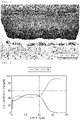
- FIG. 1 is an image by observing a cutting plane of a plated layer of a steel sheet according to an embodiment of the present disclosure.
- the steel sheet of the present disclosure is composed of a based steel sheet and a plated layer formed on a surface of the base steel sheet, and has a plurality of pores in a surface layer portion of the plated layer.
- This is a phenomenon that can not be observed in a conventional aluminum plated steel sheet for hot press forming.
- the conventional aluminum plated steel sheet pores are hardly generated in the surface layer portion by molten aluminum plating, but in the steel sheet according to an embodiment of the present disclosure, a plurality of pores are generated in the surface layer portion of the plated layer.
- the surface layer portion means a region within 10 ⁇ m depth from the surface (if the surface layer is rough, the depth is measured from each point of the rough surface).
- a portion of pores of the surface layer portion are opened by a stress applied during press working, which serves to increase roughness of the surface of the plated layer.
- a hot press formed member obtained by hot press forming an aluminum plated steel sheet is subjected to alloying of the surface thereof. Since a resulting obtained alloy layer is relatively stable compared to a non-alloyed aluminum plated layer, reactivity with phosphate is weak, and there is little room for improving painting adhesion only by a common phosphate treatment. Of course, roughness during alloying increases in the hot press forming process, painting adhesion itself may be improved at a certain level, but there is a limitation in the improvement thereof.
- an area ratio of an area occupied by pores to an overall area of a surface layer portion may be 10% or more in a cross-section of the surface layer portion observed when the plated layer of the steel sheet is cut in a thickness direction thereof, or may be 15% or more.
- the surface roughness may be improved, such that painting adhesion and post-painting corrosion resistance may be greatly improved.
- an upper limit of the surface roughness does not need to be particularly limited in terms of paint adhesion or corrosion resistance after painting, a ratio of the pores may be determined to be 70% or less or 60% or less.
- the plated layer in order to form a plated layer having a high ratio of pores in the surface layer portion thereof on the surface of the steel sheet, the plated layer may be an aluminum alloy plated layer, and in one embodiment, the plated layer may be an Al-Fe alloy plated layer.
- the Al-Fe alloy plated layer may be obtained by alloying an Al plated steel sheet under appropriate conditions. That is, in the present embodiment, when the Al plated steel sheet is heated under appropriate conditions, diffusion occurs between Al of the plated layer and Fe of the base steel sheet, and Al and Fe are alloyed, which use a phenomenon in which a plurality of pores are formed in the surface layer portion in the process.
- an average content of Fe of the plated layer may be 30 wt% or more, more preferably 40 wt% or more, and most preferably 50 wt% or more. That is, since sufficient alloying has to occur to obtain pores in the surface layer portion, an average content of Fe of the plated layer may be 30% wt%, 40% wt%, or 50% wt% or more.
- An upper limit of the average content of Fe does not need to be particularly determined, but may be set to be 80% wt% or less when considering an efficiency of alloying.
- the average content of Fe refers to an average Fe content in the entire plated layer, and there may be various measuring methods, but in the present embodiment, the average content of Fe may be used as a value by integrating a Fe content curve according to the depth (thickness) appearing when analyzing the surface of the plated layer and an interface of the steel sheet by a glow discharge emission spectrometry (GDS) method and then dividing it by the thickness of the plated layer.
- GDS glow discharge emission spectrometry
- There may be various criteria for determining an interface between the plated layer and the steel sheet but in the present embodiment, a point at which the Fe content is 92% of a base Fe content from GDS results may be defined as an interface between the plated layer and the steel sheet.
- the steel sheet is a steel sheet for hot press forming, and if used for hot press forming, a composition thereof is not particularly limited. However, according to one aspect of the present disclosure, by wt% (hereinafter, unless noted otherwise, it is necessary to note that the composition of the steel sheet and the plated layer is based on weight), the steel sheet and the plated layer of the present disclosure may have the composition including, by wt%, C: 0.04 to 0.5%, Si: 0.01 to 2%, Mn: 0.01 to 10%, Al: 0.001 to 1.0%, P: 0.05% or less, S: 0.02% or less, and N: 0.02% or less.
- C may be added in an appropriate amount as an essential element for increasing the strength of a heat treatment member. That is, in order to secure sufficient strength in the heat treatment member, the C may be added in an amount of 0.04% or more. In one embodiment, a lower limit of the C content may be 0.1%. However, if the content thereof is too high, in the case of manufacturing a cold rolled material, when the hot rolled material is cold-rolled, the strength of a hot rolled material is so high that cold rollability is greatly inferior, and spot weldability is also greatly reduced. Thus, C may be added in an amount of 0.5% or less to secure sufficient cold rollability and spot weldability. In addition, the C content may be limited to 0.45% or less or 0.4% or less.
- Si not only needs to be added as a deoxidizer in steelmaking, but also suppresses the formation of a carbide which most affects the strength of the member for hot press forming, and in the hot press forming, Si serves to secure residual austenite by concentrating carbon to the grain boundaries of martensite lath after forming martensite. Therefore, Si may be added in an amount of 0.01% or more.
- an upper limit may be set to be 2% in order to secure sufficient plating properties.
- the Si content may be limited to 1.5% or less.
- Mn may be added in an amount of 0.01% or more in order to secure a solid solution strengthening effect and to lower a critical cooling rate for securing martensite in the member for hot press forming.
- the Mn content may be 10% or less in terms of securing workability of the hot press forming process by appropriately maintaining the strength of the steel sheet, reducing manufacturing costs, and improving spot weldability, and in one embodiment of the present disclosure, Mn may be included in an amount of 9% or less, or 8% or less.
- Al may be added in an amount of 0.001% or more since Al deoxidizes in steelmaking, together with Si, to increase cleanliness of steel, Al may be added in an amount of 0.001% or more.
- the content of Al may be 1.0% or less in order to prevent an Ac3 temperature from becoming too high so that heating required during hot press forming may be performed in an appropriate temperature range.
- P is present as an impurity in steel, and the smaller the content thereof is, the more advantageous. Therefore, in one embodiment of the present disclosure, P may be included in an amount of 0.05% or less. In another embodiment of the present disclosure, P may be limited to 0.03% or less. Since less P is an advantageous impurity element, there is no need to particularly set an upper limit of the content thereof. However, in order to excessively lower the P content, there is a possibility that manufacturing costs may increase, and in consideration thereof, a lower limit thereof may be set to be 0.001%.
- S is an impurity in steel, and the maximum content is 0.02% (preferably 0.01% or less) since S is an element that deteriorates ductility, impact characteristics, and weldability of a member.
- a lower limit of the content thereof may be 0.0001%.
- N is an element included as an impurity in steel, and in order to reduce sensitivity for crack generation during slab continuous casting, and to secure impact characteristics, the lower the content is, the more advantageous, and thus, N may be included in an amount of 0.02% or less. Although a lower limit does not need to particularly determined, the N content may be set to be 0.001% or more in one embodiment of in consideration of an increase in manufacturing costs, or the like.
- one or more of a sum of one or more selected from a group consisting of Cr, Mo, and W: 0.01 to 4.0%, a sum of one or more selected from a group consisting of Ti, Nb, Zr and V: 0.001 to 0.4%, Cu + Ni: 0.005 to 2.0%, Sb + Sn: 0.001 to 1.0%, and B: 0.0001 to 0.01% may further be added.
- Cr, Mo, and W may improve hardenability and secure grain refinement and the strength through a precipitation strengthening effect, such that one or more these may be added in an amount of 0.01% or more, based on the total content.
- the content thereof in order to secure weldability of the member, the content thereof may be limited to 4.0% or less.
- the content of these elements exceeds 4.0%, a further increase in an effect is also not great, so when the content thereof is limited to 4.0% or less, it is also possible to prevent an increase in costs due to the addition of additional elements.
- Ti, Nb, and V are effective in improving the steel sheet of the heat treatment member by forming fine precipitates, and in stabilizing retained austenite and improving impact toughness by grain refinement, such that it(they) may be added in an amount of 0.001% or more of one or more based on the total content. However, if an added amount exceeds 0.4%, an effect thereof is not only saturated, but also an increase in costs by the addition of excessive ferroalloy may be caused.
- Cu and Ni are elements forming fine precipitates to improve strength.
- a sum of one or more these elements may be 0.005% or more.
- an upper limit thereof is 2.0%.
- Sb and Sn may be concentrated on a surface during an annealing heat treatment for Al-Si plating to suppress the formation of a Si or Mn oxide on the surface to improve plating properties.
- Sb and Sn may be added in an amount of 0.001% or more in order to obtain such an effect.
- an added amount exceeds 1.0%, since besides an excessive ferroalloy cost, solid solution at slab grain boundaries may cause coil edge cracks during hot rolling, an upper limit is 1.0%.
- B is an element that can not only improve hardenability but also be segregated in an old austenite grain boundary, and suppress brittleness of the member for hot forming due to grain boundary segregation of P or/and S by addition of a small amount. Therefore, B may be added in an amount of 0.001% or more. However, if a content exceeds 0.01%, the effect is not only saturated, but also causes brittleness in hot rolling, so an upper limit thereof may be 0.01%, and in one embodiment, the content of B may be 0.005% or less.
- Iron and inevitable impurities may be mentioned as a remainder other than the above-mentioned elements, and the element that can be included in the steel sheet for hot forming is not particularly limited.
- the steel sheet of the present disclosure may be obtained by using a hot-rolled or a cold-rolled steel sheet, by performing molten aluminum plating on the surface of the base steel sheet, and performing an annealing treatment on the plated steel sheet.
- a process of preparing a base steel sheet, aluminum plating a surface of the base steel sheet under appropriate conditions and coiling is performed to obtain an aluminum plated steel sheet (coil).
- Aluminum plating may usually include AlSi plating (which may contain 80% or more of Al and 5 to 20% of Si, and additional elements as required) , named as a type I, and any plating containing 90% or more of Al and additional elements as required, named as a type II.
- Hot dip aluminum plating may be performed to form a plated layer, and an annealing treatment may be performed on the steel sheet before plating.
- a suitable plating amount when plating is 30 to 200g/m 2 based on one side. If the plating amount is too large, it may take an excessive time to alloy to the surface, on the contrary, if the plating amount is too small, it may be difficult to obtain sufficient corrosion resistance.
- Coiling tension after plating is set to be 0.5 to ⁇ 5 kg/mm 2
- coiling tension of the coil may be adjusted. According to the adjustment of the coiling tension of the coil, an alloying behavior and a surface quality of the coil may be changed during a subsequent annealing treatment.
- An aluminum plated steel sheet obtained by the above-described process is subjected to annealing under the following conditions to obtain an aluminum alloy plated steel sheet.
- An aluminum plated steel sheet (coil) is heated in a batch annealing furnace.
- a heat treatment target temperature and a holding time be maintained for 30 minutes to 50 hours in a range of 550 to 750°C based on a temperature of the steel sheet (in the present disclosure, a highest temperature at which a material reaches in this temperature range is called as a heating temperature).
- the holding time is the time after a coil temperature reaches a target temperature until the start of cooling.
- a plated layer may be peeled off during roll leveling, such that a heating temperature may be 550°C or higher for sufficient alloying.
- the heating temperature may be 750 °C or less in order to prevent excessive generation of oxides on a surface layer and to secure spot weldability.
- the holding time may be set to be 30 minutes to 50 hours.
- a temperature of the steel sheet may have a pattern in which the temperature continues to rise without a cooling process until a heating temperature is reached.
- the average temperature increase rate may be 20 to 100°C/h based on the steel sheet (coil) temperature for an entire temperature section (a section from room temperature to a heating temperature).
- an overall average temperature increase rate may be controlled in the above numerical range, but in one embodiment of the present disclosure, as described later, a temperature increase rate of a specific temperature section may be also controlled to achieve the object of the present disclosure. In another embodiment of the present disclosure, the average temperature increase rate of the entire temperature section may be set to be 70°C/h.
- a lower limit of the average temperature increase rate in the section of 400 to 500°C at the time of the temperature increase may be 4°C/hr, and in another embodiment, a lower limit of the average temperature increase rate in the section of 400 to 500°C at the time of the temperature increase may be also 5°C/hr.
- heating at an average temperature increase rate of 1 to 15°C/h in a section from a heating temperature of -50°C to a heating temperature during temperature increase may be performed.
- a lower limit of the average temperature increase rate in the section may be set to be 4°C/h, and in another embodiment, a lower limit of the average temperature increase rate of the section may be set to be 5°C/h.
- a difference between an atmospheric temperature and a temperature of the steel sheet in a batch annealing furnace is 5 to 80°C
- heating of the batch annealing furnace uses a method of heating the steel sheet (coil) by increasing the atmosphere temperature in the annealing furnace, rather than a method of directly heating the steel sheet (coil).
- the difference between the atmosphere temperature and the temperature of the steel sheet may not be avoided.
- the difference between the atmosphere temperature and the coil temperature may be 80°C or less based on a time point at which the heat treatment target temperature is reached in order to significantly reduce variations in materials and plating quality for each position in the steel sheet. It is ideal that the temperature difference should be as small as possible, but since this slow down the temperature increase rate, and thus it may be difficult to meet the overall average temperature increase rate, the temperature difference may be 5°C or more in consideration thereof.
- the temperature of the steel sheet means a temperature measured in a bottom part of the charged steel sheet (coil) (meaning the lowest portion of the coil)
- the atmosphere temperature means a temperature measured at a center of the internal space of the heating furnace.
- the aluminum alloy plated steel sheet (coil) is cooled.
- various methods such as furnace cooling, air cooling, water cooling, and the like may be applied.
- the average cooling rate of the entire cooling section there is no particular limitation on the average cooling rate of the entire cooling section, and it may be rapidly cooled to improve productivity.
- the cooling rate of the temperature section to 500°C after heating may be 50°C /h or less.
- a lower limit is not particularly limited, but may be 1°C/h or more in consideration of productivity.
- a cold-rolled steel sheet for hot press forming having the composition of Table 1 below was prepared.
- a surface of the steel sheet was plated with a type 1 plating bath having an Al-9% Si-2.5% Fe composition. During plating, the amount of plating was adjusted to 70g/m 2 per side, and a coil was wound by adjusting coiling tension after plating to 2.2kg/mm 2 .
- [Table 1] Element C Si Mn Al P S N Additional element Content(% ) 0.21 0.2 1.3 0.03 0.01 0.003 0.005 Ti 0.03, B 0.002, Cr 0.2
- the plated steel sheet was heated to 650°C, under the following conditions in a batch annealing furnace.
- the plated steel sheet was maintained at the same temperature for 10 hours, and the steel sheet was then cooled at an average cooling rate of 40°C/h to 550°C, and then cooled at an average cooling rate of 55°C/h to 100°C to obtain a steel sheet for hot press forming.
- a composition profile having a form shown in FIG. 2 could be obtained, and an average Fe content calculated based on this was 51.5 wt%.
- a cross-sectional form of the steel sheet, as shown in FIG. 3 was formed with a plated layer formed on an outer surface of a base steel sheet, and it can be confirmed that an area ratio of pores formed in a portion corresponding to a surface layer portion from the surface of the formed plated layer to a point of 10 ⁇ m in a thickness direction was 22.8%.
- a surface of the steel sheet having the composition shown in Table 1 above was plated with a type I plating bath having an Al-9% Si-2.5% Fe composition. During plating, an amount of plating was adjusted to 80g/m 2 per side, and a coil was wound by adjusting the coiling tension after plating to 2kg/mm 2 .
- the plated steel sheet was then heated to 700°C under the following conditions in a batch annealing furnace.
- the plated steel sheet was maintained at the same temperature for 1 hour, and the steel sheet was then cooled at an average cooling rate of 30°C/h to 500°C, and then cooled at an average cooling rate of 57°C/h to 100°C to obtain a steel sheet for hot press forming.
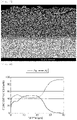
- a composition profile of the form as shown in FIG. 4 could be obtained, and the average Fe content calculated based on this was 53.7 wt%.
- a cross-sectional form of the steel sheet, as shown in FIG. 5 was formed with a plated layer formed on an outer surface of a base steel sheet, and it can be confirmed that an area ratio of pores formed in a portion corresponding to a surface layer portion from the surface of the formed plated layer to a point of 10 ⁇ m in a thickness direction was 28.5%.
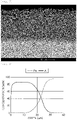
- a composition profile having a form shown in FIG. 6 could be obtained, and an average Fe content calculated based on this was 23.6 wt%.
- FIG. 7 it can be confirmed that a cross-sectional form of the steel sheet had a plated layer formed on an outer surface of the base steel sheet, and almost no pores were formed in a portion corresponding to a surface layer portion from the surface of the formed plated layer to a point of 10 ⁇ m in the thickness direction thereof. An area ratio of the formed pores was 0%.
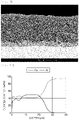
- a composition profile of a form as shown in FIG. 8 was obtained, and an average Fe content calculated based on this was 21 wt%.
- FIG. 9 it can be confirmed that a cross-sectional form of the steel sheet had a plated layer formed on an outer surface of the base steel sheet, and almost no pores were formed in a portion corresponding to a surface layer portion from the surface of the formed plated layer to a point of 10 ⁇ m in the thickness direction thereof. An area ratio of the formed pores was 0%.
- a surface of the steel sheet having the composition shown in Table 1 above was plated with a type I plating bath having an Al-9% Si-2.5% Fe composition. During plating, a painting amount was adjusted to 90g/m 2 per side, and a coil was wound by adjusting coiling tension after plating to 2kg/mm 2 .
- the plated steel sheet was then heated to 650°C under the following conditions in a batch annealing furnace.
- the steel sheet was maintained at the same temperature for 10 hours, and the steel sheet was then cooled to an average cooling rate of 45°C/h to 500°C, and then cooled to an average cooling rate of 60°C/h to 100°C to obtain a steel sheet for hot press forming.
- a composition profile having a form as shown in FIG. 10 could be obtained, and an average Fe content calculated based on this was 48.4 wt%.
- a cross-sectional form of the steel sheet had a plated layer formed on an outer surface of the base steel sheet, and it can be confirmed that an area ratio of pores formed in a portion corresponding to a surface layer portion from the surface of the formed plated layer to a point of 10 ⁇ m in the thickness direction thereof was 3.5%.
- the steel sheets of Inventive Examples 1 and 2, and Comparative Examples 1 to 3 were heated to 950°C, and maintained at the above-described temperature for 5 minutes, and then subjected to hot press forming in which it was quenched while pressurized by a press to obtain a hot press formed member.
- Phosphate treatment and electrodeposition painting were performed on the member obtained from each of Examples and Comparative Examples, and crosses were formed on the surface of the steel sheet, and then a cyclic corrosion test was performed to observe a degree of forming a blister on the crosses.
- the cyclic corrosion test was conducted for 24 hours with 1 cycle, 2 hours of wet atmosphere exposure-2 hours of salt water spray exposure-1 hour of drying-6 hours of wet atmosphere exposure-2 hours of drying-6 hours of wet atmosphere exposure-2 hours of drying-3 hours of cooling, and maintained a total of 50 cycles.
- a maximum width of the blister is 1mm or less, while in Comparative Examples 1, 2, and 3, a maximum width of the blister is 3.2, 2.9, and 2.4 mm, respectively, and it could be confirmed that corrosion resistance after painting is inferior, compared to that of the Inventive Example.
- a steel sheet for a hot press formed member having excellent painting adhesion and post-painting corrosion resistance comprising:
- the steel sheet for the hot press formed member having excellent painting adhesion and post-painting corrosion resistance of claim 1, wherein the plated layer is an aluminum alloy plated layer.
- the steel sheet for the hot press formed member having excellent painting adhesion and post-painting corrosion resistance of aspect 3, wherein the aluminum alloy plated layer has an average content of Fe of 30 wt% or more.
- the steel sheet for the hot press formed member having excellent painting adhesion and post-painting corrosion resistance of aspect 3, wherein the aluminum alloy plated layer has an average content of Fe of 40 wt% or more.
- composition of the base steel sheet further comprises, by wt%, one or more among a sum of one or more selected from a group consisting of Cr, Mo, and W: 0.01 to 4.0%, a sum of one or more selected from a group consisting of Ti, Nb, Zr, and V: 0.001 to 0.4%, Cu + Ni: 0.005 to 2.0%, Sb + Sn: 0.001 to 1.0%, and B: 0.0001 to 0.01%.
- a manufacturing method of a steel sheet for a hot press formed member having excellent painting adhesion and post-painting corrosion resistance comprising operations of:
- C carbon
- Si silicon
- Mn manganese
- Al aluminum
- P phosphorus
- S sulfur
- N nitrogen
- Fe iron
- composition of the base steel sheet further comprises, by wt%, one or more among a sum of one or more selected from a group consisting of Cr, Mo, and W: 0.01 to 4.0%, a sum of one or more selected from a group consisting of Ti, Nb, Zr, and V: 0.001 to 0.4%, Cu + Ni: 0.005 to 2.0%, Sb + Sn: 0.001 to 1.0%, and B: 0.0001 to 0.01%.
Landscapes
- Chemical & Material Sciences (AREA)
- Engineering & Computer Science (AREA)
- Mechanical Engineering (AREA)
- Materials Engineering (AREA)
- Metallurgy (AREA)
- Organic Chemistry (AREA)
- Chemical Kinetics & Catalysis (AREA)
- Thermal Sciences (AREA)
- Physics & Mathematics (AREA)
- Crystallography & Structural Chemistry (AREA)
- Oil, Petroleum & Natural Gas (AREA)
- Inorganic Chemistry (AREA)
- Coating With Molten Metal (AREA)
- Heat Treatment Of Sheet Steel (AREA)
- Heat Treatment Of Articles (AREA)
- Heat Treatment Of Strip Materials And Filament Materials (AREA)
- Other Surface Treatments For Metallic Materials (AREA)
- Laminated Bodies (AREA)
- Application Of Or Painting With Fluid Materials (AREA)
Applications Claiming Priority (4)
| Application Number | Priority Date | Filing Date | Title |
|---|---|---|---|
| KR20170068651 | 2017-06-01 | ||
| KR1020170101563A KR102010048B1 (ko) | 2017-06-01 | 2017-08-10 | 도장 밀착성과 도장 후 내식성이 우수한 열간 프레스 성형 부재용 강판 및 그 제조방법 |
| EP18810671.0A EP3632587B1 (de) | 2017-06-01 | 2018-05-31 | Stahlblech für heisspressgeformtes element mit hervorragender lackhaftung und nachlackierkorrosionsbeständigkeit und verfahren zur herstellung davon |
| PCT/KR2018/006259 WO2018221992A1 (ko) | 2017-06-01 | 2018-05-31 | 도장 밀착성과 도장 후 내식성이 우수한 열간 프레스 성형 부재용 강판 및 그 제조방법 |
Related Parent Applications (2)
| Application Number | Title | Priority Date | Filing Date |
|---|---|---|---|
| EP18810671.0A Division-Into EP3632587B1 (de) | 2017-06-01 | 2018-05-31 | Stahlblech für heisspressgeformtes element mit hervorragender lackhaftung und nachlackierkorrosionsbeständigkeit und verfahren zur herstellung davon |
| EP18810671.0A Division EP3632587B1 (de) | 2017-06-01 | 2018-05-31 | Stahlblech für heisspressgeformtes element mit hervorragender lackhaftung und nachlackierkorrosionsbeständigkeit und verfahren zur herstellung davon |
Publications (3)
| Publication Number | Publication Date |
|---|---|
| EP4012064A1 true EP4012064A1 (de) | 2022-06-15 |
| EP4012064C0 EP4012064C0 (de) | 2024-03-27 |
| EP4012064B1 EP4012064B1 (de) | 2024-03-27 |
Family
ID=64671853
Family Applications (4)
| Application Number | Title | Priority Date | Filing Date |
|---|---|---|---|
| EP18810671.0A Active EP3632587B1 (de) | 2017-06-01 | 2018-05-31 | Stahlblech für heisspressgeformtes element mit hervorragender lackhaftung und nachlackierkorrosionsbeständigkeit und verfahren zur herstellung davon |
| EP18808695.3A Active EP3632585B1 (de) | 2017-06-01 | 2018-05-31 | Stahlblech für heisspressgeformtes element mit hervorragender beständigkeit gegenüber wasserstoffverzögertem bruch und verfahren zur herstellung davon |
| EP22155560.0A Active EP4012064B1 (de) | 2017-06-01 | 2018-05-31 | Stahlblech für heisspressgeformtes element mit hervorragender lackhaftung und nachlackierkorrosionsbeständigkeit und verfahren zur herstellung davon |
| EP18810215.6A Active EP3632586B1 (de) | 2017-06-01 | 2018-05-31 | Stahlblech für warmpressformteil mit hervorragender plattierhaftung und verfahren zu seiner herstellung |
Family Applications Before (2)
| Application Number | Title | Priority Date | Filing Date |
|---|---|---|---|
| EP18810671.0A Active EP3632587B1 (de) | 2017-06-01 | 2018-05-31 | Stahlblech für heisspressgeformtes element mit hervorragender lackhaftung und nachlackierkorrosionsbeständigkeit und verfahren zur herstellung davon |
| EP18808695.3A Active EP3632585B1 (de) | 2017-06-01 | 2018-05-31 | Stahlblech für heisspressgeformtes element mit hervorragender beständigkeit gegenüber wasserstoffverzögertem bruch und verfahren zur herstellung davon |
Family Applications After (1)
| Application Number | Title | Priority Date | Filing Date |
|---|---|---|---|
| EP18810215.6A Active EP3632586B1 (de) | 2017-06-01 | 2018-05-31 | Stahlblech für warmpressformteil mit hervorragender plattierhaftung und verfahren zu seiner herstellung |
Country Status (9)
| Country | Link |
|---|---|
| US (10) | US11141953B2 (de) |
| EP (4) | EP3632587B1 (de) |
| JP (6) | JP7058675B2 (de) |
| KR (3) | KR102010048B1 (de) |
| CN (6) | CN115555475A (de) |
| BR (1) | BR112019025146B1 (de) |
| ES (1) | ES2914361T3 (de) |
| MX (1) | MX2019014326A (de) |
| PL (1) | PL3632587T3 (de) |
Families Citing this family (16)
| Publication number | Priority date | Publication date | Assignee | Title |
|---|---|---|---|---|
| KR102010048B1 (ko) * | 2017-06-01 | 2019-10-21 | 주식회사 포스코 | 도장 밀착성과 도장 후 내식성이 우수한 열간 프레스 성형 부재용 강판 및 그 제조방법 |
| KR102227111B1 (ko) * | 2018-11-30 | 2021-03-12 | 주식회사 포스코 | 열간성형 부재 및 그 제조방법 |
| MX2021006197A (es) | 2018-11-30 | 2021-08-16 | Posco | Lamina de acero chapada con aleacion de al-fe para formacion en prensa caliente que tiene excelente resistencia a la corrosion y resistencia al calor, parte formada en prensa caliente y metodo de manufactura para la misma. |
| US11323435B2 (en) | 2019-05-08 | 2022-05-03 | The Boeing Company | Method and apparatus for advanced security systems over a power line connection |
| KR102279900B1 (ko) | 2019-09-03 | 2021-07-22 | 주식회사 포스코 | 열간 성형용 강판, 열간 성형 부재 및 그 제조방법 |
| US11142841B2 (en) * | 2019-09-17 | 2021-10-12 | Consolidated Nuclear Security, LLC | Methods for electropolishing and coating aluminum on air and/or moisture sensitive substrates |
| WO2021084302A1 (en) * | 2019-10-30 | 2021-05-06 | Arcelormittal | A press hardening method |
| WO2021084303A1 (en) * | 2019-10-30 | 2021-05-06 | Arcelormittal | A press hardening method |
| KR102326111B1 (ko) | 2019-12-20 | 2021-11-16 | 주식회사 포스코 | 금형 내마모성이 우수한 열간 프레스용 알루미늄-철계 도금강판 및 그 제조방법 |
| KR20220158157A (ko) * | 2021-05-21 | 2022-11-30 | 주식회사 포스코 | 내수소취성이 우수한 열간성형용 도금강판, 열간성형 부재 및 이들의 제조방법 |
| CN117396627B (zh) * | 2021-07-14 | 2026-04-14 | 日本制铁株式会社 | 镀Al钢板、镀Al钢板的制造方法及热冲压成型体的制造方法 |
| WO2023176027A1 (ja) * | 2022-03-17 | 2023-09-21 | Jfeスチール株式会社 | 表面処理亜鉛めっき鋼板 |
| JP7287590B1 (ja) * | 2022-03-17 | 2023-06-06 | Jfeスチール株式会社 | 表面処理亜鉛めっき鋼板 |
| KR20250006113A (ko) * | 2022-05-19 | 2025-01-10 | 닛폰세이테츠 가부시키가이샤 | 중첩 핫 스탬프 성형체의 제조 방법 |
| KR20240048616A (ko) * | 2022-10-06 | 2024-04-16 | 주식회사 포스코 | 내금형소착성이 우수한 알루미늄 도금강판, 이를 이용한 열간 성형 부재 및 이들의 제조방법 |
| KR20240098870A (ko) * | 2022-12-21 | 2024-06-28 | 주식회사 포스코 | 롤소착 저항성이 우수한 알루미늄 도금강판, 이를 이용한 열간 성형 부재 및 이들의 제조방법 |
Citations (4)
| Publication number | Priority date | Publication date | Assignee | Title |
|---|---|---|---|---|
| US6296805B1 (en) | 1998-07-09 | 2001-10-02 | Sollac | Coated hot- and cold-rolled steel sheet comprising a very high resistance after thermal treatment |
| EP2312005A1 (de) * | 2008-07-11 | 2011-04-20 | Nippon Steel Corporation | Aluminiumplattiertes stahlblech für heisspressung mit schnellerhitzung, verfahren zu seiner herstellung und verfahren zu seiner heisspressung mit schnellerhitzung |
| EP2527481A1 (de) * | 2009-12-30 | 2012-11-28 | Hyundai Steel Company | Vergütetes stahlblech mit hervorragender heisspressformbarkeit und herstellungsverfahren dafür |
| KR101696121B1 (ko) * | 2015-12-23 | 2017-01-13 | 주식회사 포스코 | 내수소지연파괴특성, 내박리성 및 용접성이 우수한 열간성형용 알루미늄-철 합금 도금강판 및 이를 이용한 열간성형 부재 |
Family Cites Families (59)
| Publication number | Priority date | Publication date | Assignee | Title |
|---|---|---|---|---|
| JPS5956569A (ja) * | 1982-09-24 | 1984-04-02 | Kawasaki Steel Corp | 片面めつき鋼板の製造方法 |
| JPS6456881A (en) | 1987-08-28 | 1989-03-03 | Nippon Steel Corp | Black molten zinc-aluminum alloy plated steel sheet and its production |
| JPH03285057A (ja) | 1990-03-30 | 1991-12-16 | Nisshin Steel Co Ltd | 赤外線放射体とその製法 |
| US5356724A (en) * | 1992-01-16 | 1994-10-18 | Sumitomo Metal Industries, Ltd. | Excellent far-infrared radiating material |
| JPH05255890A (ja) | 1992-01-16 | 1993-10-05 | Sumitomo Metal Ind Ltd | 遠赤外線放射性に優れた被覆材 |
| JPH0928582A (ja) * | 1995-07-24 | 1997-02-04 | Harman Co Ltd | ガス調理器の外部ケースの構造 |
| FI105005B (fi) | 1997-05-13 | 2000-05-15 | Nokia Networks Oy | Päätelaitteen nopeuden estimoimismenetelmä, solun valitsemismenetelmä ja radiojärjestelmä |
| JP4805523B2 (ja) | 2000-06-08 | 2011-11-02 | マノアール インダストリーズ | 高温用ステンレス鋼のためのコーティングシステム |
| CN100370054C (zh) * | 2001-06-15 | 2008-02-20 | 新日本制铁株式会社 | 镀有铝合金体系的高强度钢板以及具有优异的耐热性和喷漆后耐腐蚀性的高强度汽车零件 |
| JP4564207B2 (ja) * | 2001-06-25 | 2010-10-20 | 新日本製鐵株式会社 | 800℃以上に加熱しプレス加工する高温プレス用の溶融アルミめっき鋼板 |
| JP2004002931A (ja) | 2002-05-31 | 2004-01-08 | Nippon Steel Corp | 抵抗溶接性に優れたアルミニウムめっき鋼板とこれを用いた加工部品 |
| JP3843042B2 (ja) | 2002-05-31 | 2006-11-08 | 新日本製鐵株式会社 | 抵抗溶接性に優れたアルミニウムめっき鋼板とこれを用いた加工部品 |
| JP3738754B2 (ja) | 2002-07-11 | 2006-01-25 | 日産自動車株式会社 | 電着塗装用アルミニウムめっき構造部材及びその製造方法 |
| JP4446428B2 (ja) | 2003-02-17 | 2010-04-07 | 新日本製鐵株式会社 | 塗装後耐食性に優れた高強度自動車部品 |
| JP4087800B2 (ja) | 2004-02-02 | 2008-05-21 | Jfeスチール株式会社 | 溶融Al−Zn系めっき鋼板の製造方法 |
| WO2009090443A1 (en) | 2008-01-15 | 2009-07-23 | Arcelormittal France | Process for manufacturing stamped products, and stamped products prepared from the same |
| DE102008006771B3 (de) | 2008-01-30 | 2009-09-10 | Thyssenkrupp Steel Ag | Verfahren zur Herstellung eines Bauteils aus einem mit einem Al-Si-Überzug versehenen Stahlprodukt und Zwischenprodukt eines solchen Verfahrens |
| CA2718304C (en) | 2008-03-27 | 2012-03-06 | Nippon Steel Corporation | High-strength cold-rolled steel sheet, high-strength galvanized steel sheet, and high-strength alloyed hot-dip galvanized steel sheet having excellent formability and weldability,and methods for manufacturing the same |
| JP5589262B2 (ja) | 2008-04-17 | 2014-09-17 | 新日鐵住金株式会社 | 断熱鋼板及び金属製真空二重容器 |
| EP2270257B1 (de) | 2008-04-22 | 2018-09-19 | Nippon Steel & Sumitomo Metal Corporation | Plattiertes stahlblech und verfahren zum heissstanzen eines plattierten stahlblechs |
| JP5463906B2 (ja) | 2009-12-28 | 2014-04-09 | 新日鐵住金株式会社 | ホットスタンプ用鋼板及びその製造方法 |
| EP2520686B1 (de) | 2009-12-29 | 2021-04-07 | Posco | Heissgepresstes formteil mit verzinktem stahlblech und herstellungsverfahren dafür |
| KR101171450B1 (ko) | 2009-12-29 | 2012-08-06 | 주식회사 포스코 | 도금 강재의 열간 프레스 성형방법 및 이를 이용한 열간 프레스 성형품 |
| JP5573195B2 (ja) | 2010-01-25 | 2014-08-20 | 新日鐵住金株式会社 | 昇温特性に優れた熱間プレス用Alめっき鋼板及びその製造方法 |
| JP5413330B2 (ja) * | 2010-08-18 | 2014-02-12 | 新日鐵住金株式会社 | 耐遅れ破壊特性に優れたホットプレス用めっき鋼板及びその製造方法 |
| JP5598157B2 (ja) * | 2010-08-20 | 2014-10-01 | 新日鐵住金株式会社 | 耐遅れ破壊特性及び衝突安全性に優れたホットプレス用鋼板及びその製造方法 |
| JP5808609B2 (ja) * | 2010-09-15 | 2015-11-10 | 日新製鋼株式会社 | 黒色めっき鋼板 |
| JP5224010B2 (ja) | 2010-10-22 | 2013-07-03 | 新日鐵住金株式会社 | 縦壁部を有するホットスタンプ成形体の製造方法及び縦壁部を有するホットスタンプ成形体 |
| JP5263258B2 (ja) | 2010-10-25 | 2013-08-14 | 新日鐵住金株式会社 | 高強度自動車部品の製造方法および高強度部品 |
| KR101253893B1 (ko) | 2010-12-27 | 2013-04-16 | 포스코강판 주식회사 | 내산화성 및 내열성이 우수한 알루미늄 도금강판 |
| US10344360B2 (en) | 2011-03-09 | 2019-07-09 | Nippon Steel & Sumitomo Metal Corporation | Steel sheet for hot stamping use, method of production of same, and method of production of high strength part |
| KR101829854B1 (ko) | 2011-04-01 | 2018-02-20 | 신닛테츠스미킨 카부시키카이샤 | 도장 후 내식성이 우수한 핫 스탬핑 성형된 고강도 부품 및 그 제조 방법 |
| WO2013002575A2 (ko) | 2011-06-28 | 2013-01-03 | 주식회사 포스코 | 도금층의 안정성이 우수한 열간 프레스 성형용 도금강판 |
| KR101289219B1 (ko) | 2011-06-28 | 2013-07-29 | 주식회사 포스코 | 도금층의 안정성이 우수한 열간 프레스 성형용 도금강판 |
| TWI499675B (zh) | 2011-09-30 | 2015-09-11 | Nippon Steel & Sumitomo Metal Corp | High-strength hot-dip galvanized steel sheet with excellent resistance to delayed breaking characteristics and a method for manufacturing the same |
| KR20130076589A (ko) * | 2011-12-28 | 2013-07-08 | 주식회사 포스코 | 도금표면 품질 및 도금밀착성이 우수한 고강도 용융아연도금강판 및 그 제조방법 |
| JP6111522B2 (ja) * | 2012-03-02 | 2017-04-12 | Jfeスチール株式会社 | 高強度溶融亜鉛めっき鋼板及びその製造方法 |
| EP2840167B1 (de) | 2012-04-18 | 2018-07-18 | Nippon Steel & Sumitomo Metal Corporation | Al-plattiertes stahlblech, verfahren zur heisspressung des al-plattierten stahlblechs |
| JP5692148B2 (ja) | 2012-04-18 | 2015-04-01 | 新日鐵住金株式会社 | 熱間プレス用Al系めっき鋼板及びその熱間プレス方法 |
| JP5811020B2 (ja) * | 2012-04-25 | 2015-11-11 | 新日鐵住金株式会社 | 高い靱性と高い加工性および成形性とを有し水素脆化起因による遅れ破壊特性に優れた高強度鋼板 |
| KR101528011B1 (ko) * | 2012-12-26 | 2015-06-10 | 주식회사 포스코 | 열간프레스 성형용 도금강판 및 열간프레스 성형품, 그의 제조방법 |
| US9353424B2 (en) | 2013-03-14 | 2016-05-31 | Nippon Steel & Sumitomo Metal Corporation | High strength steel sheet excellent in delayed fracture resistance and low temperature toughness, and high strength member manufactured using the same |
| KR20160007648A (ko) | 2013-05-17 | 2016-01-20 | 에이케이 스틸 프로퍼티즈 인코포레이티드 | 프레스 경화 적용을 위한 아연-코팅된 스틸 및 그 생산 방법 |
| US10434556B2 (en) * | 2013-06-19 | 2019-10-08 | Jfe Steel Corporation | Hot-pressed member and method of manufacturing the same |
| KR101528067B1 (ko) | 2013-12-20 | 2015-06-10 | 주식회사 포스코 | 용접성 및 내식성이 우수한 열간 프레스 성형용 도금강판 및 그 제조방법 |
| KR20150073021A (ko) | 2013-12-20 | 2015-06-30 | 주식회사 포스코 | 내식성이 우수한 열간 프레스 성형용 합금도금강판 및 그 제조방법 |
| KR20150073531A (ko) | 2013-12-23 | 2015-07-01 | 주식회사 포스코 | 내식성 및 용접성이 우수한 열간 프레스 성형용 강판, 성형부재 및 그 제조방법 |
| JP6376140B2 (ja) | 2013-12-25 | 2018-08-22 | 新日鐵住金株式会社 | 自動車部品及び自動車部品の製造方法 |
| KR101585736B1 (ko) * | 2013-12-25 | 2016-01-15 | 주식회사 포스코 | 내식성 및 마이크로 균열 저항성이 우수한 알루미늄 합금도금강판, 이를 이용한 열간 프레스 성형품 및 그 제조방법 |
| JP6269079B2 (ja) | 2014-01-14 | 2018-01-31 | 新日鐵住金株式会社 | ホットスタンプ用鋼板およびその製造方法 |
| JP6515383B2 (ja) | 2014-05-27 | 2019-05-22 | 日本製鉄株式会社 | 黒色亜鉛合金めっき鋼板とその製造方法 |
| WO2016016676A1 (fr) * | 2014-07-30 | 2016-02-04 | ArcelorMittal Investigación y Desarrollo, S.L. | Procédé de fabrication de tôles d'acier, pour durcissement sous presse, et pièces obtenues par ce procédé |
| EP2993248B1 (de) | 2014-09-05 | 2020-06-24 | ThyssenKrupp Steel Europe AG | Stahlflachprodukt mit einer Al-Beschichtung, Verfahren zu seiner Herstellung, und Verfahren zur Herstellung eines warmgeformten Bauteils |
| KR101569505B1 (ko) | 2014-12-24 | 2015-11-30 | 주식회사 포스코 | 내박리성이 우수한 hpf 성형부재 및 그 제조방법 |
| DE102016107152B4 (de) | 2016-04-18 | 2017-11-09 | Salzgitter Flachstahl Gmbh | Bauteil aus pressformgehärtetem, auf Basis von Aluminium beschichtetem Stahlblech und Verfahren zur Herstellung eines solchen Bauteils und dessen Verwendung |
| WO2018096387A1 (en) | 2016-11-24 | 2018-05-31 | Arcelormittal | Hot-rolled and coated steel sheet for hot-stamping, hot-stamped coated steel part and methods for manufacturing the same |
| KR101858868B1 (ko) | 2016-12-23 | 2018-05-16 | 주식회사 포스코 | 충격특성이 우수한 열간성형용 도금강판, 열간성형 부재 및 그들의 제조방법 |
| KR102010048B1 (ko) * | 2017-06-01 | 2019-10-21 | 주식회사 포스코 | 도장 밀착성과 도장 후 내식성이 우수한 열간 프레스 성형 부재용 강판 및 그 제조방법 |
| KR102180811B1 (ko) * | 2018-12-03 | 2020-11-20 | 주식회사 포스코 | 수소취성에 대한 저항성이 우수한 열간 프레스 성형 부재 및 그 제조방법 |
-
2017
- 2017-08-10 KR KR1020170101563A patent/KR102010048B1/ko active Active
- 2017-08-10 KR KR1020170101567A patent/KR102045622B1/ko active Active
- 2017-08-10 KR KR1020170101557A patent/KR101988724B1/ko active Active
-
2018
- 2018-05-31 JP JP2019565877A patent/JP7058675B2/ja active Active
- 2018-05-31 US US16/617,798 patent/US11141953B2/en active Active
- 2018-05-31 JP JP2019565854A patent/JP7058674B2/ja active Active
- 2018-05-31 CN CN202211143165.5A patent/CN115555475A/zh active Pending
- 2018-05-31 ES ES18810671T patent/ES2914361T3/es active Active
- 2018-05-31 EP EP18810671.0A patent/EP3632587B1/de active Active
- 2018-05-31 BR BR112019025146-4A patent/BR112019025146B1/pt active IP Right Grant
- 2018-05-31 PL PL18810671.0T patent/PL3632587T3/pl unknown
- 2018-05-31 CN CN201880035473.1A patent/CN110691659B/zh active Active
- 2018-05-31 US US16/617,823 patent/US11338549B2/en active Active
- 2018-05-31 EP EP18808695.3A patent/EP3632585B1/de active Active
- 2018-05-31 US US16/617,862 patent/US11198272B2/en active Active
- 2018-05-31 JP JP2019565849A patent/JP7026700B2/ja active Active
- 2018-05-31 CN CN202211007846.9A patent/CN115287483B/zh active Active
- 2018-05-31 EP EP22155560.0A patent/EP4012064B1/de active Active
- 2018-05-31 CN CN202110582463.3A patent/CN113308660B/zh active Active
- 2018-05-31 CN CN201880036329.XA patent/CN110709184B/zh active Active
- 2018-05-31 MX MX2019014326A patent/MX2019014326A/es unknown
- 2018-05-31 EP EP18810215.6A patent/EP3632586B1/de active Active
- 2018-05-31 CN CN201880036255.XA patent/CN110709183B/zh active Active
-
2021
- 2021-08-05 US US17/394,830 patent/US20210362472A1/en not_active Abandoned
- 2021-11-02 US US17/517,399 patent/US11820103B2/en active Active
- 2021-11-04 JP JP2021180241A patent/JP7189306B2/ja active Active
-
2022
- 2022-04-12 JP JP2022065585A patent/JP2022106759A/ja active Pending
- 2022-04-12 JP JP2022065569A patent/JP7464649B2/ja active Active
- 2022-04-25 US US17/728,396 patent/US11801664B2/en active Active
-
2023
- 2023-09-25 US US18/372,314 patent/US20240009963A1/en active Pending
- 2023-09-27 US US18/373,451 patent/US20240051265A1/en active Pending
-
2024
- 2024-02-23 US US18/586,317 patent/US20240198633A1/en active Pending
- 2024-09-20 US US18/891,742 patent/US20250010579A1/en active Pending
Patent Citations (5)
| Publication number | Priority date | Publication date | Assignee | Title |
|---|---|---|---|---|
| US6296805B1 (en) | 1998-07-09 | 2001-10-02 | Sollac | Coated hot- and cold-rolled steel sheet comprising a very high resistance after thermal treatment |
| EP2312005A1 (de) * | 2008-07-11 | 2011-04-20 | Nippon Steel Corporation | Aluminiumplattiertes stahlblech für heisspressung mit schnellerhitzung, verfahren zu seiner herstellung und verfahren zu seiner heisspressung mit schnellerhitzung |
| EP2527481A1 (de) * | 2009-12-30 | 2012-11-28 | Hyundai Steel Company | Vergütetes stahlblech mit hervorragender heisspressformbarkeit und herstellungsverfahren dafür |
| KR101696121B1 (ko) * | 2015-12-23 | 2017-01-13 | 주식회사 포스코 | 내수소지연파괴특성, 내박리성 및 용접성이 우수한 열간성형용 알루미늄-철 합금 도금강판 및 이를 이용한 열간성형 부재 |
| EP3396010A1 (de) * | 2015-12-23 | 2018-10-31 | Posco | Aluminium-eisen-legierungsbeschichtetes stahlblech zur heisspressformung mit hervorragender wasserstoffverzögerter bruchfestigkeit, hervorragendem schälwiderstand und hervorragender schweissbarkeit und warmformteil damit |
Non-Patent Citations (1)
| Title |
|---|
| SUEHIRO M ET AL: "Properties of aluminium-coated steels for hot forming", NIPPON STEEL TECHNICAL REPORT OVERSEAS, NIPPON STEEL CO., TOKYO, JP, no. 88, July 2003 (2003-07-01), pages 16 - 21, XP002393305, ISSN: 0300-306X * |
Also Published As
Similar Documents
| Publication | Publication Date | Title |
|---|---|---|
| EP4012064B1 (de) | Stahlblech für heisspressgeformtes element mit hervorragender lackhaftung und nachlackierkorrosionsbeständigkeit und verfahren zur herstellung davon | |
| EP3106528B1 (de) | Hochfestes feuerverzinktes stahlblech und verfahren zur herstellung eines hochfesten legierten feuerverzinkten stahlblechs | |
| KR102453006B1 (ko) | 도금성이 우수한 고강도 용융아연도금강판 및 그 제조방법 | |
| US11549167B2 (en) | Steel sheet plated with Al—Fe alloy for hot press forming having excellent corrosion resistance and heat resistance, hot press formed part, and manufacturing method therefor | |
| JP6683292B2 (ja) | 鋼板及び鋼板の製造方法 | |
| EP3889311A1 (de) | Heissgepresstes formteil und herstellungsverfahren dafür | |
| JP2026021448A (ja) | 熱間プレス成形後に優れた塗装密着性と耐食性を示すめっき鋼板、めっき鋼板の製造方法及び熱間プレス成形部材 | |
| KR102450998B1 (ko) | 내식성 및 내열성이 우수한 열간성형용 알루미늄-철 합금 도금 강판, 열간 프레스 성형 부재 및 이들의 제조방법 | |
| KR102378275B1 (ko) | 열간성형용 알루미늄 철 합금 도금강판 및 그 제조방법 | |
| KR102010083B1 (ko) | 내식성이 향상된 고내식 철-알루미늄계 합금도금강판, 그 제조방법 및 그로부터 제조된 열간 프레스 성형 부재 |
Legal Events
| Date | Code | Title | Description |
|---|---|---|---|
| PUAI | Public reference made under article 153(3) epc to a published international application that has entered the european phase |
Free format text: ORIGINAL CODE: 0009012 |
|
| STAA | Information on the status of an ep patent application or granted ep patent |
Free format text: STATUS: THE APPLICATION HAS BEEN PUBLISHED |
|
| AC | Divisional application: reference to earlier application |
Ref document number: 3632587 Country of ref document: EP Kind code of ref document: P |
|
| AK | Designated contracting states |
Kind code of ref document: A1 Designated state(s): AL AT BE BG CH CY CZ DE DK EE ES FI FR GB GR HR HU IE IS IT LI LT LU LV MC MK MT NL NO PL PT RO RS SE SI SK SM TR |
|
| STAA | Information on the status of an ep patent application or granted ep patent |
Free format text: STATUS: REQUEST FOR EXAMINATION WAS MADE |
|
| 17P | Request for examination filed |
Effective date: 20221215 |
|
| RBV | Designated contracting states (corrected) |
Designated state(s): AL AT BE BG CH CY CZ DE DK EE ES FI FR GB GR HR HU IE IS IT LI LT LU LV MC MK MT NL NO PL PT RO RS SE SI SK SM TR |
|
| STAA | Information on the status of an ep patent application or granted ep patent |
Free format text: STATUS: EXAMINATION IS IN PROGRESS |
|
| 17Q | First examination report despatched |
Effective date: 20230509 |
|
| GRAP | Despatch of communication of intention to grant a patent |
Free format text: ORIGINAL CODE: EPIDOSNIGR1 |
|
| STAA | Information on the status of an ep patent application or granted ep patent |
Free format text: STATUS: GRANT OF PATENT IS INTENDED |
|
| RIC1 | Information provided on ipc code assigned before grant |
Ipc: C23C 2/26 20060101ALI20230929BHEP Ipc: C23C 2/28 20060101ALI20230929BHEP Ipc: B32B 15/01 20060101ALI20230929BHEP Ipc: C22C 38/00 20060101ALI20230929BHEP Ipc: C22C 38/02 20060101ALI20230929BHEP Ipc: C22C 38/04 20060101ALI20230929BHEP Ipc: C22C 38/06 20060101ALI20230929BHEP Ipc: C22C 38/28 20060101ALI20230929BHEP Ipc: C22C 38/32 20060101ALI20230929BHEP Ipc: B21D 35/00 20060101ALI20230929BHEP Ipc: B21D 22/02 20060101ALI20230929BHEP Ipc: C23C 2/12 20060101AFI20230929BHEP |
|
| INTG | Intention to grant announced |
Effective date: 20231016 |
|
| GRAS | Grant fee paid |
Free format text: ORIGINAL CODE: EPIDOSNIGR3 |
|
| GRAA | (expected) grant |
Free format text: ORIGINAL CODE: 0009210 |
|
| STAA | Information on the status of an ep patent application or granted ep patent |
Free format text: STATUS: THE PATENT HAS BEEN GRANTED |
|
| AC | Divisional application: reference to earlier application |
Ref document number: 3632587 Country of ref document: EP Kind code of ref document: P |
|
| AK | Designated contracting states |
Kind code of ref document: B1 Designated state(s): AL AT BE BG CH CY CZ DE DK EE ES FI FR GB GR HR HU IE IS IT LI LT LU LV MC MK MT NL NO PL PT RO RS SE SI SK SM TR |
|
| REG | Reference to a national code |
Ref country code: GB Ref legal event code: FG4D |
|
| REG | Reference to a national code |
Ref country code: CH Ref legal event code: EP |
|
| REG | Reference to a national code |
Ref country code: DE Ref legal event code: R096 Ref document number: 602018067373 Country of ref document: DE |
|
| REG | Reference to a national code |
Ref country code: IE Ref legal event code: FG4D |
|
| U01 | Request for unitary effect filed |
Effective date: 20240417 |
|
| U07 | Unitary effect registered |
Designated state(s): AT BE BG DE DK EE FI FR IT LT LU LV MT NL PT SE SI Effective date: 20240516 |
|
| U20 | Renewal fee for the european patent with unitary effect paid |
Year of fee payment: 7 Effective date: 20240531 |
|
| PG25 | Lapsed in a contracting state [announced via postgrant information from national office to epo] |
Ref country code: GR Free format text: LAPSE BECAUSE OF FAILURE TO SUBMIT A TRANSLATION OF THE DESCRIPTION OR TO PAY THE FEE WITHIN THE PRESCRIBED TIME-LIMIT Effective date: 20240628 |
|
| PG25 | Lapsed in a contracting state [announced via postgrant information from national office to epo] |
Ref country code: HR Free format text: LAPSE BECAUSE OF FAILURE TO SUBMIT A TRANSLATION OF THE DESCRIPTION OR TO PAY THE FEE WITHIN THE PRESCRIBED TIME-LIMIT Effective date: 20240327 Ref country code: RS Free format text: LAPSE BECAUSE OF FAILURE TO SUBMIT A TRANSLATION OF THE DESCRIPTION OR TO PAY THE FEE WITHIN THE PRESCRIBED TIME-LIMIT Effective date: 20240627 |
|
| PG25 | Lapsed in a contracting state [announced via postgrant information from national office to epo] |
Ref country code: RS Free format text: LAPSE BECAUSE OF FAILURE TO SUBMIT A TRANSLATION OF THE DESCRIPTION OR TO PAY THE FEE WITHIN THE PRESCRIBED TIME-LIMIT Effective date: 20240627 Ref country code: NO Free format text: LAPSE BECAUSE OF FAILURE TO SUBMIT A TRANSLATION OF THE DESCRIPTION OR TO PAY THE FEE WITHIN THE PRESCRIBED TIME-LIMIT Effective date: 20240627 Ref country code: HR Free format text: LAPSE BECAUSE OF FAILURE TO SUBMIT A TRANSLATION OF THE DESCRIPTION OR TO PAY THE FEE WITHIN THE PRESCRIBED TIME-LIMIT Effective date: 20240327 Ref country code: GR Free format text: LAPSE BECAUSE OF FAILURE TO SUBMIT A TRANSLATION OF THE DESCRIPTION OR TO PAY THE FEE WITHIN THE PRESCRIBED TIME-LIMIT Effective date: 20240628 |
|
| PG25 | Lapsed in a contracting state [announced via postgrant information from national office to epo] |
Ref country code: IS Free format text: LAPSE BECAUSE OF FAILURE TO SUBMIT A TRANSLATION OF THE DESCRIPTION OR TO PAY THE FEE WITHIN THE PRESCRIBED TIME-LIMIT Effective date: 20240727 |
|
| PG25 | Lapsed in a contracting state [announced via postgrant information from national office to epo] |
Ref country code: SM Free format text: LAPSE BECAUSE OF FAILURE TO SUBMIT A TRANSLATION OF THE DESCRIPTION OR TO PAY THE FEE WITHIN THE PRESCRIBED TIME-LIMIT Effective date: 20240327 |
|
| PG25 | Lapsed in a contracting state [announced via postgrant information from national office to epo] |
Ref country code: ES Free format text: LAPSE BECAUSE OF FAILURE TO SUBMIT A TRANSLATION OF THE DESCRIPTION OR TO PAY THE FEE WITHIN THE PRESCRIBED TIME-LIMIT Effective date: 20240327 |
|
| PG25 | Lapsed in a contracting state [announced via postgrant information from national office to epo] |
Ref country code: CZ Free format text: LAPSE BECAUSE OF FAILURE TO SUBMIT A TRANSLATION OF THE DESCRIPTION OR TO PAY THE FEE WITHIN THE PRESCRIBED TIME-LIMIT Effective date: 20240327 |
|
| PG25 | Lapsed in a contracting state [announced via postgrant information from national office to epo] |
Ref country code: PL Free format text: LAPSE BECAUSE OF FAILURE TO SUBMIT A TRANSLATION OF THE DESCRIPTION OR TO PAY THE FEE WITHIN THE PRESCRIBED TIME-LIMIT Effective date: 20240327 |
|
| PG25 | Lapsed in a contracting state [announced via postgrant information from national office to epo] |
Ref country code: SK Free format text: LAPSE BECAUSE OF FAILURE TO SUBMIT A TRANSLATION OF THE DESCRIPTION OR TO PAY THE FEE WITHIN THE PRESCRIBED TIME-LIMIT Effective date: 20240327 |
|
| PG25 | Lapsed in a contracting state [announced via postgrant information from national office to epo] |
Ref country code: SM Free format text: LAPSE BECAUSE OF FAILURE TO SUBMIT A TRANSLATION OF THE DESCRIPTION OR TO PAY THE FEE WITHIN THE PRESCRIBED TIME-LIMIT Effective date: 20240327 Ref country code: SK Free format text: LAPSE BECAUSE OF FAILURE TO SUBMIT A TRANSLATION OF THE DESCRIPTION OR TO PAY THE FEE WITHIN THE PRESCRIBED TIME-LIMIT Effective date: 20240327 Ref country code: RO Free format text: LAPSE BECAUSE OF FAILURE TO SUBMIT A TRANSLATION OF THE DESCRIPTION OR TO PAY THE FEE WITHIN THE PRESCRIBED TIME-LIMIT Effective date: 20240327 Ref country code: PL Free format text: LAPSE BECAUSE OF FAILURE TO SUBMIT A TRANSLATION OF THE DESCRIPTION OR TO PAY THE FEE WITHIN THE PRESCRIBED TIME-LIMIT Effective date: 20240327 Ref country code: IS Free format text: LAPSE BECAUSE OF FAILURE TO SUBMIT A TRANSLATION OF THE DESCRIPTION OR TO PAY THE FEE WITHIN THE PRESCRIBED TIME-LIMIT Effective date: 20240727 Ref country code: ES Free format text: LAPSE BECAUSE OF FAILURE TO SUBMIT A TRANSLATION OF THE DESCRIPTION OR TO PAY THE FEE WITHIN THE PRESCRIBED TIME-LIMIT Effective date: 20240327 Ref country code: CZ Free format text: LAPSE BECAUSE OF FAILURE TO SUBMIT A TRANSLATION OF THE DESCRIPTION OR TO PAY THE FEE WITHIN THE PRESCRIBED TIME-LIMIT Effective date: 20240327 |
|
| REG | Reference to a national code |
Ref country code: CH Ref legal event code: PL |
|
| REG | Reference to a national code |
Ref country code: DE Ref legal event code: R097 Ref document number: 602018067373 Country of ref document: DE |
|
| PG25 | Lapsed in a contracting state [announced via postgrant information from national office to epo] |
Ref country code: MC Free format text: LAPSE BECAUSE OF FAILURE TO SUBMIT A TRANSLATION OF THE DESCRIPTION OR TO PAY THE FEE WITHIN THE PRESCRIBED TIME-LIMIT Effective date: 20240327 |
|
| PG25 | Lapsed in a contracting state [announced via postgrant information from national office to epo] |
Ref country code: MC Free format text: LAPSE BECAUSE OF FAILURE TO SUBMIT A TRANSLATION OF THE DESCRIPTION OR TO PAY THE FEE WITHIN THE PRESCRIBED TIME-LIMIT Effective date: 20240327 Ref country code: CH Free format text: LAPSE BECAUSE OF NON-PAYMENT OF DUE FEES Effective date: 20240531 |
|
| PLBE | No opposition filed within time limit |
Free format text: ORIGINAL CODE: 0009261 |
|
| STAA | Information on the status of an ep patent application or granted ep patent |
Free format text: STATUS: NO OPPOSITION FILED WITHIN TIME LIMIT |
|
| GBPC | Gb: european patent ceased through non-payment of renewal fee |
Effective date: 20240627 |
|
| 26N | No opposition filed |
Effective date: 20250103 |
|
| PG25 | Lapsed in a contracting state [announced via postgrant information from national office to epo] |
Ref country code: IE Free format text: LAPSE BECAUSE OF NON-PAYMENT OF DUE FEES Effective date: 20240531 |
|
| PG25 | Lapsed in a contracting state [announced via postgrant information from national office to epo] |
Ref country code: GB Free format text: LAPSE BECAUSE OF NON-PAYMENT OF DUE FEES Effective date: 20240627 |
|
| U20 | Renewal fee for the european patent with unitary effect paid |
Year of fee payment: 8 Effective date: 20250523 |
|
| PG25 | Lapsed in a contracting state [announced via postgrant information from national office to epo] |
Ref country code: CY Free format text: LAPSE BECAUSE OF FAILURE TO SUBMIT A TRANSLATION OF THE DESCRIPTION OR TO PAY THE FEE WITHIN THE PRESCRIBED TIME-LIMIT; INVALID AB INITIO Effective date: 20180531 |
|
| PG25 | Lapsed in a contracting state [announced via postgrant information from national office to epo] |
Ref country code: HU Free format text: LAPSE BECAUSE OF FAILURE TO SUBMIT A TRANSLATION OF THE DESCRIPTION OR TO PAY THE FEE WITHIN THE PRESCRIBED TIME-LIMIT; INVALID AB INITIO Effective date: 20180531 |