EP4012414A1 - Diagnostic de trouble du spectre autistique de phenotype 1 - Google Patents
Diagnostic de trouble du spectre autistique de phenotype 1 Download PDFInfo
- Publication number
- EP4012414A1 EP4012414A1 EP20213627.1A EP20213627A EP4012414A1 EP 4012414 A1 EP4012414 A1 EP 4012414A1 EP 20213627 A EP20213627 A EP 20213627A EP 4012414 A1 EP4012414 A1 EP 4012414A1
- Authority
- EP
- European Patent Office
- Prior art keywords
- sample
- asd
- ribitol
- patient
- level
- Prior art date
- Legal status (The legal status is an assumption and is not a legal conclusion. Google has not performed a legal analysis and makes no representation as to the accuracy of the status listed.)
- Withdrawn
Links
Images




Classifications
-
- G—PHYSICS
- G01—MEASURING; TESTING
- G01N—INVESTIGATING OR ANALYSING MATERIALS BY DETERMINING THEIR CHEMICAL OR PHYSICAL PROPERTIES
- G01N33/00—Investigating or analysing materials by specific methods not covered by groups G01N1/00 - G01N31/00
- G01N33/48—Biological material, e.g. blood, urine; Haemocytometers
- G01N33/50—Chemical analysis of biological material, e.g. blood, urine; Testing involving biospecific ligand binding methods; Immunological testing
-
- G—PHYSICS
- G01—MEASURING; TESTING
- G01N—INVESTIGATING OR ANALYSING MATERIALS BY DETERMINING THEIR CHEMICAL OR PHYSICAL PROPERTIES
- G01N33/00—Investigating or analysing materials by specific methods not covered by groups G01N1/00 - G01N31/00
- G01N33/48—Biological material, e.g. blood, urine; Haemocytometers
- G01N33/50—Chemical analysis of biological material, e.g. blood, urine; Testing involving biospecific ligand binding methods; Immunological testing
- G01N33/68—Chemical analysis of biological material, e.g. blood, urine; Testing involving biospecific ligand binding methods; Immunological testing involving proteins, peptides or amino acids
- G01N33/6893—Chemical analysis of biological material, e.g. blood, urine; Testing involving biospecific ligand binding methods; Immunological testing involving proteins, peptides or amino acids related to diseases not provided for elsewhere
- G01N33/6896—Neurological disorders, e.g. Alzheimer's disease
-
- G—PHYSICS
- G01—MEASURING; TESTING
- G01N—INVESTIGATING OR ANALYSING MATERIALS BY DETERMINING THEIR CHEMICAL OR PHYSICAL PROPERTIES
- G01N33/00—Investigating or analysing materials by specific methods not covered by groups G01N1/00 - G01N31/00
- G01N33/48—Biological material, e.g. blood, urine; Haemocytometers
- G01N33/50—Chemical analysis of biological material, e.g. blood, urine; Testing involving biospecific ligand binding methods; Immunological testing
- G01N33/5005—Chemical analysis of biological material, e.g. blood, urine; Testing involving biospecific ligand binding methods; Immunological testing involving human or animal cells
- G01N33/5091—Chemical analysis of biological material, e.g. blood, urine; Testing involving biospecific ligand binding methods; Immunological testing involving human or animal cells for testing the pathological state of an organism
-
- G—PHYSICS
- G01—MEASURING; TESTING
- G01N—INVESTIGATING OR ANALYSING MATERIALS BY DETERMINING THEIR CHEMICAL OR PHYSICAL PROPERTIES
- G01N33/00—Investigating or analysing materials by specific methods not covered by groups G01N1/00 - G01N31/00
- G01N33/48—Biological material, e.g. blood, urine; Haemocytometers
- G01N33/50—Chemical analysis of biological material, e.g. blood, urine; Testing involving biospecific ligand binding methods; Immunological testing
- G01N33/66—Chemical analysis of biological material, e.g. blood, urine; Testing involving biospecific ligand binding methods; Immunological testing involving blood sugars, e.g. galactose
-
- G—PHYSICS
- G01—MEASURING; TESTING
- G01N—INVESTIGATING OR ANALYSING MATERIALS BY DETERMINING THEIR CHEMICAL OR PHYSICAL PROPERTIES
- G01N2800/00—Detection or diagnosis of diseases
- G01N2800/28—Neurological disorders
Definitions
- the invention relates to methods of diagnosing autism spectrum disorder (ASD), as well as to methods for monitoring ASD progression.
- ASD autism spectrum disorder
- ASD is one of the most prevalent and disabling neurodevelopmental disorder.
- the prevalence of ASD is currently estimated at 1% in the world and 1 in 59 school-aged children in the US (1 in 37 boys and 1 in 151 girls) ( Baio et al. Prevalence of Autism Spectrum Disorder Among Children Aged 8 Years - Autism and Developmental Disabilities Monitoring Nertwork, 11 sites, United States, MMWR. Surveillance Summaries 67, no. 6: 1-23 )
- ASD is currently considered a single diagnostic entity characterized by 1) deficits in social interactions and communication, including deficits in social-emotional reciprocity, deficits in nonverbal communicative behavior used for social interaction, and deficits in developing, maintaining, and understanding relationships; 2) at least 4 subdomains of restricted or repetitive behaviors, including stereotyped or repetitive motor movements, insistence on sameness or inflexible adherence to routines, highly restricted, fixated interests, hyper- or hyporeactivity to sensory input, or unusual interest in the sensory aspects of the environment ( Baird G, et al. Neurodevelopmental disorders. American Psychiatric Association. Diagnostic and Statistical Manual of Mental Disorders-Fifth Edition (DSM-5). Washington, D.C.: American Psychiatric Publishing, 2013: p. 31-86 ).
- Assays on a molecular basis might provide a way to classify ASD patients.
- specific biomarkers for ASD which could be used to establish such an assay have yet to be identified.
- biomarkers cannot encompass large groups of ASD patients.
- Such assays could however in the short term come to support the characterization of genotypically, phenotypically or treatment response pre-identified subgroups.
- ASD phenotype 1 Previously, methods directed to identifying a subset of idiopathic autism spectrum disorder, so called ASD phenotype 1, has been reported. This subset of patients can be identified according to the co-occurrence of clinical signs and symptoms. Beside these clinical signs and symptoms, ASD phenoytpe 1 can be identified as described in PCT/EP2018/080372 and PCT/EP2019/080450 , by administering sulforaphane, an Nrf2 activator, to an ASD patient or to lymphoblastoid cell lines (LCL) derived from the blood of this patient, respectively, and identifying the patient as ASD phenotype 1 if the patient show a negative behavioral response or if the patient's cells do not show decrease in production of energy after administration of the Nrf2-activator.
- sulforaphane an Nrf2 activator
- Metabolomic analysis of body specimens i.e., plasma, serum, urine
- ASD Kuwabara, H. et al. Altered metabolites in the plasma of autism spectrum disorder: a capillary electrophoresis time-of-flight mass spectroscopy study.
- PloS One 9, e112445 2014
- EP2564194A1 12-HETE, 15-HETE and sphingosine/choline ( Srivastava et al. US20170067884A1 ).
- Other proposed methods detect differences in expression, such as expression of a carbohydrate metabolic enzyme protein ( Lipkin et al. US20120207726A1 ) or expression of the Gc globulin protein ( Horning et al. WO20133130953A2 ).
- ASD Phenotype 1 The problem to be solved is the provision of means to efficiently identify a specific subgroup of ASD patients, so called ASD Phenotype 1.
- Another problem to be solved is to efficiently monitor disease severity, disease severity improvement or monitoring of pharmacological or therapeutic treatment efficacy using biological markers specific for the patients in this subgroup.
- the problem is solved by a method for diagnosing ASD, comprising
- the problem is also solved by a method for monitoring the progression of ASD in a patient suffering from ASD, comprising
- the problem is also solved by a method for monitoring the progression of ASD in a patient suffering from ASD, comprising
- the problem is also solved by a method for determining efficacy of an ASD treatment in an ASD patient, comprising:
- the invention relates to a method for diagnosing autism spectrum disorder (ASD) in a subject, comprising
- autism spectrum disorder is understood to cover a family of neurodevelopmental disorders characterized by deficits in social communication and interaction and restricted, repetitive patterns of behavior, interests or activities.
- ASD patient refers to a patient having received a formal diagnosis of ASD.
- subject herein refers to humans suspected of having ASD, i.e. subjects presenting behavioral characteristics of ASD and displaying clinical signs of ASD but who have not yet received a formal validation of their diagnostic.
- ASD idiopathic aSD
- DSM-5 Diagnostic and Statistical Manual of Mental Disorders
- ASD patients may have been diagnosed according to standardized assessments tools including but not limited to DSM IV, ICD-9, ICD-10, DISCO, ADI-R, ADOS, CHAT.
- DSM-IV diagnosis of autistic disorder, or pervasive developmental disorder not otherwise specified PDD-NOS
- TD typically developing individual
- the method according to the invention provides for the first time a laboratory test performed on a sample derived from a subject for diagnosing ASD, in particular ASD phenotype 1.
- the methods of the invention can be carried out on a sample of the patient, without the need for the patient to be present during assessment.
- the methods of the invention do not require the presence of a medical doctor or physician, but can be carried out by a laboratory assistant in an automatized fashion. This not only reduces costs, but also enhances reliability of the diagnosis.
- the methods of the invention comprise a step of providing a sample from a subject or patient.
- the sample may be any suitable biological sample such as blood, saliva, urine, feces or cerebrospinal fluid. Samples that can be used in the methods of the invention are easily obtainable and do not require surgery, which is a particular advantage when working with subjects who are likely to exhibit some degree of social impairment.
- the sample is a blood sample such as a plasma sample or a serum sample.
- the person skilled in the art knows how plasma can be isolated from the blood of a subject.
- the blood sample may be peripheral blood or a whole-blood sample that has been processed, e.g. by purification or separation of individual compounds or urine or cerebrospinal fluid.
- the sample may be purified or prepared in order to facilitate subsequent steps.
- the sample may be prepared by removing proteins and otherwise purifiying the sample. After preparation, the sample may be either processed immediately or kept at -70°C until further analyses.
- the methods of the invention further comprise a step of measuring the level of at least one metabolite marker selected from the group consisting of ribitol, lyxonate, erythritol, ribose and urate in said sample in the sample.
- Ribitol Human Metabolome Database (HMDB) identification numbers: HMDB0002917, HMDB0000508, HMDB0001851, HMDB0000568), also referred to as adonitol, is a crystalline pentose alcohol (C 5 H 12 O 5 ) formed by the reduction of ribose having the structure of chemical formula (I):
- Lyxonate also referred to as 2,3,4,5-tetrahydroxypentanoic acid, has the structure of chemical formula (II)
- HMDB identification number: HMDB0002994 also refered as (2R,3S)-butane-1,2,3,4-tetrol (C 4 H 10 O 4 ), belongs to the class of sugar alcohols and has the structure of chemical formula (III):
- D-Ribose (HMDB identification number: HMDB0000283), commonly referred to simply as ribose or alternatively as D-ribofuranoside or (3R,4S,5R)-5-(hydroxymethyl)oxolane-2,3,4-triol (C 5 H 10 O 5 ), is a five-carbon sugar belonging to the class of pentoses. It has the structure of chemical formula (IV):
- Urate (HMBD identification number: HMDB0000289), also referred to as uric acid or alternatively as 2,3,6,7,8,9-hexahydro-1H-purine-2,6,8-trione (C 5 H 4 N 4 O 3 ), is a purine derivative of the class of xanthines with a ketone group conjugated at carbons 2 and 6 of the purine moiety. It has the structure of chemical formula (V):
- Detecting the levels of metabolites in the samples can be performed by any method known in the art, e.g. by liquid chromatography tandem mass spectroscopy ( Wamelink M.M.C et al. Quantification of sugar phosphate intermediates of the pentose phosphate pathway by LC-MS/MS: application to two new inherited defects of metabolism, J Chromatogr B Analyt Technol Biomed Life Sci. 823(1): 18-25 (2005 )).
- Alternative methods include colorimetric assays ( Novello F. et al. The pentose phosphate pathway of glucose metabolism. Measurement of the non-oxidative reactions of the cycle, Biochem J.
- reverse phase/ultrahigh performance liquid chromatography-tandem mass spectroscopy methods with positive ion mode electrospray ionization (ESI) or reverse phase/ultrahigh performance liquid chromatography-tandem mass spectroscopy with negative ion mode ESI is used.
- identification of the peak corresponding to each metabolites is based on retention time/index (RI), mass to charge ratio (m/z), and chromatographic data (including MS/MS spectral data).
- RI retention time/index
- m/z mass to charge ratio
- chromatographic data including MS/MS spectral data.
- the identity of the metabolites is confirmed by comparing with an existing library of authenticated standards. A metabolite identity is confirmed when retention index is within a narrow RI window of the proposed identification, accurate mass match to the library +/- 10 particle per million, and the MS/MS forward and reverse scores between the experimental data and authentic standards.
- Each metabolite is characterized by a specific peak in these methods and level of the metabolite corresponds to the area-under-the-curve of these peaks.
- step c) of the method according to the invention the level of the at least one metabolic marker is compared to the level of the same metabolic marker in a sample from a typically developing control and ASD is diagnosed if the level of the metabolic marker in the subject is specifically different from the level in the typically developing control.
- a sample from a typically developing control may be a sample from a specific individual or a pool of several samples taken from several different individuals.
- the typically developing control is age-matched and sex-matched to the subject.
- the level in the sample from the subject is higher than in a typically developing control and in case the metabolic marker is urate, the level in the sample from the subject is lower than in a typically developing control.
- “higher” means an increase of at least 15 percent, while “lower” means a decrease of at least 15 percent.
- the invention is directed to a method for diagnosing ASD in a subject, comprising
- the level of the first and second metabolite are measured and then optionally converted into the same unit. Finally, the ratio between the levels is obtained by dividing the first level by the second level.
- the at least one metabolite ratio is selected from the group consisting of ribitol/creatinine, ribitol/1,5-anhydroglucitol, ribitol/deoxycarnitine, urate/N-acetylcarnosine, erythritol/1,5-anyhdroglucitol and erythrithol/N-acetylcarnosine.
- Creatinine (HMDB identification number: HMDB0000562), also referred to as creatine anhydride or alternatively as 2-imino-1-methylimidazolidin-4-one (C 4 H 7 N 3 O), belongs to the class of alpha amino acids and derivatives and is a breakdown product of creatine phosphate. It has the structure of chemical formula (VI):
- HMDB identification number: HMDB0002712 also referred to as (2R,3S,4R,5S)-2-(hydroxymethyl)oxane-3,4,5-triol (C 6 H 12 O 5 )
- HMDB0002712 also referred to as (2R,3S,4R,5S)-2-(hydroxymethyl)oxane-3,4,5-triol
- Deoxycarnitine (HMBD identification number: HMDB0001161), also referred to as 3-dehydroxycarnitine or 4-Trimethylammoniobutanoic acid or gamma-butyrobetaine or 4-(trimethylazaniumyl)butanoate (C 7 H 15 NO 2 ), belongs to the class of straight chain fatty acids. It has the structure of chemical formula (VIII):
- N-Acetylcarnosine (HMDB identification number: HMDB0012881), also referred to as (2R)-2-(3-acetamidopropanamido)-3-(3H-imidazol-4-yl)propanoic acid (C 11 H 16 N 4 O 4 ) belongs to the class of organic compounds known as hybrid peptides. It has the structure of chemical formula (IX):
- the inventors have surprisingly found that an increase in the metabolite ratios ribitol/creatinine, ribitol/1,5-anhydroglucitol, ribitol/deoxycarnitine, urate/N-acetylcarnosine, erythritol/1,5-anyhdroglucitol and erythrithol/N-acetylcarnosine is associated with a diagnosis of ASD.
- a subtype of ASD patients exhibit an increased activity of the pentose phosphate pathway. This is further described in WO2020094748 A1 . As a consequence, these patients are expected to have increased levels of metabolites related to this pathway, namely ribitol, lyxonate, erythritol, D-ribose and urate. In contrast thereto, the levels of creatinine, 1,5-anhydroglucitol, deoxycarnitine or N-acetylcarnosine are not expected to be increased in these patients or may even be decreased, as observed in other populations of patients with NDD ( Neul, J. L. et al.
- the increase of the at least one metabolite ratio is at least 15 percent, preferably 30 percent, most preferably 50 percentage increased over the respective metabolite ratio in a typically developing control.
- metabolite ratios are measured. The more metabolite ratios are measured, the more reliable the diagnosis is.
- an increase of the metabolite ratios is measured by calculating the mean value of the metabolite ratios measured in the sample and comparing it to the mean value of the respective metabolite ratios measured in a typically developing control. In one embodiment, ASD is diagnosed if this increase is at least 15 percent, preferably 30 percent, most preferably 50 percentage of the mean value of the respective metabolite ratios measured in a typically developing control.
- the subject is further diagnosed as a subtype of ASD termed ASD phenotype 1.
- ASD phenotype 1 may have been previously diagnosed with idiopathic ASD.
- idiopathic autism spectrum disorder idiopathic autism
- idiopathic ASD idiopathic autism
- ASD phenotype 1 phenotype 1
- ASD-Phen1 the terms “idiopathic autism spectrum disorder”
- phenotype 1" and “ASD-Phen1” are used interchangeably.
- ASD phenotype 1 patients represent a molecularly and genetically defined subset of ASD patients characterized by an upregulation of pathways involved in adaptation to stress, apoptosis or cell differentiation, cell proliferation, cell cycle progression, cell division and differentiation (in particular but not limited to PI3K, AKT, mTOR, MAPK, ERK/JNK-P38).
- Proinflammatory cytokines (TNF-a, IL-6, IL-1 ⁇ , IL-17A, IL-22 and GM-CSF), Th1 cytokine (INF- ⁇ ) and chemokine (IL-8) may also be significantly increased in the brain of these patients compared to healthy control patients.
- ASD phenotype 1 patients may be further characterized by:
- ASD phenotype 1 patients share a common molecular pathology, identifying a patient as ASD phenotype 1 enables the selection of an adequate treatment targeting the underlying genetic causes, instead of only treating behavioral symptoms. Treatments that are specific for ASD phenotype 1 patients have been previously described ( EP 3498297 A1 ). The methods of invention thus allow to select patients that will benefit from such specific treatments.
- the invention relates to a method for monitoring the progression of ASD in a patient suffering from ASD, comprising
- the method comprises measuring the level of a metabolite marker in two different samples, a first sample s 0 and a second sample s 1 .
- the first and the second sample are the same kind of sample, i.e. both are blood samples such as plasma samples or both are urine samples.
- the first sample is obtained at a time point t 0 and the second sample is obtained at a later time point t 1 .
- different events may take place.
- the patient may receive a medical intervention.
- a medical intervention is herein defined as an activity directed at or performed on an individual with the object of improving health and treating disease.
- Examples of medical interventions include administration of a drug or drug combination, application of a gene therapy or behavioural therapy.
- t 1 may also be chosen so that between t 0 and t 1 a certain amount of time has lapsed, i.e., one month, three months, six months or a year. In this case, the method is useful for monitoring disease progression over the certain amount of time.
- step e) of the method the levels of the at least metabolite marker obtained for sample s 0 and s 1 are compared with each other. In one embodiment, it is determined that the ASD has progressed in the patient if, in case the at least one metabolic marker is ribitol, lyxonate, erythritol or ribose, the level in the second sample is higher than the level in the first sample or if, in case the at least one metabolic marker is urate, the level in the second sample is lower than the level in the first sample.
- the invention relates to a method for monitoring the progression of ASD in a patient suffering from ASD, comprising
- the first sample s 0 is obtained at a time point t 0 and the second sample s 1 is obtained at a later time point t 1 .
- different events may take place.
- the patient may receive a medical intervention.
- the method is suitable for determining whether the treatment is effective in the patient.
- t 1 may also be chosen so that between t 0 and t 1 a certain amount of time has lapsed, i.e., one month, three months, six months or a year. In this case, the method is useful for monitoring disease progression in the patient over the certain amount of time.
- step e) of the method the at least one metabolite ratio obtained for sample s 0 and s 1 are compared with each other. In one embodiment, it is determined that the ASD has progressed in the patient if the ratio measured in the second sample is higher than the corresponding ratio measured in the first sample.
- 2, 4 or 6 ratios for each sample are measured, and the mean value of these ratios is calculated for each sample.
- These mean values are used in step e) instead of the ratios for determining whether the ASD has progressed.
- the use of the mean value of several different metabolite ratios further improves the predictive value of the method of the invention.
- the invention is directed to a method for determining efficacy of an ASD treatment in an ASD patient, comprising:
- the method according to the invention is useful for assessing the response of a patient to a certain medical intervention.
- Said medical intervention may be an established treatment, so that the method is used to determine whether the particular medical intervention shows efficacy in improving the specific patient's ASD progression.
- the medical intervention may also be a novel treatment that has not been tested yet on patients on a large scale. In this case, the method is useful for determining efficacy of the medical intervention as such.
- ASD phenotype 1 Individuals with idiopathic ASD were classified as ASD phenotype 1 if they showed:
- Control patients were identified as individuals in which no signs or symptoms of neurobehavioral disorders have been detected and are therefore considered as typically developing individuals (TD).
- the data reported in the present patent were generated from plasma isolated from peripheral blood. Tubes containing anti-coagulant heparin were used to collect blood samples via venipuncture. Within 30-40 minutes of collection, plasma was isolated by centrifugation of whole blood for 15 minutes at room temperature in a swinging bucket rotor.
- UPLC-MS/MS ultrahigh performance liquid chromatography-tandem mass spectroscopy
- the resulting extract was divided into five fractions: two for analysis by two separate reverse phase (RP)/UPLC-MS/MS methods with positive ion mode electrospray ionization (ESI), one for analysis by RP/UPLC-MS/MS with negative ion mode ESI, one for analysis by HILIC/UPLC-MS/MS with negative ion mode ESI.
- RP reverse phase
- ESI positive ion mode electrospray ionization
- HILIC/UPLC-MS/MS with negative ion mode ESI The sample extract was dried then reconstituted in solvents compatible to each of the four methods.
- Each reconstitution solvent contained a series of standards at fixed concentrations to ensure injection and chromatographic consistency.
- Raw data was extracted, peak-identified by comparison to library entries of purified standards or recurrent unknown entities
- Demographics a cohort of 313 patients with ASD with completed clinical data in the Greenwood Genetic Center (GGC, SC, USA) database was considered in order to identify ASD Phenotype 1 as per the association of specific clinical signs and symptoms.
- GGC Greenwood Genetic Center
- ASD Phenotype 1 patients 10 patients were randomly selected for plasma metabolomic profiling. Five typically developing individuals, with no history of neurodevelopment disorder and aged matched, were also selected.
- Metabolomic findings There was clear evidence of different levels of metabolites related to pentose and purine metabolism in ASD phenotype 1 plasma (see Figure 1 ). Plasma levels for each metabolite were measured with UPLC-MS/MS and normalized using block correction method. As illustrated in Figure 1 , levels of ribitol, lyxonate and erythritol were significantly higher in plasma from ASD Phenoytpe 1 patients compared to plasma from TD. Levels of urate were significantly lower in plasma from ASD Phenoytpe 1 patients compared to plasma from TD and levels of ribose showed a trend in increasing in plasma from ASD Phenotype 1 patients compared to plasma from TD.
- metabolites found to be associated with Rett syndrome a neurodevelopmental disorder (NDD)( Neul et al. Metabolic Signatures Differentiate Rett Syndrome From Unaffected Siblings. Front Integr. Neurosci. 2020 Feb 25;14:7 .) and in ASD Phenotype 1, namely creatinine, 1,5-anhydroglucitol, N-acetylcarnosine and deoxycarnitine, as a control for NDD disease state.
- ASD Phenotype 1-specific metabolites and NDD disease state metabolites was computed for all the possible combinations and six ratios were retained as showing discrimination between ASD Phenotype 1 and TD.
- ratios between ribitol and creatinine, ribitol and 1,5-anhydroglucitol, ribitol and 5- deoxycarnitine, urate and N-acetylcarnosine, erythritol and 1,5-anhydroglucitol and erythritol and N-acetylcarnosine were all higher in patients with ASD Phenotype 1 compared to TD individuals.
- PCA Principal Component Analysis
- the ABC is a questionnaire divided into 5 subscales: Irritability, Lethargy/Social withdrawal, Stereotypic behavior, Hyperactivity, and Inappropriate speech.
- the ABC checklist is given to a caregiver/informant who provides information for the patients. The higher the score performed on the subscale, the higher the levels of behavioral deficits in the given subcategory of symptoms.
- Plasma sample analysis and metabolite quantification was performed in the same way as described in Example 1.
- the correlation coefficient between the metabolite ratios and the results of each subscale of the ABC questionnaire was obtained for each individual.
- a correlation was considered positive when the R 2 was superior to 0.3.
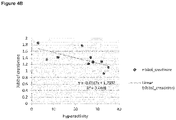
- Four positive correlations were identified between the ribitol to creatinine ratio and the levels of irritability and hyperactivity and between the ribitol to 1,5-anhydroglucitol ratio and the levels of irritability and hyperactivity.
- Figure 4 shows the correlation between levels of ribitol to creatinine ratios and the levels of irritability and hyperactivity measured using the Activities-Specific Balance Confidence (ABC) scale. High scores in the ABC scales relates to aggravated symptoms and lower scores to levels found in TD individuals. The negative correlation between ribitol to creatinine ratios and irritability and hyperactivity levels indicates that high ratios correspond to low degree of behavioral symptoms.
- ABC Activities-Specific Balance Confidence
- Figure 5 shows the correlation between levels of ribitol to 1,5-anhydroglucitol and the levels of irritability and hyperactivity measured using the Activities-Specific Balance Confidence (ABC) scale.
- ABC Activities-Specific Balance Confidence
Landscapes
- Health & Medical Sciences (AREA)
- Life Sciences & Earth Sciences (AREA)
- Engineering & Computer Science (AREA)
- Biomedical Technology (AREA)
- Hematology (AREA)
- Immunology (AREA)
- Chemical & Material Sciences (AREA)
- Urology & Nephrology (AREA)
- Molecular Biology (AREA)
- Biotechnology (AREA)
- General Health & Medical Sciences (AREA)
- Microbiology (AREA)
- Pathology (AREA)
- General Physics & Mathematics (AREA)
- Cell Biology (AREA)
- Food Science & Technology (AREA)
- Medicinal Chemistry (AREA)
- Physics & Mathematics (AREA)
- Analytical Chemistry (AREA)
- Biochemistry (AREA)
- Neurology (AREA)
- Neurosurgery (AREA)
- Proteomics, Peptides & Aminoacids (AREA)
- Physiology (AREA)
- Tropical Medicine & Parasitology (AREA)
- Diabetes (AREA)
- Investigating Or Analysing Biological Materials (AREA)
- Measurement Of Mechanical Vibrations Or Ultrasonic Waves (AREA)
- Magnetic Resonance Imaging Apparatus (AREA)
- Investigating, Analyzing Materials By Fluorescence Or Luminescence (AREA)
Priority Applications (10)
| Application Number | Priority Date | Filing Date | Title |
|---|---|---|---|
| EP20213627.1A EP4012414A1 (fr) | 2020-12-11 | 2020-12-11 | Diagnostic de trouble du spectre autistique de phenotype 1 |
| US18/266,527 US20240053366A1 (en) | 2020-12-11 | 2021-12-10 | Diagnosis of autism spectrum disorder |
| AU2021397357A AU2021397357A1 (en) | 2020-12-11 | 2021-12-10 | Diagnosis of autism spectrum disorder |
| CN202180092560.2A CN117280215A (zh) | 2020-12-11 | 2021-12-10 | 孤独症谱系障碍的诊断 |
| CA3204881A CA3204881A1 (fr) | 2020-12-11 | 2021-12-10 | Diagnostic du trouble du spectre autistique |
| PCT/EP2021/085307 WO2022123057A1 (fr) | 2020-12-11 | 2021-12-10 | Diagnostic du trouble du spectre autistique |
| JP2023534667A JP2023553607A (ja) | 2020-12-11 | 2021-12-10 | 自閉症スペクトラムの診断 |
| EP21835286.2A EP4260070B1 (fr) | 2020-12-11 | 2021-12-10 | Diagnostic de trouble du spectre autistique de phenotype 1 |
| IL303466A IL303466A (en) | 2020-12-11 | 2021-12-10 | Diagnosis of autism spectrum disorder |
| KR1020237023145A KR20230156688A (ko) | 2020-12-11 | 2021-12-10 | 자폐 스펙트럼 장애 진단 |
Applications Claiming Priority (1)
| Application Number | Priority Date | Filing Date | Title |
|---|---|---|---|
| EP20213627.1A EP4012414A1 (fr) | 2020-12-11 | 2020-12-11 | Diagnostic de trouble du spectre autistique de phenotype 1 |
Publications (1)
| Publication Number | Publication Date |
|---|---|
| EP4012414A1 true EP4012414A1 (fr) | 2022-06-15 |
Family
ID=73835329
Family Applications (2)
| Application Number | Title | Priority Date | Filing Date |
|---|---|---|---|
| EP20213627.1A Withdrawn EP4012414A1 (fr) | 2020-12-11 | 2020-12-11 | Diagnostic de trouble du spectre autistique de phenotype 1 |
| EP21835286.2A Active EP4260070B1 (fr) | 2020-12-11 | 2021-12-10 | Diagnostic de trouble du spectre autistique de phenotype 1 |
Family Applications After (1)
| Application Number | Title | Priority Date | Filing Date |
|---|---|---|---|
| EP21835286.2A Active EP4260070B1 (fr) | 2020-12-11 | 2021-12-10 | Diagnostic de trouble du spectre autistique de phenotype 1 |
Country Status (9)
| Country | Link |
|---|---|
| US (1) | US20240053366A1 (fr) |
| EP (2) | EP4012414A1 (fr) |
| JP (1) | JP2023553607A (fr) |
| KR (1) | KR20230156688A (fr) |
| CN (1) | CN117280215A (fr) |
| AU (1) | AU2021397357A1 (fr) |
| CA (1) | CA3204881A1 (fr) |
| IL (1) | IL303466A (fr) |
| WO (1) | WO2022123057A1 (fr) |
Citations (9)
| Publication number | Priority date | Publication date | Assignee | Title |
|---|---|---|---|---|
| US20120207726A1 (en) | 2009-06-16 | 2012-08-16 | The Trustees Of Columbia University In The City Of New York | Autism-associated biomarkers and uses thereof |
| EP2564194A1 (fr) | 2010-04-29 | 2013-03-06 | Wisconsin Alumni Research Foundation | Biomarqueurs métaboliques de l'autisme |
| WO2013130953A2 (fr) | 2012-03-01 | 2013-09-06 | The Trustees Of Columbia University In The City Of New York | Biomarqueurs associés à l'autisme et leurs utilisations |
| US20140065132A1 (en) | 2012-08-29 | 2014-03-06 | California Institute Of Technology | Diagnosis and treatment of autism spectrum disorder |
| US20170067884A1 (en) | 2015-09-03 | 2017-03-09 | Greenwood Genetic Center | Method for the Early Detection of Autism Spectrum Disorder by use of Metabolic Biomarkers |
| WO2019086721A1 (fr) * | 2017-11-06 | 2019-05-09 | Stalicla Sa | Examen de provocation pour diagnostiquer un sous-type de maladie du spectre autistique |
| EP3498297A1 (fr) | 2017-11-06 | 2019-06-19 | Stalicla S.A. | Compositions pharmaceutiques pour le traitement de l'autisme |
| WO2020094748A1 (fr) | 2018-11-06 | 2020-05-14 | Stalicla Sa | Profilage métabolique pour le diagnostic d'un sous-ensemble de patients atteints d'un trouble du spectre autistique idiopathique, phénotype asd 1 |
| US20200325519A1 (en) * | 2017-11-06 | 2020-10-15 | Stalicla Sa | Biomarker assay for use in monitoring autism |
Family Cites Families (5)
| Publication number | Priority date | Publication date | Assignee | Title |
|---|---|---|---|---|
| US6727231B1 (en) * | 2000-10-12 | 2004-04-27 | Repligen Corporation | Uridine therapy for patients with elevated purine levels |
| MX2016000293A (es) * | 2013-07-09 | 2016-06-21 | Stemina Biomarker Discovery Inc | Biomarcadores del trastrono del espectro autista. |
| JP6902416B2 (ja) * | 2016-07-05 | 2021-07-14 | ライオン株式会社 | 睡眠評価用マーカー及びその用途 |
| WO2019136214A1 (fr) * | 2018-01-05 | 2019-07-11 | California Institute Of Technology | Probiotiques, métabolites, et leurs utilisations |
| EP3746796A4 (fr) * | 2018-01-29 | 2021-12-22 | Stemina Biomarker Discovery, Inc. | Diagnostic et traitement des troubles du spectre autistique basés sur des métabotypes contenant une amine |
-
2020
- 2020-12-11 EP EP20213627.1A patent/EP4012414A1/fr not_active Withdrawn
-
2021
- 2021-12-10 KR KR1020237023145A patent/KR20230156688A/ko not_active Ceased
- 2021-12-10 EP EP21835286.2A patent/EP4260070B1/fr active Active
- 2021-12-10 IL IL303466A patent/IL303466A/en unknown
- 2021-12-10 AU AU2021397357A patent/AU2021397357A1/en active Pending
- 2021-12-10 WO PCT/EP2021/085307 patent/WO2022123057A1/fr not_active Ceased
- 2021-12-10 US US18/266,527 patent/US20240053366A1/en active Pending
- 2021-12-10 JP JP2023534667A patent/JP2023553607A/ja active Pending
- 2021-12-10 CN CN202180092560.2A patent/CN117280215A/zh active Pending
- 2021-12-10 CA CA3204881A patent/CA3204881A1/fr active Pending
Patent Citations (9)
| Publication number | Priority date | Publication date | Assignee | Title |
|---|---|---|---|---|
| US20120207726A1 (en) | 2009-06-16 | 2012-08-16 | The Trustees Of Columbia University In The City Of New York | Autism-associated biomarkers and uses thereof |
| EP2564194A1 (fr) | 2010-04-29 | 2013-03-06 | Wisconsin Alumni Research Foundation | Biomarqueurs métaboliques de l'autisme |
| WO2013130953A2 (fr) | 2012-03-01 | 2013-09-06 | The Trustees Of Columbia University In The City Of New York | Biomarqueurs associés à l'autisme et leurs utilisations |
| US20140065132A1 (en) | 2012-08-29 | 2014-03-06 | California Institute Of Technology | Diagnosis and treatment of autism spectrum disorder |
| US20170067884A1 (en) | 2015-09-03 | 2017-03-09 | Greenwood Genetic Center | Method for the Early Detection of Autism Spectrum Disorder by use of Metabolic Biomarkers |
| WO2019086721A1 (fr) * | 2017-11-06 | 2019-05-09 | Stalicla Sa | Examen de provocation pour diagnostiquer un sous-type de maladie du spectre autistique |
| EP3498297A1 (fr) | 2017-11-06 | 2019-06-19 | Stalicla S.A. | Compositions pharmaceutiques pour le traitement de l'autisme |
| US20200325519A1 (en) * | 2017-11-06 | 2020-10-15 | Stalicla Sa | Biomarker assay for use in monitoring autism |
| WO2020094748A1 (fr) | 2018-11-06 | 2020-05-14 | Stalicla Sa | Profilage métabolique pour le diagnostic d'un sous-ensemble de patients atteints d'un trouble du spectre autistique idiopathique, phénotype asd 1 |
Non-Patent Citations (27)
Also Published As
| Publication number | Publication date |
|---|---|
| EP4260070A1 (fr) | 2023-10-18 |
| EP4260070B1 (fr) | 2025-09-24 |
| AU2021397357A9 (en) | 2024-06-13 |
| KR20230156688A (ko) | 2023-11-14 |
| CN117280215A (zh) | 2023-12-22 |
| WO2022123057A1 (fr) | 2022-06-16 |
| CA3204881A1 (fr) | 2022-06-16 |
| IL303466A (en) | 2023-08-01 |
| US20240053366A1 (en) | 2024-02-15 |
| EP4260070C0 (fr) | 2025-09-24 |
| JP2023553607A (ja) | 2023-12-25 |
| AU2021397357A1 (en) | 2023-07-06 |
Similar Documents
| Publication | Publication Date | Title |
|---|---|---|
| Heinzel et al. | Retracted: gut microbiome signatures of risk and prodromal markers of Parkinson disease | |
| Modeste et al. | Quantitative proteomics of cerebrospinal fluid from African Americans and Caucasians reveals shared and divergent changes in Alzheimer’s disease | |
| US9442121B2 (en) | Biomarker of depression, method for measuring biomarker of depression, computer program, and recording medium | |
| EP3418430B1 (fr) | Biomarqueurs du sang permettant de prédire un dysfonctionnement cognitif persistant après traumatisme | |
| Benjamin et al. | The brain-derived neurotrophic factor Val66Met polymorphism, hippocampal volume, and cognitive function in geriatric depression | |
| Laila et al. | Role of proteomics in the discovery of autism biomarkers | |
| CN117683849A (zh) | 一种心力衰竭的生物标志物及其应用 | |
| Chen et al. | Body fluid multiomics in 3PM-guided ischemic stroke management: health risk assessment, targeted protection against health-to-disease transition, and cost-effective personalized approach are envisaged | |
| Smith et al. | Metabolomic biomarkers in autism: identification of complex dysregulations of cellular bioenergetics | |
| KR102700025B1 (ko) | 결핵의 대사체 바이오마커 | |
| CN118010881A (zh) | 用于诊断三种儿童青少年精神疾病的血浆生物标志物组合以及诊断系统 | |
| EP4260070B1 (fr) | Diagnostic de trouble du spectre autistique de phenotype 1 | |
| CN108411012B (zh) | 一种检测替格瑞洛药效的试剂盒及检测方法 | |
| US20230213532A1 (en) | Assessment methods and diagnostic kit for predicting suicidal behaviors in patients with depressive disorders using multimodal serum biomarkers | |
| WO2013080917A1 (fr) | Procédé d'évaluation objective de la schizophrénie | |
| Bougafa | Prevalence of H Pylori Infection and related blood biomarker among Autistic children in Tobruk City, Libya | |
| Patel et al. | Systemic inflammation in relation to exceptional memory in the Long Life Family Study (LLFS) | |
| US20260126454A1 (en) | Mass spectrometry analysis of markers for alzheimer's disease | |
| Hajali et al. | Elevation of Uric Acid in Serum and Saliva of Patients with Bipolar Disorder | |
| Ulrike Suenkel et al. | Retracted | |
| Al-Hakeim et al. | Systemic inflammation and increased tryptophan catabolism underpin depression, anxiety, and chronic fatigue symptoms after myocardial infarction: effects of revascularization | |
| Su et al. | High-efficacy serum biomarkers PCSK9 and LCAT predict cognitive impairment in Parkinson’s disease | |
| Hussein et al. | Correlation between Nonsynonymous A803G Polymorphism of N-acetyltransferase 2 Gene and Impaired Glucose Homeostasis in Egyptian Obese Children and Adolescents | |
| Filla et al. | Next generation sequencing in undiagnosed sporadic and inherited ataxias | |
| US20210270851A1 (en) | Biomarker for diagnosing autism spectrum disorder |
Legal Events
| Date | Code | Title | Description |
|---|---|---|---|
| PUAI | Public reference made under article 153(3) epc to a published international application that has entered the european phase |
Free format text: ORIGINAL CODE: 0009012 |
|
| STAA | Information on the status of an ep patent application or granted ep patent |
Free format text: STATUS: THE APPLICATION HAS BEEN PUBLISHED |
|
| AK | Designated contracting states |
Kind code of ref document: A1 Designated state(s): AL AT BE BG CH CY CZ DE DK EE ES FI FR GB GR HR HU IE IS IT LI LT LU LV MC MK MT NL NO PL PT RO RS SE SI SK SM TR |
|
| STAA | Information on the status of an ep patent application or granted ep patent |
Free format text: STATUS: THE APPLICATION IS DEEMED TO BE WITHDRAWN |
|
| 18D | Application deemed to be withdrawn |
Effective date: 20221216 |