EP4013111A1 - Procédé de traitement d'informations et dispositif terminal - Google Patents
Procédé de traitement d'informations et dispositif terminal Download PDFInfo
- Publication number
- EP4013111A1 EP4013111A1 EP19942387.2A EP19942387A EP4013111A1 EP 4013111 A1 EP4013111 A1 EP 4013111A1 EP 19942387 A EP19942387 A EP 19942387A EP 4013111 A1 EP4013111 A1 EP 4013111A1
- Authority
- EP
- European Patent Office
- Prior art keywords
- content
- type
- logical channels
- handover
- carrying
- Prior art date
- Legal status (The legal status is an assumption and is not a legal conclusion. Google has not performed a legal analysis and makes no representation as to the accuracy of the status listed.)
- Withdrawn
Links
Images

Classifications
-
- H—ELECTRICITY
- H04—ELECTRIC COMMUNICATION TECHNIQUE
- H04W—WIRELESS COMMUNICATION NETWORKS
- H04W36/00—Hand-off or reselection arrangements
- H04W36/0005—Control or signalling for completing the hand-off
- H04W36/0055—Transmission or use of information for re-establishing the radio link
- H04W36/0069—Transmission or use of information for re-establishing the radio link in case of dual connectivity, e.g. decoupled uplink/downlink
-
- H—ELECTRICITY
- H04—ELECTRIC COMMUNICATION TECHNIQUE
- H04W—WIRELESS COMMUNICATION NETWORKS
- H04W36/00—Hand-off or reselection arrangements
- H04W36/0005—Control or signalling for completing the hand-off
- H04W36/0011—Control or signalling for completing the hand-off for data sessions of end-to-end connection
-
- H—ELECTRICITY
- H04—ELECTRIC COMMUNICATION TECHNIQUE
- H04W—WIRELESS COMMUNICATION NETWORKS
- H04W36/00—Hand-off or reselection arrangements
- H04W36/02—Buffering or recovering information during reselection ; Modification of the traffic flow during hand-off
-
- H—ELECTRICITY
- H04—ELECTRIC COMMUNICATION TECHNIQUE
- H04W—WIRELESS COMMUNICATION NETWORKS
- H04W36/00—Hand-off or reselection arrangements
- H04W36/16—Performing reselection for specific purposes
- H04W36/22—Performing reselection for specific purposes for handling the traffic
-
- H—ELECTRICITY
- H04—ELECTRIC COMMUNICATION TECHNIQUE
- H04W—WIRELESS COMMUNICATION NETWORKS
- H04W36/00—Hand-off or reselection arrangements
- H04W36/16—Performing reselection for specific purposes
- H04W36/18—Performing reselection for specific purposes for allowing seamless reselection, e.g. soft reselection
- H04W36/185—Performing reselection for specific purposes for allowing seamless reselection, e.g. soft reselection using make before break
-
- H—ELECTRICITY
- H04—ELECTRIC COMMUNICATION TECHNIQUE
- H04W—WIRELESS COMMUNICATION NETWORKS
- H04W74/00—Wireless channel access
- H04W74/08—Non-scheduled access, e.g. ALOHA
- H04W74/0833—Random access procedures, e.g. with 4-step access
Definitions
- the present disclosure relates to the field of information processing technologies, and more particularly, to a method for processing information, a terminal device, a chip, a computer-readable storage medium, a computer program product, and a computer program.
- a terminal device when a terminal device receives a handover command, it releases a connection with a source cell, and establishes a connection with a target cell through a random access.
- the terminal device In handover processing for a terminal device connecting with both a source network device and a target network device, the terminal device, when receiving the handover command, will retain relevant configurations of the source network device until the connection with the source network device is released.
- an msg3 transmitted during a handover process may carry data, which may make it impossible to reduce additional operations due to reordering and data forwarding on a network side.
- embodiments of the present disclosure provide a method for processing information, a terminal device, a chip, a computer-readable storage medium, a computer program product, and a computer program.
- a method for processing information is provided.
- the method can be applied in a terminal device.
- the method includes: transmitting, by the terminal device, a msg3 without carrying a first type of content, during a process of performing a first type of handover by the terminal device.
- the first type of content includes data transmitted on a first type of channel.
- a terminal device in a second aspect, includes a communication unit configured to transmit a msg3 without carrying a first type of content, during a process of performing a first type of handover.
- the first type of content includes data transmitted on a first type of channel.
- a terminal device in a third aspect, includes a processor and a memory.
- the memory has a computer program stored thereon.
- the processor is configured to invoke and run the computer program stored in the memory to perform the method in the first aspect or any implementation thereof.
- a chip is provided.
- the chip is configured to implement the method in any of the above implementations.
- the chip includes a processor.
- the processor is configured to invoke and run a computer program from a memory, thereby causing an apparatus provided with the chip to perform the method in the first aspect or any implementation thereof.
- a computer-readable storage medium stores a computer program.
- the computer program causes a computer to perform the method in the first aspect or any implementation thereof.
- a computer program product includes computer program instructions.
- the computer program instructions cause a computer to perform the method in the first aspect or any implementation thereof.
- a computer program when executed on a computer, causes a computer to perform the method in the first aspect or any implementation thereof.
- the terminal device can be controlled to carry no first type of content in the msg3 when the terminal device performs the first type of handover. In this way, it is possible to reduce uplink data transmitted by the terminal device to the source network device and/or the target network device via the msg3, thereby reducing additional operations due to reordering and data forwarding on a network side.
- GSM Global System of Mobile
- CDMA Code Division Multiple Access
- WCDMA Wideband Code Division Multiple Access
- GPRS General Packet Radio Service
- LTE Long Term Evolution
- FDD Frequency Division Duplex
- TDD Time Division Duplex
- UMTS Universal Mobile Telecommunication System
- WiMAX Worldwide Interoperability for Microwave Access
- 5G 5-th Generation
- the communication system 100 may include a network device 110.
- the network device 110 may be a device that communicates with a User Equipment (UE) 120 (or called a communication terminal or a terminal).
- UE User Equipment
- the network device 110 may provide communication coverage for a specific geographic region, and may communicate with a UE located in the coverage region.
- the network device 110 may be a base station such as Base Transceiver Station (BTS) in a GSM system or a CDMA system, a base station such as NodeB (NB) in a WCDMA system, a base station such as Evolutional Node B (eNB or eNodeB) in an LTE system, or a wireless controller in a Cloud Radio Access Network (CRAN).
- BTS Base Transceiver Station
- NB NodeB
- eNB or eNodeB Evolutional Node B
- LTE Long Term Evolutional Node B
- the network device can be a mobile switching center, a relay station, an access point, a vehicle-mounted device, a wearable device, a hub, a switch, a bridge, a router, a network side device in a 5G network, or a network device in a future evolved Public Land Mobile Network (PLMN), etc.
- PLMN Public Land Mobile Network
- the communication system 100 further includes at least one UE 120 located within the coverage region of the network device 110.
- the "UE” used herein includes, but is not limited to, a device configured to receive/transmit a communication signal via a wired line connection, such as a Public Switched Telephone Network (PSTN), a Digital Subscriber Line (DSL), a digital cable, a direct cable connection, and/or via another data connection/network, and/or via a wireless interface, for example, for a cellular network, a Wireless Local Area Network (WLAN), a digital television network such as a Digital Video Broadcasting Handheld (DVB-H) network, a satellite network, and an Amplitude Modulation-Frequency Modulation (AM-FM) broadcast transmitter, and/or via another UE; and/or an Internet of Things (IoT) device.
- An UE configured to communicate through the wireless interface may be referred to as a "wireless communication terminal", a "wireless terminal”, or a "mobile terminal”.
- direct communication such as Device to Device (D2D) communication
- D2D Device to Device
- system and “network” in the present disclosure are often used interchangeably herein.
- the term “and/or” in the present disclosure only represents a relationship between correlated objects, including three relationships.
- a and/or B may mean three situations: A only, B only, or both A and B.
- the character “/” in the present disclosure generally represents an “or” relationship between the correlated objects preceding and succeeding the symbol.
- An embodiment of the present disclosure provides a method for processing information.
- the method can be applied in a terminal device. As illustrated in FIG. 2 , the method can include the following operations.
- the terminal device transmits a msg3 without carrying a first type of content, during a process of performing a first type of handover by the terminal device.
- the first type of content includes data transmitted on a first type of channel.
- the first type of handover is a handover during which connections with a target network device and a source network device are maintained.
- the first type of handover may be an enhanced Make-Before-Break (eMBB) handover, or a dual active protocol stack handover.
- eMBB enhanced Make-Before-Break
- a network device may be a base station on a network side.
- the source network device may be a source base station with which the terminal device connects
- the target network device may be a target base station.
- the terminal device may be a device capable of maintaining connections with both the source network device and the target network device during handover.
- transmission of the msg3 by the terminal device may occur in a content transmitted during a process of the terminal device initiating a random access to the target network device.
- a New Radio (NR) system supports a handover process of the terminal device in a connected state.
- the system needs to transfer a communication link between the terminal device and an original cell to a new cell in order to ensure the continuity of communication and the quality of service. That is, the system needs to perform a handover process.
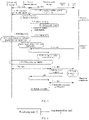
- the entire handover process is divided into the following three stages. Referring to FIG. 3 , the entire handover process includes a handover preparation stage, a handover execution stage, and a handover completion stage.
- the target network device and the source network device perform processing based on mobility control information provided by an Access and Mobility Management Function (AMF).
- AMF Access and Mobility Management Function
- the terminal device performs measurement control and reporting, and the source network device makes a handover decision.
- the source network device makes a handover request to the target network device, which performs management control and handover request confirmation.
- a handover confirmation message contains a handover command generated by a target cell.
- the source network device is not allowed to make any modification to the handover command generated by the target network device, but directly forwards the handover command to the terminal device.
- the handover process may include: the terminal device and the source network device performing a Radio Access Network (RAN) handover, during which the terminal device disconnects from a source cell, synchronizes with the target cell, and establishes a connection with the target cell (such as performing a random access, transmitting a Radio Resource Control (RRC) handover completion message to the target base station, etc.); and a Secondary Node (SN) state transfer.
- the handover process may further include: the source network device transmitting new data of a User Plane Function (UPF) entity, and transferring buffered data to the target network device.
- UPF User Plane Function
- the target network device transmits a path handover request to the AMF.
- the UPF performs the path handover.
- the AMF informs the target network device of a completion of the path handover through the source network device, and transmits path handover request confirmation to the target network device. Subsequently, the target network device notifies the source network device to release the user data.
- another handover scenario corresponding to this embodiment may also include the following two architectures.
- One architecture is a handover based on dual connectivity.
- the target network device is first added as an SN, the SN is then changed into a Master Node (MN) through role switching signaling, and finally the source network device is released, thereby achieving an effect of shortening interruption time during the handover.
- MN Master Node
- Another architecture is a handover during which the connections with both the source network device and the target network device are maintained, which can be construed as the eMBB handover.
- This handover differs in that when receiving a handover command (HO command), the terminal device continues maintaining a connection with the source network device and at the same time initiates a random access to the target network device. The connection with the source network device won't be released until the terminal device has accessed the target network device.
- HO command handover command
- Restriction 1 for a 0ms handover, there is no need to support simultaneous UpLink (UL) Physical Uplink Shared Channel (PUSCH) transmission.
- Restriction 2 after receiving the first UL grant transmitted by the target network device (i.e., the target base station), the UL PUSCH is handed over from the source network device to the target network device.
- UL UpLink
- PUSCH Physical Uplink Shared Channel
- the solution provided in this embodiment may be implemented in the following modes.
- a priority configuration of logical channels is adjusted, such that the terminal device can determine the content carried in a transmission based on a new priority configuration of logical channels.
- a second type of content carried by the terminal device in the msg3 transmitted during the process of performing the first type of handover can be determined based on a first priority configuration of logical channels.
- the first priority configuration of logical channels can be different from a third priority configuration of logical channels.
- the first priority configuration of logical channels is added with a content: in the first type of handover, the msg3 transmits data on a logical channel except data on an UpLink (UL)-Common Control Channel (CCCH), an UL-Dedicated Control Channel (DCCH), and an UL-Dedicated Traffic Channel (DTCH).
- UL UpLink
- CCCH UpLink
- DCCH UL-Dedicated Control Channel
- DTCH UL-Dedicated Traffic Channel
- the first priority configuration of logical channels includes at least one content capable of being carried by the terminal device during the first type of handover.
- a sequence of the at least one content in the first priority configuration of logical channels is used as a priority sequence for packaging the at least one content during transmission.
- the at least one content in the first priority configuration of logical channels and the sequence of the at least one content in the first priority configuration of logical channels can include: a Media Access Control (MAC) Control Element (CE) carrying a Cell-Radio Network Temporary Identifier (C-RNTI), or data on an UL-CCCH; a MAC CE carrying a Data volume and Power headroom Report (DPR); a MAC CE carrying Semi-Persistent Scheduling (SPS) confirmation; a MAC CE carrying a Buffer Status Report (BSR), except a BSR containing padding data; a MAC CE carrying a Power Headroom Report (PHR), an extended PHR, or a dual connectivity PHR; a MAC CE carrying a sidelink BSR, except a sidelink BSR containing padding data; data on a logical channel, except data on the UL-CCCH, an UL-DCCH and an UL-DTCH, transmitted by the msg3 during the first type of handover; a MAC CE carrying a
- the second type of content carried in the msg3 can be determined based on the content included in the first priority configuration of logical channels. For example, when the DPR, the SPS, the data on the UL-DCCH, and the data on the logical channel except the UL-CCCH, the UL-DCCH, and the UL-DTCH need to be transmitted currently, it can be determined based on the first priority configuration of logical channels that the data on the UL-DCCH is not transmitted in the second type of content.
- the second type of content can only include the MAC CE carrying the DPR, the MAC CE carrying the SPS, and the data on the logical channel except the UL-CCCH, the UL-DCCH, and the UL-DTCH. Then, these contents are packaged and subject to subsequent transmission processing based on a priority sequence (or a sequence) of the contents in the first priority configuration of logical channels.
- the first type of content not carried in the msg3 can be determined based on a predetermined rule.
- the predetermined rule can include that the msg3 transmitted during the process of performing the first type of handover does not carry at least one of data transmitted on the DTCH and data transmitted on the DCCH.
- the predetermined rule may be a rule specified in a protocol.
- processing can be performed based on the third priority configuration of logical channels.
- data that the terminal device will not carry in the msg3 can be controlled according to provisions of the protocol.
- the second type of content carried in the msg3 may be determined based on a newly set second priority configuration of logical channels.
- the predetermined rule is used in combination with the second priority configuration of logical channels.
- the second type of content that can be carried in the msg3 can be determined through the second priority configuration of logical channels.
- the second priority configuration of logical channels can include the following two types.
- the second priority configuration of logical channels includes at least one content capable of being carried by the terminal device during the first type of handover.
- a sequence of the at least one content in the second priority configuration of logical channels is used as a priority sequence for packaging the at least one content during transmission.
- the at least one content in the second priority configuration of logical channels and the sequence of the at least one content in the second priority configuration of logical channels include: a MAC CE carrying a C-RNTI; a MAC CE carrying a BSR; a MAC CE carrying a PHR; data on the DCCH; and padding data.
- the BSR and the PHR need to be transmitted currently, it can be determined based on the second priority configuration of logical channels not to transmit the data on the DTCH.
- the BSR and the PHR are transmitted in accordance with the sequence of the BSR and the PHR in the second priority configuration of logical channels.
- the predetermined rule when there is a conflict between the predetermined rule and the second priority configuration of logical channels, e.g., the predetermined rule does not allow the msg3 to carry the data transmitted on the DCCH, and the second priority configuration of logical channels includes the DCCH and a priority corresponding to the DCCH, the predetermined rule shall prevail. That is, for example, when the data on the DCCH, the BSR, and the PHR need to be transmitted currently, it can be determined based on the predetermined rule not to transmit the DCCH. Then, the sequence of transmitting the BSR and the PHR can be determined based on the second priority configuration of logical channels for transmission of the BSR and the PHR.
- the second priority configuration of logical channels includes at least one content capable of being carried by the terminal device during the first type of handover.
- a sequence of the at least one content in the second priority configuration of logical channels is used as a priority sequence for packaging the at least one content during transmission.
- the at least one content in the second priority configuration of logical channels and the sequence of the at least one content in the second priority configuration of logical channels include: a MAC CE carrying a C-RNTI; a MAC CE carrying a BSR; a MAC CE carrying a PHR; and padding data.
- the sequence of the BSR and the PHR can be determined based on the second priority configuration of logical channels for transmission of the BSR and the PHR
- Mode 3 the third priority configuration of logical channels is not modified. Instead, the second priority configuration of logical channels is added to control the content carried in the msg3 during the first type of handover.
- the second type of content carried by the terminal device in the msg3 is determined by using the second priority configuration of logical channels.
- the second priority configuration of logical channels is different from the third priority configuration of logical channels.
- the third priority configuration of logical channels is used during a process of performing a non-first type handover.
- the second priority configuration of logical channels can be used in the first type of handover
- the third priority configuration of logical channels can be used in processing other than the first type of handover.
- the third priority configuration of logical channels can be used in ordinary handovers other than the first type of handover. From the description of the first mode, it can be seen that compared with the first priority configuration of logical channels, the third priority configuration of logical channels omits that "in the first type of handover, the msg3 transmits data on logical channels except data on an UL-CCCH, an UL-DCCH, and an UL-DTCH".
- the other contents and their sequence are the same as those described in the first priority configuration of logical channels, and details thereof will be omitted here.
- the second priority configuration of logical channels can include the following two types.
- the second priority configuration of logical channels includes at least one content capable of being carried by the terminal device during the first type of handover.
- a sequence of the at least one content in the second priority configuration of logical channels is used as a priority sequence for packaging the at least one content during transmission.
- the at least one content in the second priority configuration of logical channels and the sequence of the at least one content in the second priority configuration of logical channels include: a MAC CE carrying a C-RNTI; a MAC CE carrying a BSR; a MAC CE carrying a PHR; data on the DCCH; and padding data.
- the BSR and the PHR need to be transmitted currently, it can be determined based on the second priority configuration of logical channels not to transmit the data on the DTCH.
- the BSR and the PHR are transmitted in accordance with the sequence of the BSR and the PHR in the second priority configuration of logical channels.
- the second type of content that can be carried in the msg3 can contain the data on the DCCH.
- the first type of content that cannot be carried in the msg3 can only include the data transmitted on the DTCH.
- the second priority configuration of logical channels includes at least one content capable of being carried by the terminal device during the first type of handover.
- a sequence of the at least one content in the second priority configuration of logical channels is used as a priority sequence for packaging the at least one content during transmission.
- the at least one content in the second priority configuration of logical channels and the sequence of the at least one content in the second priority configuration of logical channels include: a MAC CE carrying a C-RNTI; a MAC CE carrying a BSR; a MAC CE carrying a PHR; and padding data.
- the data on the DTCH, the data on the DCCH, the BSR, and the PHR need to be transmitted currently, it can be determined based on the second priority configuration of logical channels in this case to transmit neither the data on the DTCH nor the data on the DCCH.
- the BSR and the PHR can be transmitted in accordance with the sequence of the BSR and the PHR in the second priority configuration of logical channels described above.
- the first type of content is defined in the above as including at least one of the data on the DCCH and the data on the DTCH, but in practice, other data that is not allowed to be carried by the msg3 can be added as needed, though examples of such data are not exhaustively listed in this embodiment.
- the terminal device can be controlled to carry no first type of content in the msg3 when the terminal device performs the first type of handover. In this way, it is possible to reduce uplink data transmitted by the terminal device to the source network device and/or the target network device, thereby reducing additional operations due to reordering and data forwarding on the network side.
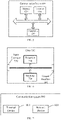
- An embodiment of the present disclosure provides a terminal device. As illustrated in FIG. 4 , the terminal device can include a communication unit 31.
- the communication unit 31 can be configured to transmit a msg3 without carrying a first type of content, during a process of performing a first type of handover.
- the first type of content includes data transmitted on a first type of channel.
- the first type of handover is a handover during which connections with a target network device and a source network device are maintained.
- the first type of handover may be an enhanced Make-Before-Break (eMBB) handover, or may be understood as a dual active protocol stack handover.
- eMBB enhanced Make-Before-Break
- a network device may be a base station on a network side.
- the source network device may be a source base station with which the terminal device connects
- the target network device may be a target base station.
- the terminal device may be a device capable of maintaining connections with both the source network device and the target network device during handover.
- transmission of the msg3 by the terminal device may occur in a content transmitted during a process of the terminal device initiating a random access to the target network device.
- a priority configuration of logical channels is adjusted, such that the terminal device can determine the content carried in a transmission based on a new priority configuration of logical channels.
- the terminal device can further include a processing unit 32.
- the processing unit 32 can be configured to determine, based on a first priority configuration of logical channels, a second type of content carried in the msg3 transmitted during the process of performing the first type of handover.
- the first priority configuration of logical channels can be different from a third priority configuration of logical channels. Compared with the third priority configuration of logical channels, the first priority configuration of logical channels is added with a content: in the first type of handover, the msg3 transmits data on a logical channel except data on an UL-CCCH, an UL-DCCH, and an UL-DTCH.
- the first priority configuration of logical channels includes at least one content capable of being carried by the terminal device during the first type of handover.
- a sequence of the at least one content in the first priority configuration of logical channels is used as a priority sequence for packaging the at least one content during transmission.
- the at least one content in the first priority configuration of logical channels and the sequence of the at least one content in the first priority configuration of logical channels can include: a MAC CE carrying a C-RNTI, or data on an UL-CCCH; a MAC CE carrying a DPR; a MAC CE carrying SPS confirmation; a MAC CE carrying a BSR, except a BSR containing padding data; a MAC CE carrying a PHR, an extended PHR, or a dual connectivity PHR; a MAC CE carrying a sidelink BSR, except a sidelink BSR containing padding data; data on a logical channel, except data on the UL-CCCH, an UL-DCCH and an UL-DTCH, transmitted by the msg3 during the first type of handover; a MAC CE carrying a request for a recommended bit rate; a MAC CE carrying a BSR containing padding data; and a MAC CE carrying a sidelink BSR containing padding data.
- the second type of content carried in the msg3 can be determined based on the content included in the first priority configuration of logical channels. For example, when the DPR, the SPS, the data on the UL-DCCH, and the data on the logical channel except the UL-CCCH, the UL-DCCH, and the UL-DTCH need to be transmitted currently, it can be determined based on the first priority configuration of logical channels that the data on the UL-DCCH is not transmitted in the second type of content.
- the second type of content can only include the MAC CE carrying the DPR, the MAC CE carrying the SPS, and the data on the logical channel except the UL-CCCH, the UL-DCCH, and the UL-DTCH. Then, these contents are subject to subsequent transmission processing based on a priority sequence (or a sequence) of the contents in the first priority configuration of logical channels.
- the processing unit 32 may be configured to determine the first type of content not carried in the msg3 based on a predetermined rule.
- the predetermined rule can include that the msg3 transmitted during the process of performing the first type of handover does not carry at least one of data transmitted on the DTCH and data transmitted on the DCCH.
- the predetermined rule may be a rule specified in a protocol.
- the processing unit 32 may be configured to determine the second type of content carried in the msg3 based on a newly set second priority configuration of logical channels. In this case, the processing unit 32 can be configured to use the predetermined rule in combination with the second priority configuration of logical channels. After the first type of content that cannot be carried in the msg3 is determined based on the predetermined rule, the second type of content that can be carried in the msg3 can be determined through the second priority configuration of logical channels.
- the second priority configuration of logical channels can include the following two types.
- the second priority configuration of logical channels includes at least one content capable of being carried by the terminal device during the first type of handover.
- a sequence of the at least one content in the second priority configuration of logical channels is used as a priority sequence for packaging the at least one content during transmission.
- the at least one content in the second priority configuration of logical channels and the sequence of the at least one content in the second priority configuration of logical channels include: a MAC CE carrying a C-RNTI; a MAC CE carrying a BSR; a MAC CE carrying a PHR; data on the DCCH; and padding data.
- the BSR and the PHR need to be transmitted currently, it can be determined based on the second priority configuration of logical channels not to transmit the data on the DTCH.
- the BSR and the PHR are transmitted in accordance with the sequence of the BSR and the PHR in the second priority configuration of logical channels.
- the predetermined rule when there is a conflict between the predetermined rule and the second priority configuration of logical channels, e.g., the predetermined rule does not allow the msg3 to carry the data transmitted on the DCCH, and the second priority configuration of logical channels includes the DCCH and a priority corresponding to the DCCH, the predetermined rule shall prevail. That is, for example, when the data on the DCCH, the BSR, and the PHR need to be transmitted currently, it can be determined based on the predetermined rule not to transmit the DCCH. Then, the sequence of transmitting the BSR and the PHR can be determined based on the second priority configuration of logical channels for transmission of the BSR and the PHR.
- the second priority configuration of logical channels includes at least one content capable of being carried by the terminal device during the first type of handover.
- a sequence of the at least one content in the second priority configuration of logical channels is used as a priority sequence for packaging the at least one content during transmission.
- the at least one content in the second priority configuration of logical channels and the sequence of the at least one content in the second priority configuration of logical channels include: a MAC CE carrying a C-RNTI; a MAC CE carrying a BSR; a MAC CE carrying a PHR; and padding data.
- the sequence of the BSR and the PHR can be determined based on the second priority configuration of logical channels for transmission of the BSR and the PHR.
- Mode 3 the third priority configuration of logical channels is not modified. Instead, the second priority configuration of logical channels is added to control the content carried in the msg3 during the first type of handover.
- the processing unit 32 can be configured to, during the process of performing the first type of handover, determine the second type of content carried by the terminal device in the msg3 by using the second priority configuration of logical channels, without using the third priority configuration of logical channels.
- the second priority configuration of logical channels is different from the third priority configuration of logical channels.
- the third priority configuration of logical channels is used during a process of performing a non-first type handover.
- the second priority configuration of logical channels can be used in the first type of handover
- the third priority configuration of logical channels can be used in processing other than the first type of handover.
- the third priority configuration of logical channels can be used in ordinary handovers other than the first type of handover. From the description of the first mode, it can be seen that compared with the first priority configuration of logical channels, the third priority configuration of logical channels omits that "in the first type of handover, the msg3 transmits data on logical channels except data on an UL-CCCH, an UL-DCCH, and an UL-DTCH".
- the other contents and their sequence are the same as those described in the first priority configuration of logical channels, and details thereof will be omitted here.
- the second priority configuration of logical channels can include the following two types.
- the second priority configuration of logical channels includes at least one content capable of being carried by the terminal device during the first type of handover.
- a sequence of the at least one content in the second priority configuration of logical channels is used as a priority sequence for packaging the at least one content during transmission.
- the at least one content in the second priority configuration of logical channels and the sequence of the at least one content in the second priority configuration of logical channels include: a MAC CE carrying a C-RNTI; a MAC CE carrying a BSR; a MAC CE carrying a PHR; data on the DCCH; and padding data.
- the BSR and the PHR need to be transmitted currently, it can be determined based on the second priority configuration of logical channels not to transmit the data on the DTCH.
- the BSR and the PHR are transmitted in accordance with the sequence of the BSR and the PHR in the second priority configuration of logical channels.
- the second type of content that can be carried in the msg3 can contain the data on the DCCH.
- the first type of content that cannot be carried in the msg3 can include the data transmitted on the DTCH.
- the second priority configuration of logical channels includes at least one content capable of being carried by the terminal device during the first type of handover.
- a sequence of the at least one content in the second priority configuration of logical channels is used as a priority sequence for packaging the at least one content during transmission.
- the at least one content in the second priority configuration of logical channels and the sequence of the at least one content in the second priority configuration of logical channels include: a MAC CE carrying a C-RNTI; a MAC CE carrying a BSR; a MAC CE carrying a PHR; and padding data.
- the data on the DTCH, the data on the DCCH, the BSR, and the PHR need to be transmitted currently, it can be determined based on the second priority configuration of logical channels in this case to transmit neither the data on the DTCH nor the data on the DCCH.
- the BSR and the PHR can be transmitted in accordance with the sequence of the BSR and the PHR in the second priority configuration of logical channels described above.
- the first type of content is defined in the above as including at least one of the data on the DCCH and the data on the DTCH, but in practice, other data that is not allowed to be carried by the msg3 can be added as needed, though examples of such data are not exhaustively listed in this embodiment.
- the terminal device can be controlled to carry no first type of content in the msg3 when the terminal device performs the first type of handover. In this way, it is possible to reduce uplink data transmitted by the terminal device to the source network device and/or the target network device, thereby reducing additional operations due to reordering and data forwarding on the network side.
- FIG. 5 is a schematic diagram showing a structure of a communication device 600 according to an embodiment of the present disclosure.
- the communication device according to this embodiment may specifically be the network device or the terminal device in the above embodiments.
- the communication device 600 illustrated in FIG. 5 includes a processor 610.
- the processor 610 is configured to invoke and run a computer program from a memory to perform the method according to any of the embodiments of the present disclosure.
- the communication device 600 may further include a memory 620.
- the processor 610 may invoke and run a computer program from the memory 620 to perform the method according to any of the embodiments of the present disclosure.
- the memory 620 may be a separate component independent of the processor 610, or may be integrated in the processor 610.
- the communication device 600 may further include a transceiver 630.
- the processor 610 may control the transceiver 630 to communicate with other devices, specifically, to transmit information or data to other devices, or receive information or data transmitted by other devices.
- the transceiver 630 may include a transmitter and a receiver.
- the transceiver 630 may further include one or more antennas.
- the communication device 600 may specifically be a network device according to an embodiment of the present disclosure.
- the communication device 600 may execute corresponding processes implemented by the network device in the method according to any of the embodiments of the present disclosure. For brevity, details thereof will be omitted herein.
- the communication device 600 may specifically be the terminal device or the network device according to any of the embodiments of the present disclosure.
- the communication device 600 may perform corresponding processes implemented by the mobile terminal/terminal device in the method according to any of the embodiments of the present disclosure. For brevity, details thereof will be omitted herein.
- FIG. 6 is a schematic diagram showing a structure of a chip according to an embodiment of the present disclosure.
- a chip 700 illustrated in FIG. 6 includes a processor 710.
- the processor 710 can invoke and run a computer program from the memory to perform the method according to any of the embodiments of the present disclosure.
- the chip 700 may further include a memory 720.
- the processor 710 may invoke and run a computer program from the memory 720 to perform the method according to any of the embodiments of the present disclosure.
- the memory 720 may be a separate component independent of the processor 710, or may be integrated in the processor 710.
- the chip 700 may further include an input interface 730.
- the processor 710 can control the input interface 730 to communicate with other devices or chips, specifically, to obtain information or data transmitted by other devices or chips.
- the chip 700 may further include an output interface 740.
- the processor 710 can control the output interface 740 to communicate with other devices or chips, specifically, to output information or data to other devices or chips.
- the chip can be applied to the network device according to any of the embodiments of the present disclosure.
- the chip can perform corresponding processes implemented by the terminal device in the method according to any of the embodiments of the present disclosure. For brevity, details thereof will be omitted herein.
- the chip mentioned in the embodiments of the present disclosure may also be referred to as a system-level chip, a system-chip, a chip system, or a system-on-chip.
- the processor in the embodiment of the present disclosure may be an integrated circuit chip with signal processing capability.
- the operations of the above method embodiments can be implemented by hardware integrated logic circuits in a processor or instructions in the form of software.
- the processor can be a general purpose processor, a Digital Signal Processor (DSP), an Application Specific Integrated Circuit (ASIC), a Field Programmable Gate Array (FPGA) or another programmable logic device, a discrete gate or transistor logic device, or a discrete hardware component.
- DSP Digital Signal Processor
- ASIC Application Specific Integrated Circuit
- FPGA Field Programmable Gate Array
- the methods, operations, and logical block diagrams disclosed in the embodiments of the present disclosure can be implemented or performed.
- the general purpose processor may be a microprocessor or any conventional processor.
- the operations of the methods disclosed in the embodiments of the present disclosure may be directly embodied as being performed and completed by a hardware decoding processor, or by a combination of hardware and software modules in the decoding processor.
- the software modules can be located in a well-known storage medium in the related art, such as random access memory, flash memory, read-only memory, programmable read-only memory, electrically erasable programmable memory, or register.
- the storage medium can be located in the memory, and the processor can read information from the memory and perform the operations of the above methods in combination with its hardware.
- the memory in the embodiments of the present disclosure may be a transitory memory or a non-transitory memory, or may include both transitory and non-transitory memories.
- the non-transitory memory may be a Read-Only Memory (ROM), a Programmable ROM (PROM), an Erasable PROM (EPROM), an Electrically EPROM (EEPROM), or a flash memory.
- the transitory memory may be a Random Access Memory (RAM), which is used as an external cache.
- RAMs include for example Static RAM (SRAM), Dynamic RAM (DRAM), Synchronous DRAM (SDRAM), Double Data Rate SDRAM (DDR SDRAM), Enhanced SDRAM (ESDRAM), Synchlink DRAM (SLDRAM) ), and Direct Rambus RAM (DR RAM).
- SRAM Static RAM
- DRAM Dynamic RAM
- SDRAM Synchronous DRAM
- DDR SDRAM Double Data Rate SDRAM
- ESDRAM Enhanced SDRAM
- SLDRAM Synchlink DRAM
- DR RAM Direct Rambus RAM
- the above memories are exemplary only, rather than limiting the present disclosure.
- the memory in the embodiment of the present disclosure may also be a Static RAM (SRAM), a Dynamic RAM (DRAM), a Synchronous DRAM (SDRAM), a Double Data Rate SDRAM (DDR SDRAM), an Enhanced SDRAM (ESDRAM), a Synch Link DRAM (SLDRAM), or a Direct Rambus RAM (DR RAM). That is, the memory in the embodiments of the present disclosure is intended to include, but is not limited to, these and any other suitable types of memories.
- SRAM Static RAM
- DRAM Dynamic RAM
- SDRAM Synchronous DRAM
- DDR SDRAM Double Data Rate SDRAM
- ESDRAM Enhanced SDRAM
- SLDRAM Synch Link DRAM
- DR RAM Direct Rambus RAM
- FIG. 7 is a schematic block diagram showing a communication system 800 according to an embodiment of the present disclosure. As illustrated in FIG. 7 , the communication system 800 includes a terminal device 810 and a network device 820.
- the terminal device 810 may be configured to perform corresponding functions implemented by the UE in the above method
- the network device 820 may be configured to perform corresponding functions implemented by the network device in the above method. For brevity, details thereof will be omitted here.
- An embodiment of the present disclosure also provides a computer-readable storage medium for storing a computer program.
- the computer-readable storage medium can be applied to the network device or the terminal device in the embodiment of the present disclosure, and the computer program can cause a computer to perform corresponding procedures implemented by the network device in the method according to any of the embodiments of the present disclosure. Details thereof will be omitted here for simplicity.
- An embodiment of the present disclosure also provides a computer program product including computer program instructions.
- the computer program product can be applied to the network device or the terminal device in the embodiment of the present disclosure, and the computer program instructions can cause a computer to perform corresponding procedures implemented by the network device in the method according to any of the embodiments of the present disclosure. Details thereof will be omitted here for simplicity.
- An embodiment of the present disclosure also provides a computer program.
- the computer program can be applied to the network device or the terminal device in the embodiment of the present disclosure.
- the computer program when executed on a computer, can cause the computer to perform corresponding procedures implemented by the network device in the method according to any of the embodiments of the present disclosure. Details thereof will be omitted here for simplicity.
- the disclosed systems, devices, and methods may be implemented in other ways.
- the device embodiments described above are illustrative only.
- the divisions of the units are only divisions based on logical functions, and there may be other divisions in actual implementations.
- more than one unit or component may be combined or integrated into another system, or some features can be ignored or omitted.
- the mutual coupling or direct coupling or communicative connection as shown or discussed may be indirect coupling or communicative connection between devices or units via some interfaces which may be electrical, mechanical, or in any other forms.
- the units described as separate components may or may not be physically separated, and the components shown as units may or may not be physical units, that is, they may be co-located or distributed across a number of network elements. Some or all of the units may be selected according to actual needs to achieve the objects of the solutions of the embodiments.
- the functional units in the embodiments of the present disclosure may be integrated into one processing unit, or alternatively be separate physical modules, or two or more units may be integrated into one unit.
- the computer software product may be stored in a storage medium and contain instructions to enable a computer device, such as a personal computer, a server, or a network device, etc., to perform all or part of the operations of the method described in each of the embodiments of the present disclosure.
- the storage medium may include various mediums capable of storing program codes, such as a Universal Serial Bus flash drive, a mobile hard disk, a ROM, a RAM, a magnetic disk, or an optical disc.
Landscapes
- Engineering & Computer Science (AREA)
- Computer Networks & Wireless Communication (AREA)
- Signal Processing (AREA)
- Mobile Radio Communication Systems (AREA)
Applications Claiming Priority (1)
| Application Number | Priority Date | Filing Date | Title |
|---|---|---|---|
| PCT/CN2019/102089 WO2021031214A1 (fr) | 2019-08-22 | 2019-08-22 | Procédé de traitement d'informations et dispositif terminal |
Publications (2)
| Publication Number | Publication Date |
|---|---|
| EP4013111A1 true EP4013111A1 (fr) | 2022-06-15 |
| EP4013111A4 EP4013111A4 (fr) | 2022-08-31 |
Family
ID=74660395
Family Applications (1)
| Application Number | Title | Priority Date | Filing Date |
|---|---|---|---|
| EP19942387.2A Withdrawn EP4013111A4 (fr) | 2019-08-22 | 2019-08-22 | Procédé de traitement d'informations et dispositif terminal |
Country Status (4)
| Country | Link |
|---|---|
| US (1) | US20220174570A1 (fr) |
| EP (1) | EP4013111A4 (fr) |
| CN (2) | CN114125978A (fr) |
| WO (1) | WO2021031214A1 (fr) |
Families Citing this family (2)
| Publication number | Priority date | Publication date | Assignee | Title |
|---|---|---|---|---|
| US12028764B2 (en) * | 2019-12-23 | 2024-07-02 | Qualcomm Incorporated | User equipment (UE) capability and enablement flag for L1/L2 inter-cell mobility |
| WO2025147997A1 (fr) * | 2024-01-12 | 2025-07-17 | Oppo广东移动通信有限公司 | Procédé de communication sans fil, dispositif terminal et dispositif réseau |
Family Cites Families (6)
| Publication number | Priority date | Publication date | Assignee | Title |
|---|---|---|---|---|
| CN105493417B (zh) * | 2013-07-26 | 2018-11-09 | Lg 电子株式会社 | 发送用于mtc的信号的方法及其设备 |
| EP3412096B1 (fr) * | 2016-02-03 | 2023-04-05 | LG Electronics Inc. | Procédé et dispositif sans fil de réalisation d'activation de planification semi-persistante déclenchée d'équipement utilisateur dans un système de communication sans fil |
| KR20170123236A (ko) * | 2016-04-28 | 2017-11-07 | 엘지전자 주식회사 | 데이터 볼륨 정보를 전송하는 방법 및 사용자기기 |
| WO2018064068A1 (fr) * | 2016-09-28 | 2018-04-05 | Sharp Laboratories Of America, Inc. | Équipement utilisateur, stations de base et procédés |
| US10397833B2 (en) * | 2017-07-27 | 2019-08-27 | Lg Electronics Inc. | Method and apparatus for performing EDT |
| US10779333B2 (en) * | 2017-09-28 | 2020-09-15 | Apple Inc. | Early data transmission in wireless communication system |
-
2019
- 2019-08-22 EP EP19942387.2A patent/EP4013111A4/fr not_active Withdrawn
- 2019-08-22 CN CN202111512009.7A patent/CN114125978A/zh active Pending
- 2019-08-22 CN CN201980094750.0A patent/CN113632530A/zh active Pending
- 2019-08-22 WO PCT/CN2019/102089 patent/WO2021031214A1/fr not_active Ceased
-
2022
- 2022-02-17 US US17/674,655 patent/US20220174570A1/en not_active Abandoned
Also Published As
| Publication number | Publication date |
|---|---|
| EP4013111A4 (fr) | 2022-08-31 |
| CN113632530A (zh) | 2021-11-09 |
| US20220174570A1 (en) | 2022-06-02 |
| CN114125978A (zh) | 2022-03-01 |
| WO2021031214A1 (fr) | 2021-02-25 |
Similar Documents
| Publication | Publication Date | Title |
|---|---|---|
| US12356254B2 (en) | Method and device for cell switching | |
| US20210144770A1 (en) | Random Access Method, Terminal Device, Network Device, and Storage Medium | |
| US11546945B2 (en) | Data transmission method and apparatus, and terminal | |
| US12557056B2 (en) | Method for timing synchronization, terminal device, and network device | |
| WO2019242712A1 (fr) | Procédé d'interaction de capacités et dispositif associé | |
| CN112703802A (zh) | 处理上行覆盖弱化的方法及装置、终端、网络设备 | |
| US20190306863A1 (en) | Method and device for configuring communication parameter | |
| CN114258715A (zh) | 一种切换处理方法、网络设备 | |
| US20210153247A1 (en) | Random access method and terminal device | |
| US20220174570A1 (en) | Method for processing information, and terminal device | |
| EP3907917B1 (fr) | Procédé de sélection de ressources de transmission, appareil de réseau, et équipement d'utilisateur | |
| US12185377B2 (en) | Handover processing method, terminal device and network device | |
| CN114258706B (zh) | 一种切换处理方法、终端设备、网络设备 | |
| CN106060850A (zh) | 一种语音调度方法及装置 | |
| US20210127426A1 (en) | Method for indicating channel access type, terminal device and network device | |
| US20210289469A1 (en) | Data transmission method, network device | |
| WO2022042136A1 (fr) | Procédé et appareil de communication, et support de stockage lisible par ordinateur | |
| US12342234B2 (en) | Handover related information processing method and terminal device | |
| JP7390469B2 (ja) | 無線通信方法、端末デバイス及びネットワークデバイス | |
| WO2020061943A1 (fr) | Procédé de transmission de données, dispositif terminal, et dispositif de réseau | |
| US20260046734A1 (en) | Mobility With Pre-Configuration of Handover Preparation Information at DUS | |
| WO2022120570A1 (fr) | Procédé et appareil de rapport de ressource d'autorisation configurée | |
| CN113678504A (zh) | 一种切换处理方法、网络设备 |
Legal Events
| Date | Code | Title | Description |
|---|---|---|---|
| STAA | Information on the status of an ep patent application or granted ep patent |
Free format text: STATUS: THE INTERNATIONAL PUBLICATION HAS BEEN MADE |
|
| PUAI | Public reference made under article 153(3) epc to a published international application that has entered the european phase |
Free format text: ORIGINAL CODE: 0009012 |
|
| STAA | Information on the status of an ep patent application or granted ep patent |
Free format text: STATUS: REQUEST FOR EXAMINATION WAS MADE |
|
| 17P | Request for examination filed |
Effective date: 20220311 |
|
| AK | Designated contracting states |
Kind code of ref document: A1 Designated state(s): AL AT BE BG CH CY CZ DE DK EE ES FI FR GB GR HR HU IE IS IT LI LT LU LV MC MK MT NL NO PL PT RO RS SE SI SK SM TR |
|
| REG | Reference to a national code |
Ref country code: DE Ref legal event code: R079 Free format text: PREVIOUS MAIN CLASS: H04W0028060000 Ipc: H04W0072120000 |
|
| A4 | Supplementary search report drawn up and despatched |
Effective date: 20220802 |
|
| RIC1 | Information provided on ipc code assigned before grant |
Ipc: H04W 74/08 20090101ALN20220727BHEP Ipc: H04W 36/18 20090101ALN20220727BHEP Ipc: H04W 72/12 20090101AFI20220727BHEP |
|
| DAV | Request for validation of the european patent (deleted) | ||
| DAX | Request for extension of the european patent (deleted) | ||
| STAA | Information on the status of an ep patent application or granted ep patent |
Free format text: STATUS: EXAMINATION IS IN PROGRESS |
|
| 17Q | First examination report despatched |
Effective date: 20230116 |
|
| STAA | Information on the status of an ep patent application or granted ep patent |
Free format text: STATUS: THE APPLICATION IS DEEMED TO BE WITHDRAWN |
|
| 18D | Application deemed to be withdrawn |
Effective date: 20231027 |