EP4013155B1 - Uplink-ressourcenkonfigurationsverfahren, netzwerkseitige vorrichtung und benutzergerät - Google Patents
Uplink-ressourcenkonfigurationsverfahren, netzwerkseitige vorrichtung und benutzergerät Download PDFInfo
- Publication number
- EP4013155B1 EP4013155B1 EP20852790.3A EP20852790A EP4013155B1 EP 4013155 B1 EP4013155 B1 EP 4013155B1 EP 20852790 A EP20852790 A EP 20852790A EP 4013155 B1 EP4013155 B1 EP 4013155B1
- Authority
- EP
- European Patent Office
- Prior art keywords
- cell
- validity period
- resource
- target resource
- user equipment
- Prior art date
- Legal status (The legal status is an assumption and is not a legal conclusion. Google has not performed a legal analysis and makes no representation as to the accuracy of the status listed.)
- Active
Links
Images

Classifications
-
- H—ELECTRICITY
- H04—ELECTRIC COMMUNICATION TECHNIQUE
- H04L—TRANSMISSION OF DIGITAL INFORMATION, e.g. TELEGRAPHIC COMMUNICATION
- H04L5/00—Arrangements affording multiple use of the transmission path
- H04L5/0091—Signalling for the administration of the divided path, e.g. signalling of configuration information
-
- H—ELECTRICITY
- H04—ELECTRIC COMMUNICATION TECHNIQUE
- H04W—WIRELESS COMMUNICATION NETWORKS
- H04W72/00—Local resource management
- H04W72/04—Wireless resource allocation
- H04W72/044—Wireless resource allocation based on the type of the allocated resource
- H04W72/0446—Resources in time domain, e.g. slots or frames
-
- H—ELECTRICITY
- H04—ELECTRIC COMMUNICATION TECHNIQUE
- H04W—WIRELESS COMMUNICATION NETWORKS
- H04W36/00—Hand-off or reselection arrangements
- H04W36/0005—Control or signalling for completing the hand-off
- H04W36/0055—Transmission or use of information for re-establishing the radio link
- H04W36/0072—Transmission or use of information for re-establishing the radio link of resource information of target access point
-
- H—ELECTRICITY
- H04—ELECTRIC COMMUNICATION TECHNIQUE
- H04W—WIRELESS COMMUNICATION NETWORKS
- H04W36/00—Hand-off or reselection arrangements
- H04W36/24—Reselection being triggered by specific parameters
- H04W36/249—Reselection being triggered by specific parameters according to timing information
-
- H—ELECTRICITY
- H04—ELECTRIC COMMUNICATION TECHNIQUE
- H04W—WIRELESS COMMUNICATION NETWORKS
- H04W72/00—Local resource management
- H04W72/20—Control channels or signalling for resource management
- H04W72/21—Control channels or signalling for resource management in the uplink direction of a wireless link, i.e. towards the network
-
- H—ELECTRICITY
- H04—ELECTRIC COMMUNICATION TECHNIQUE
- H04W—WIRELESS COMMUNICATION NETWORKS
- H04W72/00—Local resource management
- H04W72/20—Control channels or signalling for resource management
- H04W72/23—Control channels or signalling for resource management in the downlink direction of a wireless link, i.e. towards a terminal
-
- H—ELECTRICITY
- H04—ELECTRIC COMMUNICATION TECHNIQUE
- H04W—WIRELESS COMMUNICATION NETWORKS
- H04W72/00—Local resource management
- H04W72/12—Wireless traffic scheduling
- H04W72/1263—Mapping of traffic onto schedule, e.g. scheduled allocation or multiplexing of flows
- H04W72/1268—Mapping of traffic onto schedule, e.g. scheduled allocation or multiplexing of flows of uplink data flows
-
- H—ELECTRICITY
- H04—ELECTRIC COMMUNICATION TECHNIQUE
- H04W—WIRELESS COMMUNICATION NETWORKS
- H04W74/00—Wireless channel access
- H04W74/08—Non-scheduled access, e.g. ALOHA
- H04W74/0833—Random access procedures, e.g. with 4-step access
-
- H—ELECTRICITY
- H04—ELECTRIC COMMUNICATION TECHNIQUE
- H04W—WIRELESS COMMUNICATION NETWORKS
- H04W74/00—Wireless channel access
- H04W74/08—Non-scheduled access, e.g. ALOHA
- H04W74/0833—Random access procedures, e.g. with 4-step access
- H04W74/0838—Random access procedures, e.g. with 4-step access using contention-free random access [CFRA]
-
- H—ELECTRICITY
- H04—ELECTRIC COMMUNICATION TECHNIQUE
- H04W—WIRELESS COMMUNICATION NETWORKS
- H04W76/00—Connection management
- H04W76/30—Connection release
- H04W76/38—Connection release triggered by timers
-
- H—ELECTRICITY
- H04—ELECTRIC COMMUNICATION TECHNIQUE
- H04W—WIRELESS COMMUNICATION NETWORKS
- H04W92/00—Interfaces specially adapted for wireless communication networks
- H04W92/16—Interfaces between hierarchically similar devices
- H04W92/20—Interfaces between hierarchically similar devices between access points
Definitions
- the present disclosure relates to the field of communication technologies, and in particular to an uplink resource configuration method, a network device and a user equipment.
- a target cell In a handover procedure in the related art, a target cell generates a handover command for a user equipment (UE) and then the handover command is transmitted to the UE through a source cell.
- the handover command includes configuration information of radio resources configured by the target cell for the UE, UE ID cell radio network temporary identifier (UE ID C-RNTI) allocated to the UE, and a timer T304 for controlling handover, and may further include dedicated random access resource allocated by the target cell to the UE.
- UE ID C-RNTI UE ID cell radio network temporary identifier
- the timer T304 starts, the UE is configured according to the handover command, the UE synchronizes to the target cell, a radio resource control (RRC) layer submits a handover complete message to a bottom layer for sending to the target cell, and a medium access control (MAC) layer triggers a random access procedure.
- RRC radio resource control
- MAC medium access control
- the handover command carries dedicated random access information, a non-contention based random access procedure is triggered; otherwise, a contention based random access procedure is triggered.
- the timer T304 is stopped, and the MAC layer sends the handover complete message to the target cell.
- a Random Access Channel less (RACH-less) handover is introduced to shorten handover delay.
- the RACH-less scheme means that the UE does not need to trigger a random access procedure to access the target cell.
- the target cell configures indication information for performing RACH-less, and corresponding TA information in the handover command; and the handover command may further include pre-configured periodic uplink resources for the UE to send uplink messages.
- Embodiments of the present disclosure provide an uplink resource configuration method, a network device and a user equipment, which can solve the problem of resource waste caused by reserving periodic uplink resources for the UE.
- sequence numbers of the following processes do not imply the order of execution.
- the order of execution of each process should be determined by its function and internal logic, which should not constitute any limitation to the implementation processes of the embodiments of the application.
- system and “network” are often used interchangeably herein.
- forms of access network are not limited, and may include access network of a macro base station, a pico base station, a node B (the name of the 3G mobile base station), an enhanced node B (eNB), a gNB (the name of the 5G mobile base station), a femto eNB or a home eNode B or a Home eNB or an HeNB, a relay station, an access point (AP), a remote radio unit (RRU), a remote radio head (RRH).
- a macro base station the name of the 3G mobile base station
- eNB enhanced node B
- gNB the name of the 5G mobile base station
- a femto eNB or a home eNode B or a Home eNB or an HeNB a relay station
- AP access point
- RRU remote radio unit
- RRH remote radio head
- a user equipment may be a mobile phone (or cellphone), or another device which is capable of transmitting and receiving a wireless signal, including a UE, a personal digital assistant (PDA), a wireless modem, a wireless communication device, a handheld device, a laptop, a cordless phone, a wireless local loop (WLL) station, a customer premise equipment which is capable of converting a mobile signal into a WiFi signal, or a mobile smart hotspot, a smart appliance, or another device which may spontaneously communicate with a mobile communication network without a human operation, and so on.
- PDA personal digital assistant
- WLL wireless local loop
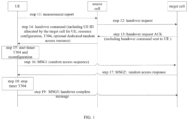
- a handover procedure in the related art includes the following steps.
- Step 11 reporting, by a UE, a measurement report to a source cell.
- Step 12 making, by the source cell, a handover decision based on the measurement report, and sending a handover request message to a target cell.
- Step 16 in case that the handover command includes dedicated handover resources, transmitting a dedicated random access sequence; otherwise, triggering a contention based random access procedure, and selecting and transmitting a random sequence to the target cell.
- Step 17 receiving, by the UE, a random access response message in a random access response window, where the random access response message includes TA information and uplink grant configuration information.
- Step 18 stopping, by the UE, the timer T304, and adjusting uplink transmission time according to the TA contained in the message 2.
- Step 19 transmitting a handover complete message to the target cell according to the uplink resources allocated for the UE, thereby completing an air interface handover procedure.
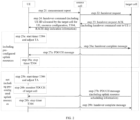
- a RACH-less handover procedure includes the following steps.
- Step 21 reporting, by a UE, a measurement report to a source cell.
- Step 24 after the source cell receives the handover request response message sent by the target cell, transparently transmitting the handover command contained therein to the UE.
- steps 25a to 26a are performed after the step 24.
- Step 25a after the UE receives the handover command, starting a timer T304, configuring the UE according to the handover command, synchronizing to the target cell, and adjusting uplink timing according to the configured TA information carried in the handover command, that is, transmitting an uplink message according to an uplink time of a designated TA group in a serving cell.
- Step 26a in case that the handover command includes the uplink pre-configuration information, transmitting a handover complete message to the target cell at a first valid PUSCH occasion, which is a first PUSCH resource location configured for the UE, encountered by the UE.
- Step 27a monitoring, by the UE, PDCCH message of the target cell.
- steps 25b to 27b are performed after the step 24.
- Step 25b after the UE receives the handover command, starting a timer T304, configuring the UE according to the handover command, synchronizing to the target cell, and adjusting uplink timing according to the configured TA information carried in the handover command, that is, transmitting an uplink message according to an uplink time of a designated TA group in a serving cell; in case that the handover command does not contain the uplink pre-configuration information, monitoring a physical downlink control channel (PDCCH) message of the target cell.
- PDCCH physical downlink control channel
- Step 28b when the UE monitors a PDCCH command of the target cell scrambled with the C-RNTI of the UE, stopping the timer T304.
- Step 29b sending, by the UE, a handover complete message according to uplink resources allocated by the PDCCH.
- the target resource is an uplink resource reserved for the user equipment.
- Validity period information is used to indicate a time window during which the user equipment can use the target resource.
- the UE knows SFN of the serving cell, and pre-configured uplink resources of the target cell start to be considered to be valid when reaching the following specified moment:
- the UE starts the second timer at the start time of the valid window of the target resource; or, the UE starts the second timer at a first valid uplink resource occasion (for example, PUSCH occasion) in the target resource, i.e., a first valid uplink resource occasion such as PUSCH occasion in the valid window; after the timer expires, the UE considers that the target resource starts to be invalid; or, the UE starts the second timer at a moment when the user equipment receives the signaling carrying the validity period information, and, after the timer expires, the UE considers that the target resource is invalid.
- the second timer may be configured through signaling, for example, the network configures valid duration through system information or dedicated signaling, or the protocol specifies valid duration.
- the duration of the second timer is the length of the valid window.
- the UE knows SFN of the serving cell, and pre-configured uplink resources of the target cell start to be considered to be invalid when reaching the following specified moment:
- the uplink resource occasions may also include uplink resources for beam sweeping in a circle, that is, the uplink resource occasions may also include one uplink occasion such as PUSCH occasion on each configured beam.
- the duration of the second timer is the number of repetitions of valid uplink resource occasions, and the number of repetitions may be configured for the UE through signaling.
- the pre-configured uplink resources are considered to be invalid, after the number of repetitions of uplink resource cycles, starting from the start time of the valid window, reaches a specified number of repetition cycles.
- the cycle is a repetition cycle of uplink resources configured for the network.
- the duration of the second timer is the number of repetitions of the valid uplink resource cycles, and the number of repetitions may be configured for the UE through signaling.
- the target resource includes a physical uplink control channel (PUCCH) resource and/or a physical uplink shared channel (PUSCH) resource.
- PUCCH physical uplink control channel
- PUSCH physical uplink shared channel
- the target resource may include only PUCCH resource, may only include PUSCH resource, or may include PUCCH resource and PUSCH resource.
- a length unit of the valid window may be described in a time unit.
- the length of the valid window may be the duration of the foregoing second timer, for example, in milliseconds (ms), slot, SFN, or sub-frame as a unit of measurement.
- the length of the valid window may also be described by the number of times of a certain behavior.
- the length of the valid window may be the number of repetitions of valid uplink resource occasions or the number of repetitions of uplink resource cycles, that is, the uplink resource occasion or uplink resource cycle is taken as a unit of measurement.
- the sending the validity period information to the user equipment includes: in a cell handover procedure, or in a cell synchronization reconfiguration procedure, or in a secondary cell group synchronization reconfiguration procedure, or in a secondary cell addition procedure, or in a secondary cell modification procedure, or in a procedure in which downlink data arrives and uplink is out of synchronization, sending the validity period information to the user equipment.
- the uplink resource configuration method of the embodiment of the present disclosure is applicable to the following scenarios: a cell handover procedure, a cell synchronization reconfiguration procedure, a secondary cell group synchronization reconfiguration procedure, a secondary cell addition procedure, a secondary cell modification procedure, or a procedure in which downlink data arrives and uplink is out of synchronization.
- the target cell provides the validity period information
- the validity period information may be sent to the UE through an RRC message handover command, i.e., a synchronization reconfiguration message or an RRC reconfiguration message; or, the validity period information may be provided through MAC CE or a PDCCH message of the source cell.
- the validity period information may be sent to the UE through an RRC message, i.e., an SCG synchronization reconfiguration message, or MAC CE or a PDCCH message of the source PCell or source PSCell cell.
- RRC message i.e., an SCG synchronization reconfiguration message, or MAC CE or a PDCCH message of the source PCell or source PSCell cell.
- the validity period information may be provided by an RRC message of the serving cell PCell or PSCell.
- the RRC message may be one of an RRC reconfiguration message, an RRC recovery message, an RRC reestablishment cell, and an RRC establishment message.
- the validity period information may also be provided by MAC CE or a PDCCH message of the serving cell PCell or PSCell.
- the validity period information may also be provided by a PDCCH message of a serving cell SCell.
- a serving cell provides the validity period information, for example, through an RRC signaling, or MAC CE or PDCCH message.
- the configuration information of the timing advance includes:
- the network device configures a timing advance for the UE, after the UE obtains a timing advance of a cell to be accessed, the UE adjusts uplink transmission time according to the provided timing advance, and sends uplink data to the cell within configured available uplink resources.
- the UE calculates a TA of a cell to be accessed by the UE according to the TA of the reference cell combined with a time difference between the reference cell and the cell to be accessed by the UE, so as to adjust uplink transmission time, and then sends uplink data to the cell to be accessed by the UE within configured available uplink resources.
- the network device may calculate the TA based on the following information:
- the network device also needs to provide specific configuration information of the target resource, and the configuration information may include at least one of the following:
- the configuration information of the uplink resources may further include an SSB index to associate related SSBs.
- the validity period information may be expressed in a form of a bitmap and/or a specific information element (IE) indication.
- IE information element
- TA and the validity period information of uplink resources reserved for the UE can be provided for the UE.
- providing specific validity period information can save reserved uplink resources, and enables to skip the random access procedure and switch to the target cell on the premise of saving air interface resources of the cell to be accessed by the UE, and enables the UE to switch to the target cell by skipping the random access procedure on the target cell that is not synchronized with the serving cell.
- One embodiment of the present disclosure further provides an uplink resource configuration method, which is performed by a user equipment (UE) and solves the problem of resource waste caused by reserving periodic uplink resources for the UE.
- UE user equipment
- the target resource is an uplink resource reserved for the user equipment.
- the validity period information is used to indicate a time window during which the user equipment can use the target resource.
- the validity period information includes at least one of synchronization signal and PBCH block index (SSB index) associated with the target resource, a start time of a valid window, an end time of the valid window, a length of the valid window, a cycle of the target resource and configuration information of timing advance.
- SSB index PBCH block index
- the start time of the valid window is one of the following:
- a granularity is sub-frame, slot or symbol, that is, the offset specifies the number of sub-frames, or the number of slots, or the number of symbols.
- a granularity is sub-frame, slot or symbol.
- the UE considers that pre-configured uplink resources of the target cell (i.e., a cell to be accessed by the UE) become invalid after reaching the following moment: specified SFN.
- the UE considers that pre-configured uplink resources of the target cell (i.e., a cell to be accessed by the UE) become invalid after reaching the following moment:
- the UE starts the second timer at the start time of the valid window of the target resource; or, the UE starts the second timer at a first valid uplink resource occasion (for example, PUSCH occasion) in the target resource, i.e., a first valid uplink resource occasion such as PUSCH occasion in the valid window; after the timer expires, the UE considers that the target resource starts to be invalid; or, the UE starts the second timer at a moment when the user equipment receives the signaling carrying the validity period information, and, after the timer expires, the UE considers that the target resource is invalid.
- the second timer may be configured through signaling, for example, the network configures valid duration through system information or dedicated signaling, or the protocol specifies valid duration.
- the duration of the second timer is the length of the valid window.
- the UE knows SFN of the serving cell, and pre-configured uplink resources of the target cell start to be considered to be invalid when reaching the following specified moment: specified SFN.
- the UE knows SFN of the serving cell, and pre-configured uplink resources of the target cell start to be considered to be invalid when reaching the following specified moment:
- the uplink resource occasions may also include uplink resources for beam sweeping in a circle, that is, the uplink resource occasions may also include one uplink occasion such as PUSCH occasion on each configured beam.
- the duration of the second timer is the number of repetitions of valid uplink resource occasions, and the number of repetitions may be configured for the UE through signaling.
- the pre-configured uplink resources are considered to be invalid, after the number of repetitions of uplink resource cycles, starting from the start time of the valid window, reaches a specified number of repetition cycles.
- the cycle is a repetition cycle of uplink resources configured for the network.
- the duration of the second timer is the number of repetitions of the valid uplink resource cycles, and the number of repetitions may be configured for the UE through signaling.
- the third timer in the item B8 is a timer that controls the UE to determine failure of handover or synchronization reconfiguration procedure, which may be specifically a timer T304 or a timer T307.
- the target resource includes a physical uplink control channel (PUCCH) resource and/or a physical uplink shared channel (PUSCH) resource.
- PUCCH physical uplink control channel
- PUSCH physical uplink shared channel
- the target resource may include only PUCCH resource, may only include PUSCH resource, or may include PUCCH resource and PUSCH resource.
- a length unit of the valid window may be described in a time unit.
- the length of the valid window may be the duration of the foregoing second timer, for example, in milliseconds (ms), slot, SFN, or sub-frame as a unit of measurement.
- the length of the valid window may also be described by the number of times of a certain behavior.
- the length of the valid window may be the number of repetitions of valid uplink resource occasions or the number of repetitions of uplink resource cycles, that is, the uplink resource occasion or uplink resource cycle is taken as a unit of measurement.
- the receiving the validity period information of the target resource sent by the network device includes: in a cell handover procedure, or in a cell synchronization reconfiguration procedure, or in a secondary cell group synchronization reconfiguration procedure, or in a secondary cell addition procedure, or in a secondary cell modification procedure, or in a procedure in which downlink data arrives and uplink is out of synchronization, receiving the validity period information of the target resource sent by the network device.
- the uplink resource configuration method of the embodiment of the present disclosure is applicable to the following scenarios: a cell handover procedure, a cell synchronization reconfiguration procedure, a secondary cell group synchronization reconfiguration procedure, a secondary cell addition procedure, a secondary cell modification procedure, or a procedure in which downlink data arrives and uplink is out of synchronization.
- the target cell provides the validity period information
- the validity period information may be sent to the UE through an RRC message handover command, i.e., a synchronization reconfiguration message or an RRC reconfiguration message; or, the validity period information may be provided through MAC CE or a PDCCH message of the source cell.
- the validity period information may be sent to the UE through an RRC message, i.e., an SCG synchronization reconfiguration message, or MAC CE or a PDCCH message of the source PCell or source PSCell cell.
- RRC message i.e., an SCG synchronization reconfiguration message, or MAC CE or a PDCCH message of the source PCell or source PSCell cell.
- the validity period information may be provided by an RRC message of the serving cell PCell or PSCell.
- the RRC message may be one of an RRC reconfiguration message, an RRC recovery message, an RRC reestablishment cell, and an RRC establishment message.
- the validity period information may also be provided by MAC CE or a PDCCH message of the serving cell PCell or PSCell.
- the validity period information may also be provided by a PDCCH message of a serving cell SCell.
- the configuration information of the timing advance includes:
- the network device configures a timing advance for the UE, after the UE obtains a timing advance of a cell to be accessed, the UE adjusts uplink transmission time according to the provided timing advance, and sends uplink data to the cell within configured available uplink resources.
- the UE calculates a TA of a cell to be accessed by the UE according to the TA of the reference cell combined with a time difference between the reference cell and the cell to be accessed by the UE, so as to adjust uplink transmission time, and then sends uplink data to the cell to be accessed by the UE within configured available uplink resources.
- the network device also needs to provide specific configuration information of the target resource, and the configuration information may include at least one of the following:
- the user equipment further includes one of the following:
- the end time of the valid window is one of the following:
- the target resource includes a physical uplink control channel (PUCCH) resource and/or a physical uplink shared channel (PUSCH) resource.
- PUCCH physical uplink control channel
- PUSCH physical uplink shared channel
- a bus architecture may include any number of interconnected buses and bridges. Specifically, various circuits of one or more processors, which are represented by the processor 700, and the memory, which is represented by the memory 720, are linked together.
- the bus architecture may link various other circuits, such as a peripheral device, voltage regulator and a power management circuit together. These features are well known in this field, therefore, the present disclosure does not make further description on these features.
- the bus interface provides an interface.
- the transceiver 710 may be multiple elements, including a transmitter and a receiver and provide units, which communicate with other devices on the transmission medium.
- the processor 700 is responsible for managing the bus architecture and common processing and the memory 720 may store data used by the processor 700 when executing the operations.
- the validity period information includes at least one of synchronization signal and PBCH block index (SSB index) associated with the target resource, a start time of a valid window, an end time of the valid window, a length of the valid window, a cycle of the target resource and configuration information of timing advance.
- SSB index PBCH block index
- the end time of the valid window is one of the following:
- the target resource includes a physical uplink control channel (PUCCH) resource and/or a physical uplink shared channel (PUSCH) resource.
- PUCCH physical uplink control channel
- PUSCH physical uplink shared channel
- the transceiver 84 executes the computer program to implement the following steps: in a cell handover procedure, or in a cell synchronization reconfiguration procedure, or in a secondary cell group synchronization reconfiguration procedure, or in a secondary cell addition procedure, or in a secondary cell modification procedure, or in a procedure in which downlink data arrives and uplink is out of synchronization, receiving the validity period information of the target resource sent by the network device.
- the configuration information of the timing advance includes:
- the transceiver 84 executes the computer program to implement the following steps:
- the transceiver 84 executes the computer program to implement at least one of the following:
- the transceiver 84 executes the computer program to implement at least one of the following:
- ASIC application specific integrated circuits
- DSP digital signal processor
- DSP Device digital signal processing device
- PLD programmable logic device
- PFGA field-programmable gate array
- technologies described in the embodiments of the present disclosure may be implemented by executing functional modules (for example, a process and a function) in the embodiments of the present disclosure.
- Software codes can be stored in the memory and executed by the processor.
- the memory can be implemented inside or outside the processor.
Landscapes
- Engineering & Computer Science (AREA)
- Signal Processing (AREA)
- Computer Networks & Wireless Communication (AREA)
- Mobile Radio Communication Systems (AREA)
Claims (15)
- Verfahren zur Konfiguration von Uplink-Ressourcen, das von einer Netzwerkvorrichtung durchgeführt wird, dadurch gekennzeichnet, dass es Folgendes umfasst:Reservieren (31) einer Uplink-Ressource für ein Benutzergerät, UE, als Zielressource einer Zielzelle einer Übergabeprozedur ohne wahlfreien Zugriffskanal, RACH-los;Bestimmen (32) von Informationen über die Gültigkeitsdauer der Zielressource; undSenden (33) der Informationen über die Gültigkeitsdauer an das Benutzergerät;wobei die Informationen über die Gültigkeitsdauer Synchronisationssignal und PBCH-Block, SSB, Index, der der Zielressource zugeordnet ist, einen Zyklus der Zielressource und mindestens eine der folgenden Informationen enthalten: eine Startzeit eines gültigen Fensters, eine Endzeit des gültigen Fensters, eine Länge des gültigen Fensters oder Konfigurationsinformationen des Zeitvorlaufs.
- Verfahren nach Anspruch 1, wobei die Startzeit des gültigen Fensters eine der Folgenden ist: eine Systemrahmennummer, SFN, einer Zelle, auf die das Benutzergerät zugreifen soll; die Systemrahmennummer der Zelle, auf die das Benutzergerät zugreifen soll, und ein Offset; eine erste spezifizierte Schlitzposition oder Subrahmenposition der Zelle, auf die das Benutzergerät zugreifen soll, nachdem das Benutzergerät eine Signalisierung empfängt, die die Informationen über die Gültigkeitsdauer trägt; ein voreingestellter Zeitpunkt, zu dem ein erster Zeitgeber abläuft, wobei der erste Zeitgeber gestartet wird, wenn das Benutzergerät die Signalisierung empfängt, die die Informationen über die Gültigkeitsdauer trägt, oder wenn das Benutzergerät eine Downlink-Synchronisation der Zelle erhält, auf die zugegriffen werden soll; eine Systemrahmennummer einer vorbestimmten Referenzzelle; die Systemrahmennummer der vorbestimmten Referenzzelle und ein Offset; nachdem das Benutzergerät die Signalisierung empfängt, die die Informationen über die Gültigkeitsdauer trägt, eine erste spezifizierte Schlitzposition oder Subrahmenposition der vorbestimmten Referenzzelle;wobei die Endzeit des gültigen Fensters eine der Folgenden ist: eine Systemrahmennummer einer Zelle, auf die das Benutzergerät zugreifen soll; die Systemrahmennummer der Zelle, auf die das Benutzergerät zugreifen soll, und ein Offset; ein voreingestellter Zeitpunkt, zu dem ein zweiter Zeitgeber abläuft, wobei der zweite Zeitgeber zu der Startzeit des gültigen Fensters gestartet wird, oder ein erstes gültiges Uplink-Ressourcenereignis in der Zielressource, oder ein Zeitpunkt, zu dem das Benutzergerät die Signalisierung empfängt, die die Informationen über die Gültigkeitsdauer trägt; wobei die Länge des gültigen Fensters die Dauer des zweiten Zeitgebers ist; eine Systemrahmennummer einer vorbestimmten Referenzzelle; wobei die Länge des gültigen Fensters die Dauer des zweiten Zeitgebers ist; eine Systemrahmennummer einer vorbestimmten Referenzzelle; die Systemrahmennummer der vorbestimmten Referenzzelle und ein Offset; ein Moment, wenn die Anzahl von Wiederholungen von gültigen Uplink-Ressourcenanlässen eine erste voreingestellte Anzahl von Malen erreicht, wobei die Länge des gültigen Fensters die erste voreingestellte Anzahl von Malen der Uplink-Ressourcenanlässe ist; ein Moment, wenn die Anzahl von Wiederholungen von gültigen Uplink-Ressourcenzyklen eine zweite voreingestellte Anzahl von Malen erreicht, wobei die Länge des gültigen Fensters die zweite voreingestellte Anzahl von Malen der gültigen Uplink-Ressourcenzyklen ist; ein Timeout-Moment eines dritten Zeitgebers zum Steuern von Zellenübergabe oder Rekonfiguration der Synchronisation;wobei die Konfigurationsinformationen des Zeitvorlaufs eines der Folgenden aufweisen: Zeitvorlauf; eine Zeitvorlauf-Referenzzelle und eine Zeitdifferenz zu einem Zeitvorlauf der Referenzzelle.
- Verfahren nach Anspruch 1, wobei die Zielressource eine physikalischer-Uplink-Steuerkanal-, PUCCH-, Ressource und/oder eine physikalischer-Uplink-Gemeinschaftskanal-, PUSCH-, Ressource aufweist.
- Verfahren nach Anspruch 1, wobei das Senden der Informationen über die Gültigkeitsdauer an das Benutzergerät umfasst:
in einer Zellenübergabeprozedur oder in einer Prozedur zur Rekonfiguration der Zellsynchronisation oder in einer Prozedur zur Rekonfiguration der Synchronisation einer sekundären Zellengruppe oder in einer sekundären Zellenänderungsprozedur oder in einer Prozedur, in der Downlink-Daten ankommen und Uplink nicht synchronisiert ist, das Senden der Informationen über die Gültigkeitsdauer an das Benutzergerät. - Verfahren zur Konfiguration von Uplink-Ressourcen, das von einem Benutzergerät, UE, durchgeführt wird, dadurch gekennzeichnet, dass es umfasst:Empfang (41) von Informationen über die Gültigkeitsdauer einer Zielressource einer Zielzelle einer Übergabeprozedur ohne wahlfreien Zugriffskanal, RACH-los, die von einer Netzwerkvorrichtung gesendet werden;wobei die Zielressource eine für das Benutzergerät reservierte Uplink-Ressource ist;wobei die Informationen über die Gültigkeitsdauer Synchronisationssignal und PBCH-Block, SSB, Index, der der Zielressource zugeordnet ist, einen Zyklus der Zielressource und mindestens eine der folgenden Informationen enthalten: eine Startzeit eines gültigen Fensters, eine Endzeit des gültigen Fensters, eine Länge des gültigen Fensters oder Konfigurationsinformationen über den Zeitvorlauf.
- Verfahren nach Anspruch 5, wobei die Startzeit des gültigen Fensters eine der Folgenden ist: eine Systemrahmennummer, SFN, einer Zelle, auf die das Benutzergerät zugreifen soll; die Systemrahmennummer der Zelle, auf die das Benutzergerät zugreifen soll, und ein Offset; eine erste spezifizierte Schlitzposition oder Subrahmenposition der Zelle, auf die das Benutzergerät zugreifen soll, nachdem das Benutzergerät eine Signalisierung empfängt, die die Informationen über die Gültigkeitsdauer trägt; ein voreingestellter Zeitpunkt, zu dem ein erster Zeitgeber abläuft, wobei der erste Zeitgeber gestartet wird, wenn das Benutzergerät die Signalisierung empfängt, die die Informationen über die Gültigkeitsdauer trägt, oder wenn das Benutzergerät eine Downlink-Synchronisation der Zelle erhält, auf die zugegriffen werden soll;eine Systemrahmennummer einer vorbestimmten Referenzzelle; die Systemrahmennummer der vorbestimmten Referenzzelle und ein Offset; nachdem die Benutzerausrüstung die Signalisierung empfängt, die die Informationen über die Gültigkeitsdauer trägt, eine erste spezifizierte Schlitzposition oder Subrahmenposition der vorbestimmten Referenzzelle;wobei die Endzeit des gültigen Fensters eine der folgenden ist: eine Systemrahmennummer einer Zelle, auf die das Benutzergerät zugreifen soll; die Systemrahmennummer der Zelle, auf die das Benutzergerät zugreifen soll, und ein Offset; ein voreingestellter Zeitpunkt, zu dem ein zweiter Zeitgeber abläuft, wobei der zweite Zeitgeber zu der Startzeit des gültigen Fensters gestartet wird, oder ein erstes gültiges Uplink-Ressourcenereignis in der Zielressource, oder ein Zeitpunkt, zu dem das Benutzergerät die Signalisierung empfängt, die die Informationen über die Gültigkeitsdauer trägt; wobei die Länge des gültigen Fensters die Dauer des zweiten Zeitgebers ist; eine Systemrahmennummer einer vorbestimmten Referenzzelle; wobei die Länge des gültigen Fensters die Dauer des zweiten Zeitgebers ist; eine Systemrahmennummer einer vorbestimmten Referenzzelle; die Systemrahmennummer der vorbestimmten Referenzzelle und ein Offset; ein Moment, wenn die Anzahl von Wiederholungen von gültigen Uplink-Ressourcenanlässen eine erste voreingestellte Anzahl von Malen erreicht, wobei die Länge des gültigen Fensters die erste voreingestellte Anzahl von Malen der Uplink-Ressourcenanlässe ist; ein Moment, wenn die Anzahl von Wiederholungen von gültigen Uplink-Ressourcenzyklen eine zweite voreingestellte Anzahl von Malen erreicht, wobei die Länge des gültigen Fensters die zweite voreingestellte Anzahl von Malen der gültigen Uplink-Ressourcenzyklen ist; ein Timeout-Moment eines dritten Zeitgebers zum Steuern von Zellenübergabe oder Rekonfiguration der Synchronisation.
- Verfahren nach Anspruch 5, wobei die Zielressource eine physikalischer-Uplink-Steuerkanal-, PUCCH-, Ressource und/oder eine physikalischer-Uplink-Gemeinschaftskanal-, PUSCH-, Ressource aufweist.
- Verfahren nach Anspruch 5, wobei das Empfangen von Informationen über die Gültigkeitsdauer einer von einer Netzwerkvorrichtung gesendeten Zielressource Folgendes umfasst: in einer Zellenübergabeprozedur oder in einer Prozedur zur Rekonfiguration der Zellsynchronisation oder in einer Prozedur zur Rekonfiguration der Synchronisation einer sekundären Zellengruppe oder in einer Prozedur zur Hinzufügung einer sekundären Zelle oder in einer Prozedur zur Modifikation einer sekundären Zelle oder in einer Prozedur, in der Downlink-Daten ankommen und Uplink nicht synchronisiert ist, das Empfangen der Informationen über die Gültigkeitsdauer der von der Netzwerkvorrichtung gesendeten Zielressource.
- Verfahren nach Anspruch 5, wobei die Konfigurationsinformationen des Zeitvorlaufs eines der Folgenden aufweisen: Zeitvorlauf, eine Zeitvorlauf-Referenzzelle und eine Zeitdifferenz zu einem Zeitvorlauf der Referenzzelle.
- Verfahren nach Anspruch 5, wobei das Verfahren ferner mindestens einen der folgenden Schritte umfasst: Anpassen der Uplink-Sendezeit gemäß den Konfigurationsinformationen des Zeitvorlaufs oder Senden von Uplink-Daten innerhalb des gültigen Fensters der Zielressource.
- Verfahren nach Anspruch 5, wobei das Verfahren nach dem Empfang von Informationen über die Gültigkeitsdauer einer Zielressource, die von einer Netzwerkvorrichtung gesendet wurden, ferner mindestens eines der folgenden Schritte umfasst:Freigeben der Zielressource beim Empfang der physikalischen Downlink-Steuerkanalplanung, wobei die physikalische Downlink-Steuerkanalplanung mit einer temporären Zellfunknetzkennung des Benutzergeräts verschlüsselt ist;Freigabe der Zielressource, wenn ein dritter Zeitgeber für die Steuerung der Zellenübergabe oder der Rekonfiguration der Synchronisation abläuft;Freigabe der Zielressource bei Empfang einer Rückmeldung, dass die Uplink-Daten erfolgreich empfangen wurden;Freigabe der Zielressource, wenn ein wahlfreier Zugriff abgeschlossen ist;Auslösen des wahlfreien Zugriffs vor Beginn der Gültigkeitsdauer der Zielressource und/oder nach Ende der Gültigkeitsdauer; oder,falls es eine gültige Konfiguration der Zielressource auf einem dritten für den Zugriff ausgewählten Strahl gibt, Senden von Uplink-Daten auf der Zielressource innerhalb der Gültigkeitsdauer der Zielressource, andernfalls Auslösen des zufälligen Zugriffs.
- Verfahren nach Anspruch 5, wobei das Verfahren ferner Folgendes umfasst: Empfangen von dedizierten Ressourcen mit wahlfreiem Zugriff, die von der Netzwerkvorrichtung konfiguriert werden;
wobei das Verfahren nach dem Empfang von Informationen über die Gültigkeitsdauer einer Zielressource, die von einer Netzwerkvorrichtung gesendet wurden, ferner mindestens eines der Folgenden umfasst:innerhalb einer Gültigkeitsdauer der Zielressource, Senden von Uplink-Daten auf der Zielressource und das Nichtauslösen des wahlfreien Zugriffs vor Ablauf der Gültigkeitsdauer der Zielressource;Ignorieren der Zielressource und Auslösen des wahlfreien Zugriffs;Empfangen von Anzeigeinformationen, die von der Netzwerkvorrichtung gesendet werden, und Auslösen von wahlfreiem Zugriff oder Senden von Uplink-Daten auf der Zielressource gemäß den Anzeigeinformationen, wobei die Anzeigeinformationen verwendet werden, um Prioritäten der Zielressource und der dedizierten wahlfreien Zugriffsressource anzuzeigen;Auslösen des wahlfreien Zugriffs vor Beginn der Gültigkeitsdauer der Zielressource und/oder nach Ende der Gültigkeitsdauer der Zielressource;falls es eine gültige Konfiguration der Zielressource auf einem ersten für den Zugriff ausgewählten Strahl gibt, Senden von Uplink-Daten auf der Zielressource innerhalb der Gültigkeitsdauer der Zielressource, andernfalls Auslösen des zufälligen Zugriffs; oder,falls es eine gültige Konfiguration einer dedizierten Ressource mit wahlfreiem Zugriff auf einem zweiten, für den Zugriff ausgewählten Strahl gibt, Auslösung des wahlfreien Zugriffs auf dem zweiten Strahl. - Verfahren nach Anspruch 5, wobei das Verfahren ferner umfasst:Empfangen von Konfigurationsinformationen eines dritten Zeitgebers, der von der Netzwerkvorrichtung gesendet wird, wobei der dritte Zeitgeber ein Zeitgeber ist, der zur Steuerung der Zellenübergabe oder der Rekonfiguration der Synchronisation verwendet wird;wobei das Verfahren nach dem Empfang von Informationen über die Gültigkeitsdauer einer Zielressource, die von einer Netzwerkvorrichtung gesendet wurden, ferner mindestens eines der Folgenden umfasst:beim Empfang eines Signals, das die Information über die Gültigkeitsdauer enthält, wird der dritte Zeitgeber gestartet;Ignorieren des dritten Zeitgebers;Starten des dritten Zeitgebers, wenn die Gültigkeitsdauer der Zielressource endet;Starten des dritten Zeitgebers, wenn die Gültigkeitsdauer der Zielressource beginnt.
- Eine Netzwerkvorrichtung, dadurch gekennzeichnet, dass sie aufweist:ein Ressourcenreservierungsmodul (51), das eingerichtet ist, eine Uplink-Ressource für ein Benutzergerät als eine Zielressource einer Zielzelle einer Übergabeprozedur ohne wahlfreien Zugriffskanal, RACH-los, zu reservieren;ein Informationsbestimmungsmodul (52), das eingerichtet ist, Informationen über die Gültigkeitsdauer der Zielressource zu bestimmen;ein Modul (53) zum Senden der Gültigkeitsdauer, das eingerichtet ist, die Informationen über die Gültigkeitsdauer an das Benutzergerät zu senden;wobei die Informationen über die Gültigkeitsdauer Synchronisationssignal und PBCH-Block, SSB, Index, der der Zielressource zugeordnet ist, einen Zyklus der Zielressource und mindestens eine der folgenden Informationen enthalten: eine Startzeit eines gültigen Fensters, eine Endzeit des gültigen Fensters, eine Länge des gültigen Fensters oder Konfigurationsinformationen über den Zeitvorlauf.
- Ein Benutzergerät, dadurch gekennzeichnet, dass es aufweist:ein Gültigkeitsdauer-Empfangsmodul (61), das eingerichtet ist, Informationen über die Gültigkeitsdauer einer Zielressource einer Zielzelle einer Übergabeprozedur ohne wahlfreien Zugriffskanal, RACH-los, zu empfangen, die von einer Netzwerkvorrichtung gesendet werden, wobei die Zielressource eine für das Benutzergerät reservierte Uplink-Ressource ist;wobei die Informationen über die Gültigkeitsdauer Synchronisationssignal und PBCH-Block, SSB, Index, der der Zielressource zugeordnet ist, einen Zyklus der Zielressource und mindestens eine der folgenden Informationen enthalten: eine Startzeit eines gültigen Fensters, eine Endzeit des gültigen Fensters, eine Länge des gültigen Fensters oder Konfigurationsinformationen über den Zeitvorlauf.
Applications Claiming Priority (2)
| Application Number | Priority Date | Filing Date | Title |
|---|---|---|---|
| CN201910736211.4A CN112351498B (zh) | 2019-08-09 | 2019-08-09 | 一种上行资源的配置方法、网络侧设备及用户设备 |
| PCT/CN2020/106780 WO2021027626A1 (zh) | 2019-08-09 | 2020-08-04 | 上行资源的配置方法、网络侧设备及用户设备 |
Publications (4)
| Publication Number | Publication Date |
|---|---|
| EP4013155A1 EP4013155A1 (de) | 2022-06-15 |
| EP4013155A4 EP4013155A4 (de) | 2022-09-28 |
| EP4013155B1 true EP4013155B1 (de) | 2025-07-09 |
| EP4013155C0 EP4013155C0 (de) | 2025-07-09 |
Family
ID=74367041
Family Applications (1)
| Application Number | Title | Priority Date | Filing Date |
|---|---|---|---|
| EP20852790.3A Active EP4013155B1 (de) | 2019-08-09 | 2020-08-04 | Uplink-ressourcenkonfigurationsverfahren, netzwerkseitige vorrichtung und benutzergerät |
Country Status (4)
| Country | Link |
|---|---|
| US (1) | US20220295480A1 (de) |
| EP (1) | EP4013155B1 (de) |
| CN (1) | CN112351498B (de) |
| WO (1) | WO2021027626A1 (de) |
Families Citing this family (17)
| Publication number | Priority date | Publication date | Assignee | Title |
|---|---|---|---|---|
| CN114868433A (zh) * | 2019-12-27 | 2022-08-05 | Oppo广东移动通信有限公司 | 随机接入的方法和终端设备 |
| CN113453372B (zh) * | 2020-03-25 | 2023-08-25 | 大唐移动通信设备有限公司 | 一种随机接入方法、基站、用户设备、装置、介质 |
| CN114071609A (zh) * | 2020-08-06 | 2022-02-18 | 北京三星通信技术研究有限公司 | 一种用于变更服务实体的方法及设备 |
| EP4156815A4 (de) * | 2020-08-28 | 2023-07-19 | Guangdong Oppo Mobile Telecommunications Corp., Ltd. | Datenübertragungsverfahren, netzwerkvorrichtung und endgerätevorrichtung |
| US12294910B2 (en) * | 2021-03-09 | 2025-05-06 | Nokia Technologies Oy | UE location validation for PUR in LEO networks |
| CN116155463A (zh) * | 2021-11-19 | 2023-05-23 | 维沃移动通信有限公司 | Gap窗口的配置方法、装置、设备及介质 |
| CN118216201A (zh) * | 2021-12-22 | 2024-06-18 | Oppo广东移动通信有限公司 | 切换过程的资源配置方法、装置、设备、芯片及存储介质 |
| CN119999153A (zh) * | 2022-12-13 | 2025-05-13 | Oppo广东移动通信有限公司 | 管理方法和设备 |
| CN116170826A (zh) * | 2023-01-18 | 2023-05-26 | 中国信息通信研究院 | 一种物理层移动性波束失败恢复的指示方法和设备 |
| US20240251309A1 (en) * | 2023-01-20 | 2024-07-25 | Qualcomm Incorporated | Reference cell configuration |
| CN118433940A (zh) * | 2023-01-29 | 2024-08-02 | 上海朗帛通信技术有限公司 | 一种被用于无线通信的方法和设备 |
| CN116830659A (zh) * | 2023-04-28 | 2023-09-29 | 北京小米移动软件有限公司 | 确定定时提前量的方法、装置和存储介质 |
| WO2024234264A1 (zh) * | 2023-05-15 | 2024-11-21 | 北京小米移动软件有限公司 | 通信方法、通信装置、通信设备、通信系统和存储介质 |
| WO2025081456A1 (zh) * | 2023-10-20 | 2025-04-24 | 上海移远通信技术股份有限公司 | 小区切换方法、终端设备和网络设备 |
| WO2025097319A1 (en) * | 2023-11-07 | 2025-05-15 | Nokia Shanghai Bell Co., Ltd. | Provisioning preconfigured resource for target cell in non-terrestrial network |
| WO2025166921A1 (en) * | 2024-02-06 | 2025-08-14 | Huawei Technologies Co., Ltd. | Method, apparatus, and system for non-terrestrial network communication |
| WO2026032993A2 (en) * | 2024-08-09 | 2026-02-12 | Aumovio Germany Gmbh | Method for enhanced rach-less handover |
Family Cites Families (9)
| Publication number | Priority date | Publication date | Assignee | Title |
|---|---|---|---|---|
| CN101998553B (zh) * | 2009-08-14 | 2013-07-31 | 电信科学技术研究院 | 上行资源的分配方法和设备 |
| CN103716883B (zh) * | 2012-09-28 | 2017-05-24 | 上海贝尔股份有限公司 | 基于eNB对其用户设备的上行资源进行控制的方法与设备 |
| CN107046727B (zh) * | 2016-02-06 | 2020-10-09 | 上海无线通信研究中心 | 一种上行资源共享方法、基站及终端 |
| EP3474593B1 (de) * | 2016-06-21 | 2021-08-11 | Huawei Technologies Co., Ltd. | Effizienter direktzugriff |
| US20180049079A1 (en) * | 2016-08-12 | 2018-02-15 | Qualcomm Incorporated | Handover in wireless communications |
| EP3524010B1 (de) * | 2016-10-07 | 2021-06-16 | Telefonaktiebolaget LM Ericsson (PUBL) | Steuerung der gültigkeitszeit einer uplink-berechtigung in einer zielzelle während eines rach-losen handovers |
| US11039357B2 (en) * | 2017-05-19 | 2021-06-15 | Electronics And Telecommunications Research Institute | Handover method in mobile communication system |
| CN109392186B (zh) * | 2017-08-10 | 2021-01-08 | 维沃移动通信有限公司 | 随机接入方法、终端、网络设备及计算机可读存储介质 |
| CN113632538B (zh) * | 2019-02-13 | 2024-07-16 | 瑞典爱立信有限公司 | 用于无随机接入信道切换/辅小区组变更的对齐配置 |
-
2019
- 2019-08-09 CN CN201910736211.4A patent/CN112351498B/zh active Active
-
2020
- 2020-08-04 WO PCT/CN2020/106780 patent/WO2021027626A1/zh not_active Ceased
- 2020-08-04 US US17/633,938 patent/US20220295480A1/en not_active Abandoned
- 2020-08-04 EP EP20852790.3A patent/EP4013155B1/de active Active
Also Published As
| Publication number | Publication date |
|---|---|
| WO2021027626A1 (zh) | 2021-02-18 |
| EP4013155A4 (de) | 2022-09-28 |
| EP4013155A1 (de) | 2022-06-15 |
| EP4013155C0 (de) | 2025-07-09 |
| CN112351498A (zh) | 2021-02-09 |
| CN112351498B (zh) | 2024-09-10 |
| US20220295480A1 (en) | 2022-09-15 |
Similar Documents
| Publication | Publication Date | Title |
|---|---|---|
| EP4013155B1 (de) | Uplink-ressourcenkonfigurationsverfahren, netzwerkseitige vorrichtung und benutzergerät | |
| US20230131188A1 (en) | Wireless communication method and terminal device | |
| JP5632560B2 (ja) | セカンダリタイミングアドバンスを取得する方法及び装置 | |
| JP6938777B2 (ja) | Rrc接続モードでのランダムアクセスのための帯域幅部分操作 | |
| KR102187395B1 (ko) | 라이센스되지 않은 스펙트럼을 통해서 2차 셀 활성화 및 비활성화 상에서 무선 디바이스 피드백을 제어하기 위한 시스템 및 방법 | |
| JP2022511238A (ja) | 欠落している参照信号の場合における無線ネットワーク測定 | |
| US20140169346A1 (en) | Radio station, radio terminal, and synchronization timer control method in radio communication system | |
| JP2016522630A (ja) | 無線電気通信ネットワークにおけるハンドオーバ間のDevice−to−Device(D2D)通信を管理するための無線デバイス、ネットワークノード、および、それらの方法 | |
| CN113301660B (zh) | 竞争解决定时器的确定 | |
| WO2021253412A1 (zh) | 无线通信的方法和终端设备 | |
| JP2021514132A (ja) | 改善された優先順位付けされるランダムアクセスに関与するユーザ機器および基地局 | |
| JP6657114B2 (ja) | 移動通信システムでの端末のハンドオーバー方法及び装置 | |
| US20240357698A1 (en) | Communication method and apparatus | |
| US20250274823A1 (en) | Method for indicating timing advances and device | |
| CN114342465A (zh) | 无线通信的方法和终端设备 | |
| CN116686328A (zh) | 预配置的测量间隙的激活/去激活 | |
| EP3972374B1 (de) | Verfahren und vorrichtung für direktzugriff | |
| CN115175295A (zh) | 终端设备的控制方法、装置及存储介质 | |
| US20250374335A1 (en) | Random access method and apparatus | |
| EP2965456B1 (de) | Synchronisierte physikalische schicht-rekonfiguration zwischen einer benutzervorrichtung, makrozelle und kleiner zelle bei makrozellenunterstütztem kleinzelligem einsatz | |
| CN112385282A (zh) | 随机接入过程期间的上行链路跳过 | |
| KR20210002720A (ko) | 퍼지 기간의 길이 확정 방법, 단말 및 네트워크 측 기기 | |
| JP2024533766A (ja) | リソース選択方法、装置及び端末 | |
| EP4586686A1 (de) | Kommunikationsverfahren, kommunikationsvorrichtung, medium und programmprodukt | |
| EP4668852A1 (de) | Direktzugriffsverfahren und -vorrichtung |
Legal Events
| Date | Code | Title | Description |
|---|---|---|---|
| STAA | Information on the status of an ep patent application or granted ep patent |
Free format text: STATUS: THE INTERNATIONAL PUBLICATION HAS BEEN MADE |
|
| PUAI | Public reference made under article 153(3) epc to a published international application that has entered the european phase |
Free format text: ORIGINAL CODE: 0009012 |
|
| STAA | Information on the status of an ep patent application or granted ep patent |
Free format text: STATUS: REQUEST FOR EXAMINATION WAS MADE |
|
| 17P | Request for examination filed |
Effective date: 20220308 |
|
| AK | Designated contracting states |
Kind code of ref document: A1 Designated state(s): AL AT BE BG CH CY CZ DE DK EE ES FI FR GB GR HR HU IE IS IT LI LT LU LV MC MK MT NL NO PL PT RO RS SE SI SK SM TR |
|
| A4 | Supplementary search report drawn up and despatched |
Effective date: 20220826 |
|
| RIC1 | Information provided on ipc code assigned before grant |
Ipc: H04W 92/20 20090101ALN20220822BHEP Ipc: H04L 5/00 20060101ALN20220822BHEP Ipc: H04W 72/12 20090101ALN20220822BHEP Ipc: H04W 72/04 20090101ALN20220822BHEP Ipc: H04W 36/00 20090101AFI20220822BHEP |
|
| DAV | Request for validation of the european patent (deleted) | ||
| DAX | Request for extension of the european patent (deleted) | ||
| REG | Reference to a national code |
Ref country code: DE Ref legal event code: R079 Ipc: H04W0036000000 Ref country code: DE Ref legal event code: R079 Ref document number: 602020054340 Country of ref document: DE Free format text: PREVIOUS MAIN CLASS: H04W0072040000 Ipc: H04W0036000000 |
|
| GRAP | Despatch of communication of intention to grant a patent |
Free format text: ORIGINAL CODE: EPIDOSNIGR1 |
|
| STAA | Information on the status of an ep patent application or granted ep patent |
Free format text: STATUS: GRANT OF PATENT IS INTENDED |
|
| RIC1 | Information provided on ipc code assigned before grant |
Ipc: H04L 5/00 20060101ALN20250115BHEP Ipc: H04W 92/20 20090101ALN20250115BHEP Ipc: H04W 76/38 20180101ALN20250115BHEP Ipc: H04W 74/0833 20240101ALN20250115BHEP Ipc: H04W 72/23 20230101ALN20250115BHEP Ipc: H04W 72/1268 20230101ALN20250115BHEP Ipc: H04W 36/24 20090101ALN20250115BHEP Ipc: H04W 36/00 20090101AFI20250115BHEP |
|
| RIC1 | Information provided on ipc code assigned before grant |
Ipc: H04L 5/00 20060101ALN20250120BHEP Ipc: H04W 92/20 20090101ALN20250120BHEP Ipc: H04W 76/38 20180101ALN20250120BHEP Ipc: H04W 74/0833 20240101ALN20250120BHEP Ipc: H04W 72/23 20230101ALN20250120BHEP Ipc: H04W 72/1268 20230101ALN20250120BHEP Ipc: H04W 36/24 20090101ALN20250120BHEP Ipc: H04W 36/00 20090101AFI20250120BHEP |
|
| INTG | Intention to grant announced |
Effective date: 20250218 |
|
| GRAS | Grant fee paid |
Free format text: ORIGINAL CODE: EPIDOSNIGR3 |
|
| GRAA | (expected) grant |
Free format text: ORIGINAL CODE: 0009210 |
|
| STAA | Information on the status of an ep patent application or granted ep patent |
Free format text: STATUS: THE PATENT HAS BEEN GRANTED |
|
| AK | Designated contracting states |
Kind code of ref document: B1 Designated state(s): AL AT BE BG CH CY CZ DE DK EE ES FI FR GB GR HR HU IE IS IT LI LT LU LV MC MK MT NL NO PL PT RO RS SE SI SK SM TR |
|
| REG | Reference to a national code |
Ref country code: GB Ref legal event code: FG4D |
|
| REG | Reference to a national code |
Ref country code: CH Ref legal event code: EP |
|
| REG | Reference to a national code |
Ref country code: IE Ref legal event code: FG4D |
|
| REG | Reference to a national code |
Ref country code: DE Ref legal event code: R096 Ref document number: 602020054340 Country of ref document: DE |
|
| U01 | Request for unitary effect filed |
Effective date: 20250806 |
|
| U07 | Unitary effect registered |
Designated state(s): AT BE BG DE DK EE FI FR IT LT LU LV MT NL PT RO SE SI Effective date: 20250819 |
|
| PGFP | Annual fee paid to national office [announced via postgrant information from national office to epo] |
Ref country code: GB Payment date: 20250820 Year of fee payment: 6 |
|
| U20 | Renewal fee for the european patent with unitary effect paid |
Year of fee payment: 6 Effective date: 20250924 |
|
| PG25 | Lapsed in a contracting state [announced via postgrant information from national office to epo] |
Ref country code: IS Free format text: LAPSE BECAUSE OF FAILURE TO SUBMIT A TRANSLATION OF THE DESCRIPTION OR TO PAY THE FEE WITHIN THE PRESCRIBED TIME-LIMIT Effective date: 20251109 |
|
| PG25 | Lapsed in a contracting state [announced via postgrant information from national office to epo] |
Ref country code: NO Free format text: LAPSE BECAUSE OF FAILURE TO SUBMIT A TRANSLATION OF THE DESCRIPTION OR TO PAY THE FEE WITHIN THE PRESCRIBED TIME-LIMIT Effective date: 20251009 |
|
| PG25 | Lapsed in a contracting state [announced via postgrant information from national office to epo] |
Ref country code: HR Free format text: LAPSE BECAUSE OF FAILURE TO SUBMIT A TRANSLATION OF THE DESCRIPTION OR TO PAY THE FEE WITHIN THE PRESCRIBED TIME-LIMIT Effective date: 20250709 |
|
| PG25 | Lapsed in a contracting state [announced via postgrant information from national office to epo] |
Ref country code: GR Free format text: LAPSE BECAUSE OF FAILURE TO SUBMIT A TRANSLATION OF THE DESCRIPTION OR TO PAY THE FEE WITHIN THE PRESCRIBED TIME-LIMIT Effective date: 20251010 |
|
| PG25 | Lapsed in a contracting state [announced via postgrant information from national office to epo] |
Ref country code: PL Free format text: LAPSE BECAUSE OF FAILURE TO SUBMIT A TRANSLATION OF THE DESCRIPTION OR TO PAY THE FEE WITHIN THE PRESCRIBED TIME-LIMIT Effective date: 20250709 |
|
| PG25 | Lapsed in a contracting state [announced via postgrant information from national office to epo] |
Ref country code: RS Free format text: LAPSE BECAUSE OF FAILURE TO SUBMIT A TRANSLATION OF THE DESCRIPTION OR TO PAY THE FEE WITHIN THE PRESCRIBED TIME-LIMIT Effective date: 20251009 |
|
| PG25 | Lapsed in a contracting state [announced via postgrant information from national office to epo] |
Ref country code: ES Free format text: LAPSE BECAUSE OF FAILURE TO SUBMIT A TRANSLATION OF THE DESCRIPTION OR TO PAY THE FEE WITHIN THE PRESCRIBED TIME-LIMIT Effective date: 20250709 |
|
| REG | Reference to a national code |
Ref country code: CH Ref legal event code: H13 Free format text: ST27 STATUS EVENT CODE: U-0-0-H10-H13 (AS PROVIDED BY THE NATIONAL OFFICE) Effective date: 20260324 |
|
| PG25 | Lapsed in a contracting state [announced via postgrant information from national office to epo] |
Ref country code: SM Free format text: LAPSE BECAUSE OF FAILURE TO SUBMIT A TRANSLATION OF THE DESCRIPTION OR TO PAY THE FEE WITHIN THE PRESCRIBED TIME-LIMIT Effective date: 20250709 |
|
| PG25 | Lapsed in a contracting state [announced via postgrant information from national office to epo] |
Ref country code: CH Free format text: LAPSE BECAUSE OF NON-PAYMENT OF DUE FEES Effective date: 20250831 Ref country code: CZ Free format text: LAPSE BECAUSE OF FAILURE TO SUBMIT A TRANSLATION OF THE DESCRIPTION OR TO PAY THE FEE WITHIN THE PRESCRIBED TIME-LIMIT Effective date: 20250709 |
|
| PG25 | Lapsed in a contracting state [announced via postgrant information from national office to epo] |
Ref country code: SK Free format text: LAPSE BECAUSE OF FAILURE TO SUBMIT A TRANSLATION OF THE DESCRIPTION OR TO PAY THE FEE WITHIN THE PRESCRIBED TIME-LIMIT Effective date: 20250709 |