EP4013184B1 - Libération de configuration de liaison radio dédiée dans une communication d2d - Google Patents
Libération de configuration de liaison radio dédiée dans une communication d2d Download PDFInfo
- Publication number
- EP4013184B1 EP4013184B1 EP19947191.3A EP19947191A EP4013184B1 EP 4013184 B1 EP4013184 B1 EP 4013184B1 EP 19947191 A EP19947191 A EP 19947191A EP 4013184 B1 EP4013184 B1 EP 4013184B1
- Authority
- EP
- European Patent Office
- Prior art keywords
- terminal
- access stratum
- configuration
- indication information
- parameter
- Prior art date
- Legal status (The legal status is an assumption and is not a legal conclusion. Google has not performed a legal analysis and makes no representation as to the accuracy of the status listed.)
- Active
Links
Images


Classifications
-
- H—ELECTRICITY
- H04—ELECTRIC COMMUNICATION TECHNIQUE
- H04W—WIRELESS COMMUNICATION NETWORKS
- H04W48/00—Access restriction; Network selection; Access point selection
- H04W48/16—Discovering, processing access restriction or access information
-
- H—ELECTRICITY
- H04—ELECTRIC COMMUNICATION TECHNIQUE
- H04W—WIRELESS COMMUNICATION NETWORKS
- H04W4/00—Services specially adapted for wireless communication networks; Facilities therefor
- H04W4/70—Services for machine-to-machine communication [M2M] or machine type communication [MTC]
-
- H—ELECTRICITY
- H04—ELECTRIC COMMUNICATION TECHNIQUE
- H04W—WIRELESS COMMUNICATION NETWORKS
- H04W24/00—Supervisory, monitoring or testing arrangements
- H04W24/02—Arrangements for optimising operational condition
-
- H—ELECTRICITY
- H04—ELECTRIC COMMUNICATION TECHNIQUE
- H04L—TRANSMISSION OF DIGITAL INFORMATION, e.g. TELEGRAPHIC COMMUNICATION
- H04L41/00—Arrangements for maintenance, administration or management of data switching networks, e.g. of packet switching networks
- H04L41/08—Configuration management of networks or network elements
- H04L41/0876—Aspects of the degree of configuration automation
- H04L41/0886—Fully automatic configuration
-
- H—ELECTRICITY
- H04—ELECTRIC COMMUNICATION TECHNIQUE
- H04W—WIRELESS COMMUNICATION NETWORKS
- H04W12/00—Security arrangements; Authentication; Protecting privacy or anonymity
- H04W12/03—Protecting confidentiality, e.g. by encryption
-
- H—ELECTRICITY
- H04—ELECTRIC COMMUNICATION TECHNIQUE
- H04W—WIRELESS COMMUNICATION NETWORKS
- H04W12/00—Security arrangements; Authentication; Protecting privacy or anonymity
- H04W12/04—Key management, e.g. using generic bootstrapping architecture [GBA]
-
- H—ELECTRICITY
- H04—ELECTRIC COMMUNICATION TECHNIQUE
- H04W—WIRELESS COMMUNICATION NETWORKS
- H04W28/00—Network traffic management; Network resource management
- H04W28/02—Traffic management, e.g. flow control or congestion control
- H04W28/06—Optimizing the usage of the radio link, e.g. header compression, information sizing, discarding information
- H04W28/065—Optimizing the usage of the radio link, e.g. header compression, information sizing, discarding information using assembly or disassembly of packets
-
- H—ELECTRICITY
- H04—ELECTRIC COMMUNICATION TECHNIQUE
- H04W—WIRELESS COMMUNICATION NETWORKS
- H04W48/00—Access restriction; Network selection; Access point selection
- H04W48/08—Access restriction or access information delivery, e.g. discovery data delivery
-
- H—ELECTRICITY
- H04—ELECTRIC COMMUNICATION TECHNIQUE
- H04W—WIRELESS COMMUNICATION NETWORKS
- H04W48/00—Access restriction; Network selection; Access point selection
- H04W48/20—Selecting an access point
-
- H—ELECTRICITY
- H04—ELECTRIC COMMUNICATION TECHNIQUE
- H04W—WIRELESS COMMUNICATION NETWORKS
- H04W76/00—Connection management
- H04W76/10—Connection setup
- H04W76/14—Direct-mode setup
-
- H—ELECTRICITY
- H04—ELECTRIC COMMUNICATION TECHNIQUE
- H04W—WIRELESS COMMUNICATION NETWORKS
- H04W76/00—Connection management
- H04W76/20—Manipulation of established connections
- H04W76/27—Transitions between radio resource control [RRC] states
-
- H—ELECTRICITY
- H04—ELECTRIC COMMUNICATION TECHNIQUE
- H04W—WIRELESS COMMUNICATION NETWORKS
- H04W76/00—Connection management
- H04W76/30—Connection release
-
- H—ELECTRICITY
- H04—ELECTRIC COMMUNICATION TECHNIQUE
- H04W—WIRELESS COMMUNICATION NETWORKS
- H04W80/00—Wireless network protocols or protocol adaptations to wireless operation
- H04W80/02—Data link layer protocols
-
- H—ELECTRICITY
- H04—ELECTRIC COMMUNICATION TECHNIQUE
- H04W—WIRELESS COMMUNICATION NETWORKS
- H04W88/00—Devices specially adapted for wireless communication networks, e.g. terminals, base stations or access point devices
- H04W88/02—Terminal devices
-
- H—ELECTRICITY
- H04—ELECTRIC COMMUNICATION TECHNIQUE
- H04W—WIRELESS COMMUNICATION NETWORKS
- H04W4/00—Services specially adapted for wireless communication networks; Facilities therefor
- H04W4/30—Services specially adapted for particular environments, situations or purposes
- H04W4/40—Services specially adapted for particular environments, situations or purposes for vehicles, e.g. vehicle-to-pedestrians [V2P]
- H04W4/46—Services specially adapted for particular environments, situations or purposes for vehicles, e.g. vehicle-to-pedestrians [V2P] for vehicle-to-vehicle communication [V2V]
-
- H—ELECTRICITY
- H04—ELECTRIC COMMUNICATION TECHNIQUE
- H04W—WIRELESS COMMUNICATION NETWORKS
- H04W72/00—Local resource management
- H04W72/20—Control channels or signalling for resource management
-
- H—ELECTRICITY
- H04—ELECTRIC COMMUNICATION TECHNIQUE
- H04W—WIRELESS COMMUNICATION NETWORKS
- H04W76/00—Connection management
- H04W76/10—Connection setup
- H04W76/19—Connection re-establishment
-
- H—ELECTRICITY
- H04—ELECTRIC COMMUNICATION TECHNIQUE
- H04W—WIRELESS COMMUNICATION NETWORKS
- H04W76/00—Connection management
- H04W76/20—Manipulation of established connections
- H04W76/23—Manipulation of direct-mode connections
-
- H—ELECTRICITY
- H04—ELECTRIC COMMUNICATION TECHNIQUE
- H04W—WIRELESS COMMUNICATION NETWORKS
- H04W8/00—Network data management
- H04W8/005—Discovery of network devices, e.g. terminals
Definitions
- Embodiments of the present application relate to the field of communication, and more particularly, to a wireless communication method and a terminal device.
- An Internet of Vehicles system is a SideLink (SL) transmission technology based on Long Term Evaluation Vehicle to Vehicle (LTE V2V).
- LTE V2V Long Term Evaluation Vehicle to Vehicle
- D2D Device to Device
- a terminal device may be in different scenarios, for example, a scenario without cellular network coverage and a scenario with cellular network coverage, and the terminal device may be in different states, such as an Idle state, an Inactive state, or a connected state.
- an Access Stratum configuration of the terminal device may come from different configurations, such as system information or dedicated signaling. Different configurations may cause change in a parameter of a sender and affect reception of a receiver. Therefore, how to update a transmission parameter to ensure data transmission is an urgent problem to be solved.
- Embodiments of the present application provide a wireless communication method and a terminal device, which are beneficial to ensure timely update of a transmission parameter.
- D2D Device to Device
- LTE Long Term Evolution
- NR-V2X New Radio-Vehicle to Everything
- a communication system on which an Internet of Vehicles system is based may be a Global System of Mobile communication (GSM) system, a Code Division Multiple Access (CDMA) system, a Wideband Code Division Multiple Access (WCDMA) system, a General Packet Radio Service (GPRS) system, an LTE system, an LTE Frequency Division Duplex (FDD) system, an LTE Time Division Duplex (TDD) system, a Universal Mobile Telecommunication System (UMTS) system, a Worldwide Interoperability for Microwave Access (WiMAX) communication system, and a 5G New Radio (NR) system, etc.
- GSM Global System of Mobile communication
- CDMA Code Division Multiple Access
- WCDMA Wideband Code Division Multiple Access
- GPRS General Packet Radio Service
- LTE LTE Frequency Division Duplex
- TDD Time Division Duplex
- UMTS Universal Mobile Telecommunication System
- WiMAX Worldwide Interoperability for Microwave Access
- NR 5G New Radio
- a network device in the embodiments of the present application may be a base transceiver station (BTS) in a GSM system or a CDMA system, or a NodeB (NB) in a WCDMA system, or an Evolutional Node B (eNB or eNodeB) in an LTE system, or a radio controller in a Cloud Radio Access Network (CRAN), or the network device may be a mobile switching center, a relay station, an access point, a vehicle-mounted device, a wearable device, a hub, a switch, a bridge, a router, a Network Side Device (gNB) in an NR network, or a network device in a future evolved Public Land Mobile Network (PLMN).
- BTS base transceiver station
- NB NodeB
- eNB or eNodeB Evolutional Node B
- LTE Long Term Evolutional Node B
- CRAN Cloud Radio Access Network
- the network device may be a mobile switching center, a relay station, an access point,
- a terminal device in the embodiments of the present application may be a terminal device capable of implementing D2D communication.
- it may be a vehicle-mounted terminal device, or a terminal device (LTE UE) in an LTE system, or a terminal device (NR UE) in an NR network, or a terminal device in a future evolved Public Land Mobile Network (PLMN), which is not limited in the embodiments of the present application.
- LTE UE terminal device
- NR UE terminal device in an NR network
- PLMN Public Land Mobile Network
- FIG. 1 is a schematic diagram of an application scenario according to an embodiment of the present application.
- FIG. 1 illustrates exemplarily one network device and two terminal devices.
- a wireless communication system in an embodiment of the present application may include a plurality of network devices, and other numbers of terminal devices may be included within a coverage area of each network device, which is not limited in the embodiments of the present application.
- the wireless communication system may further include other network entities such as a Mobile Management Entity (MME), a Serving Gateway (S-GW), a Packet Data Network Gateway (P-GW), or the wireless communication system may further include other network entities such as a Session Management Function (SMF), a Unified Data Management (UDM), an Authentication Server Function (AUSF), which is not limited in the embodiments of the present application.
- MME Mobile Management Entity
- S-GW Serving Gateway
- P-GW Packet Data Network Gateway
- AUSF Authentication Server Function
- a terminal device may perform communication using mode 3 and mode 4.
- a terminal device 121 may communicate with a terminal device 122 through a D2D communication mode. During D2D communication, the terminal device 121 communicates with the terminal device 122 directly through a D2D link, that is, a SideLink (SL).
- a transmission resource of a terminal device is allocated by a base station, and the terminal device may send data on an SL according to the resource allocated by the base station.
- the base station may allocate a resource for single transmission for a terminal device, or may allocate a resource for semi-static transmission for the terminal device.
- a terminal device selects a transmission resource on SL resources autonomously. Specifically, a terminal device acquires an available transmission resource in a resource pool by listening, or the terminal device selects randomly a transmission resource from the resource pool.
- mode 3 and mode 4 described above are merely illustrative of two transmission modes, and other transmission modes may be defined.
- mode 1 and mode 2 are introduced into NR-V2X.
- Mode 1 indicates that a SideLink transmission resource of a terminal device is allocated by a base station.
- the base station uses mode 3 and mode 1 to allocate SideLink transmission resources in different manners.
- one of the manners may be a dynamic scheduling manner; the other is a semi-static scheduling manner or a semi-static plus dynamic scheduling manner.
- Mode 2 indicates that a SideLink transmission resource of a terminal device is selected by a terminal.
- a D2D communication technology may be applied to Vehicle to Vehicle (V2V) communication or Vehicle to Everything (V2X) communication.
- V2X Vehicle to Everything
- X may generally refer to any device with wireless receiving and sending capabilities, such as, but not limited to, a slow-moving wireless apparatus, a fast-moving vehicle-mounted device, or a network control node with wireless transmitting and receiving capabilities.
- the embodiments of the present application are mainly applied to a V2X communication scenario, but may also be applied to any other D2D communication scenarios, which is not limited in the embodiments of the present application.
- the configuration may be performed by centering on a sender terminal.
- a sender terminal may configure an Access Stratum according to a pre-configured parameter.
- the sender terminal may configure an Access Stratum according to a configuration in a system message.
- the sender terminal may configure an Access Stratum according to a configuration in a dedicated Radio Resource Control (RRC) signaling.
- RRC Radio Resource Control
- a sender terminal switches between different coverage scenarios or different states, its Access Stratum configuration may come from different configurations, and parameter settings of different configurations are different, which may lead to change in a parameter of a sender, and some changes in parameters of the sender may affect reception at a receiver.
- PDCP Packet Data Convergence Protocol
- SN Serial Number
- MaxCID Max Context Identity
- the above parameters may not be modified in real time during data transmission, thus causing data transmission errors. Therefore, how to update a parameter to ensure data transmission is an urgent problem to be solved.
- FIG. 2 is a schematic flow chart of a wireless communication method 200 according to an embodiment of the present application.
- the method 200 is performed by a terminal device in the communication system shown in FIG. 1 .
- the method 200 may include at least portion of the following contents.
- a first terminal triggers at least one of the following processes to configure an Access Stratum parameter according to first indication information sent by a second terminal: a Packet Data Convergence Protocol (PDCP) reconstruction process or a PDCP data recovery process; a Radio Link Control (RLC) reconstruction process; a Media Access Control (MAC) resetting process; and a full configuration process.
- PDCP Packet Data Convergence Protocol
- RLC Radio Link Control
- MAC Media Access Control
- the second terminal may be a sender terminal, and the first terminal may be a receiver terminal.
- the second terminal may send first indication information to the first terminal to indicate the first terminal to reconfigure a receiving parameter.
- the first indication information may indicate the first terminal to trigger at least one of the following processes to reconfigure the receiving parameter: a PDCP reconstruction process or a PDCP data recovery process, a Radio Link Control (RLC) reconstruction process, a Media Access Control (MAC) reconfiguration process, and a full configuration process.
- Access Stratum parameter in the embodiment of the present application may include a sending parameter and/or a receiving parameter for data transmission.
- a sending parameter may refer to a parameter for data sending.
- the sending parameter may also be used for data reception, that is, the sending parameter is also a receiving parameter.
- a receiving parameter may also be referred to as a parameter for data reception.
- the receiving parameter may also be used for data sending, that is, the receiving parameter is also a sending parameter.
- the full configuration process may include at least one of the following: a PDCP reconstruction process or a PDCP data recovery process, an RLC reconstruction process, and a MAC resetting process.
- the full configuration process includes at least one of the following: releasing at least one of current dedicated radio configurations; releasing at least one of common radio configurations; applying a default configuration of at least one Access Stratum parameter; releasing at least one Service Data Adaptation Protocol (SDAP) entity; and releasing at least one bearer.
- SDAP Service Data Adaptation Protocol
- the applying the default configuration of the at least one Access Stratum parameter may refer to using the default configuration of the at least one Access Stratum parameter for data sending or reception, the at least one Access Stratum parameter may include at least one receiving parameter and/or at least one sending parameter.
- the default configuration of the at least one Access Stratum parameter may be predefined, pre-configured, or from a system message.
- a predefined configuration may include a configuration of the at least one Access Stratum parameter.
- the configuration of the at least one Access Stratum parameter in the predefined configuration may be used, that is, a current configuration of the at least one Access Stratum parameter is updated to a predefined configuration of the at least one Access Stratum parameter.
- pre-configured information may include a configuration of the at least one Access Stratum parameter, and when a full configuration process is performed, the configuration of the at least one Access Stratum parameter in the pre-configured information may be used, that is, a current configuration of the at least one Access Stratum parameter is updated to the configuration of the at least one Access Stratum parameter in the pre-configured information.
- a system message may include a configuration of the at least one Access Stratum parameter, and when a full configuration process is performed, the configuration of the at least one Access Stratum parameter in the system message may be used, that is, a current configuration of the at least one Access Stratum parameter is updated to the configuration of the at least one Access Stratum parameter in the system message.
- the predefined configuration may be agreed in a protocol
- the pre-configured information may be preset in the terminal device, for example, preset in a Subscriber Identification Module (SIM) card of the terminal device, and the terminal device may obtain the pre-configured information from the SIM card.
- SIM Subscriber Identification Module
- releasing or clearing at least one of the current dedicated radio configurations includes releasing other dedicated radio configurations other than a specific configuration in the current dedicated radio configurations, wherein the specific configuration includes a Cell Radio Network Temporary Identity (C-RNTI) of a Master Cell Group (MCG) and/or an Access Stratum (AS) security configuration associated with a master key.
- C-RNTI Cell Radio Network Temporary Identity
- MCG Master Cell Group
- AS Access Stratum
- the first terminal may release other dedicated radio configurations other than the specific configuration in the current dedicated radio configurations, and only remain the specific configuration.
- the first indication information may be used for explicitly indicating the first terminal to perform at least one of the following processes: a Packet Data Convergence Protocol (PDCP) reconstruction process or a PDCP data recovery process; a Radio Link Control (RLC) reconstruction process; a Media Access Control (MAC) resetting process; and a full configuration process.
- PDCP Packet Data Convergence Protocol
- RLC Radio Link Control
- MAC Media Access Control
- first indication information indicates to perform a full configuration process to configure the Access Stratum parameter, but the embodiment of the present application is not limited to this.
- the first terminal may receive the first indication information, which may explicitly indicate the first terminal to trigger the full configuration process, that is, when receiving the first indication information, the first terminal may trigger the full configuration process according to the first indication information to update an Access Stratum parameter.
- the first indication information may explicitly indicate the first terminal to trigger the full configuration process, that is, when receiving the first indication information, the first terminal may trigger the full configuration process according to the first indication information to update an Access Stratum parameter.
- the first indication information may be carried in an RRC signaling.
- the first indication information is a specific bit in the RRC signaling, and a value of the specific bit is used for indicating whether to trigger the first terminal to perform the full configuration process.
- the specific bit is 1 bit, a value of 0 for the 1 bit indicates that the first terminal is not triggered to perform the full configuration process, and a value of 1 indicates that the first terminal is triggered to perform the full configuration process.
- the first indication information implicitly indicates the first terminal to trigger the full configuration process to configure an Access Stratum parameter.
- the first indication information may be used for indicating change in an Access Stratum parameter, for example, the first indication information may be used for indicating: a change amount of an Access Stratum parameter, a configuration of an updated Access Stratum parameter, or there is change in an Access Stratum parameter.
- the first terminal may determine that there is change in an Access Stratum parameter, and may further trigger the full configuration process to update the Access Stratum parameter.
- the Access Stratum parameter may include at least one of the following parameters: a Service Data Adaptation Protocol (SDAP) parameter, a PDCP parameter, and an RLC parameter.
- SDAP Service Data Adaptation Protocol
- PDCP Packet Control Protocol
- RLC Radio Link Control Protocol
- the SDAP parameter includes at least one of the following: a Protocol Data Unit (PDU) session identifier, a SDAP header configuration, a default data bearer, and a mapping relationship from data flow to bearer.
- PDU Protocol Data Unit
- the PDCP parameter includes at least one of the following: a PDCP serial number size, a PDCP header compression configuration, an integrity protection related configuration, and an encryption and decryption related configuration.
- the PDCP header compression configuration may include at least one of: whether to perform compression, a maxCID, a header compression algorithm (e.g., profile), a header compression mode (e.g., Robust Header Compression (ROHC)), etc.
- a header compression algorithm e.g., profile
- a header compression mode e.g., Robust Header Compression (ROHC)
- the RLC parameter includes at least one of the following: an RLC mode, an RLC serial number length, and a logical channel ID.
- Access Stratum parameters are only examples, and in other embodiments, the Access Stratum parameter may also include other parameters for data sending and reception, which is not limited in the embodiments of the present application.
- a receiver when there is change in an Access Stratum parameter of a sender, a receiver may configure the Access Stratum parameter based on first indication information sent by the sender, thus ensuring consistency of Access Stratum parameters of the sender and the receiver, and further ensuring reliable data transmission.
- a wireless communication method according to an embodiment of the present application is described in detail from perspective of a first terminal above with reference to FIG. 2
- a wireless communication method according to another embodiment of the present application is described in detail from perspective of a second terminal below with reference to FIG. 3 . It should be understood that the description on a second terminal side and the description on a first terminal side correspond to each other, and similar descriptions may refer to the above description, which will not be repeated here to avoid repetition.
- FIG. 3 is a schematic flow chart of a wireless communication method 300 according to another embodiment of the present application.
- the method 300 may be performed by a terminal device in the communication system shown in FIG. 1 .
- the method 300 includes following contents.
- a second terminal sends first indication information to a first terminal when there is change in an Access Stratum parameter, wherein the first indication information is used for triggering the first terminal to perform at least one of the following processes to configure the Access Stratum parameter: a Packet Data Convergence Protocol (PDCP) reconstruction process or a PDCP data recovery process; a Radio Link Control (RLC) reconstruction process; a Media Access Control (MAC) resetting process; and a full configuration process.
- PDCP Packet Data Convergence Protocol
- RLC Radio Link Control
- MAC Media Access Control
- the second terminal may determine that there is change in the Access Stratum parameter under at least one of the following situations: the second terminal moves from an area with cellular network coverage to an area without cellular network coverage; the second terminal moves from an area without cellular network coverage to an area with cellular network coverage; in a case of cellular network coverage, the second terminal is in an Idle state or an Inactive state, and the second terminal performs cell reselection, for example, switching from a first cell to a second cell; in a case of cellular network coverage, the second terminal is in a connected state, and the second terminal receives different RRC signalings, and the different RRC signalings include different Access Stratum configurations; in a case of cellular network coverage, the second terminal switches from an Idle state or an Inactive state to a connected state, or switches from a connected state to an Idle state or an Inactive state.
- the second terminal may determine that there is change in an Access Stratum parameter when switching between different scenarios or switching between different states.
- the second terminal when there is change in an Access Stratum parameter, the second terminal triggers at least one of the following processes to configure the Access Stratum parameter: a PDCP reconstruction process or a PDCP data recovery process; an RLC reconstruction process; a MAC resetting process; and a full configuration process.
- the method 300 further includes: the second terminal determines the first indication information according to pre-configured information and/or configuration information from a network device.
- the second terminal determines, according to the pre-configured information and the configuration information from the network device, the first indication information.
- a terminal device in an area without network coverage, may obtain an Access Stratum parameter configuration according to pre-configured information, and in an area with network coverage, the terminal device may obtain the Access Stratum parameter configuration according to configuration information from a network device, such as a system message or a dedicated signaling.
- the dedicated signaling here may include an RRC signaling, or a MAC CE.
- the pre-configured information may be preset on the terminal device, for example, preset in a SIM card of the terminal device.
- the second terminal may determine the first indication information according to pre-configured information.
- the first indication information may include a change situation of an Access Stratum parameter of the second terminal, for example, the first indication information may include a changed parameter configuration or a change amount of a changed parameter.
- the first terminal may trigger to perform the full configuration process to update an Access Stratum parameter according to parameter change indicated by the first indication information.
- the second terminal may determine that there is change in an Access Stratum parameter, and may further explicitly indicate the first terminal to perform the full configuration process to update the Access Stratum parameter through the first indication information.
- the second terminal may determine the first indication information according to configuration information from a network device.
- the first indication information may include a change situation of an Access Stratum parameter of the second terminal, for example, the first indication information may include a changed parameter configuration or a change amount of a changed parameter.
- the first terminal may trigger to perform the full configuration process to update the Access Stratum parameter according to parameter change indicated by the first indication information.
- the second terminal may determine that there is change in an Access Stratum parameter, and may further explicitly indicate the first terminal to perform the full configuration process to update the Access Stratum parameter through the first indication information.
- the second terminal determines, according to system information from the network device, the first indication information.
- the second terminal may obtain system information from the cell B. If an Access Stratum parameter configuration included in system information from the cell A and the system information from the cell B changes, the second terminal may determine the first indication information according to the system information from the cell B.
- the first indication information may include a change situation of an Access Stratum parameter of the second terminal.
- the first indication information may include a parameter configuration in a system message from the cell B or a change amount of a parameter configuration in a system message from the cell B relative to a parameter configuration in a system message from the cell A.
- the second terminal may determine that there is change in an Access Stratum parameter, and may further indicate the first terminal to perform the full configuration process to update the Access Stratum parameter through the first indication information.
- the second terminal determines, according to a dedicated signaling from the network device, the first indication information.
- the second terminal may determine the first indication information according to the parameter configuration included in the first dedicated signaling and the second dedicated signaling or according to the second dedicated signaling.
- the first indication information may include change in parameter configuration of the second terminal, for example, the first indication information may include a changed parameter configuration or a change amount of a changed parameter configuration.
- the first indication information may indicate the first terminal to perform the full configuration process to update an Access Stratum parameter.
- the dedicated signaling is used for indicating the second terminal to perform at least one of the following: a PDCP reconstruction process or a PDCP data recovery process; an RLC reconstruction process; a MAC resetting process; and a full configuration process.
- the network device may trigger the second terminal to perform the above processes to update or reconfigure a parameter.
- the full configuration process includes at least one of: releasing at least one of current dedicated radio configurations; releasing at least one of all current common radio configurations; applying a default configuration of at least one Access Stratum parameter; releasing at least one Service Data Adaptation Protocol (SDAP) entity; and releasing at least one bearer.
- SDAP Service Data Adaptation Protocol
- the releasing at least one of the current dedicated radio configurations includes: releasing other dedicated radio configurations other than a specific configuration in the current dedicated radio configurations, wherein the specific configuration includes a Cell Radio Network Temporary Identity (C-RNTI) of a Master Cell Group (MCG) and an Access Stratum (AS) security configuration associated with a master key.
- C-RNTI Cell Radio Network Temporary Identity
- MCG Master Cell Group
- AS Access Stratum
- the default configuration of the at least one Access Stratum parameter is predefined, pre-configured, or configured through a system message.
- first indication information is used for indicating the first terminal to perform at least one of the following processes: a Packet Data Convergence Protocol (PDCP) reconstruction process or a PDCP data recovery process; a Radio Link Control (RLC) reconstruction process; a Media Access Control (MAC) resetting process; and a full configuration process.
- PDCP Packet Data Convergence Protocol
- RLC Radio Link Control
- MAC Media Access Control
- the first indication information is used for indicating change of at least one of the following parameters: a SDAP parameter, a PDCP parameter, and an RLC parameter.
- the SDAP parameter includes at least one of the following: a Protocol Data Unit (PDU) session identifier, a SDAP header configuration, a default data bearer, and a mapping relationship from data streams to bearers.
- PDU Protocol Data Unit
- the PDCP parameter includes at least one of the following: a PDCP serial number size, a PDCP header compression configuration, an integrity protection configuration, and an encryption and decryption configuration.
- the RLC parameter includes at least one of the following: an RLC mode, an RLC serial number length, and a logical channel identity (ID).
- the method includes the following acts.
- a second terminal may obtain configuration 1 from a network device; in this case, the second terminal may be located in an area with network coverage.
- the second terminal sends an Access Stratum configuration to a first terminal, wherein the Access Stratum configuration may include the configuration 1.
- the first terminal and the second terminal may use configuration 1 for data transmission.
- the second terminal enters an area without network coverage, and in S24, the second terminal obtains configuration 2 from pre-configured information.
- the second terminal may perform a full configuration process to update the Access Stratum configuration from configuration 1 to configuration 2.
- the second terminal sends first indication information to the first terminal, wherein the first indication information may indicate the first terminal to perform a full configuration process.
- the first indication information may further include the configuration 2 or change of the configuration 2 relative to the configuration 1.
- the first terminal performs a full configuration process to update the Access Stratum configuration from configuration 1 to configuration 2.
- the first terminal and the second terminal may use configuration 2 for data transmission.
- the method includes the following acts.
- a second terminal may obtain configuration 1 from a network device.
- the second terminal may receive a first dedicated signaling from a network device, and the first dedicated signaling includes the configuration 1.
- the second terminal may be located in an area with network coverage.
- the second terminal sends an Access Stratum configuration to a first terminal, wherein the Access Stratum configuration may include the configuration 1.
- the first terminal and the second terminal may use configuration 1 for data transmission.
- the second terminal obtains configuration 2 from a network device.
- the second terminal may receive a second dedicated signaling from the network device, and the second dedicated signaling includes the configuration 2.
- the second terminal may update an Access Stratum configuration from configuration 1 to configuration 2.
- the second terminal sends an Access Stratum configuration to the first terminal, wherein the Access Stratum configuration includes the configuration 2.
- the first terminal may perform a full configuration process based on the configuration 2 to update from the configuration 1 to the configuration 2.
- the second terminal may send first indication information to the first terminal, wherein the first indication information may explicitly indicate the first terminal to perform a full configuration process.
- the first terminal performs a full configuration process to update an Access Stratum configuration from configuration 1 to configuration 2.
- the first terminal and the second terminal may use configuration 2 for data transmission.
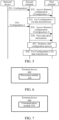
- FIG. 6 is a schematic block diagram of a terminal device 400 according to an embodiment of the present application. As shown in FIG. 6 , the terminal device 400 includes a processing module 410.
- the processing module 410 is configured to trigger at least one of the following processes to configure an Access Stratum parameter according to first indication information sent by a second terminal: a Packet Data Convergence Protocol (PDCP) reconstruction process or a PDCP data recovery process; a Radio Link Control (RLC) reconstruction process; a Media Access Control (MAC) resetting process; and a full configuration process.
- PDCP Packet Data Convergence Protocol
- RLC Radio Link Control
- MAC Media Access Control
- the full configuration process includes at least one of: releasing at least one of current dedicated radio configurations; releasing at least one of all current common radio configurations; applying a default configuration of at least one Access Stratum parameter; releasing at least one Service Data Adaptation Protocol (SDAP) entity; and releasing at least one bearer.
- SDAP Service Data Adaptation Protocol
- the releasing at least one of the current dedicated radio configurations includes: releasing other dedicated radio configurations other than a specific configuration in the current dedicated radio configurations, wherein the specific configuration includes a Cell Radio Network Temporary Identity (C-RNTI) of a Master Cell Group (MCG) and/or an Access Stratum (AS) security configuration associated with a master key.
- C-RNTI Cell Radio Network Temporary Identity
- MCG Master Cell Group
- AS Access Stratum
- the default configuration of the at least one Access Stratum parameter is predefined, pre-configured, or configured through a system message.
- first indication information is used for indicating the first terminal to perform at least one of the following processes: a Packet Data Convergence Protocol (PDCP) reconstruction process or a PDCP data recovery process; a Radio Link Control (RLC) reconstruction process; a Media Access Control (MAC) resetting process; and a full configuration process.
- PDCP Packet Data Convergence Protocol
- RLC Radio Link Control
- MAC Media Access Control
- the first indication information is used for indicating change of at least one of the following parameters: a SDAP parameter, a PDCP parameter, and an RLC parameter.
- the SDAP parameter includes at least one of the following: a Protocol Data Unit (PDU) session identifier, a SDAP header configuration, a default data bearer, and a mapping relationship from data streams to bearers.
- PDU Protocol Data Unit
- the PDCP parameter includes at least one of the following: a PDCP serial number size, a PDCP header compression configuration, an integrity protection configuration, and an encryption and decryption configuration.
- the RLC parameter includes at least one of the following: an RLC mode, an RLC serial number length, and a logical channel identity (ID).
- the processing module may be one or more processors.
- terminal device 400 may correspond to the terminal device in the method embodiments of the present application, and the above-mentioned and other operations and/or functions of various units in the terminal device 400 are respectively for implementing the corresponding processes of the first terminal in aforementioned embodiments, which will not be repeated here for brevity.
- FIG. 7 is a schematic block diagram of a terminal device 500 according to an embodiment of the present application. As shown in FIG. 7 , the terminal device 500 includes a communication module 510.
- the communication module 510 is configured to send first indication information to a first terminal when there is change in an Access Stratum parameter, wherein the first indication information is used for triggering the first terminal to configure the Access Stratum parameter by performing at least one of the following: a Packet Data Convergence Protocol (PDCP) reconstruction process or a PDCP data recovery process; a Radio Link Control (RLC) reconstruction process; a Media Access Control (MAC) resetting process; and a full configuration process.
- PDCP Packet Data Convergence Protocol
- RLC Radio Link Control
- MAC Media Access Control
- the terminal device further includes: a processing module, configured to, when there is change in an Access Stratum parameter, trigger at least one of the following processes to configure an Access Stratum parameter: a PDCP reconstruction process or a PDCP data recovery process; an RLC reconstruction process; a MAC resetting process; and a full configuration process.
- a processing module configured to, when there is change in an Access Stratum parameter, trigger at least one of the following processes to configure an Access Stratum parameter: a PDCP reconstruction process or a PDCP data recovery process; an RLC reconstruction process; a MAC resetting process; and a full configuration process.
- the processing module is further configured to: determine, according to pre-configured information and/or configuration information from a network device, the first indication information.
- the processing module is specifically configured to: determine the first indication information according to the pre-configured information and the configuration information from the network device if the terminal device moves between an area with network coverage and an area without network coverage.
- the communication module 510 is further configured to: send the first indication information to the first terminal, wherein the first indication information is used for indicating the first terminal to perform a full configuration process.
- the configuration information from the network device is from at least one of the following: a system message from the network device and a dedicated signaling from the network device.
- the processing module is further configured to: determine the first indication information according to the system information from the network device if the terminal device is in an Idle state or an Inactive state and performs cell reselection.
- the communication module 510 is further configured to: send the first indication information to the first terminal, wherein the first indication information is used for indicating the first terminal to perform a full configuration process.
- the processing module is further configured to: determine the first indication information according to the dedicated signaling from the network device if the terminal device is in a connected state.
- the dedicated signaling is used for indicating the terminal device to perform at least one of the following: a PDCP reconstruction process or a PDCP data recovery process, an RLC reconstruction process, a MAC resetting process, and a full configuration process.
- the full configuration process includes at least one of: releasing at least one of current dedicated radio configurations; releasing at least one of all current common radio configurations; applying a default configuration of at least one Access Stratum parameter; releasing at least one Service Data Adaptation Protocol (SDAP) entity; and releasing at least one bearer.
- SDAP Service Data Adaptation Protocol
- the releasing at least one of the current dedicated radio configurations includes: releasing other dedicated radio configurations other than a specific configuration in the current dedicated radio configurations, wherein the specific configuration includes a Cell Radio Network Temporary Identity (C-RNTI) of a Master Cell Group (MCG) and an Access Stratum (AS) security configuration associated with a master key.
- C-RNTI Cell Radio Network Temporary Identity
- MCG Master Cell Group
- AS Access Stratum
- the default configuration of the at least one Access Stratum parameter is predefined, pre-configured, or configured through a system message.
- the first indication information is used for indicating the first terminal to perform at least one of the following processes: a Packet Data Convergence Protocol (PDCP) reconstruction process or a PDCP data recovery process, a Radio Link Control (RLC) reconstruction process, a Media Access Control (MAC) resetting process, and a full configuration process.
- PDCP Packet Data Convergence Protocol
- RLC Radio Link Control
- MAC Media Access Control
- the first indication information is used for indicating change of at least one of the following parameters: a SDAP parameter, a PDCP parameter, and an RLC parameter.
- the SDAP parameter includes at least one of the following: a Protocol Data Unit (PDU) session identifier, a SDAP header configuration, a default data bearer, and a mapping relationship from data streams to bearers.
- PDU Protocol Data Unit
- the PDCP parameter includes at least one of the following: a PDCP serial number size, a PDCP header compression configuration, an integrity protection configuration, and an encryption and decryption configuration.
- the RLC parameter includes at least one of the following: an RLC mode, an RLC serial number length, and a logical channel identity (ID).
- the communication module may be a communication interface or a transceiver, or an input and output interface of a communication chip or a system on a chip.
- the above processing module may be one or more processors.
- terminal device 500 may correspond to the terminal device in the method embodiments of the present application, and the above-mentioned and other operations and/or functions of various units in the terminal device 500 are respectively for implementing the corresponding processes of the second terminal in aforementioned embodiments, which will not be repeated here for brevity.
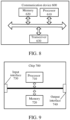
- FIG. 8 is a schematic diagram of a structure of a communication device 600 according to an embodiment of the present application.
- the communication device 600 shown in FIG. 8 includes a processor 610, which may call and run a computer program from a memory to implement the methods in the embodiments of the present application.
- the communication device 600 may further include a memory 620.
- the processor 610 may call and run a computer program from the memory 620 to implement the methods in the embodiments of the present application.
- the memory 620 may be a separate device independent of the processor 610, or may be integrated in the processor 610.
- the communication device 600 may further include a transceiver 630, and the processor 610 may control the transceiver 630 to communicate with other devices.
- the transceiver 730 may send information or data to other devices or receive information or data sent by other devices.
- the transceiver 630 may include a transmitter and a receiver.
- the transceiver 630 may further include antennas, a quantity of which may be one or more.
- the communication device 600 may be specifically the network device according to the embodiments of the present application, and the communication device 600 may implement the corresponding processes implemented by the network device in various methods in the embodiments of the present application, which will not be repeated here for brevity.
- the communication device 600 may be specifically the mobile terminal/terminal device according to the embodiments of the present application, and the communication device 600 may implement the corresponding processes implemented by the mobile terminal/terminal device in various methods in the embodiments of the present application, which will not be repeated here for brevity.
- FIG. 9 is a schematic diagram of a structure of a chip according to an embodiment of the present application.
- a chip 700 shown in FIG. 9 includes a processor 710 that may call and run a computer program from a memory to implement the methods in the embodiments of the present application.
- the chip 700 may further include a memory 720.
- the processor 710 may call and run a computer program from the memory 720 to implement the methods in the embodiments of the present application.
- the memory 720 may be a separate device independent of the processor 710, or may be integrated in the processor 710.
- the chip 700 may further include an input interface 730.
- the processor 710 may control the input interface 730 to communicate with other devices or chips.
- the processor 710 may acquire information or data sent by other devices or chips.
- the chip 700 may further include an output interface 740.
- the processor 710 may control the output interface 740 to communicate with other devices or chips.
- the processor 710 may output information or data to other devices or chips.
- the chip may be applied to the network device in the embodiments of the present application, and the chip may implement the corresponding flow implemented by the network device in the various methods in the embodiments of the present application, which will not be repeated here for brevity.
- the chip may be applied to the mobile terminal/terminal device in the embodiments of the present application, and the chip may implement the corresponding flow implemented by the mobile terminal/terminal device in the various methods in the embodiments of the present application, which will not be repeated here for brevity.
- the chip mentioned in the embodiments of the present application may also be referred to as a system-level chip, a system chip, a chip system, or a system chip on a chip, etc.
- the processor in the embodiments of the present application may be an integrated circuit chip with a capability for processing signals.
- various acts of the method embodiments described above may be completed through an integrated logic circuit of hardware in a processor or instructions in a form of software.
- the above processor may be a general purpose processor, a Digital Signal Processor (DSP), an Application Specific Integrated Circuit (ASIC), a Field Programmable Gate Array (FPGA), or another programmable logic device, a discrete gate or a transistor logic device, or a discrete hardware component.
- DSP Digital Signal Processor
- ASIC Application Specific Integrated Circuit
- FPGA Field Programmable Gate Array
- the processor may implement various methods, acts, and logic block diagrams disclosed in the embodiments of the present application.
- the general purpose processor may be a microprocessor or the processor may be any conventional processor or the like.
- the acts of the methods disclosed in connection with the embodiments of the present application may be directly embodied by execution of a hardware decoding processor, or by execution of a combination of hardware and software modules in a decoding processor.
- the software modules may be located in a storage medium mature in the field, such as a Random Access Memory, a flash memory, a Read-Only Memory, a Programmable Read-Only Memory, or an electrically erasable programmable memory, or a register.
- the storage medium is located in a memory, and a processor reads information in the memory and completes the acts of the above methods in combination with its hardware.
- the memory in the embodiments of the present application may be a transitory memory or a non-transitory memory, or may include both transitory and non-transitory memory.
- the non-transitory memory may be a Read-Only Memory (ROM), a Programmable ROM (PROM), an Erasable PROM (EPROM), an Electrically EPROM (EEPROM), or a flash memory.
- the transitory memory may be a Random Access Memory (RAM) which serves as an external cache.
- RAMs such as a Static RAM (SRAM), a Dynamic RAM (DRAM), a Synchronous DRAM (SDRAM), a Double Data Rate SDRAM (DDR SDRAM), an Enhanced SDRAM (ESDRAM), a Synchlink DRAM (SLDRAM), and a Direct Rambus RAM (DR RAM).
- SRAM Static RAM
- DRAM Dynamic RAM
- SDRAM Synchronous DRAM
- DDR SDRAM Double Data Rate SDRAM
- ESDRAM Enhanced SDRAM
- SLDRAM Synchlink DRAM
- DR RAM Direct Rambus RAM
- the foregoing memories are examples for illustration and should not be construed as limitations.
- the memory in the embodiments of the present application may be a Static RAM (SRAM), a Dynamic RAM (DRAM), a Synchronous DRAM (SDRAM), a Double Data Rate SDRAM (DDR SDRAM), an Enhanced SDRAM (ESDRAM), a Synch link DRAM (SLDRAM), a Direct Rambus RAM (DR RAM), or the like. That is, the memories in the embodiments of the present application are intended to include, but are not limited to, these and any other suitable types of memories.
- An embodiment of the present application further provides a computer readable storage medium, configured to store a computer program.
- the computer readable storage medium may be applied to the network device in the embodiments of the present application, and the computer program enables a computer to perform the corresponding processes implemented by the network device in various methods according to the embodiments of the present application, which will not be repeated here for brevity.
- the computer readable storage medium may be applied to the mobile terminal/terminal device in the embodiments of the present application, and the computer program enables a computer to perform the corresponding processes implemented by the mobile terminal/terminal device in various methods according to the embodiments of the present application, which will not be repeated here for brevity.
- An embodiment of the present application further provides a computer program product, including computer program instructions.
- the computer program product may be applied to the network device in the embodiments of the present application, and the computer program instructions enable a computer to perform the corresponding processes implemented by the network device in various methods according to the embodiments of the present application, which will not be repeated here for brevity.
- the computer program product may be applied to the mobile terminal/terminal device in the embodiments of the present application, and the computer program instructions enable a computer to perform the corresponding processes implemented by the mobile terminal/terminal device in various methods according to the embodiments of the present application, which will not be repeated here for brevity.
- An embodiment of the present application further provides a computer program.
- the computer program may be applied to the network device in the embodiments of the present application.
- the computer program When the computer program is run on a computer, the computer is enabled to perform the corresponding processes implemented by the network device in various methods according to the embodiments of the present application, which will not be repeated here for brevity.
- the computer program may be applied to the mobile terminal/terminal device in the embodiments of the present application.
- the computer program When the computer program is run on a computer, the computer is enabled to perform the corresponding processes implemented by the mobile terminal/terminal device in various methods according to the embodiments of the present application, which will not be repeated here for brevity.
- the units described as separated components may or may not be physically separated, and components shown as units may or may not be physical units, i.e., they may be located in one place or may be allocated over multiple network units. Some or all of the units may be selected according to practical needs to achieve purposes of solutions of the embodiments.
- various functional units in various embodiments of the present application may be integrated in one processing unit, or various units may be physically present separately, or two or more units may be integrated in one unit.
- the functions may be stored in a computer readable storage medium if implemented in a form of a software functional unit and sold or used as a separate product.
- technical solutions of the present application in essence, or a part contributing to the existing art, or part of the technical solutions, may be embodied in a form of a software product stored in a storage medium, including several instructions for enabling a computer device (which may be a personal computer, a server, or a network device, etc.) to perform all or part of the acts of the methods described in various embodiments of the present application.
- the aforementioned storage medium includes: various media, such as a U disk, a mobile hard disk, a Read-Only Memory (ROM), a Random Access Memory (RAM), a magnetic disk, or an optical disk, etc., which may store program codes.
Landscapes
- Engineering & Computer Science (AREA)
- Computer Networks & Wireless Communication (AREA)
- Signal Processing (AREA)
- Computer Security & Cryptography (AREA)
- Automation & Control Theory (AREA)
- Mobile Radio Communication Systems (AREA)
Claims (4)
- Procédé (200) de communication sans fil, caractérisé en ce qu'il comprend :
le déclenchement (S210), par un premier terminal, d'un processus de configuration complète pour configurer un paramètre de strate d'accès selon des premières informations d'indication envoyées par un deuxième terminal ; le paramètre de strate d'accès servant à une communication de dispositif à dispositif, D2D ; le processus de configuration complète comprenant au moins un des éléments suivants :la libération d'au moins une de configurations radio dédiées actuelles ; la libération d'au moins une des configurations radio dédiées actuelles comprenant la libération de configurations radio dédiées autres qu'une configuration spécifique dans les configurations radio dédiées actuelles ; la configuration spécifique comprenant une identité temporaire de réseau radio - cellule, C-RNTI, d'un groupe de cellules maître, MCG, et/ou une configuration de sécurité de strate d'accès, AS, associée à une clé maîtresse ;les premières informations d'indication étant utilisées pour indiquer au premier terminal d'exécuter le processus de configuration complète ; les premières informations d'indication étant véhiculées dans une signalisation de contrôle des ressources radio, RRC ; les premières informations d'indication consistant en un bit spécifique dans la signalisation RRC ; une valeur du bit spécifique de 0 indiquant le non-déclenchement, par le premier terminal, de l'exécution du processus de configuration complète ; et la valeur du bit spécifique de 1 indiquant le déclenchement, par le premier terminal, de l'exécution du processus de configuration complète. - Procédé (300) de communication sans fil, caractérisé en ce qu'il comprend :
l'envoi (S310), par un deuxième terminal, de premières informations d'indication à un premier terminal en cas de modification d'un paramètre de strate d'accès, les premières informations d'indication étant utilisées pour déclencher l'exécution, par le premier terminal, d'un processus de configuration complète pour configurer le paramètre de strate d'accès ; le paramètre de strate d'accès servant à une communication de dispositif à dispositif, D2D ; le processus de configuration complète comprenant :
la libération d'au moins une de configurations radio dédiées actuelles ; la libération d'au moins une des configurations radio dédiées actuelles comprenant la libération de configurations radio dédiées autres qu'une configuration spécifique dans les configurations radio dédiées actuelles ; la configuration spécifique comprenant une identité temporaire de réseau radio - cellule, C-RNTI, d'un groupe de cellules maître, MCG, et/ou une configuration de sécurité de strate d'accès, AS, associée à une clé maîtresse ; les premières informations d'indication consistant en un bit spécifique dans la signalisation RRC ; une valeur du bit spécifique de 0 indiquant le non-déclenchement, par le premier terminal, de l'exécution du processus de configuration complète ; et la valeur du bit spécifique de 1 indiquant le déclenchement, par le premier terminal, de l'exécution du processus de configuration complète. - Dispositif terminal (400), caractérisé en ce qu'il comprend :un module de traitement (410), configuré pour déclencher un processus de configuration complète pour configurer un paramètre de strate d'accès selon des premières informations d'indication envoyées par un deuxième terminal ; le paramètre de strate d'accès servant à une communication de dispositif à dispositif, D2D ; le processus de configuration complète comprenantla libération d'au moins une de configurations radio dédiées actuelles ; la libération d'au moins une des configurations radio dédiées actuelles comprenant la libération de configurations radio dédiées autres qu'une configuration spécifique dans les configurations radio dédiées actuelles ; la configuration spécifique comprenant une identité temporaire de réseau radio - cellule, C-RNTI, d'un groupe de cellules maître, MCG, et/ou une configuration de sécurité de strate d'accès, AS, associée à une clé maîtresse ;les premières informations d'indication étant utilisées pour indiquer au dispositif terminal d'exécuter le processus de configuration complète ; les premières informations d'indication étant véhiculées dans une signalisation de contrôle des ressources radio, RRC ; les premières informations d'indication consistant en un bit spécifique dans la signalisation RRC ; une valeur du bit spécifique de 0 indiquant le non-déclenchement, par le premier terminal, de l'exécution du processus de configuration complète ; et la valeur du bit spécifique de 1 indiquant le déclenchement, par le premier terminal, de l'exécution du processus de configuration complète.
- Dispositif terminal (500), caractérisé en ce qu'il comprend :
un module de communication (510), configuré pour envoyer des premières informations d'indication à un premier terminal en cas de modification d'un paramètre de strate d'accès, les premières informations d'indication étant utilisées pour déclencher l'exécution, par le premier terminal, d'un processus de configuration complète pour configurer le paramètre de strate d'accès ; le paramètre de strate d'accès servant à une communication de dispositif à dispositif, D2D ; le processus de configuration complète comprenant :
la libération d'au moins une de configurations radio dédiées actuelles ; la libération d'au moins une des configurations radio dédiées actuelles comprenant la libération de configurations radio dédiées autres qu'une configuration spécifique dans les configurations radio dédiées actuelles ; la configuration spécifique comprenant une identité temporaire de réseau radio - cellule, C-RNTI, d'un groupe de cellules maître, MCG, et/ou une configuration de sécurité de strate d'accès, AS, associée à une clé maîtresse ; les premières informations d'indication consistant en un bit spécifique dans la signalisation RRC ; une valeur du bit spécifique de 0 indiquant le non-déclenchement, par le premier terminal, de l'exécution du processus de configuration complète ; et la valeur du bit spécifique de 1 indiquant le déclenchement, par le premier terminal, de l'exécution du processus de configuration complète.
Applications Claiming Priority (1)
| Application Number | Priority Date | Filing Date | Title |
|---|---|---|---|
| PCT/CN2019/108415 WO2021056386A1 (fr) | 2019-09-27 | 2019-09-27 | Procédé de communication sans fil et dispositif terminal |
Publications (3)
| Publication Number | Publication Date |
|---|---|
| EP4013184A1 EP4013184A1 (fr) | 2022-06-15 |
| EP4013184A4 EP4013184A4 (fr) | 2022-09-21 |
| EP4013184B1 true EP4013184B1 (fr) | 2024-07-31 |
Family
ID=75164809
Family Applications (1)
| Application Number | Title | Priority Date | Filing Date |
|---|---|---|---|
| EP19947191.3A Active EP4013184B1 (fr) | 2019-09-27 | 2019-09-27 | Libération de configuration de liaison radio dédiée dans une communication d2d |
Country Status (6)
| Country | Link |
|---|---|
| US (1) | US12166634B2 (fr) |
| EP (1) | EP4013184B1 (fr) |
| JP (1) | JP7367197B2 (fr) |
| KR (1) | KR102943782B1 (fr) |
| CN (2) | CN114271024A (fr) |
| WO (1) | WO2021056386A1 (fr) |
Families Citing this family (2)
| Publication number | Priority date | Publication date | Assignee | Title |
|---|---|---|---|---|
| WO2023050280A1 (fr) * | 2021-09-30 | 2023-04-06 | Oppo广东移动通信有限公司 | Procédé, appareil et dispositif de configuration de paramètre et support de stockage |
| WO2024192672A1 (fr) * | 2023-03-21 | 2024-09-26 | 深圳传音控股股份有限公司 | Procédé de traitement, dispositif de communication et support d'enregistrement |
Family Cites Families (15)
| Publication number | Priority date | Publication date | Assignee | Title |
|---|---|---|---|---|
| EP2868007B1 (fr) * | 2012-07-02 | 2019-03-06 | LG Electronics Inc. | Procédé pour commuter une connexion dans un système de communication sans fil |
| WO2014109283A1 (fr) * | 2013-01-10 | 2014-07-17 | Nec Corporation | Gestion de clé mtc pour la dérivation de clés au niveau à la fois d'un équipement d'utilisateur (ue) et d'un réseau |
| WO2014113686A2 (fr) * | 2013-01-17 | 2014-07-24 | Interdigital Patent Holdings, Inc. | Placement de protocole de convergence de paquet de données (pdcp) |
| US10028311B2 (en) * | 2014-04-22 | 2018-07-17 | Lg Electronics Inc. | Method for processing received PDCP PDUs for D2D communication system and device therefor |
| CN105025593B (zh) * | 2014-04-23 | 2020-07-28 | 电信科学技术研究院 | 一种释放实体的方法及设备 |
| CN105704641B (zh) * | 2014-11-06 | 2019-11-26 | 中兴通讯股份有限公司 | 设备到设备d2d数据传输方法、装置及d2d ue |
| ES2827398T3 (es) * | 2016-04-01 | 2021-05-21 | Samsung Electronics Co Ltd | Procedimiento y aparato para comunicación inalámbrica en sistema de comunicación inalámbrica |
| KR102771072B1 (ko) * | 2016-08-11 | 2025-02-19 | 이노스카이 주식회사 | V2x를 위한 준영구적 스케줄링 방법 및 장치 |
| WO2019066558A1 (fr) * | 2017-09-29 | 2019-04-04 | Lg Electronics Inc. | Procédé et appareil permettant de vider une mémoire tampon harq dans un système de communication sans fil |
| US11902866B2 (en) * | 2017-11-17 | 2024-02-13 | Innovative Technology Lab Co., Ltd. | Apparatus and method for performing wireless communication in wireless communication system supporting vehicle communication |
| WO2020218882A1 (fr) * | 2019-04-26 | 2020-10-29 | 엘지전자 주식회사 | Procédé pour terminal de liaison latérale dans un système de communication sans fil |
| EP3764360B1 (fr) | 2019-07-10 | 2024-05-01 | Analog Devices International Unlimited Company | Procédés et systèmes de traitement de signaux pour la formation de faisceau avec amélioration du rapport signal-bruit |
| WO2021029999A1 (fr) * | 2019-08-14 | 2021-02-18 | Qualcomm Incorporated | Techniques d'indication d'une configuration complète à un nœud secondaire en connectivité double |
| CN112543515B (zh) | 2019-09-20 | 2024-04-26 | 大唐移动通信设备有限公司 | 一种直接通信接口承载配置变更方法及终端 |
| CN115150040A (zh) * | 2021-03-31 | 2022-10-04 | 华为技术有限公司 | 一种通信方法及装置 |
-
2019
- 2019-09-27 KR KR1020227010701A patent/KR102943782B1/ko active Active
- 2019-09-27 CN CN201980097243.2A patent/CN114271024A/zh active Pending
- 2019-09-27 EP EP19947191.3A patent/EP4013184B1/fr active Active
- 2019-09-27 JP JP2022515687A patent/JP7367197B2/ja active Active
- 2019-09-27 WO PCT/CN2019/108415 patent/WO2021056386A1/fr not_active Ceased
- 2019-09-27 CN CN202210123344.6A patent/CN114501590B/zh active Active
-
2022
- 2022-03-02 US US17/685,222 patent/US12166634B2/en active Active
Also Published As
| Publication number | Publication date |
|---|---|
| WO2021056386A1 (fr) | 2021-04-01 |
| CN114271024A (zh) | 2022-04-01 |
| JP7367197B2 (ja) | 2023-10-23 |
| EP4013184A4 (fr) | 2022-09-21 |
| KR102943782B1 (ko) | 2026-03-24 |
| JP2022553618A (ja) | 2022-12-26 |
| EP4013184A1 (fr) | 2022-06-15 |
| CN114501590B (zh) | 2024-06-28 |
| CN114501590A (zh) | 2022-05-13 |
| US20220191098A1 (en) | 2022-06-16 |
| KR20220076464A (ko) | 2022-06-08 |
| US12166634B2 (en) | 2024-12-10 |
Similar Documents
| Publication | Publication Date | Title |
|---|---|---|
| EP3041310B1 (fr) | Procédés de gestion des opérations de communication et dispositifs de communication associés | |
| US9603177B2 (en) | Methods and apparatuses for enabling direct mode communication between user equipments | |
| EP3972346B1 (fr) | Procédé de commutation de liaison et dispositif de communication | |
| EP3826363A1 (fr) | Procédé de sélection de chemin, dispositif terminal, et dispositif de réseau | |
| EP3393168B1 (fr) | Équipement utilisateur et procédé de réception de données, et noeud de réseau et procédé de transmission de données | |
| CN114364037B (zh) | 无线通信的方法、终端设备和网络设备 | |
| EP3713297B1 (fr) | Procédé de traitement de couche 2, unité centrale et unité distribuée | |
| CN111630895A (zh) | 一种rlf的处理方法及装置、通信设备 | |
| CN112640347B (zh) | 无线通信的方法、终端设备和网络设备 | |
| CN112703802A (zh) | 处理上行覆盖弱化的方法及装置、终端、网络设备 | |
| US11991559B2 (en) | Congestion processing method and device | |
| JP7213950B2 (ja) | 情報構成方法および装置、端末、ネットワーク機器 | |
| CN113348699B (zh) | 数据传输方法、装置和通信设备 | |
| US12166634B2 (en) | Wireless communication method and terminal device | |
| CN113261340B (zh) | 传输信息的方法、终端设备、基站和核心网设备 | |
| US20230199712A1 (en) | Wireless communication method and terminal | |
| EP3614714B1 (fr) | Procédé pour acquérir des informations de configuration de contexte, dispositif terminal et dispositif de réseau d'accès | |
| US11540252B2 (en) | Data transmission method, network device | |
| CN112703770A (zh) | 一种rrc连接重建方法及装置、网络设备 | |
| CN117751623A (zh) | 无线通信方法及无线通信装置 | |
| WO2023102907A1 (fr) | Procédé de communication sans fil, premier terminal et dispositif de réseau | |
| CN118044255A (zh) | 无线通信的方法、终端设备和网络设备 | |
| EP3598811A1 (fr) | Procédé et dispositif de radiomessagerie | |
| HK40029260A (en) | Bearing configuration method and device, and network device | |
| HK40015089A (en) | Congestion processing method and device |
Legal Events
| Date | Code | Title | Description |
|---|---|---|---|
| STAA | Information on the status of an ep patent application or granted ep patent |
Free format text: STATUS: THE INTERNATIONAL PUBLICATION HAS BEEN MADE |
|
| PUAI | Public reference made under article 153(3) epc to a published international application that has entered the european phase |
Free format text: ORIGINAL CODE: 0009012 |
|
| STAA | Information on the status of an ep patent application or granted ep patent |
Free format text: STATUS: REQUEST FOR EXAMINATION WAS MADE |
|
| 17P | Request for examination filed |
Effective date: 20220309 |
|
| AK | Designated contracting states |
Kind code of ref document: A1 Designated state(s): AL AT BE BG CH CY CZ DE DK EE ES FI FR GB GR HR HU IE IS IT LI LT LU LV MC MK MT NL NO PL PT RO RS SE SI SK SM TR |
|
| A4 | Supplementary search report drawn up and despatched |
Effective date: 20220819 |
|
| RIC1 | Information provided on ipc code assigned before grant |
Ipc: H04W 72/04 20090101ALI20220812BHEP Ipc: H04W 72/02 20090101ALI20220812BHEP Ipc: H04W 8/00 20090101ALI20220812BHEP Ipc: H04W 4/70 20180101ALI20220812BHEP Ipc: H04W 76/23 20180101ALI20220812BHEP Ipc: H04W 88/02 20090101AFI20220812BHEP |
|
| DAV | Request for validation of the european patent (deleted) | ||
| DAX | Request for extension of the european patent (deleted) | ||
| STAA | Information on the status of an ep patent application or granted ep patent |
Free format text: STATUS: EXAMINATION IS IN PROGRESS |
|
| 17Q | First examination report despatched |
Effective date: 20230424 |
|
| GRAP | Despatch of communication of intention to grant a patent |
Free format text: ORIGINAL CODE: EPIDOSNIGR1 |
|
| STAA | Information on the status of an ep patent application or granted ep patent |
Free format text: STATUS: GRANT OF PATENT IS INTENDED |
|
| INTG | Intention to grant announced |
Effective date: 20240423 |
|
| GRAS | Grant fee paid |
Free format text: ORIGINAL CODE: EPIDOSNIGR3 |
|
| GRAA | (expected) grant |
Free format text: ORIGINAL CODE: 0009210 |
|
| STAA | Information on the status of an ep patent application or granted ep patent |
Free format text: STATUS: THE PATENT HAS BEEN GRANTED |
|
| AK | Designated contracting states |
Kind code of ref document: B1 Designated state(s): AL AT BE BG CH CY CZ DE DK EE ES FI FR GB GR HR HU IE IS IT LI LT LU LV MC MK MT NL NO PL PT RO RS SE SI SK SM TR |
|
| REG | Reference to a national code |
Ref country code: CH Ref legal event code: EP Ref country code: GB Ref legal event code: FG4D |
|
| REG | Reference to a national code |
Ref country code: DE Ref legal event code: R096 Ref document number: 602019056393 Country of ref document: DE |
|
| REG | Reference to a national code |
Ref country code: IE Ref legal event code: FG4D |
|
| P01 | Opt-out of the competence of the unified patent court (upc) registered |
Free format text: CASE NUMBER: APP_49582/2024 Effective date: 20240902 |
|
| REG | Reference to a national code |
Ref country code: LT Ref legal event code: MG9D |
|
| REG | Reference to a national code |
Ref country code: NL Ref legal event code: MP Effective date: 20240731 |
|
| PG25 | Lapsed in a contracting state [announced via postgrant information from national office to epo] |
Ref country code: PT Free format text: LAPSE BECAUSE OF FAILURE TO SUBMIT A TRANSLATION OF THE DESCRIPTION OR TO PAY THE FEE WITHIN THE PRESCRIBED TIME-LIMIT Effective date: 20241202 |
|
| REG | Reference to a national code |
Ref country code: AT Ref legal event code: MK05 Ref document number: 1709795 Country of ref document: AT Kind code of ref document: T Effective date: 20240731 |
|
| PG25 | Lapsed in a contracting state [announced via postgrant information from national office to epo] |
Ref country code: PT Free format text: LAPSE BECAUSE OF FAILURE TO SUBMIT A TRANSLATION OF THE DESCRIPTION OR TO PAY THE FEE WITHIN THE PRESCRIBED TIME-LIMIT Effective date: 20241202 |
|
| PG25 | Lapsed in a contracting state [announced via postgrant information from national office to epo] |
Ref country code: NO Free format text: LAPSE BECAUSE OF FAILURE TO SUBMIT A TRANSLATION OF THE DESCRIPTION OR TO PAY THE FEE WITHIN THE PRESCRIBED TIME-LIMIT Effective date: 20241031 |
|
| PG25 | Lapsed in a contracting state [announced via postgrant information from national office to epo] |
Ref country code: NL Free format text: LAPSE BECAUSE OF FAILURE TO SUBMIT A TRANSLATION OF THE DESCRIPTION OR TO PAY THE FEE WITHIN THE PRESCRIBED TIME-LIMIT Effective date: 20240731 Ref country code: FI Free format text: LAPSE BECAUSE OF FAILURE TO SUBMIT A TRANSLATION OF THE DESCRIPTION OR TO PAY THE FEE WITHIN THE PRESCRIBED TIME-LIMIT Effective date: 20240731 Ref country code: GR Free format text: LAPSE BECAUSE OF FAILURE TO SUBMIT A TRANSLATION OF THE DESCRIPTION OR TO PAY THE FEE WITHIN THE PRESCRIBED TIME-LIMIT Effective date: 20241101 Ref country code: PL Free format text: LAPSE BECAUSE OF FAILURE TO SUBMIT A TRANSLATION OF THE DESCRIPTION OR TO PAY THE FEE WITHIN THE PRESCRIBED TIME-LIMIT Effective date: 20240731 |
|
| PG25 | Lapsed in a contracting state [announced via postgrant information from national office to epo] |
Ref country code: BG Free format text: LAPSE BECAUSE OF FAILURE TO SUBMIT A TRANSLATION OF THE DESCRIPTION OR TO PAY THE FEE WITHIN THE PRESCRIBED TIME-LIMIT Effective date: 20240731 |
|
| PG25 | Lapsed in a contracting state [announced via postgrant information from national office to epo] |
Ref country code: LV Free format text: LAPSE BECAUSE OF FAILURE TO SUBMIT A TRANSLATION OF THE DESCRIPTION OR TO PAY THE FEE WITHIN THE PRESCRIBED TIME-LIMIT Effective date: 20240731 |
|
| PG25 | Lapsed in a contracting state [announced via postgrant information from national office to epo] |
Ref country code: IS Free format text: LAPSE BECAUSE OF FAILURE TO SUBMIT A TRANSLATION OF THE DESCRIPTION OR TO PAY THE FEE WITHIN THE PRESCRIBED TIME-LIMIT Effective date: 20241130 Ref country code: AT Free format text: LAPSE BECAUSE OF FAILURE TO SUBMIT A TRANSLATION OF THE DESCRIPTION OR TO PAY THE FEE WITHIN THE PRESCRIBED TIME-LIMIT Effective date: 20240731 |
|
| PG25 | Lapsed in a contracting state [announced via postgrant information from national office to epo] |
Ref country code: HR Free format text: LAPSE BECAUSE OF FAILURE TO SUBMIT A TRANSLATION OF THE DESCRIPTION OR TO PAY THE FEE WITHIN THE PRESCRIBED TIME-LIMIT Effective date: 20240731 |
|
| PG25 | Lapsed in a contracting state [announced via postgrant information from national office to epo] |
Ref country code: RS Free format text: LAPSE BECAUSE OF FAILURE TO SUBMIT A TRANSLATION OF THE DESCRIPTION OR TO PAY THE FEE WITHIN THE PRESCRIBED TIME-LIMIT Effective date: 20241031 Ref country code: ES Free format text: LAPSE BECAUSE OF FAILURE TO SUBMIT A TRANSLATION OF THE DESCRIPTION OR TO PAY THE FEE WITHIN THE PRESCRIBED TIME-LIMIT Effective date: 20240731 |
|
| PG25 | Lapsed in a contracting state [announced via postgrant information from national office to epo] |
Ref country code: RS Free format text: LAPSE BECAUSE OF FAILURE TO SUBMIT A TRANSLATION OF THE DESCRIPTION OR TO PAY THE FEE WITHIN THE PRESCRIBED TIME-LIMIT Effective date: 20241031 Ref country code: PL Free format text: LAPSE BECAUSE OF FAILURE TO SUBMIT A TRANSLATION OF THE DESCRIPTION OR TO PAY THE FEE WITHIN THE PRESCRIBED TIME-LIMIT Effective date: 20240731 Ref country code: NO Free format text: LAPSE BECAUSE OF FAILURE TO SUBMIT A TRANSLATION OF THE DESCRIPTION OR TO PAY THE FEE WITHIN THE PRESCRIBED TIME-LIMIT Effective date: 20241031 Ref country code: NL Free format text: LAPSE BECAUSE OF FAILURE TO SUBMIT A TRANSLATION OF THE DESCRIPTION OR TO PAY THE FEE WITHIN THE PRESCRIBED TIME-LIMIT Effective date: 20240731 Ref country code: LV Free format text: LAPSE BECAUSE OF FAILURE TO SUBMIT A TRANSLATION OF THE DESCRIPTION OR TO PAY THE FEE WITHIN THE PRESCRIBED TIME-LIMIT Effective date: 20240731 Ref country code: IS Free format text: LAPSE BECAUSE OF FAILURE TO SUBMIT A TRANSLATION OF THE DESCRIPTION OR TO PAY THE FEE WITHIN THE PRESCRIBED TIME-LIMIT Effective date: 20241130 Ref country code: HR Free format text: LAPSE BECAUSE OF FAILURE TO SUBMIT A TRANSLATION OF THE DESCRIPTION OR TO PAY THE FEE WITHIN THE PRESCRIBED TIME-LIMIT Effective date: 20240731 Ref country code: GR Free format text: LAPSE BECAUSE OF FAILURE TO SUBMIT A TRANSLATION OF THE DESCRIPTION OR TO PAY THE FEE WITHIN THE PRESCRIBED TIME-LIMIT Effective date: 20241101 Ref country code: FI Free format text: LAPSE BECAUSE OF FAILURE TO SUBMIT A TRANSLATION OF THE DESCRIPTION OR TO PAY THE FEE WITHIN THE PRESCRIBED TIME-LIMIT Effective date: 20240731 Ref country code: ES Free format text: LAPSE BECAUSE OF FAILURE TO SUBMIT A TRANSLATION OF THE DESCRIPTION OR TO PAY THE FEE WITHIN THE PRESCRIBED TIME-LIMIT Effective date: 20240731 Ref country code: BG Free format text: LAPSE BECAUSE OF FAILURE TO SUBMIT A TRANSLATION OF THE DESCRIPTION OR TO PAY THE FEE WITHIN THE PRESCRIBED TIME-LIMIT Effective date: 20240731 Ref country code: AT Free format text: LAPSE BECAUSE OF FAILURE TO SUBMIT A TRANSLATION OF THE DESCRIPTION OR TO PAY THE FEE WITHIN THE PRESCRIBED TIME-LIMIT Effective date: 20240731 |
|
| PG25 | Lapsed in a contracting state [announced via postgrant information from national office to epo] |
Ref country code: DK Free format text: LAPSE BECAUSE OF FAILURE TO SUBMIT A TRANSLATION OF THE DESCRIPTION OR TO PAY THE FEE WITHIN THE PRESCRIBED TIME-LIMIT Effective date: 20240731 Ref country code: RO Free format text: LAPSE BECAUSE OF FAILURE TO SUBMIT A TRANSLATION OF THE DESCRIPTION OR TO PAY THE FEE WITHIN THE PRESCRIBED TIME-LIMIT Effective date: 20240731 Ref country code: SM Free format text: LAPSE BECAUSE OF FAILURE TO SUBMIT A TRANSLATION OF THE DESCRIPTION OR TO PAY THE FEE WITHIN THE PRESCRIBED TIME-LIMIT Effective date: 20240731 |
|
| PG25 | Lapsed in a contracting state [announced via postgrant information from national office to epo] |
Ref country code: MC Free format text: LAPSE BECAUSE OF FAILURE TO SUBMIT A TRANSLATION OF THE DESCRIPTION OR TO PAY THE FEE WITHIN THE PRESCRIBED TIME-LIMIT Effective date: 20240731 Ref country code: EE Free format text: LAPSE BECAUSE OF FAILURE TO SUBMIT A TRANSLATION OF THE DESCRIPTION OR TO PAY THE FEE WITHIN THE PRESCRIBED TIME-LIMIT Effective date: 20240731 |
|
| PG25 | Lapsed in a contracting state [announced via postgrant information from national office to epo] |
Ref country code: CZ Free format text: LAPSE BECAUSE OF FAILURE TO SUBMIT A TRANSLATION OF THE DESCRIPTION OR TO PAY THE FEE WITHIN THE PRESCRIBED TIME-LIMIT Effective date: 20240731 |
|
| PG25 | Lapsed in a contracting state [announced via postgrant information from national office to epo] |
Ref country code: IT Free format text: LAPSE BECAUSE OF FAILURE TO SUBMIT A TRANSLATION OF THE DESCRIPTION OR TO PAY THE FEE WITHIN THE PRESCRIBED TIME-LIMIT Effective date: 20240731 Ref country code: SK Free format text: LAPSE BECAUSE OF FAILURE TO SUBMIT A TRANSLATION OF THE DESCRIPTION OR TO PAY THE FEE WITHIN THE PRESCRIBED TIME-LIMIT Effective date: 20240731 |
|
| REG | Reference to a national code |
Ref country code: CH Ref legal event code: PL |
|
| REG | Reference to a national code |
Ref country code: DE Ref legal event code: R097 Ref document number: 602019056393 Country of ref document: DE |
|
| PG25 | Lapsed in a contracting state [announced via postgrant information from national office to epo] |
Ref country code: LU Free format text: LAPSE BECAUSE OF NON-PAYMENT OF DUE FEES Effective date: 20240927 |
|
| PLBE | No opposition filed within time limit |
Free format text: ORIGINAL CODE: 0009261 |
|
| STAA | Information on the status of an ep patent application or granted ep patent |
Free format text: STATUS: NO OPPOSITION FILED WITHIN TIME LIMIT |
|
| 26N | No opposition filed |
Effective date: 20250501 |
|
| REG | Reference to a national code |
Ref country code: BE Ref legal event code: MM Effective date: 20240930 |
|
| PG25 | Lapsed in a contracting state [announced via postgrant information from national office to epo] |
Ref country code: BE Free format text: LAPSE BECAUSE OF NON-PAYMENT OF DUE FEES Effective date: 20240930 |
|
| PG25 | Lapsed in a contracting state [announced via postgrant information from national office to epo] |
Ref country code: CH Free format text: LAPSE BECAUSE OF NON-PAYMENT OF DUE FEES Effective date: 20240930 |
|
| PG25 | Lapsed in a contracting state [announced via postgrant information from national office to epo] |
Ref country code: IE Free format text: LAPSE BECAUSE OF NON-PAYMENT OF DUE FEES Effective date: 20240927 |
|
| PG25 | Lapsed in a contracting state [announced via postgrant information from national office to epo] |
Ref country code: SE Free format text: LAPSE BECAUSE OF FAILURE TO SUBMIT A TRANSLATION OF THE DESCRIPTION OR TO PAY THE FEE WITHIN THE PRESCRIBED TIME-LIMIT Effective date: 20240731 |
|
| PGFP | Annual fee paid to national office [announced via postgrant information from national office to epo] |
Ref country code: DE Payment date: 20250923 Year of fee payment: 7 |
|
| PGFP | Annual fee paid to national office [announced via postgrant information from national office to epo] |
Ref country code: GB Payment date: 20250915 Year of fee payment: 7 |
|
| PGFP | Annual fee paid to national office [announced via postgrant information from national office to epo] |
Ref country code: FR Payment date: 20250915 Year of fee payment: 7 |
|
| PG25 | Lapsed in a contracting state [announced via postgrant information from national office to epo] |
Ref country code: CY Free format text: LAPSE BECAUSE OF FAILURE TO SUBMIT A TRANSLATION OF THE DESCRIPTION OR TO PAY THE FEE WITHIN THE PRESCRIBED TIME-LIMIT; INVALID AB INITIO Effective date: 20190927 |
|
| PG25 | Lapsed in a contracting state [announced via postgrant information from national office to epo] |
Ref country code: HU Free format text: LAPSE BECAUSE OF FAILURE TO SUBMIT A TRANSLATION OF THE DESCRIPTION OR TO PAY THE FEE WITHIN THE PRESCRIBED TIME-LIMIT; INVALID AB INITIO Effective date: 20190927 |