EP4014236B1 - Procédés et dispositifs de génération et de traitement de trains de bits modifiés - Google Patents
Procédés et dispositifs de génération et de traitement de trains de bits modifiés Download PDFInfo
- Publication number
- EP4014236B1 EP4014236B1 EP20760722.7A EP20760722A EP4014236B1 EP 4014236 B1 EP4014236 B1 EP 4014236B1 EP 20760722 A EP20760722 A EP 20760722A EP 4014236 B1 EP4014236 B1 EP 4014236B1
- Authority
- EP
- European Patent Office
- Prior art keywords
- bitstream
- media data
- information
- audio data
- data
- Prior art date
- Legal status (The legal status is an assumption and is not a legal conclusion. Google has not performed a legal analysis and makes no representation as to the accuracy of the status listed.)
- Active
Links
Images





Classifications
-
- G—PHYSICS
- G10—MUSICAL INSTRUMENTS; ACOUSTICS
- G10L—SPEECH ANALYSIS TECHNIQUES OR SPEECH SYNTHESIS; SPEECH RECOGNITION; SPEECH OR VOICE PROCESSING TECHNIQUES; SPEECH OR AUDIO CODING OR DECODING
- G10L19/00—Speech or audio signals analysis-synthesis techniques for redundancy reduction, e.g. in vocoders; Coding or decoding of speech or audio signals, using source filter models or psychoacoustic analysis
- G10L19/04—Speech or audio signals analysis-synthesis techniques for redundancy reduction, e.g. in vocoders; Coding or decoding of speech or audio signals, using source filter models or psychoacoustic analysis using predictive techniques
- G10L19/16—Vocoder architecture
- G10L19/167—Audio streaming, i.e. formatting and decoding of an encoded audio signal representation into a data stream for transmission or storage purposes
-
- G—PHYSICS
- G10—MUSICAL INSTRUMENTS; ACOUSTICS
- G10L—SPEECH ANALYSIS TECHNIQUES OR SPEECH SYNTHESIS; SPEECH RECOGNITION; SPEECH OR VOICE PROCESSING TECHNIQUES; SPEECH OR AUDIO CODING OR DECODING
- G10L19/00—Speech or audio signals analysis-synthesis techniques for redundancy reduction, e.g. in vocoders; Coding or decoding of speech or audio signals, using source filter models or psychoacoustic analysis
- G10L19/018—Audio watermarking, i.e. embedding inaudible data in the audio signal
-
- G—PHYSICS
- G10—MUSICAL INSTRUMENTS; ACOUSTICS
- G10L—SPEECH ANALYSIS TECHNIQUES OR SPEECH SYNTHESIS; SPEECH RECOGNITION; SPEECH OR VOICE PROCESSING TECHNIQUES; SPEECH OR AUDIO CODING OR DECODING
- G10L21/00—Speech or voice signal processing techniques to produce another audible or non-audible signal, e.g. visual or tactile, in order to modify its quality or its intelligibility
- G10L21/02—Speech enhancement, e.g. noise reduction or echo cancellation
- G10L21/0316—Speech enhancement, e.g. noise reduction or echo cancellation by changing the amplitude
-
- H—ELECTRICITY
- H04—ELECTRIC COMMUNICATION TECHNIQUE
- H04L—TRANSMISSION OF DIGITAL INFORMATION, e.g. TELEGRAPHIC COMMUNICATION
- H04L65/00—Network arrangements, protocols or services for supporting real-time applications in data packet communication
- H04L65/60—Network streaming of media packets
- H04L65/75—Media network packet handling
- H04L65/762—Media network packet handling at the source
-
- H—ELECTRICITY
- H04—ELECTRIC COMMUNICATION TECHNIQUE
- H04N—PICTORIAL COMMUNICATION, e.g. TELEVISION
- H04N21/00—Selective content distribution, e.g. interactive television or video on demand [VOD]
- H04N21/20—Servers specifically adapted for the distribution of content, e.g. VOD servers; Operations thereof
- H04N21/23—Processing of content or additional data; Elementary server operations; Server middleware
- H04N21/233—Processing of audio elementary streams
-
- H—ELECTRICITY
- H04—ELECTRIC COMMUNICATION TECHNIQUE
- H04N—PICTORIAL COMMUNICATION, e.g. TELEVISION
- H04N21/00—Selective content distribution, e.g. interactive television or video on demand [VOD]
- H04N21/20—Servers specifically adapted for the distribution of content, e.g. VOD servers; Operations thereof
- H04N21/23—Processing of content or additional data; Elementary server operations; Server middleware
- H04N21/235—Processing of additional data, e.g. scrambling of additional data or processing content descriptors
-
- H—ELECTRICITY
- H04—ELECTRIC COMMUNICATION TECHNIQUE
- H04N—PICTORIAL COMMUNICATION, e.g. TELEVISION
- H04N21/00—Selective content distribution, e.g. interactive television or video on demand [VOD]
- H04N21/40—Client devices specifically adapted for the reception of or interaction with content, e.g. set-top-box [STB]; Operations thereof
- H04N21/43—Processing of content or additional data, e.g. demultiplexing additional data from a digital video stream; Elementary client operations, e.g. monitoring of home network or synchronising decoder's clock; Client middleware
- H04N21/436—Interfacing a local distribution network, e.g. communicating with another STB or one or more peripheral devices inside the home
- H04N21/4363—Adapting the video stream to a specific local network, e.g. a Bluetooth® network
- H04N21/43637—Adapting the video stream to a specific local network, e.g. a Bluetooth® network involving a wireless protocol, e.g. Bluetooth®, RF or wireless LAN [IEEE 802.11]
-
- H—ELECTRICITY
- H04—ELECTRIC COMMUNICATION TECHNIQUE
- H04N—PICTORIAL COMMUNICATION, e.g. TELEVISION
- H04N21/00—Selective content distribution, e.g. interactive television or video on demand [VOD]
- H04N21/40—Client devices specifically adapted for the reception of or interaction with content, e.g. set-top-box [STB]; Operations thereof
- H04N21/47—End-user applications
- H04N21/485—End-user interface for client configuration
- H04N21/4852—End-user interface for client configuration for modifying audio parameters, e.g. switching between mono and stereo
-
- H—ELECTRICITY
- H04—ELECTRIC COMMUNICATION TECHNIQUE
- H04W—WIRELESS COMMUNICATION NETWORKS
- H04W4/00—Services specially adapted for wireless communication networks; Facilities therefor
- H04W4/80—Services using short range communication, e.g. near-field communication [NFC], radio-frequency identification [RFID] or low energy communication
Definitions
- the present disclosure relates generally to a method and source device for generating a modified bitstream, and more specifically to generating a modified bitstream by embedding payload of additional media data into a bitstream including coded media data.
- the present disclosure also relates to a method and sink device for processing said modified bitstream.
- the Bluetooth SIG may define use-cases which require to pass-through bitstreams received on, for example, a mobile device (BT source) to connected speaker systems (BT sink).
- BT source mobile device
- BT sink connected speaker systems
- the data-format used from the service throughout the BT endpoint may be coded audio, there is no easy way of conveying earcons and/or system sounds from the mobile device to the BT speaker.
- earcons may include ringtones, mail notification sounds, key-press sounds and so on.
- the audio received from a service is usually decoded in the device into the uncompressed domain (PCM), where it can be modified and/or mixed. If a pass-through mode of operation is enabled, there may be no easy possibility on the BT-source device in order to enable and/or mix system sounds into the experience which is transported from BT source to BT sink.
- PCM uncompressed domain
- EP3470976A1 describes a system and a method for a virtual reality, VR, augmented reality, AR, mixed reality, MR, or 360-degree Video environment.
- US 10276173B2 describes an audio encoder which encodes a digital audio recording having a number of audio channels or audio objects. US 10276173B2 also describes a system for decoding the encoded audio recording and performing DRC adjustment upon it.
- the method allows to insert system sounds or Earcons into a bitstream that includes coded media data and that is passed through by a source device (e.g., a Bluetooth source device, such as a mobile phone) for a sink device (e.g., a Bluetooth sink device,such as a Bluetooth loudspeaker).
- a source device e.g., a Bluetooth source device, such as a mobile phone
- a sink device e.g., a Bluetooth sink device, such as a Bluetooth loudspeaker.
- This enables to pass system sounds/Earcons to the sink device without having to establish an additional connection between the source device and the since device, and without having to decode and re-encode the coded media data.
- the method enables simultaneous processing of the system sounds/Earcons and the coded media data.
- the additional media data may be played back by the sink device.
- the additional media data may be played back by the source device.
- the coded media data in the received bitstream may be passed through the source device to the sink device via the modified bitstream.
- step b) may further include generating information on the additional media data and embedding the information in the bitstream.
- the generated information may include one or more of information on a configuration of the additional media data, information on a presence of the additional media data in the modified bitstream, information on a default loudness value, information on a value for delay alignment, information on delay adaption, information on panning and information on a type of the additional media data.
- step b) may further include generating information relating to a relative gain between the coded media data and the additional media data and embedding the information relating to the relative gain in the bitstream.
- the modified bitstream is an MPEG-D USAC-based bitstream. Accordingly, system sounds/Earcons can be transmitted to the sink device as part of the coded bitstream when the source device is in pass-through mode for media data that is coded in MPEG-4 audio format, without need to decode and re-encode the media data.
- the generated payload is embedded in the bitstream by transporting the payload in the (modified) bitstream via a USAC-type bitstream extension mechanism.
- the generated information and/or the generated information relating to the relative gain may be embedded in the modified bitstream by transporting the generated information and/or the generated information relating to the relative gain in the (modified) bitstream via the USAC-type bitstream extension mechanism.
- the USAC-type bitstream extension mechanism may be a new USAC-type bitstream extension element including a unique identifier.
- the modified bitstream may be output to the sink device via a Bluetooth connection.
- the additional media data is uncompressed media data.
- the uncompressed media data is PCM audio data generated at the source device.
- the generation of the PCM data may be based on a user input.
- the PCM audio data include one or more of earcon-data and system sounds data.
- the compressed data may be in SBC format or in an aptX-based format.
- the modified bitstream may further include information on the additional media data
- the method may further include, after step a) and before step b), a step of processing the modified bitstream may be based on the information.
- the information may include one or more of information on a configuration of the additional media data, information on a presence of the additional media data in the modified bitstream, information on a default loudness value, information on a value for delay alignment, information on delay adaption, information on panning and information on a type of the additional media data.
- the modified bitstream may further include information relating to a relative gain between the coded media data and the additional media data, and mixing in step d) the core decoded media data and the additional media data may be based on the information relating to the relative gain.
- the method may further include the step of processing, by a processing unit, the additional media data prior to mixing the core decoded media data and the additional media data.
- processing the additional media data may include one or more of resampling, delay adaption and loudness processing.
- the additional media data may be compressed media data and the method may further include the step of decoding, by a decoder, the compressed media data to obtain decoded additional media data, and in step d) the decoded additional media data may be mixed with the core decoded media data.
- the compressed media data may be in SBC format or in an aptX-based format.
- the additional media data is uncompressed media data, and in step d) the uncompressed additional media data may be mixed with the core decoded media data.
- the modified bitstream is an MPEG-D USAC-based bitstream.
- the modified bitstream includes a USAC-type bitstream extension mechanism, and parsing in step b) is further based on identifying the USAC-type bitstream extension mechanism in the modified bitstream.
- the USAC-type bitstream extension mechanism may be a new USAC-type bitstream extension element including a unique identifier.
- the embedder may further be configured to generate information on the additional media data and to embed the information in the bitstream.
- the embedder may further be configured to generate information relating to a relative gain between the coded media data and the additional media data and to embed the information relating to the relative gain in the bitstream.
- the modified bitstream is an MPEG-D USAC-based bitstream.
- the additional media data is uncompressed media data.
- the uncompressed media data is uncompressed PCM audio data generated at the source device.
- the generation of the PCM data may be based on a user input.
- the uncompressed PCM audio data include one or more of earcon-data and system sounds data.
- the compressed media data may be in SBC format or in an aptX-based format.
- a sink device for processing a modified bitstream according to claim 10.
- the device may further include a processing unit configured to process the additional media data prior to mixing the core decoded media data and the additional media data.
- the additional media data is uncompressed media data
- the mixer may be configured to mix the core decoded media data and the uncompressed additional media data.
- the additional media data may be compressed media data and the device may further include a decoder to decode the compressed media data to obtain decoded additional media data, and the mixer may be configured to mix the core decoded media data and the decoded additional media data.
- the modified bitstream may further include information on the additional media data, and the sink device may be configured to process the modified bitstream based on the information.
- the modified bitstream may further include information relating to a relative gain between the coded media data and the additional media data, and the mixer may further be configured to mix the core decoded media data and the additional media data based on the information relating to the relative gain.
- the core decoder is an MPEG-D USAC-based decoder.
- a system of a source device for generating a modified bitstream wherein the source device includes one or more processors configured to perform a method for generating a modified bitstream on said source device and a sink device for processing a modified bitstream, wherein the sink device includes one or more processors configured to perform a method for processing a modified bitstream on said sink device.
- a computer program product comprising a computer-readable storage medium with instructions adapted to cause the device to carry out a method for generating a modified bitstream on a source device when executed by a device having processing capability.
- a computer program product comprising a computer-readable storage medium with instructions adapted to cause the device to carry out a method for processing a modified bitstream on a sink device when executed by a device having processing capability.
- MPEG-D USAC-based bitstreams may refer to bitstreams compatible with the standard set out in ISO/IEC23003-3 MPEG audio technologies - Part 3: Unified speech and audio coding (hereinafter "MPEG-D USAC"), and all future editions, versions and amendments therein.
- MPEG-D USAC-based bitstreams shall mean bitstreams that are compatible with one or more requirements described in the MPEG-D USAC standard.
- a relative gain (or mixing gain) used by an embedder of the source device may be exactly the same as a control parameter used by a mixer of the sink device.
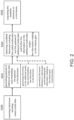
- a bitstream including coded media data may be received by a receiver of the source device.
- the bitstream including the coded media data may be received, for example, from one or more media server.
- the coded media data may include coded speech and audio data.
- the coded speech and audio data may be compliant with the MPEG-D USAC standard as given above.
- the bitstream may, for example, deliver audio content to be played back by a sink device connected to the source device.
- the source device is not limited.
- the source device may be a mobile device, including one or more of a mobile phone, a smart watch, a laptop and a tablet pc including convertibles.
- payload of additional media data may be generated and embedded in the bitstream by an embedder.
- the additional media data generated in step S101 is to be mixed with the media data by (at a side of) the sink device.
- this enables mixing of the additional media data with the media data at the sink device side.
- the coded media data and the additional media data are different (e.g. type of) media data.
- the coded media data and the additional media data may have different format.
- the coded media data and the additional media data include different type of media content.
- the coded media data may include main audio content, e.g., music, audio, etc.
- the additional media data may include secondary audio content, e.g., earcons, system sounds, key press sounds, e-mail notification sounds, etc.
- the main audio content and the secondary audio content may be played back by the sink device. Alternatively or additionally, the main audio content and the secondary audio content may be played back by the source device.
- the coded media data may be played back by the source device, the sink device or both the source device and the sink device.
- the additional media data may be played back by the source device, the sink device or both the source device and the sink device.
- the additional media data is uncompressed media
- the uncompressed media data is PCM data generated at the source device. While the generation of PCM data is also not limited, in an embodiment, the generation of the PCM data may be based on a user input. The user input may be, for example, a key-press. Alternatively, or additionally, the generation of the PCM data may be facilitated at the source device independent of a user input, e.g. based on an email notification.
- the PCM data may include one or more of earcon-data and system sounds data.
- the format of the compressed media data is not limited, the format may belong to the Bluetooth ecosystem. In an embodiment, the compressed media data may be in SBC format or in an aptX-based format.
- step S102 as an output from the embedder, a modified bitstream including the coded media data and the payload of additional media data may be obtained.
- step S103 the modified bitstream may then be output to a sink device.
- the coded media data in the received bitstream is passed through the source device to the sink device via the modified bitstream.
- the coded media data as received from the source device is embedded in the modified bitstream and outputted to the sink device.
- generating (at the source device) and outputting the modified bitstream to the sink device streamlines mixing of the media data with the additional media data at the side of the sink device.
- a single bitstream is used by the source device to embed and transport the media data and the additional media data to the sink device, thereby a single channel/connection can be used between the source and the sink device.
- no additional decoders and/or encoders are present in the source device to, e.g., decode and re-encode the coded media data.
- No additional mixers are used in the source device to, e.g., mix decoded coded media data with the additional media data.
- the modified bitstream may be output to the sink device via a Bluetooth connection.
- the source device may be connected to a sink device via a Bluetooth connection.
- earphones connected to a mobile phone via Bluetooth.
- the proposed technique and implementations and examples thereof described throughout this disclosure involve generating and outputting a modified bitstream to the sink device facilitates transmission of the payload of additional media data (e.g., system sounds/Earcons) to the sink device, e.g, when the source device is in a pass-through mode of operation.
- additional media data e.g., system sounds/Earcons
- the payload of additional media data may be generated and embedded into the received bitstream including the coded media data to generate the modified bitstream without, for example, decoding and re-encoding the coded media data.
- the additional media data can be passed to the sink device without need to establish an additional connection between the source device and the since device.
- the proposed technique enables simultaneous processing of the additional media data and the coded media data.
- step S101 further information on the additional media data may be generated (e.g. as part of metadata) and embedded in the bitstream (as indicated by the dashed line).
- the generated information may include one or more of information on a configuration of the additional media data, information on a presence of the additional media data in the modified bitstream, information on a default loudness value, information on a value for delay alignment, information on delay adaption, information on panning and information on a type of the additional media data.
- the generated information may be utilized by the sink device to process the received modified bitstream as detailed below.
- the information on the configuration of the additional media data may, for example, include information on a sampling rate which may enable to decide at the side of the sink device as to whether the additional media data may need to be resampled prior to mixing.
- the information on the configuration of the additional media data may further include, for example, information on a channel mode which may enable to decide at the side of the sink device if the additional media data may need to be downmixed/upmixed prior to mixing.
- the information on a default loudness value may include, for example, a measured loudness as according to one of the methods specified in ITU-R BS. 1770-4.
- the measured loudness may enable to decide at the side of the sink device at which level the additional media data may be mixed with the core decoded media data. Further, the information on the type of the additional media data may indicate at the side of the sink device as to whether the additional media data may need to be decoded, for example, as to whether the additional media data may be uncompressed or compressed media data.
- step S101 may further include generating information relating to a relative gain between the coded media data and the additional media data (e.g. also as part of metadata) and embedding the information relating to the relative gain in the bitstream (as indicated by the dashed line).
- the relative gain between the coded media data and the additional media data may be used by the sink device to generate an output signal based on the received modified bitstream as detailed below.
- source device and sink device may use the same relative gain value. For example, if the source device is a mobile phone, optimal system sound mixing settings may be automatically determined based on an estimated loudness ratio of the system sounds and coded media data content.
- the relative gain value may include a mixing gain value and/or an attenuation gain value which may be used by the mixer of the sink device.
- the modified bitstream is an MPEG-D USAC-based bitstream (i.e. an MPEG-D USAC standard compliant bitstream).
- the generated payload is transported in the modified bitstream via a USAC-type bitstream extension mechanism.
- the generated information and/or the generated information relating to the relative gain may be transported in the modified bitstream via the USAC-type bitstream extension mechanism.
- the following syntax may be used in order to embed the generated payload of the additional media data, the generated information on the additional media data and/or the generated information relating to the relative gain into the modified MPEG-D USAC-based bitstream.
- Top level syntactic element to convey the generated payload of the additional media data, the generated information (information on the additional media data) and/or the generated information relating to the relative gain.
- system_sound_config_present If set, system_sound config is present in the stream system_sound_payload_present If set, system_sound_payload is present in the stream
- the USAC-type bitstream extension mechanism may be a new USAC-type bitstream extension element including a unique identifier.
- system sound info may be transported by means of a USAC-type extension element as defined in ISO/IEC 23003-3.
- a new usacExtElementType may be named ID_EXT_ELE_ SYS _SOUND _INFO.
- system_sound_info() may only carry configuration data, i.e. the field system_sound_config_present may be set to 1 and the field system_sound_payload_present may be set to 0.
- Generated PCM data payload may be transmitted on a frame-by-frame basis according to Table 25, "Syntax of UsacExtElement()" of ISO/IEC 23003-3.
- the generated payload of additional media data may be embedded in an array extension element of the USAC-type bitstream.
- the structure system_sound_info as defined above may be embedded into the array "usacExtElementSegmentData" of Table 25 and may contain either generated information (information on the additional media data, e.g. configuration) or generated payload, or both.
- the array extension element (e.g. array element "usacExtElementSegmentData”) of the USAC-type bitstream usually contains coded media data and/or metadata.
- the array extension element carries (contains) generated payload of additional media data which is uncoded/raw data (e.g. uncompressed additional media data such as PCM data). Therefore, in this embodiment of the invention, an existing array element of the USAC-type bitstream which usually carries coded audio data and/or metadata is instead used for carrying uncoded/raw media data.
- the additional media data and the information on the additional media data can be readily embedded into an existing MPEG-D USAC-based bitstream that is passed-through by the source device.
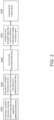
- a modified bitstream including coded media data (e.g. as received by the source device) and payload of additional media data may be received by a receiver of a sink device.
- the received modified bitstream may be parsed, by a bitstream parser, into the coded media data and the payload of additional media data.
- the modified bitstream is an MPEG-D USAC-based bitstream (i.e. an MPEG-D USAC standard compliant bitstream).
- the modified bitstream includes a USAC-type bitstream extension mechanism, and parsing in step S201 is based on identifying the USAC-type bitstream extension mechanism in the modified bitstream.
- the USAC-type bitstream extension mechanism may be a new USAC-type bitstream extension element including a unique identifier.
- the coded media data may be core decoded by a core decoder.
- the core decoded media data may be mixed with the additional media data, by a mixer, to obtain an output signal.
- step 204 the obtained output signal may then be output by a control unit.
- the modified bitstream may further include information on the additional media data, and processing the modified bitstream by the sink device may be based on the information.
- the information may include one or more of information on a configuration of the additional media data, information on a presence of the additional media data in the modified bitstream, information on a default loudness value, information on a value for delay alignment, information on delay adaption, information on panning and information on a type of the additional media data.
- the method may further include the step S202a of processing, by a processing unit, the additional media data prior to mixing the core decoded media data and the additional media data.
- step S203 the core decoded media data are then mixed with the processed additional media data.
- processing the additional media data may include one or more of resampling, delay adaption and loudness processing.
- the processing of the additional media data may be guided by (based on) the generated information included in the modified bitstream and provided in step S201 by the bitstream parser (as indicated by the dashed line). For example, resampling may be guided by information on a sampling rate of the additional media data which may be included in the information on the configuration of the additional media data.
- processing the additional media data may include downmixing/upmixing the additional media data which may be guided by information on a channel mode which may be included in the information on the configuration of the additional media data. Loudness processing may be guided, for example, by information on a default loudness value which may include a measured loudness as according to one of the methods specified in ITU-R BS. 1770-4.
- the modified bitstream may further include information relating to a relative gain between the coded media data and the additional media data, and mixing in step S203 the core decoded media data and the additional media data, which may have optionally been processed prior to mixing to obtain processed additional media data (as indicated by the dotted lines), may be based on the information relating to the relative gain.
- the sink device may use the relative gain value generated at the source device. In other words, both, source device and sink device may use the same relative gain value.
- the relative gain value may also further be modified via a user input in the mixing step S203.
- the relative gain value may include a mixing gain and/or an attenuation gain value.
- the information relating to the relative gain may be provided in step S201 by the bitstream parser as indicated by the dashed line.
- the information on the additional media data and alternatively, or additionally, the information relating to the relative gain value may be embedded in the modified bitstream in the system_sound_config top level syntax element as described above.
- the additional media data may be compressed media data or uncompressed media data.
- the additional media data may be compressed media data and the method may further include the step S205 of decoding, by a decoder, the compressed media data to obtain decoded additional media data, and in step S203 the decoded additional media data may be mixed with the core decoded media data. If the method includes further a step of processing the additional media data, S202a, in case of compressed media data, the decoded additional media data may optionally be subjected to processing in step S202a, as detailed above and indicated by the dotted lines, prior to mixing with the core decoded media data.
- the format of the compressed media data is not limited, the format may belong to the Bluetooth ecosystem.
- the compressed media data may be in SBC format or in an aptX-based format.
- processing in step S202a may be guided by (based on) generated information on the additional media data included in the modified bitstream and provided in step S201 as indicated by the dashed line.
- mixing in step S203 the core decoded media data and the decoded additional media data, which may have optionally been processed prior to mixing, may also be based on information relating to a relative gain as detailed above.
- the information relating to the relative gain may also be provided in step S201 as indicated by the dashed line.
- the additional media data may be uncompressed media data, and in step S203 the uncompressed additional media data may be mixed with the core decoded media data in accordance with the example illustrated in Figure 3 or Figure 4 .
- the uncompressed media data may also optionally be subjected to processing in step S202a, as detailed above, prior to mixing with the core decoded media data.
- the uncompressed media data may be PCM data generated at the source device.
- the PCM data include one or more of earcon-data and system sounds data.
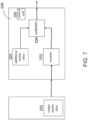
- the source device 100 may include a receiver 102 configured to receive a bitstream including coded media data 101.
- the bitstream may be received, for example, from one or more media server.
- the bitstream may, for example, deliver audio content to be played back by a sink device connected to the source device 100.
- the source device 100 is not limited.
- the source device 100 may be a mobile device including one or more of a mobile phone, a smart watch, a laptop and a tablet pc including convertibles.
- the coded media data may be played back by the source device, the sink device or both the source device and the sink device.
- the additional media data may be played back by the source device, the sink device or both the source device and the sink device.
- the source device 100 may further include an embedder 104 configured to generate payload of additional media data 103 and to embed the generated payload in the bitstream to obtain a modified bitstream including the coded media data 101 and the payload of additional media data 103. In this, a modified bitstream may also be generated even if the source device is operated in pass-through mode.
- the source device 100 may be configured to pass through the coded media data to the sink device via the modified bitstream.
- the coded media data as received from the source device is embedded in the modified bitstream and outputted to the sink device.
- generating (at the source device) and outputting the modified bitstream to the sink device streamlines mixing of the media data with the additional media data at the side of the sink device.
- a single bitstream is used by the source device to embed and transport the media data and the additional media data to the sink device, thereby a single channel/connection can be used between the source and the sink device.
- no additional decoders and/or encoders are present in the source device to, e.g., decode and re-encode the coded media data.
- No additional mixers are used in the source device to, e.g., mix decoded coded media data with the additional media data.
- the modified bitstream is an MPEG-D USAC-based bitstream (i.e. an MPEG-D USAC standard compliant bitstream).
- the embedder 104 is configured to transport the generated payload via a USAC-type bitstream extension mechanism in the modified bitstream as detailed above.
- the additional media data 103 is uncompressed media data. While the uncompressed media data is not limited, in an embodiment, the uncompressed media data may be PCM data generated at the source device 100. While the generation of PCM data is not limited, in an embodiment, the generation of the PCM data may be based on a user input. The user input may be, for example, a key-press.
- the source device 100 may then include a user interface which may be, for example, a touch display. Alternatively, or additionally the source device 100 may further include at least a keyboard. However, the generation of the PCM data may also be facilitated at the source device 100 independent of a user input, e.g. based on an email notification.
- the PCM data may include one or more of earcon-data and system sounds data. The PCM data may be stored in the source device 100.
- the compressed media data is not limited, the format of the compressed media data may belong to the Bluetooth ecosystem.
- the compressed media data may be in SBC format or in an aptX-based format.
- the compressed media data may be generated at the source device 100.
- the compressed media data may be stored in the source device 100. Alternatively, or additionally, the compressed media data may be received via the receiver 102.
- the embedder 104 may further be configured to generate information 106 on the additional media data 103 and to embed the generated information 106 in the bitstream (as indicated by the dashed line). Alternatively, or additionally, in an embodiment, the embedder 104 may further be configured to generate information 106 relating to a relative gain between the coded media data 101 and the additional media data 103 and to embed the information 106 relating to the relative gain in the bitstream (as also indicated by the dashed line). In an embodiment, the embedder 104 may further be configured to transport the generated information 106 and/or the generated information 106 relating to the relative gain via the USAC-type bitstream extension mechanism in the modified bitstream as detailed above.
- the source device 100 may further include a control unit 105 configured to output the modified bitstream to a sink device.
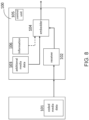
- the sink device 200 may include a receiver 201 configured to receive a modified bitstream including coded media data and payload of additional media data.
- the sink device 200 is not limited.
- the sink device 200 may be a peripheral device to the source device, for example, earphones.
- the sink device 200 and the source device may be connected via Bluetooth.
- the sink device 200 may be configured to play back audio content included in the modified bitstream.
- the sink device 200 may be configured to play back the coded media data or the additional media data or both the coded media data and the additional media data.
- the sink device 200 may further include a bitstream parser 202 configured to parse the modified bitstream into the coded media data and the payload of the additional media data.
- the modified bitstream is an MPEG-D USAC-based bitstream (i.e. an MPEG-D USAC standard compliant bitstream).
- the bitstream parser 202 is configured to parse the bitstream based on identifying a USAC-type bitstream extension mechanism in the modified bitstream.
- the sink device 200 may further include a core decoder 203 configured to core decode the coded media data to obtain core decoded media data.
- the core decoder 203 is an MPEG-D USAC-based decoder (compliant with the MPEG-D USAC standard as detailed above).
- the sink device 200 may further include a mixer 204 configured to mix the core decoded media data and the additional media data to obtain an output signal.
- the additional media data may be compressed media data or uncompressed media data.
- the additional media data may be uncompressed media data, and the mixer 204 may be configured to mix the core decoded media data and the uncompressed additional media data.
- the modified bitstream may further include information on the additional media data
- the sink device 200 may be configured to process the modified bitstream based on the information.
- the sink device 200 may further include a processing unit 206 configured to process the additional media data prior to mixing the core decoded media data and the additional media data in the mixer 204.
- processing the additional media data by the processing unit 206 may include one or more of resampling, delay adaption and loudness processing. Processing the additional media data by the processing unit 206 may be guided by (based on) the information on the additional media data as detailed above.
- the information on the additional media data may be provided by the bitstream parser 202 to the processing unit 206 as indicated by the dashed line.
- the uncompressed media data may be directly processed after the modified bitstream has been parsed in the bitstream parser 202 and prior to entering the mixer 204.
- the modified bitstream may further include information relating to a relative gain between the coded media data and the additional media data
- the mixer 204 may further be configured to mix the core decoded media data and the additional media data, which may optionally have been processed prior to mixing (as indicated by the dotted lines), based on the information relating to the relative gain as described above.
- the information relating to the relative gain may be provided to the mixer 204 by the bitstream parser 202 as indicated by the dashed line.
- the additional media data may be compressed media data.
- the sink device 200 may further include a decoder 207 configured to decode the compressed media data to obtain decoded additional media data, and the mixer 204 may be configured to mix the core decoded media data and the decoded additional media data.
- the modified bitstream may further include information relating to a relative gain between the coded media data and the additional media data, and the mixer 204 may further be configured to mix the core decoded media data and the decoded additional media data based on the information relating to the relative gain as described above.
- the information relating to the relative gain may be provided to the mixer 204 by the bitstream parser 202 as indicated by the dashed line.
- the decoded additional media data may further optionally be processed by the processing unit 206 prior to mixing with the core decoded media data in the mixer 204 (as indicated by the dotted lines). Processing the decoded additional media data by the processing unit 206 may be guided by (based on) information on the additional media data which may be included in the modified bitstream as detailed above. The information on the additional media data may be provided by the bitstream parser 202 to the processing unit 206 as indicated by the dashed line.
- the sink device 200 may further include a control unit 205 configured to output the output signal.
- the output signal may be output via earphones to a user of the sink device 200.
- the above described methods may be implemented individually on the above described devices.
- the above described devices capable of performing the above described methods may also form a respective system.
- Devices 300 may include one or more processors 301, 302 as illustrated by way of example in Figure 13 .
- the above described methods may also be implemented as a computer program product comprising a computer-readable storage medium with instructions adapted to cause the device 300 to carry out said methods when executed on a device 300 having processing capability 301, 302.
- processor may refer to any device or portion of a device that processes electronic data, e.g., from registers and/or memory to transform that electronic data into other electronic data that, e.g., may be stored in registers and/or memory.
- a "computer” or a “computing machine” or a “computing platform” may include one or more processors.
- the methodologies described herein are, in one example embodiment, performable by one or more processors that accept computer-readable (also called machine-readable) code containing a set of instructions that when executed by one or more of the processors carry out at least one of the methods described herein.
- Any processor capable of executing a set of instructions (sequential or otherwise) that specify actions to be taken are included.
- a typical processing system that includes one or more processors.
- Each processor may include one or more of a CPU, a graphics processing unit, and a programmable DSP unit.
- the processing system further may include a memory subsystem including main RAM and/or a static RAM, and/or ROM.
- a bus subsystem may be included for communicating between the components.
- the processing system further may be a distributed processing system with processors coupled by a network. If the processing system requires a display, such a display may be included, e.g., a liquid crystal display (LCD) or a cathode ray tube (CRT) display. If manual data entry is required, the processing system also includes an input device such as one or more of an alphanumeric input unit such as a keyboard, a pointing control device such as a mouse, and so forth. The processing system may also encompass a storage system such as a disk drive unit. The processing system in some configurations may include a sound output device, and a network interface device.
- LCD liquid crystal display
- CRT cathode ray tube
- the memory subsystem thus includes a computer-readable carrier medium that carries computer-readable code (e.g., software) including a set of instructions to cause performing, when executed by one or more processors, one or more of the methods described herein.
- computer-readable code e.g., software
- the software may reside in the hard disk, or may also reside, completely or at least partially, within the RAM and/or within the processor during execution thereof by the computer system.
- the memory and the processor also constitute computer-readable carrier medium carrying computer-readable code.
- a computer-readable carrier medium may form, or be included in a computer program product.
- the one or more processors operate as a standalone device or may be connected, e.g., networked to other processor(s), in a networked deployment, the one or more processors may operate in the capacity of a server or a user machine in server-user network environment, or as a peer machine in a peer-to-peer or distributed network environment.
- the one or more processors may form a personal computer (PC), a tablet PC, a Personal Digital Assistant (PDA), a cellular telephone, a web appliance, a network router, switch or bridge, or any machine capable of executing a set of instructions (sequential or otherwise) that specify actions to be taken by that machine.
- machine shall also be taken to include any collection of machines that individually or jointly execute a set (or multiple sets) of instructions to perform any one or more of the methodologies discussed herein.
- each of the methods described herein is in the form of a computer-readable carrier medium carrying a set of instructions, e.g., a computer program that is for execution on one or more processors, e.g., one or more processors that are part of web server arrangement.
- example embodiments of the present disclosure may be embodied as a method, an apparatus such as a special purpose apparatus, an apparatus such as a data processing system, or a computer-readable carrier medium, e.g., a computer program product.
- the computer-readable carrier medium carries computer readable code including a set of instructions that when executed on one or more processors cause the processor or processors to implement a method.
- aspects of the present disclosure may take the form of a method, an entirely hardware example embodiment, an entirely software example embodiment or an example embodiment combining software and hardware aspects.
- the present disclosure may take the form of carrier medium (e.g., a computer program product on a computer-readable storage medium) carrying computer-readable program code embodied in the medium.
- the software may further be transmitted or received over a network via a network interface device.
- the carrier medium is in an example embodiment a single medium, the term “carrier medium” should be taken to include a single medium or multiple media (e.g., a centralized or distributed database, and/or associated caches and servers) that store the one or more sets of instructions.
- the term “carrier medium” shall also be taken to include any medium that is capable of storing, encoding or carrying a set of instructions for execution by one or more of the processors and that cause the one or more processors to perform any one or more of the methodologies of the present disclosure.
- a carrier medium may take many forms, including but not limited to, non-volatile media, volatile media, and transmission media.
- Non-volatile media includes, for example, optical, magnetic disks, and magneto-optical disks.
- Volatile media includes dynamic memory, such as main memory.
- Transmission media includes coaxial cables, copper wire and fiber optics, including the wires that comprise a bus subsystem. Transmission media may also take the form of acoustic or light waves, such as those generated during radio wave and infrared data communications.
- carrier medium shall accordingly be taken to include, but not be limited to, solid-state memories, a computer product embodied in optical and magnetic media; a medium bearing a propagated signal detectable by at least one processor or one or more processors and representing a set of instructions that, when executed, implement a method; and a transmission medium in a network bearing a propagated signal detectable by at least one processor of the one or more processors and representing the set of instructions.
- any one of the terms comprising, comprised of or which comprises is an open term that means including at least the elements/features that follow, but not excluding others.
- the term comprising, when used in the claims should not be interpreted as being limitative to the means or elements or steps listed thereafter.
- the scope of the expression a device comprising A and B should not be limited to devices consisting only of elements A and B.
- Any one of the terms including or which includes or that includes as used herein is also an open term that also means including at least the elements/features that follow the term, but not excluding others. Thus, including is synonymous with and means comprising.
Landscapes
- Engineering & Computer Science (AREA)
- Multimedia (AREA)
- Signal Processing (AREA)
- Human Computer Interaction (AREA)
- Computer Networks & Wireless Communication (AREA)
- Health & Medical Sciences (AREA)
- Audiology, Speech & Language Pathology (AREA)
- Computational Linguistics (AREA)
- Physics & Mathematics (AREA)
- Acoustics & Sound (AREA)
- Quality & Reliability (AREA)
- Two-Way Televisions, Distribution Of Moving Picture Or The Like (AREA)
- Compression, Expansion, Code Conversion, And Decoders (AREA)
Claims (15)
- Procédé pour générer un train de bits modifié basé sur MPEG-D USAC au moyen d'un dispositif source, comprenant un récepteur et un intégrateur, dans lequel le procédé inclut les étapes consistant :a) à recevoir (S100), au moyen du récepteur, un train de bits incluant des données multimédias codées ;b) à générer (S101), au moyen d'un intégrateur, une charge utile de données audio supplémentaires, et à intégrer la charge utile dans le train de bits pour obtenir (S102), en tant que sortie de l'intégrateur, un train de bits modifié incluant les données multimédias codées et la charge utile des données audio supplémentaires, dans lequel la charge utile générée est intégrée dans le train de bits en transportant la charge utile dans le train de bits par le biais d'un mécanisme d'extension de train de bits de type USAC, dans lequel le mécanisme d'extension de train de bits de type USAC est un élément d'extension de train de bits de type USAC incluant un identifiant unique ou un élément d'extension de réseau et dans lequel les données audio supplémentaires sont des données audio PCM non compressées générées au niveau du dispositif source et incluant une ou plusieurs de données de carillon et/ou de données de sons de système ; etc) à délivrer en sortie (S103) le train de bits modifié à un dispositif collecteur.
- Procédé selon la revendication 1, dans lequel l'étape b) inclut en outre la génération d'informations concernant les données audio supplémentaires et l'intégration des informations dans le train de bits et facultativement dans lequel
les informations générées incluent une ou plusieurs des informations concernant une configuration des données audio supplémentaires, des informations concernant une présence des données audio supplémentaires dans le train de bits modifié, des informations concernant une valeur d'intensité par défaut, des informations concernant une valeur pour un alignement de retard, des informations concernant une adaptation de retard, des informations concernant un panoramique et des informations concernant un type des données audio supplémentaires. - Procédé selon la revendication 1 ou la revendication 2, dans lequel l'étape b) inclut en outre la génération d'informations se rapportant à un gain relatif entre les données multimédias codées et les données audio supplémentaires et l'intégration des informations se rapportant au gain relatif dans le train de bits.
- Procédé selon l'une quelconque des revendications 1 à 3, dans lequel, dans l'étape c), le train de bits modifié est délivre en sortie au dispositif collecteur par le biais d'une connexion Bluetooth.
- Procédé pour traiter un train de bits modifié basé sur MPEG-D USAC au moyen d'un dispositif collecteur comprenant un récepteur, un analyseur de train de bits, un décodeur coeur et un mélangeur, dans lequel le procédé inclut les étapes consistant :a) à recevoir (S200), au moyen du récepteur, un train de bits modifié incluant des données multimédias codées, une charge utile de données audio supplémentaires et un mécanisme d'extension de train de bits de type USAC, dans lequel le mécanisme d'extension de train de bits de type USAC est un élément d'extension de train de bits de type USAC incluant un identifiant unique ou un élément d'extension de réseau et dans lequel les données audio supplémentaires sont des données audio PCM non compressées incluant une ou plusieurs de données de carillon et/ou de données de sons de système ;b) à analyser (S201), au moyen de l'analyseur de train de bits, le train de bits modifié dans les données multimédias codées et la charge utile de données audio supplémentaires, dans lequel l'analyse est en outre basée sur l'identification du mécanisme d'extension de train de bits de type USAC dans le train de bits modifié ;c) à effectuer un décodage coeur (S202), au moyen du décodeur coeur, des données multimédias codées pour obtenir des données multimédias ayant subi un décodage coeur ;d) à mélanger (S203), au moyen du mélangeur, les données multimédias ayant subi un décodage coeur et les données audio supplémentaires non compressées pour obtenir un signal de sortie ; ete) à délivrer en sortie (S204) le signal de sortie.
- Procédé selon la revendication 5, dans lequel le train de bits modifié inclut en outre des informations concernant les données audio supplémentaires et dans lequel le procédé inclut en outre, après l'étape a) et avant l'étape b), une étape consistant à traiter le train de bits modifié sur la base des informations et, facultativement, dans lequel
les informations incluent une ou plusieurs des informations concernant une configuration des données audio supplémentaires, des informations concernant une présence des données audio supplémentaires dans le train de bits modifié, des informations concernant une valeur d'intensité par défaut, des informations concernant une valeur pour un alignement de retard, des informations concernant une adaptation de retard, des informations concernant un panoramique et des informations concernant un type des données audio supplémentaires. - Procédé selon la revendication 5 ou la revendication 6, dans lequel le train de bits modifié inclut en outre des informations se rapportant à un gain relatif entre les données multimédias codées et les données audio supplémentaires et dans lequel le mélange à l'étape d) des données multimédias ayant subi un décodage coeur et des données audio supplémentaires est basé sur les informations se rapportant au gain relatif et/ou dans lequel
le procédé inclut en outre l'étape consistant à traiter, au moyen d'une unité de traitement, les données audio supplémentaires avant de mélanger les données multimédias ayant subi un décodage coeur et les données audio supplémentaires et, facultativement, dans lequel le traitement des données audio supplémentaires inclut un ou plusieurs d'un rééchantillonnage, d'une adaptation de retard et d'un traitement d'intensité. - Dispositif source (100) pour générer un train de bits modifié basé sur MPEG-D USAC, dans lequel le dispositif inclut :a) un récepteur (102) configuré pour recevoir un train de bits incluant des données multimédias codées ;b) un intégrateur (104) configuré pour générer une charge utile de données audio supplémentaires et pour intégrer la charge utile générée dans le train de bits en transportant la charge utile dans le train de bits par le biais d'un mécanisme d'extension de train de bits de type USAC pour obtenir un train de bits modifié incluant les données multimédias codées et la charge utile des données audio supplémentaires, dans lequel le mécanisme d'extension de train de bits de type USAC est un élément d'extension de train de bits de type USAC incluant un identifiant unique ou un élément d'extension de réseau et dans lequel les données audio supplémentaires sont des données audio PCM non compressées générées au niveau du dispositif source incluant une ou plusieurs de données de carillon et de données de sons de système ; et c) une unité de commande (105) configurée pour délivrer en sortie le train de bits modifié à un dispositif collecteur.
- Dispositif source (100) selon la revendication 8, dans lequel l'intégrateur est en outre configuré pour générer des informations concernant les données audio supplémentaires et pour intégrer les informations dans le train de bits et/ou dans lequel l'intégrateur est en outre configuré pour générer des informations se rapportant à un gain relatif entre les données multimédias codées et les données audio supplémentaires et pour intégrer les informations se rapportant au gain relatif dans le train de bits.
- Dispositif collecteur (200) pour traiter un train de bits modifié basé sur MPEG-D USAC, dans lequel le dispositif inclut :a) un récepteur (201) configuré pour recevoir un train de bits modifié incluant des données multimédias codées, une charge utile de données audio supplémentaires et un mécanisme d'extension de train de bits de type USAC, dans lequel le mécanisme d'extension de train de bits de type USAC est un élément d'extension de train de bits de type USAC
incluant un identifiant unique ou un élément d'extension de réseau et dans lequel les données audio supplémentaires sont des données audio PCM non compressées incluant une ou plusieurs de données de carillon et/ou de données de sons de système ;b) un analyseur de train de bits (202) configuré pour analyser le train de bits modifié dans les données multimédias codées et la charge utile de données audio supplémentaires sur la base de l'identification du mécanisme d'extension de train de bits de type USAC dans le train de bits modifié ;c) un décodeur coeur basé sur MPEG-D USAC (203) configuré pour effectuer un décodage coeur des données multimédias codées pour obtenir des données multimédias ayant subi un décodage coeur ;d) un mélangeur (204) configuré pour mélanger les données multimédias ayant subi un décodage coeur et les données audio supplémentaires PCM non compressées pour obtenir un signal de sortie ; ete) une unité de commande (205) configurée pour délivrer en sortie le signal de sortie. - Dispositif collecteur selon la revendication 10, incluant une unité de traitement (206) configurée pour traiter les données audio supplémentaires avant de mélanger les données multimédias ayant subi un décodage coeur et les données audio supplémentaires.
- Dispositif collecteur selon la revendication 10 ou la revendication 11, dans lequel le train de bits modifié inclut en outre des informations concernant les données audio supplémentaires et dans lequel le dispositif collecteur est configuré pour traiter le train de bits modifié sur la base des informations.
- Dispositif collecteur selon l'une quelconque des revendications 10 à 12, dans lequel le train de bits modifié inclut en outre des informations se rapportant à un gain relatif entre les données multimédias codées et les données audio supplémentaires et dans lequel le mélangeur est en outre configuré pour mélanger les données multimédias ayant subi un décodage coeur et les données audio supplémentaires sur la base des informations se rapportant au gain relatif.
- Système d'un dispositif source pour générer un train de bits modifié basé sur MPEG-D USAC, dans lequel le dispositif source inclut un ou plusieurs processeurs configurés pour réaliser le procédé selon les revendications 1 à 4 et un dispositif collecteur pour traiter un train de bits modifié basé sur MPEG-D USAC, dans lequel le dispositif collecteur inclut un ou plusieurs processeurs configurés pour réaliser le procédé selon l'une quelconque des revendications 5 à 7.
- Produit de programme d'ordinateur comprenant un support de stockage lisible par ordinateur avec des instructions conçues pour amener un dispositif (300) à mettre en oeuvre le procédé selon l'une quelconque des revendications 1 à 7, lorsqu'il est exécuté par le dispositif (300) présentant une capacité de traitement.
Applications Claiming Priority (3)
| Application Number | Priority Date | Filing Date | Title |
|---|---|---|---|
| US201962887111P | 2019-08-15 | 2019-08-15 | |
| EP19191919 | 2019-08-15 | ||
| PCT/US2020/046235 WO2021030625A1 (fr) | 2019-08-15 | 2020-08-13 | Procédés et dispositifs de génération et de traitement de trains de bits modifiés |
Publications (2)
| Publication Number | Publication Date |
|---|---|
| EP4014236A1 EP4014236A1 (fr) | 2022-06-22 |
| EP4014236B1 true EP4014236B1 (fr) | 2023-03-22 |
Family
ID=72179270
Family Applications (1)
| Application Number | Title | Priority Date | Filing Date |
|---|---|---|---|
| EP20760722.7A Active EP4014236B1 (fr) | 2019-08-15 | 2020-08-13 | Procédés et dispositifs de génération et de traitement de trains de bits modifiés |
Country Status (6)
| Country | Link |
|---|---|
| US (2) | US12205607B2 (fr) |
| EP (1) | EP4014236B1 (fr) |
| JP (2) | JP7631313B2 (fr) |
| KR (1) | KR20220047816A (fr) |
| CN (1) | CN114303189A (fr) |
| WO (1) | WO2021030625A1 (fr) |
Family Cites Families (48)
| Publication number | Priority date | Publication date | Assignee | Title |
|---|---|---|---|---|
| GB2341746A (en) | 1998-09-10 | 2000-03-22 | Snell & Wilcox Ltd | Digital TV service protector |
| WO2001046954A1 (fr) | 1999-12-21 | 2001-06-28 | Koninklijke Philips Electronics N.V. | Integration d'un premier signal d'information numerique dans un second signal d'information numerique afin de l'emettre via un dispositif d'emission |
| US7266501B2 (en) | 2000-03-02 | 2007-09-04 | Akiba Electronics Institute Llc | Method and apparatus for accommodating primary content audio and secondary content remaining audio capability in the digital audio production process |
| US6718507B1 (en) | 2000-09-12 | 2004-04-06 | At&T Corp. | System and method for representing compressed information |
| US7039116B1 (en) | 2000-11-07 | 2006-05-02 | Cisco Technology, Inc. | Methods and apparatus for embedding and format conversion of compressed video data |
| KR100545901B1 (ko) | 2003-06-13 | 2006-02-09 | (주)엠아이유 | 멀티미디어 데이터 무료 송수신 시스템 및 송수신 방법 |
| KR100571824B1 (ko) * | 2003-11-26 | 2006-04-17 | 삼성전자주식회사 | 부가정보 삽입된 mpeg-4 오디오 bsac부호화/복호화 방법 및 장치 |
| US9805400B2 (en) | 2004-03-02 | 2017-10-31 | Nokia Technologies Oy | Downloading different versions of media files based on a type of download link |
| US20060059510A1 (en) | 2004-09-13 | 2006-03-16 | Huang Jau H | System and method for embedding scene change information in a video bitstream |
| KR100942860B1 (ko) | 2005-12-16 | 2010-02-17 | 돌비 스웨덴 에이비 | 특정된 엔트리 포인트를 가진 세그먼트로 데이터 스트림을 생성하고 해석하는 장치, 방법 및 이들을 기록한 컴퓨터로 읽을 수 있는 매체 |
| US8756626B2 (en) | 2005-12-22 | 2014-06-17 | Broadcom Corporation | Method and apparatus for using the host-pod interface of a digital television or other digital audio/video receiver for new services |
| US20070294738A1 (en) | 2006-06-16 | 2007-12-20 | Broadcom Corporation | Single chip cable set-top box supporting DOCSIS set-top Gateway (DSG) protocol and high definition advanced video codec (HD AVC) decode |
| WO2008154041A1 (fr) * | 2007-06-14 | 2008-12-18 | Thomson Licensing | Modification d'un train de bits codé |
| US20090055005A1 (en) | 2007-08-23 | 2009-02-26 | Horizon Semiconductors Ltd. | Audio Processor |
| KR100916702B1 (ko) | 2007-09-05 | 2009-09-11 | 에스케이 텔레콤주식회사 | 전송 스트림 패킷의 채널 디코딩 장치 및 그 방법 |
| CN102144237B (zh) | 2008-07-03 | 2014-10-22 | 美国唯美安视国际有限公司 | 压缩媒体的有效水印方法 |
| GB2466242B (en) | 2008-12-15 | 2013-01-02 | Audio Analytic Ltd | Sound identification systems |
| CN102365680A (zh) * | 2009-02-03 | 2012-02-29 | 三星电子株式会社 | 音频信号的编码和解码方法及其装置 |
| CN102860008B (zh) | 2010-01-06 | 2016-05-11 | 杜比实验室特许公司 | 用于多层视频系统的复杂度自适应可伸缩解码及流处理 |
| US20110213681A1 (en) | 2010-02-03 | 2011-09-01 | Mohammad Shahid | Delivering enhanced content to broadcast media receivers with internet connection and enhancing user experience |
| TWI557723B (zh) | 2010-02-18 | 2016-11-11 | 杜比實驗室特許公司 | 解碼方法及系統 |
| EP2362653A1 (fr) | 2010-02-26 | 2011-08-31 | Panasonic Corporation | Compression d'en-tête de paquets de flux de transport |
| US20130298171A1 (en) | 2010-11-18 | 2013-11-07 | Sharp Kabushiki Kaisha | Device for generating content data, method for generating content data, and recording medium |
| TWI581250B (zh) | 2010-12-03 | 2017-05-01 | 杜比實驗室特許公司 | 利用多媒體處理節點之適應性處理技術 |
| US20150348558A1 (en) * | 2010-12-03 | 2015-12-03 | Dolby Laboratories Licensing Corporation | Audio Bitstreams with Supplementary Data and Encoding and Decoding of Such Bitstreams |
| US9779736B2 (en) | 2011-11-18 | 2017-10-03 | Sirius Xm Radio Inc. | Systems and methods for implementing efficient cross-fading between compressed audio streams |
| US20180048750A1 (en) * | 2012-06-15 | 2018-02-15 | Muzik, Llc | Audio/video wearable computer system with integrated projector |
| MX343571B (es) | 2013-01-21 | 2016-11-09 | Dolby Laboratories Licensing Corp | Codificador y decodificador de audio con metadatos de limite y sonoridad de programa. |
| US9607624B2 (en) | 2013-03-29 | 2017-03-28 | Apple Inc. | Metadata driven dynamic range control |
| EP2814256B1 (fr) | 2013-06-11 | 2022-01-26 | MX1 GmbH | Procédé et appareil permettant de modifier un flux de contenu numérique |
| TWM487509U (zh) | 2013-06-19 | 2014-10-01 | 杜比實驗室特許公司 | 音訊處理設備及電子裝置 |
| EP2843963A1 (fr) | 2013-08-30 | 2015-03-04 | Thomson Licensing | Procédé de tatouage numérique de contenu |
| EP2863386A1 (fr) | 2013-10-18 | 2015-04-22 | Fraunhofer-Gesellschaft zur Förderung der angewandten Forschung e.V. | Décodeur audio, appareil de génération de données de sortie audio codées et procédés permettant d'initialiser un décodeur |
| EP2866227A1 (fr) | 2013-10-22 | 2015-04-29 | Fraunhofer-Gesellschaft zur Förderung der angewandten Forschung e.V. | Procédé de décodage et de codage d'une matrice de mixage réducteur, procédé de présentation de contenu audio, codeur et décodeur pour une matrice de mixage réducteur, codeur audio et décodeur audio |
| US9824694B2 (en) * | 2013-12-05 | 2017-11-21 | Tls Corp. | Data carriage in encoded and pre-encoded audio bitstreams |
| KR101519000B1 (ko) | 2014-04-23 | 2015-05-19 | 오픈스택 주식회사 | 모듈레이터 내장형 인코더 방송장비 및 자동전환 설정 방법 |
| PT3149955T (pt) | 2014-05-28 | 2019-08-05 | Fraunhofer Ges Forschung | Processador de dados e transporte de dados de controlo do utilizador para descodificadores e renderizadores de áudio |
| WO2016172328A1 (fr) | 2015-04-24 | 2016-10-27 | Vid Scale, Inc. | Protection de contenu et détection de modification dans une diffusion en continu adaptative et des flux de transport |
| US9837086B2 (en) * | 2015-07-31 | 2017-12-05 | Apple Inc. | Encoded audio extended metadata-based dynamic range control |
| US10008214B2 (en) | 2015-09-11 | 2018-06-26 | Electronics And Telecommunications Research Institute | USAC audio signal encoding/decoding apparatus and method for digital radio services |
| JP2017156671A (ja) * | 2016-03-04 | 2017-09-07 | ヤマハ株式会社 | システム |
| US10375465B2 (en) * | 2016-09-14 | 2019-08-06 | Harman International Industries, Inc. | System and method for alerting a user of preference-based external sounds when listening to audio through headphones |
| EP3470976A1 (fr) | 2017-10-12 | 2019-04-17 | Fraunhofer-Gesellschaft zur Förderung der angewandten Forschung e.V. | Procédé et appareil permettant une distribution et une utilisation efficaces de messages audio pour une expérience de haute qualité |
| US10075802B1 (en) | 2017-08-08 | 2018-09-11 | Qualcomm Incorporated | Bitrate allocation for higher order ambisonic audio data |
| US10812700B2 (en) | 2017-11-02 | 2020-10-20 | Arris Enterprises Llc | Approach to live multi-camera streaming of events with hand-held cameras |
| US10540970B2 (en) * | 2017-12-12 | 2020-01-21 | Amazon Technologies, Inc. | Architectures and topologies for vehicle-based, voice-controlled devices |
| CN115691517A (zh) | 2018-02-22 | 2023-02-03 | 杜比国际公司 | 用于处理嵌入在mpeg-h 3d音频流中的辅媒体流的方法及设备 |
| US11435977B2 (en) * | 2018-04-20 | 2022-09-06 | Lg Electronics Inc. | Method for transmitting and receiving audio data related to transition effect and device therefor |
-
2020
- 2020-08-13 JP JP2022509575A patent/JP7631313B2/ja active Active
- 2020-08-13 EP EP20760722.7A patent/EP4014236B1/fr active Active
- 2020-08-13 US US17/633,829 patent/US12205607B2/en active Active
- 2020-08-13 KR KR1020227008347A patent/KR20220047816A/ko active Pending
- 2020-08-13 WO PCT/US2020/046235 patent/WO2021030625A1/fr not_active Ceased
- 2020-08-13 CN CN202080057483.2A patent/CN114303189A/zh active Pending
-
2025
- 2025-01-06 US US19/011,175 patent/US20250218449A1/en active Pending
- 2025-02-05 JP JP2025017404A patent/JP7829756B2/ja active Active
Non-Patent Citations (1)
| Title |
|---|
| ANONYMOUS: "Study on ISO/IEC 23003-3:201x/DIS of Unified Speech and Audio Coding", no. n12013, 22 April 2011 (2011-04-22), XP030018506, Retrieved from the Internet <URL:http://phenix.int-evry.fr/mpeg/doc_end_user/documents/96_Geneva/wg11/w12013-v2-w12013.zip w12013_(Study on DIS of USAC).doc> [retrieved on 20110422] * |
Also Published As
| Publication number | Publication date |
|---|---|
| CN114303189A (zh) | 2022-04-08 |
| JP7829756B2 (ja) | 2026-03-13 |
| US20250218449A1 (en) | 2025-07-03 |
| US20220230644A1 (en) | 2022-07-21 |
| JP2025069380A (ja) | 2025-04-30 |
| JP2022544671A (ja) | 2022-10-20 |
| EP4014236A1 (fr) | 2022-06-22 |
| WO2021030625A1 (fr) | 2021-02-18 |
| KR20220047816A (ko) | 2022-04-19 |
| US12205607B2 (en) | 2025-01-21 |
| JP7631313B2 (ja) | 2025-02-18 |
Similar Documents
| Publication | Publication Date | Title |
|---|---|---|
| US20250329338A1 (en) | Method and apparatus for decoding a bitstream including encoded higher order ambisonics representations | |
| EP4392970B1 (fr) | Procédé et appareil de traitement dynamique de données audio dynamique basés sur des métadonnées | |
| JP7816881B2 (ja) | 変更オーディオビットストリームの生成及び処理のための方法及び装置 | |
| US12205607B2 (en) | Methods and devices for generation and processing of modified bitstreams | |
| CA3241847A1 (fr) | Procede et appareil pour traiter des donnees audio | |
| CN119156665A (zh) | 用于处理音频数据的方法和装置 | |
| WO2026098917A1 (fr) | Appareil et procédé de mappage d'audio immersif avec un audio codé |
Legal Events
| Date | Code | Title | Description |
|---|---|---|---|
| STAA | Information on the status of an ep patent application or granted ep patent |
Free format text: STATUS: UNKNOWN |
|
| STAA | Information on the status of an ep patent application or granted ep patent |
Free format text: STATUS: THE INTERNATIONAL PUBLICATION HAS BEEN MADE |
|
| PUAI | Public reference made under article 153(3) epc to a published international application that has entered the european phase |
Free format text: ORIGINAL CODE: 0009012 |
|
| STAA | Information on the status of an ep patent application or granted ep patent |
Free format text: STATUS: REQUEST FOR EXAMINATION WAS MADE |
|
| 17P | Request for examination filed |
Effective date: 20220315 |
|
| AK | Designated contracting states |
Kind code of ref document: A1 Designated state(s): AL AT BE BG CH CY CZ DE DK EE ES FI FR GB GR HR HU IE IS IT LI LT LU LV MC MK MT NL NO PL PT RO RS SE SI SK SM TR |
|
| RIC1 | Information provided on ipc code assigned before grant |
Ipc: H04N 21/485 20110101ALI20220715BHEP Ipc: H04N 21/4363 20110101ALI20220715BHEP Ipc: H04N 21/235 20110101ALI20220715BHEP Ipc: H04N 21/233 20110101ALI20220715BHEP Ipc: H04L 65/75 20220101ALI20220715BHEP Ipc: G10L 21/0316 20130101ALI20220715BHEP Ipc: G10L 19/16 20130101AFI20220715BHEP |
|
| GRAP | Despatch of communication of intention to grant a patent |
Free format text: ORIGINAL CODE: EPIDOSNIGR1 |
|
| STAA | Information on the status of an ep patent application or granted ep patent |
Free format text: STATUS: GRANT OF PATENT IS INTENDED |
|
| DAV | Request for validation of the european patent (deleted) | ||
| DAX | Request for extension of the european patent (deleted) | ||
| INTG | Intention to grant announced |
Effective date: 20220914 |
|
| INTG | Intention to grant announced |
Effective date: 20221007 |
|
| RAP3 | Party data changed (applicant data changed or rights of an application transferred) |
Owner name: DOLBY INTERNATIONAL AB Owner name: DOLBY LABORATORIES LICENSING CORPORATION |
|
| GRAS | Grant fee paid |
Free format text: ORIGINAL CODE: EPIDOSNIGR3 |
|
| GRAA | (expected) grant |
Free format text: ORIGINAL CODE: 0009210 |
|
| STAA | Information on the status of an ep patent application or granted ep patent |
Free format text: STATUS: THE PATENT HAS BEEN GRANTED |
|
| AK | Designated contracting states |
Kind code of ref document: B1 Designated state(s): AL AT BE BG CH CY CZ DE DK EE ES FI FR GB GR HR HU IE IS IT LI LT LU LV MC MK MT NL NO PL PT RO RS SE SI SK SM TR |
|
| REG | Reference to a national code |
Ref country code: GB Ref legal event code: FG4D |
|
| REG | Reference to a national code |
Ref country code: CH Ref legal event code: EP |
|
| REG | Reference to a national code |
Ref country code: IE Ref legal event code: FG4D |
|
| REG | Reference to a national code |
Ref country code: DE Ref legal event code: R096 Ref document number: 602020009090 Country of ref document: DE |
|
| REG | Reference to a national code |
Ref country code: AT Ref legal event code: REF Ref document number: 1555794 Country of ref document: AT Kind code of ref document: T Effective date: 20230415 |
|
| P01 | Opt-out of the competence of the unified patent court (upc) registered |
Effective date: 20230517 |
|
| REG | Reference to a national code |
Ref country code: LT Ref legal event code: MG9D |
|
| REG | Reference to a national code |
Ref country code: NL Ref legal event code: MP Effective date: 20230322 |
|
| PG25 | Lapsed in a contracting state [announced via postgrant information from national office to epo] |
Ref country code: RS Free format text: LAPSE BECAUSE OF FAILURE TO SUBMIT A TRANSLATION OF THE DESCRIPTION OR TO PAY THE FEE WITHIN THE PRESCRIBED TIME-LIMIT Effective date: 20230322 Ref country code: NO Free format text: LAPSE BECAUSE OF FAILURE TO SUBMIT A TRANSLATION OF THE DESCRIPTION OR TO PAY THE FEE WITHIN THE PRESCRIBED TIME-LIMIT Effective date: 20230622 Ref country code: LV Free format text: LAPSE BECAUSE OF FAILURE TO SUBMIT A TRANSLATION OF THE DESCRIPTION OR TO PAY THE FEE WITHIN THE PRESCRIBED TIME-LIMIT Effective date: 20230322 Ref country code: LT Free format text: LAPSE BECAUSE OF FAILURE TO SUBMIT A TRANSLATION OF THE DESCRIPTION OR TO PAY THE FEE WITHIN THE PRESCRIBED TIME-LIMIT Effective date: 20230322 Ref country code: HR Free format text: LAPSE BECAUSE OF FAILURE TO SUBMIT A TRANSLATION OF THE DESCRIPTION OR TO PAY THE FEE WITHIN THE PRESCRIBED TIME-LIMIT Effective date: 20230322 |
|
| REG | Reference to a national code |
Ref country code: AT Ref legal event code: MK05 Ref document number: 1555794 Country of ref document: AT Kind code of ref document: T Effective date: 20230322 |
|
| PG25 | Lapsed in a contracting state [announced via postgrant information from national office to epo] |
Ref country code: SE Free format text: LAPSE BECAUSE OF FAILURE TO SUBMIT A TRANSLATION OF THE DESCRIPTION OR TO PAY THE FEE WITHIN THE PRESCRIBED TIME-LIMIT Effective date: 20230322 Ref country code: NL Free format text: LAPSE BECAUSE OF FAILURE TO SUBMIT A TRANSLATION OF THE DESCRIPTION OR TO PAY THE FEE WITHIN THE PRESCRIBED TIME-LIMIT Effective date: 20230322 Ref country code: GR Free format text: LAPSE BECAUSE OF FAILURE TO SUBMIT A TRANSLATION OF THE DESCRIPTION OR TO PAY THE FEE WITHIN THE PRESCRIBED TIME-LIMIT Effective date: 20230623 Ref country code: FI Free format text: LAPSE BECAUSE OF FAILURE TO SUBMIT A TRANSLATION OF THE DESCRIPTION OR TO PAY THE FEE WITHIN THE PRESCRIBED TIME-LIMIT Effective date: 20230322 |
|
| PG25 | Lapsed in a contracting state [announced via postgrant information from national office to epo] |
Ref country code: SM Free format text: LAPSE BECAUSE OF FAILURE TO SUBMIT A TRANSLATION OF THE DESCRIPTION OR TO PAY THE FEE WITHIN THE PRESCRIBED TIME-LIMIT Effective date: 20230322 Ref country code: RO Free format text: LAPSE BECAUSE OF FAILURE TO SUBMIT A TRANSLATION OF THE DESCRIPTION OR TO PAY THE FEE WITHIN THE PRESCRIBED TIME-LIMIT Effective date: 20230322 Ref country code: PT Free format text: LAPSE BECAUSE OF FAILURE TO SUBMIT A TRANSLATION OF THE DESCRIPTION OR TO PAY THE FEE WITHIN THE PRESCRIBED TIME-LIMIT Effective date: 20230724 Ref country code: ES Free format text: LAPSE BECAUSE OF FAILURE TO SUBMIT A TRANSLATION OF THE DESCRIPTION OR TO PAY THE FEE WITHIN THE PRESCRIBED TIME-LIMIT Effective date: 20230322 Ref country code: EE Free format text: LAPSE BECAUSE OF FAILURE TO SUBMIT A TRANSLATION OF THE DESCRIPTION OR TO PAY THE FEE WITHIN THE PRESCRIBED TIME-LIMIT Effective date: 20230322 Ref country code: AT Free format text: LAPSE BECAUSE OF FAILURE TO SUBMIT A TRANSLATION OF THE DESCRIPTION OR TO PAY THE FEE WITHIN THE PRESCRIBED TIME-LIMIT Effective date: 20230322 |
|
| PG25 | Lapsed in a contracting state [announced via postgrant information from national office to epo] |
Ref country code: SK Free format text: LAPSE BECAUSE OF FAILURE TO SUBMIT A TRANSLATION OF THE DESCRIPTION OR TO PAY THE FEE WITHIN THE PRESCRIBED TIME-LIMIT Effective date: 20230322 Ref country code: PL Free format text: LAPSE BECAUSE OF FAILURE TO SUBMIT A TRANSLATION OF THE DESCRIPTION OR TO PAY THE FEE WITHIN THE PRESCRIBED TIME-LIMIT Effective date: 20230322 Ref country code: IS Free format text: LAPSE BECAUSE OF FAILURE TO SUBMIT A TRANSLATION OF THE DESCRIPTION OR TO PAY THE FEE WITHIN THE PRESCRIBED TIME-LIMIT Effective date: 20230722 |
|
| REG | Reference to a national code |
Ref country code: DE Ref legal event code: R097 Ref document number: 602020009090 Country of ref document: DE |
|
| PLBE | No opposition filed within time limit |
Free format text: ORIGINAL CODE: 0009261 |
|
| STAA | Information on the status of an ep patent application or granted ep patent |
Free format text: STATUS: NO OPPOSITION FILED WITHIN TIME LIMIT |
|
| PG25 | Lapsed in a contracting state [announced via postgrant information from national office to epo] |
Ref country code: SI Free format text: LAPSE BECAUSE OF FAILURE TO SUBMIT A TRANSLATION OF THE DESCRIPTION OR TO PAY THE FEE WITHIN THE PRESCRIBED TIME-LIMIT Effective date: 20230322 Ref country code: DK Free format text: LAPSE BECAUSE OF FAILURE TO SUBMIT A TRANSLATION OF THE DESCRIPTION OR TO PAY THE FEE WITHIN THE PRESCRIBED TIME-LIMIT Effective date: 20230322 Ref country code: CZ Free format text: LAPSE BECAUSE OF FAILURE TO SUBMIT A TRANSLATION OF THE DESCRIPTION OR TO PAY THE FEE WITHIN THE PRESCRIBED TIME-LIMIT Effective date: 20230322 |
|
| 26N | No opposition filed |
Effective date: 20240102 |
|
| PG25 | Lapsed in a contracting state [announced via postgrant information from national office to epo] |
Ref country code: MC Free format text: LAPSE BECAUSE OF FAILURE TO SUBMIT A TRANSLATION OF THE DESCRIPTION OR TO PAY THE FEE WITHIN THE PRESCRIBED TIME-LIMIT Effective date: 20230322 |
|
| REG | Reference to a national code |
Ref country code: CH Ref legal event code: PL |
|
| PG25 | Lapsed in a contracting state [announced via postgrant information from national office to epo] |
Ref country code: MC Free format text: LAPSE BECAUSE OF FAILURE TO SUBMIT A TRANSLATION OF THE DESCRIPTION OR TO PAY THE FEE WITHIN THE PRESCRIBED TIME-LIMIT Effective date: 20230322 |
|
| PG25 | Lapsed in a contracting state [announced via postgrant information from national office to epo] |
Ref country code: LU Free format text: LAPSE BECAUSE OF NON-PAYMENT OF DUE FEES Effective date: 20230813 |
|
| PG25 | Lapsed in a contracting state [announced via postgrant information from national office to epo] |
Ref country code: LU Free format text: LAPSE BECAUSE OF NON-PAYMENT OF DUE FEES Effective date: 20230813 Ref country code: CH Free format text: LAPSE BECAUSE OF NON-PAYMENT OF DUE FEES Effective date: 20230831 |
|
| REG | Reference to a national code |
Ref country code: BE Ref legal event code: MM Effective date: 20230831 |
|
| REG | Reference to a national code |
Ref country code: IE Ref legal event code: MM4A |
|
| PG25 | Lapsed in a contracting state [announced via postgrant information from national office to epo] |
Ref country code: IT Free format text: LAPSE BECAUSE OF FAILURE TO SUBMIT A TRANSLATION OF THE DESCRIPTION OR TO PAY THE FEE WITHIN THE PRESCRIBED TIME-LIMIT Effective date: 20230322 |
|
| PG25 | Lapsed in a contracting state [announced via postgrant information from national office to epo] |
Ref country code: IE Free format text: LAPSE BECAUSE OF NON-PAYMENT OF DUE FEES Effective date: 20230813 |
|
| PG25 | Lapsed in a contracting state [announced via postgrant information from national office to epo] |
Ref country code: IE Free format text: LAPSE BECAUSE OF NON-PAYMENT OF DUE FEES Effective date: 20230813 |
|
| PG25 | Lapsed in a contracting state [announced via postgrant information from national office to epo] |
Ref country code: BE Free format text: LAPSE BECAUSE OF NON-PAYMENT OF DUE FEES Effective date: 20230831 |
|
| PG25 | Lapsed in a contracting state [announced via postgrant information from national office to epo] |
Ref country code: BG Free format text: LAPSE BECAUSE OF FAILURE TO SUBMIT A TRANSLATION OF THE DESCRIPTION OR TO PAY THE FEE WITHIN THE PRESCRIBED TIME-LIMIT Effective date: 20230322 |
|
| PG25 | Lapsed in a contracting state [announced via postgrant information from national office to epo] |
Ref country code: BG Free format text: LAPSE BECAUSE OF FAILURE TO SUBMIT A TRANSLATION OF THE DESCRIPTION OR TO PAY THE FEE WITHIN THE PRESCRIBED TIME-LIMIT Effective date: 20230322 |
|
| PG25 | Lapsed in a contracting state [announced via postgrant information from national office to epo] |
Ref country code: CY Free format text: LAPSE BECAUSE OF FAILURE TO SUBMIT A TRANSLATION OF THE DESCRIPTION OR TO PAY THE FEE WITHIN THE PRESCRIBED TIME-LIMIT; INVALID AB INITIO Effective date: 20200813 |
|
| PG25 | Lapsed in a contracting state [announced via postgrant information from national office to epo] |
Ref country code: HU Free format text: LAPSE BECAUSE OF FAILURE TO SUBMIT A TRANSLATION OF THE DESCRIPTION OR TO PAY THE FEE WITHIN THE PRESCRIBED TIME-LIMIT; INVALID AB INITIO Effective date: 20200813 |
|
| PGFP | Annual fee paid to national office [announced via postgrant information from national office to epo] |
Ref country code: DE Payment date: 20250724 Year of fee payment: 6 |
|
| PGFP | Annual fee paid to national office [announced via postgrant information from national office to epo] |
Ref country code: GB Payment date: 20250724 Year of fee payment: 6 |
|
| PGFP | Annual fee paid to national office [announced via postgrant information from national office to epo] |
Ref country code: FR Payment date: 20250725 Year of fee payment: 6 |
|
| PG25 | Lapsed in a contracting state [announced via postgrant information from national office to epo] |
Ref country code: TR Free format text: LAPSE BECAUSE OF FAILURE TO SUBMIT A TRANSLATION OF THE DESCRIPTION OR TO PAY THE FEE WITHIN THE PRESCRIBED TIME-LIMIT Effective date: 20230322 |