EP4014359B1 - Verfahren, netzwerkknoten und computerprogrammprodukt zur ressourcenkonfiguration von iab basierend auf der fähigkeit - Google Patents
Verfahren, netzwerkknoten und computerprogrammprodukt zur ressourcenkonfiguration von iab basierend auf der fähigkeit Download PDFInfo
- Publication number
- EP4014359B1 EP4014359B1 EP20754045.1A EP20754045A EP4014359B1 EP 4014359 B1 EP4014359 B1 EP 4014359B1 EP 20754045 A EP20754045 A EP 20754045A EP 4014359 B1 EP4014359 B1 EP 4014359B1
- Authority
- EP
- European Patent Office
- Prior art keywords
- transceiver
- node
- frequency
- iab
- resource
- Prior art date
- Legal status (The legal status is an assumption and is not a legal conclusion. Google has not performed a legal analysis and makes no representation as to the accuracy of the status listed.)
- Active
Links
Images



Classifications
-
- H—ELECTRICITY
- H04—ELECTRIC COMMUNICATION TECHNIQUE
- H04B—TRANSMISSION
- H04B7/00—Radio transmission systems, i.e. using radiation field
- H04B7/14—Relay systems
- H04B7/15—Active relay systems
- H04B7/155—Ground-based stations
- H04B7/15528—Control of operation parameters of a relay station to exploit the physical medium
- H04B7/15542—Selecting at relay station its transmit and receive resources
-
- H—ELECTRICITY
- H04—ELECTRIC COMMUNICATION TECHNIQUE
- H04W—WIRELESS COMMUNICATION NETWORKS
- H04W84/00—Network topologies
- H04W84/02—Hierarchically pre-organised networks, e.g. paging networks, cellular networks, WLAN [Wireless Local Area Network] or WLL [Wireless Local Loop]
- H04W84/04—Large scale networks; Deep hierarchical networks
- H04W84/042—Public Land Mobile systems, e.g. cellular systems
- H04W84/047—Public Land Mobile systems, e.g. cellular systems using dedicated repeater stations
Definitions
- the present description generally relates to wireless communication systems and more specifically to configuring resources based on signaled capability of a distributed unit (DU) of an Integrated Access and Backhaul (IAB) node.
- DU distributed unit
- IAB Integrated Access and Backhaul
- Densification via the deployment of more and more base stations is one of the mechanisms that can be employed to satisfy the ever-increasing demand for more and more bandwidth/capacity in mobile networks.
- Due to the availability of more spectrum in the millimeter wave (mmw) band deploying small cells that operate in this band is an attractive deployment option for these purposes.
- mmw millimeter wave
- deploying fiber to the small cells which is the usual way in which small cells are deployed, can end up being very expensive and impractical.
- employing a wireless link for connecting the small cells to the operator's network is a cheaper and practical alternative.
- One such solution is an Integrated Access and Backhaul (IAB) network, where the operator can utilize part of the radio resources for the backhaul link.
- IAB Integrated Access and Backhaul
- RN Relay Node
- UE User Equipment
- CN Core Network
- NR New Radio
- gNB-CU/DU Centralized Unit/Distributed Unit
- RLC Radio Link Control
- MAC Medium Access Control
- PHY Physical
- RRC Radio Resource Control
- PDCP Packet Data Convergence Protocol
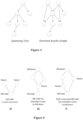
- Figure 1 illustrates a multi-hop deployment in an IAB network, where the IAB donor node (or IAB donor) has a wired connection to the core network and the IAB relay nodes (or IAB nodes) are wirelessly connected using NR to the IAB donor, either directly or indirectly via another IAB node.
- the connection between IAB donor/node and UEs is called access link, whereas the connection between two IAB nodes or between an IAB donor and an IAB node is called backhaul link.
- Figure 2 illustrates IAB terminology in adjacent hops.
- the adjacent upstream node which is closest to the IAB donor node of an IAB node is referred to as a parent node of the IAB node.
- the adjacent downstream node which is further away from the IAB donor node of an IAB node is referred to as a child node of the IAB node.
- the backhaul link between the parent node and the IAB node is referred to as parent (backhaul) link
- the backhaul link between the IAB node and the child node is referred to as child (backhaul) link.
- FIG. 874 illustrates one of the architectures, namely option/architecture 1a, which leverages CU/DU-split architecture.
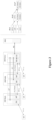
- Figure 3 shows the reference diagram for a two-hop chain of IAB-nodes underneath an IAB-donor, where IAB-node and UE connect in SA-mode to an NGC (NR Core network).
- NGC NR Core network
- each IAB-node holds a Mobile Termination (MT) and a DU.
- the MT function is a logic unit which terminates the backhaul radio interface toward the IAB parent node.
- the IAB-node connects to an upstream IAB-node or the IAB-donor.
- the IAB-node establishes RLC-channels to UEs and to MTs of downstream IAB-nodes. For MTs, this RLC-channel may be referred to as a modified RLC*.
- An IAB-node can connect to more than one upstream IAB-node or IAB-donor DU.
- the IAB-node may contain multiple DUs, but each DU part of the IAB-node has F1-C connection only with one IAB-donor CU-CP (Control Plane).
- the donor node also holds a DU to support UEs and MTs of downstream IAB-nodes.
- the IAB-donor holds a CU for the DUs of all IAB-nodes and for its own DU. It is assumed that the DUs on an IAB-node are served by only one IAB-donor. This IAB-donor node may change through topology adaptation.
- Each DU of an IAB-node connects to the CU in the IAB-donor using a modified form of F1, which is referred to as F1*.
- F1*-U runs over RLC channels on the wireless backhaul between the MT on the serving IAB-node and the DU on the donor.
- F1 *-U may carry a GPRS Tunneling Protocol (GTP)-U header for the end-to-end association between CU and DU. Furthermore, information carried inside the GTP-U header may be included into the adaption layer. Also, optimizations to RLC may be considered, such as applying Automatic Repeat Request (ARQ) only on the end-to-end connection as opposed to hop-by-hop.
- ARQ Automatic Repeat Request
- the right side of Figure 3 shows two examples of such F1*-U protocol stacks. In this figure, enhancements of RLC are referred to as RLC*.
- the MT of each IAB-node further sustains Non-Access Stratum (NAS) connectivity to the NGC, e.g., for authentication of the IAB-node. It may further sustain a Protocol Data Unit (PDU)-session via the NGC, e.g., to provide the IAB-node with connectivity to the Operation Administration and Maintenance (OAM).
- NAS Non-Access Stratum
- PDU Protocol Data Unit
- the MT is dual-connected with the network using E-UTRAN-NR Dual Connectivity (EN-DC).
- EN-DC Evolved Packet Core
- the IAB-node's MT sustains a Packet Data Network (PDN) connection with the EPC, e.g., to provide the IAB-node with connectivity to the OAM.
- PDN Packet Data Network
- Wireless backhaul links are vulnerable to blockage, e.g., due to moving objects such as vehicles, due to seasonal changes (foliage), or due to infrastructure changes (new buildings). Such vulnerability also applies to physically stationary IAB-nodes. Also, traffic variations can create uneven load distribution on wireless backhaul links leading to local link or node congestion.
- IAB Spanning tree
- DAG Directed acyclic graph
- Figure 4 illustrates an example of a spanning tree (left) and a directed acyclic graph (right). The arrows in the figure indicate the directionality of the graph edge.
- One way to provide robust operation for physically fixed relays is to provide redundant links to two or more parent nodes.
- Figure 5 illustrates examples for link and route redundancy in DAG.
- Multi-connectivity or route redundancy may be used for back-up purposes. It is also possible that redundant routes are used concurrently, e.g., to achieve load balancing, reliability, etc.
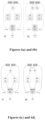
- Figure 6 illustrates different route redundancy in architecture group 1 either using single MT function or multiple MT functions.
- time-domain resources can be indicated for the parent link: Downlink time resource (DL); Uplink time resource (UL); and Flexible time resource (F).
- DL Downlink time resource
- UL Uplink time resource
- F Flexible time resource
- the child link has the following types of time resources: Downlink time resource (DL); Uplink time resource (UL); Flexible time resource (F); and Not available time resources (NA): resources not to be used for communication on the DU child links).
- DL Downlink time resource
- UL Uplink time resource
- F Flexible time resource
- NA Not available time resources
- Each of the downlink, uplink and flexible time-resource types of/associated with the DU child link can belong to one of two categories:
- An IAB node is configured with IAB-node specific resources in time available for the links.
- Mechanisms for scheduling coordination, resource allocation, and route selection across IAB-nodes/IAB-donors and multiple backhaul hops were studied in 3GPP TR 38.874 V16.0.0 (2018-12), "Study on Integrated Access and Backhaul", and include the following aspects:
- L1 signaling In order to support mechanisms for resource allocation for IAB nodes, semi-static configuration is supported for the configuration of IAB node DU resources.
- dynamic indication (L1 signaling) to an IAB node of the availability of soft resources for an IAB node DU is supported.
- L1 signaling methods are the baseline, while potential enhancements (e.g. new slot formats), rules for DU/MT behavior in case of conflicts across multiple hops, and processing time constraints at the IAB node may need to be considered, according to 3GPP TR 38.874 V16.0.0 (2018-12), "study on Integrated Access and Backhaul ".
- Table 7.3.3-1 and Table 7.3.3-2 of 3GPP TR 38.874 V16.0.0 capture the possible combinations of DU and MT behavior.
- the tables assume an IAB not capable of full-duplex operation. The following definitions apply:
- Table 7.3.3-1 applies in case of Time Division Multiplexing (TDM) operation, where there can be no simultaneous transmission in the DU and the MT, nor any simultaneous reception in the DU and the MT.
- Table 7.3.3-2 applies in case of Space Division Multiplexing (SDM) operation, where there can be simultaneous transmission in the DU and the MT, alternatively simultaneous reception in the DU and the MT.
- TDM Time Division Multiplexing
- SDM Space Division Multiplexing
- a network node can correspond to any type of radio network node or any network node, which communicates with a UE and/or with another network node.
- network nodes are NodeB, base station (BS), integrated access and backhaul (IAB) node, multi-standard radio (MSR) radio node such as MSR BS, eNodeB, gNodeB. MeNB, SeNB, network controller, radio network controller (RNC), base station controller (BSC), road side unit (RSU), relay, donor node controlling relay, base transceiver station (BTS), access point (AP), transmission points, transmission nodes, RRU, RRH, nodes in distributed antenna system (DAS), core network node (e.g. MSC, MME etc.), O&M, OSS, SON, positioning node (e.g. E-SMLC) etc.
- RNC radio network controller
- BSC base station controller
- RSU road side unit
- relay donor node controlling relay
- BTS base transceiver station
- a UE can be generalized to correspond to a user terminal, or a network node like a relay node or an IAB node.
- An uplink can be generalized to correspond to UL in the access link, and UL in the wireless backhaul link.
- a downlink can be generalized to correspond to DL in the access link, and DL in the wireless backhaul link.
- the IAB node is composed of MT and DU logic units. Via the MT, the IAB node connects to a parent node which can either be an IAB node or an IAB donor node. Via the DU, the IAB node establishes RLC-channels to UEs and to MTs of child IAB node(s).
- each of the DU Downlink (DL), Uplink (UL) and Flexible (F) time-resource types can be further configured as one of two categories: Hard (H) and Soft (S). In case of hard DU resources, the DU can assume it can use the resource regardless of its impact on the MT side of the same IAB node. In case of soft DU resources, the DU can use the resource if and only if this does not impact the MTs ability to transmit or receive.
- Some embodiments herein allow to overcome or mitigate the above challenges.
- the DU resource type (Hard, Soft) is, if needed, configured per DU carrier frequency (i.e. per cell) with respect to each MT carrier frequency.
- information e.g. carrier-frequency and/or cell
- the network function unit responsible for semi-static DU resource configuration. Based on the provided information, the network function unit only assigns Hard or Soft resource type to the DU time resources (on a certain DU carrier frequency) when there is no indication and/or information that DU resources can be used simultaneously with corresponding MT resources.
- the invention provides a method for use in a first network node.
- the method comprises: receiving capability information associated with a second network node, which has a first transceiver and a second transceiver, the capability information being related to an operation of the first transceiver at a first frequency and the second transceiver at a second frequency; configuring one or more resources associated with the first transceiver of the second network node based on the received capability information; sending an indication of the configured resources to the second network node, wherein the second network node is an Integrated Access Backhaul (IAB) node, wherein the first transceiver is a distributed unit (DU), wherein the second transceiver is a Mobile Termination (MT), and wherein the capability information includes information on the IAB node's capability for simultaneous DU and MT operation over specific pairs of DU and MT frequencies.
- IAB Integrated Access Backhaul
- DU distributed unit
- MT Mobile Termination
- the invention also provides a method for use in a first network node having a first transceiver and a second transceiver.
- the method comprises: sending to a second network node capability information for an operation of the first transceiver at a first frequency and the second transceiver at a second frequency; receiving, from the second network node, a resource configuration for resources associated with the first transceiver; and scheduling transmissions on the first transceiver based on the received resource configuration, wherein the first network node is an Integrated Access Backhaul (IAB) node, wherein the first transceiver is a distributed unit (DU), wherein the second transceiver is a Mobile Termination (MT), and wherein the capability information includes information on the IAB node's capability for simultaneous DU and MT operation over specific pairs of DU and MT frequencies.
- IAB Integrated Access Backhaul
- DU distributed unit
- MT Mobile Termination
- the invention also provides a network node.
- the network node comprises a communication interface and processing circuitry connected thereto and configured to perform the method of any one of claims 1 to 7 or the method of any one of claims 8 to 13.
- the invention also provides a computer program product.
- the computer program product comprises a non-transitory computer readable storage medium having computer readable program code embodied in the medium, the computer readable program code comprising computer readable program code to operate according to the method of any one of claims 1 to 7 or the method of any one of claims 8 to 13.
- the embodiments provide an approach for efficient semi-static DU resource configuration, especially regarding the Hard and Soft resource types. It covers the cases when the MT/DU functionality of an IAB node operates on multiple carrier frequencies and/or when the MT and DU functionalities of the IAB node operate on different carrier frequencies. Also, it is forward-compatible with the full-duplex IAB node.
- references in the specification to "one embodiment,” “an embodiment,” “an example embodiment,” etc., indicate that the embodiment described may include a particular feature, structure, or characteristic, but every embodiment may not necessarily include the particular feature, structure, or characteristic. Moreover, such phrases are not necessarily referring to the same embodiment. Further, when a particular feature, structure, or characteristic is described in connection with an embodiment, it is submitted that it is within the knowledge of one skilled in the art to implement such feature, structure, or characteristic in connection with other embodiments whether or not explicitly described.
- the semi-static DU configuration can be introduced with Hard and Soft resource types defined on top of the traditional DL, UL and flexible (F) resource types for better intra-IAB-node MT/DU coordination.
- Hard and Soft resource types defined on top of the traditional DL, UL and flexible (F) resource types for better intra-IAB-node MT/DU coordination.
- the DU can assume it can use the resources regardless of its impact on the MT side of the same IAB node.
- the DU can use the resources if and only if this does not impact the MT's ability to transmit or receive.
- the parent node of an IAB node has the ability to be made aware of the semi-static DU resource configuration (Downlink/Uplink/Flexible/Hard/Soft/Not Available (D/U/F/H/S/NA)) of the IAB node.
- the parent node does not know the IAB-node capability for simultaneous DU and MT operation, configuring a certain DU time-resource as Hard means to the parent node that the corresponding MT resource is typically unavailable for communication with the parent node, because there can be resource conflicts between MT and DU on such Hard configured resources.
- the parent node should in practice not schedule transmission to/from the IAB node during such conflicting time-resources.
- the parent node knowing a certain DU time-resource is Soft means that the parent node can assume that the corresponding MT resource is available.
- Those assumptions are generally valid when the MT and DU functionalities of the IAB node operate on the same carrier frequency. However, if the MT functionality of the IAB node operates on multiple carrier frequencies, making such an assumption at the parent node can be inefficient for resource utilization, since using a DU resource may impact the MT on some carrier frequencies but not on other carrier frequencies.
- the parent node would be beneficial for the parent node to obtain further information on IAB node's capability for simultaneous DU and MT operation over specific pairs of DU and MT frequencies. This would allow the parent node to better estimate the instantaneous IAB-node MT availability on a given MT carrier frequency.
- the MT functionality of an IAB node operating on multiple carrier frequencies can either be implemented by one MT unit operating on multiple carrier frequencies, or be implemented by multiple MT units, each operating on one carrier frequency.
- the present embodiments are applicable to both cases. And the same is true when it comes to the DU functionality of an IAB node operating on multiple carrier frequencies.
- the IAB MT functionality operates on carrier frequency f MT while the IAB DU functionality operates on carrier frequency fou, where f MT and f DU are sufficiently spaced such that the MT and DU resources can be used simultaneously (i.e., the MT and DU can operate in a Frequency Division Multiplexing (FDM) or Space Division Multiplexing (SDM) or even full Duplexing (FD) manner).
- FDM Frequency Division Multiplexing
- SDM Space Division Multiplexing
- FD full Duplexing
- the IAB MT functionality operates on carrier frequencies f MT,1 , f MT,2 , and f MT,3
- the IAB DU functionality operates on carrier frequencies f DU,1 and f DU,2
- Any of f MT,1 , f MT,2 , and f MT,3 may be the same as any of f DU,1 and f DU,2 or overlapping with them or at least not sufficiently spaced apart from each other such that they cannot be used simultaneously.
- an IAB node can have a plurality of MT functionalities and a plurality of DU functionalities.
- the IAB node's multiplexing capability can be determined and informed as follows:
- Example 1 The IAB node's multiplexing capability is represented based on DU-MT carrier-frequency combinations/pairs.
- the IAB node has the capability to use the MT resources on frequency f MT,2 and the DU resources on frequency f DU,1 simultaneously, to use the MT resources on frequency f MT,2 and the DU resources on frequency f DU,2 simultaneously, and also to use the MT resources on frequency f MT,3 and the DU resources on frequency f DU,2 simultaneously.
- the IAB node informs such capability in terms of DU-MT frequency combinations/pairs ⁇ f DU,1 (f MT,2 ), f DU,2 (f MT,2 ), f DU,2 (f MT,3 ) ⁇ to the network function unit responsible for semi-static DU resource configuration.
- Example 2 The IAB node's multiplexing capability is represented based on the transmission-direction combinations at the DU and MT, respectively.
- the IAB node has the capability of simultaneously performing:
- the IAB node informs such capability per transmission-direction combination in terms of DU-MT carrier-frequency combinations/pairs to the network function unit responsible for semi-static DU resource configuration.
- the network function unit performs semi-static DU resource configuration based on the provided IAB multiplexing capability.
- the Hard/Soft DU resource type is needed, it is configured per DU carrier frequency (i.e. per cell), i.e. as already agreed in 3GPP.
- this configuration is done separately with respect to each MT carrier frequency.
- the DU cell operating on f DU,1 may have a Hard/Soft configuration with respect to f MT,1 and potentially a different Hard/Soft configuration with respect to f MT,2 .
- the DU cell associated with f DU,1 is configured as Hard with respect to f MT,1 while it is configured as Soft with respect to f MT,2 within the same time resource, it means that this DU cell can use the time resource irrespective of its impact on MT on carrier frequency f MT,1 , but can only use the time resources if it does not impact the MT's ability to transmit or receive on carrier frequency f MT,2 .
- the parent node may assume that the MT is available on carrier frequency f MT,2 , but is not available on carrier frequency f MT,1 .
- the network function unit may only assign Hard or Soft resource type to the DU time resources (on a certain DU carrier frequency, with respect to a certain MT carrier frequency) when DU resources cannot be used simultaneously with corresponding MT resources.
- the IAB node can simultaneously use the MT and DU resources on carrier-frequency combinations/pairs f DU,1 (f MT,2 ), f DU,2 (f MT,2 ), and f DU,2 (f MT,3 ), but cannot simultaneously use f DU,1 (f MT,1 ), f DU,1 (f MT,3 ), nor f DU,2 (f MT,1 ).
- the network function unit only assigns Hard/Soft resource type to the DU on f DU,1 with respect to f MT,1 and f MT,3 , and also assigns Hard/Soft resource type to the DU on f DU,2 with respect to f MT,1 .
- the parent node could assume the MT resource is available on carrier frequencies where the corresponding DU is not configured with Hard/Soft resource type.
- signaling of an IAB node's ability for simultaneous DU and MT operation for a given DU/MT frequency combination to the network function unit responsible for semi-static DU resource configuration is provided. Furthermore, hard/soft configuration can be done with respect to each MT carrier, i.e. not being independent of the MT carrier.
- the network function unit responsible for semi-static DU resource configuration can be located in an IAB donor or in a CU for coordinating resources in IAB nodes.
- Method 100 comprises:
- the second network node can be an IAB node, which may have two or more transceivers, such as MT and DU functionalities.
- this second network node or IAB node can operate in multiple carrier frequencies and/or have the MT and DU functionalities operate in different frequencies.
- the MTs and DUs can operate in multiple carrier frequencies, which can be different from each other, or overlapping each other or some same frequencies could be used by some MTs and DUs.
- the capability can be related to a simultaneous operation of the first transceiver and the second transceiver.
- configuring the one or more resources of the first transceiver may comprise configuring a resource as one of a hard resource, a soft resource and a resource not available.
- the configuration of the resources as hard or soft is done with respect to a specific frequency of the second transceiver (e.g. the second frequency).
- a hard resource means that the first transceiver can use the hard resource irrespective of the second transceiver's ability to transmit at the second frequency.
- a soft resource means that the first transceiver can use the soft resource only if using the soft resource by the first transceiver does not impact the second transceiver's ability to transmit or receive at the second frequency.
- the method may comprise estimating that the second transceiver is free to transmit or receive at the second frequency based on the received resource configuration for the first transceiver of the second network node.
- configuring the one or more resources may comprise assigning a hard or soft or NA type to resources of the first transceiver if the resources cannot be used simultaneously with corresponding resources associated with the second transceiver.
- resources that are not configured as soft or hard or not available resources may be considered available for transmission and/or reception by the second transceiver.
- the capability information may further comprise a transmission direction for the first transceiver at the first frequency and/or the second transceiver at the second frequency.
- the transmission direction for the first transceiver at the first frequency and the second transceiver at the second frequency can be any one of: 1) the first transceiver transmitting a downlink transmission and the second transceiver transmitting an uplink transmission, 2) the first transmitter receiving a uplink transmission and the second transceiver transmitting a uplink transmission, 3) the first transceiver transmitting a downlink transmission and second transceiver receiving a downlink transmission, or, 4) the first transceiver receiving a uplink transmission and the second transceiver receiving a downlink transmission.
- the second network node may operate on multiple carrier frequencies, e.g. the first and second transceiver can operate on the multiple carrier frequencies.
- the method may further comprise, for each different pair of first and second frequencies in the multiple carrier frequencies, receiving a corresponding capability information.
- the first frequency can be different from the second frequency.
- the first transceiver can be a distributed unit (DU) of an IAB node.
- DU distributed unit
- the second transceiver can be a Mobile Termination (MT) of the IAB node.
- MT Mobile Termination
- the second network node can be an IAB node.
- the first network node can be an IAB donor, a parent IAB node or a network management function.
- DU H/S/NA resource types configuration of the DU resources as hard or soft resources or not available could be referred to as DU H/S/NA resource types.
- the method can be implemented in any network node e.g. gNB or IAB node.
- the network node may be the network node 320 of Figure 9 , for example.
- the first network node may comprise a plurality of transceivers (e.g. MT and DU functionalities), such as a first transceiver and a second transceiver.
- the first network node also operates in multiple carrier frequencies and/or have the MT and DU functionalities operate in different frequencies.
- Method 200 comprises:
- Step 210 sending to a second network node capability information for an operation of the first transceiver at a first frequency and the second transceiver at a second frequency.
- Step 220 receiving a resource configuration for resources associated with the first transceiver, from the second network node.
- Step 230 scheduling transmissions on the first transceiver based on the received resource configuration.
- method 200 can further prepare for transmissions on the second transceiver based on the received resource configuration for the first transceiver.
- the parent node can schedule transmissions on the MT/second transceiver, which may depend partly on the resource configuration of the DU/first transceiver.
- the capability can be related to a simultaneous operation of at least the first transceiver and the second transceiver.
- the resource configuration of the resources can comprise a resource configured as one of a hard resource, a soft resource and a resource not available.
- the configuration of the resources as hard or soft can be done with respect to a specific frequency of the second transceiver (e.g. the second frequency).
- a hard resource means that the first transceiver can use the hard resource irrespective of the second transceiver's ability to transmit at the second frequency.
- a soft resource means that the first transceiver can use the soft resource only if using the soft resource by the first transceiver does not impact the second transceiver's ability to transmit or receive at the second frequency.
- the resource configuration can further comprise resources associated with the first transceiver being assigned to a hard type, if the one or more resources cannot be used simultaneously with corresponding resources associated with the second transceiver.
- resources that are not configured as soft or hard or not available resources can be considered as available for transmission by the second transceiver.
- the capability information can further comprise a transmission direction for the first transceiver at the first frequency and the second transceiver at the second frequency.
- the transmission direction for the first transceiver at the first frequency and the second transceiver at the second frequency can be one of the following: 1) the first transceiver transmitting a downlink transmission and the second transceiver transmitting an uplink transmission, 2) the first transmitter receiving a uplink transmission and the second transceiver transmitting a uplink transmission, 3) the first transceiver transmitting a downlink transmission and second transceiver receiving a downlink transmission, or, 4) the first transceiver receiving a uplink transmission and the second transceiver receiving a downlink transmission
- the first network node can operate on multiple carrier frequencies.
- the first and second transceivers can operate on multiple carrier frequencies.
- the method may further comprise, for each different pair of first and second frequencies in the multiple carrier frequencies, sending a corresponding capability information to the second network node.
- the first frequency can be different from the second frequency.
- the first transceiver can be a distributed unit (DU).
- DU distributed unit
- the second transceiver can be a Mobile Termination (MT).
- MT Mobile Termination
- the first network node can be an IAB node.
- the second network node can be an IAB donor or a parent IAB node, or a network management function.
- Wireless network 300 includes UEs 310 and a plurality of radio network nodes 320 (e.g., Node Bs (NBs) Radio Network Controllers (RNCs), evolved NBs (eNBs), next generation NB (gNBs), etc.) directly or indirectly connected to a core network 330 which may comprise various core network nodes.
- the network 300 may use any suitable radio access network (RAN) deployment scenarios, including Universal Mobile Telecommunication System (UMTS) Terrestrial Radio Access Network (UTRAN), and Evolved UMTS Terrestrial Radio Access Network (EUTRAN).
- UEs 310 may be capable of communicating directly with radio network nodes 320 over a wireless interface.
- UMTS Universal Mobile Telecommunication System
- UTRAN Universal Mobile Telecommunication System
- EUTRAN Evolved UMTS Terrestrial Radio Access Network
- UEs may also be capable of communicating with each other via device-to-device (D2D) communication.
- network nodes 320 may also be capable of communicating with each other, e.g. via an interface (e.g. X2 in LTE or other suitable interface).
- UE 310 may communicate with radio network node 320 over a wireless interface. That is, UE 310 may transmit wireless signals to and/or receive wireless signals from radio network node 320.
- the wireless signals may contain voice traffic, data traffic, control signals, and/or any other suitable information.
- an area of wireless signal coverage associated with a radio network node 320 may be referred to as a cell.
- a UE may be a wireless device, a radio communication device, target device, device to device (D2D) UE, machine type UE or UE capable of machine to machine communication (M2M), a sensor equipped with UE, iPAD, Tablet, mobile terminals, smart phone, laptop embedded equipped (LEE), laptop mounted equipment (LME), Universal Serial Bus (USB) dongles, Customer Premises Equipment (CPE) etc.
- D2D device to device
- M2M machine to machine communication
- iPAD machine to machine communication
- Tablet mobile terminals
- smart phone laptop embedded equipped (LEE), laptop mounted equipment (LME), Universal Serial Bus (USB) dongles, Customer Premises Equipment (CPE) etc.
- LEE laptop embedded equipped
- LME laptop mounted equipment
- USB Universal Serial Bus
- the "network node” can be any kind of network node which may comprise of a radio network node such as a radio access node (which can include a base station, radio base station, base transceiver station, base station controller, network controller, gNB, NR BS, evolved Node B (eNB), Node B, Multi-cell/multicast Coordination Entity (MCE), relay node, access point, radio access point, Remote Radio Unit (RRU), Remote Radio Head (RRH), a multi-standard BS (also known as MSRBS), etc.), a core network node (e.g., MME, SON node, a coordinating node, positioning node, MDT node, etc.), or even an external node (e.g., 3rd party node, a node external to the current network), etc.
- the network node may also comprise a test equipment.
- network nodes 320 may interface with a radio network controller (not shown).
- the radio network controller may control network nodes 320 and may provide certain radio resource management functions, mobility management functions, and/or other suitable functions.
- the functions of the radio network controller may be included in the network node 320.
- the radio network controller may interface with the core network node 340. In certain embodiments, the radio network controller may interface with the core network node 340 via the interconnecting network 330.
- the interconnecting network 330 may refer to any interconnecting system capable of transmitting audio, video, signals, data, messages, or any combination of the preceding.
- the interconnecting network 330 may include all or a portion of a public switched telephone network (PSTN), a public or private data network, a local area network (LAN), a metropolitan area network (MAN), a wide area network (WAN), a local, regional, or global communication or computer network such as the Internet, a wireline or wireless network, an enterprise intranet, or any other suitable communication link, including combinations thereof.
- PSTN public switched telephone network
- LAN local area network
- MAN metropolitan area network
- WAN wide area network
- Internet a local, regional, or global communication or computer network
- wireline or wireless network such as the Internet
- enterprise intranet an enterprise intranet, or any other suitable communication link, including combinations thereof.
- the core network node 340 may manage the establishment of communication sessions and various other functionalities for wireless devices 310.
- Examples of core network node 340 may include MSC, MME, SGW, PGW, O&M, OSS, SON, positioning node (e.g. E-SMLC), MDT node, etc.
- Wireless devices 110 may exchange certain signals with the core network node 340 using the non-access stratum layer. In non-access stratum signaling, signals between wireless devices 310 and the core network node 340 may be transparently passed through the radio access network.
- network nodes 320 may interface with one or more other network nodes over an internode interface. For example, network nodes 320 may interface each other over an X2 interface.
- network 300 may include any suitable number of wireless devices 310 and network nodes 320, as well as any additional elements suitable to support communication between wireless devices or between a wireless device and another communication device (such as a landline telephone).
- the embodiments may be implemented in any appropriate type of telecommunication system supporting any suitable communication standards and using any suitable components, and are applicable to any radio access technology (RAT) or multi-RAT systems in which the wireless device receives and/or transmits signals (e.g., data).
- RAT radio access technology
- multi-RAT multi-RAT
- NR and/or LTE While certain embodiments are described for NR and/or LTE, the embodiments may be applicable to any RAT, such as UTRA, E-UTRA, narrow band internet of things (NB-IoT), WiFi, Bluetooth, next generation RAT (NR, NX), 4G, 5G, LTE FDD/TDD, etc.
- RAT such as UTRA, E-UTRA, narrow band internet of things (NB-IoT), WiFi, Bluetooth, next generation RAT (NR, NX), 4G, 5G, LTE FDD/TDD, etc.
- the structure of the network node 320 can have a split structure, where the network node 320 has a centralized unit (CU), and a distributed unit (DU) and a Mobile Termination (MT) unit/functionality.
- the network node 320 can be an IAB node or IAB donor node. As illustrated in Figures 3 and 9 , the IAB donor may have DU and CU functionalities and is connected to a plurality of IAB nodes, for example. Also, the IAB donor may be a non-split node.
- the communication system 300 may itself be connected to a host computer (not shown), which may be embodied in the hardware and/or software of a standalone server, a cloud-implemented server, a distributed server or as processing resources in a server farm.
- the host computer may be under the ownership or control of a service provider or may be operated by the service provider or on behalf of the service provider.
- the connections between the communication system 300 and the host computer may extend directly from the core network 340 to the host computer or may extend via the intermediate network 330.
- the communication system of Figure 9 as a whole enables connectivity between one of the connected wireless devices (WDs) 310 and the host computer.
- the connectivity may be described as an over-the-top (OTT) connection.
- the host computer and the connected WDs 310 are configured to communicate data and/or signaling via the OTT connection, using an access network, the core network 340, any intermediate network 330 and possible further infrastructure (not shown) as intermediaries.
- the OTT connection may be transparent in the sense that at least some of the participating communication devices through which the OTT connection passes are unaware of routing of uplink and downlink communications.
- the host computer may provide host applications which may be operable to provide a service to a remote user, such as a WD 310 connecting via an OTT connection terminating at the WD 310 and the host computer.
- the host application may provide user data which is transmitted using the OTT connection.
- the "user data" may be data and information described herein as implementing the described functionality.
- the host computer may be configured for providing control and functionality to a service provider and may be operated by the service provider or on behalf of the service provider.
- the host computer may be enabled to observe, monitor, control, transmit to and/or receive from the network node 320 and or the wireless device 310.
- One or more of the various embodiments in this disclosure improve the performance of OTT services provided to the WD 310 using the OTT connection. More precisely, the teachings of some of these embodiments may improve the data rate, latency, and/or power consumption and thereby provide benefits such as reduced user waiting time, relaxed restriction on file size, better responsiveness, extended battery lifetime, etc.
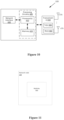
- FIG 10 is a schematic block diagram of a network node 320 according to some embodiments of the present disclosure.
- the network node 320 includes a processing circuitry 400 comprising one or more processors 410 (e.g., CPUs, ASICs, FPGAs, and/or the like) and memory 420.
- the network node also comprises a network interface 430.
- the network node 320 also includes one or more transceivers 440 that each include one or more transmitters 450 and one or more receivers 460 coupled to one or more antennas 470.
- the functionality of the network node 310 described above may be fully or partially implemented in software that is, e.g., stored in the memory 420 and executed by the processor(s) 410.
- the processor 410 can be configured to perform the method 100 of Figure 7 or method 200 of Figure 8 .
- the network node 320 can be an IAB donor node or an IAB node.
- FIG 11 is a schematic block diagram of the network node 320 according to some other embodiments of the present disclosure.
- the network node 320 includes one or more modules 500, each of which is implemented in software.
- the module(s) 500 provide the functionality of the network node 320 described herein.
- the module(s) 500 may comprise, for example, a receiving module operable to perform step 110 of Figure 7 and step 220 of Figure 8 , a configuring module operable to perform step 120 of Figure 7 .
- the module(s) 600 may comprise, for example, a sending module operable to perform step 130 of Figure 7 and step 210 of Figure 8 and a scheduling module operable to perform step 230 of Figure 8 .
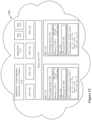
- FIG 12 is a schematic block diagram that illustrates a virtualized embodiment of the wireless device 310 or network node 320, according to some embodiments of the present disclosure.
- a "virtualized" node 1100 is a network node 320 or wireless device 310 in which at least a portion of the functionality of the network node 320 or wireless device 310 is implemented as a virtual component (e.g., via a virtual machine(s) executing on a physical processing node(s) in a network(s)).
- a virtual appliance 1120 implementing the methods or parts of the methods of some embodiments.
- the one or more instance(s) runs in a cloud computing environment 1100.
- the cloud computing environment provides processing circuits 1130 and memory 1190-1 for the one or more instance(s) or virtual applications 1120.
- the memory 1190-1 contains instructions 1195 executable by the processing circuit 1160 whereby the instance 1120 is operative to execute the methods or part of the methods described herein in relation to some embodiments.
- the cloud computing environment 1100 comprises one or more general-purpose network devices including hardware 1130 comprising a set of one or more processor(s) or processing circuits 1160, which may be commercial off-the-shelf (COTS) processors, dedicated Application Specific Integrated Circuits (ASICs), or any other type of processing circuit including digital or analog hardware components or special purpose processors, and network interface controller(s) (NICs) 1170, also known as network interface cards, which include physical Network Interface 1180.
- the general-purpose network device also includes non-transitory machine readable storage media 1190-2 having stored therein software and/or instructions 1195 executable by the processor 1160.
- the processor(s)/processing circuits 1160 execute the software/instructions 1195 to instantiate a hypervisor 1150, sometimes referred to as a virtual machine monitor (VMM), and one or more virtual machines 1140 that are run by the hypervisor 1150.
- a hypervisor 1150 sometimes referred to as a virtual machine monitor (VMM)
- VMM virtual machine monitor
- a virtual machine 1140 is a software implementation of a physical machine that runs programs as if they were executing on a physical, non-virtualized machine; and applications generally do not know they are running on a virtual machine as opposed to running on a "bare metal" host electronic device, though some systems provide para-virtualization which allows an operating system or application to be aware of the presence of virtualization for optimization purposes.
- Each of the virtual machines 1140, and that part of the hardware 1130 that executes that virtual machine 1140 be it hardware 1130 dedicated to that virtual machine 1140 and/or time slices of hardware 1130 temporally shared by that virtual machine 1140 with others of the virtual machine(s) 1140, forms a separate virtual network element(s) (VNE).
- VNE virtual network element
- the hypervisor 1150 may present a virtual operating platform that appears like networking hardware to virtual machine 1140, and the virtual machine 1140 may be used to implement functionality such as control communication and configuration module(s) and forwarding table(s), this virtualization of the hardware is sometimes referred to as network function virtualization (NFV).
- NFV network function virtualization
- CPE customer premise equipment
- Different embodiments of the instance or virtual application 1120 may be implemented on one or more of the virtual machine(s) 1140, and the implementations may be made differently.
- a carrier comprising the aforementioned computer program product.
- the carrier is one of an electronic signal, an optical signal, a radio signal, or a computer readable storage medium (e.g., a non-transitory computer readable medium such as memory).
- Some embodiments may be represented as a non-transitory software product stored in a machine-readable medium (also referred to as a computer-readable medium, a processor-readable medium, or a computer usable medium having a computer readable program code embodied therein).
- the machine-readable medium may be any suitable tangible medium including a magnetic, optical, or electrical storage medium including a diskette, compact disk read only memory (CD-ROM), digital versatile disc read only memory (DVD-ROM) memory device (volatile or non-volatile), or similar storage mechanism.
- the machine-readable medium may contain various sets of instructions, code sequences, configuration information, or other data, which, when executed, cause a processor to perform steps in a method according to one or more of the described embodiments.
- Those of ordinary skill in the art will appreciate that other instructions and operations necessary to implement the described embodiments may also be stored on the machine-readable medium.
- Software running from the machine-readable medium may interface with circuitry to perform the described tasks.
Landscapes
- Engineering & Computer Science (AREA)
- Computer Networks & Wireless Communication (AREA)
- Signal Processing (AREA)
- Mobile Radio Communication Systems (AREA)
Claims (15)
- Verfahren zur Verwendung in einem ersten Netzwerkknoten, wobei das Verfahren umfasst:- Empfangen von Fähigkeitsinformationen, die mit einem zweiten Netzwerkknoten assoziiert sind, der einen ersten Sendeempfänger und einen zweiten Sendempfänger aufweist, wobei die Fähigkeitsinformationen mit einem Betrieb des ersten Sendeempfängers auf einer ersten Frequenz und dem zweiten Sendeempfänger auf einer zweiten Frequenz in Beziehung stehen;- Konfigurieren einer oder mehrerer Ressourcen, die mit dem ersten Sendeempfänger des zweiten Netzwerkknotens assoziiert sind, basierend auf den empfangenen Fähigkeitsinformationen; und- Senden einer Anzeige der konfigurierten Ressourcen an den zweiten Netzwerkknoten,wobei der zweite Netzwerkknoten ein Integrated-Access-Backhaul-(IAB-)Knoten ist, wobei der erste Sendeempfänger eine verteilte Einheit (DU) ist, wobei der zweite Sendeempfänger ein Mobilfunkabschluss (MT) ist, undwobei die Fähigkeitsinformationen Informationen über die Fähigkeit des IAB-Knotens zu gleichzeitigem DU- und MT-Betrieb über spezifische Paare von DU- und MT-Frequenzen umfassen.
- Verfahren nach Anspruch 1, wobei das Konfigurieren der einen oder der mehreren Ressourcen, die mit dem ersten Sendeempfänger assoziiert sind, ein Konfigurieren einer Ressource als eine von einer harten Ressource, einer weichen Ressource und einer nicht verfügbaren Ressource umfasst, wobei optional die Konfiguration der Ressourcen als hart oder weich in Bezug auf die zweite Frequenz des zweiten Sendeempfängers erfolgt.
- Verfahren nach Anspruch 2, wobei eine harte Ressource bedeutet, dass der erste Sendeempfänger die harte Ressource ungeachtet der Eignung des zweiten Sendeempfängers zum Senden auf der zweiten Frequenz verwenden kann, wobei optional das Verfahren ferner ein Schätzen, dass der zweite Sendeempfänger frei ist zum Senden oder Empfangen auf der zweiten Frequenz, basierend auf der empfangenen Ressourcenkonfiguration für den ersten Sendeempfänger des zweiten Netzwerkknotens umfasst.
- Verfahren nach Anspruch 2, wobei eine weiche Ressource bedeutet, dass der erste Sendeempfänger die weiche Ressource nur dann verwenden kann, wenn das Verwenden der weichen Ressource durch den ersten Sendeempfänger die Eignung des zweiten Sendeempfängers zum Senden oder Empfangen auf der zweiten Frequenz nicht beeinträchtigt.
- Verfahren nach einem der Ansprüche 1 bis 4, wobei:- das Konfigurieren der einen oder der mehreren Ressourcen ein Zuordnen eines harten oder weichen oder nicht verfügbaren Typs zu Ressourcen des ersten Sendeempfängers umfasst, wenn die eine oder die mehreren Ressourcen nicht gleichzeitig mit entsprechenden Ressourcen verwendet werden können, die mit dem zweiten Sendeempfänger assoziiert sind; und/oder- Ressourcen, die nicht als weiche oder harte oder nicht verfügbare Ressourcen konfiguriert werden, als zum Senden oder Empfangen oder zum Senden und Empfangen durch den zweiten Sendeempfänger verfügbar betrachtet werden.
- Verfahren nach einem der Ansprüche 1 bis 5, wobei die Fähigkeitsinformationen ferner eine Übertragungsrichtung für den ersten Sendeempfänger auf der ersten Frequenz und den zweiten Sendeempfänger auf der zweiten Frequenz umfassen, wobei optional die Übertragungsrichtung für den ersten Sendeempfänger auf der ersten Frequenz und den zweiten Sendeempfänger auf der zweiten Frequenz eines davon ist, dass der erste Sendeempfänger eine Downlink-Übertragung sendet und der zweite Sendeempfänger eine Uplink-Übertragung sendet, der erste Sendeempfänger eine Uplink-Übertragung empfängt und der zweite Sendeempfänger eine Uplink-Übertragung sendet, der erste Sendeempfänger eine Downlink-Übertragung sendet und der zweiten Sendeempfänger eine Downlink-Übertragung empfängt und der erste Sendeempfänger eine Uplink-Übertragung empfängt und der zweite Sendeempfänger eine Downlink-Übertragung empfängt.
- Verfahren nach einem der Ansprüche 1 bis 6, wobei (i) die erste Frequenz sich von der zweiten Frequenz unterscheidet und/oder (ii) der erste Netzwerkknoten ein IAB-Geber oder ein übergeordneter IAB-Knoten oder eine Netzwerkverwaltungsfunktion ist.
- Verfahren zur Verwendung in einem ersten Netzwerkknoten mit einem ersten Sendeempfänger und einem zweiten Sendeempfänger, wobei das Verfahren umfasst:- Senden von Fähigkeitsinformationen für einen Betrieb des ersten Sendeempfängers auf einer ersten Frequenz und den zweiten Sendeempfänger auf einer zweiten Frequenz an einen zweiten Netzwerkknoten;- Empfangen einer Ressourcenkonfiguration für Ressourcen, die mit dem ersten Sendeempfänger assoziiert sind, vom zweiten Netzwerkknoten, und- Disponieren von Übertragungen auf dem ersten Sendeempfänger basierend auf der empfangenen Ressourcenkonfiguration,wobei der erste Netzwerkknoten ein Integrated-Access-Backhaul-(IAB-)Knoten ist, wobei der erste Sendeempfänger eine verteilte Einheit (DU) ist, wobei der zweite Sendeempfänger ein Mobilfunkabschluss (MT) ist, undwobei die Fähigkeitsinformationen Informationen über die Fähigkeit des IAB-Knotens zu gleichzeitigem DU- und MT-Betrieb über spezifische Paare von DU- und MT-Frequenzen umfassen.
- Verfahren nach Anspruch 8, wobei die Ressourcenkonfiguration der Ressourcen eine Ressource umfasst, die als eine von einer harten Ressource, einer weichen Ressource und einer nicht verfügbaren Ressource konfiguriert ist, wobei optional die Konfiguration der Ressourcen als hart oder weich in Bezug auf die zweite Frequenz des zweiten Sendeempfängers erfolgt.
- Verfahren nach Anspruch 8 oder 9, wobei Ressourcen, die nicht als weiche oder harte Ressourcen konfiguriert werden, als zur Übertragung durch den zweiten Sendeempfänger verfügbar betrachtet werden.
- Verfahren nach einem der Ansprüche 8 bis 10, wobei die Fähigkeitsinformationen ferner eine Übertragungsrichtung für den ersten Sendeempfänger auf der ersten Frequenz und den zweiten Sendeempfänger auf der zweiten Frequent umfassen, wobei optional die Übertragungsrichtung für den ersten Sendeempfänger auf der ersten Frequenz und den zweiten Sendeempfänger auf der zweiten Frequenz eines davon ist, dass der erste Sendeempfänger eine Downlink-Übertragung sendet und der zweite Sendeempfänger eine Uplink-Übertragung sendet, der erste Sendeempfänger eine Uplink-Übertragung empfängt und der zweite Sendeempfänger eine Uplink-Übertragung sendet, der erste Sendeempfänger eine Downlink-Übertragung sendet und der zweiten Sendeempfänger eine Downlink-Übertragung empfängt und der erste Sendeempfänger eine Uplink-Übertragung empfängt und der zweite Sendeempfänger eine Downlink-Übertragung empfängt.
- Verfahren nach einem der Ansprüche 8 bis 11, wobei (i) die erste Frequenz sich von der zweiten Frequenz unterscheidet und/oder (ii) der zweite Netzwerkknoten ein IAB-Geber oder ein übergeordneter IAB-Knoten oder eine Netzwerkverwaltungsfunktion ist.
- Verfahren nach einem der Ansprüche 8 bis 12, ferner umfassend ein Vorbereiten für Übertragungen auf dem zweiten Sendeempfänger basierend auf der empfangenen Ressourcenkonfiguration für den ersten Sendeempfänger.
- Netzwerkknoten, umfassend eine Kommunikationsschnittstelle und Verarbeitungsschaltungsanordnung, die damit verbunden und zum Durchführen des Verfahrens nach einem der Ansprüche 1 bis 7 oder des Verfahrens nach einem der Ansprüche 8 bis 13 konfiguriert ist.
- Computerprogrammprodukt, umfassend ein nichttransitorisches computerlesbares Speichermedium mit computerlesbarem Programmcode, der im Medium enthalten ist, wobei der computerlesbare Programmcode computerlesbaren Programmcode umfasst, um gemäß dem Verfahren nach einem der Ansprüche 1 bis 7 oder dem Verfahren nach einem der Ansprüche 8 bis 13 ausgeführt zu werden.
Applications Claiming Priority (2)
| Application Number | Priority Date | Filing Date | Title |
|---|---|---|---|
| US201962887347P | 2019-08-15 | 2019-08-15 | |
| PCT/IB2020/057406 WO2021028785A1 (en) | 2019-08-15 | 2020-08-05 | Methods and apparatuses for resource configuration of iab based on capability |
Publications (2)
| Publication Number | Publication Date |
|---|---|
| EP4014359A1 EP4014359A1 (de) | 2022-06-22 |
| EP4014359B1 true EP4014359B1 (de) | 2024-01-17 |
Family
ID=72039637
Family Applications (1)
| Application Number | Title | Priority Date | Filing Date |
|---|---|---|---|
| EP20754045.1A Active EP4014359B1 (de) | 2019-08-15 | 2020-08-05 | Verfahren, netzwerkknoten und computerprogrammprodukt zur ressourcenkonfiguration von iab basierend auf der fähigkeit |
Country Status (3)
| Country | Link |
|---|---|
| US (1) | US11750273B2 (de) |
| EP (1) | EP4014359B1 (de) |
| WO (1) | WO2021028785A1 (de) |
Families Citing this family (7)
| Publication number | Priority date | Publication date | Assignee | Title |
|---|---|---|---|---|
| US11778676B2 (en) * | 2019-12-12 | 2023-10-03 | Qualcomm Incorporated | Simultaneous communication capability signaling in an integrated access and backhaul network |
| CN113163491B (zh) * | 2020-01-23 | 2023-03-24 | 维沃移动通信有限公司 | 频域资源处理方法、频域资源配置方法及相关设备 |
| KR102925239B1 (ko) * | 2020-02-12 | 2026-02-09 | 엘지전자 주식회사 | 무선통신 시스템에서 iab 노드의 동작 방법 및 상기 방법을 이용하는 장치 |
| KR102594544B1 (ko) * | 2020-03-16 | 2023-10-27 | 엘지전자 주식회사 | 복수 개의 페어런트 노드들과 하나의 iab 노드가 연결된 상황에서 iab 노드의 동작 방법 및 장치 |
| US11924897B2 (en) * | 2020-09-14 | 2024-03-05 | Qualcomm Incorporated | Resource reporting for integrated access and backhaul radio access dual connectivity |
| BR112023020682A2 (pt) * | 2021-04-06 | 2024-01-30 | Ericsson Telefon Ab L M | Sinalização para operação simultânea em nó de acesso e backhaul integrados (iab) |
| EP4305909A4 (de) * | 2021-05-11 | 2024-09-18 | Samsung Electronics Co., Ltd. | Vorrichtung und verfahren zum multiplexen eines iab-knotens in einem drahtloskommunikationssystem |
Family Cites Families (6)
| Publication number | Priority date | Publication date | Assignee | Title |
|---|---|---|---|---|
| US12096405B2 (en) * | 2019-01-09 | 2024-09-17 | Apple Inc. | Signaling methods for semi-static resource configurations in integrated access and backhaul |
| US11991673B2 (en) * | 2019-02-19 | 2024-05-21 | Nokia Solutions And Networks Oy | Apparatus, method, and computer program |
| US11483701B2 (en) * | 2019-04-19 | 2022-10-25 | Qualcomm Incorporated | Supporting spatial division multiplexing operation in integrated access and backhaul networks |
| US11533749B2 (en) * | 2019-05-01 | 2022-12-20 | Qualcomm Incorporated | In-advance scheduling for low-latency traffic |
| US12058633B2 (en) * | 2019-05-02 | 2024-08-06 | Sharp Kabushiki Kaisha | Muting of signaling for integrated access and backhaul networks |
| US20220166567A1 (en) * | 2019-06-18 | 2022-05-26 | Ntt Docomo, Inc. | Radio communication node and radio communication method |
-
2020
- 2020-08-05 EP EP20754045.1A patent/EP4014359B1/de active Active
- 2020-08-05 WO PCT/IB2020/057406 patent/WO2021028785A1/en not_active Ceased
- 2020-08-05 US US17/632,906 patent/US11750273B2/en active Active
Also Published As
| Publication number | Publication date |
|---|---|
| WO2021028785A1 (en) | 2021-02-18 |
| US20220278741A1 (en) | 2022-09-01 |
| US11750273B2 (en) | 2023-09-05 |
| EP4014359A1 (de) | 2022-06-22 |
Similar Documents
| Publication | Publication Date | Title |
|---|---|---|
| US11696347B2 (en) | Adaptation layer setup and configuration in integrated access backhauled networks | |
| EP4014359B1 (de) | Verfahren, netzwerkknoten und computerprogrammprodukt zur ressourcenkonfiguration von iab basierend auf der fähigkeit | |
| US11064417B2 (en) | QoS and hop-aware adaptation layer for multi-hop integrated access backhaul system | |
| CN114026913B (zh) | 能够实现支持集成接入回程网络中的多连接性的上行链路路由 | |
| US20220279532A1 (en) | Methods and nodes for managing cross-link interference in iab nodes | |
| US12213155B2 (en) | Integrated access and backhaul node resource timing | |
| CN114258731B (zh) | 集成接入回程网络中的集中式单元及其操作方法 | |
| KR102873404B1 (ko) | 통합 액세스 및 백홀에 대한 맵핑 정보 | |
| US20210345369A1 (en) | Enhanced uplink scheduling in integrated access backhaul (iab) networks | |
| US12192829B2 (en) | IAB soft resource availability determination | |
| US20240259084A1 (en) | Signaling for Simultaneous Operation in Integrated Access Backhaul (IAB) Node | |
| US12200649B2 (en) | Integrated access backhaul (IAB) nodes with negative propagation delay indication | |
| US12490283B2 (en) | Methods and nodes for IAB inter-donor multi-parent resource coordination | |
| EP3909349B1 (de) | Weiche ressourcen einer verteilten integrierten zugangs- und backhaul-einheit | |
| EP4193633B1 (de) | Ressourcenkoordination zwischen parent-knoten mit mehrfachem integriertem zugangs-backhaul (iab) | |
| CN116746277A (zh) | 用于释放辅小区组(scg)配置的信令 |
Legal Events
| Date | Code | Title | Description |
|---|---|---|---|
| STAA | Information on the status of an ep patent application or granted ep patent |
Free format text: STATUS: UNKNOWN |
|
| STAA | Information on the status of an ep patent application or granted ep patent |
Free format text: STATUS: THE INTERNATIONAL PUBLICATION HAS BEEN MADE |
|
| PUAI | Public reference made under article 153(3) epc to a published international application that has entered the european phase |
Free format text: ORIGINAL CODE: 0009012 |
|
| STAA | Information on the status of an ep patent application or granted ep patent |
Free format text: STATUS: REQUEST FOR EXAMINATION WAS MADE |
|
| 17P | Request for examination filed |
Effective date: 20220314 |
|
| AK | Designated contracting states |
Kind code of ref document: A1 Designated state(s): AL AT BE BG CH CY CZ DE DK EE ES FI FR GB GR HR HU IE IS IT LI LT LU LV MC MK MT NL NO PL PT RO RS SE SI SK SM TR |
|
| DAV | Request for validation of the european patent (deleted) | ||
| DAX | Request for extension of the european patent (deleted) | ||
| GRAP | Despatch of communication of intention to grant a patent |
Free format text: ORIGINAL CODE: EPIDOSNIGR1 |
|
| STAA | Information on the status of an ep patent application or granted ep patent |
Free format text: STATUS: GRANT OF PATENT IS INTENDED |
|
| INTG | Intention to grant announced |
Effective date: 20230425 |
|
| GRAJ | Information related to disapproval of communication of intention to grant by the applicant or resumption of examination proceedings by the epo deleted |
Free format text: ORIGINAL CODE: EPIDOSDIGR1 |
|
| STAA | Information on the status of an ep patent application or granted ep patent |
Free format text: STATUS: REQUEST FOR EXAMINATION WAS MADE |
|
| GRAP | Despatch of communication of intention to grant a patent |
Free format text: ORIGINAL CODE: EPIDOSNIGR1 |
|
| STAA | Information on the status of an ep patent application or granted ep patent |
Free format text: STATUS: GRANT OF PATENT IS INTENDED |
|
| INTC | Intention to grant announced (deleted) | ||
| INTG | Intention to grant announced |
Effective date: 20230922 |
|
| GRAS | Grant fee paid |
Free format text: ORIGINAL CODE: EPIDOSNIGR3 |
|
| GRAA | (expected) grant |
Free format text: ORIGINAL CODE: 0009210 |
|
| STAA | Information on the status of an ep patent application or granted ep patent |
Free format text: STATUS: THE PATENT HAS BEEN GRANTED |
|
| AK | Designated contracting states |
Kind code of ref document: B1 Designated state(s): AL AT BE BG CH CY CZ DE DK EE ES FI FR GB GR HR HU IE IS IT LI LT LU LV MC MK MT NL NO PL PT RO RS SE SI SK SM TR |
|
| REG | Reference to a national code |
Ref country code: GB Ref legal event code: FG4D |
|
| REG | Reference to a national code |
Ref country code: CH Ref legal event code: EP |
|
| REG | Reference to a national code |
Ref country code: DE Ref legal event code: R096 Ref document number: 602020024533 Country of ref document: DE |
|
| REG | Reference to a national code |
Ref country code: IE Ref legal event code: FG4D |
|
| REG | Reference to a national code |
Ref country code: LT Ref legal event code: MG9D |
|
| REG | Reference to a national code |
Ref country code: NL Ref legal event code: MP Effective date: 20240117 |
|
| REG | Reference to a national code |
Ref country code: AT Ref legal event code: MK05 Ref document number: 1651213 Country of ref document: AT Kind code of ref document: T Effective date: 20240117 |
|
| PG25 | Lapsed in a contracting state [announced via postgrant information from national office to epo] |
Ref country code: NL Free format text: LAPSE BECAUSE OF FAILURE TO SUBMIT A TRANSLATION OF THE DESCRIPTION OR TO PAY THE FEE WITHIN THE PRESCRIBED TIME-LIMIT Effective date: 20240117 |
|
| PG25 | Lapsed in a contracting state [announced via postgrant information from national office to epo] |
Ref country code: NL Free format text: LAPSE BECAUSE OF FAILURE TO SUBMIT A TRANSLATION OF THE DESCRIPTION OR TO PAY THE FEE WITHIN THE PRESCRIBED TIME-LIMIT Effective date: 20240117 |
|
| PG25 | Lapsed in a contracting state [announced via postgrant information from national office to epo] |
Ref country code: IS Free format text: LAPSE BECAUSE OF FAILURE TO SUBMIT A TRANSLATION OF THE DESCRIPTION OR TO PAY THE FEE WITHIN THE PRESCRIBED TIME-LIMIT Effective date: 20240517 |
|
| PG25 | Lapsed in a contracting state [announced via postgrant information from national office to epo] |
Ref country code: LT Free format text: LAPSE BECAUSE OF FAILURE TO SUBMIT A TRANSLATION OF THE DESCRIPTION OR TO PAY THE FEE WITHIN THE PRESCRIBED TIME-LIMIT Effective date: 20240117 |
|
| PG25 | Lapsed in a contracting state [announced via postgrant information from national office to epo] |
Ref country code: GR Free format text: LAPSE BECAUSE OF FAILURE TO SUBMIT A TRANSLATION OF THE DESCRIPTION OR TO PAY THE FEE WITHIN THE PRESCRIBED TIME-LIMIT Effective date: 20240418 |
|
| PG25 | Lapsed in a contracting state [announced via postgrant information from national office to epo] |
Ref country code: HR Free format text: LAPSE BECAUSE OF FAILURE TO SUBMIT A TRANSLATION OF THE DESCRIPTION OR TO PAY THE FEE WITHIN THE PRESCRIBED TIME-LIMIT Effective date: 20240117 Ref country code: RS Free format text: LAPSE BECAUSE OF FAILURE TO SUBMIT A TRANSLATION OF THE DESCRIPTION OR TO PAY THE FEE WITHIN THE PRESCRIBED TIME-LIMIT Effective date: 20240417 |
|
| PG25 | Lapsed in a contracting state [announced via postgrant information from national office to epo] |
Ref country code: ES Free format text: LAPSE BECAUSE OF FAILURE TO SUBMIT A TRANSLATION OF THE DESCRIPTION OR TO PAY THE FEE WITHIN THE PRESCRIBED TIME-LIMIT Effective date: 20240117 |
|
| PG25 | Lapsed in a contracting state [announced via postgrant information from national office to epo] |
Ref country code: AT Free format text: LAPSE BECAUSE OF FAILURE TO SUBMIT A TRANSLATION OF THE DESCRIPTION OR TO PAY THE FEE WITHIN THE PRESCRIBED TIME-LIMIT Effective date: 20240117 |
|
| PG25 | Lapsed in a contracting state [announced via postgrant information from national office to epo] |
Ref country code: RS Free format text: LAPSE BECAUSE OF FAILURE TO SUBMIT A TRANSLATION OF THE DESCRIPTION OR TO PAY THE FEE WITHIN THE PRESCRIBED TIME-LIMIT Effective date: 20240417 Ref country code: NO Free format text: LAPSE BECAUSE OF FAILURE TO SUBMIT A TRANSLATION OF THE DESCRIPTION OR TO PAY THE FEE WITHIN THE PRESCRIBED TIME-LIMIT Effective date: 20240417 Ref country code: LT Free format text: LAPSE BECAUSE OF FAILURE TO SUBMIT A TRANSLATION OF THE DESCRIPTION OR TO PAY THE FEE WITHIN THE PRESCRIBED TIME-LIMIT Effective date: 20240117 Ref country code: IS Free format text: LAPSE BECAUSE OF FAILURE TO SUBMIT A TRANSLATION OF THE DESCRIPTION OR TO PAY THE FEE WITHIN THE PRESCRIBED TIME-LIMIT Effective date: 20240517 Ref country code: HR Free format text: LAPSE BECAUSE OF FAILURE TO SUBMIT A TRANSLATION OF THE DESCRIPTION OR TO PAY THE FEE WITHIN THE PRESCRIBED TIME-LIMIT Effective date: 20240117 Ref country code: GR Free format text: LAPSE BECAUSE OF FAILURE TO SUBMIT A TRANSLATION OF THE DESCRIPTION OR TO PAY THE FEE WITHIN THE PRESCRIBED TIME-LIMIT Effective date: 20240418 Ref country code: FI Free format text: LAPSE BECAUSE OF FAILURE TO SUBMIT A TRANSLATION OF THE DESCRIPTION OR TO PAY THE FEE WITHIN THE PRESCRIBED TIME-LIMIT Effective date: 20240117 Ref country code: ES Free format text: LAPSE BECAUSE OF FAILURE TO SUBMIT A TRANSLATION OF THE DESCRIPTION OR TO PAY THE FEE WITHIN THE PRESCRIBED TIME-LIMIT Effective date: 20240117 Ref country code: BG Free format text: LAPSE BECAUSE OF FAILURE TO SUBMIT A TRANSLATION OF THE DESCRIPTION OR TO PAY THE FEE WITHIN THE PRESCRIBED TIME-LIMIT Effective date: 20240117 Ref country code: AT Free format text: LAPSE BECAUSE OF FAILURE TO SUBMIT A TRANSLATION OF THE DESCRIPTION OR TO PAY THE FEE WITHIN THE PRESCRIBED TIME-LIMIT Effective date: 20240117 |
|
| PG25 | Lapsed in a contracting state [announced via postgrant information from national office to epo] |
Ref country code: PL Free format text: LAPSE BECAUSE OF FAILURE TO SUBMIT A TRANSLATION OF THE DESCRIPTION OR TO PAY THE FEE WITHIN THE PRESCRIBED TIME-LIMIT Effective date: 20240117 Ref country code: PT Free format text: LAPSE BECAUSE OF FAILURE TO SUBMIT A TRANSLATION OF THE DESCRIPTION OR TO PAY THE FEE WITHIN THE PRESCRIBED TIME-LIMIT Effective date: 20240517 |
|
| PG25 | Lapsed in a contracting state [announced via postgrant information from national office to epo] |
Ref country code: SE Free format text: LAPSE BECAUSE OF FAILURE TO SUBMIT A TRANSLATION OF THE DESCRIPTION OR TO PAY THE FEE WITHIN THE PRESCRIBED TIME-LIMIT Effective date: 20240117 Ref country code: PT Free format text: LAPSE BECAUSE OF FAILURE TO SUBMIT A TRANSLATION OF THE DESCRIPTION OR TO PAY THE FEE WITHIN THE PRESCRIBED TIME-LIMIT Effective date: 20240517 Ref country code: PL Free format text: LAPSE BECAUSE OF FAILURE TO SUBMIT A TRANSLATION OF THE DESCRIPTION OR TO PAY THE FEE WITHIN THE PRESCRIBED TIME-LIMIT Effective date: 20240117 Ref country code: LV Free format text: LAPSE BECAUSE OF FAILURE TO SUBMIT A TRANSLATION OF THE DESCRIPTION OR TO PAY THE FEE WITHIN THE PRESCRIBED TIME-LIMIT Effective date: 20240117 |
|
| PG25 | Lapsed in a contracting state [announced via postgrant information from national office to epo] |
Ref country code: DK Free format text: LAPSE BECAUSE OF FAILURE TO SUBMIT A TRANSLATION OF THE DESCRIPTION OR TO PAY THE FEE WITHIN THE PRESCRIBED TIME-LIMIT Effective date: 20240117 |
|
| PG25 | Lapsed in a contracting state [announced via postgrant information from national office to epo] |
Ref country code: SM Free format text: LAPSE BECAUSE OF FAILURE TO SUBMIT A TRANSLATION OF THE DESCRIPTION OR TO PAY THE FEE WITHIN THE PRESCRIBED TIME-LIMIT Effective date: 20240117 |
|
| REG | Reference to a national code |
Ref country code: DE Ref legal event code: R097 Ref document number: 602020024533 Country of ref document: DE |
|
| PG25 | Lapsed in a contracting state [announced via postgrant information from national office to epo] |
Ref country code: CZ Free format text: LAPSE BECAUSE OF FAILURE TO SUBMIT A TRANSLATION OF THE DESCRIPTION OR TO PAY THE FEE WITHIN THE PRESCRIBED TIME-LIMIT Effective date: 20240117 Ref country code: EE Free format text: LAPSE BECAUSE OF FAILURE TO SUBMIT A TRANSLATION OF THE DESCRIPTION OR TO PAY THE FEE WITHIN THE PRESCRIBED TIME-LIMIT Effective date: 20240117 |
|
| PG25 | Lapsed in a contracting state [announced via postgrant information from national office to epo] |
Ref country code: SK Free format text: LAPSE BECAUSE OF FAILURE TO SUBMIT A TRANSLATION OF THE DESCRIPTION OR TO PAY THE FEE WITHIN THE PRESCRIBED TIME-LIMIT Effective date: 20240117 |
|
| PG25 | Lapsed in a contracting state [announced via postgrant information from national office to epo] |
Ref country code: SM Free format text: LAPSE BECAUSE OF FAILURE TO SUBMIT A TRANSLATION OF THE DESCRIPTION OR TO PAY THE FEE WITHIN THE PRESCRIBED TIME-LIMIT Effective date: 20240117 Ref country code: SK Free format text: LAPSE BECAUSE OF FAILURE TO SUBMIT A TRANSLATION OF THE DESCRIPTION OR TO PAY THE FEE WITHIN THE PRESCRIBED TIME-LIMIT Effective date: 20240117 Ref country code: RO Free format text: LAPSE BECAUSE OF FAILURE TO SUBMIT A TRANSLATION OF THE DESCRIPTION OR TO PAY THE FEE WITHIN THE PRESCRIBED TIME-LIMIT Effective date: 20240117 Ref country code: EE Free format text: LAPSE BECAUSE OF FAILURE TO SUBMIT A TRANSLATION OF THE DESCRIPTION OR TO PAY THE FEE WITHIN THE PRESCRIBED TIME-LIMIT Effective date: 20240117 Ref country code: DK Free format text: LAPSE BECAUSE OF FAILURE TO SUBMIT A TRANSLATION OF THE DESCRIPTION OR TO PAY THE FEE WITHIN THE PRESCRIBED TIME-LIMIT Effective date: 20240117 Ref country code: CZ Free format text: LAPSE BECAUSE OF FAILURE TO SUBMIT A TRANSLATION OF THE DESCRIPTION OR TO PAY THE FEE WITHIN THE PRESCRIBED TIME-LIMIT Effective date: 20240117 |
|
| PLBE | No opposition filed within time limit |
Free format text: ORIGINAL CODE: 0009261 |
|
| STAA | Information on the status of an ep patent application or granted ep patent |
Free format text: STATUS: NO OPPOSITION FILED WITHIN TIME LIMIT |
|
| PG25 | Lapsed in a contracting state [announced via postgrant information from national office to epo] |
Ref country code: IT Free format text: LAPSE BECAUSE OF FAILURE TO SUBMIT A TRANSLATION OF THE DESCRIPTION OR TO PAY THE FEE WITHIN THE PRESCRIBED TIME-LIMIT Effective date: 20240117 |
|
| 26N | No opposition filed |
Effective date: 20241018 |
|
| PG25 | Lapsed in a contracting state [announced via postgrant information from national office to epo] |
Ref country code: IT Free format text: LAPSE BECAUSE OF FAILURE TO SUBMIT A TRANSLATION OF THE DESCRIPTION OR TO PAY THE FEE WITHIN THE PRESCRIBED TIME-LIMIT Effective date: 20240117 |
|
| REG | Reference to a national code |
Ref country code: DE Ref legal event code: R119 Ref document number: 602020024533 Country of ref document: DE |
|
| REG | Reference to a national code |
Ref country code: CH Ref legal event code: PL |
|
| PG25 | Lapsed in a contracting state [announced via postgrant information from national office to epo] |
Ref country code: LU Free format text: LAPSE BECAUSE OF NON-PAYMENT OF DUE FEES Effective date: 20240805 |
|
| PG25 | Lapsed in a contracting state [announced via postgrant information from national office to epo] |
Ref country code: SI Free format text: LAPSE BECAUSE OF FAILURE TO SUBMIT A TRANSLATION OF THE DESCRIPTION OR TO PAY THE FEE WITHIN THE PRESCRIBED TIME-LIMIT Effective date: 20240117 Ref country code: MC Free format text: LAPSE BECAUSE OF FAILURE TO SUBMIT A TRANSLATION OF THE DESCRIPTION OR TO PAY THE FEE WITHIN THE PRESCRIBED TIME-LIMIT Effective date: 20240117 Ref country code: CH Free format text: LAPSE BECAUSE OF NON-PAYMENT OF DUE FEES Effective date: 20240831 |
|
| REG | Reference to a national code |
Ref country code: BE Ref legal event code: MM Effective date: 20240831 |
|
| PG25 | Lapsed in a contracting state [announced via postgrant information from national office to epo] |
Ref country code: DE Free format text: LAPSE BECAUSE OF NON-PAYMENT OF DUE FEES Effective date: 20250301 |
|
| PG25 | Lapsed in a contracting state [announced via postgrant information from national office to epo] |
Ref country code: BE Free format text: LAPSE BECAUSE OF NON-PAYMENT OF DUE FEES Effective date: 20240831 |
|
| PG25 | Lapsed in a contracting state [announced via postgrant information from national office to epo] |
Ref country code: FR Free format text: LAPSE BECAUSE OF NON-PAYMENT OF DUE FEES Effective date: 20240831 |
|
| PG25 | Lapsed in a contracting state [announced via postgrant information from national office to epo] |
Ref country code: IE Free format text: LAPSE BECAUSE OF NON-PAYMENT OF DUE FEES Effective date: 20240805 |
|
| PGFP | Annual fee paid to national office [announced via postgrant information from national office to epo] |
Ref country code: GB Payment date: 20250827 Year of fee payment: 6 |
|
| PG25 | Lapsed in a contracting state [announced via postgrant information from national office to epo] |
Ref country code: CY Free format text: LAPSE BECAUSE OF FAILURE TO SUBMIT A TRANSLATION OF THE DESCRIPTION OR TO PAY THE FEE WITHIN THE PRESCRIBED TIME-LIMIT; INVALID AB INITIO Effective date: 20200805 |
|
| PG25 | Lapsed in a contracting state [announced via postgrant information from national office to epo] |
Ref country code: HU Free format text: LAPSE BECAUSE OF FAILURE TO SUBMIT A TRANSLATION OF THE DESCRIPTION OR TO PAY THE FEE WITHIN THE PRESCRIBED TIME-LIMIT; INVALID AB INITIO Effective date: 20200805 |