EP4014403B1 - Rapports csi basés sur un livre de codes à trois composants - Google Patents
Rapports csi basés sur un livre de codes à trois composants Download PDFInfo
- Publication number
- EP4014403B1 EP4014403B1 EP20747437.0A EP20747437A EP4014403B1 EP 4014403 B1 EP4014403 B1 EP 4014403B1 EP 20747437 A EP20747437 A EP 20747437A EP 4014403 B1 EP4014403 B1 EP 4014403B1
- Authority
- EP
- European Patent Office
- Prior art keywords
- csi
- basis
- subgroup
- csi report
- layers
- Prior art date
- Legal status (The legal status is an assumption and is not a legal conclusion. Google has not performed a legal analysis and makes no representation as to the accuracy of the status listed.)
- Active
Links
Images




Classifications
-
- H—ELECTRICITY
- H04—ELECTRIC COMMUNICATION TECHNIQUE
- H04B—TRANSMISSION
- H04B7/00—Radio transmission systems, i.e. using radiation field
- H04B7/02—Diversity systems; Multi-antenna system, i.e. transmission or reception using multiple antennas
- H04B7/04—Diversity systems; Multi-antenna system, i.e. transmission or reception using multiple antennas using two or more spaced independent antennas
- H04B7/06—Diversity systems; Multi-antenna system, i.e. transmission or reception using multiple antennas using two or more spaced independent antennas at the transmitting station
- H04B7/0613—Diversity systems; Multi-antenna system, i.e. transmission or reception using multiple antennas using two or more spaced independent antennas at the transmitting station using simultaneous transmission
- H04B7/0615—Diversity systems; Multi-antenna system, i.e. transmission or reception using multiple antennas using two or more spaced independent antennas at the transmitting station using simultaneous transmission of weighted versions of same signal
- H04B7/0619—Diversity systems; Multi-antenna system, i.e. transmission or reception using multiple antennas using two or more spaced independent antennas at the transmitting station using simultaneous transmission of weighted versions of same signal using feedback from receiving side
- H04B7/0621—Feedback content
- H04B7/0626—Channel coefficients, e.g. channel state information [CSI]
-
- H—ELECTRICITY
- H04—ELECTRIC COMMUNICATION TECHNIQUE
- H04L—TRANSMISSION OF DIGITAL INFORMATION, e.g. TELEGRAPHIC COMMUNICATION
- H04L5/00—Arrangements affording multiple use of the transmission path
- H04L5/0091—Signalling for the administration of the divided path, e.g. signalling of configuration information
-
- G—PHYSICS
- G06—COMPUTING OR CALCULATING; COUNTING
- G06T—IMAGE DATA PROCESSING OR GENERATION, IN GENERAL
- G06T7/00—Image analysis
- G06T7/50—Depth or shape recovery
- G06T7/55—Depth or shape recovery from multiple images
-
- G—PHYSICS
- G06—COMPUTING OR CALCULATING; COUNTING
- G06V—IMAGE OR VIDEO RECOGNITION OR UNDERSTANDING
- G06V10/00—Arrangements for image or video recognition or understanding
- G06V10/70—Arrangements for image or video recognition or understanding using pattern recognition or machine learning
- G06V10/74—Image or video pattern matching; Proximity measures in feature spaces
- G06V10/761—Proximity, similarity or dissimilarity measures
-
- H—ELECTRICITY
- H04—ELECTRIC COMMUNICATION TECHNIQUE
- H04B—TRANSMISSION
- H04B7/00—Radio transmission systems, i.e. using radiation field
- H04B7/02—Diversity systems; Multi-antenna system, i.e. transmission or reception using multiple antennas
- H04B7/04—Diversity systems; Multi-antenna system, i.e. transmission or reception using multiple antennas using two or more spaced independent antennas
- H04B7/0413—MIMO systems
- H04B7/0456—Selection of precoding matrices or codebooks, e.g. using matrices antenna weighting
-
- H—ELECTRICITY
- H04—ELECTRIC COMMUNICATION TECHNIQUE
- H04B—TRANSMISSION
- H04B7/00—Radio transmission systems, i.e. using radiation field
- H04B7/02—Diversity systems; Multi-antenna system, i.e. transmission or reception using multiple antennas
- H04B7/04—Diversity systems; Multi-antenna system, i.e. transmission or reception using multiple antennas using two or more spaced independent antennas
- H04B7/0413—MIMO systems
- H04B7/0456—Selection of precoding matrices or codebooks, e.g. using matrices antenna weighting
- H04B7/0478—Special codebook structures directed to feedback optimisation
-
- H—ELECTRICITY
- H04—ELECTRIC COMMUNICATION TECHNIQUE
- H04B—TRANSMISSION
- H04B7/00—Radio transmission systems, i.e. using radiation field
- H04B7/02—Diversity systems; Multi-antenna system, i.e. transmission or reception using multiple antennas
- H04B7/04—Diversity systems; Multi-antenna system, i.e. transmission or reception using multiple antennas using two or more spaced independent antennas
- H04B7/06—Diversity systems; Multi-antenna system, i.e. transmission or reception using multiple antennas using two or more spaced independent antennas at the transmitting station
- H04B7/0613—Diversity systems; Multi-antenna system, i.e. transmission or reception using multiple antennas using two or more spaced independent antennas at the transmitting station using simultaneous transmission
- H04B7/0615—Diversity systems; Multi-antenna system, i.e. transmission or reception using multiple antennas using two or more spaced independent antennas at the transmitting station using simultaneous transmission of weighted versions of same signal
- H04B7/0619—Diversity systems; Multi-antenna system, i.e. transmission or reception using multiple antennas using two or more spaced independent antennas at the transmitting station using simultaneous transmission of weighted versions of same signal using feedback from receiving side
- H04B7/0621—Feedback content
- H04B7/063—Parameters other than those covered in groups H04B7/0623 - H04B7/0634, e.g. channel matrix rank or transmit mode selection
-
- H—ELECTRICITY
- H04—ELECTRIC COMMUNICATION TECHNIQUE
- H04B—TRANSMISSION
- H04B7/00—Radio transmission systems, i.e. using radiation field
- H04B7/02—Diversity systems; Multi-antenna system, i.e. transmission or reception using multiple antennas
- H04B7/04—Diversity systems; Multi-antenna system, i.e. transmission or reception using multiple antennas using two or more spaced independent antennas
- H04B7/06—Diversity systems; Multi-antenna system, i.e. transmission or reception using multiple antennas using two or more spaced independent antennas at the transmitting station
- H04B7/0613—Diversity systems; Multi-antenna system, i.e. transmission or reception using multiple antennas using two or more spaced independent antennas at the transmitting station using simultaneous transmission
- H04B7/0615—Diversity systems; Multi-antenna system, i.e. transmission or reception using multiple antennas using two or more spaced independent antennas at the transmitting station using simultaneous transmission of weighted versions of same signal
- H04B7/0619—Diversity systems; Multi-antenna system, i.e. transmission or reception using multiple antennas using two or more spaced independent antennas at the transmitting station using simultaneous transmission of weighted versions of same signal using feedback from receiving side
- H04B7/0636—Feedback format
- H04B7/0639—Using selective indices, e.g. of a codebook, e.g. pre-distortion matrix index [PMI] or for beam selection
-
- H—ELECTRICITY
- H04—ELECTRIC COMMUNICATION TECHNIQUE
- H04B—TRANSMISSION
- H04B7/00—Radio transmission systems, i.e. using radiation field
- H04B7/02—Diversity systems; Multi-antenna system, i.e. transmission or reception using multiple antennas
- H04B7/10—Polarisation diversity; Directional diversity
-
- H—ELECTRICITY
- H04—ELECTRIC COMMUNICATION TECHNIQUE
- H04L—TRANSMISSION OF DIGITAL INFORMATION, e.g. TELEGRAPHIC COMMUNICATION
- H04L1/00—Arrangements for detecting or preventing errors in the information received
- H04L1/0001—Systems modifying transmission characteristics according to link quality, e.g. power backoff
- H04L1/0023—Systems modifying transmission characteristics according to link quality, e.g. power backoff characterised by the signalling
- H04L1/0027—Scheduling of signalling, e.g. occurrence thereof
-
- H—ELECTRICITY
- H04—ELECTRIC COMMUNICATION TECHNIQUE
- H04L—TRANSMISSION OF DIGITAL INFORMATION, e.g. TELEGRAPHIC COMMUNICATION
- H04L25/00—Baseband systems
- H04L25/02—Details ; arrangements for supplying electrical power along data transmission lines
- H04L25/0202—Channel estimation
- H04L25/0204—Channel estimation of multiple channels
-
- H—ELECTRICITY
- H04—ELECTRIC COMMUNICATION TECHNIQUE
- H04L—TRANSMISSION OF DIGITAL INFORMATION, e.g. TELEGRAPHIC COMMUNICATION
- H04L25/00—Baseband systems
- H04L25/02—Details ; arrangements for supplying electrical power along data transmission lines
- H04L25/0202—Channel estimation
- H04L25/0224—Channel estimation using sounding signals
-
- H—ELECTRICITY
- H04—ELECTRIC COMMUNICATION TECHNIQUE
- H04L—TRANSMISSION OF DIGITAL INFORMATION, e.g. TELEGRAPHIC COMMUNICATION
- H04L5/00—Arrangements affording multiple use of the transmission path
- H04L5/0001—Arrangements for dividing the transmission path
- H04L5/0014—Three-dimensional division
- H04L5/0023—Time-frequency-space
-
- H—ELECTRICITY
- H04—ELECTRIC COMMUNICATION TECHNIQUE
- H04L—TRANSMISSION OF DIGITAL INFORMATION, e.g. TELEGRAPHIC COMMUNICATION
- H04L5/00—Arrangements affording multiple use of the transmission path
- H04L5/003—Arrangements for allocating sub-channels of the transmission path
- H04L5/0048—Allocation of pilot signals, i.e. of signals known to the receiver
-
- H—ELECTRICITY
- H04—ELECTRIC COMMUNICATION TECHNIQUE
- H04N—PICTORIAL COMMUNICATION, e.g. TELEVISION
- H04N13/00—Stereoscopic video systems; Multi-view video systems; Details thereof
- H04N13/10—Processing, recording or transmission of stereoscopic or multi-view image signals
- H04N13/106—Processing image signals
- H04N13/128—Adjusting depth or disparity
-
- H—ELECTRICITY
- H04—ELECTRIC COMMUNICATION TECHNIQUE
- H04N—PICTORIAL COMMUNICATION, e.g. TELEVISION
- H04N23/00—Cameras or camera modules comprising electronic image sensors; Control thereof
- H04N23/60—Control of cameras or camera modules
- H04N23/695—Control of camera direction for changing a field of view, e.g. pan, tilt or based on tracking of objects
-
- G—PHYSICS
- G06—COMPUTING OR CALCULATING; COUNTING
- G06T—IMAGE DATA PROCESSING OR GENERATION, IN GENERAL
- G06T2207/00—Indexing scheme for image analysis or image enhancement
- G06T2207/10—Image acquisition modality
- G06T2207/10028—Range image; Depth image; 3D point clouds
-
- H—ELECTRICITY
- H04—ELECTRIC COMMUNICATION TECHNIQUE
- H04W—WIRELESS COMMUNICATION NETWORKS
- H04W72/00—Local resource management
- H04W72/20—Control channels or signalling for resource management
- H04W72/23—Control channels or signalling for resource management in the downlink direction of a wireless link, i.e. towards a terminal
Definitions
- the present invention relates to the field of wireless communications, and in particular to methods, user equipments, network nodes and computer program products for providing channel state information, CSI, feedback from a user equipment in the form of one or more CSI reports in a wireless communication system.
- downlink (DL) and uplink (UL) signals convey data signals, control signals comprising DL control information (DCI) and/or uplink control information (UCI), and a number of reference signals (RSs) used for different purposes.
- DCI DL control information
- UCI uplink control information
- RSs reference signals
- a radio network node or a radio base station or a gNodeB (or gNB or gNB/TRP (Transmit Reception Point)) transmits data and DCI through the so-called physical downlink shared channel (PDSCH) and the physical downlink control channel (PDCCH), respectively.
- PDSCH physical downlink shared channel
- PDCCH physical downlink control channel
- a UE transmits data and UCI through the so-called physical uplink shared channel (PUSCH) and physical uplink control channel (PUCCH), respectively.
- the DL or UL signal(s) of the gNB respectively the user equipment (UE or a radio device) may contain one or multiple types of RSs including a channel state information RS (CSI-RS), a demodulation RS (DM-RS), and a sounding RS (SRS).
- CSI-RS channel state information RS
- DM-RS demodulation RS
- SRS sounding RS
- the CSI-RS (SRS) is transmitted over a DL (UL) system bandwidth part and used at the UE (gNB) for CSI acquisition.
- the DM-RS is transmitted only in a bandwidth part of the respective PDSCH/PUSCH and used by the UE/gNB for data demodulation.
- MIMO multi-input multi-output
- the current third Generation Partnership Project Release 15 specification (3GPP Rel. 15) therefore provides a comprehensive framework for CSI reporting.
- the CSI is acquired in a first step at the UE based on received CSI-RS signals transmitted by the gNB.
- the UE determines in a second step based on the estimated channel matrix a precoding matrix from a predefined set of matrices called 'codebook'.
- the selected precoding matrix is reported in a third step in the form of a precoding matrix identifier (PMI) and rank identifier (RI) to the gNB.
- PMI precoding matrix identifier
- RI rank identifier
- Type-I and Type-II for CSI reporting, where both types rely on a dual-stage, i.e., two components, W 1 W 2 codebook.
- the first component, or the so-called first stage precoder, W 1 is used to select a number of beam vectors and, if configured, the rotation oversampling factors from a Discrete Fourier Transform-based (DFT-based) matrix which is also called the spatial codebook.
- DFT-based Discrete Fourier Transform-based
- the spatial codebook comprises an DFT- or oversampled DFT matrix of dimension N 1 N 2 ⁇ N 1 O 1 N 2 O 2 , where O 1 and O 2 denote the oversampling factors with respect to the first and second dimension of the codebook, respectively.
- the DFT vectors in the codebook are grouped into (q 1 , q 2 ), 0 ⁇ q 1 ⁇ O 1 - 1, 0 ⁇ q 2 ⁇ O 2 - 1 subgroups, where each subgroup contains N 1 N 2 DFT vectors, and the parameters q 1 and q 2 are denoted as the rotation oversampling factors.
- the second component, or the so-called second stage precoder, W 2 is used to combine the selected beam vectors.
- the matrix W 1 ⁇ C PN 1 N 2 ⁇ 2 U is the wideband first-stage precoder containing 2 U spatial beams for both polarizations, which are identical for all S subbands, and F A is a diagonal matrix containing 2 U wideband amplitudes associated with the 2 U spatial beams, and w 2 r s is the second-stage precoder containing 2 U subband, subband amplitude and phase, complex frequency-domain combining-coefficients associated with the 2 U spatial beams for the s-th subband.
- a subband refers to a group of adjacent physical resource blocks (PRBs).
- PRBs physical resource blocks
- the first component represented by matrix W 1
- the second component represented by matrix W 3 r
- the second component represented by matrix W 3 r
- DD delay domain
- DFT-based Discrete Fourier Transform-based
- the component represented by matrix W 2 r
- W 2 r is third layer-dependent and contains a number of combining coefficients that are used to combine the selected SD basis vectors and DD basis vectors from the spatial and delay codebooks, respectively.
- a major advantage of the three-component CSI reporting scheme in equation (2) is that the feedback overhead for reporting the combining coefficient of the precoder matrix or CSI matrix is no longer dependent on the number of configured frequency domain subbands, i.e., it is independent from the system bandwidth. Moreover, the feedback overhead and the performance of the precoder matrix or CSI matrix can be controlled by the gNB by configuring to the UE a maximum number of non-zero combining coefficients, K, per layer, or all layers, that can be contained in the third component, W 2 r , and are reported by the UE.
- an indicator such as a bitmap is required that indicates which of the 2UD coefficients per layer are selected and reported by the UE.
- the selected non-zero coefficients of the r-th layer are indicated by a bitmap, where each bit in the bitmap is associated with a polarization index ( p ⁇ ⁇ 1,2 ⁇ ), an SD basis index (0 ⁇ u ⁇ U - 1) and DD basis index (0 ⁇ d ⁇ D - 1).
- a "1" in the bitmap indicates that the combining coefficient associated with the polarization index p , SD basis index u, and DD basis index d is non-zero, selected and reported by the UE.
- a "0" in the bitmap indicates that the combining coefficient associated with the polarization index p , SD basis index u, and DD basis index d is zero, and hence not reported by the UE.
- the strongest combining coefficient per layer is normalized to 1 and not reported.
- a strongest coefficient indicator (SCI) is reported per layer by the UE.
- P ref r p 1 and not reported.
- the polarization reference amplitude associated with the other polarization P ref p ′ , p' ⁇ p is quantized with a' bits.
- the amplitude a p , u , d r and the phase ⁇ p , u , d r of each combining coefficient ⁇ p , u , d r is quantized with a bits and b bits, respectively.
- a CSI report configuration may be signaled via higher layer, e.g., RRC, from the gNB to the UE, wherein the higher layer CSI report configuration may contain the following information [7]:
- the CSI report may contain at least a rank indicator (RI) indicating the selected number of layers of the CSI matrix, the number of selected number of non-zero combining coefficients across all layers, K NZ , and a PMI defining the three components of the CSI matrix, wherein the PMI contains at least the following information [7]:
- UCI omission [1] for PUSCH-based resource allocation and CSI reporting was introduced in 3GPP Rel-15. It allows a UE to drop some parts of one or more CSI report(s) in the case that the PUSCH resource allocation is not sufficient to carry the entire content of the CSI report(s).
- the dropping is achieved by decomposing the UCI payload associated with the CSI reports into smaller portions, the so-called priority levels, see Table 5.2.3-1 of [1], where priority level 0 has the highest priority, and N REP represents the total number of CSI reports configured to be carried on the PUSCH.
- Each priority level is associated with a part of a CSI report.
- the UE drops the CSI portions with lower priority such that the payload size of the CSI reports fits with the PUSCH resource allocation.
- the CSI payload is portioned into two parts: CSI part 1 and CSI part 2.
- the CSI part 1 contains the RI and an indicator that indicates the size of CSI part 2.
- the size of CSI part 1 is fixed, whereas the size of CSI part 2 varies depending on the determined RI by the UE and some other factors. Since the gNB needs to know CSI part 1 in order to decode CSI part 2, UCI omission is only performed on CSI part 2.
- the CSI part 2 is composed on 2 N REP + 1 CSI portions.
- 2 N REP CSI portions the so-called subband PMIs, contain the CSI content(s) associated with the even and odd subbands of the N REP CSI report(s).
- each subband PMI is associated with a priority level, starting from index 1 to 2 N REP .
- the first CSI portion which is associated with priority level index 0 contains information for all 2 N REP subband PMIs, i.e., for the entire CSI reporting band. The motivation behind the Rel.
- subband-based CSI decomposition and omission method is that in case of omission of a first subband PMI of CSI report n, the gNB may use the CSI content of the reported second subband PMI of CSI report n to estimate the CSI of the omitted first subband PMI by using an interpolation scheme. In this way, a severe degradation of the performance can be avoided as neighbored subbands are typically highly correlated.
- the 3GPP Rel. 15 UCI omission procedure cannot be reused, since subband-based PMI does not exists and a decomposition of the CSI part 2 into a number of subband PMIs is not possible. Consequently, new UCI omission rules are required.
- the CSI payload of a CSI report can be controlled by the UE by the number of non-zero coefficients to be reported.
- the UE may simply reduce the number of non-zero coefficients to be reported for one or more of the CSI reports based on the available PUSCH resources.
- a reduction of the number of non-zero combining coefficients would require a recalculation of the combining coefficients, SD and DD basis vectors of the CSI matrices for the one or more CSI reports, occupying additional UE resources.
- Such additional UE resources may not be available at the UE. Therefore, the UCI omission scheme should not be require a recalculation of CSI matrices for one or more CSI reports.
- the size of the payload of the CSI reports is mainly determined by the bitmaps and the amplitude and phase information of the reported non-zero combining coefficients of the CSI reports.
- the UCI omission scheme is based on dropping a portion of the amplitude and phase information of the non-zero combining coefficients of a CSI report.
- the UCI omission schemes is based on dropping a portion of the amplitude and/or phase information of the non-zero combining coefficients and a portion of the bitmaps that are associated with the dropped combining coefficients.
- the present invention proposes a method performed by a user equipment, UE, for providing channel state information, CSI, feedback in the form of one or more CSI reports in a wireless communication system, the method comprising:
- Each CSI report contains the selected precoding matrix in the form of a precoding matrix identifier, PMI, and a rank identifier, RI, indicating the transmission rank for the RI layers of the precoding matrix, and each CSI report comprises two parts: CSI part 1 and CSI part 2, where CSI part 1 has a fixed payload size and comprises information indicating the size of the payload of CSI part 2.
- CSI part 2 comprises at least the amplitude and phase information of the selected non-zero combining coefficients of the CSI report, and a portion, or the entirety, of CSI part 2 is available for omission from the CSI report.
- CSI part 1 contains at least the information on the selected number of non-zero combining coefficients across all RI layers and an indication of the transmission rank for the RI layers of the selected precoding matrix.
- CSI part 2 contains at least the following information for the RI layers of the selected precoding matrix:
- part 2 of the N REP CSI reports can be segmented into TN REP CSI subgroups, where always T CSI subgroups are associated with a single CSI report, where each CSI subgroup is associated with a priority, priority level.
- the part 2 of the N REP CSI reports can be segmented into TN REP + 1 CSI subgroups, wherein always T CSI subgroups are associated with a single CSI report, and one CSI subgroup contains information associated with all N REP CSI reports, wherein each CSI subgroup is associated with a priority, priority level, and the CSI subgroup that contains information associated with all N REP CSI reports has the highest priority, priority level 0.
- each CSI subgroup that contains information of a fraction of the combining coefficients, may contain the amplitude values, or phase and amplitude values, associated with a maximum of ⁇ K NZ x ⁇ , x > 1 combining coefficients of a CSI report, and that the remaining CSI subgroups with lower priority may contain the remaining amplitude values, or remaining phase and amplitude values, of the CSI report.
- bitmaps and the information of the combining coefficients for the RI layers of a CSI report may be segmented into D segments, wherein each segment contains the sub-bitmap associated with all SD components of a single DD basis index for all RI layers of the precoding matrix, and where the CSI subgroup that has the highest priority and is associated with a single CSI report contains one or more of the D segments.
- each segment may contain the associated amplitude and/or phase information of the combining coefficients for the RI layers associated with the sub-bitmap.
- the CSI subgroup that contains CSI information associated with N REP CSI reports may contain for one or more CSI reports, the SCI(s) for the RI layers, the fraction of the bitmaps and the amplitude and/or phase information of the combining coefficients associated with all SD components and DD basis vector index 0 for the RI layers of each CSI report.
- bitmaps of all RI layers of size 2 UD ⁇ RI associated with a single CSI report are contained in a single CSI subgroup, it is proposed that the bitmap may be segmented into RI segments, each of 2 UD bits, in an increasing order with respect to the layer numbers, and each segment is associated with all SD and DD basis indices of a layer.
- bitmap of size 2 UD ⁇ RI is segmented into D segments, and each segment has a size of 2 U ⁇ RI and is associated with a single DD basis vector index. It is also proposed that each segment of size 2 U ⁇ RI is segmented into RI segments, and each segment has a size of 2 U ⁇ 1 and is associated with a single DD basis vector index and a single layer index.
- the invention also relates to a method performed by a network node, gNB, for receiving channel state information, CSI, feedback in the form of one or more CSI reports in a wireless communication system, the method comprising:
- the invention also relates to a user equipment, UE, comprising a processor and a memory, the memory containing computer program code executable by the processor whereby the UE is operative to perform the subject matter of the inventive method performed by a UE.
- UE user equipment
- the invention also relates to a network node comprising a processor and a memory, the memory containing computer program code executable by the processor whereby the network node is operative to perform any one of the subject matter of the inventive method performed by a network node.
- the invention also relates to a computer program product comprising computer program code, which, when executed by a processor, enables the processor to perform any one of the subject matter of the inventive method performed by a UE.
- the invention also relates to a computer program product comprising computer program code, which, when executed by a processor, enables the processor to perform any one of the subject matter of the inventive method performed by a network node.
- the invention provides a method through which new UCI omission rules are implemented enabling a UE using the known three-component CSI reporting scheme to make use of an omission procedure without requiring a recalculation of the combining coefficients, SD and DD basis vectors of the CSI matrices for the one or more CSI reports.
- Figure 1 is a simplified illustration of a method performed by a user equipment, UE, and a radio base station, gNB, for providing channel state information, CSI, feedback in the form of one or more CSI reports in a wireless communication system A, the method comprising:
- Each CSI report contains the selected precoding matrix in the form of a precoding matrix identifier, PMI, and a rank identifier, RI, indicating the transmission rank for the RI layers of the precoding matrix, and each CSI report comprises two parts: CSI part 1 and CSI part 2, where CSI part 1 has a fixed payload size and comprises information indicating the size of the payload of CSI part 2.
- CSI part 2 comprises at least the amplitude and phase information of the selected non-zero combining coefficients of the CSI report, and a portion, or the entirety, of CSI part 2 is available for omission from the CSI report.
- the UE is configured with N REP CSI reports to be carried on the PUSCH, wherein each CSI report may comprise two parts: CSI part 1 and CSI part 2, where CSI part 1 has a fixed payload size and is used to indicate the size of the payload of CSI part 2.
- the CSI part 1 may contain at least the information on the number of the combining coefficients across all layers and an indication of the transmission rank (RI) for the RI layers of the selected precoding matrix.
- the CSI part 2 of a CSI report may contain at least the following information for the RI layers of the selected CSI matrix for the configured antenna ports and subbands:
- the CSI part 2 of the N REP CSI reports may be segmented into TN REP CSI subgroups, wherein always T CSI subgroups are associated with a single CSI report. Moreover, each CSI subgroup is associated with a priority level, wherein the first subgroup has the highest priority level 0. The remaining TN REP - 1 CSI subgroups are associated with the lower priority levels 1 to TN REP - 1. The last CSI subgroup TN REP - 1 may be associated with the lowest priority level TN REP - 1.
- Figure 2 illustrates a first example of Scheme 1, where always N REP CSI subgroups with priority level ( t - 1)N REP to tN REP - 1 (1 ⁇ t ⁇ T ) and associated with N REP CSI reports are grouped together.
- Figure 3 illustrates a second example of Scheme 1, where always T CSI subgroups with priority level (n - 1)T to nT - 1 (1 ⁇ n ⁇ N REP ) and associated with a single CSI report are grouped together
- the parameter T indicates the number of CSI subgroups per CSI report and is related to the granularity of the CSI content that is omitted from a CSI report.
- a high value of T indicates a high granularity and a low value of T indicates a low granularity.
- each CSI report is associated only with two CSI subgroups.
- the parameter T indicating the number of CSI subgroups per CSI report may also depend on the CSI report.
- each subgroup in the proposed decomposition contains the information associated only with a single CSI report.
- the UE drops the CSI subgroups with lower priority until the payload size of the CSI reports fits with the PUSCH resource allocation.
- the UE omits all the CSI content at that priority level.
- a drawback of the above CSI decomposition scheme 1, shown in Fig. 2 and Fig. 3 is that when all CSI subgroups associated with a single CSI report are dropped, the complete CSI report is dropped.
- the following embodiment proposes a CSI decomposition that allows the gNB to recalculate partly the CSI matrices for all N REP CSI subgroups even all CSI subgroups are dropped by the UE, except the first CSI subgroup with the highest priority, priority level 0.
- the CSI part 2 of the N REP CSI reports may be segmented into TN REP + 1 CSI subgroups, wherein always T CSI subgroups are associated with a CSI report.
- the CSI first subgroup contains information associated with all N REP CSI reports.
- Each CSI subgroup is associated with a priority level, wherein the first subgroup has the highest priority level 0.
- the remaining TN REP CSI subgroups are associated with the lower priority levels 1 to TN REP , where the last CSI subgroup TN REP may be associated with the lowest priority level TN REP .
- the parameter T indicates the number of CSI subgroups per CSI report and is related to the granularity of the CSI content that is omitted from a CSI report.
- a high value of T indicates a high granularity and a low value of T indicates a low granularity.
- each CSI report is associated only with two CSI subgroups.
- the parameter T indicating the number of CSI subgroups per CSI report may also depend on the CSI report.
- the UE drops the CSI subgroups with lower priority until the payload size of the CSI reports fits with the PUSCH resource allocation.
- the UE omits all the CSI content at that priority level.
- Figure 4 illustrates a first example of Scheme 2, where always T CSI subgroups with priority level (n - 1) T + 1 to nT (1 ⁇ n ⁇ N REP ) and associated with a single CSI report are grouped together.
- Figure 5 illustrates a second example of Scheme 2, where always N REP CSI subgroups with priority level ( t - 1)N REP + 1 to tN REP (1 ⁇ t ⁇ T ) and associated with N REP CSI reports are grouped together.
- the joint CSI subgroup may contain the information of at least one of the following parameters:
- a first portion of the phase and amplitude values of the selected non-zero delay-domain combining coefficients of the N REP CSI reports is contained in the first joint CSI subgroup that has the highest priority.
- An example of the CSI content of the first joint CSI subgroup and of the CSI subgroup that has the highest priority and is associated with a single CSI report with respect to the first approach is shown in Figure 6 .
- the first CSI subgroup that has the highest priority does not contain any phase and amplitude values of the selected non-zero delay-domain combining coefficients for the N REP CSI reports, and only the remaining CSI subgroups contain the information of the non-zero combining coefficients.
- An example of the CSI content of the first joint CSI subgroup and of the CSI subgroups associated with a single CSI report with respect to the second approach is shown in Figure 7 .
- each CSI subgroup with the highest priority and associated with a single CSI report may contain the following parameters, when not already listed in the first joint CSI subgroup:
- the gNB When UE is configured to decompose the CSI payload of the N REP CSI reports with respect to decomposition scheme 1, and the UE drops up to T-1 CSI subgroups which are associated with a single CSI report, the gNB should still be able to recalculate a part of the CSI matrix for the RI layers based on the remaining non-dropped CSI subgroup(s) associated with that CSI report. In this way, a certain minimum performance may be guaranteed even if a large part of the CSI content of a CSI report is dropped.
- the gNB In order to recalculate a part of the CSI matrix from a CSI report, the gNB needs to know at least some of parameters such as the selected SD and DD basis subset indicator(s), the SCIs, the bitmap(s) and the polarization reference amplitude value(s) for the RI layers, the window parameter M init from the CSI report. This information must be contained for each CSI report in the CSI subgroup that has the highest priority.
- the CSI subgroup with highest priority of a CSI report may contain at least the information of the following parameters:
- the CSI subgroup with highest priority per CSI report does not contain any information of the selected non-zero combining coefficients, and only the remaining T - 1 CSI subgroups with lower priority contain the amplitude and phase values of the selected non-zero combining coefficients of the CSI report.
- the CSI subgroup with highest priority per CSI report may contain information of a first fraction of the amplitude values of the selected non-zero delay-domain combining coefficients, and the remaining T- 1 CSI subgroups with lower priority contain the remaining fraction of amplitude values and all phase values of the CSI report.
- the CSI subgroup with the highest priority per CSI report may contain information of a first fraction of the amplitude and phase values of the selected non-zero delay-domain combining coefficients, and the remaining T - 1 CSI subgroups with lower priority contain the remaining fraction of amplitude and phase values of the CSI report.
- Figure 8 shows the CSI content of two CSI subgroups associated with a single CSI report and the corresponding CSI content for each CSI subgroup when partitioning the amplitude and phase values with respect to the third method.
- the UE drops firstly the CSI subgroups that contain CSI information related to the non-zero combining coefficients.
- the remaining CSI subgroup(s) still contain the CSI content that can be used to recalculate partly the CSI matrix indicated in a CSI report. Only in the case that the UE drops all T CSI subgroups associated with a CSI report, the full CSI report is dropped.
- the UE drops firstly the CSI subgroups that contain CSI information related to the non-zero delay-domain combining coefficients of the CSI report with lowest priority. In the case that the UE drops all T CSI subgroups associated with the CSI report with lowest priority, the full CSI report is dropped.
- each CSI subgroup that contains information of a fraction of the combining coefficients may contain the amplitude values, or phase and amplitude values associated with a maximum of ⁇ K NZ x ⁇ , x > 1 combining coefficients of a CSI report.
- the remaining CSI subgroups with lower priority may contain the remaining amplitude values, or remaining phase and amplitude values of the CSI report.
- the phase and amplitude values of the combining coefficients are segmented into two CSI subgroups, where the first CSI subgroup contains the phase and amplitude values associated with ⁇ K NZ 2 ⁇ combining coefficients and the second CSI subgroup contains the phase and amplitude associated with the remaining K NZ ⁇ ⁇ K NZ 2 ⁇ combining coefficients of a CSI report.
- the payload of the CSI part 2 is mainly determined by the bitmaps and the phase and amplitude information of the non-zero combining coefficients.
- the bitmaps for one or more of the RI layers of a CSI report are contained in the first CSI subgroup with the highest priority. Therefore, the payload size of this CSI subgroup can be higher than the payload size of other CSI subgroups. Due to the higher payload size, the UE may drop in some cases the CSI subgroups containing the bitmaps, and hence the full CSI report(s), when the UCI omission rate is high, i.e., when the UE has to drop a large part of the CSI part 2 content.
- all bitmaps for the RI layers of the N Rep CSI reports may be contained in the first joint CSI subgroup, or they may be contained per CSI report in the first CSI subgroup that has the highest priority.
- the payload size of this/these CSI subgroup(s) can be high, and the UE may drop in some cases the CSI subgroup(s) containing the bitmaps for the RI layers, when the UCI omission rate is high.
- the following embodiments propose different schemes that reduce the payload size of the CSI subgroup(s) containing the bitmaps, and hence the probability of dropping this/these CSI subgroup(s), by partitioning the bitmaps and the phase and amplitude information of the combining coefficients to different CSI subgroups.
- the first segmentation scheme partitions the bitmaps and the combining coefficients with respect to the number of DD basis vector indices of a CSI report.
- the CSI content of the remaining CSI subgroup(s) with higher priority should allow the gNB to partly reconstruct the CSI matrix for the RI layers indicated in the CSI report.
- the gNB requires the knowledge of the SD and DD basis indices associated with the strongest combining coefficient per layer. This information can be obtained from the bitmaps and the SCIs for the RI layers.
- the first joint CSI subgroup or the first CSI subgroup associated with a single CSI report shall contain at least the fraction of the bitmaps and the information of the combining coefficients associated with the DD basis vector index of the SCI for the RI layers.
- each CSI subgroup that has the highest priority and is associated with a single CSI report may contain at least the bitmaps associated with all SD components of one or more DD basis vectors (or one or more DD basis vector indices) for the RI layers of the CSI matrix indicated in the CSI report.
- the CSI subgroup may contain the corresponding amplitude and/or phase information of the combining coefficients for the RI layers of the CSI matrix.
- the bitmaps and the corresponding amplitude and/or phase information of the combining coefficients for the RI layers of the CSI subgroup may be segmented into D ' segments, where each segment contains the bitmaps and the corresponding amplitude and/or phase information of the combining coefficients for one or more of the RI layers associated with a single DD basis vector (or a DD basis vector index).
- D' ⁇ D, and D denotes the configured number of DD basis vectors to the UE for each of the RI layers of the CSI matrix.
- the CSI subgroups with lower priority and/or the joint CSI subgroup may contain the remaining segments associated with the remaining DD basis vectors (DD basis vector indices).
- each CSI subgroup that has the highest priority and is associated with a single CSI report may contain the fraction of the bitmaps and the information of the combining coefficients associated with all SD components of the DD basis vector index which is associated with the SCI(s) for the RI layers.
- bitmaps and amplitude and/or phase information contained in a CSI subgroup is segmented in one or more segments, wherein each segment may contain a part of the bitmap, sub-bitmap, for each of the RI layers and the associated amplitude and/or phase information of the combining coefficients associated with the sub-bitmap.
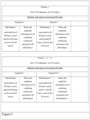
- the CSI content of two CSI subgroups associated with a single CSI report is shown in Figure 9 .
- the sub-bitmap and phase and amplitude information of the combining coefficients associated with all SD components and a DD basis vector index for the RI layers are always packed together into a single segment.
- the last segment of a CSI subgroup may contain only a fraction of a sub-bitmap or a fraction of the amplitude and/or phase information associated with that sub-bitmap.
- the remaining fraction of the sub-bitmap or the remaining fraction of the amplitude and/or phase information associated with that sub-bitmap that is not contained in the CSI subgroup may be contained in a CSI subgroup of the same CSI report with lower priority.
- bitmaps and amplitude and/or phase information contained in a CSI subgroup are segmented in one or more segments, wherein each segment may contain a part of the bitmap, sub-bitmap, for each of the RI layers and the associated amplitude and/or phase information of the combining coefficients associated with the sub-bitmap.
- the k-th segment is further segmented into RI sub-segments, wherein each sub-segment contains the sub-bitmap associated with all SD components and a DD basis vector index of a single layer and the combining coefficients associated with the sub-bitmap, see Figure 10 .
- each sub-segment k r associated with r -th layer may be further segmented into k r,2U sub-segments, as shown in Figure 11 .
- Each sub-segment k r,u contains a single-bit from the sub-bitmap and the corresponding amplitude and phase information of the combining coefficient. Note that the bit k r,u is immediately followed by the sub-segment k r,u+1 , when k r,u is '0'. This is due to the absence of the amplitude and phase information associated with bit k r,u .
- the bitmaps and the information of the combining coefficients for the RI layers of a CSI report are segmented into D segments, where each segment contains the bitmap, sub-bitmap, associated with all SD components of a single DD basis index for all RI layers.
- each segment may contain the associated amplitude and/or phase information of the combining coefficients for the RI layers associated with the sub-bitmap.
- the CSI subgroup that has the highest priority and is associated with a single CSI report may contain one or more of the D segments.
- Each CSI subgroup with the highest priority may contain in addition a set of parameters required from the CSI report such that the gNB may be able to recalculate the CSI matrix based on the fraction of the bitmaps for the RI layers and the amplitude and/or phase information of the combining coefficients contained in the CSI subgroup.
- each CSI subgroup with the highest priority may contain in addition at least the following parameters:
- the joint CSI subgroup may contain at least one of the following parameters:
- the remaining CSI subgroups contain at least the CSI content associated with the bitmaps for the RI layers and the phase and amplitude information of the combining coefficients.
- Each CSI subgroup with the highest priority and associated with a single CSI report may contain at least a fraction of the bitmaps for the RI layers and the phase and amplitude information of a fraction of the K NZ combining coefficients.
- each CSI subgroup with the highest priority associated with a single CSI report may also contain the following parameters, when not already listed in the joint CSI subgroup:
- the first CSI subgroup should contain the fraction of the bitmap and the information of the combining coefficients associated with the DD basis vector index 0.
- the SCI when the SCI is given by a ⁇ log 2 2 U ⁇ ) bit indicator, the SCI may not be indicated in the sub-bitmap associated with DD basis vector index 0, and hence the sub-bitmap per layer may have a size of 2 U - 1 ⁇ 1 instead of 2 U ⁇ 1.
- the CSI subgroup with the highest priority associated with a CSI report contains the sub-bitmap which is associated with DD basis vector index 0 and the corresponding amplitude and/or phase information of the combining coefficients associated with that sub-bitmap for the RI layers.
- the first segment of a CSI subgroup with highest priority may be associated with DD basis vector index 0.
- the complete bitmap for all selected SD and DD basis vectors per layer may be required by the gNB to identify the SD and DD basis vector indices associated with the strongest combining coefficient. Therefore, the above segmentation of bitmaps and combining coefficients with respect to DD basis vector indices may not be possible.
- the CSI subgroup of the CSI report with highest priority may contain at least the bitmaps for the RI layers and all or a fraction of the phase and/or amplitude information of the combining coefficients of the CSI matrix of the CSI report.
- the remaining CSI subgroups of the CSI report with lower priority may contain the remaining fraction of the phase and/or amplitude information of the combining coefficients of the CSI matrix.
- the joint CSI subgroup may contain the bitmaps for the RI layers of that CSI report.
- the second segmentation scheme partitions for a CSI report the bitmaps and the combining coefficients with respect to the RI layers of the CSI matrix indicated in the CSI report.
- a CSI subgroup that is associated with highest priority of a CSI report may contain at least the bitmap(s) for indicating the non-zero combining coefficients for a first subset of the RI layers, and a first fraction of the amplitude and phase values of the selected non-zero delay-domain combining coefficients associated with the first subset of the RI layers of the CSI matrix indicated in the CSI report.
- the remaining CSI subgroups with lower priority associated with the same CSI report may contain at least the bitmap(s) for the remaining (second subset) of the RI layers and the remaining fraction of amplitude and phase values associated with the second subset of the RI layers of that CSI report.
- the CSI subgroup with highest priority per CSI report may contain in addition the following parameters:
- the CSI subgroup with highest priority per CSI report of a CSI report may also contain in addition the following parameters (when not already listed in the joint CSI subgroup):
- the CSI part 2 decomposition contains in the first CSI portion with priority level 0 the so-called wideband amplitudes of the N REP CSI reports. Based on these wideband amplitudes in the first CSI portion, the gNB can reconstruct per CSI report a wideband CSI matrix for the configured subbands even in the case that the UE has dropped all except the first CSI portion with priority level 0.
- a similar wideband CSI matrix can be defined for the two codebook-based CSI reporting scheme when applying the second CSI decomposition scheme described above.
- the gNB may derive a wideband CSI matrix for a CSI report when it has knowledge on the amplitude information of the combining coefficients and the fraction of the bitmap associated with the "strongest" DD basis vector index for each of the RI layers.
- the "strongest" DD basis vector index for per layer corresponds to the DD basis vector index that is associated with the SCI. Therefore, based on the SCI, the bitmap associated with the DD basis vector index which is associated with the SCI and amplitude information of the combining coefficients, the gNB may reconstruct a wideband CSI matrix as proposed in the following embodiments.
- the joint CSI subgroup may contain the SCI(s) for the RI layers, the fraction of the bitmap and the amplitude and/or phase information of the combining coefficients associated with all SD components of the DD basis vector index which is associated with the SCI(s) for the RI layer(s) of one or more CSI reports.
- the gNB is able to recalculate a wideband CSI matrix for each of the one or more CSI reports.
- the DD basis vector index 0 is associated with the SCI.
- the joint CSI subgroup may contain for one or more CSI reports, the SCI(s) for the RI layers, the fraction of the bitmap and the amplitude and/or phase information of the combining coefficients associated with all SD components and DD basis vector index 0 for the RI layers per CSI report.
- the complete bitmap for all selected SD and DD basis vector indices per layer and at least the amplitude and/or phase information of the combining coefficients associated with the DD basis vector index which is associated with the SCI(s) for the RI layer(s) is required to calculate the wideband matrix of that CSI report.
- the joint CSI subgroup may contain the complete bitmap for all selected SD and DD basis vector indices per layer and at least the amplitude and/or phase information of the combining coefficients associated with the DD basis vector index which is associated with the SCI(s) for the RI layer(s) of that CSI report.
- the size of the joint CSI subgroup depends on the number of non-zero combining coefficients associated with the DD basis vector index of the SCI(s) of the one or more CSI reports.
- the gNB may therefore even after decoding CSI part 1 of the CSI payload not know the payload size of the joint CSI subgroup.
- a method that fixes the payload size of the joint CSI subgroup is proposed.
- the joint CSI subgroup contains at least the SCI(s) for the RI layers, the fraction of the bitmap and the amplitude and/or phase information of the combining coefficients associated with all SD components and the DD basis vector index of the SCI for the RI layers, for the N CSI reports that have the highest priority.
- the value for the parameter N may be either higher-layer configured by the gNB, or it is a priori known by the UE, e.g., fixed by specification, or it is determined by the UE.
- the UE may determine the value of the parameter N , i.e., the number of CSI reports that have the highest priority, such that the payload size of the joint CSI subgroup is fixed.
- the CSI subgroup that has the highest priority and is associated with a single CSI report may contain the bitmaps of all RI layers and only a fraction of the phase and/or amplitude information of the combining coefficients.
- the following embodiment presents a decomposition scheme for the phase and/or amplitude information of the combining coefficients with respect to a number of CSI subgroups.
- the decomposition of the phase and/or amplitude information of the combining coefficients may depend on the ordering of the bit-sequences of the associated bitmap for the RI layers of a CSI report.
- the bitmap is segmented into RI segments, each of 2UD bits, in an increasing order with respect to the layer numbers.
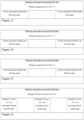
- Each segment is associated with all SD and DD basis indices of a layer, see Figure 12 .
- the UE drops first the CSI content associated with one or more of the higher layer(s), and then the CSI content associated with one or more of the lower layer(s).
- the UE may first drop the CSI content associated with layer 3 and 4, CSI subgroup with lower priority, and then drop the CSI content associated with layer 1 and 2, CSI subgroup with high priority, of a CSI report.
- the bit-sequence in each segment may be ordered with respect to one of the following two schemes:
- a first ordering scheme scheme 1
- the bits in each segment of size 2 UD ⁇ 1 are ordered in a way that the first 2 U bits are associated with all 2 U SD components of the first DD basis index, followed by 2 U bits that are associated with all 2 U SD components of the second DD basis index, and so on, see Figure 13 .
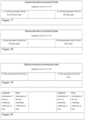
- scheme 2 the bits in each segment of size 2 UD ⁇ 1 are ordered in a way that the first D bits are associated with all D DD basis indices of the first SD basis index, followed by D bits that are associated with all D DD basis indices of the second SD basis index, and so on, see Figure 14 or Figure 15 .
- the fraction of phase and/or amplitude information of the combining coefficients contained in a CSI subgroup is always associated with only a subset of the RI layers of a CSI report.
- Such an ordering/packing may result in a significant performance loss compared to dropping only a part of the phase and/or amplitude information of the combining coefficients of all RI layers.
- the following embodiment presents an alternative ordering/segmentation of the bitmaps and combining coefficients that avoids a dropping of the combining coefficients of one or more layers of a CSI report.
- the bitmap of size 2 UD ⁇ RI is segmented into D segments, and each segment has a size of 2 U ⁇ RI and is associated with a single DD basis vector index, see Figure 16 .
- the bit-sequence in each segment may be ordered with respect to one of the following two schemes:
- a first ordering scheme scheme 1
- the bits in each segment of size 2 U ⁇ RI are ordered in a way that the first RI bits are associated with the first SD basis vector index of all RI layers, followed by the next RI bits associated with the second SD basis index of all RI layers, and so on, see Figure 17 and Figure 18 .
- a CSI subgroup associated with a CSI report may contain the amplitude and phase information of a fraction of the combining coefficients, where different ordering schemes for the amplitude and phase values may be applied.
- the amplitude and phase information of the combining coefficients in a CSI subgroup may be ordered by one of the following schemes.
- scheme 1 for each combining coefficient in CSI subgroup, the amplitude information, a bits, is followed by the phase information, b bits, see Figure 20 , where X denotes the number of combining coefficients contained in the CSI subgroup.
- scheme 2 the amplitude information of X combining coefficients, Xa bits, is followed by the phase information of X combining coefficients, Xb bits, see Figure 21 .
- the phase information of X combining coefficients, Xb bits is followed by the amplitude information of X combining coefficients, Xa bits, see Figure 22 .
- the bit-width of the first CSI subgroup associated with a single CSI report and highest priority may be fixed and given by A + B, where A is the combined bit-width of all components that are contained in the first subgroup apart from the number of non-zero combining coefficients, and B is the bit-width associated with the amplitude ( a ) and phase information ( b ) of a fraction of the combining coefficients ⁇ K NZ x ⁇ .
- x T.
- FIG. 1 Another proposed aspect of the invention is illustrated with renewed reference to Figure 1 , showing a method performed by a network node, gNB.
- the invention proposes that the network node, gNB, receive channel state information, CSI, feedback in the form of one or more CSI reports in a wireless communication system.
- the method comprises the steps of:
- each CSI report comprises:
- Each CSI report may contain the selected precoding matrix in the form of a precoding matrix identifier, PMI, and a rank identifier, RI, indicating the transmission rank for the RI layers of the precoding matrix, and each CSI report may comprise two parts: CSI part 1 and CSI part 2, where part 1 has a fixed payload size and comprises information indicating the size of the payload of part 2, where part 2 comprises at least the amplitude and phase information of the selected non-zero combining coefficients of the CSI report, and where a portion, or the entirety, of part 2 is available for omission from the CSI report.
- UE 30 comprises a processor 31 or processing circuit or a processing module or a processor or means; a receiver circuit or receiver module 34; a transmitter circuit or transmitter module 35; a memory module 32; a transceiver circuit or transceiver module 33 which may include the transmitter circuit 35 and the receiver circuit 34.
- the UE 30 further comprises an antenna system 36 which includes antenna circuitry for transmitting and receiving signals to/from at least the UE 30.
- a network node, gNB comprises a processor or processing circuit or a processing module or a processor or means; a receiver circuit or receiver module; a transmitter circuit or transmitter module; a memory module; a transceiver circuit or transceiver module which may include the transmitter circuit and the receiver circuit.
- the network node, gNB further comprises an antenna system which includes antenna circuitry for transmitting and receiving signals to/from at least the network node, gNB.
- the invention also relates to a computer program product 37, which in the figure is stored in the memory module 32, which computer program product 37 comprises computer program code 38, which, when executed by the processor 31, enables the processor 31 to perform any one of the subject matter of the inventive method performed by a UE.
- the invention also relates to a computer program product, comprising computer program code, which, when executed by the processor of the network node, gNB, enables the processor to perform any one of the subject matter of the inventive method performed by a network node, gNB.
Landscapes
- Engineering & Computer Science (AREA)
- Signal Processing (AREA)
- Computer Networks & Wireless Communication (AREA)
- Physics & Mathematics (AREA)
- Theoretical Computer Science (AREA)
- Multimedia (AREA)
- Computer Vision & Pattern Recognition (AREA)
- Mathematical Physics (AREA)
- General Physics & Mathematics (AREA)
- Power Engineering (AREA)
- Artificial Intelligence (AREA)
- Software Systems (AREA)
- Medical Informatics (AREA)
- General Health & Medical Sciences (AREA)
- Evolutionary Computation (AREA)
- Databases & Information Systems (AREA)
- Computing Systems (AREA)
- Health & Medical Sciences (AREA)
- Quality & Reliability (AREA)
- Mobile Radio Communication Systems (AREA)
- Radio Transmission System (AREA)
Claims (15)
- Procédé exécuté par un équipement utilisateur, UE, pour fournir un retour d'informations d'état de canal, CSI, sous la forme d'un ou plusieurs rapports CSI dans un système de communication sans fil (A), le procédé comprenant :- la réception, en provenance d'un noeud de réseau, gNB, d'une ou plusieurs configurations de couche supérieure d'un ou plusieurs signaux de référence de liaison descendante, et d'une ou plusieurs configurations de rapport CSI associées à la ou aux configurations de signaux de référence de liaison descendante, et d'un signal radio, le signal radio comportant le ou les signaux de référence de liaison descendante selon les une ou plusieurs configurations de signaux de référence de liaison descendante,- le ou les signaux de référence de liaison descendante étant fournis sur un nombre configuré de ressources de domaine fréquentiel, de ressources de domaine temporel et d'un ou plusieurs ports,- la détermination, pour chaque rapport CSI, d'une matrice de précodage sur la base du ou des signaux de référence de liaison descendante et de deux livres de codes, les deux livres de codes comportant- un livre de codes spatiaux comprenant un ou plusieurs composants de base de domaine spatial, SD, du précodeur, et- un livre de code de temporisation comprenant un ou plusieurs composants de base de domaine de temporisation, DD, du précodeur,
et un ou plusieurs coefficients de combinaison non nuls pour une combinaison complexe des un ou plusieurs vecteurs de base SD et DD, et- la transmission, au noeud de réseau, des un ou plusieurs rapports CSI pour les une ou plusieurs configurations de rapport CSI,dans lequel chaque rapport CSI contient la matrice de précodage sélectionnée sous la forme d'un identifiant de matrice de précodage, PMI, et d'un identifiant de rang, RI, indiquant le rang de transmission pour les couches RI de la matrice de précodage, et caractérisé en ce que chaque rapport CSI comprend deux parties : CSI partie 1 et CSI partie 2, où la partie 1 a une taille de charge utile fixe et comprend des informations indiquant la taille de la charge utile de la partie 2, où la partie 2 comprend au moins les informations d'amplitude et de phase des coefficients de combinaison non nuls sélectionnés du rapport CSI, et dans lequel une partie ou la totalité de la partie 2 est disponible pour omission dans le rapport CSI. - Procédé selon la revendication 1, dans lequel le CSI partie 1 contient au moins l'information sur le nombre sélectionné de coefficients de combinaison non nuls sur toutes les couches RI et une indication du rang de transmission pour les couches RI de la matrice de précodage sélectionnée.
- Procédé selon la revendication 1, dans lequel le CSI partie 2 contient au moins les informations suivantes pour les couches RI de la matrice de précodage sélectionnée :- un indicateur de sous-ensemble de base de domaine spatial, SD, comportant, s'il est configuré, les facteurs de suréchantillonnage de rotation, indiquant les vecteurs de base SD sélectionnés dans le livre de codes spatiaux,- un ou plusieurs indicateurs de sous-ensemble de base de domaine de temporisation, DD, indiquant les vecteurs de base DD sélectionnés dans le livre de codes de temporisation,- la phase et l'amplitude des coefficients de combinaison de domaines de temporisation non nuls sélectionnés,- l'indicateur de coefficient le plus élevé, SCI, indiquant le vecteur DD et SD associé au coefficient le plus élevé par couche,- une amplitude de référence de polarisation par couche,- un bitmap pour indiquer les coefficients de combinaison non nuls par couche, et- d'éventuel(s) paramètre(s) supplémentaire(s) associé(s) à l'indication de sous-ensemble de base DD.
- Procédé selon la revendication 1 ou la revendication 3, dans lequel le CSI patie 2 des rapports NREP CSI est segmenté en sous-groupes TNREP + 1 CSI, dans lequel les sous-groupes T CSI sont toujours associés à un seul rapport CSI, et un sous-groupe CSI contient des informations associées à tous les rapports NREP CSI, et dans lequel chaque sous-groupe CSI est associé à une priorité (niveau de priorité).
- Procédé selon la revendication 4, dans lequel le sous-groupe CSI qui contient des informations associées à tous les rapports NREP CSI a la priorité la plus élevée (niveau de priorité 0), et les sous-groupes TNREP CSI restants sont associés aux niveaux de priorité inférieurs 1 à TNREP, et dans lequel le dernier sous-groupe CSI TNREP est associé au niveau de priorité le plus bas TNREP.
- Procédé selon la revendication 4 ou 5, dans lequel un sous-groupe CSI contient les bitmaps de toutes les couches RI, les bitmaps de taille 2UD × RI sont segmentés en D segments, et chaque segment a une taille de 2U × RI et est associé à un seul indice vectoriel de base DD.
- Procédé selon la revendication 6, dans lequel les bits de chaque segment de taille 2U × RI sont ordonnés de sorte que les premiers bits RI soient associés au premier indice de vecteur de base SD de toutes les couches RI, suivis des bits RI suivants associés au second indice de base SD de toutes les couches RI, etc.
- Procédé selon l'une quelconque des revendications 4 à 7, dans lequel chaque sous-groupe CSI avec la priorité la plus élevée et associé à un seul rapport CSI peut contenir au moins une fraction des bitmaps pour les couches RI et les informations de phase et d'amplitude d'une fraction des coefficients de combinaison KNZ.
- Procédé selon l'une quelconque des revendications 4 à 8, dans lequel chaque sous-groupe CSI ayant la priorité la plus élevée associé à un seul rapport CSI contient au moins la fraction des bitmaps et les informations des coefficients de combinaison associés à l'indice de vecteur de base DD du SCI pour les couches RI.
- Procédé selon la revendication 8 ou 9, dans lequel chaque sous-groupe CSI, qui contient des informations d'une fraction des coefficients de combinaison, contient des valeurs de phase et d'amplitude associées à un maximum de

- Procédé exécuté par un noeud de réseau, gNB, pour recevoir un retour d'informations d'état de canal, CSI, sous la forme d'un ou plusieurs rapports CSI dans un système de communication sans fil (A), le procédé comprenant :- l'envoi, à un équipement utilisateur, UE, d'une ou plusieurs configurations de couche supérieure d'un ou plusieurs signaux de référence de liaison descendante, et d'une ou plusieurs configurations de rapport CSI associées à la ou aux configurations de signaux de référence de liaison descendante, et d'un signal radio, le signal radio comportant le ou les signaux de référence de liaison descendante selon les une ou plusieurs configurations de signaux de référence de liaison descendante,- la réception, en provenance de l'UE, d'un ou plusieurs rapports CSI pour une ou plusieurs configurations de rapport CSI,dans lequel chaque rapport CSI comprend :- une matrice de précodage déterminée sur la base du ou des signaux de référence de liaison descendante et de deux livres de codes, les deux livres de codes comportant- un livre de codes spatiaux comprenant un ou plusieurs composants de base de domaine spatial, SD, du précodeur, et- un livre de code de temporisation comprenant un ou plusieurs composants de base de domaine de temporisation, DD, du précodeur,et un ou plusieurs coefficients de combinaison non nuls pour une combinaison complexe des un ou plusieurs vecteurs de base SD et DD,dans lequel chaque rapport CSI contient la matrice de précodage sélectionnée sous la forme d'un identifiant de matrice de précodage, PMI, et d'un identifiant de rang, RI, indiquant le rang de transmission pour les couches RI de la matrice de précodage, et caractérisé en ce que chaque rapport CSI comprend deux parties : CSI partie 1 et CSI partie 2, où la partie 1 a une taille de charge utile fixe et comprend des informations indiquant la taille de la charge utile de la partie 2, où la partie 2 comprend au moins les informations d'amplitude et de phase des coefficients de combinaison non nuls sélectionnés du rapport CSI, et dans lequel une partie ou la totalité de la partie 2 est disponible pour omission dans le rapport CSI.
- Équipement utilisateur (30), UE, comprenant un processeur (31) et une mémoire (32), la mémoire (32) contenant un code de programme informatique (38) exécutable par le processeur (31) moyennant quoi l'UE (30) fonctionne de manière à mettre en oeuvre l'objet de l'une quelconque des revendications 1 à 10.
- Noeud de réseau comprenant un processeur et une mémoire, la mémoire contenant un code de programme informatique exécutable par le processeur, moyennant quoi le noeud de réseau fonctionne de manière à mettre en oeuvre l'objet de la revendication 11.
- Produit de programme informatique (37) comprenant des instructions qui, lorsqu'elles sont exécutées par un processeur (31) d'un équipement utilisateur, UE, amènent le processeur (31) à exécuter le procédé selon l'une quelconque des revendications 1 à 10.
- Produit de programme informatique comprenant des instructions qui, lorsqu'elles sont exécutées par un processeur d'un noeud de réseau, gNB, amènent le processeur à exécuter le procédé selon la revendication 11.
Priority Applications (1)
| Application Number | Priority Date | Filing Date | Title |
|---|---|---|---|
| EP23196548.4A EP4274109A3 (fr) | 2019-08-15 | 2020-08-05 | Rapport de csi basé sur un livre de codes à trois composants |
Applications Claiming Priority (2)
| Application Number | Priority Date | Filing Date | Title |
|---|---|---|---|
| EP19192000.8A EP3780455A1 (fr) | 2019-08-15 | 2019-08-15 | Rapports csi basés sur un livre de codes à trois composants |
| PCT/EP2020/071968 WO2021028284A1 (fr) | 2019-08-15 | 2020-08-05 | Rapport de csi basé sur livre de codes à trois composantes |
Related Child Applications (1)
| Application Number | Title | Priority Date | Filing Date |
|---|---|---|---|
| EP23196548.4A Division EP4274109A3 (fr) | 2019-08-15 | 2020-08-05 | Rapport de csi basé sur un livre de codes à trois composants |
Publications (2)
| Publication Number | Publication Date |
|---|---|
| EP4014403A1 EP4014403A1 (fr) | 2022-06-22 |
| EP4014403B1 true EP4014403B1 (fr) | 2023-09-20 |
Family
ID=67659040
Family Applications (6)
| Application Number | Title | Priority Date | Filing Date |
|---|---|---|---|
| EP19192000.8A Withdrawn EP3780455A1 (fr) | 2019-08-15 | 2019-08-15 | Rapports csi basés sur un livre de codes à trois composants |
| EP19199327.8A Withdrawn EP3780456A1 (fr) | 2019-08-15 | 2019-09-24 | Rapports csi basés sur un livre de codes à trois composants |
| EP20747437.0A Active EP4014403B1 (fr) | 2019-08-15 | 2020-08-05 | Rapports csi basés sur un livre de codes à trois composants |
| EP23196548.4A Pending EP4274109A3 (fr) | 2019-08-15 | 2020-08-05 | Rapport de csi basé sur un livre de codes à trois composants |
| EP20751174.2A Active EP4018585B1 (fr) | 2019-08-15 | 2020-08-11 | Rapports csi basés sur un livre de codes à trois composants |
| EP23209152.0A Pending EP4443754A3 (fr) | 2019-08-15 | 2020-08-11 | Rapport de csi basé sur un livre de codes à trois composants |
Family Applications Before (2)
| Application Number | Title | Priority Date | Filing Date |
|---|---|---|---|
| EP19192000.8A Withdrawn EP3780455A1 (fr) | 2019-08-15 | 2019-08-15 | Rapports csi basés sur un livre de codes à trois composants |
| EP19199327.8A Withdrawn EP3780456A1 (fr) | 2019-08-15 | 2019-09-24 | Rapports csi basés sur un livre de codes à trois composants |
Family Applications After (3)
| Application Number | Title | Priority Date | Filing Date |
|---|---|---|---|
| EP23196548.4A Pending EP4274109A3 (fr) | 2019-08-15 | 2020-08-05 | Rapport de csi basé sur un livre de codes à trois composants |
| EP20751174.2A Active EP4018585B1 (fr) | 2019-08-15 | 2020-08-11 | Rapports csi basés sur un livre de codes à trois composants |
| EP23209152.0A Pending EP4443754A3 (fr) | 2019-08-15 | 2020-08-11 | Rapport de csi basé sur un livre de codes à trois composants |
Country Status (7)
| Country | Link |
|---|---|
| US (6) | US11936456B2 (fr) |
| EP (6) | EP3780455A1 (fr) |
| JP (2) | JP7702386B2 (fr) |
| KR (2) | KR102671138B1 (fr) |
| CN (4) | CN114223145B (fr) |
| ES (2) | ES2960519T3 (fr) |
| WO (2) | WO2021028284A1 (fr) |
Families Citing this family (47)
| Publication number | Priority date | Publication date | Assignee | Title |
|---|---|---|---|---|
| EP3780455A1 (fr) * | 2019-08-15 | 2021-02-17 | Fraunhofer Gesellschaft zur Förderung der angewandten Forschung e.V. | Rapports csi basés sur un livre de codes à trois composants |
| US11910430B2 (en) * | 2019-10-07 | 2024-02-20 | Qualcomm Incorporated | Collision resolution for channel state information reporting on a physical uplink control channel |
| US12334999B2 (en) * | 2020-03-06 | 2025-06-17 | Lenovo (Singapore) Pte. Ltd. | Type-II port-selection codebook generation |
| US11750258B2 (en) * | 2020-03-12 | 2023-09-05 | Samsung Electronics Co., Ltd. | Method and apparatus for CSI reporting |
| US11728877B2 (en) * | 2020-10-15 | 2023-08-15 | Qualcomm Incorporated | Polarization and antenna panel configuration and communication diversity configuration |
| US12395217B2 (en) * | 2021-01-15 | 2025-08-19 | Mediatek Inc. | Method for FR1 FDD channel state information |
| US11831376B2 (en) * | 2021-04-05 | 2023-11-28 | Qualcomm Incorporated | Joint channel state information and decoding feedback |
| EP4320743A1 (fr) * | 2021-04-07 | 2024-02-14 | Ntt Docomo, Inc. | Procédés de rapport d'informations d'état de canal pour livre de codes de sélection de port de type ii 5g nr rel. 17 |
| US12267137B2 (en) | 2021-05-11 | 2025-04-01 | Nokia Technologies Oy | Reporting channel state information (CSI) precoding matrix indicator (PMI) |
| US12355528B2 (en) * | 2021-05-17 | 2025-07-08 | Samsung Electronics Co., Ltd. | Method and apparatus for UCI multiplexing |
| WO2022257042A1 (fr) * | 2021-06-09 | 2022-12-15 | Oppo广东移动通信有限公司 | Procédé de création de rapport de livre de codes, dispositif terminal et dispositif de réseau |
| CN115483950A (zh) * | 2021-06-16 | 2022-12-16 | 华为技术有限公司 | 一种信道状态信息的反馈方法及装置 |
| CN115603872B (zh) * | 2021-06-28 | 2025-11-21 | 维沃移动通信有限公司 | Csi-rs配置方法、csi反馈方法、装置和设备 |
| WO2023277482A1 (fr) * | 2021-07-01 | 2023-01-05 | 엘지전자 주식회사 | Procédé et dispositif pour transmettre et recevoir des informations d'état de canal sur la base d'un livre de codes dans un système de communication sans fil |
| US11984948B2 (en) * | 2021-08-05 | 2024-05-14 | Apple Inc. | Methods and apparatus for port selection codebook enhancement |
| CN115915249A (zh) * | 2021-08-25 | 2023-04-04 | 北京紫光展锐通信技术有限公司 | 一种csi报告获取方法及通信装置 |
| CN113938922B (zh) * | 2021-09-17 | 2023-06-16 | 中国联合网络通信集团有限公司 | 一种优化小区的确定方法及装置 |
| US20230113496A1 (en) * | 2021-10-11 | 2023-04-13 | Nokia Technologies Oy | Co-polarized transmission and port selection |
| WO2023070497A1 (fr) * | 2021-10-29 | 2023-05-04 | Qualcomm Incorporated | Structure de réseau neuronal pour retour d'informations de précodage orthogonal |
| CN116095742B (zh) * | 2021-11-05 | 2026-04-10 | 维沃移动通信有限公司 | 信道状态信息的传输方法、装置、终端及网络侧设备 |
| US20250373295A1 (en) * | 2021-11-06 | 2025-12-04 | Qualcomm Incorporated | Non-zero coefficient reporting and codebook parameter configuration |
| WO2023108392A1 (fr) * | 2021-12-14 | 2023-06-22 | Qualcomm Incorporated | Rapport de changement de faisceau par l'intermédiaire d'une gestion de faisceau basée sur la prédiction |
| WO2023140581A1 (fr) * | 2022-01-19 | 2023-07-27 | 엘지전자 주식회사 | Procédé et dispositif d'émission/réception d'informations d'état de canal dans un système de communication sans fil |
| US20230246688A1 (en) * | 2022-02-02 | 2023-08-03 | Samsung Electronics Co., Ltd. | Method and apparatus for csi codebook |
| WO2023184147A1 (fr) * | 2022-03-29 | 2023-10-05 | Qualcomm Incorporated | Sélection et quantification de coefficients du domaine temporel par le biais d'un livre de codes etype-ii étendu |
| EP4515765A4 (fr) * | 2022-04-28 | 2025-06-18 | NEC Corporation | Procédés, dispositifs, et support lisible par ordinateur pour des communications |
| EP4515928A4 (fr) * | 2022-04-29 | 2026-02-11 | Qualcomm Inc | Décomposition de caractéristiques de précodeur recommandées en tant que rétroaction d'informations d'état de canal dans une opération de point de réception multi-transmission |
| US20250300709A1 (en) * | 2022-07-14 | 2025-09-25 | Qualcomm Incorporated | Uplink control information packing and prioritization for channel state information |
| CN119631317A (zh) * | 2022-07-26 | 2025-03-14 | Lg电子株式会社 | 在无线通信系统中发送针对多个时间实例的信道状态信息的方法及其设备 |
| CN117769811A (zh) * | 2022-07-26 | 2024-03-26 | 北京小米移动软件有限公司 | 系数指示方法、装置及存储介质 |
| WO2024026649A1 (fr) * | 2022-08-01 | 2024-02-08 | Nec Corporation | Procédés, dispositifs, et support de communication |
| CN117882328A (zh) * | 2022-08-10 | 2024-04-12 | 中兴通讯股份有限公司 | 信道状态信息报告增强 |
| US20240154760A1 (en) * | 2022-10-14 | 2024-05-09 | Samsung Electronics Co., Ltd. | Method and apparatus for multiplexing csi for multi-trp coherent joint transmission |
| JP2025536602A (ja) * | 2022-11-03 | 2025-11-07 | 日本電気株式会社 | 端末装置、ネットワーク装置及び方法 |
| WO2024098272A1 (fr) * | 2022-11-09 | 2024-05-16 | Qualcomm Incorporated | Rapport de rétroaction d'informations d'état de canal de transmission conjointe cohérente pour de multiples points d'émission et de réception |
| JP2026504917A (ja) * | 2023-01-20 | 2026-02-10 | 日本電気株式会社 | 端末装置、ネットワーク装置及び方法 |
| CN118749182A (zh) * | 2023-01-20 | 2024-10-08 | 中兴通讯股份有限公司 | 用于信道状态信息报告增强的系统和方法 |
| JP2026508827A (ja) * | 2023-01-20 | 2026-03-13 | 日本電気株式会社 | 通信の方法及びデバイス |
| US12375135B2 (en) * | 2023-01-31 | 2025-07-29 | Qualcomm Incorporated | Codebook selection |
| WO2024159388A1 (fr) * | 2023-01-31 | 2024-08-08 | Qualcomm Incorporated | Table de bits à coefficient non nul à deux étages pour rapport d'informations d'état de canal de transmission conjointe cohérente spécifique à un point de transmission-réception |
| KR20250149685A (ko) * | 2023-02-16 | 2025-10-16 | 엘지전자 주식회사 | 무선 통신 시스템에서 신호를 송수신하는 방법 및 장치 |
| EP4662800A1 (fr) * | 2023-05-15 | 2025-12-17 | Samsung Electronics Co., Ltd. | Procédé et appareil pour économiser l'énergie dans un système de communication sans fil |
| CN119544160B (zh) * | 2023-08-28 | 2026-04-24 | 中国移动通信有限公司研究院 | 信息传输方法、装置、终端、网络设备及存储介质 |
| US20250132792A1 (en) * | 2023-10-24 | 2025-04-24 | Samsung Electronics Co., Ltd. | Csi reporting |
| CN120110512A (zh) * | 2023-12-05 | 2025-06-06 | 华为技术有限公司 | 信道状态信息反馈方法及通信装置 |
| WO2025156215A1 (fr) * | 2024-01-25 | 2025-07-31 | Zte Corporation | Conception de livre de codes haute performance |
| WO2025231631A1 (fr) * | 2024-05-08 | 2025-11-13 | Qualcomm Incorporated | Rapport de bases de domaine spatial |
Family Cites Families (28)
| Publication number | Priority date | Publication date | Assignee | Title |
|---|---|---|---|---|
| US8687727B2 (en) * | 2010-11-05 | 2014-04-01 | Intel Corporation | Coordinated multi-point transmission using interference feedback |
| KR101632223B1 (ko) * | 2012-11-09 | 2016-06-21 | 엘지전자 주식회사 | 무선 통신 시스템에서 채널 상태 정보를 피드백하는 방법 및 이를 위한 장치 |
| US20160072562A1 (en) * | 2014-09-10 | 2016-03-10 | Samsung Electronics Co., Ltd. | Channel state information reporting with basis expansion for advanced wireless communications systems |
| US9967012B2 (en) * | 2015-05-06 | 2018-05-08 | Samsung Electronics Co., Ltd. | Method and apparatus for channel state information (CSI) reporting |
| US10637546B2 (en) * | 2016-02-23 | 2020-04-28 | Lg Electronics Inc. | Method for transceiving channel state information and apparatus therefor in multiple-antenna wireless communication system |
| US10630365B2 (en) * | 2016-03-07 | 2020-04-21 | Lg Electronics Inc. | Method for transmitting and receiving channel state information between base station and terminal in wireless communication system and apparatus for supporting same |
| CN109565323B (zh) * | 2016-09-26 | 2022-08-02 | Lg 电子株式会社 | 在无线通信系统中发送/接收信道状态信息的方法及其装置 |
| US10396866B2 (en) * | 2016-11-11 | 2019-08-27 | Samsung Electronics Co., Ltd. | Advanced CSI reporting in advanced wireless communication systems |
| US10164699B2 (en) * | 2016-12-28 | 2018-12-25 | Intel IP Corporation | CSI reporting in beamforming systems via time- and frequency-distributed CSI estimation |
| KR102338306B1 (ko) | 2017-03-23 | 2021-12-10 | 엘지전자 주식회사 | 무선 통신 시스템에서 채널 상태 정보 송수신 방법 및 이를 위한 장치 |
| US10536205B2 (en) * | 2017-04-26 | 2020-01-14 | Samsung Electronics Co., Ltd. | Method and apparatus to CSI reporting using multiple antenna panels in advanced wireless communication systems |
| JP6728481B2 (ja) * | 2017-06-14 | 2020-07-22 | エルジー エレクトロニクス インコーポレイティド | 無線通信システムにおけるチャンネル状態情報送受信方法及びそのための装置 |
| AU2018285662B2 (en) * | 2017-06-16 | 2020-11-05 | Telefonaktiebolaget Lm Ericsson (Publ) | Channel state information for reference signals in a wireless communication system |
| CN108880644B (zh) * | 2017-07-26 | 2019-06-11 | 华为技术有限公司 | 用于数据传输的方法、装置和系统 |
| EP3480970B1 (fr) * | 2017-09-08 | 2021-05-05 | LG Electronics Inc. | Procédé de communication de rapport d'informations d'état de canal dans un système de communication sans fil et appareil pour cela |
| CN109495149B (zh) * | 2017-09-11 | 2021-10-15 | 华为技术有限公司 | 通信方法、网络设备、终端设备和系统 |
| JP7032433B2 (ja) * | 2017-09-29 | 2022-03-08 | エルジー エレクトロニクス インコーポレイティド | 無線通信システムにおけるチャネル状態情報を報告するための方法及びそのための装置 |
| KR102707864B1 (ko) * | 2018-01-12 | 2024-09-23 | 텔레호낙티에볼라게트 엘엠 에릭슨(피유비엘) | 채널 상태 정보 보고들을 우선순위화하기 위한 시스템 및 방법 |
| EP3750250A4 (fr) * | 2018-02-05 | 2021-10-27 | Telefonaktiebolaget LM Ericsson (publ) | Procédé et dispositifs d'estimation d'informations d'état de canal mimo |
| CN110366247B (zh) * | 2018-03-26 | 2021-07-27 | 上海朗帛通信技术有限公司 | 一种被用于无线通信的用户设备、基站中的方法和装置 |
| EP4224732A1 (fr) * | 2018-12-12 | 2023-08-09 | Telefonaktiebolaget LM Ericsson (publ) | Communication de coefficients pour des informations d'état de canal |
| US11076266B2 (en) * | 2019-01-18 | 2021-07-27 | Kt Corporation | Apparatus and method of performing positioning in new radio |
| US11350418B2 (en) * | 2019-01-24 | 2022-05-31 | Samsung Electronics Co., Ltd. | Method and apparatus for channel measurement and reporting in coreset basis |
| CN113574820B (zh) * | 2019-03-22 | 2024-04-26 | 联想(新加坡)私人有限公司 | 聚合harq反馈 |
| US12368479B2 (en) * | 2019-06-14 | 2025-07-22 | Nec Corporation | Method, device and computer readable medium for uplink control information transmission |
| EP3780455A1 (fr) * | 2019-08-15 | 2021-02-17 | Fraunhofer Gesellschaft zur Förderung der angewandten Forschung e.V. | Rapports csi basés sur un livre de codes à trois composants |
| US12225398B2 (en) * | 2019-08-15 | 2025-02-11 | Lg Electronics Inc. | Method for reporting channel state information in wireless communication system, and device therefor |
| CN118251848A (zh) * | 2021-08-06 | 2024-06-25 | 瑞典爱立信有限公司 | 等级信息报告 |
-
2019
- 2019-08-15 EP EP19192000.8A patent/EP3780455A1/fr not_active Withdrawn
- 2019-09-24 EP EP19199327.8A patent/EP3780456A1/fr not_active Withdrawn
-
2020
- 2020-08-05 ES ES20747437T patent/ES2960519T3/es active Active
- 2020-08-05 CN CN202080057782.6A patent/CN114223145B/zh active Active
- 2020-08-05 JP JP2022509079A patent/JP7702386B2/ja active Active
- 2020-08-05 CN CN202410610678.5A patent/CN118646457A/zh active Pending
- 2020-08-05 EP EP20747437.0A patent/EP4014403B1/fr active Active
- 2020-08-05 WO PCT/EP2020/071968 patent/WO2021028284A1/fr not_active Ceased
- 2020-08-05 KR KR1020227008672A patent/KR102671138B1/ko active Active
- 2020-08-05 EP EP23196548.4A patent/EP4274109A3/fr active Pending
- 2020-08-05 US US17/634,371 patent/US11936456B2/en active Active
- 2020-08-11 CN CN202080057721.XA patent/CN114270722B/zh active Active
- 2020-08-11 CN CN202410746486.7A patent/CN118740217A/zh active Pending
- 2020-08-11 US US17/634,354 patent/US11881919B2/en active Active
- 2020-08-11 KR KR1020227008688A patent/KR102787137B1/ko active Active
- 2020-08-11 EP EP20751174.2A patent/EP4018585B1/fr active Active
- 2020-08-11 ES ES20751174T patent/ES2968064T3/es active Active
- 2020-08-11 EP EP23209152.0A patent/EP4443754A3/fr active Pending
- 2020-08-11 WO PCT/EP2020/072472 patent/WO2021028425A1/fr not_active Ceased
- 2020-08-11 JP JP2022509080A patent/JP7631310B2/ja active Active
-
2024
- 2024-01-22 US US18/418,436 patent/US12237898B2/en active Active
- 2024-03-14 US US18/604,689 patent/US12381610B2/en active Active
-
2025
- 2025-02-24 US US19/061,958 patent/US20250192851A1/en active Pending
- 2025-07-31 US US19/286,377 patent/US20250365399A1/en active Pending
Also Published As
Similar Documents
| Publication | Publication Date | Title |
|---|---|---|
| EP4014403B1 (fr) | Rapports csi basés sur un livre de codes à trois composants | |
| EP3963733B1 (fr) | Procédé et appareil d'amélioration d'indication de sous-ensemble de base pour un reporting csi basé sur deux livres de codes | |
| US9941942B2 (en) | Method and device for processing channel state information, user equipment and evolved node B | |
| EP3672096A1 (fr) | Procédés et appareils de communication d'informations de retour dans un réseau de communications sans fil |
Legal Events
| Date | Code | Title | Description |
|---|---|---|---|
| STAA | Information on the status of an ep patent application or granted ep patent |
Free format text: STATUS: UNKNOWN |
|
| STAA | Information on the status of an ep patent application or granted ep patent |
Free format text: STATUS: THE INTERNATIONAL PUBLICATION HAS BEEN MADE |
|
| PUAI | Public reference made under article 153(3) epc to a published international application that has entered the european phase |
Free format text: ORIGINAL CODE: 0009012 |
|
| STAA | Information on the status of an ep patent application or granted ep patent |
Free format text: STATUS: REQUEST FOR EXAMINATION WAS MADE |
|
| 17P | Request for examination filed |
Effective date: 20220311 |
|
| AK | Designated contracting states |
Kind code of ref document: A1 Designated state(s): AL AT BE BG CH CY CZ DE DK EE ES FI FR GB GR HR HU IE IS IT LI LT LU LV MC MK MT NL NO PL PT RO RS SE SI SK SM TR |
|
| DAV | Request for validation of the european patent (deleted) | ||
| DAX | Request for extension of the european patent (deleted) | ||
| GRAP | Despatch of communication of intention to grant a patent |
Free format text: ORIGINAL CODE: EPIDOSNIGR1 |
|
| STAA | Information on the status of an ep patent application or granted ep patent |
Free format text: STATUS: GRANT OF PATENT IS INTENDED |
|
| INTG | Intention to grant announced |
Effective date: 20230331 |
|
| GRAS | Grant fee paid |
Free format text: ORIGINAL CODE: EPIDOSNIGR3 |
|
| GRAA | (expected) grant |
Free format text: ORIGINAL CODE: 0009210 |
|
| STAA | Information on the status of an ep patent application or granted ep patent |
Free format text: STATUS: THE PATENT HAS BEEN GRANTED |
|
| AK | Designated contracting states |
Kind code of ref document: B1 Designated state(s): AL AT BE BG CH CY CZ DE DK EE ES FI FR GB GR HR HU IE IS IT LI LT LU LV MC MK MT NL NO PL PT RO RS SE SI SK SM TR |
|
| REG | Reference to a national code |
Ref country code: GB Ref legal event code: FG4D |
|
| REG | Reference to a national code |
Ref country code: CH Ref legal event code: EP |
|
| REG | Reference to a national code |
Ref country code: DE Ref legal event code: R096 Ref document number: 602020017996 Country of ref document: DE |
|
| REG | Reference to a national code |
Ref country code: IE Ref legal event code: FG4D |
|
| REG | Reference to a national code |
Ref country code: NL Ref legal event code: FP |
|
| REG | Reference to a national code |
Ref country code: LT Ref legal event code: MG9D |
|
| PG25 | Lapsed in a contracting state [announced via postgrant information from national office to epo] |
Ref country code: GR Free format text: LAPSE BECAUSE OF FAILURE TO SUBMIT A TRANSLATION OF THE DESCRIPTION OR TO PAY THE FEE WITHIN THE PRESCRIBED TIME-LIMIT Effective date: 20231221 |
|
| PG25 | Lapsed in a contracting state [announced via postgrant information from national office to epo] |
Ref country code: SE Free format text: LAPSE BECAUSE OF FAILURE TO SUBMIT A TRANSLATION OF THE DESCRIPTION OR TO PAY THE FEE WITHIN THE PRESCRIBED TIME-LIMIT Effective date: 20230920 Ref country code: RS Free format text: LAPSE BECAUSE OF FAILURE TO SUBMIT A TRANSLATION OF THE DESCRIPTION OR TO PAY THE FEE WITHIN THE PRESCRIBED TIME-LIMIT Effective date: 20230920 Ref country code: NO Free format text: LAPSE BECAUSE OF FAILURE TO SUBMIT A TRANSLATION OF THE DESCRIPTION OR TO PAY THE FEE WITHIN THE PRESCRIBED TIME-LIMIT Effective date: 20231220 Ref country code: LV Free format text: LAPSE BECAUSE OF FAILURE TO SUBMIT A TRANSLATION OF THE DESCRIPTION OR TO PAY THE FEE WITHIN THE PRESCRIBED TIME-LIMIT Effective date: 20230920 Ref country code: LT Free format text: LAPSE BECAUSE OF FAILURE TO SUBMIT A TRANSLATION OF THE DESCRIPTION OR TO PAY THE FEE WITHIN THE PRESCRIBED TIME-LIMIT Effective date: 20230920 Ref country code: HR Free format text: LAPSE BECAUSE OF FAILURE TO SUBMIT A TRANSLATION OF THE DESCRIPTION OR TO PAY THE FEE WITHIN THE PRESCRIBED TIME-LIMIT Effective date: 20230920 Ref country code: GR Free format text: LAPSE BECAUSE OF FAILURE TO SUBMIT A TRANSLATION OF THE DESCRIPTION OR TO PAY THE FEE WITHIN THE PRESCRIBED TIME-LIMIT Effective date: 20231221 Ref country code: FI Free format text: LAPSE BECAUSE OF FAILURE TO SUBMIT A TRANSLATION OF THE DESCRIPTION OR TO PAY THE FEE WITHIN THE PRESCRIBED TIME-LIMIT Effective date: 20230920 |
|
| REG | Reference to a national code |
Ref country code: AT Ref legal event code: MK05 Ref document number: 1614248 Country of ref document: AT Kind code of ref document: T Effective date: 20230920 |
|
| REG | Reference to a national code |
Ref country code: ES Ref legal event code: FG2A Ref document number: 2960519 Country of ref document: ES Kind code of ref document: T3 Effective date: 20240305 |
|
| P01 | Opt-out of the competence of the unified patent court (upc) registered |
Effective date: 20240207 |
|
| PG25 | Lapsed in a contracting state [announced via postgrant information from national office to epo] |
Ref country code: IS Free format text: LAPSE BECAUSE OF FAILURE TO SUBMIT A TRANSLATION OF THE DESCRIPTION OR TO PAY THE FEE WITHIN THE PRESCRIBED TIME-LIMIT Effective date: 20240120 |
|
| PG25 | Lapsed in a contracting state [announced via postgrant information from national office to epo] |
Ref country code: AT Free format text: LAPSE BECAUSE OF FAILURE TO SUBMIT A TRANSLATION OF THE DESCRIPTION OR TO PAY THE FEE WITHIN THE PRESCRIBED TIME-LIMIT Effective date: 20230920 |
|
| PG25 | Lapsed in a contracting state [announced via postgrant information from national office to epo] |
Ref country code: SM Free format text: LAPSE BECAUSE OF FAILURE TO SUBMIT A TRANSLATION OF THE DESCRIPTION OR TO PAY THE FEE WITHIN THE PRESCRIBED TIME-LIMIT Effective date: 20230920 Ref country code: RO Free format text: LAPSE BECAUSE OF FAILURE TO SUBMIT A TRANSLATION OF THE DESCRIPTION OR TO PAY THE FEE WITHIN THE PRESCRIBED TIME-LIMIT Effective date: 20230920 Ref country code: IS Free format text: LAPSE BECAUSE OF FAILURE TO SUBMIT A TRANSLATION OF THE DESCRIPTION OR TO PAY THE FEE WITHIN THE PRESCRIBED TIME-LIMIT Effective date: 20240120 Ref country code: EE Free format text: LAPSE BECAUSE OF FAILURE TO SUBMIT A TRANSLATION OF THE DESCRIPTION OR TO PAY THE FEE WITHIN THE PRESCRIBED TIME-LIMIT Effective date: 20230920 Ref country code: CZ Free format text: LAPSE BECAUSE OF FAILURE TO SUBMIT A TRANSLATION OF THE DESCRIPTION OR TO PAY THE FEE WITHIN THE PRESCRIBED TIME-LIMIT Effective date: 20230920 Ref country code: AT Free format text: LAPSE BECAUSE OF FAILURE TO SUBMIT A TRANSLATION OF THE DESCRIPTION OR TO PAY THE FEE WITHIN THE PRESCRIBED TIME-LIMIT Effective date: 20230920 Ref country code: PT Free format text: LAPSE BECAUSE OF FAILURE TO SUBMIT A TRANSLATION OF THE DESCRIPTION OR TO PAY THE FEE WITHIN THE PRESCRIBED TIME-LIMIT Effective date: 20240122 Ref country code: SK Free format text: LAPSE BECAUSE OF FAILURE TO SUBMIT A TRANSLATION OF THE DESCRIPTION OR TO PAY THE FEE WITHIN THE PRESCRIBED TIME-LIMIT Effective date: 20230920 |
|
| PG25 | Lapsed in a contracting state [announced via postgrant information from national office to epo] |
Ref country code: PL Free format text: LAPSE BECAUSE OF FAILURE TO SUBMIT A TRANSLATION OF THE DESCRIPTION OR TO PAY THE FEE WITHIN THE PRESCRIBED TIME-LIMIT Effective date: 20230920 |
|
| REG | Reference to a national code |
Ref country code: DE Ref legal event code: R097 Ref document number: 602020017996 Country of ref document: DE |
|
| PG25 | Lapsed in a contracting state [announced via postgrant information from national office to epo] |
Ref country code: DK Free format text: LAPSE BECAUSE OF FAILURE TO SUBMIT A TRANSLATION OF THE DESCRIPTION OR TO PAY THE FEE WITHIN THE PRESCRIBED TIME-LIMIT Effective date: 20230920 |
|
| PLBE | No opposition filed within time limit |
Free format text: ORIGINAL CODE: 0009261 |
|
| STAA | Information on the status of an ep patent application or granted ep patent |
Free format text: STATUS: NO OPPOSITION FILED WITHIN TIME LIMIT |
|
| PG25 | Lapsed in a contracting state [announced via postgrant information from national office to epo] |
Ref country code: DK Free format text: LAPSE BECAUSE OF FAILURE TO SUBMIT A TRANSLATION OF THE DESCRIPTION OR TO PAY THE FEE WITHIN THE PRESCRIBED TIME-LIMIT Effective date: 20230920 |
|
| 26N | No opposition filed |
Effective date: 20240621 |
|
| PG25 | Lapsed in a contracting state [announced via postgrant information from national office to epo] |
Ref country code: SI Free format text: LAPSE BECAUSE OF FAILURE TO SUBMIT A TRANSLATION OF THE DESCRIPTION OR TO PAY THE FEE WITHIN THE PRESCRIBED TIME-LIMIT Effective date: 20230920 |
|
| PG25 | Lapsed in a contracting state [announced via postgrant information from national office to epo] |
Ref country code: SI Free format text: LAPSE BECAUSE OF FAILURE TO SUBMIT A TRANSLATION OF THE DESCRIPTION OR TO PAY THE FEE WITHIN THE PRESCRIBED TIME-LIMIT Effective date: 20230920 |
|
| PG25 | Lapsed in a contracting state [announced via postgrant information from national office to epo] |
Ref country code: BG Free format text: LAPSE BECAUSE OF FAILURE TO SUBMIT A TRANSLATION OF THE DESCRIPTION OR TO PAY THE FEE WITHIN THE PRESCRIBED TIME-LIMIT Effective date: 20230920 |
|
| PG25 | Lapsed in a contracting state [announced via postgrant information from national office to epo] |
Ref country code: BG Free format text: LAPSE BECAUSE OF FAILURE TO SUBMIT A TRANSLATION OF THE DESCRIPTION OR TO PAY THE FEE WITHIN THE PRESCRIBED TIME-LIMIT Effective date: 20230920 |
|
| REG | Reference to a national code |
Ref country code: CH Ref legal event code: PL |
|
| PG25 | Lapsed in a contracting state [announced via postgrant information from national office to epo] |
Ref country code: LU Free format text: LAPSE BECAUSE OF NON-PAYMENT OF DUE FEES Effective date: 20240805 |
|
| PG25 | Lapsed in a contracting state [announced via postgrant information from national office to epo] |
Ref country code: MC Free format text: LAPSE BECAUSE OF FAILURE TO SUBMIT A TRANSLATION OF THE DESCRIPTION OR TO PAY THE FEE WITHIN THE PRESCRIBED TIME-LIMIT Effective date: 20230920 Ref country code: CH Free format text: LAPSE BECAUSE OF NON-PAYMENT OF DUE FEES Effective date: 20240831 |
|
| REG | Reference to a national code |
Ref country code: BE Ref legal event code: MM Effective date: 20240831 |
|
| PG25 | Lapsed in a contracting state [announced via postgrant information from national office to epo] |
Ref country code: BE Free format text: LAPSE BECAUSE OF NON-PAYMENT OF DUE FEES Effective date: 20240831 |
|
| PG25 | Lapsed in a contracting state [announced via postgrant information from national office to epo] |
Ref country code: IE Free format text: LAPSE BECAUSE OF NON-PAYMENT OF DUE FEES Effective date: 20240805 |
|
| PGFP | Annual fee paid to national office [announced via postgrant information from national office to epo] |
Ref country code: NL Payment date: 20250818 Year of fee payment: 6 |
|
| PGFP | Annual fee paid to national office [announced via postgrant information from national office to epo] |
Ref country code: ES Payment date: 20250910 Year of fee payment: 6 |
|
| PGFP | Annual fee paid to national office [announced via postgrant information from national office to epo] |
Ref country code: DE Payment date: 20250819 Year of fee payment: 6 |
|
| PGFP | Annual fee paid to national office [announced via postgrant information from national office to epo] |
Ref country code: IT Payment date: 20250821 Year of fee payment: 6 |
|
| PGFP | Annual fee paid to national office [announced via postgrant information from national office to epo] |
Ref country code: GB Payment date: 20250819 Year of fee payment: 6 |
|
| PGFP | Annual fee paid to national office [announced via postgrant information from national office to epo] |
Ref country code: FR Payment date: 20250818 Year of fee payment: 6 |
|
| PG25 | Lapsed in a contracting state [announced via postgrant information from national office to epo] |
Ref country code: CY Free format text: LAPSE BECAUSE OF FAILURE TO SUBMIT A TRANSLATION OF THE DESCRIPTION OR TO PAY THE FEE WITHIN THE PRESCRIBED TIME-LIMIT; INVALID AB INITIO Effective date: 20200805 |
|
| PG25 | Lapsed in a contracting state [announced via postgrant information from national office to epo] |
Ref country code: HU Free format text: LAPSE BECAUSE OF FAILURE TO SUBMIT A TRANSLATION OF THE DESCRIPTION OR TO PAY THE FEE WITHIN THE PRESCRIBED TIME-LIMIT; INVALID AB INITIO Effective date: 20200805 |