EP4014542B1 - Appareil, procédé, et programme informatique - Google Patents
Appareil, procédé, et programme informatique Download PDFInfo
- Publication number
- EP4014542B1 EP4014542B1 EP19755584.0A EP19755584A EP4014542B1 EP 4014542 B1 EP4014542 B1 EP 4014542B1 EP 19755584 A EP19755584 A EP 19755584A EP 4014542 B1 EP4014542 B1 EP 4014542B1
- Authority
- EP
- European Patent Office
- Prior art keywords
- random access
- resource
- access procedure
- perform
- procedure
- Prior art date
- Legal status (The legal status is an assumption and is not a legal conclusion. Google has not performed a legal analysis and makes no representation as to the accuracy of the status listed.)
- Active
Links
Images





Classifications
-
- H—ELECTRICITY
- H04—ELECTRIC COMMUNICATION TECHNIQUE
- H04W—WIRELESS COMMUNICATION NETWORKS
- H04W74/00—Wireless channel access
- H04W74/08—Non-scheduled access, e.g. ALOHA
- H04W74/0833—Random access procedures, e.g. with 4-step access
- H04W74/0841—Random access procedures, e.g. with 4-step access with collision treatment
-
- H—ELECTRICITY
- H04—ELECTRIC COMMUNICATION TECHNIQUE
- H04W—WIRELESS COMMUNICATION NETWORKS
- H04W36/00—Hand-off or reselection arrangements
- H04W36/0005—Control or signalling for completing the hand-off
- H04W36/0055—Transmission or use of information for re-establishing the radio link
- H04W36/0072—Transmission or use of information for re-establishing the radio link of resource information of target access point
-
- H—ELECTRICITY
- H04—ELECTRIC COMMUNICATION TECHNIQUE
- H04W—WIRELESS COMMUNICATION NETWORKS
- H04W36/00—Hand-off or reselection arrangements
- H04W36/24—Reselection being triggered by specific parameters
- H04W36/30—Reselection being triggered by specific parameters by measured or perceived connection quality data
- H04W36/305—Handover due to radio link failure
-
- H—ELECTRICITY
- H04—ELECTRIC COMMUNICATION TECHNIQUE
- H04W—WIRELESS COMMUNICATION NETWORKS
- H04W74/00—Wireless channel access
- H04W74/04—Scheduled access
Definitions
- the present disclosure relates to an apparatus, a method, and a computer program for proactively providing at least one resource to perform at least one random access procedure with a neighbouring cell to a terminal in a cellular network.
- a communication system can be seen as a facility that enables communication sessions between two or more entities such as user terminals, base stations/access points and/or other nodes by providing carriers between the various entities involved in the communications path.
- a communication system can be provided for example by means of a communication network and one or more compatible communication devices.
- the communication sessions may comprise, for example, communication of data for carrying communications such as voice, electronic mail (email), text message, multimedia and/or content data and so on.
- Non-limiting examples of services provided comprise two-way or multi-way calls, data communication or multimedia services and access to a data network system, such as the Internet.
- a wireless communication system at least a part of a communication session between at least two stations occurs over a wireless link.
- a user can access the communication system by means of an appropriate communication device or terminal.
- a communication device of a user is often referred to as user equipment (UE) or user device.
- UE user equipment
- a communication device is provided with an appropriate signal receiving and transmitting apparatus for enabling communications, for example enabling access to a communication network or communications directly with other users.
- the communication device may access a carrier provided by a station or access point, and transmit and/or receive communications on the carrier.
- the communication system and associated devices typically operate in accordance with a required standard or specification which sets out what the various entities associated with the system are permitted to do and how that should be achieved. Communication protocols and/or parameters which shall be used for the connection are also typically defined.
- a communications system is 2G system (2GS) using global system for mobile communications (GSM) radio access technology, 3G system (3GS) using universal mobile telecommunications system (UMTS) radio access technology, 4G system (4GS) using long-term evolution-advanced (LTE-A) radio access technology or 5G system (5GS) using new radio (NR) radio access technology.
- 3GPP R2-1817398 "Overview on mobility robustness enhancements in LTE", by Ericsson, 3GPP TSG-RAN WG2#104, Spokane, US 12th 16th November 2018 , discloses that a handover command is provided to a UE (RRCConnectionReconfiguration including mobilityControlInfo) containing all necessary information to access the target cell e.g. RACH configuration, etc. Said document furthermore discloses that the UE may be provided with CBRA resource or CFRA resources (to further reduce the risk of failure and/or improve HO interruption time).
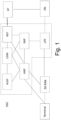
- FIG. 1 shows a schematic representation of a 5G system (5GS).
- the 5GS may comprise a terminal (UE), a 5G radio access network (5G RAN), a 5G core network (5GC), one or more application function (AF) and one or more data networks (DN).
- UE terminal
- 5G RAN 5G radio access network
- 5GC 5G core network
- AF application function
- DN data networks
- the 5G RAN may comprise one or more gNodeB (gNB) and/or distributed unit functions connected to one or more gNodeB (gNB) centralized unit functions.
- gNB gNodeB
- gNB gNodeB
- the 5GC may comprise an access and mobility management function (AMF), a session management function (SMF), an authentication server function (AUSF), a user data management (UDM), a user plane function (UPF) and/or a network exposure function (NEF).
- AMF access and mobility management function
- SMF session management function
- AUSF authentication server function
- UDM user data management
- UPF user plane function
- NEF network exposure function
- FIG 2 illustrates an example of a control apparatus 200 for controlling a function of the 5G RAN or 5GC as illustrated on Figure 1 .
- the control apparatus may comprise at least one random access memory (RAM) 211a, at least on read only memory (ROM) 211b, at least one processor 212, 213 and an input/output interface 214.
- the at least one processor 212, 213 may be coupled to the RAM 211a and the ROM 211b.
- the at least one processor 212, 213 may be configured to execute an appropriate software code 215.
- the software code 215 may for example allow to perform one or more steps to perform one or more of the present aspects.
- the software code 215 may be stored in the ROM 211b.
- the control apparatus 200 may be interconnected with another control apparatus 200 controlling another function the 5G RAN or 5GC.
- each function of the 5G RAN or 5GC comprises a control apparatus 200.
- two or more functions of the 5G RAN or 5GC may share a control apparatus.
- FIG 3 illustrates an example of a terminal 300, such as the terminal illustrated on Figure 1 .
- the terminal 300 may be provided by any device capable of sending and receiving radio signals.
- Non-limiting examples comprise a user equipment, a mobile station (MS) or mobile device such as a mobile phone or what is known as a 'smart phone', a computer provided with a wireless interface card or other wireless interface facility (e.g., USB dongle), a personal data assistant (PDA) or a tablet provided with wireless communication capabilities, a machine-type communications (MTC) device, an Internet of things (IoT) type communication device or any combinations of these or the like.
- the terminal 300 may provide, for example, communication of data for carrying communications.
- the communications may be one or more of voice, electronic mail (email), text message, multimedia, data, machine data and so on.
- the terminal 300 may receive signals over an air or radio interface 307 via appropriate apparatus for receiving and may transmit signals via appropriate apparatus for transmitting radio signals.
- transceiver apparatus is designated schematically by block 306.
- the transceiver apparatus 306 may be provided for example by means of a radio part and associated antenna arrangement.
- the antenna arrangement may be arranged internally or externally to the mobile device.
- the terminal 300 may be provided with at least one processor 301, at least one memory ROM 302a, at least one RAM 302b and other possible components 303 for use in software and hardware aided execution of tasks it is designed to perform, including control of access to and communications with access systems and other communication devices.
- the at least one processor 301 is coupled to the RAM 211a and the ROM 211b.
- the at least one processor 301 may be configured to execute an appropriate software code 308.
- the software code 308 may for example allow to perform one or more of the present aspects.
- the software code 308 may be stored in the ROM 211b.
- the processor, storage and other relevant control apparatus can be provided on an appropriate circuit board and/or in chipsets. This feature is denoted by reference 304.
- the device may optionally have a user interface such as key pad 305, touch sensitive screen or pad, combinations thereof or the like.
- a display, a speaker and a microphone may be provided depending on the type of the device.
- a UE in RRC_CONNECTED mode may encounter a radio link failure (RLF) when one or more criteria are met.
- RLF radio link failure
- these criteria may comprise an expiry of a timer started after indication of radio problems from a physical layer (if radio problems are recovered before the timer is expired, the UE stops the timer), a random access procedure failure or a radio link control (RLC) failure (see section 9.2.7).
- RLC radio link control
- a reason behind RLF may be radio level problems indicated by the physical layer.
- the UE may stay in RRC_CONNECTED mode and may attempt connection re-establishment with a neighbouring target cell In case such neighbouring target cell is not found or re-establishment fails, the UE may move to RRC_IDLE mode and the entire procedure of establishing the RRC connection may be initiated from the scratch.
- RRC re-establishment is random access procedure to the neighbouring target cell.
- CBRA legacy contention-based random access
- CFRA legacy contention free
- a random access procedure may be triggered by a number of events, for instance: initial access from RRC_IDLE mode , RRC Connection Re-establishment procedure, handover, downlink (DL) or uplink (UL) data arrival during RRC_CONNECTED mode when UL synchronisation status is "non-synchronised", transition from RRC_INACTIVE mode , to establish time alignment at secondary cell (SCell) addition, request for other system information (SI) or beam failure recovery (see section 9.2.6).
- initial access from RRC_IDLE mode RRC Connection Re-establishment procedure
- handover downlink (DL) or uplink (UL) data arrival during RRC_CONNECTED mode when UL synchronisation status is "non-synchronised", transition from RRC_INACTIVE mode , to establish time alignment at secondary cell (SCell) addition, request for other system information (SI) or beam failure recovery (see section 9.2.6).
- SI system information
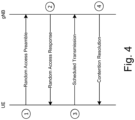
- Figure 4 shows a schematic representation of a signalling diagram of a legacy CBRA procedure.
- a UE may select a RACH preamble out of a configured set of RACH preambles.
- the UE may transmit the RACH preamble in one of a plurality of predetermined RACH occasions.
- a gNB may send a Random Access Response (RAR).
- RAR may be generated by Medium Access Control (MAC) layer.
- the RAR may provide at least one of a timing advance, initial UL grant to send a message 3 (Msg3) and an assignment of temporary Cell-Radio Network Temporary Identifier (C-RNTI).
- Msg3 initial UL grant to send a message 3
- C-RNTI temporary Cell-Radio Network Temporary Identifier
- the UE may send the Msg 3 to the gNB.
- the content for Msg3 may depends on whether the UE performs initial access (Msg 3 may comprise an RRCSetupRequest), RRC re-establishment (Msg 3 may comprise RRCReestablishment), handover (Msg 3 may comprise RRCReconfigurationComplete) or beam failure recovery (Msg 3 may comprise C-RNTI MAC CE) as per 3GPP TS 38.331 (Release 15).
- contention resolution may be performed in message 4 (Msg4).
- Msg4 message 4
- the UE may repeat the legacy CBRA procedure.
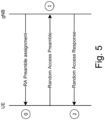
- Figure 5 shows a schematic representation of a signalling diagram of a legacy CFRA procedure.
- a gNB may configure a UE with a dedicated RACH preamble. This may be done with a handover Command.
- step 1 when performing the legacy CFRA procedure, the UE may transmit the dedicated RACH preamble in one of pre-configured RACH occasions.
- step 2 the legacy CFRA procedure may be completed when UE successfully receives the RAR.
- a two-step CBRA procedure is discussed for 3GPP NR (Release 16).
- the WI aims to specify the two-step CBRA procedure as general MAC procedure covering both physical layer and higher layer aspects.
- Two-step CBRA procedure may reduce the latency as compared to the legacy CBRA procedure (Release 15).
- the two-step CBRA procedure targets general random access procedure for different use cases in IDLE, INACTIVE as well as CONNECTED RRC modes. Hence, this approach may reduce the interruption time spent on random access procedure.
- the two-step CBRA procedure may condense the preamble and Msg3 from the legacy CBRA procedure into a message A (MsgA).
- MsgA may comprise a RACH preamble sent on a physical random access channel (PRACH) occasion and a payload sent on a physical uplink shared channel (PUSCH) occasion.
- PRACH physical random access channel
- PUSCH physical uplink shared channel
- RAR and Msg4 from legacy CBRA procedure may be condensed into a single message B (MsgB).
- MsgB message B
- the RACH preamble sent on the PRACH occasion and the payload sent on the PUSCH occasion may be associated together.
- Each RACH preamble may have a mapping in time and/or frequency to a respective PUSCH occasion.
- the payload sent on the PUSCH occasion may identify a UE (e.g. Temporary Mobile Subscriber Identity (TMSI)) and/or a reason for initiating the two-step CBRA procedure.
- TMSI Temporary Mobile Subscriber Identity
- the RACH preamble may be one of a configured set of known orthogonal sequences (e.g. Zadoff Chu).
- the RACH preamble may be easy to detect because of the orthogonality, even when it is transmitted without prior knowledge of a timing advance and/or a required power level.
- the payload when the payload is sent without prior knowledge of a timing advance or a required power level there may be a higher probability that it will not be decoded correctly by the gNB as compared to the RACH preamble. This may lead to a higher probability of delay in completing the two-step CBRA procedure as the UE may have to retry with higher power levels until the entire MsgA is finally decoded by the gNB.
- the two-step CFRA procedure may not differ much from the two-step CBRA procedure.
- a difference may be the fact that dedicated RACH preambles may be pre-assigned, before executing the two steps of the two-step CBRA procedure (similarly to the legacy CFRA procedure).
- One or more of aspects of this disclosure aim at accelerating the process of connection re-establishment upon RLF. Such optimization may be of utmost importance especially for the upcoming, highly-demanding services, such as Ultra Reliable Low Latency Communication (URLLC), Industrial IoT (IIoT), etc. where RLFs shall be primarily avoided and recovered immediately if occurred.
- URLLC Ultra Reliable Low Latency Communication
- IIoT Industrial IoT
- This enhancement may accelerate the neighbouring target cell selection step of re-establishment procedure but may not reduce the delay caused by the legacy CBRA procedure which is subject to collision and RACH preamble re-transmissions and requires four signaling messages between UE and neighbouring target cell before any user data exchange can be started.
- Another proposed re-establishment enhancement has been to configure a neighbouring target cell supporting the two-step CBRA procedure for a UE in RRC_IDLE mode or RRC_CONNECTED mode to perform the two-step CBRA procedure during RRC re-establishment.
- the UE performing RRC re-establishment may have to acquire the essential SI of the neighbouring target cell before performing the two-step CBRA procedure. This may however be expensive in terms of radio resources since enabling the two-step CBRA procedure for a UE in RRC_IDLE mode may require reserving permanently common PUSCH resources which may not be used when, for example, the UE in RRC_IDLE mode does not perform the two-step CBRA procedure.
- One or more of aspects of this disclosure propose to accelerate a random access procedure during RRC re-establishment by proactively providing UL grants/ configurations including:
- the PUSCH occasions, PRACH occasions and/or RACH preambles may comprise dedicated and/or shared PUSCH occasions, PRACH occasions and/or RACH preambles.
- the PUSCH occasions, PRACH occasions and/or RACH preambles may be for a selected class/group of UEs in RRC_CONNECTED mode (e.g. UEs requiring quick recovery).
- the PUSCH occasions, PRACH occasions and/or RACH preambles may be provided for a limited time duration. Namely, these PUSCH occasions, PRACH occasions and/or RACH preambles may be released by the network and/or the UEs implicitly after a timer expiry or upon the UEs successfully completing a handover or re-establishment procedure (more details can be found below).
- the UE may perform the RRC connection re-establishment procedure. This procedure may be executed faster if the UE can take advantage of PUSCH occasions, PRACH occasions and/or RACH preambles for accessing a neighbouring target cell chosen during the RRC connection re-establishment procedure.
- PUSCH occasions may refer to time and/or frequency resources on PUSCH (MsgA/PUSCH configuration) as discussed in 3GPP two-step RACH WI (description in RP-182894).
- MsgA/PUSCH configuration as discussed in 3GPP two-step RACH WI (description in RP-182894).
- the UE may attempt to use it immediately upon detecting the RLF (i.e. before/instead of initiating the re-establishment procedure as per legacy steps).
- the validity of a PUSCH occasions, PRACH occasions and/or RACH preambles may be time constrained and for example controlled by a timer. Upon timer expiry, the network and/or the UE may discard the PUSCH occasions, PRACH occasions and/or the RACH preambles. Afterwards, in case RLF occurs, the UE may follow a legacy behaviour, unless explicitly configured once again.
- the PUSCH occasions, PRACH occasions and/or RACH preambles may be released by the network and/or the UE once the UE successfully completes a handover from a serving cell to a neighbouring target cell and/or the UE re-establishes connection to a neighbouring target cell.
- PUSCH occasions and/or PRACH occasions may be periodic/ semi-persistent, for example in case a neighbouring cell is able to ensure such lavish resource reservation, with the high likelihood some or even all of those PUSCH occasions and/or PRACH occasions may be wasted. This may be acceptable for demanding services, requiring high-reliability and low latency at the expense of non-optimal resource utilization/assignment.
- PUSCH occasions, PRACH occasions and/or a RACH preambles may be specifically assigned to a single UE or shared among multiple UEs (i.e. the same PUSCH occasions, PRACH occasions and/or RACH preambles provided to multiple UEs). In case of the latter, additional indication may be provided by a neighbouring cell to a serving cell.
- the PUSCH occasions, PRACH occasions and/or RACH preambles are proactively provided to the UE, the UE may also be informed whether the PUSCH occasions, PRACH occasions and/or the RACH preambles are dedicated or shared (and the UE may expect other UEs to use the same PUSCH occasions, PRACH occasions and/or to send the same RACH preambles.
- RLF may be equivalent to T310 expiry as defined in 3GPP TS 38.331.
- PRACH occasions and/or a RACH preambles for a UE the underlying resource allocation at the neighbouring cell may not be released by the network based only on one UE successfully completing a handover or re-establishment, but may be kept for other UEs.
- Shared PUSCH occasions, PRACH occasions and/or a RACH preambles lend themselves also to not require timers and be semi-persistent.
- PUSCH occasions, PRACH occasions and/or RACH preambles may also be associated with a threshold specific to a reference signal (RS), such as a synchronization signal block (SSB). Only when measurements on this particular RS are above the threshold, the UE may use the proactively provided occasions, PRACH occasions and/or RACH preambles for a neighbouring cell.
- RS reference signal
- SSB synchronization signal block
- RACH preambles may be configured by the serving cell and may relate to a number of neighbouring cells.
- the RACH preambles may be used in particular for the neighbouring cells which do not support the access via the two-step CBRA procedure or the two-step CFRA procedure.
- the UE may check if for the same neighbouring cell it has a PUSCH occasions, PRACH occasions and/or RACH preambles.
- the neighbouring target cell selection may be done by the UE following a clearly defined order.
- RACH preambles may be provided for executing the two-step CFRA procedure.
- this disclosure does not propose to provision an entire SI blocks (common to all UEs and with other unnecessary elements), but to have the possibility to configure most demanding UEs (in terms of the QoS/reliability/latency requirements) with backup PUSCH occasions, PRACH occasions and/or RACH preambles for accelerating the re-establishment process, to be executed upon RLF.
- One or more aspects of this disclosure relate to inter-cell exchange of (periodic/semi-persistent or dynamic) PUSCH occasions and/or PRACH occasions over Xn interface.
- the inter-cell exchange may take place between one or more neighbouring cells and a serving cell. This may possibly impact 3GPP TS 38.423
- One or more aspects of this disclosure relate to providing an indication to a UE whether PUSCH occasions, PRACH occasions and/ or RACH preambles are exclusively assigned to the UE or shared with other UEs. This may impact 3GPP TS 38.331 and more particularly a PUSCH-Config information element. One-bit indication may be inserted into the PUSCH-Config information element to inform the UE if the same PUSCH occasions have been also reserved for any other UE.
- One or more aspects of this disclosure relate to proposing a new procedure for handling RLF in case proactive preparation from one or more neighbouring cells was done prior to RLF.
- This may impact 3GPP TS 38.331 and more particularly the procedure for RRC Connection Re-establishment (section 5.3.7) may be enhanced as follows 1> if the UE has been configured with proactiveULgrant for the neighbouringcell and concerned cell fulfils cell suitability criteria (as defined in TS 38.304) 2> initiate UL transmission of MsgA to selected cell applying the PUSCH-Config provided in proactive ULgrant from the last serving cell
- One or more aspects of this disclosure relate to configuring the network with a timer (e.g. T3xx) to control the validity of PUSCH occasions, PRACH occasions and/ or RACH preambles.
- the timer may either be initiated by each neighbouring cell when PUSCH occasions, PRACH occasions and/ or RACH preambles are provided/committed to the serving cell.
- the timer may be started only when the serving cell actually provides the PUSCH occasions, PRACH occasions and/ or RACH preambles to any concerned UE.
- the former may be associated with some uncertainty as each neighbouring cell may be guessing the original value of the timer, likely setting it to a sufficiently long original value. The latter would require some further inter-cell coordination, to inform the neighbouring cells when the timer has been actually started.
- the PUSCH occasions, PRACH occasions and/ or RACH preambles may be discarded by the UE and also not guaranteed by the network. Then, in case of RLF, the UE may follow a legacy re-establishment procedure.
- a serving cell is given certain freedom and flexibility by several neighbouring cells with respect to those committed/reserved PUSCH occasions, PRACH occasions and/ or RACH preambles.
- a subset of PUSCH occasions, PRACH occasions and/ or RACH preambles originating from the neighbouring cells may continuously be committed/reserved and provided to the serving cell for its arbitrary use.
- the serving cell may be aware of measurements reported by individual UEs, and knowing their QoS requirements, may be free to use the subset of PUSCH occasions, PRACH occasions and/ or RACH preambles proactively to configure those UEs.
- Those UEs may be at risk of RLF and/or may be most demanding UEs in terms of latency/reliability.
- the serving cell may not be given full flexibility but may be instructed a subset of PUSCH occasions, PRACH occasions and/ or RACH preambles that may be applied only for UEs with services from a list of allowed 5G QoS Indicators (5QIs).
- the PUSCH occasions, PRACH occasions and/ or RACH preambles may be released by default when the UEs successfully complete a handover from the serving cell to a neighbouring target cell or complete a re-establishment to the neighbouring target cell. In general, it may not be so that a single UE from this group recovers/re-establishes/completes the handover and the entire configuration (for a neighbouring cell and all UEs within this neighbouring cell) is gone/discarded.
- One or more aspects of this disclosure relate to a sequence of steps which a UE may prioritize in case it is provided with both PUSCH occasions for the two-step CBRA procedure or the two-step CFRA procedure with neighbouring cells and PRACH occasions and/or RACH preambles for the legacy CFRA procedure with neighbouring cells.
- the UE may prioritize the legacy CFRA procedure with neighbouring target cell over the two-step CBRA procedure and over the two-step CFRA procedure with neighbouring target cell, in case the legacy CFRA procedure, the two-step CBRA procedure and the two-step CFRA procedure are supported by neighbouring target cell and PUSCH occasions are not exclusive (i.e. the same is declared to have been assigned to other UEs as well).
- a UE may prioritize RACH preambles for the legacy CFRA procedure over PUSCH occasions for the two-step CBRA procedure and the two-step CFRA procedure when the PUSCH occasions are not exclusively assigned for this particular UE, but are shared with other UEs (e.g. as per the one-bit indication described above).
- the UE may be configured with a quality/signal level threshold specific to a RS, such as an SSB.
- the quality/signal level threshold specific may be applicable only to the two-step CBRA procedure and the two-step CFRA procedure or may be applicable to the two-step CBRA procedure, the two-step CFRA procedure and the legacy CFRA procedure.
- the UE may be configured so that when measurements exceed the threshold, the UE may be allowed to use the PUSCH occasions to perform the two-step CBRA procedure or the two-step CFRA procedure (e.g. over a particular 'beam'). Otherwise, the UE may fallback to the legacy CFRA procedure (if supported and if the same threshold, as considered above, does not apply here). Otherwise, UE may fallback to the legacy CBRA procedure.
- the second option may be combined to the first option.
- the UE may be configured with RACH preambles for two-step CFRA procedure. This may impact the decision process at the UE's side, which may prioritize the two-step CFRA procedure over the legacy CFRA procedure, provided a neighbouring target cell supports both.
- Figure 7 shows a schematic representation of a signalling diagram of a method of proactively preparing a random access procedure, wherein the random access procedure is performed during a handover or RRC re-establishment procedure.
- a serving gNB may send a request to a neighbouring target gNB1 for PUSCH occasions, PRACH occasions and/or RACH preambles over Xn.
- the serving gNB may send the request to the neighbouring target gNB1 for PUSCH occasions, PRACH occasions and/or RACH preambles after it detects that the UE experiences degraded performance (e.g. lack of ACK/NACK or based on measurement reports).
- the serving gNB may send the request to the neighbouring target gNB1 for PUSCH occasions, PRACH occasions and/or RACH preambles in advance, if the network is capable of committing to long-term reservations.
- the neighbouring target gNB1 may commit/reserve/ allocate PUSCH occasions, PRACH occasions and/or RACH preambles.
- the PUSCH occasions, PRACH occasions and/or RACH preambles may be shared or dedicated.
- the neighbouring target gNB1 may acknowledge the request and may send the PUSCH occasions, PRACH occasions and/or RACH preambles to the serving gNB over Xn.
- the serving gNB may send the PUSCH occasions, PRACH occasions and/or RACH preambles to a UE.
- the serving gNB may send a UE ID indicating which UE has been configured with the PUSCH occasions, PRACH occasions and/or RACH preambles.
- the UE and/or the serving gNB may detect a RLF (e.g. upon expiry of a timer).
- the UE may select a random access procedure among the two-step CFRA procedure, the two-step CBRA procedure and the legacy CFRA procedure based on the PUSCH occasions, PRACH occasions and/or RACH preambles and/or whether the UE and the neighbouring target gNB1 support the two-step CFRA procedure, the two-step CBRA procedure and the legacy CFRA procedure.
- the UE may perform the selected random access procedure with the neighbouring target gNB1 as part of a RRC connection re-establishment procedure.
- the UE may complete the RRC connection re-establishment procedure.
- Figure 8 shows a schematic representation of a signalling diagram of a method of proactively preparing a random access procedure, wherein the random access procedure is performed during a handover or RRC connection re-establishment procedure and wherein a resource used during the random access procedure is released after the re-establishment procedure is completed or a timer expires.
- a serving gNB may send a request to a. neighbouring target gNB1 for PUSCH occasions, PRACH occasions and/or RACH preambles over Xn.
- the serving gNB may send the request to the neighbouring target gNB1 for PUSCH occasions, PRACH occasions and/or RACH preambles after it detects that the UE(s) experience degraded performance (e.g. lack of ACK/NACK or based on measurement reports).
- the serving gNB may send the request to the neighbouring target gNB1 for PUSCH occasions, PRACH occasions and/or RACH preambles in advance, if the network is capable of committing to long-term reservations.
- the neighbouring target gNB1 may commit/reserve/allocate PUSCH occasions, PRACH occasions and/or RACH preambles.
- the PUSCH occasions, PRACH occasions and/or RACH preambles may be shared or dedicated.
- the release (by the neighbouring target gNB1) in subsequent step 814 may be conditional to other UEs no longer being expected to use the resource.
- the neighbouring target gNB1 may acknowledge the request and may send the PUSCH occasions, PRACH occasions and/or RACH preambles to the serving gNB over Xn.
- the neighbouring target gNB1 and/or the serving gNB may trigger a timer (e.g. Txx).
- the serving gNB may send the PUSCH occasions, PRACH occasions and/or RACH preambles to a UE.
- The. serving gNB may send an indication indicating whether there are other UEs configured with the same PUSCH occasions, PRACH occasions and/or RACH preambles and possibly how many of these other UEs.
- the UE and/or the serving gNB may detect an RLF (e.g. upon expiry of a timer) and may initiate an RRC connection re-establishment procedure with the neighbouring target gNB1.
- the UE may select a random access procedure among the two-step CFRA procedure, the two-step CBRA procedure and the legacy CFRA procedure based on the PUSCH occasions, PRACH occasions and/or RACH preambles and/or whether the UE and the neighbouring target gNB1 support the two-step CFRA procedure, the two-step CBRA procedure and the legacy CFRA procedure.
- the UE may perform the selected random access procedure with the neighbouring target gNB1) as part of the RRC connection re-establishment procedure.
- the UE may complete the handover or RRC connection re-establishment procedure before the timer (e.g. Txx) expires.
- The. neighbouring target gNB1 may release the PUSCH occasions, PRACH occasions and/or RACH preambles.
- the serving gNB or neighbouring target gNB1 may instruct the UE that the PUSCH occasions, PRACH occasions and/or RACH preambles are no longer available for its use.
- the UE may not complete the handover or RRC connection re-establishment procedure before the timer (e.g. Txx) expires.
- the neighbouring target gNB1 may release the PUSCH occasions, PRACH occasions and/or RACH preambles.
- the serving gNB or neighbouring target gNB1 may instruct the UE that the PUSCH occasions, PRACH occasions and/or RACH preambles are no longer available for its use.
- Figure 8 shows how the associated timer controlling the validity PUSCH UL grants/configurations and/or RACH preambles is operated.
- the timer (e.g. Txx) may alternatively be started when PUSCH occasions, PRACH occasions and/or RACH preambles are committed/ reserved by the neighbouring target gNB1 or when PUSCH UL grants/configurations and/or RACH preambles are actually provided to the UE.
- the serving gNB may inform the neighbouring target gNB1 over Xn when PUSCH occasions, PRACH occasions and/or RACH preambles were provided to the UE.
- the timer e.g. regardless of whether the timer (e.g.
- PUSCH occasions, PRACH occasions and/or RACH preambles may be released when the UE completes handover or re-establishment.
- the release (by the target node) may be conditional to other UEs no longer needing the resource.
- Figure 9 shows a schematic representation of a block diagram of a method of proactively preparing a random access procedure performed by a serving cell.
- the serving cell may receive at least one resource to perform at least one random access procedure with a neighbouring cell, prior to a radio link failure between the serving cell and a terminal. This step may be mapped to step 706 of Figure 7 and step 806 of Figure 8 .
- the at least one random access procedure may comprise at least one of (i) a two-step CBRA procedure, (ii) a two-step CFRA procedure or (iii) a legacy CFRA procedure.
- the at least one resource may comprise PUSCH occasions, PRACH occasions and/or RACH preambles.
- the at least one resource may comprise a dedicated resource or a shared resource.
- the PRACH occasion the PUSCH occasion do not need to be adjacent in time or frequency, but they may be logically linked.
- the PRACH occasion indicates the time and frequency where RACH preambles may be sent.
- the at least one resource may be associated with a threshold specific to a RS, such as an SSB.
- the at least one resource may be valid for a limited duration.
- the limited duration may be determined by a timer (e.g. Txx) or by a completion of a handover or a re-establishment procedure by the terminal.
- the at least one resource may be valid for an unlimited duration.
- the terminal may meet at least one of a quality of service requirement, a reliability requirement or a latency requirement to be selected for proactive preparation.
- the serving cell may detect the radio link failure between the serving cell and the terminal. This step may be mapped to step 710 of Figure 7 and step 810 of Figure 8 .
- Figure 10 shows a schematic representation of a block diagram of a method of proactively preparing a random access procedure performed by a terminal (e.g. UE).
- a terminal e.g. UE
- the terminal e.g. UE
- the terminal may receive an indication indicating at least one resource to perform at least one random access procedure with a neighbouring cell from a serving cell, prior to a radio link failure between the serving cell and the terminal (e.g. UE).
- This step may be mapped to step 708 of Figure 7 and step 808 of Figure 8 .
- the at least one random access procedure may comprise at least one of (i) a two-step CBRA procedure, (ii) a two-step CFRA procedure or (iii) a legacy CFRA procedure.
- the at least one resource may comprise PUSCH occasions, PRACH occasions and/or RACH preambles.
- the at least one resource may comprise a dedicated resource or a shared resource.
- the at least one resource may be associated with a threshold specific to a RS, such as an SSB.
- the at least one resource may be valid for a limited duration.
- the limited duration may be determined by a timer (e.g. Txx).
- the timer may be predetermined in the standard or determined by the neighbouring cell.
- the timer may be stopped by a completion of a handover or a re-establishment procedure by the terminal.
- the at least one resource may be valid for an unlimited duration or until a new configuration is issued to a terminal.
- the terminal may meet at least one of a quality of service requirement, a reliability requirement or a latency requirement to be selected for proactive preparation.
- the terminal e.g. UE
- the terminal may detect the radio link failure between the serving cell and the terminal. This step may be mapped to step 710 of Figure 7 and step 810 of Figure 8 .
- the terminal e.g. UE
- the terminal may use one of the at least one resource to perform one of the at least one random access procedure with the neighbouring cell. This step may be mapped to step 712 of Figure 7 and step 812 of Figure 8 .
- the terminal may use a RACH preamble to perform (iii) a legacy (i.e. aligned with 3GPP Rel-15 specification) contention free random access channel procedure, when the at least one resource comprises: a shared PUSCH occasion to perform (i) a two-step contention based random access channel procedure or (ii) a two-step contention free random access procedure; and the RACH preamble to perform (iii) the legacy CFRA procedure.
- a legacy i.e. aligned with 3GPP Rel-15 specification
- the terminal may use a PUSCH occasion and/or a PRACH occasion to perform (i) a two-step CBRA procedure or (ii) a two-step CFRA procedure, when the at least one resource t comprises the PUSCH occasion and/or PRACH occasion to perform (i) the two-step CBRA procedure or (ii) the two-step CFRA procedure; and when the threshold specific to a RS, such as SSB, is met.
- a RS such as SSB
- the terminal may use a PRACH occasion and/or RACH preamble to perform (iii) a legacy CFRA procedure, when the at least one resource comprises the PRACH occasion and/or the RACH preamble to perform (iii) the legacy CFRA procedure; and when the threshold specific to the RS, such as SSB, is not met.
- a legacy CFRA procedure when the at least one resource comprises the PRACH occasion and/or the RACH preamble to perform (iii) the legacy CFRA procedure; and when the threshold specific to the RS, such as SSB, is not met.
- the terminal may perform (iv) a legacy CBRA procedure, when the at least one resource does not comprise the PRACH occasion and/or the RACH preamble to perform (iii) the legacy CFRA procedure; and when the threshold specific to the RS, such as SSB, is not met.
- Figure 11 shows a schematic representation of non-volatile memory media 1100a (e.g. computer disc (CD) or digital versatile disc (DVD) and 1100b (e.g. universal serial bus (USB) memory stick) storing instructions and/or parameters 1102 which when executed by a processor allow the processor to perform one or more of the steps of the above methods.
- non-volatile memory media 1100a e.g. computer disc (CD) or digital versatile disc (DVD)
- 1100b e.g. universal serial bus (USB) memory stick
- some embodiments may be implemented in hardware or special purpose circuits, software, logic or any combination thereof.
- some aspects may be implemented in hardware, while other aspects may be implemented in firmware or software which may be executed by a controller, microprocessor or other computing device, although embodiments are not limited thereto.
- firmware or software which may be executed by a controller, microprocessor or other computing device, although embodiments are not limited thereto. While various embodiments may be illustrated and described as block diagrams, flow charts, or using some other pictorial representation, it is well understood that these blocks, apparatus, systems, techniques or methods described herein may be implemented in, as non-limiting examples, hardware, software, firmware, special purpose circuits or logic, general purpose hardware or controller or other computing devices, or some combination thereof.
- the embodiments may be implemented by computer software stored in a memory and executable by at least one data processor of the involved entities or by hardware, or by a combination of software and hardware. Further in this regard it should be noted that any of the above procedures may represent program steps, or interconnected logic circuits, blocks and functions, or a combination of program steps and logic circuits, blocks and functions.
- the software may be stored on such physical media as memory chips, or memory blocks implemented within the processor, magnetic media such as hard disk or floppy disks, and optical media such as for example DVD and the data variants thereof, CD.
- the memory may be of any type suitable to the local technical environment and may be implemented using any suitable data storage technology, such as semiconductor-based memory devices, magnetic memory devices and systems, optical memory devices and systems, fixed memory and removable memory.
- the data processors may be of any type suitable to the local technical environment, and may include one or more of general purpose computers, special purpose computers, microprocessors, digital signal processors (DSPs), application specific integrated circuits (ASIC), gate level circuits and processors based on multi-core processor architecture, as non-limiting examples.
- circuitry may be configured to perform one or more of the functions and/or method steps previously described. That circuitry may be provided in the base station and/or in the communications device.
- circuitry may refer to one or more or all of the following:
- circuitry also covers an implementation of merely a hardware circuit or processor (or multiple processors) or portion of a hardware circuit or processor and its (or their) accompanying software and/or firmware.
- circuitry also covers, for example integrated device.
Landscapes
- Engineering & Computer Science (AREA)
- Computer Networks & Wireless Communication (AREA)
- Signal Processing (AREA)
- Mobile Radio Communication Systems (AREA)
Claims (15)
- Appareil (200) comprenant :au moins un processeur ; etau moins une mémoire comportant un code de programme informatique ;l'au moins une mémoire et le code de programme informatique étant configurés pour, avec l'au moins un processeur, amener l'appareil à au moins :avant une défaillance de liaison radio entre une cellule de desserte et un terminal (300), fournir de manière proactive (808) au terminal (300) une indication d'au moins une ressource pour réaliser au moins une procédure d'accès aléatoire avec une cellule voisine ; etavant une défaillance de liaison radio entre la cellule de desserte et le terminal, fournir (808) au terminal (300) une indication précisant s'il existe d'autres terminaux configurés avec la même au moins une ressource pour réaliser l'au moins une procédure d'accès aléatoire, dans lequel l'au moins une ressource pour réaliser l'au moins une procédure d'accès aléatoire comprend une ressource dédiée ou une ressource partagée.
- Appareil (200) selon la revendication 1, dans lequel l'au moins une procédure d'accès aléatoire comprend au moins une parmi (i) une procédure d'accès aléatoire en deux étapes basée sur la contention, (ii) une procédure d'accès aléatoire en deux étapes sans contention, ou (iii) une procédure d'accès aléatoire héritée sans contention.
- Appareil (200) selon l'une des revendications 1 ou 2, dans lequel l'au moins une ressource comprend au moins un parmi une occasion de canal physique partagé de liaison montante, une occasion de canal physique d'accès aléatoire ou un préambule de canal d'accès aléatoire.
- Appareil (200) selon la revendication 3, dans lequel l'occasion de canal physique partagé de liaison montante est logiquement liée à l'occasion de canal physique d'accès aléatoire et/ou au préambule de canal d'accès aléatoire.
- Appareil (200) selon la revendication 1, dans lequel l'au moins une mémoire et le code de programme informatique sont configurés pour, avec l'au moins un processeur, amener l'appareil à au moins :
avant une défaillance de liaison radio entre la cellule de desserte et le terminal, fournir de manière proactive une indication précisant si l'au moins une ressource pour réaliser l'au moins une procédure d'accès aléatoire comprend une ressource dédiée ou une ressource partagée de la cellule voisine. - Appareil (200) selon l'une des revendications 1 à 5, dans lequel l'au moins une ressource pour réaliser l'au moins une procédure d'accès aléatoire est associée à un seuil spécifique à un signal de référence, tel qu'un bloc de signal de synchronisation.
- Appareil (300) comprenant :au moins un processeur ; etau moins une mémoire comportant un code de programme informatique ;l'au moins une mémoire et le code de programme informatique étant configurés pour, avec l'au moins un processeur, amener l'appareil à au moins :avant une défaillance de liaison radio entre une cellule de desserte et un terminal, recevoir (808), de la cellule de desserte, au moins une indication d'au moins une ressource pour réaliser au moins une procédure d'accès aléatoire avec une cellule voisine ; etavant une défaillance de liaison radio entre la cellule de desserte et le terminal, recevoir (808) une indication précisant s'il existe d'autres terminaux configurés avec la même au moins une ressource pour réaliser l'au moins une procédure d'accès aléatoire, dans lequel l'au moins une ressource pour réaliser l'au moins une procédure d'accès aléatoire comprend une ressource dédiée ou une ressource partagée.
- Appareil (300) selon la revendication 7, dans lequel l'au moins une procédure d'accès aléatoire comprend au moins une parmi (i) une procédure d'accès aléatoire en deux étapes basée sur la contention, (ii) une procédure d'accès aléatoire en deux étapes sans contention ou (iii) une procédure d'accès aléatoire héritée sans contention.
- Appareil (300) selon la revendication 8, dans lequel l'au moins une ressource comprend au moins un parmi une occasion de canal physique partagé de liaison montante, une occasion de canal physique d'accès aléatoire ou un préambule de canal d'accès aléatoire.
- Appareil (300) selon la revendication 9, dans lequel l'occasion de canal physique partagé de liaison montante est logiquement liée à l'occasion de canal physique d'accès aléatoire et au préambule de canal d'accès aléatoire.
- Appareil (300) selon l'une des revendications 7 à 10, dans lequel l'au moins une ressource pour réaliser l'au moins une procédure d'accès aléatoire est associée à un seuil spécifique à un signal de référence, tel qu'un bloc de signal de synchronisation.
- Appareil (300) selon l'une des revendications 7 à 10, dans lequel l'au moins une mémoire et le code de programme informatique sont configurés pour, avec l'au moins un processeur, amener l'appareil à au moins :
utiliser une de la ou des ressources pour réaliser une de la ou des procédures d'accès aléatoire avec la cellule voisine. - Procédé comprenant :avant une défaillance de liaison radio entre une cellule de desserte et un terminal (300), fournir de manière proactive (902), par la cellule de desserte au terminal (300), une indication d'au moins une ressource pour réaliser au moins une procédure d'accès aléatoire avec une cellule voisine ; etavant une défaillance de liaison radio entre la cellule de desserte et le terminal (300), fournir, par la cellule de desserte au terminal (300), une indication précisant s'il existe d'autres terminaux configurés avec la même au moins une ressource pour réaliser l'au moins une procédure d'accès aléatoire, dans lequel l'au moins une ressource pour réaliser l'au moins une procédure d'accès aléatoire comprend une ressource dédiée ou une ressource partagée.
- Procédé comprenant :avant une défaillance de liaison radio entre une cellule de desserte et un terminal (300), recevoir (1000), par le terminal (300) de la cellule de desserte, au moins une indication d'une ressource pour réaliser au moins une procédure d'accès aléatoire avec une cellule voisine ; etavant une défaillance de liaison radio entre la cellule de desserte et le terminal (300), recevoir, par le terminal (300) de la cellule de desserte, une indication précisant s'il existe d'autres terminaux configurés avec la même au moins une ressource pour réaliser l'au moins une procédure d'accès aléatoire, dans lequel l'au moins une ressource pour réaliser l'au moins une procédure d'accès aléatoire comprend une ressource dédiée ou une ressource partagée.
- Programme informatique comprenant des instructions exécutables par ordinateur qui, lorsqu'elles sont exécutées sur un ou plusieurs processeurs, réalisent les étapes de l'un des procédés des revendications 13 et 14.
Priority Applications (1)
| Application Number | Priority Date | Filing Date | Title |
|---|---|---|---|
| EP24192604.7A EP4456606B1 (fr) | 2019-08-14 | 2019-08-14 | Équipment utilisateur et appareil |
Applications Claiming Priority (1)
| Application Number | Priority Date | Filing Date | Title |
|---|---|---|---|
| PCT/EP2019/071781 WO2021028031A1 (fr) | 2019-08-14 | 2019-08-14 | Appareil, procédé, et programme informatique |
Related Child Applications (2)
| Application Number | Title | Priority Date | Filing Date |
|---|---|---|---|
| EP24192604.7A Division EP4456606B1 (fr) | 2019-08-14 | 2019-08-14 | Équipment utilisateur et appareil |
| EP24192604.7A Division-Into EP4456606B1 (fr) | 2019-08-14 | 2019-08-14 | Équipment utilisateur et appareil |
Publications (2)
| Publication Number | Publication Date |
|---|---|
| EP4014542A1 EP4014542A1 (fr) | 2022-06-22 |
| EP4014542B1 true EP4014542B1 (fr) | 2024-09-11 |
Family
ID=67660544
Family Applications (2)
| Application Number | Title | Priority Date | Filing Date |
|---|---|---|---|
| EP19755584.0A Active EP4014542B1 (fr) | 2019-08-14 | 2019-08-14 | Appareil, procédé, et programme informatique |
| EP24192604.7A Active EP4456606B1 (fr) | 2019-08-14 | 2019-08-14 | Équipment utilisateur et appareil |
Family Applications After (1)
| Application Number | Title | Priority Date | Filing Date |
|---|---|---|---|
| EP24192604.7A Active EP4456606B1 (fr) | 2019-08-14 | 2019-08-14 | Équipment utilisateur et appareil |
Country Status (4)
| Country | Link |
|---|---|
| US (1) | US20220279398A1 (fr) |
| EP (2) | EP4014542B1 (fr) |
| CN (2) | CN118945879A (fr) |
| WO (1) | WO2021028031A1 (fr) |
Families Citing this family (5)
| Publication number | Priority date | Publication date | Assignee | Title |
|---|---|---|---|---|
| US12137482B2 (en) * | 2019-09-30 | 2024-11-05 | Ntt Docomo, Inc. | User equipment and communication method |
| WO2021125627A1 (fr) * | 2019-12-16 | 2021-06-24 | Samsung Electronics Co., Ltd. | Procédé et appareil pour libérer des ressources de pusch allouées pour un accès aléatoire dans un système de communication sans fil |
| CN120186795A (zh) * | 2020-02-12 | 2025-06-20 | 三星电子株式会社 | 用于无线通信系统中的随机接入过程的方法和装置 |
| WO2022183383A1 (fr) * | 2021-03-02 | 2022-09-09 | Oppo广东移动通信有限公司 | Procédé de détermination d'une ressource d'accès aléatoire, ainsi que dispositif électronique et support de stockage |
| GB2641776A (en) * | 2024-06-12 | 2025-12-17 | Nokia Technologies Oy | Method, apparatus and computer program |
Family Cites Families (13)
| Publication number | Priority date | Publication date | Assignee | Title |
|---|---|---|---|---|
| TW200642503A (en) * | 2005-03-03 | 2006-12-01 | Nokia Corp | A method to handover dedicated and shared resources while in dual transfer mode |
| CN101064943B (zh) * | 2006-04-30 | 2010-05-12 | 中兴通讯股份有限公司 | 移动通讯系统基站间上行随机信道或共享信道的切换方法 |
| FR2947137B1 (fr) * | 2009-06-18 | 2012-04-13 | St Ericsson Sa | Controle de qualite pour transfert intercellulaire |
| CN103548386A (zh) * | 2011-05-20 | 2014-01-29 | 诺基亚公司 | 预配置的重定向信息 |
| EP2833669B1 (fr) * | 2013-07-31 | 2022-06-22 | Panasonic Intellectual Property Corporation of America | Procédure de transfert dans un système de communication mobile |
| CN104349380B (zh) * | 2013-08-08 | 2018-12-04 | 中兴通讯股份有限公司 | 信息交互、分流处理方法、装置、基站、rnc及终端 |
| CN106793148B (zh) * | 2015-11-20 | 2021-11-30 | 中兴通讯股份有限公司 | 随机接入的方法及装置 |
| KR102397351B1 (ko) * | 2016-06-15 | 2022-05-13 | 콘비다 와이어리스, 엘엘씨 | 차세대 네트워크들에서의 랜덤 액세스 절차들 |
| US11057935B2 (en) * | 2017-03-22 | 2021-07-06 | Comcast Cable Communications, Llc | Random access process in new radio |
| CN108633101B (zh) * | 2017-03-24 | 2021-01-12 | 华为技术有限公司 | 一种通信方法及装置 |
| CN109392061B (zh) * | 2017-08-11 | 2022-08-09 | 中兴通讯股份有限公司 | 一种数据传输方法及装置、计算机可读存储介质 |
| US11723063B2 (en) * | 2017-08-11 | 2023-08-08 | Qualcomm Incorporated | Different configurations for message content and transmission in a random access procedure |
| CN118200998A (zh) * | 2018-04-03 | 2024-06-14 | 交互数字专利控股公司 | 用于无线系统中增强的移动性的方法 |
-
2019
- 2019-08-14 US US17/634,594 patent/US20220279398A1/en active Pending
- 2019-08-14 EP EP19755584.0A patent/EP4014542B1/fr active Active
- 2019-08-14 CN CN202411065535.7A patent/CN118945879A/zh active Pending
- 2019-08-14 EP EP24192604.7A patent/EP4456606B1/fr active Active
- 2019-08-14 CN CN201980101265.1A patent/CN114514775B/zh active Active
- 2019-08-14 WO PCT/EP2019/071781 patent/WO2021028031A1/fr not_active Ceased
Also Published As
| Publication number | Publication date |
|---|---|
| EP4014542A1 (fr) | 2022-06-22 |
| EP4456606C0 (fr) | 2025-12-31 |
| CN114514775B (zh) | 2024-07-12 |
| US20220279398A1 (en) | 2022-09-01 |
| EP4456606A3 (fr) | 2024-11-06 |
| EP4456606A2 (fr) | 2024-10-30 |
| EP4456606B1 (fr) | 2025-12-31 |
| WO2021028031A1 (fr) | 2021-02-18 |
| CN118945879A (zh) | 2024-11-12 |
| CN114514775A (zh) | 2022-05-17 |
Similar Documents
| Publication | Publication Date | Title |
|---|---|---|
| EP4456606B1 (fr) | Équipment utilisateur et appareil | |
| CN110945957B (zh) | 执行随机接入过程的方法和装置 | |
| US11564255B2 (en) | Method and apparatus for processing LBT monitoring failures and system | |
| EP2086253B1 (fr) | Procédé et appareil pour la récupération suite à un échec de lien radio dans un réseau de communications sans fil | |
| US8406180B2 (en) | Method of performing random access procedure in wireless communication system | |
| KR101151143B1 (ko) | 무선통신 시스템에서 랜덤 액세스 수행 방법 | |
| EP3668190A1 (fr) | Procédé et appareil de transmission de données, et support de stockage lisible par ordinateur | |
| US20190104555A1 (en) | Random Access Method and Related Apparatus | |
| CN117528824B (zh) | 无线网络中的小数据传输的方法、设备和系统 | |
| JP2008252889A (ja) | 無線通信システムにおいてランダムアクセスプロセスを処理する方法及び装置 | |
| CN106664700A (zh) | 对于副链路通信中的模式切换的延迟减少 | |
| JP2011083021A (ja) | 無線通信システムにおいてランダムアクセスプロセスを処理する方法及び装置 | |
| US20240080699A1 (en) | Sdt failure reporting method, terminal device, and network device | |
| CN101742724A (zh) | 使用于移动装置和基站的方法及其移动装置和基站 | |
| US20240214862A1 (en) | Method, device and computer storage medium of communication | |
| CN101478778A (zh) | 一种蜂窝通讯系统随机接入方法及其参数传递的方法 | |
| HK40116763A (en) | Apparatus, method, and computer program | |
| CN115088337B (zh) | 报告上行链路先听后说失败 | |
| US20240334497A1 (en) | Enhanced contention-free random access (cfra) preamble assignment | |
| JP2025505463A (ja) | 端末装置および端末装置により実行される方法 | |
| WO2020252633A1 (fr) | Procédé, dispositif, et système de temporisation destinés à un préambule d'accès aléatoire | |
| WO2025188475A1 (fr) | Signalisation dans un achèvement de ltm sans rach réussi | |
| WO2025060953A1 (fr) | Procédé et appareil d'envoi d'informations, procédé et appareil de réception d'informations, terminal, et dispositif côté réseau |
Legal Events
| Date | Code | Title | Description |
|---|---|---|---|
| STAA | Information on the status of an ep patent application or granted ep patent |
Free format text: STATUS: UNKNOWN |
|
| STAA | Information on the status of an ep patent application or granted ep patent |
Free format text: STATUS: THE INTERNATIONAL PUBLICATION HAS BEEN MADE |
|
| PUAI | Public reference made under article 153(3) epc to a published international application that has entered the european phase |
Free format text: ORIGINAL CODE: 0009012 |
|
| STAA | Information on the status of an ep patent application or granted ep patent |
Free format text: STATUS: REQUEST FOR EXAMINATION WAS MADE |
|
| 17P | Request for examination filed |
Effective date: 20220314 |
|
| AK | Designated contracting states |
Kind code of ref document: A1 Designated state(s): AL AT BE BG CH CY CZ DE DK EE ES FI FR GB GR HR HU IE IS IT LI LT LU LV MC MK MT NL NO PL PT RO RS SE SI SK SM TR |
|
| DAV | Request for validation of the european patent (deleted) | ||
| DAX | Request for extension of the european patent (deleted) | ||
| RIC1 | Information provided on ipc code assigned before grant |
Ipc: H04W 36/30 20090101ALN20230602BHEP Ipc: H04W 36/00 20090101AFI20230602BHEP |
|
| GRAP | Despatch of communication of intention to grant a patent |
Free format text: ORIGINAL CODE: EPIDOSNIGR1 |
|
| RIC1 | Information provided on ipc code assigned before grant |
Ipc: H04W 36/30 20090101ALN20230609BHEP Ipc: H04W 36/00 20090101AFI20230609BHEP |
|
| STAA | Information on the status of an ep patent application or granted ep patent |
Free format text: STATUS: GRANT OF PATENT IS INTENDED |
|
| INTG | Intention to grant announced |
Effective date: 20230720 |
|
| GRAJ | Information related to disapproval of communication of intention to grant by the applicant or resumption of examination proceedings by the epo deleted |
Free format text: ORIGINAL CODE: EPIDOSDIGR1 |
|
| STAA | Information on the status of an ep patent application or granted ep patent |
Free format text: STATUS: REQUEST FOR EXAMINATION WAS MADE |
|
| STAA | Information on the status of an ep patent application or granted ep patent |
Free format text: STATUS: EXAMINATION IS IN PROGRESS |
|
| INTC | Intention to grant announced (deleted) | ||
| 17Q | First examination report despatched |
Effective date: 20231129 |
|
| GRAP | Despatch of communication of intention to grant a patent |
Free format text: ORIGINAL CODE: EPIDOSNIGR1 |
|
| STAA | Information on the status of an ep patent application or granted ep patent |
Free format text: STATUS: GRANT OF PATENT IS INTENDED |
|
| RIC1 | Information provided on ipc code assigned before grant |
Ipc: H04W 36/30 20090101ALN20240326BHEP Ipc: H04W 36/00 20090101AFI20240326BHEP |
|
| INTG | Intention to grant announced |
Effective date: 20240412 |
|
| GRAS | Grant fee paid |
Free format text: ORIGINAL CODE: EPIDOSNIGR3 |
|
| GRAA | (expected) grant |
Free format text: ORIGINAL CODE: 0009210 |
|
| STAA | Information on the status of an ep patent application or granted ep patent |
Free format text: STATUS: THE PATENT HAS BEEN GRANTED |
|
| AK | Designated contracting states |
Kind code of ref document: B1 Designated state(s): AL AT BE BG CH CY CZ DE DK EE ES FI FR GB GR HR HU IE IS IT LI LT LU LV MC MK MT NL NO PL PT RO RS SE SI SK SM TR |
|
| REG | Reference to a national code |
Ref country code: GB Ref legal event code: FG4D |
|
| REG | Reference to a national code |
Ref country code: CH Ref legal event code: EP |
|
| REG | Reference to a national code |
Ref country code: DE Ref legal event code: R096 Ref document number: 602019058719 Country of ref document: DE |
|
| REG | Reference to a national code |
Ref country code: IE Ref legal event code: FG4D |
|
| REG | Reference to a national code |
Ref country code: LT Ref legal event code: MG9D |
|
| PG25 | Lapsed in a contracting state [announced via postgrant information from national office to epo] |
Ref country code: NO Free format text: LAPSE BECAUSE OF FAILURE TO SUBMIT A TRANSLATION OF THE DESCRIPTION OR TO PAY THE FEE WITHIN THE PRESCRIBED TIME-LIMIT Effective date: 20241211 |
|
| REG | Reference to a national code |
Ref country code: NL Ref legal event code: MP Effective date: 20240911 |
|
| PG25 | Lapsed in a contracting state [announced via postgrant information from national office to epo] |
Ref country code: GR Free format text: LAPSE BECAUSE OF FAILURE TO SUBMIT A TRANSLATION OF THE DESCRIPTION OR TO PAY THE FEE WITHIN THE PRESCRIBED TIME-LIMIT Effective date: 20241212 Ref country code: FI Free format text: LAPSE BECAUSE OF FAILURE TO SUBMIT A TRANSLATION OF THE DESCRIPTION OR TO PAY THE FEE WITHIN THE PRESCRIBED TIME-LIMIT Effective date: 20240911 |
|
| PG25 | Lapsed in a contracting state [announced via postgrant information from national office to epo] |
Ref country code: BG Free format text: LAPSE BECAUSE OF FAILURE TO SUBMIT A TRANSLATION OF THE DESCRIPTION OR TO PAY THE FEE WITHIN THE PRESCRIBED TIME-LIMIT Effective date: 20240911 |
|
| PG25 | Lapsed in a contracting state [announced via postgrant information from national office to epo] |
Ref country code: LV Free format text: LAPSE BECAUSE OF FAILURE TO SUBMIT A TRANSLATION OF THE DESCRIPTION OR TO PAY THE FEE WITHIN THE PRESCRIBED TIME-LIMIT Effective date: 20240911 |
|
| PG25 | Lapsed in a contracting state [announced via postgrant information from national office to epo] |
Ref country code: HR Free format text: LAPSE BECAUSE OF FAILURE TO SUBMIT A TRANSLATION OF THE DESCRIPTION OR TO PAY THE FEE WITHIN THE PRESCRIBED TIME-LIMIT Effective date: 20240911 |
|
| PG25 | Lapsed in a contracting state [announced via postgrant information from national office to epo] |
Ref country code: RS Free format text: LAPSE BECAUSE OF FAILURE TO SUBMIT A TRANSLATION OF THE DESCRIPTION OR TO PAY THE FEE WITHIN THE PRESCRIBED TIME-LIMIT Effective date: 20241211 Ref country code: ES Free format text: LAPSE BECAUSE OF FAILURE TO SUBMIT A TRANSLATION OF THE DESCRIPTION OR TO PAY THE FEE WITHIN THE PRESCRIBED TIME-LIMIT Effective date: 20240911 |
|
| PG25 | Lapsed in a contracting state [announced via postgrant information from national office to epo] |
Ref country code: RS Free format text: LAPSE BECAUSE OF FAILURE TO SUBMIT A TRANSLATION OF THE DESCRIPTION OR TO PAY THE FEE WITHIN THE PRESCRIBED TIME-LIMIT Effective date: 20241211 Ref country code: NO Free format text: LAPSE BECAUSE OF FAILURE TO SUBMIT A TRANSLATION OF THE DESCRIPTION OR TO PAY THE FEE WITHIN THE PRESCRIBED TIME-LIMIT Effective date: 20241211 Ref country code: LV Free format text: LAPSE BECAUSE OF FAILURE TO SUBMIT A TRANSLATION OF THE DESCRIPTION OR TO PAY THE FEE WITHIN THE PRESCRIBED TIME-LIMIT Effective date: 20240911 Ref country code: HR Free format text: LAPSE BECAUSE OF FAILURE TO SUBMIT A TRANSLATION OF THE DESCRIPTION OR TO PAY THE FEE WITHIN THE PRESCRIBED TIME-LIMIT Effective date: 20240911 Ref country code: GR Free format text: LAPSE BECAUSE OF FAILURE TO SUBMIT A TRANSLATION OF THE DESCRIPTION OR TO PAY THE FEE WITHIN THE PRESCRIBED TIME-LIMIT Effective date: 20241212 Ref country code: FI Free format text: LAPSE BECAUSE OF FAILURE TO SUBMIT A TRANSLATION OF THE DESCRIPTION OR TO PAY THE FEE WITHIN THE PRESCRIBED TIME-LIMIT Effective date: 20240911 Ref country code: ES Free format text: LAPSE BECAUSE OF FAILURE TO SUBMIT A TRANSLATION OF THE DESCRIPTION OR TO PAY THE FEE WITHIN THE PRESCRIBED TIME-LIMIT Effective date: 20240911 Ref country code: BG Free format text: LAPSE BECAUSE OF FAILURE TO SUBMIT A TRANSLATION OF THE DESCRIPTION OR TO PAY THE FEE WITHIN THE PRESCRIBED TIME-LIMIT Effective date: 20240911 |
|
| REG | Reference to a national code |
Ref country code: AT Ref legal event code: MK05 Ref document number: 1723767 Country of ref document: AT Kind code of ref document: T Effective date: 20240911 |
|
| PG25 | Lapsed in a contracting state [announced via postgrant information from national office to epo] |
Ref country code: NL Free format text: LAPSE BECAUSE OF FAILURE TO SUBMIT A TRANSLATION OF THE DESCRIPTION OR TO PAY THE FEE WITHIN THE PRESCRIBED TIME-LIMIT Effective date: 20240911 |
|
| P01 | Opt-out of the competence of the unified patent court (upc) registered |
Free format text: CASE NUMBER: APP_8117/2025 Effective date: 20250218 |
|
| PG25 | Lapsed in a contracting state [announced via postgrant information from national office to epo] |
Ref country code: IS Free format text: LAPSE BECAUSE OF FAILURE TO SUBMIT A TRANSLATION OF THE DESCRIPTION OR TO PAY THE FEE WITHIN THE PRESCRIBED TIME-LIMIT Effective date: 20250111 Ref country code: PT Free format text: LAPSE BECAUSE OF FAILURE TO SUBMIT A TRANSLATION OF THE DESCRIPTION OR TO PAY THE FEE WITHIN THE PRESCRIBED TIME-LIMIT Effective date: 20250113 |
|
| PG25 | Lapsed in a contracting state [announced via postgrant information from national office to epo] |
Ref country code: SM Free format text: LAPSE BECAUSE OF FAILURE TO SUBMIT A TRANSLATION OF THE DESCRIPTION OR TO PAY THE FEE WITHIN THE PRESCRIBED TIME-LIMIT Effective date: 20240911 Ref country code: RO Free format text: LAPSE BECAUSE OF FAILURE TO SUBMIT A TRANSLATION OF THE DESCRIPTION OR TO PAY THE FEE WITHIN THE PRESCRIBED TIME-LIMIT Effective date: 20240911 |
|
| PG25 | Lapsed in a contracting state [announced via postgrant information from national office to epo] |
Ref country code: EE Free format text: LAPSE BECAUSE OF FAILURE TO SUBMIT A TRANSLATION OF THE DESCRIPTION OR TO PAY THE FEE WITHIN THE PRESCRIBED TIME-LIMIT Effective date: 20240911 Ref country code: AT Free format text: LAPSE BECAUSE OF FAILURE TO SUBMIT A TRANSLATION OF THE DESCRIPTION OR TO PAY THE FEE WITHIN THE PRESCRIBED TIME-LIMIT Effective date: 20240911 |
|
| PG25 | Lapsed in a contracting state [announced via postgrant information from national office to epo] |
Ref country code: PL Free format text: LAPSE BECAUSE OF FAILURE TO SUBMIT A TRANSLATION OF THE DESCRIPTION OR TO PAY THE FEE WITHIN THE PRESCRIBED TIME-LIMIT Effective date: 20240911 Ref country code: CZ Free format text: LAPSE BECAUSE OF FAILURE TO SUBMIT A TRANSLATION OF THE DESCRIPTION OR TO PAY THE FEE WITHIN THE PRESCRIBED TIME-LIMIT Effective date: 20240911 |
|
| PG25 | Lapsed in a contracting state [announced via postgrant information from national office to epo] |
Ref country code: IT Free format text: LAPSE BECAUSE OF FAILURE TO SUBMIT A TRANSLATION OF THE DESCRIPTION OR TO PAY THE FEE WITHIN THE PRESCRIBED TIME-LIMIT Effective date: 20240911 Ref country code: SK Free format text: LAPSE BECAUSE OF FAILURE TO SUBMIT A TRANSLATION OF THE DESCRIPTION OR TO PAY THE FEE WITHIN THE PRESCRIBED TIME-LIMIT Effective date: 20240911 |
|
| REG | Reference to a national code |
Ref country code: DE Ref legal event code: R097 Ref document number: 602019058719 Country of ref document: DE |
|
| PG25 | Lapsed in a contracting state [announced via postgrant information from national office to epo] |
Ref country code: DK Free format text: LAPSE BECAUSE OF FAILURE TO SUBMIT A TRANSLATION OF THE DESCRIPTION OR TO PAY THE FEE WITHIN THE PRESCRIBED TIME-LIMIT Effective date: 20240911 |
|
| PLBE | No opposition filed within time limit |
Free format text: ORIGINAL CODE: 0009261 |
|
| STAA | Information on the status of an ep patent application or granted ep patent |
Free format text: STATUS: NO OPPOSITION FILED WITHIN TIME LIMIT |
|
| 26N | No opposition filed |
Effective date: 20250612 |
|
| PG25 | Lapsed in a contracting state [announced via postgrant information from national office to epo] |
Ref country code: SE Free format text: LAPSE BECAUSE OF FAILURE TO SUBMIT A TRANSLATION OF THE DESCRIPTION OR TO PAY THE FEE WITHIN THE PRESCRIBED TIME-LIMIT Effective date: 20240911 |
|
| PGFP | Annual fee paid to national office [announced via postgrant information from national office to epo] |
Ref country code: DE Payment date: 20250702 Year of fee payment: 7 |
|
| PGFP | Annual fee paid to national office [announced via postgrant information from national office to epo] |
Ref country code: GB Payment date: 20250703 Year of fee payment: 7 |
|
| PGFP | Annual fee paid to national office [announced via postgrant information from national office to epo] |
Ref country code: FR Payment date: 20250703 Year of fee payment: 7 |
|
| REG | Reference to a national code |
Ref country code: CH Ref legal event code: H13 Free format text: ST27 STATUS EVENT CODE: U-0-0-H10-H13 (AS PROVIDED BY THE NATIONAL OFFICE) Effective date: 20260324 |
|
| PG25 | Lapsed in a contracting state [announced via postgrant information from national office to epo] |
Ref country code: MC Free format text: LAPSE BECAUSE OF FAILURE TO SUBMIT A TRANSLATION OF THE DESCRIPTION OR TO PAY THE FEE WITHIN THE PRESCRIBED TIME-LIMIT Effective date: 20240911 |
|
| PG25 | Lapsed in a contracting state [announced via postgrant information from national office to epo] |
Ref country code: LU Free format text: LAPSE BECAUSE OF NON-PAYMENT OF DUE FEES Effective date: 20250814 |
|
| PG25 | Lapsed in a contracting state [announced via postgrant information from national office to epo] |
Ref country code: CH Free format text: LAPSE BECAUSE OF NON-PAYMENT OF DUE FEES Effective date: 20250831 |