EP4014678B1 - Procédure rrc pour liaison latérale - Google Patents
Procédure rrc pour liaison latérale Download PDFInfo
- Publication number
- EP4014678B1 EP4014678B1 EP20754133.5A EP20754133A EP4014678B1 EP 4014678 B1 EP4014678 B1 EP 4014678B1 EP 20754133 A EP20754133 A EP 20754133A EP 4014678 B1 EP4014678 B1 EP 4014678B1
- Authority
- EP
- European Patent Office
- Prior art keywords
- rrc
- rrc information
- message
- sending
- network node
- Prior art date
- Legal status (The legal status is an assumption and is not a legal conclusion. Google has not performed a legal analysis and makes no representation as to the accuracy of the status listed.)
- Active
Links
Images


Classifications
-
- H—ELECTRICITY
- H04—ELECTRIC COMMUNICATION TECHNIQUE
- H04W—WIRELESS COMMUNICATION NETWORKS
- H04W76/00—Connection management
- H04W76/10—Connection setup
- H04W76/14—Direct-mode setup
-
- H—ELECTRICITY
- H04—ELECTRIC COMMUNICATION TECHNIQUE
- H04W—WIRELESS COMMUNICATION NETWORKS
- H04W28/00—Network traffic management; Network resource management
- H04W28/02—Traffic management, e.g. flow control or congestion control
- H04W28/0252—Traffic management, e.g. flow control or congestion control per individual bearer or channel
-
- H—ELECTRICITY
- H04—ELECTRIC COMMUNICATION TECHNIQUE
- H04W—WIRELESS COMMUNICATION NETWORKS
- H04W76/00—Connection management
- H04W76/10—Connection setup
- H04W76/15—Setup of multiple wireless link connections
- H04W76/16—Involving different core network technologies, e.g. a packet-switched [PS] bearer in combination with a circuit-switched [CS] bearer
-
- H—ELECTRICITY
- H04—ELECTRIC COMMUNICATION TECHNIQUE
- H04W—WIRELESS COMMUNICATION NETWORKS
- H04W76/00—Connection management
- H04W76/20—Manipulation of established connections
- H04W76/23—Manipulation of direct-mode connections
-
- H—ELECTRICITY
- H04—ELECTRIC COMMUNICATION TECHNIQUE
- H04W—WIRELESS COMMUNICATION NETWORKS
- H04W76/00—Connection management
- H04W76/20—Manipulation of established connections
- H04W76/27—Transitions between radio resource control [RRC] states
Definitions
- the present disclosure relates to sidelink (SL) communication in a cellular communications system.
- DC Dual Connectivity
- LTE Long Term Evolution
- 5G Fifth Generation
- NR Fifth Generation
- MN Master enhanced or evolved Node B
- SN Secondary Node
- SeNB Secondary eNB
- Multi-connectivity is the case when there are more than two nodes involved.
- DC is used in Ultra Reliable Low Latency Communications (URLLC) cases to enhance the robustness and to avoid connection interruptions.
- URLLC Ultra Reliable Low Latency Communications
- NR and LTE can be deployed without any interworking, denoted by NR Stand-Alone (SA) operation. That is, the NR base station (gNB) in NR can be connected to the 5G Core Network (CN) (5GCN), and the eNB in LTE can be connected to the EPC with no interconnection between the two.
- SA NR Stand-Alone
- the NR base station (gNB) in NR can be connected to the 5G Core Network (CN) (5GCN)
- eNB in LTE can be connected to the EPC with no interconnection between the two.
- EN-DC E-UTRAN-NR DC
- the Radio Access Network (RAN) node (gNB) supporting NR may not have a control plane connection to the core network (EPC), but instead may rely on LTE as the MN (MeNB). This is also called “Non-standalone NR.” Notice that, in this case, the functionality of an NR cell is limited and would be used for connected mode User Equipments (UEs) as a booster and/or diversity leg, but an RRC_IDLE UE cannot camp on these NR cells.
- UEs User Equipments
- Option 2 supports standalone NR deployment where the gNB is connected to the 5GC.
- LTE can also be connected to the 5GCN (also known as enhanced LTE (eLTE), E-UTRA/5GC, or LTE/5GCN, with the node referred to as a Next Generation eNB (NG-eNB)).
- eLTE enhanced LTE
- NG-eNB Next Generation eNB
- both NR and LTE are seen as part of the Next Generation RAN (NG-RAN) (and thus both the NG-eNB and the gNB can be referred to as NG-RAN nodes).
- NG-RAN Next Generation RAN
- CA Carrier Aggregation
- MCG Master Cell Group
- SCG Secondary Cell Group
- RAT Radio Access Technology
- LTE cells a consequence of these different deployments is the co-existence of LTE cells associated to eNBs connected to EPC, 5GC, or both EPC/5GC.
- LTE DC is standardized for both LTE and EN-DC.
- LTE DC and EN-DC are designed differently when it comes to which nodes control what. Basically, there are two options: centralized solutions such as LTE DC, and decentralized solutions such as EN-DC.
- the main difference between DC in LTE DC and EN-DC is that, in EN-DC, the SN has a separate Radio Resource Control (RRC) entity (NR RRC). This means that the SN can also control the UE, sometimes without the knowledge of the MN, but often with the need to coordinate with the MN.
- RRC Radio Resource Control
- the RRC decisions are always coming from the MN (MN to UE). Note, however, that the SN still decides the configuration of the SN since it is only the SN itself that has knowledge of the resources, capabilities, etc. of the SN.
- the SN is sometimes referred to as a Secondary gNB (SgNB) (where gNB is an NR base station), and the MN as MeNB in case the LTE is the MN and NR is the SN.
- SgNB Secondary gNB
- MeNB MeNB
- NR the MN
- MgNB Master gNB
- Split RRC messages are mainly used for creating diversity, and the sender can decide to either choose one of the links for scheduling the RRC messages or can duplicate the message over both links.
- the path switching between the MCG or SCG legs, or duplication of both is left to network implementation.
- the network configures the UE to use the MCG, SCG, or both legs.
- the terms "leg,” “path,” and “Radio Link Control (RLC) bearer” are used interchangeably throughout this document.
- Inter-node RRC messages are RRC messages that are sent either across the X2-, Xn-, or the NG-interface, either to or from the gNB, i.e., a single 'logical channel' is used for all RRC messages transferred across network nodes.
- the information could originate from or be destined for another RAT.
- Table 1 below provides an excerpt from 3GPP Technical Specification (TS) 38.331 V15.6.0.
- ITS Cellular Intelligent Transport Systems
- C-ITS aim to define a new cellular ecosystem for the delivery of vehicular services and their dissemination.
- Such an ecosystem includes both short range and long range V2X service transmissions.
- D2D Device-to-Device
- SL Sidelink
- RSU Road Side Unit
- ITS service providers which could be road traffic authorities, road operators, automotive Original Equipment Manufacturers (OEMs), cellular operators, etc.
- the extensions for the D2D work consists of supporting V2X communication, including any combination of direct communication between vehicles (Vehicle-to-Vehicle (V2V)), pedestrians (Vehicle-to-Pedestrian (V2P)), and infrastructure (Vehicle-to-Infrastructure (V2I)).
- V2V Vehicle-to-Vehicle
- V2P pedestrians
- V2I Vehicle-to-Infrastructure
- NR V2X a new Study Item named "Study on NR V2X" was approved to study the enhancement to support advanced V2X services beyond services supported in LTE Rel-15 V2X.
- QoS Quality of Service
- Uu i.e., network-to-vehicle UE communication
- SL i.e., vehicle UE-to-vehicle UE communication
- LTE V2X mainly aims at traffic safety services
- NR V2X has a much broader scope that not only includes basic safety services, but also targets non-safety applications such as extended sensor/data sharing between vehicles, with the objective of strengthening the perception of the surrounding environment of vehicles.
- TR Technical Report
- These applications include advanced driving, vehicle platooning, cooperative maneuvers between vehicles, and remote driving.
- both PC5 and Uu communication interfaces could be used to support the advanced V2X use cases, taking into account radio conditions and the environment where the enhanced V2X (eV2X) scenario takes place.
- eV2X enhanced V2X
- a robust QoS framework which takes into account the different performance requirements of the different V2X services seems to be needed.
- NR protocols to handle more robust and reliable communication should be designed. All of these issues are currently under the investigation of 3GPP in NR Rel-16.
- a SL QoS flow model is adopted.
- the UE maps one V2X packet into the corresponding SL QoS flow and then maps to an SL radio bearer at the Service Data Adaptation Protocol (SDAP) layer.
- SDAP Service Data Adaptation Protocol
- SL Radio Bearer (SLRB) configuration including the SL QoS flow to SLRB mapping, is either preconfigured or configured by the network when the UE is in coverage. For instance, when the UE wants to establish a new SL QoS flow/SLRB for a new service, the UE can send a request to the associated gNB. The request can include the QoS information of the service. The gNB then determines the appropriate SLRB configuration to support such an SL QoS flow. After receiving the SLRB configuration from the gNB, the UE establishes the local SLRB accordingly and prepares for data transmission over the SL.
- SLRB SL Radio Bearer
- the transmission (TX) UE might have to inform the RX UE regarding necessary parameters (e.g., sequence number space for Packet Data Convergence Protocol (PDCP)/RLC) before the data transmission starts.
- necessary parameters e.g., sequence number space for Packet Data Convergence Protocol (PDCP)/RLC
- RRC operation depends on the UE specific states.
- a UE is in either in RRC_CONNECTED state, RRC_INACTIVE state, or RRC_IDLE state.
- the different RRC states have different amounts of radio resources associated with them that the UE may use in that specific state.
- RRC_INACTIVE and RRC_IDLE state UE controlled mobility based on network configuration is adopted (i.e., the UE acquires System Information Block (SIB), performs neighboring cell measurements and cell selection and re-selection, and monitors a paging occasion).
- SIB System Information Block
- An inactive UE stores the UE inactive Access Stratum (AS) context and performs RAN-based Notification Area (RNA) updates.
- AS UE inactive Access Stratum
- RNA Notification Area
- the RAN node can receive paging assistance information related to potential paging triggers, such as QoS flows or signaling, from the 5GCN.
- the UE is thus known by the network at the node/cell level, and a UE specific bearer is established upon which UE specific data and/or control signaling could be communicated.
- the RAN can configure UE-specific RNAs that make it possible to reduce the total signaling load by configuring small RNAs for stationary UEs (optimized for low paging load) and, especially, larger RNAs for moving UEs (optimized for vehicular UEs).
- the network can initiate the RRC connection release procedure to transmit a UE in RRC_CONNECTED to RRC_IDLE; or to RRC_INACTIVE if SRB2 and at least one Data Radio Bearer (DRB) is set up in RRC_CONNECTED.
- RRC_CONNECTED a UE in RRC_CONNECTED to RRC_IDLE
- DRB Data Radio Bearer
- RA Resource Allocation
- NG-RAN is in charge of scheduling SL resource(s) to be used by the UE for SL transmission(s).
- the UE sends an SL Buffer Status Report (BSR) to the network to inform the network about SL data available for transmission in the SL buffers associated with the Medium Access Control (MAC) entity.
- BSR SL Buffer Status Report
- the network then signals the resource allocation to the UE using Downlink Control Information (DCI).
- DCI Downlink Control Information
- Network-controlled (or mode 1) RA may be realized via dynamic scheduling signalling via the Physical Downlink Control Channel (PDCCH), or by semi-persistent scheduling in which the gNB provides one or more configured SL grants. Both type-1 and type-2 configured SL grants are supported.
- each device independently decides which SL radio resources to use for SL operations based on, e.g., sensing.
- SL Control Information SCI
- PSCCH Physical Sidelink Control Channel
- autonomous RA (or mode 2) can be performed both when the UE is in RRC_CONNECTED state and when the UE is in INACTIVE/IDLE state, and also when the UE is under Uu coverage and out-of-coverage.
- the SL resource pool can be configured with dedicated RRC signalling, while for IDLE/INACTIVE mode operations, the UE shall rely on the SL resource pool provisioned in the broadcasting signal, i.e., SIB.
- 3GPP is investigating possible extension of such mode 2.
- 3GPP is considering the possibility of introducing a new UE functionality in which a UE, under certain conditions (e.g., for groupcast SL communication), is allowed to provision other UEs with a mode 2 pool to be used for SL communication (e.g., for SL communication within a group of UEs, such as a platoon of vehicles).
- Configured grant is supported for NR SL, for both type 1 and type 2.
- the gNB can allocate SL resources for multiple (periodical) transmissions to the UE.
- Type 1 configured grant is configured and activated directly via dedicated RRC signaling.
- Type 2 configured grant is configured via dedicated RRC signaling, but only activated/released via DCI transmitted on PDCCH.
- SL Sidelink
- UE User Equipment
- RRC Radio Resource Control
- Embodiments of a method implemented in an SL UE are disclosed herein.
- the claimed invention includes a method implemented in a User Equipment as defined in claim 1.
- the RRC procedure comprises either an SL configuration procedure or an SL configuration update procedure.
- detecting the trigger for sending the RRC message comprises detecting one or more criteria, the one or more criteria comprising a criterion that an SL Radio Bearer (SLRB) reconfiguration is needed, a criterion that there is a new SL Quality of Service (QoS) flow but no QoS mapping for the new SL QoS flow, a criterion that a new SL QoS mapping is needed, a criterion of a change in an SL-related UE context at the SL UE, or a criterion of performance of one or more autonomous SL-related actions by the SL UE.
- SLRB SL Radio Bearer
- QoS Quality of Service
- the criterion of performance of the one or more autonomous SL-related actions by the SL UE comprises a criterion of autonomously deciding a new SL-related QoS mapping rule or a criterion of autonomously updating an SL-related UE context.
- sending the RRC information or message to the network node comprises sending the RRC message to the network node upon detecting the trigger.
- detecting the trigger for sending the RRC message comprises detecting the trigger for sending the RRC message while the SL UE is in an idle or inactive state
- sending the RRC message to the network node comprises sending the RRC message to the network node upon detecting the trigger and transitioning from the idle or inactive state to a connected state.
- sending the RRC message to the network node comprises sending the RRC message to the network node when in a connected state, and the RRC message comprises an existing SL-related RRC message.
- sending the RRC message to the network node comprises sending the RRC message to the network node when in a connected state, and the RRC message comprises an existing NR or Long Term Evolution (LTE) RRC message.
- LTE Long Term Evolution
- the existing NR or LTE RRC message comprises a UEAssistanceInformation message, a ULInformationTransfer message, or a ULInformationTransferMRDC message.
- sending the RRC message to the network node comprises sending the RRC message to the network node when in a connected state, and the RRC message comprises a new RRC message that is common for two or more Radio Access Technologies (RATs).
- sending the RRC message to the network node comprises sending the RRC message to the network node when in a connected state, and the RRC message comprises a new RRC message that is for SL only.
- RATs Radio Access Technologies
- sending the RRC information or message to the network node comprises sending the RRC message to the network node when in an idle or inactive state, and the RRC message comprises an existing RRC message.
- the existing RRC message comprises an RRCResumeRequest message or an RRCSetupRequest message.
- sending the RRC message to the network node comprises sending the RRC message to the network node when in an idle or inactive state, and the RRC message comprises a new RRC message that is common for two or more RATs.
- sending the RRC message to the network node comprises sending the RRC message to the network node when in an idle or inactive state, and the RRC message comprises a new RRC message that is used for SL only.
- the RRC message comprises a flag that indicates a request for a new SLRB configuration. Some embodiments provide that the RRC message comprises QoS flow information for one or more QoS flows at the SL UE. According to some embodiments, the RRC message further comprises an indication of one or more new QoS mappings needed for the one or more QoS flows. In some embodiments, the RRC message comprises a new SL-related UE context for the SL UE.
- the method further comprises receiving a response from either the network node or another network node.
- the response comprises one or more SL-related configurations or one or more updates to one or more SL-related configurations.
- the method further comprises taking one or more actions based on the response.
- the network node comprises a base station.
- the SL UE uses Dual Connectivity (DC), and the network node comprises a Master Node (MN) of the SL UE.
- MN Master Node
- the SL UE uses DC
- the network node comprises a Secondary Node (SN) of the SL UE.
- the claimed invention provides also a SL UE as defined in claim 10.
- the claimed invention also provides a method implemented in a network node as defined in claim 11.
- the method further comprises taking one or more actions based on the RRC message.
- the one or more actions comprise sending the RRC message or information in the RRC message to another network node.
- the one or more actions comprise sending a response to the SL UE, and the response comprises the one or more SL-related configurations for the SL UE or one or more updates to the one or more SL-related configurations for the SL UE.
- the RRC message comprises either the request for the RRC procedure related to the one or more SL-related configurations, or the message that both requests the RRC procedure related to the one or more SL-related configurations and comprises the information about the one or more changes made by the SL UE related to the one or more SL configurations.
- receiving the RRC message from the SL UE comprises receiving the RRC message from the SL UE while the SL UE is in a connected state, and the RRC message comprises an existing SL-related RRC message.
- the existing SL-related RRC message comprises a SidelinkUEInformation message.
- receiving the RRC message from the SL UE comprises receiving the RRC message from the SL UE while the SL UE is in a connected state, and the RRC message comprises an existing NR or LTE RRC message.
- the existing NR or LTE RRC message comprises a UEAssistanceInformation message, a ULInformationTransfer message, or a ULInformationTransferMRDC message.
- receiving the RRC message from the SL UE comprises receiving the RRC message from the SL UE while the SL UE is in a connected state, and the RRC message comprises a new RRC message that is common for two or more RATs.
- receiving the RRC message from the SL UE comprises receiving the RRC message from the SL UE while the SL UE is in a connected state, and the RRC message comprises a new RRC message that is for SL only.
- receiving the RRC message from the SL UE comprises receiving the RRC message from the SL UE while the SL UE is in an idle or inactive state, and the RRC message comprises an existing RRC message.
- the existing RRC message comprises an RRCResumeRequest message or an RRCSetupRequest message.
- receiving the RRC message from the SL UE comprises receiving the RRC message from the SL UE while the SL UE is in an idle or inactive state, and the RRC message comprises a new RRC message that is common for two or more RATs.
- receiving the RRC message from the SL UE comprises receiving the RRC message from the SL UE while the SL UE is in an idle or inactive state, and the RRC message comprises a new RRC message that is used for SL only.
- the RRC message comprises a flag that indicates a request for a new SLRB configuration.
- the RRC message comprises QoS flow information for one or more QoS flows at the SL UE.
- the RRC message further comprises an indication of one or more new QoS mappings needed for the one or more QoS flows.
- the RRC message comprises a new SL-related UE context for the SL UE.
- the network node comprises a base station.
- the SL UE uses DC, and the base station comprises an MN of the SL UE.
- the SL UE uses DC, and the base station comprises an SN of the SL UE.
- the claimed invention provides also a base station as defined in claim 15.
- the base station is adapted to receive an RRC message from an SL UE, wherein the RRC message is a request for an RRC procedure related to one or more SL-related configurations, a message comprising information about one or more changes made by the SL UE related to one or more SL configurations, or a message that both requests the RRC procedure related to the one or more SL-related configurations and comprises the information about the one or more changes made by the SL UE related to the one or more SL configurations, wherein the RRC procedure comprises either an SL configuration procedure or an SL configuration update procedure.
- the base station is further adapted to take one or more actions based on the RRC message.
- the base station is also adapted to perform any of the steps attributed to the base station in the above-disclosed methods.
- Radio Node As used herein, a "radio node” is either a radio access node or a wireless device.
- Radio Access Node As used herein, a "radio access node” or “radio network node” is any node in a Radio Access Network (RAN) of a cellular communications network that operates to wirelessly transmit and/or receive signals.
- a radio access node include, but are not limited to, a base station (e.g., a New Radio (NR) base station (gNB) in a Third Generation Partnership Project (3GPP) Fifth Generation (5G) NR network or an enhanced or evolved Node B (eNB) in a 3GPP Long Term Evolution (LTE) network), a high-power or macro base station, a lowpower base station (e.g., a micro base station, a pico base station, a home eNB, or the like), and a relay node.
- a base station e.g., a New Radio (NR) base station (gNB) in a Third Generation Partnership Project (3GPP) Fifth Generation (5G) NR network or an enhanced or evolved Node B (eNB) in
- a "core network node” is any type of node in a Core Network (CN) or any node that implements a CN function.
- CN node include, e.g., a Mobility Management Entity (MME), a Packet Data Network Gateway (P-GW), a Service Capability Exposure Function (SCEF), a Home Subscriber Server (HSS), or the like.
- MME Mobility Management Entity
- P-GW Packet Data Network Gateway
- SCEF Service Capability Exposure Function
- HSS Home Subscriber Server
- a CN node examples include a node implementing a Access and Mobility Function (AMF), a User Plane (UP) Function (UPF), a Session Management Function (SMF), an Authentication Server Function (AUSF), a Network Slice Selection Function (NSSF), a Network Exposure Function (NEF), a Network Function (NF) Repository Function (NRF), a Policy Control Function (PCF), a Unified Data Management (UDM), or the like.
- AMF Access and Mobility Function
- UPF User Plane
- SMF Session Management Function
- AUSF Authentication Server Function
- NSSF Network Slice Selection Function
- NEF Network Exposure Function
- NRF Network Exposure Function
- NRF Network Exposure Function
- PCF Policy Control Function
- UDM Unified Data Management
- a “wireless device” is any type of device that has access to (i.e., is served by) a cellular communications network by wirelessly transmitting and/or receiving signals to a radio access node(s).
- a wireless device include, but are not limited to, a User Equipment device (UE) in a 3GPP network and a Machine Type Communication (MTC) device.
- UE User Equipment device
- MTC Machine Type Communication
- a “sidelink wireless device,” “sidelink capable wireless device,” “sidelink UE,” or “sidelink capable UE” is a wireless device or UE capable of Sidelink (SL) communication.
- Network Node As used herein, a "network node” is any node that is either part of the RAN or the CN of a cellular communications network/system.
- SL Radio Bearer (SLRB) configuration including the SL Quality of Service (QoS) flow to SLRB mapping, is either preconfigured or configured by the network when the UE is in coverage. For this latter case, at the moment, there is no signaling support on how the UE may request an SLRB reconfiguration or new SLRB configuration to support a new SL QoS flow. This lack of signaling not only impacts the SLRB configuration to the QoS flow mapping, but it may also impact other Radio Resource Control (RRC) procedures, e.g., updating the UE SL context at the network side. In particular, if the UE is not able to request a certain RRC procedure to the network, this will lead to SL (re)configuration errors, connectivity interruptions, and signaling overhead.
- RRC Radio Resource Control
- Systems and methods are disclosed herein for enabling an SL UE to send an RRC message to the network in order to request an RRC procedure in association with an SL from the network (or to just send an indication to the network), e.g., when certain circumstances happen (e.g., when new QoS flows pop up in the SL UE, SL UE context becomes un-synchronized with that one stored at the gNB/eNB, or a new SLRB configuration is required).
- the requested RRC procedure is a new SL configuration or an SL configuration update.
- the same RRC procedure can also be used to send an indication to the network by the SL UE. In this way, (re)configuration errors, connectivity interruption, and signaling overhead among the SL UEs and the network can be prevented.
- an SL UE may request an RRC procedure (or send just an indication) to the network when certain circumstances happen (e.g., new QoS flows pop up in the SL UE, SL UE context becomes un-synchronized with the one stored at the NR Base Station (gNB) / enhanced or evolved Node B (eNB), or a new SLRB configuration is required).
- certain circumstances happen e.g., new QoS flows pop up in the SL UE, SL UE context becomes un-synchronized with the one stored at the NR Base Station (gNB) / enhanced or evolved Node B (eNB), or a new SLRB configuration is required.
- FIG. 1 illustrates one example of a cellular communications system 700 in which embodiments of the present disclosure may be implemented.
- the cellular communications system 700 is a 5G System (5GS) including an NR RAN.
- 5GS 5G System
- NR NR
- the present disclosure is not limited thereto. Rather, embodiments of the present disclosure may be implemented in other types of wireless communications systems that enable SL communications.
- the RAN includes a base station 702, which in 5G NR is referred to as a gNB or Next Generation RAN (NG-RAN) node, controlling a corresponding cell.
- the cellular communications system 700 also includes a core network 704, which in the 5GS is referred to as the 5G CN (5GCN).
- the core network 704 may alternatively be the Evolved Packet Core (EPC).
- EPC Evolved Packet Core
- the cellular communications system 700 also includes SL wireless devices 706-1 and 706-2, which are also referred to herein as SL UEs 106-1 and 106-2.
- the SL UE 706-1 has a cellular link to the base station 702 and an SL to the other SL UE 706-2.
- NR may be applied to LTE or any other Radio Access Technology (RAT).
- RAT Radio Access Technology
- the NG-RAN nodes may be connected to the 5GC or to the EPC.
- DC Dual Connectivity
- the disclosed solution can be applied to all the Multi-Radio DC (MR-DC) options as described in, e.g., 3GPP Technical Specification (TS) 37.340 V15.6.0.
- MR-DC Multi-Radio DC
- Embodiments are disclosed herein for enabling an SL UE (e.g., the SL UE 706-1) to send an RRC message to the network (e.g., to the base station 702) in order to request an RRC procedure or inform the network about some change(s) or situation(s) in SL communications.
- the requested RRC procedure may be (but is not limited to) a new SL configuration or a configuration update.
- the same RRC procedure can also be used to send an indication to the network by the SL UE.
- the SL UE may decide itself to take some action(s) (e.g., decide a new QoS mapping rule) and then inform the network via an (e.g., new) RRC message.
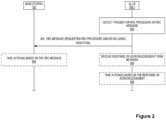
- Figure 2 illustrates the operation of the base station 702 and the SL UE 706-1 in accordance with various embodiments of the present disclosure.
- the SL UE 706-1 detects a trigger (e.g., detects one or more triggering events or conditions) for sending an RRC message to the network for requesting an RRC procedure for SL-related configurations (SL configuration or SL configuration update) and/or for sending an RRC message to the network with an indication (e.g., information that indicates, to the network, one or more SL-related configurations autonomously made, changed, or updated by the SL UE) (step 800).
- a trigger e.g., detects one or more triggering events or conditions
- an indication e.g., information that indicates, to the network, one or more SL-related configurations autonomously made, changed, or updated by the SL UE
- the SL UE 706-1 detects a trigger for sending an RRC message to the network for requesting an RRC procedure for SL-related configurations. This detection is the detection that one or more (e.g., predefined or preconfigured) criteria for triggering this RRC procedure request are satisfied. In one embodiment, the one or more (e.g., predefined or preconfigured) criteria for triggering the RRC procedure request for SL-related configurations by the SL UE 706-1 include the need of an SLRB reconfiguration, e.g., due to changed radio conditions or (re)configuration errors.
- the one or more (e.g., predefined or preconfigured) criteria for triggering the RRC procedure request for SL-related configurations by the SL UE 706-1 is when there is a new SL QoS flow but there is no clear QoS mapping (i.e., SL QoS flow to SL SLRB), or a new SL QoS mapping is needed from the network (e.g., the current SL SLRB cannot fulfill the SL QoS flow requirement).
- the one or more (e.g., predefined or preconfigured) criteria for triggering the RRC procedure request for SL-related configurations by the SL UE 706-1 is when the SL-related UE context has changed at the SL UE 706-1 side (e.g., update of the destination L2 Identity (ID) or new SL unicast link) and this needs to be updated at the network side (e.g., to prevent a wrong SL-related UE context retrieval or sending during handover procedure).
- the SL-related UE context has changed at the SL UE 706-1 side (e.g., update of the destination L2 Identity (ID) or new SL unicast link) and this needs to be updated at the network side (e.g., to prevent a wrong SL-related UE context retrieval or sending during handover procedure).
- the trigger for the RRC procedure is the performance, by the SL UE 706-1, of an autonomous action(s) such as, e.g., deciding a new QoS mapping rule or updating the SL-related UE context autonomously.
- an autonomous action(s) such as, e.g., deciding a new QoS mapping rule or updating the SL-related UE context autonomously.
- the SL UE 706-1 detects this trigger for the RRC procedure request for SL-related configurations in order to inform the network of the change(s) that have happened.
- the SL UE 706-1 performs autonomous actions when in RRC_IDLE/RRC_INACTIVE states or out of coverage, but triggers the RRC procedure over Uu once the SL UE 706-1 enters the RRC_CONNECTED state for informing the network of the SL-related changes that have happened.
- the SL UE 706-1 Upon detecting the trigger, the SL UE 706-1 sends the triggered RRC message (e.g., a message requesting an RRC procedure or a message including an indication) to the base station 702 (step 802). As discussed above, the SL UE 706-1 may send the RRC message immediately upon detecting the trigger or at some later time (e.g., after transitioning from RRC_IDLE/RRC_INACTIVE state to RRC_CONNECTED state).
- the SL UE 706-1 may send the RRC message immediately upon detecting the trigger or at some later time (e.g., after transitioning from RRC_IDLE/RRC_INACTIVE state to RRC_CONNECTED state).
- the RRC message in step 802 is transmitted over the Uu interface for requesting and/or informing the SL-related configurations.
- this RRC message sent over the Uu interface is an existing SL-related message such as the SidelinkUEInformation message.
- the RRC message used for requesting and/or informing the SL-related configurations is an existing NR (or LTE) message such as the UEAssistanceInformation, ULInformationTransfer, or ULInformationTransferMRDC (i.e., if DC is enabled) message.
- the RRC message used for requesting and/or informing the SL-related configurations is a new RRC message that is common for any RATs (SL, NR, or LTE).
- the RRC message used for requesting and/or informing the SL-related configurations is a new RRC message that is used only in SL.
- the RRC message used for requesting and/or informing the SL-related configurations is an existing message such as RRCResumeRequest or the RRCSetupRequest message.
- the RRC message used for requesting and/or informing the SL-related configurations is a new RRC message that is common for any RATs.
- the RRC message used for requesting and/or informing the SL-related configurations is a new RRC message that is used only for SL.
- the content of the RRC message sent by the SL UE 706-1 used for requesting and/or informing the SL-related configurations includes a flag for requesting a new SLRB configuration.
- the content of the RRC message sent by the SL UE 706-1 used for requesting and/or informing the SL-related configurations includes new QoS flow(s) information together with an indication of a new QoS mapping needed for the included QoS flow(s).
- the content of the RRC message sent by the SL UE 706-1 used for requesting and/or informing the SL-related configurations includes a new SL-related UE context to be stored at the network side (e.g., the gNB, eNB, Next Generation eNB (NG-eNB)).
- a new SL-related UE context to be stored at the network side (e.g., the gNB, eNB, Next Generation eNB (NG-eNB)).
- the UE sends the RRC message for requesting SL-related configurations to the network via, e.g., SRB1.
- the UE could send such RRC message to the primary network node via, e.g., SRB1.
- the UE could send such RRC message to the secondary network node via, e.g., SRB3.
- the SL capable UE receives the response/acknowledgment for such RRC message from the primary node. In one embodiment, the SL capable UE receives the response/acknowledgment for such RRC message from a Secondary Node (SN).
- SN Secondary Node
- the base station 702 Upon receiving the RRC message, the base station 702 performs one or more actions based on the RRC message (step 804). In one embodiment, upon receiving the RRC message for requesting SL-related configurations from the SL capable UE, the base station 702 sends a response/acknowledgment to the SL UE 706-1. In one embodiment, the response/acknowledgment is an existing RRC message such as (but not limited to) the RRCReconfiguration if the SL UE 706-1 is in RRC_CONNECTED state.
- the response/acknowledgment is an existing RRC message such as (but not limited to) the RRCResume, RRCSetup, or Paging message if the SL UE 706-1 is in RRC_IDLE/RRC_INACTIVE.
- the base station 702 is the primary network node (e.g., the Master Node (MN)), and, upon receiving the RRC message for requesting SL-related configurations from the SL UE 706-1, the primary network node (e.g., the MN) forwards the RRC message to the secondary node (e.g., the SN) via inter-node control messages. Further, in one embodiment, upon receiving the RRC message for requesting the SL-related configurations forwarded from the primary node (e.g., the MN), the secondary network node (e.g., the SN) generates an RRC message for triggering the requested RRC procedure and forwards the message to the primary node.
- MN Master Node
- the primary node then proceeds to forward the message by, e.g., embedding it in a Master Cell Group (MCG) RRC message to the SL UE 706-1 via, e.g., SRB1.
- MCG Master Cell Group
- the secondary network node e.g., the SN
- the secondary network node e.g., the SN
- the base station 702 is the secondary node (e.g., the SN), and, upon receiving the RRC message for requesting the SL-related configurations from the SL UE 706-1, the secondary network node (e.g., the SN) forwards the RRC message to the primary node (e.g., the MN) via inter-node control messages. Further, in one embodiment, upon receiving the RRC message for requesting SL-related configurations forwarded from the secondary node (e.g., the SN), the primary network node (e.g., the MN) generates an RRC message for triggering the requested RRC procedure and forwards it to the SN.
- the secondary node e.g., the SN
- the primary network node e.g., the MN
- the SN proceeds to forward the message by, e.g., embedding it in a Secondary Cell Group (SCG) RRC message to the SL UE 706-1 via, e.g., SRB3.
- SCG Secondary Cell Group
- the primary network node upon receiving the RRC message for requesting SL-related configurations forwarded from the SN, the primary network node sends a direct RRC message to trigger the requested RRC procedure to the SL UE 706-1 via, e.g., SRB1.
- the SL UE 706-1 receives a response or acknowledgment from the network (e.g., either from the base station 702 or from another RAN node (e.g., SN)) (step 806). Upon receiving the response/acknowledgment from the network, the SL UE 706-1 performs one or more actions (step 808).
- the response or acknowledgement includes a configuration (e.g., SLRB configuration or QoS mapping rule), and the SL UE 706-1 applies the configuration (e.g., SLRB configuration or QoS mapping rule) received in the response or acknowledgement.
- the SL UE 706-1 upon receiving the response/acknowledgment from the network (e.g., either from the base station 702 or from another RAN node (e.g., SN)), the SL UE 706-1 goes to RRC_IDLE/RRC_INACTIVE. As yet another example, upon receiving the response/acknowledgment from the network (e.g., either from the base station 702 or from another RAN node (e.g., SN)), the SL UE 706-1 releases the SL communication. In another embodiment, upon receiving the response/acknowledgment from the network (e.g., either from the base station 702 or from another RAN node (e.g., SN)), the SL UE 706-1 performs no action.
- the network e.g., either from the base station 702 or from another RAN node (e.g., SN)
- the SL UE 706-1 upon receiving the response/acknowledgment from the network (e
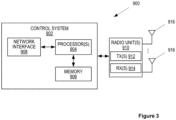
- FIG. 3 is a schematic block diagram of a radio access node 900 according to some embodiments of the present disclosure.
- the radio access node 900 may be, for example, a base station 702 (e.g., a gNB or NG-RAN node).
- the radio access node 900 includes a control system 902 that includes one or more processors 904 (e.g., Central Processing Units (CPUs), Application Specific Integrated Circuits (ASICs), Field Programmable Gate Arrays (FPGAs), and/or the like), memory 906, and a network interface 908.
- the one or more processors 904 are also referred to herein as processing circuitry.
- the radio access node 900 includes one or more radio units 910 that each includes one or more transmitters 912 and one or more receivers 914 coupled to one or more antennas 916.
- the radio units 910 may be referred to as or be part of radio interface circuitry.
- the radio unit(s) 910 is external to the control system 902 and connected to the control system 902 via, e.g., a wired connection (e.g., an optical cable).
- the radio unit(s) 910 and potentially the antenna(s) 916 are integrated together with the control system 902.
- the one or more processors 904 operate to provide one or more functions of a radio access node 900 as described herein (e.g., one or more functions of the base station 702 as described above, e.g., with respect to Figure 2 ).
- the function(s) are implemented in software that is stored, e.g., in the memory 906 and executed by the one or more processors 904.
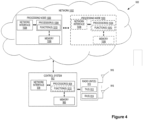
- Figure 4 is a schematic block diagram that illustrates a virtualized embodiment of the radio access node 900 according to some embodiments of the present disclosure. This discussion is equally applicable to other types of network nodes. Further, other types of network nodes may have similar virtualized architectures.
- a "virtualized" radio access node is an implementation of the radio access node 900 in which at least a portion of the functionality of the radio access node 900 is implemented as a virtual component(s) (e.g., via a virtual machine(s) executing on a physical processing node(s) in a network(s)).
- the radio access node 900 includes the control system 902 that includes the one or more processors 904 (e.g., CPUs, ASICs, FPGAs, and/or the like), the memory 906, the network interface 908, and the one or more radio units 910 that each includes the one or more transmitters 912 and the one or more receivers 914 coupled to the one or more antennas 916, as described above.
- the control system 902 is connected to the radio unit(s) 910 via, for example, an optical cable or the like.
- the control system 902 is connected to one or more processing nodes 1000 coupled to or included as part of a network(s) 1002 via the network interface 908.
- Each processing node 1000 includes one or more processors 1004 (e.g., CPUs, ASICs, FPGAs, and/or the like), memory 1006, and a network interface 1008.
- functions 1010 of the radio access node 900 described herein are implemented at the one or more processing nodes 1000 or distributed across the control system 902 and the one or more processing nodes 1000 in any desired manner.
- some or all of the functions 1010 of the radio access node 900 described herein are implemented as virtual components executed by one or more virtual machines implemented in a virtual environment(s) hosted by the processing node(s) 1000.
- additional signaling or communication between the processing node(s) 1000 and the control system 902 is used in order to carry out at least some of the desired functions 1010.
- the control system 902 may not be included, in which case the radio unit(s) 910 communicate directly with the processing node(s) 1000 via an appropriate network interface(s).
- a computer program including instructions which, when executed by at least one processor, cause the at least one processor to carry out the functionality of the radio access node 900 or a node (e.g., a processing node 1000) implementing one or more of the functions 1010 of the radio access node 900 (e.g., one or more functions of the base station 702 as described above, e.g., with respect to Figure 2 ) in a virtual environment according to any of the embodiments described herein is provided.
- a carrier comprising the aforementioned computer program product is provided.
- the carrier is one of an electronic signal, an optical signal, a radio signal, or a computer readable storage medium (e.g., a non-transitory computer readable medium such as memory).
- FIG. 5 is a schematic block diagram of a UE 1100 according to some embodiments of the present disclosure.
- the UE 1100 includes one or more processors 1102 (e.g., CPUs, ASICs, FPGAs, and/or the like), memory 1104, and one or more transceivers 1106 each including one or more transmitters 1108 and one or more receivers 1110 coupled to one or more antennas 1112.
- the transceiver(s) 1106 includes radio-front end circuitry connected to the antenna(s) 1112 that is configured to condition signals communicated between the antenna(s) 1112 and the processor(s) 1102, as will be appreciated by one of ordinary skill in the art.
- the processors 1102 are also referred to herein as processing circuitry.
- the transceivers 1106 are also referred to herein as radio circuitry.
- the functionality of the UE 1100 described above e.g., one or more functions of the SL UE 706-1 as described above, e.g., with respect to Figure 2
- the UE 1100 may include additional components not illustrated in Figure 5 such as, e.g., one or more user interface components (e.g., an input/output interface including a display, buttons, a touch screen, a microphone, a speaker(s), and/or the like and/or any other components for allowing input of information into the UE 1100 and/or allowing output of information from the UE 1100), a power supply (e.g., a battery and associated power circuitry), etc.
- user interface components e.g., an input/output interface including a display, buttons, a touch screen, a microphone, a speaker(s), and/or the like and/or any other components for allowing input of information into the UE 1100 and/or allowing output of information from the UE 1100
- a power supply e.g., a battery and associated power circuitry
- a computer program including instructions which, when executed by at least one processor, causes the at least one processor to carry out the functionality of the UE 1100 according to any of the embodiments described herein (e.g., one or more functions of the SL UE 706-1 as described above, e.g., with respect to Figure 2 ) is provided.
- a carrier comprising the aforementioned computer program product is provided.
- the carrier is one of an electronic signal, an optical signal, a radio signal, or a computer readable storage medium (e.g., a non-transitory computer readable medium such as memory).
Landscapes
- Engineering & Computer Science (AREA)
- Computer Networks & Wireless Communication (AREA)
- Signal Processing (AREA)
- Mobile Radio Communication Systems (AREA)
Claims (15)
- Procédé mis en œuvre dans un équipement utilisateur, UE, de liaison latérale, SL, (706-1), le procédé comprenant :la détection (800) d'un déclencheur pour l'envoi d'informations de contrôle de ressources radio, RRC, dans lequel les informations RRC comprennent l'un parmi :• une demande de procédure RRC relative à une ou plusieurs communications liées à la SL ; et• un message qui demande à la fois la procédure RRC relative à une ou plusieurs configurations liées à la SL et comprend les informations qui informent le réseau sur une ou plusieurs modifications apportées par l'UE SL (706-1) liées à une ou plusieurs communications SL ; etl'envoi (802) des informations RRC à un nœud de réseau ;dans lequel la procédure RRC comprend soit une procédure de configuration SL, soit une procédure de mise à jour de configuration SL.
- Procédé selon la revendication 1, dans lequel la détection (800) du déclencheur d'envoi des informations RRC comprend la détection (800) d'au moins l'un des critères suivants :• un critère selon lequel une reconfiguration du porteur radio SL, SLRB, est nécessaire ;• un critère selon lequel il existe un nouveau flux de qualité de service, QoS, SL mais aucun mappage QoS pour le nouveau flux QoS SL ;• un critère selon lequel un nouveau mappage SL QoS est nécessaire ;• un critère de changement dans un contexte d'UE lié au SL au niveau de l'UE SL (706-1) ; et• un critère d'exécution d'une ou plusieurs actions autonomes liées au SL par l'UE SL (706-1), ledit critère comprenant un critère de décision autonome d'une nouvelle règle de mappage QoS liée au SL ou un critère de mise à jour autonome d'un contexte UE lié au SL.
- Procédé selon l'une quelconque des revendications 1 à 2, dans lequel :la détection (800) du déclencheur d'envoi des informations RRC comprend la détection (800) du déclencheur d'envoi des informations RRC pendant que l'UE SL (706-1) est dans un état en attente ou inactif ; etl'envoi (802) des informations RRC au nœud de réseau comprend l'envoi (802) des informations RRC au nœud de réseau lors de la détection du déclencheur et de la transition de l'état en attente ou inactif vers un état connecté.
- Procédé selon l'une quelconque des revendications 1 à 3, dans lequel :l'envoi (802) des informations RRC au nœud de réseau comprend l'envoi (802) des informations RRC au nœud de réseau lorsqu'il est dans un état connecté ; etles informations RRC comprennent un message SidelinkUEInformation.
- Procédé selon l'une quelconque des revendications 1 à 4, dans lequel :l'envoi (802) des informations RRC au nœud de réseau comprend l'envoi (802) des informations RRC au nœud de réseau lorsqu'il est dans un état connecté ; etles informations RRC comprennent des informations RRC de nouvelle radio, NR, ou d'évolution à long terme, LTE existantes ; les informations RRC NR ou LTE existantes comprenant un message UEAssistanceInformation, un message ULInformationTransfer ou un message ULInformationTransferMRDC.
- Procédé selon l'une quelconque des revendications 1 à 5, dans lequel :l'envoi (802) des informations RRC au nœud de réseau comprend l'envoi (802) des informations RRC au nœud de réseau lorsqu'il est dans un état en attente ou inactif ; etles informations RRC comprennent un message RRCResumeRequest ou un message RRCSetupRequest.
- Procédé selon l'une quelconque des revendications 1 à 2, dans lequel :l'envoi (802) des informations RRC au nœud de réseau comprend l'envoi (802) des informations RRC au nœud de réseau lorsqu'il est dans un état en attente ou inactif ; etles informations RRC comprennent un nouveau message RRC commun à deux ou plusieurs technologies d'accès radio, RAT.
- Procédé selon l'une quelconque des revendications 1 à 2, dans lequel :l'envoi (802) des informations RRC au nœud de réseau comprend l'envoi (802) des informations RRC au nœud de réseau lorsqu'il est dans un état en attente ou inactif ; etles informations RRC comprennent un nouveau message RRC qui est utilisé uniquement pour la SL.
- Procédé selon l'une quelconque des revendications 1 à 8, dans lequel les informations RRC comprennent au moins l'un parmi :• un indicateur qui indique une demande de nouvelle configuration SLRB ;• des informations QoS pour un ou plusieurs flux QoS au niveau de l'UE SL (706-1) ;• un nouveau contexte UE lié au SL pour l'UE SL (706-1).
- Equipement utilisateur, UE, de liaison latérale, SL, (706-1), adapté pour mettre en œuvre le procédé selon l'une quelconque des revendications 1 à 9.
- Procédé mis en œuvre dans un nœud de réseau, comprenant :la réception (802) d'un message de contrôle des ressources radio (RRC) provenant d'un équipement utilisateur, UE, de liaison latérale, SL, (706-1), dans lequel les informations RRC comprennent l'un parmi :• une demande de procédure RRC relative à une ou plusieurs communications liées à la SL ; et• un message qui demande à la fois la procédure RRC relative à une ou plusieurs configurations liées à la SL et comprend les informations sur une ou plusieurs modifications apportées par l'UE SL (706-1) relatives à une ou plusieurs communications SL ; etla prise (804) d'une ou plusieurs actions sur la base des informations RRC ;dans lequel la procédure RRC comprend soit une procédure de configuration SL, soit une procédure de mise à jour de configuration SL.
- Procédé selon la revendication 11, dans lequel :les une ou plusieurs actions comprennent l'envoi d'une réponse à l'UE SL (706-1) ; etla réponse comprend une ou plusieurs configurations liées à la SL pour l'UE SL (706-1) ou une ou plusieurs mises à jour d'une ou plusieurs configurations liées à la SL pour l'UE SL (706-1).
- Procédé selon l'une quelconque des revendications 11 à 12, dans lequel :la réception (802) des informations RRC provenant de l'UE SL (706-1) comprend la réception (802) des informations RRC provenant de l'UE SL (706-1) pendant que l'UE SL (706-1) est dans un état connecté ; etles informations RRC comprennent un message SidelinkUEInformation.
- Procédé selon l'une quelconque des revendications 11 à 13, dans lequel :la réception (802) des informations RRC provenant de l'UE SL (706-1) comprend la réception (802) des informations RRC provenant de l'UE SL (706-1) pendant que l'UE SL (706-1) est dans un état connecté ; etles informations du RRC comprennent l'une des suivantes :des informations RRC de nouvelle radio, NR, ou d'évolution à long terme, LTE, existantes ;dans lequel les informations RRC NR ou LTE existantes comprennent un message UEAssistanceInformation, un message ULInformationTransfer ou un message ULInformationTransferMRDC.
- Station de base adaptée pour mettre en œuvre le procédé selon l'une quelconque des revendications 11 à 15.
Applications Claiming Priority (2)
| Application Number | Priority Date | Filing Date | Title |
|---|---|---|---|
| CN2019100524 | 2019-08-14 | ||
| PCT/EP2020/072801 WO2021028549A1 (fr) | 2019-08-14 | 2020-08-13 | Procédure rrc de liaison latérale |
Publications (2)
| Publication Number | Publication Date |
|---|---|
| EP4014678A1 EP4014678A1 (fr) | 2022-06-22 |
| EP4014678B1 true EP4014678B1 (fr) | 2025-06-18 |
Family
ID=72088114
Family Applications (1)
| Application Number | Title | Priority Date | Filing Date |
|---|---|---|---|
| EP20754133.5A Active EP4014678B1 (fr) | 2019-08-14 | 2020-08-13 | Procédure rrc pour liaison latérale |
Country Status (6)
| Country | Link |
|---|---|
| US (1) | US20220330358A1 (fr) |
| EP (1) | EP4014678B1 (fr) |
| JP (1) | JP7444969B2 (fr) |
| KR (1) | KR20220046631A (fr) |
| CO (1) | CO2022002877A2 (fr) |
| WO (1) | WO2021028549A1 (fr) |
Families Citing this family (5)
| Publication number | Priority date | Publication date | Assignee | Title |
|---|---|---|---|---|
| US11470017B2 (en) * | 2019-07-30 | 2022-10-11 | At&T Intellectual Property I, L.P. | Immersive reality component management via a reduced competition core network component |
| MX2022001901A (es) | 2019-08-14 | 2022-03-11 | Ericsson Telefon Ab L M | Continuidad de transmision de enlace lateral. |
| CN112788617B (zh) * | 2019-11-01 | 2023-03-14 | 维沃移动通信有限公司 | 服务质量参数的配置方法及装置 |
| US12581557B2 (en) * | 2021-09-24 | 2026-03-17 | Apple Inc. | Method and apparatus for improving reliability and reducing power consumption for FR2 RRM |
| CN115529610A (zh) * | 2022-09-15 | 2022-12-27 | 成都中科微信息技术研究院有限公司 | 一种NR系统基于Gap提高CGI测量可靠性的方法 |
Family Cites Families (10)
| Publication number | Priority date | Publication date | Assignee | Title |
|---|---|---|---|---|
| CN110933658B (zh) * | 2014-01-29 | 2022-11-15 | 交互数字专利控股公司 | 用于设备到设备发现或通信的资源选择 |
| CN116684994A (zh) * | 2016-05-12 | 2023-09-01 | 三星电子株式会社 | 用在无线通信系统中的轻连接方法和设备 |
| US10897784B2 (en) * | 2016-09-09 | 2021-01-19 | Nec Corporation | Apparatus and method for wireless communication, and non-transitory computer readable medium storing program |
| EP3560241A4 (fr) * | 2016-12-21 | 2020-11-18 | FG Innovation Company Limited | Procédé de transition d'état de système de communication sans fil |
| US10986529B2 (en) * | 2017-03-31 | 2021-04-20 | Nokia Technologies Oy | Conditional RRC based QoS flow indication and use |
| EP3860239B1 (fr) * | 2017-06-15 | 2026-01-07 | Malikie Innovations Limited | Configuration de communications de liaison latérale |
| US11457431B2 (en) * | 2018-08-03 | 2022-09-27 | FG Innovation Company Limited | Sidelink radio resource allocation |
| US11224007B2 (en) * | 2018-11-19 | 2022-01-11 | Huawei Technologies Co., Ltd. | System and method for supporting sidelink radio bearers |
| KR102658886B1 (ko) * | 2019-02-14 | 2024-04-18 | 삼성전자 주식회사 | 차세대 이동 통신 시스템에서 차량 통신을 지원하기 위한 단말 능력 절차 수행 방법 및 장치 |
| CN110536262A (zh) * | 2019-04-30 | 2019-12-03 | 中兴通讯股份有限公司 | 一种直通链路通信方法、装置和存储介质 |
-
2020
- 2020-08-13 EP EP20754133.5A patent/EP4014678B1/fr active Active
- 2020-08-13 KR KR1020227007855A patent/KR20220046631A/ko active Pending
- 2020-08-13 JP JP2022508846A patent/JP7444969B2/ja active Active
- 2020-08-13 WO PCT/EP2020/072801 patent/WO2021028549A1/fr not_active Ceased
- 2020-08-13 US US17/634,275 patent/US20220330358A1/en active Pending
-
2022
- 2022-03-11 CO CONC2022/0002877A patent/CO2022002877A2/es unknown
Non-Patent Citations (3)
| Title |
|---|
| ETSI MCC: "Report of 3GPP TSG RAN2#106 meeting, Reno, USA", vol. RAN WG2, no. ; 20190513 - 20190517, 25 July 2019 (2019-07-25), XP051755563, Retrieved from the Internet <URL:http://www.3gpp.org/ftp/tsg_ran/WG2_RL2/TSGR2_106/Report/Draft_RAN2_106_Report_v3.zip> [retrieved on 20190725] * |
| HUAWEI: "Summary of Email Discussion [104#58][NR V2X] - QoS support for NR V2X", 15 February 2019 (2019-02-15), pages 1 - 57, XP051601766, Retrieved from the Internet <URL:http://www.3gpp.org/ftp/tsg%5Fran/WG2%5FRL2/TSGR2%5F105/Docs/R2%2D1900370%2Ezip> * |
| OPPO: "Discussion on network involvement in unicast link establishment", vol. RAN WG2, no. Reno, US; 20190513 - 20190517, 13 May 2019 (2019-05-13), XP051729084, Retrieved from the Internet <URL:http://www.3gpp.org/ftp/Meetings%5F3GPP%5FSYNC/RAN2/Docs/R2%2D1905580%2Ezip> [retrieved on 20190513] * |
Also Published As
| Publication number | Publication date |
|---|---|
| WO2021028549A1 (fr) | 2021-02-18 |
| EP4014678A1 (fr) | 2022-06-22 |
| JP2022544501A (ja) | 2022-10-19 |
| US20220330358A1 (en) | 2022-10-13 |
| JP7444969B2 (ja) | 2024-03-06 |
| KR20220046631A (ko) | 2022-04-14 |
| CO2022002877A2 (es) | 2022-04-19 |
Similar Documents
| Publication | Publication Date | Title |
|---|---|---|
| CN109155909B (zh) | 无线通信系统中用于更新ue配置的方法及其装置 | |
| EP4014678B1 (fr) | Procédure rrc pour liaison latérale | |
| US11160134B2 (en) | Method for performing RRC connection procedure in wireless communication system and apparatus therefor | |
| US12495318B2 (en) | Recovery over sidelink | |
| EP3544337B1 (fr) | Sélection d'un amf soutenant une tranche de réseau en fonction de la priorité actualisée de la nssai | |
| CN109891962B (zh) | 用于响应请求的方法和网络设备 | |
| JP6961729B2 (ja) | 無線通信システムにおける端末の登録方法およびそのための装置 | |
| US12262435B2 (en) | Sidelink RLF handling | |
| US10660022B2 (en) | Method and user equipment for requesting connection to network | |
| US10602380B2 (en) | Method for selecting data transmission mode in wireless communication system and apparatus therefor | |
| CN109076437B (zh) | 系统信息传输方法和基站、以及系统信息接收方法和用户设备 | |
| US12369213B2 (en) | Sidelink transmission continuity | |
| US10470108B2 (en) | Signal transmission and reception method by remote UE in a wireless communication system and device for same | |
| US20190037636A1 (en) | Method for transmitting/receiving location registration-related message in wireless communication system and apparatus for same | |
| US20200145953A1 (en) | Tracking area assignment method in wireless communication system and device therefor | |
| CN109644388B (zh) | 使用中继ue的接入控制的方法及其装置 | |
| KR20180086521A (ko) | 무선 통신 시스템에서 단말에 의해 트리거 된 반정적 스케줄링 활성화를 수행하기 위한 방법 및 장치 | |
| EP3410814B1 (fr) | Procédé de déclenchement de mise à jour de zone de suivi et équipement d'utilisateur | |
| JP2019527006A (ja) | 報告受信方法及びネットワーク装置、並びに報告実行方法及び基地局 | |
| WO2017036343A1 (fr) | Procédé et dispositif de traitement de données | |
| US20230269573A1 (en) | Systems and methods for ue context management in sidelink relay scenarios | |
| CN114097277B (zh) | V2x通信从sidelink连接到小区连接的主动切换 | |
| KR102604255B1 (ko) | 무선 통신 시스템에서 단말 간 통신을 위한 접속 제어 방법 및 장치 |
Legal Events
| Date | Code | Title | Description |
|---|---|---|---|
| STAA | Information on the status of an ep patent application or granted ep patent |
Free format text: STATUS: UNKNOWN |
|
| STAA | Information on the status of an ep patent application or granted ep patent |
Free format text: STATUS: THE INTERNATIONAL PUBLICATION HAS BEEN MADE |
|
| PUAI | Public reference made under article 153(3) epc to a published international application that has entered the european phase |
Free format text: ORIGINAL CODE: 0009012 |
|
| STAA | Information on the status of an ep patent application or granted ep patent |
Free format text: STATUS: REQUEST FOR EXAMINATION WAS MADE |
|
| 17P | Request for examination filed |
Effective date: 20220310 |
|
| AK | Designated contracting states |
Kind code of ref document: A1 Designated state(s): AL AT BE BG CH CY CZ DE DK EE ES FI FR GB GR HR HU IE IS IT LI LT LU LV MC MK MT NL NO PL PT RO RS SE SI SK SM TR |
|
| DAV | Request for validation of the european patent (deleted) | ||
| DAX | Request for extension of the european patent (deleted) | ||
| STAA | Information on the status of an ep patent application or granted ep patent |
Free format text: STATUS: EXAMINATION IS IN PROGRESS |
|
| 17Q | First examination report despatched |
Effective date: 20230511 |
|
| GRAP | Despatch of communication of intention to grant a patent |
Free format text: ORIGINAL CODE: EPIDOSNIGR1 |
|
| STAA | Information on the status of an ep patent application or granted ep patent |
Free format text: STATUS: GRANT OF PATENT IS INTENDED |
|
| INTG | Intention to grant announced |
Effective date: 20250117 |
|
| GRAS | Grant fee paid |
Free format text: ORIGINAL CODE: EPIDOSNIGR3 |
|
| GRAA | (expected) grant |
Free format text: ORIGINAL CODE: 0009210 |
|
| STAA | Information on the status of an ep patent application or granted ep patent |
Free format text: STATUS: THE PATENT HAS BEEN GRANTED |
|
| AK | Designated contracting states |
Kind code of ref document: B1 Designated state(s): AL AT BE BG CH CY CZ DE DK EE ES FI FR GB GR HR HU IE IS IT LI LT LU LV MC MK MT NL NO PL PT RO RS SE SI SK SM TR |
|
| REG | Reference to a national code |
Ref country code: GB Ref legal event code: FG4D |
|
| REG | Reference to a national code |
Ref country code: CH Ref legal event code: EP |
|
| REG | Reference to a national code |
Ref country code: DE Ref legal event code: R096 Ref document number: 602020052944 Country of ref document: DE |
|
| REG | Reference to a national code |
Ref country code: CH Ref legal event code: EP |
|
| REG | Reference to a national code |
Ref country code: IE Ref legal event code: FG4D |
|
| PG25 | Lapsed in a contracting state [announced via postgrant information from national office to epo] |
Ref country code: FI Free format text: LAPSE BECAUSE OF FAILURE TO SUBMIT A TRANSLATION OF THE DESCRIPTION OR TO PAY THE FEE WITHIN THE PRESCRIBED TIME-LIMIT Effective date: 20250618 |
|
| PGFP | Annual fee paid to national office [announced via postgrant information from national office to epo] |
Ref country code: DE Payment date: 20250827 Year of fee payment: 6 |
|
| REG | Reference to a national code |
Ref country code: LT Ref legal event code: MG9D |
|
| PG25 | Lapsed in a contracting state [announced via postgrant information from national office to epo] |
Ref country code: GR Free format text: LAPSE BECAUSE OF FAILURE TO SUBMIT A TRANSLATION OF THE DESCRIPTION OR TO PAY THE FEE WITHIN THE PRESCRIBED TIME-LIMIT Effective date: 20250919 Ref country code: NO Free format text: LAPSE BECAUSE OF FAILURE TO SUBMIT A TRANSLATION OF THE DESCRIPTION OR TO PAY THE FEE WITHIN THE PRESCRIBED TIME-LIMIT Effective date: 20250918 |
|
| PG25 | Lapsed in a contracting state [announced via postgrant information from national office to epo] |
Ref country code: BG Free format text: LAPSE BECAUSE OF FAILURE TO SUBMIT A TRANSLATION OF THE DESCRIPTION OR TO PAY THE FEE WITHIN THE PRESCRIBED TIME-LIMIT Effective date: 20250618 |
|
| PGFP | Annual fee paid to national office [announced via postgrant information from national office to epo] |
Ref country code: GB Payment date: 20250827 Year of fee payment: 6 |
|
| PG25 | Lapsed in a contracting state [announced via postgrant information from national office to epo] |
Ref country code: HR Free format text: LAPSE BECAUSE OF FAILURE TO SUBMIT A TRANSLATION OF THE DESCRIPTION OR TO PAY THE FEE WITHIN THE PRESCRIBED TIME-LIMIT Effective date: 20250618 |
|
| PG25 | Lapsed in a contracting state [announced via postgrant information from national office to epo] |
Ref country code: RS Free format text: LAPSE BECAUSE OF FAILURE TO SUBMIT A TRANSLATION OF THE DESCRIPTION OR TO PAY THE FEE WITHIN THE PRESCRIBED TIME-LIMIT Effective date: 20250918 |
|
| REG | Reference to a national code |
Ref country code: NL Ref legal event code: MP Effective date: 20250618 |
|
| PG25 | Lapsed in a contracting state [announced via postgrant information from national office to epo] |
Ref country code: LV Free format text: LAPSE BECAUSE OF FAILURE TO SUBMIT A TRANSLATION OF THE DESCRIPTION OR TO PAY THE FEE WITHIN THE PRESCRIBED TIME-LIMIT Effective date: 20250618 |
|
| PG25 | Lapsed in a contracting state [announced via postgrant information from national office to epo] |
Ref country code: NL Free format text: LAPSE BECAUSE OF FAILURE TO SUBMIT A TRANSLATION OF THE DESCRIPTION OR TO PAY THE FEE WITHIN THE PRESCRIBED TIME-LIMIT Effective date: 20250618 |
|
| PG25 | Lapsed in a contracting state [announced via postgrant information from national office to epo] |
Ref country code: PT Free format text: LAPSE BECAUSE OF FAILURE TO SUBMIT A TRANSLATION OF THE DESCRIPTION OR TO PAY THE FEE WITHIN THE PRESCRIBED TIME-LIMIT Effective date: 20251020 |
|
| REG | Reference to a national code |
Ref country code: AT Ref legal event code: MK05 Ref document number: 1805390 Country of ref document: AT Kind code of ref document: T Effective date: 20250618 |
|
| PG25 | Lapsed in a contracting state [announced via postgrant information from national office to epo] |
Ref country code: IS Free format text: LAPSE BECAUSE OF FAILURE TO SUBMIT A TRANSLATION OF THE DESCRIPTION OR TO PAY THE FEE WITHIN THE PRESCRIBED TIME-LIMIT Effective date: 20251018 |
|
| PG25 | Lapsed in a contracting state [announced via postgrant information from national office to epo] |
Ref country code: AT Free format text: LAPSE BECAUSE OF FAILURE TO SUBMIT A TRANSLATION OF THE DESCRIPTION OR TO PAY THE FEE WITHIN THE PRESCRIBED TIME-LIMIT Effective date: 20250618 Ref country code: SM Free format text: LAPSE BECAUSE OF FAILURE TO SUBMIT A TRANSLATION OF THE DESCRIPTION OR TO PAY THE FEE WITHIN THE PRESCRIBED TIME-LIMIT Effective date: 20250618 |
|
| PG25 | Lapsed in a contracting state [announced via postgrant information from national office to epo] |
Ref country code: CZ Free format text: LAPSE BECAUSE OF FAILURE TO SUBMIT A TRANSLATION OF THE DESCRIPTION OR TO PAY THE FEE WITHIN THE PRESCRIBED TIME-LIMIT Effective date: 20250618 |
|
| PG25 | Lapsed in a contracting state [announced via postgrant information from national office to epo] |
Ref country code: PL Free format text: LAPSE BECAUSE OF FAILURE TO SUBMIT A TRANSLATION OF THE DESCRIPTION OR TO PAY THE FEE WITHIN THE PRESCRIBED TIME-LIMIT Effective date: 20250618 |
|
| PG25 | Lapsed in a contracting state [announced via postgrant information from national office to epo] |
Ref country code: EE Free format text: LAPSE BECAUSE OF FAILURE TO SUBMIT A TRANSLATION OF THE DESCRIPTION OR TO PAY THE FEE WITHIN THE PRESCRIBED TIME-LIMIT Effective date: 20250618 |
|
| PG25 | Lapsed in a contracting state [announced via postgrant information from national office to epo] |
Ref country code: SK Free format text: LAPSE BECAUSE OF FAILURE TO SUBMIT A TRANSLATION OF THE DESCRIPTION OR TO PAY THE FEE WITHIN THE PRESCRIBED TIME-LIMIT Effective date: 20250618 Ref country code: RO Free format text: LAPSE BECAUSE OF FAILURE TO SUBMIT A TRANSLATION OF THE DESCRIPTION OR TO PAY THE FEE WITHIN THE PRESCRIBED TIME-LIMIT Effective date: 20250618 |
|
| PG25 | Lapsed in a contracting state [announced via postgrant information from national office to epo] |
Ref country code: ES Free format text: LAPSE BECAUSE OF FAILURE TO SUBMIT A TRANSLATION OF THE DESCRIPTION OR TO PAY THE FEE WITHIN THE PRESCRIBED TIME-LIMIT Effective date: 20250618 |
|
| REG | Reference to a national code |
Ref country code: DE Ref legal event code: R097 Ref document number: 602020052944 Country of ref document: DE |
|
| REG | Reference to a national code |
Ref country code: CH Ref legal event code: H13 Free format text: ST27 STATUS EVENT CODE: U-0-0-H10-H13 (AS PROVIDED BY THE NATIONAL OFFICE) Effective date: 20260324 |
|
| PG25 | Lapsed in a contracting state [announced via postgrant information from national office to epo] |
Ref country code: MC Free format text: LAPSE BECAUSE OF FAILURE TO SUBMIT A TRANSLATION OF THE DESCRIPTION OR TO PAY THE FEE WITHIN THE PRESCRIBED TIME-LIMIT Effective date: 20250618 |
|
| PG25 | Lapsed in a contracting state [announced via postgrant information from national office to epo] |
Ref country code: DK Free format text: LAPSE BECAUSE OF FAILURE TO SUBMIT A TRANSLATION OF THE DESCRIPTION OR TO PAY THE FEE WITHIN THE PRESCRIBED TIME-LIMIT Effective date: 20250618 |
|
| PG25 | Lapsed in a contracting state [announced via postgrant information from national office to epo] |
Ref country code: IT Free format text: LAPSE BECAUSE OF FAILURE TO SUBMIT A TRANSLATION OF THE DESCRIPTION OR TO PAY THE FEE WITHIN THE PRESCRIBED TIME-LIMIT Effective date: 20250618 Ref country code: LU Free format text: LAPSE BECAUSE OF NON-PAYMENT OF DUE FEES Effective date: 20250813 |
|
| PG25 | Lapsed in a contracting state [announced via postgrant information from national office to epo] |
Ref country code: CH Free format text: LAPSE BECAUSE OF NON-PAYMENT OF DUE FEES Effective date: 20250831 |
|
| PLBE | No opposition filed within time limit |
Free format text: ORIGINAL CODE: 0009261 |
|
| STAA | Information on the status of an ep patent application or granted ep patent |
Free format text: STATUS: NO OPPOSITION FILED WITHIN TIME LIMIT |
|
| REG | Reference to a national code |
Ref country code: CH Ref legal event code: L10 Free format text: ST27 STATUS EVENT CODE: U-0-0-L10-L00 (AS PROVIDED BY THE NATIONAL OFFICE) Effective date: 20260430 |