EP4014946A1 - Dispositif de traitement des patients et procédé de commande d'un dispositif de traitement des patients - Google Patents
Dispositif de traitement des patients et procédé de commande d'un dispositif de traitement des patients Download PDFInfo
- Publication number
- EP4014946A1 EP4014946A1 EP20000488.5A EP20000488A EP4014946A1 EP 4014946 A1 EP4014946 A1 EP 4014946A1 EP 20000488 A EP20000488 A EP 20000488A EP 4014946 A1 EP4014946 A1 EP 4014946A1
- Authority
- EP
- European Patent Office
- Prior art keywords
- patient
- unit
- treatment
- data
- treatment device
- Prior art date
- Legal status (The legal status is an assumption and is not a legal conclusion. Google has not performed a legal analysis and makes no representation as to the accuracy of the status listed.)
- Withdrawn
Links
Images

Classifications
-
- A—HUMAN NECESSITIES
- A61—MEDICAL OR VETERINARY SCIENCE; HYGIENE
- A61H—PHYSICAL THERAPY APPARATUS, e.g. DEVICES FOR LOCATING OR STIMULATING REFLEX POINTS IN THE BODY; ARTIFICIAL RESPIRATION; MASSAGE; BATHING DEVICES FOR SPECIAL THERAPEUTIC OR HYGIENIC PURPOSES OR SPECIFIC PARTS OF THE BODY
- A61H23/00—Percussion or vibration massage, e.g. using supersonic vibration; Suction-vibration massage; Massage with moving diaphragms
- A61H23/008—Percussion or vibration massage, e.g. using supersonic vibration; Suction-vibration massage; Massage with moving diaphragms using shock waves
-
- A—HUMAN NECESSITIES
- A61—MEDICAL OR VETERINARY SCIENCE; HYGIENE
- A61B—DIAGNOSIS; SURGERY; IDENTIFICATION
- A61B34/00—Computer-aided surgery; Manipulators or robots specially adapted for use in surgery
- A61B34/30—Surgical robots
-
- A—HUMAN NECESSITIES
- A61—MEDICAL OR VETERINARY SCIENCE; HYGIENE
- A61B—DIAGNOSIS; SURGERY; IDENTIFICATION
- A61B5/00—Measuring for diagnostic purposes; Identification of persons
- A61B5/0059—Measuring for diagnostic purposes; Identification of persons using light, e.g. diagnosis by transillumination, diascopy, fluorescence
- A61B5/0077—Devices for viewing the surface of the body, e.g. camera, magnifying lens
-
- A—HUMAN NECESSITIES
- A61—MEDICAL OR VETERINARY SCIENCE; HYGIENE
- A61H—PHYSICAL THERAPY APPARATUS, e.g. DEVICES FOR LOCATING OR STIMULATING REFLEX POINTS IN THE BODY; ARTIFICIAL RESPIRATION; MASSAGE; BATHING DEVICES FOR SPECIAL THERAPEUTIC OR HYGIENIC PURPOSES OR SPECIFIC PARTS OF THE BODY
- A61H1/00—Apparatus for passive exercising; Vibrating apparatus; Chiropractic devices, e.g. body impacting devices, external devices for briefly extending or aligning unbroken bones
- A61H1/006—Apparatus for applying pressure or blows for compressive stressing of a part of the skeletal structure, e.g. for preventing or alleviating osteoporosis
-
- A—HUMAN NECESSITIES
- A61—MEDICAL OR VETERINARY SCIENCE; HYGIENE
- A61H—PHYSICAL THERAPY APPARATUS, e.g. DEVICES FOR LOCATING OR STIMULATING REFLEX POINTS IN THE BODY; ARTIFICIAL RESPIRATION; MASSAGE; BATHING DEVICES FOR SPECIAL THERAPEUTIC OR HYGIENIC PURPOSES OR SPECIFIC PARTS OF THE BODY
- A61H7/00—Devices for suction-kneading massage; Devices for massaging the skin by rubbing or brushing not otherwise provided for
-
- B—PERFORMING OPERATIONS; TRANSPORTING
- B25—HAND TOOLS; PORTABLE POWER-DRIVEN TOOLS; MANIPULATORS
- B25J—MANIPULATORS; CHAMBERS PROVIDED WITH MANIPULATION DEVICES
- B25J15/00—Gripping heads and other end effectors
- B25J15/04—Gripping heads and other end effectors with provision for the remote detachment or exchange of the head or parts thereof
-
- B—PERFORMING OPERATIONS; TRANSPORTING
- B25—HAND TOOLS; PORTABLE POWER-DRIVEN TOOLS; MANIPULATORS
- B25J—MANIPULATORS; CHAMBERS PROVIDED WITH MANIPULATION DEVICES
- B25J9/00—Program-controlled manipulators
- B25J9/0084—Program-controlled manipulators comprising a plurality of manipulators
-
- A—HUMAN NECESSITIES
- A61—MEDICAL OR VETERINARY SCIENCE; HYGIENE
- A61B—DIAGNOSIS; SURGERY; IDENTIFICATION
- A61B34/00—Computer-aided surgery; Manipulators or robots specially adapted for use in surgery
- A61B34/20—Surgical navigation systems; Devices for tracking or guiding surgical instruments, e.g. for frameless stereotaxis
- A61B2034/2046—Tracking techniques
- A61B2034/2055—Optical tracking systems
-
- A—HUMAN NECESSITIES
- A61—MEDICAL OR VETERINARY SCIENCE; HYGIENE
- A61B—DIAGNOSIS; SURGERY; IDENTIFICATION
- A61B34/00—Computer-aided surgery; Manipulators or robots specially adapted for use in surgery
- A61B34/20—Surgical navigation systems; Devices for tracking or guiding surgical instruments, e.g. for frameless stereotaxis
- A61B2034/2046—Tracking techniques
- A61B2034/2065—Tracking using image or pattern recognition
-
- A—HUMAN NECESSITIES
- A61—MEDICAL OR VETERINARY SCIENCE; HYGIENE
- A61B—DIAGNOSIS; SURGERY; IDENTIFICATION
- A61B90/00—Instruments, implements or accessories specially adapted for surgery or diagnosis and not covered by any of the groups A61B1/00 - A61B50/00, e.g. for luxation treatment or for protecting wound edges
- A61B90/36—Image-producing devices or illumination devices not otherwise provided for
- A61B90/37—Surgical systems with images on a monitor during operation
- A61B2090/378—Surgical systems with images on a monitor during operation using ultrasound
-
- A—HUMAN NECESSITIES
- A61—MEDICAL OR VETERINARY SCIENCE; HYGIENE
- A61H—PHYSICAL THERAPY APPARATUS, e.g. DEVICES FOR LOCATING OR STIMULATING REFLEX POINTS IN THE BODY; ARTIFICIAL RESPIRATION; MASSAGE; BATHING DEVICES FOR SPECIAL THERAPEUTIC OR HYGIENIC PURPOSES OR SPECIFIC PARTS OF THE BODY
- A61H2201/00—Characteristics of apparatus not provided for in the preceding codes
- A61H2201/01—Constructive details
- A61H2201/0107—Constructive details modular
-
- A—HUMAN NECESSITIES
- A61—MEDICAL OR VETERINARY SCIENCE; HYGIENE
- A61H—PHYSICAL THERAPY APPARATUS, e.g. DEVICES FOR LOCATING OR STIMULATING REFLEX POINTS IN THE BODY; ARTIFICIAL RESPIRATION; MASSAGE; BATHING DEVICES FOR SPECIAL THERAPEUTIC OR HYGIENIC PURPOSES OR SPECIFIC PARTS OF THE BODY
- A61H2201/00—Characteristics of apparatus not provided for in the preceding codes
- A61H2201/01—Constructive details
- A61H2201/0192—Specific means for adjusting dimensions
- A61H2201/0196—Specific means for adjusting dimensions automatically adjusted according to anthropometric data of the user
-
- A—HUMAN NECESSITIES
- A61—MEDICAL OR VETERINARY SCIENCE; HYGIENE
- A61H—PHYSICAL THERAPY APPARATUS, e.g. DEVICES FOR LOCATING OR STIMULATING REFLEX POINTS IN THE BODY; ARTIFICIAL RESPIRATION; MASSAGE; BATHING DEVICES FOR SPECIAL THERAPEUTIC OR HYGIENIC PURPOSES OR SPECIFIC PARTS OF THE BODY
- A61H2201/00—Characteristics of apparatus not provided for in the preceding codes
- A61H2201/12—Driving means
- A61H2201/1207—Driving means with electric or magnetic drive
-
- A—HUMAN NECESSITIES
- A61—MEDICAL OR VETERINARY SCIENCE; HYGIENE
- A61H—PHYSICAL THERAPY APPARATUS, e.g. DEVICES FOR LOCATING OR STIMULATING REFLEX POINTS IN THE BODY; ARTIFICIAL RESPIRATION; MASSAGE; BATHING DEVICES FOR SPECIAL THERAPEUTIC OR HYGIENIC PURPOSES OR SPECIFIC PARTS OF THE BODY
- A61H2201/00—Characteristics of apparatus not provided for in the preceding codes
- A61H2201/12—Driving means
- A61H2201/1238—Driving means with hydraulic or pneumatic drive
-
- A—HUMAN NECESSITIES
- A61—MEDICAL OR VETERINARY SCIENCE; HYGIENE
- A61H—PHYSICAL THERAPY APPARATUS, e.g. DEVICES FOR LOCATING OR STIMULATING REFLEX POINTS IN THE BODY; ARTIFICIAL RESPIRATION; MASSAGE; BATHING DEVICES FOR SPECIAL THERAPEUTIC OR HYGIENIC PURPOSES OR SPECIFIC PARTS OF THE BODY
- A61H2201/00—Characteristics of apparatus not provided for in the preceding codes
- A61H2201/12—Driving means
- A61H2201/1253—Driving means driven by a human being, e.g. hand driven
-
- A—HUMAN NECESSITIES
- A61—MEDICAL OR VETERINARY SCIENCE; HYGIENE
- A61H—PHYSICAL THERAPY APPARATUS, e.g. DEVICES FOR LOCATING OR STIMULATING REFLEX POINTS IN THE BODY; ARTIFICIAL RESPIRATION; MASSAGE; BATHING DEVICES FOR SPECIAL THERAPEUTIC OR HYGIENIC PURPOSES OR SPECIFIC PARTS OF THE BODY
- A61H2201/00—Characteristics of apparatus not provided for in the preceding codes
- A61H2201/16—Physical interface with patient
- A61H2201/1657—Movement of interface, i.e. force application means
- A61H2201/1659—Free spatial automatic movement of interface within a working area, e.g. Robot
-
- A—HUMAN NECESSITIES
- A61—MEDICAL OR VETERINARY SCIENCE; HYGIENE
- A61H—PHYSICAL THERAPY APPARATUS, e.g. DEVICES FOR LOCATING OR STIMULATING REFLEX POINTS IN THE BODY; ARTIFICIAL RESPIRATION; MASSAGE; BATHING DEVICES FOR SPECIAL THERAPEUTIC OR HYGIENIC PURPOSES OR SPECIFIC PARTS OF THE BODY
- A61H2201/00—Characteristics of apparatus not provided for in the preceding codes
- A61H2201/16—Physical interface with patient
- A61H2201/1683—Surface of interface
- A61H2201/1685—Surface of interface interchangeable
-
- A—HUMAN NECESSITIES
- A61—MEDICAL OR VETERINARY SCIENCE; HYGIENE
- A61H—PHYSICAL THERAPY APPARATUS, e.g. DEVICES FOR LOCATING OR STIMULATING REFLEX POINTS IN THE BODY; ARTIFICIAL RESPIRATION; MASSAGE; BATHING DEVICES FOR SPECIAL THERAPEUTIC OR HYGIENIC PURPOSES OR SPECIFIC PARTS OF THE BODY
- A61H2201/00—Characteristics of apparatus not provided for in the preceding codes
- A61H2201/50—Control means thereof
- A61H2201/5007—Control means thereof computer controlled
-
- A—HUMAN NECESSITIES
- A61—MEDICAL OR VETERINARY SCIENCE; HYGIENE
- A61H—PHYSICAL THERAPY APPARATUS, e.g. DEVICES FOR LOCATING OR STIMULATING REFLEX POINTS IN THE BODY; ARTIFICIAL RESPIRATION; MASSAGE; BATHING DEVICES FOR SPECIAL THERAPEUTIC OR HYGIENIC PURPOSES OR SPECIFIC PARTS OF THE BODY
- A61H2201/00—Characteristics of apparatus not provided for in the preceding codes
- A61H2201/50—Control means thereof
- A61H2201/5058—Sensors or detectors
- A61H2201/5092—Optical sensor
-
- A—HUMAN NECESSITIES
- A61—MEDICAL OR VETERINARY SCIENCE; HYGIENE
- A61H—PHYSICAL THERAPY APPARATUS, e.g. DEVICES FOR LOCATING OR STIMULATING REFLEX POINTS IN THE BODY; ARTIFICIAL RESPIRATION; MASSAGE; BATHING DEVICES FOR SPECIAL THERAPEUTIC OR HYGIENIC PURPOSES OR SPECIFIC PARTS OF THE BODY
- A61H2201/00—Characteristics of apparatus not provided for in the preceding codes
- A61H2201/50—Control means thereof
- A61H2201/5097—Control means thereof wireless
-
- A—HUMAN NECESSITIES
- A61—MEDICAL OR VETERINARY SCIENCE; HYGIENE
- A61H—PHYSICAL THERAPY APPARATUS, e.g. DEVICES FOR LOCATING OR STIMULATING REFLEX POINTS IN THE BODY; ARTIFICIAL RESPIRATION; MASSAGE; BATHING DEVICES FOR SPECIAL THERAPEUTIC OR HYGIENIC PURPOSES OR SPECIFIC PARTS OF THE BODY
- A61H2203/00—Additional characteristics concerning the patient
- A61H2203/04—Position of the patient
- A61H2203/0425—Sitting on the buttocks
-
- A—HUMAN NECESSITIES
- A61—MEDICAL OR VETERINARY SCIENCE; HYGIENE
- A61H—PHYSICAL THERAPY APPARATUS, e.g. DEVICES FOR LOCATING OR STIMULATING REFLEX POINTS IN THE BODY; ARTIFICIAL RESPIRATION; MASSAGE; BATHING DEVICES FOR SPECIAL THERAPEUTIC OR HYGIENIC PURPOSES OR SPECIFIC PARTS OF THE BODY
- A61H2203/00—Additional characteristics concerning the patient
- A61H2203/04—Position of the patient
- A61H2203/0443—Position of the patient substantially horizontal
-
- A—HUMAN NECESSITIES
- A61—MEDICAL OR VETERINARY SCIENCE; HYGIENE
- A61H—PHYSICAL THERAPY APPARATUS, e.g. DEVICES FOR LOCATING OR STIMULATING REFLEX POINTS IN THE BODY; ARTIFICIAL RESPIRATION; MASSAGE; BATHING DEVICES FOR SPECIAL THERAPEUTIC OR HYGIENIC PURPOSES OR SPECIFIC PARTS OF THE BODY
- A61H2203/00—Additional characteristics concerning the patient
- A61H2203/04—Position of the patient
- A61H2203/0443—Position of the patient substantially horizontal
- A61H2203/0468—Prone
-
- A—HUMAN NECESSITIES
- A61—MEDICAL OR VETERINARY SCIENCE; HYGIENE
- A61H—PHYSICAL THERAPY APPARATUS, e.g. DEVICES FOR LOCATING OR STIMULATING REFLEX POINTS IN THE BODY; ARTIFICIAL RESPIRATION; MASSAGE; BATHING DEVICES FOR SPECIAL THERAPEUTIC OR HYGIENIC PURPOSES OR SPECIFIC PARTS OF THE BODY
- A61H2230/00—Measuring physical parameters of the user
- A61H2230/85—Contour of the body
- A61H2230/855—Contour of the body used as a control parameter for the apparatus
-
- A—HUMAN NECESSITIES
- A61—MEDICAL OR VETERINARY SCIENCE; HYGIENE
- A61N—ELECTROTHERAPY; MAGNETOTHERAPY; RADIATION THERAPY; ULTRASOUND THERAPY
- A61N1/00—Electrotherapy; Circuits therefor
- A61N1/18—Applying electric currents by contact electrodes
- A61N1/20—Applying electric currents by contact electrodes continuous direct currents
- A61N1/205—Applying electric currents by contact electrodes continuous direct currents for promoting a biological process
-
- A—HUMAN NECESSITIES
- A61—MEDICAL OR VETERINARY SCIENCE; HYGIENE
- A61N—ELECTROTHERAPY; MAGNETOTHERAPY; RADIATION THERAPY; ULTRASOUND THERAPY
- A61N2/00—Magnetotherapy
-
- A—HUMAN NECESSITIES
- A61—MEDICAL OR VETERINARY SCIENCE; HYGIENE
- A61N—ELECTROTHERAPY; MAGNETOTHERAPY; RADIATION THERAPY; ULTRASOUND THERAPY
- A61N5/00—Radiation therapy
- A61N5/06—Radiation therapy using light
- A61N2005/0626—Monitoring, verifying, controlling systems and methods
-
- A—HUMAN NECESSITIES
- A61—MEDICAL OR VETERINARY SCIENCE; HYGIENE
- A61N—ELECTROTHERAPY; MAGNETOTHERAPY; RADIATION THERAPY; ULTRASOUND THERAPY
- A61N5/00—Radiation therapy
- A61N5/06—Radiation therapy using light
- A61N2005/0658—Radiation therapy using light characterised by the wavelength of light used
- A61N2005/0659—Radiation therapy using light characterised by the wavelength of light used infrared
-
- A—HUMAN NECESSITIES
- A61—MEDICAL OR VETERINARY SCIENCE; HYGIENE
- A61N—ELECTROTHERAPY; MAGNETOTHERAPY; RADIATION THERAPY; ULTRASOUND THERAPY
- A61N7/00—Ultrasound therapy
- A61N2007/0004—Applications of ultrasound therapy
- A61N2007/0013—Fracture healing
-
- A—HUMAN NECESSITIES
- A61—MEDICAL OR VETERINARY SCIENCE; HYGIENE
- A61N—ELECTROTHERAPY; MAGNETOTHERAPY; RADIATION THERAPY; ULTRASOUND THERAPY
- A61N7/00—Ultrasound therapy
- A61N2007/0004—Applications of ultrasound therapy
- A61N2007/0017—Wound healing
-
- A—HUMAN NECESSITIES
- A61—MEDICAL OR VETERINARY SCIENCE; HYGIENE
- A61N—ELECTROTHERAPY; MAGNETOTHERAPY; RADIATION THERAPY; ULTRASOUND THERAPY
- A61N5/00—Radiation therapy
- A61N5/02—Radiation therapy using microwaves
-
- A—HUMAN NECESSITIES
- A61—MEDICAL OR VETERINARY SCIENCE; HYGIENE
- A61N—ELECTROTHERAPY; MAGNETOTHERAPY; RADIATION THERAPY; ULTRASOUND THERAPY
- A61N5/00—Radiation therapy
- A61N5/06—Radiation therapy using light
- A61N5/0613—Apparatus adapted for a specific treatment
- A61N5/0625—Warming the body, e.g. hyperthermia treatment
-
- A—HUMAN NECESSITIES
- A61—MEDICAL OR VETERINARY SCIENCE; HYGIENE
- A61N—ELECTROTHERAPY; MAGNETOTHERAPY; RADIATION THERAPY; ULTRASOUND THERAPY
- A61N5/00—Radiation therapy
- A61N5/06—Radiation therapy using light
- A61N5/067—Radiation therapy using light using laser light
-
- A—HUMAN NECESSITIES
- A61—MEDICAL OR VETERINARY SCIENCE; HYGIENE
- A61N—ELECTROTHERAPY; MAGNETOTHERAPY; RADIATION THERAPY; ULTRASOUND THERAPY
- A61N7/00—Ultrasound therapy
-
- B—PERFORMING OPERATIONS; TRANSPORTING
- B25—HAND TOOLS; PORTABLE POWER-DRIVEN TOOLS; MANIPULATORS
- B25J—MANIPULATORS; CHAMBERS PROVIDED WITH MANIPULATION DEVICES
- B25J9/00—Program-controlled manipulators
- B25J9/16—Program controls
- B25J9/1679—Program controls characterised by the tasks executed
- B25J9/1682—Dual arm manipulator; Coordination of several manipulators
Definitions
- the invention relates to a patient treatment device according to the preamble of claim 1, a method for controlling a patient treatment device according to claim 16, a computer program product according to claim 17 and a computer-readable medium according to claim 18.
- a patient treatment device in particular a massage chair, is already known from the prior art.
- a patient is treated independently of a patient's patient data.
- the object of the invention is in particular to provide a generic device with improved properties in terms of efficiency.
- the object is achieved according to the invention by the features of claims 1, 16, 17 and 18, while advantageous configurations and developments of the invention can be found in the dependent claims.
- the invention is based on a patient treatment device with a patient-carrying unit for a patient, with a first treatment unit for treating a first body area of the patient, and with at least a second treatment unit for treating at least a second body area of the patient, with the body areas being significantly different from one another, in particular in at least one operating mode are spaced.
- the patient treatment device has a control unit which, in at least the operating mode, individually controls the first treatment unit and at least the second treatment unit, in particular simultaneously, based on patient data of the patient.
- Such a configuration can increase efficiency, in particular treatment efficiency and/or work efficiency. At least two body regions of a patient can be treated, in particular simultaneously, by means of at least two treatment units, and treatment of the patient can thus be designed more efficiently, advantageously faster and/or more compactly and/or more comprehensively and/or more individually. This in turn allows treatment costs, in particular with regard to the duration of treatment, to be reduced.
- comfort in particular treatment comfort, can advantageously be improved, specifically in that a control unit individually controls a first treatment unit and at least one second treatment unit based on patient data of the patient. This allows the patient's treatment to be individually tailored to the areas of the body to be treated.
- the flexibility of the treatment can possibly be increased to the effect that different types of treatment and/or therapies can be carried out using the patient treatment device, in particular simultaneously, in a first body region and at least a second body region.
- the patient treatment device can thus possibly be used in the wellness area, for massaging and/or relaxing the patient, and/or in pain therapy.
- the patient treatment device can be used, for example, for patient prophylaxis, in which case a risk of injury to the patient can be minimized in particular as a preventive measure.
- a two- and/or three-dimensional model of a patient's musculoskeletal system can be visualized and advantageously at least one part of the musculoskeletal system to be treated can be displayed visually, for example on an external device, in particular a mobile device and advantageously a smartphone.
- an advantageously pain-free state of the musculoskeletal system can be simulated by means of the two- and/or three-dimensional model. This may potentially bias a patient toward early treatment, preferably prophylaxis.
- the treatment using the patient treatment device can give the patient an improved body feeling and possibly also an improved attitude towards life, in particular an at least partially and preferably complete pain-free feeling in the musculoskeletal system.
- the treatment of hardened and/or painful and/or blocked muscle areas of the patient can in particular increase the body's own production of messenger substances, in particular myokines.
- the patient treatment device is intended for at least partial treatment, for example medical treatment, of the patient, without being limited thereto.
- the treatment could be for wellness purposes and/or for prevention and/or for prophylaxis.
- the treatment could be a therapy, in particular a body therapy and/or a physiotherapy and/or preferably a pain therapy and/or a massage. It would be conceivable for the patient treatment device to enable non-invasive treatment of the patient.
- the patient treatment device is preferably designed to treat at least part of a patient's musculoskeletal system, in particular at least part of an active and/or passive musculoskeletal system of the patient.
- the musculoskeletal system could, for example, have at least one bone and/or at least one vertebral body and/or at least one joint and/or at least one ligament and/or at least one tendon and/or at least one fascia and/or at least one muscle, in particular muscle fibers and/or muscle tissue , preferably a skeletal muscle of the patient.
- the patient treatment device is particularly preferred for treating at least part of a painful musculoskeletal system, in particular at least one hardened and/or painful tendon and/or fascia and/or a hardened and/or painful muscle, preferably hardened and/or painful and/or tense muscle areas of the patient, in particular a myogelosis of the patient.
- myogelosis describes a thickening of the muscle with contractile muscle bundles, such a thickening of the muscle, which could be sensitive to pressure pain, for example, is also known in medicine as a so-called trigger and/or trigger point of the patient.
- the symptoms that may result from this are referred to as fibromyalgia or myofascial pain syndrome, for example.
- the patient treatment device could directly and/or at least one area the part of the musculoskeletal system to be treated, in particular the trigger of the musculoskeletal system. which at least partially adjoins the part to be treated, advantageously at the same time.
- the patient data particularly preferably include at least one reason for treatment, advantageously data on a part of the patient's musculoskeletal system that is to be treated, which is in particular painful.
- the data could define a location and/or orientation and/or position of the part to be treated, advantageously of the trigger, in the musculoskeletal system.
- the patient data are preferably individualized patient data of the patient.
- the patient data could be a preferably individualized two- and/or three-dimensional model of the patient's musculoskeletal system. in particular the entire body of the patient.
- the individualized model of the patient could have at least part and preferably a complete skeletal model of the patient, equipped with at least part and preferably all of the musculature and/or tendons and/or fascia of the musculoskeletal system.
- the individualized model is intended to detect and/or preferably visually represent a position and/or alignment and/or position of the part to be treated individually, advantageously of the individual trigger, in the musculoskeletal system.
- the patient treatment device could have an output unit for preferably visual output of the two-dimensional and/or three-dimensional model.
- the patient treatment device has a communication unit for data transfer between the control unit and the output unit.
- the communication unit could, for example, have at least one data line, in particular the cable, or be embodied as a wireless communication unit.
- the wireless communication unit could transmit a signal and/or data, preferably the individualized model, by means of Bluetooth and/or RFID.
- the communication unit could communicate and/or exchange data with an external device, for example a mobile phone. Possibly the external device could be the output device.
- the individualized model it would be conceivable for the individualized model to be able to be displayed visually to an operator, in particular a therapist and/or a doctor and/or the patient, via an app on the mobile phone, for example.
- the operator could use the cell phone to control and/or set a treatment of the part to be treated, in particular based on the individualized model.
- the control unit controls the first treatment unit and at least the second treatment unit, based on the two- and/or three-dimensional model of the musculoskeletal system.
- the patient treatment device could possibly also be used for diagnostics of the musculoskeletal system, in particular the part of the musculoskeletal system to be treated, advantageously for detecting the patient data. It would be conceivable that when the patient data is detected, the patient data are transmitted directly to the output unit by means of the communication unit and are made available to the operator.
- the patient data could include, for example, an age and/or a height and/or a weight and/or a gender of the patient.
- the individualized model could be animated taking into account age, for example, and a time course along an age development of the musculoskeletal system could particularly preferably be simulated.
- an effect of the treatment on the musculoskeletal system in particular a change in at least part of the musculoskeletal system as a result of the treatment, can be simulated.
- a pain-free state of the musculoskeletal system could preferably be simulated.
- the patient treatment device could, for example, have a housing, in particular a cabin.
- the housing is advantageously movably mounted.
- the housing delimits an interior space, for example a treatment room, in which the patient support unit is arranged wellness practice and/or possibly in a patient's home.
- the patient support unit could, for example, be a couch, in particular a patient treatment couch, and/or a chair, in particular a patient treatment chair.
- the patient support unit is advantageously a reversibly pivotable patient support unit, in particular a variation chair, which has at least one of a first treatment position of the patient-carrying unit has different second treatment position of the patient-carrying unit, wherein the patient-carrying unit can be pivoted reversibly from the first treatment position into at least the second treatment position.
- the patient support unit could, for example, be pivotable and/or controllable mechanically and/or manually.
- the control unit could control the patient support unit in at least one treatment state.
- the first treatment position or the second treatment position could define a sitting position or a lying position for the patient.
- the patient support unit could be adjustable in height. It would be conceivable for the patient support unit to be movably mounted and in particular to have at least one roller unit for moving the patient support unit, advantageously in the room and/or the treatment room.
- the rolling unit could be arranged on a foot of the patient support unit.
- the patient support unit preferably provides an at least essentially angular or round, and advantageously oval, lying surface for the patient. In the treatment state, the patient could be sitting and/or lying on the patient support unit, advantageously on the lying surface.
- the first body area and/or the second body area could at least partially have a head and/or a shoulder and/or a back and/or an arm and/or a leg and/or a chest and/or or be an abdominal area.
- the first body area differs from the second body area.
- the first body area could be the back area and the second body area could be the leg area.
- the first body region and the second body region could each define at least a partial region of a region of the patient, in particular one of the previously mentioned regions, which, however, are preferably at a significant distance from one another at least in the operating mode.
- the first body area defines a right shoulder area of the patient and the second body area defines a left shoulder area of the patient.
- the first body region and the second body region are substantially spaced apart in the operating mode, in particular by at least 0.5 cm, advantageously by at least 1 cm, preferably by at least 5 cm and in particular by at most 2 m, advantageously by at most 1 m and particularly preferably by a maximum of 30 cm.
- the first treatment unit and/or at least the second treatment unit could treat the patient in a sitting position of the patient and advantageously in a lying position of the patient on the lying surface.
- the patient treatment device could be in an operating state.
- the operating state could have several operating modes.
- the control unit is provided for individually controlling the first treatment unit and at least the second treatment unit based on patient data.
- the control unit could control the first treatment unit and the second treatment unit at the same time.
- the control unit could control the first treatment unit or the second treatment unit in the operating mode and control the first treatment unit and the second treatment unit simultaneously in a further one of the operating modes.
- the treatment by means of the patient treatment device in the treatment state preferably takes place at least partially and preferably completely automatically.
- the operator in particular the therapist and/or the doctor, could start and/or end the treatment, preferably the treatment, and/or preferably make settings for the treatment.
- the patient it would also be conceivable for the patient to be the operator and operate the patient treatment device himself.
- the control unit could be a central control unit of the patient treatment device. In the operating state, the central control unit could control the first treatment unit and/or at least the second treatment unit centrally. Alternatively, it would be conceivable for the control unit to have a first partial control unit of the first treatment unit and/or at least a second partial control unit of the second treatment unit, in which case the first partial control unit could advantageously be arranged in the first treatment unit and/or the second partial control unit could be arranged in the second treatment unit. In particular, the first partial control unit and the second partial control unit are at least electrically connected to one another. It would also be conceivable for the first partial control unit and/or the second partial control unit to form the entire control unit.
- the control unit for example a computer, could have at least one arithmetic unit and, in addition to the arithmetic unit, at least one memory unit, in which at least one piece of software, in particular a control and/or regulation and/or monitoring program, advantageously at least one treatment program, could be stored, which is provided for execution by the computing unit.
- the storage unit could be an external data medium, for example a CD-ROM and/or a USB stick, and/or an external database, to which the control unit can access, in particular by means of a wireless connection, for example WLAN and/or Bluetooth.
- the memory unit could advantageously provide the control unit with different treatment programs for treating the patient. In the operating state, the control unit could at least control and/or regulate the treatment program.
- the treatment program in particular a control and/or regulation of the first treatment unit and the second treatment unit for treating the patient, could possibly already be predefined and/or preset.
- the treatment program specifically in particular the control of the first treatment unit and/or the second treatment unit, can preferably be individually adapted to the patient by means of the patient data.
- the patient data could already be stored, in particular in the storage unit.
- the control unit could access the memory unit and individually control the first treatment unit and the second treatment unit based on the patient data.
- the operator could transmit the patient data to the control unit via a user interface of the patient treatment device and/or enter them manually and/or manually select them in a selection menu provided by the control unit.
- the user interface can be wired, in particular electrically and/or optically, and/or wirelessly connected to the control unit.
- the user interface could be arranged on the first treatment unit and/or the second treatment unit and/or embedded in the patient support unit.
- the operator interface could be arranged so that it is visible through a viewing window of the patient support unit and/or the first treatment unit and/or the second treatment unit.
- the operator interface could be provided for optical and/or acoustic and/or haptic communication between the operator and the control unit.
- the operator interface is to a Input and / or provided for a selection of at least one operating parameter. At least one operating parameter could be the treatment program and/or the patient data, for example.
- the operating parameter could be at least one setting of the treatment program, such as a treatment duration and/or a number of repetitions of the treatment.
- the operator interface could be provided for outputting at least one piece of visual and/or acoustic operator information to the operator. The operator interface advantageously informs the operator when the treatment, in particular the treatment program, begins and/or ends and/or changes.
- the control unit could possibly receive and/or process voice-controlled commands from the operator and/or the patient data acoustically from the operator and/or forward them to the first treatment unit and/or the second treatment unit, and/or preferably control the first treatment unit and/or the adapt and/or change the second treatment unit.
- numerals such as “first” and “second” preceding certain terms are used only to distinguish objects and/or to associate objects with one another and do not imply a total number present and/or ranking of objects.
- a “second object” does not necessarily imply the existence of a "first object”.
- “provided” should be understood to mean specially programmed, designed and/or equipped.
- the fact that an object is provided for a specific function should be understood to mean that the object fulfills and/or executes this specific function in at least one application and/or operating state.
- the first treatment unit and/or the second treatment unit has/have a processing unit with at least one processing head for treating at least part of the patient's musculoskeletal system in the first body region and/or in the second body region.
- a processing unit which at least has a processing head, a treatment is adapted to the patient and treatment comfort is thus improved.
- the first treatment unit and/or the second treatment unit is/are advantageously provided to enable different treatments and/or therapies for the patient, in particular in the first body area and/or in the second body area.
- the processing unit is provided for carrying out at least the treatment.
- the control unit controls the processing unit.
- the processing head could possibly be adaptable to the respective treatment.
- the processing head makes contact with the patient in the first body region and/or in the second body region.
- the processing head could rest on a surface of the patient, such as skin and/or clothing.
- the processing head could exert pressure, in particular contact pressure, on the patient in the first body region and/or in the second body region.
- the processing head prefferably be permanently connected to the first treatment unit and/or the second treatment unit, and in particular without tools, so that it cannot be detached.
- the processing head is intended to carry out only one type of treatment, in particular the treatment program.
- the processing unit has a coupling unit and a set of processing heads, which can be interchanged with one another and connected to the coupling unit.
- an advantageously more convenient and/or quicker and/or easier replacement of the treatment heads can be provided by means of the coupling unit.
- the coupling unit could fix the machining head in a mounted state at least in a non-positive and/or positive manner, for example with a plug-in connection and/or a rotary connection and/or a screw connection and/or a snap-in connection.
- the processing head can preferably be connected to the coupling unit and/or detached from the coupling unit in a reversible manner, in particular in a non-destructive manner. It would be conceivable for the operator to change the processing head manually. Alternatively and/or additionally, the operator could select the treatment head from the set of treatment heads via the operator interface. Possibly could/could the first treatment unit and/or the second treatment unit can be provided for replacing and/or changing the processing head independently, in particular automatically.
- the control unit could control and/or regulate an exchange of the processing head.
- the processing unit preferably has a storage unit, in particular a magazine, for storing the set of processing heads, in particular in the processing unit.
- the bearing unit could be connected to the coupling unit, in particular formed in one piece and preferably in one piece.
- the control unit could control and/or regulate the storage unit for exchanging the treatment head.
- the control unit could control the storage unit in such a way that after the treatment program has been selected, in particular by the operator, the storage unit runs through the set of processing heads until a processing head suitable for the treatment is found.
- the treatment head appropriate for the treatment could be made available to the patient for treatment and in particular the control unit could connect the treatment head appropriate for the treatment to the coupling unit.
- In one piece is to be understood as being at least cohesively connected, for example by an adhesive process, an injection molding process and/or another process that appears sensible to a person skilled in the art, and/or formed in one piece, for example by production in one or multi-component casting processes and/or by production from a single cast and/or in a stamping process from a single blank.
- “In one piece” is to be understood in particular as being formed in one piece. This one piece is preferably produced from a single blank, a mass and/or a cast, particularly preferably in an injection molding process, in particular a one-component and/or multi-component injection molding process, and/or in a 3D pressure casting process.
- the treatment unit has at least one wave therapy head.
- a processing head designed as a wave therapy head be carried out more efficiently and conveniently.
- Wave therapy, in particular shock wave therapy can preferably be provided for the patient in this way, which can advantageously enable targeted and/or gentle treatment of a patient's musculoskeletal system, particularly preferably a trigger of the patient.
- different wave treatments can be carried out, for example with sound and/or pressure and/or (laser) light and/or magnetism and/or electric current and/or heat.
- wound healing in the patient can possibly be stimulated by means of wave therapy.
- the wave therapy can stimulate bone cell formation and/or at least partially and preferably completely resolve local circulatory disorders.
- the wave therapy head could generate and/or emit waves, for example sound waves, in particular ultrasonic waves, and/or shock waves, in particular pressure waves, and/or infrared radiation and/or microwaves.
- the wave therapy head could be, for example, a sonic head and/or an infrared therapy head and/or a microwave therapy head.
- the control unit could control the wave therapy via the wave therapy head in the first body area and/or in the second body area.
- the shock wave therapy could be extracorporeal shock wave therapy (ESW) and/or trigger point shock wave therapy (TPST), for example.
- ESW extracorporeal shock wave therapy
- TPST trigger point shock wave therapy
- the aforementioned operating parameter could be an operating parameter of the wave therapy, for example.
- the operating parameter of the wave therapy in particular a basic setting of the wave therapy, is already preset.
- the operator could manually set the operating parameter, such as a pressure of the wave therapy head and/or a direction of movement of the wave therapy head and/or a pressure pulse of the wave therapy head.
- the patient treatment device could have a gel, in particular an aqueous gel, and/or an oil, for example castor oil, by means of which the waves can be transferred to the patient, in particular to the musculoskeletal system.
- a gel in particular an aqueous gel
- an oil for example castor oil
- the wave therapy head is preferably provided for radial shock wave therapy.
- a radial surface treatment of a patient's musculoskeletal system can be provided.
- a larger target area of a part of the musculoskeletal system to be treated can be treated during one treatment.
- the wave therapy head could, for example, have a compressed air accelerating projectile for emitting and/or generating a radial shock wave, in particular a radial pressure wave.
- the shock wave emanating from the wave therapy head could at least partially penetrate a patient's tissue, in particular the musculoskeletal system.
- the wave therapy head exerts contact pressure on the patient, in particular in the first body region and/or the second body region.
- the control unit could control the wave therapy head to make different two-dimensional and/or three-dimensional movements, such as walking and/or circling.
- the wave therapy head be provided for focused shock wave therapy.
- a particularly efficient wave therapy in particular shock wave therapy, can thus be provided, in which case deep-seated parts of a patient's musculoskeletal system to be treated, in particular triggers, can be treated.
- contact pressure on the patient can be dispensed with.
- particularly short shock waves with high energy can be used for a targeted and/or selective treatment of the musculoskeletal system, in particular the trigger, since the shock waves during the treatment are selectively applied to the part of the musculoskeletal system to be treated, particularly the trigger. be aligned.
- focused shock wave therapy could be used to treat at least one deep part of the musculoskeletal system to be treated.
- the deep-lying part of the musculoskeletal system to be treated is in particular at least 1 cm, advantageously at least 3 cm and particularly advantageously at least 5 cm below the surface of the patient, in particular the skin.
- the processing unit has at least one massage head for carrying out a massage in the first body area and/or in the second body area.
- the massage could possibly be intended to relax and/or warm up the musculoskeletal system, in particular the skeletal muscles. It would be conceivable for the control unit to control the processing unit for carrying out the massage in the operating mode. In the further operating mode, which begins in particular after the massage has been carried out, the first treatment unit and/or the second treatment unit could continue the treatment using the wave therapy. In this way, the control unit could control the wave therapy in the further operating mode. Alternatively, the wave therapy could be carried out in the operating mode and the massage, in particular for relaxation, could be carried out in the further operating mode.
- the processing head designed as a massage head could, for example, have at least one, in particular movable, massage ball and/or a massage needle and/or a massage gun.
- the massage head could be provided for mechanically influencing the musculoskeletal system, in particular skin and/or connective tissue and/or musculature, in particular the skeletal musculature, by stretching and/or tensile and/or pressure stimuli.
- the massage head exerts contact pressure on the patient in the operating mode and massages at least the first body area and/or the second body area, in particular at least the musculoskeletal system.
- the processing unit have a detection head for detecting at least the part of the musculoskeletal system to be treated, in particular a latent pain point, of the patient Work and/or cost efficiency is further increased and treatment effort and/or treatment costs are advantageously minimized.
- a detection head for detecting at least the part of the musculoskeletal system to be treated, in particular a latent pain point, of the patient
- Work and/or cost efficiency is further increased and treatment effort and/or treatment costs are advantageously minimized.
- an elastography of the patient can be made possible.
- a treatment status and/or a treatment progress of the patient can be recorded and/or documented and/or recorded.
- the part of the musculoskeletal system to be treated, in particular the patient data, could be detected in the operating mode.
- the control unit could possibly control the first treatment unit for detection, in particular for diagnostics, and/or the second treatment unit for treatment, in particular for massage, advantageously simultaneously.
- the processing unit with the detection head is preferably provided for elastography, in particular for ultrasonic measurement of tissue rigidity and/or tissue elasticity of the musculoskeletal system of the patient, without being limited thereto.
- the processing head is designed as a detection head.
- the detection head could, for example, be another ultrasound head, in particular another ultrasound head, and/or possibly the aforementioned ultrasound head.
- the operator could manually move the detection head over at least part of the patient's body.
- the control unit could control the detection head for detection, in particular for elastography, in the operating mode and for the detection head to automatically move along the patient's body.
- the detection head could detect and/or determine the patient data, preferably the part of the musculoskeletal system to be treated, in particular the trigger.
- the two-dimensional and/or three-dimensional model of the musculoskeletal system could be created by means of the detection head.
- the part of the musculoskeletal system to be treated that is detected in the operating mode could advantageously be treated directly in the further operating mode.
- a processing head can advantageously be brought into a position that is particularly favorable for treatment, which in turn can improve not only treatment comfort but also flexibility of treatment with regard to a treatment position, with the treatment position being able to be individually adapted to a part of a patient's musculoskeletal system to be treated, it is proposed that the first treatment unit and/or the second treatment unit has/have a transport unit, by means of which at least the processing head can be brought into a treatment position based on the patient data.
- the control unit could control the transport unit, in particular adjust it, and the transport unit could advantageously be controlled by the control unit receive and/or execute at least one control command.
- the operator could adjust the transport unit for treating the first body area and/or the second body area manually and/or via the operator interface.
- the treatment position defines in particular an individualized position and/or orientation of the processing head based on the patient data.
- the processing head In the treatment state, the processing head could be in the treatment position and advantageously allow the patient to be treated.
- the processing head preferably touches the patient, in particular in the first body region and/or the second body region.
- the transport unit could be a highly sensitive transport unit which can be adjusted in particular with at least a decimetre, advantageously at least a centimeter, preferably a millimeter and particularly preferably a micrometer, in particular with the control unit.
- the transport unit has a robot arm with at least one joint.
- a particularly movable and/or flexible treatment unit can thus be provided, which can be brought into a treatment position individually adapted to a patient, in particular by means of the joint.
- the robot arm could, without being limited to this, be designed as a medical robot arm, which in particular has a sensitive sensor system.
- the joint could be, for example, a rotary joint and/or a saddle joint and/or an egg joint and/or a pivot joint and/or a cylinder joint, in particular a hinge joint, and advantageously a ball joint.
- the robot arm is movably mounted by means of the joint by at least 80°, advantageously at least 170°, preferably by at least 280°, particularly advantageously by at least 350°, in particular rotatable.
- the patient-carrying unit could be divided into a number of areas, which in particular specify and/or define an orientation for the patient.
- the patient support unit preferably has an upper body area and/or a lower body area.
- an upper body of the patient in particular at least a head and/or a shoulder, is located in the upper body area of the patient support unit.
- a lower body of the Patients in particular at least one leg and/or foot, are located in the lower body area.
- the patient support unit could have a cushion or a recess for the patient's head, for example.
- the patient support unit could have a recess for at least one foot of the patient in the lower body area.
- the first treatment unit is arranged in the upper body area of the patient support unit. In this way, in particular, a patient's upper body can be treated efficiently and in a targeted manner.
- the second treatment unit is arranged in the lower body area of the patient support unit. As a result, a lower body of a patient can be treated efficiently and in a targeted manner.
- the first treatment unit and at least the second treatment unit could possibly be arranged on the same side of the patient support unit, in particular next to one another. It would be conceivable that at least one side of the patient support unit is free of at least one of the treatment units. If the first treatment unit and the second treatment unit are arranged on different sides of the patient support unit, a particularly efficient and comfortable treatment of a patient can be provided.
- the patient-carrying unit could specify a position, in particular an orientation and/or a positioning, of the patient, for example by means of a delimiting element.
- the delimiting element could at least partially surround and/or embed the patient in the treatment state.
- the operator could set and/or select position data and/or body shape data of the patient via the operator interface.
- the position data and/or the body shape data are individualized for the patient.
- the position data could describe the orientation and/or the positioning and/or a relative position of at least a part and preferably the entire body of the patient on the patient support unit.
- the part of the body could be an arm and/or a leg.
- the body shape data could in particular be a design of at least part and preferably the entire body of the patient, in particular data on the body shape, such as data on an outer shell and/or a skin of the patient and/or a body circumference and/or a body size, act.
- the patient treatment device has a detection unit for detecting position data and/or body shape data of the patient on the patient support unit.
- the detection unit could have a camera unit and/or a radar unit and/or a sensor unit, for example.
- the delimiting element could have at least the detection unit, in particular the sensor unit, for detecting position data and/or body shape data of the patient.
- the patient-carrying unit could have a scanner as a detection unit, which detects the patient's position data and/or body shape data by means of a scanning process.
- the detection unit is advantageously designed as a pressure-sensitive base of the patient treatment device, which is arranged on the patient support unit at least in the treatment state.
- the detection unit is advantageously provided to create a two-dimensional and/or three-dimensional model of the patient, in particular a body model of the patient, based on the position data and/or the body shape data save storage unit.
- control unit for controlling the first treatment unit and/or the second treatment unit in particular for determining the treatment position, links the position data and/or the body shape data with the patient data. Treatment of a patient can thus be further optimized and advantageously made more efficient.
- the control unit could process and/or evaluate the position data and/or the body shape data and the patient data.
- the control unit could adapt control of the first treatment unit and/or the second treatment unit to an evaluation of the combination of the position data and/or the body shape data and the patient data.
- the invention is based on a method for controlling a patient treatment device according to one of the preceding configurations, comprising the steps: reading in position data and/or body shape data of a patient; determining and/or reading in patient data of the patient; linking the position data and/or the body shape data to the patient data; Calculating Machining Data from the patient data, the position data and/or the body shape data for controlling a first treatment unit for treating a first body area of the patient and for controlling at least a second treatment unit for treating at least a second body area of the patient; and executing the processing data by individual control, in particular simultaneous control, of the first treatment unit and at least the second treatment unit.
- An individualized method for controlling a patient treatment device with regard to a treatment of a patient can thus be provided.
- the steps of the method can be exchanged with one another; in particular, a sequence of the steps of the method can be adapted and/or changed. At least one of the steps could possibly also be left out and/or skipped and/or made up for at a later point in time of the method with regard to a time course of the method.
- the invention is based on a computer program product, comprising instructions which, when a program is executed by a computer, cause the latter to carry out the steps of the method according to a preceding embodiment.
- the invention is based on a computer-readable medium, comprising instructions which, when executed by a computer, cause the latter to carry out the steps of the method according to a previous embodiment.
- the patient treatment device should not be limited to the application and embodiment described above.
- the patient treatment device can have a number of individual elements, components and units that differs from the number specified here in order to fulfill a function described herein.
- the figure 1 shows a patient treatment device 10 with a patient support unit 12 designed as a couch for a patient 14.
- the patient treatment device 10 has a foot 74 for holding the patient support unit 12.
- the patient support unit 12 provides an elongated and/or oval lying surface 94 for the patient 14 .
- the patient 14 is on the lying surface 94 and, in this exemplary embodiment, lies in a prone position on the lying surface 94.
- the patient treatment device 10 has a first treatment unit 16 for treating a first body region 20 of the patient 14 and at least one second treatment unit 18 for treating at least a second body region 22 of the patient 14 .
- the first body region 20 defines a back region 90 of the patient 14 and the second body region 22, for example, a leg region 92 of the patient 14.
- the first treatment unit 16 and the second treatment unit 18 are arranged on different sides of the patient support unit 12.
- the patient treatment device 10 only has a third treatment unit 76 and a fourth treatment unit 78 which are arranged on the same side of the patient support unit 12 as the first treatment unit 16 .
- the patient treatment device 10 could have further treatment units, which are positioned, for example, next to the first treatment unit 16 and/or at least the second treatment unit 18 and possibly on different sides of the patient support unit 12 .
- the configurations of the first treatment unit 16 and the second treatment unit 18 are each described in more detail below, with the description also can be transferred to at least the third treatment unit 76 and the fourth treatment unit 78.
- the first treatment unit 16 and the second treatment unit 18 are provided for treating a musculoskeletal system of the patient 14 .
- the first treatment unit 16 is arranged in an upper body area 66 of the patient support unit 12 .
- an upper body, at least a head and/or a shoulder, of patient 14 is located in upper body region 66 of patient support unit 12. Consequently, for treatment by first treatment unit 16, first body region 20 of patient 14 is located in upper body region 66.
- the second treatment unit 18 is arranged in a lower body region 68 of the patient support unit 12 .
- a lower body for example at least a foot and/or a leg, of patient 14 is in lower body region 68.
- second body region 22 of patient 14 is in lower body region 68.
- the first treatment unit 16 and the second treatment unit 18 have a processing unit 26, 28 with at least one processing head 30, 32.
- the treatment unit 26, 28 has a set of processing heads 30, 32 which are interchangeable and can be connected to a coupling unit 62, 64 of the treatment unit 26, 28.
- the coupling unit 62, 64 is a magazine which contains the set of machining heads 30, 32.
- a control unit 24 controls an exchange and/or replacement of the processing head 30, 32.
- the set of processing heads 30, 32 includes different processing heads 30, 32 for processing the patient 14 with different treatments and/or therapies.
- the processing unit 26, 28 has at least one processing head 30, 32 designed as a massage head 38, 40 for carrying out a massage in the first body region 20 and/or in the second body region 22.
- the patient treatment device 10 for detection is at least one part of the musculoskeletal system to be treated, preferably the patient data, of the patient 14 is provided.
- the processing unit 26, 28 has a detection head 42, 44 for detecting at least that part of the musculoskeletal system of the patient 14 that is to be treated.
- the wave therapy head 34, 36 is intended for radial shock wave therapy.
- the wave therapy head 34, 36 is also provided for focused shock wave therapy.
- the transport unit 46, 48 has a robot arm 54, 56 with at least one joint 58, 60.
- the robot arm 54, 56 is designed as a highly sensitive medical robot arm.
- the robot arm 54, 56 has a plurality of joints which, however, are designed identically to one another and therefore, for the sake of clarity, only one joint of the robot arm 54, 56 is provided with a reference number.
- the joint 58, 60 is designed as a ball joint.
- the figure 1 12 shows an operating state of the patient treatment device 10 within the treatment state.
- the operating state includes several operating modes.
- the control unit 24 controls the first treatment unit 16 and at least the second treatment unit 18 based on patient data of the patient 14, each individually and at the same time.
- the patient treatment device 10 has a detection unit 70 for detecting position data and/or body shape data of the patient 14 on the patient support unit 12 .
- the patient treatment device 10 has a further detection unit 72, which is designed identically to the detection unit 70.
- the detection unit 70, 72 is designed as a camera.
- the patient-carrying unit 12 could also include at least one further detection unit, which is designed as a scanner and the patient 14 for detection of position data and/or body shape data.
- a combination with the detection unit 70 and the further detection unit 72 enables a complete detection of the position data and/or body shape data.
- control unit 24 is a computer.
- a computer program product 96 comprising instructions which, when a program is executed by a computer, in this case by the control unit 24, cause the computer to carry out steps of a method for controlling the patient treatment apparatus 10, which is described below.
- a computer-readable medium 98 comprising instructions is provided to cause the instructions to be executed by the computer, in this case by the control unit 24 , to carry out the steps of the method for controlling the patient treatment device 10 .
- control unit 24 links the position data and/or the body shape data with the patient data.
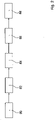
- FIG. 2 The illustrated flow chart of the method for controlling the patient treatment device 10 shows several method steps of the method. With regard to a time course, after a first step 80 of the method, a second step 82 of the method, then a third step 84 of the method, then a fourth step 86 of the method and finally a fifth step 88 of the method are carried out.
- the position data and/or the body shape data of the patient 14 are read.
- the patient data of the patient 14 are read.
- the position data and/or the body shape data and the patient data are linked in the third method step 84.
- processing data from the patient data and the position data and/or the body shape data are used to control the first treatment unit 16 for treating the first body region 20 of the patient 14 and for controlling at least the second treatment unit 18 for treating at least the second body region 22 of the patient 14.
- the processing data are processed by an individual control the first treatment unit 16 and the second treatment unit 18, in this case simultaneously.
Landscapes
- Health & Medical Sciences (AREA)
- Life Sciences & Earth Sciences (AREA)
- Engineering & Computer Science (AREA)
- Veterinary Medicine (AREA)
- Public Health (AREA)
- General Health & Medical Sciences (AREA)
- Animal Behavior & Ethology (AREA)
- Rehabilitation Therapy (AREA)
- Pain & Pain Management (AREA)
- Epidemiology (AREA)
- Surgery (AREA)
- Physical Education & Sports Medicine (AREA)
- Robotics (AREA)
- Biomedical Technology (AREA)
- Mechanical Engineering (AREA)
- Molecular Biology (AREA)
- Medical Informatics (AREA)
- Heart & Thoracic Surgery (AREA)
- Orthopedic Medicine & Surgery (AREA)
- Pathology (AREA)
- Biophysics (AREA)
- Physics & Mathematics (AREA)
- Rheumatology (AREA)
- Dermatology (AREA)
- Nuclear Medicine, Radiotherapy & Molecular Imaging (AREA)
- Percussion Or Vibration Massage (AREA)
Applications Claiming Priority (1)
| Application Number | Priority Date | Filing Date | Title |
|---|---|---|---|
| EP20216212 | 2020-12-21 |
Publications (1)
| Publication Number | Publication Date |
|---|---|
| EP4014946A1 true EP4014946A1 (fr) | 2022-06-22 |
Family
ID=74068230
Family Applications (1)
| Application Number | Title | Priority Date | Filing Date |
|---|---|---|---|
| EP20000488.5A Withdrawn EP4014946A1 (fr) | 2020-12-21 | 2020-12-23 | Dispositif de traitement des patients et procédé de commande d'un dispositif de traitement des patients |
Country Status (1)
| Country | Link |
|---|---|
| EP (1) | EP4014946A1 (fr) |
Cited By (1)
| Publication number | Priority date | Publication date | Assignee | Title |
|---|---|---|---|---|
| CN118845329A (zh) * | 2024-08-27 | 2024-10-29 | 鸿鉴(深圳)健康科技有限公司 | 一种双机械臂产后骨盆矫正设备 |
Citations (7)
| Publication number | Priority date | Publication date | Assignee | Title |
|---|---|---|---|---|
| JPH05261117A (ja) * | 1992-03-19 | 1993-10-12 | Toshiba Corp | 衝撃波治療装置 |
| US20170266077A1 (en) * | 2016-03-21 | 2017-09-21 | Christian Campbell Mackin | Robotic massage machine and method of use |
| CN108187250A (zh) * | 2018-02-07 | 2018-06-22 | 苏州元禾医疗器械有限公司 | 一种自动皮肤治疗装置 |
| US20200126297A1 (en) * | 2018-10-17 | 2020-04-23 | Midea Group Co., Ltd. | System and method for generating acupuncture points on reconstructed 3d human body model for physical therapy |
| US20200121556A1 (en) * | 2018-10-17 | 2020-04-23 | Midea Group Co., Ltd. | System and method for generating pressure point maps based on remote-controlled haptic-interactions |
| CN111671635A (zh) * | 2020-06-22 | 2020-09-18 | 北京水木东方医用机器人技术创新中心有限公司 | 一种基于结构光定位的冲击波机器人治疗系统 |
| CN108938363B (zh) * | 2018-08-09 | 2020-10-13 | 苏州元联科技创业园管理有限公司 | 一种双机械臂协同作业拔火罐床 |
-
2020
- 2020-12-23 EP EP20000488.5A patent/EP4014946A1/fr not_active Withdrawn
Patent Citations (7)
| Publication number | Priority date | Publication date | Assignee | Title |
|---|---|---|---|---|
| JPH05261117A (ja) * | 1992-03-19 | 1993-10-12 | Toshiba Corp | 衝撃波治療装置 |
| US20170266077A1 (en) * | 2016-03-21 | 2017-09-21 | Christian Campbell Mackin | Robotic massage machine and method of use |
| CN108187250A (zh) * | 2018-02-07 | 2018-06-22 | 苏州元禾医疗器械有限公司 | 一种自动皮肤治疗装置 |
| CN108938363B (zh) * | 2018-08-09 | 2020-10-13 | 苏州元联科技创业园管理有限公司 | 一种双机械臂协同作业拔火罐床 |
| US20200126297A1 (en) * | 2018-10-17 | 2020-04-23 | Midea Group Co., Ltd. | System and method for generating acupuncture points on reconstructed 3d human body model for physical therapy |
| US20200121556A1 (en) * | 2018-10-17 | 2020-04-23 | Midea Group Co., Ltd. | System and method for generating pressure point maps based on remote-controlled haptic-interactions |
| CN111671635A (zh) * | 2020-06-22 | 2020-09-18 | 北京水木东方医用机器人技术创新中心有限公司 | 一种基于结构光定位的冲击波机器人治疗系统 |
Cited By (1)
| Publication number | Priority date | Publication date | Assignee | Title |
|---|---|---|---|---|
| CN118845329A (zh) * | 2024-08-27 | 2024-10-29 | 鸿鉴(深圳)健康科技有限公司 | 一种双机械臂产后骨盆矫正设备 |
Similar Documents
| Publication | Publication Date | Title |
|---|---|---|
| CN108785033B (zh) | 一种按摩机械手、机械按摩组件以及人体定位方法 | |
| CN100398083C (zh) | 虚拟现实针灸穴位定位方法及系统 | |
| Lebedev | Brain-machine interfaces: an overview | |
| US11458326B2 (en) | System, apparatus and methods for image-guided, robotically delivered transcranial magnetic stimulation (irTMS) treatment | |
| JP7206032B2 (ja) | 筋膜を治療するマシン及び方法 | |
| Ginhoux et al. | A custom robot for transcranial magnetic stimulation: first assessment on healthy subjects | |
| Frolov et al. | Principles of neurorehabilitation based on the brain-computer interface and biologically adequate control of the exoskeleton | |
| JP2014526345A5 (fr) | ||
| JP2014526345A (ja) | 健康、機能および/または外観を改善するために肌および基層組織をトリートメントするシステムおよび方法 | |
| CN114795873A (zh) | 按摩系统及按摩装置 | |
| Contreras-Vidal et al. | Restoration of whole body movement: toward a noninvasive brain-machine interface system | |
| Abiri et al. | Brain computer interface for gesture control of a social robot: An offline study | |
| WO2015121695A1 (fr) | Traitement physiothérapeutique & dispositif d'analyse | |
| DE202019105412U1 (de) | Medizinische Vorrichtung zur Behandlung eines Gewebes | |
| KR101428526B1 (ko) | 자기장 프로브의 구동 궤적 및 패턴 조작이 가능한 베드형 자기장 치료 장치 | |
| Carey et al. | Hemispatial differences in visually guided aiming are neither hemispatial nor visual | |
| Chu et al. | Robot-assisted rehabilitation system based on SSVEP brain-computer interface for upper extremity | |
| US20250058150A1 (en) | Stereotactic device wearable by a patient for low-intensity focused-ultrasound neuromodulation | |
| Abiri et al. | Real-time brain machine interaction via social robot gesture control | |
| US20190307631A1 (en) | System, method and computer assisted media in use with a robotic therapy unit for accomplishing muscle lengthening conducted according to best practice protocols | |
| JP2025540976A (ja) | 自動鍼灸ロボット | |
| US20240122783A1 (en) | Robotic therapy unit with artificial intelligence integrated features for accomplishing muscle lengthening | |
| WO2023101629A1 (fr) | Système d'électrothérapie intelligent | |
| KR102343395B1 (ko) | 생체 자극 및 치료용 정위 장치 및 이를 이용한 정위 방법 | |
| Domingos et al. | Dry versus wet EEG electrode systems in motor imagery classification |
Legal Events
| Date | Code | Title | Description |
|---|---|---|---|
| PUAI | Public reference made under article 153(3) epc to a published international application that has entered the european phase |
Free format text: ORIGINAL CODE: 0009012 |
|
| STAA | Information on the status of an ep patent application or granted ep patent |
Free format text: STATUS: THE APPLICATION HAS BEEN PUBLISHED |
|
| AK | Designated contracting states |
Kind code of ref document: A1 Designated state(s): AL AT BE BG CH CY CZ DE DK EE ES FI FR GB GR HR HU IE IS IT LI LT LU LV MC MK MT NL NO PL PT RO RS SE SI SK SM TR |
|
| STAA | Information on the status of an ep patent application or granted ep patent |
Free format text: STATUS: THE APPLICATION IS DEEMED TO BE WITHDRAWN |
|
| 18D | Application deemed to be withdrawn |
Effective date: 20221223 |