EP4014992A1 - Parapoxvirus modifié à immunogénicité accrue - Google Patents
Parapoxvirus modifié à immunogénicité accrue Download PDFInfo
- Publication number
- EP4014992A1 EP4014992A1 EP20216201.2A EP20216201A EP4014992A1 EP 4014992 A1 EP4014992 A1 EP 4014992A1 EP 20216201 A EP20216201 A EP 20216201A EP 4014992 A1 EP4014992 A1 EP 4014992A1
- Authority
- EP
- European Patent Office
- Prior art keywords
- parapoxvirus
- vector
- ank
- modified
- antigen
- Prior art date
- Legal status (The legal status is an assumption and is not a legal conclusion. Google has not performed a legal analysis and makes no representation as to the accuracy of the status listed.)
- Withdrawn
Links
Images








Classifications
-
- A—HUMAN NECESSITIES
- A61—MEDICAL OR VETERINARY SCIENCE; HYGIENE
- A61K—PREPARATIONS FOR MEDICAL, DENTAL OR TOILETRY PURPOSES
- A61K39/00—Medicinal preparations containing antigens or antibodies
- A61K39/12—Viral antigens
- A61K39/275—Poxviridae, e.g. avipoxvirus
-
- A—HUMAN NECESSITIES
- A61—MEDICAL OR VETERINARY SCIENCE; HYGIENE
- A61K—PREPARATIONS FOR MEDICAL, DENTAL OR TOILETRY PURPOSES
- A61K39/00—Medicinal preparations containing antigens or antibodies
- A61K39/12—Viral antigens
-
- A—HUMAN NECESSITIES
- A61—MEDICAL OR VETERINARY SCIENCE; HYGIENE
- A61K—PREPARATIONS FOR MEDICAL, DENTAL OR TOILETRY PURPOSES
- A61K39/00—Medicinal preparations containing antigens or antibodies
- A61K39/12—Viral antigens
- A61K39/215—Coronaviridae, e.g. avian infectious bronchitis virus
-
- A—HUMAN NECESSITIES
- A61—MEDICAL OR VETERINARY SCIENCE; HYGIENE
- A61P—SPECIFIC THERAPEUTIC ACTIVITY OF CHEMICAL COMPOUNDS OR MEDICINAL PREPARATIONS
- A61P31/00—Antiinfectives, i.e. antibiotics, antiseptics, chemotherapeutics
- A61P31/12—Antivirals
- A61P31/20—Antivirals for DNA viruses
-
- C—CHEMISTRY; METALLURGY
- C07—ORGANIC CHEMISTRY
- C07K—PEPTIDES
- C07K14/00—Peptides having more than 20 amino acids; Gastrins; Somatostatins; Melanotropins; Derivatives thereof
- C07K14/005—Peptides having more than 20 amino acids; Gastrins; Somatostatins; Melanotropins; Derivatives thereof from viruses
-
- C—CHEMISTRY; METALLURGY
- C12—BIOCHEMISTRY; BEER; SPIRITS; WINE; VINEGAR; MICROBIOLOGY; ENZYMOLOGY; MUTATION OR GENETIC ENGINEERING
- C12N—MICROORGANISMS OR ENZYMES; COMPOSITIONS THEREOF; PROPAGATING, PRESERVING, OR MAINTAINING MICROORGANISMS; MUTATION OR GENETIC ENGINEERING; CULTURE MEDIA
- C12N15/00—Mutation or genetic engineering; DNA or RNA concerning genetic engineering, vectors, e.g. plasmids, or their isolation, preparation or purification; Use of hosts therefor
- C12N15/09—Recombinant DNA-technology
- C12N15/63—Introduction of foreign genetic material using vectors; Vectors; Use of hosts therefor; Regulation of expression
- C12N15/79—Vectors or expression systems specially adapted for eukaryotic hosts
- C12N15/85—Vectors or expression systems specially adapted for eukaryotic hosts for animal cells
- C12N15/86—Viral vectors
-
- A—HUMAN NECESSITIES
- A61—MEDICAL OR VETERINARY SCIENCE; HYGIENE
- A61K—PREPARATIONS FOR MEDICAL, DENTAL OR TOILETRY PURPOSES
- A61K39/00—Medicinal preparations containing antigens or antibodies
- A61K2039/51—Medicinal preparations containing antigens or antibodies comprising whole cells, viruses or DNA/RNA
- A61K2039/525—Virus
- A61K2039/5256—Virus expressing foreign proteins
-
- A—HUMAN NECESSITIES
- A61—MEDICAL OR VETERINARY SCIENCE; HYGIENE
- A61K—PREPARATIONS FOR MEDICAL, DENTAL OR TOILETRY PURPOSES
- A61K39/00—Medicinal preparations containing antigens or antibodies
- A61K2039/70—Multivalent vaccine
-
- C—CHEMISTRY; METALLURGY
- C12—BIOCHEMISTRY; BEER; SPIRITS; WINE; VINEGAR; MICROBIOLOGY; ENZYMOLOGY; MUTATION OR GENETIC ENGINEERING
- C12N—MICROORGANISMS OR ENZYMES; COMPOSITIONS THEREOF; PROPAGATING, PRESERVING, OR MAINTAINING MICROORGANISMS; MUTATION OR GENETIC ENGINEERING; CULTURE MEDIA
- C12N2710/00—MICROORGANISMS OR ENZYMES; COMPOSITIONS THEREOF; PROPAGATING, PRESERVING, OR MAINTAINING MICROORGANISMS; MUTATION OR GENETIC ENGINEERING; CULTURE MEDIA dsDNA viruses
- C12N2710/00011—Details
- C12N2710/20011—Papillomaviridae
- C12N2710/20022—New viral proteins or individual genes, new structural or functional aspects of known viral proteins or genes
-
- C—CHEMISTRY; METALLURGY
- C12—BIOCHEMISTRY; BEER; SPIRITS; WINE; VINEGAR; MICROBIOLOGY; ENZYMOLOGY; MUTATION OR GENETIC ENGINEERING
- C12N—MICROORGANISMS OR ENZYMES; COMPOSITIONS THEREOF; PROPAGATING, PRESERVING, OR MAINTAINING MICROORGANISMS; MUTATION OR GENETIC ENGINEERING; CULTURE MEDIA
- C12N2710/00—MICROORGANISMS OR ENZYMES; COMPOSITIONS THEREOF; PROPAGATING, PRESERVING, OR MAINTAINING MICROORGANISMS; MUTATION OR GENETIC ENGINEERING; CULTURE MEDIA dsDNA viruses
- C12N2710/00011—Details
- C12N2710/24011—Poxviridae
- C12N2710/24211—Parapoxvirus, e.g. Orf virus
- C12N2710/24221—Viruses as such, e.g. new isolates, mutants or their genomic sequences
-
- C—CHEMISTRY; METALLURGY
- C12—BIOCHEMISTRY; BEER; SPIRITS; WINE; VINEGAR; MICROBIOLOGY; ENZYMOLOGY; MUTATION OR GENETIC ENGINEERING
- C12N—MICROORGANISMS OR ENZYMES; COMPOSITIONS THEREOF; PROPAGATING, PRESERVING, OR MAINTAINING MICROORGANISMS; MUTATION OR GENETIC ENGINEERING; CULTURE MEDIA
- C12N2710/00—MICROORGANISMS OR ENZYMES; COMPOSITIONS THEREOF; PROPAGATING, PRESERVING, OR MAINTAINING MICROORGANISMS; MUTATION OR GENETIC ENGINEERING; CULTURE MEDIA dsDNA viruses
- C12N2710/00011—Details
- C12N2710/24011—Poxviridae
- C12N2710/24211—Parapoxvirus, e.g. Orf virus
- C12N2710/24222—New viral proteins or individual genes, new structural or functional aspects of known viral proteins or genes
-
- C—CHEMISTRY; METALLURGY
- C12—BIOCHEMISTRY; BEER; SPIRITS; WINE; VINEGAR; MICROBIOLOGY; ENZYMOLOGY; MUTATION OR GENETIC ENGINEERING
- C12N—MICROORGANISMS OR ENZYMES; COMPOSITIONS THEREOF; PROPAGATING, PRESERVING, OR MAINTAINING MICROORGANISMS; MUTATION OR GENETIC ENGINEERING; CULTURE MEDIA
- C12N2710/00—MICROORGANISMS OR ENZYMES; COMPOSITIONS THEREOF; PROPAGATING, PRESERVING, OR MAINTAINING MICROORGANISMS; MUTATION OR GENETIC ENGINEERING; CULTURE MEDIA dsDNA viruses
- C12N2710/00011—Details
- C12N2710/24011—Poxviridae
- C12N2710/24211—Parapoxvirus, e.g. Orf virus
- C12N2710/24241—Use of virus, viral particle or viral elements as a vector
- C12N2710/24243—Use of virus, viral particle or viral elements as a vector viral genome or elements thereof as genetic vector
-
- C—CHEMISTRY; METALLURGY
- C12—BIOCHEMISTRY; BEER; SPIRITS; WINE; VINEGAR; MICROBIOLOGY; ENZYMOLOGY; MUTATION OR GENETIC ENGINEERING
- C12N—MICROORGANISMS OR ENZYMES; COMPOSITIONS THEREOF; PROPAGATING, PRESERVING, OR MAINTAINING MICROORGANISMS; MUTATION OR GENETIC ENGINEERING; CULTURE MEDIA
- C12N2710/00—MICROORGANISMS OR ENZYMES; COMPOSITIONS THEREOF; PROPAGATING, PRESERVING, OR MAINTAINING MICROORGANISMS; MUTATION OR GENETIC ENGINEERING; CULTURE MEDIA dsDNA viruses
- C12N2710/00011—Details
- C12N2710/24011—Poxviridae
- C12N2710/24211—Parapoxvirus, e.g. Orf virus
- C12N2710/24271—Demonstrated in vivo effect
-
- C—CHEMISTRY; METALLURGY
- C12—BIOCHEMISTRY; BEER; SPIRITS; WINE; VINEGAR; MICROBIOLOGY; ENZYMOLOGY; MUTATION OR GENETIC ENGINEERING
- C12N—MICROORGANISMS OR ENZYMES; COMPOSITIONS THEREOF; PROPAGATING, PRESERVING, OR MAINTAINING MICROORGANISMS; MUTATION OR GENETIC ENGINEERING; CULTURE MEDIA
- C12N2760/00—MICROORGANISMS OR ENZYMES; COMPOSITIONS THEREOF; PROPAGATING, PRESERVING, OR MAINTAINING MICROORGANISMS; MUTATION OR GENETIC ENGINEERING; CULTURE MEDIA ssRNA viruses negative-sense
- C12N2760/00011—Details
- C12N2760/16011—Orthomyxoviridae
- C12N2760/16111—Influenzavirus A, i.e. influenza A virus
- C12N2760/16122—New viral proteins or individual genes, new structural or functional aspects of known viral proteins or genes
-
- C—CHEMISTRY; METALLURGY
- C12—BIOCHEMISTRY; BEER; SPIRITS; WINE; VINEGAR; MICROBIOLOGY; ENZYMOLOGY; MUTATION OR GENETIC ENGINEERING
- C12N—MICROORGANISMS OR ENZYMES; COMPOSITIONS THEREOF; PROPAGATING, PRESERVING, OR MAINTAINING MICROORGANISMS; MUTATION OR GENETIC ENGINEERING; CULTURE MEDIA
- C12N2760/00—MICROORGANISMS OR ENZYMES; COMPOSITIONS THEREOF; PROPAGATING, PRESERVING, OR MAINTAINING MICROORGANISMS; MUTATION OR GENETIC ENGINEERING; CULTURE MEDIA ssRNA viruses negative-sense
- C12N2760/00011—Details
- C12N2760/20011—Rhabdoviridae
- C12N2760/20111—Lyssavirus, e.g. rabies virus
- C12N2760/20122—New viral proteins or individual genes, new structural or functional aspects of known viral proteins or genes
-
- C—CHEMISTRY; METALLURGY
- C12—BIOCHEMISTRY; BEER; SPIRITS; WINE; VINEGAR; MICROBIOLOGY; ENZYMOLOGY; MUTATION OR GENETIC ENGINEERING
- C12N—MICROORGANISMS OR ENZYMES; COMPOSITIONS THEREOF; PROPAGATING, PRESERVING, OR MAINTAINING MICROORGANISMS; MUTATION OR GENETIC ENGINEERING; CULTURE MEDIA
- C12N2770/00—MICROORGANISMS OR ENZYMES; COMPOSITIONS THEREOF; PROPAGATING, PRESERVING, OR MAINTAINING MICROORGANISMS; MUTATION OR GENETIC ENGINEERING; CULTURE MEDIA ssRNA viruses positive-sense
- C12N2770/00011—Details
- C12N2770/20011—Coronaviridae
- C12N2770/20022—New viral proteins or individual genes, new structural or functional aspects of known viral proteins or genes
-
- C—CHEMISTRY; METALLURGY
- C12—BIOCHEMISTRY; BEER; SPIRITS; WINE; VINEGAR; MICROBIOLOGY; ENZYMOLOGY; MUTATION OR GENETIC ENGINEERING
- C12N—MICROORGANISMS OR ENZYMES; COMPOSITIONS THEREOF; PROPAGATING, PRESERVING, OR MAINTAINING MICROORGANISMS; MUTATION OR GENETIC ENGINEERING; CULTURE MEDIA
- C12N2770/00—MICROORGANISMS OR ENZYMES; COMPOSITIONS THEREOF; PROPAGATING, PRESERVING, OR MAINTAINING MICROORGANISMS; MUTATION OR GENETIC ENGINEERING; CULTURE MEDIA ssRNA viruses positive-sense
- C12N2770/00011—Details
- C12N2770/20011—Coronaviridae
- C12N2770/20034—Use of virus or viral component as vaccine, e.g. live-attenuated or inactivated virus, VLP, viral protein
-
- Y—GENERAL TAGGING OF NEW TECHNOLOGICAL DEVELOPMENTS; GENERAL TAGGING OF CROSS-SECTIONAL TECHNOLOGIES SPANNING OVER SEVERAL SECTIONS OF THE IPC; TECHNICAL SUBJECTS COVERED BY FORMER USPC CROSS-REFERENCE ART COLLECTIONS [XRACs] AND DIGESTS
- Y02—TECHNOLOGIES OR APPLICATIONS FOR MITIGATION OR ADAPTATION AGAINST CLIMATE CHANGE
- Y02A—TECHNOLOGIES FOR ADAPTATION TO CLIMATE CHANGE
- Y02A50/00—TECHNOLOGIES FOR ADAPTATION TO CLIMATE CHANGE in human health protection, e.g. against extreme weather
- Y02A50/30—Against vector-borne diseases, e.g. mosquito-borne, fly-borne, tick-borne or waterborne diseases whose impact is exacerbated by climate change
Definitions
- the present invention relates to a modified Parapoxvirus, preferably a Parapoxvirus vector, having an increased immunogenicity, a biological cell containing said modified Parapoxvirus, a pharmaceutical composition, preferably a vaccine, containing said modified Parapoxvirus vector and/or said cell, and a new use of said modified Parapoxvirus.
- Modified viruses e.g. viral vectors
- viral vector-based vaccines are promising to elicit cellular and humoral immune responses to any kind of antigen peptides.
- Parapoxvirus of the Poxviridae the Parapoxvirus ovis (Orf virus; ORFV) strain D1701-V comprises various properties particularly favorable for the development of a vector platform technology and was shown to facilitate various vaccination approaches.
- the invention satisfies these and other needs by providing a modified Parapoxvirus, preferably a Parapoxvirus vector, comprising at least one functional mutation in the viral open reading frame (ORF) encoding the 'Ankyrin Repeat 1' (ANK-1), wherein said vector comprises increased immunogenicity in comparison with the same vector without said functional mutation.
- a modified Parapoxvirus preferably a Parapoxvirus vector, comprising at least one functional mutation in the viral open reading frame (ORF) encoding the 'Ankyrin Repeat 1' (ANK-1), wherein said vector comprises increased immunogenicity in comparison with the same vector without said functional mutation.
- 'Parapoxvirus' is a genus of viruses in the family of Poxviridae and the subfamily of Chordopoxvirinae. Like all members of the family Poxviridae they are oval, relatively large, double-stranded DNA viruses. Parapoxviruses have a unique spiral coat that distinguishes them from other poxviruses. Parapoxviruses infect vertebrates, including a wide selection of mammals, and humans. According to the invention all kinds of Parapoxviruses are suitable, however, Orf viruses are of preference.
- 'modified' Parapoxvirus refers to a Parapox virus-derived virus which has been technically modified over the wild type counterpart.
- a 'Parapoxvirus vector' refers to a vector or plasmid based on or consisting of the Parapoxvirus genome, which is configured for the transfection of biological cells, preferably of mammalian and human cells, and further preferably also for the transport and/or the expression of a transgene or foreign gene in(to) biological cells.
- ANK-1 'Ankyrin Repeat 1'
- ANK-1 'Ankyrin Repeat 1'
- ANK-2 'Ankyrin Repeat 1'
- ORF123, -126 (ANK-1), -128 (ANK-2) and -129 (ANK-3) ORF123, -126 (ANK-1), -128 (ANK-2) and -129 (ANK-3)
- ANK proteins While plenty of cellular ANK proteins are described to be involved in cell-cell signaling, cytoskeleton integrity, regulation of transcription and cell cycle, inflammatory response, or protein transport, only little is known about the function of poxviral ANK proteins. It has been demonstrated that these four proteins harbor F-box-like motifs that may recruit specific substrates to SCF1 ubiquitin ligases via a substrate-binding domain and thereby exploit the cell's ubiquitin-proteasome machinery. One of these proteins, the ORF126 encoded ANK-1 protein, was shown to co-localize with the mitochondria via the essential ankyrin repeats 8 and 9. Nevertheless, the physiological consequences have not been demonstrated yet.
- HIF Hypoxia-inducible factor
- a 'functional mutation' refers to a genetic alteration of a gene and the encoded protein which, in comparison to the non-mutated wild type, results in a change of activity and/or function.
- the functional mutation includes, without being limited thereto, knockout, point, deletion, frame shift, and substitution mutations etc., which all result in the alteration of ANK-1 function, whether a dysfunctional ANK-1 will be the outcome or the expression of ANK-1 is suppressed, reduced or avoided, respectively.
- 'immunogenicity' is the ability of the Parapoxvirus vector to provoke an immune response in the body of an animal of human being, i.e. the ability to induce humoral and/or cell-mediated immune responses.
- the immunogenicity can be measured by various methods well known to the skilled person. An overview on such methods can be found in Madhwa et al. (2015), Immunogenicity assessment of biotherapeutic products: An overview of assays and their utility, Biologicals Vol. 43, Is. 5, pp. 298-306 .
- the inventors were able to realize that a Parapoxvirus vector having a functionally mutated, preferably inactivated ANK-1, is characterized by a particular solid and elevated immunogenicity in comparison with a non-mutated counterpart vector or wild type virus, respectively. Increased immunogenicity was demonstrated by the vector's ability to activate peripheral blood mononuclear cells, or to induce antigen-specific immune responses in vitro. At the same time, the inventors found that the modified Parapoxvirus or Parapoxvirus vector according to the invention still exhibits excellent growth behavior and has the capability of expressing trans- or foreign genes. The analyses performed by the inventors demonstrate a high potential for the design of vector-based vaccines.
- modified Parapoxvirus or Parapoxvirus vector according to the invention are also well-qualified for other applications, such as oncolytic virus or vector, immune stimulant, a tool for gene therapy or an inactivated virus, respectively.
- the functional mutation results in a reduction of the activity of ANK-1 over non-mutated ANK-1.
- This embodiment includes any kind of genetic alteration in the ORF encoding ANK-1 which results in a loss of function of ANK-1 (loss-of-function mutation) or, in comparison with the wild type counterpart, a significant reduction of ANK-1 expression or activity, respectively. Therefore, this embodiment encompasses a downregulation of ANK-1 function which need not be a complete inactivation. However, a complete inactivation or cativity reduction to zero of ANK-1 is preferred in an embodiment of the invention.
- the mutation includes, without being limited thereto, knockout, point, deletion, frame shift, and substitution mutations etc., which all result in the inactivation of ANK-1 function, whether a dysfunctional ANK-1 will be the outcome or the expression of ANK-1 is suppressed, reduced or avoided, respectively.
- the modified Parapoxvirus is a Parapoxvirus ovis ( Orf virus, ORFV) or the Parapoxvirus vector is a Parapoxvirus ovis ( Orf virus, ORFV) vector.
- the Parapoxvirus ovis or Orf virus is the prototype of the genus of the parapoxviruses and belongs to the family of the Poxviridae.
- ORFV are enveloped, complex dsDNA viruses having a morphology that reminds of a ball of wool and have an average size of approx. 260 x 160 nm. They comprise a linear DNA genome with high GC content and a size of approx. 130 to 150 kbp, the central region of which is delimited on both sides by ITR regions ("inverted terminal repeats") and ends in a hair-pin structure, which covalently links both DNA single strands to each other.
- ITR regions inverted terminal repeats
- ORFV has a variety of characteristics which makes it interesting for the production of recombinant vaccines and prefers it over other technologies.
- ORFV is characterized by a very narrow natural host tropism which includes sheep and goats.
- an inhibiting "preimmunity" against the vector in humans which is caused by a natural infection, as it can be observed in the most common viral vectors of the vaccinia and adenoviruses, can be almost excluded.
- the exceptionally weak and short-lived ORFV specific vector immunity allows a very effective booster and/or refreshing vaccination or immunization with ORFV based vaccines which are directed against further pathogens.
- said ORFV is of the strain D1701, preferably of the strain D1701-V.
- said ANK-1 is encoded by viral open reading frame 126 (ORF126), preferably said open reading frame (ORF) is located at the nucleotide positions nt 22.055 ⁇ 100 to nt 23.546 ⁇ 100.
- the particular open reading frame is provided as the target for inactivation, which in ORFV D1701 encodes the ANK-1.
- the skilled person therefore, receives detailed information of the place of mutation.
- the indicated nucleotide positions refer to a 31.805 nt comprising DNA sequence encoded by the right hand part of the ORFV D1701-V genome as determined by Rziha, H.-J., unpublished data as indicated in Figure 2b .
- a 'transgene' refers to a gene or open reading frame (ORF) which does not originate from the Parapoxvirus genome.
- a 'promoter' refers to such a nucleic acid section which allows the regulated expression of the transgene in the Parapoxvirus vector of the invention.
- it refers to an ORFV promoter, i.e. a promoter existing in the wild type ORFV genome or a promoter derived therefrom, or an artificial promoter, such as a poxvirus promoter, CMV promoter etc.
- This measure has the advantage that the virus or vector according to the invention is used as a genetic tool for the production of any foreign protein, such as an antigen. Together with the vector's excellent immunogenicity properties such embodiment improves the suitability of the virus or vector according to the invention as active substance or component of a vaccine composition.
- transgene-encoding nucleotide sequence is inserted into said ANK-1-encoding viral ORF, and/or, alternatively, said ANK-1-encoding viral ORF is replaced by said transgene encoding nucleotide sequence.
- the invention 'inserted into said ANK-1-encoding viral ORF' means that the ANK-1-encoding sequence or open reading frame, respectively, is deleted or opened-up at any position and the transgene-encoding sequence along with its promoter is inserted. Sections of the ANK-1-encoding sequence may or may not be removed by said procedure.
- the invention 'replaced by said transgene encoding nucleotide sequence' means that the entire ANK-1-encoding viral ORF is removed from the virus or vector and the sequence gap receives the transgene-encoding nucleotide sequence along with its promoter. This embodiment has the advantage that the insertion of the transgene-encoding nucleotide sequence provides for the functional mutation or inactivation of ANK-1.
- said modified Parapoxvirus or Parapoxvirus vector according to the invention comprises more than one transgene-encoding nucleotide sequence, preferably the number of transgene-encoding nucleotide sequences is selected from the group consisting of: 2, 3, 4 or more.
- the respective transgenes or transgene-encoding sequences can all be located in the ANK-1-encoding viral ORF.
- the various transgene-encoding sequences can also be located elsewhere at the same or different locations in the virus or vector genome or construct, respectively. In every insertion locus multiple foreign genes, preferably 2, 3, 4 or more, can be expressed.
- the transgene-encoding sequences can preferably be located in any of the viral ORFs 112, 119, 126, etc.
- This measure has the advantage that by means of a single modified Parapoxvirus or Parapoxvirus vector according to the invention multiple foreign or transgenes can be expressed.
- This embodiment is especially appropriate for the production of polyvalent vaccines which, at the same time, are directed against a number of antigenic structures.
- the promoter is an early ORF promoter, which preferably comprises a nucleotide sequence which is selected from: SEQ ID NO: 1 (eP1), SEQ ID NO: 2 (eP2), SEQ ID NO: 3 (optimized “early”), SEQ ID NO: 4 (7.5 kDa promoter), and SEQ ID NO: 5 (VEGF).
- promoters eP1 and eP2 were developed by the inventors and are published in Rziha, H.-J., et al. (2019; I.c.). The remaining promoters originate from the vaccinia virus and are described in other connections in Davidson and Moss (1989), Structure of Vacciniavirus late promoters, J. Mol. Biol., Vol. 210, pp- 771-784 , and Yang et al.
- This measure has the advantage that especially important antigens, in particular for the production of vaccines, are expressible via the modified Parapoxvirus or Parapoxvirus vector according to the invention.
- Another subject matter of the present invention relates to a biological cell, preferably a mammalian cell, further preferably a Vero cell, a HEK 293 cell or an antigen-presenting cell, containing the modified Parapoxvirus or Parapoxvirus vector according to the invention.
- Vero and HEK 293 cells are currently used for the production of the modified virus or vector according to the invention. In the host, however, the virus is been taken up be antigen-presenting cells.
- compositions preferably a pharmaceutical composition, containing the modified Parapoxvirus or Parapoxvirus vector of the invention and/or the cell of the invention, and a pharmaceutically acceptable carrier.
- the pharmaceutical composition can be preferably a vaccine, further preferably a polyvalent vaccine, an immune stimulant, a tool for gene therapy, etc.
- Pharmaceutically acceptable carriers are well known in the art. They include, without being limited thereto, stabilizers, binders, diluents, salts, adjuvants, buffers, lipids, etc. An overview can be found in Rowe (2020), Handbook of Pharmaceutical Excipients, 9th edition, Pharmaceutical Press .
- Another subject-matter of the invention relates to the use of a modified Parapoxvirus or a Parapoxvirus vector comprising at least one inactivating mutation in the viral open reading frame (ORF) encoding ANK-1 for the induction of an immune response in a living being, preferably a mammal or a human being.
- ORF viral open reading frame
- the present invention relates to the use of modified Parapoxviruses or Parapoxvirus vectors as a tool for the induction of an increased immune response in living beings and, in a further development, the expression of a trans- or foreign gene.
- the present invention also relates to the suitability of the open reading frame (ORF) encoding the 'Ankyrin Repeat 1' (ANK-1), such as ORF126 in Parapoxvirus ovis (Orf virus, ORFV) stain D1701 and D1701-V, as insertion site for transgene expression.
- ORF open reading frame
- novel deletion mutants were subjected to detailed characterization of the genetic stability of inserted AcGFP (GFP) reporter constructs, their growth behavior and capability to induce transgene expression in different target cells in vitro. Additionally, the mutants' immunogenicity was analyzed by its ability to activate peripheral blood mononuclear cells and antigen presenting cells, or to induce antigen-specific immune responses in vitro and in vivo. Taken together, the analyses performed demonstrate a high potential for the design of polyvalent, single vectored vaccines by integrating knockouts of ANK-1-encoding ORFs into the Parapoxvirus genome. Thus, the exchange of the open reading frame with the reporter gene GFP resulted not only in efficient replication of stable vectors expressing the desired transgene, but also attributed remarkable immunogenicity properties to the newly generated recombinants.
- GFP AcGFP
- the ORFV strain D1701-V was obtained from the bovine kidney cell line BK-KL3A adapted strain D1701-B and showed several genomic rearrangements after adaptation for growth in the African green monkey cell line Vero; Cottone, R., et al. (1998), Analysis of genomic rearrangement and subsequent gene deletion of the attenuated Orf virus strain D1701, Virus Research 56(1), p. 53-67 ; Rziha, H.J., et al. (2000), Generation of recombinant parapoxviruses: non-essential genes suitable for insertion and expression of foreign genes, Journal of Biotechnology 83(1), p. 137-145 .
- genomic rearrangements include the deletion of genes that are non-essential for the strain's replication and were shown suitable for transgene expression such as the deleted region D (D locus); Rziha, H.-J., et al. (2019; I.c. ). Furthermore, the angiogenic factor VEGF-E was predicted a major virulence determinant responsible for the induction of bloody lesions in sheep Rziha, H.J., et al. (2000; I.c .) and thus, used as insertion site to generate ORFV recombinants triggering long-lasting immunity with a high protective efficacy against several viral diseases in different hosts.
- ANK-1 'Ankyrin Repeat 1'
- ANK-1 belongs to a group of protein motives consisting of two alpha helices separated by loops, first discovered in signaling proteins in yeast Cdc10 and Drosophila Notch.
- Ankyrin Repeats (ANK) are ubiquitous throughout the kingdoms of life, however, absent in most viruses except the poxvirus family, specifically the Chordopoxviruses; see Herbert, M.H. et al. (2015), Poxviral ankyrin proteins. Viruses 7(2): p. 709-38 .
- the motif consists of tandem repeated consensus domains that are crucial to facilitate protein-protein interactions and is found in four proteins encoded by ORFV D1701-V (ORF123, -126 (ANK-1), -128 (ANK-2) and -129 (ANK-3)); see Rziha, H.-J., et al. (2019), Genomic Characterization of Orf Virus Strain D1701-V (Parapoxvirus) and Development of Novel Sites for Multiple Transgene Expression. Viruses 11(2): p. 127 ; and Rziha, H.J., et al.
- transgenes synthesized and obtained from Invitrogen were cloned into transfer plasmids. Stable integration of transgenes into the ORFV genome was accomplished by homologous recombination between the transfer plasmid and the genomic DNA of the parental virus following transfection by nucleofection and subsequent infection of Vero cells.
- the cell pellet was re-suspended in 100 ⁇ l transfection solution (transfection supplement and CLB transfection buffer of the Amaxa transfection kit mixed in a ratio of 1:4.5), supplemented with 2 ⁇ g plasmid DNA and transferred into a transfection cuvette.
- the CLB Transfection Device was used for transfection.
- nucleofected cells were re-suspended in NF stop solution and transferred into a T25 cell culture flask containing 6 ml pre-warmed Vero cell medium using a Pasteur pipette.
- Homologous recombination is an event occurring in a ratio of approximately 1:10000 between the insert of the transfer plasmid and the target region in the ORFV genome. To select for this rare event and to separate the recombinant ORFVs from parental viruses, different selection methods can be used.
- FACS fluorescence activated cell sorting
- Single cell FACS sorting was performed into a 96-well plate containing 10 4 Vero cells per well in 150 ⁇ l Vero cell medium using the BD FACSjazz (Biosciences). After 72 h of incubation at 37 °C and 5% CO 2 , wells showing single virus plaques of recombinant ORFV could be picked for further propagations and analyses.
- PBMCs Peripheral blood mononuclear cells
- the blood was diluted with PBS to a total volume of 100 ml.
- 4 x 15 ml Ficoll in 50 ml tubes were overlaid with 25 ml of diluted blood each and centrifuged at 700 x g and RT for 20 min.
- Leukocytes which could be identified by the formation of a white layer after density gradient centrifugation, were transferred into two 50 ml tubes and each were supplemented with PBS up to a volume of 50 ml.
- the cell pellets were re-suspended in 50 ml PBS and centrifuged at 300 x g and RT for 10 min.
- PBMCs were merged and supplemented with PBS up to a volume of 50 ml, and the cell number was determined.
- PBMCs peripheral blood mononuclear cells
- PBMCs peripheral blood mononuclear cells
- RT x g and RT for 10 min
- the pellet was re-suspended in 4 ml PBE and 100 ⁇ l of ⁇ -CD14 MicroBeads.
- the suspension was incubated at 4°C for 15 min and loaded onto a LS column equilibrated with PBE.
- the column was washed three times with 3 ml PBE before the CD14+ monocytes could be eluted from the column with 5 ml PBE and counted.
- the differentiation of purified monocytes to dendritic cells was carried out for five days by the stimulation with 86 ng/ml GM-CSF and 10 ng/ml IL-4 at 37 °C and 5% CO 2 .
- the viability and infection rates, as well as the expression of surface and intracellular molecules was analyzed using the BD LSRFortessa flow cytometry system (BD Biosciences).
- the preparation of samples and staining of cells with fluorescence-labeled antibodies was carried out in 96-well U-bottom plates, while centrifugation occurred at 4°C and 400 x g for 5 min.
- For the determination of infection rates cells were washed twice in 200 ⁇ l PFEA, and were re-suspended in 50 ⁇ l PFEA or optionally fixed for FACS analyses.
- Multimeres are frequently used to identify and quantify antigen-specific T cells. Tetramers consist of four recombinant MHC molecules conjugated to a fluorescently labeled streptavidin complex. In contrast, dextramers consist of a dextran backbone that carries several fluorophores and MHC molecules. Multimeres can be loaded with peptides of interest to form peptide-MHC complexes recognized by specific T cells, and thus, be detected by flow cytometry. For this, cells were washed twice with 200 ⁇ l of PBS and re-suspended in 50 ⁇ l of tetramer solution or PBS, respectively.
- PE-conjugated HLA tetramers Prior to staining with 50 ⁇ l of tetramer solution, PE-conjugated HLA tetramers were mixed 1:50 with tetramer buffer and centrifuged at 13.000 x g for 10 min. Staining with dextramers followed the same procedure by mixing dextramers in a ratio of 1:10 with PBS. The incubation was carried out at RT for 30 min in the dark.
- Zombie Aqua staining was determined by Zombie Aqua staining.
- Zombie Aqua is an amine-reactive fluorescent dye that cannot penetrate live cells but enters cells with compromised membranes. Therefore, it can be used to differentiate between live and dead mammalian cells.
- Zombie Aqua staining cells were washed twice with 200 ⁇ l PBS and re-suspended in 50 ⁇ l of Zombie Aqua diluted 1:400 in PBS for 30 min at 4°C in the dark.
- cells were washed twice with 200 ⁇ l PFEA, re-suspended in 50 ⁇ l of freshly prepared antibody mix in PFEA and incubated for 30 min at 4 °C in the dark.
- the cells were treated with 10 ⁇ g/ml Brefeldin A to prevent secretion of proteins and stimulated with respective synthetic peptides for 12-14 h.
- Prior to intracellular cytokine staining cells were washed twice with 200 ⁇ l PFEA and permeabilized by incubation with 50 ⁇ l Cytofix/Cytoperm for 30 min at 4 °C in the dark.
- cells were re-suspended and washed twice with 200 ⁇ l Permwash and subsequently stained with 50 ⁇ l antibody mix in Permwash for 30 min at 4 °C in the dark.
- PFU plaque forming units
- the ELISPOT assay was performed using the mouse IFN- ⁇ ELISpot PLUS kit (ALP) (Catalog #: 3321-4APW-10, Mabtech, Schweden) according manufacturer's instructions. 2 ⁇ 105 splenocytes per well were stimulated with the overlapping pools of S1 peptides with the final concentration of 2 ⁇ g/ml (Catalog #: 130-127-041, Miltenyi, Germany) for 21 h. Developed spots were automatically counted using an ImmunoSpot S5 analyzer (Cellular Technology Limited, USA) and ImmunoSpot software.
- ALP mouse IFN- ⁇ ELISpot PLUS kit
- 2 ⁇ 105 splenocytes per well were stimulated with the overlapping pools of S1 peptides with the final concentration of 2 ⁇ g/ml (Catalog #: 130-127-041, Miltenyi, Germany) for 21 h. Developed spots were automatically counted using an ImmunoSpot S5 analyzer (Cellular Technology Limited, USA) and ImmunoSpot software
- the new ORFV recombinant was generated as described in the methods in detail.
- the plasmid pDel126-2-AcGFP was transferred into Vero cells by nucleofection, which were subsequently infected with the parental virus V12-Cherry. Due to homologous sequences in the ORFV genome and the insert flanking regions of the transfer plasmid, homologous recombination led to stable exchange of ORF126 by GFP in the ORFV D1701-V genome ( Figure 2 ).
- the exact position of ORF126 in the right-hand part of the 31.805 nt comprising DNA sequence of the D1701-V (Rziha, H.-J., unpublished, Figure 2B ) is shown in the following table:
- new ORFV recombinants could be isolated from infected GFP and mCherry expressing Vero cells selected by FACS sorting and limiting dilutions.
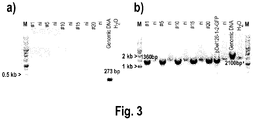
- DNA isolation followed by insert and locus specific PCR typing allowed monitoring of the genetic homogeneity of the purified ORFV recombinants as shown in Fig. 3 .
- 126 and d126 PCR proved both, the deletion of the ORF126 and exchange with the GFP encoding sequence.
- the new ORFV recombinants were propagated in large scale as described above.
- ORFV deletion mutants could also be generated, which only led to the deletion of ORF126 without the insertion of GFP and thus, a loss of functional ORF126 gene product leading to enhanced immunogenicity compared to the parental virus.
- the corresponding transfer plasmid and sequence can be found in Figure 4 and SEQ ID NO: 8.
- GFP is stably inserted into the new Del-Sites
- results demonstrate frequencies of less than 1% single GFP and mCherry expressing plaques using VCh126GFP.
- the results presented suggest that GFP is stably expressed in Vero cells infected with the new Del-site recombinant and can be detected throughout 20 passages in the predicted genomic locus.
- the genetic stability of both, GFP and mCherry in the new Del-site or the vegf-locus, respectively, was validated in ten serial passages studying the fluorescence of infected Vero cells. Since at least 99 % of all counted lytic plaques infected with each new Del-site recombinant expressed GFP and mCherry simultaneously after ten passages, these results indicate genetic stability of the examined genomic loci.
- Vero cells were infected with the new Del-site recombinant VCh126GFP leading to infection rates of approximately 20-25% after 24 h. Infected cells were washed and harvested 2 h after adsorption (designated 0h) or 6 h, 24 h, 48 h, 72 h, 96 h and 120 h post infection. Virus lysates were titrated on Vero cells to determine the number of infectious particles measured in plaque forming units per ml (PFU/ml). The experiment was performed three times for each recombinant and the results are shown in Figure 7A-I .
- VCh126GFP The growth characteristics of Del-site recombinant VCh126GFP resembles the ones obtained for the reference virus VChD12GFP reaching comparable final titers of approximately 10 7 PFU/ml after 120 hpi. Notably, the growth curve of VCh126GFP indicates lower virus input as used for the growth curve of VChD12GFP and showed only slightly diminished final virus titers compared to the control throughout the experiment ( Figure 7 ). Nevertheless, these results suggest VCh126GFP to be replication efficient as it was able to produce infectious progeny in the permissive cell line Vero.
- the reporter gene GFP integrated into the ORF126 and mCherry inserted into the vegf-locus were used to compare their expression strength after ORFV infection of Vero cells, the monocytic cell line THP-1 and of human primary monocyte derived dendritic cells (moDCs).
- moDCs human primary monocyte derived dendritic cells
- cells were seeded and infected VCh126GFP and the reference virus VChD12GFP for 24 h or 48 h.
- FACS analysis was performed and geometric mean fluorescent intensities (MFI) of GFP and mCherry expressed in the cells were determined.
- MFI geometric mean fluorescent intensities
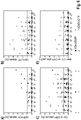
- the expression strength of GFP and mCherry in monocytic THP-1 cells was analyzed in four independent experiments including three to six replicates 24 h after infection, and in two independent experiments including triplicates 48 h after infection, respectively.
- significantly increased mCherry could be detected for VCH126GFP infected THP1 cells compared to those infected with the reference virus after 48 h ( Figure 9A ).
- the GFP expression was significantly accelerated for VCh126GFP compared to VChD12GFP after 24 h and 48 as demonstrated in Figure 9B .
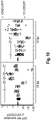
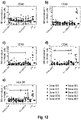
- the activation marker expression was determined in infected moDCs derived from ten healthy donors. Infection rates of moDCs from different donors ranged from 5% - 20%, which in mean leveled between 10% to 15% ( Figure 11A ). The mean viability of infected moDCs did not correlate with infection rates and leveled at approximately 60%. To compare these data, the expression of activation markers was normalized to the geometric mean fluorescence intensity obtained from not infected cells. The results shown in Figure 12A and B indicate that the relative expression of the activation markers CD40 and CD80 did not differ significantly upon infection with the reference virus VChD12GFP or VCh126GFP.
- mice receiving prime-boost immunization with an ORF126 knockout mutant exhibited highest numbers of IFN- ⁇ producing T-cells compared to two other groups ( Figure 13C ).
- SEQ ID NO: 1 Nucleotide sequence of eP1 promoter
- SEQ ID NO: 2 Nucleotide sequence of eP2 promoter
- SEQ ID NO: 3 Nucleotide sequence of "optimized early" promoter
- SEQ ID NO: 4 Nucleotide sequence of 7.5 kDa promoter
- SEQ ID NO: 5 Nucleotide sequence of VEGF promoter
- SEQ ID NO: 6 Nucleotide sequence of D1701-V ORF125 - 126 - 127 (nt 1 - 2380) ORF125: nt 1 - 519 ORF126: nt 629 - 2119 ORF120: nt 2204 - 2758
- SEQ ID NO: 7 Nucleotide sequence pDel 126-4-2-AcGFP (nt 1 - 2057) HL (homolog left arm) ORF125: nt 1 - 447
- Early promoter eP2 nt 632
Landscapes
- Health & Medical Sciences (AREA)
- Life Sciences & Earth Sciences (AREA)
- Chemical & Material Sciences (AREA)
- Virology (AREA)
- Genetics & Genomics (AREA)
- General Health & Medical Sciences (AREA)
- Engineering & Computer Science (AREA)
- Organic Chemistry (AREA)
- Microbiology (AREA)
- Medicinal Chemistry (AREA)
- Biotechnology (AREA)
- General Engineering & Computer Science (AREA)
- Wood Science & Technology (AREA)
- Veterinary Medicine (AREA)
- Animal Behavior & Ethology (AREA)
- Biomedical Technology (AREA)
- Public Health (AREA)
- Pharmacology & Pharmacy (AREA)
- Zoology (AREA)
- Bioinformatics & Cheminformatics (AREA)
- Immunology (AREA)
- Epidemiology (AREA)
- Mycology (AREA)
- Molecular Biology (AREA)
- Biochemistry (AREA)
- Biophysics (AREA)
- Plant Pathology (AREA)
- Physics & Mathematics (AREA)
- Communicable Diseases (AREA)
- Pulmonology (AREA)
- Chemical Kinetics & Catalysis (AREA)
- General Chemical & Material Sciences (AREA)
- Nuclear Medicine, Radiotherapy & Molecular Imaging (AREA)
- Oncology (AREA)
- Gastroenterology & Hepatology (AREA)
- Proteomics, Peptides & Aminoacids (AREA)
- Micro-Organisms Or Cultivation Processes Thereof (AREA)
- Medicines Containing Antibodies Or Antigens For Use As Internal Diagnostic Agents (AREA)
- Medicines Containing Material From Animals Or Micro-Organisms (AREA)
- Medicines That Contain Protein Lipid Enzymes And Other Medicines (AREA)
Priority Applications (15)
| Application Number | Priority Date | Filing Date | Title |
|---|---|---|---|
| EP20216201.2A EP4014992A1 (fr) | 2020-12-21 | 2020-12-21 | Parapoxvirus modifié à immunogénicité accrue |
| EP21835761.4A EP4153230A1 (fr) | 2020-12-21 | 2021-12-14 | Parapoxvirus modifié ayant une immunogénicité accrue |
| AU2021408378A AU2021408378A1 (en) | 2020-12-21 | 2021-12-14 | Modified parapoxvirus having increased immunogenicity |
| PCT/EP2021/085775 WO2022136034A1 (fr) | 2020-12-21 | 2021-12-14 | Parapoxvirus modifié ayant une immunogénicité accrue |
| KR1020237024397A KR20230122631A (ko) | 2020-12-21 | 2021-12-14 | 증가된 면역원성을 갖는 변형된 파라폭스바이러스 |
| IL303877A IL303877A (en) | 2020-12-21 | 2021-12-14 | A modified perfox virus with increased immunogenicity |
| MX2023007376A MX2023007376A (es) | 2020-12-21 | 2021-12-14 | Parapoxvirus modificado que tiene inmunogenicidad incrementada. |
| US18/258,508 US20240043870A1 (en) | 2020-12-21 | 2021-12-14 | Modified parapoxvirus having increased immunogenicity |
| CN202180085953.0A CN117015610A (zh) | 2020-12-21 | 2021-12-14 | 免疫原性增强的经修饰的副痘病毒 |
| JP2023538102A JP2024500174A (ja) | 2020-12-21 | 2021-12-14 | 増加した免疫原性を有する改変パラポックスウイルス |
| CA3202009A CA3202009A1 (fr) | 2020-12-21 | 2021-12-14 | Parapoxvirus modifie ayant une immunogenicite accrue |
| ARP210103526A AR124385A1 (es) | 2020-12-21 | 2021-12-16 | Parapoxvirus modificado que tiene una inmunogenicidad aumentada |
| TW110147378A TWI908954B (zh) | 2020-12-21 | 2021-12-17 | 具有提升免疫原性之經修飾副痘病毒(三) |
| CL2023001846A CL2023001846A1 (es) | 2020-12-21 | 2023-06-20 | Parapoxvirus modificado que tiene inmunogenicidad incrementada |
| CONC2023/0008047A CO2023008047A2 (es) | 2020-12-21 | 2023-06-21 | Parapoxvirus modificado que tiene inmunogenicidad incrementada |
Applications Claiming Priority (1)
| Application Number | Priority Date | Filing Date | Title |
|---|---|---|---|
| EP20216201.2A EP4014992A1 (fr) | 2020-12-21 | 2020-12-21 | Parapoxvirus modifié à immunogénicité accrue |
Publications (1)
| Publication Number | Publication Date |
|---|---|
| EP4014992A1 true EP4014992A1 (fr) | 2022-06-22 |
Family
ID=73856482
Family Applications (2)
| Application Number | Title | Priority Date | Filing Date |
|---|---|---|---|
| EP20216201.2A Withdrawn EP4014992A1 (fr) | 2020-12-21 | 2020-12-21 | Parapoxvirus modifié à immunogénicité accrue |
| EP21835761.4A Pending EP4153230A1 (fr) | 2020-12-21 | 2021-12-14 | Parapoxvirus modifié ayant une immunogénicité accrue |
Family Applications After (1)
| Application Number | Title | Priority Date | Filing Date |
|---|---|---|---|
| EP21835761.4A Pending EP4153230A1 (fr) | 2020-12-21 | 2021-12-14 | Parapoxvirus modifié ayant une immunogénicité accrue |
Country Status (14)
| Country | Link |
|---|---|
| US (1) | US20240043870A1 (fr) |
| EP (2) | EP4014992A1 (fr) |
| JP (1) | JP2024500174A (fr) |
| KR (1) | KR20230122631A (fr) |
| CN (1) | CN117015610A (fr) |
| AR (1) | AR124385A1 (fr) |
| AU (1) | AU2021408378A1 (fr) |
| CA (1) | CA3202009A1 (fr) |
| CL (1) | CL2023001846A1 (fr) |
| CO (1) | CO2023008047A2 (fr) |
| IL (1) | IL303877A (fr) |
| MX (1) | MX2023007376A (fr) |
| TW (1) | TWI908954B (fr) |
| WO (1) | WO2022136034A1 (fr) |
Cited By (1)
| Publication number | Priority date | Publication date | Assignee | Title |
|---|---|---|---|---|
| WO2023233007A1 (fr) * | 2022-06-02 | 2023-12-07 | Eberhard Karls Universität Tübingen Medizinische Fakultät | Vaccins contre le sars-cov-2 et leurs utilisations |
Family Cites Families (3)
| Publication number | Priority date | Publication date | Assignee | Title |
|---|---|---|---|---|
| WO2012122649A1 (fr) * | 2011-03-15 | 2012-09-20 | Ottawa Hospital Research Institute | Virus orf recombinant |
| DE102015111756A1 (de) * | 2015-07-20 | 2017-01-26 | Eberhard Karls Universität Tübingen Medizinische Fakultät | Rekombinanter Orf-Virus-Vektor |
| SG11202006457YA (en) * | 2018-01-05 | 2020-08-28 | Ottawa Hospital Res Inst | Modified orthopoxvirus vectors |
-
2020
- 2020-12-21 EP EP20216201.2A patent/EP4014992A1/fr not_active Withdrawn
-
2021
- 2021-12-14 KR KR1020237024397A patent/KR20230122631A/ko active Pending
- 2021-12-14 WO PCT/EP2021/085775 patent/WO2022136034A1/fr not_active Ceased
- 2021-12-14 CA CA3202009A patent/CA3202009A1/fr active Pending
- 2021-12-14 JP JP2023538102A patent/JP2024500174A/ja active Pending
- 2021-12-14 IL IL303877A patent/IL303877A/en unknown
- 2021-12-14 CN CN202180085953.0A patent/CN117015610A/zh active Pending
- 2021-12-14 MX MX2023007376A patent/MX2023007376A/es unknown
- 2021-12-14 EP EP21835761.4A patent/EP4153230A1/fr active Pending
- 2021-12-14 AU AU2021408378A patent/AU2021408378A1/en active Pending
- 2021-12-14 US US18/258,508 patent/US20240043870A1/en active Pending
- 2021-12-16 AR ARP210103526A patent/AR124385A1/es unknown
- 2021-12-17 TW TW110147378A patent/TWI908954B/zh active
-
2023
- 2023-06-20 CL CL2023001846A patent/CL2023001846A1/es unknown
- 2023-06-21 CO CONC2023/0008047A patent/CO2023008047A2/es unknown
Non-Patent Citations (18)
| Title |
|---|
| BROYLES: "Vaccinia virus transcription", J. GENE. VIROL., vol. 84, no. 9, 2003, pages 2293 - 2303 |
| CHEN, D.Y. ET AL.: "Ankyrin Repeat Proteins of Orf Virus Influence the Cellular Hypoxia Response Pathway", J. VIROL., vol. 91, no. 1, 2017 |
| CUNINGHAME, S., R. ET AL.: "Hypoxia-inducible factor 1 and its role in viral carcino-genesis", VIROLOGY, no. 456-457, 2014, pages 370 - 83 |
| DAVIDSONMOSS: "Structure of Vacciniavirus late promoters", J. MOL. BIOL., vol. 210, 1989, pages 771 - 784 |
| HANNS-JOACHIM RZIHA ET AL: "Genomic Characterization of Orf Virus Strain D1701-V (Parapoxvirus) and Development of Novel Sites for Multiple Transgene Expression", VIRUSES, vol. 11, no. 2, 30 January 2019 (2019-01-30), pages 127, XP055557139, DOI: 10.3390/v11020127 * |
| HERBERT, M.H. ET AL.: "Poxviral ankyrin proteins", VIRUSES, vol. 7, no. 2, 2015, pages 709 - 38 |
| LACEK KRZYSZTOF ET AL: "Orf virus (ORFV) ANK-1 protein mitochondrial localization is mediated by ankyrin repeat motifs", VIRUS GENES., vol. 49, no. 1, 1 August 2014 (2014-08-01), US, pages 68 - 79, XP055803554, ISSN: 0920-8569, Retrieved from the Internet <URL:https://link.springer.com/content/pdf/10.1007/s11262-014-1069-5.pdf> DOI: 10.1007/s11262-014-1069-5 * |
| LACEK, K. ET AL.: "Orf virus (ORFV) ANK-1 protein mitochondrial localization is mediated by ankyrin repeat motifs", VIRUS GENES, vol. 49, no. 1, 2014, pages 68 - 79 |
| MADHWA ET AL.: "Immunogenicity assessment of biotherapeutic products: An overview of assays and their utility", BIOLOGICALS, vol. 43, no. 5, 2015, pages 298 - 306, XP029269961, DOI: 10.1016/j.biologicals.2015.06.004 |
| MOSAVI, L.K. ET AL.: "The ankyrin repeat as molecular architecture for protein recognition", PROTEIN SCI, vol. 13, no. 6, 2004, pages 1435 - 48, XP002499442, DOI: 10.1110/PS.03554604 |
| REGUZOVA ALENA ET AL: "Orf Virus-Based Vaccine Vector D1701-V Induces Strong CD8+ T Cell Response against the Transgene but Not against ORFV-Derived Epitopes", VACCINES, vol. 8, no. 2, 10 June 2020 (2020-06-10), pages 295, XP055802966, DOI: 10.3390/vaccines8020295 * |
| ROWE: "Handbook of Pharmaceutical Excipients", 2020, PHARMACEUTICAL PRESS |
| RZIHA, H.J. ET AL.: "Generation of recombinant parapoxviruses: non-essential genes suitable for insertion and expression of foreign genes", JOURNAL OF BIOTECHNOLOGY, vol. 83, no. 1, 2000, pages 137 - 145, XP004212161, DOI: 10.1016/S0168-1656(00)00307-2 |
| RZIHA, H.-J. ET AL.: "Genomic Characterization of Orf Virus Strain D1701-V (Parapoxvirus) and Development of Novel Sites for Multiple Transgene Expression", VIRUSES, vol. 11, no. 2, 2019, pages 127, XP055557139, DOI: 10.3390/v11020127 |
| RZIHA, H.J. ET AL.: "Relatedness and heterogeneity at the near-terminal end of the genome of a parapoxvirus bovis 1 strain (B177) compared with parapoxvirus ovis (Orf virus", J. GEN. VIROL., vol. 84, 2003, pages 1111 - 6 |
| SONNBERG, S. ET AL.: "Poxvirus ankyrin repeat proteins are a unique class of F-box proteins that associate with cellular SCF1 ubiquitin ligase complexes", PROC NATL ACAD SCI U S A, vol. 105, no. 31, 2008, pages 10955 - 60 |
| VERO; COTTONE, R. ET AL.: "Analysis of genomic rearrangement and subsequent gene deletion of the attenuated Orf virus strain D1701", VIRUS RESEARCH, vol. 56, no. 1, 1998, pages 53 - 67 |
| YANG ET AL.: "Genome-wide analysis of the 5' and 3' ends of Vaccinia Virus early mRNAs delineates regulatory sequences of annotated and anomalous transcripts", J. VIROLOGY, vol. 85, no. 12, 2011, pages 5897 - 5909 |
Cited By (1)
| Publication number | Priority date | Publication date | Assignee | Title |
|---|---|---|---|---|
| WO2023233007A1 (fr) * | 2022-06-02 | 2023-12-07 | Eberhard Karls Universität Tübingen Medizinische Fakultät | Vaccins contre le sars-cov-2 et leurs utilisations |
Also Published As
| Publication number | Publication date |
|---|---|
| CL2023001846A1 (es) | 2024-01-12 |
| JP2024500174A (ja) | 2024-01-04 |
| US20240043870A1 (en) | 2024-02-08 |
| EP4153230A1 (fr) | 2023-03-29 |
| CO2023008047A2 (es) | 2023-07-10 |
| WO2022136034A1 (fr) | 2022-06-30 |
| TW202241499A (zh) | 2022-11-01 |
| MX2023007376A (es) | 2023-07-04 |
| KR20230122631A (ko) | 2023-08-22 |
| IL303877A (en) | 2023-08-01 |
| TWI908954B (zh) | 2025-12-21 |
| AU2021408378A1 (en) | 2023-06-29 |
| CA3202009A1 (fr) | 2022-06-30 |
| AR124385A1 (es) | 2023-03-22 |
| CN117015610A (zh) | 2023-11-07 |
Similar Documents
| Publication | Publication Date | Title |
|---|---|---|
| JP2011234731A (ja) | ポックスウイルスゲノムへの異種遺伝子の組込みのためのベクター | |
| CN114657154B (zh) | 一种羊传染性脓疱病毒减毒株的制备方法及其应用 | |
| US20240392257A1 (en) | Utilization of Micro-RNA for Downregulation of Cytotoxic Transgene Expression by Modified Vaccinia Virus Ankara (MVA) | |
| AU2016294855A1 (en) | Recombinant Orf virus vector | |
| US20250304995A1 (en) | Modified parapoxvirus having increased immunogenicity | |
| US20240043870A1 (en) | Modified parapoxvirus having increased immunogenicity | |
| TWI908952B (zh) | 具有提升免疫原性之經修飾副痘病毒(一) | |
| EP3957322A1 (fr) | Vecteur de poxviridae recombinant exprimant des molécules co-stimulatrices | |
| Salomon | Use of novel insertion sites for the development of polyvalent ORFV D1701-V vectored vaccines | |
| EA041611B1 (ru) | Рекомбинантный orf-вирусный вектор |
Legal Events
| Date | Code | Title | Description |
|---|---|---|---|
| PUAI | Public reference made under article 153(3) epc to a published international application that has entered the european phase |
Free format text: ORIGINAL CODE: 0009012 |
|
| STAA | Information on the status of an ep patent application or granted ep patent |
Free format text: STATUS: REQUEST FOR EXAMINATION WAS MADE |
|
| 17P | Request for examination filed |
Effective date: 20201221 |
|
| AK | Designated contracting states |
Kind code of ref document: A1 Designated state(s): AL AT BE BG CH CY CZ DE DK EE ES FI FR GB GR HR HU IE IS IT LI LT LU LV MC MK MT NL NO PL PT RO RS SE SI SK SM TR |
|
| RAP1 | Party data changed (applicant data changed or rights of an application transferred) |
Owner name: PRIME VECTOR TECHNOLOGIES GMBH |
|
| STAA | Information on the status of an ep patent application or granted ep patent |
Free format text: STATUS: THE APPLICATION IS DEEMED TO BE WITHDRAWN |
|
| 18D | Application deemed to be withdrawn |
Effective date: 20221223 |