EP4015044B1 - Procédé de préparation d'un énantiomère de composé sulfoxyde et système de préparation d'un énantiomère - Google Patents
Procédé de préparation d'un énantiomère de composé sulfoxyde et système de préparation d'un énantiomère Download PDFInfo
- Publication number
- EP4015044B1 EP4015044B1 EP20858771.7A EP20858771A EP4015044B1 EP 4015044 B1 EP4015044 B1 EP 4015044B1 EP 20858771 A EP20858771 A EP 20858771A EP 4015044 B1 EP4015044 B1 EP 4015044B1
- Authority
- EP
- European Patent Office
- Prior art keywords
- enantiomer
- group
- optical resolution
- sulfoxide compound
- light
- Prior art date
- Legal status (The legal status is an assumption and is not a legal conclusion. Google has not performed a legal analysis and makes no representation as to the accuracy of the status listed.)
- Active
Links
Images


Classifications
-
- C—CHEMISTRY; METALLURGY
- C07—ORGANIC CHEMISTRY
- C07D—HETEROCYCLIC COMPOUNDS
- C07D279/00—Heterocyclic compounds containing six-membered rings having one nitrogen atom and one sulfur atom as the only ring hetero atoms
- C07D279/10—1,4-Thiazines; Hydrogenated 1,4-thiazines
- C07D279/14—1,4-Thiazines; Hydrogenated 1,4-thiazines condensed with carbocyclic rings or ring systems
- C07D279/18—[b, e]-condensed with two six-membered rings
- C07D279/34—[b, e]-condensed with two six-membered rings with hetero atoms directly attached to the ring sulfur atom
-
- A—HUMAN NECESSITIES
- A61—MEDICAL OR VETERINARY SCIENCE; HYGIENE
- A61P—SPECIFIC THERAPEUTIC ACTIVITY OF CHEMICAL COMPOUNDS OR MEDICINAL PREPARATIONS
- A61P43/00—Drugs for specific purposes, not provided for in groups A61P1/00-A61P41/00
-
- C—CHEMISTRY; METALLURGY
- C07—ORGANIC CHEMISTRY
- C07D—HETEROCYCLIC COMPOUNDS
- C07D401/00—Heterocyclic compounds containing two or more hetero rings, having nitrogen atoms as the only ring hetero atoms, at least one ring being a six-membered ring with only one nitrogen atom
- C07D401/02—Heterocyclic compounds containing two or more hetero rings, having nitrogen atoms as the only ring hetero atoms, at least one ring being a six-membered ring with only one nitrogen atom containing two hetero rings
- C07D401/12—Heterocyclic compounds containing two or more hetero rings, having nitrogen atoms as the only ring hetero atoms, at least one ring being a six-membered ring with only one nitrogen atom containing two hetero rings linked by a chain containing hetero atoms as chain links
-
- C—CHEMISTRY; METALLURGY
- C07—ORGANIC CHEMISTRY
- C07D—HETEROCYCLIC COMPOUNDS
- C07D401/00—Heterocyclic compounds containing two or more hetero rings, having nitrogen atoms as the only ring hetero atoms, at least one ring being a six-membered ring with only one nitrogen atom
- C07D401/14—Heterocyclic compounds containing two or more hetero rings, having nitrogen atoms as the only ring hetero atoms, at least one ring being a six-membered ring with only one nitrogen atom containing three or more hetero rings
-
- C—CHEMISTRY; METALLURGY
- C07—ORGANIC CHEMISTRY
- C07D—HETEROCYCLIC COMPOUNDS
- C07D471/00—Heterocyclic compounds containing nitrogen atoms as the only ring hetero atoms in the condensed system, at least one ring being a six-membered ring with one nitrogen atom, not provided for by groups C07D451/00 - C07D463/00
- C07D471/02—Heterocyclic compounds containing nitrogen atoms as the only ring hetero atoms in the condensed system, at least one ring being a six-membered ring with one nitrogen atom, not provided for by groups C07D451/00 - C07D463/00 in which the condensed system contains two hetero rings
- C07D471/04—Ortho-condensed systems
Definitions
- the present invention relates to a method for preparing an enantiomer, in which an enantiomer mixture of a sulfoxide compound having the sulfur atom in a sulfoxide group as an asymmetric center is optically resolved to selectively prepare one enantiomer, and an enantiomer preparation system, which is used in the method for preparing an enantiomer.
- sulfoxide compounds such as omeprazole and lansoprazole have been known so far. These sulfoxide compounds have an asymmetric center at the sulfur atom in a sulfoxide group, and S - and R -enantiomers exist based on the configuration of this asymmetric center.
- Esomeprazole the S -form of omeprazole
- dexlansoprazole the R -form of lansoprazole
- dexlansoprazole the R -form of lansoprazole
- Patent Documents 1 to 3 A variety of methods for efficiently obtaining a desired enantiomer from a sulfoxide compound, a racemate, have been proposed under such background (see e.g. Patent Documents 1 to 3) .
- a sulfoxide compound a racemate
- S- and R -forms are mixture of equal amounts of S- and R -forms, and thus a desired enantiomer is obtained only in a yield of 50% at most by the methods described in Patent Documents 1 to 3, and the remaining enantiomer has been wasted.
- Non-Patent Documents 1 and 2 an optically active sulfoxide compound is racemized by light irradiation (photoracemization) (see e.g. Non-Patent Documents 1 and 2).
- Cirilli R. et al., Journal of Chromatography A, 1177(1), 2007, pp. 105-113 describes the result of an investigation of the chiral resolving ability of the amylose-based Chiralpak IA chiral stationary phase towards omeprazole and other proton pump inhibitors under reversed-phase conditions.
- a subject of the present invention is to provide a method for preparing an enantiomer, in which a desired enantiomer can be obtained in a high yield from an enantiomer mixture of a sulfoxide compound, and an enantiomer preparation system, which is used in the method for preparing an enantiomer.
- the present invention it is possible to provide a method for preparing an enantiomer, in which a desired enantiomer can be obtained in a high yield from an enantiomer mixture of a sulfoxide compound, and an enantiomer preparation system, which is used in the method for preparing an enantiomer.
- the method for selectively preparing an enantiomer according to the present embodiment is a method for preparing an enantiomer, in which one enantiomer of a sulfoxide compound having the sulfur atom in a sulfoxide group as an asymmetric center is selectively prepared in an enantiomer preparation system including an optical resolution part to optically resolve an enantiomer mixture of the sulfoxide compound into one enantiomer and the other enantiomer, and a light irradiation part to irradiate the other enantiomer obtained in the optical resolution part with light to racemize the enantiomer, the method including the following Step A to Step C:
- the sulfoxide compound is not particularly restricted as long as it is a compound which has an asymmetric center at the sulfur atom in a sulfoxide group and has S- and R -enantiomers based on the configuration of this asymmetric center.
- the sulfoxide compound is preferably a compound having only one asymmetric center from the viewpoint of efficiently preparing only a desired enantiomer.
- a suitable sulfoxide compound is, for example, a compound represented by formula (1) below.
- the compound represented by formula (1) below has e.g. excellent gastric antisecretory, anti-ulcer, mucosal protective, anti-Helicobacter pylori actions, and is a compound useful as a proton pump inhibitor.
- R 1 , R 2 and R 3 are each independently a hydrogen atom, a halogen atom, a cyano group, a nitro group, a hydroxy group, a carboxy group, an alkyl group which may have a substituent, an alkoxy group which may have a substituent, an alkoxycarbonyl group, an aryl group, an aryloxy group, an acyl group, an acyloxy group or a heteroaryl group;
- R 4 , R 5 and R 6 are each independently a hydrogen atom, an alkyl group which may have a substituent, an alkoxy group which may have a substituent, or an amino group which may have a substituent;
- R 7 is a hydrogen atom, a hydrocarbon group which may have a substituent, an acyl group or an acyloxy group;
- X, Y and Z are each independently a nitrogen atom or CH; and * represents an asymmetric center.
- halogen atom represented by R 1 , R 2 and R 3 examples include fluorine atom, chlorine atom, bromine atom, iodine atom and the like.
- alkyl group in the "alkyl group which may have a substituent” represented by R 1 , R 2 and R 3 include linear or branched C 1-7 alkyl groups such as a methyl group, an ethyl group, an n-propyl group, an isopropyl group, an n-butyl group, an isobutyl group, a sec-butyl group, a tert-butyl group, an n-pentyl group, an n-hexyl group and an n-heptyl group.
- linear or branched C 1-7 alkyl groups such as a methyl group, an ethyl group, an n-propyl group, an isopropyl group, an n-butyl group, an isobutyl group, a sec-butyl group, a tert-butyl group, an n-pentyl group, an n-hexyl group and an n-hepty
- Examples of the "substituent" in the "alkyl group which may have a substituent” include a halogen atom, a hydroxy group, C 1-6 alkoxy groups (e.g. a methoxy group, an ethoxy group, an n-propoxy group and an isopropoxy group), C 1-6 alkoxy-carbonyl groups (e.g. a methoxycarbonyl group, an ethoxycarbonyl group, an n-propoxycarbonyl group and an isopropoxycarbonyl group), a carbamoyl group and the like.
- the number of substituents is not particularly restricted, and may be, for example, one to three. When the number of substituents is two or more, the substituents may be the same or different.
- Examples of the "alkoxy group" in the "alkoxy group which may have a substituent” represented by R 1 , R 2 and R 3 include linear or branched C 1-6 alkoxy groups such as a methoxy group, an ethoxy group, an n-propoxy group, an isopropoxy group, an n-butoxy group, an isobutoxy group, a sec-butoxy group, a tert-butoxy group, an n-pentoxy group and an n-hexyloxy group.
- Examples of the "substituent” in the "alkoxy group which may have a substituent” include the same as the above-described "substituent" in the "alkyl group which may have a substituent".
- the number of substituents is not particularly restricted and may be, for example, one to three. When the number of substituents is two or more, the substituents may be the same or different.
- alkoxycarbonyl group represented by R 1 , R 2 and R 3 include groups in which the alkoxy moiety is a linear or branched C 1-6 alkoxy group such as a methoxycarbonyl group, an ethoxycarbonyl group, an n-propoxycarbonyl group, an isopropoxycarbonyl group, an n-butoxycarbonyl group, an isobutoxycarbonyl group, a sec-butoxycarbonyl group, a tert-butoxycarbonyl group, an n-pentoxycarbonyl group and an n-hexyloxycarbonyl group.
- Examples of the "aryl group” represented by R 1 , R 2 and R 3 include C 6-14 aryl groups such as a phenyl group, a 1-naphthyl group, a 2-naphthyl group, a biphenylyl group and a 2-anthryl group.
- aryloxy group represented by R 1 , R 2 and R 3 include C 6-14 aryloxy groups such as a phenyloxy group, a 1-naphthyloxy group, a 2-naphthyloxy group, a biphenylyloxy group and a 2-anthryloxy group.
- acyl group represented by R 1 , R 2 and R 3 include a formyl group; C 1-6 alkyl-carbonyl groups such as an acetyl group and a propionyl group; C 6-14 aryl-carbonyl groups such as a benzoyl group and a naphthalenecarbonyl group; and the like.
- acyloxy group represented by R 1 , R 2 and R 3 include C 1-6 alkyl-carbonyloxy groups such as an acetyloxy group and a propionyloxy group; C 6-14 aryl-carbonyloxy groups such as a benzoyloxy group and a naphthalenecarbonyloxy group; and the like.
- heteroaryl group represented by R 1 , R 2 and R 3 include 5-membered to 10-membered ring groups including one to three hetero atoms selected from nitrogen atom, sulfur atom and oxygen atom.
- Specific examples thereof include a 1-, 2- or 3-thienyl group, a 1-, 2-, 3- or 4-pyridyl group, a 2- or 3-furyl group, a 1-, 2- or 3-pyrrolyl group, a 2-, 3-, 4-, 5- or 8-quinolyl group, a 1-, 3-, 4- or 5-isoquinolyl group, a 1-, 2- or 3-indolyl group and the like.
- Examples of the "alkyl group which may have a substituent” and “alkoxy group which may have a substituent” represented by R 4 , R 5 and R 6 include the same as the "alkyl group which may have a substituent” and “alkoxy group which may have a substituent” represented by R 1 , R 2 and R 3 .
- Examples of the "amino group which may have a substituent" represented by R 4 , R 5 and R 6 include an amino group; mono-C 1-6 alkylamino groups such as a methylamino group, an ethylamino group, an n-propylamino group and an isopropylamino group; mono-C 6-14 arylamino groups such as a phenylamino group, a 1-naphthylamino group and a 2-naphthylamino group; di-C 1-6 alkylamino groups such as a dimethylamino group, a diethylamino group, a methylethylamino group and a methylisobutylamino group; di-C 6-14 arylamino groups such as a diphenylamino group; and the like.
- Examples of the "hydrocarbon group" in the "hydrocarbon group which may have a substituent” represented by R 7 include C 1-19 hydrocarbon groups such as an alkyl group, an alkenyl group, an alkynyl group, an aryl group and an aralkyl group.
- alkyl group in R 7 examples include linear or branched C 1-6 alkyl groups such as a methyl group, an ethyl group, an n-propyl group, an isopropyl group, an n-butyl group, an isobutyl group, a sec-butyl group, a tert-butyl group, an n-pentyl group, an isopentyl group, a sec-pentyl group, a neopentyl group, an n-hexyl group and an isohexyl group; cyclic C 3-14 alkyl groups such as a cyclopentyl group and a cyclohexyl group; and the like.
- alkenyl group in R 7 examples include linear or branched C 2-6 alkenyl groups such as an allyl group, an isopropenyl group, an isobutenyl group, a 2-pentenyl group and a 2-hexenyl group; cyclic C 3-14 alkenyl groups such as a 2-cyclohexenyl group; and the like.
- alkynyl group in R 7 examples include linear or branched C 2-6 alkynyl groups such as a propargyl group, a 2-butynyl group, a 3-butynyl group, a 3-pentynyl group and a 3-hexynyl group.
- Examples of the aryl group in R 7 include C 6-14 aryl groups such as a phenyl group, a 1-naphthyl group, a 2-naphthyl group, a biphenylyl group and a 2-anthryl group.
- Examples of the aralkyl group in R 7 include C 7-19 aralkyl groups such as phenyl-C 1-4 alkyl groups, e.g. a benzyl group, a phenethyl group and a phenylpropyl group; a benzhydryl group; and a trityl group.
- aralkyl group in R 7 include C 7-19 aralkyl groups such as phenyl-C 1-4 alkyl groups, e.g. a benzyl group, a phenethyl group and a phenylpropyl group; a benzhydryl group; and a trityl group.
- the hydrocarbon group represented by R 7 is an alkyl group, an alkenyl group or an alkynyl group
- the hydrocarbon group may be substituted by an alkylthio group (e.g. a C 1-4 alkylthio group such as a methylthio group, an ethylthio group, an n-propylthio group or an isopropylthio group), a halogen atom (e.g. fluorine atom, chlorine atom, bromine atom or iodine atom), an alkoxy group (e.g.
- an alkylthio group e.g. a C 1-4 alkylthio group such as a methylthio group, an ethylthio group, an n-propylthio group or an isopropylthio group
- a halogen atom e.g. fluorine atom, chlorine atom, bromine atom or iodine atom
- a C 1-6 alkoxy group such as a methoxy group, an ethoxy group, an n-propoxy group or an isopropoxy group
- an acyloxy group e.g. a C 1-6 alkyl-carbonyloxy group such as an acetyloxy group or an n-propionyloxy group; a C 6-14 aryl-carbonyloxy group such as a benzoyloxy group or a naphthalenecarbonyloxy group
- a nitro group an alkoxycarbonyl group (e.g.
- a C 1-6 alkoxy-carbonyl group such as a methoxycarbonyl group, an ethoxycarbonyl group, an n-propoxycarbonyl group or an isopropoxycarbonyl group
- an alkylamino group e.g. a mono- or di-C 1-6 alkylamino group such as a methylamino group, an ethylamino group, an n-propylamino group, an isopropylamino group, a dimethylamino group, a diethylamino group, a methylethylamino group or a methylisobutylamino group
- an alkoxyimino group e.g.
- a C 1-6 alkoxy-imino group such as a methoxyimino group, an ethoxyimino group, an n-propoxyimino group or an isopropoxyimino group), a hydroxyimino group or the like.
- the number of substituents is not particularly restricted and may be, for example, one to three. When the number of substituents is two or more, the substituents may be the same or different.
- the hydrocarbon group when the above hydrocarbon group is an aryl group or an aralkyl group, the hydrocarbon group may be substituted by an alkyl group (e.g. a linear or branched C 1-6 alkyl group such as a methyl group, an ethyl group, an n-propyl group, an isopropyl group, an n-butyl group, an isobutyl group, a sec-butyl group, a tert-butyl group, an n-pentyl group or an n-hexyl group; a cyclic C 3-6 alkyl group such as a cyclohexyl group), an alkenyl group (e.g.
- an alkyl group e.g. a linear or branched C 1-6 alkyl group such as a methyl group, an ethyl group, an n-propyl group, an isopropyl group, an n-butyl group, an is
- a C 2-6 alkenyl group such as an allyl group, an isopropenyl group, an isobutenyl group, a 1-methylallyl group, a 2-pentenyl group or a 2-hexenyl group
- an alkynyl group e.g. a C 2-6 alkynyl group such as a propargyl group, a 2-butynyl group, a 3-butynyl group, a 3-pentynyl group or a 3-hexynyl group
- an alkoxy group e.g.
- a C 1-6 alkoxy group such as a methoxy group, an ethoxy group, an n-propoxy group or an isopropoxy group
- an acyl group e.g. a formyl group; a C 1-6 alkyl-carbonyl group such as an acetyl group or a propionyl group; a C 6-14 aryl-carbonyl group such as a benzoyl group or a naphthalenecarbonyl group
- a nitro group an amino group, a hydroxy group, a cyano group, a sulfamoyl group, a mercapto group, a halogen atom (e.g.
- an alkylthio group e.g. a C 1-4 alkylthio group such as a methylthio group, an ethylthio group, an n-propylthio group or an isopropylthio group
- the number of substituents is not particularly restricted and may be, for example, one to five. When the number of substituents is two or more, the substituents may be the same or different.
- Examples of the "acyl group” and “acyloxy group” represented by R 7 include the same as the "acyl group” and “acyloxy group” represented by R 1 , R 2 and R 3 .
- R 1 is a hydrogen atom
- R 2 is a hydrogen atom, a C 1-4 alkyl group which may be substituted by a halogen atom, a C 1-4 alkoxy group which may be substituted by a halogen atom, or a heteroaryl group (preferably a 1-, 2- or 3-pyrrolyl group)
- R 3 is a hydrogen atom or a C 1-4 alkoxy-carbonyl group
- R 4 is a hydrogen atom, a C 1-4 alkyl group which may be substituted by a halogen atom, or a C 1-4 alkoxy group which may be substituted by a halogen atom or a C 1-4 alkoxy group
- R 5 is a hydrogen atom, or a C 1-4 alkoxy group which may be substituted by a halogen atom or a C 1-4 alkoxy group
- R 6 is a hydrogen atom, a C 1-4 alkyl group which may be substituted by a C 1-4 al
- the compound represented by the above formula (1) may be in salt and hydrate forms.
- the salt is preferably a pharmaceutically acceptable salt, and examples thereof include a salt with an inorganic base, a salt with an organic base, a salt with a basic amino acid, and the like.
- the salt with an inorganic base include alkali metal salts such as sodium salt and potassium salt; alkali earth metal salts such as calcium salt and magnesium salt; ammonium salt; and the like.
- Examples of the salt with an organic base include salts with trimethylamine, triethylamine, pyridine, picoline, ethanolamine, diethanolamine, triethanolamine, dicyclohexylamine, N,N'-dibenzylethylenediamine and the like.
- the salt with a basic amino acid include salts with arginine, lysine, ornithine and the like.
- Step A an enantiomer mixture of a sulfoxide compound is optically resolved into one enantiomer and the other enantiomer.
- the enantiomer mixture is not particularly restricted as long as it includes R- and S-forms, and is not required to be a racemate.
- the enantiomeric excess of the enantiomer mixture may be 0% ee to 25% ee, may be 0% ee to 10% ee, or may be 0% ee to 5% ee.
- the optical resolution method is a chromatography method using a chiral column.
- the chromatography method using a chiral column is used in both Step A and Step C.
- Step B the other enantiomer obtained in Step A or Step C described below is irradiated with light to racemize (photoracemize) the enantiomer.
- the other enantiomer to be irradiated with light may be in a solid state or a state of being dissolved in a solvent, and the latter is preferred in terms of racemization efficiency.
- the eluate including the other enantiomer can be irradiated with light.
- a photosensitizer is used in Step B as described below, wherein the photosensitizer is a solid photosensitizer immobilized to a carrier.
- the wavelength of irradiation light be properly adjusted depending on the type of the sulfoxide compound and the presence or absence of a sensitizer, and, for example, the wavelength may be 200 nm to 450 nm, may be 200 nm to 400 nm, or may be 254 nm to 365 nm.
- the time for light irradiation varies depending on e.g. the type of the sulfoxide compound, the wavelength of irradiation light, and the presence or absence of a sensitizer; however, in general, racemization can be sufficiently achieved by light irradiation for 5 minutes to 2 hours.
- Step C an enantiomer mixture of the sulfoxide compound obtained in Step B is optically resolved into one enantiomer and the other enantiomer.
- the enantiomeric excess of the enantiomer mixture obtained in Step B may be 0% ee to 25% ee, may be 0% ee to 10% ee, or may be 0% ee to 5% ee.
- the optical resolution method in Step C is the same as the method in Step A.
- the chromatography method using a chiral column is used in both Step A and Step C.
- Step B and Step C the yield of a desired enantiomer can be largely improved compared to a case where only Step A is carried out.
- the yield of a desired enantiomer is further improved by repeating the above Step B and Step C.
- Step B an optically active sulfoxide compound is irradiated with light in the presence of a photosensitizer.
- the efficiency of racemization is further increased by light irradiation in the presence of a photosensitizer.
- the photosensitizer is not particularly restricted, and conventionally known photosensitizers can be used. Among photosensitizers, those with the maximum absorption wavelength in a wavelength range of 365 nm to 450 nm are preferred.
- Specific examples of the photosensitizer include cyanoarene compounds such as 1,2,4,5-tetracyanobenzene, 6,6'-dicyano-2,2'-bipyridyl, 1,2-dicyanonaphthalene and 9,10-dicyanoanthracene; pyrylium compounds such as 2,4,6-triphenylpyrylium salts and 2,4,6-triphenylthiopyrylium salts; acridinium compounds such as 10-methyl-9-(2,4,6-trimethylphenyl)acridinium salts and 3,6-diamino-10-methylacridinium salts; quinone compounds such as 2,3-dichloro-5,6-dicyano-p-benzo
- the photosensitizer is a solid photosensitizer which is immobilized to a carrier such as silica gel.
- a carrier such as silica gel.
- an enantiomer mixture of the sulfoxide compound obtained in Step B and the photosensitizer can be easily separated.
- the method for immobilizing a photosensitizer to a carrier is not particularly restricted, and may be a covalent bond or ion bond.
- the enantiomer preparation system is an enantiomer preparation system which is used in the above-described method for preparing an enantiomer, and includes an optical resolution part provided with a chiral column configured to optically resolve an enantiomer mixture of the sulfoxide compound into one enantiomer and the other enantiomer, and a light irradiation part configured to irradiate the other enantiomer obtained in the optical resolution part with light to racemize the enantiomer, wherein the optical resolution part optically resolves the enantiomer mixture of the sulfoxide compound obtained in the light irradiation part into the one enantiomer and the other enantiomer, further including a recirculating system which is configured to send an enantiomer mixture of the sulfoxide compound obtained in the light irradiation part to the optical resolution part again, wherein in the light irradiation part a solid photosensitizer immobilized to
- the enantiomer preparation system 1 includes an optical resolution part 10 and a light irradiation part 20.
- the optical resolution part 10 optically resolves, for example, an enantiomer mixture of a sulfoxide compound into one enantiomer (e.g. S-form) and the other enantiomer (e.g. R-form), and isolates one enantiomer and also sends the other enantiomer to the light irradiation part 20.
- the optical resolution part 10 is provided with a chiral column.
- the light irradiation part 20 irradiates the other enantiomer obtained in the optical resolution part 10 (e.g. R-form) with light to racemize (photoracemize) the enantiomer.
- the light source of the light irradiation part 20 is not particularly restricted as long as the other enantiomer is irradiated with light at a wavelength required for racemization (e.g. light at a wavelength of 200 nm to 450 nm, preferably light at a wavelength of 254 nm to 365 nm).
- Specific examples of the light source include a high-pressure mercury lamp, a low-pressure mercury lamp, a xenon lamp, a LED lamp and the like.
- the other enantiomer be irradiated with light in view of the absorption of light or changes in the wavelength of light.
- the light irradiation part 20 sends an enantiomer mixture of the sulfoxide compound obtained by racemization to the optical resolution part 10 again.
- the yield of a desired enantiomer can be largely improved by repeating optical resolution and photoracemization in the optical resolution part 10 and the light irradiation part 20.
- a recirculating system in which an enantiomer mixture of the sulfoxide compound obtained in the light irradiation part 20 is sent to the optical resolution part 10 again, is included in the above-described embodiment.
- the recycling system is preferred because a solvent can be reused and optical resolution and photoracemization are easily repeated.
- Example 1 a compound, a racemate, represented by formula below was optically resolved using an enantiomer preparation system with the constitution shown in Fig. 1 to selectively prepare an S-compound.
- the compound, a racemate was optically resolved to isolate the S-compound by recycle HPLC using a chiral column, and the R-compound was returned from the column outlet to the column inlet.
- a region with a length of 200 cm in a channel with an internal diameter of 0.5 mm was irradiated with light to photoracemize the R-compound.
- the recycle HPLC conditions are as described below.
- Example 2 ( ⁇ )-omeprazole, a racemate, was optically resolved to selectively prepare (S)-omeprazole.
- (S)-omeprazole and (R)-omeprazole were each isolated from 1.0 mL of a solution of ( ⁇ )-omeprazole in acetonitrile (3.5 mg, 0.01 mmol, 0.01 M) by chiral HPLC.
- the chiral HPLC conditions are as described below.
- the solvent of (R)-omeprazole was distilled off, and acetonitrile was added thereto to prepare a 0.01 M acetonitrile solution.
- This acetonitrile solution was put in a quartz cell, and irradiated with light at a wavelength of 254 nm using a UV lamp for 10 minutes to photoracemize the ( R )-omeprazole. After light irradiation, the solvent was distilled off, and ( S )-omeprazole and (R)-omeprazole were each isolated again by chiral HPLC. Photoracemization and optical resolution are repeatedly carried out on ( R )-omeprazole to isolate (S)-omeprazole and ( R )-omeprazole.
- an optically active sulfoxide compound was irradiated with light in the presence of a variety of photosensitizers, and influences of photosensitizers on the photoracemization reaction were considered.
- the following 8 types of photosensitizers are used.
- the obtained compound 7 was dissolved in dichloromethane (9.3 mL), and R-Cat-Sil TA (1.0 g, 1.0 mmol, 1.1 equiv.; manufactured by KANTO CHEMICAL CO., INC.) and triethylamine (0.42 mL, 3.00 mmol, 3 equiv.) were added thereto under an argon flow, and the obtained mixture was stirred overnight at room temperature. After filtration, the residue was washed with water, methanol, dichloromethane and ethyl acetate, and dried to obtain a solid photosensitizer 8 (1.23 g).
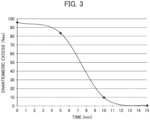
- the enantiomeric excess was reduced from 99.2% ee to 2.7% ee by irradiation with light at a wavelength of 425 nm in the presence of the solid photosensitizer 9 for 10 minutes, and it was observed that the photoracemization reaction efficiently proceeded.
Landscapes
- Chemical & Material Sciences (AREA)
- Organic Chemistry (AREA)
- Health & Medical Sciences (AREA)
- Chemical Kinetics & Catalysis (AREA)
- Life Sciences & Earth Sciences (AREA)
- General Chemical & Material Sciences (AREA)
- Medicinal Chemistry (AREA)
- Nuclear Medicine, Radiotherapy & Molecular Imaging (AREA)
- Bioinformatics & Cheminformatics (AREA)
- Pharmacology & Pharmacy (AREA)
- Engineering & Computer Science (AREA)
- Animal Behavior & Ethology (AREA)
- General Health & Medical Sciences (AREA)
- Public Health (AREA)
- Veterinary Medicine (AREA)
- Organic Low-Molecular-Weight Compounds And Preparation Thereof (AREA)
- Plural Heterocyclic Compounds (AREA)
- Pharmaceuticals Containing Other Organic And Inorganic Compounds (AREA)
- Treatment Of Liquids With Adsorbents In General (AREA)
Claims (6)
- Procédé de préparation sélective d'un des énantiomères d'un composé sulfoxyde ayant un atome de soufre dans un groupe sulfoxyde comme centre asymétrique dans un système de préparation d'énantiomères comprenant une partie de résolution optique (10) pour résoudre optiquement un mélange d'énantiomères du composé sulfoxyde en un énantiomère et l'autre énantiomère et une partie d'irradiation de lumière (20) pour irradier l'autre énantiomère obtenu dans la partie de résolution optique avec de la lumière pour racémiser l'énantiomère, le procédé comprenant :une étape A pour résoudre optiquement un mélange d'énantiomères du composé sulfoxyde dans la partie de résolution optique (10) en un énantiomère et l'autre énantiomère, isolant l'un énantiomère et envoyant l'autre énantiomère à la partie d'irradiation de lumière (20),une étape B pour irradier l'autre énantiomère obtenu dans l'étape A ou l'étape C dans la partie d'irradiation de lumière (20) avec de la lumière pour racémiser l'énantiomère et envoyer le mélange d'énantiomères du composé sulfoxyde par racémisation à la partie de résolution optique (10) à nouveau avec un système de recirculation etune étape C pour résoudre optiquement le mélange d'énantiomères du composé sulfoxyde obtenu dans l'étape B en l'un énantiomère et l'autre énantiomère dans la partie de résolution optique (10), le mélange d'énantiomères du composé sulfoxyde étant résolu optiquement par un procédé de chromatographie en utilisant une colonne chirale dans les deux étape A et étape C et l'étape B et l'étape C étant répétées, dans l'étape B l'autre énantiomère étant irradié avec de la lumière en présence d'un photosensibilisateur pour racémiser l'énantiomère, le photosensibilisateur étant un photosensibilisateur solide immobilisé sur un support.
- Procédé de préparation d'un énantiomère selon la revendication 1, dans lequel le procédé de chromatographie utilisant une colonne chirale est une CLHP de recyclage utilisant une colonne chirale.
- Procédé de préparation d'un énantiomère selon la revendication 2, dans lequel dans l'étape B l'autre énantiomère provenant d'une sortie de colonne de la colonne chirale de la CLHP de recyclage dans l'étape A est irradié avec de la lumière pour photoracémiser l'autre énantiomère et le mélange d'énantiomères résultant est retourné à une entrée de colonne de la colonne chirale de la CLHP de recyclage.
- Procédé de préparation d'un énantiomère selon l'une quelconque des revendications 1 à 3, dans lequel le composé sulfoxyde est représenté par la formule (1) ci-dessous :
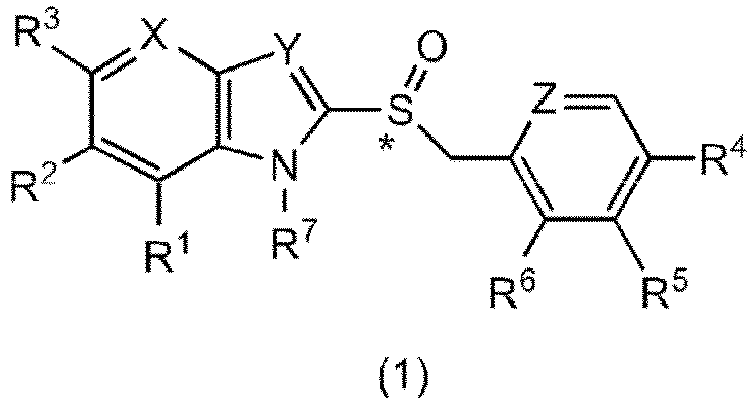 dans laquelle, R1, R2 et R3 sont chacun indépendamment un atome d'hydrogène, un atome d'halogène, un groupe cyano, un groupe nitro, un groupe hydroxy, un groupe carboxy, un groupe alkyle qui éventuellement a un substituant, un groupe alcoxy qui éventuellement a un substituant, un groupe alcoxycarbonyle, un groupe aryle, un groupe aryloxy, un groupe acyle, un groupe acyloxy ou un groupe hétéroaryle, R4, R5 et R6 sont chacun indépendamment un atome d'hydrogène, un groupe alkyle qui éventuellement a un substituant, un groupe alcoxy qui éventuellement a un substituant ou un groupe amino qui éventuellement a un substituant,R7 est un atome d'hydrogène, un groupe hydrocarbure qui éventuellement a un substituant, un groupe acyle ou un groupe alcoxy,X, Y et Z sont chacun indépendamment un atome d'azote ou un groupe CH et* représente un centre asymétrique.
 - Système de préparation d'énantiomère destiné à être utilisé dans le procédé pour préparer un énantiomère selon l'une quelconque des revendications 1 à 4, le système de préparation d'énantiomère comprenant :une partie de résolution optique (10) fournie avec une colonne chirale configurée pour résoudre optiquement le mélange d'énantiomères en un énantiomère et l'autre énantiomère etune partie d'irradiation de lumière (20) configurée pour irradier l'autre énantiomère obtenu dans la partie de résolution optique avec de la lumière pour racémiser l'énantiomère, la partie de résolution optique (10) résolvant optiquement le mélange d'énantiomères du composé sulfoxyde obtenu dans la partie d'irradiation de lumière en l'un énantiomère et l'autre énantiomère, comprenant en outre un système de recirculation qui est configuré pour envoyer un mélange d'énantiomères du composé sulfoxyde obtenu dans la partie d'irradiation de lumière (20) à la partie de résolution optique (10) à nouveau, dans la partie d'irradiation de lumière (20) un photosensibilisateur solide immobilisé sur un support étant présent.
- Système de préparation d'énantiomères selon la revendication 5, dans lequel la partie de résolution optique (10) fournie avec une colonne chirale est un appareil de CLHP de recyclage comprenant une colonne chirale.
Applications Claiming Priority (2)
| Application Number | Priority Date | Filing Date | Title |
|---|---|---|---|
| JP2019156444 | 2019-08-29 | ||
| PCT/JP2020/032053 WO2021039800A1 (fr) | 2019-08-29 | 2020-08-25 | Procédé de préparation d'un énantiomère de composé sulfoxyde et système de préparation d'un énantiomère |
Publications (3)
| Publication Number | Publication Date |
|---|---|
| EP4015044A1 EP4015044A1 (fr) | 2022-06-22 |
| EP4015044A4 EP4015044A4 (fr) | 2022-10-19 |
| EP4015044B1 true EP4015044B1 (fr) | 2024-05-29 |
Family
ID=74684833
Family Applications (1)
| Application Number | Title | Priority Date | Filing Date |
|---|---|---|---|
| EP20858771.7A Active EP4015044B1 (fr) | 2019-08-29 | 2020-08-25 | Procédé de préparation d'un énantiomère de composé sulfoxyde et système de préparation d'un énantiomère |
Country Status (4)
| Country | Link |
|---|---|
| US (1) | US20220306593A1 (fr) |
| EP (1) | EP4015044B1 (fr) |
| JP (1) | JP7335002B2 (fr) |
| WO (1) | WO2021039800A1 (fr) |
Families Citing this family (4)
| Publication number | Priority date | Publication date | Assignee | Title |
|---|---|---|---|---|
| JP7644444B2 (ja) * | 2021-03-02 | 2025-03-12 | 学校法人東京理科大学 | 異性体調製装置 |
| JP2024033070A (ja) * | 2022-08-30 | 2024-03-13 | 岩崎電気株式会社 | 異性体調製装置 |
| JP7748689B2 (ja) * | 2022-09-01 | 2025-10-03 | 学校法人東京理科大学 | ジアステレオマー調製方法及び固相光増感剤 |
| WO2025075001A1 (fr) * | 2023-10-06 | 2025-04-10 | 学校法人東京理科大学 | Procédé de photoisomérisation d'acide aminé optiquement actif |
Family Cites Families (4)
| Publication number | Priority date | Publication date | Assignee | Title |
|---|---|---|---|---|
| SE9301830D0 (sv) | 1993-05-28 | 1993-05-28 | Ab Astra | New compounds |
| SE0104295D0 (sv) * | 2001-12-18 | 2001-12-18 | Astrazeneca Ab | New process |
| KR100641534B1 (ko) * | 2005-07-28 | 2006-11-01 | 한미약품 주식회사 | 에스오메프라졸 및 그의 염의 제조방법 |
| MX2008016196A (es) * | 2006-07-05 | 2009-01-20 | Lupin Ltd | Proceso para la preparacion de enantiomeros opticamente puros u opticamente enriquecidos de compuestos de sulfoxido. |
-
2020
- 2020-08-25 WO PCT/JP2020/032053 patent/WO2021039800A1/fr not_active Ceased
- 2020-08-25 US US17/633,365 patent/US20220306593A1/en not_active Abandoned
- 2020-08-25 EP EP20858771.7A patent/EP4015044B1/fr active Active
- 2020-08-25 JP JP2021542941A patent/JP7335002B2/ja active Active
Non-Patent Citations (2)
| Title |
|---|
| CANNAZZA GIUSEPPE ET AL: "On-line racemization by high-performance liquid chromatography", JOURNAL OF CHROMATOGRAPHY A, vol. 1216, no. 30, 1 July 2009 (2009-07-01), AMSTERDAM, NL, pages 5655 - 5659, XP093026671, ISSN: 0021-9673, DOI: 10.1016/j.chroma.2009.05.057 * |
| LEEK HANNA ET AL: "Preparative Scale Resolution of Enantiomers Enables Accelerated Drug Discovery and Development", MOLECULES, vol. 22, no. 1, 18 January 2017 (2017-01-18), pages 158, XP093026775, DOI: 10.3390/molecules22010158 * |
Also Published As
| Publication number | Publication date |
|---|---|
| JPWO2021039800A1 (fr) | 2021-03-04 |
| EP4015044A1 (fr) | 2022-06-22 |
| JP7335002B2 (ja) | 2023-08-29 |
| US20220306593A1 (en) | 2022-09-29 |
| EP4015044A4 (fr) | 2022-10-19 |
| WO2021039800A1 (fr) | 2021-03-04 |
Similar Documents
| Publication | Publication Date | Title |
|---|---|---|
| EP4015044B1 (fr) | Procédé de préparation d'un énantiomère de composé sulfoxyde et système de préparation d'un énantiomère | |
| Ueno et al. | Homolytic carbocyclization by use of a heterogeneous supported organotin catalyst. A new synthetic route to 2-alkoxytetrahydrofurans and. gamma.-butyrolactones | |
| Smith III et al. | Synthesis of prototypical fullerene cyclopropanes and annulenes. Isomer differentiation via NMR and UV spectroscopy | |
| Vieira et al. | Hybrid compounds with two redox centres: Modular synthesis of chalcogen-containing lapachones and studies on their antitumor activity | |
| Ma et al. | Organocatalytic enantioselective functionalization of unactivated indole C (sp3)− H bonds | |
| Pereira et al. | An insight into solvent-free diimide porphyrin reduction: a versatile approach for meso-aryl hydroporphyrin synthesis | |
| EP2651857A1 (fr) | Procédé d'extraction en phase solide | |
| Lapcinska et al. | Visible Light‐Mediated Functionalization of Selenocystine‐Containing Peptides | |
| Lin et al. | Near-Infrared Light-Driven Selective Difunctionalization of Diazo Compounds Enabled by Anthraquinone-Based Conjugated Porous Polymers | |
| EP3428145B1 (fr) | Procédé de production d'un composé fluoré | |
| Binh Nguyen et al. | Toward the Synthesis of Sceptrin and Benzosceptrin: Solvent Effect in Stereo‐and Regioselective [2+ 2] Photodimerization and Easy Access to the Fully Substituted Benzobutane | |
| Hoyo et al. | Enantiopure helical ferrocene–triazole–quinone triads: synthesis and properties | |
| KR101657054B1 (ko) | N-헤테로고리 카벤 일산화질소 라디칼 화합물 및 그 응용 | |
| Puglisi et al. | Inclusion complexation of 4-biphenylacetic acid with β-cyclodextrin | |
| Santschi et al. | Rapid and Selective Electrophilic Trifluoromethylation of the 4, 4‐Difluoro‐4‐bora‐3a, 4a‐diaza‐s‐indacene (BODIPY) Scaffold | |
| Gutsche et al. | Sequential Nucleophilic Substitution of the α‐Pyrrole and p‐Aryl Positions of meso‐Pentafluorophenyl‐Substituted BODIPYs | |
| Commandeur et al. | Study of radical decarboxylation toward functionalization of naphthoquinones | |
| Serusi et al. | Stereoselective Syntheses of Masked β‐Amino Acid Containing Phthalides | |
| Nayek et al. | Visible‐Light‐Mediated Self‐Sensitized Oxidative and Regioselective C (sp2)− H Selenylation and Sulfenylation of Substituted 2‐Amino‐1, 4‐Naphthoquinones | |
| Yamamoto et al. | Synthesis of Triazatriphenylene Derivative Through Multi‐Component Reaction of Aryl‐amine, Aldehyde, and Alkyne | |
| Shah et al. | Sustainable Strategies for Carbazole Synthesis: A Green Chemistry Perspective | |
| JP7748689B2 (ja) | ジアステレオマー調製方法及び固相光増感剤 | |
| JP7644444B2 (ja) | 異性体調製装置 | |
| JP7694948B2 (ja) | Bcpのカプセル化及びプロペランの新規合成方法 | |
| Hatcher et al. | Ultra‐low temperature oxidation of 5, 6‐dihydroxyindole: A novel approach to study synthetic melanogenesis |
Legal Events
| Date | Code | Title | Description |
|---|---|---|---|
| STAA | Information on the status of an ep patent application or granted ep patent |
Free format text: STATUS: THE INTERNATIONAL PUBLICATION HAS BEEN MADE |
|
| PUAI | Public reference made under article 153(3) epc to a published international application that has entered the european phase |
Free format text: ORIGINAL CODE: 0009012 |
|
| STAA | Information on the status of an ep patent application or granted ep patent |
Free format text: STATUS: REQUEST FOR EXAMINATION WAS MADE |
|
| 17P | Request for examination filed |
Effective date: 20220318 |
|
| AK | Designated contracting states |
Kind code of ref document: A1 Designated state(s): AL AT BE BG CH CY CZ DE DK EE ES FI FR GB GR HR HU IE IS IT LI LT LU LV MC MK MT NL NO PL PT RO RS SE SI SK SM TR |
|
| A4 | Supplementary search report drawn up and despatched |
Effective date: 20220920 |
|
| RIC1 | Information provided on ipc code assigned before grant |
Ipc: A61K 31/4439 20060101ALI20220914BHEP Ipc: C07D 401/12 20060101ALI20220914BHEP Ipc: C07D 279/28 20060101ALI20220914BHEP Ipc: A61P 43/00 20060101AFI20220914BHEP |
|
| DAV | Request for validation of the european patent (deleted) | ||
| DAX | Request for extension of the european patent (deleted) | ||
| STAA | Information on the status of an ep patent application or granted ep patent |
Free format text: STATUS: EXAMINATION IS IN PROGRESS |
|
| 17Q | First examination report despatched |
Effective date: 20230303 |
|
| GRAP | Despatch of communication of intention to grant a patent |
Free format text: ORIGINAL CODE: EPIDOSNIGR1 |
|
| STAA | Information on the status of an ep patent application or granted ep patent |
Free format text: STATUS: GRANT OF PATENT IS INTENDED |
|
| INTG | Intention to grant announced |
Effective date: 20240126 |
|
| GRAS | Grant fee paid |
Free format text: ORIGINAL CODE: EPIDOSNIGR3 |
|
| GRAA | (expected) grant |
Free format text: ORIGINAL CODE: 0009210 |
|
| STAA | Information on the status of an ep patent application or granted ep patent |
Free format text: STATUS: THE PATENT HAS BEEN GRANTED |
|
| AK | Designated contracting states |
Kind code of ref document: B1 Designated state(s): AL AT BE BG CH CY CZ DE DK EE ES FI FR GB GR HR HU IE IS IT LI LT LU LV MC MK MT NL NO PL PT RO RS SE SI SK SM TR |
|
| REG | Reference to a national code |
Ref country code: CH Ref legal event code: EP |
|
| REG | Reference to a national code |
Ref country code: IE Ref legal event code: FG4D |
|
| REG | Reference to a national code |
Ref country code: DE Ref legal event code: R096 Ref document number: 602020031795 Country of ref document: DE |
|
| REG | Reference to a national code |
Ref country code: LT Ref legal event code: MG9D |
|
| REG | Reference to a national code |
Ref country code: NL Ref legal event code: MP Effective date: 20240529 |
|
| PG25 | Lapsed in a contracting state [announced via postgrant information from national office to epo] |
Ref country code: IS Free format text: LAPSE BECAUSE OF FAILURE TO SUBMIT A TRANSLATION OF THE DESCRIPTION OR TO PAY THE FEE WITHIN THE PRESCRIBED TIME-LIMIT Effective date: 20240929 |
|
| PG25 | Lapsed in a contracting state [announced via postgrant information from national office to epo] |
Ref country code: BG Free format text: LAPSE BECAUSE OF FAILURE TO SUBMIT A TRANSLATION OF THE DESCRIPTION OR TO PAY THE FEE WITHIN THE PRESCRIBED TIME-LIMIT Effective date: 20240529 |
|
| PG25 | Lapsed in a contracting state [announced via postgrant information from national office to epo] |
Ref country code: HR Free format text: LAPSE BECAUSE OF FAILURE TO SUBMIT A TRANSLATION OF THE DESCRIPTION OR TO PAY THE FEE WITHIN THE PRESCRIBED TIME-LIMIT Effective date: 20240529 Ref country code: FI Free format text: LAPSE BECAUSE OF FAILURE TO SUBMIT A TRANSLATION OF THE DESCRIPTION OR TO PAY THE FEE WITHIN THE PRESCRIBED TIME-LIMIT Effective date: 20240529 |
|
| PGFP | Annual fee paid to national office [announced via postgrant information from national office to epo] |
Ref country code: DE Payment date: 20240830 Year of fee payment: 5 |
|
| PG25 | Lapsed in a contracting state [announced via postgrant information from national office to epo] |
Ref country code: GR Free format text: LAPSE BECAUSE OF FAILURE TO SUBMIT A TRANSLATION OF THE DESCRIPTION OR TO PAY THE FEE WITHIN THE PRESCRIBED TIME-LIMIT Effective date: 20240830 |
|
| REG | Reference to a national code |
Ref country code: AT Ref legal event code: MK05 Ref document number: 1690143 Country of ref document: AT Kind code of ref document: T Effective date: 20240529 |
|
| PG25 | Lapsed in a contracting state [announced via postgrant information from national office to epo] |
Ref country code: ES Free format text: LAPSE BECAUSE OF FAILURE TO SUBMIT A TRANSLATION OF THE DESCRIPTION OR TO PAY THE FEE WITHIN THE PRESCRIBED TIME-LIMIT Effective date: 20240529 |
|
| PGFP | Annual fee paid to national office [announced via postgrant information from national office to epo] |
Ref country code: CH Payment date: 20240901 Year of fee payment: 5 |
|
| PG25 | Lapsed in a contracting state [announced via postgrant information from national office to epo] |
Ref country code: AT Free format text: LAPSE BECAUSE OF FAILURE TO SUBMIT A TRANSLATION OF THE DESCRIPTION OR TO PAY THE FEE WITHIN THE PRESCRIBED TIME-LIMIT Effective date: 20240529 |
|
| PG25 | Lapsed in a contracting state [announced via postgrant information from national office to epo] |
Ref country code: PL Free format text: LAPSE BECAUSE OF FAILURE TO SUBMIT A TRANSLATION OF THE DESCRIPTION OR TO PAY THE FEE WITHIN THE PRESCRIBED TIME-LIMIT Effective date: 20240529 |
|
| PG25 | Lapsed in a contracting state [announced via postgrant information from national office to epo] |
Ref country code: LV Free format text: LAPSE BECAUSE OF FAILURE TO SUBMIT A TRANSLATION OF THE DESCRIPTION OR TO PAY THE FEE WITHIN THE PRESCRIBED TIME-LIMIT Effective date: 20240529 |
|
| PG25 | Lapsed in a contracting state [announced via postgrant information from national office to epo] |
Ref country code: PL Free format text: LAPSE BECAUSE OF FAILURE TO SUBMIT A TRANSLATION OF THE DESCRIPTION OR TO PAY THE FEE WITHIN THE PRESCRIBED TIME-LIMIT Effective date: 20240529 Ref country code: NO Free format text: LAPSE BECAUSE OF FAILURE TO SUBMIT A TRANSLATION OF THE DESCRIPTION OR TO PAY THE FEE WITHIN THE PRESCRIBED TIME-LIMIT Effective date: 20240829 Ref country code: LV Free format text: LAPSE BECAUSE OF FAILURE TO SUBMIT A TRANSLATION OF THE DESCRIPTION OR TO PAY THE FEE WITHIN THE PRESCRIBED TIME-LIMIT Effective date: 20240529 Ref country code: IS Free format text: LAPSE BECAUSE OF FAILURE TO SUBMIT A TRANSLATION OF THE DESCRIPTION OR TO PAY THE FEE WITHIN THE PRESCRIBED TIME-LIMIT Effective date: 20240929 Ref country code: HR Free format text: LAPSE BECAUSE OF FAILURE TO SUBMIT A TRANSLATION OF THE DESCRIPTION OR TO PAY THE FEE WITHIN THE PRESCRIBED TIME-LIMIT Effective date: 20240529 Ref country code: GR Free format text: LAPSE BECAUSE OF FAILURE TO SUBMIT A TRANSLATION OF THE DESCRIPTION OR TO PAY THE FEE WITHIN THE PRESCRIBED TIME-LIMIT Effective date: 20240830 Ref country code: FI Free format text: LAPSE BECAUSE OF FAILURE TO SUBMIT A TRANSLATION OF THE DESCRIPTION OR TO PAY THE FEE WITHIN THE PRESCRIBED TIME-LIMIT Effective date: 20240529 Ref country code: ES Free format text: LAPSE BECAUSE OF FAILURE TO SUBMIT A TRANSLATION OF THE DESCRIPTION OR TO PAY THE FEE WITHIN THE PRESCRIBED TIME-LIMIT Effective date: 20240529 Ref country code: BG Free format text: LAPSE BECAUSE OF FAILURE TO SUBMIT A TRANSLATION OF THE DESCRIPTION OR TO PAY THE FEE WITHIN THE PRESCRIBED TIME-LIMIT Effective date: 20240529 Ref country code: AT Free format text: LAPSE BECAUSE OF FAILURE TO SUBMIT A TRANSLATION OF THE DESCRIPTION OR TO PAY THE FEE WITHIN THE PRESCRIBED TIME-LIMIT Effective date: 20240529 Ref country code: RS Free format text: LAPSE BECAUSE OF FAILURE TO SUBMIT A TRANSLATION OF THE DESCRIPTION OR TO PAY THE FEE WITHIN THE PRESCRIBED TIME-LIMIT Effective date: 20240829 |
|
| PG25 | Lapsed in a contracting state [announced via postgrant information from national office to epo] |
Ref country code: NL Free format text: LAPSE BECAUSE OF FAILURE TO SUBMIT A TRANSLATION OF THE DESCRIPTION OR TO PAY THE FEE WITHIN THE PRESCRIBED TIME-LIMIT Effective date: 20240529 |
|
| PG25 | Lapsed in a contracting state [announced via postgrant information from national office to epo] |
Ref country code: NL Free format text: LAPSE BECAUSE OF FAILURE TO SUBMIT A TRANSLATION OF THE DESCRIPTION OR TO PAY THE FEE WITHIN THE PRESCRIBED TIME-LIMIT Effective date: 20240529 |
|
| PG25 | Lapsed in a contracting state [announced via postgrant information from national office to epo] |
Ref country code: DK Free format text: LAPSE BECAUSE OF FAILURE TO SUBMIT A TRANSLATION OF THE DESCRIPTION OR TO PAY THE FEE WITHIN THE PRESCRIBED TIME-LIMIT Effective date: 20240529 |
|
| PG25 | Lapsed in a contracting state [announced via postgrant information from national office to epo] |
Ref country code: EE Free format text: LAPSE BECAUSE OF FAILURE TO SUBMIT A TRANSLATION OF THE DESCRIPTION OR TO PAY THE FEE WITHIN THE PRESCRIBED TIME-LIMIT Effective date: 20240529 |
|
| PG25 | Lapsed in a contracting state [announced via postgrant information from national office to epo] |
Ref country code: CZ Free format text: LAPSE BECAUSE OF FAILURE TO SUBMIT A TRANSLATION OF THE DESCRIPTION OR TO PAY THE FEE WITHIN THE PRESCRIBED TIME-LIMIT Effective date: 20240529 |
|
| PG25 | Lapsed in a contracting state [announced via postgrant information from national office to epo] |
Ref country code: SK Free format text: LAPSE BECAUSE OF FAILURE TO SUBMIT A TRANSLATION OF THE DESCRIPTION OR TO PAY THE FEE WITHIN THE PRESCRIBED TIME-LIMIT Effective date: 20240529 Ref country code: RO Free format text: LAPSE BECAUSE OF FAILURE TO SUBMIT A TRANSLATION OF THE DESCRIPTION OR TO PAY THE FEE WITHIN THE PRESCRIBED TIME-LIMIT Effective date: 20240529 |
|
| PG25 | Lapsed in a contracting state [announced via postgrant information from national office to epo] |
Ref country code: SM Free format text: LAPSE BECAUSE OF FAILURE TO SUBMIT A TRANSLATION OF THE DESCRIPTION OR TO PAY THE FEE WITHIN THE PRESCRIBED TIME-LIMIT Effective date: 20240529 |
|
| PG25 | Lapsed in a contracting state [announced via postgrant information from national office to epo] |
Ref country code: SM Free format text: LAPSE BECAUSE OF FAILURE TO SUBMIT A TRANSLATION OF THE DESCRIPTION OR TO PAY THE FEE WITHIN THE PRESCRIBED TIME-LIMIT Effective date: 20240529 Ref country code: SK Free format text: LAPSE BECAUSE OF FAILURE TO SUBMIT A TRANSLATION OF THE DESCRIPTION OR TO PAY THE FEE WITHIN THE PRESCRIBED TIME-LIMIT Effective date: 20240529 Ref country code: RO Free format text: LAPSE BECAUSE OF FAILURE TO SUBMIT A TRANSLATION OF THE DESCRIPTION OR TO PAY THE FEE WITHIN THE PRESCRIBED TIME-LIMIT Effective date: 20240529 Ref country code: EE Free format text: LAPSE BECAUSE OF FAILURE TO SUBMIT A TRANSLATION OF THE DESCRIPTION OR TO PAY THE FEE WITHIN THE PRESCRIBED TIME-LIMIT Effective date: 20240529 Ref country code: DK Free format text: LAPSE BECAUSE OF FAILURE TO SUBMIT A TRANSLATION OF THE DESCRIPTION OR TO PAY THE FEE WITHIN THE PRESCRIBED TIME-LIMIT Effective date: 20240529 Ref country code: CZ Free format text: LAPSE BECAUSE OF FAILURE TO SUBMIT A TRANSLATION OF THE DESCRIPTION OR TO PAY THE FEE WITHIN THE PRESCRIBED TIME-LIMIT Effective date: 20240529 |
|
| PG25 | Lapsed in a contracting state [announced via postgrant information from national office to epo] |
Ref country code: IT Free format text: LAPSE BECAUSE OF FAILURE TO SUBMIT A TRANSLATION OF THE DESCRIPTION OR TO PAY THE FEE WITHIN THE PRESCRIBED TIME-LIMIT Effective date: 20240529 |
|
| REG | Reference to a national code |
Ref country code: DE Ref legal event code: R097 Ref document number: 602020031795 Country of ref document: DE |
|
| PLBE | No opposition filed within time limit |
Free format text: ORIGINAL CODE: 0009261 |
|
| STAA | Information on the status of an ep patent application or granted ep patent |
Free format text: STATUS: NO OPPOSITION FILED WITHIN TIME LIMIT |
|
| PG25 | Lapsed in a contracting state [announced via postgrant information from national office to epo] |
Ref country code: LU Free format text: LAPSE BECAUSE OF NON-PAYMENT OF DUE FEES Effective date: 20240825 |
|
| GBPC | Gb: european patent ceased through non-payment of renewal fee |
Effective date: 20240829 |
|
| PG25 | Lapsed in a contracting state [announced via postgrant information from national office to epo] |
Ref country code: MC Free format text: LAPSE BECAUSE OF FAILURE TO SUBMIT A TRANSLATION OF THE DESCRIPTION OR TO PAY THE FEE WITHIN THE PRESCRIBED TIME-LIMIT Effective date: 20240529 Ref country code: SI Free format text: LAPSE BECAUSE OF FAILURE TO SUBMIT A TRANSLATION OF THE DESCRIPTION OR TO PAY THE FEE WITHIN THE PRESCRIBED TIME-LIMIT Effective date: 20240529 |
|
| 26N | No opposition filed |
Effective date: 20250303 |
|
| REG | Reference to a national code |
Ref country code: BE Ref legal event code: MM Effective date: 20240831 |
|
| PG25 | Lapsed in a contracting state [announced via postgrant information from national office to epo] |
Ref country code: GB Free format text: LAPSE BECAUSE OF NON-PAYMENT OF DUE FEES Effective date: 20240829 |
|
| PG25 | Lapsed in a contracting state [announced via postgrant information from national office to epo] |
Ref country code: BE Free format text: LAPSE BECAUSE OF NON-PAYMENT OF DUE FEES Effective date: 20240831 |
|
| PG25 | Lapsed in a contracting state [announced via postgrant information from national office to epo] |
Ref country code: FR Free format text: LAPSE BECAUSE OF NON-PAYMENT OF DUE FEES Effective date: 20240831 |
|
| PG25 | Lapsed in a contracting state [announced via postgrant information from national office to epo] |
Ref country code: IE Free format text: LAPSE BECAUSE OF NON-PAYMENT OF DUE FEES Effective date: 20240825 |
|
| PG25 | Lapsed in a contracting state [announced via postgrant information from national office to epo] |
Ref country code: SE Free format text: LAPSE BECAUSE OF FAILURE TO SUBMIT A TRANSLATION OF THE DESCRIPTION OR TO PAY THE FEE WITHIN THE PRESCRIBED TIME-LIMIT Effective date: 20240529 |
|
| PG25 | Lapsed in a contracting state [announced via postgrant information from national office to epo] |
Ref country code: PT Free format text: LAPSE BECAUSE OF NON-PAYMENT OF DUE FEES Effective date: 20240529 |
|
| PG25 | Lapsed in a contracting state [announced via postgrant information from national office to epo] |
Ref country code: CY Free format text: LAPSE BECAUSE OF FAILURE TO SUBMIT A TRANSLATION OF THE DESCRIPTION OR TO PAY THE FEE WITHIN THE PRESCRIBED TIME-LIMIT; INVALID AB INITIO Effective date: 20200825 |
|
| REG | Reference to a national code |
Ref country code: DE Ref legal event code: R119 Ref document number: 602020031795 Country of ref document: DE |
|
| PG25 | Lapsed in a contracting state [announced via postgrant information from national office to epo] |
Ref country code: HU Free format text: LAPSE BECAUSE OF FAILURE TO SUBMIT A TRANSLATION OF THE DESCRIPTION OR TO PAY THE FEE WITHIN THE PRESCRIBED TIME-LIMIT; INVALID AB INITIO Effective date: 20200825 |
|
| REG | Reference to a national code |
Ref country code: CH Ref legal event code: H13 Free format text: ST27 STATUS EVENT CODE: U-0-0-H10-H13 (AS PROVIDED BY THE NATIONAL OFFICE) Effective date: 20260324 |
|
| PG25 | Lapsed in a contracting state [announced via postgrant information from national office to epo] |
Ref country code: CH Free format text: LAPSE BECAUSE OF NON-PAYMENT OF DUE FEES Effective date: 20250831 |