EP4015545B1 - Caoutchouc acrylique, composition de caoutchouc réticulable, et produit durci en caoutchouc - Google Patents
Caoutchouc acrylique, composition de caoutchouc réticulable, et produit durci en caoutchouc Download PDFInfo
- Publication number
- EP4015545B1 EP4015545B1 EP20870887.5A EP20870887A EP4015545B1 EP 4015545 B1 EP4015545 B1 EP 4015545B1 EP 20870887 A EP20870887 A EP 20870887A EP 4015545 B1 EP4015545 B1 EP 4015545B1
- Authority
- EP
- European Patent Office
- Prior art keywords
- mass
- parts
- unit
- rubber
- acrylic rubber
- Prior art date
- Legal status (The legal status is an assumption and is not a legal conclusion. Google has not performed a legal analysis and makes no representation as to the accuracy of the status listed.)
- Active
Links
Classifications
-
- C—CHEMISTRY; METALLURGY
- C08—ORGANIC MACROMOLECULAR COMPOUNDS; THEIR PREPARATION OR CHEMICAL WORKING-UP; COMPOSITIONS BASED THEREON
- C08F—MACROMOLECULAR COMPOUNDS OBTAINED BY REACTIONS ONLY INVOLVING CARBON-TO-CARBON UNSATURATED BONDS
- C08F220/00—Copolymers of compounds having one or more unsaturated aliphatic radicals, each having only one carbon-to-carbon double bond, and only one being terminated by only one carboxyl radical or a salt, anhydride ester, amide, imide or nitrile thereof
- C08F220/02—Monocarboxylic acids having less than ten carbon atoms; Derivatives thereof
- C08F220/10—Esters
- C08F220/12—Esters of monohydric alcohols or phenols
-
- C—CHEMISTRY; METALLURGY
- C08—ORGANIC MACROMOLECULAR COMPOUNDS; THEIR PREPARATION OR CHEMICAL WORKING-UP; COMPOSITIONS BASED THEREON
- C08F—MACROMOLECULAR COMPOUNDS OBTAINED BY REACTIONS ONLY INVOLVING CARBON-TO-CARBON UNSATURATED BONDS
- C08F4/00—Polymerisation catalysts
- C08F4/28—Oxygen or compounds releasing free oxygen
- C08F4/32—Organic compounds
- C08F4/34—Per-compounds with one peroxy-radical
-
- C—CHEMISTRY; METALLURGY
- C08—ORGANIC MACROMOLECULAR COMPOUNDS; THEIR PREPARATION OR CHEMICAL WORKING-UP; COMPOSITIONS BASED THEREON
- C08F—MACROMOLECULAR COMPOUNDS OBTAINED BY REACTIONS ONLY INVOLVING CARBON-TO-CARBON UNSATURATED BONDS
- C08F210/00—Copolymers of unsaturated aliphatic hydrocarbons having only one carbon-to-carbon double bond
- C08F210/02—Ethene
-
- C—CHEMISTRY; METALLURGY
- C08—ORGANIC MACROMOLECULAR COMPOUNDS; THEIR PREPARATION OR CHEMICAL WORKING-UP; COMPOSITIONS BASED THEREON
- C08F—MACROMOLECULAR COMPOUNDS OBTAINED BY REACTIONS ONLY INVOLVING CARBON-TO-CARBON UNSATURATED BONDS
- C08F220/00—Copolymers of compounds having one or more unsaturated aliphatic radicals, each having only one carbon-to-carbon double bond, and only one being terminated by only one carboxyl radical or a salt, anhydride ester, amide, imide or nitrile thereof
- C08F220/02—Monocarboxylic acids having less than ten carbon atoms; Derivatives thereof
- C08F220/10—Esters
- C08F220/12—Esters of monohydric alcohols or phenols
- C08F220/16—Esters of monohydric alcohols or phenols of phenols or of alcohols containing two or more carbon atoms
- C08F220/18—Esters of monohydric alcohols or phenols of phenols or of alcohols containing two or more carbon atoms with acrylic or methacrylic acids
- C08F220/1802—C2-(meth)acrylate, e.g. ethyl (meth)acrylate
-
- C—CHEMISTRY; METALLURGY
- C08—ORGANIC MACROMOLECULAR COMPOUNDS; THEIR PREPARATION OR CHEMICAL WORKING-UP; COMPOSITIONS BASED THEREON
- C08F—MACROMOLECULAR COMPOUNDS OBTAINED BY REACTIONS ONLY INVOLVING CARBON-TO-CARBON UNSATURATED BONDS
- C08F220/00—Copolymers of compounds having one or more unsaturated aliphatic radicals, each having only one carbon-to-carbon double bond, and only one being terminated by only one carboxyl radical or a salt, anhydride ester, amide, imide or nitrile thereof
- C08F220/02—Monocarboxylic acids having less than ten carbon atoms; Derivatives thereof
- C08F220/10—Esters
- C08F220/20—Esters of polyhydric alcohols or phenols, e.g. 2-hydroxyethyl (meth)acrylate or glycerol mono-(meth)acrylate
-
- C—CHEMISTRY; METALLURGY
- C08—ORGANIC MACROMOLECULAR COMPOUNDS; THEIR PREPARATION OR CHEMICAL WORKING-UP; COMPOSITIONS BASED THEREON
- C08F—MACROMOLECULAR COMPOUNDS OBTAINED BY REACTIONS ONLY INVOLVING CARBON-TO-CARBON UNSATURATED BONDS
- C08F222/00—Copolymers of compounds having one or more unsaturated aliphatic radicals, each having only one carbon-to-carbon double bond, and at least one being terminated by a carboxyl radical and containing at least one other carboxyl radical in the molecule; Salts, anhydrides, esters, amides, imides, or nitriles thereof
- C08F222/10—Esters
- C08F222/12—Esters of phenols or saturated alcohols
- C08F222/16—Esters having free carboxylic acid groups, e.g. monoalkyl maleates or fumarates
-
- C—CHEMISTRY; METALLURGY
- C08—ORGANIC MACROMOLECULAR COMPOUNDS; THEIR PREPARATION OR CHEMICAL WORKING-UP; COMPOSITIONS BASED THEREON
- C08K—Use of inorganic or non-macromolecular organic substances as compounding ingredients
- C08K3/00—Use of inorganic substances as compounding ingredients
- C08K3/01—Use of inorganic substances as compounding ingredients characterized by their specific function
- C08K3/011—Crosslinking or vulcanising agents, e.g. accelerators
-
- C—CHEMISTRY; METALLURGY
- C08—ORGANIC MACROMOLECULAR COMPOUNDS; THEIR PREPARATION OR CHEMICAL WORKING-UP; COMPOSITIONS BASED THEREON
- C08K—Use of inorganic or non-macromolecular organic substances as compounding ingredients
- C08K3/00—Use of inorganic substances as compounding ingredients
- C08K3/01—Use of inorganic substances as compounding ingredients characterized by their specific function
- C08K3/013—Fillers, pigments or reinforcing additives
-
- C—CHEMISTRY; METALLURGY
- C08—ORGANIC MACROMOLECULAR COMPOUNDS; THEIR PREPARATION OR CHEMICAL WORKING-UP; COMPOSITIONS BASED THEREON
- C08K—Use of inorganic or non-macromolecular organic substances as compounding ingredients
- C08K3/00—Use of inorganic substances as compounding ingredients
- C08K3/02—Elements
- C08K3/04—Carbon
-
- C—CHEMISTRY; METALLURGY
- C08—ORGANIC MACROMOLECULAR COMPOUNDS; THEIR PREPARATION OR CHEMICAL WORKING-UP; COMPOSITIONS BASED THEREON
- C08K—Use of inorganic or non-macromolecular organic substances as compounding ingredients
- C08K3/00—Use of inorganic substances as compounding ingredients
- C08K3/02—Elements
- C08K3/08—Metals
-
- C—CHEMISTRY; METALLURGY
- C08—ORGANIC MACROMOLECULAR COMPOUNDS; THEIR PREPARATION OR CHEMICAL WORKING-UP; COMPOSITIONS BASED THEREON
- C08K—Use of inorganic or non-macromolecular organic substances as compounding ingredients
- C08K5/00—Use of organic ingredients
- C08K5/0008—Organic ingredients according to more than one of the "one dot" groups of C08K5/01 - C08K5/59
- C08K5/0025—Crosslinking or vulcanising agents; including accelerators
-
- C—CHEMISTRY; METALLURGY
- C08—ORGANIC MACROMOLECULAR COMPOUNDS; THEIR PREPARATION OR CHEMICAL WORKING-UP; COMPOSITIONS BASED THEREON
- C08L—COMPOSITIONS OF MACROMOLECULAR COMPOUNDS
- C08L33/00—Compositions of homopolymers or copolymers of compounds having one or more unsaturated aliphatic radicals, each having only one carbon-to-carbon double bond, and only one being terminated by only one carboxyl radical, or of salts, anhydrides, esters, amides, imides or nitriles thereof; Compositions of derivatives of such polymers
- C08L33/04—Homopolymers or copolymers of esters
- C08L33/06—Homopolymers or copolymers of esters of esters containing only carbon, hydrogen and oxygen, which oxygen atoms are present only as part of the carboxyl radical
- C08L33/08—Homopolymers or copolymers of acrylic acid esters
-
- C—CHEMISTRY; METALLURGY
- C09—DYES; PAINTS; POLISHES; NATURAL RESINS; ADHESIVES; COMPOSITIONS NOT OTHERWISE PROVIDED FOR; APPLICATIONS OF MATERIALS NOT OTHERWISE PROVIDED FOR
- C09K—MATERIALS FOR MISCELLANEOUS APPLICATIONS, NOT PROVIDED FOR ELSEWHERE
- C09K3/00—Materials not provided for elsewhere
- C09K3/10—Materials in mouldable or extrudable form for sealing or packing joints or covers
-
- C—CHEMISTRY; METALLURGY
- C09—DYES; PAINTS; POLISHES; NATURAL RESINS; ADHESIVES; COMPOSITIONS NOT OTHERWISE PROVIDED FOR; APPLICATIONS OF MATERIALS NOT OTHERWISE PROVIDED FOR
- C09K—MATERIALS FOR MISCELLANEOUS APPLICATIONS, NOT PROVIDED FOR ELSEWHERE
- C09K3/00—Materials not provided for elsewhere
- C09K3/10—Materials in mouldable or extrudable form for sealing or packing joints or covers
- C09K3/1006—Materials in mouldable or extrudable form for sealing or packing joints or covers characterised by the chemical nature of one of its constituents
-
- F—MECHANICAL ENGINEERING; LIGHTING; HEATING; WEAPONS; BLASTING
- F16—ENGINEERING ELEMENTS AND UNITS; GENERAL MEASURES FOR PRODUCING AND MAINTAINING EFFECTIVE FUNCTIONING OF MACHINES OR INSTALLATIONS; THERMAL INSULATION IN GENERAL
- F16F—SPRINGS; SHOCK-ABSORBERS; MEANS FOR DAMPING VIBRATION
- F16F15/00—Suppression of vibrations in systems; Means or arrangements for avoiding or reducing out-of-balance forces, e.g. due to motion
- F16F15/02—Suppression of vibrations of non-rotating, e.g. reciprocating systems; Suppression of vibrations of rotating systems by use of members not moving with the rotating systems
- F16F15/04—Suppression of vibrations of non-rotating, e.g. reciprocating systems; Suppression of vibrations of rotating systems by use of members not moving with the rotating systems using elastic means
- F16F15/08—Suppression of vibrations of non-rotating, e.g. reciprocating systems; Suppression of vibrations of rotating systems by use of members not moving with the rotating systems using elastic means with rubber springs ; with springs made of rubber and metal
-
- F—MECHANICAL ENGINEERING; LIGHTING; HEATING; WEAPONS; BLASTING
- F16—ENGINEERING ELEMENTS AND UNITS; GENERAL MEASURES FOR PRODUCING AND MAINTAINING EFFECTIVE FUNCTIONING OF MACHINES OR INSTALLATIONS; THERMAL INSULATION IN GENERAL
- F16J—PISTONS; CYLINDERS; SEALINGS
- F16J15/00—Sealings
- F16J15/02—Sealings between relatively-stationary surfaces
- F16J15/06—Sealings between relatively-stationary surfaces with solid packing compressed between sealing surfaces
- F16J15/10—Sealings between relatively-stationary surfaces with solid packing compressed between sealing surfaces with non-metallic packing
-
- F—MECHANICAL ENGINEERING; LIGHTING; HEATING; WEAPONS; BLASTING
- F16—ENGINEERING ELEMENTS AND UNITS; GENERAL MEASURES FOR PRODUCING AND MAINTAINING EFFECTIVE FUNCTIONING OF MACHINES OR INSTALLATIONS; THERMAL INSULATION IN GENERAL
- F16J—PISTONS; CYLINDERS; SEALINGS
- F16J15/00—Sealings
- F16J15/02—Sealings between relatively-stationary surfaces
- F16J15/06—Sealings between relatively-stationary surfaces with solid packing compressed between sealing surfaces
- F16J15/10—Sealings between relatively-stationary surfaces with solid packing compressed between sealing surfaces with non-metallic packing
- F16J15/102—Sealings between relatively-stationary surfaces with solid packing compressed between sealing surfaces with non-metallic packing characterised by material
-
- C—CHEMISTRY; METALLURGY
- C09—DYES; PAINTS; POLISHES; NATURAL RESINS; ADHESIVES; COMPOSITIONS NOT OTHERWISE PROVIDED FOR; APPLICATIONS OF MATERIALS NOT OTHERWISE PROVIDED FOR
- C09K—MATERIALS FOR MISCELLANEOUS APPLICATIONS, NOT PROVIDED FOR ELSEWHERE
- C09K2200/00—Chemical nature of materials in mouldable or extrudable form for sealing or packing joints or covers
- C09K2200/06—Macromolecular organic compounds, e.g. prepolymers
- C09K2200/0615—Macromolecular organic compounds, e.g. prepolymers obtained by reactions only involving carbon-to-carbon unsaturated bonds
- C09K2200/0625—Polyacrylic esters or derivatives thereof
-
- F—MECHANICAL ENGINEERING; LIGHTING; HEATING; WEAPONS; BLASTING
- F16—ENGINEERING ELEMENTS AND UNITS; GENERAL MEASURES FOR PRODUCING AND MAINTAINING EFFECTIVE FUNCTIONING OF MACHINES OR INSTALLATIONS; THERMAL INSULATION IN GENERAL
- F16F—SPRINGS; SHOCK-ABSORBERS; MEANS FOR DAMPING VIBRATION
- F16F1/00—Springs
- F16F1/36—Springs made of rubber or other material having high internal friction, e.g. thermoplastic elastomers
- F16F1/3605—Springs made of rubber or other material having high internal friction, e.g. thermoplastic elastomers characterised by their material
-
- F—MECHANICAL ENGINEERING; LIGHTING; HEATING; WEAPONS; BLASTING
- F16—ENGINEERING ELEMENTS AND UNITS; GENERAL MEASURES FOR PRODUCING AND MAINTAINING EFFECTIVE FUNCTIONING OF MACHINES OR INSTALLATIONS; THERMAL INSULATION IN GENERAL
- F16F—SPRINGS; SHOCK-ABSORBERS; MEANS FOR DAMPING VIBRATION
- F16F2224/00—Materials; Material properties
- F16F2224/02—Materials; Material properties solids
- F16F2224/025—Elastomers
Definitions
- the present invention relates to an acrylic rubber, a crosslinkable rubber composition and cured rubber products.
- Acrylic rubber is known as a rubber material having excellent heat and oil resistance, and a cured product obtained by curing a rubber composition containing acrylic rubber is suitably used for various applications such as automotive parts (for example, Patent Documents 1-3).
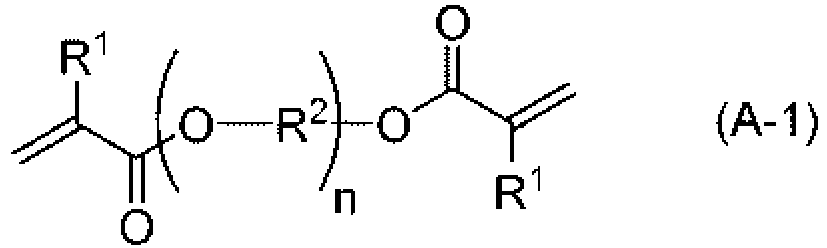
- An aspect of the present invention relates to an acrylic rubber comprising: an alkyl acrylate unit; a crosslinking monomer unit having a halogeno group, an epoxy group, or a carboxyl group; a unit of a bifunctional monomer represented by the following formula (A-1):
- the alkyl acrylate unit may comprise a first alkyl acrylate unit having an alkyl group having 1 to 3 carbon atoms and a second alkyl acrylate unit having an alkyl group having 4 to 8 carbon atoms.
- a content of the unit of the bifunctional monomer may be 0.1 to 5 parts by mass with respect to 100 parts by mass of the alkyl acrylate unit.
- a content of the crosslinking monomer unit may 0.5 to 10 parts by mass with respect to 100 parts by mass of the alkyl acrylate unit.
- the content of the ethylene unit is 0.1 to 10 parts by mass with respect to 100 parts by mass of the alkyl acrylate unit.
- Another aspect of the present invention relates to a cured rubber product that is a cured product of the above crosslinkable rubber composition.
- the present also relates to a hose member, a seal member and a vibration-proofing rubber member which comprise the above cured rubber product.
- the acrylic rubber according to the present embodiment contain an alkyl acrylate unit, a crosslinking monomer unit, a unit of a bifunctional monomer represented by the following formula (A-1) (hereinafter also referred to as "bifunctional monomer unit”), and an ethylene unit.
- n 1 to 9
- R 1 represents a hydrogen atom or a methyl group
- R 2 represents an alkanediyl group having 2 to 4 carbon atoms.
- the alkyl acrylate unit is a structural unit derived from an alkyl acrylate.
- the alkyl acrylate may be, for example, an alkyl acrylate having an alkyl group having 1 to 12 carbon atoms, and is preferably an alkyl acrylate having an alkyl group having 1 to 8 carbon atoms.
- the alkyl acrylate unit may contain a structural unit derived from a first alkyl acrylate having an alkyl group having 1 to 3 carbon atoms (first alkyl acrylate unit), and a structural unit derived from a second alkyl acrylate having an alkyl group having 4 to 8 carbon atoms (second alkyl acrylate unit).
- Examples of the first alkyl acrylate include methyl acrylate, ethyl acrylate, n-propyl acrylate, and isopropyl acrylate.
- Examples of the second alkyl acrylate include n-butyl acrylate, isobutyl acrylate, n-pentyl acrylate, isoamyl acrylate, n-hexyl acrylate, 2-methylpentyl acrylate, n-octyl acrylate, and 2-ethylhexyl acrylate.
- the content of the first alkyl acrylate unit is preferably 60% by mass or more, more preferably 70% by mass or more, and still more preferably 80% by mass or more, based on the total amount of the alkyl acrylate unit. This further improves the oil resistance of the cured rubber product.
- the content of the first alkyl acrylate unit is preferably 95% by mass or less, more preferably 93% by mass or less, and still more preferably 90% by mass or less, based on the total amount of the alkyl acrylate unit. This improves the cold resistance of the cured rubber product.
- the content of the second alkyl acrylate unit is preferably 5% by mass or more, more preferably 7% by mass or more, and still more preferably 10% by mass or more, based on the total amount of the alkyl acrylate unit. This improves the cold resistance of the cured rubber product.
- the content of the second alkyl acrylate unit is preferably 40% by mass or less, more preferably 30% by mass or less, and still more preferably 20% by mass or less, based on the total amount of the alkyl acrylate unit. This further improves the oil resistance of the cured rubber product.
- the content of alkyl acrylate unit in the acrylic rubber may be, for example, 80% by mass or more, preferably 90% by mass or more, and more preferably 93% by mass or more, based on the total amount of the acrylic rubber.
- the content of the alkyl acrylate unit in the acrylic rubber may be, for example, 99% by mass or less, preferably 97% by mass or less, and more preferably 95% by mass or less, based on the total amount of the acrylic rubber.
- the crosslinking monomer unit is a structural unit derived from a crosslinking monomer.
- the crosslinking monomer means a monomer having a functional group forming a crosslinking site (crosslinking point). Examples of the functional group forming the crosslinking site include a halogeno group, an epoxy group, and a carboxyl group.
- crosslinking monomer having a halogeno group examples include 2-chloroethyl vinyl ether, 2-chloroethyl acrylate, vinyl benzyl chloride, vinyl chloroacetate, and allyl chloroacetate.
- crosslinking monomer having an epoxy group examples include glycidyl acrylate, glycidyl methacrylate, allyl glycidyl ether, and metaallyl glycidyl ether.
- crosslinking monomer having a carboxyl group examples include acrylic acid, methacrylic acid, crotonic acid, 2-pentenoic acid, maleic acid, fumaric acid, itaconic acid, butenedioic acid monobutyl ester, and cinnamic acid.
- the content of the crosslinking monomer unit may be, for example, 0.3 parts by mass or more, preferably 0.5 parts by mass or more, more preferably 1.0 parts by mass or more, and still more preferably 1.5 parts by mass or more, with respect to 100 parts by mass of the alkyl acrylate unit. This tends to improve the tensile strength of the cured rubber product.
- the content of the crosslinking monomer unit may be, for example, 15 parts by mass or less, preferably 10 parts by mass or less, more preferably 5 parts by mass or less, and still more preferably 3 parts by mass or less, with respect to 100 parts by mass of the alkyl acrylate unit. This tends to make the cured rubber product more resilient to rubber.
- the bifunctional monomer unit is a structural unit derived from a bifunctional monomer represented by the following formula (A-1).
- n is an integer of 1 to 9. From the viewpoint of further suppressing a decrease in elongation when held under a high temperature environment for a long time, n is preferably an integer of 1 to 6, and more preferably an integer of 1 to 4.
- R 1 represents a hydrogen atom or a methyl group, preferably a methyl group.
- R 2 represents an alkanediyl group having 2 to 4 carbon atoms, and preferably an alkanediyl group having 2 to 3 carbon atoms.
- alkanediyl group include an ethylene group, a 1,2-propanediyl group, and a 1,3-propanediyl group.
- R 2 is preferably an ethylene group or a 1,2-propanediyl group.
- the content of the bifunctional monomer unit may be, for example, 0.05 parts by mass or more, preferably 0.1 parts by mass or more, more preferably 0.5 parts by mass or more, and still more preferably 0.7 parts by mass or more, with respect to 100 parts by mass of the alkyl acrylate unit. This tends to result in a shorter scorch time of the crosslinkable rubber composition.
- the content of the bifunctional monomer unit may be, for example, 10 parts by mass or less, preferably 5 parts by mass or less, more preferably 3 parts by mass or less, and still more preferably 2.5 parts by mass or less, with respect to 100 parts by mass of the alkyl acrylate unit. This tends to maintain good elongation characteristics even when held in a high temperature environment for a long time.
- the ethylene unit is a structural unit derived from ethylene. Since the acrylic rubber contains ethylene units, the cold resistance of cured rubber products is improved.
- the content of the ethylene unit may be, for example, 0.1 parts by mass or more, preferably 0.5 parts by mass or more, and more preferably 1.0 parts by mass or more, with respect to 100 parts by mass of the alkyl acrylate unit. This improves the cold resistance of the cured rubber product.
- the content of the ethylene unit may be, for example, 10 parts by mass or less, preferably 8 parts by mass or less, and more preferably 5 parts by mass or less, with respect to 100 parts by mass of the alkyl acrylate unit. This further improves the oil resistance of the cured rubber product.
- the acrylic rubber may further contain a structural unit derived from a monomer other than the above-mentioned monomers.
- Other monomers include, for example, alkyl vinyl ketones such as methyl vinyl ketone; vinyl ethers such as vinyl ethyl ether; allyl ethers such as allyl methyl ether; vinyl aromatic compounds such as styrene, ⁇ -methyl styrene, chlorostyrene, vinyl toluene, vinyl naphthalene; vinyl nitriles such as acrylonitrile, methacrylonitrile; and ethylenically unsaturated compounds such as acrylamide, propylene, butadiene, isoprene, pentadiene, vinyl acetate, vinyl chloride, vinylidene chloride, vinyl fluoride, vinylidene fluoride, ethylene, and vinyl propionate.
- the content of the other monomer units may be 10 parts by mass or less, preferably 5 parts by mass or less, more preferably 1 parts by mass or less, and may be 0 parts by mass (that is, acrylic rubber may not contain other monomer units), with respect to 100 parts by mass of the alkyl acrylate unit.
- the total content of the alkyl acrylate unit, the crosslinking monomer unit, the bifunctional monomer unit and the ethylene unit may be, for example, 80% by mass or more, 85% by mass or more, 90% by mass or more, 95% by mass or more, or 99% by mass or more, based the total amount of the acrylic rubber, and may be 100% by mass or more (that is, the acrylic rubber may consist of the above-mentioned units).
- the toluene insoluble content of the acrylic rubber may be, for example, 4% by mass or more, preferably 10% by mass or more, and more preferably 20% by mass or more. When the toluene insoluble content is less than 4% by mass, the heat resistance improvement effect of the bifunctional monomer may not be sufficiently obtained.
- the toluene insoluble content of the acrylic rubber may be, for example, 40% by mass or less, preferably 38% by mass or less, and more preferably 35% by mass or less. When the toluene insoluble content exceeds 40% by mass, the extrusion processability of the acrylic rubber tends to deteriorate.
- the acrylic rubber can be obtained by polymerizing a monomer corresponding to each of the above-mentioned monomer units.
- the polymerization method and conditions are not particularly limited, and a known method may be appropriately selected.
- the acrylic rubber may be obtained by copolymerizing the above-mentioned monomers by a known method such as a emulsion polymerization, a suspension polymerization, a solution polymerization, and a bulk polymerization.
- the crosslinkable rubber composition according to this embodiment contains the above-described acrylic rubber, a crosslinking agent, and a filler.
- the crosslinking agent may be any crosslinking agent capable of crosslinking the acrylic rubber.
- a known crosslinking agent capable of crosslinking by using the functional group of the crosslinking monomer unit as a crosslinking point can be used without any particular limitation.
- a polyamine compound (more preferably a crosslinking system to which a guanidine compound is added) is preferably used as the crosslinking agent.
- an imidazole compound is preferably used as the crosslinking agent.
- polyamine compound examples include aromatic polyamine compounds such as 4,4'-bis(4-aminophenoxy) biphenyl, 4,4'-diaminodiphenyl sulfide, 1,3-bis(4-aminophenoxy)-2,2-dimethylpropane, 1,3-bis(4-aminophenoxy) benzene, 1,4-bis(4-aminophenoxy) benzene, 1,4-bis(4-aminophenoxy) pentane, 2,2-bis[4-(4-aminophenoxy)phenyl] propane, 2,2-bis[4-(4-aminophenoxy)phenyl] sulfone, 4,4'-diaminodiphenyl sulfone, bis(4-3-aminophenoxy) phenyl sulfone, 2,2-bis[4-(4-aminophenoxy) phenyl] hexafluoropropane, 3,4'-diaminodip
- guanidine compound examples include guanidine, tetramethylguanidine, dibutylguanidine, diphenylguanidine, and di-o-tolylguanidine.
- imidazole compounds include 1-methylimidazole, 1,2-dimethylimidazole, 1-methyl-2-ethylimidazole, 1-benzyl-2-methylimidazole, 1-benzyl-2-ethylimidazole, 1-benzyl-2-ethyl-5-methylimidazole, 1-benzyl-2-phenylimidazole, 1-benzyl-2-phenylimidazole trimellitic acid salt, 1-aminoethylimidazole, 1-aminoethyl-2-methylimidazole, 1-aminoethyl-2-ethylimidazole, 1-cyanoethyl-2-methylimidazole, 1-cyanoethyl-2-phenylimidazole, 1-cyanoethyl-2-ethyl-4-methylimidazole, 1-cyanoethyl-2-undecylimidazole, 1-cyanoethyl-2-methylimidazole trimellitate,
- the content of the crosslinking agent may be, for example, 0.1 parts by mass or more, preferably 0.2 parts by mass or more, and more preferably 0.3 parts by mass or more, with respect to 100 parts by mass of the acrylic rubber. This tends to increase the crosslinking density and further improve the tensile strength of the cured rubber product.
- the content of the crosslinking agent may be, for example, 10 parts by mass or less, preferably 5 parts by mass or less, and more preferably 1 part by mass or less, with respect to 100 parts by mass of the acrylic rubber. This tends to improve the elongation at break of the cured rubber product.
- the filler may have a function as a reinforcing material, for example.
- the filler include a carbon black, a silica, a clay, a talc and calcium carbonate.
- the filler is preferably a carbon black.
- the carbon black include an acetylene black, a ketchen black, a thermal black, a channel black, a furnace black, a lamp black, and a graphitized carbon black.
- the filler content may be, for example, 20 parts by mass or more, preferably 30 parts by mass or more, and more preferably 40 parts by mass or more, with respect to 100 parts by mass of the acrylic rubber. This tends to further improve the tensile strength and hardness of the cured rubber product.
- the content of carbon black may be, for example, 100 parts by mass or less, preferably 80 parts by mass or less, and more preferably 60 parts by mass or less, with respect to 100 parts by mass of the acrylic rubber. This tends to further improve the elongation at break and heat resistance of the cured rubber product.
- the crosslinkable rubber composition may further contain other components than those described above.
- other components include, for example, lubricants, crosslinking accelerators, anti-aging agents, plasticizers, stabilizers, and silane coupling agents.
- lubricant examples include a liquid paraffin, stearic acid, stearylamine, and a process oil.
- the content of the lubricant may be, for example, 0.1 parts by mass or more, preferably 0.3 parts by mass or more, and more preferably 0.5 parts by mass or more, with respect to 100 parts by mass of the acrylic rubber.
- the crosslinkable rubber composition tends to be easily released from for example a molding machine, or a mold.
- the content of the lubricant may be, for example, 10 parts by mass or less, preferably 5 parts by mass or less, and more preferably 3 parts by mass or less, with respect to 100 parts by mass of the acrylic rubber. This tends to improve the oil resistance and heat resistance of cured rubber products.
- crosslinking accelerator a known crosslinking accelerator can be appropriately selected for example according to the type of the crosslinking agent.
- a curing agent for an epoxy resin may be used.
- the crosslinking accelerator include pyrolyzed ammonium salts, organic acids, acid anhydrides, amines, sulfur, and sulfur compounds.
- the content of the crosslinking accelerator may be, for example, 0.4 parts by mass or more, preferably 0.5 parts by mass or more, and more preferably 0.6 parts by mass or more, with respect to 100 parts by mass of the acrylic rubber. This tends to reduce the scorch time of the crosslinkable rubber composition.
- the content of the crosslinking accelerator may be, for example, 5 parts by mass or less, preferably 4 parts by mass or less, and more preferably 3 parts by mass or less, with respect to 100 parts by mass of the acrylic rubber. This tends to reduce the bridging torque at the same time.
- the anti-aging agent a known anti-aging agent blended in an acrylic rubber-based rubber composition can be appropriately selected and used.
- the anti-aging agent include an amine-based anti-aging agent, an imidazole-based anti-aging agent, a carbamic acid metal salt, a phenol-based anti-aging agent, and a wax.
- the content of the anti-aging agent may be, for example, 0.1 parts by mass or more, preferably 0.3 parts by mass or more, and more preferably 0.5 parts by mass or more, with respect to 100 parts by mass of the acrylic rubber. This tends to improve the heat resistance.
- the content of the anti-aging agent may be, for example, 20 parts by mass or less, preferably 10 parts by mass or less, and more preferably 5 parts by mass or less, with respect to 100 parts by mass of the acrylic rubber. This tends to improve oil resistance.
- the cured rubber product according to the present embodiment can be obtained by heat-curing the crosslinkable rubber composition described above.
- the curing conditions of the crosslinkable rubber composition are not particularly limited.
- the curing temperature may be, for example, 150 to 200°C., and preferably 170 to 190°C.
- the curing time may be, for example, 5 minutes to 1 hour, and preferably 10 minutes to 30 minutes.
- the cured rubber product according to the present embodiment maintains the high tensile strength even when held in a high temperature (for example, 175°C) for a long time (for example, 500 hours or more). Therefore, the cured rubber product according to the present embodiment can be preferably used as a rubber member exposed to a high temperature for a long time.
- the cured rubber product according to the present embodiment can be suitably used for applications such as, for example, a hose member; a seal member such as a gasket and a packing; and a vibration-proofing member.
- Examples of the hose member include a transmission oil cooler hose for automobiles, construction machines, hydraulic equipment, an engine oil cooler hose, an air duct hose, a turbo intercooler hose, a hot air hose, a radiator hose, a power steering hose, a fuel system hose, and a drain system hose.
- the hose member may be a single-layer hose composed of the cured rubber product, and may be a multi-layer hose in which a layer composed of the cured rubber product is combined with an inner layer, an intermediate layer, or an outer layer which is composed of, for example, a fluororubber, a fluorine-modified acrylic rubber, a hydrin rubber, a nitrile rubber, a hydrogenated nitrile rubber, a chloroprene rubber, an ethylene-propylene rubber, a silicone rubber, or a chlorosulfonated polyethylene rubber.
- the hose member may have reinforcing threads or wires provided in the intermediate or outermost layer of the rubber hose.
- seal member examples include an engine head cover gasket, an oil pan gasket, an oil seal, lip seal packing, an O-ring, a transmission seal gasket, a crankshaft, a camshaft seal gasket, a valve stem, a power steering seal belt cover seal, a boot material for a constant-velocity joint, and a rack-and-pinion boot material.
- vibration-proofing rubber member examples include a damper pulley, a center support cushion, and a suspension bush.
- An acrylic rubber was produced by the following method.
- the acrylic rubber had a copolymer composition of 2 parts by mass of an ethylene unit, 1.8 parts by mass of a monobutyl butenedioate unit (MBM unit, crosslinking monomer unit), 78 parts by mass of an ethyl acrylate unit (EA unit), 16 parts by mass of an n-butyl acrylate unit (BA unit), and 0.7 parts by mass of a polyethylene glycol dimethacrylate unit (bifunctional monomer unit), and had a toluene insoluble content of 7.6% by mass.
- MBM unit monobutyl butenedioate unit
- EA unit ethyl acrylate unit
- BA unit n-butyl acrylate unit
- bifunctional monomer unit polyethylene glycol dimethacrylate unit
- the resulting crosslinkable rubber composition was evaluated in the following manner. The results are shown in Table 1.
- the scorch time (t5) was measured in accordance with JIS K6300. The measurement was performed at 125°C.
- the crosslinkable rubber composition obtained by the above method was heat-treated in a hot press at 180°C for 20 minutes to obtain a primary crosslinked product, and then heat-treated in hot air (gear oven) at 185°C for 3 hours to obtain a cured rubber product.
- the resulting cured rubber product was evaluated in the following manner. The results are shown in Table 2.
- the 100% modulus, tensile strength, and elongation at break were measured in accordance with JIS K6251.
- the hardness was measured using a durometer hardness tester in accordance with JIS K6253.
- Heat treatment was performed at 175°C for 504 hours in accordance with JIS K6257, and then the tensile strength, elongation at break, and hardness were measured in accordance with JIS K6251.
- Retention ratio (%) 100 ⁇ (measured value after heat treatment) / (measured value before heat treatment)
- Heat treatment was performed at 190°C for 94 hours in accordance with JIS K6257, and then the tensile strength, elongation at break, and hardness were measured in accordance with JIS K6251. From the tensile strength and elongation at break of the test piece before the heat treatment and the tensile strength and elongation at break of the test piece after the heat treatment, the retention ratio of the tensile strength and the retention ratio of the elongation at break were determined by the above formula.
- torsional rigidity was determined by twisting a test piece via a torsion wire over a temperature range from a freezing temperature to room temperature and measuring a torsion angle.
- the temperature at which the specific modulus becomes 10 can be obtained from the temperature and temperature-torsion angle curve with respect to the value of the specific modulus. An angle corresponding to a specific modulus of 10 was selected, and the temperature corresponding to this angle from the temperature-torsion angle curve obtained in the test was taken as the T10.
- Example A-2 An acrylic rubber, a crosslinkable rubber composition, and a cured rubber product were produced in the same manner as in Example A-1 except that the amount of the bifunctional monomer added was changed to 164 g.
- the crosslinkable rubber composition and the cured rubber product were evaluated in the same manner as in Example A-1.
- the results are shown in Tables 1 and 2.
- the acrylic rubber of Example A-2 had a copolymer composition of 2 parts by mass of an ethylene unit, 1.8 parts by mass of a monobutyl butenedioate unit, 78 parts by mass of an ethyl acrylate unit, 16 parts by mass of an n-butyl acrylate unit, and 1.5 parts by mass of a polyethylene glycol dimethacrylate unit.
- the toluene insoluble content of the acrylic rubber of Example A-2 was 12.8% by mass.
- Example A-3 An acrylic rubber, a crosslinkable rubber composition, and a cured rubber product were produced in the same manner as in Example A-1 except that the amount of the bifunctional monomer added was changed to 329 g.
- the crosslinkable rubber composition and the cured rubber product were evaluated in the same manner as in Example A-1.
- the results are shown in Tables 1 and 2.
- the acrylic rubber of Example A-3 had a copolymer composition of 2 parts by mass of an ethylene unit, 1.8 parts by mass of a monobutyl butenedioate unit, 78 parts by mass of an ethyl acrylate unit, 16 parts by mass of an n-butyl acrylate unit, and 2.9 parts by mass of a polyethylene glycol dimethacrylate unit.
- the toluene insoluble content of the acrylic rubber of Example A-3 was 33.1% by mass.
- Example A-1 An acrylic rubber, a crosslinkable rubber composition, and a cured rubber product were produced in the same manner as in Example A-1 except that the bifunctional monomer was not used.
- the crosslinkable rubber composition and the cured rubber product were evaluated in the same manner as in Example A-1.
- the results are shown in Tables 1 and 2.
- the acrylic rubber of Comparative Example a-1 had a copolymer composition of 2 parts by mass of an ethylene unit, 1.8 parts by mass of a monobutyl butenedioate unit, 79 parts by mass of an ethyl acrylate unit, and 17 parts by mass of an n-butyl acrylate unit.
- the toluene insoluble content of the acrylic rubber of Comparative Example a-1 was 1.0% by mass.
- the acrylic rubber of Comparative Example a-2 had a copolymer composition of 2 parts by mass of an ethylene unit, 1.8 parts by mass of a monobutyl butenedioate unit, 75 parts by mass of an ethyl acrylate unit, 14 parts by mass of an n-butyl acrylate unit, and 7 parts by mass of a polyethylene glycol dimethacrylate unit.
- the toluene insoluble content of the polymer obtained in Comparative Example a-2 was 65.3% by mass.
- Comparative Example a-2 since it was difficult to obtain an acrylic rubber through an extrusion process, evaluation of a crosslinkable rubber composition and preparation of a cured rubber product were impossible.
- the acrylic rubber of Comparative Example a-3 had a copolymer composition of 2 parts by mass of an ethylene unit, 1.8 parts by mass of a monobutyl butenedioate unit, 79 parts by mass of an ethyl acrylate unit, 17 parts by mass of an n-butyl acrylate unit, and 1.8 parts by mass of a polyethylene glycol dimethacrylate unit.
- the toluene insoluble content of the acrylic rubber of Comparative Example a-3 was 1.8% by mass.
- An acrylic rubber was produced by the following method.
- the acrylic rubber had a copolymer composition of 2 parts by mass of an ethylene unit, 1.5 parts by mass of a monobutyl butenedioate unit (MBM unit, crosslinking monomer unit), 78 parts by mass of an ethyl acrylate unit (EA unit), 16 parts by mass of an n-butyl acrylate unit (BA unit), and 1.2 parts by mass of a ethylene glycol dimethacrylate unit (bifunctional monomer unit), and had a toluene insoluble content of 24.3 % by mass.
- MBM unit monobutyl butenedioate unit
- EA unit ethyl acrylate unit
- BA unit n-butyl acrylate unit
- bifunctional monomer unit 1.2 parts by mass of a ethylene glycol dimethacrylate unit
- the crosslinkable rubber composition obtained by the above method was heat-treated in a hot press at 180°C for 20 minutes to obtain a primary crosslinked product, and then heat-treated in hot air (gear oven) at 185°C for 3 hours to obtain a cured rubber product.
- the obtained cured rubber product was evaluated in the same manner as in Example A-1. The results are shown in Table 4.
- Example B-1 An acrylic rubber, a crosslinkable rubber composition, and a cured rubber product were produced in the same manner as in Example B-1 except that 120 g of diethylene glycol dimethacrylate (DEGDM) was charged instead of 164 g of ethylene glycol dimethacrylate (EGDMA) as the bifunctional monomer.
- DEGDM diethylene glycol dimethacrylate
- EGDMA ethylene glycol dimethacrylate
- the crosslinkable rubber composition and the cured rubber product were evaluated in the same manner as in Example B-1.
- the acrylic rubber of Example B-2 had a copolymer composition of 2 parts by mass of an ethylene unit, 1.5 parts by mass of a monobutyl butenedioate unit, 78 parts by mass of an ethyl acrylate unit, 16 parts by mass of an n-butyl acrylate unit, and 1.4 parts by mass of a diethylene glycol dimethacrylate unit.
- the toluene insoluble content of the acrylic rubber of Example B-2 was 17.3% by mass.
- An acrylic rubber, a crosslinkable rubber composition, and a cured rubber product were produced in the same manner as in Example B-1 except that 164 g of polyethylene glycol dimethacrylate (PEGDM) (manufactured by Tokyo Kasei Kogyo Co., Ltd., n is 4) was charged instead of ethylene glycol dimethacrylate (EGDMA) as the bifunctional monomer.
- PEGDM polyethylene glycol dimethacrylate
- EGDMA ethylene glycol dimethacrylate
- the acrylic rubber of Example B-3 had a copolymer composition of 2 parts by mass of an ethylene unit, 1.5 parts by mass of a monobutyl butenedioate unit, 78 parts by mass of an ethyl acrylate unit, 16 parts by mass of an n-butyl acrylate unit, and 2 parts by mass of a polyethylene glycol dimethacrylate unit.
- the toluene insoluble content of the acrylic rubber of Example B-3 was 28.8% by mass.
- the acrylic rubber of Example B-4 had a copolymer composition of 2 parts by mass of an ethylene unit, 1.5 parts by mass of a monobutyl butenedioate unit, 78 parts by mass of an ethyl acrylate unit, 16 parts by mass of an n-butyl acrylate unit, and 3.3 parts by mass of a polyethylene glycol dimethacrylate unit.
- the toluene insoluble content of the acrylic rubber of Example B-4 was 33.4% by mass.
- the acrylic rubber of Comparative Example b-1 had a copolymer composition of 1.5 parts by mass of a monobutyl butenedioate unit, 79 parts by mass of an ethyl acrylate unit, 17 parts by mass of an n-butyl acrylate unit, and 2 parts by mass of a polyethylene glycol dimethacrylate unit.
- the toluene insoluble content of the acrylic rubber of Comparative Example b-1 was 20.4% by mass.
- Example B-3 An acrylic rubber, a crosslinkable rubber composition, and a cured rubber product were prepared in the same manner as in Example B-3, except that monobutyl butenedioate was not charged.
- the crosslinkable rubber composition was evaluated in the same manner as in Example B-1.
- the acrylic rubber of Comparative Example b-2 had a copolymer composition of 2 parts by mass of an ethylene unit, 79 parts by mass of an ethyl acrylate unit, 17 parts by mass of an n-butyl acrylate unit, and 2 parts by mass of a polyethylene glycol dimethacrylate unit.
- the toluene insoluble content of the acrylic rubber of Comparative Example b-2 was 24.7% by mass.
Landscapes
- Chemical & Material Sciences (AREA)
- Organic Chemistry (AREA)
- Health & Medical Sciences (AREA)
- Chemical Kinetics & Catalysis (AREA)
- Medicinal Chemistry (AREA)
- Polymers & Plastics (AREA)
- Engineering & Computer Science (AREA)
- General Engineering & Computer Science (AREA)
- Materials Engineering (AREA)
- Mechanical Engineering (AREA)
- Combustion & Propulsion (AREA)
- Physics & Mathematics (AREA)
- Acoustics & Sound (AREA)
- Aviation & Aerospace Engineering (AREA)
- Compositions Of Macromolecular Compounds (AREA)
- Addition Polymer Or Copolymer, Post-Treatments, Or Chemical Modifications (AREA)
Claims (11)
- Caoutchouc acrylique comprenant :une unité acrylate d'alkyle ;une unité monomère de réticulation présentant un groupe halogéno, un groupe époxy, ou un groupe carboxyle ;une unité d'un monomère bifonctionnel représenté par la formule (A-1) suivante :
 une unité éthylène,dans lequel une teneur de l'unité éthylène est de 0,1 à 10 parties en masse par rapport à 100 parties en masse de l'unité acrylate d'alkyle,dans lequel le caoutchouc acrylique présente une teneur en matières insolubles dans le toluène de 4 à 40 % en masse ; etdans lequel la teneur en matières insolubles dans le toluène est calculée d'après l'équation suivante :
 dans lequel x (g) est la teneur en matières solides séchées (teneur en matières insolubles dans le toluène) qui est pesée en immergeant 0,2 g du caoutchouc acrylique dans du toluène dans 100 ml, en le laissant à 23 °C pendant 24 heures, en le filtrant en utilisant un maillage métallique de 200 mesh, et en séchant le gâteau de filtre à 120 °C pendant 1 heure.
 - Caoutchouc acrylique selon la revendication 1, dans lequel l'unité acrylate d'alkyle comprend une première unité acrylate d'alkyle présentant un groupe alkyle présentant 1 à 3 atomes de carbone et une seconde unité acrylate d'alkyle présentant un groupe alkyle présentant 4 à 8 atomes de carbone.
- Caoutchouc acrylique selon la revendication 2, dans lequel une teneur de la première unité acrylate d'alkyle est de 60 à 95 % en masse et une teneur du second acrylate d'alkyle est de 5 à 40 % en masse, sur la base de la quantité totale de l'unité acrylate d'alkyle.
- Caoutchouc acrylique selon l'une quelconque des revendications 1 à 3, dans lequel une teneur de l'unité du monomère bifonctionnel est de 0,1 à 5 parties en masse par rapport à 100 parties en masse de l'unité acrylate d'alkyle.
- Caoutchouc acrylique selon l'une quelconque des revendications 1 à 4, dans lequel une teneur de l'unité monomère de réticulation est de 0,5 à 10 parties en masse par rapport à 100 parties en masse de l'unité acrylate d'alkyle.
- Composition de caoutchouc réticulable comprenant :le caoutchouc acrylique selon l'une quelconque des revendications 1 à 5 ;un agent de réticulation ; etune charge.
- Composition de caoutchouc réticulable selon la revendication 6, dans laquelle la charge comprend un noir de carbone.
- Produit durci en caoutchouc qui est un produit durci de la composition de caoutchouc réticulable selon la revendication 6 ou la revendication 7.
- Élément de tuyau comprenant le produit durci en caoutchouc selon la revendication 8.
- Élément d'étanchéité comprenant le produit durci en caoutchouc selon la revendication 8.
- Élément en caoutchouc anti-vibration comprenant le produit durci en caoutchouc selon la revendication 8.
Applications Claiming Priority (2)
| Application Number | Priority Date | Filing Date | Title |
|---|---|---|---|
| JP2019178882 | 2019-09-30 | ||
| PCT/JP2020/036021 WO2021065669A1 (fr) | 2019-09-30 | 2020-09-24 | Caoutchouc acrylique, composition de caoutchouc réticulable, et produit durci en caoutchouc |
Publications (3)
| Publication Number | Publication Date |
|---|---|
| EP4015545A1 EP4015545A1 (fr) | 2022-06-22 |
| EP4015545A4 EP4015545A4 (fr) | 2022-09-28 |
| EP4015545B1 true EP4015545B1 (fr) | 2024-05-29 |
Family
ID=75336457
Family Applications (1)
| Application Number | Title | Priority Date | Filing Date |
|---|---|---|---|
| EP20870887.5A Active EP4015545B1 (fr) | 2019-09-30 | 2020-09-24 | Caoutchouc acrylique, composition de caoutchouc réticulable, et produit durci en caoutchouc |
Country Status (6)
| Country | Link |
|---|---|
| US (1) | US20220363793A1 (fr) |
| EP (1) | EP4015545B1 (fr) |
| JP (1) | JP7541022B2 (fr) |
| CN (1) | CN114174355B (fr) |
| ES (1) | ES2982594T3 (fr) |
| WO (1) | WO2021065669A1 (fr) |
Families Citing this family (2)
| Publication number | Priority date | Publication date | Assignee | Title |
|---|---|---|---|---|
| JP7596316B2 (ja) * | 2020-01-30 | 2024-12-09 | デンカ株式会社 | アクリルゴム、ゴム組成物及びその架橋物、並びにゴムホース |
| WO2023026752A1 (fr) * | 2021-08-25 | 2023-03-02 | Nok株式会社 | Procédé de fabrication d'un corps d'étanchéité, et corps d'étanchéité |
Citations (3)
| Publication number | Priority date | Publication date | Assignee | Title |
|---|---|---|---|---|
| JPH0641238A (ja) * | 1992-07-21 | 1994-02-15 | Tosoh Corp | 押出コ−ティング用エチレン重合体の製造方法 |
| WO2010065858A2 (fr) * | 2008-12-05 | 2010-06-10 | E. I. Du Pont De Nemours And Company | Élastomère thermoplastique absorbant de l'énergie |
| JP2012193344A (ja) * | 2011-03-03 | 2012-10-11 | Du Pont-Toray Co Ltd | 耐熱熱可塑性エラストマ樹脂組成物 |
Family Cites Families (7)
| Publication number | Priority date | Publication date | Assignee | Title |
|---|---|---|---|---|
| US5191050A (en) * | 1987-10-14 | 1993-03-02 | Norsolor | Functionalized ethylene polymers useful for metal coating, and process for their preparation |
| JP4255608B2 (ja) * | 1999-11-05 | 2009-04-15 | 電気化学工業株式会社 | アクリル系ゴム及びその組成物 |
| JP4273671B2 (ja) | 2001-03-06 | 2009-06-03 | 日本ゼオン株式会社 | アクリルゴム組成物および加硫物 |
| JP5715758B2 (ja) * | 2008-02-05 | 2015-05-13 | 電気化学工業株式会社 | 耐熱老化性に優れたアクリルゴム加硫物 |
| JP5163390B2 (ja) * | 2008-09-22 | 2013-03-13 | 日本ゼオン株式会社 | アクリルゴム |
| SG11201906829SA (en) * | 2017-01-31 | 2019-08-27 | Zeon Corp | Acrylic rubber, acrylic rubber composition, and crosslinked acrylic rubber |
| CN111225931B (zh) * | 2017-10-16 | 2022-07-15 | 电化株式会社 | 丙烯酸类橡胶的制造方法、丙烯酸类橡胶、丙烯酸类橡胶组合物、其硫化物及硫化物的用途 |
-
2020
- 2020-09-24 US US17/764,827 patent/US20220363793A1/en not_active Abandoned
- 2020-09-24 WO PCT/JP2020/036021 patent/WO2021065669A1/fr not_active Ceased
- 2020-09-24 CN CN202080053779.7A patent/CN114174355B/zh active Active
- 2020-09-24 ES ES20870887T patent/ES2982594T3/es active Active
- 2020-09-24 EP EP20870887.5A patent/EP4015545B1/fr active Active
- 2020-09-24 JP JP2021551154A patent/JP7541022B2/ja active Active
Patent Citations (3)
| Publication number | Priority date | Publication date | Assignee | Title |
|---|---|---|---|---|
| JPH0641238A (ja) * | 1992-07-21 | 1994-02-15 | Tosoh Corp | 押出コ−ティング用エチレン重合体の製造方法 |
| WO2010065858A2 (fr) * | 2008-12-05 | 2010-06-10 | E. I. Du Pont De Nemours And Company | Élastomère thermoplastique absorbant de l'énergie |
| JP2012193344A (ja) * | 2011-03-03 | 2012-10-11 | Du Pont-Toray Co Ltd | 耐熱熱可塑性エラストマ樹脂組成物 |
Also Published As
| Publication number | Publication date |
|---|---|
| EP4015545A1 (fr) | 2022-06-22 |
| US20220363793A1 (en) | 2022-11-17 |
| ES2982594T3 (es) | 2024-10-17 |
| WO2021065669A1 (fr) | 2021-04-08 |
| EP4015545A4 (fr) | 2022-09-28 |
| CN114174355A (zh) | 2022-03-11 |
| JP7541022B2 (ja) | 2024-08-27 |
| CN114174355B (zh) | 2023-08-22 |
| JPWO2021065669A1 (fr) | 2021-04-08 |
Similar Documents
| Publication | Publication Date | Title |
|---|---|---|
| JP5715758B2 (ja) | 耐熱老化性に優れたアクリルゴム加硫物 | |
| JP5022165B2 (ja) | アクリルゴム組成物 | |
| EP2584002B1 (fr) | Composition de caoutchouc acrylique, vulcanisat, composant de tuyau flexible, et composant d'étanchéité | |
| EP3778661B1 (fr) | Caoutchouc acrylique, composition de caoutchouc acrylique, caoutchouc acrylique réticulé, matériau d'étanchéité et matériau de tuyau souple | |
| EP3239231B1 (fr) | Procédé pour la fabrication de la composition de caoutchouc nitrile réticulable et matériau de caoutchouc réticulé | |
| JP7276322B2 (ja) | アクリルゴム、アクリルゴム組成物、アクリルゴム架橋物、シール材、及びホース材 | |
| EP4015545B1 (fr) | Caoutchouc acrylique, composition de caoutchouc réticulable, et produit durci en caoutchouc | |
| JP7169191B2 (ja) | アクリルゴム組成物 | |
| JP2014051602A (ja) | アクリルゴム組成物およびゴム架橋物 | |
| JP4255608B2 (ja) | アクリル系ゴム及びその組成物 | |
| JP7728976B2 (ja) | アクリルゴム、ゴム組成物及びその架橋物 | |
| JP2001131236A (ja) | アクリル系ゴムおよびその組成物 | |
| JP2022186670A (ja) | アクリルゴム組成物及びその架橋物 | |
| JP3933299B2 (ja) | アクリル系ゴムおよびその組成物 |
Legal Events
| Date | Code | Title | Description |
|---|---|---|---|
| STAA | Information on the status of an ep patent application or granted ep patent |
Free format text: STATUS: THE INTERNATIONAL PUBLICATION HAS BEEN MADE |
|
| PUAI | Public reference made under article 153(3) epc to a published international application that has entered the european phase |
Free format text: ORIGINAL CODE: 0009012 |
|
| STAA | Information on the status of an ep patent application or granted ep patent |
Free format text: STATUS: REQUEST FOR EXAMINATION WAS MADE |
|
| 17P | Request for examination filed |
Effective date: 20220315 |
|
| AK | Designated contracting states |
Kind code of ref document: A1 Designated state(s): AL AT BE BG CH CY CZ DE DK EE ES FI FR GB GR HR HU IE IS IT LI LT LU LV MC MK MT NL NO PL PT RO RS SE SI SK SM TR |
|
| A4 | Supplementary search report drawn up and despatched |
Effective date: 20220825 |
|
| RIC1 | Information provided on ipc code assigned before grant |
Ipc: C08F 4/34 20060101ALI20220819BHEP Ipc: C08F 220/18 20060101ALI20220819BHEP Ipc: F16J 15/10 20060101ALI20220819BHEP Ipc: F16F 15/08 20060101ALI20220819BHEP Ipc: C09K 3/10 20060101ALI20220819BHEP Ipc: C08L 33/08 20060101ALI20220819BHEP Ipc: C08K 3/04 20060101ALI20220819BHEP Ipc: C08K 3/013 20180101ALI20220819BHEP Ipc: C08K 3/011 20180101ALI20220819BHEP Ipc: C08F 222/16 20060101ALI20220819BHEP Ipc: C08F 220/20 20060101ALI20220819BHEP Ipc: C08F 210/02 20060101ALI20220819BHEP Ipc: C08F 220/12 20060101AFI20220819BHEP |
|
| DAV | Request for validation of the european patent (deleted) | ||
| DAX | Request for extension of the european patent (deleted) | ||
| STAA | Information on the status of an ep patent application or granted ep patent |
Free format text: STATUS: EXAMINATION IS IN PROGRESS |
|
| 17Q | First examination report despatched |
Effective date: 20230602 |
|
| REG | Reference to a national code |
Ref country code: DE Ref legal event code: R079 Free format text: PREVIOUS MAIN CLASS: C08F0220120000 Ipc: C08K0003080000 Ref country code: DE Ref legal event code: R079 Ref document number: 602020031812 Country of ref document: DE Free format text: PREVIOUS MAIN CLASS: C08F0220120000 Ipc: C08K0003080000 |
|
| GRAP | Despatch of communication of intention to grant a patent |
Free format text: ORIGINAL CODE: EPIDOSNIGR1 |
|
| STAA | Information on the status of an ep patent application or granted ep patent |
Free format text: STATUS: GRANT OF PATENT IS INTENDED |
|
| RIC1 | Information provided on ipc code assigned before grant |
Ipc: C08F 220/18 20060101ALI20240125BHEP Ipc: F16J 15/10 20060101ALI20240125BHEP Ipc: C09K 3/10 20060101ALI20240125BHEP Ipc: C08F 4/34 20060101ALI20240125BHEP Ipc: C08L 33/08 20060101ALI20240125BHEP Ipc: F16F 1/36 20060101ALI20240125BHEP Ipc: C08K 5/00 20060101ALI20240125BHEP Ipc: C08K 3/08 20060101AFI20240125BHEP |
|
| INTG | Intention to grant announced |
Effective date: 20240212 |
|
| GRAS | Grant fee paid |
Free format text: ORIGINAL CODE: EPIDOSNIGR3 |
|
| GRAA | (expected) grant |
Free format text: ORIGINAL CODE: 0009210 |
|
| STAA | Information on the status of an ep patent application or granted ep patent |
Free format text: STATUS: THE PATENT HAS BEEN GRANTED |
|
| P01 | Opt-out of the competence of the unified patent court (upc) registered |
Effective date: 20240402 |
|
| AK | Designated contracting states |
Kind code of ref document: B1 Designated state(s): AL AT BE BG CH CY CZ DE DK EE ES FI FR GB GR HR HU IE IS IT LI LT LU LV MC MK MT NL NO PL PT RO RS SE SI SK SM TR |
|
| REG | Reference to a national code |
Ref country code: CH Ref legal event code: EP |
|
| REG | Reference to a national code |
Ref country code: IE Ref legal event code: FG4D |
|
| REG | Reference to a national code |
Ref country code: DE Ref legal event code: R096 Ref document number: 602020031812 Country of ref document: DE |
|
| REG | Reference to a national code |
Ref country code: LT Ref legal event code: MG9D |
|
| REG | Reference to a national code |
Ref country code: NL Ref legal event code: MP Effective date: 20240529 |
|
| PG25 | Lapsed in a contracting state [announced via postgrant information from national office to epo] |
Ref country code: IS Free format text: LAPSE BECAUSE OF FAILURE TO SUBMIT A TRANSLATION OF THE DESCRIPTION OR TO PAY THE FEE WITHIN THE PRESCRIBED TIME-LIMIT Effective date: 20240929 |
|
| PG25 | Lapsed in a contracting state [announced via postgrant information from national office to epo] |
Ref country code: BG Free format text: LAPSE BECAUSE OF FAILURE TO SUBMIT A TRANSLATION OF THE DESCRIPTION OR TO PAY THE FEE WITHIN THE PRESCRIBED TIME-LIMIT Effective date: 20240529 |
|
| PG25 | Lapsed in a contracting state [announced via postgrant information from national office to epo] |
Ref country code: HR Free format text: LAPSE BECAUSE OF FAILURE TO SUBMIT A TRANSLATION OF THE DESCRIPTION OR TO PAY THE FEE WITHIN THE PRESCRIBED TIME-LIMIT Effective date: 20240529 Ref country code: FI Free format text: LAPSE BECAUSE OF FAILURE TO SUBMIT A TRANSLATION OF THE DESCRIPTION OR TO PAY THE FEE WITHIN THE PRESCRIBED TIME-LIMIT Effective date: 20240529 |
|
| PGFP | Annual fee paid to national office [announced via postgrant information from national office to epo] |
Ref country code: DE Payment date: 20240912 Year of fee payment: 5 |
|
| PG25 | Lapsed in a contracting state [announced via postgrant information from national office to epo] |
Ref country code: GR Free format text: LAPSE BECAUSE OF FAILURE TO SUBMIT A TRANSLATION OF THE DESCRIPTION OR TO PAY THE FEE WITHIN THE PRESCRIBED TIME-LIMIT Effective date: 20240830 |
|
| REG | Reference to a national code |
Ref country code: AT Ref legal event code: MK05 Ref document number: 1690602 Country of ref document: AT Kind code of ref document: T Effective date: 20240529 |
|
| PGFP | Annual fee paid to national office [announced via postgrant information from national office to epo] |
Ref country code: FR Payment date: 20240913 Year of fee payment: 5 |
|
| REG | Reference to a national code |
Ref country code: ES Ref legal event code: FG2A Ref document number: 2982594 Country of ref document: ES Kind code of ref document: T3 Effective date: 20241017 |
|
| PG25 | Lapsed in a contracting state [announced via postgrant information from national office to epo] |
Ref country code: AT Free format text: LAPSE BECAUSE OF FAILURE TO SUBMIT A TRANSLATION OF THE DESCRIPTION OR TO PAY THE FEE WITHIN THE PRESCRIBED TIME-LIMIT Effective date: 20240529 |
|
| PG25 | Lapsed in a contracting state [announced via postgrant information from national office to epo] |
Ref country code: PL Free format text: LAPSE BECAUSE OF FAILURE TO SUBMIT A TRANSLATION OF THE DESCRIPTION OR TO PAY THE FEE WITHIN THE PRESCRIBED TIME-LIMIT Effective date: 20240529 |
|
| PG25 | Lapsed in a contracting state [announced via postgrant information from national office to epo] |
Ref country code: LV Free format text: LAPSE BECAUSE OF FAILURE TO SUBMIT A TRANSLATION OF THE DESCRIPTION OR TO PAY THE FEE WITHIN THE PRESCRIBED TIME-LIMIT Effective date: 20240529 |
|
| PG25 | Lapsed in a contracting state [announced via postgrant information from national office to epo] |
Ref country code: PL Free format text: LAPSE BECAUSE OF FAILURE TO SUBMIT A TRANSLATION OF THE DESCRIPTION OR TO PAY THE FEE WITHIN THE PRESCRIBED TIME-LIMIT Effective date: 20240529 Ref country code: NO Free format text: LAPSE BECAUSE OF FAILURE TO SUBMIT A TRANSLATION OF THE DESCRIPTION OR TO PAY THE FEE WITHIN THE PRESCRIBED TIME-LIMIT Effective date: 20240829 Ref country code: LV Free format text: LAPSE BECAUSE OF FAILURE TO SUBMIT A TRANSLATION OF THE DESCRIPTION OR TO PAY THE FEE WITHIN THE PRESCRIBED TIME-LIMIT Effective date: 20240529 Ref country code: IS Free format text: LAPSE BECAUSE OF FAILURE TO SUBMIT A TRANSLATION OF THE DESCRIPTION OR TO PAY THE FEE WITHIN THE PRESCRIBED TIME-LIMIT Effective date: 20240929 Ref country code: HR Free format text: LAPSE BECAUSE OF FAILURE TO SUBMIT A TRANSLATION OF THE DESCRIPTION OR TO PAY THE FEE WITHIN THE PRESCRIBED TIME-LIMIT Effective date: 20240529 Ref country code: GR Free format text: LAPSE BECAUSE OF FAILURE TO SUBMIT A TRANSLATION OF THE DESCRIPTION OR TO PAY THE FEE WITHIN THE PRESCRIBED TIME-LIMIT Effective date: 20240830 Ref country code: FI Free format text: LAPSE BECAUSE OF FAILURE TO SUBMIT A TRANSLATION OF THE DESCRIPTION OR TO PAY THE FEE WITHIN THE PRESCRIBED TIME-LIMIT Effective date: 20240529 Ref country code: BG Free format text: LAPSE BECAUSE OF FAILURE TO SUBMIT A TRANSLATION OF THE DESCRIPTION OR TO PAY THE FEE WITHIN THE PRESCRIBED TIME-LIMIT Effective date: 20240529 Ref country code: AT Free format text: LAPSE BECAUSE OF FAILURE TO SUBMIT A TRANSLATION OF THE DESCRIPTION OR TO PAY THE FEE WITHIN THE PRESCRIBED TIME-LIMIT Effective date: 20240529 Ref country code: RS Free format text: LAPSE BECAUSE OF FAILURE TO SUBMIT A TRANSLATION OF THE DESCRIPTION OR TO PAY THE FEE WITHIN THE PRESCRIBED TIME-LIMIT Effective date: 20240829 |
|
| PGFP | Annual fee paid to national office [announced via postgrant information from national office to epo] |
Ref country code: IT Payment date: 20240913 Year of fee payment: 5 |
|
| PG25 | Lapsed in a contracting state [announced via postgrant information from national office to epo] |
Ref country code: NL Free format text: LAPSE BECAUSE OF FAILURE TO SUBMIT A TRANSLATION OF THE DESCRIPTION OR TO PAY THE FEE WITHIN THE PRESCRIBED TIME-LIMIT Effective date: 20240529 |
|
| PG25 | Lapsed in a contracting state [announced via postgrant information from national office to epo] |
Ref country code: NL Free format text: LAPSE BECAUSE OF FAILURE TO SUBMIT A TRANSLATION OF THE DESCRIPTION OR TO PAY THE FEE WITHIN THE PRESCRIBED TIME-LIMIT Effective date: 20240529 |
|
| PG25 | Lapsed in a contracting state [announced via postgrant information from national office to epo] |
Ref country code: DK Free format text: LAPSE BECAUSE OF FAILURE TO SUBMIT A TRANSLATION OF THE DESCRIPTION OR TO PAY THE FEE WITHIN THE PRESCRIBED TIME-LIMIT Effective date: 20240529 |
|
| PG25 | Lapsed in a contracting state [announced via postgrant information from national office to epo] |
Ref country code: EE Free format text: LAPSE BECAUSE OF FAILURE TO SUBMIT A TRANSLATION OF THE DESCRIPTION OR TO PAY THE FEE WITHIN THE PRESCRIBED TIME-LIMIT Effective date: 20240529 |
|
| PG25 | Lapsed in a contracting state [announced via postgrant information from national office to epo] |
Ref country code: CZ Free format text: LAPSE BECAUSE OF FAILURE TO SUBMIT A TRANSLATION OF THE DESCRIPTION OR TO PAY THE FEE WITHIN THE PRESCRIBED TIME-LIMIT Effective date: 20240529 |
|
| PG25 | Lapsed in a contracting state [announced via postgrant information from national office to epo] |
Ref country code: RO Free format text: LAPSE BECAUSE OF FAILURE TO SUBMIT A TRANSLATION OF THE DESCRIPTION OR TO PAY THE FEE WITHIN THE PRESCRIBED TIME-LIMIT Effective date: 20240529 Ref country code: SK Free format text: LAPSE BECAUSE OF FAILURE TO SUBMIT A TRANSLATION OF THE DESCRIPTION OR TO PAY THE FEE WITHIN THE PRESCRIBED TIME-LIMIT Effective date: 20240529 |
|
| PG25 | Lapsed in a contracting state [announced via postgrant information from national office to epo] |
Ref country code: SM Free format text: LAPSE BECAUSE OF FAILURE TO SUBMIT A TRANSLATION OF THE DESCRIPTION OR TO PAY THE FEE WITHIN THE PRESCRIBED TIME-LIMIT Effective date: 20240529 |
|
| PGFP | Annual fee paid to national office [announced via postgrant information from national office to epo] |
Ref country code: ES Payment date: 20241007 Year of fee payment: 5 |
|
| PG25 | Lapsed in a contracting state [announced via postgrant information from national office to epo] |
Ref country code: SM Free format text: LAPSE BECAUSE OF FAILURE TO SUBMIT A TRANSLATION OF THE DESCRIPTION OR TO PAY THE FEE WITHIN THE PRESCRIBED TIME-LIMIT Effective date: 20240529 Ref country code: SK Free format text: LAPSE BECAUSE OF FAILURE TO SUBMIT A TRANSLATION OF THE DESCRIPTION OR TO PAY THE FEE WITHIN THE PRESCRIBED TIME-LIMIT Effective date: 20240529 Ref country code: RO Free format text: LAPSE BECAUSE OF FAILURE TO SUBMIT A TRANSLATION OF THE DESCRIPTION OR TO PAY THE FEE WITHIN THE PRESCRIBED TIME-LIMIT Effective date: 20240529 Ref country code: EE Free format text: LAPSE BECAUSE OF FAILURE TO SUBMIT A TRANSLATION OF THE DESCRIPTION OR TO PAY THE FEE WITHIN THE PRESCRIBED TIME-LIMIT Effective date: 20240529 Ref country code: DK Free format text: LAPSE BECAUSE OF FAILURE TO SUBMIT A TRANSLATION OF THE DESCRIPTION OR TO PAY THE FEE WITHIN THE PRESCRIBED TIME-LIMIT Effective date: 20240529 Ref country code: CZ Free format text: LAPSE BECAUSE OF FAILURE TO SUBMIT A TRANSLATION OF THE DESCRIPTION OR TO PAY THE FEE WITHIN THE PRESCRIBED TIME-LIMIT Effective date: 20240529 |
|
| REG | Reference to a national code |
Ref country code: DE Ref legal event code: R097 Ref document number: 602020031812 Country of ref document: DE |
|
| PLBE | No opposition filed within time limit |
Free format text: ORIGINAL CODE: 0009261 |
|
| STAA | Information on the status of an ep patent application or granted ep patent |
Free format text: STATUS: NO OPPOSITION FILED WITHIN TIME LIMIT |
|
| PG25 | Lapsed in a contracting state [announced via postgrant information from national office to epo] |
Ref country code: MC Free format text: LAPSE BECAUSE OF FAILURE TO SUBMIT A TRANSLATION OF THE DESCRIPTION OR TO PAY THE FEE WITHIN THE PRESCRIBED TIME-LIMIT Effective date: 20240529 Ref country code: SI Free format text: LAPSE BECAUSE OF FAILURE TO SUBMIT A TRANSLATION OF THE DESCRIPTION OR TO PAY THE FEE WITHIN THE PRESCRIBED TIME-LIMIT Effective date: 20240529 |
|
| REG | Reference to a national code |
Ref country code: CH Ref legal event code: PL |
|
| 26N | No opposition filed |
Effective date: 20250303 |
|
| PG25 | Lapsed in a contracting state [announced via postgrant information from national office to epo] |
Ref country code: LU Free format text: LAPSE BECAUSE OF NON-PAYMENT OF DUE FEES Effective date: 20240924 |
|
| GBPC | Gb: european patent ceased through non-payment of renewal fee |
Effective date: 20240924 |
|
| PG25 | Lapsed in a contracting state [announced via postgrant information from national office to epo] |
Ref country code: GB Free format text: LAPSE BECAUSE OF NON-PAYMENT OF DUE FEES Effective date: 20240924 |
|
| REG | Reference to a national code |
Ref country code: BE Ref legal event code: MM Effective date: 20240930 |
|
| PG25 | Lapsed in a contracting state [announced via postgrant information from national office to epo] |
Ref country code: BE Free format text: LAPSE BECAUSE OF NON-PAYMENT OF DUE FEES Effective date: 20240930 |
|
| PG25 | Lapsed in a contracting state [announced via postgrant information from national office to epo] |
Ref country code: CH Free format text: LAPSE BECAUSE OF NON-PAYMENT OF DUE FEES Effective date: 20240930 |
|
| PG25 | Lapsed in a contracting state [announced via postgrant information from national office to epo] |
Ref country code: IE Free format text: LAPSE BECAUSE OF NON-PAYMENT OF DUE FEES Effective date: 20240924 |
|
| PG25 | Lapsed in a contracting state [announced via postgrant information from national office to epo] |
Ref country code: SE Free format text: LAPSE BECAUSE OF FAILURE TO SUBMIT A TRANSLATION OF THE DESCRIPTION OR TO PAY THE FEE WITHIN THE PRESCRIBED TIME-LIMIT Effective date: 20240529 |
|
| PG25 | Lapsed in a contracting state [announced via postgrant information from national office to epo] |
Ref country code: PT Free format text: LAPSE BECAUSE OF NON-PAYMENT OF DUE FEES Effective date: 20240529 |
|
| PG25 | Lapsed in a contracting state [announced via postgrant information from national office to epo] |
Ref country code: CY Free format text: LAPSE BECAUSE OF FAILURE TO SUBMIT A TRANSLATION OF THE DESCRIPTION OR TO PAY THE FEE WITHIN THE PRESCRIBED TIME-LIMIT; INVALID AB INITIO Effective date: 20200924 |
|
| PG25 | Lapsed in a contracting state [announced via postgrant information from national office to epo] |
Ref country code: HU Free format text: LAPSE BECAUSE OF FAILURE TO SUBMIT A TRANSLATION OF THE DESCRIPTION OR TO PAY THE FEE WITHIN THE PRESCRIBED TIME-LIMIT; INVALID AB INITIO Effective date: 20200924 |