EP4016543A1 - Procédé et dispositif de fourniture des informations médicales - Google Patents
Procédé et dispositif de fourniture des informations médicales Download PDFInfo
- Publication number
- EP4016543A1 EP4016543A1 EP21207429.8A EP21207429A EP4016543A1 EP 4016543 A1 EP4016543 A1 EP 4016543A1 EP 21207429 A EP21207429 A EP 21207429A EP 4016543 A1 EP4016543 A1 EP 4016543A1
- Authority
- EP
- European Patent Office
- Prior art keywords
- medical
- att
- rds
- data
- attributes
- Prior art date
- Legal status (The legal status is an assumption and is not a legal conclusion. Google has not performed a legal analysis and makes no representation as to the accuracy of the status listed.)
- Granted
Links
Images




Classifications
-
- G—PHYSICS
- G16—INFORMATION AND COMMUNICATION TECHNOLOGY [ICT] SPECIALLY ADAPTED FOR SPECIFIC APPLICATION FIELDS
- G16H—HEALTHCARE INFORMATICS, i.e. INFORMATION AND COMMUNICATION TECHNOLOGY [ICT] SPECIALLY ADAPTED FOR THE HANDLING OR PROCESSING OF MEDICAL OR HEALTHCARE DATA
- G16H50/00—ICT specially adapted for medical diagnosis, medical simulation or medical data mining; ICT specially adapted for detecting, monitoring or modelling epidemics or pandemics
- G16H50/20—ICT specially adapted for medical diagnosis, medical simulation or medical data mining; ICT specially adapted for detecting, monitoring or modelling epidemics or pandemics for computer-aided diagnosis, e.g. based on medical expert systems
-
- G—PHYSICS
- G06—COMPUTING OR CALCULATING; COUNTING
- G06N—COMPUTING ARRANGEMENTS BASED ON SPECIFIC COMPUTATIONAL MODELS
- G06N3/00—Computing arrangements based on biological models
- G06N3/02—Neural networks
- G06N3/04—Architecture, e.g. interconnection topology
- G06N3/045—Combinations of networks
-
- G—PHYSICS
- G06—COMPUTING OR CALCULATING; COUNTING
- G06N—COMPUTING ARRANGEMENTS BASED ON SPECIFIC COMPUTATIONAL MODELS
- G06N3/00—Computing arrangements based on biological models
- G06N3/02—Neural networks
- G06N3/04—Architecture, e.g. interconnection topology
- G06N3/0464—Convolutional networks [CNN, ConvNet]
-
- G—PHYSICS
- G06—COMPUTING OR CALCULATING; COUNTING
- G06N—COMPUTING ARRANGEMENTS BASED ON SPECIFIC COMPUTATIONAL MODELS
- G06N3/00—Computing arrangements based on biological models
- G06N3/02—Neural networks
- G06N3/08—Learning methods
- G06N3/084—Backpropagation, e.g. using gradient descent
-
- G—PHYSICS
- G06—COMPUTING OR CALCULATING; COUNTING
- G06N—COMPUTING ARRANGEMENTS BASED ON SPECIFIC COMPUTATIONAL MODELS
- G06N3/00—Computing arrangements based on biological models
- G06N3/02—Neural networks
- G06N3/08—Learning methods
- G06N3/09—Supervised learning
-
- G—PHYSICS
- G06—COMPUTING OR CALCULATING; COUNTING
- G06T—IMAGE DATA PROCESSING OR GENERATION, IN GENERAL
- G06T7/00—Image analysis
- G06T7/0002—Inspection of images, e.g. flaw detection
- G06T7/0012—Biomedical image inspection
- G06T7/0014—Biomedical image inspection using an image reference approach
-
- G—PHYSICS
- G16—INFORMATION AND COMMUNICATION TECHNOLOGY [ICT] SPECIALLY ADAPTED FOR SPECIFIC APPLICATION FIELDS
- G16H—HEALTHCARE INFORMATICS, i.e. INFORMATION AND COMMUNICATION TECHNOLOGY [ICT] SPECIALLY ADAPTED FOR THE HANDLING OR PROCESSING OF MEDICAL OR HEALTHCARE DATA
- G16H30/00—ICT specially adapted for the handling or processing of medical images
- G16H30/40—ICT specially adapted for the handling or processing of medical images for processing medical images, e.g. editing
-
- G—PHYSICS
- G06—COMPUTING OR CALCULATING; COUNTING
- G06N—COMPUTING ARRANGEMENTS BASED ON SPECIFIC COMPUTATIONAL MODELS
- G06N20/00—Machine learning
Definitions
- the invention relates to methods and devices for providing medical information.
- the medical information can include, for example, information on possible clinical findings or other clinically relevant information for a patient.
- the medical information can be provided based on a (partially) automated analysis of the medical data records available to a user.
- Treating a patient involves numerous medical decisions that directly affect the patient's well-being.
- the decisions to be made are complex. They include, among other things, therapy decisions or the creation of forecasts. Depending on the case, a decision must also be made about follow-up examinations or referrals. For all of these decisions, it is essential to diagnose the patient as accurately as possible based on the information available.
- a problem with existing systems is that, of course, they can only work with data that they have access to. If decision-relevant data is missing, the information or suggestions provided to the user may be incomplete or, in the worst case, incorrect. This can be the case in particular if, based on the available data, many different statements are equally possible. Using the example of deriving one or more possible medical diagnoses, this can result in a comparatively large number of options that, viewed individually, have no pronounced relevance for the present case. A meaningful "ranking" of the possible medical diagnoses is then often not possible, since small differences in the relevance tipped the scales in favor of a possible diagnosis which, viewed objectively, does not have a significantly higher probability of being true than other possible diagnoses.
- the stated object is achieved with a method, a device, a computer program product or a computer-readable storage medium according to the main claim and the independent claims.
- Advantageous developments are specified in the dependent claims.
- a computer-implemented method for providing medical information has several steps.
- a first step is directed to receiving a medical record of a patient.
- a further step is aimed at determining one or more reference data sets from a number of comparison data sets based on similarity measures.
- a measure of similarity is based on the similarity of the data set and one of the comparison data sets.
- each comparison data set is with at least one previously known medical findings associated.
- a further step is aimed at identifying one or more medical attributes, which medical attributes each include an identifier of one or more of the previously known medical findings associated with the reference data records.
- a further step is aimed at displaying the identified medical attributes via a user interface.
- a further step is aimed at receiving a user input from a user regarding the displayed medical attributes via the user interface.
- a further step is aimed at generating medical information for the patient based on the medical findings associated with the reference data sets and the user input.
- a further step is aimed at providing the medical information.
- the medical data record can be provided or selected by a user.
- the user can be, for example, a doctor, such as a radiologist, who wants to make a medical diagnosis for the patient (the patient is also referred to below as “patient to be diagnosed”). Furthermore, the user can also be the patient himself.
- the medical data record can be received by the user, for example, by uploading the medical data record, for example.
- the medical record may be received from one or more appropriate databases storing all or part of the medical record.
- the databases can be part of medical information systems, such as hospital information systems (a technical term for this is hospital information system or HIS for short) and/the PACS systems (PACS stands for picture archiving and communication system) and/or laboratory information systems (LIS ) be.
- hospital information systems a technical term for this is hospital information system or HIS for short
- PACS systems PACS stands for picture archiving and communication system
- LIS laboratory information systems
- the medical record contains medical data available about the patient.
- the medical data can include both medical image data and non-image data.
- image data are image data that were recorded with an imaging modality and can represent, in particular, a part of the patient's body. Imaging modalities can include, for example, computed tomography devices, magnetic resonance devices, X-ray devices, ultrasound devices and the like.
- medical image data can include digitized histopathology images that represent a correspondingly prepared tissue section of the patient.
- the image data can also include longitudinal data, for example in the form of time series or time-spaced follow-up images.
- Non-image data can include, in particular longitudinal, data that contain one or more medical values of the patient and/or elements from the patient's illness history.
- non-image data can include demographics related to the patient, such as age, gender, lifestyle, risk factors, and so forth.
- non-image data can contain one or more previous findings and/or other assessments (e.g. from other doctors who may have referred you). These can be included in the medical data record, for example in the form of one or more structured or unstructured medical findings.
- the medical data record can have very comprehensive information about the patient's state of health (according to other embodiments/aspects, however, it can also be limited to just one data category—such as image data and in particular radiology data). It can be the task of the user to create a medical finding or a medical diagnosis or conclusion based on the medical data record.
- the medical data record In order to support the user in this, it is initially planned to use the medical data record to search for similar cases by means of automatic processing, for which the already Findings/diagnoses/conclusions made are (pre-)known.
- This is based on the idea that findings from similar cases can be potentially relevant for the present case.
- it is provided to identify reference data sets in a set of comparison data sets, which reference data sets have a certain similarity with the medical data set.
- the comparison data sets can have a similar structure to the medical data set, ie in particular they can include image data and non-image data.
- at least one medical finding is previously known for each of the comparison data sets.
- the previously known medical findings can, for example, have been verified or annotated by one or more doctors.
- the comparison data sets can be associated with any medical findings.
- the medical findings can be selected from a predefined set of medical findings.
- the comparative data sets can be stored in one or more databases, which can be part of medical information systems.
- the comparison data sets can correspond to real patient data, which has preferably been anonymized to the extent that the patient on which it is based can no longer be assigned.
- the comparative data records can be synthetic data records that are not based on patients who actually exist.
- the comparative data sets can be derived from medical guidelines, compendiums or textbooks in which medical findings and their clinical signs are specified as prototypes.
- all available comparison data sets can be examined for their similarity to the medical data set.
- a preselection can also be made from the comparison data records, with only the preselected ones being identified when the reference data records are identified Comparative data sets are taken into account.
- the medical data set contains histopathology image data, for example, such comparative data sets can be preselected that also contain histopathology image data, which can make the processing more efficient and shorten the feedback time.
- a measure of similarity can be determined for each of the comparative data sets taken into account, which is based on a similarity between the medical data set and the respective comparative data set and in particular indicates or quantifies a similarity.
- a measure of similarity can be a numerical value or "score", for example.
- the similarity measures can be determined, for example, based on the application of a similarity metric, which outputs a similarity measure based on the input variables, ie the medical data record and a comparison data record.
- the similarity metric can be implemented in particular in a (first) data processing algorithm.
- Reference data records are in particular those comparison data records that have a certain similarity with the medical data record. In other words, reference data records can be, in particular, those comparison data records whose degree of similarity is above a predetermined or predetermined or predeterminable threshold.
- each comparative data record is associated with at least one medical finding
- the automatic search for similar data records provides a selection of medical findings that may be relevant to the patient to be diagnosed.
- the similarity measures can be used to estimate which medical findings from this selection are possibly more relevant than others. This is based on the idea that high similarity measures indicate a high relevance of the respective comparative data set for the present case.
- a relevance value can therefore be calculated for one or more of the previously known medical findings associated with the reference data sets, which in particular is based on a relative relevance of the respective medical finding compared to other medical findings, or indicates and/or quantifies such.
- one or more medical attributes can be identified for possible medical findings (ie the medical findings associated with the reference data sets), which the user can easily check to see if they apply to the present case.
- the medical attributes can denote superordinate properties of the medical finding.
- the medical findings can be understood as features, in particular clinical features, of the respective medical finding.
- a number of different medical attributes can be assigned to a medical finding.
- the medical attributes can characterize the medical findings assigned to them and, in particular, distinguish them from other medical findings/differential diagnoses.
- the medical attributes can be selected in such a way that the user can easily decide whether the medical attribute is relevant for the present case.
- the medical attributes can be divided into one or more categories.
- the medical attributes can be determined and assigned in such a way that the combination of medical attributes assigned to a medical finding makes it uniquely identifiable.
- the identified medical attributes can be arbitrary and in particular can be defined dynamically depending on the medical findings associated with the reference data records.
- the medical attributes can be selected from a predetermined set of medical attributes in the identifying step.
- the medical attributes can be based on a predefined and deterministic Regulation to be identified.
- the medical attributes can be identified by a data processing algorithm, which in each case assigns one or more medical attributes to the medical findings associated with the reference data records.
- the data processing algorithm can be in the form of an electronic classifier, for example.
- the identified medical attributes are displayed to the user via a user interface.
- the user interface can be designed accordingly, for example by running a graphical user interface with appropriate display functions.
- the user can also enter user input relating to the displayed medical attributes via the user interface.
- the user interface can also be designed accordingly for this, for example by executing a graphical user interface with corresponding input functions.
- the user input Since the user input is related to the medical attributes, which in turn are characteristics of the medical findings associated with the reference data sets, the user input has a possible impact on the relevance of the medical findings associated with the reference data sets for the patient to be diagnosed.
- This is used to generate medical information based on the medical findings.
- the medical information can in particular be information relating to the diagnosis of the patient and can indicate, for example, whether one or more of the medical findings are relevant for the patient to be diagnosed or which medical findings can be excluded.
- the medical information can in particular indicate which of the medical findings indicates the user input.
- the medical information can contain additional information from the medical data record and/or taken from the reference datasets. This additional information can be based, for example, on those data objects in the medical data record and the reference data records that are identified as being similar.
- the providing step makes the medical information available for further use.
- the medical information for displaying the medical information can be provided to the user via the user interface.
- the medical information can be provided for storage in a memory device or for further data processing.
- the medical information can be provided to improve a data processing algorithm for selecting the reference data sets or a data processing algorithm for identifying the medical attributes.
- the user can make further user inputs aimed at the medical attributes, whereupon new medical information can be determined or existing medical information can be adjusted.
- the features work synergistically to assist the user in making a medical diagnosis.
- a method for making a medical diagnosis is provided by an automated system that processes physiological measurements (in the form of the medical data set and the comparison data sets).
- physiological measurements in the form of the medical data set and the comparison data sets.
- a two-stage approach is followed. First, possible medical findings are narrowed down by a similarity analysis of the available data. This is the prerequisite for supporting the user in the subsequent decision-making process, to what extent the possible medical findings are relevant for the patient to be diagnosed, by means of an, in particular, iterative human-machine interaction.
- the decision-making is supported by the automatic identification of medical attributes systematically broken down into sub-problems that are easier for the user to survey, since it is typically easier for the user to decide whether the superordinate medical attributes apply to the present case than is the case with a complete finding.
- the medical attributes are objective features of the respective medical findings and are therefore independent of subjective user perceptions. Nevertheless, the result is not deterministic or predetermined, but depends on the specific user input. In this way, an improved statement can be worked out as to which medical findings are relevant for the patient to be diagnosed, as a result of which both the confidence and the accuracy of the medical information provided can be improved in accordance with the task.
- methods and corresponding devices for providing medical information are disclosed.
- possible medical findings are initially determined.
- Medical attributes are then identified for the possible medical findings, which characterize the possible medical findings in the context of the patient to be diagnosed.
- the medical attributes are then displayed to a user for evaluation/verification.
- a corresponding user input is used to evaluate the relevance of the possible medical findings.
- generating the medical information includes determining a ranking of at least some of the previously known medical findings associated with the reference data sets based on the similarities determined for the respective reference data sets and/or based on the user input.
- the ranking provides a statement about the relative relevance of the medical findings for the patient to be diagnosed. This allows a differentiated assessment of the results of the processing (both by the user and by subsequent processing steps), which can improve both the confidence and the accuracy of the medical information provided.
- the ranking can include calculating a relevance or confidence value based on the similarity measures for each medical finding and/or the user inputs. Either only the user input or only the similarity measures can be taken into account. Furthermore, these two items of information can be synthesized, for example by adapting relevance or confidence values based on the similarity measures using the user inputs. To each iteration of the method, ie in particular after each user input directed to the identified attributes, the ranking can be re-determined.
- providing the medical information includes displaying the medical information via the user interface, the medical information being displayed based on the ranking and in particular in a form of presentation that is designed such that the user can at least partially see the ranking of the medical findings can perceive.
- the user is supported in the technical task of creating a medical diagnosis based on the analysis of medical data.
- the support provided by the feature is causally linked to the objective result derived from the processing, the medical information.
- the display of this information does not depend on subjective preferences.
- the display can be designed based on the ranking and in particular the form of presentation.
- the medical findings can be displayed in the form of a list with descending or ascending relative relevance.
- the medical findings can be numbered consecutively according to their place in the ranking and the ranking number can be displayed.
- the display can include displaying the aforementioned confidence or relevance value. This has the additional technical effect that the user is provided with information on how much the relative relevance of the medical findings differs from one another. In principle, all or only some (preferably the most relevant) medical findings can be displayed in the display step.
- the methods further include a step of providing additional information on one or more of the medical findings and displaying the medical information includes displaying the additional information.
- the additional information can include superordinate information or meta information about the respective medical finding, which can be provided, for example, from electronic textbooks, guidelines or compendiums.
- the additional information can, for example, include information on the distribution of the medical findings in different cohorts and/or information on the further procedure, such as treatment options or further examination steps. This automatically provides the user with further information that can make the result of the analysis more transparent on the one hand and suggest further steps on the other. This provides the user with targeted support when making a medical diagnosis. Since the user does not have to obtain this information himself, the process can be made more efficient and standardized.
- the additional information can be displayed in such a way that the respective additional information can be assigned by the user to the respective medical finding.
- the methods further include a step of extracting one or more data objects from one or more reference data sets and/or the medical data set, and displaying the medical information includes displaying the data objects.
- the data objects can relate to the similarities between the reference data records and the medical data record.
- the data objects can be image data that branch similar pathological changes (in particular similar pathological changes as in the image data of the medical dataset).
- the image data can be displayed, for example, as (pixel) images.
- the user can better assess the quality of the automatic similarity analysis carried out and, in particular, base the user input on a broad information basis. This improves human-machine interaction.
- the data objects can be displayed in such a way that a respective data object can be assigned by the user to the respective medical finding.
- the data objects can be grouped according to the medical findings.
- the above information can also be referred to as categories of medical attributes.
- Demographic information can be, for example, an age group in which a medical finding typically occurs.
- the demographic information include a gender or typical lifestyle and/or risk factors of the patient group typically associated with the medical finding and indicate, for example, whether the patients are smokers.
- the clinical signs or counter-signs can relate, among other things, to the course of a disease and indicate, for example, whether a medical finding is associated with an acute, subacute or chronic disease.
- clinical signs or counter-signs can relate to the localization of a pathological change and indicate, for example, whether lesions in the lungs are unilateral, bilateral or focal.
- clinical signs or counter-signs may refer to a frequency of occurrence of a medical diagnosis.
- Medical findings can be characterized multilaterally by such medical attributes, and the user input directed to the medical findings allows a differentiated evaluation, as a result of which both the confidence and the accuracy of the medical information provided can be improved.
- the methods include providing an assignment that assigns one or more medical attributes to at least one previously known medical finding and assigning one or more medical attributes to at least one of the medical associated with the reference data records Findings using mapping.
- several different medical attributes can be assigned to each medical finding associated with the reference data records in the assignment step.
- the assignment can be predefined.
- the association can be in the form of a list that associates one or more, and in particular several different, medical attributes with each medical finding.
- the list can be stored in a memory unit, for example be.
- the assignment can be designed in such a way that the medical attributes are stored in the respective comparison data record in accordance with the respectively associated medical findings.
- the step of identifying the one or more medical attributes includes determining an attribute ranking based on the similarity measures determined for the respective reference data sets and/or based on a discriminating effect of the medical attributes with regard to the relevance of the medical findings for the person to be diagnosed Patients and/or based on one or more different attribute categories, wherein the identified medical attributes are displayed in a display form which is designed in such a way that the user can perceive the attribute ranking.
- This provides the user with additional information about how crucial a medical attribute is for the medical information.
- this makes the result of the analysis easier to understand for the user.
- the user can concentrate on medical attributes and, if necessary, prioritize his user inputs, which can make human-machine interaction more efficient.
- the discriminatory effect can be determined, for example, through an analysis of possible effects on the ranking or a simulation of possible decision trees that lead to the confirmation of one of the medical findings.
- displaying the identified medical attributes can be done in such a way that the medical attributes are grouped by category, which provides the user with a better overview of the medical attributes.
- all identified medical attributes or only some of the identified medical attributes can include, in which case the identification step can already include a selection from the medical attributes associated with the medical findings.
- the methods also have a step of generating incident medical information based on the medical findings associated with the reference data records, in particular based on the similarities determined for the respective reference data records, wherein the step of generating the medical information involves adjusting the incident medical information based on user input.
- the incident medical information can essentially be generated as described above in connection with the medical information and in particular can have the same or similar components.
- Incident medical information differs from medical information in that it does not take user input into account. In other words, it is based only on the similarity analysis.
- the medical information can then be created by adapting it based on the user input, whereby the confidence and the accuracy of the provided medical information can be improved in a multi-stage process.
- the methods also include a step of displaying the incident medical information, in particular together with the identified medical attributes.
- the user is thus provided with a statement about the result of the similarity analysis and can better estimate the basis on which the medical attributes were selected. He can thus place his user input on a broader information basis. This allows them procedures become more user-friendly and efficient. This can also increase the user's trust in the evaluation.
- the user input includes a verification of at least part of the identified medical attributes and in particular a confirmation and/or rejection and/or evaluation of one or more of the identified attributes.
- the user input further includes a weighting of one or more of the identified medical attributes.
- the user can decide which of the medical attributes apply to the person in question.
- a gradual gradation is also possible through an evaluation. This results in a pattern of medical attributes for the present case, which can be compared with the attribute pattern of the medical findings in order to identify relevant medical findings and exclude less relevant ones.
- the user can also specify how important he considers the respective medical attribute for the decision-making process. Medical attributes that are important for the user can thus be weighted more heavily than others (e.g. twice) compared to the other medical attributes when generating or adapting the medical information. In other words, the step of generating the medical information is then additionally based on the weighting.
- a user input regarding a medical attribute with a high weighting can have a greater influence on the medical information.
- the user inputs can be evaluated in an even more targeted manner, as a result of which the confidence and the accuracy of the medical information provided can be improved.
- the medical data record and the comparison data records each include medical image data and a measure of similarity is based in each case on a similarity between the medical image data of the medical data record and the medical image data of a comparison data record.
- the similarity analysis aims to find image data that is similar to image information in the available medical data record. Image information is thus compared with one another in order to locate similar patients. It turns out that this is a faster and more accurate approach to locating the reference data sets and thus inferring possibly relevant medical findings and ultimately improving the confidence and accuracy of the medical information provided.
- the data descriptor can have one or more features that were extracted from the medical data set, and in particular the image data of the medical data set, or calculated from them.
- the data descriptor can be based on (or with additional consideration of) further information or non-image data, such as metadata for the image data, patient data, further measured values, medical findings, etc. Another name for data descriptor may be the phrase "feature signature".
- the data descriptor can in particular characterize the medical data record.
- the features of the data descriptor can be combined into a feature vector. In particular, the data descriptor can have such a feature vector.
- Features extracted from image data may be morphological and/or structural and/or texture related and/or pattern related features.
- Features extracted from non-image data may be features pertaining to a diagnosis, a medical report, a measurement, demographic information, and so on.
- the (first) data processing algorithm can be designed in particular to determine similarity measures based on the data descriptor.
- Determining the similarity measures can include extracting or receiving a corresponding data descriptor from the possible comparison data sets.
- the procedure can be the same as for the data descriptor extracted based on the medical data record.
- the determination of the similarity measures can include a comparison of the corresponding data descriptors in each case with the data descriptor.
- the step of comparing can be based in particular on determining a distance between the respective data descriptors, calculating a cosine similarity of the data descriptors and/or calculating a weighted sum of the difference or the similarity of individual features of the data descriptors.
- those comparison data sets whose associated degree of similarity is greater than a predetermined or specifiable threshold can be identified as reference data sets.
- parameters that are easy to implement and transferable are defined for comparing different data sets.
- the features contained in the feature signatures can be based on higher-level observables derived from the datasets, which often characterize the properties of the datasets better than the underlying data itself.
- the determination of the one or more reference data sets includes applying a trained function, which trained function is designed to determine a degree of similarity between medical data sets.
- a trained function generally maps input data to output data.
- the output data can depend in particular on one or more parameters of the trained function.
- the one or more parameters of the trained function can be determined and/or adjusted by training.
- determining and/or adjusting the one or more parameters of the trained function may be based on a pair of training input data and associated training output data, wherein the trained function is applied to the training input data to generate training mapping data.
- the determining and/or the adjusting can be based on a comparison of the training map data and the training output data.
- a trainable function i.e. a function with parameters that have not yet been adjusted, is also referred to as a trained function.
- the trained function can be contained in the (first) data processing algorithm.
- trained function maps mapping law to mapping law
- mapping law with trained parameters maps mapping parameters to trained parameters
- algorithm based on artificial intelligence algorithm of machine learning
- An example of a trained function is an artificial neural network.
- the term “neural network” can also be used instead of the term “neural network”.
- a neural network is basically structured like a biological neural network - such as a human brain.
- an artificial neural network includes an input layer and an output layer. It can also include multiple layers between the input and output layers. Each layer includes at least one, preferably several nodes. Each node can be thought of as a biological processing unit, such as a neuron. In other words, each neuron corresponds to an operation applied to input data.
- Nodes of one layer can be connected to nodes of other layers by edges or connections, in particular by directed edges or connections. These edges or connections define the flow of data between the nodes of the network.
- the edges or links are associated with a parameter often referred to as "weight” or "edge weight”. This parameter can regulate the importance of the output of a first node for the input of a second node, where the first node and the second node are connected by an edge.
- a trained function can also have a deep artificial neural network.
- a neural network can be trained.
- the training of a neural network is carried out based on the training input data and the associated training output data according to a "supervised” learning technique (a technical term is "supervised learning”), in which the known training input data is entered into the neural network and the output data generated by the network are compared with the associated training output data are compared.
- the artificial neural network learns and adjusts the edge weights for each node independently as long as the output data from the last network layer does not sufficiently match the training output data.
- At least one of the trained functions comprises a convolutional neural network, and in particular a region-based convolutional neural network.
- convolutional neural network An English technical term for convolutional neural network is convolutional neural network.
- the folding neural network be designed as a deep convolutional neural network (a technical term is "deep convolutional neural network”).
- the neuronal network has one or more convolution layers (a technical term is “convolutional layer”) and one or more layers (a technical term is “deconvolutional layer”).
- the neural network can include a pooling layer.
- region-based convolutional neural network A technical term for region-based convolutional neural network is region-based convolutional neural network.
- the region-based convolutional neural network can be a fast region-based convolutional neural network or a faster region-based convolutional neural network. ) exhibit.
- Region-based convolutional neural networks are characterized in that they have built-in functionalities for defining possibly relevant data regions, thus being suitable for a section-by-section determination of similarities according to embodiments/aspects of the invention.
- the step of providing comprises providing the medical information to the trained function and further the step of adapting the trained function based on the medical information.
- the medical information includes, in particular, a user input with regard to the medical attributes. Since a similar pattern of medical attributes indicates similar medical data sets, the medical information can be used to continuously improve the trained function in the field (an English term for this is 'continuous learning').
- a system for providing medical information has an interface and a controller.
- the controller is designed to receive a patient's medical data record via the interface.
- the controller is also designed to determine one or more reference data records from a plurality of comparison data records based on similarity measures, with a similarity measure being based on a similarity between the medical data record and a comparison data record, and with each comparison data record being associated with at least one previously known medical finding.
- the controller is also designed to identify one or more medical attributes, which medical attributes each include an identifier of one or more of the previously known medical findings associated with the reference data records.
- the controller is also designed to display the identified medical attributes (via the interface.
- the controller is also designed to receive user input from a user regarding the displayed medical attributes via the interface.
- the controller is also designed to display medical information for to generate the patient based on the medical findings associated with the reference data records and the user input.
- the controller is also designed to provide the medical information via the interface.
- the controller can be designed as a central or decentralized processing unit.
- the computing unit can have one or more processors.
- the processors can be used as central Processing unit (an English technical term for this is "central processing unit", or CPU for short) and/or as a graphics processor (an English technical term for this is "graphics processing unit", or GPU for short).
- the controller can be implemented as a local or cloud-based processing server.
- the controller may include one or more virtual machines.
- the interface can generally be designed for data exchange between the controller and other components.
- the interface can be implemented in the form of one or more individual data interfaces, which can be a hardware and/or software interface, e.g. a PCI bus, a USB interface, a FireWire interface, a ZigBee or a Bluetooth Interface may have.
- the interface can also have an interface of a communication network, wherein the communication network can have a local area network (LAN), for example an intranet or a wide area network (WAN).
- the one or more data interfaces can have a LAN interface or a wireless LAN interface (WLAN or Wi-Fi).
- the interface can also be designed for communication with the user via a user interface. Accordingly, the controller can be designed to display the medical attributes via the user interface and to receive the user input via the user interface.
- the system also has a database for storing a number of comparison data sets and .
- the interface is in data connection with the database.
- the controller is also designed to determine the reference data records to access the comparison datasets.
- the controller is also designed to select comparative data records from the database based on the medical data record.
- the database can be designed as a central or decentralized storage unit.
- the database can in particular be part of a server system.
- the database can in particular be part of a medical information system such as a hospital information system (a technical term for this is hospital information system or HIS for short) and/or a PACS system (PACS stands for picture archiving and communication system) and/or a laboratory information system (LIS).
- the database can also be in the form of a so-called cloud memory.
- a diagnostics system which comprises the system for providing medical information and a medical information system which is designed to store and/or provide medical data (in particular the medical data record and the comparison data records).
- the medical information is connected to the system for providing medical information via the interface.
- the medical information system can include one or more imaging modalities, such as a computed tomography system, a magnetic resonance system, an angiography system, an X-ray system, a positron emission tomography system, a mammography system, and/or a system for generating histopathology image data.
- the invention relates to a computer program product which comprises a program and can be loaded directly into a memory of a programmable controller and has program means, for example libraries and auxiliary functions, in order to provide a method for providing similarity information, in particular in accordance with the aforementioned embodiments/aspects to be executed when the computer program product is executed.
- the invention also relates to a computer-readable storage medium on which readable and executable program sections are stored in order to execute all steps of a method for providing similarity information according to the aforementioned embodiments/aspects when the program sections are executed by the controller.
- the computer program products can include software with a source code that still needs to be compiled and linked or that only needs to be interpreted, or an executable software code that only needs to be loaded into the processing unit for execution.
- the methods can be executed quickly, identically repeatable and robustly by the computer program products.
- the computer program products are configured in such a way that they can carry out the method steps according to the invention using the computing unit.
- the computing unit must in each case have the prerequisites such as, for example, a corresponding main memory, a corresponding processor, a corresponding graphics card or a corresponding logic unit, so that the respective method steps can be carried out efficiently.
- the computer program products are stored, for example, on a computer-readable storage medium or stored on a network or server, from where they can be loaded into the processor of the respective processing unit, which can be directly connected to the processing unit or formed as part of the processing unit.
- control information of the computer program products can be stored on a computer-readable storage medium.
- the control information of the computer-readable storage medium can be designed in such a way that it carries out a method according to the invention when the data carrier is used in a computing unit.
- Examples of computer-readable storage media include a DVD, a magnetic tape or a USB stick on which electronically readable control information, in particular software, is stored.
- control information is read from the data carrier and stored in a computing unit, all of the inventive embodiments/aspects of the methods described above can be carried out.
- the invention can also proceed from said computer-readable medium and/or said computer-readable storage medium.
- the advantages of the proposed computer program products and the associated computer-readable media essentially correspond to the advantages of the proposed methods.
- FIG 1 a system 1 for providing medical information MEDI based on a medical data record PDS of a patient and on medical comparison data records VDS is shown according to an embodiment.
- the system 1 has a user interface 10 , a computing unit 20 , an interface 30 and a memory unit 50 .
- the processing unit 20 is basically designed to generate and provide the medical information MEDI based on the medical data record PDS and the comparison data records VDS.
- the comparison data records VDS can be made available to the processing unit 20 via the interface 30 from the memory unit 50 .
- the medical data record PDS can be made available to the computing unit 20 via the interface 30 and/or via the user interface 10 (for example by “uploading” the medical data record PDS).
- the user interface 10 can provide the processing unit 20 with data information about the medical data record PDS and the processing unit can load the medical data record PDS using the data information from a corresponding database (not shown).
- this database may be part of storage unit 50 .
- the memory unit 50 can be in the form of a central or decentralized database.
- the storage unit 50 can in particular be part of a server system.
- the memory unit 50 can in particular be part of a medical information system such as a hospital information system (a technical term for this is hospital information system or HIS for short), a PACS system (PACS stands for picture archiving and communication system) and/or a laboratory information system (LIS).
- the memory unit 50 can also be in the form of a so-called cloud memory.
- the storage unit 50 is designed to store a number of comparison data sets VDS. Comparative data records VDS relate to comparative cases with known or verified medical findings MD1, MD2, MD3.
- the comparison data sets VDS can have the same format as the medical data set PDS of the patient to be diagnosed.
- the medical data record PDS represents the patient data of the patient to be diagnosed.
- the comparison data records VDS are patient data from real and/or virtual/synthetic comparison patients (which differ from the patient to be diagnosed).
- the medical data record PDS and the comparison data records VDS can have medical image data and/or other medical data that does not contain any image information.
- image data can refer to medical image data with two or three spatial dimensions.
- the image data can also have a time dimension.
- the image data can, for example, have been generated with a medical imaging modality, such as an X-ray, computed tomography, magnetic resonance, positron emission tomography or angiography device or other devices. Such image data can also be referred to as radiology image data.
- the medical data record PDS and/or the comparison data records VDS can also include histopathology image data, each of which shows one or more histopathology images.
- Histopathology image data is image data based on a patient's tissue sample. Tissue sections are prepared from the tissue sample and stained with a histological stain. The tissue sections prepared in this way are then digitized in order to obtain the histopathology image data. Specialized scanners, so-called slide scanners, can be used for this. The image recorded is also referred to as a "whole slide image". The image data recorded in this way are typically two-dimensional pixel data.
- the image data contained in the medical data record PDS or the comparison data records VDS can be formatted according to the DICOM format, for example.
- DICOM Digital Imaging and Communications in Medicine
- DICOM is an open standard for the communication and administration of medical image data and associated data.
- Non-image data can, for example, be examination results that are not based on medical imaging. This may include laboratory data, vital signs, spirometry data or neurological examination logs.
- non-image data can include text data sets, such as structured and unstructured medical reports.
- non-image data can also be patient-related data. This can include, for example, demographic information about the patient, such as age, gender or body weight.
- the non-image data can be integrated into the image data, for example as metadata.
- the non-image data can also be stored in an electronic medical record (an English term for this is “Electronic Medical Record” or EMR for short) of the patient, ie separately from the image data.
- EMR Electronic Medical Record
- Such electronic medical records can be archived, for example, in the storage device 50 or in a storage device set up separately therefrom be with which the processing unit 20 can be connected via the interface 30 .
- the user interface 10 can have a display unit 11 and an input unit 12 .
- the user interface 10 can be embodied as a portable computer system, such as a smartphone, tablet computer, or laptop. Furthermore, the user interface 10 can be embodied as a desktop PC.
- the input unit 12 can be integrated into the display unit 11, for example in the form of a touch-sensitive screen. As an alternative or in addition to this, the input unit 12 can have a keyboard or a computer mouse and/or a digital pen.
- the display unit 11 is designed to graphically display one or more elements from the medical data record PDS or the comparison data records VDS, the ascertained medical information MEDI and steps relevant to the provision of the medical information MEDI.
- the user interface 10 is also designed to receive an input from the user regarding the medical information MEDI that is relevant for a diagnosis. The user can be a doctor.
- the user interface 10 has one or more processors 13 which are designed to run software for controlling the display unit 11 and the input unit 12 in order to provide a graphical user interface GUI that enables the user to view a patient or the associated medical data record Select PDS for a diagnosis, enter user inputs NE to provide the medical information MEDI in the system 1 and appraise the found medical information MEDI.
- the user can, for example, activate the software via the user interface 10, for example by downloading it from an app store and/or running it locally.
- the software can also be a client-server computer program in the form of a web application that runs in a browser.
- the interface 30 can have one or more individual data interfaces that ensure data exchange between the components 10, 20, 50 of the system 1.
- the one or more data interfaces can be part of the user interface 10, the computing unit 20 and/or the memory unit 50.
- the one or more data interfaces can have a hardware and/or software interface, e.g., a PCI bus, a USB interface, a FireWire interface, a ZigBee or a Bluetooth interface.
- the one or more data interfaces can have an interface of a communication network, wherein the communication network can have a local area network (LAN), for example an intranet or a wide area network (WAN).
- LAN local area network
- WAN wide area network
- the one or more data interfaces can have a LAN interface and/or a wireless LAN interface (WLAN or Wi-Fi).
- the computing unit 20 can have a processor.
- the processor can be a central processing unit (CPU), a graphics processing unit (GPU), a digital signal processor (DSP), an image processing processor, an integrated circuit (digital or analog) or combinations of the above components and other devices for providing the medical information MEDI according to embodiments of the invention.
- the computing unit 20 can be implemented as a single component or can have multiple components that work in parallel or in series.
- the processing unit 20 can have a real or virtual group of computers, such as a cluster or a cloud. Such a system can be called a server system.
- the processing unit 20 can be designed as a local server or as a cloud server.
- the computing unit 20 can have a main memory, such as a RAM, in order to temporarily store the medical data record PDS or the comparison data records VDS, for example.
- a main memory can also be arranged in the user interface 10 .
- the computing unit 20 is, for example, computer-readable instructions, by design and/or hardware designed in such a way that it can carry out one or more method steps according to embodiments of the present invention.
- the computing unit 20 can be designed to execute one or more trained functions described further below.
- the arithmetic unit 20 can have sub-units or modules 21-24 which are designed to provide a user with medical information MEDI within the framework of a continued human-machine interaction and thus to support the user in the diagnosis.
- Module 21 is designed to provide reference data sets, reference data sets RDS-1, RDS-2, . . . , RDS-n.
- Module 21 can be referred to as the similarity analysis module.
- module 21 can be designed to access memory unit 50 and to select one or more reference data sets RDS-1, RDS-2, . . . , RDS-n from comparison data sets VDS.
- the reference data records RDS-1, RDS-2, . . . , RDS-n are characterized in that they have a certain similarity to the medical data record PDS.
- module 21 can be designed, for example, to extract a data descriptor from the medical data record PDS and to compare it with corresponding data descriptors from the comparison data records VDS.
- a data descriptor can be understood as a data vector or feature vector in which relevant features for comparisons of different medical data sets are aggregated. Such relevant features can be extracted both from the image data and from the non-image data of the medical data record PDS, or for example demographic information on the respective patient (such as age or gender), laboratory values (such as a PSA value of the patient), and /or comprise vital data of the patient.
- Features extracted from image data can include image information such as patterns, color information, intensity values, etc., for example.
- the data descriptor generated from the medical data record PDS can be used by the module 21 with corresponding data descriptors of the comparison data records VDS are compared in order to determine cases from the comparison data sets VDS that have a certain similarity with the medical data set PDS of the patient to be diagnosed.
- the module 21 can determine a measure of similarity AE-1, AE-2, . . . Comparative data sets VDS with a certain degree of similarity AE-1, AE-2, ..., AE-n (e.g. a degree of similarity AE-1, AE-2, ..., AE-n above a certain threshold value) are used as reference data sets RDS- 1, RDS-2, ..., RDS-n identified.
- the module 21 can be designed to execute a first data processing algorithm ALG-1.
- the first data processing algorithm ALG-1 is then designed to identify one or more reference data sets RDS-1, RDS-2, -2, ..., AE-n to provide.
- the first data processing algorithm ALG-1 can have one or more trained functions.
- Module 22 is designed to determine a set of medical attributes ATT-1, ATT-2, . . . , ATT-m based on the similarity analysis from module 21.
- Module 22 can be referred to as a classifier module.
- one or more medical attributes ATT-1, ATT-2, . . . ATT-m can be assigned.
- the module 22 can be designed to access a fixed assignment or assignment specification that assigns one or more different medical attributes ATT-1, ATT-2, . . . ATT-m to each possible medical finding MD1, MD2, MD3.
- the medical attributes ATT-1, ATT-2 form the set of medical attributes ATT-1, ATT-2, ..., ATT-m, which is subsequently displayed to the user.
- a medical attribute ATT-1, ATT-2, ..., ATT-m can apply to one or more of the previously known medical findings MD1, MD2, MD3.
- a medical attribute ATT-1, ATT-2, , MD2, MD3 apply, while it does not apply to a second subset of the reference data sets RDS-1, RDS-2, . . . , RDS-n associated medical findings MD1, MD2, MD3 or even excludes them.
- the previously known medical findings MD1, MD2, MD3 of the first subset are consequently more relevant for the present case, while the previously known medical findings MD1, MD2, MD3 of the second subset consequently become less relevant or can even be excluded.
- the medical findings MD1, MD2, MD3 of the first subset can be excluded if the user can exclude the medical attributes ATT-1, ATT-2, . . . , ATT-m for the patient to be diagnosed.
- the user can exclude or confirm the attributes ATT-1, ATT-2, .
- the module 23 is designed to determine or adapt medical information I-MEDI/MEDI based on the available input variables, which supports the user in making a medical diagnosis.
- module 23 can therefore be referred to as an information generation module.
- the available input variables are the similarity measures AE-1, AE-2, . . . , AE-n of the reference data records RDS-1, RDS-2, -2, ..., IBS-n associated previously known medical findings MD1, MD2, MD3.
- the medical attributes ATT-1, ATT-2, . . . Medical information generated initially only on the basis of the similarity analysis, ie the similarity measures AE-1, AE-2, .
- the module 23 can be designed, for example, to create a ranking of the previously known medical findings MD1, MD2, MD3 based on the similarity measures AE-1, AE-2, . . . , AE-n and to use this as medical information to issue MEDI.
- the module 23 can also be designed to adapt the ranking as a result of the user input NE if due to the application or non-accuracy of some medical attributes ATT-1, ATT-2, ..., ATT-m.
- the module 23 can be designed to repeatedly adjust the medical information MEDI when there is a new user input NE.
- the module 23 can be designed to implement a second data processing algorithm ALG-2.
- the second data processing algorithm ALG-2 is designed to generate medical information I-MEDI based on the medical findings MD1, MD2, MD3 and the similarity measures AE-1, AE-2, . . . AE-n and/or the user input NE /MEDI to generate.
- the second data processing algorithm ALG-2 can be implemented as an electronic classifier be.
- the second data processing algorithm can have one or more trained functions.
- the module 23 can be designed to automatically analyze the medical data record PDS of the patient to be diagnosed to determine whether one or more of the medical attributes ATT-1, ATT-2, . . . , ATT-m apply or not.
- the module 24 can be understood as a user interaction and/or visualization module.
- the module 24 is designed to display the medical information MEDI and/or the incident medical information I-MEDI as well as the ascertained medical attributes ATT-1, ATT-2, . . . ATT-m to the user.
- the module 24 is also designed to receive a user input NE relating to the medical attributes ATT-1, ATT-2, . . . ATT-m and to pass it on to the module 23.
- the module 24 can be designed to provide a graphical user interface GUI, in which the incident medical information I-MEDI or the medical information MEDI and the medical attributes ATT-1, ATT-2, ..., ATT-m and if necessary, further information/data objects can be displayed and via which a user input NE can be entered.
- module 24 can be designed to archive the medical information MEDI (e.g. in the storage unit 50 or any other database) or to provide it to another module or another piece of software for further processing.
- feedback to a trained function ALG-1 that may be used in the similarity analysis can be created in this way, with which the trained function ALG-1 can be further optimized.
- modules 21-24 The subdivision of the arithmetic unit 20 into modules 21-24 serves only to simplify the explanation of the functioning of the arithmetic unit 20 and is not to be understood as limiting.
- the modules 21-24 or their functions can also be combined in one element.
- the modules 21-24 can in particular also be understood as computer program products or computer program segments which implement one or more of the method steps described below when executed in the processing unit 20 .
- the computing unit 20 and the processor 13 can together form the controller 40 .
- the layout of the controller 40 shown, i.e. the described division into the arithmetic unit 20 and the processor 13, is also only to be understood as an example.
- the computing unit 20 can thus be fully integrated in the processor 13 and vice versa.
- the method steps can run completely on the processor 13 of the user interface 10 by executing a corresponding computer program product (e.g. software installed on the user interface), which then interacts directly via the interface 30, e.g. with the memory unit 50.
- the computing unit 20 would then be identical to the processor 13.
- the processing unit 20 can alternatively be understood as a server system, such as a local server or a cloud server.
- the user interface 10 can be referred to as a "front end” or "client”, while the computing unit 20 can then be understood as a "back end”.
- a communication between the user interface 10 and the computing unit 20 can then be implemented, for example, based on an https protocol.
- the computing power can be divided between the client and the server.
- the server has most of the computing power
- the client provides more computing power.
- the data here: in particular the medical data record PDS and the comparative data records VDS. While in the "thin client” system the data usually remain on the server and only the results are transmitted to the client, in the "thick client” system data is also transmitted to the client.
- the functionality described can also be provided as a so-called cloud service or web service.
- the appropriately designed processing unit is then designed as a cloud or web platform.
- the data to be analyzed, ie the medical data record PDS, can then be uploaded to this platform via a suitable web interface.
- FIG 2 a schematic flowchart of a method for providing medical information MEDI is shown.
- the order of the method steps is not restricted either by the sequence shown or by the numbering chosen. If necessary, the order of the steps can be reversed and individual steps can be omitted. In addition, one or more steps, in particular a sequence of steps, and optionally the entire method, can be carried out repeatedly.
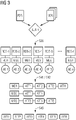
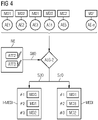
- FIG 3 and 4 Associated diagrams are shown, which show those associated with the in figure 2 methods shown represent associated data streams as an example.
- the in the Figures 3 and 4 illustrated reference data sets RDS-1, RDS-2, ..., RDS-n, medical attributes ATT-1, ATT-2, ..., ATT-m and medical findings are only to be understood as examples. In particular, depending on the case, different numbers of reference data records RDS-1, RDS-2, ..., RDS-n, medical attributes ATT-1, ATT-2, ..., ATT-m and medical findings MD1, MD2, MD3 and result in different assignments.
- the method presented aims to offer a selection of possible diagnoses/medical findings based on an automated analysis of the data available on a patient and to narrow it down through continued human-machine interaction.
- the available data are given on the one hand by the medical data set PDS of the patient to be diagnosed and on the other hand by comparison data sets VDS.
- each of the comparison data sets VDS relates to medical data sets comparison patients (different from the patient to be evaluated).
- the comparison data sets VDS are characterized in that at least one previously known medical diagnosis MD1, MD2, MD3, which was made for the associated comparison patient in the past, is known for each comparison data set VDS.
- step S10 the medical data record PDS of the patient to be diagnosed is provided. This can include manual selection of the respective case by a user via the user interface 10 . Furthermore, this can include loading the medical data record PDS from the memory unit 50 or another data memory, which can be part of a medical information system, for example. In addition, step S10 can include receiving the medical data record PDS by the processing unit 40 .
- the processing unit 40 automatically compares the medical data record PDS with the comparison data records VDS in order to identify data records from the comparison data records VDS that have a certain similarity to the medical data record PDS.
- These similar data sets are also called reference data sets RDS-1, RDS-2, ..., RDS-n. Assuming that similar medical datasets indicate similar medical findings MD1, MD2, MD3, the previously known medical findings MD1, MD2, MD3 of the reference datasets RDS-1, RDS-2, . . . , RDS-n can be used to identify possible medical findings MD1, MD2, MD3 can be closed for the medical data record PDS.
- Step S20 one or more reference data sets RDS-1, RDS-2, .
- Step S20 is based on a similarity analysis, in which similarities between the medical data record PDS and the comparison data records VDS are identified or quantified.
- the similarities can be expressed by similarity measures AE-1, AE-2, ..., AE-n.
- a measure of similarity AE-1, AE-2 .
- All comparison data records VDS with a certain degree of similarity to the medical data record PDS can be identified as reference data records RDS-1, RDS-2, .
- all those comparison data records VDS can be identified as reference data records RDS-1, RDS-2, .
- the comparison data records VDS with the comparatively highest similarity measures can be identified as reference data records RDS-1, RDS-2, . . . , RDS-n.
- Step S20 thus leads, as in figure 4 shown, to one or more reference data sets RDS-1, RDS-2, ..., RDS-n.
- a corresponding measure of similarity AE-1, AE-2, ..., AE-n belongs to each reference data set RDS-1, RDS-2, ..., RDS-n.
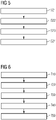
- the similarity analysis in step S20 is performed by the first data processing algorithm ALG-1. A more detailed description of the determination of the similarity measures is also given in relation to figure 5 given.
- each reference data record RDS-1, RDS-2, ..., RDS-n is associated with a medical finding MD1, MD2, MD3.
- Different reference data records RDS-1, RDS-2, . . . , RDS-n can be associated with identical medical findings MD1, MD2, MD3.
- a reference data set RDS-1, RDS-2, ..., RDS-n can also be associated with more than one medical finding (in figure 3 not shown).
- the similarity measures AE-1, AE-2, ..., AE-n provide an indication of how probable a medical finding MD1, MD2, MD3 from a reference data record RDS-1, RDS-2, . . . , RDS-n also applies to the medical data record PDS. If a medical finding MD1, MD2, MD3 can be associated with consistently high degrees of similarity AE-1, AE-2, ..., AE-n, it is more relevant than a medical finding MD1, MD2, MD3 with lower degrees of similarity AE- 1, AE-2, ..., AE-n.
- step S30 this context is used to derive first or incidental medical information I-MEDI, which provides the user with information about possible medical findings MD1, MD2, MD3 for the patient to be diagnosed and, optionally, their possible relevance or pertinence.
- the relevance or pertinence can be derived from the similarity measures AE-1, AE-2, . . . , AE-n.
- This confidence value can be implemented as a “score” for the respective medical finding MD1, MD2, MD3.
- a confidence value can be implemented, for example, by calculating average similarity measures AE-1, AE-2, . . .
- the incident medical information I-MEDI can include, for example, a ranking of the medical findings MD1, MD2, MD3. The ranking would then indicate how accurate a respective medical finding MD1, MD2, MD3 is in comparison to other medical findings MD1, MD2, MD3 based on the similarity analysis. in figure 4
- the example shown is in the incident medical information I-MEDI the medical finding MD3 in first place in the ranking, and thus on the basis of the similarity analysis (of the similarity measures AE-1, AE-2, ..., AE-n) most relevant for the assess patients to be evaluated.
- Medical report MD1 comes in second place and medical report MD2 in third place.
- the initial medical information I-MEDI also contain the above confidence values.
- the initial medical information I-MEDI can be provided by using the second data processing algorithm ALG-2.
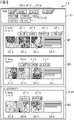
- the incident medical information I-MEDI can be displayed to the user via the user interface 10. This is preferably done in a form of representation that is suitable for the user to be able to perceive the relevance of a respective medical finding MD1, MD2, MD3 in comparison to the other medical findings MD1, MD2, MD3. As below in reference to Figures 6 to 8 is described in more detail, it is possible here, for example, to work with the display of lists and/or numerical values and/or markings.
- the medical findings MD1, MD2, MD3 found through the similarity analysis and their relative assessment of relevance are based on the available data. It is generated automatically and does not yet contain any input from the user.
- Embodiments of the present invention provide for making the initial medical information I-MEDI more precise through continued and targeted human-machine interaction. It is provided that tags or medical attributes ATT-1, ATT-2, . . . , ATT-m are offered to the user. The user can then use a user input NE to decide whether and, if applicable, to what extent the medical attributes ATT-1, ATT-2, . . . , ATT-m apply to the patient to be diagnosed.
- the medical attributes ATT-1, ATT-2, ..., ATT-m can be related to different categories with medical findings.
- a medical attribute can indicate, for example, whether an acute, sub-acute or chronic disease is present.
- an attribute can indicate, for example, whether a clinical picture is unilateral or bilateral.
- the attributes ATT-1, ATT-2, . . . , ATT-m can be present in particular as semantic identifiers.
- a medical finding can have several different medical attributes ATT-1, ATT-2, ..., ATT-m.
- a medical attribute ATT-1, ATT-2, . . . , ATT-m can apply to a number of different medical findings MD1, MD2, MD3.
- various medical attributes ATT-1, ATT-2, ..., ATT-m can be mutually exclusive.
- step S40 the medical attributes ATT-1, ATT-2, .
- Relevant medical attributes ATT-1, ATT-2, ..., ATT-m are those medical attributes ATT-1, ATT-2, ..., ATT-m for the medical findings MD1, MD2, MD3 are relevant.
- an assignment or assignment rule can be provided for this purpose, which assigns one or more medical attributes ATT-1, ATT-2, . . . , ATT-m to medical findings MD1, MD2, MD3.
- the association can in particular be previously known and, for example, based on annotations by one or more experts and/or an evaluation of textbook knowledge or medical guidelines to be created.
- these characterizing medical attributes ATT-1, ATT-2, can also be used, which assigns one or more medical attributes ATT-1, ATT-2, . . . , ATT-m to each medical finding MD1, MD2, MD3.
- one or more medical attributes ATT-1, ATT-2, . . . , ATT-m can be stored in the associated reference data records RDS-1, RDS-2, RDS-1, RDS-2, ..., RDS-n can be found.
- the medical findings MD1, MD2, MD3 are obtained with the medical attributes ATT-1, ATT-2, . . . , ATT-m assigned to them.
- these medical attributes ATT-1, ATT-2, ..., ATT-m can be displayed in step S30 or S90 together with the respective medical findings (cf. also Figures 6 to 8 ).
- the medical attributes ATT-1, ATT-2, ..., ATT-m of the medical findings MD1, MD2, MD3 become a set of medical attributes ATT-1, ATT-2, ..., ATT- m formed, which is to be displayed to the user for assessment (sub-step S43).
- duplicate mentions of medical attributes ATT-1, ATT-2, ..., ATT-m can be eliminated.
- medical attributes ATT-1, ATT-2, . . . , ATT-m can also be filtered out.
- a step S50 the medical attributes ATT-1, ATT-2, . . . , ATT-m determined in step S40 are displayed to the user via the user interface 10.
- the purpose of this The notification is to provide the user with the ascertained medical attributes ATT-1, ATT-2, . . . , ATT-m for verification and/or evaluation.
- a form of representation can be selected in which the medical attributes ATT-1, ATT-2, . . . , ATT-m are grouped according to categories and/or sorted according to their discriminating effect.
- the discriminating effect can be determined, for example, using the similarity measures AE-1, AE-2, . . .
- the user verifies or evaluates the medical attributes ATT-1, ATT-2, . . . , ATT-m by entering a corresponding user input NE.
- a user input NE can be aimed at confirming and/or rejecting or excluding individual medical attributes ATT-1, ATT-2, . . . , ATT-m for the case to be diagnosed.
- the user input NE can include quantitative information for further differentiation, which contains a measure of how accurate individual medical attributes ATT-1, ATT-2, ..., ATT-m are for the case to be diagnosed (for example, such a measure may be selected from a range from 100% true to 0% true).
- the display in step S50 preferably takes place via a graphical user interface GUI, via which the user input NE can also be entered.
- the user input NE is received in step S60.
- the user input NE can be provided by the user, for example by pressing one or more buttons in a graphical user interface GUI, as well as by text or voice input or other ways in which data can be entered into the system 1.
- step S70 the user input NE is evaluated.
- medical information MEDI is created in step S70, in which the user input NE is taken into account. This exploits the fact that a verification or assessment of a medical attribute ATT-1, ATT-2, ..., ATT-m by the user has a direct impact on the extent to which the associated medical findings MD1, MD2, MD3 apply to the case at hand.
- the user input NE contains, for example, a selection of a specific medical attribute ATT-1, ATT-2, ..., ATT-m for the present case (in the in figure 4 shown example ATT2 and ATT3), this is to be taken as an indication that the medical findings MD1, MD2, MD3 associated with this medical attribute ATT-1, ATT-2, ..., ATT-m are more relevant for the case to be diagnosed than those that do not show (or even exclude) the medical attribute ATT-1, ATT-2, ..., ATT-m.
- a medical attribute ATT-1, ATT-2, ..., ATT-m can lead to the exclusion of the medical findings MD1, MD2, MD3 that contain this medical attribute ATT-1, ATT-2, ..., ATT-m require.
- a confidence value e.g. in the form of a score
- the similarity analysis which indicates the relative relevance of the medical findings MD1, MD2, MD3 for the reporting patients.
- medical information MEDI can be determined, which provides information about possible medical findings MD1, MD2, MD3 for the patient to be diagnosed and, optionally, their possible relevance or pertinence.
- the medical information MEDI can be based solely on the medical findings MD1, MD2, MD3 selected by the similarity analysis and the user input NE.
- the medical information MEDI can take into account the similarity measures AE-1, AE-2, . . . , AE-n and thus combine the similarity analysis and the user input NE.
- the medical information MEDI can then be generated as incident medical information I-MEDI adapted based on the user input NE.
- the medical Information MEDI are provided by an application of the second data processing algorithm ALG-2.
- the following step S80 is directed to providing the medical information MEDI.
- the provision can include a display of the medical information MEDI, for example via the user interface 10 (sub-step S81).
- the medical information MEDI can be made available to further processing processes (sub-step S82).
- Such further processing processes can include, for example, the (partially) automated creation of a medical report and in particular the automated filling of a report form.
- further processing processes can include the archiving of the medical information MEDI, preferably in association with the medical data record PDS.
- providing the medical information MEDI to the first data processing algorithm ALG-1 can be a further processing step.
- sub-step S82 it is preferable for the user to agree to or actively initiate the provision (e.g. with an entry in the appropriately designed graphical user interface GUI).
- Step S90 is a repeat step. If the user makes a further user input NE on the display in step S81, for example, step S90 ensures that the medical information MEDI is adapted to the further user input NE (steps S60 and S70) and the provision is updated accordingly (step S80).
- the further user input NE can, for example, include the selection or deselection of further medical attributes ATT-1, ATT-2, . . . ATT-m.
- figure 5 shows an exemplary embodiment for individual steps for determining reference data records RDS-1, RDS-2, . . . , RDS-n.
- the individual steps can be carried out in particular within step S20.
- the order of the method steps is not restricted either by the sequence shown or by the numbering chosen. If necessary, the order of the steps can be reversed and individual steps can be omitted.
- one or more steps, in particular a sequence of steps up to all steps, can be carried out repeatedly.
- a data descriptor is generated from the medical data record PDS.
- the data descriptor can include essential features of the medical data record PDS in the form of a feature vector. Since the medical data record PDS generally has image data and non-image data, the data descriptor can also be based on image features and non-image features. Image features can be extracted using image processing techniques. These can include the identification, analysis and/or measurement of objects, local and/or global structures, patterns or textures that are contained in the image data of the medical data record PDS. The features may further include anatomical features and/or structures, such as the presence of an anatomical landmark or the size, texture, or density of an identified organ.
- the features can include parameters that characterize image values of the image data contained in the medical data record PDS. These can be, for example, parameters that describe a color, a gray level, a contrast or a gradient of these variables.
- the features extracted from the non-image data can include, for example, metadata relating to the image data of the medical data record PDS.
- the features can relate to further context data of the patient to be diagnosed. These features can relate, for example, to demographic information about the patient, one or more previous illnesses, risk factors, existing diagnoses and findings, laboratory values, vital signs, and so on.
- the data descriptor points preferably has a large number of features which, taken together, characterize the medical data record PDS.
- step S21 is performed using the first data processing algorithm ALG-1.
- step S22 of figure 5 the data descriptor is used to query the storage unit 50.
- the data descriptor can be compared with the corresponding data descriptors of the comparison data sets VDS.
- the corresponding data descriptors can be generated analogously to the data descriptor of the medical data record PDS and in particular have the same structure as this. According to some embodiments, the corresponding data descriptors were already generated before the query in step S22 and stored in the memory unit 50 together with the comparison data sets VDS.
- a similarity metric is evaluated, with which a similarity between the data descriptor of the medical data record PDS and the corresponding data descriptors of the comparison data records VDS can be quantified. All or only some of the comparison data sets VDS contained in the storage unit can be taken into account. In other words, a measure of similarity AE-1, AE-2, . . . AE-n can be obtained in step S23 for each comparison data set VDS taken into account.
- the similarity metric can be a distance in vector space between the feature vectors of the medical data set PDS and the comparison data sets VDS. For example, the distance can be given as a Euclidean distance.
- the similarity metric may be defined as a cosine similarity between the data descriptors.
- the similarity of individual features can be weighted individually.
- step S24 the similarity measures AE-1, AE-2, . . . , AE-n determined in step S23 are used from the comparison data sets VDS to select those data sets that have a certain similarity to the medical data set PDS.
- the selected data sets form the reference data sets RDS-1, RDS-2, . . . , RDS-n used in steps S30 et seq.
- all comparison data sets VDS can be selected whose degree of similarity is above a predetermined threshold.
- steps S21-S24 is therefore one or more reference data records RDS-1, RDS-2, ..., RDS-n with associated similarity measures AE-1, AE-2, ..., AE-n, each one Specify the similarity of the respective reference data set RDS-1, RDS-2, ..., RDS-n to the medical data set PDS.
- the first data processing algorithm ALG-1 can have one or more trained functions. Depending on the design, a trained function can perform more or fewer steps S21-S24.
- the feature signatures can be extracted with the aid of a trained function, from which the similarity measures AE-1, AE-2, . . . , AE-n are then calculated.
- a trained function can also be designed in such a way that the similarity measures AE-1, AE-2, . . . , AE-n are directly specified.
- classic functions not based on artificial intelligence can of course also be used. An example of this would be so-called texture classification algorithms.
- the trained functions used for the first data processing algorithm ALG-1 may comprise a neural network.
- Neural networks can have a large number of consecutive layers. Each layer comprises at least one, preferably several, nodes. In essence, each node can perform a mathematical operation that maps one or more input values to an output value.
- the nodes of each layer can be associated with all or only a subset of nodes previous and/or subsequent layer. Two nodes are "connected” when their inputs and/or outputs are connected. The edges or links are associated with a parameter often referred to as "weight” or "edge weight".
- Input values for the nodes of the respective first layer can be, for example, the medical data record PDS and the comparison data records VDS. The last layer is often referred to as the output layer.
- output values of the nodes of the output layer can, for example, be feature signatures (which would then have to be converted into similarity measures AE-1, AE-2, ..., AE-n) or equal similarity measures AE-1, AE-2, ... , AE-n be.
- feature signatures which would then have to be converted into similarity measures AE-1, AE-2, ..., AE-n
- AE-n similarity measures
- Between the input layer and the output layer are a number of hidden layers.
- the trained functions may include a convolutional neural network or a deep convolutional neural network. Such trained functions then have one or more convolutional layers and, optionally, one or more deconvolution layers. Furthermore, the trained function may have pooling layers and upsampling layers as well as fully connected layers. Convolution layers convolve the input and pass its result to the next level by moving an image filter over the input. Convolution layers may prove particularly advantageous when searching for similar image areas, as in some embodiments. The accumulation layers reduce the dimensions of the data by consolidating the outputs from groups of nodes in one layer to a single node in the next layer. up-sampling layers and unfolding layers reverse the actions of the convolution layers and the collection layers. Fully connected layers connect each node of previous layers to nodes of subsequent layers, essentially giving each node a "vote".
- the second data processing algorithm ALG-2 can also include one or more trained functions.
- neural networks can also be described for this purpose, which are designed to, based on the available input data (i.e. the similarity measures AE-1, AE-2, ..., AE-n, the medical findings MD1, MD2, MD3 and/or the user input NE) to issue a medical indication I-MEDI/MEDI.
- the second data processing algorithm ALG-2 can have one or more trained classifiers, such as a k-nearest-neighbor network or support vector machines (a technical term for this is "Support Vector Machine", or SVM for short).
- the second data processing algorithm ALG-2 can of course also be based on a classic function that does not use artificial intelligence.
- a trained function learns by adjusting parameters that determine the mapping from input to output data.
- these are, for example, the weights or weighting parameters (eg the edge weights) of individual layers and nodes.
- a trained function can be trained, for example, by methods of supervised learning (a technical term for this is “supervised learning”).
- supervised learning a technical term for this is “supervised learning”.
- back propagation a technical term for this is "back propagation”
- the trained function is applied to training input data to produce corresponding output values whose target values are known in the form of training output data.
- the difference between the output values and the training baseline data can be used to introduce a cost or loss functional as a measure of how good or poorly the trained function fulfills the task assigned to it.
- the aim of the training is to find a (local) minimum of the cost functional by iteratively adjusting the parameters (eg the edge weights) of the trained function. This eventually enables the trained function to deliver acceptable results over a (sufficiently) large cohort of training input data.
- This optimization problem can be performed using a stochastic gradient descent method or other approaches known in the art.
- training data sets would each have medical training data sets and training comparison data sets and, depending on the configuration of the first data processing algorithm ALG-1, associated verified feature signatures, verified reference data sets and/or verified ones.
- verified reference data sets could be based on an annotation made by a user based on an analysis or assessment of the medical training data set. The same applies to the verified similarity measures.
- a training of the first data processing algorithm ALG-1 could then apply the first data processing algorithm ALG-1 to the medical training data sets or training VDS to generate output values and compare the output values with the verified feature signatures, verified Include reference data sets and / or verified similarity measures. Based on the comparison, one or more parameters of the first data processing algorithm ALG-1 can then be adjusted.
- the first data processing algorithm ALG-1 is continually trained by feedback from the medical information MEDI.
- a corresponding procedure is in figure 6 shown.
- the order of the method steps is not restricted either by the sequence shown or by the numbering chosen. If necessary, the order of the steps can be reversed and individual steps can be omitted. In addition, one or more steps, in particular a sequence of steps up to all steps, can be carried out repeatedly.
- Step T10 is aimed at providing a medical data record PDS and several comparison data records VDS.
- the medical data record PDS or the comparison data records VDS can in particular have the form described above.
- one or more reference data sets RDS-1, RDS-2, . . . , RDS-n are determined from the comparison data sets VDS by the first data processing algorithm ALG-1.
- the reference data sets RDS-1, RDS-2, ..., RDS-n have a certain similarity with the medical data set PDS.
- the first data processing algorithm ALG-1 also outputs a similarity measure AE-1, AE-2, ..., AE-n for each reference data set RDS-1, RDS-2, ..., RDS-n, the one Similarity of the respective reference data set RDS-1, RDS-2, ..., RDS-n with the medical data set PDS indicates (quantified).
- the first data processing algorithm ALG-1 as in connection with figure 2 operate executed.
- step T30 based on the reference data sets RDS-1, RDS-2, . . . , RDS-n determined in step T20 and the similarity measures AE-1, AE-2, Human-machine interaction generates medical information MEDI.
- steps S30 to S80 can be processed repeatedly. If a sufficiently good result, ie acceptable medical information MEDI, is achieved, this can be used to further adapt the first data evaluation algorithm ALG-1.
- the medical information MEDI obtained in this way is optimized by the user inputs NE. Medical findings MD1, MD2, MD3, which have turned out to be (particularly) relevant for the patient to be diagnosed due to this optimization, suggest that reference data records RDS-1, RDS-2, . . . , RDS-n with such medical findings should be more similar to the PDS medical data set than others. This can be used to check the first data evaluation algorithm ALG-1 and, if necessary, to train it further.
- Step T40 is accordingly directed to a comparison of the output of the first data processing algorithm ALG-1 with the medical information MEDI. If the medical information MEDI contains adjusted similarity measures, these can optionally be compared directly with the similarity measures AE-1, AE-2, . . . , AE-n determined by the first data processing algorithm ALG-1. Otherwise, for example, possible adjustments in the similarity measures AE-1, AE-2, ..., AE-n can also be inferred from the relative relevance of the medical findings MD1, MD2, MD3 in the medical information MEDI.
- step T50 the first data processing algorithm ALG-1 is adapted based on the comparison from step T40.
- the first step is as in connection with figure 2 described, a similarity analysis.
- the results of the similarity analysis are, on the one hand, the similar cases (in the form of one or more reference data sets RDS-1, RDS-2, ..., RDS-n) and the associated similarity measures AE-1, AE-2, ..., AE -n.
- one or more medical findings MD1, MD2, MD3 are obtained from the similarity analysis, which also come into question for the present case on the basis of the similarity analysis.
- information can be obtained from the similarity analysis as to how relevant the individual medical findings MD1, MD2, MD3 are assessed in relation to one another.
- a ranking of the medical findings MD1, MD2, MD3 for the present case can be derived from the similarity measures AE-1, AE-2, . . . , AE-n.
- This information obtained from the similarity analysis can be collectively referred to as incident medical information I-MEDI.
- the incident medical information I-MEDI includes at least the medical findings MD1, MD2, MD3 determined in the similarity analysis and preferably additionally information about their (relative) relevance for the present case.
- the incident medical information I-MEDI can also include other information and data, such as data objects DO-A, DO-B derived from the reference data records RDS-1, RDS-2, . . . , RDS-n or other sources , DO-C. These data objects can include image data and/or text data.
- the incident medical information I-MEDI can provide the user with an example in figure 7 shown graphical user interface GUI are displayed.
- the form of representation used is preferably designed in such a way that a ranking of the medical findings MD1, MD2, MD3 determined from the similarity analysis is visible to the user. In the in the Figures 7 to 9 In the examples shown, this is accomplished by displaying the medical findings MD1, MD2, MD3 in a list that is graded according to decreasing relative relevance.
- the medical finding that is initially most relevant for the case to be diagnosed based on the similarity analysis would be in the in figure 7 example shown, the medical finding is MD3.
- the relative relevance for each medical finding MD1, MD2, MD3 can be represented by visualizing a confidence value, which confidence value can be derived, for example, from the similarity measures AE-1, AE-2, ..., AE-n. This has the additional effect that the user receives information from the system 1 about how unique the ranking is.
- the ranking can additionally or alternatively be identified by displaying the respective ranking number.
- the medical findings MD1, MD2, MD3 can relate in particular to diseases that have been diagnosed for the reference data sets RDS-1, RDS-2, . . . , RDS-n.
- the name of the respective disease can be specified when displaying the I-MEDI in the graphical user interface GUI.
- All medical findings MD1, MD2, MD3 found with the similarity analysis can be displayed or just a part - for example the most relevant. The user can then display further medical findings, for example by " scrolling" in the list view.
- the incident medical information I-MEDI can contain further data objects DO-A, DO-B, DO-C and be displayed accordingly.
- the data objects DO-A, DO-B, DO-C can be generated from the reference data records RDS-1, RDS-2, . . . , RDS-n, for example.
- data objects DO-A, DO-B, DO-C generated from the reference data sets RDS-1, RDS-2, ..., RDS-n can include image data, which are then displayed as images in the graphical user interface GUI (cf . Figures 7 to 9 ).
- the data objects DO-A, DO-B, DO-C can be extracted from other sources, such as medical guidelines or electronic compendiums or textbooks, such as eRef by Thieme or Radiopedia.
- data objects DO-A, DO-B, DO-C generated from other sources can relate to the medical findings MD1, MD2, MD3 and, for example, provide more detailed information about the underlying disease.
- These data objects can be image data and/or, as in the Figures 7 to 9 shown schematically, containing text data.
- the data objects DO-A, For the display of the I-MEDI, DO-B, DO-C are preferably presented in such a way that the user can visually assign them to the respectively associated medical findings MD1, MD2, MD3.
- the data objects DO-A, DO-B, DO-C can be grouped accordingly.
- the method according to the invention provides for assigning one or more medical attributes ATT-1, ATT-2, . . . ATT-m to the medical findings MD1, MD2, MD3.
- the respective medical attributes ATT-1, ATT-2, ..., ATT-m and their assignment to the respective medical finding can be contained in the I-MEDI.
- the medical attributes ATT-1, ATT-2, -2, ..., describe RDS-n.
- characters, symbols or groups of words can also be used to represent the medical attributes ATT-1, ATT-2, . . . , ATT-m.
- the medical attributes ATT-1, ATT-2, ..., ATT-m are displayed in a button 100.
- the medical attributes ATT-1, ATT-2, . .., ATT-m related user input NE can make.
- Button 100 may be labeled with the word "Tags" or the like for ease of reference by the user.
- Medical attributes linked in particular to the medical findings MD1, MD2, MD3 are in the button 100 ATT-1, ATT-2, ..., ATT-m. All medical attributes ATT-1, ATT-2, ..., ATT-m linked to the medical findings MD1, MD2, MD3 or only a selection of the linked medical attributes ATT-1, ATT-2, ..., ATT-m be shown.
- all provided or possible medical attributes ATT-1, ATT-2, ..., ATT-m for example all medical attributes ATT-1, ATT-2, ..., ATT-m contained in the assignment rule, be shown.
- the medical attributes ATT-1, ATT-2, . . . , ATT-m can be grouped according to categories.
- the medical attributes "acute”, “subacute” and “chronic” characterizing the course of the disease are grouped together with the medical attributes "unilateral", "bilateral” and "focal” characterizing the site of the disease.
- the medical attributes ATT-1, ATT-2, . . . , ATT-m can be arranged according to relevance or their potentially discriminatory effect.
- the button 100 or the switching elements 101 are designed in such a way that the user can enter a user input NE relating to individual medical attributes ATT-1, ATT-2, . . . , ATT-m using the graphical user interface GUI.
- a user input NE can in particular include a verification of individual medical attributes ATT-1, ATT-2, . . . , ATT-m.
- a verification can, for example, include a selection or confirmation of one or more medical attributes for the case to be diagnosed.
- a verification can include deselecting or excluding one or more medical attributes ATT-1, ATT-2, . . . , ATT-m for the case to be diagnosed.
- the switching element 101 can be implemented as a button, for example in which a simple actuation (e.g. by a mouse click) means a selection and double actuation (e.g. by a double-click) means a deselection of the respective medical attribute.
- an input option can be implemented by one or more “radio buttons” and/or other solutions. Provision can also be made to provide the user with a differentiated option for user input NE, with which he or she can, for example, set the extent to which individual medical attributes ATT-1, ATT-2, . . . , ATT-m apply. As part of the graphical user interface GUI, this can be implemented, for example, by providing sliders.
- figure 8 shows an example of how the graphical user interface GUI can be adapted in response to a user input NE.
- the user has confirmed the medical attributes "acute” and "infectious" via button 100. For better orientation, this input can be marked graphically (as in figure 8 illustrated by hooks).
- the user input NE makes those medical findings MD1, MD2, MD3 more relevant which show one or more of the selected medical attributes ATT-1, ATT-2, . . . ATT-m.
- the medical information MEDI is therefore redefined or adjusted (cf. comments on figure 2 ) and the display in the graphical user interface GUI is tracked.
- Any data objects DO-A, DO-B, DO-C that are shown are updated if necessary.
- figure 9 is shown as an example of how the graphical user interface GUI responds to a user input NE can be adjusted if the user input NE also contains the exclusion of a medical attribute ATT-1, ATT-2, ..., ATT-m.
- the user can exclude the medical attribute "one-sided" for the case at hand. This means that the medical finding MD2 is irrelevant for the case to be diagnosed, since it requires this medical attribute.
- the medical information MEDI will be adjusted accordingly. This can be implemented in the graphical user interface GUI, for example, by marking the medical finding MD2 as “excluded”.
Landscapes
- Engineering & Computer Science (AREA)
- Health & Medical Sciences (AREA)
- Theoretical Computer Science (AREA)
- Physics & Mathematics (AREA)
- General Health & Medical Sciences (AREA)
- Biomedical Technology (AREA)
- Data Mining & Analysis (AREA)
- General Physics & Mathematics (AREA)
- Computational Linguistics (AREA)
- Medical Informatics (AREA)
- Biophysics (AREA)
- Molecular Biology (AREA)
- Computing Systems (AREA)
- General Engineering & Computer Science (AREA)
- Artificial Intelligence (AREA)
- Mathematical Physics (AREA)
- Software Systems (AREA)
- Life Sciences & Earth Sciences (AREA)
- Evolutionary Computation (AREA)
- Public Health (AREA)
- Radiology & Medical Imaging (AREA)
- Epidemiology (AREA)
- Primary Health Care (AREA)
- Nuclear Medicine, Radiotherapy & Molecular Imaging (AREA)
- Quality & Reliability (AREA)
- Computer Vision & Pattern Recognition (AREA)
- Databases & Information Systems (AREA)
- Pathology (AREA)
- Medical Treatment And Welfare Office Work (AREA)
- Measuring And Recording Apparatus For Diagnosis (AREA)
Applications Claiming Priority (1)
| Application Number | Priority Date | Filing Date | Title |
|---|---|---|---|
| DE102020215943 | 2020-12-15 |
Publications (3)
| Publication Number | Publication Date |
|---|---|
| EP4016543A1 true EP4016543A1 (fr) | 2022-06-22 |
| EP4016543C0 EP4016543C0 (fr) | 2025-08-13 |
| EP4016543B1 EP4016543B1 (fr) | 2025-08-13 |
Family
ID=78592729
Family Applications (1)
| Application Number | Title | Priority Date | Filing Date |
|---|---|---|---|
| EP21207429.8A Active EP4016543B1 (fr) | 2020-12-15 | 2021-11-10 | Procédé et dispositif de fourniture des informations médicales |
Country Status (1)
| Country | Link |
|---|---|
| EP (1) | EP4016543B1 (fr) |
Cited By (2)
| Publication number | Priority date | Publication date | Assignee | Title |
|---|---|---|---|---|
| CN115424735A (zh) * | 2022-11-07 | 2022-12-02 | 四川互慧软件有限公司 | 一种电子病历数据交叉互引用方法、系统、设备及介质 |
| DE102022211036A1 (de) | 2022-10-18 | 2024-04-18 | Siemens Healthineers Ag | Verfahren und System zur Bereitstellung einer Dokumentenvorlagestruktur zur Erstellung eines medizinischen Befundsberichts |
Citations (4)
| Publication number | Priority date | Publication date | Assignee | Title |
|---|---|---|---|---|
| US20120114256A1 (en) * | 2009-06-30 | 2012-05-10 | Koninklijke Philips Electronics N.V. | Relevance feedback for content-based image retrieval |
| US20160267221A1 (en) * | 2015-03-13 | 2016-09-15 | Konica Minolta Laboratory U.S.A., Inc. | Medical imaging reference retrieval |
| US20190117978A1 (en) * | 2017-10-20 | 2019-04-25 | Neuropace, Inc. | Systems and methods for clinical decision making for a patient receiving a neuromodulation therapy based on deep learning |
| US20200380675A1 (en) * | 2017-11-22 | 2020-12-03 | Daniel Iring GOLDEN | Content based image retrieval for lesion analysis |
-
2021
- 2021-11-10 EP EP21207429.8A patent/EP4016543B1/fr active Active
Patent Citations (4)
| Publication number | Priority date | Publication date | Assignee | Title |
|---|---|---|---|---|
| US20120114256A1 (en) * | 2009-06-30 | 2012-05-10 | Koninklijke Philips Electronics N.V. | Relevance feedback for content-based image retrieval |
| US20160267221A1 (en) * | 2015-03-13 | 2016-09-15 | Konica Minolta Laboratory U.S.A., Inc. | Medical imaging reference retrieval |
| US20190117978A1 (en) * | 2017-10-20 | 2019-04-25 | Neuropace, Inc. | Systems and methods for clinical decision making for a patient receiving a neuromodulation therapy based on deep learning |
| US20200380675A1 (en) * | 2017-11-22 | 2020-12-03 | Daniel Iring GOLDEN | Content based image retrieval for lesion analysis |
Cited By (3)
| Publication number | Priority date | Publication date | Assignee | Title |
|---|---|---|---|---|
| DE102022211036A1 (de) | 2022-10-18 | 2024-04-18 | Siemens Healthineers Ag | Verfahren und System zur Bereitstellung einer Dokumentenvorlagestruktur zur Erstellung eines medizinischen Befundsberichts |
| CN115424735A (zh) * | 2022-11-07 | 2022-12-02 | 四川互慧软件有限公司 | 一种电子病历数据交叉互引用方法、系统、设备及介质 |
| CN115424735B (zh) * | 2022-11-07 | 2023-01-31 | 四川互慧软件有限公司 | 一种电子病历数据交叉互引用方法、系统、设备及介质 |
Also Published As
| Publication number | Publication date |
|---|---|
| EP4016543C0 (fr) | 2025-08-13 |
| EP4016543B1 (fr) | 2025-08-13 |
Similar Documents
| Publication | Publication Date | Title |
|---|---|---|
| DE102015212953B4 (de) | Künstliche neuronale Netze zur Klassifizierung von medizinischen Bilddatensätzen | |
| EP3545468B1 (fr) | Méthode et système pour construire une base de données d'images médicales en utilisant un réseau neuronal convolutionnel | |
| DE202018006897U1 (de) | Dynamisches, selbstlernendes System für medizinische Bilder | |
| DE112019002206B4 (de) | Knockout-autoencoder zum erkennen von anomalien in biomedizinischen bildern | |
| DE102008002882A1 (de) | System und Verfahren zu von einer elektronischen Krankenakte beeinflusster Datenerfassung, -verarbeitung und -anzeige | |
| DE112010003251T5 (de) | Medizinische Diagnoseunterstützungsvorrichtung, Verfahren zur Steuerung einer medizinischen Diagnoseunterstützungsvorrichtung und Programm | |
| DE112005000569T5 (de) | System und Verfahren zur Patientenidentifikation für klinische Untersuchungen unter Verwendung von inhaltsbasiertem Erlangen und Lernen | |
| DE102016213515A1 (de) | Verfahren zur Unterstützung eines Befunders bei der Auswertung eines Bilddatensatzes, Bildaufnahmeeinrichtung, Computerprogramm und elektronisch lesbarer Datenträger | |
| EP4016543B1 (fr) | Procédé et dispositif de fourniture des informations médicales | |
| DE102022201630A1 (de) | Verfahren und System zu einer Bereitstellung einer Information über einen Gesundheitszustand eines Patienten | |
| DE102020212189A1 (de) | Verfahren und Vorrichtung zur Analyse von Histopathologiedatensätzen | |
| DE102023211714A1 (de) | Verfahren und System zum Bereitstellen eines Datenelements aus einem Datenkorpus | |
| DE102020211843A1 (de) | Verfahren und Vorrichtung zur Analyse von Histopathologiebilddaten | |
| DE102022214014A1 (de) | Systeme und Verfahren zur Bereitstellung eines angepassten Algorithmus für maschinelles Lernen | |
| DE102021210435A1 (de) | Verfahren und Vorrichtung zur Visualisierung von dreidimensionalen Objekten | |
| Balasubramanian et al. | RETRACTED ARTICLE: An efficient medical data classification using oppositional fruit fly optimization and modified kernel ridge regression algorithm | |
| DE102021210920A1 (de) | Einrichtung und computerimplementiertes Verfahren zum Trainieren eines Systems für maschinelles Lernen zum Zuordnen einer Scan-Untersuchung zu einem standardisierten Identifizierercode | |
| DE102021204238A1 (de) | Verfahren und System zur Erzeugung und Strukturierung medizinischer Untersuchungsinformationen | |
| EP4205041A1 (fr) | Système pour l'harmonisation automatisée de données structurées à partir de différents dispositifs d'acquisition | |
| DE102022213653A1 (de) | System und Verfahren zur Bereitstellung eines auf einem medizinischen Datensatz basierenden Analyseergebnisses mit ML-Algorithmen | |
| EP4345835A1 (fr) | Procédé et unité de commande pour commander un système d'imagerie médicale | |
| DE102020210998A1 (de) | Verwertung medizinischer Daten über Organisationsgrenzen hinweg | |
| DE112022003698T5 (de) | Informationsverarbeitungsvorrichtung, informationsverarbeitungsverfahren und informationsverarbeitungsprogramm | |
| DE102021120540A1 (de) | Empfehlen wenigstens eines bildgebungsprotokolls zum scannen eines patienten | |
| DE112022001967T5 (de) | Klassifizierung von zellkernen mit vermeidung von artefakten |
Legal Events
| Date | Code | Title | Description |
|---|---|---|---|
| PUAI | Public reference made under article 153(3) epc to a published international application that has entered the european phase |
Free format text: ORIGINAL CODE: 0009012 |
|
| STAA | Information on the status of an ep patent application or granted ep patent |
Free format text: STATUS: THE APPLICATION HAS BEEN PUBLISHED |
|
| AK | Designated contracting states |
Kind code of ref document: A1 Designated state(s): AL AT BE BG CH CY CZ DE DK EE ES FI FR GB GR HR HU IE IS IT LI LT LU LV MC MK MT NL NO PL PT RO RS SE SI SK SM TR |
|
| STAA | Information on the status of an ep patent application or granted ep patent |
Free format text: STATUS: REQUEST FOR EXAMINATION WAS MADE |
|
| 17P | Request for examination filed |
Effective date: 20221219 |
|
| RBV | Designated contracting states (corrected) |
Designated state(s): AL AT BE BG CH CY CZ DE DK EE ES FI FR GB GR HR HU IE IS IT LI LT LU LV MC MK MT NL NO PL PT RO RS SE SI SK SM TR |
|
| RAP1 | Party data changed (applicant data changed or rights of an application transferred) |
Owner name: SIEMENS HEALTHINEERS AG |
|
| STAA | Information on the status of an ep patent application or granted ep patent |
Free format text: STATUS: EXAMINATION IS IN PROGRESS |
|
| 17Q | First examination report despatched |
Effective date: 20240916 |
|
| REG | Reference to a national code |
Ref legal event code: R079 Ipc: G06N0003045000 Ref country code: DE Ref legal event code: R079 Ref document number: 502021008299 Country of ref document: DE Free format text: PREVIOUS MAIN CLASS: G16H0050200000 Ipc: G06N0003045000 |
|
| GRAP | Despatch of communication of intention to grant a patent |
Free format text: ORIGINAL CODE: EPIDOSNIGR1 |
|
| STAA | Information on the status of an ep patent application or granted ep patent |
Free format text: STATUS: GRANT OF PATENT IS INTENDED |
|
| RIC1 | Information provided on ipc code assigned before grant |
Ipc: G06N 20/00 20190101ALN20250311BHEP Ipc: G16H 50/20 20180101ALI20250311BHEP Ipc: G16H 30/40 20180101ALI20250311BHEP Ipc: G06T 7/00 20170101ALI20250311BHEP Ipc: G06N 3/084 20230101ALI20250311BHEP Ipc: G06N 3/045 20230101AFI20250311BHEP |
|
| INTG | Intention to grant announced |
Effective date: 20250404 |
|
| GRAS | Grant fee paid |
Free format text: ORIGINAL CODE: EPIDOSNIGR3 |
|
| GRAA | (expected) grant |
Free format text: ORIGINAL CODE: 0009210 |
|
| STAA | Information on the status of an ep patent application or granted ep patent |
Free format text: STATUS: THE PATENT HAS BEEN GRANTED |
|
| AK | Designated contracting states |
Kind code of ref document: B1 Designated state(s): AL AT BE BG CH CY CZ DE DK EE ES FI FR GB GR HR HU IE IS IT LI LT LU LV MC MK MT NL NO PL PT RO RS SE SI SK SM TR |
|
| REG | Reference to a national code |
Ref country code: GB Ref legal event code: FG4D Free format text: NOT ENGLISH |
|
| REG | Reference to a national code |
Ref country code: CH Ref legal event code: EP |
|
| REG | Reference to a national code |
Ref country code: DE Ref legal event code: R096 Ref document number: 502021008299 Country of ref document: DE |
|
| REG | Reference to a national code |
Ref country code: IE Ref legal event code: FG4D Free format text: LANGUAGE OF EP DOCUMENT: GERMAN |
|
| U01 | Request for unitary effect filed |
Effective date: 20250813 |
|
| U07 | Unitary effect registered |
Designated state(s): AT BE BG DE DK EE FI FR IT LT LU LV MT NL PT RO SE SI Effective date: 20250821 |
|
| U20 | Renewal fee for the european patent with unitary effect paid |
Year of fee payment: 5 Effective date: 20251120 |
|
| PG25 | Lapsed in a contracting state [announced via postgrant information from national office to epo] |
Ref country code: IS Free format text: LAPSE BECAUSE OF FAILURE TO SUBMIT A TRANSLATION OF THE DESCRIPTION OR TO PAY THE FEE WITHIN THE PRESCRIBED TIME-LIMIT Effective date: 20251213 |
|
| PGFP | Annual fee paid to national office [announced via postgrant information from national office to epo] |
Ref country code: GB Payment date: 20251211 Year of fee payment: 5 |
|
| PG25 | Lapsed in a contracting state [announced via postgrant information from national office to epo] |
Ref country code: NO Free format text: LAPSE BECAUSE OF FAILURE TO SUBMIT A TRANSLATION OF THE DESCRIPTION OR TO PAY THE FEE WITHIN THE PRESCRIBED TIME-LIMIT Effective date: 20251113 |
|
| PG25 | Lapsed in a contracting state [announced via postgrant information from national office to epo] |
Ref country code: HR Free format text: LAPSE BECAUSE OF FAILURE TO SUBMIT A TRANSLATION OF THE DESCRIPTION OR TO PAY THE FEE WITHIN THE PRESCRIBED TIME-LIMIT Effective date: 20250813 |
|
| PG25 | Lapsed in a contracting state [announced via postgrant information from national office to epo] |
Ref country code: GR Free format text: LAPSE BECAUSE OF FAILURE TO SUBMIT A TRANSLATION OF THE DESCRIPTION OR TO PAY THE FEE WITHIN THE PRESCRIBED TIME-LIMIT Effective date: 20251114 |
|
| PG25 | Lapsed in a contracting state [announced via postgrant information from national office to epo] |
Ref country code: PL Free format text: LAPSE BECAUSE OF FAILURE TO SUBMIT A TRANSLATION OF THE DESCRIPTION OR TO PAY THE FEE WITHIN THE PRESCRIBED TIME-LIMIT Effective date: 20250813 |
|
| PG25 | Lapsed in a contracting state [announced via postgrant information from national office to epo] |
Ref country code: RS Free format text: LAPSE BECAUSE OF FAILURE TO SUBMIT A TRANSLATION OF THE DESCRIPTION OR TO PAY THE FEE WITHIN THE PRESCRIBED TIME-LIMIT Effective date: 20251113 |
|
| PG25 | Lapsed in a contracting state [announced via postgrant information from national office to epo] |
Ref country code: ES Free format text: LAPSE BECAUSE OF FAILURE TO SUBMIT A TRANSLATION OF THE DESCRIPTION OR TO PAY THE FEE WITHIN THE PRESCRIBED TIME-LIMIT Effective date: 20250813 |
|
| PG25 | Lapsed in a contracting state [announced via postgrant information from national office to epo] |
Ref country code: SM Free format text: LAPSE BECAUSE OF FAILURE TO SUBMIT A TRANSLATION OF THE DESCRIPTION OR TO PAY THE FEE WITHIN THE PRESCRIBED TIME-LIMIT Effective date: 20250813 |
|
| PG25 | Lapsed in a contracting state [announced via postgrant information from national office to epo] |
Ref country code: CZ Free format text: LAPSE BECAUSE OF FAILURE TO SUBMIT A TRANSLATION OF THE DESCRIPTION OR TO PAY THE FEE WITHIN THE PRESCRIBED TIME-LIMIT Effective date: 20250813 |
|
| PG25 | Lapsed in a contracting state [announced via postgrant information from national office to epo] |
Ref country code: SK Free format text: LAPSE BECAUSE OF FAILURE TO SUBMIT A TRANSLATION OF THE DESCRIPTION OR TO PAY THE FEE WITHIN THE PRESCRIBED TIME-LIMIT Effective date: 20250813 |