EP4016902A1 - Verarbeitungsverfahren für uplink-steuerungsinformationen (uci), endgerät und basisstation - Google Patents
Verarbeitungsverfahren für uplink-steuerungsinformationen (uci), endgerät und basisstation Download PDFInfo
- Publication number
- EP4016902A1 EP4016902A1 EP20851500.7A EP20851500A EP4016902A1 EP 4016902 A1 EP4016902 A1 EP 4016902A1 EP 20851500 A EP20851500 A EP 20851500A EP 4016902 A1 EP4016902 A1 EP 4016902A1
- Authority
- EP
- European Patent Office
- Prior art keywords
- uci
- csi
- harq
- ack
- pucch resource
- Prior art date
- Legal status (The legal status is an assumption and is not a legal conclusion. Google has not performed a legal analysis and makes no representation as to the accuracy of the status listed.)
- Granted
Links
Images

Classifications
-
- H—ELECTRICITY
- H04—ELECTRIC COMMUNICATION TECHNIQUE
- H04W—WIRELESS COMMUNICATION NETWORKS
- H04W72/00—Local resource management
- H04W72/50—Allocation or scheduling criteria for wireless resources
- H04W72/56—Allocation or scheduling criteria for wireless resources based on priority criteria
- H04W72/566—Allocation or scheduling criteria for wireless resources based on priority criteria of the information or information source or recipient
-
- H—ELECTRICITY
- H04—ELECTRIC COMMUNICATION TECHNIQUE
- H04L—TRANSMISSION OF DIGITAL INFORMATION, e.g. TELEGRAPHIC COMMUNICATION
- H04L1/00—Arrangements for detecting or preventing errors in the information received
- H04L1/12—Arrangements for detecting or preventing errors in the information received by using return channel
- H04L1/16—Arrangements for detecting or preventing errors in the information received by using return channel in which the return channel carries supervisory signals, e.g. repetition request signals
- H04L1/18—Automatic repetition systems, e.g. Van Duuren systems
- H04L1/1812—Hybrid protocols; Hybrid automatic repeat request [HARQ]
-
- H—ELECTRICITY
- H04—ELECTRIC COMMUNICATION TECHNIQUE
- H04L—TRANSMISSION OF DIGITAL INFORMATION, e.g. TELEGRAPHIC COMMUNICATION
- H04L5/00—Arrangements affording multiple use of the transmission path
- H04L5/003—Arrangements for allocating sub-channels of the transmission path
- H04L5/0053—Allocation of signalling, i.e. of overhead other than pilot signals
-
- H—ELECTRICITY
- H04—ELECTRIC COMMUNICATION TECHNIQUE
- H04L—TRANSMISSION OF DIGITAL INFORMATION, e.g. TELEGRAPHIC COMMUNICATION
- H04L5/00—Arrangements affording multiple use of the transmission path
- H04L5/003—Arrangements for allocating sub-channels of the transmission path
- H04L5/0058—Allocation criteria
- H04L5/0064—Rate requirement of the data, e.g. scalable bandwidth, data priority
-
- H—ELECTRICITY
- H04—ELECTRIC COMMUNICATION TECHNIQUE
- H04L—TRANSMISSION OF DIGITAL INFORMATION, e.g. TELEGRAPHIC COMMUNICATION
- H04L5/00—Arrangements affording multiple use of the transmission path
- H04L5/0091—Signalling for the administration of the divided path, e.g. signalling of configuration information
- H04L5/0094—Indication of how sub-channels of the path are allocated
-
- H—ELECTRICITY
- H04—ELECTRIC COMMUNICATION TECHNIQUE
- H04W—WIRELESS COMMUNICATION NETWORKS
- H04W72/00—Local resource management
- H04W72/04—Wireless resource allocation
- H04W72/044—Wireless resource allocation based on the type of the allocated resource
- H04W72/0446—Resources in time domain, e.g. slots or frames
-
- H—ELECTRICITY
- H04—ELECTRIC COMMUNICATION TECHNIQUE
- H04W—WIRELESS COMMUNICATION NETWORKS
- H04W72/00—Local resource management
- H04W72/20—Control channels or signalling for resource management
- H04W72/21—Control channels or signalling for resource management in the uplink direction of a wireless link, i.e. towards the network
-
- H—ELECTRICITY
- H04—ELECTRIC COMMUNICATION TECHNIQUE
- H04W—WIRELESS COMMUNICATION NETWORKS
- H04W72/00—Local resource management
- H04W72/50—Allocation or scheduling criteria for wireless resources
- H04W72/54—Allocation or scheduling criteria for wireless resources based on quality criteria
- H04W72/542—Allocation or scheduling criteria for wireless resources based on quality criteria using measured or perceived quality
-
- H—ELECTRICITY
- H04—ELECTRIC COMMUNICATION TECHNIQUE
- H04W—WIRELESS COMMUNICATION NETWORKS
- H04W72/00—Local resource management
- H04W72/50—Allocation or scheduling criteria for wireless resources
- H04W72/56—Allocation or scheduling criteria for wireless resources based on priority criteria
-
- H—ELECTRICITY
- H04—ELECTRIC COMMUNICATION TECHNIQUE
- H04L—TRANSMISSION OF DIGITAL INFORMATION, e.g. TELEGRAPHIC COMMUNICATION
- H04L5/00—Arrangements affording multiple use of the transmission path
- H04L5/003—Arrangements for allocating sub-channels of the transmission path
- H04L5/0053—Allocation of signalling, i.e. of overhead other than pilot signals
- H04L5/0055—Physical resource allocation for ACK/NACK
-
- H—ELECTRICITY
- H04—ELECTRIC COMMUNICATION TECHNIQUE
- H04L—TRANSMISSION OF DIGITAL INFORMATION, e.g. TELEGRAPHIC COMMUNICATION
- H04L5/00—Arrangements affording multiple use of the transmission path
- H04L5/003—Arrangements for allocating sub-channels of the transmission path
- H04L5/0053—Allocation of signalling, i.e. of overhead other than pilot signals
- H04L5/0057—Physical resource allocation for CQI
-
- H—ELECTRICITY
- H04—ELECTRIC COMMUNICATION TECHNIQUE
- H04W—WIRELESS COMMUNICATION NETWORKS
- H04W72/00—Local resource management
- H04W72/50—Allocation or scheduling criteria for wireless resources
- H04W72/56—Allocation or scheduling criteria for wireless resources based on priority criteria
- H04W72/566—Allocation or scheduling criteria for wireless resources based on priority criteria of the information or information source or recipient
- H04W72/569—Allocation or scheduling criteria for wireless resources based on priority criteria of the information or information source or recipient of the traffic information
Definitions
- the present disclosure relates to the field of communications technologies, and in particular, to a method for processing uplink control information, a terminal and a base station.
- Hybrid automatic repeat request acknowledgement (HARQ-ACK) information transmission is supported in a slot based on a sub-slot, and is used for supporting feedback information transmission of Ultra-Reliable and Low Latency communication (URLLC) services to reduce transmission delay.
- URLLC Ultra-Reliable and Low Latency communication
- eMBB enhanced Mobile Broadband
- PUCCH Physical Uplink Control Channel
- UCI Uplink Control Information
- the present disclosure provides a method for processing uplink control information, a terminal and a base station, which solve the problem in the related art that no specific transmission scheme exists when PUCCH resources for carrying UCI of different services overlap in a time domain.
- a method of processing uplink control information is provided in the present disclosure, performed by a terminal and including:
- the method further includes:
- the dropping the first target UCI includes: when the first UCI is Scheduling Request (SR) information, if a positive SR information transmission exists, dropping the first target UCI.
- SR Scheduling Request
- the first target UCI is a UCI with a lower priority in the second UCI and the third UCI; or
- the UCI with the lower priority is: UCI with a lower UCI priority, UCI corresponding to a lower priority level, UCI corresponding to an enhanced mobile broadband (eMBB) service, or UCI corresponding to a lower priority service.
- the first UCI is at least one of SR information, CSI or hybrid automatic repeat request-acknowledgement (HARQ-ACK) information;
- dropping the first target UCI when the fourth PUCCH resource for simultaneously transmitting the second UCI and the third UCI is overlapped with the first PUCCH resource when the first PUCCH resource carrying first UCI and the second PUCCH resource carrying second UCI are not overlapped in the time domain, the first PUCCH resource is not overlapped with the third PUCCH resource carrying third UCI in the time domain, and the second PUCCH resource and the third PUCCH resource are overlapped in the time domain includes at least one of:
- a terminal including: a transceiver, a memory, a processor, and a computer program stored in the memory and executable on the processor, where the processor is configured to execute the computer program to perform:
- the processor is configured to execute the computer program to perform:
- the processor is configured to execute the computer program to perform: when the first UCI is Scheduling Request (SR) information, if a positive SR information transmission exists, dropping the first target UCI.
- SR Scheduling Request
- the first target UCI is a UCI with a lower priority in the second UCI and the third UCI; or
- the UCI with the lower priority is: UCI with a lower UCI priority, UCI corresponding to a lower priority level, UCI corresponding to an enhanced mobile broadband (eMBB) service, or UCI corresponding to a lower priority service.
- the first UCI is at least one of SR information, CSI or hybrid automatic repeat request-acknowledgement (HARQ-ACK) information;
- the processor is configured to execute the computer program to perform:
- a terminal including:
- a method of processing uplink control information is further provided in the present disclosure, performed by a base station and including:
- the method further includes:
- the determining that the first target UCI is dropped includes: when the first UCI is Scheduling Request (SR) information, if a positive SR information transmission exists, determining that the first target UCI is dropped.
- SR Scheduling Request
- the first target UCI is a UCI with a lower priority in the second UCI and the third UCI; or
- the UCI with the lower priority is: UCI with a lower UCI priority, UCI corresponding to a lower priority level, UCI corresponding to an enhanced mobile broadband (eMBB) service, or UCI corresponding to a lower priority service.
- the first UCI is at least one of SR information, CSI or hybrid automatic repeat request-acknowledgement (HARQ-ACK) information;
- the determining that the first target UCI is dropped when the fourth PUCCH resource for simultaneously transmitting the second UCI and the third UCI is overlapped with the first PUCCH resource when the first PUCCH resource carrying first UCI and the second PUCCH resource carrying second UCI are not overlapped in the time domain, the first PUCCH resource is not overlapped with the third PUCCH resource carrying third UCI in the time domain, and the second PUCCH resource and the third PUCCH resource are overlapped in the time domain includes at least one of: when the first UCI is SR or a first HARQ-ACK or first CSI, the second UCI is second HARQ-ACK, and the third UCI is second CSI, if PUCCH resources for simultaneously transmitting the second HARQ-ACK and the second CSI are overlapped with PUCCH resources for carrying the SR or the first HARQ-ACK or the first CSI, determining that the second CSI is dropped;
- a base station including: a transceiver, a memory, a processor, and a computer program stored in the memory and executable on the processor, where the processor is configured to execute the computer program to perform:
- the processor is configured to execute the computer program to perform: when the first PUCCH resource is not overlapped with the second PUCCH resource in the time domain, the first PUCCH resource is not overlapped with the third PUCCH resource in the time domain, and the second PUCCH resource is overlapped with the third PUCCH resource in the time domain, determining the fourth PUCCH resource for simultaneously transmitting the second UCI and the third UCI according to a predefined multiplexing transmission rule; and judging whether the fourth PUCCH resource and the first PUCCH resource are overlapped in the time domain.
- the processor is configured to execute the computer program to perform: when the first UCI is Scheduling Request (SR) information, if a positive SR information transmission exists, determining that the first target UCI is dropped.
- SR Scheduling Request
- the first target UCI is a UCI with a lower priority in the second UCI and the third UCI; or
- the UCI with the lower priority is: UCI with a lower UCI priority, UCI corresponding to a lower priority level, UCI corresponding to an enhanced mobile broadband (eMBB) service, or UCI corresponding to a lower priority service.
- the first UCI is at least one of SR information, CSI or hybrid automatic repeat request-acknowledgement (HARQ-ACK) information;
- the processor is configured to execute the computer program to perform at least one of:
- a base station including: a processing module, configured to, when a first Physical Uplink Control Channel (PUCCH) resource carrying first UCI and a second PUCCH resource carrying second UCI are not overlapped in a time domain, the first PUCCH resource is not overlapped with a third PUCCH resource carrying third UCI in the time domain, and the second PUCCH resource and the third PUCCH resource are overlapped in the time domain, determine that a first target UCI is dropped when a fourth PUCCH resource for simultaneously transmitting the second UCI and the third UCI is overlapped with the first PUCCH resource; the first target UCI is one of the second UCI and the third UCI.
- PUCCH Physical Uplink Control Channel
- a computer-readable storage medium storing a computer program is further provided in the present disclosure, where the computer program is executed by a processor to perform the method of processing UCI hereinabove.
- sequence numbers of the following processes do not mean the execution sequence, and the execution sequence of each process should be determined by the function and the inherent logic thereof, and should not constitute any limitation to the implementation process of the embodiments of the present disclosure.
- B corresponding to A means that B is associated with A from which B can be determined. It should also be understood that determining B from A does not mean determining B from A alone, but may also be determined from A and/or other information.
- the terminal may be a mobile phone (or a mobile phone), or other devices capable of sending or receiving wireless signals, including user Equipment, a Personal Digital Assistant (PDA), a wireless modem, a wireless communication device, a handheld device, a laptop computer, a cordless phone, a Wireless Local Loop (WLL) station, a CPE (Customer premises Equipment) or a mobile smart hotspot capable of converting mobile signals into WiFi signals, a smart appliance, or other devices capable of autonomously communicating with a mobile communication network without human operation, and the like.
- PDA Personal Digital Assistant
- WLL Wireless Local Loop
- CPE Customer premises Equipment
- a mobile smart hotspot capable of converting mobile signals into WiFi signals
- smart appliance or other devices capable of autonomously communicating with a mobile communication network without human operation, and the like.
- the embodiment of the present disclosure provides a method for processing UCI, which solves the problem in the related art that when PUCCH resources for carrying UCI of different services overlap in a time domain, there is no specific transmission scheme.
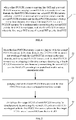
- an embodiment of the present disclosure provides a method for processing UCI, which is applied to a terminal and includes the following steps: step 11: when a first PUCCH resource carrying first UCI and a second PUCCH resource carrying second UCI do not overlap in a time domain, the first PUCCH resource and a third PUCCH resource carrying third UCI do not overlap in the time domain, and the second PUCCH resource and the third PUCCH resource overlap in the time domain: dropping a first target UCI if a fourth PUCCH resource for simultaneously transmitting the second UCI and the third UCI is overlapped with the first PUCCH resource; where the first target UCI is one of second UCI and the third UCI.
- a fourth PUCCH resource for simultaneously transmitting the second UCI and the third UCI is overlapped with the first PUCCH resource, dropping the first target UCI, transmitting the first UCI on the first PUCCH resource, and transmitting the second target UCI on a PUCCH resource corresponding to the second target UCI; where the first target UCI is one of second UCI and the third UCI, and the second target UCI is the other one of the second UCI and the third UCI except the first target UCI.
- a fourth PUCCH resource for simultaneously transmitting the second UCI and the third UCI is overlapped with the first PUCCH resource, dropping the third UCI (i.e., the first target UCI), and transmitting the first UCI on the first PUCCH resource, and transmitting the second UCI on the second PUCCH resource, that is, transmitting the first UCI and the second UCI by time-division multiplexing (TDM).
- TDM time-division multiplexing
- a fourth PUCCH resource for simultaneously transmitting the second UCI and the third UCI is overlapped with the first PUCCH resource, dropping the first target UCI, so as to transmit the first UCI on the first PUCCH resource, and transmitting the second UCI on a PUCCH resource corresponding to the second target UCI (the other of the second UCI and the third UCI except the first target UCI), that is, TDM transmitting the first UCI and the second target UCI, so as to avoid that UCI carried by PUCCH resources (the first PUCCH resource and the second PUCCH resource, the first PUCCH resource and the third PUCCH resource) that are not overlapped originally needs to be transmitted on one PUCCH
- a method for processing UCI is further provided in an embodiment of the present disclosure, which is applied to a terminal and includes the following steps: step 21: when the first PUCCH resource is not overlapped with the second PUCCH resource in the time domain, the first PUCCH resource is not overlapped with the third PUCCH resource in the time domain, and the second PUCCH resource and the third PUCCH resource are overlapped in the time domain: determining a fourth PUCCH resource for simultaneously transmitting the second UCI and the third UCI according to a predefined multiplexing transmission rule.
- the determining, according to a predefined multiplexing transmission rule, a fourth PUCCH resource for simultaneously transmitting the second UCI and the third UCI may further include: determining the fourth PUCCH resource for simultaneously transmitting the second UCI and the third UCI according to the type of the second UCI and/or the PUCCH format used for transmitting the second UCI, and the type of the third UCI and/or the PUCCH format used for transmitting the third UCI.
- the fourth PUCCH resource is: the second PUCCH resource, or the third PUCCH resource, or a PUCCH resource that is different from the second PUCCH resource and the third PUCCH resource.
- 5 PUCCH formats In the NR system, 5 PUCCH formats, NR PUCCH formats (formats) 0,1, 2, 3, and 4, are defined, where PUCCH format 0 and 1 may carry 1-2 bit UCI transmission, and PUCCH format 2, 3, and 4 may carry more than 2 bit UCI transmission.
- HARQ-ACK information may be transmitted using any of these 5 PUCCH formats: the base station can configure at least one PUCCH resource set for the terminal, one PUCCH resource set can contain a plurality of PUCCH resources, and different PUCCH resources can correspond to the same or different PUCCH formats.
- the set only includes PUCCH format 0, 1 resources, and therefore, the method can be only used for transmitting 1-2 bit HARQ-ACK information.
- the terminal can select one PUCCH resource set according to the bit number of the HARQ-ACK information (if other UCIs are multiplexed with the HARQ-ACK, the total bit number of all the UCIs), and then a PUCCH resource is determined in the determined PUCCH resource set according to a PUCCH resource indication field in a Physical Downlink Control Channel (PDCCH) corresponding to the HARQ-ACK information and is used for transmitting the HARQ-ACK information (or being multiplexed with other UCIs).
- PDCH Physical Downlink Control Channel
- the PDCCH is a PDCCH for scheduling the PDSCH; or, when the HARQ-ACK information is feedback information indicating a PDCCH for releasing downlink Semi-Persistent Scheduling (SPS) resources, the PDCCH is the PDCCH itself for releasing the SPS resources.
- PDSCH Physical Downlink control Channel
- SPS Semi-Persistent Scheduling
- PUCCH format 0 or 1 may be used for transmission on 1 PUCCH resource configured by higher layer signaling.
- Scheduling Request (SR) information may be transmitted on one PUCCH resource configured by higher layer signaling using PUCCH format 0 or 1.
- Periodic Channel State Information (CSI) may be configured to be transmitted on one PUCCH resource configured by higher layer signaling using PUCCH format 2 or 3 or 4.
- a fourth PUCCH resource for simultaneously transmitting the second UCI and the third UCI is determined according to a predefined multiplexing transmission rule: in the NR system, PUCCH resources carrying UCI are transmitted on a slot basis, that is, any uplink symbol in a slot may be allocated to the PUCCH resources for transmission.
- a fourth PUCCH resource for simultaneously transmitting second UCI and third UCI is determined according to the following method (for multiplexing transmission of the HARQ-ACK information and the CSI, the condition that the HARQ-ACK information and the CSI are allowed to be simultaneously transmitted is configured, otherwise, the CSI is dropped):
- the SR information is X bits and indicates an SR state (which is positive or all negative) among X pieces of SR information overlapped with the HARQ-ACK information, that is, the X-bit SR information is always transmitted regardless of whether the SR state is positive or negative (negative), so as to avoid a change in the number of UCI bits transmitted on the PUCCH resource of the HARQ-ACK information due to the SR state.
- Scene five when the PUCCH resources carrying the SPS HARQ-ACK information (namely, the HARQ-ACK corresponding to the SPS PDSCH, namely, the HARQ-ACK without the corresponding PDCCH) and/or the SR information are overlapped with the PUCCH resources carrying the CSI in a time domain, the PUCCH resources corresponding to the CSI are determined to be the PUCCH resources used for simultaneously transmitting the SPS HARQ-ACK information and/or the SR information and the CSI.
- the PUCCH resources carrying the SPS HARQ-ACK information namely, the HARQ-ACK corresponding to the SPS PDSCH, namely, the HARQ-ACK without the corresponding PDCCH
- the PUCCH resources corresponding to the CSI are determined to be the PUCCH resources used for simultaneously transmitting the SPS HARQ-ACK information and/or the SR information and the CSI.
- Scene six when the PUCCH resources of the HARQ-ACK information of the PDSCH and the PUCCH resources carrying CSI are overlapped in the time domain, one PUCCH resource set is selected from a plurality of PUCCH resource sets according to the total bit number of the HARQ-ACK information and the CSI information, and one PUCCH resource is determined from the selected PUCCH resource set according to a PUCCH resource indication domain in the DCI corresponding to the HARQ-ACK information and is used for simultaneously carrying the HARQ-ACK information and the CSI.
- the re-determined PUCCH resource may be the same as or different from the PUCCH resource originally carrying the HARQ-ACK information (i.e. a new PUCCH resource if different).
- the terminal is not expected to be configured to support HARQ-ACK and CSI simultaneous transmission when it is configured with only one PUCCH resource set.
- PUCCH resources in one time slot form a set Q, determining an uplink channel with the earliest starting time in the set Q as a channel A, and determining a channel set X which is overlapped with the channel A in the time domain; and obtaining a channel resource for multiplexing transmission for the UCI on the channel A and the channel X according to the multiplexing transmission rule, replacing the channel A and the channel X in the set Q with the channel resource for multiplexing transmission, continuing the steps to determine the channel A and the channel X in the new set Q, and so on until obtaining a plurality of PUCCHs which are not overlapped in time domain.
- the determining, according to a predefined multiplexing transmission rule, a fourth PUCCH resource for simultaneously transmitting the second UCI and the third UCI may include: when second UCI and third UCI contain HARQ-ACK, judging whether the overlapping part of the second PUCCH resource and the third PUCCH resource meets a time condition or not; and if the time condition is met, determining a fourth PUCCH resource for simultaneously transmitting the second UCI and the third UCI according to a predefined multiplexing transmission rule.
- a time condition (Timeline) is satisfied between overlapping PUCCHs, and when the time condition is satisfied, multiplexing transmission is allowed to be performed, where the time condition is to make a decision on how to multiplex before the earliest transmission start time by the terminal, and to complete transmission preparation on the earliest channel according to the multiplexing decision.
- the terminal does not expect the occurrence of the scheduling case not satisfying the time condition, it is considered as an erroneous scheduling if the occurrence of the scheduling case not satisfying the time condition.
- Step 22 judging whether the fourth PUCCH resource and the first PUCCH resource are overlapped in the time domain.
- Step 23 dropping a first target UCI if a fourth PUCCH resource for simultaneously transmitting the second UCI and the third UCI is overlapped with the first PUCCH resource; where the first target UCI is one of second UCI and the third UCI.
- a fourth PUCCH resource for simultaneously transmitting the second UCI and the third UCI is overlapped with the first PUCCH resource, dropping the first target UCI, transmitting the first UCI on the first PUCCH resource, and transmitting the second target UCI on a PUCCH resource corresponding to the second target UCI; where the first target UCI is one of second UCI and the third UCI, and the second target UCI is the other one of the second UCI and the third UCI except the first target UCI.
- a fourth PUCCH resource for simultaneously transmitting the second UCI and the third UCI is overlapped with the first PUCCH resource, dropping the third UCI (i.e., the first target UCI), and transmitting the first UCI on the first PUCCH resource, and transmitting the second UCI on the second PUCCH resource, that is, transmitting the first UCI and the second UCI by time-division multiplexing (TDM).
- TDM time-division multiplexing
- a fourth PUCCH resource for simultaneously transmitting the second UCI and the third UCI is overlapped with the first PUCCH resource, dropping the first target UCI, so as to transmit the first UCI on the first PUCCH resource, and transmitting the second UCI on a PUCCH resource corresponding to the second target UCI (the other of the second UCI and the third UCI except the first target UCI), that is, TDM transmitting the first UCI and the second target UCI, so as to avoid that UCI carried by PUCCH resources (the first PUCCH resource and the second PUCCH resource, the first PUCCH resource and the third PUCCH resource) that are not overlapped originally needs to be transmitted on one PUCCH
- the step of dropping the first target UCI may include: if the first UCI is Scheduling Request (SR) information, if there is positive (positive) SR information transmission, dropping the first target UCI.
- SR Scheduling Request
- the first target UCI is: a low priority UCI in the second UCI and the third UCI.
- the low priority UCI is: UCI with low UCI priority (for example, UCI priority may be HARQ-ACK > SR > CSI from high to low), or UCI with low priority level (for example, priority level may be defined as level 1, level 2, level 3, etc.), or UCI corresponding to enhanced mobile broadband (eMBB) service, or UCI corresponding to a lower priority service (that is, different services have different priorities, UCI may determine a corresponding service type according to a predetermined manner, so that priority of a corresponding service type may be determined, for example, UCI may be determined as eMBB service or URLLC service, priority of eMBB service is lower than priority of URLLC service).
- UCI with low UCI priority for example, UCI priority may be HARQ-ACK > SR > CSI from high to low
- UCI with low priority level for example, priority level may be defined as level 1, level 2, level 3, etc.
- eMBB enhanced mobile broadband
- UCI corresponding to a lower priority service that is, different services have different
- the first target UCI is: one of the second UCI and the third UCI is CSI.
- the first target UCI is: a predetermined one or any one of the second UCI and the third UCI.
- the predetermined one may be: the earliest transmission time or the latest transmission time; in particular, any one of the second UCI and the third UCI may be dropped when the transmission timings are aligned, such as: the third UCI is dropped directly.
- the first target UCI is: the third UCI.
- the first UCI is at least one of SR information, CSI, and HARQ-ACK information
- the second UCI is at least one of SR information, CSI and HARQ-ACK information
- the third UCI is at least one of SR information, CSI and HARQ-ACK information.
- the second UCI and the third UCI may be the same or different in type.
- the priority of the first UCI is higher than or equal to the priority of the third UCI; the priority of the second UCI is higher than or equal to the priority of the third UCI; the first UCI and the second UCI correspond to the same or different priorities; the priority is: corresponding UCI priority, or corresponding priority level, or corresponding service type, or corresponding priority of service type.
- the method of dropping the first target UCI is described as follows: Scenario one: when the first UCI is SR or first HARQ-ACK or first CSI, the second UCI is second HARQ-ACK, and the third UCI is second CSI: dropping the second CSI if PUCCH resources used for simultaneously transmitting the second HARQ-ACK and the second CSI overlap PUCCH resources used for carrying the SR or the first HARQ-ACK or the first CSI; where the first UCI and the second
- the SR corresponds to priority level 1 or URLLC service or high priority service type
- the HARQ-ACK information corresponds to priority level 2 or eMBB service or low priority service type
- the SR information and the HARQ-ACK information both correspond to a priority level 1 or a URLLC service or a high priority service type
- the SR information and the HARQ-ACK information both correspond to a priority level 2 or an eMBB service or a low priority service type
- the HARQ-ACK information corresponds to a priority level 1 or URLLC service or a high priority service type
- the SR information corresponds to a priority level 2 or eMBB service or a low priority service type.
- priority level 1 is higher than priority level 2.
- Scenario two when the first UCI is SR or first HARQ-ACK or CSI, the second UCI is second HARQ-ACK, and the third UCI is third HARQ-ACK: dropping the third HARQ-ACK if PUCCH resources used for simultaneously transmitting the second HARQ-ACK and the third HARQ-ACK overlap with PUCCH resources used for carrying the SR or the first HARQ-ACK or the CSI.
- the priority of the third HARQ-ACK is lower than that of the second HARQ-ACK, and the priority of the third HARQ-ACK is lower than that of the first UCI.
- the priority of the first UCI is the same as or different from the priority of the second HARQ-ACK information.
- the SR corresponds to priority level 1 or URLLC service or high priority service
- the first HARQ-ACK information corresponds to priority level 1 or URLLC service or high priority service
- the second HARQ-ACK information corresponds to priority level 2 or eMBB service or low priority service type
- the priority level 1 is higher than the priority level 2.
- Scenario three when the first UCI is a first SR or a first HARQ-ACK or CSI, the second UCI is a second HARQ-ACK, and the third UCI is a second SR: dropping the second SR if PUCCH resources for simultaneously transmitting the second HARQ-ACK and the second SR overlap with PUCCH resources for transmitting the first SR or the first HARQ-ACK or CSI.
- the priority of the second SR is lower than or equal to the priority of the second HARQ-ACK, and the priority of the second SR is lower than or equal to the priority of the first UCI. Where the priority of the first UCI is the same as or different from the priority of the second HARQ-ACK information.
- the first SR information and the second HARQ-ACK information correspond to priority level 1 or URLLC service or high priority service
- the second SR information corresponds to priority level 2 or eMBB service or low priority service
- the first SR information, the second HARQ-ACK information, and the second SR information all correspond to the same priority or service type priority, such as: all corresponding to priority level 1 or URLLC traffic or high priority traffic, or all corresponding to priority level 2 or eMBB traffic or low priority traffic.
- priority level 1 is higher than priority level 2.
- Scenario four when the first UCI is SR or HARQ-ACK or first CSI, the second UCI is second CSI, and the third UCI is third CSI: dropping low priority CSI in the second CSI and the third CSI if PUCCH resources used for simultaneously transmitting the second CSI and the third CSI overlap PUCCH resources used for transmitting the SR or HARQ-ACK or the first CSI.
- the third CSI has a lower priority than the second CSI.
- the SR corresponds to a priority level 1 or URLLC service or a high priority service type, or the SR corresponds to a priority level 2 or eMBB service or a low priority service type. Where priority level 1 is higher than priority level 2.
- Scenario five when the first UCI is SR or HARQ-ACK or first CSI, the second UCI is second CSI, and the third UCI is third CSI: if the PUCCH resources used for simultaneously transmitting the second CSI and the third CSI are overlapped with the PUCCH resources used for carrying the SR, the HARQ-ACK or the first CSI and the priorities of the second CSI and the third CSI are the same, dropping a preset or any one of the second CSI and the third CSI.
- the first embodiment and the second embodiment are respectively described in terms of a UCI method of processing the present disclosure, and the following embodiments will further describe a terminal corresponding to the first embodiment and the second embodiment with reference to the drawings.
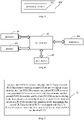
- the present disclosure provides a terminal 300, including: a processing module 310, configured to, when a first physical uplink control channel PUCCH resource carrying first UCI is not overlapped with a second PUCCH resource carrying second UCI in a time domain, the first PUCCH resource is not overlapped with a third PUCCH resource carrying third UCI in the time domain, and the second PUCCH resource and the third PUCCH resource overlap in the time domain: dropping a first target UCI if a fourth PUCCH resource for simultaneously transmitting the second UCI and the third UCI is overlapped with the first PUCCH resource; where the first target UCI is one of second UCI and the third UCI.
- a processing module 310 configured to, when a first physical uplink control channel PUCCH resource carrying first UCI is not overlapped with a second PUCCH resource carrying second UCI in a time domain, the first PUCCH resource is not overlapped with a third PUCCH resource carrying third UCI in the time domain, and the second PUCCH resource and the third PUC
- the terminal 300 further includes:
- the processing module 310 includes: a processing unit, configured to drop the first target UCI if there is positive SR information transmission when the first UCI is scheduling request, SR, information.
- the first target UCI is: a low priority UCI in the second and third UCI;
- the UCI of low priority is: the UCI with low priority is corresponding to the UCI with low priority level, or the UCI with low priority level is corresponding to the UCI of enhanced mobile broadband (eMBB) service, or the UCI corresponding to a lower priority service.
- eMBB enhanced mobile broadband
- the first UCI is at least one of SR information, CSI, and hybrid automatic repeat request acknowledgement HARQ-ACK information;
- processing module 310 is specifically configured to at least one of:
- the terminal embodiment of the present disclosure corresponds to the embodiment of the method, and all implementation means in the method embodiment are applicable to the embodiment of the base station, and the same technical effect can be achieved.
- the terminal 300 in this embodiment when a first PUCCH resource carrying first UCI and a second PUCCH resource carrying second UCI do not overlap in a time domain, the first PUCCH resource and a third PUCCH resource carrying third UCI do not overlap in the time domain, and the second PUCCH resource and the third PUCCH resource overlap in the time domain: if a fourth PUCCH resource for simultaneously transmitting the second UCI and the third UCI is overlapped with the first PUCCH resource, dropping the first target UCI, so as to transmit the first UCI on the first PUCCH resource, and transmitting the second UCI on a PUCCH resource corresponding to the second target UCI (the other of the second UCI and the third UCI except the first target UCI), that is, TDM transmitting the first UCI and the second target UCI, so as to avoid that UCI carried by PUCCH resources (the first PUCCH resource and the second PUCCH resource, the first PUCCH resource and the third PUCCH resource) that are not overlapped originally needs to be transmitted
- the present embodiment provides a terminal, including: a processor 41; and a memory 43 connected to the processor 41 through a bus interface 42, where the memory 43 is used for storing programs and data used by the processor 41 in executing operations, and when the processor 41 calls and executes the programs and data stored in the memory 43, the following procedure is executed.
- a transceiver 44 is connected to the bus interface 42 for receiving and transmitting data under control of the processor 41.
- the processor 41 when executing the computer program, implements the following steps: when a first Physical Uplink Control Channel (PUCCH) resource carrying first UCI and a second PUCCH resource carrying second UCI are not overlapped in a time domain, the first PUCCH resource is not overlapped in the time domain with a third PUCCH resource carrying third UCI, and the second PUCCH resource and the third PUCCH resource are overlapped in the time domain:
- PUCCH Physical Uplink Control Channel
- the processor 41 when executing the computer program, further implements the steps of: when the first PUCCH resource is not overlapped with the second PUCCH resource in the time domain, the first PUCCH resource is not overlapped with the third PUCCH resource in the time domain, and the second PUCCH resource and the third PUCCH resource are overlapped in the time domain:
- the processor 41 when executing the computer program, further implements the steps of: when the first UCI is Scheduling Request (SR) information, if positive SR information transmission exists, dropping the first target UCI.
- SR Scheduling Request
- the first target UCI is: a low priority UCI in the second and third UCI;
- the low priority UCI is: the UCI with low priority is corresponding to the UCI with low priority level, or the UCI with low priority level is corresponding to the UCI of enhanced mobile broadband (eMBB) service, or the UCI corresponding to a lower priority service.
- eMBB enhanced mobile broadband
- the first UCI is at least one of SR information, CSI and hybrid automatic repeat request-acknowledgement (HARQ-ACK) information;
- a priority of the first UCI is higher than or equal to a priority of the third UCI; the priority of the second UCI is higher than or equal to the priority of the third UCI; the first UCI and the second UCI correspond to the same or different priorities; the priority is: corresponding UCI priority, or corresponding priority level, or corresponding service type, or corresponding priority of service type.
- the processor 41 when executing the computer program, performs at least one of the following steps:
- the embodiments of the present disclosure further provide a computer-readable storage medium, where a computer program is stored in the computer-readable storage medium, and when the computer program is executed by a processor, the computer program implements each process of the embodiment of the method for processing UCI on the terminal side, and can achieve the same technical effect, and in order to avoid repetition, the computer program is not described herein again.
- the computer-readable storage medium may be a Read-Only Memory (ROM), a Random Access Memory (RAM), a magnetic disk or an optical disk.
- a method for processing UCI is further provided in an embodiment of the present disclosure, which is applied to a base station and includes: step 51: when a first PUCCH resource carrying first UCI and a second PUCCH resource carrying second UCI do not overlap in a time domain, the first PUCCH resource and a third PUCCH resource carrying third UCI do not overlap in the time domain, and the second PUCCH resource and the third PUCCH resource overlap in the time domain:
- a fourth PUCCH resource for simultaneously transmitting the second UCI and the third UCI is overlapped with the first PUCCH resource, determining that a first target UCI is dropped, receiving the first UCI on the first PUCCH resource, and receiving a second target UCI on a PUCCH resource corresponding to a second target UCI; where the first target UCI is one of second UCI and the third UCI, and the second target UCI is the other one of the second UCI and the third UCI except the first target UCI.
- third UCI i.e., a first target UCI
- a fourth PUCCH resource for simultaneously transmitting the second UCI and the third UCI is overlapped with the first PUCCH resource, determining that the first target UCI is dropped, so as to receive the first UCI on the first PUCCH resource, and receiving the second UCI on a PUCCH resource corresponding to the second target UCI (the other one of the second UCI and the third UCI except the first target UCI), so as to avoid that UCI carried by PUCCH resources (the first PUCCH resource and the second PUCCH resource, the first PUCCH resource and the third PUCCH resource) which are originally not overlapped needs to be transmitted on one PUCCH resource due to overlapping of the second PUCCH resource and
- an embodiment of the present disclosure further provides a method for processing UCI, which is applied to a base station and includes the following steps: step 61: when the first PUCCH resource is not overlapped with the second PUCCH resource in the time domain, the first PUCCH resource is not overlapped with the third PUCCH resource in the time domain, and the second PUCCH resource and the third PUCCH resource are overlapped in the time domain: determining a fourth PUCCH resource for simultaneously transmitting the second UCI and the third UCI according to a predefined multiplexing transmission rule.
- a fourth PUCCH resource for simultaneously transmitting the second UCI and the third UCI is overlapped with the first PUCCH resource, determining that a first target UCI is dropped, receiving the first UCI on the first PUCCH resource, and receiving a second target UCI on a PUCCH resource corresponding to a second target UCI; where the first target UCI is one of second UCI and the third UCI, and the second target UCI is the other one of the second UCI and the third UCI except the first target UCI.
- third UCI i.e., a first target UCI
- a fourth PUCCH resource for simultaneously transmitting the second UCI and the third UCI is overlapped with the first PUCCH resource, determining that the first target UCI is dropped, so as to receive the first UCI on the first PUCCH resource, and receiving the second UCI on a PUCCH resource corresponding to the second target UCI (the other one of the second UCI and the third UCI except the first target UCI), so as to avoid that UCI carried by PUCCH resources (the first PUCCH resource and the second PUCCH resource, the first PUCCH resource and the third PUCCH resource) which are originally not overlapped needs to be transmitted on one PUCCH resource due to overlapping of the second PUCCH resource and
- the step of determining that the first target UCI is dropped may include: when the first UCI is Scheduling Request (SR) information, if positive SR information transmission exists, determining that the first target UCI is dropped.
- SR Scheduling Request
- the first target UCI is: a lower priority UCI in the second UCI and the third UCI.
- the low priority UCI is: the UCI with low priority is corresponding to the UCI with low priority level, or the UCI with low priority level is corresponding to the UCI of enhanced mobile broadband (eMBB) service, or the UCI corresponding to a lower priority service.
- eMBB enhanced mobile broadband
- the first target UCI includes: one of the second UCI and the third UCI is CSI.
- CSI channel state information
- the first target UCI includes: a predetermined one or any one of the second UCI and the third UCI.
- the predetermined one may be: the earliest transmission time or the latest transmission time; in particular, any one of the second UCI and the third UCI may be dropped when the transmission timings are aligned, such as: the third UCI is dropped directly. Further, according to at least one of the above embodiments, in the first target UCI: the third UCI.
- the first UCI is at least one of SR information, CSI, and HARQ-ACK information
- the second UCI is at least one of SR information, CSI and HARQ-ACK information
- the third UCI is at least one of SR information, CSI and HARQ-ACK information.
- the second UCI and the third UCI may be the same or different in type.
- the priority of the first UCI is higher than or equal to the priority of the third UCI; the priority of the second UCI is higher than or equal to the priority of the third UCI; the priority of the first UCI is the same as or different from the priority of the second UCI; the priority is: corresponding UCI priority, or corresponding priority level, or corresponding service type, or corresponding priority of service type.
- the method of determining that the first target UCI is dropped is described as follows: Scenario one: when the first UCI is SR or first HARQ-ACK or first CSI, the second UCI is second HARQ-ACK, and the third UCI is second CSI: determining that the second CSI is dropped if PUCCH resources used for simultaneously transmitting the second HARQ-ACK and the second CSI overlap PUCCH resources used for carrying the SR or the first HARQ-ACK or the first CSI.
- the SR corresponds to priority level 1 or URLLC service or high priority service type
- the HARQ-ACK information corresponds to priority level 2 or eMBB service or low priority service type
- the SR information and the HARQ-ACK information both correspond to a priority level 1 or a URLLC service or a high priority service type
- the SR information and the HARQ-ACK information both correspond to a priority level 2 or an eMBB service or a low priority service type
- the HARQ-ACK information corresponds to a priority level 1 or URLLC service or a high priority service type
- the SR information corresponds to a priority level 2 or eMBB service or a low priority service type.
- priority level 1 is higher than priority level 2.
- Scenario two when the first UCI is SR or first HARQ-ACK or CSI, the second UCI is second HARQ-ACK, and the third UCI is third HARQ-ACK: determining that the third HARQ-ACK is dropped if PUCCH resources used for simultaneously transmitting the second HARQ-ACK and the third HARQ-ACK overlap with PUCCH resources used for carrying the SR or the first HARQ-ACK or the CSI.
- the priority of the third HARQ-ACK is lower than that of the second HARQ-ACK, and the priority of the third HARQ-ACK is lower than that of the first UCI;
- the priority of the first UCI is the same as or different from the priority of the second HARQ-ACK information.
- the SR corresponds to priority level 1 or URLLC service or high priority service
- the first HARQ-ACK information corresponds to priority level 1 or URLLC service or high priority service
- the second HARQ-ACK information corresponds to priority level 2 or eMBB service or low priority service type
- the priority level 1 is higher than the priority level 2.
- Scenario three when the first UCI is a first SR or a first HARQ-ACK or CSI, the second UCI is a second HARQ-ACK, and the third UCI is a second SR: determining that the second SR is dropped if PUCCH resources for simultaneous transmission of the second HARQ-ACK and the second SR overlap with PUCCH resources for transmission of the first SR or first HARQ-ACK or CSI.
- a priority of the second SR is lower than or equal to a priority of the second HARQ-ACK, and a priority of the second SR is lower than or equal to a priority of the first UCI; the priority of the first UCI is the same as or different from the priority of the second HARQ-ACK information.
- the first UCI is first SR information
- the first SR information and the second HARQ-ACK information correspond to priority level 1 or URLLC service or high priority service
- the second SR information corresponds to priority level 2 or eMBB service or low priority service
- the first SR information, the second HARQ-ACK information, and the second SR information all correspond to the same priority or service type priority, such as: all corresponding to priority level 1 or URLLC traffic or high priority traffic, or all corresponding to priority level 2 or eMBB traffic or low priority traffic.
- the priority level 1 is higher than priority level 2.
- Scenario four when the first UCI is SR or HARQ-ACK or first CSI, the second UCI is second CSI, and the third UCI is third CSI: determining that low priority CSI among the second CSI and the third CSI is dropped if PUCCH resources for simultaneously transmitting the second CSI and the third CSI overlap PUCCH resources for transmitting the SR or HARQ-ACK or the first CSI.
- the third CSI has a lower priority than the second CSI.
- the SR corresponds to a priority level 1 or URLLC service or a high priority service type, or the SR corresponds to a priority level 2 or eMBB service or a low priority service type. Where priority level 1 is higher than priority level 2.
- Scenario five when the first UCI is SR or HARQ-ACK or first CSI, the second UCI is second CSI, and the third UCI is third CSI: if the PUCCH resources used for simultaneously transmitting the second CSI and the third CSI are overlapped with the PUCCH resources used for carrying the SR, HARQ-ACK or the first CSI and the priorities of the second CSI and the third CSI are the same, determining that one or any one of the second CSI and the third CSI is dropped.
- an embodiment of the present disclosure provides a base station 700, including: a processing module 710, configured to, when a first physical uplink control channel PUCCH resource carrying first UCI is not overlapped with a second PUCCH resource carrying second UCI in a time domain, the first PUCCH resource is not overlapped with a third PUCCH resource carrying third UCI in the time domain, and the second PUCCH resource and the third PUCCH resource overlap in the time domain: determining that a first target UCI is dropped if a fourth PUCCH resource for simultaneously transmitting the second UCI and the third UCI is overlapped with the first PUCCH resource; where the first target UCI is one of second UCI and the third UCI.
- the terminal 700 further includes:
- the processing module 710 includes: a processing unit, configured to determine that a first target UCI is dropped if there is positive SR information transmission when the first UCI is scheduling request, SR, information.
- the first target UCI is: a low priority UCI in the second and third UCI;
- the UCI of low priority is: the UCI with low priority is corresponding to the UCI with low priority level, or the UCI with low priority level is corresponding to the UCI of enhanced mobile broadband (eMBB) service, or the UCI corresponding to a lower priority service.
- eMBB enhanced mobile broadband
- the first UCI is at least one of SR information, CSI, and hybrid automatic repeat request acknowledgement HARQ-ACK information;
- the priority of the first UCI is higher than or equal to the priority of the third UCI; the priority of the second UCI is higher than or equal to the priority of the third UCI; the priority of the first UCI is the same as or different from the priority of the second UCI; the priority is: corresponding UCI priority, or corresponding priority level, or corresponding service type, or corresponding priority of service type.
- processing module 710 is specifically configured to at least one of:
- the embodiment of the base station of the present disclosure corresponds to the embodiment of the method, and all implementation means in the embodiment of the method are applicable to the embodiment of the base station, and the same technical effect can be achieved.
- the base station 700 in this embodiment of the disclosure when a first PUCCH resource carrying first UCI and a second PUCCH resource carrying second UCI do not overlap in a time domain, the first PUCCH resource and a third PUCCH resource carrying third UCI do not overlap in the time domain, and the second PUCCH resource and the third PUCCH resource overlap in the time domain: if a fourth PUCCH resource for simultaneously transmitting the second UCI and the third UCI is overlapped with the first PUCCH resource, determining that the first target UCI is dropped, so as to receive the first UCI on the first PUCCH resource, and receiving the second UCI on a PUCCH resource corresponding to the second target UCI (the other one of the second UCI and the third UCI except the first target UCI), so as to avoid that UCI carried by PUCCH resources (the first PUCCH resource and the second PUCCH resource, the first PUCCH resource and the third PUCCH resource) which are originally not overlapped needs to be transmitted on one PUCCH resource due to overlapping
- a fourth embodiment of the present disclosure further provides a base station, including: a processor 800; a memory 820 connected to the processor 800 through a bus interface, and a transceiver 810 connected to the processor 800 through a bus interface; the memory 820 is used for storing programs and data used by the processor in performing operations; transmitting data information or pilot through the transceiver 810, and also receiving an uplink control channel through the transceiver 810; when the processor 800 calls and executes the programs and data stored in the memory 820, the following functions are implemented.
- the processor 800 when executing the computer program, implements the following steps: when a first Physical Uplink Control Channel (PUCCH) resource carrying first UCI and a second PUCCH resource carrying second UCI are not overlapped in a time domain, the first PUCCH resource is not overlapped in the time domain with a third PUCCH resource carrying third UCI, and the second PUCCH resource and the third PUCCH resource are overlapped in the time domain:
- PUCCH Physical Uplink Control Channel
- the processor 800 when executing the computer program, further implements the steps of: when the first PUCCH resource is not overlapped with the second PUCCH resource in the time domain, the first PUCCH resource is not overlapped with the third PUCCH resource in the time domain, and the second PUCCH resource and the third PUCCH resource are overlapped in the time domain:
- the processor 800 when executing the computer program, further implements the steps of: when the first UCI is Scheduling Request (SR) information, if positive SR information transmission exists, determining that the first target UCI is dropped.
- SR Scheduling Request
- the first target UCI is: a low priority UCI in the second and third UCI;
- the low priority UCI is: the UCI with low priority is corresponding to the UCI with low priority level, or the UCI with low priority level is corresponding to the UCI of enhanced mobile broadband (eMBB) service, or the UCI corresponding to a lower priority service.
- eMBB enhanced mobile broadband
- the first UCI is at least one of SR information, CSI and hybrid automatic repeat request-acknowledgement (HARQ-ACK) information;
- a priority of the first UCI is higher than or equal to a priority of the third UCI; the priority of the second UCI is higher than or equal to the priority of the third UCI; the priority of the first UCI is the same as or different from the priority of the second UCI; the priority is: corresponding UCI priority, or corresponding priority level, or corresponding service type, or corresponding priority of service type.
- the processor 800 when executing the computer program, further performs at least one of the following steps:
- a transceiver 810 for receiving and transmitting data under the control of the processor 800.
- the bus architecture may include any number of interconnected buses and bridges, with one or more processors represented by processor 800 and various circuits of memory represented by memory 820 being linked together.
- the bus architecture may also link together various other circuits such as peripherals, voltage regulators, power management circuits, and the like, which are well known in the art, and therefore, will not be described any further herein.
- the bus interface provides an interface.
- the transceiver 810 may be a number of elements, including a transmitter and a transceiver, providing a means for communicating with various other apparatus over a transmission medium.
- the processor 800 is responsible for managing the bus architecture and general processing, and the memory 820 may store data used by the processor 800 in performing operations.
- the embodiments of the present disclosure further provide a computer-readable storage medium, where a computer program is stored in the computer-readable storage medium, and when the computer program is executed by a processor, the computer program implements each process of the embodiment of the method for processing UCI on the terminal side, and can achieve the same technical effect, and in order to avoid repetition, the computer program is not described herein again.
- the computer-readable storage medium may be a Read-Only Memory (ROM), a Random Access Memory (RAM), a magnetic disk or an optical disk.
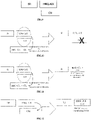
- SR in Fig. 9 denotes PUCCH resources carrying SR information
- HARQ-ACK represents PUCCH resources carrying HARQ-ACK information
- CSI denotes PUCCH resources carrying CSI.
- a PUCCH resource for simultaneously transmitting the HARQ-ACK information and the CSI is determined according to the multiplexing transmission rule predefined in the above embodiment (in this embodiment, the PUCCH resource supporting the simultaneous transmission of the HARQ-ACK information and the CSI may be configured, otherwise, the CSI is directly dropped, thereby avoiding the overlap between the HARQ-ACK information and the CSI). That is, the following cases exist for the terminal side:
- the HARQ-ACK information and CSI may be simultaneously transmitted on the PUCCH resource for simultaneously transmitting HARQ-ACK information and CSI, and SR information may be transmitted on the PUCCH resource corresponding to SR information, as shown in Fig. 11 .
- SR in Fig. 11 represents PUCCH resource carrying SR information
- HARQ-ACK represents PUCCH resources carrying HARQ-ACK information
- the CSI represents PUCCH resources carrying the CSI
- HARQ-ACK + CSI denotes a PUCCH resource for simultaneous transmission of HARQ-ACK information and CSI.
- Case 2 when the HARQ-ACK information does not have a corresponding PDCCH (specifically, the same as the above-mentioned part of the terminal-side embodiment, which is not described herein), that is, the HARQ-ACK information is feedback information of an SPS PDSCH, the HARQ-ACK information is transferred to a PUCCH resource corresponding to CSI to implement simultaneous transmission with the CSI, that is, the PUCCH resource corresponding to the CSI is a PUCCH resource for simultaneously transmitting the HARQ-ACK and the CSI at this time; then, since the PUCCH resource corresponding to CSI originally is not overlapped with the PUCCH resource corresponding to SR information, separate transmission may be implemented, that is, HARQ-ACK information and CSI are transmitted simultaneously on the PUCCH resource corresponding to CSI, and SR information is transmitted on the PUCCH resource corresponding to SR information, as shown in Fig.
- SR in Fig. 12 represents PUCCH resource carrying SR information
- HARQ-ACK represents PUCCH resources carrying HARQ-ACK information
- the CSI represents PUCCH resources carrying the CSI
- HARQ-ACK + CSI denotes a PUCCH resource for simultaneous transmission of HARQ-ACK information and CSI.
- whether the terminal transmits the CSI is determined according to the method, so that how to receive the CSI is determined; namely: when the HARQ-ACK information has a corresponding PDCCH, when the PUCCH resource used for simultaneously transmitting the HARQ-ACK information and the CSI is overlapped with the PUCCH resource corresponding to the SR information in the time domain, determining that the CSI is dropped, further receiving the HARQ-ACK information on the PUCCH resource corresponding to the HARQ-ACK information, and receiving the SR information on the PUCCH resource corresponding to the SR information; and if the PUCCH resource for simultaneously transmitting the HARQ-ACK information and the CSI is not overlapped with the PUCCH resource corresponding to the SR information in the time domain, determining that the HARQ-ACK information and the CSI are received on the PUCCH resource for simultaneously transmitting the HARQ-ACK information and the CSI, and receiving the SR information on the PUCCH resource corresponding to the SR information.
- the SR information may correspond to a URLLC service
- the HARQ-ACK information may correspond to a URLLC service or an eMBB service
- the CSI may correspond to an eMBB service or the CSI does not distinguish the corresponding service type, and the priority of the CSI is the lowest; of course, the method is also applicable to the case where the URLLC service and the eMBB service are replaced with two different service types; in the above case, any SR information state, such as positive (positive) SR and negative (negative) SR, may be applied, that is, the SR information state is not distinguished, as long as the PUCCH resource corresponding to the SR information exists; the method can also be applied only to the positive SR information, that is, the processing is performed according to the above manner only when the SR information is the positive SR information, and if the SR information is negative, it is not considered that there is a collision with the PUCCH resource for simultaneously transmitting the HARQ-ACK and the CSI in case 1, and the HARQ
- the relative positions of the SR information and the HARQ-ACK information and the CSI are merely examples, where the starting position of the PUCCH resource corresponding to the CSI leads or lags or aligns the starting position of the PUCCH resource corresponding to the HARQ-ACK information, the ending position of the PUCCH resource corresponding to the CSI may lead or lags or aligns the ending position of the PUCCH resource corresponding to the HARQ-ACK information, and the PUCCH resource corresponding to the SR information may be before the PUCCH resource corresponding to the HARQ-ACK information and the CSI or after the PUCCH resource corresponding to the HARQ-ACK information and the CSI, which is not limited by the disclosure.
- each component or each step may be decomposed and/or recombined. Such decomposition and/or recombination should be considered as equivalents of the present disclosure. Also, the steps of performing the series of processes described above may naturally be performed chronologically in the order described, but need not necessarily be performed chronologically, and some steps may be performed in parallel or independently of each other.
- the objects of the present disclosure may also be achieved by running a program or a set of programs on any computing device.
- the computing device may be a well-known general purpose device.
- the objects of the present disclosure can also be achieved merely by providing a program product containing program code for implementing the method or apparatus. That is, such a program product also constitutes the present disclosure, and a storage medium storing such a program product also constitutes the present disclosure. It is to be understood that such storage media can be any known storage media or any storage media developed in the future.
- the components or steps may be broken down and/or re-combined. Such decomposition and/or recombination should be considered as equivalents of the present disclosure.
- the steps of executing the series of processes described above may naturally be executed chronologically in the order described, but need not necessarily be executed chronologically. Some steps may be performed in parallel or independently of each other.
- the embodiments described in connection with the embodiments of the present disclosure may be implemented in hardware, software, firmware, middleware, microcode, or a combination thereof.
- the units, modules, sub-units, and sub-modules may be implemented within one or more Application Specific Integrated Circuits (ASICs), Digital Signal Processors (DSPs), Digital Signal Processing Devices (DSPDs), Programmable Logic Devices (PLDs), Field Programmable Gate Arrays (FPGAs), general purpose processors, controllers, micro-controllers, microprocessors, other electronic units designed to perform the functions described in this disclosure, or a combination thereof.
- ASICs Application Specific Integrated Circuits
- DSPs Digital Signal Processors
- DSPDs Digital Signal Processing Devices
- PLDs Programmable Logic Devices
- FPGAs Field Programmable Gate Arrays
- general purpose processors controllers, micro-controllers, microprocessors, other electronic units designed to perform the functions described in this disclosure, or a combination thereof.
- the techniques described in the embodiments of the present disclosure may be implemented with modules (e.g., procedures, functions, and so on) that perform the functions described in the embodiments of the present disclosure.
- the software codes may be stored in a memory and executed by a processor.
- the memory may be implemented within the processor or external to the processor.
Landscapes
- Engineering & Computer Science (AREA)
- Signal Processing (AREA)
- Computer Networks & Wireless Communication (AREA)
- Quality & Reliability (AREA)
- Mobile Radio Communication Systems (AREA)
Applications Claiming Priority (2)
| Application Number | Priority Date | Filing Date | Title |
|---|---|---|---|
| CN201910755210.4A CN112398614B (zh) | 2019-08-15 | 2019-08-15 | 一种上行控制信息uci的处理方法、终端及基站 |
| PCT/CN2020/106783 WO2021027627A1 (zh) | 2019-08-15 | 2020-08-04 | 上行控制信息uci的处理方法、终端及基站 |
Publications (4)
| Publication Number | Publication Date |
|---|---|
| EP4016902A1 true EP4016902A1 (de) | 2022-06-22 |
| EP4016902A4 EP4016902A4 (de) | 2022-10-19 |
| EP4016902C0 EP4016902C0 (de) | 2025-11-05 |
| EP4016902B1 EP4016902B1 (de) | 2025-11-05 |
Family
ID=74570905
Family Applications (1)
| Application Number | Title | Priority Date | Filing Date |
|---|---|---|---|
| EP20851500.7A Active EP4016902B1 (de) | 2019-08-15 | 2020-08-04 | Verarbeitungsverfahren für uplink-steuerungsinformationen (uci), endgerät und basisstation |
Country Status (4)
| Country | Link |
|---|---|
| US (1) | US11665734B2 (de) |
| EP (1) | EP4016902B1 (de) |
| CN (1) | CN112398614B (de) |
| WO (1) | WO2021027627A1 (de) |
Families Citing this family (8)
| Publication number | Priority date | Publication date | Assignee | Title |
|---|---|---|---|---|
| CN112351495B (zh) * | 2019-08-08 | 2024-09-06 | 大唐移动通信设备有限公司 | Uci的传输方法、装置、终端及基站 |
| KR20210037375A (ko) * | 2019-09-27 | 2021-04-06 | 삼성전자주식회사 | 무선 통신 시스템에서 상향링크 제어 정보 송수신 방법 및 장치 |
| US20230247635A1 (en) * | 2020-05-28 | 2023-08-03 | Sharp Kabushiki Kaisha | Urllc uci multiplexing enhancements for intra-ue uplink channel collisions |
| CN115189826B (zh) * | 2021-04-01 | 2024-11-19 | 华为技术有限公司 | 一种信息发送方法、接收方法及装置 |
| CN115190599B (zh) * | 2021-04-02 | 2025-09-19 | 大唐移动通信设备有限公司 | 一种上行信道的传输方法及装置 |
| CN115190530A (zh) * | 2021-04-02 | 2022-10-14 | 华为技术有限公司 | 一种上行控制信息传输方法和装置 |
| CN115175324B (zh) * | 2021-04-02 | 2026-04-17 | 大唐移动通信设备有限公司 | 一种信道复用方法、装置及通信设备 |
| CN115604848A (zh) * | 2021-07-09 | 2023-01-13 | 维沃移动通信有限公司(Cn) | Pucch时域资源重叠的处理方法及装置 |
Family Cites Families (16)
| Publication number | Priority date | Publication date | Assignee | Title |
|---|---|---|---|---|
| CN107734680B (zh) * | 2016-08-12 | 2023-05-09 | 中兴通讯股份有限公司 | 一种传输信息的方法及装置、接收信息的方法及装置 |
| CN107733621B (zh) * | 2016-08-14 | 2020-02-18 | 上海朗帛通信技术有限公司 | 一种无线通信中的方法和装置 |
| CN113556823B (zh) * | 2017-01-06 | 2023-05-02 | 华为技术有限公司 | 信息传输方法、终端设备及接入网设备 |
| KR101951681B1 (ko) | 2017-03-23 | 2019-02-25 | 엘지전자 주식회사 | 무선 통신 시스템에서 복수의 전송 시간 간격, 복수의 서브캐리어 간격, 또는 복수의 프로세싱 시간을 지원하는 단말을 위한 상향링크 신호 전송 또는 수신 방법 및 이를 위한 장치 |
| CN109392126A (zh) * | 2017-08-10 | 2019-02-26 | 华为技术有限公司 | 上行传输方法、终端设备和网络设备 |
| CN109802819B (zh) * | 2017-11-16 | 2024-03-05 | 北京三星通信技术研究有限公司 | 上行控制信息处理方法及终端 |
| CN109996337B (zh) | 2017-12-29 | 2021-06-29 | 大唐移动通信设备有限公司 | 一种上行控制信息的传输方法及装置 |
| CN109995484B (zh) * | 2017-12-29 | 2021-01-22 | 电信科学技术研究院 | 一种数据传输、接收方法、终端及基站 |
| WO2019137503A1 (zh) * | 2018-01-12 | 2019-07-18 | 华为技术有限公司 | 一种上行控制信息的传输方法、接入网设备以及终端设备 |
| CN110035535A (zh) | 2018-01-12 | 2019-07-19 | 华为技术有限公司 | 一种上行控制信息的传输方法、接入网设备以及终端设备 |
| US10966223B2 (en) * | 2018-01-22 | 2021-03-30 | Apple Inc. | Handling overlapping of PUCCH and PUSCH for new radio systems |
| WO2019169634A1 (zh) * | 2018-03-09 | 2019-09-12 | 北京小米移动软件有限公司 | 信息传输方法、装置、系统及存储介质 |
| KR102092680B1 (ko) * | 2018-04-05 | 2020-03-24 | 엘지전자 주식회사 | 무선 통신 시스템에서 무선 신호 송수신 방법 및 장치 |
| US11006397B2 (en) * | 2018-06-08 | 2021-05-11 | Apple Inc. | Multiplexing physical uplink control channels in a slot for a new radio (NR) system |
| CN111585728B (zh) * | 2019-02-15 | 2021-10-01 | 大唐移动通信设备有限公司 | 一种传输方法、终端及网络设备 |
| US12225570B2 (en) * | 2019-07-25 | 2025-02-11 | Datang Mobile Communications Equipment Co., Ltd. | Uplink control information transmission method and apparatus, and communication device |
-
2019
- 2019-08-15 CN CN201910755210.4A patent/CN112398614B/zh active Active
-
2020
- 2020-08-04 WO PCT/CN2020/106783 patent/WO2021027627A1/zh not_active Ceased
- 2020-08-04 EP EP20851500.7A patent/EP4016902B1/de active Active
- 2020-08-04 US US17/635,541 patent/US11665734B2/en active Active
Also Published As
| Publication number | Publication date |
|---|---|
| EP4016902C0 (de) | 2025-11-05 |
| US20220217739A1 (en) | 2022-07-07 |
| EP4016902B1 (de) | 2025-11-05 |
| EP4016902A4 (de) | 2022-10-19 |
| CN112398614B (zh) | 2021-09-17 |
| WO2021027627A1 (zh) | 2021-02-18 |
| US11665734B2 (en) | 2023-05-30 |
| CN112398614A (zh) | 2021-02-23 |
Similar Documents
| Publication | Publication Date | Title |
|---|---|---|
| EP4016902B1 (de) | Verarbeitungsverfahren für uplink-steuerungsinformationen (uci), endgerät und basisstation | |
| KR102585705B1 (ko) | Harq-ack 메시지 전송 방법, 단말 및 기지국 | |
| US12574928B2 (en) | Uplink control information transmission method and device, terminal and base station | |
| US12501422B2 (en) | UCI transmission method, device, terminal and base station | |
| EP3965344B1 (de) | Verfahren zur uplink-kanal-übertragung, endgerät und basisstation | |
| CN111988120B (zh) | 通信方法及装置 | |
| JP7230242B2 (ja) | Harq-ackの伝送方法、ユーザ機器及びネットワーク側機器 | |
| US11432274B2 (en) | Data transmission method, user equipment, base station and storage medium | |
| EP3908059A1 (de) | Informationsübertragungsverfahren, endgerät und netzwerkvorrichtung | |
| CN112584498B (zh) | Uci的传输方法、装置、终端及基站 | |
| WO2020164354A1 (zh) | 传输方法、终端及网络设备 | |
| WO2019037695A1 (zh) | 一种通信方法及装置 | |
| WO2018027918A1 (zh) | 上行信道发送方法和装置 | |
| US20240196426A1 (en) | Method transmitting uci on pusch, terminal, and device | |
| US11497003B2 (en) | Information transmission method, terminal and network device | |
| WO2021023186A1 (zh) | 信息传输方法、终端及基站 |
Legal Events
| Date | Code | Title | Description |
|---|---|---|---|
| STAA | Information on the status of an ep patent application or granted ep patent |
Free format text: STATUS: THE INTERNATIONAL PUBLICATION HAS BEEN MADE |
|
| PUAI | Public reference made under article 153(3) epc to a published international application that has entered the european phase |
Free format text: ORIGINAL CODE: 0009012 |
|
| STAA | Information on the status of an ep patent application or granted ep patent |
Free format text: STATUS: REQUEST FOR EXAMINATION WAS MADE |
|
| 17P | Request for examination filed |
Effective date: 20220315 |
|
| AK | Designated contracting states |
Kind code of ref document: A1 Designated state(s): AL AT BE BG CH CY CZ DE DK EE ES FI FR GB GR HR HU IE IS IT LI LT LU LV MC MK MT NL NO PL PT RO RS SE SI SK SM TR |
|
| A4 | Supplementary search report drawn up and despatched |
Effective date: 20220920 |
|
| RIC1 | Information provided on ipc code assigned before grant |
Ipc: H04W 72/12 20090101ALN20220914BHEP Ipc: H04W 72/04 20090101ALN20220914BHEP Ipc: H04L 5/00 20060101AFI20220914BHEP |
|
| DAV | Request for validation of the european patent (deleted) | ||
| DAX | Request for extension of the european patent (deleted) | ||
| STAA | Information on the status of an ep patent application or granted ep patent |
Free format text: STATUS: EXAMINATION IS IN PROGRESS |
|
| 17Q | First examination report despatched |
Effective date: 20240307 |
|
| GRAP | Despatch of communication of intention to grant a patent |
Free format text: ORIGINAL CODE: EPIDOSNIGR1 |
|
| STAA | Information on the status of an ep patent application or granted ep patent |
Free format text: STATUS: GRANT OF PATENT IS INTENDED |
|
| RIC1 | Information provided on ipc code assigned before grant |
Ipc: H04L 5/00 20060101AFI20250623BHEP Ipc: H04W 72/0446 20230101ALN20250623BHEP Ipc: H04W 72/12 20090101ALN20250623BHEP |
|
| INTG | Intention to grant announced |
Effective date: 20250703 |
|
| GRAS | Grant fee paid |
Free format text: ORIGINAL CODE: EPIDOSNIGR3 |
|
| GRAA | (expected) grant |
Free format text: ORIGINAL CODE: 0009210 |
|
| STAA | Information on the status of an ep patent application or granted ep patent |
Free format text: STATUS: THE PATENT HAS BEEN GRANTED |
|
| AK | Designated contracting states |
Kind code of ref document: B1 Designated state(s): AL AT BE BG CH CY CZ DE DK EE ES FI FR GB GR HR HU IE IS IT LI LT LU LV MC MK MT NL NO PL PT RO RS SE SI SK SM TR |
|
| REG | Reference to a national code |
Ref country code: CH Ref legal event code: F10 Free format text: ST27 STATUS EVENT CODE: U-0-0-F10-F00 (AS PROVIDED BY THE NATIONAL OFFICE) Effective date: 20251105 Ref country code: GB Ref legal event code: FG4D |
|
| REG | Reference to a national code |
Ref country code: DE Ref legal event code: R096 Ref document number: 602020061817 Country of ref document: DE |
|
| REG | Reference to a national code |
Ref country code: IE Ref legal event code: FG4D |
|
| U01 | Request for unitary effect filed |
Effective date: 20251125 |
|
| U07 | Unitary effect registered |
Designated state(s): AT BE BG DE DK EE FI FR IT LT LU LV MT NL PT RO SE SI Effective date: 20251201 |
|
| PG25 | Lapsed in a contracting state [announced via postgrant information from national office to epo] |
Ref country code: ES Free format text: LAPSE BECAUSE OF FAILURE TO SUBMIT A TRANSLATION OF THE DESCRIPTION OR TO PAY THE FEE WITHIN THE PRESCRIBED TIME-LIMIT Effective date: 20251105 |
|
| PG25 | Lapsed in a contracting state [announced via postgrant information from national office to epo] |
Ref country code: NO Free format text: LAPSE BECAUSE OF FAILURE TO SUBMIT A TRANSLATION OF THE DESCRIPTION OR TO PAY THE FEE WITHIN THE PRESCRIBED TIME-LIMIT Effective date: 20260205 |
|
| PG25 | Lapsed in a contracting state [announced via postgrant information from national office to epo] |
Ref country code: HR Free format text: LAPSE BECAUSE OF FAILURE TO SUBMIT A TRANSLATION OF THE DESCRIPTION OR TO PAY THE FEE WITHIN THE PRESCRIBED TIME-LIMIT Effective date: 20251105 |
|
| PG25 | Lapsed in a contracting state [announced via postgrant information from national office to epo] |
Ref country code: RS Free format text: LAPSE BECAUSE OF FAILURE TO SUBMIT A TRANSLATION OF THE DESCRIPTION OR TO PAY THE FEE WITHIN THE PRESCRIBED TIME-LIMIT Effective date: 20260205 |
|
| PG25 | Lapsed in a contracting state [announced via postgrant information from national office to epo] |
Ref country code: IS Free format text: LAPSE BECAUSE OF FAILURE TO SUBMIT A TRANSLATION OF THE DESCRIPTION OR TO PAY THE FEE WITHIN THE PRESCRIBED TIME-LIMIT Effective date: 20260305 |
|
| PG25 | Lapsed in a contracting state [announced via postgrant information from national office to epo] |
Ref country code: PL Free format text: LAPSE BECAUSE OF FAILURE TO SUBMIT A TRANSLATION OF THE DESCRIPTION OR TO PAY THE FEE WITHIN THE PRESCRIBED TIME-LIMIT Effective date: 20251105 |