EP4017181A1 - Ressourcenübertragungsverfahren, endgerät und netzwerkvorrichtung - Google Patents
Ressourcenübertragungsverfahren, endgerät und netzwerkvorrichtung Download PDFInfo
- Publication number
- EP4017181A1 EP4017181A1 EP20855634.0A EP20855634A EP4017181A1 EP 4017181 A1 EP4017181 A1 EP 4017181A1 EP 20855634 A EP20855634 A EP 20855634A EP 4017181 A1 EP4017181 A1 EP 4017181A1
- Authority
- EP
- European Patent Office
- Prior art keywords
- configured grant
- resource
- grant resource
- status information
- network device
- Prior art date
- Legal status (The legal status is an assumption and is not a legal conclusion. Google has not performed a legal analysis and makes no representation as to the accuracy of the status listed.)
- Pending
Links
- 230000005540 biological transmission Effects 0.000 title claims abstract description 87
- 238000000034 method Methods 0.000 title claims abstract description 70
- 230000011664 signaling Effects 0.000 claims abstract description 108
- 238000004590 computer program Methods 0.000 claims description 30
- 238000012545 processing Methods 0.000 claims description 12
- 238000001514 detection method Methods 0.000 claims description 3
- 230000008569 process Effects 0.000 description 13
- 230000006870 function Effects 0.000 description 9
- 238000004891 communication Methods 0.000 description 6
- 238000010586 diagram Methods 0.000 description 6
- 230000000694 effects Effects 0.000 description 5
- 101100339496 Caenorhabditis elegans hop-1 gene Proteins 0.000 description 3
- 230000008878 coupling Effects 0.000 description 3
- 238000010168 coupling process Methods 0.000 description 3
- 238000005859 coupling reaction Methods 0.000 description 3
- 238000005516 engineering process Methods 0.000 description 3
- 238000010295 mobile communication Methods 0.000 description 3
- 238000012986 modification Methods 0.000 description 3
- 230000004048 modification Effects 0.000 description 3
- 230000003287 optical effect Effects 0.000 description 3
- 101001025416 Homo sapiens Homologous-pairing protein 2 homolog Proteins 0.000 description 2
- 102100037898 Homologous-pairing protein 2 homolog Human genes 0.000 description 2
- 238000000354 decomposition reaction Methods 0.000 description 2
- 230000002093 peripheral effect Effects 0.000 description 2
- 230000006798 recombination Effects 0.000 description 2
- 238000005215 recombination Methods 0.000 description 2
- KLDZYURQCUYZBL-UHFFFAOYSA-N 2-[3-[(2-hydroxyphenyl)methylideneamino]propyliminomethyl]phenol Chemical compound OC1=CC=CC=C1C=NCCCN=CC1=CC=CC=C1O KLDZYURQCUYZBL-UHFFFAOYSA-N 0.000 description 1
- 241000760358 Enodes Species 0.000 description 1
- 235000008694 Humulus lupulus Nutrition 0.000 description 1
- 230000004913 activation Effects 0.000 description 1
- 230000009286 beneficial effect Effects 0.000 description 1
- 230000008859 change Effects 0.000 description 1
- 201000001098 delayed sleep phase syndrome Diseases 0.000 description 1
- 208000033921 delayed sleep phase type circadian rhythm sleep disease Diseases 0.000 description 1
- 238000013461 design Methods 0.000 description 1
- 238000011161 development Methods 0.000 description 1
- 230000003252 repetitive effect Effects 0.000 description 1
Images


Classifications
-
- H—ELECTRICITY
- H04—ELECTRIC COMMUNICATION TECHNIQUE
- H04W—WIRELESS COMMUNICATION NETWORKS
- H04W72/00—Local resource management
- H04W72/50—Allocation or scheduling criteria for wireless resources
- H04W72/535—Allocation or scheduling criteria for wireless resources based on resource usage policies
-
- H—ELECTRICITY
- H04—ELECTRIC COMMUNICATION TECHNIQUE
- H04W—WIRELESS COMMUNICATION NETWORKS
- H04W72/00—Local resource management
- H04W72/20—Control channels or signalling for resource management
- H04W72/23—Control channels or signalling for resource management in the downlink direction of a wireless link, i.e. towards a terminal
-
- H—ELECTRICITY
- H04—ELECTRIC COMMUNICATION TECHNIQUE
- H04W—WIRELESS COMMUNICATION NETWORKS
- H04W72/00—Local resource management
- H04W72/02—Selection of wireless resources by user or terminal
-
- H—ELECTRICITY
- H04—ELECTRIC COMMUNICATION TECHNIQUE
- H04W—WIRELESS COMMUNICATION NETWORKS
- H04W72/00—Local resource management
- H04W72/12—Wireless traffic scheduling
- H04W72/1263—Mapping of traffic onto schedule, e.g. scheduled allocation or multiplexing of flows
- H04W72/1268—Mapping of traffic onto schedule, e.g. scheduled allocation or multiplexing of flows of uplink data flows
-
- H—ELECTRICITY
- H04—ELECTRIC COMMUNICATION TECHNIQUE
- H04W—WIRELESS COMMUNICATION NETWORKS
- H04W72/00—Local resource management
- H04W72/20—Control channels or signalling for resource management
- H04W72/21—Control channels or signalling for resource management in the uplink direction of a wireless link, i.e. towards the network
-
- H—ELECTRICITY
- H04—ELECTRIC COMMUNICATION TECHNIQUE
- H04W—WIRELESS COMMUNICATION NETWORKS
- H04W72/00—Local resource management
- H04W72/50—Allocation or scheduling criteria for wireless resources
- H04W72/56—Allocation or scheduling criteria for wireless resources based on priority criteria
-
- H—ELECTRICITY
- H04—ELECTRIC COMMUNICATION TECHNIQUE
- H04W—WIRELESS COMMUNICATION NETWORKS
- H04W72/00—Local resource management
- H04W72/50—Allocation or scheduling criteria for wireless resources
- H04W72/56—Allocation or scheduling criteria for wireless resources based on priority criteria
- H04W72/566—Allocation or scheduling criteria for wireless resources based on priority criteria of the information or information source or recipient
- H04W72/569—Allocation or scheduling criteria for wireless resources based on priority criteria of the information or information source or recipient of the traffic information
Definitions
- the present disclosure relates to the field of communication technology, in particular to a resource transmission method, a terminal and a network device.
- a resource is allocated by a network device, and the resources may be the same or different among different terminals.
- collision may occur among the terminals, which affects latency and reliability.
- the present disclosure provides a resource transmission method, a terminal and a network device, which solve the problem of collisions caused by terminals sharing a resource.
- the embodiments of the present disclosure provide a resource transmission method, applied to a terminal, including:
- the notification signalling comprising configured grant resource status information, and the configured grant resource status information comprising at least one of an idle state and an occupied state;
- a configured grant resource in an idle state to transmit a physical uplink shared channel PUSCH, or sending a scheduling request SR when the configured grant resources are all in the occupied state.
- the method further includes: continuing to transmit the PUSCH on the selected configured grant resource, if the selected configured grant resource is in an occupied state, in the configured grant resource status information obtained in a transmission process.
- the method further includes: obtaining the resource configuration signalling sent by the network device, the resource configuration signalling comprising configuring M configured grant resources for each configured grant, wherein M ⁇ 1.
- the selecting the configured grant resource in the idle state to transmit the PUSCH includes: selecting the configured grant resource with the highest priority from the configured grant resources in the idle state to transmit the PUSCH, according to the preset priority.
- the notification signalling further includes: collision information about collisions on the configured grant resource.
- the embodiments of the present disclosure also provide a resource transmission method, applied to a network device, including:
- the method before sending notification signalling, the method further includes: sending a resource configuration signalling, the resource configuration signalling comprising configuring M configured grant resources for each configured grant, wherein M ⁇ 1.
- the notification signalling further includes: collision information about collisions on the configured grant resource.
- the embodiments of the present disclosure also provide a terminal, including: a transceiver, a memory, a processor, and a computer program stored in the memory and configured to be executed by the processor, wherein the processor is configured to execute the computer program to implement following steps:
- the processor is configured to execute the computer program to implement following steps: continuing to transmit the PUSCH on the selected configured grant resource, if the selected configured grant resource is in an occupied state, in the configured grant resource status information obtained in a transmission process.
- the processor is configured to execute the computer program to implement following steps: obtaining the resource configuration signalling sent by the network device, the resource configuration signalling including configuring M configured grant resources for each configured grant, wherein M ⁇ 1.
- the processor is configured to execute the computer program to implement following steps: selecting the configured grant resource with the highest priority from the configured grant resources in the idle state to transmit the PUSCH, according to the preset priority.
- the notification signalling further includes: collision information about collisions on the configured grant resource.
- the embodiments of the present disclosure also provide a network device, including: a transceiver, a memory, a processor, and a computer program stored in the memory and configured to be executed by the processor, wherein the processor is configured to execute the computer program to implement following steps:
- the processor is configured to execute the computer program to implement following steps: sending a resource configuration signalling, the resource configuration signalling including configuring M configured grant resources for each configured grant, wherein M ⁇ 1.
- the notification signalling further includes: collision information about collisions on the configured grant resource.
- the embodiments of the present disclosure also provide a terminal, including:
- the embodiments of the present disclosure also provide a network device, including:
- the embodiments of the present disclosure also provide a computer-readable storage medium storing thereon a computer program, and the computer program is configured to be executed by a processor to implement the steps of the resource transmission method as described above.
- the terminal obtains the notification signalling sent by the network device according to the status of the configured grant resource, the notification signalling includes configured grant resource status information, the configured grant resource status information includes at least one of an idle state and an occupied state, and the terminal selects, according to the configured grant resource status information, a configured grant resource in the idle state to transmit the physical uplink shared channel PUSCH, or send a scheduling request SR when the configured grant resources are all in the occupied state.
- the terminal can obtain the configured grant resource status information in real time, so as to transmit the PUSCH on the configured grant resource in the idle state, and when there is no configured grant resource in the idle state, the terminal can notify the network device by sending an SR to schedule the terminal for retransmission, which ensures the latency and reliability, and improves the resource utilization of the system.
- system and “network” in the present disclosure are often used interchangeably in the present disclosure.
- B corresponding to A means that B is associated with A, and B can be determined according to A.
- determining B according to A does not mean that B is determined only according to A, and B can also be determined according to A and/or other information.
- the form of the access network is not limited, and may include Macro Base Station, Pico Base Station, Node B (the name of the 3G mobile base station), Evolved Node B (eNB), Femto eNB or Home eNode B or Home eNB or HeNB, Relay Station, Access Point, Remote Radio Unit (RRU), Remote Radio Head (RRH) and etc.
- Node B the name of the 3G mobile base station
- eNB Evolved Node B
- Relay Station Access Point
- RRU Remote Radio Unit
- RRH Remote Radio Head
- the user terminal can be a mobile phone (or cell phone), or other equipment capable of sending or receiving wireless signals, including user equipment, Personal Digital Assistant (PDA), wireless modem, wireless communication device, handheld device, laptop, cordless phone, Wireless Local Loop (WLL) station, Customer Premise Equipment (CPE) that can convert mobile signals into wireless fidelity (WIFI) signals, or mobile smart hotspot, smart home appliance, or other devices that can spontaneously communicate with the mobile communication network without human operation.
- PDA Personal Digital Assistant
- WLL Wireless Local Loop
- CPE Customer Premise Equipment
- 5G NR 5th Generation New RAT
- 3GPP Third Generation Partnership Project
- URLLC ultra-reliable and low-latency communications
- Simple low-latency requirements or pure high-reliability requirements are relatively easy to achieve, but it is difficult to meet both low-latency requirements and high-reliability requirements at the same time, and it is usually achieved at the cost of high complexity.
- the uplink scheduling-free scheme will be supported, that is, the resource and transmission method will be indicated in the form of configured grant to reduce the air interface transmission latency, and at the same time, the repetitive transmission scheme will be supported to increase reliability.
- each service or each configuration in a service exclusively occupies a resource, although collisions are avoided, the resource utilization rate is low.
- three UEs (UE1-UE3, each UE has one service) are allocated three frequency domain resources R1, R2, R3, which can be used in non-frequency hopping or frequency hopping mode, and the frequency diversity gain can be obtained in frequency hopping mode.
- frequency hopping there are first ⁇ fourth hops (i.e., Hop1 ⁇ Hop4) in the time domain, and four PUSCHs are repeatedly transmitted in sequence.
- Hop1 ⁇ Hop4 there are first ⁇ fourth hops (i.e., Hop1 ⁇ Hop4) in the time domain, and four PUSCHs are repeatedly transmitted in sequence.
- Each UE only occupies one frequency domain resource on each Hop, and there is no collision between UEs.
- UE3 if UE3 only occasionally transmits data, it will not always occupy resources, but in order to ensure latency and reliability, the resources need to be reserved for UE3 all the time, which will result
- Resource sharing is realized through frequency hopping technology.
- 3 frequency-domain resources can support 4 UEs or more UEs, which can improve the resource utilization.
- each UE is subject to two interferences, wherein UE1 is subject to interference (i.e., collision) from different UEs on Hop1 and Hop4, and not on Hop2 and Hop3.
- interference i.e., collision
- UE4 does not send PUSCH
- UE1 is not be interfered on Hop1, Hop2 and Hop3
- UE1 is still be interfered on Hop4.
- Even if both UE3 and UE4 do not send PUSH there will still be collisions between UE1 and UE2 on resource R1 and Hop4, which affects latency and reliability.
- the embodiments of the present disclosure provide a resource transmission method, which solves the problems in the related field that some terminals sharing a resource may easily cause collisions, and each terminal exclusively occupies a resource resulting in low resource utilization.
- the embodiments of the present disclosure provide a resource transmission method, applied to a terminal, specifically including the following steps:
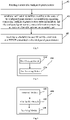
- Step 31 obtaining a notification signalling sent by the network device according to the status of the configured grant resource, the notification signalling includes configured grant resource status information, and the configured grant resource status information includes at least one of an idle state and an occupied state.
- the notification signalling is sent once every interval of a preset period of time, and the preset period is a preset interval between two adjacent notification signalling transmissions, which is used to indicate that the notification signalling is updated and sent in real time.
- Each transmission time of notification signalling can also be independently determined by the network device.
- the network device Before the terminal transmits the PUSCH, the network device will send notification signalling to the terminal. During the transmission of the PUSCH by the terminal, the network device will also send notification signalling to the terminal to notify the terminal of the current status of each configured grant resource.
- the configuration grant mode is the uplink scheduling-free mode.
- Step 32 selecting, according to the configured grant resource status information, a configured grant resource in an idle state to transmit the physical uplink shared channel PUSCH, or sending a scheduling request SR when all the configured grant resources are in the occupied state.
- the terminal when the terminal needs to transmit the PUSCH, the terminal, according to the configured grant resource status information, selects configured grant resource in the idle state to transmit the PUSCH if the configured grant resource status information includes a configured grant resource in the idle state. If the configured grant resources are all in the occupied state in the configured grant resource status information, the terminal may send a scheduling request SR to the network device and notify the network device by SR to schedule the terminal for retransmission, which ensures the latency and reliability. The terminal can also continue to wait for the next configured grant resource status information.
- the terminal obtains the notification signalling sent by the network device according to the status of the configured grant resource, the notification signalling including configured grant resource status information, and the configured grant resource status information including at least one of idle state and occupied state.
- the terminal selects the configured grant resource in the idle state to transmit a physical uplink shared channel PUSCH according to the configured grant resource status information, or sends an SR when the configured grant resources are all in the occupied state, or the terminal waits for the next configured grant resource status information when the configured grant resources are all in the occupied state.
- the terminal can obtain the configured grant resource status information in real time, so as to transmit the PUSCH on the configured grant resource in the idle state, and when there is no configured grant resource in the idle state, the terminal can notify network device by sending an SR to schedule the terminal for transmission, which ensures the latency and reliability. On the premise that the latency requirement can be met, the terminal waits for the next configured grant resource status information when the configured grant resources are all in the occupied state.
- the method may also include: continuing to transmit the PUSCH on the selected configured grant resource, if the selected configured grant resource is in the occupied state, in the configured grant resource status information obtained in the transmission process.
- the network device updates the configured grant resource for transmitting the PUSCH by the terminal to the occupied state, and the terminal obtains the updated configured grant resource status information sent by the network device. If the configured grant resource selected by the terminal is in the occupied state in the configured grant resource status information, which means that the configured grant resource selected by the terminal is occupied by the terminal and used for the terminal to transmit the PUSCH, the terminal will not select the configured grant resource in the idle state for transmitting the PUSCH, but continue to transmit the PUSCH in the configured grant resource selected by the terminal.
- the method may further include: obtaining the resource configuration signalling sent by the network device, the resource configuration signalling including configuring M configured grant resources for each configured grant, wherein M ⁇ 1.
- each configured grant is configured with M configured grant resources
- the total number N of transmissions refers to the total number of configured grants distinguishable by all terminals, all services, and all resources that is, a transmission refers to the PUSCH transmission of one terminal, it may also refer to the PUSCH transmission of one service of one of the terminals, or it may refer to the PUSCH transmission of one of the services of one of the terminals.
- M ⁇ N when M is 1, N may be 2 or 3, etc., and all N transmissions are transmitted in the same configured grant resource. If occupation occurs in the configured grant resource, the terminal sends an SR to the network device.
- the network device notifies the terminal using signalling such as downlink control information (DCI), the signalling may configure which of the group-common DCI configured grant resources are configured grant resources in the idle state and which are configured grant resources in the occupied state; if the signalling indicates that there are no configured grant resources in the idle state, when one of the transmissions requires configured grant resources for transmission, the transmission can switch the configured grant mode to the SR mode, or the terminal can continue to obtain whether there are configured grant resources in the idle state in the next configured grant resource status information.
- the configured grant resource status information sent by the network device may be ignored. The way of ignoring may be not receiving the configured grant resource status information sent by the network device, or may be discarding the information after receiving the configured grant resource status information, or may be storing the information after receiving it.
- DCI downlink control information
- the configuration may be time division multiplexing (TDM) resources, may be frequency division multiplexing (FDM) resources, or may be TDM +FDM.
- TDM time division multiplexing
- FDM frequency division multiplexing
- the selecting the configured grant resource in the idle state to transmit the PUSCH in step 32 may specifically include: selecting the configured grant resource with the highest priority from the configured grant resources in the idle state to transmit the PUSCH, according to the preset priority.
- the M configured grant resources may be prioritized according to preset priorities.
- the configured grant resource status information includes the configured grant resource in the idle state
- the configured grant resource with the highest priority can be selected from the configured grant resource in the idle state to transmit the PUSCH; if no priority order is set, one of the configured grant resources in the idle state may be randomly selected.
- the notification signalling may also include: collision information about collisions on the configured grant resource.
- the terminal if the terminal is in the process of transmitting PUSCH on one of the configured grant resources and there are other terminals that also want to occupy the configured grant resource, collisions will occur on the configured grant resource. If the collision information sent by the network device and the updated configured grant resource status information are received, the terminal knows from the received configured grant resource status information which configured grant resources are in the idle state and which are in the occupied state. The terminal selects the configured grant resources that are in the idle state at this time to transmit the PUSCH, and if all the configured grant resources are in the occupied state, the terminal sends an SR to the network device or waits for the network device to send the next configured grant resource status information.
- the network device detects that collision occurs between two or more terminals, the network device can schedule part or all of the terminals that have collisions to retransmit. When all terminals that have collisions are scheduled for retransmission, the network device sets the status of the above-mentioned configured grant resource to the idle state and when a terminal that has a collision is not scheduled for retransmission, the network device sets the above configured grant resource to the occupied state.
- the terminal when the terminal needs configured grant resources to transmit the PUSCH, the terminal selects one of the configured grant resources in the idle state for transmission. If there is no collision during transmission, the configured grant resource will be occupied until the PUSCH transmission is completed. Wherein, if the configured grant resource has PUSCH transmission, the configured grant resource is in the occupied state. If the network device detects that a certain transmission ends and the preset condition is met, the network device identifies that the configured grant resource is in the idle state.
- the preset condition may be that there is no PUSCH transmission for t consecutive transmission opportunities. The value of t is not limited.
- each UE has a service
- each service has a configuration
- 10 FDM resource are normally required, but the network device configured 5FDM resource (R1-R5) for each of the 10 UEs.
- the preset priorities of the configured grant resources of UE1 and UE2 are R1, R2, R3, R4, R5 in order
- the preset priorities of the configured grant resources of UE3 and UE4 are R2, R3, R4, R5, R1 in order, and the following can be configured in order according to this rule
- the network device detects that the status of each configured grant resource is idle, and the network device sends the configured grant resource status information to each UE, and the terminal knows that the status of each configured grant resource is in idle state
- UE1, UE3, UE5, UE7, UE9 need to send PUSCH respectively, then R1-R5 are selected to transmit the PUSCH respectively and remain occupied until PUSCH is sent; in this process, UE can ignore the network device sending configured grant resource status information.
- UE2 During the PUSCH transmission, all 5 resources are in the occupied state, if UE2 wants to send a PUSCH, but detects that all 5 configured grant resources are in the occupied state, UE2 sends an SR to the network device. If UE3 finishes transmitting PUSCH and the network device detects that R2 has no PUSCH transmission for 2 consecutive transmission opportunities, the network device updates the configured grant resource status to the idle state, and sends the updated notification signalling to the terminal at the same time; UE4 and UE6 receive the notification signalling and both want to send PUSCH; if UE4 and UE6 both select R2 and send PUSCH at the same time and the network device detects a collision between UE4 and UE6 on R2, the network device sends a collision message to UE6 to notify UE6 that a collision has occurred.
- UE4 can continue to use R2 for sending PUSCH; UE6 finds that all 5 resources are in the occupied state according to the configured grant resource status information, then
- the embodiments of the present disclosure also provide a resource transmission method, applied to a network device, specifically including the following steps.
- Step 41 detecting the status of the configured grant resource.
- the network device detects the real time status of each configured grant resource in real time.
- Step 42 sending a notification signalling according to the status of the configured grant resource, the notification signalling including configured grant resource status information, and the configured grant resource status information includes at least one of an idle state and an occupied state.
- the notification signalling is sent once every interval of a preset period of time, and the preset period being a preset interval between two adjacent notification signalling transmissions, which is used to indicate that the notification signalling is updated and sent in real time.
- the network device sends the notification signalling to the terminal and during the transmission of the PUSCH by the terminal, the network device also sends the notification signalling to the terminal to notify the terminal of the current status of each configured grant resource.
- Each transmission moment of the notification signalling can be independently determined by the network device.
- Step 43 receiving the scheduling request SR sent by the terminal or transmitting the PUSCH on the configured grant resource.
- the network device receives the PUSCH on M configured grant resources, and when the PUSCH is successfully received, the network device may submit the received PUSCH to the core network.
- the network device sends the detected configured grant resource status information to the terminal, so that the terminal can obtain the configured grant resource status information in real time, thereby transmitting the PUSCH on the configured grant resource in the idle state, and notifying the network device to schedule the terminal for transmission by sending an SR when there is no configured grant resource in the idle state, which ensures the latency and reliability.
- the network device updates the configured grant resource status information and sends the information to the terminal, and the terminal can wait for the updated configured grant resource status information.
- the method may further include: sending resource configuration signalling, the resource configuration signalling including configuring M configured grant resources for each configured grant, wherein M ⁇ 1.
- each configured grant is configured with M configured grant resources
- the total number N of transmissions refers to the total number of configured grants distinguishable by all terminals, all services, and all resources that is, a transmission refers to the PUSCH transmission of one terminal, it may also refer to the PUSCH transmission of one service of one of the terminals, or it may refer to the PUSCH transmission of one of the services of one of the terminals.
- M ⁇ N when M is 1, N may be 1, 2 or 3, etc., and all N transmissions are transmitted in the same configured grant resource. If occupation occurs in the configured grant resource, the terminal sends an SR to the network device.
- the notification signalling may also include: collision information about the collisions on the configured grant resource.
- the network device detects that at least two terminals transmit the PUSCH on the same configured grant resource, at least two terminals collide in the configured grant resource, and the network device identifies that the configured grant resource is in the occupied state, and sends collision information and updated configured grant resource status information to at least one of the terminals in which the collision occurs, the terminal can learn from the received configured grant resource status information which configured grant resources are in the idle state and which are in the occupied state, and the terminal selects the configured grant resources in the idle state at this time to transmit the PUSCH. In the case that all the configured grant resources are in the occupied state, if the terminal sends an SR to the network device, the network device schedules retransmission according to the received SR.
- the network device detects that collision occurs between two or more terminals, the network device can schedule part or all of the terminals that have collisions to retransmit. When all terminals that have collisions are scheduled for retransmission, the network device sets the status of the above-mentioned configured grant resource to the idle state and when a terminal that has a collision is not scheduled for retransmission, the network device sets the above configured grant resource to the occupied state.
- the terminal when the terminal needs configured grant resources to transmit the PUSCH, the terminal selects one of the configured grant resources in the idle state for transmission. If there is no collision during transmission, the configured grant resource will be occupied until the PUSCH transmission is completed. If the network device detects that a certain transmission ends and the preset condition is met, the network device identifies that the configured grant resource is in the idle state.
- the preset condition may be that there is no PUSCH transmission for t consecutive transmission opportunities. The value of t is not limited.
- the terminal obtains the configured grant resource status information in real time, thereby transmitting the PUSCH on the configured grant resource in the idle state, and notifying the network device to schedule the terminal for retransmission by sending an SR when there is no configured grant resource in the idle state, and when multiple terminals share a configured grant resource, collisions are avoided, which not only improves resource utilization, but also ensures latency and reliability while improving the resource utilization of the system.
- the embodiments of the present disclosure also provide a terminal 500, including:
- it also includes: a second processing module, configure to continue to transmit the PUSCH on the selected configured grant resource, if the selected configured grant resource is in the occupied state, in the configured grant resource status information obtained in a transmission process.
- a second obtaining module configured to obtain the resource configuration signalling sent by the network device, the resource configuration signalling including configuring M configured grant resources for each configured grant, wherein M ⁇ 1.
- the first processing module 520 specifically includes: selecting the configured grant resource with the highest priority from the configured grant resources in the idle state to transmit the PUSCH, according to the preset priority.
- the notification signalling further includes: collision information about the collisions on the configured grant resource.
- the terminal in the embodiments of the present disclosure corresponds to the embodiments of the above-mentioned resource transmission method, and all the implementation means in the above-mentioned method embodiment are applicable to the embodiment of the terminal, and the same technical effect can also be achieved.
- the terminal obtains the notification signalling sent by the network device according to the status of the configured grant resource, the notification signalling including configured grant resource status information, and the configured grant resource status information including at least one of the idle state and the occupied state.
- the terminal selects the configured grant resource in the idle state to transmit a physical uplink shared channel PUSCH according to the configured grant resource status information, or sends an SR when the configured grant resources are all in the occupied state, or the terminal waits for the next configured grant resource status information when the configured grant resources are all in the occupied state.
- the terminal can obtain the configured grant resource status information in real time, so as to transmit the PUSCH on the configured grant resource in the idle state, and when there is no configured grant resource in the idle state, the terminal can notify network device by sending an SR to schedule the terminal for transmission, which ensures the latency and reliability, and improves the resource utilization of the system.
- the embodiments of the present disclosure also provide a network device 600, including:
- a second sending module configured to send a resource configuration signalling, the resource configuration signalling including configuring M configured grant resources for each configured grant, wherein M ⁇ 1.
- the notification signalling further includes: collision information about collisions on the configured grant resource.
- the network device in the embodiment of the present disclosure corresponds to the embodiment of the above-mentioned resource transmission method, and all the implementation means in the above-mentioned method embodiment are applicable to the embodiment of the network device, and the same technical effect can also be achieved.
- the terminal obtains the configured grant resource status information in real time, thereby transmitting the PUSCH on the configured grant resource in the idle state, and notifying the network device to schedule the terminal for retransmission by sending an SR when there is no configured grant resource in the idle state, and when multiple terminals share a configured grant resource, collisions are avoided, which not only improves resource utilization, but also ensures latency and reliability while improving the resource utilization of the system.
- the embodiments of the present disclosure also provide a terminal, including: a processor 71; and a memory 73 connected to the processor 71 through a bus interface 72, the memory 73 is used to store programs and data used by the processor 71 when performing operations, the processor 71is configured to execute the programs and data stored in the memory 73 to implement following steps.
- transceiver 74 is connected to bus interface 72 to receive and transmit data under the control of processor 71, specifically, the processor 71 is configured to execute programs to implement the following steps:
- the processor 71 is configured to execute programs to implement the following steps: continuing to transmit the PUSCH on the selected configured grant resource, if the selected configured grant resource is in the occupied state, in the configured grant resource status information obtained in a transmission process.
- the processor 71 is configured to execute programs to implement the following steps: obtaining the resource configuration signalling sent by the network device, the resource configuration signalling including configuring M configured grant resources for each configured grant, wherein M ⁇ 1.
- the processor 71 is configured to execute programs to implement the following steps: selecting the configured grant resource with the highest priority from the configured grant resources in the idle state to transmit the PUSCH, according to the preset priority.
- the notification signalling further includes: collision information about collisions on the configured grant resource.
- the terminal in the embodiment of the present disclosure corresponds to the above-mentioned resource transmission method embodiment, and all the implementation means in the above-mentioned method embodiment are applicable to the embodiment of the terminal, and the same technical effect can also be achieved.
- the bus architecture may include any number of interconnected buses and bridges, specifically various circuits of one or more processors represented by the processor 71 and the memory represented by the memory 73 are connected together.
- the bus architecture can also connect various other circuits such as peripheral devices, voltage regulators, power management circuits, etc., which are all known in the field, and therefore, will not be further described herein.
- the bus interface provides the interface.
- the transceiver 74 may be a plurality of elements, that is, including a transmitter and a transceiver, and provide a unit for communicating with various other devices on the transmission medium.
- the user interface 75 may also be an interface capable of connecting externally and internally with required device.
- the connected device includes but is not limited to a keypad, a display, a speaker, a microphone, a joystick, etc.
- the processor 71 is responsible for managing the bus architecture and general processing, and the memory 73 can store data used by the processor 71 when performing operations.
- the embodiments of the present disclosure also provide a network device, which may be specifically a base station, and includes: a processor 800; a memory 820 connected to the processor 800 through a bus interface, and a transceiver 810 connected to the processor 800 through a bus interface; the memory 820 is used to store programs and data used by the processor when performing operations; data information or pilots are sent through the transceiver 810, and the transceiver 810 receives the uplink control channel; the processor 800 is configured to execute the programs and data stored in the memory 820 to implement the following functional modules.
- a network device which may be specifically a base station, and includes: a processor 800; a memory 820 connected to the processor 800 through a bus interface, and a transceiver 810 connected to the processor 800 through a bus interface; the memory 820 is used to store programs and data used by the processor when performing operations; data information or pilots are sent through the transceiver 810, and the transceiver 810 receives the uplink control channel; the processor
- the processor 800 is configured to read the programs in the memory 820 to implement the following steps:
- the transceiver 810 is configured to receive and send data under the control of the processor 800.
- the processor 800 is configured to execute the computer program to implement the following steps: sending a resource configuration signalling, the resource configuration signalling including configuring M configured grant resources for each configured grant, wherein M ⁇ 1.
- the notification signalling further includes: collision information about collisions on the configured grant resource.
- the network device of the embodiment of the present disclosure corresponds to the above-mentioned resource transmission method embodiment, and all the implementation means in the foregoing method embodiment are applicable to the embodiment of the network device, and the same technical effect can also be achieved.
- the bus architecture may include any number of interconnected buses and bridges, specifically various circuits such as one or more processors represented by the processor 800 and the memory represented by the memory 820 are connected together.
- the bus architecture can also connect various other circuits such as peripheral devices, voltage regulators, power management circuits, etc., which are all known in the field, and therefore, will not be further described herein.
- the bus interface provides the interface.
- the transceiver 810 may be a plurality of elements, that is, including a transmitter and a receiver, and provide a unit for communicating with various other devices on the transmission medium.
- the processor 800 is responsible for managing the bus architecture and general processing, and the memory 820 can store data used by the processor 800 when performing operations.
- the embodiments of the present disclosure further provide a computer-readable storage medium storing thereon a computer program.
- a computer program When the computer program is executed by a processor, each process of the above-mentioned information transmission method embodiment is realized, and the same technical effect can be achieved. In order to avoid repetition, a detailed description thereof is omitted.
- the computer-readable storage medium is, for example, a read-only memory (ROM), random access memory (RAM), magnetic disk, or optical disc, etc.
- the computer program includes instructions for performing part or all of the steps of the above-mentioned method; and the computer program can be stored in a readable storage medium, and the storage medium can be any form of storage medium.
- each component or each step can be decomposed and/or recombined.
- This decomposition and/or recombination should be regarded as equivalent solutions of the present disclosure.
- the steps of performing the above series of processing can naturally be performed in a chronological order in description, but do not necessarily need to be performed in the chronological order, and some steps can be performed in parallel or independently of each other.
- the person skilled in the art can understand that all or any of the steps or components of the method and device of the present disclosure can be used in any computing device (including a processor, storage medium, etc.) or a network of computing devices, and implemented by hardware, firmware, software, or any combination thereof. This can be achieved by the person skilled in the art using their basic programming skills after reading the description of the present disclosure.
- the purpose of the present disclosure can also be realized by running a program or a group of programs on any computing device.
- the computing device may be a well-known general-purpose device. Therefore, the purpose of the present disclosure can also be achieved only by providing a program product containing program code for implementing the method or device of the present disclosure. That is, such a program product also constitutes the present disclosure, and a storage medium storing such a program product also constitutes the present disclosure. Obviously, the storage medium may be any well-known storage medium, or any storage medium developed in the future. It should also be pointed out that in the device and method of the present disclosure, obviously, each component or each step can be decomposed and/or recombined.
- the disclosed device and method may be implemented in other ways.
- the device embodiments described above are only illustrative, for example, the division of the units is only a logical function division, and there may be other type of divisions in actual implementation, for example, multiple units or components may be combined or it can be integrated into another system, or some features can be ignored or not implemented.
- the displayed or discussed mutual coupling or direct coupling or communication connection may be indirect coupling or communication connection through some interfaces, devices, or units, and maybe in electrical, mechanical, or other forms.
- the units described as separate components may or may not be physically separated, and the components displayed as units may or may not be physical units, that is, they may be located in one place, or they may be distributed on multiple network units. Some or all of the units may be selected according to actual needs to achieve the objectives of the solutions of the embodiments.
- the functional units in the various embodiments of the present disclosure may be integrated into one processing unit, or each unit may exist alone physically, or two or more units may be integrated into one unit.
- the function is implemented in the form of a software functional unit and sold or used as an independent product, it can be stored in a computer-readable storage medium.
- the computer software product is stored in a storage medium and includes several instructions to make a computer device (which may be a personal computer, a server, or a network device, etc.) executes all or part of the steps of the methods described in the various embodiments of the present disclosure.
- the aforementioned storage media include: U disk, mobile hard disk, ROM, RAM, magnetic disk or optical disk, and other media that can store program codes.
- the person skilled in the art can understand that all or part of the processes in the above-mentioned embodiment methods can be implemented by controlling the relevant hardware through a computer program.
- the program can be stored in a computer-readable storage medium, and the program can be stored in a computer-readable storage medium. When executed, it may include the procedures of the above-mentioned method embodiments.
- the storage medium may be a magnetic disk, an optical disk, a read-only memory (ROM), or a random access memory (RAM), etc.
- the embodiments described in the present disclosure may be implemented by hardware, software, firmware, middleware, microcode, or a combination of them.
- the processing unit can be implemented in one or more application-specific integrated circuits (ASIC), digital signal processor (DSP), digital signal processing device (DSP Device, DSPD), programmable logic device (PLD), Field-Programmable Gate Array (FPGA), general-purpose processors, controllers, microcontrollers, microprocessors, and others for performing the functions described in this disclosure electronic unit or the combination thereof.
- ASIC application-specific integrated circuits
- DSP digital signal processor
- DSP Device digital signal processing device
- PLD programmable logic device
- FPGA Field-Programmable Gate Array
- the technology described in the embodiments of the present disclosure can be implemented by modules (for example, procedures, functions, etc.) that perform the functions described in the embodiments of the present disclosure.
- the software codes can be stored in the memory and executed by the processor.
- the memory can be implemented in the processor or external to the processor.
Landscapes
- Engineering & Computer Science (AREA)
- Computer Networks & Wireless Communication (AREA)
- Signal Processing (AREA)
- Mobile Radio Communication Systems (AREA)
Applications Claiming Priority (2)
| Application Number | Priority Date | Filing Date | Title |
|---|---|---|---|
| CN201910760155.8A CN112399583A (zh) | 2019-08-16 | 2019-08-16 | 一种资源传输方法、终端和网络设备 |
| PCT/CN2020/101849 WO2021031743A1 (zh) | 2019-08-16 | 2020-07-14 | 资源传输方法、终端和网络设备 |
Publications (2)
| Publication Number | Publication Date |
|---|---|
| EP4017181A1 true EP4017181A1 (de) | 2022-06-22 |
| EP4017181A4 EP4017181A4 (de) | 2022-08-17 |
Family
ID=74602851
Family Applications (1)
| Application Number | Title | Priority Date | Filing Date |
|---|---|---|---|
| EP20855634.0A Pending EP4017181A4 (de) | 2019-08-16 | 2020-07-14 | Ressourcenübertragungsverfahren, endgerät und netzwerkvorrichtung |
Country Status (4)
| Country | Link |
|---|---|
| US (1) | US20220287074A1 (de) |
| EP (1) | EP4017181A4 (de) |
| CN (1) | CN112399583A (de) |
| WO (1) | WO2021031743A1 (de) |
Families Citing this family (5)
| Publication number | Priority date | Publication date | Assignee | Title |
|---|---|---|---|---|
| US12082208B2 (en) * | 2021-05-20 | 2024-09-03 | Qualcomm Incorporated | Techniques for granting resources for internet of things communications |
| US12568522B2 (en) | 2021-10-27 | 2026-03-03 | Qualcomm Incorporated | Dynamic component carrier configuration for uplink configured grants |
| US12192993B2 (en) * | 2022-04-28 | 2025-01-07 | Qualcomm Incorporated | Uplink control channel resource selection for scheduling request transmission |
| CN116530185A (zh) * | 2023-03-01 | 2023-08-01 | 北京小米移动软件有限公司 | 确定资源状态的方法、装置和存储介质 |
| WO2026025242A1 (zh) * | 2024-07-29 | 2026-02-05 | 北京小米移动软件有限公司 | 一种通信方法及装置 |
Family Cites Families (17)
| Publication number | Priority date | Publication date | Assignee | Title |
|---|---|---|---|---|
| WO2015100680A1 (zh) * | 2013-12-31 | 2015-07-09 | 华为技术有限公司 | 一种控制数据传输的方法、装置以及系统 |
| CN103986566B (zh) * | 2014-05-29 | 2017-11-24 | 上海华为技术有限公司 | 一种上行数据的发送方法、基站、用户设备及通信网络 |
| CN105992345A (zh) * | 2015-01-27 | 2016-10-05 | 中兴通讯股份有限公司 | 非授权载波资源的使用方法及装置 |
| CN106686738A (zh) * | 2015-11-05 | 2017-05-17 | 索尼公司 | 基站侧和用户设备侧的装置及方法、无线通信系统 |
| EP3451765B1 (de) * | 2016-05-28 | 2020-07-15 | Huawei Technologies Co., Ltd. | Datenübertragungsverfahren und -vorrichtung |
| CN107734699A (zh) * | 2016-08-10 | 2018-02-23 | 深圳市金立通信设备有限公司 | 一种上行资源调度方法及相关设备 |
| CN106856630B (zh) * | 2017-01-13 | 2018-12-11 | 北京小米移动软件有限公司 | 资源分配方法、装置、用户设备和基站 |
| WO2018146834A1 (en) * | 2017-02-10 | 2018-08-16 | Nec Corporation | Methods and systems for enabling grant-free transmission in advanced wireless communication systems |
| CN108738135B (zh) * | 2017-04-13 | 2019-12-24 | 华为技术有限公司 | 上行信息发送方法、接收方法和装置 |
| US10779222B2 (en) * | 2017-05-04 | 2020-09-15 | Qualcomm Incorporated | Grant-free admission control to a shared channel |
| CN109787728B (zh) * | 2017-11-13 | 2020-10-23 | 华为技术有限公司 | 一种上行传输方法及终端 |
| CN109802753A (zh) * | 2017-11-17 | 2019-05-24 | 维沃移动通信有限公司 | Csi的传输方法及装置 |
| CN110035543B (zh) * | 2018-01-11 | 2022-11-18 | 华为技术有限公司 | 上行资源的使用方法及装置 |
| US20210135825A1 (en) * | 2018-01-19 | 2021-05-06 | Idac Holdings, Inc. | Methods and apparatuses for non-orthogonal multiple access |
| US10904909B2 (en) * | 2018-01-23 | 2021-01-26 | Huawei Technologies Co., Ltd. | System and method for time domain grant-free PUSCH resource allocation |
| CN111541524B (zh) * | 2018-01-24 | 2023-04-18 | Oppo广东移动通信有限公司 | 控制传输信道上的传输的传输信道分配装置和方法 |
| CN108769995B (zh) * | 2018-05-29 | 2023-04-18 | 武汉虹信科技发展有限责任公司 | 一种业务调度处理方法及装置 |
-
2019
- 2019-08-16 CN CN201910760155.8A patent/CN112399583A/zh active Pending
-
2020
- 2020-07-14 US US17/635,687 patent/US20220287074A1/en active Pending
- 2020-07-14 EP EP20855634.0A patent/EP4017181A4/de active Pending
- 2020-07-14 WO PCT/CN2020/101849 patent/WO2021031743A1/zh not_active Ceased
Also Published As
| Publication number | Publication date |
|---|---|
| EP4017181A4 (de) | 2022-08-17 |
| WO2021031743A1 (zh) | 2021-02-25 |
| CN112399583A (zh) | 2021-02-23 |
| US20220287074A1 (en) | 2022-09-08 |
Similar Documents
| Publication | Publication Date | Title |
|---|---|---|
| EP3771129B1 (de) | Harq-ack-übertragungsverfahren, endgerät und basisstation | |
| EP4017181A1 (de) | Ressourcenübertragungsverfahren, endgerät und netzwerkvorrichtung | |
| US12317321B2 (en) | Resource configuration method and device | |
| US10542438B2 (en) | Method for detecting signal on unlicensed spectrum channel, user equipment, and base station | |
| JP7408688B2 (ja) | 上りチャネル伝送方法、端末及び基地局 | |
| CN109802771B (zh) | 数据传输方法、终端、基站及存储介质 | |
| JP6676192B2 (ja) | 制御情報処理方法、基地局、および端末 | |
| US20250056612A1 (en) | Resource determining method and apparatus | |
| EP3965510B1 (de) | Konfigurationsaktivierungs-/deaktivierungsverfahren, netzwerkgerät und endgerät | |
| CN111787630B (zh) | 一种业务传输方法、装置、终端及基站 | |
| CN115150925A (zh) | 非优选传输资源的有效信令 | |
| JP7179783B2 (ja) | 無線通信システムの情報伝送方法および機器 | |
| CN114503721B (zh) | 一种混合自动重传请求反馈方法及装置 | |
| CN111586849B (zh) | 一种多链路资源选择方法及终端 | |
| EP4040844A1 (de) | Steuerverfahren für dienstübertragung, endgerät und netzwerkvorrichtung | |
| WO2022105904A1 (zh) | 传输处理方法、装置及通信设备 | |
| EP3860272A1 (de) | Ressourcenzuweisungsverfahren und -vorrichtung | |
| CN117460079B (zh) | 指示信息发送方法、装置及系统 | |
| JP7770555B2 (ja) | リソース選択方法、装置及び端末 | |
| CN114978446A (zh) | 一种物理下行控制信道监测的方法及装置 | |
| EP3576474B1 (de) | Informationsübertragungsverfahren und -vorrichtung, informationsverarbeitungsverfahren und -vorrichtung | |
| JP7771437B2 (ja) | サイドリンク通信方法および装置 | |
| US20250365746A1 (en) | Method and apparatus for sidelink communication | |
| US20240107560A1 (en) | Method and device for sidelink communication |
Legal Events
| Date | Code | Title | Description |
|---|---|---|---|
| STAA | Information on the status of an ep patent application or granted ep patent |
Free format text: STATUS: THE INTERNATIONAL PUBLICATION HAS BEEN MADE |
|
| PUAI | Public reference made under article 153(3) epc to a published international application that has entered the european phase |
Free format text: ORIGINAL CODE: 0009012 |
|
| STAA | Information on the status of an ep patent application or granted ep patent |
Free format text: STATUS: REQUEST FOR EXAMINATION WAS MADE |
|
| 17P | Request for examination filed |
Effective date: 20220315 |
|
| AK | Designated contracting states |
Kind code of ref document: A1 Designated state(s): AL AT BE BG CH CY CZ DE DK EE ES FI FR GB GR HR HU IE IS IT LI LT LU LV MC MK MT NL NO PL PT RO RS SE SI SK SM TR |
|
| A4 | Supplementary search report drawn up and despatched |
Effective date: 20220715 |
|
| RIC1 | Information provided on ipc code assigned before grant |
Ipc: H04W 72/12 20090101ALI20220711BHEP Ipc: H04W 72/04 20090101AFI20220711BHEP |
|
| DAV | Request for validation of the european patent (deleted) | ||
| DAX | Request for extension of the european patent (deleted) | ||
| STAA | Information on the status of an ep patent application or granted ep patent |
Free format text: STATUS: EXAMINATION IS IN PROGRESS |
|
| 17Q | First examination report despatched |
Effective date: 20241115 |