EP4017190B1 - Ressourcenkonfigurationsverfahren und zugangsnetzwerkvorrichtung - Google Patents
Ressourcenkonfigurationsverfahren und zugangsnetzwerkvorrichtung Download PDFInfo
- Publication number
- EP4017190B1 EP4017190B1 EP19946202.9A EP19946202A EP4017190B1 EP 4017190 B1 EP4017190 B1 EP 4017190B1 EP 19946202 A EP19946202 A EP 19946202A EP 4017190 B1 EP4017190 B1 EP 4017190B1
- Authority
- EP
- European Patent Office
- Prior art keywords
- network device
- tscai
- service
- access network
- data
- Prior art date
- Legal status (The legal status is an assumption and is not a legal conclusion. Google has not performed a legal analysis and makes no representation as to the accuracy of the status listed.)
- Active
Links
Images
Classifications
-
- H—ELECTRICITY
- H04—ELECTRIC COMMUNICATION TECHNIQUE
- H04W—WIRELESS COMMUNICATION NETWORKS
- H04W72/00—Local resource management
- H04W72/50—Allocation or scheduling criteria for wireless resources
- H04W72/56—Allocation or scheduling criteria for wireless resources based on priority criteria
- H04W72/566—Allocation or scheduling criteria for wireless resources based on priority criteria of the information or information source or recipient
- H04W72/569—Allocation or scheduling criteria for wireless resources based on priority criteria of the information or information source or recipient of the traffic information
-
- H—ELECTRICITY
- H04—ELECTRIC COMMUNICATION TECHNIQUE
- H04L—TRANSMISSION OF DIGITAL INFORMATION, e.g. TELEGRAPHIC COMMUNICATION
- H04L5/00—Arrangements affording multiple use of the transmission path
- H04L5/003—Arrangements for allocating sub-channels of the transmission path
- H04L5/0058—Allocation criteria
- H04L5/0064—Rate requirement of the data, e.g. scalable bandwidth, data priority
-
- H—ELECTRICITY
- H04—ELECTRIC COMMUNICATION TECHNIQUE
- H04W—WIRELESS COMMUNICATION NETWORKS
- H04W72/00—Local resource management
- H04W72/12—Wireless traffic scheduling
- H04W72/1221—Wireless traffic scheduling based on age of data to be sent
-
- H—ELECTRICITY
- H04—ELECTRIC COMMUNICATION TECHNIQUE
- H04J—MULTIPLEX COMMUNICATION
- H04J3/00—Time-division multiplex systems
- H04J3/02—Details
- H04J3/06—Synchronising arrangements
-
- H—ELECTRICITY
- H04—ELECTRIC COMMUNICATION TECHNIQUE
- H04L—TRANSMISSION OF DIGITAL INFORMATION, e.g. TELEGRAPHIC COMMUNICATION
- H04L5/00—Arrangements affording multiple use of the transmission path
- H04L5/0001—Arrangements for dividing the transmission path
- H04L5/0003—Two-dimensional division
- H04L5/0005—Time-frequency
-
- H—ELECTRICITY
- H04—ELECTRIC COMMUNICATION TECHNIQUE
- H04W—WIRELESS COMMUNICATION NETWORKS
- H04W72/00—Local resource management
- H04W72/20—Control channels or signalling for resource management
- H04W72/23—Control channels or signalling for resource management in the downlink direction of a wireless link, i.e. towards a terminal
-
- H—ELECTRICITY
- H04—ELECTRIC COMMUNICATION TECHNIQUE
- H04W—WIRELESS COMMUNICATION NETWORKS
- H04W72/00—Local resource management
- H04W72/50—Allocation or scheduling criteria for wireless resources
- H04W72/54—Allocation or scheduling criteria for wireless resources based on quality criteria
- H04W72/542—Allocation or scheduling criteria for wireless resources based on quality criteria using measured or perceived quality
-
- H—ELECTRICITY
- H04—ELECTRIC COMMUNICATION TECHNIQUE
- H04W—WIRELESS COMMUNICATION NETWORKS
- H04W72/00—Local resource management
- H04W72/50—Allocation or scheduling criteria for wireless resources
- H04W72/54—Allocation or scheduling criteria for wireless resources based on quality criteria
- H04W72/543—Allocation or scheduling criteria for wireless resources based on quality criteria based on requested quality, e.g. QoS
-
- H—ELECTRICITY
- H04—ELECTRIC COMMUNICATION TECHNIQUE
- H04L—TRANSMISSION OF DIGITAL INFORMATION, e.g. TELEGRAPHIC COMMUNICATION
- H04L1/00—Arrangements for detecting or preventing errors in the information received
- H04L1/0001—Systems modifying transmission characteristics according to link quality, e.g. power backoff
- H04L1/0002—Systems modifying transmission characteristics according to link quality, e.g. power backoff by adapting the transmission rate
- H04L1/0003—Systems modifying transmission characteristics according to link quality, e.g. power backoff by adapting the transmission rate by switching between different modulation schemes
-
- H—ELECTRICITY
- H04—ELECTRIC COMMUNICATION TECHNIQUE
- H04L—TRANSMISSION OF DIGITAL INFORMATION, e.g. TELEGRAPHIC COMMUNICATION
- H04L1/00—Arrangements for detecting or preventing errors in the information received
- H04L1/0001—Systems modifying transmission characteristics according to link quality, e.g. power backoff
- H04L1/0009—Systems modifying transmission characteristics according to link quality, e.g. power backoff by adapting the channel coding
Definitions
- the present application relates to the field of communication, in particular to a method for configuring resources and an access network device.
- NR New Radio
- TSN Time Sensitive Network
- NOKIA ET AL "Discussion- TSCAI granularity and reference time used for TSCAI", S2-1905588 and NOKIA ET AL: "Clarifications on TSC assistance information" R2-1909486 disclose art related to the present disclosure.
- the embodiment of the present application provides a method for configuring resources and an access network device, which may reasonably configure resources for data transmission under the condition of ensuring a requirement for delay of data transmission.
- a method for configuring resources which includes: receiving, by an access network device, multiple time sensitive communication auxiliary information (TSCAI) sent by a core network device, wherein the multiple TSCAI correspond to service attributes of multiple service flows; and configuring, by the access network device, semi-persistent scheduling resources for each of the multiple service flows according to the multiple TSCAI.
- TSCAI time sensitive communication auxiliary information
- an access network device configured to perform the method in the above first aspect or in various implementation modes thereof.
- the access network device includes function modules configured to execute the method in the above first aspect or in various implementations thereof.
- the access network device when configuring resources for each service flow, may configure resources according to TSCAI corresponding to the service attribute of each service flow, so that the resources configured by the access network device may meet the requirements for data transmission of each service flow without causing waste of resources.
- the resources configured by the access network device for each service flow are semi-persistent scheduling resources, so that when data arrives, the configured semi-persistent scheduling resources may be directly used for data transmission, thereby ensuring the requirement for delay of data transmission.
- Embodiments of the present application may be applied to various communication systems, such as a Global System of Mobile (GSM) communication system, a Code Division Multiple Access (CDMA) system, a Wideband Code Division Multiple Access (WCDMA) system, a General Packet Radio Service (GPRS), a Long Term Evolution (LTE) system, an Advanced Long Term Evolution (LTE-A) system, a New Radio (NR) system, an NR system evolution system, a LTE-based access to unlicensed spectrum (LTE-U) system, an NR-based access to unlicensed spectrum (NR-U) system, a Universal Mobile Telecommunications System (UMTS), a Wireless Local Area Network (WLAN), Wireless Fidelity (WiFi), a next generation communication system, or other communication systems.
- GSM Global System of Mobile
- CDMA Code Division Multiple Access
- WCDMA Wideband Code Division Multiple Access
- GPRS General Packet Radio Service
- LTE Long Term Evolution
- LTE-A Advanced Long Term Evolution
- D2D Device to Device
- M2M Machine to Machine
- MTC Machine Type Communication
- V2V Vehicle to Vehicle
- the embodiments of the present application may also be applied to these communication systems.
- the communication system in the embodiments of the present application may be applied to a Carrier Aggregation (CA) scenario, a Dual Connectivity (DC) scenario, or a Standalone (SA) scenario.
- CA Carrier Aggregation
- DC Dual Connectivity
- SA Standalone
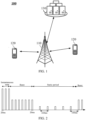
- FIG. 1 shows a wireless communication system 100 to which an embodiment of the present application is applied.
- the wireless communication system 100 may include an access network device 110.
- the access network device 110 may be a device that communicates with a terminal device.
- the access network device 110 may provide communication coverage for a specific geographical area, and may communicate with a terminal device located within the coverage area.
- the network device 110 may be a Next Generation Radio Access Network (NG RAN), a base station (gNB) in or an NR system, or a radio controller in a Cloud Radio Access Network (CRAN), or the access network device may be mobile switching center, a relay station, an access point, an on-board device, a wearable device, a hub, a switch, a bridge, a router, or a network device in a future evolved Public Land Mobile Network (PLMN), etc.
- the access network device 110 may also be a base station in an LTE system, for example, an E-UTRAN device.
- the wireless communication system 100 also includes at least one terminal device 120 located within the coverage area of the access network device 110.
- the terminal device 120 may be mobile or fixed.
- the "terminal device” as used herein includes, but not limited to, a device configured to be connected via a wired circuit, for example, via a public switched telephone network (PSTN), a digital subscriber line (DSL), a digital cable, a direct cable; and/or another data connection/network; and/or via a wireless interface, for instance, for a cellular network, a wireless local area network (WLAN), a digital television network such as a DVB-H network, a satellite network, and an AM-FM broadcast transmitter; and/or an apparatus of another terminal device configured to receive/transmit communication signals; and/or an Internet of Things (IoT) device.
- PSTN public switched telephone network
- DSL digital subscriber line
- WLAN wireless local area network
- AM-FM broadcast transmitter an apparatus of another terminal device configured to receive/transmit communication signals
- IoT Internet of
- a terminal device configured to communicate via a wireless interface may be referred to as "a wireless communication terminal", “a wireless terminal” or “a mobile terminal".
- the mobile terminal include, but not limited to, a satellite or cellular phone; a personal communication system (PCS) terminal capable of combining a cellular radio phone with data processing, faxing, and data communication capabilities; a personal digital assistant (PDA) that may include a radio phone, a pager, internet/intranet access, a Web browser, a memo pad, a calendar, a BeiDou Navigation Satellite System (BDS), a Global Positioning System (GPS) receiver; and a conventional laptop and/or palmtop receiver or other electronic devices including a radio phone transceiver.
- PCS personal communication system
- PDA personal digital assistant
- BDS BeiDou Navigation Satellite System
- GPS Global Positioning System
- the terminal device may refer to an access terminal, user equipment (UE), a subscriber unit, a subscriber station, a mobile station, a rover station, a remote station, a remote terminal, a mobile device, a user terminal, a terminal, a wireless communication device, a user agent, or a user apparatus.
- UE user equipment
- the access terminal may be a cellular phone, a cordless phone, a Session Initiation Protocol (SIP) phone, a Wireless Local Loop (WLL) station, a Personal Digital Assistant (PDA), a handheld device with a wireless communication function, a computing device, or other processing devices connected to a wireless modem, a vehicle-mounted device, a wearable device, a terminal device in a 5G network, or a terminal device in a future evolved Public Land Mobile Network (PLMN), etc.
- SIP Session Initiation Protocol
- WLL Wireless Local Loop
- PDA Personal Digital Assistant
- PLMN Public Land Mobile Network
- the wireless communication system 100 further includes a core network device 130 that communicates with the access network device.
- the core network device 130 may be a 5G core network device, for example, an Access and Mobility Management Function (AMF) device, which is responsible for access and mobility management, and has functions such as authentication, handover and location update for users.
- AMF Access and Mobility Management Function
- the core network device 130 may be a Session Management Function (SMF) device, which is responsible for session management, including establishment, modification and release of packet data unit (PDU) sessions.
- SMF Session Management Function
- PDU packet data unit
- the core network device 130 may be a user plane function (UPF) device, which is responsible for forwarding of user data.
- UPF user plane function
- a device to device (D2D) communication may be performed between the terminal devices.
- D2D device to device
- FIG. 1 illustratively shows one access network device, one core network device and two terminal devices.
- the wireless communication system 100 may include multiple access network devices, and another quantity of terminal devices may be included within the coverage area of each access network device, which is not restricted in embodiments of the present application.
- the access network device may configure Semi-Persistent Scheduling (SPS) resources according to the service attributes of TSN data.
- the service attributes may be arrival time of data, data period and data size.
- SPS Semi-Persistent Scheduling
- a specific implementation way in which the access network device configures SPS resources is: SMF determines Time Sensitive Communication Assistance Information (TSCAI) according to service information provided by an external Application Function (AF). Then, SMF provides TSCAI to a Radio Access Network (RAN). After receiving TSCAI, RAN may configure SPS resources according to TSCAI.
- SPS resources are periodic, as shown in FIG. 2 .
- the period of SPS resources configured by RAN is 20ms or 160ms.
- the access network device may configure SPS resources according to Quality of Service (QoS) flows, and each QoS flow may carry multiple service flows.
- QoS Quality of Service
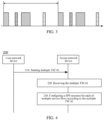
- FIG. 3 different patterns represent different service flows. It can be seen that the QoS flow in FIG. 3 carries 4 service flows, wherein the 4 service flows have the same period.
- the resources configured by the access network device need to cover all service flows, so it will happen that the access network device configures the SPS resources within a time period without service (such as the blank area between the first service flow and the second service flow in FIG. 3 ), resulting in the problem of resource waste.
- the embodiment of the present application proposes a method for configuring resources, which may reasonably configure resources for data transmission while ensuring the requirement for delay of data transmission.
- FIG. 4 is a schematic flow chart of a method 200 for configuring resources according to an embodiment of the present application.
- the method described in FIG. 4 may be performed by an access network device such as the access network device 110 shown in FIG. 1 and a core network device such as 130 shown in FIG. 1 .
- the method 200 may include at least part of following contents.
- the method 200 may be applied to other communication scenarios besides TSN network, which is not specifically limited by the embodiment of the present application.
- a core network device sends TSCAI to an access network device, wherein the multiple TSCAI correspond to service attributes of multiple service flows.
- the access network device receives multiple TSCAI sent by the core network.
- the access network device configures SPS resources for each of the multiple service flows according to multiple TSCAI.
- the service attributes may include but are not limited to at least one of the following: arrival time of data, data period and data size.
- the data size may be historical data size.
- the historical data size may be a historical average data size within a period of time.
- the historical data size may be an average of a highest data size and a lowest data size within a period of time.
- the data size may be an estimated data size.
- the service attribute may also include an upstream and downstream data flow direction.
- one TSCAI may be aimed at one service flow or multiple service flows.
- TSCAI of the multiple service flows is same.
- At least one of arrival time of data, data period, upstream/downstream data flow direction and data size of the service flow is different among different TSCAI.
- the core network device may generate TSCAI in advance.
- the core network device is SMF.
- AF may provide auxiliary parameters for each service flow to SMF, and SMF may generate multiple TSCAI according to the auxiliary parameters of each service flow after receiving the auxiliary parameters of each service flow.
- the auxiliary parameters may include arrival time of data, data period and data size of data, or the auxiliary parameters may include indication parameters indicating arrival time of data, data period or data size.
- the terminal device may provide auxiliary parameters of each service flow to SMF through a Non-Access Stratum (NAS) message.
- SMF may generate multiple TSCAI according to the auxiliary parameters of each service flow.
- NAS Non-Access Stratum
- SMF may map multiple service flows into same or different QoS flows and provide them to the access network device to assist the access network device in configuring SPS resources for multiple service flows.
- the technical solutions of the embodiments of the present application are introduced in two ways.
- SMF may configure multiple TSCAI for each QoS flow, that is, multiple TSCAI may correspond to the same one QoS flow.
- the access network device may configure multiple SPS resources to match different TSCAI values.
- the access network device may configure discrete resources within one period of SPS resources. Specifically, the access network device may determine start time of each discrete resource according to arrival time of data of each service flow corresponding to each TSCAI, that is, the access network device may determine start time of SPS resources for each service flow according to arrival time of data of each service flow.
- the access network device may determine a frequency domain resource of each discrete resource and/or a Modulation and Coding Scheme (MCS) corresponding to the discrete resource according to the data size of each service flow corresponding to each TSCAI.
- MCS Modulation and Coding Scheme
- the access network device may periodically configure SPS resources for each service flow based on the data period of each service flow corresponding to each TSCAI.
- a period of each discrete resource may be a smallest data period among the data periods of multiple service flows.
- the access network device may configure multiple sets of SPS resources, wherein each set of SPS resources may be configured according to different TSCAI.
- the method 200 may further include: determining, by the access network device, a resource size of a SPS resource of a first QoS flow according to a Maximum Data Burst Volume (MDBV) of a QoS flow corresponding to multiple TSCAI (for convenience of description, referred to as a first QoS flow).
- MDBV Maximum Data Burst Volume
- the access network device may determine a bandwidth of the SPS resource of the first QoS flow, a MCS level corresponding to the SPS resource of the first QoS flow, and the like according to MDBV of the first QoS flow.
- the core network device may determine MDBV of the first QoS flow before the access network device determines the resource size of the SPS resource of the first QoS flow.
- the core network device may send MDBV of the first QoS flow to the access network device after determining MDBV of the first QoS flow.
- the core network device may explicitly send MDBV of the first QoS flow to the access network device.
- the core network device may implicitly send MDBV of the first QoS flow to the access network device.
- the core network device may implicitly send MDBV of the first QoS flow to the access network device through other parameters of the first QoS flow.
- a size of the SPS resource of the first QoS flow may be the aggregation value.
- a size of the SPS resource of the first QoS flow may be a maximum of the data size of each service flow, or the size of the SPS resource of the first QoS flow may be an average value of the data size of each service flow.
- SMF may generate multiple QoS flows, wherein the multiple QoS flows correspond to different TSCAI. For example, there are 3 service flows. If TSCAI of the 3 service flows are different, SMF may generate 3 QoS flows. If TSCAI of 2 of the 3 service flows is same, SMF may generate 2 QoS flows.
- the access network device may configure SPS resources for each service flow according to TSCAI corresponding to each QoS flow after receiving the QoS flow and TSCAI corresponding to the QoS flow.
- Mode 2 the implementation mode of the access network device configuring SPS resources for each service flow may refer to the implementation mode of Mode 1, and for the sake of brevity, it will not be described here too much.
- the access network device may determine the resource size of the SPS resource of each QoS flow according to TSCAI corresponding to each QoS flow in multiple QoS flows.
- a second QoS flow which corresponds to a second TSCAI, will be taken as an example for explanation.
- the second QoS flow belongs to multiple QoS flows above, and the second TSCAI belongs to multiple TSCAI above.
- a resource size of the SPS resource of the second QoS flow equals a data size of the service flow.
- the resource size of the SPS resource of the second QoS flow is the aggregation value. If MDBV of the second QoS flow is the data size of each of the at least two service flows, the resource size of the SPS resource of the second QoS flow is the data size of one of the at least two service flows.
- Mode 1 and Mode 2 in the embodiment of the present application may be implemented separately or in combination.
- part of TSCAI among multiple TSCAI may correspond to one QoS flow
- each TSCAI in a remaining part of TSCAI may correspond to one QoS flow.
- the access network device receives TSCAI sent by the core network device, which are TSCAI 1, TSCAI 2 and TSCAI 3 respectively, and these three TSCAI are different form each other.
- TSCAI 1 and TSCAI 2 may correspond to a third QoS flow
- TSCAI 3 may correspond to a fourth QoS flow.
- the access network device when configuring the resource of each service flow, may configure the resource according to TSCAI corresponding to the service attribute of each service flow, so that the resources configured by the access network device may meet the requirements for data transmission of each service flow without causing waste of resources.
- the resource configured by the access network device for each service flow is semi-persistent scheduling resource, so that when data arrives, the configured semi-persistent scheduling resources may be directly used for data transmission, thereby ensuring the requirement for delay of data transmission.
- sequence numbers of the foregoing processes do not mean execution sequences in various method embodiments of the present application.
- the execution sequences of the processes should be determined according to functions and internal logic of the processes, and should not be construed as any limitation on the implementation processes of the embodiments of the present application.
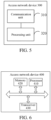
- FIG. 5 shows a schematic block diagram of an access network device 300 according to an embodiment of the present application.
- the access network device 300 includes:
- the service attribute includes at least one of arrival time of data, data period and data size.
- the processing unit 320 is specifically configured to determine start time of semi-persistent scheduling resources for each service flow according to arrival time of data of each service flow corresponding to each TSCAI.
- the processing unit 320 is specifically configured to determine a frequency domain resource of the semi-persistent scheduling resource for each service flow and/or a modulation and coding scheme (MCS) corresponding to the semi-persistent scheduling resources for each service flow according to the data size of each service flow corresponding to each TSCAI.
- MCS modulation and coding scheme
- the processing unit 320 is specifically configured to periodically configure semi-persistent scheduling resources for each service flow based on the data period of each service flow corresponding to each TSCAI.
- the period of the semi-persistent scheduling resource of each service flow is a smallest data period among the data periods of the multiple service flows.
- the service attribute further includes data flow direction.
- the multiple TSCAI correspond to one Quality of Service QoS flow.
- the processing unit 320 is further configured to determine the size of the semi-persistent scheduling resource of the QoS flow according to a maximum data burst volume (MDBV) of the QoS flow.
- MDBV maximum data burst volume
- the communication unit 310 is further configured to receive MDBV of the QoS flow sent by the core network device.
- the size of the semi-persistent scheduling resource of the QoS flow is the aggregation value.
- the size of the semi-persistent scheduling resource of the QoS flow is a maximum of the data size of each service flow.
- the multiple TSCAI correspond to different QoS flows.
- TSCAI corresponding to different QoS flows is different.
- the access network device 300 may correspond to the access network device 200, and may implement the corresponding operations of the access network device in the method 200, which will not be repeated here for brevity.
- FIG. 6 is a schematic structural diagram of an access network device 400 provided by an embodiment of the present application.
- the access network device 400 shown in FIG. 6 includes a processor 410.
- the processor 410 may call and run a computer program from a memory to implement a method in the embodiment of the present application.
- the access network device 400 may further include the memory 420.
- the processor 410 may call and run the computer program from the memory 420 to implement the methods according to the embodiments of the present application.
- the memory 420 may be a separate device independent of the processor 410 or may be integrated in the processor 410.
- the access network device 400 may further include a transceiver 430, and the processor 410 may control the transceiver 430 to communicate with other devices.
- the transceiver 630 may send information or data to other devices or receive information or data sent by other devices.
- the transceiver 430 may include a transmitter and a receiver.
- the transceiver 430 may further include antennas, the number of which may be one or more.
- the access network device 400 may be specifically an access network device of an embodiment of the present application, and the access network device 400 may implement corresponding flows implemented by the access network device in various methods of the embodiments of the present application, which will not be repeated here for brevity.
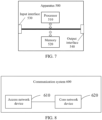
- FIG. 7 is a schematic structural diagram of an apparatus of an embodiment of the present application.
- An apparatus 500 shown in FIG. 7 includes a processor 510.
- the processor 510 may call and run a computer program from a memory to implement the method in the embodiment of the present application.
- the apparatus 500 may further include a memory 520.
- the processor 510 may call and run the computer program from the memory 520 to implement the methods according to the embodiments of the present application.
- the memory 520 may be a separate device independent of the processor 510 or may be integrated in the processor 510.
- the apparatus 500 may further include an input interface 530.
- the processor 510 may control the input interface 530 to communicate with other devices or chips.
- the processor 910 may acquire information or data sent by other devices or chips.
- the apparatus 500 may further include an output interface 540.
- the processor 510 may control the output interface 540 to communicate with other devices or chips.
- the processor 910 may output information or data to other devices or chips.
- the apparatus may be applied in an access network device of an embodiment of the present application, and the apparatus may implement the corresponding processes implemented by the access network device in the various methods of embodiments of the present application, which will not be repeated here for brevity.
- the apparatus 500 may be a chip. It should be understood that the chip mentioned in the embodiments of the present application may be referred to as a system-level chip, a system chip, a chip system or a system-on-chip, etc.
- the processor in the embodiment of the present application may be an integrated circuit chip having a signal processing capability.
- the steps of the foregoing method embodiments may be implemented through an integrated logic circuit of hardware in the processor or instructions in a form of software.
- the processor described above may be a general purpose processor, a digital signal processor (DSP), an application specific integrated circuit (ASIC), a field programmable gate array (FPGA) or another programmable logic device, a discrete gate or a transistor logic device, or a discrete hardware component.
- the processor may implement or perform various methods, steps and logical block diagrams disclosed in the embodiments of the present application.
- the general purpose processor may be a microprocessor, or the processor may also be any conventional processor, or the like.
- the steps of the methods disclosed in combination with the embodiments of the present application may be directly embodied to be implemented by a hardware decoding processor, or may be implemented by a combination of hardware and software modules in the decoding processor.
- the software modules may be located in a storage medium which is mature in the art, such as a random access memory, a flash memory, a read-only memory, a programmable read-only memory, an electrically erasable programmable memory, or a register.
- the storage medium is located in the memory, and the processor reads information in the memory and completes the steps of the foregoing methods in combination with its hardware.
- the memory in the embodiments of the present application may be a volatile memory or a non-volatile memory, or may include both a volatile memory and a non-volatile memory.
- the non-volatile memory may be a read-only memory (ROM), a programmable read-only memory (PROM), an erasable programmable read-only memory (EPROM), an electrically erasable programmable read-only memory (EEPROM), or a flash memory.
- the volatile memory may be a random access memory (RAM), which is used as an external cache.
- RAMs may be available, such as a static random access memory (SRAM), a dynamic random access memory (DRAM), a synchronous dynamic random access memory (SDRAM), a double data rate synchronous dynamic random access memory (DDR SDRAM), an enhanced synchronous dynamic random access memory (ESDRAM), a synchronous link dynamic random access memory (SLDRAM), and a direct Rambus dynamic random access memory (DR RAM).
- SRAM static random access memory
- DRAM dynamic random access memory
- SDRAM synchronous dynamic random access memory
- DDR SDRAM double data rate synchronous dynamic random access memory
- ESDRAM enhanced synchronous dynamic random access memory
- SLDRAM synchronous link dynamic random access memory
- DR RAM direct Rambus dynamic random access memory
- the memory in the embodiments of the present application may also be a Static RAM (SRAM), a Dynamic RAM (DRAM), a Synchronous DRAM (SDRAM), a Double Data Rate SDRAM (DDR SDRAM), an Enhanced SDRAM (ESDRAM), a Synchlink DRAM (SLDRAM), a direct Rambus RAM (DR RAM), or the like. That is, the memory in the embodiments of the present application is intended to include, but not be limited to, these and any other suitable types of memories.
- SRAM Static RAM
- DRAM Dynamic RAM
- SDRAM Synchronous DRAM
- DDR SDRAM Double Data Rate SDRAM
- ESDRAM Enhanced SDRAM
- SLDRAM Synchlink DRAM
- DR RAM direct Rambus RAM
- FIG. 8 is a schematic block diagram of a communication system 600 provided by an embodiment of the present application. As shown in FIG. 8 , the communication system 600 may include an access network device 610 and a core network device 620.
- the access network device 610 may be configured to implement the corresponding functions implemented by the access network device in the above-mentioned methods and the core network device 620 may be configured to implement the corresponding functions implemented by the core network device in the above-mentioned methods, which will not be repeated here for brevity.
- An embodiment of the present application further provides a computer readable storage medium configured to store a computer program.
- the computer readable storage medium may be applied to an access network device of an embodiment of the present application, and the computer program causes a computer to perform corresponding flows implemented by the access network device in various methods of the embodiments of the present application, which will not be repeated here for brevity.
- An embodiment of the present application further provides a computer program product including computer program instructions.
- the computer program product may be applied to an access network device of an embodiment of the present application, and the computer program instructions cause a computer to perform corresponding flows implemented by the access network device in various methods of the embodiments of the present application, which will not be repeated here for brevity.
- An embodiment of the present application further provides a computer program.
- the computer program may be applied to an access network device of an embodiment of the present application.
- the computer program When being run on a computer, the computer program causes the computer to execute corresponding processes implemented by the access network device in various methods of the embodiments of the present application, which will not be repeated here for brevity.
- the disclosed systems, devices and methods may be implemented in other ways.
- the device embodiments described above are only illustrative, for example, the division of the units is only a logical function division, and there may be other division manners in actual implementation.
- multiple units or components may be combined or integrated into another system, or some features may be ignored or not executed.
- the shown or discussed coupling or direct coupling or communication connection between each other may be an indirect coupling or communication connection through some interfaces, devices or units, or may be in electrical, mechanical or other forms.
- the unit described as a separate component may or may not be physically separated, and the component shown as a unit may or may not be a physical unit, i.e., it may be located in one place or may be distributed across multiple network units. Part or all of the units may be selected according to actual needs to achieve the purpose of the embodiments.
- various functional units in various embodiments of the present application may be integrated into one processing unit, or may exist physically separately, or two or more than two units may be integrated into one unit.
- the function if implemented in a form of software functional unit and sold or used as an independent product, may be stored in a computer readable storage medium.
- the technical scheme of the present application in essence, or the part contributing to the prior art, or the part of the technical solution, may be embodied in the form of a software product, which is stored in a storage medium, and includes several instructions for causing a computer device (which may be a personal computer, a server, or a network device, etc.) to perform all or part of the steps of various embodiments of the present application.
- the aforementioned storage medium includes various media, such as a U disk, a mobile hard disk, a read-only memory (ROM), a random access memory (RAM), a magnetic disk, or an optical disk, which are capable of storing program codes
Landscapes
- Engineering & Computer Science (AREA)
- Signal Processing (AREA)
- Computer Networks & Wireless Communication (AREA)
- Quality & Reliability (AREA)
- Mobile Radio Communication Systems (AREA)
Claims (13)
- Verfahren zur Konfiguration von Ressourcen, wobei das Verfahren umfasst:Empfangen (220) einer Mehrzahl von zeitsensiblen Kommunikationsassistenzinformationen ("Time Sensitive Communication Assistance Information", TSCAI) durch eine Zugangsnetzwerkvorrichtung, gesendet von einer Kernnetzvorrichtung, wobei die Mehrzahl von TSCAI Dienstattributen einer Mehrzahl von Dienstflüssen entspricht; undEinrichten (230) einer semipersistenten Planungsressource durch die Zugangsnetzwerkvorrichtung für jeden der Mehrzahl von Dienstflüssen entsprechend der Mehrzahl von TSCAI;dadurch gekennzeichnet, dass das Einrichten der semipersistenten Planungsressource durch die Zugangsnetzwerkvorrichtung für jeden der Mehrzahl von Dienstflüssen entsprechend der Mehrzahl von TSCAI umfasst:Bestimmen, durch die Zugangsnetzwerkvorrichtung, entsprechend der Datengröße jedes Dienstflusses, der jeder TSCAI entspricht, einer Frequenzdomänenressource der semipersistenten Planungsressource für jeden Dienstfluss und/oder eines Modulations- und Codierschemas, MCS, entsprechend der semipersistenten Planungsressource für jeden Dienstfluss;wobei, falls Datenperioden von mindestens zwei der Mehrzahl von Dienstflüssen unterschiedlich sind, eine Periode der semipersistenten Planungsressource jedes Dienstflusses eine kleinste Datenperiode unter den Datenperioden der Mehrzahl von Dienstflüssen ist.
- Verfahren nach Anspruch 1, wobei die Dienstattribute mindestens eine umfassen von der Ankunftszeit der Daten oder der Datenperiode.
- Verfahren nach Anspruch 2, wobei das Einrichten der semipersistenten Planungsressource durch die Zugangsnetzwerkvorrichtung für jeden der Mehrzahl von Dienstflüssen entsprechend der Mehrzahl von TSCAI umfasst:
Bestimmen, durch die Zugangsnetzwerkvorrichtung, der Startzeit der semipersistenten Planungsressource für jeden Dienstfluss entsprechend der Ankunftszeit von Daten für jeden Dienstfluss entsprechend jeder TSCAI. - Verfahren nach Anspruch 2 oder 3, wobei das Einrichten, durch die Zugangsnetzwerkvorrichtung, der semipersistenten Planungsressource für jeden der Mehrzahl von Dienstflüssen entsprechend der Mehrzahl von TSCAI umfasst:
Periodisches Einrichten, durch die Zugangsnetzwerkvorrichtung, der semipersistenten Planungsressource für jeden Dienstfluss, basierend auf der Datenperiode jedes Dienstflusses entsprechend jeder TSCAI. - Verfahren nach einem der Ansprüche 2 bis 4, wobei die Dienstattribute ferner eine Datenstromrichtung umfassen.
- Verfahren nach einem der Ansprüche 1 bis 5, wobei die Mehrzahl von TSCAI unterschiedlichen QoS-Flüssen entspricht.
- Zugangsnetzwerkvorrichtung (300), umfassend:eine Kommunikationseinheit (310), ausgelegt zum Empfangen einer Mehrzahl von zeitsensiblen Kommunikationsassistenzinformationen ("Time Sensitive Communication Assistance Information", TSCAI), gesendet von einer Kernnetzvorrichtung, wobei die Mehrzahl von TSCAI Dienstattributen einer Mehrzahl von Dienstflüssen entspricht; undeine Verarbeitungseinheit (320), ausgelegt zum Einrichten einer semipersistenten Planungsressource für jeden Dienstfluss der Mehrzahl von Dienstflüssen entsprechend der Mehrzahl von TSCAI;dadurch gekennzeichnet, dass die Verarbeitungseinheit (320) ausgelegt ist zumBestimmen, entsprechend der Datengröße jedes Dienstflusses, der jeder TSCAI entspricht, einer Frequenzdomänenressource der semipersistenten Planungsressource für jeden Dienstfluss und/oder eines Modulations- und Codierschemas, MCS, entsprechend der semipersistenten Planungsressource für jeden Dienstfluss;wobei, falls Datenperioden von mindestens zwei der Mehrzahl von Dienstflüssen unterschiedlich sind, eine Periode der semipersistenten Planungsressource jedes Dienstflusses eine kleinste Datenperiode unter den Datenperioden der Mehrzahl von Dienstflüssen ist.
- Zugangsnetzwerkvorrichtung nach Anspruch 7, wobei die Dienstattribute mindestens eine umfassen von der Ankunftszeit der Daten oder der Datenperiode.
- Zugangsnetzwerkvorrichtung nach Anspruch 8, wobei die Dienstattribute ferner eine Datenstromrichtung umfassen.
- Zugangsnetzwerkvorrichtung nach einem der Ansprüche 7 bis 9, wobei die Mehrzahl von TSCAI unterschiedlichen QoS-Flüssen entspricht.
- Computerlesbares Speichermedium, ausgelegt zum Speichern eines Computerprogramms, wobei das Computerprogramm einen Computer zum Ausführen des Verfahrens nach einem der Ansprüche 1 bis 6 veranlasst.
- Computerprogrammprodukt, umfassend Computerprogrammanweisungen, wobei die Computerprogrammanweisungen einen Computer zum Ausführen des Verfahrens nach einem der Ansprüche 1 bis 6 veranlassen.
- Computerprogramm, wobei das Computerprogramm einen Computer zum Ausführen des Verfahrens nach einem der Ansprüche 1 bis 6 veranlasst.
Applications Claiming Priority (1)
| Application Number | Priority Date | Filing Date | Title |
|---|---|---|---|
| PCT/CN2019/106361 WO2021051298A1 (zh) | 2019-09-18 | 2019-09-18 | 资源配置的方法和接入网设备 |
Publications (3)
| Publication Number | Publication Date |
|---|---|
| EP4017190A1 EP4017190A1 (de) | 2022-06-22 |
| EP4017190A4 EP4017190A4 (de) | 2022-08-24 |
| EP4017190B1 true EP4017190B1 (de) | 2023-10-25 |
Family
ID=74883442
Family Applications (1)
| Application Number | Title | Priority Date | Filing Date |
|---|---|---|---|
| EP19946202.9A Active EP4017190B1 (de) | 2019-09-18 | 2019-09-18 | Ressourcenkonfigurationsverfahren und zugangsnetzwerkvorrichtung |
Country Status (6)
| Country | Link |
|---|---|
| US (2) | US11375523B2 (de) |
| EP (1) | EP4017190B1 (de) |
| JP (1) | JP7369800B2 (de) |
| KR (1) | KR102900498B1 (de) |
| CN (2) | CN113316969A (de) |
| WO (1) | WO2021051298A1 (de) |
Families Citing this family (11)
| Publication number | Priority date | Publication date | Assignee | Title |
|---|---|---|---|---|
| CN112087777B (zh) * | 2019-06-14 | 2022-06-28 | 华为技术有限公司 | 一种mdbv的确定方法、装置及系统 |
| KR102900498B1 (ko) * | 2019-09-18 | 2025-12-15 | 광동 오포 모바일 텔레커뮤니케이션즈 코포레이션 리미티드 | 자원 구성의 방법 및 접속 네트워크 장치 |
| CN117083966A (zh) * | 2021-04-01 | 2023-11-17 | Tcl通讯(宁波)有限公司 | 用于上行链路数据传输的方法、用户设备和基站 |
| US20240284241A1 (en) * | 2021-06-07 | 2024-08-22 | Telefonaktiebolaget Lm Ericsson (Publ) | Data burst volume indication for tsc |
| CN115696458A (zh) * | 2021-07-31 | 2023-02-03 | 华为技术有限公司 | 一种资源分配方法及相关装置 |
| CN117377091B (zh) * | 2022-06-27 | 2025-12-16 | 华为技术有限公司 | 一种通信方法及装置 |
| CN117354781A (zh) * | 2022-06-28 | 2024-01-05 | 腾讯科技(深圳)有限公司 | 业务数据包的处理方法、装置、介质及电子设备 |
| CN118250342A (zh) * | 2022-12-22 | 2024-06-25 | 华为技术有限公司 | 一种数据传输方法及装置 |
| US12581364B2 (en) * | 2023-02-21 | 2026-03-17 | Qualcomm Incorporated | Video streaming pattern detection and burst prediction |
| CN119497106A (zh) * | 2023-08-18 | 2025-02-21 | 中电信智能网络科技有限公司 | 时间敏感通信配置方法及通信系统 |
| CN120224388A (zh) * | 2023-12-25 | 2025-06-27 | 华为技术有限公司 | 一种通信方法及相关装置 |
Family Cites Families (16)
| Publication number | Priority date | Publication date | Assignee | Title |
|---|---|---|---|---|
| CN102076103B (zh) * | 2011-02-24 | 2013-05-22 | 大唐移动通信设备有限公司 | 一种半持续调度的数据包处理方法及基站 |
| HK1213415A1 (zh) * | 2012-10-05 | 2016-06-30 | Interdigital Patent Holdings, Inc. | 用於增强机器类型通信(mtc)设备的覆盖的方法和装置 |
| KR101984594B1 (ko) * | 2016-02-04 | 2019-06-03 | 주식회사 케이티 | 차량 통신 제어 방법 및 그 장치 |
| CN107155218B (zh) * | 2016-03-04 | 2020-03-24 | 电信科学技术研究院 | 一种配置上行半持续调度的方法和设备 |
| WO2018200038A1 (en) * | 2017-04-27 | 2018-11-01 | Dave Cavalcanti | Device, method and system to implement an opportunistic backoff mechanism for traffic convergence in wi-fi based time sensitive networks |
| WO2019028768A1 (zh) * | 2017-08-10 | 2019-02-14 | 北京小米移动软件有限公司 | 调整信息传输的方法、基站及用户设备 |
| EP3522477B1 (de) * | 2018-01-31 | 2021-08-11 | Siemens Aktiengesellschaft | Verfahren zur daten-kommunikation in einem insbesondere industriellen netzwerk, vorrichtung zur durchführung des verfahrens, computerprogramm sowie computerlesbares medium |
| EP3852472B1 (de) * | 2018-09-21 | 2024-11-06 | Beijing Xiaomi Mobile Software Co., Ltd. | Uplink-datenübertragungsverfahren und einrichtung, vorrichtung und system |
| WO2020200432A1 (en) * | 2019-04-02 | 2020-10-08 | Nokia Solutions And Networks Oy | Communication control mechanism for time sensitive traffic |
| EP3954150B1 (de) * | 2019-04-30 | 2023-11-29 | Huawei Technologies Co., Ltd. | Netzwerkeinheit und benutzergerät zur ausnutzung der resilienz gegenüber aufeinanderfolgenden übertragungsfehlern |
| WO2020239231A1 (en) * | 2019-05-30 | 2020-12-03 | Nokia Solutions And Networks Gmbh & Co. Kg | Activation of pdu session and qos flows in 3gpp-based ethernet bridges |
| US11943145B2 (en) * | 2019-06-24 | 2024-03-26 | Nokia Solutions And Networks Oy | Apparatus, method, and computer program for determining time sensitive communication assistance information in a mobile communication system |
| CN113595668B (zh) * | 2019-06-24 | 2022-08-02 | 腾讯科技(深圳)有限公司 | 一种时钟漂移处理的方法、网络功能网元及存储介质 |
| WO2021028613A1 (en) * | 2019-08-14 | 2021-02-18 | Nokia Technologies Oy | Harq feedback for shared channel transmissions in fifth generation wireless networks |
| KR102900498B1 (ko) * | 2019-09-18 | 2025-12-15 | 광동 오포 모바일 텔레커뮤니케이션즈 코포레이션 리미티드 | 자원 구성의 방법 및 접속 네트워크 장치 |
| GB2589865A (en) * | 2019-12-09 | 2021-06-16 | Nokia Technologies Oy | Communication system |
-
2019
- 2019-09-18 KR KR1020217040752A patent/KR102900498B1/ko active Active
- 2019-09-18 JP JP2021576719A patent/JP7369800B2/ja active Active
- 2019-09-18 EP EP19946202.9A patent/EP4017190B1/de active Active
- 2019-09-18 CN CN201980075034.8A patent/CN113316969A/zh active Pending
- 2019-09-18 WO PCT/CN2019/106361 patent/WO2021051298A1/zh not_active Ceased
- 2019-09-18 CN CN202110817984.2A patent/CN113518464B/zh active Active
-
2021
- 2021-08-05 US US17/394,997 patent/US11375523B2/en active Active
-
2022
- 2022-05-16 US US17/663,636 patent/US11950277B2/en active Active
Also Published As
| Publication number | Publication date |
|---|---|
| JP2022551547A (ja) | 2022-12-12 |
| WO2021051298A1 (zh) | 2021-03-25 |
| US11950277B2 (en) | 2024-04-02 |
| CN113518464A (zh) | 2021-10-19 |
| JP7369800B2 (ja) | 2023-10-26 |
| KR102900498B1 (ko) | 2025-12-15 |
| EP4017190A4 (de) | 2022-08-24 |
| CN113316969A (zh) | 2021-08-27 |
| US11375523B2 (en) | 2022-06-28 |
| KR20220066004A (ko) | 2022-05-23 |
| US20210368519A1 (en) | 2021-11-25 |
| EP4017190A1 (de) | 2022-06-22 |
| US20220279540A1 (en) | 2022-09-01 |
| CN113518464B (zh) | 2023-04-07 |
Similar Documents
| Publication | Publication Date | Title |
|---|---|---|
| US11950277B2 (en) | Resource configuration method and access network device | |
| EP4075882B1 (de) | Verfahren zur verarbeitung eines diskontinuierlichen empfangsparameters, speichermedium und prozessor | |
| WO2020150877A1 (zh) | 用于非授权频谱的通信方法和设备 | |
| CN114340035A (zh) | 业务传输的方法和设备 | |
| US12356417B2 (en) | Wireless communication method, terminal device and network device | |
| US20200128516A1 (en) | Wireless Communication Method, Terminal Device, and Network Device | |
| US20230199712A1 (en) | Wireless communication method and terminal | |
| CN112205060A (zh) | 无线通信方法、接入网设备、终端设备和核心网设备 | |
| CN116074847A (zh) | 一种信号传输方法及装置、终端设备 | |
| US11997700B2 (en) | Resource pool configuration method, device, and storage medium | |
| US12587812B2 (en) | Method for switching transmission mode and core network element | |
| WO2020164075A1 (zh) | 无线通信的方法、终端设备和网络设备 | |
| CN112703776A (zh) | 无线通信方法和设备 | |
| CN113543213A (zh) | 基于复制数据的传输方法和设备 | |
| US20210235423A1 (en) | Access control method, terminal, and storage medium | |
| CN111869297A (zh) | 一种承载配置方法及装置、网络设备 | |
| CN114930971A (zh) | 一种配置信息的协商方法及装置、终端设备 | |
| CN113273274A (zh) | 无线通信的方法和设备 | |
| HK40029260A (en) | Bearing configuration method and device, and network device | |
| EP3934376A1 (de) | Verfahren zum senden von informationen, verfahren zur informationsaufnahme und vorrichtung | |
| CN116261887A (zh) | 无线通信的方法、终端设备和网络设备 | |
| CN117615356A (zh) | 一种重置配置方法及装置、终端设备 | |
| CN113508618A (zh) | 一种侧行链路通信方法及装置、终端 |
Legal Events
| Date | Code | Title | Description |
|---|---|---|---|
| STAA | Information on the status of an ep patent application or granted ep patent |
Free format text: STATUS: THE INTERNATIONAL PUBLICATION HAS BEEN MADE |
|
| PUAI | Public reference made under article 153(3) epc to a published international application that has entered the european phase |
Free format text: ORIGINAL CODE: 0009012 |
|
| STAA | Information on the status of an ep patent application or granted ep patent |
Free format text: STATUS: REQUEST FOR EXAMINATION WAS MADE |
|
| 17P | Request for examination filed |
Effective date: 20210805 |
|
| AK | Designated contracting states |
Kind code of ref document: A1 Designated state(s): AL AT BE BG CH CY CZ DE DK EE ES FI FR GB GR HR HU IE IS IT LI LT LU LV MC MK MT NL NO PL PT RO RS SE SI SK SM TR |
|
| A4 | Supplementary search report drawn up and despatched |
Effective date: 20220722 |
|
| RIC1 | Information provided on ipc code assigned before grant |
Ipc: H04L 1/00 20060101ALN20220718BHEP Ipc: H04W 72/08 20090101ALI20220718BHEP Ipc: H04L 5/00 20060101AFI20220718BHEP |
|
| DAV | Request for validation of the european patent (deleted) | ||
| DAX | Request for extension of the european patent (deleted) | ||
| REG | Reference to a national code |
Free format text: PREVIOUS MAIN CLASS: H04W0072120000 Ref country code: DE Ref legal event code: R079 Ref document number: 602019040372 Country of ref document: DE Free format text: PREVIOUS MAIN CLASS: H04W0072120000 Ipc: H04L0005000000 |
|
| GRAP | Despatch of communication of intention to grant a patent |
Free format text: ORIGINAL CODE: EPIDOSNIGR1 |
|
| RIC1 | Information provided on ipc code assigned before grant |
Ipc: H04L 1/00 20060101ALN20230425BHEP Ipc: H04W 72/543 20230101ALI20230425BHEP Ipc: H04L 5/00 20060101AFI20230425BHEP |
|
| STAA | Information on the status of an ep patent application or granted ep patent |
Free format text: STATUS: GRANT OF PATENT IS INTENDED |
|
| INTG | Intention to grant announced |
Effective date: 20230601 |
|
| GRAS | Grant fee paid |
Free format text: ORIGINAL CODE: EPIDOSNIGR3 |
|
| GRAA | (expected) grant |
Free format text: ORIGINAL CODE: 0009210 |
|
| STAA | Information on the status of an ep patent application or granted ep patent |
Free format text: STATUS: THE PATENT HAS BEEN GRANTED |
|
| AK | Designated contracting states |
Kind code of ref document: B1 Designated state(s): AL AT BE BG CH CY CZ DE DK EE ES FI FR GB GR HR HU IE IS IT LI LT LU LV MC MK MT NL NO PL PT RO RS SE SI SK SM TR |
|
| REG | Reference to a national code |
Ref country code: GB Ref legal event code: FG4D |
|
| REG | Reference to a national code |
Ref country code: CH Ref legal event code: EP |
|
| REG | Reference to a national code |
Ref country code: DE Ref legal event code: R096 Ref document number: 602019040372 Country of ref document: DE |
|
| REG | Reference to a national code |
Ref country code: IE Ref legal event code: FG4D |
|
| REG | Reference to a national code |
Ref country code: LT Ref legal event code: MG9D |
|
| P01 | Opt-out of the competence of the unified patent court (upc) registered |
Effective date: 20240110 |
|
| REG | Reference to a national code |
Ref country code: NL Ref legal event code: MP Effective date: 20231025 |
|
| REG | Reference to a national code |
Ref country code: AT Ref legal event code: MK05 Ref document number: 1625773 Country of ref document: AT Kind code of ref document: T Effective date: 20231025 |
|
| PG25 | Lapsed in a contracting state [announced via postgrant information from national office to epo] |
Ref country code: NL Free format text: LAPSE BECAUSE OF FAILURE TO SUBMIT A TRANSLATION OF THE DESCRIPTION OR TO PAY THE FEE WITHIN THE PRESCRIBED TIME-LIMIT Effective date: 20231025 |
|
| PG25 | Lapsed in a contracting state [announced via postgrant information from national office to epo] |
Ref country code: GR Free format text: LAPSE BECAUSE OF FAILURE TO SUBMIT A TRANSLATION OF THE DESCRIPTION OR TO PAY THE FEE WITHIN THE PRESCRIBED TIME-LIMIT Effective date: 20240126 |
|
| PG25 | Lapsed in a contracting state [announced via postgrant information from national office to epo] |
Ref country code: IS Free format text: LAPSE BECAUSE OF FAILURE TO SUBMIT A TRANSLATION OF THE DESCRIPTION OR TO PAY THE FEE WITHIN THE PRESCRIBED TIME-LIMIT Effective date: 20240225 |
|
| PG25 | Lapsed in a contracting state [announced via postgrant information from national office to epo] |
Ref country code: LT Free format text: LAPSE BECAUSE OF FAILURE TO SUBMIT A TRANSLATION OF THE DESCRIPTION OR TO PAY THE FEE WITHIN THE PRESCRIBED TIME-LIMIT Effective date: 20231025 |
|
| PG25 | Lapsed in a contracting state [announced via postgrant information from national office to epo] |
Ref country code: AT Free format text: LAPSE BECAUSE OF FAILURE TO SUBMIT A TRANSLATION OF THE DESCRIPTION OR TO PAY THE FEE WITHIN THE PRESCRIBED TIME-LIMIT Effective date: 20231025 |
|
| PG25 | Lapsed in a contracting state [announced via postgrant information from national office to epo] |
Ref country code: ES Free format text: LAPSE BECAUSE OF FAILURE TO SUBMIT A TRANSLATION OF THE DESCRIPTION OR TO PAY THE FEE WITHIN THE PRESCRIBED TIME-LIMIT Effective date: 20231025 |
|
| PG25 | Lapsed in a contracting state [announced via postgrant information from national office to epo] |
Ref country code: LT Free format text: LAPSE BECAUSE OF FAILURE TO SUBMIT A TRANSLATION OF THE DESCRIPTION OR TO PAY THE FEE WITHIN THE PRESCRIBED TIME-LIMIT Effective date: 20231025 Ref country code: IS Free format text: LAPSE BECAUSE OF FAILURE TO SUBMIT A TRANSLATION OF THE DESCRIPTION OR TO PAY THE FEE WITHIN THE PRESCRIBED TIME-LIMIT Effective date: 20240225 Ref country code: GR Free format text: LAPSE BECAUSE OF FAILURE TO SUBMIT A TRANSLATION OF THE DESCRIPTION OR TO PAY THE FEE WITHIN THE PRESCRIBED TIME-LIMIT Effective date: 20240126 Ref country code: ES Free format text: LAPSE BECAUSE OF FAILURE TO SUBMIT A TRANSLATION OF THE DESCRIPTION OR TO PAY THE FEE WITHIN THE PRESCRIBED TIME-LIMIT Effective date: 20231025 Ref country code: BG Free format text: LAPSE BECAUSE OF FAILURE TO SUBMIT A TRANSLATION OF THE DESCRIPTION OR TO PAY THE FEE WITHIN THE PRESCRIBED TIME-LIMIT Effective date: 20240125 Ref country code: AT Free format text: LAPSE BECAUSE OF FAILURE TO SUBMIT A TRANSLATION OF THE DESCRIPTION OR TO PAY THE FEE WITHIN THE PRESCRIBED TIME-LIMIT Effective date: 20231025 Ref country code: PT Free format text: LAPSE BECAUSE OF FAILURE TO SUBMIT A TRANSLATION OF THE DESCRIPTION OR TO PAY THE FEE WITHIN THE PRESCRIBED TIME-LIMIT Effective date: 20240226 |
|
| PG25 | Lapsed in a contracting state [announced via postgrant information from national office to epo] |
Ref country code: SE Free format text: LAPSE BECAUSE OF FAILURE TO SUBMIT A TRANSLATION OF THE DESCRIPTION OR TO PAY THE FEE WITHIN THE PRESCRIBED TIME-LIMIT Effective date: 20231025 Ref country code: RS Free format text: LAPSE BECAUSE OF FAILURE TO SUBMIT A TRANSLATION OF THE DESCRIPTION OR TO PAY THE FEE WITHIN THE PRESCRIBED TIME-LIMIT Effective date: 20231025 Ref country code: PL Free format text: LAPSE BECAUSE OF FAILURE TO SUBMIT A TRANSLATION OF THE DESCRIPTION OR TO PAY THE FEE WITHIN THE PRESCRIBED TIME-LIMIT Effective date: 20231025 Ref country code: NO Free format text: LAPSE BECAUSE OF FAILURE TO SUBMIT A TRANSLATION OF THE DESCRIPTION OR TO PAY THE FEE WITHIN THE PRESCRIBED TIME-LIMIT Effective date: 20240125 Ref country code: LV Free format text: LAPSE BECAUSE OF FAILURE TO SUBMIT A TRANSLATION OF THE DESCRIPTION OR TO PAY THE FEE WITHIN THE PRESCRIBED TIME-LIMIT Effective date: 20231025 Ref country code: HR Free format text: LAPSE BECAUSE OF FAILURE TO SUBMIT A TRANSLATION OF THE DESCRIPTION OR TO PAY THE FEE WITHIN THE PRESCRIBED TIME-LIMIT Effective date: 20231025 |
|
| PG25 | Lapsed in a contracting state [announced via postgrant information from national office to epo] |
Ref country code: DK Free format text: LAPSE BECAUSE OF FAILURE TO SUBMIT A TRANSLATION OF THE DESCRIPTION OR TO PAY THE FEE WITHIN THE PRESCRIBED TIME-LIMIT Effective date: 20231025 |
|
| PG25 | Lapsed in a contracting state [announced via postgrant information from national office to epo] |
Ref country code: CZ Free format text: LAPSE BECAUSE OF FAILURE TO SUBMIT A TRANSLATION OF THE DESCRIPTION OR TO PAY THE FEE WITHIN THE PRESCRIBED TIME-LIMIT Effective date: 20231025 |
|
| REG | Reference to a national code |
Ref country code: DE Ref legal event code: R097 Ref document number: 602019040372 Country of ref document: DE |
|
| PG25 | Lapsed in a contracting state [announced via postgrant information from national office to epo] |
Ref country code: SK Free format text: LAPSE BECAUSE OF FAILURE TO SUBMIT A TRANSLATION OF THE DESCRIPTION OR TO PAY THE FEE WITHIN THE PRESCRIBED TIME-LIMIT Effective date: 20231025 |
|
| PG25 | Lapsed in a contracting state [announced via postgrant information from national office to epo] |
Ref country code: SM Free format text: LAPSE BECAUSE OF FAILURE TO SUBMIT A TRANSLATION OF THE DESCRIPTION OR TO PAY THE FEE WITHIN THE PRESCRIBED TIME-LIMIT Effective date: 20231025 Ref country code: SK Free format text: LAPSE BECAUSE OF FAILURE TO SUBMIT A TRANSLATION OF THE DESCRIPTION OR TO PAY THE FEE WITHIN THE PRESCRIBED TIME-LIMIT Effective date: 20231025 Ref country code: RO Free format text: LAPSE BECAUSE OF FAILURE TO SUBMIT A TRANSLATION OF THE DESCRIPTION OR TO PAY THE FEE WITHIN THE PRESCRIBED TIME-LIMIT Effective date: 20231025 Ref country code: IT Free format text: LAPSE BECAUSE OF FAILURE TO SUBMIT A TRANSLATION OF THE DESCRIPTION OR TO PAY THE FEE WITHIN THE PRESCRIBED TIME-LIMIT Effective date: 20231025 Ref country code: EE Free format text: LAPSE BECAUSE OF FAILURE TO SUBMIT A TRANSLATION OF THE DESCRIPTION OR TO PAY THE FEE WITHIN THE PRESCRIBED TIME-LIMIT Effective date: 20231025 Ref country code: DK Free format text: LAPSE BECAUSE OF FAILURE TO SUBMIT A TRANSLATION OF THE DESCRIPTION OR TO PAY THE FEE WITHIN THE PRESCRIBED TIME-LIMIT Effective date: 20231025 Ref country code: CZ Free format text: LAPSE BECAUSE OF FAILURE TO SUBMIT A TRANSLATION OF THE DESCRIPTION OR TO PAY THE FEE WITHIN THE PRESCRIBED TIME-LIMIT Effective date: 20231025 |
|
| PLBE | No opposition filed within time limit |
Free format text: ORIGINAL CODE: 0009261 |
|
| STAA | Information on the status of an ep patent application or granted ep patent |
Free format text: STATUS: NO OPPOSITION FILED WITHIN TIME LIMIT |
|
| 26N | No opposition filed |
Effective date: 20240726 |
|
| PG25 | Lapsed in a contracting state [announced via postgrant information from national office to epo] |
Ref country code: SI Free format text: LAPSE BECAUSE OF FAILURE TO SUBMIT A TRANSLATION OF THE DESCRIPTION OR TO PAY THE FEE WITHIN THE PRESCRIBED TIME-LIMIT Effective date: 20231025 |
|
| PG25 | Lapsed in a contracting state [announced via postgrant information from national office to epo] |
Ref country code: SI Free format text: LAPSE BECAUSE OF FAILURE TO SUBMIT A TRANSLATION OF THE DESCRIPTION OR TO PAY THE FEE WITHIN THE PRESCRIBED TIME-LIMIT Effective date: 20231025 |
|
| PG25 | Lapsed in a contracting state [announced via postgrant information from national office to epo] |
Ref country code: MC Free format text: LAPSE BECAUSE OF FAILURE TO SUBMIT A TRANSLATION OF THE DESCRIPTION OR TO PAY THE FEE WITHIN THE PRESCRIBED TIME-LIMIT Effective date: 20231025 |
|
| REG | Reference to a national code |
Ref country code: CH Ref legal event code: PL |
|
| PG25 | Lapsed in a contracting state [announced via postgrant information from national office to epo] |
Ref country code: LU Free format text: LAPSE BECAUSE OF NON-PAYMENT OF DUE FEES Effective date: 20240918 |
|
| REG | Reference to a national code |
Ref country code: BE Ref legal event code: MM Effective date: 20240930 |
|
| PG25 | Lapsed in a contracting state [announced via postgrant information from national office to epo] |
Ref country code: BE Free format text: LAPSE BECAUSE OF NON-PAYMENT OF DUE FEES Effective date: 20240930 |
|
| PG25 | Lapsed in a contracting state [announced via postgrant information from national office to epo] |
Ref country code: CH Free format text: LAPSE BECAUSE OF NON-PAYMENT OF DUE FEES Effective date: 20240930 |
|
| PG25 | Lapsed in a contracting state [announced via postgrant information from national office to epo] |
Ref country code: IE Free format text: LAPSE BECAUSE OF NON-PAYMENT OF DUE FEES Effective date: 20240918 |
|
| PG25 | Lapsed in a contracting state [announced via postgrant information from national office to epo] |
Ref country code: FI Free format text: LAPSE BECAUSE OF FAILURE TO SUBMIT A TRANSLATION OF THE DESCRIPTION OR TO PAY THE FEE WITHIN THE PRESCRIBED TIME-LIMIT Effective date: 20231025 |
|
| PGFP | Annual fee paid to national office [announced via postgrant information from national office to epo] |
Ref country code: DE Payment date: 20250919 Year of fee payment: 7 |
|
| PGFP | Annual fee paid to national office [announced via postgrant information from national office to epo] |
Ref country code: GB Payment date: 20250923 Year of fee payment: 7 |
|
| PGFP | Annual fee paid to national office [announced via postgrant information from national office to epo] |
Ref country code: FR Payment date: 20250924 Year of fee payment: 7 |
|
| PG25 | Lapsed in a contracting state [announced via postgrant information from national office to epo] |
Ref country code: CY Free format text: LAPSE BECAUSE OF FAILURE TO SUBMIT A TRANSLATION OF THE DESCRIPTION OR TO PAY THE FEE WITHIN THE PRESCRIBED TIME-LIMIT; INVALID AB INITIO Effective date: 20190918 |
|
| PG25 | Lapsed in a contracting state [announced via postgrant information from national office to epo] |
Ref country code: HU Free format text: LAPSE BECAUSE OF FAILURE TO SUBMIT A TRANSLATION OF THE DESCRIPTION OR TO PAY THE FEE WITHIN THE PRESCRIBED TIME-LIMIT; INVALID AB INITIO Effective date: 20190918 |