EP4017794B1 - Ultragrosse unterwasser-tauchboote und anordnungen zum transport von wässrigem massengut, einschliesslich frischwasser - Google Patents
Ultragrosse unterwasser-tauchboote und anordnungen zum transport von wässrigem massengut, einschliesslich frischwasser Download PDFInfo
- Publication number
- EP4017794B1 EP4017794B1 EP20888749.7A EP20888749A EP4017794B1 EP 4017794 B1 EP4017794 B1 EP 4017794B1 EP 20888749 A EP20888749 A EP 20888749A EP 4017794 B1 EP4017794 B1 EP 4017794B1
- Authority
- EP
- European Patent Office
- Prior art keywords
- ultra
- submersible
- hull
- large marine
- transport boat
- Prior art date
- Legal status (The legal status is an assumption and is not a legal conclusion. Google has not performed a legal analysis and makes no representation as to the accuracy of the status listed.)
- Active
Links
Images



Classifications
-
- B—PERFORMING OPERATIONS; TRANSPORTING
- B63—SHIPS OR OTHER WATERBORNE VESSELS; RELATED EQUIPMENT
- B63B—SHIPS OR OTHER WATERBORNE VESSELS; EQUIPMENT FOR SHIPPING
- B63B27/00—Arrangement of ship-based loading or unloading equipment for cargo or passengers
- B63B27/30—Arrangement of ship-based loading or unloading equipment for transfer at sea between ships or between ships and off-shore structures
- B63B27/34—Arrangement of ship-based loading or unloading equipment for transfer at sea between ships or between ships and off-shore structures using pipe-lines
-
- B—PERFORMING OPERATIONS; TRANSPORTING
- B63—SHIPS OR OTHER WATERBORNE VESSELS; RELATED EQUIPMENT
- B63B—SHIPS OR OTHER WATERBORNE VESSELS; EQUIPMENT FOR SHIPPING
- B63B35/00—Vessels or similar floating structures specially adapted for specific purposes and not otherwise provided for
- B63B35/28—Barges or lighters
- B63B35/285—Flexible barges, e.g. bags
-
- B—PERFORMING OPERATIONS; TRANSPORTING
- B63—SHIPS OR OTHER WATERBORNE VESSELS; RELATED EQUIPMENT
- B63B—SHIPS OR OTHER WATERBORNE VESSELS; EQUIPMENT FOR SHIPPING
- B63B5/00—Hulls characterised by their construction of non-metallic material
- B63B5/14—Hulls characterised by their construction of non-metallic material made predominantly of concrete, e.g. reinforced
-
- B—PERFORMING OPERATIONS; TRANSPORTING
- B63—SHIPS OR OTHER WATERBORNE VESSELS; RELATED EQUIPMENT
- B63B—SHIPS OR OTHER WATERBORNE VESSELS; EQUIPMENT FOR SHIPPING
- B63B5/00—Hulls characterised by their construction of non-metallic material
- B63B5/14—Hulls characterised by their construction of non-metallic material made predominantly of concrete, e.g. reinforced
- B63B5/18—Hulls characterised by their construction of non-metallic material made predominantly of concrete, e.g. reinforced built-up from elements
- B63B5/20—Hulls characterised by their construction of non-metallic material made predominantly of concrete, e.g. reinforced built-up from elements in combination with elements of other materials
-
- B—PERFORMING OPERATIONS; TRANSPORTING
- B63—SHIPS OR OTHER WATERBORNE VESSELS; RELATED EQUIPMENT
- B63G—OFFENSIVE OR DEFENSIVE ARRANGEMENTS ON VESSELS; MINE-LAYING; MINE-SWEEPING; SUBMARINES; AIRCRAFT CARRIERS
- B63G8/00—Underwater vessels, e.g. submarines; Equipment specially adapted therefor
- B63G8/001—Underwater vessels adapted for special purposes, e.g. unmanned underwater vessels; Equipment specially adapted therefor, e.g. docking stations
-
- B—PERFORMING OPERATIONS; TRANSPORTING
- B63—SHIPS OR OTHER WATERBORNE VESSELS; RELATED EQUIPMENT
- B63G—OFFENSIVE OR DEFENSIVE ARRANGEMENTS ON VESSELS; MINE-LAYING; MINE-SWEEPING; SUBMARINES; AIRCRAFT CARRIERS
- B63G8/00—Underwater vessels, e.g. submarines; Equipment specially adapted therefor
- B63G8/04—Superstructure
-
- B—PERFORMING OPERATIONS; TRANSPORTING
- B63—SHIPS OR OTHER WATERBORNE VESSELS; RELATED EQUIPMENT
- B63G—OFFENSIVE OR DEFENSIVE ARRANGEMENTS ON VESSELS; MINE-LAYING; MINE-SWEEPING; SUBMARINES; AIRCRAFT CARRIERS
- B63G8/00—Underwater vessels, e.g. submarines; Equipment specially adapted therefor
- B63G8/08—Propulsion
-
- B—PERFORMING OPERATIONS; TRANSPORTING
- B63—SHIPS OR OTHER WATERBORNE VESSELS; RELATED EQUIPMENT
- B63G—OFFENSIVE OR DEFENSIVE ARRANGEMENTS ON VESSELS; MINE-LAYING; MINE-SWEEPING; SUBMARINES; AIRCRAFT CARRIERS
- B63G8/00—Underwater vessels, e.g. submarines; Equipment specially adapted therefor
- B63G8/14—Control of attitude or depth
- B63G8/22—Adjustment of buoyancy by water ballasting; Emptying equipment for ballast tanks
-
- B—PERFORMING OPERATIONS; TRANSPORTING
- B63—SHIPS OR OTHER WATERBORNE VESSELS; RELATED EQUIPMENT
- B63G—OFFENSIVE OR DEFENSIVE ARRANGEMENTS ON VESSELS; MINE-LAYING; MINE-SWEEPING; SUBMARINES; AIRCRAFT CARRIERS
- B63G8/00—Underwater vessels, e.g. submarines; Equipment specially adapted therefor
- B63G8/42—Towed underwater vessels
-
- B—PERFORMING OPERATIONS; TRANSPORTING
- B63—SHIPS OR OTHER WATERBORNE VESSELS; RELATED EQUIPMENT
- B63B—SHIPS OR OTHER WATERBORNE VESSELS; EQUIPMENT FOR SHIPPING
- B63B25/00—Load-accommodating arrangements, e.g. stowing, trimming; Vessels characterised thereby
- B63B25/02—Load-accommodating arrangements, e.g. stowing, trimming; Vessels characterised thereby for bulk goods
- B63B25/08—Load-accommodating arrangements, e.g. stowing, trimming; Vessels characterised thereby for bulk goods fluid
- B63B2025/085—Load-accommodating arrangements, e.g. stowing, trimming; Vessels characterised thereby for bulk goods fluid comprising separation membranes
-
- B—PERFORMING OPERATIONS; TRANSPORTING
- B63—SHIPS OR OTHER WATERBORNE VESSELS; RELATED EQUIPMENT
- B63G—OFFENSIVE OR DEFENSIVE ARRANGEMENTS ON VESSELS; MINE-LAYING; MINE-SWEEPING; SUBMARINES; AIRCRAFT CARRIERS
- B63G8/00—Underwater vessels, e.g. submarines; Equipment specially adapted therefor
- B63G8/42—Towed underwater vessels
- B63G2008/425—Towed underwater vessels for transporting cargo, e.g. submersible barges for fluid cargo
Definitions
- US 2011/0067618 A1 further referred to as D1 relates to a water-based material-transportation system comprising a submersible transport barge, said barge including: a storage tank, a locking port at a first end of the submersible transport barge that detachably connects to the attachment fitting of the robotic submersible propulsion unit, and a loading/downloading connection at a second end of the submersible transport barge that detachably connects to a transfer connection dock for transferring material between the storage tank and the transfer connection dock.
- a submersible transport barge said barge including: a storage tank, a locking port at a first end of the submersible transport barge that detachably connects to the attachment fitting of the robotic submersible propulsion unit, and a loading/downloading connection at a second end of the submersible transport barge that detachably connects to a transfer connection dock for transferring material between the storage tank and the transfer connection dock.
- US 3,805,729 discloses a submersible fluid transporting watercraft which may be self-propelled or towed and which is separable into segments with the segments having means for compensation for buoyancy and for shifting the segments one relative to the others to facilitate assembly and disassembly of a single unit.
- US 2018/001970 discloses a subsea carrier for transporting a fluid, e.g. CNG or crude, comprises a main body for containing the fluid at a predetermined internal pressure, wherein the main body preferably is made of concrete and designed to operate at a water depth where the external pressure substantially counteracts the internal pressure.
- the ultra-large marine submersible transport boat has its hydro-pneumatic ballasting system provided with a plurality of ballast water controllable pumps, ballast water accumulators, ballast water controllable valves, and ballast water distributors that actively supply under hydraulic pressure, respectively passively allow evacuating the hull ballast water under pneumatic pressure through a multitude of ballast water pipes independently to, respectively from, each ballast chamber, and also provided with a plurality of ballast air controllable compressors, controllable air valves, ballast air accumulators, and multiport air admission and air release tees connected through ballast air ducts independently to each of the ballast chambers to controllably make the hull ballast water to be pneumatically evacuated and returned from the ballast chambers by injection of pressurized ballast air into the ballast chambers.
- the ultra-large marine submersible transport boat comprises a general command and control center that controls at least one hydro-pneumatic ballasting system the power generation group, and at least one propulsion mechanism, for the maneuvering and navigation of the ultra-large marine submersible transport boat.
- the ultra-large marine submersible transport boat has its submersible hull is built with a substantially elliptical transversal section.
- the ultra-large marine submersible transport boat is built with its submersible hull provided with a multitude of hull openings configured to allow the surrounding seawater to circulate into and from the submersible hollow interior.
- the ultra-large marine submersible transport boat has at least one of its on-board power generation groups of the internal combustion type that has its air intake through a snorkel tower that is positioned upon the submersible hull and has a hydrodynamic shape and height that allows the ultra-large marine submersible transport boat to navigate at engineering-specified depths in complete submersible hull submersion while the at least one of the power generation groups has access to the atmospheric air through the atmospheric air connection built onto the snorkel tower.
- the ultra-large marine submersible transport boat has its onboard power generation groups built as an onboard nuclear power reactor.
- the ultra-large marine submersible comprises a designated uppermost line upon the submersible hull, while in operation the submersible hull being controllably moved by ballasting so that the uppermost line is kept around the uppermost position of the ultra-large marine submersible transport boat with regard to the vertical, around the uppermost line being constructed a deck walkway on which, when at or above sea level, personnel and equipment access is permitted.
- the ultra-large marine submersible transport boat is provided with an impervious command nacelle, mounted close to the upper side of a snorkel tower, the command nacelle being usually kept above the seawater during cruising, and hosting some of the electronics and some of the human interface of the ultra-large marine submersible transport boat.
- a method of transporting large quantities of aqueous bulk liquids with ultra-large marine submersible transportation boats comprising:
- a method of manufacturing of the ultra-large marine submersible transport boat's submersible hull comprising:
- a detailing of the previously described method of manufacturing is disclosed, the method of manufacturing further involving that the precast panels before being attached to each other, are pulled above the water onto an assembling floating platform that is provided with support rollers that are substantially aligned with the curved surface of the inner shell of the submersible hull to be built, the precast panels being assembled to each other and their inter-panel gap being filled with an assembly seam that is poured in place so that larger multi-panel annular sections are built, the multi-panel annular sections at their turn being coaxially assembled to each other to form the complete submersible hull.
- the submersible hull having some of its hull openings enabling the assembling floating platforms caught inside the submersible hull's hollow interior cavity to be disassembled into smaller pieces and extracted from the assembled submersible hull through its hull openings.
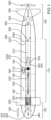
- the shape of the submersible hull(150) is optimized for minimum hydrodynamic drag, also taking into account the manufacturing and cost limitations.
- the submersible hulls(150) are built with other streamlined shapes, some with no cylindrical section and with transversal sections that are different from circular, like elliptical sections that might be preferred for operation in shallower water.
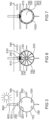
- the ultra-large marine submersible transport boat(100) in the main configuration of the invention is built as a sturdy thin-shelled reinforced concrete circular section structure that can be substantially uniform-ballasted on its perimeter, and that is with preponderance subject to tension loads.
- the submersible hull(150) has one longitudinal exterior line designated by engineering as an uppermost line(210) that is kept in an uppermost position by ballasting, and is provided with a deck walkway(220) positioned on both sides of the uppermost line(210), and configured as a marked longitudinal area on the submersible hull(150) in the proximity of which most of the ultra-large marine submersible transport boat's(100) equipment and access points are positioned, and where personnel and work equipment access is permitted when the deck walkway(220) is stationary at or above the sea level.
- the ultra-large marine submersible transport boat(100) is also provided with at least one propulsion mechanism(260) and at least one on-board power generation group(270) that delivers the required energy to the propulsion mechanism(260) and to all other onboard hardware requiring energy so that the ultra-large marine submersible transport boat(100) can be operated, maneuvered, and can navigate.
- the on-board power generation groups(270) can be of the internal combustion type or onboard nuclear power reactors.
- the supply pumping station(370) might miss if the bulk liquids are already delivered under pressure from the bulk liquid source(360) that, in the case of fresh water as a bulk liquid, can be a lake located at an altitude higher than the sea level.
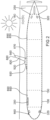
- the delivery stations(130) are erected in sheltered deep water near sea coasts(350), adjacent to at least one on-shore bulk liquids user(410), each of the delivery stations(130), for unloading the ultra-large marine submersible transport boats(100) temporarily stationed and moored in a floating state at the delivery station(130), is provided with at least one delivery pump(420) and at least one delivery valve(430) coupled with at least one bulk liquids delivery connector (440), that are sequentially mounted for bulk liquids extraction upon the hosted ultra-large marine submersible transport boats(100) and connects to their bulk liquids transfer connectors(340) with which the bulk liquids delivery connector(440) is mechanically compatible, the delivery pump (420) unloading the bulk liquids(110) from the accessed collapsible bladders(140) through the opened transfer valves(330) and delivering it to the bulk liquids user(410) through a delivery pipeline(450).
- the pitch and roll angles, the depth of the ultra-large marine submersible transport boat(100), as well as the stresses in the submersible hull(150), are controlled by adjusting the ballasting provided by the hull ballast water(500) and the pressure of the ballast air(510) in each ballast chamber(490).
- the chamber reinforcements(520) are built as short columns or short interior walls and the chamber reinforcement arrangement should not hamper the mobility of the hull ballast water(500) or the ballast air(510) contained inside each of the ballast chambers(490) and should be optimally sized and easy to manufacture.
- the ultra-large marine submersible transport boat(100) is built with at least one on-board hydro-pneumatic ballasting system(530) that controllably feeds and extract hull ballast water(500), as well as ballast air(510), into and from the ballast chambers(490), and is also provided with some ballasting command and control center (535) that commands and controls all active components of the hydro-pneumatic ballasting system(530) like pumps, compressors, and valves, receiving the pressure information from pressure sensors, as shown below.
- the impervious collapsible hull ballast water storage bags(610) are sized to contain and permanently be able to keep on board all hull ballast water(500) required for the operation of the ultra-large marine submersible transport boat(100) and are positioned inside the upper part of the submersible hull(150) for ease of access and maintenance.
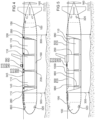
- the hull ballast water storage bags(610) are substantially empty and collapsed, most of the hull ballast water(500) being transferred for ballasting into the ballast chambers(490), so that, for neutral buoyancy, the ballasted submersible hull(150) balances the flotation of the contained fresh water.
- the hull ballast water(500) does not significantly reduce the ultra-large marine submersible transport boat(100) fresh water capacity.
- hull ballast water(500) on-board in a closed circuit of the ultra-large marine submersible transport boat(100) for very long operational terms, avoids the discharge of hull ballast water(500) into the environment and, by including corrosion inhibitors and disinfectants in the hull ballast water(500), it offers protection for the inside of the ballast chambers(490) and the whole hydro-pneumatic ballasting system(530).
- ballast water compartment from the ballast water accumulator (600) is controllably de-aerated by the state of the art means.
- submersible hull(150) interior is provided with state of the art de-aeration means.
- Any trapped air can diminish or hamper the ballasting and the depth maneuvering or angular stability of the ultra-large marine submersible transport boat(100).
- ballast water pressure inside the ballast water accumulator(600) is kept between some engineering-specified pressure limits sensed by some ballast water accumulator pressure sensors(795) and when the ballast water pressure gets outside of the specified limits the pressure is corrected by the ballasting command and control center (535) by commanding the exchange of some of the hull ballast water(500) between the ballast water accumulator(600) and the connected hull ballast water storage bag(610) by actuating the storage bidirectional pump(620) and by opening the controllable storage bidirectional valve(630).
- the hull ballast water(500) is pneumatically evacuated from the ballast chambers(490) by injection of ballast air(510) as shown hereafter.
- ballast air(510) inside of the ballast air accumulator(710) is held at designated pressures between some engineering-specified pressure limits sensed by some ballast air accumulator pressure sensors(797) and when the ballast air pressure gets outside of the specified limits, then either new air is furnished by the atmospheric air compressor(680) or some of the contained ballast air is vented to the atmosphere through the atmospheric venting check valve(700).
- the methods for loading, transporting, and delivery of large quantities of aqueous bulk liquids(110) using the ultra-large marine submersible transport boats(100) comprise the provision of at least one ultra-large marine submersible transport boat(100), at least one supply station(120), and at least one delivery station(130) and also comprises the following operational phases controlled through the general command and control center (920) with some of the phases under human observation and control, that are implemented taking into account the weather and the swell, and that can also be implemented in part, or in a different order, that can be merged as a whole or in part into other methods for loading, transporting, and delivering large quantities of bulk liquid(110), or that can be repeated.
- the ultra-large marine submersible transport boat(100) approaches the supply station(120) for being filled with bulk liquids(110) and is tugged into position adjacent to the supply station(120).
- the ultra-large marine submersible transport boat(100) then cruises toward an assigned delivery station(130) on a determined optimal route, speed, and depth schedule established following the swell and weather predictions, while the ultra-large marine submersible transport boat(100) is kept in an uppermost and horizontal position by active ballasting.
- the cruise is performed at snorkel depth for minimal drag, at times under severe swell conditions the ultra-large marine submersible transport boat being sunk deeper so that the structure is not affected.
- the delivery pipeline(450) is brought into position upon the ultra-large marine submersible transport boat(100) together with the delivery pump(420) and the bulk liquids delivery connector (440) is mated to the bulk liquids transfer connector(340) that has been uncapped.
- the ultra-large marine submersible transport boat(100) delivers its contained bulk liquids(110) by the following operational sub-phases that take place in time proximity:
- the ultra-large marine submersible transport boat(100) navigates toward an assigned supply station(120) on a determined optimal route and depth schedule established following the swell and weather predictions, while the ultra-large marine submersible transport boat(100) is kept in an uppermost and horizontal position by active ballasting.
- the access inside the submersible hull(150) is done through one of the hull openings(320).
- the access is required for repairs and replacement of items like collapsible bladders(140), reinforcing elements(200), hull ballast water storage bags(610) as well as the bulk liquids transfer valves(330).
- ballast chambers(490) where the hull ballast water(500) and the ballast air(510) are to be introduced into ballast chambers(490), as well as any other orifices of the ballast chambers(490) of the precast panels(940), are plugged with air trapped inside the ballast chambers(490) of the precast panel.
- the assembling of the submersible hull(150) takes place inside the marine assembly yard, on at least one assembling floating platform(950) that is provided with support rollers(953) that can be substantially aligned to the curved surface of the inner shell(470), on the rollers the unassembled, panels as well as the assembled multi-panel sections having 6 degrees of freedom for positioning adjustments during assembling.
- each still unassembled precast panel(940) that can weigh a few thousand tons is pulled above the seawater(160) onto the assembling floating platform(950).
- ballast water pipes(540), ballast air duct(770), and bottom pressure tubes(830) are fixed and sealed to each of the ballast chambers(490) of the precast panel(940) and the laterals of the precast panels(940) are washed off for being prepared for assembling.
- ballast water pipe(540), ballast air ducts(770), and bottom pressure tubes(830) that have been fixed are routed adjacent to the already assembled precast panels(940) in the direction of the uppermost line(210) and are plugged so that no water is introduced to or lost from their ballast chambers(490).
- Each finalized transversal annular multi-panel section of the submersible hull(150) is then positioned on the assembling floating platform(950), adjacent to another appropriate neighboring transversal annular multi-panel section of the submersible hull(150) and they are mutually assembled with the same assembly seam(955) after the armatures of the precast panels(940) from the adjacent finalized annular multi-panel sections are joined.
- ballasting and de-ballasting of the ballast chambers(490) through the ballast air ducts(770) and ballast water pipes(540) are required.
- the ultra-large marine submersible transport boat(100) is built with its power generation groups(270) and its propulsion mechanisms(260) placed on some tugboats(960) that pull the ultra-large marine submersible transport boat(100) with tug lines(310), and deliver electrical power for the onboard equipment through interconnection electrical power cables(965) attached adjacent to the tug lines(310) and has some permanent and direct human command and supervision present on the tugboat.
- the ultra-large marine submersible transport boat(100) claimed by the invention is built with at least one collapsible bladder(140) whose transfer valve(330) is directly connected to the external onboard bulk liquids transfer connector(340).
- the ultra-large marine submersible transport boat(100) claimed by the invention is used for the transportation of fresh water designated as bulk liquid(110) and is built with at least one of its collapsible bladders(140) that, when filled with fresh water, is shaped like a cylinder and has some of its reinforcing elements(200) positioned and contained inside one of the collapsible bladders(140), thus, the reinforcing elements(200) being kept in the lower corrosion environment offered by the fresh water.
- the ultra-large marine submersible transport boat(100) claimed by the invention is provided with no hydroplanes(250).
- the ultra-large submersible transport boat(100) claimed by the invention is provided with an impervious command nacelle(1060) that has a personnel accessible cabin, mounted close to the upper side of the snorkel tower(800) that is usually kept above the seawater(160) during cruising and that hosts some of the electronics and the human interface of the ultra-large marine submersible transport boat(100) the command nacelle(1060) being built with a detachable pod(1070) that can be detached in cases of deep submersion while the personnel is hosted in the command nacelle(1060).
- Sitka and East Baranof Island locations have sea depths of over 90 meters (300ft) very close to the shore so that the building of the supply stations(120) is relatively easy.
- Sitka location has a total delivery capacity of about 400 million cubic meters (320,000 acre-ft) of fresh water per year with some already built facilities like the artificial lake that can be used for supplying the fresh water, and also offer a year-round mild climate for its latitude.
- the reinforcing elements(200) are built from synthetic material ropes or heavy-duty steel drill pipes, that are fixed to each other employing a central core piece.
- the outer shell(460) and the inner shell(470) are proposed to be 0.16 meter thick each, and the ballast chambers(490) separating partitions(480) and chamber reinforcements(520) will add a concrete volume equivalent to a thickness of 0.16 meters.
- the ballast chamber(490) will have a longitudinal dimension of about 50 meters and the dimension of about 20 meters on the circumference of the cylindrical middle section(170) of the submersible hull(150).
- the chamber reinforcements(520) will be optimized in accordance with the operational loads.
- the submersible hull(150) is an extremely strong and rigid structure that can successfully withstand the operational loads like the local bending due to the waves during navigation and due to collisions with stray objects. It also is a fault-tolerant construction due to the multitude of ballast chambers(490) and, by optimal design of the chamber reinforcements(520) the ballast chambers(490) can withstand very high differential pressures.
- the expected cost for this ultra-large marine submersible transportation system is about US$500,000,000 and includes eight pieces of the ultra-large marine submersible transport boats(100), plus one supply station(120) and one delivery station(130).
- the amortization for transport calculations is considered for 30 years, and this length of time is taken into account for computing the cost of transportation.
- the economics for the actual systems can substantially vary due to the chosen system configuration, materials, manufacturing equipment, and labor cost.
Landscapes
- Engineering & Computer Science (AREA)
- Mechanical Engineering (AREA)
- Aviation & Aerospace Engineering (AREA)
- Chemical & Material Sciences (AREA)
- Combustion & Propulsion (AREA)
- Ocean & Marine Engineering (AREA)
- Transportation (AREA)
- Structures Of Non-Positive Displacement Pumps (AREA)
- Ship Loading And Unloading (AREA)
- Farming Of Fish And Shellfish (AREA)
- Filling Or Discharging Of Gas Storage Vessels (AREA)
- Sewage (AREA)
Claims (31)
- Übergroßes tauchfähiges Meerestransportschiff (100), das dafür gebaut ist, mit wässrigen Massenflüssigkeiten (110) beladen zu werden, sie zu transportieren und die Massenflüssigkeiten (110) zu übergeben, wobei das übergroße tauchfähige Meerestransportschiff (100) Mittel zum Manövrieren und Fahren umfasst,
wobei:das übergroße tauchfähige Meerestransportschiff (100) mit einem länglichen, hydrodynamisch geformten, starren und hohlen tauchfähigen Schiffsrumpf (150) versehen ist, der doppelwandig und regelbar ballastiert ist, aus Materialien schwerer als Meerwasser gebaut wurde und dessen Doppelwand durch eine äußere Schale (460) und eine innere Schale (470) gebildet wird, dadurch gekennzeichnet, dass seine Doppelwand-Schalen durch Trennwände (480) verbunden sind, welche eine Vielzahl von separaten wasserdichten Ballastkammern (490) dazwischen definieren, die unabhängig voneinander durch teilweises und steuerbares Füllen mit Schiffsrumpf-Ballastwasser (500) steuerbar ballastiert werden und durch das Entfernen von mindestens einem Teil des in den Kammern enthaltenen Schiffsrumpf-Ballastwassers (500) gesteuert entballastiert werden,wobei der tauchfähige Schiffsrumpf (150) außerdem eine Vielzahl von Schiffsrumpföffnungen (320) aufweist, die von außen durch den tauchfähigen Schiffsrumpf (150) kommunizieren, wobei die Schiffsrumpföffnungen (320) den Innenraum des tauchfähigen Schiffsrumpfs (150) mit dem umgebenden offenen Meer verbinden, wobei die Schiffsrumpföffnungen (320) dafür konfiguriert sind, die Zirkulation von Meerwasser (160) durch sie zu ermöglichen, wobei das Meerwasser (160) durch die Schiffsrumpföffnungen (320) in den Innenraum des tauchfähigen Schiffsrumpfs (150) eingelassen oder aus diesem ausgestoßen wird,wobei der tauchfähige Schiffsrumpf (150) eine Vielzahl von faltbaren Blasen (140) umschließt, die zum Beladen mit den wässrigen Massenflüssigkeiten (110) konfiguriert und so geformt sind, dass sie im Wesentlichen fast den gesamten freien Hohlraum im Inneren des tauchfähigen Schiffsrumpfs (150) einnehmen, wenn sie mit Massenflüssigkeiten (110) gefüllt sind, und sich zusammenfalten, wenn sie geleert werden,wobei die faltbaren Blasen (140) durch mindestens ein Massenflüssigkeit-Umfüllventil (330) gefüllt, geleert und isoliert werden, das in Reihe mit einem Massenflüssigkeit-Umfüllanschluss (340) zusammengebaut ist, wobei der Massenflüssigkeit-Umfüllanschluss (340) am oberen Teil des übergroßen tauchfähigen Meerestransportschiffs (100) angeordnet, für den Zugang der wässrigen Massenflüssigkeiten konfiguriert und dafür eingerichtet ist, für die Zufuhr und Übergabe der Massenflüssigkeiten (110) die faltbaren Blasen (140) der Reihe nach und vorübergehend zu verbinden,wobei das Gewicht des Schiffsrumpfs (150) zusammen mit dem Volumen der Ballastkammern (490) dafür konfiguriert istden Auftrieb des übergroßen tauchfähigen Meerestransportschiffs (100) durch steuerbares Ballastieren der Ballastkammern (490) zu steuern, sodass das übergroße tauchfähige Meerestransportschiff (100) steuerbar getaucht und aus einer getauchten Lage an die Oberfläche des Meerwassers (160) gebracht wird,und außerdem dafür konfiguriert ist, die Längs- und Querneigung des übergroßen tauchfähigen Meerestransportschiffs (100) durch unterschiedliche Ballastierung der Ballastkammern (490) zu steuern,wobei das übergroße tauchfähige Meerestransportschiff (100) außerdem ein bordeigenes hydropneumatisches Ballastiersystem (530) umfasst, das eine Ballastier-Befehls- und -Steuerzentrale (535) enthält, welche die Zufuhr und Entnahme von Schiffsrumpf-Ballastwasser (500) und Ballastluft (510) in die und aus den Ballastkammern (490) befiehlt und steuert, wobei das hydropneumatische Ballastiersystem (530) außerdem mit einer vorbestimmten Menge an Schiffsrumpf-Ballastwasser (500) und einer Vielzahl von faltbaren Schiffsrumpf-Ballastwasserspeichersäcken (610) versehen ist, die sich innerhalb des hohlen Innenraums des tauchfähigen Schiffsrumpfs (150) befinden und die das Ballastwasser (500) in einem geschlossenen Kreislauf speichern, wenn es aus den Ballastkammern (490) und anderen Teilen des hydropneumatischen Ballastiersystems (530) entfernt wird,wobei das hydropneumatische Ballastiersystem (530) von einem Vertikallageanzeiger (870), der an dem übergroßen tauchfähigen Meerestransportschiff (100) angebracht ist und die technisch festgelegte Vertikale angibt, mit Informationen versorgt wird, wobei das hydropneumatische Ballastiersystem (530) verwendet wird, um zum Steuern der Längs- und Querneigung des übergroßen tauchfähigen Meerestransportschiffs (100) in Bezug auf die technisch festgelegte Vertikale Schiffsrumpf-Ballastwasser (500) zwischen den Ballastkammern (490) auszutauschen,wobei das hydropneumatische Ballastiersystem (530) von einigen Tiefensensoren (850), die an dem übergroßen tauchfähigen Meerestransportschiff (100) angebracht sind, mit Tiefeninformationen versorgt wird, wobei zur Tiefensteuerung das hydropneumatische Ballastiersystem (530) verwendet wird, um Ballastwasser (500) zwischen den Ballastkammern (490) und der Vielzahl von faltbaren Schiffsrumpf-Ballastwasserspeichersäcken (610) auszutauschen,wobei das Ballastwasser (500) kontinuierlich wiederverwendet und in geschlossenen Kreisläufen gehalten wird, die von dem umgebenden Meerwasser (160) getrennt sind, und die Luft zum Entballastieren durch eine Atmosphärenluftverbindung (660) jeweils von der Atmosphärenluft bereitgestellt und an diese abgegeben wird,wobei das übergroße tauchfähige Meerestransportschiff (100) außerdem einen Schnorchelturm (800) umfasst, der am oberen Teil des tauchfähigen Schiffsrumpfs (150) befestigt ist und der eine Höhe aufweist, die es dem übergroßen tauchfähigen Meerestransportschiff (100) ermöglicht, in einer festgelegten Tiefe unter Wasser zu navigieren, während die Atmosphärenluftverbindung Zugang zur Atmosphärenluft bereitstellt, wobei der Schnorchelturm (800) eine starre und hydrodynamische Struktur ist,wobei die Mittel zum Manövrieren und Fahren des übergroßen tauchfähigen Meerestransportschiffs (100) mindestens eine Stromerzeugungsgruppe (270) umfassen, die mindestens einen Vortriebsmechanismus (260) antreibt, der es ermöglicht, dass das übergroße tauchfähige Meerestransportschiff (100) vorwärtsgetrieben wird. - Übergroßes tauchfähiges Meerestransportschiff (100) nach Anspruch 1, wobei sein hydropneumatisches Ballastiersystem (530) mit Folgendem versehen ist:eine Vielzahl von steuerbaren Ballastwasserpumpen (590; 620),Ballastwassersammler (600),steuerbare Ballastwasserventile (550; 560; 630; 650),und Ballastwasserverteiler (570; 580), die durch eine Vielzahl von Ballastwasserrohren (540) unter hydraulischem Druck aktiv Schiffsrumpf-Ballastwasser (500) zuführen bzw. unter pneumatischem Druck passiv ermöglichen, dass es abgelassen wird, und zwar unabhängig zu bzw. von jeder Ballastkammer (490),und außerdem mit Folgendem versehen ist:eine Vielzahl von steuerbaren Ballastluftkompressoren (680; 720), steuerbare Luftventile (670; 740; 760; 700),Ballastluftsammler (710), Mehrfachanschluss-Lufteinlass-T-Stücke (730) und Mehrfachanschluss-Luftauslass-T-Stücke (750), die durch Ballastluftkanäle (770) unabhängig mit jeder der Ballastkammern (490) verbunden sind,um steuerbar zu bewirken, dass das Schiffsrumpf-Ballastwasser (500) durch Einpressen von unter Druck stehender Ballastluft (510) in die Ballastkammern (490) pneumatisch evakuiert und aus den Ballastkammern (490) zurückgeführt wird.
- Übergroßes tauchfähiges Meerestransportschiff (100) nach Anspruch 1, ferner eine allgemeine Befehls- und Steuerzentrale (920) umfassend, die das hydropneumatische Ballastiersystem (530), mindestens eine der Stromerzeugungsgruppen (270) und mindestens einen der Vortriebsmechanismen (260) für das Manövrieren und die Navigation des übergroßen tauchfähigen Meerestransportschiffs (100) steuert.
- Übergroßes tauchfähiges Meerestransportschiff (100) nach Anspruch 1, ferner eine Vielzahl von Klüsen (280) und Schleppösen (290) umfassend, die an der Außenseite des tauchfähigen Schiffsrumpfes (150) angebracht sind und an denen Festmacher (300) und Schlepptrossen (310) angebracht werden können.
- Übergroßes tauchfähiges Meerestransportschiff (100) nach Anspruch 1, wobei die faltbaren Blasen (140), die Massenflüssigkeit-Umfüllventile (330) und die Massenflüssigkeit-Umfüllanschlüsse (340), die mit Süßwasser in Kontakt kommen, mit Süßwasser als transportierte Massenflüssigkeit (110) verträglich sind und so gebaut sind, dass sie seine Qualität erhalten, wobei das übergroße tauchfähige Meerestransportschiff für den Transport von Süßwasser verwendet wird.
- Übergroßes tauchfähiges Meerestransportschiff (100) nach Anspruch 1, wobei der tauchfähige Schiffsrumpf (150) eine Gesamtlänge von 400 bis 2400 Metern und ein Verhältnis der Länge zur maximalen Querabmessung von 6 bis 9 aufweist und der hohle Innenraum eine Kapazität von über 550 000 dwt hat.
- Übergroßes tauchfähiges Meerestransportschiff (100) nach Anspruch 1, wobei der tauchfähige Schiffsrumpf (150) einen abgerundeten Bug (180), einen zylindrischen Mittelabschnitt (170) und ein verjüngtes Heck (190) aufweist.
- Übergroßes tauchfähiges Meerestransportschiff (100) nach Anspruch 1, wobei der tauchfähige Schiffsrumpf (150) mit einem im Wesentlichen kreisförmigen Querschnitt gebaut ist.
- Übergroßes tauchfähiges Meerestransportschiff (100) nach Anspruch 1, wobei der tauchfähige Schiffsrumpf (150) mit einem im Wesentlichen elliptischen Querschnitt gebaut ist.
- Übergroßes tauchfähiges Meerestransportschiff (100) nach Anspruch 1, wobei der tauchfähige Schiffsrumpf (150) mit einem zylindrischen Mittelabschnitt (170) versehen ist, der als mehrseitiger Vieleckabschnitt ausgebildet ist, der sich glatt an einen abgerundeten Bug (180) und ein verjüngtes Heck (190) anschließt.
- Übergroßes tauchfähiges Meerestransportschiff (100) nach Anspruch 1, wobei der tauchfähige Schiffsrumpf (150) ausreichend Material aufweist, das schwerer als Meerwasser ist, und die Volumina der Ballastkammern (490) ausreichend groß sind,sodass der steuerbare Auftrieb des übergroßen tauchfähigen Meerestransportschiffs (100) mit seinem tauchfähigen Schiffsrumpf (150) in einer getauchten Lage und mit allen darin enthaltenen Massenflüssigkeiten in jedem betrieblichen Zustand durch Ballastierung von einem technisch festgelegten negativen Wert auf einen technisch festgelegten positiven Wert steuerbar verändert wird,und sodass außerdem in normalen betrieblichen Lagen technisch festgelegte Längs- und Querneigungsmomente durch unterschiedliche Ballastierung von Bug zu Heck und von Backbord zu Steuerbord auf das übergroße tauchfähige Meerestransportschiff (100) angewendet werden,wodurch es möglich wird, die Tiefe des übergroßen tauchfähigen Meerestransportschiffs (100) sowie seine Längs- und Querneigung durch steuerbare Rotation um seine Quer- und Längsachse zu steuern.
- Übergroßes tauchfähiges Meerestransportschiff (100) nach Anspruch 1, wobei der tauchfähige Schiffsrumpf (150) mit einer Vielzahl von Schiffsrumpföffnungen (320) versehen ist, die dafür konfiguriert sind, zu ermöglichen, dass das umgebende Meerwasser (160) in den tauchfähigen hohlen Innenraum und aus diesem heraus zirkuliert.
- Übergroßes tauchfähiges Meerestransportschiff (100) nach Anspruch 12, wobei mindestens einige der Schiffsrumpföffnungen (320) des tauchfähigen Schiffsrumpfs (150) mit einigen Mitteln (325) zum Verschließen der Schiffsrumpföffnungen versehen sind, die dafür konfiguriert sind, geschlossen und außerdem bewegt zu werden.
- Übergroßes tauchfähiges Meerestransportschiff (100) nach Anspruch 12, wobei mindestens einige der Schiffsrumpföffnungen (320) des tauchfähigen Schiffsrumpfs (150) am abgerundeten Bug (180) angeordnet sind und einige andere Schiffsrumpföffnungen (320) am verjüngten Heck (190) angeordnet sind, wobei die Schiffsrumpföffnungen (320) während der Fahrt mindestens teilweise nicht verschlossen sind, und wobei durch diese ein kontinuierlicher Strom von Meerwasser (160) im Inneren des tauchfähigen Schiffsrumpfs (150) erzeugt wird, wenn das übergroße tauchfähige Meerestransportschiff (100) sich bewegt, sodass kein Langstreckentransport von Meerwasser (160) stattfindet, das im Inneren des tauchfähigen Schiffsrumpfs (150) als Mengenballast eingeschlossen ist.
- Übergroßes tauchfähiges Meerestransportschiff (100) nach Anspruch 1, wobei das Baumaterial des tauchfähigen Schiffsrumpfs (150), das schwerer als Meerwasser ist, hauptsächlich aus armiertem Beton besteht.
- Übergroßes tauchfähiges Meerestransportschiff (100) nach Anspruch 1, ferner eine Vielzahl von Kammerverstärkungen (520) umfassend, die innerhalb seiner Ballastkammern (490) zwischen der äußeren Schale (460) und der inneren Schale (470) eingebaut sind, um die Lasten aus dem Druckunterschied zwischen der Innen- und Außenseite der Ballastkammern (490) und die zwischen der äußeren Schale (460) und der inneren Schale (470) auftretenden Scherkräfte aufzunehmen.
- Übergroßes tauchfähiges Meerestransportschiff (100) nach Anspruch 1, wobei mindestens eine seiner Stromerzeugungsgruppen (270) und mindestens einer seiner Vortriebsmechanismen (260) an Bord angebracht und dauerhaft an dem tauchfähigen Schiffsrumpf (150) angebracht sind.
- Übergroßes tauchfähiges Meerestransportschiff (100) nach Anspruch 17, wobei mindestens eine seiner Stromerzeugungsgruppen (270) vom Verbrennungsmotor-Typ ist, der seinen Lufteinlass durch einen Schnorchelturm (800) aufweist, welcher oben auf dem tauchfähigen Schiffsrumpf (150) angeordnet ist und eine hydrodynamische Form und eine Höhe aufweist, die dem übergroßen tauchfähigen Meerestransportschiff (100) ermöglicht, mit vollständig untergetauchtem tauchfähigem Schiffsrumpf (150) in technisch festgelegten Tiefen zu navigieren, während mindestens eine der Stromerzeugungsgruppen (270) über die am Schnorchelturm (800) angebaute Atmosphärenluftverbindung (660) Zugang zur Atmosphärenluft hat.
- Übergroßes tauchfähiges Meerestransportschiff (100) nach Anspruch 17, bei dem mindestens eine seiner Stromerzeugungsgruppen (270) als bordeigener Nuklearreaktor gebaut ist.
- Übergroßes tauchfähiges Meerestransportschiff (100) nach Anspruch 1, wobei mindestens eine der Stromerzeugungsgruppen (270) und mindestens einer der Vortriebsmechanismen (260) auf einem separaten Schlepper (960) angeordnet sind, der an den tauchfähigen Schiffsrumpf (150) angehängt ist und das übergroße tauchfähige Meerestransportschiff (100) mit einigen Schlepptrossen (310) zieht.
- Übergroßes tauchfähiges Meerestransportschiff (100) nach Anspruch 1, ferner eine Vielzahl von steuerbaren Ruderflächen (250) umfassend, die schwenkbar am tauchfähigen Schiffsrumpf (150) angebracht sind und als Steuerflächen fungieren.
- Übergroßes tauchfähiges Meerestransportschiff (100) nach Anspruch 1, ferner eine festgelegte oberste Linie (210) auf dem tauchfähigen Schiffsrumpf (150) umfassend, wobei der tauchfähige Schiffsrumpf (150) im Betrieb durch Ballastierung steuerbar bewegt wird, sodass seine oberste Linie (210) in Bezug auf die Vertikale in der obersten Position des übergroßen tauchfähigen Meerestransportschiffs (100) gehalten wird, wobei um die oberste Linie (210) ein Laufsteg (220) gebaut ist, auf dem Zugang für Personal und Ausrüstung ermöglicht wird, wenn das Schiff sich auf oder über dem Meeresspiegel befindet.
- Übergroßes tauchfähiges Meerestransportschiff (100) nach Anspruch 1, wobei der hohle Innenraum des tauchfähigen Schiffsrumpfs (150) mit einer Reihe von axial beabstandeten radialen Verstärkungselementen (200) versehen ist, die einer radialen Verformung des tauchfähigen Schiffsrumpfs (150) entgegenwirken und so angeordnet sind, dass sie die Verschiebung der faltbaren Blasen (140) nicht behindern, während diese mit den Massenflüssigkeiten (110) gefüllt oder entleert werden.
- Übergroßes tauchfähiges Meerestransportschiff (100) nach Anspruch 1, das ferner mit einer wasserdichten Kommandogondel (1060) versehen ist, die nahe der Oberseite eines Schnorchelturms (800) angebracht ist, wobei die Kommandogondel (1060) während der Fahrt normalerweise über dem Meerwasser (160) gehalten wird und einige der elektronischen Geräte sowie einen Teil der Mensch-Maschine-Schnittstelle des übergroßen tauchfähigen Meerestransportschiffs (100) beherbergt.
- Übergroße tauchfähige Meerestransport-Zuführungsanordnung zum Zuführen der Massenflüssigkeiten (110) zu dem übergroßen tauchfähigen Transportschiff (100) nach Anspruch 1 und bestehend aus:mindestens einem der übergroßen tauchfähigen Transportschiffe (100) nach Anspruch 1, undeiner eigens gebauten Massenflüssigkeit-Zufuhrstation (120), die in tiefem Wasser angrenzend an eine Meeresküste (350) in der Nähe von mindestens einer landseitigen Quelle (360) von Massenflüssigkeiten errichtet wurde, wobei die Zufuhrstation (120) das übergroße tauchfähige Transportschiff (100) beherbergt,wobei die Zufuhrstation (120) mit einer Zufuhr-Rohrleitung (380) versehen ist, die mit mindestens einem seeseitigen Zufuhrventil (390) und mit mindestens einem Massenflüssigkeit-Zufuhranschluss (400), der abnehmbar mit dem Massenflüssigkeit-Umfüllanschluss (340) des übergroßen tauchfähigen Meerestransportschiffs (100) verbunden ist, abschließt, während die Massenflüssigkeiten (110) in die faltbaren Blasen (140) des übergroßen tauchfähigen Schiffs (100) eingeleitet werden.
- Übergroße tauchfähige Meerestransport-Übergabeanordnung zum Übergeben der Massenflüssigkeiten (110) von dem übergroßen tauchfähigen Transportschiff (100) nach Anspruch 1 und bestehend ausmindestens einem der übergroßen tauchfähigen Transportschiffe (100) nach Anspruch 1,und einer eigens gebauten Massenflüssigkeit-Übergabestation (130), die in tiefem Wasser angrenzend an eine Meeresküste (350) in der Nähe von mindestens einem landseitigen Nutzer (410) von Massenflüssigkeiten errichtet wurde, wobei die Massenflüssigkeit-Übergabestation (130) das übergroße tauchfähige Transportschiff (100) beherbergt,wobei die Übergabestation (130) mit einer Übergabe-Rohrleitung (450) versehen ist, die mit mindestens einem seeseitigen Übergabeventil (430) und mit einem Massenflüssigkeit-Übergabeanschluss (440), der abnehmbar mit dem Massenflüssigkeit-Umfüllanschluss (340) des übergroßen tauchfähigen Meerestransportschiffs (100) verbunden ist, abschließt, wobei die Übergabestation (130) außerdem mit einer in Reihe angeordneten Übergabepumpe (420) versehen ist, welche die Übergabe-Rohrleitung (450) mit den Massenflüssigkeiten (110) speist, die aus den faltbaren Blasen (140) des übergroßen tauchfähigen Transportschiffs (100) umgefüllt werden.
- Verfahren zum Verladen großer Mengen wässriger Massenflüssigkeiten (110) auf übergroße tauchfähige Meerestransportschiffe (100) unter Verwendung der Zuführungsanordnung nach Anspruch 25, wobei das Verfahren zum Verladen Folgendes umfasst:die Bereitstellung der übergroßen tauchfähigen Transport-Zuführungsanordnung nach Anspruch 25;und die Implementierung der folgenden betrieblichen Phasen:eine Phase, in der das übergroße tauchfähige Meerestransportschiff (100) sich der Zufuhrstation (120) nähert, um mit Massenflüssigkeiten gefüllt zu werden, und in eine Position angrenzend an die Zufuhrstation (120) geschleppt wird;eine Phase, in der das übergroße tauchfähige Meerestransportschiff (100) angrenzend an die Zufuhrstation (120) vertäut wird;eine Phase, in der die Zufuhr-Rohrleitung (380) auf dem übergroßen tauchfähigen Transportschiff (100) in Position gebracht wird und der Massenflüssigkeit-Zufuhranschluss (400) mit dem Massenflüssigkeit-Umfüllanschluss (340) verbunden wird, wobei alle Anschlüsse unverschlossen sind;eine Phase, in der das übergroße tauchfähige Transportschiff (100) durch die folgenden betrieblichen Teilphasen mit den Massenflüssigkeiten (110) gefüllt wird:(i) die Massenflüssigkeit-Umfüllventile (330) werden geöffnet,(ii) das Zufuhrventil (390) wird geöffnet,(iii) die Massenflüssigkeit wird von der Quelle (360) von Massenflüssigkeiten über die Zufuhr-Rohrleitung (380) in die faltbaren Blasen (140) umgefüllt,(iv) während des Füllens der faltbaren Blasen (140) wird der tauchfähige Schiffsrumpf (150) vertäut gehalten und nach Bedarf proportional ballastiert oder entballastiert, wobei er auf Meeresspiegelhöhe (160) und in einer horizontalen und obersten Lage gehalten wird, indem Schiffsrumpf-Ballastwasser (500) steuerbar in einige der Ballastkammern (490) eingelassen bzw. aus diesen abgelassen wird,eine Phase, in welcher der Massenflüssigkeit-Zufuhranschluss (400) von dem Massenflüssigkeit-Umfüllanschluss (340) getrennt wird, der dann verschlossen wird,eine Phase, in der die Zufuhr-Rohrleitung (380) zusammen mit dem Zufuhrventil (390) und dem Massenflüssigkeit-Zufuhranschluss (400) von dem übergroßen tauchfähigen Meerestransportschiff (100) wegbewegt wird,eine Phase, in der das übergroße tauchfähige Meerestransportschiff (100) losgemacht und von der Zufuhrstation (120) weggeschleppt wird.
- Verfahren zum Entladen großer Mengen wässriger Massenflüssigkeiten (110) aus übergroßen tauchfähigen Meerestransportschiffen (100) unter Verwendung der Übergabeanordnung nach Anspruch 26, wobei das Verfahren zum Entladen Folgendes umfasst:die Bereitstellung der übergroßen tauchfähigen Meerestransport-Übergabeanordnung nach Anspruch 26;und die Implementierung der folgenden betrieblichen Phasen:eine Phase, in der das übergroße tauchfähige Meerestransportschiff (100) sich zum Übergeben seiner Massenflüssigkeiten (110) der Übergabestation (130) nähert und in eine Position angrenzend an die Übergabestation (130) geschleppt wird,eine Phase, in der das übergroße tauchfähige Meerestransportschiff (100) angrenzend an die Übergabestation (130) vertäut wird,eine Phase, in der die Übergabe-Rohrleitung (450) zusammen mit der Übergabepumpe (420) auf dem übergroßen tauchfähigen Meerestransportschiff (100) in Position gebracht wird und der Massenflüssigkeit-Übergabeanschluss (440) mit dem Massenflüssigkeit-Umfüllanschluss (340) verbunden wird, wobei alle Anschlüsse geöffnet sind,eine Phase, in der das übergroße tauchfähige Meerestransportschiff (100) seine enthaltenen Massenflüssigkeiten (110) durch die folgenden betrieblichen Teilphasen abgibt:(i) die Massenflüssigkeit-Umfüllventile (330) werden geöffnet,(ii) das Übergabeventil (430) wird geöffnet,(iii) die Massenflüssigkeit wird aus den faltbaren Blasen (140) zum Nutzer (410) von Massenflüssigkeiten umgefüllt, indem die faltbaren Blasen (140) mit der Übergabepumpe (420) über die Übergabe-Rohrleitung (450) gleichzeitig entleert werden,(iv) während des Entleerens der faltbaren Blasen (140) wird der tauchfähige Schiffsrumpf (150) vertäut gehalten und nach Bedarf proportional ballastiert oder entballastiert, wobei er auf Meeresspiegelhöhe (160) und in einer horizontalen und obersten Lage gehalten wird, indem Schiffsrumpf-Ballastwasser (500) steuerbar aus einigen der Ballastkammern (490) abgelassen bzw. in diese eingelassen wird,eine Phase, in welcher der Massenflüssigkeit-Übergabeanschluss (440) von dem Massenflüssigkeit-Umfüllanschluss (340) getrennt wird, der dann verschlossen wird,eine Phase, in der die Übergabe-Rohrleitung (450) zusammen mit der Übergabepumpe (420), dem Übergabeventil (430) und dem Übergabeanschluss (440) von dem übergroßen tauchfähigen Meerestransportschiff (100) wegbewegt werden,eine Phase, in der das übergroße tauchfähige Meerestransportschiff (100) losgemacht und von der Übergabestation (130) weggeschleppt wird.
- Verfahren zum Transportieren großer Mengen wässriger Massenflüssigkeiten (110) mit den übergroßen tauchfähigen Meerestransportschiffen (100) nach Anspruch 1, umfassend:die Bereitstellung des übergroßen tauchfähigen Meeresschiffs (100) nach Anspruch 1, und außerdemdie Implementierung einer Reisezeit, während der das übergroße tauchfähige Meerestransportschiff (100) auf einer Route der Wahl mit Geschwindigkeiten und in Tiefen der Wahl fährt, während das übergroße tauchfähige Meerestransportschiff (100) durch Ballastierung der Ballastkammern (490) in einer im Wesentlichen obersten und horizontalen Lage und in gesteuerten Tiefen gehalten wird.
- Verfahren zur Herstellung des tauchfähigen Schiffsrumpfs (150) des übergroßen tauchfähigen Meerestransportschiffs (100) nach Anspruch 1, wobei das Verfahren zur Herstellung Folgendes umfasst:Ausbilden von vorgefertigten Platten (940) an Land, die getrennt voneinander im Trockendock hergestellt und aushärten gelassen werden, wobei jede vorgefertigte Platte (940) mindestens eine Ballastkammer (490) enthält, die sie schwimmfähig macht, wobei die vorgefertigten Platten (940) so konstruiert sind, dass sie durch ihren Zusammenbau den tauchfähigen Schiffsrumpf (150) bilden,zum Schwimmen Bringen der ausgehärteten Fertigplatten (940) und, während sie schwimmen, Schleppen derselben zu einer Montagewerft im Meerwasser (160), das mindestens so tief ist wie der maximale Querdurchmesser des tauchfähigen Schiffsrumpfs (150),miteinander Zusammenbauen der vorgefertigten Platten (940) auf der Montagewerft im Meerwasser, um den tauchfähigen Schiffsrumpf (150) auszubilden.
- Verfahren zur Herstellung nach Anspruch 30, wobei während der Herstellung die vorgefertigten Platten (940), bevor sie aneinander angebracht werden, über das Wasser auf eine schwimmende Montageplattform (950) gezogen werden, die mit Stützrollen (953) versehen ist, die im Wesentlichen mit der gekrümmten Oberfläche der inneren Schale (470) des zu bauenden tauchfähigen Schiffsrumpfes (150) ausgerichtet sind, wobei die vorgefertigten Platten (940) miteinander zusammengebaut werden und ihr Plattenzwischenraum mit einer Montagenaht (955) gefüllt wird, die an Ort und Stelle gegossen wird, sodass größere ringförmige Abschnitte aus mehreren Platten gebaut werden, wobei die ringförmigen Abschnitte aus mehreren Platten ihrerseits koaxial miteinander verbunden werden, um den vollständigen tauchfähigen Schiffsrumpf (150) bilden, wobei einige der Schiffsrumpföffnungen (320) des tauchfähigen Schiffsrumpfs (150) es ermöglichen, dass die schwimmenden Montageplattformen (950), die innerhalb des hohlen Innenraums des tauchfähigen Schiffsrumpfes gefangen sind, in kleinere Stücke zerlegt und aus dem zusammengebauten tauchfähigen Schiffsrumpf durch seine Schiffsrumpföffnungen (320) herausgezogen werden können.
Applications Claiming Priority (2)
| Application Number | Priority Date | Filing Date | Title |
|---|---|---|---|
| US201962974230P | 2019-11-20 | 2019-11-20 | |
| PCT/US2020/057690 WO2021101684A1 (en) | 2019-11-20 | 2020-10-28 | Ultra-large marine submersible transport boats and arrangements for transportation of aqueous bulk liquids, including fresh water |
Publications (4)
| Publication Number | Publication Date |
|---|---|
| EP4017794A1 EP4017794A1 (de) | 2022-06-29 |
| EP4017794A4 EP4017794A4 (de) | 2023-11-08 |
| EP4017794C0 EP4017794C0 (de) | 2025-04-16 |
| EP4017794B1 true EP4017794B1 (de) | 2025-04-16 |
Family
ID=75980957
Family Applications (1)
| Application Number | Title | Priority Date | Filing Date |
|---|---|---|---|
| EP20888749.7A Active EP4017794B1 (de) | 2019-11-20 | 2020-10-28 | Ultragrosse unterwasser-tauchboote und anordnungen zum transport von wässrigem massengut, einschliesslich frischwasser |
Country Status (11)
| Country | Link |
|---|---|
| US (1) | US11505297B2 (de) |
| EP (1) | EP4017794B1 (de) |
| AU (1) | AU2020389081A1 (de) |
| CA (1) | CA3161997A1 (de) |
| DK (1) | DK202270326A1 (de) |
| ES (1) | ES3032932T3 (de) |
| IL (1) | IL293016B2 (de) |
| JO (1) | JOP20220114A1 (de) |
| MX (1) | MX2022005967A (de) |
| SA (1) | SA522432648B1 (de) |
| WO (1) | WO2021101684A1 (de) |
Families Citing this family (9)
| Publication number | Priority date | Publication date | Assignee | Title |
|---|---|---|---|---|
| GB201807489D0 (en) * | 2018-05-08 | 2018-06-20 | Sentinel Subsea Ltd | Apparatus and method |
| US12589848B2 (en) * | 2022-11-18 | 2026-03-31 | Jeremy J Papadopoulos | Hydrogen transport apparatus |
| US12173849B2 (en) * | 2022-12-30 | 2024-12-24 | Lone Gull Holdings, Ltd. | Submerged gas conveyance of constant pressure and buoyancy |
| CN117002673A (zh) * | 2023-06-14 | 2023-11-07 | 中国人民解放军海军工程大学 | 一种适用于大深度潜航器的增强复合夹芯壳 |
| US12269565B1 (en) | 2023-11-14 | 2025-04-08 | Seatrain Technology, LLC | Variable ballast propulsion shipping vessel, systems and methods |
| US12263924B1 (en) | 2023-11-14 | 2025-04-01 | Seatrain Technology, LLC | Variable ballast propulsion shipping vessel, systems and methods |
| US12371134B2 (en) | 2023-11-14 | 2025-07-29 | Seatrain Technology, LLC | Variable ballast propulsion shipping vessel, systems and methods |
| US12420895B2 (en) * | 2023-12-19 | 2025-09-23 | Quadrant Clean Tech Ltd. | Systems and methods for utilizing nuclear-based marine craft to generate electricity for external or grid usage |
| CN119858639B (zh) * | 2025-02-13 | 2025-10-28 | 上海勘测设计研究院有限公司 | 一种可调式压载舱及其介质调配方法、漂浮式海上平台 |
Family Cites Families (10)
| Publication number | Priority date | Publication date | Assignee | Title |
|---|---|---|---|---|
| US3085533A (en) * | 1961-09-15 | 1963-04-16 | Exxon Research Engineering Co | System for transporting oil under water |
| US3805729A (en) * | 1970-02-26 | 1974-04-23 | M Golay | Means for the water transport of liquids |
| US3704678A (en) | 1971-04-26 | 1972-12-05 | Walter A Kelly | Submarine tanker |
| US6349663B1 (en) | 1998-09-30 | 2002-02-26 | Schlumberger Technology Corporation | Temporary storage barge |
| IL153187A0 (en) | 2000-05-30 | 2003-06-24 | Inbar Water Distrib Company Lt | Flexible vessel |
| US7500442B1 (en) * | 2008-01-11 | 2009-03-10 | Schanz Ii, Llc | Submerged transporter and storage system for liquids and solids |
| US20110067618A1 (en) | 2009-09-24 | 2011-03-24 | Harry Edward Dempster | Water-Based Material Transportation System |
| US9371114B2 (en) * | 2009-10-15 | 2016-06-21 | Allen Szydlowski | Method and system for a towed vessel suitable for transporting liquids |
| US7841289B1 (en) * | 2009-10-22 | 2010-11-30 | Schanz Richard W | Water level and/or sub surface water transporter/storage systems for liquids and solids simultaneously or in single cargo |
| NO340274B1 (no) * | 2014-12-20 | 2017-03-27 | Subhydro As | Undervannstanker |
-
2020
- 2020-10-28 IL IL293016A patent/IL293016B2/en unknown
- 2020-10-28 US US17/287,569 patent/US11505297B2/en active Active
- 2020-10-28 CA CA3161997A patent/CA3161997A1/en active Pending
- 2020-10-28 ES ES20888749T patent/ES3032932T3/es active Active
- 2020-10-28 EP EP20888749.7A patent/EP4017794B1/de active Active
- 2020-10-28 WO PCT/US2020/057690 patent/WO2021101684A1/en not_active Ceased
- 2020-10-28 AU AU2020389081A patent/AU2020389081A1/en not_active Abandoned
- 2020-10-28 MX MX2022005967A patent/MX2022005967A/es unknown
-
2022
- 2022-05-18 JO JOP/2022/0114A patent/JOP20220114A1/ar unknown
- 2022-05-18 SA SA522432648A patent/SA522432648B1/ar unknown
- 2022-06-16 DK DKPA202270326A patent/DK202270326A1/en not_active Application Discontinuation
Also Published As
| Publication number | Publication date |
|---|---|
| DK202270326A1 (en) | 2022-06-21 |
| MX2022005967A (es) | 2022-09-02 |
| IL293016B1 (en) | 2023-10-01 |
| ES3032932T3 (en) | 2025-07-29 |
| IL293016B2 (en) | 2024-02-01 |
| JOP20220114A1 (ar) | 2023-01-30 |
| AU2020389081A1 (en) | 2022-06-16 |
| EP4017794C0 (de) | 2025-04-16 |
| EP4017794A4 (de) | 2023-11-08 |
| WO2021101684A1 (en) | 2021-05-27 |
| SA522432648B1 (ar) | 2024-03-28 |
| IL293016A (en) | 2022-07-01 |
| US20220274677A1 (en) | 2022-09-01 |
| CA3161997A1 (en) | 2021-05-27 |
| EP4017794A1 (de) | 2022-06-29 |
| US11505297B2 (en) | 2022-11-22 |
Similar Documents
| Publication | Publication Date | Title |
|---|---|---|
| US11505297B2 (en) | Ultra-large marine submersible transport boats and arrangements for transportation of aqueous bulk liquids, including fresh water | |
| JP4773967B2 (ja) | 自律水泳式貨物コンテナ | |
| KR101591995B1 (ko) | 고속 수상 능력을 갖는 범용 잠수함 | |
| US3974789A (en) | Floating structures including honeycomb cores formed of elongate hexagonal cells | |
| US6805598B2 (en) | Liquid natural gas transfer station | |
| US4007700A (en) | Multiple seafloor storage and supply system | |
| CN109952246A (zh) | 对用于运输、移除、装配、容置和转移资产的移动式停驻设备再配置的系统和方法 | |
| US3839977A (en) | Floating marine terminal | |
| US3880102A (en) | Method and apparatus for offshore submersible oil storage and drilling | |
| US4615292A (en) | Submersible twin-hull watercraft | |
| ES2711408T3 (es) | Estructura flotante para perforación de petróleo | |
| GB2609952A (en) | An underwater vehicle for transporting fluid | |
| US3698339A (en) | Method and means for the water transport of liquids | |
| WO2021235941A1 (en) | Shuttle loading system | |
| GB2027396A (en) | Submersible twin-hull watercraft | |
| US3805729A (en) | Means for the water transport of liquids | |
| CN108248781A (zh) | 一种浮岛式海洋装备 | |
| KR20210013627A (ko) | 평형수 시스템을 포함하는 하이브리드 선박 | |
| CN107640293B (zh) | 一种海上油气开发钻采物资存储供应装置 | |
| CN208813465U (zh) | 一种水上运输软囊 | |
| RU2820362C1 (ru) | Мобильное подводное хранилище для жидких нефтепродуктов | |
| RU2861243C1 (ru) | Безэкипажное плавучее средство катамаранного типа | |
| US20260035056A1 (en) | Low-profile cargo vessels providing transport of shipping containers | |
| JPH08244678A (ja) | タンクバージ式液体貨物輸送船 | |
| RU2554374C1 (ru) | Способ добычи и транспортировки газовых гидратов донных отложений и подводная лодка для добычи и транспортировки газовых гидратов |
Legal Events
| Date | Code | Title | Description |
|---|---|---|---|
| STAA | Information on the status of an ep patent application or granted ep patent |
Free format text: STATUS: UNKNOWN |
|
| STAA | Information on the status of an ep patent application or granted ep patent |
Free format text: STATUS: THE INTERNATIONAL PUBLICATION HAS BEEN MADE |
|
| PUAI | Public reference made under article 153(3) epc to a published international application that has entered the european phase |
Free format text: ORIGINAL CODE: 0009012 |
|
| STAA | Information on the status of an ep patent application or granted ep patent |
Free format text: STATUS: REQUEST FOR EXAMINATION WAS MADE |
|
| 17P | Request for examination filed |
Effective date: 20220325 |
|
| AK | Designated contracting states |
Kind code of ref document: A1 Designated state(s): AL AT BE BG CH CY CZ DE DK EE ES FI FR GB GR HR HU IE IS IT LI LT LU LV MC MK MT NL NO PL PT RO RS SE SI SK SM TR |
|
| DAX | Request for extension of the european patent (deleted) | ||
| RAV | Requested validation state of the european patent: fee paid |
Extension state: TN Effective date: 20220325 Extension state: MA Effective date: 20220325 |
|
| A4 | Supplementary search report drawn up and despatched |
Effective date: 20231006 |
|
| RIC1 | Information provided on ipc code assigned before grant |
Ipc: B63B 35/28 20060101ALI20230929BHEP Ipc: B63B 25/08 20060101ALI20230929BHEP Ipc: B63B 11/04 20060101ALI20230929BHEP Ipc: B63B 1/18 20060101ALI20230929BHEP Ipc: B63B 3/13 20060101AFI20230929BHEP |
|
| REG | Reference to a national code |
Ref country code: DE Ref legal event code: R079 Free format text: PREVIOUS MAIN CLASS: B63B0003130000 Ipc: B63B0005140000 Ref document number: 602020049719 Country of ref document: DE |
|
| RIC1 | Information provided on ipc code assigned before grant |
Ipc: B63B 5/20 20060101ALI20240605BHEP Ipc: B63B 5/14 20060101AFI20240605BHEP |
|
| GRAP | Despatch of communication of intention to grant a patent |
Free format text: ORIGINAL CODE: EPIDOSNIGR1 |
|
| STAA | Information on the status of an ep patent application or granted ep patent |
Free format text: STATUS: GRANT OF PATENT IS INTENDED |
|
| DAV | Request for validation of the european patent (deleted) | ||
| INTG | Intention to grant announced |
Effective date: 20240712 |
|
| GRAJ | Information related to disapproval of communication of intention to grant by the applicant or resumption of examination proceedings by the epo deleted |
Free format text: ORIGINAL CODE: EPIDOSDIGR1 |
|
| STAA | Information on the status of an ep patent application or granted ep patent |
Free format text: STATUS: REQUEST FOR EXAMINATION WAS MADE |
|
| GRAP | Despatch of communication of intention to grant a patent |
Free format text: ORIGINAL CODE: EPIDOSNIGR1 |
|
| INTC | Intention to grant announced (deleted) | ||
| STAA | Information on the status of an ep patent application or granted ep patent |
Free format text: STATUS: GRANT OF PATENT IS INTENDED |
|
| RAV | Requested validation state of the european patent: fee paid |
Extension state: TN Effective date: 20220325 Extension state: MA Effective date: 20220325 |
|
| INTG | Intention to grant announced |
Effective date: 20241121 |
|
| GRAS | Grant fee paid |
Free format text: ORIGINAL CODE: EPIDOSNIGR3 |
|
| GRAA | (expected) grant |
Free format text: ORIGINAL CODE: 0009210 |
|
| STAA | Information on the status of an ep patent application or granted ep patent |
Free format text: STATUS: THE PATENT HAS BEEN GRANTED |
|
| AK | Designated contracting states |
Kind code of ref document: B1 Designated state(s): AL AT BE BG CH CY CZ DE DK EE ES FI FR GB GR HR HU IE IS IT LI LT LU LV MC MK MT NL NO PL PT RO RS SE SI SK SM TR |
|
| REG | Reference to a national code |
Ref country code: GB Ref legal event code: FG4D |
|
| REG | Reference to a national code |
Ref country code: CH Ref legal event code: EP |
|
| REG | Reference to a national code |
Ref country code: IE Ref legal event code: FG4D |
|
| U01 | Request for unitary effect filed |
Effective date: 20250416 |
|
| U07 | Unitary effect registered |
Designated state(s): AT BE BG DE DK EE FI FR IT LT LU LV MT NL PT RO SE SI Effective date: 20250424 |
|
| REG | Reference to a national code |
Ref country code: ES Ref legal event code: FG2A Ref document number: 3032932 Country of ref document: ES Kind code of ref document: T3 Effective date: 20250729 |
|
| PG25 | Lapsed in a contracting state [announced via postgrant information from national office to epo] |
Ref country code: NO Free format text: LAPSE BECAUSE OF FAILURE TO SUBMIT A TRANSLATION OF THE DESCRIPTION OR TO PAY THE FEE WITHIN THE PRESCRIBED TIME-LIMIT Effective date: 20250716 Ref country code: GR Free format text: LAPSE BECAUSE OF FAILURE TO SUBMIT A TRANSLATION OF THE DESCRIPTION OR TO PAY THE FEE WITHIN THE PRESCRIBED TIME-LIMIT Effective date: 20250717 |
|
| PG25 | Lapsed in a contracting state [announced via postgrant information from national office to epo] |
Ref country code: PL Free format text: LAPSE BECAUSE OF FAILURE TO SUBMIT A TRANSLATION OF THE DESCRIPTION OR TO PAY THE FEE WITHIN THE PRESCRIBED TIME-LIMIT Effective date: 20250416 |
|
| PGFP | Annual fee paid to national office [announced via postgrant information from national office to epo] |
Ref country code: TR Payment date: 20250922 Year of fee payment: 6 |
|
| PG25 | Lapsed in a contracting state [announced via postgrant information from national office to epo] |
Ref country code: HR Free format text: LAPSE BECAUSE OF FAILURE TO SUBMIT A TRANSLATION OF THE DESCRIPTION OR TO PAY THE FEE WITHIN THE PRESCRIBED TIME-LIMIT Effective date: 20250416 |
|
| PG25 | Lapsed in a contracting state [announced via postgrant information from national office to epo] |
Ref country code: RS Free format text: LAPSE BECAUSE OF FAILURE TO SUBMIT A TRANSLATION OF THE DESCRIPTION OR TO PAY THE FEE WITHIN THE PRESCRIBED TIME-LIMIT Effective date: 20250716 |
|
| PG25 | Lapsed in a contracting state [announced via postgrant information from national office to epo] |
Ref country code: IS Free format text: LAPSE BECAUSE OF FAILURE TO SUBMIT A TRANSLATION OF THE DESCRIPTION OR TO PAY THE FEE WITHIN THE PRESCRIBED TIME-LIMIT Effective date: 20250816 |
|
| U20 | Renewal fee for the european patent with unitary effect paid |
Year of fee payment: 6 Effective date: 20251031 |
|
| PGFP | Annual fee paid to national office [announced via postgrant information from national office to epo] |
Ref country code: GB Payment date: 20251013 Year of fee payment: 6 |
|
| PG25 | Lapsed in a contracting state [announced via postgrant information from national office to epo] |
Ref country code: SM Free format text: LAPSE BECAUSE OF FAILURE TO SUBMIT A TRANSLATION OF THE DESCRIPTION OR TO PAY THE FEE WITHIN THE PRESCRIBED TIME-LIMIT Effective date: 20250416 |
|
| PGFP | Annual fee paid to national office [announced via postgrant information from national office to epo] |
Ref country code: AL Payment date: 20251010 Year of fee payment: 6 |
|
| PG25 | Lapsed in a contracting state [announced via postgrant information from national office to epo] |
Ref country code: CZ Free format text: LAPSE BECAUSE OF FAILURE TO SUBMIT A TRANSLATION OF THE DESCRIPTION OR TO PAY THE FEE WITHIN THE PRESCRIBED TIME-LIMIT Effective date: 20250416 |
|
| PG25 | Lapsed in a contracting state [announced via postgrant information from national office to epo] |
Ref country code: SK Free format text: LAPSE BECAUSE OF FAILURE TO SUBMIT A TRANSLATION OF THE DESCRIPTION OR TO PAY THE FEE WITHIN THE PRESCRIBED TIME-LIMIT Effective date: 20250416 |
|
| PGFP | Annual fee paid to national office [announced via postgrant information from national office to epo] |
Ref country code: ES Payment date: 20251112 Year of fee payment: 6 |
|
| VS25 | Lapsed in a validation state [announced via postgrant information from nat. office to epo] |
Ref country code: MA Free format text: FAILURE TO ELECT DOMICILE IN THE NATIONAL COUNTRY Effective date: 20250717 |
|
| PLBE | No opposition filed within time limit |
Free format text: ORIGINAL CODE: 0009261 |
|
| STAA | Information on the status of an ep patent application or granted ep patent |
Free format text: STATUS: NO OPPOSITION FILED WITHIN TIME LIMIT |
|
| REG | Reference to a national code |
Ref country code: CH Ref legal event code: L10 Free format text: ST27 STATUS EVENT CODE: U-0-0-L10-L00 (AS PROVIDED BY THE NATIONAL OFFICE) Effective date: 20260225 |
|
| 26N | No opposition filed |
Effective date: 20260119 |
|
| VS25 | Lapsed in a validation state [announced via postgrant information from nat. office to epo] |
Ref country code: MA Free format text: LAPSE BECAUSE OF FAILURE TO SUBMIT A TRANSLATION OF THE DESCRIPTION OR TO PAY THE FEE WITHIN THE PRESCRIBED TIME-LIMIT Effective date: 20250416 |