EP4017976B1 - Connexion à médiation de superhélice de crispr-cas et d'exonucléases pour améliorer l'édition de génomes - Google Patents
Connexion à médiation de superhélice de crispr-cas et d'exonucléases pour améliorer l'édition de génomes Download PDFInfo
- Publication number
- EP4017976B1 EP4017976B1 EP20756868.4A EP20756868A EP4017976B1 EP 4017976 B1 EP4017976 B1 EP 4017976B1 EP 20756868 A EP20756868 A EP 20756868A EP 4017976 B1 EP4017976 B1 EP 4017976B1
- Authority
- EP
- European Patent Office
- Prior art keywords
- cell
- protein
- cas9
- crispr
- nucleic acid
- Prior art date
- Legal status (The legal status is an assumption and is not a legal conclusion. Google has not performed a legal analysis and makes no representation as to the accuracy of the status listed.)
- Active
Links
Images






Classifications
-
- C—CHEMISTRY; METALLURGY
- C12—BIOCHEMISTRY; BEER; SPIRITS; WINE; VINEGAR; MICROBIOLOGY; ENZYMOLOGY; MUTATION OR GENETIC ENGINEERING
- C12N—MICROORGANISMS OR ENZYMES; COMPOSITIONS THEREOF; PROPAGATING, PRESERVING, OR MAINTAINING MICROORGANISMS; MUTATION OR GENETIC ENGINEERING; CULTURE MEDIA
- C12N15/00—Mutation or genetic engineering; DNA or RNA concerning genetic engineering, vectors, e.g. plasmids, or their isolation, preparation or purification; Use of hosts therefor
- C12N15/09—Recombinant DNA-technology
- C12N15/10—Processes for the isolation, preparation or purification of DNA or RNA
- C12N15/102—Mutagenizing nucleic acids
-
- C—CHEMISTRY; METALLURGY
- C12—BIOCHEMISTRY; BEER; SPIRITS; WINE; VINEGAR; MICROBIOLOGY; ENZYMOLOGY; MUTATION OR GENETIC ENGINEERING
- C12N—MICROORGANISMS OR ENZYMES; COMPOSITIONS THEREOF; PROPAGATING, PRESERVING, OR MAINTAINING MICROORGANISMS; MUTATION OR GENETIC ENGINEERING; CULTURE MEDIA
- C12N15/00—Mutation or genetic engineering; DNA or RNA concerning genetic engineering, vectors, e.g. plasmids, or their isolation, preparation or purification; Use of hosts therefor
- C12N15/09—Recombinant DNA-technology
- C12N15/10—Processes for the isolation, preparation or purification of DNA or RNA
- C12N15/1034—Isolating an individual clone by screening libraries
- C12N15/1055—Protein x Protein interaction, e.g. two hybrid selection
-
- C—CHEMISTRY; METALLURGY
- C07—ORGANIC CHEMISTRY
- C07K—PEPTIDES
- C07K2319/00—Fusion polypeptide
-
- C—CHEMISTRY; METALLURGY
- C07—ORGANIC CHEMISTRY
- C07K—PEPTIDES
- C07K2319/00—Fusion polypeptide
- C07K2319/80—Fusion polypeptide containing a DNA binding domain, e.g. Lacl or Tet-repressor
-
- C—CHEMISTRY; METALLURGY
- C12—BIOCHEMISTRY; BEER; SPIRITS; WINE; VINEGAR; MICROBIOLOGY; ENZYMOLOGY; MUTATION OR GENETIC ENGINEERING
- C12N—MICROORGANISMS OR ENZYMES; COMPOSITIONS THEREOF; PROPAGATING, PRESERVING, OR MAINTAINING MICROORGANISMS; MUTATION OR GENETIC ENGINEERING; CULTURE MEDIA
- C12N2310/00—Structure or type of the nucleic acid
- C12N2310/10—Type of nucleic acid
- C12N2310/20—Type of nucleic acid involving clustered regularly interspaced short palindromic repeats [CRISPR]
-
- C—CHEMISTRY; METALLURGY
- C12—BIOCHEMISTRY; BEER; SPIRITS; WINE; VINEGAR; MICROBIOLOGY; ENZYMOLOGY; MUTATION OR GENETIC ENGINEERING
- C12Y—ENZYMES
- C12Y305/00—Hydrolases acting on carbon-nitrogen bonds, other than peptide bonds (3.5)
- C12Y305/04—Hydrolases acting on carbon-nitrogen bonds, other than peptide bonds (3.5) in cyclic amidines (3.5.4)
- C12Y305/04005—Cytidine deaminase (3.5.4.5)
Definitions
- the CRISPR (Clustered Regularly Interspaced Short Palindromic Repeats)/Cas (CRISPR-associated) system that is used as a tool for genome editing and derives from bacteria and archaea as a part of their adaptive immune system to fight infectious viruses.
- CRISPR Clustered Regularly Interspaced Short Palindromic Repeats
- Cas CRISPR-associated
- RNA that includes viral sequence, from CRISPR locus is transcribed. That RNA is complimentary to viral DNA and mediates targeting of Cas9 protein to the sequence in genome.
- This specific targeting results in DNA cleavage and thereby silencing the viral target, This specific targeting and DNA cleavage at desired genome region made CRISPR/Cas system as a potent novel tool for genome editing.
- Cas9 protein or its variants are guided by gRNA (guide RNA) to its complimentary specific site or region of interest (ROI) within the genome.
- the only necessity for Cas9 recognition is short PAM (protospacer adjacent motif) sequence presence within the genome. Depending on the Cas9 origin, different PAM sequences are recognized.
- DSBs double strand breaks
- Repair of DSBs and their manipulation lead to knockout or knockin of gene of interests (GOI).
- C-NHEJ classical-Non-homologous end joining
- HR homologous recombination
- SSA single-strand annealing
- C-NHEJ mainly introduces few nucleotides long insertion-deletion (indel) mutations that can lead to functional gene inactivation by either frameshift or deletions resulting in certain percentage or degree of knockout of GOI.
- C-NHEJ repairs Cas9 mediated blunt-end DSB via simple blunt end sequence-homology independent ligation process.
- the present invention provides an implementation for CRISPR/Cas system for greater efficiency regarding genome modification and editing based on tethering of Cas9 protein with exonucleases via different heterodimerization systems.
- the invention is defined by the appended claims. Any other aspects described herein are provided for comparative purposes only. Tethering of CRISPR/Cas system and exonucleases result in higher percentage or degree of genome modification for GOI or recisse DNA to the extent to allow higher homologies for greater percentage of knockin.
- Genome editing herein encompasses DNA cleavage and sequential repair.
- DSBs are formed by protein Cas9.
- Cas9 variants or Cas9 nickase HNH-mutant nickase or RuvC-mutant nickase
- This system for enhanced genome editing can be used in living mammalian and non-mammalian (e.g. plant) cells.
- Heterodimerization of CRISPR/Cas system and certain exonucleases is achieved by the use of heterodimerizing peptides that form coiled-coils (CC) that are expressed with Cas9 protein at its C- or N- terminus and with certain exonucleases at its C- or N-terminus thus Cas9 gets tethered with certain exonucleases.
- the exonuclease is selected from Exol, Exolll and mTREX2. Tethering of Cas9 with certain exonucleases brings exonucleases into close proximity of DSB to influence DNA recession.
- hegerodimerizing proteins are orthogonal protein partners P3 and P4, or N5 and N6. Heterodimerizing peptides express coiled coil structural motif, a combination of hydrophobic and electrostatic interactions between amino acid residues within heptads of alpha-helices.
- This disclosure presents tethering of CRISPR/Cas system and certain exonucleases via additional heterodimerization systems.
- System is based on the selection of heterodimerization (HD) domains (different protein-protein partners; HD system), which allows regulated expression in cells upon presence of one or more inductors that can provide external regulator signals.
- Inductors for heterodimerization can be light (e.g. Blue light, red light etc.) or chemical nature depending on the use of protein-protein partner pair.
- Such chemical inductors can be small molecules, such as rapalog, gibberellin and/or abscisic acid.
- Protein partners of the HD system dimerize into a functional form when the appropriate heterodimerizing signal is present.
- One partner of the HD system is connected to a Cas9 protein.
- the other partner of the selected heterodimerization system is coupled with certain exonuclease.
- an external light at the appropriate wavelength or small chemical inductor or regulator, respectively, (for example a rapalog, gibberellin or abscisic acid) that acts to promote heterodimerization
- two partners of an HD system dimerize into a heterodimer.
- Heterodimerization of two protein partners of HD systems allows close proximity of certain exonuclease at the point of DSB, which is CRISPR/Cas system mediated.
- the invention provides modified CRSIPR/Cas system based on the use of HD with certain exonucleases.
- Enhanced genome editing includes knockout and knockin for desired GOI at determined gene locus in mammalian and non-mammalian cells.
- CRISPR/Cas system relates to one or more gRNA that guides catalytically active Cas9 to the desired genomic site where DSB formations are formed through specific Cas9 action after appropriate PAM recognition.
- Cas9 protein in this invention is fused with heterodimerization system at N- or C-terminus that allows tethering with certain exonucleases.
- Cas protein as used herein relates to Cas9 and its variants and homologous derived from Streptococcus pyogenes that recognizes NGG or NAG PAM.
- this document additionally describes other DNA catalytically active or inactive endonucleases (dCas9) or nickases derived from all types of CRISPR system.
- APOBEC polypeptide as used herein relates to proteins that have deaminase activity and are connected with Cas9 and its variants and causes single base editing.
- Genome editing as used herein relates to any modification to genomic and/or nongenomic DNA due to CRISPR/Cas system and its efficiency to cause DSBs. Sequentially single base editing, knockin or knockout cells and/or organisms are processed.
- Organism as used herein relates to any living organism.
- exonucleases as used herein, relates to any sort of enzymes that are able to cleave nucleotides from polynucleotide chain in 3' and/or 5' direction and are connected to heterodimerization system at N- or C-terminus.
- heterodimerization inductor refers to a signal, a chemical or non-chemical ligand, which cause the heterodimerization of protein domains that do not have intrinsic affinity with each other and cannot be connected independently in the absence of a heterodimedimerization ligand or signal.
- a heterodimerization inductor according to the invention can be a small molecule, such as rapalog, abscisic acid, or gibberellin. According to this invention, a heterodimerization inductor can also be light with certain wavelength.
- chemical ligand refers to a small molecule, such as rapamycin and its rapalogs that can bind to proteins, preferably to FKBP-FRB heterodimerization domains; to plant hormones, such as abscisic acid and giberellin that can bind to proteins, preferably to ABI-PYL1 and GID-GAI1 heterodimerization domains.
- peptide pair that form coiled coils refers to any peptide pair, heterodimerizing or homodimerizing peptides that express coiled coil structural motif, a combination of hydrophobic and electrostatic interactions between amino acid residues within heptads of alpha-helices that results in heterodimerization or homodimerization.
- the heterodimerizing pair of peptides are orthogonal protein partners P3 and P4, or N5 and N6.
- orthogonal refers to the characteristic of the components of the engineered CRISPR/Cas system tethered to certain exonucleases via different heterodimerization systems to take place separately, i.e., that the individual parts of different heterodimerization systems do not interact with parts of other heterodimerization systems of endogenous or exogenous signaling pathways.
- the main feature of the orthogonal system is that the input signal of each system leads to the heterodimerization independently of the presence or absence of other systems or their input and output signals.
- cell refers to an eukaryotic or prokaryotic cell, a cellular or multicellular organism (cell line) cultured as a single cell entity that has been used as a recipient of nucleic acids and includes the daughter cells of the original cell that has been genetically modified by the inclusion of nucleic acids.
- the term refers primarily to cells of higher developed eukaryotic organisms, preferably vertebrates, preferably mammals. This invention relies also on non-vertebrates cells, preferably plant cells.
- a “genetically modified host cell” (also “recombinant host cell”) is a host cell into which the nucleic acid has been introduced.
- the eukaryotic genetically modified host cell is formed in such a way that a suitable nucleic acid or recombinant nucleic acid is introduced into the appropriate eukaryotic host cell.
- the invention hereafter includes host cells and organisms that contain a nucleic acid according to the invention (transient or stable) bearing the operon record according to the invention.
- Suitable host cells are known in the field and include eukaryotic cells. It is known that proteins can be expressed in cells of the following organisms: human, rodent, cattle, pork, poultry, rabbits and the like. Host cells may include cultured cell lines of primary or immortalized cell lines.
- nucleic acids refers to a polymeric form of nucleotides (ribonucleotides or deoxyribonucleotides) of any length and is not limited to single, double or higher chains of DNA or RNA, genomic DNA, cDNA, DNA-RNA hybrids, or polymers with a phosphorothioate polymer backbone made from purine and pyrimidine bases or other natural, chemical or biochemically modified, synthetic or derived nucleotide bases.
- protein refers to the polymeric form of amino acids of any length, which expresses any function, for instance localizing to a specific location, localizing to specific DNA sequence, facilitating and triggering chemical reactions, transcription regulation.
- nucleic acid DNA or RNA
- RNA a particular nucleic acid
- restriction and / or ligation leading to a construct having structurally coding or non-coding sequences different from endogenous nucleic acids in a natural host system.
- the insertion of the vectors into the host cells is carried out by conventional methods known from the field of science, and the methods relate to transformation or transfection and include: chemically induced insertion, electroporation, micro-injection, DNA lipofection, cellular sonication, gene bombardment, viral DNA input, as well as other methods.
- the entry of DNA may be of transient or stable.
- Transient refers to the insertion of a DNA with a vector that does not incorporate the DNA of the invention into the cell genome.
- a stable insertion is achieved by incorporating DNA of the invention into the host genome.
- the insertion of the DNA of the invention in particular for the preparation of a host organism having stably incorporated a nucleic acid, e.g. a DNA, of the invention, can be screened by the presence of markers.
- the DNA sequence for markers refers to resistance to antibiotics or chemicals and may be included on a DNA vector of the invention or on a separate vector.
- the insertion of the CRISPR/Cas tethered with certain exonucleases via different heterodimerization systems are delivered to the cell as plasmid DNA or as mRNA or a proteins or as RNA:protein complexes where different parts of CRISPR/Cas system tethered with certain exonucleases via different heterodimerization systems can be as DNA or RNA or protein.
- the invention relates to an enhanced CRISPR/Cas system as defined in the appended claims, that is made of a combination of two orthogonal protein partners of different heterodimerization (HD) systems or coiled-coil forming peptide pairs, connected with a Cas protein and certain exonucleases that reconstitute upon addition of an inductor of heterodimerization or via intrinsic affinity of peptide pairs that form coiled-coils.
- enhanced CRISPR/Cas system influences the higher rate of genome editing based on larger insertion and/or deletion mutations that arise in higher percentage of genetically modified cells or organisms.
- the invention provides a combination comprising a first component (a) and a second component (b), wherein
- the combination of the invention represents a modified CRISPR/Cas system.
- the endonuclease of the first component (a) can in particular be a Cas protein, a Cas nickase or dCas9 protein.
- the second component (b) can in particular be an exonuclease or cytidine deaminase, in particular APOBEC protein, wherein the first protein or protein domain and the second protein or protein domain are orthogonal protein partners P3 and P4 or N5 and N6, forming a coiled-coil structure, in particular a coiled-coil structure in parallel or antiparallel orientation.
- heterodimerization of the first protein or protein domain and the second protein or domain is inducible via a chemical or non-chemical signal.
- Addition of a chemical inductor of heterodimerization (HD) can trigger heterodimerization of the first component and the second component by heterodimerization of two protein partners (i.e. the at least one protein or protein domain and the second protein or protein domain), thereby resulting in a functional modified CRISPR/Cas system tethered with certain exonucleases, which can influence the genome modification of any GOI.
- a chemical inductor of heterodimerization can trigger heterodimerization of the first component and the second component by heterodimerization of two protein partners (i.e. the at least one protein or protein domain and the second protein or protein domain), thereby resulting in a functional modified CRISPR/Cas system tethered with certain exonucleases, which can influence the genome modification of any GOI.
- a chemical inductor for triggering heterodimerization of the at least one first protein or protein domain of the a) first component and the second protein or protein domain of the b) second component can be, e.g. rapalog (e.g. rapamycin) for triggering heterodimerization of a FKBP-FRB HD system (the at least one first protein domain is FKBP, the second protein domain is FRB), abscisic acid for triggering heterodimerization of a ABI-PYL1 HD system (the at least one first protein domain is ABI, the second protein domain is PYL1), gibberellin for triggering heterodimerization of a GID-GA1 HD system (the at least one first protein domain is GID, the second protein domain is GA1) or any other relevant physiological chemical signal.
- rapalog e.g. rapamycin
- Addition of a non-chemical inductor of heterodimerization (HD) can trigger heterodimerization of the first component and the second component by heterodimerization of two protein partners (i.e. the at least one protein or protein domain and the second protein or protein domain), thereby resulting in a functional modified CRISPR/Cas system tethered with certain exonucleases, which can influence the genome modification of any GOI.
- a non-chemical inductor of heterodimerization can trigger heterodimerization of the first component and the second component by heterodimerization of two protein partners (i.e. the at least one protein or protein domain and the second protein or protein domain), thereby resulting in a functional modified CRISPR/Cas system tethered with certain exonucleases, which can influence the genome modification of any GOI.
- a non-chemical inductor for triggering heterodimerization of the at least one first protein or protein domain of the a) first component and the second protein or protein domain of the b) second component can be light with appropriate wave length, e.g. blue light (e.g. 450 nm wave length) for triggering heterodimerization of a CIBN-CRY2PHR HD system (the at least one first protein domain is CIBN, the second protein domain is CRY2PHR) or LOVpep-ePDZb HD system (the at least one first protein domain is LOVpep, the second protein domain is ePDZb).
- Other inductor for light induced heterodimerization is red light (e.g.
- the heterodimerization between endonuclease and certain exonuclease can be achieved using peptide pairs that form coiled-coils due to the intrinsic affinity and electrostatic interactions and thus bringing certain exonucleases into close proximity of DSB allowing exonuclease to additionally recise DNA in 3' and/or 5' manner.
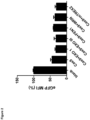
- enhancing the function of regular CRISPR/Cas system through additional DNA recizing with certain exonucleases can result in greater percentage of genome modification compared to normal CRISPR/cas system or system where CRISPR/Cas and certain exonucleases are cooexpressed in tested cell or organism (see, e.g. Fig. 1 ).
- the first component of peptide pair coiled-coil induced heterodimerization system is at least one peptide or peptide domain from peptide pair that form coiled-coils of a selected peptide pairs (i.e. P3-P4, or N5-N6) that is genetically fused to a Cas protein; for example: P3, N5 or P3S can be connected to Cas9 protein .
- the second component of peptide pair coiled-coil induced heterodimerization system is at least one peptide or peptide domain from peptide pair that form coiled-coils of a selected peptide pairs (i.e. P3-P4, or N5-N6) that is genetically fused to a certain exonucleases (human EXO1, EXOIII E.coli, TREX2).
- the selected pair of peptide pair that form coiled-coils are chosen based on their physical properties (e.g. Kd values, their orthogonality properties etc.).
- Peptide pairs that form coiled-coils can have strong heterodimerization properties: for example, peptide pair N5-N6 exhibit stronger heterodimerization affinity than peptide pair P3S-P4S.
- heterodimerization of peptide pairs can be obtained by using peptide pairs that heterodimerize in parallel (e.g. N5-N6, P3-P4 etc.) or anti-parallel (e.g.P3-AP4) manner.
- parallel e.g. N5-N6, P3-P4 etc.
- anti-parallel e.g.P3-AP4
- heterodimerization systems for tethering CRISPR/Cas system with certain exonucleases, additional DNA recession with certain exonucleases and sequential improvement in genome editing does not enhance possible off-target activities of CRISPR/Cas system.
- the modified CRISPR/Cas system tethered to certain exonucleases via different heterodimerization systems according to the invention comprises several repeats of the at least one first protein domain and/or the second protein domain, e.g. 10 repeats of a coiled coil.
- the genome editing can be further enhanced.
- Several repeats (for example 10 repeats of coiled coil of a peptide pair) of the at least one first protein domain can then bind to several repeats (for example 10 repeats of coiled coil) of the second protein domain, which is fused to certain exonuclease.
- the first component comprising the at least one first protein domain having several repeats then heterodimerizes with the second component comprising the second protein domain having several repeats after the appropriate chemical inductor is added.
- the repeats can act as constitutive dimerization domains that assemble upon the heterodimerization signal by the chemical inductor as orthogonal coiled coil pairs.
- the invention further provides an isolated nucleic acid molecule, or a combination of isolated nucleic acid molecules, comprising a first nucleic acid sequence encoding the first component (a) and a second nucleic acid sequence encoding the second component (b) of the combination according to the invention as defined above.
- the invention further provides a vector, preferably an expression vector, encoding the nucleic acid molecule(s) of the invention.
- the invention provides isolated nucleic acid molecules comprising sequences comprising or consisting of SEQ ID NOs: 1-18, as per the enclosed sequence listing.
- the invention further provides vectors comprising nucleic acid sequences comprising or consisting of SEQ ID NOs: 1-18, as per the enclosed sequence listing.
- the invention further provides the combination, the nucleic acid molecule(s) or the vector according to the invention as defined above for use in medicine, or for use as a medicament.
- the invention further provides the combination, the nucleic acid molecule(s) or the vector according to the invention as defined above for use in a method of treating cancer.
- the aforementioned use comprises the use of a chemical inductor of heterodimerization.
- the cells for use in a method of treating cancer are modified T cells.
- the types of cancer to be treated according to the aforementioned use according to the invention include, CML, B-cell lymphoma, acute lymphoblastic leukemia, chronic lymphocytic leukemia, Hodgkins and Non-Hodgkins Lymphomas, mezotelioma, ovarian cancer, prostate cancer etc..
- the present disclosure further describes the combination, the nucleic acid molecule(s) or the vector according to the invention as defined above for use as a tool for drug new sources of fuel development etc.
- the examples described in more detail below are designed to best describe the invention. These examples do not limit the scope of the invention, but are merely intended to provide a better understanding of the invention and its use.
- Example 2 Defining the most successful exonuclease cooexpressed with CRISPR/Cas system for enhacing genome editing at eGFP genomic region
- cells were transfected with regular CRISPR/Cas9 system or were cooexpressed with CRISPR/Cas9 system and certain exonuclease (e.g. EXO1 or EXOIII or mTREX2).
- exonuclease e.g. EXO1 or EXOIII or mTREX2
- gRNA for human EMX1 gene targeting sequence: GAGTCCGAGCAGAAGAAGAA
- human VEGF gene targeting sequence: GGTGAGTGAGTGTGTGCGTG
- human MYD88 GGCTGAGAAGCCTTTACAGG
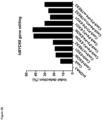
- Genome editing where modified CRISPR/Cas system tethered with certain exonucleases (EXO1 or EXOIII or mTREX2) via heterodimerizing peptide pairs (P3-P4) were used was also higher when regular CRISPR/Cas system was used, where only Cas9 and gRNA targeting human MYD88 gene were used.
- Figure 3B graphically shows percentage of indel presence, which were determined with PAGE analysis, depicted in figure 3A .
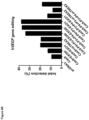
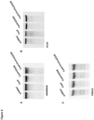
- Genome editing where modified CRISPR/Cas system tethered with certain exonucleases (EXO1 or EXOIII) via heterodimerizing peptide pairs (P3-P4) were used was also higher when regular CRISPR/Cas system was used, where only Cas9 and gRNA targeting human VEGF gene were used.
- Figure 4B graphically shows percentage of indel presence, which were determined with PAGE analysis, depicted in figure 4A .
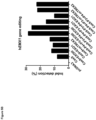
- Genome editing where modified CRISPR/Cas system tethered with certain exonucleases (EXO1 or EXOIII or mTREX2) via heterodimerizing peptide pairs (P3-P4) were used was also higher when regular CRISPR/Cas system was used, where only Cas9 and gRNA targeting human EMX1 gene were used.
- Figure 5B graphically shows percentage of indel presence, which were determined with PAGE analysis, depicted in figure 5A .
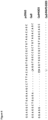
- Figure 6 shows results from NGS. 150 base pair PCR amplicons from cells that were transfected with empty vector pcDNA3 or with regular Cas9 or with Cas9, cooexpressed with EXOIII or with Cas9-P4 and P3-EXOIII were sequenced. In all cases gRNA targeting human MYD88 gene was used. No base pair deletion was observed in sample where only pcDNA3 was expressed. Nine base pair deletion was observed in sample where only Cas9 and gRNA was expressed. Fourteen base pair deletion was observed in sample where Cas9 and gRNA was coexpressed with EXOIII. Forty base pair deletion was observed in sample where Cas9-P4 tethered with P3-EXOIII and gRNA was expressed. Sign (i) depicts the predicted cleavage site for Cas9.
- Genome editing of modified CRISPR/Cas system tethered with certain exonucleases via heterodimerizing peptide pairs is not due to the higher Cas9 protein expression.
- gRNA for human MYD88 target sequence: GGCTGAGAAGCCTTTACAGG
- SDS PAGE gel analysis western blot transfer was performed and afterwards the membrane was stained with specific anti-Cas9 antibodies.
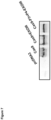
- FIG. 7 shows that Cas9 protein content is equal in all tested samples.
- the band intensity of Cas9 protein is the same for cell lysates of cells, which were transfected with regular CRISPR/Cas9 system, where only Cas9 and gRNA are expressed or for cells that were used for cooexpression of Cas9 and certain exonuclease (e.g. EXOIII) and gRNA and for cells that were transfected with CRISPR/Cas system tethered with certain exonucleases via heterodimerizing peptide pairs; for example Cas9-P3 with combination of P4-EXOIII.
- EXOIII exonuclease
- Example 5 Higher genome editing due to the modified CRISPR/Cas system tethered with certain exonucleases via heterodimerizing peptide pairs does not increase unwanted genome modification at off-target sites
- off-target site 1 was found in ANKRD52 gene (target sequence: ACTGTAAAGGCTGCTCTCCC ); off-target site 2 was predicted to be in FUT9 gene (target sequence: TGCAGAGGAGCCTTTACATG ) and off-target site 3 was determined in PSKH2 gene (target sequence: GCCAGACAAGGCTTTACAGG ).
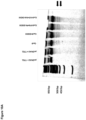
- FIG. 8 PAGE gel analysis of T7E1 treated samples from transfected cells with appropriate constructs depicted in Figure 8 indicate that genome editing of three predicted possible off-target sites for human MYD88 gene gRNA (target sequence: GGCTGAGAAGCCTTTACAGG ) did not happen.
- FIG 8A PAGE gel analysis of T7E1 treated samples from transfected cells for off-target site 1 that was found in ANKRD52 gene (target sequence: ACTGTAAAGGCTGCTCTCCC ) is depicted. There is no indel mutation present due to the absence of DNA bands cleavage.
- K562 cells stably expressing firefly luciferase; K562-fLUC
- K562-fLUC firefly luciferase
- gRNA with targeting sequence GACCTGTCTTTTAGACAGGC for leading Cas9 to BCR-ABL fusion gene was used.
- 72 hours after electroporation of K562-fLUC cells D-luciferin (Xenogen) was added and bioluminescence was measured by using IVIS ® Lumina Series III (Perkin Elmer). Data were analyzed with Living Image ® 4.5.2 (Perkin Elmer).
Landscapes
- Life Sciences & Earth Sciences (AREA)
- Chemical & Material Sciences (AREA)
- Engineering & Computer Science (AREA)
- Genetics & Genomics (AREA)
- Health & Medical Sciences (AREA)
- Organic Chemistry (AREA)
- General Engineering & Computer Science (AREA)
- Bioinformatics & Cheminformatics (AREA)
- Zoology (AREA)
- Wood Science & Technology (AREA)
- Biotechnology (AREA)
- Biomedical Technology (AREA)
- General Health & Medical Sciences (AREA)
- Biochemistry (AREA)
- Crystallography & Structural Chemistry (AREA)
- Microbiology (AREA)
- Plant Pathology (AREA)
- Molecular Biology (AREA)
- Physics & Mathematics (AREA)
- Biophysics (AREA)
- Bioinformatics & Computational Biology (AREA)
- Peptides Or Proteins (AREA)
- Micro-Organisms Or Cultivation Processes Thereof (AREA)
Claims (14)
- Combinaison comprenant un premier composant (a) et un second composant (b), oùa) le premier composant comprend une endonucléase Cas9 capable d'induire une cassure d'ADN double brin, fusionnée à une première protéine ou à un premier domaine protéique, etb) le second composant comprend une exonucléase choisie parmi ExoI, ExoIII et mTREX2, fusionnée à une seconde protéine ou à un second domaine protéique,où les premier et second composants sont capables de s'hétérodimériser l'un avec l'autre par interaction de la première protéine ou du premier domaine protéique et de la seconde protéine ou du second domaine protéique.où la première protéine ou le premier domaine protéique et la seconde protéine ou le second domaine protéique sont des partenaires protéiques orthogonaux P3 et P4 ou N5 et N6, formant une structure de superhélice, en particulier une structure de superhélice dans une orientation parallèle ou antiparallèle.
- Combinaison selon la revendication 1, où l'hétérodimérisation de la première protéine ou du premier domaine protéique et de la seconde protéine ou du second domaine est inductible par un signal chimique ou non chimique.
- Combinaison selon la revendication 2, où le produit chimique induisant l'hétérodimérisation est une petite molécule telle que rapalogue, gibbérelline ou acide abscisique, ou toute autre petite molécule connue.
- Combinaison selon la revendication 2, où le signal non chimique induisant l'hétérodimérisation est une lumière ayant une longueur d'onde prédéterminée.
- Combinaison selon l'une quelconque des revendications précédentes, comprenant en outre une molécule d'ADN donneur, qui est une molécule d'ADN simple brin ou double brin, en particulier une molécule d'ADN simple brin, où la molécule d'ADN donneur peut porter une mutation souhaitée.
- Molécule d'acide nucléique, ou combinaison de molécules d'acide nucléique, comprenant une première séquence d'acide nucléique codant le premier composant (a) et une seconde séquence d'acide nucléique codant le second composant (b) de la combinaison selon l'une quelconque des revendications 1 à 5.
- Vecteur comprenant la ou les molécules d'acide nucléique selon la revendication 6.
- Cellule ou organisme comprenant la combinaison selon l'une quelconque des revendications 1 à 5, la ou les molécules d'acide nucléique selon la revendication 6 ou le vecteur selon la revendication 7, à condition que la cellule ne soit pas une cellule germinale humaine.
- Combinaison selon l'une quelconque des revendications 1 à 5, molécule d'acide nucléique selon la revendication 6, vecteur selon la revendication 7, ou cellule ou organisme selon la revendication 8, pour une utilisation en médecine.
- Combinaison, molécule d'acide nucléique, vecteur, cellule ou organisme pour l'utilisation selon la revendication 9, dans un procédé comprenant l'édition du génome dans une cellule cible eucaryote ou dans un organisme cible eucaryote.
- Combinaison, molécule d'acide nucléique, vecteur, cellule ou organisme pour l'utilisation selon la revendication 9 ou 10, où la cellule cible est une cellule cible de vertébré, en particulier une cellule cible de mammifère, de préférence une cellule cible humaine, par exemple une cellule souche incluant une cellule souche pluripotente induite ou embryonnaire d'un organisme cible eucaryote, en particulier une cellule souche pluripotente induite ou embryonnaire humaine, à condition que la cellule ne soit pas une cellule germinale humaine, ou où l'organisme cible est un organisme cible de mammifère, en particulier un humain.
- Combinaison, molécule d'acide nucléique, vecteur, cellule ou organisme pour l'utilisation selon la revendication 10 ou 11 lorsqu'elle dépend de la revendication 10 où l'édition du génome comprend l'introduction d'une molécule d'ADN donneur portant éventuellement une mutation souhaitée, qui est une molécule d'ADN simple brin ou double brin, en particulier une molécule d'ADN simple brin, dans la cellule cible ou l'organisme cible.
- Procédé in vitro d'édition du génome d'une cellule cible eucaryote comprenant l'introduction d'une combinaison telle que définie dans l'une quelconque des revendications 1 à 5, d'une molécule d'acide nucléique selon la revendication 6 ou d'un vecteur selon la revendication 7 dans la cellule cible, à condition que la cellule ne soit pas une cellule germinale humaine.
- Utilisation in vitro d'une combinaison telle que définie dans l'une quelconque des revendications 1 à 5, d'une molécule d'acide nucléique selon la revendication 6 ou d'un vecteur selon la revendication 7, pour l'édition du génome dans une cellule cible eucaryote, en particulier dans une cellule cible de mammifère, plus particulièrement dans une cellule cible humaine, à condition que la cellule ne soit pas une cellule germinale humaine.
Applications Claiming Priority (2)
| Application Number | Priority Date | Filing Date | Title |
|---|---|---|---|
| EP19192490.1A EP3783104A1 (fr) | 2019-08-20 | 2019-08-20 | Connexion à médiation de superhélice de crispr-cas et d'exonucléases pour améliorer l'édition de génomes |
| PCT/EP2020/073143 WO2021032759A1 (fr) | 2019-08-20 | 2020-08-19 | Fixation de crispr/cas à médiation par une bobine en spirale et exonucléases pour une édition de génome améliorée |
Publications (3)
| Publication Number | Publication Date |
|---|---|
| EP4017976A1 EP4017976A1 (fr) | 2022-06-29 |
| EP4017976C0 EP4017976C0 (fr) | 2025-07-02 |
| EP4017976B1 true EP4017976B1 (fr) | 2025-07-02 |
Family
ID=67659418
Family Applications (2)
| Application Number | Title | Priority Date | Filing Date |
|---|---|---|---|
| EP19192490.1A Withdrawn EP3783104A1 (fr) | 2019-08-20 | 2019-08-20 | Connexion à médiation de superhélice de crispr-cas et d'exonucléases pour améliorer l'édition de génomes |
| EP20756868.4A Active EP4017976B1 (fr) | 2019-08-20 | 2020-08-19 | Connexion à médiation de superhélice de crispr-cas et d'exonucléases pour améliorer l'édition de génomes |
Family Applications Before (1)
| Application Number | Title | Priority Date | Filing Date |
|---|---|---|---|
| EP19192490.1A Withdrawn EP3783104A1 (fr) | 2019-08-20 | 2019-08-20 | Connexion à médiation de superhélice de crispr-cas et d'exonucléases pour améliorer l'édition de génomes |
Country Status (5)
| Country | Link |
|---|---|
| US (1) | US20220307011A1 (fr) |
| EP (2) | EP3783104A1 (fr) |
| CN (1) | CN114269930A (fr) |
| ES (1) | ES3035838T3 (fr) |
| WO (1) | WO2021032759A1 (fr) |
Families Citing this family (3)
| Publication number | Priority date | Publication date | Assignee | Title |
|---|---|---|---|---|
| EP4223877A1 (fr) * | 2022-02-08 | 2023-08-09 | Eberhard Karls Universität Tübingen Medizinische Fakultät | Système et procédé d'édition d'adn génomique pour moduler l'épissage |
| WO2023185697A2 (fr) * | 2022-03-29 | 2023-10-05 | Accuredit Therapeutics (Suzhou) Co., Ltd. | Compositions et méthodes pour le traitement de l'amyloïdose de la transthyrétine |
| CN117044681B (zh) * | 2023-07-11 | 2026-01-09 | 吉林大学 | 一种cop1基因不表达的异种移植供体猪及其制备方法 |
Citations (8)
| Publication number | Priority date | Publication date | Assignee | Title |
|---|---|---|---|---|
| WO2010132092A2 (fr) * | 2009-05-12 | 2010-11-18 | The Scripps Research Institute | Fusions de cytidine désaminase et procédés apparentés |
| WO2014089290A1 (fr) * | 2012-12-06 | 2014-06-12 | Sigma-Aldrich Co. Llc | Modification et régulation du génome basées sur crispr |
| WO2014144288A1 (fr) * | 2013-03-15 | 2014-09-18 | The General Hospital Corporation | Utilisation de nucléases foki à guidage arn (rfn) pour augmenter la spécificité pour la modification d'un génome à guidage arn |
| WO2015035162A2 (fr) * | 2013-09-06 | 2015-03-12 | President And Fellows Of Harvard College | Variants de cas9 et leurs utilisations |
| WO2018176009A1 (fr) * | 2017-03-23 | 2018-09-27 | President And Fellows Of Harvard College | Éditeurs de nucléobase comprenant des protéines de liaison à l'adn programmable par acides nucléiques |
| WO2019056002A1 (fr) * | 2017-09-18 | 2019-03-21 | President And Fellows Of Harvard College | Évolution continue pour protéines stabilisées |
| WO2019139645A2 (fr) * | 2017-08-30 | 2019-07-18 | President And Fellows Of Harvard College | Éditeurs de bases à haut rendement comprenant une gam |
| WO2019241649A1 (fr) * | 2018-06-14 | 2019-12-19 | President And Fellows Of Harvard College | Évolution de cytidine désaminases |
Family Cites Families (14)
| Publication number | Priority date | Publication date | Assignee | Title |
|---|---|---|---|---|
| US8673557B2 (en) * | 2011-02-28 | 2014-03-18 | Seattle Children's Research Institute | Coupling endonucleases with end-processing enzymes drives high efficiency gene disruption |
| EP2729567B1 (fr) * | 2011-07-08 | 2016-10-05 | Cellectis | Procédé d'amélioration de l'efficacité de mutagenèse induite par une cassure double brin |
| WO2015021426A1 (fr) * | 2013-08-09 | 2015-02-12 | Sage Labs, Inc. | Nouvelle protéine de fusion à base de système crispr/cas et son application en édition de génome |
| WO2015089427A1 (fr) * | 2013-12-12 | 2015-06-18 | The Broad Institute Inc. | Systèmes crispr-cas et méthodes de modification de l'expression de produits géniques, informations structurales et enzymes cas modulaires inductibles |
| JP7044373B2 (ja) * | 2015-07-15 | 2022-03-30 | ラトガース,ザ ステート ユニバーシティ オブ ニュージャージー | ヌクレアーゼ非依存的な標的化遺伝子編集プラットフォームおよびその用途 |
| EP3353296B1 (fr) * | 2015-09-24 | 2020-11-04 | Editas Medicine, Inc. | Utilisation d'exonucléases pour améliorer l'édition de génome à médiation par crispr/cas |
| IL310721B2 (en) * | 2015-10-23 | 2025-11-01 | Harvard College | Nucleobase editors and uses thereof |
| US11427837B2 (en) * | 2016-01-12 | 2022-08-30 | The Regents Of The University Of California | Compositions and methods for enhanced genome editing |
| CA3209273A1 (fr) * | 2016-06-02 | 2017-12-07 | Sigma-Aldrich Co. Llc | Utilisation de proteines de liaison d'adn programmables pour ameliorer la modification ciblee du genome |
| US11542509B2 (en) * | 2016-08-24 | 2023-01-03 | President And Fellows Of Harvard College | Incorporation of unnatural amino acids into proteins using base editing |
| SI25289A (sl) * | 2016-10-12 | 2018-04-30 | Kemijski inštitut | Kombinacija razcepljenih ortogonalnih proteaz z dimerizacijskimi domenami, ki omogočajo sestavljanje |
| CA3074872A1 (fr) * | 2017-09-07 | 2019-03-14 | The Board Of Trustees Of The Leland Stanford Junior University | Systemes de nucleases pour genie genetique |
| EP3728589A4 (fr) * | 2017-12-22 | 2021-11-03 | G+Flas Life Sciences | Molécules d'ingénierie génomique chimère et procédés |
| CN109021111B (zh) * | 2018-02-23 | 2021-12-07 | 上海科技大学 | 一种基因碱基编辑器 |
-
2019
- 2019-08-20 EP EP19192490.1A patent/EP3783104A1/fr not_active Withdrawn
-
2020
- 2020-08-19 ES ES20756868T patent/ES3035838T3/es active Active
- 2020-08-19 EP EP20756868.4A patent/EP4017976B1/fr active Active
- 2020-08-19 US US17/636,450 patent/US20220307011A1/en active Pending
- 2020-08-19 WO PCT/EP2020/073143 patent/WO2021032759A1/fr not_active Ceased
- 2020-08-19 CN CN202080058818.2A patent/CN114269930A/zh active Pending
Patent Citations (8)
| Publication number | Priority date | Publication date | Assignee | Title |
|---|---|---|---|---|
| WO2010132092A2 (fr) * | 2009-05-12 | 2010-11-18 | The Scripps Research Institute | Fusions de cytidine désaminase et procédés apparentés |
| WO2014089290A1 (fr) * | 2012-12-06 | 2014-06-12 | Sigma-Aldrich Co. Llc | Modification et régulation du génome basées sur crispr |
| WO2014144288A1 (fr) * | 2013-03-15 | 2014-09-18 | The General Hospital Corporation | Utilisation de nucléases foki à guidage arn (rfn) pour augmenter la spécificité pour la modification d'un génome à guidage arn |
| WO2015035162A2 (fr) * | 2013-09-06 | 2015-03-12 | President And Fellows Of Harvard College | Variants de cas9 et leurs utilisations |
| WO2018176009A1 (fr) * | 2017-03-23 | 2018-09-27 | President And Fellows Of Harvard College | Éditeurs de nucléobase comprenant des protéines de liaison à l'adn programmable par acides nucléiques |
| WO2019139645A2 (fr) * | 2017-08-30 | 2019-07-18 | President And Fellows Of Harvard College | Éditeurs de bases à haut rendement comprenant une gam |
| WO2019056002A1 (fr) * | 2017-09-18 | 2019-03-21 | President And Fellows Of Harvard College | Évolution continue pour protéines stabilisées |
| WO2019241649A1 (fr) * | 2018-06-14 | 2019-12-19 | President And Fellows Of Harvard College | Évolution de cytidine désaminases |
Non-Patent Citations (13)
| Title |
|---|
| ALEXIS C. KOMOR ET AL: "Programmable editing of a target base in genomic DNA without double-stranded DNA cleavage", NATURE, vol. 533, no. 7603, 20 April 2016 (2016-04-20), pages 420 - 424, XP055551781, DOI: 10.1038/nature17946 * |
| HOBO T ET AL: "A bZIP factor, TRAB1, ineracts with VP1 and mediates abscisic acid-induced transcription", PROCEEDINGS OF THE NATIONAL ACADEMY OF SCIENCES, NATIONAL ACADEMY OF SCIENCES, vol. 96, no. 26, 21 December 1999 (1999-12-21), pages 15348 - 15353, XP002964171, ISSN: 0027-8424, DOI: 10.1073/PNAS.96.26.15348 * |
| HUANG LIANGGANG ET AL: "Highly efficient single base editing inAspergillus nigerwith CRISPR/Cas9 cytidine deaminase fusion", MICROBIOLOGICAL RESEARCH, vol. 223, August 2019 (2019-08-01), pages 44 - 50, XP085706908, ISSN: 0944-5013, DOI: 10.1016/J.MICRES.2019.03.007 * |
| JOHN P GUILINGER ET AL: "Fusion of catalytically inactive Cas9 to FokI nuclease improves the specificity of genome modification", NATURE BIOTECHNOLOGY, vol. 32, no. 6, 1 June 2014 (2014-06-01), New York, pages 577 - 582, XP055157221, ISSN: 1087-0156, DOI: 10.1038/nbt.2909 * |
| KEENAN T ET AL: "Synthesis and activity of bivalent FKBP12 ligands for the regulated dimerization of proteins", BIOORGANIC & MEDICINAL CHEMISTRY, ELSEVIER, AMSTERDAM, NL, vol. 6, no. 8, 1 August 1998 (1998-08-01), pages 1309 - 1335, XP027388316, ISSN: 0968-0896, [retrieved on 19980801] * |
| KUSCU CEM ET AL: "CRISPR-Cas9-AID base editor is a powerful gain-of-function screening tool", NATURE METHODS, NATURE PUBLISHING GROUP, GB, vol. 13, no. 12, 29 November 2016 (2016-11-29), pages 983 - 984, XP002793705, ISSN: 1548-7105, DOI: 10.1038/NMETH.4076 * |
| NICOLE M GAUDELLI ET AL: "Programmable base editing of A.T to G.C in genomic DNA without DNA cleavage (Includes Methods)", vol. 551, no. 7681, 23 November 2017 (2017-11-23), pages 464 - 471, 16PP, XP002785203, Retrieved from the Internet <URL:http://www.nature.com/articles/nature24644> DOI: 10.1038/NATURE24644 * |
| ROBERT DEROSE ET AL: "Manipulating signaling at will: chemically-inducible dimerization (CID) techniques resolve problems in cell biology", PFL�GERS ARCHIV - EUROPEAN JOURNAL OF PHYSIOLOGY, vol. 465, no. 3, 9 January 2013 (2013-01-09), Berlin/Heidelberg, pages 409 - 417, XP055221913, ISSN: 0031-6768, DOI: 10.1007/s00424-012-1208-6 * |
| STEPHANIE VO� ET AL: "Chemically induced dimerization: reversible and spatiotemporal control of protein function in cells", CURRENT OPINION IN CHEMICAL BIOLOGY, vol. 28, 29 September 2015 (2015-09-29), GB, pages 194 - 201, XP055451688, ISSN: 1367-5931, DOI: 10.1016/j.cbpa.2015.09.003 * |
| ST�PHANIE CABANTOUS ET AL: "A New Protein-Protein Interaction Sensor Based on Tripartite Split-GFP Association", SCIENTIFIC REPORTS, vol. 3, 4 October 2013 (2013-10-04), XP055260864, DOI: 10.1038/srep02854 * |
| TAKAFUMI MIYAMOTO ET AL: "Rapid and orthogonal logic gating with a gibberellin-induced dimerization system", NATURE CHEMICAL BIOLOGY, vol. 8, no. 5, 1 January 2012 (2012-01-01), New York, pages 465 - 470, XP055221911, ISSN: 1552-4450, DOI: 10.1038/nchembio.922 * |
| Y BILL KIM ET AL: "Increasing the genome-targeting scope and precision of base editing with engineered Cas9-cytidine deaminase fusions", NATURE BIOTECHNOLOGY, vol. 35, no. 4, 13 February 2017 (2017-02-13), New York, pages 371 - 376, XP055484491, ISSN: 1087-0156, DOI: 10.1038/nbt.3803 * |
| YUAN JUANJUAN ET AL: "Genetic Modulation of RNA Splicing with a CRISPR-Guided Cytidine Deaminase", MOLECULAR CELL, ELSEVIER, AMSTERDAM, NL, vol. 72, no. 2, 4 October 2018 (2018-10-04), pages 380, XP085531578, ISSN: 1097-2765, DOI: 10.1016/J.MOLCEL.2018.09.002 * |
Also Published As
| Publication number | Publication date |
|---|---|
| ES3035838T3 (en) | 2025-09-10 |
| EP4017976C0 (fr) | 2025-07-02 |
| EP4017976A1 (fr) | 2022-06-29 |
| CN114269930A (zh) | 2022-04-01 |
| WO2021032759A1 (fr) | 2021-02-25 |
| US20220307011A1 (en) | 2022-09-29 |
| EP3783104A1 (fr) | 2021-02-24 |
Similar Documents
| Publication | Publication Date | Title |
|---|---|---|
| JP7423520B2 (ja) | Cas9ベースノックイン方針の効力を改善するための組成物及び方法 | |
| Lone et al. | CRISPR/Cas9 system: a bacterial tailor for genomic engineering | |
| JP2021166514A5 (fr) | ||
| US12433803B2 (en) | Methods and compositions for studying cell evolution | |
| CN113308451A (zh) | 工程化的Cas效应蛋白及其使用方法 | |
| CN111373041A (zh) | 用于基因组编辑和调节转录的crispr/cas系统和方法 | |
| CA3026110A1 (fr) | Nouvelles enzymes crispr et systemes associes | |
| EP4017976B1 (fr) | Connexion à médiation de superhélice de crispr-cas et d'exonucléases pour améliorer l'édition de génomes | |
| CN110643600A (zh) | 用于切割靶dna的系统及其用途 | |
| CN107429241A (zh) | Dna敲入系统 | |
| KR20170106486A (ko) | 일차 조혈 세포에서의 단백질 전달 | |
| Chen et al. | All-RNA-mediated targeted gene integration in mammalian cells with rationally engineered R2 retrotransposons | |
| US20240425830A1 (en) | Engineered cas12i nuclease, effector protein and use thereof | |
| He et al. | Comparison of CRISPR/Cas9 and TALENs on editing an integrated EGFP gene in the genome of HEK293FT cells | |
| Butt et al. | Synthetic evolution of herbicide resistance using a T7 RNAP–based random DNA base editor | |
| Sizova et al. | Chlamydomonas POLQ is necessary for CRISPR/Cas9-mediated gene targeting | |
| Porter et al. | A practical guide to genome editing using targeted nuclease technologies | |
| Sathyan et al. | ARF‐AID: a rapidly inducible protein degradation system that preserves basal endogenous protein levels | |
| WO2023165613A1 (fr) | Utilisation d'une exonucléase dans le sens 5' vers 3' dans un système d'édition génique, et système d'édition génique, et procédé d'édition génique | |
| CN108431226A (zh) | 基因修饰测定 | |
| JP2024501892A (ja) | 新規の核酸誘導型ヌクレアーゼ | |
| CN116970590B (zh) | 小于380个氨基酸的超级迷你型基因编辑器及其应用 | |
| Migliori et al. | ONE-STEP tagging: a versatile method for rapid site-specific integration by simultaneous reagent delivery | |
| WO2026038057A1 (fr) | Procédés améliorés d'édition génique | |
| WO2025160202A1 (fr) | Grandes sérines recombinases ingénierisées |
Legal Events
| Date | Code | Title | Description |
|---|---|---|---|
| STAA | Information on the status of an ep patent application or granted ep patent |
Free format text: STATUS: UNKNOWN |
|
| STAA | Information on the status of an ep patent application or granted ep patent |
Free format text: STATUS: THE INTERNATIONAL PUBLICATION HAS BEEN MADE |
|
| PUAI | Public reference made under article 153(3) epc to a published international application that has entered the european phase |
Free format text: ORIGINAL CODE: 0009012 |
|
| STAA | Information on the status of an ep patent application or granted ep patent |
Free format text: STATUS: REQUEST FOR EXAMINATION WAS MADE |
|
| 17P | Request for examination filed |
Effective date: 20220314 |
|
| AK | Designated contracting states |
Kind code of ref document: A1 Designated state(s): AL AT BE BG CH CY CZ DE DK EE ES FI FR GB GR HR HU IE IS IT LI LT LU LV MC MK MT NL NO PL PT RO RS SE SI SK SM TR |
|
| DAV | Request for validation of the european patent (deleted) | ||
| DAX | Request for extension of the european patent (deleted) | ||
| P01 | Opt-out of the competence of the unified patent court (upc) registered |
Effective date: 20230505 |
|
| STAA | Information on the status of an ep patent application or granted ep patent |
Free format text: STATUS: EXAMINATION IS IN PROGRESS |
|
| 17Q | First examination report despatched |
Effective date: 20240725 |
|
| GRAP | Despatch of communication of intention to grant a patent |
Free format text: ORIGINAL CODE: EPIDOSNIGR1 |
|
| STAA | Information on the status of an ep patent application or granted ep patent |
Free format text: STATUS: GRANT OF PATENT IS INTENDED |
|
| INTG | Intention to grant announced |
Effective date: 20250204 |
|
| GRAS | Grant fee paid |
Free format text: ORIGINAL CODE: EPIDOSNIGR3 |
|
| GRAA | (expected) grant |
Free format text: ORIGINAL CODE: 0009210 |
|
| STAA | Information on the status of an ep patent application or granted ep patent |
Free format text: STATUS: THE PATENT HAS BEEN GRANTED |
|
| AK | Designated contracting states |
Kind code of ref document: B1 Designated state(s): AL AT BE BG CH CY CZ DE DK EE ES FI FR GB GR HR HU IE IS IT LI LT LU LV MC MK MT NL NO PL PT RO RS SE SI SK SM TR |
|
| REG | Reference to a national code |
Ref country code: GB Ref legal event code: FG4D |
|
| REG | Reference to a national code |
Ref country code: CH Ref legal event code: EP |
|
| REG | Reference to a national code |
Ref country code: DE Ref legal event code: R096 Ref document number: 602020053827 Country of ref document: DE |
|
| REG | Reference to a national code |
Ref country code: IE Ref legal event code: FG4D |
|
| U01 | Request for unitary effect filed |
Effective date: 20250714 |
|
| U07 | Unitary effect registered |
Designated state(s): AT BE BG DE DK EE FI FR IT LT LU LV MT NL PT RO SE SI Effective date: 20250718 |
|
| U20 | Renewal fee for the european patent with unitary effect paid |
Year of fee payment: 6 Effective date: 20250728 |
|
| REG | Reference to a national code |
Ref country code: ES Ref legal event code: FG2A Ref document number: 3035838 Country of ref document: ES Kind code of ref document: T3 Effective date: 20250910 |
|
| PGFP | Annual fee paid to national office [announced via postgrant information from national office to epo] |
Ref country code: ES Payment date: 20250926 Year of fee payment: 6 |
|
| PGFP | Annual fee paid to national office [announced via postgrant information from national office to epo] |
Ref country code: GB Payment date: 20250820 Year of fee payment: 6 |
|
| PGFP | Annual fee paid to national office [announced via postgrant information from national office to epo] |
Ref country code: CH Payment date: 20250901 Year of fee payment: 6 |
|
| PG25 | Lapsed in a contracting state [announced via postgrant information from national office to epo] |
Ref country code: IS Free format text: LAPSE BECAUSE OF FAILURE TO SUBMIT A TRANSLATION OF THE DESCRIPTION OR TO PAY THE FEE WITHIN THE PRESCRIBED TIME-LIMIT Effective date: 20251102 |
|
| PG25 | Lapsed in a contracting state [announced via postgrant information from national office to epo] |
Ref country code: NO Free format text: LAPSE BECAUSE OF FAILURE TO SUBMIT A TRANSLATION OF THE DESCRIPTION OR TO PAY THE FEE WITHIN THE PRESCRIBED TIME-LIMIT Effective date: 20251002 |
|
| PG25 | Lapsed in a contracting state [announced via postgrant information from national office to epo] |
Ref country code: HR Free format text: LAPSE BECAUSE OF FAILURE TO SUBMIT A TRANSLATION OF THE DESCRIPTION OR TO PAY THE FEE WITHIN THE PRESCRIBED TIME-LIMIT Effective date: 20250702 |
|
| PG25 | Lapsed in a contracting state [announced via postgrant information from national office to epo] |
Ref country code: GR Free format text: LAPSE BECAUSE OF FAILURE TO SUBMIT A TRANSLATION OF THE DESCRIPTION OR TO PAY THE FEE WITHIN THE PRESCRIBED TIME-LIMIT Effective date: 20251003 |
|
| PG25 | Lapsed in a contracting state [announced via postgrant information from national office to epo] |
Ref country code: CZ Free format text: LAPSE BECAUSE OF FAILURE TO SUBMIT A TRANSLATION OF THE DESCRIPTION OR TO PAY THE FEE WITHIN THE PRESCRIBED TIME-LIMIT Effective date: 20250702 |
|
| PG25 | Lapsed in a contracting state [announced via postgrant information from national office to epo] |
Ref country code: PL Free format text: LAPSE BECAUSE OF FAILURE TO SUBMIT A TRANSLATION OF THE DESCRIPTION OR TO PAY THE FEE WITHIN THE PRESCRIBED TIME-LIMIT Effective date: 20250702 |
|
| PG25 | Lapsed in a contracting state [announced via postgrant information from national office to epo] |
Ref country code: RS Free format text: LAPSE BECAUSE OF FAILURE TO SUBMIT A TRANSLATION OF THE DESCRIPTION OR TO PAY THE FEE WITHIN THE PRESCRIBED TIME-LIMIT Effective date: 20251002 |
|
| PG25 | Lapsed in a contracting state [announced via postgrant information from national office to epo] |
Ref country code: SM Free format text: LAPSE BECAUSE OF FAILURE TO SUBMIT A TRANSLATION OF THE DESCRIPTION OR TO PAY THE FEE WITHIN THE PRESCRIBED TIME-LIMIT Effective date: 20250702 |
|
| PG25 | Lapsed in a contracting state [announced via postgrant information from national office to epo] |
Ref country code: SK Free format text: LAPSE BECAUSE OF FAILURE TO SUBMIT A TRANSLATION OF THE DESCRIPTION OR TO PAY THE FEE WITHIN THE PRESCRIBED TIME-LIMIT Effective date: 20250702 |