EP4018435B1 - Systèmes et procédés d'annulation de bruit dans une zone d'écoute - Google Patents
Systèmes et procédés d'annulation de bruit dans une zone d'écoute Download PDFInfo
- Publication number
- EP4018435B1 EP4018435B1 EP20768161.0A EP20768161A EP4018435B1 EP 4018435 B1 EP4018435 B1 EP 4018435B1 EP 20768161 A EP20768161 A EP 20768161A EP 4018435 B1 EP4018435 B1 EP 4018435B1
- Authority
- EP
- European Patent Office
- Prior art keywords
- audio data
- media content
- data samples
- listening area
- building
- Prior art date
- Legal status (The legal status is an assumption and is not a legal conclusion. Google has not performed a legal analysis and makes no representation as to the accuracy of the status listed.)
- Active
Links
Images

Classifications
-
- G—PHYSICS
- G10—MUSICAL INSTRUMENTS; ACOUSTICS
- G10K—SOUND-PRODUCING DEVICES; METHODS OR DEVICES FOR PROTECTING AGAINST, OR FOR DAMPING, NOISE OR OTHER ACOUSTIC WAVES IN GENERAL; ACOUSTICS NOT OTHERWISE PROVIDED FOR
- G10K11/00—Methods or devices for transmitting, conducting or directing sound in general; Methods or devices for protecting against, or for damping, noise or other acoustic waves in general
- G10K11/16—Methods or devices for protecting against, or for damping, noise or other acoustic waves in general
- G10K11/175—Methods or devices for protecting against, or for damping, noise or other acoustic waves in general using interference effects; Masking sound
- G10K11/178—Methods or devices for protecting against, or for damping, noise or other acoustic waves in general using interference effects; Masking sound by electro-acoustically regenerating the original acoustic waves in anti-phase
- G10K11/1781—Methods or devices for protecting against, or for damping, noise or other acoustic waves in general using interference effects; Masking sound by electro-acoustically regenerating the original acoustic waves in anti-phase characterised by the analysis of input or output signals, e.g. frequency range, modes, transfer functions
- G10K11/17821—Methods or devices for protecting against, or for damping, noise or other acoustic waves in general using interference effects; Masking sound by electro-acoustically regenerating the original acoustic waves in anti-phase characterised by the analysis of input or output signals, e.g. frequency range, modes, transfer functions characterised by the analysis of the input signals only
- G10K11/17823—Reference signals, e.g. ambient acoustic environment
-
- G—PHYSICS
- G10—MUSICAL INSTRUMENTS; ACOUSTICS
- G10K—SOUND-PRODUCING DEVICES; METHODS OR DEVICES FOR PROTECTING AGAINST, OR FOR DAMPING, NOISE OR OTHER ACOUSTIC WAVES IN GENERAL; ACOUSTICS NOT OTHERWISE PROVIDED FOR
- G10K11/00—Methods or devices for transmitting, conducting or directing sound in general; Methods or devices for protecting against, or for damping, noise or other acoustic waves in general
- G10K11/16—Methods or devices for protecting against, or for damping, noise or other acoustic waves in general
- G10K11/175—Methods or devices for protecting against, or for damping, noise or other acoustic waves in general using interference effects; Masking sound
- G10K11/178—Methods or devices for protecting against, or for damping, noise or other acoustic waves in general using interference effects; Masking sound by electro-acoustically regenerating the original acoustic waves in anti-phase
- G10K11/1785—Methods, e.g. algorithms; Devices
- G10K11/17853—Methods, e.g. algorithms; Devices of the filter
- G10K11/17854—Methods, e.g. algorithms; Devices of the filter the filter being an adaptive filter
-
- G—PHYSICS
- G10—MUSICAL INSTRUMENTS; ACOUSTICS
- G10K—SOUND-PRODUCING DEVICES; METHODS OR DEVICES FOR PROTECTING AGAINST, OR FOR DAMPING, NOISE OR OTHER ACOUSTIC WAVES IN GENERAL; ACOUSTICS NOT OTHERWISE PROVIDED FOR
- G10K11/00—Methods or devices for transmitting, conducting or directing sound in general; Methods or devices for protecting against, or for damping, noise or other acoustic waves in general
- G10K11/16—Methods or devices for protecting against, or for damping, noise or other acoustic waves in general
- G10K11/175—Methods or devices for protecting against, or for damping, noise or other acoustic waves in general using interference effects; Masking sound
- G10K11/178—Methods or devices for protecting against, or for damping, noise or other acoustic waves in general using interference effects; Masking sound by electro-acoustically regenerating the original acoustic waves in anti-phase
- G10K11/1787—General system configurations
- G10K11/17873—General system configurations using a reference signal without an error signal, e.g. pure feedforward
-
- H—ELECTRICITY
- H04—ELECTRIC COMMUNICATION TECHNIQUE
- H04M—TELEPHONIC COMMUNICATION
- H04M1/00—Substation equipment, e.g. for use by subscribers
- H04M1/60—Substation equipment, e.g. for use by subscribers including speech amplifiers
- H04M1/6008—Substation equipment, e.g. for use by subscribers including speech amplifiers in the transmitter circuit
-
- H—ELECTRICITY
- H04—ELECTRIC COMMUNICATION TECHNIQUE
- H04M—TELEPHONIC COMMUNICATION
- H04M1/00—Substation equipment, e.g. for use by subscribers
- H04M1/72—Mobile telephones; Cordless telephones, i.e. devices for establishing wireless links to base stations without route selection
- H04M1/724—User interfaces specially adapted for cordless or mobile telephones
- H04M1/72403—User interfaces specially adapted for cordless or mobile telephones with means for local support of applications that increase the functionality
- H04M1/72409—User interfaces specially adapted for cordless or mobile telephones with means for local support of applications that increase the functionality by interfacing with external accessories
- H04M1/72415—User interfaces specially adapted for cordless or mobile telephones with means for local support of applications that increase the functionality by interfacing with external accessories for remote control of appliances
-
- G—PHYSICS
- G10—MUSICAL INSTRUMENTS; ACOUSTICS
- G10K—SOUND-PRODUCING DEVICES; METHODS OR DEVICES FOR PROTECTING AGAINST, OR FOR DAMPING, NOISE OR OTHER ACOUSTIC WAVES IN GENERAL; ACOUSTICS NOT OTHERWISE PROVIDED FOR
- G10K2210/00—Details of active noise control [ANC] covered by G10K11/178 but not provided for in any of its subgroups
- G10K2210/10—Applications
- G10K2210/105—Appliances, e.g. washing machines or dishwashers
- G10K2210/1053—Hi-fi, i.e. anything involving music, radios or loudspeakers
-
- G—PHYSICS
- G10—MUSICAL INSTRUMENTS; ACOUSTICS
- G10K—SOUND-PRODUCING DEVICES; METHODS OR DEVICES FOR PROTECTING AGAINST, OR FOR DAMPING, NOISE OR OTHER ACOUSTIC WAVES IN GENERAL; ACOUSTICS NOT OTHERWISE PROVIDED FOR
- G10K2210/00—Details of active noise control [ANC] covered by G10K11/178 but not provided for in any of its subgroups
- G10K2210/10—Applications
- G10K2210/108—Communication systems, e.g. where useful sound is kept and noise is cancelled
-
- G—PHYSICS
- G10—MUSICAL INSTRUMENTS; ACOUSTICS
- G10K—SOUND-PRODUCING DEVICES; METHODS OR DEVICES FOR PROTECTING AGAINST, OR FOR DAMPING, NOISE OR OTHER ACOUSTIC WAVES IN GENERAL; ACOUSTICS NOT OTHERWISE PROVIDED FOR
- G10K2210/00—Details of active noise control [ANC] covered by G10K11/178 but not provided for in any of its subgroups
- G10K2210/30—Means
- G10K2210/301—Computational
- G10K2210/3011—Single acoustic input
-
- G—PHYSICS
- G10—MUSICAL INSTRUMENTS; ACOUSTICS
- G10K—SOUND-PRODUCING DEVICES; METHODS OR DEVICES FOR PROTECTING AGAINST, OR FOR DAMPING, NOISE OR OTHER ACOUSTIC WAVES IN GENERAL; ACOUSTICS NOT OTHERWISE PROVIDED FOR
- G10K2210/00—Details of active noise control [ANC] covered by G10K11/178 but not provided for in any of its subgroups
- G10K2210/30—Means
- G10K2210/301—Computational
- G10K2210/3033—Information contained in memory, e.g. stored signals or transfer functions
-
- G—PHYSICS
- G10—MUSICAL INSTRUMENTS; ACOUSTICS
- G10K—SOUND-PRODUCING DEVICES; METHODS OR DEVICES FOR PROTECTING AGAINST, OR FOR DAMPING, NOISE OR OTHER ACOUSTIC WAVES IN GENERAL; ACOUSTICS NOT OTHERWISE PROVIDED FOR
- G10K2210/00—Details of active noise control [ANC] covered by G10K11/178 but not provided for in any of its subgroups
- G10K2210/30—Means
- G10K2210/301—Computational
- G10K2210/3044—Phase shift, e.g. complex envelope processing
-
- H—ELECTRICITY
- H04—ELECTRIC COMMUNICATION TECHNIQUE
- H04M—TELEPHONIC COMMUNICATION
- H04M1/00—Substation equipment, e.g. for use by subscribers
- H04M1/72—Mobile telephones; Cordless telephones, i.e. devices for establishing wireless links to base stations without route selection
- H04M1/724—User interfaces specially adapted for cordless or mobile telephones
- H04M1/72403—User interfaces specially adapted for cordless or mobile telephones with means for local support of applications that increase the functionality
- H04M1/72409—User interfaces specially adapted for cordless or mobile telephones with means for local support of applications that increase the functionality by interfacing with external accessories
- H04M1/72412—User interfaces specially adapted for cordless or mobile telephones with means for local support of applications that increase the functionality by interfacing with external accessories using two-way short-range wireless interfaces
Definitions
- the technical field relates to noise cancelation, and particularly to noise cancelation in a listening area.
- a noise-canceling system may use a microphone of a remote control device of the home entertainment system or a microphone of another mobile device to collect a baseline white noise profile of a user's media content listening area, such as the user's family room, living room or other TV viewing space.
- This baseline white noise profile may be used by the user's set-top box (STB) or other receiving device to generate the corresponding noise canceling audio signal in order to create a noise-canceling effect and a more immersive and enjoyable listening experience for the user.
- a plurality of audio data samples each representing a different baseline profile of ambient white noise associated with the media content listening area may be generated for different devices, such as home appliances, that are not on all the time, and thus are not generating noise all the time. The user selects which audio data sample to use when playing an event.
- Noise cancelation can be implemented to cancel out or reduce such ambient white noise to improve the listening experience.
- Noise cancelation works by taking as input ambient sounds via a microphone and adding an inverted sound wave to the audio being output by the system, resulting in cancelling out the ambient white noise that is interfering with the audio of the programming.
- the system may generate a noise-cancelling audio wave that is 180° out of phase with the ambient white noise in order to cancel out the ambient white noise.
- the noise-canceling system disclosed herein ingeniously uses a microphone of the remote control device of the home entertainment system or a microphone of another mobile device to collect a baseline white noise profile of a user's media content listening area, such as the user's family room, living room or other TV viewing space.
- This baseline white noise profile may be used by the user's STB or other receiving device to generate the corresponding noise canceling audio signal to create a noise-canceling effect and a more immersive, enjoyable listening experience for the user.
- a plurality of audio data samples each representing a different baseline profile of ambient white noise associated with the media content listening area may be generated for different devices, such as home appliances, that are not on all the time, and thus are not generating noise all the time.
- the user may select which audio data sample to use when playing an event or allow the system to check (i.e., automatically poll) the audio in the room or corresponding listening area at random or periodic intervals (e.g., in some cases, upon user approval) to automatically select the audio data sample with the baseline profile that is the closest match to the sample received from the automatic polling of the listening area.
- the remote control microphone may take an audio sample, remove the known audio of the programming that the system is outputting at that time and then check the remaining audio signal against the known baseline profiles of ambient white noise it has for the listening area associated with the previously collected plurality of audio data samples. The system may then switch to using the previously collected audio data sample having the closest matching baseline profile of ambient white noise to cancel out most or all of the other sounds.
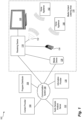
- Figure 1 is an overview block diagram illustrating a technical environment 102 in which embodiments of systems and methods for noise cancelation in a listening area may be implemented, according to an example embodiment.
- audio, video, and/or data service providers such as television service providers, provide their customers a multitude of video and/or data programming (herein, collectively "programming" or "content”).
- programming is often provided by use of a receiving device 118 communicatively coupled to a presentation device 120 configured to receive the programming.
- the programming may include any type of media content, including, but not limited to: television shows, news, movies, sporting events, advertisements, etc.
- any of this programming may be provided as a type of programming referred to as streaming media content, which is generally digital multimedia data that is substantially constantly received by and presented to an end-user or presented on a device while being delivered by a provider from a stored file source.
- streaming media content which is generally digital multimedia data that is substantially constantly received by and presented to an end-user or presented on a device while being delivered by a provider from a stored file source.
- to stream refers to the process of delivering media in this manner. The term refers to how the media is delivered rather than the media itself.
- the receiving device 118 is a device such as a set-top box, television, DVR, DVD player, PC, tablet device, game machine, smart phone, mobile device or other computing device or media player configured to receive programming via a connection to a satellite or cable television service provider outside the media content listening area 116 and to display such programming on a presentation device 120.
- the receiving device 118 may be configured to receive, process and display on the presentation device 120 programming received directly from the satellite or cable television service provider, such as cable or satellite television broadcasts via various physical and logical channels of communication of communication system 108.
- the receiving device 118 may be configured to receive, process and display on the presentation device 120 streaming media content received directly from the satellite or cable television service provider and/or other content provider 104.
- the receiving device 118 interconnects to one or more communications media or sources.
- the various media content may be delivered as data using the Internet Protocol (IP) suite over a packet-switched network such as the Internet or other packet-switched network, which may be included as part of the communication system 108.
- IP Internet Protocol
- the underlying connection carrying such data may be via a cable head-end, satellite antenna, telephone company switch, cellular telephone system, Ethernet portal, off-air antenna, or the like.
- the receiving device 118 may receive a plurality of programming by way of the communications media or sources, or may only receive programming via a particular channel or source described in greater detail below. In some embodiments, based upon selection by a user, the receiving device 118 processes and communicates the selected programming to the presentation device 120.
- the presentation device 120 may also be a receiving device 118 or have a receiving device 118 integrated within it.
- the receiving device 132 also includes, or is operably coupled directly or indirectly to, and may control one or more speakers 132 that outputs audio of media content (such as received programming) and/or an audio signal generated by the receiving device 118 to cancel ambient white noise for the listener of the media content in the media content listening area 116.
- audio of media content such as received programming
- an audio signal generated by the receiving device 118 may cancel ambient white noise for the listener of the media content in the media content listening area 116.
- white noise may be generated by various home appliances, such as home appliance 142 and/or home appliance 144.
- Examples of home appliances that may generate ambient white noise include, but are not limited to: kitchen appliances, refrigerators, freezers, dishwashers, washing machines, heating, ventilation and air conditioning (HVAC) systems, fans, washing machines, computers, monitors, light bulbs, lighting systems, etc.
- HVAC heating, ventilation and air conditioning
- Examples of a receiving device 118 may include, but are not limited to devices such as, or any combination of: a "television converter,” “receiver,” “set-top box,” “television receiving device,” “television receiver,” “television,” “television recording device,” “satellite set-top box,” “satellite receiver,” “cable set-top box,” “cable receiver,” “media player,” “digital video recorder (DVR),” “digital versatile disk (DVD) Player,” “computer,” “mobile device,” “tablet computer,” “smart phone,” “MP3 Player,” “handheld computer,” “gaming console” and/or “television tuner,” etc.
- a "television converter "receiver,” “set-top box,” “television receiving device,” “television receiver,” “television,” “television recording device,” “satellite set-top box,” “satellite receiver,” “cable set-top box,” “cable receiver,” “media player,” “digital video recorder (DVR),” “digital
- the receiving device 118 may be any suitable converter device or electronic equipment that is operable to receive programming via a connection to a satellite or cable television service provider outside the media content listening area and communicate that programming to another device over a network. Further, the receiving device 118 may itself include user interface devices, such as buttons or switches. In some example embodiments, the receiving device 118 may be configured to receive and decrypt content and/or software or firmware updates according to various digital rights management (DRM) and other access control technologies and architectures as part of or in addition to the process of noise cancelation in a listening area, which will be described in further detail below.
- DRM digital rights management
- Examples of a presentation device 120 may include, but are not limited to, one or a combination of the following: a television ("TV”), a personal computer (“PC”), a sound system receiver, a digital video recorder ("DVR”), a compact disk (“CD”) device, DVD Player, game system, tablet device, smart phone, mobile device or other computing device or media player, and the like.
- Presentation devices 120 employ a display, one or more speakers, and/or other output devices to communicate video and/or audio content to a user.
- one or more presentation devices 120 reside in or near a media content listening area 116 and are communicatively coupled, directly or indirectly, to the receiving device 118. Further, the receiving device 118 and the presentation device 120 may be integrated into a single device. Such a single device may have the above-described functionality of the receiving device 118 and the presentation device 120, or may even have additional functionality.
- a remote-control device (remote) 130 is operable to control the receiving device 118 and/or the presentation device 124.
- the remote 130 typically communicates with the receiving device 118 using a suitable wireless medium, such as infrared (IR), radio frequency (RF), or the like.
- the remote 130 may include a microphone that may be voice or audio activated in order to receive a plurality of audio data samples each representing a different baseline profile of ambient white noise associated with a media content listening area 116. Such audio samples may be recorded and stored by the remote 130 and/or communicated to the receiving device 118 for further processing and analysis.
- the remote 130 may be a voice-enabled remote and the same microphone may also be used to receive voice commands from the user and transmit corresponding commands to the receiving device 118.
- handheld mobile device 128 may be communicatively connected to the television receiving device 118 via a physical or a peer-to-peer short range wireless connection.
- mobile device 128 may be a handheld mobile device of a user (e.g., a television service provider technician or customer), such as a smartphone, tablet device or other computing or communications device.
- the mobile device 128 may communicate over communication system 108 with the television receiving device 118, program distributor 106, content provider 104, audio sample analysis server 122 and/or information provider 138 using the transmission control protocol/Internet protocol (TCP/IP) suite of networking communication protocols.
- TCP/IP transmission control protocol/Internet protocol
- a cable or satellite television service provider may encompass or be in communication with some or all of the content provider 104, program distributor 106, audio sample analysis server 122, and information provider 138.
- a content provider 104 provides program content, such as television content, to a distributor, such as the program distributor 106.
- Example program distributors include, but are not limited to, satellite and cable television service providers.
- Example content providers include television stations which provide local or national television programming and special content providers which provide premium based programming, streaming services, pay-per-view programming and on-demand programming.
- Program content (i.e ., a program including or not including advertisements), is communicated to the program distributor 106 from the content provider 104 through suitable communication media, generally illustrated as communication system 108 for convenience.
- Communication system 108 may include many different types of communication media including those utilized by various different physical and logical channels of communication, now known or later developed.
- Non-limiting media and communication channel examples include one or more, or any operable combination of: satellite systems, cable systems, fiber optic systems, microwave systems, asynchronous transfer mode (“ATM”) systems, frame relay systems, digital subscriber line (“DSL”) systems, radio frequency (“RF”) systems, telephone systems, cellular systems, and the Internet.
- ATM asynchronous transfer mode
- DSL digital subscriber line
- RF radio frequency
- the received program content is converted by the program distributor 106 into a suitable signal (a "program signal") that is ultimately communicated to the receiving device 118.
- a suitable signal a "program signal”
- Various embodiments of the receiving device 118 may receive programming from program distributors 106 and/or directly from content providers 104 via locally broadcast radio, RF signals, cable, fiber optic, Internet media, or the like via the communication system 108.
- Video on Demand (VOD) systems may allow a user of the receiving device 118 to select, watch and/or listen to video and audio content on demand.
- VOD Video on Demand
- IPTV Internet Protocol Television
- IPTV Internet Protocol Television
- such technologies are deployed within the environment 102 such as in subscriber-based telecommunications networks of the communication system 108 with high-speed access channels into the media content listening area 116 via the receiving device 118 (e.g., a set-top box or other customer-premises equipment) to bring VOD services to the media content listening area 116.
- the receiving device 118 e.g., a set-top box or other customer-premises equipment
- television VOD systems stream media content via the communications system 108 from files stored at a content storage system of a content delivery network operably coupled to the communication system 108, under direct or indirect control of the program distributor 106, to the receiving device 118.
- Television VOD systems may stream content to a receiving device 118 such as a set-top box, DVD player, game system, smart phone, television (including a smart TV), PC, a sound system receiver, a digital video recorder ("DVR"), a compact disk (“CD”) device, tablet device, mobile device or other computing device or media player, and the like, allowing viewing in real time at the media content listening area 116, or downloading to a receiving device 118 such as a computer, DVR (also called a personal video recorder) or portable media player for viewing at any time.
- DVR digital video recorder
- CD compact disk
- the receiving device 118 may be a set-top box that is typically provided by the cable provider, satellite provider, or other program distributor 106 to which the customer may subscribe to receive such television services and that also receives programming through traditional channels using a terrestrial, satellite signal, and/or cable television format.
- the mobile device 128 in communication with the receiving device 118 may be provided by the program distributor, such as a cable provider or satellite provider.
- the program distributor such as a cable provider or satellite provider.
- such mobile devices may be devices other than those provided by the program distributor 106.
- these may include various user devices such as a tablet device, game machine, smart phone, mobile device or other computing device or media player or communications device not provided by or controlled by the cable provider, satellite provider, or other program distributor to which the customer subscribes for the television services.
- the audio sample analysis server 122 is operably coupled to the communication system 108 and may be a system of an entity that provides analysis and/or selection of collected audio samples collected by the mobile device 128, receiving device 118 and/or remote 130, each audio sample representing a different baseline profile of ambient white noise associated with the media content listening area 116. For example, for each audio data sample of the plurality of audio data samples, the audio sample analysis server 122 may compare the received sample of audio to the baseline profile of the ambient white noise associated with the media content listening area 116 represented by received audio data sample to determine common characteristics between the received sample of audio and the baseline profile of the ambient white noise associated with the media content listening area 116.
- the audio sample analysis server 122 may then communicate to the receiving device 118 results of such audio sample analysis and/or the selection of the applicable baseline profile of the ambient white noise associated with the media content listening area 116 to use in noise cancelation of the ambient white noise by the receiving device 118 within the media content listening area 116.
- the environment 102 may include many systems associated with a television service provider, such as the program distributor 106, that operate in a manner such as the audio sample analysis server 122 described herein, and the audio sample analysis server 122 represents one or more of such systems in various embodiments. Such functionality may also or instead be performed by the mobile device 128 and/or remote control device 130.
- information provider 138 may provide various forms of content and/or services to various devices residing in the media content listening area 116.
- information provider 138 may also or instead provide information to the receiving device 118 regarding software and/or firmware updates for the receiving device 118, other receiving devices of a particular television service provider, such as program distributor 106, and/or other additional audio samples and/or metadata regarding such audio data samples or baseline audio profiles of particular types, brands, models and/or manufacturers of various appliances that generate ambient white noise in the media content listening area 116. In this manner, such audio data samples or baseline audio profiles may be used by the receiving device 118 to cancel the ambient white noise of such appliances.
- FIG. 1 illustrates just one example of an environment 102 and the various embodiments discussed herein are not limited to such environments.
- environment 102 and the various devices therein may contain other devices, systems and/or media not specifically described herein.
- the environment 102 may include many different audio sample analysis servers, content providers, program distributors and information providers that operate in a corresponding manner as the audio sample analysis server 122, the content provider 104, program distributor 106 and information provider 138 as described herein.
- Each of audio sample analysis server 122, the content provider 104, program distributor 106 and information provider 138 may represent one or more of such systems in various embodiments.
- Example embodiments described herein provide applications, tools, data structures and other support to implement updating of television receiving devices.
- Other embodiments of the described techniques may be used for other purposes, including noise cancelation in a listening area not only during initial installation, but during subsequent service calls to the media content listening area 116.
- noise cancelation may be performed by various other devices, such as audio and DVD players, digital recorders, computers, peripherals, televisions, mobile devices, active speakers, headphones, telephones, and other electronic devices, etc.
- numerous specific details are set forth, such as data formats, program sequences, processes, and the like, in order to provide a thorough understanding of the described techniques.
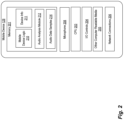
- Figure 2 is a block diagram illustrating elements of an example handheld mobile device 128 used in systems and methods for noise cancelation in a listening area, according to an example embodiment.
- the mobile device 128 may be a wireless handheld mobile device of a user (e.g., a television service provider technician or customer), such as a smartphone, tablet device or other mobile computing or communications device.
- mobile device 128 comprises a computer memory (“memory”) 201 and one or more Central Processing Units (“CPU”) 203.
- I/O controls 204 including, but not limited to: buttons, virtual buttons, switches, keypads, keyboards, touchpads, touchscreens, display screens, liquid crystal displays, speakers, scroll wheel inputs, optical sensors, gesture sensors, accelerometers, motion control sensors, voice command sensors, microphones, trackballs and/or joysticks, etc.
- Microphone 208 may be a part of the I/O controls 204, or a separate microphone that collects a baseline white noise profile of a user's media content listening area, such as the user's family room, living room or other TV viewing space.
- This baseline white noise profile may be used by the receiving device 118 to generate the corresponding noise canceling audio signal to create a noise-canceling effect and a more immersive, better listening experience for the user.
- the mobile device 128 may also include other computer-readable media 205 (e.g., flash memory, SIM card) and network connections 206.
- the I/O controls 204 may include various different numbers and configurations of controls in various embodiments, including those with touch screen buttons and other input controls.
- the network connections 206 include one or more communication interfaces to the receiving device 118, various other mobile devices, computing devices and media devices, including but not limited to, radio frequency (RF) transceivers, cellular communication interfaces and antennas, USB interfaces, ports and connections (e.g., USB Type-A, USB Type-B, USB Type-C (or USB-C), USB mini A, USB mini B, USB micro A, USB micro C), other RF transceivers (e.g., infrared transceivers, Zigbee ® network connection interfaces based on the IEEE 802.15.4 specification, Z-Wave ® connection interfaces, wireless Ethernet (“Wi-Fi”) interfaces, short range wireless (e.g., Bluetooth ® ) interfaces and the like.
- RF radio frequency
- the one or more Central Processing Units (“CPU”) 203 may be communicatively coupled to the memory 201, the microphone 208 and the I/O controls 204, other computer-readable media 205 and network connections 206, (e.g., via a communications bus) in a manner to control one or more operations of those various components.
- CPU Central Processing Unit
- the mobile device 128 may communicate with receiving device 118 (directly or via communication system 108), the audio sample analysis server 122, content provider 104, program distributor 106, and/or information provider 138, and possibly other devices (not shown).
- Mobile device logic 210, device information 211, audio analysis module 212 and audio data samples 214 are shown residing in memory 201. In other embodiments, some portion of the device information 211 and some of, or all of, the components of the logic 210, audio analysis module 212 and audio data samples 214 may be stored on the other computer-readable media 205. For example, the audio data samples collected by the mobile device 128 may be stored on memory 201 and/or other computer-readable media 205.
- the logic 210 and audio analysis module 212 preferably execute on one or more CPUs 203 and manage operation of the mobile device 128 to perform the techniques described herein.
- the logic 210 may comprise or implement a system control module as executed by one or more CPUs 203 that are communicatively coupled to the I/O controls 204, microphone 208 and other components of the mobile device 128.
- Other code or programs and potentially other data/information may also reside in the memory 201, and may execute on one or more CPUs 203.
- one or more of the components in Figure 2 may not be present in any specific implementation. For example, some embodiments may not provide other computer readable media 205.
- the logic 210 and audio analysis module 212 perform the core functions of the mobile device 128, as discussed herein and also with respect to Figures 3 through 7 .
- the logic 210 reads input that results from activation of I/O controls 204 on the mobile device 128 by the user and performs the function corresponding to the input, including communicating with the receiving device 118, sending commands to various devices and performing internal operations of the mobile device 128.
- the logic 210 and audio analysis module 212 when executed on one or more CPUs 203, may perform or cause the following to be performed: activate the microphone 208 to initiate collection of a plurality of audio data samples as samples of audio present in a media content listening area within a building, each audio data sample of the plurality of audio data samples representing a different baseline profile of ambient white noise associated with the media content listening area within the building; receive, from the microphone 208, a sample of audio present in the media content listening area within the building while programming including media content for presentation to a listener of the media content in the media content listening area within the building is being output by a media player, such as receiving device 118; and remove from the received sample of audio, audio data associated with the programming being output to enable selection of an audio data sample from the plurality of audio data samples, based on comparison of the received sample of audio to the plurality of audio data samples, to use to cancel ambient white noise for the listener of the media content in the media content listening area within the building.
- the logic 210 and audio analysis module 212 may also cause the mobile device 128 to store the plurality of audio data samples 214 and perform the selection of the audio data sample from the plurality of audio data samples 214 based on comparison of the received sample of audio to the plurality of audio data samples 214.
- the mobile device 128 may also communicate the selected audio data sample from the plurality of audio data samples 214 from the mobile device 128 to a media player device, such as the receiving device 118 to enable the media player device to play the selected audio data sample to cancel ambient white noise for the listener of the media content in the media content listening area while the programming is being output by the media player.
- the audio analysis module 212 may compare one or more of: a time of day, a day of week, a week of month, a time of month, a week of year, a time of year and a day of year associated with the received sample of audio to a corresponding timeframe of when the audio data sample was collected to determine common characteristics between the received sample of audio and the baseline profile of the ambient white noise associated with the media content listening area represented by the audio data sample. The audio analysis module 212 may then select the audio data sample of the plurality of received audio data samples to cancel ambient white noise for the listener of the media content in the media content listening area based on the comparison and determined common characteristics.
- the selection of the audio data sample from the plurality of audio data samples may instead or also be performed by a logic and audio analysis module of the receiving device 118.
- the mobile device 128 may communicate the plurality of audio data samples to a media player device, such as receiving device 118, and also communicate the sample of audio present in the media content listening area to enable the media player device to perform the comparison and the selection of the audio data sample from the plurality of audio data samples, based on comparison, for the media player device to cancel ambient white noise for the listener of the media content in the media content listening area.
- the mobile device 128 and/or receiving device 118 may: receive, from a microphone, such as microphone 208, a sample of audio present in a media content listening area within a building while programming including media content for presentation to a listener of the media content in the media content listening area within the building is being output by a media player. For each audio data sample of a plurality of audio data samples, the mobile device 128 and/or receiving device 118 may compare the received sample of audio to a baseline profile of ambient white noise associated with the media content listening area within the building represented by the audio data sample, to determine common characteristics between the received sample of audio and the baseline profile of the ambient white noise associated with the media content listening area within the building represented by the audio data sample. The mobile device 128 and/or receiving device 118 may then select an audio data sample of the plurality of received audio data samples to cancel ambient white noise for a listener of the media content in the media content listening area within the building based on the comparison and determined common characteristics.
- a microphone such as microphone 208
- a plurality of audio data samples each representing a different baseline profile of ambient white noise associated with the media content listening area may be generated by the mobile device 128 and/or receiving device 118 for different devices, such as home appliances, that are not on all the time, and thus are not generating noise all the time.
- the user selects which audio data sample to use when playing an event.
- the user may allow the mobile device 128 and/or receiving device 118 to check (i.e., automatically poll) the audio in the room or corresponding listening area at random or periodic intervals (e.g., in some cases, upon user approval) to automatically select the audio data sample with the baseline profile that is the closest match to the sample received from the automatic polling of the listening area.
- the microphone 208 may take an audio sample, and the audio analysis module 212 then removes the known audio of the programming that the receiving device 118 is outputting at that time and then checks the remaining audio signal against the known baseline profiles of ambient white noise the mobile device 128 and/or receiving device 118 has for the listening area associated with the previously collected plurality of audio data samples. The receiving device 118 may then switch to using the previously collected audio data sample having the closest matching baseline profile of ambient white noise to cancel out most or all of the other sounds. In an example, the audio analysis module 212 determines a closest match between the sample of audio present in the media content listening area and the plurality of audio data samples each representing a different baseline profile of ambient white noise associated with the media content listening area.
- the mobile device 128 and/or receiving device 118 may then select the determined closest match as the selected audio data sample of the plurality of received audio data samples to cancel ambient white noise for the listener of the media content in the media content listening area within the building. Such analysis may instead or also be performed by the audio sample analysis server 122 and communicated in real time to the mobile device 128 and/or receiving device 118.
- remote and/or programmatic access is provided to at least some of the functionality of the mobile device 128 and/or receiving device 118.
- the mobile device 128 and/or receiving device 118 may provide to other devices an application program interface ("API") that provides access to various functions of the mobile device 128 and/or receiving device 118, including access to information stored by the mobile device 128 and/or receiving device 118 (e.g., about other media devices) and different baseline profiles of ambient white noise associated with one or more media content listening areas or appliances.
- API application program interface
- the API may facilitate the development of third-party software, such as user interfaces, plug-ins, adapters and the like, such as for integrating functions of the mobile device 128 and/or receiving device 118 into various user interface applications on media devices and various desktop or mobile device applications.
- a particular mobile device application presents a graphical display showing an indication of available audio data samples to select to cancel ambient white noise for the listener of the media content in the media content listening area.
- a particular mobile device application may present a graphical display showing an indication of which audio data sample has been selected and/or is currently being used to cancel ambient white noise for the listener of the media content in the media content listening area.
- a particular mobile device application may present a customized or different user interface based upon the functionality and capabilities of the mobile device 128 and/or the receiving device 118.
- the logic 210 and audio analysis module 212 are implemented using standard programming techniques.
- the logic 210 and audio analysis module 212 may be implemented as a "native" executable running on the CPU 203, along with one or more static or dynamic libraries.
- the logic 210 and audio analysis module 212 may be implemented as instructions processed by a virtual machine that executes as some other program.
- a range of programming languages known in the art may be employed for implementing such example embodiments, including representative implementations of various programming language paradigms and platforms, including but not limited to, object-oriented (e.g., Java, C++, C#, Visual Basic.NET, Smalltalk, and the like), functional (e.g., ML, Lisp, Scheme, and the like), procedural (e.g., C, Pascal, Ada, Modula, and the like), scripting (e.g., Perl, Ruby, PHP, Python, JavaScript, VBScript, and the like) and declarative (e.g., SQL, Prolog, and the like).
- object-oriented e.g., Java, C++, C#, Visual Basic.NET, Smalltalk, and the like
- functional e.g., ML, Lisp, Scheme, and the like
- procedural e.g., C, Pascal, Ada, Modula, and the like
- scripting e.g., Perl, Ruby, PHP, Python, JavaScript
- the embodiments described above may also use well-known or synchronous or asynchronous client-server computing techniques.
- the various components may be implemented using more monolithic programming techniques as well, for example, as an executable running on a single CPU computer system, or alternatively decomposed using a variety of structuring techniques known in the art, including but not limited to, multiprogramming, multithreading, client-server, or peer-to-peer, running on one or more computer systems each having one or more CPUs.
- Some embodiments may execute concurrently and asynchronously, and communicate using message passing techniques. Equivalent synchronous embodiments are also supported.
- other functions could be implemented and/or performed by each component/module, and in different orders, and by different components/modules, yet still achieve the functions of the mobile device 128.
- programming interfaces to the data stored as part of the device information 211 can be available by standard mechanisms such as through C, C++, C#, and Java APIs; libraries for accessing files, databases, or other data repositories; through scripting languages such as JavaScript and VBScript; or through Web servers, FTP servers, or other types of servers providing access to stored data.
- the device information 211 and audio data samples 214 (which may include collected audio data, mobile device information, data representing receiving device software and/or firmware updates and receiving device information) may be implemented as one or more database systems, file systems, or any other technique for storing such information, or any combination of the above, including, in some embodiments, implementations using distributed computing techniques.
- some or all of the components/portions of the logic 210 and audio analysis module 212 may be implemented or provided in other manners, such as at least partially in firmware and/or hardware, including, but not limited to one or more application-specific integrated circuits ("ASICs”), standard integrated circuits, controllers (e.g., by executing appropriate instructions, and including microcontrollers and/or embedded controllers), field-programmable gate arrays ("FPGAs”), complex programmable logic devices (“CPLDs”), and the like.
- ASICs application-specific integrated circuits
- controllers e.g., by executing appropriate instructions, and including microcontrollers and/or embedded controllers
- FPGAs field-programmable gate arrays
- CPLDs complex programmable logic devices
- system components and/or data structures may also be stored as contents (e.g., as executable or other machine-readable software instructions or structured data) on a computer-readable medium (e.g., as a hard disk; a memory; a computer network or cellular wireless network; or a portable media article to be read by an appropriate drive or via an appropriate connection, such as a DVD or flash memory device) so as to enable or configure the computer-readable medium and/or one or more associated computing systems or devices to execute or otherwise use or provide the contents to perform at least some of the described techniques.
- a computer-readable medium e.g., as a hard disk; a memory; a computer network or cellular wireless network; or a portable media article to be read by an appropriate drive or via an appropriate connection, such as a DVD or flash memory device
- Such computer program products may also take other forms in other embodiments. Accordingly, embodiments of this disclosure may be practiced with other computer system configurations.
- the receiving device 118 may include one or more CPUs coupled to one or more memory devices that store computer executable instructions that, when executed by the one or more CPUs that cause the receiving device 118 to perform the techniques described herein.
- the computer executable instructions when executed by one or more CPUs cause the computing device to perform the operations of claims 1-5.
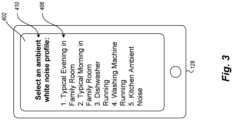
- Figure 3 is a diagram of an example handheld mobile device 128 illustrating an example user interface screen 402 shown in an example process for noise cancelation, according to an example embodiment.
- a mobile device application of mobile device 128 may present a graphical display on user interface screen 402 showing an indication of available audio data samples 406 from which to select to cancel ambient white noise for the listener of the media content in the media content listening area. Also shown is a prompt 410 to prompt the user to select an available audio data samples from the indication of available audio data samples 406.
- Each of the available audio data samples 406 may be associated with a different baseline profile of ambient white noise associated with a particular media content listening area, a particular appliance, and/or a particular time of day.
- the particular media content listening area, particular appliance(s), the particular time of day, and/or other descriptive or identifiable characteristics may be automatically associated with the collected audio sample by the mobile device 128 based on location data (e.g., global positioning system (GPS) and/or triangulated location information) and clock and calendar data of the mobile device 128, or the user may tag the audio sample with such metadata.
- location data e.g., global positioning system (GPS) and/or triangulated location information
- available audio data samples 406 are labeled according to which baseline profile of ambient white noise it is associated.
- the example available audio data samples 406 shown in Figure 3 include "1. Typical Evening in Family Room", "2. Typical Morning in Family Room", “3. Dishwasher Running”, “4. Washing Machine Running", and "5. Kitchen Ambient Noise”.
- the user selects which audio data sample to use to cancel ambient white noise according to which listening area the user is in (e.g.
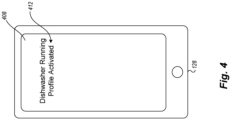
- Figure 4 is a diagram of the example handheld mobile device 128 of Figure 3 illustrating another example user interface screen 408 shown in an example process for noise cancelation, according to an example embodiment.
- the application of the mobile device 128 presents a graphical display showing an indication of which audio data sample has been selected and/or is currently being used to cancel ambient white noise for the listener of the media content in the media content listening area.
- shown on the user interface screen 408 is an indication 412 that the "Dishwasher Running" profile has been activated.
- This activation may have been caused by user selection of the "Dishwasher Running" audio data sample associated with a baseline profile of ambient white noise of the dishwasher (e.g., because the dishwasher was running when the user wanted to listen to the programming) or by automatic selection of an audio data sample of the plurality of received audio data samples to cancel ambient white noise for the listener of the media content based on the comparison of previously collected audio samples and determined common characteristics.
- the mobile device 128 may have collected an audio sample while the dishwasher was running, which was thus labeled "Dishwasher Running" by the user or the mobile device 128.
- the mobile device 128 may have then polled a listening area, using microphone 208, which is exposed to audio of the dishwasher at a later time while the dishwasher was running and then automatically determined to select the "Dishwasher Running" audio data sample of the plurality of received audio data samples in order to cancel ambient white noise of the dishwasher in the media content listening area.
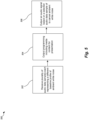
- Figure 5 is a flow diagram of an example method 500 for noise cancelation, according to an example embodiment.
- the system receives a plurality of audio data samples each representing a different baseline profile of ambient white noise associated with a media content listening area within a building.
- the system may include one or more devices shown in the environment 102 of Figure 1 , operating individually or together, that may perform the functionality of the techniques of noise cancelation described herein.
- the system after receiving the plurality of audio data samples each representing a different baseline profile of ambient white noise, outputs programming including media content for presentation to a listener of the media content in the media content listening area within the building.
- the system outputs, while outputting the programming, an audio signal based on a selected audio data sample of the plurality of received audio data samples to cancel ambient white noise for the listener of the media content in the media content listening area within the building.
- Figure 6 is a flow diagram of an example method 600 for removing audio from a received sample useful in noise cancelation, according to an example not forming part of the invention.
- the system activates a microphone to initiate collection of a plurality of audio data samples as samples of audio present in a media content listening area within a building, each audio data sample of the plurality of audio data samples representing a different baseline profile of ambient white noise associated with the media content listening area within the building.
- the system receives, from the microphone, a sample of audio present in the media content listening area within the building while programming including media content for presentation to a listener of the media content in the media content listening area within the building is being output by a media player.
- the system removes from the received sample of audio, audio data associated with the programming being output to enable selection of an audio data sample from the plurality of audio data samples, based on comparison of the received sample of audio to the plurality of audio data samples, to use to cancel ambient white noise for the listener of the media content in the media content listening area within the building.
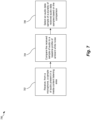
- Figure 7 is a flow diagram of an example method 700 for selecting an audio data sample useful in noise cancelation, according to an example not forming part of the invention.
- the system receives, from a microphone, a sample of audio present in a media content listening area within a building while programming including media content for presentation to a listener of the media content in the media content listening area within the building is being output by a media player.
- the system for each audio data sample of a plurality of audio data samples, compares the received sample of audio to a baseline profile of ambient white noise associated with the media content listening area within the building represented by the audio data sample, to determine common characteristics between the received sample of audio and the baseline profile of the ambient white noise associated with the media content listening area within the building represented by the audio data sample.
- the system selects an audio data sample of the plurality of received audio data samples to cancel ambient white noise for a listener of the media content in the media content listening area within the building based on the comparison and determined common characteristics.
Landscapes
- Engineering & Computer Science (AREA)
- Physics & Mathematics (AREA)
- Acoustics & Sound (AREA)
- Multimedia (AREA)
- Signal Processing (AREA)
- Human Computer Interaction (AREA)
- Computer Networks & Wireless Communication (AREA)
- Two-Way Televisions, Distribution Of Moving Picture Or The Like (AREA)
- Telephonic Communication Services (AREA)
Claims (10)
- Procédé (500) d'annulation de bruit, comprenant les étapes consistant à :recevoir (502), par au moins un processeur informatique, une pluralité d'échantillons de données audio représentant chacun un différent profil de référence de bruit blanc ambiant associé à une zone d'écoute de contenu médiatique à l'intérieur d'un bâtiment ;après avoir reçu la pluralité d'échantillons de données audio représentant chacun un différent profil de référence de bruit blanc ambiant, fournir (504), par ledit au moins un processeur informatique, une programmation incluant du contenu médiatique pour présentation à un auditeur du contenu médiatique dans la zone d'écoute de contenu médiatique à l'intérieur du bâtiment ;sélectionner, par ledit au moins un processeur informatique, un échantillon sélectionné de données audio de la pluralité d'6échantillons reçus de données audio, afin d'annuler le bruit blanc ambiant pour l'auditeur du contenu médiatique dans la zone d'écoute de contenu médiatique à l'intérieur du bâtiment ;fournir (506), par ledit au moins un processeur informatique, tout en fournissant la programmation, un signal audio basé sur l'échantillon sélectionné de données audio de la pluralité d'échantillons reçus de données audio ;caractérisé en ce que :
le fait de sélectionner l'échantillon sélectionné de données audio de la pluralité d'échantillons reçus de données audio, afin d'annuler le bruit blanc ambiant pour l'auditeur du contenu médiatique dans la zone d'écoute de contenu médiatique à l'intérieur du bâtiment inclut :engendrer, par ledit au moins un processeur informatique, un menu de la pluralité d'échantillons reçus de données audio à partir duquel l'auditeur peut sélectionner d'annuler un bruit blanc ambiant pour l'auditeur du contenu médiatique dans la zone d'écoute de contenu médiatique à l'intérieur du bâtiment ;recevoir, par ledit au moins un processeur informatique, une entrée indicative d'une sélection par l'auditeur d'un échantillon sélectionné de données audio à partir du menu de la pluralité d'échantillons reçus de données audio ;en réponse à la réception de l'entrée indicative de la sélection, sélectionner l'échantillon sélectionné de données audio à partir du menu de la pluralité d'échantillons reçus de données audio, en tant que l'échantillon sélectionné de données audio de la pluralité d'échantillons reçus de données audio, afin d'annuler le bruit blanc ambiant pour l'auditeur du contenu médiatique dans la zone d'écoute de contenu médiatique à l'intérieur du bâtiment ;chacun de la pluralité d'échantillons de données audio comprend un échantillon de bruit blanc ambiant à une différente combinaison d'une pièce à l'intérieur du bâtiment et d'un moment de la journée ; etle menu de la pluralité d'échantillons de données audio identifie chacun de la pluralité d'échantillons de données audio par la combinaison respective de la pièce à l'intérieur du bâtiment et du moment de la journée. - Procédé selon la revendication 1, dans lequel ledit au moins un processeur informatique est au moins un processeur informatique d'un dispositif récepteur de télévision.
- Procédé selon la revendication 1, dans lequel le fait de recevoir la pluralité d'échantillons de données audio représentant chacun un différent profil de référence de bruit blanc ambiant associé à une zone d'écoute de contenu médiatique à l'intérieur d'un bâtiment inclut :
activer un microphone pour déclencher la collecte de la pluralité d'échantillons de données audio en tant qu'échantillons d'audio présent dans la zone d'écoute de contenu médiatique à l'intérieur du bâtiment. - Procédé selon la revendication 3, dans lequel le fait d'activer le microphone pour déclencher la collecte de la pluralité d'échantillons de données audio en tant qu'échantillons d'audio présent dans la zone d'écoute de contenu médiatique à l'intérieur du bâtiment inclut :
activer le microphone pour déclencher la collecte de la pluralité d'échantillons de données audio sur une base périodique basée sur un(e) ou plusieurs parmi : moment de la journée, jour de la semaine, semaine du mois, moment dans le mois, semaine de l'année, moment de l'année et jour de l'année, afin de déterminer l'échantillon sélectionné de données audio par, pour chaque échantillon de données audio de la pluralité d'échantillons de données audio, détermination de caractéristiques communes entre un échantillon reçu d'audio et le profil de référence du bruit blanc ambiant associé à la zone d'écoute de contenu médiatique à l'intérieur du bâtiment, représenté par l'échantillon de données audio. - Procédé selon la revendication 4, dans lequel le fait d'activer le microphone pour déclencher la collecte de la pluralité d'échantillons de données audio en tant qu'échantillons d'audio présent dans la zone d'écoute de contenu médiatique à l'intérieur du bâtiment inclut :
activer le microphone pour déclencher la collecte de la pluralité d'échantillons de données audio à intervalles aléatoires et enregistrer un(e) ou plusieurs parmi : moment de la journée, jour de la semaine, semaine du mois, moment dans le mois, semaine de l'année, moment de l'année et jour de l'année, auquel/à laquelle chacun de la pluralité d'échantillons de données audio a été recueilli, afin de déterminer l'échantillon sélectionné de données audio par, pour chaque échantillon de données audio de la pluralité d'échantillons de données audio, détermination de caractéristiques communes entre un échantillon reçu d'audio et le profil de référence du bruit blanc ambiant associé à la zone d'écoute de contenu médiatique à l'intérieur du bâtiment, représenté par l'échantillon de données audio. - Programme informatique codant des instructions qui, lorsqu'elles sont exécutées par au moins un processeur informatique d'un dispositif informatique, amènent le dispositif informatique à exécuter des opérations comprenant :recevoir (502), par au moins un processeur informatique, une pluralité d'échantillons de données audio représentant chacun un différent profil de référence de bruit blanc ambiant associé à une zone d'écoute de contenu médiatique à l'intérieur d'un bâtiment ;après avoir reçu la pluralité d'échantillons de données audio représentant chacun un différent profil de référence de bruit blanc ambiant, fournir (504), par ledit au moins un processeur informatique, une programmation incluant du contenu médiatique pour présentation à un auditeur du contenu médiatique dans la zone d'écoute de contenu médiatique à l'intérieur du bâtiment ;sélectionner, par ledit au moins un processeur informatique, un échantillon sélectionné de données audio de la pluralité d'échantillons reçus de données audio, afin d'annuler le bruit blanc ambiant pour l'auditeur du contenu médiatique dans la zone d'écoute de contenu médiatique à l'intérieur du bâtiment ;fournir (506), par ledit au moins un processeur informatique, tout en fournissant la programmation, un signal audio basé sur l'échantillon sélectionné de données audio de la pluralité d'échantillons reçus de données audio ;caractérisé en ce quele fait de sélectionner l'échantillon sélectionné de données audio de la pluralité d'échantillons reçus de données audio, afin d'annuler le bruit blanc ambiant pour l'auditeur du contenu médiatique dans la zone d'écoute de contenu médiatique à l'intérieur du bâtiment inclut :engendrer, par ledit au moins un processeur informatique, un menu de la pluralité d'échantillons reçus de données audio à partir duquel l'auditeur peut sélectionner d'annuler un bruit blanc ambiant pour l'auditeur du contenu médiatique dans la zone d'écoute de contenu médiatique à l'intérieur du bâtiment ;recevoir, par ledit au moins un processeur informatique, une entrée indicative d'une sélection par l'auditeur d'un échantillon sélectionné de données audio à partir du menu de la pluralité d'échantillons reçus de données audio ;en réponse à la réception de l'entrée indicative de la sélection, sélectionner l'échantillon sélectionné de données audio à partir du menu de la pluralité d'échantillons reçus de données audio, en tant que l'échantillon sélectionné de données audio de la pluralité d'échantillons reçus de données audio, afin d'annuler le bruit blanc ambiant pour l'auditeur du contenu médiatique dans la zone d'écoute de contenu médiatique à l'intérieur du bâtiment ;chacun de la pluralité d'échantillons de données audio comprend un échantillon de bruit blanc ambiant à une différente combinaison d'une pièce à l'intérieur du bâtiment et d'un moment de la journée ; etle menu de la pluralité d'échantillons de données audio identifie chacun de la pluralité d'échantillons de données audio par la combinaison respective de la pièce à l'intérieur du bâtiment et du moment de la journée.
- Programme informatique selon la revendication 6, dans lequel ledit au moins un processeur informatique du dispositif informatique est au moins un processeur physique d'un dispositif récepteur de télévision.
- Programme informatique selon la revendication 6, dans lequel le fait de recevoir la pluralité d'échantillons de données audio représentant chacun un différent profil de référence de bruit blanc ambiant associé à une zone d'écoute de contenu médiatique à l'intérieur d'un bâtiment inclut :
activer un microphone pour déclencher la collecte de la pluralité d'échantillons de données audio en tant qu'échantillons d'audio présent dans la zone d'écoute de contenu médiatique à l'intérieur du bâtiment. - Programme informatique selon la revendication 8, dans lequel le fait d'activer le microphone pour déclencher la collecte de la pluralité d'échantillons de données audio en tant qu'échantillons d'audio présent dans la zone d'écoute de contenu médiatique à l'intérieur du bâtiment inclut :
activer le microphone pour déclencher la collecte de la pluralité d'échantillons de données audio sur une base périodique basée sur un(e) ou plusieurs parmi : moment de la journée, jour de la semaine, semaine du mois, moment dans le mois, semaine de l'année, moment de l'année et jour de l'année, afin de déterminer l'échantillon sélectionné de données audio par, pour chaque échantillon de données audio de la pluralité d'échantillons de données audio, détermination de caractéristiques communes entre un échantillon reçu d'audio et le profil de référence du bruit blanc ambiant associé à la zone d'écoute de contenu médiatique à l'intérieur du bâtiment, représenté par l'échantillon de données audio. - Dispositif récepteur de télévision, comprenant :au moins un processeur (203) ;au moins une mémoire (201) accouplée audit au moins un processeur, ladite au moins une mémoire comportant des instructions exécutables par ordinateur mémorisées sur celle-ci, qui, lorsqu'elles sont exécutées par ledit au moins un processeur, amènent ledit au moins un processeur à exécuter le procédé selon l'une quelconque des revendications 1 à 5.
Applications Claiming Priority (2)
| Application Number | Priority Date | Filing Date | Title |
|---|---|---|---|
| US16/547,400 US10770057B1 (en) | 2019-08-21 | 2019-08-21 | Systems and methods for noise cancelation in a listening area |
| PCT/US2020/047322 WO2021035111A1 (fr) | 2019-08-21 | 2020-08-21 | Systèmes et procédés d'annulation de bruit dans une zone d'écoute |
Publications (2)
| Publication Number | Publication Date |
|---|---|
| EP4018435A1 EP4018435A1 (fr) | 2022-06-29 |
| EP4018435B1 true EP4018435B1 (fr) | 2025-01-15 |
Family
ID=72290062
Family Applications (1)
| Application Number | Title | Priority Date | Filing Date |
|---|---|---|---|
| EP20768161.0A Active EP4018435B1 (fr) | 2019-08-21 | 2020-08-21 | Systèmes et procédés d'annulation de bruit dans une zone d'écoute |
Country Status (3)
| Country | Link |
|---|---|
| US (2) | US10770057B1 (fr) |
| EP (1) | EP4018435B1 (fr) |
| WO (1) | WO2021035111A1 (fr) |
Families Citing this family (3)
| Publication number | Priority date | Publication date | Assignee | Title |
|---|---|---|---|---|
| US10770057B1 (en) * | 2019-08-21 | 2020-09-08 | Dish Network, L.L.C. | Systems and methods for noise cancelation in a listening area |
| US11741983B2 (en) * | 2021-01-13 | 2023-08-29 | Qualcomm Incorporated | Selective suppression of noises in a sound signal |
| KR102683616B1 (ko) * | 2023-10-31 | 2024-07-11 | 한국건설기술연구원 | 가변 공간활용에 따른 스마트 음환경 제어 시스템 및 방법 |
Family Cites Families (9)
| Publication number | Priority date | Publication date | Assignee | Title |
|---|---|---|---|---|
| US6940982B1 (en) | 2001-03-28 | 2005-09-06 | Lsi Logic Corporation | Adaptive noise cancellation (ANC) for DVD systems |
| KR20090079782A (ko) * | 2008-01-18 | 2009-07-22 | 삼성전자주식회사 | 청력 보호를 위한 오디오 처리 장치 및 방법 |
| US8325944B1 (en) * | 2008-11-07 | 2012-12-04 | Adobe Systems Incorporated | Audio mixes for listening environments |
| CN102903375B (zh) * | 2011-07-25 | 2017-06-13 | 富泰华工业(深圳)有限公司 | 音乐播放装置及播放方法 |
| US9391580B2 (en) * | 2012-12-31 | 2016-07-12 | Cellco Paternership | Ambient audio injection |
| US9552825B2 (en) | 2013-04-17 | 2017-01-24 | Honeywell International Inc. | Noise cancellation for voice activation |
| US9904851B2 (en) * | 2014-06-11 | 2018-02-27 | At&T Intellectual Property I, L.P. | Exploiting visual information for enhancing audio signals via source separation and beamforming |
| US10178474B2 (en) | 2015-04-21 | 2019-01-08 | Google Llc | Sound signature database for initialization of noise reduction in recordings |
| US10770057B1 (en) * | 2019-08-21 | 2020-09-08 | Dish Network, L.L.C. | Systems and methods for noise cancelation in a listening area |
-
2019
- 2019-08-21 US US16/547,400 patent/US10770057B1/en active Active
-
2020
- 2020-07-30 US US16/943,521 patent/US11024283B2/en active Active
- 2020-08-21 WO PCT/US2020/047322 patent/WO2021035111A1/fr not_active Ceased
- 2020-08-21 EP EP20768161.0A patent/EP4018435B1/fr active Active
Also Published As
| Publication number | Publication date |
|---|---|
| US10770057B1 (en) | 2020-09-08 |
| US11024283B2 (en) | 2021-06-01 |
| WO2021035111A1 (fr) | 2021-02-25 |
| EP4018435A1 (fr) | 2022-06-29 |
| US20210056947A1 (en) | 2021-02-25 |
Similar Documents
| Publication | Publication Date | Title |
|---|---|---|
| US11968505B2 (en) | Systems and methods for facilitating configuration of an audio system | |
| US8458147B2 (en) | Techniques for the association, customization and automation of content from multiple sources on a single display | |
| US9300939B2 (en) | Methods and systems for resolving conflicts in a multi-tuner digital video recording system | |
| US20130173765A1 (en) | Systems and methods for assigning roles between user devices | |
| US8949901B2 (en) | Methods and systems for customizing viewing environment preferences in a viewing environment control application | |
| US20100138761A1 (en) | Techniques to push content to a connected device | |
| US12373192B2 (en) | Systems and methods for updating television receiving devices | |
| US11024283B2 (en) | Systems and methods for noise cancelation in a listening area | |
| US9615120B2 (en) | Systems and methods for associating additional content with broadband content | |
| US20160316267A1 (en) | Aggregation Of Multiple Media Types Of User Consumption Habits And Device Preferences | |
| US11758219B2 (en) | Systems and methods for facilitating setting of television program series recording priority ranking | |
| US20210014078A1 (en) | Systems and methods for adjusting a media consumption environment based on changes in status of an object | |
| US20200221049A1 (en) | Method and System for Implementing Over the Top (OTT) Service Implementation Coupled with Over the Air (OTA) Tuning | |
| US20180332356A1 (en) | Method and System for Implementing Unified Multi-Source Video Programming & Navigation Guide | |
| US9800901B2 (en) | Apparatus, systems and methods for remote storage of media content events | |
| US20140244827A1 (en) | Method and apparatus for monitoring activity of an electronic device | |
| US11190835B2 (en) | Intelligent unload of broadcaster application on channel change | |
| US20150363068A1 (en) | A context-sensitive remote controller | |
| CN102469349B (zh) | 因特网使能tv中的搜索和深度链接 | |
| CN107736028A (zh) | 电子设备及其内容提供方法 |
Legal Events
| Date | Code | Title | Description |
|---|---|---|---|
| STAA | Information on the status of an ep patent application or granted ep patent |
Free format text: STATUS: UNKNOWN |
|
| STAA | Information on the status of an ep patent application or granted ep patent |
Free format text: STATUS: THE INTERNATIONAL PUBLICATION HAS BEEN MADE |
|
| PUAI | Public reference made under article 153(3) epc to a published international application that has entered the european phase |
Free format text: ORIGINAL CODE: 0009012 |
|
| STAA | Information on the status of an ep patent application or granted ep patent |
Free format text: STATUS: REQUEST FOR EXAMINATION WAS MADE |
|
| 17P | Request for examination filed |
Effective date: 20220317 |
|
| AK | Designated contracting states |
Kind code of ref document: A1 Designated state(s): AL AT BE BG CH CY CZ DE DK EE ES FI FR GB GR HR HU IE IS IT LI LT LU LV MC MK MT NL NO PL PT RO RS SE SI SK SM TR |
|
| DAV | Request for validation of the european patent (deleted) | ||
| DAX | Request for extension of the european patent (deleted) | ||
| P01 | Opt-out of the competence of the unified patent court (upc) registered |
Effective date: 20230521 |
|
| STAA | Information on the status of an ep patent application or granted ep patent |
Free format text: STATUS: EXAMINATION IS IN PROGRESS |
|
| 17Q | First examination report despatched |
Effective date: 20231222 |
|
| GRAP | Despatch of communication of intention to grant a patent |
Free format text: ORIGINAL CODE: EPIDOSNIGR1 |
|
| STAA | Information on the status of an ep patent application or granted ep patent |
Free format text: STATUS: GRANT OF PATENT IS INTENDED |
|
| RIC1 | Information provided on ipc code assigned before grant |
Ipc: H04M 1/72412 20210101ALN20240805BHEP Ipc: H04M 1/60 20060101ALN20240805BHEP Ipc: H04M 1/72415 20210101ALI20240805BHEP Ipc: G10K 11/178 20060101AFI20240805BHEP |
|
| INTG | Intention to grant announced |
Effective date: 20240821 |
|
| GRAS | Grant fee paid |
Free format text: ORIGINAL CODE: EPIDOSNIGR3 |
|
| GRAA | (expected) grant |
Free format text: ORIGINAL CODE: 0009210 |
|
| STAA | Information on the status of an ep patent application or granted ep patent |
Free format text: STATUS: THE PATENT HAS BEEN GRANTED |
|
| AK | Designated contracting states |
Kind code of ref document: B1 Designated state(s): AL AT BE BG CH CY CZ DE DK EE ES FI FR GB GR HR HU IE IS IT LI LT LU LV MC MK MT NL NO PL PT RO RS SE SI SK SM TR |
|
| REG | Reference to a national code |
Ref country code: CH Ref legal event code: EP Ref country code: GB Ref legal event code: FG4D |
|
| REG | Reference to a national code |
Ref country code: DE Ref legal event code: R096 Ref document number: 602020044838 Country of ref document: DE |
|
| REG | Reference to a national code |
Ref country code: IE Ref legal event code: FG4D |
|
| REG | Reference to a national code |
Ref country code: NL Ref legal event code: MP Effective date: 20250115 |
|
| PG25 | Lapsed in a contracting state [announced via postgrant information from national office to epo] |
Ref country code: NL Free format text: LAPSE BECAUSE OF FAILURE TO SUBMIT A TRANSLATION OF THE DESCRIPTION OR TO PAY THE FEE WITHIN THE PRESCRIBED TIME-LIMIT Effective date: 20250115 |
|
| PG25 | Lapsed in a contracting state [announced via postgrant information from national office to epo] |
Ref country code: RS Free format text: LAPSE BECAUSE OF FAILURE TO SUBMIT A TRANSLATION OF THE DESCRIPTION OR TO PAY THE FEE WITHIN THE PRESCRIBED TIME-LIMIT Effective date: 20250415 |
|
| PG25 | Lapsed in a contracting state [announced via postgrant information from national office to epo] |
Ref country code: FI Free format text: LAPSE BECAUSE OF FAILURE TO SUBMIT A TRANSLATION OF THE DESCRIPTION OR TO PAY THE FEE WITHIN THE PRESCRIBED TIME-LIMIT Effective date: 20250115 |
|
| PG25 | Lapsed in a contracting state [announced via postgrant information from national office to epo] |
Ref country code: PL Free format text: LAPSE BECAUSE OF FAILURE TO SUBMIT A TRANSLATION OF THE DESCRIPTION OR TO PAY THE FEE WITHIN THE PRESCRIBED TIME-LIMIT Effective date: 20250115 |
|
| PG25 | Lapsed in a contracting state [announced via postgrant information from national office to epo] |
Ref country code: ES Free format text: LAPSE BECAUSE OF FAILURE TO SUBMIT A TRANSLATION OF THE DESCRIPTION OR TO PAY THE FEE WITHIN THE PRESCRIBED TIME-LIMIT Effective date: 20250115 |
|
| REG | Reference to a national code |
Ref country code: LT Ref legal event code: MG9D |
|
| PG25 | Lapsed in a contracting state [announced via postgrant information from national office to epo] |
Ref country code: NO Free format text: LAPSE BECAUSE OF FAILURE TO SUBMIT A TRANSLATION OF THE DESCRIPTION OR TO PAY THE FEE WITHIN THE PRESCRIBED TIME-LIMIT Effective date: 20250415 Ref country code: IS Free format text: LAPSE BECAUSE OF FAILURE TO SUBMIT A TRANSLATION OF THE DESCRIPTION OR TO PAY THE FEE WITHIN THE PRESCRIBED TIME-LIMIT Effective date: 20250515 |
|
| REG | Reference to a national code |
Ref country code: AT Ref legal event code: MK05 Ref document number: 1760373 Country of ref document: AT Kind code of ref document: T Effective date: 20250115 |
|
| PG25 | Lapsed in a contracting state [announced via postgrant information from national office to epo] |
Ref country code: HR Free format text: LAPSE BECAUSE OF FAILURE TO SUBMIT A TRANSLATION OF THE DESCRIPTION OR TO PAY THE FEE WITHIN THE PRESCRIBED TIME-LIMIT Effective date: 20250115 |
|
| PG25 | Lapsed in a contracting state [announced via postgrant information from national office to epo] |
Ref country code: LV Free format text: LAPSE BECAUSE OF FAILURE TO SUBMIT A TRANSLATION OF THE DESCRIPTION OR TO PAY THE FEE WITHIN THE PRESCRIBED TIME-LIMIT Effective date: 20250115 Ref country code: PT Free format text: LAPSE BECAUSE OF FAILURE TO SUBMIT A TRANSLATION OF THE DESCRIPTION OR TO PAY THE FEE WITHIN THE PRESCRIBED TIME-LIMIT Effective date: 20250515 |
|
| PG25 | Lapsed in a contracting state [announced via postgrant information from national office to epo] |
Ref country code: BG Free format text: LAPSE BECAUSE OF FAILURE TO SUBMIT A TRANSLATION OF THE DESCRIPTION OR TO PAY THE FEE WITHIN THE PRESCRIBED TIME-LIMIT Effective date: 20250115 Ref country code: GR Free format text: LAPSE BECAUSE OF FAILURE TO SUBMIT A TRANSLATION OF THE DESCRIPTION OR TO PAY THE FEE WITHIN THE PRESCRIBED TIME-LIMIT Effective date: 20250416 |
|
| PG25 | Lapsed in a contracting state [announced via postgrant information from national office to epo] |
Ref country code: AT Free format text: LAPSE BECAUSE OF FAILURE TO SUBMIT A TRANSLATION OF THE DESCRIPTION OR TO PAY THE FEE WITHIN THE PRESCRIBED TIME-LIMIT Effective date: 20250115 |
|
| PG25 | Lapsed in a contracting state [announced via postgrant information from national office to epo] |
Ref country code: SE Free format text: LAPSE BECAUSE OF FAILURE TO SUBMIT A TRANSLATION OF THE DESCRIPTION OR TO PAY THE FEE WITHIN THE PRESCRIBED TIME-LIMIT Effective date: 20250115 |
|
| PG25 | Lapsed in a contracting state [announced via postgrant information from national office to epo] |
Ref country code: SM Free format text: LAPSE BECAUSE OF FAILURE TO SUBMIT A TRANSLATION OF THE DESCRIPTION OR TO PAY THE FEE WITHIN THE PRESCRIBED TIME-LIMIT Effective date: 20250115 |
|
| PG25 | Lapsed in a contracting state [announced via postgrant information from national office to epo] |
Ref country code: DK Free format text: LAPSE BECAUSE OF FAILURE TO SUBMIT A TRANSLATION OF THE DESCRIPTION OR TO PAY THE FEE WITHIN THE PRESCRIBED TIME-LIMIT Effective date: 20250115 |
|
| PG25 | Lapsed in a contracting state [announced via postgrant information from national office to epo] |
Ref country code: IT Free format text: LAPSE BECAUSE OF FAILURE TO SUBMIT A TRANSLATION OF THE DESCRIPTION OR TO PAY THE FEE WITHIN THE PRESCRIBED TIME-LIMIT Effective date: 20250115 |
|
| REG | Reference to a national code |
Ref country code: DE Ref legal event code: R097 Ref document number: 602020044838 Country of ref document: DE |
|
| PG25 | Lapsed in a contracting state [announced via postgrant information from national office to epo] |
Ref country code: EE Free format text: LAPSE BECAUSE OF FAILURE TO SUBMIT A TRANSLATION OF THE DESCRIPTION OR TO PAY THE FEE WITHIN THE PRESCRIBED TIME-LIMIT Effective date: 20250115 Ref country code: CZ Free format text: LAPSE BECAUSE OF FAILURE TO SUBMIT A TRANSLATION OF THE DESCRIPTION OR TO PAY THE FEE WITHIN THE PRESCRIBED TIME-LIMIT Effective date: 20250115 |
|
| PG25 | Lapsed in a contracting state [announced via postgrant information from national office to epo] |
Ref country code: RO Free format text: LAPSE BECAUSE OF FAILURE TO SUBMIT A TRANSLATION OF THE DESCRIPTION OR TO PAY THE FEE WITHIN THE PRESCRIBED TIME-LIMIT Effective date: 20250115 |
|
| PG25 | Lapsed in a contracting state [announced via postgrant information from national office to epo] |
Ref country code: SK Free format text: LAPSE BECAUSE OF FAILURE TO SUBMIT A TRANSLATION OF THE DESCRIPTION OR TO PAY THE FEE WITHIN THE PRESCRIBED TIME-LIMIT Effective date: 20250115 |
|
| PLBE | No opposition filed within time limit |
Free format text: ORIGINAL CODE: 0009261 |
|
| STAA | Information on the status of an ep patent application or granted ep patent |
Free format text: STATUS: NO OPPOSITION FILED WITHIN TIME LIMIT |
|
| REG | Reference to a national code |
Ref country code: CH Ref legal event code: L10 Free format text: ST27 STATUS EVENT CODE: U-0-0-L10-L00 (AS PROVIDED BY THE NATIONAL OFFICE) Effective date: 20251126 |
|
| 26N | No opposition filed |
Effective date: 20251016 |
|
| REG | Reference to a national code |
Ref country code: CH Ref legal event code: H13 Free format text: ST27 STATUS EVENT CODE: U-0-0-H10-H13 (AS PROVIDED BY THE NATIONAL OFFICE) Effective date: 20260324 |
|
| PG25 | Lapsed in a contracting state [announced via postgrant information from national office to epo] |
Ref country code: MC Free format text: LAPSE BECAUSE OF FAILURE TO SUBMIT A TRANSLATION OF THE DESCRIPTION OR TO PAY THE FEE WITHIN THE PRESCRIBED TIME-LIMIT Effective date: 20250115 |
|
| PGFP | Annual fee paid to national office [announced via postgrant information from national office to epo] |
Ref country code: GB Payment date: 20260209 Year of fee payment: 6 |
|
| PGFP | Annual fee paid to national office [announced via postgrant information from national office to epo] |
Ref country code: DE Payment date: 20260209 Year of fee payment: 6 |
|
| PG25 | Lapsed in a contracting state [announced via postgrant information from national office to epo] |
Ref country code: LU Free format text: LAPSE BECAUSE OF NON-PAYMENT OF DUE FEES Effective date: 20250821 |
|
| PG25 | Lapsed in a contracting state [announced via postgrant information from national office to epo] |
Ref country code: CH Free format text: LAPSE BECAUSE OF NON-PAYMENT OF DUE FEES Effective date: 20250831 |
|
| REG | Reference to a national code |
Ref country code: BE Ref legal event code: MM Effective date: 20250831 |
|
| PG25 | Lapsed in a contracting state [announced via postgrant information from national office to epo] |
Ref country code: LT Free format text: LAPSE BECAUSE OF FAILURE TO SUBMIT A TRANSLATION OF THE DESCRIPTION OR TO PAY THE FEE WITHIN THE PRESCRIBED TIME-LIMIT Effective date: 20250115 |
|
| PG25 | Lapsed in a contracting state [announced via postgrant information from national office to epo] |
Ref country code: BE Free format text: LAPSE BECAUSE OF NON-PAYMENT OF DUE FEES Effective date: 20250831 Ref country code: IE Free format text: LAPSE BECAUSE OF NON-PAYMENT OF DUE FEES Effective date: 20250821 |
|
| PGFP | Annual fee paid to national office [announced via postgrant information from national office to epo] |
Ref country code: FR Payment date: 20260608 Year of fee payment: 7 |