EP4019016A1 - Procédés d'administration intraveineuse de baclofène - Google Patents
Procédés d'administration intraveineuse de baclofène Download PDFInfo
- Publication number
- EP4019016A1 EP4019016A1 EP21171176.7A EP21171176A EP4019016A1 EP 4019016 A1 EP4019016 A1 EP 4019016A1 EP 21171176 A EP21171176 A EP 21171176A EP 4019016 A1 EP4019016 A1 EP 4019016A1
- Authority
- EP
- European Patent Office
- Prior art keywords
- baclofen
- infusion
- intravenous
- oral
- administering
- Prior art date
- Legal status (The legal status is an assumption and is not a legal conclusion. Google has not performed a legal analysis and makes no representation as to the accuracy of the status listed.)
- Pending
Links
Images









Classifications
-
- A—HUMAN NECESSITIES
- A61—MEDICAL OR VETERINARY SCIENCE; HYGIENE
- A61K—PREPARATIONS FOR MEDICAL, DENTAL OR TOILETRY PURPOSES
- A61K31/00—Medicinal preparations containing organic active ingredients
- A61K31/185—Acids; Anhydrides, halides or salts thereof, e.g. sulfur acids, imidic, hydrazonic or hydroximic acids
- A61K31/19—Carboxylic acids, e.g. valproic acid
- A61K31/195—Carboxylic acids, e.g. valproic acid having an amino group
- A61K31/197—Carboxylic acids, e.g. valproic acid having an amino group the amino and the carboxyl groups being attached to the same acyclic carbon chain, e.g. gamma-aminobutyric acid [GABA], beta-alanine, epsilon-aminocaproic acid or pantothenic acid
-
- A—HUMAN NECESSITIES
- A61—MEDICAL OR VETERINARY SCIENCE; HYGIENE
- A61K—PREPARATIONS FOR MEDICAL, DENTAL OR TOILETRY PURPOSES
- A61K9/00—Medicinal preparations characterised by special physical form
- A61K9/0012—Galenical forms characterised by the site of application
- A61K9/0019—Injectable compositions; Intramuscular, intravenous, arterial, subcutaneous administration; Compositions to be administered through the skin in an invasive manner
-
- A—HUMAN NECESSITIES
- A61—MEDICAL OR VETERINARY SCIENCE; HYGIENE
- A61P—SPECIFIC THERAPEUTIC ACTIVITY OF CHEMICAL COMPOUNDS OR MEDICINAL PREPARATIONS
- A61P43/00—Drugs for specific purposes, not provided for in groups A61P1/00-A61P41/00
Definitions
- Baclofen is a skeletal muscle relaxant and anti-spastic agent. Baclofen is a structural analog of the inhibitory neurotransmitter gamma-aminobutyric acid (GABA) and acts as a GABA B agonist at the level of the spinal cord. It is indicated for alleviation of signs and symptoms of spasticity, particularly for the relief of flexor spasms and concomitant pain, clonus, and muscular rigidity. Baclofen treatment can aid in restoring residual function following reversible spasticity.
- GABA inhibitory neurotransmitter gamma-aminobutyric acid
- Intravenous (IV) baclofen may be used for short-term use in hospitalized patients whose long-term oral or intrathecal baclofen therapy has been temporarily interrupted, in order to maintain plasma levels of baclofen until the oral or intrathecal route is re-established.
- IV baclofen for the prevention of baclofen withdrawal syndrome.
- Baclofen is a white to off-white, odourless crystalline powder. It is slightly soluble in water (2090 mg/L), very slightly soluble in methanol and insoluble in chloroform. Baclofen's molecular formula is C 10 H 12 ClNO 2 . Baclofen's molecular weight is 213.66 Da. Baclofen's chemical name is 4-amino-3-[4-chlorophenyl] butanoic acid (Baclofen Oral Tablets Package Insert, 2015). Baclofen's chemical structure is the following:
- Baclofen is used to treat spasticity associated with a number of medical conditions, including cerebral palsy, multiple sclerosis, traumatic brain injury, spinal cord injury, stroke and neurodegenerative disorders.
- Baclofen is currently available as an oral tablet (10mg or 20mg tablets) and an intrathecal formulation (0.05 mg/mL, 0.5 mg/mL, or 2.0 mg/mL).
- the intrathecal formulation is used in conjuction with an implanted programmable pump to provide a constant infusion of the drug.
- Baclofen is typcially used on a long-term basis to maintain its therapeutic effect.
- Baclofen is an important part of the therapeutic armamentarium for the treatment of spasticity present in patients afflicted with several neurological diseases. Administered chronically over an individualized dose range, it is well absorbed orally and is excreted largely unchanged by the kidneys. However, there are times when interruption of oral or intrathecal therapy is either necessary or unintended. Interruption of oral baclofen treatment may be caused by inability to maintain an oral route of administration due to intercurrent illness, surgery, non-compliance, or compromised gastrointestinal absorption. Examples of the latter include gastroenteritis, ileus, or post-operative ileus after prolonged anaesthesia.
- baclofen therapy is undesirable since it may lead to exacerbation of spasticity symptoms or, more seriously, an uncommon but severe withdrawal syndrome. This is a severe syndrome that can include:
- baclofen exerts its anti-spasticity effect by binding to GABA B receptors in the spinal cord. Prolonged baclofen exposure can reduce GABA B binding density in rats. A reduction in GABA B receptor sensitivity may explain the rapid rebound in CNS excitability of the central nervous system observed when baclofen is withdrawn. In summary, considering the known pharmacology of baclofen, maintenance or rapid replacement of baclofen levels is an essential therapeutic goal.
- baclofen While oral and intrathecal baclofen are approved for the treatment of spasticity, there is no approved alternative dosage form to maintain therapy when these routes are not available. Patients experiencing interruption of baclofen therapy face a variety of clinical management problems including worsening of muscle tone, the side effects of other supplementary medications, the need for higher replacement doses when oral baclofen can be resumed, and the possibility of a difficult-to-manage baclofen withdrawal syndrome. When interruption of baclofen therapy occurs or can be predicted, the availability of a bridging therapy using intravenous baclofen would decrease the risk of these management problems. The challenges of treating the results of baclofen interruption demonstrate the need to utilize prophylactic measures when baclofen interruption occurs or is a possibility. Intravenous baclofen would provide clinicians with a dosage form that could be readily used in hospitalized patients to maintain or achieve a therapeutic response in a short period of time.
- baclofen withdrawal syndrome There is currently no drug therapy approved by the FDA for the prevention or treatment of baclofen withdrawal syndrome; however, warnings regarding baclofen withdrawal symptoms associated with abrupt discontinuation are included in the oral and intrathecal product labels.
- Pre-operative preparation at one specialty hospital for children with disabilities includes the tapering and discontinuation of oral baclofen prior to surgery in order to avoid baclofen withdrawal. This results in patients' muscle tone being inadequately managed with substitution of other, often more sedating medications with uncertain efficacy, on a short-term basis, as well as added stress and discomfort surrounding the perioperative experience.
- oral baclofen therapy is interrupted, replacement with oral baclofen as soon as oral administration again becomes possible usually requires higher than typical doses. If symptoms of withdrawal persist, a benzodiazepine is administered as well.
- the diagnosis of baclofen withdrawal syndrome is often delayed due to the complex clinical presentation of the patients.
- baclofen withdrawal syndrome does not prevent serious sequelae, and in a few cases, has resulted in death. Therefore, it would be ideal to employ prevention strategies, such as intravenous baclofen, to avoid withdrawal symptoms which are associated with considerable morbidity and cost.
- baclofen withdrawal When interruption of baclofen therapy can be predicted, the availability of a bridging therapy, such as intravenous administration of baclofen, could decrease the risk of baclofen withdrawal.
- a bridging therapy such as intravenous administration of baclofen.
- the challenges of treating baclofen withdrawal demonstrate the need to utilize prophylactic measures when baclofen withdrawal is a possibility.
- Baclofen IV would provide clinicians with a dosage form that could be readily used in the hospital and administered to patients to maintain a therapeutic response over a short period of time.
- interruption of intrathecal baclofen therapy may occur when the pump and/or catheter used in intrathecal administration needs to be removed, refilled, or replaced.
- baclofen therapy discontinuation may result in a rebound in spasticity symptoms and possible progression to a more severe withdrawal syndrome.
- Availability of an IV formulation of baclofen administered at doses intended to attain plasma concentrations comparable to those a patient has on oral or intrathecal maintenance therapy are expected to maintain the therapeutic effect of the oral or intrathecal formulation and reduce the likelihood of rebound or withdrawal until the oral or intrathecal route can be re-established.
- baclofen withdrawal syndrome If left untreated, interruption of oral or intrathecal baclofen therapy can lead to baclofen withdrawal syndrome with no existing drug therapies approved or licensed to prevent or treat such withdrawal in the United States. Thus, availability of safe and effective therapeutic modalities to address this problem represents a critical unmet clinical need.
- IV intravenous
- C max maximum plasma concentration
- a method of administering baclofen to a subject comprises administering an intravenous baclofen infusion comprising about 75% to about 85% of a therapeutically effective amount of oral baclofen over a time period of about 180 to about 240 minutes.
- a method of administering baclofen to a subject comprises administering an intravenous baclofen infusion comprising about 80% of a therapeutically effective amount of oral baclofen over a time period of about 180 minutes.
- subject refers to an animal, preferably a mammal, most preferably a human, who has been the object of treatment, observation or experiment.
- terapéuticaally effective amount means that amount of active compound or pharmaceutical agent that elicits the biological or medicinal response in a tissue system, animal or human that is being sought by a researcher, veterinarian, medical doctor or other clinician, which includes alleviation of at least one of the symptoms of the disease or disorder being treated and/or reduction in the frequency and/or severity of at least one of the symptoms of the disease or disorder being treated.
- the present disclosure provides various methods for the intravenous administration of a therapeutically effective amount of baclofen at a dosing regimen which mimics the oral pharmacokinetic profile of a given baclofen dose.
- the disclosed methods meet bioequivalence criteria for both systemic exposure (AUC) and maximum plasma concentration (C max ) compared to oral administration.
- the disclosed methods are intended for the use of a sterile baclofen IV injection (e.g., 2 mg/mL) drug product.
- the objective of the study was to characterize baclofen pharmacokinetics following oral and IV administration following low doses in healthy adult volunteers and determine the safety profile of an IV baclofen formulation.
- This study was a randomized, open label, balanced, two-treatment, single dose, crossover design in normal, healthy adult human subjects under fasting conditions.
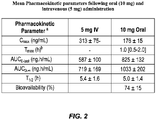
- the estimated mean absolute bioavailability of oral baclofen was 74%, indicating that approximately 25% of a 10-mg dose is either not absorbed or undergoes first-pass metabolism prior to drug reaching systemic circulation.
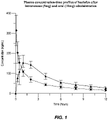
- the IV dose infused over 15 minutes, produced a similar AUC; although C max was higher and T max (time to maximum plasma concentration) earlier than with the oral dose. It also implies that a lower intravenous baclofen dose will be needed when substituted for oral doses.
- the between-subject variability in exposure was similar in both intravenous and oral arms (coefficient of variation: 18%-24%). Both 3 and 5mg IV baclofen were well tolerated. The results indicated that additional studies with a larger sample size are needed to precisely determine the population's mean absolute bioavailability and adverse event profile.
- a dose escalation study of IV and oral baclofen in 36 healthy volunteers was carried out using a randomized crossover oral/IV dose design and incorporating the investigational baclofen IV injection.
- the objectives of the study were: 1) characterize the pharmacokinetics of clinically relevant doses of oral and intravenous baclofen, 2) determine the safety profile of oral and intravenous baclofen, and 3) estimate bioequivalence parameters (AUC and C max ) for 10- and 60-minute (only 15 mg dose) infusions of baclofen.
- the general design of the study involved three cohorts of 12 subjects. Initially 3 subjects were randomized to receive the lowest dosing regimen. These subjects received a 7.5 mg IV infusion, followed by a washout period of 2 or more days, followed by a 10 mg oral dose. Upon demonstration that these 3 subjects tolerated the IV dose, the remaining 9 subjects were randomized for dosing. Twelve subjects completed Cohort 1 and received a 7.5 mg IV and a 10 mg oral dose. The IV baclofen doses were based on a 75% bioavailability observed in the pilot study. In Cohort 2, 12 different subjects received 11.5 mg of IV and 15 mg of oral baclofen. In Cohort 3, another 12 subjects received 20 mg of oral and 15 mg of IV baclofen.
- Pharmacokinetic analysis was performed with Phoenix (Centara), a pharmacokinetic data analysis package. Pharmacokinetic parameters, including the observed maximum concentration (C max ), the observed time to maximum concentration (T max ), area under the concentration-time curve (AUC), clearance (CL), and volume of distribution (V d ), were estimated using non-compartmental analysis. The absolute oral bioavailability was calculated by dividing the dose-normalized AUC after oral dosing by the dose-normalized AUC after intravenous dosing. For an exploratory study of bioequivalence, the 90% confidence intervals of the geometric mean AUC(0-t), AUC(0- ⁇ ) and C max oral/IV ratios were determined using the 60-minute infusion as the test dose and the oral 15 mg dose as the reference.
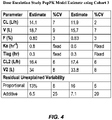
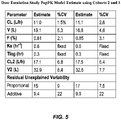
- Plasma concentrations from cohorts 2 and 3 from Study 2 described above were used to build a two-compartment model simultaneously describing the IV and PO routes of administration.
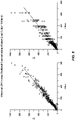
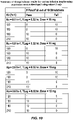
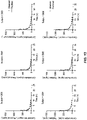
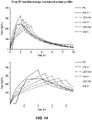
- Population PK models were developed using data from cohort 3 and cohorts 2 and 3 combined (see Figs. 4 and 5 ). It is worth noting that the PK parameter estimates from both study populations were similar. Two PK models with fixed absorption rate constants (Ka) of 0.6 and 0.8 hr -1 were used. These were determined from estimates from the population pharmacokinetic model and literature. Visual predictive checks for these models are shown in Figs. 6-9 .
- baclofen bioavailability is variable among patients and may be dependent on dose.
- Systemic exposures after IV administration of baclofen will not vary as will oral administration, since bioavailability is excluded as a source of variability following IV administration.
- Dose adjustments in patients receiving IV baclofen replacement therapy protect against either low plasma concentrations possibly leading to an increased risk in spasticity or high concentrations leading to possible CNS-related adverse effects.
- a population pharmacokinetic model was developed using the observed plasma concentrations of baclofen following oral dosing of 20 mg and IV dosing of 15 mg infused over 10 and 60 minutes.
- Plasma concentrations of baclofen were best described by a two-compartment model, displaying a very rapid tissue distribution phase indicative of highly perfused tissues such as the liver, lung and brain and a more prolonged elimination phase.
- the modeling results revealed that the mean distribution t 1/2 was rapid ( ⁇ 0.3 hr), indicating that elevated plasma levels of baclofen would be short-lived once an infusion was stopped.
- Population mean terminal t 1/2 ( ⁇ ) is approximately 4.2 hours, which is comparable to the values based on non-compartmental analysis.
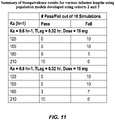
- baclofen concentrations for a 20 mg oral dose, a 15mg IV dose infused over 180 minutes, and 16 mg IV dose infusions administered over 180 and 240 min were simulated. This allowed a determination of the effect of infusion duration on baclofen C max .
- the simulation results are summarized in Fig. 19 .
- Part 1 of this study was a single-dose, open-label, four-treatment, randomized, crossover bioequivalence study of baclofen tablets and baclofen injection in healthy adults under fasted conditions. If needed, Part 2 of this study was to be a single-dose, two-way crossover between the most promising infusion of baclofen injection from Part 1 and baclofen tablets. Because the study objective of bioequivalence between baclofen infusions(s) and baclofen tablets was demonstrated in Part 1 of the study, planned Part 2 was not conducted.
- This study design was a single-dose, open-label, four-treatment, randomized, crossover. Using this design, each subject was to serve as his/her own control, precluding the need for a separate control group.
- the study design is typical for bioavailability and bioequivalence studies.
- Each treatment administration was separated by a washout period of at least 3 days. Each dose was administered following a 10-hour overnight fast.
- Urine was collected for drug, alcohol, and cotinine testing at screening and check-in.
- Female subjects had urine collected for pregnancy testing at screening, check-in, and at the end of the study/early termination.
- baclofen injection was given via IV infusion.
- the dose of baclofen tablet was given orally with 240 mL (8 fl oz) of room temperature water.
- Test Product Baclofen Injection 2 mg/mL
- Concentration-time data for baclofen were analyzed using noncompartmental methods in Phoenix TM WinNonlin ® (Version 6.3, Certara L.P.). During the pharmacokinetic analysis, concentrations below the limit of quantitation (BLQ) up to the time of the first quantifiable concentration were treated as zero. Embedded (values between 2 quantifiable concentrations) and/or terminal BLQ concentrations were treated as "missing”. Actual sample times, relative to the time of dose, were used in the pharmacokinetic analysis.
- BLQ limit of quantitation
- C max Maximum plasma concentration, determined directly from individual concentration-time data T max Time of the maximum plasma concentrations ⁇ z
- AUC last Area under the plasma concentration-time curves from time-zero to the time of the last quantifiable concentration; calculated using the linear trapezoidal rule AUC inf Area under the plasma concentration-time curves from time-zero extrapolated to infinity; calculated as: AUC inf AUC last + C last / ⁇ z AUC Extrap (%)
- Plasma Blood (plasma) pharmacokinetic characteristics were assessed after each dose of investigational product.
- samples were drawn at 0 hour (predose) and 0.5, 1.0, 1.5, 2.0, 2.5, 3.0, 3.5, 4.0, 4.5, 5.0, 6.0, 7, 8, 10, 12, 18, 24, 30, 36, and 48 hours after starting the infusion.
- samples were drawn at 0 hour (predose) and at 0.25, 0.5, 0.75, 1.0, 1.5, 2.0 3.0, 3.5, 4.0, 5.0, 6.0, 7, 8, 10, 12, 18, 24, 30, 36, and 48 hours after oral administration.
- Predose blood samples obtained from backup subjects who were randomized into the study may have exceeded the predose collection window.
- Subject X (19-year old, male) withdrew consent on Day 2 after receiving Treatment D (baclofen tablet 20 mg) in Period 1 and was not included in the PK analysis.
- Subject Y (29-year old, female) withdrew consent on Day 3 after receiving Treatment B (baclofen IV 16 mg infused over 180 minutes) in Period 1 and was not included in the PK analysis.
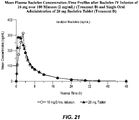
- Median T max occurred approximately 2.0 to 3.0 hours earlier for the oral tablet (1.0 h) compared to the IV infusions. Median T max values were similar across IV infusions, ranging from 3.0-4.0 hours. Mean T 1/2 were similar for IV infusions and the oral tablet; ranging from 5.5 h to 5.8 h.
- baclofen IV infusions 15 mg of baclofen administered intravenously over 180 minutes; 16 mg of baclofen administered intravenously over 180 minutes; and 16 mg of baclofen administered intravenously over 240 minutes) were bioequivalent to the 20 mg baclofen oral tablet. Therefore, the study was concluded after Part 1.
Landscapes
- Health & Medical Sciences (AREA)
- Chemical & Material Sciences (AREA)
- Medicinal Chemistry (AREA)
- Pharmacology & Pharmacy (AREA)
- Life Sciences & Earth Sciences (AREA)
- Animal Behavior & Ethology (AREA)
- General Health & Medical Sciences (AREA)
- Public Health (AREA)
- Veterinary Medicine (AREA)
- Epidemiology (AREA)
- Dermatology (AREA)
- Engineering & Computer Science (AREA)
- Bioinformatics & Cheminformatics (AREA)
- Chemical Kinetics & Catalysis (AREA)
- General Chemical & Material Sciences (AREA)
- Nuclear Medicine, Radiotherapy & Molecular Imaging (AREA)
- Organic Chemistry (AREA)
- Acyclic And Carbocyclic Compounds In Medicinal Compositions (AREA)
- Pharmaceuticals Containing Other Organic And Inorganic Compounds (AREA)
- Medicinal Preparation (AREA)
Applications Claiming Priority (1)
| Application Number | Priority Date | Filing Date | Title |
|---|---|---|---|
| US202063130503P | 2020-12-24 | 2020-12-24 |
Publications (1)
| Publication Number | Publication Date |
|---|---|
| EP4019016A1 true EP4019016A1 (fr) | 2022-06-29 |
Family
ID=75746239
Family Applications (1)
| Application Number | Title | Priority Date | Filing Date |
|---|---|---|---|
| EP21171176.7A Pending EP4019016A1 (fr) | 2020-12-24 | 2021-04-29 | Procédés d'administration intraveineuse de baclofène |
Country Status (5)
| Country | Link |
|---|---|
| US (1) | US20220202753A1 (fr) |
| EP (1) | EP4019016A1 (fr) |
| JP (1) | JP2024501259A (fr) |
| CA (1) | CA3203253A1 (fr) |
| WO (1) | WO2022140181A1 (fr) |
Family Cites Families (4)
| Publication number | Priority date | Publication date | Assignee | Title |
|---|---|---|---|---|
| EP1478367A2 (fr) * | 2002-02-27 | 2004-11-24 | Board Of Regents The University Of Texas System | Administration continue par voie rachidienne de chlorhydrate de midazolam pour le traitement de la douleur |
| EP2065038A1 (fr) * | 2007-11-30 | 2009-06-03 | Pharnext | Nouvelles approches thérapeutiques pour traiter la maladie de Charcot-Marie-Tooth |
| EP3244884A4 (fr) * | 2015-01-15 | 2018-07-25 | Allaysis, LLC | Compositions intraveineuses de baclofène et méthodes de traitement associées |
| EP3347004A4 (fr) * | 2015-10-21 | 2019-06-05 | Allaysis, LLC | Intraveineuse de baclofène et méthodes de traitement |
-
2021
- 2021-04-29 EP EP21171176.7A patent/EP4019016A1/fr active Pending
- 2021-12-17 WO PCT/US2021/064055 patent/WO2022140181A1/fr not_active Ceased
- 2021-12-17 CA CA3203253A patent/CA3203253A1/fr active Pending
- 2021-12-17 US US17/554,518 patent/US20220202753A1/en active Pending
- 2021-12-17 JP JP2023538081A patent/JP2024501259A/ja active Pending
Non-Patent Citations (4)
| Title |
|---|
| PROQUEST: "Orphan Drug Development: The Regulatory, Economic and Scientific Aspects of Intravenous Baclofen - ProQuest", 1 January 2018 (2018-01-01), XP093273765, Retrieved from the Internet <URL:https://www.proquest.com/docview/2502192790/abstract/17286F380B4142D8PQ/1?accountid=29404&sourcetype=Dissertations%20&%20Theses> [retrieved on 20250430] * |
| SCHMITZ N S: "ORPHAN DRUG DEVELOPMENT: THE REGULATORY, ECONOMIC AND SCIENTIFIC ASPECTS OF INTRAVENOUS BACLOFEN", A DISSERTATION SUBMITTED TO THE FACULTY OF THE GRADUATE SCHOOL OF THE UNIVERSITY OF MINNESOTA, November 2018 (2018-11-01), XP055884507, Retrieved from the Internet <URL:https://conservancy.umn.edu/bitstream/handle/11299/219297/Schmitz_umn_0130E_19850.pdf?sequence=1> [retrieved on 20220127] * |
| SCHMITZ NSKRACH LECOLES LDMISHRA UAGARWAL SKCLOYD JCKRIEL RL: "A Randomized Dose Escalation Study of Intravenous Baclofen in Healthy Volunteers: Clinical Tolerance and Pharmacokinetics", PM&R, vol. 9, no. 8, 2017, pages 743 - 750, XP085180264, DOI: 10.1016/j.pmrj.2016.11.002 |
| SURESH K. AGARWALROBERT L. KRIELJAMES C. CLOYDLISA D. COLESLISA A. SCHERKENBACHMICHAEL H. TOBINLINDA E. KRACH: "A Pilot Study Assessing Pharmacokinetics and Tolerability of Oral and Intravenous Baclofen in Healthy Adult Volunteers", JOURNAL OF CHILD NEUROLOGY, vol. 30, no. 1, 2014, pages 37 - 41, XP009512571, DOI: 10.1177/0883073814535504 |
Also Published As
| Publication number | Publication date |
|---|---|
| US20220202753A1 (en) | 2022-06-30 |
| JP2024501259A (ja) | 2024-01-11 |
| WO2022140181A1 (fr) | 2022-06-30 |
| CA3203253A1 (fr) | 2022-06-30 |
Similar Documents
| Publication | Publication Date | Title |
|---|---|---|
| US20220249515A1 (en) | Ganaxolone for use in treating genetic epileptic disorders | |
| Jonkman et al. | Esketamine counters opioid-induced respiratory depression | |
| Keck Jr et al. | Valproate treatment of panic disorder and lactate-induced panic attacks | |
| EP1307194B2 (fr) | Composition a base de fentanyl destinee a l'administration nasale | |
| JP6891385B2 (ja) | トラジピタントによる治療方法 | |
| Farouk | Pre-incisional epidural magnesium provides pre-emptive and preventive analgesia in patients undergoing abdominal hysterectomy | |
| AU2019384074B2 (en) | Methods for administering corticosteroids | |
| AU2015336463B2 (en) | Compositions and methods for treating insomnia | |
| Schröder et al. | Efficacy, safety, and tolerability of intravesically administered 0.1% oxybutynin hydrochloride solution in adult patients with neurogenic bladder: a randomized, prospective, controlled multi‐center trial | |
| Kocum et al. | Intravenous paracetamol and dipyrone for postoperative analgesia after day-case tonsillectomy in children: a prospective, randomized, double blind, placebo controlled study | |
| KR20210149028A (ko) | 우울증의 치료 방법 | |
| US20250213552A1 (en) | Methods of administering nalbuphine | |
| Chue | Risperidone long-acting injection | |
| Tillmann et al. | Psychopharmacology and pharmacokinetics | |
| KR20190033605A (ko) | 알츠하이머 병 치료와 관련된 아밀로이드 관련 영상 이상을 치료하거나 예방하는 방법 | |
| JP2009501226A (ja) | 軽度ないし中等度のレベルの鎮静を誘発するためのプロポフォールプロドラッグの投与の方法 | |
| EP4019016A1 (fr) | Procédés d'administration intraveineuse de baclofène | |
| EP3820472A1 (fr) | Traitement des symptômes prurigineux de la maladie du foie | |
| Esmat et al. | Comparative study between transdermal fentanyl and melatonin patches on postoperative pain relief after lumber laminectomy, a double-blind, placebo-controlled trial | |
| CN114828889B (zh) | 用于治疗结节性硬化症的加奈索酮 | |
| JP5376481B1 (ja) | 経皮吸収用医薬組成物 | |
| Kocum et al. | 4406-Vol. 79/Ed 1/in 2013 Section: Artigo Original Pages: 89 to 94 | |
| Weinberg et al. | Levobupivacaine for Regional Anesthesia and Pain Management. | |
| CA3001709A1 (fr) | Intraveineuse de baclofene et methodes de traitement | |
| Mohammed | The pharmacokinetics of intravenous ketorolac in children aged 2 months to 16 years: A population analysis |
Legal Events
| Date | Code | Title | Description |
|---|---|---|---|
| PUAI | Public reference made under article 153(3) epc to a published international application that has entered the european phase |
Free format text: ORIGINAL CODE: 0009012 |
|
| STAA | Information on the status of an ep patent application or granted ep patent |
Free format text: STATUS: THE APPLICATION HAS BEEN PUBLISHED |
|
| AK | Designated contracting states |
Kind code of ref document: A1 Designated state(s): AL AT BE BG CH CY CZ DE DK EE ES FI FR GB GR HR HU IE IS IT LI LT LU LV MC MK MT NL NO PL PT RO RS SE SI SK SM TR |
|
| STAA | Information on the status of an ep patent application or granted ep patent |
Free format text: STATUS: REQUEST FOR EXAMINATION WAS MADE |
|
| 17P | Request for examination filed |
Effective date: 20220706 |
|
| RBV | Designated contracting states (corrected) |
Designated state(s): AL AT BE BG CH CY CZ DE DK EE ES FI FR GB GR HR HU IE IS IT LI LT LU LV MC MK MT NL NO PL PT RO RS SE SI SK SM TR |
|
| STAA | Information on the status of an ep patent application or granted ep patent |
Free format text: STATUS: EXAMINATION IS IN PROGRESS |
|
| 17Q | First examination report despatched |
Effective date: 20231219 |