EP4019632A1 - Mrna-zielmolekül basierend auf n-acetylgalactosamin-bindendem polypeptid und herstellungsverfahren dafür - Google Patents
Mrna-zielmolekül basierend auf n-acetylgalactosamin-bindendem polypeptid und herstellungsverfahren dafür Download PDFInfo
- Publication number
- EP4019632A1 EP4019632A1 EP20902709.3A EP20902709A EP4019632A1 EP 4019632 A1 EP4019632 A1 EP 4019632A1 EP 20902709 A EP20902709 A EP 20902709A EP 4019632 A1 EP4019632 A1 EP 4019632A1
- Authority
- EP
- European Patent Office
- Prior art keywords
- mrna
- sequence
- gbd
- acetylgalactosamine
- puromycin
- Prior art date
- Legal status (The legal status is an assumption and is not a legal conclusion. Google has not performed a legal analysis and makes no representation as to the accuracy of the status listed.)
- Withdrawn
Links
Images

Classifications
-
- C—CHEMISTRY; METALLURGY
- C12—BIOCHEMISTRY; BEER; SPIRITS; WINE; VINEGAR; MICROBIOLOGY; ENZYMOLOGY; MUTATION OR GENETIC ENGINEERING
- C12N—MICROORGANISMS OR ENZYMES; COMPOSITIONS THEREOF; PROPAGATING, PRESERVING, OR MAINTAINING MICROORGANISMS; MUTATION OR GENETIC ENGINEERING; CULTURE MEDIA
- C12N15/00—Mutation or genetic engineering; DNA or RNA concerning genetic engineering, vectors, e.g. plasmids, or their isolation, preparation or purification; Use of hosts therefor
- C12N15/09—Recombinant DNA-technology
- C12N15/11—DNA or RNA fragments; Modified forms thereof; Non-coding nucleic acids having a biological activity
-
- A—HUMAN NECESSITIES
- A61—MEDICAL OR VETERINARY SCIENCE; HYGIENE
- A61K—PREPARATIONS FOR MEDICAL, DENTAL OR TOILETRY PURPOSES
- A61K48/00—Medicinal preparations containing genetic material which is inserted into cells of the living body to treat genetic diseases; Gene therapy
- A61K48/005—Medicinal preparations containing genetic material which is inserted into cells of the living body to treat genetic diseases; Gene therapy characterised by an aspect of the 'active' part of the composition delivered, i.e. the nucleic acid delivered
- A61K48/0058—Nucleic acids adapted for tissue specific expression, e.g. having tissue specific promoters as part of a contruct
-
- A—HUMAN NECESSITIES
- A61—MEDICAL OR VETERINARY SCIENCE; HYGIENE
- A61K—PREPARATIONS FOR MEDICAL, DENTAL OR TOILETRY PURPOSES
- A61K47/00—Medicinal preparations characterised by the non-active ingredients used, e.g. carriers or inert additives; Targeting or modifying agents chemically bound to the active ingredient
- A61K47/50—Medicinal preparations characterised by the non-active ingredients used, e.g. carriers or inert additives; Targeting or modifying agents chemically bound to the active ingredient the non-active ingredient being chemically bound to the active ingredient, e.g. polymer-drug conjugates
- A61K47/51—Medicinal preparations characterised by the non-active ingredients used, e.g. carriers or inert additives; Targeting or modifying agents chemically bound to the active ingredient the non-active ingredient being chemically bound to the active ingredient, e.g. polymer-drug conjugates the non-active ingredient being a modifying agent
- A61K47/54—Medicinal preparations characterised by the non-active ingredients used, e.g. carriers or inert additives; Targeting or modifying agents chemically bound to the active ingredient the non-active ingredient being chemically bound to the active ingredient, e.g. polymer-drug conjugates the non-active ingredient being a modifying agent the modifying agent being an organic compound
- A61K47/549—Sugars, nucleosides, nucleotides or nucleic acids
-
- A—HUMAN NECESSITIES
- A61—MEDICAL OR VETERINARY SCIENCE; HYGIENE
- A61K—PREPARATIONS FOR MEDICAL, DENTAL OR TOILETRY PURPOSES
- A61K47/00—Medicinal preparations characterised by the non-active ingredients used, e.g. carriers or inert additives; Targeting or modifying agents chemically bound to the active ingredient
- A61K47/50—Medicinal preparations characterised by the non-active ingredients used, e.g. carriers or inert additives; Targeting or modifying agents chemically bound to the active ingredient the non-active ingredient being chemically bound to the active ingredient, e.g. polymer-drug conjugates
- A61K47/51—Medicinal preparations characterised by the non-active ingredients used, e.g. carriers or inert additives; Targeting or modifying agents chemically bound to the active ingredient the non-active ingredient being chemically bound to the active ingredient, e.g. polymer-drug conjugates the non-active ingredient being a modifying agent
- A61K47/62—Medicinal preparations characterised by the non-active ingredients used, e.g. carriers or inert additives; Targeting or modifying agents chemically bound to the active ingredient the non-active ingredient being chemically bound to the active ingredient, e.g. polymer-drug conjugates the non-active ingredient being a modifying agent the modifying agent being a protein, peptide or polyamino acid
- A61K47/64—Drug-peptide, drug-protein or drug-polyamino acid conjugates, i.e. the modifying agent being a peptide, protein or polyamino acid which is covalently bonded or complexed to a therapeutically active agent
-
- A—HUMAN NECESSITIES
- A61—MEDICAL OR VETERINARY SCIENCE; HYGIENE
- A61K—PREPARATIONS FOR MEDICAL, DENTAL OR TOILETRY PURPOSES
- A61K47/00—Medicinal preparations characterised by the non-active ingredients used, e.g. carriers or inert additives; Targeting or modifying agents chemically bound to the active ingredient
- A61K47/50—Medicinal preparations characterised by the non-active ingredients used, e.g. carriers or inert additives; Targeting or modifying agents chemically bound to the active ingredient the non-active ingredient being chemically bound to the active ingredient, e.g. polymer-drug conjugates
- A61K47/51—Medicinal preparations characterised by the non-active ingredients used, e.g. carriers or inert additives; Targeting or modifying agents chemically bound to the active ingredient the non-active ingredient being chemically bound to the active ingredient, e.g. polymer-drug conjugates the non-active ingredient being a modifying agent
- A61K47/62—Medicinal preparations characterised by the non-active ingredients used, e.g. carriers or inert additives; Targeting or modifying agents chemically bound to the active ingredient the non-active ingredient being chemically bound to the active ingredient, e.g. polymer-drug conjugates the non-active ingredient being a modifying agent the modifying agent being a protein, peptide or polyamino acid
- A61K47/65—Peptidic linkers, binders or spacers, e.g. peptidic enzyme-labile linkers
-
- A—HUMAN NECESSITIES
- A61—MEDICAL OR VETERINARY SCIENCE; HYGIENE
- A61K—PREPARATIONS FOR MEDICAL, DENTAL OR TOILETRY PURPOSES
- A61K48/00—Medicinal preparations containing genetic material which is inserted into cells of the living body to treat genetic diseases; Gene therapy
- A61K48/0008—Medicinal preparations containing genetic material which is inserted into cells of the living body to treat genetic diseases; Gene therapy characterised by an aspect of the 'non-active' part of the composition delivered, e.g. wherein such 'non-active' part is not delivered simultaneously with the 'active' part of the composition
- A61K48/0025—Medicinal preparations containing genetic material which is inserted into cells of the living body to treat genetic diseases; Gene therapy characterised by an aspect of the 'non-active' part of the composition delivered, e.g. wherein such 'non-active' part is not delivered simultaneously with the 'active' part of the composition wherein the non-active part clearly interacts with the delivered nucleic acid
- A61K48/0033—Medicinal preparations containing genetic material which is inserted into cells of the living body to treat genetic diseases; Gene therapy characterised by an aspect of the 'non-active' part of the composition delivered, e.g. wherein such 'non-active' part is not delivered simultaneously with the 'active' part of the composition wherein the non-active part clearly interacts with the delivered nucleic acid the non-active part being non-polymeric
-
- A—HUMAN NECESSITIES
- A61—MEDICAL OR VETERINARY SCIENCE; HYGIENE
- A61P—SPECIFIC THERAPEUTIC ACTIVITY OF CHEMICAL COMPOUNDS OR MEDICINAL PREPARATIONS
- A61P1/00—Drugs for disorders of the alimentary tract or the digestive system
- A61P1/16—Drugs for disorders of the alimentary tract or the digestive system for liver or gallbladder disorders, e.g. hepatoprotective agents, cholagogues, litholytics
-
- C—CHEMISTRY; METALLURGY
- C07—ORGANIC CHEMISTRY
- C07K—PEPTIDES
- C07K19/00—Hybrid peptides, i.e. peptides covalently bound to nucleic acids, or non-covalently bound protein-protein complexes
-
- C—CHEMISTRY; METALLURGY
- C12—BIOCHEMISTRY; BEER; SPIRITS; WINE; VINEGAR; MICROBIOLOGY; ENZYMOLOGY; MUTATION OR GENETIC ENGINEERING
- C12N—MICROORGANISMS OR ENZYMES; COMPOSITIONS THEREOF; PROPAGATING, PRESERVING, OR MAINTAINING MICROORGANISMS; MUTATION OR GENETIC ENGINEERING; CULTURE MEDIA
- C12N15/00—Mutation or genetic engineering; DNA or RNA concerning genetic engineering, vectors, e.g. plasmids, or their isolation, preparation or purification; Use of hosts therefor
- C12N15/09—Recombinant DNA-technology
- C12N15/87—Introduction of foreign genetic material using processes not otherwise provided for, e.g. co-transformation
Definitions
- the present invention belongs to the field of biotechnology, and in particular relates to an mRNA targeting molecule comprising an N-acetylgalactosamine binding polypeptide and a preparation method therefor.
- An asialoglycoprotein receptor is an abundant hetero-oligomer endocytic receptor, mainly exists on a surface of cell membrane of liver parenchymal cells facing the sinusoid, has specificity to sugar and is an endocytic receptor specifically expressed by hepatocytes.
- ASGPR's high-affinity ligand N-acetylgalactosamine (GalNAc) as a targeting molecule has made breakthroughs in the liver-targeting delivery of nucleic acid drugs, such as small interfering RNAs (siRNAs).
- siRNAs small interfering RNAs
- the receptor has been discovered for many years, the messenger RNA (mRNA) delivery system based on the receptor and its ligands has failed to achieve a breakthrough because the existing technical means cannot achieve effective coupling of mRNA and GalNAc.
- mRNAs into cells can be achieved through different methods, such as electroporation, sonoporation, microinjection, or cell transfection based on macromolecular compounds, but these methods are relatively toxic to cells and have certain difficulties in clinical transformations.
- the present invention discloses an mRNA targeting molecule comprising an N-acetylgalactosamine binding polypeptide and a preparation method therefor.
- GalNAc modification of mature mRNA molecules is realized, thereby realizing the liver-targeting delivery of mRNA drugs, which is of great significance for innovative basic research, new drug design and development.
- the present invention provides the following technical solutions:
- the DNA fragment comprises a promoter, a target gene, a specific protease cleavage sequence, and a polypeptide GlaNAc Binding Domain (GBD) sequence capable of binding to N-acetylgalactosamine, that are sequentially connected.
- GBD GlaNAc Binding Domain
- the DNA fragment can be used to construct an mRNA targeting molecule comprising an N-acetylgalactosamine binding polypeptide.
- the GBD sequence is one or a combination of more than one of SEQ ID NOs.1-5.
- the target gene sequence is set forth in SEQ ID NO. 6 or 7, wherein the target gene can be replaced with other genes, and the corresponding target genes can be selected according to different diseases to be treated.
- the specific protease cleavage sequence is one or more of T2A, P2A, E2A, F2A, TEV, VLP1 and SUMO specific protease cleavage sequences with a GBD sequence.
- the promoter is T3, T7 or SP6 promoter.
- the present invention also discloses an mRNA targeting molecule comprising an N-acetylgalactosamine binding polypeptide, which comprises an mRNA molecule obtained by in vitro transcription using a plasmid containing the above DNA fragment.
- the sequence of the mRNA molecule sequentially comprises a 5' cap, a target gene sequence, a specific protease cleavage sequence and a polypeptide GBD protein; the polypeptide GBD protein is obtained by ribosomal translation of the GBD sequence; and the GBD sequence end of the mRNA molecule is connected to the GBD protein through puromycin, and the GBD protein is connected to N-acetylgalactosamine through an enzymatic reaction.
- an mRNA molecule comprising a 5' cap, a target gene sequence, a specific protease cleavage sequence, and a GBD sequence is synthesized by in vitro transcription using the above DNA fragment as a template; under the action of T4 ligase, the mRNA molecule binds to the DNA-puromycin linker to form an mRNA-puromycin complex; through an in vitro translation system, the puromycin is connected to the tail of the antibody through the A-site of ribosome to form an mRNA-puromycin-GBD-specific protease cleavage sequence-gene function protein complex; and this product is subjected to specific protease cleavage to obtain an mRNA-puromycin-GBD complex.
- Puromycin is an analog of transfer RNA (tRNA), which can bind to the A-site of ribosome during the transcription process and form a peptide bond with the polypeptide fragment being synthesized to block the elongation of the peptide fragment.
- tRNA transfer RNA
- puromycin can also bind to the 3' end of RNA or DNA. Based on these properties, by binding a special peptide fragment with puromycin to the 3' end of an RNA molecule, a peptide fragment-RNA fusion molecule (peptide-RNA fusion product) can be formed.
- an mRNA-peptide fragment fusion molecule is designed and synthesized, and then the coupling of the mRNA molecule and GalNAc is realized through GalNAc modification on the special peptide fragment.
- the N-acetylgalactosamine transferase specifically binds to the GBD protein sequence to form an mRNA-puromycin-GBD-GalNAc complex, so that the mRNA molecule can be targeted to liver cells, thereby achieving specific delivery of mRNA drug molecules.
- the present invention also discloses a method for preparing the mRNA targeting molecule comprising an N-acetylgalactosamine binding polypeptide described above, comprising the following steps:
- the GBD sequence is set forth in SEQ ID NOS. 1-5.
- the DNA sequence of the DNA-puromycin linker is set forth in SEQ ID No. 8.
- SEQ ID No. 8 AAAAAAAAAAAAAAAAAAAAAAAAAAACC
- step S1 the plasmid vector is modified from pCDNA3.1.
- the present invention also discloses a use of the mRNA targeting molecule comprising an N-acetylgalactosamine binding polypeptide described above in the preparation of an mRNA drug for specific drug delivery using the mRNA tissue-specific delivery material targeting N-acetylgalactosamine, wherein N-acetylgalactosamine is connected to the 3' end, and by specifically binding to the asialoglycoprotein receptor on a surface of liver cells through the N-acetylgalactosamine, endocytosis is induced, which allows an mRNA to enter the cell for expression.
- the present invention has the following beneficial effects:
- the GalNAc modification on the mature mRNA molecule is realized; the problem that the existing GalNAc conjugation technology can only achieve the direct coupling of GalNAc with a short fragment of RNA is solved.
- N-acetylgalactosamine can connect and specifically bind to specific target cells in liver cells, the efficacy of mRNA drug molecules is improved, solving the technical problem of targeted delivery of nucleic acid drugs in the drug delivery process, and achieving the purpose of tissue-specific delivery through GalNAc modification on mRNA without using physical methods and chemical transfection reagents.
- a DNA fragment for constructing an mRNA targeting molecule comprising an N-acetylgalactosamine binding polypeptide comprises a promoter, a target gene, a specific protease cleavage sequence, and a polynulcleotide sequence encoding a GBD capable of binding to N-acetylgalactosamine, that are sequentially connected.
- the GBD sequence is one or a combination of more than one of SEQ ID NOs. 1-5.
- the target gene sequence is set forth in SEQ ID NO. 6 or 7.
- the specific protease cleavage sequence is one or more of T2A, P2A, E2A, F2A, TEV, VLP1 and SUMO specific protease cleavage sequences with the GBD sequence.
- the promoter is T3, T7 or SP6 promoter.
- an mRNA targeting molecule comprising an N-acetylgalactosamine binding polypeptide, which comprises an mRNA molecule obtained by in vitro transcription using a plasmid containing the above DNA fragment.
- the sequence of the mRNA molecule sequentially comprises a 5' cap, a target gene sequence, a specific protease cleavage sequence and a polypeptide GBD protein; the polypeptide GBD protein is obtained by ribosomal translation of the GBD sequence; and the GBD sequence end of the mRNA molecule is connected to the GBD protein through puromycin, and the GBD protein is connected to N-acetylgalactosamine through an enzymatic reaction.
- the mRNA tissue-specific delivery material targeting N-acetylgalactosamine is prepared by the following steps:
- sequence of the DNA-puromycin linker is set forth in SEQ ID NO. 8; and the GBD sequence is set forth in SEQ ID NOs. 1-5.
- step S1 the plasmid vector is modified from pCDNA3.1.
- a GalNAc-mediated mRNA liver cell delivery system is formed.
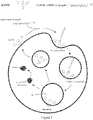
- N-acetylgalactosamine is connected to the 3' end, and by specifically binding to the asialoglycoprotein receptor on a surface of liver cells through the N-acetylgalactosamine, endocytosis is induced, which allows an mRNA to enter the cell for expression, as shown in Figure 2 .
- GBD bond with only one GalNAc a GBD bond with two GalNAcs, a GBD bond with three GalNAcs or a GBD bond with n GalNAcs can be generated.
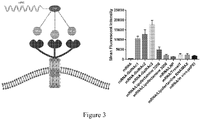
- the use of the triple GalNAc-mRNA conjugate has the highest transfection efficiency for liver cells, and the comparison results are shown in Figure 3 .
- Preparation of the transfection system 200 ⁇ L opti-MEM was taken, and 10 ⁇ g of the test product (including mRNA-GalNAc1, mRNA-GalNAc2, mRNA-GalNAc3, mRNA/lipo2000, mRNA/lipo3000, mRNA/LNP, mRNA/TransIT, mRNA/lipo RNAiMAX, and mRNA/In vivo-jetPEI, at a concentration of 2 ⁇ g/ ⁇ L, 5 ⁇ L) or a negative control of vector-free GFP-mRNA was added.
- the prepared transfection system was directly and evenly added dropwise into the cultured cells, followed by shaking well on all sides to make the transfection system evenly distributed on the cells.
- the medium was changed 6 hours after transfection, the old medium was aspirated, and each well was replaced with 2 mL of fresh medium (90% DMEM + 10% FBS).
- the fluorescence intensity was measured under a fluorescence microscope 36 hours after transfection.
- the experimental results are shown in Figure 3 , in which the mRNA expression intensity of the mRNA-GalNAc group is significantly higher than that of other vector groups, and the triple GalNAc-mRNA conjugate achieves the highest transfection efficiency.
- an mRNA targeting molecule comprising an N-acetylgalactosamine binding polypeptide, which is a novel mRNA drug capable of specific binding to liver cells.
- the GalNAc modification of the mRNA molecule was bound to the GBD protein sequence of the mRNA-puromycin-GBD molecule by an N-acetylgalactosamine transferase, to form an mRNA-puromycin-GBD-GalNAc molecule.
- the mRNA molecule was obtained by in vitro transcription using a plasmid containing the above DNA fragment, the sequence of the mRNA molecule sequentially comprised a 5' cap, a target gene sequence, a specific protease cleavage sequence, and a polynulcleotide sequence encoding a GBD capable of binding to N-acetylgalactosamine, and the GBD polypeptide was obtained by ribosomal translation of the GBD sequence.
- the mRNA targeting molecule was prepared by the following steps:
- step S1 on the basis that the liver cell was the tissue to which the mRNA is delivered, selecting the green fluorescent protein mWasabi as the target gene, and designing a fragment of polypeptide sequence (GBD) capable of binding to N-acetylgalactosamine (GalNAc).
- GBD polypeptide sequence capable of binding to N-acetylgalactosamine
- the GBD sequence was one or a combination of more than one of SEQ ID NOs.1-5.
- the target gene sequence was set forth in SEQ ID NO. 6.
- SEQ ID No. 6 GTGAGCAAGGGCGAGGAGCTGTTCACCGGGGTGGTGCCCATC CTGGTCGAGCTGGACGGCGACGTAAACGGCCACAAGTTCAGCGTG TCCGGCGAGGGCGAGGGCGATGCCACCTACGGCAAGCTGACCCTG
- AAGTTCATCTGCACCACCGGCAAGCTGCCCGTGCCCTGGCCCACCC TCGTGACCACCCTGACCTACGGCGTGCAGTGCTTCAGCCGCTACCC CGACCACATGAAGCAGCACGACTTCTTCAAGTCCGCCATGCCCGAA GGCTACGTCCAGGAGCGCACCATCTTCTTCAAGGACGACGGCAACT ACAAGACCCGCGCCGAGGTGAAGTTCGAGGGCGACACCCTGGTGA ACCGCATCGAGCTGAAGGGCATCGACTTCAAGGAGGACGGCAACA TCCTGGGGCACAAGCTGGAGTACAAGCTGCCACAACGTCTA TATCATGGCCG
- the specific protease cleavage sequence was one or more of T2A, P2A, E2A, F2A, TEV, VLP1 and SUMO specific protease cleavage sequences with a GBD sequence.
- the specific protease cleavage sequence used was Glu-Asn-Leu-Tyr-Phe-Gln-(Gly/Ser), as set forth in SEQ ID No. 9 and SEQ ID No. 10.
- the promoter was T3, T7 or SP6 promoter.
- the T7 promoter was used, and the sequence was set forth in SEQ ID No. 11: SEQ ID No.11: TAATACGACTCACTATAGG
- the mRNA-puromycin-GBD-GalNAc complex can be used to specifically bind to the ASGPR receptor on a surface of liver cells to achieve specific liver delivery of an mRNA.
- the above mRNA targeting molecule comprising an N-acetylgalactosamine binding polypeptide was used to prepare an mRNA drug for specific drug delivery. Accordingly, a GalNAc-mediated mRNA liver cell delivery system was formed, with its 3' end connected to N-acetylgalactosamine. By specifically binding to the asialoglycoprotein receptor on a surface of liver cells through the N-acetylgalactosamine, endocytosis is induced, which allows an mRNA to enter the cell for expression.
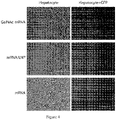
- Preparation of the transfection system 200 ⁇ L opti-MEM was taken, and 10 ⁇ g of the test product (GFP mRNA-GalNAc and GFP mRNA/LNP, at a concentration of 2 ⁇ g/ ⁇ L, 5 ⁇ L) or a negative control of vector-free GFP-mRNA (at a concentration of 2 ⁇ g/ ⁇ L, 5 ⁇ L) was added.
- the prepared transfection system was directly and evenly added dropwise into the cultured cells, followed by shaking well on all sides to make the transfection system evenly distributed on the cells.
- the medium was changed 6 hours after transfection, the old medium was aspirated, and each well was replaced with 2 mL of fresh medium (90% DMEM + 10% FBS).
- the fluorescence intensity was measured under a fluorescence microscope 36 hours after transfection.
- the experimental results were shown in Figure 4 , in which the mRNA expression intensity of the mRNA-GalNAc group is significantly higher than that of the LNP vector group.
- an mRNA targeting molecule comprising an N-acetylgalactosamine binding polypeptide, which was prepared by the following steps:
- step S1 on the basis that the liver cell was the tissue to which the mRNA is delivered, selecting the luciferase (Luc) as the target gene, and designing a fragment of polypeptide sequence (GBD) capable of binding to N-acetylgalactosamine (GalNAc), and cloning a combination of the relevant cloning elements into the pCDNA3.1 plasmid vector, wherein, the DNA fragment in the plasmid DNA included a promoter, a target gene, a specific protease cleavage sequence, and a polynulcleotide sequence encoding a GBD capable of binding to N-acetylgalactosamine, that were sequentially connected.
- GBD polypeptide sequence capable of binding to N-acetylgalactosamine
- the GBD as set forth in SEQ ID No. 2 was used as the GBD sequence.
- the target gene sequence was set forth in SEQ ID NO. 7.
- SEQ ID No.7 GTGAGCAAGGGCGAGGAGACCACAATGGGCGTAATCAAGCCC GACATGAAGATCAAGCTGAAGATGGAGGGCAACGTGAATGGCCAC GCCTTCGTGATCGAGGGCGAGGGCAAGCCCTACGACGGC ACCAACACCATCAACCTGGAGGTGAAGGAGGGAGCCCCTGCCC TTCTCCTACGACATTCTGACCACCGCGTTCAGTTACGGCAACAGGG CCTTCACCAAGTACCCCGACGACATCCCCAACTACTTCAAGCAGTC CTTCCCCGAGGGCTACTCTTGGGAGCGCACCATGACCTTCGAGGAC AAGGGCATCGTGAAGGTGAAGTCCGACATCCATGGAGGAGGAC TCCTTCATCTACGAGATACACCTCAAGGGCGAGAACTTCCCCCA ACGGCCCCGTGATGCAGAAGGAGACCACCGGCTGGGACGCCTCCA CCGAGAGGATGTACGTGCGCGACGG
- the specific protease cleavage sequence used was Glu-Asn-Leu-Tyr-Phe-Gln-(Gly/Ser), as set forth in SEQ ID No. 9 and SEQ ID No. 10.
- the promoter was T3, T7 or SP6 promoter.
- the T7 promoter was used, and the sequence was set forth in SEQ ID No. 11: SEQ ID No.11: TAATACGACTCACTATAGG
- the above mRNA targeting molecule comprising an N-acetylgalactosamine binding polypeptide was used to prepare an mRNA drug for specific drug delivery. Accordingly, a GalNAc-mRNA delivery system was formed.
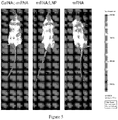
- the luciferase modified Luc mRNA-GalNAc, Luc mRNA/LNP and Luc mRNA prepared in the above example were directly introduced into the systemic circulation of mice via tail vein administration, and the expression intensity of the modified mRNA in vivo was characterized via the in vivo biofluorescence signals.
- mice were fixed on the platform for tail vein injection, and 200 ⁇ g of the above three mRNA drugs (1 ⁇ g/ ⁇ g, 200 ⁇ L) were injected, respectively. Fluorescence imaging observation was performed 24 hours later.
- D-fluorescein substrate was dissolved in a physiological saline to obtain a solution at a concentration of 15 mg/mL, and 100 ⁇ L of the solution was injected into the mice through the tail vein. 10 minutes later, the IVIS small animal imaging system was used to quantitatively analyze the signal intensity in the lung.
Landscapes
- Health & Medical Sciences (AREA)
- Life Sciences & Earth Sciences (AREA)
- Chemical & Material Sciences (AREA)
- Engineering & Computer Science (AREA)
- Genetics & Genomics (AREA)
- Bioinformatics & Cheminformatics (AREA)
- General Health & Medical Sciences (AREA)
- Molecular Biology (AREA)
- Biotechnology (AREA)
- Biochemistry (AREA)
- Organic Chemistry (AREA)
- Biomedical Technology (AREA)
- Medicinal Chemistry (AREA)
- Animal Behavior & Ethology (AREA)
- Public Health (AREA)
- Pharmacology & Pharmacy (AREA)
- Veterinary Medicine (AREA)
- Epidemiology (AREA)
- General Engineering & Computer Science (AREA)
- Zoology (AREA)
- Wood Science & Technology (AREA)
- Proteomics, Peptides & Aminoacids (AREA)
- Biophysics (AREA)
- Microbiology (AREA)
- Plant Pathology (AREA)
- Physics & Mathematics (AREA)
- Chemical Kinetics & Catalysis (AREA)
- Gastroenterology & Hepatology (AREA)
- General Chemical & Material Sciences (AREA)
- Nuclear Medicine, Radiotherapy & Molecular Imaging (AREA)
- Preparation Of Compounds By Using Micro-Organisms (AREA)
- Medicines That Contain Protein Lipid Enzymes And Other Medicines (AREA)
- Enzymes And Modification Thereof (AREA)
- Pharmaceuticals Containing Other Organic And Inorganic Compounds (AREA)
- Peptides Or Proteins (AREA)
- Apparatus Associated With Microorganisms And Enzymes (AREA)
- Micro-Organisms Or Cultivation Processes Thereof (AREA)
Applications Claiming Priority (2)
| Application Number | Priority Date | Filing Date | Title |
|---|---|---|---|
| CN201911300610.2A CN111041025B (zh) | 2019-12-17 | 2019-12-17 | 基于结合N-乙酰半乳糖胺多肽的mRNA靶向分子及其制备方法 |
| PCT/CN2020/136010 WO2021121173A1 (zh) | 2019-12-17 | 2020-12-14 | 基于结合N-乙酰半乳糖胺多肽的mRNA靶向分子及其制备方法 |
Publications (2)
| Publication Number | Publication Date |
|---|---|
| EP4019632A1 true EP4019632A1 (de) | 2022-06-29 |
| EP4019632A4 EP4019632A4 (de) | 2022-11-02 |
Family
ID=70236828
Family Applications (1)
| Application Number | Title | Priority Date | Filing Date |
|---|---|---|---|
| EP20902709.3A Withdrawn EP4019632A4 (de) | 2019-12-17 | 2020-12-14 | Mrna-zielmolekül basierend auf n-acetylgalactosamin-bindendem polypeptid und herstellungsverfahren dafür |
Country Status (7)
| Country | Link |
|---|---|
| US (1) | US11759532B2 (de) |
| EP (1) | EP4019632A4 (de) |
| JP (1) | JP2023506635A (de) |
| KR (1) | KR102616559B1 (de) |
| CN (1) | CN111041025B (de) |
| AU (1) | AU2020405482B2 (de) |
| WO (1) | WO2021121173A1 (de) |
Families Citing this family (4)
| Publication number | Priority date | Publication date | Assignee | Title |
|---|---|---|---|---|
| CN111041025B (zh) * | 2019-12-17 | 2021-06-18 | 深圳市瑞吉生物科技有限公司 | 基于结合N-乙酰半乳糖胺多肽的mRNA靶向分子及其制备方法 |
| CN111744019B (zh) | 2020-07-01 | 2023-08-04 | 深圳瑞吉生物科技有限公司 | 基于甘露糖的mRNA靶向递送系统及其应用 |
| CN113416762A (zh) * | 2020-08-20 | 2021-09-21 | 深圳市瑞吉生物科技有限公司 | 一种Cap2结构5′帽子类似物及其制备方法和应用 |
| CN112023062A (zh) * | 2020-09-18 | 2020-12-04 | 北京基因安科技有限公司 | 一个用可溶性IgE受体抑制过敏反应的方法 |
Family Cites Families (47)
| Publication number | Priority date | Publication date | Assignee | Title |
|---|---|---|---|---|
| AU3463699A (en) | 1998-04-03 | 1999-10-25 | Phylos, Inc. | Addressable protein arrays |
| CN1297907A (zh) * | 1999-11-24 | 2001-06-06 | 上海博容基因开发有限公司 | 一种新的多肽——人乙酰半乳糖苷转移酶45和编码这种多肽的多核苷酸 |
| CN1347903A (zh) * | 2000-10-11 | 2002-05-08 | 上海博德基因开发有限公司 | 一种新的多肽——人GalNAc-T9.02和编码这种多肽的多核苷酸 |
| AU2003265523A1 (en) | 2002-08-20 | 2004-03-11 | Genitrix, Llc | Lectin compositions and methods for modulating an immune response to an antigen |
| JP2005151891A (ja) * | 2003-11-27 | 2005-06-16 | Japan Science & Technology Agency | 細胞認識糖側鎖を持つ多糖系遺伝子キャリアー |
| US8993295B2 (en) | 2006-07-20 | 2015-03-31 | The General Hospital Corporation | Methods, compositions, and kits for the selective activation of protoxins through combinatorial targeting |
| WO2008073458A2 (en) * | 2006-12-11 | 2008-06-19 | Bracco Imaging S.P.A. | Fibrin-binding peptides and conjugates thereof |
| WO2009082607A2 (en) | 2007-12-04 | 2009-07-02 | Alnylam Pharmaceuticals, Inc. | Targeting lipids |
| DK2297333T3 (en) | 2008-05-30 | 2015-04-07 | Massachusetts Inst Technology | Method for spatial separation and for screening cells |
| US8501930B2 (en) * | 2010-12-17 | 2013-08-06 | Arrowhead Madison Inc. | Peptide-based in vivo siRNA delivery system |
| EP2652134B1 (de) | 2010-12-17 | 2017-03-01 | Arrowhead Pharmaceuticals, Inc. | Galactose-cluster-pharmakokinetischer modulator zur anzielung einer einheit für sirna |
| ES2605990T3 (es) | 2010-12-29 | 2017-03-17 | F. Hoffmann-La Roche Ag | Conjugados de molécula pequeña para la administración intracelular de ácidos nucleicos |
| US8916696B2 (en) | 2011-06-12 | 2014-12-23 | City Of Hope | Aptamer-mRNA conjugates for targeted protein or peptide expression and methods for their use |
| CN104114572A (zh) | 2011-12-16 | 2014-10-22 | 现代治疗公司 | 经修饰的核苷、核苷酸和核酸组合物 |
| CA2868391A1 (en) | 2012-04-02 | 2013-10-10 | Stephane Bancel | Polynucleotides comprising n1-methyl-pseudouridine and methods for preparing the same |
| US9512456B2 (en) | 2012-08-14 | 2016-12-06 | Modernatx, Inc. | Enzymes and polymerases for the synthesis of RNA |
| WO2014081507A1 (en) | 2012-11-26 | 2014-05-30 | Moderna Therapeutics, Inc. | Terminally modified rna |
| SG11201507474QA (en) | 2013-03-14 | 2015-10-29 | Shire Human Genetic Therapies | RIBONUCLEIC ACIDs WITH 4'-THIO-MODIFIED NUCLEOTIDES AND RELATED METHODS |
| CA3216595A1 (en) | 2013-03-14 | 2014-10-02 | Kevin Fitzgerald | Complement component c5 irna compositions and methods of use thereof |
| EP2971010B1 (de) | 2013-03-14 | 2020-06-10 | ModernaTX, Inc. | Formulierung und abgabe von modifizierten nukleosid-, nukleotid- und nukleinsäurezusammensetzungen |
| DK2991656T3 (da) | 2013-05-01 | 2020-03-23 | Ionis Pharmaceuticals Inc | Sammensætninger og fremgangsmåder til modulering af apolipoprotein c-iii-ekspression |
| CN105164261B (zh) | 2013-05-01 | 2022-03-18 | 莱古路斯治疗法股份有限公司 | 用于增强的细胞摄取的化合物和方法 |
| AU2014306416B2 (en) | 2013-08-16 | 2021-02-25 | Translate Bio Ma, Inc. | Compositions and methods for modulating RNA |
| JP6754997B2 (ja) | 2013-08-26 | 2020-09-16 | 国立大学法人 東京大学 | 大環状ペプチド、その製造方法、及び大環状ペプチドライブラリを用いるスクリーニング方法 |
| JP6584412B2 (ja) | 2014-01-15 | 2019-10-02 | ベースクリック ゲーエムベーハー | 糖修飾核酸分子 |
| CN104189897A (zh) | 2014-05-21 | 2014-12-10 | 深圳先进技术研究院 | 一种树突状细胞高效负载抗原的制备方法 |
| WO2016055601A1 (en) | 2014-10-10 | 2016-04-14 | F. Hoffmann-La Roche Ag | Galnac phosphoramidites, nucleic acid conjugates thereof and their use |
| US11219634B2 (en) * | 2015-01-21 | 2022-01-11 | Genevant Sciences Gmbh | Methods, compositions, and systems for delivering therapeutic and diagnostic agents into cells |
| IL316159A (en) | 2015-06-15 | 2024-12-01 | Mpeg La Llc | Defined Oligonucleotide Multimers and Methods for Manufacture Thereof |
| KR20180038465A (ko) * | 2015-08-07 | 2018-04-16 | 애로우헤드 파마슈티컬스 인코포레이티드 | B형 간염 바이러스 감염에 대한 rnai 치료법 |
| KR20180039726A (ko) | 2015-09-04 | 2018-04-18 | 더 캘리포니아 인스티튜트 포 바이오메디칼 리써치 | 인슐린 면역글로불린 융합 단백질 |
| EP3403094A4 (de) * | 2016-01-15 | 2019-08-21 | Galen Biotechnologies, LLC | Transfer-rna-ligandadduktbibliotheken |
| SG10202008301UA (en) | 2016-04-11 | 2020-10-29 | Arbutus Biopharma Corp | Targeted nucleic acid conjugate compositions |
| WO2017212009A1 (en) | 2016-06-09 | 2017-12-14 | Curevac Ag | Hybrid carriers for nucleic acid cargo |
| EP3551230A1 (de) | 2016-12-08 | 2019-10-16 | CureVac AG | Rna zur behandlung oder prophylaxe einer lebererkrankung |
| US11566253B2 (en) * | 2017-01-26 | 2023-01-31 | The Regents Of The University Of California | Targeted gene demethylation in plants |
| CA3056756C (en) | 2017-03-17 | 2021-12-07 | Cubicstars, Inc. | Method for producing complex of rna molecule and peptide, and utilization thereof |
| CA3050614A1 (en) | 2017-03-17 | 2018-09-20 | Curevac Ag | Rna vaccine and immune checkpoint inhibitors for combined anticancer therapy |
| EP3461487A1 (de) * | 2017-09-29 | 2019-04-03 | Nlife Therapeutics S.L. | Zusammensetzungen und verfahren zur abgabe von mrna an leberzellen |
| CN111630173A (zh) | 2017-10-19 | 2020-09-04 | 库瑞瓦格股份公司 | 新型人工核酸分子 |
| WO2020056370A1 (en) | 2018-09-13 | 2020-03-19 | Modernatx, Inc. | Modified mrna for the treatment of progressive familial intrahepatic cholestasis disorders |
| WO2020086885A2 (en) * | 2018-10-24 | 2020-04-30 | Brandeis University | Multivalent glycopeptides that tightly bind to carbohydrate-binding monoclonal antibody family pgt128 |
| CA3118305A1 (en) | 2018-11-02 | 2020-05-07 | Arbutus Biopharma Corporation | Bivalent targeted conjugates |
| EP4013767A4 (de) | 2019-08-15 | 2023-10-25 | Ionis Pharmaceuticals, Inc. | Verbindungsmodifizierte oligomere verbindungen und ihre verwendungen |
| CN111041025B (zh) | 2019-12-17 | 2021-06-18 | 深圳市瑞吉生物科技有限公司 | 基于结合N-乙酰半乳糖胺多肽的mRNA靶向分子及其制备方法 |
| CN112111524B (zh) | 2020-01-10 | 2024-02-27 | 深圳瑞吉生物科技有限公司 | mRNA-GalNAc靶向分子的制备方法及其体内递送系统和应用 |
| CN111744019B (zh) | 2020-07-01 | 2023-08-04 | 深圳瑞吉生物科技有限公司 | 基于甘露糖的mRNA靶向递送系统及其应用 |
-
2019
- 2019-12-17 CN CN201911300610.2A patent/CN111041025B/zh active Active
-
2020
- 2020-12-14 WO PCT/CN2020/136010 patent/WO2021121173A1/zh not_active Ceased
- 2020-12-14 KR KR1020227023976A patent/KR102616559B1/ko active Active
- 2020-12-14 EP EP20902709.3A patent/EP4019632A4/de not_active Withdrawn
- 2020-12-14 AU AU2020405482A patent/AU2020405482B2/en active Active
- 2020-12-14 JP JP2022536655A patent/JP2023506635A/ja active Pending
-
2022
- 2022-03-11 US US17/693,173 patent/US11759532B2/en active Active
Also Published As
| Publication number | Publication date |
|---|---|
| WO2021121173A1 (zh) | 2021-06-24 |
| KR102616559B1 (ko) | 2023-12-20 |
| CN111041025A (zh) | 2020-04-21 |
| KR20220106222A (ko) | 2022-07-28 |
| US11759532B2 (en) | 2023-09-19 |
| JP2023506635A (ja) | 2023-02-17 |
| AU2020405482B2 (en) | 2023-04-20 |
| US20220265859A1 (en) | 2022-08-25 |
| AU2020405482A1 (en) | 2022-04-07 |
| CN111041025B (zh) | 2021-06-18 |
| EP4019632A4 (de) | 2022-11-02 |
Similar Documents
| Publication | Publication Date | Title |
|---|---|---|
| US11759532B2 (en) | mRNA targeting molecule comprising N-acetylgalactosamine binding polypeptide and preparation method therefor | |
| CN113164509B (zh) | 用于抑制17β-HSD 13型(HSD17B13)表达的RNAi试剂、其组合物和使用方法 | |
| US8569065B2 (en) | Compositions and methods for the delivery of biologically active RNAs | |
| WO2015002956A1 (en) | Exosome delivery system | |
| Nikan et al. | Targeted delivery of antisense oligonucleotides using neurotensin peptides | |
| WO2008140126A1 (ja) | 1本鎖環状rnaおよびその製造方法 | |
| JP4517061B2 (ja) | ダンベル型dnaの効率的な製造方法 | |
| JP2022506219A (ja) | ジストロフィンエクソンスキッピングのための二重特異性アンチセンスオリゴヌクレオチド | |
| US20130164845A1 (en) | Compositions and Methods for the Delivery of Biologically Active RNAs | |
| CN112673106A (zh) | 点击修饰的mRNA | |
| JP2009507852A (ja) | リボ核酸の細胞への送達用医薬組成物 | |
| CN114846142A (zh) | 用于抑制β-ENaC表达的RNAi试剂、其组合物和使用方法 | |
| CN112941072B (zh) | 一种核酸自组装结构及其制备方法和应用 | |
| US20220160870A1 (en) | Neoantigen engineering using splice modulating compounds | |
| HK40070499A (en) | Mrna targeting molecule based on n-acetylgalactosamine binding polypeptide and preparation method therefor | |
| CN115244176A (zh) | 向导rna-cas蛋白复合物的缀合物 | |
| EP3502258A1 (de) | Click-modifizierte in-vitro-transkribierte mrna für genexpression | |
| CN113073098B (zh) | 抑制BACE1基因表达的siRNA修饰物及其应用 | |
| CN110551722A (zh) | 一种核酸复合物及其制备方法和应用 | |
| WO2011111874A1 (ja) | 細胞膜透過性ダンベル型rnaおよびその製造方法 | |
| CN119074947A (zh) | 一种肝靶向小核酸药物载体、药用组合物及其制备方法和应用 | |
| WO2026048718A1 (ja) | Psapを標的とした二本鎖rna及びその利用 | |
| WO2025247180A1 (zh) | 用于制备含较少非目的序列的环状rna的载体和方法 | |
| WO2026088997A1 (ja) | Tdp-43を標的とした二本鎖rna及びその利用 | |
| CN100579987C (zh) | 一种新型肝靶向的、具有siRNA导入能力的融合蛋白 |
Legal Events
| Date | Code | Title | Description |
|---|---|---|---|
| STAA | Information on the status of an ep patent application or granted ep patent |
Free format text: STATUS: THE INTERNATIONAL PUBLICATION HAS BEEN MADE |
|
| PUAI | Public reference made under article 153(3) epc to a published international application that has entered the european phase |
Free format text: ORIGINAL CODE: 0009012 |
|
| STAA | Information on the status of an ep patent application or granted ep patent |
Free format text: STATUS: REQUEST FOR EXAMINATION WAS MADE |
|
| 17P | Request for examination filed |
Effective date: 20220325 |
|
| AK | Designated contracting states |
Kind code of ref document: A1 Designated state(s): AL AT BE BG CH CY CZ DE DK EE ES FI FR GB GR HR HU IE IS IT LI LT LU LV MC MK MT NL NO PL PT RO RS SE SI SK SM TR |
|
| STAA | Information on the status of an ep patent application or granted ep patent |
Free format text: STATUS: EXAMINATION IS IN PROGRESS |
|
| REG | Reference to a national code |
Ref country code: HK Ref legal event code: DE Ref document number: 40070499 Country of ref document: HK |
|
| A4 | Supplementary search report drawn up and despatched |
Effective date: 20221004 |
|
| RIC1 | Information provided on ipc code assigned before grant |
Ipc: A61K 47/64 20170101ALI20220928BHEP Ipc: A61K 48/00 20060101ALI20220928BHEP Ipc: C07K 5/083 20060101ALI20220928BHEP Ipc: C12N 15/87 20060101ALI20220928BHEP Ipc: C12N 15/11 20060101AFI20220928BHEP |
|
| 17Q | First examination report despatched |
Effective date: 20221014 |
|
| RAP3 | Party data changed (applicant data changed or rights of an application transferred) |
Owner name: SHENZHEN RHEGEN BIOTECHNOLOGY CO., LTD. |
|
| DAV | Request for validation of the european patent (deleted) | ||
| DAX | Request for extension of the european patent (deleted) | ||
| P01 | Opt-out of the competence of the unified patent court (upc) registered |
Effective date: 20230621 |
|
| STAA | Information on the status of an ep patent application or granted ep patent |
Free format text: STATUS: THE APPLICATION IS DEEMED TO BE WITHDRAWN |
|
| 18D | Application deemed to be withdrawn |
Effective date: 20250701 |