EP4020404A1 - Verfahren, vorrichtung und computerprogrammprodukt zur änderungsdetektion basierend auf digitalen signaturen - Google Patents
Verfahren, vorrichtung und computerprogrammprodukt zur änderungsdetektion basierend auf digitalen signaturen Download PDFInfo
- Publication number
- EP4020404A1 EP4020404A1 EP21216006.3A EP21216006A EP4020404A1 EP 4020404 A1 EP4020404 A1 EP 4020404A1 EP 21216006 A EP21216006 A EP 21216006A EP 4020404 A1 EP4020404 A1 EP 4020404A1
- Authority
- EP
- European Patent Office
- Prior art keywords
- digital signature
- interest
- previously determined
- particular location
- difference
- Prior art date
- Legal status (The legal status is an assumption and is not a legal conclusion. Google has not performed a legal analysis and makes no representation as to the accuracy of the status listed.)
- Pending
Links
Images

Classifications
-
- G—PHYSICS
- G06—COMPUTING OR CALCULATING; COUNTING
- G06V—IMAGE OR VIDEO RECOGNITION OR UNDERSTANDING
- G06V20/00—Scenes; Scene-specific elements
- G06V20/50—Context or environment of the image
- G06V20/52—Surveillance or monitoring of activities, e.g. for recognising suspicious objects
-
- G—PHYSICS
- G06—COMPUTING OR CALCULATING; COUNTING
- G06F—ELECTRIC DIGITAL DATA PROCESSING
- G06F18/00—Pattern recognition
- G06F18/20—Analysing
- G06F18/22—Matching criteria, e.g. proximity measures
-
- G—PHYSICS
- G06—COMPUTING OR CALCULATING; COUNTING
- G06F—ELECTRIC DIGITAL DATA PROCESSING
- G06F18/00—Pattern recognition
- G06F18/20—Analysing
- G06F18/28—Determining representative reference patterns, e.g. by averaging or distorting; Generating dictionaries
-
- G—PHYSICS
- G06—COMPUTING OR CALCULATING; COUNTING
- G06N—COMPUTING ARRANGEMENTS BASED ON SPECIFIC COMPUTATIONAL MODELS
- G06N20/00—Machine learning
-
- G—PHYSICS
- G06—COMPUTING OR CALCULATING; COUNTING
- G06V—IMAGE OR VIDEO RECOGNITION OR UNDERSTANDING
- G06V10/00—Arrangements for image or video recognition or understanding
- G06V10/40—Extraction of image or video features
-
- G—PHYSICS
- G06—COMPUTING OR CALCULATING; COUNTING
- G06V—IMAGE OR VIDEO RECOGNITION OR UNDERSTANDING
- G06V10/00—Arrangements for image or video recognition or understanding
- G06V10/70—Arrangements for image or video recognition or understanding using pattern recognition or machine learning
- G06V10/74—Image or video pattern matching; Proximity measures in feature spaces
- G06V10/75—Organisation of the matching processes, e.g. simultaneous or sequential comparisons of image or video features; Coarse-fine approaches, e.g. multi-scale approaches; using context analysis; Selection of dictionaries
- G06V10/751—Comparing pixel values or logical combinations thereof, or feature values having positional relevance, e.g. template matching
-
- G—PHYSICS
- G06—COMPUTING OR CALCULATING; COUNTING
- G06V—IMAGE OR VIDEO RECOGNITION OR UNDERSTANDING
- G06V10/00—Arrangements for image or video recognition or understanding
- G06V10/70—Arrangements for image or video recognition or understanding using pattern recognition or machine learning
- G06V10/82—Arrangements for image or video recognition or understanding using pattern recognition or machine learning using neural networks
Definitions
- An example embodiment relates generally to a method, apparatus, and computer program product for programmatically detecting changes to real-world entities and, more particularly, for programmatically detecting changes to real-world entities by utilizing digital signatures.
- Models and/or mappings of portions of the world are generated for various purposes such as navigation, routing and/or the like. Over time, it is likely that certain locations may change in appearance to some degree. For example, an office building may be demolished and a parking garage may be built in its place. In another example, and to a lesser extent, a gas station may change branding, such that the same physical structure of the gas station is maintained while the colors and/or signage of the gas station are updated. This dynamic state of the world typically results in models and/or mappings that quickly become out-of-date and decrease in usefulness.
- a method, apparatus and computer program product are therefore provided in accordance with an example embodiment in order to utilize digital signatures to accurately and efficiently identify changes to objects of interest within images and cause revision to stored digital signatures representative of the objects of interest such that models and/or mappings may be maintained and updated in real-time.
- Embodiments herein may utilize portable compact signatures that allow objects of interest to be recognized within images in an efficient manner.
- real-time or near real-time detection of such objects and regions within images and subsequent detection of mismatches between digital signatures may be performed faster, more accurately, and more efficiently than other approaches, such as approaches that utilize three-dimensional (3D) models and perform 3D localization for data stored in a 3D point cloud, which require, for example, more extensive back end processing.
- a method comprising obtaining a digital signature for an object of interest at a particular location.
- the method also includes determining whether a difference between the digital signature and a previously determined digital signature associated with the particular location satisfies a predefined criterion. In accordance with determining that the difference fails to satisfy the predefined criterion, the method causes information regarding the object of interest at the particular location to be collected.
- obtaining the digital signature for the object of interest at the particular location includes receiving one or more images comprising the object of interest generated by an image capture device and determining the digital signature for the object of interest utilizing a deep learning model comprising a signature encoding module.
- the method obtains the digital signature for the object of interest of the particular location by receiving the digital signature from a client device.
- the method of an example embodiment also includes identifying the previously determined digital signature that is associated with the particular location prior to determining the difference between the digital signature and the previously determined digital signature. In some embodiments, the method also includes determining the difference between the digital signature and the previously determined digital signature. In this regard, the method determines the difference by applying a distance function to the digital signature and the previously determined digital signature. The difference comprises a result of the distance function.
- the method of an example embodiment also includes causing an indication of a mismatch between the digital signature and the previously determined digital signature to be signaled in an instance in which the difference fails to satisfy the predefined criterion.
- the method also includes, in accordance with determining that the difference fails to satisfy the predefined criterion, causing the digital signature, as opposed the previously determined digital signature, to be associated with the particular location.
- the method of an example embodiment also includes requiring a plurality of mismatches between the digital signature and the previously determined digital signature in which the difference fails to satisfy the predefined criterion over a predefined period of time prior to causing information regarding the object of interest at the particular location to be collected.
- the method of an example embodiment causes information regarding the object of interest at the particular location to be collected by processing the one or more images to extract one or more features of the object of interest.
- causing information regarding the object of interest at the particular location to be collected also comprises storing an indication of the one or more features in association with the object of interest.
- the digital signature and the previously determined digital signature may each be based on respective images of the object of interest captured from a same viewing direction.
- an apparatus in another embodiment, includes processing circuitry and at least one memory including computer program code instructions with the computer program code instructions being configured to, when executed by the processing circuity, cause the apparatus to obtain a digital signature for an object of interest at a particular location.
- the computer program code instructions are also configured to, when executed by the processing circuity, cause the apparatus to determine whether a difference between the digital signature and a previously determined digital signature associated with the particular location satisfies a predefined criterion.
- the computer program code instructions are configured to, when executed by the processing circuity, cause the apparatus to in accordance with determining that the difference fails to satisfy the predefined criterion, cause information regarding the object of interest at the particular location to be collected.
- the apparatus of an example embodiment is caused to obtain the digital signature for the object at interest of the particular location by receiving one or more images comprising the object of interest generated by an image capture device and determining the digital signature for the object of interest utilizing a deep learning model comprising a signature encoding module.
- the computer program code instructions are further configured to, when executed by the processing circuity, cause the apparatus to identify the previously determined digital signature that is associated with the particular location prior to determining the difference between the digital signature and the previously determined digital signature.
- the computer program code instructions of an example embodiment are further configured to, when executed by the processing circuity, cause the apparatus to determine the difference between the digital signature and the previously determined digital signature.
- the apparatus is caused to determine the difference by applying a distance function to the digital signature and the previously determined digital signature with the difference comprising a result of the distance function.
- the computer program code instructions are further configured to, when executed by the processing circuity, cause the apparatus to cause an indication of a mismatch between the digital signature and the previously determined digital signature to be signaled in an instance in which the difference fails to satisfy the predefined criterion.
- the computer program code instructions of an example embodiment are further configured to, when executed by the processing circuity, cause the apparatus to, in accordance with determining that the difference fails to satisfy the predefined criterion, cause to the digital signature, as opposed to the previously determined digital signature , to be associated with the particular location.
- the computer program code instructions of an example embodiment are further configured to, when executed by the processing circuity, cause the apparatus to require a plurality of mismatches between the digital signature and the previously determined digital signature in which the difference fails to satisfy the predefined criterion over a predefined period of time prior to causing information regarding the object of interest at the particular location to be collected.
- the computer program code instructions that are configured to cause information regarding the object of interest at the particular location to be collected are further configured to, when executed by the processing circuity, cause the apparatus to process the one or more images to extract one or more features of the object of interest.
- the computer program code instructions that are configured to cause information regarding the object of interest at the particular location to be collected may be further configured to, when executed by the processing circuity, cause the apparatus to store an indication of the one or more features in association with the object of interest.
- the digital signature and the previously determined digital signature may each be based on respective images of the object of interest captured from a same viewing direction.
- a computer program product includes at least one non-transitory computer-readable storage medium having computer-executable program code instructions stored therein with the computer-executable program code instructions including program code instructions configured to obtain a digital signature for an object of interest at a particular location.
- the computer-executable program code instructions also comprise program code instructions configured to determine whether a difference between the digital signature and a previously determined digital signature associated with the particular location satisfies a predefined criterion.
- the computer-executable program code instructions also comprise program code instructions configured to, in accordance with determining that the difference fails to satisfy the predefined criterion, cause information regarding the object of interest at the particular location to be collected.
- the program code instructions configured to obtain the digital signature for the object of interest of the particular location may include program code instructions configured to receive one or more images including the object of interest generated by an image capture device and program code instructions configured to determine the digital signature for the object of interest utilizing a deep learning model comprising a signature encoding module.
- the computer-executable program code instructions also comprise program code instructions configured to identify the previously determined digital signature that is associated with the particular location prior to determining the difference between the digital signature and the previously determined digital signature.
- the computer-executable program code instructions of some example embodiments also comprise program code instructions configured to determine the difference between the digital signature and the previously determined digital signature by applying a distance function to the digital signature and the previously determined digital signature. The difference comprises a result of the distance function.
- the computer-executable program code instructions of an example embodiment also comprise program code instructions configured to cause an indication of a mismatch between the digital signature and the previously determined digital signature to be signaled in an instance in which the difference fails to satisfy the predefined criterion.
- the computer-executable program code instructions also comprise program code instructions configured to, in accordance with determining that the difference fails to satisfy the predefined criterion, cause to the digital signature, as opposed to the previously determined digital signature, to be associated with the particular location.
- the computer-executable program code instructions of an example embodiment also comprise program code instructions configured to require a plurality of mismatches between the digital signature and the previously determined digital signature in which the difference fails to satisfy the predefined criterion over a predefined period of time prior to causing information regarding the object of interest at the particular location to be collected.
- the program code instructions configured to cause information regarding the object of interest at the particular location to be collected are further configured to process the one or more images to extract one or more features of the object of interest.
- the program code instructions configured to cause information regarding the object of interest at the particular location to be collected are further configured in an example embodiment to store an indication of the one or more features in association with the object of interest.
- the digital signature and the previously determined digital signature may each be based on respective images of the object of interest captured from a same viewing direction.
- an apparatus comprising means for obtaining a digital signature for an object of interest at a particular location.
- the apparatus also includes means for determining whether a difference between the digital signature and a previously determined digital signature associated with the particular location satisfies a predefined criterion. In accordance with determining that the difference fails to satisfy the predefined criterion, the apparatus includes means for causing information regarding the object of interest at the particular location to be collected.
- the means for obtaining the digital signature for the object of interest at the particular location includes means for receiving one or more images comprising the object of interest generated by an image capture device and means for determining the digital signature for the object of interest utilizing a deep learning model comprising a signature encoding module.
- the means for obtaining the digital signature for the object of interest of the particular location includes means for receiving the digital signature from a client device.
- the apparatus of an example embodiment also includes means for identifying the previously determined digital signature that is associated with the particular location prior to determining the difference between the digital signature and the previously determined digital signature.
- the apparatus also includes means for determining the difference between the digital signature and the previously determined digital signature.
- the means for determining the difference includes means for applying a distance function to the digital signature and the previously determined digital signature. The difference comprises a result of the distance function.
- the apparatus of an example embodiment also includes means for causing an indication of a mismatch between the digital signature and the previously determined digital signature to be signaled in an instance in which the difference fails to satisfy the predefined criterion.
- the apparatus also includes means, in accordance with determining that the difference fails to satisfy the predefined criterion, for causing the digital signature, as opposed the previously determined digital signature, to be associated with the particular location.
- the apparatus of an example embodiment also includes means for requiring a plurality of mismatches between the digital signature and the previously determined digital signature in which the difference fails to satisfy the predefined criterion over a predefined period of time prior to causing information regarding the object of interest at the particular location to be collected.
- the means for causing information regarding the object of interest at the particular location to be collected may include means for processing the one or more images to extract one or more features of the object of interest.
- the means for causing information regarding the object of interest at the particular location to be collected also comprises means for storing an indication of the one or more features in association with the object of interest.
- the digital signature and the previously determined digital signature may each be based on respective images of the object of interest captured from a same viewing direction.
- a method, apparatus and computer program product are provided in accordance with an example embodiment in order to utilize digital signatures to accurately and efficiently identify changes to objects of interest within captured images based on changes in the digital signatures representative of the objects of interest. Based upon the changes to objects of interest, models and/or mappings that reference the objects of interest may be maintained and updated in real-time. In addition, the digital signature representative of a particular location at which an object of interest has changed may also be updated.
- the object of interest within the image is identified by a query processing module comprising a neural network that has been trained as described below to recognize the object of interest utilizing the respective digital signature of the one or more objects of interest and, in some embodiments, at least some context associated with the one or more objects of interest that are depicted by one or more reference images.
- the method, apparatus, and computer program product may be configured to utilize a trained query processing module to identify objects of interest within an image.
- a digital signature need not represent context associated with the object of interest and, in other embodiments, may exclusively represent an object of interest.
- the following discussion relating to an object of interest and context associated with the object of interest is equally applicable with respect to consideration of an object of interest itself without consideration of any associated context.
- the apparatus that is configured to efficiently identify changes to objects of interest within captured images and cause updates to or replacement of stored digital signatures may be embodied by any of a wide variety of computing devices.
- the apparatus may be embodied by a server, a computer workstation, a distributed network of computing devices, a personal computer, a navigation or mapping system, or any other type of computing device.
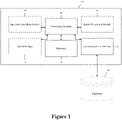
- the apparatus 10 includes, is associated with, or is in communication with processing circuitry 12, memory 14, a communication interface 16, a query processing module 22, and optionally a user interface 18 and a signature encoding module 20, as shown in Figure 1 .
- the processing circuitry 12 (and/or co-processors or any other processors assisting or otherwise associated with the processing circuitry) can be in communication with the memory 14 via a bus for passing information among components of the apparatus.
- the memory 14 can be non-transitory and can include, for example, one or more volatile and/or non-volatile memories.
- the memory 14 may be an electronic storage device (for example, a computer readable storage medium) comprising gates configured to store data (for example, bits) that can be retrievable by a machine (for example, a computing device like the processing circuitry).
- the memory can be configured to store information, data, content, applications, instructions, or the like for enabling the apparatus to carry out various functions in accordance with an example embodiment of the present disclosure.
- the memory 14 can be configured to buffer input data for processing by the processing circuitry 12. Additionally or alternatively, the memory can be configured to store instructions for execution by the processing circuitry.
- the processing circuitry 12 can be embodied in a number of different ways.
- the processing circuitry 12 may be embodied as one or more of various hardware processing means such as a processor, a coprocessor, a microprocessor, a controller, a digital signal processor (DSP), a processing element with or without an accompanying DSP, or various other processing circuitry including integrated circuits such as, for example, an ASIC (application specific integrated circuit), an FPGA (field programmable gate array), a microcontroller unit (MCU), a hardware accelerator, a special-purpose computer chip, or the like.
- the processing circuitry 12 can include one or more processing cores configured to perform independently.
- a multi-core processor can enable multiprocessing within a single physical package.
- the processing circuitry 12 can include one or more processors configured in tandem via the bus to enable independent execution of instructions, pipelining and/or multithreading.
- the processing circuitry 12 can be configured to execute instructions stored in the memory 14 or otherwise accessible to the processing circuitry.
- the processing circuitry can be configured to execute hard coded functionality.
- the processing circuitry can represent an entity (for example, physically embodied in circuitry) capable of performing operations according to an embodiment of the present disclosure while configured accordingly.
- the processing circuitry when the processing circuitry is embodied as an ASIC, FPGA or the like, the processing circuitry can be specifically configured hardware for conducting the operations described herein.
- the processing circuitry when the processing circuitry is embodied as an executor of software instructions, the instructions can specifically configure the processing circuitry to perform the algorithms and/or operations described herein when the instructions are executed.
- the processing circuitry can be a processor of a specific device (for example, a computing device) configured to employ an embodiment of the present disclosure by further configuration of the processor by instructions for performing the algorithms and/or operations described herein.
- the processing circuitry 12 can include, among other things, a clock, an arithmetic logic unit (ALU) and/or one or more logic gates configured to support operation of the processing circuitry.
- ALU arithmetic logic unit
- the apparatus 10 of an example embodiment can also include the communication interface 16 that can be any means such as a device or circuitry embodied in either hardware or a combination of hardware and software that is configured to receive and/or transmit data from/to other electronic devices in communication with the apparatus, such as a database 24 which, in one embodiment, comprises a map database that stores data (e.g., map data, route data, etc.) generated and/or employed by the processing circuitry 12.
- a database 24 which, in one embodiment, comprises a map database that stores data (e.g., map data, route data, etc.) generated and/or employed by the processing circuitry 12.
- the communication interface can be configured to communicate in accordance with various wireless protocols including Global System for Mobile Communications (GSM), such as but not limited to Long Term Evolution (LTE).
- GSM Global System for Mobile Communications
- LTE Long Term Evolution
- the communication interface can include, for example, an antenna (or multiple antennas) and supporting hardware and/or software for enabling communications with a wireless communication network.
- the communication interface can include, for example, an antenna (or multiple antennas) and supporting hardware and/or software for enabling communications with a wireless communication network. Additionally or alternatively, the communication interface can include the circuitry for interacting with the antenna(s) to cause transmission of signals via the antenna(s) or to handle receipt of signals received via the antenna(s). In some environments, the communication interface can alternatively or also support wired communication and/or may alternatively support vehicle to infrastructure wireless links.
- the apparatus 10 may also include or be in communication with one or more a positioning system, such as a global positioning system (GPS) and/or other localization system.
- a positioning system such as a global positioning system (GPS) and/or other localization system.
- the apparatus 10, such as the processing circuitry 12 may be configured to determine its location, such as upon capture of an image, based upon information provided by the positioning system.
- the apparatus 10 may also optionally comprise a signature encoding module 20.
- the signature encoding module may be configured to perform operations associated with generating a digital signature of an object of interest and associated context. As described below, during training, the signature encoding module 20 may receive, as input, a reference image that includes an object of interest that has been demarcated and be trained to provide, as output, a digital signature representing the object of interest and at least some of the context associated with the object of interest.
- the apparatus 10 may also comprise a query processing module 22.
- the query processing module 22 may be configured to perform operations associated with identifying an object of interest within an image based upon respective digital signatures of one or more objects of interest and at least some context associated with the one or more objects of interest that are depicted by one or more reference images.
- the query processing module 22 may be a trained to identify objects of interest within images. As described in more detail below, during training, the query processing module may receive, as input, one or more query images in addition to a digital signature of a respective object of interest, such as a digital signature generated by the signature encoding module 20 and stored by the memory 14 and/or a database 24.
- the query processing module may be trained to predict a location in the one or more query images that contains the object of interest. Once trained, the query processing module may be configured to efficiently identify an object of interest within an image based upon respective digital signatures of one or more objects of interest and at least some context associated with the one or more objects of interest that are depicted by one or more reference images.
- the signature encoding module 20 and/or the query processing module 22 may be embodied by the processing circuitry in other example embodiments.
- the database 24 may be configured to store representations of a plurality of images and associated metadata.
- the representations of the plurality of images may be encoded representations, such as the hash codes, generated for the respective images, although different or additional representations of the images may be stored in the database in other embodiments including storage of the images themselves.
- the metadata for the plurality of images may comprise location data (e.g., GPS coordinates) that defines the location at which the image was taken, time and date information indicative of a time and/or date at which an image was captured.
- the metadata for the plurality of images may also comprise camera-related information, such as a camera orientation at the time that the image was captured and/or other camera-related information.
- the database 24 may also store one or more digital signatures associated with respective images.
- the digital signatures are representative of an object of interest within a respective image, as well as at least some of the context associated with the object of interest within the image.
- One or more digital signatures may be associated with each image.
- each digital signature may be representative of a different object of interest and at least some context associated therewith within the object of interest.
- the digital signatures may have been generated by the signature encoding module 20, as described in more detail below.
- the apparatus 10 may also optionally include a user interface 18 that may, in turn, be in communication with the processing circuitry 12 to provide output to the user and, in some embodiments, to receive an indication of a user input.
- the user interface may include a display and, in some embodiments, may also include a keyboard, a mouse, a joystick, a touch screen, touch areas, soft keys, one or more microphones, a plurality of speakers, or other input/output mechanisms.
- the processing circuitry may comprise user interface circuitry configured to control at least some functions of one or more user interface elements such as a display and, in some embodiments, a plurality of speakers, a ringer, one or more microphones and/or the like.
- the processing circuitry and/or user interface circuitry embodied by the processing circuitry may be configured to control one or more functions of one or more user interface elements through computer program instructions (for example, software and/or firmware) stored on a memory accessible to the processing circuitry (for example, memory 14, and/or the like).
- computer program instructions for example, software and/or firmware
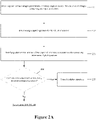
- the apparatus includes means, such as the processing circuitry 12, memory 14, communication interface 16, and/or the like, for receiving one or more images generated by an image capture device.
- the one or more images include an object of interest.
- the one or more images may be received from a source external to and in communication with the apparatus (e.g., by way of communication interface 16), such as an image capture device, or, in some embodiments, the image may be received from the database 24 or memory 14 that store one or more images captured by the image capture device, and/or from other sources.
- a source external to and in communication with the apparatus e.g., by way of communication interface 16
- the image may be received from the database 24 or memory 14 that store one or more images captured by the image capture device, and/or from other sources.
- the apparatus may receive a plurality of images that are processed concurrently or in combination with one another, the apparatus will be described below in relation to the receipt and processing of single image by way of example, but not of limitation.
- the image may be a photograph or frame of a video generated by an image capture device, such as a camera, video camera, or the like.
- the image capture device may be an image capture device that is configured to be relocated.
- the image capture device may be relocated due to the image capture device being stationed onboard, carried by or embodied by a moving entity, such as a vehicle, person, or the like.
- the image may depict real-world content and may include one or more objects of interest that can be identified by embodiments described herein.
- the apparatus 10 includes means, such as the processing circuitry 12, memory 14, communication interface 16, and/or the like, for receiving information regarding an estimated location of the image capture device and/or the object of interest, such as based upon information provided by an associated positioning system.
- the image that is received may be associated with metadata comprising information about the image.
- the metadata may include location data indicative of a location at which the image was generated.
- the location data may comprise a pair of coordinates (e.g., latitudinal/longitudinal coordinates) provided by a positioning system carried by the image capture device indicative of a particular location at which the image was generated, such as the location of the image capture device at the time that the image was captured, and/or an estimation of the location of the object of interest.
- Additional metadata may include information related to a position and/or an orientation of the image capture device at the time the image was generated, and/or historical information related to one or more previous locations of the image capture device.
- the apparatus 10 includes means, such as the processing circuitry 12, memory 14, and/or the like, for determining the estimated location of the object of interest based on data associated with the received image. For example, metadata associated with the image as described above and information associated with previous locations of the image capture device (e.g., based on location data of previous images taken by the image capture device) may be combined using a filter, such as a Kalman filter, in order to determine an estimated location of the object of interest captured by the image capture device.
- a filter such as a Kalman filter
- the apparatus 10 includes means, such as the processing circuitry 12, memory 14, signature encoding module 20, query processing module 22, and/or the like, for, determining a digital signature for the object of interest. For example, a digital signature for an object within the image may be determined for the object and, in some embodiments, for at least some context associated with the object. In some embodiments, an object within the image may be automatically identified, e.g., through one or more image recognition processes. In some embodiments, an object within the image may be demarcated, e.g., by a user operating the image capture device, prior to the image being received by the apparatus 10. The object within the image may be demarcated in various ways. For example, in some embodiments, the image may be demarcated using an image mask.
- the digital signature may relate solely to the object of interest
- the digital signature of some embodiments relates to the object of interest and some context associated with the object of interest, thereby permitting objects of interest with similar appearances to be distinguished.
- "context" may refer to a portion of an image that is near to, such as by being adjacent to, proximate or surrounding, the object of interest.
- the context may comprise one or more buildings or other objects that are in close proximity to the particular building.
- the context is generally represented by a portion of the reference image that is outside of, but adjacent or otherwise proximate or near to the image mask.
- Embodiments herein describe an object of interest that is stationary (e.g., a building, structure, home, apartment building, business storefront, etc.), as well as context surrounding the object of interest being also stationary (e.g., neighboring buildings, locations, or the like). Since the object of interest is stationary, the stationary context surrounding the object of interest may be considered in conjunction with the identification of the object of interest in contrast to the identification or recognition of mobile or deformable objects of interest, which cannot rely upon the context in the vicinity thereof since the context may change based upon the mobility or deformability of these other object of interest.
- the context is typically implicit and need not be specifically designated as such.
- the digital signature may be generated using a signature encoding module 20, further described below, that may be embodied by a deep learning model comprising a plurality of neural network layers configured to decompose the image and a representation therein of the object of interest and at least some of the context associated with the object of interest to extract features therefrom and to derive a digital signature representing a combination of the object of interest and at least some of the context associated with the object of interest.
- the digital signature may be derived based on the object of interest and at least some context associated with the object of interest, such as one or more objects in the reference image other than the object of interest.
- the apparatus such as the signature encoding module 20, is configured to generate the digital signature by analyzing the image at different (e.g., higher) resolutions and extracting additional features from the reference image as the reference image is advanced from a courser resolution processed by one neural network layer to a finer resolution processed by another, subsequent neural network layer.
- the digital signature may comprise a sequence of bits and bytes unique to the object of interest and the associated context.
- the digital signature may be derived based on both the object of interest and at least some of its context such that different digital signatures would be generated for identical objects of interest if those objects of interest were in different locations with different context associated therewith.
- a digital signature may be a portable, compact digital representation of an object of interest, such as a place, structure, or entity, that can be used to locate the object of interest using computer vision.
- the apparatus 10 include means, such as the processing circuitry 12, memory 14, communication interface 16, and/or the like, for obtaining a digital signature for an object of interest at a particular location.
- the apparatus 10 may obtain a digital signature for an object of interest by receiving the digital signature from an external device, such as a client device.
- the apparatus 10 may include means, such as the processing circuitry 12, memory 14, communication interface 16, and/or the like, for receiving a digital signature from a client device.
- the apparatus 10 includes means, such as the processing circuitry 12, memory 14, and/or the like, for identifying whether the location of the object of interest is associated with a previously determined digital signature. For example, using the digital signature determined for the received image, the apparatus 10, such as the processing circuitry 12, may access a database (e.g., database 24) in order to determine whether the object of interest has been previously identified (e.g., a previously determined digital signature is stored in association with the location of the object of interest).
- a database e.g., database 24
- previously determined digital signatures stored in the database 24 may be stored in association with location information, for example, latitude and longitude coordinates that identify where the particular object of interest associated with the digital signature is located.
- location information for example, latitude and longitude coordinates that identify where the particular object of interest associated with the digital signature is located.
- the apparatus 10 may access and search only a portion of the database, e.g., stored digital signatures that have been identified to be proximate to, such as within a predefined distance of, the estimated location of the object of interest and/or the image capture device at the time at which the received image was captured.
- the method may continue to operation 205, wherein the apparatus 10 includes means, such as the processing circuitry 12, memory 14, and/or the like, for storing the digital signature.
- the digital signature (as determined in operation 202) may be stored (e.g., in database 24) in association with location information of the object of interest (e.g., latitude and longitude coordinates), thereby supplementing the database (e.g., database 24) that stores the digital signatures associated with objects of interest at different locations.
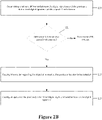
- the method may continue to operation 210 of FIG. 2B , wherein the apparatus 10 includes means, such as the processing circuitry 12, memory 14, and/or the like, for determining whether a difference between the digital signature and the previously determined digital signature satisfies a predefined criterion.
- the difference may comprise a result of a distance function that is applied to the digital signature and the previously determined digital signature.
- the apparatus 10 includes means, such as the processing circuitry 12, memory 14, and/or the like, for determining the difference between the digital signature and the previously determined digital signature.
- the apparatus 10 may include means, such as the processing circuitry 12, memory 14, and/or the like, for separately applying a distance function to the digital signature and the previously determined digital signature.
- a digital signature for the object of interest may comprise multiple digital signatures corresponding to different portions of the object of interest (as well as context associated with the object of interest).
- a digital signature for a building may include a digital signature specifically for the area of the main entrance of the building.
- difference between portions of the digital signature for the object of interest and a previously determined digital signature may be determined as well as differences in the entirety of the digital signature.
- the building may have undergone renovations to the front entrance, e.g., replacing a push/pull door with a revolving door entrance.
- a digital signature for the entrance of the building may change while the remaining digital signature(s) for the building remain the same.
- the result of the distance function may then be compared to a predefined criterion, such as a threshold value or other predefined criterion.
- a predefined criterion such as a threshold value or other predefined criterion. Reliance upon a predefined criterion allows not only for a comparison to a predefined numerical value, but also for more complex comparisons.
- the predefined criterion of some example embodiments may vary based on one or more factors, such as the application being executed that is reliant upon this comparison, the type of object that is identified by the digital signature, etc.
- the method may end and return to operation 201 of FIG.
- the digital signature and the previously determined digital signature may match or be nearly identical, such that it may be determined that the object of interest has not undergone a significant change to warrant an update and/or revision to the previously determined digital signature and/or to a map or other model at the location.
- the method continues to operation 212, wherein the apparatus 10 includes means, such as the processing circuitry 12, memory 14, communication interface 16, and/or the like, for causing information regarding the object of interest at the particular location to be collected.
- the apparatus 10 includes means, such as the processing circuitry 12, memory 14, communication interface 16, and/or the like, for signaling an indication of a mismatch between the digital signature and the previously determined digital signature.
- an indication may be displayed (e.g., via user interface 18) or transmitted to a remote system (e.g., a system configured to generate and/or maintain mappings and/or models) to alert an engineer or the like that the location and/or object of interest should be reviewed and/or updated, such as to confirm the change in the object of interest and/or to collect additional information regarding the object of interest.
- a remote system e.g., a system configured to generate and/or maintain mappings and/or models
- the information that is collected may be stored in association with the location of the object of interest. For example, updated information regarding the object of interest at the location may be determined by further processing the received image of the object of interest.
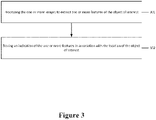
- the apparatus 10 of an example embodiment includes means, such as the processing circuitry 12, memory 14, and/or the like, for processing the one or more images to extract one or more features of the object of interest.
- a feature of the object of interest may be a business name for the object of interest.
- an object of interest such as a gas station may change owners and/or gas companies such that new signage is displayed on the gas station, resulting in a revision to the previously determined digital signature (for the previous company).
- the apparatus 10 of this example embodiment includes means, such as the processing circuitry 12, memory 14, and/or the like, for storing an indication of the one or more features in association with the location of the object of interest.
- Any of a number of applications may, in turn, utilize the updated information in the database, such as mapping and navigation applications, social media applications, etc.
- these applications that rely upon the updated information may perform accurately by identifying objects of interest that are up-to-date, such as by depicting the current objects of interest in a map or referencing the current objects of interest in relation to the provision of navigational directions.
- the method may continue to operation 213, such that the apparatus 10 includes means, such as the processing circuitry 12, memory 14, and/or the like, for causing an update to the previously determined digital signature based at least on the digital signature.
- the update comprises causing the digital signature, as opposed the previously determined digital signature, to be associated with the particular location.
- the apparatus 10 may replace the previously determined digital signature stored in the database with the newly obtained digital signature.
- an update to the previously determined signature may be automatically performed in instances in which a mismatch between a digital signature and a previously determined signature is identified, as described above.
- stored digital signatures may be maintained and kept up-to-date in the database.
- updates of the stored previously determined digital signature and collection of information, such as feature extraction of the image may not be advantageous for each or a single detection of a mismatch between digital signatures.
- an object of interest such as department store
- the process of digital signature revision and/or feature extraction should not be triggered by a single detection of a mismatch in digital signatures, due to events such as a bus or delivery truck partially blocking the location and causing digital signatures to meaningfully differ.
- information regarding the object of interest at the particular location to be collected is further based on a plurality of mismatches between the digital signature and the previously determined digital signature in which the difference repeatedly fails to satisfy the predefined criterion over a predefined period of time.
- a record of mismatches between digital signatures may be stored (e.g., in database 24) and updated at each mismatch. For example, if a predefined number of mismatches occur over a predefined period, such as two weeks, without a match (an instance in which there is no or little difference between a digital signature and the previously determined digital signature) occurring during that period, the apparatus 10, such as the processing circuitry 12, may cause an update of the previously determined signature.
- a number of mismatches with no matches over a predefined period of time may indicate that the object of interest has undergone a lasting change and is not the product of a temporary change in appearance, such as may be attributable to a delivery truck partially blocking the object of interest, such that the stored digital signature for the object of interest should be updated.
- the temporary change in appearance may be longer term, while still being temporary.
- some stores may change their window displays, signage, etc. on a seasonal basis, such as by changing in mid-to-late November to celebrate the holiday season and not returning to their conventional displays, signage, etc. until mid-January.
- it again may not be advantageous to update the stored previously determined digital signature and to collect information, such as by feature extraction from the image, for such seasonal changes.
- the criterion may be predefined in this example embodiment to only provide for comparison to a previously determined digital signature throughout that portion of the year that is not impacted by the seasonal changes.
- the criterion may be defined either not to make a comparison with the previously determined digital signature, or to make a comparison to a different digital signature that has also been previously determined, albeit for the store as adorned by its seasonal displays.
- the previously determined digital signature will not be updated and information regarding the appearance of the store will not be collected so long as the digital signature of the store that is determined from an image of the store matches the previously determined digital signature of the store as adorned for the season.
- the query processing module may comprise a deep learning model, such as a neural network, e.g., a convolutional neural network (CNN) and, more particularly, a Residual Neural Network (ResNet).
- the query processing module of an example embodiment may also comprise a pyramidal structure of neural network layers configured to extract features from one or more query images and to utilize the digital signature to identify the corresponding object of interest within the one or more query images.
- the query processing module 22 may be trained by using: (i) one or more digital signatures of respective objects of interest and the context associated therewith and (ii) one or more query images, in order to identify the object of interest within the one or more query images based upon the digital signature of the same object of interest in combination with the context with which the object of interest is associated.
- "context” may refer to a portion of an image that is adjacent to or surrounds the object of interest.
- the context may comprise one or more buildings or other objects that are in close proximity to the particular building.
- the context is generally represented by a portion of the reference image that is outside of, but adjacent or otherwise proximate to the image mask.
- the object of interest is stationary (e.g., a building), and the context surrounding the object of interest is also stationary (e.g., neighboring buildings, locations, or the like).
- a particular instance of the object of interest may be identified within a query image.
- the object of interest is a particular franchised restaurant located at a specific location
- the generation of a digital signature of the particular restaurant that takes into account the context associated the specific location permits the particular restaurant to be distinguished from other restaurants of the same franchise that are at different locations.
- the different restaurants may all have the same appearance, the context associated with the restaurants is different from one restaurant to another, thereby allowing the digital signature to distinguish the restaurants.
- the query processing module is capable of identifying a particular object of interest within a query image even if occlusions or distortions in the query image prevent the particular object of interest from being fully visible in the query image.
- the method, apparatus 10 and computer program product may be configured to train the query processing module 22 to identify objects of interest within an image by utilizing digital signatures of various objects of interest that have been identified in one or more reference images as well as at least some of the context associated with the objects of interest.
- the digital signatures that are utilized by the query processing module for comparative purposes may be generated in various manners
- the method, apparatus and computer program product of an example embodiment are configured to train a signature encoding module 20 to generate a digital signature representative of an object of interest and at least some of the context associated with the object of interest within a reference image and to correspondingly train the query processing module to utilize the digital signature to identify the object of interest within the image captured by an image capture device.
- a trained query processing module may be trained to efficiently recognize and highlight objects of interest within images.
- the query processing module 22 may be trained concurrently with a signature encoding module 20, in some embodiments described further below.
- the signature encoding module and query processing module may be configured in various manners, but, in one embodiment, are each deep learning models.
- the respective deep learning models of the signature encoding module and the query processing module may be trained concurrently.
- the signature encoding module 420 and/or the query processing module 430 may each comprise a pyramidal network and, in one embodiment, a CNN, such as a ResNet.
- the query processing module 430 may include an aggregating layer configured to combine a digital signature generated by the signature encoding module with a query image 445 decomposition.
- the signature encoding module 420 may be configured, using a reference image 405 having an area 410 of the image demarcated (e.g., by masking the reference image) to signify an object of interest (e.g., place of interest, or the like), to generate one or more digital signatures (e.g., sequences of bytes) that represent the object of interest in the context of the reference image. While reference images may be demarcated by using image masks during the training process, it is to be appreciated that other methods of demarcation may be used. As also described below, digital signatures (e.g., digital signatures generated by the signature encoding module 420) are dependent not only upon the object of interest, but also upon at least some of the context associated with the object of interest.
- This context may include the environment or other surroundings located about the object of interest.
- the context associated with an object of interest is context that is visible when viewing the object of interest and, for at least some objects of interest, is external to the object of interest.
- the context may include other adjacent buildings as well as other features, e.g., statues, street signs, open spaces, etc., in the vicinity of the building.
- a provided reference image 405 depicts an object of interest.
- the reference image may be an image generated by a camera (e.g., a photograph or a frame from a video) such that the image depicts real-world content (e.g., buildings, roads, signs, landmarks, and/or other objects).
- the object of interest may be content that is desired to be located in one or more other images.
- the object of interest is stationary in at least some example embodiments.
- the reference image may be modified such that the object of interest within the reference image is demarcated.
- the object of interest may be demarcated in the reference image in various manners.
- an image mask that demarcates the object of interest in the reference image may also be provided to the signature encoding module.
- an image mask may take the form of a matrix having elements that correspond to one or more pixels of the reference image.
- the matrix may be configured to designate certain pixels of the reference image that include the object of interest.
- the object of interest may be demarcated within the reference image itself. Demarcation of the object of interest may occur prior to the reference image being provided to the signature encoding module 420.
- the signature encoding module may generate a digital signature for the object of interest and for at least some context associated with the object of interest.
- the signature encoding module 420 may comprise a plurality of neural network layers configured to decompose the reference image and a representation therein of the object of interest and at least some of the context associated with the object of interest to extract features therefrom and to derive a digital signature representing a combination of the object of interest and at least some of the context associated with the object of interest.
- the digital signature may be derived based on the object of interest and at least some context associated with the object of interest, such as one or more objects in the reference image other than the object of interest.
- digital signatures may be generated by analyzing the reference image at different (e.g., higher) resolutions and extracting additional features from the reference image as the reference image is advanced from a courser resolution processed by one neural network layer to a finer resolution processed by another, subsequent neural network layer.
- a signature encoding module 420 is provided with a reference image 405 having a demarcated object 410 of interest.
- the signature encoding module 420 comprises a plurality of neural network layers in a pyramidal structure configured to decompose the reference image and a representation therein of the object of interest to extract features therefrom.
- the signature encoding module is configured to derive a digital signature 440 representing the object of interest that was demarcated in the reference image along with at least some of the context associated with the object of interest.
- the digital signature may comprise a sequence of bits and bytes unique to the object of interest and the associated context.
- the digital signature may be derived based on both the object of interest and at least some of its context such that different digital signatures would be generated for identical objects of interest if those objects of interest were in different locations with different context associated therewith.
- the signature encoding module 420 and query processing module 430 may perform operations on multiple images (e.g., reference images 405 and query images 445) concurrently during the training process.
- the digital signature may be stored (e.g., in memory and/or database 24) and used in other processes (e.g., query processing module processes) without having to use the original reference images and associated masks.
- the stored digital signature provides a compact representation of an object of interest, thereby providing a technical advantage in terms of storage efficiency and the speed and efficiency with which digital signatures representative of objects of interest may be retrieved and processed, such as in conjunction with the identification of an object of interest within a query image.
- the digital signatures may be stored in combination with information defining the location at which the respective reference image was captured and, in some embodiments, in combination with a representation of the image, such as an encoded representation, e.g., a hash, of the image or the actual image itself.
- a representation of the image such as an encoded representation, e.g., a hash, of the image or the actual image itself.
- At least one of the signature encoding module 420 or the query processing module 430 may be modified based upon a difference between the object of interest identified within the query image and the object of interest marked in the reference image.
- the object of interest identified within the query image and the object of interest marked in the reference image may be compared using a loss function with at least one of the signature encoding module or the query processing module then being modified based upon a result of the loss function.
- at least one of the signature encoding module and the query processing module may be modified to reduce a difference between the object of interest identified within the query image and the object of interest marked in the reference image.
- the signature encoding module and the query processing module may be trained to perform more accurately.
- the signature encoding module may be trained to generate digital signatures that permit an object to interest to be accurately identified
- the query processing module may be trained to accurately identify the object of interest based upon a digital signature representative of the object of interest and at least some of the context associated therewith.
- the context (such as in terms of the amount of the context and/or the type of context) that is included with the object of interest in conjunction with the generation of the digital signature is a function of the training of the signature encoding process with the context that is included being defined to be that context that allows digital signatures to be generated that permit an object to interest to be accurately identified.
- a signature encoding module 20 may be utilized to generate a plurality of digital signatures representative of respective objects of interest as well as at least some context associated therewith, the digital signatures may be generated in other manners and stored for subsequent reference by the query processing module 22 in other example embodiments. Additionally, even in instances in which the digital signatures are generated by a signature encoding module 20 that is trained concurrently with the training of the query processing module 22, the apparatus 10 including the query processing module 22 may subsequently reference the digital signatures in order to identify an object of interest in a query image that has been captured by an image capture device without further involvement by the signature encoding module 20.
- changes to objects of interest may be efficiently identified in a manner that conserves processing resources and is more timely than at least some other image analysis techniques.
- utilizing digital signatures to accurately and efficiently identify changes to objects of interest within images and cause updating to stored digital signatures representative of the objects of interest results in models and/or mappings that are more accurate and are maintained and updated in real-time.
- FIGS 2A , 2B , and 3 illustrate flowcharts depicting a method according to an example embodiment of the present invention. It will be understood that each block of the flowcharts and combination of blocks in the flowcharts may be implemented by various means, such as hardware, firmware, processor, circuitry, and/or other communication devices associated with execution of software including one or more computer program instructions. For example, one or more of the procedures described above may be embodied by computer program instructions. In this regard, the computer program instructions which embody the procedures described above may be stored by a memory device 14 of an apparatus 10 employing an embodiment of the present invention and executed by the processing circuitry 12.
- any such computer program instructions may be loaded onto a computer or other programmable apparatus (for example, hardware) to produce a machine, such that the resulting computer or other programmable apparatus implements the functions specified in the flowchart blocks.
- These computer program instructions may also be stored in a computer-readable memory that may direct a computer or other programmable apparatus to function in a particular manner, such that the instructions stored in the computer-readable memory produce an article of manufacture the execution of which implements the function specified in the flowchart blocks.
- the computer program instructions may also be loaded onto a computer or other programmable apparatus to cause a series of operations to be performed on the computer or other programmable apparatus to produce a computer-implemented process such that the instructions which execute on the computer or other programmable apparatus provide operations for implementing the functions specified in the flowchart blocks.
- blocks of the flowcharts support combinations of means for performing the specified functions and combinations of operations for performing the specified functions for performing the specified functions. It will also be understood that one or more blocks of the flowcharts, and combinations of blocks in the flowcharts, can be implemented by special purpose hardware-based computer systems which perform the specified functions, or combinations of special purpose hardware and computer instructions.
Landscapes
- Engineering & Computer Science (AREA)
- Theoretical Computer Science (AREA)
- General Physics & Mathematics (AREA)
- Physics & Mathematics (AREA)
- Computer Vision & Pattern Recognition (AREA)
- Evolutionary Computation (AREA)
- Data Mining & Analysis (AREA)
- Artificial Intelligence (AREA)
- Software Systems (AREA)
- Multimedia (AREA)
- General Engineering & Computer Science (AREA)
- Computing Systems (AREA)
- Medical Informatics (AREA)
- Evolutionary Biology (AREA)
- Bioinformatics & Computational Biology (AREA)
- Bioinformatics & Cheminformatics (AREA)
- Life Sciences & Earth Sciences (AREA)
- Health & Medical Sciences (AREA)
- Databases & Information Systems (AREA)
- General Health & Medical Sciences (AREA)
- Mathematical Physics (AREA)
- Image Analysis (AREA)
Applications Claiming Priority (1)
| Application Number | Priority Date | Filing Date | Title |
|---|---|---|---|
| US17/132,860 US11829192B2 (en) | 2020-12-23 | 2020-12-23 | Method, apparatus, and computer program product for change detection based on digital signatures |
Publications (1)
| Publication Number | Publication Date |
|---|---|
| EP4020404A1 true EP4020404A1 (de) | 2022-06-29 |
Family
ID=78957938
Family Applications (1)
| Application Number | Title | Priority Date | Filing Date |
|---|---|---|---|
| EP21216006.3A Pending EP4020404A1 (de) | 2020-12-23 | 2021-12-20 | Verfahren, vorrichtung und computerprogrammprodukt zur änderungsdetektion basierend auf digitalen signaturen |
Country Status (2)
| Country | Link |
|---|---|
| US (1) | US11829192B2 (de) |
| EP (1) | EP4020404A1 (de) |
Families Citing this family (7)
| Publication number | Priority date | Publication date | Assignee | Title |
|---|---|---|---|---|
| US11900662B2 (en) | 2020-12-16 | 2024-02-13 | Here Global B.V. | Method, apparatus, and computer program product for training a signature encoding module and a query processing module to identify objects of interest within an image utilizing digital signatures |
| US12073615B2 (en) * | 2020-12-16 | 2024-08-27 | Here Global B.V. | Method, apparatus, and computer program product for identifying objects of interest within an image captured by a relocatable image capture device |
| US11829192B2 (en) | 2020-12-23 | 2023-11-28 | Here Global B.V. | Method, apparatus, and computer program product for change detection based on digital signatures |
| US11587253B2 (en) | 2020-12-23 | 2023-02-21 | Here Global B.V. | Method, apparatus, and computer program product for displaying virtual graphical data based on digital signatures |
| US11830103B2 (en) | 2020-12-23 | 2023-11-28 | Here Global B.V. | Method, apparatus, and computer program product for training a signature encoding module and a query processing module using augmented data |
| US11991295B2 (en) | 2021-12-07 | 2024-05-21 | Here Global B.V. | Method, apparatus, and computer program product for identifying an object of interest within an image from a digital signature generated by a signature encoding module including a hypernetwork |
| US12432073B2 (en) * | 2023-09-13 | 2025-09-30 | Autobrains Technologies Ltd | Automatically validating of signatures for object detection |
Family Cites Families (43)
| Publication number | Priority date | Publication date | Assignee | Title |
|---|---|---|---|---|
| US7702681B2 (en) | 2005-06-29 | 2010-04-20 | Microsoft Corporation | Query-by-image search and retrieval system |
| US8131118B1 (en) | 2008-01-31 | 2012-03-06 | Google Inc. | Inferring locations from an image |
| US8244600B2 (en) | 2009-09-08 | 2012-08-14 | Apple Inc. | Presentation of information or representations pertaining to digital products available for digital distribution |
| KR101228017B1 (ko) | 2009-12-09 | 2013-02-01 | 한국전자통신연구원 | 위치 정보 기반 영상 인식 장치 및 방법 |
| US8625902B2 (en) | 2010-07-30 | 2014-01-07 | Qualcomm Incorporated | Object recognition using incremental feature extraction |
| US9429438B2 (en) | 2010-12-23 | 2016-08-30 | Blackberry Limited | Updating map data from camera images |
| US8553981B2 (en) | 2011-05-17 | 2013-10-08 | Microsoft Corporation | Gesture-based visual search |
| ITTO20120986A1 (it) | 2012-11-14 | 2014-05-15 | St Microelectronics Srl | Procedimento per l'estrazione di informazioni distintive da un flusso di frame video digitali, sistema e prodotto informatico relativi |
| US9741085B2 (en) | 2013-03-14 | 2017-08-22 | Artificial Intelligence Research Group Limited | System and method of encoding content and an image |
| WO2014169238A1 (en) | 2013-04-11 | 2014-10-16 | Digimarc Corporation | Methods for object recognition and related arrangements |
| US10318576B2 (en) | 2013-12-12 | 2019-06-11 | Nant Holdings Ip, Llc | Image recognition verification |
| US9600738B2 (en) | 2015-04-07 | 2017-03-21 | Xerox Corporation | Discriminative embedding of local color names for object retrieval and classification |
| WO2017139927A1 (en) | 2016-02-17 | 2017-08-24 | Intel Corporation | Region proposal for image regions that include objects of interest using feature maps from multiple layers of a convolutional neural network model |
| US10452071B1 (en) * | 2016-02-29 | 2019-10-22 | AI Incorporated | Obstacle recognition method for autonomous robots |
| AU2017229500A1 (en) | 2016-03-08 | 2018-08-30 | Nant Holdings Ip, Llc | Image feature combination for image-based object recognition |
| US10013613B2 (en) | 2016-03-23 | 2018-07-03 | International Business Machines Corporation | Identifying objects in an image |
| WO2018031050A1 (en) | 2016-08-09 | 2018-02-15 | Cortica, Ltd. | System and method for generating a customized augmented reality environment to a user |
| TW201814590A (zh) | 2016-10-12 | 2018-04-16 | 吳展興 | 行動電子裝置與伺服器 |
| US10970768B2 (en) | 2016-11-11 | 2021-04-06 | Ebay Inc. | Method, medium, and system for image text localization and comparison |
| US10916001B2 (en) | 2016-11-28 | 2021-02-09 | Adobe Inc. | Facilitating sketch to painting transformations |
| CN117095349A (zh) | 2016-12-05 | 2023-11-21 | 摩托罗拉解决方案公司 | 外观搜索系统、方法和非暂时性计算机可读介质 |
| US20180204083A1 (en) | 2017-01-17 | 2018-07-19 | International Business Machines Corporation | Cognitive object and object use recognition using digital images |
| US20180227482A1 (en) | 2017-02-07 | 2018-08-09 | Fyusion, Inc. | Scene-aware selection of filters and effects for visual digital media content |
| US11188783B2 (en) * | 2017-10-19 | 2021-11-30 | Nokia Technologies Oy | Reverse neural network for object re-identification |
| US10445944B2 (en) | 2017-11-13 | 2019-10-15 | Rockwell Automation Technologies, Inc. | Augmented reality safety automation zone system and method |
| US11105942B2 (en) | 2018-03-27 | 2021-08-31 | Schlumberger Technology Corporation | Generative adversarial network seismic data processor |
| US10592780B2 (en) | 2018-03-30 | 2020-03-17 | White Raven Ltd. | Neural network training system |
| US11527044B2 (en) | 2018-06-27 | 2022-12-13 | Samsung Electronics Co., Ltd. | System and method for augmented reality |
| ES2908944B2 (es) | 2018-07-24 | 2023-01-09 | Fund Centro Tecnoloxico De Telecomunicacions De Galicia | Un metodo y sistema implementados por ordenador para detectar objetos pequenos en una imagen usando redes neuronales convolucionales |
| EP3894903A1 (de) | 2018-12-11 | 2021-10-20 | ExxonMobil Upstream Research Company | Automatisierte reservoirmodellierung mithilfe tiefer generativer netzwerke |
| US11756291B2 (en) | 2018-12-18 | 2023-09-12 | Slyce Acquisition Inc. | Scene and user-input context aided visual search |
| US10755128B2 (en) | 2018-12-18 | 2020-08-25 | Slyce Acquisition Inc. | Scene and user-input context aided visual search |
| US11176704B2 (en) | 2019-01-22 | 2021-11-16 | Fyusion, Inc. | Object pose estimation in visual data |
| US20200401617A1 (en) | 2019-06-21 | 2020-12-24 | White Raven Ltd | Visual positioning system |
| US11004473B2 (en) | 2019-06-24 | 2021-05-11 | Sage Learning Inc. | Methods and systems for annotation and truncation of media assets |
| KR102728007B1 (ko) | 2019-08-22 | 2024-11-11 | 삼성전자 주식회사 | 증강 현실 환경에서의 콘텐트 생성 |
| US11829358B2 (en) | 2019-11-11 | 2023-11-28 | Honeywell International Inc. | Systems and methods for natural language queries |
| KR102266996B1 (ko) | 2019-12-10 | 2021-06-18 | 성균관대학교산학협력단 | 이미지센서와 함께 회전 감지용 센서 또는 위치 센서를 장착한 모바일 시스템에서의 객체인식영역 제한 방법 및 장치 |
| US11189106B2 (en) | 2020-04-27 | 2021-11-30 | At&T Intellectual Property I, L.P. | Systems and methods for spatial remodeling in extended reality |
| US11900662B2 (en) | 2020-12-16 | 2024-02-13 | Here Global B.V. | Method, apparatus, and computer program product for training a signature encoding module and a query processing module to identify objects of interest within an image utilizing digital signatures |
| US11830103B2 (en) | 2020-12-23 | 2023-11-28 | Here Global B.V. | Method, apparatus, and computer program product for training a signature encoding module and a query processing module using augmented data |
| US11829192B2 (en) | 2020-12-23 | 2023-11-28 | Here Global B.V. | Method, apparatus, and computer program product for change detection based on digital signatures |
| US11587253B2 (en) | 2020-12-23 | 2023-02-21 | Here Global B.V. | Method, apparatus, and computer program product for displaying virtual graphical data based on digital signatures |
-
2020
- 2020-12-23 US US17/132,860 patent/US11829192B2/en active Active
-
2021
- 2021-12-20 EP EP21216006.3A patent/EP4020404A1/de active Pending
Non-Patent Citations (1)
| Title |
|---|
| MARIA SAGREBIN ET AL: "Real-Time Moving Object Detection for Video Surveillance", ADVANCED VIDEO AND SIGNAL BASED SURVEILLANCE, 2009. AVSS '09. SIXTH IEEE INTERNATIONAL CONFERENCE ON, IEEE, PISCATAWAY, NJ, USA, 2 September 2009 (2009-09-02), pages 31 - 36, XP031541929, ISBN: 978-1-4244-4755-8 * |
Also Published As
| Publication number | Publication date |
|---|---|
| US11829192B2 (en) | 2023-11-28 |
| US20220198215A1 (en) | 2022-06-23 |
Similar Documents
| Publication | Publication Date | Title |
|---|---|---|
| US11829192B2 (en) | Method, apparatus, and computer program product for change detection based on digital signatures | |
| US11830103B2 (en) | Method, apparatus, and computer program product for training a signature encoding module and a query processing module using augmented data | |
| US12094163B2 (en) | Method, apparatus, and computer program product for displaying virtual graphical data based on digital signatures | |
| CN108463821B (zh) | 用于直接从图像识别实体的系统和方法 | |
| US8467810B2 (en) | Method and system for reporting errors in a geographic database | |
| US11290705B2 (en) | Rendering augmented reality with occlusion | |
| US20240133704A1 (en) | Methods and Systems for Determining Geographic Orientation Based on Imagery | |
| US11900662B2 (en) | Method, apparatus, and computer program product for training a signature encoding module and a query processing module to identify objects of interest within an image utilizing digital signatures | |
| US11501463B2 (en) | Method and apparatus for localization of position data | |
| US11699234B2 (en) | Semantic segmentation ground truth correction with spatial transformer networks | |
| US20170039450A1 (en) | Identifying Entities to be Investigated Using Storefront Recognition | |
| CN111563448A (zh) | 一种违章建筑物检测方法、装置、电子设备和存储介质 | |
| US20260017319A1 (en) | Contextual augmentation of map information using overlays | |
| US12073615B2 (en) | Method, apparatus, and computer program product for identifying objects of interest within an image captured by a relocatable image capture device | |
| US20220292290A1 (en) | Distributed computing network to perform simultaneous localization and mapping | |
| US11592297B2 (en) | Method and apparatus for updating maps using gradient thresholding | |
| US11991295B2 (en) | Method, apparatus, and computer program product for identifying an object of interest within an image from a digital signature generated by a signature encoding module including a hypernetwork | |
| US20250128600A1 (en) | Display control method |
Legal Events
| Date | Code | Title | Description |
|---|---|---|---|
| PUAI | Public reference made under article 153(3) epc to a published international application that has entered the european phase |
Free format text: ORIGINAL CODE: 0009012 |
|
| STAA | Information on the status of an ep patent application or granted ep patent |
Free format text: STATUS: THE APPLICATION HAS BEEN PUBLISHED |
|
| AK | Designated contracting states |
Kind code of ref document: A1 Designated state(s): AL AT BE BG CH CY CZ DE DK EE ES FI FR GB GR HR HU IE IS IT LI LT LU LV MC MK MT NL NO PL PT RO RS SE SI SK SM TR |
|
| STAA | Information on the status of an ep patent application or granted ep patent |
Free format text: STATUS: REQUEST FOR EXAMINATION WAS MADE |
|
| 17P | Request for examination filed |
Effective date: 20221220 |
|
| RBV | Designated contracting states (corrected) |
Designated state(s): AL AT BE BG CH CY CZ DE DK EE ES FI FR GB GR HR HU IE IS IT LI LT LU LV MC MK MT NL NO PL PT RO RS SE SI SK SM TR |
|
| P01 | Opt-out of the competence of the unified patent court (upc) registered |
Effective date: 20230517 |
|
| STAA | Information on the status of an ep patent application or granted ep patent |
Free format text: STATUS: EXAMINATION IS IN PROGRESS |
|
| 17Q | First examination report despatched |
Effective date: 20231204 |