EP4020909A1 - Procédé de réacheminement d'un message dans un réseau sr, dispositif et système - Google Patents
Procédé de réacheminement d'un message dans un réseau sr, dispositif et système Download PDFInfo
- Publication number
- EP4020909A1 EP4020909A1 EP20867794.8A EP20867794A EP4020909A1 EP 4020909 A1 EP4020909 A1 EP 4020909A1 EP 20867794 A EP20867794 A EP 20867794A EP 4020909 A1 EP4020909 A1 EP 4020909A1
- Authority
- EP
- European Patent Office
- Prior art keywords
- identifier
- identifiers
- pointer
- value
- segment
- Prior art date
- Legal status (The legal status is an assumption and is not a legal conclusion. Google has not performed a legal analysis and makes no representation as to the accuracy of the status listed.)
- Granted
Links
Images




Classifications
-
- H—ELECTRICITY
- H04—ELECTRIC COMMUNICATION TECHNIQUE
- H04L—TRANSMISSION OF DIGITAL INFORMATION, e.g. TELEGRAPHIC COMMUNICATION
- H04L45/00—Routing or path finding of packets in data switching networks
- H04L45/42—Centralised routing
-
- H—ELECTRICITY
- H04—ELECTRIC COMMUNICATION TECHNIQUE
- H04L—TRANSMISSION OF DIGITAL INFORMATION, e.g. TELEGRAPHIC COMMUNICATION
- H04L45/00—Routing or path finding of packets in data switching networks
- H04L45/34—Source routing
-
- H—ELECTRICITY
- H04—ELECTRIC COMMUNICATION TECHNIQUE
- H04L—TRANSMISSION OF DIGITAL INFORMATION, e.g. TELEGRAPHIC COMMUNICATION
- H04L45/00—Routing or path finding of packets in data switching networks
- H04L45/02—Topology update or discovery
-
- H—ELECTRICITY
- H04—ELECTRIC COMMUNICATION TECHNIQUE
- H04L—TRANSMISSION OF DIGITAL INFORMATION, e.g. TELEGRAPHIC COMMUNICATION
- H04L45/00—Routing or path finding of packets in data switching networks
- H04L45/12—Shortest path evaluation
- H04L45/122—Shortest path evaluation by minimising distances, e.g. by selecting a route with minimum of number of hops
-
- H—ELECTRICITY
- H04—ELECTRIC COMMUNICATION TECHNIQUE
- H04L—TRANSMISSION OF DIGITAL INFORMATION, e.g. TELEGRAPHIC COMMUNICATION
- H04L45/00—Routing or path finding of packets in data switching networks
- H04L45/12—Shortest path evaluation
- H04L45/127—Shortest path evaluation based on intermediate node capabilities
-
- H—ELECTRICITY
- H04—ELECTRIC COMMUNICATION TECHNIQUE
- H04L—TRANSMISSION OF DIGITAL INFORMATION, e.g. TELEGRAPHIC COMMUNICATION
- H04L45/00—Routing or path finding of packets in data switching networks
- H04L45/56—Routing software
- H04L45/566—Routing instructions carried by the data packet, e.g. active networks
-
- H—ELECTRICITY
- H04—ELECTRIC COMMUNICATION TECHNIQUE
- H04L—TRANSMISSION OF DIGITAL INFORMATION, e.g. TELEGRAPHIC COMMUNICATION
- H04L45/00—Routing or path finding of packets in data switching networks
- H04L45/74—Address processing for routing
- H04L45/741—Routing in networks with a plurality of addressing schemes, e.g. with both IPv4 and IPv6
-
- H—ELECTRICITY
- H04—ELECTRIC COMMUNICATION TECHNIQUE
- H04L—TRANSMISSION OF DIGITAL INFORMATION, e.g. TELEGRAPHIC COMMUNICATION
- H04L49/00—Packet switching elements
- H04L49/10—Packet switching elements characterised by the switching fabric construction
- H04L49/109—Integrated on microchip, e.g. switch-on-chip
-
- H—ELECTRICITY
- H04—ELECTRIC COMMUNICATION TECHNIQUE
- H04L—TRANSMISSION OF DIGITAL INFORMATION, e.g. TELEGRAPHIC COMMUNICATION
- H04L49/00—Packet switching elements
- H04L49/25—Routing or path finding in a switch fabric
- H04L49/256—Routing or path finding in ATM switching fabrics
- H04L49/258—Grouping
-
- H—ELECTRICITY
- H04—ELECTRIC COMMUNICATION TECHNIQUE
- H04L—TRANSMISSION OF DIGITAL INFORMATION, e.g. TELEGRAPHIC COMMUNICATION
- H04L49/00—Packet switching elements
- H04L49/30—Peripheral units, e.g. input or output ports
- H04L49/3009—Header conversion, routing tables or routing tags
-
- H—ELECTRICITY
- H04—ELECTRIC COMMUNICATION TECHNIQUE
- H04L—TRANSMISSION OF DIGITAL INFORMATION, e.g. TELEGRAPHIC COMMUNICATION
- H04L49/00—Packet switching elements
- H04L49/90—Buffering arrangements
- H04L49/9015—Buffering arrangements for supporting a linked list
-
- H—ELECTRICITY
- H04—ELECTRIC COMMUNICATION TECHNIQUE
- H04L—TRANSMISSION OF DIGITAL INFORMATION, e.g. TELEGRAPHIC COMMUNICATION
- H04L69/00—Network arrangements, protocols or services independent of the application payload and not provided for in the other groups of this subclass
- H04L69/22—Parsing or analysis of headers
-
- H—ELECTRICITY
- H04—ELECTRIC COMMUNICATION TECHNIQUE
- H04L—TRANSMISSION OF DIGITAL INFORMATION, e.g. TELEGRAPHIC COMMUNICATION
- H04L69/00—Network arrangements, protocols or services independent of the application payload and not provided for in the other groups of this subclass
- H04L69/30—Definitions, standards or architectural aspects of layered protocol stacks
- H04L69/32—Architecture of open systems interconnection [OSI] 7-layer type protocol stacks, e.g. the interfaces between the data link level and the physical level
- H04L69/322—Intralayer communication protocols among peer entities or protocol data unit [PDU] definitions
- H04L69/325—Intralayer communication protocols among peer entities or protocol data unit [PDU] definitions in the network layer [OSI layer 3], e.g. X.25
-
- H—ELECTRICITY
- H04—ELECTRIC COMMUNICATION TECHNIQUE
- H04L—TRANSMISSION OF DIGITAL INFORMATION, e.g. TELEGRAPHIC COMMUNICATION
- H04L45/00—Routing or path finding of packets in data switching networks
- H04L45/74—Address processing for routing
-
- H—ELECTRICITY
- H04—ELECTRIC COMMUNICATION TECHNIQUE
- H04L—TRANSMISSION OF DIGITAL INFORMATION, e.g. TELEGRAPHIC COMMUNICATION
- H04L69/00—Network arrangements, protocols or services independent of the application payload and not provided for in the other groups of this subclass
- H04L69/04—Protocols for data compression, e.g. ROHC
Definitions
- This application relates to the communication field, and in particular, to a method for forwarding a packet on an SR network, a network device, and a system.
- Segment routing is a protocol designed based on a source routing concept to forward a data packet on a network, and supports explicit specifying of a forwarding path of a data packet on a source node.
- IPv6 Internet Protocol Version 6, IPv6
- the SRv6 extends a segment routing header (segment routing header, SRH) based on the IPv6.
- the SRH includes a segment identifier list (segment identifier list, SID list).
- the SID list includes a plurality of sequentially arranged segment identifiers (SIDs) that respectively indicate a plurality of segments.
- Each segment is an instruction or an instruction set for processing a packet.
- the SRH is encapsulated in a packet, and a processing process in which an SR network processes the packet is added to the segment identifier list of the SRH.
- a length of each SID on the SRv6 network is 128 bits. When every one SID is added to the SID list, a length of the SRH increases by 128 bits, and a length of the packet also increases by 128 bits.
- the SRH needs to include 100 SIDs.
- a length of the SID list is up to 1600 bytes, and the length of the SID list is excessively long. This reduces packet transmission efficiency on the SR network.
- the lengthy SRH makes packet processing more difficult. For example, a length of a packet window read by a node at one time is limited, for example, 128 bytes, while the length of the SRH is 1600 bytes, which is far greater than the length of the packet window read at one time. An entire SRH reading process needs to be completed after a plurality of read operations. This reduces packet processing efficiency.
- This application provides a method for forwarding a packet, a device, and a system, to resolve a technical problem that network transmission efficiency and processing efficiency are reduced due to a lengthy segment identifier list.
- this application provides a packet processing method.
- the method is applied to a segment routing SR network and includes: receiving a packet, where a packet header of the packet includes a destination address field, a first pointer, a second pointer, and a list used to process the packet, the list includes a plurality of sequentially arranged identifiers, the plurality of identifiers are one-to-one mapped to a plurality of segments on the SR network, and a value of the first pointer and a value of the second pointer jointly indicate a location of a first identifier in the plurality of identifiers in the list; determining the first identifier based on the value of the first pointer and the value of the second pointer; and copying the first identifier to the destination address field.
- the newly added first pointer is set in the packet header to jointly form a two-dimensional pointer with a segment left (segment left, SL) pointer, namely, the second pointer, to indicate a location of a compressed segment identifier (Compressed SID, C-SID) in a SID list. Therefore, a packet length is reduced, and transmission efficiency and processing efficiency of the network are improved.
- the list includes a plurality of sequentially arranged identifiers is specifically: the list includes at least one sequentially arranged element.
- the at least one element includes a first element, the first element includes at least two sequentially arranged identifiers in the plurality of identifiers, and the first identifier is one of the at least two identifiers.
- That a value of the first pointer and a value of the second pointer jointly indicate a location of a first identifier in the plurality of identifiers in the list is specifically: the value of the second pointer is used to determine a location of the first element in the list, and the value of the first pointer is used to determine a location of the first identifier in the first element.
- the C-SID is used to indicate a segment instead of a SID whose length is 128 bits. Therefore, for two segments in which one segment whose quantity of C-SIDs is the same as a quantity of SIDs of the other segment, a length of a SID list including the C-SID is far less than a length of a SID list including the SID. Therefore, a packet length is reduced, and transmission efficiency and processing efficiency of the network are improved.
- the first pointer is included in a 1 st identifier in the at least two identifiers.
- the value of the first pointer is used to determine a location of the first identifier in the first element is specifically: the value of the first pointer indicates a location of a second identifier in the first element.
- the second identifier is a previous identifier of the first identifier in the plurality of identifiers.
- the determining the first identifier based on the value of the first pointer and the value of the second pointer includes: modifying the value of the first pointer in the packet header of the packet, to enable a modified value of the first pointer to indicate the location of the first identifier in the first element; and determining the first identifier based on the modified value of the first pointer and the value of the second pointer.
- the value of the first pointer is used to determine a location of the first identifier in the first element is specifically: the value of the first pointer indicates the location of the first identifier in the first element.
- the method further includes: modifying the value of the first pointer in the packet header of the packet, to enable a modified value of the first pointer to indicate a location of a second identifier in the first element, where the second identifier is a subsequent identifier of the first identifier in the at least two identifiers.
- the value of the second pointer is used to determine a location of the first element in the list is specifically: the value of the second pointer indicates the location of a second element in the at least one element in the list.
- the second element is a previous element of the first element in the at least one element. That the value of the first pointer is used to determine a location of the first identifier in the first element is specifically: the value of the first pointer indicates a location of a second identifier in the second element.
- the second identifier is a previous identifier of the first identifier in the plurality of identifiers
- the second element includes at least one identifier in the plurality of identifiers
- the at least one identifier is sequentially arranged
- the second identifier is one of the at least one identifier
- the destination address field includes the second identifier.
- the determining the first identifier based on the value of the first pointer and the value of the second pointer includes: determining that the second identifier is a last identifier in the at least one identifier; modifying the value of the second pointer in the packet header of the packet, to enable a modified value of the second pointer to indicate the location of the first element in the list; modifying the value of the first pointer in the packet header of the packet, to enable a modified value of the first pointer to indicate the location of the first identifier in the first element; and determining the first identifier based on the modified value of the first pointer and the modified value of the second pointer.
- the value of the second pointer is used to determine a location of the first element in the list is specifically: the value of the second pointer indicates the location of the first element in the list. That the value of the first pointer is used to determine a location of the first identifier in the first element is specifically: the value of the first pointer indicates the location of the first identifier in the first element.
- the method further includes: determining that the first identifier is a last identifier in the at least two identifiers; modifying the value of the second pointer in the packet header of the packet, to enable a modified value of the second pointer to indicate a location of a second element in the list, where the second element is a subsequent element of the first element in the at least one element; and modifying the value of the first pointer in the packet header of the packet, to enable a modified value of the first pointer to indicate a location of a second identifier in the second element, where the second identifier is a subsequent identifier of the first identifier in the plurality of identifiers, and the second element includes the second identifier.
- the plurality of segments are one-to-one mapped to a plurality of segment identifiers
- the plurality of identifiers are one-to-one mapped to the plurality of segment identifiers
- each of the plurality of segment identifiers includes a first part and a second part, the first part is before the second part, first parts of all of the plurality of segment identifiers are the same, and each of the plurality of identifiers includes the second part of the segment identifier to which each identifier is mapped.
- the destination address field includes the first part.
- a length of the element is 128 bits, 64 bits, or 32 bits.
- the plurality of segments are one-to-one mapped to a plurality of segment identifiers
- the plurality of identifiers are one-to-one mapped to the plurality of segment identifiers
- each of the plurality of segment identifiers includes a first part, a second part, and a third part that are sequentially arranged, first parts of all of the plurality of segment identifiers are the same, third parts of all of the plurality of segment identifiers are the same, and each of the plurality of identifiers includes the second part of the segment identifier to which each identifier is mapped.
- a total length of the first part, the second part, and the third part is 128 bits.
- the method further includes: receiving structure information of the destination address field, where the structure information indicates an addition location of the first identifier in the destination address field; and the copying the first identifier to the destination address field includes: copying the first identifier to the addition location of the first identifier in the destination address field based on the structure information.
- the receiving structure information of the destination address field includes: receiving a control packet, where the control packet includes the structure information, and the control packet is an intermediate system-to-intermediate system IS-IS protocol packet, an open shortest path first OSPF protocol packet, or a border gateway protocol BGP packet.
- a length of each of the plurality of identifiers is 32 bits or 16 bits.
- this application provides a packet forwarding method.
- the method is applied to a segment routing SR network and includes: receiving a packet; generating a packet header and encapsulating the packet header into the packet, where the packet header includes a first pointer, a second pointer, and a list used to process the packet, the list includes a plurality of sequentially arranged identifiers, the plurality of identifiers are one-to-one mapped to a plurality of segments on the SR network, and a value of the first pointer and a value of the second pointer jointly indicate a location of a first identifier in the plurality of identifiers in the list; and sending the packet encapsulated with the packet header.
- the newly added first pointer is set in the packet header to jointly form a two-dimensional pointer with an SL pointer, namely, the second pointer, to indicate a location of a C-SID in a SID list. Therefore, a packet length is reduced, and transmission efficiency and processing efficiency of the network are improved.
- the plurality of segments are one-to-one mapped to a plurality of segment identifiers
- the plurality of identifiers are one-to-one mapped to the plurality of segment identifiers
- each of the plurality of segment identifiers includes a first part and a second part, the first part is before the second part, first parts of all of the plurality of segment identifiers are the same, and each of the plurality of identifiers includes the second part of the segment identifier to which each identifier is mapped.
- a compressed segment identifier is used to indicate a segment, so that a plurality of compressed segment identifiers corresponding to a plurality of segments can be accommodated in an element whose length is 128 bits and to which the SL pointer points in the segment identifier list. Therefore, a packet length is reduced, and transmission efficiency and processing efficiency of the network are improved.
- the generating a packet header includes: using the second part of the segment identifier to which each segment in the plurality of segments is mapped as the identifier to which each segment is mapped, to generate the list; and generating the packet header based on the list.
- the generating a packet header includes: receiving the list, where each of the plurality of identifiers in the list includes the second part of the segment identifier to which the segment to which each identifier is mapped is mapped.
- a length of the first part is X bits, X is an integer, X is greater than or equal to 1 and less than 128, and a length of each of the plurality of identifiers is 128 - X bits.
- the list does not include the first part.
- the packet header further includes a destination address field
- the generating a packet header and encapsulating the packet header into the packet further includes: adding the first part to the destination address field; and copying a 1 st identifier in the plurality of identifiers to the destination address field.
- the list includes a plurality of sequentially arranged identifiers is specifically: the list includes at least one sequentially arranged element.
- a first element in the at least one element includes at least two sequentially arranged identifiers in the plurality of identifiers, and the first identifier is one of the at least two identifiers.
- That a value of the first pointer and a value of the second pointer jointly indicate a location of a first identifier in the plurality of identifiers in the list is specifically: the value of the second pointer indicates the location of the first element in the list, and the value of the first pointer indicates a location of the first identifier in the first element.
- the first pointer is included in a 1 st identifier in the at least two identifiers.
- the list includes a first segment identifier, the first segment identifier is before a 1 st identifier in the plurality of identifiers, the first segment identifier is mapped to the segment on the SR network, and a length of the first segment identifier is 128 bits.
- the first segment identifier is adjacent to the 1 st identifier in the plurality of identifiers, the first segment identifier includes a start indication, and the start indication is used to indicate that a subsequent identifier of the first segment identifier in the list is the 1 st identifier in the plurality of identifiers.
- the first segment identifier includes a function field and an argument field
- the function field includes the start indication
- the argument field includes the first pointer and a quantity indication
- the quantity indication is used to indicate a quantity of the plurality of identifiers.
- the list includes a second segment identifier, the second segment identifier is after a last identifier in the plurality of identifiers, the first segment identifier is mapped to the segment on the SR network, and a length of the first segment identifier is 128 bits.
- the second segment identifier is adjacent to the last identifier in the plurality of identifiers, the second segment identifier includes an end indication, and the end indication is used to indicate that a previous identifier of the second segment identifier in the list is the last identifier in the plurality of identifiers.
- the plurality of segments are one-to-one mapped to a plurality of segment identifiers
- the plurality of identifiers are one-to-one mapped to the plurality of segment identifiers
- each of the plurality of segment identifiers includes a first part, a second part, and a third part that are sequentially arranged, first parts of all of the plurality of segment identifiers are the same, third parts of all of the plurality of segment identifiers are the same, and each of the plurality of identifiers includes the second part of the segment identifier to which each identifier is mapped.
- a total length of the first part, the second part, and the third part is 128 bits.
- the packet header further includes a destination address field
- the generating a packet header and encapsulating the packet header into the packet further includes: adding the first part and the third part to the destination address field; and copying a 1 st identifier in the plurality of identifiers to the destination address field.
- the method further includes: sending structure information to an intermediate network device, where the structure information indicates an addition location of the first identifier in the destination address field.
- a length of each of the plurality of identifiers is 32 bits or 16 bits.
- this application provides a network device, to perform the method in any one of the first aspect or the possible implementations of the first aspect.
- the network device includes a unit configured to perform the method in any one of the first aspect or the possible implementations of the first aspect.
- this application provides a network device, to perform the method in any one of the second aspect or the possible implementations of the second aspect.
- the network device includes a unit configured to perform the method in any one of the second aspect or the possible implementations of the second aspect.
- this application provides a network device.
- the network device includes a processor, a network interface, and a memory.
- the network interface may be a transceiver.
- the memory may be configured to store program code, and the processor is configured to invoke the program code in the memory to enable the network device to perform the method in any one of the first aspect or the possible implementations of the first aspect. Details are not described herein again.
- this application provides a network device.
- the network device includes a processor, a network interface, and a memory.
- the network interface may be a transceiver.
- the memory may be configured to store program code, and the processor is configured to invoke the program code in the memory to enable the network device to perform the method in any one of the second aspect or the possible implementations of the second aspect. Details are not described herein again.
- this application provides a network system.
- the network system includes the network device provided in the third aspect and the network device provided in the fourth aspect, or the network system includes the network device provided in the fifth aspect and the network device provided in the sixth aspect.
- this application provides a computer-readable storage medium.
- the computer-readable storage medium stores instructions. When the instructions are run on a computer, the computer is enabled to perform the methods in the foregoing aspects.
- this application provides a computer program product including computer program instructions.
- the computer program product runs on a network device, the network device is enabled to perform the method provided in the first aspect, the second aspect, any possible implementation of the first aspect, or any possible implementation of the second aspect.
- this application provides a chip, including a memory and a processor.
- the memory is configured to store a computer program
- the processor is configured to invoke the computer program from the memory and run the computer program, to enable the chip to perform the method in any one of the first aspect or the possible implementations of the first aspect.
- the processor is configured to invoke the computer program from the memory and run the computer program, to enable the chip to perform the method in any one of the second aspect or the possible implementations of the second aspect.
- the chip includes only a processor.
- the processor is configured to read and execute a computer program stored in a memory.
- the chip performs the method in any one of the first aspect or the possible implementations of the first aspect, or the chip performs the method in any one of the second aspect or the possible implementations of the second aspect.
- FIG. 1 is a possible application scenario according to an embodiment of this application.
- the scenario includes an SR network.
- the SR network includes a network device S, a network device 1, a network device 2, a network device 3, a network device 4, a network device 5, a network device 6, and a network device 7.
- the network devices may be switches, routers, or forwarders.
- the network devices may alternatively be virtual machines.
- the network device S may be a network ingress device.
- the network may further include a controller, which is not shown in FIG. 1 .
- the controller may generate a SID list corresponding to a forwarding path of a packet, and send the SID list to the network ingress device.
- the controller may send a control packet including network configuration information to another network device on the network.
- a packet processing process includes a plurality of segments, and each segment is an instruction or an instruction set for processing a packet.
- Each segment has a corresponding segment identifier, namely, a SID.
- the segment identifier includes two types: a node segment identifier (node SID) and an adjacent segment identifier (adjacent SID).
- FIG. 2A shows a format of a SID on an SRv6 network. As shown in FIG. 2A , each SID may include a locator (Locator) field and a function (Function) field.
- the locator field in the SID is used to locate a specific network device that executes an instruction or an instruction set included in a segment.
- the locator field includes a prefix (Prefix) part and a node ID (Node ID) part.
- prefix prefix
- Node ID node ID
- prefix parts of SIDs of all network devices are the same.
- a node ID part of a SID of each network device is different, and each node ID part is used to uniquely determine a network device in the domain.
- a network device uniquely determined by a node ID part in the SID is a network device that executes a segment identified by the SID.
- the function field in the SID is used to indicate specific content of the instruction or the instruction set included in the segment.
- the function field is used to indicate a function (Function) on the SRv6 network.
- the function on the SRv6 network may further relate to an argument, and the argument is indicated by using an argument (Argument) field in the SID (not shown in FIG. 2 ).
- the SID may not include the argument field.
- a total length of the SID on the SRv6 network is 128 bits.
- the locator field and the function field are separately of specific lengths, and the specific lengths may change through network setting.
- the locator field is 48 bits, and the function field is 80 bits.
- the locator field is 64 bits, and the function field is 64 bits.
- the locator field is 48 bits, the function field is 64 bits, and the argument field is 16 bits.
- the SID list includes a plurality of SIDs.
- FIG. 2B shows a format of a packet on an SRv6 network.
- a packet header of the packet includes an IPv6 packet header and an SRH.
- the IPv6 packet header includes a destination address (destination address, DA) field.
- the SRH includes a SID list, and the SID list includes a plurality of sequentially arranged SIDs.
- the SRH further includes a segment left (segments left, SL) pointer, and the SL pointer is used to indicate a quantity of remaining to-be-processed segments. Specifically, each value of the SL pointer corresponds to a specific quantity of remaining to-be-processed segments.
- the SL pointer when the value of the SL pointer is 3, it indicates that the quantity of remaining to-be-processed segments is 4, and it may also be understood that the SL pointer points to a currently to-be-processed SID, namely, a last but three SID. When the value of the SL pointer is 0, it indicates that the quantity of remaining to-be-processed segments is 1, and it may also be understood that the SL pointer points to a currently to-be-processed SID, namely, a last SID.
- a network device After determining the currently to-be-processed SID based on the SL pointer, a network device copies the SID to the DA field in the IPv6 packet header, and processes the packet based on content in the DA field, for example, forwards the packet.
- the value of the SL pointer is updated each time a segment is executed. After each update, a location to which the SL pointer points in the SID list is offset by a length of one SID, namely, 128 bits.
- the value of the SL pointer is continuously updated, to ensure that the SL pointer always points to the currently to-be-processed SID.
- a forwarding path of the packet is that the network device S sends the packet to the network device 1, and the packet arrives at the network device 7 after successively passing through the network device 2, the network device 3, the network device 4, the network device 5, and the network device 6.
- the forwarding path further includes a total of 7 network devices, namely, the network device 1 to the network device 7.
- Each network device forwards the packet.
- forwarding processing behavior at each network device corresponds to one segment.
- a SID list indicating an entire packet forwarding process includes seven SIDs. A length of each SID is 128 bits, and a length of the SID list is 112 bytes. As a result, a packet length is increased, and transmission efficiency and processing efficiency of the network are reduced.
- An embodiment of this application provides a packet processing method, and a device and a system that are based on the method.
- the method, the device, and the system are based on a same inventive concept. Principles of resolving problems by the method, the device, and the system are similar. Therefore, for the embodiments of the method, the device, and the system, refer to each other, and same or similar content is not described again.
- An embodiment of the present invention provides a packet processing method.
- the method is applied to an SR network, and relates to a network device 301 and a network device 302.
- the network device 301 may be a network ingress device, for example, the network device S shown in FIG. 1 , and is configured to encapsulate a SID list in a packet.
- the network device 302 may be a forwarding device, for example, the network device 1, the network device 2, the network device 3, the network device 4, the network device 5, the network device 6, or the network device 7 shown in FIG. 1 , in a network, and is configured to process the packet based on the SID list.
- a compressed segment identifier (Compressed SID, C-SID) is used to replace a SID whose length is 128 bits to indicate a segment.
- a CL pointer is set in a packet header to jointly form a two-dimensional pointer with an SL pointer, to indicate a location of the C-SID in the SID list. Therefore, for two segments in which a quantity of C-SIDs of one segment is the same as a quantity of SIDs of the other segment, a length of a SID list including the C-SID is far less than a length of a SID list including the SID. Therefore, a packet length is reduced, and transmission efficiency and processing efficiency of the network are improved.
- FIG. 3 shows a procedure of the method, and the method specifically includes the following steps.
- S310 The network device 301 receives a packet.
- the network device 301 may receive the packet sent by a host.
- the packet may be a service packet.
- the host may be a terminal device, for example, a personal computer, a mobile phone, or a tablet computer.
- the network device 301 generates a packet header and encapsulates the packet header into the packet, where the packet header includes a first pointer, a second pointer, and a list used to process the packet.
- the list includes a plurality of sequentially arranged identifiers, the plurality of identifiers are one-to-one mapped to a plurality of segments on the SR network, and a value of the first pointer and a value of the second pointer jointly indicate a location of a first identifier in the plurality of identifiers in the list.
- the packet header includes an IPv6 packet header and an SRH, and the list is a SID list in the SRH.
- the network device 301 For the received packet, the network device 301 generates the packet header including the SID list, and encapsulates the packet header into the received packet, to process the packet.
- each segment used to process the packet has a specific segment identifier, namely, a SID.
- the plurality of segments used to process the packet are one-to-one mapped to a plurality of SIDs.
- each SID may include a locator field and a function field, and the locator field includes a prefix part and a node ID part.
- a sum of lengths of the locator field and the function field may be 128 bits.
- prefix parts of SIDs of all network devices are the same.
- a node ID part of a SID of each network device is different, and each node ID part is used to uniquely determine a network device in the domain.
- each SID may be divided into two parts.
- a first part includes the prefix part
- a second part includes the node ID part and the function field.
- First parts of all SIDs are the same.
- the second part of each SID is different.
- a sum of lengths of the first part and the second part is 128 bits. Therefore, to reduce a length of the SID list, the first part may be omitted.
- the prefix part of the locator field in the SID is omitted.
- the second part namely, the node ID part and the function field, may be used as a compressed segment identifier, namely, a C-SID. Therefore, the SID list includes a plurality of sequentially arranged C-SIDs, and each C-SID is mapped to one segment on the SR network.
- a SID of the network device 1 may be A1::0001:1111, a length of the SID is 128 bits, and "::" indicates all 0 bytes.
- A1::0001 is a locator field whose length is 112 bits
- A1/96 is a prefix part
- "/96” indicates a 96-bit mask
- 0001 is a node ID part whose length is 16 bits.
- 1111 is a function field whose length is 16 bits.
- a first part in the SID is A1, and a second part in the SID is 0001:1111. The second part is used as a C-SID.
- the C-SID is 0001:1111 whose length is 32 bits.
- SIDs of the network device 2, the network device 3, the network device 4, the network device 5, the network device 6, or the network device 7 may respectively be: A1::0002:2222, A1::0003:3333, A1::0004:4444, A1::0005:5555, A1::0006:6666, and A1::0007:7777.
- C-SIDs of the network devices may be: 0002:2222, 0003:3333, 0004:4444, 0005:5555, 0006:6666, and 0007:7777.
- a length of each C-SID is 32 bits.
- the C-SID includes the node ID part and the function field in the SID.
- the length of the C-SID is determined by a sum of lengths of the node ID part and the function field in the SID.
- the length of the C-SID is the same as the sum of the lengths of the node ID part and the function field in the SID.
- the length of the C-SID may be 32 bits, or the length of the C-SID may be 16 bits.
- each SID may be divided into three parts.
- a first part includes the prefix part
- a second part includes the node ID part and the function field
- a third part is padding (padding) content.
- Third parts of all SIDs are the same and are filled with same content, for example, all Os.
- a sum of lengths of the first part, the second part, and the third part is 128 bits. Therefore, a sum of lengths of the first part and the second part is less than 128 bits.
- FIG. 4D when the C-SID is generated by using the SID, the first part and the third part are omitted, and the second part is still used as the C-SID.
- a SID of the network device 1 may be A1::0001:1111::, a length of the SID is 128 bits, and "::" indicates all 0 bytes.
- A1::0001 is a locator field whose length is 64 bits
- A1/48 is a prefix part
- "/48” indicates a 48-bit mask
- 0001 is a node ID part whose length is 16 bits.
- 1111 is a function field whose length is 16 bits.
- a first part in the SID includes A1 whose length is 48 bits
- a second part in the SID includes 0001:1111 whose length is 32 bits
- a third part includes an all-0 part whose length is 48 bits.
- the second part is used as a C-SID.
- the C-SID is 0001:1111 whose length is 32 bits.
- some devices may not be able to process 128-bit data at a time.
- some ASIC chips can process only 80-bit data at a time.
- each SID is set to include padding content in the third part.
- a third part in a DA field may not be processed. Only a first part and a second part are processed, so that a length of data that needs to be processed is reduced, and an adaptation range of the network device is extended.
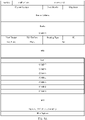
- FIG. 4B shows a structure of a packet encapsulated with a packet header.
- the packet header includes an IPv6 packet header and an SRH, and the SRH includes a SID list.
- a forwarding path of the packet is that the network device S sends the packet to the network device 1, and the packet arrives at the network device 7 after successively passing through the network device 2, the network device 3, the network device 4, the network device 5, and the network device 6.
- a SID list corresponding to the forwarding path may be shown in FIG. 4B , including seven C-SIDs.
- a length of each C-SID is 32 bits, and a length of the seven C-SIDs is 224 bits.
- a length of the SID list is greatly reduced. This improves transmission efficiency and processing efficiency of a network.
- the C-SID of each network device may be advertised by using an extended control plane protocol.
- a prefix part of a SID in an SRv6 network domain can also be advertised by using the extended control plane protocol.
- the control plane protocol may be, for example, an interior gateway protocol (Interior Gateway Protocol, IGP), a border gateway protocol (Border Gateway Protocol, BGP), a border gateway protocol link state (Border Gateway Protocol link state, BGP-LS), or a path computation element communication protocol (Path Computation Element Communication Protocol, PCEP).
- the SID list including the C-SID may be generated by the controller, or may be generated by the network ingress device.
- the controller obtains the forwarding path of the packet through calculation, and generates the SID list corresponding to the forwarding path.
- the SID list includes the C-SID, and the controller sends the SID list to the network ingress device.
- the network ingress device obtains the forwarding path of the packet through calculation, and generates the SID list corresponding to the forwarding path.
- the SID list includes the C-SID.
- the controller obtains the forwarding path of the packet through calculation, and generates the SID list corresponding to the forwarding path.
- the SID list includes the SID but does not include the C-SID, and the controller sends the SID list to the network ingress device.
- the network ingress device generates a new SID list based on the received SID list.
- the new SID list includes the C-SID.
- a control plane protocol used to send the SID list may be, for example, a border gateway protocol (Border Gateway Protocol, BGP) or a path computation element communication protocol (Path Computation Element Communication Protocol, PCEP).
- BGP Border Gateway Protocol
- PCEP Path Computation Element Communication Protocol
- the control plane protocol may be extended to send the SID list including the C-SID.
- a new attribute of the control plane protocol may be extended to identify that the SID list including the SID may be converted into the SID list including the C-SID, or that the SID list including the SID should be converted into the SID list including the C-SID. For example, after obtaining the forwarding path of the packet through calculation, the controller generates the SID list corresponding to the forwarding path.
- the SID list includes the SID but does not include the C-SID, and the controller sends the SID list to the network ingress device.
- the extended new attribute of the control plane protocol is used to identify that the SID list may be converted into the SID list including the C-SID.
- the network ingress device generates, based on indication of the attribute, a new SID list based on the received SID list.
- the new SID list includes the C-SID.
- the network device 301 may advertise a capability attribute of the network device 301 to another network device by using a control plane protocol.
- the capability attribute is used to indicate that the network device 301 can be compatible with a C-SID, for example, advertise a C-SID mapped to a segment, generate a SID list including the C-SID, encapsulate the SID list including the C-SID into a packet, and process the packet based on the C-SID.
- the control plane protocol may be, for example, an interior gateway protocol (Interior Gateway Protocol, IGP), a border gateway protocol (Border Gateway Protocol, BGP), or a path computation element communication protocol (Path Computation Element Communication Protocol, PCEP).
- the network device 301 adds the omitted first part in the SID to the DA field.
- the plurality of C-SIDs in the SID list are one-to-one mapped to the plurality of segments. Further, the plurality of segments are one-to-one mapped to the plurality of SIDs.
- the first part in the SID is omitted, that is, the prefix part of the locator field in the SID is omitted. Only the second part in the SID, namely, the node ID part and the function field, is used as the C-SID and stored in the SID list.
- the SID list may include only the C-SID, but does not include the prefix part corresponding to the C-SID.
- the network device 301 adds the first part in the SID, namely, the prefix part of the locator field, to the destination address field, and the network device 301 copies, to the DA field, a currently to-be-processed C-SID in the plurality of C-SIDs in the SID list.
- the first part in the DA field and the currently to-be-processed C-SID form the currently to-be-processed SID, so that the network device may still process the packet based on content in the DA field.
- FIG. 4B For example, refer to FIG. 4B .
- the network device 301 copies a first C-SID in the plurality of C-SIDs, namely, a C-SID 1, to the DA field.
- the prefix part in the DA field and the C-SID 1 form a first SID in the plurality of SIDs.
- the network device 301 processes the packet based on the first SID, for example, forwards the packet.
- the network device 301 When the SID on the network includes the third part including the padding content, the network device 301 further adds the omitted third part in the SID to the DA field.
- the first part, the second part, and the third part are sequentially arranged in the DA field based on locations of the first part, the second part, and the third part in the SID. Therefore, the network device 301 adds the first part to the beginning of the DA field. A first bit of the first part is aligned with a first bit of the DA field.
- the network device 301 adds the third part to the end of the DA field. A last bit of the third part is aligned with a last bit of the DA field.
- the first part in the DA field, the currently to-be-processed C-SID, and the third part form the currently to-be-processed SID. Therefore, when receiving the packet, a subsequent network device on the packet forwarding path may still process the packet based on the content in the DA field.
- the network device 301 or the controller on the network may advertise structure information of the DA field to another network device by using a control plane protocol, so that the another network device can correctly parse the content in the DA field.
- the structure information indicates an addition location of the C-SID in the DA field. In other words, the structure information indicates an addition location of the second part in the SID in the DA field.
- the first part, the second part, and the third part are sequentially arranged in the DA field based on the locations of the first part, the second part, and the third part in the SID, and the structure information indicates the location of the second part in the SID in the SID.
- the structure information may include a length of the first part and a length of the second part. In other words, a length of the prefix part and the length of the C-SID are advertised.
- the structure information may include a length of the first part and a length of the third part, or the structure information may include a length of the first part, a length of the second part, a length of the third part, or the like.
- the control plane protocol used to notify the structure information may be an intermediate system to intermediate system (Intermediate system to intermediate system, IS-IS) protocol, an open shortest path first (Open Shortest Path First, OSPF) protocol, a border gateway protocol (Border Gateway Protocol, BGP) protocol, or the like.
- IS-IS Intermediate system to intermediate system
- OSPF Open Shortest Path First
- BGP Border Gateway Protocol
- the SRH includes the SL pointer used to indicate the quantity of remaining to-be-processed segments.
- a location to which the SL pointer points in the SID list is offset by a length of one SID, namely, 128 bits.
- the C-SID because the length of the C-SID is less than the length of the SID, original space for storing one SID can store a plurality of C-SIDs. Therefore, after each update, a location to which the SL pointer points in the SID list is offset by lengths of the plurality of C-SIDs, and each C-SID cannot be accurately located.
- space in the SID list is divided into a plurality of elements, and after each update, the SL pointer points to a different element.
- a new pointer may be set to determine a currently to-be-processed C-SID in each element.
- the new pointer may be referred to as the CL pointer, and the CL pointer and the SL pointer form the two-dimensional pointer.
- a value of the SL pointer is used to determine a location of a currently to-be-processed element in the SID list, and a value of the CL pointer is used to determine a location of the currently to-be-processed C-SID in the element.
- a location of the currently to-be-processed C-SID in the SID list may be determined based on the value of the SL pointer and the value of the CL pointer.
- the value of the SL pointer and the value of the CL pointer jointly indicate the location of the C-SID in the SID list.
- each SID may be divided into one element.
- a length of each element is 128 bits, and after each update, the location to which the SL pointer points in the SID list is still offset by 128 bits.
- a first element in the SID list includes four C-SIDs, and a second element includes three C-SIDs. Therefore, the seven C-SIDs occupy two elements in the SID list in total.
- the value of the CL pointer also needs to be updated, to ensure that the value of the CL pointer is always used to determine the location of the currently to-be-processed C-SID in the element.
- a manner in which the CL pointer is updated is associated with an initial value of the CL pointer.
- the initial value of the CL pointer may be 0, and is used to indicate a first C-SID in the element.
- the value of the CL pointer is increased by 1 at each update.
- the value of the CL pointer is sequentially updated to 1, 2, and 3, and is sequentially used to indicate a second C-SID, a third C-SID, and a fourth C-SID in the element.
- the initial value of the CL pointer is 3, and is used to indicate a first C-SID in the element
- the value of the CL pointer is reduced by 1 at each update.
- the value of the CL pointer is sequentially updated to 2, 1, and 0, and is sequentially used to indicate a second C-SID, a third C-SID, and a fourth C-SID in the element.
- the first sequence is that the value of the CL pointer is updated, and then the C-SID is copied.
- the second sequence is that the C-SID is copied, and then the value of the CL pointer is updated.
- the foregoing two execution sequences may be selected through network settings. After an execution sequence is selected, all network devices on the network perform the foregoing two actions according to the execution sequence, to ensure that the value of the CL pointer is always used to determine the location of the currently to-be-processed C-SID in the element.
- the CL pointer has a specific location in the packet header.
- the CL pointer may be included in the C-SID.
- FIG. 4C shows a structure of the C-SID. Refer to FIG. 4C .
- a last part of fields in the C-SID may be divided and used as a candidate field of the CL pointer.
- the candidate field may be set to a specific length, for example, 3 bits.
- a value of the candidate field may be set to a specific initial value, for example, set to all Os.
- a candidate field in a specific C-SID may be selected, as the CL pointer, from each element in the SID list.
- a value of the candidate field in the specific C-SID is used to determine a location of the currently to-be-processed C-SID in the element.
- a value of a candidate field of another C-SID in the element remains as an initial value.
- the specific C-SID is a C-SID at an edge in each element.
- the specific C-SID may be a first C-SID, namely, the C-SID 1 shown in FIG. 4B , in the element, and include the CL pointer. Italic fonts indicate that this is an optional implementation.
- a candidate field of the first C-SID is used as the CL pointer, and the value of the CL pointer is modified based on the location of the currently to-be-processed C-SID in the element.
- a value of a candidate field of another C-SID in the element remains as the initial value, for example, is still all Os.
- the specific C-SID may alternatively be a last C-SID in the element.
- the CL pointer may be a field obtained from the SRH through division. This is not shown in FIG. 4B .
- the CL pointer may be a part obtained from a flags (Flags) field, a last entry (Last Entry) field, or a tag (Tag) field through division.
- the CL pointer may be set to a specific length, for example, 3 bits.
- the CL pointer may be a part obtained from the DA field in the IPv6 packet header through division. Specifically, the CL pointer is located in a last part of the DA field, namely, a last part of the C-SID in the DA field. As shown in FIG. 4B , italic fonts indicate that this is an optional implementation.
- the CL pointer may be set to a specific length, for example, 3 bits.
- the value of the CL pointer in the DA field is modified based on the location of the currently to-be-processed C-SID in the element. In this case, a format of the C-SID still includes the foregoing candidate field, and the length of the candidate field is the same as the length of the CL pointer. However, initial values of candidate fields of all C-SIDs in the SID list remain unchanged.
- the network device 301 may advertise the another network device that the network device 301 can process the C-SID.
- some network devices cannot be compatible with the C-SID.
- the network device also processes the packet based on a segment.
- the network device cannot be compatible with the C-SID, and does not advertise a C-SID mapped to a segment, but only advertises a SID mapped to a segment. Therefore, a SID list corresponding to the forwarding path includes the SID mapped to the segment.
- the SID list corresponding to the forwarding path includes both the C-SID and the SID.
- FIG. 5A shows a structure of a packet encapsulated with a packet header.
- the packet header includes an IPv6 packet header and an SRH
- the SRH includes a SID list
- the SID list includes both a C-SID and a SID.
- the SID list may include the SID before the C-SID, may include the SID after the C-SID, or may include both the SID before the C-SID and the SID after the C-SID.
- the C-SID may refer to a plurality of C-SIDs
- the SID before or after the C-SID may refer to a plurality of SIDs.
- a corresponding actual network situation is as follows.
- a forwarding path of the packet may first pass through a network domain incompatible with the C-SID before passing through a network domain compatible with the C-SID; may pass through a network domain incompatible with the C-SID after passing through a network domain compatible with the C-SID; or may first pass through a network domain incompatible with the C-SID before passing through a network domain compatible with the C-SID, and then pass through a network domain incompatible with the C-SID after passing through the network domain compatible with the C-SID.
- the network domain compatible with the C-SID may include a plurality of network devices, and network domain incompatible with the C-SID may also include a plurality of network devices.
- the forwarding path of the packet may further pass through other network devices that cannot be compatible with the C-SID.
- the network devices that cannot be compatible with the C-SID may be located between the network device S and the network device 1, and are located after the network device 7. This is not shown in FIG. 1 .
- the SID list may still be sent by using the foregoing extended control plane protocol.
- a start indication may be set in the packet header to indicate a start of the C-SID.
- C-SIDs in the SID list are used to indicate segments executed by all network devices that can be compatible with the C-SID, and the start indication may be included in a last SID before a first C-SID.
- the start indication may be a specific function on an SRv6 network, and is stored in a function field of the last SID.
- a first segment is still indicated in the SID list by using a SID whose length is 128 bits, and the remaining segments are indicated by using C-SIDs.
- the start indication may be included in a SID to which the first segment maps, and the SID may also be referred to as a special SID.
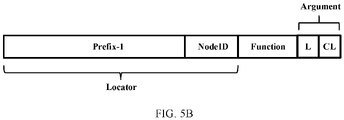
- FIG. 5B shows a format of the special SID.
- the SID includes a locator field, a function field, and an argument field, namely, Locator, Function, and Argument.
- the locator field includes a prefix part and a node ID part, namely, Prefix-1 and NodeID.
- Prefix-1 is different from a prefix in a SID to which a C-SID is mapped.
- the argument field includes a quantity indication and a CL pointer.
- the quantity indication is indicated by using L.
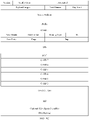
- FIG. 5C shows a packet including the special SID in the SID list.
- SPECIAL SID is the special SID.
- space occupied by the C-SID may be divided into one element, and a length of the element may be greater than 128 bits. Space occupied by each remaining SID is divided into one element, and a length of the element is 128 bits. Therefore, lengths of all space may not be the same, and lengths offset by locations pointed to by an SL pointer in the SID list after each update are also not necessarily the same.
- an element, in the SID list, that includes all C-SIDs includes seven C-SIDs, and a length of the element is greater than 128 bits.
- the CL pointer in the special SID is used to determine a currently to-be-processed C-SID from the element including the C-SID.
- the C-SID in the SID list to a DA field, a value of the CL pointer is updated, to ensure that the value of the CL pointer is always used to determine a location of the currently to-be-processed C-SID in the element.
- the value of the CL pointer in the special SID may be seven different values, for example, 0 to 6.
- a value of the quantity indication is used to indicate a quantity of all C-SIDs.
- the value of the quantity indication is used to determine, when the plurality of C-SIDs end, a length that is offset when the SL pointer is updated.
- the length that is offset and that is of the SL pointer may be 224 bits, to point to a first SID after the plurality of C-SIDs.
- a value of the function field in the special SID is used to indicate a specific function on the SRv6 network, and the quantity indication and the CL pointer are used as arguments of the specific function.
- the specific function is used to: when the value of the CL pointer is an initial value, that is, when the plurality of C-SIDs in the SID list start, copy the prefix part, namely, the foregoing prefix, of the SID to which the C-SID is mapped to the DA field; and copy a first C-SID in the plurality of C-SIDs to the DA field.
- the network device 301 may obtain SIDs and C-SIDs for a same segment, including the foregoing special SID.
- the SIDs and C-SIDs may be advertised by a network device executing the segment.
- the special SID should be used as a first segment.
- an end indication may be further set in the packet header to indicate an end of the C-SID.
- the network device may determine a last C-SID in the plurality of C-SIDs based on the end indication, and copy 128 bits after the last C-SID to the DA field, that is, copy a SID after the last C-SID to the DA field.
- one end indication is set after the plurality of C-SIDs, to indicate an end of the plurality of C-SIDs.
- the end indication may be a type field whose length is the same as the length of the C-SID, and a value of the end indication is a specific value, for example, all 0s. As shown in FIG. 5A , the end indication may be indicated by EOC. Italic fonts indicate that this is an optional implementation.
- one end indication is set in the last C-SID in the plurality of C-SIDs, to indicate an end of the plurality of C-SIDs.
- the end indication may be included in a C-SID 7.
- the end indication may be a specific function in the SRv6 network, and is stored in a function field of the last C-SID.
- the end indication may be a specific field in the C-SID.
- a last part of fields in the C-SID may be divided and used as a candidate field of the CL pointer.
- some fields before the candidate field of the CL pointer may be divided as candidate fields of the end indication.
- FIG. 5D shows a format of a C-SID including a candidate field of an end indication and a candidate field of a CL pointer.
- the candidate field of the end indication is indicated by using S.
- the candidate field of the end indication may be set to a specific length, for example, 1 bit.
- a value of the candidate field of the end indication may be set to a specific initial value, for example, set to 0.
- a value of a candidate field of an end indication in a last C-SID in a SID list is set to 1. This indicates an end of the C-SID.
- a value of a candidate field of an end indication in a remaining C-SID remains as an initial value.
- a manner in which the CL pointer is updated is the same as the previously described manner. Details are not described herein again.
- the network device 301 may obtain C-SIDs of different formats for a same segment, including the format of the C-SID including the candidate field of the end indication and the candidate field of the CL pointer.
- the C-SIDs of different formats may be advertised by a network device executing the segment.
- the format of the C-SID including the candidate field of the end indication and the candidate field of the CL pointer may be selected for a last C-SID in each element in the SID list.
- the candidate field of the CL pointer may be used as the CL pointer, and is used to determine a currently to-be-processed C-SID in the element.
- an end indication in the last C-SID may be used to indicate an end of the C-SID.
- S320 The network device 301 sends the packet encapsulated with the packet header.
- the network device 301 copies the first C-SID in the SID list to the DA field.
- the first part of the SID and the first C-SID that are in the DA field re-form a SID.
- the network device 301 sends the packet encapsulated with the packet header.
- the network device 301 processes the packet based on an SRv6 network function indicated by the function field in the SID, and a processing process is determined by a specific instruction in the SRv6 network function.
- the processing process may include sending the packet.
- the network device 301 sends the packet to the network device 302.
- the network device 302 receives the packet.
- the packet header of the packet includes the destination address field, the first pointer, the second pointer, and the list used to process the packet.
- the list includes the plurality of sequentially arranged identifiers, the plurality of identifiers are one-to-one mapped to the plurality of segments on the SR network, and the value of the first pointer and the value of the second pointer jointly indicate the location of the first identifier in the plurality of identifiers in the list.
- the network device 302 determines the first identifier based on the value of the first pointer and the value of the second pointer.
- S335 The network device 302 copies the first identifier to the destination address field.
- the network device 302 receives the SID list including the C-SID, determines the currently to-be-processed C-SID based on the SL pointer and the CL pointer, and copies the C-SID to the DA field.
- the C-SID may overwrite an original C-SID in the DA field, and form a SID with the prefix part in the DA field.
- the subsequent network device on the packet forwarding path may process the packet based on the SID.
- the network device 302 learns, based on the structure information, of the SID, advertised by the network device 301 or the controller on the network, the specific location of the second part in the DA field. Therefore, the network device 302 may copy the currently to-be-processed C-SID to the corresponding location of the second part in the DA field based on the specific location of the second part in the DA field, so that the C-SID overwrites the original C-SID in the DA field. In other words, the network device 302 updates the second part in the DA field, but does not update the first part and the third part in the DA field.
- the updated second part is combined with the first part and the third part to form a SID.
- the subsequent network device on the packet forwarding path may process the packet based on the SID.
- space including the C-SID in the SID list may be divided into a plurality of elements, or may be divided into one element.
- the network device 302 may be the network device 1 in FIG. 1 .
- the network device 1 receives a packet sent by the network device S.
- a packet header of the packet is shown in FIG. 4 .
- the packet header includes a DA field, an SL pointer, a CL pointer, and a SID list, and the SID list includes a plurality of C-SIDs.
- the DA field includes a prefix part and a C-SID 1.
- the prefix part is A1
- the C-SID 1 is 0001:1111
- a combination of the prefix part and the C-SID 1 is A1:0001:1111, namely, the SID of the network device 1.
- a value of the SL pointer in the packet header is 1, indicating a location of a first element in the SID list.
- the first element includes four C-SIDs, which are: the C-SID 1, a C-SID 2, a C-SID 3, and a C-SID 4.
- a value of the CL pointer in the packet header is 1, indicating a location of a first C-SID in a row in the element, namely, the C-SID 1.
- the network device 1 first updates the value of the CL pointer, for example, modifies the value of the CL pointer to 2, to indicate a location of a second C-SID in the row in the element.
- the network device 1 obtains a second C-SID, namely, the C-SID 2, in the first element based on indications of the SL pointer and the CL pointer, and copies the C-SID 2 to the DA field in the packet header to replace the original C-SID 1 in the DA field.
- the DA field includes a combination of the prefix part and the C-SID 2, namely, A1:0002:2222, which is a SID of the network device 2.
- the network device 1 queries a forwarding entry based on the SID of the network device 2 in the DA field, and sends the packet to the network device 2 based on a query result.
- the network device 302 may be the network device 2 in FIG. 1 .
- the network device 2 receives a packet sent by the network device 1.
- a DA field in a packet header of the packet includes a prefix part and a C-SID 2, namely, A1:0002:2222, which is a SID of the network device 2.
- a value of an SL pointer is 1
- a value of a CL pointer is 2. This indicates a location of a second C-SID, namely, the C-SID 2, in a first element.
- the network device 2 first updates the value of the CL pointer, for example, modifies the value of the CL pointer to 3, to indicate a location of a third C-SID in a row in the element.
- the network device 2 obtains a third C-SID, namely, a C-SID 3, in the first element based on indications of the SL pointer and the CL pointer, and copies the C-SID 3 to the DA field in the packet header to replace the original C-SID 2 in the DA field.
- the DA field includes a combination of the prefix part and the C-SID 3, namely, A1:0003:3333, which is a SID of the network device 3.
- the network device 2 queries a forwarding entry based on the SID of the network device 3 in the DA field, and sends the packet to the network device 3 based on a query result.
- the network device 302 may be the network device 3 in FIG. 1 .
- a process of processing a packet by the network device 3 is similar to the foregoing description. Details are not described herein again.
- the execution sequence is that the C-SID is first copied and then the value of the CL pointer is updated, and the space including the C-SID in the SID list may be divided into the plurality of elements, in a packet received by the network device 1, a value of a CL pointer is already 2. This indicates a location of a second C-SID in an element.
- the network device 1 obtains a second C-SID, namely, the C-SID 2, in a first element based on indications of an SL pointer and a CL pointer, and copies the C-SID 2 to a DA field in a packet header to replace the original C-SID 1 in the DA field.
- the network device 1 updates a value of the CL pointer, for example, modifies the value of the CL pointer to 3, to indicate a location of a third C-SID in a row in the element.
- the DA field includes a combination of a prefix part and the C-SID 2, namely, A1:0002:2222, which is a SID of the network device 2.
- the network device 1 queries a forwarding entry based on the SID of the network device 2 in the DA field, and sends the packet to the network device 2 based on a query result.
- Another execution process may be obtained by analogy based on the foregoing description. Details are not described herein again.
- the network device 302 determines whether a C-SID in a current DA field is the last C-SID in the element of the SID list. If the C-SID in the current DA field is the last C-SID in the element of the SID list, the network device 302 needs to update the value of the SL pointer and the value of the CL pointer.
- the plurality of network devices on the packet forwarding path sequentially process the plurality of C-SIDs in the SID list, and after processing a C-SID in one element in the SID list is completed, continue to process a C-SID in a next element.
- both the value of the CL pointer and the value of the SL pointer need to be modified, to ensure that the currently to-be-processed C-SID can still be determined based on the value of the CL pointer and the value of the SL pointer.
- the network device 302 may be the network device 4 in FIG. 1 , and the network device 4 receives a packet sent by the network device 3.
- a DA field in a packet header of the packet includes a prefix part and the C-SID 4, namely, A1:0004:4444, which is a SID of the network device 4.
- a value of an SL pointer is 1, and a value of a CL pointer is 4.
- the second element includes three C-SIDs: a C-SID 5, a C-SID 6, and a C-SID 7.
- the network device 4 then updates the value of the CL pointer, for example, modifies the value of the CL pointer to 1, to indicate a location of a first C-SID in the element, namely, a location of the C-SID 5 in the element.
- the network device 4 obtains the first C-SID, namely, the C-SID 5, in the second element based on indications of the SL pointer and the CL pointer, and copies the C-SID 5 to the DA field in the packet header to replace the original C-SID 4 in the DA field.
- the DA field includes a combination of the prefix part and the C-SID 5, namely, A1:0005:5555, which is a SID of the network device 5.
- the network device 4 queries a forwarding entry based on the SID of the network device 5 in the DA field, and sends the packet to the network device 5 based on a query result.
- the network device 302 may alternatively be the network device 5, the network device 6, or the network device 7 in FIG. 1 .
- a process of processing a packet by the network device is similar to the foregoing description. Details are not described herein again.
- a SID list indicating an entire packet forwarding process includes seven SIDs.
- the processing includes forwarding processing and non-forwarding processing. Processing behavior performed at each time corresponds to one segment. Therefore, in the application scenario shown in FIG. 1 , the SID list indicating the entire packet forwarding process may include more than 7 SIDs, for example, 10 SIDs.
- FIG. 6 is a possible schematic diagram of a structure of the network device in the foregoing embodiment.
- a network device 600 may implement a function of the network device 301 in the embodiment shown in FIG. 3 .
- the network device 600 includes a receiving unit 601 and a processing unit 602. These units may perform corresponding functions of the network device in the foregoing method embodiment. For example,
- FIG. 7 is a schematic diagram of another possible structure of the network device 301 in the foregoing embodiment.
- a network device 700 includes a processor 702, a network interface 703, and a memory 701.
- the memory 701 is configured to store instructions. When the embodiment shown in FIG. 6 is implemented and the units described in the embodiment in FIG. 6 are implemented by using software, software or program code required for performing functions of the processing unit 602 in FIG. 6 is stored in the memory 701.
- the processor 702 is configured to execute the instructions in the memory 701, to perform the foregoing packet processing method applied to the embodiment shown in FIG. 3 .
- the network interface 703 is configured to communicate with another network device.
- the network interface 703, the processor 702, and the memory 701 are connected to each other.
- the network interface 703, the processor 702, and the memory 701 are connected to each other through a bus.
- the bus may be a peripheral component interconnect (peripheral component interconnect, PCI for short) bus, an extended industry standard architecture (extended industry standard architecture, EISA for short) bus, or the like.
- the bus may be classified into an address bus, a data bus, a control bus, and the like. For ease of representation, only one thick line is used to represent the bus in FIG. 7 , but this does not mean that there is only one bus or only one type of bus.
- the processor 702 is configured to: receive a packet through the network interface 703; generate a packet header and encapsulate the packet header into the packet, where the packet header includes a first pointer, a second pointer, and a list used to process the packet, the list includes a plurality of sequentially arranged identifiers, the plurality of identifiers are one-to-one mapped to a plurality of segments on an SR network, and a value of the first pointer and a value of the second pointer jointly indicate a location of a first identifier in the plurality of identifiers in the list; and process the packet encapsulated with the packet header based on the list.
- the processor 702 refer to the detailed description of the process S310, S315, and S320 in the foregoing embodiment shown in FIG. 3 . Details are not described herein again.
- the network interface 703 is used by the network device 700 to receive and send a packet by using a network system.
- a specific process refer to the detailed description of the process S310 in the foregoing embodiment shown in FIG. 3 . Details are not described herein again.
- FIG. 8 is a possible schematic diagram of a structure of the network device in the foregoing embodiment.
- the network device 800 may implement a function of the network device 302 in the embodiment shown in FIG. 3 .
- the network device 800 includes a receiving unit 801 and a processing unit 802. These units may perform corresponding functions of the network device in the foregoing method embodiment. For example,
- FIG. 9 is a possible schematic diagram of a structure of the network device in the foregoing embodiment.
- the network device 900 includes a processor 902, a network interface 903, and a memory 901.
- the memory 901 is configured to store instructions. When the embodiment shown in FIG. 8 is implemented and the units described in the embodiment in FIG. 8 are implemented by using software, software or program code required for performing functions of the receiving unit 801 in FIG. 8 is stored in the memory 901.
- the processor 902 is configured to execute the instructions in the memory 901, to perform the foregoing packet processing method applied to the embodiment shown in FIG. 3 .
- the network interface 903 is configured to communicate with another network device.
- the network interface 903, the processor 902, and the memory 901 are connected to each other.
- the network interface 903, the processor 902, and the memory 901 are connected to each other through a bus.
- the bus may be a PCI bus, an EISA bus, or the like.
- the bus may be classified into an address bus, a data bus, a control bus, and the like. For ease of representation, only one thick line is used to represent the bus in FIG. 9 , but this does not mean that there is only one bus or only one type of bus.
- the processor 902 is configured to: receive a packet through the network interface 903, where a packet header of the packet includes a destination address field, a first pointer, a second pointer, and a list used to process the packet, the list includes a plurality of sequentially arranged identifiers, the plurality of identifiers are one-to-one mapped to a plurality of segments on an SR network, and a value of the first pointer and a value of the second pointer jointly indicate a location of a first identifier in the plurality of identifiers in the list; determine the first identifier based on the value of the first pointer and the value of the second pointer; and copy the first identifier to the destination address field.
- a packet header of the packet includes a destination address field, a first pointer, a second pointer, and a list used to process the packet
- the list includes a plurality of sequentially arranged identifiers, the plurality of identifiers are one-to-one mapped
- the network interface 903 is used by the network device 900 to send and receive a packet by using a network system.
- a specific process refer to the detailed description of the process S325 in the foregoing embodiment shown in FIG. 3 . Details are not described herein again.
- the memory 701 and the memory 901 may be random access memories (random access memory, RAM), flash (flash) memories, read-only memories (read-only memory, ROM), erasable programmable read-only memories (erasable programmable read-only memory, EPROM), electrically erasable programmable read-only memories (electrically erasable programmable read-only memory, EEPROM), registers (register), hard disks, removable hard disks, CD-ROMs, or any other forms of storage medium known to persons skilled in the art.
- RAM random access memory
- flash flash memories
- read-only memories read-only memory
- ROM erasable programmable read-only memories
- EPROM erasable programmable read-only memory
- EEPROM electrically erasable programmable read-only memories
- registers registers (register), hard disks, removable hard disks, CD-ROMs, or any other forms of storage medium known to persons skilled in the art.
- the processor 702 and the processor 902 may be, for example, central processing units (central processing unit, CPU), general-purpose processors, digital signal processors (digital signal processing, DSP), field programmable gate arrays (field programmable gate array, FPGA), or other programmable logical devices, transistor logical devices, hardware components, or any combinations thereof.
- the processor 702 and the processor 902 may implement or execute various example logical blocks, modules and circuits described with reference to content disclosed in this application.
- the processor may be a combination of processors implementing a computing function, for example, a combination of one or more microprocessors, or a combination of a DSP and a microprocessor.
- the network interface 703 and the network interface 903 may be, for example, interface cards, and may be Ethernet (Ethernet) interfaces or asynchronous transfer mode (asynchronous transfer mode, ATM) interfaces.
- the network interface 703 and the network interface 903 may be wired interfaces or wireless interfaces.
- the processor 702 and the processor 902 may be, for example, application-specific integrated circuits (application-specific integrated circuit, ASIC).
- ASIC application-specific integrated circuit
- the processor 702 and the processor 902 perform, based on circuits of the processor 702 and the processor 902, the foregoing packet processing method applied to the embodiment shown in FIG. 3 .
- the memory 701 and the memory 901 do not need to store the instructions executed by the processor 702 and the processor 902, and the processor 702 and the processor 902 no longer execute the instructions in the memory 701 and the memory 901.
- the network device may not include the memory 701 or the memory 901.
- FIG. 10 is a schematic diagram of a possible structure of a network system according to an embodiment of the present invention.
- the network system 1000 includes a first network device 1001 and a second network device 1002.
- the first network device 1001 in the network system may perform a processing step of the network device 301 in the embodiment shown in FIG. 3
- the second network device 1002 in the network system may perform the processing step of the network device 302 in the embodiment shown in FIG. 3
- the first network device 1001 in the network system may be the network device 600 in the embodiment shown in FIG. 6
- the second network device 1002 may be the network device 800 in the embodiment shown in FIG. 8 .
- the first network device 1001 in the network system may be the network device 700 in the embodiment shown in FIG. 7
- the second network device 1002 may be the network device 900 in the embodiment shown in FIG. 9 .
- the first network device is configured to: receive a packet; generate a packet header and encapsulate the packet header into the packet, where the packet header includes a first pointer, a second pointer, and a list used to process the packet, the list includes a plurality of sequentially arranged identifiers, the plurality of identifiers are one-to-one mapped to a plurality of segments on an SR network, and a value of the first pointer and a value of the second pointer jointly indicate a location of a first identifier in the plurality of identifiers in the list; and process the packet encapsulated with the packet header based on the list.
- the second network device is configured to: receive a packet, where a packet header of the packet includes a destination address field, a first pointer, a second pointer, and a list used to process the packet, the list includes a plurality of sequentially arranged identifiers, the plurality of identifiers are one-to-one mapped to a plurality of segments on an SR network, and a value of the first pointer and a value of the second pointer jointly indicate a location of a first identifier in the plurality of identifiers in the list; determine the first identifier based on the value of the first pointer and the value of the second pointer; and copy the first identifier to the destination address field.
- An embodiment of the present invention further provides a non-transient storage medium, configured to store software instructions used in the foregoing embodiment.
- the non-transient storage medium includes a program used to perform the methods shown in the foregoing embodiment.
- the program is executed on a computer or a network device, the computer or the network device is enabled to perform the method in the foregoing method embodiment.
- An embodiment of the present invention further provides a computer program product including computer program instructions.
- a network node is enabled to perform the method in the foregoing method embodiment.
- the disclosed system, apparatus, and method may be implemented in other manners.
- the described apparatus embodiment is merely an example.
- the unit division is merely logical service division and may be other division in an actual implementation.
- a plurality of units or components may be combined or integrated into another system, or some features may be ignored or not performed.
- the displayed or discussed mutual couplings or direct couplings or communication connections may be implemented through some interfaces.
- the indirect couplings or communication connections between the apparatuses or units may be implemented in electronic, mechanical, or other forms.
- the units described as separate parts may or may not be physically separate, and parts displayed as units may or may not be physical units, that is, may be located in one position, or may be distributed on a plurality of network units. Some or all of the units may be selected based on an actual requirement to achieve the objectives of the solutions of the embodiments.
- service units in the embodiments of this application may be integrated into one processing unit, or each of the units may exist alone physically, or two or more units are integrated into one unit.
- the integrated unit may be implemented in a form of hardware, or may be implemented in a form of a software service unit.
- the integrated unit may be stored in a computer-readable storage medium.
- the computer software product is stored in a storage medium and includes several instructions for instructing a computer device (which may be a personal computer, a server, or a network device) to perform all or some of the steps of the methods described in the embodiments of this application.
- the foregoing storage medium includes various media, for example, a USB flash drive, a removable hard disk, a read-only memory (ROM, Read-Only Memory), a random access memory (RAM, Random Access Memory), a magnetic disk, an optical disc, or another medium that can store program code.
- the services described in the present invention may be implemented by using hardware, software, firmware, or any combination thereof.
- the services When the services are implemented by software, the services may be stored in a computer-readable medium or transmitted as one or more instructions or code in the computer-readable medium.
- the computer-readable medium includes a computer storage medium and a communication medium.
- the communication medium includes any medium that enables a computer program to be transmitted from one place to another.
- the storage medium may be any available medium accessible to a general-purpose or a special-purpose computer.
Landscapes
- Engineering & Computer Science (AREA)
- Computer Networks & Wireless Communication (AREA)
- Signal Processing (AREA)
- Computer Security & Cryptography (AREA)
- Data Exchanges In Wide-Area Networks (AREA)
- Mobile Radio Communication Systems (AREA)
Priority Applications (1)
| Application Number | Priority Date | Filing Date | Title |
|---|---|---|---|
| EP23220203.6A EP4373048B1 (fr) | 2019-09-27 | 2020-01-22 | Procédé de transfert de paquet sur un réseau sr, dispositif et système |
Applications Claiming Priority (2)
| Application Number | Priority Date | Filing Date | Title |
|---|---|---|---|
| CN201910925974.3A CN112583745A (zh) | 2019-09-27 | 2019-09-27 | 一种在sr网络中转发报文的方法、设备和系统 |
| PCT/CN2020/073785 WO2021056945A1 (fr) | 2019-09-27 | 2020-01-22 | Procédé de réacheminement d'un message dans un réseau sr, dispositif et système |
Related Child Applications (1)
| Application Number | Title | Priority Date | Filing Date |
|---|---|---|---|
| EP23220203.6A Division EP4373048B1 (fr) | 2019-09-27 | 2020-01-22 | Procédé de transfert de paquet sur un réseau sr, dispositif et système |
Publications (3)
| Publication Number | Publication Date |
|---|---|
| EP4020909A1 true EP4020909A1 (fr) | 2022-06-29 |
| EP4020909A4 EP4020909A4 (fr) | 2022-10-12 |
| EP4020909B1 EP4020909B1 (fr) | 2024-01-03 |
Family
ID=75110553
Family Applications (2)
| Application Number | Title | Priority Date | Filing Date |
|---|---|---|---|
| EP23220203.6A Active EP4373048B1 (fr) | 2019-09-27 | 2020-01-22 | Procédé de transfert de paquet sur un réseau sr, dispositif et système |
| EP20867794.8A Active EP4020909B1 (fr) | 2019-09-27 | 2020-01-22 | Procédé de réacheminement d'un message dans un réseau sr, dispositif et système |
Family Applications Before (1)
| Application Number | Title | Priority Date | Filing Date |
|---|---|---|---|
| EP23220203.6A Active EP4373048B1 (fr) | 2019-09-27 | 2020-01-22 | Procédé de transfert de paquet sur un réseau sr, dispositif et système |
Country Status (9)
| Country | Link |
|---|---|
| US (1) | US12231329B2 (fr) |
| EP (2) | EP4373048B1 (fr) |
| JP (1) | JP7481436B2 (fr) |
| KR (1) | KR102753139B1 (fr) |
| CN (3) | CN112583745A (fr) |
| BR (1) | BR112022005853A2 (fr) |
| CA (1) | CA3175941A1 (fr) |
| ES (1) | ES3052640T3 (fr) |
| WO (1) | WO2021056945A1 (fr) |
Cited By (2)
| Publication number | Priority date | Publication date | Assignee | Title |
|---|---|---|---|---|
| US20230145372A1 (en) * | 2020-04-07 | 2023-05-11 | Zte Corporation | Segment routing header compression method and apparatus, service processing method and apparatus, computer device and computer-readable medium |
| EP4561013A3 (fr) * | 2019-08-31 | 2025-07-23 | Huawei Technologies Co., Ltd. | Procédé de transfert de paquet dans un réseau sr, dispositif et système |
Families Citing this family (16)
| Publication number | Priority date | Publication date | Assignee | Title |
|---|---|---|---|---|
| CN113259239A (zh) | 2020-02-10 | 2021-08-13 | 华为技术有限公司 | 一种在混合网络中转发报文的方法、设备和系统 |
| CN113556284B (zh) * | 2020-04-24 | 2023-01-10 | 中国移动通信有限公司研究院 | 数据包处理的方法及设备 |
| CN112511430B (zh) * | 2020-06-28 | 2025-04-29 | 中兴通讯股份有限公司 | 信息交互、隧道建立方法、装置、通信节点及存储介质 |
| CN114531386B (zh) * | 2020-11-23 | 2023-05-09 | 中国移动通信有限公司研究院 | 报文转发的方法、装置、设备及可读存储介质 |
| CN114666259A (zh) * | 2020-12-22 | 2022-06-24 | 华为技术有限公司 | 报文传输的方法、装置、设备、存储介质及系统 |
| CN113347092B (zh) * | 2021-05-27 | 2022-12-20 | 大连理工大学 | 一种基于IPv6的SRv6数据处理方法 |
| CN113242180B (zh) * | 2021-07-12 | 2021-12-14 | 广东省新一代通信与网络创新研究院 | 报文转发方法、装置、设备、可读存储介质及程序产品 |
| CN114285907B (zh) * | 2021-12-03 | 2023-05-26 | 中国联合网络通信集团有限公司 | 数据传输方法、装置、电子设备及存储介质 |
| CN116527642B (zh) * | 2022-01-20 | 2025-10-14 | 北京华为数字技术有限公司 | 一种报文处理方法及相关设备 |
| CN116566880A (zh) * | 2022-01-30 | 2023-08-08 | 华为技术有限公司 | 路由通告的方法、网络设备和系统 |
| EP4510522A4 (fr) * | 2022-05-11 | 2025-06-25 | Huawei Technologies Co., Ltd. | Procédé de traitement de paquets, dispositif, système et support d'enregistrement lisible par ordinateur |
| CN117097657A (zh) * | 2022-05-11 | 2023-11-21 | 华为技术有限公司 | 报文处理方法、设备、系统及计算机可读存储介质 |
| EP4425873A4 (fr) * | 2022-06-28 | 2025-02-19 | New H3C Technologies Co., Ltd. | Envoi de messages |
| CN115499358B (zh) * | 2022-09-14 | 2024-05-14 | 中国电信股份有限公司 | SRv6-TE报文转发方法和转发设备 |
| KR20240054840A (ko) | 2022-10-19 | 2024-04-26 | 한국전자통신연구원 | 통신 시스템에서 세그먼트 라우팅의 선택적 바인딩 세그먼트를 기반으로 동적 네트워크 프로그래밍을 제공하기 위한 장치 및 방법 |
| US20240224161A1 (en) * | 2022-12-29 | 2024-07-04 | Madiatek Inc. | Method and apparatus for managing public land mobile network selection with aid of network aliveness validation |
Family Cites Families (17)
| Publication number | Priority date | Publication date | Assignee | Title |
|---|---|---|---|---|
| EP2523405A4 (fr) * | 2010-01-08 | 2016-09-07 | Nec Corp | Système de communication, n uds de transmission, server de gestion de cheminement et procédé de communication |
| KR20140034951A (ko) * | 2012-08-28 | 2014-03-21 | 한국전자통신연구원 | 무선 메쉬 네트워크에서 컨텍스트 기반의 IPv6 헤더 압축을 위한 컨텍스트 테이블 관리 방법 |
| US9049233B2 (en) * | 2012-10-05 | 2015-06-02 | Cisco Technology, Inc. | MPLS segment-routing |
| US9559954B2 (en) * | 2013-03-11 | 2017-01-31 | Cisco Technology, Inc. | Indexed segment ID |
| US9537769B2 (en) * | 2013-03-15 | 2017-01-03 | Cisco Technology, Inc. | Opportunistic compression of routing segment identifier stacks |
| US9537718B2 (en) * | 2013-03-15 | 2017-01-03 | Cisco Technology, Inc. | Segment routing over label distribution protocol |
| US9762488B2 (en) * | 2014-03-06 | 2017-09-12 | Cisco Technology, Inc. | Segment routing extension headers |
| CN105282028A (zh) * | 2014-06-05 | 2016-01-27 | 中兴通讯股份有限公司 | 一种报文传输方法、节点及路径管理服务器 |
| CN105471737B (zh) * | 2014-09-05 | 2019-05-10 | 华为技术有限公司 | 一种标签栈的压缩方法及装置、标签栈的解压缩方法及装置 |
| CN106411738A (zh) * | 2015-07-30 | 2017-02-15 | 中兴通讯股份有限公司 | Ipv6报文封装的处理方法和装置 |
| US10506083B2 (en) * | 2017-06-27 | 2019-12-10 | Cisco Technology, Inc. | Segment routing gateway storing segment routing encapsulating header used in encapsulating and forwarding of returned native packet |
| CN109218189B (zh) * | 2017-07-03 | 2022-04-29 | 中兴通讯股份有限公司 | 跨域的路径的标识信息的确定方法、装置及存储介质 |
| US10404600B2 (en) * | 2017-09-12 | 2019-09-03 | Google Llc | Mechanism and apparatus for path protection when using compressed segment routing label stacks |
| CN113904983A (zh) * | 2017-12-27 | 2022-01-07 | 华为技术有限公司 | 一种报文处理的方法、网络节点和系统 |
| CN108429685B (zh) * | 2018-04-28 | 2020-08-04 | 电子科技大学 | 一种基于分段路由技术的服务功能链寻路方法 |
| US11245617B1 (en) * | 2018-12-28 | 2022-02-08 | Juniper Networks, Inc. | Compressed routing header |
| US11412071B2 (en) * | 2019-05-13 | 2022-08-09 | Juniper Networks, Inc. | Compressed routing header information for networks |
-
2019
- 2019-09-27 CN CN201910925974.3A patent/CN112583745A/zh active Pending
-
2020
- 2020-01-22 ES ES23220203T patent/ES3052640T3/es active Active
- 2020-01-22 CN CN202080050898.7A patent/CN114365464B/zh active Active
- 2020-01-22 KR KR1020227010885A patent/KR102753139B1/ko active Active
- 2020-01-22 CN CN202310212314.7A patent/CN116319524A/zh active Pending
- 2020-01-22 EP EP23220203.6A patent/EP4373048B1/fr active Active
- 2020-01-22 CA CA3175941A patent/CA3175941A1/fr active Pending
- 2020-01-22 EP EP20867794.8A patent/EP4020909B1/fr active Active
- 2020-01-22 BR BR112022005853A patent/BR112022005853A2/pt unknown
- 2020-01-22 WO PCT/CN2020/073785 patent/WO2021056945A1/fr not_active Ceased
- 2020-01-22 JP JP2022519200A patent/JP7481436B2/ja active Active
-
2022
- 2022-03-24 US US17/703,614 patent/US12231329B2/en active Active
Cited By (3)
| Publication number | Priority date | Publication date | Assignee | Title |
|---|---|---|---|---|
| EP4561013A3 (fr) * | 2019-08-31 | 2025-07-23 | Huawei Technologies Co., Ltd. | Procédé de transfert de paquet dans un réseau sr, dispositif et système |
| US20230145372A1 (en) * | 2020-04-07 | 2023-05-11 | Zte Corporation | Segment routing header compression method and apparatus, service processing method and apparatus, computer device and computer-readable medium |
| US12316724B2 (en) * | 2020-04-07 | 2025-05-27 | Zte Corporation | Segment routing header compression method and apparatus, service processing method and apparatus, computer device and computer-readable medium |
Also Published As
| Publication number | Publication date |
|---|---|
| JP2022550343A (ja) | 2022-12-01 |
| BR112022005853A2 (pt) | 2022-06-21 |
| EP4020909A4 (fr) | 2022-10-12 |
| ES3052640T3 (en) | 2026-01-12 |
| EP4020909B1 (fr) | 2024-01-03 |
| KR20220052371A (ko) | 2022-04-27 |
| WO2021056945A1 (fr) | 2021-04-01 |
| EP4373048A2 (fr) | 2024-05-22 |
| EP4373048A3 (fr) | 2024-07-17 |
| US12231329B2 (en) | 2025-02-18 |
| CN112583745A (zh) | 2021-03-30 |
| CN116319524A (zh) | 2023-06-23 |
| CN114365464A (zh) | 2022-04-15 |
| US20220217081A1 (en) | 2022-07-07 |
| CA3175941A1 (fr) | 2021-04-01 |
| CN114365464B (zh) | 2023-03-24 |
| EP4373048B1 (fr) | 2025-09-17 |
| JP7481436B2 (ja) | 2024-05-10 |
| KR102753139B1 (ko) | 2025-01-09 |
Similar Documents
| Publication | Publication Date | Title |
|---|---|---|
| US12231329B2 (en) | Method for forwarding packet on SR network, device, and system | |
| US12375589B2 (en) | Packet forwarding method, device, and system | |
| EP3742685B1 (fr) | Procédé et dispositif de traitement de paquets | |
| CN110380970B (zh) | 一种适用于异构网络的自适应数据报文转发方法及装置 | |
| CN112787927B (zh) | 一种分段路由报文转发方法、装置及预设逻辑电路单元 | |
| US12328260B2 (en) | Method for forwarding packet in SR network, device, and system | |
| EP3886375A1 (fr) | Procédé de génération de message, procédé de transmission de message, appareil, et dispositif | |
| US20230336478A1 (en) | Packet transmission method, apparatus, device, and system, and storage medium | |
| CN113141338B (zh) | 一种消息生成方法、处理方法及装置 | |
| US11968119B1 (en) | Service Function Chaining using uSID in SRv6 | |
| CN113765794B (zh) | 数据发送的方法、装置、电子设备及介质 | |
| WO2025069503A1 (fr) | Système de communication, routeur, programme et procédé de gestion de communication | |
| WO2024081408A1 (fr) | Chaînage de fonctions de service à l'aide d'usid dans srv6 |
Legal Events
| Date | Code | Title | Description |
|---|---|---|---|
| STAA | Information on the status of an ep patent application or granted ep patent |
Free format text: STATUS: THE INTERNATIONAL PUBLICATION HAS BEEN MADE |
|
| PUAI | Public reference made under article 153(3) epc to a published international application that has entered the european phase |
Free format text: ORIGINAL CODE: 0009012 |
|
| STAA | Information on the status of an ep patent application or granted ep patent |
Free format text: STATUS: REQUEST FOR EXAMINATION WAS MADE |
|
| 17P | Request for examination filed |
Effective date: 20220325 |
|
| AK | Designated contracting states |
Kind code of ref document: A1 Designated state(s): AL AT BE BG CH CY CZ DE DK EE ES FI FR GB GR HR HU IE IS IT LI LT LU LV MC MK MT NL NO PL PT RO RS SE SI SK SM TR |
|
| REG | Reference to a national code |
Ref country code: DE Ref legal event code: R079 Free format text: PREVIOUS MAIN CLASS: H04L0012933000 Ipc: H04L0045000000 Ref document number: 602020024033 Country of ref document: DE |
|
| A4 | Supplementary search report drawn up and despatched |
Effective date: 20220909 |
|
| RIC1 | Information provided on ipc code assigned before grant |
Ipc: H04L 45/74 20220101ALI20220905BHEP Ipc: H04L 45/02 20220101ALI20220905BHEP Ipc: H04L 45/00 20220101AFI20220905BHEP |
|
| DAV | Request for validation of the european patent (deleted) | ||
| DAX | Request for extension of the european patent (deleted) | ||
| STAA | Information on the status of an ep patent application or granted ep patent |
Free format text: STATUS: EXAMINATION IS IN PROGRESS |
|
| 17Q | First examination report despatched |
Effective date: 20230330 |
|
| REG | Reference to a national code |
Ref country code: DE Ref legal event code: R079 Free format text: PREVIOUS MAIN CLASS: H04L0045000000 Ipc: H04L0045020000 Ref document number: 602020024033 Country of ref document: DE |
|
| GRAP | Despatch of communication of intention to grant a patent |
Free format text: ORIGINAL CODE: EPIDOSNIGR1 |
|
| STAA | Information on the status of an ep patent application or granted ep patent |
Free format text: STATUS: GRANT OF PATENT IS INTENDED |
|
| RIC1 | Information provided on ipc code assigned before grant |
Ipc: H04L 45/00 20220101ALI20230908BHEP Ipc: H04L 45/74 20220101ALI20230908BHEP Ipc: H04L 45/02 20220101AFI20230908BHEP |
|
| INTG | Intention to grant announced |
Effective date: 20231004 |
|
| GRAS | Grant fee paid |
Free format text: ORIGINAL CODE: EPIDOSNIGR3 |
|
| GRAA | (expected) grant |
Free format text: ORIGINAL CODE: 0009210 |
|
| STAA | Information on the status of an ep patent application or granted ep patent |
Free format text: STATUS: THE PATENT HAS BEEN GRANTED |
|
| AK | Designated contracting states |
Kind code of ref document: B1 Designated state(s): AL AT BE BG CH CY CZ DE DK EE ES FI FR GB GR HR HU IE IS IT LI LT LU LV MC MK MT NL NO PL PT RO RS SE SI SK SM TR |
|
| REG | Reference to a national code |
Ref country code: GB Ref legal event code: FG4D |
|
| REG | Reference to a national code |
Ref country code: DE Ref legal event code: R096 Ref document number: 602020024033 Country of ref document: DE |
|
| REG | Reference to a national code |
Ref country code: CH Ref legal event code: EP |
|
| REG | Reference to a national code |
Ref country code: IE Ref legal event code: FG4D |
|
| REG | Reference to a national code |
Ref country code: LT Ref legal event code: MG9D |
|
| PG25 | Lapsed in a contracting state [announced via postgrant information from national office to epo] |
Ref country code: ES Free format text: LAPSE BECAUSE OF FAILURE TO SUBMIT A TRANSLATION OF THE DESCRIPTION OR TO PAY THE FEE WITHIN THE PRESCRIBED TIME-LIMIT Effective date: 20240103 |
|
| PG25 | Lapsed in a contracting state [announced via postgrant information from national office to epo] |
Ref country code: ES Free format text: LAPSE BECAUSE OF FAILURE TO SUBMIT A TRANSLATION OF THE DESCRIPTION OR TO PAY THE FEE WITHIN THE PRESCRIBED TIME-LIMIT Effective date: 20240103 |
|
| REG | Reference to a national code |
Ref country code: NL Ref legal event code: MP Effective date: 20240103 |
|
| REG | Reference to a national code |
Ref country code: AT Ref legal event code: MK05 Ref document number: 1647913 Country of ref document: AT Kind code of ref document: T Effective date: 20240103 |
|
| PG25 | Lapsed in a contracting state [announced via postgrant information from national office to epo] |
Ref country code: NL Free format text: LAPSE BECAUSE OF FAILURE TO SUBMIT A TRANSLATION OF THE DESCRIPTION OR TO PAY THE FEE WITHIN THE PRESCRIBED TIME-LIMIT Effective date: 20240103 |
|
| PG25 | Lapsed in a contracting state [announced via postgrant information from national office to epo] |
Ref country code: NL Free format text: LAPSE BECAUSE OF FAILURE TO SUBMIT A TRANSLATION OF THE DESCRIPTION OR TO PAY THE FEE WITHIN THE PRESCRIBED TIME-LIMIT Effective date: 20240103 |
|
| PG25 | Lapsed in a contracting state [announced via postgrant information from national office to epo] |
Ref country code: IS Free format text: LAPSE BECAUSE OF FAILURE TO SUBMIT A TRANSLATION OF THE DESCRIPTION OR TO PAY THE FEE WITHIN THE PRESCRIBED TIME-LIMIT Effective date: 20240503 |
|
| PG25 | Lapsed in a contracting state [announced via postgrant information from national office to epo] |
Ref country code: LT Free format text: LAPSE BECAUSE OF FAILURE TO SUBMIT A TRANSLATION OF THE DESCRIPTION OR TO PAY THE FEE WITHIN THE PRESCRIBED TIME-LIMIT Effective date: 20240103 |
|
| PG25 | Lapsed in a contracting state [announced via postgrant information from national office to epo] |
Ref country code: GR Free format text: LAPSE BECAUSE OF FAILURE TO SUBMIT A TRANSLATION OF THE DESCRIPTION OR TO PAY THE FEE WITHIN THE PRESCRIBED TIME-LIMIT Effective date: 20240404 |
|
| PG25 | Lapsed in a contracting state [announced via postgrant information from national office to epo] |
Ref country code: HR Free format text: LAPSE BECAUSE OF FAILURE TO SUBMIT A TRANSLATION OF THE DESCRIPTION OR TO PAY THE FEE WITHIN THE PRESCRIBED TIME-LIMIT Effective date: 20240103 Ref country code: RS Free format text: LAPSE BECAUSE OF FAILURE TO SUBMIT A TRANSLATION OF THE DESCRIPTION OR TO PAY THE FEE WITHIN THE PRESCRIBED TIME-LIMIT Effective date: 20240403 |
|
| PG25 | Lapsed in a contracting state [announced via postgrant information from national office to epo] |
Ref country code: AT Free format text: LAPSE BECAUSE OF FAILURE TO SUBMIT A TRANSLATION OF THE DESCRIPTION OR TO PAY THE FEE WITHIN THE PRESCRIBED TIME-LIMIT Effective date: 20240103 Ref country code: CZ Free format text: LAPSE BECAUSE OF FAILURE TO SUBMIT A TRANSLATION OF THE DESCRIPTION OR TO PAY THE FEE WITHIN THE PRESCRIBED TIME-LIMIT Effective date: 20240103 |
|
| PG25 | Lapsed in a contracting state [announced via postgrant information from national office to epo] |
Ref country code: RS Free format text: LAPSE BECAUSE OF FAILURE TO SUBMIT A TRANSLATION OF THE DESCRIPTION OR TO PAY THE FEE WITHIN THE PRESCRIBED TIME-LIMIT Effective date: 20240403 Ref country code: NO Free format text: LAPSE BECAUSE OF FAILURE TO SUBMIT A TRANSLATION OF THE DESCRIPTION OR TO PAY THE FEE WITHIN THE PRESCRIBED TIME-LIMIT Effective date: 20240403 Ref country code: LT Free format text: LAPSE BECAUSE OF FAILURE TO SUBMIT A TRANSLATION OF THE DESCRIPTION OR TO PAY THE FEE WITHIN THE PRESCRIBED TIME-LIMIT Effective date: 20240103 Ref country code: IS Free format text: LAPSE BECAUSE OF FAILURE TO SUBMIT A TRANSLATION OF THE DESCRIPTION OR TO PAY THE FEE WITHIN THE PRESCRIBED TIME-LIMIT Effective date: 20240503 Ref country code: HR Free format text: LAPSE BECAUSE OF FAILURE TO SUBMIT A TRANSLATION OF THE DESCRIPTION OR TO PAY THE FEE WITHIN THE PRESCRIBED TIME-LIMIT Effective date: 20240103 Ref country code: GR Free format text: LAPSE BECAUSE OF FAILURE TO SUBMIT A TRANSLATION OF THE DESCRIPTION OR TO PAY THE FEE WITHIN THE PRESCRIBED TIME-LIMIT Effective date: 20240404 Ref country code: CZ Free format text: LAPSE BECAUSE OF FAILURE TO SUBMIT A TRANSLATION OF THE DESCRIPTION OR TO PAY THE FEE WITHIN THE PRESCRIBED TIME-LIMIT Effective date: 20240103 Ref country code: BG Free format text: LAPSE BECAUSE OF FAILURE TO SUBMIT A TRANSLATION OF THE DESCRIPTION OR TO PAY THE FEE WITHIN THE PRESCRIBED TIME-LIMIT Effective date: 20240103 Ref country code: AT Free format text: LAPSE BECAUSE OF FAILURE TO SUBMIT A TRANSLATION OF THE DESCRIPTION OR TO PAY THE FEE WITHIN THE PRESCRIBED TIME-LIMIT Effective date: 20240103 |
|
| PG25 | Lapsed in a contracting state [announced via postgrant information from national office to epo] |
Ref country code: PL Free format text: LAPSE BECAUSE OF FAILURE TO SUBMIT A TRANSLATION OF THE DESCRIPTION OR TO PAY THE FEE WITHIN THE PRESCRIBED TIME-LIMIT Effective date: 20240103 Ref country code: PT Free format text: LAPSE BECAUSE OF FAILURE TO SUBMIT A TRANSLATION OF THE DESCRIPTION OR TO PAY THE FEE WITHIN THE PRESCRIBED TIME-LIMIT Effective date: 20240503 |
|
| PG25 | Lapsed in a contracting state [announced via postgrant information from national office to epo] |
Ref country code: SE Free format text: LAPSE BECAUSE OF FAILURE TO SUBMIT A TRANSLATION OF THE DESCRIPTION OR TO PAY THE FEE WITHIN THE PRESCRIBED TIME-LIMIT Effective date: 20240103 Ref country code: PT Free format text: LAPSE BECAUSE OF FAILURE TO SUBMIT A TRANSLATION OF THE DESCRIPTION OR TO PAY THE FEE WITHIN THE PRESCRIBED TIME-LIMIT Effective date: 20240503 Ref country code: PL Free format text: LAPSE BECAUSE OF FAILURE TO SUBMIT A TRANSLATION OF THE DESCRIPTION OR TO PAY THE FEE WITHIN THE PRESCRIBED TIME-LIMIT Effective date: 20240103 Ref country code: LV Free format text: LAPSE BECAUSE OF FAILURE TO SUBMIT A TRANSLATION OF THE DESCRIPTION OR TO PAY THE FEE WITHIN THE PRESCRIBED TIME-LIMIT Effective date: 20240103 |
|
| REG | Reference to a national code |
Ref country code: CH Ref legal event code: PL |
|
| PG25 | Lapsed in a contracting state [announced via postgrant information from national office to epo] |
Ref country code: LU Free format text: LAPSE BECAUSE OF NON-PAYMENT OF DUE FEES Effective date: 20240122 |
|
| PG25 | Lapsed in a contracting state [announced via postgrant information from national office to epo] |
Ref country code: LU Free format text: LAPSE BECAUSE OF NON-PAYMENT OF DUE FEES Effective date: 20240122 |
|
| REG | Reference to a national code |
Ref country code: DE Ref legal event code: R097 Ref document number: 602020024033 Country of ref document: DE |
|
| PG25 | Lapsed in a contracting state [announced via postgrant information from national office to epo] |
Ref country code: DK Free format text: LAPSE BECAUSE OF FAILURE TO SUBMIT A TRANSLATION OF THE DESCRIPTION OR TO PAY THE FEE WITHIN THE PRESCRIBED TIME-LIMIT Effective date: 20240103 |
|
| PG25 | Lapsed in a contracting state [announced via postgrant information from national office to epo] |
Ref country code: SM Free format text: LAPSE BECAUSE OF FAILURE TO SUBMIT A TRANSLATION OF THE DESCRIPTION OR TO PAY THE FEE WITHIN THE PRESCRIBED TIME-LIMIT Effective date: 20240103 |
|
| PG25 | Lapsed in a contracting state [announced via postgrant information from national office to epo] |
Ref country code: BE Free format text: LAPSE BECAUSE OF NON-PAYMENT OF DUE FEES Effective date: 20240131 |
|
| PG25 | Lapsed in a contracting state [announced via postgrant information from national office to epo] |
Ref country code: CH Free format text: LAPSE BECAUSE OF NON-PAYMENT OF DUE FEES Effective date: 20240131 |
|
| PG25 | Lapsed in a contracting state [announced via postgrant information from national office to epo] |
Ref country code: EE Free format text: LAPSE BECAUSE OF FAILURE TO SUBMIT A TRANSLATION OF THE DESCRIPTION OR TO PAY THE FEE WITHIN THE PRESCRIBED TIME-LIMIT Effective date: 20240103 |
|
| PG25 | Lapsed in a contracting state [announced via postgrant information from national office to epo] |
Ref country code: SK Free format text: LAPSE BECAUSE OF FAILURE TO SUBMIT A TRANSLATION OF THE DESCRIPTION OR TO PAY THE FEE WITHIN THE PRESCRIBED TIME-LIMIT Effective date: 20240103 |
|
| PG25 | Lapsed in a contracting state [announced via postgrant information from national office to epo] |
Ref country code: SM Free format text: LAPSE BECAUSE OF FAILURE TO SUBMIT A TRANSLATION OF THE DESCRIPTION OR TO PAY THE FEE WITHIN THE PRESCRIBED TIME-LIMIT Effective date: 20240103 Ref country code: SK Free format text: LAPSE BECAUSE OF FAILURE TO SUBMIT A TRANSLATION OF THE DESCRIPTION OR TO PAY THE FEE WITHIN THE PRESCRIBED TIME-LIMIT Effective date: 20240103 Ref country code: RO Free format text: LAPSE BECAUSE OF FAILURE TO SUBMIT A TRANSLATION OF THE DESCRIPTION OR TO PAY THE FEE WITHIN THE PRESCRIBED TIME-LIMIT Effective date: 20240103 Ref country code: EE Free format text: LAPSE BECAUSE OF FAILURE TO SUBMIT A TRANSLATION OF THE DESCRIPTION OR TO PAY THE FEE WITHIN THE PRESCRIBED TIME-LIMIT Effective date: 20240103 Ref country code: DK Free format text: LAPSE BECAUSE OF FAILURE TO SUBMIT A TRANSLATION OF THE DESCRIPTION OR TO PAY THE FEE WITHIN THE PRESCRIBED TIME-LIMIT Effective date: 20240103 Ref country code: CH Free format text: LAPSE BECAUSE OF NON-PAYMENT OF DUE FEES Effective date: 20240131 Ref country code: BE Free format text: LAPSE BECAUSE OF NON-PAYMENT OF DUE FEES Effective date: 20240131 |
|
| REG | Reference to a national code |
Ref country code: BE Ref legal event code: MM Effective date: 20240131 |
|
| PLBE | No opposition filed within time limit |
Free format text: ORIGINAL CODE: 0009261 |
|
| STAA | Information on the status of an ep patent application or granted ep patent |
Free format text: STATUS: NO OPPOSITION FILED WITHIN TIME LIMIT |
|
| PG25 | Lapsed in a contracting state [announced via postgrant information from national office to epo] |
Ref country code: MC Free format text: LAPSE BECAUSE OF FAILURE TO SUBMIT A TRANSLATION OF THE DESCRIPTION OR TO PAY THE FEE WITHIN THE PRESCRIBED TIME-LIMIT Effective date: 20240103 |
|
| PG25 | Lapsed in a contracting state [announced via postgrant information from national office to epo] |
Ref country code: MC Free format text: LAPSE BECAUSE OF FAILURE TO SUBMIT A TRANSLATION OF THE DESCRIPTION OR TO PAY THE FEE WITHIN THE PRESCRIBED TIME-LIMIT Effective date: 20240103 |
|
| PG25 | Lapsed in a contracting state [announced via postgrant information from national office to epo] |
Ref country code: IT Free format text: LAPSE BECAUSE OF FAILURE TO SUBMIT A TRANSLATION OF THE DESCRIPTION OR TO PAY THE FEE WITHIN THE PRESCRIBED TIME-LIMIT Effective date: 20240103 |
|
| 26N | No opposition filed |
Effective date: 20241007 |
|
| PG25 | Lapsed in a contracting state [announced via postgrant information from national office to epo] |
Ref country code: IT Free format text: LAPSE BECAUSE OF FAILURE TO SUBMIT A TRANSLATION OF THE DESCRIPTION OR TO PAY THE FEE WITHIN THE PRESCRIBED TIME-LIMIT Effective date: 20240103 |
|
| PG25 | Lapsed in a contracting state [announced via postgrant information from national office to epo] |
Ref country code: IE Free format text: LAPSE BECAUSE OF NON-PAYMENT OF DUE FEES Effective date: 20240122 |
|
| PG25 | Lapsed in a contracting state [announced via postgrant information from national office to epo] |
Ref country code: IE Free format text: LAPSE BECAUSE OF NON-PAYMENT OF DUE FEES Effective date: 20240122 |
|
| PG25 | Lapsed in a contracting state [announced via postgrant information from national office to epo] |
Ref country code: SI Free format text: LAPSE BECAUSE OF FAILURE TO SUBMIT A TRANSLATION OF THE DESCRIPTION OR TO PAY THE FEE WITHIN THE PRESCRIBED TIME-LIMIT Effective date: 20240103 |
|
| PG25 | Lapsed in a contracting state [announced via postgrant information from national office to epo] |
Ref country code: CY Free format text: LAPSE BECAUSE OF FAILURE TO SUBMIT A TRANSLATION OF THE DESCRIPTION OR TO PAY THE FEE WITHIN THE PRESCRIBED TIME-LIMIT; INVALID AB INITIO Effective date: 20200122 |
|
| PG25 | Lapsed in a contracting state [announced via postgrant information from national office to epo] |
Ref country code: HU Free format text: LAPSE BECAUSE OF FAILURE TO SUBMIT A TRANSLATION OF THE DESCRIPTION OR TO PAY THE FEE WITHIN THE PRESCRIBED TIME-LIMIT; INVALID AB INITIO Effective date: 20200122 |
|
| PG25 | Lapsed in a contracting state [announced via postgrant information from national office to epo] |
Ref country code: FI Free format text: LAPSE BECAUSE OF FAILURE TO SUBMIT A TRANSLATION OF THE DESCRIPTION OR TO PAY THE FEE WITHIN THE PRESCRIBED TIME-LIMIT Effective date: 20240103 |
|
| PG25 | Lapsed in a contracting state [announced via postgrant information from national office to epo] |
Ref country code: TR Free format text: LAPSE BECAUSE OF FAILURE TO SUBMIT A TRANSLATION OF THE DESCRIPTION OR TO PAY THE FEE WITHIN THE PRESCRIBED TIME-LIMIT Effective date: 20240103 |
|
| PGFP | Annual fee paid to national office [announced via postgrant information from national office to epo] |
Ref country code: GB Payment date: 20251204 Year of fee payment: 7 |
|
| PGFP | Annual fee paid to national office [announced via postgrant information from national office to epo] |
Ref country code: FR Payment date: 20251208 Year of fee payment: 7 |
|
| PGFP | Annual fee paid to national office [announced via postgrant information from national office to epo] |
Ref country code: DE Payment date: 20251203 Year of fee payment: 7 |