EP4021049B1 - Verfahren zur drathlosen kommunikation und gerät - Google Patents
Verfahren zur drathlosen kommunikation und gerät Download PDFInfo
- Publication number
- EP4021049B1 EP4021049B1 EP20945174.9A EP20945174A EP4021049B1 EP 4021049 B1 EP4021049 B1 EP 4021049B1 EP 20945174 A EP20945174 A EP 20945174A EP 4021049 B1 EP4021049 B1 EP 4021049B1
- Authority
- EP
- European Patent Office
- Prior art keywords
- nssai
- message
- terminal device
- network slice
- requested
- Prior art date
- Legal status (The legal status is an assumption and is not a legal conclusion. Google has not performed a legal analysis and makes no representation as to the accuracy of the status listed.)
- Active
Links
Images



Classifications
-
- H—ELECTRICITY
- H04—ELECTRIC COMMUNICATION TECHNIQUE
- H04W—WIRELESS COMMUNICATION NETWORKS
- H04W8/00—Network data management
- H04W8/02—Processing of mobility data, e.g. registration information at HLR [Home Location Register] or VLR [Visitor Location Register]; Transfer of mobility data, e.g. between HLR, VLR or external networks
- H04W8/08—Mobility data transfer
- H04W8/14—Mobility data transfer between corresponding nodes
-
- H—ELECTRICITY
- H04—ELECTRIC COMMUNICATION TECHNIQUE
- H04W—WIRELESS COMMUNICATION NETWORKS
- H04W12/00—Security arrangements; Authentication; Protecting privacy or anonymity
- H04W12/06—Authentication
-
- H—ELECTRICITY
- H04—ELECTRIC COMMUNICATION TECHNIQUE
- H04W—WIRELESS COMMUNICATION NETWORKS
- H04W48/00—Access restriction; Network selection; Access point selection
- H04W48/18—Selecting a network or a communication service
-
- H—ELECTRICITY
- H04—ELECTRIC COMMUNICATION TECHNIQUE
- H04W—WIRELESS COMMUNICATION NETWORKS
- H04W12/00—Security arrangements; Authentication; Protecting privacy or anonymity
- H04W12/08—Access security
-
- H—ELECTRICITY
- H04—ELECTRIC COMMUNICATION TECHNIQUE
- H04W—WIRELESS COMMUNICATION NETWORKS
- H04W48/00—Access restriction; Network selection; Access point selection
- H04W48/08—Access restriction or access information delivery, e.g. discovery data delivery
-
- H—ELECTRICITY
- H04—ELECTRIC COMMUNICATION TECHNIQUE
- H04W—WIRELESS COMMUNICATION NETWORKS
- H04W60/00—Affiliation to network, e.g. registration; Terminating affiliation with the network, e.g. de-registration
- H04W60/04—Affiliation to network, e.g. registration; Terminating affiliation with the network, e.g. de-registration using triggered events
-
- H—ELECTRICITY
- H04—ELECTRIC COMMUNICATION TECHNIQUE
- H04W—WIRELESS COMMUNICATION NETWORKS
- H04W84/00—Network topologies
- H04W84/02—Hierarchically pre-organised networks, e.g. paging networks, cellular networks, WLAN [Wireless Local Area Network] or WLL [Wireless Local Loop]
- H04W84/04—Large scale networks; Deep hierarchical networks
- H04W84/042—Public Land Mobile systems, e.g. cellular systems
Definitions
- Implementations of the present disclosure relate to the communication field, and more particularly to methods for wireless communication and devices.
- NSSAA network slice-specific authentication and authorization
- UE user equipment
- a third-party network element needs to authenticate the terminal device.
- This feature is an optional parameter in an R16 fifth generation (5G) system, that is, the UE may or may not support the NSSAA.
- the UE indicates to a network whether the UE supports or does not support the NSSAA through an indication in a 5G system mobility management (5GMM) capability parameter in a registration request.
- 5GMM 5G system mobility management
- the network does not trigger an NSSAA procedure.
- the network determines that the network slice cannot be used by the UE. Accordingly, the network puts a network slice selection assistance information (NSSAI) of the network slice into a rejected NSSAI (rejected single-network slice selection assistance information (S-NSSAI)) and sends the rejected NSSAI to the UE, where each rejected S-NSSAI carries a rejected cause.
- NSSAI network slice selection assistance information
- S-NSSAI rejected single-network slice selection assistance information
- the rejected cause may be that the S-NSSAI is not available on a current public land mobile network (PLMN) or a stand-alone non-public network (SNPN).
- the UE when the UE needs to register with a network slice of a visited public land mobile network (VPLMN) and a home public land mobile network (HPLMN), the UE can make a registration request message carry a requested NSSAI, where the requested NSSAI includes one or more S-NSSAIs of the VPLMN and one or more S-NSSAIs of the HPLMN. If the UE does not support the NSSAA, the network can put the S-NSSAI of the VPLMN into the rejected NSSAI (rejected S-NSSAI) and send the rejected NSSAI to the UE, that is, the rejected S-NSSAI includes the VPLMN S-NSSAI.
- the rejected S-NSSAI includes the VPLMN S-NSSAI.
- one VPLMN S-NSSAI may correspond to multiple HPLMN S-NSSAIs. Only some of the multiple HPLMN S-NSSAIs may require the NSSAA. Therefore, if the network puts the VPLMN S-NSSAI into the rejected S-NSSAI, it is equivalent to prohibiting the UE from using remaining HPLMN S-NSSAIs that does not require the NSSAA. Accordingly, the problem of overkilled may occur.
- ANONYMOUS "3rd Generation Partnership Project; Technical Specification Group Core Network and Terminals; Non-Access-Stratum (NAS) protocol for 5G system (5GS); Stage 3; (Release 16)", XP051861393 , relates to the NAS procedures in the 5GS.
- OPPO "Correction on allowed NSSAI for UE not supporting NSSAA", XP051902474 , relates to that the UE sets the NSSAA bit in the 5GMM capability IT to "Network slice-specific authentication and authorization not supported”.
- NEC "Preventing UE waiting for completion of NSSAA indefinitely-Atl2UE timer", XP051802831 , relates to define UE timer based resolution.
- CHINA MOBILE ET AL "Discussion paper on the impact of non-standard S-NSSAI mapping to NSSAA and NSSAI storage", XP051869619 , attempts to analyze the impact of Multi HPLMN S-ASSAIs to one VPLMN S-NSSAI mapping case on NSSAA and NSSAI storage.
- Methods for wireless communication and devices are provided, which can ensure usage of a visited public land mobile network (VPLMN) single-network slice selection assistance information (S-NSSAI) and other home public land mobile network (HPLMN) S-NSSAIs without needing network slice-specific authentication and authorization (NSSAA) during registration with a network slice, thereby improving an efficiency and/or a success rate of registering with the network slice.
- VPN visited public land mobile network
- S-NSSAI single-network slice selection assistance information
- HPLMN home public land mobile network
- NSSAIs network slice-specific authentication and authorization
- the first message is constructed as a message not containing the first S-NSSAI of the VPLMN.
- the terminal device since the first S-NSSAI is not used as an S-NSSAI in an allowed NSSAI, the terminal device does not use the network slice identified by the first S-NSSAI to establish a session, which can prevent the terminal device from establishing a session using a network slice identified by the first S-NSSAI and a network slice identified by the second S-NSSAI.
- the first S-NSSAI is not used as an S-NASSAI in a rejected NSSAI, which can achieve that the terminal device is not prevented from re-requesting the network slice identified by the first S-NSSAI.
- the usage of a VPLMN S-NSSAI and other HPLMN S-NSSAIs without needing the NSSAA can be ensured in registration with a network slice, thereby improving an efficiency and/or a success rate of registering with the network slice.
- FIG. 1 is a schematic block diagram illustrating a wireless communication system architecture 100 provided in the present disclosure.
- the system architecture 100 includes a terminal device 110, an access network device 120, a core network device 130, and a data network (DN) 160.
- the core network device 130 includes a management device 140 and a gateway device 150.
- the terminal device 110 may be connected through a wireless air interface to the access network device 120 deployed by an operator, and then connected to the data network 160 through the core network device 130.
- the terminal device 110 may also be referred to as user equipment (UE).
- UE user equipment
- the terminal device 110 includes but is not limited to a mobile phone, a computer, and may also be a cellular phone, a cordless phone, a session initiation protocol (SIP) phone, a smart phone, a wireless local loop (WLL) station, a personal digital assistant (PDA), a computer, a laptop computer, a handheld communication device, a handheld computing device, a satellite wireless device, a wireless modem card, a set top box (STB), user premise equipment (CPE) and/or other devices communicating over a wireless system.
- SIP session initiation protocol
- WLL wireless local loop
- PDA personal digital assistant
- STB set top box
- CPE user premise equipment
- the access network device 120 may also be referred to as an access network (AN)/radio access network (RAN) device.
- the access network device 120 is mainly used to implement functions such as radio physical layer functions, resource scheduling and radio resource management, radio access control, and mobility management.
- the access network device 120 may also be referred to as a fifth generation-AN (5G-AN)/5G-RAN node.
- the access network device 120 includes but is not limited to: an access point (AP), a next-generation NodeB (NR NodeB, gNB), a gNB with a central unit (CU) and distributed units (DUs) in a separate form, a transmission reception point (TRP), a transmission point (TP) or some other access nodes.
- AP access point
- NR NodeB next-generation NodeB
- gNB next-generation NodeB
- gNB next-generation NodeB
- CU central unit
- DUs distributed units in a separate form
- TRP transmission reception point
- TP transmission point
- the core network device 130 is mainly used to implement functions such as call connection, charging, mobility management, and implementation of supplementary services.
- the core network device 130 may include the management device 140 and the gateway device 150.
- the access network device 120 can communicate with both the management device 140 and the gateway device 150.
- the gateway device 150 can communicate with the data network 160.
- the management device 140 is mainly used for device registration, security authentication, mobility management, and location management of the terminal device.
- the gateway device 150 is mainly used to establish a channel with the terminal device, and forward on the channel data packets between the terminal device and an external data network.
- the data network 160 may correspond to different service domains, such as internet protocol (IP) multimedia subsystem (IMS), Internet, Internet protocol television (IPTV), other operators' service domains, etc., and is mainly used to provide a variety of data business services for the terminal device.
- IP internet protocol
- IMS Internet protocol multimedia subsystem
- IPTV Internet protocol television
- the data network 160 may include a network device such as a server (including a server providing multicast services), a router, and a gateway.
- a network device such as a server (including a server providing multicast services), a router, and a gateway.
- FIG. 1 only illustrates an exemplary architecture diagram, and should not be construed as a limitation on the architecture.
- the network architecture 100 may further include other function units or function entities.
- FIG. 2 illustrates an example of the system architecture illustrated in FIG. 1 .
- the management device 140 may include an access and mobility management function (AMF), a session management function (SMF), a policy control function (PCF) and other function units.
- the gateway device 150 may include function units such as a user plane function (UPF), and these function units may work independently, or may be combined together to implement certain control functions.
- AMF access and mobility management function
- SMF session management function
- PCF policy control function
- UPF user plane function
- the AMF, the SMF, and the PCF can be combined as a management device to complete access control and mobility management functions of the terminal device such as access authentication, security encryption, and location registration, as well as session management functions such as establishment, release, and change of user plane transmission paths, and functions such as analyzing some slice-related data (such as congestion) and data related to the terminal device.
- the UPF mainly performs functions such as routing and forwarding of user plane data, for example, the UPF is responsible for data packet filtering, data transmission/forwarding, rate control, and generation of charging information for the terminal device.
- the terminal device 110 can establish a control plane signaling connection with the AMF through an NG interface 1 (NG1, N1); the access network device 120 can establish a control plane signaling connection with the AMF through an NG interface 2 (NG2, N2); the access network device 120 can establish a user plane data connection with the UPF through an NG interface 3 (NG3, N3); the UPF can establish a control plane signaling connection with the SMF through an NG interface 4 (NG4, N4); and the UPF can exchange user plane data with the data network through an NG interface 6 (NG6, N6).
- NG1, N1 the access network device 120 can establish a control plane signaling connection with the AMF through an NG interface 2 (NG2, N2)
- the access network device 120 can establish a user plane data connection with the UPF through an NG interface 3 (NG3, N3)
- the UPF can establish a control plane signaling connection with the SMF through an NG interface 4 (NG4, N4)
- the UPF can exchange user plane data with the data network through an NG
- FIG. 2 only illustrates an example of the present disclosure, and should not be construed as a limitation on the present disclosure.
- the terminal device 110 can establish an air interface connection with the access network device 120 through a new radio (NR) interface, to send user plane data and control plane signaling.
- the AMF can establish control plane signaling connection with the SMF through an NG interface 11 (NG11, N11).
- the SMF can establish a control plane signaling connection with the PCF through an NG interface 7 (NG7, N7).
- the network architecture 100 in implementations of the present disclosure can support a protocol data unit (PDU) connection service
- PDU connection service refers to a service of exchanging PDU data packets between the UE and the DN.
- a service of exchanging PDU data packets between the terminal device 110 and the data network 160 is illustrated.
- the terminal device initiates establishment of a PDU session to realize a PDU session connection.
- a data transmission channel between the terminal device 110 and the data network 160 is established.
- the PDU session refers to a communication process between the terminal device 110 and the data network 160.
- the terminal device 110 may establish multiple PDU session connections, and SMFs corresponding to the PDU sessions may be different or the same.
- the terminal device 110 may be connected to a same data network through different UPFs.
- a PDU session can have multiple N6 interfaces at the same time.
- the UPF connecting each N6 interface is called a PDU session anchor, and PDU session anchors provide different paths to the same data network.
- the terminal device 110 may establish multiple PDU sessions, and each of the PDU sessions may include multiple data radio bearers (DRBs) at the RAN side.
- DRBs data radio bearers
- a PDU data packet may include at least one of: number, international mobile subscriber identity (IMSI), international mobile equipment identity (MEI), PDU session identifier (ID), session type (internet protocol version 4 (IPv4), internet protocol version 6 (IPv6), internet protocol version 4 and version 6 (IPv4v6), and Ethernet frame), uplink and downlink rate, charging ID, roaming status information, IP information of the terminal device, PCF equipment information, quality of service (QoS) information, tunnel information, destination address, SMF ID, slice information (if support), default DRB information, data network name, AMF information, user location information, session management information, UPF ID, online charging ID, offline charging ID, and other related information.
- IMSI international mobile subscriber identity
- MEI international mobile equipment identity
- ID PDU session identifier
- IPv4 internet protocol version 6
- IPv4v6 internet protocol version 4 and version 6
- Ethernet frame Ethernet frame
- the terminal device 110 needs to access a network slice.
- a user plane connection between the terminal device 110 and the data network 160 can be established through a network slice.
- the access network device 120 selects an AMF capable of supporting a required network slice
- one or more PDU sessions connected to the data network 160 can be established through the network slice.
- different network slices have different single-network slice selection assistance information (S-NSSAI).
- S-NSSAI single-network slice selection assistance information
- the S-NSSAI can be used to identify the network slice.
- Each PDU session can have multiple QoS flows, and thus data communication belonging to different network slices and different transmission performance requirements (such as reliability, transmission delay, transmission rate, etc.) can be carried by different PDU sessions.
- the network can make enhanced mobile broadband (eMBB) and ultra-reliable and low latency communication (URLLC) services be carried on different PDU sessions, respectively.
- eMBB enhanced mobile broadband
- URLLC ultra-reliable and low latency communication
- a non-access stratum (NAS) service data flow (SDF) template of the core network device 130 classifies different data packets from an application layer and maps classified data packets to different QoS flows in different PDU sessions, and sends the QoS flows in different PDU sessions to the access network device 120.
- the access network device 120 maps the QoS flows to different DRBs according to IDs of the QoS flows, and sends the QoS flows to the UE through the air interface.
- NAS non-access stratum
- SDF service data flow
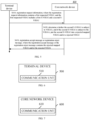
- FIG. 3 is a schematic flow chart illustrating a method 200 for wireless communication according to implementations of the present disclosure.
- the method 200 can be interactively executed by a terminal device and a core network device.
- the terminal device illustrated in FIG. 3 may be the terminal device illustrated in FIG. 1
- the core network device illustrated in FIG. 3 may be the core network device illustrated in FIG. 1 .
- the core network device may be a device with an AMF.
- the method 200 may be applied to a terminal device that does not support NSSAA.
- the terminal device may be a device that does not support the NSSAA.
- the method 200 includes some or all of the following contents.
- the terminal device receives a first message sent by the AMF.
- the first message does not contain a first S-NSSAI of visited public land mobile network (VPLMN), a second S-NSSAI is subject to the NSSAA, and the second S-NSSAI is an S-NSSAI of home public land mobile network (HPLMN) corresponding to the first S-NSSAI.
- VPN visited public land mobile network
- HPLMN home public land mobile network
- the terminal device needs to access a network slice identified by the first S-NSSAI of the VPLMN and a network slice identified by the second S-NSSAI of the HPLMN, if the terminal device does not support the NSSAA, and the second S-NSSAI is subject to the NSSAA, the first message received by the terminal device does not contain the first S-NSSAI, for example, is a registration reject message.
- the terminal device needs to access the network slice identified by the first S-NSSAI of the VPLMN and the network slice identified by the second S-NSSAI of the HPLMN, if the terminal device does not support the NSSAA, and the second S-NSSAI is subject to the NSSAA, the first message sent by the AMF to the terminal device does not contain the first S-NSSAI, for example, is the registration reject message.
- the terminal device does not use the network slice identified by the first S-NSSAI to establish a session, which can prevent the terminal device from establishing a session using the network slice identified by the first S-NSSAI and the network slice identified by the second S-NSSAI.
- the first S-NSSAI is not used as an S-NASSAI in a rejected NSSAI, which can achieve that the terminal device is not prevented from re-requesting the network slice identified by the first S-NSSAI.
- the usage of a VPLMN S-NSSAI and other HPLMN S-NSSAIs without needing the NSSAA can be ensured in registration with a network slice, thereby improving an efficiency and/or a success rate of registering with the network slice.
- the S-NSSAI may include 10 octets, each octet may include 8 bits, and the octet may also be referred to as a byte.
- Octet 1 is used for S-NSSAI information element indication (IEI);
- octet 2 is used to indicate a length of S-NSSAI contents;
- octet 3 is used for slice/service type (SST), where the SST is used to represent expected network slice behavior in terms of functions and services;
- octet 4 to octet 6 i.e., 24 bits
- SD slice differentiator
- the SD may be optional information, and the SD can be used to supplement the SST to distinguish multiple network slices of same SST;
- octet 7 is used for mapped HPLMN SST; and
- octet 8 to octet 10 are used for a mapped HPLMN SD.
- the first message does not contain an allowed NSSAI and a rejected NSSAI.
- the first message received by the terminal device neither contains the allowed NSSAI nor the rejected NSSAI.
- the first message may include an indication used to indicate rejection of registration of the terminal device.
- the allowed NSSAI can be used to represent an S-NSSAI allowed by the core network device.
- the allowed NSSAI may be an NSSAI requested by the terminal device, or, if the terminal device requests no S-NSSAI, the allowed NSSAI may be a contracted S-NSSAI for the terminal device.
- the core network device can indicate to the terminal device the allowed NSSAI in the first message.
- the allowed NSSAI may be information in a registration accept message.
- the rejected NSSAI can be used to represent an S-NSSAI rejected by the core network device.
- the rejected NSSAI may be an NSSAI requested by the terminal device, or, if the terminal device requests no NSSAI, the allowed NSSAI may be a contracted S-NSSAI for the terminal device.
- the core network device may indicate to the terminal device the rejected NSSAI in the first message.
- the first message may be a registration reject message.
- the allowed NSSAI or the rejected NSSAI may be a collection of S-NSSAIs.
- the allowed NSSAI or the rejected NSSAI may include one or more S-NSSAIs.
- the allowed NSSAI or the rejected NSSAI may be an S-NSSAI list.
- a condition that the first message does not contain the allowed NSSAI and the rejected NSSAI is applicable for that all second S-NSSAIs contained in a requested NSSAI are subject to the NSSAA, or all contracted S-NSSAIs are subject to the NSSAA if no NSSAI is requested.
- the first message contains the allowed NSSAI and/or the rejected NSSAI. If the first message contains the allowed NSSAI, the allowed NSSAI does not include the first S-NSSAI. If the first message contains the rejected NSSAI, the rejected NSSAI does not include the first S-NSSAI.
- the first message contains the allowed NSSAI, and the allowed NSSAI does not include the first S-NSSAI.
- the first message contains the rejected NSSAI, and the rejected NSSAI does not include the first S-NSSAI.
- the first message contains the allowed NSSAI and the rejected NSSAI, the allowed NSSAI does not include the first S-NSSAI, and the rejected NSSAI does not include the first S-NSSAI.
- the core network device can determine whether the second S-NSSAI is subject to the NSSAA based on that the terminal device does not support the NSSAA. If the second S-NSSAI is subject to the NSSAA, the core network device can determine that the second S-NSSAI cannot be used by the terminal device, and at the same time, does not determine the first S-NSSAI as an S-NSSAI in the rejected NSSAI, and also does not determine the first S-NSSAI as an S-NSSAI in the allowed NSSAI.
- the terminal device since the first S-NSSAI is not used as the S-NSSAI in the allowed NSSAI, the terminal device does not use the network slice identified by the first S-NSSAI to establish a session, which can prevent the terminal device from establishing a session using the network slice identified by the first S-NSSAI and the network slice identified by the second S-NSSAI.
- the first S-NSSAI is not regarded as the S-NSSAI in the rejected NSSAI, and thus the terminal device is not prevented from re-requesting the network slice identified by the first S-NSSAI.
- the usage of a VPLMN S-NSSAI and other HPLMN S-NSSAIs without needing the NSSAA can be ensured in registration with a network slice, thereby improving an efficiency and/or a success rate of registering with a network slice.
- the terminal device can avoid carrying the second S-NSSAI, and attempt to request an S-NSSAI of the HPLMN corresponding to the first S-NSSAI and except for the second S-NSSAI.
- the first message contains the rejected NSSAI and/or a rejected mapped NSSAI. If the first message contains the rejected NSSAI, the rejected NSSAI includes the second S-NSSAI. If the first message contains the rejected mapped NSSAI, the rejected mapped NSSAI includes the second S-NSSAI.
- the first message contains the rejected NSSAI, and the rejected NSSAI includes the second S-NSSAI.
- the first message includes the rejected mapped NSSAI, and the rejected mapped NSSAI includes the second S-NSSAI.
- the first message contains the rejected NSSAI and the rejected mapped NSSAI, the rejected NSSAI includes the second S-NSSAI, and the rejected mapped NSSAI includes the second S-NSSAI.
- the core network device can regard the second S-NSSAI as an S-NSSAI in the rejected mapped NSSAI or an S-NSSAI in the rejected NSSAI.
- the rejected NSSAI may further carry or include the first S-NSSAI.
- the terminal device can determine that the second S-NSSAI of the HPLMN is unavailable according to the rejected NSSAI and/or the rejected mapped NSSAI. In next registration, if the terminal device still needs to request the first S-NSSAI of the VPLMN, the terminal device can avoid carrying the second S-NSSAI, and attempt to request the S-NSSAI of the HPLMN corresponding to the first S-NSSAI and except for the second S-NSSAI.
- the method 200 may further include the following.
- the terminal device sends a second message to the AMF, where the second message is used to request for registering with a network slice.
- the second message contains a first requested NSSAI
- the first requested NSSAI includes the first S-NSSAI and at least one S-NSSAI of the HPLMN corresponding to the first S-NSSAI, where the at least one S-NSSAI includes the second S-NSSAI.
- the first requested NSSAI includes only the first S-NSSAI and the second S-NSSAI.
- the second message contains no requested NSSAI.
- a contracted S-NSSAI for the terminal device can be regarded as an S-NSSAI requested by the terminal device.
- the terminal device After sending the second message to the AMF, the terminal device receives the first message sent by the AMF.
- the first S-NSSAI and the second S-NSSAI may be NSSAIs carried in a registration request message from the terminal device, where the second message may also contain no requested NSSAI.
- the second message is a registration request message
- the first message is a registration accept message or a registration reject message.
- the second message contains the first NSSAI as example to illustrate the solution of the present disclosure.
- FIG. 4 is a schematic flow chart illustrating a method 300 for wireless communication provided in implementations of the present disclosure.
- the method 300 may include the following.
- registration request information where the registration request information contains a first requested NSSAI, and the first requested NSSAI includes a first S-NSSAI and a second S-NSSAI.
- FIG. 5 is a schematic flow chart illustrating a method 400 for wireless communication provided in implementations of the present disclosure.
- the method 400 may include the following.
- registration request information contains a first requested NSSAI, where the first requested NSSAI includes a first S-NSSAI and a second S-NSSAI.
- a registration accept message or a registration reject message where the registration accept message or the registration reject message contains the rejected mapped NSSAI and/or the rejected NSSAI.
- all S-NSSAIs of the HPLMN requested by the second message are subject to the NSSAA, or the second message contains no requested NSSAI and a contracted S-NSSAI is subject to the NSSAA.
- the first message may also include at least one of: information used to indicate rejection of registration of the terminal device; information used to indicate the terminal device to re-initiate registration; or information used to indicate a cause for rejection of registration of the terminal device or a cause for indicating the terminal device to re-initiate registration.
- the first message may further include at least one of: information used to indicate rejection of registration of the terminal device; information used to indicate the terminal device to re-initiate registration; or information used to indicate a cause for rejection of registration of the terminal device or a cause for indicating the terminal device to re-initiate registration.
- the second message contains no requested NSSAI and a contracted S-NSSAI is subject to the NSSAA.
- the first message may further include at least one of: information used to indicate rejection of registration of the terminal device; information used to indicate the terminal device to re-initiate registration; and information used to indicate a cause for rejection of registration of the terminal device or a cause for indicating the terminal device to re-initiate registration.
- the information used to indicate the cause for rejection of the registration of the terminal device or the cause for indicating the terminal device to re-initiate registration may be that an S-NSSAI is unavailable due to failed or revoked NSSAA.
- the method 200 may further include sending, by the terminal device, a third message to the AMF.
- the third message contains a second requested NSSAI, where the second requested NSSAI includes the first S-NSSAI and a third S-NSSAI, the third S-NSSAI is an S-NSSAI of the HPLMN corresponding to the first S-NSSAI, and the third S-NSSAI is different from the second S-NSSAI.
- the terminal device sends the third message to the AMF when at least one of the following conditions is satisfied: the first message does not contain an allowed NSSAI and a rejected NSSAI; the first message contains the allowed NSSAI and/or the rejected NSSAI, where if the first message contains the allowed NSSAI, the allowed NSSAI does not include the first S-NSSAI, and if the first message contains the rejected NSSAI, the rejected NSSAI does not include the first S-NSSAI; or the first message contains the rejected NSSAI and/or a rejected mapped NSSAI, where if the first message contains the rejected NSSAI, the rejected NSSAI includes the at least one S-NSSAI, and if the first message contains the rejected mapped NSSAI, the rejected mapped NSSAI includes the at least one S-NSSAI.
- the first message may also include at least one of: information used to indicate rejection of registration of the terminal device; information used to indicate the terminal device to re-initiate registration; or information used to indicate a cause for rejection of registration of the terminal device or a cause for indicating the terminal device to re-initiate registration.
- the terminal device can use the third S-NSSAI corresponding to the first S-NSSAI to re-initiate a registration request.
- the third S-NSSAI is not subject to the NSSAA.
- the AMF can regard the third S-NSSAI as an S-NSSAI in the allowed NSSAI and send the third S-NSSAI to the terminal device.
- the second S-NSSAI or a fourth S-NSSAI is a contracted S-NSSAI
- the fourth S-NSSAI is an S-NSSAI of the HPLMN corresponding to the first S-NSSAI
- the fourth S-NSSAI is different from the second S-NSSAI.
- the fourth S-NSSAI and the third S-NSSAI may be the same S-NSSAI, or may be different S-NSSAIs.
- the second S-NSSAI is a contracted S-NSSAI. Even if the second message from the terminal device does not carry the second S-NSSAI, the AMF can use a default manner to determine the second S-NSSAI to be an S-NSSAI of a network slice that the terminal device needs to register with.
- the fourth S-NSSAI and the third S-NSSAI are the same S-NSSAI, which is equivalent to that after the terminal device fails to register with the network slice identified by the second S-NSSAI, the terminal device can request for registering with a network slice identified by the fourth S-NSSAI corresponding to the first S-NSSAI.
- registration with the network slice can also be understood as access to the network slice, which is not specifically limited in the implementations of the present disclosure.
- sequence numbers of the above-mentioned processes do not imply the order of execution, and the order of execution of the processes should be determined by functions and internal logic of the processes, and does not construct any limitation on the implementation process of the implementations of the present disclosure.
- FIG. 6 is a schematic block diagram illustrating a terminal device 500 according to implementations of the present disclosure.
- the terminal device 500 does not support NSSAA.
- the terminal device 500 includes a communication unit 510 configured to receive a first message sent by an AMF, where the first message contains no first S-NSSAI of VPLMN, a second S-NSSAI is subject to the NSSAA, and the second S-NSSAI is an S-NSSAI of HPLMN corresponding to the first S-NSSAI.
- the first message contains no allowed NSSAI and no rejected NSSAI.
- the first message contains an allowed NSSAI and/or a rejected NSSAI, where on condition that the first message contains the allowed NSSAI, the allowed NSSAI does not include the first S-NSSAI, and on condition that the first message contains the rejected NSSAI, the rejected NSSAI does not include the first S-NSSAI.
- the first message contains a rejected NSSAI and/or a rejected mapped NSSAI, where on condition that the first message contains the rejected NSSAI, the rejected NSSAI includes the second S-NSSAI, and on condition that the first message contains the rejected mapped NSSAI, the rejected mapped NSSAI includes the second S-NSSAI.
- the communication unit 510 is further configured to send a second message to the AMF, where the second message is used for requesting for registering with a network slice.
- the second message contains a first requested NSSAI
- the first requested NSSAI includes the first S-NSSAI and at least one S-NSSAI of the HPLMN corresponding to the first S-NSSAI
- the at least one S-NSSAI includes the second S-NSSAI
- the second message contains no requested NSSAI.
- all S-NSSAIs of the HPLMN requested by the second message are subject to the NSSAI, or the second message contains no requested NSSAI and a contracted S-NSSAI is subject to the NSSAA, where the first message further includes at least one of: information used to indicate rejection of registration of the terminal device; information used to indicate the terminal device to re-initiate registration; or information used to indicate a cause for rejection of registration of the terminal device or a cause for indicating the terminal device to re-initiate registration.
- the second message is a registration request message.
- the communication unit 510 is further configured to send a third message to the AMF, where the third message contains a second requested NSSAI, the second requested NSSAI includes the first S-NSSAI and a third S-NSSAI, the third S-NSSAI is an S-NSSAI of the HPLMN corresponding to the first S-NSSAI, and the third S-NSSAI is different from the second S-NSSAI.
- the third S-NSSAI is not subject to the NSSAA.
- the second S-NSSAI or a fourth S-NSSAI is a contracted S-NSSAI
- the fourth S-NSSAI is an S-NSSAI of the HPLMN corresponding to the first S-NSSAI
- the fourth S-NSSAI is different from the second S-NSSAI.
- the first message is a registration accept message or a registration reject message.
- the device implementations and the method implementations may correspond to each other, and for similar illustrations, reference may be made to the method implementations.
- the terminal device 500 illustrated in FIG. 6 may correspond to the corresponding subjects for performing the methods 200 to 400 in implementations of the present disclosure, and the aforementioned and other operations and/or functions of the respective units in the terminal device 500 are respectively for realizing the corresponding processes in the methods in FIG. 3 to FIG. 5 , which will not be repeated here for the sake of brevity.
- FIG. 7 is a schematic block diagram illustrating a core network device 600 provided in implementations of the present disclosure.
- the core network device 600 may have an AMF.
- the core network device 600 includes a communication unit 610 configured to send a first message to a terminal device, where the first message contains no first S-NSSAI of VPLMN, a second S-NSSAI is subject to NSSAA, and the second S-NSSAI is an S-NSSAI of HPLMN corresponding to the first S-NSSAI.
- the first message contains no allowed NSSAI and no rejected NSSAI.
- the first message contains an allowed NSSAI and/or a rejected NSSAI, where on condition that the first message contains the allowed NSSAI, the allowed NSSAI does not include the first S-NSSAI, and on condition that the first message contains the rejected NSSAI, the rejected NSSAI does not include the first S-NSSAI.
- the first message contains a rejected NSSAI and/or a rejected mapped NSSAI, where on condition that the first message contains the rejected NSSAI, the rejected NSSAI includes the second S-NSSAI, and on condition that the first message contains the rejected mapped NSSAI, the rejected mapped NSSAI includes the second S-NSSAI.
- the communication unit 610 is further configured to receive a second message sent by the terminal device, where the second message is used for requesting for registering with a network slice.
- the second message contains a first requested NSSAI
- the first requested NSSAI includes the first S-NSSAI and at least one S-NSSAI of the HPLMN corresponding to the first S-NSSAI
- the at least one S-NSSAI includes the second S-NSSAI
- the second message contains no requested NSSAI.
- all S-NSSAIs of the HPLMN requested by the second message are subject to the NSSAI, or the second message contains no requested NSSAI and a contracted S-NSSAI is subject to the NSSAA, where the first message further includes at least one of: information used to indicate rejection of registration of the terminal device; information used to indicate the terminal device to re-initiate registration; or information used to indicate a cause for rejection of registration of the terminal device or a cause for indicating the terminal device to re-initiate registration.
- the second message is a registration request message.
- the communication unit 610 is further configured to receive a third message sent by the terminal device, where the third message contains a second requested NSSAI, the second requested NSSAI includes the first S-NSSAI and a third S-NSSAI, the third S-NSSAI is an S-NSSAI of the HPLMN corresponding to the first S-NSSAI, and the third S-NSSAI is different from the second S-NSSAI.
- the third S-NSSAI is not subject to the NSSAA.
- the second S-NSSAI or a fourth S-NSSAI is a contracted S-NSSAI
- the fourth S-NSSAI is an S-NSSAI of the HPLMN corresponding to the first S-NSSAI
- the fourth S-NSSAI is different from the second S-NSSAI.
- the first message is a registration accept message or a registration reject message.
- the device implementations and the method implementations may correspond to each other, and for similar illustrations, reference may be made to the method implementations.
- the core network device 600 illustrated in FIG. 7 may correspond to the corresponding subjects for performing the methods 200 to 400 in implementations of the present disclosure, and the aforementioned and other operations and/or functions of the respective units in the terminal device 500 are respectively for realizing the corresponding processes in the methods in FIG. 3 to FIG. 5 , which will not be repeated here for the sake of brevity.
- each step in the method implementations in implementations of the present disclosure can be completed by hardware integrated logic circuits in the processor and/or instructions in the form of software, and the steps of the method disclosed in implementations of the present disclosure can be directly embodied as being completed by a hardware decoding processor or a combination of hardware and software modules in the decoding processor.
- the software modules may be located in a random access memory (RAM), a flash memory, a read-only memory (ROM), a programmable ROM (PROM), an electrically erasable programmable memory, a register, and other storage media mature in the art.
- RAM random access memory
- flash memory a read-only memory
- PROM programmable ROM
- electrically erasable programmable memory a register
- register a register
- the storage medium is located in the memory.
- the processor reads information in the memory, and completes the steps in the above method implementations in combination with hardware in the processor.
- the communication units referred to above may be implemented by transceivers, respectively.
- FIG. 8 is a schematic structural diagram illustrating a communication device 700 according to implementations of the present disclosure.
- the communication device 700 may include a processor 710.
- the processor 710 can call and run a computer program in the memory to implement the methods in implementations of the present disclosure.
- the communication device 700 may further include a memory 720.
- the memory 720 may be used to store an indication, and may also be used to store codes, instructions, etc. executed by the processor 710.
- the processor 710 can call and execute a computer program in the memory 720 to implement the methods in implementations of the present disclosure.
- the memory 720 may be a separate device independent of the processor 710, or may be integrated in the processor 710.
- the communication device 700 may also include a transceiver 730.
- the processor 710 can control the transceiver 730 to communicate with other devices, and specifically, can send information or data to other devices, or receive information or data sent by other devices.
- the transceiver 730 may include a transmitter and a receiver.
- the transceiver 730 may further include one or more antennas.
- components in the communication device 700 are connected through a bus system, where the bus system includes a power bus, a control bus and a status signal bus in addition to a data bus.
- the communication device 700 may be a terminal device in implementations of the present disclosure, and the communication device 700 can implement corresponding processes implemented by the terminal device in each method in implementations of the present disclosure, that is, the communication device 700 in implementations of the present disclosure may correspond to the terminal device 500 in implementations of the present disclosure, and may correspond to the corresponding subject that performs the methods 200 to 400 according to implementations of the present disclosure, which will not be repeated here for brevity.
- the communication device 700 may be a core network device in implementations of the present disclosure, and the communication device 700 may implement corresponding processes implemented by the network device in each method in implementations of the present disclosure.
- the communication device 700 in implementations of the present disclosure may correspond to the core network device 600 in implementations of the present disclosure, and may correspond to the corresponding subject that performs the methods 200 to 400 according to implementations of the present disclosure, which is not repeated here for brevity.
- a chip is further provided in implementations of the present disclosure.
- the chip may be an integrated circuit chip, which has signal processing capability, and can implement or execute various methods, steps and logical block diagrams disclosed in implementations of the present disclosure.
- the chip may also be referred to as a system-level chip, a system chip, a chip system, a system on a chip, or the like.
- the chip can be applied to various communication devices, so that the communication device equipped with the chip can execute the methods, steps and logic block diagrams disclosed in implementations of the present disclosure.
- FIG. 9 is a schematic structural diagram illustrating a chip 800 according to implementations of the present disclosure.
- the chip 800 includes a processor 810.
- the processor 810 can invoke and run a computer program in the memory to implement the method in implementations of the present disclosure.
- the chip 800 may further include a memory 820.
- the processor 810 can invoke and run a computer program in the memory 820 to implement the method in implementations of the present disclosure.
- the memory 820 may be configured to store an indication, and may also be configured to store codes, instructions and the like executed by the processor 810.
- the memory 820 may be a separate device independent of the processor 810, or may be integrated in the processor 810.
- the chip 800 may further include an input interface 830.
- the processor 810 may control the input interface 830 to communicate with other devices or chips, and specifically, may acquire information or data sent by other devices or chips.
- the chip 800 may further include an output interface 840.
- the processor 810 can control the output interface 840 to communicate with other devices or chips, and specifically, can output information or data to other devices or chips.
- the chip 800 can be applied to a network device in implementations of the present disclosure, and the chip can implement the corresponding processes implemented by the network device in each method in implementations of the present disclosure, and can also implement the corresponding processes implemented by the terminal device in each method in implementations of the present disclosure, which will not be repeated here for the sake of brevity.
- components in the chip 800 are connected through a bus system, where the bus system includes a power bus, a control bus and a status signal bus in addition to a data bus.
- the processor involved in the above illustration may include but is not limited to: a general-purpose processor, a digital signal processor (DSP), an application specific integrated circuit (ASIC), a field programmable gate array (FPGA) or other programmable logic devices, a discrete gate or a transistor logic device, a discrete hardware component, and so on.
- DSP digital signal processor
- ASIC application specific integrated circuit
- FPGA field programmable gate array
- the processor may be used to implement or execute the methods, steps and logical block diagrams disclosed in implementations of the present disclosure.
- the steps of the methods disclosed in implementations of the present disclosure can be directly embodied as being executed by a hardware decoding processor, or executed by a combination of hardware and software modules in the decoding processor.
- the software module may be located in a RAM, a flash memory, a ROM, a PROM or an erasable programmable memory, a register and other storage media mature in the art.
- the storage medium is located in the memory, and the processor reads the information in the memory, and completes the steps of the above method in combination with hardware of the processor.
- the memory mentioned above includes but is not limited to: a volatile memory and/or non-volatile memory.
- the non-volatile memory may be a ROM, a PROM, an erasable PROM (EPROM), an electrically EPROM (EEPROM) or a flash memory.
- the volatile memory may be a RAM, which acts as an external cache.
- many forms of RAM are available, such as a static RAM (SRAM), a dynamic RAM (DRAM), a synchronous DRAM (SDRAM), a double data rate synchronous dynamic random access memory (DDR SDRAM), an enhanced SDRAM (ESDRAM), a synch link DRAM (SLDRAM) and a direct rambus RAM (DR RAM).
- a computer-readable storage medium for storing a computer program is also provided in implementations of the present disclosure.
- the computer-readable storage medium stores one or more programs including instructions that, when executed by a portable electronic device including multiple application programs, enable the portable electronic device to perform the methods 200 to 400 in illustrated implementations.
- the computer-readable storage medium can be applied to a network device in implementations of the present disclosure, and the computer program causes the computer to execute the corresponding processes implemented by the network device in each method in implementations of the present disclosure, which will not be repeated here for brevity.
- the computer-readable storage medium can be applied to the mobile terminal/terminal device in implementations of the present disclosure, and the computer program causes the computer to execute the corresponding processes implemented by the mobile terminal/terminal device in each method in implementations of the present disclosure, which will not be repeated here for brevity.
- a computer program product including a computer program, is also provided in implementations of the present disclosure.
- the computer program product can be applied to the network device in implementations of the present disclosure, and the computer program enables the computer to execute the corresponding processes implemented by the network device in each method in implementations of the present disclosure, which is not repeated here for brevity.
- the computer program product can be applied to the mobile terminal/terminal device in implementations of the present disclosure, and the computer program causes the computer to execute the corresponding processes implemented by the mobile terminal/terminal device in each method in implementations of the present disclosure, which is not repeated here for brevity.
- a computer program is also provided in implementations of the present disclosure.
- the computer program When the computer program is executed by the computer, the computer can execute the methods 200 to 400 in implementations illustrated.
- the computer program can be applied to the network device in implementations of the present disclosure, and when the computer program runs on the computer, the computer program causes the computer to execute the corresponding processes implemented by the network device in each method in implementations of the present disclosure, which will not be repeated here for brevity.
- the communication system may include the above-mentioned terminal device and the core network device to construct the communication system 100 as illustrated in FIG. 1 , which is not repeated here for brevity. It is to be noted that the terms "system” and the like in this text may also be referred to as a "network management architecture” or “network system” and the like.
- the essential technical solutions, the parts that contribute to the related art or part of the technical solutions can be embodied in the form of software products, and the computer software products may be stored in a storage medium, including several instructions to cause a computer device (which may be a personal computer, server, or network device, etc.) to perform all or part of the steps of the methods in implementations of the present disclosure.
- the aforementioned storage medium may include various media that can store program codes such as a U disk, a mobile hard disk, a ROM, a RAM, a magnetic disk or an optical disk.
- the division of units, modules or components in the device implementations described above is only a logical function division, and there may be other division methods in actual implementation.
- multiple units or modules or components may be combined or integrated into another system, or some units or modules or components may be ignored or not implemented.
- the above-mentioned units/modules/components described as separate/display components may or may not be physically separated, that is, may be located in one place, or may be distributed to multiple network units. Some or all of the units/modules/components may be selected according to actual needs to achieve the purpose in implementations of the present disclosure.
Landscapes
- Engineering & Computer Science (AREA)
- Computer Networks & Wireless Communication (AREA)
- Signal Processing (AREA)
- Computer Security & Cryptography (AREA)
- Databases & Information Systems (AREA)
- Mobile Radio Communication Systems (AREA)
Claims (9)
- Verfahren zur drahtlosen Kommunikation, wobei das Verfahren auf eine Endgerätvorrichtung angewendet wird, die keine netzscheibenspezifische Authentisierung und Autorisierung, NSSAA, unterstützt, wobei das Verfahren Folgendes umfasst:Senden durch die Endgerätvorrichtung einer zweiten Nachricht an eine Zugangs- und Mobilitätsmanagementfunktion, AMF, wobei die zweite Nachricht zum Anfordern des Registrierens bei einer Netzscheibe verwendet wird und die zweite Nachricht erste angeforderte Netzscheiben-Auswahlunterstützungsinformationen, NSSAI, enthält, wobei die ersten angeforderten NSSAI erste Einzelnetzscheiben-Auswahlunterstützungsinformationen, S-NSSAI, des besuchten öffentlichen terrestrischen Mobilfunknetzes, VPLMN, und wenigstens S-NSSAI des öffentlichen terrestrischen Heim-Mobilfunknetzes, HPLMN, die den ersten S-NSSAI entsprechen, umfasst, wobei die wenigstens einen S-NSSAI des HPLMN, die den ersten S-NSSAI entsprechen, zweite S-NSSAI umfassen;Empfangen durch die Endgerätvorrichtung einer durch die AMF gesendeten ersten Nachricht, wobei die erste Nachricht eine Registrierungsannahmenachricht oder eine Registrierungsablehnungsnachricht ist und die zweiten S-NSSAI durch die AMF als die S-NSSAI des HPLMN gemäß der NSSAA bestimmt werden, und wobei die erste Nachricht zugelassene NSSAI enthält, die die ersten S-NSSAI nicht umfassen, oder die erste Nachricht abgelehnte NSSAI enthält, die die ersten S-NSSAI nicht umfassen; undÜberspringen des Verwendens durch die Endgerätvorrichtung gemäß der ersten Nachricht einer durch die ersten S-NSSAI identifizierten Netzscheibe, um eine Sitzung unter der Bedingung aufzubauen, dass die erste Nachricht die zugelassenen NSSAI umfasst, die die ersten S-NSSAI nicht umfassen, odererneutes Anfordern durch die Endgerätvorrichtung gemäß der ersten Nachricht einer durch die ersten S-NSSAI identifizierten Netzscheibe unter der Bedingung, dass die erste Nachricht die abgelehnten NSSAI umfasst, die die ersten S-NSSAI nicht umfassen.
- Verfahren nach Anspruch 1, das ferner Folgenden umfasst:
Senden durch die Endgerätvorrichtung einer dritten Nachricht an die AMF, wobei die dritte Nachricht zweite angeforderte NSSAI enthält, die zweiten angeforderten NSSAI die ersten S-NSSAI und dritte S-NSSAI umfassen, wobei die dritten S-NSSAI S-NSSAI des HPLMN sind, die den ersten S-NSSAI entsprechen, sich die dritten S-NSSAI von den zweiten S-NSSAI unterscheiden und die dritten S-NSSAI nicht gemäß der NSSAA sind. - Verfahren zur drahtlosen Kommunikation, das Folgendes umfasst:Empfangen durch eine Zugangs- und Mobilitätsmanagementfunktion, AMF, einer zweiten Nachricht von einer Endgerätvorrichtung, wobei die zweite Nachricht zum Anfordern des Registrierens bei einer Netzscheibe verwendet wird und die zweite Nachricht erste angeforderte Netzscheiben-Auswahlunterstützungsinformationen, NSSAI, enthält, wobei die ersten angeforderten NSSAI erste Einzelnetzscheiben-Auswahlunterstützungsinformationen, S-NSSAI, des besuchten öffentlichen terrestrischen Mobilfunknetzes, VPLMN, und wenigstens S-NSSAI des öffentlichen terrestrischen Heim-Mobilfunknetzes, HPLMN, die den ersten S-NSSAI entsprechen, umfasst, und wobei die wenigstens einen S-NSSAI des HPLMN, die den ersten S-NSSAI entsprechen, zweite S-NSSAI umfassen; undSenden (S210) durch die AMF einer ersten Nachricht an die Endgerätvorrichtung, wobei die erste Nachricht eine Registrierungsannahmenachricht oder eine Registrierungsablehnungsnachricht ist und die zweiten S-NSSAI durch die AMF als S-NSSAI des HPLMN gemäß der netzscheibenspezifischen Authentisierung und Autorisierung, NSSAA, bestimmt werden, und wobei die erste Nachricht zugelassene NSSAI enthält, die die ersten S-NSSAI nicht umfassen, oder die erste Nachricht abgelehnte NSSAI enthält, die die ersten S-NSSAI nicht umfassen;wobei die erste Nachricht durch die Endgerätvorrichtung verwendet wird, um:zu bestimmen, das Verwenden einer durch die ersten S-NSSAI identifizierten Netzscheibe zu überspringen, um eine Sitzung unter der Bedingung aufzubauen, dass die erste Nachricht die zugelassenen NSSAI umfasst, die die ersten S-NSSAI nicht umfassen; odereine durch die ersten S-NSSAI identifizierte Netzscheibe unter der Bedingung, dass die erste Nachricht die abgelehnten NSSAI umfasst, die die ersten S-NSSAI nicht umfassen, erneut anzufordern.
- Verfahren nach Anspruch 3, das ferner Folgendes umfasst:
Empfangen durch die AMF einer durch die Endgerätvorrichtung gesendeten dritten Nachricht, wobei die dritte Nachricht zweite angeforderte NSSAI enthält, die zweiten angeforderten NSSAI die ersten S-NSSAI und dritte S-NSSAI umfassen, wobei die dritten S-NSSAI S-NSSAI des HPLMN sind, die den ersten S-NSSAI entsprechen, sich die dritten S-NSSAI von den zweiten S-NSSAI unterscheiden und die dritten S-NSSAI nicht gemäß der NSSAA sind. - Endgerätvorrichtung (500), wobei die Endgerätvorrichtung die netzscheibenspezifische Authentisierung und Autorisierung, NSSAA, nicht unterstützt, wobei die Endgerätvorrichtung Folgendes umfasst:
eine Kommunikationseinheit (510), die konfiguriert ist:eine zweite Nachricht an eine Zugangs- und Mobilitätsmanagementfunktion, AMF, zu senden, wobei die zweite Nachricht zum Anfordern des Registrierens bei einer Netzscheibe verwendet wird und die zweite Nachricht erste angeforderte Netzscheiben-Auswahlunterstützungsinformationen, NSSAI, enthält, wobei die ersten angeforderten NSSAI erste Einzelnetzscheiben-Auswahlunterstützungsinformationen, S-NSSAI, des besuchten öffentlichen terrestrischen Mobilfunknetzes, VPLMN, und wenigstens S-NSSAI des öffentlichen terrestrischen Heim-Mobilfunknetzes, HPLMN, die den ersten S-NSSAI entsprechen, umfasst, und wobei die wenigstens einen S-NSSAI des HPLMN, die den ersten S-NSSAI entsprechen, zweite S-NSSAI umfassen;eine durch die AMF gesendete erste Nachricht zu empfangen, wobei die erste Nachricht eine Registrierungsannahmenachricht oder eine Registrierungsablehnungsnachricht ist und die zweiten S-NSSAI durch die AMF als S-NSSAI des HPLMN gemäß der NSSAA bestimmt werden, und wobei die erste Nachricht zugelassene NSSAI enthält, die die ersten S-NSSAI nicht umfassen, oder die erste Nachricht abgelehnte NSSAI enthält, die die ersten S-NSSAI nicht umfassen; unddas Verwenden gemäß der ersten Nachricht einer durch die ersten S-NSSAI identifizierten Netzscheibe zu überspringen, um eine Sitzung unter der Bedingung aufzubauen, dass die erste Nachricht die zugelassenen NSSAI umfasst, die die ersten S-NSSAI nicht umfassen; odergemäß der ersten Nachricht eine durch die ersten S-NSSAI identifizierte Netzscheibe unter der Bedingung, dass die erste Nachricht die abgelehnten NSSAI umfasst, die die ersten S-NSSAI nicht umfassen, erneut anzufordern. - Endgerätvorrichtung nach Anspruch 5, wobei die Kommunikationseinheit (510) ferner konfiguriert ist:
eine dritte Nachricht an die AMF zu senden, wobei die dritte Nachricht zweite angeforderte NSSAI enthält, die zweiten angeforderten NSSAI die ersten S-NSSAI und dritte S-NSSAI umfassen, wobei die dritten S-NSSAI S-NSSAI des HPLMN sind, die den ersten S-NSSAI entsprechen, sich die dritten S-NSSAI von den zweiten S-NSSAI unterscheiden und die dritten S-NSSAI nicht gemäß der NSSAA sind. - System, das eine Endgerätvorrichtung und eine Kernnetzvorrichtung (600) umfasst, das eine Zugangs- und Mobilitätsmanagementfunktion, AMF, umfasst, wobei die AMF eine Kommunikationseinheit (610) umfasst, die konfiguriert ist:eine zweite Nachricht von der Endgerätvorrichtung zu empfangen, wobei die zweite Nachricht zum Anfordern des Registrierens bei einer Netzscheibe verwendet wird und die zweite Nachricht erste angeforderte Netzscheiben-Auswahlunterstützungsinformationen, NSSAI, enthält, wobei die ersten angeforderten NSSAI erste Einzelnetzscheiben-Auswahlunterstützungsinformationen, S-NSSAI, des besuchten öffentlichen terrestrischen Mobilfunknetzes, VPLMN, und wenigstens S-NSSAI des öffentlichen terrestrischen Heim-Mobilfunknetzes, HPLMN, die den ersten S-NSSAI entsprechen, umfasst, wobei die wenigstens einen S-NSSAI des HPLMN, die den ersten S-NSSAI entsprechen, zweite S-NSSAI umfassen; undeine erste Nachricht an die Endgerätvorrichtung zu senden, wobei die erste Nachricht eine Registrierungsannahmenachricht oder eine Registrierungsablehnungsnachricht ist und die zweiten S-NSSAI durch die AMF als S-NSSAI des HPLMN gemäß der netzscheibenspezifischen Authentisierung und Autorisierung, NSSAA, bestimmt werden, und wobei die erste Nachricht zugelassene NSSAI enthält, die die ersten S-NSSAI nicht umfassen, oder die erste Nachricht abgelehnte NSSAI enthält, die die ersten S-NSSAI nicht umfassen;wobei die Endgerätvorrichtung konfiguriert ist, die erste Nachricht zu verwenden, um:zu bestimmen, das Verwenden einer durch die ersten S-NSSAI identifizierten Netzscheibe zu überspringen, um eine Sitzung unter der Bedingung aufzubauen, dass die erste Nachricht die zugelassenen NSSAI umfasst, die die ersten S-NSSAI nicht umfassen, odereine durch die ersten S-NSSAI identifizierte Netzscheibe unter der Bedingung, dass die erste Nachricht die abgelehnten NSSAI umfasst, die die ersten S-NSSAI nicht umfassen, erneut anzufordern.
- System nach Anspruch 7, wobei die Kommunikationseinheit (610) ferner konfiguriert ist:
eine durch die Endgerätvorrichtung gesendete dritte Nachricht zu empfangen, wobei die dritte Nachricht zweite angeforderte NSSAI enthält, die zweiten angeforderten NSSAI die ersten S-NSSAI und dritte S-NSSAI umfassen, wobei die dritten S-NSSAI S-NSSAI des HPLMN sind, die den ersten S-NSSAI entsprechen, sich die dritten S-NSSAI von den zweiten S-NSSAI unterscheiden und die dritten S-NSSAI nicht gemäß der NSSAA sind. - Computerlesbares Speichermedium, das ein Computerprogramm speichert, wobei das Computerprogramm einem Computer ermöglicht, das Verfahren nach einem der Ansprüche 1 bis 4 auszuführen.
Applications Claiming Priority (1)
| Application Number | Priority Date | Filing Date | Title |
|---|---|---|---|
| PCT/CN2020/101941 WO2022011561A1 (zh) | 2020-07-14 | 2020-07-14 | 无线通信方法和设备 |
Publications (3)
| Publication Number | Publication Date |
|---|---|
| EP4021049A1 EP4021049A1 (de) | 2022-06-29 |
| EP4021049A4 EP4021049A4 (de) | 2022-10-19 |
| EP4021049B1 true EP4021049B1 (de) | 2024-06-19 |
Family
ID=79555943
Family Applications (1)
| Application Number | Title | Priority Date | Filing Date |
|---|---|---|---|
| EP20945174.9A Active EP4021049B1 (de) | 2020-07-14 | 2020-07-14 | Verfahren zur drathlosen kommunikation und gerät |
Country Status (6)
| Country | Link |
|---|---|
| US (1) | US12213064B2 (de) |
| EP (1) | EP4021049B1 (de) |
| JP (1) | JP7576618B2 (de) |
| KR (1) | KR20230038633A (de) |
| CN (2) | CN114258692A (de) |
| WO (1) | WO2022011561A1 (de) |
Families Citing this family (4)
| Publication number | Priority date | Publication date | Assignee | Title |
|---|---|---|---|---|
| CN115191148A (zh) * | 2021-02-03 | 2022-10-14 | 北京小米移动软件有限公司 | 多连接下的通信方法和通信装置 |
| WO2023147045A1 (en) * | 2022-01-27 | 2023-08-03 | Interdigital Patent Holdings, Inc. | Systems and methods for network slice-based vplmn selection/reselection |
| CN116683967A (zh) * | 2022-02-22 | 2023-09-01 | 华为技术有限公司 | 通信方法和装置 |
| CN118282595A (zh) * | 2022-12-30 | 2024-07-02 | 华为技术有限公司 | 通信方法和通信装置 |
Family Cites Families (9)
| Publication number | Priority date | Publication date | Assignee | Title |
|---|---|---|---|---|
| CA3065624C (en) * | 2017-06-19 | 2022-07-26 | Huawei Technologies Co., Ltd. | Registration method, session establishment method, terminal, and amf entity |
| EP3729868B1 (de) * | 2017-12-22 | 2024-07-17 | Lenovo (Singapore) Pte. Ltd. | Netzwerk-slice-auswahlunterstützungsinformationskonfiguration |
| WO2020080913A1 (ko) | 2018-10-19 | 2020-04-23 | 엘지전자 주식회사 | 무선 통신 시스템에서 독립적인 네트워크 슬라이스별로 분리된 데이터 전송을 지원하는 방법 |
| CN113039825B (zh) * | 2018-11-16 | 2024-08-13 | 联想(新加坡)私人有限公司 | 用于无线通信的装置和方法 |
| CN110225563B (zh) * | 2019-01-31 | 2020-11-10 | 华为技术有限公司 | 网络注册的方法及设备 |
| WO2020252281A1 (en) * | 2019-06-14 | 2020-12-17 | Convida Wireless, Llc | Apparatus, system and method for enhancements to network slicing and the policy framework ofa 5g network |
| BR112021026454A2 (pt) * | 2019-07-09 | 2022-02-15 | Nec Corp | Nó de rede, método para um nó de rede, equipamento de usuário e método para equipamento de usuário para controle de uso de fatia de rede |
| GB2593147B (en) * | 2020-02-12 | 2023-01-18 | Samsung Electronics Co Ltd | Slice-specific authentication and authorization |
| GB2593713B (en) * | 2020-03-30 | 2023-05-24 | Samsung Electronics Co Ltd | Network slice-specific authentication and authorization |
-
2020
- 2020-07-14 EP EP20945174.9A patent/EP4021049B1/de active Active
- 2020-07-14 CN CN202080058310.2A patent/CN114258692A/zh active Pending
- 2020-07-14 CN CN202210499070.0A patent/CN114786167B/zh active Active
- 2020-07-14 WO PCT/CN2020/101941 patent/WO2022011561A1/zh not_active Ceased
- 2020-07-14 JP JP2022530278A patent/JP7576618B2/ja active Active
- 2020-07-14 KR KR1020227018449A patent/KR20230038633A/ko active Pending
-
2022
- 2022-04-21 US US17/726,460 patent/US12213064B2/en active Active
Also Published As
| Publication number | Publication date |
|---|---|
| EP4021049A1 (de) | 2022-06-29 |
| CN114786167B (zh) | 2023-07-18 |
| CN114786167A (zh) | 2022-07-22 |
| JP7576618B2 (ja) | 2024-10-31 |
| EP4021049A4 (de) | 2022-10-19 |
| CN114258692A (zh) | 2022-03-29 |
| KR20230038633A (ko) | 2023-03-21 |
| JP2023537794A (ja) | 2023-09-06 |
| WO2022011561A1 (zh) | 2022-01-20 |
| US12213064B2 (en) | 2025-01-28 |
| US20220248319A1 (en) | 2022-08-04 |
Similar Documents
| Publication | Publication Date | Title |
|---|---|---|
| US10911979B2 (en) | AT commands for 5G session management | |
| US20210022063A1 (en) | Data transmission method and apparatus | |
| CN113810973B (zh) | 无线通信的方法及设备 | |
| US12213064B2 (en) | Method for wireless communication and device | |
| CN110035564B (zh) | 通信方法和装置 | |
| US12082273B2 (en) | Methods for service transmission, terminal device and AMF | |
| US12574808B2 (en) | Handover for communication networks | |
| EP4007360A1 (de) | Sitzungsverifizierungsverfahren, elektronische vorrichtung und speichermedium | |
| US12464407B2 (en) | Handling of URSP regarding S-NSSAI and PDU type | |
| US12574740B2 (en) | Terminal operation method and device in wireless communication system | |
| CN113692777B (zh) | 一种重定向方法及装置、终端设备、网络设备 | |
| US20240292219A1 (en) | Method and device for operating terminal in wireless communication system | |
| WO2022147836A1 (zh) | 一种连接建立方法及装置、网络设备 | |
| WO2022183497A1 (zh) | 一种通信方法和通信装置 | |
| WO2024012299A1 (zh) | 一种通信方法、通信装置及通信系统 | |
| WO2020252710A1 (zh) | 无线通信方法和设备 | |
| CN115707062A (zh) | 一种网络切片准入控制方法和装置 | |
| US20230336992A1 (en) | Method and apparatus for authenticating user equipment in wireless communication system | |
| CN115884301A (zh) | 用于无线通信的方法及用户设备 | |
| CN114938494A (zh) | 通信方法及装置 | |
| US20230132185A1 (en) | Wireless communication method and device | |
| US20230224795A1 (en) | Communication method and apparatus | |
| TW202025677A (zh) | 一種資訊傳輸方法及裝置、通訊設備 | |
| KR20200092070A (ko) | 무선 통신 시스템에서 등록 관리 방법 및 장치 | |
| WO2023092610A1 (zh) | 无线通信方法、终端设备和接入网设备 |
Legal Events
| Date | Code | Title | Description |
|---|---|---|---|
| STAA | Information on the status of an ep patent application or granted ep patent |
Free format text: STATUS: THE INTERNATIONAL PUBLICATION HAS BEEN MADE |
|
| PUAI | Public reference made under article 153(3) epc to a published international application that has entered the european phase |
Free format text: ORIGINAL CODE: 0009012 |
|
| STAA | Information on the status of an ep patent application or granted ep patent |
Free format text: STATUS: REQUEST FOR EXAMINATION WAS MADE |
|
| 17P | Request for examination filed |
Effective date: 20220323 |
|
| AK | Designated contracting states |
Kind code of ref document: A1 Designated state(s): AL AT BE BG CH CY CZ DE DK EE ES FI FR GB GR HR HU IE IS IT LI LT LU LV MC MK MT NL NO PL PT RO RS SE SI SK SM TR |
|
| A4 | Supplementary search report drawn up and despatched |
Effective date: 20220921 |
|
| RIC1 | Information provided on ipc code assigned before grant |
Ipc: H04W 12/06 20210101ALI20220915BHEP Ipc: H04W 12/08 20210101AFI20220915BHEP |
|
| STAA | Information on the status of an ep patent application or granted ep patent |
Free format text: STATUS: EXAMINATION IS IN PROGRESS |
|
| 17Q | First examination report despatched |
Effective date: 20230607 |
|
| DAV | Request for validation of the european patent (deleted) | ||
| DAX | Request for extension of the european patent (deleted) | ||
| GRAP | Despatch of communication of intention to grant a patent |
Free format text: ORIGINAL CODE: EPIDOSNIGR1 |
|
| STAA | Information on the status of an ep patent application or granted ep patent |
Free format text: STATUS: GRANT OF PATENT IS INTENDED |
|
| INTG | Intention to grant announced |
Effective date: 20231128 |
|
| GRAJ | Information related to disapproval of communication of intention to grant by the applicant or resumption of examination proceedings by the epo deleted |
Free format text: ORIGINAL CODE: EPIDOSDIGR1 |
|
| STAA | Information on the status of an ep patent application or granted ep patent |
Free format text: STATUS: EXAMINATION IS IN PROGRESS |
|
| GRAP | Despatch of communication of intention to grant a patent |
Free format text: ORIGINAL CODE: EPIDOSNIGR1 |
|
| STAA | Information on the status of an ep patent application or granted ep patent |
Free format text: STATUS: GRANT OF PATENT IS INTENDED |
|
| INTC | Intention to grant announced (deleted) | ||
| INTG | Intention to grant announced |
Effective date: 20240319 |
|
| GRAS | Grant fee paid |
Free format text: ORIGINAL CODE: EPIDOSNIGR3 |
|
| GRAA | (expected) grant |
Free format text: ORIGINAL CODE: 0009210 |
|
| STAA | Information on the status of an ep patent application or granted ep patent |
Free format text: STATUS: THE PATENT HAS BEEN GRANTED |
|
| AK | Designated contracting states |
Kind code of ref document: B1 Designated state(s): AL AT BE BG CH CY CZ DE DK EE ES FI FR GB GR HR HU IE IS IT LI LT LU LV MC MK MT NL NO PL PT RO RS SE SI SK SM TR |
|
| REG | Reference to a national code |
Ref country code: GB Ref legal event code: FG4D |
|
| REG | Reference to a national code |
Ref country code: CH Ref legal event code: EP |
|
| REG | Reference to a national code |
Ref country code: DE Ref legal event code: R096 Ref document number: 602020032821 Country of ref document: DE |
|
| PG25 | Lapsed in a contracting state [announced via postgrant information from national office to epo] |
Ref country code: BG Free format text: LAPSE BECAUSE OF FAILURE TO SUBMIT A TRANSLATION OF THE DESCRIPTION OR TO PAY THE FEE WITHIN THE PRESCRIBED TIME-LIMIT Effective date: 20240619 |
|
| P01 | Opt-out of the competence of the unified patent court (upc) registered |
Free format text: CASE NUMBER: APP_49532/2024 Effective date: 20240902 |
|
| PG25 | Lapsed in a contracting state [announced via postgrant information from national office to epo] |
Ref country code: HR Free format text: LAPSE BECAUSE OF FAILURE TO SUBMIT A TRANSLATION OF THE DESCRIPTION OR TO PAY THE FEE WITHIN THE PRESCRIBED TIME-LIMIT Effective date: 20240619 Ref country code: FI Free format text: LAPSE BECAUSE OF FAILURE TO SUBMIT A TRANSLATION OF THE DESCRIPTION OR TO PAY THE FEE WITHIN THE PRESCRIBED TIME-LIMIT Effective date: 20240619 |
|
| REG | Reference to a national code |
Ref country code: LT Ref legal event code: MG9D |
|
| PG25 | Lapsed in a contracting state [announced via postgrant information from national office to epo] |
Ref country code: GR Free format text: LAPSE BECAUSE OF FAILURE TO SUBMIT A TRANSLATION OF THE DESCRIPTION OR TO PAY THE FEE WITHIN THE PRESCRIBED TIME-LIMIT Effective date: 20240920 |
|
| REG | Reference to a national code |
Ref country code: NL Ref legal event code: MP Effective date: 20240619 |
|
| PG25 | Lapsed in a contracting state [announced via postgrant information from national office to epo] |
Ref country code: LV Free format text: LAPSE BECAUSE OF FAILURE TO SUBMIT A TRANSLATION OF THE DESCRIPTION OR TO PAY THE FEE WITHIN THE PRESCRIBED TIME-LIMIT Effective date: 20240619 |
|
| PG25 | Lapsed in a contracting state [announced via postgrant information from national office to epo] |
Ref country code: NO Free format text: LAPSE BECAUSE OF FAILURE TO SUBMIT A TRANSLATION OF THE DESCRIPTION OR TO PAY THE FEE WITHIN THE PRESCRIBED TIME-LIMIT Effective date: 20240919 Ref country code: LV Free format text: LAPSE BECAUSE OF FAILURE TO SUBMIT A TRANSLATION OF THE DESCRIPTION OR TO PAY THE FEE WITHIN THE PRESCRIBED TIME-LIMIT Effective date: 20240619 Ref country code: HR Free format text: LAPSE BECAUSE OF FAILURE TO SUBMIT A TRANSLATION OF THE DESCRIPTION OR TO PAY THE FEE WITHIN THE PRESCRIBED TIME-LIMIT Effective date: 20240619 Ref country code: GR Free format text: LAPSE BECAUSE OF FAILURE TO SUBMIT A TRANSLATION OF THE DESCRIPTION OR TO PAY THE FEE WITHIN THE PRESCRIBED TIME-LIMIT Effective date: 20240920 Ref country code: FI Free format text: LAPSE BECAUSE OF FAILURE TO SUBMIT A TRANSLATION OF THE DESCRIPTION OR TO PAY THE FEE WITHIN THE PRESCRIBED TIME-LIMIT Effective date: 20240619 Ref country code: BG Free format text: LAPSE BECAUSE OF FAILURE TO SUBMIT A TRANSLATION OF THE DESCRIPTION OR TO PAY THE FEE WITHIN THE PRESCRIBED TIME-LIMIT Effective date: 20240619 Ref country code: RS Free format text: LAPSE BECAUSE OF FAILURE TO SUBMIT A TRANSLATION OF THE DESCRIPTION OR TO PAY THE FEE WITHIN THE PRESCRIBED TIME-LIMIT Effective date: 20240919 |
|
| PG25 | Lapsed in a contracting state [announced via postgrant information from national office to epo] |
Ref country code: NL Free format text: LAPSE BECAUSE OF FAILURE TO SUBMIT A TRANSLATION OF THE DESCRIPTION OR TO PAY THE FEE WITHIN THE PRESCRIBED TIME-LIMIT Effective date: 20240619 |
|
| REG | Reference to a national code |
Ref country code: AT Ref legal event code: MK05 Ref document number: 1696782 Country of ref document: AT Kind code of ref document: T Effective date: 20240619 |
|
| PG25 | Lapsed in a contracting state [announced via postgrant information from national office to epo] |
Ref country code: NL Free format text: LAPSE BECAUSE OF FAILURE TO SUBMIT A TRANSLATION OF THE DESCRIPTION OR TO PAY THE FEE WITHIN THE PRESCRIBED TIME-LIMIT Effective date: 20240619 |
|
| PG25 | Lapsed in a contracting state [announced via postgrant information from national office to epo] |
Ref country code: PT Free format text: LAPSE BECAUSE OF FAILURE TO SUBMIT A TRANSLATION OF THE DESCRIPTION OR TO PAY THE FEE WITHIN THE PRESCRIBED TIME-LIMIT Effective date: 20241021 |
|
| PG25 | Lapsed in a contracting state [announced via postgrant information from national office to epo] |
Ref country code: PT Free format text: LAPSE BECAUSE OF FAILURE TO SUBMIT A TRANSLATION OF THE DESCRIPTION OR TO PAY THE FEE WITHIN THE PRESCRIBED TIME-LIMIT Effective date: 20241021 |
|
| PG25 | Lapsed in a contracting state [announced via postgrant information from national office to epo] |
Ref country code: PL Free format text: LAPSE BECAUSE OF FAILURE TO SUBMIT A TRANSLATION OF THE DESCRIPTION OR TO PAY THE FEE WITHIN THE PRESCRIBED TIME-LIMIT Effective date: 20240619 |
|
| PG25 | Lapsed in a contracting state [announced via postgrant information from national office to epo] |
Ref country code: EE Free format text: LAPSE BECAUSE OF FAILURE TO SUBMIT A TRANSLATION OF THE DESCRIPTION OR TO PAY THE FEE WITHIN THE PRESCRIBED TIME-LIMIT Effective date: 20240619 |
|
| PG25 | Lapsed in a contracting state [announced via postgrant information from national office to epo] |
Ref country code: AT Free format text: LAPSE BECAUSE OF FAILURE TO SUBMIT A TRANSLATION OF THE DESCRIPTION OR TO PAY THE FEE WITHIN THE PRESCRIBED TIME-LIMIT Effective date: 20240619 Ref country code: IS Free format text: LAPSE BECAUSE OF FAILURE TO SUBMIT A TRANSLATION OF THE DESCRIPTION OR TO PAY THE FEE WITHIN THE PRESCRIBED TIME-LIMIT Effective date: 20241019 |
|
| PG25 | Lapsed in a contracting state [announced via postgrant information from national office to epo] |
Ref country code: CZ Free format text: LAPSE BECAUSE OF FAILURE TO SUBMIT A TRANSLATION OF THE DESCRIPTION OR TO PAY THE FEE WITHIN THE PRESCRIBED TIME-LIMIT Effective date: 20240619 |
|
| PG25 | Lapsed in a contracting state [announced via postgrant information from national office to epo] |
Ref country code: RO Free format text: LAPSE BECAUSE OF FAILURE TO SUBMIT A TRANSLATION OF THE DESCRIPTION OR TO PAY THE FEE WITHIN THE PRESCRIBED TIME-LIMIT Effective date: 20240619 Ref country code: SK Free format text: LAPSE BECAUSE OF FAILURE TO SUBMIT A TRANSLATION OF THE DESCRIPTION OR TO PAY THE FEE WITHIN THE PRESCRIBED TIME-LIMIT Effective date: 20240619 |
|
| PG25 | Lapsed in a contracting state [announced via postgrant information from national office to epo] |
Ref country code: SM Free format text: LAPSE BECAUSE OF FAILURE TO SUBMIT A TRANSLATION OF THE DESCRIPTION OR TO PAY THE FEE WITHIN THE PRESCRIBED TIME-LIMIT Effective date: 20240619 Ref country code: ES Free format text: LAPSE BECAUSE OF FAILURE TO SUBMIT A TRANSLATION OF THE DESCRIPTION OR TO PAY THE FEE WITHIN THE PRESCRIBED TIME-LIMIT Effective date: 20240619 |
|
| PG25 | Lapsed in a contracting state [announced via postgrant information from national office to epo] |
Ref country code: SM Free format text: LAPSE BECAUSE OF FAILURE TO SUBMIT A TRANSLATION OF THE DESCRIPTION OR TO PAY THE FEE WITHIN THE PRESCRIBED TIME-LIMIT Effective date: 20240619 Ref country code: SK Free format text: LAPSE BECAUSE OF FAILURE TO SUBMIT A TRANSLATION OF THE DESCRIPTION OR TO PAY THE FEE WITHIN THE PRESCRIBED TIME-LIMIT Effective date: 20240619 Ref country code: RO Free format text: LAPSE BECAUSE OF FAILURE TO SUBMIT A TRANSLATION OF THE DESCRIPTION OR TO PAY THE FEE WITHIN THE PRESCRIBED TIME-LIMIT Effective date: 20240619 Ref country code: PL Free format text: LAPSE BECAUSE OF FAILURE TO SUBMIT A TRANSLATION OF THE DESCRIPTION OR TO PAY THE FEE WITHIN THE PRESCRIBED TIME-LIMIT Effective date: 20240619 Ref country code: IS Free format text: LAPSE BECAUSE OF FAILURE TO SUBMIT A TRANSLATION OF THE DESCRIPTION OR TO PAY THE FEE WITHIN THE PRESCRIBED TIME-LIMIT Effective date: 20241019 Ref country code: ES Free format text: LAPSE BECAUSE OF FAILURE TO SUBMIT A TRANSLATION OF THE DESCRIPTION OR TO PAY THE FEE WITHIN THE PRESCRIBED TIME-LIMIT Effective date: 20240619 Ref country code: EE Free format text: LAPSE BECAUSE OF FAILURE TO SUBMIT A TRANSLATION OF THE DESCRIPTION OR TO PAY THE FEE WITHIN THE PRESCRIBED TIME-LIMIT Effective date: 20240619 Ref country code: CZ Free format text: LAPSE BECAUSE OF FAILURE TO SUBMIT A TRANSLATION OF THE DESCRIPTION OR TO PAY THE FEE WITHIN THE PRESCRIBED TIME-LIMIT Effective date: 20240619 Ref country code: AT Free format text: LAPSE BECAUSE OF FAILURE TO SUBMIT A TRANSLATION OF THE DESCRIPTION OR TO PAY THE FEE WITHIN THE PRESCRIBED TIME-LIMIT Effective date: 20240619 |
|
| PG25 | Lapsed in a contracting state [announced via postgrant information from national office to epo] |
Ref country code: IT Free format text: LAPSE BECAUSE OF FAILURE TO SUBMIT A TRANSLATION OF THE DESCRIPTION OR TO PAY THE FEE WITHIN THE PRESCRIBED TIME-LIMIT Effective date: 20240619 |
|
| REG | Reference to a national code |
Ref country code: CH Ref legal event code: PL |
|
| PG25 | Lapsed in a contracting state [announced via postgrant information from national office to epo] |
Ref country code: LU Free format text: LAPSE BECAUSE OF NON-PAYMENT OF DUE FEES Effective date: 20240714 |
|
| PG25 | Lapsed in a contracting state [announced via postgrant information from national office to epo] |
Ref country code: MC Free format text: LAPSE BECAUSE OF FAILURE TO SUBMIT A TRANSLATION OF THE DESCRIPTION OR TO PAY THE FEE WITHIN THE PRESCRIBED TIME-LIMIT Effective date: 20240619 |
|
| REG | Reference to a national code |
Ref country code: DE Ref legal event code: R097 Ref document number: 602020032821 Country of ref document: DE |
|
| PG25 | Lapsed in a contracting state [announced via postgrant information from national office to epo] |
Ref country code: MC Free format text: LAPSE BECAUSE OF FAILURE TO SUBMIT A TRANSLATION OF THE DESCRIPTION OR TO PAY THE FEE WITHIN THE PRESCRIBED TIME-LIMIT Effective date: 20240619 Ref country code: LU Free format text: LAPSE BECAUSE OF NON-PAYMENT OF DUE FEES Effective date: 20240714 |
|
| PG25 | Lapsed in a contracting state [announced via postgrant information from national office to epo] |
Ref country code: DK Free format text: LAPSE BECAUSE OF FAILURE TO SUBMIT A TRANSLATION OF THE DESCRIPTION OR TO PAY THE FEE WITHIN THE PRESCRIBED TIME-LIMIT Effective date: 20240619 |
|
| PG25 | Lapsed in a contracting state [announced via postgrant information from national office to epo] |
Ref country code: CH Free format text: LAPSE BECAUSE OF NON-PAYMENT OF DUE FEES Effective date: 20240731 Ref country code: BE Free format text: LAPSE BECAUSE OF NON-PAYMENT OF DUE FEES Effective date: 20240731 |
|
| PLBE | No opposition filed within time limit |
Free format text: ORIGINAL CODE: 0009261 |
|
| STAA | Information on the status of an ep patent application or granted ep patent |
Free format text: STATUS: NO OPPOSITION FILED WITHIN TIME LIMIT |
|
| 26N | No opposition filed |
Effective date: 20250320 |
|
| REG | Reference to a national code |
Ref country code: BE Ref legal event code: MM Effective date: 20240731 |
|
| PG25 | Lapsed in a contracting state [announced via postgrant information from national office to epo] |
Ref country code: FR Free format text: LAPSE BECAUSE OF NON-PAYMENT OF DUE FEES Effective date: 20240819 |
|
| PG25 | Lapsed in a contracting state [announced via postgrant information from national office to epo] |
Ref country code: IE Free format text: LAPSE BECAUSE OF NON-PAYMENT OF DUE FEES Effective date: 20240714 |
|
| PG25 | Lapsed in a contracting state [announced via postgrant information from national office to epo] |
Ref country code: SE Free format text: LAPSE BECAUSE OF FAILURE TO SUBMIT A TRANSLATION OF THE DESCRIPTION OR TO PAY THE FEE WITHIN THE PRESCRIBED TIME-LIMIT Effective date: 20240619 |
|
| PGFP | Annual fee paid to national office [announced via postgrant information from national office to epo] |
Ref country code: DE Payment date: 20250722 Year of fee payment: 6 |
|
| PGFP | Annual fee paid to national office [announced via postgrant information from national office to epo] |
Ref country code: GB Payment date: 20250724 Year of fee payment: 6 |
|
| PG25 | Lapsed in a contracting state [announced via postgrant information from national office to epo] |
Ref country code: CY Free format text: LAPSE BECAUSE OF FAILURE TO SUBMIT A TRANSLATION OF THE DESCRIPTION OR TO PAY THE FEE WITHIN THE PRESCRIBED TIME-LIMIT; INVALID AB INITIO Effective date: 20200714 |
|
| PG25 | Lapsed in a contracting state [announced via postgrant information from national office to epo] |
Ref country code: HU Free format text: LAPSE BECAUSE OF FAILURE TO SUBMIT A TRANSLATION OF THE DESCRIPTION OR TO PAY THE FEE WITHIN THE PRESCRIBED TIME-LIMIT; INVALID AB INITIO Effective date: 20200714 |