EP4021136A1 - Datenübertragungsverfahren und -vorrichtung - Google Patents
Datenübertragungsverfahren und -vorrichtung Download PDFInfo
- Publication number
- EP4021136A1 EP4021136A1 EP19943281.6A EP19943281A EP4021136A1 EP 4021136 A1 EP4021136 A1 EP 4021136A1 EP 19943281 A EP19943281 A EP 19943281A EP 4021136 A1 EP4021136 A1 EP 4021136A1
- Authority
- EP
- European Patent Office
- Prior art keywords
- information
- indication information
- message
- ack
- nack feedback
- Prior art date
- Legal status (The legal status is an assumption and is not a legal conclusion. Google has not performed a legal analysis and makes no representation as to the accuracy of the status listed.)
- Granted
Links
Images


Classifications
-
- H—ELECTRICITY
- H04—ELECTRIC COMMUNICATION TECHNIQUE
- H04W—WIRELESS COMMUNICATION NETWORKS
- H04W74/00—Wireless channel access
- H04W74/002—Transmission of channel access control information
- H04W74/006—Transmission of channel access control information in the downlink, i.e. towards the terminal
-
- H—ELECTRICITY
- H04—ELECTRIC COMMUNICATION TECHNIQUE
- H04L—TRANSMISSION OF DIGITAL INFORMATION, e.g. TELEGRAPHIC COMMUNICATION
- H04L1/00—Arrangements for detecting or preventing errors in the information received
- H04L1/12—Arrangements for detecting or preventing errors in the information received by using return channel
- H04L1/16—Arrangements for detecting or preventing errors in the information received by using return channel in which the return channel carries supervisory signals, e.g. repetition request signals
- H04L1/18—Automatic repetition systems, e.g. Van Duuren systems
- H04L1/1829—Arrangements specially adapted for the receiver end
- H04L1/1854—Scheduling and prioritising arrangements
-
- H—ELECTRICITY
- H04—ELECTRIC COMMUNICATION TECHNIQUE
- H04L—TRANSMISSION OF DIGITAL INFORMATION, e.g. TELEGRAPHIC COMMUNICATION
- H04L1/00—Arrangements for detecting or preventing errors in the information received
- H04L1/12—Arrangements for detecting or preventing errors in the information received by using return channel
- H04L1/16—Arrangements for detecting or preventing errors in the information received by using return channel in which the return channel carries supervisory signals, e.g. repetition request signals
- H04L1/18—Automatic repetition systems, e.g. Van Duuren systems
- H04L1/1829—Arrangements specially adapted for the receiver end
- H04L1/1858—Transmission or retransmission of more than one copy of acknowledgement message
-
- H—ELECTRICITY
- H04—ELECTRIC COMMUNICATION TECHNIQUE
- H04L—TRANSMISSION OF DIGITAL INFORMATION, e.g. TELEGRAPHIC COMMUNICATION
- H04L1/00—Arrangements for detecting or preventing errors in the information received
- H04L1/12—Arrangements for detecting or preventing errors in the information received by using return channel
- H04L1/16—Arrangements for detecting or preventing errors in the information received by using return channel in which the return channel carries supervisory signals, e.g. repetition request signals
- H04L1/18—Automatic repetition systems, e.g. Van Duuren systems
- H04L1/1829—Arrangements specially adapted for the receiver end
- H04L1/1861—Physical mapping arrangements
-
- H—ELECTRICITY
- H04—ELECTRIC COMMUNICATION TECHNIQUE
- H04L—TRANSMISSION OF DIGITAL INFORMATION, e.g. TELEGRAPHIC COMMUNICATION
- H04L1/00—Arrangements for detecting or preventing errors in the information received
- H04L1/12—Arrangements for detecting or preventing errors in the information received by using return channel
- H04L1/16—Arrangements for detecting or preventing errors in the information received by using return channel in which the return channel carries supervisory signals, e.g. repetition request signals
- H04L1/18—Automatic repetition systems, e.g. Van Duuren systems
- H04L1/1867—Arrangements specially adapted for the transmitter end
- H04L1/1896—ARQ related signaling
-
- H—ELECTRICITY
- H04—ELECTRIC COMMUNICATION TECHNIQUE
- H04L—TRANSMISSION OF DIGITAL INFORMATION, e.g. TELEGRAPHIC COMMUNICATION
- H04L5/00—Arrangements affording multiple use of the transmission path
- H04L5/003—Arrangements for allocating sub-channels of the transmission path
- H04L5/0053—Allocation of signalling, i.e. of overhead other than pilot signals
- H04L5/0055—Physical resource allocation for ACK/NACK
-
- H—ELECTRICITY
- H04—ELECTRIC COMMUNICATION TECHNIQUE
- H04L—TRANSMISSION OF DIGITAL INFORMATION, e.g. TELEGRAPHIC COMMUNICATION
- H04L5/00—Arrangements affording multiple use of the transmission path
- H04L5/0091—Signalling for the administration of the divided path, e.g. signalling of configuration information
- H04L5/0094—Indication of how sub-channels of the path are allocated
-
- H—ELECTRICITY
- H04—ELECTRIC COMMUNICATION TECHNIQUE
- H04W—WIRELESS COMMUNICATION NETWORKS
- H04W72/00—Local resource management
- H04W72/50—Allocation or scheduling criteria for wireless resources
- H04W72/54—Allocation or scheduling criteria for wireless resources based on quality criteria
- H04W72/542—Allocation or scheduling criteria for wireless resources based on quality criteria using measured or perceived quality
-
- H—ELECTRICITY
- H04—ELECTRIC COMMUNICATION TECHNIQUE
- H04L—TRANSMISSION OF DIGITAL INFORMATION, e.g. TELEGRAPHIC COMMUNICATION
- H04L5/00—Arrangements affording multiple use of the transmission path
- H04L5/0001—Arrangements for dividing the transmission path
- H04L5/0003—Two-dimensional division
- H04L5/0005—Time-frequency
- H04L5/0007—Time-frequency the frequencies being orthogonal, e.g. OFDM(A) or DMT
-
- H—ELECTRICITY
- H04—ELECTRIC COMMUNICATION TECHNIQUE
- H04W—WIRELESS COMMUNICATION NETWORKS
- H04W68/00—User notification, e.g. alerting and paging, for incoming communication, change of service or the like
- H04W68/02—Arrangements for increasing efficiency of notification or paging channel
Definitions
- This application relates to the field of wireless communication technologies, and in particular, to a data transmission method and an apparatus.
- a radio resource control (radio resource control, RRC) connection needs to be first established by using a random access (random access, RA) process. After the RRC connection is established, the data transmission may be performed between the terminal device and the base station.
- RRC radio resource control
- a machine type communication (machine type communication, MTC) system or a narrowband internet of things (narrow band internet of things, NB-IoT) system that is currently being discussed is different from a conventional LTE system, and data transmission of the MTC system or the NB-IoT system is characterized by a relatively small amount of data and an uncertain time of arrival of the data.
- MTC machine type communication
- NB-IoT narrowband internet of things
- 5th generation 5th generation, 5G
- a mobile originated early data transmission mobile originated early data transmission
- MO-EDT mobile originated early data transmission
- the terminal device may trigger an MO-EDT process, and transmit uplink data by using a message 3 in the MO-EDT process.
- the base station may send downlink data to the terminal device by using a message 4 in the MO-EDT process.
- the terminal device releases the connection to the base station and remains in an idle state. It can be learned from the foregoing process that the MO-EDT process is only for a scenario of uplink data transmission.
- the base station may also transmit the downlink data in the message 4 only when the base station currently has the downlink data that needs to be sent. A scenario in which the base station actively sends the downlink data is not supported.
- a downlink data transmission solution based on the random access process namely, a mobile terminated early data transmission (mobile terminated early data transmission, MT-EDT) technology
- MT-EDT mobile terminated early data transmission
- the base station and the core network device may actively trigger an MT-EDT process, and may send the downlink data by using a message 2 in the MT-EDT process.
- this solution after receiving the downlink data by using the message 2, how the terminal device sends feedback information of the message 2 that includes the downlink data to the base station is an urgent problem to be resolved, and there is no clear solution.
- An objective of implementations of this application is to provide a data transmission method and an apparatus, to resolve how a terminal device sends feedback information of a message 2 in an MT-EDT process.
- an embodiment of this application provides a data transmission method, including: A terminal device sends a message 1 to a first network device, where the message 1 includes a random access preamble.
- the terminal device receives downlink control information DCI and a message 2 scheduled by the DCI from the first network device, where the message 2 includes downlink data, and the DCI and/or the message 2 include/includes first information, and the first information is used to schedule acknowledgement ACK/negative acknowledgement NACK feedback information of the message 2.
- the terminal device sends the ACK/NACK feedback information to the first network device based on the first information.
- the first information is used to schedule the ACK/NACK feedback information. Therefore, the terminal device may send the ACK/NACK feedback information of the message 2 to the first network device in an MT-EDT scenario and based on the first information included in the DCI and/or the message 2, to improve robustness of transmission of the downlink data in the message 2.
- that the terminal device sends the ACK/NACK feedback information to the first network device based on the first information includes: The terminal device determines a time-frequency resource, a subcarrier spacing, and a repetition quantity of the ACK/NACK feedback information. The terminal device sends the ACK/NACK feedback information based on the time-frequency resource, the subcarrier spacing, and the repetition quantity, where the DCI or the message 2 includes the first information, and the first information includes one or more of the following: first indication information, where the first indication information is used to determine a subcarrier spacing of subcarriers for transmitting the ACK/NACK feedback information; and second indication information, where the second indication information is used to determine the repetition quantity of the ACK/NACK feedback information.
- the DCI or the message 2 indicates the subcarrier spacing of the subcarriers for transmitting the ACK/NACK feedback information and the repetition quantity, so that the ACK/NACK feedback information can be flexibly scheduled.
- the DCI includes time-frequency resource information of the ACK/NACK feedback information, and when the first information includes only the first indication information, the repetition quantity of the ACK/NACK feedback information is indicated by a system message or is set; or when the first information includes only the second indication information, the subcarrier spacing of the subcarriers for transmitting the ACK/NACK feedback information is indicated by a system message or is set.
- the first information when the first information includes only a part of scheduling information, another part may be indicated by the system message or is set, thereby reducing overheads of the first information and improving resource utilization.
- the DCI when the DCI includes the first information, the DCI includes at least one of a first field used to transmit the first indication information and a second field used to transmit the second indication information; and the first indication information is a status value of a bit included in the first field, and the second indication information is a status value of a bit included in the second field;
- the first information includes one or more of the following:
- more pieces of indication information may be carried by using the message 2, a scheduling granularity may be finer, and scheduling is more flexible.
- the DCI and the message 2 include the first information, where the first information includes first indication information and second indication information, the DCI includes the first indication information, and the message 2 includes the second indication information; or the DCI includes the second indication information, and the message 2 includes the first indication information; the first indication information is used to determine a subcarrier spacing of subcarriers for transmitting the ACK/NACK feedback information; and the second indication information is used to determine a repetition quantity of the ACK/NACK feedback information.
- the DCI and the message 2 may be jointly used to carry the first information, to improve resource utilization.
- the method before the terminal device sends the message 1 to the first network device, the method further includes: The terminal device receives a first paging message from the first network device, where the first paging message includes resource indication information, the resource indication information is used to indicate a random access channel RACH resource allocated to the terminal device, and the RACH resource is used to carry the message 1; and the RACH resource is allocated based on second information, and the second information includes paging-related capability information possessed by the terminal device.
- the RACH resource is allocated based on the second information, so that a RACH resource matching a capability of the terminal device can be allocated to the terminal device, to improve resource utilization efficiency.
- the second information includes one or more of the following:
- the method before the terminal device receives the first paging message from the first network device, the method further includes: The terminal device sends the second information to the first network device.
- this application further provides a communication apparatus.
- the communication apparatus has a function of implementing any method provided in the first aspect.
- the communication apparatus may be implemented by hardware, or may be implemented by hardware executing corresponding software.
- the hardware or the software includes one or more units or units corresponding to the foregoing function.
- the communication apparatus includes a processor, and the processor is configured to support the communication apparatus in performing a corresponding function of the terminal device in the foregoing communication method.
- the communication apparatus may further include a memory, and the memory may be coupled to the processor, and store program instructions and data that are necessary for the communication apparatus.
- the communication apparatus further includes a communication interface, and the communication interface is configured to support communication between the communication apparatus and a first network device.
- the communication apparatus includes corresponding functional units, respectively configured to implement the steps in the foregoing method.
- a function may be implemented by hardware, or may be implemented by hardware executing corresponding software.
- the hardware or the software includes one or more units corresponding to the foregoing function.
- a structure of the communication apparatus includes a processing unit and a communication unit. These units may perform corresponding functions in the foregoing method examples. For details, refer to detailed descriptions in the method examples. Details are not described herein again.
- this application provides a data transmission method, including: A first network device receives a message 1 from a terminal device, where the message 1 includes a random access preamble.
- the first network device sends downlink control information DCI and a message 2 scheduled by the DCI to the terminal device.
- the DCI and/or the message 2 include/includes first information, where the first information is used to schedule acknowledgement ACK/negative acknowledgement NACK feedback information of the message 2.
- the first network device receives the ACK/NACK feedback information from the terminal device.
- the first information is used to schedule the ACK/NACK feedback information. Therefore, the terminal device may send the ACK/NACK feedback information of the message 2 to the first network device in an MT-EDT scenario and based on the first information included in the DCI and/or the message 2, to improve robustness of transmission of downlink data in the message 2.
- the DCI or the message 2 includes the first information, where the first information includes one or more of the following: first indication information, where the first indication information is used to determine a subcarrier spacing of subcarriers for transmitting the ACK/NACK feedback information; and second indication information, where the second indication information is used to determine a repetition quantity of the ACK/NACK feedback information.
- the DCI when the DCI includes the first information, the DCI includes at least one of a first field used to transmit the first indication information and a second field used to transmit the second indication information; and the first indication information is a status value of a bit included in the first field, and the second indication information is a status value of a bit included in the second field;
- the first information includes one or more of the following:
- the DCI includes time-frequency resource information of the ACK/NACK feedback information, and when the first information includes only the first indication information, the repetition quantity of the ACK/NACK feedback information is indicated by a system message or is set; or when the first information includes only the second indication information, the subcarrier spacing of the subcarriers for transmitting the ACK/NACK feedback information is indicated by a system message or is set.
- the DCI and the message 2 include the first information, where the first information includes first indication information and second indication information, the DCI includes the first indication information, and the message 2 includes the second indication information; or the DCI includes the second indication information, and the message 2 includes the first indication information; the first indication information is used to determine a subcarrier spacing of subcarriers for transmitting the ACK/NACK feedback information; and the second indication information is used to determine a repetition quantity of the ACK/NACK feedback information.
- the method before the first network device receives the message 1 from the terminal device, the method further includes: The first network device receives a second paging message from a second network device, where the second paging message includes second information, and the second information includes paging-related capability information possessed by the terminal device.
- the first network device allocates a random access channel RACH resource to the terminal device based on the second information, and determines, based on the second paging message, a first paging message to be sent to the terminal device, where the first paging message includes resource indication information, and the resource indication information is used to indicate the RACH resource.
- the first network device sends the first paging message to the terminal device.
- the second information includes one or more of the following:
- the method before the first network device receives the second paging message from the second network device, the method further includes: The first network device receives the second information from the terminal device, and sends the second information to the second network device.
- this application further provides a communication apparatus.
- the communication apparatus has a function of implementing any method provided in the third aspect.
- the communication apparatus may be implemented by hardware, or may be implemented by hardware executing corresponding software.
- the hardware or the software includes one or more units or units corresponding to the foregoing function.
- the communication apparatus includes a processor, and the processor is configured to support the communication apparatus in performing a corresponding function of the first network device in the foregoing communication method.
- the communication apparatus may further include a memory, and the memory may be coupled to the processor, and store program instructions and data that are necessary for the communication apparatus.
- the communication apparatus further includes a communication interface, and the communication interface is configured to support communication between the communication apparatus and a terminal device.
- the communication apparatus includes corresponding functional units, respectively configured to implement the steps in the foregoing method.
- a function may be implemented by hardware, or may be implemented by hardware executing corresponding software.
- the hardware or the software includes one or more units corresponding to the foregoing function.
- a structure of the communication apparatus includes a processing unit and a communication unit. These units may perform corresponding functions in the foregoing method examples. For details, refer to detailed descriptions in the method examples. Details are not described herein again.
- this application further provides a data transmission method, including: A first network device receives a second paging message from a second network device, where the second paging message includes second information, and the second information includes paging-related capability information possessed by the terminal device.
- the first network device allocates a random access channel RACH resource to the terminal device based on the second information, and determines, based on the second paging message, a first paging message to be sent to the terminal device, where the first paging message includes resource indication information, and the resource indication information is used to indicate the RACH resource.
- the first network device sends the first paging message to the terminal device.
- the RACH resource is allocated based on the second information, so that a RACH resource matching a capability of the terminal device can be allocated to the terminal device, to improve resource utilization efficiency.
- the second information one or more of the following:
- the method before the first network device receives the second paging message from the second network device, the method further includes: The first network device receives the second information from the terminal device, and sends the second information to the second network device.
- this application further provides a data transmission method, including: A terminal device receives a first paging message from a first network device, where the first paging message includes resource indication information, and the resource indication information is used to indicate a random access channel RACH resource, and the RACH resource is allocated based on second information, where the second information includes capability information that is required for paging and that is possessed by the terminal device, and the terminal device sends a random access preamble to the first network device based on the RACH resource.
- the RACH resource is allocated based on the second information, so that a RACH resource matching a capability of the terminal device can be allocated to the terminal device, to improve resource utilization efficiency.
- the second information includes one or more of the following: first capability information, used to indicate whether the terminal device supports initiating random access on a non-anchor carrier;
- the method before the terminal device receives the first paging message from the first network device, the method further includes: The terminal device sends the second information to the first network device.
- this application provides a data transmission method, including: A terminal device receives downlink control information DCI and a downlink message scheduled by the DCI from a first network device, where the DCI or the downlink message includes second indication information, and the second indication information is used to determine a repetition quantity of ACK/NACK feedback information. The terminal device sends the ACK/NACK feedback information to the first network device based on the repetition quantity.
- the repetition quantity of the ACK/NACK feedback information is carried in the DCI or the downlink message, so that the ACK/NACK feedback information can be flexibly scheduled.
- this application provides a data transmission method, including: A first network device sends downlink control information DCI and a downlink message scheduled by the DCI to a terminal device, where the DCI or the downlink message includes second indication information, and the second indication information is used to determine a repetition quantity of ACK/NACK feedback information.
- the first network device receives the ACK/NACK feedback information from the terminal device.
- this application further provides a communication apparatus.
- the communication apparatus has a function of implementing the method provided in any one of the fifth aspect to the eighth aspect.
- the communication apparatus may be implemented by hardware, or may be implemented by hardware executing corresponding software.
- the hardware or the software includes one or more units or units corresponding to the foregoing function.
- the communication apparatus includes a processor, and the processor is configured to support the communication apparatus in performing a corresponding function of any one of the foregoing methods.
- the communication apparatus may further include a memory, and the memory may be coupled to the processor, and store program instructions and data that are necessary for the communication apparatus.
- the communication apparatus further includes a communication interface, and the communication interface is configured to support communication between the communication apparatus and a terminal device, a first network device, or the like.
- the communication apparatus includes corresponding functional units, respectively configured to implement the steps in the foregoing method.
- a function may be implemented by hardware, or may be implemented by hardware executing corresponding software.
- the hardware or the software includes one or more units corresponding to the foregoing function.
- a structure of the communication apparatus includes a processing unit and a communication unit. These units may perform corresponding functions in the foregoing method examples. For details, refer to detailed descriptions in the method examples. Details are not described herein again.
- an embodiment of this application provides a computer-readable storage medium, where the computer storage medium stores computer-readable instructions, and when the computer-readable instructions are executed by a computer, the computer is enabled to perform the method according to any one of the foregoing possible designs.
- an embodiment of this application provides a chip.
- the chip is connected to a memory, and is configured to read and execute a software program stored in the memory, to implement the method according to any one of the foregoing possible designs.
- an embodiment of this application provides a chip system.
- the chip system includes a processor, and may further include a memory, configured to implement the method according to any one of the foregoing possible designs.
- the chip system may include a chip, or may include the chip and another discrete device.
- an embodiment of this application provides a computer program product.
- the computer program product When the computer program product is read and executed by a computer, the computer is enabled to perform the method according to any one of the foregoing possible designs.
- an embodiment of this application provides a system, where the system includes the terminal device provided in the second aspect, and the first network device provided in the fourth aspect.
- an embodiment of this application provides a system, where the system includes the first device in the third aspect and the second device in the fourth aspect.
- the embodiments of this application may be applied to a wireless communication system, and in particular, to a mobile communication system that supports NB-IoT or eMTC, for example, a new radio (new radio, NR) system, a long term evolution (long term evolution) system, an advanced long term evolution (advanced long term evolution, LTE-A) system, an evolved long term evolution (evolved long term evolution, eLTE) system, a future communication system, or another communication system.
- a new radio new radio
- long term evolution long term evolution
- LTE-A advanced long term evolution
- eLTE evolved long term evolution
- eLTE evolved long term evolution
- a terminal device in the embodiments of this application may be a device that has a wireless transceiver function or a chip that can be disposed in any device, or may be referred to as user equipment (user equipment, UE), an access terminal, a subscriber unit, a subscriber station, a mobile station, a remote station, a remote terminal, a mobile device, a user terminal, a wireless communication device, a user agent, or a user apparatus.
- user equipment user equipment
- the terminal device in the embodiments of this application may be a mobile phone (mobile phone), a pad (Pad), a computer having a wireless transceiver function, a virtual reality (virtual reality, VR) terminal, an augmented reality (augmented reality, AR) terminal, a wireless terminal in industrial control (industrial control), a wireless terminal in self driving (self driving), a wireless terminal in remote medical surgery (remote medical surgery), a wireless terminal in a smart grid (smart grid), a wireless terminal in transportation safety (transportation safety), a wireless terminal in a smart city (smart city), a wireless terminal in a smart home (smart home), or the like.
- An access network device may be an evolved NodeB (evolutional node B, eNB) in an LTE system, may be a base transceiver station (base transceiver station, BTS) in a global system for mobile communications (global system of mobile communication, GSM) system or in a code division multiple access (code division multiple access, CDMA) system, or may be a nodeB (nodeB, NB) in a wideband code division multiple access (wideband code division multiple access, WCDMA) system, or the like.
- eNB evolved NodeB
- BTS base transceiver station
- GSM global system of mobile communication
- CDMA code division multiple access
- WCDMA wideband code division multiple access
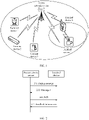
- FIG. 1 is a schematic diagram of a communication system applicable to a method according to an embodiment of this application.
- an access network device and a terminal device 1 to a terminal device 5 form a communication system.
- the access network device sends information to one or more terminal devices in the terminal device 1 to the terminal device 5.
- a terminal device 4 and the terminal device 5 also form a communication system.
- the access network device may send downlink data to the terminal device by using an MT-EDT process, thereby improving data transmission efficiency.
- MT-EDT is a downlink data transmission scheme based on a conventional random access process.
- the conventional random access process generally includes the following steps.
- Step 1 The terminal device sends a random access preamble (preamble) to the access network device, to initiate the random access process.
- the random access preamble is also referred to as a message 1 (message 1, msg 1).
- Step 2 The access network device sends a random access response (random access response, RAR) to the terminal device.
- RAR random access response
- the RAR is also referred to as a message 2 (message 2, msg 2) of the random access process.
- the RAR may include information such as an uplink grant (UpLink grant, UL grant), and the uplink grant may be used to schedule a message 3.
- UpLink grant UpLink grant, UL grant
- Step 3 The terminal device sends the message 3 to the access network device based on the uplink grant in the RAR.
- the terminal device if the terminal device successfully receives the RAR in an RAR monitoring window, the terminal device transmits an EDT message 3 (message 3, msg 3) on a resource specified by the uplink grant in the RAR.
- EDT message 3 messages 3, msg 3
- Step 4 The access network device sends a contention resolution message to the terminal device.
- the message may also be referred to as a message 4 (message 4, msg 4).
- the terminal device enters a connected state, so that the terminal device can transmit data with the access network device.
- the foregoing process consumes a relatively long period of time and involves a relatively large quantity of signaling interactions. This increases a delay of the terminal device and increases energy consumption of the terminal device.
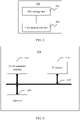
- an MT-EDT process that is currently discussed may include the following steps.
- Step 201 An access network device sends a paging message to a terminal device.
- the paging message includes information such as a radio network temporary identifier (radio network temporary identity, RNTI).
- RNTI radio network temporary identity
- Step 202 The terminal device sends a message 1 to the access network device, where the message 1 includes a random access preamble.
- Step 203 The access network device sends downlink control information (downlink control information, DCI) scrambled by using the RNTI to the terminal device.
- DCI downlink control information
- the DCI is used to schedule a message 2 to be sent by the access network device.
- Step 203 The access network device sends the message 2 to the terminal device, where the message 2 includes downlink data.
- the message 2 does not include the downlink data, and only includes signaling such as an uplink grant (UpLink grant, UL grant). Therefore, the terminal device does not need to send feedback information of the message 2. Because the message 2 in the MT-EDT process includes the downlink data, the terminal device further needs to send feedback information, and the access network device determines whether the terminal device receives message data sent by using the message 2. Therefore, the MT-EDT process may further include step 204.
- Step 204 The terminal device sends acknowledgement (acknowledge, ACK) ACK/negative acknowledgement (negative acknowledgement, NACK) feedback information of the message 2 to the access network device.
- acknowledgement acknowledgement
- NACK negative acknowledgement
- the terminal device After the terminal device successfully receives the message 2, the terminal device releases a connection to the access network device, and remains in an idle state.
- the terminal device monitors the DCI sent by the access network device. After the terminal device receives the DCI, the terminal device sends the uplink data to the access network device.
- the ACK/NACK feedback information sent by the terminal device needs to be scheduled by the access network device.
- the conventional technology there is no method for scheduling the ACK/NACK feedback information in the MT-EDT process. Therefore, an embodiment of this application provides a method for scheduling the terminal device to send the ACK/NACK feedback information. The following provides detailed descriptions.
- FIG. 3 is a schematic flowchart of a data transmission method according to an embodiment of this application.
- a first network device may be an access network device
- a second network device may be a core network device. Refer to FIG. 3 .
- the method includes the following steps.
- Step 301 The first network device sends a first paging message to a terminal device.
- the first paging message may carry information such as a first RNTI and a non-access stratum (non-access stratum, NAS) identifier of the paged terminal device, and the NAS identifier may be an identifier such as a system architecture evolution temporary mobile station identifier (System Architecture Evolution Temporary Mobile Station Identifier, S-TMSI).
- NAS non-access stratum
- S-TMSI System Architecture Evolution Temporary Mobile Station Identifier
- the first paging message may further include resource indication information, and the resource indication information is used to indicate a random access channel (random access channel, RACH) resource and a first radio network temporary identifier (radio network temporary identity, RNTI) corresponding to the RACH resource.
- RACH random access channel
- RNTI radio network temporary identity
- the first RNTI may be used to scramble DCI.
- the first paging message may further include downlink data indication information, and the downlink data indication information is used to indicate downlink data that needs to be sent to the terminal device.
- the first network device before sending the first paging message, the first network device further receives a second paging message from a second network device, and the second paging message is used to indicate the first network device to page the terminal device.
- the second paging message is sent after the second network device obtains the downlink data of the terminal device.
- Step 302 The terminal device receives the first paging message from the first network device.
- the terminal device may send a message 1 on the RACH resource, namely, step 303.
- Step 303 The terminal device sends the message 1 to the first network device, where the message 1 includes a random access preamble.
- Step 304 The first network device receives the message 1 from the terminal device, and sends DCI to the terminal device.
- the shown DCI may be scrambled by using the first RNTI.
- the DCI may be used to schedule the message 2.
- the DCI schedules the message 2 refer to descriptions in a conventional technology. Details are not described herein.
- the DCI may include first information, and the first information is used to schedule ACK/NACK feedback information of the message 2.
- first information is used to schedule ACK/NACK feedback information of the message 2.
- the first information includes first indication information, but does not include second indication information, where a repetition quantity of the ACK/NACK feedback information indicated by the second indication information is indicated by a system message or is set.
- the first indication information is used to determine a subcarrier spacing of subcarriers for transmitting the ACK/NACK feedback information; and the second indication information is used to determine the repetition quantity of the ACK/NACK feedback information.
- the DCI may include a first field used to transmit the first indication information, the first indication information is a status value of a bit included in the first field, and different status values of the bit included in the first field are used to indicate different subcarrier spacings.
- the first field includes 1 bit, and when the status value of the bit included in the first field is '0', it indicates that an uplink subcarrier spacing is 3.75 kHz; and when the status value of the bit included in the first field is '1', it indicates that the uplink subcarrier spacing is 15 kHz.
- Table 1 Fields included in the DCI Bit width Flag for format N0/format N1 differentiation or narrowband physical downlink control channel (narrow physical downlink control channel, NPDCCH) order (order) indicator 1 First field 1 Scheduling delay 3 Resource allocation 3 Modulation and coding scheme 4 Repetition quantity 4 New data indicator 1 HARQ-ACK resource 4 Repetition quantity of the DCI 2
- the flag for format N0/format N1 differentiation field is used to indicate a specific format of the DCI.
- the NPDCCH order indicator field is used to indicate whether current DCI scheduling is a random access process initiated by an NPDCCH order.
- the scheduling delay field is used to determine a start time of transmitting a message scheduled by DCI.
- the resource allocation field is used to indicate resource allocation of the message scheduled by the DCI, for example, allocation of a time domain resource.
- the modulation and coding scheme field is used to indicate a modulation order of the message scheduled by the DCI.
- the repetition quantity field is used to indicate a repetition quantity used for transmission of the message scheduled by the DCI.
- the new data indicator field is used to indicate whether currently scheduled transmission is new transmission or retransmission.
- the HARQ-ACK resource field is used to indicate a time-frequency resource location for transmitting the ACK/NACK feedback information.
- the repetition quantity of the DCI field is used to indicate a repetition quantity of the DCI.
- a bit occupied by the first field may be a bit occupied by the flag for format N0/format N1 differentiation field in the original DCI format N1, or a bit occupied by the NPDCCH order indicator field.
- the DCI includes only one field in the flag for format N0/format N1 differentiation field and the NPDCCH order indicator field, shown in Table 1. In this method, scheduling is more flexible. Compared with an existing DCI format, in the DCI format N1, a quantity of DCI bits is not increased. This can ensure DCI demodulation performance and does not increase complexity of demodulation and decoding of the DCI by the terminal device.
- the DCI may include both the flag for format N0/format N1 differentiation field and the NPDCCH order indicator field, and further includes the first field.
- the DCI may include both the flag for format N0/format N1 differentiation field and the NPDCCH order indicator field, and further includes the first field.
- one first field is added. For details, refer to Table 2.
- the first information includes second indication information, but does not include first indication information, and a subcarrier spacing indicated by the first indication information is indicated by a system message or is set.
- the DCI may include a second field used to transmit the second indication information, the second indication information is a status value of a bit included in the second field, and different status values of the bit included in the second field are used to indicate different repetition quantities of the ACK/NACK feedback information.
- the second field includes 1 bit, and when the status value of the bit included in the second field is '0', it indicates that the repetition quantity of the ACK/NACK feedback information is 2; and when the status value of the bit included in the first field is '1', it indicates that the repetition quantity of the ACK/NACK feedback information is 4.
- the DCI may include a second field used to transmit the second indication information.
- One status value of different status values of a bit included in the second field indicates that the repetition quantity of the ACK/NACK feedback information is the same as a repetition quantity of the ACK/NACK feedback information indicated in the system message.
- the second field includes 1 bit, and the status value of the bit included in the second field is '0', it indicates that the repetition quantity of the ACK/NACK feedback information is the same as the repetition quantity of the ACK/NACK feedback information indicated in the system message. That is, the repetition quantity of the ACK/NACK feedback information is 4.
- the status value of the bit included in the first field is '1', it indicates that the repetition quantity of the ACK/NACK feedback information is 2.
- the format of the DCI is the DCI format N1
- for content included in the DCI refer to Table 3.
- the bit occupied by the second field may be a bit occupied by the flag for format N0/format N1 differentiation field in the original DCI format N1, or a bit occupied by the NPDCCH order indicator field.
- the DCI includes only one field in the flag for format N0/format N1 differentiation field and the NPDCCH order indicator field. In this method, scheduling is more flexible. Compared with an existing DCI format, in the DCI format N1, a quantity of DCI bits is not increased. This can ensure DCI demodulation performance and does not increase complexity of demodulation and decoding of the DCI by the terminal device.
- the DCI when the format of the DCI is a newly defined DCI format, namely, a format other than the DCI format N0 and the DCI format N1, a quantity of bits included in the second field may be greater than or equal to 1, for example, 1, 2, or 3.
- the DCI may include both the flag for format N0/format N1 differentiation field and the NPDCCH order indicator field, or may include one of the both fields. For details, refer to Table 4.
- bit width of the flag for format N0 or format N1 differentiation field when the bit width of the flag for format N0 or format N1 differentiation field is 0, it indicates that the DCI does not include the field, and when the bit width of the flag for format N0 or format N1 differentiation field is 1, it indicates that the DCI includes the field.
- bit width of the NPDCCH order indicator field when the bit width of the NPDCCH order indicator field is 0, it indicates that the DCI does not include the field, and when the bit width of the NPDCCH order indicator field is 1, it indicates that the DCI includes the field.
- the ACK/NACK feedback information is transmitted at full power. If an initial system message or RRC signaling indicates that the repetition quantity of the ACK/NACK feedback information is greater than 2, when the terminal device is relatively close to the first network device, full power transmission causes relatively strong uplink interference, affecting an uplink service of another terminal device. Consequently, an uplink system throughput is affected.
- the terminal device needs to re-obtain the system message or receive RRC reconfiguration information to obtain an updated parameter. This increases power consumption of the terminal device.
- the repetition quantity of the ACK/NACK feedback information is indicated herein by using the DCI. This is relatively more flexible, and can avoid uplink interference caused by full power transmission of the ACK/NACK feedback information.
- the first information includes first indication information and second indication information.
- the DCI may include a first field used to transmit the first indication information and a second field used to transmit the second indication information.
- first field and the second field refer to the foregoing descriptions. Details are not described herein again.
- a format of the DCI is the DCI format N1
- for content included in the DCI refer to Table 3.
- Table 5 Fields included in the DCI Bit width Flag for format N0 or format N1 differentiation 0 or 1 NPDCCH order indicator 0 or 1 First field 1 Second field 1, 2, or 3 Scheduling delay 3 Resource allocation 3 Modulation and coding scheme 4 Repetition quantity 4 New data indicator 1 HARQ-ACK resource 4 Repetition quantity of the DCI 2
- bit width of the flag for format N0 or format N1 differentiation field when the bit width of the flag for format N0 or format N1 differentiation field is 0, it indicates that the DCI does not include the field, and when the bit width of the flag for format N0 or format N1 differentiation field is 1, it indicates that the DCI includes the field.
- bit width of the NPDCCH order indicator field when the bit width of the NPDCCH order indicator field is 0, it indicates that the DCI does not include the field, and when the bit width of the NPDCCH order indicator field is 1, it indicates that the DCI includes the field.
- both the repetition quantity of the ACK/NACK feedback information and the subcarrier spacing of the ACK/NACK feedback information may be indicated by using the DCI, thereby further improving scheduling flexibility.
- Step 305 The first network device sends the message 2 to the terminal device.
- the message 2 includes the downlink data, and may further include signaling sent to the terminal device.
- Step 306 The terminal device receives the DCI and the message 2 scheduled by the DCI from the first network device.
- Step 307 The terminal device sends the ACK/NACK feedback information to the first network device based on the first information.
- Step 308 The first network device receives the ACK/NACK feedback information from the terminal device.
- the terminal device may determine the time-frequency resource of the ACK/NACK feedback information based on the DCI, and determine, based on the first information, at least one of the subcarrier spacing and the repetition quantity that are of the ACK/NACK feedback information. If only the subcarrier spacing of the ACK/NACK feedback information is determined based on the first information, the repetition quantity of the ACK/NACK feedback information may be determined by using a system message, or the repetition quantity of the ACK/NACK feedback information is preset.
- the subcarrier spacing of the ACK/NACK feedback information may be determined by using a system message, or the subcarrier spacing of the ACK/NACK feedback information is preset.
- the terminal device may send the ACK/NACK feedback information based on the time-frequency resource, the subcarrier spacing, and the repetition quantity.
- the terminal device when sending the ACK/NACK feedback information of the message 2 to the first network device, can send a scheduling request at the same time.
- the scheduling request is used to request the first network device to allocate an uplink channel resource.
- the terminal device may determine a complex symbol sequence based on a first sequence and a modulation symbol of the ACK/NACK feedback information.
- the complex symbol sequence is obtained by multiplying the modulation symbol of the ACK/NACK feedback information by all elements of the first sequence, and the terminal device transmits the complex symbol sequence at an ACK/NACK resource location.
- the first network device receives the complex symbol sequence, detects the first sequence, and determines that the terminal device sends the scheduling request.
- the terminal device may simultaneously send a buffer status report (buffer status reporting, BSR) or a data volume.
- BSR buffer status reporting
- the buffer status report or the data volume is used to provide the first network device with information about a volume of data available for transmission in an uplink buffer.
- the terminal device may determine the complex symbol sequence based on the first sequence and the modulation symbol of the ACK/NACK feedback information.
- the complex symbol sequence is obtained by multiplying the modulation symbol of the ACK/NACK feedback information by all the elements of the first sequence, and the terminal device transmits the complex symbol sequence at the ACK/NACK resource location.
- the first network device receives the complex symbol sequence, detects the first sequence, and determines that a data volume of the terminal device is the first data volume.
- different sequences may be used to correspond to different data volumes.
- the ACK/NACK feedback information may also be scheduled by using the message 2.
- the ACK/NACK feedback information may also be scheduled by using the message 2.
- the DCI sent by the first network device to the terminal device does not include the first information.
- the message 2 sent by the first network device to the terminal device includes the first information.
- Other steps in Embodiment 2 may be the same as those in Embodiment 1. For details, refer to the descriptions in Embodiment 1, and details are not described herein again.
- the first information included in the message 2 is used to schedule the ACK/NACK feedback information of the message 2. There may be a plurality of implementations of the first information, which are separately described below.
- the first information includes first indication information, but does not include second indication information, where a repetition quantity of the ACK/NACK feedback information indicated by the second indication information is indicated by a system message or is set.
- the first information includes second indication information, but does not include first indication information, where a subcarrier spacing of the ACK/NACK feedback information indicated by the first indication information is indicated by a system message or is set.
- the first information includes first indication information and second indication information.
- the first information may further include one or more of the following: third indication information, fourth indication information, fifth indication information, sixth indication information, and seventh indication information.
- the third indication information is used to determine a location of a subcarrier for transmitting the ACK/NACK feedback information, where the location of the subcarrier is used to indicate a frequency domain resource location of the ACK/NACK feedback information, and the frequency domain resource location indicates a specific subcarrier used to transmit the ACK/NACK feedback information.
- the subcarrier spacing of the ACK/NACK feedback information is 15 kHz
- a value set of indexes of the subcarriers is 0 to 11
- the third indication information may be an index of a subcarrier.
- the third indication information is 1, it indicates that the location of the subcarrier is a location corresponding to the subcarrier whose index is 2.
- the fourth indication information is used to determine a scheduling delay of the ACK/NACK feedback information, and the scheduling delay is duration from the end of transmission of the message 2 to the start of transmission of the ACK/NACK feedback information.
- the fifth indication information is used to determine target receive power of the ACK/NACK feedback information, and the terminal device may determine, based on the target receive power, transmit power for sending the ACK/NACK feedback information.
- the sixth indication information is used to determine a path loss compensation factor for transmitting the ACK/NACK feedback information.
- the seventh indication information is used to determine a timing advance for transmitting the ACK/NACK feedback information.
- the terminal device may determine, based on the fifth indication information and/or the sixth indication information, the transmit power for sending the ACK/NACK feedback information.
- the target receive power of the ACK/NACK feedback information determined based on the fifth indication information is p0
- the path loss compensation factor of the ACK/NACK feedback information is ⁇
- ⁇ is determined based on the sixth indication information or is indicated by using a system message or is preset.
- Transmit power p of the ACK/NACK feedback information is equal to min ⁇ p max , 10log10 (M) + p0 + ⁇ PL ⁇ , where p max is maximum transmit power configured by the first network device for the terminal device, M is a preset value related to the subcarrier spacing of the ACK/NACK feedback information, and PL is a downlink path loss estimated by the terminal device.
- the first information when the message 2 includes the first information, the first information may be carried by using a medium access control (medium access control, MAC) control element (control element, CE) or a MAC protocol data unit (protocol data unit, PDU) in the message 2, and may be multiplexed into the message 2 together with downlink data.
- MAC medium access control
- CE control element
- PDU protocol data unit
- the ACK/NACK feedback information may be scheduled by jointly using DCI and a message 2.
- the first information includes a first part and a second part.
- the DCI sent by the first network device to the terminal device includes the first part.
- the message 2 sent by the first network device to the terminal device includes the second part.
- Other steps in Embodiment 3 may be the same as those in Embodiment 1. For details, refer to the descriptions in Embodiment 1, and details are not described herein again.
- indication information included in each of the first part and the second part is complete indication information, that is, all bits of one piece of indication information are included in the first part or included in the second part.
- the first part may include first indication information
- the second part may include second indication information
- the first part may include the second indication information, and the second part includes the first indication information.
- the second part may further include one or more of third indication information, fourth indication information, fifth indication information, sixth indication information, and seventh indication information.
- first part and the second part may be combined to include first indication information, or the first part and the second part may be combined to include second indication information.
- bits included in the first indication information may be divided into a first sub-part and a second sub-part, and the first part includes the first sub-part, and the second part includes the second sub-part.
- bits included in the second indication information may be divided into a third sub-part and a fourth sub-part. The first part includes the third sub-part, and the second part includes the fourth sub-part.
- the second indication information indicates a repetition quantity of the ACK/NACK feedback information by using 3 bits.
- the 3 bits may be divided into the first sub-part and the second sub-part, where the first sub-part is 1 most significant bit, and the second sub-part is 2 remaining bits.
- the DCI includes the first sub-part, and the message 2 includes the second sub-part.
- 1 bit is used to indicate a most significant bit of the repetition quantity of the ACK/NACK feedback information; and in the message 2, 2 bits are used to indicate 2 lower bits of the repetition quantity of the ACK/NACK feedback information.
- the DCI may also include X lowest significant bits of the repetition quantity of the ACK/NACK feedback information, and the message 2 may include remaining most significant Y bits of the repetition quantity of the ACK/NACK feedback information, where both X and Y are integers greater than 0.
- the foregoing example is also applicable to the case of the first indication information. How to jointly indicate the first indication information may be deduced based on the foregoing example. Details are not described herein again.
- the first paging message sent by the first network device to the terminal device includes resource indication information used to indicate an RACH resource.
- the first network device when the first network device allocates a RACH resource, the first network device performs allocation based on a method agreed in a standard, but an allocated RACH resource may not match a capability of the terminal device. Therefore, an embodiment of this application further provides a resource allocation method to resolve the foregoing problem, which is described in detail below.
- Embodiment 4 may be combined with any one of Embodiments 1 to 3, or may be implemented as an independent solution. This is not limited in the embodiments of this application.
- FIG. 4 is a schematic flowchart of a data transmission method according to an embodiment of this application.
- a first network device may be an access network device
- a second network device may be a core network device. Refer to FIG. 4 .
- the method includes the following steps.
- Step 401 A terminal device sends second information to the first network device.
- the second information includes paging-related capability information possessed by the terminal device.
- the second information includes capability information that is possessed by the terminal device and that is required for paging.
- the second information may include one or more of the following:
- uplink data is carried by using an RRC connection resume request (RRCConnectionResumeRequest) message.
- the early data transmission for the CIoT EPS optimizations and a common random access process are distinguished by using different random access resources.
- the early data transmission for the CIoT EPS optimization corresponds to a first random access resource
- the common random access process corresponds to a second random access resource.
- the terminal device initiates a data early transmission process for the CIoT EPS optimization by using the first random access resource, and the terminal device initiates the common random access process by using the second random access resource.
- the second information may include one or more of the following:
- Step 402 The first network device forwards the second information to the second network device.
- the method may further include the following steps.
- Step 403 The second network device sends a second paging message to the first network device.
- the second paging message includes the second information.
- the second paging message may further include other information.
- Other information refer to descriptions in a conventional technology. Details are not described herein.
- Step 404 The first network device receives the second paging message from the second network device, and allocates a RACH resource to the terminal device based on the second information in the second paging message.
- the second information includes the first capability information, and when the first capability information indicates that the terminal device supports initiating random access on the non-anchor carrier, the first network device may allocate a RACH resource located on the non-anchor carrier to the terminal device.
- the second information includes the second capability information, and when the second capability information indicates that the terminal device supports using the preamble format 2, the first network device may allocate a RACH resource corresponding to the preamble format 2 to the terminal device.
- the second information includes the third capability information, and the third capability information indicates, for the user plane CIoT EPS optimization, when the terminal device supports EDT, the first network device may allocate a RACH resource corresponding to the EDT to the terminal device.
- the first network device may further allocate a RACH resource located on an anchor carrier to the terminal device.
- the first network device may allocate the RACH resource located on the anchor carrier to the terminal device.
- the anchor carrier means a carrier where the terminal device assumes that a narrowband primary synchronization signal (narrowband primary synchronization signal, NPSS) /a narrowband secondary synchronization signal (narrowband secondary synchronization signal, NSSS) /a narrowband physical broadcast channel (narrowband physical broadcast channel, NPBCH) /a narrowband system information block (system information block-NB, SIB-NB) is transmitted.
- NPSS narrowband primary synchronization signal
- NSSS narrowband secondary synchronization signal
- NPBCH narrowband physical broadcast channel
- SIB-NB narrowband system information block
- the non-anchor carrier indicates a carrier where the terminal device assumes that no NPSS/NSSS/NPBCH/SIB-NB is transmitted.
- the non-anchor carrier indicates a carrier where the terminal device assumes that no NPSS/NSSS/NPBCH is transmitted.
- the preamble format 2 is a new preamble format introduced in Rel-15, to support a larger cell radius, where the cell radius is greater than 100 km.
- the preamble format 2 includes six symbol groups in time domain. Each symbol group includes one cyclic prefix (cyclic prefix, CP) and three symbols. A length of the CP is 800 ⁇ s, and a length of each symbol is also 800 ⁇ s. A subcarrier spacing of the preamble format 2 is 1.25 kHz.
- Step 405 The first network device determines, based on the second paging message, a first paging message to be sent to the terminal device, and sends the first paging message to the terminal device.
- the first paging message includes resource indication information, and the resource indication information is used to indicate the RACH resource.
- the first network device allocates the RACH resource based on the second information of the terminal device, so that a RACH resource matching a capability of the terminal device can be allocated, thereby improving resource utilization efficiency.
- the foregoing embodiments are described for a downlink data transmission scenario in MT-EDT.
- An embodiment of this application further provides a method, which may be applicable to a common downlink data transmission scenario.
- the common downlink data transmission scenario may mean that when the terminal device is in an RRC connected state, the terminal device performs downlink data transmission with the first network device.
- Step 1 A first network device sends DCI to a terminal device.
- a format of the DCI may be DCI format N1.
- the DCI is used to schedule a downlink message.
- the DCI may include second indication information, where the second indication information is used to determine a repetition quantity of ACK/NACK feedback information.
- the DCI includes the repetition quantity of the ACK/NACK feedback information of the downlink message
- the DCI includes the second indication information in the procedure shown in FIG. 3 . Details are not described herein again.
- Step 2 The first network device sends the downlink message scheduled by the DCI to the terminal device.
- the downlink message may include the second indication information.
- Step 3 The terminal device receives the DCI and the downlink message scheduled by the DCI from the first network device.
- the downlink message includes downlink data that needs to be transmitted to the terminal device.
- Step 4 The terminal device sends the ACK/NACK feedback information to the first network device based on the repetition quantity.
- Step 5 The first network device receives the ACK/NACK feedback information from the terminal device.
- the repetition quantity of the ACK/NACK feedback information of the downlink message is carried in the DCI or the downlink message, so that the repetition quantity of the ACK/NACK feedback information is flexibly adjusted, power control of the ACK/NACK feedback information is improved, and uplink interference to another terminal device is avoided when the ACK/NACK feedback information is transmitted at full power.
- the first information may be indicated by using a MAC CE or MAC PDU in the downlink message, and may be multiplexed into the downlink message together with the downlink data.
- the downlink message may further include at least one of first indication information, and third indication information to seventh indication information.
- first indication information and the third indication information to the seventh indication information, refer to the descriptions in Embodiment 1 to Embodiment 3. Details are not described herein again.
- the DCI when the DCI includes the second indication information, and the downlink message does not include the first indication information used to determine a subcarrier spacing of subcarriers of the ACK/NACK feedback information, the DCI may include the first indication information.
- the DCI includes the first indication information and the second indication information, for a specific implementation, refer to the implementation in which the DCI includes the first indication information and the second indication information in the procedure shown in FIG. 3 . Details are not described herein again.
- the DCI and the downlink message may be combined to include the first indication information, and the DCI and the downlink message may alternatively be combined to include the second indication information.
- bits included in the first indication information may be divided into a first sub-part and a second sub-part, and the DCI includes the first sub-part, and the downlink message includes the second sub-part.
- bits included in the second indication information may be divided into a third sub-part and a fourth sub-part.
- the DCI includes the third sub-part, and the downlink message includes the fourth sub-part.
- the second indication information indicates the repetition quantity of the ACK/NACK feedback information by using 3 bits.
- the 3 bits may be divided into the first sub-part and the second sub-part, where the first sub-part is 1 most significant bit, and the second sub-part is 2 remaining bits.
- the DCI includes the first sub-part, and the downlink message includes the second sub-part.
- 1 bit is used to indicate a most significant bit of the repetition quantity of the ACK/NACK feedback information; and in the downlink message, 2 bits are used to indicate 2 lower bits of the repetition quantity of the ACK/NACK feedback information.
- a format of the DCI used to schedule the message 2 or the downlink message may be format N1.
- the DCI may be monitored by the terminal device in a Type-2 common search space Type-2 CSS (common search space).
- the first network device sends the DCI to the terminal device in the Type-2 CSS, to schedule the message 2 or the downlink message.
- Embodiment 2 to Embodiment 5 for a specific manner in which the terminal device sends the ACK/NACK feedback information of the message 2 to the first network device, refer to the descriptions in Embodiment 1.
- the terminal device and the first network device may include a hardware structure and/or a software module, and implement the foregoing functions in a form of the hardware structure, the software module, or a combination of the hardware structure and the software module. Whether a specific function in the foregoing functions is performed by the hardware structure, the software module, or the combination of the hardware structure and the software module depends on specific applications and design constraints of the technical solutions.
- an embodiment of this application further provides an apparatus 500, configured to implement a function of the terminal device or the first network device in the foregoing method.
- the apparatus may be a software module or a chip system.
- the chip system may include a chip, or may include the chip and another discrete device.
- the apparatus 500 may include a processing unit 501 and a communication unit 502.
- division into the modules is an example, and is merely a logical function division. During actual implementation, another division manner may be used.
- functional modules in the embodiments of this application may be integrated into one processor, or each of the modules may exist alone physically, or two or more modules are integrated into one module.
- the integrated module may be implemented in a form of hardware, or may be implemented in a form of a software functional module.
- the apparatus 500 implements a function of the terminal device in the procedure shown in FIG. 3 or 4 .
- the processing unit 501 is specifically configured to:
- the DCI includes time-frequency resource information of the ACK/NACK feedback information, and when the first information includes only the first indication information, the repetition quantity of the ACK/NACK feedback information is indicated by a system message or is set; or when the first information includes only the second indication information, the subcarrier spacing of the subcarriers for transmitting the ACK/NACK feedback information is indicated by a system message or is set.
- the DCI when the DCI includes the first information, the DCI includes at least one of a first field used to transmit the first indication information and a second field used to transmit the second indication information; and the first indication information is a status value of a bit included in the first field, and the second indication information is a status value of a bit included in the second field;
- the first information when the message 2 includes the first information, the first information further includes one or more of the following: third indication information, where the third indication information is used to determine a location of the subcarrier for transmitting the ACK/NACK feedback information; fourth indication information, where the fourth indication information is used to determine a scheduling delay of the ACK/NACK feedback information; fifth indication information, where the fifth indication information is used to determine target receive power of the ACK/NACK feedback information; sixth indication information, where the sixth indication information is used to determine a path loss compensation factor for transmitting the ACK/NACK feedback information; and seventh indication information, where the seventh indication information is used to determine a timing advance for transmitting the ACK/NACK feedback information.
- third indication information where the third indication information is used to determine a location of the subcarrier for transmitting the ACK/NACK feedback information
- fourth indication information where the fourth indication information is used to determine a scheduling delay of the ACK/NACK feedback information
- fifth indication information where the fifth indication information is used to determine target receive power of the ACK/N
- the DCI and the message 2 include the first information, where the first information includes first indication information and second indication information, the DCI includes the first indication information, and the message 2 includes the second indication information; or the DCI includes the second indication information, and the message 2 includes the first indication information; the first indication information is used to determine a subcarrier spacing of subcarriers for transmitting the ACK/NACK feedback information; and the second indication information is used to determine a repetition quantity of the ACK/NACK feedback information.
- the communication unit 502 before the communication unit 502 sends the message 1 to the first network device, the communication unit 502 is further configured to: receive a first paging message from the first network device, where the first paging message includes resource indication information, the resource indication information is used to indicate a random access channel RACH resource allocated to the terminal device, and the RACH resource is used to carry the message 1; and the RACH resource is allocated based on second information, and the second information includes paging-related capability information possessed by the terminal device.
- the second information includes one or more of the following:
- the communication unit 502 before the communication unit 502 receives the first paging message from the first network device, the communication unit 502 is further configured to: send the second information to the first network device.
- the apparatus 500 implements a function of the first network device in the procedure shown in FIG. 3 or 4 .
- the DCI or the message 2 includes the first information, and the first information includes one or more of the following:
- the DCI when the DCI includes the first information, the DCI includes at least one of a first field used to transmit the first indication information and a second field used to transmit the second indication information; and the first indication information is a status value of a bit included in the first field, and the second indication information is a status value of a bit included in the second field;
- the first information when the message 2 includes the first information, the first information further includes one or more of the following: third indication information, where the third indication information is used to determine a location of the subcarrier for transmitting the ACK/NACK feedback information; fourth indication information, where the fourth indication information is used to determine a scheduling delay of the ACK/NACK feedback information; fifth indication information, where the fifth indication information is used to determine target receive power of the ACK/NACK feedback information; sixth indication information, where the sixth indication information is used to determine a path loss compensation factor for transmitting the ACK/NACK feedback information; and seventh indication information, where the seventh indication information is used to determine a timing advance for transmitting the ACK/NACK feedback information.
- third indication information where the third indication information is used to determine a location of the subcarrier for transmitting the ACK/NACK feedback information
- fourth indication information where the fourth indication information is used to determine a scheduling delay of the ACK/NACK feedback information
- fifth indication information where the fifth indication information is used to determine target receive power of the ACK/N
- the DCI includes time-frequency resource information of the ACK/NACK feedback information, and when the first information includes only the first indication information, the repetition quantity of the ACK/NACK feedback information is indicated by a system message or is set; or when the first information includes only the second indication information, the subcarrier spacing of the subcarriers for transmitting the ACK/NACK feedback information is indicated by a system message or is set.
- the DCI and the message 2 include the first information, where the first information includes first indication information and second indication information, the DCI includes the first indication information, and the message 2 includes the second indication information; or the DCI includes the second indication information, and the message 2 includes the first indication information; the first indication information is used to determine a subcarrier spacing of subcarriers for transmitting the ACK/NACK feedback information; and the second indication information is used to determine a repetition quantity of the ACK/NACK feedback information.
- the communication unit 502 before the communication unit 502 receives the message 1 from the terminal device, the communication unit 502 is configured to: receive a second paging message, where the second paging message includes second information, and the second information includes paging-related capability information possessed by the terminal device;
- the second information one or more of the following:
- the communication unit 502 before the communication unit 502 receives the second paging message from the second network device, the communication unit 502 is further configured to: receive the second information from the terminal device, and send the second information to the second network device.
- FIG. 6 shows an apparatus 600 according to an embodiment of this application.
- the apparatus shown in FIG. 6 may be an implementation of a hardware circuit of the apparatus shown in FIG. 5 .
- the communication apparatus may be applied to the flowcharts shown in FIG. 3 and FIG. 4 , and perform functions of the terminal device or the first network device in the foregoing method embodiments.
- FIG. 6 shows only main components of the communication apparatus.
- the apparatus 600 shown in FIG. 6 includes at least one processor 620, configured to implement any method in FIG. 3 and FIG. 4 provided in the embodiments of this application.
- the apparatus 600 may further include at least one memory 630, configured to store program instructions and/or data.
- the memory 630 is coupled to the processor 620.
- the coupling in this embodiment of this application is indirect coupling or a communication connection between apparatuses, units, or modules for information exchange between the apparatuses, the units, or the modules, and may be in electrical, mechanical, or other forms.
- the processor 620 may cooperate with the memory 630.
- the processor 620 may execute the program instructions stored in the memory 630. At least one of the at least one memory may be included in the processor.
- the apparatus 600 may further include a communication interface 610, configured to communicate with another device by using a transmission medium, so that an apparatus in the apparatus 600 may communicate with another device.
- the communication interface may be a transceiver, a circuit, a bus, a module, or a communication interface of another type.
- the transceiver may be an independent receiver, an independent transmitter, a transceiver integrated with a transceiver function, or an interface circuit.
- the processor 620 sends and receives data by using the communication interface 610, and is configured to implement the method performed by the terminal device or the first network device in the embodiments corresponding to FIG. 3 and FIG. 4 .
- the processor 620 sends and receives data by using the communication interface 610, and is configured to implement the method performed by the terminal device or the first network device in the embodiments corresponding to FIG. 3 and FIG. 4 .
- this application may be provided as a method, a system, or a computer program product. Therefore, this application may use a form of hardware only embodiments, software only embodiments, or embodiments with a combination of software and hardware. Moreover, this application may use a form of a computer program product that is implemented on one or more computer-usable storage media (including but not limited to a disk memory, an optical memory, and the like) that include computer-usable program code.
- a computer-usable storage media including but not limited to a disk memory, an optical memory, and the like
- These computer program instructions may be provided for a general-purpose computer, a dedicated computer, an embedded processor, or a processor of another programmable data processing device to generate a machine, so that the instructions executed by the computer or the processor of another programmable data processing device generate an apparatus for implementing a specific function in one or more processes in the flowcharts and/or in one or more blocks in the block diagrams.
- These computer program instructions may be stored in a computer-readable memory that can indicate the computer or another programmable data processing device to work in a specific manner, so that the instructions stored in the computer-readable memory generate an artifact that includes an instruction apparatus.
- the instruction apparatus implements the specific function in one or more processes in the flowcharts and/or in one or more blocks in the block diagrams.
Landscapes
- Engineering & Computer Science (AREA)
- Signal Processing (AREA)
- Computer Networks & Wireless Communication (AREA)
- Quality & Reliability (AREA)
- Mobile Radio Communication Systems (AREA)
Applications Claiming Priority (1)
| Application Number | Priority Date | Filing Date | Title |
|---|---|---|---|
| PCT/CN2019/102361 WO2021035447A1 (zh) | 2019-08-23 | 2019-08-23 | 一种数据传输方法及装置 |
Publications (3)
| Publication Number | Publication Date |
|---|---|
| EP4021136A1 true EP4021136A1 (de) | 2022-06-29 |
| EP4021136A4 EP4021136A4 (de) | 2022-09-21 |
| EP4021136B1 EP4021136B1 (de) | 2024-01-31 |
Family
ID=74684817
Family Applications (1)
| Application Number | Title | Priority Date | Filing Date |
|---|---|---|---|
| EP19943281.6A Active EP4021136B1 (de) | 2019-08-23 | 2019-08-23 | Datenübertragungsverfahren und -vorrichtung |
Country Status (4)
| Country | Link |
|---|---|
| US (1) | US12177894B2 (de) |
| EP (1) | EP4021136B1 (de) |
| CN (1) | CN114175841B (de) |
| WO (1) | WO2021035447A1 (de) |
Cited By (1)
| Publication number | Priority date | Publication date | Assignee | Title |
|---|---|---|---|---|
| EP4169187A1 (de) * | 2020-06-18 | 2023-04-26 | Ofinno, LLC | Rückkopplungswiederholung für hybridbestätigungswiederholungsanfragen |
Families Citing this family (9)
| Publication number | Priority date | Publication date | Assignee | Title |
|---|---|---|---|---|
| US11425724B2 (en) * | 2019-07-12 | 2022-08-23 | Qualcomm Incorporated | Carrier aggregation for narrowband internet of things user equipment |
| US20230188307A1 (en) * | 2020-05-14 | 2023-06-15 | Telefonaktiebolaget Lm Ericsson (Publ) | Triggering and reporting mechanism for scs change |
| CN114342542B (zh) * | 2020-07-30 | 2024-08-13 | 北京小米移动软件有限公司 | 信息传输方法、装置、通信设备及存储介质 |
| CN116939612A (zh) * | 2022-03-30 | 2023-10-24 | 华为技术有限公司 | 随机接入方法及装置 |
| CN117202373B (zh) * | 2022-05-26 | 2025-02-11 | 荣耀终端有限公司 | 通信方法、通信装置和通信系统 |
| CN117479334A (zh) * | 2022-07-18 | 2024-01-30 | 展讯半导体(南京)有限公司 | 随机接入方法及装置、计算机可读存储介质 |
| US20260100783A1 (en) * | 2022-09-26 | 2026-04-09 | Beijing Xiaomi Mobile Software Co., Ltd. | Indication method and apparatus |
| WO2024065096A1 (zh) * | 2022-09-26 | 2024-04-04 | 北京小米移动软件有限公司 | 信息传输方法、装置、设备及芯片系统 |
| CN118119030A (zh) * | 2022-11-25 | 2024-05-31 | 展讯半导体(南京)有限公司 | 随机接入方法及装置、终端、网络设备 |
Family Cites Families (8)
| Publication number | Priority date | Publication date | Assignee | Title |
|---|---|---|---|---|
| WO2007078171A2 (en) * | 2006-01-05 | 2007-07-12 | Lg Electronics Inc. | Method of transmitting feedback information in a wireless communication system |
| EP3621233B1 (de) * | 2017-05-04 | 2022-01-19 | LG Electronics Inc. | Verfahren für signalübertragung und -empfang zwischen einem endgerät und einer basisstation in einem drahtloskommunikationssystem und vorrichtungen zur unterstützung davon |
| EP4465551A3 (de) * | 2017-08-09 | 2025-05-07 | InterDigital Patent Holdings, Inc. | Verfahren und systeme zur strahlwiederherstellung und -verwaltung |
| US10849164B2 (en) * | 2017-09-29 | 2020-11-24 | Mediatek Inc. | High reliability and early data transmission |
| CN109600820B (zh) * | 2017-09-30 | 2023-12-08 | 华为技术有限公司 | 一种数据传输方法、网络设备及终端设备 |
| US20190350034A1 (en) * | 2018-05-10 | 2019-11-14 | Lg Electronics Inc. | Method for performing early data transmission (edt) procedure and device supporting the same |
| WO2020030709A1 (en) * | 2018-08-09 | 2020-02-13 | Sony Corporation | Methods, communications device and infrastructure equipment |
| CN109983829B (zh) * | 2019-02-22 | 2022-08-05 | 北京小米移动软件有限公司 | 随机接入过程的消息发送方法、装置、设备及系统 |
-
2019
- 2019-08-23 EP EP19943281.6A patent/EP4021136B1/de active Active
- 2019-08-23 CN CN201980098879.9A patent/CN114175841B/zh active Active
- 2019-08-23 WO PCT/CN2019/102361 patent/WO2021035447A1/zh not_active Ceased
-
2022
- 2022-02-23 US US17/678,844 patent/US12177894B2/en active Active
Cited By (2)
| Publication number | Priority date | Publication date | Assignee | Title |
|---|---|---|---|---|
| EP4169187A1 (de) * | 2020-06-18 | 2023-04-26 | Ofinno, LLC | Rückkopplungswiederholung für hybridbestätigungswiederholungsanfragen |
| US12519573B2 (en) | 2020-06-18 | 2026-01-06 | Ofinno, Llc | Hybrid acknowledgement repeat request feedback repetition |
Also Published As
| Publication number | Publication date |
|---|---|
| EP4021136B1 (de) | 2024-01-31 |
| WO2021035447A1 (zh) | 2021-03-04 |
| US12177894B2 (en) | 2024-12-24 |
| EP4021136A4 (de) | 2022-09-21 |
| US20220183054A1 (en) | 2022-06-09 |
| CN114175841B (zh) | 2025-01-10 |
| CN114175841A (zh) | 2022-03-11 |
Similar Documents
| Publication | Publication Date | Title |
|---|---|---|
| US12177894B2 (en) | Data transmission method and apparatus | |
| US12004226B2 (en) | Method and apparatus for switching between 2 step and 4 step random access (RA) procedures and contention resolutions | |
| TWI658709B (zh) | 指示以及實現新ue能力的方法以及裝置 | |
| US11206644B2 (en) | Methods, apparatuses and system for transmission of a connection request message in a wireless communications system | |
| JP2025148394A (ja) | 大きいランダムアクセス応答(rar)ウィンドウサイズをサポートするためのランダムアクセス手順方法 | |
| EP3043615B1 (de) | Verfahren, benutzervorrichtung und basisstation zur vorbestimmung einer ressource bei direktzugriff | |
| CN108633020B (zh) | 一种控制信息发送、接收方法及相关设备 | |
| CN108029120B (zh) | 用于为低复杂度窄带终端指示对随机接入过程中的harq消息分配的资源的方法 | |
| US20210007139A1 (en) | Method and apparatus for transmitting uplink information | |
| US11206692B2 (en) | Method and apparatus for signaling multiple resources for message 3 (Msg3) transmissions | |
| CN113455089B (zh) | 随机接入过程中的竞争解决 | |
| US12232171B2 (en) | Method and apparatus for transmitting uplink information | |
| US20200228253A1 (en) | Data transmission method and apparatus | |
| CN105723792A (zh) | 通信系统、基础设施、通信装置及方法 | |
| EP2158699A2 (de) | Abwärtsstreckenempfangsanzeigeverfahren in paketbasiertem mobilen kommunikationssystem | |
| EP3723429A1 (de) | Informationsanzeigeverfahren, endgerät und netzwerkvorrichtung | |
| WO2014082195A1 (zh) | 数据传输方法、装置、网络设备及ue | |
| US20220225395A1 (en) | Data transmission method and apparatus | |
| CN115484554A (zh) | 正交频分复用系统的用户设备能力上报方法及装置 | |
| JP2022055393A (ja) | 端末装置、基地局装置、および、通信方法 |
Legal Events
| Date | Code | Title | Description |
|---|---|---|---|
| STAA | Information on the status of an ep patent application or granted ep patent |
Free format text: STATUS: THE INTERNATIONAL PUBLICATION HAS BEEN MADE |
|
| PUAI | Public reference made under article 153(3) epc to a published international application that has entered the european phase |
Free format text: ORIGINAL CODE: 0009012 |
|
| STAA | Information on the status of an ep patent application or granted ep patent |
Free format text: STATUS: REQUEST FOR EXAMINATION WAS MADE |
|
| 17P | Request for examination filed |
Effective date: 20220323 |
|
| AK | Designated contracting states |
Kind code of ref document: A1 Designated state(s): AL AT BE BG CH CY CZ DE DK EE ES FI FR GB GR HR HU IE IS IT LI LT LU LV MC MK MT NL NO PL PT RO RS SE SI SK SM TR |
|
| A4 | Supplementary search report drawn up and despatched |
Effective date: 20220819 |
|
| RIC1 | Information provided on ipc code assigned before grant |
Ipc: H04L 1/18 20060101ALI20220812BHEP Ipc: H04W 76/00 20180101AFI20220812BHEP |
|
| DAV | Request for validation of the european patent (deleted) | ||
| DAX | Request for extension of the european patent (deleted) | ||
| GRAP | Despatch of communication of intention to grant a patent |
Free format text: ORIGINAL CODE: EPIDOSNIGR1 |
|
| STAA | Information on the status of an ep patent application or granted ep patent |
Free format text: STATUS: GRANT OF PATENT IS INTENDED |
|
| INTG | Intention to grant announced |
Effective date: 20230817 |
|
| GRAS | Grant fee paid |
Free format text: ORIGINAL CODE: EPIDOSNIGR3 |
|
| GRAA | (expected) grant |
Free format text: ORIGINAL CODE: 0009210 |
|
| STAA | Information on the status of an ep patent application or granted ep patent |
Free format text: STATUS: THE PATENT HAS BEEN GRANTED |
|
| AK | Designated contracting states |
Kind code of ref document: B1 Designated state(s): AL AT BE BG CH CY CZ DE DK EE ES FI FR GB GR HR HU IE IS IT LI LT LU LV MC MK MT NL NO PL PT RO RS SE SI SK SM TR |
|
| REG | Reference to a national code |
Ref country code: GB Ref legal event code: FG4D Ref country code: CH Ref legal event code: EP |
|
| REG | Reference to a national code |
Ref country code: DE Ref legal event code: R096 Ref document number: 602019046069 Country of ref document: DE |
|
| REG | Reference to a national code |
Ref country code: IE Ref legal event code: FG4D |
|
| REG | Reference to a national code |
Ref country code: LT Ref legal event code: MG9D |
|
| REG | Reference to a national code |
Ref country code: NL Ref legal event code: MP Effective date: 20240131 |
|
| PG25 | Lapsed in a contracting state [announced via postgrant information from national office to epo] |
Ref country code: IS Free format text: LAPSE BECAUSE OF FAILURE TO SUBMIT A TRANSLATION OF THE DESCRIPTION OR TO PAY THE FEE WITHIN THE PRESCRIBED TIME-LIMIT Effective date: 20240531 |
|
| PG25 | Lapsed in a contracting state [announced via postgrant information from national office to epo] |
Ref country code: LT Free format text: LAPSE BECAUSE OF FAILURE TO SUBMIT A TRANSLATION OF THE DESCRIPTION OR TO PAY THE FEE WITHIN THE PRESCRIBED TIME-LIMIT Effective date: 20240131 |
|
| PG25 | Lapsed in a contracting state [announced via postgrant information from national office to epo] |
Ref country code: GR Free format text: LAPSE BECAUSE OF FAILURE TO SUBMIT A TRANSLATION OF THE DESCRIPTION OR TO PAY THE FEE WITHIN THE PRESCRIBED TIME-LIMIT Effective date: 20240501 |
|
| REG | Reference to a national code |
Ref country code: AT Ref legal event code: MK05 Ref document number: 1654685 Country of ref document: AT Kind code of ref document: T Effective date: 20240131 |
|
| PG25 | Lapsed in a contracting state [announced via postgrant information from national office to epo] |
Ref country code: HR Free format text: LAPSE BECAUSE OF FAILURE TO SUBMIT A TRANSLATION OF THE DESCRIPTION OR TO PAY THE FEE WITHIN THE PRESCRIBED TIME-LIMIT Effective date: 20240131 Ref country code: NL Free format text: LAPSE BECAUSE OF FAILURE TO SUBMIT A TRANSLATION OF THE DESCRIPTION OR TO PAY THE FEE WITHIN THE PRESCRIBED TIME-LIMIT Effective date: 20240131 Ref country code: RS Free format text: LAPSE BECAUSE OF FAILURE TO SUBMIT A TRANSLATION OF THE DESCRIPTION OR TO PAY THE FEE WITHIN THE PRESCRIBED TIME-LIMIT Effective date: 20240430 |
|
| PG25 | Lapsed in a contracting state [announced via postgrant information from national office to epo] |
Ref country code: ES Free format text: LAPSE BECAUSE OF FAILURE TO SUBMIT A TRANSLATION OF THE DESCRIPTION OR TO PAY THE FEE WITHIN THE PRESCRIBED TIME-LIMIT Effective date: 20240131 |
|
| PG25 | Lapsed in a contracting state [announced via postgrant information from national office to epo] |
Ref country code: AT Free format text: LAPSE BECAUSE OF FAILURE TO SUBMIT A TRANSLATION OF THE DESCRIPTION OR TO PAY THE FEE WITHIN THE PRESCRIBED TIME-LIMIT Effective date: 20240131 |
|
| PG25 | Lapsed in a contracting state [announced via postgrant information from national office to epo] |
Ref country code: RS Free format text: LAPSE BECAUSE OF FAILURE TO SUBMIT A TRANSLATION OF THE DESCRIPTION OR TO PAY THE FEE WITHIN THE PRESCRIBED TIME-LIMIT Effective date: 20240430 Ref country code: NO Free format text: LAPSE BECAUSE OF FAILURE TO SUBMIT A TRANSLATION OF THE DESCRIPTION OR TO PAY THE FEE WITHIN THE PRESCRIBED TIME-LIMIT Effective date: 20240430 Ref country code: NL Free format text: LAPSE BECAUSE OF FAILURE TO SUBMIT A TRANSLATION OF THE DESCRIPTION OR TO PAY THE FEE WITHIN THE PRESCRIBED TIME-LIMIT Effective date: 20240131 Ref country code: LT Free format text: LAPSE BECAUSE OF FAILURE TO SUBMIT A TRANSLATION OF THE DESCRIPTION OR TO PAY THE FEE WITHIN THE PRESCRIBED TIME-LIMIT Effective date: 20240131 Ref country code: IS Free format text: LAPSE BECAUSE OF FAILURE TO SUBMIT A TRANSLATION OF THE DESCRIPTION OR TO PAY THE FEE WITHIN THE PRESCRIBED TIME-LIMIT Effective date: 20240531 Ref country code: HR Free format text: LAPSE BECAUSE OF FAILURE TO SUBMIT A TRANSLATION OF THE DESCRIPTION OR TO PAY THE FEE WITHIN THE PRESCRIBED TIME-LIMIT Effective date: 20240131 Ref country code: GR Free format text: LAPSE BECAUSE OF FAILURE TO SUBMIT A TRANSLATION OF THE DESCRIPTION OR TO PAY THE FEE WITHIN THE PRESCRIBED TIME-LIMIT Effective date: 20240501 Ref country code: FI Free format text: LAPSE BECAUSE OF FAILURE TO SUBMIT A TRANSLATION OF THE DESCRIPTION OR TO PAY THE FEE WITHIN THE PRESCRIBED TIME-LIMIT Effective date: 20240131 Ref country code: ES Free format text: LAPSE BECAUSE OF FAILURE TO SUBMIT A TRANSLATION OF THE DESCRIPTION OR TO PAY THE FEE WITHIN THE PRESCRIBED TIME-LIMIT Effective date: 20240131 Ref country code: BG Free format text: LAPSE BECAUSE OF FAILURE TO SUBMIT A TRANSLATION OF THE DESCRIPTION OR TO PAY THE FEE WITHIN THE PRESCRIBED TIME-LIMIT Effective date: 20240131 Ref country code: AT Free format text: LAPSE BECAUSE OF FAILURE TO SUBMIT A TRANSLATION OF THE DESCRIPTION OR TO PAY THE FEE WITHIN THE PRESCRIBED TIME-LIMIT Effective date: 20240131 |
|
| PG25 | Lapsed in a contracting state [announced via postgrant information from national office to epo] |
Ref country code: PL Free format text: LAPSE BECAUSE OF FAILURE TO SUBMIT A TRANSLATION OF THE DESCRIPTION OR TO PAY THE FEE WITHIN THE PRESCRIBED TIME-LIMIT Effective date: 20240131 Ref country code: PT Free format text: LAPSE BECAUSE OF FAILURE TO SUBMIT A TRANSLATION OF THE DESCRIPTION OR TO PAY THE FEE WITHIN THE PRESCRIBED TIME-LIMIT Effective date: 20240531 |
|
| PG25 | Lapsed in a contracting state [announced via postgrant information from national office to epo] |
Ref country code: SE Free format text: LAPSE BECAUSE OF FAILURE TO SUBMIT A TRANSLATION OF THE DESCRIPTION OR TO PAY THE FEE WITHIN THE PRESCRIBED TIME-LIMIT Effective date: 20240131 Ref country code: PT Free format text: LAPSE BECAUSE OF FAILURE TO SUBMIT A TRANSLATION OF THE DESCRIPTION OR TO PAY THE FEE WITHIN THE PRESCRIBED TIME-LIMIT Effective date: 20240531 Ref country code: PL Free format text: LAPSE BECAUSE OF FAILURE TO SUBMIT A TRANSLATION OF THE DESCRIPTION OR TO PAY THE FEE WITHIN THE PRESCRIBED TIME-LIMIT Effective date: 20240131 Ref country code: LV Free format text: LAPSE BECAUSE OF FAILURE TO SUBMIT A TRANSLATION OF THE DESCRIPTION OR TO PAY THE FEE WITHIN THE PRESCRIBED TIME-LIMIT Effective date: 20240131 |
|
| PG25 | Lapsed in a contracting state [announced via postgrant information from national office to epo] |
Ref country code: DK Free format text: LAPSE BECAUSE OF FAILURE TO SUBMIT A TRANSLATION OF THE DESCRIPTION OR TO PAY THE FEE WITHIN THE PRESCRIBED TIME-LIMIT Effective date: 20240131 |
|
| PG25 | Lapsed in a contracting state [announced via postgrant information from national office to epo] |
Ref country code: SM Free format text: LAPSE BECAUSE OF FAILURE TO SUBMIT A TRANSLATION OF THE DESCRIPTION OR TO PAY THE FEE WITHIN THE PRESCRIBED TIME-LIMIT Effective date: 20240131 |
|
| PG25 | Lapsed in a contracting state [announced via postgrant information from national office to epo] |
Ref country code: CZ Free format text: LAPSE BECAUSE OF FAILURE TO SUBMIT A TRANSLATION OF THE DESCRIPTION OR TO PAY THE FEE WITHIN THE PRESCRIBED TIME-LIMIT Effective date: 20240131 Ref country code: EE Free format text: LAPSE BECAUSE OF FAILURE TO SUBMIT A TRANSLATION OF THE DESCRIPTION OR TO PAY THE FEE WITHIN THE PRESCRIBED TIME-LIMIT Effective date: 20240131 |
|
| PG25 | Lapsed in a contracting state [announced via postgrant information from national office to epo] |
Ref country code: SK Free format text: LAPSE BECAUSE OF FAILURE TO SUBMIT A TRANSLATION OF THE DESCRIPTION OR TO PAY THE FEE WITHIN THE PRESCRIBED TIME-LIMIT Effective date: 20240131 |
|
| PG25 | Lapsed in a contracting state [announced via postgrant information from national office to epo] |
Ref country code: SM Free format text: LAPSE BECAUSE OF FAILURE TO SUBMIT A TRANSLATION OF THE DESCRIPTION OR TO PAY THE FEE WITHIN THE PRESCRIBED TIME-LIMIT Effective date: 20240131 Ref country code: SK Free format text: LAPSE BECAUSE OF FAILURE TO SUBMIT A TRANSLATION OF THE DESCRIPTION OR TO PAY THE FEE WITHIN THE PRESCRIBED TIME-LIMIT Effective date: 20240131 Ref country code: RO Free format text: LAPSE BECAUSE OF FAILURE TO SUBMIT A TRANSLATION OF THE DESCRIPTION OR TO PAY THE FEE WITHIN THE PRESCRIBED TIME-LIMIT Effective date: 20240131 Ref country code: EE Free format text: LAPSE BECAUSE OF FAILURE TO SUBMIT A TRANSLATION OF THE DESCRIPTION OR TO PAY THE FEE WITHIN THE PRESCRIBED TIME-LIMIT Effective date: 20240131 Ref country code: DK Free format text: LAPSE BECAUSE OF FAILURE TO SUBMIT A TRANSLATION OF THE DESCRIPTION OR TO PAY THE FEE WITHIN THE PRESCRIBED TIME-LIMIT Effective date: 20240131 Ref country code: CZ Free format text: LAPSE BECAUSE OF FAILURE TO SUBMIT A TRANSLATION OF THE DESCRIPTION OR TO PAY THE FEE WITHIN THE PRESCRIBED TIME-LIMIT Effective date: 20240131 |
|
| REG | Reference to a national code |
Ref country code: DE Ref legal event code: R097 Ref document number: 602019046069 Country of ref document: DE |
|
| PG25 | Lapsed in a contracting state [announced via postgrant information from national office to epo] |
Ref country code: IT Free format text: LAPSE BECAUSE OF FAILURE TO SUBMIT A TRANSLATION OF THE DESCRIPTION OR TO PAY THE FEE WITHIN THE PRESCRIBED TIME-LIMIT Effective date: 20240131 |
|
| PLBE | No opposition filed within time limit |
Free format text: ORIGINAL CODE: 0009261 |
|
| STAA | Information on the status of an ep patent application or granted ep patent |
Free format text: STATUS: NO OPPOSITION FILED WITHIN TIME LIMIT |
|
| PG25 | Lapsed in a contracting state [announced via postgrant information from national office to epo] |
Ref country code: IT Free format text: LAPSE BECAUSE OF FAILURE TO SUBMIT A TRANSLATION OF THE DESCRIPTION OR TO PAY THE FEE WITHIN THE PRESCRIBED TIME-LIMIT Effective date: 20240131 |
|
| 26N | No opposition filed |
Effective date: 20241101 |
|
| REG | Reference to a national code |
Ref country code: CH Ref legal event code: PL |
|
| PG25 | Lapsed in a contracting state [announced via postgrant information from national office to epo] |
Ref country code: LU Free format text: LAPSE BECAUSE OF NON-PAYMENT OF DUE FEES Effective date: 20240823 |
|
| GBPC | Gb: european patent ceased through non-payment of renewal fee |
Effective date: 20240823 |
|
| PG25 | Lapsed in a contracting state [announced via postgrant information from national office to epo] |
Ref country code: MC Free format text: LAPSE BECAUSE OF FAILURE TO SUBMIT A TRANSLATION OF THE DESCRIPTION OR TO PAY THE FEE WITHIN THE PRESCRIBED TIME-LIMIT Effective date: 20240131 Ref country code: CH Free format text: LAPSE BECAUSE OF NON-PAYMENT OF DUE FEES Effective date: 20240831 Ref country code: SI Free format text: LAPSE BECAUSE OF FAILURE TO SUBMIT A TRANSLATION OF THE DESCRIPTION OR TO PAY THE FEE WITHIN THE PRESCRIBED TIME-LIMIT Effective date: 20240131 |
|
| REG | Reference to a national code |
Ref country code: BE Ref legal event code: MM Effective date: 20240831 |
|
| PG25 | Lapsed in a contracting state [announced via postgrant information from national office to epo] |
Ref country code: GB Free format text: LAPSE BECAUSE OF NON-PAYMENT OF DUE FEES Effective date: 20240823 |
|
| PG25 | Lapsed in a contracting state [announced via postgrant information from national office to epo] |
Ref country code: BE Free format text: LAPSE BECAUSE OF NON-PAYMENT OF DUE FEES Effective date: 20240831 |
|
| PG25 | Lapsed in a contracting state [announced via postgrant information from national office to epo] |
Ref country code: FR Free format text: LAPSE BECAUSE OF NON-PAYMENT OF DUE FEES Effective date: 20240831 |
|
| PG25 | Lapsed in a contracting state [announced via postgrant information from national office to epo] |
Ref country code: IE Free format text: LAPSE BECAUSE OF NON-PAYMENT OF DUE FEES Effective date: 20240823 |
|
| PGFP | Annual fee paid to national office [announced via postgrant information from national office to epo] |
Ref country code: DE Payment date: 20250702 Year of fee payment: 7 |
|
| PG25 | Lapsed in a contracting state [announced via postgrant information from national office to epo] |
Ref country code: CY Free format text: LAPSE BECAUSE OF FAILURE TO SUBMIT A TRANSLATION OF THE DESCRIPTION OR TO PAY THE FEE WITHIN THE PRESCRIBED TIME-LIMIT; INVALID AB INITIO Effective date: 20190823 |
|
| PG25 | Lapsed in a contracting state [announced via postgrant information from national office to epo] |
Ref country code: HU Free format text: LAPSE BECAUSE OF FAILURE TO SUBMIT A TRANSLATION OF THE DESCRIPTION OR TO PAY THE FEE WITHIN THE PRESCRIBED TIME-LIMIT; INVALID AB INITIO Effective date: 20190823 |