EP4023014B1 - Transmission d'informations de commande de ressources radio - Google Patents
Transmission d'informations de commande de ressources radio Download PDFInfo
- Publication number
- EP4023014B1 EP4023014B1 EP19942809.5A EP19942809A EP4023014B1 EP 4023014 B1 EP4023014 B1 EP 4023014B1 EP 19942809 A EP19942809 A EP 19942809A EP 4023014 B1 EP4023014 B1 EP 4023014B1
- Authority
- EP
- European Patent Office
- Prior art keywords
- layer
- rrc message
- rrc
- message
- base station
- Prior art date
- Legal status (The legal status is an assumption and is not a legal conclusion. Google has not performed a legal analysis and makes no representation as to the accuracy of the status listed.)
- Active
Links
Images



Classifications
-
- H—ELECTRICITY
- H04—ELECTRIC COMMUNICATION TECHNIQUE
- H04W—WIRELESS COMMUNICATION NETWORKS
- H04W76/00—Connection management
- H04W76/20—Manipulation of established connections
-
- H—ELECTRICITY
- H04—ELECTRIC COMMUNICATION TECHNIQUE
- H04L—TRANSMISSION OF DIGITAL INFORMATION, e.g. TELEGRAPHIC COMMUNICATION
- H04L1/00—Arrangements for detecting or preventing errors in the information received
- H04L1/004—Arrangements for detecting or preventing errors in the information received by using forward error control
- H04L1/0056—Systems characterized by the type of code used
- H04L1/0061—Error detection codes
-
- H—ELECTRICITY
- H04—ELECTRIC COMMUNICATION TECHNIQUE
- H04W—WIRELESS COMMUNICATION NETWORKS
- H04W72/00—Local resource management
- H04W72/04—Wireless resource allocation
- H04W72/044—Wireless resource allocation based on the type of the allocated resource
- H04W72/0446—Resources in time domain, e.g. slots or frames
-
- H—ELECTRICITY
- H04—ELECTRIC COMMUNICATION TECHNIQUE
- H04W—WIRELESS COMMUNICATION NETWORKS
- H04W72/00—Local resource management
- H04W72/04—Wireless resource allocation
- H04W72/044—Wireless resource allocation based on the type of the allocated resource
- H04W72/0466—Wireless resource allocation based on the type of the allocated resource the resource being a scrambling code
-
- H—ELECTRICITY
- H04—ELECTRIC COMMUNICATION TECHNIQUE
- H04W—WIRELESS COMMUNICATION NETWORKS
- H04W72/00—Local resource management
- H04W72/20—Control channels or signalling for resource management
- H04W72/23—Control channels or signalling for resource management in the downlink direction of a wireless link, i.e. towards a terminal
-
- H—ELECTRICITY
- H04—ELECTRIC COMMUNICATION TECHNIQUE
- H04L—TRANSMISSION OF DIGITAL INFORMATION, e.g. TELEGRAPHIC COMMUNICATION
- H04L1/00—Arrangements for detecting or preventing errors in the information received
- H04L1/004—Arrangements for detecting or preventing errors in the information received by using forward error control
- H04L1/0072—Error control for data other than payload data, e.g. control data
-
- H—ELECTRICITY
- H04—ELECTRIC COMMUNICATION TECHNIQUE
- H04W—WIRELESS COMMUNICATION NETWORKS
- H04W80/00—Wireless network protocols or protocol adaptations to wireless operation
- H04W80/02—Data link layer protocols
Definitions
- This patent document is directed generally to wireless communications.
- EP 3 316 651 A1 relates to a random access method comprising: monitoring, by a first and/or a second UE in a UE group, for a random access response (RAR) corresponding to the preamble transmitted by an eNB, wherein the first UE is at least one UE in the UE group, and the second UE is all or a part of the UEs in the UE group.
- RAR random access response
- 3GPP, R1-1809146, "Maintenance for URLLC" relates to a configuration that if either or both of the additional higher layer parameters timeDensityURLLC and frequencyDensity are configured, and the RNTI equals new-RNTI, the UE shall assume the PT-RS antenna ports' presence and pattern are a function of the corresponding scheduled MCS of the corresponding codeword.
- This patent document describes, among other things, techniques for transmitting Radio Resource Control (RRC) layer information without incurring the complex processing in lower layers.
- RRC Radio Resource Control
- a wireless communication method includes scrambling, prior to a Cyclic Redundancy Check (CRC) attachment, at least part of a first Radio Resource Configuration (RRC) message by a base station based on a seed associated with a mobile device.
- the method also includes transmitting, by the base station, the at least part of the first RRC message at a layer that is lower than a Radio Link Control layer or a Medium Access Control layer over a corresponding channel.
- CRC Cyclic Redundancy Check
- RRC Radio Resource Configuration
- a wireless communication method includes receiving, by a mobile device, at least part of a first Radio Resource Configuration (RRC) message at a layer that is lower than a Radio Link Control layer or a Medium Access Control layer over a corresponding channel.
- RRC Radio Resource Configuration
- the at least part of the first RRC message is scrambled prior to a Cyclic Redundancy Check (CRC) attachment based on a seed associated with the mobile device.
- CRC Cyclic Redundancy Check
- the method also includes descrambling the second message to determine information about an RRC layer.
- the at least part of the first RRC message is scrambled based on a pseudorandom number generated according to the seed.
- the layer includes a Medium Access Control (MAC) layer or a physical layer.
- the at least part of the first RRC message is included a Downlink Control Information (DCI).
- the corresponding channel includes a Physical Downlink Control Channel (PDCCH).
- the PDCCH may not have any corresponding uplink or downlink data channel.
- the at least part of the first RRC message is included in one or more MAC Protocol Data Units (PDUs).
- PDUs MAC Protocol Data Units
- the corresponding channel includes a Physical Downlink Shared Channel (PDSCH).
- the seed is predefined according to an identifier of the mobile device.
- the identifier includes International Mobile Subscriber Identity (IMSI), Globally Unique Temporary Identifier (GUTI), SAE-Temporary Mobile Subscriber Identify (S-RMSI).
- the method further includes transmitting, by the base station, a second RRC message to the mobile station prior to transmitting the at least part of the first RRC message, wherein the second RRC message includes the seed.
- the method further includes notifying the mobile device that the at least part of the first RRC message is to be transmitted at the layer lower than the Radio Link Control layer or the Medium Access Control layer.
- the corresponding channel carries information indicating whether there is a change in the at least part of the first RRC message as compared to a previous message.
- the method includes transmitting, from the mobile device, an acknowledgement for the second RRC message to the base station at a first time-domain offset over a physical channel. In some embodiments, the method includes transmitting, from the mobile device, a transaction identifier of the at least part of the first message to the base station at a second time-domain offset over a physical channel.
- the transaction identifier can be included in X bits of a MAC control element (CE), where X is associated with a maximum value of the transaction identifier.
- CE MAC control element
- the first time-domain offset or the second time-domain offset is predefined.
- a communication apparatus in another example aspect, includes a processor that is configured to implement an above-described method.
- a computer-program storage medium includes code stored thereon.
- the code when executed by a processor, causes the processor to implement a described method.
- Section headings are used in the present document only to improve readability and do not limit scope of the disclosed embodiments and techniques in each section to only that section. Certain features are described using the example of 5G wireless protocol. However, applicability of the disclosed techniques is not limited to only 5G wireless systems.
- Ultra-reliable low-latency communication is one of the three main use scenarios of the Third Generation Partnership Project (3GPP) New Radio (NR) communication technology.
- URLLC plays a key role in many areas, such as factory automation, smart city, autonomous driving, public safety, and other wireless communication services.
- the core performance metric of URLLC is the Packet Error Rate (PER) with information transmission reliability of level 10 to 5, and End-to-End (e2e) transmission delay of 1 ms or less.
- PER Packet Error Rate
- e2e End-to-End
- RRC Radio Resource Control
- PDCP Packet Data Convergence Protocol
- RLC Radio Link Control
- MAC Medium Access Control
- PHY Physical
- FIG. 1 is a flowchart representation of a wireless communication method 100 in accordance with the present technology.
- the method 100 includes, at operation 102, scrambling, prior to a physical layer operation, such as a CRC attachment, at least part of a first Radio Resource Configuration (RRC) message by a base station based on a seed associated with a mobile device.
- the method 100 also includes, at operation 104, transmitting, by the base station, the at least part of the first RRC message at a layer that is lower than a Radio Link Control layer or a Medium Access Control layer over a corresponding channel.
- RRC Radio Resource Configuration
- FIG. 2 is a flowchart representation of a wireless communication method 200 in accordance with the present technology.
- the method 200 includes, at operation 202, receiving, by a mobile device, at least part of a first Radio Resource Configuration (RRC) message at a layer that is lower than a Radio Link Control layer or a Medium Access Control layer over a corresponding channel.
- RRC Radio Resource Configuration
- the at least part of the first RRC message is scrambled prior to a physical layer operation, such as a CRC attachment, based on a seed associated with the mobile device.
- the method 200 also includes, at operation 204, descrambling the second message to determine information about an RRC layer.
- the at least part of the first RRC message is scrambled based on a pseudorandom number generated according to the seed. Scrambling part of the RRC message based on the pseudorandom number increases the level of security of the content.
- the layer includes a Medium Access Control (MAC) layer or a physical layer.
- the at least part of the first RRC message is included a Downlink Control Information (DCI) and the corresponding channel includes a Physical Downlink Control Channel (PDCCH).
- DCI Downlink Control Information
- PDCCH Physical Downlink Control Channel
- the PDCCH may not have any corresponding uplink or downlink data channel.
- the at least part of the first RRC message is included in one or more MAC Protocol Data Units (PDUs) and the corresponding channel includes a Physical Downlink Shared Channel (PDSCH).
- PDUs MAC Protocol Data Units
- PDSCH Physical Downlink Shared Channel
- the seed is predefined according to an identifier of the mobile device.
- the identifier can include International Mobile Subscriber Identity (IMSI), Globally Unique Temporary Identifier (GUTI), SAE-Temporary Mobile Subscriber Identify (S-RMSI).
- IMSI International Mobile Subscriber Identity
- GUI Globally Unique Temporary Identifier
- S-RMSI SAE-Temporary Mobile Subscriber Identify
- the base station transmits a second RRC message to the mobile station prior to transmitting the at least part of the first RRC message.
- the seed can be included in the second RRC message.
- the base station notifies the mobile device that the at least part of the first RRC message is to be transmitted at the layer lower than the Radio Link Control layer or the Medium Access Control layer.
- the corresponding channel carries information indicating whether there is a change in the at least part of the first RRC message as compared to a previous message.
- the mobile device transmits an acknowledgement for the second RRC message to the base station at a first time-domain offset over a physical channel. In some embodiments, the mobile device transmits a transaction identifier of the at least part of the first message to the base station at a second time-domain offset over a physical channel.
- the transaction identifier can be included in X bits of a MAC control element (CE), where X is associated with a maximum value of the transaction identifier.
- CE MAC control element
- the first time-domain offset or the second time-domain offset is predefined.
- an RRC message needs to undergo complex processing of multiple protocol layers. For example, the message needs to be encrypted and integrity protected in the PDCP layer.
- the message In the RLC layer, the message is segmented or cascaded and may require retransmission(s).
- In the MAC layer logical channel multiplexing can be performed to the message.
- the PHY layer requires Cyclic Redundancy Check (CRC) attachment, channel coding, modulation, etc.
- CRC Cyclic Redundancy Check
- UE User Equipment
- the transmitting side can scramble the information bits included in the RRC message using one or more pseudo-random numbers.
- the number of pseudo-random numbers is equal to the number of information bits of RRC message.
- the one or more pseudo-random numbers can be generated based on a seed and a predefined pseudo-random number generator.
- the transmitting side e.g., the base station
- can transmit the seed to the receiving side e.g., the UE in another RRC message so that the UE is notified of the seed in advance.
- the seed is predefined according to a UE-related identification number, such as International Mobile Subscriber Identity (IMSI), Globally Unique Temporary Identifier (GUTI), SAE-Temporary Mobile Subscriber Identify (S-RMSI), etc.
- IMSI International Mobile Subscriber Identity
- GUI Globally Unique Temporary Identifier
- S-RMSI SAE-Temporary Mobile Subscriber Identify
- the base station can transmit the information bits in Downlink Control Information (DCI) in a corresponding channel, such as the Physical Downlink Control Channel (PDCCH).
- DCI Downlink Control Information
- the PDCCH may not have any corresponding data channel, including the Physical Downlink Shared Channel (PDSCH) and the Physical Uplink Shared Channel (PUSCH).
- the information bits included in the DCI can be further processed (e.g., CRC attachment, channel coding, and/or modulation) before being transmitted to the UE.
- the transmitting side notifies the receiving side (e.g., the UE) in advance that the information bits for an RRC message is going to be carried by a lower layer (e.g., the PHY layer).
- the base station sends such notification in an RRC message, which can optionally include the seed for scrambling.
- two separate RRC messages can be used to send the notification and the seed respectively.
- the notification and the seed can be piggybacked in one or two RRC messages.
- an extra field can be added to DCI to indicate whether there is a change in the information bits carried by the PDCCH as compared to the last transmission.
- the receiving side e.g., the UE
- the receiving side can first detect the RRC message(s) that include the notification and/or the seed. Based on the notification, the UE then decode the DCI transmitted over the PDCCH using one or more pseudorandom numbers corresponding to the seed. In some embodiments, the number of pseudo-random numbers is equal to the number of data bits after the PDCCH is decoded. In some embodiments, an additional field in the DCI indicates whether there is a change in the information bit carried by the PDCCH as compared to the last DCI. If there is no change, the detected data can be discarded.
- the method described herein does not require complex processing in layers such as the PDCP, the RLC, and the MAC layer, thereby greatly reducing the transmission delay of the RRC message. Time-frequency resources can also be saved because there is no need to transmit the RRC information with a long timing advance.
- the techniques disclosed herein allow transmissions of RRC information to bypass the complex processing in the PDCP, RLC and/or MAC layers while still providing security to the RRC information.
- a non-target UE may try to decode the RRC information by eavesdropping information transmitted on the PDCCH of the target UE.
- the non-target UE does not have the UE-specific seed, it cannot correctly descramble the information bits even if it can successfully decode the PDCCH of the target UE.
- the transmitting side can transmit some of the information bits of an RRC message using a lower layer. That is, an RRC message can be divided into two or more parts, and at least one part can be transmitted using the PHY layer. This is suitable when part of the information bits in the RRC message changes faster than the remaining part. For example, security-related information typically changes slowly, while fields related to resource allocation change more frequently.
- the fast-changing part can be carried by the lower layer instead to avoid complex processing and reduce transmission delay.
- the transmitting side (e.g., the base station) can scramble part of the information bits (e.g., the fast-changing portion) included in the RRC message using one or more pseudo-random numbers.
- the number of pseudo-random numbers is equal to the number of information bits to be transmitted.
- the one or more pseudo-random numbers can be generated based on a seed and a predefined pseudo-random number generator.
- the transmitting side (e.g., the base station) can transmit the seed to the receiving side (e.g., the UE) in another RRC message so that the UE is notified of the seed in advance.
- the seed is predefined according to a UE-related identification number, such as International Mobile Subscriber Identity (IMSI), Globally Unique Temporary Identifier (GUTI), SAE-Temporary Mobile Subscriber Identify (S-RMSI), etc.
- IMSI International Mobile Subscriber Identity
- GUI Globally Unique Temporary Identifier
- S-RMSI SAE-Temporary Mobile Subscriber Identify
- the base station can transmit the selected part of the information bits in Downlink Control Information (DCI) in a corresponding channel, such as the Physical Downlink Control Channel (PDCCH).
- DCI Downlink Control Information
- the PDCCH may not have any corresponding data channel, including the Physical Downlink Shared Channel (PDSCH) and the Physical Uplink Shared Channel (PUSCH).
- the information bits included in the DCI can be further processed (e.g., CRC attachment, channel coding, and/or modulation) before being transmitted to the UE.
- the transmitting side notifies the receiving side (e.g., UE) in advance that part of the information bits for an RRC message is going to be carried by a lower layer (e.g., the PHY layer).
- the base station sends such notification in an RRC message, which can optionally include the seed for scrambling.
- two separate RRC messages can be used to send the notification and the seed respectively.
- the notification and the seed can be piggybacked in one or two RRC messages.
- an extra field can be added to DCI to indicate whether there is a change in the information bits carried by the PDCCH as compared to the last transmission.
- the receiving side e.g., the UE
- the receiving side can first detect the RRC message(s) that include the notification and/or the seed. Based on the notification, the UE then decode the DCI transmitted over the PDCCH using one or more pseudorandom numbers corresponding to the seed. In some embodiments, the number of pseudo-random numbers is equal to the number of data bits after the PDCCH is decoded. In some embodiments, an additional field in the DCI indicates whether there is a change in the information bit carried by the PDCCH as compared to the last DCI. If there is no change, the detected data can be discarded.
- the base station can flexibly change the PDCCH payload by configuring a field carried in the PDCCH so that part of the information bits of RRC carried by the PDCCH has the same payload size as other control data carried by the PDCCH in conventional PDSCH/PUSCH scheduling. This way, detection complexity on the receiving side can be reduced.
- the transmitting side can transmit at least part of the information bits of an RRC message as one MAC PDU on a corresponding channel, such as the PDSCH.
- the MAC PDU can include two parts: a MAC subheader and a MAC Control Element (CE).
- the MAC subheader includes at least one logical channel index and one or more reserved bits. For example, if the MAC subheader includes 8 bits and the logical channel index occupies 6 bits, then the other 2 bits are deemed as reserved bits.
- the logical channel index is an index corresponding to the MAC CE; different types of MAC CEs have different logical channel indices.
- the base station scrambles the at least part of the information bits of RRC carried by the MAC CE using one or more pseudo random numbers.
- the number of pseudo random numbers can be X (that is, the number of bits of the MAC CE).
- the one or more pseudo-random numbers can be generated based on a seed and a predefined pseudo-random number generator.
- the transmitting side e.g., the base station
- the receiving side e.g., the UE
- the receiving side e.g., the UE
- the seed is predefined according to a UE-related identification number, such as International Mobile Subscriber Identity (IMSI), Globally Unique Temporary Identifier (GUTI), SAE-Temporary Mobile Subscriber Identify (S-RMSI), etc.
- IMSI International Mobile Subscriber Identity
- GUI Globally Unique Temporary Identifier
- S-RMSI SAE-Temporary Mobile Subscriber Identify
- the transmitting side notifies the receiving side (e.g., UE) in advance that the information bits for an RRC message is going to be carried by a lower layer (e.g., the MAC layer).
- the base station sends such notification in an RRC message, which can optionally include the seed for scrambling.
- two separate RRC messages can be used to send the notification and the seed respectively.
- the notification and the seed can be piggybacked in one or two RRC messages.
- an extra field can be added to PDU to indicate whether there is a change in the information bits carried by the PDSCH as compared to the last transmission.
- the information bits do not need to be processed by the PDCP layer or the RLC layer, thereby reducing processing delay and overhead. Because the information bits are sent by the MAC PDU, in the case of transmission failures, it is convenient to use incremental redundancy to improve the reliability of the transmissions.
- the receiving side After the receiving side (e.g., the UE) receives the information bits of the RRC message (carried in a lower layer), the receiving side transmits an RRC transaction identifier corresponding to the information bits to the transmitting side (e.g., the base station).
- the transaction identifier is defined as k.
- the UE includes the identifier k in one of the allocated MAC PDUs and transmit it using a corresponding channel (e.g., PUSCH).
- the MAC PDU can include two parts: a MAC subheader and a MAC Control Element (CE).
- CE MAC Control Element
- the MAC subheader includes at least one logical channel index and one or more reserved bits.
- the MAC CE can include X bits.
- These X bits (or at least a part of the X bits) can be used to indicate the transaction identifier by the UE.
- transmitting the transaction identifier is two example ways of transmitting the transaction identifier:
- the NR technology supports Central Unit (CU)-Distributed Unit (DU) split.
- CU-DU split architecture the PDCP is positioned in the CU. Therefore, the transaction identifier sent by the UE can only be obtained after being processed by the CU, and the MAC related processing is used in the DU.
- the transaction identifier sent by the UE can be obtained directly by the DU, thereby bypassing CU to reduce delay and overhead.
- the RRC information may be transmitted in the PDCCH (as shown in Embodiment 1) or in the PDSCH (as shown in Embodiment 2).
- the UE can transmit an acknowledgment (ACK) in response to the RRC information at time (t1+t2), where t1 represents the last symbol of the PDCCH or PDSCH carrying the RRC information that has been correctly received by the UE, and t2 represents a time-domain offset value, which can be known by both the transmitting and receiving sides.
- the offset t2 can be in the unit of symbols and indicate a delay of t2 symbols.
- the transaction identifier corresponding to the RRC information is defined as k.
- the UE can transmit the transaction identifier first available PUCCH or PUSCH resource at time (t1+t2+t3).
- t3 is another time-domain offset value that can be known by both the transmitting and receiving sides.
- the offset t3 can be in the unit of symbols and indicate a delay of t3 symbols.
- the UE transmits the identifier using the available resource in PUSCH. That is, the PUSCH is given a higher priority over the PUCCH.
- the base station can pre-configure the resources for transmitting the transaction identifier (e.g., the location and length of the resources).
- the UE processes the transaction identifier using coding, modulation, and/or rate matching, and maps the processed transaction identifier to the pre-configured resources.
- the user data can be replaced by the transaction identifier.
- the UE can transmit the transaction identifier via the PUCCH using similar operations.
- the transaction identifier may be transmitted when there is no available resources on the PUSCH.
- the transaction identifier is directly mapped to the PUSCH as physical layer signaling. Thus, no additional bits are needed to represent the logical channel index, thereby reducing overhead and processing latency.
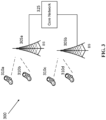
- FIG. 3 shows an example of a wireless communication system 300 where techniques in accordance with one or more embodiments of the present technology can be applied.
- a wireless communication system 300 can include one or more base stations (BSs) 305a, 305b, one or more wireless devices 310a, 310b, 310c, 310d, and a core network 325.
- a base station 305a, 305b can provide wireless service to wireless devices 310a, 310b, 310c and 310d in one or more wireless sectors.
- a base station 305a, 305b includes directional antennas to produce two or more directional beams to provide wireless coverage in different sectors.
- the core network 325 can communicate with one or more base stations 305a, 305b.
- the core network 325 provides connectivity with other wireless communication systems and wired communication systems.
- the core network may include one or more service subscription databases to store information related to the subscribed wireless devices 310a, 310b, 310c, and 310d.
- a first base station 305a can provide wireless service based on a first radio access technology
- a second base station 305b can provide wireless service based on a second radio access technology.
- the base stations 305a and 305b may be co-located or may be separately installed in the field according to the deployment scenario.
- the wireless devices 310a, 310b, 310c, and 310d can support multiple different radio access technologies.
- FIG. 4 is a block diagram representation of a portion of a radio station in accordance with one or more embodiments of the present technology can be applied.
- a radio station 405 such as a base station or a wireless device (or UE) can include processor electronics 410 such as a microprocessor that implements one or more of the wireless techniques presented in this document.
- the radio station 405 can include transceiver electronics 415 to send and/or receive wireless signals over one or more communication interfaces such as antenna 420.
- the radio station 405 can include other communication interfaces for transmitting and receiving data.
- Radio station 405 can include one or more memories (not explicitly shown) configured to store information such as data and/or instructions.
- the processor electronics 410 can include at least a portion of the transceiver electronics 415. In some embodiments, at least some of the disclosed techniques, modules or functions are implemented using the radio station 405.
- the present document discloses techniques that can be embodied in various embodiments to transmit RRC layer information without incurring the complex processing in PDCP, RLC, and/or MAC layers, thereby reducing processing overhead and delay.
- the disclosed techniques also uses a UE-specific scrambling mechanism to ensure the security of the information.
- the disclosed and other embodiments, modules and the functional operations described in this document can be implemented in digital electronic circuitry, or in computer software, firmware, or hardware, including the structures disclosed in this document and their structural equivalents, or in combinations of one or more of them.
- the disclosed and other embodiments can be implemented as one or more computer program products, i.e., one or more modules of computer program instructions encoded on a computer readable medium for execution by, or to control the operation of, data processing apparatus.
- the computer readable medium can be a machine-readable storage device, a machine-readable storage substrate, a memory device, a composition of matter effecting a machine-readable propagated signal, or a combination of one or more them.
- data processing apparatus encompasses all apparatus, devices, and machines for processing data, including by way of example a programmable processor, a computer, or multiple processors or computers.
- the apparatus can include, in addition to hardware, code that creates an execution environment for the computer program in question, e.g., code that constitutes processor firmware, a protocol stack, a database management system, an operating system, or a combination of one or more of them.
- a propagated signal is an artificially generated signal, e.g., a machine-generated electrical, optical, or electromagnetic signal, that is generated to encode information for transmission to suitable receiver apparatus.
- a computer program (also known as a program, software, software application, script, or code) can be written in any form of programming language, including compiled or interpreted languages, and it can be deployed in any form, including as a stand-alone program or as a module, component, subroutine, or other unit suitable for use in a computing environment.
- a computer program does not necessarily correspond to a file in a file system.
- a program can be stored in a portion of a file that holds other programs or data (e.g., one or more scripts stored in a markup language document), in a single file dedicated to the program in question, or in multiple coordinated files (e.g., files that store one or more modules, sub programs, or portions of code).
- a computer program can be deployed to be executed on one computer or on multiple computers that are located at one site or distributed across multiple sites and interconnected by a communication network.
- the processes and logic flows described in this document can be performed by one or more programmable processors executing one or more computer programs to perform functions by operating on input data and generating output.
- the processes and logic flows can also be performed by, and apparatus can also be implemented as, special purpose logic circuitry, e.g., an FPGA (field programmable gate array) or an ASIC (application specific integrated circuit).
- processors suitable for the execution of a computer program include, by way of example, both general and special purpose microprocessors, and any one or more processors of any kind of digital computer.
- a processor will receive instructions and data from a read only memory or a random-access memory or both.
- the essential elements of a computer are a processor for performing instructions and one or more memory devices for storing instructions and data.
- a computer will also include, or be operatively coupled to receive data from or transfer data to, or both, one or more mass storage devices for storing data, e.g., magnetic, magneto optical disks, or optical disks.
- mass storage devices for storing data, e.g., magnetic, magneto optical disks, or optical disks.
- a computer need not have such devices.
- Computer readable media suitable for storing computer program instructions and data include all forms of non-volatile memory, media and memory devices, including by way of example semiconductor memory devices, e.g., EPROM, EEPROM, and flash memory devices; magnetic disks, e.g., internal hard disks or removable disks; magneto optical disks; and CD ROM and DVD-ROM disks.
- semiconductor memory devices e.g., EPROM, EEPROM, and flash memory devices
- magnetic disks e.g., internal hard disks or removable disks
- magneto optical disks e.g., CD ROM and DVD-ROM disks.
- the processor and the memory can be supplemented by, or incorporated in, special purpose logic circuitry.
Landscapes
- Engineering & Computer Science (AREA)
- Computer Networks & Wireless Communication (AREA)
- Signal Processing (AREA)
- Mobile Radio Communication Systems (AREA)
Claims (15)
- Procédé de communication sans fil, comprenant :le brouillage, avant un rattachement de contrôle de redondance cyclique, CRC, d'au moins une partie d'un premier message de configuration de ressources radio, RRC, par une station de base sur la base d'une graine associée à un dispositif mobile ; etla transmission, par la station de base, de l'au moins une partie du premier message RRC brouillé à une couche inférieure à une couche de contrôle de liaison radio, RLC, ou à une couche de contrôle d'accès au support, MAC, sur un canal correspondant, dans lequel l'au moins une partie du premier message RRC est transmise sans être traitée dans la couche RLC.
- Procédé de la revendication 1, comprenant en outre :
la transmission, par la station de base, un deuxième message RRC à la station mobile avant de transmettre l'au moins une partie du premier message RRC, le deuxième message RRC incluant la graine. - Procédé des revendications 1 et 2, comprenant en outre :
la notification au dispositif mobile que l'au moins une partie du premier message RRC doit être transmise à la couche inférieure à la couche de contrôle de liaison radio ou à la couche de contrôle d'accès au support. - Procédé de communication sans fil, comprenant :la réception, par un dispositif mobile, d'au moins une partie d'un premier message de configuration des ressources radio, RRC, à une couche inférieure à une couche de contrôle de liaison radio ou à une couche de contrôle d'accès au support sur un canal correspondant, dans lequel l'au moins une partie du premier message RRC est reçue sans être traitée dans la couche RLC, et dans lequel l'au moins une partie du premier message RRC est brouillée avant la réception et avant un rattachement de contrôle de redondance cyclique, CRC, basé sur une graine associée au dispositif mobile ; etle débrouillage du premier message pour déterminer des informations sur la couche RRC.
- Procédé de la revendication 4, comprenant en outre :
la réception, par la station mobile, d'un deuxième message RRC de la station de base avant la réception de l'au moins une partie du premier message RRC, le deuxième message RRC incluant la graine. - Procédé des revendications 4 ou 5, comprenant en outre :
la réception d'une notification de la station de base indiquant que l'au moins une partie du premier message RRC doit être transmise à la couche inférieure à la couche de contrôle de liaison radio ou à la couche de contrôle d'accès au support. - Procédé de l'une quelconque des revendications 1 à 6, dans lequel l'au moins une partie du premier message est brouillée sur la base d'un nombre pseudo-aléatoire généré selon la graine.
- Procédé de l'une quelconque des revendications 1 à 7, dans lequel la couche comprend une couche de contrôle d'accès au support, MAC, ou la couche physique.
- Procédé de l'une quelconque des revendications 1 à 8, dans lequel l'au moins une partie du premier message RRC est incluse dans une information de contrôle de liaison descendante, DCI, et dans lequel le canal correspondant comprend un canal de contrôle de liaison descendante physique, PDCCH.
- Procédé de l'une quelconque des revendications 1 à 7, dans lequel l'au moins une partie du premier message RRC est incluse dans une ou plusieurs unités de données de protocole MAC, PDU, et
dans lequel le canal correspondant comprend un canal partagé de liaison descendante physique, PDSCH. - Procédé de l'une quelconque des revendications 1 à 10, dans lequel la graine est prédéfinie en fonction d'un identifiant de l'appareil mobile.
- Procédé de la revendication 11, dans lequel l'identifiant comprend une identité internationale d'abonné mobile, IMSI, un identifiant temporaire unique au monde, GUTI, ou un identifiant temporaire d'abonné mobile SAE, S-RMSI.
- Procédé des revendications 5 et 6, comprenant en outre :
la transmission, à partir du dispositif mobile, d'un identifiant de transaction de l'au moins une partie du premier message à la station de base à un deuxième décalage dans le domaine temporel sur un canal physique. - Procédé de la revendication 13, dans lequel l'identifiant de transaction est inclus dans X bits d'un élément de contrôle MAC, CE, où X est associé à une valeur maximale de l'identifiant de transaction.
- Appareil de communication (405), comprenant un processeur (410) configuré pour mettre en œuvre un procédé décrit dans l'une quelconque des revendications 1 à 14.
Applications Claiming Priority (1)
| Application Number | Priority Date | Filing Date | Title |
|---|---|---|---|
| PCT/CN2019/103667 WO2021035680A1 (fr) | 2019-08-30 | 2019-08-30 | Transmission d'informations de commande de ressources radio |
Publications (3)
| Publication Number | Publication Date |
|---|---|
| EP4023014A1 EP4023014A1 (fr) | 2022-07-06 |
| EP4023014A4 EP4023014A4 (fr) | 2023-04-12 |
| EP4023014B1 true EP4023014B1 (fr) | 2025-04-23 |
Family
ID=74683770
Family Applications (1)
| Application Number | Title | Priority Date | Filing Date |
|---|---|---|---|
| EP19942809.5A Active EP4023014B1 (fr) | 2019-08-30 | 2019-08-30 | Transmission d'informations de commande de ressources radio |
Country Status (4)
| Country | Link |
|---|---|
| US (1) | US12041678B2 (fr) |
| EP (1) | EP4023014B1 (fr) |
| CN (1) | CN114303434B (fr) |
| WO (1) | WO2021035680A1 (fr) |
Families Citing this family (1)
| Publication number | Priority date | Publication date | Assignee | Title |
|---|---|---|---|---|
| EP4264972B1 (fr) * | 2020-12-17 | 2024-08-21 | Nokia Technologies Oy | Réception efficace des mesures de capteurs |
Family Cites Families (11)
| Publication number | Priority date | Publication date | Assignee | Title |
|---|---|---|---|---|
| DE60113044T2 (de) * | 2000-06-02 | 2006-03-02 | Samsung Electronics Co., Ltd., Suwon | Verfahren zur auswahl eines zufalls-zugriffskanals in einem mobilen cdma-kommunikationssystem |
| WO2010008180A2 (fr) * | 2008-07-14 | 2010-01-21 | 엘지전자 주식회사 | Procédé de commande de transmission en liaison montante dans un système prenant en charge un mode de transmission à accès multiple en liaison montante |
| CN102158973B (zh) * | 2010-02-11 | 2013-11-20 | 电信科学技术研究院 | 半持续调度、传输及处理方法、系统和设备 |
| WO2014181156A1 (fr) * | 2013-05-10 | 2014-11-13 | Nokia Corporation | Informations de commande de liaison descendante (dci) compacte destinées à des communications de type machine |
| WO2015012900A1 (fr) * | 2013-07-26 | 2015-01-29 | Intel IP Corporation | Signalisation d'informations d'interférence pour aider un matériel utilisateur |
| CN106304392A (zh) | 2015-06-26 | 2017-01-04 | 中兴通讯股份有限公司 | 一种随机接入的方法、设备和系统 |
| CN108616901B (zh) * | 2016-12-12 | 2020-09-01 | 维沃移动通信有限公司 | 一种呼叫终端的方法、终端及网络设备 |
| US10278168B2 (en) * | 2017-05-04 | 2019-04-30 | At&T Intellectual Property I, L.P. | Multi-stage segmented downlink control information with reduced overhead |
| US11575554B2 (en) * | 2017-08-11 | 2023-02-07 | Apple Inc. | Scrambling sequence initial seed configuration for reference signals, data, and control channel for new radio |
| US11910433B2 (en) * | 2020-02-13 | 2024-02-20 | Intel Corporation | Physical uplink shared channel (PUSCH) transmission scheduling for new radio (NR) |
| US11902963B2 (en) * | 2020-04-17 | 2024-02-13 | Intel Corporation | Coverage enhancement for physical uplink control channel transmissions in new radio |
-
2019
- 2019-08-30 WO PCT/CN2019/103667 patent/WO2021035680A1/fr not_active Ceased
- 2019-08-30 EP EP19942809.5A patent/EP4023014B1/fr active Active
- 2019-08-30 CN CN201980099900.7A patent/CN114303434B/zh active Active
-
2022
- 2022-02-28 US US17/683,035 patent/US12041678B2/en active Active
Also Published As
| Publication number | Publication date |
|---|---|
| EP4023014A4 (fr) | 2023-04-12 |
| US12041678B2 (en) | 2024-07-16 |
| EP4023014A1 (fr) | 2022-07-06 |
| CN114303434A (zh) | 2022-04-08 |
| CN114303434B (zh) | 2025-06-13 |
| WO2021035680A1 (fr) | 2021-03-04 |
| US20220312536A1 (en) | 2022-09-29 |
Similar Documents
| Publication | Publication Date | Title |
|---|---|---|
| CN111247856B (zh) | 侧边链路车联网通信方法及其用户设备 | |
| EP3275255B1 (fr) | Procédés et appareil destinés à améliorer une harq avec des répétitions de canaux | |
| EP3566368B1 (fr) | Signalisation, procédures, équipement utilisateur et stations de base pour communications à faible latence ultra-fiables en liaison montante | |
| US12250678B2 (en) | Communication system | |
| US11728938B2 (en) | Terminal and communication method | |
| EP3876453A1 (fr) | Procédé et appareil de transmission d'informations | |
| CN110419186A (zh) | 用于上行链路超高可靠和低延迟通信的下行链路控制通道 | |
| EP3998728A1 (fr) | Procédé et appareil d'émission et de réception de réponses harq dans un système de communications sans fil prenant en charge des communications de liaison latérale | |
| EP3711405B1 (fr) | Procédé et appareil de transmission de commande | |
| US20190288820A1 (en) | Control Information Sending Method and Apparatus, and Control Information Receiving Method and Apparatus | |
| WO2021087980A1 (fr) | Procédé et appareil de détermination d'un livre de codes de harq-ack à déclenchement unique | |
| WO2017193890A1 (fr) | Procédé de transmission d'informations de rétroaction harq, unité d'ue, station de base et système | |
| US11330610B2 (en) | Data sending and receiving method and apparatus | |
| WO2021035437A1 (fr) | Procédé et appareil pour déterminer un livre de codes de harq-ack | |
| EP4082240B1 (fr) | Conception et configuration de signalisations de référence | |
| CN104735720B (zh) | 一种机器类通信业务信息的传输方法、基站、终端和系统 | |
| CN109152040B (zh) | 传输数据的方法、终端设备和网络设备 | |
| US20200015257A1 (en) | Buffer status report sending method, terminal device, and network device | |
| US12041678B2 (en) | Transmitting radio resource control information | |
| WO2023077417A1 (fr) | Indication de retransmission de livres de codes en signalisation de commande | |
| CN110024320B (zh) | D2d通信系统中的通信参数的确定 | |
| US12615634B2 (en) | Method and apparatus for determining HARQ-ACK codebook | |
| KR20230139643A (ko) | 무선 통신 시스템에서 저지연 서비스를 위한 데이터 송수신 방법 및 장치 |
Legal Events
| Date | Code | Title | Description |
|---|---|---|---|
| STAA | Information on the status of an ep patent application or granted ep patent |
Free format text: STATUS: THE INTERNATIONAL PUBLICATION HAS BEEN MADE |
|
| PUAI | Public reference made under article 153(3) epc to a published international application that has entered the european phase |
Free format text: ORIGINAL CODE: 0009012 |
|
| STAA | Information on the status of an ep patent application or granted ep patent |
Free format text: STATUS: REQUEST FOR EXAMINATION WAS MADE |
|
| 17P | Request for examination filed |
Effective date: 20220330 |
|
| AK | Designated contracting states |
Kind code of ref document: A1 Designated state(s): AL AT BE BG CH CY CZ DE DK EE ES FI FR GB GR HR HU IE IS IT LI LT LU LV MC MK MT NL NO PL PT RO RS SE SI SK SM TR |
|
| DAV | Request for validation of the european patent (deleted) | ||
| DAX | Request for extension of the european patent (deleted) | ||
| REG | Reference to a national code |
Ref legal event code: R079 Ipc: H04L0001000000 Ref country code: DE Ref legal event code: R079 Ref document number: 602019069200 Country of ref document: DE Free format text: PREVIOUS MAIN CLASS: H04W0072120000 Ipc: H04L0001000000 |
|
| A4 | Supplementary search report drawn up and despatched |
Effective date: 20230313 |
|
| RIC1 | Information provided on ipc code assigned before grant |
Ipc: H04W 72/23 20230101ALI20230306BHEP Ipc: H04L 1/00 20060101AFI20230306BHEP |
|
| GRAP | Despatch of communication of intention to grant a patent |
Free format text: ORIGINAL CODE: EPIDOSNIGR1 |
|
| STAA | Information on the status of an ep patent application or granted ep patent |
Free format text: STATUS: GRANT OF PATENT IS INTENDED |
|
| RIC1 | Information provided on ipc code assigned before grant |
Ipc: H04W 72/23 20230101ALI20250124BHEP Ipc: H04L 1/00 20060101AFI20250124BHEP |
|
| GRAS | Grant fee paid |
Free format text: ORIGINAL CODE: EPIDOSNIGR3 |
|
| GRAA | (expected) grant |
Free format text: ORIGINAL CODE: 0009210 |
|
| STAA | Information on the status of an ep patent application or granted ep patent |
Free format text: STATUS: THE PATENT HAS BEEN GRANTED |
|
| INTG | Intention to grant announced |
Effective date: 20250221 |
|
| AK | Designated contracting states |
Kind code of ref document: B1 Designated state(s): AL AT BE BG CH CY CZ DE DK EE ES FI FR GB GR HR HU IE IS IT LI LT LU LV MC MK MT NL NO PL PT RO RS SE SI SK SM TR |
|
| REG | Reference to a national code |
Ref country code: GB Ref legal event code: FG4D |
|
| REG | Reference to a national code |
Ref country code: CH Ref legal event code: EP |
|
| REG | Reference to a national code |
Ref country code: DE Ref legal event code: R096 Ref document number: 602019069200 Country of ref document: DE |
|
| REG | Reference to a national code |
Ref country code: IE Ref legal event code: FG4D |
|
| REG | Reference to a national code |
Ref country code: NL Ref legal event code: MP Effective date: 20250423 |
|
| PG25 | Lapsed in a contracting state [announced via postgrant information from national office to epo] |
Ref country code: NL Free format text: LAPSE BECAUSE OF FAILURE TO SUBMIT A TRANSLATION OF THE DESCRIPTION OR TO PAY THE FEE WITHIN THE PRESCRIBED TIME-LIMIT Effective date: 20250423 |
|
| REG | Reference to a national code |
Ref country code: AT Ref legal event code: MK05 Ref document number: 1788837 Country of ref document: AT Kind code of ref document: T Effective date: 20250423 |
|
| PG25 | Lapsed in a contracting state [announced via postgrant information from national office to epo] |
Ref country code: ES Free format text: LAPSE BECAUSE OF FAILURE TO SUBMIT A TRANSLATION OF THE DESCRIPTION OR TO PAY THE FEE WITHIN THE PRESCRIBED TIME-LIMIT Effective date: 20250423 Ref country code: PT Free format text: LAPSE BECAUSE OF FAILURE TO SUBMIT A TRANSLATION OF THE DESCRIPTION OR TO PAY THE FEE WITHIN THE PRESCRIBED TIME-LIMIT Effective date: 20250825 Ref country code: FI Free format text: LAPSE BECAUSE OF FAILURE TO SUBMIT A TRANSLATION OF THE DESCRIPTION OR TO PAY THE FEE WITHIN THE PRESCRIBED TIME-LIMIT Effective date: 20250423 |
|
| PGFP | Annual fee paid to national office [announced via postgrant information from national office to epo] |
Ref country code: DE Payment date: 20250702 Year of fee payment: 7 |
|
| REG | Reference to a national code |
Ref country code: LT Ref legal event code: MG9D |
|
| PG25 | Lapsed in a contracting state [announced via postgrant information from national office to epo] |
Ref country code: NO Free format text: LAPSE BECAUSE OF FAILURE TO SUBMIT A TRANSLATION OF THE DESCRIPTION OR TO PAY THE FEE WITHIN THE PRESCRIBED TIME-LIMIT Effective date: 20250723 Ref country code: GR Free format text: LAPSE BECAUSE OF FAILURE TO SUBMIT A TRANSLATION OF THE DESCRIPTION OR TO PAY THE FEE WITHIN THE PRESCRIBED TIME-LIMIT Effective date: 20250724 |
|
| PG25 | Lapsed in a contracting state [announced via postgrant information from national office to epo] |
Ref country code: PL Free format text: LAPSE BECAUSE OF FAILURE TO SUBMIT A TRANSLATION OF THE DESCRIPTION OR TO PAY THE FEE WITHIN THE PRESCRIBED TIME-LIMIT Effective date: 20250423 |
|
| PG25 | Lapsed in a contracting state [announced via postgrant information from national office to epo] |
Ref country code: BG Free format text: LAPSE BECAUSE OF FAILURE TO SUBMIT A TRANSLATION OF THE DESCRIPTION OR TO PAY THE FEE WITHIN THE PRESCRIBED TIME-LIMIT Effective date: 20250423 |
|
| PGFP | Annual fee paid to national office [announced via postgrant information from national office to epo] |
Ref country code: GB Payment date: 20250703 Year of fee payment: 7 |
|
| PG25 | Lapsed in a contracting state [announced via postgrant information from national office to epo] |
Ref country code: HR Free format text: LAPSE BECAUSE OF FAILURE TO SUBMIT A TRANSLATION OF THE DESCRIPTION OR TO PAY THE FEE WITHIN THE PRESCRIBED TIME-LIMIT Effective date: 20250423 |
|
| PG25 | Lapsed in a contracting state [announced via postgrant information from national office to epo] |
Ref country code: AT Free format text: LAPSE BECAUSE OF FAILURE TO SUBMIT A TRANSLATION OF THE DESCRIPTION OR TO PAY THE FEE WITHIN THE PRESCRIBED TIME-LIMIT Effective date: 20250423 |
|
| PG25 | Lapsed in a contracting state [announced via postgrant information from national office to epo] |
Ref country code: RS Free format text: LAPSE BECAUSE OF FAILURE TO SUBMIT A TRANSLATION OF THE DESCRIPTION OR TO PAY THE FEE WITHIN THE PRESCRIBED TIME-LIMIT Effective date: 20250723 |
|
| PG25 | Lapsed in a contracting state [announced via postgrant information from national office to epo] |
Ref country code: IS Free format text: LAPSE BECAUSE OF FAILURE TO SUBMIT A TRANSLATION OF THE DESCRIPTION OR TO PAY THE FEE WITHIN THE PRESCRIBED TIME-LIMIT Effective date: 20250823 |
|
| PG25 | Lapsed in a contracting state [announced via postgrant information from national office to epo] |
Ref country code: LV Free format text: LAPSE BECAUSE OF FAILURE TO SUBMIT A TRANSLATION OF THE DESCRIPTION OR TO PAY THE FEE WITHIN THE PRESCRIBED TIME-LIMIT Effective date: 20250423 |
|
| PG25 | Lapsed in a contracting state [announced via postgrant information from national office to epo] |
Ref country code: SM Free format text: LAPSE BECAUSE OF FAILURE TO SUBMIT A TRANSLATION OF THE DESCRIPTION OR TO PAY THE FEE WITHIN THE PRESCRIBED TIME-LIMIT Effective date: 20250423 Ref country code: DK Free format text: LAPSE BECAUSE OF FAILURE TO SUBMIT A TRANSLATION OF THE DESCRIPTION OR TO PAY THE FEE WITHIN THE PRESCRIBED TIME-LIMIT Effective date: 20250423 |
|
| PG25 | Lapsed in a contracting state [announced via postgrant information from national office to epo] |
Ref country code: CZ Free format text: LAPSE BECAUSE OF FAILURE TO SUBMIT A TRANSLATION OF THE DESCRIPTION OR TO PAY THE FEE WITHIN THE PRESCRIBED TIME-LIMIT Effective date: 20250423 |
|
| PG25 | Lapsed in a contracting state [announced via postgrant information from national office to epo] |
Ref country code: EE Free format text: LAPSE BECAUSE OF FAILURE TO SUBMIT A TRANSLATION OF THE DESCRIPTION OR TO PAY THE FEE WITHIN THE PRESCRIBED TIME-LIMIT Effective date: 20250423 |
|
| REG | Reference to a national code |
Ref country code: DE Ref legal event code: R097 Ref document number: 602019069200 Country of ref document: DE |
|
| PG25 | Lapsed in a contracting state [announced via postgrant information from national office to epo] |
Ref country code: SK Free format text: LAPSE BECAUSE OF FAILURE TO SUBMIT A TRANSLATION OF THE DESCRIPTION OR TO PAY THE FEE WITHIN THE PRESCRIBED TIME-LIMIT Effective date: 20250423 Ref country code: RO Free format text: LAPSE BECAUSE OF FAILURE TO SUBMIT A TRANSLATION OF THE DESCRIPTION OR TO PAY THE FEE WITHIN THE PRESCRIBED TIME-LIMIT Effective date: 20250423 |
|
| PG25 | Lapsed in a contracting state [announced via postgrant information from national office to epo] |
Ref country code: IT Free format text: LAPSE BECAUSE OF FAILURE TO SUBMIT A TRANSLATION OF THE DESCRIPTION OR TO PAY THE FEE WITHIN THE PRESCRIBED TIME-LIMIT Effective date: 20250423 |
|
| PLBE | No opposition filed within time limit |
Free format text: ORIGINAL CODE: 0009261 |
|
| STAA | Information on the status of an ep patent application or granted ep patent |
Free format text: STATUS: NO OPPOSITION FILED WITHIN TIME LIMIT |
|
| REG | Reference to a national code |
Ref country code: CH Ref legal event code: L10 Free format text: ST27 STATUS EVENT CODE: U-0-0-L10-L00 (AS PROVIDED BY THE NATIONAL OFFICE) Effective date: 20260304 |
|
| REG | Reference to a national code |
Ref country code: CH Ref legal event code: H13 Free format text: ST27 STATUS EVENT CODE: U-0-0-H10-H13 (AS PROVIDED BY THE NATIONAL OFFICE) Effective date: 20260324 |
|
| PG25 | Lapsed in a contracting state [announced via postgrant information from national office to epo] |
Ref country code: MC Free format text: LAPSE BECAUSE OF FAILURE TO SUBMIT A TRANSLATION OF THE DESCRIPTION OR TO PAY THE FEE WITHIN THE PRESCRIBED TIME-LIMIT Effective date: 20250423 |
|
| 26N | No opposition filed |
Effective date: 20260126 |
|
| PG25 | Lapsed in a contracting state [announced via postgrant information from national office to epo] |
Ref country code: LU Free format text: LAPSE BECAUSE OF NON-PAYMENT OF DUE FEES Effective date: 20250830 |