EP4023488A1 - Verfahren und system zum steuern eines batteriepacks und fahrzeug - Google Patents
Verfahren und system zum steuern eines batteriepacks und fahrzeug Download PDFInfo
- Publication number
- EP4023488A1 EP4023488A1 EP20894318.3A EP20894318A EP4023488A1 EP 4023488 A1 EP4023488 A1 EP 4023488A1 EP 20894318 A EP20894318 A EP 20894318A EP 4023488 A1 EP4023488 A1 EP 4023488A1
- Authority
- EP
- European Patent Office
- Prior art keywords
- battery pack
- vehicle
- state
- preset
- value
- Prior art date
- Legal status (The legal status is an assumption and is not a legal conclusion. Google has not performed a legal analysis and makes no representation as to the accuracy of the status listed.)
- Pending
Links
Images




Classifications
-
- B—PERFORMING OPERATIONS; TRANSPORTING
- B60—VEHICLES IN GENERAL
- B60L—PROPULSION OF ELECTRICALLY-PROPELLED VEHICLES; SUPPLYING ELECTRIC POWER FOR AUXILIARY EQUIPMENT OF ELECTRICALLY-PROPELLED VEHICLES; ELECTRODYNAMIC BRAKE SYSTEMS FOR VEHICLES IN GENERAL; MAGNETIC SUSPENSION OR LEVITATION FOR VEHICLES; MONITORING OPERATING VARIABLES OF ELECTRICALLY-PROPELLED VEHICLES; ELECTRIC SAFETY DEVICES FOR ELECTRICALLY-PROPELLED VEHICLES
- B60L3/00—Electric devices on electrically-propelled vehicles for safety purposes; Monitoring operating variables, e.g. speed, deceleration or energy consumption
- B60L3/04—Cutting off the power supply under fault conditions
-
- B—PERFORMING OPERATIONS; TRANSPORTING
- B60—VEHICLES IN GENERAL
- B60L—PROPULSION OF ELECTRICALLY-PROPELLED VEHICLES; SUPPLYING ELECTRIC POWER FOR AUXILIARY EQUIPMENT OF ELECTRICALLY-PROPELLED VEHICLES; ELECTRODYNAMIC BRAKE SYSTEMS FOR VEHICLES IN GENERAL; MAGNETIC SUSPENSION OR LEVITATION FOR VEHICLES; MONITORING OPERATING VARIABLES OF ELECTRICALLY-PROPELLED VEHICLES; ELECTRIC SAFETY DEVICES FOR ELECTRICALLY-PROPELLED VEHICLES
- B60L1/00—Supplying electric power to auxiliary equipment of vehicles
- B60L1/003—Supplying electric power to auxiliary equipment of vehicles to auxiliary motors, e.g. for pumps, compressors
-
- B—PERFORMING OPERATIONS; TRANSPORTING
- B60—VEHICLES IN GENERAL
- B60L—PROPULSION OF ELECTRICALLY-PROPELLED VEHICLES; SUPPLYING ELECTRIC POWER FOR AUXILIARY EQUIPMENT OF ELECTRICALLY-PROPELLED VEHICLES; ELECTRODYNAMIC BRAKE SYSTEMS FOR VEHICLES IN GENERAL; MAGNETIC SUSPENSION OR LEVITATION FOR VEHICLES; MONITORING OPERATING VARIABLES OF ELECTRICALLY-PROPELLED VEHICLES; ELECTRIC SAFETY DEVICES FOR ELECTRICALLY-PROPELLED VEHICLES
- B60L3/00—Electric devices on electrically-propelled vehicles for safety purposes; Monitoring operating variables, e.g. speed, deceleration or energy consumption
- B60L3/0023—Detecting, eliminating, remedying or compensating for drive train abnormalities, e.g. failures within the drive train
- B60L3/0046—Detecting, eliminating, remedying or compensating for drive train abnormalities, e.g. failures within the drive train relating to electric energy storage systems, e.g. batteries or capacitors
-
- B—PERFORMING OPERATIONS; TRANSPORTING
- B60—VEHICLES IN GENERAL
- B60L—PROPULSION OF ELECTRICALLY-PROPELLED VEHICLES; SUPPLYING ELECTRIC POWER FOR AUXILIARY EQUIPMENT OF ELECTRICALLY-PROPELLED VEHICLES; ELECTRODYNAMIC BRAKE SYSTEMS FOR VEHICLES IN GENERAL; MAGNETIC SUSPENSION OR LEVITATION FOR VEHICLES; MONITORING OPERATING VARIABLES OF ELECTRICALLY-PROPELLED VEHICLES; ELECTRIC SAFETY DEVICES FOR ELECTRICALLY-PROPELLED VEHICLES
- B60L58/00—Methods or circuit arrangements for monitoring or controlling batteries or fuel cells, specially adapted for electric vehicles
- B60L58/10—Methods or circuit arrangements for monitoring or controlling batteries or fuel cells, specially adapted for electric vehicles for monitoring or controlling batteries
- B60L58/12—Methods or circuit arrangements for monitoring or controlling batteries or fuel cells, specially adapted for electric vehicles for monitoring or controlling batteries responding to state of charge [SoC]
-
- B—PERFORMING OPERATIONS; TRANSPORTING
- B60—VEHICLES IN GENERAL
- B60L—PROPULSION OF ELECTRICALLY-PROPELLED VEHICLES; SUPPLYING ELECTRIC POWER FOR AUXILIARY EQUIPMENT OF ELECTRICALLY-PROPELLED VEHICLES; ELECTRODYNAMIC BRAKE SYSTEMS FOR VEHICLES IN GENERAL; MAGNETIC SUSPENSION OR LEVITATION FOR VEHICLES; MONITORING OPERATING VARIABLES OF ELECTRICALLY-PROPELLED VEHICLES; ELECTRIC SAFETY DEVICES FOR ELECTRICALLY-PROPELLED VEHICLES
- B60L58/00—Methods or circuit arrangements for monitoring or controlling batteries or fuel cells, specially adapted for electric vehicles
- B60L58/10—Methods or circuit arrangements for monitoring or controlling batteries or fuel cells, specially adapted for electric vehicles for monitoring or controlling batteries
- B60L58/24—Methods or circuit arrangements for monitoring or controlling batteries or fuel cells, specially adapted for electric vehicles for monitoring or controlling batteries for controlling the temperature of batteries
- B60L58/26—Methods or circuit arrangements for monitoring or controlling batteries or fuel cells, specially adapted for electric vehicles for monitoring or controlling batteries for controlling the temperature of batteries by cooling
-
- B—PERFORMING OPERATIONS; TRANSPORTING
- B60—VEHICLES IN GENERAL
- B60L—PROPULSION OF ELECTRICALLY-PROPELLED VEHICLES; SUPPLYING ELECTRIC POWER FOR AUXILIARY EQUIPMENT OF ELECTRICALLY-PROPELLED VEHICLES; ELECTRODYNAMIC BRAKE SYSTEMS FOR VEHICLES IN GENERAL; MAGNETIC SUSPENSION OR LEVITATION FOR VEHICLES; MONITORING OPERATING VARIABLES OF ELECTRICALLY-PROPELLED VEHICLES; ELECTRIC SAFETY DEVICES FOR ELECTRICALLY-PROPELLED VEHICLES
- B60L58/00—Methods or circuit arrangements for monitoring or controlling batteries or fuel cells, specially adapted for electric vehicles
- B60L58/10—Methods or circuit arrangements for monitoring or controlling batteries or fuel cells, specially adapted for electric vehicles for monitoring or controlling batteries
- B60L58/24—Methods or circuit arrangements for monitoring or controlling batteries or fuel cells, specially adapted for electric vehicles for monitoring or controlling batteries for controlling the temperature of batteries
- B60L58/27—Methods or circuit arrangements for monitoring or controlling batteries or fuel cells, specially adapted for electric vehicles for monitoring or controlling batteries for controlling the temperature of batteries by heating
-
- B—PERFORMING OPERATIONS; TRANSPORTING
- B60—VEHICLES IN GENERAL
- B60L—PROPULSION OF ELECTRICALLY-PROPELLED VEHICLES; SUPPLYING ELECTRIC POWER FOR AUXILIARY EQUIPMENT OF ELECTRICALLY-PROPELLED VEHICLES; ELECTRODYNAMIC BRAKE SYSTEMS FOR VEHICLES IN GENERAL; MAGNETIC SUSPENSION OR LEVITATION FOR VEHICLES; MONITORING OPERATING VARIABLES OF ELECTRICALLY-PROPELLED VEHICLES; ELECTRIC SAFETY DEVICES FOR ELECTRICALLY-PROPELLED VEHICLES
- B60L2240/00—Control parameters of input or output; Target parameters
- B60L2240/40—Drive Train control parameters
- B60L2240/44—Drive Train control parameters related to combustion engines
-
- B—PERFORMING OPERATIONS; TRANSPORTING
- B60—VEHICLES IN GENERAL
- B60L—PROPULSION OF ELECTRICALLY-PROPELLED VEHICLES; SUPPLYING ELECTRIC POWER FOR AUXILIARY EQUIPMENT OF ELECTRICALLY-PROPELLED VEHICLES; ELECTRODYNAMIC BRAKE SYSTEMS FOR VEHICLES IN GENERAL; MAGNETIC SUSPENSION OR LEVITATION FOR VEHICLES; MONITORING OPERATING VARIABLES OF ELECTRICALLY-PROPELLED VEHICLES; ELECTRIC SAFETY DEVICES FOR ELECTRICALLY-PROPELLED VEHICLES
- B60L2240/00—Control parameters of input or output; Target parameters
- B60L2240/40—Drive Train control parameters
- B60L2240/54—Drive Train control parameters related to batteries
- B60L2240/545—Temperature
-
- B—PERFORMING OPERATIONS; TRANSPORTING
- B60—VEHICLES IN GENERAL
- B60L—PROPULSION OF ELECTRICALLY-PROPELLED VEHICLES; SUPPLYING ELECTRIC POWER FOR AUXILIARY EQUIPMENT OF ELECTRICALLY-PROPELLED VEHICLES; ELECTRODYNAMIC BRAKE SYSTEMS FOR VEHICLES IN GENERAL; MAGNETIC SUSPENSION OR LEVITATION FOR VEHICLES; MONITORING OPERATING VARIABLES OF ELECTRICALLY-PROPELLED VEHICLES; ELECTRIC SAFETY DEVICES FOR ELECTRICALLY-PROPELLED VEHICLES
- B60L2240/00—Control parameters of input or output; Target parameters
- B60L2240/60—Navigation input
- B60L2240/66—Ambient conditions
- B60L2240/662—Temperature
-
- B—PERFORMING OPERATIONS; TRANSPORTING
- B60—VEHICLES IN GENERAL
- B60L—PROPULSION OF ELECTRICALLY-PROPELLED VEHICLES; SUPPLYING ELECTRIC POWER FOR AUXILIARY EQUIPMENT OF ELECTRICALLY-PROPELLED VEHICLES; ELECTRODYNAMIC BRAKE SYSTEMS FOR VEHICLES IN GENERAL; MAGNETIC SUSPENSION OR LEVITATION FOR VEHICLES; MONITORING OPERATING VARIABLES OF ELECTRICALLY-PROPELLED VEHICLES; ELECTRIC SAFETY DEVICES FOR ELECTRICALLY-PROPELLED VEHICLES
- B60L2260/00—Operating Modes
- B60L2260/20—Drive modes; Transition between modes
- B60L2260/22—Standstill, e.g. zero speed
-
- Y—GENERAL TAGGING OF NEW TECHNOLOGICAL DEVELOPMENTS; GENERAL TAGGING OF CROSS-SECTIONAL TECHNOLOGIES SPANNING OVER SEVERAL SECTIONS OF THE IPC; TECHNICAL SUBJECTS COVERED BY FORMER USPC CROSS-REFERENCE ART COLLECTIONS [XRACs] AND DIGESTS
- Y02—TECHNOLOGIES OR APPLICATIONS FOR MITIGATION OR ADAPTATION AGAINST CLIMATE CHANGE
- Y02E—REDUCTION OF GREENHOUSE GAS [GHG] EMISSIONS, RELATED TO ENERGY GENERATION, TRANSMISSION OR DISTRIBUTION
- Y02E60/00—Enabling technologies; Technologies with a potential or indirect contribution to GHG emissions mitigation
- Y02E60/10—Energy storage using batteries
Definitions
- the present disclosure relates to the technical field of automobiles, and more particularly, relates to a battery pack control method, a system, and a vehicle.
- Battery packs used as a power source in new energy automobiles can only achieve maximum performance within a suitable temperature range. That a temperature of the battery is too high or too low may cause damage to the battery pack and may even cause a safety accident. However, in order to prevent the temperature of the battery pack from being too low or too high, a heat management system is used in the existing hybrid electric vehicles and pure electric vehicles to control the temperature of the battery pack.
- the existing heat management system requires the vehicle to be operated in a powered-on state, and after the vehicle is in a powered-off state, the existing heat management system cannot be used to control the temperature of the battery pack, and there is a problem that the temperature of the power battery pack exceeds a suitable temperature range due to the lower or higher ambient temperature, and the vehicle cannot be convenient to be started and used again.
- the present disclosure aims to provide a battery pack control method, a system, and a vehicle to solve the problems in the prior art that after the vehicle is powered-off, the temperature of a battery pack cannot be controlled using a heat management system, and the temperature of the battery pack is likely to be too low or too high due to a lower or a higher ambient temperature.
- the first preset condition includes that the heating module is enabled, and after the vehicle is in the powered-off state a number of times the heating module is enabled is less than a first number threshold value;
- the second preset condition includes that the cooling module is enabled, and after the vehicle is in the powered-off state, a number of times the cooling module is enabled is less than a second number threshold value.
- the method before the step that peforming the heating process on the battery pack if the heating module satisfies the first preset condition, so that the temperature of the battery pack returns to be within the preset range, when the vehicle is in the powered-on state and the current temperature value is less than the preset lower limit value, the method further includes:
- the method further includes: controlling the battery sensor to enter a sleep state if the heating module does not satisfy the first preset condition, or the cooling module does not satisfy the second preset condition, or the current state of the thermostatic control function of the battery pack is a cut-off state.
- the method further includes:
- the first preset condition further includes that a state of charge value of the battery pack is less than a preset charge threshold value
- the heating module is an engine of the vehicle, the engine is capable of being started, and the engine is used for performing a heating process on the battery pack;
- the first preset condition further includes that when the state of charge value of the battery pack is greater than or equal to a preset charge threshold value, the heating module is a heating element;
- the second preset condition further includes that when the state of charge value of the battery pack is greater than or equal to a preset charge threshold value, the cooling module includes a compressor;
- Another objective of the present disclosure is to provide a battery pack control system applied to a vehicle, the vehicle includes a battery sensor, a heating module, and a cooling module, wherein the system includes:
- the first preset condition includes that the heating module is enabled, and after the vehicle is in the powered-off state, a number of times the heating module is enabled is less than a first number threshold value; and the second preset condition includes that the cooling module is enabled, and after the vehicle is in the powered-off state, a number of times the cooling module is enabled is less than a second number threshold value.
- the system further includes: an ambient temperature acquisition module configured to acquire a current ambient temperature value when the vehicle is in the powered-on state; the first preset condition further includes that the current ambient temperature value is less than a preset temperature threshold value.
- system further includes: a third control module configured to control the battery sensor to enter a sleep state if the heating module does not satisfy the first preset condition, or the cooling module does not satisfy the second preset condition, or the current state of the thermostatic control function of the battery pack is a cut-off state.
- system further includes:
- the first preset condition further includes that a state of charge value of the battery pack is less than a preset charge threshold value
- the heating module is an engine of the vehicle, the engine is capable of being started be started, and the engine is used for performing a heating process on the battery pack;
- the first preset condition further includes that when the state of charge value of the battery pack is greater than or equal to a preset charge threshold value, the heating module is a heating element;
- the second preset condition further includes that when the state of charge value of the battery pack is greater than or equal to a preset charge threshold value, the cooling module includes a compressor;
- the battery pack control method and system of the present disclosure have the following advantages over the prior art: when the vehicle is in a powered-off state, firstly, a battery sensor is used to acquire a current temperature value of a battery pack of the vehicle and a current state of a thermostatic control function of the battery pack, and in the case where the current battery temperature value is not within a preset range and the current state of the thermostatic control function is ON-state, the vehicle is switched from the powered-off state to the powered-on state; then in the case where the current battery temperature value is less than a preset lower limit value, if the heating module satisfies a first preset condition, the battery pack is heated via the heating module so as to enable the temperature of the battery pack to return to a preset range; or in the case where the current battery temperature value is greater than the preset upper limit value, if the cooling module satisfies the second preset condition, the battery pack is cooled by the cooling module so that the temperature of the battery pack returns to be within the preset range.
- a battery sensor when the vehicle is in a powered-off state, a battery sensor is firstly used to detect the current battery temperature value of the battery pack and the current state of the thermostatic control function of the battery pack; and when the current temperature value of the battery pack is out of a preset range and the thermostatic control function of the battery pack is enabled, the vehicle is waken up, and then the battery pack is thermostatic controlled, so that the temperature of the battery pack is maintained within the preset range, which facilitates the restarting and use of the vehicle.
- FIG. 1 there is shown a schematic flow diagram of a battery pack control method according to an embodiment of the present disclosure, which is applied to a vehicle the vehicle includes a battery sensor, a heating module and a cooling module, the method included steps S100-S400:
- Step SI00 acquiring a current battery temperature value of a battery pack of the vehicle and a current state of a thermostatic control function of the battery pack via the battery sensor when the vehicle is in a powered-off state.
- the powered-off state refers to a state after the power supply of the vehicle is cut off, that is, a state in which the entire vehicle is asleep, and electric control devices of the vehicle are all asleep.
- the battery sensor is connected to the battery pack of the vehicle and uses the battery pack as a power source, and can detect state information about the battery pack, wherein the state information can include the current battery temperature value of the battery pack and the current state of a thermostatic control function of the battery pack, and therefore the battery sensor can activate and detect the state information only when the battery pack has a current.
- the thermostatic control function of the battery pack refers to a function of controlling the temperature value of the battery pack within a preset range, and the thermostatic control function includes ON-state and a cut-off state. If the current state of the thermostatic control function of the battery pack is a cut-off state, it is indicated that the temperature control over the battery pack is not allowed; if the current state of the thermostatic control function of the battery is ON-state, the temperature control over the battery pack is allowed.
- the thermostatic control function of the battery pack includes a battery pack heat preservation control sub-function and a battery pack cooling preservation control sub-function.
- the battery pack heat preservation control sub-function is executed by the heating module
- the battery pack cooling preservation control sub-function is executed by the cooling module.
- the battery pack heat preservation control sub-function opens, that is, controlling the heating module to be enabled; controlling the battery pack cooling preservation control sub-function refers to controlling the cooling module to be enabled.
- the opening or closing of the thermostatic control function of the battery pack can be selected via a preset interface, which can be displayed on a display screen of the vehicle central control or on a mobile terminal communicatively connected to the vehicle central control.
- the thermostatic control function is closed by default, and when the thermostatic control function is selected to be closed, all the setting items related to the thermostatic control function are gray, and the setting operation cannot be carried out.
- the battery sensor may be a battery management system, which may not be controlled by a vehicle power supply, i.e., the battery management system may remain in an operating state when the vehicle is in the powered-off state, or may enter the sleep state when the vehicle power supply is cut off, and then periodically start and detect status information of the battery pack.
- the battery management system may not be controlled by a vehicle power supply, i.e., the battery management system may remain in an operating state when the vehicle is in the powered-off state, or may enter the sleep state when the vehicle power supply is cut off, and then periodically start and detect status information of the battery pack.
- Step S200 switching the vehicle from a powered-off state to a powered-on state when the current battery temperature value is not within a preset range and the current state of the thermostatic control function is ON-state.
- the preset range is a preset preferred operating temperature range of the battery pack, and when the current temperature value of the battery pack is within the preset range, the performance of the battery pack is better, and the battery pack can be normally started and used.
- the current battery temperature value is not within the preset range, it is indicated that the battery pack is currently overheated or undercooled, and at this time, in order to ensure the normal use of the battery pack, it is theoretically necessary to carry out corresponding temperature control over the battery pack.
- the temperature control of the battery pack is specifically executed requires to determine the current state of the above the thermostatic control function. If the current state of the thermostatic control function is the opening state, it is indicated that not only the corresponding temperature control over the battery pack is theoretically required, but also the temperature control over the battery pack is allowed. Thus, the vehicle is switched from the powered-off state to the powered-on state, i.e., the vehicle is awakened, so that the battery pack is thermostatically controlled.
- the temperature control over the battery pack is not allowed, and thus the operation of switching the vehicle from the powered-off state to the powered-on state is not carried out, that is, the vehicle is not awakened, and the thermostatic control over the battery pack is not carried out.
- the vehicle is switched from a powered-off state to a powered-on state, which is specifically shown that a battery sensor is used to wake up a controller local area network bus of the vehicle so as to wake up a whole vehicle controller, and the above-mentioned current temperature value is sent to the whole vehicle controller via the controller local area network bus, and then the whole vehicle controller carries out thermostatic control over the battery pack according to the current temperature value.
- Step S300 performing a heating process on the battery pack by the heating module if the heating module satisfies a first preset condition so that the temperature of the battery pack returns to be within the preset range, when the vehicle is in the powered-on state and the current battery temperature value is less than the preset lower limit value, wherein preset lower limit value is the minimum value within the preset range.
- the first preset condition is a precondition for allowing the battery pack to be heated by the heating module, which is a structure or a component on the vehicle that can heat the battery pack.
- the first preset condition is preset.
- the heating module satisfies the first preset condition, it is indicated that the battery pack can be heated by the heating module, and accordingly the heating of the battery pack by the heating module is controlled so as to enable the battery pack to get out of a state where the temperature is too low, i.e., enabling the current temperature value of the battery pack to return to the above-mentioned preset range.
- the preset lower limit value may be -30 °C.
- Step S400 performing a cooling process on the battery pack by the cooling module if the cooling module satisfies a second preset condition so that the temperature of the battery pack returns to be within the preset range, when the vehicle is in the powered-on state and the current battery temperature value is greater than the preset upper limit value, wherein preset upper limit value is the maximum value within the preset range.
- the second preset condition is a precondition for allowing the battery pack to be cooled by the heating module, which is a structure or a component on the vehicle that can cool the battery pack.
- the second preset condition is preset.
- the preset upper limit value may be 55°C.
- the battery pack control method has the following advantages over the prior art: in the present disclosure, when the vehicle is in a powered-off state, firstly, a battery sensor is firstly used to detect the current battery temperature value of the battery pack and the current state of the thermostatic control function of the battery pack; and when the current temperature value of the battery pack is out of a preset range and the thermostatic control function of the battery pack opens, the vehicle is waken up, and then the battery pack is thermostatic controlled, so that the temperature of the battery pack is maintained within the preset range, which facilitates the restarting and use of the vehicle; thus, the problems in the prior art that after the vehicle is powered-off, the temperature of a battery pack cannot be controlled using a heat management system, and the temperature of the battery pack is likely to be too low or too high due to a lower or a higher ambient temperature can be solved.
- the above-mentioned battery pack control method includes steps S201 to S210: step S201, acquiring a current battery temperature value of a battery pack of the vehicle and a current state of a thermostatic control function of the battery pack via the battery sensor when the vehicle is in a powered-off state.
- step S201 can be described in detail with reference to step S100, and will not be described again here.
- Step S202 switching the vehicle from a powered-off state to a powered-on state when the current battery temperature value is not within a preset range and the current state of the thermostatic control function is ON-state.
- step S202 can be described in detail with reference to step S200, and will not be described again here.
- Step S203 performing a heating process on the battery pack by the heating module if the heating module satisfies a first preset condition so that the temperature of the battery pack returns to be within the preset range, when the vehicle is in the powered-on state and the current battery temperature value is less than the preset lower limit value, wherein preset lower limit value is the minimum value within the preset range;
- the first preset condition includes that the heating module is enabled, and after the vehicle is in a powered-off state, the number of times the heating module is enabled is less than a first number threshold value.
- step S203 i.e., when the vehicle is in the powered-on state, in a case where the current battery temperature value is less than the preset lower limit value, the heating module still needs to be enabled, and after the vehicle stops and enters the powered-off state until the current number of times of starting is less than the first number threshold value, the operation preforming performing a heating process on the battery pack by the heating module may be executed, so as to return the temperature of the battery pack to within the preset range. That is, when any one of the conditions that the heating module is enabled and the number of times of starting of the heating module after the vehicle stops and enters the powered-off state until the current is less than the first threshold value is not satisfied, the heating module will not heat the battery pack by the heating module.
- setting the above-mentioned first preset condition includes enabling the heating module, i.e., setting to allow the heating module to heat the battery pack when the battery pack temperature is too low.
- This condition can prevent the heating module from self-starting and heating the battery pack when the temperature of the battery pack is less than the preset lower limit value, when the driver intends to stop starting the battery pack for a long time or the like, i.e., without heating and heat preservation of the battery pack.
- controlling the opening or closing of the heating module described above can be selected through a preset interface, which can present the options of opening or closing the heating module.
- the preset interface can be displayed on a display screen of the vehicle central control or on a mobile terminal communicatively connected to the vehicle central control.
- the set-up items related to the heat preservation control function of the battery pack are all grey, and the set-up operation cannot be carried out.
- the setting of the first preset condition includes that after the vehicle is in the powered-off state, the number of times of enabling the heating module is less than the first threshold value, because if the number of times of enabling the heating module reaches the first threshold value after the vehicle is in the powered-off state, it is indicated that the driver does not use the vehicle for a long time, and the temperature of the battery pack is in a state of being less than a preset lower limit value due to ambient temperature is too low, so that the heating module is frequently enabled so as to maintain the temperature of the battery pack within a predetermined range.
- the vehicle is not restarted for a while, that is, the battery pack is not started for a while, it is meaningless that the battery pack is subjected to the heating process, and the power of the battery pack is exhausted instead.
- the above-mentioned first number threshold value can be set via a preset interface, and the preset interface can present a setting option of the first number threshold value.
- the preset interface can be displayed on a display screen of the vehicle central control or on a mobile terminal communicatively connected to the vehicle central control.
- the first number threshold value may be set to 3, and the maximum number of settings of the first number threshold value may be 20.
- step S203 includes steps S301 to S302:
- the preset charge threshold value is preset, and the preset charge threshold value is a preset lower limit value of the electricity for ensuring that the battery pack can start the vehicle.
- the state of charge value of the battery pack is greater than or equal to the preset charge threshold value, there is sufficient charge of the battery pack for restarting the vehicle; and when the state of charge value of the battery pack is less than the preset charge threshold value, the amount of electricity of the battery pack is insufficient.
- the specific magnitude of the preset charge threshold value needs to be determined according to the capacity of the battery pack.
- step S301 when the temperature of the battery pack is too low and the battery pack itself has insufficient power, if the vehicle has an engine and the engine is set in advance to allow starting, and the number of times the engine is started is less than the first threshold value after the vehicle is powered-off, the battery pack may be heated by starting the engine and by a cooling circuit structure of the engine, so that the current temperature value of the battery pack returns to the preset range. It can be seen that the execution of step S301 needs to satisfy that the vehicle is a hybrid vehicle.
- setting whether the engine is allowed to start and heat the battery pack may be selected through a preset interface that may show the options whether the engine is allowed to start and not heat the battery pack.
- the pre-interface is displayed on a display screen of the vehicle central control or on a mobile terminal communicatively connected to the vehicle central control.
- the setting items related to the engine start are all gray, and the setting operation cannot be carried out.
- Step S302 performing a heating process on the battery pack by the heating module if the heating module satisfies a first preset condition so that the temperature of the battery pack returns to be within the preset range, when the vehicle is in the powered-on state and the current battery temperature value is less than the preset lower limit value, wherein preset lower limit value is the minimum value within the preset range;
- step S302 when the state of charge value of the battery pack is greater than or equal to the preset state-of-charge threshold value, the battery pack has a sufficient amount of power for the vehicle to be started again, and therefore if the number of times of starting the heat generating element is less than the first threshold value after the vehicle is in the powered-off state, the power of the battery pack itself can be used to supply power to the heat generating element as the heating module so as to heat the battery pack via the heat generating element, so that the current temperature value of the battery pack returns to be within the preset range.
- Step S204 performing a cooling process on the battery pack by the cooling module if the cooling module satisfies a second preset condition so that the temperature of the battery pack returns to be within the preset range, when the vehicle is in the powered-on state and the current battery temperature value is greater than the preset upper limit value, wherein preset upper limit value is the maximum value within the preset range;
- the second preset condition includes that the cooling module is enabled, and after the vehicle is in a powered-off state, the number of times the cooling module is enabled is less than a second number threshold value.
- step S204 i.e., when the current battery temperature value is greater than the preset upper limit value when the vehicle is in the powered-on state, the cooling module still needs to be enabled, and after the vehicle stops and enters the powered-off state until the current number of times of starting is less than the second number threshold value, the operation preforming performing a cooling process on the battery pack by the cooling module may be executed so as to return the temperature of the battery pack to within the preset range.
- the operation preforming performing a cooling process on the battery pack by the cooling module may not be executed.
- setting the above-mentioned second preset condition includes enabling the cooling module, i.e., setting to allow the cooling module to cool the battery pack when the battery pack temperature is too high.
- This condition can prevent the cooling module from self-starting and cooling the battery pack when the temperature of the battery pack is greater than the preset upper limit value when the driver intends to stop starting the battery pack for a long time or the like, i.e., avoid meaningless cooling of the battery pack.
- the opening or closing of the above-mentioned cooling module may be controlled via a preset interface, and the preset interface may exhibit an option of setting the cooling module to be enabled or dis-enabled.
- the preset interface can be displayed on a display screen of the vehicle central control or on a mobile terminal communicatively connected to the vehicle central control.
- the cooling module is dis-enabled by default, and when the cooling module is selected to be dis-enabled, the setting items related to the cooling preservation control function of the battery pack are all gray, and the setting operation cannot be carried out.
- the setting of the above-mentioned second preset condition includes that after the vehicle is in the powered-off state, the number of times of enabling the heating module is less than the second number threshold value, because if the number of times of enabling the heating module reaches the second number threshold value after the vehicle is in the powered-off state, it is indicated that the driver does not use the vehicle for a long time, because the vehicle does not start again temporarily, that is, the battery pack does not start again, and at this time, it is meaningless to heat the battery pack, and instead the electricity of the battery pack is exhausted.
- the above-mentioned second number threshold value can be set via a preset interface, and the preset interface can present a setting option of the second number threshold value.
- the preset interface can be displayed on a display screen of the vehicle central control or on a mobile terminal communicatively connected to the vehicle central control.
- the second number threshold value may be set to 3, and the maximum number of settings of the second number threshold value may be 20.
- step S203 includes steps S401 to S402:
- step S401 when the temperature of the battery pack is too high and the battery pack itself has sufficient power, if the vehicle has a compressor, and after the vehicle is in a powered-off state, the number of times the compressor is started is less than the second number threshold value, the compressor can be driven by the electricity of the battery pack itself, and the temperature of the battery pack can be reduced by the compressor, so that the current temperature value of the battery pack returns to be within the preset range.
- Step S402 performing a cooling process on the battery pack by the cooling module if the cooling module satisfies a second preset condition so that the temperature of the battery pack returns to be within the preset range, when the vehicle is in the powered-on state and the current battery temperature value is greater than the preset upper limit value, wherein preset upper limit value is the maximum value within the preset range.
- step S402 when the temperature of the battery pack is too high and the power of the battery pack itself is insufficient, if the cooling module is allowed to cool the battery pack and after the vehicle is powered-off, if the number of times of cooling of the battery pack by the cooling module is less than the first number threshold value, the battery pack may be cooled down by the cooling water circulation structure in the battery pack or the radiator of the vehicle, so that the current temperature value of the battery pack returns to the preset range.
- Step S205 after the vehicle is in the powered-off state, if the number of times of enabling the heating module reaches a first number threshold value, or if the number of times of enabling the cooling module reaches a second number threshold value, then the battery sensor is controlled to enter a hibernate state.
- step S205 if the number of times of enabling the heating module reaches the first threshold value after the vehicle is in the powered-off state, it is indicated that the driver does not use the vehicle for a long time, and the temperature of the battery pack is in a state of being less than a preset lower limit value due to ambient temperature is too low, so that the heating module is frequently enabled so as to maintain the temperature of the battery pack within a predetermined range.
- the vehicle is not restarted for a while, that is, the battery pack is not started for a while, it is meaningless that the battery pack is subjected to the heating process, and the power of the battery pack is exhausted instead.
- the battery sensor is controlled to enter a hibernate state, i.e., the current temperature of the battery pack is no longer monitored, and the current state of the thermostatic control function of the battery pack is no longer acquired, i.e., the vehicle is no longer awakened by the battery sensor, so as to save the electricity of the battery pack.
- step S205 if the number of times of enabling the cooling module reaches the second threshold value after the vehicle is powered-off, it is indicated that the driver does not use the vehicle for a long time, and the temperature of the battery pack is in a state greater than the preset upper limit value due to excessive ambient temperature, so that the cooling module is frequently enabled to maintain the temperature of the battery pack within the predetermined range.
- the vehicle is not restarted for a while, that is, the battery pack is not started for a while, at this moment, it is meaningless that the battery pack is subjected to the heating process, and the power of the battery pack is exhausted instead.
- the battery sensor is controlled to enter a hibernate state, i.e., the current temperature of the battery pack is no longer monitored, and the current state of the thermostatic control function of the battery pack is no longer acquired, i.e., the vehicle is no longer awakened by the battery sensor, so as to save the electricity of the battery pack.
- Step S206 controlling the vehicle to switch from the powered-on state to the powered-off state when the current temperature value of the battery pack returns to the preset range.
- step S206 when the temperature of the battery pack returns to the preset range, it is indicated that the current battery pack has gone out of the overheating or undercooling state, and there is no need to cool or heat the battery pack, and the corresponding cooling module and heating module are controlled to stop operating, and the vehicle is controlled to switch from the powered-on state to the powered-off state, i.e., the vehicle is controlled to enter the sleep state.
- the step S206 includes: controlling the heating module to stop operating and controlling the vehicle to switch from the powered-on state to the powered-off state when the current temperature value of the battery pack returns from being less than the preset lower limit value to being greater than or equal to a first target value, the first target value is within the above-mentioned predetermined range.
- the first target value is -20 °C.
- the step S206 includes: controlling the cooling module to stop operating and controlling the vehicle to switch from the powered-on state to the powered-off state when the current temperature value of the battery pack returns from being greater than the preset upper limit value to being less than or equal to a second target value, the second target value is within the above-mentioned predetermined range.
- the second target value is 40°C.
- the method further includes: Step S207, controlling the battery sensor to enter a sleep state if the heating module does not satisfy the first preset condition, or the cooling module does not satisfy the second preset condition, or the current state of the thermostatic control function of the battery pack is an cut-off state.
- step S207 i.e., when any one or more of the heating module is dis-enabled, the number of times of enabling the heating module after the vehicle is in a powered-off state is greater than or equal to a first number threshold value, the cooling module is dis-enabled, and the number of times of enabling the cooling module after the vehicle is in a powered-off state is greater than or equal to a second number threshold value are satisfied, the control sensor enters into a hibernate state, i.e., the current temperature of the battery pack is no longer monitored by the battery sensor, and the current state of the thermostatic control function of the battery pack is no longer acquired by the battery sensor, i.e., the vehicle is no longer awakened by the battery sensor to save the power of the battery pack.
- a hibernate state i.e., the current temperature of the battery pack is no longer monitored by the battery sensor
- the current state of the thermostatic control function of the battery pack is no longer acquired by the battery sensor, i.e., the
- a battery sensor is used to detect a current battery temperature value of the battery pack and a current state of the thermostatic control function of the battery pack, and the vehicle is waken up when the current temperature value of the battery pack exceeds the preset range and the thermostatic control function of the battery pack is enabled; and when the current battery temperature value is less than a preset lower limit value, the heating module is enabled, and after the vehicle is in a powered-off state, the number of times the heating module is enabled is less than the first number threshold value, the battery pack is heated by the heating module so that the temperature of the battery pack returns to be within a preset range; and when the current battery temperature value is greater than the preset upper limit value, the cooling module is enabled, and after the vehicle is in a powered-off state, the number of times the cooling module is enabled is less than the second number threshold value, the battery pack is cooled by the cooling module so that the temperature of the battery pack returns to the preset range.
- the embodiments of the present disclosure not only solve the problems in the prior art that the temperature of the battery pack cannot be controlled using a heat management system after the vehicle is in a powered-off state, and the temperature of the battery pack is easily too low or too high due to a low or high ambient temperature, but also avoid the case where the battery pack is thermostatically controlled by a heating module or a cooling module when the thermostatically controlled battery pack is not needed, thereby avoiding the waste of power of the battery pack.
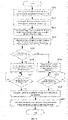
- a flowchart illustrating the execution of the battery pack control method according to an embodiment of the present disclosure the execution process of the method includes steps S211 to S234.
- step S211 after the vehicle stops and powers off, if the Battery Management System (BMS) is remotely set to wake up or periodically auto-wake-up by the Controller Area Network (CAN) via APP, the intelligent constant temperature control function of the battery pack and the battery pack temperature are detected, and then the process proceeds to step S212;
- BMS Battery Management System
- CAN Controller Area Network
- step S311 when the vehicle is in a powered-on state, and the current battery temperature value is less than the preset lower limit value, the Hybrid Control Unit (HCU) first transmits a powered-on request to a keyless powered-on system through a Controller Area Network (CAN), and then in step S312, the keyless powered-on system controls the power mode of the vehicle to switch to ON gear.
- step S313 after the power supply mode is switched to the ON gear, the hybrid controls the high-voltage system to complete the high-voltage power supply.
- step S314 after the high-voltage system completes the high-voltage power supply, the hybrid control unit controls the heating module to execute heating the battery pack on the basis of the state of charge (SOC) value of the battery pack;
- SOC state of charge
- step S411-S421 shows a flow chart of the execution of the above-mentioned step S204 of an embodiment of the present disclosure in practical application, including steps S411-S421.
- step S411 when the vehicle is in the powered-on state, and the current battery temperature value is less than the preset lower limit value, the hybrid control unit first transmits a powered-on request to a keyless powered-on system through a controller area network bus, and then in step S412, the keyless powered-on system controls the power mode of the vehicle to switch to ON gear.
- step S413 after the power supply mode is switched to the ON gear, the hybrid control unit controls the high-voltage system to complete the high-voltage power supply.
- step S414 after the high-voltage system completes the high-voltage power supply, the hybrid control unit controls the cooling module to execute the cooling for the battery pack on the basis of the state of charge value of the battery pack: in step S415, it is determined whether the battery pack SOC is greater than a charge threshold value; when the state of charge value of the battery pack is greater than the preset charge threshold value, the process proceeds to step S416, controlling the battery pack to supply power to the compressor so as to use the compressor to cool the battery pack until the current temperature value of the battery pack is less than or equal to the preset upper limit value, and then the process proceeds to step S418, i.e., controlling the compressor to stop working so as to control to exit the battery pack cooling preservation function. Then the process proceeds to step 419, i.e., after the battery pack cooling preservation function has been exited, controlling the vehicle to enter a sleep state;
- step S420 cooling the battery pack via the cooling water circulation structure in the battery pack or the radiator of the vehicle until the current temperature value of the battery pack is less than or equal to the preset upper limit value, and then controlling the cooling water circulation structure or the radiator to stop operating so as to control to exit the battery pack cooling preservation function.
- the vehicle is controlled to enter a sleep state.
- the above-mentioned battery pack control method includes steps S501 to S506: step S501, acquiring a current battery temperature value of a battery pack of the vehicle and a current state of a thermostatic control function of the battery pack via the battery sensor when the vehicle is in a powered-off state.
- step S501 can be described in detail with reference to step S201, and will not be described again here.
- Step S502 switching the vehicle from a powered-off state to a powered-on state when the current battery temperature value is not within a preset range and the current state of the thermostatic control function is ON-state.
- step S502 can be described in detail with reference to step S202, and will not be described again here.
- step S503 when the vehicle is in a powered-on state, it needs that the current ambient temperature is monitored by the temperature sensor of the vehicle to obtain a current ambient temperature value so as to accurately determine whether the heating process or the cooling of the battery pack is required.
- step S504 i.e., when the current battery temperature value is less than the preset lower limit value when the vehicle is in the powered-on state, the heating module still needs to be enabled, and after the vehicle stops and enters into the powered-off state until the current number of times of starting is less than the first number threshold value, and the current ambient temperature value is less than the preset temperature threshold value, the heating module will heat the battery pack so as to return the temperature of the battery pack to within the preset range.
- the heating module when any one of the conditions that the heating module is enabled and after the vehicle stops and enters into the powered-off state until the current number of times of starting the heating module is less than the first threshold value and the current ambient temperature value is less than the preset temperature threshold value is not satisfied, the heating module will not heat the battery pack.
- the above-mentioned preset temperature threshold value should be greater than or equal to the above-mentioned preset lower limit value, and can be specifically set as the above-mentioned preset lower limit value, i.e., the minimum value within the preset range.
- the above-mentioned preset temperature threshold value can also be set via a preset interface, and the preset interface can present a setting option of the preset temperature threshold value.
- the preset interface can be displayed on a display screen of the vehicle central control or on a mobile terminal communicatively connected to the vehicle central control.
- Step S505 if the number of times the first condition occurs is greater than or equal to a third number threshold value, controlling the battery sensor to enter a sleep state; wherein the first case is a case where the current battery temperature value is less than the preset lower limit value and the current ambient temperature value is not less than the preset temperature threshold value.
- the battery sensor periodically detects a current temperature value of the battery pack, and if it is detected that the current battery temperature value of the battery pack is less than a preset lower limit value in one cycle, the vehicle is switched from a powered-off state to a powered-on state, and a current ambient temperature value of an environment in which the vehicle is located is detected, and if the current ambient temperature value is greater than or equal to a preset temperature threshold value, the first situation occurs once; if it is detected in the next cycle that the current battery temperature value of the battery pack is less than the preset lower limit value, the vehicle is still switched from the powered-off state to the powered-on state, and the current ambient temperature value of the environment in which the vehicle is located is detected; and if the current ambient temperature value is still greater than or equal to the preset temperature threshold value, the number of occurrences of the first condition is counted to be increased once.
- the battery pack is only temporarily in a lower temperature state, and under the action of the ambient temperature, the temperature of the battery pack gradually increases to be consistent with the current ambient temperature value, i.e., the temperature of the battery pack increases to be greater than or equal to the preset lower limit value.
- the battery sensor is controlled to enter a sleep state, that is, the vehicle is no longer awakened through the battery sensor, so as to save the power of the battery pack.
- Step S506 performing a cooling process on the battery pack by the cooling module if the cooling module satisfies a second preset condition so that the temperature of the battery pack returns to be within the preset range, when the vehicle is in the powered-on state and the current battery temperature value is greater than the preset upper limit value, wherein preset upper limit value is the maximum value within the preset range; the second preset condition includes that the cooling module is enabled, and the number of times the cooling module is enabled after the vehicle is in a powered-off state is less than a second number threshold value.
- step S506 can be described in detail with reference to step S204, and will not be described again here.
- the battery pack control method has the following advantages over the prior art: When the vehicle is in a powered-off state, firstly, a battery sensor is used to detect a current battery temperature value of the battery pack and a current state of the thermostatic control function of the battery pack, and the vehicle is waken up when the current temperature value of the battery pack exceeds the preset range and the thermostatic control function of the battery pack is activated; and when the current battery temperature value is less than a preset lower limit value, the heating module is enabled and the current ambient temperature value is less than the preset temperature threshold value, and after the vehicle is in a powered-off state, the number of times the heating module is enabled is less than the first number threshold value, the battery pack is heated by the heating module so that the temperature of the battery pack returns to be within the preset range; and when the current battery temperature value is greater than the preset upper limit value, the cooling module is enabled, and after the vehicle is in a powered-off state, the number of times the cooling module is enabled is less than the second number threshold
- the embodiments of the present disclosure not only solve the problems in the prior art that the temperature of the battery pack cannot be controlled using a heat management system after the vehicle is in a powered-off state, and the temperature of the battery pack is easily too low or too high due to a low or high ambient temperature, but also avoid the case where the battery pack is thermostatically controlled by a heating module or a cooling module when the thermostatically controlled battery pack is not needed, thereby avoiding the waste of power of the battery pack.
- FIG. 5 showing a schematic structural diagram of a battery pack control system according to an embodiment of the present disclosure, the system includes:
- the battery pack state acquiring module 10 is first used, when the vehicle is in a powered-off state, a battery sensor is used to acquire a current temperature value of a battery pack of the vehicle and a current state of a thermostatic control function of the battery pack, and in the case where the current battery temperature value is not within a preset range and the current state of the thermostatic control function is ON-state, the vehicle is switched from the powered-off state to the powered-on state by an awaking module 20; then in the case where the current battery temperature value is less than a preset lower limit value, if the heating module satisfies a first preset condition, the heating module is controlled to heat the battery pack via a first control module 30 so as to enable the temperature of the battery pack to return to a preset range; or in the case where the current battery temperature value is greater than the preset upper limit value, if the cooling module satisfies the second preset condition, the cooling module is controlled by a second control module 40 to cool
- a battery sensor when the vehicle is in a powered-off state, a battery sensor is firstly used to detect the current battery temperature value of the battery pack and the current state of the thermostatic control function of the battery pack; and when the current temperature value of the battery pack is out of a preset range and the thermostatic control function of the battery pack is activated, the vehicle is waken up, and then the battery pack is thermostatic controlled, so that the temperature of the battery pack is maintained within the preset range, which facilitates the restarting and use of the vehicle.
- the first preset condition includes that the heating module is enabled, and after the vehicle is in the powered-off state, a number of times the heating module is enabled is less than a first number threshold value; and the second preset condition includes that the cooling module is enabled, and after the vehicle is in the powered-off state, a number of times the cooling module is enabled is less than a second number threshold value.
- the system further includes: an ambient temperature acquisition module configured to acquire a current ambient temperature value when the vehicle is in the powered-on state; the first preset condition further includes that the current ambient temperature value is less than a preset temperature threshold value.
- the system further includes: a third control module configured to control the battery sensor to enter a sleep state if the heating module does not satisfy the first preset condition, or the cooling module does not satisfy the second preset condition, or the current state of the thermostatic control function of the battery pack is a cut-off state.
- a third control module configured to control the battery sensor to enter a sleep state if the heating module does not satisfy the first preset condition, or the cooling module does not satisfy the second preset condition, or the current state of the thermostatic control function of the battery pack is a cut-off state.
- system further includes:
- the first preset condition further includes that a state of charge value of the battery pack is less than a preset charge threshold value
- the heating module is an engine of the vehicle, the engine can be started, and the engine is used for heating the battery pack;
- the first preset condition further includes that when the state of charge value of the battery pack is greater than or equal to a preset charge threshold value, the heating module is a heating element;
- the second preset condition further includes that when the state of charge value of the battery pack is greater than or equal to a preset charge threshold value, the cooling module includes a compressor; the cooling includes:
- the present disclosure provides a battery pack control method, a system and a vehicle.
- the battery sensor is used to acquire the current temperature value of the battery pack of the vehicle and the current state of the thermostatic control function of the battery pack, and in the case where the current battery temperature value is not within a preset range and the current state of the thermostatic control function is ON-state, the vehicle is switched from the powered-off state to the powered-on state; then in the case where the current battery temperature value is less than the preset lower limit value, if the heating module satisfies a first preset condition, the battery pack is heated via the heating module so as to enable the temperature of the battery pack to return to a preset range; or in the case where the current battery temperature value is greater than the preset upper limit value, if the cooling module satisfies the second preset condition, the battery pack is cooled by the cooling module so that the temperature of the battery pack returns to be within the preset range.
- the battery sensor when the vehicle is in a powered-off state, the battery sensor is firstly used to detect the current battery temperature value of the battery pack and the current state of the thermostatic control function of the battery pack; and when the current temperature value of the battery pack is out of a preset range and the thermostatic control function of the battery pack is activated, the vehicle is waken up, and then the battery pack is thermostatic controlled, so that the temperature of the battery pack is maintained within the preset range, which facilitates the restarting and use of the vehicle.
- Various component embodiments of the present disclosure may be implemented in hardware, or in software modules running on one or more processors, or in a combination thereof.
- DSP digital signal processor
- the present disclosure may also be embodied as apparatus or device programs (e.g., computer programs and computer program products) for carrying out a portion or all of the methods described herein.
- Such a program implementing the present disclosure may be stored on a computer-readable medium or may be in the form of one or more signals. Such signals may be downloaded from an Internet website, provided on a carrier signal, or provided in any other form.
- FIG. 6 illustrates a computing processing device that may implement a method in accordance with the present disclosure.
- the computing processing device conventionally includes a processor 1010 and a computer program product or computer readable medium in the form of a memory 1020.
- the memory 1020 may be electronic memory such as flash memory, EEPROM (electrically erasable programmable read only memory), EPROM, hard disk, or ROM.
- the memory 1020 has a storage space 1030 for program code 1031 for carrying out any of the above-mentioned method steps.
- the storage space 1030 for program code may include respective program code 1031 for implementing various steps in the above method, respectively.
- the program code may be read from or written to one or more computer program products.
- These computer program products include a program code carrier such as a hard disk, a compact disc (CD), a memory card or a floppy disk.
- a computer program product is typically a portable or fixed storage unit as described with reference to FIG. 7 .
- the memory unit may have memory segments, memory space, etc. arranged similarly to memory 1020 in the computing processing device of FIG. 6 .
- the program code may, for example, be compressed in a suitable form.
- the memory unit includes computer readable code 1031', i.e., code that can be read by a processor, such as, for example, 1010, which when executed by a computing processing device, causes the computing processing device to carry out the various steps according to the methods described above.
- any reference signs placed between parentheses shall not be construed as limiting the claim.
- the word “comprising” does not exclude the presence of elements or steps other than those listed in a claim.
- the word “a” or “an” preceding an element does not exclude the presence of a plurality of such elements.
- the present disclosure can be implemented by means of hardware comprising several distinct elements, and by means of a suitably programmed computer. In the unit claims enumerating several means, several of these means can be embodied by one and the same item of hardware.
- the use of the words first, second, third, etc. does not denote any order. These words may be interpreted as names.
Landscapes
- Engineering & Computer Science (AREA)
- Power Engineering (AREA)
- Transportation (AREA)
- Mechanical Engineering (AREA)
- Life Sciences & Earth Sciences (AREA)
- Sustainable Development (AREA)
- Sustainable Energy (AREA)
- Secondary Cells (AREA)
- Electric Propulsion And Braking For Vehicles (AREA)
Applications Claiming Priority (2)
| Application Number | Priority Date | Filing Date | Title |
|---|---|---|---|
| CN201911194054.5A CN112026589A (zh) | 2019-11-28 | 2019-11-28 | 一种电池包控制方法、系统及车辆 |
| PCT/CN2020/130888 WO2021104204A1 (zh) | 2019-11-28 | 2020-11-23 | 一种电池包控制方法、系统及车辆 |
Publications (2)
| Publication Number | Publication Date |
|---|---|
| EP4023488A1 true EP4023488A1 (de) | 2022-07-06 |
| EP4023488A4 EP4023488A4 (de) | 2023-03-01 |
Family
ID=73576694
Family Applications (1)
| Application Number | Title | Priority Date | Filing Date |
|---|---|---|---|
| EP20894318.3A Pending EP4023488A4 (de) | 2019-11-28 | 2020-11-23 | Verfahren und system zum steuern eines batteriepacks und fahrzeug |
Country Status (4)
| Country | Link |
|---|---|
| US (1) | US12187137B2 (de) |
| EP (1) | EP4023488A4 (de) |
| CN (1) | CN112026589A (de) |
| WO (1) | WO2021104204A1 (de) |
Cited By (1)
| Publication number | Priority date | Publication date | Assignee | Title |
|---|---|---|---|---|
| EP4389494A1 (de) * | 2022-12-20 | 2024-06-26 | Volvo Truck Corporation | Batterieverwaltungssystem und -verfahren für elektrofahrzeuge |
Families Citing this family (12)
| Publication number | Priority date | Publication date | Assignee | Title |
|---|---|---|---|---|
| CN112824139B (zh) * | 2020-05-07 | 2022-06-28 | 长城汽车股份有限公司 | 车辆的电池保温方法、系统 |
| CN116419865A (zh) * | 2021-07-14 | 2023-07-11 | 宁德时代新能源科技股份有限公司 | Bms的唤醒方法、装置及存储介质 |
| CN113581012B (zh) * | 2021-08-31 | 2023-03-03 | 东风商用车有限公司 | 一种动力电池的低温保护方法、装置、设备及存储介质 |
| CN113665438B (zh) * | 2021-09-15 | 2023-06-13 | 上汽通用五菱汽车股份有限公司 | 汽车电池及其温控方法、计算机可读存储介质 |
| CN115107449B (zh) * | 2021-12-09 | 2025-07-25 | 长城汽车股份有限公司 | 车辆加热控制方法、装置及车辆 |
| CN114801885A (zh) * | 2022-05-23 | 2022-07-29 | 浙江吉利控股集团有限公司 | 电池包恒温控制方法、装置、车辆及计算机可读存储介质 |
| KR20230165960A (ko) * | 2022-05-27 | 2023-12-06 | 현대자동차주식회사 | 차량의 배터리 컨디셔닝 방법 |
| US12434598B2 (en) * | 2022-09-08 | 2025-10-07 | New Flyer Industries Canada Ulc | Electric battery temperature monitoring system |
| CN115805842A (zh) * | 2022-12-13 | 2023-03-17 | 长城汽车股份有限公司 | 一种电池包状态的控制方法、装置、系统及车辆 |
| CN115848225A (zh) * | 2022-12-15 | 2023-03-28 | 广汽埃安新能源汽车股份有限公司 | 电动车的车辆温度控制方法及装置 |
| CN116101124A (zh) * | 2023-03-01 | 2023-05-12 | 重庆长安汽车软件科技有限公司 | 电池保温功能关闭方法、系统、电子设备及可读存储介质 |
| CN116620101A (zh) * | 2023-06-05 | 2023-08-22 | 上汽通用五菱汽车股份有限公司 | 一种电池检测方法、装置、设备及存储介质 |
Family Cites Families (15)
| Publication number | Priority date | Publication date | Assignee | Title |
|---|---|---|---|---|
| US20080202741A1 (en) * | 2007-02-23 | 2008-08-28 | Daewoong Lee | Battery cooling device for vehicles and control method thereof |
| US20140338376A1 (en) | 2011-12-29 | 2014-11-20 | Magna E-Car System of America, Inc. | Thermal management system for vehicle having traction motor |
| CN104149600A (zh) * | 2013-05-15 | 2014-11-19 | 北汽福田汽车股份有限公司 | 电动汽车电机系统的冷却系统的控制方法及系统 |
| CN204210324U (zh) * | 2014-10-28 | 2015-03-18 | 北汽福田汽车股份有限公司 | 电动汽车及电动汽车中动力电池的温度控制装置 |
| CN105235472B (zh) * | 2015-11-12 | 2018-01-02 | 潍柴动力股份有限公司 | 一种电动汽车加热系统、电动汽车和驻车加热方法 |
| CN105922880B (zh) * | 2016-05-03 | 2018-10-16 | 北京新能源汽车股份有限公司 | 电动汽车动力电池的充电控制方法和控制系统 |
| CN106921003B (zh) * | 2016-10-25 | 2019-09-06 | 蔚来汽车有限公司 | 电动汽车电池包温度的智能控制系统和方法 |
| US10744885B2 (en) * | 2016-11-21 | 2020-08-18 | Ford Global Technologies, Llc | Battery pre-heating prior to fast charge |
| JP6748570B2 (ja) * | 2016-12-27 | 2020-09-02 | 株式会社Subaru | 電池モジュールの冷却装置 |
| CN107672465B (zh) * | 2017-08-30 | 2019-09-06 | 北京长城华冠汽车科技股份有限公司 | 一种电动汽车电池包温度的处理方法及装置 |
| CN107672466B (zh) * | 2017-08-30 | 2020-05-19 | 北京长城华冠汽车科技股份有限公司 | 一种电动汽车电池包温度的监控方法及装置 |
| KR102394113B1 (ko) * | 2017-09-05 | 2022-05-04 | 에스케이온 주식회사 | 전지 밸런싱 장치 및 방법 |
| CN109244568B (zh) * | 2018-08-02 | 2020-09-18 | 宝沃汽车(中国)有限公司 | 用于动力电池的控制方法、装置和车辆 |
| CN109273793A (zh) * | 2018-08-24 | 2019-01-25 | 合肥移顺信息技术有限公司 | 低温环境下维持电动车续航里程的电池恒温系统 |
| CN109532562A (zh) * | 2018-09-21 | 2019-03-29 | 江苏敏安电动汽车有限公司 | 一种电动汽车主动热管理控制方法 |
-
2019
- 2019-11-28 CN CN201911194054.5A patent/CN112026589A/zh active Pending
-
2020
- 2020-11-23 WO PCT/CN2020/130888 patent/WO2021104204A1/zh not_active Ceased
- 2020-11-23 US US17/754,359 patent/US12187137B2/en active Active
- 2020-11-23 EP EP20894318.3A patent/EP4023488A4/de active Pending
Cited By (1)
| Publication number | Priority date | Publication date | Assignee | Title |
|---|---|---|---|---|
| EP4389494A1 (de) * | 2022-12-20 | 2024-06-26 | Volvo Truck Corporation | Batterieverwaltungssystem und -verfahren für elektrofahrzeuge |
Also Published As
| Publication number | Publication date |
|---|---|
| US12187137B2 (en) | 2025-01-07 |
| CN112026589A (zh) | 2020-12-04 |
| WO2021104204A1 (zh) | 2021-06-03 |
| US20220340012A1 (en) | 2022-10-27 |
| EP4023488A4 (de) | 2023-03-01 |
Similar Documents
| Publication | Publication Date | Title |
|---|---|---|
| EP4023488A1 (de) | Verfahren und system zum steuern eines batteriepacks und fahrzeug | |
| EP4023489A1 (de) | Verfahren und system zum steuern eines batteriepacks und fahrzeug | |
| US12545146B2 (en) | Method and system for heat preservation of battery of vehicle, storage medium and processor | |
| CN107672465B (zh) | 一种电动汽车电池包温度的处理方法及装置 | |
| CN112498172B (zh) | 动力电池荷电状态下限控制方法、装置及车辆 | |
| WO2021170025A1 (zh) | 动力电池荷电状态下限控制方法、装置及车辆 | |
| EP4343925A1 (de) | Batterieerwärmungsverfahren und erwärmungsvorrichtung | |
| CN113581012B (zh) | 一种动力电池的低温保护方法、装置、设备及存储介质 | |
| CN107972500A (zh) | 动力电池管理系统和包括其的电动汽车 | |
| CN107972499A (zh) | 一种动力电池管理系统和包括其的电动汽车 | |
| CN115583163A (zh) | 一种增程式车辆低温下能量管理方法及装置 | |
| CN117048337A (zh) | 一种基于电池管理系统的整车控制器唤醒方法及装置 | |
| CN110774936A (zh) | 一种车辆上电控制方法及装置 | |
| CN107978813A (zh) | 动力电池管理方法 | |
| EP4691870A1 (de) | Steuerungsverfahren und -vorrichtung für hybridfahrzeug, fahrzeug und medium | |
| CN114801885A (zh) | 电池包恒温控制方法、装置、车辆及计算机可读存储介质 | |
| CN107972497A (zh) | 一种动力电池管理方法 | |
| CN115123012B (zh) | 一种低压电池包的智能补电方法、装置及电动汽车 | |
| CN112542623B (zh) | 一种电池的预热方法、系统和装置 | |
| CN117698612A (zh) | 用于车辆的钥匙关闭电气负载管理 | |
| CN116039450A (zh) | 电动车辆的节能控制方法、装置及整车控制器、介质 | |
| CN114379420A (zh) | 一种电池保温控制方法、装置、设备和存储介质 | |
| CN121316673A (zh) | 车辆控制装置及其方法 | |
| CN120462225A (zh) | 电池预约加热的方法、装置、控制器及车辆 | |
| CN121671439A (zh) | 电动车辆的加热控制方法、装置和计算机设备 |
Legal Events
| Date | Code | Title | Description |
|---|---|---|---|
| STAA | Information on the status of an ep patent application or granted ep patent |
Free format text: STATUS: THE INTERNATIONAL PUBLICATION HAS BEEN MADE |
|
| PUAI | Public reference made under article 153(3) epc to a published international application that has entered the european phase |
Free format text: ORIGINAL CODE: 0009012 |
|
| STAA | Information on the status of an ep patent application or granted ep patent |
Free format text: STATUS: REQUEST FOR EXAMINATION WAS MADE |
|
| 17P | Request for examination filed |
Effective date: 20220331 |
|
| AK | Designated contracting states |
Kind code of ref document: A1 Designated state(s): AL AT BE BG CH CY CZ DE DK EE ES FI FR GB GR HR HU IE IS IT LI LT LU LV MC MK MT NL NO PL PT RO RS SE SI SK SM TR |
|
| A4 | Supplementary search report drawn up and despatched |
Effective date: 20230127 |
|
| RIC1 | Information provided on ipc code assigned before grant |
Ipc: B60L 58/24 20190101AFI20230123BHEP |
|
| DAV | Request for validation of the european patent (deleted) | ||
| DAX | Request for extension of the european patent (deleted) | ||
| GRAP | Despatch of communication of intention to grant a patent |
Free format text: ORIGINAL CODE: EPIDOSNIGR1 |
|
| STAA | Information on the status of an ep patent application or granted ep patent |
Free format text: STATUS: GRANT OF PATENT IS INTENDED |