EP4024802A1 - Sequenzerzeugungsverfahren und -vorrichtung - Google Patents
Sequenzerzeugungsverfahren und -vorrichtung Download PDFInfo
- Publication number
- EP4024802A1 EP4024802A1 EP20863698.5A EP20863698A EP4024802A1 EP 4024802 A1 EP4024802 A1 EP 4024802A1 EP 20863698 A EP20863698 A EP 20863698A EP 4024802 A1 EP4024802 A1 EP 4024802A1
- Authority
- EP
- European Patent Office
- Prior art keywords
- matrix
- sequence
- mapped
- application
- column
- Prior art date
- Legal status (The legal status is an assumption and is not a legal conclusion. Google has not performed a legal analysis and makes no representation as to the accuracy of the status listed.)
- Pending
Links
- 238000000034 method Methods 0.000 title claims abstract description 53
- 239000011159 matrix material Substances 0.000 claims abstract description 127
- 238000012545 processing Methods 0.000 claims description 23
- 238000003860 storage Methods 0.000 claims description 11
- 238000004590 computer program Methods 0.000 claims description 8
- 238000003672 processing method Methods 0.000 claims description 3
- 230000009471 action Effects 0.000 claims 4
- 238000004891 communication Methods 0.000 abstract description 26
- 238000013507 mapping Methods 0.000 description 34
- 230000006870 function Effects 0.000 description 14
- 238000010586 diagram Methods 0.000 description 4
- 230000008878 coupling Effects 0.000 description 3
- 238000010168 coupling process Methods 0.000 description 3
- 238000005859 coupling reaction Methods 0.000 description 3
- 238000005516 engineering process Methods 0.000 description 2
- 238000003780 insertion Methods 0.000 description 2
- 230000037431 insertion Effects 0.000 description 2
- 230000007774 longterm Effects 0.000 description 2
- 238000010295 mobile communication Methods 0.000 description 2
- 238000012549 training Methods 0.000 description 2
- 238000003491 array Methods 0.000 description 1
- 125000004122 cyclic group Chemical group 0.000 description 1
- 238000013461 design Methods 0.000 description 1
- 239000000203 mixture Substances 0.000 description 1
- 238000012986 modification Methods 0.000 description 1
- 230000004048 modification Effects 0.000 description 1
- 230000003287 optical effect Effects 0.000 description 1
Images


Classifications
-
- H—ELECTRICITY
- H04—ELECTRIC COMMUNICATION TECHNIQUE
- H04L—TRANSMISSION OF DIGITAL INFORMATION, e.g. TELEGRAPHIC COMMUNICATION
- H04L25/00—Baseband systems
- H04L25/02—Details ; arrangements for supplying electrical power along data transmission lines
- H04L25/03—Shaping networks in transmitter or receiver, e.g. adaptive shaping networks
- H04L25/03891—Spatial equalizers
- H04L25/03898—Spatial equalizers codebook-based design
- H04L25/0391—Spatial equalizers codebook-based design construction details of matrices
-
- H—ELECTRICITY
- H04—ELECTRIC COMMUNICATION TECHNIQUE
- H04L—TRANSMISSION OF DIGITAL INFORMATION, e.g. TELEGRAPHIC COMMUNICATION
- H04L27/00—Modulated-carrier systems
- H04L27/26—Systems using multi-frequency codes
- H04L27/2601—Multicarrier modulation systems
- H04L27/2614—Peak power aspects
-
- H—ELECTRICITY
- H04—ELECTRIC COMMUNICATION TECHNIQUE
- H04L—TRANSMISSION OF DIGITAL INFORMATION, e.g. TELEGRAPHIC COMMUNICATION
- H04L25/00—Baseband systems
- H04L25/02—Details ; arrangements for supplying electrical power along data transmission lines
- H04L25/03—Shaping networks in transmitter or receiver, e.g. adaptive shaping networks
- H04L25/03006—Arrangements for removing intersymbol interference
- H04L25/03343—Arrangements at the transmitter end
-
- H—ELECTRICITY
- H04—ELECTRIC COMMUNICATION TECHNIQUE
- H04L—TRANSMISSION OF DIGITAL INFORMATION, e.g. TELEGRAPHIC COMMUNICATION
- H04L27/00—Modulated-carrier systems
- H04L27/26—Systems using multi-frequency codes
- H04L27/2601—Multicarrier modulation systems
- H04L27/2602—Signal structure
- H04L27/261—Details of reference signals
- H04L27/2613—Structure of the reference signals
-
- H—ELECTRICITY
- H04—ELECTRIC COMMUNICATION TECHNIQUE
- H04L—TRANSMISSION OF DIGITAL INFORMATION, e.g. TELEGRAPHIC COMMUNICATION
- H04L25/00—Baseband systems
- H04L25/02—Details ; arrangements for supplying electrical power along data transmission lines
- H04L25/03—Shaping networks in transmitter or receiver, e.g. adaptive shaping networks
- H04L25/03006—Arrangements for removing intersymbol interference
- H04L2025/03592—Adaptation methods
- H04L2025/03745—Timing of adaptation
- H04L2025/03764—Timing of adaptation only during predefined intervals
- H04L2025/0377—Timing of adaptation only during predefined intervals during the reception of training signals
-
- H—ELECTRICITY
- H04—ELECTRIC COMMUNICATION TECHNIQUE
- H04L—TRANSMISSION OF DIGITAL INFORMATION, e.g. TELEGRAPHIC COMMUNICATION
- H04L27/00—Modulated-carrier systems
- H04L27/26—Systems using multi-frequency codes
- H04L27/2601—Multicarrier modulation systems
- H04L27/2647—Arrangements specific to the receiver only
- H04L27/2655—Synchronisation arrangements
- H04L27/2689—Link with other circuits, i.e. special connections between synchronisation arrangements and other circuits for achieving synchronisation
- H04L27/2695—Link with other circuits, i.e. special connections between synchronisation arrangements and other circuits for achieving synchronisation with channel estimation, e.g. determination of delay spread, derivative or peak tracking
Definitions
- Embodiments of this application relate to the communications field, and in particular, to a sequence generation method and an apparatus.
- Communications devices are more widely used over the past few years.
- a communications device usually provides network access to, for example, a local area network or the internet.
- Other communications devices may perform wireless communication with the communications device that provides network access.
- Some communications devices comply with some industry standards such as Institute of Electrical and Electronics Engineers standards.
- Embodiments of this application provide a sequence generation method and an apparatus, so that a matrix-mapped EHT LTF sequence in a PPDU has a low PAPR value.
- an embodiment of this application provides a sequence generation method, including:
- the P matrix in the first aspect refer to various P matrices in specific embodiments.
- an embodiment of this application provides a sequence processing method, including:
- the P matrix in the second aspect refer to various P matrices in specific embodiments.
- an embodiment of this application provides a sequence generation method, including:
- the P matrix in the third aspect refer to various P matrices in specific embodiments.
- an embodiment of this application provides a sequence processing method, including:
- the P matrix in the fourth aspect refer to various P matrices in specific embodiments.
- an embodiment of this application provides a sequence generation apparatus, where the sequence generation apparatus includes modules configured to perform the method according to the first aspect or any possible implementation of the first aspect.
- an embodiment of this application provides a sequence processing apparatus, where the sequence processing apparatus includes modules configured to perform the method according to the second aspect or any possible implementation of the second aspect.
- an embodiment of this application provides a sequence generation apparatus, where the sequence generation apparatus includes modules configured to perform the method according to the third aspect or any possible implementation of the third aspect.
- an embodiment of this application provides a sequence processing apparatus, where the sequence processing apparatus includes modules configured to perform the method according to the fourth aspect or any possible implementation of the fourth aspect.
- an embodiment of this application provides a computer-readable storage medium, configured to store a computer program.
- the computer program includes instructions used to perform the first aspect or any possible implementation of the first aspect, instructions used to perform the second aspect or any possible implementation of the second aspect, instructions used to perform the third aspect or any possible implementation of the third aspect, or instructions used to perform the fourth aspect or any possible implementation of the fourth aspect.
- an embodiment of this application provides a computer program.
- the computer program includes instructions used to perform the first aspect or any possible implementation of the first aspect, instructions used to perform the second aspect or any possible implementation of the second aspect, instructions used to perform the third aspect or any possible implementation of the third aspect, or instructions used to perform the fourth aspect or any possible implementation of the fourth aspect.
- an embodiment of this application provides a communications system, where the communications system includes the sequence generation apparatus provided in the fifth aspect and the sequence processing apparatus provided in the sixth aspect.
- an embodiment of this application provides a communications system, where the communications system includes the sequence generation apparatus provided in the seventh aspect and the sequence processing apparatus provided in the eighth aspect.
- a Wi-Fi wireless communications system such as: a Wi-Fi wireless communications system, a global system for mobile communications (global system for mobile communications, GSM) system, a code division multiple access (code division multiple access, CDMA) system, a wideband code division multiple access (wideband code division multiple access, WCDMA) system, a general packet radio service (general packet radio service, GPRS) system, a long term evolution (long term evolution, LTE) system, an LTE frequency division duplex (frequency division duplex, FDD) system, an LTE time division duplex (time division duplex, TDD) system, a universal mobile telecommunications system (universal mobile telecommunications system, UMTS), a worldwide interoperability for microwave access (worldwide interoperability for microwave access, WiMAX) communications system, other future evolved systems, or various other wireless communications system using a radio access technology.
- GSM global system for mobile communications
- CDMA code division multiple access
- WCDMA wideband code division multiple access
- general packet radio service general packet radio
- FIG. 1 shows a communications system to which an embodiment of this application is applied.
- the communications system includes a network device and at least one terminal device located within coverage of the network device.
- the network device may provide communication coverage for a specific geographic area, and communicate with the terminal device located in the coverage area.
- the network device may be a base transceiver station (base transceiver station, BTS) in a GSM system or a code division multiple access (code division multiple access, CDMA) system, may be a nodeB (nodeB, NB) in a WCDMA system, may be an evolved NodeB (evolved NodeB, eNB, or eNodeB) in an LTE system, may be a radio controller in a cloud radio access network (cloud radio access network, CRAN), or may be a relay station, an access point AP, a vehicle-mounted device, a wearable device, a network-side device in a future network, or the like.
- BTS base transceiver station
- CDMA code division multiple access
- NB nodeB
- eNB evolved NodeB
- eNodeB evolved NodeB
- CRAN cloud radio access network
- CRAN cloud radio access network
- the terminal device may be mobile or fixed, and the terminal device may be a station STA, an access terminal, user equipment (user equipment, UE), a subscriber unit, a subscriber station, a mobile station, a mobile station, a remote station, a remote terminal, a mobile device, a user terminal, a wireless communications device, a user agent, a user apparatus, or the like.
- user equipment user equipment
- UE user equipment
- the embodiments of this application relate to a sequence generation method and a sequence generation apparatus.
- a sequence generated in the embodiments of this application has a low PAPR value.
- FIG. 2 is a diagram of a system.
- the system includes a sending device 100 and a receiving device 200.
- the sending device 100 is configured to generate and send a sequence with a low PAPR value
- the receiving device 200 is configured to receive the sequence and perform channel estimation based on the sequence.
- the sending device 100 includes the following modules.
- a sequence storage/generation module 101 is configured to store or generate a predefined data sequence (in the embodiments of this application, a sequence of data locations is collectively referred to as a data sequence), where the predefined data sequence includes a plurality of different sequences in different modes and different bandwidths, the different bandwidths may include a 20 M bandwidth, a 40 M bandwidth, an 80 M bandwidth, a 160 M bandwidth, a 320 M bandwidth, a 160 M + 160 M bandwidth, and the like, and the different modes may include a 1 ⁇ mode, a 2x mode, a 4x mode, and the like.
- the plurality of different sequences in the different modes and the different bandwidths include: a sequence in the 20 M bandwidth and the 1 ⁇ mode, a sequence in the 20 M bandwidth and the 2x mode, a sequence in the 20 M bandwidth and the 4x mode, a sequence in the 40 M bandwidth and the 1 ⁇ mode, a sequence in the 40 M bandwidth and the 2x mode, a sequence in the 40 M bandwidth and the 4x mode,..., a sequence in the 320 M bandwidth and the 1 ⁇ mode, a sequence in the 320 M bandwidth and the 2x mode, and a sequence in the 320 M bandwidth and the 4x mode.
- the data sequence is an EHT LTF sequence, that is, the sequence storage module 101 stores a predefined EHT LTF sequence.
- a pilot generation module 102 is configured to generate a pilot sequence, where the pilot sequence is used to track a phase or a frequency offset of a transmit signal.
- a pilot insertion module 103 is configured to insert the pilot sequence into the data sequence.
- the pilot insertion module 103 is configured to combine the pilot sequence and the data sequence.
- a matrix mapping module 104 is configured to apply a matrix to the pilot sequence and the data sequence that are combined, to generate a matrix-mapped sequence.
- the matrix mapping module 104 includes a first matrix and a second matrix, where the first matrix provides a mapping for the data sequence and the second matrix provides a mapping for the pilot sequence.
- the first matrix is applied to the data sequence and the second matrix is applied to the pilot sequence.
- the first matrix may be referred to as a P matrix, where the P matrix is an n x n matrix; and the second matrix may be referred to as an R matrix, where the R matrix includes x replicas of a first row of the P matrix, and x is a quantity of spatial streams.
- applying the P matrix to the EHT LTF sequence is specifically multiplying the EHT LTF sequence by an element in the P matrix, for example, multiplying the EHT LTF sequence by each row of the P matrix, to obtain a plurality of matrix-mapped sequences, where the plurality of matrix-mapped sequences is spatially mapped to a plurality of different spatial streams for sending.
- n x n P matrix (n is greater than 8) provided in this embodiment of this application is intended to ensure that when the quantity of spatial streams increases to more than 8, a matrix-mapped sequence sent in each spatial stream needs to remain orthogonal and has a low PAPR value.
- the n x n P matrix is applied.
- an (n+1) x (n+1) P matrix is applied.
- the following describes P matrices for different quantities of spatial streams provided in this embodiment of this application.
- the P matrix has a plurality of variations for each spatial stream.
- P 10 ⁇ 10 P 5 ⁇ 5 P 5 ⁇ 5 P 5 ⁇ 5 ⁇ P 5 ⁇ 5
- P 5 ⁇ 5 in the foregoing formula (12) refers to the foregoing formula (12).
- P 5 ⁇ 5 in the formula (12) is obtained by multiplying the second column of P original in the formula (13) by -1.
- the foregoing is only an example of a P 10 ⁇ 10 matrix when the quantity of spatial streams is 9 or 10 provided in this embodiment of this application.
- P 5 ⁇ 5 may be obtained by multiplying any one column of P original by -1, or P 5 ⁇ 5 may be obtained by multiplying any plurality of columns of P original by -1, where the any plurality of columns herein do not include all columns.
- the second column and the third column of P original are multiplied by -1, to obtain P 5 ⁇ 5 , but not all columns from the first column to the fifth column of P original are multiplied by -1.
- a matrix-mapped sequence obtained through mapping by using the foregoing P 10 ⁇ 10 has a low PAPR value.
- a PAPR value of the matrix-mapped sequence obtained through mapping by using the foregoing P 10 ⁇ 10 is 6.2771.
- a PAPR value of the obtained matrix-mapped sequence is 6.2851. It is clear that the PAPR value of the obtained matrix-mapped sequence is lower by using P 10 ⁇ 10 provided in this embodiment of this application to map the EHT LTF sequence.
- a PAPR value of the matrix-mapped sequence obtained through mapping by using the foregoing P 10 ⁇ 10 is 9.2297.
- a PAPR value of the obtained matrix-mapped sequence is 9.2653. It is clear that the PAPR value of the obtained matrix-mapped sequence is lower by using P 10 ⁇ 10 provided in this embodiment of this application to map the EHT LTF sequence.
- P 12 ⁇ 12 P 6 ⁇ 6 P 6 ⁇ 6 P 6 ⁇ 6 ⁇ P 6 ⁇ 6 ⁇ 6
- P 6 ⁇ 6 P 3 ⁇ 3 P 3 ⁇ 3 ⁇ P 3 ⁇ 3
- P 3 ⁇ 3 w 0 * 0 ⁇ w 0 * 1 w 0 * 2 w 1 * 0 ⁇ w 1 * 1 w 1 * 2 w 2 * 0 ⁇ w 2 * 1 w 2 * 2
- w exp ⁇ j 2 ⁇ / 3
- P original w 0 * 0 w 0 * 1 w 0 * 2 w 1 * 0 w 1 * 1 w 1 * 2 w 2 * 0 w 2 * 1 w 2 * 2
- w exp ⁇ j 2 ⁇ / 3
- P 3 ⁇ 3 in the foregoing formula (23) is obtained by multiplying the second column of P original in the formula (24) by -1.
- P 3 ⁇ 3 in (23) is substituted into the formula (22), to obtain P 6 ⁇ 6 .
- P 6 ⁇ 6 in (23) is substituted into the formula (21) to obtain P 2 ⁇ 12 .
- this embodiment of this application further provides another P 12 ⁇ 12 matrix when the quantity of spatial streams is 11 or 12, for example, in the foregoing formula (21) to formula (24), P 3 ⁇ 3 in (23) may be obtained by multiplying any one column of P original in the formula (24) by -1. Multiplying the second column by -1 is not limited thereto.
- P 3 ⁇ 3 in (23) may be obtained by multiplying any plurality of columns of P original in the formula (24) by -1, where the any plurality of columns herein do not include all columns.
- both the second column and the third column of P original in (24) are multiplied by -1 to obtain P 3 ⁇ 3 in (23), but not all columns from the first to the third columns of P original in (24) are multiplied by -1.
- a matrix-mapped sequence obtained through mapping by using the foregoing P 12 ⁇ 12 has a low PAPR value.
- a PAPR value of the matrix-mapped sequence obtained through mapping by using the foregoing P 12 ⁇ 12 is 6.2369.
- a PAPR value of the obtained matrix-mapped sequence is 6.3003. It is clear that the PAPR value of the obtained matrix-mapped sequence is lower by using P 10 ⁇ 10 provided in this embodiment of this application to map the EHT LTF sequence.
- a PAPR value of the matrix-mapped sequence obtained through mapping by using the foregoing P 12 ⁇ 12 is 9.2236.
- a PAPR value of the obtained matrix-mapped sequence is 9.2636. It is clear that the PAPR value of the obtained matrix-mapped sequence is lower by using P 12 ⁇ 12 provided in this embodiment of this application to map the EHT LTF sequence.
- P 12 ⁇ 12 P 6 ⁇ 6 P 6 ⁇ 6 P 6 ⁇ 6 ⁇ P 6 ⁇ 6 ⁇ P 6 ⁇ 6
- P 6 ⁇ 6 w 0 * 0 ⁇ w 0 * 1 w 0 * 2 w 0 * 3 w 0 * 4 ⁇ w 0 * 5 w 1 * 0 ⁇ w 1 * 1 w 1 * 2 w 1 * 3 w 1 * 4 ⁇ w 1 * 5 w 2 * 0 ⁇ w 2 * 1 w 2 * 2 w 2 * 3 w 2 * 4 ⁇ w 2 * 5 w 3 * 0 ⁇ w 3 * 1 w 3 * 2 w 3 * 3 w 3 * 4 ⁇ w 3 * 5 w 4 * 0 ⁇ w 4 * 1 w 4 * 2 w 4 * 3 w 4 * 4 ⁇ w 4 * 5 w 5 * 0 ⁇ w 5 * 1 w 5 * 1 w 5 * 0 ⁇ w 5 * 1
- this embodiment of this application further provides another P 12 ⁇ 12 matrix when the quantity of spatial streams is 11 or 12, for example, in the foregoing formula (31) to formula (33), P 6 ⁇ 6 in (32) may be obtained by multiplying any one column of P original in the formula (33) by -1.
- P 6 ⁇ 6 in (32) may be obtained by multiplying any plurality of columns P original in the formula (33) by -1, where the any plurality of columns herein do not include all columns.
- any other plurality of columns may be multiplied by -1.
- the second column, the third column, and the fourth column of P original in the formula (33) are multiplied by -1.
- a matrix-mapped sequence obtained through mapping by using the foregoing P 12 ⁇ 12 has a low PAPR value.
- a PAPR value of the matrix-mapped sequence obtained through mapping by using the foregoing P 12 ⁇ 12 is 6.2851.
- a PAPR value of the obtained matrix-mapped sequence is 6.3003. It is clear that the PAPR value of the obtained matrix-mapped sequence is lower by using P 12 ⁇ 12 provided in this embodiment of this application to map the EHT LTF sequence.
- a PAPR value of the matrix-mapped sequence obtained through mapping by using the foregoing P 12 ⁇ 12 is 9.2499.
- a PAPR value of the obtained matrix-mapped sequence is 9.2636. It is clear that the PAPR value of the obtained matrix-mapped sequence is lower by using P 12 ⁇ 12 provided in this embodiment of this application to map the EHT LTF sequence.
- this embodiment of this application further provides another P 14 ⁇ 14 matrix when the quantity of spatial streams is 13 or 14, for example, in the foregoing formula (41) to formula (43), P 7 ⁇ 7 in the formula (42) may be obtained by multiplying any one column of P original in the formula (43) by -1.
- P 7 ⁇ 7 in the formula (42) may be obtained by multiplying any plurality of columns of P original in the formula (43) by -1, where the any plurality of columns herein do not include all columns.
- any other plurality of columns may be multiplied by - 1.
- the second column, the third column, and the fourth column of P original in the formula (43) are multiplied by -1.
- a matrix-mapped sequence obtained through mapping by using the foregoing P 14 ⁇ 14 has a low PAPR value.
- a PAPR value of the matrix-mapped sequence obtained through mapping by using the foregoing P 14 ⁇ 14 is 6.3115.
- Fourier matrix mapping is directly applied, or Fourier matrix mapping in which one or more columns are multiplied by -1 is applied, a PAPR value of the obtained matrix-mapped sequence is 6.3115. It is clear that the PAPR value of the obtained matrix-mapped sequence is lower by using P 14 ⁇ 14 provided in this embodiment of this application to map the EHT LTF sequence.
- a PAPR value of the matrix-mapped sequence obtained through mapping by using the foregoing P 14 ⁇ 14 is 9.2594.
- a PAPR value of the obtained matrix-mapped sequence is 9.2611. It is clear that the PAPR value of the obtained matrix-mapped sequence is lower by using P 14 ⁇ 14 provided in this embodiment of this application to map the EHT LTF sequence.
- P 18 ⁇ 18 P 9 ⁇ 9 P 9 ⁇ 9 P 9 ⁇ 9 ⁇ P 9 ⁇ 9 ⁇ P 9 ⁇ 9
- P 9 ⁇ 9 w 0 * 0 ⁇ w 0 * 1 w 0 * 2 w 0 * 3 w 0 * 4 ⁇ w 0 * 5 w 0 * 6 w 0 * 7 w 0 * 8 w 1 * 0 ⁇ w 1 * 1 w 1 * 2 w 1 * 3 w 1 * 4 ⁇ w 1 * 5 w 1 * 6 w 1 * 7 w 1 * 8 w 2 * 0 ⁇ w 2 * 1 w 2 * 2 * 3 w 2 * 4 ⁇ w 2 * 5 w 2 * 6 w 2 * 7 w 2 * 8 w 3 * 0 ⁇ w 3 * 1 w 3 * 5 w 2 * 6 w 2 * 7 w 2 * 8 w 3 * 0 ⁇ w 3 * 1 w 3 * 2 w 3 * 4
- this embodiment of this application further provides another P 14 ⁇ 14 matrix when the quantity of spatial streams is 17 or 18, for example, in the foregoing formula (51) to formula (53), P 9 ⁇ 9 in the formula (52) may be obtained by multiplying any one column of P original in the formula (53) by -1.
- P 9 ⁇ 9 in the formula (52) may be obtained by multiplying any plurality of columns of P original in the formula (53) by -1, where the any plurality of columns herein do not include all columns.
- any other plurality of columns may be multiplied by - 1.
- the second column, the third column, and the fourth column of P original in the formula (53) are multiplied by -1.
- this embodiment of this application further provides another P 22 ⁇ 22 matrix when the quantity of spatial streams is 21 or 22, for example, in the foregoing formula (61) to formula (63), P 11 ⁇ 11 in the formula (62) may be obtained by multiplying any one column of P original in the formula (63) by -1.
- P 11 ⁇ 11 in the formula (62) may be obtained by multiplying any plurality of columns of P original in the formula (63) by -1, where the any plurality of columns herein do not include all columns.
- any other plurality of columns may be multiplied by -1.
- the second column, the third column, and the fourth column of P original in the formula (63) are multiplied by -1.
- this embodiment of this application further provides another P 26 ⁇ 26 matrix when the quantity of spatial streams is 25 or 26, for example, in the foregoing formula (71) to formula (73), P 13 ⁇ 13 in the formula (72) may be obtained by multiplying any one column of P original in the formula (73) by -1.
- P 13 ⁇ 13 in the formula (72) may be obtained by multiplying any plurality of columns of P original in the formula (73) by -1, where the any plurality of columns herein do not include all columns.
- any other plurality of columns may be multiplied by -1.
- the second column, the third column, and the fourth column of P original in the formula (73) are multiplied by -1.
- this embodiment of this application further provides another P 30 ⁇ 30 matrix when the quantity of spatial streams is 29 or 30, for example, in the foregoing formula (81) to formula (83), P 15 ⁇ 15 in the formula (82) may be obtained by multiplying any one column of P original in the formula (83) by -1.
- P 15 ⁇ 15 in the formula (82) may be obtained by multiplying any plurality of columns of P original in the formula (83) by -1, where the any plurality of columns herein do not include all columns.
- any other plurality of columns may be multiplied by -1.
- the second column, the third column, and the fourth column of P original in the formula (83) are multiplied by -1.
- the sending device 100 further includes a cyclic shift module 105, a spatial mapping module 106, an inverse discrete Fourier transform module 107, a guard period module 108, and a radio frequency transmitting module 109.
- the matrix-mapped sequence obtained through mapping by using the foregoing P matrix is placed in a corresponding spatial stream for sending.
- the receiving device 200 is configured to receive the matrix-mapped sequence sent by the sending device 100, and perform channel estimation based on the matrix-mapped sequence. As shown in FIG. 2 , the receiving device 200 includes a radio frequency receiving module 201 and a channel estimation module 202.
- the radio frequency receiving module 201 is configured to receive the matrix-mapped sequence sent by the sending device 100
- the channel estimation module 202 is configured to perform channel estimation based on the matrix-mapped sequence.
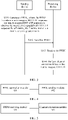
- the sequence generation method includes the following steps.
- a sending device generates a PPDU, where the PPDU includes a matrix-mapped EHT LTF sequence, the matrix-mapped EHT LTF sequence is obtained by multiplying a predefined EHT LTF sequence by a P matrix, the P matrix is an n x n matrix, and n is greater than 8.
- the predefined EHT LTF sequence includes a plurality of different sequences in different modes and different bandwidths
- the different bandwidths may include a 20 M bandwidth, a 40 M bandwidth, an 80 M bandwidth, a 160 M bandwidth, a 320 M bandwidth, a 160 M + 160 M bandwidth, and the like
- the different modes may include a 1 ⁇ mode, a 2x mode, a 4x mode, and the like.
- the plurality of different sequences in the different modes and the different bandwidths include a sequence in the 20 M bandwidth and the 1 ⁇ mode, a sequence in the 20 M bandwidth and the 2x mode, a sequence in the 20 M bandwidth and the 4x mode, a sequence in the 40 M bandwidth and the 1 ⁇ mode, a sequence in the 40 M bandwidth and the 2x mode, a sequence in the 40 M bandwidth and the 4x mode,..., a sequence in the 320 M bandwidth and the 1 ⁇ mode, a sequence in the 320 M bandwidth and the 2x mode, and a sequence in the 320 M bandwidth and the 4x mode.
- the EHT LTF sequence is multiplied by each row of the P matrix, to obtain a plurality of matrix-mapped EHT LTF sequences, where the plurality of matrix-mapped EHT LTF sequences are spatially mapped to a plurality of different spatial streams for sending.
- n x n P matrix (n is greater than 8) provided in this embodiment of this application is intended to ensure that when the quantity of spatial streams increases to more than 8, a matrix-mapped sequence sent in each spatial stream needs to remain orthogonal and has a low PAPR value.
- the n x n P matrix is applied.
- an (n+1) x (n+1) P matrix is applied.
- the sending device sends the PPDU.
- a receiving device receives the PPDU, where the PPDU includes the matrix-mapped EHT LTF sequence.
- the matrix-mapped EHT LTF sequence is obtained by multiplying the predefined EHT LTF sequence by the P matrix, the P matrix is an n x n matrix, and n is greater than 8.
- S104 The receiving device performs channel estimation based on the matrix-mapped EHT LTF sequence.
- the matrix-mapped EHT LTF sequence in the PPDU has a low PAPR value.
- sequence generation method in the embodiments of this application is described above.
- the following describes a sequence generation apparatus in an embodiment of this application. It should be understood that the sequence generation apparatus is the sending device in the foregoing method, and has any function of the sending device in the foregoing method.
- the sequence generation apparatus includes:
- the sequence generation apparatus in this embodiment of this application has any function of the sending device in the foregoing method. Details are not described herein again.
- sequence receiving apparatus is the receiving device in the foregoing method, and has any function of the receiving device in the foregoing method.
- the sequence receiving apparatus includes:
- the sequence receiving apparatus in this embodiment of this application has any function of the receiving device in the foregoing method. Details are not described herein again.
- the P matrix applied to the EHT LTF sequence in the embodiments of this application may include, in addition to the P matrices enumerated in the foregoing embodiments, the P matrices mentioned in the processes of the foregoing embodiments, for example, P 5 ⁇ 5 , P 3 ⁇ 3 , P 6 ⁇ 6 , P 7 ⁇ 7 , P 9 ⁇ 9 , P 11 ⁇ 11 , P 13 ⁇ 13 , and P 15 ⁇ 15 , that is, the P matrices in FIG. 2 may directly use the foregoing P 5 ⁇ 5 , P 3 ⁇ 3 , P 6 ⁇ 6 , P 7 ⁇ 7 , P 9 ⁇ 9 , P 11 ⁇ 11 , P 13 ⁇ 13 , and P 15 ⁇ 15 .
- sequence generation apparatus and the sequence receiving apparatus in the embodiments of this application are described above.
- the following describes possible product forms of the sequence generation apparatus and the sequence receiving apparatus. It should be understood that any product having functions of the sequence generation apparatus in FIG. 4 and any product having functions of the sequence receiving apparatus in FIG. 5 fall within the protection scope of the embodiments of this application. It should be further understood that the following description is merely an example, and product forms of the sequence generation apparatus and the sequence receiving apparatus in the embodiments of this application are not limited thereto.
- sequence generation apparatus and the sequence receiving apparatus described in the embodiments of this application may be implemented by using a general bus architecture.
- the sequence generation apparatus includes a processor and a transceiver that is internally connected to and communicates with the processor.
- the processor is configured to generate a PPDU, where the PPDU includes a matrix-mapped EHT LTF sequence, the matrix-mapped EHT LTF sequence is obtained by multiplying a predefined EHT LTF sequence by a P matrix, the P matrix is an n x n matrix, and n is greater than 8.
- the transceiver is configured to send the PPDU.
- the sequence generation apparatus may further include a memory, where the memory is configured to store instructions executed by the processor.
- the sequence receiving apparatus includes a processor and a transceiver that is internally connected to and communicates with the processor.
- the transceiver is configured to receive a PPDU, where the PPDU includes a matrix-mapped EHT LTF sequence, the matrix-mapped EHT LTF sequence is obtained by multiplying a predefined EHT LTF sequence by a P matrix, the P matrix is an n x n matrix, and n is greater than 8.
- the processor is configured to perform channel estimation based on the matrix-mapped EHT LTF sequence.
- the sequence receiving apparatus may further include a memory, where the memory is configured to store instructions executed by the processor.
- sequence generation apparatus and the sequence receiving apparatus described in the embodiments of this application may be implemented by using a general-purpose processor.
- the general-purpose processor for implementing the sequence generation apparatus includes a processing circuit and an output interface that is internally connected to and communicates with the processing circuit.
- the processing circuit is configured to generate a PPDU, where the PPDU includes a matrix-mapped EHT LTF sequence, the matrix-mapped EHT LTF sequence is obtained by multiplying a predefined EHT LTF sequence by a P matrix, the P matrix is an n x n matrix, and n is greater than 8.
- the output interface is configured to send the PPDU.
- the general-purpose processor may further include a storage medium, where the storage medium is configured to store instructions executed by the processing circuit.
- the general-purpose processor for implementing the sequence receiving apparatus includes a processing circuit and an input interface that is internally connected to and communicates with the processing circuit.
- the input interface is configured to receive a PPDU, where the PPDU includes a matrix-mapped EHT LTF sequence, the matrix-mapped EHT LTF sequence is obtained by multiplying a predefined EHT LTF sequence by a P matrix, the P matrix is an n x n matrix, and n is greater than 8.
- the processing circuit is configured to perform channel estimation based on the matrix-mapped EHT LTF sequence.
- the general-purpose processor may further include a storage medium, where the storage medium is configured to store instructions executed by the processing circuit.
- sequence generation apparatus and the sequence receiving apparatus described in the embodiments of this application may alternatively be implemented by using the following: one or more FPGAs (Field Programmable Gate Arrays), PLDs (Programmable Logic Devices), controllers, state machines, gate logic, discrete hardware components, any other suitable circuits, or any combination of circuits capable of performing various functions described in this application.
- FPGAs Field Programmable Gate Arrays
- PLDs Programmable Logic Devices
- controllers state machines, gate logic, discrete hardware components, any other suitable circuits, or any combination of circuits capable of performing various functions described in this application.
- sequence generation apparatuses in the foregoing various product forms have any function of the sending device in the foregoing method embodiment, and details are not described herein again; and the sequence receiving apparatuses in the foregoing various product forms have any function of the receiving device in the foregoing method embodiment, and details are not described herein again.
- the disclosed system, apparatus, and method may be implemented in other manners.
- the described apparatus embodiment is merely an example.
- division into units is merely logical function division and may be other division in actual implementation.
- a plurality of units or components may be combined or integrated into another system, or some features may be ignored or not performed.
- the displayed or discussed mutual couplings or direct couplings or communication connections may be implemented through some interfaces.
- the indirect couplings or communication connections between the apparatuses or units may be implemented in electrical, mechanical, or other forms.
- the units described as separate parts may or may not be physically separate, and parts displayed as units may or may not be physical units, may be located in one location, or may be distributed on a plurality of network units. A part or all of the units may be selected according to actual requirements to achieve the objectives of the solutions of the embodiments in this application.
- functional units in the embodiments of this application may be integrated into one processing unit, or each of the units may exist alone physically, or two or more units may be integrated into one unit.
- the integrated unit may be implemented in a form of hardware, or may be implemented in a form of a software functional unit.
- the integrated unit When the integrated unit is implemented in the form of a software function unit and is sold or used as an independent product, the integrated unit may be stored in a computer-readable storage medium Based on such an understanding, the technical solutions in this application essentially, or the part contributing to the conventional technology, or all or a part of the technical solutions may be implemented in a form of a software product.
- the computer software product is stored in a storage medium and includes several instructions for instructing a computer device (which may be a personal computer, a server, a network device, or the like) to perform all or a part of the steps of the methods in the embodiments of this application.
- the foregoing storage medium includes: any medium that can store program code, such as a USB flash drive, a removable hard disk, a read-only memory (read-only memory, ROM), a random access memory (random access memory, RAM), a magnetic disk, or an optical disc.
- program code such as a USB flash drive, a removable hard disk, a read-only memory (read-only memory, ROM), a random access memory (random access memory, RAM), a magnetic disk, or an optical disc.
Landscapes
- Engineering & Computer Science (AREA)
- Computer Networks & Wireless Communication (AREA)
- Signal Processing (AREA)
- Power Engineering (AREA)
- Physics & Mathematics (AREA)
- Mathematical Physics (AREA)
- Mobile Radio Communication Systems (AREA)
Applications Claiming Priority (2)
| Application Number | Priority Date | Filing Date | Title |
|---|---|---|---|
| CN201910869280.2A CN112491768B (zh) | 2019-09-12 | 2019-09-12 | 序列生成方法及装置 |
| PCT/CN2020/114611 WO2021047613A1 (zh) | 2019-09-12 | 2020-09-10 | 序列生成方法及装置 |
Publications (2)
| Publication Number | Publication Date |
|---|---|
| EP4024802A1 true EP4024802A1 (de) | 2022-07-06 |
| EP4024802A4 EP4024802A4 (de) | 2022-11-16 |
Family
ID=74866586
Family Applications (1)
| Application Number | Title | Priority Date | Filing Date |
|---|---|---|---|
| EP20863698.5A Pending EP4024802A4 (de) | 2019-09-12 | 2020-09-10 | Sequenzerzeugungsverfahren und -vorrichtung |
Country Status (5)
| Country | Link |
|---|---|
| US (1) | US20220217022A1 (de) |
| EP (1) | EP4024802A4 (de) |
| CN (1) | CN112491768B (de) |
| BR (1) | BR112022004525A2 (de) |
| WO (1) | WO2021047613A1 (de) |
Families Citing this family (1)
| Publication number | Priority date | Publication date | Assignee | Title |
|---|---|---|---|---|
| CN114070697B (zh) | 2020-08-05 | 2023-02-10 | 华为技术有限公司 | 一种传输物理层协议数据单元的方法及装置 |
Family Cites Families (7)
| Publication number | Priority date | Publication date | Assignee | Title |
|---|---|---|---|---|
| US8798202B2 (en) * | 2007-06-15 | 2014-08-05 | Motorola Mobility Llc | Method and apparatus using sounding PPDUs to provide range extension to IEEE 802.11n signals |
| MX2012003190A (es) * | 2009-12-10 | 2012-04-30 | Lg Electronics Inc | Metodo y aparato de transmision de señal de entrenamiento en un sistema de red de area local inalambrico. |
| CN109245807B (zh) * | 2013-06-25 | 2019-11-19 | 华为技术有限公司 | 上行多用户数据传输方法及上行多用户输入输出系统 |
| CN107210987B (zh) * | 2015-02-04 | 2020-06-30 | Lg电子株式会社 | 在无线通信系统中用于多用户发送和接收的方法及其装置 |
| US10848233B2 (en) * | 2017-10-13 | 2020-11-24 | Qualcomm Incorporated | Managing high volumes of space-time-streams in next generation extremely high throughput (EHT) Wi-Fi systems |
| SG10201808652UA (en) * | 2018-10-01 | 2020-05-28 | Panasonic Ip Corp America | Communication Apparatus and Communication Method for Channel Estimation |
| US20190097850A1 (en) * | 2018-11-30 | 2019-03-28 | Thomas Kenney | Preamble design for extremely high throughput wireless communication with backward compatibility |
-
2019
- 2019-09-12 CN CN201910869280.2A patent/CN112491768B/zh active Active
-
2020
- 2020-09-10 EP EP20863698.5A patent/EP4024802A4/de active Pending
- 2020-09-10 BR BR112022004525A patent/BR112022004525A2/pt unknown
- 2020-09-10 WO PCT/CN2020/114611 patent/WO2021047613A1/zh not_active Ceased
-
2022
- 2022-03-14 US US17/693,662 patent/US20220217022A1/en not_active Abandoned
Also Published As
| Publication number | Publication date |
|---|---|
| BR112022004525A2 (pt) | 2022-05-31 |
| EP4024802A4 (de) | 2022-11-16 |
| US20220217022A1 (en) | 2022-07-07 |
| CN112491768B (zh) | 2024-07-23 |
| WO2021047613A1 (zh) | 2021-03-18 |
| CN112491768A (zh) | 2021-03-12 |
Similar Documents
| Publication | Publication Date | Title |
|---|---|---|
| AU2016416734B2 (en) | Communication method, network equipment, and terminal equipment | |
| EP3272051B1 (de) | Verfahren, vorrichtung, system und computerprogramm für lte-trägerbandbreitenerweiterung mit erhöhten unterträgerabständen | |
| US11711773B2 (en) | Method for power control, and terminal device and network device | |
| EP3496351B1 (de) | Pilotsignalübertragungsverfahren und -vorrichtung | |
| US20220174678A1 (en) | Wireless communication method, terminal device, and network device | |
| US12170981B2 (en) | Resource allocation method and apparatus | |
| EP3550761B1 (de) | Datenübertragungsverfahren und -vorrichtung sowie informationsübertragungsverfahren und -vorrichtung | |
| EP3668265A1 (de) | Informationsübertragungsverfahren und -vorrichtung | |
| EP3637629B1 (de) | Verfahren zur messung von kanalstatusinformationen (csi), endgerät und netzwerkvorrichtung | |
| US20260031956A1 (en) | Information indication method and apparatus | |
| US20200322990A1 (en) | Trs burst transmission method and apparatus | |
| US11382078B2 (en) | Signal sending method and apparatus, and signal receiving method and apparatus | |
| AU2016428457B2 (en) | Data transmission method, terminal device and network device | |
| TWI769324B (zh) | 傳輸資料的方法、終端設備和網路設備 | |
| US20220217022A1 (en) | Sequence Generation Method and Apparatus | |
| US12120642B2 (en) | Method for demodulating shared reference signal, terminal device, and network device | |
| EP4099787A1 (de) | Verfahren und vorrichtung zur übertragung von downlink-steuerungsinformationen | |
| US10568096B2 (en) | Method for transmitting LTE-U carrier information, base station, and user equipment | |
| EP3764711B1 (de) | Verfahren und vorrichtung für ressourcenzuweisung | |
| US10136430B2 (en) | Data transmission using frequency resources determined from frequency resource numbers | |
| CN120567287B (zh) | 一种上下行时隙调度方法及装置 | |
| EP4401478A1 (de) | Kommunikationsverfahren und -vorrichtung | |
| CN108667582A (zh) | 通信方法、网络设备和终端设备 |
Legal Events
| Date | Code | Title | Description |
|---|---|---|---|
| STAA | Information on the status of an ep patent application or granted ep patent |
Free format text: STATUS: THE INTERNATIONAL PUBLICATION HAS BEEN MADE |
|
| PUAI | Public reference made under article 153(3) epc to a published international application that has entered the european phase |
Free format text: ORIGINAL CODE: 0009012 |
|
| STAA | Information on the status of an ep patent application or granted ep patent |
Free format text: STATUS: REQUEST FOR EXAMINATION WAS MADE |
|
| 17P | Request for examination filed |
Effective date: 20220329 |
|
| AK | Designated contracting states |
Kind code of ref document: A1 Designated state(s): AL AT BE BG CH CY CZ DE DK EE ES FI FR GB GR HR HU IE IS IT LI LT LU LV MC MK MT NL NO PL PT RO RS SE SI SK SM TR |
|
| A4 | Supplementary search report drawn up and despatched |
Effective date: 20221014 |
|
| RIC1 | Information provided on ipc code assigned before grant |
Ipc: H04L 27/26 20060101AFI20221010BHEP |
|
| DAV | Request for validation of the european patent (deleted) | ||
| DAX | Request for extension of the european patent (deleted) | ||
| STAA | Information on the status of an ep patent application or granted ep patent |
Free format text: STATUS: EXAMINATION IS IN PROGRESS |
|
| 17Q | First examination report despatched |
Effective date: 20240604 |