EP4026385B1 - Verfahren zum multiplexen von uplink-steuerungsinformation und zugehörige vorrichtung - Google Patents
Verfahren zum multiplexen von uplink-steuerungsinformation und zugehörige vorrichtung Download PDFInfo
- Publication number
- EP4026385B1 EP4026385B1 EP20874713.9A EP20874713A EP4026385B1 EP 4026385 B1 EP4026385 B1 EP 4026385B1 EP 20874713 A EP20874713 A EP 20874713A EP 4026385 B1 EP4026385 B1 EP 4026385B1
- Authority
- EP
- European Patent Office
- Prior art keywords
- pucch
- slot
- sub
- ack
- resource
- Prior art date
- Legal status (The legal status is an assumption and is not a legal conclusion. Google has not performed a legal analysis and makes no representation as to the accuracy of the status listed.)
- Active
Links
Images






Classifications
-
- H—ELECTRICITY
- H04—ELECTRIC COMMUNICATION TECHNIQUE
- H04B—TRANSMISSION
- H04B7/00—Radio transmission systems, i.e. using radiation field
- H04B7/02—Diversity systems; Multi-antenna system, i.e. transmission or reception using multiple antennas
- H04B7/04—Diversity systems; Multi-antenna system, i.e. transmission or reception using multiple antennas using two or more spaced independent antennas
- H04B7/06—Diversity systems; Multi-antenna system, i.e. transmission or reception using multiple antennas using two or more spaced independent antennas at the transmitting station
- H04B7/0613—Diversity systems; Multi-antenna system, i.e. transmission or reception using multiple antennas using two or more spaced independent antennas at the transmitting station using simultaneous transmission
- H04B7/0615—Diversity systems; Multi-antenna system, i.e. transmission or reception using multiple antennas using two or more spaced independent antennas at the transmitting station using simultaneous transmission of weighted versions of same signal
- H04B7/0619—Diversity systems; Multi-antenna system, i.e. transmission or reception using multiple antennas using two or more spaced independent antennas at the transmitting station using simultaneous transmission of weighted versions of same signal using feedback from receiving side
- H04B7/0621—Feedback content
- H04B7/0626—Channel coefficients, e.g. channel state information [CSI]
-
- H—ELECTRICITY
- H04—ELECTRIC COMMUNICATION TECHNIQUE
- H04L—TRANSMISSION OF DIGITAL INFORMATION, e.g. TELEGRAPHIC COMMUNICATION
- H04L1/00—Arrangements for detecting or preventing errors in the information received
- H04L1/12—Arrangements for detecting or preventing errors in the information received by using return channel
- H04L1/16—Arrangements for detecting or preventing errors in the information received by using return channel in which the return channel carries supervisory signals, e.g. repetition request signals
- H04L1/1607—Details of the supervisory signal
- H04L1/1671—Details of the supervisory signal the supervisory signal being transmitted together with control information
-
- H—ELECTRICITY
- H04—ELECTRIC COMMUNICATION TECHNIQUE
- H04L—TRANSMISSION OF DIGITAL INFORMATION, e.g. TELEGRAPHIC COMMUNICATION
- H04L1/00—Arrangements for detecting or preventing errors in the information received
- H04L1/12—Arrangements for detecting or preventing errors in the information received by using return channel
- H04L1/16—Arrangements for detecting or preventing errors in the information received by using return channel in which the return channel carries supervisory signals, e.g. repetition request signals
- H04L1/18—Automatic repetition systems, e.g. Van Duuren systems
- H04L1/1812—Hybrid protocols; Hybrid automatic repeat request [HARQ]
- H04L1/1819—Hybrid protocols; Hybrid automatic repeat request [HARQ] with retransmission of additional or different redundancy
-
- H—ELECTRICITY
- H04—ELECTRIC COMMUNICATION TECHNIQUE
- H04L—TRANSMISSION OF DIGITAL INFORMATION, e.g. TELEGRAPHIC COMMUNICATION
- H04L1/00—Arrangements for detecting or preventing errors in the information received
- H04L1/12—Arrangements for detecting or preventing errors in the information received by using return channel
- H04L1/16—Arrangements for detecting or preventing errors in the information received by using return channel in which the return channel carries supervisory signals, e.g. repetition request signals
- H04L1/18—Automatic repetition systems, e.g. Van Duuren systems
- H04L1/1829—Arrangements specially adapted for the receiver end
- H04L1/1861—Physical mapping arrangements
-
- H—ELECTRICITY
- H04—ELECTRIC COMMUNICATION TECHNIQUE
- H04L—TRANSMISSION OF DIGITAL INFORMATION, e.g. TELEGRAPHIC COMMUNICATION
- H04L5/00—Arrangements affording multiple use of the transmission path
- H04L5/003—Arrangements for allocating sub-channels of the transmission path
- H04L5/0053—Allocation of signalling, i.e. of overhead other than pilot signals
- H04L5/0055—Physical resource allocation for ACK/NACK
-
- H—ELECTRICITY
- H04—ELECTRIC COMMUNICATION TECHNIQUE
- H04L—TRANSMISSION OF DIGITAL INFORMATION, e.g. TELEGRAPHIC COMMUNICATION
- H04L5/00—Arrangements affording multiple use of the transmission path
- H04L5/003—Arrangements for allocating sub-channels of the transmission path
- H04L5/0053—Allocation of signalling, i.e. of overhead other than pilot signals
- H04L5/0057—Physical resource allocation for CQI
-
- H—ELECTRICITY
- H04—ELECTRIC COMMUNICATION TECHNIQUE
- H04W—WIRELESS COMMUNICATION NETWORKS
- H04W72/00—Local resource management
- H04W72/04—Wireless resource allocation
- H04W72/044—Wireless resource allocation based on the type of the allocated resource
- H04W72/0446—Resources in time domain, e.g. slots or frames
-
- H—ELECTRICITY
- H04—ELECTRIC COMMUNICATION TECHNIQUE
- H04W—WIRELESS COMMUNICATION NETWORKS
- H04W72/00—Local resource management
- H04W72/20—Control channels or signalling for resource management
- H04W72/21—Control channels or signalling for resource management in the uplink direction of a wireless link, i.e. towards the network
-
- H—ELECTRICITY
- H04—ELECTRIC COMMUNICATION TECHNIQUE
- H04W—WIRELESS COMMUNICATION NETWORKS
- H04W72/00—Local resource management
- H04W72/50—Allocation or scheduling criteria for wireless resources
- H04W72/56—Allocation or scheduling criteria for wireless resources based on priority criteria
- H04W72/566—Allocation or scheduling criteria for wireless resources based on priority criteria of the information or information source or recipient
- H04W72/569—Allocation or scheduling criteria for wireless resources based on priority criteria of the information or information source or recipient of the traffic information
-
- H—ELECTRICITY
- H04—ELECTRIC COMMUNICATION TECHNIQUE
- H04L—TRANSMISSION OF DIGITAL INFORMATION, e.g. TELEGRAPHIC COMMUNICATION
- H04L1/00—Arrangements for detecting or preventing errors in the information received
- H04L1/0001—Systems modifying transmission characteristics according to link quality, e.g. power backoff
- H04L1/0023—Systems modifying transmission characteristics according to link quality, e.g. power backoff characterised by the signalling
- H04L1/0026—Transmission of channel quality indication
Definitions
- the present disclosure generally relates to wireless communications, and more particularly, to a method for a user equipment (UE) multiplexing uplink control information (UCI) and a UE for multiplexing UCI.
- UE user equipment
- UCI uplink control information
- next-generation wireless communication system such as the fifthgeneration (5G) New Radio (NR)
- 5G fifthgeneration
- NR New Radio
- the 5G NR system is designed to provide flexibility and configurability to optimize the network services and types, accommodating various use cases such as enhanced Mobile Broadband (eMBB), massive Machine-Type Communication (mMTC), and Ultra-Reliable and Low-Latency Communication (URLLC).
- eMBB enhanced Mobile Broadband
- mMTC massive Machine-Type Communication
- URLLC Ultra-Reliable and Low-Latency Communication
- US 2019/0173622 A1 describes an apparatus that sends uplink control information (UCI) from user equipment (UE) to a network node, generates elements of the UCI including at least one of hybrid automatic repeat request-acknowledgement (HARQ-ACK) feedback for one or more uplink (UL) resources, a scheduling request (SR), a channel state information (CSI) report and a beam related information report in response to a trigger set by the network node.
- the apparatus encodes the UCI elements for transmission via a physical uplink control channel (PUCCH) or a physical uplink shared channel (PUSCH) of the one or more UL resources.
- the one or more UL resources may be UL slots or UL portions of downlink-uplink (DL-UL) slots received from a network node.
- a and/or B may represent that: A exists alone, A and B exist at the same time, and B exists alone.
- a and/or B and/or C may represent that at least one of A, B, and C exists.
- the character "/" used herein generally represents that the former and latter associated objects are in an "or" relationship.
- any two or more of the following paragraphs, (sub)-bullets, points, actions, behaviors, terms, alternatives, examples, or claims in the present disclosure may be combined logically, reasonably, and properly to form a specific method.
- Any sentence, paragraph, (sub)-bullet, point, action, behaviors, terms, or claims in the present disclosure may be implemented independently and separately to form a specific method.
- Dependency e.g., "based on”, “more specifically”, “preferably”, “in one embodiment”, “in one implementation”, “in one alternative”, in the present disclosure may refer to just one possible example that would not restrict the specific method.
- any disclosed network function(s) or algorithm(s) may be implemented by hardware, software, or a combination of software and hardware.
- Disclosed functions may correspond to modules that may be software, hardware, firmware, or any combination thereof.
- the software implementation may comprise computer-executable instructions stored on a computer-readable medium such as memory or other types of storage devices.
- one or more microprocessors or general-purpose computers with communication processing capability may be programmed with corresponding executable instructions and carry out the disclosed network function(s) or algorithm(s).
- the microprocessors or general-purpose computers may be formed of Application-Specific Integrated Circuitry (ASIC), programmable logic arrays, and/or using one or more Digital Signal Processors (DSPs).
- ASIC Application-Specific Integrated Circuitry
- DSPs Digital Signal Processors
- the computer-readable medium may include but may not be limited to Random Access Memory (RAM), Read-Only Memory (ROM), Erasable Programmable Read-Only Memory (EPROM), Electrically Erasable Programmable Read-Only Memory (EEPROM), flash memory, Compact Disc (CD) Read-Only Memory (CD-ROM), magnetic cassettes, magnetic tape, magnetic disk storage, or any other equivalent medium capable of storing computer-readable instructions.
- RAM Random Access Memory
- ROM Read-Only Memory
- EPROM Erasable Programmable Read-Only Memory
- EEPROM Electrically Erasable Programmable Read-Only Memory
- flash memory Compact Disc (CD) Read-Only Memory (CD-ROM), magnetic cassettes, magnetic tape, magnetic disk storage, or any other equivalent medium capable of storing computer-readable instructions.
- a radio communication network architecture may typically include at least one base station (BS), at least one UE, and one or more optional network elements that provide connection with a network.
- the UE may communicate with the network (e.g., a Core Network (CN), an Evolved Packet Core (EPC) network, an Evolved Universal Terrestrial Radio Access Network (E-UTRAN), a Next-Generation Core (NGC), a 5G Core (5GC), or an internet) via a Radio Access Network (RAN) established by one or more BSs.
- CN Core Network
- EPC Evolved Packet Core
- E-UTRAN Evolved Universal Terrestrial Radio Access Network
- NGC Next-Generation Core
- 5GC 5G Core
- a UE may include, but is not limited to, a mobile station, a mobile terminal or device, or a user communication radio terminal.
- a UE may be a portable radio equipment, that includes, but is not limited to, a mobile phone, a tablet, a wearable device, a sensor, or a Personal Digital Assistant (PDA) with wireless communication capability.
- PDA Personal Digital Assistant
- the UE may be configured to receive and transmit signals over an air interface to one or more cells in a RAN.
- a BS may include, but is not limited to, a node B (NB) as in the Universal Mobile Telecommunication System (UMTS), an evolved node B (eNB) as in the LTE-A, a Radio Network Controller (RNC) as in the UMTS, a Base Station Controller (BSC) as in the Global System for Mobile communications (GSM)/ GSM Enhanced Data rates for GSM Evolution (EDGE) RAN (GERAN), a next-generation eNB (ng-eNB) as in an Evolved Universal Terrestrial Radio Access (E-UTRA) BS in connection with the 5GC, a next-generation Node B (gNB) as in the 5G-RAN (or in the 5G Access Network (5G-AN)), and any other apparatus capable of controlling radio communication and managing radio resources within a cell.
- the BS may connect to serve the one or more UEs via a radio interface to the network.
- a BS may be configured to provide communication services according to at least one of the following Radio Access Technologies (RATs): Worldwide Interoperability for Microwave Access (WiMAX), GSM (often referred to as 2G), GERAN, General Packet Radio Service (GRPS), UMTS (often referred to as 3G) according to basic Wideband-Code Division Multiple Access (W-CDMA), High-Speed Packet Access (HSPA), LTE, LTE-A, enhanced LTE (eLTE), NR) (often referred to as 5G), and/or LTE-A Pro.
- RATs Radio Access Technologies
- the BS may be operable to provide radio coverage to a specific geographical area using a plurality of cells forming the RAN.
- the BS may support the operations of the cells.
- Each cell may be operable to provide services to at least one UE within its radio coverage. More specifically, each cell (often referred to as a serving cell) may provide services to serve one or more UEs within its radio coverage, (e.g., each cell schedules the downlink (DL) and optionally uplink (UL) resources to at least one UE within its radio coverage for DL and optionally UL packet transmissions).
- the BS may communicate with one or more UEs in the radio communication system via the plurality of cells.
- a cell may allocate Sidelink (SL) resources for supporting Proximity Service (ProSe), LTE SL services, and LTE/NR Vehicle-to-Everything (V2X) services.
- Each cell may have overlapped coverage areas with other cells.
- the primary cell of a Master Cell Group (MCG) or a Secondary Cell Group (SCG) may be called as a Special Cell (SpCell).
- a Primary Cell (PCell) may refer to the SpCell of an MCG.
- a Primary SCG Cell (PSCell) may refer to the SpCell of an SCG.
- MCG may refer to a group of serving cells associated with the Master Node (MN), comprising the SpCell and optionally one or more Secondary Cells (SCells).
- SCG may refer to a group of serving cells associated with the Secondary Node (SN), comprising of the SpCell and optionally one or more SCells.
- the frame structure for NR is to support flexible configurations for accommodating various next-generation (e.g., 5G) communication requirements, such as eMBB, mMTC, and URLLC, while fulfilling high reliability, high data rate, and low latency requirements.
- 5G next-generation
- the orthogonal frequency-division multiplexing (OFDM) technology may serve as a baseline for an NR waveform.
- the scalable OFDM numerology such as the adaptive sub-carrier spacing, the channel bandwidth, and the cyclic prefix (CP), may also be used.
- two coding schemes are considered for NR: (1) low-density parity-check (LDPC) code and (2) polar code.
- the coding scheme adaption may be configured based on the channel conditions and/or the service applications.
- an SL resource may also be provided via an NR frame to support ProSe services or V2X services.
- multiple types of UCI may be used by a gNB to make scheduling decisions. Some of which are dynamically scheduled (e.g., hybrid automatic repeat request acknowledgement (HARQ-ACK)), and some of which are semi-statically configured (e.g., periodic channel state information (P-CSI)). It is hard for a gNB to always schedule UCI in a slot in which no other UCI are configured due to latency requirements, resource availability, etc. Therefore, a rule for multiplexing and dropping UCI when multiple physical uplink control channels (PUCCHs) are overlapped in time has been specified in Rel-15 NR, so that a single PUCCH or physical uplink shared channel (PUSCH) is transmitted at a time.
- PUCCHs physical uplink control channels
- different PUCCHs may be configured with different starting symbols in a slot.
- PUSCHs can also be scheduled with different starting symbols in the slot.
- the multiplexing procedure performs the following steps iteratively. Firstly, a first PUCCH with the earliest starting symbol and longest duration in the slot is determined, and a first group of PUCCHs overlapping with the first PUCCH is determined. Secondly, a second PUCCH (may be the same as or different from the first PUCCH) carrying the multiplexed UCIs of the first PUCCH and the group of overlapping PUCCHs is determined from the first PUCCH and the group of overlapping PUCCHs.
- the multiplexing procedure then proceeds to determine from the remaining PUCCH resources in the slot a second group of PUCCHs overlapping the second PUCCH, if any, and determine a third PUCCH (may be the same as or different from the second PUCCH) carrying the multiplexed UCIs from the second PUCCH and the second group of overlapping PUCCHs.
- the multiplexing procedure is performed iteratively until at most two non-overlapping PUCCHs is determined.
- the UE multiplexes the multiplexed UCIs on a PUSCH if the PUCCH carrying the multiplexed UCIs overlaps the PUSCH in time domain.
- the scheduling made by the gNB should guarantee that the overlapping PUCCH and PUSCH satisfies specific timeline requirements.
- the timeline requirements are applied to ensure the time duration from the ending time of a scheduling downlink control information (DCI) and a PDSCH to the starting time of the overlapping group of PUCCHs is long enough for a UE to process the received DCI and the PDSCH, and to prepare the UCI for the multiplexing procedure.
- DCI scheduling downlink control information
- the sub-slot based HARQ-ACK PUCCH may be used to carry the HARQ-ACK codebook for a high priority traffic.
- One slot may consist of 14 symbols.
- the sub-slot configuration may consist of 7 symbols (a.k.a., there are two sub-slots contained in a slot) or consist of 2 symbols (a.k.a., there are seven sub-slots contained in a slot).
- Each sub-slot may apply the same PUCCH resource configuration.
- the PUCCH resource configuration may be carried in PUCCH-Config in a radio resource control (RRC) configuration message transmitted by an gNB when a RRC connection is established between the UE and the gNB.
- RRC radio resource control
- Configuration of the starting symbol of a sub-slot based HARQ-ACK PUCCH may be relative to the first symbol of the sub-slot in which the sub-slot based HARQ-ACK PUCCH transmission starts.
- the sub-slot in which a sub-slot based HARQ-ACK PUCCH transmission starts may be indicated by DCI scheduling a PDSCH corresponding to the PUCCH or may be configured in a RRC configuration of a semi-persistent scheduling (SPS) PDSCH corresponding to the PUCCH.
- SPS semi-persistent scheduling
- Configuration of the length of a sub-slot based HARQ-ACK PUCCH may result in a last symbol of the sub-slot based HARQ-ACK PUCCH located in the same sub-slot or different sub-slot than the sub-slot in which the sub-slot based HARQ-ACK PUCCH transmission starts. It is allowable to transmit one or more HARQ-ACK PUCCHs in a slot in Rel-16 NR, one or more than one for the HARQ-ACK codebook with a high priority, and one for the HARQ-ACK codebook with a low priority. As a result, it is unclear how the UCI multiplexing procedure is performed. There are two issues that should be considered.
- UCI multiplexing procedure may involve both slot-based HARQ-ACK PUCCH and sub-slot based HARQ-ACK PUCCH. Since directly applying one UCI multiplexing procedure as in Rel-15 on slot based HARQ-ACK PUCCHs, sub-slot based HARQ-ACK PUCCHs and PUCCHs carrying other types of UCIs in a slot may cause some scheduling restriction, separate UCI multiplexing procedures on slot-based HARQ-ACK PUCCH and sub-slot based HARQ-ACK PUCCH should be considered.
- the order of performing the UCI multiplexing procedure is undefined Accordingly, it also needs to be disclosed in which multiplexing procedure would the PUCCHs carrying other types of UCI be multiplexed.
- the timeline requirements for a group of overlapping PUCCHs may restrict the scheduling flexibility and increase the latency. Therefore, the timeline requirements should be relaxed.
- the impact on the UCI multiplexing procedure due to the relaxation of timeline requirements should also be specified.
- the sub-slot based HARQ-ACK PUCCH and the slot based HARQ-ACK PUCCH may correspond to different processing capabilities. Therefore, UCI multiplexing procedure may be affected.
- out-of-order HARQ-ACK PUCCH transmission may likely happen. That is, the PDSCH with a high priority arrives after the PDSCH with a low priority, but the corresponding HARQ-ACK PUCCH is in a reverse order. As a result, a processing for the PDSCH with a low priority may be affected, and a timeline of the UCI multiplexing procedure for the overlapping group with HARQ-ACK PUCCH for a low priority traffic is also affected.
- the UCI multiplexing procedure is beneficial to group PUCCHs with slot based HARQ-ACK PUCCH and sub-slot based HARQ-ACK PUCCH, and thus the UCI multiplexing procedure may be performed separately for PUCCHs grouped with sub-slot based HARQ-ACK PUCCH and PUCCHs grouped with slot based HARQ-ACK PUCCH.
- grouping is based on a duration of a PUCCH for UCI. If the duration of the PUCCH is longer than a sub-slot time unit, the PUCCH is grouped with the slot based HARQ-ACK PUCCH. If the duration of the PUCCH is equal or shorter than a sub-slot time unit, the PUCCH is grouped with the sub-slot based HARQ-ACK PUCCH. If the duration of the PUCCH is longer than a threshold (e.g., a time unit configured by a NW), the PUCCH is grouped with the slot based HARQ-ACK PUCCH. If the duration of the PUCCH is equal or shorter than a threshold (e.g., a time unit configured by a NW), the PUCCH is grouped with the sub-slot based HARQ-ACK PUCCH.
- a threshold e.g., a time unit configured by a NW
- grouping mechanism is based on the duration of the PUCCH for a UCI. If the duration of the PUCCH is longer than a sub-slot time unit, the PUCCH is grouped with the slot based HARQ-ACK PUCCH. If the duration of the PUCCH is equal or shorter than a sub-slot time unit, the PUCCH is grouped with both the slot based HARQ-ACK PUCCH and sub-slot based HARQ-ACK PUCCH. If the duration of the PUCCH is longer than a threshold (e.g., a time unit configured by a NW), the PUCCH is grouped with the slot based HARQ-ACK PUCCH.
- a threshold e.g., a time unit configured by a NW
- the PUCCH is grouped with both the slot based HARQ-ACK PUCCH and sub-slot based HARQ-ACK PUCCH.
- a threshold e.g., a time unit configured by a network (NW)
- a grouping mechanism is based on a priority of UCI. If a priority of the UCI is higher than a threshold, the UCI is grouped with the sub-slot based HARQ-ACK PUCCH. If a priority of the UCI is equal or lower than a threshold, the UCI is grouped with the slot based HARQ-ACK PUCCH.
- the threshold may be a fixed value (e.g., 0).
- the priority of the UCI may be but not limited to, being configured by an information element (IE) included in a DL radio resource control (RRC) message received from a gNB.
- the priority may be indicated by a value. For example, a small value is represented as a low priority.
- grouping mechanism is based on a priority of UCI. If a priority of the UCI is higher than a threshold, the UCI is grouped with the sub-slot based HARQ-ACK PUCCH. If a priority of the UCI is equal or lower than a threshold, the UCI is grouped with the slot-based HARQ-ACK PUCCH.
- grouping mechanism is based on a PUCCH format for UCI. For example, if a resource includes a short PUCCH format for UCI (e.g. PUCCH format 0 or PUCCH format 2), the UCI is grouped with the sub-slot based HARQ-ACK PUCCH. If a resource includes a long PUCCH format for UCI (e.g. PUCCH format 1, PUCCH format 3, or PUCCH format 4), the UCI is grouped with the slot based HARQ-ACK PUCCH, or grouped with the sub-slot based HARQ-ACK PUCCH and slot-based HARQ-ACK PUCCH.
- a short PUCCH format for UCI e.g. PUCCH format 0 or PUCCH format 2
- the UCI is grouped with the sub-slot based HARQ-ACK PUCCH.
- a resource includes a long PUCCH format for UCI (e.g. PUCCH format 1, PUCCH format 3, or PUC
- the grouping mechanism is based on whether a PUCCH resource is configured with a sub-slot configuration.
- a UE may be configured with multiple of sub-slot configurations for a serving cell or a UL bandwidth part (BWP).
- One sub-slot configuration may, but is not limited to, indicate the number of symbols included in each sub-slot.
- a sub-slot configuration may be associated with a PUCCH resource configuration.
- a PUCCH-Config is configured with a sub-slot configuration, which applies to all PUCCH resources configured in the PUCCH-Config.
- the UCI that is an indication to apply a PUCCH resource configuration may be an implicit indication to apply the sub-slot configuration associated with the PUCCH resource.
- the PUCCH resource is grouped with the sub-slot based HARQ-ACK PUCCH. If the sub-slot configuration is not configured to the PUCCH resource, the PUCCH resource is grouped with the slot based HARQ-ACK PUCCH, or grouped with the slot based and sub-slot based HARQ-ACK PUCCH.
- the sub-slot configuration may refer to a specific sub-slot configuration (e.g., seven 2-symbol sub-slots in a slot or two 7-symbol sub-slots in a slot). It is noted that the specific configuration may correspond to a configured index.
- only the PUCCH for UCI applied with the same sub-slot configuration may be grouped.
- the grouping mechanism is based on a type of UCI.
- a specific type of the UCI e.g., Scheduling Request (SR)
- SR Scheduling Request
- Another specific type of the UCI e.g., CSI
- the specific type of the UCI may be configured with a priority.
- the UE may determine whether to group the specific type of the UCI with slot based or sub-slot based HARQ-ACK PUCCH according to the priority.
- a PUCCH may be grouped with both slot-based HARQ-ACK PUCCH and sub-slot based HARQ-ACK PUCCH.
- a PUCCH may be simultaneously grouped with both the slot-based HARQ-ACK PUCCH and the sub-slot based HARQ-ACK PUCCH under a certain condition (e.g., indication of UE capability).
- Whether a PUCCH grouped with both slot-based HARQ-ACK PUCCH and sub-slot based HARQ-ACK PUCCH is multiplexed with the slot based HARQ-ACK PUCCH or the sub-slot based HARQ-ACK PUCCH depends on latency, reliability and PUCCH format capacity of the overlapping PUCCHs.
- the multiplexing may further depend on the order of multiplexing procedures of the two groups, and/or whether the slot based HARQ-ACK PUCCH or the sub-slot based HARQ-ACK PUCCH are scheduled.
- a priority of UCI may be applied for grouping.
- a priority of a HARQ-ACK PUCCH is based on a priority indication of an associated HARQ-ACK codebook in DCI that schedules a corresponding PDSCH.
- the priority indication may be implicitly by according to DCI format, a Radio Network Temporary Identity (RNTI) used to scramble a cyclic redundancy check (CRC), or a control resource set (CORESET) or a search space where the DCI is transmitted, or explicitly by the DCI content.
- RNTI Radio Network Temporary Identity
- CRC cyclic redundancy check
- CORESET control resource set
- a priority of a HARQ-ACK PUCCH is based on a predefined value for the HARQ-ACK PUCCH.
- the predefined value may be configured by a higher layer that determines a priority for UCI. More specifically, the higher index may indicate a higher priority.
- the predefined value may be a fixed value associated with a PUCCH format of the HARQ-ACK PUCCH.
- a priority of CSI is based on priority rules for CSI reports.
- the priority of the CSI may be configured in the configuration of a CSI report (e.g., CSI-ReportConfig).
- a priority of CSI may be determined according to types of CSI (e.g., aperiodic CSI, semi-persistent CSI, etc.).
- a priority of CSI may be determined according to the content of the CSI.
- priority of CSI is low priority if no configuration or indication of priority is provided for the PUCCH resource carrying the CSI.
- a priority of a SR is based on a priority of a logical channel (e.g., priority configured in LogicalChannelConfig) that triggers a SR procedure.
- a SR configuration #1 with an SR ID #1 may be triggered by a logical channel with priority #1
- another SR configuration #2 with an SR ID #2 may be triggered by a logical channel with priority #2.
- a SR configuration of a logical channel that triggers the Buffer Status Report (BSR) is considered as a corresponding SR configuration for the triggered SR.
- the SR configuration #1 may be grouped with the sub-slot based HARQ-ACK PUCCH.
- the SR configuration #2 may be grouped with the slot based HARQ-ACK PUCCH. More specifically, a priority of a SR configuration may be indicated by a Media Access Control (MAC) layer to a physical (PHY) layer. In one example, priority of a SR may be provided by RRC configuration of the PUCCH resource carrying the SR.
- MAC Media Access Control
- PHY physical
- a threshold may be applied for grouping.
- the threshold is equal to the priority of the sub-slot based HARQ-ACK PUCCH.
- the threshold is equal to the priority of the sub-slot based HARQ-ACK PUCCH plus an offset.
- the threshold is equal to the product of the priority of the sub-slot based HARQ-ACK PUCCH and a scaling factor.
- the scaling factor may be a configured value or a fixed value.
- the threshold is equal to the priority of the slot based HARQ-ACK PUCCH.
- the threshold is equal to the priority of the slot based HARQ-ACK PUCCH plus an offset.
- the threshold is equal to the product of the priority of the slot based HARQ-ACK PUCCH and a scaling factor.
- the scaling factor may be a configured value or a fixed value.
- the offset and scaling factor may be configured by a higher layer.
- the offset and scaling factor are used when a priority value range of the HARQ-ACK PUCCH and other types of PUCCH are different. For example, if the priority value is '1' for the sub-slot based HARQ-ACK PUCCH and '2' for the slot based HARQ-ACK PUCCH, and a priority value of SR PUCCH is from ⁇ 1' to '16', then the threshold for SR grouping with the HARQ-ACK PUCCH may be set to the priority of the sub-slot based HARQ-ACK PUCCH multiplied by a scaling factor (e.g., 8).
- a scaling factor e.g. 8
- the SR PUCCH with priority value lower than '8' may be grouped with the sub-slot based HARQ-ACK PUCCH with the priority value of '1'.
- the priority value may be configured in a PUCCH configuration, a DCI field, or predefined in the 3GPP specification.
- the threshold is individually configured by a gNB for each UL BWP, and if the threshold is not configured, the UE may apply a default value predefined in the 3GPP specification.
- a PUCCH resource set Q (e.g., Q set) is constructed in a slot for UCI multiplexing, and the UCI multiplexing procedure is applied to the PUCCH resources in the Q set in the slot.
- Q a PUCCH resource set
- more than one Q set may be constructed.
- two Q sets are constructed, each Q set includes each of the two groups previously disclosed.
- One Q set includes the PUCCH resources of the group with the sub-slot based HARQ-ACK PUCCH, denoted as Q1 set
- the other Q set includes PUCCH resources of the group with the slot based HARQ-ACK PUCCH, denoted as Q2 set.
- one Q set is constructed in each sub-slot of a slot for the group with the sub-slot based HARQ-ACK PUCCH, denoted as Q1 set, and one Q set are constructed in a slot for the group with the slot based HARQ-ACK PUCCH, denoted as Q2 set.
- Q1 set for a sub-slot other than the first sub-slot may be constructed after a PUCCH determination of earlier sub-slots are made, and PUCCHs overlapping with other PUCCHs determined from Q 1 sets in earlier sub-slots are not included.
- No Q1 set may be constructed for a sub-slot.
- two Q sets are constructed in each sub-slot of a slot.
- One of the Q sets is for the group with the sub-slot based HARQ-ACK PUCCH, denoted as the Q1 set
- one of the Q sets is for the group with the slot based HARQ-ACK PUCCH, denoted as the Q2 set.
- the Q1 set is for a sub-slot other than the first sub-slot and may be constructed after a PUCCH determination of earlier sub-slots is made, and PUCCHs overlapping with other PUCCHs determined from Q1 sets in earlier sub-slots are not included.
- PUCCHs overlapping with other PUCCHs determined from Q1 sets in earlier sub-slots are not included.
- No Q1 set or no Q2 set may be constructed for a sub-slot.
- Q 1 set construction for a sub-slot is based on a PUCCH with the earliest starting symbol in the sub-slot. If the PUCCH is a non HARQ-ACK PUCCH and if the PUCCH overlaps at least one sub-slot based HARQ-ACK PUCCH, one sub-slot based HARQ-ACK PUCCH with the latest ending symbol is used as a reference PUCCH. Other non HARQ-ACK PUCCHs overlapping with the reference are also included in the Q 1 set for the sub-slot.
- multiple sub-slot based HARQ-ACK PUCCHs may be included in the Q1 set if the sub-slot based HARQ-ACK PUCCHs overlap a non HARQ-ACK PUCCH with the earliest starting symbol in the sub-slot.
- Q2 set construction for a sub-slot is based on a PUCCH with the earliest starting symbol in the sub-slot. If the PUCCH is a non HARQ-ACK PUCCH and if the PUCCH is overlaps at least one slot based HARQ-ACK PUCCH, one slot based HARQ-ACK PUCCH with a latest ending symbol is used as a reference PUCCH. Other non HARQ-ACK PUCCHs overlapping with the reference are also included in the Q2 set for the sub-slot.
- multiple slot based HARQ-ACK PUCCHs may be included in the Q2 set if the slot based HARQ-ACK PUCCHs overlap a non HARQ-ACK PUCCH with the earliest starting symbol in the sub-slot.
- a PUCCH resource is included in a Q1 set in a sub-slot if the PUCCH resource is grouped with sub-slot based HARQ-ACK PUCCH and the first symbol of the PUCCH resource is in the sub-slot.
- one Q set including PUCCHs from the group with the sub-slot based HARQ-ACK PUCCH and from the group with the slot based HARQ-ACK PUCCH is constructed in a slot.
- one Q set including PUCCHs from the group with the sub-slot based HARQ-ACK PUCCH and from the group with the slot based HARQ-ACK PUCCH is constructed in each sub-slot of a slot.
- only the PUCCHs that conformed to multiplexing timeline requirements are included in a Q set.
- a PUCCH determined from the Q set may be dropped if the PUCCH overlaps the other PUCCH not in the Q set, and the other PUCCH is prioritized.
- separate multiplexing procedures are performed for different Q sets, where a multiplexing procedure is performed for a Q set as in Rel-15 NR, and multiplexing procedures performed for a Q set does not affect multiplexing procedures for another Q set.
- multiplexing procedure is performed on the Q set regardless of the multiplexing progress of other Q sets, or the multiplexing procedure is performed on the Q set even PUCCH resources in the Q set overlapped the other Q sets.
- separate multiplexing procedures are performed for different Q sets, where a multiplexing procedure is performed for a Q set as in Rel-15 NR, and multiplexing procedures performed for one Q1 set affects the multiplexing procedure for one or more Q2 sets.
- a multiplexing procedure is performed for a Q set as in Rel-15 NR
- multiplexing procedures performed for one Q1 set affects the multiplexing procedure for one or more Q2 sets.
- the PUCCH in the Q2 set may be excluded from the Q2 set.
- the time for making a multiplexing decision for a group of overlapping PUCCHs in the Q2 set may be after the multiplexing decisions are made for the Q1 sets in the sub-slot before the start of the group of overlapping PUCCHs.
- UCI to be multiplexed on the PUCCH is determined from a Q set, it is determined if the PUCCH overlaps a PUSCH. If the PUCCH overlaps a PUSCH, timeline requirements are checked, and if the timeline requirements are fulfilled, further determination of the achievable latency and reliability can be performed to decide whether the UCI is multiplexed on the PUSCH, or one of the channels is dropped. In one example, whether the determined UCIs can be multiplexed on the PUSCH depends on the priority of the logical channel of the data packet that the PUSCH carries.
- one or more PUCCHs are determined from one or more Q sets, and the PUCCHs overlaps a PUSCH, whether to multiplex UCI on the PUSCH or whether to drop the PUSCH may be checked with a PUCCH that is determined first. If the one or more PUCCHs are determined from the one or more Q sets simultaneously, whether to multiplex UCI on the PUSCH or whether to drop the PUSCH may be checked with the PUCCH with higher priority.
- the PUCCH determined from the group with the slot based HARQ-ACK PUCCH overlaps the PUCCH determined from the group with the sub-slot based HARQ-ACK PUCCH, the PUCCH determined from the group with the sub-slot based HARQ-ACK PUCCH is transmitted, while the PUCCH determined from the group with the slot based HARQ-ACK PUCCH is dropped.
- a first PUCCH determined from a group with a first sub-slot based HARQ-ACK PUCCH overlaps a second PUCCH determined from the group with second sub-slot based HARQ-ACK PUCCH.
- the first PUCCH is transmitted, while the second PUCCH is dropped if one or more following conditions are satisfied:
- a first PUCCH determined from a group with a first sub-slot based HARQ-ACK PUCCH overlaps a second PUCCH determined from the group with second sub-slot based HARQ-ACK PUCCH.
- the first PUCCH is transmitted if the first sub-slot configuration is a configuration configured with a specific IE.
- the PUSCH may be dropped.
- the PUCCH determined from the group with sub-slot based HARQ-ACK PUCCH is multiplexed on a PUSCH, and the PUSCH overlaps the PUCCH determined from the group with slot based HARQ-ACK PUCCH, the PUCCH may be dropped.
- timeline requirements are defined for the time duration between the end of a PDSCH corresponding to a PUCCH in a group of overlapping PUCCH and PUSCH to the start of the earliest PUCCH or PUSCH in the group of overlapping PUCCH and PUSCH, and the time duration between the end of any scheduling DCI corresponding to a PUCCH or a PUSCH in the group of overlapping PUCCH and PUSCH to the start of the earliest PUCCH or PUSCH in the group of overlapping PUCCH and PUSCH.
- timeline requirements are defined and a gNB may schedule DL and UL channels fulfilling the timeline requirements.
- a gNB may schedule DL and UL channels fulfilling the timeline requirements.
- the timeline requirements are restricted to the overlapping PUCCHs that contain only slot based HARQ-ACK PUCCH and the PUCCHs grouped with it. Possible UL channels that may be scheduled without fulfilling multiplexing timeline requirements are sub-slot based HARQ-ACK PUCCH and PUSCH.
- the sub-slot based HARQ-ACK PUCCH is scheduled to overlap with a positive SR of the same priority, and the timeline requirements for multiplexing are not met for the two UCIs to be multiplexed.
- the positive SR is determined to be transmitted before the UE decodes the DCI scheduling the sub-slot based HARQ-ACK PUCCH.
- the sub-slot HARQ-ACK is transmitted if the SR is not transmitted yet.
- the sub-slot HARQ-ACK is not transmitted if the SR transmission has started.
- the sub-slot HARQ-ACK is transmitted and the SR transmission is terminated if the SR transmission has started.
- the positive SR is determined from an overlapping group of PUCCHs, including the sub-slot based HARQ-ACK PUCCH. In other words, at the time of determination of which PUCCH is transmitted, the DCI scheduling the HARQ-ACK has not been decoded.
- the sub-slot based HARQ-ACK PUCCH is scheduled to overlap with a PUCCH determined from the group with slot based HARQ-ACK PUCCH.
- the sub-slot based HARQ-ACK PUCCH is transmitted, and the PUCCH determined from the group with slot based HARQ-ACK PUCCH is terminated if the transmission has started.
- a PUSCH is scheduled to overlap with a PUCCH determined from the group with sub-slot based HARQ-ACK PUCCH or a PUCCH determined from the group with slot based HARQ-ACK PUCCH. Whether the PUSCH is prioritized depends on the priority of the logical channel of the data packet carried on the PUSCH and the priority of the UCI carried on the PUCCH.
- Reducing "d 1,1 " and “d 2,1” may be realized by introducing a new UE capability or by restricting certain configuration for the PUCCH or PUSCH for a higher priority. For example, “d 2,1 " may be reduced to '0' by configuring the PUSCH with a higher priority or with only a demodulation reference signal (DMRS) in the first symbol.
- DMRS demodulation reference signal
- the timeline requirement may be relaxed by one symbol. Conditions for applying the relaxation can be specified (e.g., PUCCH format and TBS limitation). The timeline requirement is disclosed.
- a UE transmits multiple overlapping PUCCHs in a slot or overlapping PUCCH(s) and PUSCH(s) in a slot, the UE may multiplex different UCI types in one PUCCH. If one of the PUCCH transmissions or PUSCH transmissions is in response to DCI format detection by the UE, the UE may multiplex all corresponding UCI types, and the UE may expect that the first symbol S 0 of the earliest PUCCH or PUSCH, among a group of overlapping PUCCHs and PUSCHs in the slot, satisfies the following timeline conditions.
- N 1 , d 1,1 , ⁇ , ⁇ , and T C are defined as in 3GPP TS 38.214.
- N, ⁇ , ⁇ , and T C are defined as in 3GPP TS 38.214.
- FIG. 1 is a schematic diagram illustrating timing requirements for a physical downlink shared channel (PDSCH) 100 or 102 to a slot-based HARQ-ACK PUCCH 104 and a sub-slot based HARQ-ACK PUCCH 106, according to an implementation of the present disclosure.
- the PDSCHs 100 and 102 are out of order for the slot based HARQ-ACK PUCCH 104 and the sub-slot based HARQ-ACK PUCCH 106, as illustrated in FIG. 1 .
- the sub-slot based HARQ-ACK PUCCH 106 does not overlap the slot based HARQ-ACK PUCCH 104, and the sub-slot based HARQ-ACK PUCCH 106 may or may not overlap the CSI 108.
- the UE may or may not be able to process the first scheduled PDSCH 100. If the UE is not able to process the first PDSCH 100, the UE may stop the processing of the first PDSCH 100 upon reception of the second DCI 112, and the HARQ-ACK codebook of the slot based HARQ-ACK PUCCH 104 may be modified.
- the HARQ-ACK bits corresponding to PDSCH 100 in the HARQ-ACK codebook for the slot based HARQ-ACK PUCCH 104 may all be set to negative-acknowledgment (NACK) or the HARQ-ACK bits for the Code Block Groups (CBGs) of the TB in PDSCH 100 that are not processed are set to NACK. It is noted that, if UE stops the processing of the first PDSCH 100 upon reception of the second DCI 112, the UE may instruct an upper layer (e.g., the MAC layer) to stop the corresponding HARQ process.
- NACK negative-acknowledgment
- CBGs Code Block Groups
- the PHY layer may receive a HARQ-ACK feedback instruction from the MAC layer, the PHY layer may ignore the instruction corresponding to the HARQ process of a first DCI 110. Moreover, if the UE stops the processing of the first PDSCH 100 upon reception of the second DCI 112, the UE may replace the transport block (TB) stored in a soft buffer with the received TB.
- TB transport block
- the first PDSCH 100 is out of order with a second PDSCH 102. It is assumed that the first HARQ-ACK PUCCH may or may not overlap a second HARQ-ACK PUCCH.
- the UE may stop the processing of the first PDSCH 100 upon reception of the DCI 112 of the second PDSCH 102 if the second HARQ-ACK PUCCH of the second PDSCH 102 is within sub-slot configuration while the first HARQ-ACK PUCCH of the first PDSCH 100 is within slot configuration.
- the first PDSCH 100 is out of order with a second PDSCH 102. It is assumed that the first HARQ-ACK PUCCH may or may not overlap the second HARQ-ACK PUCCH.
- the UE may stop the processing of the first PDSCH 100 upon reception of the DCI 112 of the second PDSCH 102 if both of the first and second HARQ-ACK PUCCH are within different sub-slot configurations and the number of symbols contained in a sub-slot for the second sub-slot configuration is less than the number of symbols contained in a sub-slot for first sub-slot configuration.
- the DCI 112 scheduling the second PDSCH 102 should satisfy the T proc , 2 mux timeline requirement, even though the sub-slot based HARQ-ACK PUCCH 106 does not overlap the slot based HARQ-ACK PUCCH 104.
- the DCI 112 scheduling the second PDSCH 102 should end before T proc , 2 mux prior to the start of the overlapping PUCCHs with slot-based HARQ-ACK PUCCH 104. Since the timeline requirement may be restrictive, it is beneficial to specify the UE's behavior when the timeline requirement is not met.
- the PUCCH is excluded from the overlapping PUCCHs before the multiplexing procedure is performed.
- the exclusion of PUCCHs is until timeline requirements for the remaining overlapping PUCCHs are met, or until the slot-based HARQ-ACK PUCCH 104 remains.
- T proc 2 mux prior to the start of CSI 108 is before the end of the DCI 112 scheduling the second PDSCH 102, the CSI 108 is dropped.
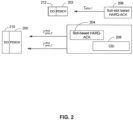
- the PDSCHs 200 and 202 are in-order for the slot-based HARQ-ACK PUCCH 204 and sub-slot based HARQ-ACK PUCCH 206, as illustrated in FIG. 2 . It is assumed that the sub-slot based HARQ-ACK PUCCH 206 does not overlap the slot-based HARQ-ACK PUCCH 204, and the sub-slot based HARQ-ACK PUCCH 206 may or may not overlap the CSI 208. Based on the UE capability and the scheduling condition (e.g., time separation of the two PDSCHs), the UE may or may not be able to process the first scheduled PDSCH 200.
- the scheduling condition e.g., time separation of the two PDSCHs
- the UE may stop the processing of the first PDSCH 200 upon reception of the second DCI 212, and the HARQ-ACK codebook of the slot based HARQ-ACK PUCCH 204 may be modified.
- the HARQ-ACK bits corresponding to PDSCH 200 in the HARQ-ACK codebook for the slot based HARQ-ACK PUCCH 204 may all be set to NACK or the HARQ-ACK bits for the CBGs of the TB in PDSCH 200 that are not processed are set to NACK.
- the first PDSCH 200 may be dropped.
- the T proc , 2 mux timeline requirement should be satisfied between the scheduling DCI 212 of the second PDSCH 202 and the group of overlapping PUCCHs with the slot based HARQ-ACK PUCCH 204, even though the sub-slot based HARQ-ACK PUCCH 206 does not overlap the slot based HARQ-ACK PUCCH 204.
- the timeline requirement may be restrictive, it is beneficial to specify the UE's behavior when the timeline requirement is not met. For example, in case that a PUCCH with the earliest starting symbol does not satisfy the timeline requirement, the PUCCH is excluded from the overlapping PUCCHs before the multiplexing procedure is performed or the UE may not expect the resource that does not satisfy the timeline requirement to overlap with any other PUCCH or PUSCH. The exclusion of PUCCHs is until the timeline requirement for the remaining overlapping PUCCHs is met, or until only the slot based HARQ-ACK PUCCH remains.
- the UE may drop the slot-based HARQ-ACK PUCCH, if the transmission has started.
- a multiplexing procedure for which Q set should be performed first may depend on the factors discussed above, such as whether a PUCCH is included in more than one Q set and more than one Q set contains PUCCH resources from both the group of PUCCH resources grouped with slot based HARQ-ACK PUCCH and the group of PUCCH resources grouped with sub-slot based HARQ-ACK PUCCH, whether construction of a Q set in a sub-slot is after a multiplexing procedure is performed for Q sets in sub-slots before the sub-slot, PDSCH processing capability, etc.
- the multiplexing order may simply be determined from the starting symbol of the overlapping PUCCHs, such that the overlapping group with an earlier starting symbol is determined first.
- the multiplexing order for the Q sets can be fixed or arbitrary. For example, multiplexing procedure for the Q set containing PUCCH resources with a higher priority is performed first.
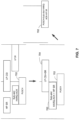
- FIG. 3 illustrates an example for a Q set construction and multiplexing procedure in a slot including both slot-based HARQ-ACK PUCCH and sub-slot based HARQ-ACK PUCCH.
- up to one Q1 set and one Q2 set are constructed for a sub-slot.
- FIG. 3 illustrates the UL channels for this example. It is assumed that SR 1 300 and SR 2 302 are configured with a higher priority, and may be grouped with the sub-slot based HARQ-ACK PUCCH (e.g., from "sub-slot HARQ-ACK 1" to "sub-slot HARQ-ACK 7"). Other UL channels are grouped with the slot-based HARQ-ACK PUCCHs 304 and 306 (e.g., "slot HARQ-ACK 1" and "slot HARQ-ACK 2").
- the SR 1300 is determined as the reference resource for construction of the Q1 set in the first sub-slot. Since two sub-slot based HARQ-ACK PUCCHs ("sub-slot HARQ-ACK 1" and "sub-slot HARQ-ACK 2" overlap the reference resource (e.g., the SR 1 300), they are included in the Q1 set in the first sub-slot.
- the slot-based HARQ-ACK PUCCH 304 (e.g., "slot HARQ-ACK 1") is determined as the reference resource, and the overlapping resource is in the same group (e.g., the CSI 308 is included in the Q2 set in the first sub-slot).
- the sub-slot based HARQ-ACK PUCCH (e.g., "sub-slot HARQ-ACK 3") is included in the Q1 set in the third sub-slot.
- the sub-slot based HARQ-ACK PUCCH (e.g., "sub-slot HARQ-ACK 4") is determined as the reference resource, and the overlapping resource in the same group, (e.g., the SR 2 302) is included in the Q1 set in the fourth sub-slot.
- the sub-slot based HARQ-ACK PUCCH (e.g., "sub-slot HARQ-ACK 5") is included in the Q1 set in the fifth sub-slot.
- the slot-based HARQ-ACK PUCCH 2 306 is determined as the reference resource, and the overlapping resource in the same group (e.g., the SR3 310) is included in the Q2 set in the fifth sub-slot.
- the sub-slot based HARQ-ACK PUCCH (e.g., "sub-slot HARQ-ACK 6") is included in the Q1 set.
- the sub-slot based HARQ-ACK PUCCH (e.g., "sub-slot HARQ-ACK 7") is included in the Q1 set.
- the Q1 and Q2 sets in each sub-slot are constructed as follows.
- the Q1 set in the first sub-slot includes "sub-slot HARQ-ACK 1", “sub-slot HARQ-ACK 2", and SR 1 300.
- the Q2 set in the first sub-slot includes "slot HARQ-ACK 1", and CSI 308.
- Second sub-slot no Q1 set or Q2 set is constructed.
- Third sub-slot the Q1 set in the third sub-slot includes "sub-slot HARQ-ACK 3".
- the Q1 set in the fourth sub-slot includes "sub-slot HARQ-ACK 4" and SR 2 302.
- the Q1 set in the fifth sub-slot may not be constructed if SR 2 302 has been determined to be transmitted in the previous sub-slot and SR 2 302 has higher priority. Otherwise, the Q1 set in the fifth sub-slot includes "sub-slot HARQ-ACK 5". The Q2 set in the fifth sub-slot may not be constructed if SR 2 302 is transmitted. Otherwise, the Q2 set in the fifth sub-slot includes "slot HARQ-ACK 2", and SR 3 310. It is noted that construction of the Q2 set may not necessarily be dependent on the existence of slot-based HARQ-ACK. For example, if "slot HARQ-ACK 2" was not configured, then the Q2 set is formed by SR 3 310 for the fifth sub-slot.
- the Q1 set in the sixth sub-slot may not be constructed if SR 2 302 has been determined to be transmitted in the previous sub-slot and SR 2 302 has higher priority. Otherwise, the Q1 set in the sixth sub-slot includes "sub-slot HARQ-ACK 6".
- the Q1 set in the seventh sub-slot includes "sub-slot HARQ-ACK 7".
- FIG. 4 is a schematic diagram illustrating construction of a set of PUCCH resources, Q, according to an implementation of the present disclosure.
- a Q set construction in each sub-slot in a slot is illustrated.
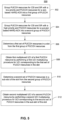
- a procedure for Q1 set construction can be summarized in the flow chart illustrated in FIG. 4 .
- For Q2 set construction a similar procedure may be performed in the same manner.
- the UE determines whether any configured resource is starting in the sub-slot (action 402). If no configured resource is starting in the sub-slot, the UE proceeds to the next sub-slot (action 404). If yes, the UE determines whether any resource overlaps PUCCH or PUSCH with higher priority determined from the previous sub-slots (action 406).
- the UE may exclude the resources (action 408). In addition, the UE determines if any configured resource starts in the sub-slot (action 410). If no configured resource starts in the sub-slot, the UE proceeds to the next sub-slot (action 404). On the other hand, if a configured resource starts in the sub-slot, the UE determines the reference resource and includes the overlapping resources in the Q1 set (action 412).
- the UE further determines a single PUCCH from the Q1 set and the multiplexed UCIs from PUCCH resources included in the Q1 set, and determines if there is multiplexing of the PUCCH on an overlapping PUSCH (action 414).
- at most two PUCCH resources and multiplexed UCIs for each PUCCH resource may be determined from the PUCCH resources included in the Q1 set.
- the at most two PUCCH resources include at most one sub-slot based HARQ-ACK PUCCH.
- the UE excludes the multiplexed PUCCHs from the slot (action 416).
- the multiplexed PUCCHs refer to all PUCCH resources included in the Q1 set in the sub-slot.
- Q sets are constructed per slot. Two Q sets (e.g., Q1 set and Q2 set) are determined for each slot.
- the Q1 set contains all the configured PUCCHs grouped with a sub-slot based HARQ-ACK PUCCH in the slot
- the Q2 set contains all the configured PUCCHs grouped with a slot-based HARQ-ACK PUCCH in the slot, except for the PUCCHs that are excluded.
- the multiplexing procedure starts from the first sub-slot of a slot, and is performed in each sub-slot until the last sub-slot of the slot. In each sub-slot, up to two multiplexing procedures are performed.
- a resource A1 is determined following the priority order of the earliest starting symbol (within the sub-slot) followed by the longest duration from the Q1 set.
- a resource set X1 that contains the PUCCHs overlapping the resource A1 is determined from the Q1 set.
- the resource set X1 should contain only the HARQ-ACK PUCCHs with the starting symbol contained in the sub-slot.
- a single PUCCH and the UCIs to be multiplexed on the PUCCH are determined from resource A1 and resource set X1. It is noted that resource set X1 may not exist and no PUCCH or no UCI is determined when the sub-slot based HARQ-ACK PUCCH is not scheduled.
- Resource exclusion may be performed for the Q1 set. After a multiplexing decision is made in a sub-slot, resources may be excluded from the Q1 set if it overlaps a scheduled sub-slot based HARQ-ACK PUCCH in previous sub-slots.
- a resource A2 is determined following the priority order of the earliest starting symbol followed by the longest duration from Q2 set, if there is PUCCH with starting symbol in the sub-slot.
- a resource set X2 that contains the PUCCHs overlapping resource A2 is determined from the Q2 set.
- a single PUCCH and the UCIs to be multiplexed on the PUCCH are determined from resource A2 and resource set X2. The determined single PUCCH and the UCIs replace resource A2 and resource set X2, and the procedure is performed until there are no remaining PUCCHs overlapping the determined PUCCH.
- Resource exclusion may be performed for the Q2 set. After the multiplexing decision is made in a sub-slot, resources may be excluded from the Q2 set if it overlaps a scheduled sub-slot based HARQ-ACK PUCCH or other PUCCH with a higher priority in previous sub-slots.
- the first and second multiplexing procedures may be performed in turn. That is, after the first multiplexing procedure in the previous sub-slots is completed, the second multiplexing procedure in the current sub-slot is performed.
- the order of performing the first and second multiplexing procedures can be the following.
- the order of performing the first multiplexing procedure and the second multiplexing procedure in a sub-slot is at the same time.
- the order of performing the first multiplexing procedure and the second multiplexing procedure in a sub-slot is the first multiplexing procedure followed by the second multiplexing procedure.
- the order of performing the first multiplexing procedure and the second multiplexing procedure in a sub-slot is the second multiplexing procedure followed by the first multiplexing procedure.
- the order of performing the first multiplexing procedure and the second multiplexing procedure in a sub-slot depends on whether resource A1 or resource A2 in the sub-slot has an earlier starting symbol.
- the determined UCIs from the first multiplexing procedure or second multiplexing procedure are multiplexed in a PUSCH if the determined PUCCH overlaps the PUSCH and the timeline requirements for multiplexing the PUCCH and PUSCH are met.
- condition for multiplexing the PUCCH and PUSCH also depends on the achievable reliability of the PUSCH.
- prioritization for the two PUCCHs is determined according to different multiplexing procedures.
- a PUCCH determined from the Q2 set is dropped if a PUCCH determined from the Q1 set overlaps the PUCCH of the Q2 set.
- Prioritization of two PUCCHs is determined for different sub-slots in the Q1 set.
- a PUCCH determined from a sub-slot may overlap a sub-slot based HARQ-ACK PUCCH scheduled in a later sub-slot, and the two overlapping PUCCHs may not satisfy multiplexing timeline requirements.
- the PUCCH determined from the previous sub-slot is dropped and the sub-slot based HARQ-ACK PUCCH is transmitted if it is determined that the sub-slot based HARQ-ACK PUCCH has higher priority.
- FIG. 5 is a flowchart illustrating a method 500 for multiplexing UCI (e.g., CSI and SR), according to an implementation of the present disclosure.
- FIG. 5 illustrates a UE performing a UCI multiplexing procedure.
- the UE groups PUCCH resources for CSI and SR with a low priority and PUCCH resources for a slot- based HARQ-ACK into a first group of PUCCH resources.
- the UE groups PUCCH resources for CSI and SR with a high priority and PUCCH resources for a sub-slot based HARQ-ACK into a second group of PUCCH resources.
- the UE determines a first set of PUCCH resources in a slot from the first group of PUCCH resources.
- the UE obtains first multiplexed UCI of a first PUCCH resource by performing a first UCI multiplexing procedure for UCI corresponding to the first set of PUCCH resources in the slot.
- the UE determines a second set of PUCCH resources in a sub-slot of the slot from the second group of PUCCH resources.
- the UE obtains second multiplexed UCI of a second PUCCH resource by performing a second UCI multiplexing procedure for UCI corresponding to the second set of PUCCH resources in the sub-slot of the slot. It is noted that there is no timing order between action 502 and action 504. It is noted that there is no timing order between action 506 and action 510. It is noted that there is no timing order between action 508 and action 512.
- the SR with high priority e.g., "HP SR” and the sub-slot based HARQ-ACK (e.g., "sub-slot HARQ-ACK") are grouped, and CSI with low priority (e.g., "LP CSI") and SR with low priority (e.g., "LP SR”) are grouped.
- HP SR high priority
- sub-slot based HARQ-ACK sub-slot HARQ-ACK
- CSI with low priority e.g., "LP CSI”
- SR with low priority e.g., "LP SR
- the UE determines a first PUCCH resource set in the slot including "LP CSI” and "LP SR", and perform the UCI multiplexing procedure for the first PUCCH resource set to obtain the multiplexed UCI (e.g., "LP CSI+SR"), and the UE determines a second PUCCH resource set including "HP SR" and "sub-slot HARQ-ACK" in the first sub-slot of the slot, and performs the UCI multiplexing procedure for the second PUCCH resource set, in order to obtain the multiplexed UCI (e.g., "sub-slot HARQ ACK+HP SR").
- FIG. 6 is a schematic diagram illustrating a slot-based HARQ-ACK PUCCH overlapping a sub-slot based HARQ-ACK PUCCH, according to an implementation of the present disclosure.
- the UE transmits the multiplexed UCI (e.g., "LP CSI+SR") only if the PUCCH resource 600 for transmitting "LP CSI+SR" does not overlap the PUCCH resource 602 for transmitting "sub-slot HARQ ACK+HP SR". Otherwise, the UE dose not transmit the multiplexed UCI (e.g., "LP CSI+SR").
- FIG. 7 is a schematic diagram illustrating a sub-slot based HARQ-ACK PUCCH overlapping a slot-based HARQ-ACK PUCCH, according to an implementation of the present disclosure.
- the UE multiplexes the PUCCH resource 700 for transmitting "sub-slot HARQ ACK+HP SR" on the PUSCH resource 702 when the PUSCH resource 702 overlaps the PUCCH resource 700, and may multiplex the PUCCH resource 704 for transmitting "LP CSI+SR" on the PUSCH resource 702 when the PUSCH resource 702 overlaps the PUCCH resource 704 but does not overlap the PUCCH resource 700.
- the UE since the PUSCH resource 702 overlaps both the PUCCH resource 704 and the PUCCH resource 700, the UE multiplexes only the PUCCH resource 700 for transmitting "sub-slot HARQ ACK+HP SR" on the PUSCH resource 702, and transmits the "sub-slot HARQ ACK+HP SR" with the PUSCH resource 702.
- FIG. 8 is a schematic diagram illustrating a PUCCH resource grouped with a sub-slot based HARQ-ACK PUCCH, according to an implementation of the present disclosure.
- the UE may include PUCCH resources with starting symbols in the sub-slot of the slot (e.g., action 800) in the second set of PUCCH resources (e.g., CSI and/or SR with a high priority and sub-slot based HARQ-ACK as illustrated in action 504 of FIG. 5 ), and UE may determine a PUCCH resource by performing multiplexing procedure on the second set of PUCCH resources (e.g., action 802). The UE may then proceed to the next sub-slot of the slot (e.g., action 804).
- PUCCH resources with starting symbols in the sub-slot of the slot e.g., action 800
- the second set of PUCCH resources e.g., CSI and/or SR with a high priority and sub-slot based HARQ-
- FIG. 9 is a block diagram illustrating a node 900 for wireless communication according to an implementation of the present disclosure.
- the node 900 may include a transceiver 920, a processor 926, a memory 928, one or more presentation components 934, and at least one antenna 936.
- the node 900 may also include a Radio Frequency (RF) spectrum band module, a BS communications module, a network communications module, and a system communications management module, input/output (I/O) ports, I/O components, and a power supply (not illustrated in FIG. 9 ). Each of these components may be in communication with each other, directly or indirectly, over one or more buses 940.
- the node 900 may be a UE or a BS that performs various disclosed functions as illustrated in FIG. 5 .
- the transceiver 920 may include a transmitter 922 (with transmitting circuitry) and a receiver 924 (with receiving circuitry) and may be configured to transmit and/or receive time and/or frequency resource partitioning information.
- the transceiver 920 may be configured to transmit in different types of subframes and slots including, but not limited to, usable, non-usable and flexibly usable subframes and slot formats.
- the transceiver 920 may be configured to receive data and control channels.
- the node 900 may include a variety of computer-readable media.
- Computer-readable media may be any media that can be accessed by the node 900 and include both volatile (and non-volatile) media, removable (and non-removable) media.
- Computer-readable media may include computer storage media and communication media.
- Computer storage media may include both volatile (and/or non-volatile), as well as removable (and/or non-removable) media implemented according to any method or technology for storage of information such as computer-readable media.
- Computer storage media may include RAM, ROM, EPROM, EEPROM, flash memory (or other memory technology), CD-ROM, Digital Versatile Disks (DVD) (or other optical disk storage), magnetic cassettes, magnetic tape, magnetic disk storage (or other magnetic storage devices), etc.
- Computer storage media do not include a propagated data signal.
- Communication media may typically embody computer-readable instructions, data structures, program modules or other data in a modulated data signal such as a carrier wave or other transport mechanisms and include any information delivery media.
- modulated data signal may mean a signal that has one or more of its characteristics set or changed in such a manner as to encode information in the signal.
- Communication media may include wired media such as a wired network or directwired connection, and wireless media such as acoustic, RF, infrared and other wireless media. Combinations of any of the disclosed media should be included within the scope of computer-readable media.
- the memory 928 may include computer-storage media in the form of volatile and/or non-volatile memory.
- the memory 928 may be removable, non-removable, or a combination thereof.
- the memory 928 may include solid-state memory, hard drives, optical-disc drives, etc.
- the memory 928 may store computer-readable and/or computer-executable instructions 932 (e.g., software codes) that are configured to, when executed, cause the processor 926 (e.g., processing circuitry) to perform various disclosed functions.
- the instructions 932 may not be directly executable by the processor 926 but may be configured to cause the node 900 (e.g., when compiled and executed) to perform various disclosed functions.
- the processor 926 may include an intelligent hardware device, a central processing unit (CPU), a microcontroller, an ASIC, etc.
- the processor 926 may include memory.
- the processor 926 may process the data 930 and the instructions 932 received from the memory 928, and information through the transceiver 920, the baseband communications module, and/or the network communications module.
- the processor 926 may also process information to be sent to the transceiver 920 for transmission via the antenna 936, to the network communications module for transmission to a CN.
- Presentation components 934 may present data to a person or other devices.
- Presentation components 934 may include a display device, a speaker, a printing component, a vibrating component, etc.
Landscapes
- Engineering & Computer Science (AREA)
- Signal Processing (AREA)
- Computer Networks & Wireless Communication (AREA)
- Mobile Radio Communication Systems (AREA)
- Detection And Prevention Of Errors In Transmission (AREA)
Claims (6)
- Verfahren für ein Benutzergerät (900), UE (Engl. user equipment), zum Multiplexen von Uplink-Control-Informationen, UCI, wobei das Verfahren umfasst:Gruppieren (502) von Physical-Uplink-Control-Channel-, PUCCH-, Ressourcen für Kanalzustandsinformationen, CSI (Engl. Channel State Information), und eine Scheduling-Anforderung, SR (Engl. Scheduling Request), mit einer niedrigen Priorität und PUCCH-Ressourcen für eine Slot-basierte hybride automatische Wiederholungsanforderungsbestätigung, HARQ-ACK (Engl. Hybrid Automatic Repeat Request Acknowledgement), in einer ersten Gruppe von PUCCH-Ressourcen;Gruppieren (504) von PUCCH-Ressourcen für CSI und einer SR mit hoher Priorität und PUCCH-Ressourcen für eine Teilslot-basierte HARQ-ACK in einer zweiten Gruppe von PUCCH-Ressourcen;Bestimmen (506) eines ersten Satzes von PUCCH-Ressourcen in einem Slot aus der ersten Gruppe von PUCCH-Ressourcen;Erhalten (508) einer ersten gemultiplexten UCI einer ersten PUCCH-Ressource durch Ausführen eines ersten UCI-Multiplexvorgangs für UCI, die dem ersten Satz von PUCCH-Ressourcen in dem Slot entsprechen;Bestimmen (510) eines zweiten Satzes von PUCCH-Ressourcen in einem Teilslot des Slots aus der zweiten Gruppe von PUCCH-Ressourcen;Erhalten (512) einer zweiten gemultiplexten UCI einer zweiten PUCCH-Ressource durch Ausführen eines zweiten UCI-Multiplexvorgangs für UCI, die dem zweiten Satz von PUCCH-Ressourcen in dem Teilslot des Slots entsprechen; undÜbertragen der ersten gemultiplexten UCI der ersten PUCCH-Ressource als Reaktion darauf, dass die erste PUCCH-Ressource nicht mit der zweiten PUCCH-Ressource überlappt.
- Verfahren nach Anspruch 1, ferner umfassend:Multiplexen der zweiten gemultiplexten UCI der zweiten PUCCH-Ressource auf eine physikalische Uplink-Shared-Channel-, PUSCH-Ressource als Reaktion darauf, dass die PUSCH-Ressource die zweite PUCCH-Ressource überlappt; undMultiplexen der ersten gemultiplexten UCI der ersten PUCCH-Ressource auf die PUSCH-Ressource als Reaktion darauf, dass die PUSCH-Ressource die erste PUCCH-Ressource überlappt und die zweite PUCCH-Ressource nicht überlappt.
- Verfahren nach Anspruch 1, ferner umfassend:
Bestimmen einer PUCCH-Ressource, die in dem zweiten Satz von PUCCH-Ressourcen als Reaktion darauf auftritt, dass sich ein erstes Symbol der PUCCH-Ressource im Teilslot des Slots befindet. - Benutzergerät (900), UE, zum Multiplexen von Uplink-Control-Informationen, UCI, wobei das UE Folgendes umfasst:einen Prozessor (926) zum Ausführen von computerausführbaren Anweisungen; undnicht-flüchtiges, computerlesbares Medium (928), das mit dem Prozessor gekoppelt ist, um die computerausführbaren Anweisungen (932) zu speichern, wobei die computerausführbaren Anweisungen den Prozessor anweisen zum:Gruppieren (502) von Physical-Uplink-Control-Channel-, PUCCH-, Ressourcen für Kanalzustandsinformationen, CSI (Engl. Channel State Information), und eine Scheduling-Anforderung, SR (Engl. Scheduling Request), mit einer niedrigen Priorität und PUCCH-Ressourcen für eine Slot-basierte hybride automatische Wiederholungsanforderungsbestätigung, HARQ-ACK (Engl. Hybrid Automatic Repeat Request Acknowledgement), in einer ersten Gruppe von PUCCH-Ressourcen;Gruppieren (504) von PUCCH-Ressourcen für CSI und einer SR mit hoher Priorität und PUCCH-Ressourcen für eine Teilslot-basierte HARQ-ACK in einer zweiten Gruppe von PUCCH-Ressourcen;Bestimmen (506) eines ersten Satzes von PUCCH-Ressourcen in einem Slot aus der ersten Gruppe von PUCCH-Ressourcen;Erhalten (508) einer ersten gemultiplexten UCI einer ersten PUCCH-Ressource durch Ausführen eines ersten UCI-Multiplexvorgangs für UCI, die dem ersten Satz von PUCCH-Ressourcen in dem Slot entsprechen;Bestimmen (518) eines zweiten Satzes von PUCCH-Ressourcen in einem Teilslot des Slots aus der zweiten Gruppe von PUCCH-Ressourcen;Erhalten (512) einer zweiten gemultiplexten UCI einer zweiten PUCCH-Ressource durch Ausführen eines zweiten UCI-Multiplexvorgangs für UCI, die dem zweiten Satz von PUCCH-Ressourcen in dem Teilslot des Slots entsprechen; undÜbertragen der ersten gemultiplexten UCI der ersten PUCCH-Ressource als Reaktion darauf, dass die erste PUCCH-Ressource nicht mit der zweiten PUCCH-Ressource überlappt.
- UE (900) nach Anspruch 4, wobei die computerausführbaren Anweisungen den Prozessor ferner anweisen zum:Multiplexen der zweiten gemultiplexten UCI der zweiten PUCCH-Ressource auf einen physikalischen Uplink-Shared-Channel, PUSCH, als Reaktion darauf, dass der PUSCH die zweite PUCCH-Ressource überlappt; undMultiplexen der ersten gemultiplexten UCI der ersten PUCCH-Ressource auf dem PUSCH als Reaktion darauf, dass die PUSCH-Ressource die erste PUCCH-Ressource überlappt und die zweite PUCCH-Ressource nicht überlappt.
- UE (900) nach Anspruch 4, wobei die computerausführbaren Anweisungen den Prozessor ferner anweisen zum:
Bestimmen einer PUCCH-Ressource, die in dem zweiten Satz von PUCCH-Ressourcen als Reaktion darauf auftritt, dass sich ein erstes Symbol der PUCCH-Ressource im Teilslot des Slots befindet.
Applications Claiming Priority (2)
| Application Number | Priority Date | Filing Date | Title |
|---|---|---|---|
| US201962911529P | 2019-10-07 | 2019-10-07 | |
| PCT/CN2020/119860 WO2021068865A1 (en) | 2019-10-07 | 2020-10-07 | Method of multiplexing uplink control information and related device |
Publications (4)
| Publication Number | Publication Date |
|---|---|
| EP4026385A1 EP4026385A1 (de) | 2022-07-13 |
| EP4026385A4 EP4026385A4 (de) | 2023-09-27 |
| EP4026385B1 true EP4026385B1 (de) | 2024-08-07 |
| EP4026385C0 EP4026385C0 (de) | 2024-08-07 |
Family
ID=75274626
Family Applications (1)
| Application Number | Title | Priority Date | Filing Date |
|---|---|---|---|
| EP20874713.9A Active EP4026385B1 (de) | 2019-10-07 | 2020-10-07 | Verfahren zum multiplexen von uplink-steuerungsinformation und zugehörige vorrichtung |
Country Status (6)
| Country | Link |
|---|---|
| US (2) | US11412490B2 (de) |
| EP (1) | EP4026385B1 (de) |
| JP (1) | JP2022549660A (de) |
| KR (1) | KR102783825B1 (de) |
| CN (1) | CN114503761B (de) |
| WO (1) | WO2021068865A1 (de) |
Families Citing this family (25)
| Publication number | Priority date | Publication date | Assignee | Title |
|---|---|---|---|---|
| KR20210085456A (ko) * | 2019-12-30 | 2021-07-08 | 삼성전자주식회사 | 무선 통신 시스템에서 상향링크 제어 및 데이터 채널 송수신 방법 및 장치 |
| CN111901882B (zh) * | 2020-01-17 | 2025-05-30 | 中兴通讯股份有限公司 | 信道冲突处理方法、装置、设备和存储介质 |
| US11558887B2 (en) * | 2020-01-31 | 2023-01-17 | Qualcomm Incorporated | Uplink control information piggyback restrictions for ultra-reliable/low-latency communications |
| US11889502B2 (en) * | 2020-02-24 | 2024-01-30 | Qualcomm Incorporated | Two-stage feedback procedures |
| US20230232394A1 (en) * | 2020-06-26 | 2023-07-20 | Fang Yuan | Dynamic uplink control multiplexing between physical uplink channels |
| WO2022080441A1 (en) * | 2020-10-15 | 2022-04-21 | Sharp Kabushiki Kaisha | Joint reporting of low priority harq-ack and high priority sr with pucch format 1 |
| CN116368850B (zh) * | 2020-10-16 | 2025-05-09 | 株式会社Ntt都科摩 | 终端以及通信方法 |
| KR102609778B1 (ko) * | 2021-01-15 | 2023-12-06 | 엘지전자 주식회사 | 무선 통신 시스템에서 신호 송수신 방법 및 장치 |
| CN115190602A (zh) * | 2021-04-02 | 2022-10-14 | 大唐移动通信设备有限公司 | 上行复用传输方法、装置及存储介质 |
| US20220322243A1 (en) * | 2021-04-06 | 2022-10-06 | Qualcomm Incorporated | Power control for multiplexing uplink control information |
| EP4320779A4 (de) * | 2021-04-06 | 2024-12-11 | Apple Inc. | Uci-multiplexing mit priorität auf physikalischer schicht und lch-basierter priorisierung |
| CN113489576B (zh) * | 2021-04-26 | 2023-04-28 | 上海朗帛通信技术有限公司 | 一种用于无线通信的节点中的方法和装置 |
| CN115334652B (zh) * | 2021-05-10 | 2025-11-25 | 维沃移动通信有限公司 | 上行控制信息uci传输方法、装置、用户设备及介质 |
| US12531670B2 (en) | 2021-05-11 | 2026-01-20 | Intel Corporation | Multiplexing of uplink control information (UCI) with different physical layer priorities |
| CN117223361A (zh) * | 2021-05-11 | 2023-12-12 | 苹果公司 | 用于不同物理层优先级的多个重叠信道的uci复用过程 |
| CN115604848A (zh) * | 2021-07-09 | 2023-01-13 | 维沃移动通信有限公司(Cn) | Pucch时域资源重叠的处理方法及装置 |
| US12382460B2 (en) | 2021-10-19 | 2025-08-05 | Samsung Electronics Co., Ltd | Apparatus and method for utilizing sequence-based PUCCH |
| CN116133138A (zh) * | 2021-11-12 | 2023-05-16 | 北京三星通信技术研究有限公司 | 无线通信系统中用于上行传输的方法及装置 |
| CN116489791A (zh) * | 2022-01-11 | 2023-07-25 | 大唐移动通信设备有限公司 | 上行传输方法、终端设备和网络设备 |
| WO2023139517A1 (en) * | 2022-01-19 | 2023-07-27 | Lenovo (Singapore) Pte. Ltd. | Dropping application data units |
| EP4516012A4 (de) * | 2022-04-28 | 2026-02-25 | Qualcomm Inc | Multiplexverfahren für simultane uplink-steuerkanalübertragungen auf einem einzelkomponententräger |
| EP4537608A4 (de) * | 2022-06-08 | 2026-04-29 | Qualcomm Inc | Multiplexing von uplink-steuerungsinformationen über verschiedene sendeempfangspunkte |
| WO2024159779A1 (en) * | 2023-09-27 | 2024-08-08 | Lenovo (Beijing) Limited | Method and apparatus of supporting uplink control information multiplexing |
| KR20250060007A (ko) * | 2023-10-25 | 2025-05-07 | 삼성전자주식회사 | 무선 통신 시스템에서 상향링크 제어 정보 송수신 방법 및 장치 |
| WO2026059362A1 (ko) * | 2024-09-13 | 2026-03-19 | 엘지전자 주식회사 | 제어 정보를 다중화하는 방법 및 장치 |
Citations (1)
| Publication number | Priority date | Publication date | Assignee | Title |
|---|---|---|---|---|
| US20190306922A1 (en) * | 2018-06-18 | 2019-10-03 | Gang Xiong | Methods to multiplex control information in accordance with multi-slot transmissions in new radio (nr) systems |
Family Cites Families (15)
| Publication number | Priority date | Publication date | Assignee | Title |
|---|---|---|---|---|
| US11818717B2 (en) * | 2014-12-31 | 2023-11-14 | Texas Instruments Incorporated | Method and apparatus for uplink control signaling with massive Carrier Aggregation |
| WO2016163855A1 (en) | 2015-04-09 | 2016-10-13 | Samsung Electronics Co., Ltd. | Method for multiplexing uplink information |
| WO2017218749A1 (en) * | 2016-06-15 | 2017-12-21 | Intel IP Corporation | Channel state and beam related information reporting |
| KR102216251B1 (ko) * | 2016-11-04 | 2021-02-17 | 엘지전자 주식회사 | 무선 통신 시스템에서 단말과 기지국 간 물리 상향링크 제어 채널 송수신 방법 및 이를 지원하는 장치 |
| US10492184B2 (en) | 2016-12-09 | 2019-11-26 | Samsung Electronics Co., Ltd. | Multiplexing control information in a physical uplink data channel |
| WO2018143527A1 (ko) * | 2017-02-05 | 2018-08-09 | 엘지전자(주) | 무선 통신 시스템에서 변조 및 부호화 기법을 결정하는 방법 및 이를 위한 장치 |
| WO2018203686A1 (ko) * | 2017-05-03 | 2018-11-08 | 엘지전자 주식회사 | 무선 통신 시스템에서 단말과 기지국 간 스케줄링 요청을 송수신하는 방법 및 이를 지원하는 장치 |
| CN110603774B (zh) * | 2017-05-04 | 2022-11-01 | 夏普株式会社 | 用于第5代(5g)新无线电接入技术(nr)的短pucch格式和调度请求(sr)传输 |
| US10716128B2 (en) | 2017-12-09 | 2020-07-14 | Huawei Technologies Co., Ltd. | Communication method and communication apparatus |
| CN108259154B (zh) | 2018-01-12 | 2022-05-24 | 中兴通讯股份有限公司 | 信息传输、接收方法及装置、存储介质、电子装置 |
| US10973038B2 (en) * | 2018-01-19 | 2021-04-06 | Qualcomm Incorporated | UCI transmission for overlapping uplink resource assignments with repetition |
| CN110149726B (zh) * | 2018-02-12 | 2021-03-30 | 电信科学技术研究院有限公司 | 一种信息传输方法及终端 |
| WO2019172624A1 (ko) | 2018-03-05 | 2019-09-12 | 엘지전자 주식회사 | 무선 통신 시스템에서 상향링크 채널을 전송하기 위한 방법 및 이를 지원하는 장치 |
| US11381346B2 (en) * | 2019-04-02 | 2022-07-05 | Intel Corporation | Prioritization of services for control and data transmission for new radio systems |
| WO2021052113A1 (en) * | 2019-09-19 | 2021-03-25 | Guangdong Oppo Mobile Telecommunications Corp., Ltd. | Method and apparatus for uplink information transmission and user equipment |
-
2020
- 2020-10-07 EP EP20874713.9A patent/EP4026385B1/de active Active
- 2020-10-07 CN CN202080069756.5A patent/CN114503761B/zh active Active
- 2020-10-07 KR KR1020227012220A patent/KR102783825B1/ko active Active
- 2020-10-07 US US17/065,244 patent/US11412490B2/en active Active
- 2020-10-07 WO PCT/CN2020/119860 patent/WO2021068865A1/en not_active Ceased
- 2020-10-07 JP JP2022518925A patent/JP2022549660A/ja active Pending
-
2022
- 2022-06-17 US US17/843,630 patent/US11678328B2/en active Active
Patent Citations (1)
| Publication number | Priority date | Publication date | Assignee | Title |
|---|---|---|---|---|
| US20190306922A1 (en) * | 2018-06-18 | 2019-10-03 | Gang Xiong | Methods to multiplex control information in accordance with multi-slot transmissions in new radio (nr) systems |
Also Published As
| Publication number | Publication date |
|---|---|
| JP2022549660A (ja) | 2022-11-28 |
| US11412490B2 (en) | 2022-08-09 |
| WO2021068865A1 (en) | 2021-04-15 |
| US11678328B2 (en) | 2023-06-13 |
| EP4026385A4 (de) | 2023-09-27 |
| EP4026385A1 (de) | 2022-07-13 |
| KR20220063224A (ko) | 2022-05-17 |
| US20220322340A1 (en) | 2022-10-06 |
| CN114503761A (zh) | 2022-05-13 |
| CN114503761B (zh) | 2025-08-26 |
| EP4026385C0 (de) | 2024-08-07 |
| US20210105766A1 (en) | 2021-04-08 |
| KR102783825B1 (ko) | 2025-03-21 |
Similar Documents
| Publication | Publication Date | Title |
|---|---|---|
| EP4026385B1 (de) | Verfahren zum multiplexen von uplink-steuerungsinformation und zugehörige vorrichtung | |
| US11784759B2 (en) | Methods and apparatuses for SPS HARQ-ACK transmission | |
| US12004139B2 (en) | Method and apparatus for uplink implementation | |
| US11128495B2 (en) | Systems and methods for high-reliability ultra-reliable low latency communication transmissions | |
| EP3939368B1 (de) | Verfahren und vorrichtung zum multiplexing von uci | |
| US12556342B2 (en) | Methods and apparatuses for HARQ codebook construction | |
| WO2022152243A1 (en) | User equipment and method for multiplexing uplink control information | |
| EP3145108A1 (de) | System und verfahren zur übertragung von uplink-steuerungsinformationen in einer trägeraggregation | |
| WO2021139718A1 (en) | User equipment and method for configuring pucch resources | |
| WO2023011637A1 (en) | Method and apparatus for retransmission of hybrid automatic repeat request-acknowledgement | |
| US12414119B2 (en) | Method related to physical uplink control channel cell switching and user equipment | |
| WO2024067833A1 (en) | Method, user equipment, and base station for cg pusch transmissions | |
| WO2023051830A1 (en) | Method of physical uplink control channel transmission and related device |
Legal Events
| Date | Code | Title | Description |
|---|---|---|---|
| STAA | Information on the status of an ep patent application or granted ep patent |
Free format text: STATUS: THE INTERNATIONAL PUBLICATION HAS BEEN MADE |
|
| PUAI | Public reference made under article 153(3) epc to a published international application that has entered the european phase |
Free format text: ORIGINAL CODE: 0009012 |
|
| STAA | Information on the status of an ep patent application or granted ep patent |
Free format text: STATUS: REQUEST FOR EXAMINATION WAS MADE |
|
| 17P | Request for examination filed |
Effective date: 20220404 |
|
| AK | Designated contracting states |
Kind code of ref document: A1 Designated state(s): AL AT BE BG CH CY CZ DE DK EE ES FI FR GB GR HR HU IE IS IT LI LT LU LV MC MK MT NL NO PL PT RO RS SE SI SK SM TR |
|
| DAV | Request for validation of the european patent (deleted) | ||
| DAX | Request for extension of the european patent (deleted) | ||
| REG | Reference to a national code |
Ref country code: DE Ref legal event code: R079 Free format text: PREVIOUS MAIN CLASS: H04W0072120000 Ipc: H04L0001160700 Ref country code: DE Ref legal event code: R079 Ref document number: 602020035532 Country of ref document: DE Free format text: PREVIOUS MAIN CLASS: H04W0072120000 Ipc: H04L0001160700 |
|
| A4 | Supplementary search report drawn up and despatched |
Effective date: 20230825 |
|
| RIC1 | Information provided on ipc code assigned before grant |
Ipc: H04W 72/566 20230101ALN20230821BHEP Ipc: H04L 5/00 20060101ALI20230821BHEP Ipc: H04L 1/1829 20230101ALI20230821BHEP Ipc: H04L 1/1607 20230101AFI20230821BHEP |
|
| REG | Reference to a national code |
Ref country code: DE Ref legal event code: R079 Free format text: PREVIOUS MAIN CLASS: H04L0001160700 Ipc: H04W0072210000 Ref document number: 602020035532 Country of ref document: DE |
|
| GRAP | Despatch of communication of intention to grant a patent |
Free format text: ORIGINAL CODE: EPIDOSNIGR1 |
|
| STAA | Information on the status of an ep patent application or granted ep patent |
Free format text: STATUS: GRANT OF PATENT IS INTENDED |
|
| RIC1 | Information provided on ipc code assigned before grant |
Ipc: H04W 72/566 20230101ALN20240410BHEP Ipc: H04L 5/00 20060101ALI20240410BHEP Ipc: H04L 1/1829 20230101ALI20240410BHEP Ipc: H04L 1/1607 20230101ALI20240410BHEP Ipc: H04W 72/21 20230101AFI20240410BHEP |
|
| INTG | Intention to grant announced |
Effective date: 20240424 |
|
| RIN1 | Information on inventor provided before grant (corrected) |
Inventor name: WEI, CHIAHUNG Inventor name: LIN, WANCHEN Inventor name: WANG, HAIHAN |
|
| GRAS | Grant fee paid |
Free format text: ORIGINAL CODE: EPIDOSNIGR3 |
|
| GRAA | (expected) grant |
Free format text: ORIGINAL CODE: 0009210 |
|
| STAA | Information on the status of an ep patent application or granted ep patent |
Free format text: STATUS: THE PATENT HAS BEEN GRANTED |
|
| AK | Designated contracting states |
Kind code of ref document: B1 Designated state(s): AL AT BE BG CH CY CZ DE DK EE ES FI FR GB GR HR HU IE IS IT LI LT LU LV MC MK MT NL NO PL PT RO RS SE SI SK SM TR |
|
| REG | Reference to a national code |
Ref country code: GB Ref legal event code: FG4D |
|
| REG | Reference to a national code |
Ref country code: CH Ref legal event code: EP |
|
| REG | Reference to a national code |
Ref country code: IE Ref legal event code: FG4D |
|
| REG | Reference to a national code |
Ref country code: DE Ref legal event code: R096 Ref document number: 602020035532 Country of ref document: DE |
|
| U01 | Request for unitary effect filed |
Effective date: 20240905 |
|
| U07 | Unitary effect registered |
Designated state(s): AT BE BG DE DK EE FI FR IT LT LU LV MT NL PT RO SE SI Effective date: 20240918 |
|
| U20 | Renewal fee for the european patent with unitary effect paid |
Year of fee payment: 5 Effective date: 20241025 |
|
| PG25 | Lapsed in a contracting state [announced via postgrant information from national office to epo] |
Ref country code: NO Free format text: LAPSE BECAUSE OF FAILURE TO SUBMIT A TRANSLATION OF THE DESCRIPTION OR TO PAY THE FEE WITHIN THE PRESCRIBED TIME-LIMIT Effective date: 20241107 |
|
| PG25 | Lapsed in a contracting state [announced via postgrant information from national office to epo] |
Ref country code: GR Free format text: LAPSE BECAUSE OF FAILURE TO SUBMIT A TRANSLATION OF THE DESCRIPTION OR TO PAY THE FEE WITHIN THE PRESCRIBED TIME-LIMIT Effective date: 20241108 Ref country code: PL Free format text: LAPSE BECAUSE OF FAILURE TO SUBMIT A TRANSLATION OF THE DESCRIPTION OR TO PAY THE FEE WITHIN THE PRESCRIBED TIME-LIMIT Effective date: 20240807 |
|
| PG25 | Lapsed in a contracting state [announced via postgrant information from national office to epo] |
Ref country code: IS Free format text: LAPSE BECAUSE OF FAILURE TO SUBMIT A TRANSLATION OF THE DESCRIPTION OR TO PAY THE FEE WITHIN THE PRESCRIBED TIME-LIMIT Effective date: 20241207 |
|
| PG25 | Lapsed in a contracting state [announced via postgrant information from national office to epo] |
Ref country code: HR Free format text: LAPSE BECAUSE OF FAILURE TO SUBMIT A TRANSLATION OF THE DESCRIPTION OR TO PAY THE FEE WITHIN THE PRESCRIBED TIME-LIMIT Effective date: 20240807 |
|
| PG25 | Lapsed in a contracting state [announced via postgrant information from national office to epo] |
Ref country code: ES Free format text: LAPSE BECAUSE OF FAILURE TO SUBMIT A TRANSLATION OF THE DESCRIPTION OR TO PAY THE FEE WITHIN THE PRESCRIBED TIME-LIMIT Effective date: 20240807 Ref country code: RS Free format text: LAPSE BECAUSE OF FAILURE TO SUBMIT A TRANSLATION OF THE DESCRIPTION OR TO PAY THE FEE WITHIN THE PRESCRIBED TIME-LIMIT Effective date: 20241107 |
|
| PG25 | Lapsed in a contracting state [announced via postgrant information from national office to epo] |
Ref country code: RS Free format text: LAPSE BECAUSE OF FAILURE TO SUBMIT A TRANSLATION OF THE DESCRIPTION OR TO PAY THE FEE WITHIN THE PRESCRIBED TIME-LIMIT Effective date: 20241107 Ref country code: PL Free format text: LAPSE BECAUSE OF FAILURE TO SUBMIT A TRANSLATION OF THE DESCRIPTION OR TO PAY THE FEE WITHIN THE PRESCRIBED TIME-LIMIT Effective date: 20240807 Ref country code: NO Free format text: LAPSE BECAUSE OF FAILURE TO SUBMIT A TRANSLATION OF THE DESCRIPTION OR TO PAY THE FEE WITHIN THE PRESCRIBED TIME-LIMIT Effective date: 20241107 Ref country code: IS Free format text: LAPSE BECAUSE OF FAILURE TO SUBMIT A TRANSLATION OF THE DESCRIPTION OR TO PAY THE FEE WITHIN THE PRESCRIBED TIME-LIMIT Effective date: 20241207 Ref country code: HR Free format text: LAPSE BECAUSE OF FAILURE TO SUBMIT A TRANSLATION OF THE DESCRIPTION OR TO PAY THE FEE WITHIN THE PRESCRIBED TIME-LIMIT Effective date: 20240807 Ref country code: GR Free format text: LAPSE BECAUSE OF FAILURE TO SUBMIT A TRANSLATION OF THE DESCRIPTION OR TO PAY THE FEE WITHIN THE PRESCRIBED TIME-LIMIT Effective date: 20241108 Ref country code: ES Free format text: LAPSE BECAUSE OF FAILURE TO SUBMIT A TRANSLATION OF THE DESCRIPTION OR TO PAY THE FEE WITHIN THE PRESCRIBED TIME-LIMIT Effective date: 20240807 |
|
| RAP2 | Party data changed (patent owner data changed or rights of a patent transferred) |
Owner name: SHARP KABUSHIKI KAISHA |
|
| U1K | Transfer of rights of the unitary patent after the registration of the unitary effect |
Owner name: SHARP KABUSHIKI KAISHA; JP |
|
| PG25 | Lapsed in a contracting state [announced via postgrant information from national office to epo] |
Ref country code: SM Free format text: LAPSE BECAUSE OF FAILURE TO SUBMIT A TRANSLATION OF THE DESCRIPTION OR TO PAY THE FEE WITHIN THE PRESCRIBED TIME-LIMIT Effective date: 20240807 |
|
| PG25 | Lapsed in a contracting state [announced via postgrant information from national office to epo] |
Ref country code: CZ Free format text: LAPSE BECAUSE OF FAILURE TO SUBMIT A TRANSLATION OF THE DESCRIPTION OR TO PAY THE FEE WITHIN THE PRESCRIBED TIME-LIMIT Effective date: 20240807 |
|
| PG25 | Lapsed in a contracting state [announced via postgrant information from national office to epo] |
Ref country code: SK Free format text: LAPSE BECAUSE OF FAILURE TO SUBMIT A TRANSLATION OF THE DESCRIPTION OR TO PAY THE FEE WITHIN THE PRESCRIBED TIME-LIMIT Effective date: 20240807 |
|
| REG | Reference to a national code |
Ref country code: CH Ref legal event code: PL |
|
| PLBE | No opposition filed within time limit |
Free format text: ORIGINAL CODE: 0009261 |
|
| STAA | Information on the status of an ep patent application or granted ep patent |
Free format text: STATUS: NO OPPOSITION FILED WITHIN TIME LIMIT |
|
| PG25 | Lapsed in a contracting state [announced via postgrant information from national office to epo] |
Ref country code: MC Free format text: LAPSE BECAUSE OF FAILURE TO SUBMIT A TRANSLATION OF THE DESCRIPTION OR TO PAY THE FEE WITHIN THE PRESCRIBED TIME-LIMIT Effective date: 20240807 |
|
| 26N | No opposition filed |
Effective date: 20250508 |
|
| PG25 | Lapsed in a contracting state [announced via postgrant information from national office to epo] |
Ref country code: CH Free format text: LAPSE BECAUSE OF NON-PAYMENT OF DUE FEES Effective date: 20241031 |
|
| PG25 | Lapsed in a contracting state [announced via postgrant information from national office to epo] |
Ref country code: IE Free format text: LAPSE BECAUSE OF NON-PAYMENT OF DUE FEES Effective date: 20241007 |
|
| U20 | Renewal fee for the european patent with unitary effect paid |
Year of fee payment: 6 Effective date: 20251028 |
|
| PGFP | Annual fee paid to national office [announced via postgrant information from national office to epo] |
Ref country code: GB Payment date: 20251022 Year of fee payment: 6 |
|
| PG25 | Lapsed in a contracting state [announced via postgrant information from national office to epo] |
Ref country code: CY Free format text: LAPSE BECAUSE OF FAILURE TO SUBMIT A TRANSLATION OF THE DESCRIPTION OR TO PAY THE FEE WITHIN THE PRESCRIBED TIME-LIMIT; INVALID AB INITIO Effective date: 20201007 |
|
| PG25 | Lapsed in a contracting state [announced via postgrant information from national office to epo] |
Ref country code: HU Free format text: LAPSE BECAUSE OF FAILURE TO SUBMIT A TRANSLATION OF THE DESCRIPTION OR TO PAY THE FEE WITHIN THE PRESCRIBED TIME-LIMIT; INVALID AB INITIO Effective date: 20201007 |