EP4027558B1 - Cbg-basierte noma-übertragung für ein drahtloses netzwerk - Google Patents
Cbg-basierte noma-übertragung für ein drahtloses netzwerk Download PDFInfo
- Publication number
- EP4027558B1 EP4027558B1 EP22159471.6A EP22159471A EP4027558B1 EP 4027558 B1 EP4027558 B1 EP 4027558B1 EP 22159471 A EP22159471 A EP 22159471A EP 4027558 B1 EP4027558 B1 EP 4027558B1
- Authority
- EP
- European Patent Office
- Prior art keywords
- base station
- cbg
- message
- cbgs
- uplink data
- Prior art date
- Legal status (The legal status is an assumption and is not a legal conclusion. Google has not performed a legal analysis and makes no representation as to the accuracy of the status listed.)
- Active
Links
Images



Classifications
-
- H—ELECTRICITY
- H04—ELECTRIC COMMUNICATION TECHNIQUE
- H04L—TRANSMISSION OF DIGITAL INFORMATION, e.g. TELEGRAPHIC COMMUNICATION
- H04L1/00—Arrangements for detecting or preventing errors in the information received
- H04L1/12—Arrangements for detecting or preventing errors in the information received by using return channel
- H04L1/16—Arrangements for detecting or preventing errors in the information received by using return channel in which the return channel carries supervisory signals, e.g. repetition request signals
- H04L1/18—Automatic repetition systems, e.g. Van Duuren systems
- H04L1/1867—Arrangements specially adapted for the transmitter end
- H04L1/1887—Scheduling and prioritising arrangements
-
- H—ELECTRICITY
- H04—ELECTRIC COMMUNICATION TECHNIQUE
- H04W—WIRELESS COMMUNICATION NETWORKS
- H04W72/00—Local resource management
- H04W72/20—Control channels or signalling for resource management
- H04W72/21—Control channels or signalling for resource management in the uplink direction of a wireless link, i.e. towards the network
-
- H—ELECTRICITY
- H04—ELECTRIC COMMUNICATION TECHNIQUE
- H04L—TRANSMISSION OF DIGITAL INFORMATION, e.g. TELEGRAPHIC COMMUNICATION
- H04L1/00—Arrangements for detecting or preventing errors in the information received
- H04L1/12—Arrangements for detecting or preventing errors in the information received by using return channel
- H04L1/16—Arrangements for detecting or preventing errors in the information received by using return channel in which the return channel carries supervisory signals, e.g. repetition request signals
- H04L1/1607—Details of the supervisory signal
- H04L1/1614—Details of the supervisory signal using bitmaps
-
- H—ELECTRICITY
- H04—ELECTRIC COMMUNICATION TECHNIQUE
- H04L—TRANSMISSION OF DIGITAL INFORMATION, e.g. TELEGRAPHIC COMMUNICATION
- H04L1/00—Arrangements for detecting or preventing errors in the information received
- H04L1/12—Arrangements for detecting or preventing errors in the information received by using return channel
- H04L1/16—Arrangements for detecting or preventing errors in the information received by using return channel in which the return channel carries supervisory signals, e.g. repetition request signals
- H04L1/18—Automatic repetition systems, e.g. Van Duuren systems
- H04L1/1812—Hybrid protocols; Hybrid automatic repeat request [HARQ]
- H04L1/1819—Hybrid protocols; Hybrid automatic repeat request [HARQ] with retransmission of additional or different redundancy
-
- H—ELECTRICITY
- H04—ELECTRIC COMMUNICATION TECHNIQUE
- H04L—TRANSMISSION OF DIGITAL INFORMATION, e.g. TELEGRAPHIC COMMUNICATION
- H04L5/00—Arrangements affording multiple use of the transmission path
- H04L5/0001—Arrangements for dividing the transmission path
- H04L5/0003—Two-dimensional division
- H04L5/0005—Time-frequency
-
- H—ELECTRICITY
- H04—ELECTRIC COMMUNICATION TECHNIQUE
- H04L—TRANSMISSION OF DIGITAL INFORMATION, e.g. TELEGRAPHIC COMMUNICATION
- H04L5/00—Arrangements affording multiple use of the transmission path
- H04L5/003—Arrangements for allocating sub-channels of the transmission path
- H04L5/0053—Allocation of signalling, i.e. of overhead other than pilot signals
- H04L5/0055—Physical resource allocation for ACK/NACK
-
- H—ELECTRICITY
- H04—ELECTRIC COMMUNICATION TECHNIQUE
- H04W—WIRELESS COMMUNICATION NETWORKS
- H04W72/00—Local resource management
- H04W72/04—Wireless resource allocation
- H04W72/044—Wireless resource allocation based on the type of the allocated resource
- H04W72/0446—Resources in time domain, e.g. slots or frames
-
- H—ELECTRICITY
- H04—ELECTRIC COMMUNICATION TECHNIQUE
- H04W—WIRELESS COMMUNICATION NETWORKS
- H04W72/00—Local resource management
- H04W72/04—Wireless resource allocation
- H04W72/044—Wireless resource allocation based on the type of the allocated resource
- H04W72/0453—Resources in frequency domain, e.g. a carrier in FDMA
-
- H—ELECTRICITY
- H04—ELECTRIC COMMUNICATION TECHNIQUE
- H04W—WIRELESS COMMUNICATION NETWORKS
- H04W72/00—Local resource management
- H04W72/04—Wireless resource allocation
- H04W72/044—Wireless resource allocation based on the type of the allocated resource
- H04W72/0466—Wireless resource allocation based on the type of the allocated resource the resource being a scrambling code
Definitions
- LTE Long Term Evolution
- LTE-A LTE Advanced
- TBs transport blocks
- UE user equipment
- the number of TBs transmitted within a TTI depends on the configuration of the multi-antenna transmission scheme.
- a Turbo coding scheme is employed in LTE/LTE-A as the channel coding scheme.
- the internal interleaver used in the Turbo coding scheme is only defined for a limited number of code block (CB) sizes, with a maximum block size of 6144 bits. If a TB exceeds the maximum CB size, code block segmentation is applied before the encoding process. Each CB is then independently encoded.
- CB code block
- Hybrid automatic retransmission request is a physical layer transmission technique in modem communication systems.
- the receiver upon detecting a transmission error, the receiver requests a retransmission by feeding back a negative acknowledgement (NACK).
- NACK negative acknowledgement
- the receiver When receiving the retransmitted copy, the receiver then combines the previous failed block with the retransmitted one, in an attempt to utilize information embedding in both copies.
- HARQ NACK if any one of the CBs in a TB fails decoding, a single HARQ NACK is fed back by the receiver. After receiving the HARQ NACK, the transmitter then performs a retransmission by selecting an appropriate redundancy version (RV), assuming the whole TB failed. This is due to the reason that the receiver did not feed back information regarding which CBs have been successfully received, and which CBs failed.
- RV redundancy version
- 5G NR Fifth Generation New Radio
- eMBB enhanced mobile broadband
- URLLC ultra reliable low latency communications
- mMTC massive machine type communications
- a base station is expected to accommodate a very large number of low-cost user equipments (UEs).
- the data traffic generated by mMTC UEs is expected to be both light and sporadic.
- the scheduling grant-based paradigm for uplink (UL) transmissions adopted in LTE is not ideal for mMTC UEs, as the extra cost incurred by the scheduling grants associated with each UL transmission cannot be justified by the precise tuning of the UL resource made by the base station (BS).
- BS base station
- Grant-free UL transmission is a paradigm in which the UEs perform UL transmissions autonomously without being scheduled by the base station. The base station then receives the UL transmissions by a predefined detection and/or decoding method.
- the concept of grant-free transmissions particularly suits the scenario of mMTC. Understanding the potential benefits brought by grant-free UL transmissions, such concept has also been introduced to URLLC.
- Implementing a unified framework may enable the technique of grant-free transmissions to be applied to all 5G deployment scenarios.
- NOMA non-orthogonal multiple access
- the UEs perform grant-free UL transmissions with resources that are not necessarily orthogonal to each other.
- the resource used by a UE for NOMA transmission may be termed multiple access (MA) signature, e.g ., orthogonal codes, spreading codes, scrambling codes, mapping pattern, etc.
- MA multiple access
- the BS has to blindly decode all the possible MA signatures since UL transmissions are not pre-scheduled but autonomously made by the UEs.
- the MA signatures can be associated with preambles and/or demodulation reference symbols based on a predefined mapping mechanism. For example, if preambles and MA signatures have a oneto-one mapping, the BS can simply detect the presence of a particular preamble to see if the associated UE made a UL transmission, instead of making a complete decoding attempt.
- US 2018/145797 A1 describes a method, performed by a base station, for performing retransmission with respect to a code block requiring the retransmission among transport blocks.
- the method includes transmitting, to a terminal, first information related to a number of code block groups (CBGs) included in a transport block (TB); determining the CBGs for the TB based on a number of code blocks (CBs) included in the TB and the first information; and transmitting, to the terminal, the determined CBGs and control information including second information related to transmission of the TB.
- WO 2017/050760 A1 relates to a method of operating a non-orthogonal multiple access, NOMA, communications network.
- the method comprises receiving from each of a plurality of user equipment, UE, devices at least one radio resource measurement report; processing the radio resource measurements reports to select a group of UE devices of the plurality of UE devices as a NOMA group; for the UE devices in the NOMA group determining a set of control parameters for the UE devices; informing the NOMA group UE devices of the control parameters, wherein the control parameters are transmitted to the NOMA group UE devices using a downlink control information message having a format specific for NOMA messaging.
- This document discloses procedures and apparatus for CBG-based NOMA transmission for a wireless network, such as fifth generation new radio. According to aspects of the present invention, there is provided: a method for a user equipment to communicate with a base station, as defined in claim 1; a user equipment, as defined in claim 9; a method for a base station to communicate with a user equipment, as defined in claim 10; and a base station, as defined in claim 15.
- non-orthogonal multiple access (NOMA) transmission is more liable to bursty or non-uniform interference.
- UEs user equipments
- CBG code block group
- 5G NR Fifth Generation New Radio
- one CBG consists of a number of code blocks (CBs) within a transport block (TB).
- NACK negative acknowledgement
- the receiver indicates which CBGs failed.
- the transmitter can then perform a retransmission that addresses the failed CBGs only. The overall efficiency thus improves.
- a base station first instructs a UE to perform CBG-based transmission by at least assigning the UE a maximum number of CBGs.
- the BS then instructs a UE to perform NOMA transmission by configuring, for the UE, a dedicated MA signature and/or a pool of time-frequency resources.
- the MA signature can be one or a combination of a bitinterleaving configuration, a bit-scrambling configuration, a modulation-symbol spreading configuration, a modulation-symbol interleaving configuration, and a modulation-symbol scrambling configuration.
- the UE may transmit uplink control information (UCI) along with its UL data in CBG-based NOMA transmission.
- UCI uplink control information
- the UE specifies one or a combination of its identity, e.g., C-RNTI, modulation and coding scheme (MCS) used for transmitting the UL data, new data indicator (NDI) for indicating whether the UL data is a new transmission or a retransmission, and redundancy version (RV) for correct HARQ combining.
- C-RNTI C-RNTI
- MCS modulation and coding scheme
- NDI new data indicator
- RV redundancy version
- the BS may reply to the UE regarding the decoding result of the CBG-base NOMA transmission using a physical channel, e.g ., using a downlink control information (DCI).
- DCI downlink control information
- the BS may include a bitmap in a UL grant addressed to the UE, with the bitmap corresponding to binary decoding results of a complete list of CBGs that the UE just transmitted.
- the bitmap includes an ACK or NACK for each CBG in the bitmap.
- the UE may then retransmit those CBGs that are indicated as NACK.
- the UE may miss one or more of the HARQ feedback messages sent by the BS.
- the UE cannot be certain whether it is the BS missing the first UL data transmission made by the UE, or the UE itself missing the HARQ feedback message. If the UE retransmits the same set of CBGs as in the previous transmission, the set of CBGs will likely be different than what the BS is expecting, which can cause errors and reduce efficiency.
- CBG transmission information CBGTI
- CBGTI can be included in the UCI sent by the UE for indicating to the BS which CBGs are being transmitted or retransmitted in the UL data.
- the BS can then implement a HARQ-combining scheme (e.g ., Chase combining or incremental redundancy combining) to combine successfully-decoded CBGs (CBGs indicated as ACK) from the first UL data transmission with successfully-decoded retransmitted CBGs in the retransmission (e.g ., transmission of second UL data).
- a HARQ-combining scheme e.g ., Chase combining or incremental redundancy combining
- a method for communicating with a base station includes a UE receiving, from the base station, a first message including a first configuration for a code block group (CBG)-based transmission scheme.
- the method also includes the UE receiving, from the base station, a second message including a second configuration for a non-orthogonal multiple access (NOMA) transmission scheme.
- the method includes the UE transmitting uplink control information (UCI) to the base station using the NOMA transmission scheme from the second configuration in the second message.
- the method includes the UE transmitting, to the base station, uplink data associated with the UCI using a CBG-based NOMA transmission scheme based on the first configuration in the first message and the second configuration in the second message.
- CBG code block group
- NOMA non-orthogonal multiple access
- the method further includes the UE receiving, from the base station, a hybrid automatic retransmission request (HARQ) message including one or more HARQ acknowledgements (ACKs) or negative acknowledgements (NACKs) corresponding to a decoding result of the uplink data.
- HARQ hybrid automatic retransmission request
- ACKs HARQ acknowledgements
- NACKs negative acknowledgements
- a method for configuring and communicating with a UE includes a base station transmitting a first message including a first configuration for a code block group (CBG)-based transmission scheme.
- the method also includes the base station transmitting a second message including a second configuration for a non-orthogonal multiple access (NOMA) transmission scheme.
- the method includes the base station receiving uplink control information (UCI) transmitted by the UE using the NOMA transmission scheme.
- the method also includes the base station decoding the uplink data associated with the UCI to provide a decoding result, the decoding of the uplink data including decoding each CBG of the uplink data.
- CBG code block group
- NOMA non-orthogonal multiple access
- the method further includes the base station receiving uplink data associated with the UCI transmitted by the UE using a CBG-based NOMA transmission scheme. Also, the method includes the base station transmitting a hybrid automatic retransmission request (HARQ) message corresponding to a decoding result of the uplink data for receipt by the UE, the HARQ message including at least one HARQ acknowledgment (ACK) or negative acknowledgment (NACK).
- HARQ hybrid automatic retransmission request
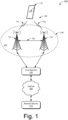
- FIG. 1 illustrates an example environment 100, which includes a user equipment 110 (UE 110) that can communicate with base stations 120 (illustrated as base stations 121 and 122) through wireless communication links 130 (wireless link 130), illustrated as wireless links 131 and 132.
- UE 110 user equipment 110
- base stations 120 illustrated as base stations 121 and 122
- wireless link 130 wireless link 130
- the UE 110 is implemented as a smartphone but may be implemented as any suitable computing or electronic device, such as a mobile communication device, modem, cellular phone, gaming device, navigation device, media device, laptop computer, desktop computer, tablet computer, smart appliance, vehicle-based communication system, or an Internet-of Things (IoT) device such as a sensor or an actuator.
- IoT Internet-of Things
- the base stations 120 may be implemented in a macrocell, microcell, small cell, picocell, and the like, or any combination thereof.
- the base stations 120 communicate with the user equipment 110 using the wireless links 131 and 132, which may be implemented as any suitable type of wireless link.
- the wireless links 131 and 132 include control and data communication, such as downlink of data and control information communicated from the base stations 120 to the user equipment 110, uplink of other data and control information communicated from the user equipment 110 to the base stations 120, or both.
- the wireless links 130 may include one or more wireless links (e.g ., radio links) or bearers implemented using any suitable communication protocol or standard, or combination of communication protocols or standards, such as 3rd Generation Partnership Project Long-Term Evolution (3GPP LTE), Fifth Generation New Radio (5G NR), and so forth.
- Multiple wireless links 130 may be aggregated in a carrier aggregation to provide a higher data rate for the UE 110.
- Multiple wireless links 130 from multiple base stations 120 may be configured for Coordinated Multipoint (CoMP) communication with the UE 110.
- CoMP Coordinated Multipoint
- the base stations 120 are collectively a Radio Access Network 140 (e.g., RAN, Evolved Universal Terrestrial Radio Access Network, E-UTRAN, 5G NR RAN or NR RAN).
- the base stations 121 and 122 in the RAN 140 are connected to a core network 150.
- the base stations 121 and 122 connect, at 102 and 104 respectively, to the core network 150 through an NG2 interface for control-plane signaling and using an NG3 interface for user-plane data communications when connecting to a 5G core network, or using an S1 interface for control-plane signaling and user-plane data communications when connecting to an Evolved Packet Core (EPC) network.
- EPC Evolved Packet Core
- the base stations 121 and 122 can communicate using an Xn Application Protocol (XnAP) through an Xn interface, or using an X2 Application Protocol (X2AP) through an X2 interface, at 106, to exchange user-plane and control-plane data.
- XnAP Xn Application Protocol
- X2AP X2 Application Protocol
- the user equipment 110 may connect, via the core network 150, to public networks, such as the Internet 160 to interact with a remote service 170.
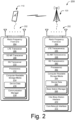
- FIG. 2 illustrates an example device diagram 200 of the UE 110 and the base stations 120.
- the UE 110 and the base stations 120 may include additional functions and interfaces that are omitted from FIG. 2 for the sake of clarity.
- the UE 110 includes antennas 202, a radio frequency front end 204 (RF front end 204), an LTE transceiver 206, a 5G NR transceiver 208, and a 6G transceiver 210 for communicating with base stations 120 in the RAN 140.
- the RF front end 204 of the UE 110 can couple or connect the LTE transceiver 206, the 5G NR transceiver 208, and the 6G transceiver 210 to the antennas 202 to facilitate various types of wireless communication.
- the antennas 202 of the UE 110 may include an array of multiple antennas that are configured similarly to or differently from each other.
- the antennas 202 and the RF front end 204 can be tuned to, and/or be tunable to, one or more frequency bands defined by the 3GPP LTE, 5G NR, and 6G communication standards and implemented by the LTE transceiver 206, the 5G NR transceiver 208, and/or the 6G transceiver 210. Additionally, the antennas 202, the RF front end 204, the LTE transceiver 206, the 5G NR transceiver 208, and/or the 6G transceiver 210 may be configured to support beamforming for the transmission and reception of communications with the base stations 120.
- the antennas 202 and the RF front end 204 can be implemented for operation in sub-gigahertz bands, sub-6 GHZ bands, and/or above 6 GHz bands that are defined by the 3GPP LTE, 5G NR, and 6G communication standards.
- the UE 110 also includes processor(s) 212 and computer-readable storage media 214 (CRM 214).
- the processor 212 may be a single core processor or a multiple core processor composed of a variety of materials, such as silicon, polysilicon, high-K dielectric, copper, and so on.
- CRM 214 may include any suitable memory or storage device such as random-access memory (RAM), static RAM (SRAM), dynamic RAM (DRAM), non-volatile RAM (NVRAM), read-only memory (ROM), or Flash memory useable to store device data 216 of the UE 110.
- the device data 216 includes user data, multimedia data, beamforming codebooks, applications, and/or an operating system of the UE 110, which are executable by processor(s) 212 to enable user-plane communication, control-plane signaling, and user interaction with the UE 110.
- the CRM 214 may also include a communication manager 218.
- the communication manager 218 may be implemented in whole or part as hardware logic or circuitry integrated with or separate from other components of the UE 110.
- the communication manager 218 can communicate with the antennas 202, the RF front end 204, the LTE transceiver 206, the 5G NR transceiver 208, and/or the 6G transceiver 210 to monitor the quality of the wireless communication links 130.
- the communication manager 218 can configure the antennas 202, the RF front end 204, the LTE transceiver 206, the 5G NR transceiver, and/or the 6G transceiver 210 to implement the techniques for CBG-based NOMA transmission described herein.
- the device diagram for the base stations 120 includes a single network node (e.g ., a gNode B).
- the functionality of the base stations 120 may be distributed across multiple network nodes or devices and may be distributed in any fashion suitable to perform the functions described herein.
- the base stations 120 include antennas 252, a radio frequency front end 254 (RF front end 254), one or more LTE transceivers 256, one or more 5G NR transceivers 258, and/or one or more 6G transceivers 260 for communicating with the UE 110.
- the RF front end 254 of the base stations 120 can couple or connect the LTE transceivers 256, the 5G NR transceivers 258, and/or the 6G transceivers 260 to the antennas 252 to facilitate various types of wireless communication.
- the antennas 252 of the base stations 120 may include an array of multiple antennas that are configured similarly to or differently from each other.
- the antennas 252 and the RF front end 254 can be tuned to, and/or be tunable to, one or more frequency band defined by the 3GPP LTE, 5G NR, and 6G communication standards, and implemented by the LTE transceivers 256, one or more 5G NR transceivers 258, and/or one or more 6G transceivers 260. Additionally, the antennas 252, the RF front end 254, the LTE transceivers 256, one or more 5G NR transceivers 258, and/or one or more 6G transceivers 260 may be configured to support beamforming, such as Massive-MIMO, for the transmission and reception of communications with the UE 110.
- beamforming such as Massive-MIMO
- the base stations 120 also include processor(s) 262 and computer-readable storage media 264 (CRM 264).
- the processor 262 may be a single core processor or a multiple core processor composed of a variety of materials, such as silicon, polysilicon, high-K dielectric, copper, and so on.
- CRM 264 may include any suitable memory or storage device such as random-access memory (RAM), static RAM (SRAM), dynamic RAM (DRAM), non-volatile RAM (NVRAM), read-only memory (ROM), or Flash memory useable to store device data 266 of the base stations 120.
- the device data 266 includes network scheduling data, radio resource management data, beamforming codebooks, applications, and/or an operating system of the base stations 120, which are executable by processor(s) 262 to enable communication with the UE 110.
- CRM 264 also includes a base station manager 268.
- the base station manager 268 may be implemented in whole or part as hardware logic or circuitry integrated with or separate from other components of the base stations 120.
- the base station manager 268 configures the LTE transceivers 256, the 5G NR transceivers 258, and the 6G transceiver(s) 260 for communication with the UE 110, as well as communication with a core network, such as the core network 150, and routing user-plane and control-plane data for joint communication.
- the base stations 120 include an inter-base station interface 270, such as an Xn and/or X2 interface, which the base station manager 268 configures to exchange user-plane and control-plane data between other base stations 120, to manage the communication of the base stations 120 with the UE 110.
- the base stations 120 include a core network interface 272 that the base station manager 268 configures to exchange user-plane and control-plane data with core network functions and/or entities.
- FIG. 3 illustrates an air interface resource that extends between a user equipment and a base station and with which various aspects of a CBG-based NOMA transmission can be implemented.
- the air interface resource 302 can be divided into resource units 304, each of which occupies some intersection of frequency spectrum and elapsed time.
- a portion of the air interface resource 302 is illustrated graphically in a grid or matrix having multiple resource blocks 310, including example resource blocks 311, 312, 313, 314.
- An example of a resource unit 304 therefore includes at least one resource block 310. As shown, time is depicted along the horizontal dimension as the abscissa axis, and frequency is depicted along the vertical dimension as the ordinate axis.
- the air interface resource 302 may span any suitable specified frequency range, and/or may be divided into intervals of any specified duration.
- Increments of time can correspond to, for example, milliseconds (mSec).
- Increments of frequency can correspond to, for example, megahertz (MHz).
- the base stations 120 allocate portions (e.g ., resource units 304) of the air interface resource 302 for uplink and downlink communications.
- Each resource block 310 of network access resources may be allocated to support respective wireless communication links 130 of multiple user equipment 110.
- the resource block 311 may span, as defined by a given communication protocol, a specified frequency range 306 and comprise multiple subcarriers or frequency sub-bands.
- the resource block 311 may include any suitable number of subcarriers ( e.g ., 12) that each correspond to a respective portion ( e.g., 15 kHz) of the specified frequency range 306 ( e.g ., 180 kHz).
- the resource block 311 may also span, as defined by the given communication protocol, a specified time interval 308 or time slot (e.g ., lasting approximately one-half millisecond or 7 orthogonal frequency-division multiplexing (OFDM) symbols).
- the time interval 308 includes subintervals that may each correspond to a symbol, such as an OFDM symbol.
- each resource block 310 may include multiple resource elements 320 (REs) that correspond to, or are defined by, a subcarrier of the frequency range 306 and a subinterval (or symbol) of the time interval 308.
- a given resource element 320 may span more than one frequency subcarrier or symbol.
- a resource unit 304 may include at least one resource block 310, at least one resource element 320, and so forth.
- multiple user equipment 110 are communicating with the base stations 120 (one of which is shown) through access provided by portions of the air interface resource 302.
- the base station manager 268 may determine a respective data-rate, type of information, or amount of information (e.g ., data or control information) to be communicated ( e.g ., transmitted) by the user equipment 110. For example, the base station manager 268 can determine that each user equipment 110 is to transmit at a different respective data rate or transmit a different respective amount of information.
- the base station manager 268 then allocates one or more resource blocks 310 to each user equipment 110 based on the determined data rate or amount of information.
- the base station manager 268 may allocate resource units at an element-level.
- the base station manager 268 may allocate one or more resource elements 320 or individual subcarriers to different user equipment 110.
- one resource block 310 can be allocated to facilitate network access for multiple user equipment 110.
- the base station manager 268 may allocate, at various granularities, one or up to all subcarriers or resource elements 320 of a resource block 310 to one user equipment 110 or divided across multiple user equipment 110, thereby enabling higher network utilization or increased spectrum efficiency.
- the base station manager 268 can therefore allocate air interface resource 302 by resource unit 304, resource block 310, frequency carrier, time interval, resource element 320, frequency subcarrier, time subinterval, symbol, spreading code, some combination thereof, and so forth. Based on respective allocations of resource units 304, the base station manager 268 can transmit respective messages to the multiple user equipment 110 indicating the respective allocation of resource units 304 to each user equipment 110. Each message may enable a respective user equipment 110 to queue the information or configure the LTE transceiver 206, the 5G NR transceiver 208, and/or the 6G transceiver 210 to communicate via the allocated resource units 304 of the air interface resource 302.
- Example methods 400 and 500 are described with reference to FIGs. 4 and 5 , respectively, in accordance with one or more aspects of CBG-based NOMA transmission.
- the method 400 described with respect to FIG. 4 , is performed by a UE 110 for communicating with a base station.
- the method 500, described with respect to FIG. 5 is performed by a base station 120 for configuring and communicating with a UE.
- FIG. 4 illustrates an example method of CBG-based NOMA transmission in accordance with aspects of the techniques described herein.
- the order in which the method blocks are described are not intended to be construed as a limitation, and any number of the described method blocks can be combined in any order to implement a method, or an alternate method.
- the UE receives, from the base station, a first message including a first configuration for a code block group (CBG)-based transmission scheme.
- UE 110 receives the first message from base station 120.
- the first message may assign the UE a maximum number of CBGs.
- the UE receives, from the base station, a second message including a second configuration for a non-orthogonal multiple access (NOMA) transmission scheme.
- NOMA non-orthogonal multiple access
- the UE 110 receives the second message from the base station 120.
- the second message may include a dedicated multiple access signature and/or a pool of time-frequency resources, as described above.
- the UE transmits uplink control information (UCI) to the base station using a NOMA transmission scheme from the second configuration in the second message.
- UCI uplink control information
- the UE 110 specifies its identity in the UCI and utilizes NOMA transmission to transmit the UCI to the base station 120.
- the UE transmits to the base station uplink data associated with the UCI using a CBG-based NOMA transmission based on the first configuration in the first message and the second configuration in the second message.
- the UE 110 transmits the uplink data to the base station 120 using the CBG-based NOMA transmission scheme.
- the UE receives, from the base station, a hybrid automatic retransmission request (HARQ) message that includes one or more HARQ acknowledgements (ACKs) or negative acknowledgements (NACKs) corresponding to a decoding result of the uplink data.
- HARQ hybrid automatic retransmission request
- the UE 110 may receive the HARQ message from the base station 120.
- the HARQ message may include any number of HARQ ACKs and HARQ NACKs, such as a number equal to the maximum number of CBGs.
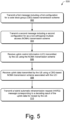
- FIG. 5 illustrates an example method 500 for configuring and communicating with a UE.
- the order in which the method blocks are described are not intended to be construed as a limitation, and any number of the described method blocks can be combined in any order to implement a method, or an alternate method.
- a base station transmits a first message including a first configuration for a code block group (CBG)-based transmission scheme.
- the base station 120 may transmit the first message to the UE 110 to instruct the UE to perform CBG-based transmission.
- CBG code block group
- the base station transmits a second message including a second configuration for a non-orthogonal multiple access (NOMA) transmission scheme.
- the base station 120 may transmit the second message to the UE 110 to instruct the UE to perform NOMA transmission.
- the base station 120 may assign a dedicated multiple access signature or a pool of time-frequency resources to the UE 110 using the second message.
- the base station receives uplink control information (UCI) transmitted by the UE is received using the NOMA transmission scheme.
- the base station 120 may receive the UCI, from the UE, formatted in the NOMA transmission scheme.
- the base station receives uplink data transmitted by the UE using CBG-based NOMA transmission scheme associated with the UCI.
- the base station 120 may receive the uplink data, from the UE 110, formatted in the CBG-based NOMA transmission scheme.
- the base station 120 also decodes the uplink data associated with the UCI to provide a decoding result.
- the decoding of the uplink data includes decoding each CBG of the uplink data.
- the base station transmits a hybrid automatic retransmission request (HARQ) message corresponding to a decoding result of the uplink data for receipt by the UE.
- HARQ hybrid automatic retransmission request
- the base station 120 may transmit the HARQ message to the UE 110.
- the HARQ message may include at least one HARQ acknowledgment (ACK) or negative acknowledgment (NACK), which are usable by the UE 110 to determine which CBGs failed transmission and require re-transmission.
- ACK HARQ acknowledgment
- NACK negative acknowledgment
- any of the components, modules, methods, and operations described herein can be implemented using software, firmware, hardware (e.g ., fixed logic circuitry), manual processing, or any combination thereof.
- Some operations of the example methods may be described in the general context of executable instructions stored on computer-readable storage memory that is local and/or remote to a computer processing system, and implementations can include software applications, programs, functions, and the like.
- any of the functionality described herein can be performed, at least in part, by one or more hardware logic components, such as, and without limitation, Field-programmable Gate Arrays (FPGAs), Application-specific Integrated Circuits (ASICs), Application-specific Standard Products (ASSPs), System-on-a-chip systems (SoCs), Complex Programmable Logic Devices (CPLDs), and the like.
- FPGAs Field-programmable Gate Arrays
- ASICs Application-specific Integrated Circuits
- ASSPs Application-specific Standard Products
- SoCs System-on-a-chip systems
- CPLDs Complex Programmable Logic Devices
- FIG. 6 illustrates an example communication device 600 that can be implemented as the user equipment 110 in accordance with one or more aspects of CBG-based NOMA Transmission for a wireless network as described herein.
- the example communication device 600 may be any type of mobile communication device, computing device, client device, mobile phone, tablet, communication, entertainment, gaming, media playback, and/or other type of device.
- the communication device 600 can be integrated with electronic circuitry, microprocessors, memory, input output (I/O) logic control, communication interfaces and components, as well as other hardware, firmware, and/or software to implement the device. Further, the communication device 600 can be implemented with various components, such as with any number and combination of different components as further described with reference to the user equipment 110 shown in Figs 1 and 2 .
- the communication device 600 includes one or more microprocessors 602 (e.g ., microcontrollers or digital signal processors) that process executable instructions.
- the device also includes an input-output (I/O) logic control 604 ( e.g ., to include electronic circuitry).
- the microprocessors can include components of an integrated circuit, programmable logic device, a logic device formed using one or more semiconductors, and other implementations in silicon and/or hardware, such as a processor and memory system implemented as a system-on-chip (SoC).
- SoC system-on-chip
- the device can be implemented with any one or combination of software, hardware, firmware, or fixed logic circuitry that may be implemented with processing and control circuits.
- the one or more sensors 606 can be implemented to detect various properties such as acceleration, temperature, humidity, supplied power, proximity, external motion, device motion, sound signals, ultrasound signals, light signals, global-positioning-satellite (GPS) signals, radio frequency (RF), other electromagnetic signals or fields, or the like.
- the sensors 606 may include any one or a combination of temperature sensors, humidity sensors, accelerometers, microphones, optical sensors up to and including cameras (e.g ., charged coupled-device or video cameras), active or passive radiation sensors, GPS receivers, and radio frequency identification detectors.
- the communication device 600 includes a memory device controller 608 and a memory device 610 (e.g ., the computer-readable storage media 214), such as any type of a nonvolatile memory and/or other suitable electronic data storage device.
- the communication device 600 can also include various firmware and/or software, such as an operating system 612 that is maintained as computer executable instructions by the memory and executed by a microprocessor.
- the device software may also include a communication manager application 614 that implements aspects of CBG-based NOMA transmission for a wireless network.
- the communication manager application 614 may be implemented as the communication manager 218 of the UE 110 or as the base station manager 268 of the base station 120.
- the computer-readable storage media described herein excludes propagating signals.
- the device interface 616 may receive input from a user and/or provide information to the user ( e.g ., as a user interface), and a received input can be used to determine a setting.
- the device interface 616 may also include mechanical or virtual components that respond to a user input. For example, the user can mechanically move a sliding or rotatable component, or the motion along a touchpad may be detected, and such motions may correspond to a setting adjustment of the device. Physical and virtual movable user-interface components can allow the user to set a setting along a portion of an apparent continuum.
- the device interface 616 may also receive inputs from any number of peripherals, such as buttons, a keypad, a switch, a microphone, and an imager ( e.g ., a camera device).
- the communication device 600 can include network interfaces 620, such as a wired and/or wireless interface for communication with other devices via Wireless Local Area Networks (WLANs), wireless Personal Area Networks (PANs), and for network communication, such as via the Internet.
- the network interfaces 620 may include Wi-Fi, Bluetooth TM , BLE, and/or IEEE 802.15.4.
- the communication device 600 also includes wireless radio systems 622 for wireless communication with cellular and/or mobile broadband networks. Each of the different radio systems can include a radio device, antenna, and chipset that is implemented for a particular wireless communications technology, such as the antennas 202, the RF front end 204, the LTE transceiver 206, and/or the 5G NR transceiver 208.
- the communication device 600 also includes a power source 624, such as a battery and/or to connect the device to line voltage. An AC power source may also be used to charge the battery of the device.
Landscapes
- Engineering & Computer Science (AREA)
- Signal Processing (AREA)
- Computer Networks & Wireless Communication (AREA)
- Mobile Radio Communication Systems (AREA)
- Detection And Prevention Of Errors In Transmission (AREA)
Claims (15)
- Verfahren für ein Benutzergerät (user equipment, UE) (110), um mit einer Basisstation (120) zu kommunizieren, wobei das Verfahren Folgendes umfasst:Empfangen einer ersten Meldung, die dazu konfiguriert ist, eine erste Konfiguration für eine Codeblockgruppen-basiertes (code block group-based, CBG-based) Übertragungseinrichtung zu beinhalten, durch das UE (110) und von der Basisstation (120); Empfangen einer zweiten Meldung, die dazu konfiguriert ist, eine zweite Konfiguration für eine nichtorthogonale Mehrfachzugriffsübertragungseinrichtung (non-orthogonal multiple access, NOMA) zu beinhalten, durch das UE (110) und von der Basisstation (120);Übertragen von Uplink-Daten unter Verwendung eines CBG-basierten NOMA-Übertragungsschemas, basierend auf der ersten Konfiguration in der ersten Meldung und der zweiten Konfiguration in der zweiten Meldung, durch das UE (110) und an die Basisstation (120); undEmpfangen eines Decodierungsergebnisses der CBG-basierten NOMAÜbertragung durch das UE (110) und von der Basisstation (120), wobei das Decodierungsergebnis eine Angabe darüber beinhaltet, welche CBG nicht von der Basisstation (120) decodiert werden konnten.
- Verfahren nach Anspruch 1, ferner umfassend:
erneutes Übertragen nur der CBG, die in dem Decodierungsergebnis als nicht decodiert angegeben sind, durch das UE (110) und an die Basisstation (120). - Verfahren nach Anspruch 1 oder Anspruch 2, ferner umfassend:Übertragen von Uplink-Steuerinformationen (uplink control information, UCI) unter Verwendung des NOMA-Übertragungsschemas durch das UE (110) und an die Basisstation (120), undwobei das Übertragen von Uplink-Daten unter Verwendung des CBG-basierten NOMA-Übertragungsschemas das Übertragen von Uplink-Daten beinhaltet, die der UCI zugeordnet sind.
- Verfahren nach Anspruch 3, wobei die UCI eines oder mehrere von Folgendem spezifiziert: eine Identität des UE (110); ein Modulations- und Codierungsschema (modulation and coding scheme, MCS), das zum Übertragen der Uplink-Daten verwendet werden soll; einen Indikator für neue Daten (new data indicator, NDI), der angibt, ob es sich bei den Uplink-Daten um eine neue Übertragung oder eine erneute Übertragung handelt; und eine Redundanzversion(redundancy version, RV) für das richtige Kombinieren von hybriden automatischen Weiterleitungsanforderungen (Hybrid Automatic Retransmission Request, HARQ).
- Verfahren nach Anspruch 4, wobei die UCI eine Identität des UE (110) spezifiziert und die Identität des UE (110) eine temporäre Kennung des Zellfunknetzwerkes (Cell Radio Network Temporary Identifier, C-RNTI) des UE (110) ist.
- Verfahren nach einem der Ansprüche 3 bis 5, wobei die UCI CBG-Übertragungsinformationen (CBG transmission information, CBGTI) umfasst, die angeben, welche CBG in den der UCI zugeordneten Uplink-Daten übertragen werden.
- Verfahren nach einem der vorhergehenden Ansprüche, wobei das Decodierungsergebnis in einer Downlink-Steuerinformations-(downlink control information, DCI-) Meldung empfangen wird und die DCI-Meldung optional eine Uplink-Grant-Meldung ist.
- Verfahren nach Anspruch 7, wobei die Uplink-Grant-Meldung eine Bitmap umfasst, die den binären Decodierungsergebnissen einer vollständigen Liste von CBG entspricht, die durch das UE in den Uplink-Daten übertragen wurden, und die Bitmap optional eine Bestätigung (acknowledgement, ACK) oder eine negative Bestätigung (negative acknowledgement, NACK) für jede CBG in der Bitmap beinhaltet, wobei die ACK den CBGs entspricht, die erfolgreich decodiert wurden, und die NACK den CBGs entspricht, die nicht decodiert werden konnten.
- Benutzergerät (110), umfassend:einen hardwarebasierten Sender-Empfänger (206, 208, 210);computerlesbare Speichermedien (214), die ausführbare Anweisungen speichern; undeinen Prozessor (212), der dazu konfiguriert ist, die Anweisungen in dem computerlesbaren Medium (214) auszuführen, um den hardwarebasierten Sender-Empfänger (206, 208, 210) zu verwenden, um das Verfahren nach einem vorhergehenden Anspruch durchzuführen.
- Verfahren für eine Basisstation (120) zum Kommunizieren mit einem Benutzergerät, UE (110), wobei das Verfahren Folgendes umfasst:Übertragen einer ersten Meldung, die dazu konfiguriert ist, eine erste Konfiguration für eine Codeblockgruppen-basiertes, CBG-based, Übertragungseinrichtung zu beinhalten, durch die Basisstation (120);Übertragen einer zweiten Meldung, die dazu konfiguriert ist, eine zweite Konfiguration für eine nichtorthogonale Mehrfachzugriffsübertragungseinrichtung, NOMA, zu beinhalten, durch die Basisstation (120);Empfangen von Uplink-Daten, die durch das UE unter Verwendung eines CBG-basierten NOMA-Übertragungsschemas basierend auf der ersten Konfiguration in der ersten Meldung und der zweiten Konfiguration in der zweiten Meldung übertragen werden, durch die Basisstation (120) und von dem UE (110);Decodieren jeder CBG der Uplink-Daten, um ein Decodierungsergebnis bereitzustellen, wobei das Decodierungsergebnis eine Angabe darüber beinhaltet, welche der CBGs gegebenenfalls nicht decodiert werden konnten; undÜbertragen des Decodierungsergebnisses durch die Basisstation (120) und an das UE (110).
- Verfahren nach Anspruch 10, ferner umfassend:
Empfangen nur der CBG, die im Decodierungsergebnis als nicht decodiert angegeben sind, durch die Basisstation (120) und von dem UE (110). - Verfahren nach Anspruch 10 oder Anspruch 11, ferner umfassend:
Empfangen von Uplink-Steuerinformationen, UCI, die unter Verwendung des NOMA-Übertragungsschemas übertragen werden, durch die Basisstation (120) übertragen durch das UE (110), und wobei das Empfangen von Uplink-Daten, die durch das UE (110) unter Verwendung des CBG-basierten NOMA-Übertragungsschemas übertragen werden, das Empfangen von dem UCI zuzuordnenden Uplink-Daten beinhaltet. - Verfahren nach einem der Ansprüche 10 bis 12, wobei das Decodierungsergebnis in einer Downlink-Steuerinformations-, DCI-, Meldung übertragen wird und die DCI-Meldung optional eine Uplink-Grant-Meldung ist.
- Verfahren nach Anspruch 13, wobei die Uplink-Grant-Meldung eine Bitmap umfasst, die den binären Decodierungsergebnissen einer vollständigen Liste von CBG entspricht, die durch das UE (110) in den Uplink-Daten übertragen wurden, und die Bitmap optional eine Bestätigung (acknowledgement, ACK) oder eine negative Bestätigung (negative acknowledgement, NACK) für jede CBG in der Bitmap beinhaltet, wobei die ACK den CBGs entspricht, die erfolgreich decodiert wurden, und die NACK den CBGs entspricht, die nicht decodiert werden konnten.
- Basisstation (120), umfassend:einen hardwarebasierten Sender-Empfänger (256, 259, 260);computerlesbare Speichermedien (264), die ausführbare Anweisungen speichern; undeinen Prozessor (262), der dazu konfiguriert ist, die Anweisungen in dem computerlesbaren Medium (264) auszuführen, um den hardwarebasierten Sender-Empfänger (256, 259, 260) zu verwenden, um das Verfahren nach einem der Ansprüche 10 bis 14 durchzuführen.
Applications Claiming Priority (3)
| Application Number | Priority Date | Filing Date | Title |
|---|---|---|---|
| US201862685876P | 2018-06-15 | 2018-06-15 | |
| EP19723284.6A EP3766201B1 (de) | 2018-06-15 | 2019-04-29 | Cbg-basierte noma-übertragung für ein drahtloses netzwerk |
| PCT/US2019/029691 WO2019240887A1 (en) | 2018-06-15 | 2019-04-29 | Cbg-based noma transmission for a wireless network |
Related Parent Applications (2)
| Application Number | Title | Priority Date | Filing Date |
|---|---|---|---|
| EP19723284.6A Division EP3766201B1 (de) | 2018-06-15 | 2019-04-29 | Cbg-basierte noma-übertragung für ein drahtloses netzwerk |
| EP19723284.6A Division-Into EP3766201B1 (de) | 2018-06-15 | 2019-04-29 | Cbg-basierte noma-übertragung für ein drahtloses netzwerk |
Publications (2)
| Publication Number | Publication Date |
|---|---|
| EP4027558A1 EP4027558A1 (de) | 2022-07-13 |
| EP4027558B1 true EP4027558B1 (de) | 2024-11-20 |
Family
ID=66476863
Family Applications (2)
| Application Number | Title | Priority Date | Filing Date |
|---|---|---|---|
| EP19723284.6A Active EP3766201B1 (de) | 2018-06-15 | 2019-04-29 | Cbg-basierte noma-übertragung für ein drahtloses netzwerk |
| EP22159471.6A Active EP4027558B1 (de) | 2018-06-15 | 2019-04-29 | Cbg-basierte noma-übertragung für ein drahtloses netzwerk |
Family Applications Before (1)
| Application Number | Title | Priority Date | Filing Date |
|---|---|---|---|
| EP19723284.6A Active EP3766201B1 (de) | 2018-06-15 | 2019-04-29 | Cbg-basierte noma-übertragung für ein drahtloses netzwerk |
Country Status (4)
| Country | Link |
|---|---|
| US (2) | US11425699B2 (de) |
| EP (2) | EP3766201B1 (de) |
| CN (1) | CN112005515B (de) |
| WO (1) | WO2019240887A1 (de) |
Families Citing this family (17)
| Publication number | Priority date | Publication date | Assignee | Title |
|---|---|---|---|---|
| EP3688879B1 (de) * | 2017-09-28 | 2024-06-12 | Fraunhofer-Gesellschaft zur Förderung der angewandten Forschung e.V. | Übertragung von daten durch mehrere benutzer über gemeinsame ressourcen |
| CN112219357A (zh) | 2018-06-12 | 2021-01-12 | 谷歌有限责任公司 | 基于波束成形的无许可非正交多址接入传输 |
| EP3766201B1 (de) | 2018-06-15 | 2022-04-13 | Google LLC | Cbg-basierte noma-übertragung für ein drahtloses netzwerk |
| US11063705B2 (en) | 2018-06-18 | 2021-07-13 | Google Llc | Methods and apparatus for HARQ in NOMA transmission for 5G NR |
| EP3808020B1 (de) | 2018-06-22 | 2023-02-22 | Google LLC | Noma-basierte drahtlose kommunikation mit mehreren übertragungspfaden |
| US11910391B2 (en) | 2018-08-10 | 2024-02-20 | Google Llc | Methods and apparatus for an uplink control channel in NOMA asynchronous transmissions |
| WO2020069090A1 (en) | 2018-09-26 | 2020-04-02 | Google Llc | Non-orthogonal multiple access configuration in split base station architectures |
| WO2020062068A1 (zh) * | 2018-09-28 | 2020-04-02 | Oppo广东移动通信有限公司 | 无线通信方法、终端设备和网络设备 |
| US11330443B2 (en) * | 2019-01-08 | 2022-05-10 | Ofinno, Llc | HARQ feedback for configured grant |
| US11563507B2 (en) * | 2019-05-14 | 2023-01-24 | Infinera Corporation | Efficient adaptive optical spectrum partitioning and allocation scheme |
| US11489613B2 (en) * | 2019-05-14 | 2022-11-01 | Infinera Corporation | Out-of-band communication channel for subcarrier-based optical communication systems |
| US11218220B2 (en) * | 2019-05-14 | 2022-01-04 | Infinera Corporation | Out-of-band communication channel for subcarrier-based optical communication systems |
| US11502771B2 (en) * | 2019-05-14 | 2022-11-15 | Infinera Corporation | Out-of-band communication channel for subcarrier-based optical communication systems |
| US11296812B2 (en) * | 2019-05-14 | 2022-04-05 | Infinera Corporation | Out-of-band communication channel for subcarrier-based optical communication systems |
| US11671195B2 (en) * | 2019-05-14 | 2023-06-06 | Infinera Corporation | Proactive optical spectrum defragmentation scheme |
| US11190291B2 (en) * | 2019-05-14 | 2021-11-30 | Infinera Corporation | Out-of-band communication channel for subcarrier-based optical communication systems |
| KR20220008661A (ko) * | 2020-07-14 | 2022-01-21 | 삼성전자주식회사 | 무선 통신 시스템에서 하향링크 피드백 정보 결정 방법 및 장치 |
Family Cites Families (93)
| Publication number | Priority date | Publication date | Assignee | Title |
|---|---|---|---|---|
| KR101635883B1 (ko) | 2009-02-03 | 2016-07-20 | 엘지전자 주식회사 | 하향링크 참조 신호 송수신 기법 |
| US20110158117A1 (en) | 2009-06-29 | 2011-06-30 | Qualcomm Incorporated | Power headroom report for simultaneous transmissions on disparate radio access technologies |
| CN104618077B (zh) | 2010-03-29 | 2018-04-17 | Lg电子株式会社 | 传输控制信息以支持上行链路多天线传输的有效方法和装置 |
| US9131457B2 (en) | 2010-08-12 | 2015-09-08 | Samsung Electronics Co., Ltd. | Apparatus and method for transmission of uplink sounding reference signals in a wireless network |
| US9413395B2 (en) | 2011-01-13 | 2016-08-09 | Google Technology Holdings LLC | Inter-modulation distortion reduction in multi-mode wireless communication terminal |
| US9374184B2 (en) * | 2012-03-23 | 2016-06-21 | Nokia Solutions And Networks Oy | Controlling of code block to physical layer mapping |
| US9930678B2 (en) * | 2012-07-19 | 2018-03-27 | Qualcomm Incorporated | Multiplexing UEs with different TDD configurations and some techniques to mitigate UE-to-UE and base station-to-base station interference |
| EP2693815A1 (de) | 2012-08-03 | 2014-02-05 | Panasonic Corporation | Energiereserven-Berichterstattung zur Vermeidung von Interferenzen bei einer In-Gerätekoexistenz |
| WO2015065157A1 (ko) | 2013-11-04 | 2015-05-07 | 엘지전자 주식회사 | 무선 통신 시스템에서 채널상태정보를 전송하는 방법 및 장치 |
| US10425448B2 (en) | 2014-03-17 | 2019-09-24 | Telefonaktiebolaget Lm Ericsson (Publ) | End-to-end data protection |
| US10003486B2 (en) * | 2014-04-28 | 2018-06-19 | Intel IP Corporation | Non-orthogonal multiple access (NOMA) wireless systems and methods |
| US9712272B2 (en) | 2014-06-02 | 2017-07-18 | Intel IP Corporation | User equipment and method for dynamic non-orthogonal multiple access communication |
| US10149318B2 (en) | 2014-09-02 | 2018-12-04 | Qualcomm Incorporated | Techniques for transmitting and receiving downlink control information for a set of NOMA downlink transmissions |
| US10396930B2 (en) | 2014-11-04 | 2019-08-27 | Lg Electronics Inc. | NOMA scheme data receiving method and user equipment |
| JP2018505614A (ja) | 2015-01-30 | 2018-02-22 | 華為技術有限公司Huawei Technologies Co.,Ltd. | 非直交多元接続送信方法、基地局、及びue |
| WO2016153250A1 (ko) | 2015-03-23 | 2016-09-29 | 엘지전자(주) | 무선 통신 시스템에서 비-직교 다중 접속을 이용하여 데이터를 송수신하기 위한 방법 및 장치 |
| JP6606735B2 (ja) | 2015-03-26 | 2019-11-20 | インテル アイピー コーポレーション | 装置、プログラム、及び非一時的コンピュータ読み取り可能記憶媒体 |
| EP3297306A4 (de) | 2015-05-15 | 2018-04-04 | Fujitsu Limited | Drahtloskommunikationssystem, drahtlosbasisstationsvorrichtung und drahtloskommunikationsverfahren |
| US10148332B2 (en) | 2015-05-28 | 2018-12-04 | Futurewei Technologies, Inc. | System and method for multi-level beamformed non-orthogonal multiple access communications |
| WO2017002950A1 (ja) | 2015-07-01 | 2017-01-05 | 日本電産コパル株式会社 | リニア振動モータ |
| US10090978B2 (en) | 2015-07-10 | 2018-10-02 | Qualcomm Incorporated | Reference signal and signalling design for non-orthogonal multiple access with legacy user equipment as a base layer |
| WO2017047875A1 (ko) | 2015-09-16 | 2017-03-23 | 엘지전자(주) | 무선 통신 시스템에서 데이터 송수신 방법 및 이를 위한 장치 |
| EP3893564A1 (de) | 2015-09-21 | 2021-10-13 | IPCom GmbH & Co. KG | Nichtorthogonale mehrfachzugriffssignalisierung in lte |
| WO2017055271A1 (en) | 2015-09-28 | 2017-04-06 | Ipcom Gmbh & Co. Kg | Non-orthogonal multiple access network operation |
| KR20170100188A (ko) | 2016-02-25 | 2017-09-04 | 삼성전자주식회사 | 상향링크 비직교성 다중 접속 기법 및 협력 수신 지원 기법 |
| JP6630850B2 (ja) | 2016-04-01 | 2020-01-15 | ホアウェイ・テクノロジーズ・カンパニー・リミテッド | グラントフリーアップリンク伝送のためのharqシステムおよび方法 |
| KR102909813B1 (ko) | 2016-04-04 | 2026-01-09 | 삼성전자 주식회사 | 무선 통신 시스템에서 피드백 송수신 방법 및 장치 |
| CN107370574A (zh) | 2016-05-12 | 2017-11-21 | 株式会社Ntt都科摩 | 针对上行数据传输的反馈方法及装置 |
| WO2017196086A1 (en) * | 2016-05-12 | 2017-11-16 | Samsung Electronics Co., Ltd. | Method and apparatus for assigning uplink resource for cellular network using unlicensed bands |
| CN107466112B (zh) | 2016-06-03 | 2022-08-12 | 北京三星通信技术研究有限公司 | 上行数据传输方法、随机接入方法和相应的终端和基站 |
| US10980065B2 (en) | 2016-06-07 | 2021-04-13 | Nokia Technologies Oy | Multi-connectivity of terminal device |
| CN107508661B (zh) | 2016-06-14 | 2020-07-21 | 华为技术有限公司 | 一种数据处理的方法、网络设备和终端 |
| WO2018021819A1 (en) | 2016-07-27 | 2018-02-01 | Samsung Electronics Co., Ltd. | Apparatus and method for retransmission in wireless communication system |
| CN117042157A (zh) | 2016-08-10 | 2023-11-10 | 交互数字专利控股公司 | 用于无授权上行链路多路接入的方法、装置和系统 |
| US10645689B2 (en) | 2016-08-11 | 2020-05-05 | Qualcomm Incorporated | Link establishment in a wireless backhaul network using radio access technology |
| US10727897B2 (en) | 2016-08-11 | 2020-07-28 | Mediatek Inc. | Non-orthogonal multiple access wireless communications methods and apparatus thereof |
| WO2018031620A1 (en) | 2016-08-12 | 2018-02-15 | Intel IP Corporation | Uplink grant-free noma (non-orthogonal multiple access) transmissions |
| WO2018032014A1 (en) | 2016-08-12 | 2018-02-15 | Intel Corporation | Uplink grant-less transmission techniques |
| WO2018038410A1 (ko) | 2016-08-22 | 2018-03-01 | 엘지전자 주식회사 | 비직교 다중 접속 방식에 기초하여 데이터를 전송/검출하는 방법 및 이를 위한 장치 |
| WO2018039160A1 (en) * | 2016-08-22 | 2018-03-01 | Intel IP Corporation | Dynamic loading control and interference management for mobile communication systems |
| US10412710B2 (en) | 2016-09-08 | 2019-09-10 | Samsung Electronics Co., Ltd. | Method and system for implementing multiple-access in wireless communication system |
| US10736081B2 (en) | 2016-09-14 | 2020-08-04 | Huawei Technologies Co., Ltd. | Non-orthogonal multiple access transmission |
| WO2018062842A1 (en) | 2016-09-27 | 2018-04-05 | Samsung Electronics Co., Ltd. | Method and apparatus for receiving downlink reference signal in wireless communication system |
| JP2019208086A (ja) | 2016-09-29 | 2019-12-05 | シャープ株式会社 | 基地局装置、端末装置およびその通信方法 |
| EP3944704B1 (de) | 2016-09-29 | 2023-06-14 | Samsung Electronics Co., Ltd. | Verfahren und vorrichtung zur übertragung von uplink-steuersignalen in einem drahtlosen zellularen kommunikationssystem |
| WO2018064582A1 (en) | 2016-09-30 | 2018-04-05 | Intel IP Corporation | Grant-free uplink non-orthogonal multiple access transmissions |
| US10673593B2 (en) | 2016-11-03 | 2020-06-02 | Huawei Technologies Co., Ltd. | HARQ signaling for grant-free uplink transmissions |
| WO2018084559A1 (en) | 2016-11-04 | 2018-05-11 | Samsung Electronics Co., Ltd. | Method and apparatus for grant-free data transmission in wireless communication system |
| CN108024366A (zh) | 2016-11-04 | 2018-05-11 | 北京三星通信技术研究有限公司 | 一种基于免调度的数据传输方法和设备 |
| US11477075B2 (en) | 2016-11-04 | 2022-10-18 | Apple Inc. | Wideband carrier confirguration |
| US10595336B2 (en) | 2016-11-15 | 2020-03-17 | Huawei Technologies Co., Ltd. | Systems and methods for grant-free uplink transmissions |
| US10298362B2 (en) * | 2016-11-24 | 2019-05-21 | Samsung Electronics Co., Ltd | Method and apparatus for partial retransmission in wireless cellular communication system |
| US10356740B2 (en) | 2016-11-29 | 2019-07-16 | Huawei Technologies Co., Ltd. | System and scheme for uplink synchronization for small data transmissions |
| US10492184B2 (en) * | 2016-12-09 | 2019-11-26 | Samsung Electronics Co., Ltd. | Multiplexing control information in a physical uplink data channel |
| JP2020031260A (ja) | 2016-12-28 | 2020-02-27 | シャープ株式会社 | 基地局装置、端末装置およびその通信方法 |
| US10892859B2 (en) | 2017-01-04 | 2021-01-12 | Lg Electronics Inc. | Method for performing HARQ operation in NoMA based system and apparatus therefor |
| US11546929B2 (en) | 2017-01-09 | 2023-01-03 | Huawei Technologies Co., Ltd. | Systems and methods for signaling for semi-static configuration in grant-free uplink transmissions |
| KR102544376B1 (ko) | 2017-01-13 | 2023-06-15 | 후아웨이 테크놀러지 컴퍼니 리미티드 | 무선 자원 구성 조정 방법, 장치, 및 시스템 |
| US20200107300A1 (en) | 2017-03-23 | 2020-04-02 | Lg Electronics Inc. | Method for transmitting or receiving data in wireless communication system, and device therefor |
| US10218422B2 (en) | 2017-03-24 | 2019-02-26 | Qualcomm Incorporated | Methods for beam switching in millimeter wave systems to manage thermal constraints |
| US11411684B2 (en) | 2017-03-31 | 2022-08-09 | Motorola Mobility Llc | Ceasing transmission repetitions |
| CN108696943B (zh) | 2017-04-12 | 2022-11-08 | 株式会社Kt | 用于新无线电的发送和接收数据信道的方法及使用该方法的装置 |
| US20180324770A1 (en) | 2017-05-04 | 2018-11-08 | Sharp Laboratories Of America, Inc. | User equipments, base stations and methods |
| WO2018201445A1 (en) * | 2017-05-05 | 2018-11-08 | Motorola Mobility Llc | Scheduliing transmission of data |
| US10700912B2 (en) | 2017-05-19 | 2020-06-30 | Huawei Technologies Co., Ltd. | Method and system for non-orthogonal multiple access communication |
| JP2019004320A (ja) | 2017-06-15 | 2019-01-10 | シャープ株式会社 | 基地局装置、端末装置およびその通信方法 |
| ES2916336T3 (es) | 2017-07-07 | 2022-06-30 | Beijing Xiaomi Mobile Software Co Ltd | Método y aparato de coordinación de interferencia, estación base y equipo de usuario |
| US11108440B2 (en) | 2017-08-03 | 2021-08-31 | Lg Electronics Inc. | Method and apparatus for transmitting or receiving reference signal in wireless communication system |
| KR102033353B1 (ko) | 2017-09-08 | 2019-10-17 | 한국전자통신연구원 | 상향링크 데이터 채널 송수신 방법 및 이를 위한 장치 |
| US10750488B2 (en) | 2017-09-11 | 2020-08-18 | Apple Inc. | Hybrid automatic repeat request (HARQ) based on codeblock groups in new radio systems |
| EP3462622B1 (de) | 2017-09-11 | 2021-11-24 | Apple Inc. | Erkennung von intermodulationsproblemen und konfiguration des übertragungssystems zur behebung von intermodulationsproblemen |
| WO2019064076A1 (en) | 2017-09-28 | 2019-04-04 | Lenovo (Singapore) Pte. Ltd. | AUTONOMOUS UPLINK CONFIRMATION RELEASE |
| US20190053226A1 (en) | 2017-10-23 | 2019-02-14 | Gang Xiong | Uplink control signaling for grant-free uplink transmission |
| CN108011696A (zh) * | 2017-10-24 | 2018-05-08 | 深圳市金立通信设备有限公司 | 重传反馈方法、相关设备及计算机可读介质 |
| US10887926B2 (en) | 2017-10-26 | 2021-01-05 | Mediatek Inc. | Configuration of non-orthogonal multiple access transmissions in a wireless communication system |
| US10721114B2 (en) | 2017-11-23 | 2020-07-21 | Huawei Technologies Co., Ltd. | Method and system for symbol sequence generation and transmission for non-orthogonal multiple access transmission |
| US10447518B2 (en) | 2017-12-15 | 2019-10-15 | Huawei Technologies Co., Ltd. | Methods for configurable non-orthogonal multiple access transmission |
| WO2019143964A1 (en) | 2018-01-19 | 2019-07-25 | Idac Holdings, Inc. | Methods and apparatuses for non-orthogonal multiple access |
| CN112088514B (zh) * | 2018-04-05 | 2024-06-11 | 交互数字专利控股公司 | 用于ul noma操作的配置和信令 |
| US11050532B2 (en) | 2018-04-06 | 2021-06-29 | Huawei Technologies Co., Ltd. | Method and system for non-orthogonal multiple access communication |
| US10904868B2 (en) | 2018-04-06 | 2021-01-26 | Qualcomm Incorporated | Multi-layer resource spread multiple access with permuted power scaling and phase rotation |
| US20190289628A1 (en) | 2018-05-11 | 2019-09-19 | Gang Xiong | Ue using uplink grant-based transmissions and extended power grant-free noma transmissions |
| US10985880B2 (en) | 2018-05-25 | 2021-04-20 | Qualcomm Incorporated | Non-orthogonal multiple access bandwidth part configuration |
| CN112219357A (zh) | 2018-06-12 | 2021-01-12 | 谷歌有限责任公司 | 基于波束成形的无许可非正交多址接入传输 |
| EP3766201B1 (de) | 2018-06-15 | 2022-04-13 | Google LLC | Cbg-basierte noma-übertragung für ein drahtloses netzwerk |
| WO2019245662A1 (en) | 2018-06-18 | 2019-12-26 | Google Llc | Methods and apparatus for harq in noma asynchronous transmission |
| US11063705B2 (en) | 2018-06-18 | 2021-07-13 | Google Llc | Methods and apparatus for HARQ in NOMA transmission for 5G NR |
| EP3808020B1 (de) | 2018-06-22 | 2023-02-22 | Google LLC | Noma-basierte drahtlose kommunikation mit mehreren übertragungspfaden |
| US20200014457A1 (en) | 2018-07-03 | 2020-01-09 | Google Llc | Multi-Layer NOMA Wireless Communication for Repeating Transmission of a Transport Block |
| US11910391B2 (en) | 2018-08-10 | 2024-02-20 | Google Llc | Methods and apparatus for an uplink control channel in NOMA asynchronous transmissions |
| US11089598B2 (en) | 2018-08-30 | 2021-08-10 | Qualcomm Incorporated | Multiple access signatures for non-orthogonal multiple access (NOMA) wireless communications |
| US11206113B2 (en) | 2018-09-14 | 2021-12-21 | Huawei Technologies Co., Ltd. | Systems and methods for NOMA (non-orthogonal multiple access) transmitter with legacy modulators |
| WO2020069090A1 (en) | 2018-09-26 | 2020-04-02 | Google Llc | Non-orthogonal multiple access configuration in split base station architectures |
-
2019
- 2019-04-29 EP EP19723284.6A patent/EP3766201B1/de active Active
- 2019-04-29 EP EP22159471.6A patent/EP4027558B1/de active Active
- 2019-04-29 CN CN201980027939.8A patent/CN112005515B/zh active Active
- 2019-04-29 WO PCT/US2019/029691 patent/WO2019240887A1/en not_active Ceased
- 2019-04-29 US US17/042,792 patent/US11425699B2/en active Active
-
2022
- 2022-07-11 US US17/811,747 patent/US11700612B2/en active Active
Also Published As
| Publication number | Publication date |
|---|---|
| US11700612B2 (en) | 2023-07-11 |
| US20210029693A1 (en) | 2021-01-28 |
| CN112005515B (zh) | 2023-03-24 |
| EP3766201A1 (de) | 2021-01-20 |
| US11425699B2 (en) | 2022-08-23 |
| US20220346087A1 (en) | 2022-10-27 |
| EP4027558A1 (de) | 2022-07-13 |
| CN112005515A (zh) | 2020-11-27 |
| WO2019240887A1 (en) | 2019-12-19 |
| EP3766201B1 (de) | 2022-04-13 |
Similar Documents
| Publication | Publication Date | Title |
|---|---|---|
| US11700612B2 (en) | CBG-based NOMA transmission for a wireless network | |
| US11063705B2 (en) | Methods and apparatus for HARQ in NOMA transmission for 5G NR | |
| US11838130B2 (en) | Method for partial retransmission | |
| CN115812287B (zh) | 对单次harq-ack码本以及具有设置的优先级水平的harq-ack码本的管理 | |
| CN110800227B (zh) | 用于不可靠的码块群cbg级反馈下的下行链路重传的方法和装置 | |
| US11936576B2 (en) | Fifth generation new radio uplink multiplexing assisted by shared grant-free transmission | |
| WO2019245662A1 (en) | Methods and apparatus for harq in noma asynchronous transmission | |
| EP3574696B1 (de) | Verfahren und vorrichtung zur festlegung der uplink-übertragungszeit in einem drahtloskommunikationssystem | |
| KR20170128723A (ko) | 무선 셀룰라 통신 시스템에서 상향링크 데이터 및 제어신호 전송 타이밍 결정 방법 및 장치 | |
| EP3627741A1 (de) | Verfahren und vorrichtung zur übertragung eines empfangenden uplink-steuerkanals in einem drahtloskommunikationssystem | |
| EP3614597B1 (de) | Datenrückkopplungsverfahren und zugehörige vorrichtung | |
| EP3766202B1 (de) | Transportblockkommunikation als teil einer drahtlosen kommunikation mit mehrfachzugriff | |
| WO2022027414A1 (en) | Acknowledgement or negative acknowledgement for configured grant uplink communications | |
| WO2019240937A1 (en) | Cross-carrier hybrid automatic repeat request | |
| CN114175541A (zh) | Harq确认的集成信令 | |
| WO2019245647A1 (en) | Hybrid automatic repeat request (harq) in unlicensed spectrum |
Legal Events
| Date | Code | Title | Description |
|---|---|---|---|
| PUAI | Public reference made under article 153(3) epc to a published international application that has entered the european phase |
Free format text: ORIGINAL CODE: 0009012 |
|
| STAA | Information on the status of an ep patent application or granted ep patent |
Free format text: STATUS: THE APPLICATION HAS BEEN PUBLISHED |
|
| AC | Divisional application: reference to earlier application |
Ref document number: 3766201 Country of ref document: EP Kind code of ref document: P |
|
| AK | Designated contracting states |
Kind code of ref document: A1 Designated state(s): AL AT BE BG CH CY CZ DE DK EE ES FI FR GB GR HR HU IE IS IT LI LT LU LV MC MK MT NL NO PL PT RO RS SE SI SK SM TR |
|
| STAA | Information on the status of an ep patent application or granted ep patent |
Free format text: STATUS: REQUEST FOR EXAMINATION WAS MADE |
|
| 17P | Request for examination filed |
Effective date: 20230113 |
|
| RBV | Designated contracting states (corrected) |
Designated state(s): AL AT BE BG CH CY CZ DE DK EE ES FI FR GB GR HR HU IE IS IT LI LT LU LV MC MK MT NL NO PL PT RO RS SE SI SK SM TR |
|
| GRAP | Despatch of communication of intention to grant a patent |
Free format text: ORIGINAL CODE: EPIDOSNIGR1 |
|
| STAA | Information on the status of an ep patent application or granted ep patent |
Free format text: STATUS: GRANT OF PATENT IS INTENDED |
|
| INTG | Intention to grant announced |
Effective date: 20240823 |
|
| GRAS | Grant fee paid |
Free format text: ORIGINAL CODE: EPIDOSNIGR3 |
|
| P01 | Opt-out of the competence of the unified patent court (upc) registered |
Free format text: CASE NUMBER: APP_51317/2024 Effective date: 20240911 |
|
| GRAA | (expected) grant |
Free format text: ORIGINAL CODE: 0009210 |
|
| STAA | Information on the status of an ep patent application or granted ep patent |
Free format text: STATUS: THE PATENT HAS BEEN GRANTED |
|
| AC | Divisional application: reference to earlier application |
Ref document number: 3766201 Country of ref document: EP Kind code of ref document: P |
|
| AK | Designated contracting states |
Kind code of ref document: B1 Designated state(s): AL AT BE BG CH CY CZ DE DK EE ES FI FR GB GR HR HU IE IS IT LI LT LU LV MC MK MT NL NO PL PT RO RS SE SI SK SM TR |
|
| REG | Reference to a national code |
Ref country code: GB Ref legal event code: FG4D |
|
| REG | Reference to a national code |
Ref country code: CH Ref legal event code: EP |
|
| REG | Reference to a national code |
Ref country code: DE Ref legal event code: R096 Ref document number: 602019062453 Country of ref document: DE |
|
| REG | Reference to a national code |
Ref country code: IE Ref legal event code: FG4D |
|
| REG | Reference to a national code |
Ref country code: LT Ref legal event code: MG9D |
|
| REG | Reference to a national code |
Ref country code: NL Ref legal event code: MP Effective date: 20241120 |
|
| PG25 | Lapsed in a contracting state [announced via postgrant information from national office to epo] |
Ref country code: IS Free format text: LAPSE BECAUSE OF FAILURE TO SUBMIT A TRANSLATION OF THE DESCRIPTION OR TO PAY THE FEE WITHIN THE PRESCRIBED TIME-LIMIT Effective date: 20250320 Ref country code: HR Free format text: LAPSE BECAUSE OF FAILURE TO SUBMIT A TRANSLATION OF THE DESCRIPTION OR TO PAY THE FEE WITHIN THE PRESCRIBED TIME-LIMIT Effective date: 20241120 Ref country code: PT Free format text: LAPSE BECAUSE OF FAILURE TO SUBMIT A TRANSLATION OF THE DESCRIPTION OR TO PAY THE FEE WITHIN THE PRESCRIBED TIME-LIMIT Effective date: 20250320 |
|
| PG25 | Lapsed in a contracting state [announced via postgrant information from national office to epo] |
Ref country code: FI Free format text: LAPSE BECAUSE OF FAILURE TO SUBMIT A TRANSLATION OF THE DESCRIPTION OR TO PAY THE FEE WITHIN THE PRESCRIBED TIME-LIMIT Effective date: 20241120 Ref country code: NL Free format text: LAPSE BECAUSE OF FAILURE TO SUBMIT A TRANSLATION OF THE DESCRIPTION OR TO PAY THE FEE WITHIN THE PRESCRIBED TIME-LIMIT Effective date: 20241120 |
|
| REG | Reference to a national code |
Ref country code: AT Ref legal event code: MK05 Ref document number: 1744526 Country of ref document: AT Kind code of ref document: T Effective date: 20241120 |
|
| PG25 | Lapsed in a contracting state [announced via postgrant information from national office to epo] |
Ref country code: BG Free format text: LAPSE BECAUSE OF FAILURE TO SUBMIT A TRANSLATION OF THE DESCRIPTION OR TO PAY THE FEE WITHIN THE PRESCRIBED TIME-LIMIT Effective date: 20241120 |
|
| PG25 | Lapsed in a contracting state [announced via postgrant information from national office to epo] |
Ref country code: ES Free format text: LAPSE BECAUSE OF FAILURE TO SUBMIT A TRANSLATION OF THE DESCRIPTION OR TO PAY THE FEE WITHIN THE PRESCRIBED TIME-LIMIT Effective date: 20241120 |
|
| PG25 | Lapsed in a contracting state [announced via postgrant information from national office to epo] |
Ref country code: NO Free format text: LAPSE BECAUSE OF FAILURE TO SUBMIT A TRANSLATION OF THE DESCRIPTION OR TO PAY THE FEE WITHIN THE PRESCRIBED TIME-LIMIT Effective date: 20250220 |
|
| PG25 | Lapsed in a contracting state [announced via postgrant information from national office to epo] |
Ref country code: LV Free format text: LAPSE BECAUSE OF FAILURE TO SUBMIT A TRANSLATION OF THE DESCRIPTION OR TO PAY THE FEE WITHIN THE PRESCRIBED TIME-LIMIT Effective date: 20241120 Ref country code: GR Free format text: LAPSE BECAUSE OF FAILURE TO SUBMIT A TRANSLATION OF THE DESCRIPTION OR TO PAY THE FEE WITHIN THE PRESCRIBED TIME-LIMIT Effective date: 20250221 Ref country code: AT Free format text: LAPSE BECAUSE OF FAILURE TO SUBMIT A TRANSLATION OF THE DESCRIPTION OR TO PAY THE FEE WITHIN THE PRESCRIBED TIME-LIMIT Effective date: 20241120 |
|
| PG25 | Lapsed in a contracting state [announced via postgrant information from national office to epo] |
Ref country code: PL Free format text: LAPSE BECAUSE OF FAILURE TO SUBMIT A TRANSLATION OF THE DESCRIPTION OR TO PAY THE FEE WITHIN THE PRESCRIBED TIME-LIMIT Effective date: 20241120 |
|
| PG25 | Lapsed in a contracting state [announced via postgrant information from national office to epo] |
Ref country code: RS Free format text: LAPSE BECAUSE OF FAILURE TO SUBMIT A TRANSLATION OF THE DESCRIPTION OR TO PAY THE FEE WITHIN THE PRESCRIBED TIME-LIMIT Effective date: 20250220 |
|
| PG25 | Lapsed in a contracting state [announced via postgrant information from national office to epo] |
Ref country code: SM Free format text: LAPSE BECAUSE OF FAILURE TO SUBMIT A TRANSLATION OF THE DESCRIPTION OR TO PAY THE FEE WITHIN THE PRESCRIBED TIME-LIMIT Effective date: 20241120 |
|
| PGFP | Annual fee paid to national office [announced via postgrant information from national office to epo] |
Ref country code: DE Payment date: 20250429 Year of fee payment: 7 |
|
| PG25 | Lapsed in a contracting state [announced via postgrant information from national office to epo] |
Ref country code: DK Free format text: LAPSE BECAUSE OF FAILURE TO SUBMIT A TRANSLATION OF THE DESCRIPTION OR TO PAY THE FEE WITHIN THE PRESCRIBED TIME-LIMIT Effective date: 20241120 |
|
| PG25 | Lapsed in a contracting state [announced via postgrant information from national office to epo] |
Ref country code: EE Free format text: LAPSE BECAUSE OF FAILURE TO SUBMIT A TRANSLATION OF THE DESCRIPTION OR TO PAY THE FEE WITHIN THE PRESCRIBED TIME-LIMIT Effective date: 20241120 |
|
| PG25 | Lapsed in a contracting state [announced via postgrant information from national office to epo] |
Ref country code: RO Free format text: LAPSE BECAUSE OF FAILURE TO SUBMIT A TRANSLATION OF THE DESCRIPTION OR TO PAY THE FEE WITHIN THE PRESCRIBED TIME-LIMIT Effective date: 20241120 |
|
| PG25 | Lapsed in a contracting state [announced via postgrant information from national office to epo] |
Ref country code: SK Free format text: LAPSE BECAUSE OF FAILURE TO SUBMIT A TRANSLATION OF THE DESCRIPTION OR TO PAY THE FEE WITHIN THE PRESCRIBED TIME-LIMIT Effective date: 20241120 |
|
| PG25 | Lapsed in a contracting state [announced via postgrant information from national office to epo] |
Ref country code: CZ Free format text: LAPSE BECAUSE OF FAILURE TO SUBMIT A TRANSLATION OF THE DESCRIPTION OR TO PAY THE FEE WITHIN THE PRESCRIBED TIME-LIMIT Effective date: 20241120 |
|
| PG25 | Lapsed in a contracting state [announced via postgrant information from national office to epo] |
Ref country code: IT Free format text: LAPSE BECAUSE OF FAILURE TO SUBMIT A TRANSLATION OF THE DESCRIPTION OR TO PAY THE FEE WITHIN THE PRESCRIBED TIME-LIMIT Effective date: 20241120 |
|
| REG | Reference to a national code |
Ref country code: DE Ref legal event code: R097 Ref document number: 602019062453 Country of ref document: DE |
|
| PG25 | Lapsed in a contracting state [announced via postgrant information from national office to epo] |
Ref country code: SE Free format text: LAPSE BECAUSE OF FAILURE TO SUBMIT A TRANSLATION OF THE DESCRIPTION OR TO PAY THE FEE WITHIN THE PRESCRIBED TIME-LIMIT Effective date: 20241120 |
|
| PLBE | No opposition filed within time limit |
Free format text: ORIGINAL CODE: 0009261 |
|
| STAA | Information on the status of an ep patent application or granted ep patent |
Free format text: STATUS: NO OPPOSITION FILED WITHIN TIME LIMIT |
|
| 26N | No opposition filed |
Effective date: 20250821 |
|
| REG | Reference to a national code |
Ref country code: CH Ref legal event code: H13 Free format text: ST27 STATUS EVENT CODE: U-0-0-H10-H13 (AS PROVIDED BY THE NATIONAL OFFICE) Effective date: 20251125 |
|
| PG25 | Lapsed in a contracting state [announced via postgrant information from national office to epo] |
Ref country code: LU Free format text: LAPSE BECAUSE OF NON-PAYMENT OF DUE FEES Effective date: 20250429 |
|
| PG25 | Lapsed in a contracting state [announced via postgrant information from national office to epo] |
Ref country code: MC Free format text: LAPSE BECAUSE OF FAILURE TO SUBMIT A TRANSLATION OF THE DESCRIPTION OR TO PAY THE FEE WITHIN THE PRESCRIBED TIME-LIMIT Effective date: 20241120 |
|
| GBPC | Gb: european patent ceased through non-payment of renewal fee |
Effective date: 20250429 |
|
| REG | Reference to a national code |
Ref country code: BE Ref legal event code: MM Effective date: 20250430 |
|
| PG25 | Lapsed in a contracting state [announced via postgrant information from national office to epo] |
Ref country code: GB Free format text: LAPSE BECAUSE OF NON-PAYMENT OF DUE FEES Effective date: 20250429 |
|
| PG25 | Lapsed in a contracting state [announced via postgrant information from national office to epo] |
Ref country code: FR Free format text: LAPSE BECAUSE OF NON-PAYMENT OF DUE FEES Effective date: 20250430 |
|
| PG25 | Lapsed in a contracting state [announced via postgrant information from national office to epo] |
Ref country code: BE Free format text: LAPSE BECAUSE OF NON-PAYMENT OF DUE FEES Effective date: 20250430 |
|
| PG25 | Lapsed in a contracting state [announced via postgrant information from national office to epo] |
Ref country code: CH Free format text: LAPSE BECAUSE OF NON-PAYMENT OF DUE FEES Effective date: 20250430 |
|
| PG25 | Lapsed in a contracting state [announced via postgrant information from national office to epo] |
Ref country code: IE Free format text: LAPSE BECAUSE OF NON-PAYMENT OF DUE FEES Effective date: 20250429 |