EP4027656A1 - Prothèse auditive pour obtenir une température et procédé correspondant - Google Patents
Prothèse auditive pour obtenir une température et procédé correspondant Download PDFInfo
- Publication number
- EP4027656A1 EP4027656A1 EP21150708.2A EP21150708A EP4027656A1 EP 4027656 A1 EP4027656 A1 EP 4027656A1 EP 21150708 A EP21150708 A EP 21150708A EP 4027656 A1 EP4027656 A1 EP 4027656A1
- Authority
- EP
- European Patent Office
- Prior art keywords
- hearing aid
- temperature
- user
- sensor
- receiver
- Prior art date
- Legal status (The legal status is an assumption and is not a legal conclusion. Google has not performed a legal analysis and makes no representation as to the accuracy of the status listed.)
- Withdrawn
Links
Images
Classifications
-
- H—ELECTRICITY
- H04—ELECTRIC COMMUNICATION TECHNIQUE
- H04R—LOUDSPEAKERS, MICROPHONES, GRAMOPHONE PICK-UPS OR LIKE ACOUSTIC ELECTROMECHANICAL TRANSDUCERS; ELECTRIC HEARING AIDS; PUBLIC ADDRESS SYSTEMS
- H04R25/00—Electric hearing aids
- H04R25/65—Housing parts, e.g. shells, tips or moulds, or their manufacture
- H04R25/652—Ear tips; Ear moulds
- H04R25/656—Non-customized, universal ear tips, i.e. ear tips which are not specifically adapted to the size or shape of the ear or ear canal
-
- A—HUMAN NECESSITIES
- A61—MEDICAL OR VETERINARY SCIENCE; HYGIENE
- A61B—DIAGNOSIS; SURGERY; IDENTIFICATION
- A61B5/00—Measuring for diagnostic purposes; Identification of persons
- A61B5/01—Measuring temperature of body parts ; Diagnostic temperature sensing, e.g. for malignant or inflamed tissue
-
- A—HUMAN NECESSITIES
- A61—MEDICAL OR VETERINARY SCIENCE; HYGIENE
- A61B—DIAGNOSIS; SURGERY; IDENTIFICATION
- A61B5/00—Measuring for diagnostic purposes; Identification of persons
- A61B5/68—Arrangements of detecting, measuring or recording means, e.g. sensors, in relation to patient
- A61B5/6801—Arrangements of detecting, measuring or recording means, e.g. sensors, in relation to patient specially adapted to be attached to or worn on the body surface
- A61B5/6813—Specially adapted to be attached to a specific body part
- A61B5/6814—Head
- A61B5/6815—Ear
- A61B5/6817—Ear canal
-
- H—ELECTRICITY
- H04—ELECTRIC COMMUNICATION TECHNIQUE
- H04R—LOUDSPEAKERS, MICROPHONES, GRAMOPHONE PICK-UPS OR LIKE ACOUSTIC ELECTROMECHANICAL TRANSDUCERS; ELECTRIC HEARING AIDS; PUBLIC ADDRESS SYSTEMS
- H04R2225/00—Details of deaf aids covered by H04R25/00, not provided for in any of its subgroups
- H04R2225/021—Behind the ear [BTE] hearing aids
- H04R2225/0216—BTE hearing aids having a receiver in the ear mould
Definitions
- the present application relates to a hearing aid comprising a temperature sensor.
- the present application further relates to a method for estimating a user's body temperature.
- Hearing aids may be provided in different configurations, such as commonly denoted In-the-Ear, Receiver-In-the-Ear, Behind-the-Ear and so forth.
- In-the-ear hearing aid devices usually comprise an exterior housing (of an in-the-ear unit thereof) and an electro-acoustic output transducer arranged therein.
- Receiver-In-the-Ear (RITE) hearing aid devices usually comprise an exterior housing configured to be positioned behind the ear of the user, with an electro-acoustic output transducer arranged in a separate housing configured to be placed at least partly in the ear canal of the user.
- Behind-the-Ear hearing aid devices usually comprise an exterior housing configured to be positioned behind the ear of the user, with an electro-acoustic output transducer arranged in a the same housing and be configured to be connected to a hollow tube arranged for guiding acoustic sound from the output transducer to the ear canal of the user.
- the electro-acoustic output transducer is often termed a receiver and is configured to convert an electric audio signal into an acoustic sound signal.
- the electric audio signal may be provided by a sound processor.
- the sound processor may receive an electric audio input signal and process the electric audio input signal to generate a processed electric audio signal to be fed to the output transducer.
- the sound processor may process the sound so as to compensate for a specific hearing loss of the intended user.
- the sound processor may be provided in a behind-the-ear unit of the hearing aid or for the ITE hearing aid in the housing configured to be positioned in or at the ear canal.
- the electric audio input signal may be received from an electro-acoustic input transducer. Alternatively, or in combination herewith, the electric audio input signal may be received wirelessly, e.g. via an RF radio channel, such as via a Bluetooth connection or the like, or other types of wireless signals, such as telecoil, inductive systems or the like.
- the electro-acoustic input transducer may be provided in the in-the-ear unit or may be provided in the BTE unit.
- the electro-acoustic input transducer is called microphone and converts an acoustic sound signal into an electric audio signal.
- the sound processor is typically arranged in the BTE unit and is connected to the electro-acoustic output transducer (and the electro-acoustic input transducer) by way of electrically conducting wires arranged in a coupling element (connection tube) that mechanically connects the in-the-ear unit to the behind-the-ear unit.
- the device When people wear a hearing aid, the device is usually placed in close contact with the head of the user, and if a temperature sensor is included and arranged as close to the ear drum as possible, within the hearing aid housing or the in-the-ear-canal housing having the receiver as well, it is possible to obtain a measurement of the temperature in the ear canal, which may be used as an estimate of the core temperature of the user (herein also referred to as "the body temperature").
- the body temperature the body temperature
- This, first, temperature sensor is thus utilized to establish an estimate of the core temperature of the person wearing the hearing instrument from inside the ear(canal) using a sensor attached to the receiver. In addition to the usual measurement insecurities, other factors may degrade the estimate.
- a hearing aid is a hearing aid
- a hearing aid having a first housing, the first housing being configured to be positioned at least partly in the ear canal of a user, the first housing comprising a receiver having a receiver outlet, a flexible dome configured on the receiver, such that a residual space is formed between the dome and the inner part of the user's ear canal, and a receiver outlet channel in the dome for providing a fluid connection between the receiver outlet and the residual space, Error! Reference source not found.
- the flexible dome may further comprise a sensor outlet channel, separate from the receiver outlet channel, in which a first temperature sensor is arranged for obtaining a temperature in the residual space.
- a further advantage of placing a temperature sensor in the dome is that it doesn't take up unnecessary space. Another advantage is that it doesn't have to be in direct contact with the skin of the user, thus alleviating discomfort.
- the hearing aid may further comprise a temperature processor configured to process signals from the first temperature sensor.
- the hearing aid may further comprise a second temperature sensor in communication with the temperature processor, wherein the temperature processor estimates the user's body temperature based on the measurements from both the first and second temperature sensors.
- the hearing aid may further comprise a second housing, wherein the second temperature sensor is placed in the second housing.
- the second housing may be configured to be positioned behind the ear of the user, and/or in the concha of the user, and/or in the fossa triangularis.
- the hearing aid may comprise a second temperature sensor placed in an external device in wired or wireless communication with the temperature processor.
- the hearing aid may further comprise a memory for storing measured temperature values.
- sensor data i.e. measured temperature values
- the hearing aid may further comprise a microphone arranged in connection to the sensor outlet channel, and the first temperature sensor and the microphone may form a single unit.
- the hearing aid may further comprise a microphone arranged in connection to the receiver outlet channel.
- the hearing aid may comprise a flexible dome being a silicone dome.
- a flexible dome being a silicone dome.
- silicone has low heat conduction properties which is beneficial when measuring temperatures.
- Other possible materials are 2K epoxies. It is further possible that the dome is coated to better combat for example human sweat and body heat.
- a method for estimating a user's body temperature comprises placing a hearing aid having a first housing at least partly in the ear canal, wherein the first housing comprises a receiver having a receiver outlet, a flexible dome, configured on the receiver, such that a residual space is formed between the dome and the inner part of the user's ear canal, and a receiver outlet channel in the dome for providing a fluid connection between the receiver outlet and the residual space, wherein the flexible dome comprises a sensor outlet channel, separate from the receiver outlet channel, in which a first temperature sensor is arranged, and obtaining data from the first temperature sensor in the residual space.
- the user's body temperature may be estimated based on the data obtained from the first temperature sensor. Thereby, an improved estimate of the body temperature can be facilitated.
- the method may further comprise a second temperature sensor, and further comprise the steps of: obtaining data from the second temperature sensor, and estimating the user's body temperature, based on the data from both the first and second temperature sensors.
- the method may further comprise that the second temperature sensor is arranged in an external device in wired or wireless communication with the temperature processor, and further comprise the step of communicating the second temperature sensor data from the external device to the temperature processor.
- a hearing aid e.g. a hearing instrument
- a hearing aid refers to a device, which is adapted to improve, augment and/or protect the hearing capability of a user by receiving acoustic signals from the user's surroundings, generating corresponding audio signals, possibly modifying the audio signals and providing the possibly modified audio signals as audible signals to at least one of the user's ears.
- Such audible signals may e.g.
- acoustic signals radiated into the user's outer ears acoustic signals transferred as mechanical vibrations to the user's inner ears through the bone structure of the user's head and/or through parts of the middle ear as well as electric signals transferred directly or indirectly to the cochlear nerve and/or auditory cortex of the user.
- the hearing aid may be configured to be worn in any known way, e.g. as a unit arranged behind the ear with a tube leading radiated acoustic signals into the ear canal or with an output transducer, e.g. a loudspeaker, arranged close to or in the ear canal, as a unit entirely or partly arranged in the pinna and/or in the ear canal, as a unit, e.g. a vibrator, attached to a fixture implanted into the skull bone, as an attachable, or entirely or partly implanted, unit, etc.
- the hearing aid may comprise a single unit or several units communicating (e.g. acoustically, electrically or optically) with each other.
- the loudspeaker may be arranged in a housing together with other components of the hearing aid, or may be an external unit in itself (possibly in combination with a flexible guiding element, e.g. a dome-like element).
- a hearing aid comprises an input transducer for receiving an acoustic signal from a user's surroundings and providing a corresponding input audio signal and/or a receiver for electronically (i.e. wired or wirelessly) receiving an input audio signal, a (typically configurable) signal processing circuit (e.g. a signal processor, e.g. comprising a configurable (programmable) processor, e.g. a digital signal processor) for processing the input audio signal and an output unit for providing an audible signal to the user in dependence on the processed audio signal.
- the signal processor may be adapted to process the input signal in the time domain or in a number of frequency bands.
- an amplifier and/or compressor may constitute the signal processing circuit.
- the signal processing circuit typically comprises one or more (integrated or separate) memory elements for executing programs and/or for storing parameters used (or potentially used) in the processing and/or for storing information relevant for the function of the hearing aid and/or for storing information (e.g. processed information, e.g. provided by the signal processing circuit), e.g. for use in connection with an interface to a user and/or an interface to a programming device.
- the output unit may comprise an output transducer, such as e.g. a loudspeaker for providing an air-borne acoustic signal or a vibrator for providing a structure-borne or liquid-borne acoustic signal.
- the output unit may comprise one or more output electrodes for providing electric signals (e.g. to a multi-electrode array) for electrically stimulating the cochlear nerve (cochlear implant type hearing aid).
- the vibrator may be adapted to provide a structure-borne acoustic signal transcutaneously or percutaneously to the skull bone.
- the vibrator may be implanted in the middle ear and/or in the inner ear.
- the vibrator may be adapted to provide a structure-borne acoustic signal to a middle-ear bone and/or to the cochlea.
- the vibrator may be adapted to provide a liquid-borne acoustic signal to the cochlear liquid, e.g. through the oval window.
- the output electrodes may be implanted in the cochlea or on the inside of the skull bone and may be adapted to provide the electric signals to the hair cells of the cochlea, to one or more hearing nerves, to the auditory brainstem, to the auditory midbrain, to the auditory cortex and/or to other parts of the cerebral cortex.
- a hearing aid may be adapted to a particular user's needs, e.g. a hearing impairment.
- a configurable signal processing circuit of the hearing aid may be adapted to apply a frequency and level dependent compressive amplification of an input signal.
- a customized frequency and level dependent gain (amplification or compression) may be determined in a fitting process by a fitting system based on a user's hearing data, e.g. an audiogram, using a fitting rationale (e.g. adapted to speech).
- the frequency and level dependent gain may e.g. be embodied in processing parameters, e.g. uploaded to the hearing aid via an interface to a programming device (fitting system), and used by a processing algorithm executed by the configurable signal processing circuit of the hearing aid.
- the electronic hardware may include micro-electronic-mechanical systems (MEMS), integrated circuits (e.g. application specific), microprocessors, microcontrollers, digital signal processors (DSPs), field programmable gate arrays (FPGAs), programmable logic devices (PLDs), gated logic, discrete hardware circuits, printed circuit boards (PCB) (e.g. flexible PCBs), and other suitable hardware configured to perform the various functionality described throughout this disclosure, e.g. sensors, e.g. for sensing and/or registering physical properties of the environment, the device, the user, etc.
- MEMS micro-electronic-mechanical systems
- integrated circuits e.g. application specific
- DSPs digital signal processors
- FPGAs field programmable gate arrays
- PLDs programmable logic devices
- gated logic discrete hardware circuits
- PCB printed circuit boards
- PCB printed circuit boards
- Computer program shall be construed broadly to mean instructions, instruction sets, code, code segments, program code, programs, subprograms, software modules, applications, software applications, software packages, routines, subroutines, objects, executables, threads of execution, procedures, functions, etc., whether referred to as software, firmware, middleware, microcode, hardware description language, or otherwise.
- a “hearing system” refers to a system comprising one or two hearing aid devices
- a “binaural hearing system” refers to a system comprising two hearing aid devices where the devices are adapted to cooperatively provide audible signals to both of the user's ears.
- the hearing system or binaural hearing system may further include auxiliary device(s) that communicates with at least one hearing aid device, the auxiliary device affecting the operation of the hearing aid devices and/or benefitting from the functioning of the hearing aid devices.
- a wired or wireless communication link between the at least one hearing aid device and the auxiliary device is established that allows for exchanging information (e.g. control and status signals, possibly audio signals) between the at least one hearing aid device and the auxiliary device.
- Such auxiliary devices may include at least one of remote controls, remote microphones, audio gateway devices, mobile phones, public-address systems, car audio systems or music players or a combination thereof.
- the audio gateway is adapted to receive a multitude of audio signals such as from an entertainment device like a TV or a music player, a telephone apparatus like a mobile telephone or a computer, a PC.
- the audio gateway is further adapted to select and/or combine an appropriate one of the received audio signals (or combination of signals) for transmission to the at least one hearing aid device.
- the remote control is adapted to control functionality and operation of the at least one hearing aid devices.
- the function of the remote control may be implemented in a SmartPhone or other electronic device, the SmartPhone/ electronic device possibly running an application that controls functionality of the at least one hearing aid device.
- connection or “coupled” as used herein may include wirelessly connected or coupled.
- the term “and/or” includes any and all combinations of one or more of the associated listed items. The steps of any disclosed method is not limited to the exact order stated herein, unless expressly stated otherwise.
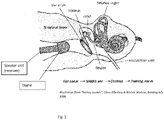
- Figure 1 illustrates the placement of a hearing aid in a human ear, with the so called "in-the-ear” part of the hearing aid arranged in the ear canal.
- the in-the-ear part in figure 1 comprises a speaker unit, and a dome in close proximity to the ear drum.
- the in-the-ear part can be connected to a "behind-the-ear" part of the hearing aid, placed behind the ear outside of the user's ear canal.
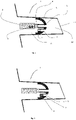
- FIG 2 shows a hearing aid according to the present invention, placed in an ear in a similar manner as in figure 1 .
- the hearing aid comprises a first housing 1, positioned at least partly in the ear canal EC of the user.
- the first housing 1 comprises a receiver 2, and a dome 3.
- the dome 3 is mounted on the receiver 2 and is placed in proximity to the user's ear drum ED.
- the dome can be flexible, such as made of silicone or any other suitable material.
- the hearing aid may comprise other parts, such as housings and/or wires connected to the first housing 1.
- the receiver 2 in figure 2 is shown located fully in the ear canal EC, it is however possible that parts of the receiver 2 is located outside of the ear canal EC.
- the receiver 2 has a receiver outlet 4 for letting sound out.
- a residual space RS is formed between the dome 3 and the user's ear drum ED in the inner part of the ear canal EC.
- the receiver outlet 4 is in fluid connection with this residual space RS through a passage 5 in the dome 3, which forms a receiver outlet channel 5.
- the dome 3 comprises another outlet channel 6, separate from the receiver outlet channel 5.
- a sensor 7 is placed in the outlet channel 6, hereinafter called the sensor outlet channel 6.
- the sensor 7 is a sensor suitable for measuring biological parameters, such as a temperature sensor. Since the temperature of the ear drum ED closely corresponds to the core body temperature of the user, it is very beneficial to measure the temperature close to the ear drum ED, i.e.
- a suitable temperature sensor 7 is an infrared thermometer.
- An infrared thermometer doesn't require direct contact with the ear drum ED, which is advantageous since constant contact would cause discomfort for the user.
- other biological parameters relating to physiological parameters of the patient are measured with the sensor 7, such as voltage, current, pressure, flow rate, blood pressure, blood saturation etc.
- the dome 3 comprises multiple sensor outlet channels 6 and/or multiple sensors 7.
- the first housing is shown comprising a dome 3, it is however obvious to someone skilled in the art, that other hearing aid styles with different shapes can be used, such as ITE-styles without exterior housings.
- the hearing aid can further comprise a temperature processor, not shown, for processing data from the temperature sensor 7.
- the temperature processor can be located in a second housing, such as a behind-the-ear part of the hearing aid, not shown.
- the temperature processor is configured to estimate the body temperature of the user, based on the measured data from the sensor 7.
- the hearing aid shown in figure 2 shows only one first sensor 7, it can be advantageous to have a second temperature sensor, not shown.
- the second temperature sensor can be in wired or wireless communication with the temperature processor.
- the temperature processor can utilize measured data from both the first 7 and second sensors when estimating the body temperature. It is possible that the second temperature sensor is located in or on a second housing of the hearing aid.
- the second housing can, as mentioned, be placed behind the ear of the user, and/or the in the concha, and/or in the fossa triangularis.
- the second temperature sensor if placed outside of the ear canal EC, can be used as a reference sensor.
- the temperature data from the reference sensor is used to correct for variations in ambient temperature, as there will be a thermal energy conduction through wires connecting the in-ear sensor (first sensor 7) and the temperature processor positioned behind the ear, i.e. behind the pinna, and radiated heat in and out of the ear canal, which all will influence measurements.
- the second temperature sensor as a reference will also be possible for ITE-style hearing aids without exterior housings, where the 'ambient temperature' is measured with a reference sensor placed on the faceplate of ,for example, the custom instrument, and thus not as such external to the ear, but at least in a distance from the first temperature sensor 7.
- Information, or data, about ambient temperature can also be gathered from external devices instead of using a reference sensor positioned behind/outside the ear of the user. This could include external auxiliary devices, such as a microphone device configured to be positioned at a table and/or on another person whom the user intends to hear better.
- temperature may be obtained from internet enabled devices, e.g. thermometers with IoT capabilities.
- the external auxiliary device can be in wired or wireless communication with the temperature processor.
- the hearing aid can further comprise a memory 8.
- the memory can be located in the in-the-ear part of the hearing aid.
- the memory 8 can store measured data from the sensor 7.
- the sensor 7 is connected to the memory 8 wired or wirelessly.
- the memory 8 allows measured sensor 7 data to be logged for a period time, which can be especially useful when trying to estimate the body temperature.
- the body temperature fluctuates during the day, and is affected by activity, illness etc.
- One way of using the measured data over time is to use averaging and /or time stamping methods to calculate the body temperature. By logging data over time, useful statistics can also be gathered that is connected to the user's body temperature pattern.
- FIG 3 a hearing aid according to the present invention is shown.
- the first housing 1 in figure 3 is similar to the one shown in figure 2 , with the exception of an added microphone 9.
- the microphone 9 is placed in connection with the sensor 7 in the sensor outlet channel 6.
- the sensor 7 and the microphone 9 can be formed in a single unit.
- the microphone 9 is shown as being placed in the sensor outlet 6, it is also possible that it is placed in connection to the receiver outlet channel 5.
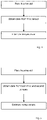
- Figure 4 shows the steps of a method for estimating a user's body temperature according to the invention.
- the first step is to place the hearing aid with a first housing at least partly in the ear canal of the user.
- the hearing aid can be a hearing aid as described above with reference to figures 2 and/or 3.
- the second step of the method is to obtain data from the first temperature sensor 7.
- the temperature sensor 7 is placed near the user's ear drum ED in the residual space RS and the obtained data therefor corresponds to the user's core body temperature.
- the user's body temperature is thus estimated in the last step as the temperature obtained by the sensor 7.
- the estimation is performed in the temperature processor located in the hearing aid, and to which the temperature sensor is connected wired or wirelessly.
- Figure 5 shows the steps of a second method for estimating a user's body temperature according to the invention.
- this method comprises a hearing aid also having a second sensor, further to the first sensor 7.
- the step of obtaining data includes obtaining data from both the first 7 and second sensors.
- the second sensor is preferably located outside the user's ear canal EC.
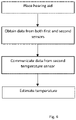
- the second sensor is possibly located in an external device, in wired or wireless connection with the temperature processor, as figure 6 shows.
- the method shown in figure 6 thus comprises the step of communicating the data from the second sensor to the temperature processor located in the hearing aid.
- the external device may for example be a Smartphone.
- a communication part of the hearing aid which is configured for communication with an external device may be provided, for example, in the first housing 1 or in the behind-the-ear part of the hearing aid and may comprise, for example, a transmission and/or reception controlling circuitry and an antenna. While it is preferable to provide the communication part in the behind-the-ear part of the hearing aid for keeping the in-the-ear part 1 of the hearing aid as small as possible, it is also possible to integrate the communication in the in-the-ear part 1 of the hearing aid.
- the second sensor is connected to the communication part.
- the hearing aid may be connected with the external device e.g. via wireless local area network (WLAN), Bluetooth low energy, Nearlink or other techniques and can share the measured data wirelessly to the hearing aid.
- WLAN wireless local area network
- the connection between the second sensor and/or the active electronic component in the hearing aid may be initiated by the second sensor and/or the active electronic component or by the external device.
- the connection may be established by a signal processor arranged within the hearing aid based on a security signal provided by a security mean.
- the security mean may receive a request signal from the external device, wherein the request signal includes an identification code identifying the external device.
- the security mean may accept the request signal if the identification (ID) code is identical to a stored ID code in a volatile memory/none-volatile memory being arranged within the hearing aid.
- the temperature processor is located in an external device, in order to save precious space and energy in the hearing aid.
- the sensor(s) can communicate wirelessly to the external device.
- the hearing aid and method according to the present disclosure could utilize additional sensor inputs, such as heart rate (variability), oxygenation, accelerometer, microphones or ambient light sensing to improve reliability by providing more inputs to the algorithm.
- additional sensor inputs such as heart rate (variability), oxygenation, accelerometer, microphones or ambient light sensing to improve reliability by providing more inputs to the algorithm.
- heart rate variable
- oxygenation oxygenation
- accelerometer accelerometer
- microphones ambient light sensing
Landscapes
- Health & Medical Sciences (AREA)
- Life Sciences & Earth Sciences (AREA)
- Engineering & Computer Science (AREA)
- Otolaryngology (AREA)
- Physics & Mathematics (AREA)
- General Health & Medical Sciences (AREA)
- Molecular Biology (AREA)
- Biophysics (AREA)
- Heart & Thoracic Surgery (AREA)
- Medical Informatics (AREA)
- Pathology (AREA)
- Surgery (AREA)
- Animal Behavior & Ethology (AREA)
- Biomedical Technology (AREA)
- Public Health (AREA)
- Veterinary Medicine (AREA)
- Manufacturing & Machinery (AREA)
- Neurosurgery (AREA)
- Acoustics & Sound (AREA)
- Signal Processing (AREA)
- Measuring And Recording Apparatus For Diagnosis (AREA)
Priority Applications (1)
| Application Number | Priority Date | Filing Date | Title |
|---|---|---|---|
| EP21150708.2A EP4027656A1 (fr) | 2021-01-08 | 2021-01-08 | Prothèse auditive pour obtenir une température et procédé correspondant |
Applications Claiming Priority (1)
| Application Number | Priority Date | Filing Date | Title |
|---|---|---|---|
| EP21150708.2A EP4027656A1 (fr) | 2021-01-08 | 2021-01-08 | Prothèse auditive pour obtenir une température et procédé correspondant |
Publications (1)
| Publication Number | Publication Date |
|---|---|
| EP4027656A1 true EP4027656A1 (fr) | 2022-07-13 |
Family
ID=74125088
Family Applications (1)
| Application Number | Title | Priority Date | Filing Date |
|---|---|---|---|
| EP21150708.2A Withdrawn EP4027656A1 (fr) | 2021-01-08 | 2021-01-08 | Prothèse auditive pour obtenir une température et procédé correspondant |
Country Status (1)
| Country | Link |
|---|---|
| EP (1) | EP4027656A1 (fr) |
Citations (4)
| Publication number | Priority date | Publication date | Assignee | Title |
|---|---|---|---|---|
| US20150092952A1 (en) * | 2013-09-30 | 2015-04-02 | Kabushiki Kaisha Toshiba | Audio Device and Control Method |
| US20170112671A1 (en) * | 2015-10-26 | 2017-04-27 | Personics Holdings, Llc | Biometric, physiological or environmental monitoring using a closed chamber |
| EP3525490A1 (fr) * | 2018-02-13 | 2019-08-14 | Oticon A/s | Dispositif de prothèse auditive intra-auriculaire et transducteur électro-acoustique |
| EP3576434A1 (fr) * | 2018-05-30 | 2019-12-04 | Oticon A/s | Aide auditive basée sur la température corporelle |
-
2021
- 2021-01-08 EP EP21150708.2A patent/EP4027656A1/fr not_active Withdrawn
Patent Citations (4)
| Publication number | Priority date | Publication date | Assignee | Title |
|---|---|---|---|---|
| US20150092952A1 (en) * | 2013-09-30 | 2015-04-02 | Kabushiki Kaisha Toshiba | Audio Device and Control Method |
| US20170112671A1 (en) * | 2015-10-26 | 2017-04-27 | Personics Holdings, Llc | Biometric, physiological or environmental monitoring using a closed chamber |
| EP3525490A1 (fr) * | 2018-02-13 | 2019-08-14 | Oticon A/s | Dispositif de prothèse auditive intra-auriculaire et transducteur électro-acoustique |
| EP3576434A1 (fr) * | 2018-05-30 | 2019-12-04 | Oticon A/s | Aide auditive basée sur la température corporelle |
Similar Documents
| Publication | Publication Date | Title |
|---|---|---|
| US11245990B2 (en) | Body temperature hearing aid | |
| CN111669691B (zh) | 包括传感器配置检测器的听力装置 | |
| CN107343250B (zh) | 包括用于拾取生理反应的电极的听力装置 | |
| US9560458B2 (en) | Configurable hearing instrument | |
| EP2991380B1 (fr) | Dispositif d'assistance auditive comprenant une unité d'identification d'emplacement | |
| CN105376684B (zh) | 包括植入部分的具有改善的信号处理的助听系统 | |
| EP3001700B1 (fr) | Système auditif positionné | |
| US11785404B2 (en) | Method and system of fitting a hearing device | |
| US12239461B2 (en) | Hearing assistance device housing for improved biometric sensing | |
| EP4027656A1 (fr) | Prothèse auditive pour obtenir une température et procédé correspondant | |
| US12490918B2 (en) | Spectro-temporal modulation test unit | |
| EP3435688A1 (fr) | Prothèse auditive interne comportant des composants électroniques exposés | |
| US20260123853A1 (en) | Spectro-temporal modulation test unit | |
| US12108217B2 (en) | CROS unit for a CROS hearing device system | |
| US20220322018A1 (en) | Interchangeable hearing device transducer module storing transducer calibration information | |
| US20220174436A1 (en) | Method for calculating gain in a hearing aid |
Legal Events
| Date | Code | Title | Description |
|---|---|---|---|
| PUAI | Public reference made under article 153(3) epc to a published international application that has entered the european phase |
Free format text: ORIGINAL CODE: 0009012 |
|
| STAA | Information on the status of an ep patent application or granted ep patent |
Free format text: STATUS: THE APPLICATION HAS BEEN PUBLISHED |
|
| AK | Designated contracting states |
Kind code of ref document: A1 Designated state(s): AL AT BE BG CH CY CZ DE DK EE ES FI FR GB GR HR HU IE IS IT LI LT LU LV MC MK MT NL NO PL PT RO RS SE SI SK SM TR |
|
| STAA | Information on the status of an ep patent application or granted ep patent |
Free format text: STATUS: THE APPLICATION IS DEEMED TO BE WITHDRAWN |
|
| 18D | Application deemed to be withdrawn |
Effective date: 20230114 |