EP4027672A1 - Procédé de découverte de terminal, terminal, serveur, station de base, entité de gestion et système - Google Patents
Procédé de découverte de terminal, terminal, serveur, station de base, entité de gestion et système Download PDFInfo
- Publication number
- EP4027672A1 EP4027672A1 EP21209464.3A EP21209464A EP4027672A1 EP 4027672 A1 EP4027672 A1 EP 4027672A1 EP 21209464 A EP21209464 A EP 21209464A EP 4027672 A1 EP4027672 A1 EP 4027672A1
- Authority
- EP
- European Patent Office
- Prior art keywords
- terminal
- server
- identity
- service identity
- management entity
- Prior art date
- Legal status (The legal status is an assumption and is not a legal conclusion. Google has not performed a legal analysis and makes no representation as to the accuracy of the status listed.)
- Pending
Links
Images





Classifications
-
- H—ELECTRICITY
- H04—ELECTRIC COMMUNICATION TECHNIQUE
- H04W—WIRELESS COMMUNICATION NETWORKS
- H04W48/00—Access restriction; Network selection; Access point selection
- H04W48/08—Access restriction or access information delivery, e.g. discovery data delivery
-
- H—ELECTRICITY
- H04—ELECTRIC COMMUNICATION TECHNIQUE
- H04W—WIRELESS COMMUNICATION NETWORKS
- H04W4/00—Services specially adapted for wireless communication networks; Facilities therefor
- H04W4/02—Services making use of location information
- H04W4/023—Services making use of location information using mutual or relative location information between multiple location based services [LBS] targets or of distance thresholds
-
- H—ELECTRICITY
- H04—ELECTRIC COMMUNICATION TECHNIQUE
- H04W—WIRELESS COMMUNICATION NETWORKS
- H04W48/00—Access restriction; Network selection; Access point selection
- H04W48/16—Discovering, processing access restriction or access information
-
- H—ELECTRICITY
- H04—ELECTRIC COMMUNICATION TECHNIQUE
- H04W—WIRELESS COMMUNICATION NETWORKS
- H04W72/00—Local resource management
- H04W72/04—Wireless resource allocation
-
- H—ELECTRICITY
- H04—ELECTRIC COMMUNICATION TECHNIQUE
- H04W—WIRELESS COMMUNICATION NETWORKS
- H04W8/00—Network data management
- H04W8/005—Discovery of network devices, e.g. terminals
-
- H—ELECTRICITY
- H04—ELECTRIC COMMUNICATION TECHNIQUE
- H04W—WIRELESS COMMUNICATION NETWORKS
- H04W4/00—Services specially adapted for wireless communication networks; Facilities therefor
- H04W4/70—Services for machine-to-machine communication [M2M] or machine type communication [MTC]
-
- H—ELECTRICITY
- H04—ELECTRIC COMMUNICATION TECHNIQUE
- H04W—WIRELESS COMMUNICATION NETWORKS
- H04W76/00—Connection management
- H04W76/10—Connection setup
- H04W76/14—Direct-mode setup
-
- H—ELECTRICITY
- H04—ELECTRIC COMMUNICATION TECHNIQUE
- H04W—WIRELESS COMMUNICATION NETWORKS
- H04W88/00—Devices specially adapted for wireless communication networks, e.g. terminals, base stations or access point devices
- H04W88/08—Access point devices
Definitions
- the present invention relates to the field of wireless communications, and in particular, to a terminal discovery method, a terminal, a server, a base station, a management entity, and a system.
- D2D (Device-to-Device, device-to-device) communication is a new technology that allows, under control of a system, direct communication between terminals by reusing cell resources. It can increase spectrum efficiency of a cellular communication system, reduce transmit power of the terminals, and solve a shortage problem of spectrum resources of a wireless communication system to some extent.
- discovery of a terminal is a basis for performing D2D communication.
- each terminal registers its own unique identity with a network side in advance.
- the first terminal sends a unique identity of the second terminal to a server;
- the server sends a service identity of the second terminal to the first terminal according to the unique identity of the second terminal, and triggers the second terminal to broadcast the service identity of the second terminal;
- the first terminal monitors broadcast including the service identity, compares the service identity of the second terminal with the service identity in the received broadcast, and if the two service identities are consistent, determines that a terminal corresponding to the broadcast including the service identity is the second terminal.
- the first terminal In the conventional D2D terminal discovery method, the first terminal must learn the unique identity of the second terminal in advance. Therefore, the method can only be used to discover a known specific terminal and an application scope is relatively narrow.
- embodiments of the present invention provide a terminal discovery method, a terminal, a server, a base station, a management entity, and a system.
- the technical solutions are as follows:
- a terminal discovery method includes:
- the acquiring, by the first terminal, description information of the second terminal from a server according to the service identity of the second terminal includes:
- the method before the receiving, by the first terminal, the description information of the second terminal sent by the server or before the receiving, by the first terminal, the description information of the second terminal sent by the management entity, the method further includes:
- the acquiring, by a first terminal, a discovery resource includes:
- the sending, by the first terminal, a first request to the management entity includes: sending, by the first terminal, the first request including an identity of the first terminal to the management entity, so that the management entity sends the identity of the first terminal to the server and when the server verifies, according to the identity of the first terminal, that the first terminal is authorized to discover the terminal, sends the second request to the base station.
- the acquiring, by a first terminal, a discovery resource includes:
- the acquiring, by the first terminal, the service identity of the second terminal according to the second message includes:
- the method before the monitoring, by the first terminal according to the discovery resource, a second message sent by at least one second terminal, the method further includes: sending a first message, so that the second terminal sends the second message according to the first message after receiving the first message.
- a terminal discovery method includes: sending, by a second terminal, a second message including a service identity of the second terminal, so that a first terminal acquires the service identity of the second terminal according to the second message and acquires description information of the second terminal from a server according to the service identity of the second terminal.
- the method before the sending, by a second terminal, a second message including a service identity of the second terminal, the method further includes:
- the sending, by a second terminal, a second message including a service identity of the second terminal includes:
- a terminal discovery method includes:
- the acquiring, by the server, description information of the second terminal according to the service identity of the second terminal includes:
- the providing, by the server, the acquired description information of the second terminal for the first terminal includes:
- the method before the acquiring, by the server, description information of the second terminal according to the service identity of the second terminal, the method further includes:
- a first terminal includes:
- the description information acquiring module includes:
- the first terminal further includes:
- the discovery resource acquiring module includes:
- the first discovery resource receiving unit is configured to receive the discovery resource that is sent by the base station by using an RRC message, where the discovery resource is the discovery resource that the base station sends after receiving the second request; where the second request is an S1-AP message including a first indication, where the first indication is used to instruct the base station to send the discovery resource to the first terminal or used to instruct the base station to acquire the discovery resource and send the discovery resource to the first terminal.
- the second discovery resource receiving unit is configured to receive the discovery resource that is sent by the management entity by using a non-access stratum message, where the discovery resource is the discovery resource that the base station sends to the management entity by using a container after receiving the second request; where the second request is an S1-AP message including a second indication, where the second indication is used to instruct the base station to send the discovery resource to the first terminal or used to instruct the base station to acquire the discovery resource and send the discovery resource to the management entity.
- the first request sending unit is configured to send the first request including an identity of the first terminal to the management entity, so that the management entity sends the identity of the first terminal to the server and when the server verifies, according to the identity of the first terminal, that the first terminal is authorized to discover the terminal, sends the second request to the base station.
- the first request sending unit is configured to send the first request including an identity of the first terminal and an identity of an application using a discovery service in the first terminal to the management entity, so that the management entity sends the identity of the first terminal and the identity of the application using the discovery service in the first terminal to the server and when the server verifies, according to the identity of the first terminal and the identity of the application using the discovery service in the first terminal, that the first terminal is authorized to discover the terminal and that the application is authorized to use a discovery function, sends the second request to the base station.
- the discovery resource acquiring module includes:
- the first terminal further includes: a first message sending module, configured to send a first message before the message monitoring module monitors, according to the discovery resource, the second message sent by the at least one second terminal, so that the second terminal sends the second message according to the first message after receiving the first message.
- a first message sending module configured to send a first message before the message monitoring module monitors, according to the discovery resource, the second message sent by the at least one second terminal, so that the second terminal sends the second message according to the first message after receiving the first message.
- a second terminal includes: a second message sending module, configured to send a second message including a service identity of the second terminal, so that a first terminal acquires the service identity of the second terminal according to the second message and acquires description information of the second terminal from a server according to the service identity of the second terminal.
- the second terminal further includes:
- the first discovered resource receiving module is configured to receive the discovered resource that is sent by the base station by using an RRC message, where the discovered resource is the resource that the base station allocates after receiving the fourth request; where the fourth request is an S1-AP message including a third indication, where the third indication is used to instruct the base station to allocate the discovered resource, or the third indication is used to instruct the base station to allocate the discovered resource to the second terminal, or the third indication is used to instruct the base station to allocate the discovered resource and send the discovered resource to the second terminal, or the third indication is used to instruct the base station to allocate the discovered resource to the second terminal and send the discovered resource to the second terminal.
- the second discovered resource receiving module is configured to receive the discovered resource that is sent by the management entity by using a non-access stratum message, where the discovered resource is the discovered resource that the base station sends to the management entity by using a container after receiving the fourth request; where the fourth request is an S1-AP message including a fourth indication, where the fourth indication is used to instruct the base station to allocate the discovered resource, or the fourth indication is used to instruct the base station to allocate the discovered resource to the second terminal, or the fourth indication is used to instruct the base station to allocate the discovered resource and send the discovered resource to the management entity, or the fourth indication is used to instruct the base station to allocate the discovered resource to the second terminal and send the discovered resource to the management entity.
- the first request sending module is configured to send the third request including an identity of the second terminal to the management entity, so that the management entity sends the identity of the second terminal to the server and when the server verifies, according to the identity of the second terminal, that the second terminal is authorized to be discovered, sends the fourth request to the base station.
- the first request sending module is configured to send the third request including an identity of the second terminal and an identity of an application using a discovered service in the second terminal to the management entity, so that the management entity sends the identity of the second terminal and the identity of the application using the discovered service in the second terminal to the server and when the server verifies, according to the identity of the second terminal and the identity of the application using the discovered service in the second terminal, that the second terminal is authorized to be discovered and that the application is authorized to use a discovered function, sends the fourth request to the base station.
- the second request sending module is configured to send the fifth request including an identity of the second terminal to the server, so that the server sends the sixth request to the management entity when the server verifies, according to the identity of the second terminal, that the second terminal is authorized to be discovered.
- the second request sending module is configured to send the fifth request including an identity of the second terminal and an identity of an application using a discovered service in the second terminal to the management entity, so that the server sends the sixth request to the management entity when the server verifies, according to the identity of the second terminal, that the second terminal is authorized to be discovered and that the application is authorized to use a discovered function.
- the second request sending module is configured to send the fifth request including a globally unique temporary identity GUTI of the second terminal to the server, so that the server sends the sixth request to the management entity according to the GUTI.
- the second message sending module includes:
- a server includes:
- the first identity receiving module includes:
- the information acquiring module includes:
- the information providing module includes:
- the server further includes:
- the server further includes:
- the server further includes:
- the server further includes:
- the server further includes:
- the server further includes:
- the fifth request includes a globally unique temporary identity GUTI of the second terminal; and the third request sending module is configured to send the sixth request to the management entity according to the globally unique temporary identity GUTI.
- the fifth request includes an identity of the second terminal, and the server further includes:
- the fifth request includes an identity of the second terminal and an identity of an application using a discovered service in the second terminal
- the server further includes:
- a discovery resource is acquired, a message that is sent by at least one second terminal and includes a service identity of the second terminal is monitored according to the discovery resource, and the identity of the second terminal is acquired; and description information of the second terminal is acquired from a server according to the identity of the second terminal.
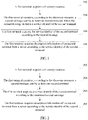
- FIG. 1 shows a method flowchart of a terminal discovery method according to an embodiment of the present invention.
- the terminal discovery method may be applied to a first terminal in a D2D system to discover a second terminal.
- the terminal discovery method may include:
- the identity of the second terminal may be an identity of one or more second terminals.
- Step 108 The first terminal acquires description information of the second terminal from a server according to the service identity of the second terminal.
- a discovery resource is acquired, a message that is sent by at least one second terminal and includes a service identity of the second terminal is monitored according to the discovery resource, and the identity of the second terminal is acquired; and description information of the second terminal is acquired from a server according to the identity of the second terminal.
- FIG. 2 shows a method flowchart of a terminal discovery method according to another embodiment of the present invention.
- the terminal discovery method may be applied to a first terminal in a D2D system to discover a second terminal.
- the terminal discovery method may include: Step 202: A first terminal acquires a discovery resource.
- the first terminal may send a first request to a management entity.
- the first request is used to request to acquire a discovery resource (discovery resource or radio resource or monitoring resource or discovery radio resource or monitoring radio resource), where the discovery resource is used by the first terminal to learn how to monitor a second terminal.
- the management entity sends a second request to a base station.
- the second request is used to instruct the base station to send the discovery resource to the first terminal.
- the first terminal may directly receive the discovery resource that is sent by the base station according to the second request.
- the first terminal receives the discovery resource that is sent by the base station by using an RRC (Radio Resource Control, radio resource control) message, for example, an RRC Connection Reconfiguration message, where the discovery resource is a resource that the base station sends after receiving the second request.
- the second request may be an S1-AP (Application Protocol, Application Protocol) message including a first indication.
- the base station After receiving the S1-AP message, the base station sends the discovery resource to the first terminal by using an RRC message.
- the first indication is used to instruct the base station to send the discovery resource to the first terminal or used to instruct the base station to acquire the discovery resource and send the discovery resource to the first terminal. Specifically, it may be an indication for sending the discovery resource.
- the second request is used to instruct the base station to send the discovery resource to the management entity.
- the first terminal may receive the discovery resource that is sent by the base station to the management entity according to the second request and sent by the management entity.
- the first terminal may receive the discovery resource that is sent by the management entity by using a non-access stratum NAS (Non-Access Stratum, non-access stratum) message.
- the second request may be an S1-AP message including a second indication.
- the base station sends the discovery resource to the management entity by using a container (container), and the management entity sends the container including the discovery resource to the first terminal by using a NAS message.
- the second indication is used to instruct the base station to send the discovery resource to the management entity or used to instruct the base station to acquire the discovery resource and send the discovery resource to the management entity.
- it may be an indication for sending the discovery resource.
- the first terminal may also receive system information sent by the base station, and resolve the discovery resource included in the system information.
- the discovery resource includes a discovery resource of a serving cell of the first terminal; or the discovery resource includes a discovery resource of a serving cell of the first terminal and a discovery resource of a cell adjacent to the serving cell.
- the discovery resource includes information such as a frequency band and/or a time and/or a coding scheme, which is used by the second terminal to send a second message in a cell.
- an identity of the first terminal may also be included in the first request.
- the identity may be a phone number of the first terminal; or the identity may be a device identity of the first terminal; or the identity may be an identity allocated by a server to the first terminal; or the identity may be a service identity of the first terminal; or the identity may be an identity configured in advance in the terminal and used for discovery and being discovered.
- the management entity sends the identity of the first terminal to the server.
- the server verifies, according to the identity of the first terminal, whether the first terminal is authorized to discover the terminal. When the server verifies that the first terminal is authorized to discover the terminal, the management entity sends the second request to the base station.
- an identity of the first terminal and an identity of an application (Application ID) using a discovery service in the first terminal may also be included in the first request.
- the management entity sends the identity of the first terminal and the identity of the application using the discovery service in the first terminal to the server, and the server verifies, according to the identity of the first terminal and the identity of the application, whether the first terminal is authorized to discover the terminal and that the application is authorized to use a discovery function.
- a verification result of the server is that the first terminal is authorized to discover the terminal and that the application is authorized to use the discovery function
- the management entity sends the second request to the base station.
- Step 204 The first terminal monitors, according to the discovery resource, a second message sent by at least one second terminal.
- the first terminal may monitor, according to the discovery resource, the second message (discovered broadcasting message) or an announcing message (announcing message) that is sent by the second terminal in a broadcast mode.
- the second message includes a service identity of the second terminal.
- the service identity of the second terminal may be one or a combination of the following: a D2D code (D2D code), an expression code (expression code), an announcing code (Announcing Code), an identity of the second terminal, and an identity of an application.
- the service identity of the second terminal may be the identity of the second terminal plus the expression code, or the service identity of the second terminal may be the identity of the second terminal plus the identity of the application, or the service identity of the second terminal may be the identity of the second terminal plus the identity of the application plus the expression code.
- the service identity may be used to identify the second terminal on a radio channel.
- the server may be a D2D server or a ProSe (Proximity Services, proximity services) server or a PDCF (Proximity Discovery and Communication Function, proximity discovery and communication function). The server may allocate the service identity to the second terminal.
- a system may include only one server, which is configured to service both the first terminal and the second terminal.
- a system may also include multiple servers, which are respectively home servers of the first terminal and the second terminal, or respectively service the first terminal or the second terminal.
- the first terminal and the second terminal respectively acquire service identities from their home servers or from a server that currently provides services.
- the first terminal may monitor, according to the information such as the frequency band, time, coding scheme in the discovery resource, the second message sent by the second terminal.
- the first terminal may trigger the second terminal in a vicinity to send the second message.
- the first terminal may send a first message (for example, a discovery broadcasting message discovery broadcast message or a trigger message trigger message), so that the second terminal sends the second message according to the first message after receiving the first message.
- a resource used when the first terminal sends the first message may also be acquired from the base station in a manner similar to step 202, which is not further described herein.
- the first message may include description information of a terminal that the first terminal wishes to discover, for example, a type of terminal that the first terminal wishes to discover (for example, an individual, a restaurant, or a shop), or an identity of an application used by a terminal that the first terminal wishes to discover (for example, an identity of QQ, microblog, or Skype), a restriction manner of a terminal that the first terminal wishes to discover (for example, all persons may discover, or only a specific person is allowed to discover), so that the second terminal compliant with the description information sends discovered information while other terminals do not send discovered information.
- a type of terminal that the first terminal wishes to discover for example, an individual, a restaurant, or a shop
- an identity of an application used by a terminal that the first terminal wishes to discover for example, an identity of QQ, microblog, or Skype
- a restriction manner of a terminal that the first terminal wishes to discover for example, all persons may discover, or only a specific person is allowed to discover
- the second message is monitored according to the acquired discovery resource, and it is unnecessary to monitor broadcast messages beyond the frequency band or time included in the discovery resource. Thereby, burden of the terminal may be reduced, and power of the terminal may be saved.
- Step 206 The first terminal acquires a service identity of the second terminal according to the monitored second message.
- the first terminal may acquire the service identity of the at least one second terminal after the service identity compliant with a predetermined condition in the monitored second message sent by the at least one second terminal is filtered.
- the predetermined condition includes at least one of the following conditions: A signal strength of the second message is greater than or equal to a predetermined strength threshold; or a type of the second terminal included in the second message complies with a predetermined type; or an application description included in the second message complies with a predetermined application description.
- the first terminal filters the monitored second message, and acquires the service identity of the at least one second terminal compliant with a predetermined requirement. For example, the service identity in the second message whose signal strength is greater than or equal to a threshold is acquired and used as the service identity of the second terminal; or if the second message including the service identity includes the type of the terminal corresponding to the second message (for example, an individual, a restaurant, or a shop), or if the second message including the service identity includes the application description corresponding to the second message, where the application description includes an application name (for example, QQ, Skype, or WeChat) or an application identity (Application ID) or an application type (for example, instant messaging, VoIP, or streaming media), the service identity corresponding to the predetermined type is acquired.
- the service identity in the second message whose signal strength is greater than or equal to a threshold is acquired and used as the service identity of the second terminal; or if the second message including the service identity includes the type of the terminal corresponding to the second message (for example, an individual, a
- Step 208 The first terminal acquires description information of the second terminal from a server according to the service identity of the second terminal.
- the first terminal may send the acquired service identity of the second terminal to the server, or may first send the service identity of the second terminal to the management entity, for example, an MME (Mobile Management Entity, mobility management entity), and then the management entity sends the service identity of the second terminal to the server.
- the first terminal may directly send the service identity of the second terminal to the server, or may send the service identity of the second terminal to the server in a form of a service identity array or a service identity list (list).
- the first terminal may receive the description information of the second terminal that is sent by the server and corresponding to the service identity of the second terminal, where the description information of the second terminal is acquired by the server according to the service identity of the second terminal and sent to the first terminal.
- the first terminal may receive the description information of the second terminal that is sent by the management entity and corresponding to the service identity of the second terminal, where the description information of the second terminal is acquired by the server according to the service identity of the second terminal and sent to the management entity.
- a method for acquiring the description information of the second terminal according to the service identity of the second terminal by the server may be that the server locally queries, according to a correspondence between a service identity of each terminal and description information stored in the server, the description information of the second terminal that is stored in a correspondence to the service identity of the second terminal.
- the server that services the first terminal may query, according to the service identity of the second terminal, the description information of the second terminal from the home server of the second terminal or the server that currently services the second terminal.
- the server acquires, according to the service identity of the second terminal, the home server of the second terminal or the server that currently services the second terminal, and sends the service identity of the second terminal to the home server of the second terminal or the server that currently services the second terminal; then the home server of the second terminal or the server that currently services the second terminal acquires the description information of the second terminal according to the service identity of the second terminal and feeds it back to the server.
- the description information of the second terminal includes one or a combination of the following: a name of the second terminal, an identity (identity) of the second terminal, a phone number of the second terminal, a temporary identity of the second terminal, an application identity (Application ID), an application user identity (for example, a QQ account, a microblog account, and a Skype account), so that a user of the first terminal can accurately identify the second terminal that needs to establish D2D communication.
- the first terminal may further send the service identity of the first terminal to the server.
- the first terminal may directly send the service identity of the first terminal to the server through an IP layer channel, so that after the server verifies, according to the service identity of the first terminal, that the first terminal has a discovery permission and that the second terminal corresponding to the service identity of the second terminal is allowed to be discovered, acquires the description information of the second terminal according to the service identity of the second terminal and sends the description information of the second terminal.
- the first terminal may further send the service identity of the first terminal to the management entity, and the management entity sends the service identity of the first terminal to the server, so that after the server verifies, according to the service identity of the first terminal, that the first terminal has a discovery permission and that the second terminal corresponding to the service identity of the second terminal is allowed to be discovered, acquires the description information of the second terminal according to the service identity of the second terminal and sends the description information of the second terminal.
- the second terminal may preset a discovery permission. For example, a second terminal corresponding to a service identity in service identities of multiple second terminals sent by the first terminal is preset to be discovered by only a buddy. While sending the service identity of the second terminal to the management entity, the first terminal further sends the service identity of the first terminal to the server. If the server verifies, according to the service identity of the first terminal, that the first terminal is not a buddy of the second terminal, the server verifies that the first terminal is not authorized to discover the second terminal, and therefore the server does not send the description information of the second terminal to the first terminal.
- a discovery resource is acquired, a message that is sent by at least one second terminal and includes a service identity of the second terminal is monitored according to the discovery resource, and the identity of the second terminal is acquired; and description information of the second terminal is acquired from a server according to the identity of the second terminal.
- a second message sent by the second terminal is monitored according to the acquired discovery resource, and thereby, an objective of reducing burden of the terminal and saving power of the terminal is achieved.
- a service identity of the first terminal is sent to a management entity, so that the server verifies, according to the service identity of the first terminal, whether the first terminal is authorized to discover the second terminal, and thereby an objective of protecting privacy of the second terminal is achieved.
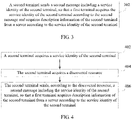
- FIG. 3 shows a method flowchart of a terminal discovery method according to an embodiment of the present invention.
- the terminal discovery method may be applied to a second terminal in a D2D system.
- the terminal discovery method may include: Step 302: A second terminal sends a second message including a service identity of the second terminal, so that a first terminal acquires the service identity of the second terminal according to the second message and acquires description information of the second terminal from a server according to the service identity of the second terminal.
- a second terminal sends a second message including a service identity of the second terminal, so that a first terminal acquires description information of the second terminal from a server according to the identity of the second terminal.
- FIG. 4 shows a method flowchart of a terminal discovery method according to another embodiment of the present invention.
- the terminal discovery method may be applied to a second terminal in a D2D system.
- the terminal discovery method may include: Step 402: A second terminal acquires a service identity of the second terminal.
- the second terminal may request a server to allocate the service identity, or request a server through a management entity to allocate the service identity.
- the server sends the service identity allocated to the second terminal, to the second terminal, or sends it to the second terminal through the management entity.
- the second terminal may further send description information of the second terminal through the management entity, so that the server stores the description information of the second terminal in a correspondence to the service identity that is allocated to the second terminal.
- the second terminal sends the description information of the second terminal to the management entity, so that the management entity sends the description information of the second terminal to the server, so that the server stores the description information of the second terminal in a correspondence to the service identity that is allocated to the second terminal.
- the second terminal may acquire the service identity from a home server of the second terminal or a server that currently services the second terminal.
- Step 404 The second terminal acquires a discovered resource.
- the second terminal may send a third request to the management entity.
- the third request is used to request to acquire a discovered resource (discovered resource or radio resource or announcing resource or discovered radio resource or announcing radio resource).
- the discovered resource is used for broadcasting to the second terminal, so that a first terminal may monitor the second terminal.
- the management entity may send a fourth request to a base station according to the third request.
- the second terminal may send a fifth request to the server, and the server sends a sixth request to the management entity after receiving the fifth request.
- the management entity may send the fourth request to the base station according to the sixth request.
- the fourth request is used to instruct the base station to allocate the discovered resource to the second terminal.
- the second terminal may directly receive the discovered resource sent by the base station.
- the second terminal may receive the discovered resource that is sent by the base station by using an RRC message, where the discovered resource is a resource that the base station sends after receiving the fourth request.
- the fourth request may be an S1-AP message including a third indication.
- the base station After receiving the S1-AP message, the base station sends the discovered resource to the second terminal by using an RRC message.
- the third indication is used to instruct the base station to allocate the discovered resource, or allocate the discovered resource to the second terminal, or allocate the discovered resource and send the discovered resource to the second terminal, or allocate the discovered resource to the second terminal and send the discovered resource to the second terminal.
- it may be an indication for allocating the discovered resource or an indication for sending the discovered resource.
- the fourth request is used to instruct the base station to allocate the discovered resource to the second terminal and send the discovered resource to the management entity.
- the second terminal may receive a discovered resource that is sent by the base station to the management entity and sent by the management entity to the second terminal.
- the discovered resource is the resource that is allocated by the base station according to the fourth request.
- the discovered resource that is sent by the management entity by using a non-access stratum NAS message is received.
- the discovered resource is the discovered resource that the base station sends to the management entity by using a container container after receiving the fourth request.
- the fourth request may be an S1-AP message including a fourth indication.
- the base station After receiving the S1-AP message, the base station sends the discovered resource to the management entity by using a container container, and the management entity sends the container to the second terminal by using a NAS message.
- the fourth indication is used to instruct the base station to allocate the discovered resource, or allocate the discovered resource to the second terminal, or allocate the discovered resource and send the discovered resource to the management entity, or allocate the discovered resource to the second terminal and send the discovered resource to the management entity.
- it may be an indication for allocating the discovered resource or an indication for sending the discovered resource.
- the third request including an identity of the second terminal may be sent to the management entity.
- the identity may be a phone number of the second terminal; or the identity may be a device identity of the second terminal; or the identity may be an identity allocated by the server to the second terminal; or the identity may be a service identity of the second terminal; or the identity may be an identity configured in advance in the terminal and used for discovery and being discovered.
- the management entity sends the identity of the second terminal to the server.
- the server verifies, according to the identity of the second terminal, whether the second terminal is authorized to be discovered. When the server verifies that the second terminal is authorized to be discovered, the management entity sends the fourth request to the base station.
- the third request including an identity of the second terminal and an identity of an application (Application ID) using a discovered service in the second terminal may be sent to the management entity.
- the management entity sends the identity of the second terminal and the identity of the application to the server.
- the server verifies, according to the identity of the second terminal and the identity of the application, whether the second terminal is authorized to be discovered by other terminals and whether the application is authorized to use a discovered function.
- the management entity sends the fourth request to the base station.
- a GUTI Globally Unique Temporary Identity, globally unique temporary identity
- the server sends a sixth message to the management entity according to the GUTI.
- the management entity sends the fourth request to the base station after receiving the sixth request.
- the identity of the second terminal may be included in the fifth request, so that the server sends the sixth request to the management entity when the server verifies, according to the identity of the second terminal, that the second terminal is authorized to be discovered.
- the identity of the second terminal and the identity of the application using the discovered service in the second terminal may be included in the fifth request, so that the server sends the sixth request to the management entity when the server verifies, according to the identity of the second terminal, that the second terminal is authorized to be discovered and that the application is authorized to use the discovered function.
- the discovered resource may include information such as a frequency band, a time, or a coding scheme for sending a second message by the second terminal.
- Step 406 The second terminal sends, according to the discovered resource, a second message including the service identity of the second terminal, so that a first terminal acquires description information of the second terminal from a server according to the service identity of the second terminal.
- the second terminal sends, according to the frequency band, time, or coding scheme, and so on in the discovered resource, the second message including the service identity of the second terminal.
- the second terminal may immediately send the second message; or after receiving a first message sent by the first terminal, the second terminal may send the second message according to the first message.
- the second terminal first determines whether the description information of the first terminal complies with a specific condition, and if so, starts to send discovered information. Specifically, for example, after receiving the first message sent by the first terminal, the second terminal resolves whether the type of the first terminal in the description information included in the first message is an individual, and if so, sends the second message in a broadcast mode.
- a type of terminal that the first terminal wishes to discover for example, an individual, a restaurant, or a shop
- an identity of an application used by a terminal that the first terminal wishes to discover for example, an identity of QQ, microblog, or Skype
- a restriction manner of a terminal that the first terminal wishes to discover for example, all persons may discover, or only a specific person is allowed to discover
- the second terminal first determines whether the description information of the first terminal complies with a specific condition, and if so, starts to send discovered information. Specifically, for example, after receiving the first message sent by the first terminal, the second terminal resolves whether the type of the first terminal in
- a second terminal acquires a discovered resource allocated by a base station, and sends a second message according to the discovered resource; and the base station may allocate different discovered resources to multiple second terminals, so that interference is reduced when each second terminal sends a second message.
- a second message including a service identity of a second terminal is sent, so that a first terminal acquires description information of the second terminal from a server according to the identity of the second terminal.
- a problem in the prior art that a first terminal must learn a unique identity of a second terminal in advance is solved, and an objective of discovering a terminal of an unknown identity in a vicinity and extending an application scope is achieved.
- a discovered resource allocated by a base station is acquired, and the second message is sent according to the acquired discovered resource. Thereby, an objective of reducing interference between terminals is achieved.
- FIG. 5 shows a method flowchart of a terminal discovery method according to an embodiment of the present invention.
- the terminal discovery method may be applied to a second terminal to acquire a discovered resource for the second terminal, so that the second terminal sends a second message according to the discovered resource.
- the terminal discovery method may include:
- Step 404a A second terminal sends a third request to a management entity, so that the management entity sends a fourth request to a base station according to the third request; or a second terminal sends a fifth request to a server, and the server sends a sixth request to a management entity, so that the management entity sends a fourth request to a base station.
- Step 404b The second terminal receives a discovered resource sent by the base station; or the second terminal receives a discovered resource that is sent by the base station to the management entity and sent by the management entity, where the discovered resource is a resource that is allocated by the base station according to the fourth request.
- a third request is sent to a management entity, so that the management entity sends a fourth request to a base station according to the third request; and a discovered resource sent by the base station is received; or a discovered resource that is sent by the base station to the management entity and sent by the management entity is received, so that a second terminal sends a second message according to the discovered resource, thereby achieving an objective of reducing interference between terminals.
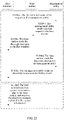
- FIG. 7 shows a method flowchart of a terminal discovery method according to an embodiment of the present invention.
- the terminal discovery method may be applied to a server in a D2D system.
- the terminal discovery method may include:
- a service identity of a second terminal sent by a first terminal is received, and description information of the second terminal corresponding to the service identity of the second terminal is acquired and provided for the first terminal.
- FIG. 8 shows a method flowchart of a terminal discovery method according to another embodiment of the present invention.
- the terminal discovery method may be applied to a server in a D2D system.
- the terminal discovery method may include: Step 602: A server receives a service identity of a second terminal sent by a first terminal.
- the service identity of the second terminal is acquired by the first terminal according to a second message that is sent by the at least one second terminal and that includes the service identity of the second terminal.
- the service identity is an identity that is allocated by the server to the second terminal.
- the server may receive the service identity of the second terminal that is sent by the first terminal through an IP layer channel.
- the server may receive the service identity of the second terminal that is sent by a management entity, where the service identity of the second terminal is sent by the first terminal to the management entity.
- the server Before receiving the service identity of the second terminal, the server may further allocate the service identity to the second terminal, and send the service identity allocated to the second terminal, to the second terminal, or send the service identity allocated to the second terminal, to the second terminal through the management entity.
- the server may further receive description information of the second terminal sent by the second terminal; or the server may further receive description information of the second terminal sent by the management entity, where the description information of the second terminal is sent by the second terminal to the management entity.
- the server After allocating the service identity to the second terminal, the server further stores the description information of the second terminal in a correspondence to the description information that is allocated to the second terminal.
- Step 604 The server acquires description information of the second terminal corresponding to the service identity of the at least one second terminal.
- the server may locally query the description information of the second terminal that is stored in a correspondence to the service identity of the second terminal.
- the D2D system may include multiple servers, which respectively service terminals that belong to the servers or terminals in a specified cell.
- the first terminal and the second terminal respectively acquire service identities from their home servers or from a server that currently provides services.
- the second terminal sends the description information of the second terminal directly or through the management entity to the home server of the second terminal or the server that currently serves the second terminal, so that the home server of the second terminal or the server that currently serves the second terminal stores the description information of the second terminal in a correspondence to the description information that is allocated to the second terminal.
- the server that currently services the first terminal does not store the description information of the second terminal, the server may query, according to the service identity of the second terminal, the description of the second terminal from the home server of the second terminal or the server that currently services the second terminal.
- the server may further receive a service identity of the first terminal sent by the first terminal, for example, receive the service identity of the first terminal that is sent by the first terminal through an IP layer channel; or the server may receive the service identity of the first terminal sent by the management entity, where the service identity of the first terminal is sent by the first terminal to the management entity; the server verifies, according to the service identity of the first terminal, whether the first terminal is authorized to discover the second terminal corresponding to the service identity of the second terminal, and if a verification result is that the first terminal is authorized to discover the second terminal, the server executes the step of querying the description information of the second terminal that is stored in a correspondence to the service identity of the second terminal.
- the service identity of the first terminal may be one or a combination of the following: a D2D code (D2D code), an expression code (expression code), an identity of the first terminal, and an identity of an application.
- D2D code D2D code
- expression code expression code
- an identity of the first terminal an application.
- the service identity of the first terminal may be the identity of the first terminal plus the expression code
- the service identity of the first terminal may be the identity of the first terminal plus the identity of the application
- the service identity of the first terminal may be the identity of the first terminal plus the identity of the application plus the expression code.
- the second terminal may preset a discovery permission. For example, a second terminal corresponding to a service identity in identities of multiple second terminals sent by the first terminal is preset to be discovered by only a buddy. While sending the service identity of the second terminal to the management entity, the first terminal further sends the service identity of the first terminal to the server. If the server verifies, according to the service identity of the first terminal, that the first terminal is not a buddy of the second terminal, the server verifies that the first terminal is not authorized to discover the second terminal, and therefore the server does not send the description information of the second terminal to the first terminal.
- Step 606 The server provides the acquired description information of the second terminal for the first terminal.
- the server may send the acquired description information of the second terminal to the first terminal; or the server may send the acquired description information of the second terminal to the management entity, so that the management entity sends the description information of the second terminal to the first terminal.
- the server may send the acquired description information of the second terminal to the first terminal through an IP layer channel; or the server may send the description information of the second terminal to the management entity, so that the management entity sends the description information of the second terminal to the first terminal.
- the first terminal monitors, according to a discovery resource acquired from a base station, a second message that is sent by the second terminal by using a discovered resource allocated by the base station.
- a discovery resource acquired from a base station a discovery resource acquired from a base station.
- the first terminal acquires the discovery resource and the second terminal acquires the discovered resource, their permissions need to be verified, specifically as follows:
- the server may receive an identity of the first terminal sent by the management entity, where the identity of the first terminal is an identity included in a first request that is sent by the first terminal to the management entity; the server verifies, according to the identity of the first terminal, whether the first terminal is authorized to discover the terminal; and if a verification result is that the first terminal is authorized to discover the terminal, the server feeds back an indication indicating that the first terminal is authorized to discover the terminal, to the management entity, so that the management entity sends a second request to the base station after receiving the indication; where the first request is used to request to acquire the discovery resource, the second request is used to request the base station to acquire the discovery resource and send the discovery resource to the first terminal, and the discovery resource is a resource used when the first terminal monitors the second message.
- the server may receive an identity of the first terminal and an identity of an application using a discovery service in the first terminal that are sent by the management entity, where the identity of the first terminal and the identity of the application using the discovery service in the first terminal are identities included in a first request that is sent by the first terminal to the management entity; the server verifies, according to the identity of the first terminal, whether the first terminal is authorized to discover the terminal, and verifies, according to the identity of the application using the discovery service in the first terminal, whether the application is authorized to use a discovery function; and if a verification result is that the first terminal is authorized to discover the terminal and that the application is authorized to use the discovery function, the server feeds back an indication indicating that the first terminal is authorized to discover the terminal and that the application is authorized to use the discovery function, to the management entity, so that the management entity sends a second request to the base station after receiving the indication; where the first request is used to request to acquire the discovery resource, the second request is used to request the base station to
- the server may receive an identity of the second terminal sent by the management entity, where the identity of the second terminal is an identity included in a third request that is sent by the second terminal to the management entity; the server verifies, according to the identity of the second terminal, whether the second terminal is authorized to be discovered; and if a verification result is that the second terminal is authorized to be discovered, the server feeds back an indication indicating that the second terminal is authorized to be discovered, to the management entity, so that the management entity sends a fourth request to the base station after receiving the indication; where the third request is used to request to acquire the discovered resource, the fourth request is used to request the base station to allocate and send the discovered resource to the second terminal, and the discovered resource is a resource used when the second terminal sends the second message.
- the server may receive an identity of the second terminal and an identity of an application using a discovered service in the second terminal that are sent by the management entity, where the identity of the second terminal and the identity of the application using the discovered service in the second terminal are identities included in a third request that is sent by the second terminal to the management entity; the server verifies, according to the identity of the second terminal, whether the second terminal is authorized to be discovered, and verifies, according to the identity of the application using the discovered service in the second terminal, whether the application is authorized to use a discovered function; and if a verification result is that the first terminal is authorized to be discovered and that the application is authorized to use the discovered function, the server feeds back an indication indicating that the second terminal is authorized to be discovered and that the application is authorized to use the discovered function, to the management entity, so that the management entity sends a fourth request to the base station after receiving the indication; where the third request is used to request to acquire the discovered resource, the fourth request is used to request the base station to allocate and send
- the server may further receive a fifth request sent by the second terminal; and after receiving the fifth request, the server sends a sixth request to the management entity, so that the management entity sends the fourth request to the base station.
- the fifth request is used to request to acquire the discovered resource
- the fourth request is used to request the base station to allocate and send the discovered resource to the second terminal
- the discovered resource is a resource used when the second terminal sends the second message.
- the fifth request may include a globally unique temporary identity GUTI of the second terminal; and the server may send the sixth request to the management entity according to the GUTI.
- the fifth request may further include the identity of the second terminal; before the server sends the sixth request to the management entity, the server may verify, according to the identity of the second terminal, whether the second terminal is authorized to be discovered; and if a verification result is that the second terminal is authorized to be discovered, the server executes the step of sending the sixth request to the management entity.
- the fifth request includes the identity of the second terminal and the identity of the application using the discovered service in the second terminal; before the server sends the sixth request to the management entity, the server may further verify, according to the identity of the second terminal, whether the second terminal is authorized to be discovered, and verify, according to the identity of the application using the discovered service in the second terminal, whether the application is authorized to use the discovered function; and if a verification result is that the first terminal is authorized to be discovered and that the application is authorized to use the discovered function, the server executes the step of sending the sixth request to the management entity.
- a service identity of a second terminal sent by a first terminal is received, and description information of the second terminal corresponding to the service identity of the second terminal is acquired and provided for the first terminal.
- a service identity of the first terminal sent by a management entity is received, and whether the first terminal is authorized to discover the second terminal corresponding to the service identity in service identities of the at least one second terminal is verified according to the service identity of the first terminal, and thereby an objective of protecting privacy of the second terminal is achieved.
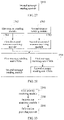
- FIG. 11 shows a method flowchart of a terminal discovery method according to an embodiment of the present invention.
- the terminal discovery method may be applied to a base station in a D2D system.
- the terminal discovery method may include: Step 702: A base station provides a discovery resource for a first terminal, so that the first terminal monitors, according to the discovery resource, a second message sent by at least one second terminal.
- the first terminal may acquire a service identity of the at least one second terminal according to the second message sent by the at least one second terminal, and acquire description information of the second terminal according to the service identity of the at least one second terminal.
- a discovery resource is provided for a first terminal, so that the first terminal monitors, according to the discovery resource, a second message sent by at least one second terminal, acquires a service identity of the second terminal according to the second message, and acquires description information of the second terminal according to the service identity of the second terminal.
- FIG. 12 shows a method flowchart of a terminal discovery method according to another embodiment of the present invention.
- the terminal discovery method may be applied to a base station in a D2D system.
- the terminal discovery method may include: Step 802: A base station allocates a discovered resource to a second terminal, so that the second terminal sends, according to the discovered resource, discovered information including a service identity of the second terminal.
- the base station may receive a fourth request sent by a management entity, where the fourth request is sent by the management entity according to a third request sent by the second terminal or is sent by the management entity according to a sixth request sent by a server; and the base station allocates the discovered resource to the second terminal according to the fourth request, where the discovered resource is a resource used when the second terminal sends a second message.
- the base station may directly send the discovered resource to the second terminal.
- the fourth request may be an S1-AP message including a third indication.
- the base station allocates the discovered resource to the second terminal, and sends the discovered resource to the second terminal by using an RRC message.
- the third indication is used to instruct the base station to allocate the discovered resource, or allocate the discovered resource to the second terminal, or allocate the discovered resource and send the discovered resource to the second terminal, or allocate the discovered resource to the second terminal and send the discovered resource to the second terminal.
- it may be an indication for allocating the discovered resource or an indication for sending the discovered resource.
- the base station sends the discovered resource to the management entity, so that the management entity sends the discovered resource to the second terminal.
- the fourth request may be an S1-AP including a fourth indication.
- the base station After receiving the S1-AP message sent by the management entity, the base station sends the discovered resource to the management entity by using a container (container), and the management entity sends the container including the discovered resource to the second terminal by using a NAS message.
- the fourth indication is used to instruct the base station to allocate the discovered resource, or allocate the discovered resource to the second terminal, or allocate the discovered resource and send the discovered resource to the management entity, or allocate the discovered resource to the second terminal and send the discovered resource to the management entity.
- it may be an indication for allocating the discovered resource or an indication for sending the discovered resource.
- the discovered resource may be information such as a frequency band, a time, or a coding scheme for sending a sent message by the second terminal.
- Step 804 The base station provides a discovery resource for a first terminal, so that the first terminal monitors, according to the discovery resource, the second message sent by the at least one second terminal, and acquires the service identity of the second terminal according to the second message, and acquires description information of the second terminal from a server according to the service identity of the second terminal.
- the base station may receive a second request sent by the management entity, where the second request is sent by the management entity; and the base station acquires the discovery resource after receiving the second request.
- the base station may directly send the discovery resource to the first terminal.
- the second request may be an S1-AP message including a first indication.
- the base station After receiving the S1-AP message sent by the management entity, the base station sends the discovery resource to the first terminal by using an RRC message.
- the first indication is used to instruct the base station to send the discovery resource to the first terminal or used to instruct the base station to acquire the discovery resource and send the discovery resource to the first terminal.
- it may be an indication for sending the discovery resource.
- the base station may send the acquired discovery resource to the management entity, so that the management entity sends the discovery resource to the first terminal.
- the second request may be an S1-AP message including a second indication.
- the base station may send the discovery resource to the management entity by using a container (container), and the management entity sends the container including the discovery resource to the first terminal by using a NAS message.
- the second indication is used to instruct the base station to send the discovery resource to the management entity or used to instruct the base station to acquire the discovery resource and send the discovery resource to the management entity.
- it may be an indication for sending the discovery resource.
- the base station may acquire the discovery resource corresponding to the first terminal; and send, in a cell in which the first terminal is located, system information including the discovery resource, so that the first terminal resolves the discovery resource in the system information.
- the discovery resource includes a discovery resource of a serving cell of the first terminal or that the discovery resource includes a discovery resource of a serving cell of the first terminal and a discovery resource of a cell adjacent to the serving cell.
- the base station may locally query the discovery resource of the current serving cell of the first terminal; or the base station may locally query the discovery resource of the current serving cell of the first terminal and the discovery resource of the cell adjacent to the serving cell; or the base station may locally query the discovery resource of the current serving cell of the first terminal, and query, from a neighboring base station through an X2 interface, the discovery resource of the cell adjacent to the serving cell.
- neighboring base stations are connected by the X2 interface. If the base stations exchange discovery resources of cells maintained by the base stations, or a neighboring base station is notified when a discovery resource of a cell in a base station changes, the base station stores the discovery resource of each cell maintained by the base station and the discovery resources of cells adjacent to each cell maintained by the base station. In this case, the base station may directly locally query the discovery resource of the current serving cell of the first terminal and the discovery resource of the cell adjacent to the serving cell.
- the base station may query, from the neighboring base station through the X2 interface, the discovery resource of the cell adjacent to the serving cell of the first terminal.
- a discovered resource is allocated to a second terminal, and a discovery resource is allocated to a first terminal, so that the first terminal monitors, according to the discovery resource, a second message that is sent by the second terminal according to the discovered resource. Because the first terminal needs to monitor only the second message of a frequency band, time, or specific coding scheme corresponding to the discovery resource, burden of the terminal can be reduced, and power of the terminal can be saved; in addition, when discovered resources corresponding to second terminals are different, interference between second messages sent by the second terminals can also be reduced effectively.
- a discovery resource is provided for a first terminal, so that the first terminal monitors, according to the discovery resource, a second message sent by at least one second terminal, and acquires a service identity of the second terminal according to the second message, and acquires description information of the second terminal according to the service identity of the second terminal.
- a discovered resource is allocated to the second terminal, and the discovery resource is allocated to the first terminal, so that the first terminal monitors, according to the discovery resource, the second message that is sent by the second terminal according to the discovered resource.
- FIG. 19 shows a method flowchart of a terminal discovery method according to an embodiment of the present invention.
- the terminal discovery method may be applied to a D2D communication system including a first terminal, a second terminal, a management entity, a server, and a base station.
- the terminal discovery method may include: Step 1102: A second terminal acquires a service identity of the second terminal allocated by a server.
- Step 1102a The second terminal sends a service identity acquisition request to a management entity.
- the service identity acquisition request may include an identity and description information of the second terminal.
- Step 1102b The management entity sends a service identity allocation request to the server according to the service identity acquisition request.
- the service identity allocation request may include the identity and description information of the second terminal.
- the identity of the second terminal may be the identity included in the service identity acquisition request that is sent by the second terminal; and the description information of the second terminal may be the description information included in the service identity acquisition request that is sent by the second terminal, or may be description information of the second terminal that is stored in advance by the management entity.
- Step 1102c The server allocates the service identity of the second terminal according to the service identity allocation request, and sends the service identity of the second terminal to the management entity.
- the server may first verify, according to the identity of the second terminal included in the service identity allocation request, whether the second terminal is authorized to be discovered by other terminals, and if the second terminal is authorized to be discovered by other terminals, allocates the service identity to the second terminal.
- the server After allocating the service identity to the second terminal, the server further stores the service identity of the second terminal in a correspondence to the description information of the second terminal.
- the service identity may be a D2D code or an expression code.
- Step 1102d The management entity sends the service identity of the second terminal to the second terminal.
- the management entity may send the service identity of the second terminal to the second terminal by using a NAS message.
- Step 1102e The management entity sends the service identity of the second terminal to a base station.
- the management entity may send the service identity of the second terminal to the base station by using an S1-AP message.
- Step 1102f The base station sends the service identity of the second terminal to the second terminal.
- the base station may send the service identity of the second terminal to the second terminal by using an RRC message.
- Step 1104 The second terminal acquires a discovered resource of the second terminal allocated by the base station.
- Step 1104a The second terminal sends a third request to the management entity.
- the request sent for acquiring the discovered resource by the second terminal may include the identity of the second terminal.
- Step 1104b The management entity sends a fourth request to the base station.
- the management entity Before sending the fourth request to the base station, the management entity may further send the identity of the second terminal to the base station, and when the base station verifies, according to the identity of the second terminal, that the second terminal is authorized to acquire the discovered resource, sends the fourth request to the base station.
- Step 1104c The base station sends the allocated discovered resource to the second terminal.
- the base station may send the discovered resource to the second terminal by using an RRC message.
- Step 1104d The base station sends the allocated discovered resource to the management entity.
- the base station may send the discovered resource to the management entity by using an S1-AP message.
- Step 1104e The management entity sends the discovered resource to the second terminal.
- the management entity sends the discovered resource to the second terminal by using a NAS message.
- the discovered resource may include information such as a frequency band and time for sending broadcast by the second terminal.
- Step 1106 A first terminal acquires a discovery resource sent by the base station.
- Step 1106a The first terminal sends a first request to the management entity.
- the first request sent by the first tenninal may include an identity of the first terminal.
- Step 1106b The management entity sends a second request to the base station.
- the management entity Before sending the second request to the base station, the management entity may send the identity of the first terminal to the server, and when the server verifies, according to the identity of the first terminal, that the first terminal is authorized to discover other terminals, send the second request to the base station.
- Step 1106c The base station sends the discovery resource to the first terminal.
- the base station may query the discovery resource corresponding to the first terminal, and send the discovery resource to the first terminal by using an RRC message.
- Step 1106d The base station sends the discovery resource to the management entity.
- the base station may query the discovery resource corresponding to the first terminal, and send the discovery resource to the management entity by using an S1-AP message.
- Step 1106e The management entity sends the discovery resource to the first terminal.
- the management entity sends the discovery resource to the second terminal by using a NAS message.
- the discovery resource may include information such as a frequency band, a time, and a coding scheme for monitoring a second message by the first terminal.
- the discovery resource includes a discovery resource of a current serving cell of the first terminal; or the discovery resource includes a discovery resource of a current serving cell of the first terminal and a discovery resource of a cell adjacent to the serving cell.
- the base station may locally query the discovery resource of the current serving cell of the first terminal and the discovery resource of the cell adjacent to the serving cell; or the base station may locally query the discovery resource of the current serving cell of the first terminal, and query, from a neighboring other base station, the discovery resource of the cell adjacent to the serving cell.
- neighboring base stations are connected by the X2 interface. If the base stations exchange discovery resources of cells maintained by the base stations, or a neighboring base station is notified when a discovery resource of a cell in a base station changes, the base station stores the discovery resource of each cell maintained by the base station and the discovery resources of cells adjacent to each cell maintained by the base station. In this case, the base station may directly locally query the discovery resource of the current serving cell of the first terminal and the discovery resource of the cell adjacent to the serving cell.
- the base station may query, from the neighboring base station through the X2 interface, the discovery resource of the cell adjacent to the serving cell of the first terminal.
- Step 1106f The first terminal receives system information sent by the base station, and resolves the discovery resource included in the system information.
- the base station may actively send the discovery resource to the first terminal. Specifically, the base station may extend existing system information to include the discovery resource into the system information, and send the system information including the discovery resource to the first terminal.
- Step 1108 The first terminal monitors, according to the discovery resource, a second message that is sent by the second terminal according to the discovered resource and includes the service identity of the second terminal.
- the second terminal may send a first message immediately after acquiring the discovered resource allocated by the base station, or may send the second message after receiving a first message sent by the first terminal.
- the second terminal sends the second message according to the information included in the discovered resource, such as the frequency band, time, and coding scheme, where the second message includes the service identity of the discovered device.
- the information included in the discovered resource such as the frequency band, time, and coding scheme
- the first terminal monitors, according to the information included in the discovery resource, such as the frequency band, time, and coding scheme, second messages sent by other terminals in a vicinity.
- the information included in the discovery resource such as the frequency band, time, and coding scheme
- Step 1110 The first terminal sends the service identity of the second terminal to the management entity, and the management entity sends the service identity of the second terminal to the server.
- the first terminal may acquire the service identity of the second terminal by filtering service identities included in all monitored second messages. For example, a service identity included in a second message whose signal strength reaches a threshold is acquired and used as the service identity of the second terminal, or types of service identities are detected, and a service identity that complies with a predetermined type is acquired and used as the service identity of the second terminal.
- the first terminal sends the service identity of the second terminal and a service identity of the first terminal to the management entity, and the management entity sends the identities to the server.
- a manner of acquiring the service identity of the first terminal is similar to the manner in step 1102 in which the second terminal acquires the service identity, and is not further described herein.
- Step 1112 The first terminal receives description information of the second terminal that is sent by the server to the management entity and sent by the management entity.
- the server may first verify, according to the service identity of the first terminal, whether the first terminal is authorized to discover the second terminal, and if a verification result is that the first terminal is authorized to discover the second terminal, query the description information of the second terminal that is stored in a correspondence to the service identity of the second terminal.
- the first terminal sends, through the management entity, the acquired service identity of the second terminal and the service identity of the first terminal to the server, and receives, through the management entity, the description information of the second terminal that is queried and sent by the server.
- the first terminal may also directly send the acquired service identity of the second terminal and the service identity of the first terminal to the server, and directly receive the service identity of the second terminal that is queried and sent by the server.
- a first terminal monitors broadcast that is sent by at least one second terminal and includes a service identity of the second terminal, and acquires the service identity of the second terminal; and acquires description information of the second terminal from a server according to the service identity of the second terminal.
- the first terminal sends a service identity of the first terminal to a management entity, so that the server verifies, according to the service identity of the first terminal, whether the first terminal is authorized to discover the second terminal, and thereby an objective of protecting privacy of the second terminal is achieved.
- FIG. 23 shows a device composition diagram of a first terminal according to an embodiment of the present invention.
- the first terminal may include:
- the first terminal provided by the embodiment of the present invention acquires a discovery resource, monitors, according to the discovery resource, a message that is sent by at least one second terminal and includes a service identity of the second terminal, and acquires the identity of the second terminal; and acquires description information of the second terminal from a server according to the identity of the second terminal.
- FIG. 24 shows a device composition diagram of a first terminal according to another embodiment of the present invention.
- the first terminal may include:
- the description information acquiring module 1304 includes:
- the first terminal further includes:
- the discovery resource acquiring module 1301 includes:
- the discovery resource includes a discovery resource of a serving cell of the first terminal; or the discovery resource includes a discovery resource of a serving cell of the first terminal and a discovery resource of a cell adjacent to the serving cell.
- the first discovery resource receiving unit 1301b is configured to receive the discovery resource that is sent by the base station by using an RRC message, where the discovery resource is the discovery resource that the base station sends after receiving the second request.
- the second request is an S1-AP message including a first indication, where the first indication is used to instruct the base station to send the discovery resource to the first terminal or used to instruct the base station to acquire the discovery resource and send the discovery resource to the first terminal.
- the second discovery resource receiving unit 1301c is configured to receive the discovery resource that is sent by the management entity by using a non-access stratum NAS message, where the discovery resource is the discovery resource that the base station sends to the management entity by using a container container after receiving the second request.
- the second request is an S1-AP message including a second indication, where the second indication is used to instruct the base station to send the discovery resource to the management entity or used to instruct the base station to acquire the discovery resource and send the discovery resource to the management entity.
- the discovery resource acquiring module 1301 includes:
- the discovery resource includes the discovery resource of the serving cell of the first terminal; or the discovery resource includes the discovery resource of the serving cell of the first terminal and the discovery resource of the cell adjacent to the serving cell.
- the first request sending unit 1301a is configured to send the first request including an identity of the first terminal to the management entity, so that the management entity sends the identity of the first terminal to the server and when the server verifies, according to the identity of the first terminal, that the first terminal is authorized to discover the terminal, sends the second request to the base station.
- the first request sending unit 1301a is configured to send the first request including the identity of the first terminal and an identity of an application using a discovery service in the first terminal to the management entity, so that the management entity sends the identity of the first terminal and the identity of the application using the discovery service in the first terminal to the server and when the server verifies, according to the identity of the first terminal and the identity of the application using the discovery service in the first terminal, that the first terminal is authorized to discover the terminal and that the application is authorized to use a discovery function, sends the second request to the base station.
- the service identity acquiring module 1303 is configured to determine that the service identity in the monitored second message and compliant with a predetermined condition is the service identity of the second terminal.
- the predetermined condition includes at least one of the following conditions:
- the first terminal further includes: a first message sending module 1307, configured to send a first message before the second message monitoring module 1302 monitors, according to the discovery resource, the second message sent by the at least one second terminal, so that the second terminal sends the second message according to the first message after receiving the first message.
- a first message sending module 1307 configured to send a first message before the second message monitoring module 1302 monitors, according to the discovery resource, the second message sent by the at least one second terminal, so that the second terminal sends the second message according to the first message after receiving the first message.
- the first terminal provided by the embodiment of the present invention acquires a discovery resource, monitors, according to the discovery resource, a message that is sent by at least one second terminal and includes a service identity of the second terminal, and acquires the identity of the second terminal; and acquires description information of the second terminal from a server according to the identity of the second terminal.
- the first terminal provided by the embodiment of the present invention monitors, according to the acquired discovery resource, a second message sent by the second terminal, and thereby, an objective of reducing burden of the terminal and saving power of the terminal is achieved.
- the first terminal provided by the embodiment of the present invention sends a service identity of the first terminal to a management entity, so that the server verifies, according to the service identity of the first terminal, whether the first terminal is authorized to discover the second terminal, and thereby an objective of protecting privacy of the second terminal is achieved.
- FIG. 25 shows a device composition diagram of a first terminal according to an embodiment of the present invention.
- the first terminal may include a processor 1401, a receiver 1402, and a transmitter 1403.
- the processor 1401 is configured to control the receiver 1402 and transmitter 1403 to acquire a discovery resource.
- the receiver 1402 is configured to monitor, according to the acquired discovery resource, a second message sent by at least one second terminal, where the second message includes a service identity of the second terminal.
- the processor 1401 is configured to acquire the service identity of the second terminal according to the second message monitored by the receiver 1402.
- the processor 1401 is configured to control the receiver 1402 and transmitter 1403 to acquire description information of the second terminal from a server according to the acquired service identity of the second terminal.
- the first terminal provided by the embodiment of the present invention acquires a discovery resource, monitors, according to the discovery resource, a message that is sent by at least one second terminal and includes a service identity of the second terminal, and acquires the identity of the second terminal; and acquires description information of the second terminal from a server according to the identity of the second terminal.
- FIG. 27 shows a device composition diagram of a second terminal according to an embodiment of the present invention.
- the second terminal may include: a second message sending module 1601, configured to send a second message including a service identity of the second terminal, so that a first terminal acquires the service identity of the second terminal according to the second message and acquires description information of the second terminal from a server according to the service identity of the second terminal.
- the second terminal provided by the embodiment of the present invention sends a second message including a service identity of the second terminal, so that a first terminal acquires description information of the second terminal from a server according to the identity of the second terminal.
- FIG. 28 shows a device composition diagram of a second terminal according to another embodiment of the present invention.
- the second terminal may include: a second message sending module 1701, configured to send a second message including a service identity of the second terminal, so that a first terminal acquires the service identity of the second terminal according to the second message and acquires description information of the second terminal from a server according to the service identity of the second terminal.
- the second terminal further includes:
- the first discovered resource receiving module 1704 is configured to receive the discovered resource that is sent by the base station by using an RRC message, where the discovered resource is the resource that the base station sends after receiving the fourth request.
- the fourth request is an S1-AP message including a third indication, where the third indication is used to instruct the base station to allocate the discovered resource, or allocate the discovered resource to the second terminal, or allocate the discovered resource and send the discovered resource to the second terminal, or allocate the discovered resource to the second terminal and send the discovered resource to the second terminal.
- the second discovered resource receiving module 1705 is configured to receive the discovered resource that is sent by the management entity by using a non-access stratum NAS message, where the discovered resource is the discovered resource that the base station sends to the management entity by using a container container after receiving the fourth request.
- the fourth request is an S1-AP message including a fourth indication, where the fourth indication is used to instruct the base station to allocate the discovered resource, or allocate the discovered resource to the second terminal, or allocate the discovered resource and send the discovered resource to the management entity, or allocate the discovered resource to the second terminal and send the discovered resource to the management entity.
- the first request sending module 1702 is configured to send the third request including an identity of the second terminal to the management entity, so that the management entity sends the identity of the second terminal to the server and when the server verifies, according to the identity of the second terminal, that the second terminal is authorized to be discovered, sends the fourth request to the base station.
- the first request sending module 1702 is configured to send the third request including the identity of the second terminal and an identity of an application using a discovered service in the second terminal to the management entity, so that the management entity sends the identity of the second terminal and the identity of the application using the discovered service in the second terminal to the server and when the server verifies, according to the identity of the second terminal and the identity of the application using the discovered service in the second terminal, that the second terminal is authorized to be discovered and that the application is authorized to use a discovered function, sends the fourth request to the base station.
- the second request sending module 1702 is configured to send the fifth request including the identity of the second terminal to the server, so that the server sends the sixth request to the management entity when the server verifies, according to the identity of the second terminal, that the second terminal is authorized to be discovered.
- the second request sending module 1702 is configured to send the fifth request including the identity of the second terminal and the identity of the application using the discovered service in the second terminal to the server, so that the server sends the sixth request to the management entity when the server verifies, according to the identity of the second terminal, that the second terminal is authorized to be discovered and that the application is authorized to use the discovered function.
- the second request sending module 1702 is configured to send the fifth request including a globally unique temporary identity GUTI of the second terminal to the server, so that the server sends the sixth request to the management entity according to the GUTI.
- the second message sending module 1701 includes:
- the second terminal provided by the embodiment of the present invention sends a second message including a service identity of the second terminal, so that a first terminal acquires description information of the second terminal from a server according to the identity of the second terminal.
- a problem in the prior art that a first terminal must learn a unique identity of a second terminal in advance is solved, and an objective of discovering a terminal of an unknown identity in a vicinity and extending an application scope is achieved.
- the second terminal provided by the embodiment of the present invention acquires a discovered resource allocated by a base station, and sends the second message according to the acquired discovered resource. Thereby, an objective of reducing interference between second terminals is achieved.
- FIG. 33 shows a device composition diagram of a server according to an embodiment of the present invention.
- the server may include:
- the server provided by the embodiment of the present invention receives a service identity of a second terminal sent by a first terminal, and queries description information of the second terminal corresponding to the service identity of the second terminal and provides the description information of the second terminal for the first terminal.
- FIG. 34 shows a device composition diagram of a server according to another embodiment of the present invention.
- the server may include:
- the first identity receiving module 2301 includes:
- the information acquiring module 2302 includes:
- the information providing module 2303 includes:
- the server further includes:
- the server further includes:
- the first request is used to request to acquire a discovery resource
- the second request is used to request the base station to acquire the discovery resource and send the discovery resource to the first terminal
- the discovery resource is a resource used when the first terminal monitors the second message.
- the server further includes:
- the first request is used to request to acquire a discovery resource
- the second request is used to request the base station to acquire the discovery resource and send the discovery resource to the first terminal
- the discovery resource is a resource used when the first terminal monitors the second message.
- the server further includes:
- the third request is used to request to acquire a discovered resource
- the fourth request is used to request the base station to allocate and send the discovered resource to the second terminal
- the discovered resource is a resource used when the second terminal sends the second message.
- the server further includes:
- the third request is used to request to acquire a discovered resource
- the fourth request is used to request the base station to allocate and send the discovered resource to the second terminal
- the discovered resource is a resource used when the second terminal sends the second message.
- the server further includes:
- the fifth request is used to request to acquire a discovered resource
- the fourth request is used to request the base station to allocate and send the discovered resource to the second terminal
- the discovered resource is a resource used when the second terminal sends the second message.
- the fifth request includes a globally unique temporary identity GUTI of the second terminal.
- the third request sending module 2322 is configured to send the sixth request to the management entity according to the GUTI.
- the fifth request further includes the identity of the second terminal, and the server further includes:
- the fifth request may further include the identity of the second terminal and the identity of the application using the discovered service in the second terminal, and the server further includes:
- the server provided by the embodiment of the present invention receives a service identity of a second terminal sent by a first terminal, and queries description information of the second terminal corresponding to the service identity of the second terminal and provides the description information of the second terminal for the first terminal.
- the server provided by the embodiment of the present invention receives a service identity of the first terminal sent by a management entity, and verifies, according to the service identity of the first terminal, whether the first terminal is authorized to discover the second terminal corresponding to the service identity of the at least one second terminal, and thereby an objective of protecting privacy of the second terminal is achieved.
- a first terminal acquires a discovery resource, monitors, according to the discovery resource, a second message that is sent by at least one second terminal and includes a service identity of the second terminal, and acquires the service identity of the second terminal; and acquires description information of the second terminal from a server according to the identity of the second terminal.
- the first terminal monitors, according to the acquired discovery resource, the second message that is sent the second terminal according to a discovered resource. Thereby, an objective of reducing burden of the terminal and saving power of the terminal while effectively reducing interference is achieved.
- the first terminal sends a service identity of the first terminal to a management entity, so that the server verifies, according to the service identity of the first terminal, whether the first terminal is authorized to discover the second terminal, and thereby an objective of protecting privacy of the second terminal is achieved.
- the first terminal, second terminal, server, base station, and management entity provided by the foregoing embodiments are described by using only division of the foregoing functional modules as an example.
- the foregoing functions can be allocated to different modules and implemented according to a requirement, that is, an inner structure of a device is divided into different function modules to implement all or some of the functions described above.
- the first terminal, second terminal, server, base station, and management entity provided by the foregoing embodiments belong to a same conception as the terminal discovery method embodiments. For specific implementation processes thereof, reference may be made to the method embodiments, and no further description is provided herein.
- the program may be stored in a computer-readable storage medium.
- the storage medium may include: a read-only memory, a magnetic disk, or an optical disc.
Landscapes
- Engineering & Computer Science (AREA)
- Computer Networks & Wireless Communication (AREA)
- Signal Processing (AREA)
- Computer Security & Cryptography (AREA)
- Databases & Information Systems (AREA)
- Mobile Radio Communication Systems (AREA)
Applications Claiming Priority (4)
| Application Number | Priority Date | Filing Date | Title |
|---|---|---|---|
| CN201310188555.9A CN104185162B (zh) | 2013-05-20 | 2013-05-20 | 发现终端方法、终端、服务器、基站、管理实体及系统 |
| EP18166470.7A EP3410751B1 (fr) | 2013-05-20 | 2014-05-16 | Procédés de découverte de terminal, terminals et serveur |
| EP14801134.9A EP2925075A4 (fr) | 2013-05-20 | 2014-05-16 | Procédé de découverte de terminaux, terminal, serveur, station de base, et entité et système de gestion |
| PCT/CN2014/077654 WO2014187276A1 (fr) | 2013-05-20 | 2014-05-16 | Procédé de découverte de terminaux, terminal, serveur, station de base, et entité et système de gestion |
Related Parent Applications (3)
| Application Number | Title | Priority Date | Filing Date |
|---|---|---|---|
| EP18166470.7A Division EP3410751B1 (fr) | 2013-05-20 | 2014-05-16 | Procédés de découverte de terminal, terminals et serveur |
| EP18166470.7A Division-Into EP3410751B1 (fr) | 2013-05-20 | 2014-05-16 | Procédés de découverte de terminal, terminals et serveur |
| EP14801134.9A Division EP2925075A4 (fr) | 2013-05-20 | 2014-05-16 | Procédé de découverte de terminaux, terminal, serveur, station de base, et entité et système de gestion |
Publications (1)
| Publication Number | Publication Date |
|---|---|
| EP4027672A1 true EP4027672A1 (fr) | 2022-07-13 |
Family
ID=51932848
Family Applications (3)
| Application Number | Title | Priority Date | Filing Date |
|---|---|---|---|
| EP18166470.7A Active EP3410751B1 (fr) | 2013-05-20 | 2014-05-16 | Procédés de découverte de terminal, terminals et serveur |
| EP14801134.9A Withdrawn EP2925075A4 (fr) | 2013-05-20 | 2014-05-16 | Procédé de découverte de terminaux, terminal, serveur, station de base, et entité et système de gestion |
| EP21209464.3A Pending EP4027672A1 (fr) | 2013-05-20 | 2014-05-16 | Procédé de découverte de terminal, terminal, serveur, station de base, entité de gestion et système |
Family Applications Before (2)
| Application Number | Title | Priority Date | Filing Date |
|---|---|---|---|
| EP18166470.7A Active EP3410751B1 (fr) | 2013-05-20 | 2014-05-16 | Procédés de découverte de terminal, terminals et serveur |
| EP14801134.9A Withdrawn EP2925075A4 (fr) | 2013-05-20 | 2014-05-16 | Procédé de découverte de terminaux, terminal, serveur, station de base, et entité et système de gestion |
Country Status (4)
| Country | Link |
|---|---|
| US (2) | US9838949B2 (fr) |
| EP (3) | EP3410751B1 (fr) |
| CN (1) | CN104185162B (fr) |
| WO (1) | WO2014187276A1 (fr) |
Families Citing this family (8)
| Publication number | Priority date | Publication date | Assignee | Title |
|---|---|---|---|---|
| CN107135499A (zh) * | 2016-02-26 | 2017-09-05 | 华为技术有限公司 | 数据传输方法、网络设备以及终端 |
| US10965733B2 (en) * | 2016-08-28 | 2021-03-30 | Vmware, Inc. | Efficient, automated distributed-search methods and systems |
| CN110167108B (zh) | 2018-02-13 | 2021-01-29 | 华为技术有限公司 | 信号传输的方法和装置 |
| CN116567707A (zh) * | 2019-02-13 | 2023-08-08 | 苹果公司 | 网络辅助的新无线电v2x侧链路资源分配的无线电资源管理 |
| DE102020201788A1 (de) | 2019-02-13 | 2020-08-13 | Apple Inc. | Funkressourcenverwaltung für netzwerkunterstützte new-radio-v2x-sidelink-ressourcenzuweisung |
| CN110267359B (zh) * | 2019-06-25 | 2021-01-08 | 江西省高速公路联网管理中心 | 一种资源分配方法、路侧单元及存储介质 |
| EP4152771A4 (fr) | 2020-05-14 | 2024-02-14 | Beijing Xiaomi Mobile Software Co., Ltd. | Procédé et appareil destinés à suivre un terminal, et support d'informations |
| EP4152888A4 (fr) * | 2020-08-07 | 2023-06-21 | Guangdong Oppo Mobile Telecommunications Corp., Ltd. | Procédé et appareil pour l'obtention d'un message de système, dispositif terminal, et dispositif de réseau |
Citations (1)
| Publication number | Priority date | Publication date | Assignee | Title |
|---|---|---|---|---|
| WO2004080103A1 (fr) * | 2003-03-07 | 2004-09-16 | Koninklijke Philips Electronics N.V. | Etablissement de communications poste-a-poste en mode direct en fonction de la distance dans un reseau amrc duplex a repartition dans le temps |
Family Cites Families (18)
| Publication number | Priority date | Publication date | Assignee | Title |
|---|---|---|---|---|
| EP1745630B1 (fr) * | 2004-05-11 | 2014-01-22 | Telefonaktiebolaget LM Ericsson (publ) | Procede et dispositif destines a fournir un acces a un service d'identification |
| CN101621385B (zh) * | 2008-06-30 | 2012-05-23 | Tcl集团股份有限公司 | 一种智能设备组的管理方法 |
| US8938201B2 (en) * | 2010-04-16 | 2015-01-20 | Spirent Communications, Inc. | WiFi positioning bench test method and instrument |
| US8509105B2 (en) * | 2010-06-23 | 2013-08-13 | Nokia Corporation | Method and apparatus for device-to-device network coordination |
| CN102457829B (zh) | 2010-10-20 | 2014-06-04 | 华为终端有限公司 | 鉴权和会话管理实体及其使用漫游地网络业务的方法 |
| EP3177070B1 (fr) * | 2011-07-05 | 2018-09-12 | Telefonaktiebolaget LM Ericsson (publ) | Transfert intercellulaire utran vers lte |
| WO2013025057A2 (fr) * | 2011-08-16 | 2013-02-21 | 엘지전자 주식회사 | Procédé et appareil pour effectuer une communication de dispositif à dispositif dans un système d'accès sans fil |
| CN103037448B (zh) * | 2011-09-30 | 2015-05-27 | 华为技术有限公司 | 内容发布方法和用户设备 |
| JP5944004B2 (ja) * | 2011-10-03 | 2016-07-05 | インテル・コーポレーション | デバイスツーデバイス通信(d2d通信)メカニズム |
| CN103096503B (zh) | 2011-11-04 | 2016-03-30 | 华为技术有限公司 | 通信匹配方法、用户设备和基站 |
| GB2497741A (en) * | 2011-12-19 | 2013-06-26 | Renesas Mobile Corp | A verification system for use in requesting access to a D2D communication service |
| WO2014014183A1 (fr) * | 2012-07-18 | 2014-01-23 | 엘지전자 주식회사 | Procédé pour la recherche d'un dispositif dans un système d'accès sans fil, et dispositif correspondant |
| CN102857901A (zh) * | 2012-09-12 | 2013-01-02 | 中兴通讯股份有限公司 | 终端的发现、发现处理方法及装置 |
| WO2014058221A2 (fr) * | 2012-10-09 | 2014-04-17 | 엘지전자 주식회사 | Procédé et appareil permettant la mise en oeuvre d'une communication entre dispositifs dans un système de communication sans fil |
| US20140204847A1 (en) * | 2013-01-18 | 2014-07-24 | Telefonaktiebolaget L M Ericsson (Publ) | Network-assisted d2d communication using d2d capability information |
| CN104066070B (zh) * | 2013-03-20 | 2018-10-26 | 中兴通讯股份有限公司 | 终端注册方法、终端发现方法、终端及装置 |
| CN104105155B (zh) * | 2013-04-01 | 2019-07-16 | 中兴通讯股份有限公司 | 接收设备发现信息、发送设备发现信息的方法和用户设备 |
| KR102043006B1 (ko) * | 2013-05-14 | 2019-11-13 | 삼성전자주식회사 | 무선 통신시스템에서의 UEs간 통신 방법 |
-
2013
- 2013-05-20 CN CN201310188555.9A patent/CN104185162B/zh active Active
-
2014
- 2014-05-16 EP EP18166470.7A patent/EP3410751B1/fr active Active
- 2014-05-16 WO PCT/CN2014/077654 patent/WO2014187276A1/fr not_active Ceased
- 2014-05-16 EP EP14801134.9A patent/EP2925075A4/fr not_active Withdrawn
- 2014-05-16 EP EP21209464.3A patent/EP4027672A1/fr active Pending
-
2015
- 2015-07-14 US US14/798,805 patent/US9838949B2/en active Active
-
2017
- 2017-11-16 US US15/815,177 patent/US10492122B2/en active Active
Patent Citations (1)
| Publication number | Priority date | Publication date | Assignee | Title |
|---|---|---|---|---|
| WO2004080103A1 (fr) * | 2003-03-07 | 2004-09-16 | Koninklijke Philips Electronics N.V. | Etablissement de communications poste-a-poste en mode direct en fonction de la distance dans un reseau amrc duplex a repartition dans le temps |
Non-Patent Citations (1)
| Title |
|---|
| "Study on architecture enhancements to support Proximity Services (ProSe) (Release 12); 3GPP STANDARD; 3GPP TR 23.703 V0.3.0", 3RD GENERATION PARTNERSHIP PROJECT (3GPP), 26 April 2013 (2013-04-26), XP050692466 * |
Also Published As
| Publication number | Publication date |
|---|---|
| WO2014187276A1 (fr) | 2014-11-27 |
| EP3410751A1 (fr) | 2018-12-05 |
| US9838949B2 (en) | 2017-12-05 |
| EP2925075A4 (fr) | 2016-03-23 |
| EP2925075A1 (fr) | 2015-09-30 |
| CN104185162B (zh) | 2018-10-19 |
| US20150319673A1 (en) | 2015-11-05 |
| US20180077628A1 (en) | 2018-03-15 |
| CN104185162A (zh) | 2014-12-03 |
| EP3410751B1 (fr) | 2021-12-29 |
| US10492122B2 (en) | 2019-11-26 |
Similar Documents
| Publication | Publication Date | Title |
|---|---|---|
| EP3410751B1 (fr) | Procédés de découverte de terminal, terminals et serveur | |
| US11943630B2 (en) | Enhancements for multiple radio protocol dynamic spectrum sharing | |
| US9775105B2 (en) | Optimization on network assisted proximity services discovery management | |
| US10142991B2 (en) | Resource allocation for direct terminal-to-terminal communication in a cellular system | |
| EP3562180B1 (fr) | Appareil de mobile partagé virtuel de communication de type machine et procédé | |
| US10034317B2 (en) | Method for allowing base station to support device-to-device (D2D) communication in wireless communication system, and method for allowing D2D device to efficiently transmit D2D communication request signal | |
| EP3975449B1 (fr) | Procédé de gestion de collision d'id pour un système de communication d2d, et dispositif associé | |
| RU2643185C1 (ru) | Способ уведомления для системы связи d2d и устройство для него | |
| KR101365581B1 (ko) | 단말 식별자의 사용 방법, 시스템 및 설비 | |
| US10009712B2 (en) | Method and device for short range unicast communication | |
| US20160219636A1 (en) | User terminal and mobile communication system | |
| WO2013154328A1 (fr) | Procédé de transmission et de réception de données pour terminal d2d dans un système de communication sans fil prenant en charge une communication de dispositif à dispositif | |
| HK1221109A1 (zh) | Lte网络中用於邻近服务和d2d发现的信令 | |
| KR102233595B1 (ko) | 단말 간 근접 발견을 위한 방법 및 장치 | |
| CN117716749A (zh) | 向用户装备供应静态网际协议(ip)地址的应用功能(af) | |
| EP4151018A1 (fr) | Service de multidiffusion/diffusion (mbs) de novelle radio (nr) | |
| CN110248411A (zh) | 一种被用于无线通信的用户设备、基站中的方法和装置 | |
| EP2942990A1 (fr) | Procédé, système et équipement permettant de réaliser une session d'appel collectif de grappe en lte (évolution à long terme) | |
| US10694476B2 (en) | Method for enabling lawful interception in a telecommunications network, user equipment for enabling lawful interception in a telecommunications network, base transceiver station for enabling lawful interception in a telecommunications network, program and computer program product | |
| Tsolkas et al. | A device discovery scheme for proximity services in LTE networks | |
| US9001772B2 (en) | Apparatus and method for managing access state of mobile station for group communication service in wireless communication system | |
| HK40010970B (en) | Machine type communication virtual shared mobile apparatus and method | |
| HK40010970A (en) | Machine type communication virtual shared mobile apparatus and method | |
| HK1208584B (en) | Network assisted proximity services discovery management |
Legal Events
| Date | Code | Title | Description |
|---|---|---|---|
| PUAI | Public reference made under article 153(3) epc to a published international application that has entered the european phase |
Free format text: ORIGINAL CODE: 0009012 |
|
| STAA | Information on the status of an ep patent application or granted ep patent |
Free format text: STATUS: REQUEST FOR EXAMINATION WAS MADE |
|
| 17P | Request for examination filed |
Effective date: 20211122 |
|
| AC | Divisional application: reference to earlier application |
Ref document number: 2925075 Country of ref document: EP Kind code of ref document: P Ref document number: 3410751 Country of ref document: EP Kind code of ref document: P |
|
| AK | Designated contracting states |
Kind code of ref document: A1 Designated state(s): AL AT BE BG CH CY CZ DE DK EE ES FI FR GB GR HR HU IE IS IT LI LT LU LV MC MK MT NL NO PL PT RO RS SE SI SK SM TR |
|
| STAA | Information on the status of an ep patent application or granted ep patent |
Free format text: STATUS: EXAMINATION IS IN PROGRESS |
|
| 17Q | First examination report despatched |
Effective date: 20241209 |