EP4027802B1 - Herstellungsverfahren für trockentierfutter - Google Patents
Herstellungsverfahren für trockentierfutter Download PDFInfo
- Publication number
- EP4027802B1 EP4027802B1 EP19772796.9A EP19772796A EP4027802B1 EP 4027802 B1 EP4027802 B1 EP 4027802B1 EP 19772796 A EP19772796 A EP 19772796A EP 4027802 B1 EP4027802 B1 EP 4027802B1
- Authority
- EP
- European Patent Office
- Prior art keywords
- meat
- chunks
- dried
- dry
- strips
- Prior art date
- Legal status (The legal status is an assumption and is not a legal conclusion. Google has not performed a legal analysis and makes no representation as to the accuracy of the status listed.)
- Active
Links
Images

Classifications
-
- A—HUMAN NECESSITIES
- A23—FOODS OR FOODSTUFFS; TREATMENT THEREOF, NOT COVERED BY OTHER CLASSES
- A23K—FODDER
- A23K50/00—Feeding-stuffs specially adapted for particular animals
- A23K50/40—Feeding-stuffs specially adapted for particular animals for carnivorous animals, e.g. cats or dogs
- A23K50/42—Dry feed
-
- A—HUMAN NECESSITIES
- A23—FOODS OR FOODSTUFFS; TREATMENT THEREOF, NOT COVERED BY OTHER CLASSES
- A23K—FODDER
- A23K10/00—Animal feeding-stuffs
- A23K10/20—Animal feeding-stuffs from material of animal origin
-
- A—HUMAN NECESSITIES
- A23—FOODS OR FOODSTUFFS; TREATMENT THEREOF, NOT COVERED BY OTHER CLASSES
- A23K—FODDER
- A23K10/00—Animal feeding-stuffs
- A23K10/30—Animal feeding-stuffs from material of plant origin, e.g. roots, seeds or hay; from material of fungal origin, e.g. mushrooms
-
- A—HUMAN NECESSITIES
- A23—FOODS OR FOODSTUFFS; TREATMENT THEREOF, NOT COVERED BY OTHER CLASSES
- A23K—FODDER
- A23K20/00—Accessory food factors for animal feeding-stuffs
- A23K20/10—Organic substances
- A23K20/158—Fatty acids; Fats; Products containing oils or fats
-
- A—HUMAN NECESSITIES
- A23—FOODS OR FOODSTUFFS; TREATMENT THEREOF, NOT COVERED BY OTHER CLASSES
- A23K—FODDER
- A23K30/00—Processes specially adapted for preservation of materials in order to produce animal feeding-stuffs
-
- A—HUMAN NECESSITIES
- A23—FOODS OR FOODSTUFFS; TREATMENT THEREOF, NOT COVERED BY OTHER CLASSES
- A23K—FODDER
- A23K30/00—Processes specially adapted for preservation of materials in order to produce animal feeding-stuffs
- A23K30/20—Dehydration
-
- A—HUMAN NECESSITIES
- A23—FOODS OR FOODSTUFFS; TREATMENT THEREOF, NOT COVERED BY OTHER CLASSES
- A23K—FODDER
- A23K40/00—Shaping or working-up of animal feeding-stuffs
-
- A—HUMAN NECESSITIES
- A23—FOODS OR FOODSTUFFS; TREATMENT THEREOF, NOT COVERED BY OTHER CLASSES
- A23K—FODDER
- A23K40/00—Shaping or working-up of animal feeding-stuffs
- A23K40/20—Shaping or working-up of animal feeding-stuffs by moulding, e.g. making cakes or briquettes
-
- A—HUMAN NECESSITIES
- A23—FOODS OR FOODSTUFFS; TREATMENT THEREOF, NOT COVERED BY OTHER CLASSES
- A23K—FODDER
- A23K40/00—Shaping or working-up of animal feeding-stuffs
- A23K40/25—Shaping or working-up of animal feeding-stuffs by extrusion
-
- A—HUMAN NECESSITIES
- A23—FOODS OR FOODSTUFFS; TREATMENT THEREOF, NOT COVERED BY OTHER CLASSES
- A23K—FODDER
- A23K40/00—Shaping or working-up of animal feeding-stuffs
- A23K40/30—Shaping or working-up of animal feeding-stuffs by encapsulating; by coating
-
- A—HUMAN NECESSITIES
- A23—FOODS OR FOODSTUFFS; TREATMENT THEREOF, NOT COVERED BY OTHER CLASSES
- A23N—MACHINES OR APPARATUS FOR TREATING HARVESTED FRUIT, VEGETABLES OR FLOWER BULBS IN BULK, NOT OTHERWISE PROVIDED FOR; PEELING VEGETABLES OR FRUIT IN BULK; APPARATUS FOR PREPARING ANIMAL FEEDING- STUFFS
- A23N17/00—Apparatus specially adapted for preparing animal feeding-stuffs
- A23N17/002—Apparatus specially adapted for preparing animal feeding-stuffs for treating of meat, fish waste or the like
-
- A—HUMAN NECESSITIES
- A23—FOODS OR FOODSTUFFS; TREATMENT THEREOF, NOT COVERED BY OTHER CLASSES
- A23N—MACHINES OR APPARATUS FOR TREATING HARVESTED FRUIT, VEGETABLES OR FLOWER BULBS IN BULK, NOT OTHERWISE PROVIDED FOR; PEELING VEGETABLES OR FRUIT IN BULK; APPARATUS FOR PREPARING ANIMAL FEEDING- STUFFS
- A23N17/00—Apparatus specially adapted for preparing animal feeding-stuffs
- A23N17/005—Apparatus specially adapted for preparing animal feeding-stuffs for shaping by moulding, extrusion, pressing, e.g. pellet-mills
-
- Y—GENERAL TAGGING OF NEW TECHNOLOGICAL DEVELOPMENTS; GENERAL TAGGING OF CROSS-SECTIONAL TECHNOLOGIES SPANNING OVER SEVERAL SECTIONS OF THE IPC; TECHNICAL SUBJECTS COVERED BY FORMER USPC CROSS-REFERENCE ART COLLECTIONS [XRACs] AND DIGESTS
- Y02—TECHNOLOGIES OR APPLICATIONS FOR MITIGATION OR ADAPTATION AGAINST CLIMATE CHANGE
- Y02P—CLIMATE CHANGE MITIGATION TECHNOLOGIES IN THE PRODUCTION OR PROCESSING OF GOODS
- Y02P60/00—Technologies relating to agriculture, livestock or agroalimentary industries
- Y02P60/80—Food processing, e.g. use of renewable energies or variable speed drives in handling, conveying or stacking
- Y02P60/87—Re-use of by-products of food processing for fodder production
Definitions
- the present invention relates to a method of manufacturing a dry pet food.
- Pet foods are available in a multitude of shapes and forms, and their classification into types is not a straightforward task. However it is generally accepted that the easiest, and most widely accepted approach is the system engaged by the Association of American Feed Control Officials (AAFCO) Model Pet Food Regulations. It defines three major categories of pet food by moisture content:
- Dry Pet foods are easy to package and store, and have a long shelf life, if stored correctly.
- Extrusion for example by 'single' or 'twin screw' extruder.
- the extruder forces the material along a shaft by means of screw(s), wherein the heat and pressure cook the food along the journey.
- the heat is generated through a combination of shear and friction forces as the mix passes through the extruder, and this helps gelatinise (i.e. cook) carbohydrates in the mix and allows the binding of the mix together and the formation of a chunk (e.g. a kibble) with structural integrity.
- Extrusion is defined as the process of forcing a food / feed material to flow under one or more of a variety of conditions (i.e. mixing, heating and shear) though a die, which is designed to form and / or puff dry the ingredients.
- Traditional dry pet food extrusion in other words, combines several unit operations including batching of dry ingredients, particle size reduction (grinding), mixing, cooking, kneading, shearing, shaping and forming.
- the verb 'extrude' characterises a process of shaping a final product by forcing softened or plasticized material through dies (or holes) by pressure.
- the dry ingredients typically include a variety of dried (rendered) powdered meats, cereals such as barley, wheat, rice, other dried carbohydrates such as dried potato, or dried sweet potato and dried vegetables, e.g. peas, carrots, beans.
- various shapes and sizes can be formed by the extrudate being passed through a die plate at pressure and a knife assembly that cuts off the extruded food from the die at frequent, regular intervals, thereby forming individual chunks in whichever shape, and size as determined by the die plate and cutter speed. Further size and form characteristics are determined by the adjustment to the knife assembly.
- the chunks/pellets are commonly referred to in the art as "kibbles".
- the dried powdered meats that are used in the process may in some instances be several weeks or months old due to the nature of their preparation, and these dried powdered meats slowly oxidise and degrade during their storage, as the antioxidants contained therein are gradually depleted over time.
- the original fresh meat that is used to produce the dried powdered meat may also come from several different sources, and there is typically no visibility and no means, for the pet food manufacturer, of tracking the origin of the source material used to make the dried powdered meat.
- the preparation of dry powdered meats as used in dry pet food extrusion cooking typically involves collection by a meat renderer of meat such as chicken, lamb, turkey, beef, pork or fish and their by-products, obtained from various abattoirs or processing plants. These collections are usually streamed by species but may be agglomerated i.e. poultry from different plants (and different kill dates) mixed together. At the renderers the materials from various plants are dewatered, defatted (fat / oil extraction), cooked, pressed, preserved by the addition of antioxidants (synthetic e.g. BHA / BHT or otherwise) and ground into meals (powdered form). It is this meal that is sold to dry pet food manufacturers.
- a meat renderer of meat such as chicken, lamb, turkey, beef, pork or fish and their by-products, obtained from various abattoirs or processing plants. These collections are usually streamed by species but may be agglomerated i.e. poultry from different plants (and different kill dates) mixed together.
- renderers collect from many disparate processing plants, and trailers may sit for some time, and then spend some hours being transported to the rendering plant, or if the cold chain is not managed correctly then the finished meal will be of lower quality due to potential oxidisation, and /or nutrient loss from bacterial and enzymatic breakdown of the raw meats.
- GMP Good Manufacturing Processes
- Some dry pet food manufacturers do incorporate the use of meat slurries in the extrusion process. This allows the incorporation of a portion of fresh meat tissues into the formulation, instead of a complete reliance on dry meat meals. But because the inherent moisture level of fresh (i.e. non rendered) meat is much higher at circa 60-80%, there is a physical upper limit to the percentage inclusion of fresh, non-rendered, non-pre-processed meat in this form into a mechanical cooking extrusion procedure. Excessive inherent moisture and inherent fat levels within the fresh meat prevent the formation of a non-friable chunk through a traditional extrusion cooking process. The mechanical cooking extruder was originally designed in the American Mid West in 1948 to cook cereals for animal feed.
- fresh meat is required to undergo a tricanting or dewatering process which reduces the oil and water content of the meat, before it can be added at the preconditioner, so that the mechanical cooking extruder can still form chunks that do not break down into pieces.
- dry pet foods are inherently and generally much higher in dry grain or dry carbohydrate (e.g. potato / sweet potato) content, relative to other forms such as 'wet' (e.g. canned).
- dry grain or dry carbohydrate e.g. potato / sweet potato
- 'wet' e.g. canned
- Fig. 1 One example of a known dry pet food manufacturing process is shown in Fig. 1 .
- the raw materials such as dried meat and vegetables are stored in a step 1, and they are weighed, ground, and mixed together in steps 2 to 4.
- Fresh or frozen meat is tricanted or dewatered in step 5, and added to the mixed dry ingredients in a preconditioning step 6.
- the mixture then passes through a mechanical cooking extruder in step 7, to provide strips which are die formed into chunks as described above in step 8, and dried, cooled, and packaged in steps 9a to 9c.
- the chunks final moisture content is typically in the range of 6 to 10%, and temperature less than 5°C of ambient.
- WO 2016/151440 A1 discloses a method of producing a food composition, the method comprising: forming a meat slurry from fresh or frozen meat; adding the meat slurry to a dry blend of ingredients to form a mixture in which the meat slurry is about 14% to about 30% of the mixture; subjecting the mixture to extrusion cooking to form an extrudate; and processing the extrudate to form the food composition, wherein the forming of the meat slurry comprises subjecting the fresh or frozen meat to size reduction and cooking the size-reduced fresh or frozen meat with direct steam injection at a temperature of about 71 °C or less.
- non processed fresher meats i.e. not dewatered, not decanted, nor triacanted
- a method of manufacturing a dry pet food as defined in claim 1. comprises receiving unprocessed meat, grinding the unprocessed meat, forming the ground meat into a slab or a plurality of strips, passing the formed meat through a steam cooker and cutting the meat into chunks, and drying out the chunks.
- the ground meat is mixed with less than 20% by weight dry ingredient prior to the forming of the ground meat and the dry ingredient into the slab or plurality of strips.
- a steam cooker is used to cook the meat by steam and at lower temperature for longer when compared to the cooking that is done by a conventional mechanical cooking extruder, a higher quality product results, and a higher fresh meat content can be achieved due to the nature of the process.
- the meat does not undergo the higher temperature and harsher mechanical treatment that that occurs within a mechanical cooking extruder.
- the use of the steam cooker allows the material to be sourced directly from processors and abattoirs, and not via intermediaries i.e. renderers. The material is therefore fresher, of known provenance and quality and allows for a higher quality end product.
- the steam cooker does not require the ground meat to have been subject to pre-processing e.g. dewatering, defatting by tricanting, or pressing, or other methods to reach the low moisture content that the mechanical cooking extruder requires, and so the fresh meat is presented in its 'whole' form. Said simply, the beneficial oils and nutrients within the moisture elements of the meat can be retained rather than needing to be removed as is required prior to presentation to a mechanical cooking extruder.
- the steam cooking process is gentle, at lower temperature than a conventional mechanical cooking extruder and free of aggressive mechanical steps and sufficient to bind the meat together well enough for the subsequent drying process, so that the cut chunks will remain in their shapes and form rather than breaking down. Therefore, the meat is in its final constitution as it passes through the steam cooker, without any need to break down and re-constitute the meat neither during nor after the steam cooking has occurred.
- the method begins with unprocessed (e.g. fresh or fresh frozen meat sourced directly from processing plant or abattoir), rather than dried meat like in known dry food manufacturing processes, the resulting product will be fresher and will have retained more of the nutrients that are typically lost during the known drying and subsequent storage processes. It also becomes possible to create dry food from a single, known source of meat (provenance), whereas meat drying processes (rendering) typically incorporate meats from many different agglomerated sources and the provenance, and freshness, and efficacy, source and provenance of the dried (rendered) meat in known dry food manufacturing processes cannot typically be determined. Furthermore, compared to the manufacture of dry pet foods in the traditional manner, the invention allows a greater deal of flexibility in the formulation of the pet food, and use of a higher fresh meat percentage.
- unprocessed e.g. fresh or fresh frozen meat sourced directly from processing plant or abattoir
- the mixing of the ground meat with up to 20% by weight dry ingredient, prior to the forming of the ground meat with the dry ingredient, allows addition to the meat of some carbohydrates (if required), vitamin and mineral premixes, and/or nutraceuticals such as pre and pro-biotics, digestion aids or other micronutrients that may have a nutritional or marketing claim benefit.
- the dry ingredient may comprise at least one of a dried vegetable and dried fruit preparation. There may be innumerable recipe permutations.
- the gelatinisation of carbohydrates in the traditional mechanical cooking extruder prevents the chunks from breaking up during the traditional extrusion processing process, and so high levels of dried ingredients can be used in the mechanical cooking extruder. But, this gelatinisation effect does not occur and is not required when the mix is already in its final constitution prior to cooking, allowing very high percentages of greater than 80% unprocessed meat to be ground and included into the mix.
- the step of grinding the unprocessed meat may comprise coarsely grinding the unprocessed meat(s), to allow it to be mixed with the dry ingredient component, and then finely grinding the mixture of the course ground meat and the dry ingredient, prior to the step of forming.
- the step of forming the ground meat is performed with an extruder that does not impart any significant heat to the ground meat through friction, shear or aggressive mechanical cooking forces. Then, the extruder does not degrade the quality of the meat.
- the formed meat that exits the extruder is preferably in an uncooked state, and so resembles a formed paste that will not break down into pieces, and which is subsequently cooked by the steam cooker.
- the fresh meat former / extruder may produce a slab or a plurality of strips of the ground meat, typically in a paste consistency, to allow the steam cooker to cook the meat.
- the steam cooker cooks strips of meat rather than a slab of meat as then the surface area of the meat exposed to the steam is higher. Therefore, if the extruder produces a slab of meat, then the extruded meat may be passed through a slitter to form the batch into a plurality of strips prior to the steam cooker.
- the meat is typically cut into the chunks after it has been cooked in the steam cooker, however it could alternatively be cut into chunks before the steam cooker if care was taken to prevent the chunks from coming into contact and sticking together before cooking had taken place.
- the cutting of the meat into chunks typically comprises cutting each strip into multiple separate lengths.
- the steam cooker comprises a conveyor belt configured to carry the slab, plurality of strips, or chunks, as the case may be, along and through a steam filled enclosure. Then, the uncooked meat can be continuously supplied to one side of the steam cooker, and the cooked meat continuously received from the other side of the steam cooker.
- the drying of the chunks preferably comprises reducing a moisture content of the chunks from greater than 40% by weight, to less than 12% (ideally 6 to 10%) by weight. Then, a high level of moisture is allowed in the uncooked meat so that fresh, unprocessed meat with all its oils/liquids and associated nutritional content can be used, and the dried chunks have a low level of moisture so that they can be easily packaged and handled, and by drying the end product will be bacteriologically safe.
- the drying of the chunks may comprise a plurality of stages, including a first stage of outer skin hardening and a subsequent stage of full chunk drying. This allows for improved control and a stepped drying process to achieve the desired final target moisture.
- the first stage also makes the chunks sufficiently robust to stay in one piece when subjected to the subsequent stage(s) of drying, which are typically more intense.
- the dried chunks may be coated or enrobed with liquid oil before packaging. This provides nutritional completeness, as well as further palatability benefits. Flavours, gravies or 'digests' may also be incorporated into the in addition to and after the liquid oil to improve the palatability and aroma appeal of the food to the pet.
- Typical pets for which the pet food is intended include animals such as cats or dogs.
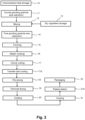
- the flow diagram of Fig. 2 begins with a step 10 of storing unprocessed meat.
- the unprocessed meat is preferably fresh but could alternatively be frozen, and is in substantially the same constitution as originally taken from the relevant animal.
- the step 10 is preferably of short duration, dependant on whether the meat is fresh or frozen. For example, there is preferably less than 72 hours between the slaughter of the animal and the retrieval of the fresh meat from the storage for use in a subsequent grinding step 11.
- the grinding step 11 coarsely grinds the unprocessed meat so that is can be mixed with some dry ingredients in a mixing step 13.
- the dry ingredients are stored in a step 12, and in this embodiment comprise dried vegetable and or cereal / carbohydrate matter, but depending on the embodiment may also or alternatively comprise other dry ingredients such as dried fruits and / or other nutritional additives.
- the mixture is formed into a plurality of strips by an extruder / former.
- the extruder / former has a plurality of orifices which produce a corresponding plurality of sausage-like strips, but in an alternate embodiment the extruder may simply have a single rectangular orifice to produce a slab, and the slab may be followed by a series of blades in a row that is perpendicular to the direction of travel of the slab (known as a slitter), to cut the slab into the plurality of strips.
- the extruder / former does not exert any more frictional or shear forces on the mixture than necessary to create the slab / strips, and so no significant thermal heating of the mixture occurs when passing through the extruder / former, and the freshness of the ingredients in the mixture is not degraded, neither is the form of the sausage like strips.
- the extrusion unit is located immediately prior to the steam cooker, and its only function is to form the strips or slab of emulsion, ready for processing.
- the slab / strips then enter the steam cooker which is used to heat the formed meat (emulsion).
- the formed meat mix is carried on a continuous belt through the steam cooker, which in this embodiment comprises a conveyer belt that conveys the slab / strips through an enclosure filled with steam, to perform steam cooking 16.
- the steam cooking 16 preferably raises the core temperature of the slab / strips from beneath 40 degrees centigrade to above 80 degrees centigrade, to cook the slab/strips.
- the slab/strips enter the steam cooker at around +5°C, and are heated to around 92°C core temperature to cook them, with a process steam pressure of 3 bar.
- the slab/strips are cut into chunks at step 17, to make them into a size that is suitable for the intended type of pet animal to eat.
- the slabs / strips are cut into chunks before passing through the steam cooker.
- the chunks exit the steam cooker/tunnel onto a transfer belt 17a, where air fans or water sprays may be used to help cool the chunks, or in some instances a very long transfer belt may be used to allow natural cooling.
- the transfer belt is a conveyor belt that transfers the chunks from the steam cooker and/or chunk cutter to the drying stages of the process.
- the cut chunks pass to a step 18, where they are pre-dried in a first 'case hardening' drying process to form a hard skin that makes the chunks, less friable, more robust and less likely to break.
- the pre-dried chunks then pass into a subsequent drying process in step 19, where the chunks are fully dried so as to give an end chunk moisture of no greater than 10%.
- This subsequent drying process 19 may utilise vibration transport techniques based on the spiral elevator oven principle, or alternatively a conventional horizontal oven, as is known in the art, and the hard skin formed in the first drying process helps the chunks resist the forces present in the subsequent drying process to keep them from breaking. Further drying stages may also be implemented dependant on the final target moisture. The function of the drying step is simply to reduce the moisture level of the chunks to below 10%.
- the dried chunks are then coated/enrobed with a liquid of fat/oil, for example chicken oil, salmon oil, or lamb tallow in a step 20.
- a liquid of fat/oil for example chicken oil, salmon oil, or lamb tallow
- the liquid may for example be based on fat or oil or and may include liquid palatability enhancers, i.e. digests or 'gravies', to enhance the aromatic and palatability appeal of the chunks to the intended pet animal.
- the coated chunks are then left to cool in a step 21.
- step 21a there is a pasteurisation / sterilisation step 21a, in which the final product is heated to a high temperature of greater than the cooking temperature in the steam cooker, to kill any pathogens prior to packaging.
- the dried and coated chunks are sieved to remove any fines or dust and finally packaged in a step 22, for example in plastic containers, such as pre-formed multi ply bags or sacks in preparation for their sale.
Landscapes
- Life Sciences & Earth Sciences (AREA)
- Chemical & Material Sciences (AREA)
- Polymers & Plastics (AREA)
- Engineering & Computer Science (AREA)
- Food Science & Technology (AREA)
- Zoology (AREA)
- Animal Husbandry (AREA)
- Health & Medical Sciences (AREA)
- Biotechnology (AREA)
- Molecular Biology (AREA)
- Physiology (AREA)
- Birds (AREA)
- Biomedical Technology (AREA)
- Botany (AREA)
- Mycology (AREA)
- Fodder In General (AREA)
- Feed For Specific Animals (AREA)
Claims (14)
- Verfahren zum Herstellen eines Haustier-Trockenfutters, umfassend Aufnehmen unverarbeiteten Fleischs, Wolfen (11, 14) des unverarbeiteten Fleischs, Formen (15) des gewolften Fleischs in eine Platte oder eine Mehrzahl von Streifen, Führen (16) des geformten Fleischs durch einen Dampfgarer und Schneiden (17) des Fleischs in Stücke, und Austrocknen (18, 19) der Stücke, wobei das Verfahren ein Mischen (13) des gewolften Fleischs mit weniger als 20 Gew.-% Trockenzutat vor dem Formen (15) des gewolften Fleischs und der Trockenzutat in die Platte oder die Mehrzahl von Streifen umfasst.
- Verfahren gemäß Anspruch 1, wobei die Trockenzutat mindestens eines aus einem getrockneten Gemüse, einem getrockneten Kohlehydrat, einem getrockneten Getreideprodukt oder einer getrockneten Leguminose und einer getrockneten Fruchtzubereitung umfasst.
- Verfahren gemäß Anspruch 1 oder 2, wobei der Schritt des Wolfens des unverarbeiteten Fleischs ein grobes Wolfen (11) des unverarbeiteten Fleischs, ein Mischen (13) des grob gewolften Fleischs mit der Trockenzutat und ein feines Wolfen (14) der Mischung des grob gewolften Fleischs und der Trockenzutat vor dem Schritt des Formens (15) umfasst.
- Verfahren gemäß einem der vorhergehenden Ansprüche, wobei der Schritt des Formens (15) des gewolften Fleischs mit einem Extruder durchgeführt wird, der durch Reibung oder Scherungskräfte dem gewolften Fleisch keine erhebliche Wärme zuführt, sodass das geformte Fleisch in einem ungegarten Zustand ist.
- Verfahren gemäß einem der vorhergehenden Ansprüche, wobei das Schneiden (17) des Fleischs in Stücke durchgeführt wird, nachdem das geformte Fleisch durch den Dampfgarer geführt wurde.
- Verfahren gemäß einem der vorhergehenden Ansprüche, umfassend Schneiden der Platte in eine Mehrzahl von Streifen vor dem Dampfgaren unter der Verwendung eines Fleischschneiders.
- Verfahren gemäß einem der vorhergehenden Ansprüche, wobei das Schneiden (17) des Fleischs in Stücke ein Schneiden eines jeden Streifens in mehrere getrennte Streifenstücke umfasst.
- Verfahren gemäß einem der vorhergehenden Ansprüche, wobei der Dampfgarer ein Förderband umfasst, das dazu ausgelegt ist, gegebenenfalls die Platte, die Mehrzahl von Streifen oder die Stücke weiter und durch ein mit Dampf gefülltes Gehäuse zu transportieren.
- Verfahren gemäß einem der vorhergehenden Ansprüche, wobei Stücke den Dampfgarer auf ein Transferband verlassen und wobei Lüfter oder Wassersprüheinrichtungen, die auf das Transferband gerichtet sind, dazu verwendet werden, zum Kühlen (17a) der Stücke vor dem Schritt des Trocknens der Stücke beizutragen.
- Verfahren gemäß einem der vorhergehenden Ansprüche, wobei das Trocknen der Stücke ein Verringern des Feuchtegehalts der Stücke von mehr als 60 Gew.-% auf weniger als 12 Gew.-% umfasst.
- Verfahren gemäß einem der vorhergehenden Ansprüche, wobei das Trocknen der Stücke eine erste Phase einer Härtung (18) einer äußeren Haut und eine darauf folgende Phase eines vollständigen Trocknens (19) der Stücke umfasst.
- Verfahren gemäß einem der vorhergehenden Ansprüche, wobei das geformte Fleisch einen Feuchtegehalt von mehr als 40 Gew.-%, vorzugsweise von mehr als 60 Gew.-% umfasst.
- Verfahren gemäß einem der vorhergehenden Ansprüche, ferner umfassend Beschichten (20) der getrockneten Stücke mit flüssigem Fett oder Öl.
- Verfahren gemäß einem der vorhergehenden Ansprüche, ferner umfassend Verpacken (22) der getrockneten Stücke in Behälter zum Verkauf und optionales Pasteurisieren der getrockneten Stücke vor dem Verpacken.
Applications Claiming Priority (2)
| Application Number | Priority Date | Filing Date | Title |
|---|---|---|---|
| GB1912950.1A GB2586877B (en) | 2019-09-09 | 2019-09-09 | Dry pet food manufacturing method |
| PCT/GB2019/052555 WO2021048515A1 (en) | 2019-09-09 | 2019-09-12 | Dry pet food manufacturing method |
Publications (3)
| Publication Number | Publication Date |
|---|---|
| EP4027802A1 EP4027802A1 (de) | 2022-07-20 |
| EP4027802B1 true EP4027802B1 (de) | 2023-11-01 |
| EP4027802C0 EP4027802C0 (de) | 2023-11-01 |
Family
ID=67998494
Family Applications (1)
| Application Number | Title | Priority Date | Filing Date |
|---|---|---|---|
| EP19772796.9A Active EP4027802B1 (de) | 2019-09-09 | 2019-09-12 | Herstellungsverfahren für trockentierfutter |
Country Status (11)
| Country | Link |
|---|---|
| US (1) | US20220338505A1 (de) |
| EP (1) | EP4027802B1 (de) |
| JP (1) | JP7333997B2 (de) |
| KR (1) | KR20220062018A (de) |
| CN (1) | CN114364262B (de) |
| CA (1) | CA3150938A1 (de) |
| ES (1) | ES2968873T3 (de) |
| GB (1) | GB2586877B (de) |
| MY (1) | MY207752A (de) |
| PL (1) | PL4027802T3 (de) |
| WO (1) | WO2021048515A1 (de) |
Families Citing this family (2)
| Publication number | Priority date | Publication date | Assignee | Title |
|---|---|---|---|---|
| CN114794305A (zh) * | 2022-05-17 | 2022-07-29 | 芜湖卫仕生物科技有限公司 | 一种不低于90%鲜肉含量的宠物主粮生产加工方法 |
| AU2023301453A1 (en) * | 2022-07-01 | 2025-01-09 | Biomar Group A/S | A process for producing a fish-farming fish feed |
Family Cites Families (33)
| Publication number | Priority date | Publication date | Assignee | Title |
|---|---|---|---|---|
| US2812260A (en) * | 1954-10-22 | 1957-11-05 | T T Keane Company Inc | Improved method of treating meat |
| US3416931A (en) * | 1967-02-27 | 1968-12-17 | Armour & Co | Preparing poultry loaf product |
| US4055681A (en) * | 1974-06-12 | 1977-10-25 | The Quaker Oats Company | Method of making a dry-type pet food |
| US4044661A (en) * | 1974-11-06 | 1977-08-30 | The Quaker Oats Company | Apparatus for making a marbled meat food product |
| US4190679A (en) * | 1977-04-26 | 1980-02-26 | General Foods Corporation | Meaty textured pet food |
| JPS54107551A (en) * | 1977-12-21 | 1979-08-23 | Twizel Holdings Ltd | Production of dehydrated foodstuff * feed or plant fertilizer |
| US4702924A (en) * | 1983-06-09 | 1987-10-27 | Ralston Purina Company | Dried meat containing coating |
| US5505975A (en) * | 1994-11-25 | 1996-04-09 | Taylor; Robert A. | Method for high temperature, high pressure cooking |
| US5736186A (en) * | 1996-01-03 | 1998-04-07 | Doskocil Food Service Company, L.L.C. | Process for producing dry and semi-dry sausage products |
| GB9904162D0 (en) * | 1999-02-23 | 1999-04-14 | Austevoill Fiskef R As | Process |
| US6280779B1 (en) * | 1999-12-28 | 2001-08-28 | Colgate-Palmolive Company | Pet food for maintaining normal bowel health |
| US7001637B2 (en) * | 2001-02-16 | 2006-02-21 | Romar Llc | Cooking machine |
| WO2003013267A1 (en) * | 2001-08-03 | 2003-02-20 | Mars Incorporated | Method of utilising offals for pet food manufacture |
| US20030207006A1 (en) * | 2002-05-02 | 2003-11-06 | Mars Incorporated | Method and system for preparing multiple variety pouched products |
| RU2251364C1 (ru) * | 2004-03-23 | 2005-05-10 | Государственное научное учреждение Всероссийский научно-исследовательский институт электрификации сельского хозяйства (ГНУ ВИЭСХ) | Способ теплового обеззараживания рассыпных комбикормов |
| CA2649482A1 (en) * | 2006-04-17 | 2007-10-25 | The Iams Company | Food composition prepared by a sterilization process |
| WO2009152283A1 (en) * | 2008-06-12 | 2009-12-17 | Professor Connors, Inc. | Pet food treats, pet food treats processing system, and process for making the pet food treats |
| CA2678279C (en) * | 2008-09-10 | 2016-10-11 | Christopher J. Langford | Puffed pet treat |
| US20120171336A1 (en) * | 2009-07-30 | 2012-07-05 | Dixon Dan K | Wet food compositions having the characteristics of dry food compositions |
| AU2011207186B2 (en) * | 2010-01-22 | 2013-10-31 | Mars, Incorporated | Process for making a pet food in the form of a coated kibble |
| JP5120822B2 (ja) * | 2012-01-04 | 2013-01-16 | 国立大学法人鳥取大学 | ペットフードの製造装置及びペットフードの製造方法 |
| US20130273206A1 (en) * | 2012-04-12 | 2013-10-17 | Reynolds Ellsworth Moulton | All-natural protein-based both soft and hard food in one for pets |
| CN103549120B (zh) * | 2013-11-13 | 2015-06-17 | 秦华 | 一种新型烙印宠物食品 |
| WO2015172002A2 (en) * | 2014-05-09 | 2015-11-12 | USPET Nutrition, LLC | Meat like pet food chunks |
| CA2989391C (en) * | 2014-06-24 | 2023-03-14 | John O'halloran | Fish feed compositions containing a neonicotinoid for preventing and treating parasite infections |
| JP6361068B2 (ja) * | 2014-08-28 | 2018-07-25 | ドギーマンハヤシ株式会社 | ペットフード及びその製造方法 |
| BR112017003840A2 (pt) * | 2014-09-24 | 2017-12-05 | Kraft Foods Group Brands Llc | salgadinhos de carne e processos para produzir os mesmos |
| WO2016097167A1 (en) * | 2014-12-18 | 2016-06-23 | Specialites Pet Food | Method for producing a palatable coated dry pet food |
| JP6983071B2 (ja) * | 2015-03-23 | 2021-12-17 | ソシエテ・デ・プロデュイ・ネスレ・エス・アー | イヌなどの動物における食餌効率を向上させるために新鮮な肉又は冷凍肉を使用する方法及び組成物 |
| CN105053521A (zh) * | 2015-08-25 | 2015-11-18 | 烟台中宠食品股份有限公司 | 一种新型冻干宠物食品的加工方法 |
| BR112018076764A2 (pt) * | 2016-06-22 | 2019-04-02 | Specialites Pet Food | método para produzir um biscoito de gato saboroso |
| EP3500110B1 (de) * | 2016-08-20 | 2024-10-02 | Bühler AG | Vorrichtungen und verfahren zum pasteurisieren und/oder sterilisieren von partikelförmigem gut |
| US11291229B2 (en) * | 2018-03-06 | 2022-04-05 | Société des Produits Nestlé S.A. | Meat analogs comprising thin flakes for food compositions |
-
2019
- 2019-09-09 GB GB1912950.1A patent/GB2586877B/en not_active Expired - Fee Related
- 2019-09-12 PL PL19772796.9T patent/PL4027802T3/pl unknown
- 2019-09-12 JP JP2022513973A patent/JP7333997B2/ja active Active
- 2019-09-12 KR KR1020227011194A patent/KR20220062018A/ko active Pending
- 2019-09-12 CN CN201980100250.3A patent/CN114364262B/zh active Active
- 2019-09-12 US US17/641,201 patent/US20220338505A1/en active Pending
- 2019-09-12 MY MYPI2022001033A patent/MY207752A/en unknown
- 2019-09-12 EP EP19772796.9A patent/EP4027802B1/de active Active
- 2019-09-12 ES ES19772796T patent/ES2968873T3/es active Active
- 2019-09-12 WO PCT/GB2019/052555 patent/WO2021048515A1/en not_active Ceased
- 2019-09-12 CA CA3150938A patent/CA3150938A1/en active Pending
Also Published As
| Publication number | Publication date |
|---|---|
| ES2968873T3 (es) | 2024-05-14 |
| PL4027802T3 (pl) | 2024-02-26 |
| GB2586877B (en) | 2021-10-13 |
| WO2021048515A1 (en) | 2021-03-18 |
| CN114364262B (zh) | 2024-03-29 |
| GB201912950D0 (en) | 2019-10-23 |
| JP2023502300A (ja) | 2023-01-24 |
| CN114364262A (zh) | 2022-04-15 |
| JP7333997B2 (ja) | 2023-08-28 |
| KR20220062018A (ko) | 2022-05-13 |
| GB2586877A (en) | 2021-03-10 |
| BR112022004265A2 (pt) | 2022-05-31 |
| CA3150938A1 (en) | 2021-03-18 |
| US20220338505A1 (en) | 2022-10-27 |
| EP4027802C0 (de) | 2023-11-01 |
| MY207752A (en) | 2025-03-17 |
| EP4027802A1 (de) | 2022-07-20 |
Similar Documents
| Publication | Publication Date | Title |
|---|---|---|
| CA2771399C (en) | Meat-based semi-moist animal food product and method for production thereof | |
| EP1545237B1 (de) | Lagerstabile fleischähnliche produkte mit glycerin und glukose | |
| AU2006201526B2 (en) | High meat pet food compositions | |
| EP1432319B1 (de) | Verfahren zur herstellung von hundefutter | |
| AU2001268667B2 (en) | New pet food composition and method | |
| CN107205436A (zh) | 肉糜产品、制造此类产品的方法、以及含有此类产品的宠物食品 | |
| EP4027802B1 (de) | Herstellungsverfahren für trockentierfutter | |
| AU2012207070A1 (en) | Pet food composition | |
| HK40069859B (en) | Dry pet food manufacturing method | |
| HK40069859A (en) | Dry pet food manufacturing method | |
| MXPA05010541A (es) | Composicion y metodo de alimento para mascotas. | |
| US20190343146A1 (en) | Pet food product | |
| RU2803948C1 (ru) | Способ изготовления сухого корма для домашних животных | |
| GB2027577A (en) | Meat-containing animal biscuit or kibble | |
| Niamnuy et al. | Pet foods and their physicochemical properties as affected by processing | |
| BR112022004265B1 (pt) | Método de fabricação de ração seca para animais de estimação | |
| IES61544B2 (en) | Process for the preparation of a food product |
Legal Events
| Date | Code | Title | Description |
|---|---|---|---|
| STAA | Information on the status of an ep patent application or granted ep patent |
Free format text: STATUS: UNKNOWN |
|
| STAA | Information on the status of an ep patent application or granted ep patent |
Free format text: STATUS: THE INTERNATIONAL PUBLICATION HAS BEEN MADE |
|
| PUAI | Public reference made under article 153(3) epc to a published international application that has entered the european phase |
Free format text: ORIGINAL CODE: 0009012 |
|
| STAA | Information on the status of an ep patent application or granted ep patent |
Free format text: STATUS: REQUEST FOR EXAMINATION WAS MADE |
|
| 17P | Request for examination filed |
Effective date: 20220214 |
|
| AK | Designated contracting states |
Kind code of ref document: A1 Designated state(s): AL AT BE BG CH CY CZ DE DK EE ES FI FR GB GR HR HU IE IS IT LI LT LU LV MC MK MT NL NO PL PT RO RS SE SI SK SM TR |
|
| REG | Reference to a national code |
Ref country code: HK Ref legal event code: DE Ref document number: 40069859 Country of ref document: HK |
|
| DAV | Request for validation of the european patent (deleted) | ||
| DAX | Request for extension of the european patent (deleted) | ||
| GRAP | Despatch of communication of intention to grant a patent |
Free format text: ORIGINAL CODE: EPIDOSNIGR1 |
|
| STAA | Information on the status of an ep patent application or granted ep patent |
Free format text: STATUS: GRANT OF PATENT IS INTENDED |
|
| INTG | Intention to grant announced |
Effective date: 20230710 |
|
| GRAS | Grant fee paid |
Free format text: ORIGINAL CODE: EPIDOSNIGR3 |
|
| GRAA | (expected) grant |
Free format text: ORIGINAL CODE: 0009210 |
|
| STAA | Information on the status of an ep patent application or granted ep patent |
Free format text: STATUS: THE PATENT HAS BEEN GRANTED |
|
| AK | Designated contracting states |
Kind code of ref document: B1 Designated state(s): AL AT BE BG CH CY CZ DE DK EE ES FI FR GB GR HR HU IE IS IT LI LT LU LV MC MK MT NL NO PL PT RO RS SE SI SK SM TR |
|
| REG | Reference to a national code |
Ref country code: GB Ref legal event code: FG4D |
|
| REG | Reference to a national code |
Ref country code: CH Ref legal event code: EP |
|
| REG | Reference to a national code |
Ref country code: IE Ref legal event code: FG4D |
|
| REG | Reference to a national code |
Ref country code: DE Ref legal event code: R096 Ref document number: 602019040630 Country of ref document: DE |
|
| U01 | Request for unitary effect filed |
Effective date: 20231116 |
|
| U07 | Unitary effect registered |
Designated state(s): AT BE BG DE DK EE FI FR IT LT LU LV MT NL PT SE SI Effective date: 20231122 |
|
| PG25 | Lapsed in a contracting state [announced via postgrant information from national office to epo] |
Ref country code: GR Free format text: LAPSE BECAUSE OF FAILURE TO SUBMIT A TRANSLATION OF THE DESCRIPTION OR TO PAY THE FEE WITHIN THE PRESCRIBED TIME-LIMIT Effective date: 20240202 |
|
| PG25 | Lapsed in a contracting state [announced via postgrant information from national office to epo] |
Ref country code: IS Free format text: LAPSE BECAUSE OF FAILURE TO SUBMIT A TRANSLATION OF THE DESCRIPTION OR TO PAY THE FEE WITHIN THE PRESCRIBED TIME-LIMIT Effective date: 20240301 |
|
| PG25 | Lapsed in a contracting state [announced via postgrant information from national office to epo] |
Ref country code: IS Free format text: LAPSE BECAUSE OF FAILURE TO SUBMIT A TRANSLATION OF THE DESCRIPTION OR TO PAY THE FEE WITHIN THE PRESCRIBED TIME-LIMIT Effective date: 20240301 Ref country code: GR Free format text: LAPSE BECAUSE OF FAILURE TO SUBMIT A TRANSLATION OF THE DESCRIPTION OR TO PAY THE FEE WITHIN THE PRESCRIBED TIME-LIMIT Effective date: 20240202 |
|
| REG | Reference to a national code |
Ref country code: ES Ref legal event code: FG2A Ref document number: 2968873 Country of ref document: ES Kind code of ref document: T3 Effective date: 20240514 |
|
| PG25 | Lapsed in a contracting state [announced via postgrant information from national office to epo] |
Ref country code: RS Free format text: LAPSE BECAUSE OF FAILURE TO SUBMIT A TRANSLATION OF THE DESCRIPTION OR TO PAY THE FEE WITHIN THE PRESCRIBED TIME-LIMIT Effective date: 20231101 Ref country code: NO Free format text: LAPSE BECAUSE OF FAILURE TO SUBMIT A TRANSLATION OF THE DESCRIPTION OR TO PAY THE FEE WITHIN THE PRESCRIBED TIME-LIMIT Effective date: 20240201 Ref country code: HR Free format text: LAPSE BECAUSE OF FAILURE TO SUBMIT A TRANSLATION OF THE DESCRIPTION OR TO PAY THE FEE WITHIN THE PRESCRIBED TIME-LIMIT Effective date: 20231101 |
|
| PG25 | Lapsed in a contracting state [announced via postgrant information from national office to epo] |
Ref country code: SK Free format text: LAPSE BECAUSE OF FAILURE TO SUBMIT A TRANSLATION OF THE DESCRIPTION OR TO PAY THE FEE WITHIN THE PRESCRIBED TIME-LIMIT Effective date: 20231101 |
|
| PG25 | Lapsed in a contracting state [announced via postgrant information from national office to epo] |
Ref country code: SM Free format text: LAPSE BECAUSE OF FAILURE TO SUBMIT A TRANSLATION OF THE DESCRIPTION OR TO PAY THE FEE WITHIN THE PRESCRIBED TIME-LIMIT Effective date: 20231101 Ref country code: SK Free format text: LAPSE BECAUSE OF FAILURE TO SUBMIT A TRANSLATION OF THE DESCRIPTION OR TO PAY THE FEE WITHIN THE PRESCRIBED TIME-LIMIT Effective date: 20231101 |
|
| REG | Reference to a national code |
Ref country code: DE Ref legal event code: R097 Ref document number: 602019040630 Country of ref document: DE |
|
| PLBE | No opposition filed within time limit |
Free format text: ORIGINAL CODE: 0009261 |
|
| STAA | Information on the status of an ep patent application or granted ep patent |
Free format text: STATUS: NO OPPOSITION FILED WITHIN TIME LIMIT |
|
| 26N | No opposition filed |
Effective date: 20240802 |
|
| U20 | Renewal fee for the european patent with unitary effect paid |
Year of fee payment: 6 Effective date: 20240925 |
|
| PG25 | Lapsed in a contracting state [announced via postgrant information from national office to epo] |
Ref country code: MC Free format text: LAPSE BECAUSE OF FAILURE TO SUBMIT A TRANSLATION OF THE DESCRIPTION OR TO PAY THE FEE WITHIN THE PRESCRIBED TIME-LIMIT Effective date: 20231101 |
|
| REG | Reference to a national code |
Ref country code: CH Ref legal event code: PL |
|
| PG25 | Lapsed in a contracting state [announced via postgrant information from national office to epo] |
Ref country code: CH Free format text: LAPSE BECAUSE OF NON-PAYMENT OF DUE FEES Effective date: 20240930 |
|
| PG25 | Lapsed in a contracting state [announced via postgrant information from national office to epo] |
Ref country code: IE Free format text: LAPSE BECAUSE OF NON-PAYMENT OF DUE FEES Effective date: 20240912 |
|
| PGFP | Annual fee paid to national office [announced via postgrant information from national office to epo] |
Ref country code: PL Payment date: 20250902 Year of fee payment: 7 |
|
| PGFP | Annual fee paid to national office [announced via postgrant information from national office to epo] |
Ref country code: GB Payment date: 20250729 Year of fee payment: 7 |
|
| PGFP | Annual fee paid to national office [announced via postgrant information from national office to epo] |
Ref country code: CZ Payment date: 20250902 Year of fee payment: 7 |
|
| U20 | Renewal fee for the european patent with unitary effect paid |
Year of fee payment: 7 Effective date: 20250923 |
|
| PG25 | Lapsed in a contracting state [announced via postgrant information from national office to epo] |
Ref country code: RO Free format text: LAPSE BECAUSE OF FAILURE TO SUBMIT A TRANSLATION OF THE DESCRIPTION OR TO PAY THE FEE WITHIN THE PRESCRIBED TIME-LIMIT Effective date: 20231101 |
|
| PG25 | Lapsed in a contracting state [announced via postgrant information from national office to epo] |
Ref country code: CY Free format text: LAPSE BECAUSE OF FAILURE TO SUBMIT A TRANSLATION OF THE DESCRIPTION OR TO PAY THE FEE WITHIN THE PRESCRIBED TIME-LIMIT; INVALID AB INITIO Effective date: 20190912 |
|
| PGFP | Annual fee paid to national office [announced via postgrant information from national office to epo] |
Ref country code: ES Payment date: 20251020 Year of fee payment: 7 |
|
| PG25 | Lapsed in a contracting state [announced via postgrant information from national office to epo] |
Ref country code: HU Free format text: LAPSE BECAUSE OF FAILURE TO SUBMIT A TRANSLATION OF THE DESCRIPTION OR TO PAY THE FEE WITHIN THE PRESCRIBED TIME-LIMIT; INVALID AB INITIO Effective date: 20190912 |