EP4029852B1 - Verfahren zum herstellen von diesterbasiertem material - Google Patents
Verfahren zum herstellen von diesterbasiertem material Download PDFInfo
- Publication number
- EP4029852B1 EP4029852B1 EP21859368.9A EP21859368A EP4029852B1 EP 4029852 B1 EP4029852 B1 EP 4029852B1 EP 21859368 A EP21859368 A EP 21859368A EP 4029852 B1 EP4029852 B1 EP 4029852B1
- Authority
- EP
- European Patent Office
- Prior art keywords
- reactor
- reaction unit
- alcohol
- reaction
- diester
- Prior art date
- Legal status (The legal status is an assumption and is not a legal conclusion. Google has not performed a legal analysis and makes no representation as to the accuracy of the status listed.)
- Active
Links
Images


Classifications
-
- C—CHEMISTRY; METALLURGY
- C07—ORGANIC CHEMISTRY
- C07C—ACYCLIC OR CARBOCYCLIC COMPOUNDS
- C07C67/00—Preparation of carboxylic acid esters
- C07C67/08—Preparation of carboxylic acid esters by reacting carboxylic acids or symmetrical anhydrides with the hydroxy or O-metal group of organic compounds
-
- B—PERFORMING OPERATIONS; TRANSPORTING
- B01—PHYSICAL OR CHEMICAL PROCESSES OR APPARATUS IN GENERAL
- B01J—CHEMICAL OR PHYSICAL PROCESSES, e.g. CATALYSIS OR COLLOID CHEMISTRY; THEIR RELEVANT APPARATUS
- B01J19/00—Chemical, physical or physico-chemical processes in general; Their relevant apparatus
- B01J19/24—Stationary reactors without moving elements inside
- B01J19/245—Stationary reactors without moving elements inside placed in series
-
- C—CHEMISTRY; METALLURGY
- C07—ORGANIC CHEMISTRY
- C07C—ACYCLIC OR CARBOCYCLIC COMPOUNDS
- C07C67/00—Preparation of carboxylic acid esters
- C07C67/48—Separation; Purification; Stabilisation; Use of additives
-
- C—CHEMISTRY; METALLURGY
- C07—ORGANIC CHEMISTRY
- C07C—ACYCLIC OR CARBOCYCLIC COMPOUNDS
- C07C67/00—Preparation of carboxylic acid esters
- C07C67/48—Separation; Purification; Stabilisation; Use of additives
- C07C67/52—Separation; Purification; Stabilisation; Use of additives by change in the physical state, e.g. crystallisation
- C07C67/54—Separation; Purification; Stabilisation; Use of additives by change in the physical state, e.g. crystallisation by distillation
-
- C—CHEMISTRY; METALLURGY
- C07—ORGANIC CHEMISTRY
- C07C—ACYCLIC OR CARBOCYCLIC COMPOUNDS
- C07C69/00—Esters of carboxylic acids; Esters of carbonic or haloformic acids
- C07C69/76—Esters of carboxylic acids having a carboxyl group bound to a carbon atom of a six-membered aromatic ring
- C07C69/80—Phthalic acid esters
- C07C69/82—Terephthalic acid esters
-
- B—PERFORMING OPERATIONS; TRANSPORTING
- B01—PHYSICAL OR CHEMICAL PROCESSES OR APPARATUS IN GENERAL
- B01J—CHEMICAL OR PHYSICAL PROCESSES, e.g. CATALYSIS OR COLLOID CHEMISTRY; THEIR RELEVANT APPARATUS
- B01J19/00—Chemical, physical or physico-chemical processes in general; Their relevant apparatus
- B01J19/18—Stationary reactors having moving elements inside
- B01J19/1862—Stationary reactors having moving elements inside placed in series
-
- B—PERFORMING OPERATIONS; TRANSPORTING
- B01—PHYSICAL OR CHEMICAL PROCESSES OR APPARATUS IN GENERAL
- B01J—CHEMICAL OR PHYSICAL PROCESSES, e.g. CATALYSIS OR COLLOID CHEMISTRY; THEIR RELEVANT APPARATUS
- B01J2204/00—Aspects relating to feed or outlet devices; Regulating devices for feed or outlet devices
-
- B—PERFORMING OPERATIONS; TRANSPORTING
- B01—PHYSICAL OR CHEMICAL PROCESSES OR APPARATUS IN GENERAL
- B01J—CHEMICAL OR PHYSICAL PROCESSES, e.g. CATALYSIS OR COLLOID CHEMISTRY; THEIR RELEVANT APPARATUS
- B01J2219/00—Chemical, physical or physico-chemical processes in general; Their relevant apparatus
- B01J2219/00002—Chemical plants
- B01J2219/00027—Process aspects
- B01J2219/0004—Processes in series
-
- B—PERFORMING OPERATIONS; TRANSPORTING
- B01—PHYSICAL OR CHEMICAL PROCESSES OR APPARATUS IN GENERAL
- B01J—CHEMICAL OR PHYSICAL PROCESSES, e.g. CATALYSIS OR COLLOID CHEMISTRY; THEIR RELEVANT APPARATUS
- B01J2219/00—Chemical, physical or physico-chemical processes in general; Their relevant apparatus
- B01J2219/00049—Controlling or regulating processes
- B01J2219/00051—Controlling the temperature
-
- B—PERFORMING OPERATIONS; TRANSPORTING
- B01—PHYSICAL OR CHEMICAL PROCESSES OR APPARATUS IN GENERAL
- B01J—CHEMICAL OR PHYSICAL PROCESSES, e.g. CATALYSIS OR COLLOID CHEMISTRY; THEIR RELEVANT APPARATUS
- B01J2219/00—Chemical, physical or physico-chemical processes in general; Their relevant apparatus
- B01J2219/00049—Controlling or regulating processes
- B01J2219/00051—Controlling the temperature
- B01J2219/00074—Controlling the temperature by indirect heating or cooling employing heat exchange fluids
- B01J2219/00087—Controlling the temperature by indirect heating or cooling employing heat exchange fluids with heat exchange elements outside the reactor
-
- B—PERFORMING OPERATIONS; TRANSPORTING
- B01—PHYSICAL OR CHEMICAL PROCESSES OR APPARATUS IN GENERAL
- B01J—CHEMICAL OR PHYSICAL PROCESSES, e.g. CATALYSIS OR COLLOID CHEMISTRY; THEIR RELEVANT APPARATUS
- B01J2219/00—Chemical, physical or physico-chemical processes in general; Their relevant apparatus
- B01J2219/00049—Controlling or regulating processes
- B01J2219/00162—Controlling or regulating processes controlling the pressure
-
- B—PERFORMING OPERATIONS; TRANSPORTING
- B01—PHYSICAL OR CHEMICAL PROCESSES OR APPARATUS IN GENERAL
- B01J—CHEMICAL OR PHYSICAL PROCESSES, e.g. CATALYSIS OR COLLOID CHEMISTRY; THEIR RELEVANT APPARATUS
- B01J2219/00—Chemical, physical or physico-chemical processes in general; Their relevant apparatus
- B01J2219/00049—Controlling or regulating processes
- B01J2219/00245—Avoiding undesirable reactions or side-effects
- B01J2219/00247—Fouling of the reactor or the process equipment
-
- B—PERFORMING OPERATIONS; TRANSPORTING
- B01—PHYSICAL OR CHEMICAL PROCESSES OR APPARATUS IN GENERAL
- B01J—CHEMICAL OR PHYSICAL PROCESSES, e.g. CATALYSIS OR COLLOID CHEMISTRY; THEIR RELEVANT APPARATUS
- B01J2219/00—Chemical, physical or physico-chemical processes in general; Their relevant apparatus
- B01J2219/00049—Controlling or regulating processes
- B01J2219/00245—Avoiding undesirable reactions or side-effects
- B01J2219/00252—Formation of deposits other than coke
-
- B—PERFORMING OPERATIONS; TRANSPORTING
- B01—PHYSICAL OR CHEMICAL PROCESSES OR APPARATUS IN GENERAL
- B01J—CHEMICAL OR PHYSICAL PROCESSES, e.g. CATALYSIS OR COLLOID CHEMISTRY; THEIR RELEVANT APPARATUS
- B01J2219/00—Chemical, physical or physico-chemical processes in general; Their relevant apparatus
- B01J2219/00274—Sequential or parallel reactions; Apparatus and devices for combinatorial chemistry or for making arrays; Chemical library technology
- B01J2219/00277—Apparatus
- B01J2219/00351—Means for dispensing and evacuation of reagents
- B01J2219/00353—Pumps
Definitions
- the present invention relates to a method of preparing a diester-based material, and more particularly, to a method of preparing diester-based material which may prevent clogging of pipes, pumps, and the like due to accumulation of unreacted materials in a lower discharge stream from a reactor including a reaction product when continuously preparing a diester-based material.
- a phthalate-based plasticizer which accounts for 92% of the global plasticizer market until the 20th century, and is an additive mainly used for imparting flexibility, durability, cold resistance, and the like to polyvinyl chloride (PVC) and lowering melt viscosity to improve processability, is introduced to PVC at various contents to be more closely related to real life than any other materials, ranging from hard products such as hard pipes to soft products which may be used for food packaging, blood bags, flooring, and the like which are soft and stretch easily, and to be widely used as an application in which a direct contact with a human body is inevitable.
- PVC polyvinyl chloride
- US 2011/251420 A1 discloses a method of preparing a diester-based material, which is carried out by a continuous process including a reaction part in which a total of n reaction units from a first reaction unit to an nth reaction unit and supplying a liquid material through a liquid supply line connected to the next reactor ( by the manifold 10), wherein the liquid material is the alcohol.
- a solid unreacted material in a slurry flow accumulates in pipes and pumps in which the reaction product discharged from the first reactor is transferred, thereby decreasing flowability for transferring the reaction product to a reactor at a rear end, so that the pipes easily clog and an operation cycle is shortened.
- An object of the present invention is to provide a method of preparing a diester-based material, which produces an environmentally friendly diester-based material as a plasticizer by a continuous process, in which flowability for transferring a reaction product discharged from a reactor of a first reaction unit to a reactor at a rear end is improved, thereby extending a maintenance period of pipes and pumps, in order to solve the problems mentioned in the Background Art.
- a method of preparing a diester-based material which is carried out by a continuous preparation process of a diester-based material including a reaction part in which a total of n reaction units from a first reaction unit to an nth reaction unit are connected in series, the reaction unit including a reactor which esterifies dicarboxylic acid and alcohol, includes: esterifying dicarboxylic acid and alcohol in a reactor of the first reaction unit to produce a reaction product, and supplying a lower discharge stream including the reaction product to a reaction unit at a rear end through a lower discharge line; and supplying a liquid material through a liquid supply line connected to the lower discharge line of the reactor of the first reaction unit , wherein the liquid material is the alcohol or a lower discharge stream from the reactor of any one or more reaction units of reaction units from a second reaction unit to the nth reaction unit, and wherein a pump is provided in an arbitrary area of the lower discharge line from the reactor of the first reaction unit, and the liquid supply line is connected to a
- a liquid supply line is connected to a lower discharge line of a reactor of a first reaction unit to supply a liquid material, thereby increasing a linear velocity of the lower discharge stream of the reactor of the first reaction unit to a limit velocity or more to improve flowability, without an increase in a steam amount supplied to the reactor.
- an unreacted material may be prevented from accumulating in pipes and pumps for transferring the lower discharge stream from the reactor of the first reaction unit.
- the term "stream" in the present invention may refer to a fluid flow in a process, or may refer to a fluid itself flowing in a pipe. Specifically, the stream may refer to both a fluid itself flowing in a pipe connecting each device and a fluid flow.
- the fluid may refer to a gas, a liquid, and the like. A case in which a solid substance is included in the fluid is not excluded.
- the esterification may be performed by supplying dicarboxylic acid and alcohol to the reactor and directly esterifying dicarboxylic acid and alcohol in the presence of a catalyst.
- a catalyst As such, the diester-based material and water as a by-product are generated by the esterification of dicarboxylic acid and alcohol.
- An operating temperature, an operating pressure, a time, and the type and content of catalyst are applied as they are as general conditions applicable in the art, or, if necessary, may be appropriately adjusted for process operation.
- the dicarboxylic acid and alcohol may be mixed by a premixer before being supplied to the reactor and introduced in batches, or may be introduced to the reactor in batches from each separate line provided.
- the alcohol may be supplied to the reactor in an excessive amount relative to a stoichiometric amount required for a reaction with the dicarboxylic acid.
- a mole ratio between the dicarboxylic acid and the alcohol may be 1:2 to 1:5 or 1:2 to 1:4.5.
- Dicarboxylic acid and alcohol are supplied as reactants at a mole ratio in the range, thereby increasing a forward reaction rate of esterification while minimizing an amount of steam used to easily reach a desired conversion rate.
- the catalyst may include one or more selected from the group consisting of, for example, acid catalysts such as sulfuric acid, paratoluenesulfonic acid, and methanesulfonic acid; alkyl titanate catalysts such as tetraisopropyl titanate, tetrabutyl titanate, and tetra-2-ethylhexyl titanate; and organic metal catalysts such as dibutyl tin oxide and butyl tin maleate.
- an organic titanium compound represented by alkyl titanate may be used as the catalyst, which increases an esterification rate to shorten a reaction time.
- An operating temperature of the reactor may be, for example, 130°C to 250°C, 160°C to 240°C, or 190°C to 230°C.
- the operating temperature of the reactor may refer to the temperature of each reactor in the reaction units from the first reaction unit to the nth reaction unit. More specifically, each reactor in the reaction units from the first reaction unit to the nth reaction unit may be controlled identically or separately in the temperature range.
- An operating pressure of the reactor may be 0 kg/cm 2 G to 5.5 kg/cm 2 G, 0 kg/cm 2 G to 3 kg/cm 2 G, or 0 kg/cm 2 G to 2 kg/cm 2 G.
- the operating pressure of the reactor may refer to the pressure of each reactor in the reaction units from the first reaction unit to the nth reaction unit. More specifically, each reactor in the reaction units from the first reaction unit to the nth reaction unit may be controlled identically or separately in the pressure range.
- the reaction part has a total of n reaction units connected in series, and may be designed considering conversion rate control of the reaction and a residence time in each unit reaction and the composition of a product to be achieved.
- n may be 2 to 8, 3 to 7, or 4 to 6, that is, the reaction part may include 2 to 8, 3 to 7, or 4 to 6 reaction units.
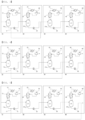
- a reaction unit 10, 20, 30, 40, or n0 may further include: a column 12, 22, 32, 42, or n2 which is supplied with an upper discharge stream from a reactor including alcohol and water vaporized during esterification from a reactor 11, 21, 31, 41, or n1 to perform gas-liquid separation, passes a gas phase through a condenser 13, 23, 33, 43, or n3 as an upper discharge stream to be supplied to a layer separator 14, 24, 34, 44, or n4, and supplies a liquid phase to the reactor 11, 21, 31, 41, or n1 as a lower discharge stream; and a layer separator 14, 24, 34, 44, or n4 which performs a separation into a water layer and an alcohol layer and refluxes only alcohol to the column while removing water.
- the diester-based material as a reaction product and water as a by-product involved in esterification are produced by esterification of dicarboxylic acid and alcohol.
- the reaction product of the esterification may include the diester-based material, water, and an unreacted material.
- water as a by-product should be effectively removed to prevent a reverse reaction and catalyst deactivation by water.
- water is vaporized and discharged.
- alcohol having a similar boiling point to water is also vaporized together, and the vaporized alcohol may be recovered and refluxed again to the reactor to maintain the concentration of the reactant high and water may be removed.
- alcohol participates in the reaction, but alcohol which does not participate in the reaction and is vaporized due to esterification at a higher temperature than the boiling point of alcohol is inevitably present, and simultaneously, water occurs as a by-product in addition to the diester-based material as a reaction product and water may be vaporized with alcohol and discharged as the upper discharge stream from the reactor.
- the vaporized water and alcohol are discharged as the upper discharge stream of the reactor and may be supplied to the column.
- gaseous alcohol and water introduced from the reactor may be liquefied by liquid alcohol at a low temperature supplied from the layer separator to an upper portion of the column, most of the gaseous alcohol is selectively liquefied and discharge as the lower discharge stream from the column, the lower discharge stream from the column including the liquid alcohol is introduced again to the reactor, and the liquid alcohol may participate in the esterification again.
- alcohol vaporized from the reactor is refluxed to the reactor again, thereby maintaining an excessive amount ratio of alcohol in the reactor, and water as the by-product of esterification is discharged to the outside of a reaction system and removed, thereby preventing reflux of water to the reactor to prevent a reaction rate reduction and catalyst performance deterioration in the reactor.
- gaseous water and unliquefied gaseous alcohol in the column are discharged as the upper discharge stream from the column, and the upper discharge stream from the column passes through the condenser to be supplied to the layer separator.
- the layer separator is equipment for layer-separating liquid alcohol and water, and at this point, gaseous alcohol and water need to be liquefied in the layer separator or before being introduced to the layer separator.
- a condenser is installed in an arbitrary area of a line where the upper discharge stream from the column is transferred to the layer separator, and heat of gaseous alcohol and water is removed by the condenser, thereby liquefying alcohol and water before being introduced to the layer separator.
- Layer separation in the layer separator may be performed by a difference in density between alcohol and water.
- an alcohol layer may be formed in the upper portion of the layer separator and a water layer may be formed in the lower portion.
- only alcohol may be selectively separated through a line connected to the upper portion of the column from the alcohol layer and refluxed to the column.
- water is removed through a discharge line for discharging water to the outside from the water layer or may be recycled in various routes.
- the reaction product in the reactor is separated through the lower discharge stream of the reactor, the lower discharge stream in each reactor of the reaction units from the first reaction unit to the n-1th reaction unit may be supplied to the reactor of the reaction unit at the rear end of each reaction unit, and the lower discharge stream from the reactor of the reaction unit at the rearmost end may be separated and purified and productized.
- a lower discharge stream from a reactor 11 of a first reaction unit 10 is supplied to a reactor 21 of a second reaction unit 20
- a lower discharge stream from the reactor 21 of the second reaction unit 20 is supplied to a reactor 31 of a third reaction unit 30
- a lower discharge stream from the reactor 31 of the third reaction unit 30 is supplied to a reactor 41 of a fourth reaction unit 40
- a lower discharge stream from the reactor 41 of the fourth reaction unit 40 may be separated and purified to be productized.
- a pump 15, 25, 35, 45, or n5 may be provided in a lower discharge line 11a, 21a, 31a, 41a, or n1a of each reactor.
- the diester-based material included in the lower discharge stream from the reactor of the reaction unit at the rearmost end may be purified by a known method. For example, when esterification is performed by an organic titanium compound as a catalyst, water is added to the obtained diester-based material to deactivate the catalyst and then the material may be distilled with water vapor to evaporate and remove unreacted alcohol remaining therein. In addition, the material may be treated with an alkaline material to neutralize a remaining dicarboxylic acid. In addition, a solid is removed by filtration, thereby obtaining a high-purity diester-based material.
- dicarboxylic acid and alcohol are esterified in the reactor of the first reaction unit to prepare a reaction product, and a lower discharge stream including the reaction product may be supplied to the reaction unit at the rear end through a lower discharge line.
- a conversion rate in the reactor 11 of the first reaction unit 10 is 10% to 80%, 10% to 70%, or 10% to 60%, and a content of dicarboxylic acid as an unreacted material in the lower discharge stream from the reactor including the reaction product is higher than that in the reaction units at the rear end.
- the content of the dicarboxylic acid in the lower discharge stream from the reactor of the first reaction unit varies with the conversion rate, but for example, may be 3 vol% to 20 vol%, 3 vol% to 18 vol%, or 3 vol% to 15 vol%.
- a liquid supply line L1 is connected to an arbitrary area of the lower discharge line 11a of the reactor 11 of the first reaction unit 10, and a liquid material is supplied through the liquid supply line L1, thereby increasing a linear velocity of the lower discharge stream from the reactor of the first reaction unit to a limit velocity or more at which a solid component in the fluid accumulates in the pipes and pumps to improve flowability, and preventing clogging of the pipes and pumps to extend a maintenance period of the pipes and pumps.
- the limit velocity is a velocity at which the solid component in the fluid starts to accumulate, and may be determined by an empirical formula related to a slurry limit velocity.
- the liquid supply line L1 is connected to a front end of the pump 15 installed in the lower discharge line 11a of the reactor 11 of the first reaction unit 10.
- a pump is provided in an arbitrary area of the lower discharge line 11a of the reactor of the first reaction unit, and the liquid supply line L1 is connected to the front end of the pump.
- the volume fraction of dicarboxylic acid which is an unreacted material in the lower discharge stream from the reactor of the first reaction unit is lowered and the linear velocity is increased, thereby facilitating transfer to the reactor at the rear end using the pump and preventing clogging of the pump and the pipe.
- a mixing device for more effectively mixing the lower discharge stream from the reactor of the first reaction unit and the liquid material may be further provided in an arbitrary area between a point to which the liquid supply line L1 is connected and a point where the pump is provided.
- the type of mixing device is not particularly limited, and for example, a device such as a line mixer may be used.
- the content of dicarboxylic acid which is a solid unreacted material in the lower discharge stream from the reactor of the first reaction unit is lowered, and thus, the volume fraction of the solid may be lowered.
- flowability to the reactor of the reaction unit at the rear end may be improved and clogging of the pipes and pumps may be prevented to extend a maintenance period.
- the liquid material to be supplied through the liquid supply line L1 may improve the viscosity of the lower discharge stream from the reactor of the first reaction unit, without affecting a desired conversion rate to be reached and an amount of steam used.
- the liquid material is the alcohol or a lower discharge stream from the reactor of any one or more reaction units of the reaction units from the second reaction unit to the nth reaction unit.
- the liquid is the material alcohol or a lower discharge stream from the reactor of the reaction unit at the rearmost end.
- details of the type of alcohol may be as described above.
- the stream when the lower discharge stream from the reactor of any one or more reaction units of the reaction units from the second reaction unit to the nth reaction unit is supplied, the stream may be supplied by a method in which a lower discharge line 21a, 31a, 41a, or n1a of the reactor of the corresponding reaction unit is branched to be connected to the lower discharge line 11a of the reactor of the first reaction unit.
- alcohol When alcohol is supplied as the liquid material, since alcohol has a lower viscosity than the diester-based material as a product, not only the flow velocity of the lower discharge stream from the reactor of the first reaction unit but also a viscosity improvement effect may be obtained.
- an alcohol excessive amount ratio in the reactor at the rear end may be increased to increase reactivity, and the unreacted material may be prevented from accumulating in pipes and pumps during transfer of the lower discharge stream from the reactor 11 of the first reaction unit 10.
- the first reaction unit may be installed in a structure in which two or more reaction units are connected in parallel.
- dicarboxylic acid and alcohol may be supplied to each of the reactors of the reaction units connected in parallel, and a liquid supply line L1 may be connected to the lower discharge line of each reactor.
- the first reaction unit may be installed in a structure in which two to four or two or three reaction units are connected in parallel depending on the productivity to be required. In this case, the size of the apparatus may be decreased.
- devices such as a distillation column, a condenser, a reboiler, a valve, a pump, a separator, and a mixer may be further installed.
Landscapes
- Chemical & Material Sciences (AREA)
- Organic Chemistry (AREA)
- Chemical Kinetics & Catalysis (AREA)
- Crystallography & Structural Chemistry (AREA)
- Organic Low-Molecular-Weight Compounds And Preparation Thereof (AREA)
Claims (11)
- Verfahren zur Herstellung eines Materials auf Diesterbasis, das durch ein kontinuierliches Herstellungsverfahren eines Materials auf Diesterbasis durchgeführt wird, das einen Reaktionsteil enthält, in dem insgesamt n Reaktionseinheiten von einer ersten Reaktionseinheit bis zu einer n-ten Reaktionseinheit in Reihe geschaltet sind, wobei die Reaktionseinheit einen Reaktor enthält, der Dicarbonsäure und Alkohol verestert, wobei das Verfahren umfasst:Verestern von Dicarbonsäure und Alkohol in einem Reaktor der ersten Reaktionseinheit, um ein Reaktionsprodukt herzustellen, und Zuführen eines unteren Austragsstroms, der das Reaktionsprodukt enthält, zu einer Reaktionseinheit an einem hinteren Ende durch eine untere Austragsleitung; undZuführen eines flüssigen Materials durch eine Flüssigkeitszufuhrleitung, die mit der unteren Austragsleitung des Reaktors der ersten Reaktionseinheit verbunden ist, wobei das flüssige Material der Alkohol oder ein unterer Austragsstrom aus dem Reaktor einer beliebigen oder mehrerer Reaktionseinheiten von Reaktionseinheiten von einer zweiten Reaktionseinheit zu der n-ten Reaktionseinheit ist, undwobei eine Pumpe in einem beliebigen Bereich der unteren Austragsleitung aus dem Reaktor der ersten Reaktionseinheit vorgesehen ist, unddie Flüssigkeitszufuhrleitung mit einem vorderen Ende der Pumpe verbunden ist.
- Verfahren zur Herstellung eines Materials auf Diesterbasis nach Anspruch 1, wobei ein Molverhältnis zwischen einer Menge der eingeführten Dicarbonsäure und einer Gesamtmenge des in die erste Reaktionseinheit eingeführten Alkohols von 1:2 bis 1:5 beträgt.
- Verfahren zur Herstellung eines Materials auf Diesterbasis nach Anspruch 1, wobei das flüssige Material der Alkohol oder ein unterer Austragsstrom aus dem Reaktor der Reaktionseinheit an einem hintersten Ende ist.
- Verfahren zur Herstellung eines Materials auf Diesterbasis nach Anspruch 1, wobei eine Strömungsrate des flüssigen Materials, das der Flüssigkeitszufuhrleitung zugeführt wird, von 0,1 % bis 15 % einer Strömungsrate eines unteren Austragsstroms aus dem Reaktor der ersten Reaktionseinheit beträgt.
- Verfahren zur Herstellung eines Materials auf Diesterbasis nach Anspruch 4, wobei die Strömungsrate des flüssigen Materials, das der Flüssigkeitszufuhrleitung zugeführt wird, von 1 % bis 8 % der Strömungsrate des unteren Austragsstroms aus dem Reaktor der ersten Reaktionseinheit beträgt.
- Verfahren zur Herstellung eines Materials auf Diesterbasis nach Anspruch 1, wobei eine Umwandlungsrate in dem Reaktor der ersten Reaktionseinheit von 10 % bis 80 % beträgt.
- Verfahren zur Herstellung eines Materials auf Diesterbasis nach Anspruch 1, wobei ein Gehalt an Dicarbonsäure in einem unteren Austragsstrom aus dem Reaktor der ersten Reaktionseinheit von 3 Vol.-% bis 20 Vol.-% beträgt.
- Verfahren zur Herstellung eines Materials auf Diesterbasis nach Anspruch 1, wobei eine Betriebstemperatur des Reaktors der ersten Reaktionseinheit von 130 °C bis 250 °C beträgt.
- Verfahren zur Herstellung eines Materials auf Diesterbasis nach Anspruch 1, wobei die Reaktionseinheit ferner enthält:eine Säule, der ein oberer Austragsstrom aus dem Reaktor zugeführt wird, der Alkohol und Wasser enthält, die während der Veresterung aus dem Reaktor verdampft werden, um eine Gas-Flüssigkeits-Trennung durchzuführen, die eine Gasphase durch einen Kondensator als den oberen Austragsstrom führt, der einem Schichttrenner zugeführt werden soll, und die dem Reaktor eine flüssige Phase als einen unteren Austragsstrom zuführt; undeinen Schichttrenner, der eine Trennung in eine Wasserschicht und eine Alkoholschicht durchführt und nur Alkohol zu der Säule zurückführt, während Wasser entfernt wird.
- Verfahren zur Herstellung eines Materials auf Diesterbasis nach Anspruch 1, wobei n von 2 bis 8 beträgt.
- Verfahren zur Herstellung eines Materials auf Diesterbasis nach Anspruch 1, wobei die Dicarbonsäure Terephthalsäure enthält und der Alkohol 2-Ethylhexylalkohol enthält.
Applications Claiming Priority (2)
| Application Number | Priority Date | Filing Date | Title |
|---|---|---|---|
| KR1020200153934A KR102797150B1 (ko) | 2020-11-17 | 2020-11-17 | 디에스터계 물질의 제조방법 |
| PCT/KR2021/011082 WO2022108049A1 (ko) | 2020-11-17 | 2021-08-20 | 디에스터계 물질의 제조방법 |
Publications (3)
| Publication Number | Publication Date |
|---|---|
| EP4029852A1 EP4029852A1 (de) | 2022-07-20 |
| EP4029852A4 EP4029852A4 (de) | 2022-12-21 |
| EP4029852B1 true EP4029852B1 (de) | 2025-07-09 |
Family
ID=81709330
Family Applications (1)
| Application Number | Title | Priority Date | Filing Date |
|---|---|---|---|
| EP21859368.9A Active EP4029852B1 (de) | 2020-11-17 | 2021-08-20 | Verfahren zum herstellen von diesterbasiertem material |
Country Status (7)
| Country | Link |
|---|---|
| US (1) | US12522557B2 (de) |
| EP (1) | EP4029852B1 (de) |
| JP (1) | JP7331301B2 (de) |
| KR (1) | KR102797150B1 (de) |
| CN (1) | CN114829335A (de) |
| ES (1) | ES3036373T3 (de) |
| WO (1) | WO2022108049A1 (de) |
Citations (2)
| Publication number | Priority date | Publication date | Assignee | Title |
|---|---|---|---|---|
| JP2006142152A (ja) * | 2004-11-17 | 2006-06-08 | Teijin Ltd | スラリー送液を行う設備の洗浄方法 |
| KR102162204B1 (ko) * | 2019-04-04 | 2020-10-06 | 주식회사 엘지화학 | 에스터계 조성물의 제조방법 및 제조 시스템 |
Family Cites Families (17)
| Publication number | Priority date | Publication date | Assignee | Title |
|---|---|---|---|---|
| IT778269A (de) * | 1964-01-25 | |||
| JPS5219601A (en) * | 1975-08-08 | 1977-02-15 | Ulvac Corp | Apparatus for continuous esterification |
| JPH1149726A (ja) * | 1997-08-07 | 1999-02-23 | Toho Rika Kogyo Kk | エステル化物の連続製造法 |
| DE10201348A1 (de) | 2001-09-26 | 2003-04-24 | Oxeno Olefinchemie Gmbh | Phtalsäurealkylestergemische mit kontrollierter Viskosität |
| JP2006143612A (ja) * | 2004-11-17 | 2006-06-08 | Teijin Ltd | スラリーの送液方法 |
| US7799942B2 (en) | 2005-08-12 | 2010-09-21 | Eastman Chemical Company | Production of terephthalic acid di-esters |
| US7813839B2 (en) | 2006-12-14 | 2010-10-12 | Bayer Materialscience Ag | Process for controlling a production process |
| JP2010520944A (ja) | 2007-03-13 | 2010-06-17 | エクソンモービル・ケミカル・パテンツ・インク | バッチエステル化 |
| CN102256923B (zh) * | 2008-12-16 | 2013-12-04 | 巴斯夫欧洲公司 | 制备羧酸酯的方法 |
| DE102010056566A1 (de) | 2010-12-30 | 2012-07-05 | Clariant International Ltd. | Kontinuierliches Verfahren zur Veresterung Säuregruppen tragender Polymere |
| CN102295564B (zh) | 2011-07-25 | 2013-07-10 | 浙江庆安化工有限公司 | 一种dop连续化生产工艺 |
| CN102503831A (zh) * | 2011-11-07 | 2012-06-20 | 潍坊市元利化工有限公司 | 一种增塑剂的连续酯化生产方法 |
| EP2825926B1 (de) | 2012-03-13 | 2018-07-25 | Basf Se | Verfahren zur regelung der viskosität eines mindestens zwei komponenten mit unterschiedlicher viskosität enthaltenden gemischs |
| KR101663586B1 (ko) | 2016-04-28 | 2016-10-10 | 애경유화주식회사 | 차별화 된 반응 온도 제어를 이용하여 반응 전환 속도를 높인 디옥틸테레프탈레이트의 제조방법 |
| KR102138788B1 (ko) | 2017-09-07 | 2020-07-28 | 주식회사 엘지화학 | 에스터 조성물의 제조 시스템 및 이를 이용한 에스터 조성물의 제조 방법 |
| CN107935846B (zh) | 2017-11-03 | 2020-01-10 | 中国林业科学研究院林产化学工业研究所 | 一种连续化生产环保型增塑剂的装置和方法 |
| KR102488351B1 (ko) * | 2019-07-04 | 2023-01-13 | 주식회사 엘지화학 | 디에스터계 물질의 연속식 제조방법 |
-
2020
- 2020-11-17 KR KR1020200153934A patent/KR102797150B1/ko active Active
-
2021
- 2021-08-20 WO PCT/KR2021/011082 patent/WO2022108049A1/ko not_active Ceased
- 2021-08-20 JP JP2022514796A patent/JP7331301B2/ja active Active
- 2021-08-20 ES ES21859368T patent/ES3036373T3/es active Active
- 2021-08-20 EP EP21859368.9A patent/EP4029852B1/de active Active
- 2021-08-20 CN CN202180005457.XA patent/CN114829335A/zh active Pending
- 2021-08-20 US US17/640,652 patent/US12522557B2/en active Active
Patent Citations (2)
| Publication number | Priority date | Publication date | Assignee | Title |
|---|---|---|---|---|
| JP2006142152A (ja) * | 2004-11-17 | 2006-06-08 | Teijin Ltd | スラリー送液を行う設備の洗浄方法 |
| KR102162204B1 (ko) * | 2019-04-04 | 2020-10-06 | 주식회사 엘지화학 | 에스터계 조성물의 제조방법 및 제조 시스템 |
Also Published As
| Publication number | Publication date |
|---|---|
| ES3036373T3 (en) | 2025-09-18 |
| EP4029852A1 (de) | 2022-07-20 |
| WO2022108049A1 (ko) | 2022-05-27 |
| EP4029852A4 (de) | 2022-12-21 |
| KR20220067343A (ko) | 2022-05-24 |
| JP7331301B2 (ja) | 2023-08-23 |
| US12522557B2 (en) | 2026-01-13 |
| JP2023507541A (ja) | 2023-02-24 |
| CN114829335A (zh) | 2022-07-29 |
| KR102797150B1 (ko) | 2025-04-21 |
| US20230150910A1 (en) | 2023-05-18 |
Similar Documents
| Publication | Publication Date | Title |
|---|---|---|
| CN110114336B (zh) | 酯组合物制备系统及使用其的酯组合物制备方法 | |
| EP4023629B1 (de) | Herstellungsverfahren einer diester-basierten verbindung | |
| EP4029852B1 (de) | Verfahren zum herstellen von diesterbasiertem material | |
| EP4023628B1 (de) | Verfahren zur herstellung von diesterbasiertem material | |
| EP3995482B1 (de) | Produktionseinheit für diesterbasierte materialien und produktionssystem für diesterbasierte materialien einschliesslich derselben | |
| EP4032875A1 (de) | Herstellungsverfahren einer diester-basierten verbindung | |
| EP3995483B1 (de) | Produktionseinheit zur herstellung von material auf diesterbasis und produktionssystem zur herstellung von material auf diesterbasis damit | |
| EP3995484A1 (de) | Wärmetauschersystem und auf diester basierende zusammensetzung damit | |
| KR102896462B1 (ko) | 디에스터계 물질의 제조방법 | |
| JP7523658B2 (ja) | エステル系組成物の製造方法 | |
| CN112955424A (zh) | 酯类组合物的制备方法和制备系统 | |
| KR20250054435A (ko) | 디에스터계 물질의 연속식 제조방법 |
Legal Events
| Date | Code | Title | Description |
|---|---|---|---|
| STAA | Information on the status of an ep patent application or granted ep patent |
Free format text: STATUS: UNKNOWN |
|
| STAA | Information on the status of an ep patent application or granted ep patent |
Free format text: STATUS: THE INTERNATIONAL PUBLICATION HAS BEEN MADE |
|
| PUAI | Public reference made under article 153(3) epc to a published international application that has entered the european phase |
Free format text: ORIGINAL CODE: 0009012 |
|
| STAA | Information on the status of an ep patent application or granted ep patent |
Free format text: STATUS: REQUEST FOR EXAMINATION WAS MADE |
|
| 17P | Request for examination filed |
Effective date: 20220303 |
|
| AK | Designated contracting states |
Kind code of ref document: A1 Designated state(s): AL AT BE BG CH CY CZ DE DK EE ES FI FR GB GR HR HU IE IS IT LI LT LU LV MC MK MT NL NO PL PT RO RS SE SI SK SM TR |
|
| A4 | Supplementary search report drawn up and despatched |
Effective date: 20221123 |
|
| RIC1 | Information provided on ipc code assigned before grant |
Ipc: B01J 19/18 20060101ALI20221117BHEP Ipc: C07C 67/54 20060101ALI20221117BHEP Ipc: C07C 69/82 20060101ALI20221117BHEP Ipc: C07C 67/48 20060101ALI20221117BHEP Ipc: C07C 67/08 20060101AFI20221117BHEP |
|
| DAV | Request for validation of the european patent (deleted) | ||
| DAX | Request for extension of the european patent (deleted) | ||
| GRAP | Despatch of communication of intention to grant a patent |
Free format text: ORIGINAL CODE: EPIDOSNIGR1 |
|
| STAA | Information on the status of an ep patent application or granted ep patent |
Free format text: STATUS: GRANT OF PATENT IS INTENDED |
|
| GRAS | Grant fee paid |
Free format text: ORIGINAL CODE: EPIDOSNIGR3 |
|
| INTG | Intention to grant announced |
Effective date: 20250506 |
|
| GRAA | (expected) grant |
Free format text: ORIGINAL CODE: 0009210 |
|
| STAA | Information on the status of an ep patent application or granted ep patent |
Free format text: STATUS: THE PATENT HAS BEEN GRANTED |
|
| AK | Designated contracting states |
Kind code of ref document: B1 Designated state(s): AL AT BE BG CH CY CZ DE DK EE ES FI FR GB GR HR HU IE IS IT LI LT LU LV MC MK MT NL NO PL PT RO RS SE SI SK SM TR |
|
| REG | Reference to a national code |
Ref country code: GB Ref legal event code: FG4D |
|
| REG | Reference to a national code |
Ref country code: CH Ref legal event code: EP |
|
| REG | Reference to a national code |
Ref country code: IE Ref legal event code: FG4D |
|
| REG | Reference to a national code |
Ref country code: DE Ref legal event code: R096 Ref document number: 602021033955 Country of ref document: DE |
|
| REG | Reference to a national code |
Ref country code: ES Ref legal event code: FG2A Ref document number: 3036373 Country of ref document: ES Kind code of ref document: T3 Effective date: 20250918 |
|
| PGFP | Annual fee paid to national office [announced via postgrant information from national office to epo] |
Ref country code: ES Payment date: 20250912 Year of fee payment: 5 |
|
| PGFP | Annual fee paid to national office [announced via postgrant information from national office to epo] |
Ref country code: DE Payment date: 20250908 Year of fee payment: 5 |
|
| PGFP | Annual fee paid to national office [announced via postgrant information from national office to epo] |
Ref country code: TR Payment date: 20250905 Year of fee payment: 5 Ref country code: IT Payment date: 20250924 Year of fee payment: 5 |
|
| PGFP | Annual fee paid to national office [announced via postgrant information from national office to epo] |
Ref country code: GB Payment date: 20250909 Year of fee payment: 5 |
|
| PGFP | Annual fee paid to national office [announced via postgrant information from national office to epo] |
Ref country code: FR Payment date: 20250909 Year of fee payment: 5 Ref country code: AT Payment date: 20251020 Year of fee payment: 5 |
|
| REG | Reference to a national code |
Ref country code: NL Ref legal event code: MP Effective date: 20250709 |
|
| PG25 | Lapsed in a contracting state [announced via postgrant information from national office to epo] |
Ref country code: PT Free format text: LAPSE BECAUSE OF FAILURE TO SUBMIT A TRANSLATION OF THE DESCRIPTION OR TO PAY THE FEE WITHIN THE PRESCRIBED TIME-LIMIT Effective date: 20251110 |
|
| PG25 | Lapsed in a contracting state [announced via postgrant information from national office to epo] |
Ref country code: NL Free format text: LAPSE BECAUSE OF FAILURE TO SUBMIT A TRANSLATION OF THE DESCRIPTION OR TO PAY THE FEE WITHIN THE PRESCRIBED TIME-LIMIT Effective date: 20250709 |
|
| REG | Reference to a national code |
Ref country code: AT Ref legal event code: MK05 Ref document number: 1811747 Country of ref document: AT Kind code of ref document: T Effective date: 20250709 |
|
| PG25 | Lapsed in a contracting state [announced via postgrant information from national office to epo] |
Ref country code: IS Free format text: LAPSE BECAUSE OF FAILURE TO SUBMIT A TRANSLATION OF THE DESCRIPTION OR TO PAY THE FEE WITHIN THE PRESCRIBED TIME-LIMIT Effective date: 20251109 |
|
| PG25 | Lapsed in a contracting state [announced via postgrant information from national office to epo] |
Ref country code: NO Free format text: LAPSE BECAUSE OF FAILURE TO SUBMIT A TRANSLATION OF THE DESCRIPTION OR TO PAY THE FEE WITHIN THE PRESCRIBED TIME-LIMIT Effective date: 20251009 |
|
| REG | Reference to a national code |
Ref country code: LT Ref legal event code: MG9D |
|
| PG25 | Lapsed in a contracting state [announced via postgrant information from national office to epo] |
Ref country code: AT Free format text: LAPSE BECAUSE OF FAILURE TO SUBMIT A TRANSLATION OF THE DESCRIPTION OR TO PAY THE FEE WITHIN THE PRESCRIBED TIME-LIMIT Effective date: 20250709 |
|
| PG25 | Lapsed in a contracting state [announced via postgrant information from national office to epo] |
Ref country code: FI Free format text: LAPSE BECAUSE OF FAILURE TO SUBMIT A TRANSLATION OF THE DESCRIPTION OR TO PAY THE FEE WITHIN THE PRESCRIBED TIME-LIMIT Effective date: 20250709 |
|
| PG25 | Lapsed in a contracting state [announced via postgrant information from national office to epo] |
Ref country code: HR Free format text: LAPSE BECAUSE OF FAILURE TO SUBMIT A TRANSLATION OF THE DESCRIPTION OR TO PAY THE FEE WITHIN THE PRESCRIBED TIME-LIMIT Effective date: 20250709 |
|
| PG25 | Lapsed in a contracting state [announced via postgrant information from national office to epo] |
Ref country code: GR Free format text: LAPSE BECAUSE OF FAILURE TO SUBMIT A TRANSLATION OF THE DESCRIPTION OR TO PAY THE FEE WITHIN THE PRESCRIBED TIME-LIMIT Effective date: 20251010 |
|
| PG25 | Lapsed in a contracting state [announced via postgrant information from national office to epo] |
Ref country code: SE Free format text: LAPSE BECAUSE OF FAILURE TO SUBMIT A TRANSLATION OF THE DESCRIPTION OR TO PAY THE FEE WITHIN THE PRESCRIBED TIME-LIMIT Effective date: 20250709 |
|
| PG25 | Lapsed in a contracting state [announced via postgrant information from national office to epo] |
Ref country code: LV Free format text: LAPSE BECAUSE OF FAILURE TO SUBMIT A TRANSLATION OF THE DESCRIPTION OR TO PAY THE FEE WITHIN THE PRESCRIBED TIME-LIMIT Effective date: 20250709 |
|
| PG25 | Lapsed in a contracting state [announced via postgrant information from national office to epo] |
Ref country code: PL Free format text: LAPSE BECAUSE OF FAILURE TO SUBMIT A TRANSLATION OF THE DESCRIPTION OR TO PAY THE FEE WITHIN THE PRESCRIBED TIME-LIMIT Effective date: 20250709 Ref country code: BG Free format text: LAPSE BECAUSE OF FAILURE TO SUBMIT A TRANSLATION OF THE DESCRIPTION OR TO PAY THE FEE WITHIN THE PRESCRIBED TIME-LIMIT Effective date: 20250709 |
|
| PG25 | Lapsed in a contracting state [announced via postgrant information from national office to epo] |
Ref country code: RS Free format text: LAPSE BECAUSE OF FAILURE TO SUBMIT A TRANSLATION OF THE DESCRIPTION OR TO PAY THE FEE WITHIN THE PRESCRIBED TIME-LIMIT Effective date: 20251009 |
|
| PG25 | Lapsed in a contracting state [announced via postgrant information from national office to epo] |
Ref country code: RO Free format text: LAPSE BECAUSE OF FAILURE TO SUBMIT A TRANSLATION OF THE DESCRIPTION OR TO PAY THE FEE WITHIN THE PRESCRIBED TIME-LIMIT Effective date: 20250709 |
|
| REG | Reference to a national code |
Ref country code: CH Ref legal event code: H13 Free format text: ST27 STATUS EVENT CODE: U-0-0-H10-H13 (AS PROVIDED BY THE NATIONAL OFFICE) Effective date: 20260324 |
|
| PG25 | Lapsed in a contracting state [announced via postgrant information from national office to epo] |
Ref country code: SM Free format text: LAPSE BECAUSE OF FAILURE TO SUBMIT A TRANSLATION OF THE DESCRIPTION OR TO PAY THE FEE WITHIN THE PRESCRIBED TIME-LIMIT Effective date: 20250709 |
|
| PG25 | Lapsed in a contracting state [announced via postgrant information from national office to epo] |
Ref country code: DK Free format text: LAPSE BECAUSE OF FAILURE TO SUBMIT A TRANSLATION OF THE DESCRIPTION OR TO PAY THE FEE WITHIN THE PRESCRIBED TIME-LIMIT Effective date: 20250709 |
|
| PG25 | Lapsed in a contracting state [announced via postgrant information from national office to epo] |
Ref country code: LU Free format text: LAPSE BECAUSE OF NON-PAYMENT OF DUE FEES Effective date: 20250820 |
|
| PG25 | Lapsed in a contracting state [announced via postgrant information from national office to epo] |
Ref country code: CZ Free format text: LAPSE BECAUSE OF FAILURE TO SUBMIT A TRANSLATION OF THE DESCRIPTION OR TO PAY THE FEE WITHIN THE PRESCRIBED TIME-LIMIT Effective date: 20250709 Ref country code: CH Free format text: LAPSE BECAUSE OF NON-PAYMENT OF DUE FEES Effective date: 20250831 |
|
| PG25 | Lapsed in a contracting state [announced via postgrant information from national office to epo] |
Ref country code: EE Free format text: LAPSE BECAUSE OF FAILURE TO SUBMIT A TRANSLATION OF THE DESCRIPTION OR TO PAY THE FEE WITHIN THE PRESCRIBED TIME-LIMIT Effective date: 20250709 Ref country code: SK Free format text: LAPSE BECAUSE OF FAILURE TO SUBMIT A TRANSLATION OF THE DESCRIPTION OR TO PAY THE FEE WITHIN THE PRESCRIBED TIME-LIMIT Effective date: 20250709 |