EP4030406B1 - Fahrunterstützungsvorrichtung, fahrzeugsteuerungsvorrichtung, fahrunterstützungssystem und fahrunterstützungsverfahren - Google Patents
Fahrunterstützungsvorrichtung, fahrzeugsteuerungsvorrichtung, fahrunterstützungssystem und fahrunterstützungsverfahren Download PDFInfo
- Publication number
- EP4030406B1 EP4030406B1 EP19945118.8A EP19945118A EP4030406B1 EP 4030406 B1 EP4030406 B1 EP 4030406B1 EP 19945118 A EP19945118 A EP 19945118A EP 4030406 B1 EP4030406 B1 EP 4030406B1
- Authority
- EP
- European Patent Office
- Prior art keywords
- vehicle
- information
- driving assist
- running route
- unit
- Prior art date
- Legal status (The legal status is an assumption and is not a legal conclusion. Google has not performed a legal analysis and makes no representation as to the accuracy of the status listed.)
- Active
Links
Images










Classifications
-
- G—PHYSICS
- G08—SIGNALLING
- G08G—TRAFFIC CONTROL SYSTEMS
- G08G1/00—Traffic control systems for road vehicles
- G08G1/09—Arrangements for giving variable traffic instructions
- G08G1/0962—Arrangements for giving variable traffic instructions having an indicator mounted inside the vehicle, e.g. giving voice messages
- G08G1/0967—Systems involving transmission of highway information, e.g. weather, speed limits
- G08G1/096766—Systems involving transmission of highway information, e.g. weather, speed limits where the system is characterised by the origin of the information transmission
- G08G1/096791—Systems involving transmission of highway information, e.g. weather, speed limits where the system is characterised by the origin of the information transmission where the origin of the information is another vehicle
-
- B—PERFORMING OPERATIONS; TRANSPORTING
- B60—VEHICLES IN GENERAL
- B60W—CONJOINT CONTROL OF VEHICLE SUB-UNITS OF DIFFERENT TYPE OR DIFFERENT FUNCTION; CONTROL SYSTEMS SPECIALLY ADAPTED FOR HYBRID VEHICLES; ROAD VEHICLE DRIVE CONTROL SYSTEMS FOR PURPOSES NOT RELATED TO THE CONTROL OF A PARTICULAR SUB-UNIT
- B60W30/00—Purposes of road vehicle drive control systems not related to the control of a particular sub-unit, e.g. of systems using conjoint control of vehicle sub-units
- B60W30/08—Active safety systems predicting or avoiding probable or impending collision or attempting to minimise its consequences
- B60W30/095—Predicting travel path or likelihood of collision
-
- B—PERFORMING OPERATIONS; TRANSPORTING
- B60—VEHICLES IN GENERAL
- B60W—CONJOINT CONTROL OF VEHICLE SUB-UNITS OF DIFFERENT TYPE OR DIFFERENT FUNCTION; CONTROL SYSTEMS SPECIALLY ADAPTED FOR HYBRID VEHICLES; ROAD VEHICLE DRIVE CONTROL SYSTEMS FOR PURPOSES NOT RELATED TO THE CONTROL OF A PARTICULAR SUB-UNIT
- B60W30/00—Purposes of road vehicle drive control systems not related to the control of a particular sub-unit, e.g. of systems using conjoint control of vehicle sub-units
- B60W30/08—Active safety systems predicting or avoiding probable or impending collision or attempting to minimise its consequences
- B60W30/095—Predicting travel path or likelihood of collision
- B60W30/0953—Predicting travel path or likelihood of collision the prediction being responsive to vehicle dynamic parameters
-
- B—PERFORMING OPERATIONS; TRANSPORTING
- B60—VEHICLES IN GENERAL
- B60W—CONJOINT CONTROL OF VEHICLE SUB-UNITS OF DIFFERENT TYPE OR DIFFERENT FUNCTION; CONTROL SYSTEMS SPECIALLY ADAPTED FOR HYBRID VEHICLES; ROAD VEHICLE DRIVE CONTROL SYSTEMS FOR PURPOSES NOT RELATED TO THE CONTROL OF A PARTICULAR SUB-UNIT
- B60W30/00—Purposes of road vehicle drive control systems not related to the control of a particular sub-unit, e.g. of systems using conjoint control of vehicle sub-units
- B60W30/08—Active safety systems predicting or avoiding probable or impending collision or attempting to minimise its consequences
- B60W30/095—Predicting travel path or likelihood of collision
- B60W30/0956—Predicting travel path or likelihood of collision the prediction being responsive to traffic or environmental parameters
-
- B—PERFORMING OPERATIONS; TRANSPORTING
- B60—VEHICLES IN GENERAL
- B60W—CONJOINT CONTROL OF VEHICLE SUB-UNITS OF DIFFERENT TYPE OR DIFFERENT FUNCTION; CONTROL SYSTEMS SPECIALLY ADAPTED FOR HYBRID VEHICLES; ROAD VEHICLE DRIVE CONTROL SYSTEMS FOR PURPOSES NOT RELATED TO THE CONTROL OF A PARTICULAR SUB-UNIT
- B60W30/00—Purposes of road vehicle drive control systems not related to the control of a particular sub-unit, e.g. of systems using conjoint control of vehicle sub-units
- B60W30/18—Propelling the vehicle
- B60W30/18009—Propelling the vehicle related to particular drive situations
- B60W30/18163—Lane change; Overtaking manoeuvres
-
- B—PERFORMING OPERATIONS; TRANSPORTING
- B60—VEHICLES IN GENERAL
- B60W—CONJOINT CONTROL OF VEHICLE SUB-UNITS OF DIFFERENT TYPE OR DIFFERENT FUNCTION; CONTROL SYSTEMS SPECIALLY ADAPTED FOR HYBRID VEHICLES; ROAD VEHICLE DRIVE CONTROL SYSTEMS FOR PURPOSES NOT RELATED TO THE CONTROL OF A PARTICULAR SUB-UNIT
- B60W40/00—Estimation or calculation of non-directly measurable driving parameters for road vehicle drive control systems not related to the control of a particular sub unit, e.g. by using mathematical models
- B60W40/02—Estimation or calculation of non-directly measurable driving parameters for road vehicle drive control systems not related to the control of a particular sub unit, e.g. by using mathematical models related to ambient conditions
- B60W40/04—Traffic conditions
-
- B—PERFORMING OPERATIONS; TRANSPORTING
- B60—VEHICLES IN GENERAL
- B60W—CONJOINT CONTROL OF VEHICLE SUB-UNITS OF DIFFERENT TYPE OR DIFFERENT FUNCTION; CONTROL SYSTEMS SPECIALLY ADAPTED FOR HYBRID VEHICLES; ROAD VEHICLE DRIVE CONTROL SYSTEMS FOR PURPOSES NOT RELATED TO THE CONTROL OF A PARTICULAR SUB-UNIT
- B60W40/00—Estimation or calculation of non-directly measurable driving parameters for road vehicle drive control systems not related to the control of a particular sub unit, e.g. by using mathematical models
- B60W40/02—Estimation or calculation of non-directly measurable driving parameters for road vehicle drive control systems not related to the control of a particular sub unit, e.g. by using mathematical models related to ambient conditions
- B60W40/06—Road conditions
-
- B—PERFORMING OPERATIONS; TRANSPORTING
- B60—VEHICLES IN GENERAL
- B60W—CONJOINT CONTROL OF VEHICLE SUB-UNITS OF DIFFERENT TYPE OR DIFFERENT FUNCTION; CONTROL SYSTEMS SPECIALLY ADAPTED FOR HYBRID VEHICLES; ROAD VEHICLE DRIVE CONTROL SYSTEMS FOR PURPOSES NOT RELATED TO THE CONTROL OF A PARTICULAR SUB-UNIT
- B60W50/00—Details of control systems for road vehicle drive control not related to the control of a particular sub-unit, e.g. process diagnostic or vehicle driver interfaces
- B60W50/08—Interaction between the driver and the control system
- B60W50/14—Means for informing the driver, warning the driver or prompting a driver intervention
-
- G—PHYSICS
- G06—COMPUTING OR CALCULATING; COUNTING
- G06V—IMAGE OR VIDEO RECOGNITION OR UNDERSTANDING
- G06V20/00—Scenes; Scene-specific elements
- G06V20/50—Context or environment of the image
- G06V20/56—Context or environment of the image exterior to a vehicle by using sensors mounted on the vehicle
- G06V20/58—Recognition of moving objects or obstacles, e.g. vehicles or pedestrians; Recognition of traffic objects, e.g. traffic signs, traffic lights or roads
-
- G—PHYSICS
- G08—SIGNALLING
- G08G—TRAFFIC CONTROL SYSTEMS
- G08G1/00—Traffic control systems for road vehicles
- G08G1/09—Arrangements for giving variable traffic instructions
- G08G1/0962—Arrangements for giving variable traffic instructions having an indicator mounted inside the vehicle, e.g. giving voice messages
- G08G1/0968—Systems involving transmission of navigation instructions to the vehicle
- G08G1/096833—Systems involving transmission of navigation instructions to the vehicle where different aspects are considered when computing the route
- G08G1/096844—Systems involving transmission of navigation instructions to the vehicle where different aspects are considered when computing the route where the complete route is dynamically recomputed based on new data
-
- G—PHYSICS
- G08—SIGNALLING
- G08G—TRAFFIC CONTROL SYSTEMS
- G08G1/00—Traffic control systems for road vehicles
- G08G1/09—Arrangements for giving variable traffic instructions
- G08G1/0962—Arrangements for giving variable traffic instructions having an indicator mounted inside the vehicle, e.g. giving voice messages
- G08G1/0968—Systems involving transmission of navigation instructions to the vehicle
- G08G1/0969—Systems involving transmission of navigation instructions to the vehicle having a display in the form of a map
-
- G—PHYSICS
- G08—SIGNALLING
- G08G—TRAFFIC CONTROL SYSTEMS
- G08G1/00—Traffic control systems for road vehicles
- G08G1/16—Anti-collision systems
- G08G1/161—Decentralised systems, e.g. inter-vehicle communication
- G08G1/163—Decentralised systems, e.g. inter-vehicle communication involving continuous checking
-
- G—PHYSICS
- G08—SIGNALLING
- G08G—TRAFFIC CONTROL SYSTEMS
- G08G1/00—Traffic control systems for road vehicles
- G08G1/16—Anti-collision systems
- G08G1/164—Centralised systems, e.g. external to vehicles
-
- G—PHYSICS
- G08—SIGNALLING
- G08G—TRAFFIC CONTROL SYSTEMS
- G08G1/00—Traffic control systems for road vehicles
- G08G1/16—Anti-collision systems
- G08G1/165—Anti-collision systems for passive traffic, e.g. including static obstacles, trees
-
- G—PHYSICS
- G08—SIGNALLING
- G08G—TRAFFIC CONTROL SYSTEMS
- G08G1/00—Traffic control systems for road vehicles
- G08G1/16—Anti-collision systems
- G08G1/166—Anti-collision systems for active traffic, e.g. moving vehicles, pedestrians, bikes
-
- G—PHYSICS
- G08—SIGNALLING
- G08G—TRAFFIC CONTROL SYSTEMS
- G08G1/00—Traffic control systems for road vehicles
- G08G1/16—Anti-collision systems
- G08G1/167—Driving aids for lane monitoring, lane changing, e.g. blind spot detection
-
- H—ELECTRICITY
- H04—ELECTRIC COMMUNICATION TECHNIQUE
- H04W—WIRELESS COMMUNICATION NETWORKS
- H04W4/00—Services specially adapted for wireless communication networks; Facilities therefor
- H04W4/30—Services specially adapted for particular environments, situations or purposes
- H04W4/40—Services specially adapted for particular environments, situations or purposes for vehicles, e.g. vehicle-to-pedestrians [V2P]
- H04W4/46—Services specially adapted for particular environments, situations or purposes for vehicles, e.g. vehicle-to-pedestrians [V2P] for vehicle-to-vehicle communication [V2V]
-
- B—PERFORMING OPERATIONS; TRANSPORTING
- B60—VEHICLES IN GENERAL
- B60W—CONJOINT CONTROL OF VEHICLE SUB-UNITS OF DIFFERENT TYPE OR DIFFERENT FUNCTION; CONTROL SYSTEMS SPECIALLY ADAPTED FOR HYBRID VEHICLES; ROAD VEHICLE DRIVE CONTROL SYSTEMS FOR PURPOSES NOT RELATED TO THE CONTROL OF A PARTICULAR SUB-UNIT
- B60W50/00—Details of control systems for road vehicle drive control not related to the control of a particular sub-unit, e.g. process diagnostic or vehicle driver interfaces
- B60W50/08—Interaction between the driver and the control system
- B60W50/14—Means for informing the driver, warning the driver or prompting a driver intervention
- B60W2050/143—Alarm means
-
- B—PERFORMING OPERATIONS; TRANSPORTING
- B60—VEHICLES IN GENERAL
- B60W—CONJOINT CONTROL OF VEHICLE SUB-UNITS OF DIFFERENT TYPE OR DIFFERENT FUNCTION; CONTROL SYSTEMS SPECIALLY ADAPTED FOR HYBRID VEHICLES; ROAD VEHICLE DRIVE CONTROL SYSTEMS FOR PURPOSES NOT RELATED TO THE CONTROL OF A PARTICULAR SUB-UNIT
- B60W50/00—Details of control systems for road vehicle drive control not related to the control of a particular sub-unit, e.g. process diagnostic or vehicle driver interfaces
- B60W50/08—Interaction between the driver and the control system
- B60W50/14—Means for informing the driver, warning the driver or prompting a driver intervention
- B60W2050/146—Display means
-
- B—PERFORMING OPERATIONS; TRANSPORTING
- B60—VEHICLES IN GENERAL
- B60W—CONJOINT CONTROL OF VEHICLE SUB-UNITS OF DIFFERENT TYPE OR DIFFERENT FUNCTION; CONTROL SYSTEMS SPECIALLY ADAPTED FOR HYBRID VEHICLES; ROAD VEHICLE DRIVE CONTROL SYSTEMS FOR PURPOSES NOT RELATED TO THE CONTROL OF A PARTICULAR SUB-UNIT
- B60W2420/00—Indexing codes relating to the type of sensors based on the principle of their operation
- B60W2420/40—Photo, light or radio wave sensitive means, e.g. infrared sensors
- B60W2420/403—Image sensing, e.g. optical camera
-
- B—PERFORMING OPERATIONS; TRANSPORTING
- B60—VEHICLES IN GENERAL
- B60W—CONJOINT CONTROL OF VEHICLE SUB-UNITS OF DIFFERENT TYPE OR DIFFERENT FUNCTION; CONTROL SYSTEMS SPECIALLY ADAPTED FOR HYBRID VEHICLES; ROAD VEHICLE DRIVE CONTROL SYSTEMS FOR PURPOSES NOT RELATED TO THE CONTROL OF A PARTICULAR SUB-UNIT
- B60W2554/00—Input parameters relating to objects
- B60W2554/40—Dynamic objects, e.g. animals, windblown objects
- B60W2554/404—Characteristics
- B60W2554/4041—Position
-
- B—PERFORMING OPERATIONS; TRANSPORTING
- B60—VEHICLES IN GENERAL
- B60W—CONJOINT CONTROL OF VEHICLE SUB-UNITS OF DIFFERENT TYPE OR DIFFERENT FUNCTION; CONTROL SYSTEMS SPECIALLY ADAPTED FOR HYBRID VEHICLES; ROAD VEHICLE DRIVE CONTROL SYSTEMS FOR PURPOSES NOT RELATED TO THE CONTROL OF A PARTICULAR SUB-UNIT
- B60W2554/00—Input parameters relating to objects
- B60W2554/40—Dynamic objects, e.g. animals, windblown objects
- B60W2554/404—Characteristics
- B60W2554/4048—Field of view, e.g. obstructed view or direction of gaze
-
- B—PERFORMING OPERATIONS; TRANSPORTING
- B60—VEHICLES IN GENERAL
- B60W—CONJOINT CONTROL OF VEHICLE SUB-UNITS OF DIFFERENT TYPE OR DIFFERENT FUNCTION; CONTROL SYSTEMS SPECIALLY ADAPTED FOR HYBRID VEHICLES; ROAD VEHICLE DRIVE CONTROL SYSTEMS FOR PURPOSES NOT RELATED TO THE CONTROL OF A PARTICULAR SUB-UNIT
- B60W2554/00—Input parameters relating to objects
- B60W2554/80—Spatial relation or speed relative to objects
-
- B—PERFORMING OPERATIONS; TRANSPORTING
- B60—VEHICLES IN GENERAL
- B60W—CONJOINT CONTROL OF VEHICLE SUB-UNITS OF DIFFERENT TYPE OR DIFFERENT FUNCTION; CONTROL SYSTEMS SPECIALLY ADAPTED FOR HYBRID VEHICLES; ROAD VEHICLE DRIVE CONTROL SYSTEMS FOR PURPOSES NOT RELATED TO THE CONTROL OF A PARTICULAR SUB-UNIT
- B60W2556/00—Input parameters relating to data
- B60W2556/40—High definition maps
-
- B—PERFORMING OPERATIONS; TRANSPORTING
- B60—VEHICLES IN GENERAL
- B60W—CONJOINT CONTROL OF VEHICLE SUB-UNITS OF DIFFERENT TYPE OR DIFFERENT FUNCTION; CONTROL SYSTEMS SPECIALLY ADAPTED FOR HYBRID VEHICLES; ROAD VEHICLE DRIVE CONTROL SYSTEMS FOR PURPOSES NOT RELATED TO THE CONTROL OF A PARTICULAR SUB-UNIT
- B60W2556/00—Input parameters relating to data
- B60W2556/45—External transmission of data to or from the vehicle
- B60W2556/65—Data transmitted between vehicles
Definitions
- the present disclosure relates to a driving assist device, a vehicle control device, a driving assist system, and a driving assist method.
- V2V communication vehicle-to-vehicle communication
- a camera video from the frontmost vehicle of a tailback can be watched in a subsequent vehicle, and the location of a blind spot not visible from a preceding vehicle can be seen by using a video from a subsequent vehicle.
- Non-Patent Document 1 describes a feature in which: a video recorded by a camera mounted in a preceding vehicle is received by a subsequent vehicle; and the driver of the subsequent vehicle is provided with a video showing a view as if the preceding vehicle has become transparent and has disappeared.
- EP 1 647 448 A2 relates to a method and device for improving the view of a driver of a vehicle.
- the vehicle comprises an antenna, a receiving unit, and a display which displays an image taken by a camera installed on another vehicle.
- US 2002/173907 A1 relates to a data communication system, method, and a mobile device which enable easy acquisition of the state of a desired position on a route to be taken by a certain mobile terminal.
- DE 10 2012 210454 A1 relates to a method for providing data for an electronic horizon for a driver assistance system of a vehicle.
- the method comprises a step of determining a group of foreign vehicles which are in the vicinity of the vehicle.
- the driving assist systems in which V2V communication is used have the following problems. That is, positional information, operational information, videos, and the like from vehicles are directly transmitted and received between the vehicles, and thus the load of arithmetic processing is high in each of the vehicles. Therefore, in the conventional driving assist systems, it is difficult to perform driving assist flexibly adapted to a running route for and operational information about a target vehicle.
- the present disclosure has been made to solve the above problems, and an object of the present disclosure is to provide a driving assist device capable of performing driving assist adapted to a running route for and operational information about a target vehicle.
- another object of the present disclosure is to provide a vehicle control device and a driving assist system that include the driving assist device capable of performing driving assist adapted to a running route for and operational information about a target vehicle. Further, still another object of the present disclosure is to provide a driving assist method that makes it possible to perform driving assist adapted to a running route for and operational information about a target vehicle.
- the nearby vehicle located at the position at which the video to be used for the driving assist can be recorded is selected on the basis of the first vehicle information, the second vehicle information, and the running route, and the video acquired from the selected nearby vehicle is transmitted as the driving assist information to the target vehicle. Consequently, driving assist adapted to the running route for and the operational information about the target vehicle can be performed.
- the nearby vehicle located at the position at which the video to be used for the driving assist can be recorded is selected on the basis of the first vehicle information, the second vehicle information, and the running route, and the video acquired from the selected nearby vehicle is determined as the driving assist information. Consequently, driving assist adapted to the running route for and the operational information about the target vehicle can be performed.
- the nearby vehicle located at the position at which the video to be used for the driving assist can be recorded is selected on the basis of the first vehicle information, the second vehicle information, and the running route, and the target vehicle is controlled on the basis of the driving assist information including the video acquired from the selected nearby vehicle. Consequently, control adapted to the running route for and the operational information about the target vehicle can be performed.
- the nearby vehicle located at the position at which the video to be used for the driving assist can be recorded is selected on the basis of the first vehicle information, the second vehicle information, and the running route, and the video acquired from the selected nearby vehicle is determined as the driving assist information. Consequently, driving assist adapted to the running route for and the operational information about the target vehicle can be performed.
- FIG. 1 is a block diagram showing a configuration of the driving assist system according to embodiment 1.
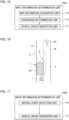
- FIG. 2 is a block diagram showing a configuration of an input information determination unit of the driving assist device according to embodiment 1.
- FIG. 3 illustrates a configuration example of hardware of the driving assist device according to embodiment 1.
- a driving assist system 300 includes a driving assist device 100 configured to communicate with a target vehicle 1 and each of nearby vehicles 2 running near the target vehicle 1 and to perform driving assist on the target vehicle 1.
- the driving assist system 300 further includes the target vehicle 1 and the nearby vehicle 2.
- the target vehicle 1 is provided with: a vehicle information transmission unit 11 which is a first vehicle information transmission unit; a warning reception unit 12; a driving assist information reception unit 13; and a display unit 14.
- the nearby vehicle 2 is provided with: a camera 21; a video transmission unit 22; and a vehicle information transmission unit 23 which is a second vehicle information transmission unit.
- a camera and a video transmission unit are provided in the target vehicle 1 in the same manner as in the nearby vehicle 2, and a warning reception unit, a driving assist information reception unit, and a display unit are provided also in the nearby vehicle 2 in the same manner as in the target vehicle 1. That is, the target vehicle 1 and the nearby vehicle 2 are interchangeable, and the nearby vehicle 2 can also be set as a target for driving assist.
- the number of the nearby vehicles 2 is not particularly limited and may be more than one depending on the situation of the road.
- the vehicle information transmission unit 11 of the target vehicle 1 transmits first vehicle information including positional information and operational information about the target vehicle 1 to the driving assist device 100.
- the vehicle information transmission unit 11 acquires the positional information from the global positioning system (GPS) or the like.
- the first vehicle information includes some or all of latitude information, longitude information, speed information, acceleration information, azimuth information, blinker information, steering wheel operational information, brake control information, and the like about the target vehicle 1.
- the warning reception unit 12 receives a warning message transmitted from a warning notification unit 107 of the driving assist device 100.
- the driving assist information reception unit 13 which is a reception unit receives driving assist information transmitted from a driving assist information transmission unit 108 of the driving assist device 100.
- the display unit 14 displays: a video included in the driving assist information; the warning message; and the like.
- the vehicle information transmission unit 23 of the nearby vehicle 2 transmits second vehicle information including positional information and operational information about the nearby vehicle 2 to the driving assist device 100.
- the second vehicle information includes latitude information, longitude information, speed information, acceleration information, azimuth information, and the like about the nearby vehicle 2.
- the video transmission unit 22 transmits a video recorded by the camera 21 of the nearby vehicle 2 to the driving assist device 100.
- the nearby vehicle 2 is mounted with a plurality of the cameras 21 which record videos of at least predetermined ranges of regions in front of and behind the nearby vehicle 2.
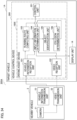
- the driving assist device 100 includes: a vehicle information reception unit 101 and a video reception unit 102 which are reception units; a running route computing unit 103; an input information determination unit 104; an object identification unit 105; a collision determination unit 106; the warning notification unit 107; and the driving assist information transmission unit 108 which is a transmission unit.
- the vehicle information reception unit 101 receives the first vehicle information transmitted from the vehicle information transmission unit 11 and the second vehicle information transmitted from the vehicle information transmission unit 23.
- the video reception unit 102 receives the video recorded by the camera 21 of the nearby vehicle 2 and transmitted from the video transmission unit 22 thereof.
- the first vehicle information, the second vehicle information, and the video are recorded and saved in a vehicle information list (not shown) of the driving assist device 100.
- the running route computing unit 103 obtains a running route for the target vehicle 1 on the basis of the first vehicle information.
- the input information determination unit 104 determines driving assist information on the basis of at least the first vehicle information, the second vehicle information, and the running route obtained by the running route computing unit 103.
- the input information determination unit 104 selects any of the nearby vehicles 2 that is located at a position at which a video to be used for the driving assist can be recorded (this process is referred to as selection processing), and determines the video acquired from the selected nearby vehicle 2 as the driving assist information.
- the video to be used for the driving assist refers to a video that cannot be recorded by the camera of the target vehicle 1.
- the video is any of: a video of a region further in front of a front vehicle located in front of the target vehicle 1; a video of a region further behind a rear vehicle located behind the target vehicle 1; a video of a region which is a blind spot not visible at the time of a right/left turn of the target vehicle 1; and the like.
- objects vehicle, two-wheeled vehicles, pedestrians, or the like
- existing in these regions cannot be captured by the camera of the target vehicle 1 and are difficult for the driver of the target vehicle 1 to notice.
- the object identification unit 105 identifies, on the basis of the video acquired from the nearby vehicle 2 and the running route obtained by the running route computing unit 103, any of objects that exists on the running route.
- the objects to be identified by the object identification unit 105 include: a nearby vehicle 2 running on the running route; an oncoming vehicle running on a lane opposite to the running route; an object and a pedestrian existing around the running route; and the like.
- the collision determination unit 106 determines, on the basis of the first vehicle information, the second vehicle information, the video acquired from the nearby vehicle 2, and the running route, whether or not there is a possibility of a collision between the target vehicle 1 and the object, and a type of the collision.
- the result of the determination by the collision determination unit 106 is inputted to the input information determination unit 104. If the collision determination unit 106 determines that there is a possibility of a collision with the object, the input information determination unit 104 performs selection processing on the basis of the type of the collision.
- the input information determination unit 104 includes a vehicle group generation unit 111.
- the vehicle group generation unit 111 generates a vehicle group 3 including one or more nearby vehicles 2 running in front of or behind the target vehicle 1, on the basis of the first vehicle information, the second vehicle information, and the running route.
- the vehicle group 3 may include the target vehicle 1 (see FIG. 10 ) or does not have to include the target vehicle 1 (see FIG. 6 ).
- the vehicle group 3 includes oncoming vehicles 2E and 2F (see FIG. 8 ) at a crossing or the like.
- the input information determination unit 104 performs the selection from among the nearby vehicles 2 included in the vehicle group 3 generated by the vehicle group generation unit 111.
- the vehicle group generation unit 111 generates a vehicle group 3 on the basis of the type of the collision.
- the warning notification unit 107 transmits a warning message to the target vehicle 1.
- the driving assist information transmission unit 108 transmits the driving assist information determined by the input information determination unit 104 to the target vehicle 1. A video included in the transmitted driving assist information is displayed on the display unit 14 of the target vehicle 1.
- the driving assist information may include not only the video acquired from the nearby vehicle 2 but also another information about the running route.
- the driving assist information may include: information about an object detected by a sensor (not shown) of the nearby vehicle 2 (the position of the object, the distance to the object, or the time to be taken before collision therewith); information that is about an accident, street closure, or the like on the running route and that has been acquired from outside by the driving assist device 100; and the like.
- the driving assist device 100 is, for example, a server installed at a base station. Specifically, a mobile edge computing (MEC) server or the like is used.
- MEC server is provided on the edge side of the base station for the long term evolution (LTE), 5G networks, or the like and achieves a lower delay than Internet servers.
- the driving assist device 100 can be composed of a processor 130 and a storage device 140.
- Each of the functions of the running route computing unit 103, the input information determination unit 104, the object identification unit 105, the collision determination unit 106, and the like is performed by a processing circuit.
- the processing circuit may be the processor 130 to execute a program stored in the storage device 140, or may be dedicated hardware.
- the storage device 140 includes a volatile storage device such as a random access memory, and a nonvolatile auxiliary storage device such as a flash memory.
- the storage device 140 may include, as the auxiliary storage device, a hard disk instead of a flash memory.
- the processor 130 executes a program inputted from the storage device 140. In this case, the program is inputted from the auxiliary storage device via the volatile storage device to the processor 130. Further, the processor 130 may output data such as a calculation result to the volatile storage device of the storage device 140 or may save the data via the volatile storage device to the auxiliary storage device.
- each of the warning reception unit 12 and the driving assist information reception unit 13 of the target vehicle 1, the vehicle information reception unit 101 and the video reception unit 102 of the driving assist device 100, and the like is implemented by a receiver.
- Each of the vehicle information transmission units 11 and 23, the warning notification unit 107, the driving assist information transmission unit 108, and the like is implemented by a transmitter.
- the display unit 14 is implemented by a display such as a liquid-crystal display.
- a driving assist method to be performed by the driving assist device 100 includes the following three steps. First, in a first step, first vehicle information including positional information and operational information about the target vehicle 1, second vehicle information including positional information and operational information about each of nearby vehicles 2, and a video recorded by the camera 21 of the nearby vehicle 2, are acquired. Then, in a second step, a running route for the target vehicle 1 is obtained on the basis of the first vehicle information.
- driving assist information is determined on the basis of at least the first vehicle information, the second vehicle information, and the running route.
- any of the nearby vehicles 2 that is located at a position at which a video to be used for the driving assist can be recorded is selected, and the video acquired from the selected nearby vehicle 2 is determined as the driving assist information.
- step S1 first vehicle information is acquired from the target vehicle 1. Subsequently, in step S2, second vehicle information and a video are acquired from each of nearby vehicles 2. Then, determination as to whether or not the nearby vehicle 2 has already been registered, is made in step S3. Specifically, the vehicle information list is searched for the second vehicle information acquired in step S2, and association with the second vehicle information is performed.
- step S3 If determination that the nearby vehicle 2 has been registered is made in step S3 (Yes), the vehicle information list is updated in step S4. Meanwhile, if determination that the nearby vehicle 2 has not been registered is made in step S3 (No), the second vehicle information about the nearby vehicle 2 is registered to the vehicle information list in step S5.
- step S6 the input information determination unit 104 selects information to be inputted to the target vehicle 1.
- the vehicle group generation unit 111 generates a vehicle group 3 on the basis of the first vehicle information, the second vehicle information, and the running route . In a method for generating the vehicle group 3, if the distance between vehicles is equal to or smaller than a preset threshold value (for example, 10 m), the vehicles are regarded as one vehicle group 3.
- a preset threshold value for example, 10 m
- Step S6 may merely involve generation of the vehicle group 3. Alternatively, if an object exists in a video acquired from any of the nearby vehicles 2 included in the vehicle group 3, step S6 may also involve selection of the video. However, the video selected in step S6 is not a video determined as the driving assist information.
- step S7 collision determination is performed.
- the collision determination unit 106 determines whether or not there is a possibility of a collision between the target vehicle 1 and the object identified by the object identification unit 105, and a type of the collision. Specifically, if the time to be taken before the collision between the target vehicle 1 and the object is equal to or smaller than a preset threshold value (for example, 5 seconds), the collision determination unit 106 determines that there is a possibility of a collision therebetween.
- a preset threshold value for example, 5 seconds
- step S8 determines that no collision is to occur in step S8 (No)
- the vehicle information registered in the vehicle information list is deleted in step S12, and the process is ended. Meanwhile, if the collision determination unit 106 determines that there is a possibility of a collision in step S8 (Yes), information to be inputted to the target vehicle 1 is selected again in selection processing in step S9. Processing in each of step S8 and step S9 will be described in detail with reference to the flowchart in FIG. 5 .
- step S10 a video is acquired from the nearby vehicle 2 selected in step S9. Subsequently, in step S11, a warning message and the driving assist information which includes the video are transmitted to the target vehicle 1. Finally, in step S12, the vehicle information in the vehicle information list is deleted, and the process is ended.
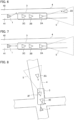
- FIG. 6 is a diagram for explaining do-not-pass warning (hereinafter, referred to as DNPW) .
- FIG. 7 is a diagram for explaining forward collision warning (hereinafter, referred to as FCW).
- FIG. 8 is a diagram for explaining right-turn assist (hereinafter, referred to as RTA).
- FIG. 9 is a diagram for explaining blind spot warning (hereinafter, referred to as BSW).
- FIG. 10 is a diagram for explaining a warning about collision with a pedestrian.
- FIG. 11 is a diagram for explaining high-speed merging assist.
- the target vehicle 1 and nearby vehicles 2 (including front vehicles 2A, 2B, and 2C, oncoming vehicles 2D, 2E, 2F, and 2G, rear vehicles 2H, 2J, and 2K, and vehicles 2L and 2M) running on a road 4 are indicated by triangles.
- Patterns of the vehicle group 3 shown in FIG. 6 to FIG. 11 are merely examples, and the pattern of the vehicle group 3 is not limited thereto.
- step S7 in FIG. 5 When the collision determination starts to be performed in step S7 in FIG. 5 , a type of the collision is determined in step S801 to step S806 of step S8. Further, selection processing based on the type of the collision is performed in step S901 to step S905 of step S9.
- the collision determination unit 106 determines whether or not the type of the collision is DNPW in step S801. If the collision determination unit 106 determines that the type of the collision is DNPW (Yes), the input information determination unit 104 selects a front-region video from the frontmost vehicle of a front vehicle group in step S901.
- the target vehicle 1 running in a lane 41 on the road 4 is attempting to overtake the front vehicles 2A, 2B, and 2C.
- a vehicle group 3 located immediately in front blocks the field of view, and thus the driver of the target vehicle 1 cannot notice the oncoming vehicle 2D running on an opposite lane 42.
- the oncoming vehicle 2D exists within a capturing range 5 of a front camera of the front vehicle 2A. Therefore, the vehicle group generation unit 111 generates a vehicle group 3 including the front vehicles 2A, 2B, and 2C located in front of the target vehicle 1, and the input information determination unit 104 selects a front-region video from the front vehicle 2A which is the frontmost vehicle of the front vehicle group 3.
- the collision determination unit 106 determines whether or not the type of the collision is FCW in step S802. If the collision determination unit 106 determines that the type of the collision is FCW (Yes), the input information determination unit 104 selects a front-region video from the frontmost vehicle of a front vehicle group in step S901.
- the vehicle group generation unit 111 generates a vehicle group 3 including the front vehicles 2A, 2B, and 2C located in front of the target vehicle 1, and the input information determination unit 104 selects a front-region video from the front vehicle 2A which is the frontmost vehicle of the front vehicle group 3.
- the collision determination unit 106 determines whether or not the type of the collision is RTA in step S803. If the collision determination unit 106 determines that the type of the collision is RTA (Yes), the input information determination unit 104 selects a rear-region video from the rearmost vehicle of a front oncoming vehicle group in step S902.
- a vehicle group 3 including the front oncoming vehicles 2E and 2F blocks the field of view, and thus the driver of the target vehicle 1 cannot notice the oncoming vehicle 2G. Meanwhile, the oncoming vehicle 2G exists within a capturing range 5 of a rear camera of the front oncoming vehicle 2F. Therefore, the vehicle group generation unit 111 generates a vehicle group 3 including the oncoming vehicles 2E and 2F located in front of the target vehicle 1, and the input information determination unit 104 selects a rear-region video from the oncoming vehicle 2F which is the rearmost vehicle of the front oncoming vehicle group 3.
- the collision determination unit 106 determines whether or not the type of the collision is BSW in step S804. If the collision determination unit 106 determines that the type of the collision is BSW (Yes), the input information determination unit 104 selects a rear-region video from the rearmost vehicle of a rear vehicle group in step S903.
- the vehicle group generation unit 111 generates a vehicle group 3 including the target vehicle 1 and the rear vehicles 2H and 2J located behind the target vehicle 1, and the input information determination unit 104 selects a rear-region video from the rear vehicle 2J which is the rearmost vehicle of the rear vehicle group 3.
- the collision determination unit 106 determines whether or not the type of the collision is collision with a pedestrian in step S805. If the collision determination unit 106 determines that the type of the collision is collision with a pedestrian (Yes), the input information determination unit 104 selects a front-region video from the rearmost vehicle of a rear vehicle group in step S904.
- the collision determination unit 106 determines whether or not the type of the collision is high-speed merging in step S806. If the collision determination unit 106 determines that the type of the collision is high-speed merging (Yes), the input information determination unit 104 selects a rear-region video from the frontmost vehicle of a front vehicle group in step S905.
- the vehicles 2L and 2M are running in a main lane 4A of an expressway, and the target vehicle 1 running in a merging lane 4B is approaching a merging point.
- a vehicle group 3 including the front vehicles 2A and 2B, a wall of the main lane 4A, or the like blocks the field of view, and thus it is difficult for the driver of the target vehicle 1 to grasp the situation of the main lane 4A onto which merging is to be performed.
- the vehicle group generation unit 111 generates a vehicle group 3 including the front vehicles 2A and 2B located in front of the target vehicle 1, and the input information determination unit 104 selects a rear-region video from the front vehicle 2A which is the frontmost vehicle of the front vehicle group 3. If the collision determination unit 106 determines that the type of the collision is not high-speed merging in step S806 (No), the collision determination is ended.
- the driving assist device 100 and the driving assist system 300 according to embodiment 1 are configured such that: the nearby vehicle 2 located at the position at which the video to be used for the driving assist can be recorded is selected on the basis of the first vehicle information, the second vehicle information, and the running route; and the video acquired from the selected nearby vehicle 2 is transmitted as the driving assist information to the target vehicle 1. Consequently, driving assist flexibly adapted to, for example, the running route for and the operational information about the target vehicle 1 can be performed. Further, since the video corresponding to the type of the collision is transmitted as the driving assist information to the target vehicle 1, driving assist more flexibly adapted to, for example, the running route for and the operational information about the target vehicle 1 can be performed.
- the nearby vehicle 2 located at the position at which the video to be used for the driving assist can be recorded is selected on the basis of the first vehicle information, the second vehicle information, and the running route, and the video acquired from the selected nearby vehicle 2 is determined as the driving assist information. Consequently, driving assist flexibly adapted to, for example, the running route for and the operational information about the target vehicle 1 can be performed.
- the input information determination unit 104 in embodiment 2 acquires a video with the object existing therein from another nearby vehicle 2 included in the vehicle group 3, and determines the video with the object existing therein as the driving assist information. It is noted that the overall configuration of a driving assist system according to embodiment 2 is the same as that in the above embodiment 1, and thus description thereof will be omitted (see FIG. 1 ).
- FIG. 12 is a diagram for explaining an example of DNPW in embodiment 2.
- the target vehicle 1 running in the lane 41 of the road 4 is attempting to overtake the front vehicles 2A, 2B, and 2C.
- the vehicle group 3 located immediately in front blocks the field of view, and thus the driver of the target vehicle 1 cannot notice the oncoming vehicle 2D running in the opposite lane 42.
- the oncoming vehicle 2D does not exist within the capturing range 5A of the front camera of the front vehicle 2A which is the frontmost vehicle of the vehicle group 3, and thus is not captured by the camera of the front vehicle 2A.
- the video acquired from the front vehicle 2A is transmitted as the driving assist information to the target vehicle 1, the driver of the target vehicle 1 could determine that no oncoming vehicle 2D exists and could perform overtaking.
- the input information determination unit 104 of the driving assist device selects a video with the oncoming vehicle 2D existing therein from among front-region videos recorded in the other front vehicle 2B (or 2C) included in the vehicle group 3.
- the oncoming vehicle 2D exists within a capturing range 5B of a front camera of the front vehicle 2B, and thus a front-region video from the front vehicle 2B is transmitted as the driving assist information to the target vehicle 1.
- step S803 in FIG. 13 and step S804 in FIG. 14 are consecutively performed.
- step S7 in FIG. 13 When the collision determination starts to be performed in step S7 in FIG. 13 , a type of the collision is determined in step S801 of step S8 in FIG. 13 to step S806 of step S8 in FIG. 14 . Further, selection processing based on the type of the collision is performed in step S911 of step S9 in FIG. 13 to step S929 of step S9 in FIG. 14 .
- the collision determination unit 106 determines whether or not the type of the collision is DNPW in step S801. If the collision determination unit 106 determines that the type of the collision is DNPW (Yes), in step S911, the vehicle group generation unit 111 generates a front vehicle group located in front of the target vehicle 1, and the input information determination unit 104 acquires a front-region video from the frontmost vehicle of the front vehicle group.
- step S912 the input information determination unit 104 determines whether or not the oncoming vehicle exists in the video acquired in step S911. If the input information determination unit 104 determines that the oncoming vehicle exists (Yes), the input information determination unit 104 selects the video in step S913. Meanwhile, if the input information determination unit 104 determines that no oncoming vehicle exists in step S912 (No), the input information determination unit 104 acquires a front-region video from another vehicle of the front vehicle group in step S914. Thereafter, the process returns to step S912 in which the input information determination unit 104 determines whether or not the oncoming vehicle exists in the video acquired in step S914. If the input information determination unit 104 determines that the oncoming vehicle exists (Yes), the input information determination unit 104 selects the video in step S913. These steps are repeated until a video with the oncoming vehicle existing therein is found.
- step S801 If the collision determination unit 106 determines that the type of the collision is not DNPW in step S801 (No), the collision determination unit 106 determines whether or not the type of the collision is FCW in step S802. If the collision determination unit 106 determines that the type of the collision is FCW (Yes), in step S915, the vehicle group generation unit 111 generates a front vehicle group located in front of the target vehicle 1, and the input information determination unit 104 selects a front-region video from the frontmost vehicle of the front vehicle group.
- the input information determination unit 104 selects the front-region video from the frontmost vehicle of the front vehicle group regardless of whether or not an oncoming vehicle exists.
- step S802 If the collision determination unit 106 determines that the type of the collision is not FCW in step S802 (No), the collision determination unit 106 determines whether or not the type of the collision is RTA in step S803. If the collision determination unit 106 determines that the type of the collision is RTA (Yes), in step S916, the vehicle group generation unit 111 generates an oncoming vehicle group located in front of the target vehicle 1, and the input information determination unit 104 acquires a rear-region video from the rearmost vehicle of the front oncoming vehicle group.
- step S917 the input information determination unit 104 determines whether or not the oncoming vehicle exists in the video acquired in step S916. If the input information determination unit 104 determines that the oncoming vehicle exists (Yes), the input information determination unit 104 selects the video in step S918. Meanwhile, if the input information determination unit 104 determines that no oncoming vehicle exists in step S917 (No), the input information determination unit 104 acquires a rear-region video from another vehicle of the front oncoming vehicle group in step S919. Thereafter, the process returns to step S917 in which the input information determination unit 104 determines whether or not the oncoming vehicle exists in the video acquired in step S919. These steps are repeated until a video with the oncoming vehicle existing therein is found.
- the collision determination unit 106 determines whether or not the type of the collision is BSW in step S804 in FIG. 14 . If the collision determination unit 106 determines that the type of the collision is BSW (Yes), in step S921, the vehicle group generation unit 111 generates a rear vehicle group located behind the target vehicle 1, and the input information determination unit 104 acquires a rear-region video from the rearmost vehicle of the rear vehicle group.
- step S922 the input information determination unit 104 determines whether or not the rear vehicle exists in the video acquired in step S921. If the input information determination unit 104 determines that the rear vehicle exists (Yes), the input information determination unit 104 selects the video in step S923. Meanwhile, if the input information determination unit 104 determines that no rear vehicle exists in step S922 (No), the input information determination unit 104 acquires a rear-region video from another vehicle of the rear vehicle group in step S924. Subsequently, the process returns to step S922 in which the input information determination unit 104 determines whether or not the rear vehicle exists in the video acquired in step S924. These steps are repeated until a video with the rear vehicle existing therein is found.
- step S804 determines whether or not the type of the collision is collision with a pedestrian in step S805. If the collision determination unit 106 determines that the type of the collision is collision with a pedestrian (Yes), in step S925, the vehicle group generation unit 111 generates a rear vehicle group located behind the target vehicle 1, and the input information determination unit 104 acquires a front-region video from the rearmost vehicle of the rear vehicle group.
- step S926 the input information determination unit 104 determines whether or not the pedestrian exists in the video acquired in step S925. If the input information determination unit 104 determines that the pedestrian exists (Yes), the input information determination unit 104 selects the video in step S927. If the input information determination unit 104 determines that no pedestrian exists in step S926 (No), the input information determination unit 104 acquires a front-region video from another vehicle of the rear vehicle group in step S928. Subsequently, the process returns to step S926 in which the input information determination unit 104 determines whether or not the pedestrian exists in the video acquired in step S928. These steps are repeated until a video with the pedestrian existing therein is found.
- step S806 If the collision determination unit 106 determines that the type of the collision is not collision with a pedestrian in step S805 (No), the collision determination unit 106 determines whether or not the type of the collision is high-speed merging in step S806. If the collision determination unit 106 determines that the type of the collision is high-speed merging (Yes), in step S929, the vehicle group generation unit 111 generates a front vehicle group located in front of the target vehicle 1, and the input information determination unit 104 selects a rear-region video from the frontmost vehicle of the front vehicle group.
- the input information determination unit 104 selects the rear-region video from the frontmost vehicle of the front vehicle group regardless of whether or not a rear vehicle exists. If the collision determination unit 106 determines that the type of the collision is not high-speed merging in step S806 (No), the collision determination is ended.
- Embodiment 2 achieves the following effect in addition to the same effects as those in the above embodiment 1. That is, a check is performed as to whether or not the object exists in a video selected correspondingly to the type of the collision, and a video with the object existing therein is transmitted as the driving assist information, whereby driving assist even more flexibly adapted to, for example, the running route for and the operational information about the target vehicle 1 can be performed.
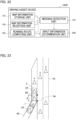
- FIG. 15 is a block diagram showing a configuration of an input information determination unit of a driving assist device according to embodiment 3.
- An input information determination unit 104A in embodiment 3 includes a map information acquisition unit 112 and a foreseeing determination unit 113 in addition to the vehicle group generation unit 111. It is noted that the overall configuration of a driving assist system according to embodiment 3 and the flow of an overall process to be performed by the driving assist device are the same as those in the above embodiment 1, and thus description thereof will be omitted (see FIG. 1 and FIG. 4 ).
- the map information acquisition unit 112 acquires map information including a running route for the target vehicle 1 obtained by the running route computing unit 103.
- the foreseeing determination unit 113 predicts a change in the running route due to a behavior of a nearby vehicle 2 and obtains a new running route, on the basis of the running route, the map information, the first vehicle information, and the second vehicle information.
- the vehicle group generation unit 111 generates a vehicle group 3 on the basis of the new running route obtained by the foreseeing determination unit 113.
- the input information determination unit 104A performs selection processing on the basis of the new running route obtained by the foreseeing determination unit 113.
- FIG. 16 An example shown in FIG. 16 illustrates a road 4 having a single lane on each side thereof.
- a bus 2N as a nearby vehicle is running in front of the target vehicle 1 running in a lane 41.
- the target vehicle 1 runs in the lane 41 while following the bus 2N.
- the target vehicle 1 may overtake the bus 2N. In this case, the target vehicle 1 runs on a new running route different from the normal route.
- the running route of the target vehicle 1 may be changed owing to the behavior of the nearby vehicle 2 (here, the bus 2N) .
- the nearby vehicle 2 here, the bus 2N
- Other examples include: an example in which a nearby vehicle 2 running in front is overtaken when the nearby vehicle 2 is stopped to enter a parking lot; an example in which a tailback caused by a nearby vehicle 2 attempting to enter a parking lot is overtaken; and the like.
- Such changes in the running route due to the behaviors of nearby vehicles 2 are likely to occur at specific locations such as bus stops and parking lots, and thus can be predicted on the basis of map information.
- the foreseeing determination unit 113 detects, on the basis of the first vehicle information, the second vehicle information, the video, the running route, the map information, and the like, that: the nearby vehicle 2 running in front of the target vehicle 1 is the bus 2N; and the bus 2N is running before the bus stop 7. It is noted that a rule that a bus is stopped at a bus stop, and a rule that there is the possibility that the target vehicle running behind a bus overtakes the bus when the bus is stopped at a bus stop, are preset for the foreseeing determination unit 113.
- the foreseeing determination unit 113 can make determination as to occurrence of a change in the running route of the target vehicle 1 running behind the bus 2N, when the bus 2N is about to reach the bus stop 7. If the foreseeing determination unit 113 determines that a change in the running route is to occur, the foreseeing determination unit 113 obtains a new running route.
- the new running route obtained by the foreseeing determination unit 113 is used in the processing to be performed by the object identification unit 105, the collision determination unit 106, and the input information determination unit 104A, in the same manner as the normal running route obtained by the running route computing unit 103.
- the above embodiment 1 would be as follows in the example shown in FIG. 16 . That is, information necessary for the selection processing to be performed by the input information determination unit 104 is acquired at the time point at which the operation of the target vehicle 1 has been shifted to an overtaking operation after the bus 2N has been stopped at the bus stop 7. Meanwhile, in embodiment 3, before stoppage of the bus 2N, the foreseeing determination unit 113 predicts overtaking to be performed by the target vehicle 1 and obtains a new running route, and the input information determination unit 104A performs selection processing by using the new running route. This enables the input information determination unit 104A to, before stoppage of the bus 2N, determine driving assist information necessary for the overtaking and transmit the driving assist information to the target vehicle 1.
- Embodiment 3 achieves the following effect in addition to the same effects as those in the above embodiment 1. That is, a change in the running route due to the behavior of the nearby vehicle 2 is predicted, whereby driving assist information corresponding to the new running route can be transmitted to the target vehicle 1.
- FIG. 17 is a block diagram showing a configuration of an input information determination unit of a driving assist device according to embodiment 4.
- An input information determination unit 104B in embodiment 4 includes a special event detection unit 114 in addition to the vehicle group generation unit 111. It is noted that the overall configuration of a driving assist system according to embodiment 4 and the flow of an overall process to be performed by the driving assist device are the same as those in the above embodiment 1, and thus description thereof will be omitted (see FIG. 1 and FIG. 4 ).
- the special event detection unit 114 detects at least flashing of a hazard warning flasher and a sudden stop of the nearby vehicle 2 on the basis of the second vehicle information. For determination of a sudden stop, acceleration information included in the second vehicle information is used. If a deceleration is equal to or larger than a preset threshold value, the special event detection unit 114 determines that the nearby vehicle 2 has performed a sudden stop.
- the vehicle group generation unit 111 generates a vehicle group 3 excluding the nearby vehicle 2 that is detected, by the special event detection unit 114, to have performed flashing of the hazard warning flasher or a sudden stop.
- the input information determination unit 104 performs selection processing excluding the nearby vehicle 2 that is detected, by the special event detection unit 114, to have performed flashing of the hazard warning flasher or a sudden stop.
- the special event detection unit 114 will be described with reference to FIG. 18 .
- a stopped vehicle 2P exists in front of a vehicle group 3 including the front vehicles 2A, 2B, and 2C located in front of the target vehicle 1.
- the vehicle group generation unit 111 regards the vehicles as one vehicle group 3, and thus, when the front vehicle 2A approaches the stopped vehicle 2P, a vehicle group 3 including the stopped vehicle 2P is generated.
- the input information determination unit 104 selects a front-region video from the frontmost vehicle of the front vehicle group as the driving assist information.
- the vehicle group 3 includes the stopped vehicle 2P
- a front-region video from the stopped vehicle 2P which is the frontmost vehicle is transmitted to the target vehicle 1, and the stopped vehicle 2P does not exist in the video. Therefore, the driver of the target vehicle 1 cannot notice the stopped vehicle 2P which could cause collision.
- the special event detection unit 114 detects flashing of a hazard warning flasher and a sudden stop of the nearby vehicle 2, and the input information determination unit 104 performs selection processing excluding the nearby vehicle 2 detected by the special event detection unit 114.
- the collision determination unit 106 determines that the type of the collision is FCW in step S802 (Yes)
- the special event detection unit 114 performs detection as to a special event of the frontmost vehicle of the front vehicle group in step S931.
- the vehicle group generation unit 111 generates a vehicle group 3 on the basis of the result of the detection by the special event detection unit 114.
- the special event detection unit 114 determines whether or not a hazard warning flasher of the frontmost vehicle of the front vehicle group is flashing. If the special event detection unit 114 determines that the hazard warning flasher is flashing (Yes), the vehicle is excluded from the vehicle group in step S933.
- the special event detection unit 114 determines whether or not the frontmost vehicle of the front vehicle group is performing a sudden stop in step S934. If the special event detection unit 114 determines that the frontmost vehicle of the front vehicle group is performing a sudden stop (Yes), the frontmost vehicle is eliminated from the vehicle group in step S935. Meanwhile, if the special event detection unit 114 determines that the frontmost vehicle is not performing a sudden stop (No), the input information determination unit 104 selects a front-region video from the frontmost vehicle of the front vehicle group in step S936.
- Embodiment 4 achieves the following effect in addition to the same effects as those in the above embodiment 1. That is, a stopped vehicle that could cause collision can be excluded from the vehicle group, whereby a video showing the stopped vehicle can be transmitted as the driving assist information to the target vehicle 1.
- FIG. 20 is a block diagram showing a configuration of a driving assist device according to embodiment 5.
- a driving assist device 100A according to embodiment 5 includes a map information storage unit 115, a map information reception unit 116, and a running route shape detection unit 117 in addition to the same components (some of which are not shown) as those of the driving assist device 100 according to the above embodiment 1. It is noted that the overall configuration of a driving assist system according to embodiment 5 and the flow of an overall process to be performed by the driving assist device 100A are the same as those in the above embodiment 1, and thus description thereof will be omitted (see FIG. 1 and FIG. 4 ).
- the map information storage unit 115 stores map information including a running route, and the map information reception unit 116 receives the map information including the running route from outside. It is noted that both or one of the map information storage unit 115 and the map information reception unit 116 may be provided.
- the running route shape detection unit 117 detects, on the basis of the map information, the running route, and the first vehicle information, any of specific shapes that exists on the running route and that is located in front of the target vehicle 1.
- the specific shapes include shapes of: a curve; a branching point; a road-width-changed section; and the like.
- the specific shapes include shapes of: a curve with poor visibility; a road-width-changed section that comes into sight at the time of a right/left turn at a crossing or at the time of an entry to an alley; and the like. If the running route shape detection unit 117 detects a specific shape on the running route, the vehicle group generation unit 111 generates a vehicle group 3 on the basis of the specific shape, and the input information determination unit 104 performs selection processing on the basis of the specific shape.
- the running route shape detection unit 117 detects a specific shape on the running route
- the running route shape detection unit 117 outputs running route shape information to the input information determination unit 104.
- the vehicle group generation unit 111 generates a vehicle group 3 on the basis of the running route shape information. For example, if the shape of a curve with poor visibility is detected as a specific shape, the vehicle group generation unit 111 generates a vehicle group 3 including a nearby vehicle 2 running in front of the target vehicle 1.
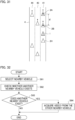
- step S21 the running route shape detection unit 117 acquires map information from the map information storage unit 115 or the map information reception unit 116.
- step S22 the running route shape detection unit 117 acquires a running route for the target vehicle 1 from the running route computing unit 103.
- step S23 the running route shape detection unit 117 performs detection as to a specific shape on the running route. If the running route shape detection unit 117 determines that a curve with poor visibility exists in front in step S24 (Yes), the running route shape detection unit 117 performs detection as to a front vehicle group 3 in step S25. Subsequently, if the running route shape detection unit 117 determines that a vehicle group exists in front in step S26 (Yes), the running route shape detection unit 117 outputs running route shape information to the vehicle group generation unit 111 in step S27.
- step S24 determines that no curve with poor visibility exists in front in step S24 (No) or determines that no vehicle group 3 exists in front in step S26 (No).
- no vehicle group 3 needs to be or can be generated.
- FIG. 21 shows an example in which the running route shape detection unit 117 detects a curve with poor visibility, the same process is performed also if a branching point or a road-width-changed section on the running route is detected.
- Embodiment 5 achieves the following effect in addition to the same effects as those in the above embodiment 1. That is, a video corresponding to the specific shape on the running route can be transmitted as the driving assist information to the target vehicle 1.
- FIG. 22 is a block diagram showing a configuration of a driving assist device according to embodiment 6.
- a driving assist device 100B according to embodiment 6 includes the map information storage unit 115, the map information reception unit 116, and a merging detection unit 118 in addition to the same components (some of which are not shown) as those of the driving assist device 100 according to the above embodiment 1. It is noted that the overall configuration of a driving assist system according to embodiment 6 and the flow of an overall process to be performed by the driving assist device 100B are the same as those in the above embodiment 1, and thus description thereof will be omitted (see FIG. 1 and FIG. 4 ).
- the map information storage unit 115 stores map information including a running route
- the map information reception unit 116 receives the map information including the running route from outside. It is noted that both or one of the map information storage unit 115 and the map information reception unit 116 may be provided.
- the merging detection unit 118 detects, on the basis of the map information, the running route, and the first vehicle information, a merging direction and a merging point that exists on the running route and that is located in front of the target vehicle 1.
- Methods for detection as to merging by the merging detection unit 118 include : a method in which the detection is performed on the basis of a road shape obtained from the map information; a method in which detection that the target vehicle 1 has approached a merging point is performed by using the map information including merging point information; and the like.
- the merging detection unit 118 detects a merging point
- the vehicle group generation unit 111 generates a vehicle group 3 on the basis of a merging direction and the merging point
- the input information determination unit 104 performs selection processing on the basis of the merging direction and the merging point. Specifically, when the merging detection unit 118 detects a merging point that is on the running route and that is located in front of the target vehicle 1, the merging detection unit 118 outputs merging point information including the position of the merging point and the merging direction to the input information determination unit 104.
- FIG. 23 shows an example of high-speed merging in which a merging lane exists on the left side of a main lane.
- FIG. 24 shows an example of high-speed merging in which a merging lane exists on the right side of a main lane.
- the input information determination unit 104 selects the front vehicle 2B that is closest to the target vehicle 1 and that is still running in the merging lane 4B.
- a video of the main lane 4A cannot be recorded.
- a video from the front vehicle 2B is acquired when the front vehicle 2B has passed the merging point 4p and the distance to the merging point 4p has become equal to or larger than a preset threshold value d (for example, 5 m).
- FIG. 23 illustrates merging from the left side, and thus a video of a right-side rear region recorded in the front vehicle 2B is transmitted to the target vehicle 1.
- FIG. 24 illustrates merging from the right side, and thus a video of a left-side rear region recorded in the front vehicle 2B is transmitted to the target vehicle 1.
- step S31 the merging detection unit 118 acquires map information from the map information storage unit 115 or the map information reception unit 116. Subsequently, in step S32, the merging detection unit 118 acquires a running route for the target vehicle 1 from the running route computing unit 103.
- step S33 the merging detection unit 118 performs detection as to a front merging point on the running route. If the merging detection unit 118 determines that a merging point exists in front in step S34 (Yes), the merging detection unit 118 performs detection as to a front vehicle group 3 in step S35. Subsequently, if the merging detection unit 118 determines that a vehicle group exists in front in step S36 (Yes), the merging detection unit 118 outputs merging point information to the vehicle group generation unit 111 in step S37.
- step S34 determines that no merging point exists in front in step S34 (No) or determines that no vehicle group 3 exists in front in step S36 (No).
- no vehicle group 3 needs to be or can be generated. Thus, the process is ended.
- Embodiment 6 achieves the following effect in addition to the same effects as those in the above embodiment 1. That is, a video corresponding to the merging direction and the merging point on the running route can be transmitted as the driving assist information to the target vehicle 1.
- FIG. 26 is a block diagram showing a configuration of a driving assist device according to embodiment 7.
- a driving assist device 100C according to embodiment 7 includes the map information storage unit 115, the map information reception unit 116, and a lane detection unit 119 in addition to the same components (some of which are not shown) as those of the driving assist device 100 according to the above embodiment 1. It is noted that the overall configuration of a driving assist system according to embodiment 7 and the flow of an overall process to be performed by the driving assist device 100C are the same as those in the above embodiment 1, and thus description thereof will be omitted (see FIG. 1 and FIG. 4 ).
- the map information storage unit 115 stores map information including a running route
- the map information reception unit 116 receives the map information including the running route from outside. It is noted that both or one of the map information storage unit 115 and the map information reception unit 116 may be provided.
- the lane detection unit 119 detects, on the basis of the map information, the running route, and the first vehicle information, a lane in which the target vehicle 1 is running and another lane adjacent to the lane. Methods for detecting lanes by the lane detection unit 119 include a method in which lane positional information included in the map information and positional information about the target vehicle 1 are compared to each other.
- the lane detection unit 119 of the driving assist device 100C will be described with reference to FIG. 27 .
- the target vehicle 1 is running on a road 4 having lanes 41, 43, and 44.
- the lane detection unit 119 performs detection as to on which of the right lane 41, the center lane 43, and the left lane 44 the target vehicle 1 is running. Further, the lane detection unit 119 detects the other lanes 43 and 44 adjacent to the lane 41 in which the target vehicle 1 is running, and outputs information about these lanes as lane information.
- the vehicle group generation unit 111 If the lane detection unit 119 detects another lane, the vehicle group generation unit 111 generates a vehicle group 3 excluding a nearby vehicle 2 running in the other lane on the basis of the lane information and the second vehicle information, and the input information determination unit 104 performs selection processing excluding the nearby vehicle 2 running in the other lane. In the example shown in FIG. 27 , a vehicle group 3 is generated excluding the nearby vehicles 2 running in the lanes 43 and 44.
- step S41 in FIG. 28 the lane detection unit 119 acquires map information from the map information storage unit 115 or the map information reception unit 116.
- step S42 the lane detection unit 119 acquires a running route for the target vehicle 1 from the running route computing unit 103.
- step S43 the lane detection unit 119 detects a running lane of the target vehicle 1 and further detects another lane adjacent to the running lane of the target vehicle 1, on the basis of the map information, the running route, and the first vehicle information. Subsequently, in step S44, the lane detection unit 119 outputs lane information including information about the running lane and the other lane to the input information determination unit 104, and the process is ended.
- step S51 in FIG. 29 the vehicle group generation unit 111 acquires the lane information from the lane detection unit 119. Subsequently, in step S52, the vehicle group generation unit 111 excludes a nearby vehicle 2 running in the other lane from the vehicle group 3. The nearby vehicle 2 running in the other lane can be detected on the basis of the second vehicle information registered in the vehicle information list. Then, in step S53, the vehicle group generation unit 111 generates a vehicle group 3 including a nearby vehicle 2 running in the same lane as that of target vehicle 1, and the process is ended.
- Embodiment 7 achieves the following effect in addition to the same effects as those in the above embodiment 1. That is, a video recorded by the camera of the nearby vehicle 2 running in the other lane can be prevented from being transmitted as the driving assist information to the target vehicle 1.
- FIG. 30 is a block diagram showing a configuration of a driving assist device according to embodiment 8.
- a driving assist device 100D according to embodiment 8 includes a nearby vehicle detection unit 120 in addition to the same components (some of which are not shown) as those of the driving assist device 100 according to the above embodiment 1. It is noted that the overall configuration of a driving assist system according to embodiment 8 and the flow of an overall process to be performed by the driving assist device 100D are the same as those in the above embodiment 1, and thus description thereof will be omitted (see FIG. 1 and FIG. 4 ).
- the nearby vehicle detection unit 120 detects, on the basis of the first vehicle information, the second vehicle information, and the running route, another nearby vehicle 2 at a distance equal to or smaller than a preset threshold value from the nearby vehicle 2 selected by the input information determination unit 104. If the nearby vehicle detection unit 120 detects another nearby vehicle 2, the vehicle group generation unit 111 generates a vehicle group 3 including the other nearby vehicle 2, and the input information determination unit 104 performs selection processing while including the other nearby vehicle 2.
- the nearby vehicle detection unit 120 of the driving assist device 100D will be described with reference to FIG. 31 .
- the target vehicle 1 is running on the road 4 having the lanes 41, 43, and 44, and a front vehicle 2B in the same lane 41 as that of the target vehicle 1 has been registered in the vehicle information list and selected by the input information determination unit 104.
- the input information determination unit 104 inquires of the nearby vehicle detection unit 120 about whether another nearby vehicle 2 exists in front of the selected front vehicle 2B.
- the nearby vehicle detection unit 120 inquired of by the input information determination unit 104 detects another nearby vehicle 2 (in FIG. 31 , a front vehicle 2A) at a distance equal to or smaller than a threshold value d (for example, 10 m) from the front vehicle 2B and outputs the result of the detection to the input information determination unit 104.
- a threshold value d for example, 10 m
- step S61 in FIG. 32 the input information determination unit 104 selects a nearby vehicle 2 through selection processing. Subsequently, in step S62, the input information determination unit 104 performs a check by inquiring of the nearby vehicle detection unit 120 about whether another nearby vehicle 2 exists near the selected nearby vehicle 2.
- the input information determination unit 104 acquires a video and second vehicle information from the other nearby vehicle 2 in step S64.
- the vehicle group generation unit 111 generates a vehicle group 3 including the other nearby vehicle 2, and the selection processing is performed again.
- step S71 in FIG. 33 the nearby vehicle detection unit 120 inquired of by the input information determination unit 104 detects a vehicle near the selected nearby vehicle 2. Subsequently, in step S72, the nearby vehicle detection unit 120 determines whether or not the distance from the selected nearby vehicle 2 to the detected vehicle is equal to or smaller than the threshold value.
- the nearby vehicle detection unit 120 determines that the distance is larger than the threshold value in step S72 (No) If the nearby vehicle detection unit 120 determines that the distance is larger than the threshold value in step S72 (No), the nearby vehicle detection unit 120 sends an output indicating that another nearby vehicle does not exist in step S73, and the process is ended. Meanwhile, if the nearby vehicle detection unit 120 determines that the distance is equal to or smaller than the threshold value in step S72 (Yes), the nearby vehicle detection unit 120 sends an output indicating that another nearby vehicle exists in step S74, and the process is ended.
- Embodiment 8 achieves the following effect in addition to the same effects as those in the above embodiment 1. That is, if another nearby vehicle 2 exists in front of or behind the selected nearby vehicle 2, the selection processing can be performed again while the other nearby vehicle 2 is included, whereby driving assist further flexibly adapted to, for example, the running route for and the operational information about the target vehicle 1 can be performed.
- FIG. 34 is a block diagram showing a configuration of a driving assist system according to embodiment 9.
- a driving assist system 300A according to embodiment 9 includes a driving assist device 100E configured to communicate with each of nearby vehicles 2 running near a target vehicle 1A and to perform driving assist on the target vehicle 1A.
- the driving assist device 100 according to the above embodiment 1 is a server installed at a base station or the like
- the driving assist device 100E according to embodiment 9 is mounted in the target vehicle 1A.
- one nearby vehicle 2 is shown in FIG. 34 , the number of the nearby vehicles 2 is not particularly limited and may be more than one depending on the situation of the road.
- the driving assist system 300A further includes the nearby vehicle 2 provided with: the camera 21; the video transmission unit 22; and the vehicle information transmission unit 23.
- the vehicle information transmission unit 23 transmits second vehicle information including positional information and operational information about the nearby vehicle 2 to the driving assist device 100E.
- the second vehicle information includes latitude information, longitude information, speed information, acceleration information, azimuth information, and the like about the nearby vehicle 2.
- the video transmission unit 22 transmits a video recorded by the camera 21 of the nearby vehicle 2 to the driving assist device 100E.
- the driving assist device 100E includes: the vehicle information reception unit 101 and the video reception unit 102 which are reception units; the running route computing unit 103; the input information determination unit 104; the object identification unit 105; and the collision determination unit 106.
- the vehicle information reception unit 101 receives the second vehicle information transmitted from the vehicle information transmission unit 23.
- the video reception unit 102 receives the video recorded by the camera 21 of the nearby vehicle 2 and transmitted from the video transmission unit 22 thereof.
- the second vehicle information received by the vehicle information reception unit 101 is registered in a vehicle information list (not shown) of the driving assist device 100E.
- the running route computing unit 103 acquires first vehicle information including positional information and operational information about the target vehicle 1A and obtains a running route for the target vehicle 1A on the basis of the first vehicle information.
- the input information determination unit 104 determines driving assist information including the video recorded by the camera 21 of a nearby vehicle 2, on the basis of at least the first vehicle information, the second vehicle information, and the running route.
- the input information determination unit 104 selects any of the nearby vehicles 2 in which a video to be used for the driving assist and showing a region incapable of being captured by a camera (not shown) of the target vehicle 1A can be recorded (selection processing), and determines the video acquired from the selected nearby vehicle 2 as the driving assist information.
- the video included in the driving assist information is displayed on the display unit 14 of the target vehicle 1A.
- the input information determination unit 104 includes the vehicle group generation unit 111 (see FIG. 2 ).
- the vehicle group generation unit 111 generates a vehicle group 3 including one or more nearby vehicles 2 running in front of or behind the target vehicle 1A, on the basis of the first vehicle information, the second vehicle information, and the running route.
- the object identification unit 105 identifies, on the basis of the video acquired from the nearby vehicle 2 and the running route for the target vehicle 1A obtained by the running route computing unit 103, an object existing on the running route.
- the collision determination unit 106 determines, on the basis of the first vehicle information, the second vehicle information, the video acquired from the nearby vehicle 2, and the running route, whether or not there is a possibility of a collision between the target vehicle 1A and the object, and a type of the collision.
- the result of the determination by the collision determination unit 106 is inputted to the input information determination unit 104.
- the target vehicle 1A includes a vehicle control device 200.
- the vehicle control device 200 includes the driving assist device 100E and a control unit 201.
- the control unit 201 controls the target vehicle 1A on the basis of the driving assist information inputted from the input information determination unit 104 of the driving assist device 100E.
- Each of the driving assist device 100E and the control unit 201 can be composed of a processor and a storage device (see FIG. 3 ). Specifically, an MEC server is used.
- step S101 first vehicle information about the target vehicle 1A is acquired.
- step S102 second vehicle information and a video are acquired from each of nearby vehicles 2.
- step S103 determination as to whether or not the nearby vehicle 2 has already been registered.
- the vehicle information list is searched for the second vehicle information acquired in step S102, and association with the second vehicle information is performed.
- step S103 If determination that the nearby vehicle 2 has been registered is made in step S103 (Yes), the vehicle information list is updated in step S104. Meanwhile, if determination that the nearby vehicle 2 has not been registered is made in step S103 (No), the second vehicle information about the nearby vehicle 2 is registered to the vehicle information list in step S105.
- step S106 the input information determination unit 104 selects information to be inputted to the target vehicle 1A.
- the vehicle group generation unit 111 generates a vehicle group 3 on the basis of the first vehicle information, the second vehicle information, and the running route. In a method for generating the vehicle group 3, if the distance between vehicles is equal to or smaller than a preset threshold value (for example, 10 m), the vehicles are regarded as one vehicle group 3.
- a preset threshold value for example, 10 m
- Step S106 may merely involve generation of the vehicle group 3. Alternatively, if an object exists in a video acquired from any of the nearby vehicles 2 included in the vehicle group 3, step S106 may also involve selection of the video. However, the video selected in step S106 is not a video determined as the driving assist information.
- step S107 collision determination is performed.
- the collision determination unit 106 determines whether or not there is a possibility of a collision between the target vehicle 1A and the object identified by the object identification unit 105, and a type of the collision. Specifically, if the time to be taken before the collision between the target vehicle 1A and the object is equal to or smaller than a preset threshold value (for example, 5 seconds), the collision determination unit 106 determines that there is a possibility of a collision therebetween.
- a preset threshold value for example, 5 seconds
- step S108 determines that no collision is to occur in step S108 (No)
- the vehicle information registered in the vehicle information list is deleted in step S112, and the process is ended.
- the collision determination unit 106 determines that there is a possibility of a collision in step S108 (Yes)
- information to be inputted to the target vehicle 1A is selected again in selection processing in step S109.
- step S110 a video is acquired from the nearby vehicle 2 selected in step S109.
- step Sill a warning message and the driving assist information which includes the video are displayed.
- step S112 the vehicle information in the vehicle information list is deleted, and the process is ended. It is noted that the details of the collision determination in step S108 and the selection processing in step S109 are the same as those in the above embodiment 1, and thus description thereof will be omitted (see FIG. 5 ). Further, in the same manner as in the above embodiment 2, a check may be performed as to whether or not the object exists in the video selected correspondingly to the type of the collision, and the video with the object existing therein may be transmitted as the driving assist information (see FIG. 13 and FIG. 14 ).
- the input information determination unit 104 may include the map information acquisition unit 112 and the foreseeing determination unit 113 in the same manner as in the above embodiment 3 (see FIG. 15 ) .
- the map information acquisition unit 112 acquires map information including a running route for the target vehicle 1A obtained by the running route computing unit 103.
- the foreseeing determination unit 113 predicts a change in the running route due to a behavior of a nearby vehicle 2 and obtains a new running route in the case of occurrence of a change in the running route, on the basis of the running route, the map information, the first vehicle information, and the second vehicle information.
- the vehicle group generation unit 111 generates a vehicle group 3 on the basis of the new running route obtained by the foreseeing determination unit 113.
- the input information determination unit 104A performs selection processing on the basis of the new running route obtained by the foreseeing determination unit 113.
- the input information determination unit 104 may include the special event detection unit 114 in the same manner as in the above embodiment 4 (see FIG. 17 ).
- the special event detection unit 114 detects at least flashing of a hazard warning flasher and a sudden stop of the nearby vehicle 2 on the basis of the second vehicle information. For determination of a sudden stop, acceleration information included in the second vehicle information is used. If a deceleration is equal to or larger than a preset threshold value, the special event detection unit 114 determines that the nearby vehicle 2 has performed a sudden stop.
- the vehicle group generation unit 111 generates a vehicle group 3 excluding the nearby vehicle 2 that is detected, by the special event detection unit 114, to have performed flashing of the hazard warning flasher or a sudden stop.
- the input information determination unit 104 performs selection processing excluding the nearby vehicle 2 that is detected, by the special event detection unit 114, to have performed flashing of the hazard warning flasher or a sudden stop.
- the driving assist device 100E may include the map information storage unit 115, the map information reception unit 116, and the running route shape detection unit 117 in the same manner as in the above embodiment 5 (see FIG. 20 ).
- the map information storage unit 115 stores map information including a running route
- the map information reception unit 116 receives the map information including the running route from outside. It is noted that both or one of the map information storage unit 115 and the map information reception unit 116 may be provided.
- the running route shape detection unit 117 detects, on the basis of the map information, the running route, and the first vehicle information, any of specific shapes that exists on the running route and that is located in front of the target vehicle 1A. It is noted that the specific shapes include shapes of: a curve; a branching point; a road-width-changed section; and the like. If the running route shape detection unit 117 detects a specific shape on the running route, the vehicle group generation unit 111 generates a vehicle group 3 on the basis of the specific shape, and the input information determination unit 104 performs selection processing on the basis of the specific shape.
- the driving assist device 100E may include the merging detection unit 118 in the same manner as in the above embodiment 6 (see FIG. 22 ) .
- the merging detection unit 118 detects, on the basis of the map information, the running route, and the first vehicle information, a merging direction and a merging point that exists on the running route and that is located in front of the target vehicle 1A. Methods for detection as to merging by the merging detection unit 118 are the same as those in the above embodiment 6, and thus description thereof will be omitted.
- the vehicle group generation unit 111 If the merging detection unit 118 detects a merging point, the vehicle group generation unit 111 generates a vehicle group 3 on the basis of a merging direction and the merging point, and the input information determination unit 104 performs selection processing on the basis of the merging direction and the merging point.
- the driving assist device 100E may include the lane detection unit 119 in the same manner as in the above embodiment 7 (see FIG. 26 ) .
- the lane detection unit 119 detects, on the basis of the map information, the running route, and the first vehicle information, a lane in which the target vehicle 1A is running and another lane adjacent to the lane. Methods for detecting lanes by the lane detection unit 119 are the same as those in the above embodiment 7, and thus description thereof will be omitted. If the lane detection unit 119 detects another lane, the vehicle group generation unit 111 generates a vehicle group 3 excluding a nearby vehicle 2 running in the other lane, and the input information determination unit 104 performs selection processing excluding the nearby vehicle 2 running in the other lane.
- the driving assist device 100E may include the nearby vehicle detection unit 120 in the same manner as in the above embodiment 8 (see FIG. 30 ).
- the nearby vehicle detection unit 120 detects, on the basis of the first vehicle information, the second vehicle information, and the running route, another nearby vehicle 2 at a distance equal to or smaller than a preset threshold value from the nearby vehicle 2 selected by the input information determination unit 104. If the nearby vehicle detection unit 120 detects another nearby vehicle 2, the vehicle group generation unit 111 generates a vehicle group 3 including the other nearby vehicle 2, and the input information determination unit 104 performs selection processing while including the other nearby vehicle 2.
- the driving assist device 100E and the driving assist system 300A according to embodiment 9 are configured such that: the nearby vehicle 2 located at the position at which the video to be used for the driving assist can be recorded is selected on the basis of the first vehicle information, the second vehicle information, and the running route; and the video acquired from the selected nearby vehicle 2 is determined as the driving assist information. Consequently, driving assist flexibly adapted to, for example, the running route for and the operational information about the target vehicle 1A can be performed.
- an MEC server is used as the driving assist device 100E, a higher throughput and a lower delay are achieved than in a conventional driving assist system in which V2V communication is used.
- the vehicle control device 200 is configured such that: the nearby vehicle 2 located at the position at which the video to be used for the driving assist can be recorded is selected on the basis of the first vehicle information, the second vehicle information, and the running route; and the target vehicle 1A is controlled on the basis of the driving assist information including the video acquired from the selected nearby vehicle 2. Consequently, control flexibly adapted to the running route for and the operational information about the target vehicle 1A can be performed.
Landscapes
- Engineering & Computer Science (AREA)
- Physics & Mathematics (AREA)
- General Physics & Mathematics (AREA)
- Automation & Control Theory (AREA)
- Transportation (AREA)
- Mechanical Engineering (AREA)
- Mathematical Physics (AREA)
- Radar, Positioning & Navigation (AREA)
- Remote Sensing (AREA)
- Life Sciences & Earth Sciences (AREA)
- Signal Processing (AREA)
- Computer Networks & Wireless Communication (AREA)
- Atmospheric Sciences (AREA)
- Multimedia (AREA)
- Theoretical Computer Science (AREA)
- Human Computer Interaction (AREA)
- Traffic Control Systems (AREA)
- Control Of Driving Devices And Active Controlling Of Vehicle (AREA)
Claims (18)
- Fahrassistenzvorrichtung konfiguriert zur Kommunikation mit einem Zielfahrzeug (1) und jedem der in der Nähe befindlichen Fahrzeuge (2), die in der Nähe des Zielfahrzeugs (1) fahren, und zur Durchführung einer Fahrassistenz am Zielfahrzeug (1), wobei die Fahrassistenzvorrichtung umfasst:eine Empfangseinheit (101, 102) konfiguriert zum Empfangen von ersten Fahrzeuginformationen, die Positionsinformationen und Betriebsinformationen über das Zielfahrzeug (1) enthalten, zweiten Fahrzeuginformationen, die Positionsinformationen und Betriebsinformationen über das in der Nähe befindliche Fahrzeug (2) enthalten, und ein von einer Kamera (21) aufgezeichnetes Video des in der Nähe befindlichen Fahrzeugs (2);eine Fahrstreckenrecheneinheit (103) konfiguriert zum Erhalten einer Fahrstrecke für das Zielfahrzeug (1) auf der Grundlage der ersten Fahrzeuginformationen;eine Eingabeinformationsbestimmungseinheit (104) konfiguriert zur Bestimmung von Fahrassistenzinformationen auf der Grundlage mindestens der ersten Fahrzeuginformationen, der zweiten Fahrzeuginformationen und der Fahrstrecke;eine Übertragungseinheit (108) konfiguriert zur Übertragung der Fahrassistenzinformation, die von der Eingabeinformationsbestimmungseinheit (104) bestimmt sind, an das Zielfahrzeug (1), wobeidie Eingabeinformationsbestimmungseinheit (104) eines der in der Nähe befindlichen Fahrzeuge (2) auswählt, das sich an einer Position befindet, an der ein Video aufgezeichnet werden kann, das für die Fahrassistenz verwendet werden soll, und das von dem ausgewählten in der Nähe befindlichen Fahrzeug (2) erfasste Video als Fahrassistenzinformation bestimmt;eine Objektidentifikationseinheit (105) konfiguriert zum Identifizieren, auf der Grundlage der Fahrstrecke und eines von einem der in der Nähe befindlichen Fahrzeuge (2) erfassten Videos, eines auf der Fahrstrecke vorhandenen Objekts;eine Kollisionsbestimmungseinheit (106) konfiguriert zum Bestimmen, auf der Grundlage der ersten Fahrzeuginformationen, der zweiten Fahrzeuginformationen, des Videos und der Fahrstrecke, ob die Möglichkeit einer Kollision zwischen dem Zielfahrzeug (1) und dem Objekt besteht oder nicht, sowie einer Art der Kollision; undWarnnotifikationseinheit (107) konfiguriert zur Übermittlung einer Warnmeldung an das Zielfahrzeug (1), wenn die Kollisionsbestimmungseinheit (106) bestimmt, dass die Möglichkeit einer Kollision mit dem Objekt besteht, wobeiwenn die Kollisionsbestimmungseinheit (106) bestimmt, dass die Möglichkeit einer Kollision mit dem Objekt besteht, führt die Eingabeinformationsbestimmungseinheit (104) die Auswahl auf der Grundlage der Art der Kollision durch.
- Fahrassistenzvorrichtung nach Anspruch 1, wobeidie Eingabeinformationsbestimmungseinheit (104) eine Fahrzeuggruppengenerierungseinheit (111) enthält, die so konfiguriert ist, dass sie auf der Grundlage der ersten Fahrzeuginformationen, der zweiten Fahrzeuginformationen und der Fahrstrecke eine Fahrzeuggruppe (3) generiert, die eines oder mehrere der in der Nähe befindlichen Fahrzeuge (2) enthält, die vor oder hinter dem Zielfahrzeug (1, 1A) fahren, unddie Eingabeinformationsbestimmungseinheit (104) die Auswahl unter den in der Fahrzeuggruppe (3) enthaltenen in der Nähe befindlichen Fahrzeugen (2) durchführt.
- Fahrassistenzvorrichtung nach Anspruch 2, wobei
wenn die Kollisionsbestimmungseinheit (106) bestimmt, dass die Möglichkeit einer Kollision mit dem Objekt besteht, generiert die Fahrzeuggruppengenerierungseinheit (111) die Fahrzeuggruppe (3) auf der Grundlage der Art der Kollision. - Fahrassistenzvorrichtung nach Anspruch 3, wobei, wenn das Objekt in dem von dem ausgewählten in der Nähe befindlichen Fahrzeug (2) erfassten Video nicht vorhanden ist, die Eingabeinformationsbestimmungseinheit (104) ein Video mit dem darin vorhandenen Objekt von einem anderen in der Fahrzeuggruppe (3) enthaltenen in der Nähe befindlichen Fahrzeug (2) erfasst und das Video mit dem darin vorhandenen Objekt als Fahrassistenzinformation bestimmt.
- Fahrassistenzvorrichtung nach einem der Ansprüche 1 bis 4, wobeidie Eingabeinformationsbestimmungseinheit (104A) enthält:eine Karteninformationserfassungseinheit (112) konfiguriert zum Erfassen von Karteninformationen einschließlich der Fahrstrecke; undeine vorhersehende Bestimmungseinheit (113) konfiguriert zum Vorhersehen einer Änderung der Fahrstrecke aufgrund eines Verhaltens eines der in der Nähe befindlichen Fahrzeuge (2) und zum Erfassen einer neuen Fahrstrecke, auf der Grundlage der Fahrstrecke, der Karteninformationen, der ersten Fahrzeuginformationen und der zweiten Fahrzeuginformationen, unddie Eingabeinformationsbestimmungseinheit (104A) die Auswahl auf der Grundlage der neuen Fahrroute durchführt, die von der vorhersehenden Bestimmungseinheit (113) erhalten wird.
- Fahrassistenzvorrichtung nach Anspruch 2, wobeidie Eingabeinformationsbestimmungseinheit (104A) enthält:eine Karteninformationserfassungseinheit (112) konfiguriert zum Erfassen von Karteninformationen einschließlich der Fahrstrecke; undeine vorhersehende Bestimmungseinheit (113), konfiguriert zum Vorhersehen einer Änderung der Fahrstrecke aufgrund eines Verhaltens eines der in der Nähe befindlichen Fahrzeuge (2) und zum Erfassen einer neuen Fahrstrecke, der Grundlage der Fahrstrecke, der Karteninformationen, der ersten Fahrzeuginformationen und der zweiten Fahrzeuginformationen, unddie Fahrzeuggruppengenerierungseinheit (111) die Fahrzeuggruppe (3) auf der Grundlage der neuen Fahrstrecke generiert, die von der vorhersehenden Bestimmungseinheit (113) ermittelt wird.
- Fahrassistenzvorrichtung nach einem der Ansprüche 1 bis 6, wobeidie Eingabeinformationsbestimmungseinheit (104B) enthält
eine Sonderereigniserkennungseinheit (114) konfiguriert zum Erkennen von Blinken einer Warnblinkanlage und eines plötzlichen Anhaltens des in der Nähe befindlichen Fahrzeugs (2) auf der Grundlage der zweiten Fahrzeuginformationen, unddie Eingabeinformationsbestimmungseinheit (104B) die Auswahl unter Ausschluss des in der Nähe befindlichen Fahrzeugs (2) durchführt, das von der Sonderereigniserkennungseinheit (114) als Fahrzeug erkannt wird, das das Blinken der Warnblinkanlage oder einen plötzlichen Stopp durchgeführt hat. - Fahrassistenzvorrichtung nach Anspruch 2, wobeiDie Eingabeinformationsbestimmungseinheit (104B) enthälteine Sonderereigniserkennungseinheit (114) konfiguriert zum Erkennen von Blinken einer Warnblinkanlage und eines plötzlichen Anhaltens des in der Nähe befindlichen Fahrzeugs (2) auf der Grundlage der zweiten Fahrzeuginformationen, unddie Fahrzeuggruppengenerierungseinheit (111) die Fahrzeuggruppe (3) mit Ausnahme des in der Nähe befindlichen Fahrzeugs (2), das von der Sonderereigniserkennungseinheit (114) als Fahrzeug erkannt wird, das das Blinken der Warnblinkanlage oder einen plötzlichen Stopp durchgeführt hat.
- Fahrassistenzvorrichtung nach einem der Ansprüche 1 bis 8, ferner umfassend:eine oder beide einer Karteninformationsempfangseinheit (116) konfiguriert zum Empfangen von Karteninformationen einschließlich der Fahrstrecke von außerhalb und einer Karteninformationsspeichereinheit (115) konfiguriert zum Speichern der Karteninformationen ist; undeine Fahrstreckenformerkennungseinheit (117) konfiguriert zum Erkennen, auf der Grundlage der Karteninformationen die Fahrstrecke und die erste Fahrzeuginformation, aller spezifischen Formen, die auf der Fahrstrecke vorhanden sind und sich vor dem Zielfahrzeug (1, 1A) befinden, wobeizu den spezifischen Formen die Formen einer Kurve, eines Verzweigungspunkts und eines Abschnitts mit geänderter Straßenbreite auf der Fahrstrecke gehören, undwenn die Fahrstreckenformerkennungseinheit (117) die spezifische Form erkennt, führt die Eingabeinformationsbestimmungseinheit (104) die Auswahl auf der Grundlage der spezifischen Form durch.
- Fahrassistenzvorrichtung nach Anspruch 2, ferner umfassend:eine oder beide einer Karteninformationsempfangseinheit (116) konfiguriert zum Empfangen von Karteninformationen einschließlich der Fahrstrecke von außerhalb, und einer Karteninformationsspeichereinheit (115) konfiguriert zum Speichern der Karteninformationen; undeine Fahrstreckenformerkennungseinheit (117) konfiguriert zum Erkennen, auf der Grundlage der Karteninformationen, der Fahrstrecke und der ersten Fahrzeuginformation, aller spezifischen Formen, die auf der Fahrstrecke vorhanden sind und sich vor dem Zielfahrzeug (1, 1A) befinden, wobeizu den spezifischen Formen die Formen einer Kurve, eines Verzweigungspunkts und eines Abschnitts mit geänderter Straßenbreite auf der Fahrstrecke gehören, undwenn die Fahrstreckenformerkennungseinheit (117) die spezifische Form erkennt, generiert die Fahrzeuggruppengenerierungseinheit (111) die Fahrzeuggruppe (3) auf der Grundlage der spezifischen Form.
- Fahrassistenzvorrichtung nach einem der Ansprüche 1 bis 10, ferner umfassend:eine oder beide einer Karteninformationsempfangseinheit (116) konfiguriert zum Empfangen von Karteninformationen einschließlich der Fahrstrecke von außerhalb, und einer Karteninformationsspeichereinheit (115) konfiguriert zum Speichern der Karteninformationen; undeine Einfädelungserkennungseinheit (118) konfiguriert zur Erkennung, auf der Grundlage der Karteninformationen, der Fahrstrecke und der ersten Fahrzeuginformation, einer Einfädelrichtung und eines Einfädelpunktes, die auf der Fahrstrecke vorhanden sind und sich vor dem Zielfahrzeug (1, 1A) befinden, wobeiwenn die Einfädelungserkennungseinheit (118) den Einfädelpunkt erkennt, führt die Eingabeinformationsbestimmungseinheit (104) die Auswahl auf der Grundlage der Einfädelrichtung und des Einfädelpunktes durch.
- Fahrassistenzvorrichtung nach Anspruch 2, ferner umfassend:eine oder beide einer Karteninformationsempfangseinheit (116) konfiguriert zum Empfangen von Karteninformationen einschließlich der Fahrstrecke von außerhalb, und einer Karteninformationsspeichereinheit (115) konfiguriert zum Speichern der Karteninformationen; undeine Einfädelungserkennungseinheit (118) konfiguriert zum Erkennen, auf der Grundlage der Karteninformationen, der Fahrstrecke und der ersten Fahrzeuginformation, einer Einfädelrichtung und eines Einfädelpunktes, die auf der Fahrstrecke vorhanden sind und sich vor dem Zielfahrzeug (1, 1A) befinden, wobeiwenn die Einfädelungserkennungseinheit (118) den Einfädelpunkt erkennt, generiert die Fahrzeuggruppengenerierungseinheit (111) die Fahrzeuggruppe (3) auf der Grundlage der Einfädelrichtung und des Einfädelpunkts.
- Fahrassistenzvorrichtung nach einem der Ansprüche 1 bis 12, ferner umfassend:eine oder beide einer Karteninformationsempfangseinheit (116) konfiguriert zum Empfangen von Karteninformationen einschließlich der Fahrstrecke von außerhalb, und einer Karteninformationsspeichereinheit (115) konfiguriert zum Speichern der Karteninformationen; undeine Fahrspurerkennungseinheit (119) konfiguriert zum Erkennen, auf der Grundlage der Karteninformationen, der Fahrstrecke und der ersten Fahrzeuginformation, einer Fahrspur (41), auf der das Zielfahrzeug (1, 1A) fährt, und einer weiteren Spur (43, 44), die an die Fahrspur (41) angrenzt,wenn die Fahrspurerkennungseinheit (119) die andere Fahrspur (43, 44) erkennt, führt die Eingabeinformationsbestimmungseinheit (104) die Auswahl unter den in der Nähe befindlichen Fahrzeugen (2) aus, die ein in der Nähe befindliches Fahrzeug (2) ausschließen, das auf der anderen Fahrspur (43, 44) fährt.
- Fahrassistenzvorrichtung nach Anspruch 2, ferner umfassend:eine oder beide einer Karteninformationsempfangseinheit (116) konfiguriert zum Empfangen von Karteninformationen einschließlich der Fahrstrecke von außerhalb, und einer Karteninformationsspeichereinheit (115) konfiguriert zum Speichern der Karteninformationen; undeine Fahrspurerkennungseinheit (119) konfiguriert zum Erkennen, auf der Grundlage der Karteninformationen, der Fahrstrecke und der ersten Fahrzeuginformation, einer Fahrspur (41), auf der das Zielfahrzeug (1, 1A) fährt, und einer weiteren Spur (43, 44), die an die Fahrspur (41) angrenzt,wenn die Fahrspurerfassungseinheit (119) die andere Fahrspur (43, 44) erfasst, generiert die Fahrzeuggruppengenerierungseinheit (111) die Fahrzeuggruppe (3) unter Ausschluss eines Fahrzeugs (2), das auf der anderen Fahrspur (43, 44) unter den in der Nähe befindlichen Fahrzeugen (2) fährt.
- Fahrassistenzvorrichtung nach einem der Ansprüche 1 bis 14, ferner umfassendeine in-der-Nähe-befindliches-Fahrzeug-Erkennungseinheit (120) konfiguriert zum Erkennen eines anderen in der Nähe befindlichen Fahrzeuges (2) in einer Entfernung von dem in der Nähe befindlichen Fahrzeug (2) oder kleiner als einem Schwellenwert von dem in der Nähe befindlichen Fahrzeug (2), der von der Eingabeinformationsbestimmungseinheit (104) ausgewählt wurde, wobeiwenn die in-der-Nähe-befindliches-Fahrzeug-Erkennungseinheit (120) das andere in der Nähe befindliche Fahrzeug (2) erkennt, führt die Eingabeinformationsbestimmungseinheit (104) die Auswahl durch, während das andere in der Nähe befindliche Fahrzeug (2) einbezogen wird.
- Fahrassistenzvorrichtung nach Anspruch 2, ferner umfassendeine in-der-Nähe-befindliches-Fahrzeug-Erkennungseinheit (120) konfiguriert zum Erkennen eines anderen in der Nähe befindlichen Fahrzeuges (2) in einer Entfernung von dem in der Nähe befindlichen Fahrzeug (2) oder kleiner als einem Schwellenwert von dem in der Nähe befindlichen Fahrzeug (2), der von der Eingabeinformationsbestimmungseinheit (104) ausgewählt wurde, wobeiwenn die in-der-Nähe-befindliches-Fahrzeug-Erkennungseinheit (120) das andere in der Nähe befindliche Fahrzeug (2) erkennt, generiert die Fahrzeuggruppengenerierungseinheit (111) die Fahrzeuggruppe (3) einschließlich des anderen in der Nähe befindlichen Fahrzeugs (2).
- Fahrassistenzsystem umfassendeine Fahrassistenzvorrichtung (100) nach einem der Ansprüche 1 bis 16, wobeidas Zielfahrzeug (1) enthälteine erste Fahrzeuginformationsübertragungseinheit (11) konfiguriert zur Übertragung der ersten Fahrzeuginformationen an die Fahrassistenzvorrichtung (100), undeine Empfangseinheit (13) konfiguriert zum Empfangen der von der Eingabeinformationsbestimmungseinheit (104) bestimmten Fahrassistenzinformationen, unddas in der Nähe befindliche Fahrzeug (2) enthälteine zweite Fahrzeuginformationsübertragungseinheit (23) konfiguriert zur Übertragung der zweiten Fahrzeuginformationen an die Fahrassistenzvorrichtung (100), undeine Videoübertragungseinheit (22) konfiguriert zur Übertragung das von der Kamera (21) aufgezeichnete Video an die Fahrassistenzvorrichtung (100).
- Fahrassistenzverfahren zum Ausführen einer Fahrassistenz an einem Zielfahrzeug (1, 1A), wobei das Fahrassistenzverfahren umfasst:einen ersten Schritt zur Erfassung von ersten Fahrzeuginformationen einschließlich Positionsinformationen und Betriebsinformationen über das Zielfahrzeug (1, 1A), von zweiten Fahrzeuginformationen einschließlich Positionsinformationen und Betriebsinformationen über jedes der in der Nähe befindlichen Fahrzeuge (2), die in der Nähe des Zielfahrzeugs (1, 1A) fahren, und einem von einer Kamera (21) aufgezeichneten Video des in der Nähe befindlichen Fahrzeugs (2);einen zweiten Schritt zum Erfassen einer Fahrstrecke für das Zielfahrzeug (1, 1A) auf der Grundlage der ersten Fahrzeuginformationen;ein dritter Schritt zum Bestimmen von Fahrassistenzinformationen auf der Grundlage mindestens der ersten Fahrzeuginformationen, der zweiten Fahrzeuginformationen und der Fahrstrecke, wobeider dritte Schritt die Auswahl eines der in der Nähe befindlichen Fahrzeuge (2), das sich an einer Position befindet, an der ein Video aufgenommen werden kann, das für die Fahrassistenz verwendet werden soll, und das Bestimmen des von dem ausgewählten in der Nähe befindlichen Fahrzeug (2) erfassten Videos als Fahrassistenzinformation enthält;ein vierter Schritt zum Identifizieren, auf der Grundlage von der Fahrstrecke und eines Videos, das von einem der in der Nähe befindlichen Fahrzeuge (2) aufgenommen wurde, eines Objekts, das sich auf der Fahrstrecke befindet;einen fünften Schritt zur Bestimmung, auf der Grundlage der ersten Fahrzeuginformationen, der zweiten Fahrzeuginformationen, des Videos und der Fahrstrecke, ob die Möglichkeit einer Kollision zwischen dem Zielfahrzeug (1) und dem Objekt besteht oder nicht, sowie einer Art der Kollision; undeinen sechsten Schritt zur Übermittlung einer Warnmeldung an das Zielfahrzeug (1), wenn im fünften Schritt bestimmt wird, dass die Möglichkeit einer Kollision mit dem Objekt besteht, wobeiwenn bestimmt wird, dass die Möglichkeit einer Kollision mit dem Objekt besteht, die Auswahl erneut erfolgt auf der Grundlage der Art der Kollision.
Applications Claiming Priority (1)
| Application Number | Priority Date | Filing Date | Title |
|---|---|---|---|
| PCT/JP2019/035841 WO2021048966A1 (ja) | 2019-09-12 | 2019-09-12 | 運転支援装置、車両制御装置、運転支援システム、及び運転支援方法 |
Publications (3)
| Publication Number | Publication Date |
|---|---|
| EP4030406A1 EP4030406A1 (de) | 2022-07-20 |
| EP4030406A4 EP4030406A4 (de) | 2022-08-31 |
| EP4030406B1 true EP4030406B1 (de) | 2024-09-25 |
Family
ID=74866298
Family Applications (1)
| Application Number | Title | Priority Date | Filing Date |
|---|---|---|---|
| EP19945118.8A Active EP4030406B1 (de) | 2019-09-12 | 2019-09-12 | Fahrunterstützungsvorrichtung, fahrzeugsteuerungsvorrichtung, fahrunterstützungssystem und fahrunterstützungsverfahren |
Country Status (5)
| Country | Link |
|---|---|
| US (1) | US20220319318A1 (de) |
| EP (1) | EP4030406B1 (de) |
| JP (1) | JP7321277B2 (de) |
| CN (1) | CN114365207A (de) |
| WO (1) | WO2021048966A1 (de) |
Cited By (1)
| Publication number | Priority date | Publication date | Assignee | Title |
|---|---|---|---|---|
| US20240418524A1 (en) * | 2022-05-05 | 2024-12-19 | Tencent Technology (Shenzhen) Company Limited | Vehicle navigation method and apparatus, computer device, and storage medium |
Families Citing this family (8)
| Publication number | Priority date | Publication date | Assignee | Title |
|---|---|---|---|---|
| JP7145815B2 (ja) * | 2019-05-27 | 2022-10-03 | 日立Astemo株式会社 | 電子制御装置 |
| KR20220078772A (ko) * | 2020-12-03 | 2022-06-13 | 현대모비스 주식회사 | 차량의 교차로 주행 제어 시스템 및 방법 |
| CN113359760B (zh) * | 2021-07-01 | 2022-04-22 | 厦门大学 | 一种消除最佳路径算法运行结果中车辆碰撞的方法 |
| JP7527322B2 (ja) * | 2022-03-24 | 2024-08-02 | 三菱重工業株式会社 | 情報処理方法、情報処理装置及びプログラム |
| JP2024109318A (ja) * | 2023-02-01 | 2024-08-14 | トヨタ自動車株式会社 | 運転支援装置 |
| JP2024115033A (ja) * | 2023-02-14 | 2024-08-26 | キヤノン株式会社 | 通信システム、制御方法及びプログラム |
| US20240375645A1 (en) * | 2023-05-09 | 2024-11-14 | Volvo Car Corporation | Overtake decision based on other vehicle behavior |
| CN117218619A (zh) * | 2023-11-07 | 2023-12-12 | 安徽中科星驰自动驾驶技术有限公司 | 一种自动驾驶车辆的车道识别方法及系统 |
Family Cites Families (21)
| Publication number | Priority date | Publication date | Assignee | Title |
|---|---|---|---|---|
| JP4483027B2 (ja) * | 2000-05-25 | 2010-06-16 | ソニー株式会社 | サーバ装置、データ送受信方法及び記録媒体 |
| JP2006031328A (ja) * | 2004-07-15 | 2006-02-02 | Toyota Infotechnology Center Co Ltd | 交通情報通信システム、方法、プログラムおよび記録媒体 |
| DE102004049870A1 (de) * | 2004-10-13 | 2006-04-20 | Robert Bosch Gmbh | Verfahren und Vorrichtung zur Verbesserung der Sicht von Fahrern von Kraftfahrzeugen |
| JP4686235B2 (ja) * | 2005-03-31 | 2011-05-25 | 本田技研工業株式会社 | 車両間通信システム |
| JP4752486B2 (ja) * | 2005-12-15 | 2011-08-17 | 株式会社日立製作所 | 撮像装置、映像信号の選択装置、運転支援装置、自動車 |
| JP2007241726A (ja) * | 2006-03-09 | 2007-09-20 | Denso Corp | 運転支援システム、送信装置及び受信装置 |
| JP4763537B2 (ja) * | 2006-07-13 | 2011-08-31 | 株式会社デンソー | 運転支援情報報知装置 |
| JP2008250503A (ja) * | 2007-03-29 | 2008-10-16 | Aisin Aw Co Ltd | 運転支援装置 |
| JP4752836B2 (ja) * | 2007-12-25 | 2011-08-17 | 日本電気株式会社 | 道路環境情報通知装置及び道路環境情報通知プログラム |
| JP2009223845A (ja) * | 2008-03-19 | 2009-10-01 | Hitachi Ltd | 車載通信装置 |
| US8902080B2 (en) * | 2009-04-07 | 2014-12-02 | Mitsubishi Electric Corporation | Vehicle-mounted narrow-band wireless communication apparatus and roadside-to-vehicle narrow-band wireless communication system |
| JP5745827B2 (ja) * | 2010-11-29 | 2015-07-08 | パイオニア株式会社 | 車両表示装置 |
| DE102012210454A1 (de) * | 2012-06-21 | 2013-12-24 | Robert Bosch Gmbh | Verfahren und Vorrichtung zur Bereitstellung von Daten für einen elektronischen Horizont für ein Fahrerassistenzsystem eines Fahrzeugs |
| KR102028720B1 (ko) * | 2012-07-10 | 2019-11-08 | 삼성전자주식회사 | 위험 요소에 대한 정보를 디스플레이하는 투명 디스플레이 장치 및 그 방법 |
| KR101575298B1 (ko) * | 2014-06-26 | 2015-12-21 | 한양대학교 산학협력단 | 차량 제어 시스템 및 방법 |
| JP6598019B2 (ja) * | 2015-04-21 | 2019-10-30 | パナソニックIpマネジメント株式会社 | 運転支援方法およびそれを利用した運転支援装置、運転制御装置、車両、運転支援プログラム |
| KR101741433B1 (ko) * | 2015-06-09 | 2017-05-30 | 엘지전자 주식회사 | 운전자 보조 장치 및 그 제어방법 |
| JP2018060448A (ja) * | 2016-10-07 | 2018-04-12 | 矢崎総業株式会社 | 車両制御システム、及び、隊列走行システム |
| JP6923306B2 (ja) * | 2016-11-09 | 2021-08-18 | 株式会社野村総合研究所 | 車両運転支援システム |
| JP2018128861A (ja) * | 2017-02-08 | 2018-08-16 | 富士通周辺機株式会社 | 情報処理装置、情報処理方法、および情報処理プログラム |
| US10380897B1 (en) * | 2018-03-26 | 2019-08-13 | GM Global Technology Operations LLC | Vehicle systems and methods for sharing target vehicle video during passing events |
-
2019
- 2019-09-12 US US17/596,842 patent/US20220319318A1/en not_active Abandoned
- 2019-09-12 JP JP2021545043A patent/JP7321277B2/ja active Active
- 2019-09-12 WO PCT/JP2019/035841 patent/WO2021048966A1/ja not_active Ceased
- 2019-09-12 EP EP19945118.8A patent/EP4030406B1/de active Active
- 2019-09-12 CN CN201980100025.XA patent/CN114365207A/zh active Pending
Cited By (1)
| Publication number | Priority date | Publication date | Assignee | Title |
|---|---|---|---|---|
| US20240418524A1 (en) * | 2022-05-05 | 2024-12-19 | Tencent Technology (Shenzhen) Company Limited | Vehicle navigation method and apparatus, computer device, and storage medium |
Also Published As
| Publication number | Publication date |
|---|---|
| WO2021048966A1 (ja) | 2021-03-18 |
| CN114365207A (zh) | 2022-04-15 |
| US20220319318A1 (en) | 2022-10-06 |
| EP4030406A4 (de) | 2022-08-31 |
| JPWO2021048966A1 (de) | 2021-03-18 |
| JP7321277B2 (ja) | 2023-08-04 |
| EP4030406A1 (de) | 2022-07-20 |
Similar Documents
| Publication | Publication Date | Title |
|---|---|---|
| EP4030406B1 (de) | Fahrunterstützungsvorrichtung, fahrzeugsteuerungsvorrichtung, fahrunterstützungssystem und fahrunterstützungsverfahren | |
| JP4939564B2 (ja) | 車両用情報提供装置 | |
| JP6149846B2 (ja) | 注意喚起装置 | |
| US10446035B2 (en) | Collision avoidance device for vehicle, collision avoidance method, and non-transitory storage medium storing program | |
| JP6304223B2 (ja) | 運転支援装置 | |
| US9157761B2 (en) | Arrangement in a vehicle for providing vehicle driver support, a vehicle, and a method for providing vehicle driver support | |
| EP3134888B1 (de) | Reduzierung falscher warnungen mit standortdaten | |
| US10134282B2 (en) | On-vehicle tracking control apparatus | |
| CN111149140B (zh) | 驾驶辅助方法及驾驶辅助装置 | |
| US8433503B2 (en) | Driving assistance device | |
| JP6168025B2 (ja) | 車両用交差点関連警報装置 | |
| CN106575474A (zh) | 行驶辅助系统及行驶辅助方法 | |
| JP2015191583A (ja) | 車両用認知通知装置、車両用認知通知システム | |
| CN115443234A (zh) | 车辆行为推定方法、车辆控制方法及车辆行为推定装置 | |
| CN111757288A (zh) | 道路交通环境中的感知基站及其消息发送方法、装置 | |
| WO2014185042A1 (ja) | 運転支援装置 | |
| WO2017104209A1 (ja) | 運転支援装置 | |
| CN113043955A (zh) | 路况信息显示装置、方法及车辆 | |
| JP2017142579A (ja) | 車載装置、コンピュータプログラム及び注意情報提供方法 | |
| JP2018036785A (ja) | 衝突防止装置、コンピュータプログラム及び衝突防止方法 | |
| US20240278781A1 (en) | Vehicle and control device | |
| JP2015114931A (ja) | 車両警告装置、サーバ装置および車両警告システム | |
| CN114207691B (zh) | 车辆驾驶辅助系统、站点侧驾驶辅助装置和车载驾驶辅助装置 | |
| US20240331542A1 (en) | Safe driving assistance system, safe driving assistance method, and program-recording medium | |
| JP2022081806A (ja) | 監視装置及び監視方法 |
Legal Events
| Date | Code | Title | Description |
|---|---|---|---|
| STAA | Information on the status of an ep patent application or granted ep patent |
Free format text: STATUS: THE INTERNATIONAL PUBLICATION HAS BEEN MADE |
|
| PUAI | Public reference made under article 153(3) epc to a published international application that has entered the european phase |
Free format text: ORIGINAL CODE: 0009012 |
|
| STAA | Information on the status of an ep patent application or granted ep patent |
Free format text: STATUS: REQUEST FOR EXAMINATION WAS MADE |
|
| 17P | Request for examination filed |
Effective date: 20220113 |
|
| AK | Designated contracting states |
Kind code of ref document: A1 Designated state(s): AL AT BE BG CH CY CZ DE DK EE ES FI FR GB GR HR HU IE IS IT LI LT LU LV MC MK MT NL NO PL PT RO RS SE SI SK SM TR |
|
| A4 | Supplementary search report drawn up and despatched |
Effective date: 20220729 |
|
| RIC1 | Information provided on ipc code assigned before grant |
Ipc: B60R 1/00 20220101ALI20220725BHEP Ipc: B60W 40/02 20060101ALI20220725BHEP Ipc: B60W 30/08 20120101ALI20220725BHEP Ipc: G08G 1/0969 20060101ALI20220725BHEP Ipc: G08G 1/09 20060101ALI20220725BHEP Ipc: G08G 1/16 20060101AFI20220725BHEP |
|
| DAV | Request for validation of the european patent (deleted) | ||
| DAX | Request for extension of the european patent (deleted) | ||
| REG | Reference to a national code |
Ref country code: DE Ref legal event code: R079 Free format text: PREVIOUS MAIN CLASS: G08G0001160000 Ipc: B60W0030095000 Ref country code: DE Ref legal event code: R079 Ref document number: 602019059616 Country of ref document: DE Free format text: PREVIOUS MAIN CLASS: G08G0001160000 Ipc: B60W0030095000 |
|
| RIC1 | Information provided on ipc code assigned before grant |
Ipc: B60W 40/02 20060101ALI20231010BHEP Ipc: B60W 30/08 20120101ALI20231010BHEP Ipc: G08G 1/09 20060101ALI20231010BHEP Ipc: G08G 1/16 20060101ALI20231010BHEP Ipc: B60W 50/14 20200101ALI20231010BHEP Ipc: B60W 30/18 20120101ALI20231010BHEP Ipc: B60W 30/095 20120101AFI20231010BHEP |
|
| GRAP | Despatch of communication of intention to grant a patent |
Free format text: ORIGINAL CODE: EPIDOSNIGR1 |
|
| STAA | Information on the status of an ep patent application or granted ep patent |
Free format text: STATUS: GRANT OF PATENT IS INTENDED |
|
| INTG | Intention to grant announced |
Effective date: 20231127 |
|
| GRAJ | Information related to disapproval of communication of intention to grant by the applicant or resumption of examination proceedings by the epo deleted |
Free format text: ORIGINAL CODE: EPIDOSDIGR1 |
|
| STAA | Information on the status of an ep patent application or granted ep patent |
Free format text: STATUS: REQUEST FOR EXAMINATION WAS MADE |
|
| INTC | Intention to grant announced (deleted) | ||
| GRAP | Despatch of communication of intention to grant a patent |
Free format text: ORIGINAL CODE: EPIDOSNIGR1 |
|
| STAA | Information on the status of an ep patent application or granted ep patent |
Free format text: STATUS: GRANT OF PATENT IS INTENDED |
|
| INTG | Intention to grant announced |
Effective date: 20240607 |
|
| GRAS | Grant fee paid |
Free format text: ORIGINAL CODE: EPIDOSNIGR3 |
|
| GRAA | (expected) grant |
Free format text: ORIGINAL CODE: 0009210 |
|
| STAA | Information on the status of an ep patent application or granted ep patent |
Free format text: STATUS: THE PATENT HAS BEEN GRANTED |
|
| AK | Designated contracting states |
Kind code of ref document: B1 Designated state(s): AL AT BE BG CH CY CZ DE DK EE ES FI FR GB GR HR HU IE IS IT LI LT LU LV MC MK MT NL NO PL PT RO RS SE SI SK SM TR |
|
| REG | Reference to a national code |
Ref country code: GB Ref legal event code: FG4D |
|
| REG | Reference to a national code |
Ref country code: CH Ref legal event code: EP |
|
| REG | Reference to a national code |
Ref country code: DE Ref legal event code: R096 Ref document number: 602019059616 Country of ref document: DE |
|
| REG | Reference to a national code |
Ref country code: IE Ref legal event code: FG4D |
|
| REG | Reference to a national code |
Ref country code: LT Ref legal event code: MG9D |
|
| PG25 | Lapsed in a contracting state [announced via postgrant information from national office to epo] |
Ref country code: NO Free format text: LAPSE BECAUSE OF FAILURE TO SUBMIT A TRANSLATION OF THE DESCRIPTION OR TO PAY THE FEE WITHIN THE PRESCRIBED TIME-LIMIT Effective date: 20241225 |
|
| PG25 | Lapsed in a contracting state [announced via postgrant information from national office to epo] |
Ref country code: GR Free format text: LAPSE BECAUSE OF FAILURE TO SUBMIT A TRANSLATION OF THE DESCRIPTION OR TO PAY THE FEE WITHIN THE PRESCRIBED TIME-LIMIT Effective date: 20241226 Ref country code: FI Free format text: LAPSE BECAUSE OF FAILURE TO SUBMIT A TRANSLATION OF THE DESCRIPTION OR TO PAY THE FEE WITHIN THE PRESCRIBED TIME-LIMIT Effective date: 20240925 |
|
| PG25 | Lapsed in a contracting state [announced via postgrant information from national office to epo] |
Ref country code: BG Free format text: LAPSE BECAUSE OF FAILURE TO SUBMIT A TRANSLATION OF THE DESCRIPTION OR TO PAY THE FEE WITHIN THE PRESCRIBED TIME-LIMIT Effective date: 20240925 |
|
| PG25 | Lapsed in a contracting state [announced via postgrant information from national office to epo] |
Ref country code: LV Free format text: LAPSE BECAUSE OF FAILURE TO SUBMIT A TRANSLATION OF THE DESCRIPTION OR TO PAY THE FEE WITHIN THE PRESCRIBED TIME-LIMIT Effective date: 20240925 |
|
| PG25 | Lapsed in a contracting state [announced via postgrant information from national office to epo] |
Ref country code: RS Free format text: LAPSE BECAUSE OF FAILURE TO SUBMIT A TRANSLATION OF THE DESCRIPTION OR TO PAY THE FEE WITHIN THE PRESCRIBED TIME-LIMIT Effective date: 20241225 |
|
| REG | Reference to a national code |
Ref country code: NL Ref legal event code: MP Effective date: 20240925 |
|
| PG25 | Lapsed in a contracting state [announced via postgrant information from national office to epo] |
Ref country code: RS Free format text: LAPSE BECAUSE OF FAILURE TO SUBMIT A TRANSLATION OF THE DESCRIPTION OR TO PAY THE FEE WITHIN THE PRESCRIBED TIME-LIMIT Effective date: 20241225 Ref country code: NO Free format text: LAPSE BECAUSE OF FAILURE TO SUBMIT A TRANSLATION OF THE DESCRIPTION OR TO PAY THE FEE WITHIN THE PRESCRIBED TIME-LIMIT Effective date: 20241225 Ref country code: LV Free format text: LAPSE BECAUSE OF FAILURE TO SUBMIT A TRANSLATION OF THE DESCRIPTION OR TO PAY THE FEE WITHIN THE PRESCRIBED TIME-LIMIT Effective date: 20240925 Ref country code: GR Free format text: LAPSE BECAUSE OF FAILURE TO SUBMIT A TRANSLATION OF THE DESCRIPTION OR TO PAY THE FEE WITHIN THE PRESCRIBED TIME-LIMIT Effective date: 20241226 Ref country code: FI Free format text: LAPSE BECAUSE OF FAILURE TO SUBMIT A TRANSLATION OF THE DESCRIPTION OR TO PAY THE FEE WITHIN THE PRESCRIBED TIME-LIMIT Effective date: 20240925 Ref country code: BG Free format text: LAPSE BECAUSE OF FAILURE TO SUBMIT A TRANSLATION OF THE DESCRIPTION OR TO PAY THE FEE WITHIN THE PRESCRIBED TIME-LIMIT Effective date: 20240925 |
|
| REG | Reference to a national code |
Ref country code: AT Ref legal event code: MK05 Ref document number: 1726441 Country of ref document: AT Kind code of ref document: T Effective date: 20240925 |
|
| PG25 | Lapsed in a contracting state [announced via postgrant information from national office to epo] |
Ref country code: NL Free format text: LAPSE BECAUSE OF FAILURE TO SUBMIT A TRANSLATION OF THE DESCRIPTION OR TO PAY THE FEE WITHIN THE PRESCRIBED TIME-LIMIT Effective date: 20240925 |
|
| PG25 | Lapsed in a contracting state [announced via postgrant information from national office to epo] |
Ref country code: PT Free format text: LAPSE BECAUSE OF FAILURE TO SUBMIT A TRANSLATION OF THE DESCRIPTION OR TO PAY THE FEE WITHIN THE PRESCRIBED TIME-LIMIT Effective date: 20250127 Ref country code: IS Free format text: LAPSE BECAUSE OF FAILURE TO SUBMIT A TRANSLATION OF THE DESCRIPTION OR TO PAY THE FEE WITHIN THE PRESCRIBED TIME-LIMIT Effective date: 20250125 |
|
| PG25 | Lapsed in a contracting state [announced via postgrant information from national office to epo] |
Ref country code: RO Free format text: LAPSE BECAUSE OF FAILURE TO SUBMIT A TRANSLATION OF THE DESCRIPTION OR TO PAY THE FEE WITHIN THE PRESCRIBED TIME-LIMIT Effective date: 20240925 Ref country code: SM Free format text: LAPSE BECAUSE OF FAILURE TO SUBMIT A TRANSLATION OF THE DESCRIPTION OR TO PAY THE FEE WITHIN THE PRESCRIBED TIME-LIMIT Effective date: 20240925 |
|
| PG25 | Lapsed in a contracting state [announced via postgrant information from national office to epo] |
Ref country code: ES Free format text: LAPSE BECAUSE OF FAILURE TO SUBMIT A TRANSLATION OF THE DESCRIPTION OR TO PAY THE FEE WITHIN THE PRESCRIBED TIME-LIMIT Effective date: 20240925 |
|
| PG25 | Lapsed in a contracting state [announced via postgrant information from national office to epo] |
Ref country code: EE Free format text: LAPSE BECAUSE OF FAILURE TO SUBMIT A TRANSLATION OF THE DESCRIPTION OR TO PAY THE FEE WITHIN THE PRESCRIBED TIME-LIMIT Effective date: 20240925 Ref country code: AT Free format text: LAPSE BECAUSE OF FAILURE TO SUBMIT A TRANSLATION OF THE DESCRIPTION OR TO PAY THE FEE WITHIN THE PRESCRIBED TIME-LIMIT Effective date: 20240925 |
|
| PG25 | Lapsed in a contracting state [announced via postgrant information from national office to epo] |
Ref country code: PL Free format text: LAPSE BECAUSE OF FAILURE TO SUBMIT A TRANSLATION OF THE DESCRIPTION OR TO PAY THE FEE WITHIN THE PRESCRIBED TIME-LIMIT Effective date: 20240925 Ref country code: CZ Free format text: LAPSE BECAUSE OF FAILURE TO SUBMIT A TRANSLATION OF THE DESCRIPTION OR TO PAY THE FEE WITHIN THE PRESCRIBED TIME-LIMIT Effective date: 20240925 |
|
| PG25 | Lapsed in a contracting state [announced via postgrant information from national office to epo] |
Ref country code: IT Free format text: LAPSE BECAUSE OF FAILURE TO SUBMIT A TRANSLATION OF THE DESCRIPTION OR TO PAY THE FEE WITHIN THE PRESCRIBED TIME-LIMIT Effective date: 20240925 Ref country code: SK Free format text: LAPSE BECAUSE OF FAILURE TO SUBMIT A TRANSLATION OF THE DESCRIPTION OR TO PAY THE FEE WITHIN THE PRESCRIBED TIME-LIMIT Effective date: 20240925 |
|
| REG | Reference to a national code |
Ref country code: DE Ref legal event code: R097 Ref document number: 602019059616 Country of ref document: DE |
|
| PG25 | Lapsed in a contracting state [announced via postgrant information from national office to epo] |
Ref country code: DK Free format text: LAPSE BECAUSE OF FAILURE TO SUBMIT A TRANSLATION OF THE DESCRIPTION OR TO PAY THE FEE WITHIN THE PRESCRIBED TIME-LIMIT Effective date: 20240925 |
|
| PLBE | No opposition filed within time limit |
Free format text: ORIGINAL CODE: 0009261 |
|
| STAA | Information on the status of an ep patent application or granted ep patent |
Free format text: STATUS: NO OPPOSITION FILED WITHIN TIME LIMIT |
|
| 26N | No opposition filed |
Effective date: 20250626 |
|
| PG25 | Lapsed in a contracting state [announced via postgrant information from national office to epo] |
Ref country code: SE Free format text: LAPSE BECAUSE OF FAILURE TO SUBMIT A TRANSLATION OF THE DESCRIPTION OR TO PAY THE FEE WITHIN THE PRESCRIBED TIME-LIMIT Effective date: 20240925 |
|
| P01 | Opt-out of the competence of the unified patent court (upc) registered |
Free format text: CASE NUMBER: UPC_APP_4942_4030406/2025 Effective date: 20250827 |
|
| PGFP | Annual fee paid to national office [announced via postgrant information from national office to epo] |
Ref country code: DE Payment date: 20250730 Year of fee payment: 7 |
|
| PGFP | Annual fee paid to national office [announced via postgrant information from national office to epo] |
Ref country code: GB Payment date: 20250731 Year of fee payment: 7 |
|
| PGFP | Annual fee paid to national office [announced via postgrant information from national office to epo] |
Ref country code: FR Payment date: 20250808 Year of fee payment: 7 |
|
| PG25 | Lapsed in a contracting state [announced via postgrant information from national office to epo] |
Ref country code: HR Free format text: LAPSE BECAUSE OF FAILURE TO SUBMIT A TRANSLATION OF THE DESCRIPTION OR TO PAY THE FEE WITHIN THE PRESCRIBED TIME-LIMIT Effective date: 20240925 |