EP4030708A1 - Procédé et appareil d'affectation de bande passante - Google Patents
Procédé et appareil d'affectation de bande passante Download PDFInfo
- Publication number
- EP4030708A1 EP4030708A1 EP21382040.0A EP21382040A EP4030708A1 EP 4030708 A1 EP4030708 A1 EP 4030708A1 EP 21382040 A EP21382040 A EP 21382040A EP 4030708 A1 EP4030708 A1 EP 4030708A1
- Authority
- EP
- European Patent Office
- Prior art keywords
- parameter
- indication
- contention
- scheduler
- shaper
- Prior art date
- Legal status (The legal status is an assumption and is not a legal conclusion. Google has not performed a legal analysis and makes no representation as to the accuracy of the status listed.)
- Pending
Links
- 238000000034 method Methods 0.000 title claims description 21
- 238000004891 communication Methods 0.000 claims abstract description 43
- 238000004590 computer program Methods 0.000 claims description 15
- 230000002787 reinforcement Effects 0.000 claims description 12
- 238000004422 calculation algorithm Methods 0.000 claims description 10
- 230000006870 function Effects 0.000 description 16
- 238000010586 diagram Methods 0.000 description 15
- 230000033228 biological regulation Effects 0.000 description 12
- 239000003795 chemical substances by application Substances 0.000 description 9
- 230000009471 action Effects 0.000 description 7
- 230000007423 decrease Effects 0.000 description 5
- 238000005259 measurement Methods 0.000 description 5
- 230000006399 behavior Effects 0.000 description 3
- 230000007774 longterm Effects 0.000 description 3
- 238000011144 upstream manufacturing Methods 0.000 description 3
- 238000013528 artificial neural network Methods 0.000 description 2
- 230000008901 benefit Effects 0.000 description 2
- 238000013527 convolutional neural network Methods 0.000 description 2
- 230000001186 cumulative effect Effects 0.000 description 2
- 230000003247 decreasing effect Effects 0.000 description 2
- 238000011002 quantification Methods 0.000 description 2
- 230000035484 reaction time Effects 0.000 description 2
- 238000007493 shaping process Methods 0.000 description 2
- 238000012360 testing method Methods 0.000 description 2
- 230000008859 change Effects 0.000 description 1
- 238000013499 data model Methods 0.000 description 1
- 238000013135 deep learning Methods 0.000 description 1
- 230000001419 dependent effect Effects 0.000 description 1
- 238000013461 design Methods 0.000 description 1
- 238000001514 detection method Methods 0.000 description 1
- 230000004069 differentiation Effects 0.000 description 1
- 230000000694 effects Effects 0.000 description 1
- 238000005516 engineering process Methods 0.000 description 1
- 239000000835 fiber Substances 0.000 description 1
- 238000007667 floating Methods 0.000 description 1
- 238000009432 framing Methods 0.000 description 1
- 238000010801 machine learning Methods 0.000 description 1
- 238000007726 management method Methods 0.000 description 1
- 230000007246 mechanism Effects 0.000 description 1
- YHXISWVBGDMDLQ-UHFFFAOYSA-N moclobemide Chemical compound C1=CC(Cl)=CC=C1C(=O)NCCN1CCOCC1 YHXISWVBGDMDLQ-UHFFFAOYSA-N 0.000 description 1
- 230000008447 perception Effects 0.000 description 1
- 238000007637 random forest analysis Methods 0.000 description 1
- 230000000306 recurrent effect Effects 0.000 description 1
- 230000009467 reduction Effects 0.000 description 1
- 230000002123 temporal effect Effects 0.000 description 1
- 230000007704 transition Effects 0.000 description 1
- 239000013585 weight reducing agent Substances 0.000 description 1
Images




Classifications
-
- H—ELECTRICITY
- H04—ELECTRIC COMMUNICATION TECHNIQUE
- H04L—TRANSMISSION OF DIGITAL INFORMATION, e.g. TELEGRAPHIC COMMUNICATION
- H04L47/00—Traffic control in data switching networks
- H04L47/10—Flow control; Congestion control
- H04L47/22—Traffic shaping
-
- H—ELECTRICITY
- H04—ELECTRIC COMMUNICATION TECHNIQUE
- H04L—TRANSMISSION OF DIGITAL INFORMATION, e.g. TELEGRAPHIC COMMUNICATION
- H04L41/00—Arrangements for maintenance, administration or management of data switching networks, e.g. of packet switching networks
- H04L41/08—Configuration management of networks or network elements
- H04L41/0896—Bandwidth or capacity management, i.e. automatically increasing or decreasing capacities
-
- H—ELECTRICITY
- H04—ELECTRIC COMMUNICATION TECHNIQUE
- H04W—WIRELESS COMMUNICATION NETWORKS
- H04W72/00—Local resource management
- H04W72/50—Allocation or scheduling criteria for wireless resources
- H04W72/535—Allocation or scheduling criteria for wireless resources based on resource usage policies
-
- H—ELECTRICITY
- H04—ELECTRIC COMMUNICATION TECHNIQUE
- H04L—TRANSMISSION OF DIGITAL INFORMATION, e.g. TELEGRAPHIC COMMUNICATION
- H04L41/00—Arrangements for maintenance, administration or management of data switching networks, e.g. of packet switching networks
- H04L41/08—Configuration management of networks or network elements
- H04L41/0895—Configuration of virtualised networks or elements, e.g. virtualised network function or OpenFlow elements
-
- H—ELECTRICITY
- H04—ELECTRIC COMMUNICATION TECHNIQUE
- H04L—TRANSMISSION OF DIGITAL INFORMATION, e.g. TELEGRAPHIC COMMUNICATION
- H04L47/00—Traffic control in data switching networks
- H04L47/50—Queue scheduling
- H04L47/62—Queue scheduling characterised by scheduling criteria
- H04L47/625—Queue scheduling characterised by scheduling criteria for service slots or service orders
- H04L47/6265—Queue scheduling characterised by scheduling criteria for service slots or service orders past bandwidth allocation
-
- H—ELECTRICITY
- H04—ELECTRIC COMMUNICATION TECHNIQUE
- H04L—TRANSMISSION OF DIGITAL INFORMATION, e.g. TELEGRAPHIC COMMUNICATION
- H04L47/00—Traffic control in data switching networks
- H04L47/50—Queue scheduling
- H04L47/62—Queue scheduling characterised by scheduling criteria
- H04L47/629—Ensuring fair share of resources, e.g. weighted fair queuing [WFQ]
-
- H—ELECTRICITY
- H04—ELECTRIC COMMUNICATION TECHNIQUE
- H04W—WIRELESS COMMUNICATION NETWORKS
- H04W74/00—Wireless channel access
- H04W74/08—Non-scheduled access, e.g. ALOHA
-
- H—ELECTRICITY
- H04—ELECTRIC COMMUNICATION TECHNIQUE
- H04L—TRANSMISSION OF DIGITAL INFORMATION, e.g. TELEGRAPHIC COMMUNICATION
- H04L47/00—Traffic control in data switching networks
- H04L47/10—Flow control; Congestion control
- H04L47/12—Avoiding congestion; Recovering from congestion
- H04L47/127—Avoiding congestion; Recovering from congestion by using congestion prediction
Definitions
- Various example embodiments relate to bandwidth allocation, specifically to determining of scheduler parameter and/or shaper parameter.
- WFQ Weighted Fair Queue
- a weight is given to each client. Each of them will receive a fraction of the total bandwidth which is proportional to their weight.
- this "free" or spare bandwidth is automatically distributed among the active clients, proportionally to the weights of those active clients.
- the minimum bandwidth that each client will receive is equal to the total bandwidth multiplied by the ratio of its weight over the sum of the weights of all the clients. In best case, if there would be only one active client at a certain time, this client would get the full bandwidth.
- VNO Virtual Network Operator
- VNOs are isolated from each other, meaning that they only have visibility and control on the bandwidth of their own subscribers.
- the physical access node is actually managed by an Infrastructure provider, hereafter abbreviated by InP, who is in charge of sharing the bandwidth among the multiple VNOs.
- InP Infrastructure provider
- the InP has no direct visibility on the bandwidth utilization of the VNO subscribers. Therefore, if the abusing subscriber is not managed properly by the entity of the virtual network serving it, the subscribers of other virtual networks may be impacted as well.
- a typical way to prevent subscribers to saturate a network is to couple WFQ schedulers with traffic shapers.
- Those shapers act as limiters, preventing a client to request a bandwidth higher than a configurable limit.
- these combined scheduler/shaper systems still do not sufficiently cope with the aforementioned problems of potentially abusing users.
- an apparatus comprising means for obtaining an indication of contention of a communications network; obtaining a historical bandwidth utilization indication parameter of respective participants of the communications network; determining, based on the indication of contention and the historical bandwidth utilization indication, a scheduler parameter and/or a shaper parameter for being provided to an output of the apparatus, wherein, the scheduler parameter and/or the shaper parameter is related to allocating bandwidth to a participant of the network.
- the means are further configured to repeat the obtaining of said indication of contention; the obtaining of said historical bandwidth utilization indication parameter and the determining of said scheduler parameter and/or said shaper parameter at predetermined time intervals.
- the means are further configured for: determining a predicted indication of contention, based on history of the obtained indication of contention; and determining the scheduler parameter and/or the shaper parameter further based on the predicted indication of contention.
- the means are further configured for: determining the scheduler parameter and/or the shaper parameter in case a first predetermined threshold related to the indication of contention or the predicted indication of contention is exceeded.
- the means are further configured for: obtaining the historical bandwidth utilization indication over a plurality of respective time windows; and determining the scheduler parameter and/or the shaper parameter based on a plurality of respective second predetermined thresholds, respective one of said time windows being associated with at least one of said respective second predetermined thresholds.
- the means can also be further configured for: restoring the scheduler parameter and/or the shaper parameter to a default value in case a third predetermined threshold related to the indication of contention is/will be exceeded.
- the means are further configured for: storing values of the scheduler parameter and/or the shaper parameter over said predetermined respective time intervals; and determining the scheduler parameter(s) and/or the shaper parameter(s) further based on the values thereof.
- the means are further configured for: implementing a reinforcement learning algorithm for determining said scheduler and/or said shaper parameter based on said indication of contention; said historical bandwidth utilization indication, and previous values of said scheduler and/or said shaper parameters.
- the means are further configured for: determining, based on the indication of contention and the historical bandwidth utilization indication, scheduler parameters and/or shaper parameters for respective ones of the participants of the network.
- the scheduler parameter indicates a weight corresponding to the participant of the network for use in a Weighted Fair Queue scheduler
- the shaper parameter indicates a limit of the bandwidth allocated to the participants of the network.
- the participant of the network is a subscriber of a network operator.
- the participant of the network is a virtual network operator or a subscriber of the virtual network operator.
- the means comprises: at least one processor; and at least one memory including computer program code, the at least one memory and computer program code configured to, with the at least one processor, cause the performance of the apparatus.
- a method comprising: obtaining an indication of contention of a communications network; obtaining a historical bandwidth utilization indication parameter of respective participants of the communications network; determining, based on the indication of contention and the historical bandwidth utilization indication, a scheduler parameter and/or a shaper parameter for being provided to an output of the apparatus, wherein, the scheduler parameter and/or the shaper parameter is related to allocating bandwidth to a participant of the network.
- a computer program comprising instructions for causing an apparatus to perform at least the following: obtaining an indication of contention of a communications network; obtaining a historical bandwidth utilization indication parameter of respective participants of the communications network; determining, based on the indication of contention and the historical bandwidth utilization indication, a scheduler parameter and/or a shaper parameter for being provided to an output of the apparatus, wherein, the scheduler parameter and/or the shaper parameter is related to allocating bandwidth to a participant of the network.
- an apparatus comprising at least one processor and at least one memory including computer program code, the at least one memory and the computer program code configured to with the at least one processor, cause the apparatus at least to perform: obtaining an indication of contention of a communications network; obtaining a historical bandwidth utilization indication parameter of respective participants of the communications network; determining, based on the indication of contention and the historical bandwidth utilization indication, a scheduler parameter and/or a shaper parameter for being provided to an output of the apparatus, wherein, the scheduler parameter and/or the shaper parameter is related to allocating bandwidth to a participant of the network.
- a non-transitory computer readable medium comprising program instructions for causing an apparatus to perform at least the following: obtaining an indication of contention of a communications network; obtaining a historical bandwidth utilization indication parameter of respective participants of the communications network; determining, based on the indication of contention and the historical bandwidth utilization indication, a scheduler parameter and/or a shaper parameter for being provided to an output of the apparatus, wherein, the scheduler parameter and/or the shaper parameter is related to allocating bandwidth to a participant of the network.
- a computer readable medium comprising program instructions for causing an apparatus to perform at least the following: obtaining an indication of contention of a communications network; obtaining a historical bandwidth utilization indication parameter of respective participants of the communications network; determining, based on the indication of contention and the historical bandwidth utilization indication, a scheduler parameter and/or a shaper parameter for being provided to an output of the apparatus, wherein, the scheduler parameter and/or the shaper parameter is related to allocating bandwidth to a participant of the network.
- the bandwidth allocated to the participant of the network can be dynamically adjusted according to the available resource as well as the historical behaviour of the participant.
- a closed-loop automation is provided, and a long-term fairness can be guaranteed.
- contention in the network is limited by shaping the entire traffic flowing through a given network link, without user differentiation.
- the historical bandwidth utilization of individual users is not considered while shaping the traffic, it is not possible to mitigate contention while preserving user fairness.
- Figure 1 shows a part of an exemplifying communication network in which examples of disclosed embodiments may be applied. It is apparent to a person skilled in the art that the communication network typically comprises also other functions and structures than those shown in Figure 1 .
- the communication network 100 may be a fibre network. Alternatively, it may also be a cable network, e.g. a DSL or coaxial network, or also a mobile network, or any combination of both fixed and wireless network. Generally, the communication network 100 may be any shared medium communication network.
- the communication network 100 comprises a network controller 110 which is communicatively connected to a network node 120.
- the communication network 100 also comprises a plurality of network participants 131, 132, 133 connected to the network node 120. Although only one network node 120 is shown in Fig.1 , a skilled person shall understand that there may be more than one network node 120 in the communication network 100.
- the network controller 110 is configured to monitor the bandwidth utilization of network participants 131, 132, 133 and provides visibility and control on the network participants to the network operator managing the communication network 100.
- a Weighted Fair Queue scheduler and/or a traffic shaper may be implemented in the network node 120 in connection with the plurality of network participants 131, 132, 133, to adjust the bandwidth allocated to respective ones of the plurality of network participants 131, 132, 133. Those Weighted Fair Queue scheduler and traffic shaper will be further discussed.
- the communication network 100 may refer to a traditional access network, where a single network operator owns the access network nodes 120 and for which the network controller 110 provides visibility and control on all the network participants 131, 132, 133 connected to the access network nodes 120.
- the participants 131, 132, 133 of the access network 100 are subscribers of the single network operator.
- the communication network 100 may refer to a virtual access network (or network slice) operated by a VNO who is buying/renting a part of the resources of the access network nodes 120 to an InP.
- the participants 131, 132, 133 of the virtual access network 100 are subscribers of the VNO.
- the network controller 110 only provides visibility and control to the VNOs on their own subscribers. Seen from a VNO, as the network controller 110 only provide a partial view of the access node 120, corresponding to the interfaces where only his subscribers are connected to, this partial view of the access node is sometimes referred to as a virtual access node.
- the communication network 100 may refer to network of virtual access networks, operated by an InP who is reselling/lending resources of this access node to one or more VNOs.
- the participants 131, 132, 133 of the network of virtual access networks 100 are VNOs.
- the network controller 110 provides visibility and control to the InP on the network participants 131, 132, 133, namely the VNOs, but not on the subscribers of those VNOs.
- the network controller 110 is configured to communicate with the apparatus 200 implementing example embodiments of the present application, by providing input 210, 220 to the apparatus 200 and receiving the output 230 of the apparatus 200.
- apparatus 200 is shown in Figure 1 as separated from the network controller 110, in another example implementation it may be implemented as part of the network controller 110.
- the apparatus 200 is configured to obtain an indication of contention of a communication network.
- the apparatus may comprise means which are further configured to obtain the indication of contention as indicating a ratio of time, during which the bandwidth utilized by the participants of the network causes a contention.
- the indication of contention is determined as a ratio of aggregated time interval(s) to the predetermined time period, during the time interval(s) the bandwidth utilized by the plurality of network participants is above a predetermined threshold, for example 95% of the total available Bandwidth.
- the indication of contention is used to monitor how close is the actual Bandwidth utilization to the total link capacity (or how close is the link to contention). In other words, the indication of contention is used to monitor the remaining available bandwidth that the WFQ scheduler can still distribute to any participant of the network creating an extra demand (for example doing a speed test). Due to the rapidly varying traffic demand induced by web surfing, online gaming or other variable Bandwidth type of application, it is advantageous to monitor this remaining capacity over short periods of time, typically in the order of magnitude of user perception (in seconds). Depending on the desired loop reaction time, the contention may be expressed as a ratio of a larger time period (e.g. contention of 1% during the last 5 minutes).
- the indication of contention is determined in the network controller 110.
- the throughput is monitored at fast pace (order of magnitude of a few seconds) and an aggregate is calculated over a longer time interval (percentage of contention in the last 5 minutes), if it would not be possible to stream the throughput measurement from the access network node 120 to the network controller 110 fast enough, the indication of contention may also be determined in the access network nodes 120 itself. In this case, only the aggregated contention level is streamed to the network controller 110.
- the apparatus 200 is further configured to obtain a historical bandwidth utilization indication parameter of respective participants of the communications network.
- the apparatus 200 may comprise means which are further configured to obtain the historical bandwidth utilization indication as indicating historical bandwidth consumption of respective ones of the participants of the network over at least one time window, advantageously over a plurality of time windows.
- the network controller 110 or the access network nodes 120 may determine, for every participant of the network, the actual Bandwidth utilization over the last 5 minutes, last 15 minutes, last 1h, last 4h, last day, last week, last month, etc.
- the apparatus 200 is further configured to determine, based on the indication of contention and the historical bandwidth utilization indication, a scheduler parameter and/or a shaper parameter for being provided to the output of the apparatus, wherein, the scheduler parameter and/or the shaper parameter is related to allocating bandwidth to a participant of the network.
- the advantage brought by the example embodiments is that the bandwidth allocated to the participant of the network can be adjusted according to the available resource as well as the historical behaviour of the participant, such that the total link utilization does not increase above a certain threshold, or in other words, that there will always be a minimum bandwidth available for the scheduler to distribute to the user in case of sudden load increase (or speedtest).
- a closed-loop automation is provided, and a user fairness can be provided.
- the apparatus 200 is further configured to repeat the obtaining of said indication of contention; the obtaining of said historical bandwidth utilization indication parameter and the determining of said scheduler parameter and/or said shaper parameter at predetermined time intervals.
- the bandwidth allocated to the participant of the network can be thus dynamically adjusted, and a long-term user fairness can be guaranteed.
- the predetermined time interval for repetition may relate to how often the indication of contention is updated.
- the time period for determining the indication of contention may be lower than or equal to the predetermined time interval for repetition. Setting the time period for determining the indication of contention equal to the predetermined time interval for repetition makes it easier to implement. If the time period for determining the indication of contention is lower than the predetermined time interval for repetition, it would mean that more than one contention indication per repetition interval is available, and in this case, an additional logic, e.g. computing the mean, median, maximum or any percentile of the multiple contention indications may be applied to aggregate the multiple contention indications.
- the scheduler parameter indicates a weight corresponding to the participant of the network for use in a Weighted Fair Queue scheduler
- the shaper parameter indicates a limit of the bandwidth allocated to the participants of the network.
- the weights may be represented either as floating numbers between 0 and 1, or by integers ranging from 0 to a maximum value that depends on the quantification (e.g. 255 for 8 bits quantification).
- the shaper limits may be expressed directly as data throughputs (bps, kbps, Mbps, Gbps, etc).
- the apparatus 200 is further configured to determine, based on the indication of contention and the historical bandwidth utilization indication, scheduler parameters and/or shaper parameters for respective ones of the participants of the network.
- scheduler parameters and/or shaper parameters may be updated periodically for each participant of the network, but the updated scheduler parameters and/or shaper parameters of some of the participants may stay same as the default value or as the value in the previous cycle.
- Figure 2 shows a functional block diagram according to one example embodiment of an apparatus 201.
- the apparatus 201 comprises a regulation engine which is fed with the indication of contention and the historical bandwidth utilization indication, measured from the communication network 100 that the apparatus 201 is to control.
- the indication of contention is obtained upstream of the WFQ scheduler, indicating the remaining available bandwidth that the WFQ scheduler can still distribute to any participant of the network 100.
- the historical bandwidth utilization indication of respective participants of the communications network is obtained downstream of the WFQ scheduler and the shaper, the parameter of which may be determined by the regulation engine or generally by the apparatus 201.
- the historical bandwidth utilization indication of respective participants is related to the scheduler parameter and/or a shaper parameter determined by the regulation engine or generally by the apparatus 201, and may be considered as a feedback from the communication network 100.
- the regulation engine determines the scheduler parameter and/or shaper parameter for respective participants based on the indication of contention and the historical bandwidth utilization indication of respective participants of the communications network.
- the scheduler parameter and/or shaper parameter determined by the regulation engine is further fed to the WFQ scheduler and the shaper for respective participant respectively.
- the apparatus 201 can comprise a module for measuring contention upstream of the WFQ scheduler. In other embodiments this can be performed by a module outside of the apparatus, for example in the network controller 110, which then provides this measurement to the apparatus 201.
- the apparatus 201 also comprises a module of measuring the historical bandwidth utilization, which may be considered as a feedback signal from the communication network 100. In other embodiments, this module can also be outside of the apparatus 201, for example in the network controller 110.
- the apparatus 201 may comprise a module for receiving the indication of contention and/or the historical bandwidth utilization.
- Methods for performing measurement of the historical bandwidth utilization are commonly known by a person skilled in the art and may comprise the periodical collection by the network controller 110 of counters implemented in the network node 120 such as the in-octets and out-octets counters as defined by RFC7223 (A YANG Data Model for Interface Management).
- the regulation engine may dynamically adjust the WFQ scheduler weights and shaper limits such that the total link utilization does not increase above a certain threshold, or in other words, that there will always be a minimum BW available for the scheduler to distribute to the user in case of sudden load increase or potential speedtest.
- the indication of contention and the historical bandwidth utilization indication may be obtained by the network controller 110 and stored in its memory sometimes known as data lake.
- the regulation engine which forms part of the apparatus, may be implemented as a virtual network function, abbreviated by VNF, meaning that it is implemented by software in the network controller 110, reading data from the data lake and pushing back new configuration parameters (scheduler parameter and/or shaper parameter) directly to the corresponding WFQ scheduler and/or shaper.
- the apparatus 201 is further configured to determine the scheduler parameter and/or the shaper parameter in case a first predetermined threshold related to the indication of contention is exceeded.
- the indication of contention is above the first predetermined threshold, it suggests that the remaining available bandwidth that can still be distribute to any participant of the network creating an extra demand (for example doing a speed test) is not enough. Therefore, it is then meaningful to adjust the scheduler parameter and/or the shaper parameter so as to reduce to contention in the network.
- the apparatus 201 is further configured to obtain the historical bandwidth utilization indication over a plurality of respective time windows, and to determine the scheduler parameter and/or the shaper parameter based on a plurality of respective second predetermined thresholds, respective one of said time windows being associated with at least one of said respective second predetermined thresholds.
- the apparatus 201 is further configured to reduce the scheduler parameter and/or the shaper parameter for the network participant, the historical bandwidth utilization indication of which is above the respective second predetermined threshold corresponding to the respective time window.
- Such example implementations may also be referred to as using rule-based regulation engine.
- Figure 3 shows an example regulation rule according to an example implementation.
- the second predetermined thresholds are defined in terms of data volume (GB) for each historical bandwidth utilization indication observed time window. Penalty on the scheduler parameter and the shaper parameter are also defined for the each of the second predetermined threshold. A skilled person shall understand, although the penalty on the scheduler parameter and the shaper parameter are both defined in the example shown in Figure 3 , it is not necessary to apply both of them.
- the corresponding penalty will be applied to the scheduler parameter and/or the shaper parameter of this abusing participant.
- the scheduler parameter will be reduced by 20% and/or the shaper parameter will be reduced by 2% for the participant 131.
- more than one second predetermined thresholds may be defined for a certain time window. Meanwhile different penalty levels may be defined accordingly. For example, if the historical bandwidth utilization indication of the participant 131 during past 60 mins is above 200GB, the scheduler parameter will be reduced by 33 % and/or the shaper parameter will be reduced by 5% for the participant 131. If the historical bandwidth utilization indication of the participant 132 during past 60 mins is above 100GB, the scheduler parameter will be reduced by 25 % and/or the shaper parameter will be reduced by 4% for the participant 132. In this case, when the historical bandwidth utilization indication of the participant crosses more than one second predetermined thresholds for the same time window, the most sever, namely, the higher penalty is applied.
- a weight can also be decreased by an absolute penalty.
- a shaper limit can also be decreased by an absolute penalty.
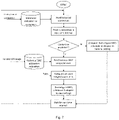
- Figure 4 shows a flow diagram according to one example method implementation which apparatus 201 may perform.
- the indication of contention is read. If the indication of contention is above the first predetermined threshold, it suggests that contention is detected, the historical BW utilization of all the subscribers connected to the WFQ scheduler are retrieved. Some rules (like a set of predetermined penalties as shown in Figure 3 ) are then applied to determine the new WFQ weights and/or shaper limits to apply.
- the apparatus 201 is further configured to restore the scheduler parameter and/or the shaper parameter to a default value in case a third predetermined threshold related to the indication of contention is exceeded.
- the scheduler parameter and/or the shaper parameter may be restored to the default value, either immediately in one step, progressively (steps-by-steps) or in a single step after a certain delay.
- long-term user fairness can be guaranteed while maximizing the bandwidth utilization.
- Figure 5a and 5b show a comparison of bandwidth utilization results according to state of the art and an example embodiment of the invention.
- Figure 5a shows a possible bandwidth utilization result according to state of the art. Specifically, example bandwidth utilization of 3 users is shown over certain period of time.
- 3 users are connected to a WFQ scheduler and configured with the same weight. If the 3 users are requesting the peak capacity on different time, such as each of them can access the maximum bandwidth. However, if one of the subscribers would not behave like a typical residential subscriber, and for any reason request a maximum of bandwidth in permanence, this would have a significant impact on all the other subscribers, preventing them to access a high bandwidth all the time, even if they request it only from time to time.
- Figure 5b shows a possible bandwidth utilization result according to an example embodiment. Similarly, example bandwidth utilization of 3 users is shown over certain period of time.
- the shaper limit as well as the weight of user 3 are progressively reduced.
- the shaper limit reduction restores some minimum spare capacity in the case of a sudden increase of demand of the other users (or speedtest), and prevents permanent congestion.
- the weight reduction gives more priority to other (fair) users when contention still occasionally happens.
- Figure 6 shows a functional block diagram according to another example embodiment of an apparatus 202.
- the apparatus 202 is further configured to determine a predicted indication of contention, based on history of the obtained indication of contention; and determine the scheduler parameter and/or the shaper parameter further based on the predicted indication of contention.
- the apparatus 202 may determine the scheduler parameter and/or the shaper parameter in case a first predetermined threshold related to the predicted indication of contention is exceeded.
- an AI module is inserted in between, that is trained to predict contention in the next time interval based on past contention measurements.
- This time-series prediction module allows to react faster (reducing the loop reaction time), reducing further the contention time.
- any time-series prediction algorithm can be used, included but not limited to classical machine learning algorithms like moving averages (simple, weighted, exponential, ...) and regression (linear, auto-regression, ARIMA and variants), as well as deep learning techniques such as artificial neural networks, convolutional neural networks (CNN), recurrent neural networks (RNN), Long-Short Term Memory (LSTM), Temporal Convolutional network (TCN), regression trees, random forest, etc.
- CNN convolutional neural networks
- RNN recurrent neural networks
- LSTM Long-Short Term Memory
- TCN Temporal Convolutional network
- regression trees random forest, etc.
- apparatus 202 Other functions of the apparatus 202 are similar as those described for apparatus 200, 201, and will not be repeated here.
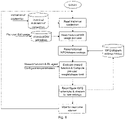
- Figure 7 shows a flow diagram according to one further example method implementation which apparatus 202 may perform.
- indication of contention for previous time interval may be stored to form historical indication of indication.
- the prediction engine needs to be fed by the history (n last measured values) of the indication of contention instead of just the latest measurement.
- the detection of contention here in Figure 7 is not determined directly based on the indication of contention, but based on a prediction of the indication of contention for the next time interval.
- the scheduler parameter and/or the shaper parameter will be reduced for the network participant, the historical bandwidth utilization indication of which is above the respective second predetermined threshold corresponding to the respective time window.
- Figure 8 shows a functional block diagram according to yet another example embodiment of an apparatus 203.
- the apparatus 203 is further configured to store values of the scheduler parameter and/or the shaper parameter over said predetermined respective time intervals; and to determine the scheduler parameter(s) and/or the shaper parameter(s) further based on the values thereof.
- the apparatus 203 is further configured to implement a reinforcement learning algorithm for determining said scheduler and/or said shaper parameter based on said indication of contention; said historical bandwidth utilization indication, and previous values of said scheduler and/or said shaper parameters.
- an agent takes actions in an environment, which is interpreted into a reward and a representation of the state, which are fed back into the agent.
- RL Reinforcement Learning
- a reinforcement learning agent interacts with its environment in discrete time steps. At each time t, the agent receives the current state and reward. It then chooses an action from the set of available actions, which is subsequently sent to the environment. The environment moves to a new state and the reward associated with the transition is determined. The goal of a reinforcement learning agent is to learn a policy which maximizes the expected cumulative reward.
- a reward function is determined based on the indication of network contention and the historical bandwidth utilization indication, wherein the reward function increases when indication of network contention decreases, and the reward function decreases when the historical bandwidth utilization indication decreases.
- the scheduler parameter(s) and/or the shaper parameter(s) may further be determined using a reinforcement learning algorithm while maximizing the reward function.
- a cost function may be determined based on the indication of network contention and the historical bandwidth utilization indication, wherein the cost function increases when indication of network contention increases, and the cost function decreases when the historical bandwidth utilization indication increases.
- the scheduler parameter(s) and/or the shaper parameter(s) may further be determined using a reinforcement learning algorithm while minimizing the cost function.
- apparatus 203 Other functions of the apparatus 203 are similar as those described for apparatus 200, 201, 202 and will not be repeated here.
- Figure 9 shows a flow diagram according to yet another example method implementation which the apparatus 203 may perform.
- indication of contention for previous time interval may be stored to form historical indication of indication.
- the previously configured scheduler parameter and/or the shaper parameter are stored in a database.
- the scheduler parameter(s) and/or the shaper parameter(s) is determined based on the historical indication of contention, historical bandwidth utilization indication and the historical values of the scheduler parameter and/or the shaper parameter.
- such a workflow may be executed in regular time intervals, for example every 5 minutes.
- Example embodiments have been described for scheduling at the level of network operator, wherein the participants of the network are subscribers of a network operator.
- the participant of the network are virtual network operators and/or subscribers of a virtual network operator.
- the example embodiments may also be implemented at infrastructure provider (InP) level or even hierarchically.
- InP infrastructure provider
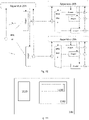
- Figure 10 shows an implementation scenario according to yet another example embodiment of apparatus 204, 205, and 206.
- a VNO is buying/renting a network slice from the telecommunication infrastructure provider (InP) and sells internet access services to its subscribers.
- the VNO is responsible for the QoS delivered to its subscribers as well as the overbooking within its own slice.
- the InP can offer network slices to multiple VNOs and introduce overbooking at slice level.
- a physical PON (limited to 2.4Gbps) is shared between VNO 1 and VNO 2, VNO 1 and VNO 2 are respectively serving a plurality of subscribers (only 3 are shown in Figure 10 for simplicity).
- the InP PON owner
- each VNOs may further overbook the capacity of its slice towards its own subscribers.
- aspects of the invention may be implemented at the InP level and/or the VNO level in the above-described scenario.
- hierarchical WFQ schedulers are implemented at the InP level and the VNO level. Furthermore, at the VNO level, one shaper is configured for each subscriber, meanwhile at the InP level, for each VNO there is configured one shaper, limiting the maximum bandwidth that each VNO can access.
- apparatus 205, 206 are implemented for each of the VNOs. Each apparatus 205, 206 determines scheduler parameter and/or the shaper parameter for the subscribers of the respective VNO based on the indication of contention at VNO level and the historical bandwidth utilization indication parameter of each subscriber in the VNO. The determined scheduler parameter and/or the shaper parameter will be provided to the respective level 1 WFQ scheduler and the respective shaper.
- an apparatus 204 determines scheduler parameter and/or the shaper parameter for each VNO based on the indication of contention at InP level and the historical bandwidth utilization indication parameter of each VNO.
- VNOs are shown here in Figure 10 merely for example.
- the InP may configure any other number of VNOs.
- FIG 10 shows in Figure 10 as a hierarchical implementation in both VNO level and InP level, aspects of the invention may be implemented in either level. Meanwhile, it is also not necessary to have all the VNOs implementing example embodiments of the invention.
- Figure 11 is a block diagram depicting the apparatus 200 operating in accordance with an example embodiment.
- the block diagram may apply to any of the above-described apparatus 201, 202, 203, 204, 205 and 206 as well.
- the apparatus 200 may be, for example, an electronic device such as a chip, chip-set, an electronic device or an access network controller.
- the apparatus 200 includes a processor 1110 and a memory 1160. In other examples, the apparatus 200 may comprise multiple processors.
- the processor 1110 is a control unit operatively connected to read from and write to the memory 1160.
- the processor 1110 may also be configured to receive control signals received via an input interface and/or the processor 1110 may be configured to output control signals via an output interface.
- the processor 1110 may be configured to convert the received control signals into appropriate commands for controlling functionalities of the apparatus.
- the memory 1160 stores computer program instructions 1120 which when loaded into the processor 1110 control the operation of the apparatus 200 as explained above.
- the apparatus 200 may comprise more than one memory 1160 or different kinds of storage devices.
- Computer program instructions 1120 for enabling implementations of example embodiments of the invention or a part of such computer program instructions may be loaded onto the apparatus 200 by the manufacturer of the apparatus 200, by a user of the apparatus 200, or by the apparatus 200 itself based on a download program, or the instructions can be pushed to the apparatus 200 by an external device.
- the computer program instructions may arrive at the apparatus 200 via an electromagnetic carrier signal or be copied from a physical entity such as a computer program product, a memory device or a record medium such as a Compact Disc (CD), a Compact Disc Read- Only Memory (CD-ROM), a Digital Versatile Disk (DVD) or a Blu-ray disk.
- the apparatus 200 comprises means, wherein the means comprises at least one processor 1110, at least one memory 1160 including computer program code 1120, the at least one memory 1160 and the computer program code 1120 configured to, with the at least one processor 1110, cause the performance of the apparatus 200.
- Figure 12 illustrates an example method 1200 incorporating aspects of the previously disclosed embodiments.
- the method starts with obtaining 1210 an indication of contention of a communications network.
- the method continues with obtaining 1220 a historical bandwidth utilization indication parameter of respective participants of the communications network.
- the method further continues with determining 1230, based on the indication of contention and the historical bandwidth utilization indication, a scheduler parameter and/or a shaper parameter for being provided to an output of the apparatus, wherein, the scheduler parameter and/or the shaper parameter is related to allocating bandwidth to a participant of the network.
- the sequence of the method is not limited to the illustrated example.
- the method may be implemented in other sequence.
- the indication of contention and the historical bandwidth utilization indication may be obtained together in one step or the historical bandwidth utilization indication may be obtained prior to the indication of contention.
- a technical effect of one or more of the example embodiments disclosed herein is that the bandwidth allocated to the participant of the network can be adjusted according to the available resource as well as the historical behaviour of the participant, such that the total link utilization does not increase above a certain threshold, or in other words, that there will always be a minimum bandwidth available for the scheduler to distribute to the user in case of sudden load increase (or speedtest).
- a closed-loop automation is provided, and a user fairness can be provided.
- Example embodiments may be applied to both upstream and downstream bandwidth allocation.
- Embodiments of the present invention may be implemented in software, hardware, application logic or a combination of software, hardware and application logic.
- the software, application logic and/or hardware may reside on the apparatus, a separate device or a plurality of devices. If desired, part of the software, application logic and/or hardware may reside on the apparatus, part of the software, application logic and/or hardware may reside on a separate device, and part of the software, application logic and/or hardware may reside on a plurality of devices.
- the application logic, software or an instruction set is maintained on any one of various conventional computer-readable media.
- a 'computer- readable medium' may be any media or means that can contain, store, communicate, propagate or transport the instructions for use by or in connection with an instruction execution system, apparatus, or device, such as a computer, with one example of a computer described and depicted in Figure 11 .
- a computer-readable medium may comprise a computer-readable storage medium that may be any media or means that can contain or store the instructions for use by or in connection with an instruction execution system, apparatus, or device, such as a computer.
- the different functions discussed herein may be performed in a different order and/or concurrently with each other. Furthermore, if desired, one or more of the above-described functions may be optional or may be combined.
Landscapes
- Engineering & Computer Science (AREA)
- Computer Networks & Wireless Communication (AREA)
- Signal Processing (AREA)
- Data Exchanges In Wide-Area Networks (AREA)
Priority Applications (4)
| Application Number | Priority Date | Filing Date | Title |
|---|---|---|---|
| EP21382040.0A EP4030708A1 (fr) | 2021-01-19 | 2021-01-19 | Procédé et appareil d'affectation de bande passante |
| US17/562,309 US20220232584A1 (en) | 2021-01-19 | 2021-12-27 | Method and apparatus for bandwidth allocation |
| CN202210054801.0A CN114826924B (zh) | 2021-01-19 | 2022-01-18 | 用于带宽分配的方法及装置 |
| CN202410662438.XA CN118400269A (zh) | 2021-01-19 | 2022-01-18 | 用于带宽分配的方法及装置 |
Applications Claiming Priority (1)
| Application Number | Priority Date | Filing Date | Title |
|---|---|---|---|
| EP21382040.0A EP4030708A1 (fr) | 2021-01-19 | 2021-01-19 | Procédé et appareil d'affectation de bande passante |
Publications (1)
| Publication Number | Publication Date |
|---|---|
| EP4030708A1 true EP4030708A1 (fr) | 2022-07-20 |
Family
ID=74205787
Family Applications (1)
| Application Number | Title | Priority Date | Filing Date |
|---|---|---|---|
| EP21382040.0A Pending EP4030708A1 (fr) | 2021-01-19 | 2021-01-19 | Procédé et appareil d'affectation de bande passante |
Country Status (3)
| Country | Link |
|---|---|
| US (1) | US20220232584A1 (fr) |
| EP (1) | EP4030708A1 (fr) |
| CN (2) | CN114826924B (fr) |
Cited By (3)
| Publication number | Priority date | Publication date | Assignee | Title |
|---|---|---|---|---|
| EP4373050A1 (fr) | 2022-11-17 | 2024-05-22 | Nokia Solutions and Networks Oy | Procédé et appareil d'attribution de bande passante dans un réseau tranché |
| EP4451639A1 (fr) | 2023-04-18 | 2024-10-23 | Nokia Solutions and Networks Oy | Appareil et procédé d'attribution de bande passante |
| EP4611345A4 (fr) * | 2022-10-25 | 2026-01-21 | Cloud Intelligence Assets Holding Singapore Private Ltd | Procédé, système et dispositif d'ajustement de bande passante, et support de stockage |
Citations (5)
| Publication number | Priority date | Publication date | Assignee | Title |
|---|---|---|---|---|
| US20060120282A1 (en) * | 2000-05-19 | 2006-06-08 | Carlson William S | Apparatus and methods for incorporating bandwidth forecasting and dynamic bandwidth allocation into a broadband communication system |
| EP1668843A1 (fr) * | 2003-09-29 | 2006-06-14 | BRITISH TELECOMMUNICATIONS public limited company | Affectation de largeur de bande |
| US20060280119A1 (en) * | 2005-06-10 | 2006-12-14 | Christos Karamanolis | Weighted proportional-share scheduler that maintains fairness in allocating shares of a resource to competing consumers when weights assigned to the consumers change |
| CN102958182A (zh) * | 2011-08-30 | 2013-03-06 | 中兴通讯股份有限公司 | 一种认知无线电公平性调度的方法及系统 |
| US20200413283A1 (en) * | 2019-06-27 | 2020-12-31 | Cisco Technology, Inc. | Congestion Avoidance with Adaptive QoS policy enforcement from SD-WAN Controller in SD-WAN Networks |
Family Cites Families (16)
| Publication number | Priority date | Publication date | Assignee | Title |
|---|---|---|---|---|
| JP4484317B2 (ja) * | 2000-05-17 | 2010-06-16 | 株式会社日立製作所 | シェーピング装置 |
| US7665090B1 (en) * | 2004-03-08 | 2010-02-16 | Swsoft Holdings, Ltd. | System, method, and computer program product for group scheduling of computer resources |
| US8369219B2 (en) * | 2006-09-19 | 2013-02-05 | Cisco Technology, Inc. | System and method for managing bandwidth |
| US9398346B2 (en) * | 2007-05-04 | 2016-07-19 | Time Warner Cable Enterprises Llc | Methods and apparatus for predictive capacity allocation |
| US8386298B2 (en) * | 2010-08-18 | 2013-02-26 | International Business Machines Corporation | Competing simulator in multi-channel retailing environment among multiple retailers |
| US9007898B2 (en) * | 2011-02-01 | 2015-04-14 | Google Inc. | System to share network bandwidth among competing applications |
| US8849990B2 (en) * | 2011-02-03 | 2014-09-30 | Disney Enterprises, Inc. | Optimized video streaming to client devices |
| US9055513B2 (en) * | 2013-02-26 | 2015-06-09 | Qualcomm Incorporated | Scalable discovery in contention-based peer-to-peer wireless networks |
| US9729241B2 (en) * | 2014-05-07 | 2017-08-08 | Adtran, Inc. | Telecommunication systems and methods using dynamic shaping for allocating network bandwidth |
| US10225195B2 (en) * | 2014-05-07 | 2019-03-05 | Adtran, Inc. | Telecommunication systems and methods using dynamic shaping for allocating network bandwidth |
| US10349240B2 (en) * | 2015-06-01 | 2019-07-09 | Huawei Technologies Co., Ltd. | Method and apparatus for dynamically controlling customer traffic in a network under demand-based charging |
| KR102219015B1 (ko) * | 2015-12-04 | 2021-02-23 | 소니 주식회사 | 네트워크 이용을 개선하기 위한 네트워크 지원 프로토콜 사용 |
| WO2019162953A1 (fr) * | 2018-02-23 | 2019-08-29 | Telefonaktiebolaget Lm Ericsson (Publ) | Nœud de réseau radio, équipement utilisateur (ue), système et procédés s'y rapportant pour gérer une communication dans un réseau de communications sans fil |
| US10582372B2 (en) * | 2018-03-22 | 2020-03-03 | Verizon Patent And Licensing Inc. | Systems and methods for intelligent data quota allocation and management |
| JP7043623B2 (ja) * | 2018-03-28 | 2022-03-29 | ノキア テクノロジーズ オーユー | データ複製によるマルチノード接続のための最適化されたurllcスケジューリングポリシー |
| US11540176B2 (en) * | 2020-11-09 | 2022-12-27 | Celona, Inc. | Method and apparatus for load control of an enterprise network on a campus based upon observations of busy times and service type |
-
2021
- 2021-01-19 EP EP21382040.0A patent/EP4030708A1/fr active Pending
- 2021-12-27 US US17/562,309 patent/US20220232584A1/en active Pending
-
2022
- 2022-01-18 CN CN202210054801.0A patent/CN114826924B/zh active Active
- 2022-01-18 CN CN202410662438.XA patent/CN118400269A/zh active Pending
Patent Citations (5)
| Publication number | Priority date | Publication date | Assignee | Title |
|---|---|---|---|---|
| US20060120282A1 (en) * | 2000-05-19 | 2006-06-08 | Carlson William S | Apparatus and methods for incorporating bandwidth forecasting and dynamic bandwidth allocation into a broadband communication system |
| EP1668843A1 (fr) * | 2003-09-29 | 2006-06-14 | BRITISH TELECOMMUNICATIONS public limited company | Affectation de largeur de bande |
| US20060280119A1 (en) * | 2005-06-10 | 2006-12-14 | Christos Karamanolis | Weighted proportional-share scheduler that maintains fairness in allocating shares of a resource to competing consumers when weights assigned to the consumers change |
| CN102958182A (zh) * | 2011-08-30 | 2013-03-06 | 中兴通讯股份有限公司 | 一种认知无线电公平性调度的方法及系统 |
| US20200413283A1 (en) * | 2019-06-27 | 2020-12-31 | Cisco Technology, Inc. | Congestion Avoidance with Adaptive QoS policy enforcement from SD-WAN Controller in SD-WAN Networks |
Cited By (3)
| Publication number | Priority date | Publication date | Assignee | Title |
|---|---|---|---|---|
| EP4611345A4 (fr) * | 2022-10-25 | 2026-01-21 | Cloud Intelligence Assets Holding Singapore Private Ltd | Procédé, système et dispositif d'ajustement de bande passante, et support de stockage |
| EP4373050A1 (fr) | 2022-11-17 | 2024-05-22 | Nokia Solutions and Networks Oy | Procédé et appareil d'attribution de bande passante dans un réseau tranché |
| EP4451639A1 (fr) | 2023-04-18 | 2024-10-23 | Nokia Solutions and Networks Oy | Appareil et procédé d'attribution de bande passante |
Also Published As
| Publication number | Publication date |
|---|---|
| CN114826924A (zh) | 2022-07-29 |
| CN114826924B (zh) | 2024-07-02 |
| CN118400269A (zh) | 2024-07-26 |
| US20220232584A1 (en) | 2022-07-21 |
Similar Documents
| Publication | Publication Date | Title |
|---|---|---|
| Toka et al. | Machine learning-based scaling management for kubernetes edge clusters | |
| US7305431B2 (en) | Automatic enforcement of service-level agreements for providing services over a network | |
| Arabnejad et al. | A comparison of reinforcement learning techniques for fuzzy cloud auto-scaling | |
| US20220232584A1 (en) | Method and apparatus for bandwidth allocation | |
| EP2966569B1 (fr) | Système permettant de partager une largeur de bande réseau parmi des applications concurrentes | |
| EP3557418B1 (fr) | Gestion des ressources de système contrôlé par ressources | |
| CN118102318A (zh) | 一种基于5g技术的数据传输系统 | |
| US20240357267A1 (en) | Apparatus and method for allocating bandwidth | |
| Sethuraman et al. | Machine Learning Assisted Design of Wireless Access Systems for Reliable and Low-Latency Financial and Smart Commerce Services | |
| KR102720564B1 (ko) | 슬라이스의 자원관리장치 및 방법 | |
| US12418497B2 (en) | Method and apparatus for bandwidth allocation in a sliced network | |
| CN119668840A (zh) | 基于动态权重的负载均衡方法、装置、设备及存储介质 | |
| CN120896855A (zh) | 一种云平台扩缩容方法、装置、设备及介质 | |
| Van Do et al. | Properties of horizontal pod autoscaling algorithms and application for scaling cloud-native network functions | |
| Bensalem et al. | Towards optimal serverless function scaling in edge computing network | |
| CN109688065B (zh) | 参数的处理方法、装置及存储介质 | |
| Shaio et al. | A reinforcement learning approach to congestion control of high-speed multimedia networks | |
| US20230281682A1 (en) | Infrastructure management agent managing parameters corresponding to cloud-based computational services | |
| KR20230156630A (ko) | 단말의 스케줄링 우선순위를 결정하는 방법 및 전자 장치 | |
| Bhola et al. | Utility-aware resource allocation in an event processing system | |
| Chen et al. | Razor: Scaling backend capacity for mobile applications | |
| CN113949624A (zh) | 链路采样数的分配方法、装置、设备及介质 | |
| CN121217733B (zh) | 一种基于分布式计算的服务器负载均衡方法 | |
| US20230362976A1 (en) | Method and electronic device for determining scheduling priority of user equipment | |
| Monti et al. | A chemical-inspired approach to design distributed rate controllers for packet networks |
Legal Events
| Date | Code | Title | Description |
|---|---|---|---|
| PUAI | Public reference made under article 153(3) epc to a published international application that has entered the european phase |
Free format text: ORIGINAL CODE: 0009012 |
|
| STAA | Information on the status of an ep patent application or granted ep patent |
Free format text: STATUS: THE APPLICATION HAS BEEN PUBLISHED |
|
| AK | Designated contracting states |
Kind code of ref document: A1 Designated state(s): AL AT BE BG CH CY CZ DE DK EE ES FI FR GB GR HR HU IE IS IT LI LT LU LV MC MK MT NL NO PL PT RO RS SE SI SK SM TR |
|
| STAA | Information on the status of an ep patent application or granted ep patent |
Free format text: STATUS: REQUEST FOR EXAMINATION WAS MADE |
|
| 17P | Request for examination filed |
Effective date: 20230111 |
|
| RBV | Designated contracting states (corrected) |
Designated state(s): AL AT BE BG CH CY CZ DE DK EE ES FI FR GB GR HR HU IE IS IT LI LT LU LV MC MK MT NL NO PL PT RO RS SE SI SK SM TR |
|
| STAA | Information on the status of an ep patent application or granted ep patent |
Free format text: STATUS: EXAMINATION IS IN PROGRESS |
|
| 17Q | First examination report despatched |
Effective date: 20241030 |