EP4031610B1 - Procédé de dépolymérisation de polystyrène - Google Patents
Procédé de dépolymérisation de polystyrène Download PDFInfo
- Publication number
- EP4031610B1 EP4031610B1 EP20771320.7A EP20771320A EP4031610B1 EP 4031610 B1 EP4031610 B1 EP 4031610B1 EP 20771320 A EP20771320 A EP 20771320A EP 4031610 B1 EP4031610 B1 EP 4031610B1
- Authority
- EP
- European Patent Office
- Prior art keywords
- reaction zone
- polystyrene
- product mixture
- pyrolysis reactor
- polymer composition
- Prior art date
- Legal status (The legal status is an assumption and is not a legal conclusion. Google has not performed a legal analysis and makes no representation as to the accuracy of the status listed.)
- Active
Links
Images

Classifications
-
- C—CHEMISTRY; METALLURGY
- C07—ORGANIC CHEMISTRY
- C07C—ACYCLIC OR CARBOCYCLIC COMPOUNDS
- C07C15/00—Cyclic hydrocarbons containing only six-membered aromatic rings as cyclic parts
- C07C15/40—Cyclic hydrocarbons containing only six-membered aromatic rings as cyclic parts substituted by unsaturated carbon radicals
- C07C15/42—Cyclic hydrocarbons containing only six-membered aromatic rings as cyclic parts substituted by unsaturated carbon radicals monocyclic
- C07C15/44—Cyclic hydrocarbons containing only six-membered aromatic rings as cyclic parts substituted by unsaturated carbon radicals monocyclic the hydrocarbon substituent containing a carbon-to-carbon double bond
- C07C15/46—Styrene; Ring-alkylated styrenes
-
- C—CHEMISTRY; METALLURGY
- C07—ORGANIC CHEMISTRY
- C07C—ACYCLIC OR CARBOCYCLIC COMPOUNDS
- C07C4/00—Preparation of hydrocarbons from hydrocarbons containing a larger number of carbon atoms
- C07C4/22—Preparation of hydrocarbons from hydrocarbons containing a larger number of carbon atoms by depolymerisation to the original monomer, e.g. dicyclopentadiene to cyclopentadiene
-
- C—CHEMISTRY; METALLURGY
- C08—ORGANIC MACROMOLECULAR COMPOUNDS; THEIR PREPARATION OR CHEMICAL WORKING-UP; COMPOSITIONS BASED THEREON
- C08J—WORKING-UP; GENERAL PROCESSES OF COMPOUNDING; AFTER-TREATMENT NOT COVERED BY SUBCLASSES C08B, C08C, C08F, C08G or C08H
- C08J11/00—Recovery or working-up of waste materials
- C08J11/04—Recovery or working-up of waste materials of polymers
- C08J11/10—Recovery or working-up of waste materials of polymers by chemically breaking down the molecular chains of polymers or breaking of crosslinks, e.g. devulcanisation
- C08J11/12—Recovery or working-up of waste materials of polymers by chemically breaking down the molecular chains of polymers or breaking of crosslinks, e.g. devulcanisation by dry-heat treatment only
-
- C—CHEMISTRY; METALLURGY
- C07—ORGANIC CHEMISTRY
- C07C—ACYCLIC OR CARBOCYCLIC COMPOUNDS
- C07C2527/00—Catalysts comprising the elements or compounds of halogens, sulfur, selenium, tellurium, phosphorus or nitrogen; Catalysts comprising carbon compounds
- C07C2527/20—Carbon compounds
- C07C2527/22—Carbides
- C07C2527/224—Silicon carbide
-
- C—CHEMISTRY; METALLURGY
- C08—ORGANIC MACROMOLECULAR COMPOUNDS; THEIR PREPARATION OR CHEMICAL WORKING-UP; COMPOSITIONS BASED THEREON
- C08J—WORKING-UP; GENERAL PROCESSES OF COMPOUNDING; AFTER-TREATMENT NOT COVERED BY SUBCLASSES C08B, C08C, C08F, C08G or C08H
- C08J2325/00—Characterised by the use of homopolymers or copolymers of compounds having one or more unsaturated aliphatic radicals, each having only one carbon-to-carbon double bond, and at least one being terminated by an aromatic carbocyclic ring; Derivatives of such polymers
- C08J2325/02—Homopolymers or copolymers of hydrocarbons
- C08J2325/04—Homopolymers or copolymers of styrene
- C08J2325/06—Polystyrene
-
- Y—GENERAL TAGGING OF NEW TECHNOLOGICAL DEVELOPMENTS; GENERAL TAGGING OF CROSS-SECTIONAL TECHNOLOGIES SPANNING OVER SEVERAL SECTIONS OF THE IPC; TECHNICAL SUBJECTS COVERED BY FORMER USPC CROSS-REFERENCE ART COLLECTIONS [XRACs] AND DIGESTS
- Y02—TECHNOLOGIES OR APPLICATIONS FOR MITIGATION OR ADAPTATION AGAINST CLIMATE CHANGE
- Y02W—CLIMATE CHANGE MITIGATION TECHNOLOGIES RELATED TO WASTEWATER TREATMENT OR WASTE MANAGEMENT
- Y02W30/00—Technologies for solid waste management
- Y02W30/50—Reuse, recycling or recovery technologies
- Y02W30/62—Plastics recycling; Rubber recycling
Definitions
- the invention relates to a process for producing styrene monomers by depolymerization of polystyrene, a device for carrying out the process and the use of a device for depolymerization (degradation) of polystyrene.
- Polystyrene is preferably selected from the group consisting of: standard polystyrene (GPPS), high-impact polystyrene (HIPS), styrene-butadiene copolymers. High-impact polystyrene (HIPS) and/or standard polystyrene are particularly preferred. High-impact polystyrenes (HIPS) and standard polystyrenes, as well as their production, structure and properties, are described in detail in the review literature ( A. Echte, F. Haaf, J. Hambrecht in Angew. Chem. (Int. Ed. Engl.) 20, 344-361 (1981 ); and also in Kunststoffhandbuch, edited by R. Vieweg and G. Daumiller, Volume 4 "Polystyrol", Carl-Hanser-Verlag Kunststoff (1996 ).
- GPPS standard polystyrene
- HIPS high-impact polystyrene
- HIPS high-impact polystyrene
- thermoplastic polymers are equally suitable for chemical recycling. Thermal decomposition of polyolefins or polyesters produces mixtures of waxes, light oil and gases, among others. The degradation of polyethylene terephthalate (PET) leads to organic acids, mainly benzoic acid and terephthalic acid, which are corrosive and can also cause blockage of the reactor ( G. Grause et al., Raw material recycling of polymer waste material, in: Journal of Material Cycles and Waste Management, 13(4), 2011, 265-282 ).
- PET polyethylene terephthalate
- polystyrene and other styrene-containing polymers it is possible to depolymerise these polymers into their basic components, in particular styrene monomers, making polystyrene and other styrene monomer-containing polymers an excellent choice for chemical recycling.
- the resulting product mixture of a depolymerization process must be purified in order to use the components as raw material for new purposes, such as polymerization processes.
- polystyrene If polystyrene is thermally treated sufficiently, it decomposes to styrene monomers, but incomplete decomposition also leads to the formation of e.g. styrene dimers, trimers and other oligomers. If the decomposition conditions are too harsh, by-products such as benzene, toluene, ethylbenzene, cumene and alpha-methylstyrene can be formed. The amounts of these reaction products vary and depend on the reaction conditions and the raw materials used (see. C.
- the styrene monomers obtained can be used for a new polymerization process.
- Styrene oligomers can potentially interfere with the polymerization process, as even small amounts affect important properties of the polymer. This also applies to other by-products.
- the styrene monomers should therefore be separated from other components of the product mixture to ensure high product quality.
- aromatic compounds other than styrene monomers can act as chain transfer agents in radical polymerization processes, lowering the average molecular weight of the polymers produced and contributing to polymers with a lower glass transition temperature (Tg)
- Tg glass transition temperature
- Protons from carboxylic acids, alcohols, aldehydes or ketones act as terminating agents in anionic polymerization processes of styrene (see D. Baskaran, Anionic Vinyl Polymerization, in: Controlled and Living Polymerizations: From Mechanisms to Applications, John Wiley & Sons, 2009, 1-56 ).
- polystyrene is used, preferably selected from the group of standard polystyrene (GPPS), high-impact polystyrene (HIPS) and styrene-butadiene copolymers.
- GPPS standard polystyrene
- HIPS high-impact polystyrene
- styrene-butadiene copolymers preferably selected from the group of standard polystyrene (GPPS), high-impact polystyrene (HIPS) and styrene-butadiene copolymers.
- the high-impact polystyrenes used can be made more flexible by using special polybutadiene rubbers with, for example, a modified 1,4-cis- and/or 1,4-trans fraction or 1,2- and 1,4-bond may have been structurally modified compared to conventional rubbers.
- diene rubbers as well as elastomers of the ethylene-propylene-diene copolymer (EPDM rubber) type as well as hydrogenated diene rubbers or silicone rubbers can be used instead of polybutadiene rubber.
- EPDM rubber ethylene-propylene-diene copolymer
- hydrogenated diene rubbers or silicone rubbers can be used instead of polybutadiene rubber.
- the diene rubber content in particular the polybutadiene rubber content, is generally 5 to 12 wt. %, preferably 6 to 10 wt. %, particularly preferably 7 to 9 wt. %, and the polystyrene content is generally 88 to 95 wt. %, preferably 90 to 94 wt. %, more preferably 91 to 93 wt. %, the sum of the polystyrene content and the diene rubber content being 100 wt. %.
- Suitable standard polystyrene is produced by the method of anionic or radical polymerization.
- the molecular weight non-uniformity of the polymer, which can be influenced by the polymerization process, is of secondary importance.
- Standard polystyrene and impact-modified polystyrene are preferred, the toluene-soluble portion of which has an average molecular weight Mw of 150,000 to 300,000 g/mol, particularly preferably 150,000 to 270,000 g/mol, and which may be further provided with additives such as mineral oil (e.g. white oil), stabilizers, antistatic agents, flame retardants or waxes.
- Styrene copolymers used as polystyrene can contain methyl (meth)acrylate, ⁇ -methylstyrene and/or maleic anhydride, as well as other copolymerizable monomers.
- JP 2005132802 and JPH 11100875 Toshiba Plant Systems
- JP 2005132802 and JPH 11100875 Toshiba Plant Systems
- An object of the invention is to provide a process for producing styrene monomers by depolymerization of polystyrene with optimized process conditions in order to maximize the yield of styrene monomers. Harmful by-products should also be avoided.
- the pyrolysis reactor (P) is a fluidized bed reactor whose reaction zone (R) comprises a silicon carbide fluidized bed, and/or the temperature in the reaction zone (R) of the pyrolysis reactor (P) is 580 °C to 630 °C with an average residence time (Z) of the polymer composition (A) in the reaction zone of the pyrolysis reactor of 0.4 s to 0.6 s.
- the polymer composition (A) which is fed into the reaction zone (R) of the pyrolysis reactor (P) in step a) in the process according to the invention contains 60 to 99.9% by weight, preferably 80 to 99.9% by weight, particularly preferably 90 to 99.9% by weight, very particularly preferably 95 to 99.9% by weight of polystyrene, based on the total weight of the polymer composition (A).
- the remaining 0.1 to 40 wt. % preferably 0.1 to 20 wt. %, particularly preferably 0.1 to 10 wt. %, very particularly preferably 0.1 to 5 wt. %, based on the total weight of the polymer composition (A), may be polymeric components other than polystyrene and/or additives and/or other foreign substances.
- polymers other than polystyrene are contained in the polymer composition (A), these are, for example, selected from the group consisting of polyolefins, polyesters, (co)polymers of acrylonitrile, (co)polymers of vinyl aromatic monomers other than styrene, (co)polymers of alkyl (meth)acrylates and copolymers of styrene with other monomers which do not belong to the other (co)polymers listed here.
- Suitable polymers other than polystyrene are, for example, copolymers of vinyl aromatic monomers with other comonomers such as butadiene, (meth)acrylate, acrylonitrile, alpha-methylstyrene and phenylmaleimide.
- SAN styrene-acrylonitrile copoly
- diene rubbers such as homopolymers of conjugated dienes and copolymers of such dienes with one another, copolymers of such dienes with acrylates, in particular n-butyl acrylate, and copolymers of such dienes with the comonomers selected from styrene, ⁇ -methylstyrene, acrylonitrile, methacrylonitrile, methyl methacrylate (MMA), maleic anhydride (MSA) and N-phenylmaleimide (N-PMI).
- the diene rubbers can also contain crosslinking, polyfunctional monomers.
- polyolefins such as PE-LD (low density polyethylene), PE-LLD (linear low density polyethylene), PE-HD (high density polyethylene), metallocene polyethylene, ethylene copolymers such as poly(ethylene-co-vinyl acetate), ethylene-butene, ethylene-hexene, ethylene-octene copolymers, and cycloolefin copolymers individually or as a mixture.
- suitable materials include polypropylene, such as homopolymers or copolymers of propylene, metallocene-catalyzed polypropylenes, and copolymers of propylene with other comonomers known to those skilled in the art.
- Polycarbonates, polyamides, poly(meth)acrylates, polyvinyl chlorides, polyesters, halogenated polymers, vinyl aromatic diene copolymers (SBC), polyethers, polysulfones, polyethersulfones, polyimidazoles and related polymers may also be present in the polymer composition (A).
- the polymer composition (A) preferably contains less than 30% by weight, particularly preferably less than 15% by weight, very particularly preferably less than 5% by weight, based on the total weight of the polymer composition (A), of polyolefins, less than 5% by weight, particularly preferably less than 2% by weight, very particularly preferably less than 1% by weight, based on the total weight of the polymer composition (A), of (co)polymers of acrylonitrile, and less than 5% by weight, particularly preferably less than 2% by weight, very particularly preferably less than 1% by weight, based on the total weight of the polymer composition (A), of polyesters.
- the polymer composition (A) contains no polymeric components other than polystyrene.
- an additive or an auxiliary substance can be selected be from the group consisting of antioxidants, UV stabilizers, peroxide destroyers, antistatic agents, lubricants, mold release agents, flame retardants, fillers or reinforcing materials (glass fibers, carbon fibers, etc.), colorants and combinations of two or more thereof.
- oxidation retarders and heat stabilizers are halides of metals from group I of the periodic table, e.g. sodium, potassium and/or lithium halides, optionally in combination with copper(I) halides, e.g. chlorides, bromides, iodides, sterically hindered phenols, hydroquinones, various substituted representatives of these groups and mixtures thereof in concentrations of up to 1% by weight, based on the total weight of the polymer composition (A).
- UV stabilizers which are generally present in amounts of up to 2% by weight, based on the total weight of the polymer composition (A), include various substituted resorcinols, salicylates, benzotriazoles and benzophenones.
- organic dyes such as nigrosine, pigments such as titanium dioxide, phthalocyanines, ultramarine blue and carbon black can be included as dyes in the polymer composition (A), as well as fibrous and powdered fillers and reinforcing agents.
- examples of the latter are carbon fibers, glass fibers, amorphous silica, calcium silicate (wollastonite), aluminum silicate, magnesium carbonate, kaolin, chalk, powdered quartz, mica and feldspar.
- nucleating agents examples include talc, calcium fluoride, sodium phenylphosphinate, aluminum oxide, silicon dioxide and nylon 22.
- Lubricants and mold release agents which can generally be used in amounts of up to 1% by weight, based on the total weight of the polymer composition (A), are, for example, long-chain fatty acids such as stearic acid or behenic acid, their salts (e.g. Ca or Zn stearate) or esters (e.g. stearyl stearate or pentaerythritol tetrastearate) and amide derivatives (e.g. ethylenebisstearylamide).
- long-chain fatty acids such as stearic acid or behenic acid
- their salts e.g. Ca or Zn stearate
- esters e.g. stearyl stearate or pentaerythritol tetrastearate
- amide derivatives e.g. ethylenebisstearylamide
- mineral-based antiblocking agents can be present in amounts of up to 0.1% by weight, based on the total weight of the polymer composition (A).
- examples include amorphous or crystalline silica, calcium carbonate or aluminum silicate.
- mineral oil preferably medical white oil
- plasticizers examples include dioctyl phthalate, dibenzyl phthalate, butylbenzyl phthalate, hydrocarbon oils, N-(n-butyl)benzenesulfonamide and o- and p-tolylethylsulfonamide.
- thermoplastics can be included, in particular those based on phosphorus compounds or red phosphorus itself.
- moisture and/or other inorganic and/or organic foreign components may still be present.
- the polymer composition (A) consists of 90 to 99.9% by weight, based on the total weight of the polymer composition (A), of polystyrene and 0.1 to 10% by weight, based on the total weight of the polymer composition (A), of additive(s). In a very particularly preferred embodiment, the polymer composition (A) consists of 95 to 99.9% by weight, based on the total weight of the polymer composition (A), of polystyrene and 0.1 to 5% by weight, based on the total weight of the polymer composition (A), of additive(s).
- the polystyrene component contained in the polymer composition (A) consists essentially, preferably entirely, of GPPS (general purpose polystyrene).
- GPPS general purpose polystyrene
- the polymer composition (A) used according to the invention can optionally be pretreated in a suitable manner in order to remove, for example, adhering contaminants such as food residues or dirt, moisture and foreign substances such as metals or other substances and composite materials.
- a pretreatment which can comprise one or more of the following steps, whereby the order of the steps is not fixed and steps can also be repeated several times: manual sorting of contaminants, washing, comminution, automatic sorting in suitable systems.
- polymer compositions which do not correspond to the polymer composition (A) can also be converted by such a process into a polymer composition (A) used according to the invention.
- an embodiment of the process according to the invention is also preferred in which a polymer composition which does not correspond to the polymer composition (A) is subjected to a pretreatment which comprises one or more of the following steps, wherein the order of the steps is not fixed and steps can also be repeated several times: manual sorting of contaminants, washing, comminution, automatic sorting in suitable systems in order to obtain the polymer composition (A).
- the thermal decomposition of the polystyrene is carried out in a fluidized bed reactor with a silicon carbide fluidized bed in the reaction zone (R).
- the decomposition of the polystyrene can take place at a temperature of 580 °C to 630 °C and an average residence time (Z) of the polymer composition of 0.4 s to 0.6 s in any suitable reactor in which the temperature required for decomposition can be reached.
- the thermal decomposition can be carried out in a rotary kiln.
- Rotary kilns are used, for example, in EP-A 1481957
- the thermal decomposition can also take place in extruders, for example in EP-A 1966291
- Such reactors can be operated with or without a gas flow, such as carrier gas or gas as a reaction medium.
- the pyrolysis reactor (P) can therefore in principle be any known type of pyrolysis reactor, provided that the design of the pyrolysis reactor allows a precise adjustment of the temperature in the reaction zone (R) of the pyrolysis reactor (P) and a precise adjustment of the average residence time (Z) of the polymer composition (A) in the reaction zone (R) of the pyrolysis reactor (P).
- "precise setting” means that the deviation of the actual temperature in the reaction zone (R) of the pyrolysis reactor (P) from the set temperature is at most 10 °C, preferably at most 5 °C, particularly preferably at most 1 °C, or that the deviation of the actual average residence time (Z) from the set average residence time (Z) is at most 0.2 s, preferably at most 0.1 s, particularly preferably at most 0.05 s, very particularly preferably at most 0.01 s.
- the pyrolysis reactor (P) is preferably a fluidized bed reactor, described e.g. in Schildhauer et al., "Reactors for fluid-solid reactions: fluidized bed reactors" In: Reschetilowski W. (ed.): Handbook of Chemical Reactors, Springer Spektrum, Berlin, Heidelberg (2019 ).
- a gas or a gas mixture is used as a fluidization medium.
- the gas or gas mixture is usually non-reactive in the conditions prevailing in the pyrolysis reactor (P). conditions.
- the gas is selected from water vapor, nitrogen, noble gases (Xe, Ar, Ne, He) or a mixture thereof.
- the gas or gas mixture can be introduced into the pyrolysis reactor (P) as a separate gas stream.
- P pyrolysis reactor
- the optimal flow rate of the gas or gas mixture depends on the reactor configuration as well as on the reaction or process conditions.
- the process can be optimized using the parameters temperature, residence time of the reaction mixture in the reaction zone (R) of the pyrolysis reactor (P) and concentration of the starting materials.
- the area of the reactor in which the reaction mixture is subjected to conditions under which depolymerization reactions take place is referred to here as the reaction zone (R).
- the pyrolysis reactor (P) can contain a solid medium, e.g. SiO2 (quartz sand) or SiC.
- the pyrolysis reactor (P) is a fluidized bed reactor which comprises a fluidized bed of silicon carbide (SiC) in the reaction zone (R).
- SiC has, in addition to high chemical and mechanical stability, good heat conduction and heat capacity. This combination is advantageous for carrying out endothermic processes.
- SiC with a weight-average particle size of 20 to 1000 ⁇ m, particularly preferably 40 to 500 ⁇ m, is used.
- a particularly good fluidization of the fluidized bed is achieved and a particularly effective heat transfer to the polymer composition (A) is made possible.
- the yield of styrene monomers is particularly high when the residence time of the polystyrene in the depolymerization zone is chosen to be short.
- This can be achieved in fluidized bed reactors or other reactors that use a gas stream to transport the introduced polymer composition (A) through the reactor.
- the average residence times of the reaction material in a fluidized bed reactor with a silicon carbide fluidized bed in the reaction zone (R) are between 0.1 seconds and 10 seconds. Short residence times can be achieved by high flow rates of the gas stream.
- the depolymerization can be carried out at pressures of 0.01 bar to 5 bar or at atmospheric pressure (1 bar).
- the gas stream is preferably preheated before it is fed into the reaction zone (R). Preheating is preferably carried out at a temperature that deviates from the temperature in the reaction zone (R) of the pyrolysis reactor (P) by at most 200 °C.
- the temperature in the reaction zone (R) of the pyrolysis reactor (P) is set in the process according to the invention in a fluidized bed reactor with a silicon carbide fluidized bed in the reaction zone (R) to 400 to 1000 °C, often 450 to 1000 °C, preferably to 500 to 800 °C, particularly preferably to 550 to 650 °C, very particularly preferably to 580 to 630 °C, and the average residence time of the polymer composition (A) in the reaction zone (R) of the pyrolysis reactor (P) to 0.1 to 10 s, preferably to 0.2 to 2 s, particularly preferably to 0.3 to 1 s, very particularly preferably to 0.4 to 0.6 s.
- the temperature in the reaction zone (R) is 500 to 800 °C and the average residence time of the polymer composition (A) therein is 0.2 to 2 s. In a particularly preferred embodiment, the temperature in the reaction zone (R) is 550 to 650 °C and the average residence time of the polymer composition (A) therein is 0.3 to 1 s. In a very particularly preferred embodiment, the temperature in the reaction zone (R) is 580 to 630 °C and the average residence time of the polymer composition (A) therein is 0.4 to 0.6 s.
- the temperature can be adjusted in any known manner, for example by microwave irradiation, with the aid of heat exchangers, gas burners, resistive heating conductors (resistance heating), or by introducing superheated gas, in particular water vapor, in each case alone or in combination.
- the temperature is adjusted with the aid of resistive heating conductors which are in contact with the wall of the reaction zone (R) of the pyrolysis reactor (P).
- the temperature can be adjusted with the aid of water vapor which is made available by evaporating water and brought to the desired temperature by a steam superheater.
- a combination of resistive heating conductors which are in contact with the wall of the reaction zone (R) of the pyrolysis reactor (P) and water vapor is used to adjust the temperature in the reaction zone (R) of the pyrolysis reactor (P).
- the pyrolysis reactor (P) is a fluidized bed reactor, preferably comprising a SiC fluidized bed in its reaction zone (R), wherein the temperature in the reaction zone (R) is set to the desired temperature by introducing steam.
- the steam is provided by an evaporator and brought to the desired temperature via a steam superheater.
- the steam is used both to set the temperature in the reaction zone (R) and to generate the fluidized bed.
- the heating energy in the reaction zone (R) can additionally be provided by resistive heating conductors that are in contact with the wall of the reaction zone (R) of the pyrolysis reactor (P).
- the particle size and the concentration of the polymer composition (A) in the reaction zone (R) can be adapted to the specific conditions of the reactor and its configuration, to the reaction conditions and to the composition of the polymer composition (A).
- the polymer composition (A) has a particle size between 100 ⁇ m and 50 mm, preferably between 250 ⁇ m and 5 mm, particularly preferably between 500 ⁇ m and 2 mm.
- the particles can have a spherical or a non-spherical shape. In the case of a spherical shape, the particle size is determined by measuring the volume-average diameter. In the case of non-spherical particles, for example needle-shaped particles, the longest dimension is used to determine the particle size.
- the concentration of the reaction material in the reactor depends on the reactor type, the reactor size and the reactor configuration.
- the concentration of the polymer composition (A) in the reaction zone (R) of the pyrolysis reactor (P) is between 1 and 50% by weight, preferably between 1 and 25% by weight, particularly preferably between 1 and 10% by weight, very particularly preferably between 2 and 7% by weight.
- the polymer composition (A) is pneumatically fed into the reaction zone (R) of the pyrolysis reactor (P) in step a), mixed with the fluidized bed of silicon carbide and finally depolymerized in step b).
- the polymer composition (A) is fed in continuously in step a).
- the polystyrene component and optionally other polymers of the polymer composition (A) are at least partially depolymerized to give a product mixture (G) containing styrene monomers and other components.
- the product mixture (G) containing styrene monomers and other components is removed from the reaction zone (R) of the pyrolysis reactor (P) in step c).
- the removal preferably takes place continuously.
- the product mixture (G) is particularly preferably removed continuously in a gaseous state from the upper region of the reaction zone (R) of the pyrolysis reactor (P).
- the removal of the product mixture (G) can take place automatically, for example, by conveying the product mixture (G) out of the reaction zone (R) due to the increased pressure in the reaction zone (R) caused by the reaction.
- the pyrolysis reactor can contain a quench or be connected to a quench.
- quench is understood to be an area of the pyrolysis reactor in which the depolymerization reaction is stopped quickly, preferably by cooling the hot gas consisting of the product mixture (G) and inert gas stream, for example steam.
- the quenching serves, among other things, to stabilize the reaction products and to prevent or reduce undesired repolymerization.
- Typical quenching cools the product mixture (G) from a temperature of more than 400 °C to a temperature of less than 350 °C within a very short period of time, preferably within less than 10 seconds, particularly preferably within less than 5 seconds, particularly preferably within less than 1 second. Quenching is described, for example, in EP 1966291 .
- the product mixture (G) is cooled after removal from the reaction zone (R) of the pyrolysis reactor (P), whereby condensation of the styrene monomers and other components takes place and a condensed product mixture (K) containing styrene monomers and other components is obtained.
- the product mixture (G) is cooled to a temperature which is below the condensation point of styrene monomers.
- the product mixture (G) is preferably cooled to a temperature below 70 °C, particularly preferably below 50 °C, very particularly preferably below 40 °C. In a preferred embodiment, the product mixture (G) is cooled to a temperature of 0 °C to 70 °C.
- the product mixture (G) is cooled to a temperature of 0 °C to 50 °C. In a very particularly preferred embodiment, the product mixture (G) is cooled to a temperature of 15 °C to 40 °C.
- Cooling can be carried out in any known manner. For example, cooling is possible on a solid surface that is cooled by water or air. Cooling is also possible using a water mist that is brought into direct contact with the product mixture (G). Cooling preferably takes place in a water mist.
- the condensable components of the product mixture (G) are condensed according to their vapor pressures and collected together with the water. During the condensation, a condensed product mixture (K) containing styrene monomers and other components is obtained. In the case of cooling in a water mist, the condensed product mixture (K) is obtained as a two-phase system with the cooling water. In this case, the condensed product mixture (K) is separated from the aqueous phase as a floating organic phase. The aqueous phase can be cooled again and used as a water mist to cool the product mixture (G).
- the condensed product mixture (K) usually contains more than 50 wt. %, based on the total weight of the condensed product mixture (K), styrene monomers and less than 50% by weight, based on the total weight of the condensed product mixture (K), of the further constituents.
- the condensed product mixture (K) preferably contains 50 to 99% by weight, based on the total weight of the condensed product mixture (K), of styrene monomers and 1 to 50% by weight, based on the total weight of the condensed product mixture (K), of the further constituents, particularly preferably 60 to 99% by weight, based on the total weight of the condensed product mixture (K), of styrene monomers and 1 to 40% by weight, based on the total weight of the condensed product mixture (K), of the further constituents, very particularly preferably 75 to 99% by weight, based on the total weight of the condensed product mixture (K), of styrene monomers and 1 to 25% by weight, based on the total weight of the condensed product mixture (K), of the further constituents.
- the condensed product mixture (K) is separated into styrene monomers and other components.
- This separation can be carried out in any known manner that is suitable for separating mixtures of liquid products and optionally solids into the components.
- suitable methods for separating the condensed product mixture (K) into styrene monomers and other components can include, for example, sedimentation, centrifugation, filtration, decantation, distillation, chromatography, crystallization and sublimation.
- the condensed product mixture (K) contains solids
- the further separation of the liquid components into styrene monomers and other components preferably comprises at least one distillation step, such as fractional distillation, at least one chromatography step, such as column chromatography, HPLC or flash chromatography, and/or at least one crystallization step, such as fractional crystallization.
- the separation of the liquid components comprises at least one distillation step, very particularly preferably at least one fractional distillation step.
- the separation of the liquid components into styrene monomers and other components comprises at least one fractional distillation step in one or more rectification columns.
- the further components which are returned to the reaction zone (R) of the pyrolysis reactor (P) consist essentially of styrene oligomers, preferably of styrene dimers and styrene trimers.
- "essentially” means that the further components which are returned to the reaction zone (R) of the pyrolysis reactor (P) do not contain any other components besides styrene oligomers which interfere with the depolymerization process in the reaction zone (R) of the pyrolysis reactor (P).
- the invention further relates to the use of a fluidized bed reactor for depolymerizing polystyrene at a temperature in the reaction zone (R) of 400 °C to 1000 °C and an average residence time of the polystyrene in the reaction zone (R) of 0.01 s to 10 s, wherein the fluidized bed reactor in the reaction zone (R) comprises a fluidized bed of silicon carbide (SiC).
- the silicon carbide, the temperature in the reaction zone (R) and the average residence time of the polystyrene in the reaction zone (R) are particularly preferably selected as described for the process according to the invention.
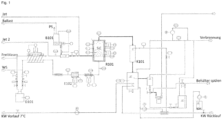
- the invention also relates to a device for carrying out the process according to the invention for producing styrene monomers, in which the reaction zone (R) and the pyrolysis reactor (P) are designed in such a way that a gentle depolymerization of polystyrene can take place, wherein the device comprises as pyrolysis reactor (P) a fluidized bed reactor comprising a fluidized bed of silicon carbide (SiC) in the reaction zone (R), wherein the silicon carbide preferably has a weight-average particle size of 20 to 1000 ⁇ m, particularly preferably 40 to 500 ⁇ m, optionally resistive heating conductors on the outer walls of the reaction zone (R), an evaporator for generating steam, a steam superheater for setting the desired steam temperature, a line for introducing the steam into the reaction zone (R) and a quench for cooling the product mixture (G).
- the device comprises as pyrolysis reactor (P) a fluidized bed reactor comprising a fluidized bed of silicon carbide (
- the polymer is dosed into a gas jet via a volumetric dosing system, which pneumatically conveys the particles into the reaction zone of a fluidized bed reactor (R101) with SiC particles.
- the heating energy is brought into the reaction zone via resistive heating conductors through the metallic reactor wall.
- the steam for generating the fluidized bed is provided by an evaporator (D101) and brought to the desired temperature via a steam superheater (E102).
- the SiC fluidized bed is created with the steam and the pneumatically fed polymer particles are mixed in the fluidized bed and finally depolymerized.
- the product mixture of the depolymerization process from (R101) is cooled in the column (K101) in a water mist to below 50 °C.
- the condensable components are condensed according to their vapor pressures and collected with the water in the cooled sump. Solid particles are also precipitated with the mist according to their tendency to coalesce. Floating, water-insoluble components are transferred to a buffer tank via a skimmer system. Samples are taken from the concentrated, organic fraction of the condensed product mixture. These are measured using gas chromatography.
- the water from the condensation process is cooled via a heat exchanger and then pumped back into the cooling column (K101). Solids are separated using a solid-liquid filter if necessary.
- Example 1.2 was repeated with an impact modified amorphous polystyrene (HIPS) (INEOS Styrolution, Frankfurt) with a melt volume flow rate (MVFR 200 °C/5 kg load, ISO 1133) of about 4 cm 3 /10 min.
- HIPS impact modified amorphous polystyrene
- MVFR 200 °C/5 kg load ISO 11383
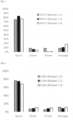
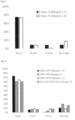
- the yield of styrene monomers is shown in Table 1.
- the composition of the pyrolysis oil is shown in Table 2.
- Example 1.1 was repeated with a polymer composition consisting of 50 wt.% of the polymer composition from Example 1 and 50 wt.% of the polymer composition from Example 2.
- the yield of styrene monomers is shown in Table 1.
- the composition of the pyrolysis oil is shown in Table 2.
Landscapes
- Chemical & Material Sciences (AREA)
- Organic Chemistry (AREA)
- Chemical Kinetics & Catalysis (AREA)
- Sustainable Development (AREA)
- Health & Medical Sciences (AREA)
- Life Sciences & Earth Sciences (AREA)
- Physics & Mathematics (AREA)
- Medicinal Chemistry (AREA)
- Polymers & Plastics (AREA)
- Thermal Sciences (AREA)
- Engineering & Computer Science (AREA)
- General Chemical & Material Sciences (AREA)
- Oil, Petroleum & Natural Gas (AREA)
- Separation, Recovery Or Treatment Of Waste Materials Containing Plastics (AREA)
Claims (14)
- Procédé de fabrication de monomères de styrène par dépolymérisation de polystyrène, comprenant les étapes suivantes :a) amenée dans une zone de réaction (R) d'un réacteur de pyrolyse (P) d'une composition de polymères (A) contenant 60 à 99,9 % en poids de polystyrène, par rapport au poids total de la composition de polymères (A) ;b) dissociation thermique du polystyrène contenu dans la composition de polymères (A) dans la zone de réaction (R) du réacteur de pyrolyse (P) à une température de 400 °C à 1 000 °C, pour obtenir un mélange de produits (G) contenant des monomères de styrène et d'autres composants ;c) prélèvement, de la zone de réaction (R) du réacteur de pyrolyse (P), du mélange de produits (G) obtenu dans l'étape b) ;d) refroidissement du mélange de produits (G) prélevé dans l'étape c) pour obtenir un mélange de produits condensé (K) contenant des monomères de styrène et d'autres composants ; ete) séparation des monomères de styrène des autres composants du mélange de produits condensé (K) obtenu dans l'étape d),dans lequel le temps de séjour moyen (Z) de la composition de polymères (A) dans la zone de réaction (R) du réacteur de pyrolyse (P) est de 0,01 s à 10 s, et le réacteur de pyrolyse (P) est un réacteur à lit fluidisé, et la zone de réaction (R) du réacteur à lit fluidisé comprend un lit fluidisé de carbure de silicium.
- Procédé de fabrication de monomères de styrène par dépolymérisation de polystyrène, comprenant les étapes suivantes :a) amenée à la zone de réaction (R) d'un réacteur de pyrolyse (P) d'une composition de polymères (A) contenant 60 à 99,9 % en poids de polystyrène, par rapport au poids total de la composition de polymères (A) ;b) dissociation thermique du polystyrène contenu dans la composition de polymères (A) dans la zone de réaction (R) du réacteur de pyrolyse (P) à une température de 400 °C à 1 000 °C, pour obtenir un mélange de produits (G) contenant des monomères de styrène et d'autres composants ;c) prélèvement, de la zone de réaction (R) du réacteur de pyrolyse (P), du mélange de produits (G) obtenu dans l'étape b) ;d) refroidissement du mélange de produits (G) prélevé dans l'étape c), pour obtenir un mélange de produits condensé (K) contenant des monomères de styrène et d'autres composants ; ete) séparation des monomères de styrène des autres composants du mélange de produits condensé (K) obtenu dans l'étape d), la température dans la zone de réaction (R) du réacteur de pyrolyse (P) étant de 580 °C à 630 °C et le temps de séjour moyen (Z) de la composition de polymères (A) dans la zone de réaction du réacteur de pyrolyse étant de 0,4 s à 0,6 s.
- Procédé selon la revendication 1 ou 2, dans lequel le mélange de produits condensé (K) obtenu dans l'étape d) contient de 75 à 99 % en poids de styrène et de 1 à 25 % en poids des autres composants, dans chaque cas par rapport au poids total du mélange de produits (K).
- Procédé selon la revendication 2, dans lequel le réacteur de pyrolyse (P) est un réacteur à lit fluidisé.
- Procédé selon la revendication 4, dans lequel la zone de réaction (R) du réacteur à lit fluidisé comprend un lit fluidisé de carbure de silicium.
- Procédé selon l'une des revendications 1 à 5, dans lequel au moins une partie des autres composants obtenus dans l'étape e) est renvoyée dans la zone de réaction (R) du réacteur de pyrolyse (P).
- Procédé selon la revendication 6, dans lequel les autres composants obtenus dans l'étape e), qui sont renvoyés dans la zone de réaction (R) du réacteur de pyrolyse (P), sont pour l'essentiel constitués d'oligomères de styrène.
- Procédé selon la revendication 6 ou 7, dans lequel le renvoi des autres composants obtenus dans l'étape e) dans la zone de réaction (R) du réacteur de pyrolyse (P) est mis en œuvre en continu.
- Procédé selon l'une des revendications 1 à 8, dans lequel le composant polystyrène dans la composition de polymères (A) qui est envoyée dans l'étape a) dans la zone de réaction (R) du réacteur de pyrolyse (P) est pour l'essentiel constitué de GPPS (general purpose polystyrène), polystyrène à usage général.
- Procédé selon l'une des revendications 1 à 9, dans lequel dans l'étape d), le mélange de produits (G) prélevé dans l'étape c) est refroidi à une température de 0 °C à 50 °C.
- Procédé selon l'une des revendications 1 à 10, dans lequel la composition de polymères (A) contenant du polystyrène dans l'étape a) ne contient aucun autre composant polymère.
- Procédé selon l'une des revendications 1 à 11, dans lequel la séparation des monomères de styrène dans l'étape e) comprend l'étape de distillation fractionnée.
- Utilisation d'un réacteur à lit fluidisé pour la dépolymérisation de polystyrène à une température dans la zone de réaction (R) de 400 °C à 1 000 °C et pour un temps de séjour moyen du polystyrène dans la zone de réaction (R) de 0,01 s à 10 s, le réacteur à lit fluidisé comprenant un lit fluidisé de carbure de silicium.
- Dispositif pour la mise en œuvre d'un procédé de fabrication de monomères de styrène selon l'une des revendications 1 à 12, dans lequel la zone de réaction (R) et le réacteur de pyrolyse (P) sont agencés de façon qu'une dépolymérisation ménagée du polystyrène puisse avoir lieu, le réacteur de pyrolyse (P) étant un réacteur à lit fluidisé, et la zone de réaction (R) du réacteur à lit fluidisé comprenant un lit fluidisé de carbure de silicium.
Applications Claiming Priority (3)
| Application Number | Priority Date | Filing Date | Title |
|---|---|---|---|
| EP19197959 | 2019-09-18 | ||
| EP20000009 | 2020-01-10 | ||
| PCT/EP2020/075984 WO2021053074A1 (fr) | 2019-09-18 | 2020-09-17 | Procédé de dépolymérisation de polystyrène |
Publications (2)
| Publication Number | Publication Date |
|---|---|
| EP4031610A1 EP4031610A1 (fr) | 2022-07-27 |
| EP4031610B1 true EP4031610B1 (fr) | 2024-11-06 |
Family
ID=72470389
Family Applications (1)
| Application Number | Title | Priority Date | Filing Date |
|---|---|---|---|
| EP20771320.7A Active EP4031610B1 (fr) | 2019-09-18 | 2020-09-17 | Procédé de dépolymérisation de polystyrène |
Country Status (3)
| Country | Link |
|---|---|
| US (1) | US12116337B2 (fr) |
| EP (1) | EP4031610B1 (fr) |
| WO (1) | WO2021053074A1 (fr) |
Families Citing this family (5)
| Publication number | Priority date | Publication date | Assignee | Title |
|---|---|---|---|---|
| CN118591573A (zh) | 2022-01-26 | 2024-09-03 | 雷普索尔有限公司 | 由聚苯乙烯热解油制备的乙烯基单体非水聚合物分散体 |
| KR102551161B1 (ko) * | 2022-04-18 | 2023-07-04 | 한국화학연구원 | 폐 폴리스티렌으로부터 스티렌 모노머의 연속 회수 방법 |
| US20250326702A1 (en) | 2022-04-29 | 2025-10-23 | Repsol, S.A | Method for styrene monomer production |
| NL2031868B1 (en) | 2022-05-16 | 2023-11-24 | Milena Olga Joint Innovation Assets B V | Method for depolymerising polymers into one or more monomers |
| WO2024074591A1 (fr) | 2022-10-06 | 2024-04-11 | Ineos Styrolution Group Gmbh | Procédé de production d'un mélange d'huile de styrène brute riche en styrène et dérivés de styrène |
Family Cites Families (7)
| Publication number | Priority date | Publication date | Assignee | Title |
|---|---|---|---|---|
| DE4335972A1 (de) | 1993-10-21 | 1995-04-27 | Basf Ag | Verfahren zur Rückgewinnung von Styrol aus gebrauchtem Polystyrol |
| JPH11100875A (ja) | 1997-09-29 | 1999-04-13 | Inax Corp | 埋込式水栓の取付構造 |
| JP4010300B2 (ja) | 2002-03-01 | 2007-11-21 | ダイキン工業株式会社 | フルオロモノマーの製造方法 |
| JP2005132802A (ja) | 2003-10-31 | 2005-05-26 | Toshiba Plant Systems & Services Corp | スチレンの回収方法および回収装置 |
| JP5185132B2 (ja) | 2005-11-30 | 2013-04-17 | ザ サウス アフリカン ニュークリア エナジー コーポレーション リミテッド | フッ素ポリマーの脱重合 |
| US8969638B2 (en) * | 2010-11-02 | 2015-03-03 | Fina Technology, Inc. | Depolymerizatin of plastic materials |
| CA3032242C (fr) | 2016-07-29 | 2021-12-14 | Pyrowave Inc. | Depolymerisation catalytique par micro-ondes d'un plastique pour la fabrication de monomeres et de cires |
-
2020
- 2020-09-17 WO PCT/EP2020/075984 patent/WO2021053074A1/fr not_active Ceased
- 2020-09-17 EP EP20771320.7A patent/EP4031610B1/fr active Active
- 2020-09-17 US US17/641,474 patent/US12116337B2/en active Active
Also Published As
| Publication number | Publication date |
|---|---|
| US20220324777A1 (en) | 2022-10-13 |
| EP4031610A1 (fr) | 2022-07-27 |
| WO2021053074A1 (fr) | 2021-03-25 |
| US12116337B2 (en) | 2024-10-15 |
| KR20220065005A (ko) | 2022-05-19 |
Similar Documents
| Publication | Publication Date | Title |
|---|---|---|
| EP3635043B1 (fr) | Procédé de recyclage pour déchets plastiques contenant du styrène | |
| EP4031611B1 (fr) | Procédé de dépolymérisation de polystyrène en présence de polymères étrangers | |
| WO2021053074A1 (fr) | Procédé de dépolymérisation de polystyrène | |
| DE69601739T2 (de) | Entfernung von flüchtigen Substanzen aus thermoplastischen Harzen | |
| EP4045580B1 (fr) | Procédé de production de monomères de styrène par dépolymérisation d'une masse polymère contenant un copolymère de styrène | |
| DE4441699A1 (de) | Verfahren zum Recyclen von Kunststoffen in einem Steamcracker | |
| DE3838492A1 (de) | Verfahren zur herstellung von ethylenpolymerisaten mittels eines vanadin enthaltenden ziegler-katalysatorsystems unter zerstoerung ueberschuessiger katalysatorreste und so hergestellte ethylenpolymerisate | |
| DE69807201T2 (de) | Verfahren zum entfernen von verunreinigungen aus polyestern und der kontrolle des molekulargewichtes | |
| EP3559100A1 (fr) | Solvant et procédé destiné à séparer par dissolution un plastique d'un solide à l'intérieur d'une suspension | |
| CN108463498B (zh) | 处理塑料废物的方法 | |
| DE3409066A1 (de) | Verfahren zur herstellung von polymerzusammensetzungen mit einem geringen gehalt an fluechtigen bestandteilen | |
| DE4243063C2 (de) | Verfahren und Vorrichtung zur pyrolytischen Zersetzung von Kunststoff, insbesondere von Kunststoffabfällen | |
| DE60217874T2 (de) | Verfahren und vorrichtung zur herstellung eines vinylaromatischen polymers | |
| EP1053267B1 (fr) | Procede continu de production de matieres de moulage thermoplastiques | |
| DE4319180A1 (de) | Verfahren zur Wiederverwendung gebrauchter Gegenstände aus Polystyrol | |
| DE69802280T2 (de) | Entgasung und katalysatordeaktivierung von festen syndiotaktischen vinylaromatischen polymeren | |
| EP1797027A1 (fr) | Purification d'un produit de distillation de base de colonne contenant de l'acide (meth)acrylique), par cristallisation | |
| DE102014114831B4 (de) | Verfahren zur Herstellung von körnigen oder pulverförmigen Zielpolymerprodukten aus kunststoffhaltigen Materialien | |
| KR102969229B1 (ko) | 폴리스티렌의 해중합 방법 | |
| EP4229124A1 (fr) | Procédé de dépolymérisation de masses polymères tout en dégradant des composés halogénés organiques | |
| EP4599022A1 (fr) | Procédé de production d'un mélange d'huile de styrène brute riche en styrène et dérivés de styrène | |
| EP4698612A1 (fr) | Procédé de pyrolyse d'un plastique | |
| WO2024217711A1 (fr) | Procédé d'obtention d'une cire à partir d'un résidu de pyrolyse | |
| DE102011104761A1 (de) | Verfahren zur Herstellung von synthetischen Kunststoffen | |
| DD239408A1 (de) | Verfahren zur polymerisation vinylgruppenhaltiger monomerer mit unvollstaendigem monomerumsatz |
Legal Events
| Date | Code | Title | Description |
|---|---|---|---|
| STAA | Information on the status of an ep patent application or granted ep patent |
Free format text: STATUS: UNKNOWN |
|
| STAA | Information on the status of an ep patent application or granted ep patent |
Free format text: STATUS: THE INTERNATIONAL PUBLICATION HAS BEEN MADE |
|
| PUAI | Public reference made under article 153(3) epc to a published international application that has entered the european phase |
Free format text: ORIGINAL CODE: 0009012 |
|
| STAA | Information on the status of an ep patent application or granted ep patent |
Free format text: STATUS: REQUEST FOR EXAMINATION WAS MADE |
|
| 17P | Request for examination filed |
Effective date: 20220411 |
|
| AK | Designated contracting states |
Kind code of ref document: A1 Designated state(s): AL AT BE BG CH CY CZ DE DK EE ES FI FR GB GR HR HU IE IS IT LI LT LU LV MC MK MT NL NO PL PT RO RS SE SI SK SM TR |
|
| DAV | Request for validation of the european patent (deleted) | ||
| DAX | Request for extension of the european patent (deleted) | ||
| P01 | Opt-out of the competence of the unified patent court (upc) registered |
Effective date: 20230515 |
|
| STAA | Information on the status of an ep patent application or granted ep patent |
Free format text: STATUS: EXAMINATION IS IN PROGRESS |
|
| 17Q | First examination report despatched |
Effective date: 20240118 |
|
| GRAP | Despatch of communication of intention to grant a patent |
Free format text: ORIGINAL CODE: EPIDOSNIGR1 |
|
| STAA | Information on the status of an ep patent application or granted ep patent |
Free format text: STATUS: GRANT OF PATENT IS INTENDED |
|
| INTG | Intention to grant announced |
Effective date: 20240716 |
|
| GRAS | Grant fee paid |
Free format text: ORIGINAL CODE: EPIDOSNIGR3 |
|
| GRAA | (expected) grant |
Free format text: ORIGINAL CODE: 0009210 |
|
| STAA | Information on the status of an ep patent application or granted ep patent |
Free format text: STATUS: THE PATENT HAS BEEN GRANTED |
|
| AK | Designated contracting states |
Kind code of ref document: B1 Designated state(s): AL AT BE BG CH CY CZ DE DK EE ES FI FR GB GR HR HU IE IS IT LI LT LU LV MC MK MT NL NO PL PT RO RS SE SI SK SM TR |
|
| REG | Reference to a national code |
Ref country code: GB Ref legal event code: FG4D Free format text: NOT ENGLISH |
|
| REG | Reference to a national code |
Ref country code: CH Ref legal event code: EP |
|
| REG | Reference to a national code |
Ref country code: DE Ref legal event code: R096 Ref document number: 502020009706 Country of ref document: DE |
|
| REG | Reference to a national code |
Ref country code: IE Ref legal event code: FG4D Free format text: LANGUAGE OF EP DOCUMENT: GERMAN Ref country code: NL Ref legal event code: FP |
|
| REG | Reference to a national code |
Ref country code: LT Ref legal event code: MG9D |
|
| PG25 | Lapsed in a contracting state [announced via postgrant information from national office to epo] |
Ref country code: PT Free format text: LAPSE BECAUSE OF FAILURE TO SUBMIT A TRANSLATION OF THE DESCRIPTION OR TO PAY THE FEE WITHIN THE PRESCRIBED TIME-LIMIT Effective date: 20250306 Ref country code: HR Free format text: LAPSE BECAUSE OF FAILURE TO SUBMIT A TRANSLATION OF THE DESCRIPTION OR TO PAY THE FEE WITHIN THE PRESCRIBED TIME-LIMIT Effective date: 20241106 Ref country code: IS Free format text: LAPSE BECAUSE OF FAILURE TO SUBMIT A TRANSLATION OF THE DESCRIPTION OR TO PAY THE FEE WITHIN THE PRESCRIBED TIME-LIMIT Effective date: 20250306 |
|
| PG25 | Lapsed in a contracting state [announced via postgrant information from national office to epo] |
Ref country code: FI Free format text: LAPSE BECAUSE OF FAILURE TO SUBMIT A TRANSLATION OF THE DESCRIPTION OR TO PAY THE FEE WITHIN THE PRESCRIBED TIME-LIMIT Effective date: 20241106 |
|
| PG25 | Lapsed in a contracting state [announced via postgrant information from national office to epo] |
Ref country code: BG Free format text: LAPSE BECAUSE OF FAILURE TO SUBMIT A TRANSLATION OF THE DESCRIPTION OR TO PAY THE FEE WITHIN THE PRESCRIBED TIME-LIMIT Effective date: 20241106 |
|
| PG25 | Lapsed in a contracting state [announced via postgrant information from national office to epo] |
Ref country code: ES Free format text: LAPSE BECAUSE OF FAILURE TO SUBMIT A TRANSLATION OF THE DESCRIPTION OR TO PAY THE FEE WITHIN THE PRESCRIBED TIME-LIMIT Effective date: 20241106 |
|
| PG25 | Lapsed in a contracting state [announced via postgrant information from national office to epo] |
Ref country code: NO Free format text: LAPSE BECAUSE OF FAILURE TO SUBMIT A TRANSLATION OF THE DESCRIPTION OR TO PAY THE FEE WITHIN THE PRESCRIBED TIME-LIMIT Effective date: 20250206 |
|
| PG25 | Lapsed in a contracting state [announced via postgrant information from national office to epo] |
Ref country code: GR Free format text: LAPSE BECAUSE OF FAILURE TO SUBMIT A TRANSLATION OF THE DESCRIPTION OR TO PAY THE FEE WITHIN THE PRESCRIBED TIME-LIMIT Effective date: 20250207 Ref country code: LV Free format text: LAPSE BECAUSE OF FAILURE TO SUBMIT A TRANSLATION OF THE DESCRIPTION OR TO PAY THE FEE WITHIN THE PRESCRIBED TIME-LIMIT Effective date: 20241106 |
|
| PG25 | Lapsed in a contracting state [announced via postgrant information from national office to epo] |
Ref country code: PL Free format text: LAPSE BECAUSE OF FAILURE TO SUBMIT A TRANSLATION OF THE DESCRIPTION OR TO PAY THE FEE WITHIN THE PRESCRIBED TIME-LIMIT Effective date: 20241106 |
|
| PG25 | Lapsed in a contracting state [announced via postgrant information from national office to epo] |
Ref country code: RS Free format text: LAPSE BECAUSE OF FAILURE TO SUBMIT A TRANSLATION OF THE DESCRIPTION OR TO PAY THE FEE WITHIN THE PRESCRIBED TIME-LIMIT Effective date: 20250206 |
|
| PG25 | Lapsed in a contracting state [announced via postgrant information from national office to epo] |
Ref country code: SM Free format text: LAPSE BECAUSE OF FAILURE TO SUBMIT A TRANSLATION OF THE DESCRIPTION OR TO PAY THE FEE WITHIN THE PRESCRIBED TIME-LIMIT Effective date: 20241106 |
|
| PG25 | Lapsed in a contracting state [announced via postgrant information from national office to epo] |
Ref country code: DK Free format text: LAPSE BECAUSE OF FAILURE TO SUBMIT A TRANSLATION OF THE DESCRIPTION OR TO PAY THE FEE WITHIN THE PRESCRIBED TIME-LIMIT Effective date: 20241106 |
|
| PG25 | Lapsed in a contracting state [announced via postgrant information from national office to epo] |
Ref country code: EE Free format text: LAPSE BECAUSE OF FAILURE TO SUBMIT A TRANSLATION OF THE DESCRIPTION OR TO PAY THE FEE WITHIN THE PRESCRIBED TIME-LIMIT Effective date: 20241106 |
|
| PG25 | Lapsed in a contracting state [announced via postgrant information from national office to epo] |
Ref country code: RO Free format text: LAPSE BECAUSE OF FAILURE TO SUBMIT A TRANSLATION OF THE DESCRIPTION OR TO PAY THE FEE WITHIN THE PRESCRIBED TIME-LIMIT Effective date: 20241106 |
|
| PG25 | Lapsed in a contracting state [announced via postgrant information from national office to epo] |
Ref country code: SK Free format text: LAPSE BECAUSE OF FAILURE TO SUBMIT A TRANSLATION OF THE DESCRIPTION OR TO PAY THE FEE WITHIN THE PRESCRIBED TIME-LIMIT Effective date: 20241106 |
|
| PG25 | Lapsed in a contracting state [announced via postgrant information from national office to epo] |
Ref country code: CZ Free format text: LAPSE BECAUSE OF FAILURE TO SUBMIT A TRANSLATION OF THE DESCRIPTION OR TO PAY THE FEE WITHIN THE PRESCRIBED TIME-LIMIT Effective date: 20241106 |
|
| PG25 | Lapsed in a contracting state [announced via postgrant information from national office to epo] |
Ref country code: IT Free format text: LAPSE BECAUSE OF FAILURE TO SUBMIT A TRANSLATION OF THE DESCRIPTION OR TO PAY THE FEE WITHIN THE PRESCRIBED TIME-LIMIT Effective date: 20241106 |
|
| REG | Reference to a national code |
Ref country code: DE Ref legal event code: R097 Ref document number: 502020009706 Country of ref document: DE |
|
| PG25 | Lapsed in a contracting state [announced via postgrant information from national office to epo] |
Ref country code: SE Free format text: LAPSE BECAUSE OF FAILURE TO SUBMIT A TRANSLATION OF THE DESCRIPTION OR TO PAY THE FEE WITHIN THE PRESCRIBED TIME-LIMIT Effective date: 20241106 |
|
| PLBE | No opposition filed within time limit |
Free format text: ORIGINAL CODE: 0009261 |
|
| STAA | Information on the status of an ep patent application or granted ep patent |
Free format text: STATUS: NO OPPOSITION FILED WITHIN TIME LIMIT |
|
| PGFP | Annual fee paid to national office [announced via postgrant information from national office to epo] |
Ref country code: DE Payment date: 20250926 Year of fee payment: 6 |
|
| 26N | No opposition filed |
Effective date: 20250807 |
|
| PGFP | Annual fee paid to national office [announced via postgrant information from national office to epo] |
Ref country code: NL Payment date: 20250922 Year of fee payment: 6 |
|
| PGFP | Annual fee paid to national office [announced via postgrant information from national office to epo] |
Ref country code: BE Payment date: 20250919 Year of fee payment: 6 |
|
| REG | Reference to a national code |
Ref country code: CH Ref legal event code: H13 Free format text: ST27 STATUS EVENT CODE: U-0-0-H10-H13 (AS PROVIDED BY THE NATIONAL OFFICE) Effective date: 20260504 |