EP4032207B1 - Gestion de machine à états au niveau d'un noeud proxy dans un réseau fronthaul basé sur ethernet - Google Patents
Gestion de machine à états au niveau d'un noeud proxy dans un réseau fronthaul basé sur ethernet Download PDFInfo
- Publication number
- EP4032207B1 EP4032207B1 EP20789302.5A EP20789302A EP4032207B1 EP 4032207 B1 EP4032207 B1 EP 4032207B1 EP 20789302 A EP20789302 A EP 20789302A EP 4032207 B1 EP4032207 B1 EP 4032207B1
- Authority
- EP
- European Patent Office
- Prior art keywords
- roe
- cpri
- proxy
- frames
- operations
- Prior art date
- Legal status (The legal status is an assumption and is not a legal conclusion. Google has not performed a legal analysis and makes no representation as to the accuracy of the status listed.)
- Active
Links
Images





Classifications
-
- H—ELECTRICITY
- H04—ELECTRIC COMMUNICATION TECHNIQUE
- H04W—WIRELESS COMMUNICATION NETWORKS
- H04W28/00—Network traffic management; Network resource management
- H04W28/16—Central resource management; Negotiation of resources or communication parameters, e.g. negotiating bandwidth or QoS [Quality of Service]
- H04W28/18—Negotiating wireless communication parameters
- H04W28/22—Negotiating communication rate
-
- H—ELECTRICITY
- H04—ELECTRIC COMMUNICATION TECHNIQUE
- H04L—TRANSMISSION OF DIGITAL INFORMATION, e.g. TELEGRAPHIC COMMUNICATION
- H04L43/00—Arrangements for monitoring or testing data switching networks
- H04L43/50—Testing arrangements
-
- H—ELECTRICITY
- H04—ELECTRIC COMMUNICATION TECHNIQUE
- H04J—MULTIPLEX COMMUNICATION
- H04J3/00—Time-division multiplex systems
- H04J3/02—Details
- H04J3/06—Synchronising arrangements
- H04J3/0635—Clock or time synchronisation in a network
- H04J3/0638—Clock or time synchronisation among nodes; Internode synchronisation
-
- H—ELECTRICITY
- H04—ELECTRIC COMMUNICATION TECHNIQUE
- H04J—MULTIPLEX COMMUNICATION
- H04J3/00—Time-division multiplex systems
- H04J3/02—Details
- H04J3/06—Synchronising arrangements
- H04J3/0635—Clock or time synchronisation in a network
- H04J3/0638—Clock or time synchronisation among nodes; Internode synchronisation
- H04J3/0647—Synchronisation among TDM nodes
-
- H—ELECTRICITY
- H04—ELECTRIC COMMUNICATION TECHNIQUE
- H04L—TRANSMISSION OF DIGITAL INFORMATION, e.g. TELEGRAPHIC COMMUNICATION
- H04L12/00—Data switching networks
- H04L12/28—Data switching networks characterised by path configuration, e.g. LAN [Local Area Networks] or WAN [Wide Area Networks]
- H04L12/40—Bus networks
- H04L12/407—Bus networks with decentralised control
- H04L12/413—Bus networks with decentralised control with random access, e.g. carrier-sense multiple-access with collision detection [CSMA-CD]
-
- H—ELECTRICITY
- H04—ELECTRIC COMMUNICATION TECHNIQUE
- H04L—TRANSMISSION OF DIGITAL INFORMATION, e.g. TELEGRAPHIC COMMUNICATION
- H04L41/00—Arrangements for maintenance, administration or management of data switching networks, e.g. of packet switching networks
- H04L41/08—Configuration management of networks or network elements
- H04L41/085—Retrieval of network configuration; Tracking network configuration history
- H04L41/0853—Retrieval of network configuration; Tracking network configuration history by actively collecting configuration information or by backing up configuration information
-
- H—ELECTRICITY
- H04—ELECTRIC COMMUNICATION TECHNIQUE
- H04L—TRANSMISSION OF DIGITAL INFORMATION, e.g. TELEGRAPHIC COMMUNICATION
- H04L43/00—Arrangements for monitoring or testing data switching networks
- H04L43/08—Monitoring or testing based on specific metrics, e.g. QoS, energy consumption or environmental parameters
- H04L43/0876—Network utilisation, e.g. volume of load or congestion level
- H04L43/0894—Packet rate
-
- H—ELECTRICITY
- H04—ELECTRIC COMMUNICATION TECHNIQUE
- H04W—WIRELESS COMMUNICATION NETWORKS
- H04W28/00—Network traffic management; Network resource management
- H04W28/02—Traffic management, e.g. flow control or congestion control
- H04W28/04—Error control
-
- H—ELECTRICITY
- H04—ELECTRIC COMMUNICATION TECHNIQUE
- H04W—WIRELESS COMMUNICATION NETWORKS
- H04W88/00—Devices specially adapted for wireless communication networks, e.g. terminals, base stations or access point devices
- H04W88/08—Access point devices
- H04W88/085—Access point devices with remote components
-
- H—ELECTRICITY
- H04—ELECTRIC COMMUNICATION TECHNIQUE
- H04W—WIRELESS COMMUNICATION NETWORKS
- H04W88/00—Devices specially adapted for wireless communication networks, e.g. terminals, base stations or access point devices
- H04W88/18—Service support devices; Network management devices
- H04W88/182—Network node acting on behalf of an other network entity, e.g. proxy
Definitions
- Patent Application Serial No. 16/573,162 filed September 17, 2019 .
- the present disclosure relates to network equipment and services.
- Mobile networking architectures have grown increasingly complex in communication environments.
- access network configurations for mobile networking architectures have become more complex.
- facilitating communications among access network elements such as a radio equipment controller and radio equipment becomes more critical. Accordingly, there are significant challenges in facilitating communications between a radio equipment controller and radio equipment in a network.
- VALCARENGHI L ET AL "Time-versus size-based CPRI in ethernet encapsulation for next generation reconfigurable fronthaul", JOURNAL OF OPTICAL COMMUNICATIONS AND NETWORKING, INSTITUTE OF ELECTRICAL AND ELECTRONICS ENGINEERS, US, vol. 9, no. 9 describes, according to its abstract, the potential for the utilization of Ethernet in the cellular terrestrial cloud radio access network (C-RAN) fronthaul to improve C-RAN reconfigurability and cost efficiency in terms of both capital and operational expenditures. Moreover, Common Public Radio Interface (CPRI) line bit rate dynamic reconfiguration may spare further capital expenditures by avoiding peak traffic capacity allocation.
- CPRI Common Public Radio Interface
- a possible solution for introducing Ethernet in the fronthaul is the encapsulation of CPRI in Ethernet.
- Techniques presented herein provide for the ability to use proxy nodes in an Ethernet-based fronthaul network to facilitate end-to-end Common Public Radio Interface (CPRI) communications between a radio equipment controller (REC) and a radio equipment (RE).
- CPRI Common Public Radio Interface
- REC radio equipment controller
- RE radio equipment
- techniques presented herein may provide for the identification of different states of a proxy node state machine as may be applicable for Layer 1 (L1) gateway or proxy nodes in an Ethernet-based fronthaul network, which may include identification of various events for state transitions along with a deterministic method to conclude on certain events that may occur during Layer 1 synchronization operations.
- Techniques presented herein may further provide for a proxy node to declare that a Radio over Ethernet (RoE) end unit L1 synchronization has been achieved based on analysis of frame length and p/q counter values in successive RoE frames.
- RoE Radio over Ethernet
- a method may include performing, by a proxy node of a fronthaul network, negotiation operations associated with establishing a Common Public Radio Interface (CPRI) communication link between radio devices of the fronthaul network, wherein the negotiation operations comprise Layer 1 synchronization operations and Radio over Ethernet (RoE) validation operations for one or more link bit rates; and facilitating communications between the radio devices at a matching link bit rate upon completion of the negotiation operations.
- CPRI Common Public Radio Interface
- RoE Radio over Ethernet
- Communications in a network environment can be referred to herein as 'messages', 'messaging', 'signaling', 'data', 'content', 'objects', 'requests', 'queries', 'responses', 'replies', etc. which may be inclusive of packets. Additionally, messages, requests, responses, replies, queries, etc. are forms of network traffic and, therefore, may comprise one or more packets.
- packets may be used in a generic sense to include packets, frames, segments, datagrams, and/or other generic data units that may be used to transmit communications (e.g., data, commands, etc.) in a network environment.
- a packet or frame is a formatted unit of data that can contain control or routing information (e.g., source and destination address, source and destination port, etc.) and data, which is also sometimes referred to as a payload or data payload.
- control or routing information, management information, or the like can be included in packet or frame fields, such as within header(s) and/or trailer(s).
- 'data', 'information', 'parameters,' and the like as used herein can refer to any type of binary, numeric, voice, video, textual or script data or information or any type of source or object code, or any other suitable data or information in any appropriate format that can be communicated from one point to another via electronic devices and/or networks.
- CPRI Common Public Radio Interface
- L1 Layer 1
- REC radio equipment controller
- RE radio equipment
- Both the REC and RE are two basic building blocks of a radio base station.
- the REC generally operates to provide Network Interface transport, radio base station control and management, as well as digital baseband processing, whereas the RE provides the analog and radio frequency functions via a radio head such as filtering, modulation, frequency conversion and amplification or, more generally, RE serves as the air interface to one or more user equipment (UE).
- UE user equipment
- a REC may also be referred to as a baseband unit (BBU).
- BBU baseband unit
- a RE may also be referred to as a remote radio head (RRH).
- the REC and RE are directly connected by a fiber cable.
- the REC and RE do not interact directly as the direct fiber connection can be replaced with an Ethernet network between the REC and RE.
- there may be intermediate nodes in this Ethernet network which may act as proxy nodes for the REC and RE while interacting with the real or actual CPRI end points (e.g., the REC and RE may be considered the actual CPRI end points).
- the point-to-point CPRI link is no longer a direct point-to-point link; rather, CPRI is terminated twice in the path between the REC and the RE.
- a CPRI bit stream can be mapped to Ethernet-based Radio over Ethernet (RoE) frames and carried over the Ethernet network towards the other end of fronthaul network where the CPRI bit stream is played out (e.g., transmitted) again towards a CPRI end point after extracting the CPRI bit stream from the RoE frames.
- RoE Radio over Ethernet
- end-to-end communications between an REC and RE involves following the CPRI protocol specification such is defined, for example, by the CPRI version 7.0 (v7.0) Specification.
- CPRI version 7.0 v7.0
- the end-to-end CPRI in an Ethernet-based fronthaul network is actually a cross product of CPRI and the Ethernet paths where these gateway (GW) or proxy nodes may provide RoE mapper/de-mapper operations and may also allow end-to-end CPRI protocol operations to be performed in an Ethernet-based fronthaul network.
- GW gateway
- proxy nodes may provide RoE mapper/de-mapper operations and may also allow end-to-end CPRI protocol operations to be performed in an Ethernet-based fronthaul network.
- CPRI v7.0 Specification is referred to herein, it is to be understood that CPRI-based operations as described herein may be performed to any CPRI-based Specification.
- the Institute of Electrical and Electronics Engineers (IEEE) 1914.3 Specification describes methods to map a CPRI bit stream into RoE frames and vice-versa to de-map RoE frames into a CPRI bit stream.
- Using structure agnostic and/or structure aware modes as defined by the IEEE 1914.3 Specification allows a L1 gateway or proxy node to map CPRI In-phase and Quadrature (I/Q) radio data and/or control data as may be received from a CPRI end point (e.g., REC or RE) into RoE frames and to de-map CPRI I/Q and/or control data from the RoE frames into a CPRI bit stream.
- I/Q In-phase and Quadrature
- mapping/de-mapping operations can be used by the proxy nodes to facilitate end-to-end CPRI flows between an REC and RE. Additionally, these CPRI interfacing Ethernet nodes are to participate in operations involving a CPRI state machine as defined in the CPRI v7.0 Specification, as well as remain passive to the majority of end-to-end higher layer protocol communications between the REC and RE.
- the CPRI v7.0 Specification describes a complete CPRI state machine for the CPRI end points; however, this standards-based CPRI state machine is not directly applicable for proxy nodes in an Ethernet-based fronthaul network especially when the structure agnostic RoE mapping method is used for mapping CPRI to RoE frames.
- the CPRI v7.0 Specification CPRI state machine described for the CPRI end points is not directly applicable for the proxy or CPRI gateway nodes of an Ethernet-based fronthaul network for various reasons.
- these proxy nodes are not actively involved in participating in the higher layer (e.g., Layer 2+) protocol setups beyond Layer 1 synchronization, which includes hyper-frame structure alignment. Rather, these higher layer protocol negotiations only occur between the CPRI end points (e.g., REC and RE).
- the CPRI v7.0 Specification also involves vendor specific negotiations which can vary from vendor to vendor. Since proxy nodes of an Ethernet-based fronthaul network may not be specific to some REC or RE vendors, the proxy nodes may not take an active part in such negotiations while allowing these negotiations to take place directly between an REC and RE.
- the proxy nodes may handle alarm conditions from the CPRI end points as well as from the RoE end points (e.g., as may be detected by a proxy node) during the L1 synchronization state, which are conditions that may specific be to the L1 gateway or proxy nodes.
- Techniques presented herein may provide: a nomenclature for proxy nodes of an Ethernet-based fronthaul network; various actions and/or operations of such proxy nodes for various state machine aspects of such proxy nodes (e.g., a set of states and state transitions); and a broad-level approach to enable the cross product of CPRI and Ethernet to be achieved in order to facilitate end-to-end CPRI flows between an REC and RE in the Ethernet-based fronthaul network.
- techniques presented herein may provide for the ability of proxy nodes to handle various error or non-error events that may span or otherwise cover initial CPRI Layer 1 synchronization operations to an operational stage in which a CPRI bit stream can flow successfully end-to-end between an REC and an RE.
- FIG. 1 is a block diagram of an Ethernet-based fronthaul network 100 in which techniques for providing state machine handling at a proxy node may be implemented, according to an example embodiment.
- an Ethernet-based fronthaul network e.g., Ethernet-based fronthaul network 100
- a proxy node acting as a radio equipment (RE) while interacting with a radio equipment controller (REC) is termed a 'Proxy Slave' node and a proxy node acting as a REC while interacting with a RE is termed a 'Proxy Master' node.
- RE radio equipment
- REC radio equipment controller
- Ethernet-based fronthaul network 100 includes a REC 102, a Proxy Slave node 104, a Proxy Master node 106, and a RE 108. Ethernet-based fronthaul network 100 may also include an Ethernet network 110. Also shown in FIG. 1 is an example RoE frame 120, which is discussed in further detail below.
- the Proxy Slave and the Proxy Master may be referred to, generally, as proxy nodes.
- these proxy nodes may be considered Ethernet nodes having capabilities to perform CPRI interactions with the REC/RE.
- These proxy nodes may also perform operations to map a CPRI bit stream to RoE frames and operations to de-map RoE frames to a CPRI bit stream before playing out the CPRI bit stream towards the real/actual CPRI end points (e.g., REC or RE).
- these proxy nodes may act as CPRI L1 gateways in Ethernet-based fronthaul network 100.
- At least one CPRI interface element or port may be configured for each of Proxy Slave 104 and Proxy Master 106.
- at least one Ethernet interface element or port may also be configured for each of Proxy Slave 104 and Proxy Master 106 to facilitate communications via Ethernet network 110.
- the interconnection between REC 102 and Proxy Slave 104 is a CPRI interconnection
- the interconnection between Proxy Slave 104 and Ethernet network 110 is an Ethernet interconnection
- the interconnection between RE 108 and Proxy Master 106 is a CPRI interconnection
- the interconnection between Proxy Master 106 and Ethernet network 110 is an Ethernet interconnection.
- RoE frames such as RoE frame 120 may include a RoE header 130 and a RoE payload 140.
- the RoE header 130 may include various fields including, but not limited to, a length (LEN) field 132 and an Ordering Information (orderInfo or OI) field 134.
- LN length
- OrderInfo OrderInfo
- RoE header may also include a subType field and a flow identifier (ID) field.
- Length field 132 may be set to a value based on the RoE payload 140 size.
- the RoE payload 140 may include packetized radio data (e.g., a CPRI bit stream) and/or control information mapped therein. It is to be understood that RoE frame 120 may be encapsulated in an Ethernet frame.
- the orderInfo field 134 is a 32-bit field that can be configured to include sequence number information or timestamp information carried with each RoE frame 120. In general, the sequence number information can be used to identify the order of successive packets.
- orderInfo field 134 is configured as a 32-bit sequence number (seqNum) field 134a.
- the seqNum field 134a includes a p-counter field 135 having a number of p-bits that can be used to indicate a p-counter value, a q-counter field 136 having number of q-bits that can be used to indicate a q-counter value, and an optional reserved bits field 137.
- the contents of the p-counter field 135 and the q-counter field 136 are specified by the IEEE 1914.3 Specification.
- p-counter values contained in the p-counter field 135 and q-counter values contained in the q-counter field 136 may be incremented depending on the number of bytes included in each RoE frame 120 communicated from one RoE endpoint (e.g., Proxy Master or Proxy Slave) to the other RoE endpoint.
- an increment value may be identified and tracked for each of the p/q-counter values and the frame length may be tracked for successive RoE frames received by a proxy node in order to identify various events/conditions, which may trigger one or more corresponding operations and/or state transitions by the proxy node, as discussed in further detail herein, below.
- REC 102 may further interface or otherwise communicate with a Third (3rd) Generation Partnership Project (3GPP) mobile core network (not shown), such as any combination of a 3GPP Fourth Generation (4G)/Long Term Evolution (LTE) mobile core network and/or a Fifth Generation (5G) mobile core network.
- 3GPP Third Generation Partnership Project
- RE 108 may further interface or otherwise communicate with one or more user equipment (UE) via over-the-air Radio Frequency (RF) communications.
- UE user equipment
- RF Radio Frequency
- REC 102 may be referred to as a 'CPRI Master' and RE 108 may be referred to as a 'CPRI slave'.
- L1 synchronization operations may be performed within Ethernet-based fronthaul network to facilitate CPRI link establishment between REC 102 and RE 108 at a common matching link bit rate via Proxy Slave 104 and Proxy Master 106.
- L1 synchronization operations facilitated via proxy nodes such as Proxy Slave 104 and Proxy Master 106 may be performed according to a proxy node state machine, as illustrated in FIG. 2 .
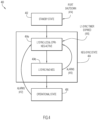
- FIG. 2 is a block diagram illustrating a proxy node state machine 200 that may facilitate operations of a proxy node, according to an example embodiment.
- the proxy node state machine may include an Idle or Standby state 202, a Negotiation Synchronization State (Neg-Sync-State) 204, and an Operational state 206.
- a proxy node may be either Proxy Slave 104 or Proxy Master 106.
- a proxy node whether it is the Proxy Master or Proxy Slave, does not transmit or receive a CPRI bit stream or RoE frames. Rather, the proxy node is waiting to be configured to start various CPRI and RoE functions/operations.
- a CPRI line rate or link bit rate list (e.g., including at least 4 link bit rates) may be configured (e.g., manually by a user/operator and/or automatically via a script, etc.) as a start-up configuration for the proxy node while in the Standby state 202.
- a corresponding role of the proxy node as to whether the proxy node is to perform operations associated with a Proxy Slave or a Proxy Master (e.g., depending on where the node is positioned in a fronthaul network) may also be configured for the proxy node in the Standby state 202.
- the terms 'line rate', 'link rate', and 'link bit rate' can be used interchangeably.
- the proxy node On receiving a trigger (e.g., manually from a user/operator, automatically following power-on/reset, or the like) to start the CPRI port operations for the proxy node, the proxy node transitions to the Neg-Sync-State 204.
- the proxy node also initiates a L1 synchronization top level timer (L1-sync timer) before or upon transitioning to the Neg-Sync-State 204.
- L1-sync timer L1 synchronization top level timer
- the L1-sync timer may be used as a watchdog timer for the end-to-end L1 synchronization in Ethernet-based fronthaul network such that, upon expiration of the timer without the L1 synchronization being achieved, the proxy node may re-start operations for the Neg-Sync-State and may restart the timer to re-attempt the end-to-end link auto-negotiation procedure.
- the proxy node may perform negotiation operations associated with establishing a CPRI communication link between radio devices (e.g., REC 102 and RE 108) of the Ethernet-based fronthaul network 100 in which the negotiation operations may include sub-state operations including L1 synchronization operations and RoE validation operations for one or more link bit rates. Additional details associated with the Neg-Sync-State that are specific to each of the respective Proxy Slave 104 and Proxy Master 106 are discussed herein with reference to FIGs. 4-5 , for Proxy Slave 104, and FIGs. 6-7 , for Proxy Master 106.
- the proxy node may transition to the Operational state 206.
- the proxy node may perform mapping/de-mapping operations to facilitate end-to-end communications between the radio devices (e.g., REC and RE) at a matching link bit rate, which can be used to facilitate C&M L2+ operations between the radio devices as well as normal operations involving CPRI transmission/reception operations between the radio devices.
- the proxy node may also monitor, detect, and/or receive any CPRI alarm (e.g., Loss of Sync (LOS), Loss of Frame (LOF), and/or remote alarm indication (RAI)), which may cause the proxy node to transition back to the Neg-Sync-State 204, to reset the L1-sync timer, and to restart the negotiation operations.
- CPRI alarm e.g., Loss of Sync (LOS), Loss of Frame (LOF), and/or remote alarm indication (RAI)
- the proxy node may monitor and detect persistent changes in RoE frame length and/or p/q counter increment values, upon which detection may cause the proxy node to transition back to the Neg-Sync-State 204, to reset the L1-sync timer, and restart the negotiation operations. Additional details associated with the Operational state 206 that are specific to each of the respective Proxy Slave 104 and Proxy Master 106 are discussed herein with reference to FIGs. 4-5 , for Proxy Slave 104, and FIGs. 6-7 , for Proxy Master 106.
- state transitions for the proxy node state machine 200 as illustrated in FIG. 2 may be performed as follows:
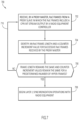
- FIG. 3 is a flow chart depicting a method 300 according to an example embodiment.
- operations associated with method 300 are performed by a proxy node in an Ethernet-based fronthaul network, such as Proxy Slave 104 or Proxy Master 106 in Ethernet-based fronthaul network 100.
- the method includes performing, by the proxy node, negotiation operations associated with establishing a Common Public Radio Interface (CPRI) communication link between radio devices of a fronthaul network (e.g., Ethernet-based fronthaul network 100) in which the negotiation operations comprise Layer 1 synchronization operations and RoE validation operations for one or more link bit rates.
- the method includes facilitating communications between the radio devices at a matching link bit rate upon completion of the negotiation operations.
- CPRI Common Public Radio Interface
- the method may further include detecting, by the proxy node, detecting one or more errors during the negotiation operations or while facilitating the communications between the radio devices at 306 and re-starting the negotiation operations based on the one or more errors, as shown at 308.
- the one or more errors can include a Loss of Synchronization (LOS) alarm; a Loss of Frame alarm; a remote alarm indication (RAI); a RoE fault determined based on RoE frames transmitted and/or received by the proxy node; and a timeout of a L1-sync timer.
- the operations may include re-starting the L1-sync timer before beginning the negotiation operations at 306.
- the one or more errors may include at least one of: one or more errors detected by the proxy node; and one or more errors indicated in RoE frames received by the proxy node.
- the RoE validation operations performed by the proxy node at 302 may include determining a consistency in RoE frame length and packet counter increment values for one of: a plurality of RoE frames received by the proxy node; and a plurality of RoE frames both transmitted and received by the proxy node.
- the Layer 1 synchronization operations performed by the proxy node at 302 may include attempting a hyper-frame number synchronization for a CPRI bit stream output by a first radio device (e.g., as may be performed by the Proxy Slave 104, discussed in further detail below); and upon achieving the hyper-frame number synchronization for the CPRI bit stream at a particular link bit rate in use during the Layer 1 synchronization operations, transmitting the CPRI bit stream toward a second radio device via a plurality of RoE frames in which each transmitted RoE frame indicates a frame length and a counter value that is set based on the particular link bit rate.
- a first radio device e.g., as may be performed by the Proxy Slave 104, discussed in further detail below
- transmitting the CPRI bit stream toward a second radio device via a plurality of RoE frames in which each transmitted RoE frame indicates a frame length and a counter value that is set based on the particular link bit rate.
- FIG. 4 is a block diagram illustrating a configuration of the proxy node state machine of FIG. 2 as configured for a Proxy Slave node in an Ethernet-based fronthaul network (e.g., Proxy Slave node 104 in Ethernet-based fronthaul network 100) via a Proxy Slave state machine 400, according to an example embodiment.
- the Proxy Slave state machine 400 may include a Standby state 402, a Neg-Sync-State 404, and an Operational state 406.
- a Standby state 402 a Standby state 402
- Neg-Sync-State 404 a Neg-Sync-State 404
- Operational state 406 For the embodiment of FIG.
- the Neg-Sync-State 404 may include a Layer 1 Synchronization Local CPRI Negotiations Active (L1Sync-Local-CPRI-Neg-Active) sub-state 404a and may also include a Layer 1 Synchronization RoE Negotiation (L1Sync-RoE-Neg) sub-state 404b.
- L1Sync-Local-CPRI-Neg-Active Layer 1 Synchronization Local CPRI Negotiations Active
- L1Sync-RoE-Neg Layer 1 Synchronization RoE Negotiation
- the Proxy Slave node does not transmit or receive a CPRI bit stream or RoE frames but instead awaits configuration to start various CPRI and RoE functions/operations.
- a CPRI link bit rate list (e.g., including at least 4 link bit rates) may be configured by for the Proxy Slave node (e.g., manually by a user/operator and/or automatically via a script, etc.) as start-up configuration for the Proxy Slave node while in the Standby state 402.
- a corresponding role of being a Proxy Slave node may also be configured for the Proxy Slave node in the Standby state 402.
- the Proxy Slave node Upon successful configuration of the Proxy Slave node in the Standby state 402, the Proxy Slave node transitions to the Neg-Sync-State 404 of the Proxy Slave state machine and, in particular, transitions to the L1Sync-Local-CPRI-Neg-Active sub-state 404a of the Neg-Sync-State 404.
- the Proxy Slave engages in CPRI L1 synchronization operations (e.g., the auto-negotiation procedure) with the REC such that the Proxy Slave emulates actions of an actual CPRI Slave node (e.g., the RE) and attempts to decode the REC transmitted CPRI bit stream to attempt to achieve byte alignment and frame alignment.
- CPRI L1 synchronization operations e.g., the auto-negotiation procedure
- the REC changes its transmit CPRI rates after every 0.9-1.1 second interval (as per the procedure described in the CPRI v7.0 Specification or any other CPRI-related Specification).
- the Proxy Slave On achieving a hyper-frame number synchronization (HFNSYNC) with the REC transmission, the Proxy Slave will begin to map the received CPRI bit stream (from the REC) in RoE frames and transmit the RoE frames towards the far end of the Ethernet-based fronthaul network (e.g., towards the Proxy Master).
- the Proxy Slave does not try to play back a CPRI bit stream towards the REC in the L1Sync-Local-CPRI-Neg-Active sub-state 404a as this play out is to be performed only for the CPRI bit stream received from CPRI Slave end point (e.g., RE).
- the Proxy Slave transitions to the L1Sync-RoE-Neg sub-state 404b of the Proxy Slave state machine 400.
- the Proxy Slave In the L1Sync-Local-CPRI-Neg-Active sub-state 404a, the Proxy Slave is not receiving any RoE frames from the Proxy Master; hence detection of RoE faults is not applicable in this sub-state. However, the Proxy Slave may detect the CPRI faults in this sub-state which will trigger restart of the CPRI L1 synchronization with the REC after restarting the L1-sync top level timer.
- the Proxy Slave performs, among other operations, various RoE frame validation operations. For example, the Proxy Slave continues to map the CPRI bit steam into RoE frames and transmits the RoE frames towards the Proxy Master until the Proxy Slave is also able to detect an RoE end point Layer 1 synchronization in the RoE frames received from Proxy Master, meaning that the Proxy Master has achieved a HFNSYNC for a CPRI bit stream transmitted by the RE to the Proxy Master).
- the Proxy Slave For the L1Sync-RoE-Neg sub-state 404b, the Proxy Slave performs RoE frame validation operations by continuously checking the RoE frame length and p/q-counter increment values in the received RoE frames against values in use in the reverse (e.g., transmission) direction where it is performing the CPRI to RoE frame mapping and transmissions toward the Proxy Master.
- the RoE end point L1 synchronization (e.g., for the Proxy Master) is declared to be achieved, and the Proxy Slave can assume or infer that the Proxy Master and the RE are aligned with Proxy Slave and all that nodes are using a same matching CPRI link rate.
- the Proxy Slave node transitions to the Operational state 406 of the Proxy Slave state machine 400.
- the determination of matching frame lengths and p/q-counter increment values and transition to the Operational state 406 is an important event in operation of the Proxy Slave state machine 400 and ensures that only the REC side HFNSYNC is pending, which is transparent to the Proxy Slave from the L1Sync-RoE-Neg sub-state 404b onwards.
- the number of 10 successive CPRI hyper-frames (which is less than a millisecond) may be used to ensure sufficient time before the Proxy Slave infers that the Proxy Master and the RE are aligned with the Proxy Slave at a matching link bit rate; however, other numbers of successive CPRI hyper-frames may be configured.
- any CPRI alarm e.g., LOS, LOF, and/or RAI
- the Proxy Slave restarts the L1-sync top level timer and restarts the CPRI-RoE negotiation by transitioning back to the L1Sync-Local-CPRI-Neg-Active sub-state 404a to restart the auto-negotiation procedure again.
- an end-to-end CPRI and RoE (CPRI-RoE) flow is considered to be up and operational from the Proxy Slave's perspective such that the Proxy Slave starts playing out the CPRI bit stream toward the REC from the RoE frames received from the Proxy Master.
- the REC will attempt to receive and decode the CPRI bit stream as per the procedure prescribed by the CPRI v7.0 Specification (or any other CPRI-related Specification). If the REC is using the same link bit rate as Proxy Slave and other nodes at this stage as per the Layer 1 synchronization procedure, the REC will be able to achieve HFNSYNC with the received CPRI bit stream. On achieving the HFNSYNC, the REC is able to correctly decode the CPRI stream transmitted by the RE while the RE was already decoding the CPRI transmitted by the REC.
- the REC After achieving the HFNSYNC, the REC will start the C&M, Layer 2 and higher Layer negotiations with the RE.
- the Proxy Slave does not have any active role to play in these negotiations other than performing the mapping and de-mapping operations of mapping the CPRI bit stream received from the REC to RoE frame transmitted toward the Proxy Master and de-mapping RoE frames received from the Proxy Master to a CPRI stream transmitted to the REC.
- any CPRI alarm (LOS/LOF/RAI) is detected by the Proxy Slave in the Operational state 406 as shown at 412
- the Proxy Slave transitions back to the L1Sync-Local-CPRI-Neg-Active sub-state 404a and restarts the CPRI-RoE operations.
- the Proxy Slave receives a CPRI alarm in any RoE frames received from the Proxy Master (e.g., due to proxy master detecting a CPRI alarm on its CPRI link with RE), it transitions back to the L1Sync-Local-CPRI-Neg-Active sub-state 404a and restarts the CPRI-RoE operations.
- the L1-sync top level timer is also restarted by the Proxy Slave.
- the Proxy Slave may revert back to the Standby state 402 and await configuration, as discussed herein.
- the Proxy Slave may transition back to the L1Sync-Local-CPRI-Neg-Active sub-state 404a and restart the CPRI-RoE operations after restarting the L1-sync timer.
- FIG. 5 is a flow chart depicting another method 500 according to an example embodiment.
- operations associated with method 500 may be associated with RoE validation operations that may be performed by a Proxy Slave in an Ethernet-based fronthaul network (e.g., Proxy Slave 104 in Ethernet-Based fronthaul network 100).
- the method may include receiving, by the Proxy Slave, RoE frames from a Proxy Master in which the received RoE frames include a CPRI bit stream output by a radio equipment.
- the Proxy Slave identifies a RoE frame length and a counter increment value for successive RoE frames received by the Proxy Slave (e.g., from the Proxy Master) for validating the Proxy Master transmitted RoE frames.
- the Proxy Slave identifies a RoE frame length and a counter increment value (e.g., a p/q-counter increment value) for successive transmitted RoE frames transmitted by the Proxy Slave.
- the Proxy Slave determines whether the RoE frame length of the received RoE frames is equal to the RoE frame length of the transmitted RoE frames for a predetermined number of hyper-frames and whether the counter increment value of the received RoE frames is equal to the counter increment value of the transmitted RoE frames for the predetermined number of hyper-frames.
- the negotiation operations are completed for the Proxy Slave and the Proxy Slave transitions to the Operational State (e.g., Operational State 406), as shown at 510.
- Operational State e.g., Operational State 406
- the Proxy Slave continues, as shown at 512, to receive, identify, and check the frame lengths and counter increment values for additional RoE frames.
- FIG. 6 is a block diagram illustrating a configuration of the proxy node state machine of FIG. 2 as configured for a Proxy Master node in an Ethernet-based fronthaul network (e.g., Proxy Master node 106 in Ethernet-based fronthaul network 100) via a Proxy Master state machine 600, according to an example embodiment.
- the Proxy Master state machine 600 may include a Standby state 602, a Neg-Sync-State 604, and an Operational state 606.
- a Standby state 602 a Neg-Sync-State 604
- the Neg-Sync-State 604 may include a Layer 1 Synchronization RoE Negotiation (L1Sync-RoE-Neg) sub-state 604a and may also include a Layer 1 Synchronization Local CPRI Negotiations Active (L1Sync-Local-CPRI-Neg-Active) sub-state 604b.
- L1Sync-RoE-Neg Layer 1 Synchronization RoE Negotiation
- L1Sync-Local-CPRI-Neg-Active Layer 1 Synchronization Local CPRI Negotiations Active
- the Proxy Master node does not transmit or receive a CPRI bit stream or RoE frames but instead awaits configuration to start various CPRI and RoE functions/operations.
- a CPRI link bit rate list (e.g., including at least 4 link bit rates) may be configured by for the Proxy Master node (e.g., manually by a user/operator and/or automatically via a script, etc.) as start-up configuration for the Proxy Master node while in the Standby state 602.
- a corresponding role of being a Proxy Master node may also be configured for the Proxy Master node in the Standby state 602.
- the Proxy Master node Upon successful configuration of the Proxy Master node in the Standby state 602, the Proxy Master node transitions to the Neg-Sync-State 604 of the Master state machine and, in particular, transitions to the L1Sync-RoE-Neg sub-state 604a of the Neg-Sync-State 404.
- the Proxy Master waits for receiving the RoE frames from the Proxy Slave. Once the Proxy Master starts receiving the RoE frames from the Proxy Slave, it starts performing various RoE frame validation operations by monitoring the RoE frame length and p/q-counter values from the RoE headers of the RoE frames. If these values are consistent for at least 10 complete hyper-frames, the Proxy Master transitions to the L1Sync-Local-CPRI-Neg-Active sub-state 604b.
- the Proxy Master since it is already receiving RoE frames from the Proxy Slave consistently, starts de-mapping the RoE frames and playing out the CPRI bit stream towards the CPRI endpoint (e.g., the RE) after de-mapping CPRI bit stream from the RoE frames.
- the CPRI endpoint e.g., the RE
- the Proxy Master plays out the CPRI stream using a link bit rate as may be derived from the RoE frame length and p/q-counter values from the RoE header of the RoE frames received from the Proxy Slave in some embodiments. For example, consider that a particular link bit rate of 614.4 Megabit per second (Mbits/s) is currently being used for the CPRI bit stream mapped into RoE frames by the Proxy Slave and transmitted to the Proxy Master. Such RoE frames may have a particular RoE frame length and p/q-counter increment values based on the same number of bytes being included in each RoE frame transmitted by the Proxy Slave/received by the Proxy Master for the particular link bit rate of 614.4 Mbits/s.
- Mbits/s Megabit per second
- the Proxy Master may identify the particular link bit rate associated with the CPRI bit stream mapped into the RoE frames.
- a table or the like may be configured for a Proxy Master (e.g., during the Standby state 602 operations, in which the table includes a mapping of various link bit rates to corresponding RoE frame length and p/q-counter increment values.
- link bit rate information may be included in RoE frames by including bit rate information within any combination of RoE extension headers, which may be inserted in RoE frames between the RoE header and RoE payload of RoE frames, and/or by using an Experimental subType in the RoE header of RoE frames to indicate the bit rate.
- RoE extension headers which may be inserted in RoE frames between the RoE header and RoE payload of RoE frames, and/or by using an Experimental subType in the RoE header of RoE frames to indicate the bit rate.
- the Proxy Master continues to play out the CPRI bit stream towards the RE as long as it is receiving the RoE frames corresponding to a same link rate as indicated by the RoE frame length and p/q counter values (e.g., the Proxy Master acts as a REC proxy for the RE).
- the RE will achieve HFNSYNC (e.g., K-byte alignment) after receiving the CPRI stream from the Proxy Master (e.g., the RE receive link rate and the link rate used in the transmissions by the Proxy Master are matching).
- the RE Upon the RE achieving HFNSYNC for the Proxy Master transmitted CPRI bit stream, the RE will also start playing out a CPRI stream using the same link bit rate towards the Proxy Master.
- the Proxy Master will also start receiving this CPRI bit stream transmitted by the RE and will try to achieve a HFNSYNC with this received CPRI bit stream.
- the Proxy Master node For the CPRI bit stream transmission coming from the RE, the Proxy Master node will wait for achieving HFNSYNC for an 'N' number of hyper-frames and any CPRI fault observed before this HFNSYNC may not applicable and may be ignored. Stated differently, the Proxy Master may waits for N hyper-frames to achieve HFNSYNC and declare failure in achieving HFNSYNC with RE after the expiry of these N hyper-frames.
- the number N may be configured depending on the hardware clocking logic capability of the Proxy Master. In at least one embodiment, a value higher than 10 hyper-frames may be used.
- the Proxy Master On achieving HFNSYNC with the RE transmission, the Proxy Master starts mapping this received CPRI bit stream into RoE frames, transmitting the RoE frames the towards the other end (e.g., towards the REC) of the Ethernet-based fronthaul network, and transitions to the Operational state 406.
- the Proxy Master will trigger restart of the CPRI L1 synchronization operations and transition back to the L1Sync-RoE-Neg sub-state 604a of the Proxy Master state machine 600.
- the L1-sync top level timer will also be restarted on making this state transition.
- the Proxy Master continues to map the received CPRI bit stream (received from the RE) into RoE frames and transmit the RoE frames towards the Proxy Slave.
- the Proxy Master may also monitor whether the RoE frame length and p/q-counter increments values in the transmitted RoE frames may continue to match with the values as received in the RoE flow coming from the Proxy Slave. On detecting a persistent change in the RoE frame length and p/q-counter increments values in the RoE frames received from the Proxy Slave, an alarm may be raised by the Proxy Master as shown at 612, and the Proxy Master transitions back to the L1Sync-RoE-Neg sub-state 604a after re-starting the top level L1-sync timer and restarts the CPRI-RoE operations. As long as the RoE frame length and p/q-counter increments values are matching in both the directions, the CPRI-RoE flow is considered to be up and operational from the Proxy Master's perspective.
- the Proxy Master transitions to the back to the L1Sync-RoE-Neg sub-state 604a and restarts the CPRI-RoE operations.
- the Proxy Master receives a CPRI alarm in any RoE frames received from the Proxy Slave (e.g., due to the Proxy Slave detecting a CPRI alarm on its CPRI link with REC)
- the Proxy Master transitions back to the L1Sync-RoE-Neg sub-state 604a and restarts the CPRI-RoE operations.
- the L1-sync top level timer is also restarted.
- the Proxy Master may revert back to the Standby state 602 and await configuration, as discussed herein.
- the Proxy Master may transition back to the L1Sync-RoE-Neg sub-state 604a and restarts the CPRI-RoE operations after restarting the L1-sync timer.
- FIG. 7 is a flow chart depicting another method 700 according to an example embodiment.
- operations associated with method 700 may be associated with RoE validation operations that may be performed by a Proxy Master in an Ethernet-based fronthaul network (e.g., Proxy Master 106 in Ethernet-Based fronthaul network 100).
- the method may include receiving, by the Proxy Master, RoE frames from a Proxy Slave in which received RoE frames include a CPRI bit stream output by a radio equipment controller.
- the Proxy Master identifies a RoE frame length and a counter increment value (e.g., p/q-counter increment value) for successive received RoE frames.
- the Proxy Master determines whether the RoE frame length remains the same for a predetermined number of hyper-frames and that the counter increment value remains the same for the predetermined number of hyper-frames.
- the Proxy Master Based on determining that the RoE frame length remains the same for a predetermined number (e.g., 10) of hyper-frames and that the counter increment value remains the same for the predetermined number of hyper-frames, the Proxy Master begins Layer 1 synchronization operations with the radio equipment (e.g., transitions to the L1Sync-Local-CPRI-Neg-Active sub-state), as shown at 708. However, based on determining that the RoE frame length does not remain the same for the predetermined number of hyper-frames or that the counter increment value does not remain the same for the predetermined number of hyper-frames, the Proxy Master continues, as shown at 710, to receive, identify, and check the frame lengths and counter increment values for additional successively received RoE frames.
- a predetermined number e.g. 10
- LTE Long Term Evolution
- LTE-Advanced LTE-Advanced Pro
- new 5G technologies based deployments are likely to be transitioned to packetized fronthaul based networks.
- Techniques presented herein provide for the ability to use proxy nodes in an Ethernet-based fronthaul network to achieve the cross product of CPRI and Ethernet to be achieved in order to facilitate end-to-end CPRI flows between the REC and RE.
- techniques presented herein provide for implementation of detailed state machines, state machine transitions, and a deterministic method to handle key state transition events to address the gaps in the IEEE 1914.3 and CPRI v7.0 Specifications.
- techniques presented herein may provide for the identification of different states applicable for the proxy or L1 gateway nodes in an Ethernet-based fronthaul network, which may include identification of key events for state transitions along with the deterministic method to conclude on key events in the overall Layer 1 synchronization operations.
- Techniques presented herein further provide for the ability to declare that a RoE-end L1 synchronization has been achieved (e.g., by a Proxy Slave) based on analysis of RoE frame length and p/q-counter increment values in successive RoE frames.
- FIG. 8 illustrates a hardware block diagram of a computing device 800 that may perform the functions of a proxy node, referred to herein in connection with FIGs. 1-7 (e.g., Proxy Slave 104 or Proxy Master 106).
- a proxy node e.g., Proxy Slave 104 or Proxy Master 106.
- FIG. 8 provides only an illustration of one embodiment and does not imply any limitations with regard to the environments in which different embodiments may be implemented. Many modifications to the depicted environment may be made.
- the computing device 800 includes a bus 812, which provides communications between computer (e.g., hardware) processor(s) 814, memory 816, persistent storage 818, communications unit 820, and input/output (I/O) interface(s) 822.
- Bus 812 can be implemented with any architecture designed for passing data and/or control information between processors (such as microprocessors, communications and network processors, etc.), system memory, peripheral devices, and any other hardware components within a system.
- bus 812 can be implemented with one or more buses.
- Memory 816 and persistent storage 818 are computer readable storage media, which can be inclusive of non-transitory computer readable storage media.
- memory 816 which may be inclusive of one or more memory element(s), may include random access memory (RAM) 824 and cache memory 826.
- RAM random access memory
- cache memory 826 In general, memory 816 can include any suitable volatile or non-volatile computer readable storage media.
- Instructions for control logic 840 may be stored in memory 816 and/or persistent storage 818 for execution by processor(s) 614. When the processor(s) 814 execute control logic 840, the processor(s) 814 are caused to perform the operations described above in connection with FIGs. 1-7 .
- One or more programs and/or other logic may be stored in persistent storage 818 for execution by one or more of the respective computer processors 814 via one or more memories of memory 816.
- the persistent storage 818 may be a magnetic hard disk drive, a solid state hard drive, a semiconductor storage device, read-only memory (ROM), erasable programmable read-only memory (EPROM), flash memory, or any other computer readable storage media that is capable of storing program instructions or digital information.
- the media used by persistent storage 818 may also be removable.
- a removable hard drive may be used for persistent storage 818.
- Other examples include optical and magnetic disks, thumb drives, and smart cards that are inserted into a drive for transfer onto another computer readable storage medium that is also part of persistent storage 818.
- Communications unit 820 in these examples, provides for communications with other data processing systems or devices using, for example, one or more CPRI port(s)/interfaces and Ethernet port(s)/interface(s). Communications unit 820 may provide communications through the use of either or both physical and wireless communications links.
- I/O interface(s) 822 allows for input and output of data with other devices that may be connected to computing device 800.
- I/O interface 822 may provide a connection to external devices 828 such as a keyboard, keypad, a touch screen, and/or some other suitable input device.
- external devices 828 can also include portable computer readable storage media such as database systems, thumb drives, portable optical or magnetic disks, and memory cards.
- I/O interface(s) 822 may also connect to a display 830.
- Display 830 provides a mechanism to display data to a user and may be, for example, a computer monitor.
- a computer-implemented method may include performing, by a proxy node of a fronthaul network, negotiation operations associated with establishing a Common Public Radio Interface (CPRI) communication link between radio devices of the fronthaul network, wherein the negotiation operations comprise Layer 1 synchronization operations and Radio over Ethernet (RoE) validation operations for one or more link bit rates; and facilitating communications between the radio devices at a matching link bit rate upon completion of the negotiation operations.
- CPRI Common Public Radio Interface
- RoE Radio over Ethernet
- the method may include detecting one or more errors during the negotiation operations or while facilitating the communications between the radio devices; and re-starting the negotiation operations based on the one or more errors.
- the one or more errors may include at least one of: a loss of synchronization alarm; a loss of frame alarm; a remote alarm indication; a RoE fault determined based on RoE frames transmitted and/or received by the proxy node; and a timeout of a Layer 1 synchronization timer.
- the one or more errors may include at least one of: one or more errors detected by the proxy node; and one or more errors indicated in RoE frames received by the proxy node.
- the RoE validation operations performed by the proxy node may include: determining consistency in RoE frame length and packet counter increment values for one of: a plurality of RoE frames received by the proxy node; and a plurality of RoE frames both transmitted and received by the proxy node.
- the Layer 1 synchronization operations performed by the proxy node may include: attempting a hyper-frame number synchronization for a CPRI bit stream output by a first radio device; and upon achieving the hyper-frame number synchronization for the CPRI bit stream at a particular link bit rate in use during the Layer 1 synchronization operations, transmitting the CPRI bit stream toward a second radio device via a plurality of RoE frames, wherein each transmitted RoE frame indicates a frame length and a counter value that is set based on the particular link bit rate.
- the proxy node may be a proxy slave node
- the first radio device may be a radio equipment controller
- the second radio device may be a radio equipment and wherein the RoE validation operations are performed, at least in part, after the Layer 1 synchronization operations, the RoE validation operations comprising: receiving a plurality of RoE frames from a proxy master node, the plurality of received RoE frames comprising a CPRI bit stream output by the radio equipment; identifying a RoE frame length and a counter increment value for successive transmitted RoE frames transmitted by the proxy slave node; identifying a RoE frame length and a counter increment value for successive RoE frames received by the proxy slave node; determining whether the RoE frame length of the received RoE frames is equal to the RoE frame length of the transmitted RoE frames for a predetermined number of hyper-frames and whether the counter increment value of the received RoE frames is equal to the counter increment value of the transmitted RoE frames for the predetermined number of hyper-frames; and upon determining that the RoE frame length of
- the proxy node may be a proxy master node
- the first radio device may be a radio equipment
- the second radio device may a radio equipment controller and wherein the RoE validation operations are performed, at least in part, before the Layer 1 synchronization operations, the RoE validation operations comprising: receiving a plurality of RoE frames from a proxy slave node, the plurality of received RoE frames comprising a CPRI bit stream output by the radio equipment controller; identifying a RoE frame length and a counter increment value for successive received RoE frames; determining whether the RoE frame length remains the same for a predetermined number of hyper-frames and that the counter increment value remains the same for the predetermined number of hyper-frames; and upon determining that the RoE frame length remains the same for a predetermined number of hyper-frames and that the counter increment value remains the same for the predetermined number of hyper-frames, starting the Layer 1 synchronization operations with the radio equipment.
- the Layer 1 synchronization operations for the proxy master node may further comprise: transmitting to the radio equipment the CPRI bit stream output by the radio equipment controller, wherein upon the radio equipment achieving a hyper-frame number synchronization for the CPRI bit stream transmitted by the proxy master node, the radio equipment outputs the CPRI bit stream that is received by the proxy master node for attempting the hyper-frame number synchronization.
- Data relating to operations described herein may be stored within any conventional or other data structures (e.g., files, arrays, lists, stacks, queues, records, etc.) and may be stored in any desired storage unit (e.g., database, data or other repositories, queue, etc.).
- the data transmitted between entities may include any desired format and arrangement, and may include any quantity of any types of fields of any size to store the data.
- the definition and data model for any datasets may indicate the overall structure in any desired fashion (e.g., computer-related languages, graphical representation, listing, etc.).
- the present embodiments may employ any number of any type of user interface (e.g., Graphical User Interface (GUI), command-line, prompt, etc.) for obtaining or providing information (e.g., data relating to scraping network sites), where the interface may include any information arranged in any fashion.
- GUI Graphical User Interface
- the interface may include any number of any types of input or actuation mechanisms (e.g., buttons, icons, fields, boxes, links, etc.) disposed at any locations to enter/display information and initiate desired actions via any suitable input devices (e.g., mouse, keyboard, etc.).
- the interface screens may include any suitable actuators (e.g., links, tabs, etc.) to navigate between the screens in any fashion.
- the environment of the present embodiments may include any number of computer or other processing systems (e.g., client or end-user systems, server systems, etc.) and databases or other repositories arranged in any desired fashion, where the present embodiments may be applied to any desired type of computing environment (e.g., cloud computing, client-server, network computing, mainframe, stand-alone systems, etc.).
- the computer or other processing systems employed by the present embodiments may be implemented by any number of any personal or other type of computer or processing system (e.g., desktop, laptop, PDA, mobile devices, etc.), and may include any commercially available operating system and any combination of commercially available and custom software (e.g., machine learning software, etc.).
- These systems may include any types of monitors and input devices (e.g., keyboard, mouse, voice recognition, etc.) to enter and/or view information.
- the various functions of the computer systems or other processing systems may be distributed in any manner among any number of software and/or hardware modules or units, processing or computer systems and/or circuitry, where the computer or processing systems may be disposed locally or remotely of each other and communicate via any suitable communications medium (e.g., Local Area Network (LAN), Wide Area Network (WAN), Intranet, Internet, hardwire, modem connection, wireless, etc.).
- LAN Local Area Network
- WAN Wide Area Network
- Intranet Internet
- hardwire modem connection
- wireless wireless
- the functions of the present embodiments may be distributed in any manner among the various end-user/client and server systems, and/or any other intermediary processing devices.
- the software and/or algorithms described above and illustrated in the flow charts may be modified in any manner that accomplishes the functions described herein.
- the functions in the flow charts or description may be performed in any order that accomplishes a desired operation.
- the software of the present embodiments may be available on a non-transitory computer useable medium, non-transitory computer readable storage medium (e.g., magnetic or optical mediums, magneto-optic mediums, floppy diskettes, CD-ROM, DVD, memory devices, etc.) of a stationary or portable program product apparatus or device for use with stand-alone systems or systems connected by a network or other communications medium.
- a non-transitory computer useable medium e.g., magnetic or optical mediums, magneto-optic mediums, floppy diskettes, CD-ROM, DVD, memory devices, etc.
- a network may be implemented by any number of any type of network (e.g., LAN, WAN, Internet, Intranet, Virtual Private Network (VPN), etc.).
- the computer or other processing systems of the present embodiments may include any conventional or other communications devices to communicate over the network via any conventional or other protocols.
- the computer or other processing systems may utilize any type of connection (e.g., wired, wireless, etc.) for access to the network.
- Local communication media may be implemented by any suitable communication media (e.g., LAN, hardwire, wireless link, Intranet, etc.).
- a system or computing device may employ any number of any conventional or other databases, data stores or storage structures (e.g., files, databases, data structures, data or other repositories, etc.) to store information (e.g., data relating to contact center interaction routing).
- the database system may be implemented by any number of any conventional or other databases, data stores or storage structures (e.g., files, databases, data structures, data or other repositories, etc.) to store information (e.g., data relating to contact center interaction routing).
- a database system may be included within or coupled to a server and/or client systems.
- the database systems and/or storage structures may be remote from or local to the computer or other processing systems, and may store any desired data (e.g., resource record data).
- the embodiments presented may be in various forms, such as a system, a method, and/or a computer program product at any possible technical detail level of integration
- the computer program product may include a computer readable storage medium (or media) having computer readable program instructions thereon for causing a processor to carry out aspects of presented herein.
- the computer readable storage medium which can be inclusive of non-transitory computer readable storage medium, can be a tangible device that can retain and store instructions for use by an instruction execution device.
- the computer readable storage medium may be, for example, but is not limited to, an electronic storage device, a magnetic storage device, an optical storage device, an electromagnetic storage device, a semiconductor storage device, or any suitable combination of the foregoing.
- a non-exhaustive list of more specific examples of the computer readable storage medium includes the following: a portable computer diskette, a hard disk, a random access memory (RAM), a read-only memory (ROM), an erasable programmable read-only memory (EPROM or Flash memory), a static random access memory (SRAM), a portable compact disc read-only memory (CD-ROM), a digital versatile disk (DVD), a memory stick, a floppy disk, a mechanically encoded device such as punch-cards or raised structures in a groove having instructions recorded thereon, and any suitable combination of the foregoing.
- RAM random access memory
- ROM read-only memory
- EPROM or Flash memory erasable programmable read-only memory
- SRAM static random access memory
- CD-ROM compact disc read-only memory
- DVD digital versatile disk
- memory stick a floppy disk
- a mechanically encoded device such as punch-cards or raised structures in a groove having instructions recorded thereon
- a computer readable storage medium is not to be construed as being transitory signals per se, such as radio waves or other freely propagating electromagnetic waves, electromagnetic waves propagating through a waveguide or other transmission media (e.g., light pulses passing through a fiber-optic cable), or electrical signals transmitted through a wire.
- Computer readable program instructions described herein can be downloaded to respective computing/processing devices from a computer readable storage medium or to an external computer or external storage device via a network, for example, the Internet, a local area network, a wide area network and/or a wireless network.
- the network may comprise copper transmission cables, optical transmission fibers, wireless transmission, routers, firewalls, switches, gateway computers and/or edge servers.
- a network adapter card or network interface in each computing/processing device receives computer readable program instructions from the network and forwards the computer readable program instructions for storage in a computer readable storage medium within the respective computing/processing device.
- Computer readable program instructions for carrying out operations of the present embodiments may be assembler instructions, instruction-set-architecture (ISA) instructions, machine instructions, machine dependent instructions, microcode, firmware instructions, state-setting data, configuration data for integrated circuitry, or either source code or object code written in any combination of one or more programming languages, including an object oriented programming language such as Smalltalk, C++, or the like, and procedural programming languages, such as the "C" programming language or similar programming languages.
- the computer readable program instructions may execute entirely on the user's computer, partly on the user's computer, as a stand-alone software package, partly on the user's computer and partly on a remote computer or entirely on the remote computer or server.
- the remote computer may be connected to the user's computer through any type of network, including a local area network (LAN) or a wide area network (WAN), or the connection may be made to an external computer (for example, through the Internet using an Internet Service Provider).
- electronic circuitry including, for example, programmable logic circuitry, field-programmable gate arrays (FPGA), or programmable logic arrays (PLA) may execute the computer readable program instructions by utilizing state information of the computer readable program instructions to personalize the electronic circuitry, in order to perform aspects presented herein.
- These computer readable program instructions may be provided to a processor of a general purpose computer, special purpose computer, or other programmable data processing apparatus to produce a machine, such that the instructions, which execute via the processor of the computer or other programmable data processing apparatus, create means for implementing the functions/acts specified in the flowchart and/or block diagram block or blocks.
- These computer readable program instructions may also be stored in a computer readable storage medium that can direct a computer, a programmable data processing apparatus, and/or other devices to function in a particular manner, such that the computer readable storage medium having instructions stored therein comprises an article of manufacture including instructions which implement aspects of the function/act specified in the flow chart and/or block diagram block or blocks.
- the computer readable program instructions may also be loaded onto a computer, other programmable data processing apparatus, or other device to cause a series of operational steps to be performed on the computer, other programmable apparatus or other device to produce a computer implemented process, such that the instructions which execute on the computer, other programmable apparatus, or other device implement the functions/acts specified in the flow chart and/or block diagram block or blocks.
- each block in the flowchart or block diagrams may represent a module, logic, segment, or portion of instructions, which comprises one or more executable instructions for implementing the specified logical function(s).
- the functions noted in the blocks may occur out of the order noted in the figures. For example, two blocks shown in succession may, in fact, be executed substantially concurrently, or the blocks may sometimes be executed in the reverse order, depending upon the functionality involved.
Landscapes
- Engineering & Computer Science (AREA)
- Computer Networks & Wireless Communication (AREA)
- Signal Processing (AREA)
- Quality & Reliability (AREA)
- Environmental & Geological Engineering (AREA)
- Mobile Radio Communication Systems (AREA)
- Small-Scale Networks (AREA)
Claims (11)
- Procédé (300) comprenant le fait :d'effectuer (302), par un noeud proxy (104, 106) d'un réseau fronthaul basé sur Ethernet (100), des opérations de négociation associées à l'établissement d'une liaison de communication d'interface radio publique commune, CPRI, entre des dispositifs radio (102, 108) du réseau fronthaul, procédé dans lequel les opérations de négociation comprennent des opérations de synchronisation de couche 1 et des opérations de validation radio sur Ethernet, RoE, (500, 700) pour un ou plusieurs débits binaires de liaison ; etde faciliter (304) des communications entre les dispositifs radio à un débit binaire de liaison correspondant, une fois que les opérations de négociation sont terminées.
- Procédé selon la revendication 1, dans lequel les opérations de validation RoE comprennent le fait de déterminer, par le noeud proxy, une cohérence concernant la longueur de trame RoE et les valeurs d'incrément - conformément à la spécification IEEE 1914 - du compteur p ou du compteur q, pour une pluralité de trames RoE (120) obtenues par le noeud proxy pour un nombre prédéterminé d'hypertrames.
- Procédé selon la revendication 2, dans lequel les opérations de validation RoE comprennent en outre le fait de déterminer, par le noeud proxy, une cohérence concernant la longueur de trame RoE et les valeurs d'incrément du compteur p ou du compteur q, pour la pluralité de trames RoE obtenues par le noeud proxy et pour une pluralité de trames RoE transmises par le nœud proxy pour le nombre prédéterminé d'hypertrames.
- Procédé selon la revendication 3, dans lequel la détermination comprend le fait de déterminer que :la longueur de trame RoE est égale pour la pluralité de trames RoE obtenues par le noeud proxy et pour la pluralité de trames RoE transmises par le noeud proxy pour le nombre prédéterminé d'hypertrames ; etles valeurs d'incrément du compteur p ou du compteur q sont égales pour la pluralité de trames RoE obtenues par le noeud proxy et pour la pluralité de trames RoE transmises par le noeud proxy pour le nombre prédéterminé d'hypertrames.
- Procédé selon l'une quelconque des revendications précédentes, comprenant en outre :
le fait de relancer (308) les opérations de négociation, en se basant sur le fait qu'une ou plusieurs erreurs se produisent (306) au cours des opérations de négociation. - Procédé selon la revendication 5, dans lequel la ou les erreur(s) est ou sont due(s) à au moins l'une des causes suivantes :une perte d'une alarme de synchronisation ;une perte d'une alarme de trame ;une indication d'alarme à distance ;une panne RoE déterminée en se basant sur des trames RoE transmises et/ou reçues par le noeud proxy ; etun délai d'attente d'un temporisateur de synchronisation de couche 1.
- Procédé selon l'une des revendications 5 à 6, dans lequel la ou les erreur(s) est ou sont due(s) à au moins l'une des causes suivantes :
une ou plusieurs erreurs détectées par le noeud proxy ; et une ou plusieurs erreurs indiquées dans une ou plusieurs trames RoE obtenues par le noeud proxy. - Procédé selon l'une quelconque des revendications précédentes, comprenant en outre :
le fait de relancer (308) les opérations de négociation, en se basant sur le fait qu'une ou plusieurs alarmes se déclenchent (306), tout en facilitant les communications entre les dispositifs radio. - Procédé selon l'une quelconque des revendications précédentes, lorsqu'il dépend de la revendication 2, procédé dans lequel les opérations de synchronisation de couche 1 mises en oeuvre par le noeud proxy comprennent :le fait de tenter une synchronisation d'un certain nombre d'hypertrames pour un flux binaire CPRI émis par un premier dispositif radio ; etaprès avoir terminé la synchronisation d'un certain nombre d'hypertrames pour un flux binaire CPRI, à un débit binaire de liaison particulier utilisé au cours des opérations de synchronisation de couche 1, le procédé comprend la transmission du flux binaire CPRI vers un deuxième dispositif radio via une pluralité de trames RoE, procédé dans lequel chaque trame RoE ayant été transmise indique une longueur de trame et une valeur de compteur p ou de compteur q, valeur qui est fixée en se basant sur le débit binaire de liaison particulier.
- Un ou plusieurs supports de stockage lisibles par ordinateur, ledit ou lesdits support(s) de stockage étant codé(s) avec des instructions qui, lorsqu'elles sont exécutées par un processeur, amènent le processeur à mettre en oeuvre le procédé selon l'une quelconque des revendications précédentes.
- Système comprenant :au moins un élément de mémoire pour stocker des données ; etau moins un processeur pour exécuter des instructions associées aux données, système dans lequel le fait d'exécuter les instructions amène le système à mettre en oeuvre le procédé selon l'une quelconque des revendications 1 à 9.
Applications Claiming Priority (3)
| Application Number | Priority Date | Filing Date | Title |
|---|---|---|---|
| US16/573,162 US10863386B1 (en) | 2019-09-17 | 2019-09-17 | State machine handling at a proxy node in an ethernet-based fronthaul network |
| US16/906,315 US11395189B2 (en) | 2019-09-17 | 2020-06-19 | State machine handling at a proxy node in an Ethernet-based fronthaul network |
| PCT/US2020/050291 WO2021055237A1 (fr) | 2019-09-17 | 2020-09-11 | Gestion de machine à états au niveau d'un nœud proxy dans un réseau fronthaul basé sur ethernet |
Publications (2)
| Publication Number | Publication Date |
|---|---|
| EP4032207A1 EP4032207A1 (fr) | 2022-07-27 |
| EP4032207B1 true EP4032207B1 (fr) | 2024-01-17 |
Family
ID=73653702
Family Applications (1)
| Application Number | Title | Priority Date | Filing Date |
|---|---|---|---|
| EP20789302.5A Active EP4032207B1 (fr) | 2019-09-17 | 2020-09-11 | Gestion de machine à états au niveau d'un noeud proxy dans un réseau fronthaul basé sur ethernet |
Country Status (3)
| Country | Link |
|---|---|
| US (2) | US10863386B1 (fr) |
| EP (1) | EP4032207B1 (fr) |
| WO (1) | WO2021055237A1 (fr) |
Families Citing this family (15)
| Publication number | Priority date | Publication date | Assignee | Title |
|---|---|---|---|---|
| CN112333151B (zh) * | 2015-08-31 | 2023-03-28 | 华为技术有限公司 | 接收cpri数据流和接收以太网帧的方法、装置及系统 |
| CN112422385B (zh) | 2019-08-23 | 2022-11-29 | 微芯片技术股份有限公司 | 用于改进的媒体访问的接口以及相关的系统、方法和设备 |
| CN112423403A (zh) | 2019-08-23 | 2021-02-26 | 微芯片技术股份有限公司 | 检测网络上的冲突 |
| CN112415323B (zh) | 2019-08-23 | 2024-07-09 | 微芯片技术股份有限公司 | 诊断网络内的电缆故障 |
| CN112422219B (zh) | 2019-08-23 | 2024-05-24 | 微芯片技术股份有限公司 | 以太网接口和相关系统、方法和设备 |
| CN112422295B (zh) * | 2019-08-23 | 2023-06-13 | 微芯片技术股份有限公司 | 以太网接口及相关系统、方法和设备 |
| CN112422153B (zh) | 2019-08-23 | 2023-04-07 | 微芯片技术股份有限公司 | 检测到共享传输介质处冲突后处理数据接收的方法和系统 |
| US10594423B1 (en) * | 2019-09-09 | 2020-03-17 | Cisco Technology, Inc. | Re-timing a packetized radio flow to clean noise induced by packet delay variation of a packet network |
| EP4055990A4 (fr) * | 2019-11-07 | 2023-08-30 | Telefonaktiebolaget LM Ericsson (publ) | Procédé et appareil de communication entre deux dispositifs de communication |
| WO2021195663A1 (fr) | 2020-03-24 | 2021-09-30 | Microchip Technology Incorporated | Communication de source de réveil d'interface à faible nombre de connexions selon un réveil local et distant 10spe et systèmes, procédés et dispositifs associés |
| US11563613B2 (en) * | 2020-07-22 | 2023-01-24 | Mai Mahmoud Hassan Salem IBRAHIM | Method and system for communicating data over residential power lines |
| US11212068B1 (en) * | 2020-08-24 | 2021-12-28 | Ciena Corporation | Carrying a timestamp in radio over ethernet |
| CN116195234A (zh) * | 2020-09-23 | 2023-05-30 | 瑞典爱立信有限公司 | 用于在光网络中自动配置端口的方法和装置 |
| EP4413707A1 (fr) * | 2021-10-05 | 2024-08-14 | Telefonaktiebolaget LM Ericsson (publ) | Attribution de ressources au moyen de l'aptitude à l'agrégation de trafic et de la disponibilité future de bande passante dans un réseau |
| WO2023168690A1 (fr) * | 2022-03-11 | 2023-09-14 | Telefonaktiebolaget Lm Ericsson (Publ) | Procédé et appareil pour radio sur ethernet |
Family Cites Families (30)
| Publication number | Priority date | Publication date | Assignee | Title |
|---|---|---|---|---|
| TWI220610B (en) | 2002-05-24 | 2004-08-21 | Realtek Semiconductor Corp | Method and device for setting the autonegotiation mode of a repeater |
| US8842649B2 (en) | 2009-06-19 | 2014-09-23 | China Academy Of Telecommunications Technology | Remote radio data transmission over Ethernet |
| KR101674209B1 (ko) * | 2010-01-27 | 2016-11-08 | 삼성전자주식회사 | 디지털 장치와 rf 장치간에 이더넷 데이터를 송수신하는 방법 및 그 장치 |
| US8649388B2 (en) * | 2010-09-02 | 2014-02-11 | Integrated Device Technology, Inc. | Transmission of multiprotocol data in a distributed antenna system |
| US8599827B2 (en) * | 2011-10-21 | 2013-12-03 | Telefonaktiebolaget Lm Ericsson (Publ) | Methods and apparatuses for maintaining synchronization between a radio equipment controller and an item of radio equipment |
| WO2013119153A1 (fr) * | 2012-02-09 | 2013-08-15 | Telefonaktiebolaget Lm Ericsson (Publ) | Nœud de réseau et un procédé dans celui-ci permettant à une première unité de se connecter ou d'être connectée ad-hoc à une seconde unité |
| EP2865236B1 (fr) * | 2012-06-20 | 2020-01-22 | Telefonaktiebolaget LM Ericsson (publ) | Encapsulation de trames cpri |
| US9313827B2 (en) * | 2012-12-31 | 2016-04-12 | Broadcom Corporation | Radio over ethernet for radio access network and cloud-RAN |
| EP2944061A4 (fr) | 2013-01-14 | 2016-09-07 | Commscope Technologies Llc | Système intercepteur pour caractériser des données numériques dans un système de télécommunication |
| US9736274B2 (en) * | 2013-11-14 | 2017-08-15 | Avago Technologies General Ip (Singapore) Pte. Ltd. | Radio over ethernet mapper physical layer device (PHY) |
| US20160277964A1 (en) * | 2013-12-13 | 2016-09-22 | Telefonaktiebolaget L M Ericsson (Publ) | Devices and methods for multiplexing and demultiplexing common public radio interface data streams |
| US9848379B2 (en) * | 2014-09-22 | 2017-12-19 | Telefonaktiebolaget Lm Ericsson (Publ) | Cascaded radio communication system |
| CN105871502B (zh) * | 2015-01-22 | 2020-01-03 | 华为技术有限公司 | 一种利用以太网信道传输业务信号的方法及通信设备 |
| US9608752B2 (en) * | 2015-05-15 | 2017-03-28 | Telefonaktiebolaget Lm Ericsson (Publ) | Systems and methods of transporting internal radio base station (RBS) interface information over a packet switched network |
| CN112333151B (zh) * | 2015-08-31 | 2023-03-28 | 华为技术有限公司 | 接收cpri数据流和接收以太网帧的方法、装置及系统 |
| US10044471B2 (en) * | 2015-09-01 | 2018-08-07 | IPLight Ltd. | Delivering CPRI and ethernet signals over optical networks |
| US10178641B2 (en) | 2016-01-04 | 2019-01-08 | Nxp Usa, Inc. | System and method for automatic delay compensation in a radio base station system |
| KR20180112867A (ko) * | 2016-02-29 | 2018-10-12 | 콤스코프 테크놀로지스, 엘엘씨 | 포인트-투-멀티포인트 분산 무선 액세스 네트워크를 위한 자동 전력 구성 |
| CN107547481B (zh) | 2016-06-28 | 2021-09-24 | 中兴通讯股份有限公司 | 数据传输方法和装置以及光电转换装置和系统 |
| US10524273B2 (en) | 2016-09-06 | 2019-12-31 | Telefonaktiebolaget Lm Ericsson (Publ) | Resource configuration of wireless devices |
| US10165459B2 (en) * | 2016-09-07 | 2018-12-25 | Verizon Patent And Licensing Inc. | Remote monitoring of fronthaul radio signals |
| GB201616763D0 (en) * | 2016-10-03 | 2016-11-16 | Global Invacom Ltd | Apparatus and method relating to software defined networking for heterogeneneous access networks |
| US11088930B2 (en) | 2016-12-06 | 2021-08-10 | Telefonaktiebolaget Lm Ericsson (Publ) | Method and apparatus for latency monitoring |
| WO2018103083A1 (fr) | 2016-12-09 | 2018-06-14 | 华为技术有限公司 | Procédé et dispositif de conversion de protocole |
| WO2018189726A1 (fr) | 2017-04-13 | 2018-10-18 | Telefonaktiebolaget Lm Ericsson (Publ) | Algorithme de planification distribuée pour cpri par ethernet |
| US10313917B2 (en) * | 2017-04-24 | 2019-06-04 | Huawei Technologies Co., Ltd. | UE load-sensitive front-haul controller |
| US11382173B2 (en) | 2017-08-31 | 2022-07-05 | Telefonaktiebolaget Lm Ericsson (Publ) | Methods, intermediate radio units and radio heads of base station systems for transmission of antenna carriers |
| US10594423B1 (en) * | 2019-09-09 | 2020-03-17 | Cisco Technology, Inc. | Re-timing a packetized radio flow to clean noise induced by packet delay variation of a packet network |
| US11223437B1 (en) * | 2020-08-24 | 2022-01-11 | Ciena Corporation | Differential clock recovery using a global reference time |
| US11212068B1 (en) * | 2020-08-24 | 2021-12-28 | Ciena Corporation | Carrying a timestamp in radio over ethernet |
-
2019
- 2019-09-17 US US16/573,162 patent/US10863386B1/en active Active
-
2020
- 2020-06-19 US US16/906,315 patent/US11395189B2/en active Active
- 2020-09-11 EP EP20789302.5A patent/EP4032207B1/fr active Active
- 2020-09-11 WO PCT/US2020/050291 patent/WO2021055237A1/fr not_active Ceased
Also Published As
| Publication number | Publication date |
|---|---|
| US11395189B2 (en) | 2022-07-19 |
| WO2021055237A1 (fr) | 2021-03-25 |
| US20210084541A1 (en) | 2021-03-18 |
| EP4032207A1 (fr) | 2022-07-27 |
| US10863386B1 (en) | 2020-12-08 |
Similar Documents
| Publication | Publication Date | Title |
|---|---|---|
| EP4032207B1 (fr) | Gestion de machine à états au niveau d'un noeud proxy dans un réseau fronthaul basé sur ethernet | |
| US11696242B2 (en) | Link auto-negotiation between a radio equipment controller (REC) and radio equipment (RE) in an ethernet-based fronthaul network | |
| US11233691B2 (en) | Third generation partnership project (3GPP) plug and play (PnP) operation in a hybrid open radio access network (O-RAN) environment | |
| US20210328856A1 (en) | Scalability, fault tolerance and fault management for twamp with a large number of test sessions | |
| US11522777B2 (en) | Method and systems to monitor and isolate issues over layer1 paths using FlexE client OAM | |
| EP3364627B1 (fr) | Prolongateur d'intelligence adaptative de session | |
| US11916739B2 (en) | Mitigation of physical network misconfigurations for clustered nodes | |
| US12355613B1 (en) | Application assurance | |
| CN114553867A (zh) | 一种云原生的跨云网络监控方法、装置及存储介质 | |
| US8750299B2 (en) | Multicast tree discovery using 802.1ag | |
| Osei-Wusu et al. | Automating network programmability and backup on Cisco devices using Python and Netmiko Library: a case study of Komfo Anokye Teaching Hospital LAN | |
| WO2023136755A1 (fr) | Procédé et appareil de surveillance personnalisée de données d'exécutions de microservices dans des nuages périphériques mobiles | |
| CN115567431A (zh) | 一种网络稳定性测试方法、装置、被测设备及存储介质 | |
| CN108683543A (zh) | 路由设备的更换方法及装置、存储介质、电子装置 | |
| Afonso et al. | Vehicular testbed management |
Legal Events
| Date | Code | Title | Description |
|---|---|---|---|
| STAA | Information on the status of an ep patent application or granted ep patent |
Free format text: STATUS: UNKNOWN |
|
| STAA | Information on the status of an ep patent application or granted ep patent |
Free format text: STATUS: THE INTERNATIONAL PUBLICATION HAS BEEN MADE |
|
| PUAI | Public reference made under article 153(3) epc to a published international application that has entered the european phase |
Free format text: ORIGINAL CODE: 0009012 |
|
| STAA | Information on the status of an ep patent application or granted ep patent |
Free format text: STATUS: REQUEST FOR EXAMINATION WAS MADE |
|
| 17P | Request for examination filed |
Effective date: 20220411 |
|
| AK | Designated contracting states |
Kind code of ref document: A1 Designated state(s): AL AT BE BG CH CY CZ DE DK EE ES FI FR GB GR HR HU IE IS IT LI LT LU LV MC MK MT NL NO PL PT RO RS SE SI SK SM TR |
|
| DAV | Request for validation of the european patent (deleted) | ||
| DAX | Request for extension of the european patent (deleted) | ||
| P01 | Opt-out of the competence of the unified patent court (upc) registered |
Effective date: 20230525 |
|
| GRAP | Despatch of communication of intention to grant a patent |
Free format text: ORIGINAL CODE: EPIDOSNIGR1 |
|
| STAA | Information on the status of an ep patent application or granted ep patent |
Free format text: STATUS: GRANT OF PATENT IS INTENDED |
|
| INTG | Intention to grant announced |
Effective date: 20230807 |
|
| GRAS | Grant fee paid |
Free format text: ORIGINAL CODE: EPIDOSNIGR3 |
|
| GRAA | (expected) grant |
Free format text: ORIGINAL CODE: 0009210 |
|
| STAA | Information on the status of an ep patent application or granted ep patent |
Free format text: STATUS: THE PATENT HAS BEEN GRANTED |
|
| AK | Designated contracting states |
Kind code of ref document: B1 Designated state(s): AL AT BE BG CH CY CZ DE DK EE ES FI FR GB GR HR HU IE IS IT LI LT LU LV MC MK MT NL NO PL PT RO RS SE SI SK SM TR |
|
| REG | Reference to a national code |
Ref country code: GB Ref legal event code: FG4D |
|
| REG | Reference to a national code |
Ref country code: DE Ref legal event code: R096 Ref document number: 602020024558 Country of ref document: DE |
|
| REG | Reference to a national code |
Ref country code: CH Ref legal event code: EP |
|
| REG | Reference to a national code |
Ref country code: IE Ref legal event code: FG4D |
|
| REG | Reference to a national code |
Ref country code: LT Ref legal event code: MG9D |
|
| REG | Reference to a national code |
Ref country code: NL Ref legal event code: MP Effective date: 20240117 |
|
| REG | Reference to a national code |
Ref country code: AT Ref legal event code: MK05 Ref document number: 1651217 Country of ref document: AT Kind code of ref document: T Effective date: 20240117 |
|
| PG25 | Lapsed in a contracting state [announced via postgrant information from national office to epo] |
Ref country code: NL Free format text: LAPSE BECAUSE OF FAILURE TO SUBMIT A TRANSLATION OF THE DESCRIPTION OR TO PAY THE FEE WITHIN THE PRESCRIBED TIME-LIMIT Effective date: 20240117 |
|
| PG25 | Lapsed in a contracting state [announced via postgrant information from national office to epo] |
Ref country code: NL Free format text: LAPSE BECAUSE OF FAILURE TO SUBMIT A TRANSLATION OF THE DESCRIPTION OR TO PAY THE FEE WITHIN THE PRESCRIBED TIME-LIMIT Effective date: 20240117 |
|
| PG25 | Lapsed in a contracting state [announced via postgrant information from national office to epo] |
Ref country code: IS Free format text: LAPSE BECAUSE OF FAILURE TO SUBMIT A TRANSLATION OF THE DESCRIPTION OR TO PAY THE FEE WITHIN THE PRESCRIBED TIME-LIMIT Effective date: 20240517 |
|
| PG25 | Lapsed in a contracting state [announced via postgrant information from national office to epo] |
Ref country code: LT Free format text: LAPSE BECAUSE OF FAILURE TO SUBMIT A TRANSLATION OF THE DESCRIPTION OR TO PAY THE FEE WITHIN THE PRESCRIBED TIME-LIMIT Effective date: 20240117 |
|
| PG25 | Lapsed in a contracting state [announced via postgrant information from national office to epo] |
Ref country code: GR Free format text: LAPSE BECAUSE OF FAILURE TO SUBMIT A TRANSLATION OF THE DESCRIPTION OR TO PAY THE FEE WITHIN THE PRESCRIBED TIME-LIMIT Effective date: 20240418 |
|
| PG25 | Lapsed in a contracting state [announced via postgrant information from national office to epo] |
Ref country code: HR Free format text: LAPSE BECAUSE OF FAILURE TO SUBMIT A TRANSLATION OF THE DESCRIPTION OR TO PAY THE FEE WITHIN THE PRESCRIBED TIME-LIMIT Effective date: 20240117 Ref country code: RS Free format text: LAPSE BECAUSE OF FAILURE TO SUBMIT A TRANSLATION OF THE DESCRIPTION OR TO PAY THE FEE WITHIN THE PRESCRIBED TIME-LIMIT Effective date: 20240417 |
|
| PG25 | Lapsed in a contracting state [announced via postgrant information from national office to epo] |
Ref country code: ES Free format text: LAPSE BECAUSE OF FAILURE TO SUBMIT A TRANSLATION OF THE DESCRIPTION OR TO PAY THE FEE WITHIN THE PRESCRIBED TIME-LIMIT Effective date: 20240117 |
|
| PG25 | Lapsed in a contracting state [announced via postgrant information from national office to epo] |
Ref country code: AT Free format text: LAPSE BECAUSE OF FAILURE TO SUBMIT A TRANSLATION OF THE DESCRIPTION OR TO PAY THE FEE WITHIN THE PRESCRIBED TIME-LIMIT Effective date: 20240117 |
|
| PG25 | Lapsed in a contracting state [announced via postgrant information from national office to epo] |
Ref country code: RS Free format text: LAPSE BECAUSE OF FAILURE TO SUBMIT A TRANSLATION OF THE DESCRIPTION OR TO PAY THE FEE WITHIN THE PRESCRIBED TIME-LIMIT Effective date: 20240417 Ref country code: NO Free format text: LAPSE BECAUSE OF FAILURE TO SUBMIT A TRANSLATION OF THE DESCRIPTION OR TO PAY THE FEE WITHIN THE PRESCRIBED TIME-LIMIT Effective date: 20240417 Ref country code: LT Free format text: LAPSE BECAUSE OF FAILURE TO SUBMIT A TRANSLATION OF THE DESCRIPTION OR TO PAY THE FEE WITHIN THE PRESCRIBED TIME-LIMIT Effective date: 20240117 Ref country code: IS Free format text: LAPSE BECAUSE OF FAILURE TO SUBMIT A TRANSLATION OF THE DESCRIPTION OR TO PAY THE FEE WITHIN THE PRESCRIBED TIME-LIMIT Effective date: 20240517 Ref country code: HR Free format text: LAPSE BECAUSE OF FAILURE TO SUBMIT A TRANSLATION OF THE DESCRIPTION OR TO PAY THE FEE WITHIN THE PRESCRIBED TIME-LIMIT Effective date: 20240117 Ref country code: GR Free format text: LAPSE BECAUSE OF FAILURE TO SUBMIT A TRANSLATION OF THE DESCRIPTION OR TO PAY THE FEE WITHIN THE PRESCRIBED TIME-LIMIT Effective date: 20240418 Ref country code: FI Free format text: LAPSE BECAUSE OF FAILURE TO SUBMIT A TRANSLATION OF THE DESCRIPTION OR TO PAY THE FEE WITHIN THE PRESCRIBED TIME-LIMIT Effective date: 20240117 Ref country code: ES Free format text: LAPSE BECAUSE OF FAILURE TO SUBMIT A TRANSLATION OF THE DESCRIPTION OR TO PAY THE FEE WITHIN THE PRESCRIBED TIME-LIMIT Effective date: 20240117 Ref country code: BG Free format text: LAPSE BECAUSE OF FAILURE TO SUBMIT A TRANSLATION OF THE DESCRIPTION OR TO PAY THE FEE WITHIN THE PRESCRIBED TIME-LIMIT Effective date: 20240117 Ref country code: AT Free format text: LAPSE BECAUSE OF FAILURE TO SUBMIT A TRANSLATION OF THE DESCRIPTION OR TO PAY THE FEE WITHIN THE PRESCRIBED TIME-LIMIT Effective date: 20240117 |
|
| PG25 | Lapsed in a contracting state [announced via postgrant information from national office to epo] |
Ref country code: PL Free format text: LAPSE BECAUSE OF FAILURE TO SUBMIT A TRANSLATION OF THE DESCRIPTION OR TO PAY THE FEE WITHIN THE PRESCRIBED TIME-LIMIT Effective date: 20240117 Ref country code: PT Free format text: LAPSE BECAUSE OF FAILURE TO SUBMIT A TRANSLATION OF THE DESCRIPTION OR TO PAY THE FEE WITHIN THE PRESCRIBED TIME-LIMIT Effective date: 20240517 |
|
| PG25 | Lapsed in a contracting state [announced via postgrant information from national office to epo] |
Ref country code: SE Free format text: LAPSE BECAUSE OF FAILURE TO SUBMIT A TRANSLATION OF THE DESCRIPTION OR TO PAY THE FEE WITHIN THE PRESCRIBED TIME-LIMIT Effective date: 20240117 Ref country code: PT Free format text: LAPSE BECAUSE OF FAILURE TO SUBMIT A TRANSLATION OF THE DESCRIPTION OR TO PAY THE FEE WITHIN THE PRESCRIBED TIME-LIMIT Effective date: 20240517 Ref country code: PL Free format text: LAPSE BECAUSE OF FAILURE TO SUBMIT A TRANSLATION OF THE DESCRIPTION OR TO PAY THE FEE WITHIN THE PRESCRIBED TIME-LIMIT Effective date: 20240117 Ref country code: LV Free format text: LAPSE BECAUSE OF FAILURE TO SUBMIT A TRANSLATION OF THE DESCRIPTION OR TO PAY THE FEE WITHIN THE PRESCRIBED TIME-LIMIT Effective date: 20240117 |
|
| PG25 | Lapsed in a contracting state [announced via postgrant information from national office to epo] |
Ref country code: DK Free format text: LAPSE BECAUSE OF FAILURE TO SUBMIT A TRANSLATION OF THE DESCRIPTION OR TO PAY THE FEE WITHIN THE PRESCRIBED TIME-LIMIT Effective date: 20240117 |
|
| PG25 | Lapsed in a contracting state [announced via postgrant information from national office to epo] |
Ref country code: SM Free format text: LAPSE BECAUSE OF FAILURE TO SUBMIT A TRANSLATION OF THE DESCRIPTION OR TO PAY THE FEE WITHIN THE PRESCRIBED TIME-LIMIT Effective date: 20240117 |
|
| PGFP | Annual fee paid to national office [announced via postgrant information from national office to epo] |
Ref country code: FR Payment date: 20240926 Year of fee payment: 5 |
|
| REG | Reference to a national code |
Ref country code: DE Ref legal event code: R097 Ref document number: 602020024558 Country of ref document: DE |
|
| PG25 | Lapsed in a contracting state [announced via postgrant information from national office to epo] |
Ref country code: CZ Free format text: LAPSE BECAUSE OF FAILURE TO SUBMIT A TRANSLATION OF THE DESCRIPTION OR TO PAY THE FEE WITHIN THE PRESCRIBED TIME-LIMIT Effective date: 20240117 Ref country code: EE Free format text: LAPSE BECAUSE OF FAILURE TO SUBMIT A TRANSLATION OF THE DESCRIPTION OR TO PAY THE FEE WITHIN THE PRESCRIBED TIME-LIMIT Effective date: 20240117 |
|
| PG25 | Lapsed in a contracting state [announced via postgrant information from national office to epo] |
Ref country code: SK Free format text: LAPSE BECAUSE OF FAILURE TO SUBMIT A TRANSLATION OF THE DESCRIPTION OR TO PAY THE FEE WITHIN THE PRESCRIBED TIME-LIMIT Effective date: 20240117 |
|
| PG25 | Lapsed in a contracting state [announced via postgrant information from national office to epo] |
Ref country code: SM Free format text: LAPSE BECAUSE OF FAILURE TO SUBMIT A TRANSLATION OF THE DESCRIPTION OR TO PAY THE FEE WITHIN THE PRESCRIBED TIME-LIMIT Effective date: 20240117 Ref country code: SK Free format text: LAPSE BECAUSE OF FAILURE TO SUBMIT A TRANSLATION OF THE DESCRIPTION OR TO PAY THE FEE WITHIN THE PRESCRIBED TIME-LIMIT Effective date: 20240117 Ref country code: RO Free format text: LAPSE BECAUSE OF FAILURE TO SUBMIT A TRANSLATION OF THE DESCRIPTION OR TO PAY THE FEE WITHIN THE PRESCRIBED TIME-LIMIT Effective date: 20240117 Ref country code: EE Free format text: LAPSE BECAUSE OF FAILURE TO SUBMIT A TRANSLATION OF THE DESCRIPTION OR TO PAY THE FEE WITHIN THE PRESCRIBED TIME-LIMIT Effective date: 20240117 Ref country code: DK Free format text: LAPSE BECAUSE OF FAILURE TO SUBMIT A TRANSLATION OF THE DESCRIPTION OR TO PAY THE FEE WITHIN THE PRESCRIBED TIME-LIMIT Effective date: 20240117 Ref country code: CZ Free format text: LAPSE BECAUSE OF FAILURE TO SUBMIT A TRANSLATION OF THE DESCRIPTION OR TO PAY THE FEE WITHIN THE PRESCRIBED TIME-LIMIT Effective date: 20240117 |
|
| PLBE | No opposition filed within time limit |
Free format text: ORIGINAL CODE: 0009261 |
|
| STAA | Information on the status of an ep patent application or granted ep patent |
Free format text: STATUS: NO OPPOSITION FILED WITHIN TIME LIMIT |
|
| PG25 | Lapsed in a contracting state [announced via postgrant information from national office to epo] |
Ref country code: IT Free format text: LAPSE BECAUSE OF FAILURE TO SUBMIT A TRANSLATION OF THE DESCRIPTION OR TO PAY THE FEE WITHIN THE PRESCRIBED TIME-LIMIT Effective date: 20240117 |
|
| 26N | No opposition filed |
Effective date: 20241018 |
|
| PG25 | Lapsed in a contracting state [announced via postgrant information from national office to epo] |
Ref country code: IT Free format text: LAPSE BECAUSE OF FAILURE TO SUBMIT A TRANSLATION OF THE DESCRIPTION OR TO PAY THE FEE WITHIN THE PRESCRIBED TIME-LIMIT Effective date: 20240117 |
|
| PG25 | Lapsed in a contracting state [announced via postgrant information from national office to epo] |
Ref country code: SI Free format text: LAPSE BECAUSE OF FAILURE TO SUBMIT A TRANSLATION OF THE DESCRIPTION OR TO PAY THE FEE WITHIN THE PRESCRIBED TIME-LIMIT Effective date: 20240117 Ref country code: MC Free format text: LAPSE BECAUSE OF FAILURE TO SUBMIT A TRANSLATION OF THE DESCRIPTION OR TO PAY THE FEE WITHIN THE PRESCRIBED TIME-LIMIT Effective date: 20240117 |
|
| REG | Reference to a national code |
Ref country code: CH Ref legal event code: PL |
|
| PG25 | Lapsed in a contracting state [announced via postgrant information from national office to epo] |
Ref country code: LU Free format text: LAPSE BECAUSE OF NON-PAYMENT OF DUE FEES Effective date: 20240911 |
|
| REG | Reference to a national code |
Ref country code: BE Ref legal event code: MM Effective date: 20240930 |
|
| PG25 | Lapsed in a contracting state [announced via postgrant information from national office to epo] |
Ref country code: BE Free format text: LAPSE BECAUSE OF NON-PAYMENT OF DUE FEES Effective date: 20240930 |
|
| PG25 | Lapsed in a contracting state [announced via postgrant information from national office to epo] |
Ref country code: CH Free format text: LAPSE BECAUSE OF NON-PAYMENT OF DUE FEES Effective date: 20240930 |
|
| PG25 | Lapsed in a contracting state [announced via postgrant information from national office to epo] |
Ref country code: IE Free format text: LAPSE BECAUSE OF NON-PAYMENT OF DUE FEES Effective date: 20240911 |
|
| PGFP | Annual fee paid to national office [announced via postgrant information from national office to epo] |
Ref country code: DE Payment date: 20250819 Year of fee payment: 6 |
|
| PGFP | Annual fee paid to national office [announced via postgrant information from national office to epo] |
Ref country code: GB Payment date: 20250923 Year of fee payment: 6 |
|
| PG25 | Lapsed in a contracting state [announced via postgrant information from national office to epo] |
Ref country code: CY Free format text: LAPSE BECAUSE OF FAILURE TO SUBMIT A TRANSLATION OF THE DESCRIPTION OR TO PAY THE FEE WITHIN THE PRESCRIBED TIME-LIMIT; INVALID AB INITIO Effective date: 20200911 |
|
| PG25 | Lapsed in a contracting state [announced via postgrant information from national office to epo] |
Ref country code: HU Free format text: LAPSE BECAUSE OF FAILURE TO SUBMIT A TRANSLATION OF THE DESCRIPTION OR TO PAY THE FEE WITHIN THE PRESCRIBED TIME-LIMIT; INVALID AB INITIO Effective date: 20200911 |