EP4032412A1 - Exhausteur de goût et son procédé de préparation - Google Patents
Exhausteur de goût et son procédé de préparation Download PDFInfo
- Publication number
- EP4032412A1 EP4032412A1 EP20864400.5A EP20864400A EP4032412A1 EP 4032412 A1 EP4032412 A1 EP 4032412A1 EP 20864400 A EP20864400 A EP 20864400A EP 4032412 A1 EP4032412 A1 EP 4032412A1
- Authority
- EP
- European Patent Office
- Prior art keywords
- weight
- parts
- flavour enhancer
- flavour
- preparing
- Prior art date
- Legal status (The legal status is an assumption and is not a legal conclusion. Google has not performed a legal analysis and makes no representation as to the accuracy of the status listed.)
- Granted
Links
Images






Classifications
-
- A—HUMAN NECESSITIES
- A23—FOODS OR FOODSTUFFS; TREATMENT THEREOF, NOT COVERED BY OTHER CLASSES
- A23L—FOODS, FOODSTUFFS OR NON-ALCOHOLIC BEVERAGES, NOT OTHERWISE PROVIDED FOR; PREPARATION OR TREATMENT THEREOF
- A23L27/00—Spices; Flavouring agents or condiments; Artificial sweetening agents; Table salts; Dietetic salt substitutes; Preparation or treatment thereof
- A23L27/88—Taste or flavour enhancing agents
-
- A—HUMAN NECESSITIES
- A23—FOODS OR FOODSTUFFS; TREATMENT THEREOF, NOT COVERED BY OTHER CLASSES
- A23L—FOODS, FOODSTUFFS OR NON-ALCOHOLIC BEVERAGES, NOT OTHERWISE PROVIDED FOR; PREPARATION OR TREATMENT THEREOF
- A23L13/00—Meat products; Meat meal; Preparation or treatment thereof
- A23L13/40—Meat products; Meat meal; Preparation or treatment thereof containing additives
-
- A—HUMAN NECESSITIES
- A23—FOODS OR FOODSTUFFS; TREATMENT THEREOF, NOT COVERED BY OTHER CLASSES
- A23L—FOODS, FOODSTUFFS OR NON-ALCOHOLIC BEVERAGES, NOT OTHERWISE PROVIDED FOR; PREPARATION OR TREATMENT THEREOF
- A23L13/00—Meat products; Meat meal; Preparation or treatment thereof
- A23L13/40—Meat products; Meat meal; Preparation or treatment thereof containing additives
- A23L13/48—Addition of, or treatment with, enzymes
-
- A—HUMAN NECESSITIES
- A23—FOODS OR FOODSTUFFS; TREATMENT THEREOF, NOT COVERED BY OTHER CLASSES
- A23L—FOODS, FOODSTUFFS OR NON-ALCOHOLIC BEVERAGES, NOT OTHERWISE PROVIDED FOR; PREPARATION OR TREATMENT THEREOF
- A23L27/00—Spices; Flavouring agents or condiments; Artificial sweetening agents; Table salts; Dietetic salt substitutes; Preparation or treatment thereof
-
- A—HUMAN NECESSITIES
- A23—FOODS OR FOODSTUFFS; TREATMENT THEREOF, NOT COVERED BY OTHER CLASSES
- A23L—FOODS, FOODSTUFFS OR NON-ALCOHOLIC BEVERAGES, NOT OTHERWISE PROVIDED FOR; PREPARATION OR TREATMENT THEREOF
- A23L29/00—Foods or foodstuffs containing additives; Preparation or treatment thereof
-
- A—HUMAN NECESSITIES
- A23—FOODS OR FOODSTUFFS; TREATMENT THEREOF, NOT COVERED BY OTHER CLASSES
- A23L—FOODS, FOODSTUFFS OR NON-ALCOHOLIC BEVERAGES, NOT OTHERWISE PROVIDED FOR; PREPARATION OR TREATMENT THEREOF
- A23L29/00—Foods or foodstuffs containing additives; Preparation or treatment thereof
- A23L29/015—Inorganic compounds
-
- A—HUMAN NECESSITIES
- A23—FOODS OR FOODSTUFFS; TREATMENT THEREOF, NOT COVERED BY OTHER CLASSES
- A23L—FOODS, FOODSTUFFS OR NON-ALCOHOLIC BEVERAGES, NOT OTHERWISE PROVIDED FOR; PREPARATION OR TREATMENT THEREOF
- A23L29/00—Foods or foodstuffs containing additives; Preparation or treatment thereof
- A23L29/03—Organic compounds
-
- A—HUMAN NECESSITIES
- A23—FOODS OR FOODSTUFFS; TREATMENT THEREOF, NOT COVERED BY OTHER CLASSES
- A23L—FOODS, FOODSTUFFS OR NON-ALCOHOLIC BEVERAGES, NOT OTHERWISE PROVIDED FOR; PREPARATION OR TREATMENT THEREOF
- A23L31/00—Edible extracts or preparations of fungi; Preparation or treatment thereof
- A23L31/10—Yeasts or derivatives thereof
- A23L31/15—Extracts
-
- A—HUMAN NECESSITIES
- A23—FOODS OR FOODSTUFFS; TREATMENT THEREOF, NOT COVERED BY OTHER CLASSES
- A23L—FOODS, FOODSTUFFS OR NON-ALCOHOLIC BEVERAGES, NOT OTHERWISE PROVIDED FOR; PREPARATION OR TREATMENT THEREOF
- A23L5/00—Preparation or treatment of foods or foodstuffs, in general; Food or foodstuffs obtained thereby; Materials therefor
-
- A—HUMAN NECESSITIES
- A23—FOODS OR FOODSTUFFS; TREATMENT THEREOF, NOT COVERED BY OTHER CLASSES
- A23L—FOODS, FOODSTUFFS OR NON-ALCOHOLIC BEVERAGES, NOT OTHERWISE PROVIDED FOR; PREPARATION OR TREATMENT THEREOF
- A23L5/00—Preparation or treatment of foods or foodstuffs, in general; Food or foodstuffs obtained thereby; Materials therefor
- A23L5/51—Concentration
Definitions
- the present application relates to a flavour enhancer for enhancing the flavour of meat, and a method for preparing the same.
- Meat flavour may be implemented through reactions between precursors such as amino acids, peptides, proteins, nucleic acids, fats, sugars, and thiamine, and as a reaction of such precursors to implement meat flavour, the Maillard reaction is being utilized as an important reaction.
- the Mailerd reaction is a non-enzymatic browning reaction which mainly proceeds with a nitrogen compound containing a reducing sugar and an amino group as a reactant, and is a reaction which produces a characteristic odor as a brown substance is formed through the reaction between precursors. Conditions such as the type of a substrate in the Maillard reaction have a great influence on the flavour of food.
- the present application is to provide a flavour enhancer with enhanced flavour of meat using natural materials.
- the present application is to provide a material for preparing a flavour enhancer, a composition for preparing a flavour enhancer using the material, and a flavour enhancer prepared therefrom, wherein the material for preparing a flavour enhancer is capable of further enhancing the flavour of meat by being with a hydrolysate of meat while being able to implement the flavour of meat by itself.
- the present application is to provide a method for preparing a flavour enhancer, the method capable of shortening the preparation time of a flavour enhancer which implements meat flavour, and improving the degree of meat flavour and solving the problem of off-state ⁇ off-odor.
- one aspect of the present application includes a meat hydrolysate containing an amino acid and sugars, and a mushroom processed product, wherein solids of the mushroom processed product are contained in an amount of 0.1 parts by weight to 20 parts by weight based on 100 parts by weight of solids of the meat hydrolysate.
- the present application also provides a method for preparing a flavour enhancer, the method including heating the composition for preparing a flavour enhancer according to the present application.
- flavour enhancer including a pyrazine-based compound and an acetic acid, wherein the content ratio of the pyrazine-based compound and the acetic acid is 1:1.5 to 1:2.5.
- composition for preparing a flavour enhancer of the present application When the composition for preparing a flavour enhancer of the present application is used, it is possible to provide a flavour enhancer having excellent consumer preference by improving off-state ⁇ off-odor, bitter taste, and the like while having excellent degree of implementing meat flavour and preference for meat flavour.
- flavour enhancer having increased contents a flavour component capable of enhancing the flavour of beef and a component implementing a umami taste.
- composition for preparing a flavour enhancer of the present application includes a meat hydrolysate and a mushroom processed product.
- a flavour enhancer of the present application is a material which enhances aroma and savor, and may be used in combination with flavouring agents, sauces, and seasonings.
- the "hydrolysate” is prepared by hydrolyzing meat, and includes an amino acid and sugars.
- the meat may be at least one selected from the group consisting of beef, pork, lamb, chevon, venison, chicken, duck, and turkey, and as long as it contains protein derived from the meat, a portion of the meat is not particularly limited.
- the meat may include beef, and may include at least one portion selected from the group consisting of neck, sirloin, striploin, topside, tenderloin, blade, rib, brisket and flank, plate, and shin and shank, and for example, may include shin and shank.
- any method known in the art as a protein hydrolysis method such as an enzyme, acid, or alkali hydrolysis method, may be used without limitation, and specifically, the method may be a hydrolysis method using an enzyme.
- the enzyme is not particularly limited as long as it is an enzyme capable of hydrolyzing animal protein, for example, at least one selected from the group consisting of pancreatin, pineapple extract proteases, papaya extract proteases, kiwi extract proteases, Bacillus licheniformis -derived proteases (e.g. Alcalase ® ), Aspergillus oryzae-derived proteases (e.g.
- Flavourzyme ® ⁇ -chymotrypsin, papain, trypsin acetylated, ficin, thermolysin, pepsin, trypsin, serine proteases, threonine proteases, cysteine proteases, aspartate proteases, glutamic proteases, and metalloproteases may be included and used as the enzyme.
- the enzyme may be at least one of pancreatin and an Aspergillus oryzae-derived protease.
- the temperature of the hydrolysis is not particularly limited as long as it is a temperature at which a hydrolase using the enzyme exhibits hydrolysis activity, but may be, specifically, 30°C to 60°C or 40°C to 55°C.
- the hydrolysis may be performed until a desired reaction is terminated, and although not particularly limited, may be performed, for example, 30 minutes to 20 hours, 1 hour to 10 hours, 1 hour to 5 hours, 1 hour to 4 hours, or 2 hours to 3 hours.
- the enzyme may be used in an amount typically used for protein hydrolysis of meat, and although the amount is not particularly limited, the enzyme may be used in an amount, for example, 0.01 to 5 parts by weight, specifically 0.1 to 5 parts by weight, 1 to 5 parts by weight, or 2 to 3 parts by weight based on 100 parts by weight of meat.
- the meat hydrolysate prepared as described above may have a solid content of 5 to 40 Brix%, for example, 5 to 35 Brix%, 5 to 30 Brix%, 5 to 25 Brix%, 5 To 20 Brix%, or 10 to 15 Brix%.
- the solid content is in the above range, it is preferable in terms of the degree of implementing the meat flavour by a flavour enhancer prepared using the meat hydrolysate, and reducing manufacturing cost.
- the brix in the present application is an amount of solids contained in 100 g of a solution represented as the number of grams based on sugars, and may be used interchangeably with Brix%, bx, and the like.
- the brix may be measured by a known method, and may be measured, for example, at room temperature of such as 15°C to 35°C.
- the brix may be an amount of solids contained in 100 g of water represented as the number of grams based on sugar.
- the solids may contain an amino acid and sugars, and the amino acid may include at least one selected from the group consisting of arginine, leucine, phenylalanine, glutamic acid, aspartic acid, and a salt thereof.
- the meat hydrolysate may include at least one among glutamic acid, aspartic acid, and a salt thereof as the amino acid in order to enhance the flavour of meat.
- the salt of the amino acid is a salt form of the amino acid, but not limited to, for example, sodium salt, magnesium salt, potassium salt, calcium salt, hydrochloride, ammonium salt, and the like of the amino acid, which is a form to be used in food.
- the arginine may be included in an amount of 10 to 20 parts by weight, specifically in an amount of 12 to 18 parts by weight, or 14 to 16 parts by weight based on 100 parts by weight of the solids of the meat hydrolysate.
- the leucine may be included in an amount of 10 to 20 parts by weight, specifically in an amount of 11 to 18 parts by weight, or 12 to 15 parts by weight based on 100 parts by weight of the solids of the meat hydrolysate.
- the phenylalanine may be included in an amount of 5 to 15 parts by weight, specifically in an amount of 8 to 13 parts by weight, or 10 to 12 parts by weight based on 100 parts by weight of the solids of the meat hydrolysate.
- the glutamic acid may be included in an amount of 0.1 to 5 parts by weight, specifically in an amount of 1 to 3 parts by weight based on 100 parts by weight of the solids of the meat hydrolysate.
- the aspartic acid may be included in an amount of 0.01 to 1 part by weight, specifically in an amount of 0.01 to 0.05 parts by weight based on 100 parts by weight of the solids of the meat hydrolysate.
- the sugars may include at least one among glucose, maltose, sucrose, and fructose
- the composition for preparing a flavour enhancer may include the sugars in an amount of 100 to 600 parts by weight, for example, 150 to 500 parts by weight, 200 to 460 parts by weight, 200 to 400 parts by weight, or 230 to 300 parts by weight based on 100 parts by weight of the amino acid.
- the content ratio of the amino acid and the sugars is in the above range, it may be preferable in terms of the degree of improving the meat flavour of a flavour enhancer to be prepared using the amino acid and the sugars, and enhancing nutrition by the flavour enhancer.
- the glucose may be included in an amount of 10 to 20 parts by weight, specifically, in an amount of 11 to 18 parts by weight, or 12 to 15 parts by weight based on 100 parts by weight of the solids of the meat hydrolysate.
- the maltose may be included in an amount of 5 to 15 parts by weight, specifically in an amount of 8 to 14 parts by weight, or 10 to 13 parts by weight based on 100 parts by weight of the solids of the meat hydrolysate.
- the sucrose may be included in an amount of 0.1 to 5 parts by weight, specifically in an amount of 1 to 4 parts by weight, or 2 to 3.5 parts weight based on 100 parts by weight of the solids of the meat hydrolysate.
- the fructose may be included in an amount of 0.1 to 5 parts by weight, specifically in an amount of 1 to 4 parts by weight, or 2 to 3.5 parts weight based on 100 parts by weight of the solids of the meat hydrolysate.
- the meat hydrolysate as described above may be included such that solids of the meat hydrolysate are included in an amount of 20 to 80 parts by weight, for example, 20 to 60 parts by weight, 22 to 50 parts by weight, 23 to 40 parts by weight, or 25 to 30 parts by weight based on 100 parts by weight of the solids of the composition for preparing a flavour enhancer, but is not limited thereto.
- the mushroom processed product may be included without particular limitation to its obtaining method, component, form, and the like as long as it is a material containing a mushroom component.
- a method for obtaining the mushroom processed product may be processed according to a known food processing method such as pulverization, juice extraction, fermentation, extraction, concentration, and the like, and although not particularly limited, the mushroom processed product may be specifically prepared by heating a mushroom extract.
- the mushroom processed product may be prepared by mixing a refined salt, a fish fermented liquid, and the like with a reaction raw material containing at least one among a mushroom raw material, a mushroom extract, and a concentrate of a mushroom extract, and then reacting the mixed raw materials at a temperature of 110°C to 130°C.
- the mushroom processed product may serve to further improve meat flavour through a chemical reaction with components of the meat hydrolysate.
- the mushroom may be obtained from, for example, at least one selected from the group consisting of pine mushroom, king oyster mushroom, button mushroom, shiitake mushroom, oyster mushroom, and tree ear mushroom.
- the mushroom processed product prepared as described above may have, for example, a solid content of 20 to 70 Brix%, for example, 25 to 65 Brix%, 30 to 60 Brix%, 35 to 55 Brix%, 40 to 50 Brix%, or 35 to 45 Brix%.
- a solid content of 20 to 70 Brix%, for example, 25 to 65 Brix%, 30 to 60 Brix%, 35 to 55 Brix%, 40 to 50 Brix%, or 35 to 45 Brix%.
- the solid content is in the above range, it is preferable in terms of the degree of improving the meat flavour of a flavour enhancer prepared using the mushroom processed product, and further improving a flavour such as a umami taste.
- the solids of the mushroom processed product may contain an amino acid, and the amino acid may include at least one selected from the group consisting of aspartic acid, glutamic acid, thereonine, serine, tyrosine, lysine, and a salt thereof.
- the mushroom processed product may include at least one among aspartic acid, glutamic acid, and a salt thereof as the amino acid in order to enhance the flavour of meat of the flavour enhancer of the present application.
- the salt of an amino acid is a salt form of the amino acid, and represents, but not limited to, a form to be used in food, for example, sodium salt, magnesium salt, potassium salt, calcium salt, hydrochloride, ammonium salt, and the like of the amino acid.
- the aspartic acid and its salt may be included in an amount of 1 to 10 parts by weight, 1.5 to 8 parts by weight, 2 to 6 parts by weight, 2 to 4 parts by weight, or 2.5 to 3.8 parts by weight based on 100 parts by weight of the solids of the mushroom processed product.
- the glutamic acid and its salt may be included in an amount of 1 to 10 parts by weight, 3 to 9 parts by weight, 5 to 8 parts by weight, 6 to 8 parts by weight, or 6.25 to 7.5 parts by weight based on 100 parts by weight of the solids of the mushroom processed product.
- the thereonine and its salt may be included in an amount of 0.1 to 10 parts by weight, 0.5 to 5 parts by weight, 0.8 to 1.5 parts by weight, or 1 to 1.1 parts by weight based on 100 parts by weight of the solids of the mushroom processed product.
- the serine and its salt may be included in an amount of 0.1 to 10 parts by weight, 0.5 to 5 parts by weight, 1 to 1.5 parts by weight, or 1.1 to 1.3 parts by weight based on 100 parts by weight of the solids of the mushroom processed product.
- the tyrosine and its salt may be included in an amount of 0.1 to 10 parts by weight, 0.5 to 5 parts by weight, 1 to 1.5 parts by weight, or 1.1 to 1.3 parts by weight based on 100 parts by weight of the solids of the mushroom processed product.
- the lysine and its salt may be included in an amount of 0.1 to 10 parts by weight, 0.5 to 5 parts by weight, 0.5 to 1 part by weight, or 0.8 to 0.9 parts by weight based on 100 parts by weight of the solids of the mushroom processed product.
- the mushroom processed product may include a pyrazine-based compound and an acetic acid.
- the content ratio of the pyrazine-based compound and the acetic acid may be 1:1 to 1:3, 1:1.5 to 1:2.8, or 1:2 to 1:2.5.
- the pyrazine-based compound may include, for example, at least one selected from the group consisting of methylpyrazine; dimethylpyrazine such as 2,5-dimethylpyrazine and 2,6-dimethylpyrazine; ethylmethylpyrazine such as 2-ethyl-5-methylpyrazine and 2-ethyl-6-methylpyrazine; and 2,3,5-trimethylpyrazine, and specifically, in representing the content of the acetic acid, 100 parts by weight of the pyrazine-based compound is the total sum of the content of each of methylpyrazine, 2,5-dimethylpyrazine, 2,6-dimethylpyrazine, 2-ethyl-6-methylpyrazine, and 2,3,5-trimethylpyrazine.
- the content ratio of the pyrazine-based compound and the methylpyrazine may be 1:0.2 to 1:0.5.
- the content ratio of the pyrazine-based compound and the methylpyrazine may be 1:0.25 to 1:0.4, 1:0.25 to 1:0.35, or 1:0.28 to 1:0.33.
- the content of volatile components such as the pyrazine-based compound, the acetic acid and the like in the mushroom processed product of the present application is preferably based on a value measured when the content of volatile components of the flavour enhancer is analyzed.
- the mushroom processed product and/or its volatile components may further include at least one among dimethyl disulfide, 2,4,5-trimethyloxazole, 2-pentylfuran, and 2-acetylfuran, and specifically, the mushroom processed product and/or its volatile components may include dimethyl disulfide, 2,4,5-trimethyloxazole, 2-pentylfuran, and 2-acetylfuran.
- the composition for preparing a flavour enhancer may include the solids of the mushroom processed product in an amount of 0.1 parts by weight to 20 parts by weight based on 100 parts by weight of the solids of the meat hydrolysate.
- the solids of the mushroom processed product may be included in an amount range consisting of one lower limited selected from the group consisting of 0.1 parts by weight, 0.3 parts by weight, 0.5 parts by weight, 1 part by weight, 1.5 parts by weight, 2 parts by weight, 2.5 parts by weight, 3 parts by weight, 3.5 parts by weight, 4 parts by weight, 4.5 parts by weight, 5 parts by weight, 5.5 parts by weight, 6 parts by weight, and 6.2 parts by weight and/or one upper limited selected from the group consisting of 20 parts by weight, 18 parts by weight, 16 parts by weight, 14 parts by weight, 13.5 parts by weight, 13 parts by weight, 12.5 parts by weight, 12 parts by weight, 11.5 parts by weight, 11 parts by weight
- the solids of the mushroom processed product may be included in an amount of 0.1 parts by weight to 20 parts by weight, 0.1 parts by weight to 18 parts by weight, 0.1 parts by weight to 16 parts by weight, 0.1 parts by weight to 14 parts by weight, 0.1 parts by weight to 13.5 parts by weight, 0.3 parts by weight to 13 parts by weight, 0.3 parts by weight to 12.5 parts by weight, 0.3 parts by weight to 12 parts by weight, 0.3 parts by weight to 11.5 parts by weight, 0.3 parts by weight to 11 parts by weight, 0.3 parts by weight to 10.5 parts by weight, 0.3 parts by weight to 9.5 parts by weight, 0.3 parts by weight to 8.5 parts by weight, 0.5 parts by weight to 8 parts by weight, 1 part by weight to 7.5 parts by weight, 1.5 parts by weight to 7 parts by weight, 2 parts by weight to 7 parts by weight, 3 parts by weight to 7 parts by weight, 4 parts by weight to 7 parts by weight, or 6 parts by weight to
- the degree of implementing meat flavour by a flavour enhancer prepared using the meat hydrolysate and the mushroom processed product and/or reducing off-state ⁇ off-odor may be more excellent, and there may be an effect of further improving the flavour of a umami taste.
- the composition for preparing a flavour enhancer may further include a metal salt for saltiness in addition to the meat hydrolysate and mushroom processed product.
- the metal salt may be used without limitation as long as it is a material that gives a taste such as saltiness, and may be, specifically, at least one of a sodium salt and a potassium salt. More specifically, the metal salt may be at least one among sodium chloride, potassium chloride, and potassium lactate.
- the amount of the metal salt may be adjusted as needed, and although not limited thereto, solids of the metal salt may be included, for example, in an amount of 5 to 25 wt%, for example, 7 to 20 wt%, 10 to 18 wt%, 15 to 18 wt% based on the total weight of the solids of the composition for preparing a flavour enhancer. When included in the above range, the effect of enhancing flavour may be further improved.
- composition for preparing a flavour enhancer may further include maltodextrin and/or modified starch.
- the amount of maltodextrin used may be adjusted as needed, and although not limited thereto, the maltodextrin may be included, for example, in an amount of 0.1 to 20 wt%, for example, 1 to 19 wt%, 3 to 18 wt%, 5 to 17 wt%, 7 to 15 wt%, 9 to 13 wt%, or 10 to 12 wt% based on the total weight of the composition for preparing a flavour enhancer.
- the amount of the modified starch used may be adjusted as needed, and although not limited thereto, the modified starch may be included, for example, in an amount of 0.01 to 10 wt%, for example, 0.01 to 5 wt%, 0.05 to 3 wt%, or 0.1 to 2 wt% based on the total weight of the composition for preparing a flavour enhancer.
- composition for preparing a flavour enhancer may not include other additives other than the above-described components, or may further include other additives.
- other additives may include excipients acceptable in food, and the excipients acceptable in food may include, but not limited to, for example, at least one selected from the group consisting of cross-linked sodium carboxymethyl cellulose, gum ghatti, persimmon color, licorice extract, formic acid, geranyl formate, citronellyl formate, isoamyl formate, masticatory substances, geraniol, microcrystalline cellulose, cinnamic acid, methyl cinnamate, ethyl cinnamate, cinnamaldehyde, cinnamyl alcohol, kaoliang color, benzoyl peroxide, hydrogen peroxide, peroxyacetic acid, ammonium persulfate, guar gum, disodium 5'-guanylate
- composition for preparing a flavour enhancer according to the present application When the composition for preparing a flavour enhancer according to the present application is used, there is an effect of reducing the loss of meat flavour while enhancing a unique flavour derived from meat, reducing off-state ⁇ off-odor, and preparing a flavour enhancer with excellent overall flavour and umami taste properties.
- the present application provides a method for preparing a flavour enhancer using the composition for preparing a flavour enhancer.
- the method for preparing a flavour enhancer includes heat-treating the composition for preparing a flavour enhancer.
- the method may include heat-treating the composition for preparing a flavour enhancer under pressurization conditions (hereinafter, also referred to as 'high-temperature ⁇ high-pressure treatment') .
- 'high-temperature ⁇ high-pressure treatment' heat-treating the composition for preparing a flavour enhancer under pressurization conditions.
- composition for preparing a flavour enhancer when the composition for preparing a flavour enhancer is heat-treated or high-temperature ⁇ high-pressure treated, there may be an effect of enhancing the flavour of meat through a chemical reaction between components in the composition for preparing a flavour enhancer, and reducing off-state ⁇ off-odor, but the mechanism of the present application is not limited thereto.
- the heat-treatment or high-temperature ⁇ high-pressure treatment may be performed under conditions capable of volatilizing materials causing off-state ⁇ off-odor, such as an acetic acid, in the composition for preparing a flavour enhancer, or may be performed under conditions for inducing a chemical reaction between the components, such as the Mailard reaction.
- the heat-treatment may be performed at a temperature of 100°C or higher, for example, 100°C to 130°C or 110°C to 125°C.
- the heat-treatment may be performed under pressurization conditions, and as an example, may be performed under pressurization conditions, for example, at a pressure of 1 kgf/cm 2 to 1.5 kgf/cm 2 , for example, 1.2 kgf/cm 2 to 1.4 kgf/cm 2 .
- the heat-treatment may be performed for 10 minutes to 60 minutes, for example 20 minutes to 40 minutes, under the above temperature and/or pressure conditions. It may be advantageous in achieving the effect of enhancing the flavour of meat and further reducing off-state ⁇ off-odor when high-temperature ⁇ high-pressure treatment is performed under the above conditions.
- the method for preparing a flavour enhancer may further include obtaining a concentrate of the composition for preparing a flavour enhancer by concentrating the composition for preparing a flavour enhancer before the heat-treatment or high-temperature ⁇ high-pressure treatment. Accordingly, the heat-treatment or high-temperature ⁇ high-pressure treatment may be performed on the concentrate of the composition for preparing a flavour enhancer to further increase processing efficiency.
- the obtaining of the concentrate of the composition for preparing a flavour enhancer is not particularly limited to a method as long as it is a method commonly used in food processing process, and may be performed by, for example, a method such as evaporation concentration, freeze concentration, distillation, membrane separation concentration, vacuum concentration, and the like, and the concentrating may be performed before or after, or simultaneously with the heat-treatment (or high-temperature ⁇ high-pressure treatment).
- the composition for preparing a flavour enhancer may be vacuum concentrated by being stirring at 50 ⁇ 5 rpm under the condition of 670 mmHh or greater and a temperature of 55 ⁇ 5°C.
- the concentrate of the composition for preparing a flavour enhancer may be one obtained by concentrating the composition for preparing the flavour enhancer at a magnification of 2 to 10 times, for example, a magnification of 3 to 6 times, or a magnification of 4 to 5 times.
- the concentrate of the composition for preparing a flavour enhancer may have a solid content of 10 to 80 Brix%, for example, 20 to 75 Brix%, 30 to 70 Brix%, 40 to 65 Brix%, 50 to 65 Brix %, or 55 to 60 Brix%.
- flavour enhancer of the present application will be described in detail.
- the flavour enhancer of the present application includes a pyrazine-based compound and an acetic acid.
- the flavour enhancer may be prepared from the composition for preparing a flavour enhancer of the present application, may be obtained according to the method for preparing a flavour enhancer, and may be obtained in the form of a composition.
- the pyrazine-based compound may be included as one of flavour components which implement the flavour of meat, and the acetic acid may be included as one of components exhibiting unique off-state ⁇ off-odor.
- the content ratio of the pyrazine-based compound and the acetic acid may be composed of, although not limited thereto, one lower limited selected from the group consisting of 1:1, 1:1.2, 1:1.5, 1:1.55, 1:1.6, 1:1.65, 1:1.7, and 1:1.75 and/or one upper limit selected from the group consisting of 1:3, 1:2.8, 1:2.6, 1:2.4, 1:2.2, 1:2, and 1:1.8.
- the content ratio of the pyrazine-based compound and the acetic acid may be 1:1 to 1:3, 1:1.2 to 1:3,1:1.2 to 1:2.2, or 1:1.5 to 1:2.1.
- the acetic acid when the acetic acid is included in the above content, the acetic acid may exhibit an excellent effect of reducing off-state ⁇ off-odor of the flavour enhancer.
- the pyrazine-based compound and acetic acid when included in the above content ratio, an effect of achieving excellent meat flavour and reducing off-state ⁇ off-odor may be more excellent.
- the content of the pyrazine-based compound in the total content of volatile components may be 2% or greater.
- the content of the pyrazine-based compound out of the total content of volatile components may be, for example, 2% to 6%, 2.5% to 5.5%, 3% to 5%, or 3% to 4.5%.
- the % may be represented by a content%.
- the pyrazine-based compound included in the volatile components may include, for example, at least one selected from the group consisting of methylpyrazine; dimethylpyrazine such as 2,5-dimethylpyrazine and 2,6-dimethylpyrazine; ethylmethylpyrazine such as 2-ethyl-5-methylpyrazine and 2-ethyl-6-methylpyrazine; and 2,3,5-trimethylpyrazine, and specifically, in representing the content of the acetic acid, 100 parts by weight of the pyrazine-based compound is the total sum of the content of each of methylpyrazine, 2,5-dimethylpyrazine, 2,6-dimethylpyrazine, 2-ethyl-6-methylpyrazine, and 2,3,5-trimethylpyrazine.
- the content ratio of the pyrazine-based compound and the methylpyrazine may be 1:0.2 to 1:0.5.
- the content ratio of the pyrazine-based compound and the methylpyrazine may be 1:0.25 to 1:0.4, 1:0.25 to 1:0.35, or 1:0.25 to 1:0.3.
- the content of volatile components such as the pyrazine-based compound, the acetic acid, and the like in the flavour enhancer of the present application is preferably based on a value measured when the content of volatile components of the flavour enhancer is analyzed.
- a method for analyzing the content of the volatile components is not particularly limited as long as it is a known method, and for example, the content of the volatile components may be measured by using a method such as solid chromatography, liquid chromatography, high-performance liquid chromatography, gas chromatography, ion chromatography, gel permeation chromatography, and the like, and more specifically, may be based on a measurement value when measured by using gas chromatography together with a mass spectrometer.
- the content ratio, or content%, in the present application may be a weight ratio, or weight%, between materials to be compared, and may be a molar ratio, or a mole%.
- the content ratio, or content% may be an area ratio of a peak of an analysis result, an area ratio% of a peak, or a height ratio of a peak of an analysis result, or a height ratio% of a peak.
- the content ratio or the content% may be derived by comparing the area ratio of a peak of the retention time of a material analyzed using gas chromatography or the area ratio% with respect to the total area.
- the content of the volatile components may be measured with respect to a diluted product of the flavour enhancer in order to increase the accuracy of quantitative analysis of the volatile components.
- the content of the volatile components may be measured by placing the flavour enhancer in a container of about 10 times.
- 1 g of the flavour enhancer may be placed in a 10 mL container, or 2 g of the flavour enhancer may be placed in a 20 mL container to measure the content of the volatile components.
- flavour enhancer and/or the volatile components thereof may further include at least one among dimethyl disulfide, 2,4,5-trimethyloxazole, 2-pentylfuran, and 2-acetylfuran, and specifically, the flavour enhancer and/or the volatile components thereof may include dimethyl disulfide, 2,4,5-trimethyloxazole, 2-pentylfuran, and 2-acetylfuran.
- the content ratio of the pyrazine-based compound and the dimethyl disulfide may be composed of, although not limited thereto, one lower limited selected from the group consisting of 1:0.1, 1:0.15, and 1:0.2 and/or one upper limit selected from the group consisting of 1:0.5, 1:0.45, 1:0.4, 1:0.35, 1:0.3, and 1:0.25.
- the content ratio of the pyrazine-based compound and the dimethyl disulfide may be 1:0.1 to 1:0.5, 1:0.1 to 1:0.45, 1:0.11:0.4, 1:0.1 to 1:0.35, 1:0.1 to 1:0.3, 1:0.1 to 1:0.25, 1:0.15 to 1:0.25, or 1:0.2 to 1:0.25.
- the content ratio of the pyrazine-based compound and the 2,4,5-trimethyloxazole may be composed of, although not limited thereto, one lower limit selected from the group consisting of 1:0.1, 1:0.15, and 1:0.2 and/or one upper limit selected from the group consisting of 1:0.5, 1:0.45, 1:0.4, 1:0.35, 1:0.3, and 1:0.25.
- the content ratio of the pyrazine-based compound and the 2,4,5-trimethyloxazole may be 1:0.1 to 1:0.5, 1:0.1 to 1:0.45, 1:0.1 to 1:0.4, 1:0.1 to 1:0.35, 1:0.1 to 1:0.3, 1:0.1 to 1:0.25, 1:0.15 to 1:0.25, or 1:0.2 to 1:0.25.
- the content ratio of the pyrazine-based compound and the 2-pentylfuran may be composed of, although not limited thereto, one lower limit selected from the group consisting of 1:0.1, 1:0.15, and 1:0.2 and/or one upper limit selected from the group consisting of 1:0.5, 1:0.45, 1:0.4, 1:0.35, 1:0.3, and 1:0.25.
- the content ratio of the pyrazine-based compound and the 2-pentylfuran may be 1:0.1 to 1:0.5, 1:0.1 to 1:0.45, 1:0.1 to 1:0.4, 1:0.1 to 1:0.35, 1:0.1 to 1:0.3, 1:0.1 to 1:0.25, 1:0.15 to 1:0.25, or 1:0.2 to 1:0.25.
- the content ratio of the pyrazine-based compound and the 2-acetylfuran may be composed of, although not limited thereto, one lower limited selected from the group consisting of 1:0.7, 1:0.8, 1:0.9, 1:1, 1:1.1, 1:1.2, and 1:1.3 and/or one upper limit selected from the group consisting of 1:2.2, 1:2, 1:1.8, 1:1.6, 1:1.5, and 1:1.4.
- the content ratio of the pyrazine-based compound and the 2-acetylfuran may be 1:0.7 to 1:2.2, 1:0.8 to 1:2, 1:0.9 to 1:1.8, 1:1 to 1:1.6, 1:1.1 to 1:1.5, 1:1.2 to 1:1.4, or 1:1.3 to 1:1.4.
- the flavour enhancer of the present application may include at least one among glutamic acid, aspartic acid, and a salt thereof.
- the salt of an amino acid is a salt form of the amino acid, and represents, but not limited to, a form to be used in food, for example, sodium salt, magnesium salt, potassium salt, calcium salt, hydrochloride, ammonium salt, and the like of the amino acid.
- the content of the glutamic acid or the salt thereof in the flavour enhancer may be 14 parts by weight or greater based on 100 parts by weight of the amino acid in the flavour enhancer.
- the content of the glutamic acid or the salt thereof may be composed of one lower limit selected from the group consisting of 14 parts by weight, 14.2 parts by weight, 15 parts by weight, 16 parts by weight, 17 parts by weight, and 17.5 parts by weight based on 100 parts by weight of the amino acid in the flavour enhancer and/or one upper limit, although not particularly limited, selected from the group consisting of 50 parts by weight, 40 parts by weight, 35 parts by weight, 30 parts by weight, 25 parts by weight, and 20 parts by weight based on 100 parts by weight of the amino acid in the flavour enhancer.
- the glutamic acid or the salt thereof may be included in an amount of 14 to 50 parts by weight, 14.2 to 40 parts by weight, 15 to 35 parts by weight, 16 to 30 parts by weight, 17 to 25 parts by weight, or 17.5 to 20 parts by weight based on 100 parts by weight of the amino acid in the flavour enhancer.
- the content of the aspartic acid or the salt thereof in the flavour enhancer may be 2.5 parts by weight or greater based on 100 parts by weight of the amino acid in the flavour enhancer.
- the content of the aspartic acid or the salt thereof may be composed of one lower limit selected from the group consisting of 2.5 parts by weight, 2.7 parts by weight, 2.9 parts by weight, 3.0 parts by weight, 3.1 parts by weight, and 3.2 parts by weight and/or one upper limit, although not particularly limited, selected from the group consisting of 20 parts by weight, 15 parts by weight, 10 parts by weight, and 5 parts by weight.
- the aspartic acid or the salt thereof may be included in an amount of 2.5 to 20 parts by weight, 2.5 to 15 parts by weight, 2.7 to 15 parts by weight, 2.9 to 15 parts by weight 3.1 to 15 parts by weight, 3.1 to 10 parts by weight, or 3.2 to 5 parts by weight based on 100 parts by weight of the amino acid in the flavour enhancer.
- flavour enhancer may further include other amino acids or salts thereof in addition to the glutamic acid, the aspartic acid, or the salt thereof, and although not limited thereto, such amino acids may be, for example, at least one among threonine, serine, tyrosine, and lysine, and more specifically, may include threonine, serine, tyrosine, and lysine.
- the content of the threonine or a salt thereof in the flavour enhancer may be 3 parts by weight or greater based on 100 parts by weight of the amino acid in the flavour enhancer.
- the content of the threonine or a salt thereof may be 3 parts by weight to 5 parts by weight, or 3 parts by weight to 3.5 parts by weight.
- the content of the serine or a salt thereof in the flavour enhancer may be 3 parts by weight or greater based on 100 parts by weight of the amino acid in the flavour enhancer.
- the content of the serine or a salt thereof may be 3 parts by weight to 5 parts by weight, or 3 parts by weight to 3.5 parts by weight.
- the content of the tyrosine or a salt thereof in the flavour enhancer may be 4.5 parts by weight or greater based on 100 parts by weight of the amino acid in the flavour enhancer.
- the content of the tyrosine or a salt thereof may be 4.5 to 6 parts by weight, or 5 to 5.5 parts by weight.
- the content of the lysine or a salt thereof in the flavour enhancer may be 4.5 parts by weight or greater based on 100 parts by weight of the amino acid in the flavour enhancer.
- the content of the lysine or a salt thereof may be 4.5 to 6 parts by weight, or 5 to 5.5 parts by weight.
- a beef hydrolysate was prepared by cutting beef and then treating the beef with a hydrolase, and the composition of the prepared beef hydrolysate was shown in Table 1 below.
- Table 1 Component Content (g/L) Arginine 1.97 Glucose 1.84 Leucine 1.77 Maltose 1.69 Phenylalanine 1.49 Sucrose 0.37 Fructose 0.36 Glutamic acid 0.23 Aspartic acid 0.02 Others 3.76 Total sum solids 13.5 ⁇ 0.5
- a mushroom processed product raw material prepared by mixing 30% of mushroom extract concentrate, 15% of refined salt, 12% of fish fermented liquid, and 43% of other additives with purified water was reacted at a temperature of 120°C for 30 minutes to prepare a mushroom processed product.
- the solid content of the mushroom processed product prepared as described above was 40 bx%, and the composition of volatile components of the prepared mushroom processed product is shown in Table 2 below, and the composition of amino acids is shown in FIG. 1 .
- the composition of the volatile components of the mushroom product was analyzed using gas chromatography by placing 2 g of the mushroom product prepared above in a 20 mL vial, collecting components volatilized into a gas space (head space of the vial) in the vial.
- the content(%) represents the measurement area of each component in % in the total measurement area of the gas chromatography.
- the beef hydrolysate and the mushroom processed product prepared above were uniformly mixed with maltodextrin, salt, and other additives in the composition of Table 3 below to prepare a composition for preparing a flavour enhancer.
- Comparative Examples 1 and 2 were prepared so as not to include the mushroom processed product, and in Comparative Example 2, disodium 5'-inosinate (IMP) known as a flavour enhancer was blended instead of the mushroom processed product.
- IMP disodium 5'-inosinate
- the above-prepared composition for preparing a flavour enhancer of each of Comparative Examples 1 and 2, and Example 1 was concentrated at a magnification of 4.44 by vacuum concentration to obtain a concentrate.
- the obtained concentrate was high-temperature ⁇ high-pressure treated, and the conditions of the high-temperature ⁇ high-pressure treatment are shown in Table 4 below.
- the composition for preparing a flavour enhancer of Example 1 was only concentrated, and then Comparative Example 3 in which high-temperature ⁇ high-pressure treatment was not performed after concentration, and Comparative Example 4 in which only minimal sterilization was performed by heating at 90°C for 10 minutes without performing high-temperature ⁇ high-pressure treatment of Table 4 after concentration were prepared together.
- the content analysis was performed on the pyrazine compound, one of flavour components of meat flavour, and the acetic acid, one of off-state ⁇ off-odor components.
- FIG. 2 shows results of the content analysis of the pyrazine-based compound for Comparative Example 1, Comparative Example 2, and Example 1
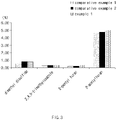
- FIG. 3 shows results of the content analysis of aromatic components other than the pyrazine-based compound for Comparative Example 1, Comparative Example 2, and Example 1.
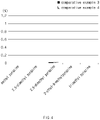
- FIG. 4 shows results of the content analysis of the pyrazine-based compound for Comparative Example 3 and Comparative Example 4
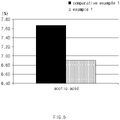
- FIG. 5 shows results of the content analysis of the acetic acid for Comparative Example 1 and Example 1.
- Example 1 is excellent in terms of the content of the pyrazine-based compound compared to that of Comparative Example 1 in which the mushroom processed product was not used when preparing a flavour enhancer, and contains the pyrazine-based compound at a level similar to that of Comparative Example 2 using IMP.
- Example 1 is also excellent in terms of the content of aromatic components other than the pyrazine-based compounds compared to those of Comparative Examples 1 and 2.
- Example 1 when the composition of Example 1 is not subjected to high-temperature ⁇ high-pressure treatment, or a reaction between the components in the composition for preparing a flavour enhancer is not sufficiently performed, the flavour enhancer according to the present application is not prepared, and an effect of enhancing flavour is poor.
- composition of the amino acid in the flavour enhancer was analyzed using an amino acid analyzer (L-8900 amino acid analyzer with two single channel colorimeters, column: 2622SC-PH ion exchange column (4.6X60mm, Hitachi, Co., Jap), solution: sodium acetate buffer (MCI buffer PH1, PH4, RG), and a Ninhydrin solution (R1, R2)).
- amino acid analyzer L-8900 amino acid analyzer with two single channel colorimeters, column: 2622SC-PH ion exchange column (4.6X60mm, Hitachi, Co., Jap), solution: sodium acetate buffer (MCI buffer PH1, PH4, RG), and a Ninhydrin solution (R1, R2)).
- FIG. 6 and FIG. 7 show results of the content analysis of components of the amino acid for Comparative Example 1, Comparative Example 2, and Example 1.
- Example 1 is superior to Comparative Example 1 and Comparative Example 2 in terms of the content of the glutamic acid and the aspartic acid, which are umami taste components.
- Example 1 is excellent in terms of the content of amino acids such as threonine, serine, tyrosine, and lysine other than the above two amino acids compared to those of Comparative Example 1 and Comparative Example 2.
- a flavour enhancer was prepared in the same manner as in Preparation Example 1, except that the composition for preparing a flavour enhancer was blended in the composition shown in Table 6 below. In order to confirm the effect of the flavour enhancer according to the content of the mushroom processed product, the blending was performed by varying the content of the mushroom processed product, and the composition of Example 1 prepared above is also shown in Table 6 below.
- FIG. 8 shows results of the component analysis for the pyrazine-based compound
- FIG. 9 shows results of the component analysis for aromatic components other than the pyrazine-based compound
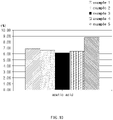
- FIG. 10 shows results of the component analysis for the acetic acid
- FIG. 11 shows results of the component analysis for the glutamic acid and the aspartic acid
- FIG. 12 shows results of the component analysis for an amino acid other than the glutamic acid and the aspartic acid.
- Example 1 Example 4, and Example 5 which exhibited a large difference in the content of pyrazine-based compounds, were selected to perform evaluation on the intensity of meat flavour, sensory for the preference thereof, sensory for the intensity of umami taste due to the difference in the content of acidic amino acids exhibiting the umami taste.
- flavour enhancer according to Example 4 exhibited the best results in sensory evaluation for taste.
Landscapes
- Life Sciences & Earth Sciences (AREA)
- Chemical & Material Sciences (AREA)
- Health & Medical Sciences (AREA)
- Nutrition Science (AREA)
- Engineering & Computer Science (AREA)
- Food Science & Technology (AREA)
- Polymers & Plastics (AREA)
- Microbiology (AREA)
- Mycology (AREA)
- Inorganic Chemistry (AREA)
- Seasonings (AREA)
Applications Claiming Priority (2)
| Application Number | Priority Date | Filing Date | Title |
|---|---|---|---|
| KR1020190116221A KR102374566B1 (ko) | 2019-09-20 | 2019-09-20 | 향미증진제 및 이의 제조 방법 |
| PCT/KR2020/012618 WO2021054763A1 (fr) | 2019-09-20 | 2020-09-18 | Exhausteur de goût et son procédé de préparation |
Publications (3)
| Publication Number | Publication Date |
|---|---|
| EP4032412A1 true EP4032412A1 (fr) | 2022-07-27 |
| EP4032412A4 EP4032412A4 (fr) | 2024-02-21 |
| EP4032412B1 EP4032412B1 (fr) | 2025-06-25 |
Family
ID=74883500
Family Applications (1)
| Application Number | Title | Priority Date | Filing Date |
|---|---|---|---|
| EP20864400.5A Active EP4032412B1 (fr) | 2019-09-20 | 2020-09-18 | Exhausteur de goût et son procédé de préparation |
Country Status (5)
| Country | Link |
|---|---|
| US (1) | US20220295852A1 (fr) |
| EP (1) | EP4032412B1 (fr) |
| KR (1) | KR102374566B1 (fr) |
| AU (1) | AU2020348144B2 (fr) |
| WO (1) | WO2021054763A1 (fr) |
Families Citing this family (4)
| Publication number | Priority date | Publication date | Assignee | Title |
|---|---|---|---|---|
| CN115247137B (zh) * | 2021-04-28 | 2023-05-26 | 四川大学 | 一株能提升酱油风味的地衣芽孢杆菌及其在发酵食品中的应用 |
| KR102767769B1 (ko) * | 2021-11-02 | 2025-02-12 | 삼성웰스토리 주식회사 | 식물성 저염 조미 소스 조성물 및 이의 제조방법 |
| CN114431448B (zh) * | 2022-02-23 | 2023-07-25 | 南京高新工大生物技术研究院有限公司 | 一种基于食用菌发酵技术的调味品及其制备方法 |
| KR102816059B1 (ko) | 2022-04-28 | 2025-06-02 | 농업회사법인(주)애니웰 | 동애등에 단백질 가수분해물을 이용한 반려동물 사료용 향미증진제의 제조방법 |
Family Cites Families (8)
| Publication number | Priority date | Publication date | Assignee | Title |
|---|---|---|---|---|
| KR100830886B1 (ko) * | 2006-07-25 | 2008-05-21 | 단국대학교 산학협력단 | 쓴맛이 없고 고기 향이 강한 소고기 조미 분말의 제조 방법 |
| CA2783621C (fr) * | 2009-12-28 | 2018-05-29 | The Coca-Cola Company | Adjuvants de sucrosite, compositions de ceux-ci, et procedes pour utilisation |
| UA111078C2 (uk) * | 2011-05-03 | 2016-03-25 | Нестек С.А. | Гідролізат білкового субстрату і спосіб його виготовлення |
| KR101333092B1 (ko) * | 2011-06-07 | 2013-11-27 | 이화여자대학교 산학협력단 | 식품 또는 메일라드 반응 산물에 함유된 휘발성 성분-관능 특성 상관 관계의 비특이적 분석방법, 및 이를 이용하여 제조된 향미 조성물 |
| CN102613587B (zh) * | 2012-04-28 | 2013-09-11 | 南京农业大学 | 四非肉制品加工方法 |
| JP5954758B1 (ja) * | 2015-05-28 | 2016-07-20 | 長岡香料株式会社 | 呈味増強剤の製造方法 |
| CN106235328A (zh) * | 2016-07-28 | 2016-12-21 | 黑龙江福和华星制药集团股份有限公司 | 火锅专用型鹅精及其制备方法 |
| CN107822081A (zh) * | 2017-10-30 | 2018-03-23 | 聊城市新恒基生物科技有限公司 | 一种香菇牛肉风味膏状香精及其制备方法 |
-
2019
- 2019-09-20 KR KR1020190116221A patent/KR102374566B1/ko active Active
-
2020
- 2020-09-18 EP EP20864400.5A patent/EP4032412B1/fr active Active
- 2020-09-18 US US17/634,833 patent/US20220295852A1/en not_active Abandoned
- 2020-09-18 WO PCT/KR2020/012618 patent/WO2021054763A1/fr not_active Ceased
- 2020-09-18 AU AU2020348144A patent/AU2020348144B2/en active Active
Also Published As
| Publication number | Publication date |
|---|---|
| US20220295852A1 (en) | 2022-09-22 |
| EP4032412B1 (fr) | 2025-06-25 |
| KR102374566B1 (ko) | 2022-03-15 |
| AU2020348144A1 (en) | 2022-03-24 |
| AU2020348144B2 (en) | 2024-02-15 |
| KR20210034360A (ko) | 2021-03-30 |
| WO2021054763A1 (fr) | 2021-03-25 |
| EP4032412A4 (fr) | 2024-02-21 |
Similar Documents
| Publication | Publication Date | Title |
|---|---|---|
| EP4032412B1 (fr) | Exhausteur de goût et son procédé de préparation | |
| CN1140190C (zh) | 食盐味增强方法、食盐味增强剂、食盐味调料以及食盐味增强食品 | |
| Hong et al. | Glucosamine-induced glycation of hydrolysed meat proteins in the presence or absence of transglutaminase: Chemical modifications and taste-enhancing activity | |
| EP2253227A1 (fr) | Agent de renforcement de salinité et aliment ou boisson le contenant | |
| JP5628499B2 (ja) | 塩味増強剤を含有する低食塩醤油又は低食塩醤油調味料 | |
| JP2009148216A (ja) | 塩味増強剤及びその製造方法 | |
| JPWO2004107880A1 (ja) | 調味料 | |
| JP7637620B2 (ja) | グルタチオンからシステインを生成する方法 | |
| JP4453057B2 (ja) | システイニルグリシン高含有食品素材および食品の風味増強剤の製造法 | |
| CN106262576B (zh) | 咸味增强剂 | |
| JP5628501B2 (ja) | 塩味増強剤を含有する低食塩味噌又は低食塩味噌調味料 | |
| JP2830415B2 (ja) | フレーバー組成物の製造法 | |
| CN108634280B (zh) | 一种鲜味六肽及其用途 | |
| AU2006206692B2 (en) | Methods for flavor enhancement | |
| CN117981859A (zh) | 一种香精基料及其制备方法 | |
| JP2007319110A (ja) | 辛味増強方法 | |
| JP2011062169A (ja) | 塩味増強剤を含有する米飯類又は麺類の調理品 | |
| KR20250093895A (ko) | 초임계 추출한 라드를 포함하는 향미 증강 조성물 및 향미 증가방법 | |
| JP2025031689A (ja) | 食品のうま味増強剤 | |
| JP5628500B2 (ja) | 塩味増強剤を含有する麺類用スープ又は麺類用つゆ | |
| HK1228206A1 (en) | Salty taste enhancer | |
| JP2008000090A (ja) | 調味料の製造方法及びコク味増強方法 | |
| JPH10117723A (ja) | ペースト状肉及び風味増強調味料の製法 | |
| HK1054673A (en) | Process for producing cysteinylglycine-enriched food material and process for producing flavor-enhancing agent |
Legal Events
| Date | Code | Title | Description |
|---|---|---|---|
| STAA | Information on the status of an ep patent application or granted ep patent |
Free format text: STATUS: THE INTERNATIONAL PUBLICATION HAS BEEN MADE |
|
| PUAI | Public reference made under article 153(3) epc to a published international application that has entered the european phase |
Free format text: ORIGINAL CODE: 0009012 |
|
| STAA | Information on the status of an ep patent application or granted ep patent |
Free format text: STATUS: REQUEST FOR EXAMINATION WAS MADE |
|
| 17P | Request for examination filed |
Effective date: 20220224 |
|
| AK | Designated contracting states |
Kind code of ref document: A1 Designated state(s): AL AT BE BG CH CY CZ DE DK EE ES FI FR GB GR HR HU IE IS IT LI LT LU LV MC MK MT NL NO PL PT RO RS SE SI SK SM TR |
|
| DAV | Request for validation of the european patent (deleted) | ||
| DAX | Request for extension of the european patent (deleted) | ||
| P01 | Opt-out of the competence of the unified patent court (upc) registered |
Effective date: 20230606 |
|
| RIC1 | Information provided on ipc code assigned before grant |
Ipc: A23L 29/00 20160101ALI20230830BHEP Ipc: A23L 13/40 20160101ALI20230830BHEP Ipc: A23L 5/00 20160101ALI20230830BHEP Ipc: A23L 31/15 20160101ALI20230830BHEP Ipc: A23L 27/00 20160101AFI20230830BHEP |
|
| A4 | Supplementary search report drawn up and despatched |
Effective date: 20240118 |
|
| RIC1 | Information provided on ipc code assigned before grant |
Ipc: A23L 29/00 20160101ALI20240112BHEP Ipc: A23L 13/40 20160101ALI20240112BHEP Ipc: A23L 5/00 20160101ALI20240112BHEP Ipc: A23L 31/15 20160101ALI20240112BHEP Ipc: A23L 27/00 20160101AFI20240112BHEP |
|
| STAA | Information on the status of an ep patent application or granted ep patent |
Free format text: STATUS: EXAMINATION IS IN PROGRESS |
|
| 17Q | First examination report despatched |
Effective date: 20240930 |
|
| GRAP | Despatch of communication of intention to grant a patent |
Free format text: ORIGINAL CODE: EPIDOSNIGR1 |
|
| STAA | Information on the status of an ep patent application or granted ep patent |
Free format text: STATUS: GRANT OF PATENT IS INTENDED |
|
| INTG | Intention to grant announced |
Effective date: 20250116 |
|
| GRAS | Grant fee paid |
Free format text: ORIGINAL CODE: EPIDOSNIGR3 |
|
| GRAA | (expected) grant |
Free format text: ORIGINAL CODE: 0009210 |
|
| STAA | Information on the status of an ep patent application or granted ep patent |
Free format text: STATUS: THE PATENT HAS BEEN GRANTED |
|
| AK | Designated contracting states |
Kind code of ref document: B1 Designated state(s): AL AT BE BG CH CY CZ DE DK EE ES FI FR GB GR HR HU IE IS IT LI LT LU LV MC MK MT NL NO PL PT RO RS SE SI SK SM TR |
|
| REG | Reference to a national code |
Ref country code: GB Ref legal event code: FG4D |
|
| REG | Reference to a national code |
Ref country code: CH Ref legal event code: EP |
|
| REG | Reference to a national code |
Ref country code: CH Ref legal event code: EP |
|
| REG | Reference to a national code |
Ref country code: IE Ref legal event code: FG4D |
|
| REG | Reference to a national code |
Ref country code: DE Ref legal event code: R096 Ref document number: 602020053490 Country of ref document: DE |
|
| PG25 | Lapsed in a contracting state [announced via postgrant information from national office to epo] |
Ref country code: FI Free format text: LAPSE BECAUSE OF FAILURE TO SUBMIT A TRANSLATION OF THE DESCRIPTION OR TO PAY THE FEE WITHIN THE PRESCRIBED TIME-LIMIT Effective date: 20250625 |
|
| REG | Reference to a national code |
Ref country code: LT Ref legal event code: MG9D |
|
| PG25 | Lapsed in a contracting state [announced via postgrant information from national office to epo] |
Ref country code: NO Free format text: LAPSE BECAUSE OF FAILURE TO SUBMIT A TRANSLATION OF THE DESCRIPTION OR TO PAY THE FEE WITHIN THE PRESCRIBED TIME-LIMIT Effective date: 20250925 Ref country code: GR Free format text: LAPSE BECAUSE OF FAILURE TO SUBMIT A TRANSLATION OF THE DESCRIPTION OR TO PAY THE FEE WITHIN THE PRESCRIBED TIME-LIMIT Effective date: 20250926 |
|
| PG25 | Lapsed in a contracting state [announced via postgrant information from national office to epo] |
Ref country code: BG Free format text: LAPSE BECAUSE OF FAILURE TO SUBMIT A TRANSLATION OF THE DESCRIPTION OR TO PAY THE FEE WITHIN THE PRESCRIBED TIME-LIMIT Effective date: 20250625 |
|
| PG25 | Lapsed in a contracting state [announced via postgrant information from national office to epo] |
Ref country code: HR Free format text: LAPSE BECAUSE OF FAILURE TO SUBMIT A TRANSLATION OF THE DESCRIPTION OR TO PAY THE FEE WITHIN THE PRESCRIBED TIME-LIMIT Effective date: 20250625 |
|
| PG25 | Lapsed in a contracting state [announced via postgrant information from national office to epo] |
Ref country code: RS Free format text: LAPSE BECAUSE OF FAILURE TO SUBMIT A TRANSLATION OF THE DESCRIPTION OR TO PAY THE FEE WITHIN THE PRESCRIBED TIME-LIMIT Effective date: 20250925 |
|
| PG25 | Lapsed in a contracting state [announced via postgrant information from national office to epo] |
Ref country code: LV Free format text: LAPSE BECAUSE OF FAILURE TO SUBMIT A TRANSLATION OF THE DESCRIPTION OR TO PAY THE FEE WITHIN THE PRESCRIBED TIME-LIMIT Effective date: 20250625 |
|
| REG | Reference to a national code |
Ref country code: NL Ref legal event code: MP Effective date: 20250625 |
|
| PG25 | Lapsed in a contracting state [announced via postgrant information from national office to epo] |
Ref country code: NL Free format text: LAPSE BECAUSE OF FAILURE TO SUBMIT A TRANSLATION OF THE DESCRIPTION OR TO PAY THE FEE WITHIN THE PRESCRIBED TIME-LIMIT Effective date: 20250625 |
|
| PG25 | Lapsed in a contracting state [announced via postgrant information from national office to epo] |
Ref country code: PT Free format text: LAPSE BECAUSE OF FAILURE TO SUBMIT A TRANSLATION OF THE DESCRIPTION OR TO PAY THE FEE WITHIN THE PRESCRIBED TIME-LIMIT Effective date: 20251027 |
|
| REG | Reference to a national code |
Ref country code: AT Ref legal event code: MK05 Ref document number: 1805486 Country of ref document: AT Kind code of ref document: T Effective date: 20250625 |
|
| PG25 | Lapsed in a contracting state [announced via postgrant information from national office to epo] |
Ref country code: IS Free format text: LAPSE BECAUSE OF FAILURE TO SUBMIT A TRANSLATION OF THE DESCRIPTION OR TO PAY THE FEE WITHIN THE PRESCRIBED TIME-LIMIT Effective date: 20251025 |
|
| PG25 | Lapsed in a contracting state [announced via postgrant information from national office to epo] |
Ref country code: AT Free format text: LAPSE BECAUSE OF FAILURE TO SUBMIT A TRANSLATION OF THE DESCRIPTION OR TO PAY THE FEE WITHIN THE PRESCRIBED TIME-LIMIT Effective date: 20250625 Ref country code: SM Free format text: LAPSE BECAUSE OF FAILURE TO SUBMIT A TRANSLATION OF THE DESCRIPTION OR TO PAY THE FEE WITHIN THE PRESCRIBED TIME-LIMIT Effective date: 20250625 |
|
| PG25 | Lapsed in a contracting state [announced via postgrant information from national office to epo] |
Ref country code: CZ Free format text: LAPSE BECAUSE OF FAILURE TO SUBMIT A TRANSLATION OF THE DESCRIPTION OR TO PAY THE FEE WITHIN THE PRESCRIBED TIME-LIMIT Effective date: 20250625 |
|
| PG25 | Lapsed in a contracting state [announced via postgrant information from national office to epo] |
Ref country code: PL Free format text: LAPSE BECAUSE OF FAILURE TO SUBMIT A TRANSLATION OF THE DESCRIPTION OR TO PAY THE FEE WITHIN THE PRESCRIBED TIME-LIMIT Effective date: 20250625 |
|
| PG25 | Lapsed in a contracting state [announced via postgrant information from national office to epo] |
Ref country code: EE Free format text: LAPSE BECAUSE OF FAILURE TO SUBMIT A TRANSLATION OF THE DESCRIPTION OR TO PAY THE FEE WITHIN THE PRESCRIBED TIME-LIMIT Effective date: 20250625 |
|
| PG25 | Lapsed in a contracting state [announced via postgrant information from national office to epo] |
Ref country code: SK Free format text: LAPSE BECAUSE OF FAILURE TO SUBMIT A TRANSLATION OF THE DESCRIPTION OR TO PAY THE FEE WITHIN THE PRESCRIBED TIME-LIMIT Effective date: 20250625 |
|
| PG25 | Lapsed in a contracting state [announced via postgrant information from national office to epo] |
Ref country code: ES Free format text: LAPSE BECAUSE OF FAILURE TO SUBMIT A TRANSLATION OF THE DESCRIPTION OR TO PAY THE FEE WITHIN THE PRESCRIBED TIME-LIMIT Effective date: 20250625 |
|
| PG25 | Lapsed in a contracting state [announced via postgrant information from national office to epo] |
Ref country code: RO Free format text: LAPSE BECAUSE OF FAILURE TO SUBMIT A TRANSLATION OF THE DESCRIPTION OR TO PAY THE FEE WITHIN THE PRESCRIBED TIME-LIMIT Effective date: 20250625 |
|
| PG25 | Lapsed in a contracting state [announced via postgrant information from national office to epo] |
Ref country code: DK Free format text: LAPSE BECAUSE OF FAILURE TO SUBMIT A TRANSLATION OF THE DESCRIPTION OR TO PAY THE FEE WITHIN THE PRESCRIBED TIME-LIMIT Effective date: 20250625 |
|
| PG25 | Lapsed in a contracting state [announced via postgrant information from national office to epo] |
Ref country code: IT Free format text: LAPSE BECAUSE OF FAILURE TO SUBMIT A TRANSLATION OF THE DESCRIPTION OR TO PAY THE FEE WITHIN THE PRESCRIBED TIME-LIMIT Effective date: 20250625 |
|
| REG | Reference to a national code |
Ref country code: CH Ref legal event code: H13 Free format text: ST27 STATUS EVENT CODE: U-0-0-H10-H13 (AS PROVIDED BY THE NATIONAL OFFICE) Effective date: 20260425 |
|
| PLBE | No opposition filed within time limit |
Free format text: ORIGINAL CODE: 0009261 |
|
| STAA | Information on the status of an ep patent application or granted ep patent |
Free format text: STATUS: NO OPPOSITION FILED WITHIN TIME LIMIT |