EP4032761B1 - Bremsassistentsystem zur vermeidung von heckkollisionen eines fahrzeugs und steuerungsverfahren dafür - Google Patents
Bremsassistentsystem zur vermeidung von heckkollisionen eines fahrzeugs und steuerungsverfahren dafür Download PDFInfo
- Publication number
- EP4032761B1 EP4032761B1 EP21215552.7A EP21215552A EP4032761B1 EP 4032761 B1 EP4032761 B1 EP 4032761B1 EP 21215552 A EP21215552 A EP 21215552A EP 4032761 B1 EP4032761 B1 EP 4032761B1
- Authority
- EP
- European Patent Office
- Prior art keywords
- estimated
- collision
- ego vehicle
- vehicle
- speed
- Prior art date
- Legal status (The legal status is an assumption and is not a legal conclusion. Google has not performed a legal analysis and makes no representation as to the accuracy of the status listed.)
- Active
Links
Images

Classifications
-
- B—PERFORMING OPERATIONS; TRANSPORTING
- B60—VEHICLES IN GENERAL
- B60T—VEHICLE BRAKE CONTROL SYSTEMS OR PARTS THEREOF; BRAKE CONTROL SYSTEMS OR PARTS THEREOF, IN GENERAL; ARRANGEMENT OF BRAKING ELEMENTS ON VEHICLES IN GENERAL; PORTABLE DEVICES FOR PREVENTING UNWANTED MOVEMENT OF VEHICLES; VEHICLE MODIFICATIONS TO FACILITATE COOLING OF BRAKES
- B60T7/00—Brake-action initiating means
- B60T7/12—Brake-action initiating means for automatic initiation; for initiation not subject to will of driver or passenger
- B60T7/22—Brake-action initiating means for automatic initiation; for initiation not subject to will of driver or passenger initiated by contact of vehicle, e.g. bumper, with an external object, e.g. another vehicle, or by means of contactless obstacle detectors mounted on the vehicle
-
- B—PERFORMING OPERATIONS; TRANSPORTING
- B60—VEHICLES IN GENERAL
- B60W—CONJOINT CONTROL OF VEHICLE SUB-UNITS OF DIFFERENT TYPE OR DIFFERENT FUNCTION; CONTROL SYSTEMS SPECIALLY ADAPTED FOR HYBRID VEHICLES; ROAD VEHICLE DRIVE CONTROL SYSTEMS FOR PURPOSES NOT RELATED TO THE CONTROL OF A PARTICULAR SUB-UNIT
- B60W30/00—Purposes of road vehicle drive control systems not related to the control of a particular sub-unit, e.g. of systems using conjoint control of vehicle sub-units
- B60W30/08—Active safety systems predicting or avoiding probable or impending collision or attempting to minimise its consequences
- B60W30/09—Taking automatic action to avoid collision, e.g. braking and steering
-
- B—PERFORMING OPERATIONS; TRANSPORTING
- B60—VEHICLES IN GENERAL
- B60T—VEHICLE BRAKE CONTROL SYSTEMS OR PARTS THEREOF; BRAKE CONTROL SYSTEMS OR PARTS THEREOF, IN GENERAL; ARRANGEMENT OF BRAKING ELEMENTS ON VEHICLES IN GENERAL; PORTABLE DEVICES FOR PREVENTING UNWANTED MOVEMENT OF VEHICLES; VEHICLE MODIFICATIONS TO FACILITATE COOLING OF BRAKES
- B60T7/00—Brake-action initiating means
- B60T7/12—Brake-action initiating means for automatic initiation; for initiation not subject to will of driver or passenger
-
- B—PERFORMING OPERATIONS; TRANSPORTING
- B60—VEHICLES IN GENERAL
- B60R—VEHICLES, VEHICLE FITTINGS, OR VEHICLE PARTS, NOT OTHERWISE PROVIDED FOR
- B60R21/00—Arrangements or fittings on vehicles for protecting or preventing injuries to occupants or pedestrians in case of accidents or other traffic risks
- B60R21/01—Electrical circuits for triggering passive safety arrangements, e.g. airbags, safety belt tighteners, in case of vehicle accidents or impending vehicle accidents
- B60R21/013—Electrical circuits for triggering passive safety arrangements, e.g. airbags, safety belt tighteners, in case of vehicle accidents or impending vehicle accidents including means for detecting collisions, impending collisions or roll-over
- B60R21/0134—Electrical circuits for triggering passive safety arrangements, e.g. airbags, safety belt tighteners, in case of vehicle accidents or impending vehicle accidents including means for detecting collisions, impending collisions or roll-over responsive to imminent contact with an obstacle, e.g. using radar systems
-
- B—PERFORMING OPERATIONS; TRANSPORTING
- B60—VEHICLES IN GENERAL
- B60T—VEHICLE BRAKE CONTROL SYSTEMS OR PARTS THEREOF; BRAKE CONTROL SYSTEMS OR PARTS THEREOF, IN GENERAL; ARRANGEMENT OF BRAKING ELEMENTS ON VEHICLES IN GENERAL; PORTABLE DEVICES FOR PREVENTING UNWANTED MOVEMENT OF VEHICLES; VEHICLE MODIFICATIONS TO FACILITATE COOLING OF BRAKES
- B60T8/00—Arrangements for adjusting wheel-braking force to meet varying vehicular or ground-surface conditions, e.g. limiting or varying distribution of braking force
- B60T8/24—Arrangements for adjusting wheel-braking force to meet varying vehicular or ground-surface conditions, e.g. limiting or varying distribution of braking force responsive to vehicle inclination or change of direction, e.g. negotiating bends
- B60T8/245—Longitudinal vehicle inclination
-
- B—PERFORMING OPERATIONS; TRANSPORTING
- B60—VEHICLES IN GENERAL
- B60W—CONJOINT CONTROL OF VEHICLE SUB-UNITS OF DIFFERENT TYPE OR DIFFERENT FUNCTION; CONTROL SYSTEMS SPECIALLY ADAPTED FOR HYBRID VEHICLES; ROAD VEHICLE DRIVE CONTROL SYSTEMS FOR PURPOSES NOT RELATED TO THE CONTROL OF A PARTICULAR SUB-UNIT
- B60W10/00—Conjoint control of vehicle sub-units of different type or different function
- B60W10/18—Conjoint control of vehicle sub-units of different type or different function including control of braking systems
-
- B—PERFORMING OPERATIONS; TRANSPORTING
- B60—VEHICLES IN GENERAL
- B60W—CONJOINT CONTROL OF VEHICLE SUB-UNITS OF DIFFERENT TYPE OR DIFFERENT FUNCTION; CONTROL SYSTEMS SPECIALLY ADAPTED FOR HYBRID VEHICLES; ROAD VEHICLE DRIVE CONTROL SYSTEMS FOR PURPOSES NOT RELATED TO THE CONTROL OF A PARTICULAR SUB-UNIT
- B60W40/00—Estimation or calculation of non-directly measurable driving parameters for road vehicle drive control systems not related to the control of a particular sub unit, e.g. by using mathematical models
- B60W40/02—Estimation or calculation of non-directly measurable driving parameters for road vehicle drive control systems not related to the control of a particular sub unit, e.g. by using mathematical models related to ambient conditions
- B60W40/06—Road conditions
- B60W40/076—Slope angle of the road
-
- B—PERFORMING OPERATIONS; TRANSPORTING
- B60—VEHICLES IN GENERAL
- B60W—CONJOINT CONTROL OF VEHICLE SUB-UNITS OF DIFFERENT TYPE OR DIFFERENT FUNCTION; CONTROL SYSTEMS SPECIALLY ADAPTED FOR HYBRID VEHICLES; ROAD VEHICLE DRIVE CONTROL SYSTEMS FOR PURPOSES NOT RELATED TO THE CONTROL OF A PARTICULAR SUB-UNIT
- B60W40/00—Estimation or calculation of non-directly measurable driving parameters for road vehicle drive control systems not related to the control of a particular sub unit, e.g. by using mathematical models
- B60W40/10—Estimation or calculation of non-directly measurable driving parameters for road vehicle drive control systems not related to the control of a particular sub unit, e.g. by using mathematical models related to vehicle motion
- B60W40/105—Speed
-
- G—PHYSICS
- G01—MEASURING; TESTING
- G01S—RADIO DIRECTION-FINDING; RADIO NAVIGATION; DETERMINING DISTANCE OR VELOCITY BY USE OF RADIO WAVES; LOCATING OR PRESENCE-DETECTING BY USE OF THE REFLECTION OR RERADIATION OF RADIO WAVES; ANALOGOUS ARRANGEMENTS USING OTHER WAVES
- G01S13/00—Systems using the reflection or reradiation of radio waves, e.g. radar systems; Analogous systems using reflection or reradiation of waves whose nature or wavelength is irrelevant or unspecified
- G01S13/88—Radar or analogous systems specially adapted for specific applications
- G01S13/93—Radar or analogous systems specially adapted for specific applications for anti-collision purposes
- G01S13/931—Radar or analogous systems specially adapted for specific applications for anti-collision purposes of land vehicles
-
- B—PERFORMING OPERATIONS; TRANSPORTING
- B60—VEHICLES IN GENERAL
- B60T—VEHICLE BRAKE CONTROL SYSTEMS OR PARTS THEREOF; BRAKE CONTROL SYSTEMS OR PARTS THEREOF, IN GENERAL; ARRANGEMENT OF BRAKING ELEMENTS ON VEHICLES IN GENERAL; PORTABLE DEVICES FOR PREVENTING UNWANTED MOVEMENT OF VEHICLES; VEHICLE MODIFICATIONS TO FACILITATE COOLING OF BRAKES
- B60T2201/00—Particular use of vehicle brake systems; Special systems using also the brakes; Special software modules within the brake system controller
- B60T2201/02—Active or adaptive cruise control system; Distance control
- B60T2201/022—Collision avoidance systems
-
- B—PERFORMING OPERATIONS; TRANSPORTING
- B60—VEHICLES IN GENERAL
- B60T—VEHICLE BRAKE CONTROL SYSTEMS OR PARTS THEREOF; BRAKE CONTROL SYSTEMS OR PARTS THEREOF, IN GENERAL; ARRANGEMENT OF BRAKING ELEMENTS ON VEHICLES IN GENERAL; PORTABLE DEVICES FOR PREVENTING UNWANTED MOVEMENT OF VEHICLES; VEHICLE MODIFICATIONS TO FACILITATE COOLING OF BRAKES
- B60T2201/00—Particular use of vehicle brake systems; Special systems using also the brakes; Special software modules within the brake system controller
- B60T2201/03—Brake assistants
-
- B—PERFORMING OPERATIONS; TRANSPORTING
- B60—VEHICLES IN GENERAL
- B60T—VEHICLE BRAKE CONTROL SYSTEMS OR PARTS THEREOF; BRAKE CONTROL SYSTEMS OR PARTS THEREOF, IN GENERAL; ARRANGEMENT OF BRAKING ELEMENTS ON VEHICLES IN GENERAL; PORTABLE DEVICES FOR PREVENTING UNWANTED MOVEMENT OF VEHICLES; VEHICLE MODIFICATIONS TO FACILITATE COOLING OF BRAKES
- B60T2210/00—Detection or estimation of road or environment conditions; Detection or estimation of road shapes
- B60T2210/20—Road shapes
-
- B—PERFORMING OPERATIONS; TRANSPORTING
- B60—VEHICLES IN GENERAL
- B60T—VEHICLE BRAKE CONTROL SYSTEMS OR PARTS THEREOF; BRAKE CONTROL SYSTEMS OR PARTS THEREOF, IN GENERAL; ARRANGEMENT OF BRAKING ELEMENTS ON VEHICLES IN GENERAL; PORTABLE DEVICES FOR PREVENTING UNWANTED MOVEMENT OF VEHICLES; VEHICLE MODIFICATIONS TO FACILITATE COOLING OF BRAKES
- B60T2210/00—Detection or estimation of road or environment conditions; Detection or estimation of road shapes
- B60T2210/30—Environment conditions or position therewithin
- B60T2210/32—Vehicle surroundings
-
- B—PERFORMING OPERATIONS; TRANSPORTING
- B60—VEHICLES IN GENERAL
- B60T—VEHICLE BRAKE CONTROL SYSTEMS OR PARTS THEREOF; BRAKE CONTROL SYSTEMS OR PARTS THEREOF, IN GENERAL; ARRANGEMENT OF BRAKING ELEMENTS ON VEHICLES IN GENERAL; PORTABLE DEVICES FOR PREVENTING UNWANTED MOVEMENT OF VEHICLES; VEHICLE MODIFICATIONS TO FACILITATE COOLING OF BRAKES
- B60T2230/00—Monitoring, detecting special vehicle behaviour; Counteracting thereof
- B60T2230/08—Driving in reverse
-
- B—PERFORMING OPERATIONS; TRANSPORTING
- B60—VEHICLES IN GENERAL
- B60T—VEHICLE BRAKE CONTROL SYSTEMS OR PARTS THEREOF; BRAKE CONTROL SYSTEMS OR PARTS THEREOF, IN GENERAL; ARRANGEMENT OF BRAKING ELEMENTS ON VEHICLES IN GENERAL; PORTABLE DEVICES FOR PREVENTING UNWANTED MOVEMENT OF VEHICLES; VEHICLE MODIFICATIONS TO FACILITATE COOLING OF BRAKES
- B60T2250/00—Monitoring, detecting, estimating vehicle conditions
- B60T2250/04—Vehicle reference speed; Vehicle body speed
-
- B—PERFORMING OPERATIONS; TRANSPORTING
- B60—VEHICLES IN GENERAL
- B60W—CONJOINT CONTROL OF VEHICLE SUB-UNITS OF DIFFERENT TYPE OR DIFFERENT FUNCTION; CONTROL SYSTEMS SPECIALLY ADAPTED FOR HYBRID VEHICLES; ROAD VEHICLE DRIVE CONTROL SYSTEMS FOR PURPOSES NOT RELATED TO THE CONTROL OF A PARTICULAR SUB-UNIT
- B60W2520/00—Input parameters relating to overall vehicle dynamics
- B60W2520/10—Longitudinal speed
-
- B—PERFORMING OPERATIONS; TRANSPORTING
- B60—VEHICLES IN GENERAL
- B60W—CONJOINT CONTROL OF VEHICLE SUB-UNITS OF DIFFERENT TYPE OR DIFFERENT FUNCTION; CONTROL SYSTEMS SPECIALLY ADAPTED FOR HYBRID VEHICLES; ROAD VEHICLE DRIVE CONTROL SYSTEMS FOR PURPOSES NOT RELATED TO THE CONTROL OF A PARTICULAR SUB-UNIT
- B60W2552/00—Input parameters relating to infrastructure
- B60W2552/15—Road slope, i.e. the inclination of a road segment in the longitudinal direction
-
- B—PERFORMING OPERATIONS; TRANSPORTING
- B60—VEHICLES IN GENERAL
- B60W—CONJOINT CONTROL OF VEHICLE SUB-UNITS OF DIFFERENT TYPE OR DIFFERENT FUNCTION; CONTROL SYSTEMS SPECIALLY ADAPTED FOR HYBRID VEHICLES; ROAD VEHICLE DRIVE CONTROL SYSTEMS FOR PURPOSES NOT RELATED TO THE CONTROL OF A PARTICULAR SUB-UNIT
- B60W2552/00—Input parameters relating to infrastructure
- B60W2552/50—Barriers
-
- B—PERFORMING OPERATIONS; TRANSPORTING
- B60—VEHICLES IN GENERAL
- B60W—CONJOINT CONTROL OF VEHICLE SUB-UNITS OF DIFFERENT TYPE OR DIFFERENT FUNCTION; CONTROL SYSTEMS SPECIALLY ADAPTED FOR HYBRID VEHICLES; ROAD VEHICLE DRIVE CONTROL SYSTEMS FOR PURPOSES NOT RELATED TO THE CONTROL OF A PARTICULAR SUB-UNIT
- B60W2554/00—Input parameters relating to objects
- B60W2554/40—Dynamic objects, e.g. animals, windblown objects
- B60W2554/404—Characteristics
- B60W2554/4042—Longitudinal speed
-
- B—PERFORMING OPERATIONS; TRANSPORTING
- B60—VEHICLES IN GENERAL
- B60Y—INDEXING SCHEME RELATING TO ASPECTS CROSS-CUTTING VEHICLE TECHNOLOGY
- B60Y2300/00—Purposes or special features of road vehicle drive control systems
- B60Y2300/08—Predicting or avoiding probable or impending collision
- B60Y2300/09—Taking automatic action to avoid collision, e.g. braking or steering
Definitions
- the present invention relates to a rear collision traffic assist brake (RCTB) system for preventing a rear collision of a vehicle.
- RCTB rear collision traffic assist brake
- the RCTB system is a safety system that prevents a vehicle from colliding with an obstacle approaching from a rear side when a driver tries to pull the vehicle out from a parking state in which it is difficult to observe the rear side, etc., and warns the driver and actively brakes to prevent a collision when a collision is predicted.
- the RCTB system detects a rear-side approach obstacle and performs braking, actual braking performance may not be sufficiently exhibited depending on the condition of the vehicle or road, and thus there is a possibility that a collision accident may occur.
- US 2017/0057474 A1 discloses a rear cross traffic avoidance system including an object detection device sensing remote objects rearward of a host vehicle.
- an object classifier distinguishes a remote dynamic object from remote static objects and identifies a shape of the dynamic object
- a tracking system tracks the remote dynamic object
- a processor determines the remote object being on an intersecting path to the remote vehicle, wherein the processor determines a warning threat assessment as a function of a time to intersect between the host vehicle and the remote dynamic object and determines a brake threat assessment in response to an actuated warning of a collision.
- a method for controlling a rear collision traffic assist brake (RCTB) system of a vehicle includes: receiving information on an ego vehicle and an obstacle; performing braking by calculating the received information and generating a reference braking pressure when a collision with the obstacle is predicted; storing a location of the ego vehicle at a reference point in time for generating the reference braking pressure, a speed of the ego vehicle, an estimated reference collision distance, which is a distance from the ego vehicle to an estimated collision point with the obstacle, and an estimated reference collision time; monitoring whether normal braking is performed based on the stored data; and generating an additional braking pressure to increase a total braking pressure when it is determined that the normal braking is not performed during the monitoring.
- RCTB rear collision traffic assist brake
- the monitoring the normal braking may include determining whether one or more of the following conditions are satisfied: whether a movement distance of the ego vehicle from the reference point exceeds a threshold movement distance; whether the speed of the ego vehicle exceeds a threshold speed based on an amount of vehicle deceleration; whether an updated estimated collision distance is shorter than the estimated reference collision distance and is less than an estimated threshold collision distance; whether the estimated collision time is shorter than the estimated reference collision time and is less than an estimated threshold collision time; and whether an inclination of a rear side of the ego vehicle inclined downward due to an inclination of a road is more than a threshold inclination.
- the normal braking is not performed and the additional braking pressure may be generated when one or more of the conditions are satisfied.
- the additional braking pressure may be increased as a degree of deviation of a target physical quantity of each satisfied condition from a corresponding threshold value increases.
- the additional braking pressure may be increased as a number of satisfied conditions increases.
- the threshold movement distance may be calculated by calculating an estimated movement distance of the ego vehicle using the speed of the ego vehicle at the reference point, the vehicle deceleration estimated by the generation of the reference braking pressure, and an elapsed time from the reference point, and by adding a margin distance to the estimated movement distance.
- the threshold speed may be calculated by calculating an estimated speed of the ego vehicle using the speed of the ego vehicle at the reference point, the vehicle deceleration estimated by the generation of the reference braking pressure, and an elapsed time from the reference point, and by adding a margin speed to the estimated speed.
- the estimated threshold collision distance may be calculated by calculating an estimated movement distance of the ego vehicle using the speed of the ego vehicle at the reference point, the vehicle deceleration estimated by the generation of the reference braking pressure, and an elapsed time from the reference point, and by subtracting a margin distance from the difference of the estimated movement distance and the estimated reference collision distance.
- the estimated threshold collision time may be calculated by subtracting a margin time, after subtracting an elapsed time from the reference point, from the estimated reference collision time.
- a rear collision traffic assist brake RCTB system of a vehicle includes: a radar configured to detect approach of an obstacle in a rear side of an ego vehicle; an input unit configured to receive information on location, speed, driving state of the ego vehicle, and information on the obstacle for the ego vehicle through the radar; a braking device configured to generate a reference braking pressure to perform braking when the received information is calculated and a collision with the obstacle is predicted; an arithmetic storage unit configured to calculate and store the location and speed of the ego vehicle at a reference point in time for generating the reference braking pressure, an estimated reference collision distance, which is a distance from the ego vehicle to an estimated collision point with the obstacle, and an estimated reference collision time; a monitoring unit configured to monitor whether normal braking is performed based on data stored in the arithmetic storage unit; and a control unit configured to control the input unit, the braking device, the arithmetic storage unit, and the monitoring unit, and to generate an additional braking pressure to increase a total braking
- the monitoring unit may be configured to determine whether one or more of the following conditions are satisfied: whether a movement distance of the ego vehicle from the reference point exceeds a threshold movement distance; whether the speed of the ego vehicle exceeds a threshold speed based on an amount of vehicle deceleration; whether an updated estimated collision distance is shorter than the estimated reference collision distance and is less than an estimated threshold collision distance; whether the estimated collision time is shorter than the estimated reference collision time and is less than an estimated threshold collision time; and whether an inclination of the rear side of the ego vehicle inclined downward due to an inclination of a road is more than a threshold inclination.
- the monitoring unit may be configured to determine that the normal braking is not performed when one or more of the conditions are satisfied.
- the control unit may be configured to increase the additional braking pressure as a degree of deviation of a target physical quantity of the satisfied condition from a corresponding threshold value increases.
- the control unit may be configured to increase the additional braking pressure higher as the number of the satisfied conditions increases.
- the monitoring unit may be configured to calculate an estimated movement distance of the ego vehicle by using the speed of the ego vehicle at the reference point, the vehicle deceleration estimated by the generation of the reference braking pressure, and an elapsed time from the reference point, and calculate the threshold movement distance by adding a margin distance to the estimated movement distance.
- the monitoring unit may be configured to calculate an estimated speed of the ego vehicle by using the speed of the ego vehicle at the reference point, the vehicle deceleration estimated by the generation of the reference braking pressure, and an elapsed time from the reference point, and calculate the threshold speed by adding a margin speed to the estimated speed.
- the monitoring unit may be configured to calculate an estimated movement distance of the ego vehicle by using the speed of the ego vehicle at the reference point, the vehicle deceleration estimated by the generation of the reference braking pressure, and an elapsed time from the reference point, and calculate the estimated threshold collision distance by subtracting a margin distance from the difference between the estimated movement distance and the estimated reference collision distance.
- the monitoring unit may be configured to calculate the estimated threshold collision time by subtracting a margin time, after subtracting an elapsed time from the reference point, from the estimated reference collision time.
- first and/or second may be used to describe various elements, but the elements should not be limited by the terms. The above terms are used only for the purpose of distinguishing one element from another element, for example, without departing from the scope of the present invention, a first element may be termed a second element, and similarly the second component may also be referred to as the first component.
- the obstacle (M) may be a vehicle as shown, and may be various, such as a pedestrian or a bicycle, and these are collectively referred to as the obstacle (M).
- a conventional RCTB system also detects the obstacle (M), warns a driver and operates a braking device 15 to prevent a collision.
- M the obstacle
- V the state of the ego vehicle
- V the ego vehicle
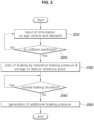
- an embodiment of an RCTB system of a vehicle and a control method thereof is configured to include the steps of receiving information on an ego vehicle (V) and an obstacle (M) (S10); performing braking by calculating the received information and generating a predetermined reference braking pressure when a collision with the obstacle (M) is predicted (S20); storing the location of the ego vehicle at a reference point in time for generating the reference braking pressure, the speed of the ego vehicle, an estimated reference collision distance that is a distance from the ego vehicle (V) to an estimated collision point with the obstacle (M), and an estimated reference collision time (S30); monitoring whether normal braking is performed based on the stored data (S40); and generating an additional braking pressure to increase a total braking pressure when it is determined that the normal braking is not performed during the monitoring (S50).
- the RCTB system starts braking with the reference braking pressure, and then monitors the movement and braking state of the vehicle.
- the RCTB system When a collision with the obstacle (M) is predicted because normal braking is not achieved despite the braking by the reference braking pressure, the RCTB system generates the additional braking pressure to increase the total braking pressure applied to a braking device 15, so that a collision with the obstacle (M) can be prevented.
- the reference braking pressure may be set to a constant value, assuming general vehicle situation and road situation in which a normal braking operation can be made, as in the conventional RCTB system.
- step of monitoring the normal braking (S40) by using the information on the locations and speeds of the ego vehicle (V) and obstacle (M) that are continuously updated, together with the stored data, it is determined as conditions of whether the movement distance of the ego vehicle (V) from the reference point exceeds a predetermined threshold movement distance; whether the speed of the ego vehicle exceeds a predetermined threshold speed because an amount of vehicle deceleration is small; whether an updated estimated collision distance is shorter than the estimated reference collision distance and is less than a predetermined estimated threshold collision distance; whether the estimated collision time is shorter than the estimated reference collision time and is less than a predetermined estimated threshold collision time; and whether the inclination of the rear side of the ego vehicle (V) inclined downward due to the inclination of a road is more than a predetermined threshold inclination.
- the step of determining that it is not the normal braking when at least one or more of the above conditions are satisfied, and generating the additional braking pressure to increase the total braking pressure is performed.
- the additional braking pressure may be generated to be higher as a degree of deviation of a target physical quantity of the satisfied condition from a corresponding threshold value increases.
- the additional braking pressure is generated higher as a distance in which the movement distance of the ego vehicle (V) exceeds the threshold movement distance is larger.
- the additional braking pressure may be configured to be generated higher as the number of the satisfied conditions increases.
- the threshold movement distance may be calculated by calculating the estimated movement distance of the ego vehicle (V) using the speed of the ego vehicle at the reference point, the vehicle deceleration estimated by the generation of the reference braking pressure, and the elapsed time from the reference point, and by adding a predetermined first margin distance to the estimated movement distance.
- the estimated movement distance may be calculated as the movement distance of the ego vehicle (V) when the speed of the ego vehicle at the reference point is an initial speed and the ego vehicle (V) moves at a constant deceleration during the elapsed time according to the vehicle deceleration.
- the first margin distance is a value that may be added to the estimated movement distance in consideration of an error in calculating the estimated movement distance and in order to secure safety, and the first margin distance may be set to a positive value such as at least 0 to 0.2m.
- the threshold movement distance becomes 1.2 meters.
- the threshold speed may be calculated by calculating an estimated speed of the ego vehicle (V) using the speed of the ego vehicle at the reference point, the vehicle deceleration estimated by the generation of the reference braking pressure, and the elapsed time from the reference point, and by adding a predetermined margin speed to the estimated speed.
- the estimated speed may be calculated as the speed of the ego vehicle when the speed of the ego vehicle at the reference point is an initial speed and the ego vehicle moves at a constant deceleration during the elapsed time according to the vehicle deceleration.
- the margin speed is to take into account an error in calculating the estimated speed and secure safety, and may be added to the estimated speed as a positive value.
- the threshold speed becomes 5.05 km/h.
- the current speed of the ego vehicle is 5.02 km/h, it is determined that the condition for generating the braking pressure is not satisfied, but when the current speed of the ego vehicle is 5.4 km/h because braking is not normally performed, it is determined that the condition for generating the additional braking pressure is satisfied.
- the estimated threshold collision distance may be calculated by calculating the estimated movement distance of the ego vehicle (V) using the speed of the ego vehicle at the reference point, the vehicle deceleration estimated by the generation of the reference braking pressure, and the elapsed time from the reference point, and by subtracting a predetermined second margin distance from the subtraction of the estimated movement distance from the estimated reference collision distance.
- the estimated collision distance calculated at the current point in time when the elapsed time has been passed from the reference point is 1.4 meters, which is shorter than the estimated threshold collision distance of 1.5 meters, it may be determined that the condition for generating the additional braking pressure is satisfied.
- the estimated threshold collision time may be calculated by subtracting a predetermined margin time after subtracting the elapsed time from the reference point, from the estimated reference collision time.
- the margin time is set to 0.05 seconds
- the estimated collision time calculated at the current point in time when the elapsed time has passed from the reference point is calculated as 2.8 seconds, which is less than the estimated threshold collision time of 2.95 seconds, it may be determined that the condition for generating the additional braking pressure is satisfied.
- the estimated collision time may be calculated by dividing the distance from the current location of the ego vehicle to the estimated collision point by the speed of the ego vehicle (V).
- the speed of the ego vehicle may be taken into consideration as well as being decelerated by a braking operation over time.
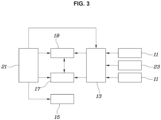
- an embodiment of an RCTB system of a vehicle that can implement the control method as described above is configured to include a radar 11 that is provided to detect the approach of the obstacle (M) in the rear side of the vehicle; an input unit 13 that receives information on the location, speed, driving state of the ego vehicle (V) and information on the obstacle (M) for the ego vehicle (V) through the radar 11; a braking device 15 that generates a predetermined reference braking pressure to perform braking when the received information is calculated and a collision with the obstacle (M) is predicted; an arithmetic storage unit 17 that calculates and stores the location and speed of the ego vehicle at a reference point in time for generating the reference braking pressure, an estimated reference collision distance that is a distance from the ego vehicle (V) to an estimated collision point with the obstacle (M), and an estimated reference collision time; a monitoring unit 19 that monitors whether normal braking is performed based on the stored data; and a control unit 21 that controls the input unit
- the input unit 13 is configured to receive not only the signal of the radar 11 but also signals of various sensors capable of detecting the location and speed of the ego vehicle (V).
- the input unit 13 is configured to receive a signal from an inclination sensor 23 to be described later.
- the input unit 13, the arithmetic storage unit 17, the monitoring unit 19, and the control unit 21 are functionally divided, and there may be a part in which each function is performed in common on specific hardware.
- the monitoring unit 19 may be configured to determine the conditions of whether the movement distance of the ego vehicle (V) from the reference point exceeds a predetermined threshold movement distance; whether the speed of the ego vehicle exceeds a predetermined threshold speed because an amount of vehicle deceleration is small; whether an updated estimated collision distance is shorter than the estimated reference collision distance and is less than a predetermined estimated threshold collision distance; whether the estimated collision time is shorter than the estimated reference collision time and is less than a predetermined estimated threshold collision time; and whether the inclination of the rear side of the ego vehicle (V) inclined downward due to the inclination of the road is more than a predetermined threshold inclination.
- the threshold inclination may be set to a predetermined constant value, and the inclination in which the rear side of the ego vehicle (V) is inclined downward due to the inclination of the road may be measured with the inclination sensor 23 provided in the ego vehicle (V).
- the control unit 21 may be configured to determine that it is not the normal braking situation when at least one or more of the above conditions are satisfied, and generate the additional braking pressure to increase the total braking pressure applied to the braking device 15.
- control unit 21 may be configured to generate the additional braking pressure higher as a degree of deviation of the target physical quantity of the satisfied condition from a corresponding threshold value increases.
- control unit 21 may be configured to generate the additional braking pressure higher as the number of the satisfied conditions increases.
- the monitoring unit 19 may be configured to calculate the estimated movement distance of the ego vehicle (V) by using the speed of the ego vehicle at the reference point, the vehicle deceleration estimated by the generation of the reference braking pressure, and the elapsed time from the reference point, and calculate the threshold movement distance by adding a predetermined first margin distance to the estimated movement distance.
- the monitoring unit 19 may be configured to calculate the estimated speed of the ego vehicle (V) by using the speed of the ego vehicle at the reference point, the vehicle deceleration estimated by the generation of the reference braking pressure, and the elapsed time from the reference point, and calculate the threshold speed by adding a predetermined margin speed to the estimated speed.
- the monitoring unit 19 may be configured to calculate the estimated movement distance of the ego vehicle (V) by using the speed of the ego vehicle at the reference point, the vehicle deceleration estimated by the generation of the reference braking pressure, and the elapsed time from the reference point, and calculate the estimated threshold collision distance by subtracting a predetermined second margin distance from the subtracted of the estimated movement distance from the estimated reference collision distance.
- the monitoring unit 19 may be configured to calculate the estimated threshold collision time by subtracting a predetermined margin time after subtracting the elapsed time from the reference point, from the estimated reference collision time.
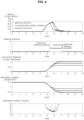
- FIG. 4 is for describing the effect according to the present invention compared to the conventional art, and illustrates the comparison of the change of various physical quantities over time when the RCTB system is operated in a general situation, in a problem situation according to the conventional art, and in a situation according to the present invention.
- the basic braking pressure starts to operate due to the detection of the rear-side approach obstacle by the RCTB system and the speed of the ego vehicle is reduced.
- the speed of the ego vehicle is reduced the fastest.
- the normal braking is not performed by the state of the vehicle or road and it can be confirmed that the speed of the ego vehicle is reduced the slowest.
Landscapes
- Engineering & Computer Science (AREA)
- Mechanical Engineering (AREA)
- Transportation (AREA)
- Radar, Positioning & Navigation (AREA)
- Physics & Mathematics (AREA)
- Remote Sensing (AREA)
- Automation & Control Theory (AREA)
- Mathematical Physics (AREA)
- Chemical & Material Sciences (AREA)
- Combustion & Propulsion (AREA)
- Electromagnetism (AREA)
- Computer Networks & Wireless Communication (AREA)
- General Physics & Mathematics (AREA)
- Traffic Control Systems (AREA)
- Regulating Braking Force (AREA)
Claims (15)
- Verfahren zur Steuerung eines verkehrsunterstützenden Bremssystems für Heckkollisionen, RCTB, eines Fahrzeugs, das umfasst:Empfangen (S10) von Informationen über ein Ego-Fahrzeug und ein Hindernis, um eine Kollision mit dem Hindernis in einem Heck des Ego-Fahrzeugs vorherzusagen;Bremsen durch einen Referenzbremsdruck, der erzeugt wird, wenn die Kollision mit dem Hindernis vorhergesagt wird (S20);Speichern (S30) einer Position des Ego-Fahrzeugs zu einem Referenzzeitpunkt, an dem der Referenzbremsdruck erzeugt wird, einer Geschwindigkeit des Ego-Fahrzeugs, einer geschätzten Referenzkollisionsentfernung, die eine Entfernung von dem Ego-Fahrzeug zu einem geschätzten Kollisionspunkt mit dem Hindernis ist, und einer geschätzten Referenzkollisionszeit;Überwachen (S40), ob die Bremsung in einer normalen Bremssituation durchgeführt wird, basierend auf den gespeicherten Daten; undErzeugen (S50) eines zusätzlichen Bremsdrucks, um den für die Bremsung aufgebrachten Gesamtbremsdruck zu erhöhen, wenn festgestellt wird, dass die Bremsung nicht in einer normalen Bremssituation während der Überwachung durchgeführt wird.
- Verfahren nach Anspruch 1, wobei die Überwachung der normalen Bremssituation die Feststellung umfasst, ob eine oder mehrere der folgenden Bedingungen erfüllt sind:ob eine Bewegungsdistanz des Ego-Fahrzeugs von dem Referenzpunkt eine Schwellenbewegungsdistanz überschreitet;ob die Geschwindigkeit des Ego-Fahrzeugs auf der Grundlage eines Betrags einer Fahrzeugverzögerung eine Schwellengeschwindigkeit überschreitet;ob ein geschätzter Kollisionsabstand kürzer als der geschätzte Referenz-Kollisionsabstand und kleiner als ein geschätzter Schwellen-Kollisionsabstand ist;ob eine geschätzte Kollisionszeit kürzer als die geschätzte Referenzkollisionszeit und kleiner als eine geschätzte Schwellenkollisionszeit ist; undob eine Neigung einer Rückseite des Ego-Fahrzeugs, die aufgrund der Neigung einer Straße nach unten geneigt ist, größer ist als eine Schwellenneigung.
- Verfahren nach Anspruch 2, wobei bestimmt wird, dass die normale Bremsung nicht durchgeführt wird und der zusätzliche Bremsdruck erzeugt wird, wenn eine oder mehrere der Bedingungen erfüllt sind.
- Verfahren nach Anspruch 3, wobei der zusätzliche Bremsdruck erhöht wird, wenn ein Grad einer Abweichung einer physikalischen Zielgröße jeder erfüllten Bedingung von einem entsprechenden Schwellenwert zunimmt.
- Verfahren nach Anspruch 3 oder 4, wobei der zusätzliche Bremsdruck mit zunehmender Anzahl von erfüllten Bedingungen erhöht wird.
- Verfahren nach einem der Ansprüche 2 bis 5, wobei die Schwellenbewegungsdistanz berechnet wird, indem eine geschätzte Bewegungsdistanz des Ego-Fahrzeugs unter Verwendung der Geschwindigkeit des Ego-Fahrzeugs an dem Referenzpunkt, der durch die Erzeugung des Referenzbremsdrucks geschätzten Fahrzeugverzögerung und einer von dem Referenzpunkt aus verstrichenen Zeit berechnet wird, und indem eine Randdistanz zur geschätzten Bewegungsdistanz addiert wird.
- Verfahren nach einem der Ansprüche 2 bis 6, wobei die Schwellengeschwindigkeit berechnet wird, indem eine geschätzte Geschwindigkeit des Ego-Fahrzeugs unter Verwendung der Geschwindigkeit des Ego-Fahrzeugs am Bezugspunkt, der durch die Erzeugung des Bezugsbremsdrucks geschätzten Fahrzeugverzögerung und einer vom Bezugspunkt aus verstrichenen Zeit berechnet wird und indem eine Grenzgeschwindigkeit zur geschätzten Geschwindigkeit addiert wird.
- Verfahren nach einem der Ansprüche 2 bis 7, wobei die geschätzte Schwellenkollisionsentfernung berechnet wird, indem eine geschätzte Bewegungsentfernung des Ego-Fahrzeugs unter Verwendung der Geschwindigkeit des Ego-Fahrzeugs am Referenzpunkt, der durch die Erzeugung des Referenzbremsdrucks geschätzten Fahrzeugverzögerung und einer vom Referenzpunkt aus verstrichenen Zeit berechnet wird, und indem von der Differenz zwischen der geschätzten Bewegungsentfernung und der geschätzten Referenzkollisionsentfernung ein Randabstand abgezogen wird.
- Verfahren nach einem der Ansprüche 2 bis 8, wobei die geschätzte Schwellenkollisionszeit durch Subtraktion einer Randzeit nach Subtraktion einer vom Referenzpunkt verstrichenen Zeit von der geschätzten Referenzkollisionszeit berechnet wird.
- Heckkollisions-Verkehrs-Assistenzbremssystem (RCTB) für ein Fahrzeug, das umfasst:ein Radar (11), das so konfiguriert ist, dass es eine Annäherung an ein Hindernis an einer Rückseite eines Ego-Fahrzeugs erkennt;eine Eingabeeinheit (13), die so konfiguriert ist, dass sie Informationen über Ort, Geschwindigkeit, Fahrzustand des Ego-Fahrzeugs und Informationen über das Hindernis für das Ego-Fahrzeug über das Radar (11) empfängt;eine Bremsvorrichtung (15), die so konfiguriert ist, dass sie einen Referenzbremsdruck erzeugt, um eine Bremsung durchzuführen, wenn eine Kollision mit dem Hindernis auf der Grundlage der empfangenen Informationen vorhergesagt wird;eine arithmetische Speichereinheit (17), die so konfiguriert ist, dass sie den Ort und die Geschwindigkeit des Ego-Fahrzeugs zu einem Referenzzeitpunkt, zu dem der Referenzbremsdruck erzeugt wird, eine geschätzte Referenzkollisionsentfernung, die eine Entfernung von dem Ego-Fahrzeug zu einem geschätzten Kollisionspunkt mit dem Hindernis ist, und eine geschätzte Referenzkollisionszeit berechnet und speichert;eine Überwachungseinheit (19), die so konfiguriert ist, dass sie auf der Grundlage von in der arithmetischen Speichereinheit gespeicherten Daten überwacht, ob die Bremsung in einer normalen Bremssituation durchgeführt wird; undeine Steuereinheit (21), die so konfiguriert ist, dass sie die Eingabeeinheit (13), die Bremsvorrichtung (15), die arithmetische Speichereinheit (17) und die Überwachungseinheit (19) steuert und einen zusätzlichen Bremsdruck erzeugt, um einen auf die Bremsvorrichtung (15) ausgeübten Gesamtbremsdruck zu erhöhen, wenn festgestellt wird, dass die Bremsung nicht in einer normalen Bremssituation durchgeführt wird.
- RCTB-System eines Fahrzeugs nach Anspruch 10, wobei die Überwachungseinheit (19) so konfiguriert ist, dass sie bestimmt, ob eine oder mehrere der folgenden Bedingungen erfüllt sind:ob eine Bewegungsdistanz des Ego-Fahrzeugs vom Referenzpunkt eine Schwellenbewegungsdistanz überschreitet;ob die Geschwindigkeit des Ego-Fahrzeugs auf der Grundlage eines Betrags der Fahrzeugverzögerung eine Schwellengeschwindigkeit überschreitet;ob ein geschätzter Kollisionsabstand kürzer als der geschätzte Referenz-Kollisionsabstand und kleiner als ein geschätzter Schwellen-Kollisionsabstand ist;ob eine geschätzte Kollisionszeit kürzer als die geschätzte Referenzkollisionszeit und kleiner als eine geschätzte Schwellenkollisionszeit ist; undob eine Neigung der Rückseite des Ego-Fahrzeugs, die aufgrund der Neigung einer Straße nach unten geneigt ist, größer ist als eine Schwellenneigung.
- RCTB-System eines Fahrzeugs nach Anspruch 11, wobei die Überwachungseinheit (19) so konfiguriert ist, dass sie bestimmt, dass die normale Bremsung nicht durchgeführt wird, wenn eine oder mehrere der Bedingungen erfüllt sind.
- RCTB-System eines Fahrzeugs nach Anspruch 11 oder 12, wobei die Überwachungseinheit (19) so konfiguriert ist, dass sie eine geschätzte Bewegungsdistanz des Ego-Fahrzeugs unter Verwendung der Geschwindigkeit des Ego-Fahrzeugs am Referenzpunkt, der durch die Erzeugung des Referenzbremsdrucks geschätzten Fahrzeugverzögerung und einer vom Referenzpunkt aus verstrichenen Zeit berechnet und die Schwellenbewegungsdistanz durch Addieren einer Randdistanz zu der geschätzten Bewegungsdistanz berechnet.
- RCTB-System eines Fahrzeugs nach einem der Ansprüche 11 bis 13, wobei die Überwachungseinheit (19) so konfiguriert ist, dass sie eine geschätzte Geschwindigkeit des Ego-Fahrzeugs berechnet, indem sie die Geschwindigkeit des Ego-Fahrzeugs am Bezugspunkt, die durch die Erzeugung des Bezugsbremsdrucks geschätzte Fahrzeugverzögerung und eine seit dem Bezugspunkt verstrichene Zeit verwendet, und die Schwellengeschwindigkeit berechnet, indem sie eine Grenzgeschwindigkeit zu der geschätzten Geschwindigkeit addiert.
- RCTB-System eines Fahrzeugs nach einem der Ansprüche 11 bis 14, wobei die Überwachungseinheit (19) so konfiguriert ist, dass sie eine geschätzte Bewegungsstrecke des Ego-Fahrzeugs unter Verwendung der Geschwindigkeit des Ego-Fahrzeugs am Referenzpunkt, der durch die Erzeugung des Referenzbremsdrucks geschätzten Fahrzeugverzögerung und einer vom Referenzpunkt aus verstrichenen Zeit berechnet und die geschätzte Schwellenkollisionsstrecke durch Subtraktion einer Randstrecke von der Differenz zwischen der geschätzten Bewegungsstrecke und der geschätzten Referenzkollisionsstrecke berechnet.
Applications Claiming Priority (1)
| Application Number | Priority Date | Filing Date | Title |
|---|---|---|---|
| KR1020210010896A KR20220107789A (ko) | 2021-01-26 | 2021-01-26 | 차량의 rctb 시스템 및 그 제어방법 |
Publications (2)
| Publication Number | Publication Date |
|---|---|
| EP4032761A1 EP4032761A1 (de) | 2022-07-27 |
| EP4032761B1 true EP4032761B1 (de) | 2024-08-28 |
Family
ID=79230803
Family Applications (1)
| Application Number | Title | Priority Date | Filing Date |
|---|---|---|---|
| EP21215552.7A Active EP4032761B1 (de) | 2021-01-26 | 2021-12-17 | Bremsassistentsystem zur vermeidung von heckkollisionen eines fahrzeugs und steuerungsverfahren dafür |
Country Status (4)
| Country | Link |
|---|---|
| US (1) | US11807205B2 (de) |
| EP (1) | EP4032761B1 (de) |
| KR (1) | KR20220107789A (de) |
| CN (1) | CN114789713B (de) |
Families Citing this family (3)
| Publication number | Priority date | Publication date | Assignee | Title |
|---|---|---|---|---|
| WO2023277675A1 (ko) * | 2021-07-02 | 2023-01-05 | 고려대학교 산학협력단 | 인간영양막세포 유래물을 유효성분으로 포함하는 인간 중간엽 줄기세포 증식 촉진 및 피부와 골 재생 촉진용 조성물 |
| JP7688007B2 (ja) | 2022-09-27 | 2025-06-03 | トヨタ自動車株式会社 | 運動マネージャ、ブレーキ装置の制御装置、及び制御方法 |
| US12403875B2 (en) * | 2024-01-31 | 2025-09-02 | Toyota Jidosha Kabushiki Kaisha | Method for discrete handling of brake control between driver and mechanical system |
Family Cites Families (7)
| Publication number | Priority date | Publication date | Assignee | Title |
|---|---|---|---|---|
| DE19944556B4 (de) | 1999-09-17 | 2008-11-06 | Robert Bosch Gmbh | Verfahren und Vorrichtung zur Steuerung einer Bremsanlage |
| DE102005012037A1 (de) | 2005-03-16 | 2006-09-28 | Daimlerchrysler Ag | Verfahren zum Betreiben eines Kollisionsvermeidungs-oder Kollisionsfolgenminderungssystem eines Fahrzeugs sowie Kollisionsvermeidungs-oder Kollisionsfolgenminderungssystem |
| KR101521870B1 (ko) | 2013-12-19 | 2015-05-20 | 만도헬라일렉트로닉스(주) | 차량용 후방 레이더 및 그 제어 방법 |
| JP6115579B2 (ja) * | 2015-02-16 | 2017-04-19 | トヨタ自動車株式会社 | 衝突回避装置 |
| US9650026B2 (en) | 2015-08-31 | 2017-05-16 | GM Global Technology Operations LLC | Method and apparatus for rear cross traffic avoidance |
| JP6750535B2 (ja) * | 2017-02-27 | 2020-09-02 | 株式会社アドヴィックス | 車両の制動制御装置 |
| WO2019218098A1 (zh) * | 2018-05-14 | 2019-11-21 | Lu Shan | 汽车爆胎安全稳定控制方法 |
-
2021
- 2021-01-26 KR KR1020210010896A patent/KR20220107789A/ko active Pending
- 2021-12-16 US US17/552,587 patent/US11807205B2/en active Active
- 2021-12-17 EP EP21215552.7A patent/EP4032761B1/de active Active
-
2022
- 2022-01-25 CN CN202210090240.XA patent/CN114789713B/zh active Active
Also Published As
| Publication number | Publication date |
|---|---|
| CN114789713A (zh) | 2022-07-26 |
| CN114789713B (zh) | 2023-11-17 |
| KR20220107789A (ko) | 2022-08-02 |
| US11807205B2 (en) | 2023-11-07 |
| US20220234557A1 (en) | 2022-07-28 |
| EP4032761A1 (de) | 2022-07-27 |
Similar Documents
| Publication | Publication Date | Title |
|---|---|---|
| CN103350698B (zh) | 用于运行车辆的方法和设备 | |
| EP2388756B1 (de) | Frontalaufprallrisikoverringerung | |
| EP4032761B1 (de) | Bremsassistentsystem zur vermeidung von heckkollisionen eines fahrzeugs und steuerungsverfahren dafür | |
| US9731728B2 (en) | Sensor abnormality detection device | |
| EP2802496B1 (de) | Verfahren und steuereinheit zur verkehrsüberwachung | |
| US6871145B2 (en) | Method and system for vehicle impact assessment using driver braking estimation | |
| KR101866014B1 (ko) | 차량의 측면충돌 회피 시스템 및 그 방법 | |
| CN101678819B (zh) | 碰撞减轻装置 | |
| US9296383B2 (en) | Collision avoidance for a motor vehicle | |
| EP2302412A1 (de) | System und Verfahren zur Beurteilung einer Frontalzusammenstoßdrohung eines Automobils | |
| US10053065B2 (en) | Automatic rear braking | |
| EP2211322B1 (de) | Verfahren und System zur Vermeidung von Frontalzusammenstößen in einem Fahrzeug | |
| US20090164083A1 (en) | Method for Speed Regulation of a Motor Vehicle in a Complex Traffic Situation | |
| KR20170070580A (ko) | Ecu, 상기 ecu를 포함하는 무인 자율 주행 차량, 및 이의 차선 변경 제어 방법 | |
| JP4928896B2 (ja) | 車両制御装置 | |
| KR20220170656A (ko) | 충돌 위험도 예측 기반 차량 충돌 방지 방법 및 장치 | |
| JP4944535B2 (ja) | 車両制御装置 | |
| CN112356848A (zh) | 目标监测方法及自动驾驶系统 | |
| US12296804B2 (en) | Autonomous emergency braking apparatus for a vehicle | |
| KR102854528B1 (ko) | 전방 차량의 차선 변경에 대비하는 자동 비상 제동 방법 및 장치 | |
| JP7381419B2 (ja) | 物体検出装置及び物体検出方法 | |
| CN120071292A (zh) | 用于跟踪主车辆的视场中的对象的方法和系统 |
Legal Events
| Date | Code | Title | Description |
|---|---|---|---|
| PUAI | Public reference made under article 153(3) epc to a published international application that has entered the european phase |
Free format text: ORIGINAL CODE: 0009012 |
|
| STAA | Information on the status of an ep patent application or granted ep patent |
Free format text: STATUS: REQUEST FOR EXAMINATION WAS MADE |
|
| 17P | Request for examination filed |
Effective date: 20211217 |
|
| AK | Designated contracting states |
Kind code of ref document: A1 Designated state(s): AL AT BE BG CH CY CZ DE DK EE ES FI FR GB GR HR HU IE IS IT LI LT LU LV MC MK MT NL NO PL PT RO RS SE SI SK SM TR |
|
| RIC1 | Information provided on ipc code assigned before grant |
Ipc: B60T 7/22 20060101AFI20240215BHEP |
|
| GRAP | Despatch of communication of intention to grant a patent |
Free format text: ORIGINAL CODE: EPIDOSNIGR1 |
|
| STAA | Information on the status of an ep patent application or granted ep patent |
Free format text: STATUS: GRANT OF PATENT IS INTENDED |
|
| INTG | Intention to grant announced |
Effective date: 20240325 |
|
| P01 | Opt-out of the competence of the unified patent court (upc) registered |
Effective date: 20240506 |
|
| GRAS | Grant fee paid |
Free format text: ORIGINAL CODE: EPIDOSNIGR3 |
|
| GRAA | (expected) grant |
Free format text: ORIGINAL CODE: 0009210 |
|
| STAA | Information on the status of an ep patent application or granted ep patent |
Free format text: STATUS: THE PATENT HAS BEEN GRANTED |
|
| AK | Designated contracting states |
Kind code of ref document: B1 Designated state(s): AL AT BE BG CH CY CZ DE DK EE ES FI FR GB GR HR HU IE IS IT LI LT LU LV MC MK MT NL NO PL PT RO RS SE SI SK SM TR |
|
| RAP3 | Party data changed (applicant data changed or rights of an application transferred) |
Owner name: HYUNDAI MOBIS CO., LTD. |
|
| REG | Reference to a national code |
Ref country code: CH Ref legal event code: EP |
|
| REG | Reference to a national code |
Ref country code: DE Ref legal event code: R096 Ref document number: 602021017881 Country of ref document: DE |
|
| REG | Reference to a national code |
Ref country code: IE Ref legal event code: FG4D |
|
| REG | Reference to a national code |
Ref country code: LT Ref legal event code: MG9D |
|
| PG25 | Lapsed in a contracting state [announced via postgrant information from national office to epo] |
Ref country code: NO Free format text: LAPSE BECAUSE OF FAILURE TO SUBMIT A TRANSLATION OF THE DESCRIPTION OR TO PAY THE FEE WITHIN THE PRESCRIBED TIME-LIMIT Effective date: 20241128 |
|
| REG | Reference to a national code |
Ref country code: AT Ref legal event code: MK05 Ref document number: 1717638 Country of ref document: AT Kind code of ref document: T Effective date: 20240828 |
|
| PG25 | Lapsed in a contracting state [announced via postgrant information from national office to epo] |
Ref country code: PT Free format text: LAPSE BECAUSE OF FAILURE TO SUBMIT A TRANSLATION OF THE DESCRIPTION OR TO PAY THE FEE WITHIN THE PRESCRIBED TIME-LIMIT Effective date: 20241230 Ref country code: NL Free format text: LAPSE BECAUSE OF FAILURE TO SUBMIT A TRANSLATION OF THE DESCRIPTION OR TO PAY THE FEE WITHIN THE PRESCRIBED TIME-LIMIT Effective date: 20240828 Ref country code: PL Free format text: LAPSE BECAUSE OF FAILURE TO SUBMIT A TRANSLATION OF THE DESCRIPTION OR TO PAY THE FEE WITHIN THE PRESCRIBED TIME-LIMIT Effective date: 20240828 Ref country code: GR Free format text: LAPSE BECAUSE OF FAILURE TO SUBMIT A TRANSLATION OF THE DESCRIPTION OR TO PAY THE FEE WITHIN THE PRESCRIBED TIME-LIMIT Effective date: 20241129 Ref country code: FI Free format text: LAPSE BECAUSE OF FAILURE TO SUBMIT A TRANSLATION OF THE DESCRIPTION OR TO PAY THE FEE WITHIN THE PRESCRIBED TIME-LIMIT Effective date: 20240828 |
|
| PG25 | Lapsed in a contracting state [announced via postgrant information from national office to epo] |
Ref country code: BG Free format text: LAPSE BECAUSE OF FAILURE TO SUBMIT A TRANSLATION OF THE DESCRIPTION OR TO PAY THE FEE WITHIN THE PRESCRIBED TIME-LIMIT Effective date: 20240828 |
|
| PG25 | Lapsed in a contracting state [announced via postgrant information from national office to epo] |
Ref country code: LV Free format text: LAPSE BECAUSE OF FAILURE TO SUBMIT A TRANSLATION OF THE DESCRIPTION OR TO PAY THE FEE WITHIN THE PRESCRIBED TIME-LIMIT Effective date: 20240828 |
|
| REG | Reference to a national code |
Ref country code: NL Ref legal event code: MP Effective date: 20240828 |
|
| PG25 | Lapsed in a contracting state [announced via postgrant information from national office to epo] |
Ref country code: AT Free format text: LAPSE BECAUSE OF FAILURE TO SUBMIT A TRANSLATION OF THE DESCRIPTION OR TO PAY THE FEE WITHIN THE PRESCRIBED TIME-LIMIT Effective date: 20240828 Ref country code: IS Free format text: LAPSE BECAUSE OF FAILURE TO SUBMIT A TRANSLATION OF THE DESCRIPTION OR TO PAY THE FEE WITHIN THE PRESCRIBED TIME-LIMIT Effective date: 20241228 |
|
| PG25 | Lapsed in a contracting state [announced via postgrant information from national office to epo] |
Ref country code: HR Free format text: LAPSE BECAUSE OF FAILURE TO SUBMIT A TRANSLATION OF THE DESCRIPTION OR TO PAY THE FEE WITHIN THE PRESCRIBED TIME-LIMIT Effective date: 20240828 |
|
| PG25 | Lapsed in a contracting state [announced via postgrant information from national office to epo] |
Ref country code: ES Free format text: LAPSE BECAUSE OF FAILURE TO SUBMIT A TRANSLATION OF THE DESCRIPTION OR TO PAY THE FEE WITHIN THE PRESCRIBED TIME-LIMIT Effective date: 20240828 Ref country code: RS Free format text: LAPSE BECAUSE OF FAILURE TO SUBMIT A TRANSLATION OF THE DESCRIPTION OR TO PAY THE FEE WITHIN THE PRESCRIBED TIME-LIMIT Effective date: 20241128 |
|
| PG25 | Lapsed in a contracting state [announced via postgrant information from national office to epo] |
Ref country code: RS Free format text: LAPSE BECAUSE OF FAILURE TO SUBMIT A TRANSLATION OF THE DESCRIPTION OR TO PAY THE FEE WITHIN THE PRESCRIBED TIME-LIMIT Effective date: 20241128 Ref country code: PT Free format text: LAPSE BECAUSE OF FAILURE TO SUBMIT A TRANSLATION OF THE DESCRIPTION OR TO PAY THE FEE WITHIN THE PRESCRIBED TIME-LIMIT Effective date: 20241230 Ref country code: PL Free format text: LAPSE BECAUSE OF FAILURE TO SUBMIT A TRANSLATION OF THE DESCRIPTION OR TO PAY THE FEE WITHIN THE PRESCRIBED TIME-LIMIT Effective date: 20240828 Ref country code: NO Free format text: LAPSE BECAUSE OF FAILURE TO SUBMIT A TRANSLATION OF THE DESCRIPTION OR TO PAY THE FEE WITHIN THE PRESCRIBED TIME-LIMIT Effective date: 20241128 Ref country code: NL Free format text: LAPSE BECAUSE OF FAILURE TO SUBMIT A TRANSLATION OF THE DESCRIPTION OR TO PAY THE FEE WITHIN THE PRESCRIBED TIME-LIMIT Effective date: 20240828 Ref country code: LV Free format text: LAPSE BECAUSE OF FAILURE TO SUBMIT A TRANSLATION OF THE DESCRIPTION OR TO PAY THE FEE WITHIN THE PRESCRIBED TIME-LIMIT Effective date: 20240828 Ref country code: IS Free format text: LAPSE BECAUSE OF FAILURE TO SUBMIT A TRANSLATION OF THE DESCRIPTION OR TO PAY THE FEE WITHIN THE PRESCRIBED TIME-LIMIT Effective date: 20241228 Ref country code: HR Free format text: LAPSE BECAUSE OF FAILURE TO SUBMIT A TRANSLATION OF THE DESCRIPTION OR TO PAY THE FEE WITHIN THE PRESCRIBED TIME-LIMIT Effective date: 20240828 Ref country code: GR Free format text: LAPSE BECAUSE OF FAILURE TO SUBMIT A TRANSLATION OF THE DESCRIPTION OR TO PAY THE FEE WITHIN THE PRESCRIBED TIME-LIMIT Effective date: 20241129 Ref country code: FI Free format text: LAPSE BECAUSE OF FAILURE TO SUBMIT A TRANSLATION OF THE DESCRIPTION OR TO PAY THE FEE WITHIN THE PRESCRIBED TIME-LIMIT Effective date: 20240828 Ref country code: ES Free format text: LAPSE BECAUSE OF FAILURE TO SUBMIT A TRANSLATION OF THE DESCRIPTION OR TO PAY THE FEE WITHIN THE PRESCRIBED TIME-LIMIT Effective date: 20240828 Ref country code: BG Free format text: LAPSE BECAUSE OF FAILURE TO SUBMIT A TRANSLATION OF THE DESCRIPTION OR TO PAY THE FEE WITHIN THE PRESCRIBED TIME-LIMIT Effective date: 20240828 Ref country code: AT Free format text: LAPSE BECAUSE OF FAILURE TO SUBMIT A TRANSLATION OF THE DESCRIPTION OR TO PAY THE FEE WITHIN THE PRESCRIBED TIME-LIMIT Effective date: 20240828 |
|
| PG25 | Lapsed in a contracting state [announced via postgrant information from national office to epo] |
Ref country code: SM Free format text: LAPSE BECAUSE OF FAILURE TO SUBMIT A TRANSLATION OF THE DESCRIPTION OR TO PAY THE FEE WITHIN THE PRESCRIBED TIME-LIMIT Effective date: 20240828 Ref country code: RO Free format text: LAPSE BECAUSE OF FAILURE TO SUBMIT A TRANSLATION OF THE DESCRIPTION OR TO PAY THE FEE WITHIN THE PRESCRIBED TIME-LIMIT Effective date: 20240828 Ref country code: DK Free format text: LAPSE BECAUSE OF FAILURE TO SUBMIT A TRANSLATION OF THE DESCRIPTION OR TO PAY THE FEE WITHIN THE PRESCRIBED TIME-LIMIT Effective date: 20240828 |
|
| PG25 | Lapsed in a contracting state [announced via postgrant information from national office to epo] |
Ref country code: EE Free format text: LAPSE BECAUSE OF FAILURE TO SUBMIT A TRANSLATION OF THE DESCRIPTION OR TO PAY THE FEE WITHIN THE PRESCRIBED TIME-LIMIT Effective date: 20240828 |
|
| PG25 | Lapsed in a contracting state [announced via postgrant information from national office to epo] |
Ref country code: CZ Free format text: LAPSE BECAUSE OF FAILURE TO SUBMIT A TRANSLATION OF THE DESCRIPTION OR TO PAY THE FEE WITHIN THE PRESCRIBED TIME-LIMIT Effective date: 20240828 |
|
| PG25 | Lapsed in a contracting state [announced via postgrant information from national office to epo] |
Ref country code: SK Free format text: LAPSE BECAUSE OF FAILURE TO SUBMIT A TRANSLATION OF THE DESCRIPTION OR TO PAY THE FEE WITHIN THE PRESCRIBED TIME-LIMIT Effective date: 20240828 Ref country code: IT Free format text: LAPSE BECAUSE OF FAILURE TO SUBMIT A TRANSLATION OF THE DESCRIPTION OR TO PAY THE FEE WITHIN THE PRESCRIBED TIME-LIMIT Effective date: 20240828 |
|
| REG | Reference to a national code |
Ref country code: DE Ref legal event code: R097 Ref document number: 602021017881 Country of ref document: DE |
|
| PLBE | No opposition filed within time limit |
Free format text: ORIGINAL CODE: 0009261 |
|
| STAA | Information on the status of an ep patent application or granted ep patent |
Free format text: STATUS: NO OPPOSITION FILED WITHIN TIME LIMIT |
|
| PG25 | Lapsed in a contracting state [announced via postgrant information from national office to epo] |
Ref country code: MC Free format text: LAPSE BECAUSE OF FAILURE TO SUBMIT A TRANSLATION OF THE DESCRIPTION OR TO PAY THE FEE WITHIN THE PRESCRIBED TIME-LIMIT Effective date: 20240828 |
|
| REG | Reference to a national code |
Ref country code: CH Ref legal event code: PL |
|
| 26N | No opposition filed |
Effective date: 20250530 |
|
| PG25 | Lapsed in a contracting state [announced via postgrant information from national office to epo] |
Ref country code: LU Free format text: LAPSE BECAUSE OF NON-PAYMENT OF DUE FEES Effective date: 20241217 |
|
| PG25 | Lapsed in a contracting state [announced via postgrant information from national office to epo] |
Ref country code: SE Free format text: LAPSE BECAUSE OF FAILURE TO SUBMIT A TRANSLATION OF THE DESCRIPTION OR TO PAY THE FEE WITHIN THE PRESCRIBED TIME-LIMIT Effective date: 20240828 |
|
| REG | Reference to a national code |
Ref country code: BE Ref legal event code: MM Effective date: 20241231 |
|
| PG25 | Lapsed in a contracting state [announced via postgrant information from national office to epo] |
Ref country code: BE Free format text: LAPSE BECAUSE OF NON-PAYMENT OF DUE FEES Effective date: 20241231 |
|
| PG25 | Lapsed in a contracting state [announced via postgrant information from national office to epo] |
Ref country code: CH Free format text: LAPSE BECAUSE OF NON-PAYMENT OF DUE FEES Effective date: 20241231 |
|
| PG25 | Lapsed in a contracting state [announced via postgrant information from national office to epo] |
Ref country code: IE Free format text: LAPSE BECAUSE OF NON-PAYMENT OF DUE FEES Effective date: 20241217 |
|
| PGFP | Annual fee paid to national office [announced via postgrant information from national office to epo] |
Ref country code: DE Payment date: 20251020 Year of fee payment: 5 |
|
| PGFP | Annual fee paid to national office [announced via postgrant information from national office to epo] |
Ref country code: GB Payment date: 20251023 Year of fee payment: 5 |
|
| PGFP | Annual fee paid to national office [announced via postgrant information from national office to epo] |
Ref country code: FR Payment date: 20251021 Year of fee payment: 5 |