EP4032895A1 - Forme cristalline d'un inhibiteur d'antigène de surface de l'hépatite b et son application - Google Patents
Forme cristalline d'un inhibiteur d'antigène de surface de l'hépatite b et son application Download PDFInfo
- Publication number
- EP4032895A1 EP4032895A1 EP20865773.4A EP20865773A EP4032895A1 EP 4032895 A1 EP4032895 A1 EP 4032895A1 EP 20865773 A EP20865773 A EP 20865773A EP 4032895 A1 EP4032895 A1 EP 4032895A1
- Authority
- EP
- European Patent Office
- Prior art keywords
- crystal form
- compound
- formula
- preparation
- hepatitis
- Prior art date
- Legal status (The legal status is an assumption and is not a legal conclusion. Google has not performed a legal analysis and makes no representation as to the accuracy of the status listed.)
- Withdrawn
Links
Images

Classifications
-
- C—CHEMISTRY; METALLURGY
- C07—ORGANIC CHEMISTRY
- C07D—HETEROCYCLIC COMPOUNDS
- C07D498/00—Heterocyclic compounds containing in the condensed system at least one hetero ring having nitrogen and oxygen atoms as the only ring hetero atoms
- C07D498/02—Heterocyclic compounds containing in the condensed system at least one hetero ring having nitrogen and oxygen atoms as the only ring hetero atoms in which the condensed system contains two hetero rings
- C07D498/04—Ortho-condensed systems
-
- A—HUMAN NECESSITIES
- A61—MEDICAL OR VETERINARY SCIENCE; HYGIENE
- A61K—PREPARATIONS FOR MEDICAL, DENTAL OR TOILETRY PURPOSES
- A61K31/00—Medicinal preparations containing organic active ingredients
- A61K31/33—Heterocyclic compounds
- A61K31/395—Heterocyclic compounds having nitrogen as a ring hetero atom, e.g. guanethidine or rifamycins
- A61K31/535—Heterocyclic compounds having nitrogen as a ring hetero atom, e.g. guanethidine or rifamycins having six-membered rings with at least one nitrogen and one oxygen as the ring hetero atoms, e.g. 1,2-oxazines
- A61K31/5365—Heterocyclic compounds having nitrogen as a ring hetero atom, e.g. guanethidine or rifamycins having six-membered rings with at least one nitrogen and one oxygen as the ring hetero atoms, e.g. 1,2-oxazines ortho- or peri-condensed with heterocyclic ring systems
-
- A—HUMAN NECESSITIES
- A61—MEDICAL OR VETERINARY SCIENCE; HYGIENE
- A61P—SPECIFIC THERAPEUTIC ACTIVITY OF CHEMICAL COMPOUNDS OR MEDICINAL PREPARATIONS
- A61P31/00—Antiinfectives, i.e. antibiotics, antiseptics, chemotherapeutics
- A61P31/12—Antivirals
- A61P31/20—Antivirals for DNA viruses
-
- C—CHEMISTRY; METALLURGY
- C07—ORGANIC CHEMISTRY
- C07B—GENERAL METHODS OF ORGANIC CHEMISTRY; APPARATUS THEREFOR
- C07B2200/00—Indexing scheme relating to specific properties of organic compounds
- C07B2200/13—Crystalline forms, e.g. polymorphs
Definitions
- the present disclosure relates to a crystal form of a hepatitis B surface antigen inhibitor and a preparation method therefor, and further comprises an application of the crystal form in the preparation of the hepatitis B surface antigen inhibitor.
- Viral hepatitis B is a disease caused by Hepatitis B Virus (abbreviated as HBV) infection in the body.
- Hepatitis B virus belongs to the hepadnaviridae family, mainly exists in liver cells and damages liver cells, causing inflammation, necrosis and fibrosis of hepatocytes.
- Viral hepatitis B is divided into two types, acute hepatitis B and chronic hepatitis B. Most adults with acute hepatitis B can heal themselves via their own immune mechanism.
- CHB chronic hepatitis B
- HCC hepatocellular carcinoma
- HBsAg hepatitis B surface antigen
- Quantification of HBsAg is a very important biological indicator. The reduction and seroconversion of HBsAg are rarely observed in patients with chronic infection, and are the endpoints of current therapies.
- the surface antigen protein of hepatitis B virus plays a very important role in the process of HBV invasion into hepatocytes, and is of great significance for the prevention and treatment of HBV infection.
- Surface antigen proteins include large (L), medium (M) and small (S) surface antigen proteins that share a common C-terminal S region. They are expressed from the same open reading frame and have different lengths that are defined by three AUG start codons in the reading frame. These three surface antigen proteins include pre-S1/pre-S2/S, pre-S2/S and S domains.
- HBV surface antigen protein is integrated into the endoplasmic reticulum (ER) membrane and is initiated by an N-terminal signal sequence.
- SVPs spherical and filamentous subviral particles
- HBsAg spherical and filamentous subviral particles
- SVPs contain most of the S surface antigen proteins.
- L protein is critical in the morphogenesis of the virus and the interaction of nucleocapsids, but is not necessary for the formation of SVP. Due to the absence of nucleocapsids, the SVPs are noninfectious. SVPs are greatly involved in disease progression, especially an immune response to hepatitis B virus.
- HBsAg In the blood of infected people, the amount of SVPs is at least 10,000 times that of the virus, trapping the immune system and weakening the body's immune response to hepatitis B virus.
- HBsAg also can inhibit human innate immunity, polysaccharide (LPS) and IL-2-induced cytokine production, function of dendritic cells (DCs), and the induction activity of LPS against ERK-1/2 and c-Jun N-terminal interference kinase-1/2 in monocytes.
- LPS polysaccharide
- DCs dendritic cells
- anti-HBV drugs are mainly immunomodulators (interferon-a and peginterferon- ⁇ -2a) and antiviral drugs (lamivudine, adefovir dipivoxil, entecavir, telbivudine, tenofovir, clevudine, etc.).
- antiviral drugs belong to nucleotide drugs, and their mechanism of action is to inhibit the synthesis of HBV DNA rather than directly reducing the level of HBsAg.
- nucleotide drugs show HBsAg elimination at a rate similar to natural observations.
- RG7834 a surface antigen inhibitor for the treatment of hepatitis B and reported the compound's efficacy in a woodchuck model against hepatitis B: when used as a single drug, RG7834 can reduce surface antigens by 2.57 Log and HBV-DNA by 1.7 Log. There is still a need for new compounds that can effectively reduce hepatitis B surface antigen, especially drugs for preventing or treating chronic hepatitis B.
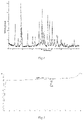
- the present disclosure provides a crystal form A of a compound of formula (I), wherein the crystal form has an X-ray powder diffraction pattern thereof comprising characteristic diffraction peaks at the following 2 ⁇ angles: 6.30 ⁇ 0.20°, 9.30 ⁇ 0.20°, and 20.16 ⁇ 0.20°;
- the above-mentioned crystal form A has an X-ray powder diffraction pattern comprising characteristic diffraction peaks at the following 2 ⁇ angles: 6.30 ⁇ 0.20°, 9.30 ⁇ 0.20°, 9.84 ⁇ 0.20°, 18.68 ⁇ 0.20°, 20.16 ⁇ 0.20°, 23.06 ⁇ 0.20°, 24.00 ⁇ 0.20°, and 25.38 ⁇ 0.20°.
- the above-mentioned crystal form A has an X-ray powder diffraction pattern comprising characteristic diffraction peaks at the following 2 ⁇ angles: 6.30 ⁇ 0.20°, 9.30 ⁇ 0.20°, 9.84 ⁇ 0.20°, 12.84 ⁇ 0.20°, 18.68 ⁇ 0.20°, 20.16 ⁇ 0.20°, 21.26 ⁇ 0.20°, 23.06 ⁇ 0.20°, 24.00 ⁇ 0.20°, and 25.38 ⁇ 0.20°.
- the above-mentioned crystal form A has an X-ray powder diffraction pattern comprising characteristic diffraction peaks at the following 2 ⁇ angles: 6.302°, 7.883°, 9.301°, 9.842°, 12.838°, 15.436°, 16.580°, 18.124°, 18.680°, 19.459°, 20.161°, 20.800°, 21.262°, 21.704°, 23.057°, 24.000°, 24.837°, 25.382°, 26.244°, 26.558°, 27.740°, 28.119°, 28.827°, 29.502°, 29.880°, 30.261°, 30.762°, 31.678°, 32.595°, 33.061°, 34.347°, 35.253°, 35.738°, 36.642°, 38.619°, and 39.558°.
- the above-mentioned crystal form A has an XRPD pattern as shown in Figure 1 .
- the above-mentioned crystal form A has an XRPD pattern analysis data as shown in Table 1: Table 1 XRPD pattern analysis data of crystal form A of the compound of formula (I) No. 2 ⁇ angle (°) Interpla nar spacing ( ⁇ ) Inten sity Relati ve intensi ty (%) No.
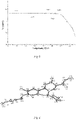
- the above-mentioned crystal form A has a differential scanning calorimetry profile comprising an endothermic peak at 224.58 °C ⁇ 3 °C.
- the above-mentioned crystal form A has a DSC pattern as shown in Figure 2 .
- the above-mentioned crystal form A has a thermogravimetric analysis curve showing a weight loss of 0.127% at 200.00 °C ⁇ 3 °C and a weight loss of 0.224% at 250 °C ⁇ 3 °C.
- the above-mentioned crystal form A has a TGA pattern as shown in Figure 3 .
- the present disclosure provides a preparation method of the crystal form A of the compound of formula (I), wherein the method comprises adding the compound of formula (I) in any form to an alcohol solvent, acetone, ethyl acetate, acetonitrile, or an alcohol solvent, acetone, acetonitrile and water, stirring the mixture for a given time at a given temperature, then filtering, and drying a filter cake to obtain the crystal form A.
- the volume ratio of the above-mentioned alcohol solvent, acetone, acetonitrile and water is selected from 1 : 5-3.
- the volume ratio of the above-mentioned alcohol solvent, acetone, acetonitrile and water is selected from 1 : 1-3.
- the above-mentioned alcohol solvent is selected from methanol, ethanol or isopropanol.
- stirring is performed at a temperature selected from 25 °C to 65 °C.
- stirring is performed for a time period selected from 1 hour to 72 hours.
- the weight ratio of the above-mentioned compound of formula (I) to the solvent is selected from 1 : 1-30.
- the weight ratio of the above-mentioned compound of formula (I) to the solvent is selected from 1 : 5-30.
- the present disclosure further provides use of the above-mentioned compound of formula (I) or the above-mentioned crystal form A of the compound of formula (I) in the preparation of a drug for treating chronic hepatitis B.
- the compound of the present disclosure has significant anti-hepatitis B virus activity.
- the compound of the present disclosure does not inhibit cytochrome P450 isoenzymes, indicating a lower risk of drug-drug interactions; has excellent stability of liver microsomes in three species, i.e., rat, human and mouse, indicating that the compound is not easily metabolized; has better exposure and bioavailability; and is well tolerated in a single-dose neurotoxicity study.
- the crystal form A of the compound of the present disclosure is easy to obtain, has good physical stability and chemical stability, and has high industrial application value and economic value.
- the intermediate compounds of the present disclosure can be prepared by various synthetic methods well known to a person skilled in the art, including the specific embodiments listed below, the embodiments formed by the combination with other chemical synthesis methods, and equivalent alternative embodiments well known to a person skilled in the art, wherein the preferred embodiments include but are not limited to the examples of the present disclosure.
- XRPD X-ray powder diffractometer
- Test method approximately 10 mg to 20 mg of the sample is used for XRPD detection.
- Test method the sample (2-6 mg) was placed in a 30 UL DSC gold-plated high pressure crucible for test, and heated from 40 °C to 350 °C at a heating rate of 10 °C/min.
- TGA thermal gravimetric analyzer
- Test method the sample (2-10 mg) was placed in an aluminum crucible, then placed in a platinum hanging basket for test, and heated from 40 °C to 500 °C under nitrogen (N 2 ) conditions at a gas flow rate of 40 mL/min and a heating rate of 10 °C/min.
- Step B 1-2 (8.00 g, 39.49 mmol), and 1-bromo-3-methoxy-propane (7.25 g, 47.39 mmol) were dissolved in N,N-dimethylformamide (100.00 mL) and cooled to 0 °C. Then potassium carbonate (10.92 g, 78.98 mmol) was added, and the mixed solution was warmed to 25 °C and stirred for 10 hours. Ethyl acetate (300 mL) and water (50 mL) were added to the solution, and the resulting solution was stirred at 25 °C for 10 minutes.
- Step C To a solution of 1-3 (3.64 g, 13.25 mmol) and benzyl chloride (2.18 g, 17.23 mmol, 1.98 mL) in N,N-dimethylformamide (10.00 mL), potassium carbonate (4.76 g, 34.45 mmol) was added, and the mixed solution was stirred at 25 °C for 20 hours. Ethyl acetate (150 mL) and water (30 mL) were added to the solution, and the resulting solution was stirred at 20 °C for 10 minutes. The organic phase was then separated and washed with water (30 mL ⁇ 2) and saturated brine (30 mL ⁇ 2), then dried over anhydrous sodium sulfate, and concentrated under reduced pressure to obtain compound 1-4.
- potassium carbonate 4.76 g, 34.45 mmol
- Step D 1-4 (2.00 g, 5.48 mmol) and lithium hydroxide monohydrate (1.38 g, 32.89 mmol) were added to a mixed solution of tetrahydrofuran (20 mL) and water (10 mL), and then the resulting solution was stirred at 10 °C to 20 °C for 10 hours. The solution was then washed with ethyl acetate/petroleum ether 1/1 (5 mL ⁇ 3). The water phase was adjusted to pH 1 to 2.
- Step E A solution of 1-5 (2.94 g, 7.96 mmol) and compound a (1.62 g, 8.76 mmol, 1.10 eq ) in tetrahydrofuran (20 mL) was added dropwise (5 min) to a solution of lithium hexamethyldisilazide (1 mol/L, 23.88 mL) in tetrahydrofuran (20 mL) at -70 °C. Then a cooling bath was removed, and the mixture was allowed to continue stirring for 5 minutes.
- Step F To a solution of 1-6 (3.00 g, 6.36 mmol) in tetrahydrofuran (20 mL), palladium on activated carbon (wet) (500 mg) was added, and the solution was stirred at 25 °C for 2 hours under an atmosphere of hydrogen (15 psi). The brown suspension was then filtered, and the filtrate was collected and concentrated under reduced pressure to obtain a residue. The residue was then slurried with petroleum ether/ethyl acetate (4/1) (twice) and filtered to obtain compound 1-7.
- wet palladium on activated carbon
- Step G To a solution of 1-8 (20.00 g, 178.33 mmol) in dichloromethane (150.00 mL), pyridine (2.82 g, 35.67 mmol) followed by phosphorus pentachloride (37.14 g, 178.33 mmol) was added at -10 °C, and the resulting mixture was reacted at -10 °C for 0.5 hour. After the reaction was completed, sodium bicarbonate (44.94 g, 534.99 mmol) was added to the reaction system. The reaction was stirred for another 0.5 hours, then filtered through celite and washed with dichloromethane (20 mL ⁇ 3), and the filtrate was concentrated to obtain residue 1-9.
- the compound of formula (I) (1 g) was added to a reaction flask, and then acetone (10 mL) was added. The mixture was stirred at 40 °C for 24 hours, cooled to room temperature and filtered, and the filter cake was washed with acetone (10 mL) to obtain a crude, which was dried in a vacuum drying oven (45 °C, 16 hours) to obtain crystal form A of the compound of formula (I).
- Example 3 Stability test of crystal form A of the compound of formula (I), as a solid, under high temperature and high humidity conditions
- Table 2 Stability test of crystal form A, as a solid, under high temperature and high humidity conditions Time point (day) Appearance Polymorph Purity (%) Total impurities (%) 0 White powder Polymorph A 99.79 0.21 5 White powder Polymorph A 99.79 0.21 10 White powder Polymorph A 99.79 0.21
- Example 4 Physical stability test of crystal form A of the compound of formula (I), as a solid, under various temperature, humidity and light conditions
- Table 3 Physical stability test of crystal form A, as a solid, under various temperature, humidity and light conditions Investigated item Time point Day 0 (-20 °C storage with seal) (control sample) 25 °C/92.5% Relative humidity (open) 60 °C (open) 40 °C/75% Relative humidity (open) Light Polymorph Day 10 Polymorph A Polymorph A Polymorph A Polymorph A Polymorph A Character Day 10 White powder White powder White powder White powder Purity (%) Day 10 99.79 99.80 99.75 99.79 99.71
- Example 5 Single crystal X-ray diffraction analysis
- the preparation method was as follows: the compound of formula (I) (5 g, 11.16 mmol) was added to a mixed solution of methanol (15 mL) and tetrahydrofuran (45 mL), and trimethylsilyldiazomethane (2 mol/L, 8.37 mL) was added in one portion at room temperature. Then the resulting solution was stirred at room temperature for 12 hours. The reaction solution was concentrated, and then 20 ml of tert-butyl methyl ether was added; and the resulting solution was stirred, filtered and dried to obtain the compound of formula (II).
- the compound of formula (II) was dissolved in methanol, and the resulting solution was cultured at room temperature for 10 days using the solvent evaporation method to obtain a single crystal of the compound of formula (II), with a crystal size for diffraction of 0.06 ⁇ 0.08 ⁇ 0.16 mm.
- Diffraction intensity data was collected with Bruker D8 venture diffractometer, with CuKa radiation as a light source and ⁇ / ⁇ scanning as a scanning mode, wherein the number of total diffraction points collected was 40999, the number of independent diffraction points was 15341, and the number of observable points (I/sigma ⁇ 2) was 5471.
- the crystal structure was analyzed by the direct method (Shelxs97) to obtain 124 non-hydrogen atom positions.
- the least squares method was used to correct structural parameters and identify the atomic species.
- the geometric calculation method and the difference Fourier method were used to obtain all hydrogen atom positions.
- R 1 0.1357
- 2 ), S 1.817.
- the final stoichiometric formula was 4(C 22 H 20 ClNO 6 S); the calculated single molecular weight was 461.90; and the calculated crystal density was 1.287 g/cm 3 .
- HepG2.2.15 cell culture medium DMEM/F12, Invitrogen-11330032; 10% serum, Invitrogen-10099141; 100 units/ml penicillin and 100 ⁇ g/ml streptomycin, Hyclone-SV30010; 1% non-essential amino acids, Invitrogen-11140050; 2 mm L-GLUTAMINE, Invitrogen-25030081; 300 ⁇ g/ml Geneticin, Invitrogen-10131027
- 6.2 PCR reaction conditions involve heating at 95 °C for 10 minutes, followed by denaturation at 95 °C for 15 seconds and extension at 60 °C for 1 minute, for a total of 40 cycles.
- Determination of the content of hepatitis B virus S antigen by ELISA involve respectively adding 50 ⁇ l of samples and standards to a reaction plate, and then adding 50 ⁇ L of enzyme conjugate to each well; shaking same to mix uniformly, and incubating at 37 °C for 60 minutes; washing the plate 5 times with a washing solution, adding 50 ⁇ L of luminescent substrate to each well, mixing uniformly, and reacting same in the dark at room temperature for 10 minutes; and finally, detecting chemiluminescence intensity with a microplate reader.
- % Inh . 1 ⁇ value in sample/dimethyl sulfoxide control value ⁇ 100 .
- calculating EC 50 50% inhibitory concentration (EC 50 ) value of the compound against HBV was calculated using GraphPad Prism software.
Landscapes
- Chemical & Material Sciences (AREA)
- Organic Chemistry (AREA)
- Health & Medical Sciences (AREA)
- Life Sciences & Earth Sciences (AREA)
- Virology (AREA)
- Veterinary Medicine (AREA)
- Medicinal Chemistry (AREA)
- Public Health (AREA)
- General Health & Medical Sciences (AREA)
- Animal Behavior & Ethology (AREA)
- Pharmacology & Pharmacy (AREA)
- Chemical Kinetics & Catalysis (AREA)
- General Chemical & Material Sciences (AREA)
- Nuclear Medicine, Radiotherapy & Molecular Imaging (AREA)
- Molecular Biology (AREA)
- Oncology (AREA)
- Communicable Diseases (AREA)
- Biotechnology (AREA)
- Engineering & Computer Science (AREA)
- Epidemiology (AREA)
- Pharmaceuticals Containing Other Organic And Inorganic Compounds (AREA)
- Medicines Containing Antibodies Or Antigens For Use As Internal Diagnostic Agents (AREA)
- Nitrogen And Oxygen Or Sulfur-Condensed Heterocyclic Ring Systems (AREA)
- Heterocyclic Carbon Compounds Containing A Hetero Ring Having Oxygen Or Sulfur (AREA)
Applications Claiming Priority (2)
| Application Number | Priority Date | Filing Date | Title |
|---|---|---|---|
| CN201910887908 | 2019-09-19 | ||
| PCT/CN2020/116051 WO2021052447A1 (fr) | 2019-09-19 | 2020-09-18 | Forme cristalline d'un inhibiteur d'antigène de surface de l'hépatite b et son application |
Publications (2)
| Publication Number | Publication Date |
|---|---|
| EP4032895A1 true EP4032895A1 (fr) | 2022-07-27 |
| EP4032895A4 EP4032895A4 (fr) | 2023-12-20 |
Family
ID=74883899
Family Applications (1)
| Application Number | Title | Priority Date | Filing Date |
|---|---|---|---|
| EP20865773.4A Withdrawn EP4032895A4 (fr) | 2019-09-19 | 2020-09-18 | Forme cristalline d'un inhibiteur d'antigène de surface de l'hépatite b et son application |
Country Status (10)
| Country | Link |
|---|---|
| US (1) | US11807647B2 (fr) |
| EP (1) | EP4032895A4 (fr) |
| JP (1) | JP2022548746A (fr) |
| KR (1) | KR102623169B1 (fr) |
| CN (1) | CN112521400B (fr) |
| AU (1) | AU2020347724B2 (fr) |
| CA (1) | CA3151696A1 (fr) |
| TW (1) | TWI746177B (fr) |
| WO (1) | WO2021052447A1 (fr) |
| ZA (1) | ZA202204273B (fr) |
Family Cites Families (7)
| Publication number | Priority date | Publication date | Assignee | Title |
|---|---|---|---|---|
| US20130251647A1 (en) | 2011-09-20 | 2013-09-26 | Basf Se | Low molecular weight modulators of the cold menthol receptor trpm8 and use thereof |
| HK1244281B (zh) | 2015-02-11 | 2020-02-07 | F. Hoffmann-La Roche Ag | 治疗和预防乙型肝炎病毒感染的2-氧代-6,7-二氢苯并[a]喹嗪-3-甲酸衍生物 |
| CN107759585A (zh) * | 2016-07-29 | 2018-03-06 | 银杏树药业(苏州)有限公司 | 一种异喹啉类化合物及其药用组合物和作为抗病毒药物的应用 |
| PL3590942T3 (pl) * | 2017-03-09 | 2021-12-13 | Fujian Cosunter Pharmaceutical Co., Ltd. | Inhibitor antygenu powierzchniowego wirusa zapalenia wątroby typu B |
| AU2018271643B2 (en) * | 2017-05-22 | 2022-06-02 | Fujian Akeylink Biotechnology Co., Ltd. | Hepatitis B virus surface antigen inhibitor |
| WO2019169539A1 (fr) | 2018-03-05 | 2019-09-12 | Pharmaresources (Shanghai) Co., Ltd. | Nouvel acide 4-pyridone-3-carboxylique oxa-et aza-tricyclique pour le traitement et la prophylaxie d'une infection par le virus de l'hépatite b |
| BR112021009770A2 (pt) * | 2018-11-22 | 2021-08-17 | Fujian Cosunter Pharmaceutical Co., Ltd. | forma cristalina de inibidor de antígeno de superfície de hepatite b |
-
2020
- 2020-09-18 WO PCT/CN2020/116051 patent/WO2021052447A1/fr not_active Ceased
- 2020-09-18 AU AU2020347724A patent/AU2020347724B2/en active Active
- 2020-09-18 KR KR1020227012832A patent/KR102623169B1/ko active Active
- 2020-09-18 CN CN202010991558.6A patent/CN112521400B/zh active Active
- 2020-09-18 EP EP20865773.4A patent/EP4032895A4/fr not_active Withdrawn
- 2020-09-18 US US17/760,818 patent/US11807647B2/en active Active
- 2020-09-18 CA CA3151696A patent/CA3151696A1/fr active Pending
- 2020-09-18 TW TW109132274A patent/TWI746177B/zh active
- 2020-09-18 JP JP2022517874A patent/JP2022548746A/ja active Pending
-
2022
- 2022-04-14 ZA ZA2022/04273A patent/ZA202204273B/en unknown
Also Published As
| Publication number | Publication date |
|---|---|
| US20220402939A1 (en) | 2022-12-22 |
| AU2020347724B2 (en) | 2024-09-19 |
| AU2020347724A1 (en) | 2022-04-28 |
| CN112521400A (zh) | 2021-03-19 |
| KR20220066118A (ko) | 2022-05-23 |
| JP2022548746A (ja) | 2022-11-21 |
| BR112022005101A2 (pt) | 2022-06-21 |
| WO2021052447A1 (fr) | 2021-03-25 |
| TWI746177B (zh) | 2021-11-11 |
| TW202115046A (zh) | 2021-04-16 |
| CA3151696A1 (fr) | 2021-03-25 |
| US11807647B2 (en) | 2023-11-07 |
| KR102623169B1 (ko) | 2024-01-11 |
| ZA202204273B (en) | 2022-12-21 |
| EP4032895A4 (fr) | 2023-12-20 |
| CN112521400B (zh) | 2022-05-03 |
Similar Documents
| Publication | Publication Date | Title |
|---|---|---|
| JP7250015B2 (ja) | 抗HBVのテトラヒドロイソキサゾロ[4,3-c]ピリジン類化合物 | |
| EP4032895A1 (fr) | Forme cristalline d'un inhibiteur d'antigène de surface de l'hépatite b et son application | |
| HK40068663A (en) | Crystal form of hepatitis b surface antigen inhibitor and application thereof | |
| WO2006115247A1 (fr) | INHIBITEUR HAUTEMENT SELECTIF DE LA Rho-KINASE | |
| EP3666767B1 (fr) | Dérivés de phtalazinone, procédé de leur préparation, composition pharmaceutique les contenant et leur utilisation | |
| EP4603497A1 (fr) | Forme cristalline d'un composé polypeptidique substitué par cyano et son procédé de préparation | |
| RU2823673C1 (ru) | Способ получения кристаллической формы ингибитора поверхностного антигена вируса гепатита в | |
| EP3885349B1 (fr) | Forme cristalline d'un inhibiteur d'antigène de surface de l'hépatite b | |
| BR112022005101B1 (pt) | Forma cristalina de inibidor de antígeno de superfície de hepatite b e aplicação da mesma | |
| CN112961081B (zh) | 一种联苯甲酰胺脲类化合物及其制备方法和应用 | |
| CN115716829B (zh) | 一种喹啉并咪唑酮联氘代吡唑类化合物及其应用 | |
| CN115335377B (zh) | 吡啶并嘧啶酮类化合物 | |
| CN115746002B (zh) | 一种氘代氮杂吲哚氨基-吡唑甲酰胺类化合物及其用途 | |
| CN115572294B (zh) | 一种氘代氮杂吲哚联吡唑类化合物、药物组合物和用途 | |
| HK40052444B (en) | Crystal form of hepatitis b surface antigen inhibitor | |
| HK40052444A (en) | Crystal form of hepatitis b surface antigen inhibitor | |
| WO2025011618A1 (fr) | Sel de composé de thiazolopyrazine ou cristal de celui-ci et son utilisation | |
| CN103183631A (zh) | 新颖的靛红-5-磺酰胺类衍生物及其在制备治疗非典型性肺炎的药物中的应用 | |
| WO2017202207A1 (fr) | Composé cyclique de naphtalène substitué, composition pharmaceutique et son application |
Legal Events
| Date | Code | Title | Description |
|---|---|---|---|
| STAA | Information on the status of an ep patent application or granted ep patent |
Free format text: STATUS: THE INTERNATIONAL PUBLICATION HAS BEEN MADE |
|
| PUAI | Public reference made under article 153(3) epc to a published international application that has entered the european phase |
Free format text: ORIGINAL CODE: 0009012 |
|
| STAA | Information on the status of an ep patent application or granted ep patent |
Free format text: STATUS: REQUEST FOR EXAMINATION WAS MADE |
|
| 17P | Request for examination filed |
Effective date: 20220414 |
|
| AK | Designated contracting states |
Kind code of ref document: A1 Designated state(s): AL AT BE BG CH CY CZ DE DK EE ES FI FR GB GR HR HU IE IS IT LI LT LU LV MC MK MT NL NO PL PT RO RS SE SI SK SM TR |
|
| REG | Reference to a national code |
Ref country code: HK Ref legal event code: DE Ref document number: 40068663 Country of ref document: HK |
|
| DAV | Request for validation of the european patent (deleted) | ||
| DAX | Request for extension of the european patent (deleted) | ||
| A4 | Supplementary search report drawn up and despatched |
Effective date: 20231121 |
|
| RIC1 | Information provided on ipc code assigned before grant |
Ipc: A61P 31/20 20060101ALI20231115BHEP Ipc: A61K 31/5365 20060101ALI20231115BHEP Ipc: C07D 498/04 20060101AFI20231115BHEP |
|
| STAA | Information on the status of an ep patent application or granted ep patent |
Free format text: STATUS: EXAMINATION IS IN PROGRESS |
|
| 17Q | First examination report despatched |
Effective date: 20240930 |
|
| GRAP | Despatch of communication of intention to grant a patent |
Free format text: ORIGINAL CODE: EPIDOSNIGR1 |
|
| STAA | Information on the status of an ep patent application or granted ep patent |
Free format text: STATUS: GRANT OF PATENT IS INTENDED |
|
| INTG | Intention to grant announced |
Effective date: 20250124 |
|
| STAA | Information on the status of an ep patent application or granted ep patent |
Free format text: STATUS: THE APPLICATION IS DEEMED TO BE WITHDRAWN |
|
| 18D | Application deemed to be withdrawn |
Effective date: 20250527 |