EP4032926A1 - Procédés de fabrication de mousses souples moulées et mousses souples ainsi fabriquées - Google Patents
Procédés de fabrication de mousses souples moulées et mousses souples ainsi fabriquées Download PDFInfo
- Publication number
- EP4032926A1 EP4032926A1 EP22152527.2A EP22152527A EP4032926A1 EP 4032926 A1 EP4032926 A1 EP 4032926A1 EP 22152527 A EP22152527 A EP 22152527A EP 4032926 A1 EP4032926 A1 EP 4032926A1
- Authority
- EP
- European Patent Office
- Prior art keywords
- weight
- foam
- polyol
- polyether polyol
- reaction mixture
- Prior art date
- Legal status (The legal status is an assumption and is not a legal conclusion. Google has not performed a legal analysis and makes no representation as to the accuracy of the status listed.)
- Pending
Links
Images

Classifications
-
- C—CHEMISTRY; METALLURGY
- C08—ORGANIC MACROMOLECULAR COMPOUNDS; THEIR PREPARATION OR CHEMICAL WORKING-UP; COMPOSITIONS BASED THEREON
- C08G—MACROMOLECULAR COMPOUNDS OBTAINED OTHERWISE THAN BY REACTIONS ONLY INVOLVING UNSATURATED CARBON-TO-CARBON BONDS
- C08G18/00—Polymeric products of isocyanates or isothiocyanates
- C08G18/06—Polymeric products of isocyanates or isothiocyanates with compounds having active hydrogen
- C08G18/28—Polymeric products of isocyanates or isothiocyanates with compounds having active hydrogen characterised by the compounds used containing active hydrogen
- C08G18/40—High-molecular-weight compounds
- C08G18/48—Polyethers
- C08G18/4833—Polyethers containing oxyethylene units
- C08G18/4837—Polyethers containing oxyethylene units and other oxyalkylene units
-
- C—CHEMISTRY; METALLURGY
- C08—ORGANIC MACROMOLECULAR COMPOUNDS; THEIR PREPARATION OR CHEMICAL WORKING-UP; COMPOSITIONS BASED THEREON
- C08G—MACROMOLECULAR COMPOUNDS OBTAINED OTHERWISE THAN BY REACTIONS ONLY INVOLVING UNSATURATED CARBON-TO-CARBON BONDS
- C08G18/00—Polymeric products of isocyanates or isothiocyanates
- C08G18/06—Polymeric products of isocyanates or isothiocyanates with compounds having active hydrogen
- C08G18/08—Processes
- C08G18/14—Manufacture of cellular products
-
- C—CHEMISTRY; METALLURGY
- C08—ORGANIC MACROMOLECULAR COMPOUNDS; THEIR PREPARATION OR CHEMICAL WORKING-UP; COMPOSITIONS BASED THEREON
- C08G—MACROMOLECULAR COMPOUNDS OBTAINED OTHERWISE THAN BY REACTIONS ONLY INVOLVING UNSATURATED CARBON-TO-CARBON BONDS
- C08G18/00—Polymeric products of isocyanates or isothiocyanates
- C08G18/06—Polymeric products of isocyanates or isothiocyanates with compounds having active hydrogen
- C08G18/28—Polymeric products of isocyanates or isothiocyanates with compounds having active hydrogen characterised by the compounds used containing active hydrogen
- C08G18/40—High-molecular-weight compounds
- C08G18/48—Polyethers
- C08G18/4833—Polyethers containing oxyethylene units
- C08G18/4837—Polyethers containing oxyethylene units and other oxyalkylene units
- C08G18/485—Polyethers containing oxyethylene units and other oxyalkylene units containing mixed oxyethylene-oxypropylene or oxyethylene-higher oxyalkylene end groups
-
- B—PERFORMING OPERATIONS; TRANSPORTING
- B29—WORKING OF PLASTICS; WORKING OF SUBSTANCES IN A PLASTIC STATE IN GENERAL
- B29C—SHAPING OR JOINING OF PLASTICS; SHAPING OF MATERIAL IN A PLASTIC STATE, NOT OTHERWISE PROVIDED FOR; AFTER-TREATMENT OF THE SHAPED PRODUCTS, e.g. REPAIRING
- B29C44/00—Shaping by internal pressure generated in the material, e.g. swelling or foaming ; Producing porous or cellular expanded plastics articles
- B29C44/34—Auxiliary operations
- B29C44/3442—Mixing, kneading or conveying the foamable material
-
- B—PERFORMING OPERATIONS; TRANSPORTING
- B29—WORKING OF PLASTICS; WORKING OF SUBSTANCES IN A PLASTIC STATE IN GENERAL
- B29C—SHAPING OR JOINING OF PLASTICS; SHAPING OF MATERIAL IN A PLASTIC STATE, NOT OTHERWISE PROVIDED FOR; AFTER-TREATMENT OF THE SHAPED PRODUCTS, e.g. REPAIRING
- B29C44/00—Shaping by internal pressure generated in the material, e.g. swelling or foaming ; Producing porous or cellular expanded plastics articles
- B29C44/34—Auxiliary operations
- B29C44/58—Moulds
-
- C—CHEMISTRY; METALLURGY
- C08—ORGANIC MACROMOLECULAR COMPOUNDS; THEIR PREPARATION OR CHEMICAL WORKING-UP; COMPOSITIONS BASED THEREON
- C08G—MACROMOLECULAR COMPOUNDS OBTAINED OTHERWISE THAN BY REACTIONS ONLY INVOLVING UNSATURATED CARBON-TO-CARBON BONDS
- C08G18/00—Polymeric products of isocyanates or isothiocyanates
- C08G18/06—Polymeric products of isocyanates or isothiocyanates with compounds having active hydrogen
- C08G18/08—Processes
- C08G18/16—Catalysts
- C08G18/18—Catalysts containing secondary or tertiary amines or salts thereof
-
- C—CHEMISTRY; METALLURGY
- C08—ORGANIC MACROMOLECULAR COMPOUNDS; THEIR PREPARATION OR CHEMICAL WORKING-UP; COMPOSITIONS BASED THEREON
- C08G—MACROMOLECULAR COMPOUNDS OBTAINED OTHERWISE THAN BY REACTIONS ONLY INVOLVING UNSATURATED CARBON-TO-CARBON BONDS
- C08G18/00—Polymeric products of isocyanates or isothiocyanates
- C08G18/06—Polymeric products of isocyanates or isothiocyanates with compounds having active hydrogen
- C08G18/08—Processes
- C08G18/16—Catalysts
- C08G18/22—Catalysts containing metal compounds
- C08G18/222—Catalysts containing metal compounds metal compounds not provided for in groups C08G18/225 - C08G18/26
-
- C—CHEMISTRY; METALLURGY
- C08—ORGANIC MACROMOLECULAR COMPOUNDS; THEIR PREPARATION OR CHEMICAL WORKING-UP; COMPOSITIONS BASED THEREON
- C08G—MACROMOLECULAR COMPOUNDS OBTAINED OTHERWISE THAN BY REACTIONS ONLY INVOLVING UNSATURATED CARBON-TO-CARBON BONDS
- C08G18/00—Polymeric products of isocyanates or isothiocyanates
- C08G18/06—Polymeric products of isocyanates or isothiocyanates with compounds having active hydrogen
- C08G18/08—Processes
- C08G18/16—Catalysts
- C08G18/22—Catalysts containing metal compounds
- C08G18/227—Catalysts containing metal compounds of antimony, bismuth or arsenic
-
- C—CHEMISTRY; METALLURGY
- C08—ORGANIC MACROMOLECULAR COMPOUNDS; THEIR PREPARATION OR CHEMICAL WORKING-UP; COMPOSITIONS BASED THEREON
- C08G—MACROMOLECULAR COMPOUNDS OBTAINED OTHERWISE THAN BY REACTIONS ONLY INVOLVING UNSATURATED CARBON-TO-CARBON BONDS
- C08G18/00—Polymeric products of isocyanates or isothiocyanates
- C08G18/06—Polymeric products of isocyanates or isothiocyanates with compounds having active hydrogen
- C08G18/08—Processes
- C08G18/16—Catalysts
- C08G18/22—Catalysts containing metal compounds
- C08G18/24—Catalysts containing metal compounds of tin
- C08G18/242—Catalysts containing metal compounds of tin organometallic compounds containing tin-carbon bonds
-
- C—CHEMISTRY; METALLURGY
- C08—ORGANIC MACROMOLECULAR COMPOUNDS; THEIR PREPARATION OR CHEMICAL WORKING-UP; COMPOSITIONS BASED THEREON
- C08G—MACROMOLECULAR COMPOUNDS OBTAINED OTHERWISE THAN BY REACTIONS ONLY INVOLVING UNSATURATED CARBON-TO-CARBON BONDS
- C08G18/00—Polymeric products of isocyanates or isothiocyanates
- C08G18/06—Polymeric products of isocyanates or isothiocyanates with compounds having active hydrogen
- C08G18/28—Polymeric products of isocyanates or isothiocyanates with compounds having active hydrogen characterised by the compounds used containing active hydrogen
- C08G18/30—Low-molecular-weight compounds
- C08G18/32—Polyhydroxy compounds; Polyamines; Hydroxyamines
- C08G18/3203—Polyhydroxy compounds
- C08G18/3206—Polyhydroxy compounds aliphatic
-
- C—CHEMISTRY; METALLURGY
- C08—ORGANIC MACROMOLECULAR COMPOUNDS; THEIR PREPARATION OR CHEMICAL WORKING-UP; COMPOSITIONS BASED THEREON
- C08G—MACROMOLECULAR COMPOUNDS OBTAINED OTHERWISE THAN BY REACTIONS ONLY INVOLVING UNSATURATED CARBON-TO-CARBON BONDS
- C08G18/00—Polymeric products of isocyanates or isothiocyanates
- C08G18/06—Polymeric products of isocyanates or isothiocyanates with compounds having active hydrogen
- C08G18/28—Polymeric products of isocyanates or isothiocyanates with compounds having active hydrogen characterised by the compounds used containing active hydrogen
- C08G18/30—Low-molecular-weight compounds
- C08G18/32—Polyhydroxy compounds; Polyamines; Hydroxyamines
- C08G18/3271—Hydroxyamines
- C08G18/3278—Hydroxyamines containing at least three hydroxy groups
- C08G18/3281—Hydroxyamines containing at least three hydroxy groups containing three hydroxy groups
-
- C—CHEMISTRY; METALLURGY
- C08—ORGANIC MACROMOLECULAR COMPOUNDS; THEIR PREPARATION OR CHEMICAL WORKING-UP; COMPOSITIONS BASED THEREON
- C08G—MACROMOLECULAR COMPOUNDS OBTAINED OTHERWISE THAN BY REACTIONS ONLY INVOLVING UNSATURATED CARBON-TO-CARBON BONDS
- C08G18/00—Polymeric products of isocyanates or isothiocyanates
- C08G18/06—Polymeric products of isocyanates or isothiocyanates with compounds having active hydrogen
- C08G18/28—Polymeric products of isocyanates or isothiocyanates with compounds having active hydrogen characterised by the compounds used containing active hydrogen
- C08G18/30—Low-molecular-weight compounds
- C08G18/38—Low-molecular-weight compounds having heteroatoms other than oxygen
- C08G18/3819—Low-molecular-weight compounds having heteroatoms other than oxygen having nitrogen
- C08G18/3821—Carboxylic acids; Esters thereof with monohydroxyl compounds
-
- C—CHEMISTRY; METALLURGY
- C08—ORGANIC MACROMOLECULAR COMPOUNDS; THEIR PREPARATION OR CHEMICAL WORKING-UP; COMPOSITIONS BASED THEREON
- C08G—MACROMOLECULAR COMPOUNDS OBTAINED OTHERWISE THAN BY REACTIONS ONLY INVOLVING UNSATURATED CARBON-TO-CARBON BONDS
- C08G18/00—Polymeric products of isocyanates or isothiocyanates
- C08G18/06—Polymeric products of isocyanates or isothiocyanates with compounds having active hydrogen
- C08G18/28—Polymeric products of isocyanates or isothiocyanates with compounds having active hydrogen characterised by the compounds used containing active hydrogen
- C08G18/40—High-molecular-weight compounds
- C08G18/48—Polyethers
- C08G18/4804—Two or more polyethers of different physical or chemical nature
- C08G18/482—Mixtures of polyethers containing at least one polyether containing nitrogen
-
- C—CHEMISTRY; METALLURGY
- C08—ORGANIC MACROMOLECULAR COMPOUNDS; THEIR PREPARATION OR CHEMICAL WORKING-UP; COMPOSITIONS BASED THEREON
- C08G—MACROMOLECULAR COMPOUNDS OBTAINED OTHERWISE THAN BY REACTIONS ONLY INVOLVING UNSATURATED CARBON-TO-CARBON BONDS
- C08G18/00—Polymeric products of isocyanates or isothiocyanates
- C08G18/06—Polymeric products of isocyanates or isothiocyanates with compounds having active hydrogen
- C08G18/28—Polymeric products of isocyanates or isothiocyanates with compounds having active hydrogen characterised by the compounds used containing active hydrogen
- C08G18/40—High-molecular-weight compounds
- C08G18/48—Polyethers
- C08G18/4833—Polyethers containing oxyethylene units
-
- C—CHEMISTRY; METALLURGY
- C08—ORGANIC MACROMOLECULAR COMPOUNDS; THEIR PREPARATION OR CHEMICAL WORKING-UP; COMPOSITIONS BASED THEREON
- C08G—MACROMOLECULAR COMPOUNDS OBTAINED OTHERWISE THAN BY REACTIONS ONLY INVOLVING UNSATURATED CARBON-TO-CARBON BONDS
- C08G18/00—Polymeric products of isocyanates or isothiocyanates
- C08G18/06—Polymeric products of isocyanates or isothiocyanates with compounds having active hydrogen
- C08G18/28—Polymeric products of isocyanates or isothiocyanates with compounds having active hydrogen characterised by the compounds used containing active hydrogen
- C08G18/40—High-molecular-weight compounds
- C08G18/48—Polyethers
- C08G18/50—Polyethers having heteroatoms other than oxygen
- C08G18/5021—Polyethers having heteroatoms other than oxygen having nitrogen
-
- C—CHEMISTRY; METALLURGY
- C08—ORGANIC MACROMOLECULAR COMPOUNDS; THEIR PREPARATION OR CHEMICAL WORKING-UP; COMPOSITIONS BASED THEREON
- C08G—MACROMOLECULAR COMPOUNDS OBTAINED OTHERWISE THAN BY REACTIONS ONLY INVOLVING UNSATURATED CARBON-TO-CARBON BONDS
- C08G18/00—Polymeric products of isocyanates or isothiocyanates
- C08G18/06—Polymeric products of isocyanates or isothiocyanates with compounds having active hydrogen
- C08G18/28—Polymeric products of isocyanates or isothiocyanates with compounds having active hydrogen characterised by the compounds used containing active hydrogen
- C08G18/40—High-molecular-weight compounds
- C08G18/48—Polyethers
- C08G18/50—Polyethers having heteroatoms other than oxygen
- C08G18/5021—Polyethers having heteroatoms other than oxygen having nitrogen
- C08G18/5024—Polyethers having heteroatoms other than oxygen having nitrogen containing primary and/or secondary amino groups
- C08G18/5027—Polyethers having heteroatoms other than oxygen having nitrogen containing primary and/or secondary amino groups directly linked to carbocyclic groups
-
- C—CHEMISTRY; METALLURGY
- C08—ORGANIC MACROMOLECULAR COMPOUNDS; THEIR PREPARATION OR CHEMICAL WORKING-UP; COMPOSITIONS BASED THEREON
- C08G—MACROMOLECULAR COMPOUNDS OBTAINED OTHERWISE THAN BY REACTIONS ONLY INVOLVING UNSATURATED CARBON-TO-CARBON BONDS
- C08G18/00—Polymeric products of isocyanates or isothiocyanates
- C08G18/06—Polymeric products of isocyanates or isothiocyanates with compounds having active hydrogen
- C08G18/28—Polymeric products of isocyanates or isothiocyanates with compounds having active hydrogen characterised by the compounds used containing active hydrogen
- C08G18/65—Low-molecular-weight compounds having active hydrogen with high-molecular-weight compounds having active hydrogen
- C08G18/66—Compounds of groups C08G18/42, C08G18/48, or C08G18/52
- C08G18/6666—Compounds of group C08G18/48 or C08G18/52
- C08G18/667—Compounds of group C08G18/48 or C08G18/52 with compounds of group C08G18/32 or polyamines of C08G18/38
- C08G18/6674—Compounds of group C08G18/48 or C08G18/52 with compounds of group C08G18/32 or polyamines of C08G18/38 with compounds of group C08G18/3203
-
- C—CHEMISTRY; METALLURGY
- C08—ORGANIC MACROMOLECULAR COMPOUNDS; THEIR PREPARATION OR CHEMICAL WORKING-UP; COMPOSITIONS BASED THEREON
- C08G—MACROMOLECULAR COMPOUNDS OBTAINED OTHERWISE THAN BY REACTIONS ONLY INVOLVING UNSATURATED CARBON-TO-CARBON BONDS
- C08G18/00—Polymeric products of isocyanates or isothiocyanates
- C08G18/06—Polymeric products of isocyanates or isothiocyanates with compounds having active hydrogen
- C08G18/70—Polymeric products of isocyanates or isothiocyanates with compounds having active hydrogen characterised by the isocyanates or isothiocyanates used
- C08G18/72—Polyisocyanates or polyisothiocyanates
- C08G18/74—Polyisocyanates or polyisothiocyanates cyclic
- C08G18/76—Polyisocyanates or polyisothiocyanates cyclic aromatic
- C08G18/7657—Polyisocyanates or polyisothiocyanates cyclic aromatic containing two or more aromatic rings
- C08G18/7664—Polyisocyanates or polyisothiocyanates cyclic aromatic containing two or more aromatic rings containing alkylene polyphenyl groups
- C08G18/7671—Polyisocyanates or polyisothiocyanates cyclic aromatic containing two or more aromatic rings containing alkylene polyphenyl groups containing only one alkylene bisphenyl group
-
- B—PERFORMING OPERATIONS; TRANSPORTING
- B29—WORKING OF PLASTICS; WORKING OF SUBSTANCES IN A PLASTIC STATE IN GENERAL
- B29K—INDEXING SCHEME ASSOCIATED WITH SUBCLASSES B29B, B29C OR B29D, RELATING TO MOULDING MATERIALS OR TO MATERIALS FOR MOULDS, REINFORCEMENTS, FILLERS OR PREFORMED PARTS, e.g. INSERTS
- B29K2075/00—Use of PU, i.e. polyureas or polyurethanes or derivatives thereof, as moulding material
-
- B—PERFORMING OPERATIONS; TRANSPORTING
- B29—WORKING OF PLASTICS; WORKING OF SUBSTANCES IN A PLASTIC STATE IN GENERAL
- B29K—INDEXING SCHEME ASSOCIATED WITH SUBCLASSES B29B, B29C OR B29D, RELATING TO MOULDING MATERIALS OR TO MATERIALS FOR MOULDS, REINFORCEMENTS, FILLERS OR PREFORMED PARTS, e.g. INSERTS
- B29K2105/00—Condition, form or state of moulded material or of the material to be shaped
- B29K2105/0002—Condition, form or state of moulded material or of the material to be shaped monomers or prepolymers
-
- B—PERFORMING OPERATIONS; TRANSPORTING
- B29—WORKING OF PLASTICS; WORKING OF SUBSTANCES IN A PLASTIC STATE IN GENERAL
- B29K—INDEXING SCHEME ASSOCIATED WITH SUBCLASSES B29B, B29C OR B29D, RELATING TO MOULDING MATERIALS OR TO MATERIALS FOR MOULDS, REINFORCEMENTS, FILLERS OR PREFORMED PARTS, e.g. INSERTS
- B29K2105/00—Condition, form or state of moulded material or of the material to be shaped
- B29K2105/04—Condition, form or state of moulded material or of the material to be shaped cellular or porous
-
- C—CHEMISTRY; METALLURGY
- C08—ORGANIC MACROMOLECULAR COMPOUNDS; THEIR PREPARATION OR CHEMICAL WORKING-UP; COMPOSITIONS BASED THEREON
- C08G—MACROMOLECULAR COMPOUNDS OBTAINED OTHERWISE THAN BY REACTIONS ONLY INVOLVING UNSATURATED CARBON-TO-CARBON BONDS
- C08G2101/00—Manufacture of cellular products
-
- C—CHEMISTRY; METALLURGY
- C08—ORGANIC MACROMOLECULAR COMPOUNDS; THEIR PREPARATION OR CHEMICAL WORKING-UP; COMPOSITIONS BASED THEREON
- C08G—MACROMOLECULAR COMPOUNDS OBTAINED OTHERWISE THAN BY REACTIONS ONLY INVOLVING UNSATURATED CARBON-TO-CARBON BONDS
- C08G2110/00—Foam properties
- C08G2110/0008—Foam properties flexible
-
- C—CHEMISTRY; METALLURGY
- C08—ORGANIC MACROMOLECULAR COMPOUNDS; THEIR PREPARATION OR CHEMICAL WORKING-UP; COMPOSITIONS BASED THEREON
- C08G—MACROMOLECULAR COMPOUNDS OBTAINED OTHERWISE THAN BY REACTIONS ONLY INVOLVING UNSATURATED CARBON-TO-CARBON BONDS
- C08G2110/00—Foam properties
- C08G2110/0041—Foam properties having specified density
- C08G2110/005—< 50kg/m3
-
- C—CHEMISTRY; METALLURGY
- C08—ORGANIC MACROMOLECULAR COMPOUNDS; THEIR PREPARATION OR CHEMICAL WORKING-UP; COMPOSITIONS BASED THEREON
- C08G—MACROMOLECULAR COMPOUNDS OBTAINED OTHERWISE THAN BY REACTIONS ONLY INVOLVING UNSATURATED CARBON-TO-CARBON BONDS
- C08G2110/00—Foam properties
- C08G2110/0083—Foam properties prepared using water as the sole blowing agent
Definitions
- This specification pertains generally to processes for making molded flexible foams, as well as to foams produced from such processes. Such foams may be suitable for use as ergonomic floor mats.
- Flexible polyurethane foams are used in numerous applications. They are produced by reacting an appropriate polyisocyanate and an isocyanate-reactive compound, usually a polyol, in the presence of a blowing agent.
- An appropriate polyisocyanate and an isocyanate-reactive compound usually a polyol
- One use of such flexible foams is in the production of ergonomic floor mats. These floor mats are sometimes referred to as anti-fatigue mats, as they seek to prevent or reduce fatigue of persons standing on the floor mat for long periods of time. Such floor mats may also act to reduce or prevent pain in the knees, back or waist and can also provide a slip resistant surface.
- Ergonomic floor mats are often formed of a flexible polyurethane foam layer that can have excellent shock-absorbing property.
- a fabric cover is often applied to the polyurethane foam layer to provide an aesthetically pleasing look and uniform texture.
- the polyurethane foam layer is often produced using an "open-pour" molding process in which a polyurethane foam-forming composition is mixed by a mixing head and poured into a mold, the mold is closed, and the composition allowed to react in the mold to form a flexible polyurethane molded foam. The molded polyurethane foam is removed from the mold where manufacturing of the floor mat is completed.
- a fabric cover is placed over the polyurethane foam. This, of course, requires additional material and labor. Thus, in some cases, it might be desirable to do away with such a cover. To do this, however, it then becomes desirable for the polyurethane foam itself to have a uniform texture and appearance.
- the present disclosure is directed to processes for making a molded flexible foam.
- the processes comprise: (a) depositing a foam-forming reaction mixture into a mold cavity, and (b) allowing the foam-forming reaction mixture to react in the mold cavity.
- the foam-forming reaction mixture comprises: (1) a polyisocyanate present in an amount of less than 45% by weight, based on the total weight of the reaction mixture; (2) an isocyanate-reactive composition; (3) a blowing agent; and (4) a catalyst.
- the isocyanate-reactive composition comprises (i) at least 50% by weight, based on the total weight of polyol in the isocyanate-reactive composition, of a polyether polyol (I) having a functionality of greater than 2, an oxyethylene content of 0 to 50% by weight, based on the total weight of the polyether polyol, more than 50 mol % of primary OH groups and an OH number of 8 to 112 mg KOH/g; and a component comprising: (A) an amine-initiated polyether polyol (II), wherein amine-initiated polyether polyol (II) has an OH number of at least 500 mg KOH/g and a functionality of 2.5 to 4, and wherein amine-initiated polyether polyol (II) is present in an amount of greater than 0 and no more than 10% by weight, based on the total weight of polyol in the isocyanate-reactive composition; (B) a CO 2 -producing carbamic acid which
- This disclosure is also directed to, among other things, flexible foams made by such processes, as well as to such foams that are embodied as a floor mat.
- any numerical range recited in this specification is intended to include all sub-ranges of the same numerical precision subsumed within the recited range.
- a range of " 1.0 to 10.0" is intended to include all sub-ranges between (and including) the recited minimum value of 1.0 and the recited maximum value of 10.0, that is, having a minimum value equal to or greater than 1.0 and a maximum value equal to or less than 10.0, such as, for example, 2.4 to 7.6.
- Any maximum numerical limitation recited in this specification is intended to include all lower numerical limitations subsumed therein and any minimum numerical limitation recited in this specification is intended to include all higher numerical limitations subsumed therein.
- the term “functionality” refers to the average number of reactive hydroxyl groups, -OH, present per molecule of the -OH functional material that is being described.
- hydroxyl number refers to the number of reactive hydroxyl groups available for reaction, and is expressed as the number of milligrams of potassium hydroxide equivalent to the hydroxyl content of one gram of the polyol, measured according to ASTM D4274-16.
- Equivalent weights and molecular weights given herein are number average equivalent weights and number average molecular weights respectively, as determined, unless indicated otherwise, by gel-permeation chromatography (GPC) using a method based on DIN 55672-1, employing chloroform as the eluent with a mixed bed column (Agilent PL Gel; SDVB; 3 micron Pore diameter: 1xMixed-E + 5 micron Pore diameter: 2xMixed-D), refractive index (RI) detection and calibrated with polyethylene glycol as the standard.
- GPC gel-permeation chromatography
- the inventions described in this specification relate to production of flexible foams.
- flexible foam refers to foams that have a ratio of tensile strength to compressive strength, 25% deflection, of at least 15:1, such as 15 to 70:1, or, in some cases, 15 to 60:1, as set forth in " Polyurethanes: Chemistry and Technology, Part II Technology," J. H. Saunders & K. C. Frisch, Interscience Publishers, 1964, page 117 , the cited portion of which being incorporated herein by reference.
- the flexible foam also has a % elongation of at least 100%, such as at least 130%, at least 150%, or, in some cases at least 200%.
- the flexible foams produced according to the methods of this specification have a 65% compression force deflection of 1.5 to 10 psi (0.1 to 0.7 bar), such as 1.5 to 8 psi (0.1 to 0.6 bar), or, in some cases, 1.5 to 6 psi (0.1 to 0.4 bar). All of the foregoing property testing of flexible foams for purposes of the present invention is done in accordance with ASTM D3574-11.
- a rigid foam is characterized as having a ratio of compressive strength to tensile strength of at least 0.5:1, elongation of less than 10%, a low recovery rate from distortion and a low elastic limit, as described in " Polyurethanes: Chemistry and Technology, Part II Technology," J. H. Saunders &K. C. Frisch, Interscience Publishers, 1964, page 239 , the cited portion of which being incorporated herein by reference.
- the flexible foams produced according to the methods of this specification have a density, measured according to ASTM D 3574-17 Test A, of no more than 20 lb/ft 3 (no more than 0.32 g/cm 3 ), such as 10 to 20 lb/ft 3 (0.16 to 0.32 g/cm 3 ), or, in some cases, 13 to 17 lb/ft 3 (0.21 to 0.27 g/cm 3 ).
- the flexible foams produced according to the process of this specification exhibit an Asker C hardness, measured according to ASTM D2240-15e1, of 10 to 40, 15 to 40, or, in some cases, 25 to 35.
- This specification relates to producing such flexible foams by process that comprises: (a) depositing a foam-forming reaction mixture into a mold cavity, and (b) allowing the reaction mixture to react in the mold cavity.
- a "one-shot” open-pour cold molding process is employed.
- a "one-shot” molded foam process measured amounts of ingredients are deposited into a mold of a desired shape and the foam rises and fills the mold cavity to yield a part with the shape needed for the intended application.
- the foam-forming reaction mixture is poured into an open mold until the desired amount of the reaction mixture has been charged and then the mold is closed.
- the foam-forming reaction mixture is introduced into the mold, generally at a modestly elevated temperature, such as 130°F to 150°F (54°C to 66°C), and demolded after a curing cycle of a few minutes, such as 2 to 6 minutes, without in-mold oven cure.
- Cell opening may be accomplished after demold by crushing or cell opening may be done in the mold through use of timed pressure release (TPR) or timed partial pressured release (TPPR), or combinations of these techniques with modest mechanical crushing.
- TPR timed pressure release
- TPPR timed partial pressured release
- the foam-forming reaction mixture includes a polyisocyanate.
- polyisocyanate encompasses diisocyanates as well as higher functionality polyisocyanates.
- organic isocyanates Any of the known organic isocyanates, modified isocyanates or isocyanate-terminated prepolymers made from any of the known organic isocyanates may be used.
- Suitable organic isocyanates include aromatic, aliphatic, and cycloaliphatic polyisocyanates and combinations thereof.
- Useful isocyanates include: diisocyanates such as m-phenylene diisocyanate, p-phenylene diisocyanate, 2,4-toluene diisocyanate, 2,6-toluene diisocyanate, 1,6-hexamethylene diisocyanate, 1,4-hexamethylene diisocyanate, 1,3-cyclohexane diisocyanate, 1,4-cyclo-hexane diisocyanate, isomers of hexahydro-toluene diisocyanate, isophorone diisocyanate, dicyclo-hexylmethane diisocyanate, 1,5-naphthylene diisocyanate, 4,4'-diphenylmethane diisocyanate, 2,4'-diphenylmethane diisocyanate, 4,4'-biphenylene diisocyanate, 3,3'-dimethoxy-4,4'-bipheny
- Undistilled or crude polyisocyanates may also be used.
- Crude toluene diisocyanate obtained by phosgenating a mixture of toluene diamines and the crude diphenylmethane diisocyanate obtained by phosgenating crude diphenylmethanediamine (polymeric MDI) are examples of suitable crude polyisocyanates.
- Modified isocyanates are obtained by chemical reaction of diisocyanates and/or polyisocyanates.
- Useful modified isocyanates include, but are not limited to, those containing ester groups, urea groups, biuret groups, allophanate groups, carbodiimide groups, isocyanurate groups, uretdione groups and/or urethane groups.
- modified isocyanates include prepolymers containing NCO groups and having an NCO content of 25 to 35 weight percent, such as 29 to 34 weight percent (according to method MDI-01-01), and/or an isocyanate functionality of 2.2 to 3.2, such as 3.0 to 3.2 such as those based on a polyether polyol or polyester polyol and diphenylmethane diisocyanate.
- the polyisocyanate comprises a methylene-bridged polyphenyl polyisocyanate and/or a prepolymer of methylene-bridged polyphenyl polyisocyanate having an average functionality of 1.8 to 3.5 or 2.0 to 3.1, isocyanate moieties per molecule and an NCO content of 25 to 32 weight percent, such as 22 to 24 weight percent.
- the polyisocyanate is present in an amount of less than 45% by weight, such as less than 40% by weight, or, in some cases, less than 35% by weight, based on the total weight of the foam-forming reaction mixture. In some of these implementations, the polyisocyanate is present in an amount of at least 20% by weight, at least 25% by weight, or, in some cases, at least 30% by weight, based on the total weight of the foam-forming reaction mixture.
- the foam-forming reaction mixture also comprises an isocyanate-reactive composition.
- the isocyanate-reactive composition comprises a polyether polyol having a functionality of greater than 2, such as greater than 2 up to 6, such as 3 to 6, 3 to 5, 3 to 4, or 3, an oxyethylene content of 0 to 50% by weight, such as 10 to 30% by weight, based on the total weight of the polyether polyol, more than 50 mol %, such as 80 to 90 mole %, of primary OH groups, and an OH number of 8 to 112 mg KOH/g, such as 20 to 50 mg KOH/g or 25 to 35 mg KOH/g.
- Suitable such polyether polyols include alkylene oxide addition products of starter compounds with Zerewitinoff-active hydrogen atoms.
- Suitable starter compounds with Zerewitinoff-active hydrogen atoms which are used for the production of such polyether polyols often have a hydroxyl functionality of 2 to 8, 2 to 6, 3 to 5 or, in some cases, 3.
- Suitable hydroxy-functional starter compounds are propylene glycol, ethylene glycol, diethylene glycol, dipropylene glycol, 1,2-butanediol, 1,3-butanediol, 1,4-butanediol, hexanediol, pentanediol, 3-methyl-1,5-pentanediol, 1,12-dodecanediol, glycerol, trimethylolpropane, triethanolamine, pentaerythritol, sorbitol, sucrose, hydro-quinone, pyrocatechol, resorcinol, bisphenol F, bisphenol A, 1,3,5-trihydroxybenzene, and condensation products of formaldehyde and phenol or melamine or urea which contain methylol groups.
- alkylene oxides suitable for preparing such polyether polyols include ethylene oxide, propylene oxide, 1,2-butylene-oxide or 2,3-butylene oxide and styrene oxide.
- propylene oxide and ethylene oxide are introduced into the reaction mixture individually, in a mixture or successively. If the alkylene oxides are metered in successively, the resulting products contain polyether chains with block structures. Products with ethylene oxide blocks are characterized by increased concentrations of primary end groups.
- the foregoing polyether polyol having a functionality of greater than 2, an oxyethylene content of 0 to 50% by weight, more than 50 mol % of primary OH groups, and an OH number of 8 to 112 mg KOH/g is present in an amount of at least 50% by weight, such as at least 80% by weight, 80% to 99% by weight, or 85% to 95% by weight, based on the total weight of polyol in the isocyanate-reactive composition.
- the isocyanate-reactive composition further comprises (A) an alkanolamine-initiated polyether polyol; (B) a CO 2 -producing carbamic acid; or (C) both.
- alkanolamine-initiated polyether polyol refers to a polyether polyol prepared by reacting an alkylene oxide with one or more suitable initiators in the presence of a suitable catalyst, in which the initiator comprises one or more alkanolamines.
- Suitable catalysts including basic catalysts (such as sodium or potassium hydroxide or tertiary amines such as methyl imidazole) and DMC catalysts.
- alkanolamine refers to compounds represented by the formula: NH 2 -Z-OH in which Z represents a divalent radical which is a straight chain or branched chain alkylene radical having 2 to 6 carbon atoms, a cycloalkylene radical having 4 to 6 carbon atoms or a dialkylene ether radical having 4 to 6 carbon atoms.
- the dialkylene ether radical may be represented by the formula: -R-O-R- where each R, independently of the other, represents a hydrocarbon radical having 2 to 3 carbon atoms.
- alkanolamines that may be used in the preparation of the alkanolamine-initiated polyether polyol include monoethanolamine, 1-amino-2-propanol, 2-amino-1-propanol, 3-amino-1-propanol, 1-(2-aminoethoxy) ethanol, 1-amino-2-butanol, 2-amino-3-butanol, 2-amino-2-methylpropanol, 5-amino pentanol, 3-amino-2, 2-dimethyl propanol, 4-aminocyclohexanol, as well as mixtures of any two or more thereof.
- alkanolamine-initiated polyether polyol the alkanolamine is reacted with an alkylene oxide.
- alkylene oxides include ethylene oxide, propylene oxide, butylene oxide, styrene oxide, and epichlorohydrin, as well as mixtures of any two or more thereof.
- the alkanolamine-initiated polyether polyol has an OH number of at least 500 mg KOH/g, such as 500 to 1600 mg KOH/g, 500 to 900 mg KOH/g, 600 to 800 mg KOH/g, or, in some cases, 680 to 720 mg KOH/g, and a functionality of 2.5 to 4, such as 2.5 to 3.5.
- the alkanolamine-initiated polyether polyol is utilized in an amount of up to 10% by weight, such as 0.1 to 10% b weight, 0.1 to 5% by weight, or 1 to 5% by weight, based on the total weight of polyol in the isocyanate-reactive composition.
- the foam-forming reaction mixture may comprise a CO 2 -producing carbamic acid, such as, for example, may be obtained as the reaction product of CO 2 and a primary and/or secondary amine, such as any of the alkanolamines mentioned earlier with respect to the preparation of the previously described alkanolamine-initiated polyether polyol.
- a CO 2 -producing carbamic acid such as, for example, may be obtained as the reaction product of CO 2 and a primary and/or secondary amine, such as any of the alkanolamines mentioned earlier with respect to the preparation of the previously described alkanolamine-initiated polyether polyol.
- the CO 2 -producing carbamic acid is utilized in an amount of up to 10% by weight, such as 0.1 to 10% b weight, 0.1 to 5% by weight, or 1 to 5% by weight, based on the total weight of polyol in the isocyanate-reactive composition.
- the isocyanate-reactive composition may, and often does, contain additional polyols different from the polyether polyols described above.
- the foam-forming reaction mixture further comprises a polyether polyol with a functionality of 2 to 6, such as 3, an oxyethylene content of >60% by weight, such as >70% by weight, based on the total weight of the polyether polyol, at least 50 mol %, such as 50 to 60 mole %, of primary OH groups, and a hydroxyl number of 10 to 112 mg KOH/g, such as 30 to 50 mg KOH/g.
- Such polyether polyols are often alkylene oxide addition products of starter compounds with Zerewitinoff-active hydrogen atoms.
- Suitable starter compounds with Zerewitinoff-active hydrogen atoms which are used for such polyether polyols have functionalities of 2 to 8, 2 to 6, 3 to 5, or, in some cases, 3, and are hydroxy-functional.
- Suitable hydroxy-functional starter compounds are propylene glycol, ethylene glycol, diethylene glycol, dipropylene glycol, 1,2-butanediol, 1,3-butanediol, 1,4-butanediol, hexanediol, pentanediol, 3-methyl-1,5-pentanediol, 1,12-dodecanediol, glycerol, trimethylolpropane, triethanolamine, pentaerythritol, sorbitol, sucrose, hydro-quinone, pyrocatechol, resorcinol, bisphenol F, bisphenol A, 1,3,5-trihydroxybenzene, and condensation products of formaldehyde and phenol or melamine or urea which contain methylol groups.
- alkylene oxides suitable for preparing such polyether polyols are ethylene oxide, propylene oxide, 1,2-butylene-oxide or 2,3-butylene oxide and styrene oxide.
- propylene oxide and ethylene oxide are introduced into the reaction mixture individually, in a mixture or successively. If the alkylene oxides are metered in successively, the resulting products contain polyether chains with block structures.
- the foregoing polyether polyol having a functionality of 2 to 6, an oxyethylene content of >60% by weight, at least 50 mol %, of primary OH groups, and a hydroxyl number of 10 to 112 mg KOH/g is present in an amount of no more than 10% by weight, 0.1% to 10% by weight, 0.1% to 5% by weight, or 1% to 5% by weight, based on the total weight of polyol in the isocyanate-reactive composition.
- the foam-forming reaction mixture may include a compound, different from any of the polyols described above, with at least two isocyanate-reactive hydrogen atoms and with a molecular weight from 62 to 399.
- examples of such substances, which are suitable for use in the foam-forming reaction mixtures used in the processes of this specification include, but are not limited to, ethylene glycol, propylene glycol-(1,2) and -(1,3), butylene glycol-(1,4) and -(2,3), pentanediol-(1,5), hexanediol-(1,6), octanediol-(1,8), neopentylglycol, 1,4-bis-hydroxymethyl-cyclohexane, 2-methyl-1,3-propanediol, dibromobutenediol, glycerol, trimethylolpropane, hexanetriol-(1,2,6), trimethylolethan
- the total amount of polyol included in the foam-forming reaction mixture is such that polyisocyanate and polyol are mixed at an isocyanate index of 50 to 150, such as 60 to 105, 65 to 95, or 85 to 95.
- the foam-forming reaction mixture also comprises a blowing agent.
- Suitable blowing agent include reactive blowing agents and physical blowing agents.
- a carbon dioxide generating reactive blowing agent such as water and/or a formate-blocked amine, is employed. More particularly, in some implementations. water is present in an amount of at least 0.5% by weight, such as 0.5 to 5% by weight, 0.5 to 2% by weight or 0.5 to 1.5% by weight, based on the total weight of the foam-forming reaction mixture.
- Suitable physical blowing agents include hydrocarbons, such as butane, n-pentane, cyclopentane, hexane, and/or isopentane (i.e. 2-methylbutane).
- Other suitable physical blowing agents include halogenated blowing agents, such as chlorofluorocarbons ("CFCs”), hydrochlorofluorocarbons (“HCFCs”), hydrofluorocarbons (“HFCs”) and/or hydroflouroolefins (“HFOs”), including hydrochlorofluoroolefins (“HCFOs").
- suitable HCFOs include 1-chloro-3,3,3-trifluoropropene (HCFO-1233zd, E and/or Z isomers), 2-chloro-3,3,3-trifluoropropene (HCFO-1233xf), HCFO1223, 1,2-dichloro-1,2-difluoroethene (E and/or Z isomers), 3,3-dichloro-3-fluoropropene, 2-chloro-1,1,1,4,4,4-hexafluorobutene-2 (E and/or Z isomers), 2-chloro-1,1,1,3,4,4,4-heptafluorobutene-2 (E and/or Z isomers).
- the boiling point, at atmospheric pressure, of the HCFO is at least -25°C, at least -20°C, or at least -19°C, and 40°C or less, such as 35°C or less, or, in some cases 33°C or less.
- the HCFO may have a boiling point, at atmospheric pressure, of, for example, -25°C to 40°C, or -20°C to 35°C, or - 19°C to 33°C.
- water is essentially the sole blowing agent present in the foam-forming reaction mixture.
- the foam-forming reaction mixture is substantially or, in some cases, completely free of physical blowing agents (such as other halogenated blowing agents, such as CFCs, HCFCs, HFCs and/or HFOs).
- the term "substantially free" when used with reference to these blowing agents means that the blowing agent is present, if at all, in an amount of less than 10% by weight, such as less than 1% by weight or less than 0.1% by weight, based on the total weight of blowing agent in the foam-forming reaction mixture.
- the foam-forming reaction mixtures employed in the processes of this specification comprise a catalyst.
- the catalyst comprises one or more metallic catalysts.
- organic metal compounds such as organic tin, bismuth, and zinc compounds.
- Suitable organic tin compounds include those containing sulfur, such as dioctyl tin mercaptide, and, in some cases, tin(II) salts of carboxylic acids, such as tin(II) acetate, tin(II) octoate, tin(II) ethylhexoate, and tin(II) laurate, as well as tin(IV) compounds, such as dibutyltin dilaurate, dibutyltin dichloride, dibutyltin diacetate, dibutytin maleate, and dioctyltin diacetate.
- the metallic catalyst composition comprises bismuth-based catalyst and/or a zinc-based catalyst.
- suitable metallic catalysts include, for example, organic salts and Lewis acid halides.
- zinc-based catalysts that are suitable for use in the foam-forming reaction mixtures used in the processes of this specification include, but are not limited to, any of a variety of zinc salts of carboxylic acids, such as zinc acetate, zinc neodecanoate, zinc octoate, zinc hexanoate, zinc acetylacetonate, and zinc 2-ethylhexanoate, as well as zinc carbene compounds or complexes formed from zinc and 1,3-dicarbonyl compounds, such as zinc acetylacetonate.
- bismuth-based catalysts that are suitable for use in the foam-forming reaction mixtures used in the processes of this specification include, but are not limited to, bismuth carboxylates, such as where bismuth is in the oxidation state of 3.
- the carboxylic acid used for salt formation has 6 to 18, such as or 6 to 12 or 8 to 12, carbon atoms.
- bismuth carboxylates include, for example, bismuth(III) neodecanoate, bismuth 2-ethylhexanoate and bismuth octanoate, among others.
- the metallic catalyst composition comprises a zinc-based catalyst and a bismuth-based catalyst, wherein each is present such that the ratio of zinc complex that is present to bismuth complex that is present, by weight, is 1:1 to 5:1, such as 1.5:1 to 4:1, or 2:1 to 4:1.
- the metallic catalyst compositions employed in the foam-forming reaction mixtures used in the processes of this specification are "tin-free".
- tin-free means that a tin-based catalyst is present in the metallic catalyst composition in an amount of less than 10% by weight, in some cases less than 1% by weight or less than 0.1% by weight, based on the total weight of the metallic catalyst composition.
- the metallic catalyst composition contains no tin-based catalyst.
- the metallic catalyst composition is essentially free of other metal-based catalyst, such as titanium-based, sodium-based, lead-based, mercury-based, zirconium-based, or lithium-based catalysts.
- metal-based catalyst such as titanium-based, sodium-based, lead-based, mercury-based, zirconium-based, or lithium-based catalysts.
- "essentially free" when used with reference to the absence of such other metal-based catalysts in the metallic catalysts composition means that such other metal-based catalyst(s) is present in an amount of less than 10% by weight, in some cases less than 1% by weight or less than 0.1% by weight, based on the total weight of the metallic catalyst composition.
- the metallic catalyst composition contains no metal-based catalyst aside from the zinc-based catalyst and/or the bismuth-based catalyst.
- the foam-forming reaction mixture further comprises a tertiary amine catalyst.
- suitable tertiary amine catalysts include, but are not limited to triethylamine, triethylenediamine, tributylamine, N-methylmorpholine, N-ethylmorpholine, N-cocomorpholine, N,N,N',N"-tetramethylethylene diamine, 1,4-diazabicyclo-(2,2,2)-octane, N-methyl-N'-dimethylaminoethyl piperazine, N,N-dimethylbenzylamine, bis-(N,N-diethylaminoethyl)-adipate, N,N-diethylbenzylamine, pentamethyldiethylene triamine, N,N-dimethylcyclohexylamine, N,N,N',N'-tetramethyl-1,3-butane diamine, N,N-dimethyl-phen
- the tertiary amine catalyst is present in an amount of 0.001 to 2.0% by weight, such as 0.01 to 1.0% by weight, 0.1 to 0.5% by weight, or, in some cases, 0.2 to 0.4% by weight, by weight of the foam-forming reaction mixture.
- the foam-forming composition used in the inventions of this specification also comprise a surfactant.
- a surfactant can be used, including organosilicon compounds, such as polysiloxane-polyalkyene-block copolymers, such as a polyether-modified polysiloxane, as well as polyethylene glycol ethers of long chain alcohols, tertiary amine or alkanolamine salts of long chain alkyl acid sulfate esters, alkylsulfonic esters, or alkylarylsulfonic acids.
- surfactant is utilized in an amount of 0.1 to 5.0% by weight, such as 1 to 3% by weight, based on the total weight of the isocyanate-reactive composition.
- Additional materials which may optionally be included in the foam-forming reaction mixture include: pigments, colorants, fillers, antioxidants, flame retardants, and stabilizers.
- Exemplary useful flame retardants include, but are not limited to, reactive bromine based compounds and chlorinated phosphate esters, including but not limited to, tri(2-chloroethyl)phosphate (TECP), tri(1,3-dichloro-2-propyl)phosphate, tri(1-chloro-2-propyl)phosphate (TCPP) and dimethyl propyl phosphate (DMPP).
- TECP tri(2-chloroethyl)phosphate
- TCPP tri(1,3-dichloro-2-propyl)phosphate
- DMPP dimethyl propyl phosphate
- the processes of this specification comprising forming the foam in a mold.
- the material used for the molds may be a metal, such as aluminum, or a synthetic material, such as an epoxide resin.
- the reaction mixture foams up inside the mold to form the shaped product. Foaming inside molds may be carried out to produce a product having a cellular surface or it may be carried out to produce a product having a non-cellular skin and a cellular core.
- the desired foam product is produced by introducing just sufficient reaction mixture into the mold to fill the mold with foam after the reaction. Alternatively, if desired, a larger quantity of foam-forming reaction mixture than is necessary to fill the interior of the mold with foam may be introduced, such as procedure being known as "overcharging".
- This specification also relates to the use of the flexible foams produced as described herein. That is, the flexible polyurethane foams produced as described in this specification may find use as an ergonomic floor mat, though other uses can be readily envisaged.
- Foam-forming compositions were prepared using the following materials:
- Free rise foams were prepared by combining the polyol premix with the ISOCYANATE at an isocyanate index of 85, for a total of 120 grams of material, using an air-powered mixer ( ⁇ 3000 rpm, 10 second mix). The foams were cut flush with the cup rim and free rise densities were calculated based on cup volume. Results are in Table 2.
- Parts were molded using a mold (temperature 140°F; dimensions of 12" x 12" x 0.75", with angled edges to mimic larger production mold) and hand mixed material ( ⁇ 3000 rpm, mixed 5 seconds then poured into the open mold, mold sealed, demold at 5 minutes).
- Machine molded parts were prepared using a low pressure Edge-Sweets low pressure machine using 80°F chemical temperatures, a 5 minute demold time, and the same mold as previously described. Parts were molded with a target density of 15 pcf. Foam from Formulation 18 was tested for physical properties. Results are in Table 4.
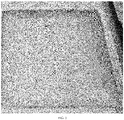
- Figure 1 is an image of foam produced according to Formulation 15.
- Figure 2 is an image of foam produced according to Formulation 18.
- the foam produced from Formulation 18 exhibited a noticeably better appearance with fewer surface lines and striations than the foam produced from Formulation 15.
Landscapes
- Chemical & Material Sciences (AREA)
- Organic Chemistry (AREA)
- Health & Medical Sciences (AREA)
- Chemical Kinetics & Catalysis (AREA)
- Medicinal Chemistry (AREA)
- Polymers & Plastics (AREA)
- Inorganic Chemistry (AREA)
- Engineering & Computer Science (AREA)
- Manufacturing & Machinery (AREA)
- Polyurethanes Or Polyureas (AREA)
Applications Claiming Priority (1)
| Application Number | Priority Date | Filing Date | Title |
|---|---|---|---|
| US17/155,479 US20220235168A1 (en) | 2021-01-22 | 2021-01-22 | Processes for making molded flexible foams and flexible foams produced thereby |
Publications (1)
| Publication Number | Publication Date |
|---|---|
| EP4032926A1 true EP4032926A1 (fr) | 2022-07-27 |
Family
ID=79831099
Family Applications (1)
| Application Number | Title | Priority Date | Filing Date |
|---|---|---|---|
| EP22152527.2A Pending EP4032926A1 (fr) | 2021-01-22 | 2022-01-20 | Procédés de fabrication de mousses souples moulées et mousses souples ainsi fabriquées |
Country Status (3)
| Country | Link |
|---|---|
| US (1) | US20220235168A1 (fr) |
| EP (1) | EP4032926A1 (fr) |
| CN (1) | CN114805727A (fr) |
Citations (3)
| Publication number | Priority date | Publication date | Assignee | Title |
|---|---|---|---|---|
| CN100360497C (zh) * | 2006-03-08 | 2008-01-09 | 北京科聚化工新材料有限公司 | 具有抗结皮性能的多亚甲基多苯基多异氰酸酯及制备方法 |
| US20160280837A1 (en) * | 2013-11-08 | 2016-09-29 | Basf Se | Polyurethane sealant |
| US20190375881A1 (en) * | 2017-01-23 | 2019-12-12 | Dow Global Technologies Llc | Flexible polyurethane foam and process to make |
Family Cites Families (14)
| Publication number | Priority date | Publication date | Assignee | Title |
|---|---|---|---|---|
| JPS51133398A (en) * | 1975-05-15 | 1976-11-19 | Bridgestone Corp | A process for manufacturing fire- retardant low-smoking polyurethane f oam |
| US4876292A (en) * | 1988-10-06 | 1989-10-24 | Mobay Corporation | Isocyanate reactive mixture and the use thereof in the manufacture of flexible polyurethane foams |
| US6521674B1 (en) * | 1993-10-01 | 2003-02-18 | Carpenter Co. | Latex-like flexible polyurethane foam and process for making same |
| DE4437878A1 (de) * | 1994-10-22 | 1996-04-25 | Basf Ag | Verfahren zur Herstellung von fogging-armen Polyurethan-Schaumstoffen und hierfür verwendbare spezielle Polyoxyalkylen-polyole |
| CA2239620C (fr) * | 1995-12-04 | 2007-05-29 | Arco Chemical Technology, L.P. | Mousse de polyurethane moulee presentant des proprietes physiques ameliorees |
| CN1138831C (zh) * | 1999-07-26 | 2004-02-18 | 亨茨曼国际有限公司 | 制备冷固化软质泡沫的方法,用于该方法的多元醇组合物和反应体系,及由此获得的泡沫 |
| US6762274B2 (en) * | 2000-02-10 | 2004-07-13 | Dow Global Technologies Inc. | Low emission polyurethane polymers made with autocatalytic polyols |
| TW592813B (en) * | 2001-08-15 | 2004-06-21 | Dow Global Technologies Inc | Process to manufacture polyurethane products |
| DE10227187A1 (de) * | 2002-06-18 | 2004-01-08 | Basf Ag | Polyurethane mit hoher Kälteflexibilität |
| DE102004047406A1 (de) * | 2004-09-28 | 2006-03-30 | Basf Ag | Verfahren zur Herstellung von Polyurethan-Weichschaumstoffen |
| KR20070084023A (ko) * | 2004-11-18 | 2007-08-24 | 아사히 가라스 가부시키가이샤 | 연질 폴리우레탄폼의 제조 방법 |
| CN102574976B (zh) * | 2009-10-05 | 2014-01-08 | 旭硝子株式会社 | 软质聚氨酯泡沫塑料的制造方法及片材 |
| DK2336223T5 (da) * | 2009-12-08 | 2014-07-21 | Recticel | Fremgangsmåde til fremstilling af fleksibelt polyurethanskum og skum, der opnås derved |
| US9051442B2 (en) * | 2011-02-21 | 2015-06-09 | Honeywell International Inc. | Polyurethane foam premixes containing halogenated olefin blowing agents and foams made from same |
-
2021
- 2021-01-22 US US17/155,479 patent/US20220235168A1/en not_active Abandoned
-
2022
- 2022-01-20 EP EP22152527.2A patent/EP4032926A1/fr active Pending
- 2022-01-21 CN CN202210076943.7A patent/CN114805727A/zh active Pending
Patent Citations (3)
| Publication number | Priority date | Publication date | Assignee | Title |
|---|---|---|---|---|
| CN100360497C (zh) * | 2006-03-08 | 2008-01-09 | 北京科聚化工新材料有限公司 | 具有抗结皮性能的多亚甲基多苯基多异氰酸酯及制备方法 |
| US20160280837A1 (en) * | 2013-11-08 | 2016-09-29 | Basf Se | Polyurethane sealant |
| US20190375881A1 (en) * | 2017-01-23 | 2019-12-12 | Dow Global Technologies Llc | Flexible polyurethane foam and process to make |
Also Published As
| Publication number | Publication date |
|---|---|
| CN114805727A (zh) | 2022-07-29 |
| US20220235168A1 (en) | 2022-07-28 |
Similar Documents
| Publication | Publication Date | Title |
|---|---|---|
| EP2760905B1 (fr) | Mousse viscoélastique | |
| EP2675833B1 (fr) | Mousses polyuréthane basse densité | |
| CN101412798B (zh) | 软质聚氨酯低回弹泡沫及其制备方法 | |
| EP3935096B1 (fr) | Compositions réactives à l'isocyanate à base de hcfo, compositions de formation de mousse associées et mousses de pur-pir | |
| EP3935097B1 (fr) | Mélanges de polyols et leur utilisation dans la production de compositions de formation de mousse de pur-pir | |
| CN104159943A (zh) | 用于调整粘弹性聚氨酯软泡沫的玻璃化转变温度的添加剂 | |
| EP3571239B1 (fr) | Mousse de polyuréthanne souple et son procédé de fabrication | |
| EP3664984B1 (fr) | Constituants polymères à fonction isocyanate et articles en polyuréthane formés à partir d'articles en polyuréthane recyclés et procédés associés de formation desdits articles en polyuréthane | |
| EP2635617B1 (fr) | Systèmes de polyuréthane à écrasement autonome | |
| CA2302191A1 (fr) | Mousses de polyurethane souple a faible densite | |
| KR101389785B1 (ko) | 연질 폴리우레탄폼 및 그 제조 방법 | |
| US20080167394A1 (en) | Process for the preparation of PIPA polyols for the production of highly elastic flexible polyurethane foams | |
| US20160017086A1 (en) | Flexible, open-cell thermoset foams and blowing agents and methods for making same | |
| CA2240225C (fr) | Enter the french title here.procede de production de mousses polyurethanes elastiques flexibles | |
| US20170253711A1 (en) | Flexible, open-cell thermoset foams and blowing agents and methods for making same | |
| US11767394B2 (en) | HCFO-containing polyurethane foam-forming compositions, related foams and methods for their production | |
| US11767407B1 (en) | HCFO-containing polyurethane foam-forming compositions, related foams and methods for their production | |
| KR20250028390A (ko) | 폴리우레탄 폼 | |
| EP3969492A1 (fr) | Systèmes de mousse de faible densité de polyuréthane à déchirure sur refente élevée | |
| US11738487B2 (en) | Processes for making molded flexible foams and flexible foams produced thereby | |
| US11827735B1 (en) | HFO-containing isocyanate-reactive compositions, related foam-forming compositions and flame retardant PUR-PIR foams | |
| US20240400744A1 (en) | Polyol blends that include an isopropylidenediphenol-based polyether polyol, related compositions and foams | |
| US20220235168A1 (en) | Processes for making molded flexible foams and flexible foams produced thereby | |
| US20230272149A1 (en) | Viscoelastic Elastomeric Polyurethane Foams, Process for Preparing Them and Use Thereof | |
| US20250145786A1 (en) | Hcfo-containing polyurethane foam-forming compositions, related foams and methods for their production |
Legal Events
| Date | Code | Title | Description |
|---|---|---|---|
| PUAI | Public reference made under article 153(3) epc to a published international application that has entered the european phase |
Free format text: ORIGINAL CODE: 0009012 |
|
| STAA | Information on the status of an ep patent application or granted ep patent |
Free format text: STATUS: THE APPLICATION HAS BEEN PUBLISHED |
|
| AK | Designated contracting states |
Kind code of ref document: A1 Designated state(s): AL AT BE BG CH CY CZ DE DK EE ES FI FR GB GR HR HU IE IS IT LI LT LU LV MC MK MT NL NO PL PT RO RS SE SI SK SM TR |
|
| STAA | Information on the status of an ep patent application or granted ep patent |
Free format text: STATUS: REQUEST FOR EXAMINATION WAS MADE |
|
| 17P | Request for examination filed |
Effective date: 20230127 |
|
| RBV | Designated contracting states (corrected) |
Designated state(s): AL AT BE BG CH CY CZ DE DK EE ES FI FR GB GR HR HU IE IS IT LI LT LU LV MC MK MT NL NO PL PT RO RS SE SI SK SM TR |
|
| STAA | Information on the status of an ep patent application or granted ep patent |
Free format text: STATUS: EXAMINATION IS IN PROGRESS |
|
| 17Q | First examination report despatched |
Effective date: 20251126 |