EP4035531A1 - Verfahren zur bekämpfung von krankheiten, die mit ascomyceten-pilzen verbunden sind, und entsprechende pflanzenschutzzusammensetzung - Google Patents
Verfahren zur bekämpfung von krankheiten, die mit ascomyceten-pilzen verbunden sind, und entsprechende pflanzenschutzzusammensetzung Download PDFInfo
- Publication number
- EP4035531A1 EP4035531A1 EP22154131.1A EP22154131A EP4035531A1 EP 4035531 A1 EP4035531 A1 EP 4035531A1 EP 22154131 A EP22154131 A EP 22154131A EP 4035531 A1 EP4035531 A1 EP 4035531A1
- Authority
- EP
- European Patent Office
- Prior art keywords
- trichoderma
- strain
- cfu
- composition
- evch0429
- Prior art date
- Legal status (The legal status is an assumption and is not a legal conclusion. Google has not performed a legal analysis and makes no representation as to the accuracy of the status listed.)
- Withdrawn
Links
Images

Classifications
-
- A—HUMAN NECESSITIES
- A01—AGRICULTURE; FORESTRY; ANIMAL HUSBANDRY; HUNTING; TRAPPING; FISHING
- A01P—BIOCIDAL, PEST REPELLANT, PEST ATTRACTANT OR PLANT GROWTH REGULATORY ACTIVITY OF CHEMICAL COMPOUNDS OR PREPARATIONS
- A01P3/00—Fungicides
-
- A—HUMAN NECESSITIES
- A01—AGRICULTURE; FORESTRY; ANIMAL HUSBANDRY; HUNTING; TRAPPING; FISHING
- A01N—PRESERVATION OF BODIES OF HUMANS OR ANIMALS OR PLANTS OR PARTS THEREOF; BIOCIDES, e.g. AS DISINFECTANTS, AS PESTICIDES OR AS HERBICIDES; PEST REPELLANTS OR ATTRACTANTS; PLANT GROWTH REGULATORS
- A01N63/00—Biocides, pest repellants or attractants, or plant growth regulators containing microorganisms, viruses, microbial fungi, animals or substances produced by, or obtained from, microorganisms, viruses, microbial fungi or animals, e.g. enzymes or fermentates
- A01N63/30—Microbial fungi; Substances produced thereby or obtained therefrom
- A01N63/38—Trichoderma
Definitions
- the invention relates to the field of the biological control of plant diseases caused by pathogenic fungi, and more particularly to the biological control of pathogenic fungi of the class Ascomycetes.
- the invention relates to a phytosanitary composition as well as a method for controlling a plant disease caused by a pathogenic fungus of the ascomycete type.
- microbial-based biofungicides have significant advantages over the others, such as: a wide variety of strains naturally present in the environment offering a wide choice of potential active ingredients; a production method that respects the environment: solvent-free, without incorporating compounds derived from fossil fuels, allowing potential recovery of agro-waste, and therefore, more generally, with a low carbon impact.
- the microorganisms can in certain cases have stimulating effects on the growth of the plant by promoting better absorption of the nutritive components by the plant, by improving its growth and its resistance to biotic and/or abiotic stresses.
- biofungicides based on microorganisms are still limited by technical and economic constraints. Indeed, many microbial strains lack efficacy, are not suitable for all modes of application, or are very specific to a pathogen, or even to a given stage of development of this pathogen.
- Trichoderma species wide variability in biological control activity, specificity, mechanism of action, metabolite production, and survival in soil or on plants limits species of this genus to uses very specific both from the point of view of the phytosanitary disease and the modes of application (Benitez et al., 2004). Also, the Trichoderma atroviridae and asperellum species are widely used in the context of root or seed treatment in market garden crops. Nevertheless, there are still a large number of pathologies for which the effectiveness of Trichoderma as a biocontrol agent has not been studied.
- pathologies caused by pathogenic fungi of the family of ascomycetes responsible, for example, for Fusarium wilt or septoria wilt in wheat, sclerotiniosis in rapeseed represent diseases that very often impact very large crop areas.
- Concerning these diseases, in particular those affecting wheat, commercial biological control solutions have until now demonstrated a low effectiveness of Trichoderma and more broadly of microbial products (including viruses, fungi, protozoa, bacteria). This is explained in particular by the low stability of these biological control products in field crops.
- sclerotinia is one of the main rapeseed diseases that causes yield losses of up to 50% for affected plants.
- the sclerotia (resting bodies) produced by the fungus on oilseed rape are able to survive long term in the soil.
- the accumulation of sclerotia in the soil, favored by short crop rotations, therefore has direct and long-term consequences that can constitute significant threats for farmers.
- Fungicides and in particular biofungicides have virtually no curative activity and are generally used as preventive treatment, ie they make it possible to prevent or slow down contamination by pathogens.
- a biofungicide to treat wheat and rapeseed marketed under the name Polyversum ®
- This biofungicide comprises a mycoparasite of the species Pythium oligandrum belonging to the class of oomycetes. This mycoparasite competes with pathogenic fungi and parasites. It degrades the wall of the target fungi to penetrate it and cause their death.
- the use of this product does not completely eliminate the use of chemical pesticides. Its use is generally coupled with that of a triazole, said triazole then being used in a smaller quantity than if used alone.
- compositions chemicals i.e. for the so-called arable crop sector which includes cereal, oilseed or protein crops, but also potatoes and beets
- Trichoderma -based biofungicides is in fact limited to crops involving much smaller areas, such as market gardening, ornamental crops or vineyards.
- compositions comprising species of Trichoderma such as T. gamsii and T. asperellum are used to prevent the appearance of pathogenic fungi in the treatment of strawberry crops, vines and vegetable crops, or such as T. atroviridae in the treatment of vines.
- the known uses of Trichoderma are therefore limited and adapted to root application by soil irrigation ( via micro-irrigation for example), and their use for the treatment of field crops is therefore not possible.
- Trichoderma Certain species of Trichoderma have been described in the context of field crop protection, such as in particular T. harzanium , for the protection of wheat, maize, rapeseed, sugar cane and soybean crops, T. asperellum , T. harzanium and T. viride for the protection of wheat crops against Fusarium wilt or T. harzanium (Stocco et al., 2016) and T. koningii against sclerotinia (Perello et al., 2006).
- T. harzanium for the protection of wheat, maize, rapeseed, sugar cane and soybean crops
- T. asperellum T. harzanium
- T. viride for the protection of wheat crops against Fusarium wilt or T. harzanium
- T. koningii against sclerotinia Perello et al., 2006.
- the modes of application of the compositions of Trichoderma consist in coating the seeds or else in carrying out a root treatment in the soil during the different stages of development of wheat crops such as than the treatment of seedlings.
- the object of the invention is therefore to remedy the drawbacks of the prior art.
- the invention proposes a method for combating a disease of a plant caused by a pathogenic ascomycete making it possible to overcome or minimize the use of chemical fungicide while allowing the treatment of crops in fields by the air route.
- the invention also aims to provide a phytosanitary composition which can be used in the context of the method for combating a disease of a plant caused by a pathogenic ascomycete.
- the invention relates to a method for controlling a plant disease caused by a pathogenic ascomycete, said method comprising at least one step of applying a strain of Trichoderma atroviridae EVCH0429 registered under the number CNCM I -5638 and at least one other strain of Trichoderma on at least one aerial part of the plant to be treated against said pathogenic ascomycete.
- the at least one other strain of Trichoderma is selected from Trichoderma asperellum EVCH0428 or Trichoderma harzianum EVCH0117, registered respectively under the numbers CNCM I-5637 and CNCM I-5636.
- this method can be implemented on any type of crop such as crops in fields, or in greenhouses, ornamental crops, or in market gardening to treat Brassicaceae, Grasses, Vitaceae and Musaceae.
- the invention also relates to a phytosanitary composition which comprises, as active ingredient, spores of Trichoderma atroviridae EVCH0429, strain registered under the number CNCM I-5638 and spores of at least one other strain of Trichoderma , and a suitable vehicle , preferably specific, to an application of said composition to an aerial part of a plant.
- treating denote, with regard to the process and the composition according to the invention, the prevention and also the curative treatment of diseases associated with ascomycete fungi. More particularly, treating within the meaning of the invention comprises preventing or delaying the development of said diseases or else reducing the extent of the infestation of plants and crops. Preferably, treating means preventing infestation or delaying or preventing the expansion of ascomycete fungi on plants and crops.
- spray relates to the action of projecting a composition in the form of drops, droplets or even an aerosol.
- a semi-liquid composition corresponds to a semi-liquid composition, that is to say in a physical state between the liquid state and the solid state.
- a semi-liquid composition can be in the form of a cream or a gel, and have a viscosity ranging from 200 Pa s to 2000 Pa s.
- Crop in fields means a crop, of any type, whose surface is such that it does not allow irrigation by soil techniques, such as micro-irrigation. More specifically, this includes crops with an area greater than 10 Ha. Even more particularly, this includes cereal, oilseed or protein crops, but also potatoes and beets that are unsuitable for soil irrigation techniques.
- Trichoderma atroviridae EVCH0429 T. atroviridae EVCH0429
- EVCH0429 EVCH0429
- strain of Trichoderma atroviridae EVCH0429 strain EVCH0429
- strain EVCH0429 are used here interchangeably, and designate the strain of Trichoderma atroviridae EVCH0429, and in particular when it is It concerns the compositions according to the invention, of spores of this strain.
- Trichoderma asperellum EVCH0428 T. asperellum EVCH0428
- EVCH0428 EVCH0428
- strain of Trichoderma asperellum EVCH0428 strain EVCH0428
- Trichoderma harzianum EVCH0117 T. harzianum EVCH0117
- EVCH0117 EVCH0117
- strain of Trichoderma harzianum EVCH0117 spores of this strain.
- the EVCH0429, EVCH0428 strains according to the present invention are characterized by the TEF1-a sequences (for, according to English terminology, translation elongation factor 1 alpha) presented in the following table: [Table 1] SEQ ID NO 1: TEF1 - ⁇ of EVCH0429 SEQ ID NO 2: TEF1 - ⁇ of EVCH0428
- Trichoderma atroviridae EVCH0429, Trichoderma asperellum EVCH0428 and Trichoderma harzianum EVCH0117 were deposited and registered on 07/01/2021 at the Institut Pasteur (CNCM, 25 rue du Dondel Roux, 75724 PARIS Cedex 15, France) where they are available under the respective numbers CNCM I-5638, CNCM I-5637, CNCM I-5636.
- CNCM 25 rue du Dondel Roux, 75724 PARIS Cedex 15, France
- the inventors have identified a process for combating plant diseases caused by pathogenic ascomycetes based on the use of a biofungicidal phytosanitary composition. This method makes it possible to fight effectively against diseases arising from fungi of the ascomycota division, throughout the development cycle of the crops, but also during the harvesting and/or storage of the plants or of the part of the plants which is exploited.
- biofungicidal phytosanitary composition makes it possible to dispense with, or reduce, the subsequent or simultaneous use of synthetic pesticides usually used for the same target, by preventing the contamination of crops by a pathogenic fungus of the division of ascomycetes throughout their development cycle and even after harvest.
- the invention relates to a method 100 for combating a disease of a plant caused by a pathogenic ascomycete.
- the plant diseases can correspond to any disease capable of affecting all or part of the plant, such as, by way of non-limiting examples, the leaves, the stem and/or the fruits.
- the method comprises a step of applying 110 a strain of Trichoderma atroviridae EVCH0429 and at least one other strain of Trichoderma on at least one aerial part of the plant.
- the application step 110 can advantageously be implemented by any suitable device allowing the application of a composition comprising the Trichoderma atroviridae EVCH0429 strain and the at least one other Trichoderma strain on cultures.
- said strains are present in the composition in the form of spores.
- the composition can be in powder form or in liquid or semi-liquid form.
- the composition is in liquid or semi-liquid form, that is to say that Trichoderma strains, preferably their spores, are present in suspension in a liquid or semi-liquid medium.
- the application step 110 can thus be carried out by any device allowing spreading ( e.g. by spraying ) on cultivated areas.
- such a device may take the form of a portable sprayer comprising a storage compartment for the composition to be sprayed, possibly an agitator positioned in the storage compartment in order to keep the substance moving and avoid deposit formation or sedimentation of strains or their spores, a pump, a distributor and a nozzle.
- a mounted, semi-mounted or self-propelled sprayer towed or trailed by a motorized vehicle such as a tractor for example may be preferred.
- the application step 110 can be carried out by aerial spreading, such as by plane or helicopter or else via the use of drones, autonomous or not.
- the spreading by spraying can be carried out, for example, by means of a portable sprayer, as mentioned above, or else by means of spraying equipment with a projected jet.
- the application step 110 can comprise an application 115 of a composition comprising at least one strain of Trichoderma atroviridae EVCH0429, and at least one other strain of Trichoderma and a specially adapted carrier.
- the composition can be more easily loaded into a device allowing spreading, its application is thereby facilitated as well as the effectiveness of the treatment.
- the vehicle may correspond to a composition comprising water and/or any type of solvent or adjuvant suitable for fungal suspensions, preferably of fungal spores, and more particularly of one or more strains of Trichoderma , more particularly Trichoderma species atroviridae, in particular EVCH0429 and Trichoderma harzianum, in particular EVCH0117, and Trichoderma asperellum, in particular EVCH0428.
- the application step 110 may comprise an application 111 of a composition comprising a Trichoderma atroviridae EVCH0429 and a vehicle.
- the application step 110 can also comprise an application 112 of a composition comprising at least one other strain of Trichoderma such as EVCH0428 and / or EVCH0117 and a vehicle.
- the application step 112 can comprise an application (not shown in the figures) of a composition comprising the Trichoderma strain EVCH0428 and a vehicle, and an application (not shown in the figures) of a composition comprising the Trichoderma strain EVCH0117.
- the vehicles used in connection with Trichoderma atroviridae EVCH0429 and the at least one other strain of Trichoderma may be identical or else different depending on the properties desired for each of said vehicles.
- the applications 111 and 112 can be concomitant or sequential ( i.e. separated in time), but in such a way that Trichoderma atroviridae EVCH0429 and the at least one other Trichoderma exert their effects jointly in the treatment process according to the invention.
- the vehicle(s) may have particular physico-chemical properties, such as, without limitation, a given pH or even a specific viscosity. , in order to ensure the behavior of the composition on the treated cultures and, consequently, thus contributing to better prevention of an infection by a pathogenic fungus of the ascomycete type.
- the vehicle can contribute to adapting the composition(s) comprising the Trichoderma to the chosen mode of application.
- an anti-drift can be added to the vehicle, to avoid dispersion of the composition and better targeting of the crops, which is particularly advantageous in the case of unprotected crops.
- the application step 110 can be carried out so as to obtain a concentration of Trichoderma spores of between 10 6 cfu/ha and 10 16 cfu/ha, preferably between 10 8 cfu/ha and 10 15 cfu/ ha preferably between 10 9 cfu/ha and 10 14 cfu/ha or even between 10 10 cfu/ha and 10 13 cfu/ha of the treated crop; in a particular embodiment, the concentration of Trichoderma atroviridae EVCH0429 spores is between 10 6 cfu/ha and 10 16 cfu/ha, preferably between 10 8 cfu/ha and 10 15 cfu/ha, preferably between 10 9 cfu/ ha and 10 14 cfu/ha or even between 10 10 cfu/ha and 10 13 cfu/ha of the treated crop and the spore concentration of at least one other strain of Trichoderma can be between 10 6 cfu/ha and 10 16 cfu
- the ratio of the quantity of spores of Trichoderma atroviridae EVCH0429 to the quantity of spores of the at least one other strain of Trichoderma applied during step 110 can be 1/10, 1/9, 1/8, 1/ 7, 1/6, 1/5, 1/ 4, 1/3, 1/2, 1/1. In a preferred embodiment, this ratio is 1/1.
- the ratio of the quantity of spores of Trichoderma atroviridae EVCH0429 to the quantity of spores of the at least one other strain of Trichoderma applied during step 110 can be 10/1.9/ 1, 8/1, 7/1, 6/1, 5/1, 4/1, 3/1, 2/1.
- the at least one other strain of Trichoderma used in addition to EVCH0429 in the method according to the invention is chosen from the species Trichoderma harzianum , Trichoderma asperellum or a different strain of Trichoderma atroviride of EVCH0429.
- the at least one other strain of Trichoderma used in addition to EVCH0429 is selected from Trichoderma asperellum EVCH0428 and Trichoderma harzianum EVCH0117.
- the method of the invention comprises the application of EVCH0429, EVCH0428 and EVCH0117.
- the aerial part prone upon application 110 of Trichoderma atroviridae EVCH0429 and at least one other strain of Trichoderma may correspond to a leaf, a stem, a flower, a spike and/or a fruit.
- the properties for treating diseases caused by ascomycete fungi of the method of the invention implemented on crops can also persist after harvesting.
- said application 110 can be carried out on at least an aerial part of the plant, after the cultivation of the latter, before or during its storage; the treatment can then have the advantage, for example, of not being subject to the vagaries of the weather, of allowing better conservation of the crops and, thereby, of preventing the development of fungi and possible contamination by mycotoxins.
- the application 110 can be single, double or repeated 3, 4, 5, 6, 7, 8, 9 or even up to ten times, and this with an appropriate frequency. to the crop, climatic conditions and/or pathogen.
- Such an application step 110 can, by way of non-limiting examples, be repeated every 2, 3, 4, 5, 6, 7, 15 days, every 21 days or even once a month depending on the type of culture.
- the combination of Trichoderma atroviridae EVCH0429 and at least one other strain of Trichoderma such as, for example, EVCH0428 and/or EVCH0117 makes it possible to prevent the infection and/or to delay the development of the pathogenic fungi mentioned above.
- a method 100 for combating a disease of a plant according to the invention will be particularly effective in the context of the prevention of infection by a disease chosen from among rapeseed sclerotinia, wheat Fusarium wilt and wheat septoria , banana Sigatoka, gray rot or white rot.
- such a method 100 for combating a disease of a plant is suitable for field crops, otherwise called field crops in agronomy and which include cereal, oilseed or protein crops, but also potatoes and beets. . Nevertheless, it is also suitable for ornamental crops, fruit crops such as tropical crops (e.g. banana, cocoa) or market gardening which are also sensitive to infestations by pathogenic ascomycetes.
- field crops otherwise called field crops in agronomy and which include cereal, oilseed or protein crops, but also potatoes and beets.
- ornamental crops fruit crops such as tropical crops (e.g. banana, cocoa) or market gardening which are also sensitive to infestations by pathogenic ascomycetes.
- the method according to the invention can be applied to very diverse crops both in terms of the type of crop and their area, whether in fields or under shelter. Nevertheless, the method 100 of the invention, which allows the protection of plants against ascomycetes by application to the aerial parts of plants is particularly suitable. to crops of a large area such as, for example, greater than 10 ha, greater than 20 ha, greater than 50 ha, or even greater than 100 ha.
- one of the advantages of a method according to the invention is that it can be applied to crops in the fields, by air, while the Trichoderma strains of the solutions of the prior art are used in connection with vegetable crops via soil irrigation application. Nevertheless, the method of the invention is also suitable for the aerial treatment of crops in greenhouses or in agricultural tunnels.
- the plant to be treated is chosen from the group of brassicas, grasses, vitaceae or musaceae.
- biofungicidal treatment of the invention with at least one other fungicide known for the type of crop and/or the pathology concerned.
- this makes it possible to consider reducing the quantities used, either due to a reduction in the quantity of conventional fungicide applied to the plants, or due to a reduction in the frequency of treatment, compared to its use alone.
- the method 100 for combating a disease of a plant caused by a pathogenic ascomycete comprises a step 120 of treating the plant with another fungicide treatment.
- This treatment can be a biofungicide or a conventional fungicide.
- Step 120 can be concomitant with application 110.
- Application 110 and step 120 can also be separated in time, carried out sequentially, more or less separated in time, by a few minutes, a few hours or one or more days. This may correspond, for example, to certain stages of plant development, the approach to harvest, the particular presence of pollinators, particular weather conditions (carrying winds), compliance with health thresholds and other times at which the use of conventional fungicides is not desirable...
- the plants can be treated with a conventional fungicide alone or in combination with the composition of the invention when possible, and only by applying the 110 application when the use of synthetic fungicide n is not desired.
- the invention relates to a phytosanitary composition
- a phytosanitary composition comprising, as active principle, spores of Trichoderma atroviridae EVCH0429 and spores of at least one other strain of Trichoderma and a vehicle.
- said composition is selected from an aqueous emulsion, a concentrated suspension, a dispersible granule, a wettable powder, powder of microcapsules/microparticles or a suspension of microcapsules/microparticles.
- said composition is applied by spraying after dilution in water.
- the vehicle being suitable for application of said composition to the aerial part of the plant.
- the vehicle may have physico-chemical characteristics adapted to the Trichoderma or Trichoderma which will be suspended therein.
- the vehicle may comprise at least one adjuvant selected from stabilizing agents such as stabilizers, dispersants, anti-drifts, wetting agents, agents promoting the retention of the spray mixture, pH regulating buffers, anti-foaming agents, anti-UV agents, humectants limiting the evaporation of water such as for example polyols, agents facilitating the penetration of the active agent through the cuticle, nutritive additives making it possible to improve spore germination.
- stabilizing agents such as stabilizers, dispersants, anti-drifts, wetting agents, agents promoting the retention of the spray mixture, pH regulating buffers, anti-foaming agents, anti-UV agents, humectants limiting the evaporation of water such as for example polyols, agents facilitating the penetration of the active agent through the cuticle, nutritive additives making it possible to improve
- the adjuvant(s) will therefore have to be adapted to the mode of action and characteristics of the active ingredient, to the formulation of the desired composition, to the type of plant targeted (the use of a wetting agent will example particularly indicated in the context of rapeseed whose leaves are particularly hydrophobic) or, for example, to weather conditions.
- composition may comprise several adjuvants having the same function and/or several adjuvants with different functions.
- a surfactant could be used as a stabilizing agent and/or a dispersing agent.
- Examples of well-known adjuvants of products developed by various companies in the agricultural sector can also be used as an adjuvant in the context of a phytosanitary composition according to the invention, such as, by way of non-limiting example, the products marketed under the brand SILWET L 77 ® , PULVI-X ® , STICMAN ® , HELIOSOL ® , SURF 2000 ® , ARMOBLEN 650 ® , BELLAGIO ® , ACTIROB B ® , COLSURF ® , OLIOFIX ® , LE 846 ® , PULVI-X ® , HELIOTERPEN ® FILM , CALANQUE ® , ESCAPADE ® and more generally all types of approved additives.
- the vehicle comprises a "wetting agent", allowing the composition to be spread by increasing the contact surface of the droplets of the composition on the contact surface with the aerial part of the plant and/or the penetration of the principle asset.
- the wetting agent is Tween ® 80.
- the wetting agent concentration of the composition ready to be applied to the aerial parts of the plant is between 0.1 g/L and 20 g/ L, preferably between 1 g/L and 15 g/L, preferably between 3 g/L and 10 g/L, even more preferably at a concentration of 7.5 g/L.
- the vehicle comprises an anti-drift adjuvant, making it possible to avoid dispersion outside the cultures to be treated of the composition of the invention.
- Adjuvants such as wetting agents, anti-drift agents as well as agents improving retention, penetration and additives limiting evaporation are particularly advantageous in the context of the aerial application of the composition according to the invention.
- a mixture of wetting agent such as for example Tween ® 80
- a dispersing agent improving the retention of drops in particular propylene glycol
- a humectant agent limiting evaporation such as glycerol or sorbitol
- an anti-foam for example the anti-foam marketed under the trademark Carl Roth ® bearing the reference No. 0734.
- the composition according to the invention is preferably in liquid form, and the concentration of Trichoderma atroviridae EVCH0429 spores can then be between 5.10 8 cfu/L and 10 14 cfu/L, preferably between 5.10 10 cfu/ L and 5.10 12 cfu/L preferably between 1.10 11 cfu/L and 1.10 12 cfu/L and the concentration of at least one other strain of Trichoderma such as, for example EVCH0428 or EVCH0117, can be between 5.10 8 cfu /L and 10 14 cfu/L, preferably between 5.10 10 cfu/L and 5.10 12 cfu/L, preferably between 1.10 11 cfu/L and 1.10 12 cfu/L.
- Said composition can be diluted to allow the implementation of the application step of the method according to the invention.
- the concentration of spores is determined so as to allow the implementation of the step of applying the method of the invention and to achieve, for example on the cultures, a concentration of Trichoderma atroviridae EVCH0429 between 10 6 cfu/ha and 10 16 cfu/ha preferably between 10 8 cfu/ha and 10 15 cfu/ha preferably between 10 9 cfu/ha and 10 14 cfu/ha or even between 10 10 cfu/ha and 10 13 cfu/ha and a concentration of the at least other strain of Trichoderma asperellum EVCH0428 of between 10 6 cfu/ha and 10 16 cfu/ha, preferably between 10 8 cfu/ha and 10 15 cfu/ha, preferably between 10 9 cfu/ha and 10 14 cfu/ha see between 10 10 cfu/ha and 10 13
- the composition according to the invention can be in solid form, in other words, it is in the form of a powder to be applied to the aerial part of the plant according to the method of the invention.
- a composition can also comprise adjuvants such as those mentioned above, suitable for this formulation. Those skilled in the art will know how to determine them easily.
- Said composition can be diluted to allow the implementation of the application step of the method according to the invention.
- the spore concentration is determined so as to allow the implementation of the step of applying the method of the invention and to achieve; for example on crops, a concentration of Trichoderma atroviridae EVCH0429 between 10 6 cfu/ha and 10 16 cfu/ha preferably between 10 8 cfu/ha and 10 15 cfu/ha preferably between 10 9 cfu/ha and 10 14 cfu / ha or even between 10 10 cfu/ha and 10 13 cfu/ha and a concentration of Trichoderma asperellum EVCH0428 can be between 10 6 cfu/ha and 10 16 cfu/ha preferably between 10 8 cfu/ha and 10 15 cfu/ ha preferably between 10 9 cfu/ha and 10 14 cfu/ha or even between 10 10 cfu/ha and 10 13 cfu/ha.
- the ratio of the quantity of spores of Trichoderma atroviridae EVCH0429 to the quantity of spores of at least one other strain of Trichoderma applied during step 110 can be 1/10, 1/ 9, 1/8, 1/7, 1/6, 1/5, 1/4, 1/3, 1/2, 1/1.
- this ratio is 1/1.
- the ratio of the quantity of spores of Trichoderma atroviridae EVCH0429 to the quantity of spores of the at least one other strain of Trichoderma applied during step 110 can be 10/1, 9/1 , 8/1, 7/1, 6/1, 5/1, 4/1, 3/1, 2/1.
- the spores of Trichoderma atroviridae EVCH0429 and the spores of at least one other strain of Trichoderma are formulated separately in compositions to be used in the method of the invention above and as described above. above, mutatis mutandis. This can be particularly advantageous in cases, for example, or certain adjuvants are specific to one of the strains or to their application, and not or only slightly compatible.
- composition of the invention can be ready for use. It is then stored as it is and applied according to the method of the invention described above.
- composition or compositions in the case where the spores of the strains are applied separately in the process according to the invention are prepared from stock compositions in their final composition to be applied according to the process of the invention. and in particular, but not exclusively, in the appropriate spore concentrations and/or with the adjuvants suitable for the application chosen at the time of the implementation of the application.
- the spores of the strains of Trichoderma atroviridae EVCH0429 and of at least one other strain of Trichoderma can be stored in intermediate compositions specific to their conservation and suitable for obtaining the compositions according to the invention to be applied according to the method of the invention.
- An intermediate composition can thus be formulated in solid form, in the form, for example, of wettable powder, of dispersible granules, of oily phase, then be put into solution by dispersion, suspension or dilution, then, optionally, be diluted to obtain the concentrations in desired spores; in the case of a solid intermediate composition, this may comprise a concentration of spores of Trichoderma atroviridae EVCH0429 of between 5.10 9 cfu/Kg and 5.10 14 cfu/Kg and a concentration of spores of at least one other strain of Trichoderma between 5.10 9 cfu/Kg and 5.10 14 cfu/Kg.
- an intermediate composition according to the invention can be a semi-liquid form then be diluted in aqueous solution, before its application.
- an intermediate composition will be more concentrated in spores than the phytosanitary composition intended to be dispersed on the crops.
- an intermediate composition may comprise one or more adjuvants necessary for the preservation of the spores (for example a humidity absorbent as listed above to limit the humidity of a solid composition), capable of optimizing the action of the active principle once dispersed on the aerial parts of the plants or, according to another example, the adjuvants suitable for improving the qualities of the application by spraying (such as, for example, a viscosifier or, according to another example, a wetting agent).
- a humidity absorbent as listed above to limit the humidity of a solid composition
- the intermediate compositions can be of a different nature depending on the species and/or the strain of Trichoderma that they comprise.
- the at least one other strain of Trichoderma used in addition to EVCH0429 in the composition according to the invention is chosen from the species Trichoderma harzanium and Trichoderma asperellum. Particularly preferably, the at least one other strain of Trichoderma used in addition to EVCH0429 is selected from Trichoderma asperellum EVCH0428 and Trichoderma harzianum EVCH0117.
- the composition comprises spores of EVCH0429, EVCH0428 and EVCH0117.
- Example 1 Molecular identification of strains EVCH0429 and EVCH0428
- a preculture in liquid medium of the fungal strains EVCH0429, EVCH0428 and EVCH0117 was carried out according to methods known to those skilled in the art, in accordance with the instructions of the manufacturer of the genomic DNA extraction kit (cf. below).
- the extraction of the genomic DNA was carried out using the Nucleospin Plant II® kit (Macherey Nagel, Germany) according to the manufacturer's recommendations.
- the amplification of the ITS region was carried out according to a protocol adapted from Lomascolo et al. (2002).
- the analysis of the sequences obtained was carried out by alignment and construction of a phylogenetic tree (MEGA software) in comparison with the public sequences of reference strains of Trichoderma on Genbank ( ⁇ https://www.ncbi.nlm.nih. gov/genbank/>).
- the phylogenetic tree based on the sequencing result of TEF1-a was constructed by the Neighbor-Joining method (Saitou & Nei, 1987), using 500 replicates for the calculation of the statistical robustness (determined according to the Anglo-Saxon terminology by the so-called bootstrap technique (Felsenstein, 1985) Evolutionary distances were calculated by the maximum likelihood method (Tamura et al.
- the ITS sequence of EVCH0429 has 100% identity with the ITS sequences of T. atroviridae strains referenced MT341nS.1 MH357337.1, MK619482.1, MK619481.1, MK619480.1 and MN429074.1 in Genbank.
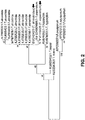
- the ITS sequence of EVCH0428 has 100% identity with the ITS sequences of T. asperellum strains referenced MH215555.1, MH215554.1, MH215551.1, MH215549.1, MH215547.1, and MH215544.1 in Genbank. This is also confirmed by the construction of the phylogenetic tree as presented in Figure 2 , based on the sequences of TEF1-a.
- the strains EVCH0429, EVCH0428 and EVCH0117 were produced on agar medium, in Petri dishes. After inoculation, the dishes were incubated at 26°C for 7 to 10 days. These conditions allowing the sporulation of the fungi, the spores are then harvested by adding 10 mL of Tween ® 80 at 0.1% in reverse osmosis water to the Petri dish. The spore suspension is then removed and filtered through sterile cheesecloth, before being stored at 4°C until use.
- the preventive treatments with the compositions tested were carried out on 2-month-old plants (BBCH stage 13, ie 3 leaves), 24 hours before inoculation with Sclerotinia sclerotiorum.
- test compositions as specified in table 2.
- Trichoderma atroviridae I-1237 usually used in root treatment under the name TRISOIL, was applied by spraying under the same conditions as the compositions of the invention.
- test compositions were carried out by spraying using a manual sprayer on the aerial parts of the plants, and in particular so as to target the upper face of the leaves.
- the spraying was carried out at the limit of runoff.
- the length of necrosis along the main vein was measured between D+1 and D+5.
- effect protective 1 ⁇ length of the necrosis of the composition test length of the necrosis from witness negative ⁇ 100
- composition Protective efficacy (% compared to negative control) Day 1 Day 2 Day 3 Day 4 Day 5 Positive control (Boscalid 1g/L) 100 97 96 96 96 TW (negative control) 0 0 0 0 0 0 EVCH0429+TW 26 19 8 6 3 EVCH0428+TW 18 16 9 8 8 EVCH0429+EVCH0428+TW 34 22 21 26 19 EVCH0117+TW 18 14 10 5 5 EVCH0429+EVCH0117+TW 23 16 23 18 15 EVCH0117+T45+TW 23 13 5 9 7 TRISOIL+TW 48 24 16 19 14
- the chemical fungicide (boscalid) used in the control trial has a particularly effective action against the pathogenic fungus Sclerotinia sclerotiorum.
- Tween® 80 composition TW
- Tween ® 80 composition TW
- Tween ® therefore has no action against the pathogenic fungus Sclerotinia sclerotiorum.
- a wetting agent such as tween
- compositions EVCH0429+EVCH0428+TW or EVCH0429+EVCH0117+TW are used in combination. It is observed that the combined application of the strain of T. harzianum EVCH0117 with a strain of T. asperellum ECH45 (EVCH0117+T45+TW) does not confer protection that is as effective as the compositions comprising EVCH0429.
- Trichoderma atroviridae EVCH0429 with Trichoderma asperellum EVCH0428 therefore makes it possible to limit infection by the pathogenic fungus Sclerotinia sclerotiorum and its spread over time.
- the protective effect of the composition comprising a combination of Trichoderma atroviridae EVCH0429 with Trichoderma asperellum EVCH0428 or Trichoderma harzianum EVCH0117, in aerial treatment according to the invention, is more effective (cf, eg, days 3, 4 and 5 for EVCH0429 with EVCH0428) than the protection conferred by a treatment with Tri-soil ® adjuvanted with Tween ® and applied by spraying.
- Tri-soil ® is a product intended for root application by irrigation and seems, in view of the results, particularly unsuitable for treatment of plants by aerial application.
- Strains EVCH0429 T. atroviridae
- EVCH0428 T. asperellum
- EVCH45 T. harzanium
- EVCH0095 T. atroviridae
- EVCH0304 T. atroviridae
- a reference strain of Fusarium culmorum M601 was used for these experiments. This strain belongs to the STAPHYT L&G Collection. The strain was previously cultured in a Petri dish on PDA agar medium (for "potato dextrose agar") in order to produce enough inoculum to carry out the tests: The inoculum of F. culmorum are explants of the active margin of a colony (see below).
- the titration of the concentration of the inoculum was carried out by counting the spores of the different suspensions with a Malassez cell. For each test, a drop of 10 ⁇ L of spore suspension, at a concentration of 5 ⁇ 10 5 spores/mL was deposited on Whatman confetti placed in a Petri dish in PDA agar medium.
- Fusarium culmorum was cultured on PDA. A 6 mm explant from the active margin of a PDA cultured Fusarium culmorum colony was cut using a flame sterilized cork borer and placed upside down in the center of the PDA petri dish .
- the in vitro antagonistic activity of Trichoderma against F culmorum was studied using the method of direct confrontation according to the method of Patel and Brown, also called “technique of opposed cultures”. It consists in placing in a Petri dish with a diameter of 90 mm containing 20 ml of PDA, both the antagonist fungus to be tested (here the strains of Trichoderma) and the pathogenic strain (here F culmorum) along a diametral axis , 5 cm apart and equidistant from the center of the box.
- F. culmorum was inoculated on a Petri dish 24 hours before the Trichoderma strains.
- the appreciation of the antagonistic effect consists in measuring the diametrical growth according to 2 perpendicular axes: the point of intersection of these axes is the center of the explant of F culmorum or the drop of Trichoderma spore preparation that has been placed on the Petri dish. These diameters are measured at different intervals over 3 days of culture, at 23° C. in the dark.
- the fusarium growth rate was determined by linear regression: it corresponds to the slope of the colony size growth curve as a function of culture time.
- the percent growth inhibition was then calculated as follows: rate of growth of fusarium in condition 1 ⁇ rate of growth of fusarium in condition test / rate of growth of fusarium in condition 1 * 100 .
- the Fusarium culmorum strain was inoculated on day D-0, each Trichoderma strain was inoculated 24 hours later on day D+1 and growth was monitored for the following three days, respectively on days D+2, D+3 and D+4.
- the RPDG was therefore calculated on days D+2, D+3 and D+4 and the mean RPDG was calculated.
- the growth rate of Fusarium culmorum was also determined for all test conditions and the resulting percent growth inhibition was calculated for all conditions inoculated with the Trichoderma strain(s).
- the tests carried out with other strains of the same Trichoderma atroviride species respectively show an inhibition of the growth rate of Fusarium culmorum of 8.2 % and 4.4% much lower than for the tests carried out with the EVCH0429 strain. This effect is even more marked for the measurement of RDPG.
- the experimental data show an antagonistic effect of the EVCH0429 strain against fungal pathogens that is much higher than the other strains of Trichoderma tested, including from the same species.
- the combinations of Trichoderma comprising EVCH0429 confer, in foliar application, a protective effect of longer duration than the other combinations not comprising this strain.
Landscapes
- Life Sciences & Earth Sciences (AREA)
- Engineering & Computer Science (AREA)
- Microbiology (AREA)
- Zoology (AREA)
- General Health & Medical Sciences (AREA)
- Environmental Sciences (AREA)
- Mycology (AREA)
- Pest Control & Pesticides (AREA)
- Plant Pathology (AREA)
- Wood Science & Technology (AREA)
- Health & Medical Sciences (AREA)
- Agronomy & Crop Science (AREA)
- Chemical & Material Sciences (AREA)
- Chemical Kinetics & Catalysis (AREA)
- Biotechnology (AREA)
- General Chemical & Material Sciences (AREA)
- Virology (AREA)
- Dentistry (AREA)
- Agricultural Chemicals And Associated Chemicals (AREA)
- Pretreatment Of Seeds And Plants (AREA)
- Mushroom Cultivation (AREA)
- Micro-Organisms Or Cultivation Processes Thereof (AREA)
Applications Claiming Priority (1)
| Application Number | Priority Date | Filing Date | Title |
|---|---|---|---|
| FR2100917A FR3119300B1 (fr) | 2021-01-30 | 2021-01-30 | procédé de lutte contre des maladies associees a des champignons ascomycetes et Composition phytosanitaire associée |
Publications (1)
| Publication Number | Publication Date |
|---|---|
| EP4035531A1 true EP4035531A1 (de) | 2022-08-03 |
Family
ID=75339900
Family Applications (1)
| Application Number | Title | Priority Date | Filing Date |
|---|---|---|---|
| EP22154131.1A Withdrawn EP4035531A1 (de) | 2021-01-30 | 2022-01-30 | Verfahren zur bekämpfung von krankheiten, die mit ascomyceten-pilzen verbunden sind, und entsprechende pflanzenschutzzusammensetzung |
Country Status (2)
| Country | Link |
|---|---|
| EP (1) | EP4035531A1 (de) |
| FR (1) | FR3119300B1 (de) |
Citations (5)
| Publication number | Priority date | Publication date | Assignee | Title |
|---|---|---|---|---|
| EP1876232A1 (de) * | 2006-07-04 | 2008-01-09 | Nixe | Neuer Stamm von Trichoderma atroviride, ein diesen Stamm enthaltendes Kulturmilieu sowie die Verwendung dieses Stamms insbesondere als Stimulans zur Keimung und/oder zum Wachstum von Pflanzen |
| US20110009260A1 (en) * | 2008-02-14 | 2011-01-13 | Lincoln University | Methods and compositions comprising trichoderma atroviride for the biological control of soil borne plant pathogens and promoting plant growth |
| EP3034600A1 (de) * | 2014-12-16 | 2016-06-22 | Bayer CropScience Biologics GmbH | Verfahren zur Verlängerung der Lebensfähigkeit von Pilzsporen in flüssigen Formulierungen |
| EP3468368A1 (de) * | 2016-06-10 | 2019-04-17 | Bipa Nv | Verfahren zur vorbeugung oder bekämpfung von mycosphaerella fijiensis |
| FR3097557A1 (fr) * | 2019-06-18 | 2020-12-25 | Agro Industrie Recherches Et Developpements A.R.D. | Nouvel agent de biocontrole et son utilisation pour la lutte contre des maladies fongiques de plantes |
-
2021
- 2021-01-30 FR FR2100917A patent/FR3119300B1/fr active Active
-
2022
- 2022-01-30 EP EP22154131.1A patent/EP4035531A1/de not_active Withdrawn
Patent Citations (5)
| Publication number | Priority date | Publication date | Assignee | Title |
|---|---|---|---|---|
| EP1876232A1 (de) * | 2006-07-04 | 2008-01-09 | Nixe | Neuer Stamm von Trichoderma atroviride, ein diesen Stamm enthaltendes Kulturmilieu sowie die Verwendung dieses Stamms insbesondere als Stimulans zur Keimung und/oder zum Wachstum von Pflanzen |
| US20110009260A1 (en) * | 2008-02-14 | 2011-01-13 | Lincoln University | Methods and compositions comprising trichoderma atroviride for the biological control of soil borne plant pathogens and promoting plant growth |
| EP3034600A1 (de) * | 2014-12-16 | 2016-06-22 | Bayer CropScience Biologics GmbH | Verfahren zur Verlängerung der Lebensfähigkeit von Pilzsporen in flüssigen Formulierungen |
| EP3468368A1 (de) * | 2016-06-10 | 2019-04-17 | Bipa Nv | Verfahren zur vorbeugung oder bekämpfung von mycosphaerella fijiensis |
| FR3097557A1 (fr) * | 2019-06-18 | 2020-12-25 | Agro Industrie Recherches Et Developpements A.R.D. | Nouvel agent de biocontrole et son utilisation pour la lutte contre des maladies fongiques de plantes |
Non-Patent Citations (10)
| Title |
|---|
| DARSHAN M. RUDAKIYA ET AL.: "Stratégies to Improve Solid-State Fermentation Technology", 2019 |
| ELSEVIER HARMAN GE: "Myths and Dogmas of Biocontrol Changes in Perceptions Derived from Research on Trichoderma harzinum T-22", PLANT DIS, vol. 84, no. 4, April 2000 (2000-04-01), pages 377 - 393 |
| FELSENSTEIN J: "Confidence limits on phylogenies: An approach using the bootstrap", EVOLUTION, vol. 39, 1985, pages 783 - 791 |
| KUMAR S.STECHER G.LI M.KNYAZ C.TAMURA K.: "MEGA X: Molecular Evolutionary Genetics Analysis across computing platforms", MOLECULAR BIOLOGY AND EVOLUTION, vol. 35, 2018, pages 1547 - 1549 |
| LOMASCOLO A.CAYOL JLROCHE M.GUO L.ROBERT JLRECORD E.LESAGE-MEESSEN L. ET AL.: "Molecular clustering of Pycnoporus strains from various géographie origins and isolation of monokaryotic strains for laccase hyperproduction", MYCOLOGICAL RESEARCH, 2002 |
| LOPES RBSOUZA DAROCHA LFNMONTALVA CLUZ CHUMBER RAFARIA M.: "Metarhizium alvesii sp. nov.: A new member of the Metarhizium anisopliae species complex", J INVERTEBR PATHOL, vol. 151, January 2018 (2018-01-01), pages 165 - 168 |
| PERELLÔ A.MONACO C.MORENO MCORDO C.SIMÔN M.: "The effect of Trichoderma harzianum and T. koningii on the control of tan spot (Pyrenophora tritici-repentis) and leaf blotch (Mycosphaerella graminicola) of wheat under field conditions in Argentina", BIOCONTROL SCIENCE AND TECHNOLOGY, vol. 16, 2006, pages 803 - 813 |
| SAITOU N.NEI M.: "The neighbor-joining method: A new method for reconstructing phylogenetic trees", MOLECUFAR BIOLOGY AND EVOLUTION, vol. 4, 1987, pages 406 - 425, XP001154601 |
| STOCCO, M.C.MONACO, C.I.ABRAMOFF, C ET AL.: "Selection and characterization of Argentine isolâtes of Trichoderma harzianum for effective biocontrol of Septoria leaf blotch of wheat", WORLD J MICROBIOL BIOTECHNOL, vol. 32, 2016, pages 49 |
| TAMURA K.NEI M.KUMAR S: "Prospects for inferring very large phylogenies by using the neighborjoining method", PROCEEDINGS OF THE NATIONAL ACADEMY OF SCIENCES (USA, vol. 101, 2004, pages 11030 - 11035 |
Also Published As
| Publication number | Publication date |
|---|---|
| FR3119300A1 (fr) | 2022-08-05 |
| FR3119300B1 (fr) | 2023-11-03 |
Similar Documents
| Publication | Publication Date | Title |
|---|---|---|
| Giorio et al. | An update of the Worldwide Integrated Assessment (WIA) on systemic insecticides. Part 1: new molecules, metabolism, fate, and transport | |
| Benavides et al. | IPM program to control coffee berry borer Hypothenemus hampei, with emphasis on highly pathogenic mixed strains of Beauveria bassiana, to overcome insecticide resistance in Colombia | |
| Avelino et al. | Ecological mechanisms for pest and disease control in coffee and cacao agroecosystems of the Neotropics | |
| US20190335759A1 (en) | Designed complex endophyte compositions and methods for improved plant traits | |
| CN104508116B (zh) | 杀虫黄杆菌菌株和生物活性组合物、代谢物和用途 | |
| EP3468369B1 (de) | Verwendung eines zellextractes aus eine oder mehreren amphidinium mikroalgen für dessen antifungaler wirkung auf pilzen und/oder oomyzeten | |
| EP2959779A1 (de) | Biologische bekämpfung pflanzenparasitischer nematoden mithilfe von paecilomyces | |
| BR112020004812A2 (pt) | métodos e composições para o controle biológico de patógenos de plantas | |
| US20160113288A1 (en) | Bacillus Megaterium as Drought/Salt Inducer | |
| US10531666B2 (en) | Compositions and methods to reduce the population of wheat-stem sawfly and hessian fly | |
| Zhang et al. | Histopathological and molecular insights into the ovicidal activities of two entomopathogenic fungi against two-spotted spider mite | |
| FR3109262A1 (fr) | Procede de traitement preventif d’une plante cultivee pour limiter la perte de matiere seche liee a un stress abiotique et/ou biotique | |
| CN117580815A (zh) | 用于促进植物生长和/或保护植物抵御至少一种植物害虫和/或至少一种植物疾病的组合物 | |
| Paredes et al. | Efficacy of fungicides against peanut smut in Argentina | |
| WO2020254533A1 (fr) | Nouvel agent de biocontrole et son utilisation pour la lutte contre des maladies fongiques de plantes | |
| Misra | Progressive steps in understanding and solving guava wilt: a national problem | |
| FR3033473A1 (fr) | Composition a usage agricole pour stimuler le metabolisme azote des plantes comprenant un extrait d'algue du genre laminaria et de l'acide glutamique, procedes et utilisations correspondant | |
| Marley et al. | Field assessment of Fusarium oxysporum based mycoherbicide for control of Striga hermonthica in Nigeria | |
| EP4035531A1 (de) | Verfahren zur bekämpfung von krankheiten, die mit ascomyceten-pilzen verbunden sind, und entsprechende pflanzenschutzzusammensetzung | |
| EP2409561A1 (de) | Biodüngung einer Pflanzenkultur durch Aufbringen von Azotobacteraceae auf die vorhergehende Kultur | |
| EP3678487B1 (de) | Alkylpentosid- und nonansäure-basierte phytopharmazeutische zusammensetzung und deren verwendung als herbizid | |
| Mohammed et al. | Some biochemical changes in Eobania vermiculata snail treated with some plant extracts under laboratory conditions | |
| EP4262398B1 (de) | Wirkstoff zur biokontrolle pflanzlicher pilzkrankheiten | |
| PATIL | DEVELOPMENT OF WP FORMULATION OF Nomuraea rileyi (FARLOW) SAMSON AND Metarhizium anisopliae (METSCH.) SOROK. | |
| FR3111521A1 (fr) | Nouvel agent de biocontrole et son utilisation pour la lutte contre des maladies fongiques de plantes |
Legal Events
| Date | Code | Title | Description |
|---|---|---|---|
| PUAI | Public reference made under article 153(3) epc to a published international application that has entered the european phase |
Free format text: ORIGINAL CODE: 0009012 |
|
| STAA | Information on the status of an ep patent application or granted ep patent |
Free format text: STATUS: THE APPLICATION HAS BEEN PUBLISHED |
|
| AK | Designated contracting states |
Kind code of ref document: A1 Designated state(s): AL AT BE BG CH CY CZ DE DK EE ES FI FR GB GR HR HU IE IS IT LI LT LU LV MC MK MT NL NO PL PT RO RS SE SI SK SM TR |
|
| STAA | Information on the status of an ep patent application or granted ep patent |
Free format text: STATUS: REQUEST FOR EXAMINATION WAS MADE |
|
| 17P | Request for examination filed |
Effective date: 20230203 |
|
| RAV | Requested validation state of the european patent: fee paid |
Extension state: MA Effective date: 20230203 |
|
| RBV | Designated contracting states (corrected) |
Designated state(s): AL AT BE BG CH CY CZ DE DK EE ES FI FR GB GR HR HU IE IS IT LI LT LU LV MC MK MT NL NO PL PT RO RS SE SI SK SM TR |
|
| STAA | Information on the status of an ep patent application or granted ep patent |
Free format text: STATUS: EXAMINATION IS IN PROGRESS |
|
| 17Q | First examination report despatched |
Effective date: 20241030 |
|
| STAA | Information on the status of an ep patent application or granted ep patent |
Free format text: STATUS: THE APPLICATION IS DEEMED TO BE WITHDRAWN |
|
| 18D | Application deemed to be withdrawn |
Effective date: 20250501 |